
Hand-plucking a chicken is the slowest, messiest, most thankless job in home poultry processing. A drum plucker takes that same bird from scalded to bare in 15 to 30 seconds, and the entire difference comes down to rubber fingers on a spinning drum doing the work your hands used to do. That is why the best chicken plucker machines for homesteads have become one of the most searched pieces of small farm equipment in the last five years, and why the market filled up with nearly identical stainless steel barrels carrying nine different brand names.
We looked at every full-size plucker on the market that cleared a 4.0 rating and a meaningful review count, which left us with nine machines. Not all nine deserve your money. Two of them are the exact same 20 inch drum and 92 finger design sold under different labels, two more are near clones from the same factory, and one is a small-bird specialist that cannot touch a broiler. We tell you which is which below, and we also tell you when you should not buy any of them.
Here is the short version for anyone who just wants the answer. The Kitchener 1HP with the 20 inch drum is the strongest all-around machine in this group, combining the highest average rating of the roundup with more than a thousand reviews behind it. The Yardbird 21833 is the one to buy if you want the most motor in the smallest package, and the SuperHandy is the same stainless 1HP layout for noticeably less money. If your flock is under about 20 birds a year, skip all of them and skin the birds instead, which we explain with numbers further down.
One thing to know before you buy anything in this category: almost none of these machines pluck well on a bad day. The scald tank does most of the real work, and the drum only finishes what the water started. If you skip that step, no motor in this roundup will save the bird.
Table of Contents
- Top 3 Picks for Chicken Plucker Machines in 2026
- The Best Chicken Plucker Machines for Homesteads (October 2026)
- How We Evaluated Nine Pluckers
- 1. Kitchener 1HP 20 Inch Drum Plucker – Best Overall
- 2. Yardbird 21833 1.5 HP Stainless Steel Plucker – Most Motor in One Machine
- 3. SuperHandy 1HP 20 Inch Plucker – Best Value Stainless Workhorse
- 4. Yardbird 44204 1.2 HP Plucker – Best Built Site Details
- 5. VEVOR 750W Plucker – Best for Heavy Broilers
- 6. Garvee 20 Inch Drum Plucker – Best for Mixed Poultry Flocks
- 7. Roots and Harvest 1.2 HP Plucker – Best for High Volume Processing
- 8. GarveeLife 20 Inch Drum Plucker – Most Versatile
- 9. PluckerUkraine Mini-330 – Best for Quail and Small Game Birds
- How to Choose a Chicken Plucker Machine
- Scalding and Plucking Technique That Actually Works
- Safety Around Water and Electricity
- Cleaning, Sanitation and Off-Season Storage
- When a Chicken Plucker Is Not Worth It
- Frequently Asked Questions
- Conclusion: Which Chicken Plucker Should You Buy in 2026?
Top 3 Picks for Chicken Plucker Machines in 2026
Our three picks below reflect how we would actually shop this category in 2026. The Kitchener takes the top slot on evidence, the Yardbird 21833 takes it on power and drum size, and the SuperHandy takes it on value. The other six are worth reading about, but these are the three we would put our own name on.

Kitchener 1HP 20 Inch Drum…
- 1HP 800W motor at 280RPM
- 92 soft fingers on a 20 inch drum
- 403 brushed stainless body
- GFCI and IP54 weather housing
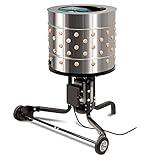
Yardbird 21833 1.5HP Plucker
- 1.5HP gear-drive motor at 300RPM
- 110 natural rubber fingers
- Removable food-grade stainless drum
- Integrated irrigation ring

SuperHandy 1HP 20 Inch Plucker
- 1HP 800W motor at 280RPM
- 92 soft fingers
- 20 inch stainless drum
- Wheels and compact 55 pound frame
The Best Chicken Plucker Machines for Homesteads (October 2026)
Every plucker below is a drum unit. The differences that matter are drum size, motor power, finger count and weight, and those are the columns worth scanning before you read a single review.
| Product | Specs | Action |
|---|---|---|
| Kitchener 1HP 20 Inch Drum Plucker |
|
Check Latest Price |
| Yardbird 21833 1.5HP Plucker |
|
Check Latest Price |
| SuperHandy 1HP 20 Inch Plucker |
|
Check Latest Price |
 Yardbird 44204 1.2HP Plucker Yardbird 44204 1.2HP Plucker |
|
Check Latest Price |
 VEVOR 750W Plucker VEVOR 750W Plucker |
|
Check Latest Price |
 Garvee 20 Inch Drum Plucker Garvee 20 Inch Drum Plucker |
|
Check Latest Price |
 Roots and Harvest 1.2HP Plucker Roots and Harvest 1.2HP Plucker |
|
Check Latest Price |
 GarveeLife 20 Inch Drum Plucker GarveeLife 20 Inch Drum Plucker |
|
Check Latest Price |
 PluckerUkraine Mini-330 PluckerUkraine Mini-330 |
|
Check Latest Price |
How We Evaluated Nine Pluckers
We want to be straight with you about method, because this category is full of roundups that blur the line between hands-on testing and reading a spec sheet. Ours is spec research plus a close read of buyer reviews, not a season of processing birds on our own farm. Every number on this page comes from manufacturer listings and from what buyers report after using the machines.
That gives us three useful angles. Specifications tell us what a machine is theoretically built for. Review volume tells us whether a design has survived enough seasons to be trusted. And the distribution of ratings, particularly the share of one-star reviews, tells us where the failure modes live. A machine rated 4.5 with 1000 reviews and almost no one-star feedback is a different proposition from a machine rated 4.1 with 38 reviews and a 15 percent one-star share, even if the second one has better paper specs.
What we could not do is run a controlled scald test on identical birds, which is the only way to truly rank pluck quality. So treat the pluck results in each review as owner reports rather than laboratory findings, and lean on the drum, motor and construction data when you decide.
1. Kitchener 1HP 20 Inch Drum Plucker – Best Overall
Kitchener Chicken Plucker De-Feather Remover Poultry and Fowl Food Processor Electric Stainless Steel Heavy Duty 1HP 120VAC 280RPM GFCI Connector 92 Soft Fingers 20″ Drum Diameter
1HP 800W at 280RPM
20 inch drum with 92 soft fingers
403 brushed stainless
GFCI and IP54 housing
Pros
- Highest average rating in the roundup at 4.5 stars across 1008 reviews
- Handles 2 to 4 birds per 15 to 30 second cycle
- Easy to assemble
- clean and move
- Two-wheel design stays stable while running
Cons
- Dense feathered breeds can jam the drum without water running through it
- Magnetic proximity switch may not engage on first assembly
- Bolted legs can let the frame wobble while spinning
The Kitchener is the machine we would buy first, and the reason is the review record rather than the brochure. It holds a 4.5 average across more than a thousand reviews, with roughly three quarters of buyers giving it five stars, which is the largest confirmed sample of any unit in this roundup. Buyers who ran 150 or more birds in a season report consistently clean results on Cornish cross birds with only light touch-up on tails and wingtips.
Under the hood it is a 1HP, 800W, 120V motor driving a planetary gear reduction at 280 RPM, turning 92 soft fingers on a 20 inch drum. The body and base are 403 brushed stainless steel, with a 0.6mm barrel wall and 0.3mm panels, and the whole thing measures 22 inches deep by 23 wide by 22 high. That footprint is one of the reasons it works well in a home setup, since it does not need a dedicated corner of the barn.
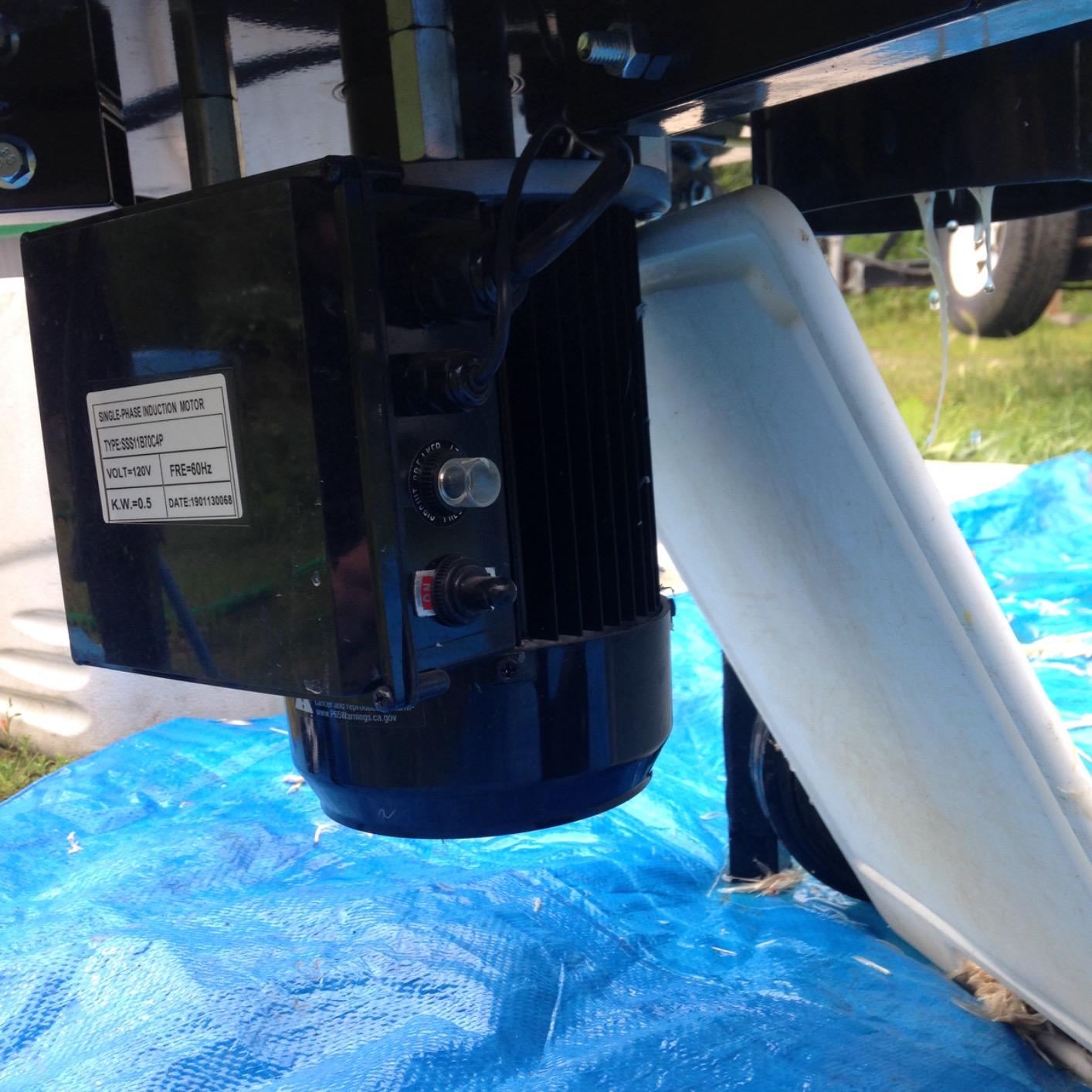
Two assembly details catch people out. The magnetic proximity switch that powers the motor can sit too far from the drum connector, so check the alignment before you power it up for the first time. The legs are bolted rather than welded, and owners who reinforce them report that the drum stops walking around the frame while it spins.
Electrical protection is genuinely good for a wet job. It uses an overcurrent protector GFCI connector switch inside an IP54 weather-resistant housing, which is the correct pairing for a machine that sits inches from a scald tank and gets hosed down after every batch.
What to check before your first run
Run water through the drum the whole time you are plucking dense breeds. Red Rangers and other heavy-feathered birds pack feathers into the finger bases quickly, and a dry drum is where the jam complaints come from. A standard garden hose into the irrigation inlet solves it.
Expect to touch up the tail and wing joints by hand. No 20 inch drum in this roundup gets 100 percent of the feathers, and the birds that get touched up the least are the ones that were scalded correctly in the first place.
Who should pass on it
Skip the Kitchener if your processing day is six birds or if you have no water source and drain nearby. The stainless tub needs a hose, and the drum holds debris that has to be rinsed out between loads. A backyard flock of layers that you might process a handful of birds from will not justify the setup.
2. Yardbird 21833 1.5 HP Stainless Steel Plucker – Most Motor in One Machine
Yardbird 21833 Chicken Plucker, Stainless Steel, 1.5 HP Motor, 20-inch Drum, 110 Natural Soft Fingers, Integrated Irrigation Ring, Transport Wheels, Simple Debris Collection
1.5HP gear drive at 300RPM
20 inch removable stainless drum
110 rubber fingers
82 pounds
Pros
- Most reviewed machine in the roundup with 1206 ratings
- 1.5HP motor is the strongest here
- Removable stainless drum wipes down fast
- Integrated irrigation ring flushes debris to a pail chute
Cons
- 82 pounds is the heaviest stainless unit in the group
- Results depend heavily on nailing the scald temperature
The Yardbird 21833 has the largest confirmed user base of any machine here, with more than 1200 ratings averaging 4.3 stars and about two thirds of those at five stars. Owners running full home flocks consistently describe it as a farm workhorse that earns its place by the time saved on hand-plucking alone.
The mechanical case for it is simple. A 1.5HP commercial-grade gear-drive motor in a waterproof housing spins the drum at 300 RPM, which is the highest rotational speed in the roundup, and it drives 110 natural rubber fingers rather than the 92 that covers most of the competition. More fingers at higher speed is why this machine holds up on heavy birds and why it can handle waterfowl as well as chickens, despite the fact that most buyers use it for broilers.
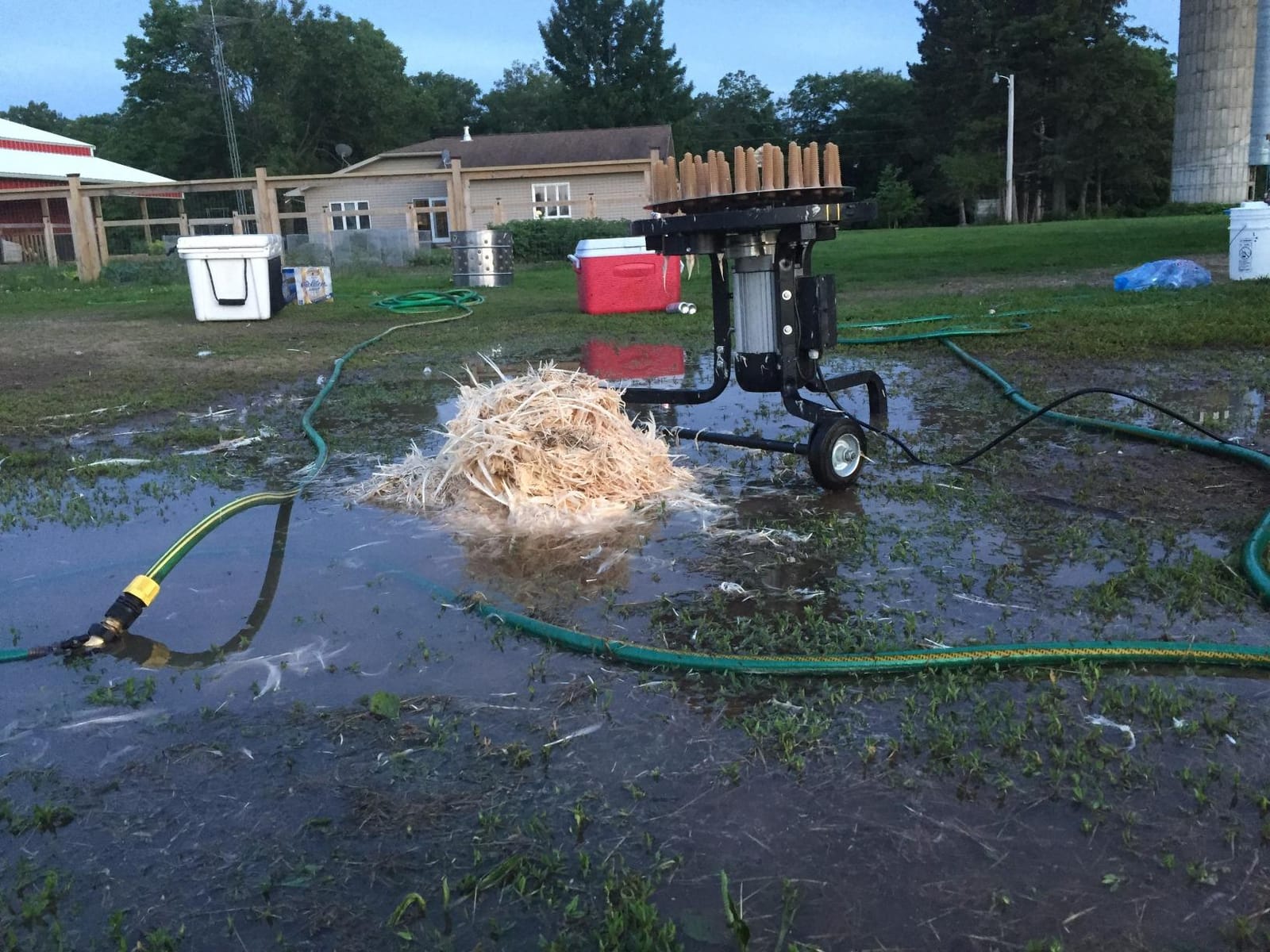
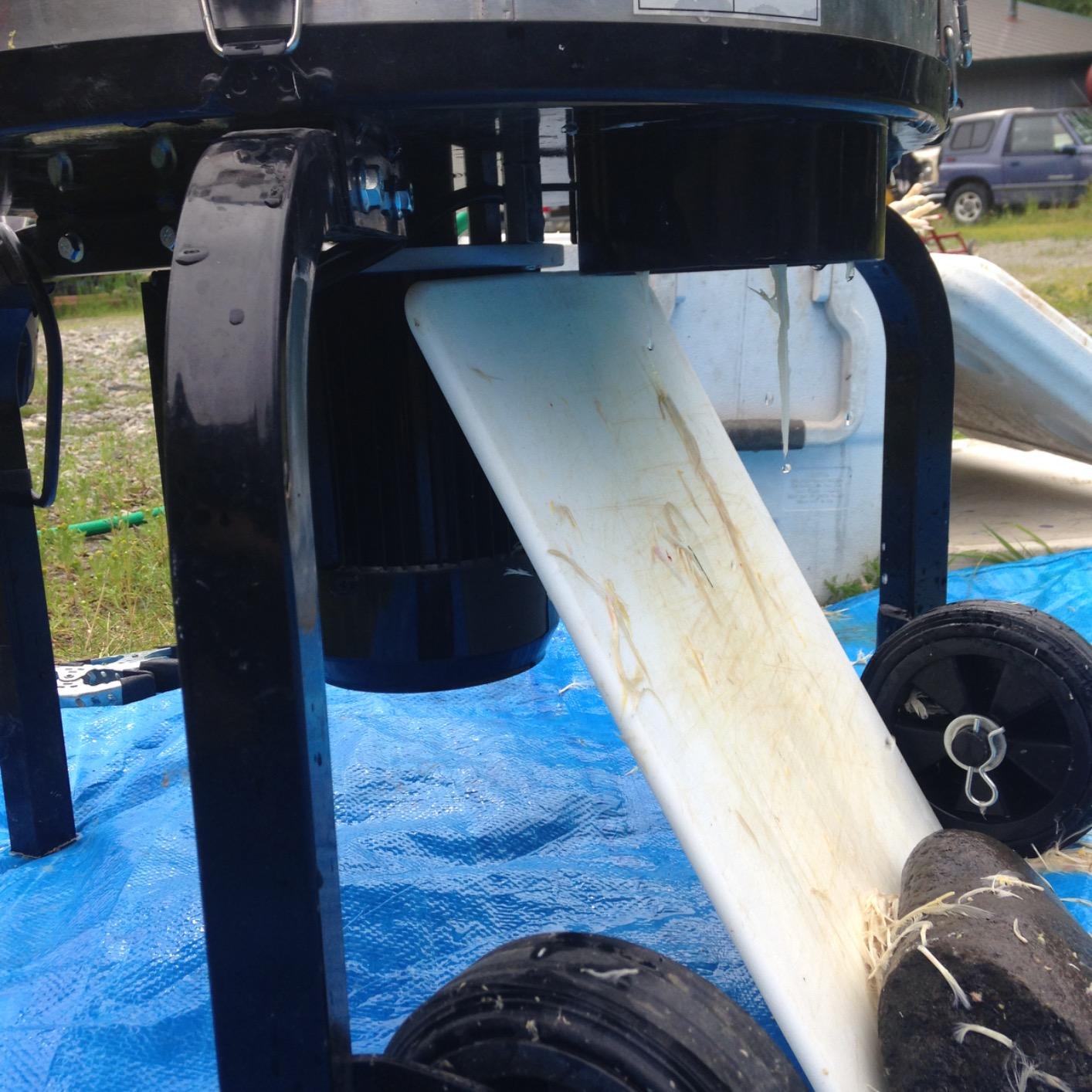
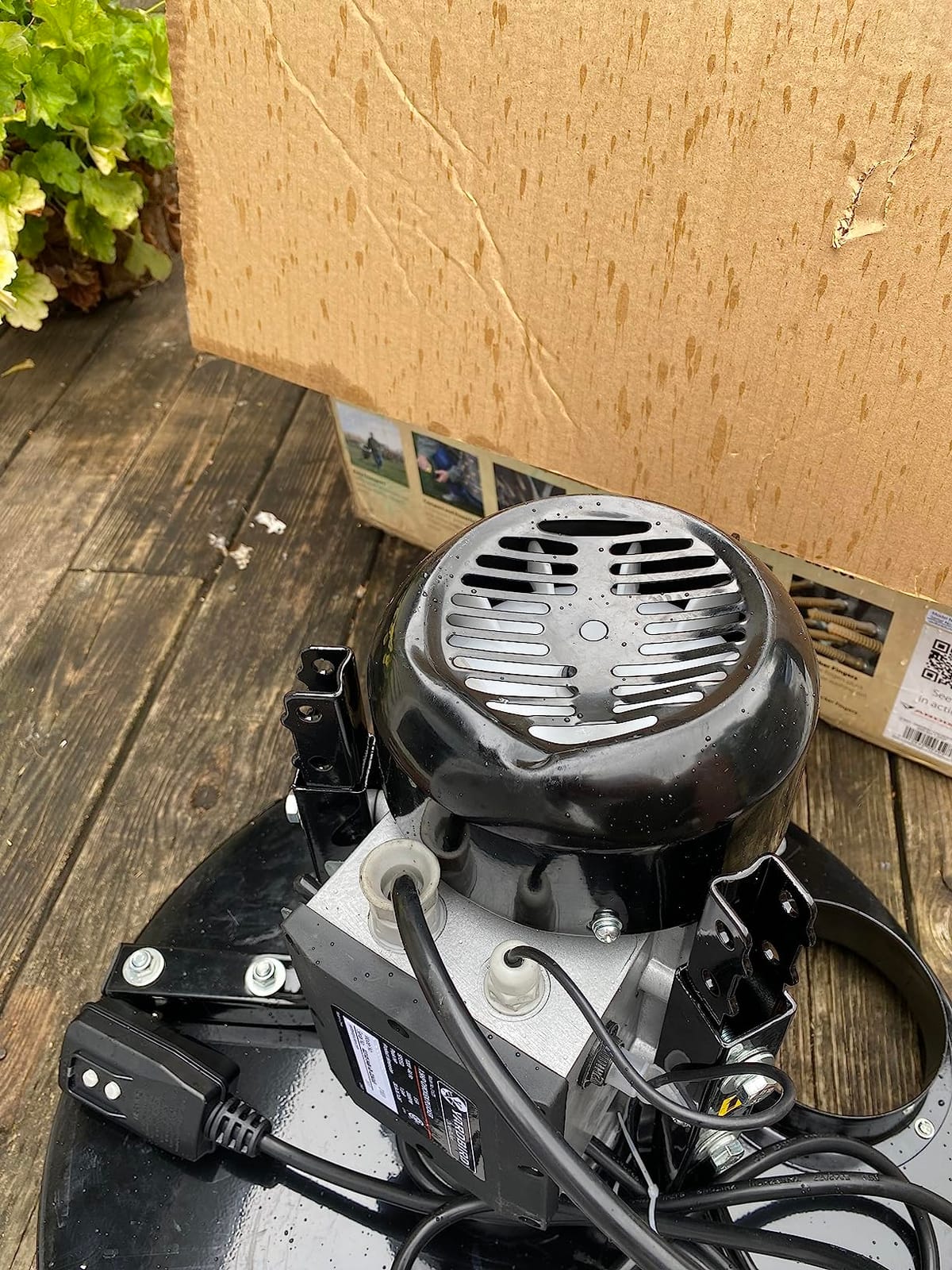
Cleaning is where the design earns its keep. The drum lifts out of the tub as a single removable food-grade stainless piece, so you rinse the food contact surface directly instead of trying to get a rag into the gap between a fixed drum and the housing. The integrated irrigation ring takes a standard garden hose connector and flushes loose feathers down a chute designed to feed a 5 gallon pail, so the mess goes into a bucket instead of onto the ground.
It weighs 82 pounds and measures 27 by 31 by 36 inches, and it rides on solid rubber ball-bearing wheels. That is a real machine, not a patio toy, and moving it across flat concrete is easy while moving it up a ramp is not.
Why the 1.5HP motor matters
More torque means the drum keeps turning at speed when there are two big birds in it, and a drum that keeps its speed is a drum that keeps its pluck. The 1HP machines in this roundup are fine with two birds, but owners running large roosters or ducks report that a smaller motor slows under a full load and needs longer cycles.
There is a safety angle too. A drum-sensing safety switch stops the motor if the drum shifts out of position, and the electrical side includes GFCI protection, which matters when the machine is wet down twice in one session.
Who should pass on it
The Yardbird 21833 is the wrong call if weight is a factor for you, if your processing area has steps, or if you only need to do a dozen birds a year. The drum-sensing and irrigation features are genuinely useful but they do not change the fact that this is the heaviest stainless option in this roundup. It comes with a 1 year warranty and US based customer service, which is thinner than the two year coverage on the newer Yardbird 44204.
3. SuperHandy 1HP 20 Inch Plucker – Best Value Stainless Workhorse
SuperHandy Chicken Plucker 1HP 120VAC – Electric Stainless Steel Poultry Processing Machine with 92 Soft Fingers, 20″ Drum, GFCI Safety & Waterproof Design, Transport Wheels
1HP 800W at 280RPM
92 soft fingers on a 20 inch drum
403 brushed stainless
55 pounds with wheels
Pros
- Dependable mid-size workhorse for small flocks
- 55 pounds is light for a stainless drum machine
- Compact frame rolls into a barn corner for storage
- GFCI and IP54 housing suit wet processing work
Cons
- Same drum and finger layout as several rivals
- so no capacity advantage
- Pluck quality depends on following the scald instructions
The SuperHandy is the pick if you want a stainless drum machine you can move by yourself and store between seasons without planning a ramp. At 55 pounds it is the lightest full-size stainless unit in this roundup, roughly 27 pounds lighter than the Yardbird 21833, and at 25 by 25 by 33.5 inches it parks against a wall out of the way.
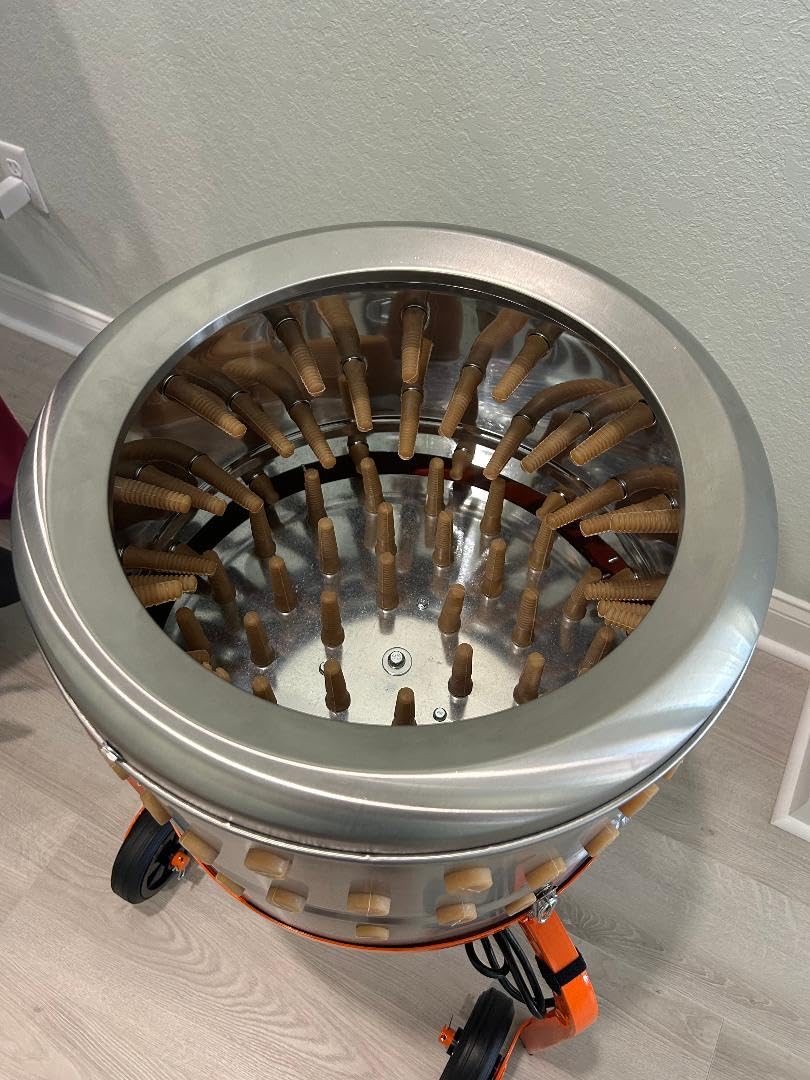
Mechanically it sits right in the middle of the category. A 1HP 800W motor at 280 RPM turns 92 soft fingers inside a 20 inch drum, and the body is 403 brushed stainless steel. The spec sheet claims two to four birds per cycle in 15 to 30 seconds, which matches what the Kitchener and other 1HP machines report.
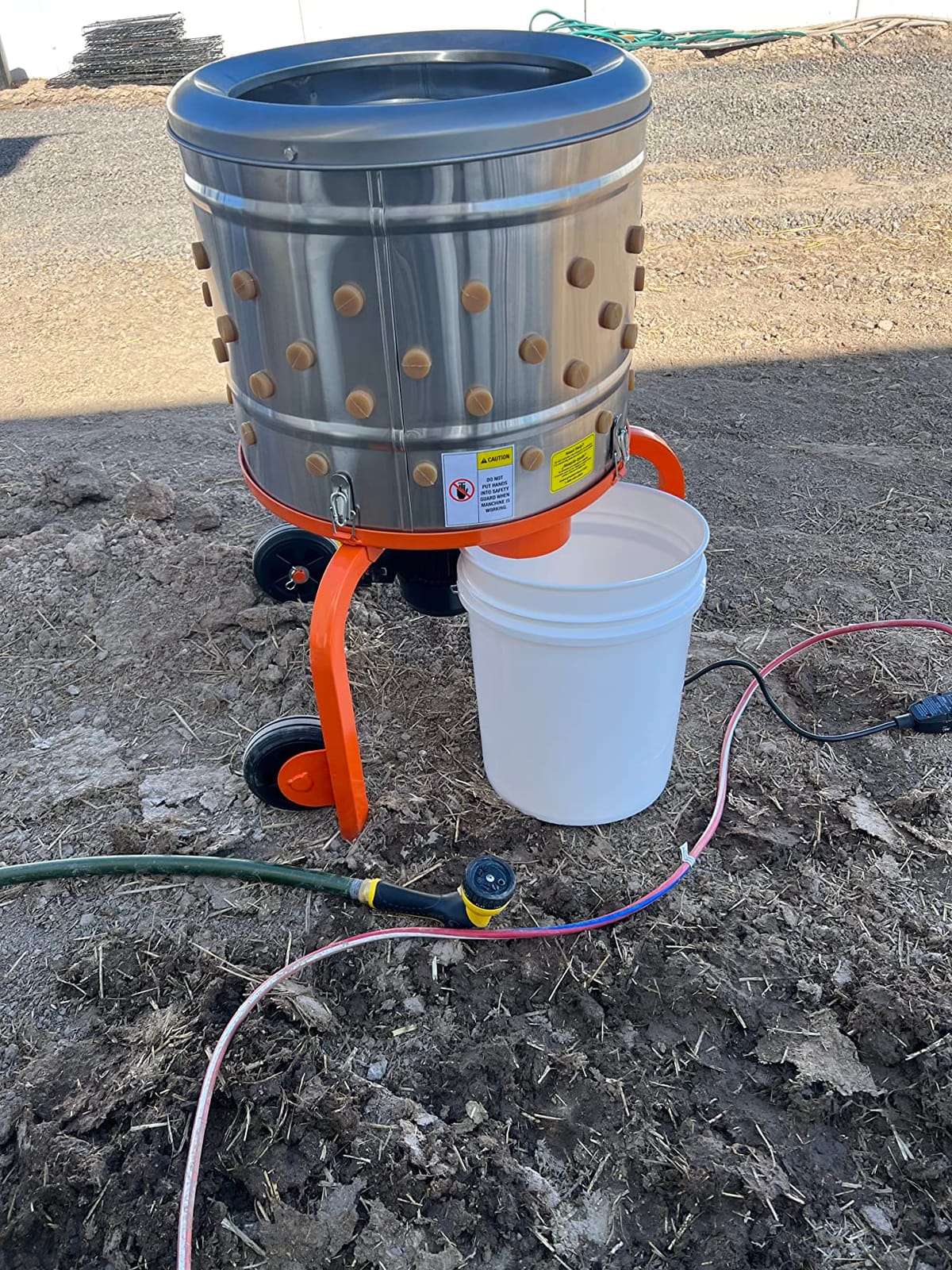
Buyers treat this as the dependable mid-size stainless workhorse, and the review profile backs that up with about 785 ratings averaging 4.3 stars and 72 percent five-star share. The feedback concentrates on solid construction, straightforward cleaning and portability rather than on any single standout feature, which is usually the sign of a machine that simply does its job without drama.
It includes an overcurrent protector with a GFCI connector and an IP54 weather-resistant electrical housing, plus wheels for moving it. Support is US based with a 1 year warranty, which is the category standard for this size of machine.
How this compares to the Kitchener
These two are effectively the same mechanical layout, and the honest truth is that several brands in this roundup are the same factory machine with a different sticker on the front. If you compare the drum size, finger count, motor wattage and rotation speed and they line up, you are looking at the same hardware.
That is not a bad thing. It means the SuperHandy and the Kitchener compete on listing quality, support and warranty rather than on engineering, and the SuperHandy is the cheaper way into the same class of machine with a 20 inch stainless drum.
Who should pass on it
Pass if you process large roosters, geese or heavy waterfowl as a regular part of the year. A 1HP motor with 92 fingers handles chickens comfortably, and moving up to a 1.5HP machine with 110 or 111 fingers is the smarter spend if the birds are the biggest thing on your property.
4. Yardbird 44204 1.2 HP Plucker – Best Built Site Details
Yardbird 44204 Chicken Plucker, Easy On/Off Button, Integrated Hose and Cord Hooks, 20″ Stainless Steel Tub, 1.2 HP Motor, 111 Natural Soft Fingers, Integrated Irrigation Ring and Included Y-Valve
1.2HP motor at 275RPM
111 natural rubber fingers
304 stainless food-grade tub
2 year warranty
Pros
- Tub-sensing safety switch kills the motor if the tub loosens
- On and off switch mounted above the drum so you never bend over it
- 111 natural rubber fingers treat skin gently
- Built-in hose and cord hooks keep the processing area tidy
Cons
- Heaviest unit here at 79 pounds
- Costs more than the 1HP machines in this roundup
The Yardbird 44204 is the newer design in this group, and it is the one where the details show the most thought about an actual processing day. It holds a 4.5 average with 58 ratings and a 76 percent five-star share. That is a small sample, so read it as a promising early record rather than a proven one, but the feature set is the most complete we found.
The motor is 1.2HP spinning the feather plate at 275 RPM, driving 111 natural rubber fingers, and it is rated to de-feather two chickens in 15 to 30 seconds. The tub is 304 stainless steel, food-grade, and the electrical housing is gasket sealed. Unlike the 1HP units, the switch and controls are positioned for a person standing upright rather than crouching over the drum.
Two features stand out. The tub-sensing safety switch stops the motor instantly if the tub is removed or loosened, which protects both the operator and the gear case. The integrated irrigation ring includes a Y-valve so you can split a hose or run a sprayer and the drum rinse at the same time, which shortens cleanup between birds.
How it performs in daily use
Buyers single out the 111 natural rubber fingers as gentle on skin and bone, which matters if you are processing birds for sale rather than for your own table. Removing a few feathers by hand at the tail costs you nothing, while a torn wing costs you meat.
For a homesteader who only processes twice a year, the built-in hose and cord hooks and the wide handle with large airless wheels make the difference between a machine that lives outside and one that collects dust in the corner of a barn.
Who should pass on it
At 79 pounds and 24 by 27 by 43 inches, it is tall and heavy, and the 2 year warranty is the longest in the roundup but the review count is among the thinnest of the stainless 20 inch machines. If you want proven long-term durability rather than the best layout, the Kitchener or the Yardbird 21833 have far more owners behind them.
5. VEVOR 750W Plucker – Best for Heavy Broilers
VEVOR Chicken Plucker Machine, 20 in Drum, 750W & 275RPM Electric Chicken Plucking Machine with 98 Soft Fingers & Transport Wheels, Stainless Steel Feather Remover for Processing 2 Chicks Once
750W motor at 275RPM
98 rubber fingers
Detachable drum, anti-clog fingers
5 to 6 lb birds
Pros
- Rated for birds of 5 to 6 pounds
- well past the 3 pound budget units
- Detachable drum with smooth walls and three bottom fingers that fight clogs
- Best category ranking in the group showing strong real demand
- Food-grade 430 stainless with overload protection
Cons
- 750W is well below the 1HP machines
- Listing headline says 20 inch drum while specs describe a 17 inch drum plate
- 15 percent one-star rating is the highest here
The VEVOR is the entry point into the category that most people searching for a chicken plucker machine start from, and it is a reasonable machine with one honest caveat. It runs a 750W motor at 120V and 60Hz drawing 6.6 amps, turning at 275 RPM, and it is rated to handle two chickens of 5 to 6 pounds each in about 30 seconds.
That bird weight matters more than any other spec on this page. The budget machines in this roundup are rated for birds around 3 pounds, and a 6 pound Cornish cross is heavier than most of them are designed to rotate. The 750W motor with overload protection is the least power in the group that still handles a full-grown broiler.
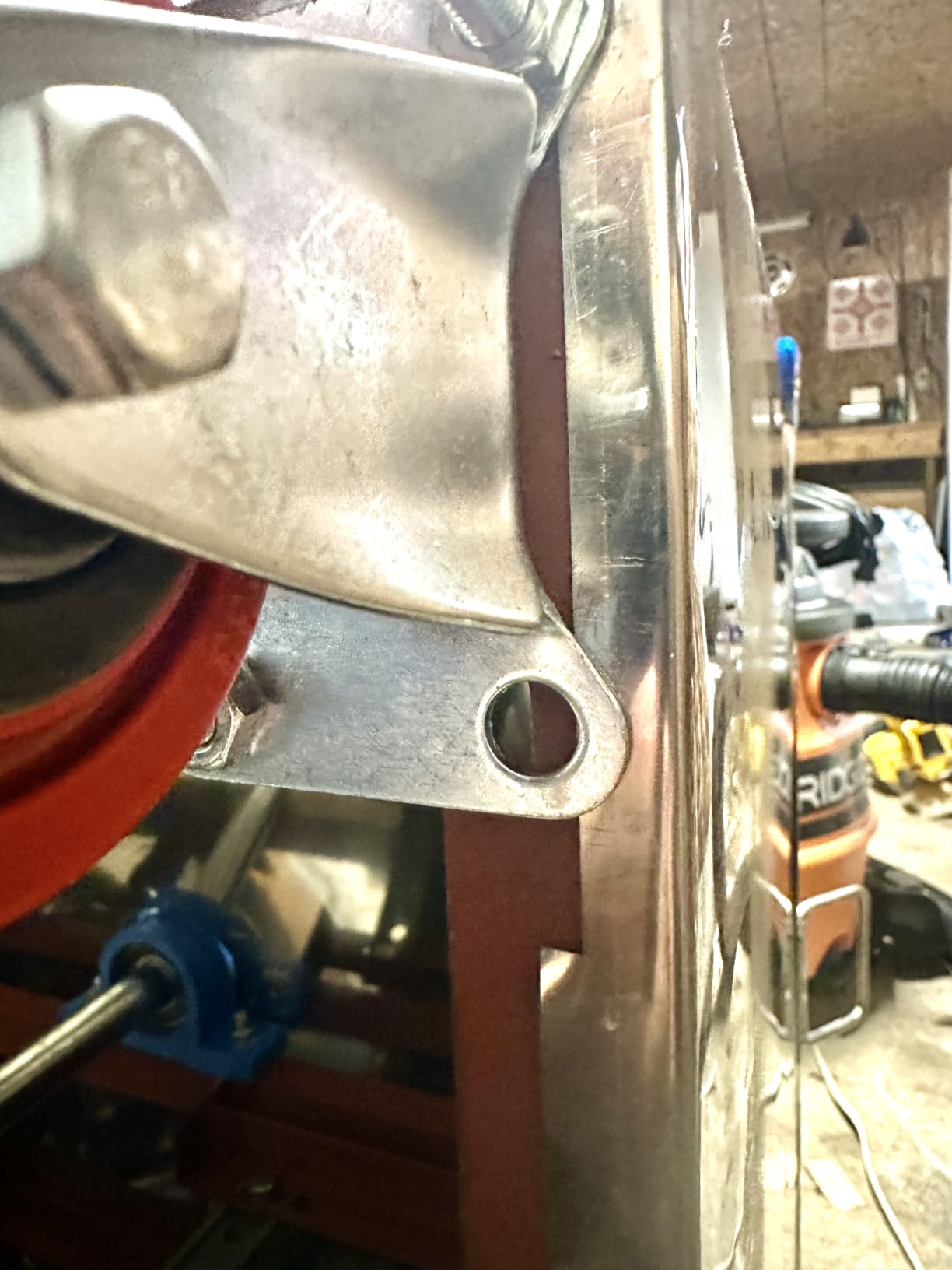
The drum design is the smart part. It is detachable with smooth inner walls and three soft fingers mounted along the bottom, which are there specifically to scrape feathers off the plate and push them toward the chute. Owners who bought it for the detachable drum report noticeably fewer clogs than they had with other machines in this class. The electrical enclosure is IP54 rated and the body is food-grade 430 stainless steel with a corrosion-resistant outdoor design.
It weighs 61.1 pounds and measures 26 by 24 by 33.7 inches, with larger rubber wheels and a handle for mobility. Operation is genuinely simple: connect the hose, load the bird, flip the switch.
Check the drum size carefully
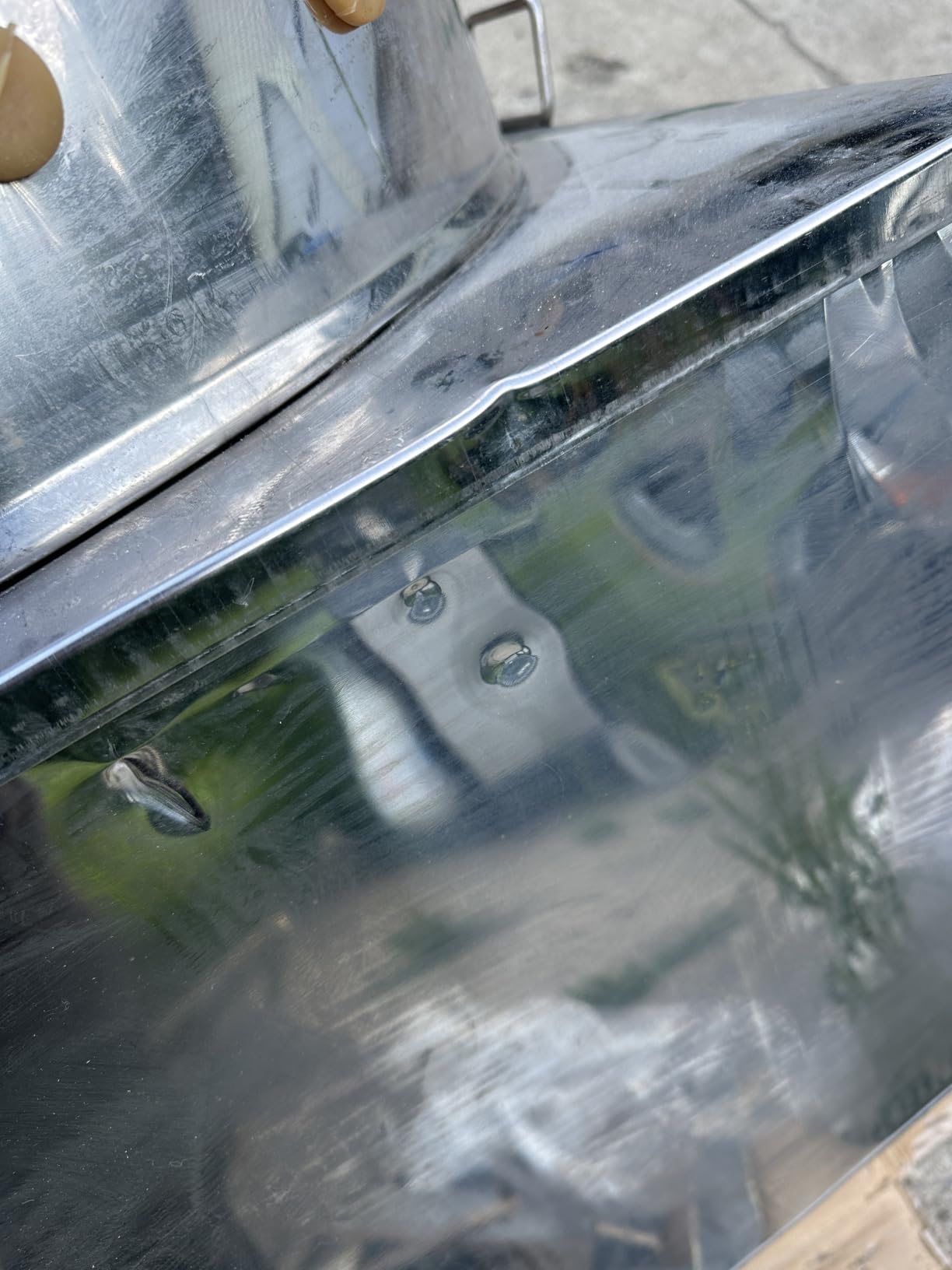
The listing headline advertises a 20 inch drum while the detailed specification describes a 17 inch drum plate carrying 98 rubber fingers. This is the OEM relabelling problem in miniature, and it is exactly why you should read the bullet list rather than the title. If you are comparing this to a 20 inch machine on paper, this one is smaller than the headline suggests.
Its review profile is 4.1 stars across 38 ratings with 15 percent one-star feedback, the highest one-star share in the roundup. That points to some machines not living up to the spec sheet, so factor in the possibility of a return.
Who should pass on it
Pass if you plan to grow into the hobby, because 750W will feel small the year you process your first hundred birds. Pass if you raise roosters or waterfowl regularly. And pass if the highest rating in the category matters more to you than the lower entry point, because this one is not close.
6. Garvee 20 Inch Drum Plucker – Best for Mixed Poultry Flocks
Chicken Plucker Machine, 20 inch Drum Stainless Steel Poultry Plucker
20 inch drum, 108 rubber fingers
Pure copper motor
Two 3 lb birds per cycle
Removable stainless parts
Pros
- Owners run mixed species through it including 15 ducks
- 4 roosters and 3 turkeys in one session
- 108 fingers remove feathers without bruising the meat
- Removable food-grade stainless parts rinse clean easily
- Compact footprint stores easily in a barn
Cons
- Drum clogs after every bird if you overfill it
- Top basket does not seal well and water can reach the switch
- Gears arrive dry and grind unless you grease the case
The Garvee is the machine to look at if your flock is not just broilers. Owners report running 15 ducks, 4 roosters and 3 turkeys through it in a single session, which is a much broader claim than most of the machines here make. The drum is 20 inches with 108 individually positioned rubber fingers and 108 ox-banded dehairing rods, and the motor is described as pure copper.
It is rated to process two 3 pound chickens in 10 to 30 seconds. That figure is the manufacturer claim, and the honest version is that your results depend on the scald, not the cycle counter. Reviewers across the board note that 108 fingers take feathers off without bruising the meat underneath, which is the single most common complaint about cheaper pluckers.
Surfaces are removable food-grade stainless with a waterproof motor housing, and the whole point of the removable design is that you can hose and scrub the food contact surface directly. The machine is listed at 20 by 20 by 36 inches and weighs 65.3 pounds, with a reinforced handle and two heavy-duty rubber wheels.
Three fixes before the first bird
The drum clogs after every bird if you overfill it, so run birds one at a time and clear the fingers between loads. The top basket does not seal perfectly, and water can seep through the seam toward the switch, so keep the electrical housing dry and do not run the machine with the tub overflowing. And the gear case arrives dry, which means it grinds until you disassemble it and grease the gears before the first run.
Those three items are common to a lot of this category and they are all ten minute fixes. Budget an hour before processing day and the machine performs.
Who should pass on it
Pass if you want a long published track record. It holds a 4.1 average across 42 ratings with 14 percent one-star feedback, and one owner reported a complete failure after a single use. It also has a GFCI certified electrical system and an IP54 enclosure plus an inductive switch, so the safety hardware is there even if the seal on the basket is not.
7. Roots and Harvest 1.2 HP Plucker – Best for High Volume Processing
ROOTS and HARVEST Chicken Plucker De-Feather Remover Poultry & Fowl Food Processor Stainless Steel Heavy Duty Electric 1.2HP 120VAC 280RPM Planetary Gear Motor 92 Soft Fingers 20″ Drum Diameter
1.2HP 120VAC at 280RPM
Planetary gear drive
92 soft fingers, 20 inch drum
Stainless steel, 69 pounds
Pros
- 1.2HP planetary gear motor is class-leading on paper
- Stainless steel body suited to full washdown processing
- Large 20 inch drum handles standard size birds
Cons
- Lowest rating in the roundup at 4.0 stars
- Only 16 reviews so the reliability record is thin
- Sparse listing detail and weak category demand signals
On paper this is one of the most capable machines in the roundup, and the documentation is the thinnest. The motor is a heavy duty 1.2HP 120VAC planetary gear unit running at 280 RPM, driving 92 soft fingers inside a 20 inch stainless drum, and the body is stainless steel with easy-clean surfaces. It weighs 69 pounds.
A 1.2HP planetary gear motor is the same power class as the newer Yardbird 44204 and well above the 1HP units, and the planetary gear design is the reason those motors stay quiet and hold speed under load. If you are processing a hundred birds on a single day, this is the class of machine you want.
The problem is the evidence
It holds a 4.0 average across 16 ratings, the lowest rating and the smallest sample in this roundup. The distribution is 62 percent five-star against 11 percent one-star and 10 percent two-star, which is a wider spread than the well-reviewed machines show. Its category ranking is also dramatically lower than the rest of the field, suggesting limited actual sales volume.
The listing itself is a single feature line with no weight detail beyond the basics and no model number, which means if something goes wrong you are relying on general marketplace support rather than a documented product line.
Who should pass on it
Pass if you are buying with borrowed money or saving for several seasons. The spec sheet is better than some machines here, but 16 reviews cannot tell you whether the gear case survives three processing days a year for a decade, and the Kitchener or Yardbird can. Pass if warranty and support matter, since none is documented here.
8. GarveeLife 20 Inch Drum Plucker – Most Versatile
GarveeLife Chicken Plucker Machine, 20 in Stainless Steel Poultry Plucker with 106 Soft Fingers, GFCI Safe Waterproof Design Plucker Machine for Farms, Restaurants, Home
500W copper motor at 280RPM
106 soft fingers, 20 inch drum
Two 3 lb birds per cycle
69 pounds
Pros
- Lowest entry point among the stainless 20 inch drum machines
- 106 soft fingers with ox-banded rods give full 360 degree coverage
- Removable food-grade stainless parts simplify washing down
- GFCI connector and IP54 enclosure for wet area use
Cons
- 3.9 stars is the lowest average in the roundup
- 500W motor suits small birds only
- 12 percent one-star ratings suggest early failures
The GarveeLife is the cheapest way into a stainless 20 inch drum machine, and it is worth understanding exactly what that buys you. The motor is a 500W pure copper unit running at 280 RPM, and it is rated to dehair two chickens of roughly 3 pounds each in 10 to 30 seconds. Any bird meaningfully heavier than that and you are outside its comfort zone.
The drum is 20 inches with 106 individual rubber fingers and 106 ox-banded dehairing rods arranged for 360 degree coverage, which is a generous finger count for the power level and helps with the hard-to-reach down. The rollers are removable food-grade stainless, the motor housing is waterproof, and the electrical side includes a GFCI overcurrent protector with an IP54 weatherproof enclosure and a fully inductive switch.
It weighs 69.1 pounds and measures about 19.7 by 19.3 by 34.3 inches, with a portable handle and two solid rubber wheels. GFCI and an IP54 enclosure are not standard on the cheapest machines, and having both here matters in a wet processing area.
Read the rating split before buying
This is the lowest rated machine in the roundup at 3.9 stars across 26 ratings, and the distribution explains why. Forty-five percent of buyers gave five stars while 12 percent gave one star, a spread that points to a machine that works competently for small birds and disappoints people who expected the power of a 1HP unit. Twenty-six reviews is also a thin long-term durability record.
If you take one thing from this review, take this: buy it for quail, squab, small cockerels and undersized birds, not for full-grown broilers.
Who should pass on it
Pass if the birds are your main output and you process full-grown broilers by the dozen. The 500W motor is the least powerful here and the one-star share suggests some failures happen early, which is a bad combination for a machine you plan to keep for years.
9. PluckerUkraine Mini-330 – Best for Quail and Small Game Birds
PluckerUkraine Quail Plucker Machine Mini 330 – Poultry Feather Remover for Small Chicken Quail Pigeon with Small Soft Fingers 13″Drum 110V-Plucker KIT (Quail Plucker Machine) (New)
13 inch barrel, 174 small fingers
110V 180W low RPM
About 15 seconds per cycle
21 pounds
Pros
- Highest five-star share in the roundup at 78 percent
- 21 pounds makes it the easiest machine to carry and store
- Specialized for quail
- pigeons and small game birds
- 174 rounded white rubber fingers avoid skin damage
Cons
- 180W cannot process full size broiler birds at all
- 13 inch drum limits capacity to very small poultry
- Polypropylene shell is less rigid than the stainless tubs
The Mini-330 solves a problem none of the 20 inch machines here can, which is that a full-size drum will not process quail, pigeons or small game birds properly. It is built for birds weighing 2.2 pounds and under: one small chicken at a time, three to five quail, or four to five pigeons per cycle.
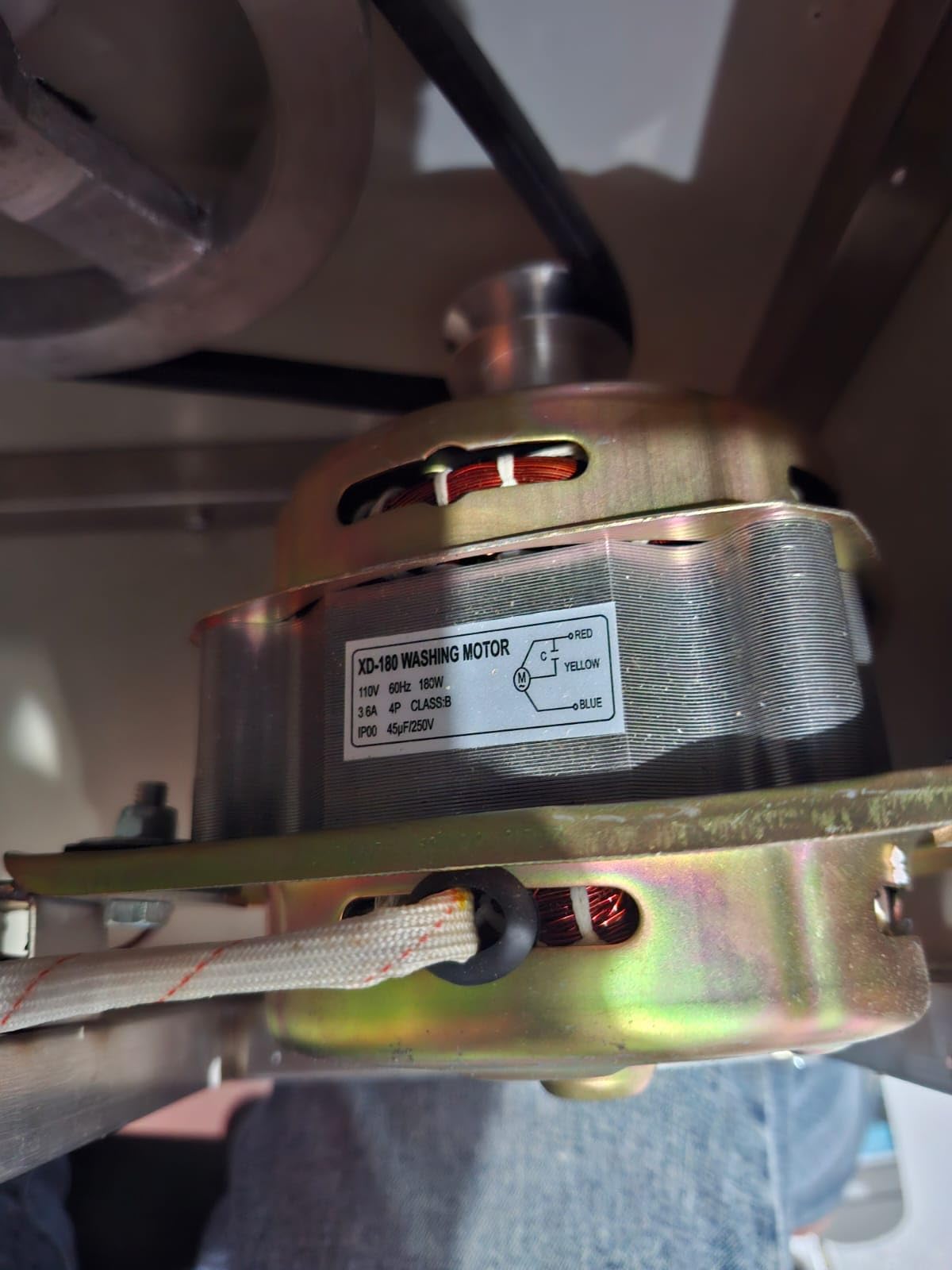
The barrel is 13 inches with 174 small fingers measuring 1.77 inches each, and it de-feathers in about 15 seconds. It runs on 110V, 180W, 60Hz at a low rotation speed, and the finger tops are rounded white rubber specifically designed to avoid skin damage on delicate carcasses. The shell is food-grade polypropylene between 0.08 and 0.2 inches thick, mounted on a solid stainless steel frame with stainless steel bolts and a water-protected motor housing.
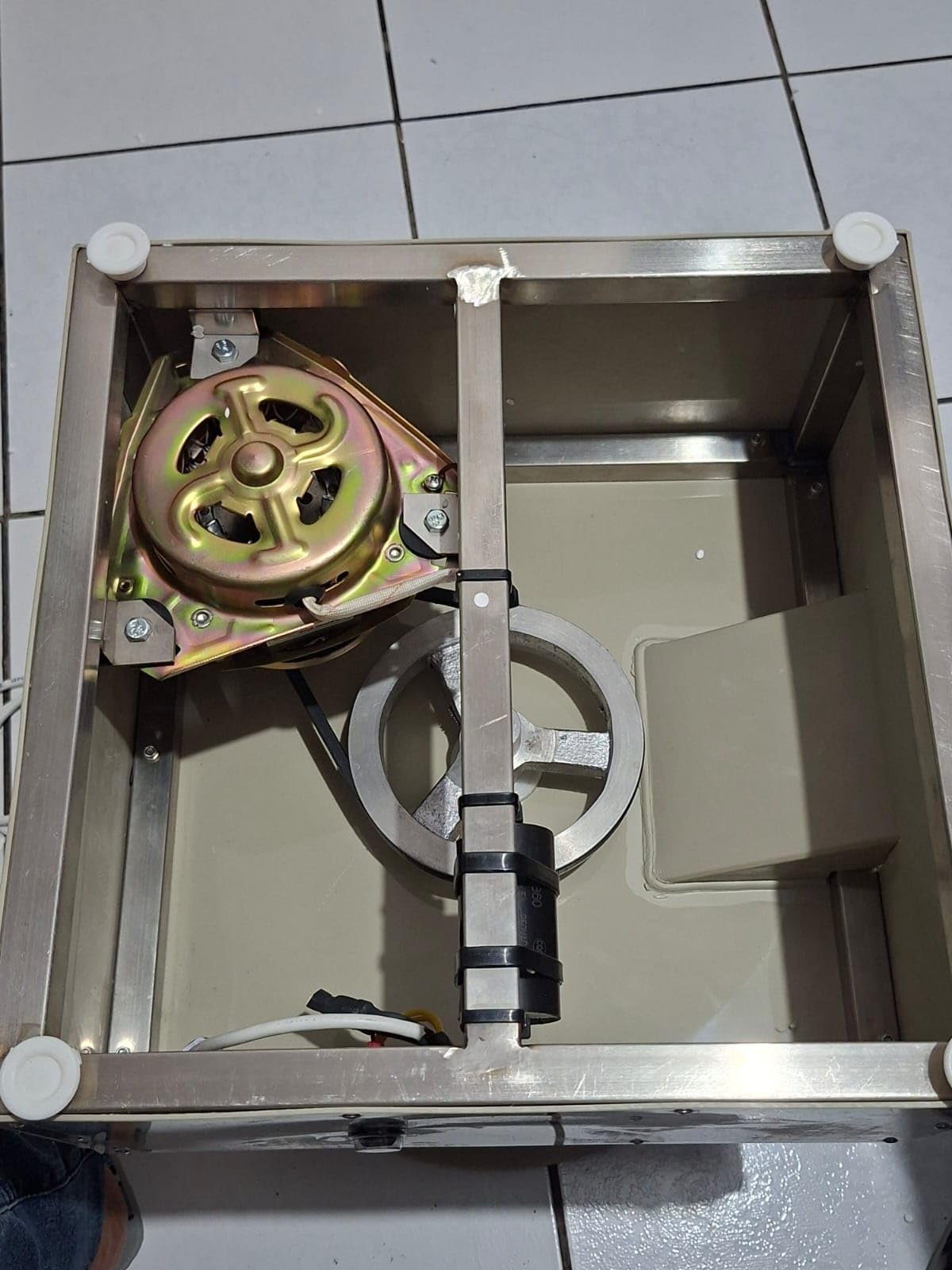
Two details make it a genuinely different machine rather than a toy. It weighs about 21 pounds, which means one person can carry it from the garage to the processing area and back, and it includes a rinsing pistol that fits a standard 5/8 inch garden hose. Double plucking fingers mounted under the disk push feathers toward the chute instead of letting them build up under the plate.
The rating is 4.5 across 34 ratings with 78 percent five-star feedback, the highest five-star share in the roundup, though the sample is small. The manufacturer has built plucker machines since 2007 and includes professional instructions with the unit.
When this one makes sense
If you raise quail, pigeons, doves or small game birds in volume, a 20 inch drum wastes almost all of its capacity. These birds sit in the bottom corner, the fingers never reach the down, and you end up hand-plucking the parts that matter. The Mini-330 packs far more fingers into far less barrel space precisely because the birds are small.
It also works as a finishing tool on a big machine. Run a partially plucked bird through a 20 inch drum, then use the Mini-330 for the tail and wing joints.
Who should pass on it
Pass if you process broilers. A 180W motor has no chance with a 6 pound bird, and the polypropylene shell is less rigid than the stainless tubs on the larger machines. This is a specialist tool, and specialists are worth it only when you are actually raising the bird it is built for.
How to Choose a Chicken Plucker Machine
Six decisions decide whether you love your plucker or regret it. Here they are in the order that actually matters.
1. Drum size and bird weight together
Drum size is not a status symbol, it is a fit question. A drum that is too small for the bird lets it bounce instead of pinning it against the fingers, and a drum that is far too large wastes its capacity. The 20 inch drum with 92 to 111 fingers is the mainstream standard for the broilers and roosters most homesteads process, and most of this roundup sits there.
Below that, the 13 inch barrel exists only for quail, pigeons and small game birds. Above that, you need more motor rather than more drum, which is why the strongest machines here pair a 20 inch drum with 1.2 to 1.5HP rather than a 25 inch drum with a 500W motor. Match the drum to your largest bird, not to your ambition.
2. Motor power, which is really bird weight
Motor wattage is the spec that determines what you can process. A 500W motor handles birds around 3 pounds. A 750W motor handles 5 to 6 pound birds. A 1HP, or 800W, machine with a planetary gear runs two to four birds per cycle. A 1.2 to 1.5HP gear-drive motor handles roosters, ducks and occasional waterfowl without bogging down.
The trap is buying a big drum with a small motor. The drum looks impressive and then stalls halfway through a cycle with two broilers in it, and the bird comes out with feathers and a torn wing.
3. Finger count, type and drum speed
Finger count alone does not predict quality, but it does predict coverage. A 20 inch drum with 92 fingers is the common baseline, 106 to 111 fingers is above baseline, and 174 small fingers covers the 13 inch quail drum. Natural rubber fingers are the softer, more forgiving material, and most buyers treat them as gentler on skin.
Speed matters too. Yardbird 21833 runs at 300 RPM with a 1.5HP motor, while most 1HP machines run 275 to 280 RPM. Fast and powerful is good for large birds, but the fast rotational speed is exactly why a 300 RPM machine needs a correct scald to avoid tearing skin.
4. Materials, and whether the drum comes out
Stainless steel is the standard for a reason. It resists rust, it tolerates being hosed down with sanitiser, and it does not absorb odor over a decade of wet use. 403 and 430 stainless are the common grades, with 304 appearing on the newest food-grade tub.
The more important material question is whether the drum and rollers are removable. A fixed drum with a narrow gap to the housing traps feathers and skin fragments that you cannot reach with a rag. Removable food-grade stainless parts are worth real money when you are processing birds you intend to eat or sell.
5. Footprint, drainage and wheels
Every plucker in this roundup needs a water supply, a drain and somewhere to put a 5 gallon pail. The machines range from 15.7 by 15.7 by 17.3 inches at the tiny end to 27 by 31 by 36 inches for the Yardbird 21833. Plan the layout before you buy, with the kill station, the scald tank and the plucker in that order so a scalded bird never crosses your path twice.
Wheels are not a luxury. If you process twice a year, you will be moving the machine out of storage and back, and the machines with solid rubber ball-bearing wheels or airless wheels move far better across wet concrete and gravel than the small casters on cheaper builds.
6. Electrical protection and warranty
You are running a motor next to a tank of hot water. Look for a GFCI connector and an IP54 or better weather-resistant enclosure, both of which appear on most of the stainless machines in this roundup. Drum-sensing or tub-sensing safety switches, which stop the motor if the drum shifts, are a genuine step up and appear on both Yardbirds.
Warranties range from 1 year on the SuperHandy and Yardbird 21833 to 2 years on the Yardbird 44204. Longer is better, but in this category a warranty matters less than the strength of the review record, because many failures show up in the first season.
Scalding and Plucking Technique That Actually Works
Almost every bad pluck in this category is a scald problem, not a machine problem. The drum can only finish what the water started, and if the feather follicles did not loosen, no amount of motor torque will help. Water between 130F and 165F is the working range, with dwell time doing as much work as temperature.
Under about 130F the follicles do not open and feathers stay welded in. Over about 165F, especially with a long dwell, the skin surface proteins set and the drum starts tearing skin off the bird. That torn skin is lost meat, and on a processed bird it is lost money.
Rule of thumb on dwell time: about 10 to 15 seconds for small birds and young quail, 20 to 30 seconds for standard broilers around 4 to 6 pounds, and up to 45 seconds for large roosters and waterfowl. Move the bird through the water rather than leaving it sitting, and pull feathers at the tail as your doneness test. If the tail feathers release with a light pull, you are ready for the drum. If they do not, you are not.
Run water through the drum while it spins. Dry drums with dense feathers pack the finger bases solid, and that is the single most common jam complaint in this category. Two birds is a comfortable load for most 1HP machines and three is a reasonable maximum, and overloading is the fastest way to get an incomplete pluck and a clogged drum in the same cycle.
If the machine is tearing skin, work through it in this order: scald temperature first, then dwell time, then the number of birds in the drum, and only then the finger material. Nine times out of ten the water was too hot or the bird sat too long.
Safety Around Water and Electricity
You are running a motor within inches of a scalding tank, on a wet surface, often in the dark and often in a hurry. Treat the electrical side seriously.
Plug into a GFCI protected outlet every time, and use the GFCI connector built into the machine rather than a two-prong adapter. Keep the power cord and any hose connection above the splash line, and route cords so they cannot end up in a puddle or under a wheel. Machines with a drum-sensing or tub-sensing safety switch, which both Yardbirds here have, will stop if the drum shifts, so check that the switch is actually engaging before you reach into the tub.
Never lift a bird out of a running drum. Stop the machine, and use the safety switch rather than reaching for the stop button one-handed. Keep the kill station, the scald tank and the electrical panel in separate parts of the layout, with the plucker downstream of the water. And if you process outdoors, put the machine under cover and remember that an IP54 rating is a splash rating, not a rain rating.
Cleaning, Sanitation and Off-Season Storage
Clean between every bird, not at the end of the day. Run the drum empty with the hose for thirty seconds to push feathers down the chute into the pail, then pull the removable drum and rollers out and scrub the food contact surfaces with hot water and detergent. The machines with removable food-grade stainless parts take this in minutes, and that is the single biggest practical difference between them and fixed-drum designs.
Sanitise before you refrigerate or freeze. A food-safe sanitiser solution on the drum, the tub and the chute, followed by an air dry, is enough for home processing. Pay attention to the seam where the top basket meets the tub on the models that have one, because that is where water collects and where bacteria find a wet place to sit.
Before storing, dry the drum completely, grease the gear case if the manufacturer calls for it, and run the motor empty for a minute to clear residual water out of the housing. Store indoors if you can, with the tub open. Stainless machines survive a barn, but a polypropylene shell and a motor housing both do better out of the weather, and rust never sleeps.
When a Chicken Plucker Is Not Worth It
The most useful thing we can tell you is when to buy nothing. The break-even question comes up constantly on homesteading forums, and the answer is arithmetic rather than opinion.
A drum plucker replaces a task that takes roughly 15 to 20 minutes of hand work per bird with about 30 seconds of machine time. If you process 20 birds a year, you are looking at roughly seven hours of hand plucking a year, spread across two or three days. No machine pays for itself on seven hours. If you process 50 birds a year, you are looking at about 15 hours, and a plucker turns those into about half an hour of drum time. That is the threshold where the math starts working, and everything above it gets better fast.
Below roughly 20 birds a year, the alternatives are genuinely better. Skinning, which a homesteader on r/homestead described as the way to treat a chicken like a deer, takes a couple of minutes and produces intact skin and skin-on meat. Dry plucking works on a small number of birds if you want the feathers. Or borrow a machine, because half a chicken plucker shared between two households is a common and completely sensible arrangement.
Beyond the machine itself, budget for the rest of the setup. A scald tank that holds two birds, a burner, a table, a potable water supply, a proper drain and enough plumbing to get the discharge where it belongs can add real money to the project. That is the number that pushes some people over the line, and it is the reason a two household share often makes more sense than two separate purchases.
Once the birds are processed, the cooking side matters too. If you are new to working with a whole bird, our chicken parmesan with spaghetti guide and homemade chicken noodle soup method are reliable ways to break one down without wasting any of it.
Frequently Asked Questions
What is the best chicken plucker to get?
For most homesteads the Kitchener 1HP with the 20 inch drum is the best all-round buy, holding a 4.5 average across more than 1000 reviews. Choose the Yardbird 21833 if you want the most motor and the most fingers, the SuperHandy if you want the same stainless 20 inch layout for less, the VEVOR if your birds reach 5 to 6 pounds, and the Mini-330 if you raise quail or pigeons.
Do you have to scald chickens before using a plucker?
Yes. Scalding in water between 130F and 165F loosens the feather follicles, and the drum only removes what the water started. Scald for roughly 10 to 15 seconds for small birds and 20 to 30 seconds for standard broilers, moving the bird through the water, then test by pulling a tail feather. Cold water leaves feathers welded in and over-hot water sets the skin so the drum tears it.
How long does plucking a chicken take?
A 20 inch drum plucker strips a correctly scalded bird in 15 to 30 seconds, and 1HP machines commonly handle two to four birds per cycle. The small 13 inch quail drum claims about 15 seconds per cycle. Hand plucking the same bird takes 15 to 20 minutes, which is the entire reason the machine exists.
What size chicken plucker do I need?
A 20 inch drum with 92 to 111 fingers is the right size for almost every homestead processing chickens up to about 8 pounds. Match the motor to the bird instead: 500W for birds around 3 pounds, 750W for 5 to 6 pound broilers, and 1HP to 1.5HP for roosters, ducks and high volume days. Go smaller only if you process quail, pigeons or small game birds.
Why is my chicken plucker tearing skin?
Almost always the scald, not the machine. Water above about 165F or a dwell time that is too long sets the skin surface so the fingers tear it off. Work through it in order: lower the scald temperature, shorten the dwell time, run fewer birds per cycle, and only then consider finger type. Skin tears cost you meat on every bird you process.
Conclusion: Which Chicken Plucker Should You Buy in 2026?
The best chicken plucker machines for homesteads come down to three honest rules. Process 50 or more birds a year and buy a 20 inch drum stainless machine with a 1HP or larger motor. Keep the birds under 6 pounds and the 750W VEVOR covers it for the least money. Raise quail and pigeons and the Mini-330 is the only one here built for them.
Our pick, the Kitchener 1HP with the 20 inch drum, wins on the largest confirmed review record in the category and the highest average rating, and it is the one we would put in a barn without hesitating. The Yardbird 21833 is the upgrade for anyone processing roosters, ducks or more than a hundred birds in a season, and the SuperHandy is the same working layout for less if weight and storage are your constraints.
Before you buy, work out whether you actually need one. Under 20 birds a year, skinning them or splitting the cost with a neighbor beats every machine on this page. Once you are past that line, buy the drum, learn the scald, and you will wonder how you ever processed a whole flock by hand. When you have the birds in the cooler, the chicken tenders recipe and the crispy chicken and waffles are where the payoff starts.