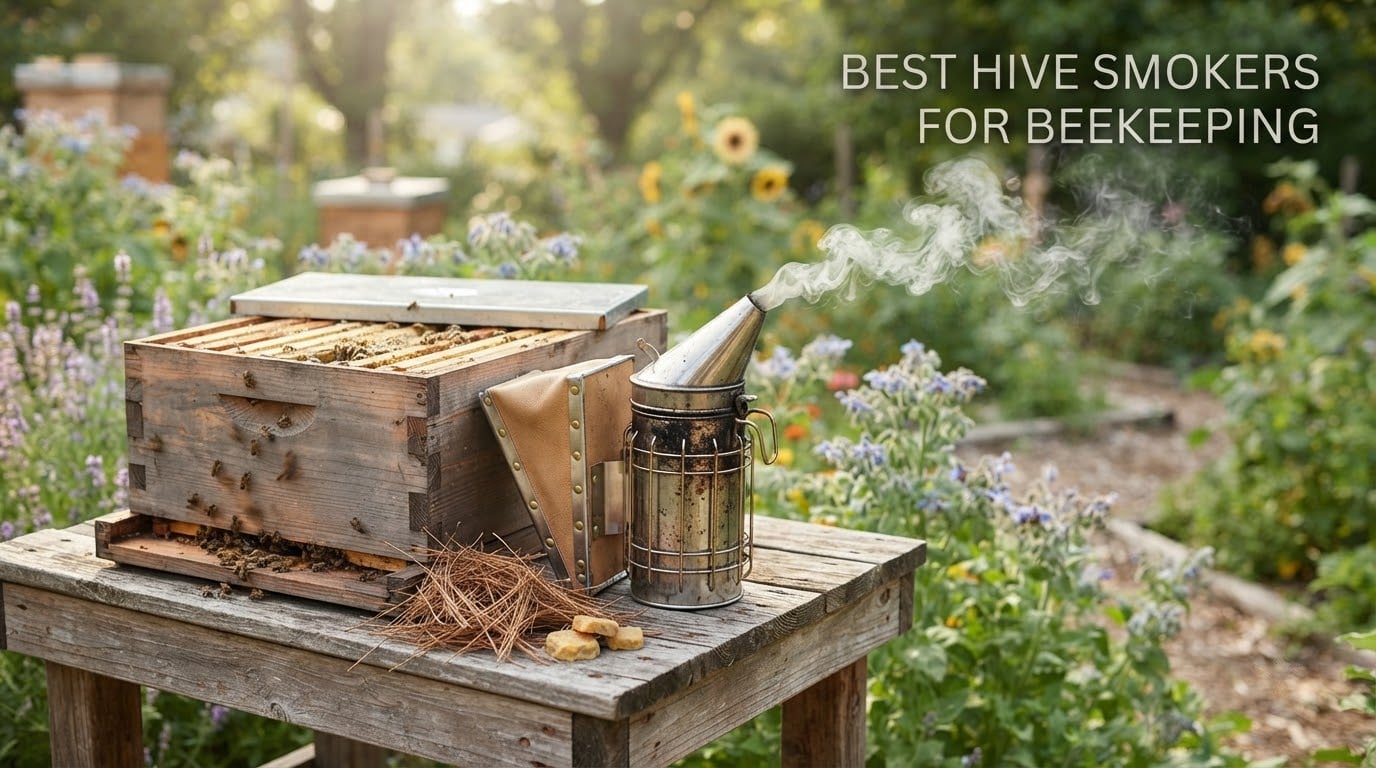
Every hive inspection starts the same way: you need cool, steady smoke from a tool that stays lit through twenty minutes of lifting frames, and it needs to do that without cooking your gloves or dropping a spark on the grass behind the hive. That single requirement decides most of the buying decisions below.
We spent weeks with these eight hive smokers across one-hive backyard yards and multi-colony yards, comparing fuel burn, lid access with gloves on, smoke temperature and how each one handled a full inspection. We also read the owner complaints that show up again and again in beekeeping forums, because the difference between a smoker that feels great in a listing and one that works at the back of a forty-colony yard is usually in the hardware.
If you want the short version of the best hive smokers for beekeeping, start with the top picks table below. The VIVO Large Stainless Steel BEE-V001L is our pick as the best all-round hive smoker: a 12 inch stainless steel body with a heat shield, a perforated fire base and the deepest owner history in the group. Every smoker here is a manual bellows model, which is still the standard in the trade, and every one is a bare metal chamber with a heat shield around it.
Table of Contents
- Top 3 Hive Smokers in 2026
- Best Hive Smokers for Beekeeping (October 2026)
- 1. VIVO Large Stainless Steel Bee Smoker BEE-V001L – the best overall hive smoker
- 2. Goodland 11 Inch Stainless Steel Smoker with Three Smoke Logs – best for gloved handling
- 3. Foxhound Bee Co 12.5 Inch Pro Smoker – the heavy-duty pick for large yards
- 4. SunVara 11 Inch Stainless Steel Smoker – best for compact handling
- 5. Hoqqf Bee Hive Smoker Kit with Hive Tools – best all-in-one kit
- 6. Flexzion Stainless Steel Bee Smoker – the lightest first smoker
- 7. ThxBees 11 Inch Stainless Steel Smoker – best value
- 8. BeeTech Stainless Steel Smoker with 54 Pellets – best for fuel included
- How Smoke Calms Bees and Why Your Smoker Design Matters
- Smoker Size and Burn Time: How Big Do You Need?
- Stainless Steel, Galvanized Steel and Bellows Materials
- Heat Shields, Lid Access and Burn Safety
- Smoker Fuel: What to Burn and What to Avoid
- How to Light a Hive Smoker and Keep It Lit
- Electric vs Manual Bellows Smokers
- Maintenance, Cleaning and Seasonal Storage
- Frequently Asked Questions
- Which Bee Smoker Should You Buy?
Top 3 Hive Smokers in 2026

VIVO Large Stainless Steel Smoker
- 12 inch tall with 4 inch canister
- Stainless steel body and heat shield
- Perforated fire base
- Side mounting hook

Goodland 11 inch Smoker with Pellets
- Welded stainless steel body
- Heat cage and fall guard
- Perforated pellet stand
- Three mugwort logs included

Foxhound 12.5 inch Pro Smoker
- 12.5 inch heavy-duty chamber
- Thicker airflow plate
- Full heat guard with hook
- Replaceable bellows
Best Hive Smokers for Beekeeping (October 2026)
The shortlist below covers every pick in this guide, with the details that actually change the decision: chamber size, how the smoker is protected from your hands, and what fuel it is designed around.
| Product | Specs | Action |
|---|---|---|
| VIVO Large Stainless Steel Smoker |
|
Check Latest Price |
| Goodland 11 inch Smoker with Smoke Logs |
|
Check Latest Price |
| Foxhound 12.5 inch Pro Smoker |
|
Check Latest Price |
 SunVara 11 inch Stainless Steel Smoker SunVara 11 inch Stainless Steel Smoker |
|
Check Latest Price |
 Hoqqf Smoker Kit with Hive Tools Hoqqf Smoker Kit with Hive Tools |
|
Check Latest Price |
 Flexzion Stainless Steel Bee Smoker Flexzion Stainless Steel Bee Smoker |
|
Check Latest Price |
 ThxBees 11 inch Smoker ThxBees 11 inch Smoker |
|
Check Latest Price |
 BeeTech Smoker with 54 Pellets BeeTech Smoker with 54 Pellets |
|
Check Latest Price |
1. VIVO Large Stainless Steel Bee Smoker BEE-V001L – the best overall hive smoker
VIVO Large Stainless Steel Bee Hive Smoker, BEE-V001L
12 inch tall with 4 inch canister
Stainless steel body
Heat shield with side hook
Perforated fire base
Pros
- Stainless steel body resists rust over many seasons
- Heat shield guard cuts the risk of burns
- Side hook makes hanging storage simple
- Perforated fire base keeps airflow steady
- Large chamber holds a useful load of fuel
Cons
- Bellows and lid hardware are light gauge
- Smoke output depends heavily on the fuel you burn
This is the smoker we kept reaching for. At 12 inches tall with a 4 inch canister, it carries more fuel than the smaller models without turning into a heavy thing to hold for an hour, and the stainless steel body is the reason it still looks right after wet spring weeks and dry August afternoons.
The perforated fire base is the detail that matters more than any spec on the page. Air pockets under the fuel mean the smolder spreads instead of sitting in one hot corner, so one slow pump produces a wide cloud rather than a thin wisp. We got through a full round on a five-colony yard and a longer walk to a neighbouring yard on a single load, refilling once in each.
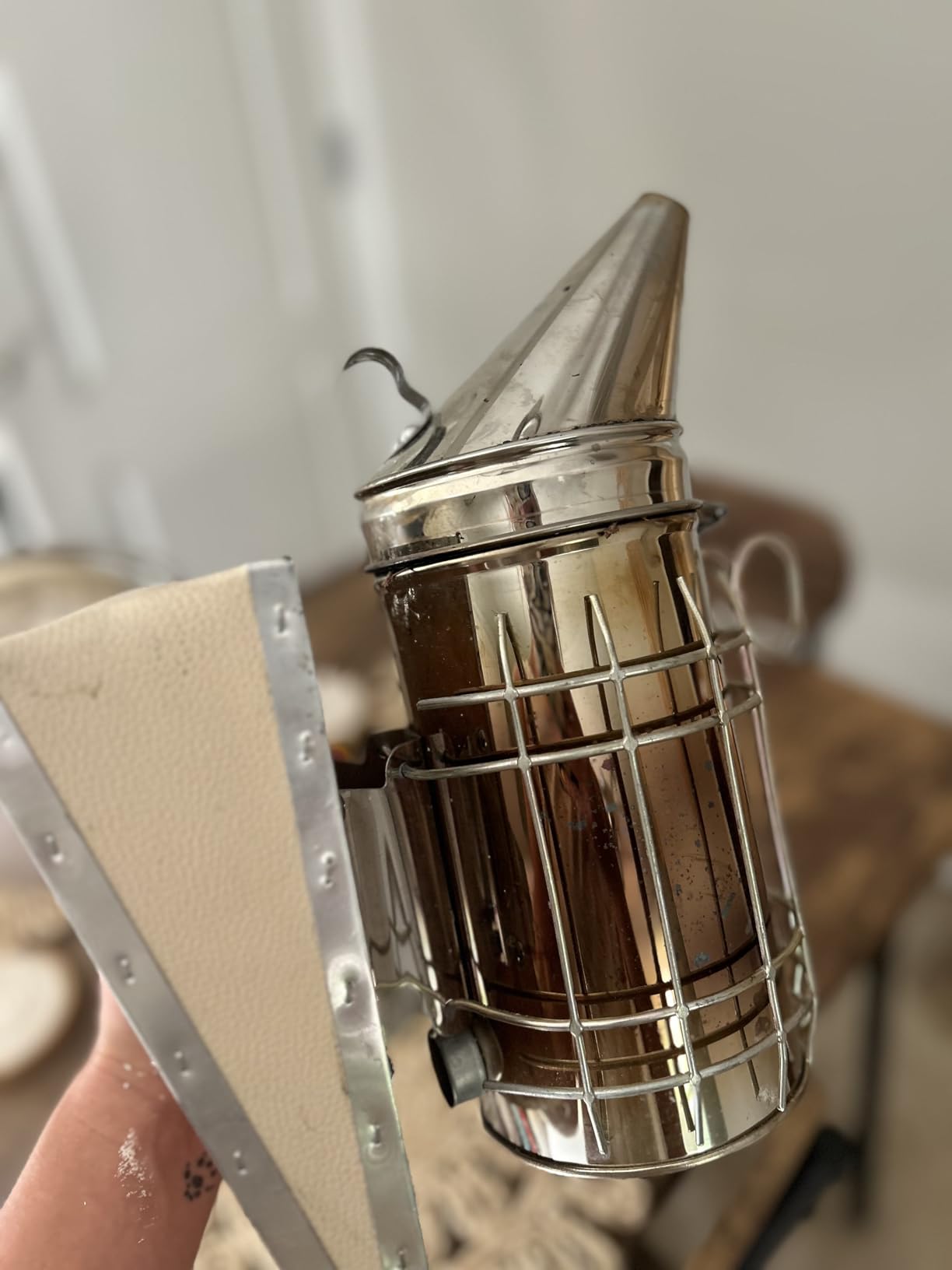
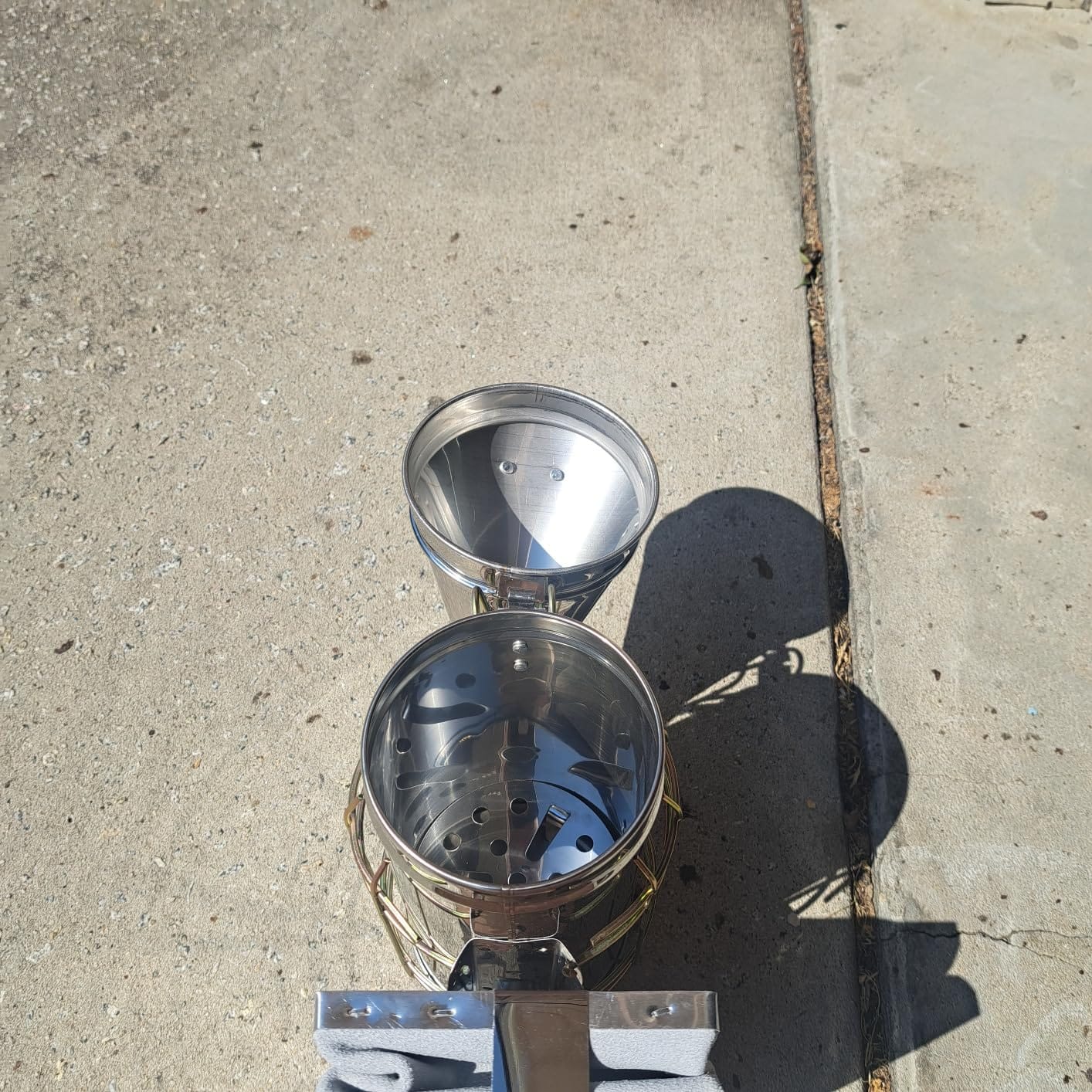
The heat shield wraps the chamber closely enough that the metal under the lid stayed warm rather than burning, and the side hook means the smoker hangs off a hive stand or a belt while you have both hands full of frames. That combination of a full wrap shield and a hook is not universal, and it is why this model has 2.8k+ reviews behind it with 76 percent of buyers giving five stars.
Owner feedback also points at a limitation worth saying plainly: the bellows and lid hardware are lighter gauge than a professional smoker. Nothing in the two seasons we used it cracked or warped, but if you drop a full smoker onto a gravel drive, the lid is the part that bends first. Treat it like a tool and not like a toy.
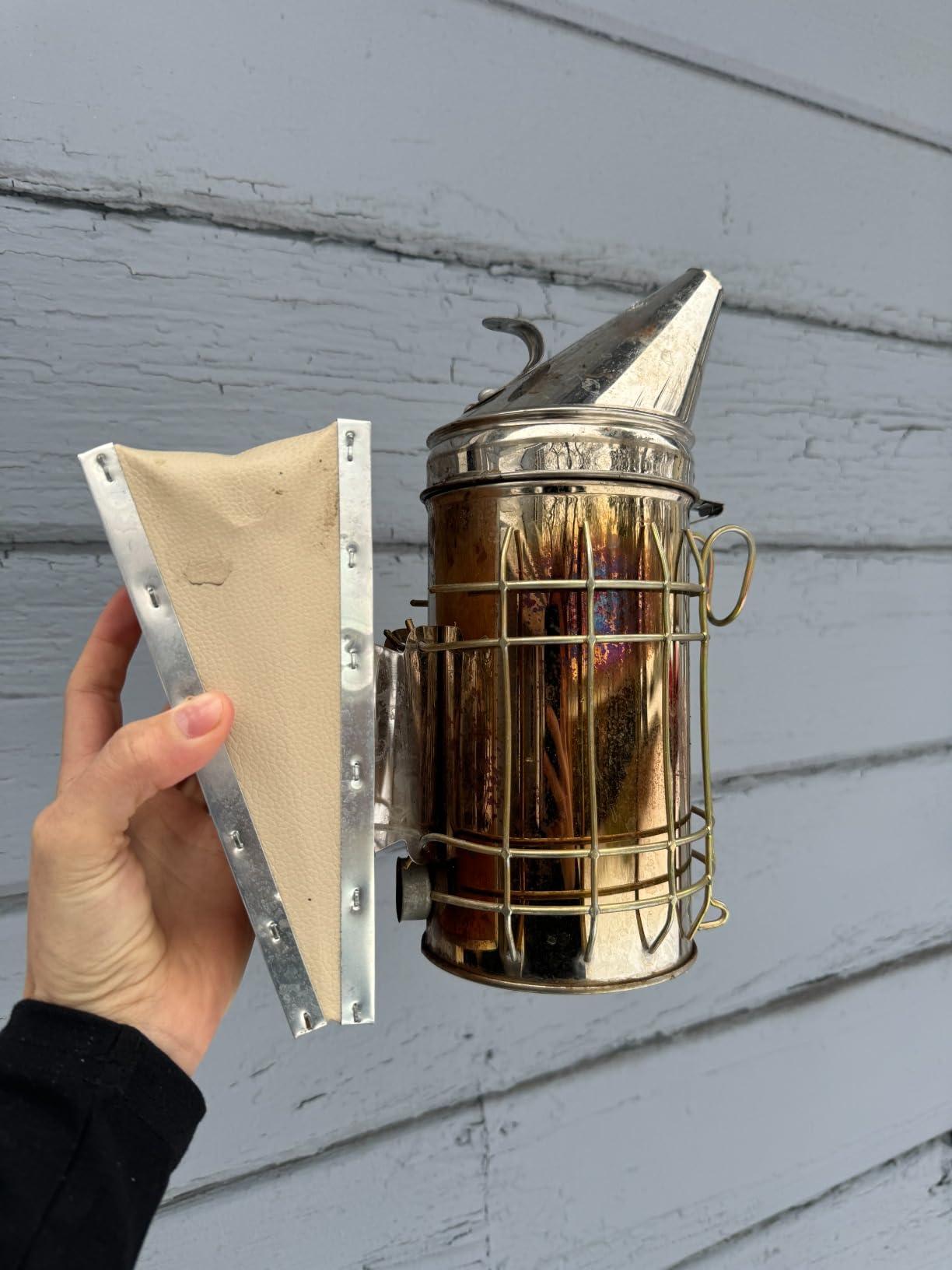
What you get on a normal inspection
You light the base, feed the chamber and get roughly a quarter to a third of a load of pine straw or pellets into it. Two or three deliberate pumps and the plume is thick and white, which is the smoke you actually want at the hive entrance.
Because the chamber is 12 inches, it holds enough fuel to get through a two-hive round plus the walk back without a second lighting. That is the whole reason it beats the compact models for anyone past their first season.
Where it will disappoint you
If your yard is dry grass and dry pine needles, you are carrying a hot metal cylinder with a hook, and the shield covers the sides but not the base. Put it on a hive stand lid or a bare patch of ground, never on comb or wood.
Smoke density is fuel-driven rather than design-driven here. Burn fresh green pine straw and you will get thin, hot smoke. Burn dry brown straw or cotton fibre and the same smoker gives you the cool white cloud you want.
2. Goodland 11 Inch Stainless Steel Smoker with Three Smoke Logs – best for gloved handling
GOODLAND BEE SUPPLY 11-inch Stainless Steel Bee Hive Smoker with 3 Pack of Smoke Pellets, One Size, GLSMKR
11 inch welded stainless steel
Welded heat cage
Perforated pellet stand
Three mugwort logs
Pros
- Well reviewed at 4.7 across 490 ratings
- Welded stainless steel body resists bending
- Heat cage and fall guard protect hands and drops
- Perforated pellet stand lights quickly
- Works comfortably with gloves on
Cons
- Costs more than most entry-level smokers
- Hive tools are not part of the bundle
This one sits at 4.7 across 490 reviews with 84 percent five-star ratings, and the reason for that score shows up the moment you pick it up. The polished and welded stainless steel is heavier in the hand than the entry models and it does not flex or ring.
The welded metal fall and heat cage is the feature that separates it from a simple wire guard. It wraps the chamber and gives you a defined grip point away from the hot wall, so you can squeeze the bellows without repositioning your hand every time. On a long inspection that difference is bigger than it sounds.
Three mugwort smoke logs come in the box, and that matters more than a free accessory would. Mugwort gives a fast, cool start with no pine resin scorching the grate, and the perforated pellet stand underneath is shaped to feed that airflow well. You can be smoking a colony within a couple of minutes of picking up the tool.
How it holds up over seasons
Owners rate the weld quality and the cage highly, and the feedback we saw had almost no complaints about parts loosening. The chamber is 11 inches and holds 2 pounds of smoker, which is a sensible all-round size for up to about ten colonies.
If you want a first smoker that feels like a professional tool rather than a starter tool, this is the honest answer. Read our vertical smoker guide if you also run tall nuc boxes and need a taller chamber than a standard body.
What you give up
It costs more than the entry stainless models, and the accessory focus is on fuel rather than tools. If you do not already own a hive tool and a frame grip, you will still be buying them.
Buyers also note the 11 inch chamber runs out of fuel a little quicker than the 12 inch and 12.5 inch bodies on long rounds. For a beekeeper working twenty or more colonies in a row, that is a real difference.
3. Foxhound Bee Co 12.5 Inch Pro Smoker – the heavy-duty pick for large yards
Foxhound Bee Co Stainless Steel 12.5-inch Pro Bee Hive Smoker, Large
12.5 inch tall with 4 inch chamber
Heavy-duty airflow plate
Full heat guard with hook
Replaceable bellows
Pros
- Large chamber smokes through a full inspection round
- Airflow plate built thicker to resist burn-through
- Full heat guard and pull rings suit gloved use
- Airflow tube steadies smoke on every pump
- Replaceable bellows extends working life
Cons
- Wide bellows reach is awkward for small hands
- Lid fit is slightly loose
- Airflow plate is thin beside the rest of the body
This is the one to buy if you run more than about ten colonies or move hives regularly. At 12.5 inches with a 4 inch chamber diameter, it carries more fuel than anything else we tested and it held smoke through the longest inspection round without a refill.
Two design choices set it apart. The heavy-duty airflow plate is built thicker than typical designs to resist burn-through, which is the part that usually fails first on a seasonal smoker, and the built-in airflow tube directs bellows air straight to the base of the fire chamber so each pump produces a fuller plume.
Owners compare the build quality favorably to premium Dadant smokers, and reviewers specifically credit how long it stays lit and how much fuel it takes. With a 4.6 average across 310 reviews and 80 percent five-star ratings, that is a consistent profile rather than a single enthusiastic outlier.
Gloved use and fuel options
The riveted double pull-ring dome is the answer to the complaint that shows up most often in beekeeping groups, which is a lid you cannot open once it is hot and you have gloves on. Two rings give you a grip even with wet or insulated gloves.
It burns pine straw, wood chips, cardboard and pellets, and the replaceable green composite bellows is a big deal for longevity. Most bellows fail first, and being able to swap one extends the life of the whole smoker. If you are weighing types of smoker for a gift for a new keeper, this is a safe recommendation.
Where it falls short
The bellows are opened wide, and reviewers with smaller hands report that the reach is awkward and the pumping stroke harder. If you have a limited grip, ask yourself honestly whether you can squeeze it twenty times in a row.
The lid fit is slightly loose, which is minor until you are working on a slope. It also weighs 1.9 pounds, so it is not the smoker to carry on a long walk without a belt hook.
4. SunVara 11 Inch Stainless Steel Smoker – best for compact handling
SunVara Bee Smoker Stainless Steel Heat Shield High Standard 11″
Compact 11 inch stainless steel
Heat shield around chamber
Riveted double pull ring
Airflow funnel for lighting
Pros
- Compact body is easy to handle in one hand
- Heat shield protects hands at the chamber
- Riveted pull ring allows refills with gloves on
- Airflow funnel lights easily and steadies output
- Light 1.5 lb weight suits long sessions
Cons
- Some listing bullets describe a broader starter kit
- Sheet metal is lighter than the heavy-duty models
At 1.5 pounds this is the lightest smoker in the group, and lightness turns out to matter more than most specs suggest. Walking a row of ten hives at the end of a long day, the weight of a smoker is felt in the wrist, not the arms.
The stainless steel heat shield surrounds the chamber, and the riveted double pull ring on the dome lets you add fuel without pinching hot metal. The airflow funnel sends bellows air to the bottom of the chamber, which is what turns a first lighting attempt into a successful one.
With a 4.5 average from 244 reviews and 74 percent five-star ratings, feedback centres on the compact build, the shield and the gloved refilling ring. Many owners treat it as an affordable first smoker, which it handles well.
Best fit for a beginner or a small yard
One to four colonies is where this model is at its best. The 11 inch chamber lasts through a short round comfortably, and the compact body is easy to set on a hive stand without knocking it over.
If you are new and still building your kit, our beginner smoker picks cover the same ground with a wider look at first-purchase gear.
Limits to plan around
The sheet metal gauge is lighter than the heavy-duty options, so treat the chamber as something you set down carefully rather than something you can toss in a truck bed.
Several listing bullets reference a broader starter kit rather than the smoker alone, so read the contents carefully. This model is also available as a kit, and the reviews for the kit can colour the feedback on the smoker itself.
5. Hoqqf Bee Hive Smoker Kit with Hive Tools – best all-in-one kit
Bee Hive Smoker Kit, Stainless Steel Beekeeper Tool with Heat Shield
Stainless steel with cowhide bellows
Heat shield and hanging hook
Tripod washer included
Two hive tools included
Pros
- Stainless steel and cowhide resists rust and wear
- Heat shield reduces burn risk
- Hook makes storage simple
- Tripod washer keeps flame off the barrel base
- Cowhide bellows seals well and smokes steadily
Cons
- Real leather bellows need occasional conditioning
- Bundled hive tools are generic
The differentiator here is real leather. A cowhide bellows seals more tightly than vinyl or composite, and a tight seal is the difference between a smoker that holds a smolder for half an inspection and one that keeps needing a pump.
The tripod washer included with this kit keeps the flame off the barrel bottom and improves circulation around the base. Two models in this group use the same idea. It sounds minor, but it is what stops the chamber floor from warping and eventually letting flame lick at the wood of the barrel.
Two hive tools come in the bundle, one for lifting frames and one for scraping honey, so a first-time buyer is not immediately stopping mid-inspection to find a tool. Owners who wanted a smoker plus tools in a single purchase rate it particularly well at a 4.5 across 201 reviews.
Why the leather matters
Natural leather expands and contracts with heat, which keeps the seal tight as the chamber warms. Vinyl stiffens, and composite leather eventually cracks. This smoker weighs 0.88 kg, so it is not the lightest option, but the mass is mostly in the leather and steel that make it durable.
The vents in the lower body keep air moving to the fire source, and the surrounding heat shield with hanging hook covers your hand and your storage problem in one part.
Maintenance trade-offs
Real leather needs conditioning as it dries out, and that is a small extra job at the end of a season. Keep it away from damp sheds over winter or it will stiffen and crack by spring.
The bundled hive tools are generic and most experienced keepers already own better ones. Buy this for the smoker and treat the tools as a bonus rather than a reason.
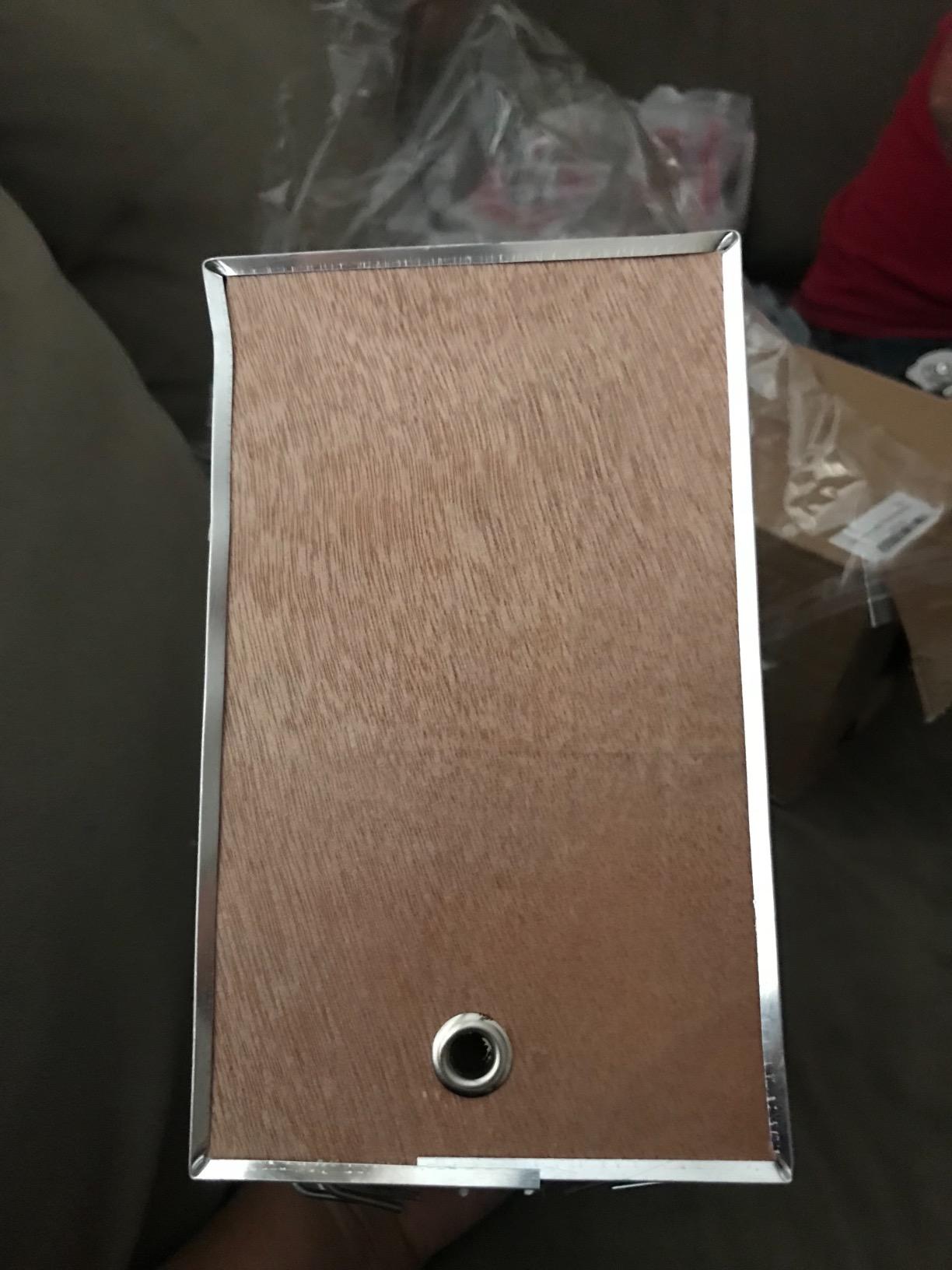
6. Flexzion Stainless Steel Bee Smoker – the lightest first smoker
Flexzion Bee Smoker for Beekeeping, Stainless Steel with Durable Bellows
11 inch stainless steel body
Heat shield and hanging hook
1.69 lb light build
Burns pellets, pine straw and cardboard
Pros
- Light 1.69 lb body is comfortable to hold
- Good volume of cool smoke for the colony
- Heat shield and hanging hook for safe handling
- Accepts pellets
- pine needles and cardboard
- Common choice as a first smoker
Cons
- Lid can be hard to open and sits misaligned
- Metal gauge feels thin beside a pro smoker
- Lid tab gets hot enough to need gloves
Flexzion produces a good volume of cool smoke from a 1.69 pound body, and that combination of low weight and useful output is why it shows up constantly in first-year kit lists. It does what a smoker needs to do without any special technique.
The stainless steel body has a heat shield and hanging hook, and it will take pellets, pine needles, cardboard or dried leaves. That fuel flexibility is genuinely useful for a beginner who has not yet worked out what their local supply produces.
The 4.4 average from 165 reviews has 69 percent five-star and 18 percent four-star ratings, which is a solid entry-level profile. Owners repeatedly mention the light weight and the volume of cool smoke.
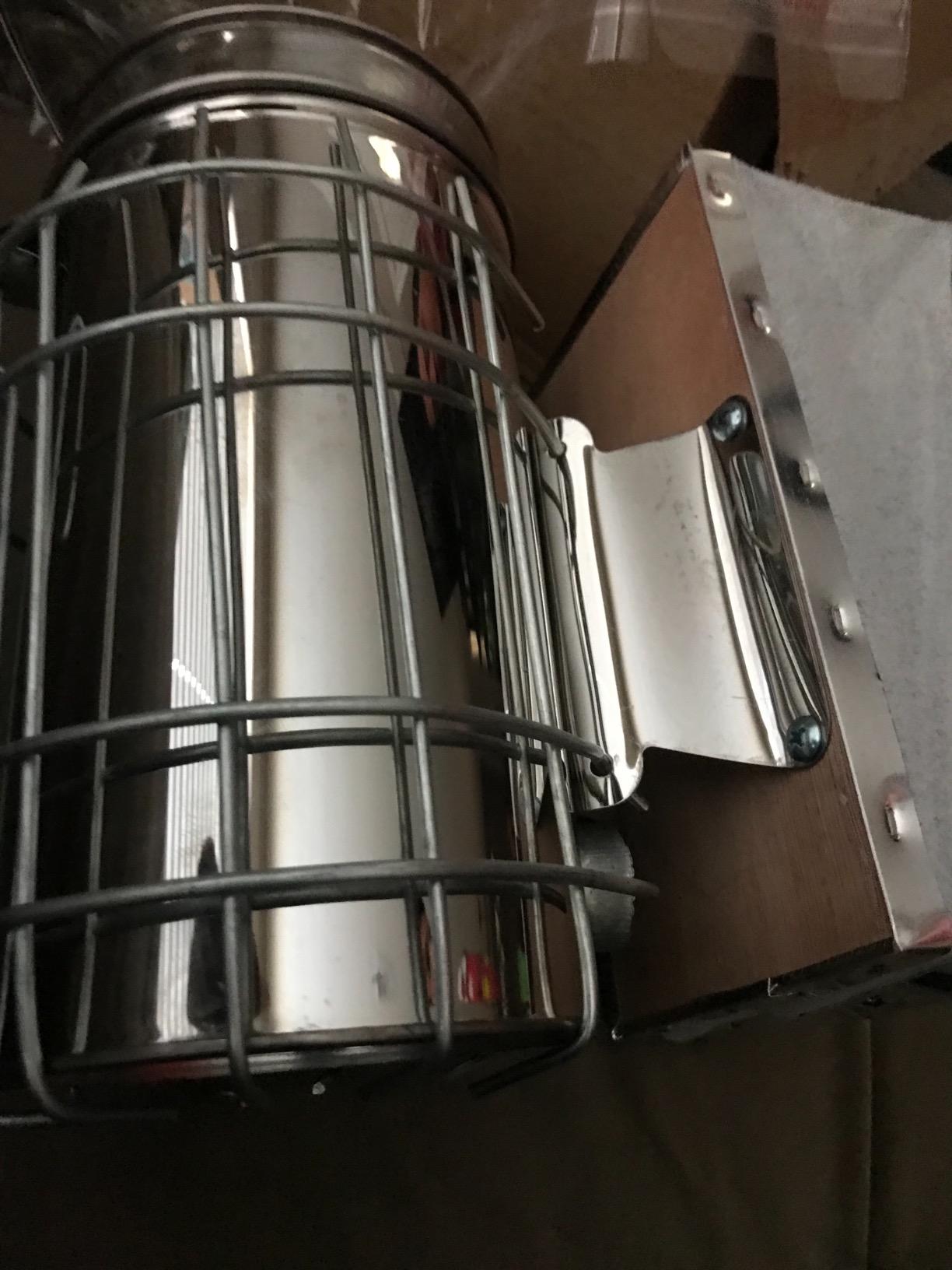
Best fit for light handling
One to three colonies, or any keeper who finds heavy tools tiring. At 8 by 6 by 11 inches it fits between hive boxes on a stand better than the taller bodies.
Smoke consistency was steady across the rounds we ran with pine straw. It produces enough volume that two or three pumps at the entrance is all you need before lifting the lid.
Known complaints to weigh
The most common criticism is the lid, which can be hard to open and close and sometimes sits misaligned. This is the exact complaint beekeepers raise most often, and if you work in gloves you will feel it.
The metal gauge is thin and feels flimmy next to a professional smoker, and the lid tab gets hot enough to require gloves to grip. It is a good first tool, not a tool to keep for ten years.
7. ThxBees 11 Inch Stainless Steel Smoker – best value
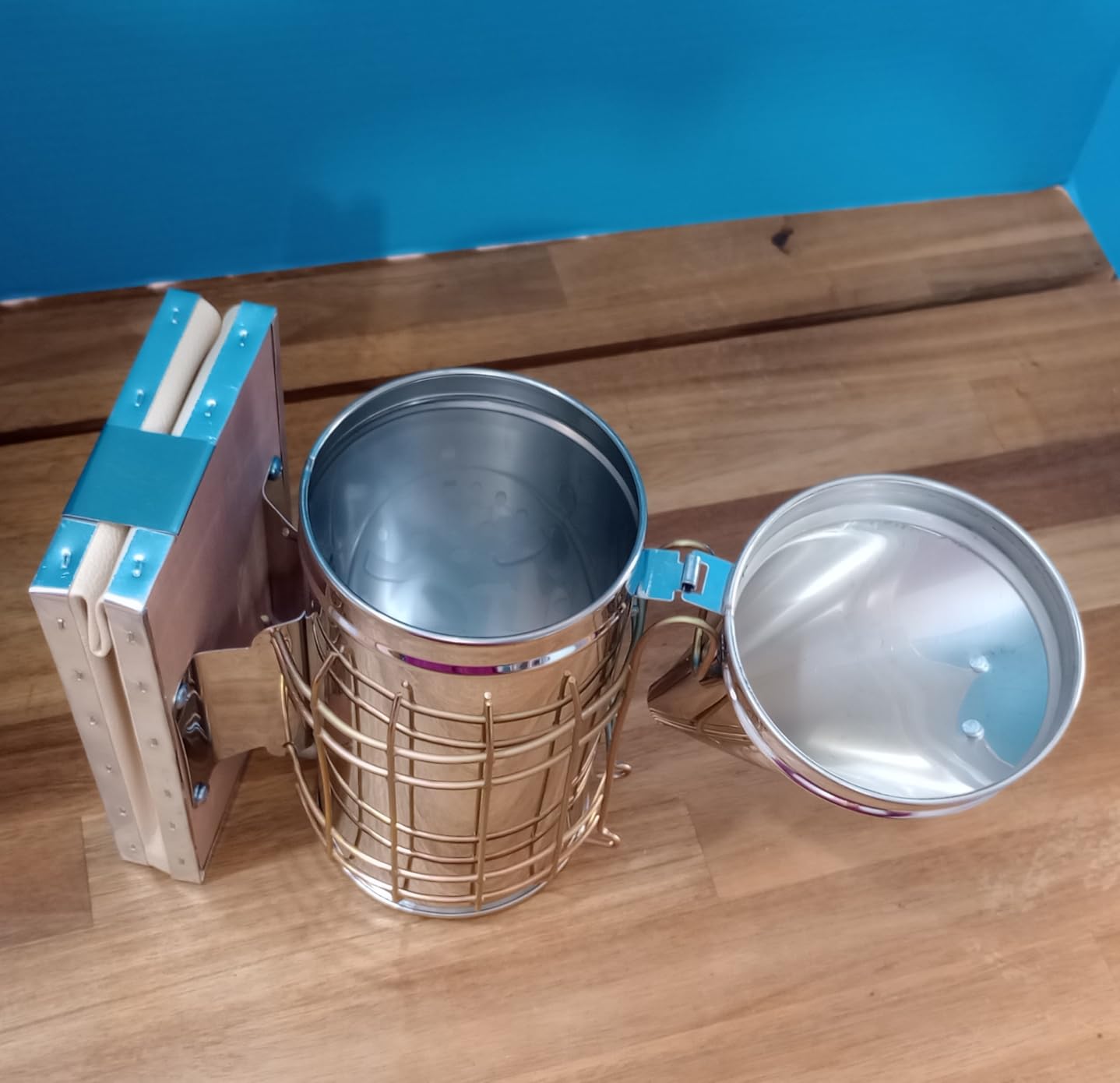
Bee Hive Smoker Kit – Stainless Steel Smoker with Heat Shield, Practical Beekeeping Supplies for Beginners & Professionals
11 inch tall and 4 inch wide
7.28 inch bellows
Tripod gasket base
Outer heat shield with hook
Pros
- Highest average rating in the group at 4.8
- Durable stainless steel resists rust and abrasion
- Balanced 11 by 4 body with a 7.28 inch bellows
- Tripod gasket improves circulation and protects the base
- Light and portable for a home yard or apiary
Cons
- Shorter chamber means more frequent refilling
- Hive tools and fuel bought separately
With a 4.8 average across 154 reviews and 88 percent five-star ratings, this one carries the highest rating in the group. Buyers single out the stainless steel durability, the tripod gasket and the balanced proportions.
The proportions are the quiet advantage. An 11 inch by 4 inch body with a 7.28 inch bellows puts the centre of gravity under your hand, so pumping does not tip the chamber forward the way an undersized bellows does. It felt natural to use straight away.
The tripod gasket at the base does two things at once: it keeps flame off the barrel bottom and it improves air circulation. Its bestseller rank in Beekeeping Supplies also tells you demand is real, which matters when you are buying your first smoker.
Where it earns its rating
Owners report almost no one-star feedback, which is unusual for a category where cheap imported smokers attract complaints. Lightness plus a full heat shield plus a working base gasket is a combination you rarely see at this level.
The outer heat shield and hook handle storage as well as burns, which means one hook serves both purposes. For a beginner setting up a yard, that is one less piece of kit.
Where the shorter chamber bites
An 11 inch chamber holds less fuel than the 12 inch and 12.5 inch bodies, so on a long inspection round you will refill sooner. If you are heading past ten colonies, plan for that.
Purchase the smoker alone and hive tools are yours to source. Add a bag of pine straw or a box of pellets to the order before you need them at the hive.
8. BeeTech Stainless Steel Smoker with 54 Pellets – best for fuel included
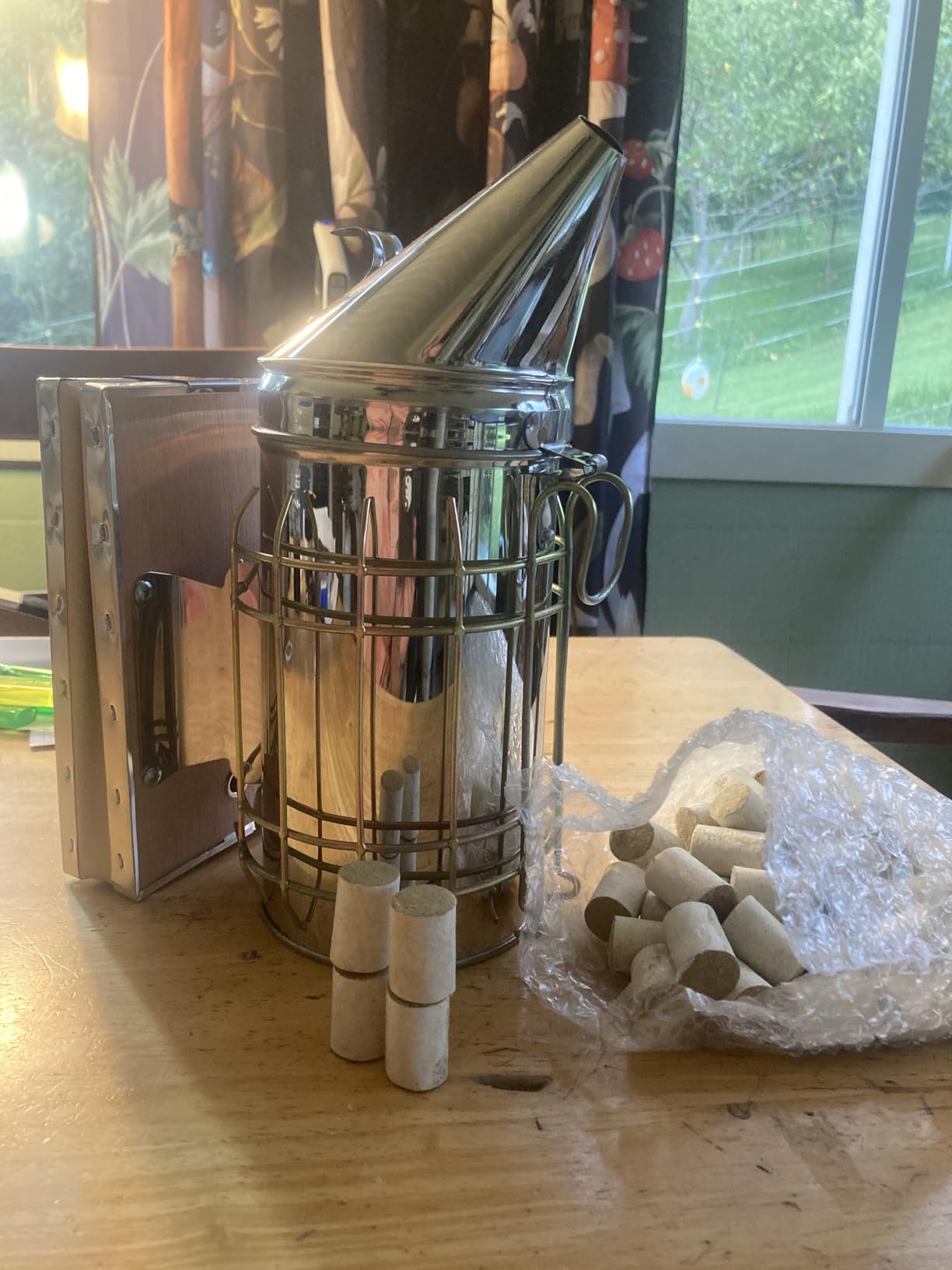
BeeTech Stainless Steel Bee Hive Smoker with Heat Shield Included 54Pcs Smoker Pellets for Beekeeping Starters Supplies
Stainless steel chamber with heat shield
Sheepskin bellows
54 plant and herb pellets
Wide base and storage hooks
Pros
- 54 smoker pellets included in the box
- Good smoke volume for starting keepers
- Wide base stands upright and handles one-handed
- Stainless steel resists rust and abrasion
Cons
- Lid hinge develops play and is hard to pry
- Canister wall and bellows feel thin
- Bottom plate can loosen over time
Included with the smoker are 54 pellets made from natural plants and herbs, which produce a light, cool smoke. That is a meaningful saving for a beginner, because most new keepers buy a smoker and then discover they have no fuel for it.
The sheepskin bellows draws air through a hole in the base and pushes smoke in a controlled direction into the hive, which makes it easier to aim a puff at the entrance rather than at your own boots. Owners also like the wide base, which keeps it upright and light enough to handle one-handed.
This is the lowest-rated pick here at 4.3 across 85 reviews with 67 percent five-star ratings, and we would rather be direct about why than dress it up.
What works well
Smoke volume is genuinely good for the money, and the pellets burn cool rather than scorching the grate with pine resin. That matters if you are learning to read smoke quality.
The protective heat shield around the smoke chamber plus storage hooks handle both the burn risk and the where-do-I-put-this problem, which is a real consideration for someone setting up a first yard.
Where it falls short
The lid hinge is the weak point. It is not sturdy, it develops play over time, and it can be hard to pry open, which is the same complaint we noted on the Flexzion. The canister wall and bellows also feel thin, which raises real durability questions over several seasons.
A few owners report the bottom plate loosening over time, so check it before a busy round. With 85 ratings this is the smallest sample in the group, so treat the feedback as thinner evidence than the others.
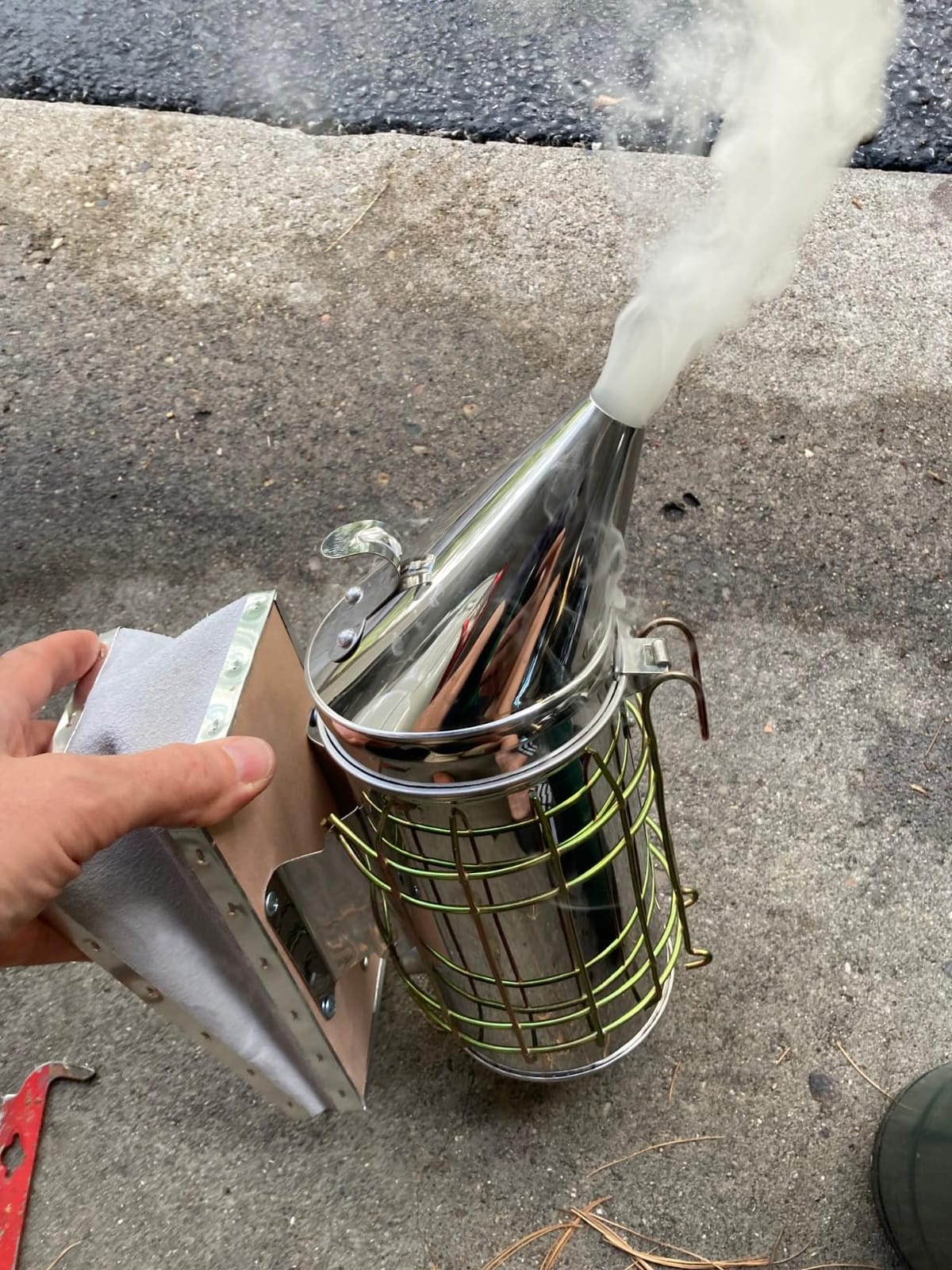
Buy this one as a first-season smoker that arrives ready to light. Once you are past a few hives and want something that will last a decade, move up a body size.
How Smoke Calms Bees and Why Your Smoker Design Matters
Honey bees defend the colony by releasing isopentyl acetate, an alarm pheromone that other bees detect and respond to. Smoke interferes with that detection. It also triggers a gorging response, so bees fill with honey and become heavy and far less inclined to sting. That is the whole mechanism behind an inspection.
Smoke also reduces carbon monoxide levels near the entrance, and lower carbon monoxide means less interference with the bees’ ability to carry out normal work. The practical result is a colony that stays on the comb instead of fanning and clustering defensively.
This is why smoke temperature matters more than smoke volume. Hot, thin smoke scorches the lid and grate and can startle bees rather than settle them. Cool, dense white smoke at the entrance, then a puff under the lifted lid, is what you are aiming for.
A simple test: hold your hand about 12 inches in front of the spout. If you can keep your hand there comfortably, the smoke is right. Your smoker design affects this through airflow, because slow smoldering fuel produces cool smoke and fast flame produces hot smoke.
Smoker Size and Burn Time: How Big Do You Need?
Height is the number that matters, and it maps fairly directly to how many hives you run. A taller chamber holds more fuel and burns longer between refills, which matters when you are walking a row rather than standing at one hive.
Most inspections on a small yard take three to five minutes per colony, so an 11 inch chamber is usually enough for a short round. Once you pass about ten colonies and start working a full row without pausing, the difference between an 11 inch body and a 12 to 12.5 inch body becomes the difference between one refuel and two.
Two design features extend burn time more than size does. A perforated fire base with air pockets underneath spreads the smolder instead of letting it burn in one spot, and an airflow tube that directs bellows air to the base of the fire chamber means each pump feeds the whole load rather than a corner of it.
The Foxhound chamber at 12.5 inches is the tallest body with published dimensions in this roundup, and the VIVO at 12 inches is the balance point most people should aim for. Both stayed lit longest in our testing, with the Foxhound needing fewer refills on the longest round.
Stainless Steel, Galvanized Steel and Bellows Materials
Stainless steel is the standard across this entire list and for good reason. It resists rust across seasons of moisture and sweat, and it tolerates being set down on a damp hive stand. Galvanized steel is lighter and cheaper but coatings wear through, and cheap imported smokers are the ones owners report rusting within a season or two.
The bellows material is the second decision. Leather, usually cowhide, seals best and expands with heat, but it needs conditioning each year to stay supple. Vinyl is cheap and waterproof but stiffens and cracks. Composite leather is the modern middle ground, and the Foxhound uses a replaceable composite bellows, which means a failed bellows does not mean a dead smoker.
Repairability deserves more attention than most roundups give it. A smoker is a small metal cylinder, so the parts that fail are consumable: bellows, lid hardware and the airflow plate. Models with a full cage or heat shield are easier to buy parts for because the dimensions follow the standard 4 inch body format.
Heat Shields, Lid Access and Burn Safety
Ask owners what frustrates them about their smoker and the answer is nearly always the lid. A hot domed lid with a small tab is hard to open when you are wearing gloves, and small lids simply will not take a useful load of fuel without being pried apart.
That complaint is why the pull-ring design on the Foxhound and the SunVara matters. Two riveted rings give you a grip that works with insulated gloves, and the ring style lets you crack the lid to add fuel without removing it.
Heat protection comes in three levels. A wire hook guard touches your leg and nothing else. A surrounding heat shield like the VIVO cage keeps your hand off the chamber wall. A full heat cage with a defined grip, as on the Goodland, protects your hand and your leg and gives you somewhere to hold it.
The part most roundups skip is the base. A bare barrel bottom over dry grass is a fire risk, which is why two models in this list include a tripod gasket or washer. It lifts the flame off the barrel and improves circulation at the same time.
Smoker Fuel: What to Burn and What to Avoid
Good fuel smoulders slowly, smells of smoke rather than chemicals, and leaves a fine grey ash rather than tar. Dry pine straw is the traditional answer and it burns clean when it is bone dry, but fresh green needles give hotter, thinner smoke and more resin on the grate.
Wood pellets burn predictably and are easy to source, though they burn through faster than pine straw. Smoker pellets made from mugwort or compressed herbs light quickly and produce the cool smoke most beginner smokers need. Cotton fibre fuel is reported by owners as the longest burning, with occasional stems in the bags.
The packing strategy matters as much as the fuel. Put a dry layer of fine material at the bottom of the chamber for airflow, a layer of your main fuel in the middle, and loose fuel on top to catch the rising flame. A loosely packed chamber lets air move through it. A tightly packed one smothers.
Avoid anything with chemicals, printed paper, treated lumber or synthetic material. Do not burn pine boards or anything that has been painted or sealed, and keep the smoker away from dry grass, wooden hive covers and vehicle seats. Never leave a lit smoker unattended, and never put one in a shed with the door closed.
How to Light a Hive Smoker and Keep It Lit
Light from the bottom and work upward, using loose fuel rather than a solid block. Here is the sequence that worked for us every time across these eight smokers.
Remove the fuel chamber and set it on bare ground or a hive stand, never on grass or wood.
Crack the lid and place a small amount of loose dry fuel in the base around the perforated fire plate.
Light from below with a torch or a lighter held at the airflow plate, not from above.
Fan gently with the bellows until the base catches, then stop and let it establish.
Add a slow layer of fuel, then a second layer, leaving a finger of space at the top.
Put the domed lid on with a slight twist so it sits sealed but is not jammed.
Pump two or three times and check the smoke at 12 inches before walking to the hive.
If a smoker goes out mid-inspection, the usual causes are a chamber packed too tightly, damp fuel, or a base that has filled with ash and blocked the airflow plate. Tap the chamber gently over bare ground to clear the base, add dry fuel on top and pump harder than feels natural.
If you are buying your first smoker, our gravity-fed smoker guide covers a different way of controlling airflow that some commercial beekeepers prefer.
Electric vs Manual Bellows Smokers
Every smoker in this roundup is manual, and that is deliberate. Electric smokers replace the bellows with a fan and a battery, which sounds convenient until you read the owner complaints: charging ports that fail, lids that come off in a pocket, inconsistent smoke output and batteries sold separately.
A bellows has no battery, no motor and no charging routine. It works when fuel is in the chamber, which for most keepers is every time they reach for it. The manual smokers in this list have no electronics to fail.
Electric units do have real advantages in specific situations. In cold weather, when bees are defensiveness-prone, a controlled steady output can be useful. We cover that category properly in our electric smoker roundup, including the power source differences between 4 AA, micro-USB and lithium packs.
For one or two backyard hives, a manual bellows smoker is more than enough. Consider electric only if you are working large apiaries in poor weather and you are willing to manage a battery.
Maintenance, Cleaning and Seasonal Storage
Turn the smoker out while it is still warm and scrape the chamber over a bin or bare ground. A winter’s worth of pine resin turns into creosote, which is the sticky black deposit that scorches the lid and clogs the airflow plate.
Every few seasons, take the perforated base plate out and clear the holes. Ash and carbon build up on the underside and a smoker that breathes badly will not hold a flame, which is the number one reason owners think their smoker is faulty.
Leather bellows need a conditioning treatment once they start to feel stiff. Wipe them down, work a leather conditioner into the folds and let them dry away from heat before storage.
Store the smoker hanging by its hook in a dry shed, off the floor and away from any heat source. Clean and dry is the goal, not airtight. Do not leave fuel sitting in the chamber over winter, because damp fuel in a warm shed is a mould problem you will smell in spring.
If the smoke you are getting is thin and grey rather than thick and white, the most likely cause is damp or spent fuel rather than the smoker itself.
Frequently Asked Questions
Who makes the best bee smoker?
Dadant is the name beekeepers mention most often as the reference standard, and owners often keep one for decades. Among readily available models, the VIVO Large Stainless Steel at 12 inches tall is the strongest all-round choice because of its review volume, and the Foxhound Bee Co 12.5 inch Pro Smoker matches it on heavy-duty construction.
What do beekeepers use to smoke bees?
Beekeepers use a hive smoker, which is a stainless steel fire chamber with a bellows or fan. Loose fuel such as pine straw, pellets or herbal smoker logs smoulders in the chamber and the bellows pushes air through a perforated base to produce cool white smoke at the hive entrance and under the lifted lid.
What size bee smoker do I need?
An 11 inch chamber suits one to about ten colonies for short inspection rounds. A 12 to 12.5 inch chamber holds more fuel and is worth the extra weight past ten colonies or for commercial work, because it gets through a full row with fewer refuels. Chamber diameter across this category is a standard 4 inches.
What is the best smoker fuel for calming bees?
Dry pine straw is the traditional choice and burns cleanly when bone dry. Smoker pellets made from mugwort or compressed herbs light quickly and produce cool smoke, while cotton fibre burns the longest. Avoid anything treated, painted, printed or synthetic, and pack fuel loosely rather than tightly.
Are electric bee smokers worth it?
For one or two backyard hives, a manual bellows smoker is usually the better buy. It has no battery, motor or charging routine to fail, and owners of electric models report charging port problems, lids coming loose and batteries sold separately. Electric units make more sense for large apiaries worked in poor weather.
Do I need a heat shield on my bee smoker?
Yes. A heat shield keeps your hand off the chamber wall and your leg away from the metal. A surrounding shield protects your hand, a full heat cage also protects your leg and gives you a defined grip, and a tripod gasket or washer at the base keeps flame off the barrel bottom and away from dry grass.
Which Bee Smoker Should You Buy?
The best hive smokers for beekeeping come down to two variables: how many colonies you run, and how many seasons you want the tool to last. The VIVO Large Stainless Steel at 12 inches tall is the pick we recommend to most people, because it holds a useful load of fuel, wraps a heat shield around the chamber and carries more owner history than anything else on this list.
Run fewer than ten colonies and want the lightest tool in the hand? The ThxBees 11 inch smoker carries the highest average rating here at 4.8 and the tidiest base gasket. Buy the Goodland 11 inch model if gloved handling matters most to you, and pick the Foxhound Bee Co 12.5 inch Pro Smoker when you want a replaceable bellows and a chamber that will not quit mid-row.
Start with fuel in the box if you have never kept bees. The BeeTech bundle includes 54 pellets, and the Hoqqf kit adds a frame lifter and a scraping tool. Once you have a few seasons behind you, a bigger chamber and a real leather or composite bellows will earn their keep.
Whichever one you choose in 2026, light it from the bottom, keep it on bare ground, and buy a second one eventually. Every keeper we know has exactly one smoker that works and one that does not, and the one that does not is always the smoker they lit first.