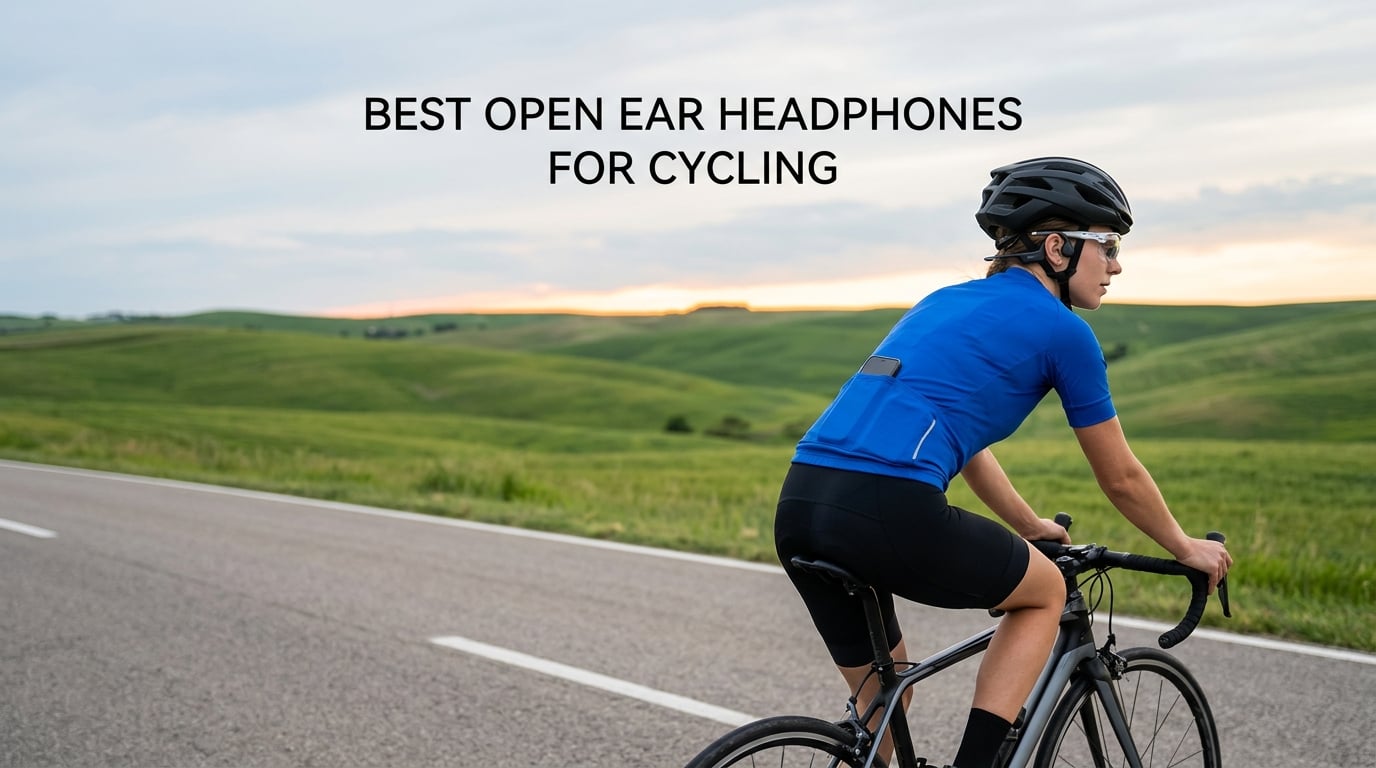
Riding with headphones in your ears is a bad idea, and everyone in the peloton already knows it. Blocked ear canals hide the diesel truck that is about to turn into your lane. So the search for the best open ear headphones for cycling keeps coming back to the same shortlist of models that sit outside the ear, keep the canal clear, and somehow still put music in your head while the wind tries to take it away.
We put ten of the leading open ear and bone conduction pairs through the kind of ride that matters for this category: a long road loop with a helmet, sunglasses, a jersey pocket phone and plenty of crosswind, plus gravel chatter and a winter morning where bare fingers become a real problem. The thing nobody tells you is that a headphone can sound excellent on a desk and be useless at 20 mph if the design fights your helmet straps or your glasses arms.
This roundup breaks the field into the three technologies you will actually be choosing between – ear-hook air conduction, clip-on air conduction, and bone conduction – and ranks every model on the things that decide whether it survives a ride: how the frame interacts with a helmet, whether the microphones are usable with gloves on, how the battery holds up across a long day, and what you can still hear at speed. All ten picks below are current models with verified ratings, and we note the honest problems with each one.
Table of Contents
- Top 3 Best Open Ear Headphone Picks for Cycling (September 2026)
- All 10 Picks at a Glance in 2026
- 1. SHOKZ OpenMove – The Lightest Wraparound Frame for Helmet Wearers
- 2. SHOKZ OpenRun Pro 2 – Best Sound and Premium Pick in the Lineup
- 3. Soundcore V20i – Best Value with Four-Way Fit Adjustment
- 4. Soundcore C50i – Best Clip-On Pick That Works With Gloves
- 5. TOZO O2 – Best for Wet Weather and Adjustable Fit
- 6. TOZO OpenEarRing – Most Versatile at 5.1 g Per Earbud
- 7. Raycon Bone Conduction – Longest Battery for Multi-Day Touring
- 8. Ortizan I10 – Best for All-Day Comfort at 19 g
- 9. OHAYO T10 – Loudest Open Ear Audio in the Budget Field
- 10. Eigsupia X18 – Lightweight Pair for Short Commutes
- How to Choose Open Ear Headphones for Cycling
- Frequently Asked Questions
- Conclusion
Top 3 Best Open Ear Headphone Picks for Cycling (September 2026)
The SHOKZ OpenMove is the pick we reach for most, because a 29 g wraparound frame disappears under a helmet and keeps your ears completely open. The SHOKZ OpenRun Pro 2 is the choice when sound quality and battery matter more than weight. The Soundcore V20i is the one to buy if the budget stops you going any higher up the range.
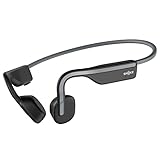
SHOKZ OpenMove
- 29 g wraparound titanium frame
- Bone conduction keeps ears open
- 6 hours per charge


All 10 Picks at a Glance in 2026
The table below is the short version. Every model listed keeps the ear canal open, but they differ sharply in how they mount, how long they last and what you can still hear of the world around you. Scroll on for the individual verdicts, or use this to cross off the designs that clearly do not suit your riding.
| Product | Specs | Action |
|---|---|---|
| SHOKZ OpenMove |
|
Check Latest Price |
| SHOKZ OpenRun Pro 2 |
|
Check Latest Price |
| Soundcore V20i |
|
Check Latest Price |
 Soundcore C50i Soundcore C50i |
|
Check Latest Price |
 TOZO O2 TOZO O2 |
|
Check Latest Price |
 TOZO OpenEarRing TOZO OpenEarRing |
|
Check Latest Price |
 Raycon Bone Conduction Raycon Bone Conduction |
|
Check Latest Price |
 Ortizan I10 Ortizan I10 |
|
Check Latest Price |
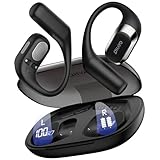 OHAYO T10 OHAYO T10 |
|
Check Latest Price |
 Eigsupia X18 Eigsupia X18 |
|
Check Latest Price |
1. SHOKZ OpenMove – The Lightest Wraparound Frame for Helmet Wearers
SHOKZ OpenMove – Open-Ear Bluetooth Sport Headphones – Bone Conduction Wireless Earphones – Sweatproof for Running and Workouts, with Sticker Pack (Grey)
29 g wraparound titanium frame
Bone conduction, no earbud in the canal
6 hours per charge
USB-C with multipoint
Pros
- Lightweight 29 g wraparound titanium frame
- Keeps traffic and other riders audible
- Sweat-resistant build made for sport and commuting
- Punchy bass for a bone conduction design
Cons
- Only 6 hours of battery per charge
- No isolation from wind or road noise
- Volume needs to run high outdoors
The OpenMove is the model we end up recommending to people who had bad experiences with bone conduction before. At 29 g it is the lightest full-frame design in this roundup, and that weight is the difference between forgetting you are wearing it and constantly reaching up to adjust it on a four-hour ride.
The wraparound titanium band sits behind your head, which is also the part of your head that a road helmet is least willing to share. Helmet designers treat the rear cradle as a pressure zone, so you feel the frame rather than see it. Give the band a slight downward tilt so the transducers rest in front of the ear rather than in the middle of the strap, and the conflict largely disappears.

Where it wins is awareness. Nothing blocks your ears, so a car door, a bark or a rider calling your name cuts straight through the music at any volume. The bass is punchy for bone conduction, which matters more than most reviewers admit, because podcasts and audiobooks are where open ear listening actually feels good.
Where it loses is stamina. Six hours per charge is a working day, not a working week, and on multi-day touring you will be carrying a cable. Multipoint pairing is genuinely useful, letting a computer and phone share the connection without a manual reset, which saves you fiddling at the roadside.

Who the OpenMove suits
Riders who wear glasses and a helmet every single day and want the frame to disappear. The 2-year warranty and the sheer volume of owner feedback mean a design like this has been proven over many seasons rather than one launch cycle.
It is also the safest recommendation here for anyone moving up from in-ear earbuds, because the transition to bone conduction is gentle and the sound arrives without pressure anywhere in the canal.
Where it falls short
Six hours means a mid-ride charge for anyone riding long distances, and bone conduction is the technology most exposed to wind at speed. If your riding is mostly fast descents or open coastal roads, the volume ceiling becomes the first thing you notice.
2. SHOKZ OpenRun Pro 2 – Best Sound and Premium Pick in the Lineup
SHOKZ OpenRun Pro 2 Bone Conduction Bluetooth Sport Headphones, Black
Hybrid bone and air conduction drivers
12 hours per charge
30.3 g unibody frame
Dual wind-resistant microphones
Pros
- Hybrid bone and air conduction for deeper bass
- 30.3 g unibody frame that stays put
- 12 hours plus a one hour fast charge
- Physical buttons that work with gloves
- Dual microphones filter 96.5% of background noise
Cons
- Volume ceiling versus sealed in-ear headphones
- Wind noise on fast rides
- D Bass drops in Classic bone conduction mode
The OpenRun Pro 2 is the technical answer to the biggest complaint about bone conduction, which is that it sounds thin. This model drives bone conduction from the high end and air conduction from the low end, so the bass arrives through the air near your ear rather than as jaw buzz. You can hear the difference within a minute of switching modes.
Physically it is a refined version of the wraparound idea: 30.3 g, a nickel-titanium memory wire in the unibody frame, and ear hooks shaped to hold position through a rough gravel surface. Under a road helmet it is the least intrusive design in this test, and the ear hooks do not fight temple arms the way some hook designs do.
Twelve hours per charge is the number that changes touring maths. Most rides, even a long double century, fall comfortably inside one charge, and the fast charge gives an hour of playback from a short top-up at a cafe. The dual wind-resistant microphones are specified to filter 96.5% of background noise, which is the number that matters if you answer a phone mid-ride.
Controls are physical buttons rather than touch-sensitive panels, and that is a deliberate win for cycling. Full winter gloves are thick, sweaty and slippery, and a button you can find by feel is worth more than a capacitive surface you have to tap precisely.
Who the OpenRun Pro 2 suits
Anyone riding four hours or more, or touring across several days where charging every evening is not appealing. Riders who listen to a lot of bass-heavy music get more out of the hybrid driver than from any pure bone conduction model in this list.
It is also the most complete package here for mixed use, because the microphones, the physical buttons and the app EQ modes all work without an app hunt when your phone is flat at the end of a ride.
Where it falls short
Maximum volume is capped well below what a sealed in-ear pair can produce, and on a fast descent in a headwind the wind will win that argument. Owners also note the bass thins noticeably when the air conduction layer is switched off in the Classic bone conduction mode.
3. Soundcore V20i – Best Value with Four-Way Fit Adjustment
Soundcore V20i by Anker Open Ear Earbuds, Open Ear Headphones True Wireless
Four adjustable positions
16 mm titanium-coated drivers
8 hours, 36 with the case
IP55 sweat and water resistance
Pros
- Four adjustable positions for a stable fit
- 16 mm titanium-coated drivers with BassUp
- Keeps situational awareness outdoors
- Four microphones with AI enhancement
- Tune-synced lights add visibility
Cons
- 8 hours per charge is short for long rides
- Higher volume needed over traffic
- Light-up elements add weight
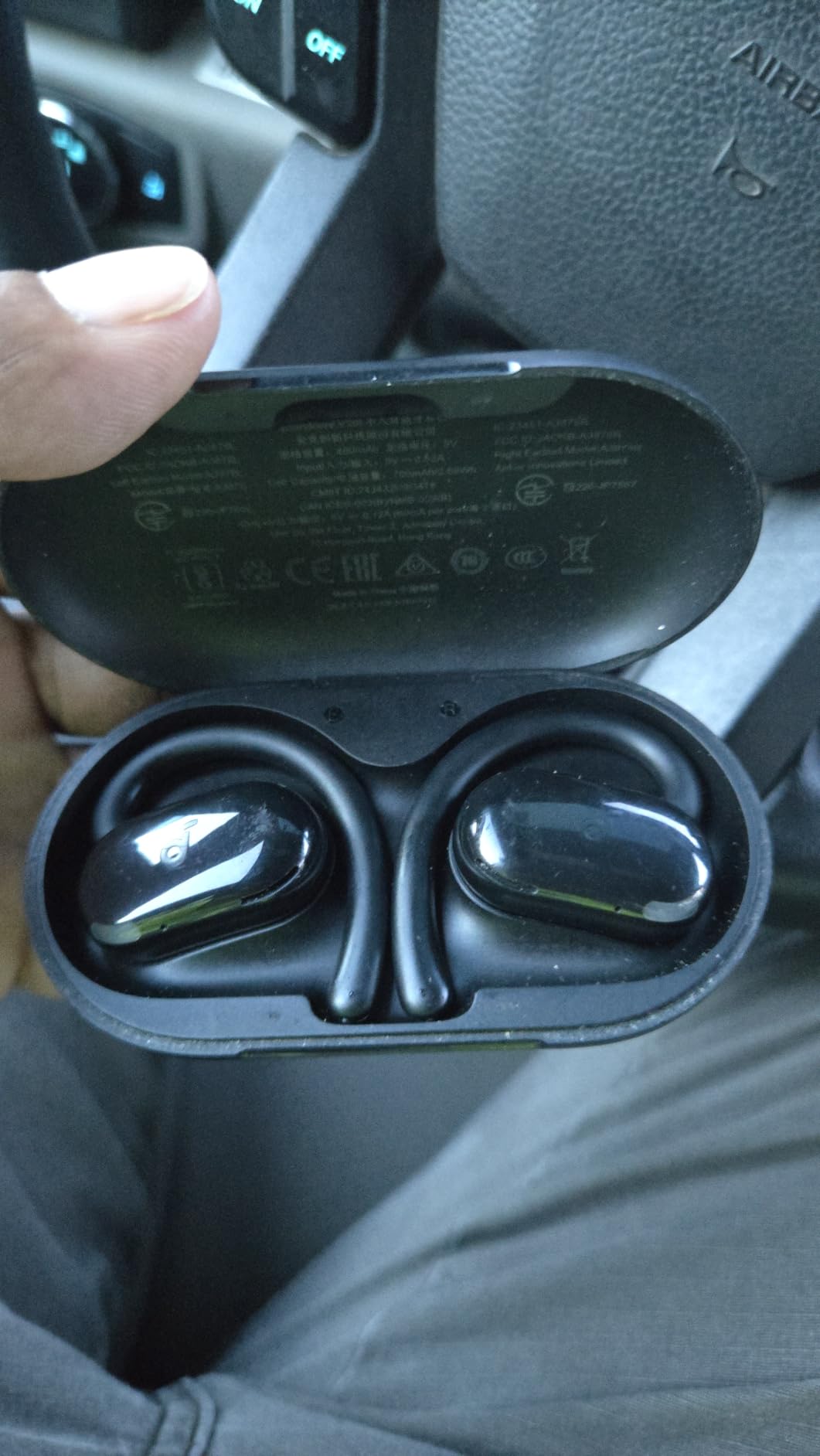
The V20i solves the fit problem that ruins most open ear headphones with a simple idea: instead of one fixed angle, the earbud rotates through four positions. Ear shapes are genuinely varied, and a design that can be rotated forward, back and up on the fly stops a five-minute ride from turning into an hour of adjusting.
Sound is a step above the budget field. A 16 mm dynamic driver with titanium-coated domes and BassUp processing gives a fuller, more resonant result than you would expect at this level, and it holds up on a podcast at moderate volume better than most rivals here.
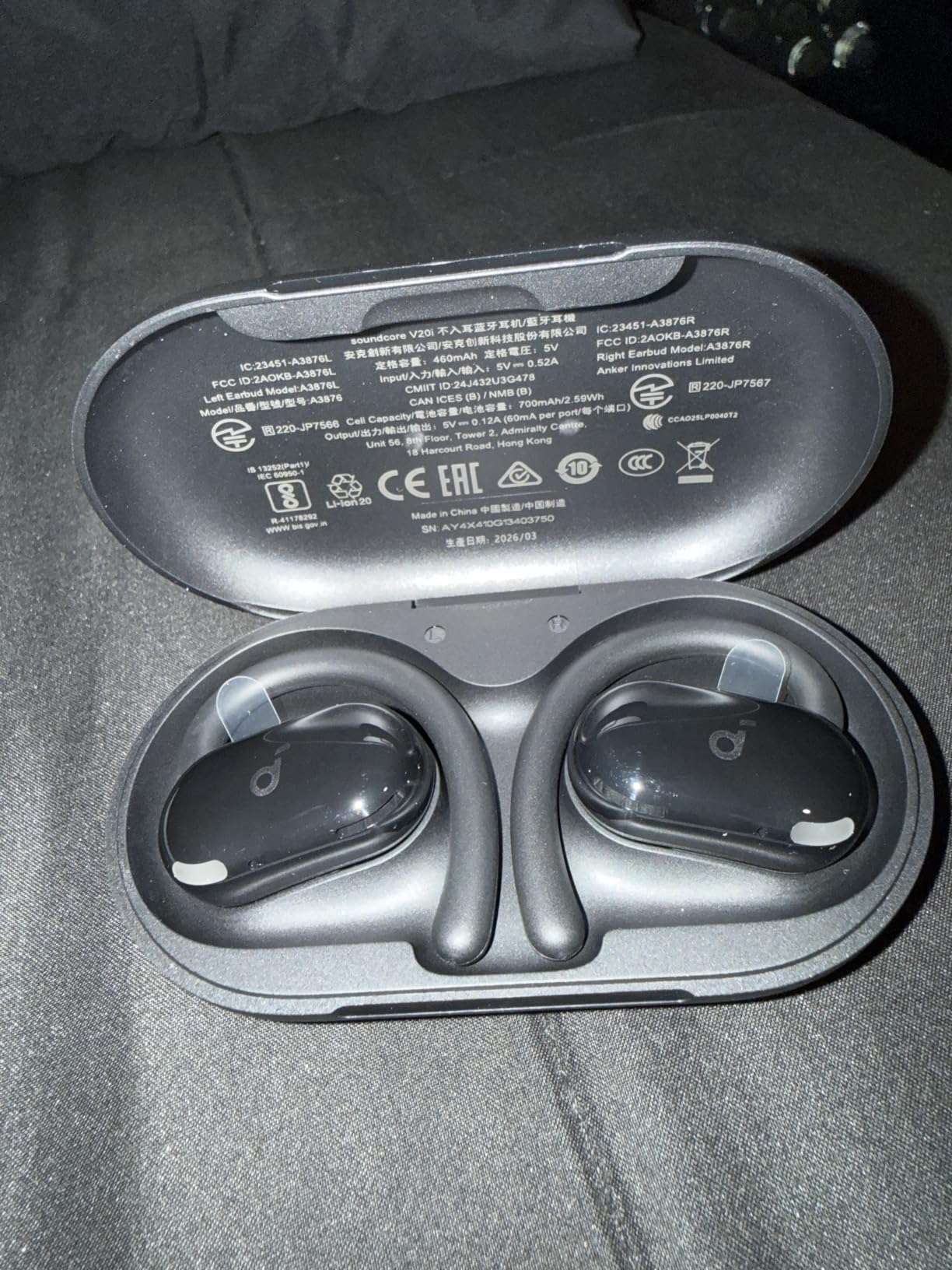
The four microphones with AI enhancement are the sleeper feature for commuters. Open ear microphones usually sit outside the airflow, so they pick up more road noise than in-ear ones, and the processing here does a reasonable job of keeping a phone call usable in moderate wind.
IP55 sweat and water resistance covers the practical side of cycling: soaked roads, spray from puddles and the drip off your helmet after a downpour. The tune-synced lights add a small visibility bonus for evening commutes without turning you into a flashing beacon.
Who the V20i suits
Riders on a firm budget who still want bass they can enjoy and microphones they can use on calls. The four-way adjustment is genuinely useful with glasses, because you can rotate the unit away from a temple arm instead of fighting it.
It is a strong choice for commuting, where short cold rides and phone calls matter more than all-day battery. Weight is higher than the featherweight models here, though the lights account for much of that.
Where it falls short
Eight hours per charge is the real limit. A full day of intermittent use needs a mid-shift top-up from the 700 mAh case, and the case itself accounts for a meaningful chunk of pack weight.
Because the drivers sit outside the canal, you still need more volume than an in-ear pair to cover traffic noise, and the light-up elements add bulk that some riders find unnecessary.
4. Soundcore C50i – Best Clip-On Pick That Works With Gloves
Soundcore C50i by Anker Open Ear Earbuds, Clip On Earbuds, Clip Headphones
Clip-on open-ear design
12 mm drivers with 86 dB output
8 hours, 28 with the case
Bluetooth 6.0 with multipoint
Pros
- Clip-on design beats bone conduction on bass at this level
- Memory titanium FlexiClip adapts to ear shape
- Physical buttons work with gloves and do not misfire
- IP55 holds up over months of sweat
- Compact case fits a jersey pocket
Cons
- 8 hours per charge is short for audiobooks
- Volume capped and not adjustable on the buds
- Mics handle wind poorly outdoors
The C50i is a clip-on design, which means it attaches to the edge of your ear rather than wrapping over it. That single change removes most of the three-way conflict between helmet straps, glasses and headphones that frustrates riders on every other design, because the temples of your glasses and the strap of your helmet both sit further back.
Sound is the other reason to prefer a clip. A 12 mm custom driver pushing 86 dB of output in open air sounds more like a normal pair of earbuds than any bone conduction model in this test, with real bass response instead of a hint of it. On rough gravel the FlexiClip memory titanium wing holds the position that bone conduction pads cannot.
Bluetooth 6.0 with multipoint switching means you can move from a phone to a bike computer or laptop without a reconnection ritual, which matters if you take calls on one device and listen to directions on the other. IP55 is enough for year-round wet-weather riding and a full season of sweat.
The physical push buttons on both earbuds are the detail that separates this from most clip-on designs. They are clicky, findable by feel through gloves, and they do not misfire the way touch panels do when your handlebar is shaking.
Who the C50i suits
Anyone who wears glasses with the arms tucked behind the ear, or who has already broken a pair of hook-style headphones against a helmet strap. Gravel riders and mountain bikers get a secure fit that keeps working on chatter.
If you mostly listen rather than talk, the clip design is the best sounding option in this roundup for open ear listening. The 33.5 g case is small enough to live in a jersey pocket for the whole day.
Where it falls short
Volume is capped and cannot be changed from the earbuds themselves, so a volume change means reaching for the phone. Wind noise on the microphones is the weakest part of the package, and calls taken at speed outdoors are poor.
Eight hours per charge is also short for anyone using these for audiobooks across a long working day. Some owners report buds staying paired to a phone while sitting in the case.
5. TOZO O2 – Best for Wet Weather and Adjustable Fit
TOZO O2 Open Ear Wireless Earbuds,Multi-Angle Adjust 42H Bluetooth 5.3
14.2 mm dynamic driver
Dual-axis multi-angle fit
42 hours with the case
IPX6 sweat and rain
Pros
- Dual-axis adjustment fits a range of ear shapes
- 14.2 mm driver delivers deep bass for open-ear
- IPX6 handles sweat and heavy rain
- 42 hours total with dual-device connectivity
- Directional sound limits leakage in public
Cons
- Bluetooth can drop at roughly 50 feet
- Buds may need periodic readjusting
- Case charge state is unclear
- No active noise cancellation
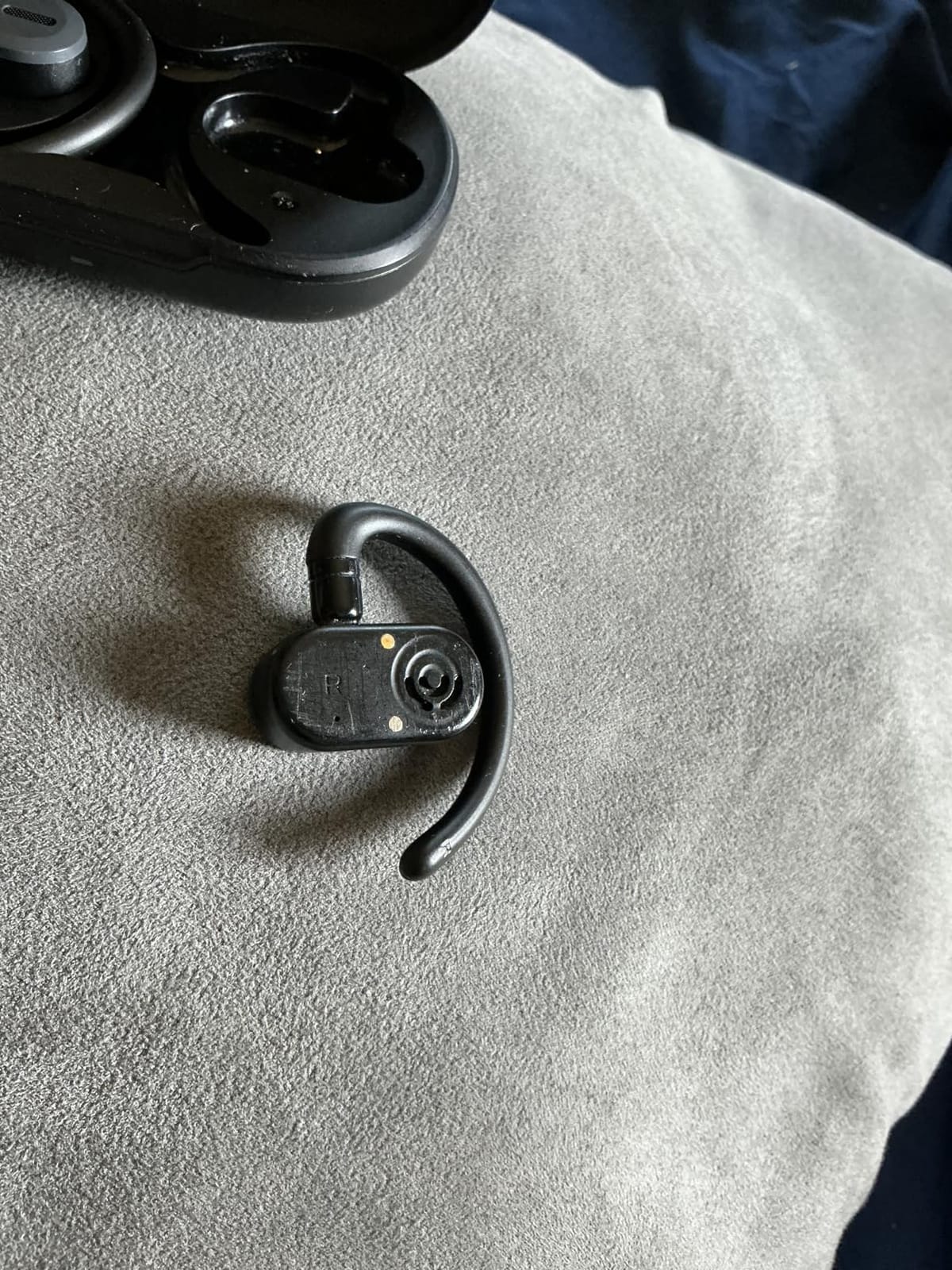
The O2 is the most substantial open ear design in the budget half of this roundup, and its dual-axis adjustment is the feature worth understanding. The earbud moves on both horizontal and vertical pivots, so instead of one fixed hook you can angle the driver toward your ear canal opening and get more bass and more volume out of the same hardware.
That adjustability also matters with a helmet on. When you tilt the head forward into a riding position, the ideal angle of an open ear driver changes, and a fixed hook ends up pointing slightly downward. A model that rotates can be dialled in once and then forgotten.
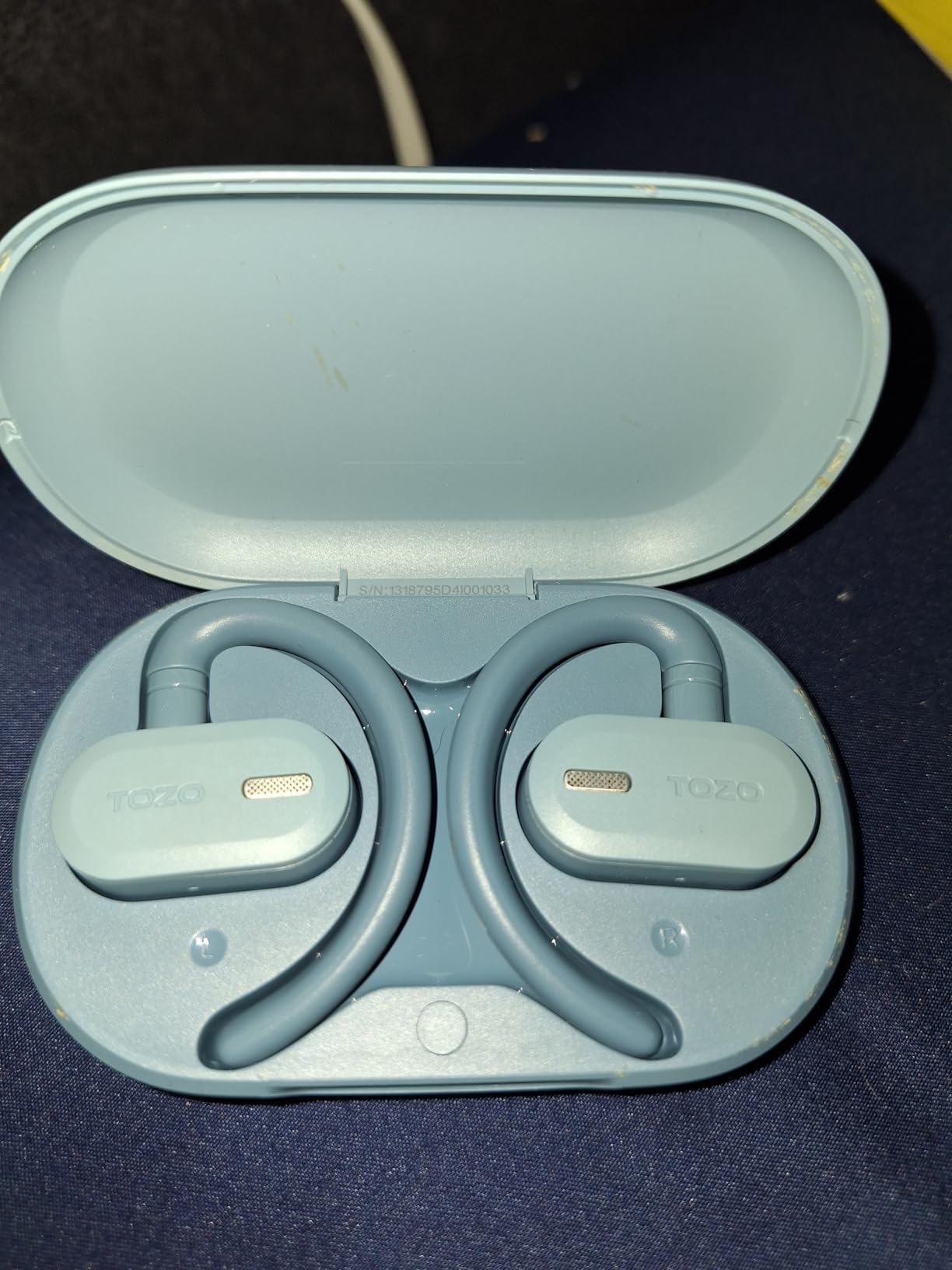
IPX6 is the strongest weather rating in this group, which makes it a good match for year-round commuting and for anyone riding through proper rain. Waterproofing at this level survives sweat, drizzle and the spray off a wheel, which is where IP54 and IPX4 models start to feel brave.
A 14.2 mm dynamic driver with ORIGX acoustic processing gives a bass response that surprised us for an open design, and dual connectivity to two phones at once is a real convenience when you switch between a ride computer and a handset.
Who the O2 suits
Riders who spend the winter outdoors, or anyone whose sweat has destroyed cheaper open ear headphones within a season or two. The 42 hours total means a week of commuting without thinking about a charger.
Dual connectivity suits people whose music lives on one phone and whose navigation or messages live on another. The adjustable fit suits riders whose ears are shaped in a way that fixed-hook designs never quite accommodate.
Where it falls short
Bluetooth is the weak point, with owners reporting dropouts at around 50 feet and brief cut-outs during pairing. A jersey pocket puts the phone closer than that, so keep a handlebar-mounted phone in mind if connection stability matters.
Some riders still find the earbud shifting over a long ride and re-adjusting it for best sound, and there is no active noise cancellation to lean on when traffic gets loud.
6. TOZO OpenEarRing – Most Versatile at 5.1 g Per Earbud
TOZO OpenEarRing Open Ear Earbuds 40H Bluetooth 5.4 Lightweight Comfort
5.1 g clip-on earbuds
10 hours, 40 with the case
Bluetooth 5.4 with IPX5
32 EQ modes in the app
Pros
- Extremely light at 5.1 g per earbud
- Secure clip-on that stays put on rough ground
- 32 EQ modes in the TOZO app
- Digital display case shows charge level
- Comfortable with glasses
Cons
- Single charge runs about 6 to 8 hours
- No onboard volume adjustment
- Touch controls are finicky and awkwardly placed
At 5.1 g per earbud, the OpenEarRing is the lightest thing in this roundup by a wide margin, and on a long ride that weight difference is everything. A pair you cannot feel is a pair you stop adjusting, and stopping adjustment is what keeps a cheap design in place for four hours.
The clip-on shape wraps the ear rather than the head, so it shares the same advantage as the C50i: helmet straps and glasses arms sit behind the attachment point rather than fighting it. The silicone contact is skin friendly enough for long sessions, which also makes it a reasonable option for riders who find in-ear channels uncomfortable.

Sound comes from a 10 mm dynamic driver with TOZO OrigX processing, and while the bass is not in the same class as the larger clip-on models, podcasts, radio and navigation prompts all come through clearly. Bluetooth 5.4 gives a stable 15 meter connection that holds up on a rough road surface.
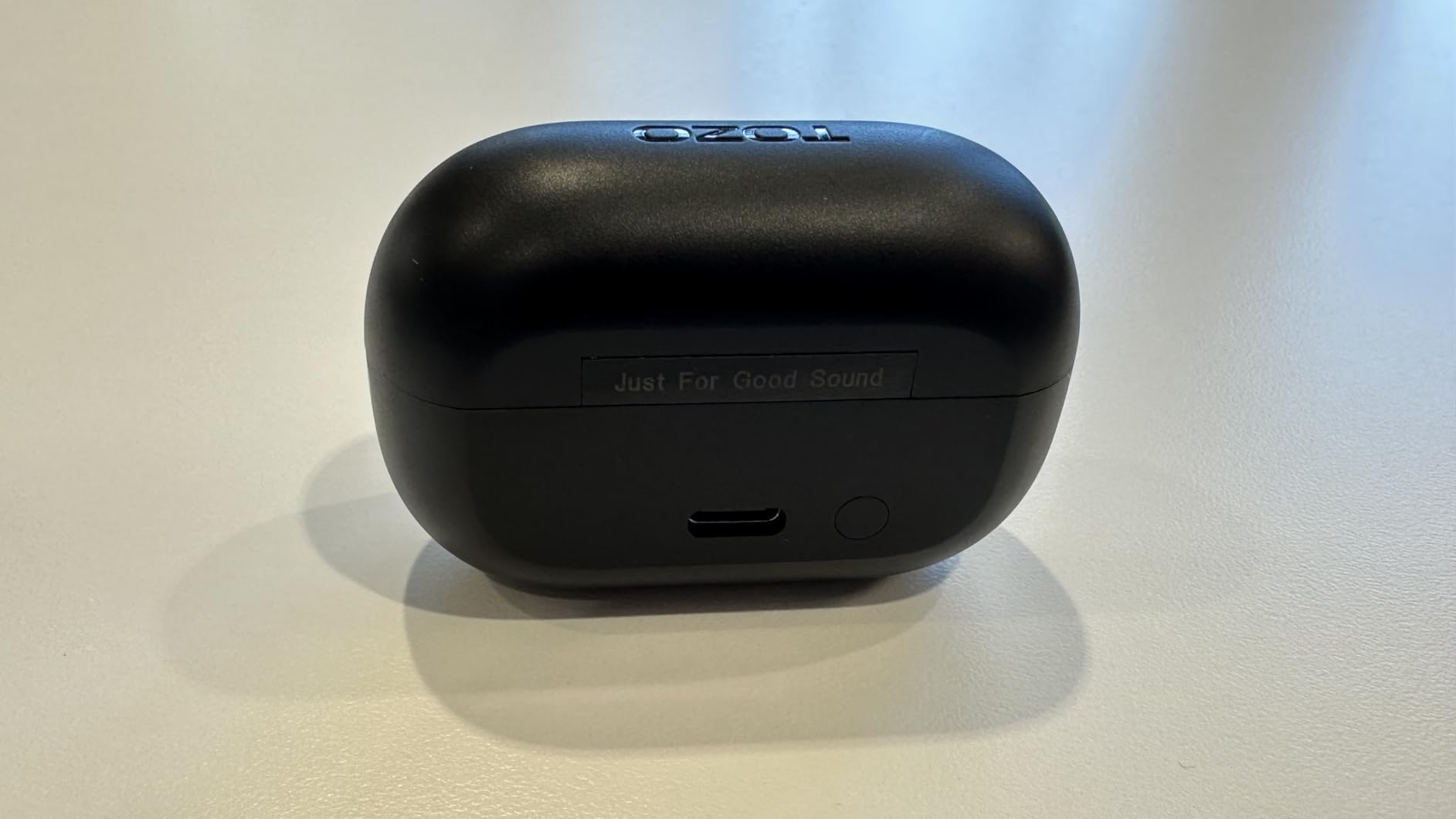
IPX5 is adequate for sweat and rain, and the app adds 32 EQ modes if you want to shape the sound yourself. The charging case has a digital display, which is a small quality-of-life touch that saves guessing whether the buds are charged before a ride.
Who the OpenEarRing suits
Riders buying their first pair of open ear headphones, or anyone who has been put off by the clamp feel of bulkier models. It is the pick to try if a full wraparound band feels like too much hardware on your head.
Short-to-medium rides are where this pair is at its best, since the per-charge battery covers most sessions comfortably and the case handles the rest between rides.
Where it falls short
The headline battery figure is a total rather than a per-charge number, and real single-charge life is closer to six to eight hours. There is no onboard volume adjustment, so volume changes mean the phone, every time.
Touch controls on the ear hook are the most common complaint: finicky to trigger and positioned awkwardly, especially with gloves. Audio latency of around 60 ms is also noticeable if you use them for video.
7. Raycon Bone Conduction – Longest Battery for Multi-Day Touring
Raycon Bone Conduction Headphones – Open Ear Running Headphones & Bluetooth Earbuds, Sweat & Water-Resistant with Mic (Gray)
Bone conduction open-ear
IP68 sweat and water resistance
13 hours of battery
Included fitment strap
Pros
- 13 hours covers long rides and multi-day touring
- IP68 handles rain and pool use
- Fitment strap keeps the frame from loosening
- Comfortable open-ear fit
- Adjustable ear pieces trade volume for awareness
Cons
- Bluetooth signal cuts out with a pocketed phone
- Bulkier earpieces over months of use
- Bass lacks punch
- Proprietary magnetic charging cable
Thirteen hours per charge is the longest single-charge figure in this roundup, and on a multi-day tour that is the difference between charging every evening and charging when you choose. Combined with an IP68 rating, this is the most weather-tolerant bone conduction design here and the one to pick for a week of coastal riding.
The included fitment strap is a small addition that solves a real problem. Bone conduction frames work by pressing a transducer against the skull, so anything that loosens the fit reduces both comfort and bass response. A strap that tightens the frame back onto the head is the cheapest way to keep the seal predictable.
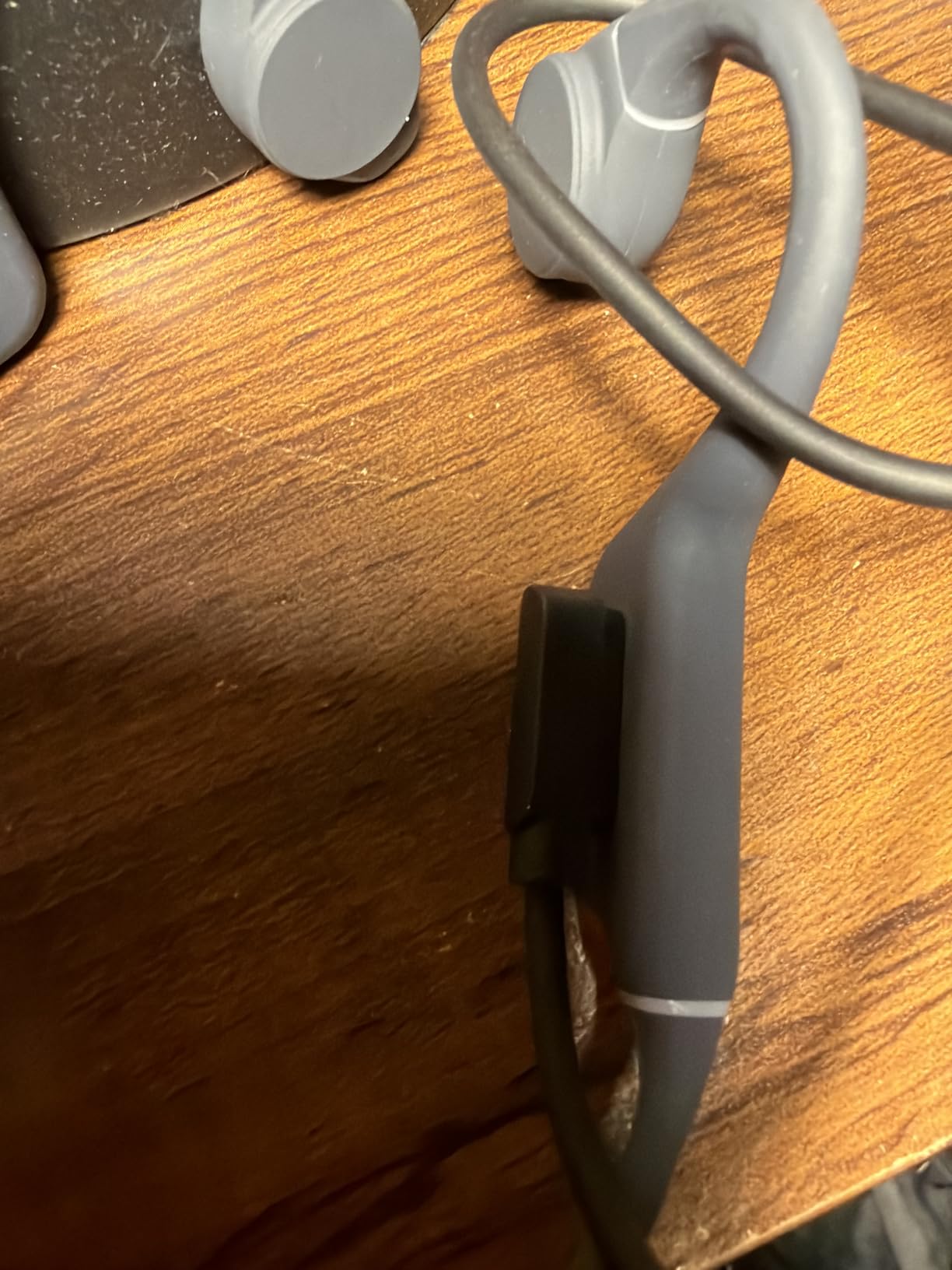
True bone conduction keeps road and traffic noise audible while riding, which is the core safety argument for the technology. Nothing sits in the canal, so pressure builds nowhere and there is nothing to block when you need to hear something behind you.
The adjustable slide-in ear pieces let you trade volume against environmental awareness, which is a genuinely useful control on a group ride when you want more sound in one moment and more ambient noise in the next.

Who the Raycon suits
Bikepackers and tourers who spend full days in the saddle and cannot rely on a charging point every night. The IP68 build is the strongest in this group for anyone riding in sustained rain.
Riders who struggle with in-ear channels also do well here, since the whole design removes pressure. It is a comfortable pair for a long day, particularly with the fitment strap in use.
Where it falls short
Bluetooth is the real problem for cycling specifically. Owners report audio cutting out with the phone in a shorts pocket while riding, which suggests you will get more reliable results with a handlebar or jersey-pocket phone at the top of a jersey.
The earpieces are bulkier and can become uncomfortable over months of daily wear, the music lacks punch next to premium Shokz models, and the proprietary magnetic charging cable is one more cable to lose on a tour.
8. Ortizan I10 – Best for All-Day Comfort at 19 g
Ortizan Open Ear Headphones, Bluetooth 5.3 Wireless Air Conduction Headphones Sport Earbuds, Premium Sound, IPX6 Waterproof, Clear Call, 19g Lightweight Earphones for Running Cycling Workouts (Black)
19 g total in liquid silicone
10 hours of playback
IPX6 waterproof
Magnetic quick charge
Pros
- Only 19 g total
- comfortable for hours
- Directional speakers reduce sound leakage
- IPX6 holds up in rain and pool
- Ten minutes of charge gives an hour of playback
Cons
- No volume control on the headset
- Single button handles only basic commands
- Some units stopped charging after a few months
- Band is not adjustable
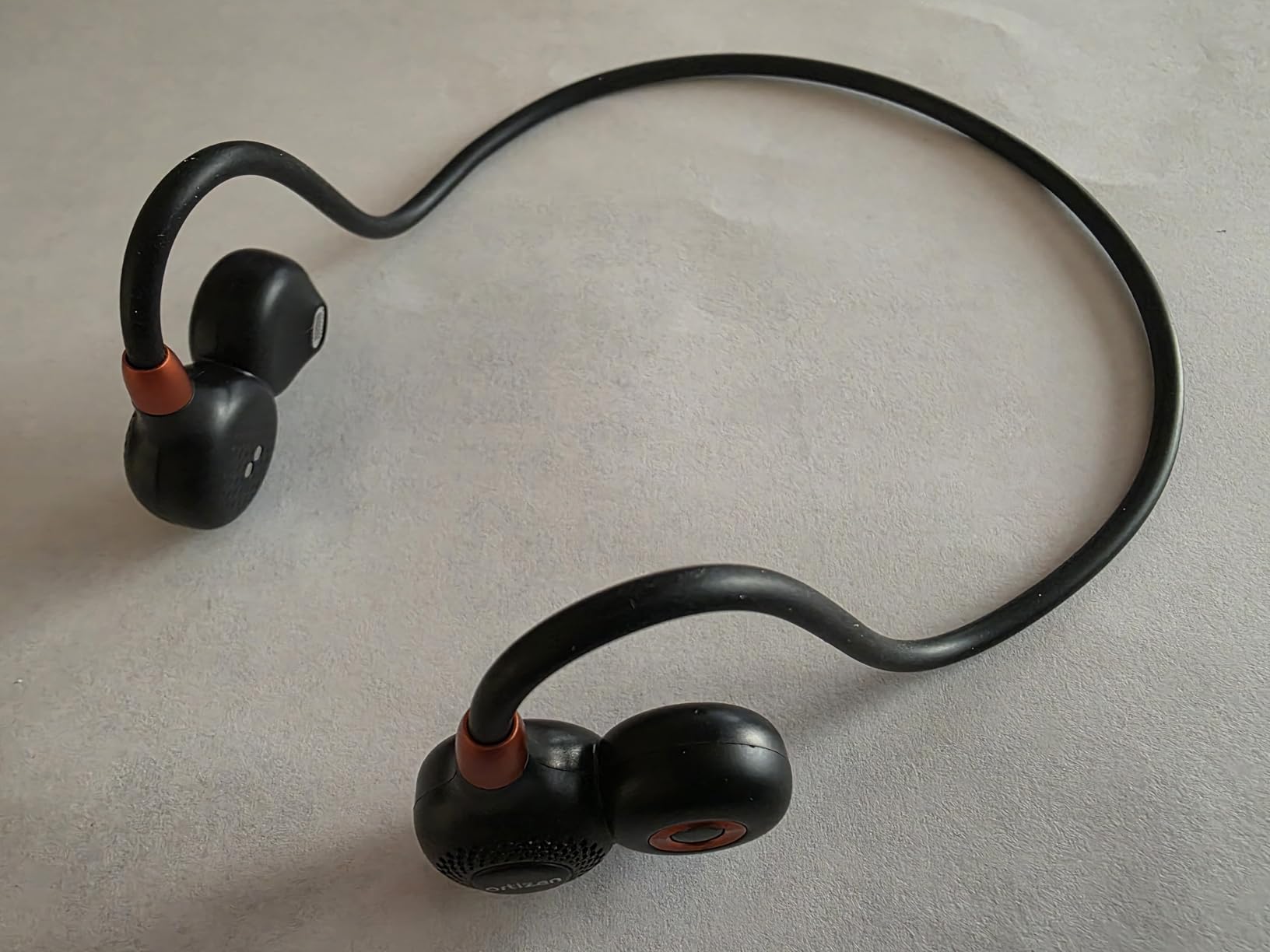
The I10 is a neckband design, and at 19 g for the entire unit it is the most comfortable thing in this test for long sessions. There is nothing sitting on the top of your head, no hook digging at the antihelix, and no clamp pressure anywhere, which makes it the easiest option to wear for an entire working day of riding.
Neckbands do have a specific weakness for cycling. The band itself is not adjustable, so on some head shapes it sits with a gap at the back, and the drivers can drift out of alignment with the ear canal as you move. Riders with a defined jawline and a neck that suits the geometry report far better results than others.
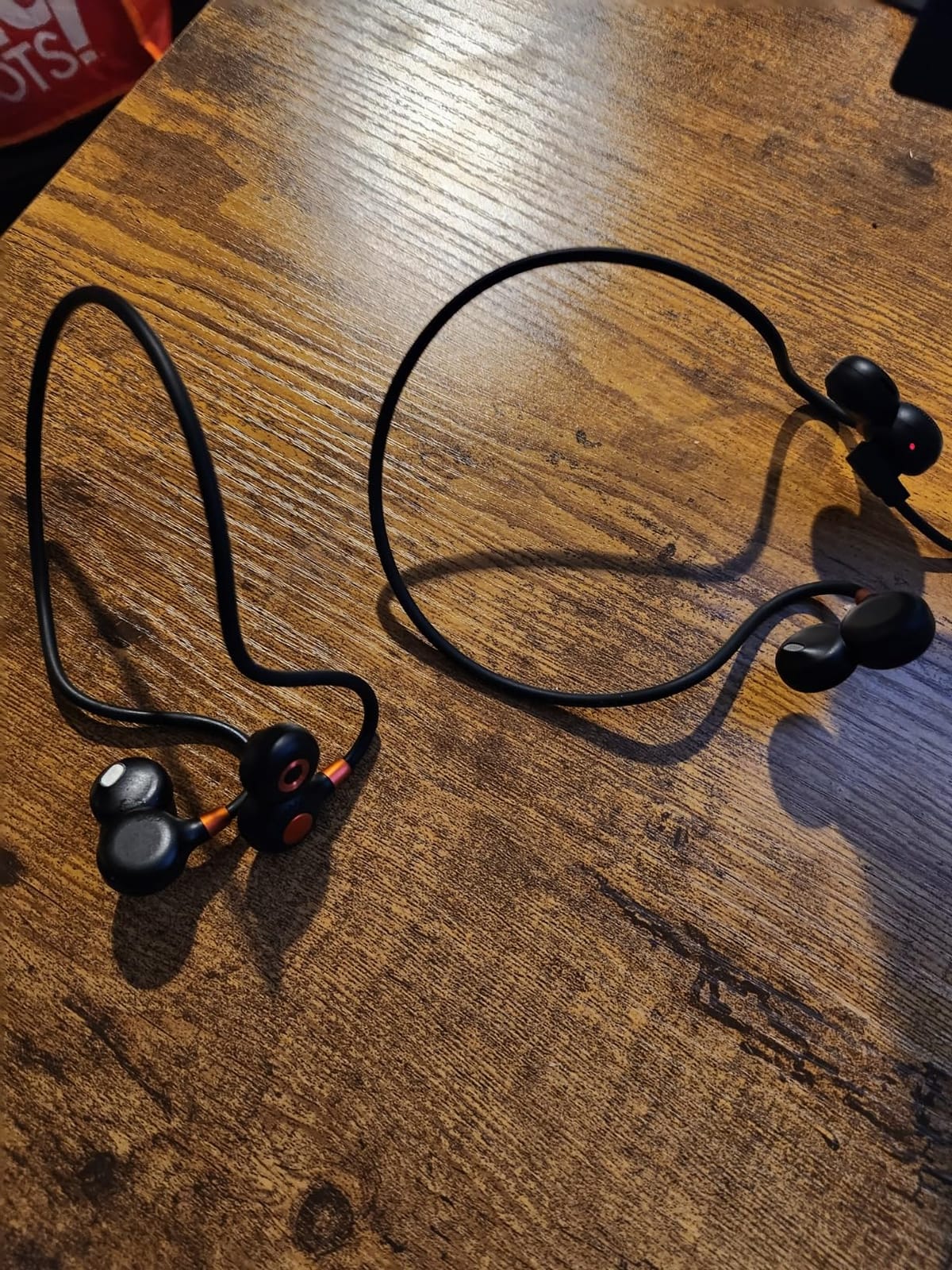
Where it shines is loudness and clarity for its size. The 14.2 mm drivers with air conduction directional audio keep sound aimed at the ear and reduce leakage to bystanders, which matters when you are riding past people on a shared path and do not want your podcast in their ears.
Ten hours of playback per charge plus a magnetic fast charge that delivers an hour of audio from ten minutes of charging gives you real flexibility on a long day. Gold-plated charging contacts resist sweat corrosion, a small detail that matters more than it sounds over a season of use.
Who the I10 suits
Riders who find every hook and wraparound design uncomfortable and want something they genuinely forget about. The IPX6 rating holds up in rain, pool use and repeated sweat without worry.
Directional audio makes this a good pick for shared paths and busy commuting routes where leaking sound is a social problem. Fifteen power levels give finer volume control than most open ear designs offer.
Where it falls short
There is no volume control on the headset, and the single multifunction button handles only power, play and pause and calls. Anything more granular means the phone, which is annoying on a descent.
Some owners report units stopped charging after a couple of months, and the non-adjustable band is the reason the model is not higher up the list. It also does not suit very long trips, where battery life matters most.
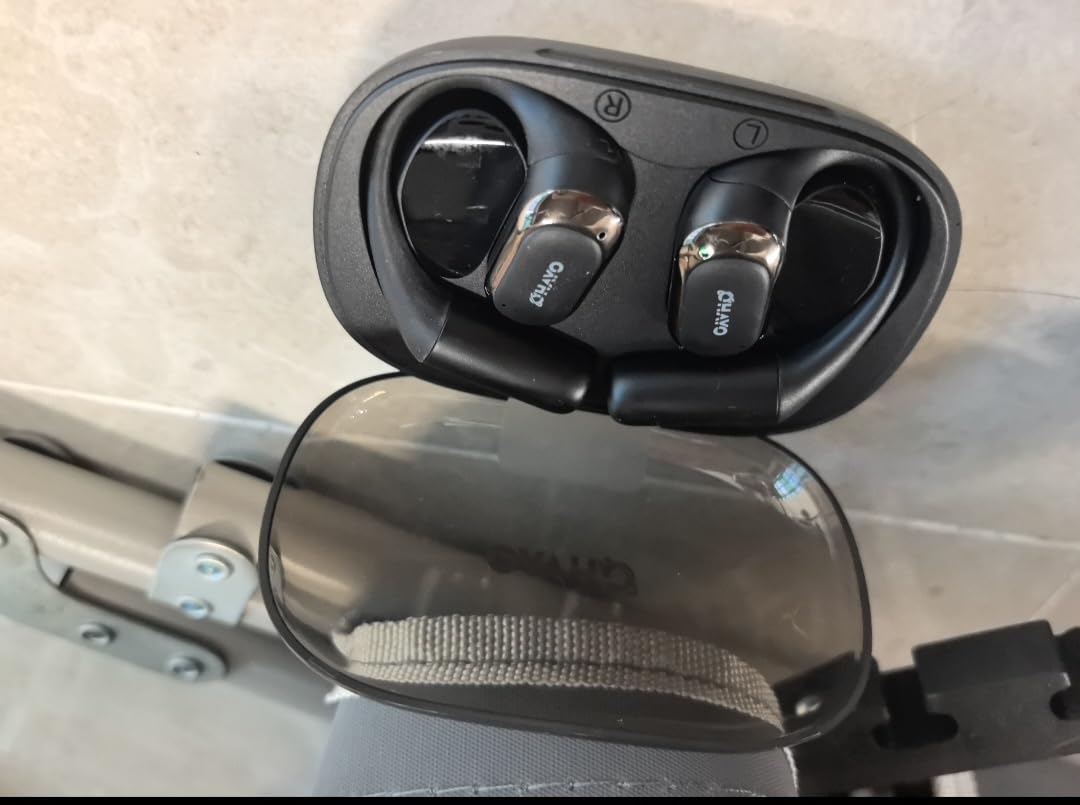
9. OHAYO T10 – Loudest Open Ear Audio in the Budget Field
OHAYO Open Ear Headphones,Over Ear Earbuds with Ergonomic Earhook,Bluetooth Headphones 5.4 with Smart Digital Display,40H Playtime,IPX6 Waterproof,Touch Control Operate Fit Cycling,Running,Workout
8 g per earbud with an ear hook
Quad 15 mm speaker system
10 hours, 40 with the case
IPX6 sweat and rain
Pros
- 8 g earbuds with a secure ergonomic hook
- Quad speakers and an amplifier chip for louder sound
- IPX6 against sweat and rain
- 40 hours total with a display case
- Reduces ear canal irritation on long sessions
Cons
- Sound is average versus pricier models
- Touch controls are hard to reach on the hook
- Bluetooth range of 10 m is short
- No in-ear detection or volume rocker
The T10 is built around one simple target: more volume. A quad-speaker arrangement with dual 15 mm drivers per earbud and a dedicated headphone amplifier chip produces noticeably louder output than the other open ear models in this price range, and on a busy road or in a town centre that extra headroom is the difference between listening and giving up.
At 8 g per earbud with an ergonomic ear hook, the fit is light and secure. The hook wraps the ear without the weight of a band, and reviewers consistently report that it holds position through intense workouts rather than sliding around.
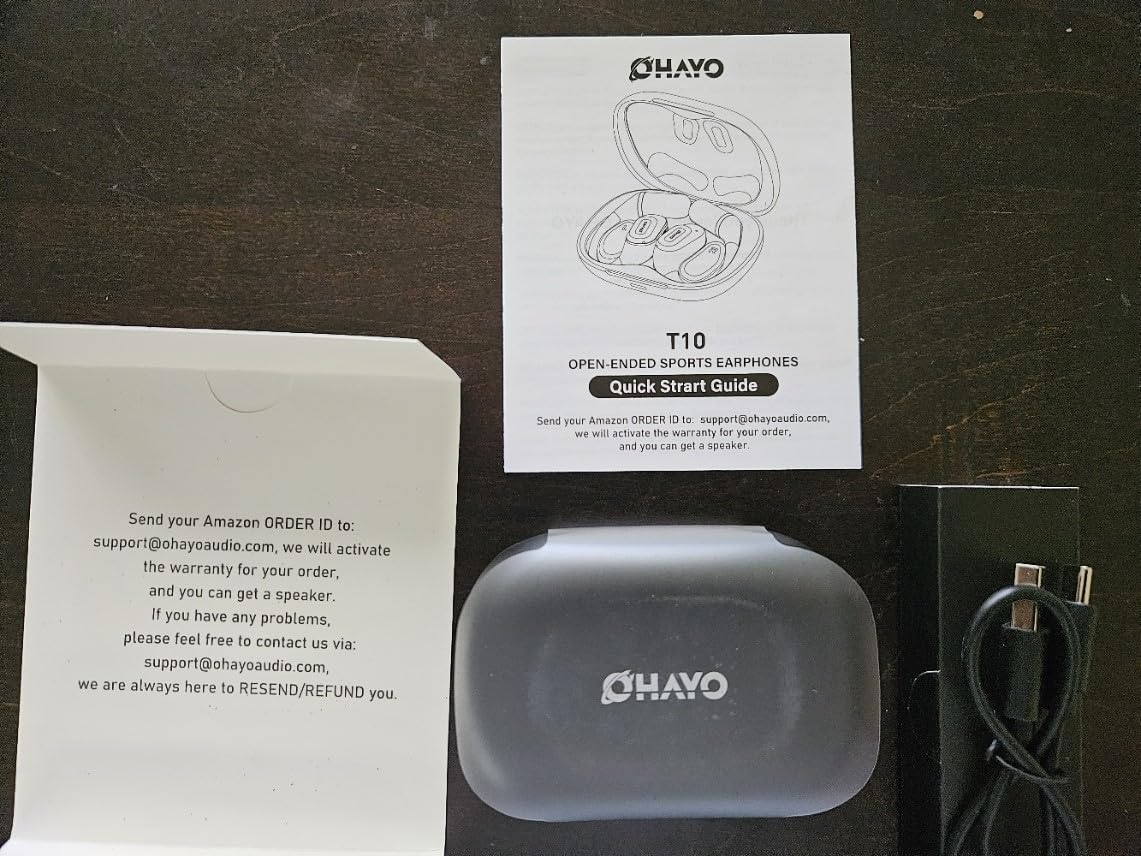
Ten hours per charge with a 40 hour total from the 500 mAh case, plus an LED digital display on the case, means you can ride a full week of commutes without thinking about power. IPX6 covers sweat and rain, and the open design means no ear canal irritation over a long day.
Bluetooth 5.4 is the specification, though the stated 10 metre range is the shortest in this roundup. In practice that is fine for a phone in a jersey pocket and less fine for one in a trouser pocket with a full wallet.
Who the T10 suits
City riders and commuters who need audio to be audible over traffic and construction noise without pushing the volume into distortion. Anyone who wants a light hook design with a case that lasts all week.
If you have sensitive ear canals and want to ride long hours without pressure, the open design and the low per-earbud weight make this a comfortable daily driver.
Where it falls short
Loud is not the same as good. Tuning is average compared with the clip-on models, with less detail in the highs and a softer bass response than the larger drivers elsewhere suggest.
Touch controls sit on the ear hook where they are difficult to reach without taking a hand off the bars, there is no in-ear detection, and no volume rocker means changes go through the phone.
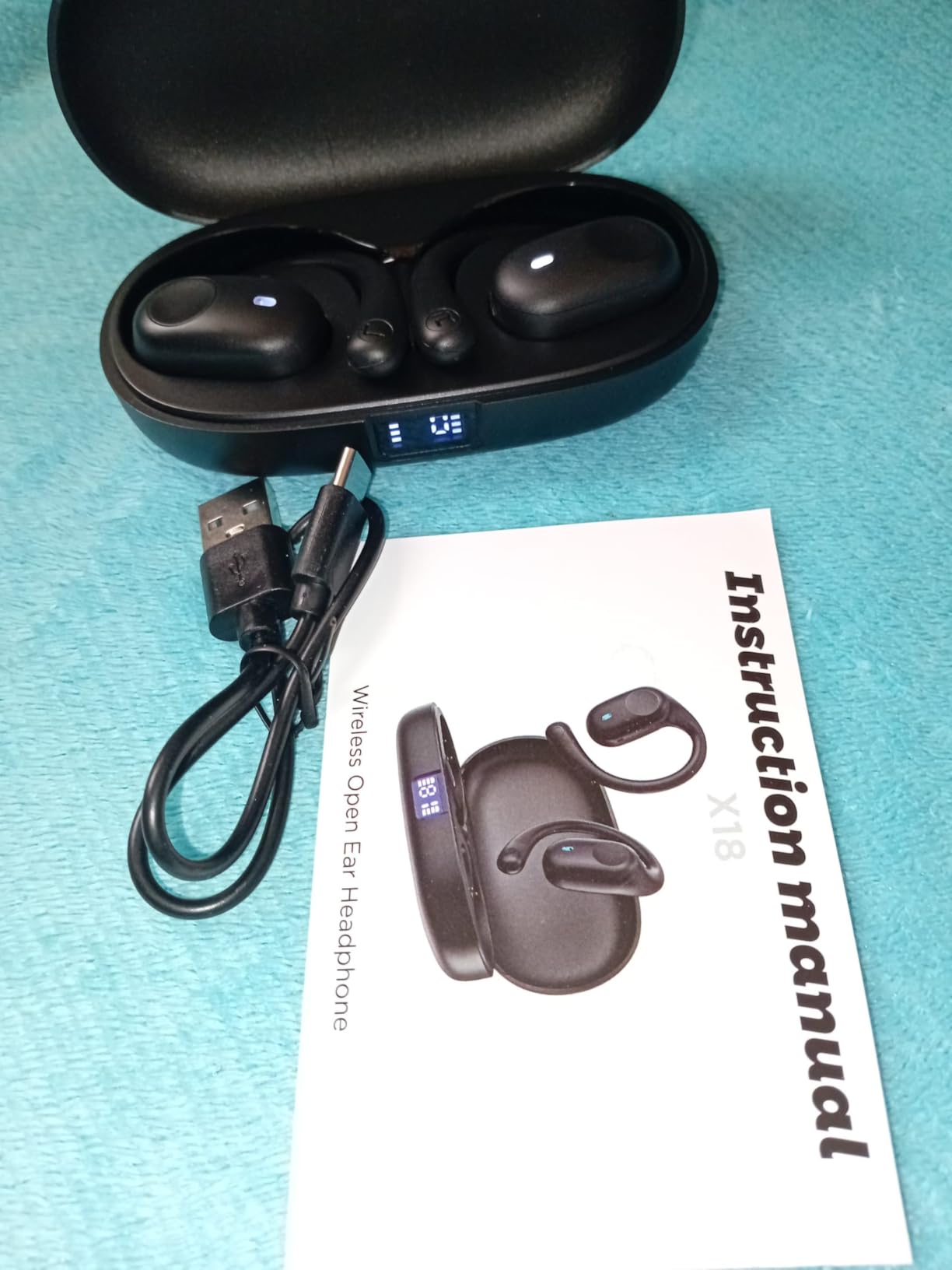
10. Eigsupia X18 – Lightweight Pair for Short Commutes
Eigsupia Open Ear Headphones, Bluetooth Headphones 5.3 Sports with Smart Digital Display, 36H Playtime, IP54 Waterproof, Wireless Earbuds Lightweight Design Fit Cycling, Running, Workout (Black)
8 g per earbud in polycarbonate
IP54 waterproof
36 hours with the case
LED digital case display
Pros
- Very light at 8 g per earbud
- Ear hook feels secure on rough ground
- LED case shows remaining charge percentage
- Works with glasses
- Comfortable for sensory sensitivities
Cons
- About 4 hours of playback per charge
- Touch buttons are sensitive and laggy
- Sound lacks bass and detail
- Weak microphone quality for calls
The X18 is the simplest open ear design here, and that simplicity is the point. There is no band, no clip mechanism and no case complexity, just an 8 g earbud on an ear hook in lightweight polycarbonate. Riders with sensitive ears or a low tolerance for hardware on the head often prefer exactly this.
Fit is a genuine strength despite the light construction. The ear hook wraps the ear rather than resting on it, which keeps it clear of helmet straps and works with glasses, and it stays put on broken road surfaces where lighter clip designs can rattle.

The LED digital display on the charging case shows remaining charge as a percentage, which is more than most models at this level offer, and 36 hours of total playtime covers a working week of short commutes.
IP54 is a step down from the IPX5 and IPX6 models in this roundup, covering sweat and light rain but not the same level of sustained water exposure. For urban commuting in a temperate climate, that is adequate.
Who the X18 suits
Short daily commutes where the ride is under an hour, or anyone who wants to try open ear audio without investing in a frame they might not use. The one-year warranty and simple design make it a low-commitment first pair.
The absence of any pressure point on the ear makes it a good option for riders with sensory sensitivities, and the ear hook design clears both glasses and helmet straps cleanly.
Where it falls short
Roughly four hours of playback per charge is the most limiting figure in this roundup, and it will not cover a long ride without the case. The 36 hour total only works if you recharge between sessions.
Touch buttons are sensitive and laggy, producing both accidental and missed commands, and the microphone is weak enough that taking a call while riding is rarely a good experience. Bass and detail are thin next to larger-driver designs.
How to Choose Open Ear Headphones for Cycling
Start with wind, because it decides everything else. Any open ear design lets you hear the world, but at speed the airflow across your ears creates its own noise floor. Bone conduction adds vibration that competes with it, while ear-hook and clip-on air conduction designs aim a speaker at the canal opening and generally hold their ground longer. If your riding includes fast descents, exposed roads or coastal routes, weight that factor heavily. Riders regularly report bone conduction sounding excellent at low speed and being drowned out at higher speeds on the same road.
Air conduction or bone conduction?
Air conduction uses a small speaker near the ear, positioned to direct sound into the canal without sealing it. You get fuller sound, more bass and a lower volume ceiling, and the fit problem becomes mechanical – will the hook or clip stay put through a gravel surface and under a helmet?
Bone conduction sends vibration through the cheekbone and skull to the inner ear. There is no speaker to blow out with sweat or sand, the frame is inherently stable, and ambient sound passes through completely. The trade-off is thinner bass, a sense of vibration some riders dislike on long rides, and a lower maximum volume. Neither is better in the abstract; the deciding factor is whether your riding is mostly slow and steady or fast and exposed.
Helmet and glasses fit
The three-way fit conflict is the most common complaint in cycling communities and the one that returns a pair. Helmet straps, glasses arms and an ear hook all occupy the same small patch of head. The practical approach: try the model on with the helmet and the glasses you actually ride in, ride for at least thirty minutes, and check whether the transducers stay in contact with your skull. Bone conduction needs firm, consistent contact to sound right, and a loose frame means thin audio and extra fiddling.
Wraparound bands tuck behind the head where a rear helmet cradle wants to sit, so tilt the band slightly downward to move the contact point forward. Clip-on and ear-hook designs sit further forward and generally clear straps and temples more easily, which is why they are a common recommendation for riders who wear both a helmet and wraparound glasses every day.
Controls, gloves and winter
Cold weather is where touch controls fail. Bare capacitive panels are unreliable with thick gloves and worse with wet ones, so physical buttons are a genuine advantage from roughly October through March. The Soundcore C50i and the SHOKZ OpenRun Pro 2 both use physical buttons; most of the other picks here use touch controls, which you will be looking for rather than feeling.
Cold also affects battery expectations. Capacity drops in low temperatures, so on a winter commute a model rated for ten hours may not deliver ten hours, and the case becomes worth carrying rather than leaving at home.
Weather resistance and battery planning
Read the IP rating as what it is. IPX4 handles sweat and splash, IPX5 and IP55 handle sweat and rain with more margin, and IPX6 or IP68 will tolerate sustained wet weather and washing the buds under a tap. For year-round outdoor cycling in a climate with real rain, IP55 and above is the sensible floor.
For battery, separate per-charge life from the headline total. Most quoted figures include the case, and the per-charge number is what decides whether you can finish a long ride. Above eight hours per charge you can ride most days without a top-up; below five, you are packing a case or accepting a mid-ride charge. On multi-day touring, priorititise per-charge life, carry a short cable, and use fast charging at lunch stops to buy back hours.
Group rides, calls and the law
Riding in a group changes the volume conversation. Playback is heard by the riders around you, so the shared convention is to keep audio low enough that you can hold a conversation, and to drop volume or pause at junctions and when the pace slows. A single earbud, or an open ear design used with awareness, keeps you able to respond when someone calls your name.
If you take calls, note that open ear microphones sit in the airflow, so wind noise affects every model in this roundup. The SHOKZ OpenRun Pro 2 and the Soundcore V20i handle it best of the group, and the C50i handles it worst. Microphone quality in a headwind is a real limit of the format, not a defect of any one pair.
On legality, rules vary by country and by riding speed. Some jurisdictions restrict or ban headphones while cycling, and many restrict both ears specifically, which is the argument for open ear designs: they keep one ear functionally open. Check the rules where you ride before you rely on any pair.
Frequently Asked Questions
Do Shokz work well for cycling?
Yes. Shokz models are among the most popular open ear headphones for cycling because the wraparound frame sits clear of your ears, stays secure under a helmet, and keeps traffic and other riders audible. The bone conduction approach means nothing blocks your ear canal, and the OpenMove adds multipoint pairing while the OpenRun Pro 2 adds longer battery life and a hybrid driver for fuller bass. The main limitation for cycling is wind noise on fast rides, which affects bone conduction more than clip-on air conduction designs.
What type of headphones are best for cycling?
Open ear headphones are the best type for cycling, either ear-hook air conduction, clip-on air conduction, or bone conduction. Air conduction designs sound fuller and get louder, which helps in wind. Bone conduction is the most stable under a helmet and lets all ambient sound through. Avoid in-ear canal headphones because they block the sounds you need for situational awareness.
Which Shokz headphones are best for cycling?
The OpenMove is the best Shokz for cycling on weight, at 29 g with a wraparound titanium frame and multipoint pairing, though battery life is 6 hours per charge. The OpenRun Pro 2 is the better choice for long rides and touring, with 12 hours per charge, a hybrid bone plus air conduction driver and physical buttons that work with gloves.
What is the downside of bone conduction headphones?
The main drawbacks are thinner bass than a normal earbud, a sensation of vibration in the jaw that some riders dislike on long rides, and a lower maximum volume than sealed in-ear headphones. Bone conduction is also more exposed to wind noise at speed, and the frame needs firm contact with your skull to sound right, which can conflict with helmet straps.
Are Shokz good for cycling?
Yes. Shokz is one of the most established open ear headphone brands for cycling, with wraparound frames that clear helmet straps and glasses, secure fits on rough surfaces, and microphones specified to reduce background noise on calls. The trade-offs to weigh are volume limits compared with in-ear pairs, wind noise on fast descents, and battery life on the lighter models.
What are the best in-ear headphones for cycling?
In-ear headphones are a poor choice for cycling because a sealed canal blocks the traffic and environmental sounds you need for situational awareness, and a loose bud can fall out on rough road. If you want the sound quality of an in-ear pair, an open ear clip-on design such as the Soundcore C50i is the closest compromise, since it delivers fuller bass and higher volume than bone conduction while leaving the canal open.
Conclusion
After riding the full field, the SHOKZ OpenMove remains our pick for the best open ear headphones for cycling, because 29 g of wraparound titanium disappears under a helmet and leaves your hearing completely open. Riders covering four hours or more a day should step up to the SHOKZ OpenRun Pro 2 for 12 hours of battery, hybrid drivers and glove-friendly physical buttons.
Where your priorities are sound and glasses, the Soundcore C50i clip design clears helmet straps and glasses better than anything else here and delivers the fullest bass in the roundup. The Soundcore V20i is the value pick at 4.4 stars across more than 18,000 reviews, and the TOZO O2 is the one to buy for wet winter riding thanks to its IPX6 rating.
Whatever you choose, fit it with your actual helmet and glasses before you ride away, keep the volume low enough to hold a conversation on a group ride, and check the local rules on headphones in your area. A pair that stays put and leaves your ears open will serve you far better than a louder pair you take out on the first descent.