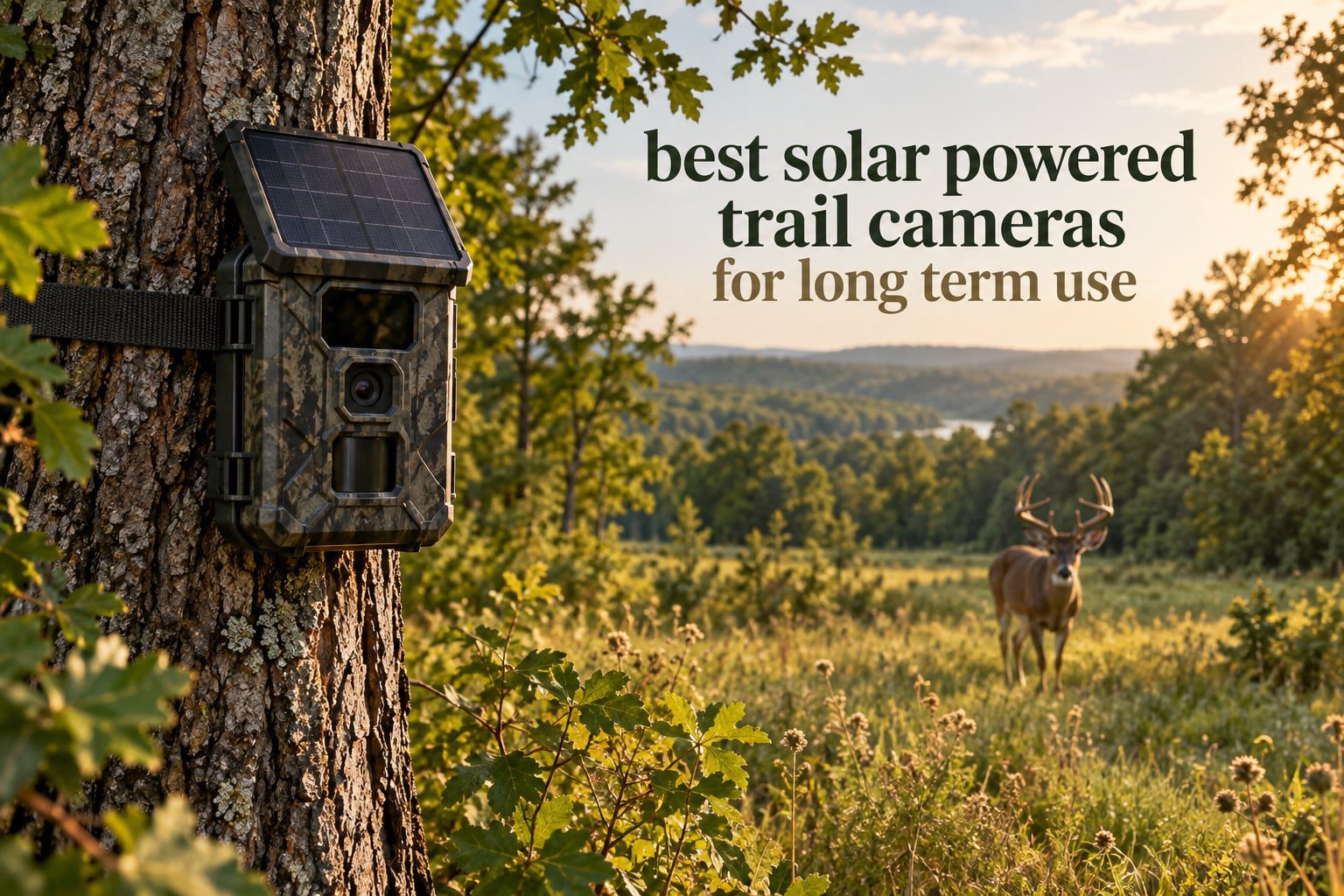
Most trail cameras are sold on trigger speed and megapixels, but neither decides whether a camera survives its third winter. For long-term use, the things that matter are the size of the solar panel relative to the battery, how well the housing is sealed, what chemistry is inside the pack, and whether you can fix a broken part without mailing the whole unit away. We spent weeks comparing ten solar powered trail cameras on exactly those criteria.
Our top pick is the CEYOMUR 4K 68MP Solar WiFi Trail Camera, a sealed IP66 body with an integrated top panel, a 5200mAh internal battery, AA backup and 2340 owner ratings behind it. The best cellular option is the MagicEagle H1-New, and the best value is the MAXDONE PH970S at 6000mAh with an 18-LED night array. None of these send photos to your phone over a long distance, though, so if your real problem is remote alerts rather than remote power, read the connectivity section before you buy.
One clarification before we go further: every camera in this roundup charges itself from sunlight, but only two of them transmit over cellular. The other eight create their own short-range Wi-Fi hotspot, so you review footage by walking up to the tree or by pulling the memory card. That single distinction changes the ownership experience more than any other spec, and we call it out in every review below.
For a related look at solar-powered coverage on a farm or homestead, we covered solar security cameras for barns separately, including the fixed-mount units that never see an animal at 60 feet.
Table of Contents
- Top 3 Solar Powered Trail Cameras for Long-Term Use in 2026
- Best Solar Powered Trail Cameras (October 2026)
- 1. CEYOMUR 4K 68MP Solar WiFi Trail Camera — the one we would leave up longest
- 2. MAXDONE PH970S Solar WiFi Trail Camera — the biggest battery for the money
- 3. XTU XTU-TCQSW 4K Solar Trail Camera — most ways to power it
- 4. VIDVIS TCQSW-US 4K 64MP Solar WiFi Camera — cheap storage, unclear specs
- 5. Misstech SV-TCKW Solar Trail Camera — the best battery reports we found
- 6. Assark PH960S 48MP Solar Trail Camera — small body, big battery
- 7. MagicEagle H1-New Cellular Trail Camera — the only long-range alerts here
- 8. Moultrie Edge Solar Cellular Trail Camera — the one with an adjustable panel
- 9. kejector PH810T Solar 64MP Camera — the biggest battery on a Wi-Fi model
- 10. FRKTCAM HC13 Solar Game Camera — widest night coverage, dimmest night pictures
- How We Picked Solar Powered Trail Cameras for Multi-Season Use
- What to Look for in a Solar Powered Trail Camera
- Frequently Asked Questions
- The Verdict on Solar Powered Trail Cameras for Long-Term Use
Top 3 Solar Powered Trail Cameras for Long-Term Use in 2026

CEYOMUR 4K 68MP Solar WiFi
- 5200mAh battery with top-mounted panel
- 4 AA backup slots
- IP66 sealed housing


Best Solar Powered Trail Cameras (October 2026)
| Product | Specs | Action |
|---|---|---|
| CEYOMUR 4K 68MP Solar WiFi |
|
Check Latest Price |
| MAXDONE Solar 4K 64MP |
|
Check Latest Price |
 XTU 4K Solar WiFi XTU 4K Solar WiFi |
|
Check Latest Price |
 VIDVIS 4K 64MP Solar WiFi VIDVIS 4K 64MP Solar WiFi |
|
Check Latest Price |
 Misstech Solar 4K 64MP Misstech Solar 4K 64MP |
|
Check Latest Price |
 Assark Solar 48MP 4K Assark Solar 48MP 4K |
|
Check Latest Price |
| MagicEagle Cellular 2K |
|
Check Latest Price |
 Moultrie Edge Solar 40MP Moultrie Edge Solar 40MP |
|
Check Latest Price |
 kejector Solar 64MP 10000mAh kejector Solar 64MP 10000mAh |
|
Check Latest Price |
 FRKTCAM Solar 4K 64MP FRKTCAM Solar 4K 64MP |
|
Check Latest Price |
1. CEYOMUR 4K 68MP Solar WiFi Trail Camera — the one we would leave up longest
CEYOMUR 4K 68MP Solar WiFi Trail Camera, Game Camera with 32GB TF Card
5200mAh internal battery plus 4 AA backup
0.1s trigger, 3 PIR, 65 ft
IP66 sealed, 2.0-inch LCD, 32GB TF included
Pros
- Integrated top panel with 5200mAh battery and AA backup slots
- 4K video and 68MP stills at 30fps
- 0.1s trigger with three PIR sensors across 120 degrees
- IP66 sealing with no exposed external cables
- 2-year warranty
Cons
- Wi-Fi is a local hotspot of about 33 ft only
- Just 2 IR LEDs so night range is modest
- Charge rate varies with sun exposure
This is the camera we would put on a two-season timeline first, mostly because of what is not there. There is no external panel cable to chew through, no folding antenna to snap off, and no exposed charging port, which removes the three failure points that show up most often in owner reports on other long-term units. The battery is a 5200mAh internal pack, and there are four AA slots behind it as a reserve for heavy October weather.
Imaging is strong for a trail camera at 68MP stills and 4K video at 30fps, and the 0.1s trigger is fast enough to catch a bolting buck. The three PIR sensors cover a 120-degree zone out to 65 feet, and 850nm IR LEDs give cleaner low-light detail than 940nm arrays, though there are only two of them, so the night field is narrower than models carrying 18 LEDs.
The trade-off is connectivity, and it is a real one. The camera raises its own Wi-Fi hotspot that reaches roughly 33 feet, and the WILDLIFE CAM app only works inside that bubble. There is no cellular radio, no home Wi-Fi pairing and no remote viewing, so this is a pull-the-card-or-walk-up camera.
For a fixed trail, a feeder or a backcountry lane with no power and no cell coverage, that is exactly the right tradeoff. You get a sealed body, a large panel and a two-year warranty with 2340 ratings behind it, and you give up the phone alerts that cellular models sell you on.
What decides it for long deployments
Owner reviews describe the panel as the feature that ended battery swapping, and the 2340-rating base makes that the most consistent story in this group. The IP66 shell also means fewer seams to inspect after a season of rain, which matters more than any listed night range number.
The AA backup slots are the underrated part. If you are deploying through a cloudy stretch and the internal pack sags, four lithium AAs will carry the camera without a ladder.
Where it falls short
A 33-foot hotspot is short even for walking up. Anyone who wants to check the last three hours of activity from the truck will find that workflow frustrating, and there is no option to add a cellular radio later.
Two IR LEDs also means night coverage is centered and quick to fall off. For a trail where animals cross broadside in front of the lens rather than walking toward it, the 18-LED models below see more.
2. MAXDONE PH970S Solar WiFi Trail Camera — the biggest battery for the money
MAXDONE Solar Trail Camera WiFi Bluetooth, 4K 64MP Night Vision Game Camera
6000mAh battery with integrated panel
18 IR LEDs to 65 ft
Wi-Fi 6 hotspot to 55 ft, IP66
Pros
- 6000mAh battery with permanently attached panel
- 18 IR LEDs give even low-glow night coverage
- Compact 5.5-inch body mounts on a strap or swivel base
- 64MP stills and 4K video with audio
- Free app with no subscription or cloud fees
Cons
- App takes a long time to connect to the hotspot
- Power switch and card sit on the underside
- Hotspot only with no home Wi-Fi or cellular
- Housing does not open for direct card access
Capacity is the headline here. A 6000mAh pack in a body that measures 5.5 inches on its longest side gives you more stored energy per cubic inch than anything else in this roundup, and the panel is welded to the top rather than cabled in, so there is no wire to protect from chewing rodents.
The 18 IR LEDs are the second reason this one ranks so high for long-term use. Even illumination across a 65-foot range means fewer half-lit night frames when an animal moves to the edge of the frame, and the 0.1s trigger with a five-shot burst catches fast movement without long recovery gaps.
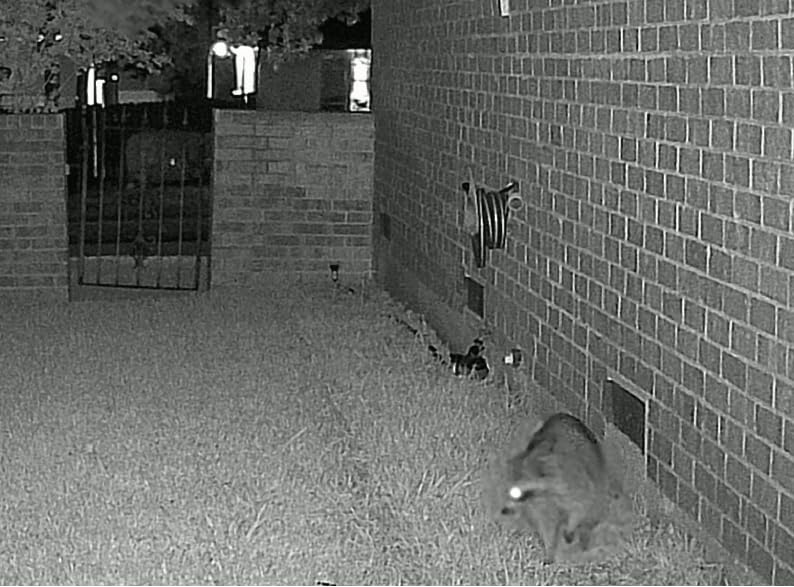
Daytime output is 64MP stills and 4K video at 30fps with a sensitive microphone, and the viewing angle is 100 degrees. A 32GB card is pre-installed and the slot accepts up to 256GB, which is plenty of headroom for a multi-season deployment where you only visit twice a year.
Owners with 2168 ratings consistently credit the battery, and the recurring complaint is the app. Connecting to the camera hotspot takes noticeably longer than it should, and that delay is the price of a zero-subscription workflow.
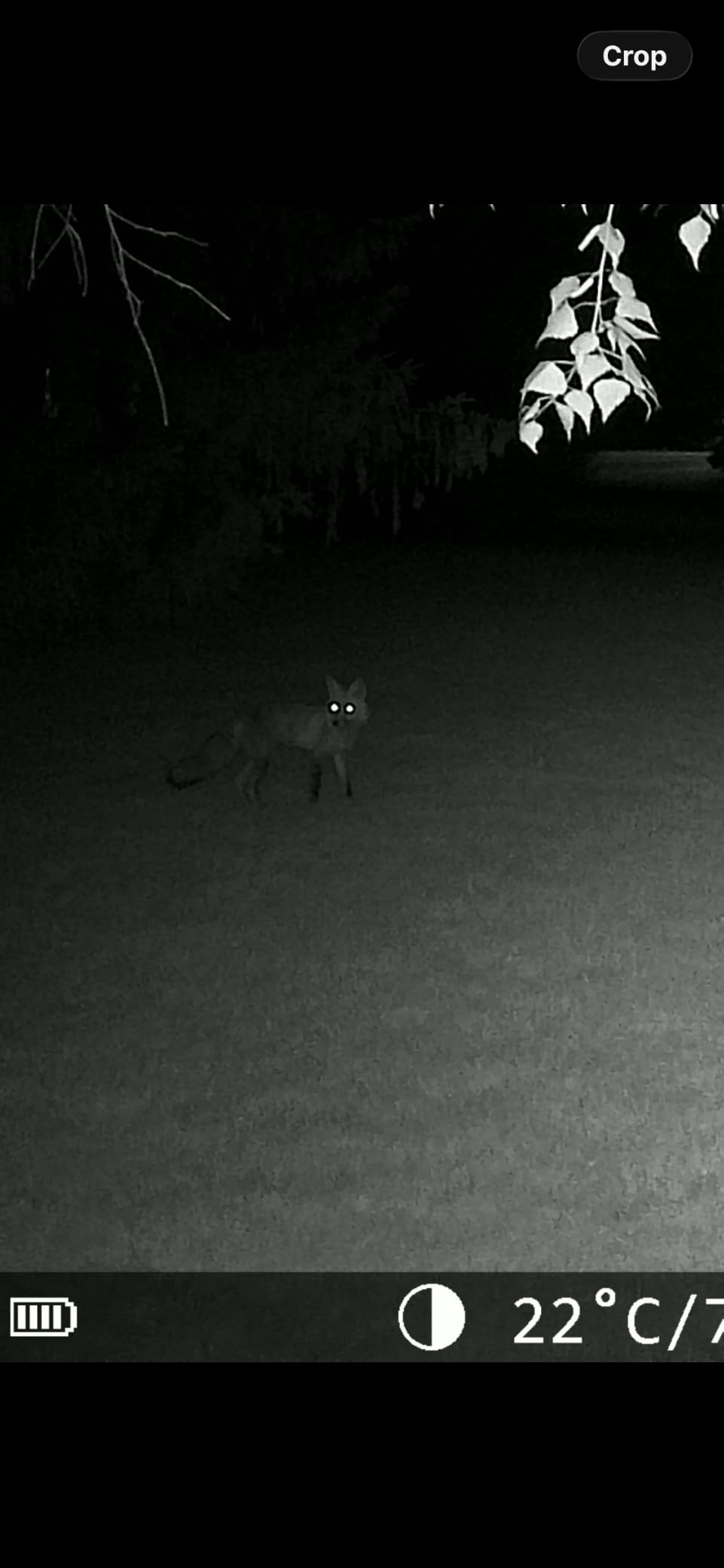
What decides it for long deployments
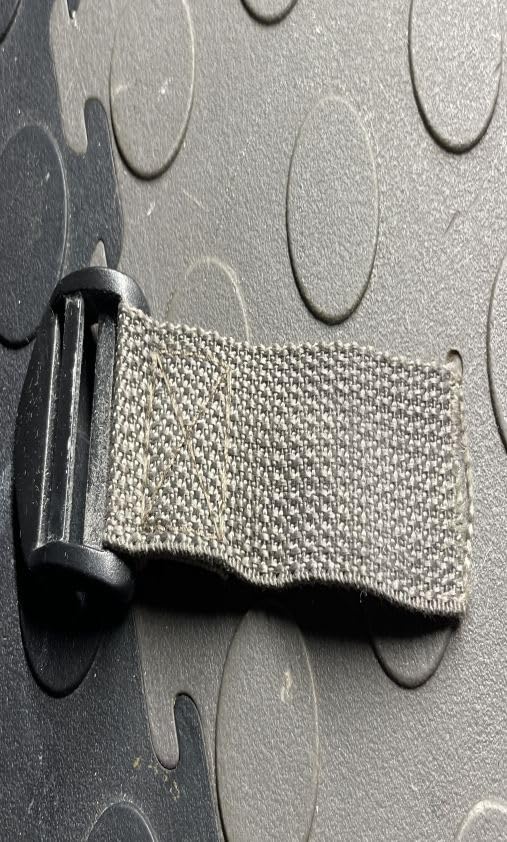
Two mounting options ship in the box, a strap and a swivel base with bolts and stoppers, so you can re-aim the camera after a season without buying hardware. The 6000mAh pack also means the panel is topping up a large buffer rather than running it flat every afternoon.
Wi-Fi 6 on a 55-foot hotspot is a longer working radius than most competitors manage, which reduces how often you have to be right at the tree to pull clips.
Where it falls short
The power switch and memory card live on the underside, so tripod work is awkward and you will be balancing the camera on a strap to change settings. There is no hinge-style housing, so removing the card means working with the seal every time.
A handful of units have reported night-recording faults that support resolved with a refund, which is worth knowing if your deployment depends on overnight video.
3. XTU XTU-TCQSW 4K Solar Trail Camera — most ways to power it
XTU 4K Solar Trail Camera WiFi Bluetooth, Night Vision, IP66 Waterproof
Solar plus internal battery plus USB-C plus DC 6V
4 AA backup for cloudy stretches
0.2s trigger to 70 ft, IP66
Pros
- Four power paths including solar USB-C DC 6V and AA
- 0.2s trigger with 70 ft detection
- 4K video and 64MP stills
- Local Wi-Fi app with no subscription
- Scheduled recording and time-lapse modes
- IP66 housing for rain snow and heat
Cons
- Lowest rating in the group at 4.1 with a 10 percent three-star share
- MicroSD card is not included
- 90-degree viewing angle is the narrowest here
- Only two 850nm IR LEDs listed
Where other cameras give you one solar path plus a battery, the XTU gives you four: solar charging, an internal rechargeable cell, USB-C, a DC 6V input and four AA backups for cloudy stretches. For a long-term install that might sit on a post with access to a small battery or a vehicle charger, that flexibility is the entire pitch.
Detection is solid for the class at 0.2s trigger and 70 feet of range, with adjustable PIR sensitivity and false-trigger filtering. Recording modes include burst, scheduled recording and time-lapse, and the housing is IP66 rated for rain, snow and heat.
The night side is the weak half. Only two 850nm IR LEDs are listed for illumination, and a 90-degree viewing angle is the narrowest of the ten, so anything crossing wide of the lens will fall outside the frame. A 2-inch LCD helps with setup.
The rating sits at 4.1 across 608 reviews, the lowest average in this group, with a 10 percent three-star share. Buyers generally find the 0.2s trigger fast enough for scouting, and the zero-subscription local app workflow is genuinely useful.
What decides it for long deployments
Multiple power inputs mean you are never stuck waiting for sun. If a location gets heavy canopy and the panel underperforms, USB-C or DC 6V can top the camera up from a small solar generator or a vehicle battery without changing hardware.
The 1-year manufacturer warranty is shorter than the two-year cover on several models here, which matters if you are budgeting for a five-year deployment.
Where it falls short
No memory card ships with it, so the first thing you do after mounting is buy a card. The narrow 90-degree field of view also means placement accuracy matters more than with the 120-degree bodies.
Buyers expecting flagship night performance will notice the two-LED array immediately. If your season depends on overnight identification of deer rather than daytime activity counts, look at the kejector or MagicEagle instead.
4. VIDVIS TCQSW-US 4K 64MP Solar WiFi Camera — cheap storage, unclear specs
4K 64MP Solar Trail Camera WiFi, 32GB SD Card,Night Vision Motion Activated
Built-in solar panel with rechargeable pack
0.2s trigger, 70 ft PIR, 110 degrees
32GB card included, expandable to 256GB
Pros
- Built-in solar panel with rechargeable battery
- IP66 shell for seasonal exposure
- Local app preview up to 50 ft
- 0.2s trigger with 70 ft detection
- 850nm low-glow IR
- 32GB card included with 256GB expansion
Cons
- Listing specs conflict between 48MP and 64MP and 90 and 110 degrees
- Local hotspot only with no cellular option
- Only 8 IR LEDs for the claimed 85 ft night range
Storage is this camera’s argument. A 32GB card ships in the box and the slot takes up to 256GB, so a two-year deployment is a card swap rather than a download session. The body is IP66 sealed and about 7 inches long, which gives the panel a decent surface for charging.
Motion handling is competent: 0.2s trigger, 70 feet of PIR detection and a 110-degree field of view, plus time-lapse, five-shot burst and loop recording modes. Infrared is 850nm low-glow across 8 LEDs, which keeps animals calmer than a bright white flash.
The problem is the listing itself, and buyers notice. The published specs contradict each other on still resolution, viewing angle and even video format, so predicting what you will actually record takes some digging. Night range is claimed at 85 feet on 8 LEDs, which is a stretch.
Connectivity is a local hotspot with Bluetooth pairing to about 50 feet, and there is no fee and no cellular radio. The 4.2 rating across 625 reviews comes with an 8 percent one-star share, mostly from people who expected the headline numbers.
What decides it for long deployments
Card capacity is the practical winner. If you are covering a busy feeder and only visiting twice a year, being able to swap in a 256GB card means you never have to sit in the woods with a laptop.
The app preview at close range also means you can confirm the camera is alive and framed correctly on installation day without opening the case.
Where it falls short
Inconsistent specifications are a real long-term liability, because you cannot plan around a night range that may be half of what is printed. Confirm the actual resolution and field of view before committing to a spot.
Eight IR LEDs is a low count, and the 110-degree versus 90-degree angle discrepancy means framing may be narrower than the listing suggests.
5. Misstech SV-TCKW Solar Trail Camera — the best battery reports we found
Misstech Solar Trail Camera, 4K/64MP Clear Night Vision for Game & Outdoor
Solar plus built-in rechargeable battery
f/1.6 aperture for low light
0.1s activation, 5-frame burst, IP66
Pros
- Owners report holding 100 percent charge across multi-week deployments
- 0.1s activation with 5-frame sequence
- App playback within 30 to 50m avoids card removal
- No subscription or cloud fees at all
- Real human support with 24-hour response
Cons
- Video clips cap at 30 seconds with a 5 to 10 second restart pause
- Built-in Wi-Fi range is roughly 15 to 20 ft in the field
- Files record in AVI and need conversion
- You must unplug the panel to reach the controls
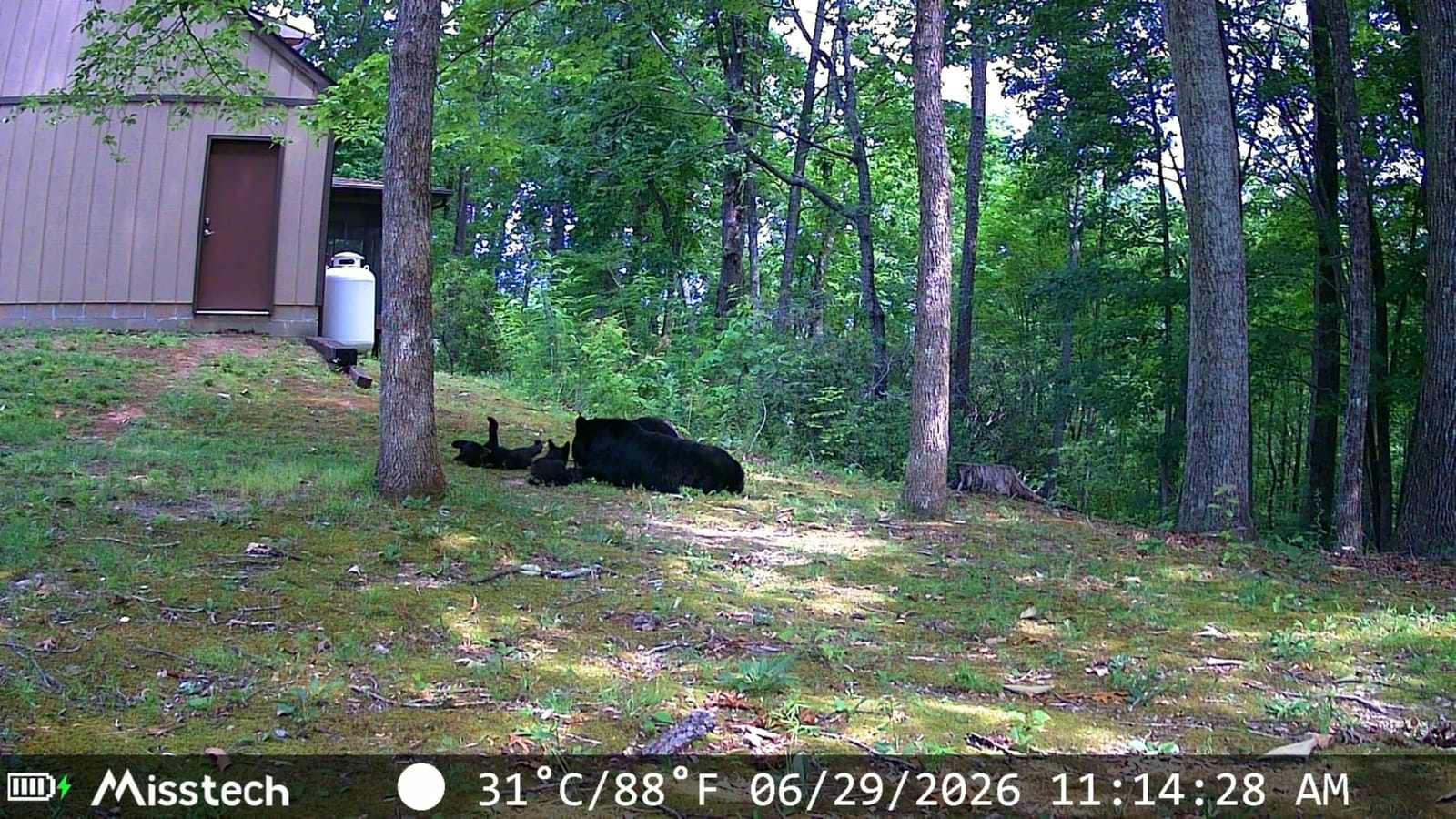
The reason this camera sits high on a long-term list is not a spec, it is a pattern in owner reports. Multiple buyers describe running the camera for two or three weeks without the charge ever dropping, replacing a habit of cycling through eight C cells every few days. At 4.4 across 369 ratings with a 74 percent five-star share, that is one of the stronger consensus stories here.
Optics are the other differentiator. An f/1.6 aperture pulls more light through the lens, which shows up as brighter night frames and less motion blur, and 0.1s activation with a 5-frame sequence mode catches fast-moving elk and deer rather than a single blurry frame.
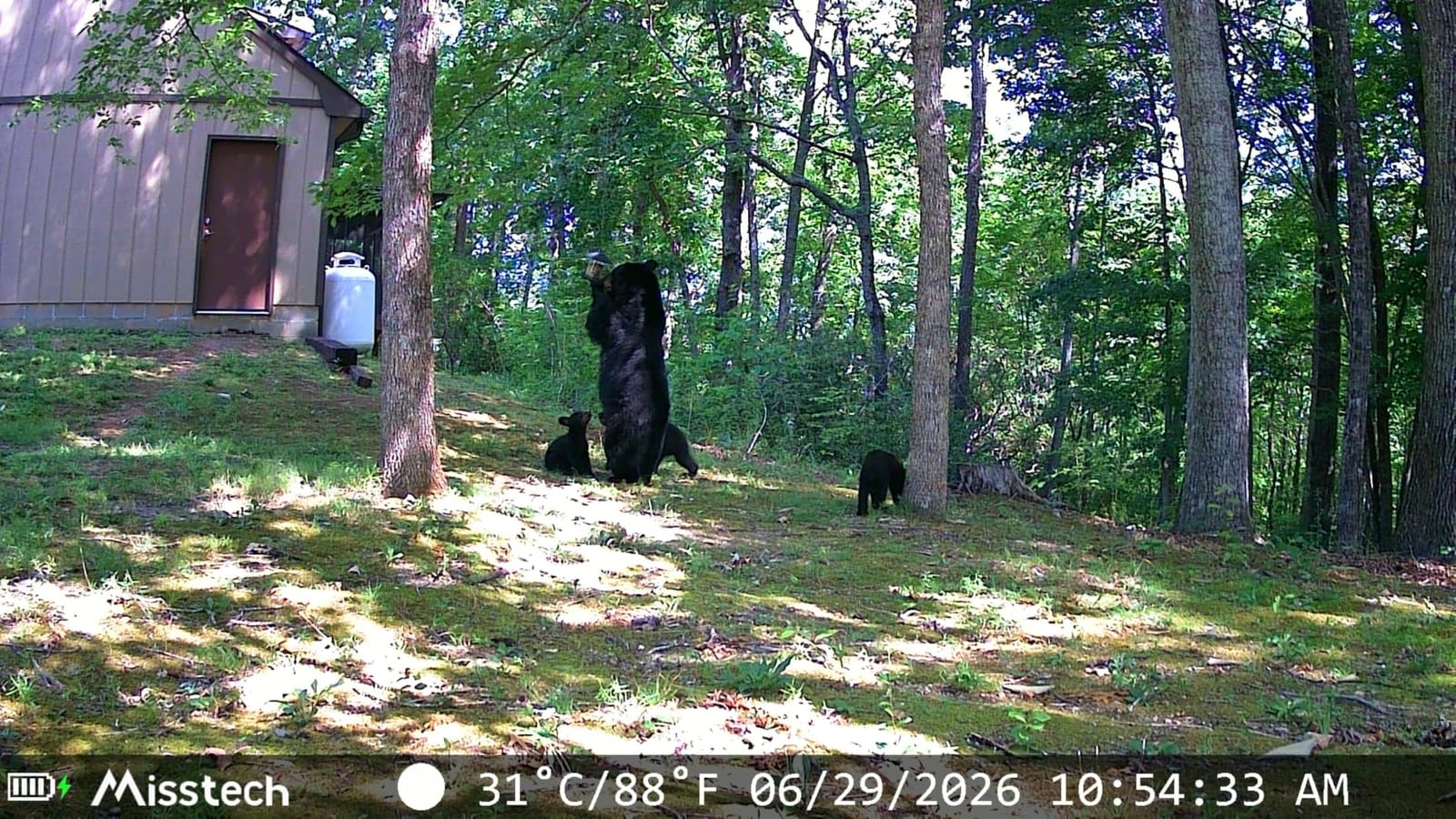
There is no subscription, no cloud storage fee and no cellular cost, and the app even saves a map pin for the camera location. Timestamps cover moon phase, temperature and time, and time-lapse video generation is included, all of which help you build pattern notes across a season.
Reviewers call out the customer support directly, describing real people responding within a day, which matters when a camera sits two hours from anywhere.
What decides it for long deployments
A 30-second clip cap with a 5 to 10 second pause between files is fine for pattern work and painful for anything fast. If you are counting passes rather than filming a hunt, that tradeoff works in your favor because it saves card writes and battery.
App playback at 30 to 50 meters means you can sanity-check framing and settings at the tailgate instead of climbing.
Where it falls short
Real-world hotspot range is about 15 to 20 feet, which is well short of the listing claim even with strong property Wi-Fi nearby. You will be standing at the tree.
You have to unplug the solar panel to open the housing and reach the screen and controls, which means every settings change requires a bit of fiddling. Files also record in AVI and need conversion before some editing software will open them.
6. Assark PH960S 48MP Solar Trail Camera — small body, big battery
Assark Solar Trail Camera 48MP 30FPS, WiFi Bluetooth Game Camera with Motion Activated 0.2s Trigger, Night Vision Motion Activated IP66 Waterproof for Wildlife Scouting with 32GB Micro SD Card
6000mAh lithium battery with fixed panel
18 IR LEDs at 850nm to 65 ft
Wi-Fi and Bluetooth via TrailCam Go, IP66
Pros
- Panel held full charge through two weeks of heavy shade
- 6000mAh pack in a body about half the size of most rivals
- Usable night footage in full darkness
- App connects quickly for live view and settings
- Adjustable detection zone cuts leaf and wind triggers
Cons
- Night illumination is spot-like with very dark edges
- PIR sensitivity drops off beyond about 10 yards
- Trigger listed as 0.1s in specs and 0.2s in the title
- Listings mix fixed and detachable panel versions
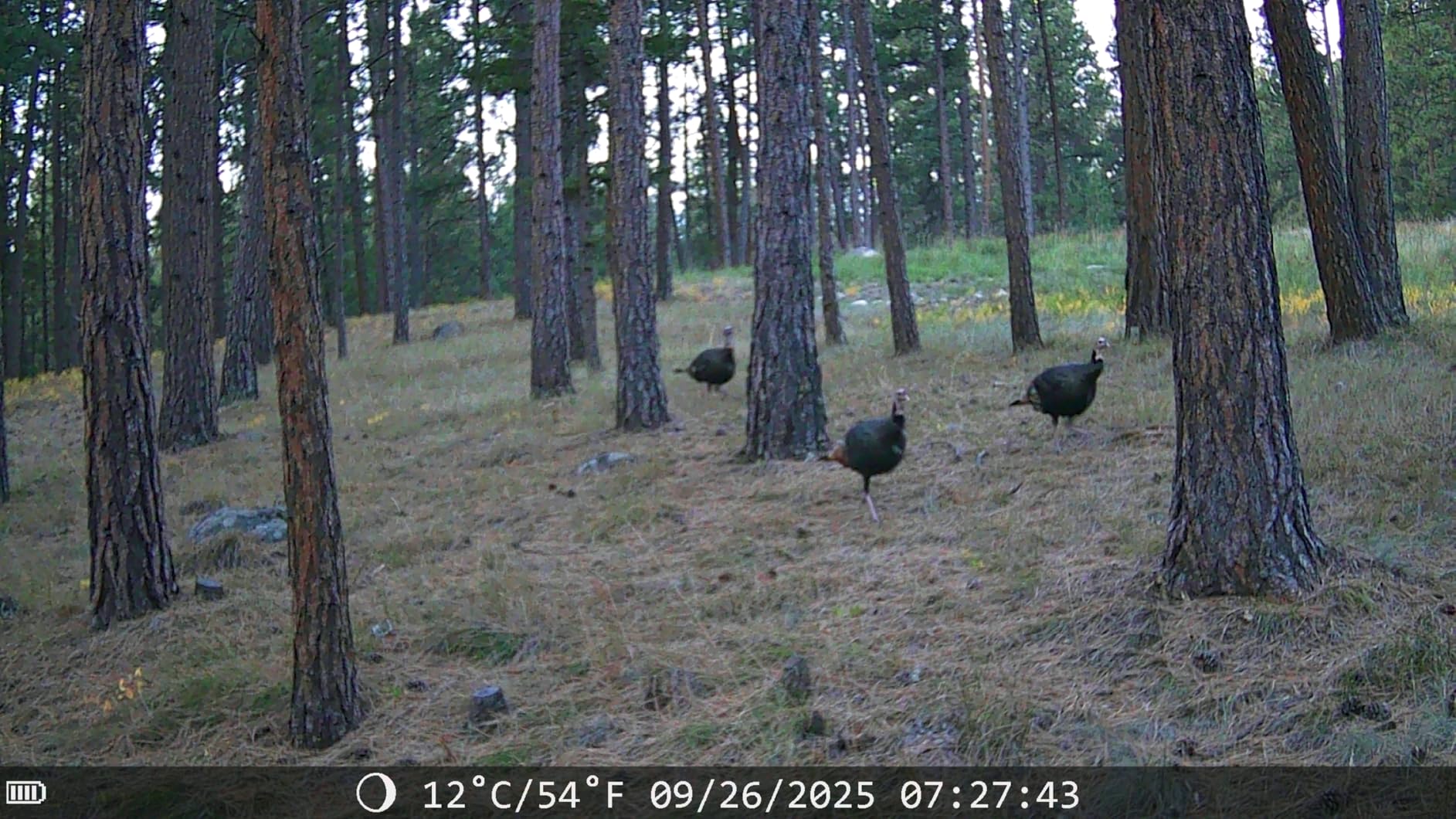
Size is the quiet advantage. This body is roughly half the bulk of many competitors, which matters when you are strapping a camera to a sapling or a thin fence post rather than a mature trunk. A 6000mAh lithium pack fits inside that footprint, and the IP66 design is a full seal rather than a gasket on a hinged door.
Imaging is 64MP stills and 4K video with sound at 30fps, with 18 IR LEDs at 850nm. One owner logged more than 2000 videos across two and a half days of constant recording on a single charge, and another reported never dropping below full through a two-week low-light stretch and a snowstorm that covered the panel.
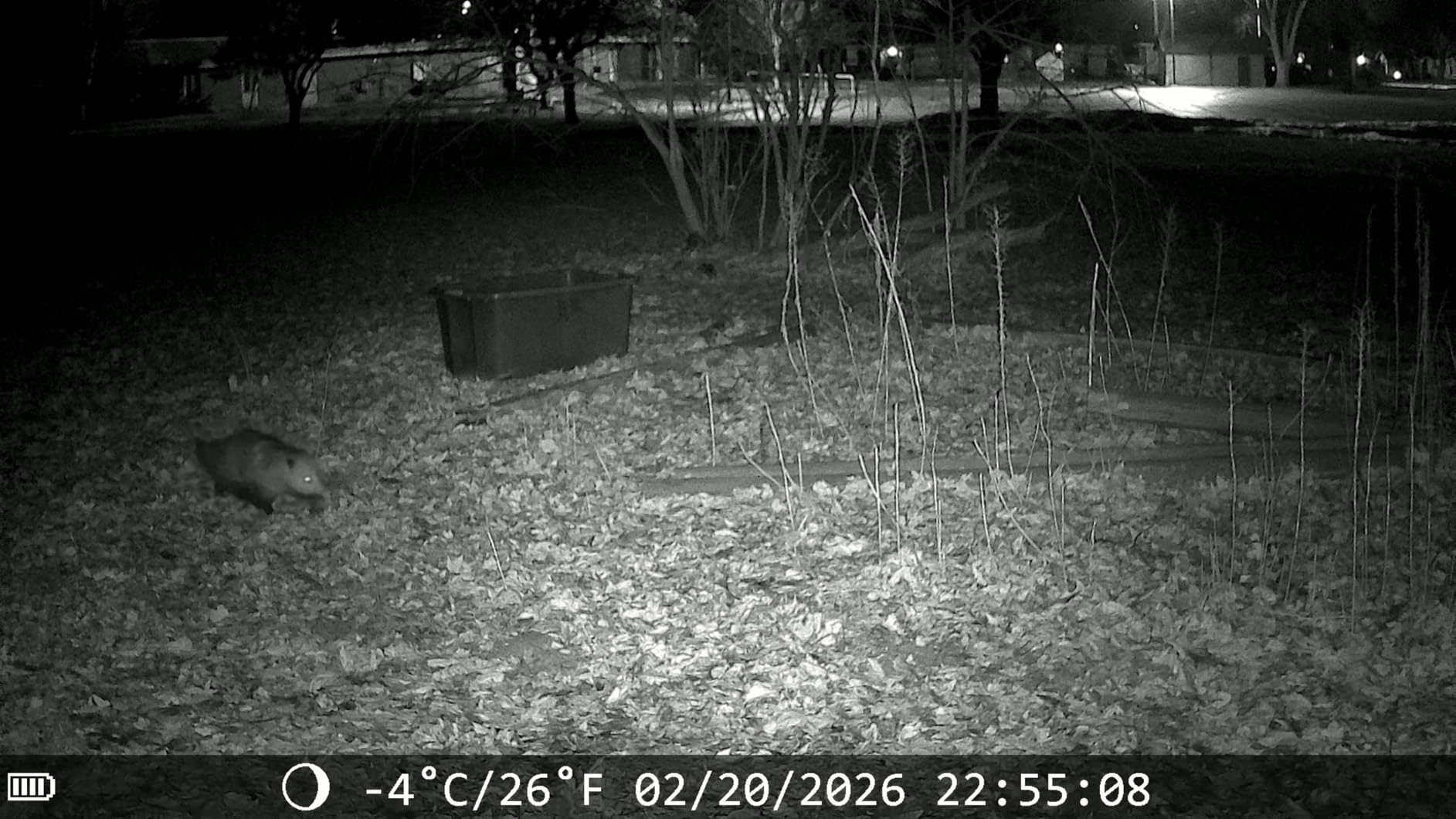
The app story is better than most here. TrailCam Go connects quickly for live view and settings without pulling the card, and you can set a custom detection area, operation hours, time-lapse and a password. A 32GB card is pre-installed and the slot takes up to 128GB.
At 4.4 across 308 ratings with 69 percent five-star, the response is strong, and repeat buyers mention support in the same breath as the hardware.
What decides it for long deployments
The adjustable detection zone is the feature that protects your card over two seasons. Narrowing the zone to the trail or the feeder rather than the whole clearing cuts the leaf and wind triggers that fill a card with nothing by month three.
Full-seal IP66 construction also means fewer gasket lines to inspect and reseat each time you visit.
Where it falls short
Night illumination behaves like a spot rather than a flood. Images are bright in the center and fall off to very dark edges, so an animal that drifts wide of the lens may be unusable.
PIR sensitivity fades beyond about 10 yards, meaning long-approach animals are often missed entirely. The trigger figure is also listed inconsistently at 0.1s and 0.2s, and some listings mix fixed and detachable panel versions, so confirm which unit you are getting before you mount it.
7. MagicEagle H1-New Cellular Trail Camera — the only long-range alerts here
MagicEagle® Cellular Trail Camera 4G Wild Game Cameras 13,000 mAh Battery Solar Panel 2K Audible Video No-Glow IR Night Vision IP66 Waterproof for Wildlife Deer Monitoring Home Security (Army Green)
SignalSync no-SIM 4G with 13000mAh battery
940nm no-glow IR to 90 ft
0.3s trigger, 2K video, IP66 to -20C
Pros
- Highest rating in the group at 4.8 with 85 percent five-star
- No-SIM 4G auto-selects the strongest carrier segment
- 13000mAh battery with solar panel support
- 940nm no-glow IR keeps animals undisturbed
- AI species ID plus temperature and humidity analysis
- Gravity sensor and A-GPS for tamper alerts
Cons
- 5MP sensor is well below the 64MP stills common in this group
- A paid data plan is needed after the free 100MB allowance
- 0.3s trigger is slower than the 0.1s and 0.2s budget models
- Panel mount needed extra screws with the supplied strap
This is the one camera here that removes the biggest long-term annoyance: walking to the tree. SignalSync technology uses a cloud card rather than a SIM and automatically locks onto the strongest available carrier segment, so coverage that drops in and out of a valley is handled without you reconfiguring anything.
The battery is 13000mAh, by far the largest in this roundup, and the included solar panel keeps it topped up. That combination is why it is the sensible pick for a site you can only reach twice a season.
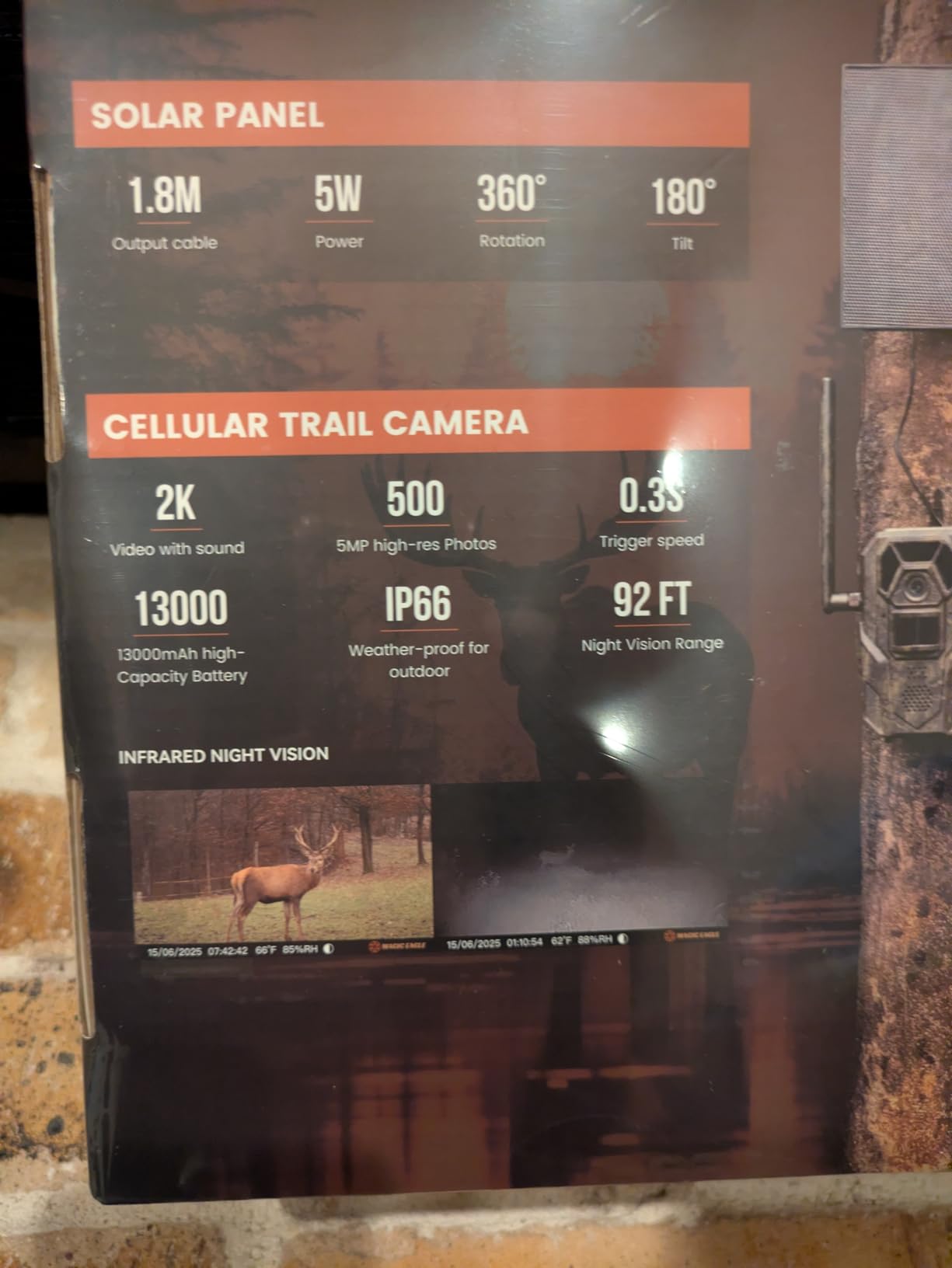
Night work uses 940nm no-glow infrared out to 90 feet across a 108-degree field, which is invisible to deer and other animals, and the app adds AI species recognition with activity, location, temperature and humidity analysis. A built-in gravity sensor with A-GPS sends tamper alerts and tracks the camera offline if it is moved.
The 4.8 rating across 267 reviews is the highest average in the group with an 85 percent five-star share, and owners point to the same things: reliable cellular connection, solar endurance and being able to check the camera from the truck.

What decides it for long deployments
Live view without waiting for a file to transmit is the real quality-of-life win, and it is rated for minus 20C to 50C, which covers the winter range where most budget units start misbehaving. Setup is reported as straightforward even for first-time users, and the warranty is two years plus six months on registration.
A free 100MB allowance covers roughly 200 photos or 16 short videos for 30 days, so you can live with it for a season before paying for anything.
Where it falls short
The 5MP sensor is the honest compromise. Compared with the 64MP stills on the Wi-Fi models here, you are giving up image detail to get transmission, and a print-quality crop of a buck at 40 feet will show it.
Ongoing transmission needs a paid data plan once the free allowance runs out, and the 0.3s trigger is slower than the budget models. The panel mount also needed extra screws to work with the supplied strap, which is a small annoyance at installation and a good reminder to secure the cable route.
8. Moultrie Edge Solar Cellular Trail Camera — the one with an adjustable panel
Moultrie Edge Solar Cellular Trail Camera – Integrated Solar, 40MP
Integrated adjustable solar panel, Li-ion pack
0.4s trigger, 100 ft PIR, low-glow IR
40MP stills, 1080p video, AI buck alerts
Pros
- Integrated panel with adjustable angle and removable Li-ion pack
- Automatic four-carrier 4G with no SIM required
- Low-glow IR flash reaches 100 ft without spooking deer
- Easy Aim mount makes precise placement fast
- Ranks tenth in Hunting and Trail Cameras on Amazon
Cons
- Paid subscription needed for full cloud features
- No on-demand battery check and no Bluetooth status option
- Reports of a battery arriving already aged
- Checks in only once per day so a dead unit goes unnoticed
- Triggers often on wind-blown trees and grass
The adjustable panel is the detail that separates this from the fixed-panel crowd. Because it can be angled, you can compensate for a canopy gap in July and re-aim for low winter sun without moving the camera, and the battery pack is removable rather than sealed inside the case. That is a real repairability advantage over cameras that treat the pack as permanent.
Detection is the strongest number here at 100 feet of PIR range with a low-glow infrared flash to match, and 0.4s trigger is fast enough for a walk-through trail. Stills are 40MP and video is 1080p with audio, and AI buck detection sends instant photo or HD video alerts.
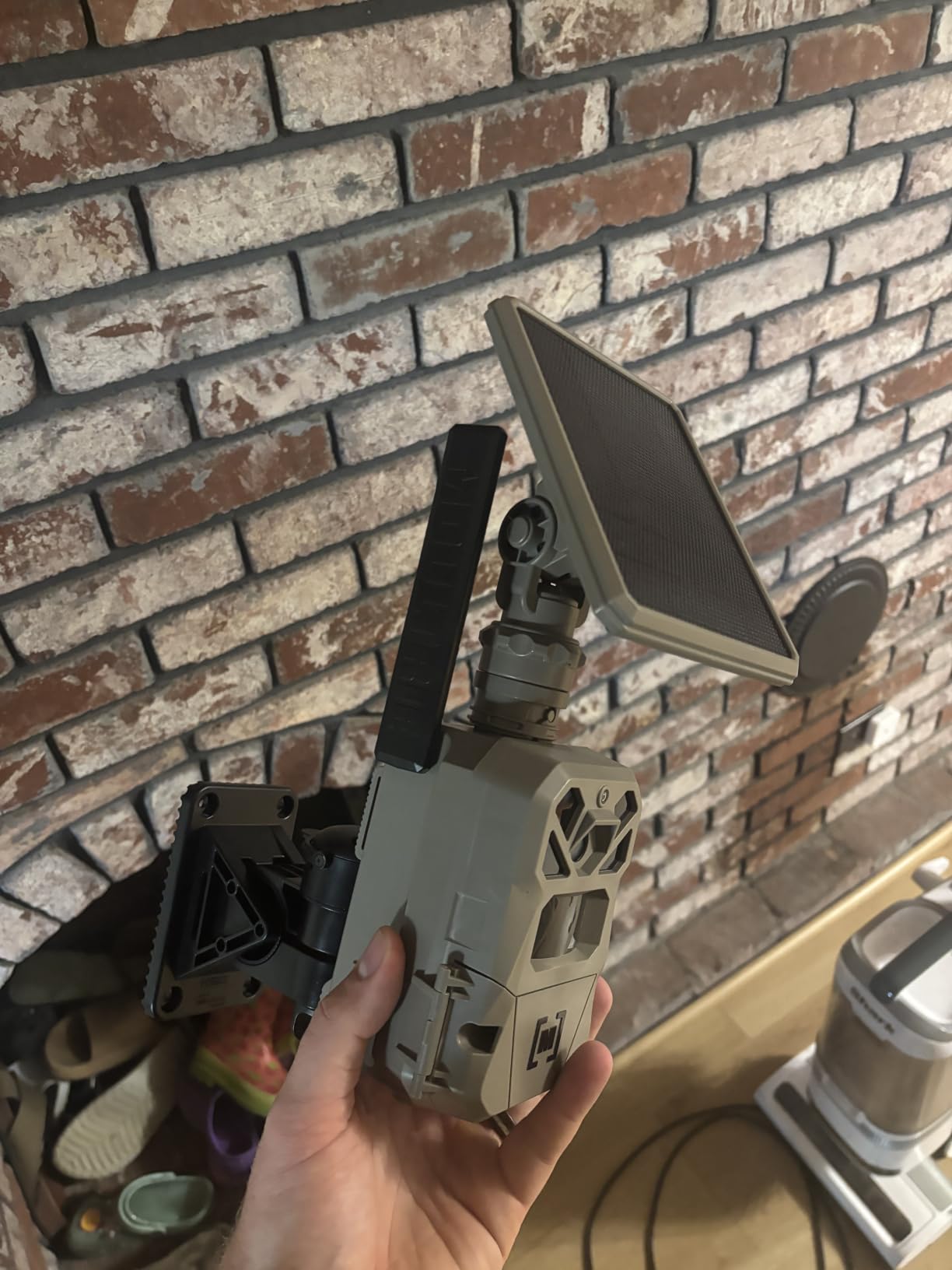
Connectivity is the established-brand version: the camera automatically connects to the strongest of four major US carriers with no SIM card, and the app handles remote access, on-demand video and cloud storage. The included Easy Aim mount uses live preview to get the frame right the first time.
Owners like the multi-carrier reliability and the way the panel keeps up with a heavy capture load, and it carries the best retail visibility in this group at number ten in Hunting and Trail Cameras.

What decides it for long deployments
Seasonal panel adjustment plus a removable Li-ion pack is the combination that decides whether year three is easy. Most competitors here seal the battery in and fix the panel angle, which means a shaded site quietly runs a deficit all winter.
Low-glow flash at 100 feet keeps deer from spooking while still lighting the scene, which matters for pattern data more than raw resolution does.
Where it falls short
There is no way to check battery state on demand and no Bluetooth option for a quick on-site status read. The camera reports in once per day, so a unit that has died can go unnoticed until the next scheduled check-in.
Several owners describe wind-blown trees and grass triggering constantly, which fills storage with unusable frames, and one reported a battery that arrived already aged and would not hold a charge. App usability is rated mediocre by several owners, and the camera is reported to function in the USA and Canada only.
9. kejector PH810T Solar 64MP Camera — the biggest battery on a Wi-Fi model
4K 64MP Solar Trail Camera, WiFi Bluetooth Trail Camera with 10000mAh Rechargeable Battery, APP Control Game Camera with 2.4”LCD Display, IP66 Waterproof, 65ft No Glow Night Vision, Hunting Cam
10000mAh rechargeable battery with solar charging
45-piece 940nm no-glow IR array to 65 ft
2.4-inch LCD, 0.2s trigger, IP66
Pros
- 10000mAh battery is the largest on any Wi-Fi model here
- f/1.6 aperture with smart auto-exposure for night images
- 45-piece 940nm no-glow array gives invisible illumination
- Three PIR sensors filter out wind and falling leaves
- 2.4-inch LCD for playback without a phone
- Rated to operate from 4F to 140F
Cons
- Smallest review base in the group at 64 ratings
- Creates its own Wi-Fi signal so it cannot sit behind a window
- Headline claims 4K while the spec sheet lists 1080p
- Some older reviews describe AA operation
Battery capacity is the headline. A 10000mAh rechargeable pack with solar charging is the largest here among the Wi-Fi models, and the manufacturer claims up to 12 months of standby, which makes this the camera most likely to be forgotten between visits.
Night performance is the other half of the story. A 45-piece 940nm no-glow array lights the scene to 65 feet without visible emission, and the f/1.6 aperture with smart auto-exposure keeps night images bright without blowing out the foreground. Three PIR sensors with low, medium and high sensitivity and motion filtering help control false triggers.
There is a 2.4-inch LCD for playback and loop recording, a 32GB card in the box with expansion to 256GB, and USB-C charging on the bottom of the body. The ABS housing is IP66 sealed and rated to operate from 4F to 140F, and buyers describe the body as sturdy and steady in wind and rain with no lens fogging.
At 4.5 across 64 ratings with 76 percent five-star, the score is the second highest in the group, but the sample is the smallest, so treat it with some caution.
What decides it for long deployments
No-glow 940nm infrared is the deciding feature for anyone who cares about not disturbing animals or about avoiding a visible red glow across a property at night. Combined with the 10000mAh pack, this is the most patient camera here in partial sun.
Three-sensor motion filtering means a two-season deployment burns fewer card writes on moving leaves, and the printed quick-start guide and manual are genuinely useful for a first setup.
Where it falls short
With only 64 ratings, long-term reliability is not well proven, which is exactly what you are buying when you are shopping for multi-season use. Some older reviews on the listing still describe AA battery operation, so make sure you are looking at the solar 10000mAh version.
The camera creates its own Wi-Fi signal and cannot join a home network, so it cannot be used as an indoor security camera through a window. The listing also conflicts with itself, claiming 4K video in the headline and 1080p in the spec sheet.
10. FRKTCAM HC13 Solar Game Camera — widest night coverage, dimmest night pictures
FRKTCAM Trail Camera 4K 64MP Solar Game Camera WiFi Bluetooth,0.1s Trigger Motion Activated,6000mAh Battery, 64GB SD Card and Ip67 Waterproof Trail Cam, 130° Wide Angle for Deer & Farm Security
5800mAh battery with top panel and Type-C
130-degree night vision to 100 ft
64GB card included, IP67 double gaskets
Pros
- Widest listed night angle in the group at 130 degrees to 100 ft
- Solar collector held full through extended cloudy stretches
- Excellent daytime colour exposure and resolution
- 64GB card is the largest bundled in the roundup
- IP67 sealing with double gaskets over card and charging areas
- Ball and clamp mount allows flexible aiming
Cons
- Infrared night footage is noticeably dark
- App connection takes 20 to 30 seconds and drops easily
- No app control to pause recording
- Thin written instructions
- Birds perch on the large flat panel
Field of view is the reason to consider this one. A 130-degree night vision angle reaching 100 feet is the widest listed here, and with adaptive lighting the frame covers a broad approach rather than a narrow corridor. If your trail crosses an open lane instead of walking straight at the lens, that width is worth a lot.
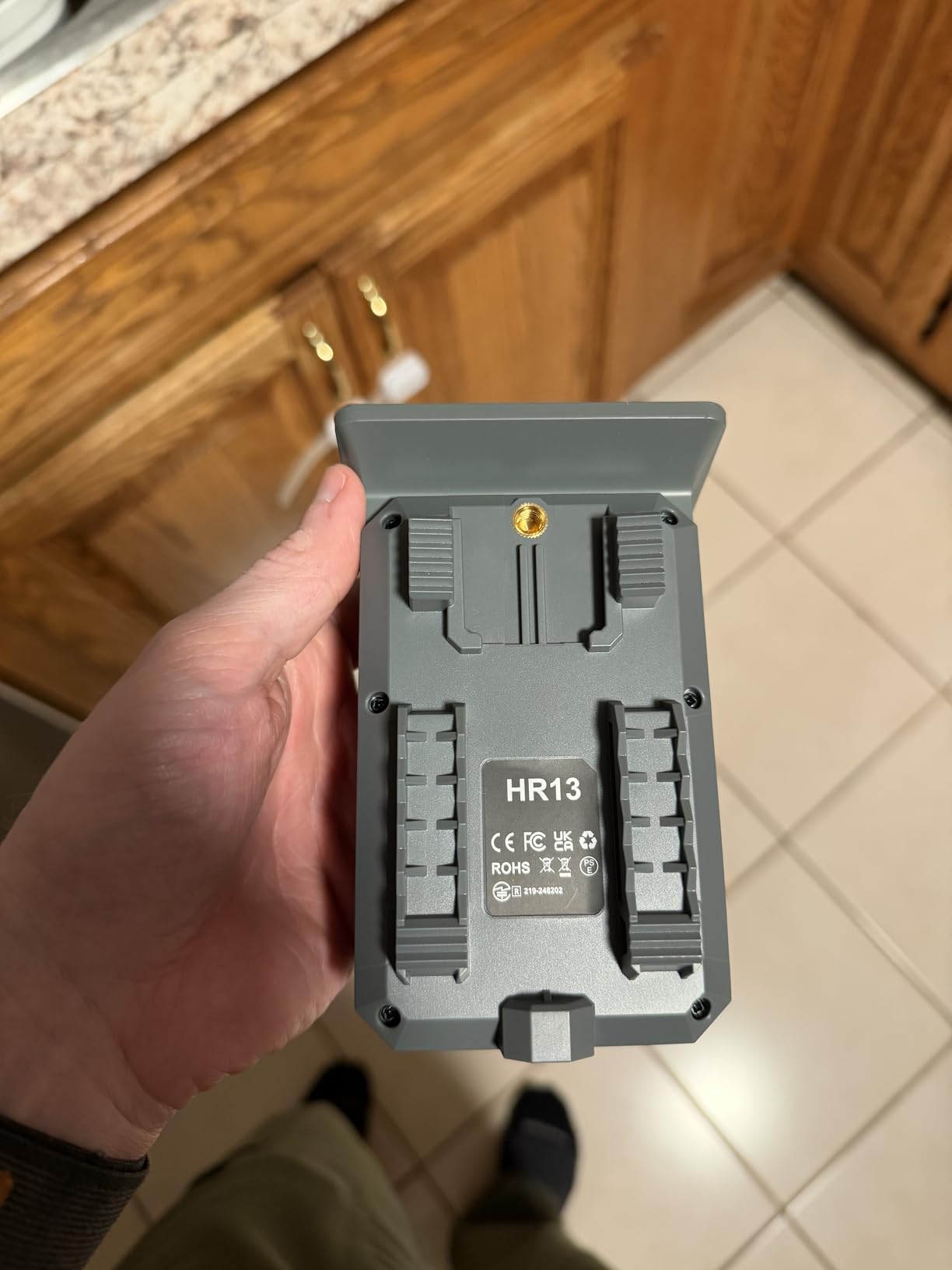
Sealing is also better than most. IP67 with double silicone gaskets over both the memory card and the charging area is the most layered protection in this roundup, and the body carries a 5800mAh pack with a top-mounted panel plus Type-C and external power bank support.
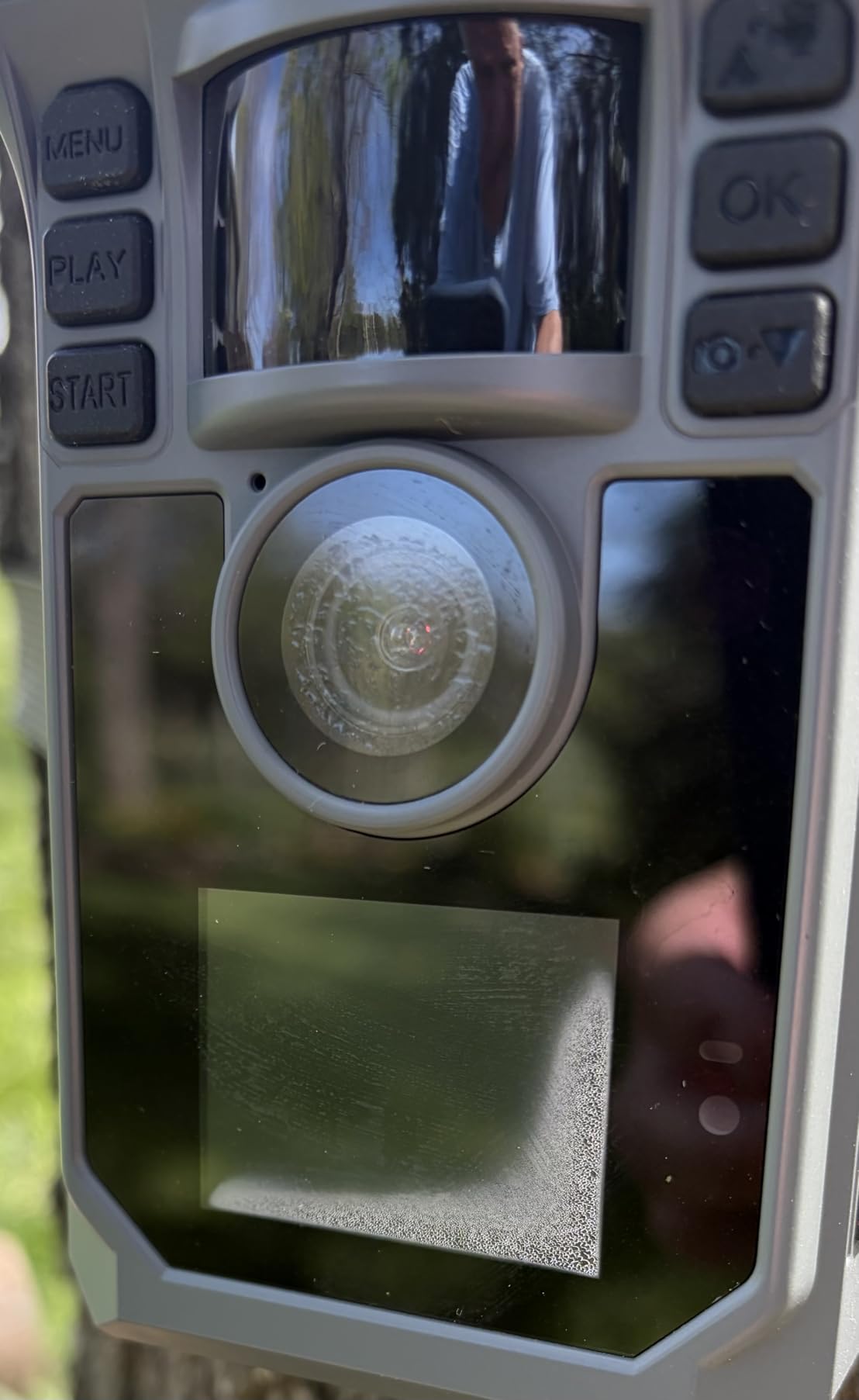
A 64GB card is included, the largest bundled storage here, and daytime color and exposure are described as excellent with 4K UHD video and 64MP stills on a starlight lens. The 0.1s trigger is among the fastest, and a ball and clamp mount plus a long strap make re-aiming easy.
Owners report the collector holding a full charge through extended cloudy stretches and never below 80 percent at first light. The 4.4 rating sits on a modest 72-review base with 73 percent five-star.
What decides it for long deployments
Card capacity and gasket count. A 64GB card with no purchase required, plus double seals over the two places most likely to admit water, is a combination that reduces both storage and weather anxiety across seasons.
The app is programmable and easier to use than on-device button menus, with adjustable sensitivity, so long deployments are set once and then forgotten.
Where it falls short
Infrared night video is noticeably dark, and some recordings are unidentifiable until you spot eye shine in the frame. That is a real trade against the wide angle.
Connecting to the app takes 20 to 30 seconds and drops if you step away from the camera, and there is no way to pause recording remotely because it requires opening a rubber cover and flipping a physical switch. Birds also perch on the large flat panel, which shades it and leaves droppings on the glass.
How We Picked Solar Powered Trail Cameras for Multi-Season Use
We scored every camera against six criteria that decide whether a unit is still working in year three, rather than ranking on resolution and trigger speed alone.
Panel-to-battery ratio. We compared declared battery capacity against how much surface the panel offers, because a small panel on a large pack either takes many days to recover or never recovers after a cloudy week.
Sealing. IP66 was the baseline, and we weighted double gaskets and sealed charging areas more heavily than a single rating, since those are the seams that fail first.
Repairability. Integrated panels with no external cable score highest, and adjustable panels with removable battery packs score above fixed panels with a sealed pack.
Backup power options. AA or USB-C reserve capacity matters for sites that see heavy canopy, where solar alone cannot keep up.
Connectivity cost and lock-in. We weighed zero-subscription hotspot models against cellular models with a required data plan, including what transmission does to battery draw and image resolution.
Review base size. A 4.8 rating on 64 reviews is a weaker signal than a 4.2 on 2340, and we weighted the depth of owner history when a specification was ambiguous.
One thing we could not test ourselves is multi-year field durability, since a two-season trial is a long time in a product cycle. Where our information stops, we relied on the volume and consistency of owner reports, which is why the review counts above matter to the ranking.
The same long-horizon logic shows up on our other outdoor power guides. We picked the battery powered sprayers for large gardens on battery runtime and seal quality rather than tank size, which is the closest comparison we can make to how these cameras age.
What to Look for in a Solar Powered Trail Camera
Solar panel placement and peak sun hours
Solar is a supplement, not a replacement. A panel needs several hours of direct sun a day to keep pace with a camera running continuous night video, and a location under heavy canopy will run a charge deficit every winter regardless of the brand. Sites that see six or more hours of direct sun are where these cameras earn their keep.
Two design choices help. An adjustable panel lets you re-aim for low winter sun, which is the single most useful thing on the Moultrie Edge Solar. A top-mounted panel with no external cable removes the failure point that animal damage and snagging create. Whichever you pick, mount high and south-facing where you are in the northern hemisphere, and clear leaf litter off the glass every visit.
Battery chemistry and capacity
Lithium wins, and the capacity spread in this roundup is wide. Bodies here run from 5200mAh up to 13000mAh, and a larger pack is a bigger buffer against a cloudy week. Where a camera offers AA backups, treat them as a reserve for heavy weather rather than a primary supply.
Also check the standby rating honestly. A claimed 12-month standby and a claimed 90-day dim-weather runtime are measuring very different things, and only one of them describes a northern November.
Weatherproofing and sealing
Every camera here is IP66 or better, which covers rain, snow and heat but says nothing about ultraviolet exposure or the seal around a charging port. The FRKTCAM’s double gaskets over the card and charging areas are the most thorough we saw, and the CEYOMUR’s fully sealed body with no exposed cable is the simplest and least failure-prone layout.
Operating temperature matters at the edges. The MagicEagle is rated for minus 20C to 50C and the kejector for 4F to 140F, which covers the ranges where lesser units start writing corrupt files.
Trigger speed, detection range and night flash
Trigger speed here runs from 0.1s to 0.4s, and anything under 0.3s is fine for walking game. Detection range matters more for placement than for the spec sheet, because a wide-angle body covers more ground at the same nominal range.
On flash, 850nm arrays give better low-light detail and 940nm arrays are invisible to animals. The kejector’s 45-piece 940nm array and the MagicEagle’s no-glow array are the strongest stealth picks, while the 18-LED units like the MAXDONE and Assark spread light more evenly and reduce dark edges.
Connectivity: cellular versus Wi-Fi and SD-only
Eight of the ten cameras here create their own Wi-Fi hotspot with a working range of roughly 15 to 55 feet, and eight carry no monthly fee at all. Two transmit over cellular, and both require a data plan for meaningful ongoing use after a small free allowance.
The honest breakdown: if your site has no cell coverage and no home Wi-Fi, a hotspot model with a large memory card is the only workable option, and the VIDVIS and FRKTCAM bundles make that easy. If you need to know about a buck at 6am from your kitchen, you need a cellular model, and you should budget the plan as part of the camera’s cost of ownership for as long as you own it. For fixed perimeters rather than wildlife, our guide to solar security cameras for barns covers the same trade-off from the property side.
Repairability over a five-year life
What kills cameras long term is rarely the sensor. It is a chewed panel cable, a snapped external antenna, a battery that will not hold a charge and cannot be replaced, or a housing that will not open without unplugging the panel. That is why the integrated-panel designs with sealed bodies rank well here, and why a removable battery pack is a genuine feature rather than a detail.
Before buying, ask whether the battery is user-replaceable, whether the panel cable exists at all, and whether the housing opens for direct card access. If any of those three come back no, expect at least one visit you did not plan.
One legal note worth checking before a multi-season deployment: some states and localities restrict trail camera use on public or managed land, and rules on where a camera may be placed and who may view the footage are changing. Confirm the current rules for your specific parcel before you strap anything to a tree.
Frequently Asked Questions
Do solar trail cameras actually work?
They work well, with one condition: the location needs several hours of direct sun most days. The panel charges an internal lithium or rechargeable pack during the day, and the camera spends that stored charge on night captures and, on cellular models, on transmission. Under heavy canopy or during long cloudy stretches the camera falls into a charge deficit, which is where lithium AA backups or USB-C charging save the deployment.
How long does a solar trail camera battery last?
It depends on sunlight, capture volume and capacity. The batteries in this roundup range from 5200mAh to 13000mAh, and the strongest owner reports describe two to three weeks of continuous use without a drop, while one owner logged more than 2000 videos across two and a half days of constant recording on a single charge. In partial sun, a monthly battery check is a sensible habit.
Are lithium batteries better for trail cameras?
Yes. Lithium AA cells hold their charge far better in cold weather and lose capacity far more slowly than alkaline, which is why they are the standard choice for backup slots in a solar camera. Alkaline cells drain quickly in cold conditions and turn a two-season deployment into an eight-week one. If your camera accepts AA backups, fill them with lithium and treat them as storm reserve.
Why are my trail camera batteries dying so fast?
Five causes account for most cases. First, the panel is shaded by canopy or facing away from the sun, so it never recovers what the camera spends. Second, the camera is set to continuous video instead of motion-only, which multiplies nightly draw. Third, PIR sensitivity is set high, so wind and moving leaves trigger constantly. Fourth, a cellular model is transmitting large files that a Wi-Fi-only model would have stored locally. Fifth, alkaline batteries are installed instead of lithium.
Can a solar trail camera work without a cell plan?
Yes, and eight of the ten cameras here have no cellular radio at all. They create their own short-range Wi-Fi hotspot, reachable from roughly 15 to 55 feet, or you remove the memory card. That is the right choice for a site with no cell coverage and no home Wi-Fi. The two cellular models in this roundup include a small free data allowance, but meaningful ongoing transmission requires a paid plan.
What is the life expectancy of a trail camera?
Body age is rarely the limit. A well-sealed camera with an integrated panel, a replaceable battery pack and AA backups can run many seasons; the ones that fail early are those with an exposed solar cable, an unreplaceable sealed battery, or a charging port that admits water. Warranty length is a useful proxy, and the cameras here carry either one or two years of manufacturer cover.
The Verdict on Solar Powered Trail Cameras for Long-Term Use
For a camera that will sit in the field for two or more seasons, the CEYOMUR 4K 68MP Solar WiFi Trail Camera is the one we would choose and forget. Its sealed IP66 body has no external panel cable to fail, its 5200mAh pack is backed by four AA slots for cloudy stretches, and 2340 owner ratings give it the deepest history in this group.
If you need to see photos from the truck rather than the tree, the MagicEagle H1-New takes that slot with a 13000mAh battery, no-SIM 4G that finds the strongest carrier on its own, and a 4.8 rating. If battery capacity per dollar is the priority, the MAXDONE PH970S holds 6000mAh in a small body with an 18-LED night array.
Whichever one you pick, give the panel six or more hours of direct sun, mount it above head height with the panel aimed at winter sun, and check the charge once a month. That habit alone keeps more cameras running than any brand choice in this roundup, and it is the difference between a solar powered trail camera that lasts a season and one that is still there in year five.