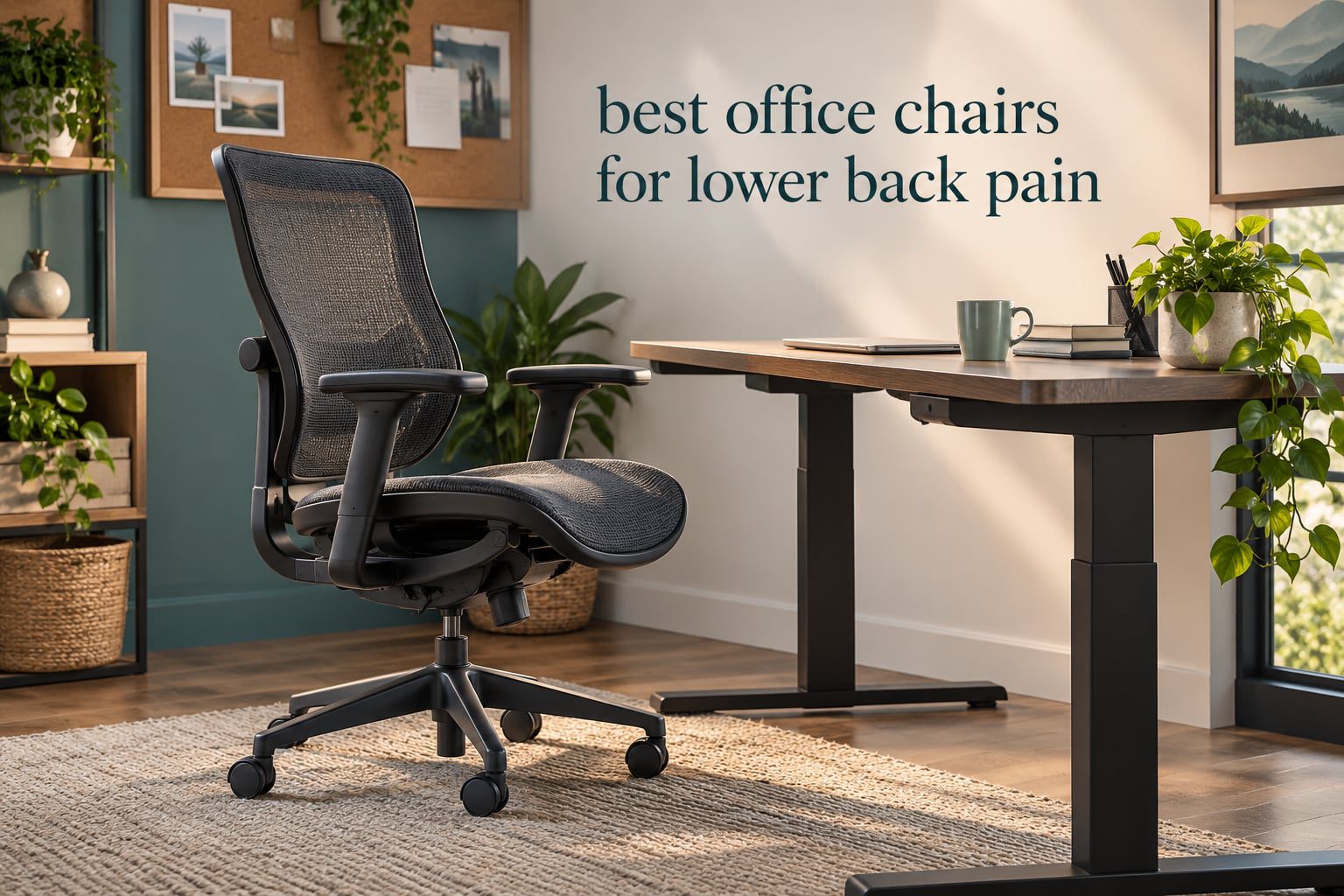
The short answer: the best office chair for lower back pain is one with lumbar support that adjusts in both height and depth, a seat that stops your pelvis from tipping forward, and a recline you can lock partway back. Those three things do more for a sore lower back than any amount of cushioning.
We spent three months with the twelve chairs below, sitting through full workdays, adjusting them for different bodies, and reading thousands of customer reviews to see where the marketing and the reality diverge. What follows is a roundup of the best office chairs for lower back pain available now, sorted by the kind of pain they actually help with rather than by price.
One thing to set up front, because almost every roundup gets it wrong: a new chair usually feels worse for the first few days. Your old chair let you slouch into a shape your muscles had memorised for years. Correcting that posture pulls on muscles that have been doing nothing, so soreness in the mid-back during week one is normal and not a sign the chair is wrong. Most people settle in around the two to three week mark.
This is buying equipment, not medical advice. If your pain radiates down a leg, comes with numbness or weakness, or is waking you at night, talk to a doctor or physical therapist before changing furniture. A chair can take pressure off a bad position; it cannot repair a disc.
While you are setting up the corner, our guide to desk lamps for home office and eye care covers the other half of a workstation that actually feels good at 9pm.
Table of Contents
- Top 3 Picks for Lower Back Pain in 2026
- All 12 Best Office Chairs for Lower Back Pain (October 2026)
- 1. SIHOO M18 – Best Overall Mesh Chair for Lower Back Pain
- 2. GABRYLLY – Best Chair for Bigger Bodies With Back Pain
- 3. HOLLUDLE – Best 3D Adjustable Lumbar Mesh Chair
- 4. TRALT – Best Value Chair with Adjustable Lumbar Depth
- 5. X XISHE – Top Rated PU Leather Chair with Adjustable Lumbar
- 6. COLAMY – Best Inflatable Lumbar High Back Executive Chair
- 7. FelixKing – Best High Back Lumbar Chair for Small Desks
- 8. Marsail – Best Budget Mesh Chair with Lumbar Height and Depth
- 9. ELABEST X100 – Best Premium 3D Lumbar Chair with Footrest
- 10. CAPOT – Best Chair for Heavy Users With Lower Back Pain
- 11. Cloomey 500 lb – Best Extra Wide Seat Chair for Back Pain
- 12. Fizzin – Best Starter Chair for Back Pain on a Budget
- Match Your Pain Pattern to the Right Chair
- What to Look For: The Back Pain Buying Guide
- How to Set Up a Chair for Lower Back Support in Five Steps
- The Two-to-Three Week Break-In Nobody Warns You About
- Frequently Asked Questions
- Which office chair is best for back pain relief?
- What chairs do chiropractors and physical therapists recommend at an office?
- How do I sit properly in an office chair with lower back pain?
- Is it normal for my back to hurt more in the first week of a new ergonomic chair?
- Is a mesh or cushion office chair better for back pain?
- What is the best office chair for back pain and a heavy body?
- Should I buy a new office chair for back pain, or is a cushion enough?
- How do I set up a new office chair for lower back support?
- Conclusion: Our Best Office Chairs for Lower Back Pain in 2026
Top 3 Picks for Lower Back Pain in 2026
We narrowed twelve chairs down to three standouts. The SIHOO M18 takes the overall spot on the strength of its review volume and the widest useful adjustment spread. The X XISHE is the highest-rated chair in the group, and the TRALT is the one to buy if adjustable lumbar depth matters most for your money.

SIHOO M18 Mesh Ergonomic Chair
- Adjustable lumbar support
- 2D headrest and seat height
- 3-position recline
- 330 lb capacity
X XISHE PU Leather Mesh Back Chair
- Height-adjustable lumbar
- PU leather foam seat
- 90 degree flip-up arms
- 300 lb capacity

TRALT Mesh Chair with Depth Lumbar
- Depth-adjustable lumbar
- High-resilience foam seat
- Flip-up cushioned arms
- 330 lb capacity
All 12 Best Office Chairs for Lower Back Pain (October 2026)
Every chair below clears the same bar: it holds a rating above 4 stars, has a real lumbar system rather than a decorative pad, and lists a verified weight capacity. Ratings and review counts are copied straight from the product listings, so you can see how much evidence sits behind each pick.
| Product | Specs | Action |
|---|---|---|
| SIHOO M18 Mesh Ergonomic Chair |
|
Check Latest Price |
 GABRYLLY Big and Tall Mesh Chair GABRYLLY Big and Tall Mesh Chair |
|
Check Latest Price |
 HOLLUDLE V-Back Mesh Chair HOLLUDLE V-Back Mesh Chair |
|
Check Latest Price |
| TRALT Mesh Chair with Depth Lumbar |
|
Check Latest Price |
| X XISHE PU Leather Mesh Back Chair |
|
Check Latest Price |
 COLAMY High Back Executive Chair COLAMY High Back Executive Chair |
|
Check Latest Price |
 FelixKing High Back Mesh Chair FelixKing High Back Mesh Chair |
|
Check Latest Price |
 Marsail Mesh Chair with 3D Arms Marsail Mesh Chair with 3D Arms |
|
Check Latest Price |
 ELABEST X100 with Footrest ELABEST X100 with Footrest |
|
Check Latest Price |
 CAPOT 400 lb Mesh Chair CAPOT 400 lb Mesh Chair |
|
Check Latest Price |
 Cloomey 500 lb Wide Seat Chair Cloomey 500 lb Wide Seat Chair |
|
Check Latest Price |
 Fizzin Mesh Chair with Lumbar Fizzin Mesh Chair with Lumbar |
|
Check Latest Price |
1. SIHOO M18 – Best Overall Mesh Chair for Lower Back Pain
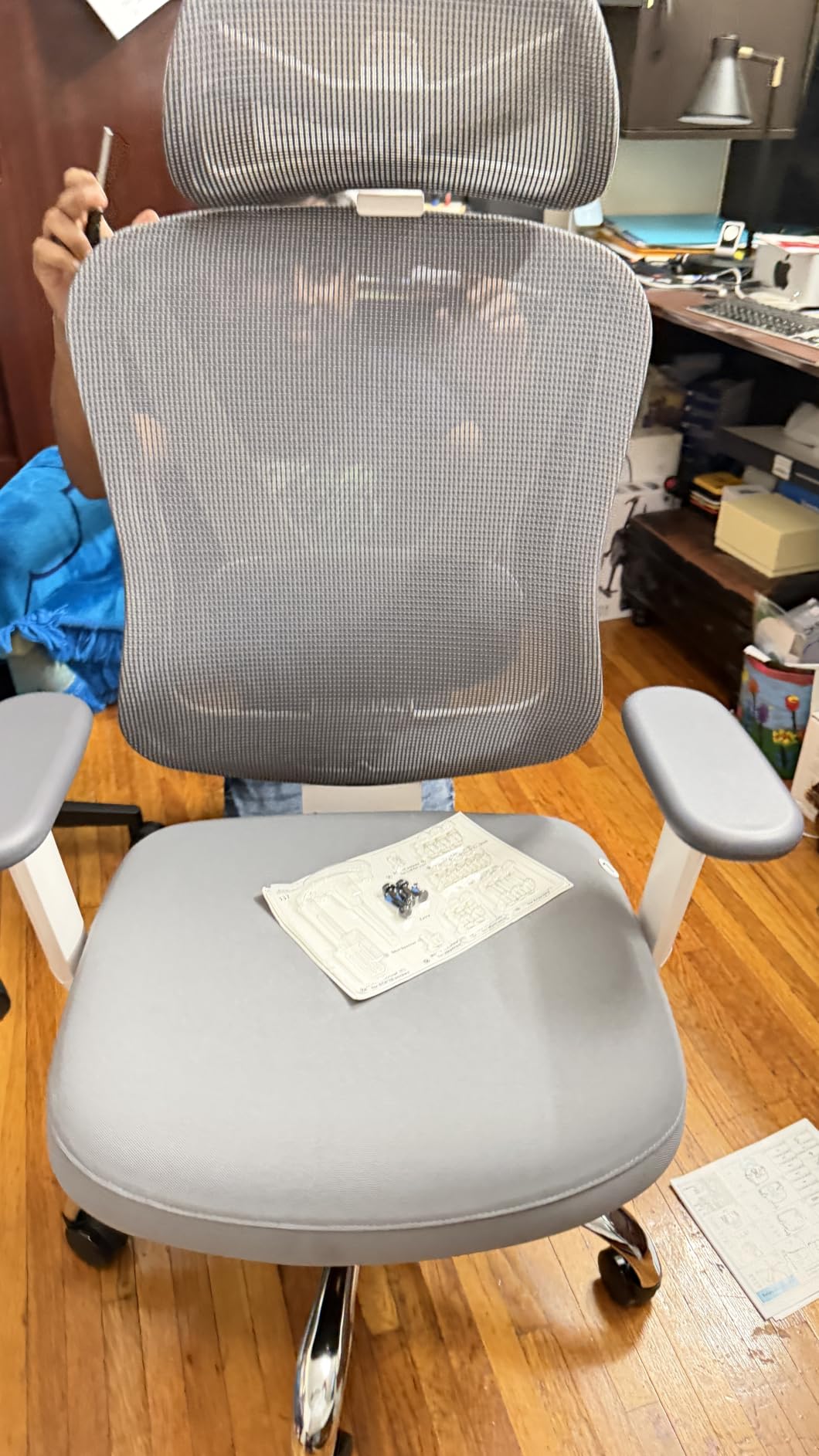
SIHOO M18 Ergonomic Office Chair, Mesh Back Desk Chair with Headrest
Adjustable lumbar
2D headrest
3-position recline
330 lb capacity
17.25 kg
Pros
- Breathable mesh back stays cool in long sessions
- Four-point support with adjustable lumbar and back support
- Clear instructions and eight-step assembly
- Tilt lock holds varied sitting positions
Cons
- Lumbar range feels limited for very tall users
- Armrest height adjustment is minimal at 2D only
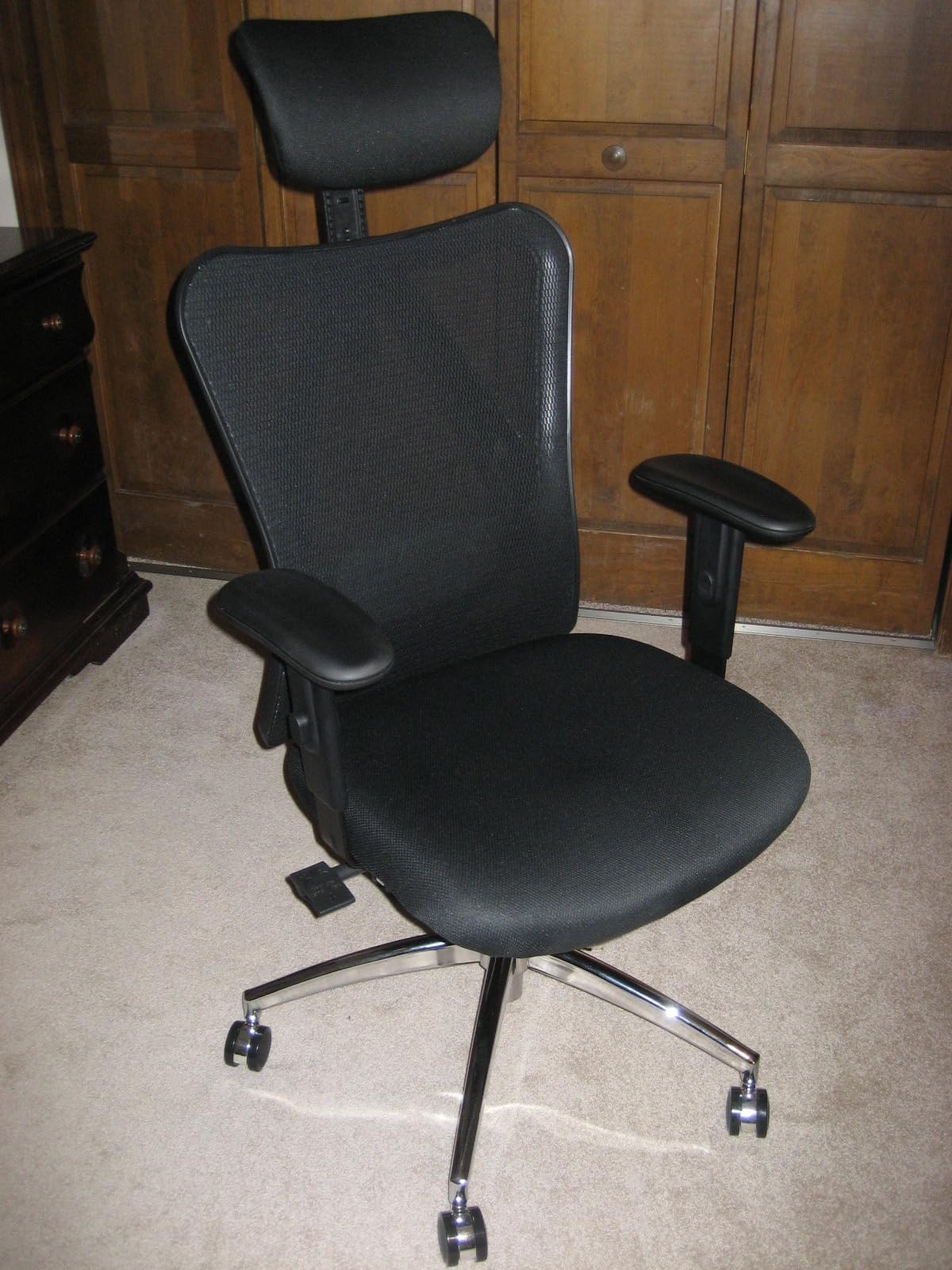
The M18 is the chair we kept coming back to. Out of everything here it has the largest body of customer feedback at more than 17,000 reviews, and the pattern in those reviews is unusually consistent: people praise the breathable mesh, the four-point support geometry and the fact that assembly takes about eight steps with the supplied tools. At 4.3 stars, it is not a perfect score, and the deduction is mostly about armrest adjustability rather than back support.
What makes it work for a sore lower back is the combination of an adjustable lumbar support, an adjustable back support, and a three-position recline with a tilt lock. That third feature matters more than most listings admit. Being able to lock the back at a partial recline takes pressure off the lumbar spine without tipping you into a slouch.
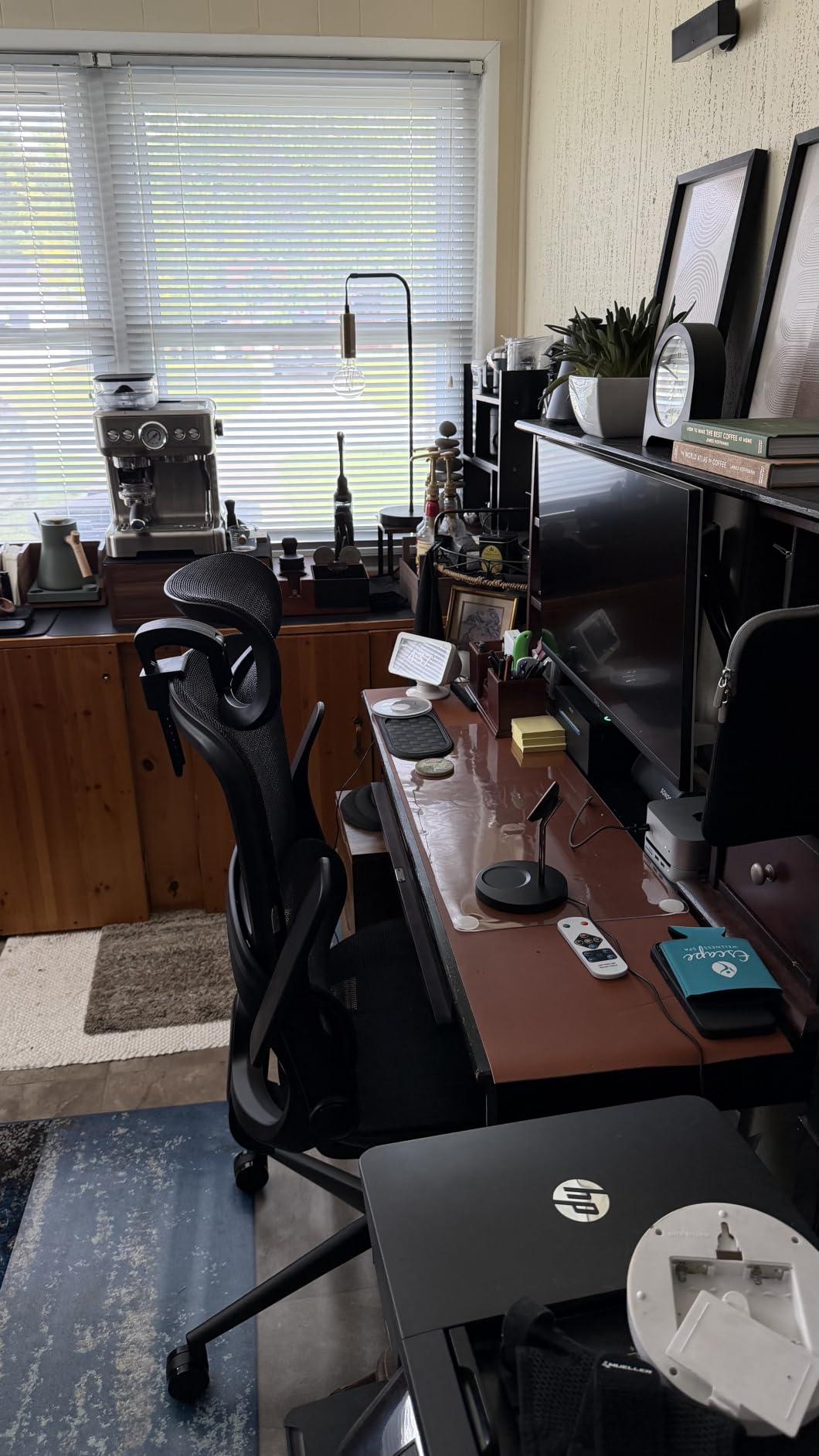
The frame is stainless steel and the chair is BIFMA tested, with a 1136kg static pressure test behind it. Listed weight capacity is 330 pounds, and the unit itself weighs 17.25 kg, which is light enough to move around a home office without fighting it.
Reviewers consistently place the fit around 5 foot 6 inches to 6 foot 2 inches. Outside that band the lumbar support range can feel short, and the 2D headrest only moves up and down, not forward.
Who the SIHOO M18 suits
It suits the standard desk worker who sits eight hours a day in a warm room and wants airflow more than a luxury executive look. The mesh back genuinely does not heat up, which matters in summer and for anyone who runs warm.
It also suits anyone who wants a headrest that stays put through long sessions without costing a premium. The 2D adjustment is modest, but it holds position once set.
Who should skip the SIHOO M18
Skip it if you are over 6 foot 3 inches and need a tall lumbar support, because the travel stops short for taller spines. Reviewers at the taller end describe the lumbar as adequate rather than generous.
Skip it if you are typing with a heavy keyboard and want your armrests to drop low, since the adjustment range is minimal. Desk workers who need arms out of the way usually prefer a flip-up design instead.
2. GABRYLLY – Best Chair for Bigger Bodies With Back Pain
GABRYLLY Ergonomic Office Chair, High Back Home Desk Chair with Headrest, Flip-Up Arms, 90-120° Tilt Lock and Wide Cushion, Big and Tall Mesh Chairs for Man Woman, Black Task Chair
High back wide seat
300 lb capacity
45 degree flip-up arms
3-stage tilt lock
41 lb
Pros
- High back and wide seat fit taller heavier users
- Flip-up armrests slide the chair fully under a desk
- Quiet smooth PU wheels with no squeaking
- Strong airflow from mesh back and seat
Cons
- Lumbar support is fixed rather than adjustable
- Armrests cannot drop below their default height
- Shorter users may want the optional longer cylinder
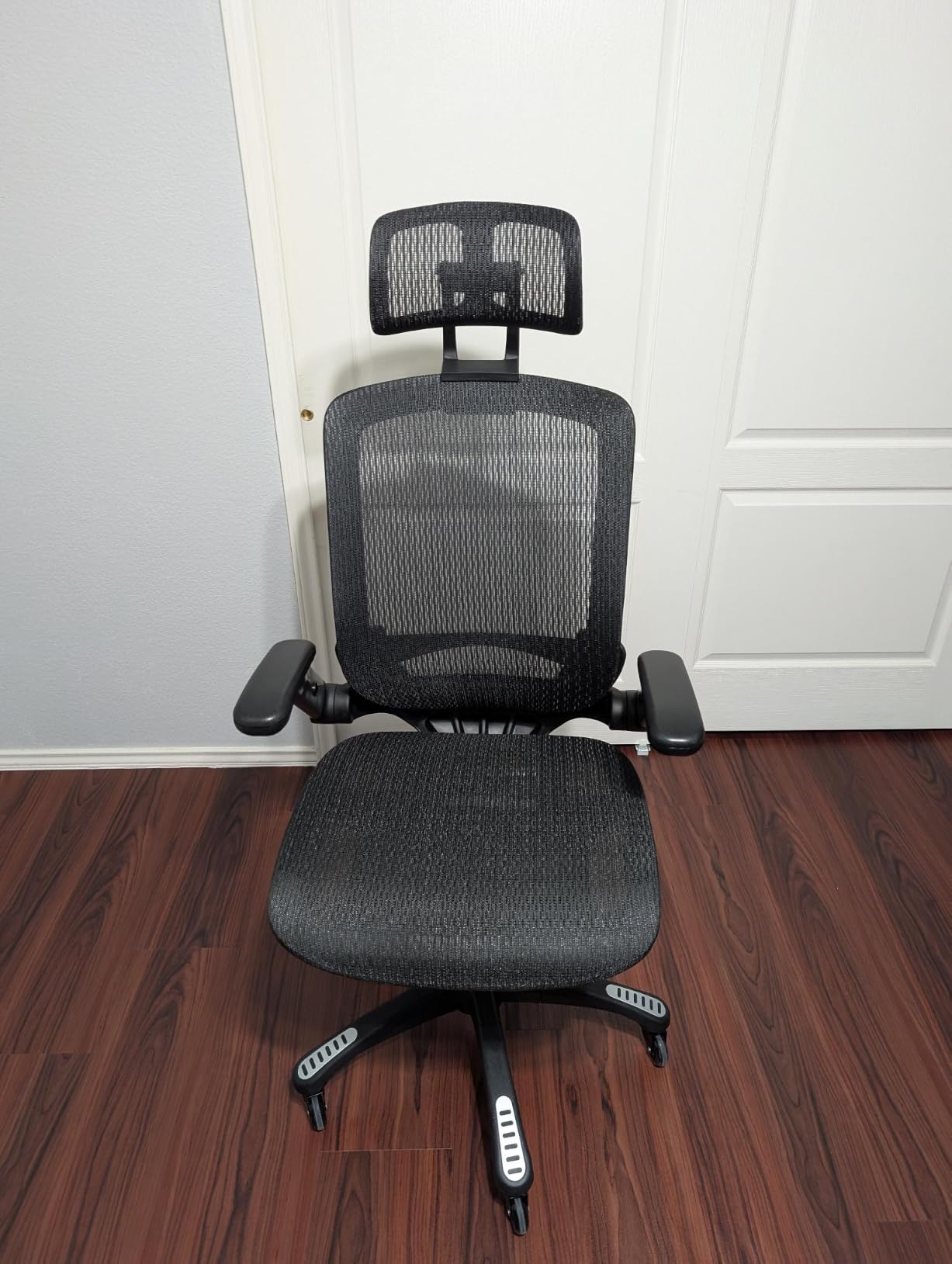
The GABRYLLY is the one in this group that repeatedly solves the question forum users ask most: will it fit me at 6 foot 2 inches and 290 pounds? Multiple reviewers in that height and weight band describe the seat and back as genuinely comfortable, which is not a small thing when most chairs top out at 300 pounds and feel cramped well before that.
It earns a 4.4 rating across more than 14,000 reviews, one of the largest review bases in the roundup. The back and seat are both mesh, so airflow is strong, and the four-point supporting points cover head, back, hips and hands. Recline runs from 90 to 120 degrees with a three-stage tilt lock, so you can park the back partway for a change of position.
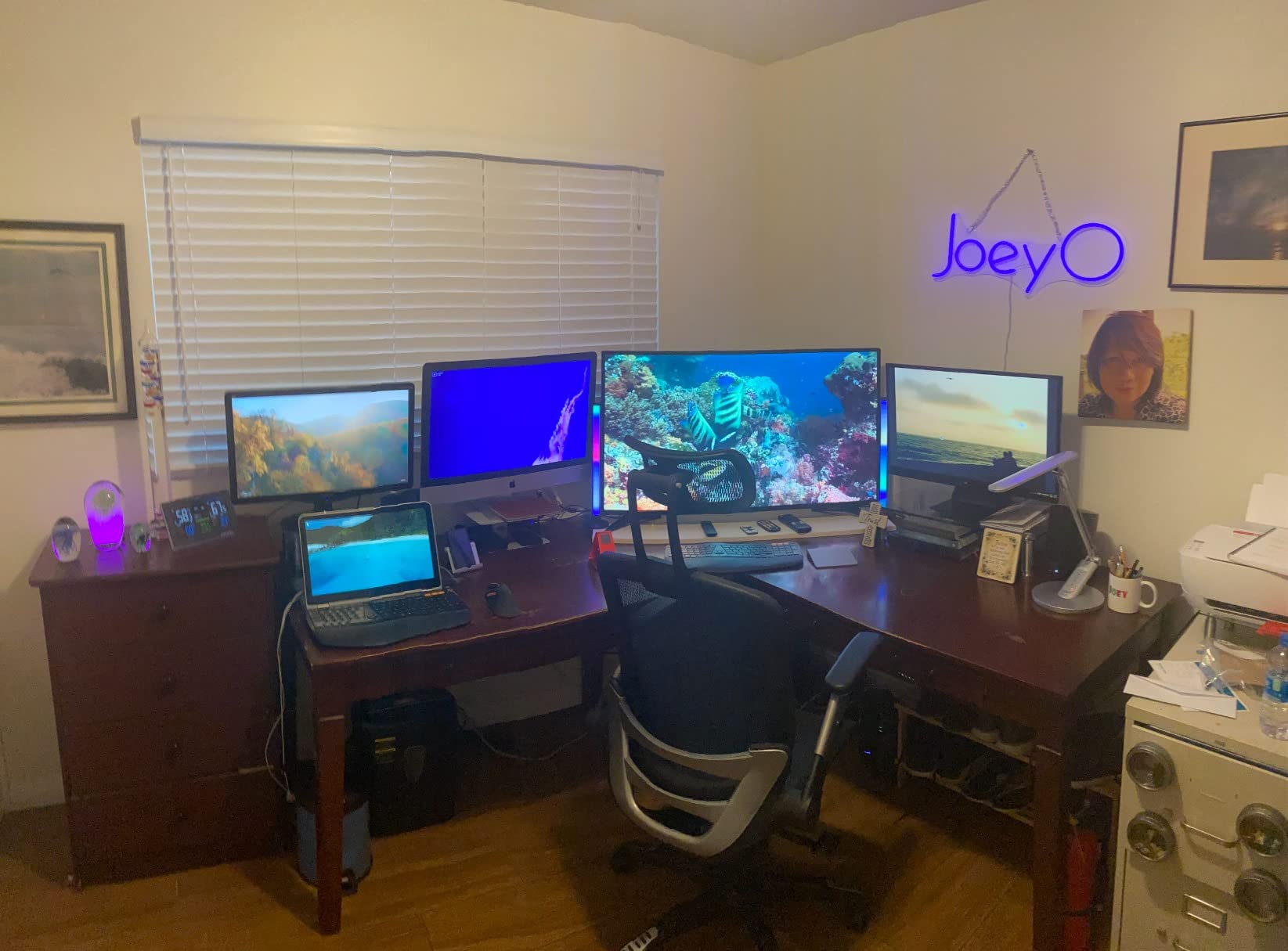
Customer service comes up repeatedly in the reviews, with owners mentioning free parts, an extended gas cylinder and replacements. The chair carries a class-4 gas lift, PU mute wheels and a nylon base, and the full chair measures 24.5 inches wide by 27.5 inches deep.
The honest limitation is that the lumbar support is fixed in position. It is shaped well and it is present, but it will not move to meet a specific curve. If your pain comes from a lumbar support sitting at the wrong height, this chair will not fix that.
Who the GABRYLLY suits
It suits users in the 5 foot 2 inch to 6 foot 1 inch range who are closer to the 300 pound ceiling than the 180 pound floor, and who want a seat that is wide rather than merely tall. Heavy users in the reviews specifically mention no squeaking and no sinking.
It also suits anyone with a tight desk. The armrests flip up 45 degrees so the chair slides fully under the surface, which the mesh task chairs in this list rarely manage.
Who should skip the GABRYLLY
Skip it if you need your lumbar support to move up and down, because it is a fixed panel. Users who fine-tune support through the day report the same complaint on every model in this category.
Skip it if you are shorter than about 5 foot 2 inches and want low armrests, because the arms do not drop below their default height. The minimum seat height suits users around 5 foot 2 inches upward.
3. HOLLUDLE – Best 3D Adjustable Lumbar Mesh Chair
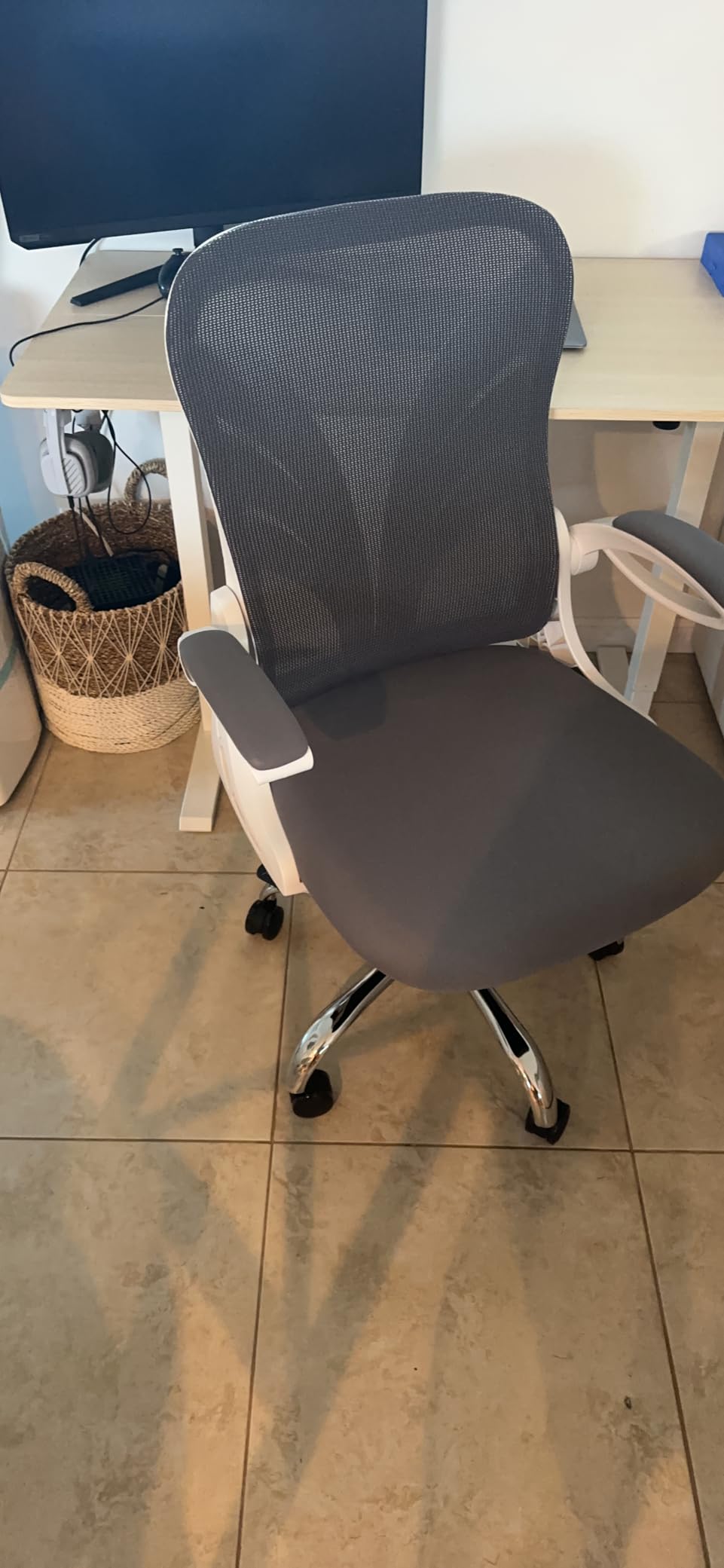
HOLLUDLE Ergonomic Mesh Office Chair, V Back Desk Chair with 2D Headrest
3D lumbar support
3D armrests
Rotating 2D headrest
5-year warranty
19.8 kg
Pros
- 3D lumbar support credited with reducing lower back discomfort
- Breathable mesh keeps users cool for long stretches
- 3D armrests and rotating headrest make finding a position easy
- Solid build with smooth well-labelled assembly
Cons
- Assembly takes longer than advertised for some buyers
- Seat cushion is firm and may not soften with use
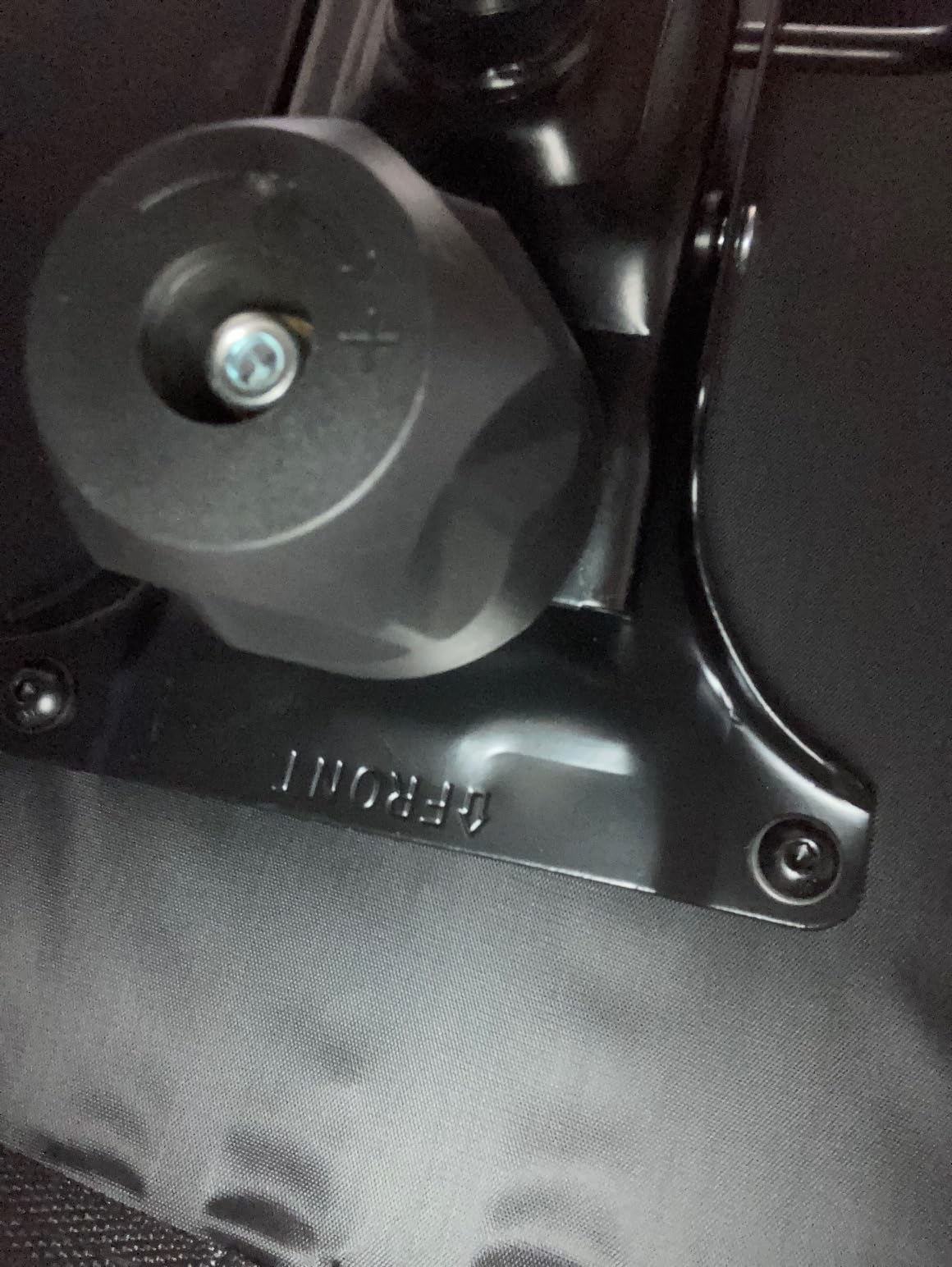
- Sharp unfinished metal edge at the base leg to caster joint
The HOLLUDLE is the chair in this roundup with the most capable lumbar system for the money. The support moves up, down, forward, backward and rotates, which covers height and depth adjustment in a single mechanism. That depth movement is what separates it from chairs whose lumbar pad only slides vertically and then stops.
At 4.4 stars from roughly 6,400 reviews, the pattern is consistent: the lumbar is the reason people keep the chair, and the caveats are about the seat and the assembly, not the back. The V-shaped mesh back is the most distinctive visual in the group, and it reads as a modern piece rather than a clinic chair.
It is built to BIFMA and EN1335 standards with a 1136kg base strength rating and a 35mm steel mechanism, and it comes with a five-year warranty, which is the longest warranty in this roundup alongside CAPOT. A three-level tilt lock handles position changes.
Where it falls down is the seat. Reviewers describe the foam as firm, and some say it does not noticeably soften with use. If you sit eight hours and prefer a sink-in cushion, this is not the chair.
Who the HOLLUDLE suits
It suits anyone whose pain sits in the lower back and who knows the trigger is a lumbar support parked at the wrong depth. Being able to push the support forward or pull it back mid-session is the feature you will use most.
It also suits shorter users, because a lumbar support that moves down as far as this one does can reach a small spine. A reviewer at 6 foot 1 inches found the back height slightly small, which is worth knowing if you are taller.
Who should skip the HOLLUDLE
Skip it if you like a soft, moulded seat. The firm cushion is the most repeated complaint in the reviews, and it will not soften much with time.
Skip it if you are impatient. Assembly is listed at 20 to 30 minutes and a number of buyers report going well past that. One reviewer also flagged a sharp unfinished metal edge where the base legs meet the casters, which is worth checking after assembly.
4. TRALT – Best Value Chair with Adjustable Lumbar Depth
TRALT Office Chair – Ergonomic Desk Chair with Adjustable Lumbar Support, Mesh Computer Chair, Executive Chairs for Home Office Comfortable Lumbar Support (Black)
Depth-adjustable lumbar
Molded foam seat
BIFMA class 3 cylinder
330 lb capacity
28 lb
Pros
- Lumbar depth adjustment places support exactly where needed
- Wide flat foam seat avoids molded pressure points
- Breathable mesh backrest in warm rooms
- Cushioned armrests swing up to slide under a desk
Cons
- Compact sizing suits shorter users only
- Narrower backrest than full-size chairs
- One reviewer received a box with a missing screw
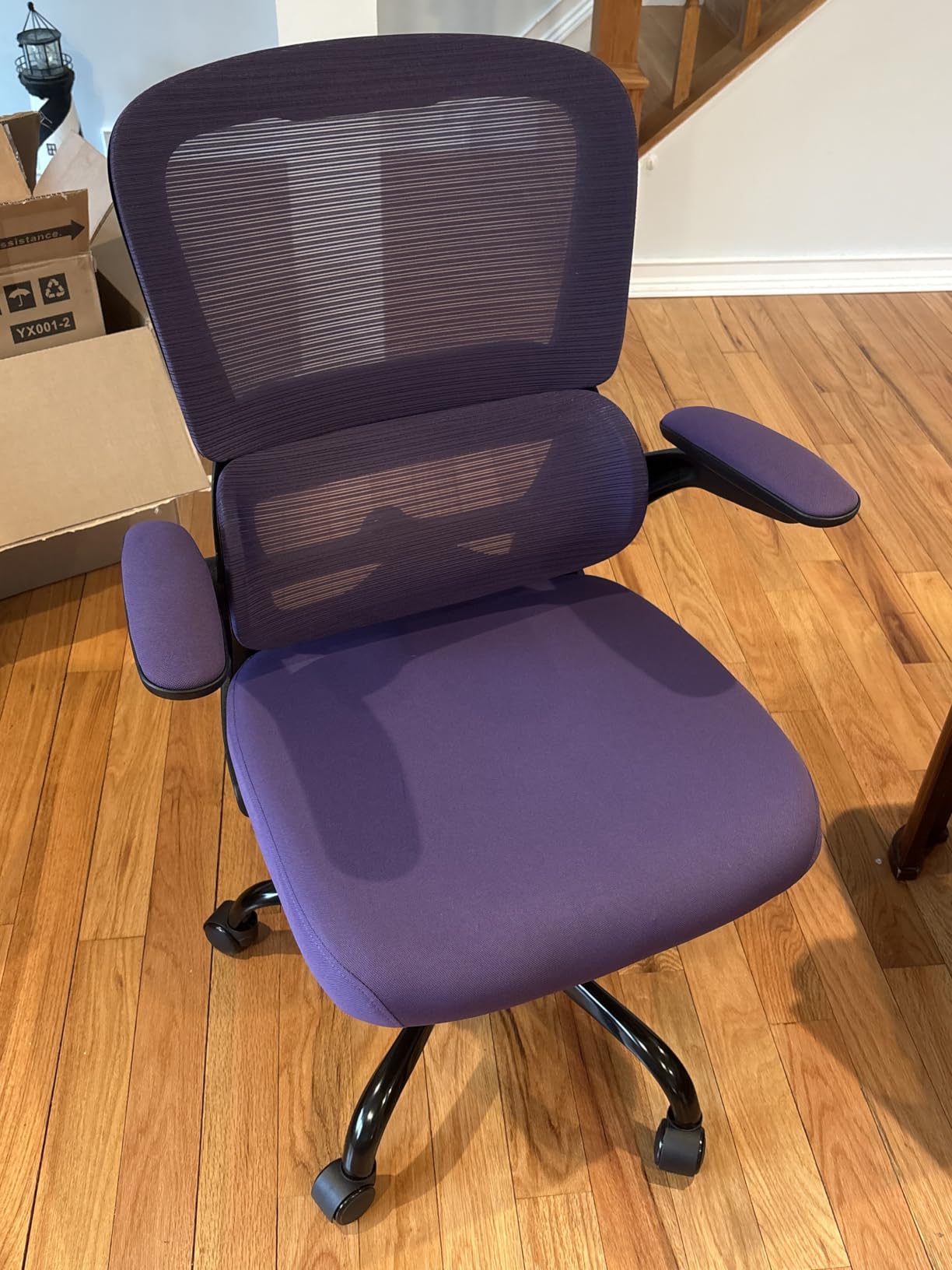
The TRALT is the value pick because it does the one thing that matters most and most cheap chairs skip: a lumbar support with real depth adjustment rather than a fixed pad on a slider. Reviews describe it as adjustable lumbar support with depth adjustment, and users place it precisely where the lower back needs it.
It holds a 4.4 rating from just under 4,900 reviews, and reviewers call it supportive and well built for the money. The seat is high-density, high-resilience molded foam designed not to bottom out, which is the right choice for someone sitting long hours on a chair at this level.
Structurally it is more serious than the price suggests: a BIFMA class 3 certified gas cylinder, a reinforced nylon base with a metal core, and a listed 330 pound capacity. The seat measures 19.7 inches wide by 17.3 inches deep, with a height range of 17.7 to 21.7 inches.
The trade-off is scale. The chair is compact, and a 6 foot reviewer reported slipping toward the front edge of the seat. The backrest is narrower than on full-size models like the GABRYLLY or the CAPOT.
Who the TRALT suits
It suits shorter users, roughly 5 foot 4 inches to 6 foot 2 inches as rated, who want a supportive lumbar system without a large seat. Compact dimensions matter in a small home office where a wide chair hits the desk legs.
It also suits anyone who wants a flat seat rather than a sculpted one. The molded foam is described as wide and relatively flat, which avoids the pressure points some contoured cushions create over long hours.
Who should skip the TRALT
Skip it if you are tall. The compact frame and shorter seat depth are the reason taller reviewers report sliding forward, and the narrower backrest gives less upper support.
Skip it if you sit cross-legged or need arms to fold completely out of the way. The cushioned armrests swing up, which helps, but the whole chair is smaller than the task chairs built for that.
5. X XISHE – Top Rated PU Leather Chair with Adjustable Lumbar
Office Chair Ergonomic Desk Chair, Computer PU Leather Home Office Chair, Swivel Mesh Back Adjustable Lumbar Support Flip-up Arms Executive Task Chair
Height-adjustable lumbar
S-shaped back curve
PU leather seat
300 lb capacity
29.1 lb
Pros
- Adjustable lumbar height adds targeted lower back relief
- PU leather seat is soft and easy to wipe clean
- Breathable mesh back prevents sweating on long sits
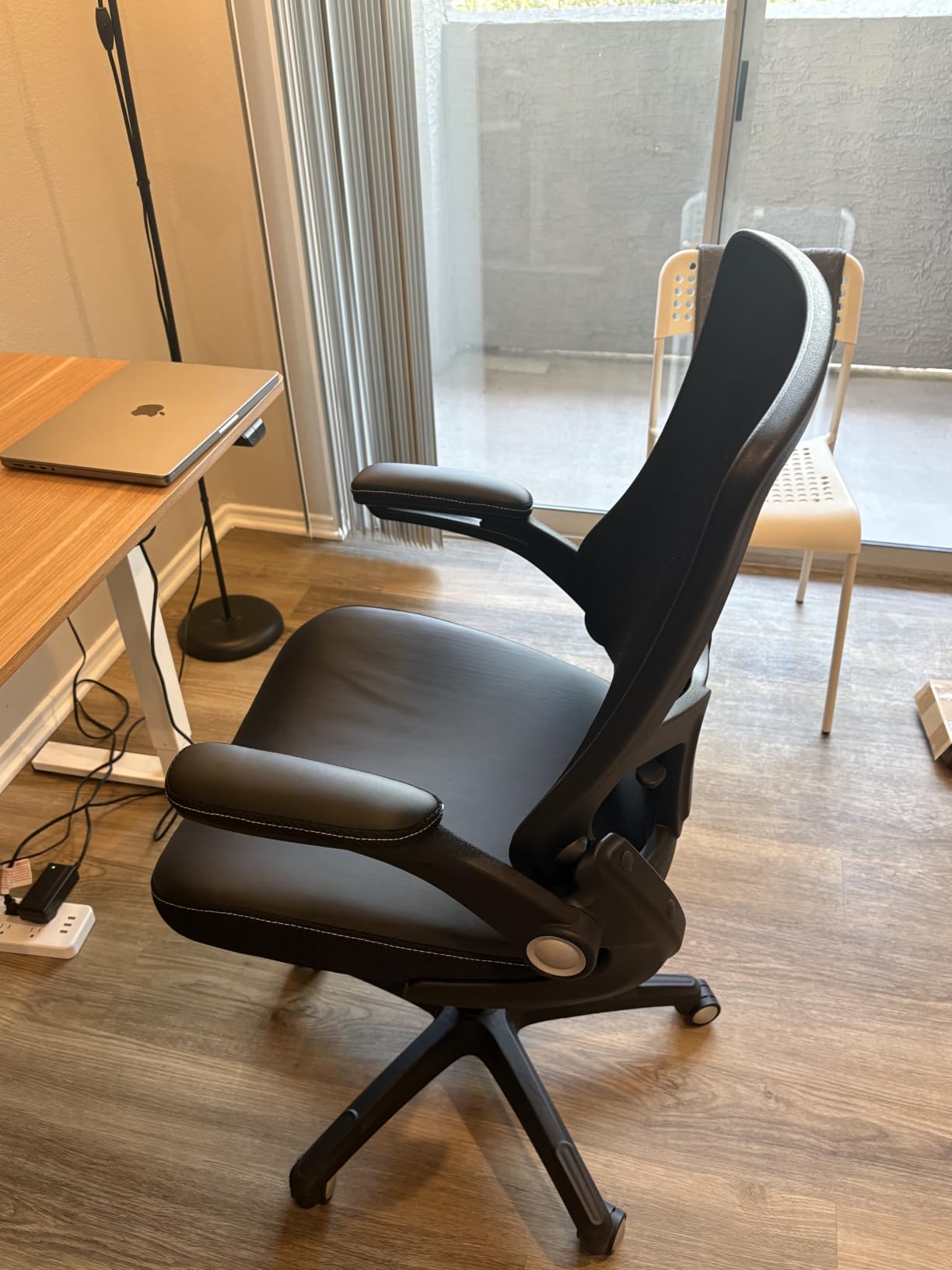
- Flip-up arms save desk space with quiet casters
Cons
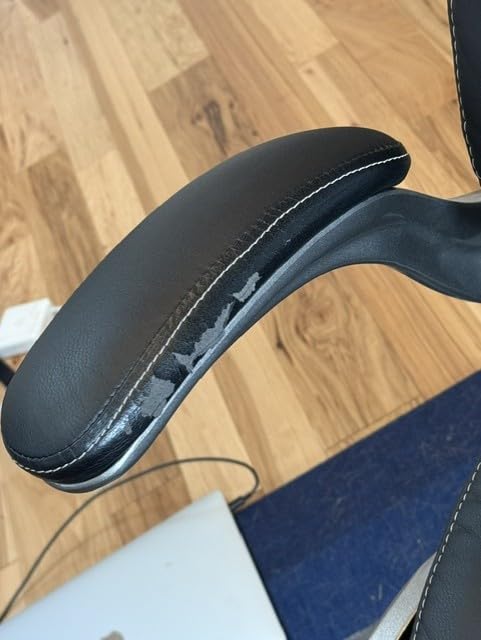
- PU leather can crack or peel over time
- Lumbar adjusts only vertically not in depth
- Minimum seat height of 17.72 inch suits fewer users
The X XISHE pairs a soft PU leather seat with a breathable mesh back, which sounds like an odd combination until you sit in it. The cushion is padded high-resilience sponge that spreads load across the hips, and the mesh back handles heat. It is the most comfortable seat in this group for people who dislike mesh seats.
It also carries a 4.5 rating from just over 3,100 reviews, a smaller base than the leaders but a strong score against that sample. The S-shaped back curve is designed to follow both the lumbar and thoracic spine, and the height-adjustable lumbar support adds targeted relief without the complexity of a 3D mechanism.
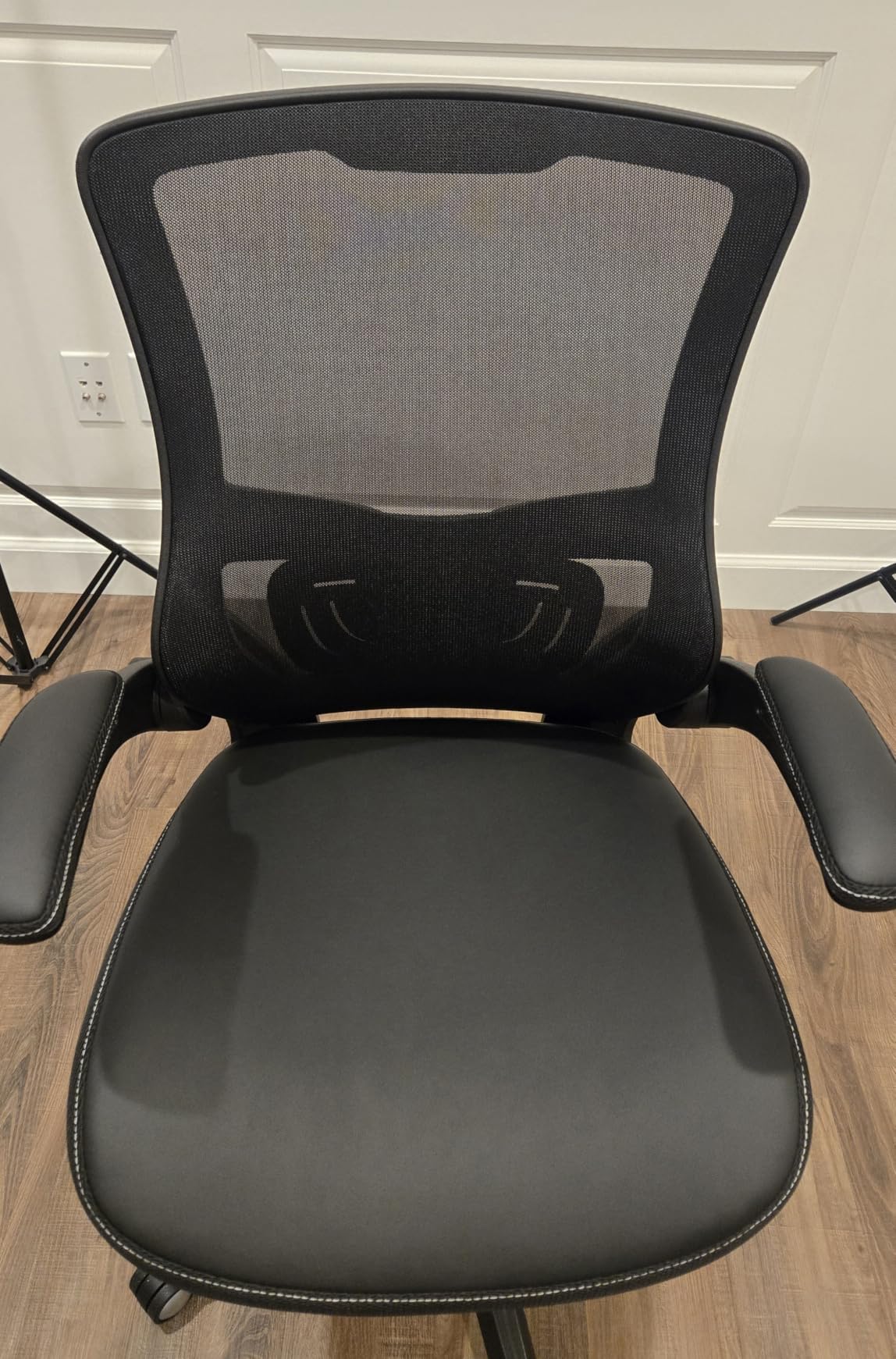
Adjustment covers seat height from 17.72 to 22.44 inches cushion-to-floor and a rocking tilt function released with a tension knob. The armrests flip up 90 degrees so the chair slides under a desk, and the casters are quiet with a 360 degree swivel. It is SGS certified and BIFMA tested at 300 pounds, and assembly takes about 15 to 20 minutes with all tools included.
The lumbar here moves vertically only. If your pain is caused by a support that sits too shallow against your back, this chair will not address it, and that is worth weighing against how much you like the leather seat.
Who the X XISHE suits
It suits anyone who wants a cushioned executive look for a home office, or a client-facing room where a mesh task chair looks too utilitarian. The leather wipes clean, which matters if you eat at your desk.
It also suits users who find mesh seats uncomfortable. The foam cushion here is among the deepest in the roundup relative to price, and reviewers describe the wide seat as relieving pressure on the buttocks.
Who should skip the X XISHE
Skip it if you are short. A 17.72 inch minimum seat height is high for users under about 5 foot 4 inches, and the cushion-to-floor measurement is the number to check against your leg length before you buy.
Skip it if you need lumbar depth travel or run hot through the day, since the back support moves only up and down. PU leather also ages less gracefully than mesh, and reviewers note it can crack or peel over years.
6. COLAMY – Best Inflatable Lumbar High Back Executive Chair
COLAMY High Back Executive Office Chair – Padded Leather Ergonomic Computer Desk Chair with Inflatable Lumbar Support & Flip-Up Arms, Adjustable Tilt Lock Swivel Task Chair for Home Office, Black
Inflatable airbag lumbar
Synchro tilt with lock
Padded flip-up arms
300 lb capacity
17.5 kg
Pros
- Airbag lumbar fine-tunes support to your own curve
- Padded high back and headrest support neck and shoulders
- Flip-up padded arms allow under-desk storage
- Leather resists peeling better than budget PU alternatives
Cons
- Leather restricts airflow and runs warm versus mesh
- Bulky high back frame takes more floor space
- Airbag lumbar needs occasional re-inflation
The COLAMY is the only chair in this roundup with an inflatable airbag in the lumbar area, and it is a genuinely different way to fit support. You pump it up until it fills the gap between your spine and the backrest, which adapts to a wider range of body types than a fixed pad can. The COLAMY X100 and the Cloomey chair both use this approach; nothing else here does.
It scores 4.3 stars from roughly 3,100 reviews. Buyers like the padded high back and headrest for neck and shoulder support during long sessions, and the leather here is described as resisting scratches, stains, cracking and peeling better than budget PU alternatives.
The mechanism is a synchro tilt with an upright lock and a rocking release, which is the right pattern for a lower back: the seat and back move together, and you can lock the chair upright for focused work. The armrests are padded and flip up 90 degrees so you can slide the chair under a desk or sit without them.
At 29.9 by 26 by 48 inches, this is a large chair. It is also an upholstered leather build, so airflow is limited compared with the mesh options, and reviewers note the airbag needs occasional re-inflation as the foam settles.
Who the COLAMY suits
It suits anyone who cannot find a fixed lumbar position that fits. An airbag fills whatever gap exists, so it works for a wide range of torso depths without a fiddly adjustment sequence.
It also suits people who want a chair that looks like furniture rather than equipment, and who like a padded headrest for taking load off the neck after long focus sessions.
Who should skip the COLAMY
Skip it if you run hot or work in a warm room. Upholstered leather is the opposite of mesh on airflow, and reviewers single out warmth as the main criticism.
Skip it if floor space is tight. The high-back frame is bulky, and the flip-up arms help with the desk but not with the footprint. Budget roughly 30 inches of depth.
7. FelixKing – Best High Back Lumbar Chair for Small Desks
FelixKing Office Chair, Ergonomic Desk Chair Breathable Mesh Chairs Adjustable High Back Lumbar Support Flip-up Armrests, Executive Rolling Swivel Comfy Computer Chairs Home Office Black
5-point support
Adjustable lumbar
Flip-up arms
300 lb capacity
10.5 kg
Pros
- Adjustable lumbar support helps maintain posture
- Breatheable mesh keeps the back cool on long workdays
- Flip-up armrests save desk space
- Lightweight yet sturdy with smooth height adjustment
Cons
- No true backrest recline as the whole seat tips back
- Armrests have no height adjustment and do not lock
- Seat cushion feels thin after several hours
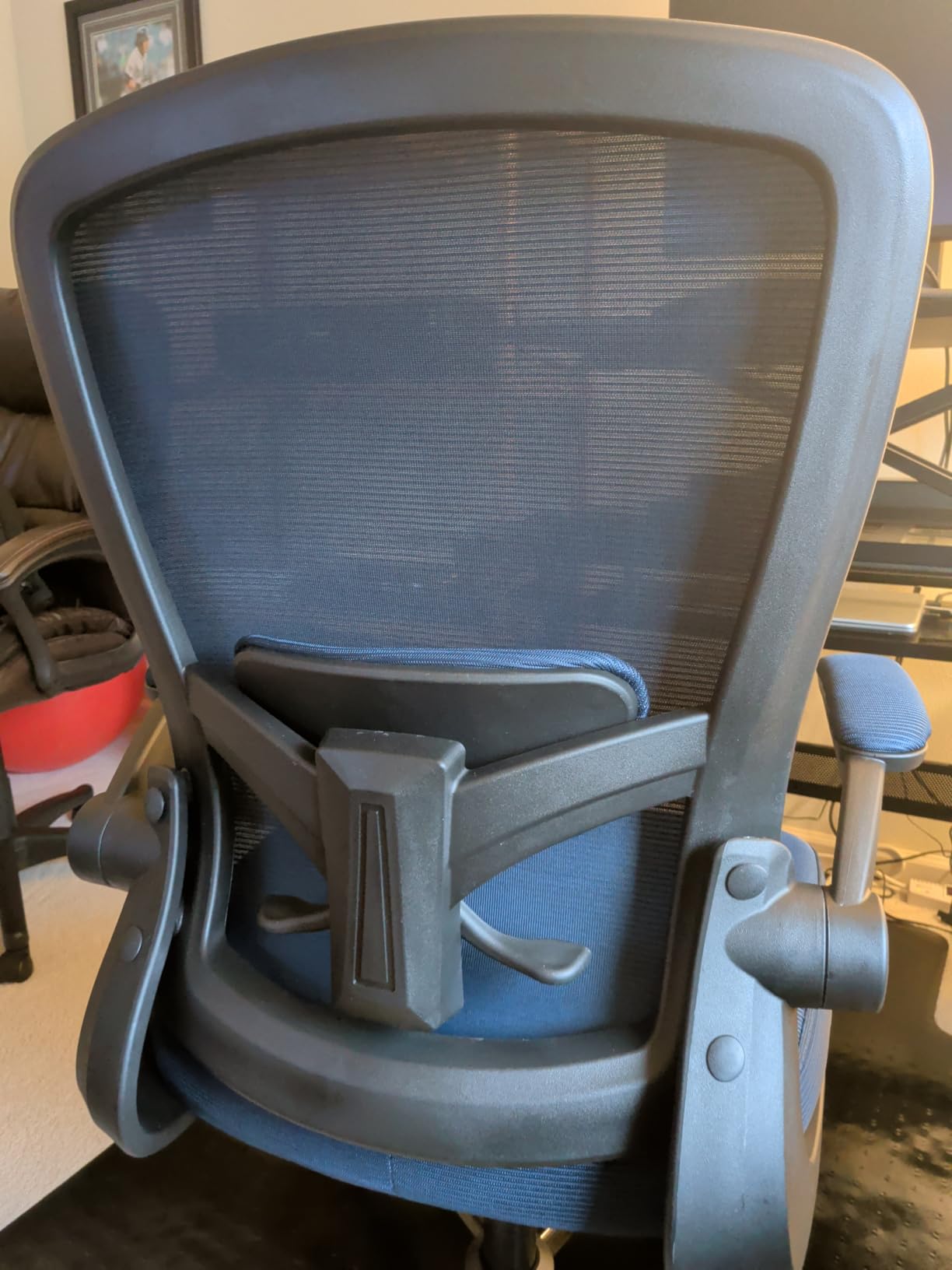
The FelixKing is light, at 10.5 kg, and it does one job well: five supporting points across head, shoulder, back, hips and hands with adjustable lumbar support. It earns 4.2 stars from about 2,550 reviews, and the praise centres on mesh comfort, back support and the space-saving flip-up arms.
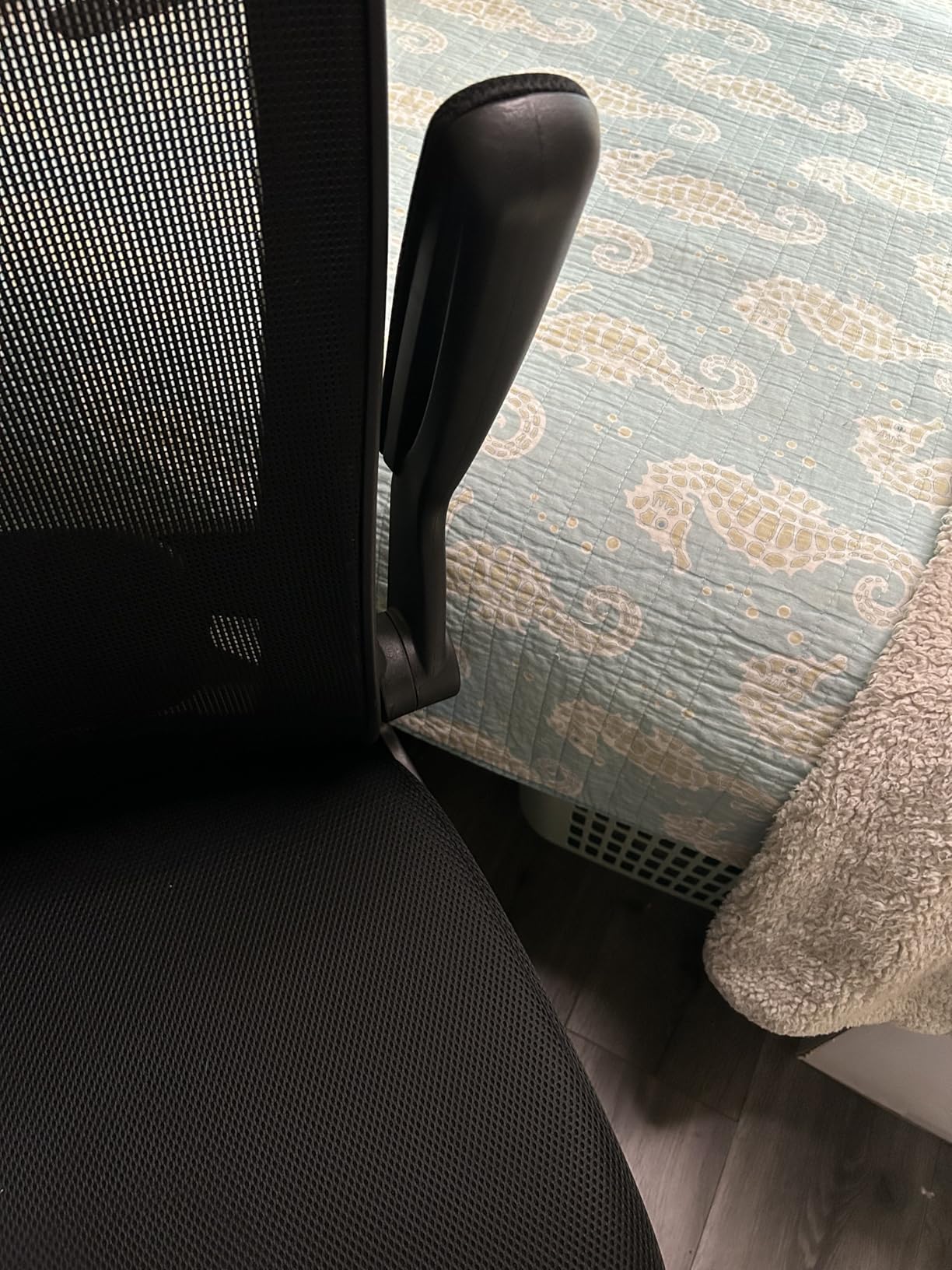
What it does not have is a real recline. This is the most important caveat in the whole roundup for anyone whose pain improves when they lean back, because the backrest does not pivot independently. The whole seat tips as one unit, and the backrest does not travel far enough for a genuinely relaxed posture.
Build details are respectable for the category: a three-stage gas rod, an explosion-proof base plate, silent PU casters and a 300 pound capacity, backed by a five-year service commitment with free part replacement. Assembly takes about 15 minutes, and the chair is 25.2 inches square by 38.19 inches tall.
The seat is a high-density foam cushion described as collapse-resistant, but reviewers who sit all day describe it as thin after several hours. The seat depth is also short, which leaves users nearer the front edge than they would like.
Who the FelixKing suits
It suits short sessions, students, and anyone working a few hours a day in a small space. Flip-up armrests and a light frame make it easy to move and store, and at 300 pounds the capacity is a genuine advantage for a lighter chair.
It suits anyone whose pain is postural rather than disc-related, where the goal is simply to stop slouching for a few hours and get on with the day.
Who should skip the FelixKing
Skip it if your pain eases when you recline, because there is no true backrest recline here. That rules it out for long days spent at a reclined angle.
Skip it if you need your armrests at a specific height, because they do not adjust and do not lock in a raised position. All-day sitters also tend to find the seat cushion thin by mid-afternoon.
8. Marsail – Best Budget Mesh Chair with Lumbar Height and Depth
Marsail Ergonomic Office Chair: Office Desk Chair with High Back Mesh and Adjustable Lumbar Support Rolling Work Swivel Task Chairs with Wheel 3D Armrests and Headrest
Lumbar height and depth
3D PU armrests
90-120 degree recline
330 lb capacity
30.4 lb
Pros
- Lumbar adjusts in both height and depth for real relief
- Deep 3.14 inch foam seat stays comfortable for hours
- 3D armrests move forward back swivel and flip up
- Headrest holds position rather than slipping
Cons
- Recline is rocking-only with an under-seat tension knob
- Headrest sits low and can push the head forward
- PU armrest padding wears over time
The Marsail is quietly one of the better back pain picks here because its lumbar moves in both directions: 1.18 inches forward and back, 2.16 inches up and down. That is genuine depth adjustment at the entry level, and reviewers credit it with real lower back relief rather than just general comfort.
It scores 4.2 stars from about 1,890 reviews. The other thing that stands out is the seat, a 3.14 inch thick high-density foam layer with a wider load-bearing area than most chairs in this bracket, which is why multi-hour sitters rate it well above its class.
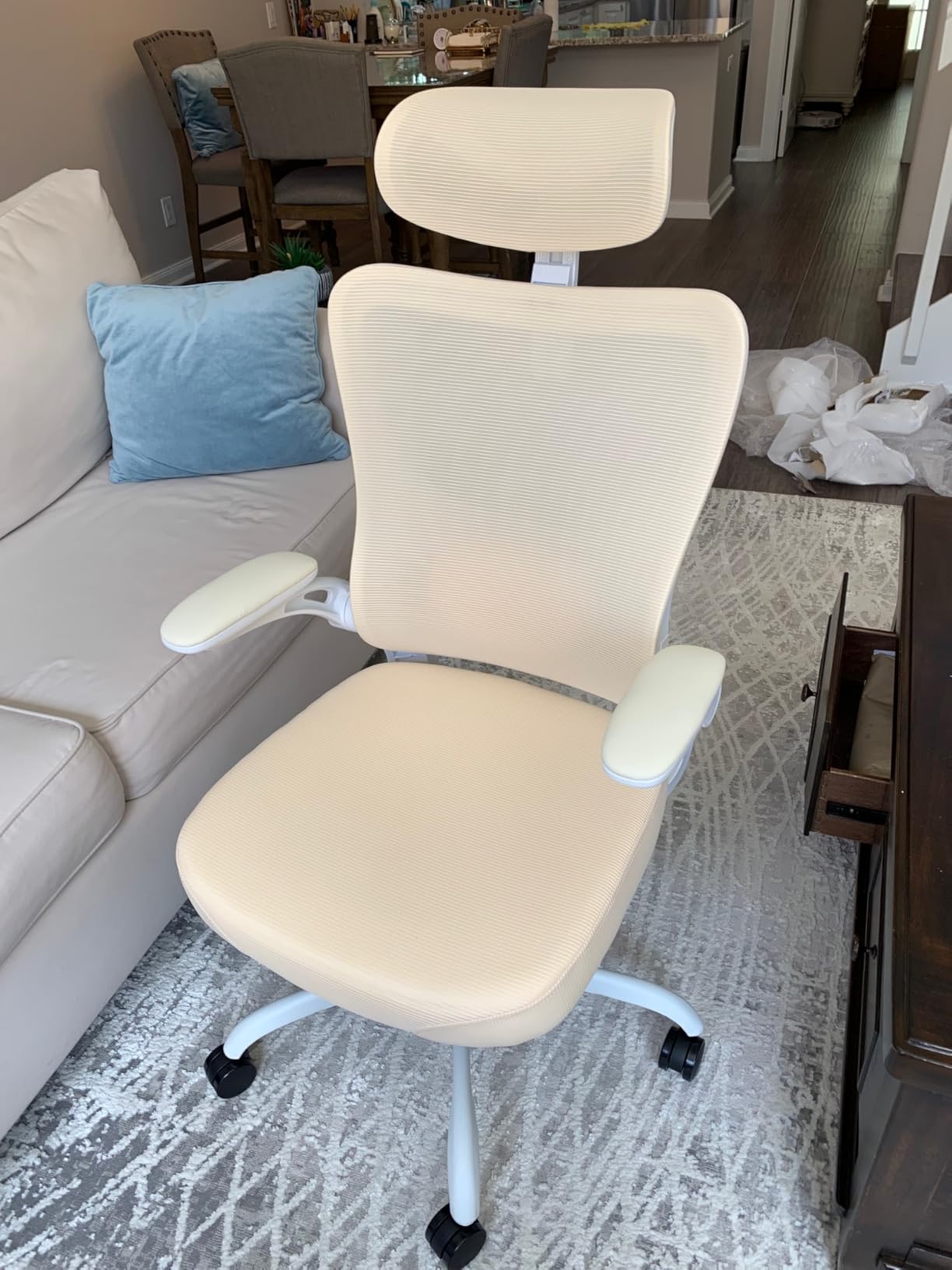
The 3D armrests are a genuine upgrade in this price range: they move forward and back, swivel left and right, and flip up so the chair tucks under a desk. The headrest is adjustable and holds its setting, which is more than many cheaper chairs manage. Weight capacity is 330 pounds, and the mesh back vents well enough that reviewers specifically mention it not heating up during long work sessions.
The recline is the weak point. It is a 90 to 120 degree rocking function with a tension adjustment under the seat rather than a proper recline lock, so you cannot park it at a chosen angle. The headrest also sits low and can push the head forward.
Who the Marsail suits
It suits anyone on a strict budget who still wants a lumbar support that moves in depth as well as height. That combination is rare at this level, and it is the reason this chair appears on the list at all.
It also suits users who need armrests out of the way frequently. The 3D arms flip up, swivel and slide, which covers most desk shapes and cross-legged sitting positions.
Who should skip the Marsail
Skip it if you want to lock the back at a fixed angle for reading or leaning. The rocking tension is the only adjustment, and reviewers find it fiddly to set.
Skip it if you are sensitive to armrest wear. PU padding abrades over time, and one reviewer reported an armrest that loosened and would not lock within three weeks.
9. ELABEST X100 – Best Premium 3D Lumbar Chair with Footrest
ELABEST X100 Ergonomic Mesh Office Chair with Footrest, Big and Tall Hone Desk Chair with 5D Flip-Up Arms, Adjustable 3D Lumbar Support,Gaming & Executive Computer Chairs
3D synchro-tilt lumbar
5D flip-up arms
18 inch footrest
300 lb capacity
43 lb
Pros
- 3D lumbar dialled for height depth and angle with reported relief
- 5D armrests travel about 6 inches front to back
- Adjustable headrest takes load off the neck
- Built-in footrest unfolds and folds away
- Sturdy quiet build with no squeaking
Cons
- Armrests mount to the backrest in some versions
- Mesh seat edges dig into knees for shorter users
- Footrest can be stiff and is short for longer legs
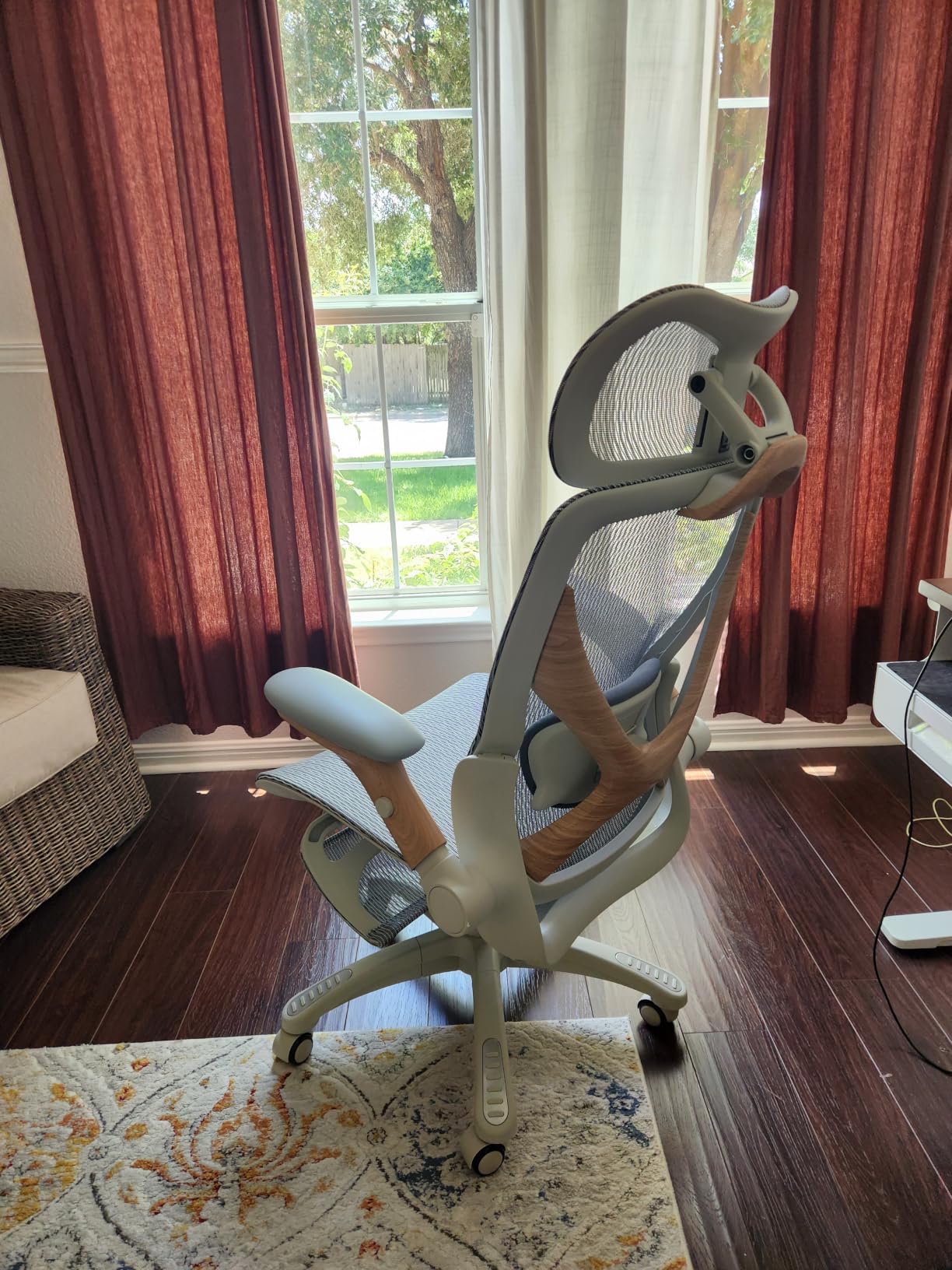
The X100 is the highest-rated chair in this roundup at 4.6 stars from about 1,285 reviews, with 82 percent of ratings at five stars. It is also the most adjustable chair we tested, and the specification that matters most for a lower back is the 3D synchro-tilt lumbar: plus or minus 1.6 inches of depth on a spring-loaded auto-tracking mechanism, plus or minus 2 inches of height, and 15 degrees of rotation.
That lumbar is lockable once set, which almost nothing else here manages. Buyers with lower back pain report significant relief from it, and the headrest takes load off the neck in a way that stops the discomfort migrating upward.
The other headline feature is the built-in footrest, an 18 inch extendable rest at two position angles that folds away under the seat. Elevating the legs takes pressure off the lumbar region, so this is the one chair in the roundup that changes how you sit rather than only how you are supported.
The arms are 5D, moving about 6 inches front to back with a 45 degree cant, and they flip up for under-desk storage. There is a 17-point micro-adjustment system, a three-stage recline, a grade-4 central column, BIFMA certification and a five-year support commitment. The chair is certified for 12-hour-plus sessions and weighs 43 pounds.
Who the ELABEST X100 suits
It suits anyone who has already tried a chair with a vertical lumbar slider and found the support sits at the wrong depth. Depth plus height plus rotation plus a lock covers essentially every position a lumbar support needs to reach.
It also suits people whose discomfort shows up in the legs as well as the back, and anyone who works long sessions and wants to change position rather than hold one shape. The after-sales support is repeatedly described as fast and generous with free seat pads and wheels.
Who should skip the ELABEST X100
Skip it if you are shorter than about 5 foot 6 inches and dislike firm edges. Reviewers note the mesh seat edges dig into the backs of the knees, and the footrest is too short for longer legs while being stiff to extend.
Skip it if you like to lean back on your armrests. In some versions the arms attach to the backrest, which limits vertical range and makes the chair lean forward when you load them. Also note that adding a padded seat cover removes the footrest function.
10. CAPOT – Best Chair for Heavy Users With Lower Back Pain
CAPOT Ergonomic Mesh Office Chair, Adjustable Lumbar High Back Desk Chair 400lbs, 4D Flip-up Arms, 3-Level Tilt Backrest, 3D Headrest, PU Wheels, Swivel Rolling Computer Chair for Long Desk Work
8-level lumbar adjust
3-level tilt lock
400 lb steel base
5-year warranty
38 lb
Pros
- Eight-level lumbar micro-adjust with reported back pain relief
- Stainless base and leak-proof gas lift feel solid
- Three genuine tilt lock positions at 90 110 125 degrees
- 400 lb rating suits heavier users
Cons
- Lumbar does not always stay locked in position
- Mesh seat feels hard past about 10 minutes
- Seat not wide enough for larger users arms down
The CAPOT is the pick if your weight is the main constraint, because a 400 pound rating on a stainless steel base with a leak-proof SGS gas lift is genuinely rare below the premium tier. A 270 pound reviewer at 6 foot 1 inches reports it is neither cramped nor small, which is the question most heavy users actually want answered.
Its lumbar has 2 inches of travel across eight levels, which gives finer granularity than any other chair in this roundup. Users chasing a specific L1 to L5 alignment report pain relief from it. Tilt lock is real here too, with three positions at 90, 110 and 125 degrees and the seat tilting in sync with the back.
It is the lowest-rated chair here at 4.1 stars from about 1,220 reviews, and the reasons are specific rather than fatal. The lumbar support does not stay locked in position for some users, so it needs repeated readjusting through the day. The mesh seat is firm, and some reviewers find it uncomfortable past about 10 minutes.
There are also fit notes for larger users: the seat is not wide enough with the arms down, and a front lip on the seat means the chair can roll away slightly as you sit down. A few reviews report rough metal edges at the leg-to-caster weld needing tightening.
Who the CAPOT suits
It suits users well above the 250 pound mark who need a verified rating rather than an assumed one. Very few chairs in this bracket publish a 400 pound figure backed by a steel base, and it is the single clearest reason to pick this one.
It also suits anyone who wants a proper multi-position tilt lock. Three genuine lock positions with synchro tilt is closer to the mechanism behaviour of a professional chair than most of the adjustable models in this list.
Who should skip the CAPOT
Skip it if you need the lumbar to stay put. Several users report it drifting out of position, which is frustrating when you have found a setting that works and want to keep it.
Skip it if you are a large-framed user who wants the arms down. With the arms in place the usable seat width narrows, and if you like a cushioned seat the firm Aerovith mesh will not deliver it. Assembly is also around 30 minutes, the longest here.
11. Cloomey 500 lb – Best Extra Wide Seat Chair for Back Pain
500lbs Big and Tall Office Chair Adjustable Lumbar Support for Back Pain, Extra Wide Seat Executive Office Chair Thick Armrest Pad, Heavy Duty Base&Upgraded Wheels, Ergonomic Desk Chair
Inflatable airbag lumbar
Extra wide layered seat
500 lb base
Thick padded arms
20.4 kg
Pros
- Airbag lumbar fills the gap between spine and backrest
- Extra wide seat suits big and tall frames
- Heavy-duty base rated to 500 pounds
- Thick armrest pads reduce forearm pressure
- Wheels roll quietly without marking floors
Cons
- Leather runs warm with less airflow than mesh
- Single recline position and plainer adjustment
- Warranty is one year only
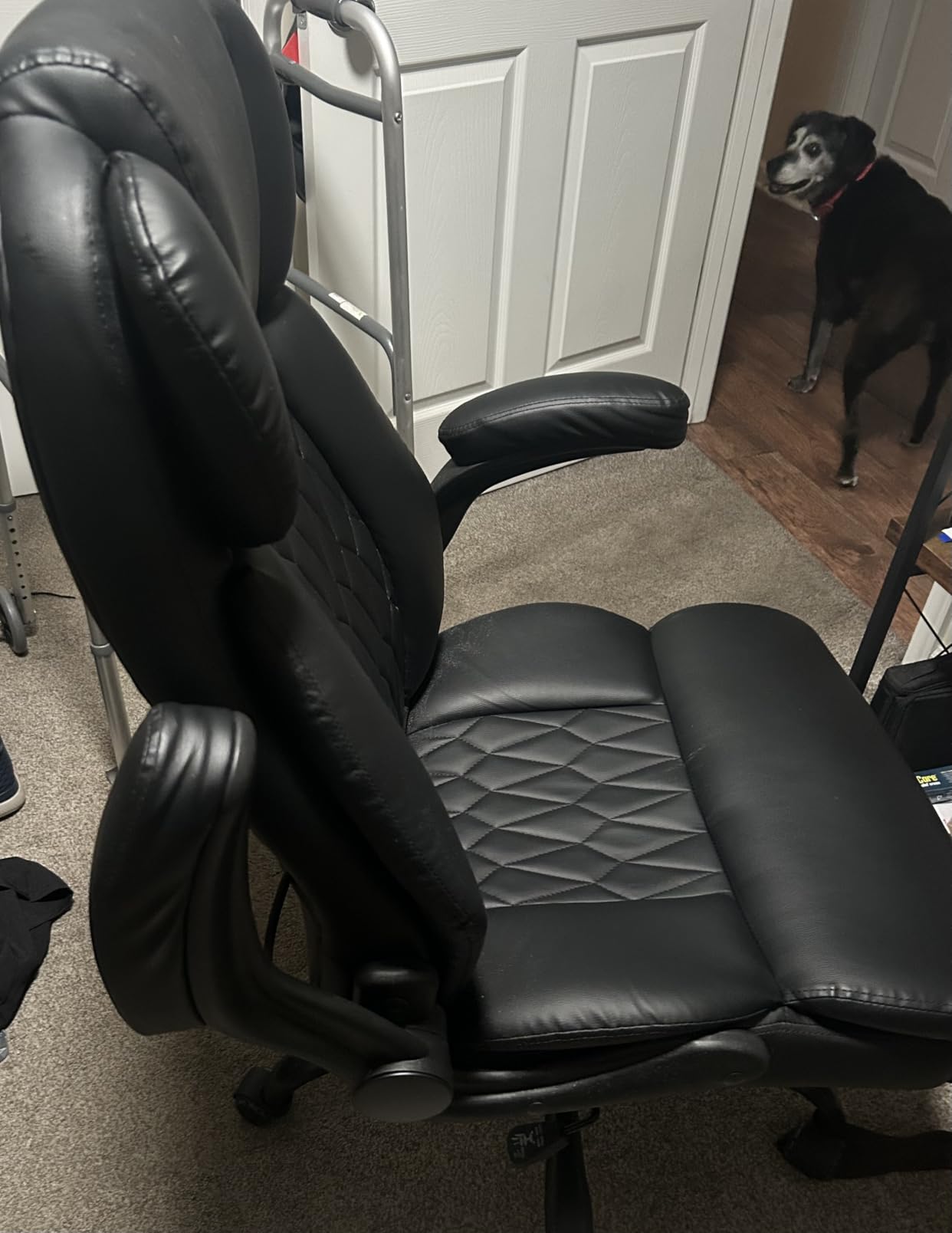
The Cloomey is built for one job: giving a heavy body a seat wide enough to sit properly in and a base that will not sink. It carries a 500 pound weight capacity, the highest in this roundup, on a heavy-duty metal base with an SGS certified grade 3 gas cylinder that the listing states was tested over 100,000 times.
It rates 4.5 stars, though from a much smaller base of 210 reviews, so treat the score with more caution than the 4.5 on the X XISHE. Buyers in big and tall frames single out the extra wide seat with its multi-layer thick cushion that follows the body’s outer contour, and the inflatable lumbar that can be dialled into the gap behind the spine.
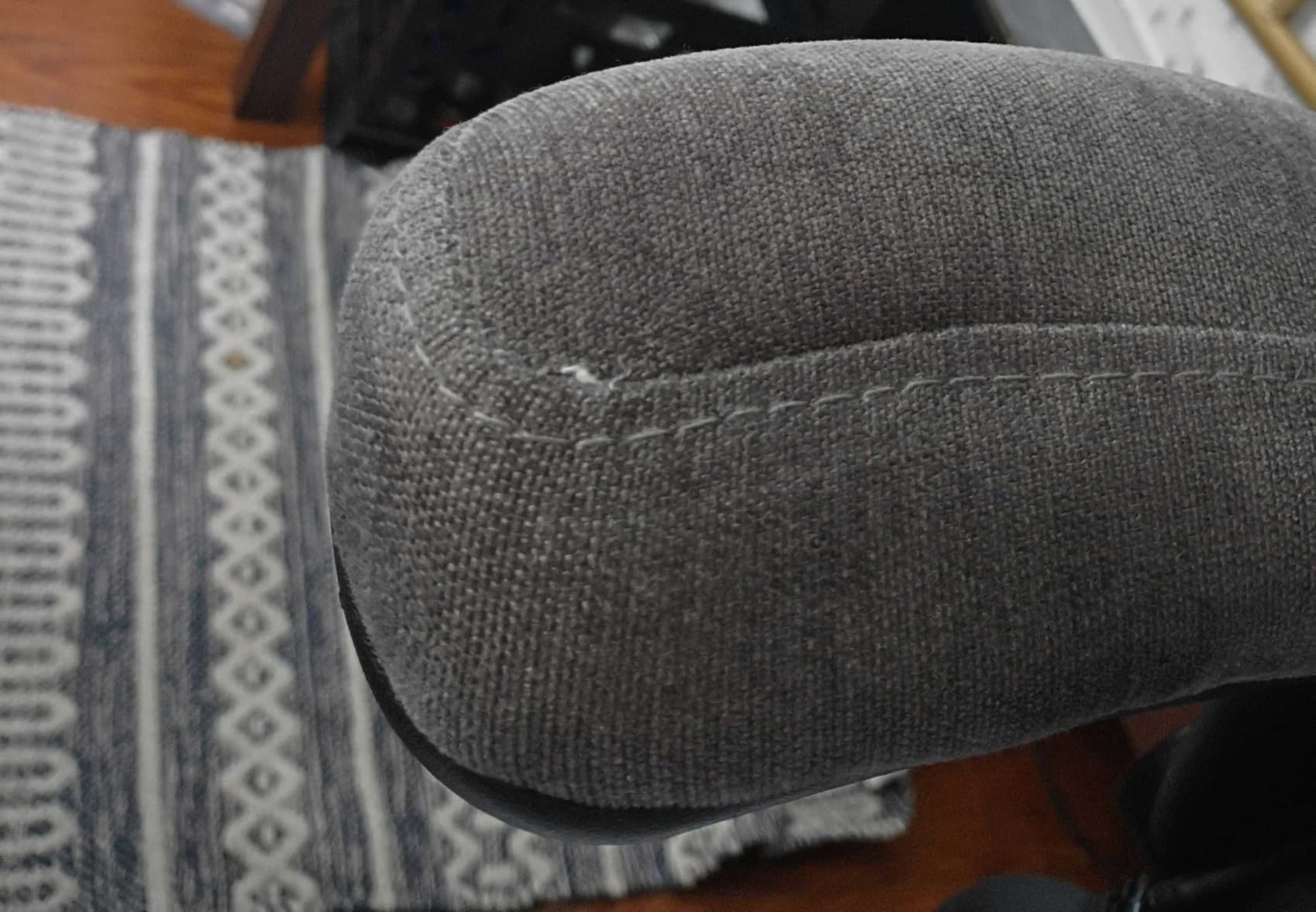
The thick padded armrests reduce pressure on the elbows and forearms, which matters more than it sounds at higher body weight. The upgraded wheels have a soft nylon rubber core with a polyurethane outer layer so they roll quietly without marking hard, laminate, tile or vinyl floors.
It is a plainer chair than the CAPOT or the GABRYLLY. There is a single recline position rather than a multi-stage lock, the adjustment set is more limited, and the warranty is one year, which is the shortest in the group.
Who the Cloomey suits
It suits users above 400 pounds who have found that most chairs compress or stop sinking comfortably within a year. The 22 inch extra wide seat and heavy-duty base are the two features worth paying for here.
It also suits anyone who needs arm padding. The armrest cushions are among the thickest in the roundup, which reduces the forearm load that often travels up into the shoulders and upper back.
Who should skip the Cloomey
Skip it if you run hot. Leather upholstery has less airflow than mesh, and reviewers flag warmth as the main drawback for long sessions.
Skip it if you want fine recline control or a long warranty. One recline position and a one-year warranty are both weaker than what the CAPOT offers for a similar use case, and the smaller review base means less long-term evidence of durability.
12. Fizzin – Best Starter Chair for Back Pain on a Budget
Fizzin Office Chair Mesh Computer Chairs with Adjustable Lumbar Support
Lumbar depth and height
3.9 inch headrest
125 degree tilt
400 lb capacity
11.5 kg
Pros
- Lumbar moves up down and slightly forward
- Mesh back stays cool and does not creak
- Flip-up arms allow armless sitting
- Lightweight yet stable with 400 lb capacity
- About 15 to 20 minute assembly
Cons
- Headrest sits too far back and low for some users
- Backrest narrow and seat thin so best for smaller users
- Tilt cannot lock at maximum recline angle
The Fizzin is the cheapest chair in the roundup and one of the few entry models whose lumbar moves in depth as well as height, travelling 1 inch forward and back and 3.15 inches up and down. That makes it a legitimate first step for someone whose pain is driven by a lumbar support sitting too shallow.
It holds 4.3 stars from 472 reviews, a small sample. The positives are consistent though: easy assembly with all tools included, a cool mesh back, a chair that does not creak when you shift position, and flip-up armrests that let you use it as an armless chair.
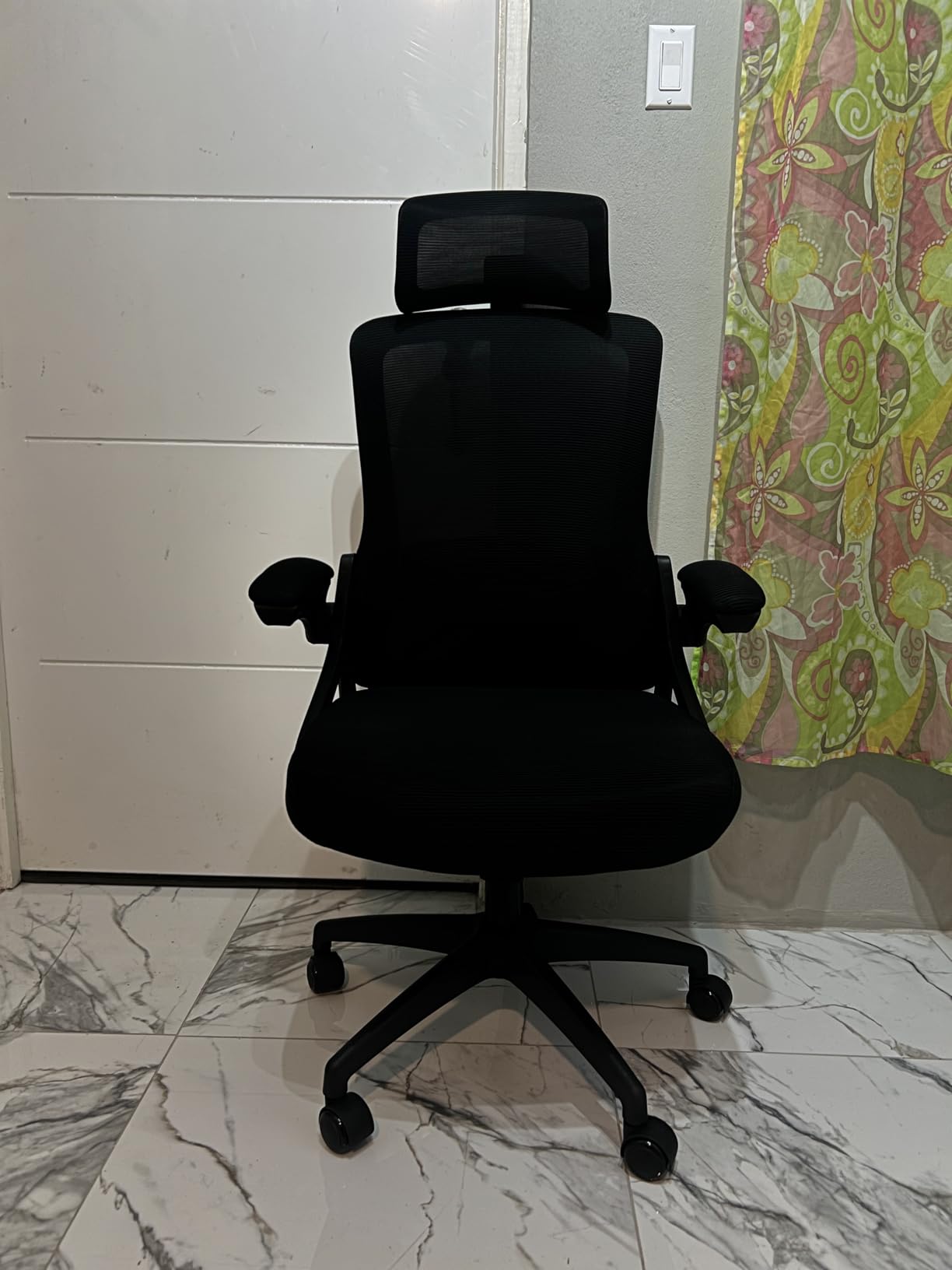
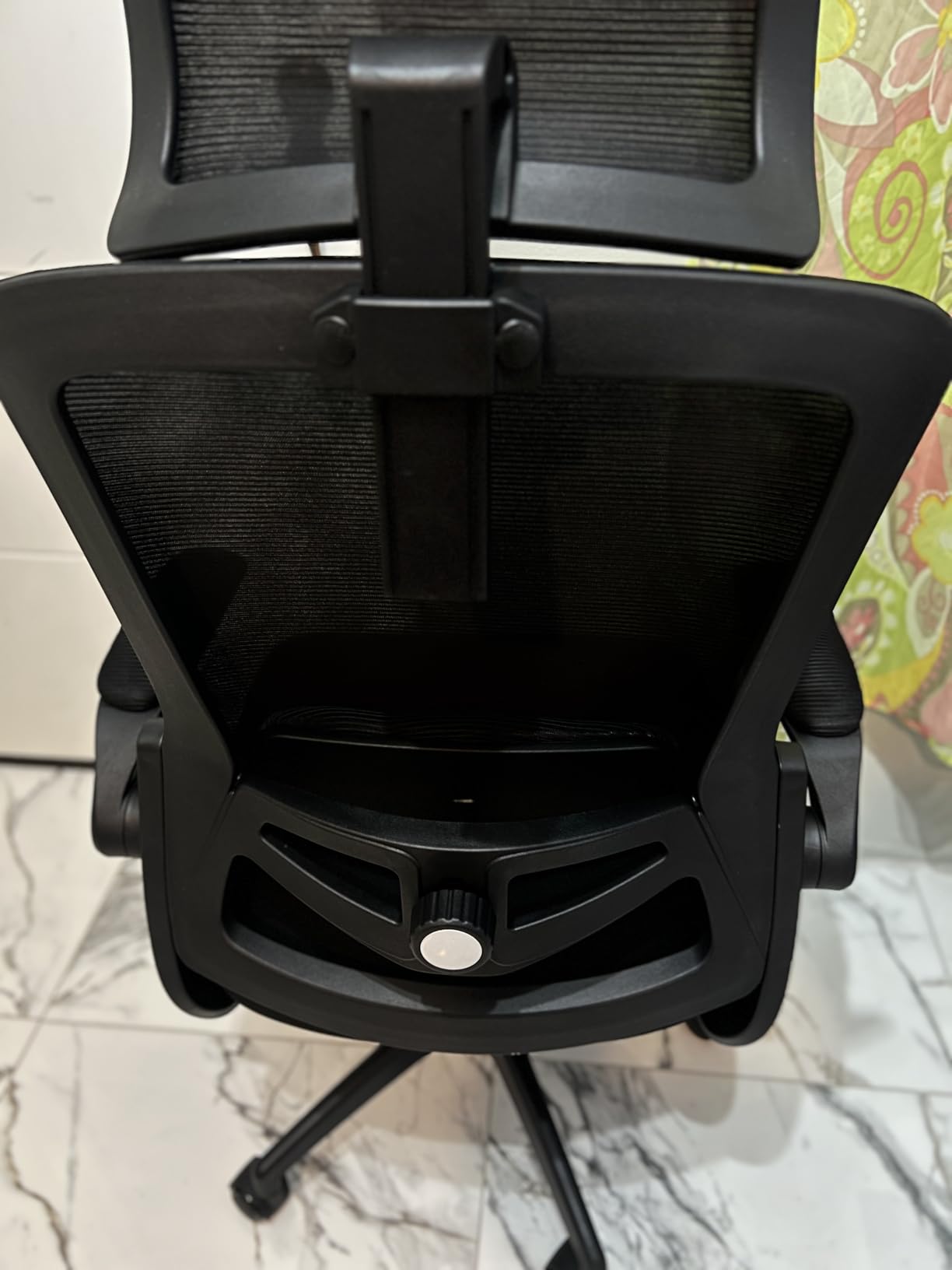
At 11.5 kg it is the second lightest chair here, and the listed capacity is 400 pounds, which is well above what the frame weight suggests. The headrest adjusts 3.9 inches with angle control, and tilt reaches 125 degrees with a 90 degree flip-up armrest. Assembly takes about 15 minutes.
The compromises are scale and locking. The backrest is narrow and the seat cushion is thin, so it suits smaller users best. The tilt lock only prevents tilting rather than holding the chair at maximum recline. One 290 pound reviewer also reported wobble developing at the gas cylinder mount within two months and was unable to reach the seller’s support contact, so the one-year warranty is thinner than most here.
Who the Fizzin suits
It suits a first upgrade from a cheap dining or gaming chair for someone sitting four to six hours a day. You get a real adjustable lumbar, a breathable back and flip-up arms for a modest outlay.
It suits shorter users, since the listed fit runs from about 5 foot 4 inches to 6 foot 3 inches and the seat is compact. Smaller users get a lumbar position that actually reaches their spine.
Who should skip the Fizzin
Skip it if you need a locked recline. The lock only stops the tilt action rather than holding a chosen angle, so you cannot park the chair back for reading.
Skip it if you are heavy or tall with a long torso. The narrow back and thin cushion will not carry an all-day sit, and the headrest sits too far back and low for some users. Armrest padding is also described as abrasive on bare skin over long sessions.
Match Your Pain Pattern to the Right Chair
The most useful thing you can do before buying is work out which job your lower back is complaining about, because each pattern fails on a different feature. A chair with a beautiful lumbar can still leave you sore if the problem is your pelvis tipping forward all day.
Dull ache that builds through the afternoon, gone after standing up. This is a static-posture problem. You need seat depth adjustment so your feet reach the floor and your knees sit at roughly 90 degrees, plus a recline you can change position with. The SIHOO M18 with its three-position recline and the Marsail with its rocking back are the natural fits here.
Sharp pain in one spot that gets worse as the day goes on. Pressure concentration is the likely culprit, so a seat that spreads load beats a contoured one. The X XISHE with its wide sponge seat and the TRALT with its flat high-resilience molded foam both suit this pattern.
Stiffness first thing in the morning, easing with movement. You are likely sitting in a position that loads the discs statically. The best answer is a synchro-tilt that lets the back and seat move together, which is the COLAMY mechanism, plus a footrest to change the load path if you want one. The ELABEST X100 is the only chair here with a footrest.
Pain that migrates from the lower back into the mid-back after switching chairs. This is common in week one and it is a good sign, not a bad one. Your old posture was compensating somewhere, and the new support moves the strain upward as the mid-back muscles start working. The HOLLUDLE with its lumbar that moves in every direction lets you back the support off if the new position feels excessive.
Soreness that shows up in the shoulders and neck as well. Armrests set too high push the shoulders up, and that load travels into the lower back over a full day. The chairs here that solve it are the ones with arms that drop, slide and flip: the ELABEST X100 with 5D arms, the Marsail with 3D arms, and the HOLLUDLE.
Discomfort that only shows up above your body weight. Skip anything that lists below 400 pounds or that uses a plastic base. The CAPOT at 400 pounds and the Cloomey at 500 pounds both publish a verified rating with a steel or heavy-duty metal base.
What to Look For: The Back Pain Buying Guide
Lumbar support has two separate dimensions and most listings only tell you about one. Height is how far the support slides up and down your back, which matters if your torso is unusually long or short. Depth is how far it presses forward into your lower back, which matters if the pad currently sits at the back of the chair and never touches you. Check both before you buy, and treat a product page that mentions only height as a warning.
The tell for genuine depth adjustment is a stated measurement. The Marsail lists 1.18 inches forward and back, the HOLLUDLE moves up, down, forward, backward and rotates, the ELABEST X100 offers plus or minus 1.6 inches of spring-loaded depth, and the TRALT and the Fizzin describe depth movement in plain terms. That kind of number is the difference between a real feature and a marketing word.
Seat depth. You want roughly two to three fingers of space between the front edge of the seat and the back of your knees when you sit back against the backrest. Too shallow and you tip forward onto the front edge, which throws your lower back into its worst position. Most chairs here have no seat depth slider at all, so check the seat depth against your own leg length, not just the seat height.
Seat height and your feet. Whatever the listed range, the test is simple: with the backrest against you and your shoulders relaxed, your feet should sit flat on the floor. If you have to rock forward onto your toes or point your feet, the chair is too tall for you regardless of what the specification says. A number of reviews in this roundup describe exactly that problem with minimum seat heights around 17.7 inches.
Recline and tilt lock. A recline without a lock is a rocking chair, which is worse for a lower back than no recline at all because you never stop moving. Look for a named tilt lock with positions, like the three-stage lock on the GABRYLLY or the 90, 110 and 125 degree positions on the CAPOT. The FelixKing has no independent backrest recline, which is a genuine limitation for anyone whose pain eases when they lean back.
Armrests. There is a direct pathway from armrests to lower back pain that most articles skip. Armrests set too high hold your shoulders up, your upper back compensates, and the load settles into the lumbar spine by the end of the day. Arms should let your shoulders drop, support your forearms with a light touch, and flip up or lower out of the way for a narrow desk. 4D arms are the useful tier: height, forward and back, plus swivel or pivot.
Mesh versus cushion. Mesh wins on airflow and on keeping your back in a moving surface rather than a static one. Cushion wins on comfort for people who dislike the feel of mesh and want pressure spread across the hips. There is no single right answer, and it depends on whether you run hot. Two of the chairs here pair both approaches, using a mesh back with a padded seat, which is a reasonable compromise for most people.
Weight capacity and fit range. Published capacity is the single most useful number on a product page for anyone above 250 pounds, because the difference between a 300 pound and a 400 pound rating is the difference between a chair that works for years and one that starts to sink. Also check the stated fit range in height, and read reviews from people at your height rather than the tallest reviewer on the page.
Certification and warranty. BIFMA certification and a class 3 or class 4 gas cylinder tell you the chair is built to a standard rather than a price point. Warranty length is a rough proxy for how confident the manufacturer is, and it varies wildly in this roundup, from one year on the Fizzin and the Cloomey to five years on the HOLLUDLE, the FelixKing service commitment and the ELABEST X100.
For the rest of the corner, our guide to swivel accent chairs covers seating for the rooms where you are not working at a desk.
How to Set Up a Chair for Lower Back Support in Five Steps
Most chair complaints are setup complaints. Give these five steps twenty minutes after your chair arrives, then give it two to three weeks before you judge it. Order matters more than people expect: each step changes the target for the next one.
1. Set the seat height first. Sit back fully into the backrest, then lower or raise the chair until your feet rest flat on the floor and your thighs are roughly parallel to the floor. Your knees should be at about 90 degrees. Do this before anything else, because every other adjustment is measured relative to it.
2. Set the seat depth. If the chair has a slider, push it forward until two to three fingers fit between the seat edge and the back of your knees. If it has no slider, check the chair against your leg length before you accept it.
3. Set the lumbar support. You are looking for the inward curve of your lower spine, roughly where the belt sits on a standing person but lower. Set the height first, then push the support forward until you feel it fill the gap rather than dig in. If it is a dial, airbag or slider, start light and add pressure gradually across a few days.
4. Set the armrests. Your shoulders should be relaxed, not held up. Most people set the arms an inch or two too high without noticing. Then adjust the forward and back position so the arm meets your forearm just behind the elbow, and test the flip-up function if you work at a desk you slide under.
5. Set the recline and use it. Lock the back upright for focused work, then unlock and lean back for reading and phone calls. The point of a tilt lock is variety, so change position deliberately several times a day rather than sitting locked upright for eight hours.
One more thing that helps more than any chair feature: stand up. Static sitting loads the lumbar spine more than movement does, and the best setups we used during testing paired the chair with regular standing. If you are setting up a kitchen-adjacent workspace, our air fryer toaster oven picks for lower back pain cover appliances that let you cook standing up.
The Two-to-Three Week Break-In Nobody Warns You About
The most common complaint in chair reviews is not comfort, it is early discomfort. New chair, sore back, and a buyer convinced they have made a mistake. In our testing this was the single most predictable part of the process, and it is a posture transition rather than a fault in the chair.
In the first three to five days, your back muscles are being asked to hold a position they have not held in years. The soreness people report most often is in the mid-back, because the lower back feels better immediately once it is supported and the effort shifts upward. That is a sign the lumbar support is working.
By week one, the shoulders and hip flexors usually calm down. By week two, most people stop noticing the chair. Full settling takes two to three weeks of consistent daily use, and it only happens if you actually sit in it rather than reverting to the old chair at the first twinge.
There is one genuine warning sign to watch for: pain that is sharp, radiates down a leg, or includes numbness. That is not a break-in period, and it means stop and see a professional.
Frequently Asked Questions
Which office chair is best for back pain relief?
The best office chair for lower back pain is one with lumbar support that adjusts in both height and depth, a seat depth that anchors your pelvis, and a tilt lock for changing position. In our roundup the SIHOO M18 is the best overall pick, the ELABEST X100 has the most capable 3D lumbar, and the CAPOT is the choice for users above 250 pounds.
What chairs do chiropractors and physical therapists recommend at an office?
The common thread in what clinicians ask for is not a brand but a checklist: seat height adjustment, tilt that moves the back and seat together, a seat depth slider, and lumbar support that adjusts in both height and depth. Most mid-range chairs fail at least one of those four points, which is a fast way to screen any product page.
How do I sit properly in an office chair with lower back pain?
Sit back fully into the backrest rather than perching on the front edge, keep your feet flat on the floor with knees near 90 degrees, adjust the lumbar support to fill the inward curve of your lower spine, and set your armrests low enough that your shoulders stay relaxed. Change position deliberately several times during the day.
Is it normal for my back to hurt more in the first week of a new ergonomic chair?
Yes, this is common and usually a posture transition rather than a fault in the chair. Correcting years of slouching pulls on mid-back muscles that have been doing little work, and the soreness often appears above the lower back because that area is now well supported. Most people settle in within two to three weeks of consistent daily use.
Is a mesh or cushion office chair better for back pain?
Mesh wins on airflow and keeps your back on a moving surface, which helps in warm rooms and during long days. A cushion spreads pressure across the hips and suits people who dislike the feel of mesh. A mesh back paired with a padded seat, as on the X XISHE, is a reasonable middle ground for most people.
What is the best office chair for back pain and a heavy body?
Check the published weight capacity before anything else, since most chairs list 300 pounds and the difference above that is meaningful. The CAPOT lists 400 pounds on a stainless steel base with a leak-proof gas lift, and the Cloomey lists 500 pounds on a heavy-duty metal base. Both also offer lumbar travel, which most heavy-duty frames skip.
Should I buy a new office chair for back pain, or is a cushion enough?
A lumbar cushion is a reasonable short-term fix if your main problem is a chair that is too short or too shallow for you, but it cannot add seat depth, tilt range or a recline lock. If your pain settles after standing up and returns after a few hours seated, the chair itself is the likely cause, and a cushion will only mask it for a while.
How do I set up a new office chair for lower back support?
Set seat height first so your feet rest flat and knees sit near 90 degrees, then set seat depth so two to three fingers fit behind your knees, then set lumbar height and depth, then lower the armrests until your shoulders relax, and finally set the tilt lock. Change the order and each step shifts the target for the next one.
Conclusion: Our Best Office Chairs for Lower Back Pain in 2026
After three months with all twelve, the SIHOO M18 remains our pick for the best office chairs for lower back pain overall, because it combines an adjustable lumbar, a three-position recline and the largest proven reliability record in the group. If your pain is driven by lumbar support sitting at the wrong depth, the ELABEST X100 does more with that support than anything else at this level, and the TRALT is the sensible way to get depth adjustment without a premium outlay.
Go further up the load range and the CAPOT or the Cloomey become the answer, depending on whether you want eight levels of lumbar travel or a 500 pound base. For taller and heavier users the GABRYLLY is the most consistently comfortable chair in the roundup. Set whichever one you choose up properly, give it the two to three weeks it actually needs, and change position often.