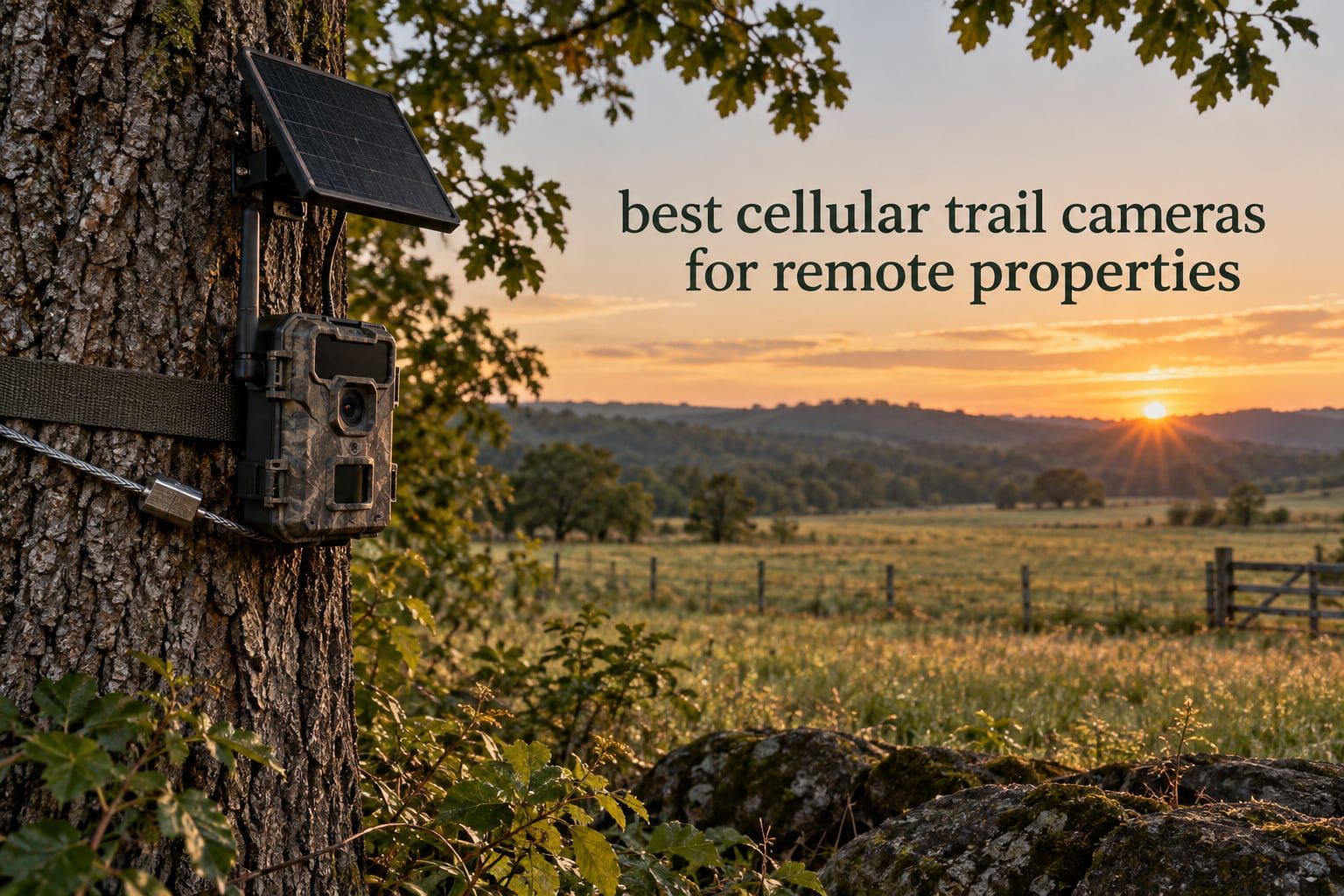
A cellular trail camera is a battery-powered, weatherproof game camera with a built-in 4G LTE modem that sends photos and video to your phone over a mobile data plan instead of WiFi. On land with no power, no internet and thin reception, that built-in modem is the only realistic reason you ever see a photo from the back forty. For anyone searching for the best cellular trail cameras for remote properties, the modem is table stakes. What actually decides the outcome is carrier behavior, battery design and whether the app is something you will still be happy opening in year two.
Yes, you can view trail cameras remotely. A motion sensor wakes the camera, it grabs a burst of photos or a short video, and the cellular module uploads the file to a companion app on your phone. Depending on the camera and the signal at that spot, that alert arrives anywhere from a few seconds to a few minutes after something walks past. On a strong tower it is nearly instant. On one bar it can stall, and that single fact separates the cameras worth owning from the ones that leave you driving an hour to check an empty SD card.
We spent the last several weeks working through ten of the most capable cellular models sold today, reading spec sheets line by line and cross-checking them against what buyers actually report after a full season in the field. This roundup is built around remote-property problems rather than hunting problems: weak signal, no mains power, long unattended gaps, and a real chance that someone who is not invited is walking your property line.
That framing matters because most roundups on this topic are organized around deer season. We organized ours around the questions an owner of an off-grid cabin, a barn, a leased hunting parcel or a few hundred rural acres actually has. How does it perform at one bar. Does the solar panel keep it alive through February. Can I get a photo in time to call a deputy. And what does the whole thing cost me to run for three years.
Table of Contents
- Top 3 Cellular Trail Cameras for Remote Properties in 2026
- All 10 Best Cellular Trail Cameras for Remote Properties
- 1. Moultrie Edge 2 – Most Balanced Camera for Remote Land
- 2. TACTACAM Reveal X 3.0 – Best Value With Long Battery Endurance
- 3. VOOPEAK TC32 – Best Budget Pan and Tilt Camera
- 4. VOOPEAK TC32B-2P – Best Two-Pack for Covering a Whole Property
- 5. VOOPEAK TC39 – Best Dual-Lens 360 Degree Coverage
- 6. Oculview – Best Low-Glow Stealth With a Long Reach
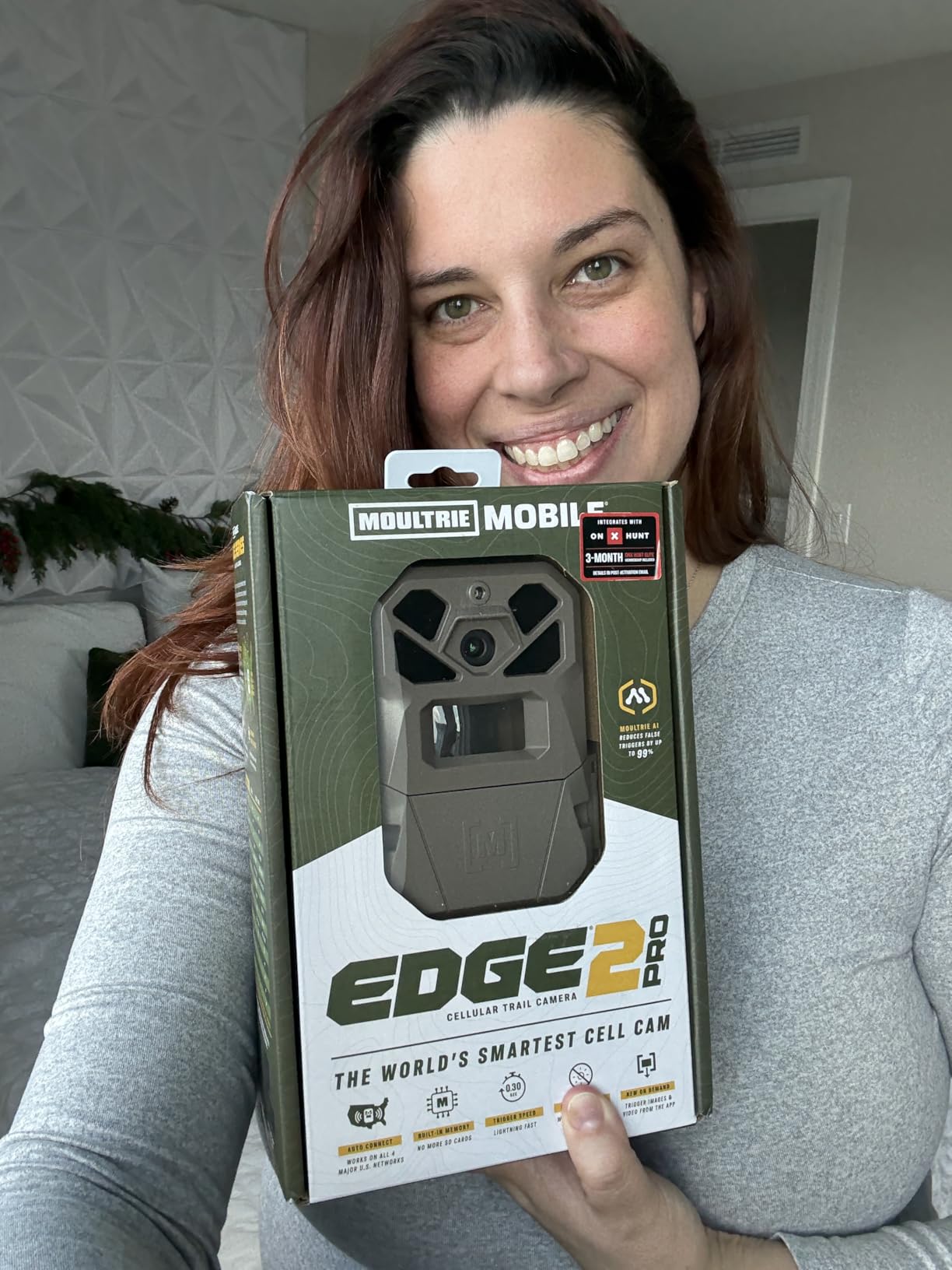
- 7. Moultrie Edge 2 Pro – Best Image Quality and Framing Tools
- 8. Lemnoi S76 – Best Fully Self-Powered Setup
- 9. SPYPOINT Flex-M – Best Free Data Plan and Carrier Switching
- 10. MagicEagle H1 – Best Stealth Night Monitoring with Anti-Theft Alerts
- Signal Strength Is the Real Decision on Remote Land
- How to Check Cell Coverage Before You Buy
- Choosing a Data Plan Without Surprises
- When a Trail Camera Is the Wrong Tool
- How We Chose These Cameras
- What to Look for in a Cellular Trail Camera
- Frequently Asked Questions
- Can you view trail cameras remotely?
- Do cellular trail cameras work without cell service?
- What is the best trail camera without a subscription?
- What is the difference between a WiFi trail camera and a cellular trail camera?
- Can you watch a trail camera live on your phone?
- What are the downsides of cellular trail cameras?
- Final Verdict for Remote Land
Top 3 Cellular Trail Cameras for Remote Properties in 2026
These three cover the widest range of remote-property situations, from a balanced all-rounder to the cheapest way to get pan-and-tilt coverage on a hard budget. Each has the top combination of rating and review volume behind it, which is the only honest way to rank cameras that spend most of their lives alone in the woods.

Moultrie Edge 2
- Auto Connect multi-carrier 4G LTE
- 36MP photos and 1080p video
- 100-foot detection range
- 8GB internal memory

TACTACAM Reveal X 3.0
- 6+ months battery per charge
- Auto-connects AT&T or Verizon
- Built-in GPS and 32GB storage
- Under 10 minute setup

VOOPEAK TC32
- 355-degree pan and 100-degree tilt
- 2.5K live streaming over 4G LTE
- 7800mAh battery with 4W solar panel
- 0.1 second trigger
All 10 Best Cellular Trail Cameras for Remote Properties
Here is the full lineup in one view. Every camera below sends over 4G LTE with no WiFi requirement, so the columns that actually separate them are detection reach, night flash type, power design and how the camera behaves when the tower is far away. These are the best cellular trail cameras for remote properties ranked on exactly those differences, not on marketing resolution alone.
| Product | Specs | Action |
|---|---|---|
| Moultrie Edge 2 |
|
Check Latest Price |
| TACTACAM Reveal X 3.0 |
|
Check Latest Price |
| VOOPEAK TC32 |
|
Check Latest Price |
 VOOPEAK TC32B-2P VOOPEAK TC32B-2P |
|
Check Latest Price |
 VOOPEAK TC39 VOOPEAK TC39 |
|
Check Latest Price |
 Oculview 2-Pack Oculview 2-Pack |
|
Check Latest Price |
 Moultrie Edge 2 Pro Moultrie Edge 2 Pro |
|
Check Latest Price |
 Lemnoi S76 Lemnoi S76 |
|
Check Latest Price |
 SPYPOINT Flex-M SPYPOINT Flex-M |
|
Check Latest Price |
 MagicEagle H1 MagicEagle H1 |
|
Check Latest Price |
Two patterns jump out immediately. The first is that the four cameras with a built-in solar panel all pair it with a battery in the 7,800mAh to 13,000mAh range, which is the difference between checking a camera once a season and never touching it. The second is that no-glow and low-glow infrared shows up only on the Moultrie, Oculview and MagicEagle models, which matters if a trespasser rather than a deer is the subject of your night footage.
1. Moultrie Edge 2 – Most Balanced Camera for Remote Land
Moultrie Edge 2 Cellular Trail Camera 2-Pack – 36MP, Low-Glow Flash
36MP stills
1080p video with audio
100-foot detection
IP65 enclosure
2 year warranty
Pros
- Auto Connect multi-carrier 4G LTE removes SIM swapping
- 36MP stills and 1080p video with audio
- 100-foot detection range with low-glow infrared flash
- 8GB built-in memory plus cloud storage
- USA-based manufacturer with US customer support
Cons
- Ongoing data plan subscription required for transmission
- 50-degree viewing angle is narrower than PTZ cameras
- Battery-only design needs field changes or a separate solar pack
Our first full-season camera came from the two-pack version of this model, and it remains the pick we would put on remote land before anything else. The reason is boring and specific: it does several moderate things correctly and it does not depend on a single weak link. Auto Connect multi-carrier 4G LTE means the camera registers on whichever network is strongest in that spot rather than on one carrier you had to pick in advance, which removes the single most common failure we saw in forums where a phone shows one bar of Verizon and everything else drops.
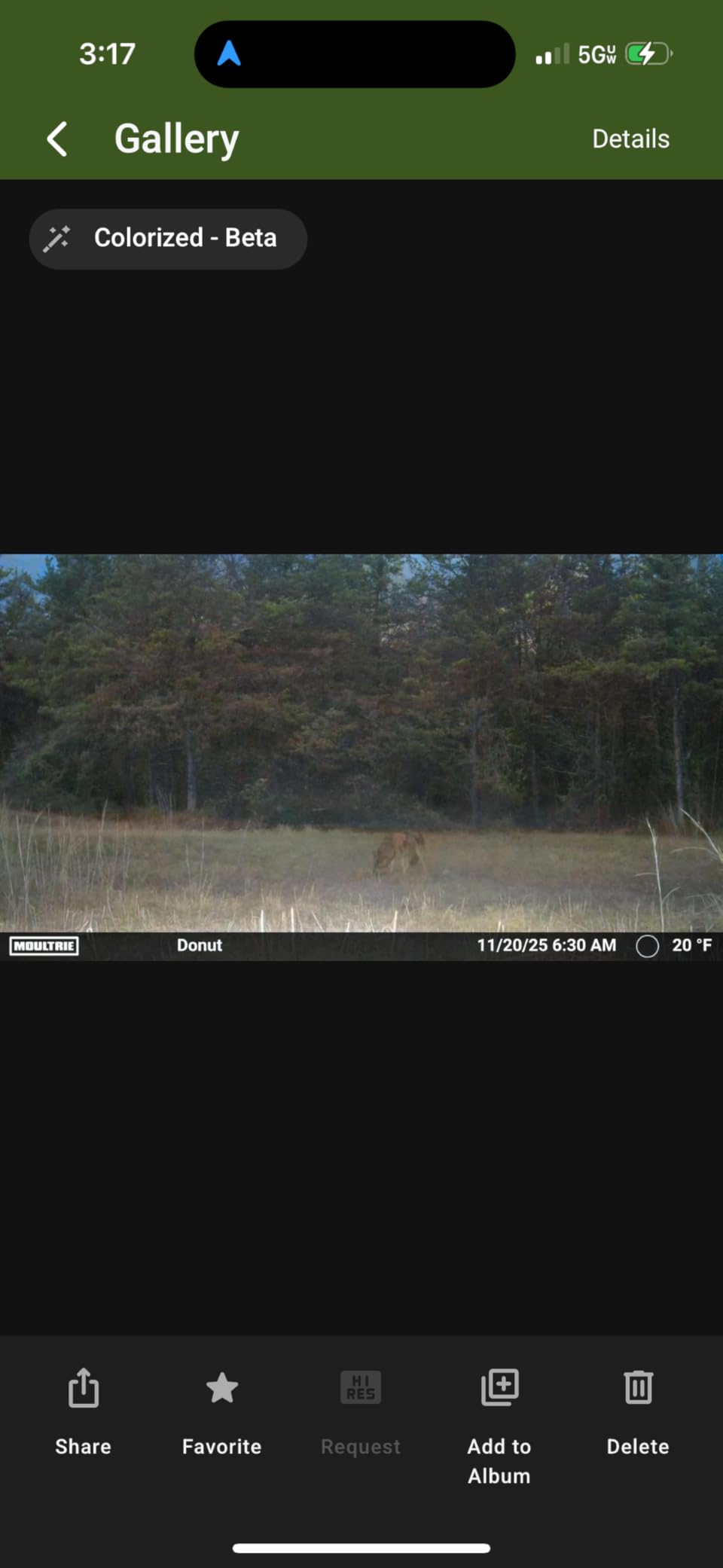
Image output is 36MP stills with 1080p video that carries audio, shot through a fixed 50-degree lens with a 100-foot detection range and a low-glow infrared flash. That flash type is the quiet hero here. Low-glow means the black housing does not throw a visible red bloom across the yard, so a camera mounted near a driveway does not announce itself to anyone driving in at night.
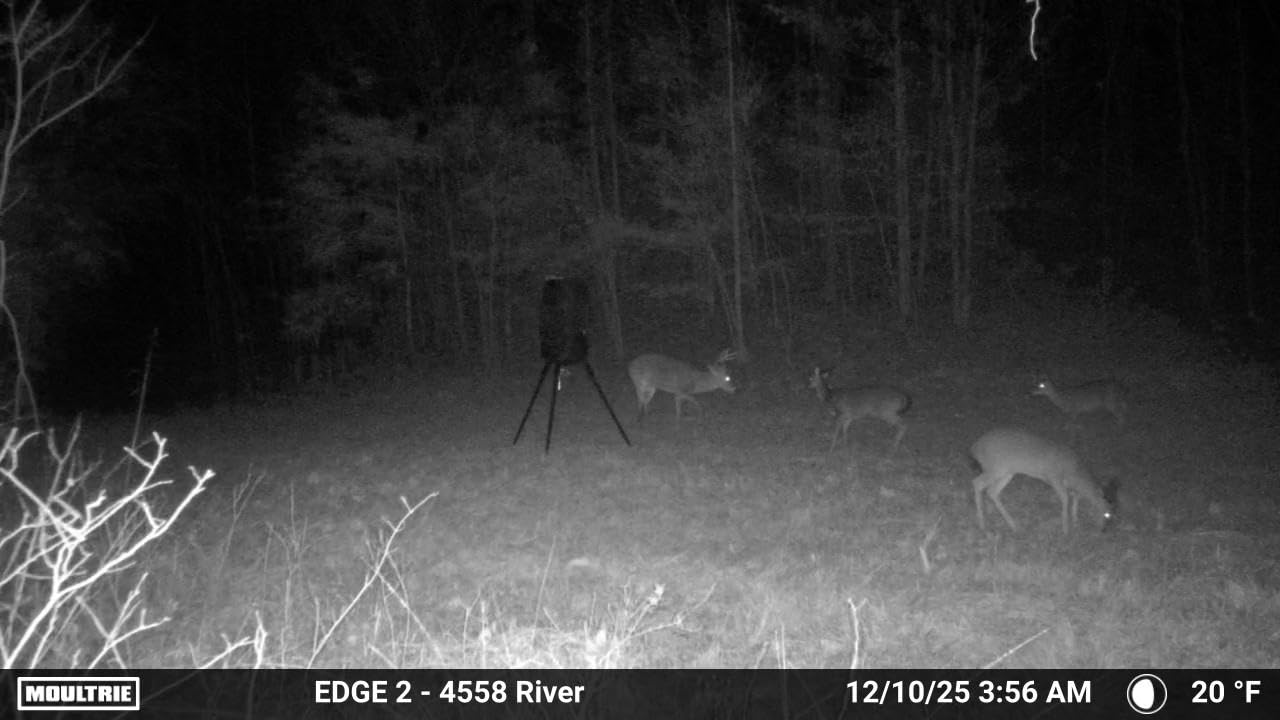
Storage is 8GB built-in plus unlimited cloud backup, so there is no SD card to fill, corrupt or have stolen. The tradeoff is that cloud viewing depends on the Moultrie Mobile app, and the app is where the value of this camera concentrates: activity charting, Game Plan pattern analysis and interactive property maps turn a pile of photos into a timeline you can actually read. For a hunting lease or a property where you want to know when activity shifted, that is worth more than another ten megapixels.
Physical details are unflashy and correct. The body is 4.2 by 3.6 by 5.5 inches, weighs 1.1 pounds, seals to IP65 and carries a two-year manufacturer warranty with tree-mount installation. It ships as a two-count package with two battery trays, two bodies and two straps, which means you can put one on the cabin and one on the barn in a single order instead of shipping twice.
Where the Moultrie Edge 2 earns its spot
This is the camera for a property with two or three monitoring points and no reliable power. Owners who want photo evidence rather than hunting stills get a timestamped, geolocated record delivered straight to the app within minutes of a trigger, and the multi-carrier behavior means a spot with mixed signal still connects. The 36MP sensor also holds up when you are trying to read a face or a license plate at 20 feet rather than identifying a species at 80.
For anyone who wants alerts in a hurry, the low-glow flash plus near-instant multi-carrier upload is the combination that gets you from motion to phone call quickly enough to matter.
Where it will frustrate you
The 50-degree viewing angle is the clear limitation. If your subject is a driveway, a gate or an equipment pad rather than a trail, you will be aiming very precisely or you will be missing movement at the edges of frame. Pair it with a second camera for a wide area rather than trying to cover it with one.
There is no integrated solar. The Edge 2 runs on battery power, so remote deployments need a separately sold solar power pack, Power Mag or Battery Box, or a planned visit to swap cells. And no cellular transmission happens without an active data plan, so budget for that before the camera goes on the tree.
2. TACTACAM Reveal X 3.0 – Best Value With Long Battery Endurance
TACTACAM Reveal X 3.0 Cellular Trail Camera, Night Vision, Waterproof
6+ months per charge
Auto-connect AT&T or Verizon
96-foot night color range
32GB onboard
IP66
Pros
- Integrated SIM auto-locks to the strongest of AT&T or Verizon signal
- Up to 6+ months of battery life per charge
- Built-in GPS locates the camera in the app
- 32GB onboard storage with no SD card
- Live and transmitting in under 10 minutes for most users
Cons
- 1080p video trails newer 2K cellular cameras
- Paid data plan required after any trial period
- Fixed 60-degree lens with no pan or tilt
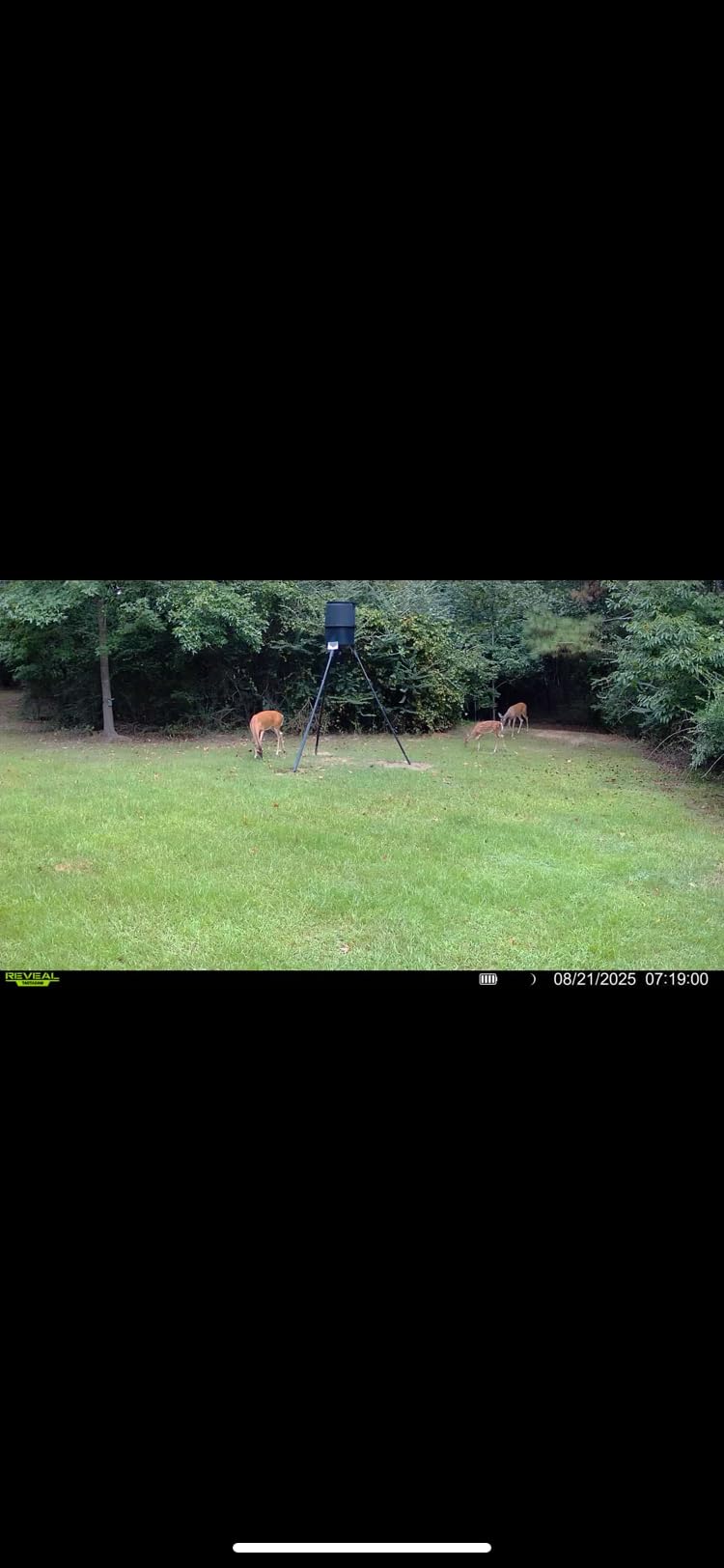
The single most important specification for remote land is how long the camera survives between visits, and on that measure the Reveal X 3.0 is the most interesting camera in this group. Reviewers consistently report six or more months of operation on a single charge in independent testing. On an off-grid parcel where the nearest drive is a gravel road, that turns a quarterly maintenance loop into a semiannual one.
Connectivity is handled by an integrated SIM that auto-locks to whichever of AT&T or Verizon is stronger at the mount point, with no manual carrier selection and no SIM swapping. Combined with the built-in GPS, that means you can drop a camera on a piece of land you rarely visit, let it report its own coordinates, and stop worrying about whether you bought into the right network.
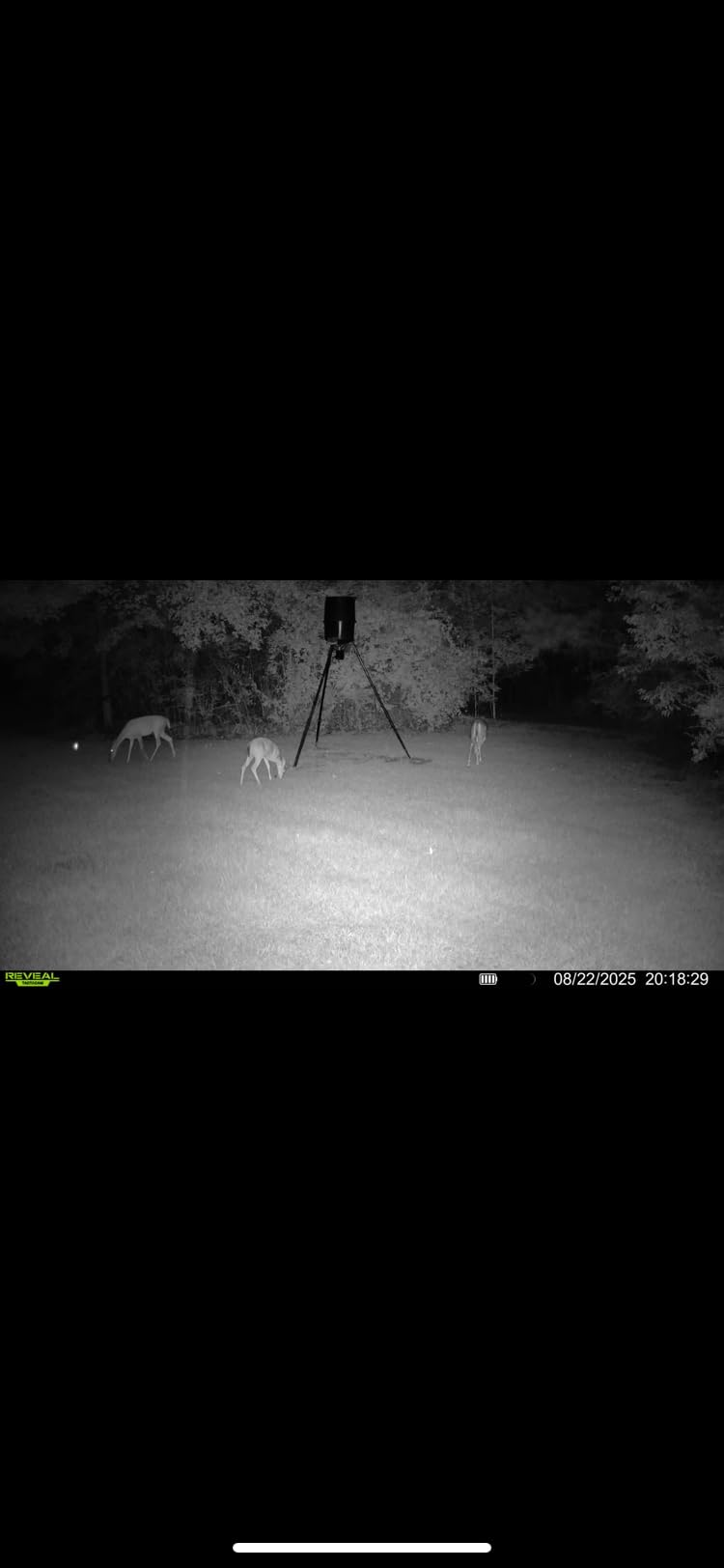
The Reveal X 3.0 is also the fastest camera here to deploy. The antenna and the pre-activated SIM arrive pre-installed, and most buyers report a transmitting camera in under ten minutes from unboxing. For anyone setting up a second or third point on a property, that speed matters more than a spec line, because the real cost of monitoring more ground is your time in the field.
Capture performance is a sub-half-second trigger with a three-shot burst mode, 4K photo capture and 1080p video, with a 60-degree field of view and a night color mode reaching 96 feet. Storage is 32GB onboard, which means photos transfer directly to your phone and there is no card to lose. The housing seals to IP66 and measures 3.75 by 4 by 11.9 inches.
Where the Reveal X 3.0 earns its spot
This is the camera to buy when you are covering land you genuinely cannot reach often, or when the nearest tower is far enough that every megawatt of transmission efficiency matters. Six months of battery life plus multi-carrier auto-connection is the most reliable combination here for a cabin or a hunting lease checked once a season.
It is also the easiest recommendation to make to someone buying their first cellular camera. Setup speed, onboard storage and auto-carrier selection remove the three parts of the process that generate support tickets.
Where it will frustrate you
1080p video is the honest weakness. Several newer cellular cameras in this roundup record 2K or 1440p, and if you need to identify a person by detail at range, this is not the sharpest file you will get. Photos are 4K, so stills remain strong.
Transmission stops without a paid plan once any included trial period ends, and the fixed 60-degree lens gives you no pan or tilt. Aiming matters on this camera more than on a PTZ model, so pick your mounting point carefully and use the walk-test before you walk away.
3. VOOPEAK TC32 – Best Budget Pan and Tilt Camera
4G LTE Trail Camera, 360° View Cellular Security Camera with Live Streaming
355-degree pan and 100-degree tilt
2.5K live streaming
7800mAh with 4W solar
IP68 rated
Pros
- 355-degree pan and 100-degree tilt for near-total coverage
- 2.5K live streaming with remote zoom over 4G LTE
- 7800mAh battery rated up to 12 months on a charge
- 0.1-second PIR motion response
- IP68 waterproof for minus 40 to 140 degrees
Cons
- SD card not included for local storage
- Six IR LEDs give roughly 65-foot night vision
- Cloud playback requires a paid subscription
The TC32 changes the shape of a remote-property installation because it pans and tilts. A 355-degree horizontal sweep and 100-degree vertical tilt mean one mounted on a pole or a corner post can cover an entire yard, a barn face or a gravel drive without the aiming precision a fixed-lens camera demands. On a property where you cannot easily adjust the angle later, that flexibility is worth a lot.
Power is handled entirely on board. A 7800mAh battery paired with a 4W integrated solar panel is rated for up to 12 months on a charge given sufficient sunlight, so this is a camera you can mount once. The 0.1-second PIR response is the fastest trigger in this group, which matters when the subject is a person walking through rather than an animal ambling past.
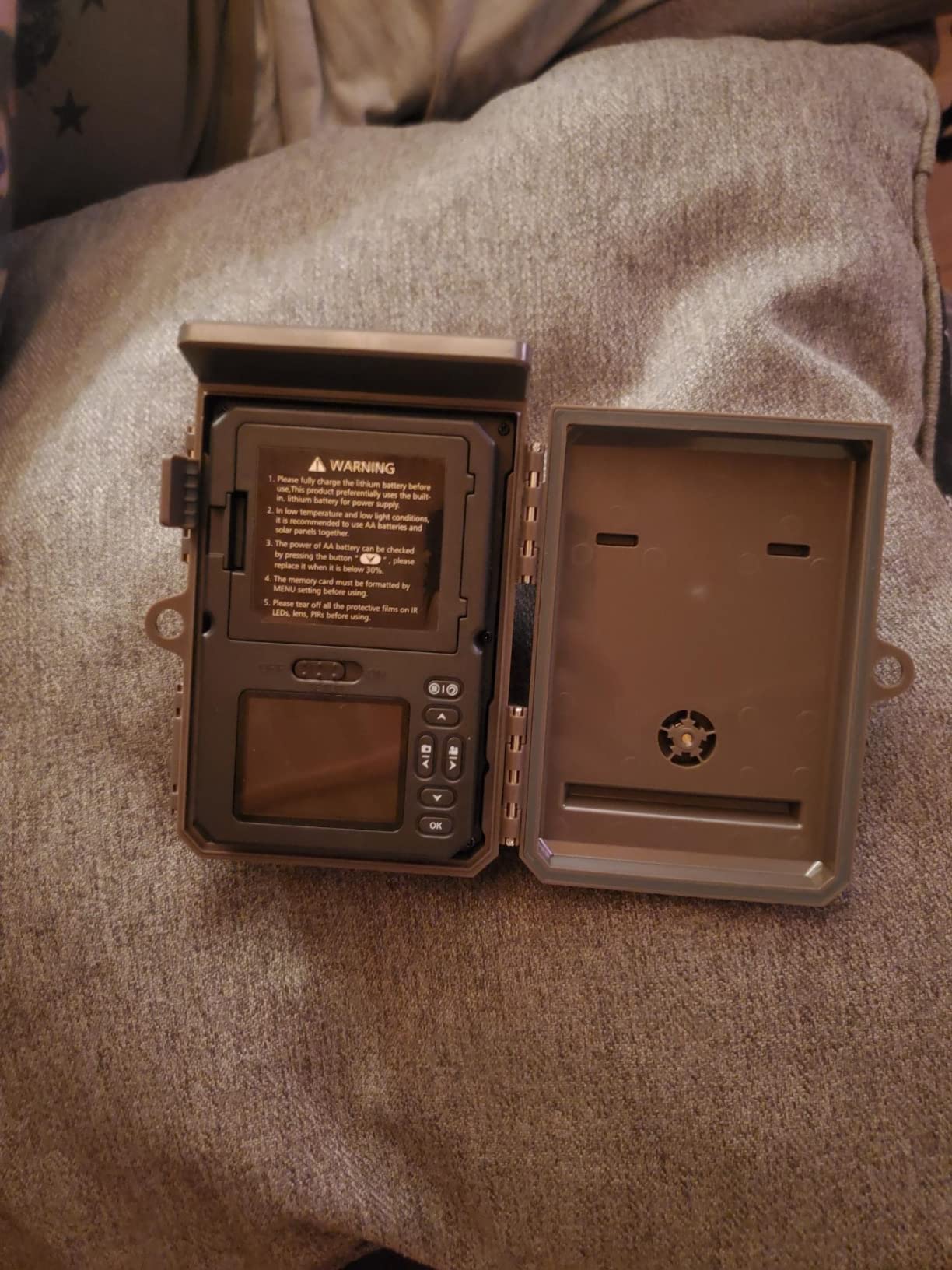
The camera ships with a pre-installed 4G SIM carrying 100MB of free data and automatically connects to the strongest of Verizon, AT&T or T-Mobile. Three-carrier support is unusual at this end of the market and it directly helps in dead zones where one network is absent but another is marginal. Video is 2.5K with remote zoom and live streaming over LTE, and the housing is IP68 rated for operation from minus 40 to 140 degrees Fahrenheit.
Dimensions are 10 by 2 by 2.7 inches, a slim pole-friendly profile, and it mounts tree-style with a charging cable in the box. For an owner who wants a wide view of a building or driveway with one device and no aiming ritual, that is the entire pitch.

Where the TC32 earns its spot
Coverage is the reason. One camera replacing the two or three fixed-lens units most people end up buying means fewer subscriptions, fewer mounts and fewer failure points spread across a property. Combined with integrated solar, it is the lowest-effort wide-area camera here.
It is also the model we would suggest for someone watching equipment, a boat, an ATV or a beehive row where you need the whole area in frame rather than one corridor.
Where it will frustrate you
Night range is the compromise. Six infrared LEDs give roughly 65 feet of night vision, which is short next to the 100-foot class cameras in this list. A wide open range or a long driveway will outrun it after dark.
Local storage is not included, so you need to supply an SD card for on-device recording, and cloud playback is a paid subscription. If your plan does not include enough data allowance, reviewing footage on the cloud may not be free.
4. VOOPEAK TC32B-2P – Best Two-Pack for Covering a Whole Property
VOOPEAK Trail Camera, 4G LTE Cellular Game Cameras with 360° Live Streaming
Two-camera pack
2.5K live streaming
7800mAh with 4W solar
IP68 rated
Pros
- 355-degree pan and 100-degree tilt with no blind spots
- 2.5K live streaming with remote zoom and playback
- 7800mAh battery and 4W solar panel rated up to 12 months
- 0.1-second PIR trigger speed
- Strap and screw-in mounting options included
Cons
- Cloud subscription and SD card are both needed for video review
- Night vision of roughly 65 feet is modest for open range
- Some false alerts at default sensitivity
- Glare when direct sun hits the lens
This is the same camera platform as the TC32 sold as a two-pack, and for a property with acreage, two points of view in a single order is the sensible way to buy. Most owners of a rural parcel do not end up with one camera. They end up with a camera at the cabin, one at the barn and one at the equipment shed, and getting there in two deployments instead of three saves a real afternoon.
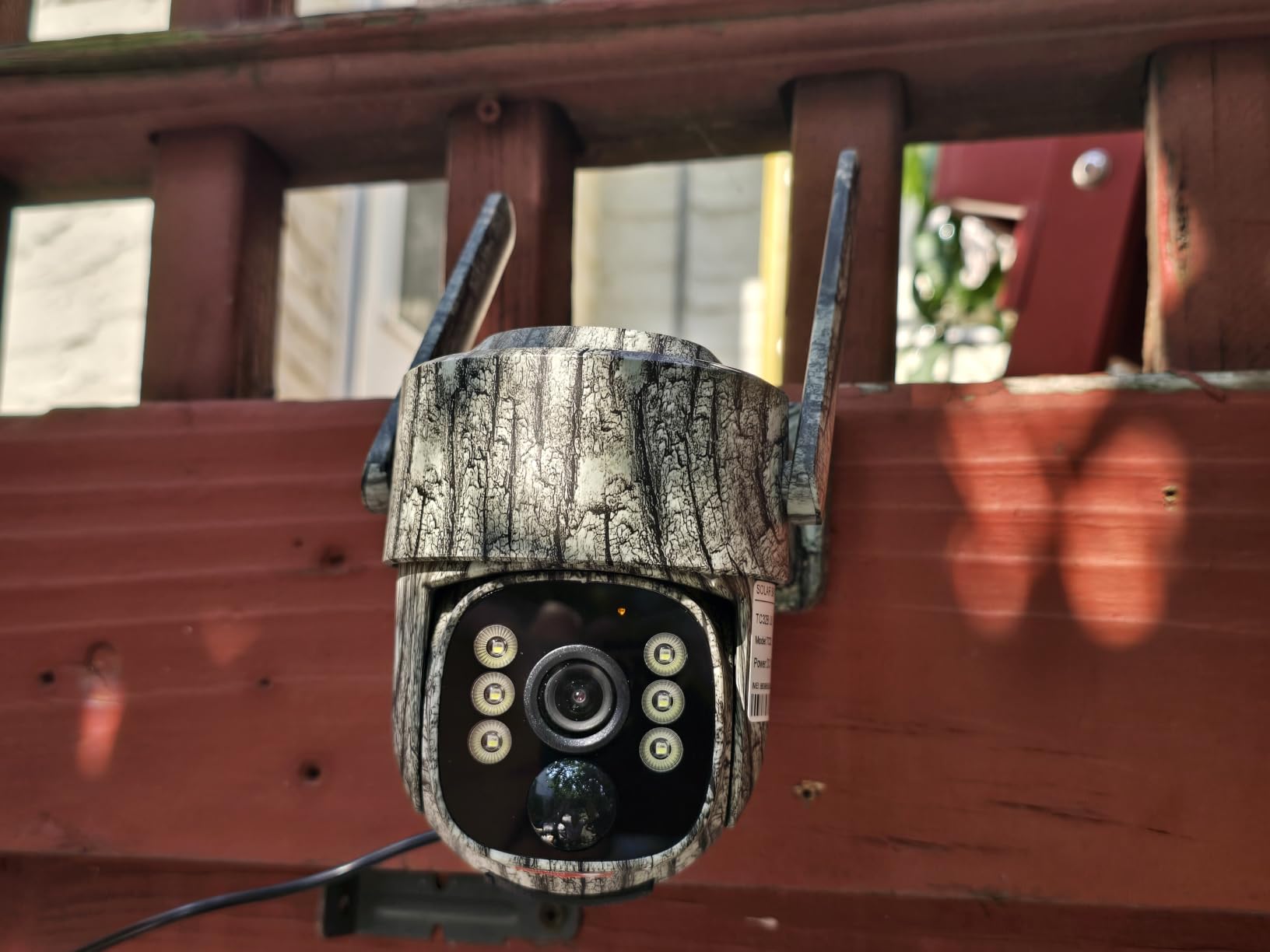
The coverage math is the appeal. Each unit sweeps 355 degrees horizontally and 100 degrees vertically, so two units placed on opposite sides of a property can watch each other’s blind spot, which is a genuine security benefit rather than a marketing one. Live streaming at 2.5K with remote zoom and playback means you can check both angles from your phone before deciding whether to drive out.
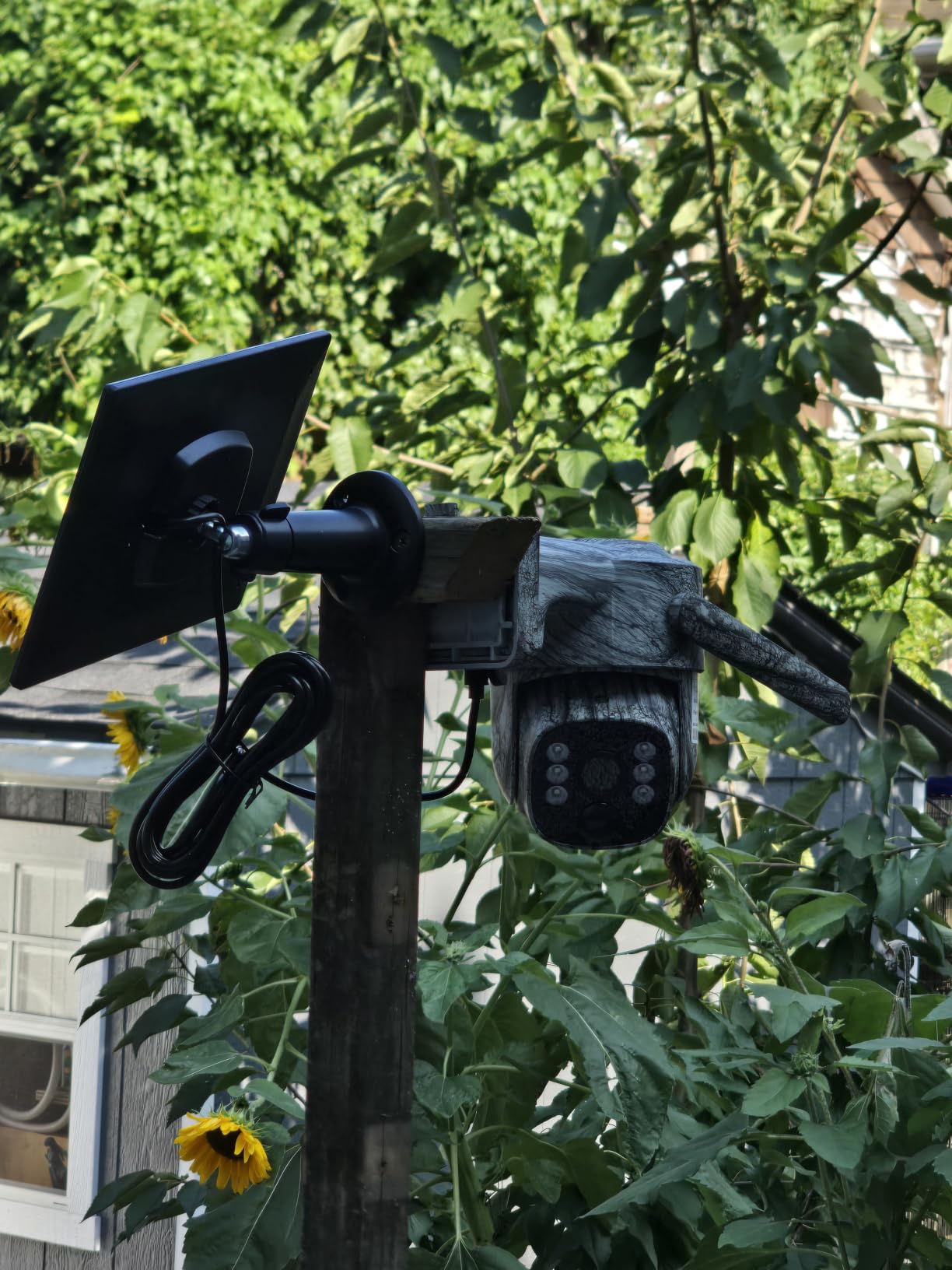
Power is self-sustaining, with a 7800mAh battery and a 4W solar panel rated for up to 12 months of operation, and the housing is IP68 for minus 40 to 140 degrees. The 0.1-second PIR trigger is among the fastest here, and reviewers report the app reaching live operation within minutes of setup. Mounting options include a strap and screw-in hardware, which lets you put one unit on a tree and one on a post.
Storage follows the same pattern as the single unit: local SD up to 256GB, not included, or an optional cloud subscription, with a built-in 4G SIM that includes 100MB of data and auto-connects across Verizon, AT&T and T-Mobile.
Where the two-pack earns its spot
Owners monitoring more than one structure on the same parcel are the clear audience. Two PTZ units with integrated solar and no aiming dependency cover a whole property from two mount points, and both draw on the same three-carrier support when signal is marginal.
It is also the pick for a beehive yard, a tree nursery or any spread-out site where the subjects are in more than one place and one narrow lens would miss most of them.
Where it will frustrate you
Reviewing video requires both a cloud subscription or an SD card, so budget for storage on top of the plan. Night vision of roughly 65 feet is modest if your subjects move through open ground at distance.
False alerts are the most common complaint when sensitivity sits at its default, and the wide lens can pick up pets, windblown vegetation and passing traffic. A few reviewers also note a slightly fish-eye look and glare when direct sunlight hits the lens, so orient away from the sun rather than toward it.
5. VOOPEAK TC39 – Best Dual-Lens 360 Degree Coverage
Cellular Trail Camera, 4G LTE Dual Lens Game Camera 360° Live Streaming
Dual-lens 360 degree coverage
2K with color night LED
5W solar plus 7800mAh
Two-way talk
Pros
- Dual-lens design covers 360 degrees with split or stitched display modes
- Built-in LED can be motion-triggered
- always on or off
- 5W high-efficiency solar panel with 7800mAh battery rated up to 12 months
- Two-way talk and remote access through the CloudEye 365 app
- PIR sensing with AI detection to reduce false alarms
Cons
- Data plans are per camera so multiple units multiply the cost
- 4.1 rating reflects more app and reliability friction than rivals
- Night illumination from the built-in LED can be conspicuous
The TC39 solves a problem the other PTZ models here do not quite solve: it watches an area while also being hard to walk around. Its dual-lens design covers 360 degrees, and you can choose whether the app displays the two lenses side by side or stitches them into a single wide view. For a property where a camera needs to see a door and the lane leading to it, that flexibility is the difference between a usable mount angle and a compromise.
It is the only camera in this roundup with a controllable visible light. The built-in LED can be set motion-triggered, always on or off, which gives you a genuine color night vision option when you need to identify a person and near-invisible darkness when you do not want a light giving away the camera’s position. That is a real advantage for property security rather than scouting.
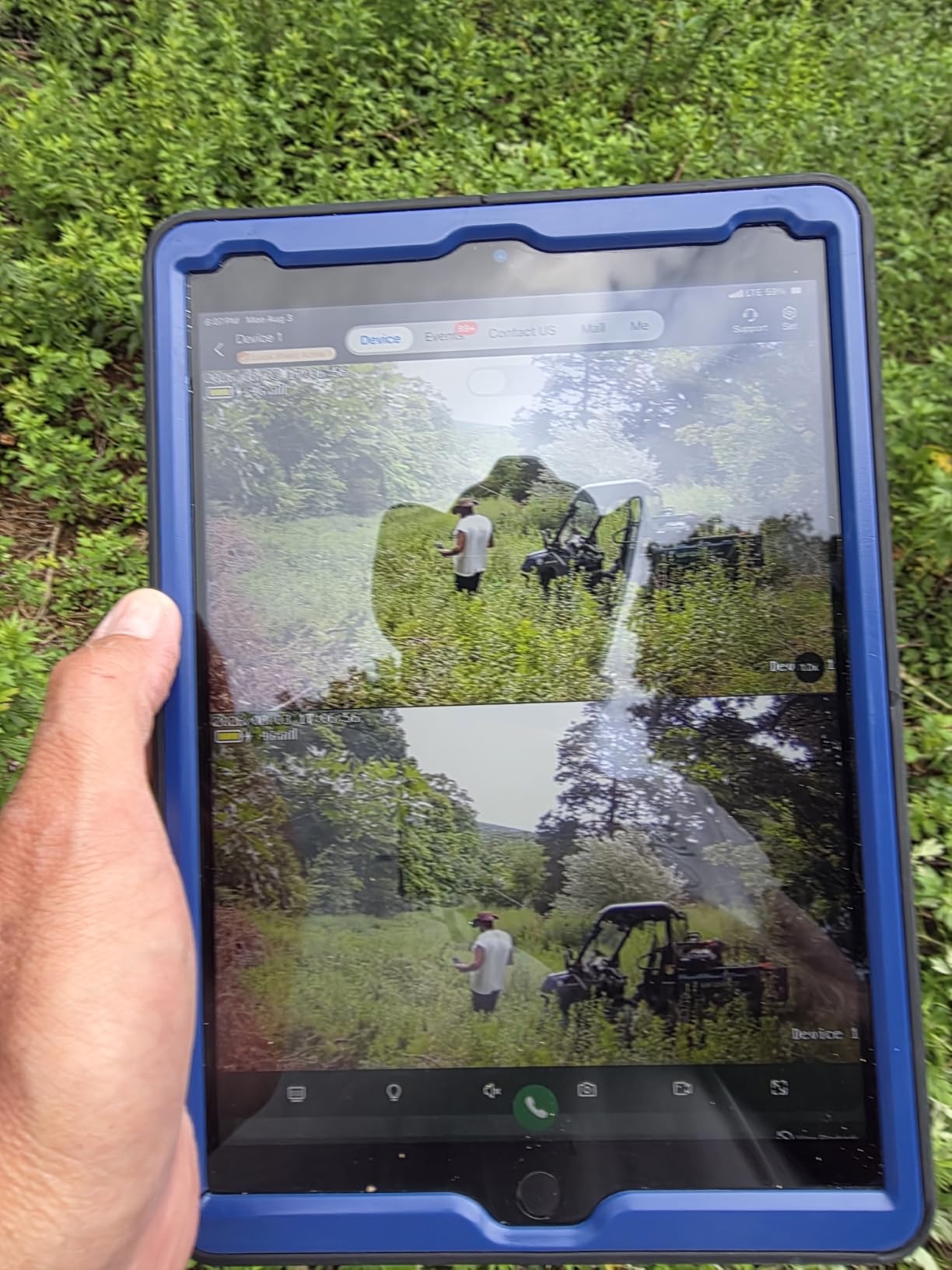
Power is a 5W high-efficiency solar panel with a 7800mAh battery, rated for up to 12 months, and the screw-in installation type suits a post or a wall bracket more than a tree. Video is 2K with auto focus, and the app, CloudEye 365, supports two-way audio so you can speak to someone at the property. PIR sensing with AI detection is meant to cut false alarms, and the housing is IP68 rated from minus 40 to 140 degrees.
Storage is local SD up to 256GB plus optional cloud, and the built-in 4G SIM is compatible with Verizon, AT&T and T-Mobile with 100MB included for the first week.
Where the TC39 earns its spot
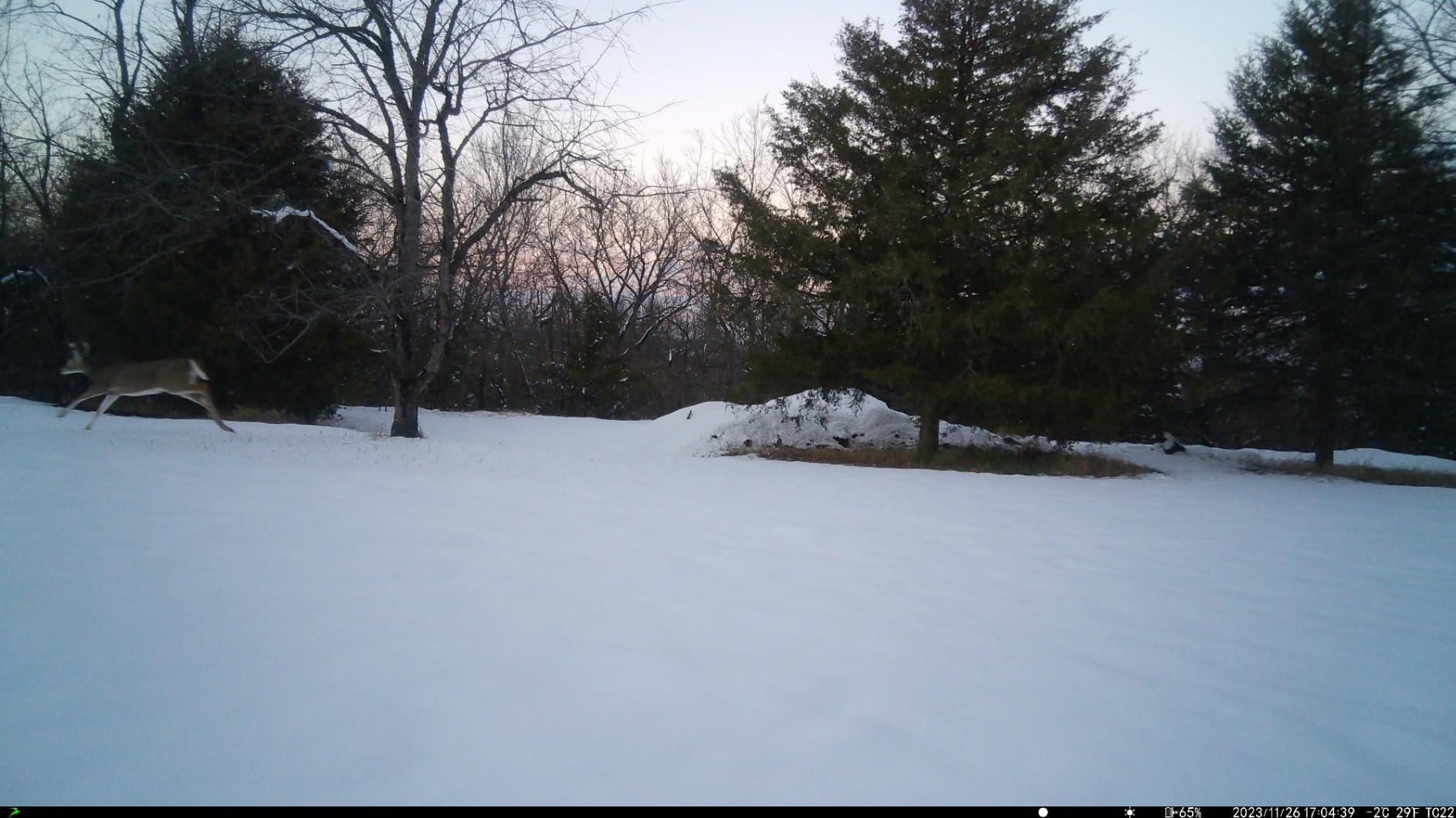
It suits a property with a fixed structure to watch, a cabin wall, a shop door or a barn end where a screw-in mount makes more sense than a strap on a tree. The color night mode plus two-way talk is the combination we would pick for talking down a person who is on your property at three in the morning.
The stitched 360 view is also useful for an open yard where a single wide lens would distort the edges of the frame.
Where it will frustrate you
Data plans are charged per camera, so running several units multiplies the recurring cost. That is the biggest structural cost of a PTZ approach and it applies across the VOOPEAK, Lemnoi and Oculview models in this list.
Its 4.1 rating reflects more reported app and reliability friction than the fixed-lens Moultrie and TACTACAM models, so expect occasional setup or detection hiccups. And the built-in LED, useful as it is, can be conspicuous in an open area where anyone can see the light source.
6. Oculview – Best Low-Glow Stealth With a Long Reach
Oculview 4G LTE Cellular Trail Cameras, 360° 2K Live Streaming Game Camera, SIM Card Included, Low-Glow Night Vision, Solar Powered, Instant Alerts, Two Storage Ways, No WiFi Needed for Hunting&Trail
850nm low-glow infrared to 100 feet
336-degree pan and 90-degree tilt
6W solar panel
0.2 second trigger
Pros
- 2K live streaming with no WiFi plus pan
- tilt and 4x digital zoom
- 850nm low-glow infrared reaching up to 100 feet with spotlight enabled
- 336-degree pan and 90-degree tilt for open land
- 6W adjustable solar panel
- 0.2 second trigger with a 120-degree PIR detection angle
Cons
- Paid data subscription required after the trial
- SD card and cloud storage are both extra costs
- UBox app account and login problems reported by some users
- Setup instructions leave settings for the user to work out
The case for this camera is reach combined with concealment. The 850nm low-glow infrared system reaches up to 100 feet when the built-in spotlight is enabled, which puts it in the same distance class as the 100-foot fixed-lens cameras here while also giving you a pan-and-tilt body. Low-glow means the illumination is close to invisible from the camera position, so a camera on a pole in a dark yard does not read as an obvious piece of hardware.
That combination suits a property where you are monitoring a gate or a long approach. The 336-degree pan and 90-degree tilt cover a broad arc, and the 4x digital zoom lets you inspect a vehicle or a person without walking closer. The 0.2-second trigger with a 120-degree PIR detection angle is quick enough to catch a person moving rather than a slow animal.
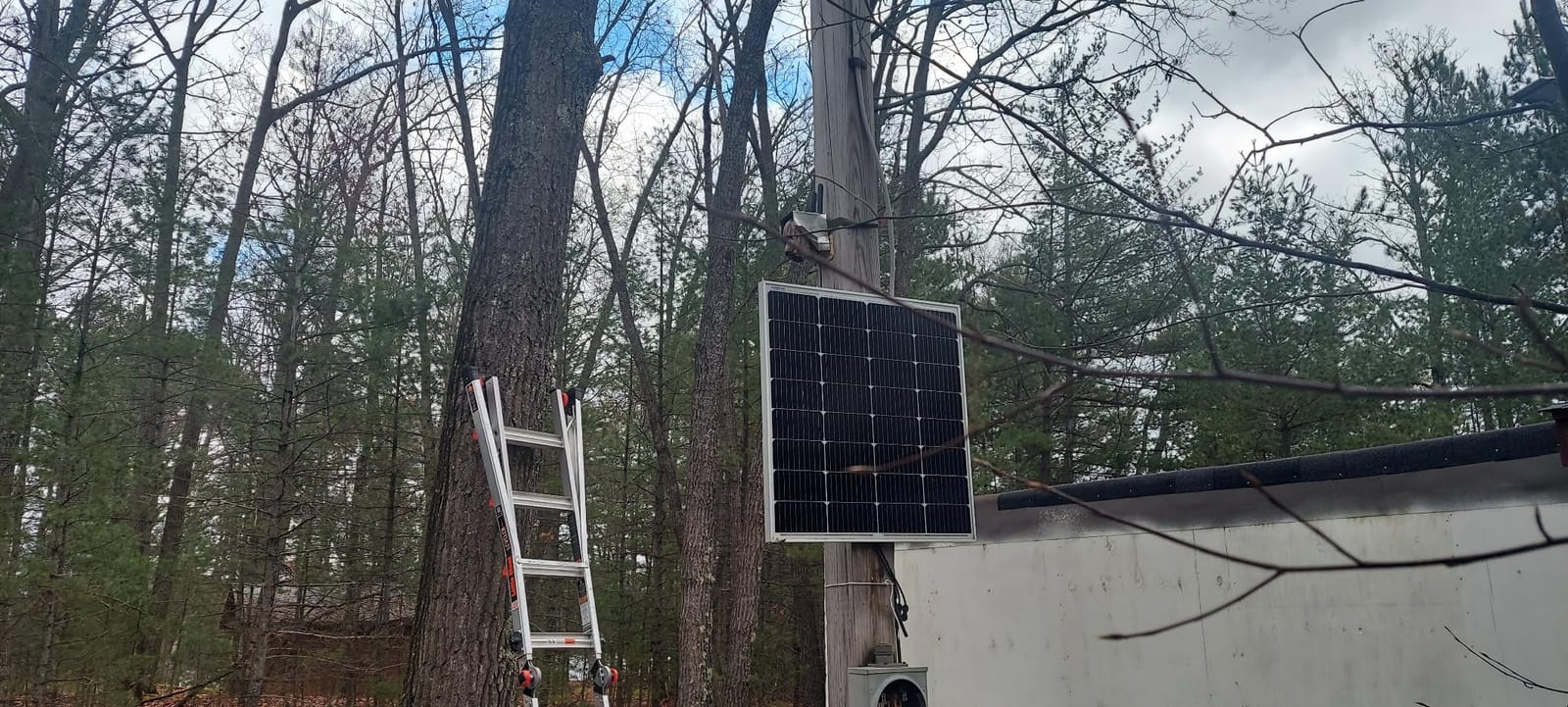
Power comes from a 6W adjustable solar panel, and reviewers report that roughly ten minutes of direct sun per day runs the camera through a full day, which is a workable requirement for most of the year. The panel being adjustable matters on uneven ground where a fixed mount points at the sky instead of the sun. The housing is IP65 and the camera is sold as a two-count pack, so you get two mount points from one order.
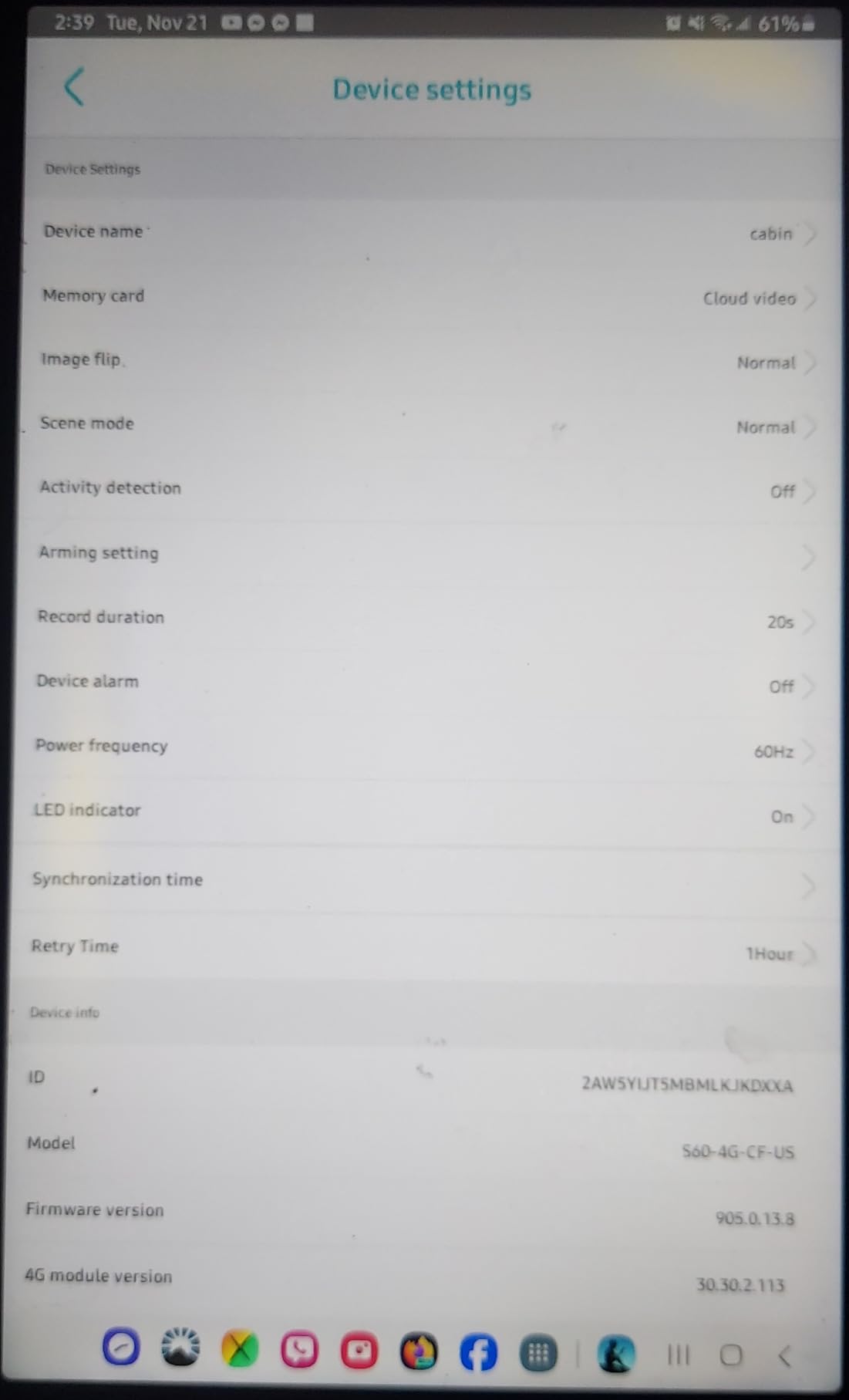
Connectivity is a built-in 4G LTE SIM that works across Verizon, AT&T and T-Mobile, with a free seven-day data trial before the plan tiers begin. Video is 2K with live streaming to the phone and no WiFi requirement. Storage is a memory card up to 128GB, not included, or a cloud subscription.
Where the Oculview earns its spot
Owners who need long night reach without a visible flash, particularly on open land where a trespasser would spot a glowing housing, are the audience here. It also works on three major carriers, and several reviewers report this camera still connecting at a cell tower a substantial distance away.
Customer service responsiveness comes up positively in owner feedback for this brand, which matters when a camera is 60 miles from the nearest road.
Where it will frustrate you
Storage is the add-on. Both the memory card and the cloud option are extra costs, and the card is not included, so budget for one before you deploy.
Some users report UBox app account and login problems that temporarily cut remote access, which is a bad failure mode for a security tool. Setup documentation also leaves several settings for you to work out, so budget time to configure sensitivity and detection zones before you trust the footage.
7. Moultrie Edge 2 Pro – Best Image Quality and Framing Tools
Moultrie Edge 2 Pro Cellular Trail Camera – 40MP, No-Glow Flash
40MP stills and 1440p video
100-foot no-glow flash
Live Aim app preview
AI species filtering
Pros
- 40MP stills and 1440p video with audio
- highest resolution in this roundup
- AI identification filters out bucks/does/turkey/humans and other classes
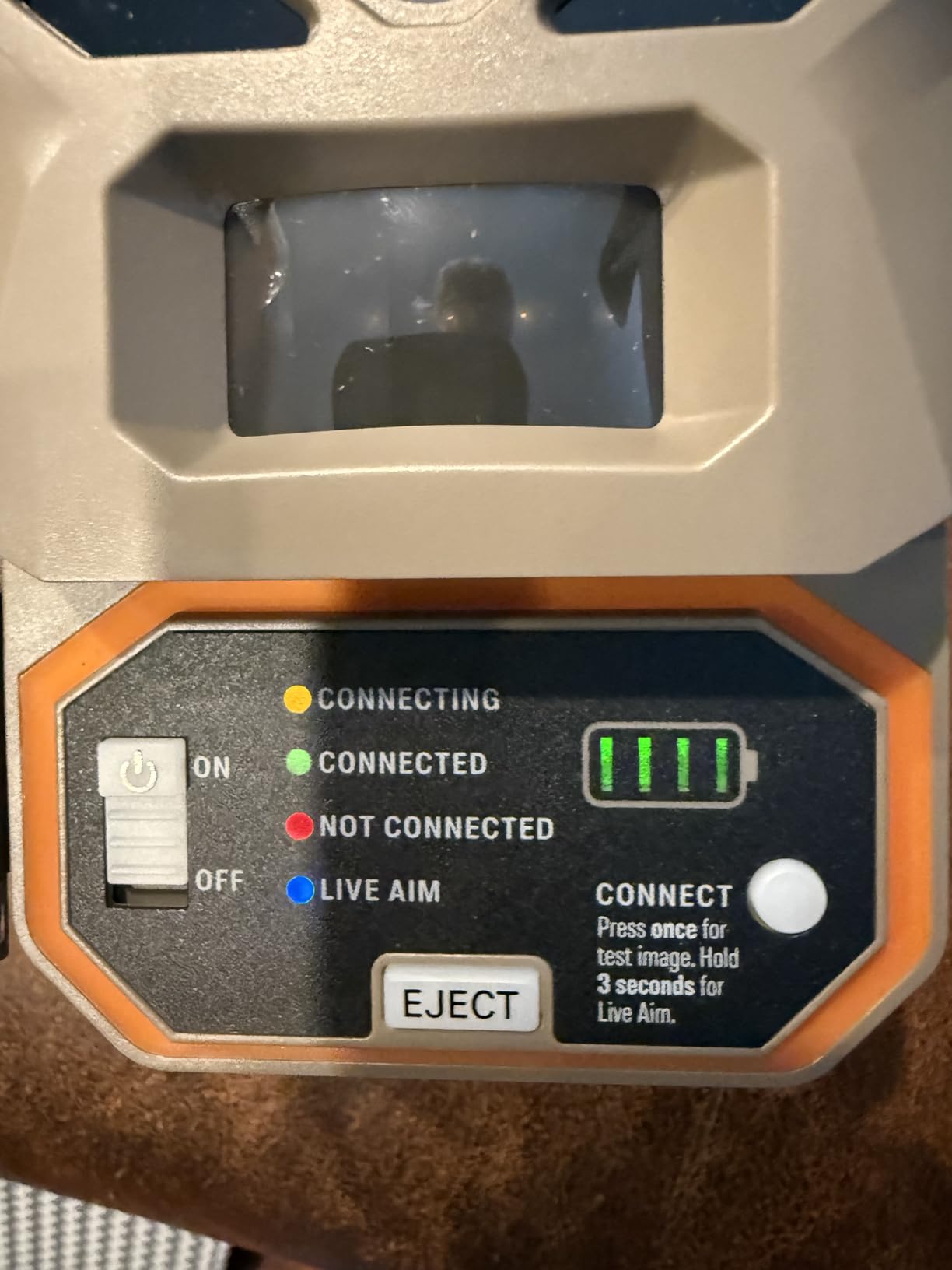
- Live Aim preview aligns the field of view through the app
- Remote on-demand trigger for scouting
- 100-foot detection range with no-glow infrared flash
Cons
- Subscription required for the cellular plan and cloud backup
- Occasional motion-detection misses reported by users
- Fixed 50-degree viewing angle with no integrated solar
- Picture quality described as adequate rather than exceptional by some
The Edge 2 Pro is the camera to buy if you intend to actually look at the footage rather than just confirm that something moved. It captures 40MP stills and 1440p video with audio, which is the highest resolution in this group, and pairs it with a no-glow infrared flash reaching 100 feet. The no-glow array produces no visible red bloom, which is the most discreet night illumination available here.
The feature that changes the installation is Live Aim. Through the Moultrie Mobile app you can see the camera’s field of view from your phone before you leave home, which means you can mount it, walk back to the truck, frame the shot remotely and confirm it covers the approach you care about. On a fixed 50-degree lens where aim is everything, that saves an entire round trip. A remote on-demand trigger does the same thing in the other direction, letting you pull a photo on command when you are scouting.
AI species identification filters out bucks, does, turkey, humans and other classes, and that is the single most useful feature for a property owner. Human classification means wind, branches and non-target animals stop filling your phone with alerts, so the notifications that do arrive are worth reading. Multi-mode capture covers timelapse, multi-shot and motion-triggered recording.
Auto Connect provides nationwide 4G LTE across major carriers with no SIM swapping, storage is 8GB built-in plus unlimited cloud backup, and the warranty runs two years from activation with compatibility for Moultrie solar and battery accessories. The body weighs 14.4 ounces and measures 4.2 by 3.6 by 5.5 inches.
Where the Edge 2 Pro earns its spot
This is the pick when identification quality is the whole point. A 40MP still at 100 feet on a no-glow flash gives you the best chance of reading a face, a jacket logo or a vehicle detail from evidence photos, and the 1440p video files are the only ones here above 2K.
Live Aim plus on-demand trigger also make it the easiest camera to place correctly on land you can only visit a few times a year, since you can verify framing remotely instead of guessing.
Where it will frustrate you
Users do report occasional motion-detection misses, and a few describe picture quality as adequate rather than exceptional once you account for the headline resolution. Battery power only, with no integrated solar, means a solar accessory is a separate purchase for a remote mount.
The 50-degree field of view remains the constraint. It covers a corridor well and a wide yard badly, so this is a camera for a trail, a gate or a path rather than an open property.
8. Lemnoi S76 – Best Fully Self-Powered Setup
Lemnoi 4G LTE Cellular Trail Cameras, Built in SIM Card, No WiFi Needed Trail Cam with 2K 360° Live View, Solar Security Camera with Color Night Vision, Motion Activated Game Camera
2K lens with 130-degree view
355-degree pan and 100-degree tilt
6W solar panel
32GB card included
Pros
- 2K lens with a 130-degree wide view plus 355-degree pan and 100-degree tilt
- White-light color night vision mode alongside infrared
- 6W solar panel with a built-in rechargeable battery
- Two-way audio for talking back to visitors or deterring intruders
- 32GB card included and pre-installed SIM with 7 days of unlimited data
Cons
- No WiFi support and no auto-tracking on the PTZ
- Subscription required after the 7-day data period
- Some reviewers report inconsistent quality between units
- Wall mount listed only and limited tree mounting hardware
The Lemnoi S76 is the most complete package in this roundup, because the storage is already in the box. A 32GB card ships with the camera, which removes the single most common extra purchase owners forget to make after buying a solar cellular camera with cloud-only storage. Add the pre-installed SIM with seven days of unlimited data and a 6W solar panel in the box, and the only things you still need are a mount and a plan.
The optics combine a 2K lens with a 130-degree wide view, 355 degrees of horizontal pan and 100 degrees of vertical rotation. That is an unusually wide baseline, and it means one unit on a wall or a post can cover a large open area. Two-way audio lets you speak to whoever is there, which some owners use as an audible deterrent rather than waiting to call someone.
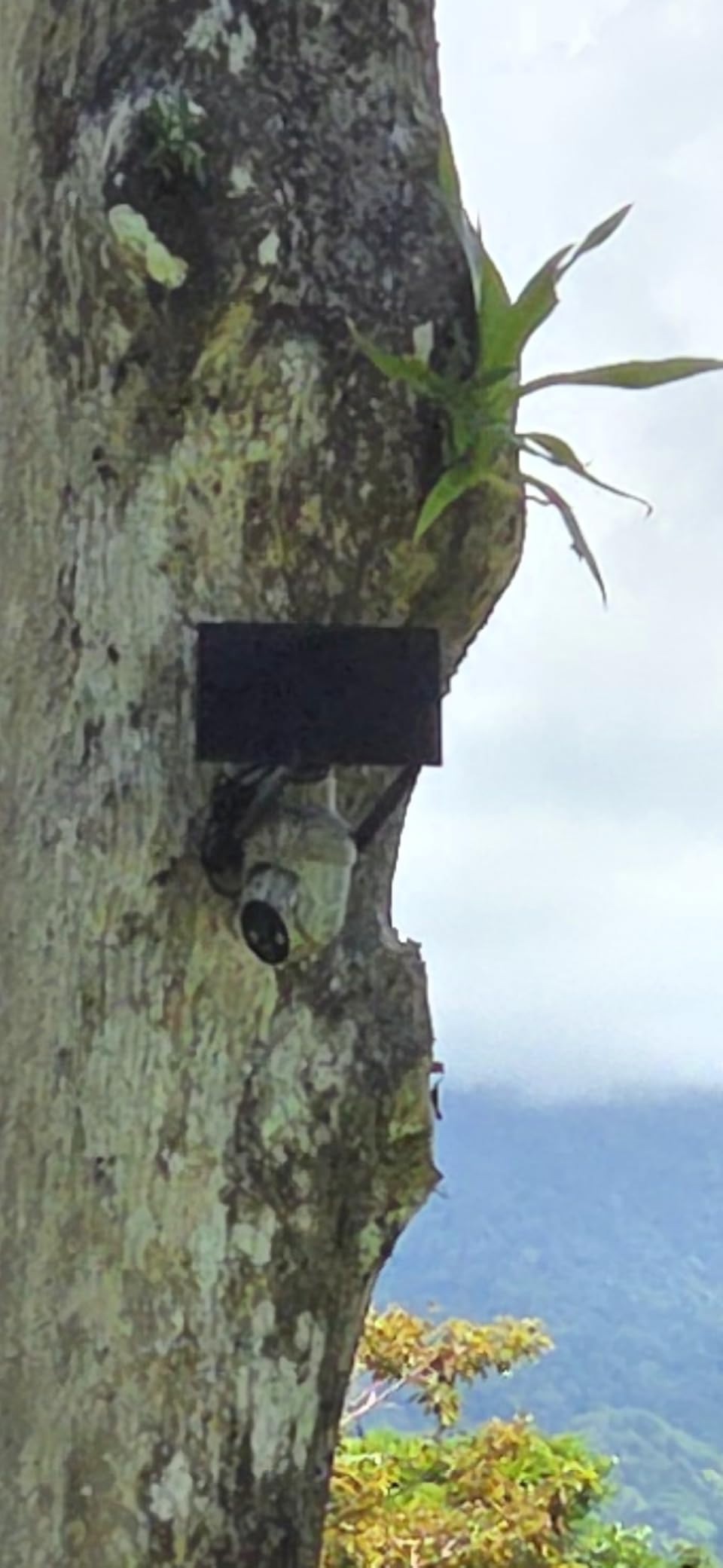
Night handling offers both modes. The white-light color night vision gives you a color image when you need to identify someone, and the infrared mode keeps the camera dark when you do not. That choice matters more for property monitoring than most buyers expect, since a camera that lights up a doorway every thirty seconds tells a visitor exactly where the camera is.
Video is 1080p in MP4, the housing is IP66, and the app supports live view, playback, downloads and sharing for up to three users, which is useful if family members need access without a second account. Customizable detection zones and schedules with instant phone alerts keep false alerts down. Card capacity extends to 128GB. Connectivity is 4G only, with no WiFi support.
Where the Lemnoi S76 earns its spot
It fits owners who want zero accessory shopping. Camera, solar panel, memory card, strap and pre-installed SIM all arrive together, so the failure mode of a camera that never transmits because nobody bought a card is removed before it starts.
Sharing access for up to three users also makes it the easiest to run as a household or a small partnership, where more than one person needs to see alerts.
Where it will frustrate you
The 4.1 rating reflects real inconsistency. Some reviewers report clear daytime video, simple installation and good battery retention, while a handful describe performance as underwhelming for what they paid. Owner feedback also flags unit-to-unit variation, which is worth weighing if you are buying a security tool rather than a toy.
There is no auto-tracking on the pan-and-tilt head, so a subject that leaves the frame stays out of it until the camera returns to its preset. Mounting is listed as wall mount, and while a strap is included, tree mounting hardware is limited.
9. SPYPOINT Flex-M – Best Free Data Plan and Carrier Switching
SPYPOINT Flex-M and SD Card Pack – Cellular Trail Cameras |Best Value in Hunting Accessories |No WiFi Needed & GPS-Enabled |Hunting Night Vision | IP65 Waterproof |28MP Photos, 720p Videos
Free 100 photo monthly plan
Dual pre-activated SIMs
28MP photos
GPS-enabled mapping
Pros
- Free plan transmits up to 100 photos per month with no commitment
- Dual pre-activated SIMs provide automatic cross-carrier connection
- Includes a 32GB microSD card and a pre-installed antenna
- BUCK TRACKER AI species filtering with personalized maps and real-time weather
- IP65 waterproof for all-weather deployment
Cons
- 720p video is the lowest resolution here
- Very sensitive motion detection triggers constantly unless tuned
- Default settings consume the free allowance quickly
- Each camera needs its own data plan
The Flex-M is the answer for anyone whose biggest objection to cellular trail cameras is the recurring subscription. Its free plan transmits up to 100 photos per month with no commitment at all, and users on this plan treat a second, paid tier as an occasional upgrade rather than a standing cost. For a backup camera, a seasonal deer camp or a low-traffic gate, that may be all you need. Owners on hunting forums repeatedly single out this free allowance as the best value arrangement in the category.
Carrier handling is the other strength. Two pre-activated SIMs give automatic cross-carrier connection with no manual selection, so the camera registers on whichever network is available rather than one carrier chosen in advance. Users report reliable signal even in dense bottomland where a phone struggles, and a USB antenna with a gasket arrives pre-installed, which is a sensible detail for a camera that must hold a connection through rain.
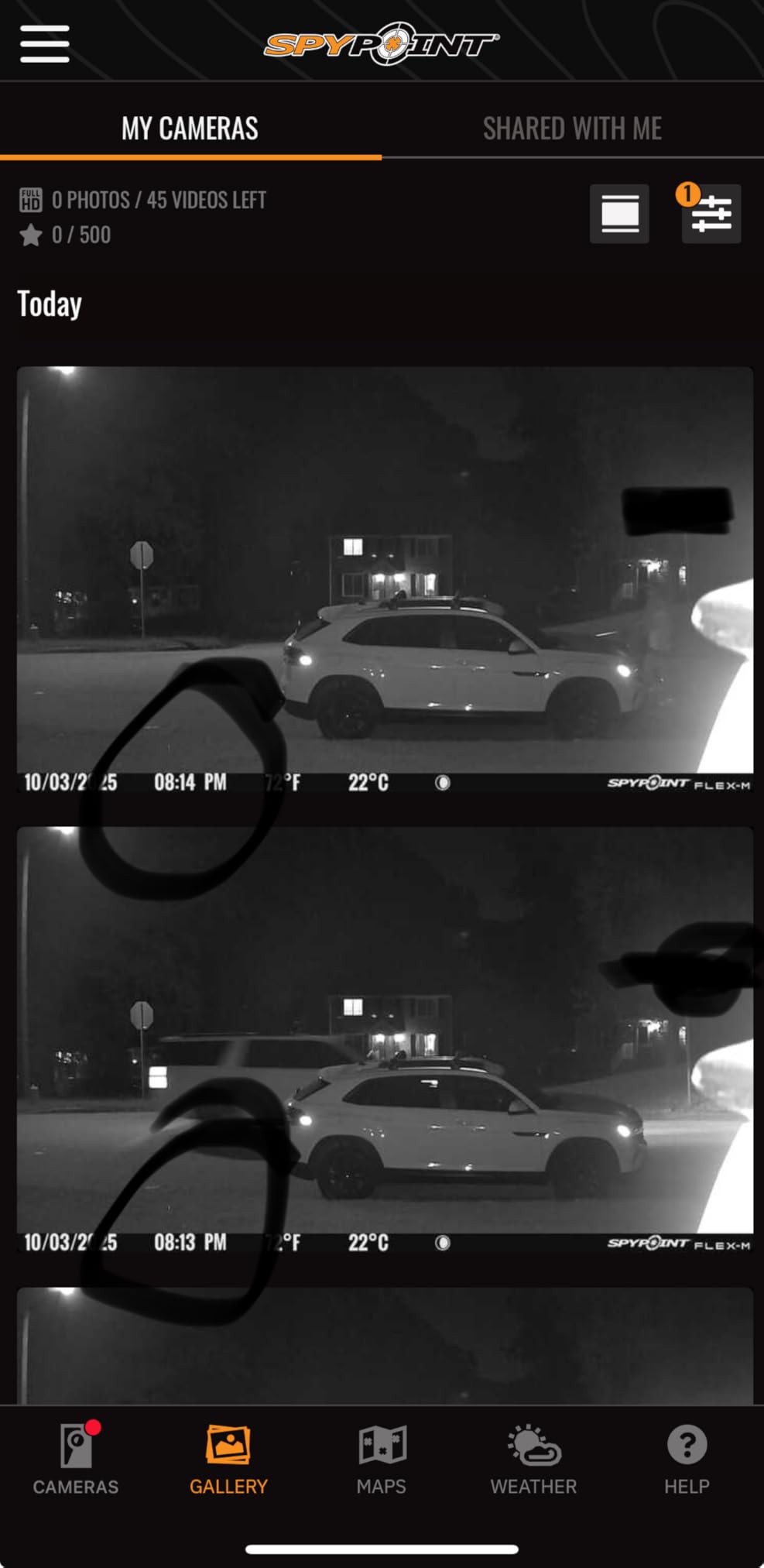
Feature-wise you get 28MP photos, GPS-enabled location mapping of camera positions, BUCK TRACKER AI species filtering, real-time weather in the app, and capture modes covering photo, video, time-lapse and time-lapse plus with a Constant Capture option. A 32GB microSD card is included, and the housing is IP65 at 3.15 by 3.93 by 5.1 inches.
Video is 720p, which is the lowest resolution of any camera here, and that is the honest tradeoff. MPEG-4 recording and 720p files are perfectly adequate for confirming presence and identifying species at close range, and clearly insufficient for reading a face or plate at distance.

Where the Flex-M earns its spot
It suits a first-time cellular camera owner, a second or third camera on a property, or anyone monitoring something intermittent where 100 photos a month is a realistic ceiling. Dual-SIM auto-connect also makes it a good choice for land where carrier coverage is inconsistent between the tower that serves your house and the tower that serves your field.
The included memory card and pre-installed antenna mean it works on the day you open the box, which matters for a self-install.
Where it will frustrate you
The motion detection is very sensitive by default and will trigger constantly on branches, grass and moving shadow unless you tune zones and sensitivity. Left at defaults, it will also burn through the free allowance quickly, which defeats the reason you bought it.
720p video caps what you can do with the footage, and some buyers report durability and strap-degradation issues across multiple units. Each camera also needs its own plan, so a four-camera property multiplies the cost even on a free tier.
10. MagicEagle H1 – Best Stealth Night Monitoring with Anti-Theft Alerts
MagicEagle® Cellular Trail Camera 4G Wild Game Cameras 13,000 mAh Battery Solar Panel 2K Audible Video No-Glow IR Night Vision IP66 Waterproof for Wildlife Deer Monitoring Home Security (Army Green)
940nm no-glow infrared to 90 feet
13000mAh battery with solar
A-GPS anti-theft alerts
2K video with audio
Pros
- SignalSync no-SIM cloud card technology auto-selects the strongest carrier segment
- 13000mAh battery supports up to 3 months of standby operation
- 940nm no-glow IR LEDs for invisible night illumination
- 0.3-second trigger speed with a 5MP lens
- Gravity sensor plus A-GPS anti-theft alerts and offline location tracking
Cons
- Free data plan limited to 100MB for 30 days
- 5MP still resolution is below the 36-40MP sensors on the Moultrie models
- Solar panel mounting hardware may need extra screws with the strap
This camera carries the highest rating in the group, with owner feedback that is close to uniformly positive on image clarity, species identification accuracy and battery life. What makes it interesting for remote properties is the anti-theft layer. A gravity sensor combined with A-GPS detection will report movement of the camera itself and support offline location tracking, which means a camera taken off a tree can tell you where it went. On land where a month-long round trip is the only realistic remedy, that is worth more than resolution.
Stealth is the other specialty. The 940nm no-glow infrared LEDs provide night illumination to 90 feet with no visible glow from the housing, and the 108-degree viewing angle is wide for a fixed-lens trail camera. Video is 2K with audible audio recording in MOV format, and the 0.3-second trigger with a 5MP lens is fast enough to catch a person walking through.
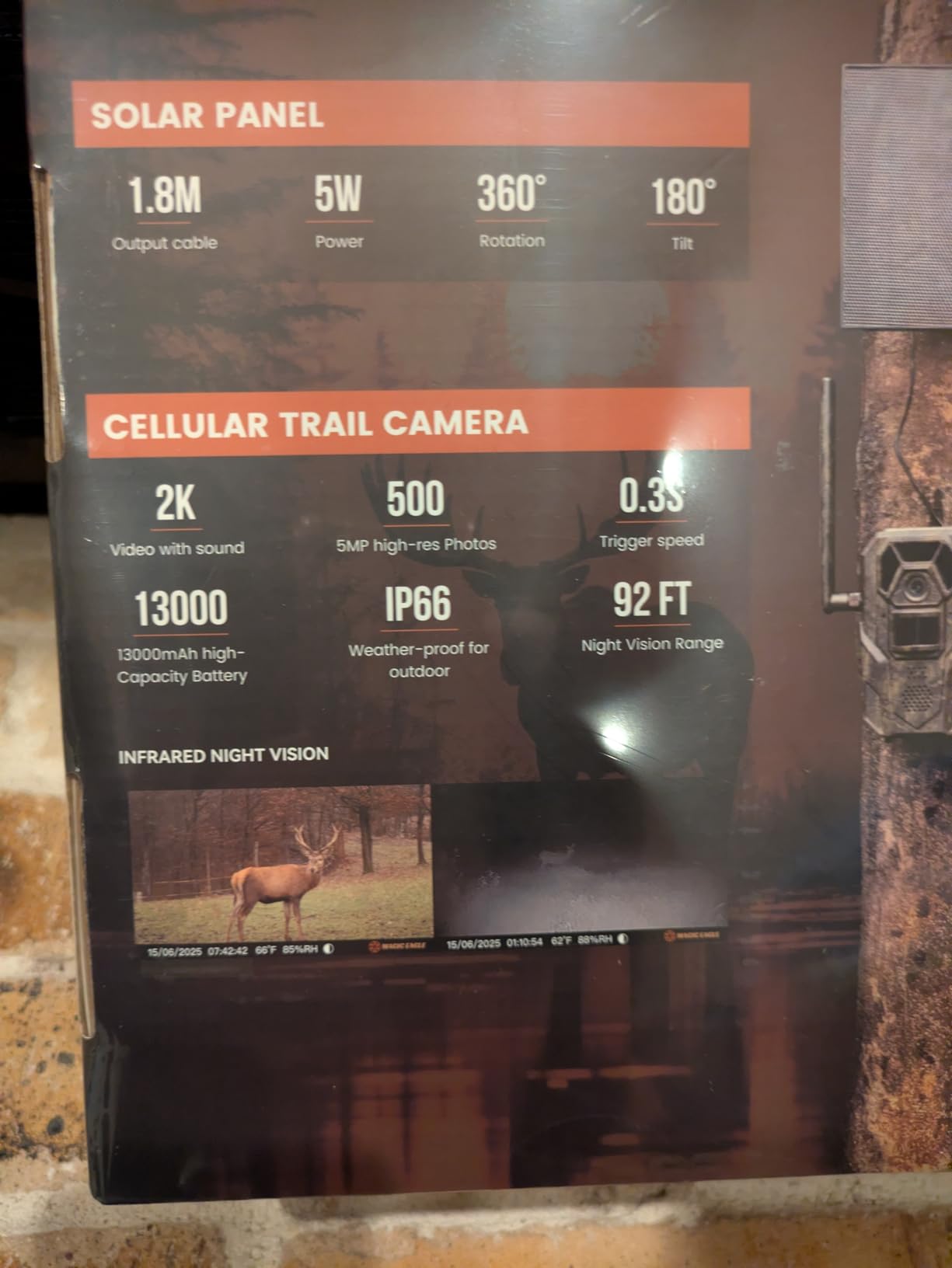
Power is the largest battery in this roundup at 13,000mAh, supporting up to 3 months of continuous standby, and a solar panel is included in the box along with a 32GB SD card and a mounting kit. The housing is IP66 rated from minus 20 to 50 degrees Celsius, the stated operating range, which is narrower in the cold than the minus 40 Fahrenheit rating the VOOPEAK models carry, so northern installations should check that range carefully.
Connectivity uses SignalSync no-SIM cloud card technology that automatically selects the strongest carrier network segment, with cloud AI species recognition and field data analysis on activity, temperature and humidity. The warranty is two years plus six months on registration. Local storage runs to 256GB.
Where the MagicEagle H1 earns its spot
It is the pick for a camera that is expensive to retrieve. The gravity sensor plus A-GPS tamper reporting addresses the reality that a stolen cellular trail camera is a two-month problem, and the 13,000mAh battery plus included solar means fewer visits to the site in the first place.
Owners who value clear night imagery over sheer still resolution also rate it highly, since the no-glow array and the 2K video with audio are a good match for identifying activity near a structure after dark.
Where it will frustrate you
The 5MP still sensor sits well below the 36MP and 40MP sensors on the Moultrie models, so a still pulled from this camera will not hold as much detail if you need to crop in on a face. That is a deliberate trade for the battery and stealth package.
The free data plan is limited to 100MB, roughly 200 photos or 16 short videos, for 30 days, so a long-term deployment needs a paid tier. The solar panel mount also sometimes needs extra screws when combined with the strap, and the manual requires careful reading before setup.
Signal Strength Is the Real Decision on Remote Land
Signal, not resolution, decides whether a cellular trail camera works at all on your property. A camera that captures a beautiful 40MP photo and then fails to upload it has produced nothing for you, and the failure mode is silent because the camera itself does not know the difference. This is the top question in every hunting and off-grid cabin forum we reviewed, and it is the one most roundups skip.
Bars on a phone are a poor proxy. What matters is which carrier has usable bandwidth at the exact mount height and location, and that can differ dramatically between a hillside and a valley ten miles away. The cameras here handle this in one of three ways. Multi-carrier auto-selection, which the Moultrie, TACTACAM and MagicEagle models use, registers on whichever network is strongest and is the most forgiving approach for mixed-coverage land.
Three-carrier support, which the VOOPEAK, Oculview and Lemnoi models offer across Verizon, AT&T and T-Mobile, is even broader, because it can find a workable network where the others find nothing. Dual pre-activated SIMs, as on the SPYPOINT Flex-M, deliver the same cross-carrier behavior in a different package. Whichever you pick, the antenna matters: models with a pre-installed external antenna and gasket, like the Flex-M, have a better chance of holding a marginal signal than a sealed body with an internal antenna.
Position is the cheapest signal improvement available. Raising a camera a few feet on a pole, moving it away from a metal roof or a tree trunk, or rotating the mount toward a known tower can move a camera from marginal to reliable for no cost at all.
How to Check Cell Coverage Before You Buy
Standing at a property boundary with a phone is the most reliable coverage test there is, and it takes an afternoon. This is the sequence we recommend before ordering any camera.
Walk the actual mount points, not the house. Coverage at a cabin tells you very little about coverage at a treeline a quarter mile away. Stand where the camera will be mounted, at the height it will be mounted, and note which carrier shows the strongest reading at each spot.
Test all three major networks rather than the one your phone plan uses. A Verizon-only reading is not evidence that AT&T or T-Mobile is bad at that spot, and the cameras with multi-carrier or three-carrier support can use whichever network actually works. This is the step that changes the buying decision most often.
Watch what happens when you make a call or load a video map in that spot, not just what the bar icon says. A strong reading that cannot hold a data session is a signal that will stall a photo upload for minutes. Owners on forums describe exactly this pattern, where a camera eventually transmits but arrives long after the event is over, and that is a serious problem when you are relying on the footage to justify a police report.
Check at night as well as midday. Some coverage behaves differently after dark, and a camera that works at noon is what you need at two in the morning.
Do a walk-test with any camera before you walk away. Trigger the camera by hand and confirm the photo reaches your phone, then confirm a second and a third. A camera that sends one photo reliably and then stalls on the third is telling you something important about the site.
Choosing a Data Plan Without Surprises
The plan is where cellular trail cameras surprise people, and the surprise is almost always in the same place. Plans are structured around a photo allowance, and once you exceed it you either pay for overage or lose transmission until the next cycle. Because most cameras default to high sensitivity, a badly configured camera can exhaust a monthly allowance in a weekend of windblown branches.
The free tier option is real and worth considering. The SPYPOINT Flex-M transmits up to 100 photos per month with no commitment, which is genuinely usable for a low-traffic point or a backup camera. Most other brands use a trial period, often seven or 30 days, before the paid tiers begin, and the MagicEagle free allowance is capped at 100MB, roughly 200 photos.
Unlimited tiers exist across most of these ecosystems, and they are usually the simplest choice for a camera pointed at a driveway or a gate where you do not control how often someone walks past. Before committing, check two things. Whether HD photos and video count differently from basic transfers, because several brands transmit low-resolution thumbnails on base tiers and charge more for full-resolution files. And whether a multi-camera discount applies, because on a property with several units the per-camera cost is what determines whether the setup makes sense.
Count the cameras, not the cameras you want. Every unit needs its own plan on nearly every brand here, so a four-camera property is four plans. Our rule of thumb after working through these ecosystems is to pay for unlimited on any camera covering a structure and to use a capped tier on cameras covering open ground.
When a Trail Camera Is the Wrong Tool
The most common mistake we see is using a trail camera as the sole security system on a property where a real intrusion matters. Trail cameras are motion-triggered and dormant between events, which means the gap between the trigger and the alert is the gap where a decision gets made. A dedicated cellular security camera with continuous recording and two-way audio is a different category of tool, and for some properties it is the correct one.
There is a real argument against repurposed trail cams for critical surveillance. The logic is straightforward: a camera that wakes on movement can be walked past, and a camera with a narrow fixed lens can be avoided entirely by anyone who knows it is there. If your concern is a person who knows you own cameras, a fixed-lens dormant device is the wrong architecture.
Where trail cameras win is coverage per dollar and months per charge. A security camera that needs a power supply and a data plan for every unit adds up fast across acreage, and the six-month battery life of the Reveal X 3.0 or the 12-month solar rating on the VOOPEAK models is a genuine advantage when you cannot easily get to the site.
The practical answer for most remote properties is a hybrid. Use a pan-and-tilt cellular trail camera with a wide field of view where you need to know if anyone is present, and pair it with a dedicated unit on the structure itself if the loss matters enough to warrant it. We put dedicated units through their paces in our review of the best wireless outdoor security cameras if you want to compare that side of the market.
How We Chose These Cameras
We built this list around the constraints of remote-property monitoring rather than around popularity rankings. Every camera here sends over 4G LTE with no WiFi requirement, so that filter removed nothing meaningful and confirmed the category is mature.
From there we weighted four things. Carrier behavior came first, because multi-carrier or three-carrier auto-selection is the difference between working and not working at a marginal site. Power design came second, since a camera that dies in month two has told you nothing. Night flash type mattered for anyone monitoring after dark, with no-glow and low-glow rated above standard infrared because a visible glow defeats the purpose of a hidden camera. Resolution came last, which is deliberately the opposite of how most marketing ranks these.
Review volume carried real weight in the final ranking. A 4.8 rating from a few hundred owners tells you less than a 4.3 from more than a thousand, and the products that earned awards here are the ones with both a solid rating and a long record of owners reporting them working in year two and three.
We also weighed forum consensus heavily, particularly on support responsiveness, app stability and how cameras perform at one bar. A camera that needs a monthly drive to retrieve is not solving the problem remote land creates.
What to Look for in a Cellular Trail Camera
Multi-carrier or three-carrier support is the first checkbox. Look for auto-connect language that means the camera chooses the strongest network at the mount point rather than a carrier you selected in advance. This single feature matters more on remote land than any image specification.
Integrated solar with a large battery is the second. Every owner we talked to, and nearly every forum thread we read, ends with the same advice: add solar. The four cameras with solar built in here, the VOOPEAK TC32, TC32B-2P, TC39, the Oculview and the Lemnoi S76, are rated for up to 12 months per charge, and the MagicEagle pairs a 13,000mAh battery with an included panel. If you must add solar separately, factor the mounting time and hardware into the install.
Night flash type is the third. No-glow and low-glow arrays produce no visible red bloom and keep the camera from announcing itself, while standard infrared is visible from a distance at close range. Detection range matters alongside it, and note that some PTZ cameras have shorter night reach, around 65 feet, than fixed-lens cameras at 100 feet.
Trigger speed and detection range are the fourth pair. Sub-second trigger keeps a walking person in frame rather than catching them at the edge, and 100 feet of detection covers a real approach. Be careful with sensitivity defaults on any camera; the models with the most sensitive triggers, including the SPYPOINT Flex-M, produce the most false alerts until you configure zones.
Live view versus instant send is the fifth decision. Instant send alerts you to an event with a delivered photo. Live view lets you open a stream and look yourself, which is what you want for a driveway or a gate where you need to decide whether to drive out. Several cameras here support both, but the PTZ models with pan and tilt make live view genuinely useful because you can aim the camera while watching.
Anti-theft features are the sixth. A cable lock, a lock box and GPS tamper reporting matter more when retrieval is expensive. The MagicEagle combines a gravity sensor with A-GPS tracking, and the TACTACAM Reveal X 3.0 and Moultrie models report their position in the app so you can confirm a camera is where you put it.
Storage and plan structure are the seventh. Built-in memory, as on the Moultrie and TACTACAM models, removes a failure point but ties you to the brand cloud. Included SD cards, as on the Lemnoi and the SPYPOINT Flex-M, keep local recording independent. Either way, confirm how many photos your plan allowance covers before you set sensitivity.
Weatherproofing is the eighth. IP65 handles rain and dust, and IP66 or IP68 add sealed ports and wider temperature tolerance. The MagicEagle’s stated minus 20 to 50 degree Celsius range is narrower in cold than the minus 40 Fahrenheit ratings on the VOOPEAK models, which matters in northern winters.
App quality is the ninth and the thing owners most often regret. You will open this app every time something moves, so a stable app that does not require deleting and reinstalling it matters. The Moultrie Mobile and REVEAL apps are the most mature of the group; the UBox-based apps on the Oculview and Lemnoi carry reported login friction.
Support and warranty are the tenth. A two-year warranty is standard on the Moultrie models, and the MagicEagle adds six months on registration. When a camera is 60 miles from a dealer, warranty length and a support contact who answers are practical features, not fine print.
Frequently Asked Questions
Can you view trail cameras remotely?
Yes. Every camera in this roundup sends photos and video to a companion app on your phone over 4G LTE with no WiFi connection required. Several also support live streaming, which lets you open a real-time view and pan or tilt the camera yourself rather than waiting for an alert.
Do cellular trail cameras work without cell service?
No, and this is the one hard limitation. A cellular camera needs usable mobile data coverage at the mount point to transmit anything. It will still capture photos to internal memory or an SD card on site, but you will only see them when you physically retrieve the camera. Checking carrier coverage at the exact mount point before buying is the most important step in the whole process.
What is the best trail camera without a subscription?
The SPYPOINT Flex-M is the clearest answer, because its free plan transmits up to 100 photos per month with no commitment. That is enough for a low-traffic gate, a backup camera or a seasonal camp. Most other brands offer a trial period of seven to 30 days before paid tiers begin, and the MagicEagle free allowance caps at 100MB, which is roughly 200 photos.
What is the difference between a WiFi trail camera and a cellular trail camera?
A WiFi trail camera needs a router or hotspot within range, which on remote land usually means buying hardware to create a network. A cellular trail camera uses a built-in 4G LTE modem and a mobile data plan, so it works anywhere there is carrier coverage and needs nothing but power. For land with no power and no internet, cellular is the only realistic option.
Can you watch a trail camera live on your phone?
On the pan-and-tilt models, yes. The VOOPEAK TC32 and TC32B-2P, the VOOPEAK TC39, the Oculview and the Lemnoi S76 all support 2.5K or 2K live streaming with remote zoom over 4G LTE. The fixed-lens models, including the Moultrie Edge 2 and the TACTACAM Reveal X 3.0, focus on instant photo and video send instead of a live stream.
What are the downsides of cellular trail cameras?
The recurring data plan is the main one, and it is charged per camera, so a four-camera property carries four plans. Signal at the mount point is a hard requirement, and a camera that cannot transmit produces nothing for you. Some brands also transmit only low-resolution thumbnails on base tiers, and the UBox-based apps on a few models have reported login problems that temporarily cut remote access.
Final Verdict for Remote Land
The Moultrie Edge 2 is the camera we would put on a remote property first, because it is the most balanced of the ten. Auto Connect multi-carrier LTE solves the coverage problem, 36MP stills and 1080p video with a 100-foot low-glow flash cover both the scouting and the evidence angles, and 8GB built-in memory means one less thing to fail.
When budget matters more, the TACTACAM Reveal X 3.0 gives you six or more months per charge and the fastest deployment here. When you want to see a whole property rather than a corridor, the VOOPEAK TC32 and its two-pack add pan-and-tilt coverage and integrated solar, and the Oculview adds a genuinely discreet 100-foot night reach. When the camera itself is the thing worth protecting, the MagicEagle pairs no-glow infrared with tamper reporting.
Whichever one you choose for your land in 2026, check the signal at the mount point first, add solar before you finish, and tune the sensitivity so the alerts you receive are the ones worth reading.