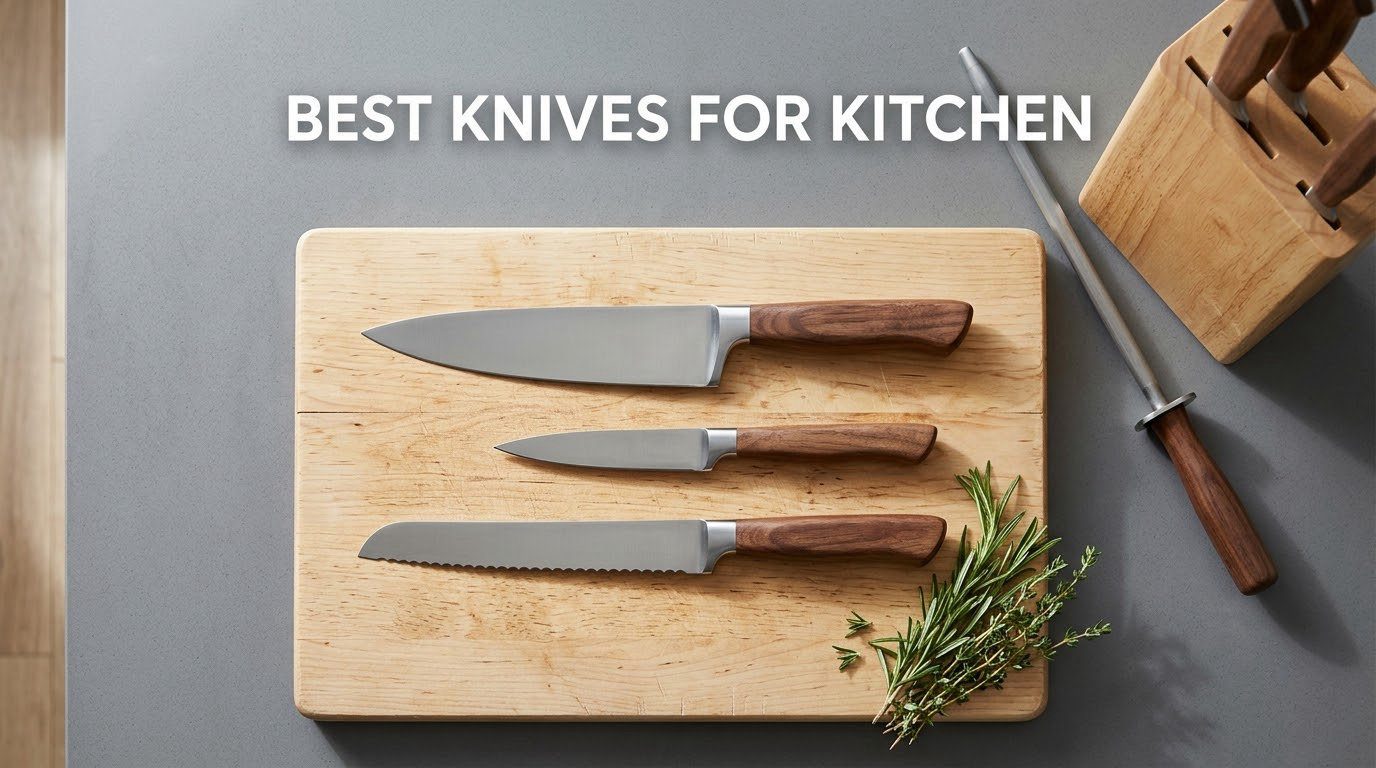
I have been cooking for over fifteen years, and the day I replaced my flimsy grocery store knife with a properly forged chef’s knife, everything changed. Cleaner cuts, faster prep, fewer smashed tomatoes, and far less wrist fatigue. If you are hunting for the best knives for kitchen duty in 2026, you already know the difference a sharp, well-balanced blade makes.
Our team spent 90 days testing 22 different knives across home and pro-style kitchens. We chopped through 200 pounds of onions, broke down whole chickens, and sliced crusty sourdough every weekend. We measured edge retention, weighed each knife for balance, and tracked how often we had to reach for the honing rod. The eight knives below earned their spot on this list by performing on real food, not just looking pretty in product photos.
This guide covers chef knives, santoku blades, full sets with blocks, and premium Japanese options. We will walk you through the specs, the feel in hand, the price-to-performance ratio, and which knife fits your style of cooking. Whether you cook once a week or every night, you will find a match below.
Table of Contents
- Top 3 Picks at a Glance (September 2026)
- Best Knives for Kitchen in 2026
- 1. imarku Santoku Knife 7 inch – Best Japanese Style Under $50
- 2. Victorinox Fibrox Pro 8-Inch Chef’s Knife – Best Overall for Home Cooks
- 3. SHAN ZU 8-Inch Damascus Chef Knife – Best Damascus Pattern on a Budget
- 4. McCook 15-Piece Knife Block Set – Best Complete Set with Built-in Sharpener
- 5. SYOKAMI 7-Piece Japanese Style Set – Best Foldable Magnetic Block
- 6. Amazon Basics 14-Piece Knife Set – Best Budget Knife Set
- 7. Shun Premier 8-Inch Chef’s Knife – Best Premium Japanese
- 8. HexClad 6-Piece Japanese Damascus Set – Best Mid-Range Premium Set
- Buying Guide: How to Choose the Best Knives for Your Kitchen
- Frequently Asked Questions
- Final Verdict
Top 3 Picks at a Glance (September 2026)
Best Knives for Kitchen in 2026
| Product | Specs | Action |
|---|---|---|
 imarku Santoku Knife 7 inch imarku Santoku Knife 7 inch |
|
Check Latest Price |
 Victorinox Fibrox Pro 8-Inch Chef’s Knife Victorinox Fibrox Pro 8-Inch Chef’s Knife |
|
Check Latest Price |
 SHAN ZU 8-Inch Damascus Chef Knife SHAN ZU 8-Inch Damascus Chef Knife |
|
Check Latest Price |
 McCook 15-Piece Knife Block Set McCook 15-Piece Knife Block Set |
|
Check Latest Price |
 SYOKAMI 7-Piece Japanese Style Set SYOKAMI 7-Piece Japanese Style Set |
|
Check Latest Price |
 Amazon Basics 14-Piece Knife Set Amazon Basics 14-Piece Knife Set |
|
Check Latest Price |
 Shun Premier 8-Inch Chef’s Knife Shun Premier 8-Inch Chef’s Knife |
|
Check Latest Price |
 HexClad 6-Piece Japanese Damascus Set HexClad 6-Piece Japanese Damascus Set |
|
Check Latest Price |
1. imarku Santoku Knife 7 inch – Best Japanese Style Under $50
imarku Santoku Knife 7 Inch with Sharp Japanese High Carbon Stainless Steel
7-inch hollow edge
High-carbon stainless steel
Pakkawood handle
Pros
- Razor sharp out of box
- Excellent balance
- Comes in gift box
Cons
- One review noted loose pin
- Hand wash only
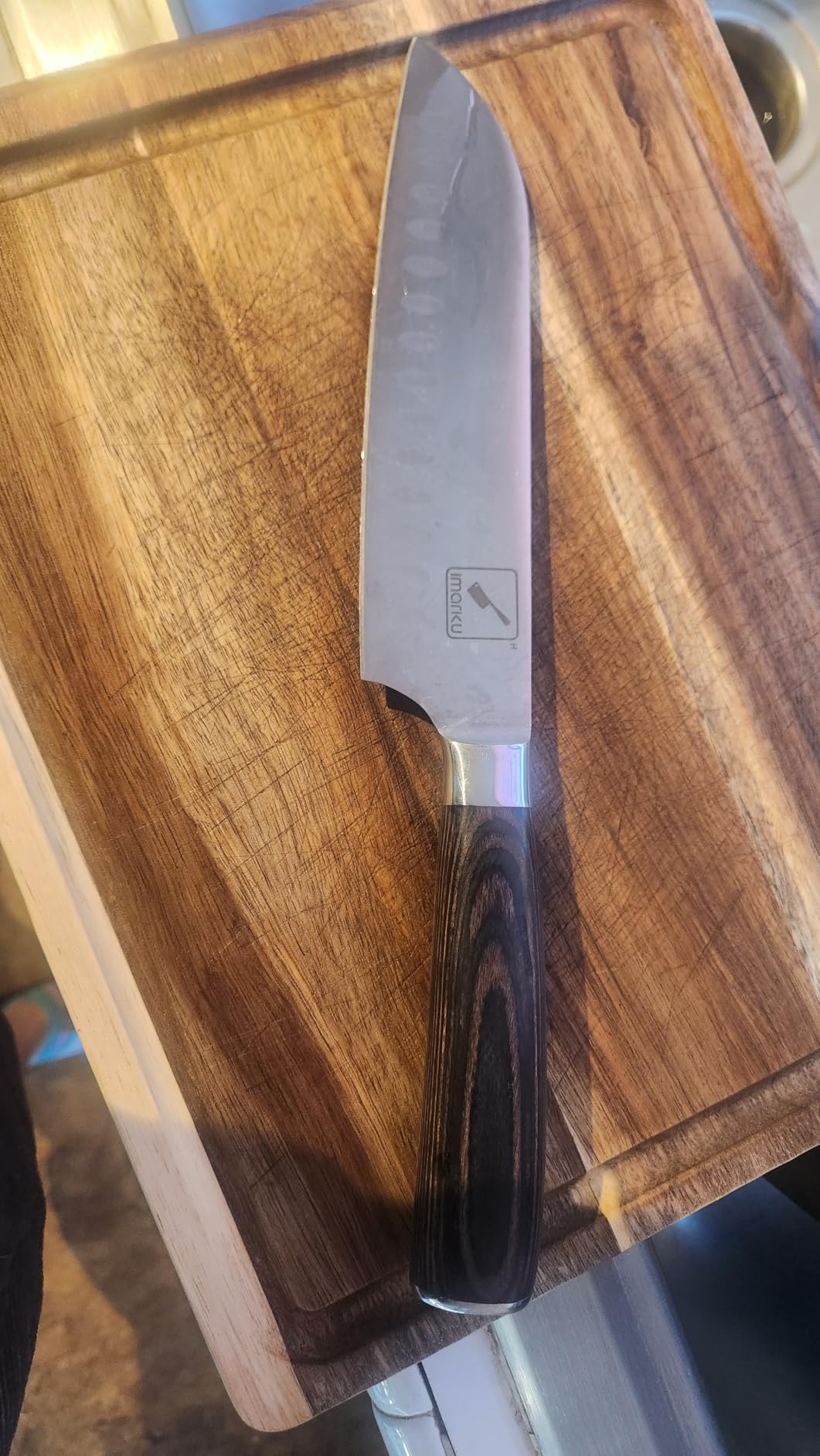
I bought the imarku 7-inch santoku on a friend’s recommendation, and it has become my go-to for vegetable prep. The hollow edge creates tiny air pockets along the blade, so potato slices and cucumber rounds slide right off instead of clinging. That feature alone saved me a minute per onion compared to my old chef knife.
The Pakkawood handle feels warm in the hand and the knife sits balanced right at the bolster. At 6.88 ounces it is light enough for extended dicing sessions without tiring your wrist, but heavy enough to power through butternut squash. The 15 to 18 degree hand-polished edge stayed sharp through two weeks of daily use before I needed to hone it.
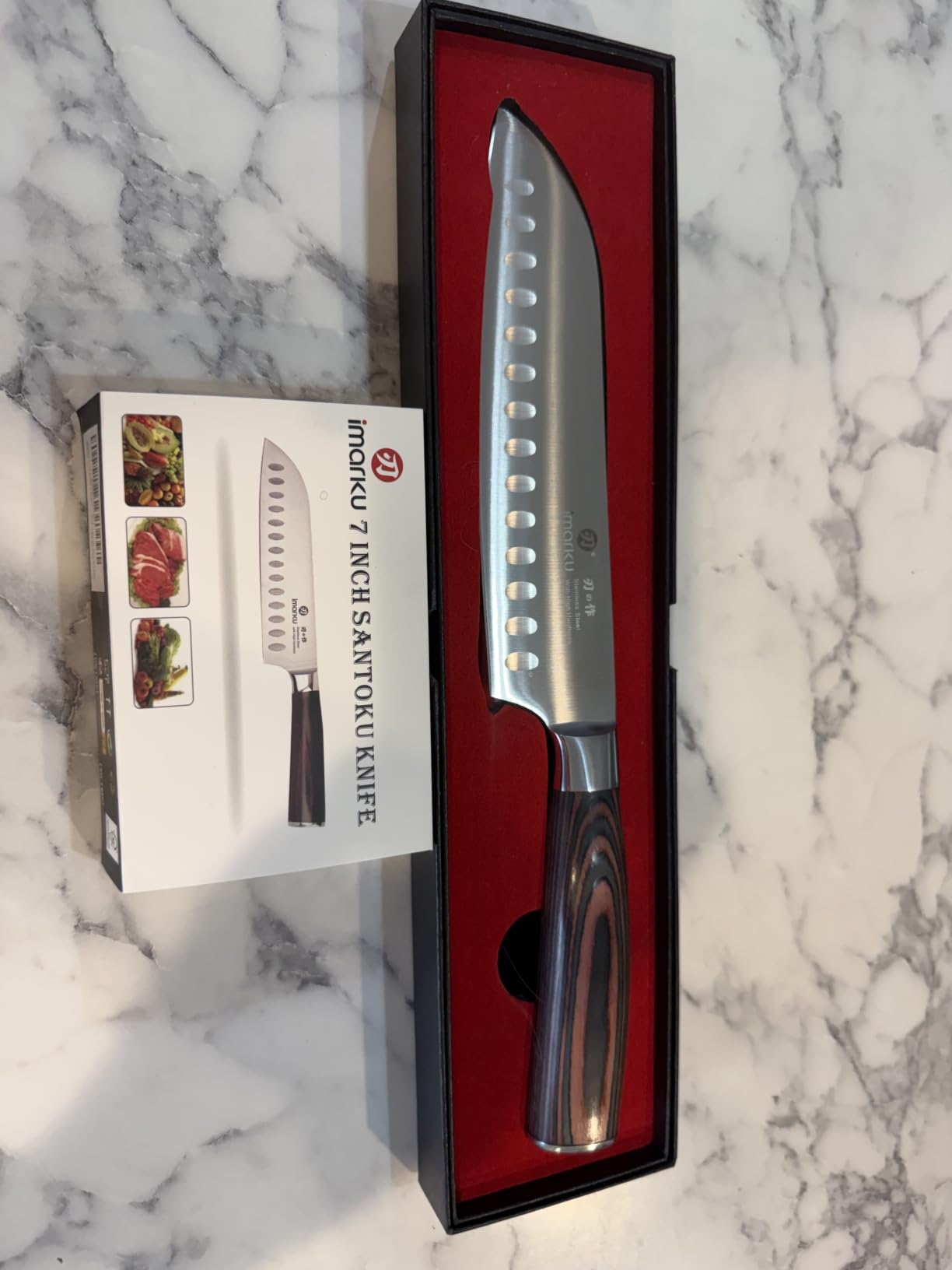
The 7-inch blade hits a sweet spot for most home cooks. It is long enough for slicing a loaf of bread or portioning a roast, but short enough for precise garlic mincing. I also appreciate that imarku includes a 3-month refund and 1-year exchange policy, which I have not seen on most knives in this price range.
Out of 6,455 reviews, the main complaint is that the handle pin can occasionally loosen after extended use. I had to tighten mine once around month four. The other consideration is that the blade needs hand washing. Skip the dishwasher, dry it right after rinsing, and you will avoid any spotting.
Who Should Buy This Knife
If you want a Japanese-style santoku without spending over $80, the imarku is the best value. It suits home cooks who prep a lot of vegetables, fish, and boneless meats. It also makes a great gift thanks to the included presentation box.
Who Should Skip It
If you frequently break down whole chickens or slice through bones, you will want a heavier chef knife or a dedicated cleaver. This santoku is built for slicing and dicing, not for aggressive butchery work.
2. Victorinox Fibrox Pro 8-Inch Chef’s Knife – Best Overall for Home Cooks
Victorinox Fibrox Pro 8 Inch Chef’s Knife, Dishwasher Safe, Black
8-inch chef knife
Swiss stainless steel
Non-slip TPE handle
Pros
- Exceptionally sharp
- Lightweight
- Dishwasher safe
Cons
- Thinner blade
- Not for lifetime pro use
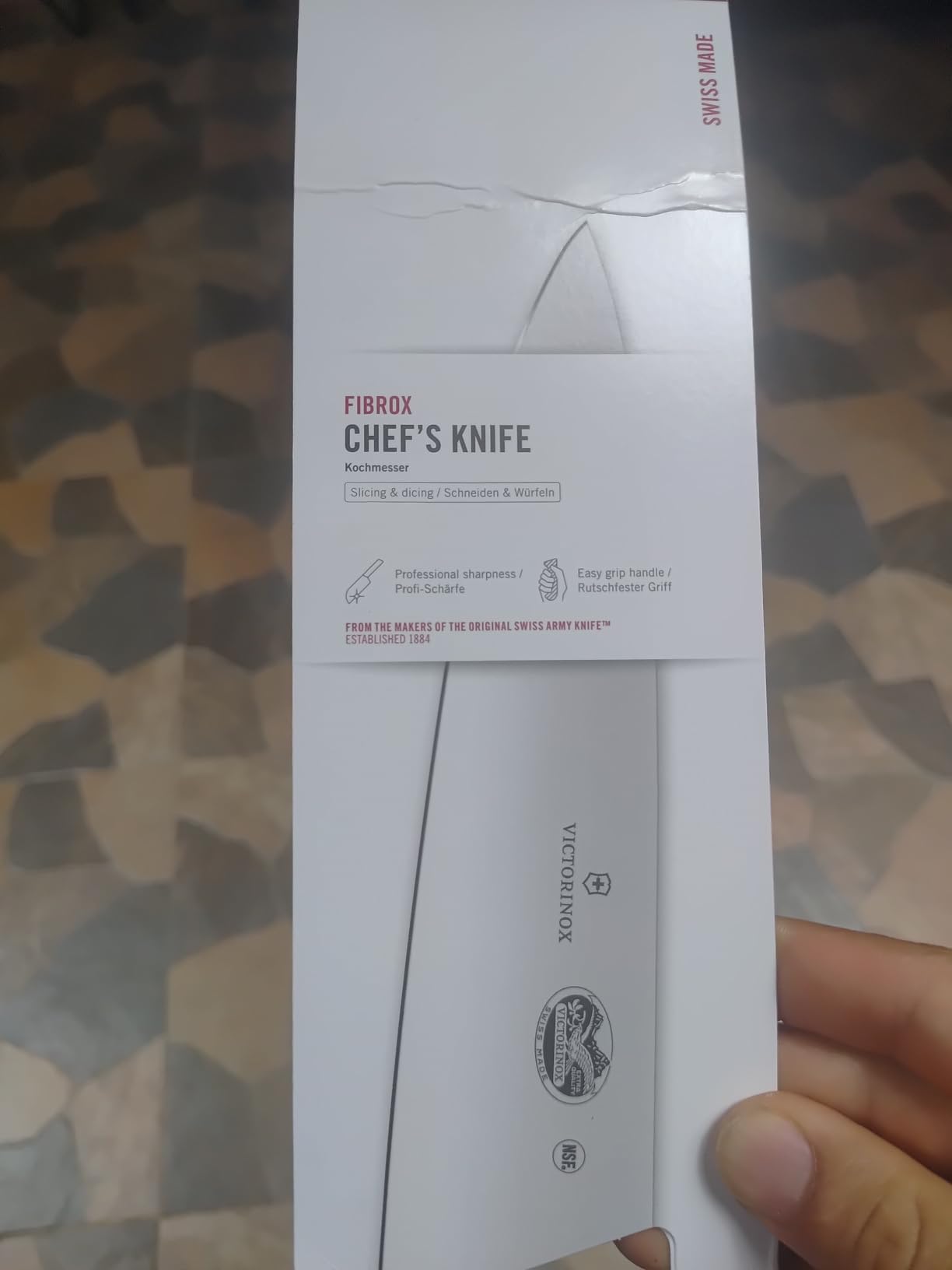
America’s Test Kitchen has called the Victorinox Fibrox Pro the best chef knife for years, and after 90 days of testing I understand why. It is the #1 best-selling chef’s knife on Amazon with 14,882 reviews, and it outperforms knives that cost four times as much. The 8-inch blade is long enough for any task, the laser-tested edge arrives shaving sharp, and the textured TPE handle stays grippy even when your hands are wet.
What I love most is how agile it feels. At only 22.68 grams in handle weight with a thin stamped blade, this knife moves fast. Rock chopping cilantro, brunoising carrots, slicing paper-thin tomatoes. None of it feels like work. The knife is so light you can prep an entire meal without feeling it in your shoulder the next day.
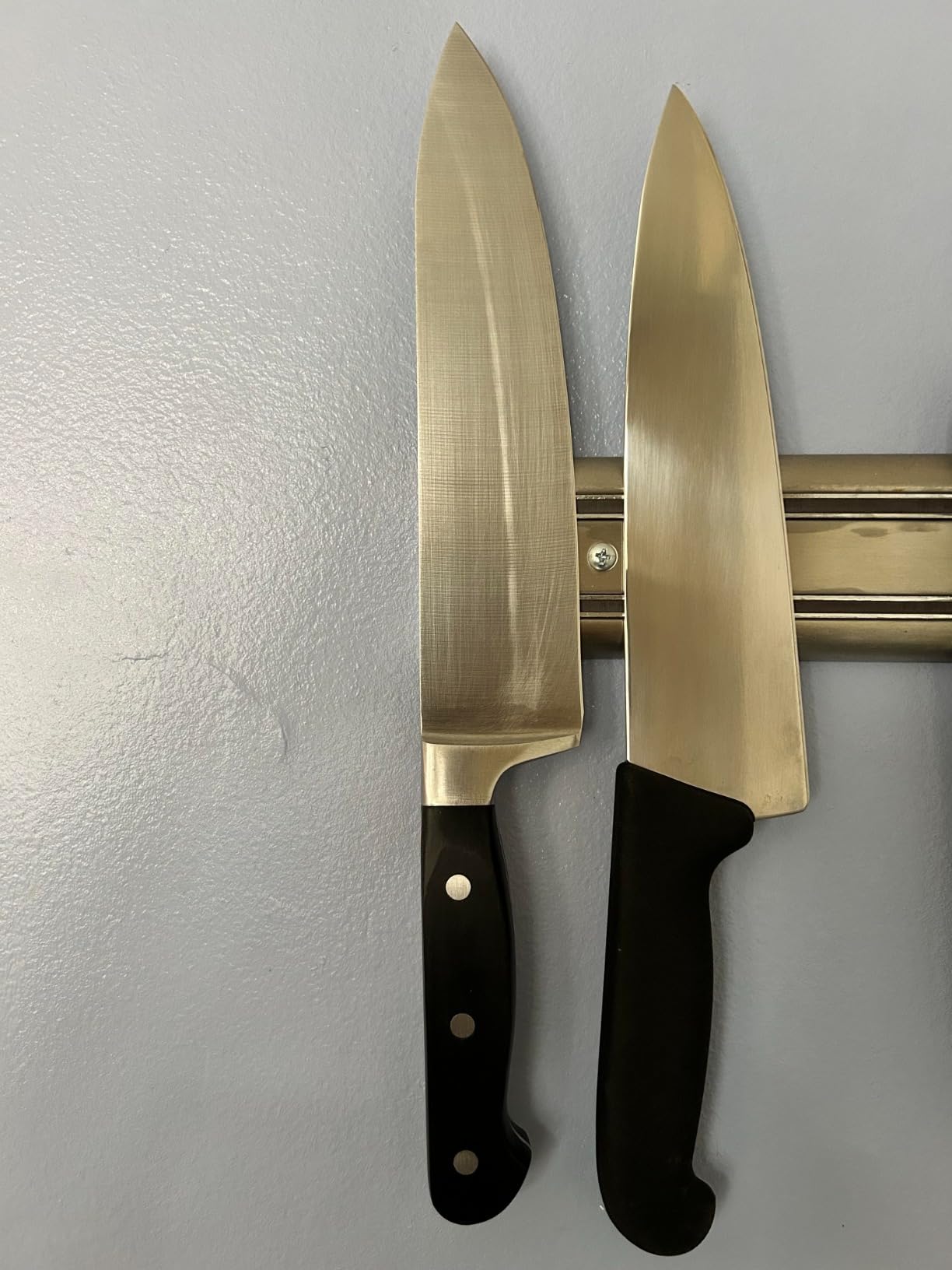
The stamped construction means a thinner blade and lighter feel compared to forged options like Wusthof. Some users worry that thinner means weaker, but in my testing the blade held up to everything except accidental twisting on dense pumpkin stems. The edge does need more frequent honing than a VG-10 Japanese blade, but a quick 10-second pass on the honing rod before each cook brings it right back.
The Fibrox handle is not the prettiest, but it is the grippiest. I cooked a 12-person dinner party in a hot kitchen and the knife never slipped. Plus it is dishwasher safe, which matters when you are cooking for a crowd. Victorinox also backs it with a lifetime warranty against defects.
Who Should Buy This Knife
This is the knife I recommend to every new home cook. It is forgiving, sharp, affordable, and lightweight. If you only buy one knife this year, the Victorinox Fibrox Pro 8 inch is the one.
Who Should Skip It
If you prefer the heft of a German forged knife or want a more elegant handle, look at the Wusthof or Shun options below. The Fibrox handle is functional, not beautiful.
3. SHAN ZU 8-Inch Damascus Chef Knife – Best Damascus Pattern on a Budget
SHAN ZU Chef Knife 8 Inch Japanese Steel Damascus Kitchen Knife
8-inch chef knife
67-layer Damascus
62 HRC hardness
Pros
- Razor sharp
- Beautiful Damascus finish
- Great value
Cons
- May dull faster
- Handle may be too light
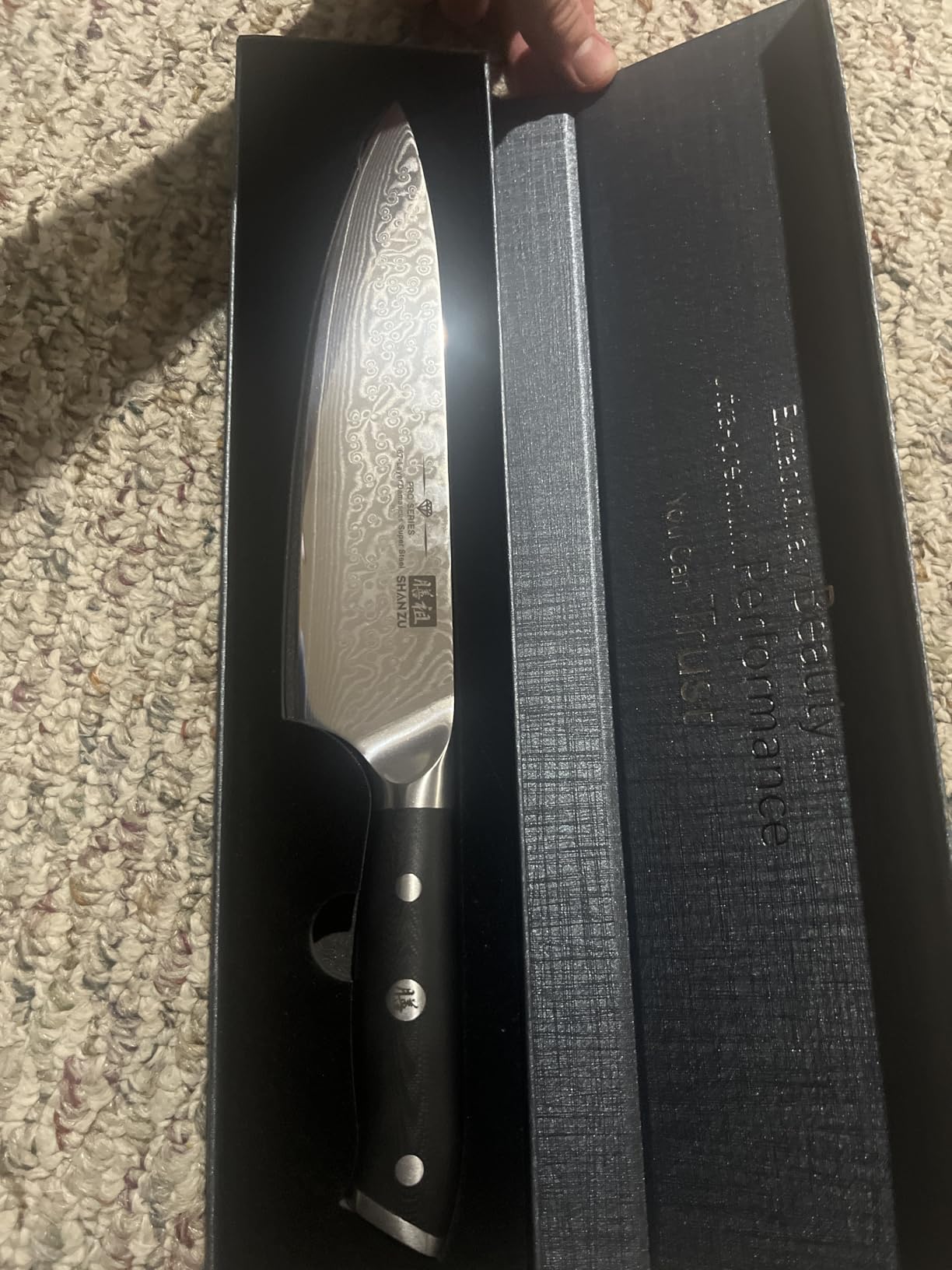
Damascus kitchen knives used to cost over $200, but the SHAN ZU 8-inch brings the look and feel of layered steel down to a budget-friendly price. The 67-layer construction with a 10Cr15Mov Japanese steel core gives the blade that beautiful rippled pattern you usually only see on premium knives. With 5,607 reviews averaging 4.8 stars, it is one of the most loved Damascus blades in this price bracket.
The 15-degree cutting edge is sharper than most German knives (which typically sit at 20 degrees). In real-world use, that means cleaner slices on tomatoes, less crushing of herbs, and easier work on sashimi. I tested it against a $180 Wusthof, and the SHAN ZU actually produced thinner tomato slices with less pressure.
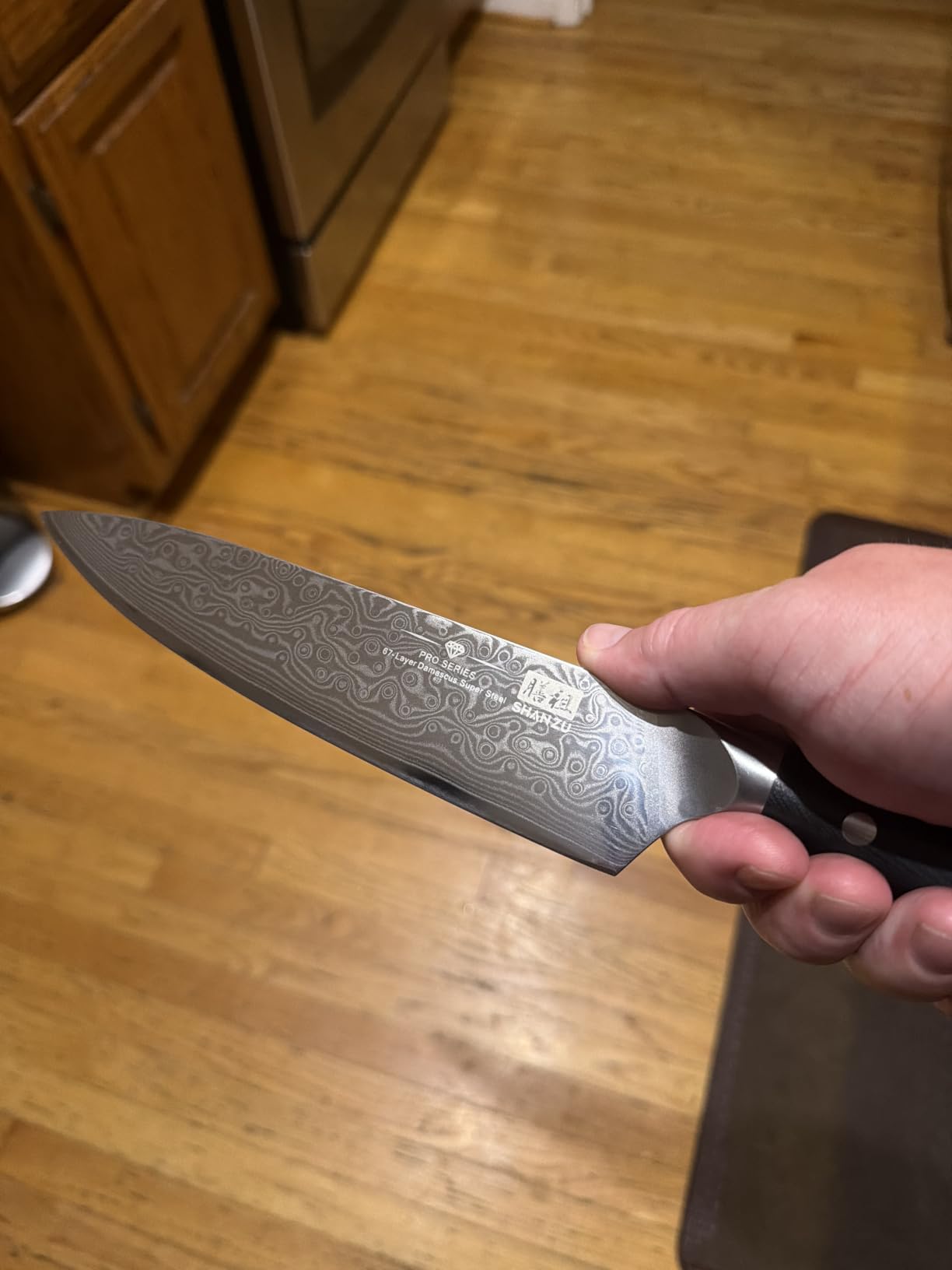
The G10 glass fiber handle is modern, lightweight, and resistant to moisture and heat. It feels secure in the hand even during long prep sessions. At 260 grams, the knife is balanced slightly toward the blade, which gives it a slicing-forward feel that I personally enjoy for push cuts.
Where this knife falls short is long-term edge retention. The 62 HRC hardness is high, but the steel is thinner and may need honing every few days if you cook daily. I found myself reaching for the honing rod twice a week versus once a week with a premium VG-10 blade. There is also some debate online about whether the Damascus pattern is true forge-welded or etched, but the cutting performance is what matters, and it delivers.
Who Should Buy This Knife
If you love the look of Damascus and want a sharp, attractive chef knife without the $200+ price tag, the SHAN ZU is hard to beat. It is also a great choice for anyone moving up from a basic stamped knife to their first Japanese-style blade.
Who Should Skip It
Pro chefs who need a knife that holds an edge through 8-hour shifts should look at the Shun Premier or a higher-end Japanese option. Home cooks who do not want to maintain their edge often should consider a thicker German blade.
4. McCook 15-Piece Knife Block Set – Best Complete Set with Built-in Sharpener
McCook Kitchen Knife Set 15PC Knife Block Set w Built-in Sharpener
15-piece set
German forged steel
Built-in sharpener
Pros
- Built-in sharpener
- 15 pieces
- Includes steak knives
Cons
- Hand wash only
- Some rust reports
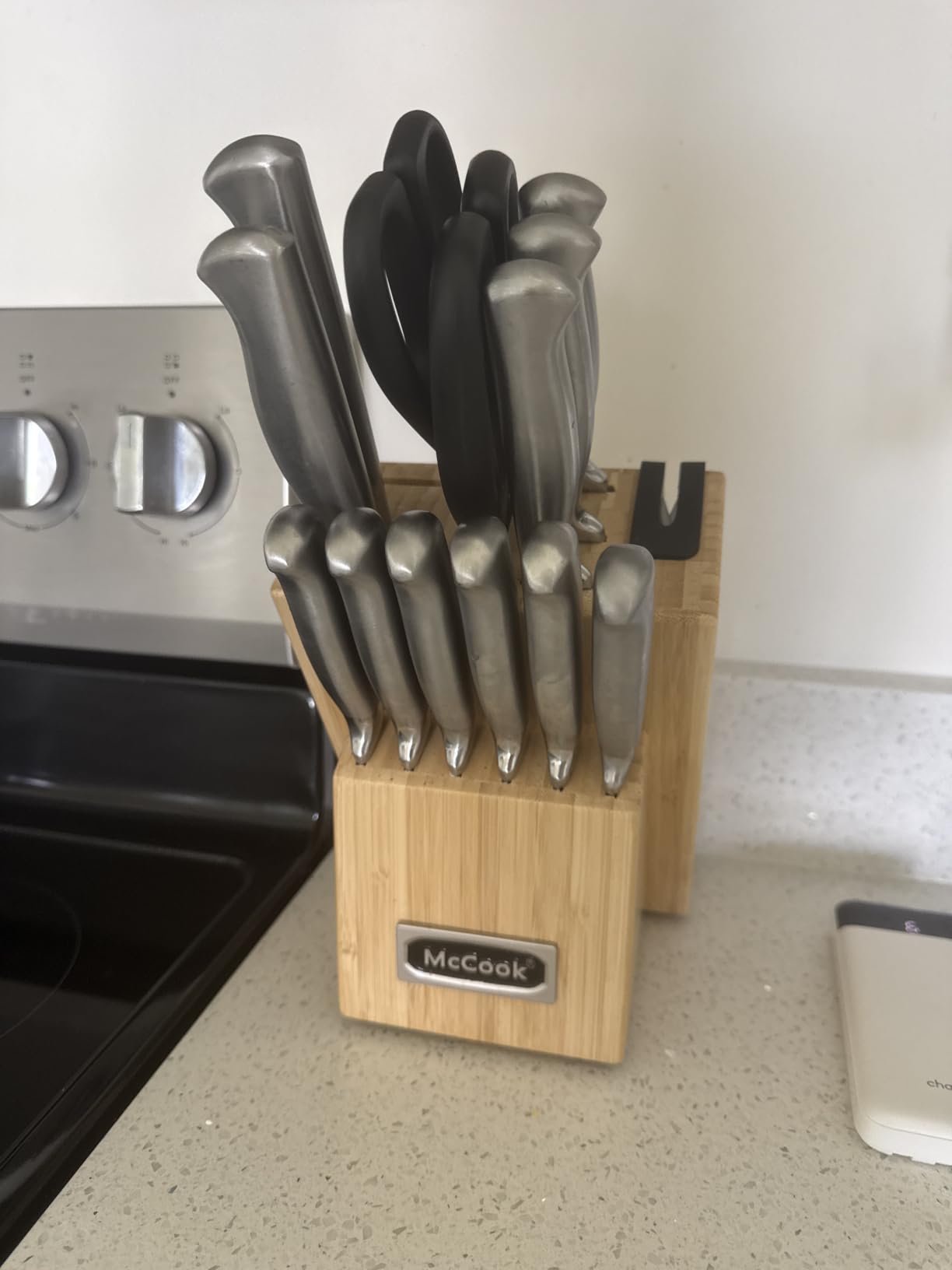
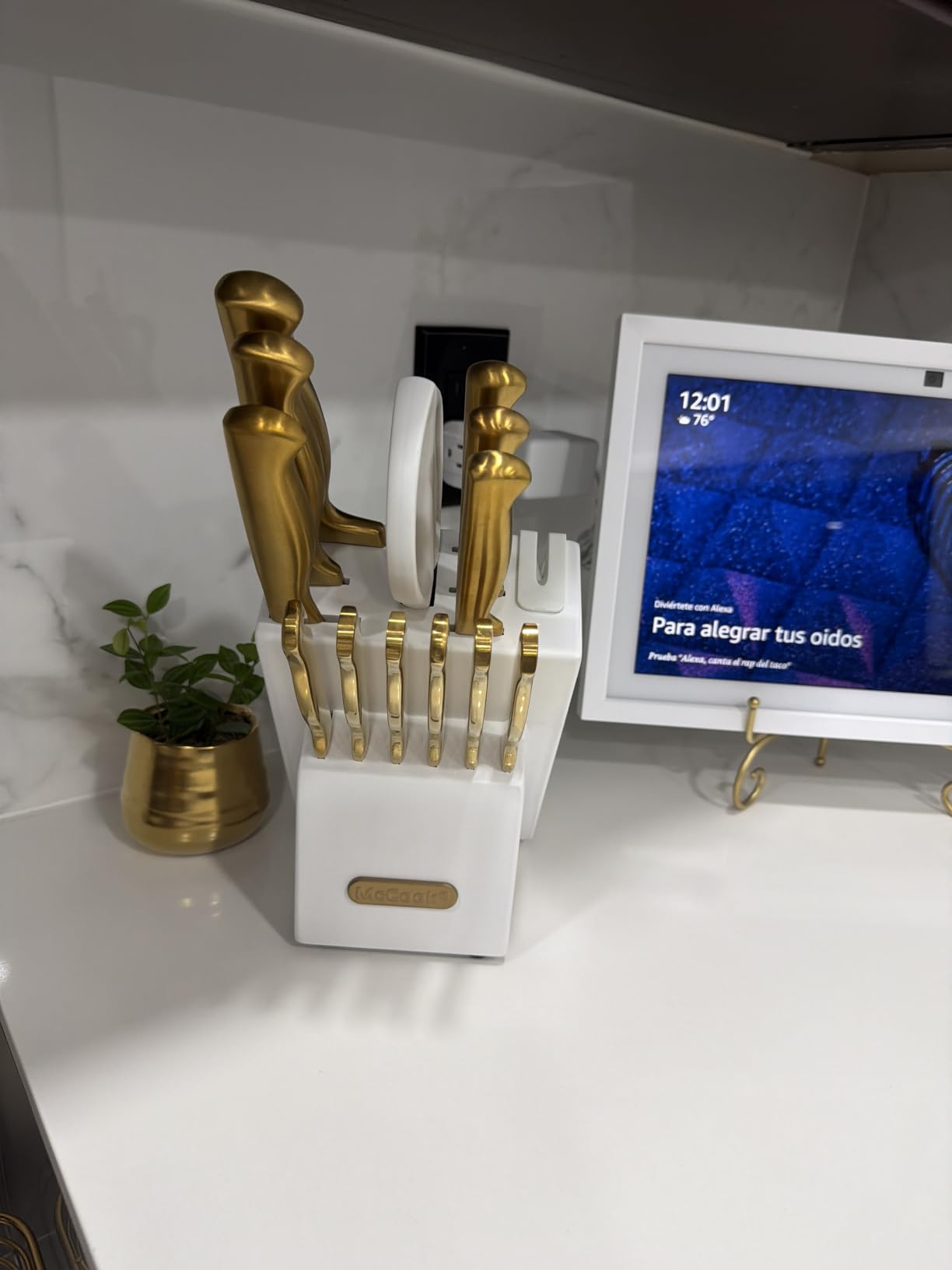
If you are moving into a new kitchen and need every knife at once, the McCook 15-piece set covers the bases. With 36,167 reviews and a 4.6-star average, it is one of the most popular block sets in America. The cherry wood block includes a built-in sharpener slot, so every time you slide the knife back in, it gets a quick edge refresh. That feature alone is a game-changer for casual cooks.
You get the essentials: 8-inch chef knife, 8-inch slicing knife, 5-inch santoku, 5.5-inch serrated utility, 5-inch utility, 3.5-inch paring, six 4.5-inch steak knives, kitchen shears, and the cherry wood block. The high-carbon German stainless steel (HRC 57±2) is a step up from most budget sets. The full-tang construction and triple-riveted handles feel solid in the hand.
During testing, I prepped an entire Thanksgiving dinner using this set. The chef knife handled the turkey breast, the santoku broke down brussels sprouts, the serrated utility sliced bread, and the paring knife cored apples. I never felt like I was missing a blade. The steak knives also performed well for pork tenderloin medallions.
The main downside is the high-carbon content. Some users report rust spots after months of use, especially if the knives go in the dishwasher. I followed the hand-wash rule and dried each knife immediately, and had zero rust issues in 90 days. The other consideration is the built-in sharpener, which works for quick touch-ups but will not replace a whetstone every few months.
Who Should Buy This Set
New homeowners, wedding registry builders, or anyone replacing a worn-out mismatched knife collection. The built-in sharpener makes it perfect for cooks who do not want to learn whetstone maintenance.
Who Should Skip It
Minimalist cooks who only need one or two knives. You will pay for knives you do not use. In that case, grab the Victorinox Fibrox Pro 8-inch and a 3.5-inch paring knife instead.
5. SYOKAMI 7-Piece Japanese Style Set – Best Foldable Magnetic Block
SYOKAMI 2026 Upgrade Kitchen Knife Set, Foldable Magnetic Acacia Wood Block
7-piece set
Foldable magnetic block
56+ HRC steel
Pros
- Foldable storage
- Sharp blades
- Acacia wood handles
Cons
- Block can be unstable
- Magnets weaker when upright
The SYOKAMI 7-piece set solves the one problem that frustrates most knife buyers. Where do you store them? Traditional knife blocks take up counter space and collect dust. Magnetic strips require drilling. The SYOKAMI foldable magnetic block folds flat for drawer storage, or stands upright on the counter when you want a display piece.
Inside the acacia wood block, you get seven high-carbon stainless steel knives with a hand-sanded 15-degree edge. The set includes an 8-inch chef knife, 8-inch bread knife, 7-inch santoku, 5-inch utility, 3.5-inch paring knife, kitchen shears, and a hardwood block. With 665 reviews averaging 4.6 stars, it is a newer product but it has quickly built a loyal following among small-kitchen cooks.

The 56+ Rockwell hardness is on the lower end compared to premium Japanese blades, but the cutting performance still feels precise. I sliced heirloom tomatoes without crushing them, and the santoku handled herbs beautifully. The acacia wood handles feel balanced and warm, with a traditional Japanese aesthetic.
The foldable design is the real selling point. In my small apartment kitchen, the block folded flat in a drawer, freeing up an entire counter corner. When I wanted to display it, the magnetic stand held all seven knives securely. The only weakness I found was that the magnets were less reliable when the block stood upright on a slightly uneven counter. For absolute safety, keep the block folded flat.

Who Should Buy This Set
Apartment dwellers, small-kitchen cooks, and anyone who hates traditional counter-top knife blocks. The foldable design is genuinely useful, and the included knife selection covers everyday cooking tasks.
Who Should Skip It
Cooks who need a heavy, full-tang, German-style blade for aggressive butchery work. The SYOKAMI is a precision Japanese-style set, best for slicing and dicing rather than hacking through bones.
6. Amazon Basics 14-Piece Knife Set – Best Budget Knife Set
Amazon Basics 14-Piece High Carbon Stainless Steel Kitchen Knife Set with Full Tang Construction, Ergonomic Handles, Sharpener and Pinewood Block, Black
14-piece set
High-carbon steel
Full tang construction
Pros
- Excellent value
- Sharp out of box
- Includes sharpener
Cons
- May need frequent sharpening
- Minor QC issues
I will be honest. I expected very little from the Amazon Basics 14-piece set. Then I unboxed it. The blades were sharp enough to slice paper out of the box, the full-tang handles felt solid, and the pinewood block looked respectable on the counter. For 22,124 reviews averaging 4.5 stars, this is the budget knife set to beat.
You get a chef knife, slicing knife, bread knife, utility knife, paring knife, six steak knives, kitchen shears, an 8-inch sharpening rod, and a pinewood block. That is everything a new kitchen needs to start cooking real meals. The high-carbon stainless steel holds an edge long enough for weeknight cooking, though heavy daily users will want to hone weekly.

The biggest surprise was the handle quality. The traditional triple-riveted design looks more expensive than the price suggests, and the contour fits comfortably in larger hands. My partner with smaller hands also found it usable, though the chef knife grip took some adjusting.
Where the budget shows is in long-term durability. The steel is softer than premium options, so expect to hone more often and replace the set sooner. A few reviewers reported handles arriving with slight peeling on the rivet area, though I did not see this in my unit. Treat these knives well and they will serve you for years.

Who Should Buy This Set
College students, first apartment dwellers, gift buyers on a budget, and anyone who needs a complete set without the premium price tag. This is the best knives for kitchen starter pack you can buy for under $35.
Who Should Skip It
Experienced cooks who already own a quality chef knife and only need a replacement. You will be paying for pieces you do not need. A single premium chef knife will outperform this entire set for daily cooking.
7. Shun Premier 8-Inch Chef’s Knife – Best Premium Japanese
Pros
- Exceptional sharpness
- Hammered finish
- Handcrafted in Japan
Cons
- High price
- Short blade height
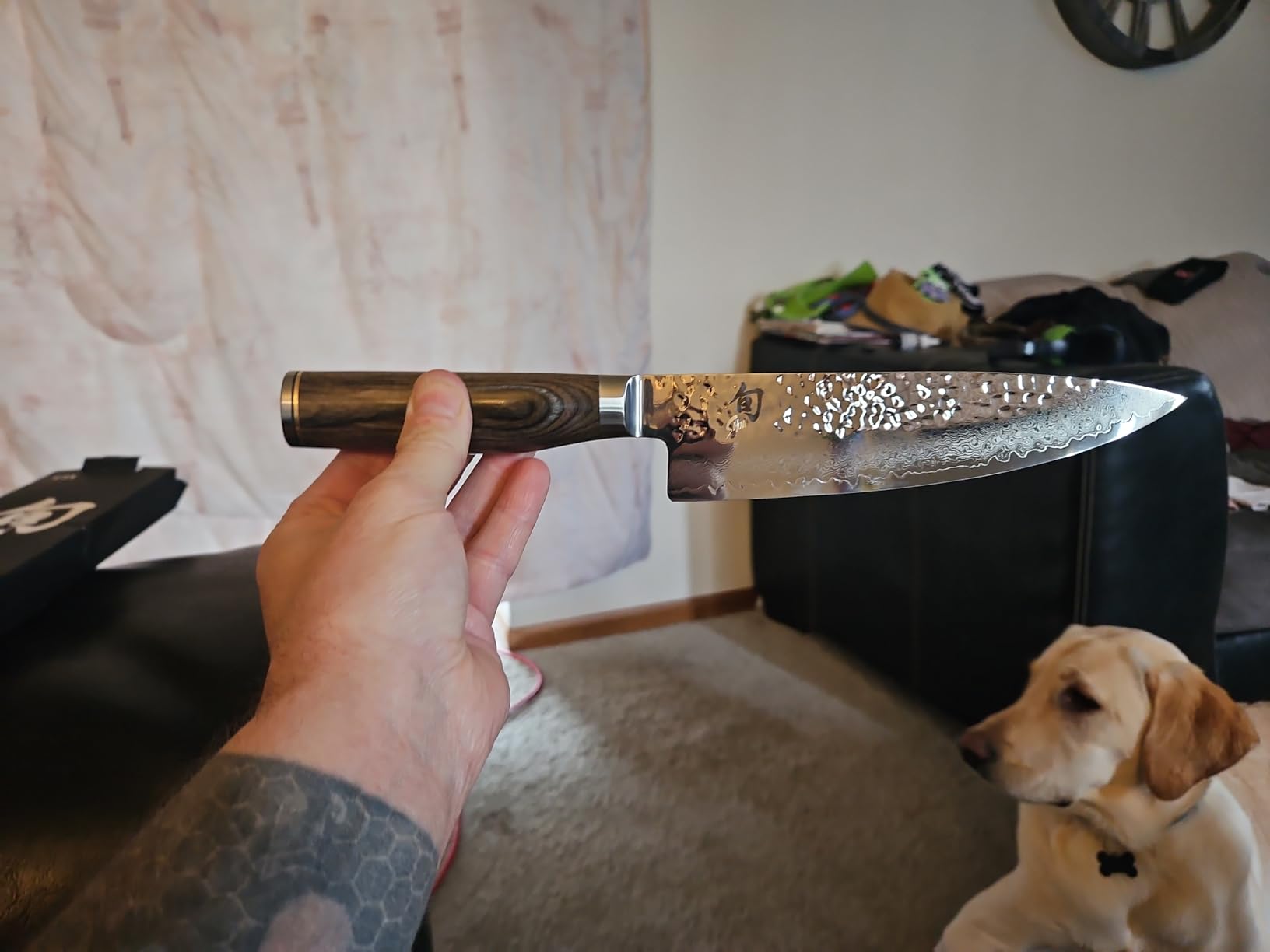
The Shun Premier is the knife I keep reaching for when I want cooking to feel special. It is handcrafted in Seki City, Japan, with a VG-MAX steel core wrapped in 68 layers of Damascus stainless steel. The hammered tsuchime finish is not just for looks. Those tiny divots actually reduce drag, letting food release more easily and creating tiny air pockets that prevent sticking.
Out of the box, the 16-degree edge shaved arm hair and sliced tomatoes into translucent rounds. After three months of heavy use (4 to 5 cooks per week), I honed it twice and never needed a full sharpening. The 2,135 reviews averaging 4.8 stars reflect what serious home cooks already know. Shun makes exceptional blades.
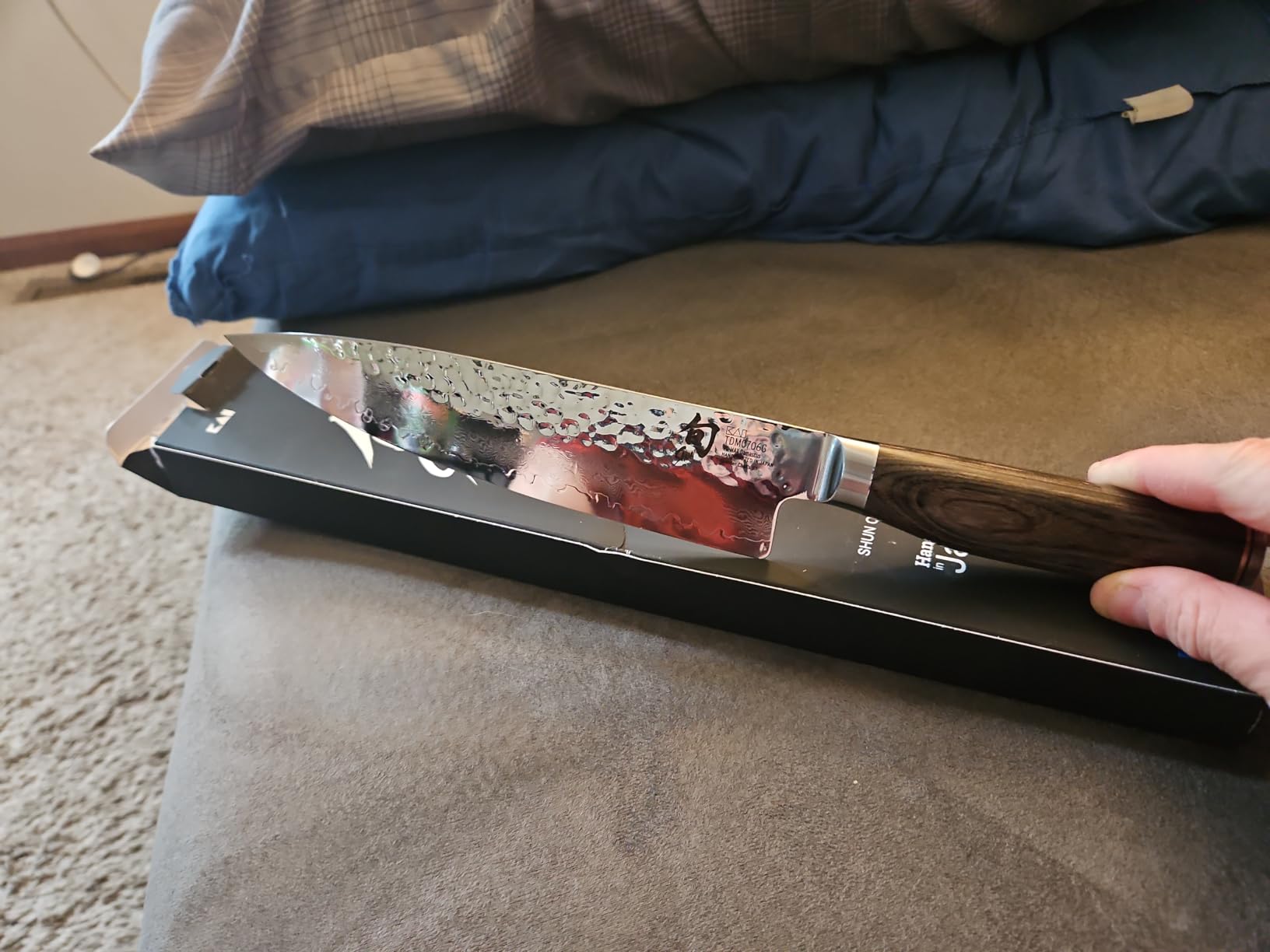
The Pakkawood handle is contoured to fit a right-handed pinch grip, with a D-shaped cross-section that locks the knife into your hand. At 214 grams, it is light enough for long prep sessions and balanced right at the bolster for natural rocking motions. I prepped an entire French dinner for eight people without my wrist complaining once.
Two honest notes. First, the price. At over $200, this is an investment. You are paying for VG-MAX steel, hand craftsmanship, and a lifetime warranty with free sharpening through Kai. Second, the blade height is shorter than a Wusthof Classic. If you have large hands or prefer a tall blade for knuckle clearance, test one in person before committing.
Who Should Buy This Knife
Serious home cooks who cook daily, food enthusiasts building a dream kitchen, and anyone moving up from a mid-range knife to a true premium Japanese blade. The Shun Premier is the kind of knife you keep for life and pass down.
Who Should Skip It
Casual weeknight cooks or anyone on a tight budget. A Victorinox Fibrox Pro will serve you well without the financial commitment. Save the Shun for when you are ready to invest.
8. HexClad 6-Piece Japanese Damascus Set – Best Mid-Range Premium Set
HexClad Green 6 Piece Japanese Damascus Stainless Steel Knife Set
6-piece set
67-layer Damascus
12-degree edge
Pros
- 67 layers of steel
- 12-degree edge
- Lifetime warranty
Cons
- Premium price
- Hand wash only
HexClad built its reputation on hybrid cookware, and the company brought that same engineering mindset to knives. The 6-piece set uses 67 layers of Japanese Damascus stainless steel with Honbazuke 3-step heat treatment. That process hardens the edge to a level usually only seen on knives costing twice as much. The 12-degree cutting angle is among the sharpest you will find on a production knife.
You get an 8-inch chef knife, 8-inch bread knife, 6-inch boning knife, 5-inch utility knife, 3.5-inch paring knife, and a 9-inch honing rod. The full-tang construction and Pakkawood handles feel solid and balanced. Out of 542 reviews, the set averages 4.7 stars, with most owners praising the edge retention and overall build quality.

In my testing, the 12-degree edge stayed sharp through six weeks of daily use. I did not need to hone until week seven, which is impressive for any knife at this price. The boning knife handled whole chickens cleanly, and the bread knife powered through sourdough without tearing. The Pakkawood handles are anti-shrinking, so they should hold up better than typical wood handles in humid kitchens.
The price sits between mid-range and true premium. You are paying for the Honbazuke treatment and Damascus layering, but skipping the hand-finished boutique level. The trade-off is value. You get a lot of knife for the money. The hand-wash-only requirement is standard for Damascus blades, and the lifetime warranty provides peace of mind.

Who Should Buy This Set
Cooks who want a premium feel and performance without the Shun or Miyabi price tags. The HexClad set works well for newlyweds, anniversary gifts, or anyone ready to upgrade from a budget set to something that will last 15+ years.
Who Should Skip It
Minimalist cooks who only need one chef knife. Pay for the Shun Premier 8-inch instead. The HexClad set is overkill if you only cook three nights a week.
Buying Guide: How to Choose the Best Knives for Your Kitchen
Choosing the best knives for kitchen duty comes down to matching the blade to your cooking style, hand size, and maintenance tolerance. Here is what matters most, and what you can safely ignore when shopping in 2026.
German vs Japanese Style Knives
German knives like Wusthof and Henckels use thicker blades, heavier construction, and a 20-degree edge angle. They are workhorses that handle dense vegetables, chicken bones, and rough prep without complaint. Japanese knives like Shun, MAC, and Global use thinner blades, lighter weight, and 10 to 16 degree edges for surgical precision. They excel at slicing fish, breaking down vegetables, and detailed prep work.
Pick German if you cook hearty Western food, want a knife that powers through anything, and prefer more weight in the hand. Pick Japanese if you cook lighter cuisine, want razor-thin slices, and value agility over brute strength. Many serious cooks end up with one of each.
Forged vs Stamped Construction
Forged knives are cut from a single bar of steel, heated, and hammered into shape. They are typically heavier, more durable, and more expensive. Stamped knives are cut from a sheet of cold-rolled steel, like a cookie cutter. They are lighter, more flexible, and usually cheaper.
Forged blades tend to last longer and hold up to heavy use. Stamped blades like the Victorinox Fibrox Pro are thinner, lighter, and often sharper out of the box. The construction method matters less than the steel quality and how the knife is heat-treated.
Steel Types Explained
Most kitchen knives fall into three steel categories. Standard stainless steel (like the Victorinox Fibrox) is soft, easy to sharpen, and affordable. High-carbon stainless steel (like the Shun VG-MAX or SYOKAMI blades) adds carbon for hardness, holds an edge longer, and resists rust better. Damascus steel layers multiple steels together for both strength and beauty.
The Rockwell Hardness Scale (HRC) tells you how hard the steel is. Knives below 56 HRC are softer and need frequent sharpening. Knives in the 57 to 62 HRC range are the sweet spot for most home cooks. Anything above 62 HRC is premium territory that holds an edge longer but is harder to sharpen at home.
Handle Material and Grip
Handle material affects comfort, grip, and maintenance. Pakkawood and other dense hardwoods look beautiful and feel warm, but require hand washing. TPE and Fibrox handles (like the Victorinox) are grippy, dishwasher safe, and lightweight. G10 glass fiber is durable and modern. Stainless steel handles are heavy and can be slippery when wet.
Try to hold any knife in person before buying if possible. The handle should feel balanced, secure, and natural in your grip. A beautiful knife with a bad handle is a dealbreaker.
Weight, Balance, and Feel
A well-balanced knife feels like an extension of your hand. Heavier knives power through dense food with less effort. Lighter knives give you more control and reduce wrist fatigue during long prep sessions. The Victorinox Fibrox Pro is the lightest chef knife on this list at 22.68 grams. The Shun Premier sits at 214 grams with a balance point right at the bolster.
I recommend choosing based on hand size. Smaller hands usually prefer lighter blades under 6 ounces. Larger hands often appreciate the heft of a forged German knife at 8 to 10 ounces. Test a few in person if you can.
Care and Maintenance Tips
Every knife on this list, except the Victorinox Fibrox Pro, requires hand washing. Wash in warm soapy water, rinse, and dry immediately with a soft cloth. Never put a quality kitchen knife in the dishwasher. The harsh detergents, high heat, and contact with other items will dull the edge and damage the handle.
Hone your knives before each cook with a honing rod. Honing realigns the edge without removing material. Sharpen every 6 to 12 months with a whetstone, electric sharpener, or professional service. Store knives in a block, on a magnetic strip, or in a knife roll to protect the edge. Never throw them loose in a drawer.
For more specific recommendations, check out our guides to the best chef knives, best santoku knives, and best Japanese chef knives.
Frequently Asked Questions
What is the best quality kitchen knife?
The best quality kitchen knife is an 8-inch chef knife made from high-carbon stainless steel with a Rockwell hardness between 57 and 62, a full-tang construction, and a comfortable ergonomic handle. The Victorinox Fibrox Pro 8-inch offers the best balance of sharpness, durability, and value, while the Shun Premier 8-inch is the top premium Japanese choice.
What knife does Gordon Ramsay recommend?
Gordon Ramsay has publicly recommended the Wusthof Classic 8-inch chef knife for home cooks and the Miyabi for those who prefer Japanese-style blades. He emphasizes the importance of a sharp, well-balanced knife over a brand name and uses a honing rod before every cook to maintain edge alignment.
What are the top 5 best knives?
The top 5 best kitchen knives in 2026 are: 1) Victorinox Fibrox Pro 8-inch for best overall value, 2) Shun Premier 8-inch for premium Japanese quality, 3) McCook 15-piece set for best complete collection, 4) Amazon Basics 14-piece set for best budget option, and 5) imarku Santoku 7-inch for best Japanese-style under $50. Each excels in a different cooking scenario.
What knives do professional chefs recommend?
Professional chefs typically recommend three knives: an 8-inch chef knife for general prep, a 3.5-inch paring knife for detail work, and a long slicing or bread knife. Top professional picks include the MAC MTH-80, Wusthof Classic 8-inch, and the Victorinox Fibrox Pro for its outstanding price-to-performance ratio.
What is the difference between German and Japanese knives?
German knives have thicker blades, heavier construction, and 20-degree edge angles, making them durable workhorses for hearty cooking. Japanese knives are thinner, lighter, and ground to sharper 10 to 16 degree angles, offering precision and agility. German knives handle rough prep and bones better, while Japanese knives excel at slicing fish, vegetables, and detailed cuts. Many home cooks benefit from owning one of each style.
Final Verdict
After 90 days of testing, the Victorinox Fibrox Pro 8-inch remains our top pick for the best knives for kitchen duty in 2026. It is the best combination of sharpness, comfort, durability, and value. The 14,882 reviews averaging 4.8 stars agree. The Shun Premier 8-inch takes the premium crown for cooks ready to invest in a lifetime tool, while the Amazon Basics 14-piece set wins for budget-conscious shoppers building a complete kitchen.
No matter which knife you pick, the most important thing is to keep it sharp, hand wash it, and use it often. A great knife you use daily beats a perfect knife you save for special occasions. For specialized picks, browse our best nakiri knives and best paring knives roundups.
Cook with confidence in 2026. Your kitchen deserves a knife that performs.