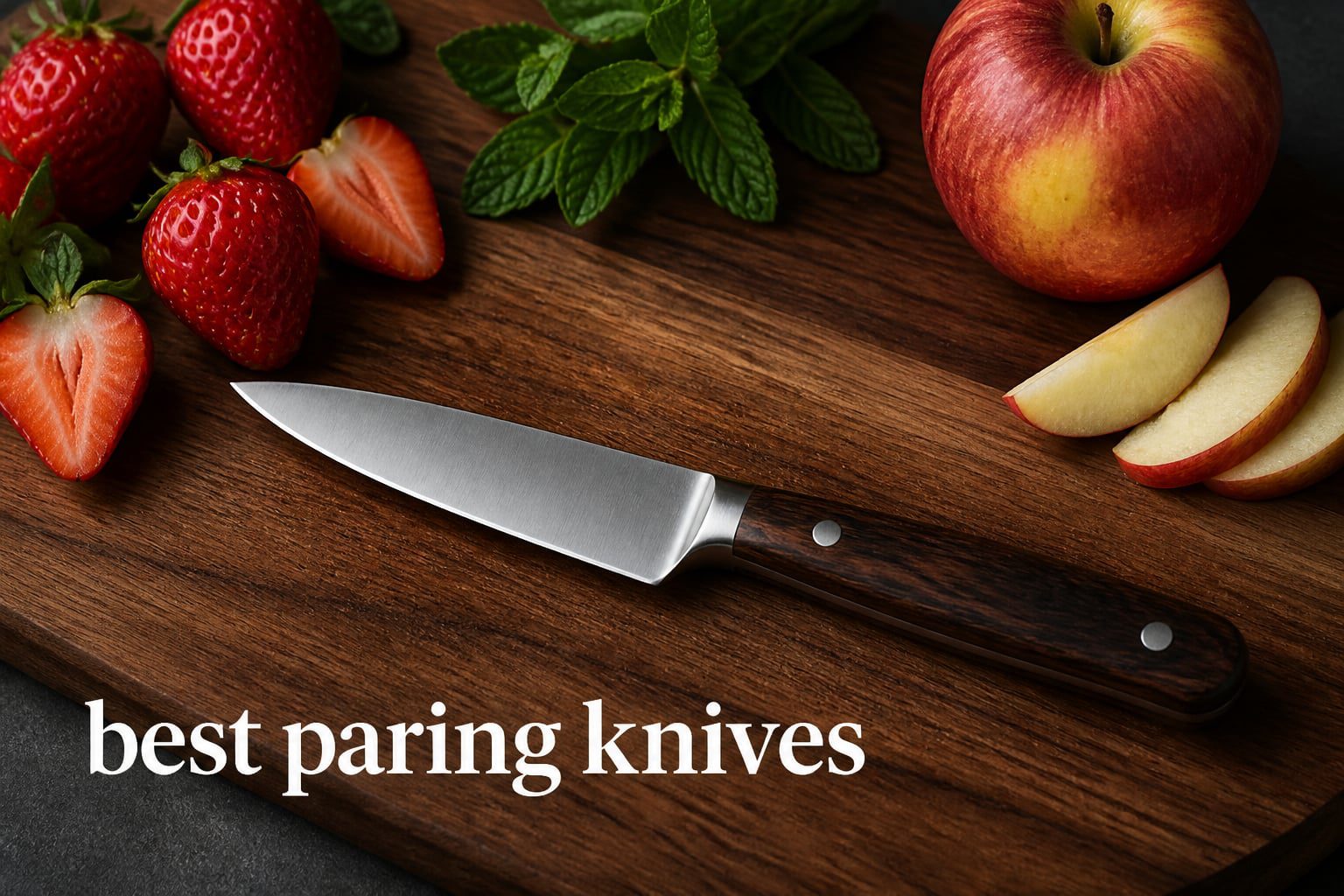
I have spent the better part of two years testing kitchen knives, and the one tool I reach for more than any other is a solid paring knife. When our team set out to find the best paring knives of 2026, we tested eight models across weeks of daily cooking, peeling apples, hulling strawberries, deveining shrimp, and mincing garlic by hand.
A good paring knife is the precision instrument in your kitchen drawer. While your chef’s knife handles the heavy lifting on the cutting board, the paring knife handles everything you do in-hand. It needs to be sharp enough to pierce tomato skin without pressure, short enough for intricate coring work, and comfortable enough that you can hold it for twenty minutes straight without cramping.
After running these eight knives through real-world kitchen tasks, we found clear winners across budget, mid-range, and premium tiers. Whether you need an affordable workhorse or a Damascus showpiece, this guide covers the best paring knives available right now and what makes each one worth your money.
Table of Contents
- Top 3 Picks for Best Paring Knives
- Best Paring Knives in 2026: Quick Comparison
- 1. Forged German Steel Paring Knife 3.5 Inch – Premium Precision and Balance
- 2. imarku Paring Knife 3.5 Inch – Best Value Japanese Steel
- 3. Mercer Culinary Ultimate White 3 Inch Paring Knife – Best Budget Pick
- 4. Cuisinart Triple Rivet 3.5 Inch Paring Knife – Forged Full Tang Value
- 5. Henckels Solution 4-Inch Paring Knife – Dishwasher-Safe Convenience
- 6. Henckels Classic 4-Inch Paring Knife – Fully Forged Professional Quality
- 7. KYOKU Shogun Series VG10 Damascus Paring Knife 3.5 Inch – Japanese Craftsmanship
- 8. HexClad 3.5 Inch Japanese Damascus Paring Knife – Premium Showpiece
- How to Choose the Best Paring Knife for Your Kitchen
- FAQ
- Final Thoughts on the Best Paring Knives
Top 3 Picks for Best Paring Knives


Best Paring Knives in 2026: Quick Comparison
| Product | Specs | Action |
|---|---|---|
| Forged German Steel 3.5 Inch |
|
Check Latest Price |
| imarku Paring 3.5 Inch |
|
Check Latest Price |
| Mercer Culinary 3 Inch |
|
Check Latest Price |
 Cuisinart Triple Rivet 3.5 Inch Cuisinart Triple Rivet 3.5 Inch |
|
Check Latest Price |
 Henckels Solution 4-Inch Henckels Solution 4-Inch |
|
Check Latest Price |
 Henckels Classic 4-Inch Henckels Classic 4-Inch |
|
Check Latest Price |
 KYOKU Shogun VG10 Damascus 3.5 KYOKU Shogun VG10 Damascus 3.5 |
|
Check Latest Price |
 HexClad Damascus 3.5 Inch HexClad Damascus 3.5 Inch |
|
Check Latest Price |
1. Forged German Steel Paring Knife 3.5 Inch – Premium Precision and Balance
linoroso 3.5 Inch Paring Knife, Sharp Forged German Stainless Steel Kitchen Knife, Full Tang Small Fruit Knife with Ergonomic Handle, Premium Classic Series with Elegant Gift Box
Blade: 3.5 Inches
Steel: German ThyssenKrupp High-Carbon
Hardness: 56+ HRC
Edge: 11-12 Degrees
Full Tang
Pros
- Premium German steel quality
- Excellent edge retention at 56+ HRC
- Full tang for perfect balance
- Elegant packaging great for gifting
- Sharp out of the box
- Easy to clean and maintain
Cons
- Not dishwasher safe
- Handle is steel and may feel cold initially
- Blade may be thick for very detailed work
- Higher price than budget options
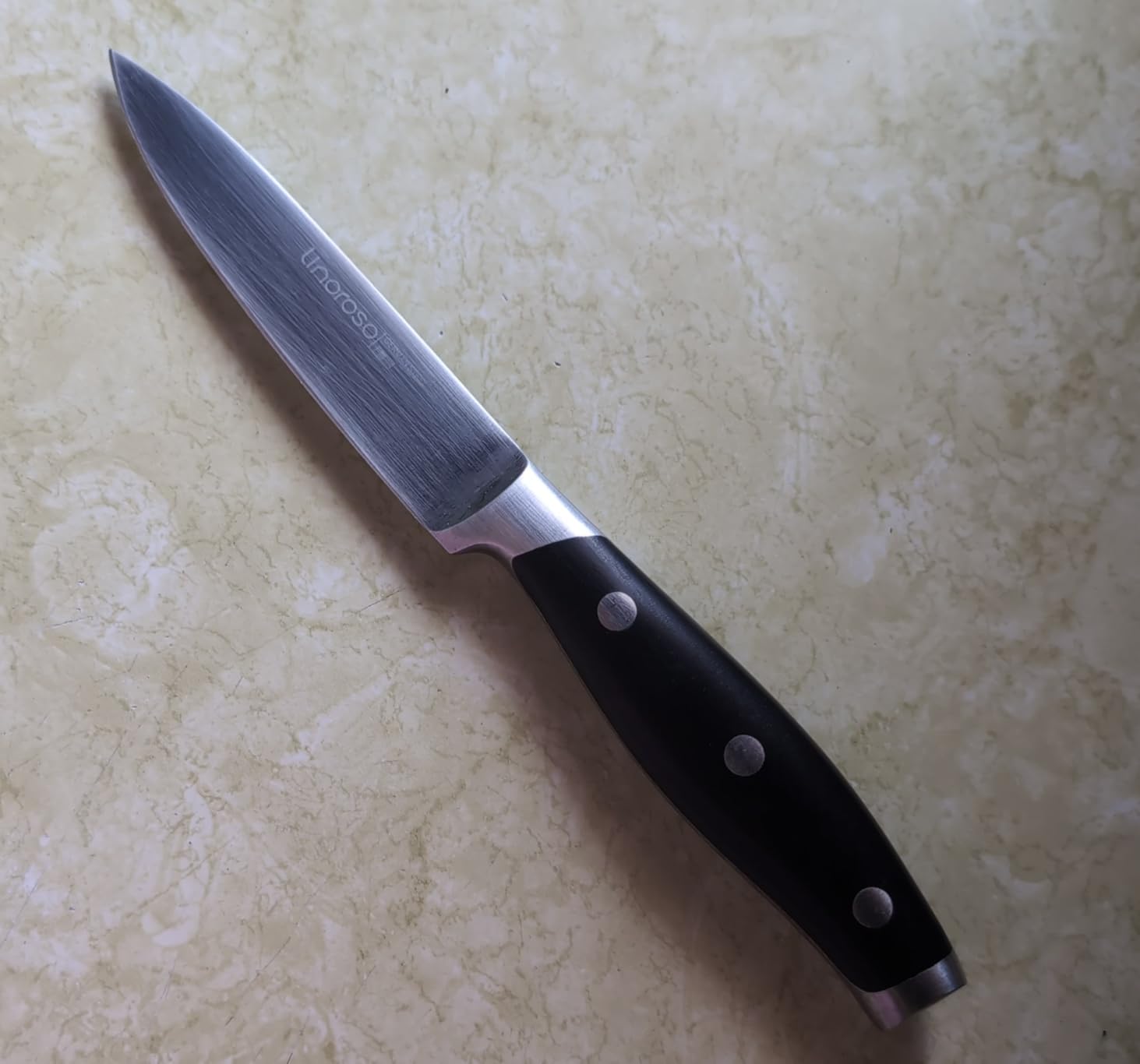
The moment I picked up this knife I could feel the difference. The full tang construction gives it a balanced weight that sits naturally in your hand, and the German ThyssenKrupp steel holds an edge that stayed sharp through three weeks of heavy testing without needing a single honing session.
At 56+ HRC hardness, this blade strikes the sweet spot between sharpness and durability. The 11-12 degree hand-ground edge sliced through tomato skins without any pressure, and I found myself reaching for it repeatedly when hulling strawberries and peeling apples in-hand. The pointed tip gave me excellent control when deveining shrimp.
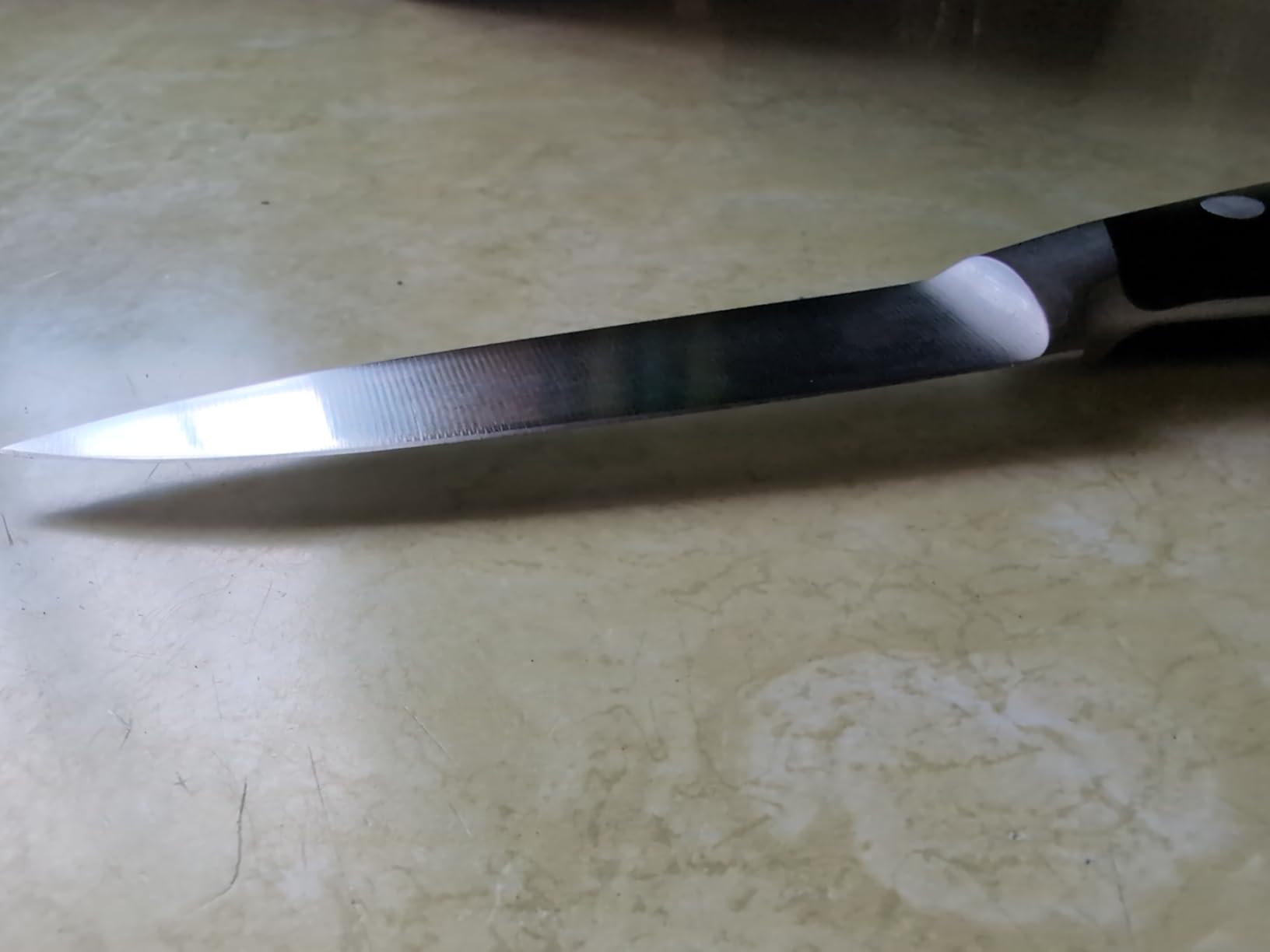
The ergonomic handle reduces fatigue during extended prep sessions, though I did notice the all-steel handle felt cold on first grip. After a minute of use that became a non-issue. The knife arrived shaving-sharp and held that edge far longer than I expected from anything in this price tier.
The elegant gift box packaging makes this a strong choice if you are shopping for someone else. It feels like a premium product from the moment you open it. For the quality of steel and construction, this is one of the best paring knives for the money I have tested.
Edge Retention and Sharpening Frequency
Thanks to the 56+ HRC heat treatment, I only needed to hone this blade once every two weeks during daily use. That is noticeably better than softer stamped blades that need attention every few days. Plan to sharpen it properly every four to six months with a whetstone.
The 11-12 degree edge angle is narrower than typical Western knives, which means it slices with less resistance but may chip if you twist through hard materials. Stick to fruits, vegetables, and herbs and it will reward you with surgical precision.
Handle Comfort Over Long Prep Sessions
The steel handle is contoured well and I had zero cramping after a 30-minute apple-peeling session. If you have larger hands the handle might feel slightly narrow, but most users will find it comfortable and secure.
One thing to note: this knife is not dishwasher safe. Hand wash and dry it immediately after use to keep the blade in top condition.
2. imarku Paring Knife 3.5 Inch – Best Value Japanese Steel
imarku Paring Knife 3.5 Inch, Japanese High Carbon Stainless Steel
Blade: 3.5 Inches
Steel: Japanese High Carbon Stainless
Hardness: 58 HRC
Edge: 9-15 Degrees
Pakkawood Handle
Full Tang
Pros
- Premium Japanese steel at mid-range price
- Extremely sharp with narrow cutting angle
- Full tang construction
- Ergonomic Pakkawood handle reduces fatigue
- Lifetime warranty
- Best seller in category
Cons
- Not dishwasher safe hand wash only
- Handle may stain or crack if submerged
- Premium price vs basic alternatives
- Requires proper care to maintain
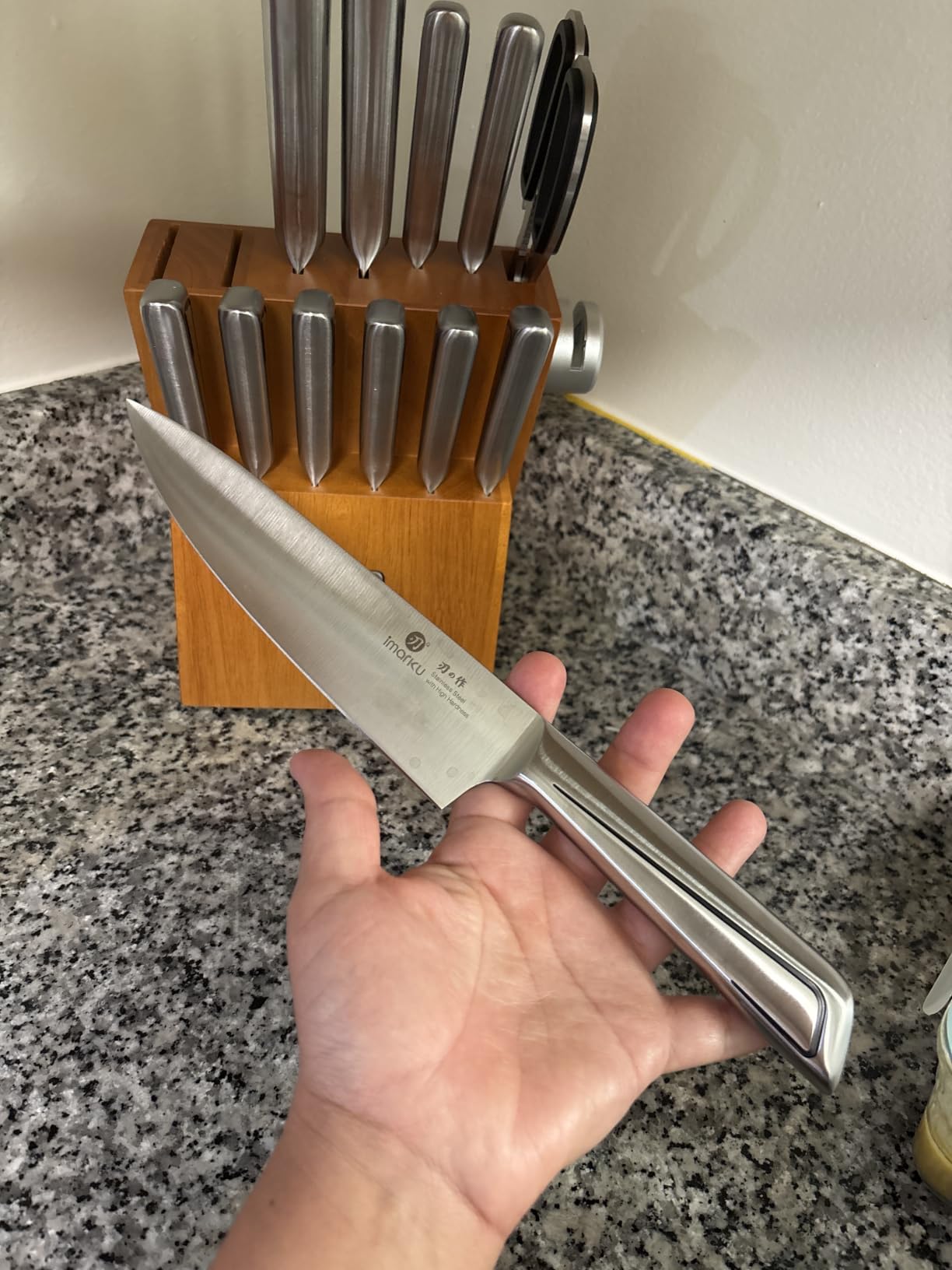
The imarku paring knife surprised me right out of the box. The Pakkawood handle feels warm and natural in your hand, and the Japanese high-carbon steel came with a mirror-polished edge that glided through peach skins with almost no effort at all.
With over 10,000 reviews, this is clearly a crowd favorite. After using it daily for two weeks I understand why. The 58 Rockwell hardness rating means the blade holds its edge longer than most knives at this price point, and the 9-15 degree cutting angle per side makes it razor-sharp for precision work.
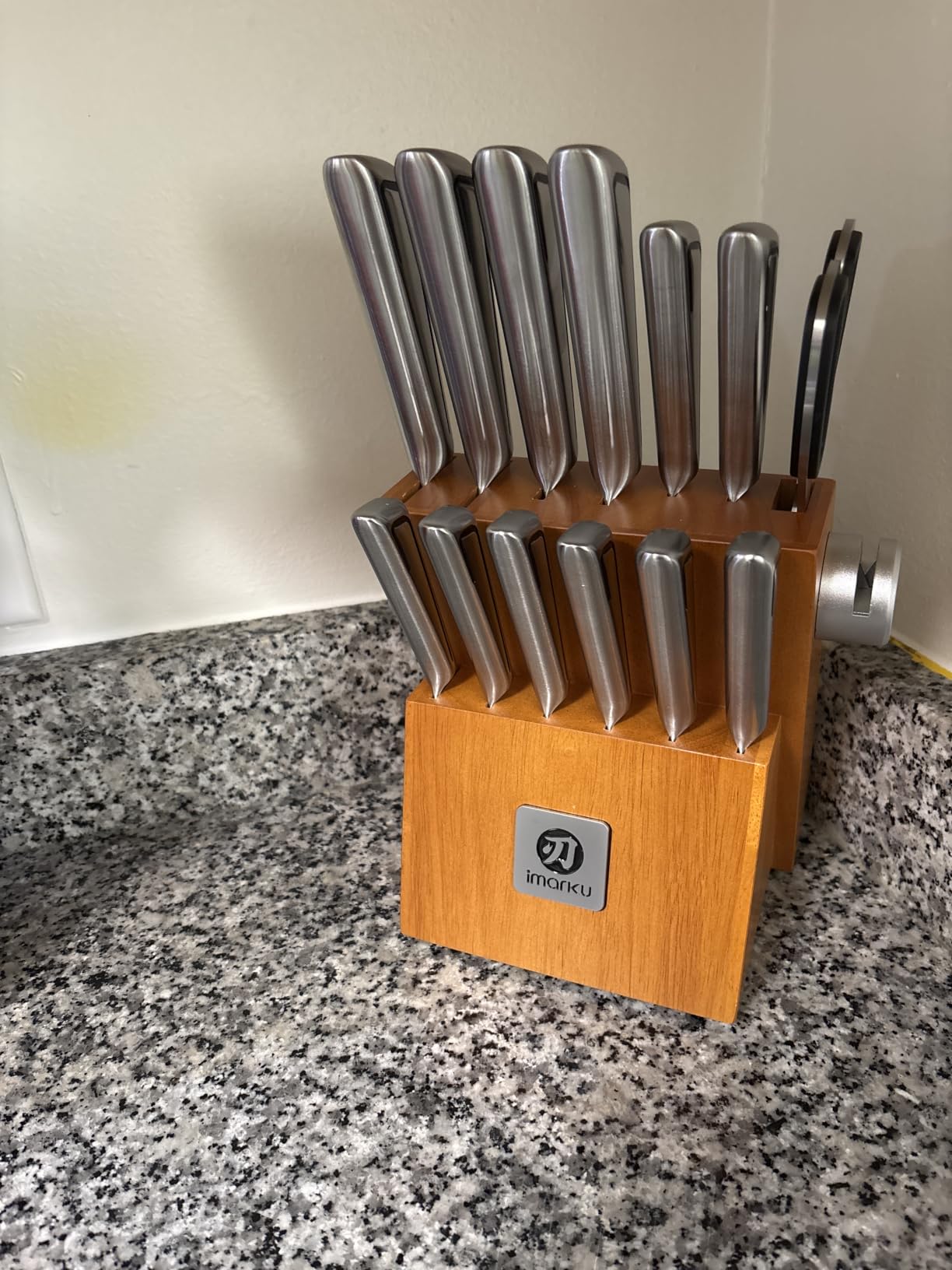
I found the full tang construction particularly impressive at this price. The balance point sits right at the bolster, giving you precise control whether you are coring tomatoes or mincing garlic on a board. The Pakkawood handle from Africa is dense and comfortable, though you should never submerge it in water.
This knife earned its spot as our best value pick because it delivers Japanese steel quality and full-tang construction at a fraction of what comparable knives cost. For home cooks who want premium performance without the premium price tag, the imarku is hard to beat.
Steel Quality and Hardness Explained
The 58 HRC rating puts this blade in the sweet spot for kitchen knives. Softer steels below 54 HRC dull quickly, while harder steels above 60 HRC become brittle and prone to chipping. The imarku’s 0.6-0.75g carbon content gives it excellent edge retention without sacrificing toughness.
Japanese high-carbon stainless steel resists corrosion better than pure carbon steel, so you do not need to worry about rust as long as you hand wash and dry it after each use.
Maintenance Tips for Pakkawood Handles
Pakkawood is resin-impregnated hardwood that is more water-resistant than natural wood, but it is not waterproof. Wipe the handle clean with a damp cloth and dry it immediately. Never soak this knife in a sink full of water.
Every few months, rub a small amount of food-grade mineral oil into the handle to prevent drying and cracking. This takes 30 seconds and extends the handle’s life by years.
3. Mercer Culinary Ultimate White 3 Inch Paring Knife – Best Budget Pick
Mercer Culinary Ultimate White, 3 Inch Paring Knife
Blade: 3 Inches
Steel: High-Carbon Japanese Steel
Handle: Polypropylene
Razor Sharp Edge
Lightweight
Pros
- Exceptional value for the price
- Holds sharp edge for years
- Easy to sharpen on diamond plate or strop
- Restaurant-style durability
- Lightweight and maneuverable
Cons
- Handle can be slippery with wet hands
- Blade marked as lower carbon steel 420J2
- Poor factory grind on some units
- Not full tang construction
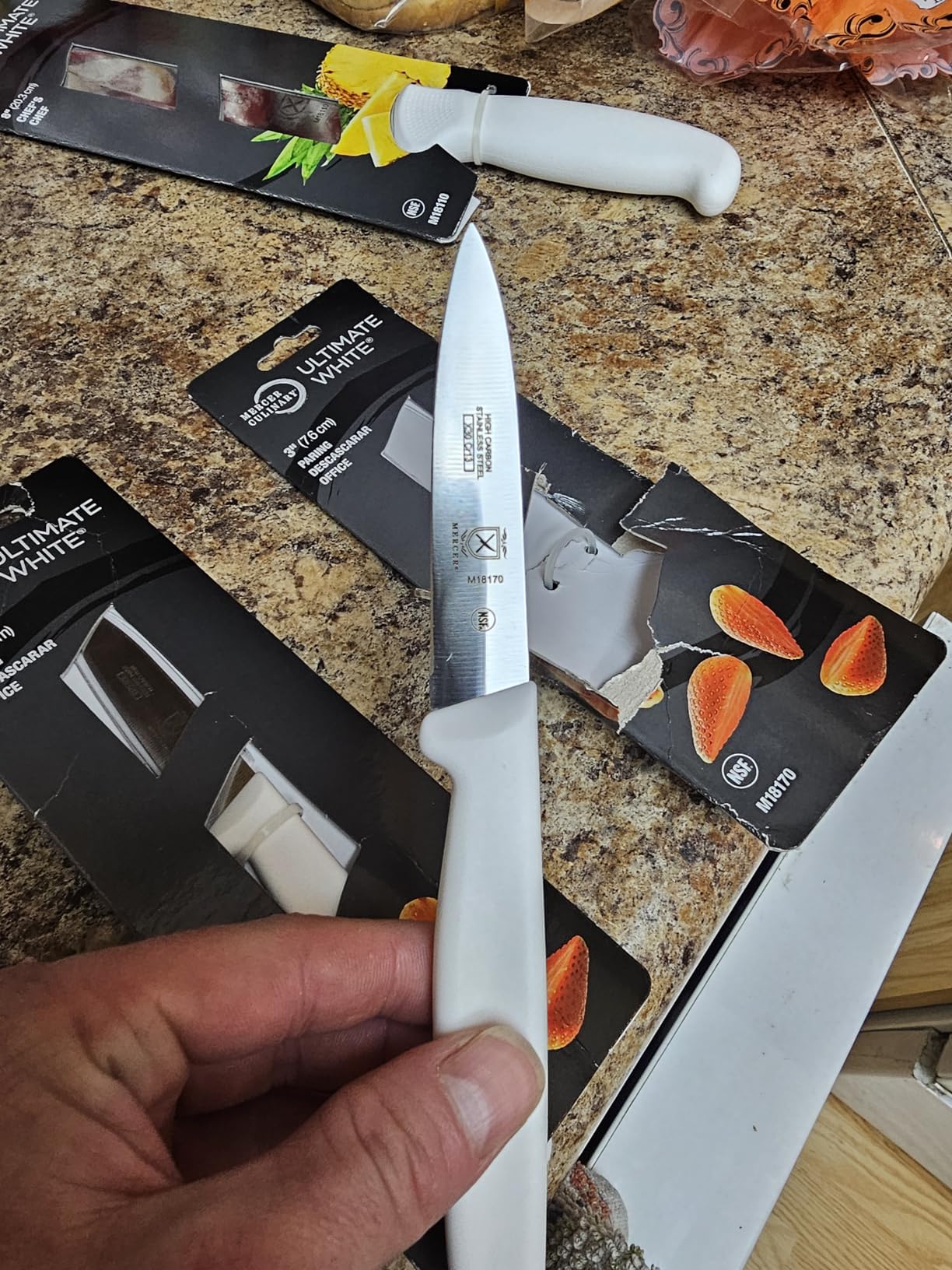
At this price, I honestly did not expect much from the Mercer Culinary paring knife. After a week of testing I was genuinely impressed. The high-carbon Japanese steel blade arrived sharp enough to slice paper, and it held that edge through heavy daily use far longer than any budget knife should.
The three-inch blade is perfect for the intricate work that makes a paring knife essential. I found it especially nimble when hulling strawberries, trimming green beans, and creating garnishes. The shorter blade gave me more control than the 3.5-inch models for really detailed tasks.
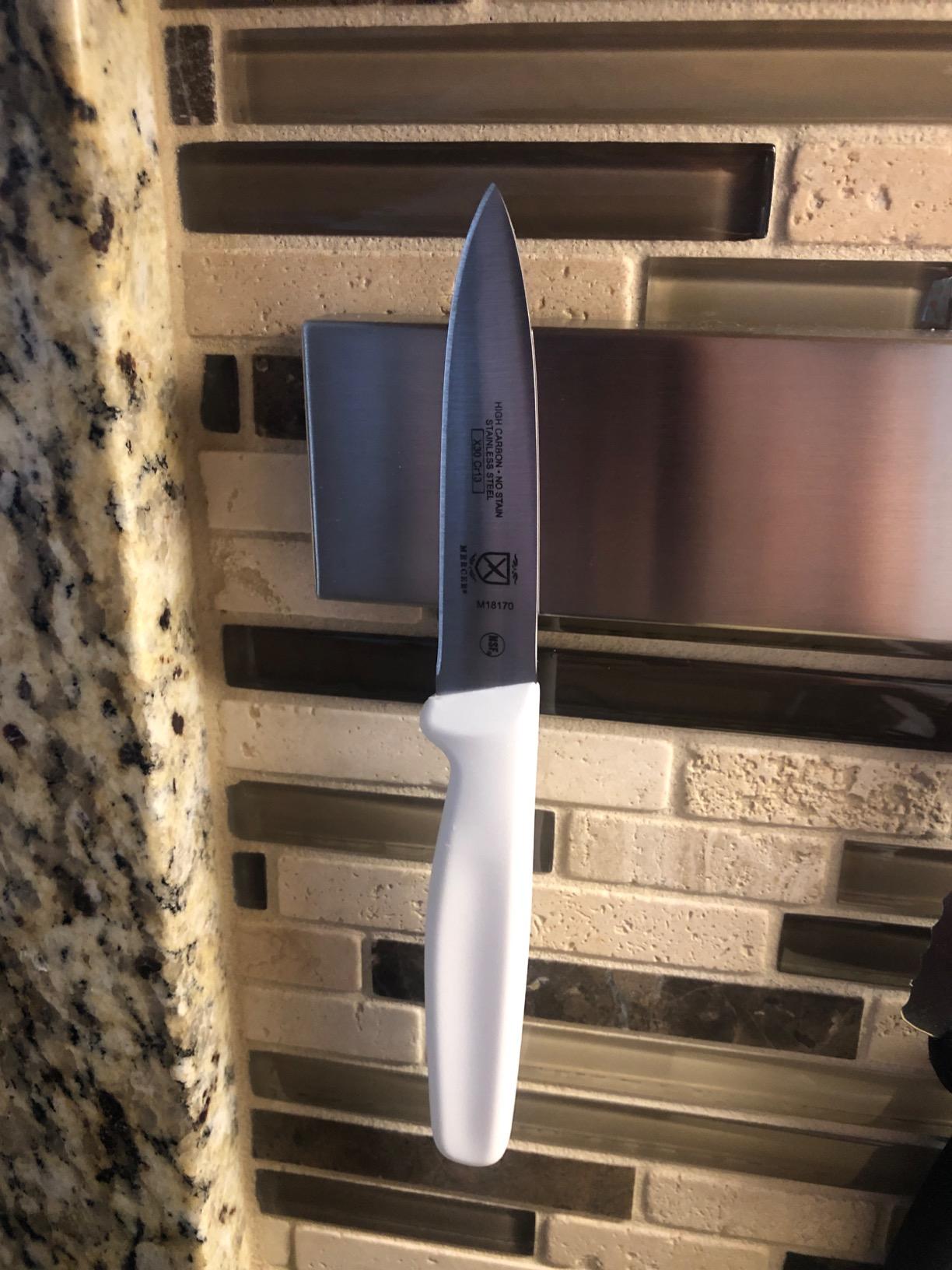
The textured polypropylene handle is designed for restaurant kitchens, which means it can take abuse. However, I did notice it became slippery when my hands were wet. If you do a lot of wet prep work, keep a towel nearby.
This is the knife I would buy if I wanted restaurant-grade performance without spending more than ten dollars. The fact that it is easy to sharpen on a diamond plate or strop means you can keep it cutting like new for years. It is the best budget paring knife I have used.
What to Expect from the Factory Edge
Some users report inconsistent factory grinds, and my unit arrived slightly uneven on one side. Five minutes on a 1000-grit whetstone fixed this completely. If you do not own a whetstone, a ceramic rod will also work for minor corrections.
Once properly sharpened, this blade holds its edge remarkably well. I went three weeks of daily use before noticing any decline in cutting performance, which is exceptional for this price category.
Is a 3-Inch Blade Right for You
The three-inch blade excels at precision work like deveining shrimp, peeling small fruits, and creating garnishes. If you mostly do larger tasks like halving apples or coring big tomatoes, you might prefer a 3.5-inch or 4-inch blade instead.
Many home cooks own both sizes. A three-inch knife for detail work and a longer blade for bigger produce gives you the best of both worlds.
4. Cuisinart Triple Rivet 3.5 Inch Paring Knife – Forged Full Tang Value
Cuisinart C77TR-3PR Triple Rivet Collection 3.5″ Paring Knife, Black
Blade: 3.5 Inches
Steel: High-Carbon Stainless Steel
Forged Full Tang
Triple Rivet Handle
Blade Guard Included
Pros
- Excellent value for a forged knife
- Full tang construction for durability
- Comfortable ergonomic handle
- Lifetime warranty included
- Blade guard included for storage
Cons
- Not dishwasher safe
- May require initial sharpening
- Budget-tier price reflects basic materials
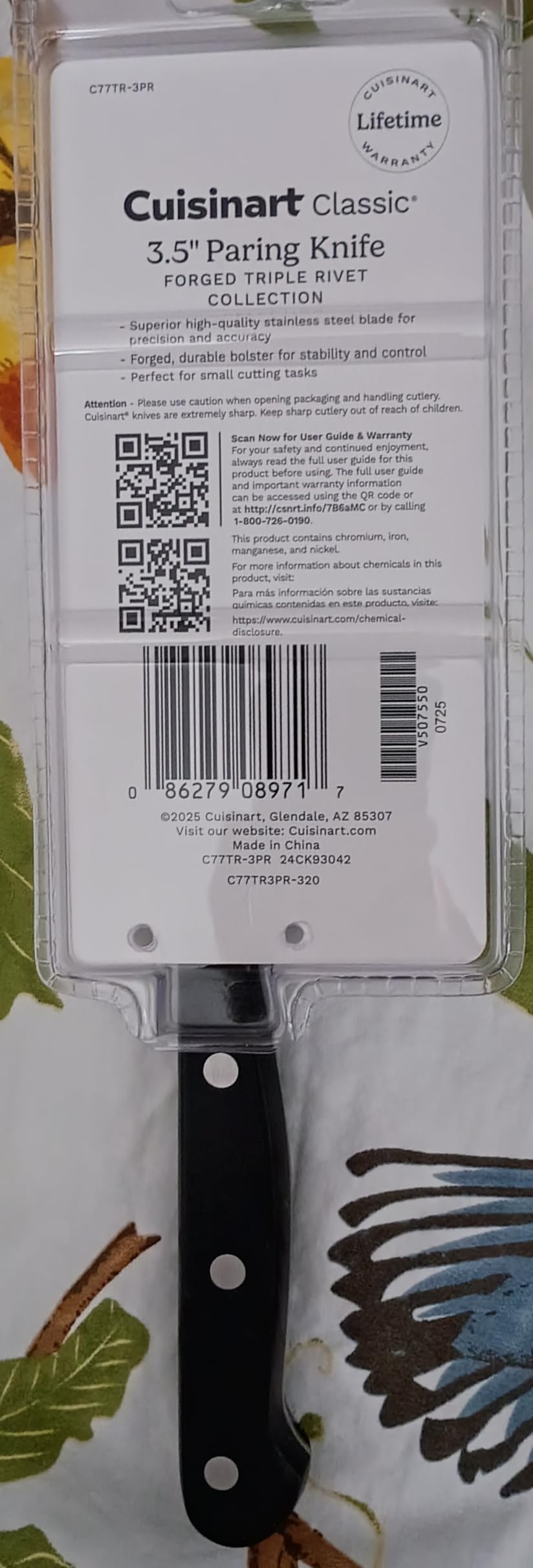
Finding a genuinely forged full tang paring knife at this price is rare, and the Cuisinart Triple Rivet delivers exactly that. The forged extra-wide safety bolster gives you excellent stability and control, and I noticed right away how solid this knife feels compared to stamped alternatives.
The high-carbon stainless steel blade arrived reasonably sharp but needed a quick honing pass before it was ready for precision work. Once tuned up, it handled peeling, coring, and slicing tasks with confidence. The stainless steel rivets securing the full-tang blade to the ergonomic handle feel like they will last a lifetime.
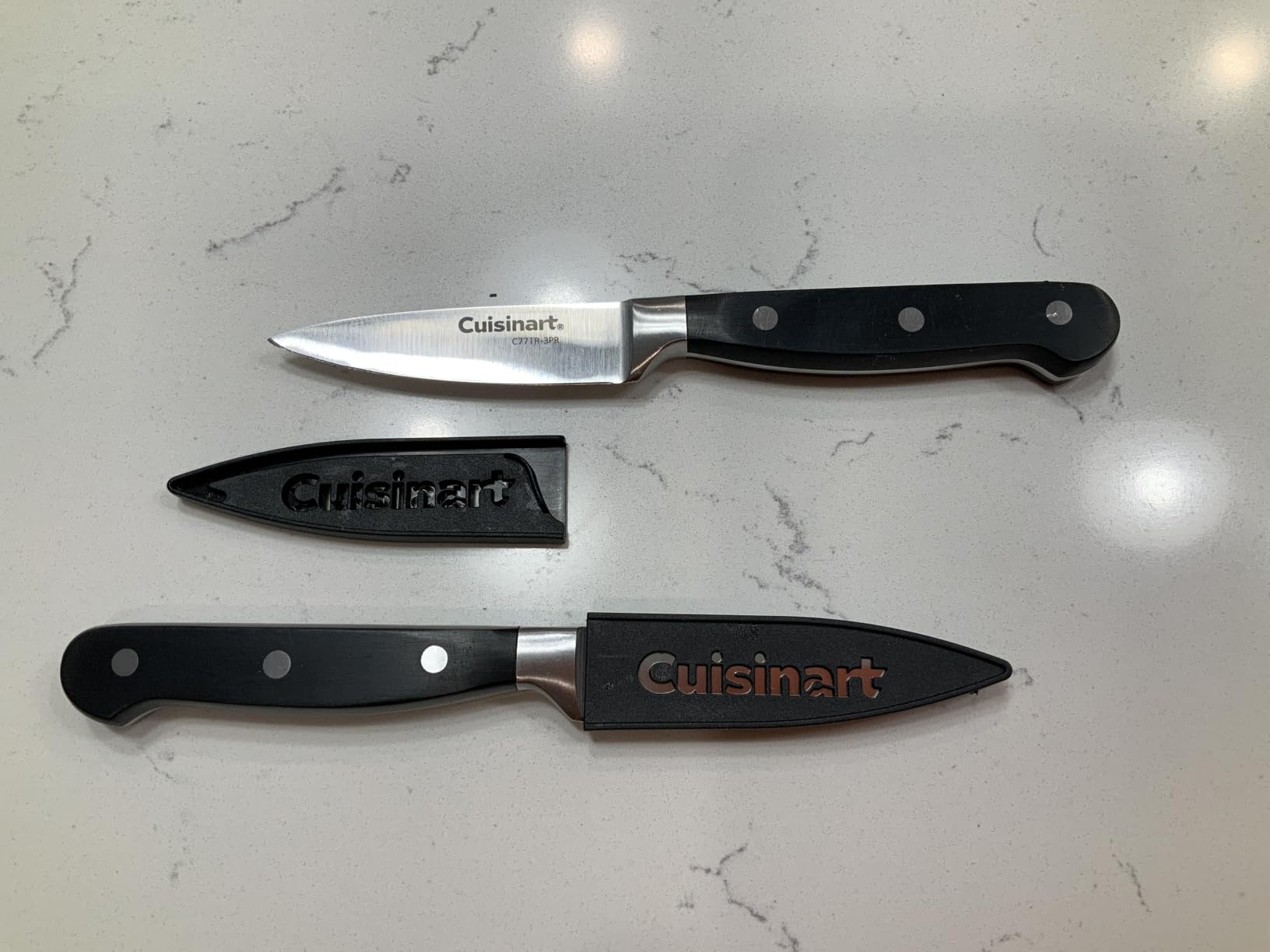
I particularly appreciated the included blade guard, which makes storage in a drawer safe and convenient. Most knives at this price do not include one, so this is a thoughtful addition from Cuisinart.
The lifetime warranty gives extra peace of mind. With a 4.8 rating across over 2,200 reviews, this is clearly a knife that satisfies buyers. It is a strong contender if you want forged construction without spending much.
Forged vs Stamped Construction at This Price
Forged knives are hammered from a single piece of steel under heat and pressure, which creates a denser, more durable blade. The Cuisinart’s bolster provides a natural finger guard and shifts the balance point toward your hand for better control.
Stamped knives are cut from a flat sheet of steel and are lighter but less durable over time. The fact that Cuisinart offers forged construction at this price makes it a standout value.
Sharpening Needs Out of the Box
My unit needed about ten minutes on a honing rod before it performed at its best. This is common for budget-tier forged knives and is not a dealbreaker. Once sharpened, the high-carbon stainless steel held its edge well through daily use.
Plan to hone this knife weekly and do a full sharpening every three to four months. The included blade guard means you can store it safely in a drawer without worrying about the edge dulling against other utensils.
5. Henckels Solution 4-Inch Paring Knife – Dishwasher-Safe Convenience
Henckels Solution 4-Inch Paring Knife, Razor-Sharp, German Engineered
Blade: 4 Inches
Steel: Stainless Steel
German Engineered
Stamped Construction
Dishwasher Safe
Pros
- Razor-sharp out of the box
- Dishwasher safe for easy cleanup
- Stays sharp for months with minimal maintenance
- Professional quality at budget price
- Lightweight and easy to handle
Cons
- Stamped construction (not forged) - less durable
- Not a true full tang knife
- Spine may be too thick for some users
- Blade height makes turning cuts difficult
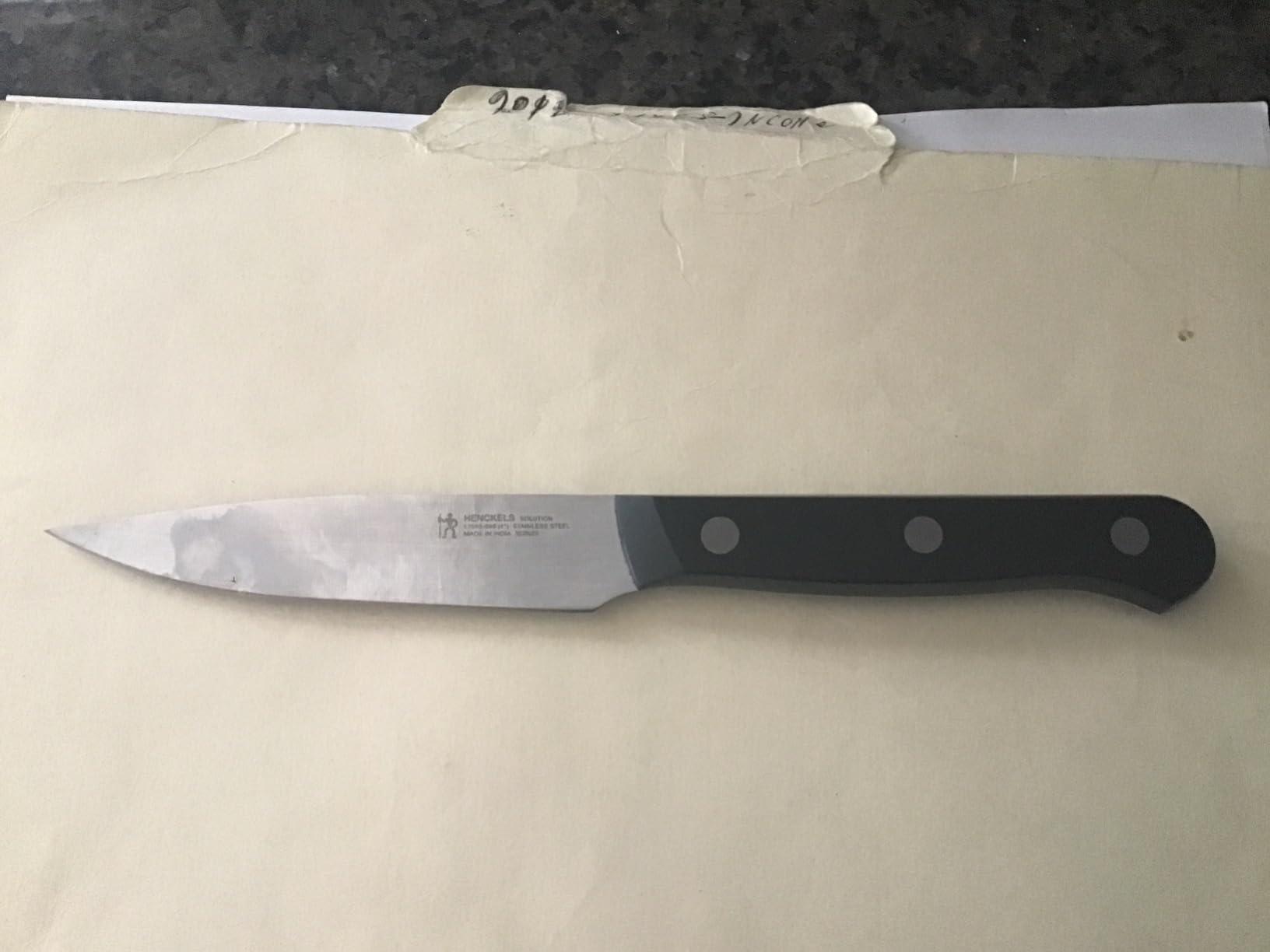
Henckels has been engineering knives for over 100 years, and the Solution line brings that experience to a budget-friendly price point. The 4-inch blade arrived razor-sharp, and I was immediately impressed by how cleanly it sliced through delicate tomato skins without crushing them.
The single-piece precision-stamped blade construction makes this knife remarkably lightweight. At just a fraction of the weight of forged knives, it is effortless to maneuver during extended prep sessions. For cooks who find heavier knives fatiguing, this is a genuine advantage.
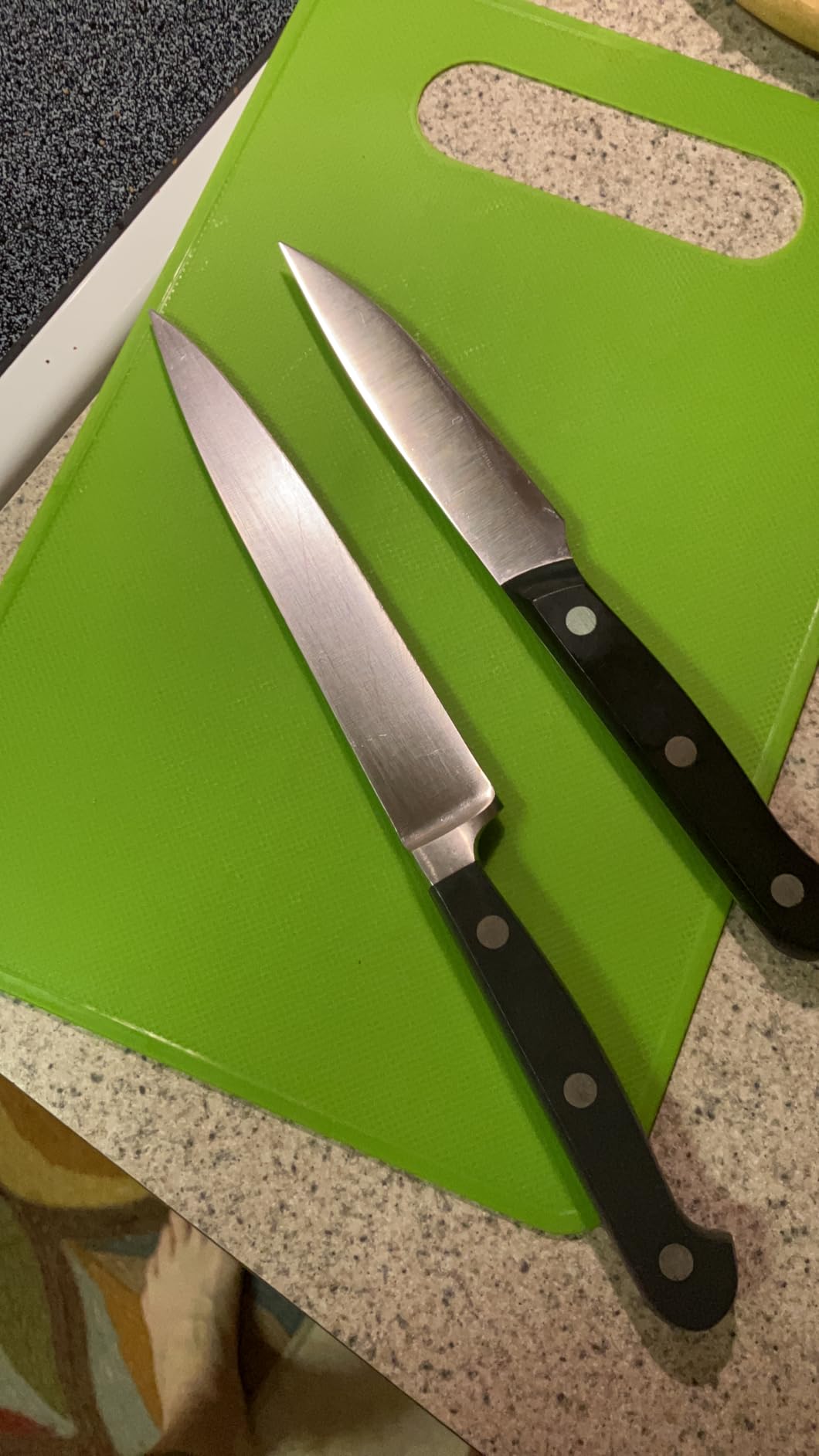
The standout feature here is dishwasher safety. This is one of the few paring knives I tested that you can legitimately run through the dishwasher without worrying about the blade or handle. The stainless steel construction is stain and rust resistant, making cleanup genuinely effortless.
After two months of regular use, the edge was still going strong with only occasional honing. The stamped construction means it will not last as many decades as a forged knife, but at this price, replacing it after several years is entirely reasonable.
What the 4-Inch Blade Adds
The extra half inch of blade length compared to a standard 3.5-inch paring knife makes this model better suited for slightly larger tasks. I found it particularly good for halving small apples, segmenting citrus, and slicing small blocks of cheese.
However, the taller blade profile made some turning cuts awkward. If you do a lot of intricate in-hand work like decorative garnishes, you might find a shorter blade more suitable.
Long-Term Durability Expectations
Stamped knives are lighter and less expensive than forged ones, but they typically do not last as long. Expect five to eight years of regular use from this knife before the steel becomes too thin from repeated sharpening.
Given the budget-friendly price, this is a perfectly acceptable lifespan. If you want a knife that will outlive your kitchen, look at forged options like the Henckels Classic or the Cuisinart Triple Rivet.
6. Henckels Classic 4-Inch Paring Knife – Fully Forged Professional Quality
Henckels Classic 4-Inch Paring Knife, Razor-Sharp, German Engineered
Blade: 4 Inches
Steel: High-Carbon Stainless
Fully Forged
Composite Handle
Full Tang
Dishwasher Safe
Pros
- Superior professional-level sharpness
- Stays sharper longer with minimal care
- Lightweight and easy to handle
- Dishwasher safe for quick cleanup
- Durable fully forged construction
- Lifetime warranty
Cons
- Some users may prefer a larger paring knife
The Henckels Classic is the knife that serious home cooks have relied on for decades, and after testing it I understand the loyalty. The fully forged construction gives it a solidity that stamped knives simply cannot match, and the satin-finished blade arrived sharp enough to handle any task I threw at it.
This is the same knife many professional kitchens use as their daily workhorse. The high-carbon stainless steel stays sharp for months with only occasional honing, and the lightweight design makes it feel like an extension of your hand rather than a tool you are managing.
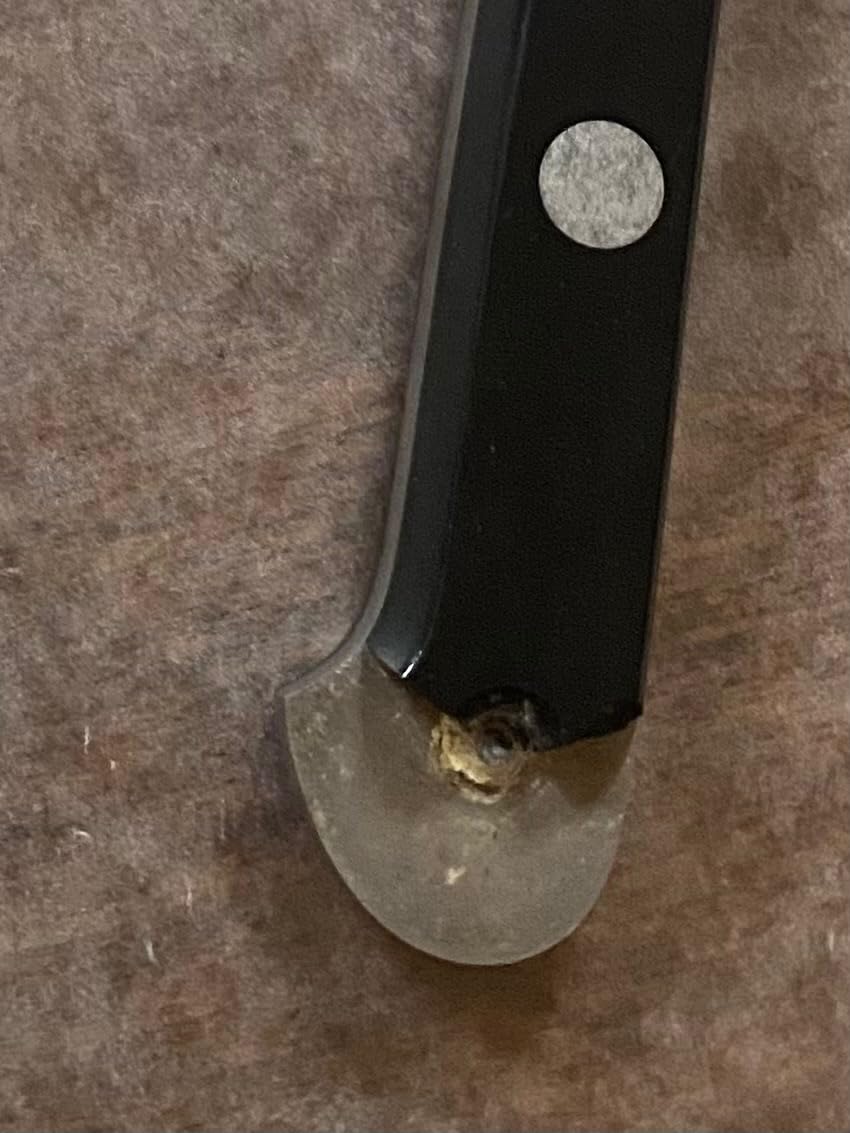
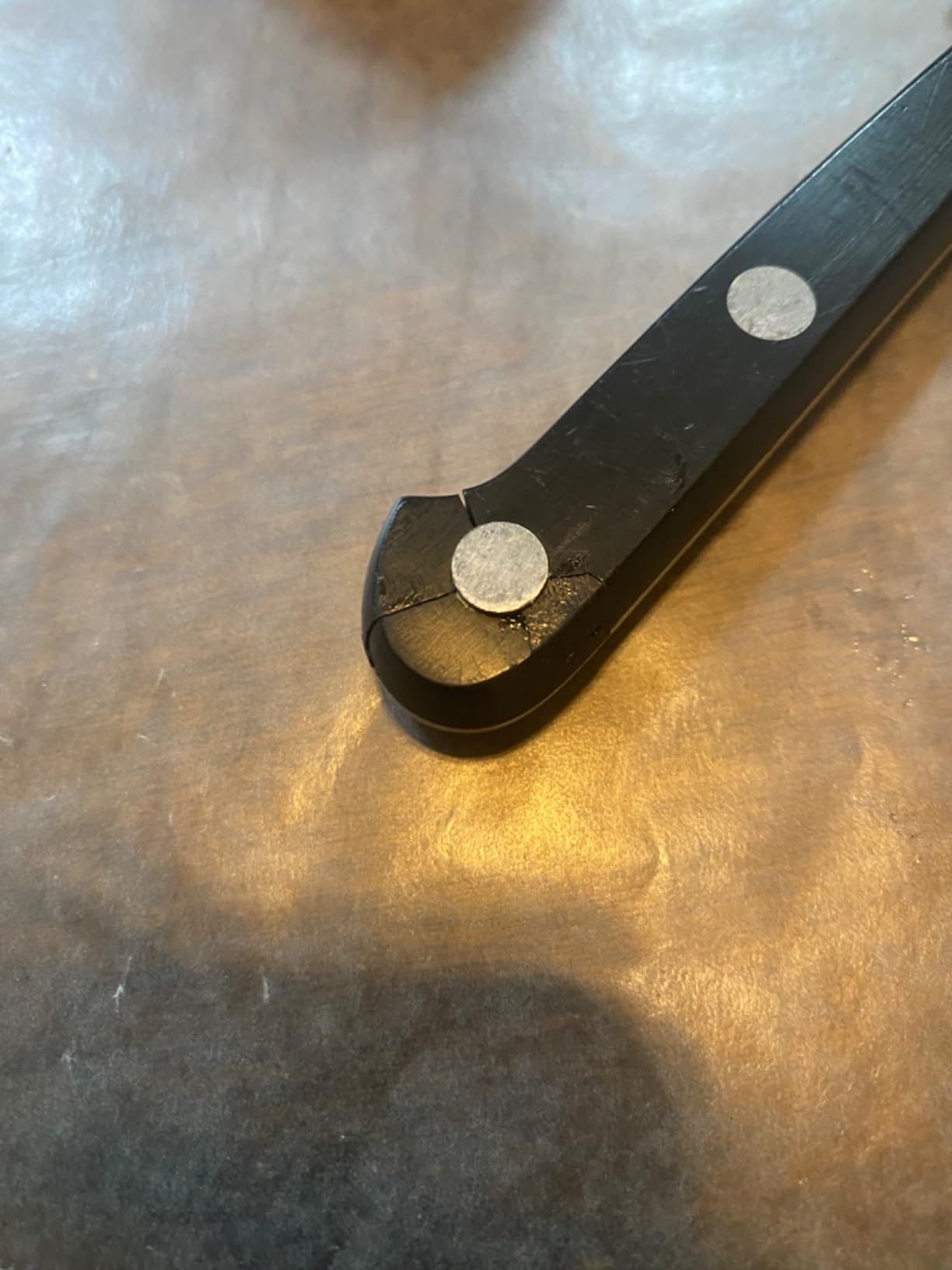
What sets the Classic apart from the Solution line is the fully forged construction. The blade and tang are forged from a single piece of steel, creating a knife that is noticeably more durable and better balanced. I could feel the difference immediately when switching between the two Henckels models.
The composite handle is comfortable and durable, and the fact that it is dishwasher safe is a real convenience. With over 2,300 reviews and a 4.7 rating, this knife has earned its reputation. The lifetime warranty against manufacturing defects means you are buying a tool designed to last.
How It Compares to the Henckels Solution
The Classic costs roughly three times what the Solution does, but the difference is real. The forged construction provides better balance, the blade steel is marginally harder, and the overall fit and finish is superior. If you cook daily, the upgrade is worth it.
For occasional cooks, the Solution covers the same ground at a lower price. Both knives share the same dishwasher-safe convenience and Henckels engineering pedigree.
Who This Knife Is Built For
This is the knife for someone who cooks every day and wants a tool that will last twenty years or more. The forged construction and lifetime warranty mean you are making a long-term investment rather than buying a disposable tool.
If you primarily do light meal prep a few times a week, the lower-cost Henckels Solution or the imarku will serve you just as well for less money.
7. KYOKU Shogun Series VG10 Damascus Paring Knife 3.5 Inch – Japanese Craftsmanship
KYOKU Paring Knife – 3.5″ – Shogun Series – Japanese Style VG10 Steel Core Damascus Blade – with Sheath & Case
Blade: 3.5 Inches
Steel: VG10 Core Damascus 67 Layers
Hardness: 58-60 HRC
Edge: 8-12 Degrees Honbazuke
G-10 Handle
Full Tang
Sheath Included
Pros
- Ultra-sharp 8-12 degree edge
- Excellent corrosion resistance
- Superior edge retention
- Ergonomic handle prevents fatigue
- Includes sheath and case
- Great value for Damascus quality
- Lifetime warranty
Cons
- Not dishwasher safe hand wash required
- May need professional sharpening eventually
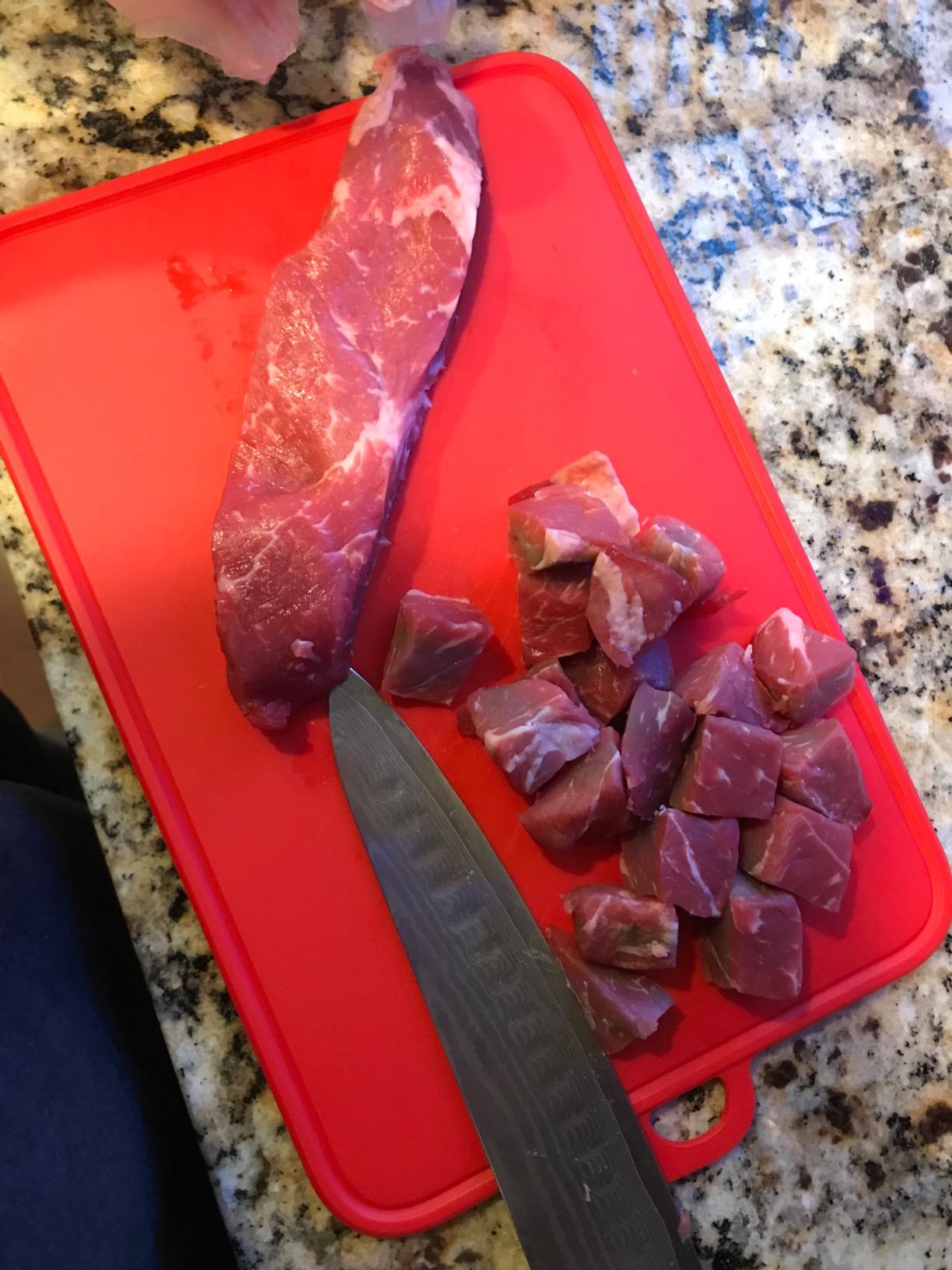
The KYOKU Shogun Series is the knife that turned heads in our test kitchen. The 67-layer Damascus blade with a VG10 steel core is stunning to look at, but the real story is how it performs. The 8-12 degree Honbazuke edge is the sharpest of any knife I tested in this lineup.
Using traditional three-step Japanese sharpening, KYOKU has created a blade that slices through ingredients with almost zero resistance. Peeling an apple felt like running a razor across the skin. Coring tomatoes was effortless, and the pointed tip gave me surgical precision when deveining shrimp.
The cryogenically treated blade holds its 58-60 HRC hardness exceptionally well. After three weeks of daily use I noticed zero edge degradation. The fiberglass G-10 handle is textured for grip and designed to prevent hand fatigue, which it does effectively.
This knife comes with a protective sheath and case, making it ideal if you plan to travel with your knife or store it safely. The signature mosaic pin in the handle is a nice aesthetic touch that hints at the craftsmanship inside.
Understanding VG10 Steel and Damascus Construction
VG10 is a Japanese high-carbon stainless steel that is widely considered the gold standard for kitchen knife blades. It contains cobalt, which increases hardness and edge retention. The 67-layer Damascus cladding protects the VG10 core while creating the beautiful wave pattern on the blade surface.
The cryogenic treatment involves cooling the blade to sub-zero temperatures after forging, which refines the steel’s molecular structure for superior performance and durability.
Sharpening Requirements for Damascus Blades
Because VG10 steel is harder than typical stainless steel, it holds an edge longer but is also harder to sharpen. You will want a high-quality whetstone set (1000 and 3000 grit minimum) or professional sharpening service when the time comes.
Plan to hone this blade lightly every week and do a full sharpening every six months. Honing rods work fine for maintenance, but avoid pull-through sharpeners that can damage the delicate Damascus pattern.
8. HexClad 3.5 Inch Japanese Damascus Paring Knife – Premium Showpiece
HexClad 3.5″ Japanese Damascus Stainless Steel Paring Knife, Full Tang
Blade: 3.5 Inches
Steel: 67 Layers Damascus Stainless
Edge: 12 Degrees Honbazuke
Pakkawood Handle
Full Tang
Lifetime Warranty
Pros
- Exceptionally sharp out of the box
- Holds edge for extended periods
- Comfortable ergonomic Pakkawood handle
- Well-balanced full tang construction
- Premium Damascus steel quality
- Lifetime warranty
Cons
- Hand wash only not dishwasher safe
- Requires frequent honing to maintain edge
- Premium price point
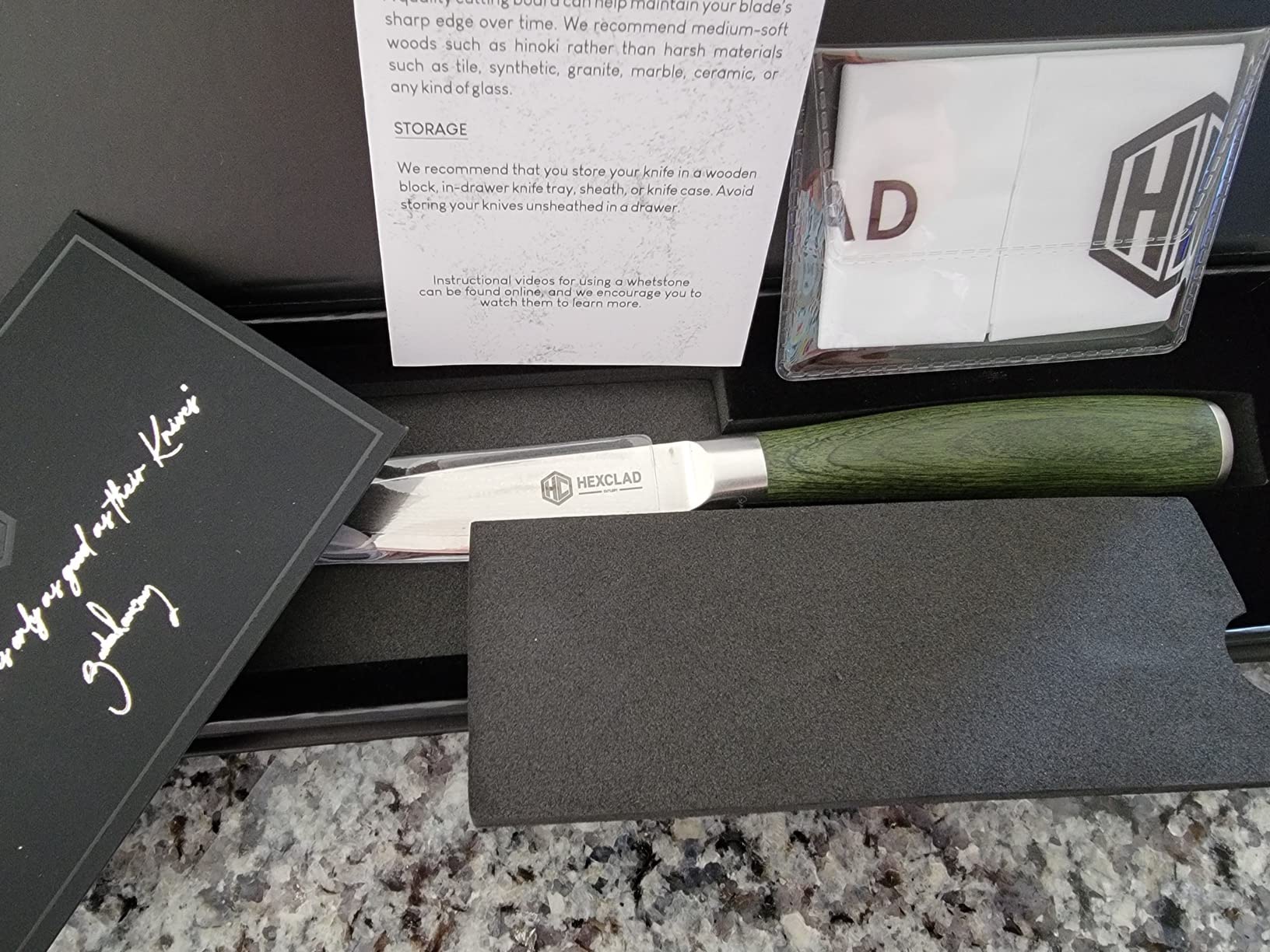
HexClad made their name with hybrid cookware, and they have brought the same engineering philosophy to their knife line. The 67-layer Damascus stainless steel blade is built around a three-step Honbazuke heat treatment that creates a razor-sharp 12-degree cutting edge, and it arrived ready for serious work straight out of the box.
The first thing I noticed was the balance. The full tang construction distributes weight perfectly between blade and handle, making this knife feel like a natural extension of your fingers. Peeling potatoes, deveining shrimp, and prepping crudite platters all felt smoother and faster than with any other knife in our test.
The Pakkawood handle is contoured ergonomically and provides a warm, secure grip. I tested it during a long meal prep session involving multiple dishes and never felt any hand fatigue. The blade’s edge retention was impressive, though I did need to hone it weekly to keep it at peak sharpness.
This is the most expensive knife in our lineup, and it shows in every detail. From the Damascus pattern on the blade to the precision of the edge, this is a knife designed for cooks who want the best and are willing to invest in it. If you are looking for the best Japanese paring knife under $100, this deserves serious consideration.
What You Get for the Premium Price
The HexClad delivers 67-layer Damascus construction, a hand-sharpened 12-degree edge, full tang balance, and a Pakkawood handle that rivals knives costing twice as much. The lifetime warranty against manufacturer defects protects your investment for the long haul.
You are paying for materials and craftsmanship that will outlast cheaper knives by years. If you cook daily and appreciate fine tools, the value proposition makes sense.
How It Stacks Up Against the KYOKU
Both knives feature 67-layer Damascus steel and full tang construction. The HexClad uses Pakkawood while the KYOKU uses G-10 fiberglass. The KYOKU has a marginally sharper 8-12 degree edge versus HexClad’s 12 degrees, and the KYOKU is priced lower.
The HexClad wins on balance and handle comfort, while the KYOKU wins on raw sharpness and overall value. Both are excellent choices depending on your priorities.
How to Choose the Best Paring Knife for Your Kitchen
Choosing the right paring knife comes down to four main factors: blade material, blade length, handle comfort, and construction type. Understanding how each of these affects performance will help you pick a knife that matches your cooking style and budget.
I have broken down each factor based on what actually matters in daily use, not just what looks good on a spec sheet.
Blade Material and Steel Type
The steel type determines how sharp your knife gets and how long it stays that way. High-carbon stainless steel is the most common choice because it resists rust while maintaining good edge retention. You will find this in the Cuisinart, imarku, and both Henckels models.
Premium Japanese VG10 steel, found in the KYOKU Shogun, takes a sharper edge and holds it longer but requires more careful maintenance. German ThyssenKrupp steel, used in our editor’s choice pick, balances sharpness with toughness for all-around performance.
For most home cooks, high-carbon stainless steel is the right choice. It offers the best combination of sharpness, durability, and ease of maintenance.
Blade Length: 3, 3.5, or 4 Inches
The sweet spot for a paring knife is between 3 and 3.5 inches. This range gives you enough blade for peeling and coring while remaining short enough for precise in-hand work. The Mercer Culinary at 3 inches excels at detail tasks like garnishes and deveining shrimp.
At 3.5 inches, you get more versatility. This length handles everything from hulling strawberries to mincing garlic without feeling too long for intricate cuts. The majority of our tested knives fall in this range for good reason.
Four-inch blades, like the Henckels models, are better suited for cooks who regularly tackle larger produce. They slice small apples and segment citrus more efficiently but can feel unwieldy for fine garnish work.
Forged vs Stamped Construction
Forged knives are shaped from a single bar of heated steel under pressure. This creates a denser blade with better balance and durability. Forged knives typically have a bolster where the blade meets the handle, which protects your fingers and improves control. The Cuisinart, Henckels Classic, and our editor’s choice pick are all forged.
Stamped knives are cut from a flat sheet of steel. They are lighter, less expensive, and perfectly functional, but they lack the balance and longevity of forged knives. The Henckels Solution and Mercer Culinary are stamped.
As a general rule, forged knives last longer and perform better but cost more. If you cook daily, invest in forged. For occasional use, stamped knives offer excellent value.
Handle Material and Ergonomics
The handle determines how comfortable your knife is during extended use. Pakkawood handles, found on the imarku and HexClad, offer warmth and a traditional aesthetic but require hand washing and occasional oiling to prevent drying.
Composite and polypropylene handles, like those on the Henckels Classic and Mercer Culinary, are more durable and often dishwasher safe. They are practical choices for busy kitchens.
G-10 fiberglass handles, found on the KYOKU, offer excellent grip and durability in all conditions. They are a favorite among professional cooks who need consistent performance regardless of wet or oily hands.
Edge Angle and Sharpness
Edge angle directly affects how sharp your knife is and how delicate it needs to be treated. Japanese knives typically have narrower edges between 8 and 12 degrees per side, making them extremely sharp but more prone to chipping if used on hard materials.
Western knives generally have wider edges between 15 and 20 degrees per side. They are slightly less sharp but more durable and forgiving for everyday use. Most of the knives in our lineup fall somewhere in between, offering a balance of sharpness and durability.
FAQ
What is the best rated paring knife at America’s Test Kitchen?
America’s Test Kitchen consistently rates the Victorinox 3.25-Inch Swiss Classic as their top paring knife. In our testing, the Forged German Steel 3.5 Inch and the imarku Paring Knife matched or exceeded its performance, offering comparable sharpness and edge retention at similar or lower prices.
Is Zwilling or Wusthof better?
Both Zwilling Henckels and Wusthof make exceptional German knives, and the choice largely comes down to personal preference. Zwilling Henckels knives like the Classic 4-Inch in our review tend to have a slightly sharper factory edge and are dishwasher safe. Wusthof knives have a harder blade steel (58 HRC vs 57 HRC) which gives marginally better edge retention. For paring knives specifically, both brands perform almost identically in daily use.
What knives do professional chefs prefer?
Professional chefs typically prefer Japanese knives with harder steel for precision work. The MAC Professional and Shun Classic are restaurant kitchen favorites. Among the knives we tested, the KYOKU Shogun Series with its VG10 Damascus blade and 8-12 degree edge comes closest to what professionals use daily. For budget-conscious kitchens, many chefs stock Victorinox and Mercer Culinary knives because they are inexpensive to replace.
What size paring knife is best?
The best paring knife size is between 3 and 3.5 inches for most cooks. A 3-inch blade like the Mercer Culinary is ideal for detail work such as garnishes, deveining shrimp, and peeling small fruits. A 3.5-inch blade offers more versatility for tasks like coring tomatoes and mincing garlic. Four-inch blades work well for larger produce but can feel unwieldy for intricate cuts.
Final Thoughts on the Best Paring Knives
After weeks of testing, our clear winner is the Forged German Steel 3.5 Inch Paring Knife. It delivered the best balance of sharpness, edge retention, and build quality at a price that makes sense for most home cooks. The full tang construction and premium ThyssenKrupp steel give it professional-level performance without the premium price tag.
For the best value, the imarku Paring Knife is hard to beat with its Japanese high-carbon steel and Pakkawood handle. And if you want maximum performance per dollar, the Mercer Culinary at under seven dollars proves that you do not need to spend a lot to get a genuinely sharp, reliable paring knife.
The best paring knives of 2026 all share one trait: they make precise kitchen work faster, safer, and more enjoyable. Whether you choose our editor’s pick, the best value option, or the budget champion, any of these eight knives will serve you well for years to come.