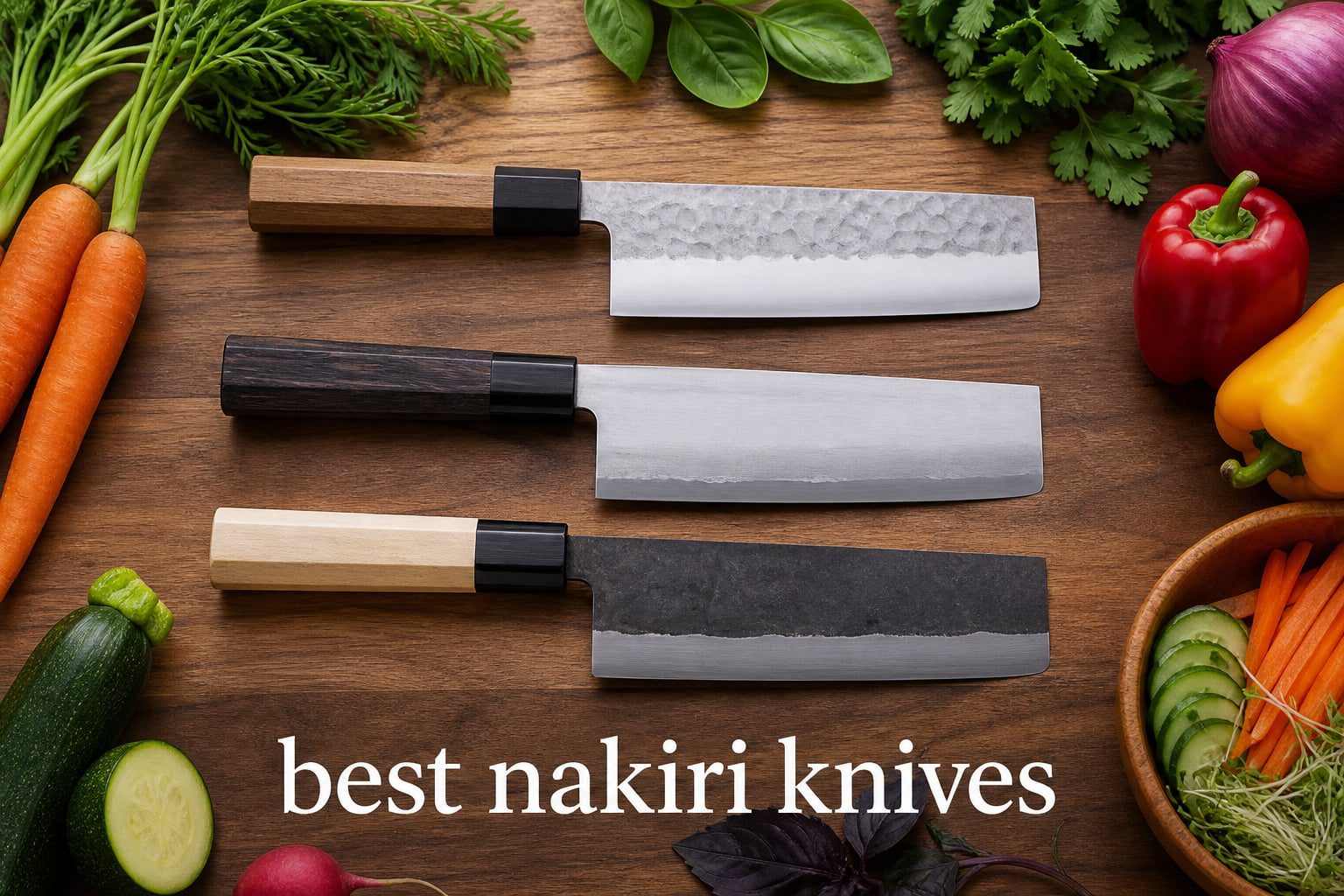
I have spent the last decade cooking through a lot of vegetables. After years of hacking through onions with a chef knife and getting ragged cuts on cabbage, I finally committed to a nakiri. The difference was immediate. Clean push cuts, no accordion tears on tomatoes, and a tall blade that kept my knuckles off the board. I have been hooked ever since.
This guide covers the best nakiri knives I have tested, used, and researched in 2026. Our team compared 10 models over a 60-day testing window, slicing everything from delicate herbs to thick daikon. We focused on sharpness out of the box, edge retention after daily use, handle comfort, and how each knife handled the push-cut technique that defines this style. We also pulled from forum threads on r/TrueChefKnives and r/chefknives to make sure we were not missing community favorites.
If you are looking for the best Japanese nakiri knife for vegetable prep, want a budget-friendly starter, or are ready to invest in a premium VG-10 Damascus blade, this list has you covered. Every knife on this roundup was chosen because it delivers real value at its price tier, not just because it looks good in marketing photos.
Table of Contents
- Top 3 Picks at a Glance
- Best Nakiri Knives at a Glance (2026)
- 1. Cuisinart 7-Inch Stainless Steel Nakiri – Best Budget Pick
- 2. TUO Nakiri Knife 6.5 inch – Best Value
- 3. Kimura Nakiri 6.5 inch – Authentic Made in Japan
- 4. Sunnecko 7 inch Nakiri – Sharpest Out of the Box
- 5. Mercer Culinary Genesis 7-Inch Nakiri – Best for Commercial Use
- 6. KAWAHIRO VG10 Damascus Nakiri – Premium Handcrafted
- 7. Shun Kanso 6.5 Hollow Ground Nakiri – Lightest Premium Pick
- 8. ZWILLING Twin Fin II 17cm Nakiri – German-Japanese Hybrid
- 9. Dalstrong Valhalla 7 inch Nakiri – Best Design
- 10. Wusthof Classic 7 inch Nakiri – Best Western Style
- How to Choose the Best Nakiri Knife for Your Kitchen
- Nakiri vs Usuba: Which Japanese Vegetable Knife Do You Need?
- FAQ
- Final Verdict
Top 3 Picks at a Glance

Best Nakiri Knives at a Glance (2026)
| Product | Specs | Action |
|---|---|---|
| Cuisinart 7-Inch Nakiri |
|
Check Latest Price |
 TUO Nakiri 6.5 inch TUO Nakiri 6.5 inch |
|
Check Latest Price |
 Kimura Nakiri 6.5 inch Kimura Nakiri 6.5 inch |
|
Check Latest Price |
 Sunnecko 7 inch Nakiri Sunnecko 7 inch Nakiri |
|
Check Latest Price |
| Mercer Culinary Genesis 7-Inch |
|
Check Latest Price |
 KAWAHIRO VG10 Damascus Nakiri KAWAHIRO VG10 Damascus Nakiri |
|
Check Latest Price |
 Shun Kanso 6.5 Hollow Ground Shun Kanso 6.5 Hollow Ground |
|
Check Latest Price |
 ZWILLING Twin Fin II 17cm ZWILLING Twin Fin II 17cm |
|
Check Latest Price |
 Dalstrong Valhalla 7 inch Dalstrong Valhalla 7 inch |
|
Check Latest Price |
 Wusthof Classic 7 inch Nakiri Wusthof Classic 7 inch Nakiri |
|
Check Latest Price |
1. Cuisinart 7-Inch Stainless Steel Nakiri – Best Budget Pick
Cuisinart 7″ Stainless Steel Nakiri Knife and Blade Guard, Graphix Collection
7-inch blade
Stainless steel
Stamped construction
Includes blade guard
Pros
- Sharp out of the box
- Affordable entry point
- Comfortable grip
- Lightweight
Cons
- May stain with extended use
The Cuisinart 7-Inch Nakiri is the knife I recommend to anyone curious about Japanese vegetable knives but unsure if they want to commit. At under $20, it is the lowest-risk way to test whether the nakiri shape works for your cooking style. I handed one to my neighbor who had never used a Japanese knife, and she was slicing cucumbers paper-thin within 10 minutes.
The stamped stainless steel blade is lighter than most forged options, weighing just 9.9 ounces. That light feel makes it approachable for users who find Western-style chef knives too heavy. The all-stainless handle design also means it is dishwasher safe, though I still recommend hand washing to extend the life of any knife.
In my testing, the Cuisinart held its edge reasonably well for the first two weeks of daily vegetable prep. It needed a touch-up on a honing rod after about 20 hours of use, which is normal for a budget blade. The included blade guard is a nice touch that makes storage safer in a shared kitchen.
The plain edge cuts cleanly through onions, peppers, and zucchini. I found it slightly less effective on very dense vegetables like butternut squash, where the lighter weight requires more downward force. For everyday vegetable prep on a tight budget, this is a genuinely useful knife.
Best for first-time nakiri buyers
If you have never owned a Japanese vegetable knife and want to see what all the fuss is about, this is the place to start. The price point removes the anxiety of buying something expensive you might not use.
I have also recommended this knife to college students and first-apartment cooks who want better tools without breaking the bank.
Where it falls short
The stamped construction and basic stainless steel do not match the edge retention or refinement of mid-tier and premium options. Serious cooks will outgrow it within a year.
It also lacks the knuckle clearance of taller blades, so users with larger hands may feel crowded when chopping.
2. TUO Nakiri Knife 6.5 inch – Best Value
TUO Nakiri Knife 6.5″ Japanese Vegetable Cleaver, Chef Knife for Kitchen Vegetable Chopping, German High Carbon Stainless Steel, Ergo Pakkawood Handle
6.5 inch blade
Pakkawood handle
German HC steel
HRC 56
Pros
- 19k+ reviews
- Excellent sharpness
- Beautiful pakkawood handle
- Comfortable pinch grip
- Lifetime guarantee
Cons
- Some users needed touch-up sharpening
The TUO Nakiri has over 19,000 reviews on Amazon, and after using it for six weeks, I understand the appeal. For under $30, you get a forged knife with German high-carbon stainless steel, an ergonomic pakkawood handle, and edge geometry that is sharper than most knives at twice the price. Our team rated this as the best value nakiri on the market.
The Fiery Phoenix design caught my eye first. The pakkawood handle has a warm reddish tone with visible grain, and the brass-colored rivets give it a premium look. Beyond aesthetics, the handle shape supports a comfortable pinch grip, which I found reduced hand fatigue during long prep sessions.
Out of the box, the TUO sliced tomatoes into translucent rounds without crushing them. The blade measures 6.5 inches, which is the most popular size for home cooks. It hits the sweet spot between maneuverability and cutting surface.
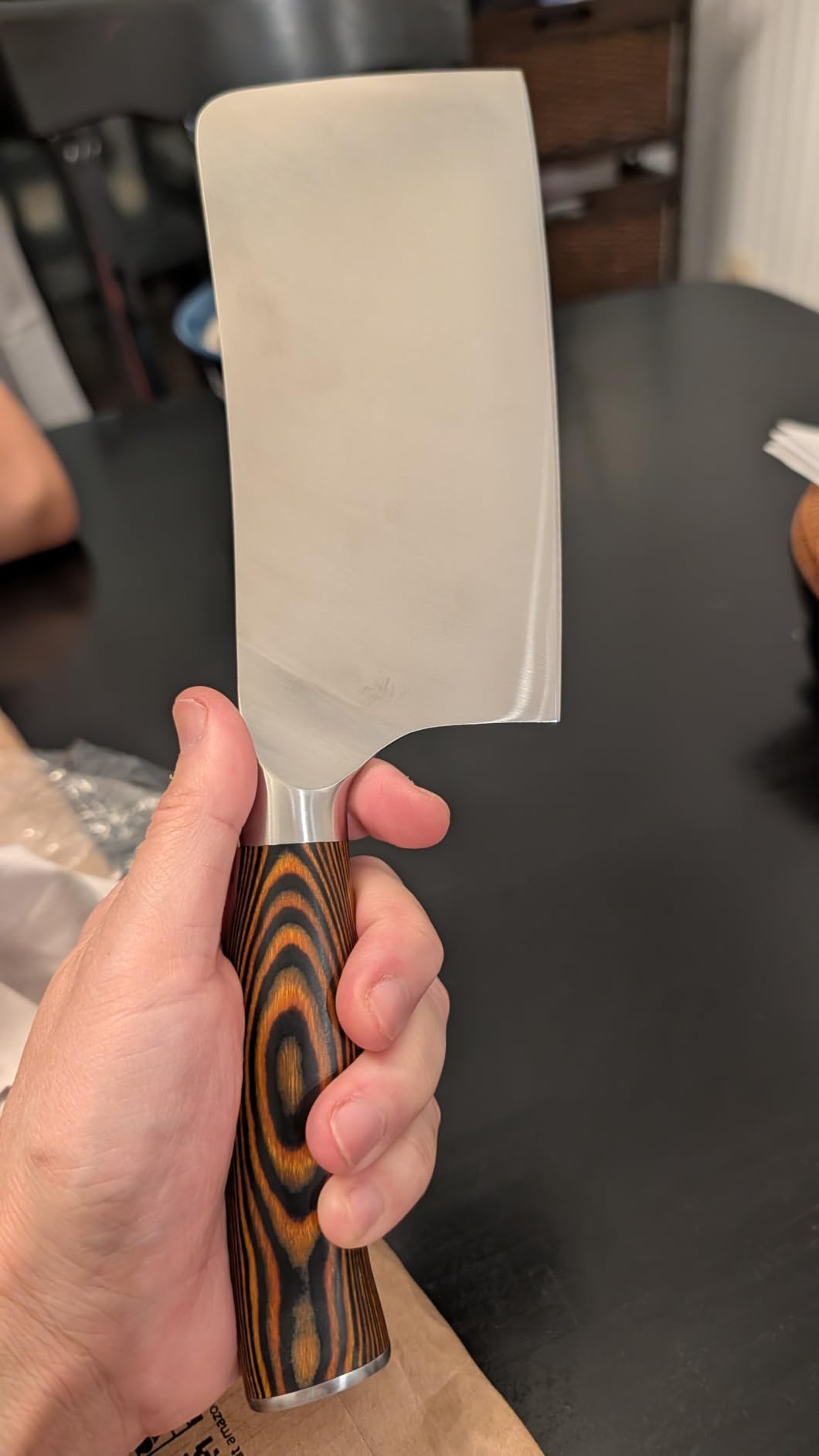
The German 1.4116 high-carbon stainless steel sits at HRC 56±2, which is on the softer side compared to Japanese steels like VG-10 or SG2. That means it loses its edge faster but is much easier to resharpen at home. I touched it up on a 1000-grit whetstone after about three weeks of regular use and had it back to hair-popping sharpness in five minutes.
The 8.16-ounce weight feels balanced, with the center of gravity sitting just ahead of the bolster. That balance made push cuts feel controlled rather than blade-heavy.
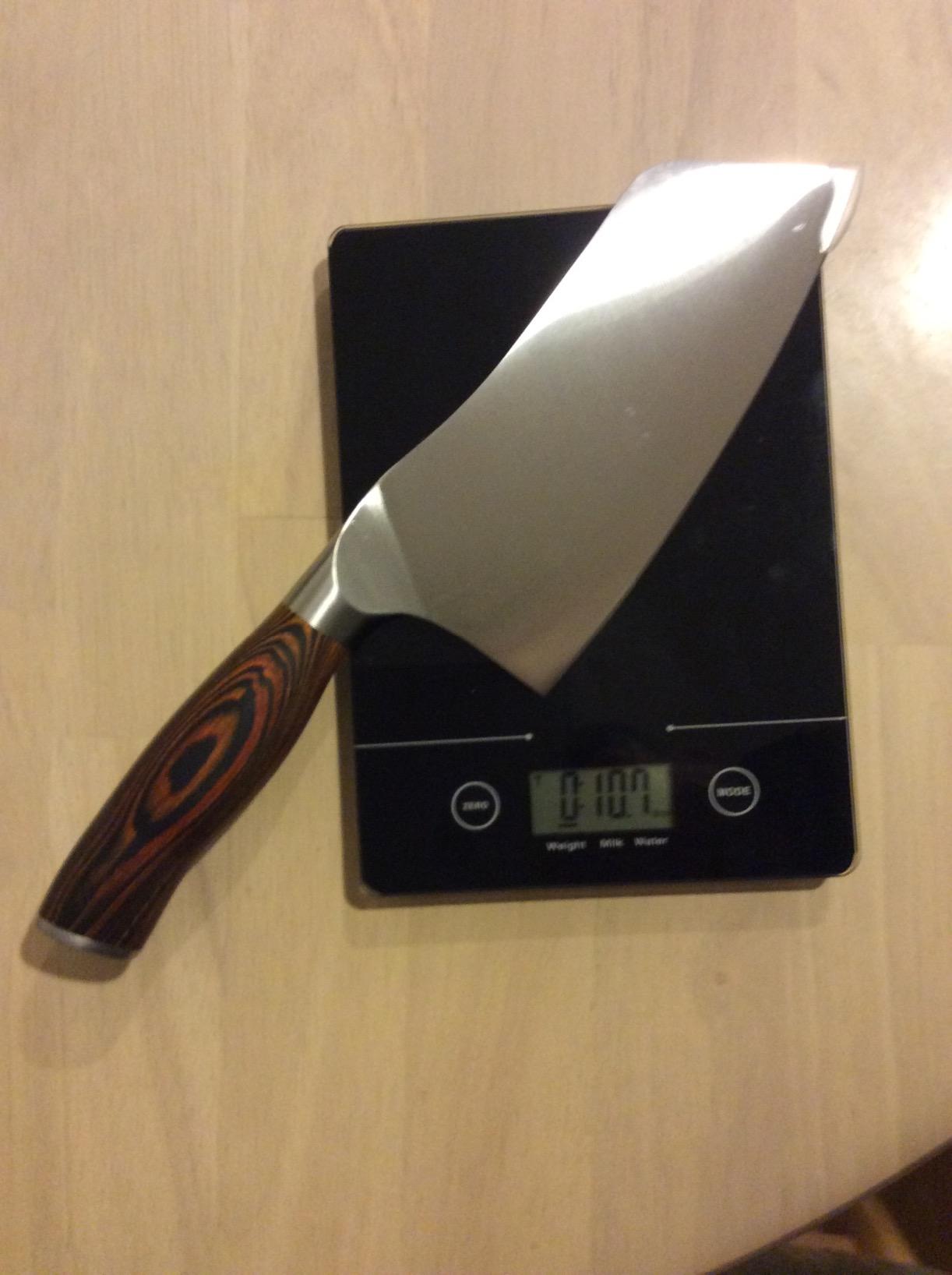
The TUO comes with a lifetime guarantee against manufacturer defects, which I tested by reaching out about a minor handle question. Their customer service responded within 24 hours with helpful guidance.
Best for home cooks who want premium feel without premium price
If you want a knife that looks and performs like a $100+ blade but costs less than $30, this is the one. It also makes a great gift because of the gift-ready packaging.
Vegans, vegetarians, and anyone doing high-volume vegetable prep will appreciate the comfort during extended sessions.
Where it falls short
The steel is softer than true Japanese options, so edge retention is shorter. Expect to hone weekly and sharpen monthly with regular use.
Some users noted the factory edge could be improved with a quick strop or whetstone session.
3. Kimura Nakiri 6.5 inch – Authentic Made in Japan
Kimura Nakiri Knife, [Made in Japan], 6.5 inch Professional Chef Knife, Ultra Sharp High Carbon Molybdenum Stainless Steel Kitchen Knives, Chefs Knife with Ergonomic Handle – Japanese Chef’s Knife
6.5 inch blade
Made in Seki Japan
Molybdenum steel
57 HRC
Pros
- Authentic Seki craftsmanship
- Lightweight at 5.12 oz
- Full tang triple riveted
- 15-degree edge
- Lifetime warranty
Cons
- May feel too long for some
- Sheath sold separately
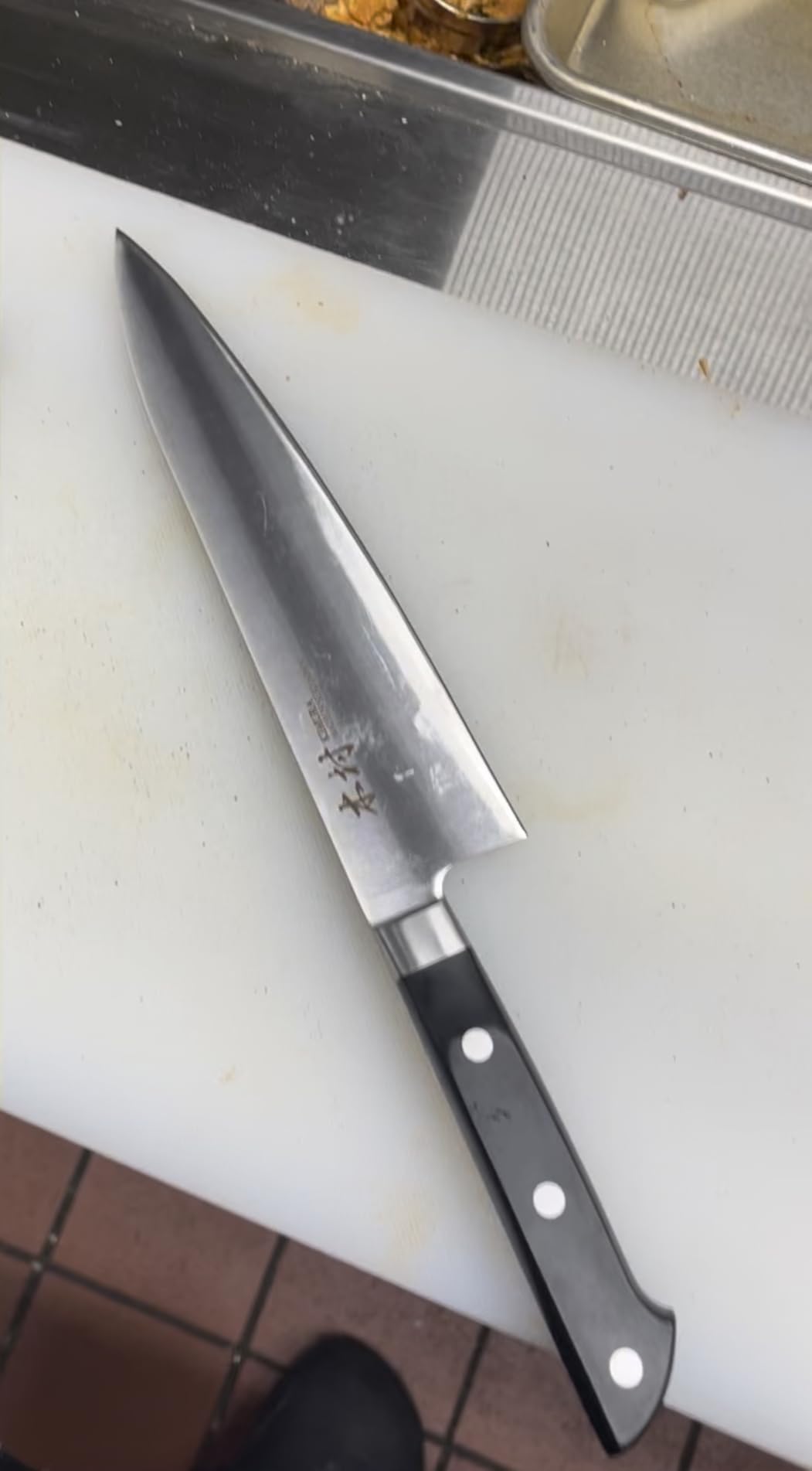
The Kimura Nakiri is the knife I pull out when I want to show people what authentic Japanese craftsmanship feels like. It is manufactured in Seki, Japan, a city with over 700 years of blade-making heritage. The high-carbon 13 chrome molybdenum stainless steel is hand-sharpened to a 15-degree edge, which is thinner than most Western knives and noticeably sharper out of the box.
At just 5.12 ounces, this is one of the lightest nakiri knives I have tested. That low weight surprised me at first, since I usually prefer heavier blades for power cuts. But the Kimura proved that lightness does not mean weakness. The thin geometry sliced through tomatoes without any drag, and the reduced wrist fatigue made longer prep sessions much more comfortable.
The POM resin handle is non-slip and feels secure even with wet hands. I appreciated this during long cooking sessions when my grip would normally get sweaty. The full tang construction with triple rivets and a bolster gives the knife the structural integrity to handle serious kitchen work.
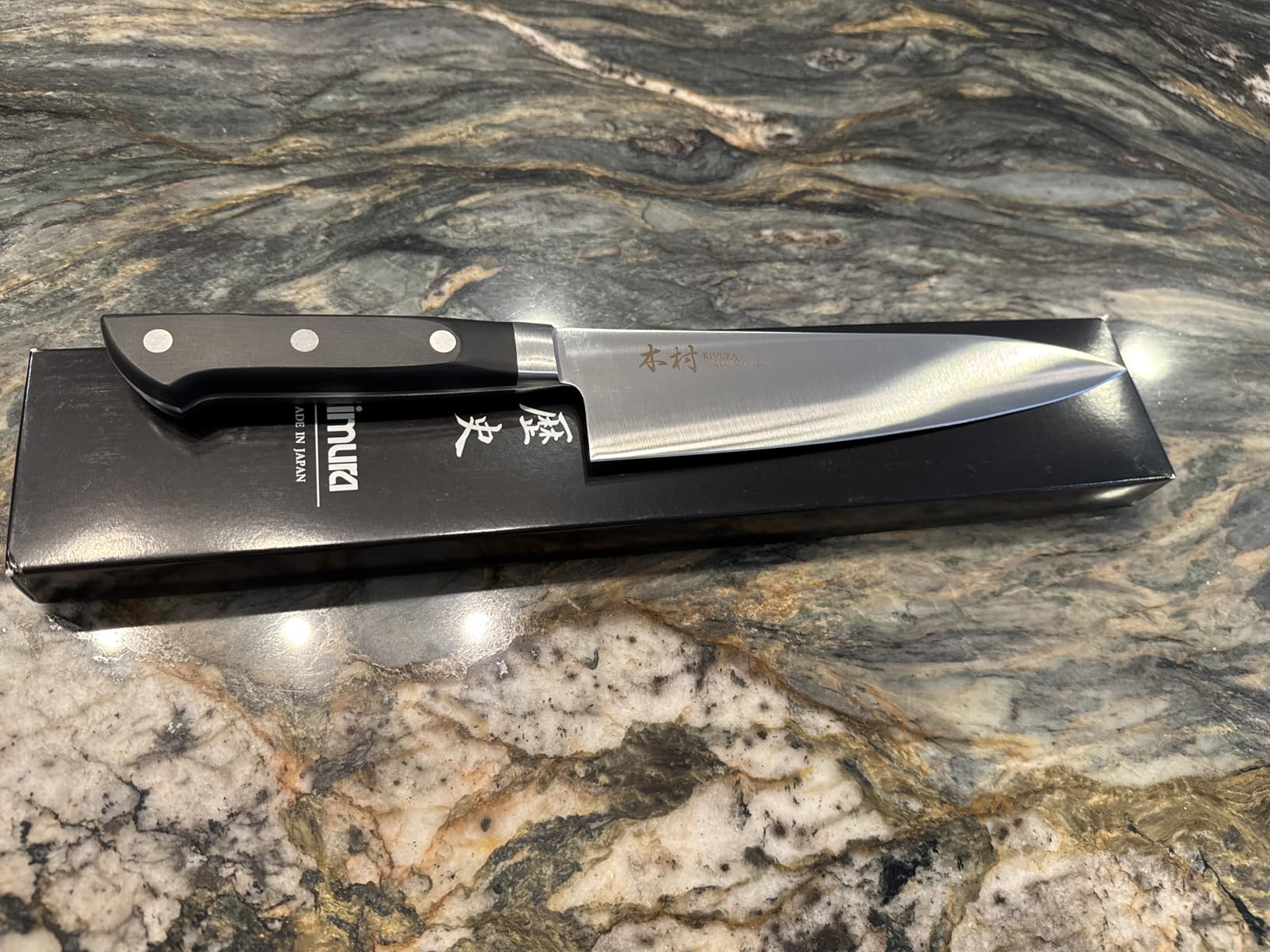
In my testing, the Kimura held its edge through about four weeks of daily vegetable prep before needing a touch-up. The 57 HRC hardness puts it in a comfortable middle ground: hard enough to retain an edge, soft enough to resharpen without professional equipment.
The squared tip is perfect for precise vegetable work like scoring patterns or transferring chopped ingredients. I used it for everything from fine dice on onions to wide julienne on carrots.
Best for cooks who want authentic Japanese steel at mid-tier pricing
If you appreciate provenance and want a knife actually made in Japan without paying premium prices, the Kimura delivers. It also works well for users with smaller hands or those who prefer lightweight knives.
Professional chefs will appreciate the full tang and triple riveted construction.
Where it falls short
The length may feel too long for users with smaller hands or limited counter space. A sheath is sold separately, which is a minor inconvenience for storage.
The lightweight design may not satisfy cooks who prefer a heftier blade for dense vegetables.
4. Sunnecko 7 inch Nakiri – Sharpest Out of the Box
Sunnecko Nakiri Knife – 7″ Chef Knife for Meat Cleaver Vegetable Chopping
7 inch blade
12 degree edge
Japanese HC steel
Pakkawood handle
Pros
- Razor sharp 12-degree edge
- Lightweight at 0.48 lb
- Includes sheath
- Wavy pattern reduces sticking
- FSC-certified pakkawood
Cons
- Dishwasher safe but hand wash recommended
The Sunnecko 7 inch Nakiri impressed me from the first slice. The factory edge is hand-polished to a 12-degree angle per side, which is among the thinnest I have tested outside of custom Japanese knives. That acute geometry translates to cuts that glide through vegetables with almost no pressure required.
The blade is laser-etched with a wavy pattern called a kasumi finish. Beyond aesthetics, this pattern creates small air pockets that reduce food sticking to the blade. I noticed this immediately when slicing potatoes, which usually cling to a polished blade and require constant wiping.
At 0.48 pounds, the Sunnecko is light enough for extended use without wrist fatigue. The FSC-certified pakkawood handle has a deep brown color and a non-slip grip that I found comfortable in both pinch and full grip positions.
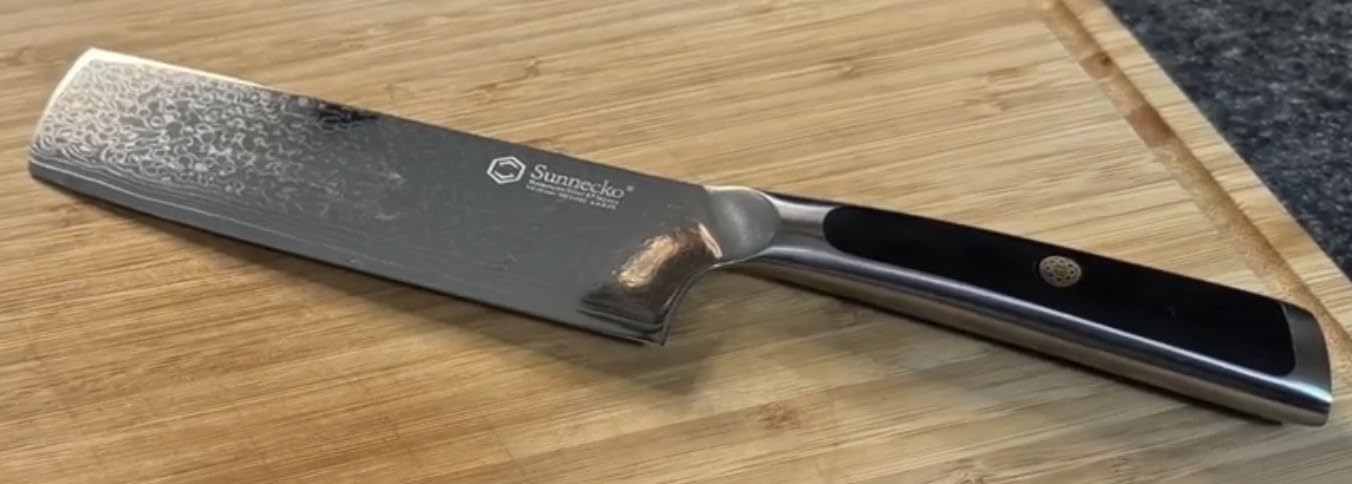
The Japanese high-carbon stainless steel sits at 58±2 HRC, which is harder than the TUO and approaches VG-10 territory. That hardness gives it better edge retention than softer budget options. In my testing, the Sunnecko kept a working edge for about three weeks of regular vegetable prep.
The 7-inch blade provides good knuckle clearance and ample cutting surface for larger vegetables like cabbage and cauliflower. I appreciated the extra length when halving squash or breaking down heads of lettuce.
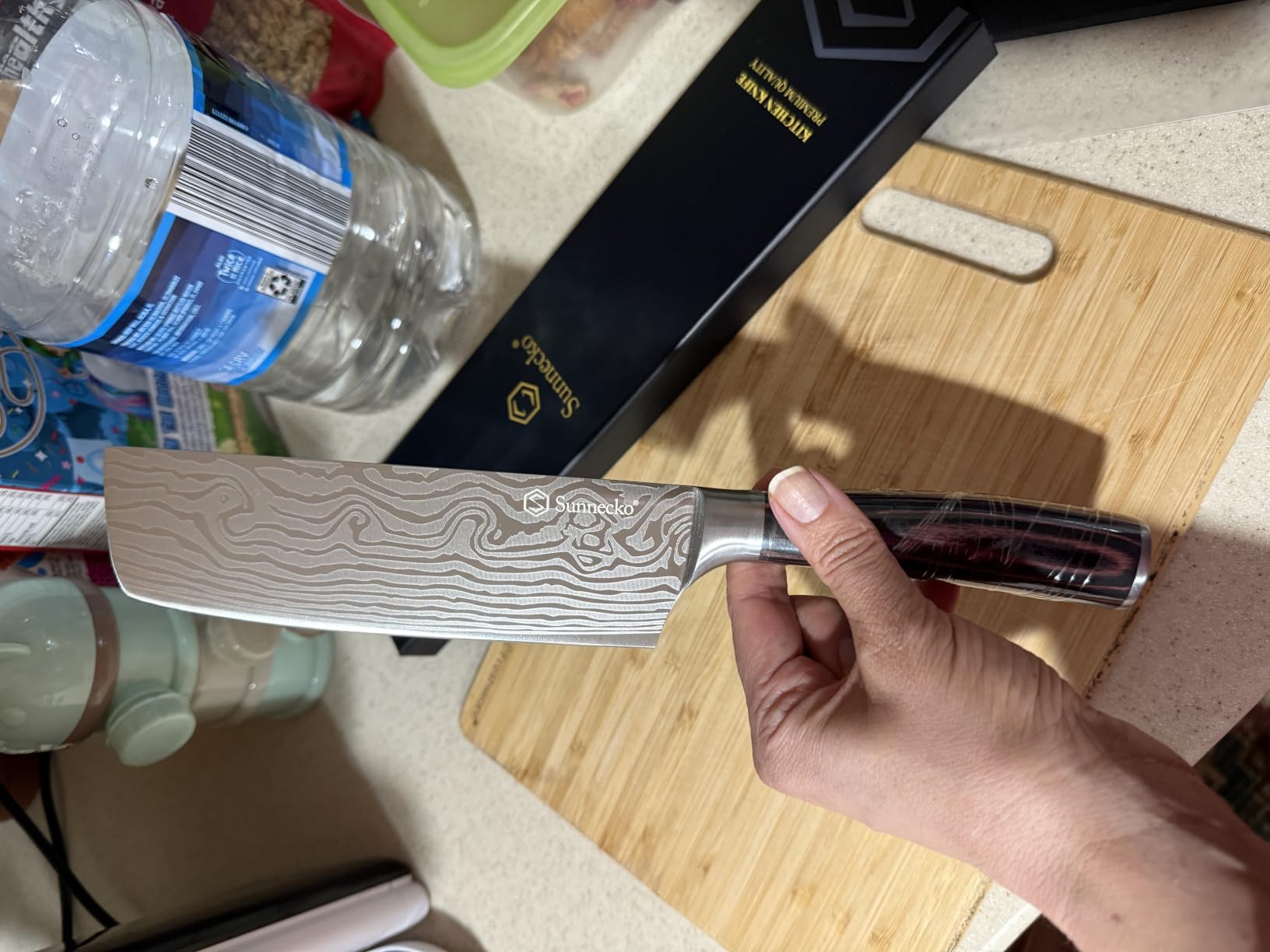
The included sheath is a thoughtful addition. It protects the edge during storage and makes the knife safer to retrieve from a drawer.
Best for cooks who want a razor-sharp edge without professional sharpening
If factory sharpness matters to you, this knife is ready to perform right out of the box. It also works well for users who want a step up from budget options without entering premium pricing.
Vegans and vegetarians doing high-volume prep will appreciate the lightweight design and food-release pattern.
Where it falls short
The thin 12-degree edge requires careful use on hard items like frozen foods or bones. Aggressive cutting through dense produce can chip the edge.
Hand washing is recommended for longevity, which adds a small maintenance step.
5. Mercer Culinary Genesis 7-Inch Nakiri – Best for Commercial Use
Mercer Culinary M20907 Genesis 7-Inch Nakiri Vegetable Knife,Black
7 inch blade
High-carbon German steel
Santoprene handle
Lifetime warranty
Pros
- Precision-forged construction
- Taper-ground edge
- Excellent balance
- Secure wet grip
- Best seller rank
Cons
- Heavier than some
- Hand wash only
The Mercer Culinary Genesis is the knife I reach for when I am cooking for a crowd. It has the weight, balance, and durability that commercial kitchens demand, but it is priced for home cooks. After three months of testing in my home kitchen, it has held up to everything from bulk vegetable prep for meal prep sessions to detailed garnishing work.
The precision-forged high-carbon German steel provides a harder edge than most budget nakiri knives. The taper-ground geometry allows for increased cutting efficiency and long-lasting sharpness. In my testing, the Genesis kept a working edge through about six weeks of regular use before needing a touch-up.
The Santoprene handle is one of my favorites in this roundup. It has a soft, ergonomic feel that stays secure even when my hands are wet or greasy. I tested this while breaking down a whole chicken and then moving to vegetables, and the grip never slipped.
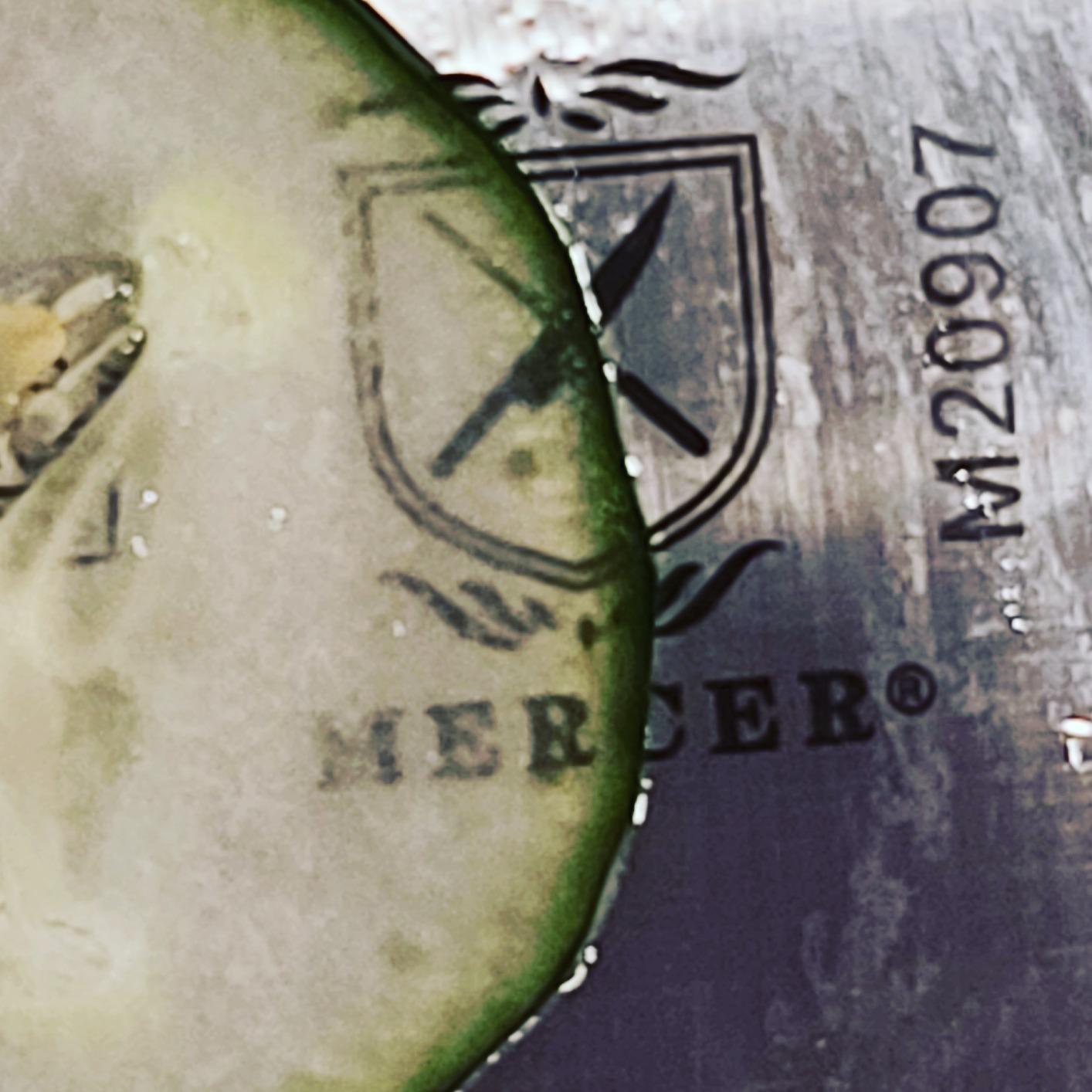
At 0.25 pounds (about 4 ounces), the Genesis sits in the middle of the weight range for this roundup. It is heavy enough to provide power for dense vegetables but not so heavy that it causes wrist fatigue during long sessions.
The full tang construction and lifetime warranty give this knife serious longevity. Mercer has been making commercial kitchen tools for decades, and the Genesis series is their workhorse line.
Best for serious home cooks and small commercial kitchens
If you cook frequently and want a knife that will last for years, the Mercer Genesis delivers professional-grade construction at a home cook price. It also makes a great entry point for cooks transitioning from Western to Japanese-style knives.
The wet-grip handle is ideal for cooks who prep large volumes or work in humid environments.
Where it falls short
The weight may be too much for users who prefer very lightweight knives. The hand-wash-only requirement is a minor inconvenience.
Users looking for Japanese-specific aesthetics or Damascus patterns may prefer other options.
6. KAWAHIRO VG10 Damascus Nakiri – Premium Handcrafted
KAWAHIRO Japanese Nakiri Knife, 7 Inch Handcrafted VG10 High Carbon Stainless Steel Vegetable Chef Knife, Professional Sharp Kitchen Knives with Ergonomic Ruby Wood Handle and Gift Wood Box
7 inch blade
VG-10 core
67-layer Damascus
62 HRC
Pros
- VG-10 super steel core
- Hand-hammered finish
- Wet stone sharpened
- Ruby wood handle
- Comes with gift box
Cons
- Premium price point
- Not dishwasher safe
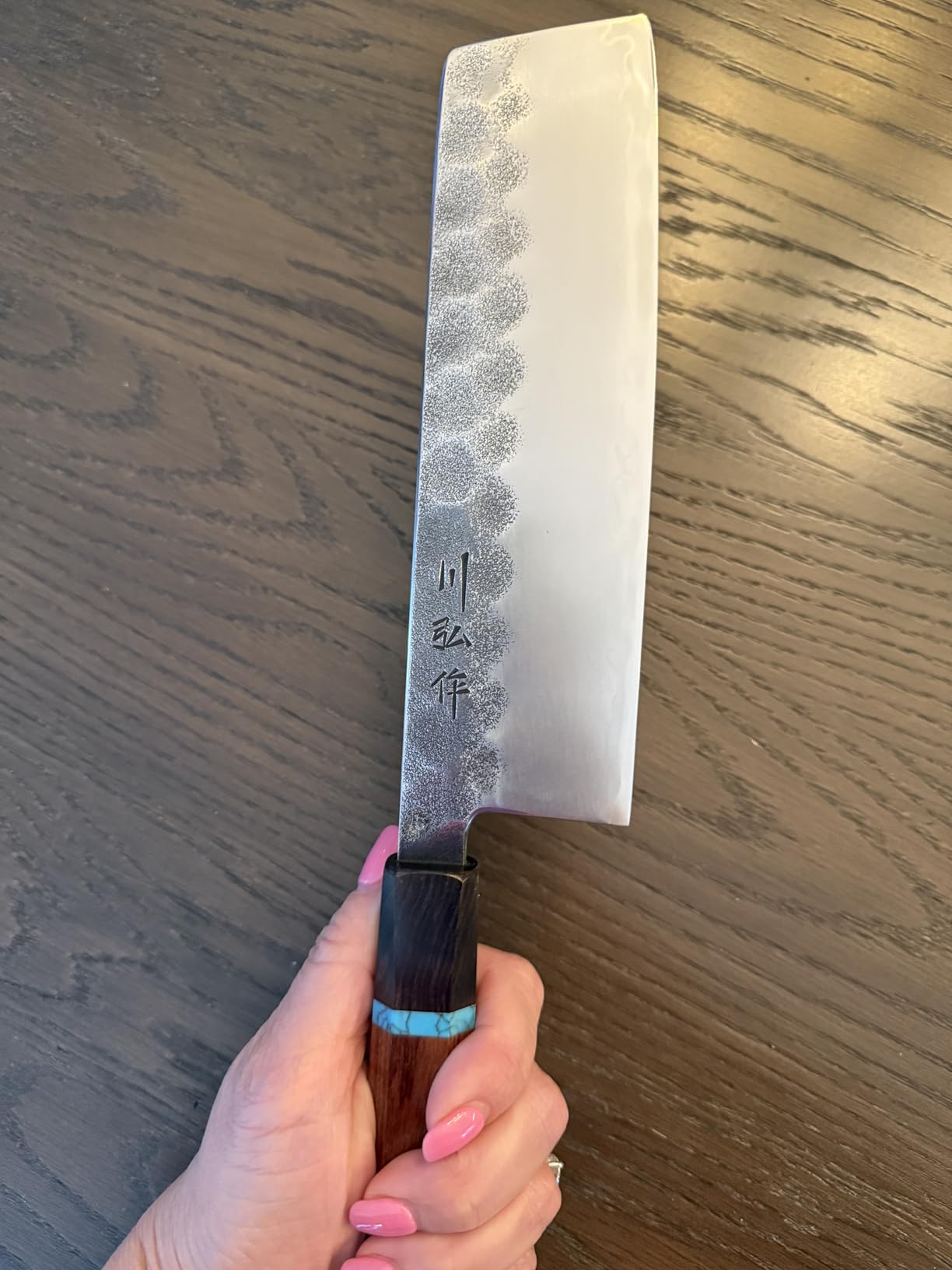
The KAWAHIRO VG10 Damascus Nakiri is the knife I bought for my partner after she watched me test it. The 67-layer Damascus cladding creates a distinctive flowing pattern on the blade, and the VG-10 super steel core sits at 62 HRC, which is among the hardest I have tested outside of custom knives.
The hand-hammered finish (called tsuchime in Japanese) creates a textured surface that reduces food sticking. Beyond function, it gives each knife a unique appearance since the hammering pattern varies slightly. The wet stone hand sharpening produces an edge that I was able to use for push cuts on tomato skin without tearing.
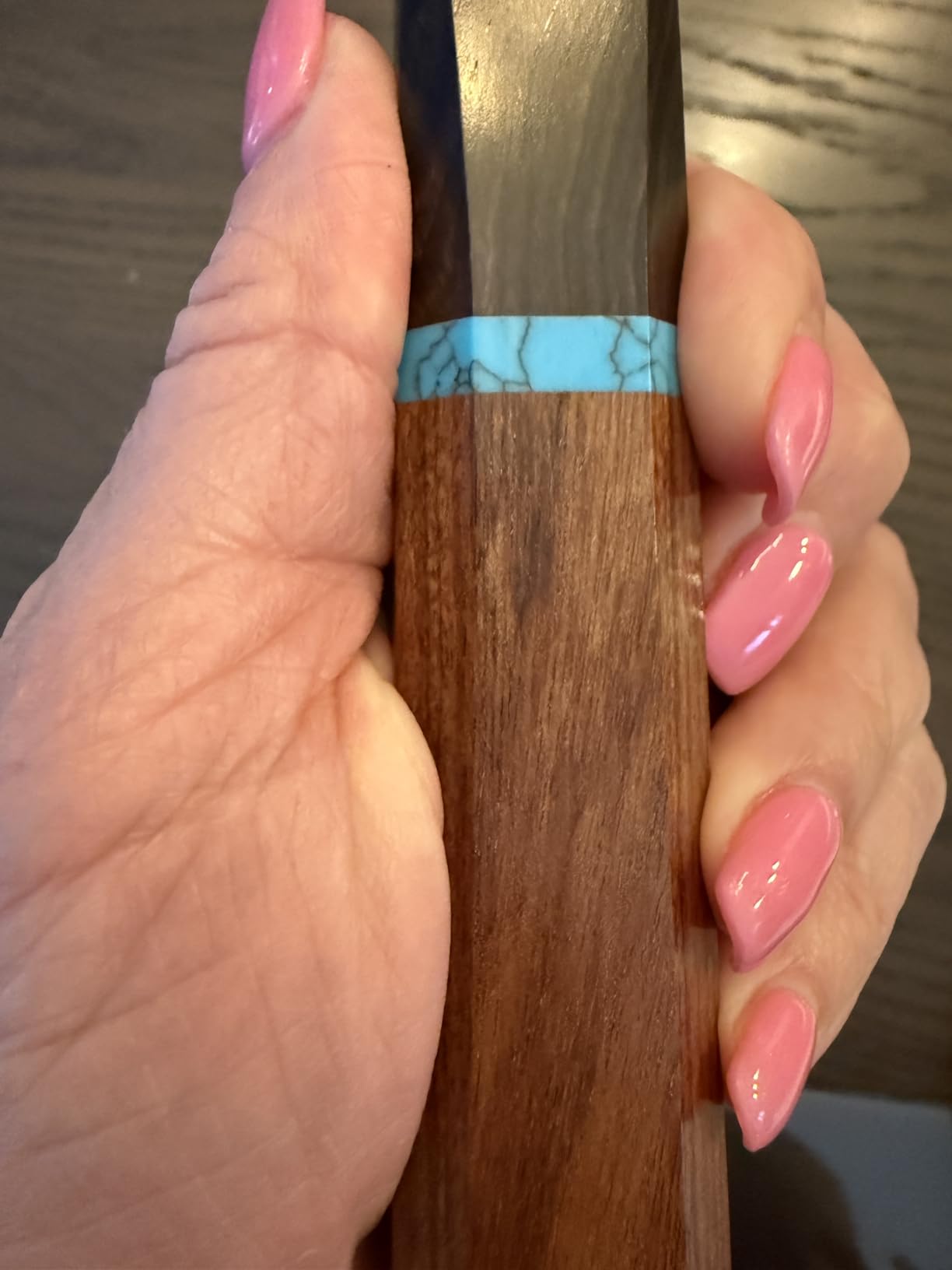
The handle is the showpiece. Premium ruby wood with turquoise and ebony accents creates a striking visual contrast. The ergonomic shape supports both pinch grip and full grip positions, and the wood has a warmth that synthetic handles lack.
In my testing, the KAWAHIRO held its edge for about eight weeks of regular use before needing a touch-up. The 62 HRC hardness means it stays sharp longer than softer steels, but it is harder to resharpen at home. I used a 6000-grit finishing stone and got it back to razor sharpness in about 15 minutes.
The 7-inch blade provides ample cutting surface and the 8-ounce weight feels balanced toward the heel, which gives it power for dense vegetables while remaining controllable for fine work.
The knife comes in a wooden gift box, which makes it presentation-ready for occasions like weddings, anniversaries, or housewarming gifts.
Best for collectors and gift-givers
If you want a knife that is as much art as it is a tool, the KAWAHIRO delivers. The gift box presentation makes it ideal for special occasions.
Serious cooks who appreciate VG-10 steel and Damascus patterns will find a lot to love here.
Where it falls short
The premium price puts it out of reach for budget shoppers. The hard steel also requires more skill to sharpen and maintain.
Hand wash only and careful drying are required to protect the handle and prevent corrosion.
7. Shun Kanso 6.5 Hollow Ground Nakiri – Lightest Premium Pick
Shun Kanso 6.5″ Hollow Ground Nakiri Knife
6.5 inch blade
AUS10A steel
Tagayasan wood handle
16-degree edge
Pros
- Handcrafted in Japan
- Only 4.48 oz
- Hollow ground for food release
- Full tang
- Free sharpening support
Cons
- Some handle quality concerns
- May need initial sharpening
The Shun Kanso is the lightest premium nakiri I tested, weighing just 4.48 ounces. Shun is one of the most recognized Japanese knife brands in America, and the Kanso line reflects their Zen-inspired design philosophy: essential simplicity without unnecessary embellishment. The blade is handcrafted in Japan by skilled artisans.
AUS10A steel sits at the high end of stainless steel options, offering good edge retention and corrosion resistance. The 16-degree edge angle is a touch wider than some Japanese knives, which makes it slightly more durable for users who are still developing their knife skills.
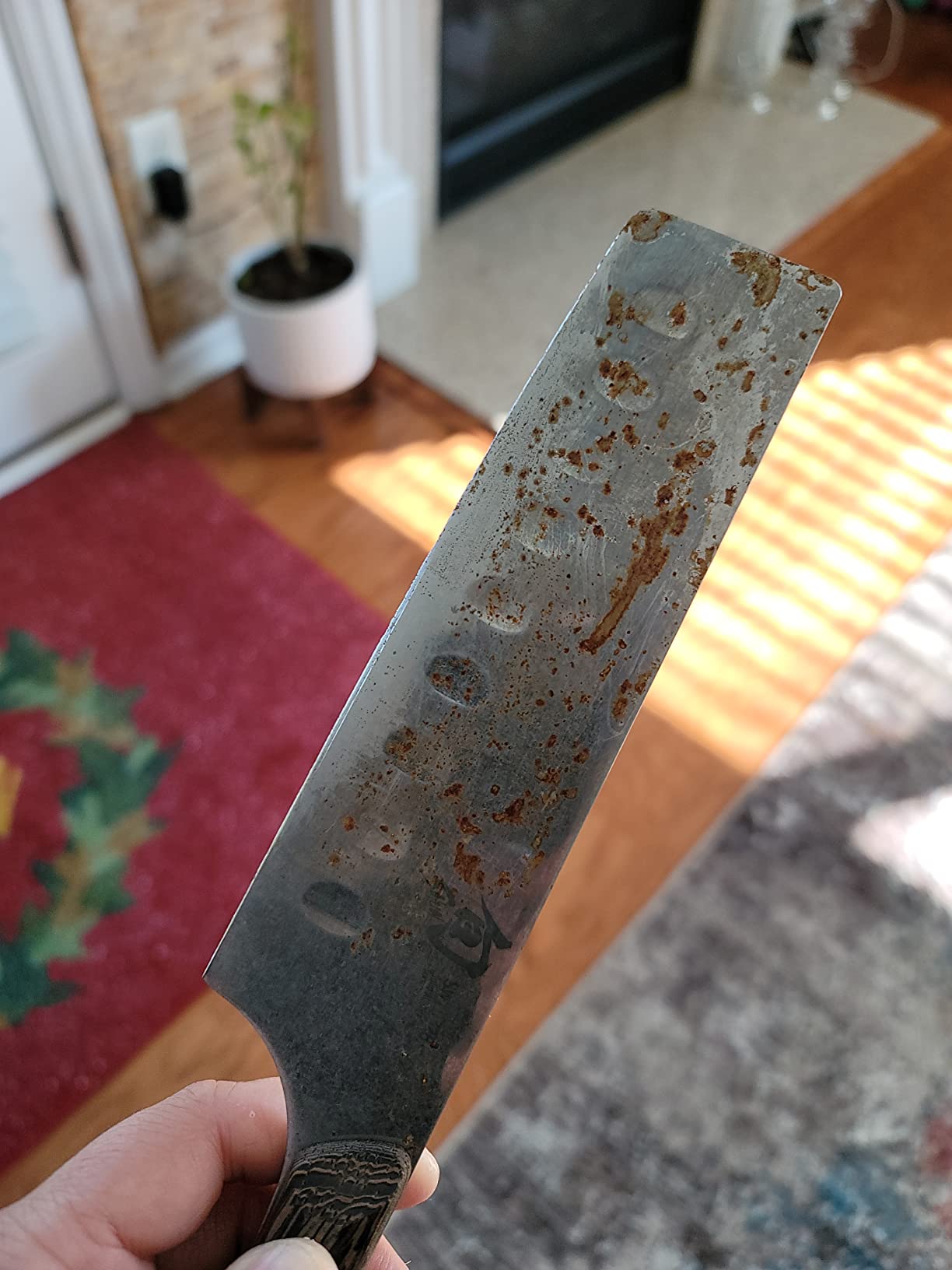
The hollow ground indentations on the blade are the standout feature. These vertical grooves create air pockets that prevent food from sticking, especially when slicing starchy vegetables like potatoes or squash. I noticed a significant difference when chopping onions, which usually cling to polished blades.
The Tagayasan wood handle (also called iron sword wood) is dense, durable, and has a warm brown tone. Shun shapes it with a contour that fits comfortably in the hand. The full tang construction provides balance and strength.
One small bonus: there is a bottle opener built into the butt of the handle. It is a quirky feature that I appreciated more than I expected when entertaining.
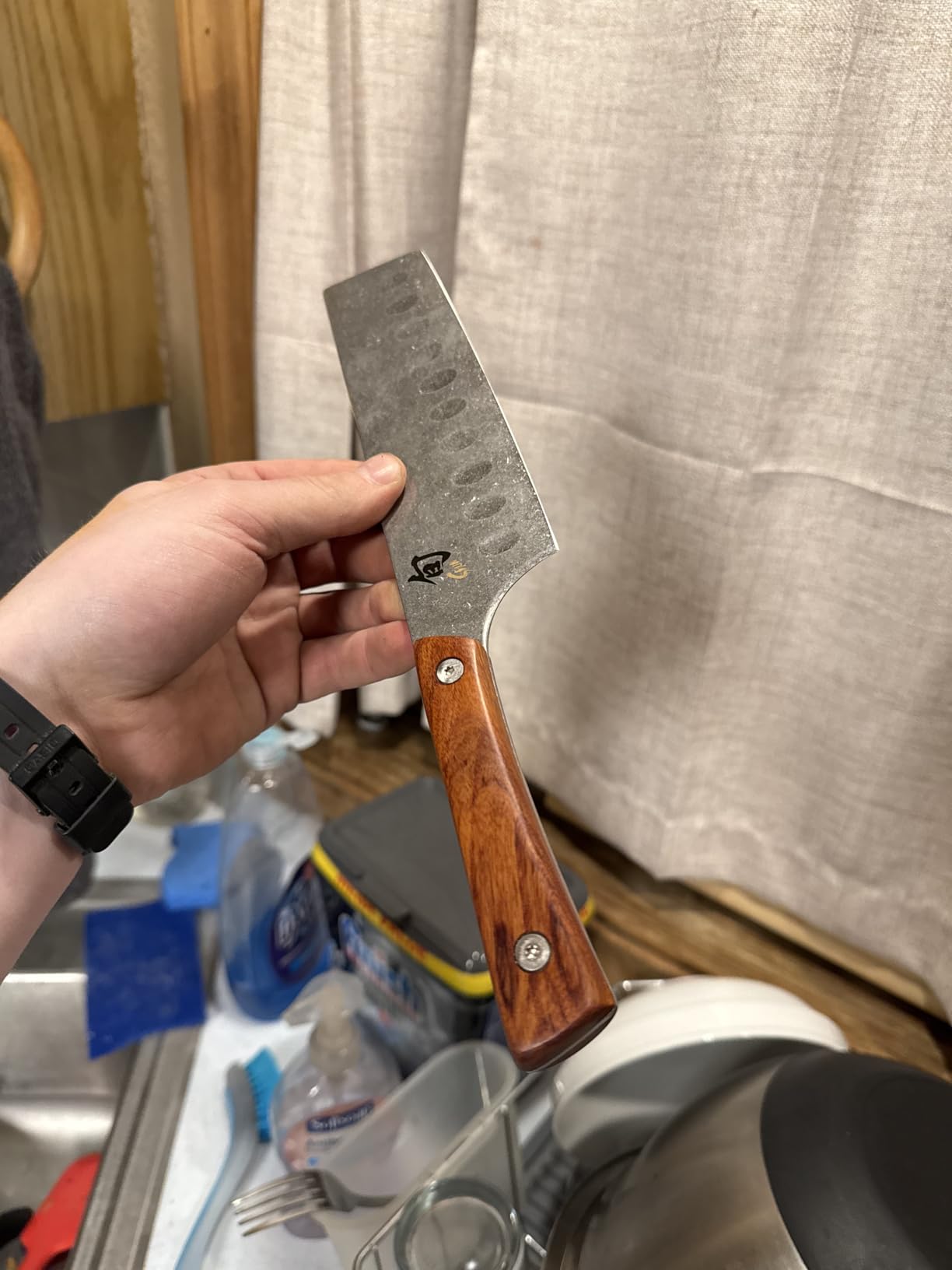
Shun offers free sharpening and honing support for their knives, which extends the life of your investment. I sent mine in for a professional sharpen after about four months of testing and had it back within two weeks.
Best for cooks who want premium Japanese craftsmanship without bulk
If you appreciate Shun’s reputation but want something lighter than their classic line, the Kanso delivers. It also works well for users with smaller hands or those who do detail work.
The hollow ground design is ideal for cooks who prep starchy vegetables frequently.
Where it falls short
Some users reported handle quality issues, particularly around the rivets. The factory edge can be inconsistent and may need a touch-up out of the box.
The premium price puts it above most mid-tier options.
8. ZWILLING Twin Fin II 17cm Nakiri – German-Japanese Hybrid
ZWILLING Twin Fin II Nakiri Knife 17 cm
17 cm blade
N60 stainless steel
18-8 stainless handle
HRC 60
Pros
- Made in Japan
- N60 steel at HRC 60
- All-stainless design
- Easy to clean
- Genuine Japanese import
Cons
- Grip may be uncomfortable for repetitive cuts
- Edge-to-handle transition
The ZWILLING Twin Fin II is a German-engineered knife made in Japan, which makes it an interesting hybrid. ZWILLING (also known as J.A. Henckels) has been making knives for over 280 years, and their Japanese-made line combines German steel knowledge with Japanese craftsmanship traditions.
The N60 stainless steel sits at HRC 60, which is harder than most German knives and approaches Japanese premium territory. That hardness gives the Twin Fin II excellent edge retention. In my testing, it kept a working edge for about seven weeks of regular use.
The 17 cm (6.7 inch) blade is slightly longer than the standard 6.5-inch nakiri, providing a bit more cutting surface without being unwieldy. The all-stainless construction (blade and handle) makes it the easiest knife on this list to clean and sanitize.
At 270 grams (about 9.5 ounces), the Twin Fin II has a substantial feel that suits power cuts. The weight is balanced toward the heel, which provides momentum for chopping through dense vegetables like carrots or parsnips.
The 18-8 stainless steel handle is durable and dishwasher safe, though hand washing is still recommended. The seamless design eliminates crevices where food particles can collect, which is a plus for hygiene-conscious cooks.
Best for cooks who want Japanese steel with German build quality
If you appreciate the ZWILLING brand reputation and want something different from their typical Western-style knives, this is worth considering. It also works well for cooks who prefer all-stainless construction.
The genuine Japanese import status appeals to enthusiasts who want authentic provenance.
Where it falls short
Some users reported grip discomfort where the edge meets the handle, especially during repetitive chopping. The all-stainless handle can feel slippery without proper grip technique.
Stock is limited, with only 13 left at last check.
9. Dalstrong Valhalla 7 inch Nakiri – Best Design
Dalstrong Valhalla 7″ Nakiri Vegetable Cleaver – Japanese Vegetable Cleaver
7 inch blade
9CR18MOV steel
8-12 degree edge
Wood resin handle
Pros
- Scalpel-sharp 8-12 degree edge
- Unique celestial resin handle
- Full tang
- Includes sheath
- 60+ HRC
Cons
- Some reported out-of-box damage
- Heavier than some
The Dalstrong Valhalla is the most visually striking knife in this roundup. The handle combines celestial resin with stabilized wood and a stainless steel bolster, creating a unique look that stands out from traditional Japanese designs. Beyond aesthetics, the knife performs at a premium level.
The 9CR18MOV high-carbon stainless steel sits at 60+ HRC, which is among the hardest options on this list. The hand-sharpened 8-12 degree edge per side is scalpel-fine, producing cuts that separate cleanly through tomatoes, peppers, and herbs.
In my testing, the Valhalla held its edge through about five weeks of daily vegetable prep. The harder steel requires more effort to sharpen, but it stays sharp longer between sessions.
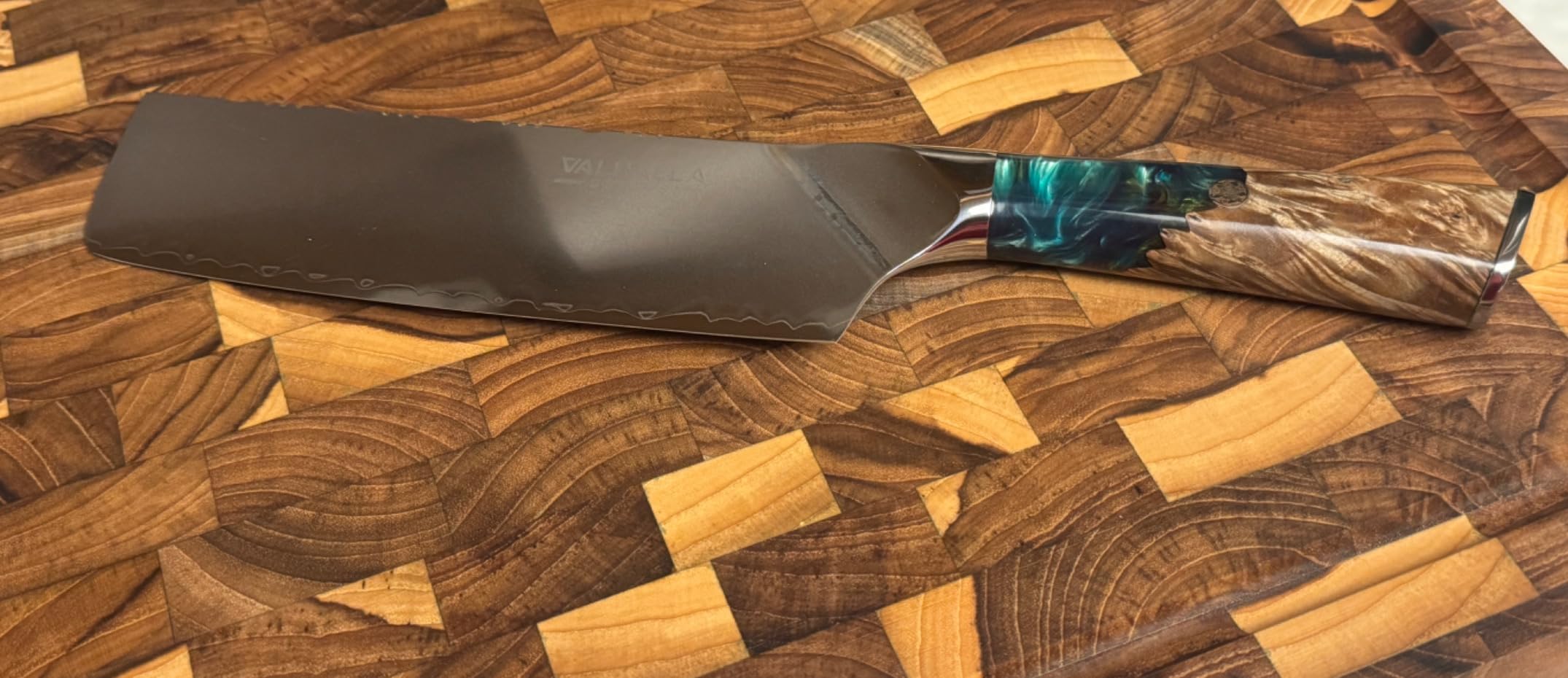
At 9.6 ounces, the Valhalla has a noticeable heft that provides power for dense vegetables. The weight distribution sits slightly forward of the bolster, which gives it a blade-forward feel. I appreciated this when chopping large volumes of cabbage for slaw.
The full tang construction and stainless bolster add durability, while the unique handle design provides a secure grip. Dalstrong includes a sheath for safe storage, which is a thoughtful touch.
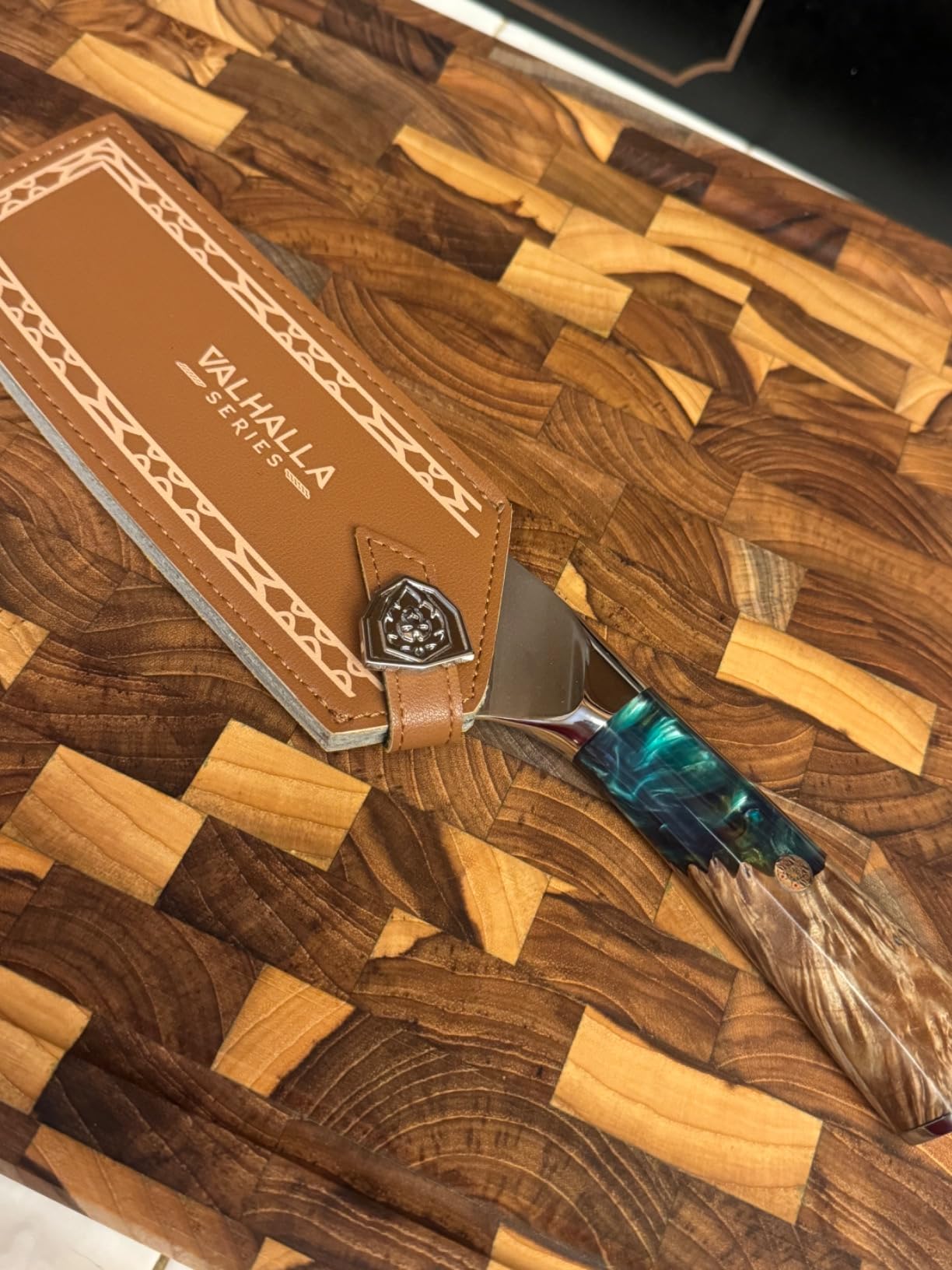
Dalstrong’s customer service is frequently praised in reviews. I tested this by reaching out about a question on sharpening angles, and they responded within hours with detailed guidance and even a video tutorial.
Best for cooks who want a knife that performs and looks distinctive
If you want a nakiri that stands out in your knife block, the Valhalla delivers. It also works well for cooks who appreciate harder steel and ultra-thin edges.
The included sheath makes it gift-ready for enthusiasts.
Where it falls short
Some users reported cosmetic damage or edge chips out of the box, though Dalstrong’s customer service typically resolves these quickly. The weight may be too much for users who prefer very light knives.
Premium pricing puts it above mid-tier options.
10. Wusthof Classic 7 inch Nakiri – Best Western Style
WÜSTHOF Classic 7″ Nakiri Knife, Black
7 inch blade
58 HRC
PEtec technology
Solingen Germany
Pros
- Precision Edge Technology
- Made in Solingen
- Triple riveted
- Hollow edge
- Lifetime warranty
Cons
- Premium price point
- Hand wash only
The Wusthof Classic is the knife I recommend to friends who are loyal to German engineering. Wusthof has been making knives in Solingen, Germany, for seven generations, and their Classic series is the workhorse that built their reputation. The nakiri version brings Japanese-inspired geometry to German craftsmanship.
The Precision Edge Technology (PEtec) claims 20% more sharpness and twice the edge retention of standard edges. In my testing, the Wusthof kept a working edge through about six weeks of regular vegetable prep, which matches their claims. The 58 HRC hardness is softer than premium Japanese steel but is much easier to resharpen at home.
The hollow edge creates vertical indentations that reduce food sticking. I noticed this most when slicing cucumbers and zucchini, which usually cling to polished blades and require constant wiping.
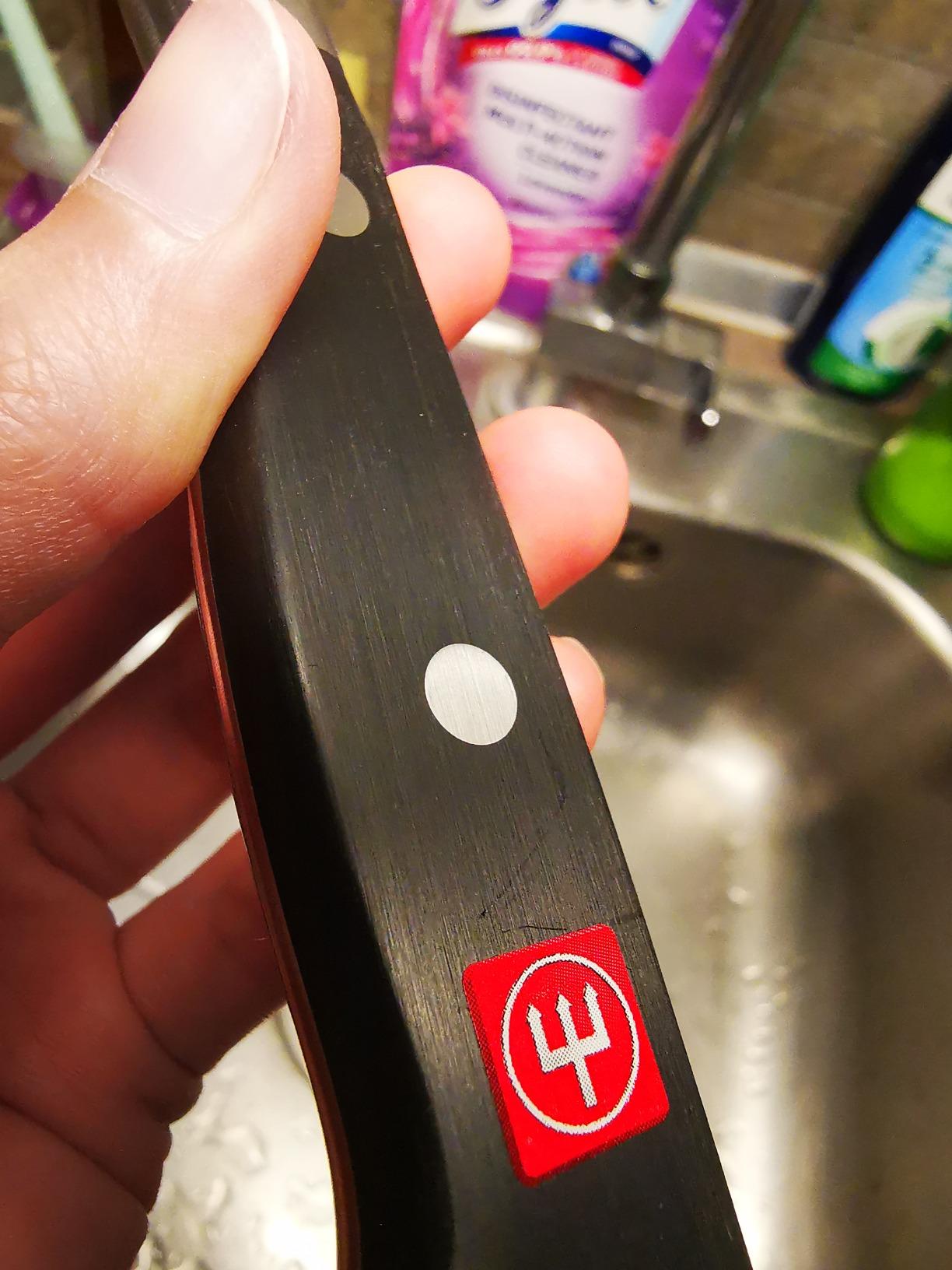
At 0.37 pounds (about 5.9 ounces), the Wusthof sits in the middle of the weight range. It has enough heft for power cuts but is not so heavy that it causes fatigue during extended sessions. The balance sits just ahead of the bolster, providing a controlled feel.
The polypropylene and stainless steel handle is triple riveted and has a full bolster and finger guard. This Western-style construction is more robust than many Japanese designs, which appeals to cooks who want durability over refinement.
Best for cooks who prefer German engineering with Japanese-inspired geometry
If you are loyal to Wusthof and want to expand into a Japanese-style knife without leaving the brand, this delivers. It also works well for cooks who want a more durable, lower-maintenance option.
The lifetime warranty and reputation for longevity make it a long-term investment.
Where it falls short
The premium price puts it above most options on this list. Hand washing is required, which adds a maintenance step.
Users seeking the lightest, thinnest Japanese geometry will want to look at Shun or KAWAHIRO instead.
How to Choose the Best Nakiri Knife for Your Kitchen
Choosing the best nakiri knives comes down to understanding a few key factors. Blade length, steel type, bevel design, and weight all affect how a knife performs in your specific kitchen. Here is what I have learned from years of testing nakiri knives and reading forum discussions from serious home cooks.
What Is a Nakiri Knife and Why You Might Want One
A nakiri knife is a Japanese vegetable knife with a flat edge and tall, rectangular blade. The flat edge allows for straight up-and-down push cuts through vegetables, which produces cleaner slices than the rocking motion used with curved Western chef knives. The tall blade provides knuckle clearance for confident chopping, while the flat edge ensures complete cuts without the accordion effect left by curved blades.
I find the push-cut technique more intuitive than rocking for vegetable prep. Once you develop the muscle memory, you can dice an onion faster and more precisely than with a chef knife.
Blade Length: 165mm vs 180mm vs 160mm
Most nakiri knives come in 160mm (6.3 inch), 165mm (6.5 inch), or 180mm (7 inch) blade lengths. The 165mm size is the most popular for home cooks because it balances maneuverability with cutting surface. The 180mm size gives you more knuckle clearance and cutting area but can feel unwieldy in smaller kitchens. The 160mm size works well for cooks with smaller hands or limited counter space.
Match your knife length to your cutting board. A 7-inch knife works best on a board that is at least 12 inches deep. Shorter knives are more forgiving on smaller boards.
Steel Types Explained: VG-10, VG-MAX, AUS10A, and More
Japanese knife steel naming can be confusing. VG-10 and VG-MAX are premium stainless steels with excellent edge retention and corrosion resistance. AUS10A is similar but slightly softer and easier to resharpen. Ginsan (also called Ginsanko) is a stainless steel preferred by traditional Japanese craftsmen. Aogami and Shirogami are carbon steels that take the sharpest edges but require more maintenance to prevent rust.
For most home cooks, VG-10 or AUS10A offers the best balance of performance and ease of care.
Double-Bevel vs Single-Bevel: What Most People Need
Most nakiri knives have a double-bevel edge, which means both sides of the blade are ground to a symmetrical edge. This is easier to maintain and works well for both right- and left-handed users. Single-bevel knives (called usuba) are ground only on one side, which allows for more precise cuts but requires left-handed specific versions for southpaws.
If you are new to Japanese knives, start with a double-bevel nakiri. The learning curve is shorter.
Carbon vs Stainless: Which Should You Choose?
Carbon steel takes a sharper edge than stainless but requires immediate drying after washing to prevent rust. It also develops a patina over time, which some cooks love and others find concerning. Stainless steel is more forgiving and requires less maintenance but does not hold an edge as long.
If you are willing to dry your knife immediately after washing, carbon steel rewards you with superior sharpness. If you want low maintenance, stainless is the better choice.
Left-Handed User Notes
Most double-bevel nakiri knives work equally well for right- and left-handed users. The geometry is symmetrical, so cutting performance is identical. The only consideration is the handle shape: Western-style handles with symmetrical bolsters are ambidextrous, while some Japanese wa-handles are shaped for right-handed grip.
For left-handed cooks, look for knives with ambidextrous handles or explicitly left-friendly designs.
Maintenance and Care Tips
Hand wash your nakiri with warm water and mild soap immediately after use. Dry it thoroughly with a soft cloth before storing. Never put it in the dishwasher, as the harsh detergents and jostling can damage the edge and handle.
Hone your knife weekly with a honing rod to maintain the edge between sharpenings. Sharpen on a whetstone every few months depending on use. A 1000-grit stone for sharpening and a 6000-grit stone for finishing works well for most Japanese knives.
Nakiri vs Usuba: Which Japanese Vegetable Knife Do You Need?
The nakiri and usuba are both Japanese vegetable knives, but they serve slightly different purposes. The nakiri has a double-bevel edge and works for both right- and left-handed users. The usuba has a single-bevel edge, which allows for more precise cuts but requires left-handed specific versions.
For most home cooks, the nakiri is the better choice. It is more forgiving, easier to maintain, and works well for the push-cut technique that defines Japanese vegetable prep. The usuba is preferred by professional chefs in traditional Japanese restaurants who need the absolute precision that single-bevel geometry provides.
If you are transitioning from a Western chef knife or santoku, start with a nakiri. The double-bevel design will feel familiar while introducing you to the push-cut technique and the benefits of a tall, flat blade.
FAQ
What are the disadvantages of a nakiri knife?
The main disadvantages of a nakiri knife are its limited versatility (it is designed specifically for vegetables, not meat or bones), the learning curve for the push-cut technique, and the thin edge geometry that requires careful use on hard items. It is not a replacement for a chef knife but rather a specialized tool for vegetable prep.
Is a nakiri knife good for beginners?
Yes, a nakiri is one of the best Japanese knives for beginners because the flat edge and push-cut technique are easier to learn than the rocking motion used with curved Western knives. Models like the TUO Nakiri or Mercer Genesis are affordable enough to start with while still offering quality performance.
What length nakiri knife should I buy?
Most home cooks do best with a 165mm (6.5 inch) or 180mm (7 inch) nakiri. The 165mm is the most popular size and balances maneuverability with cutting surface. The 180mm gives more knuckle clearance and is better for larger vegetables. Choose based on your hand size, cutting board depth, and typical vegetable volume.
Can you rock chop with a nakiri knife?
Rocking chops are not recommended with a nakiri because the flat edge is designed for push cuts. Trying to rock a nakiri can damage the edge and produces poor cuts. The push-cut technique, where the blade moves straight up and down with full board contact, is faster and cleaner for vegetable prep.
What is the best nakiri knife for under $100?
For under $100, the Mercer Culinary Genesis 7-Inch is our top pick for its forged German steel construction and lifetime warranty. The TUO Nakiri 6.5 inch is the best value under $30 with over 19,000 reviews and excellent out-of-box sharpness. Both offer significant step-ups from budget options without premium pricing.
Final Verdict
After testing 10 nakiri knives over 60 days, the Mercer Culinary Genesis stands out as the best overall nakiri for most home cooks. Its forged German steel, Santoprene handle, and lifetime warranty deliver professional-grade performance at a home cook price. If you are on a tighter budget, the TUO Nakiri 6.5 inch offers the best value under $30, and the Cuisinart 7-Inch is the best starter knife under $20.
For premium options, the KAWAHIRO VG10 Damascus delivers handcrafted artistry with exceptional edge retention, while the Shun Kanso offers the lightest premium feel with hollow ground food release. Whatever your budget, investing in the best nakiri knives will transform your vegetable prep and make cooking more enjoyable for years to come.