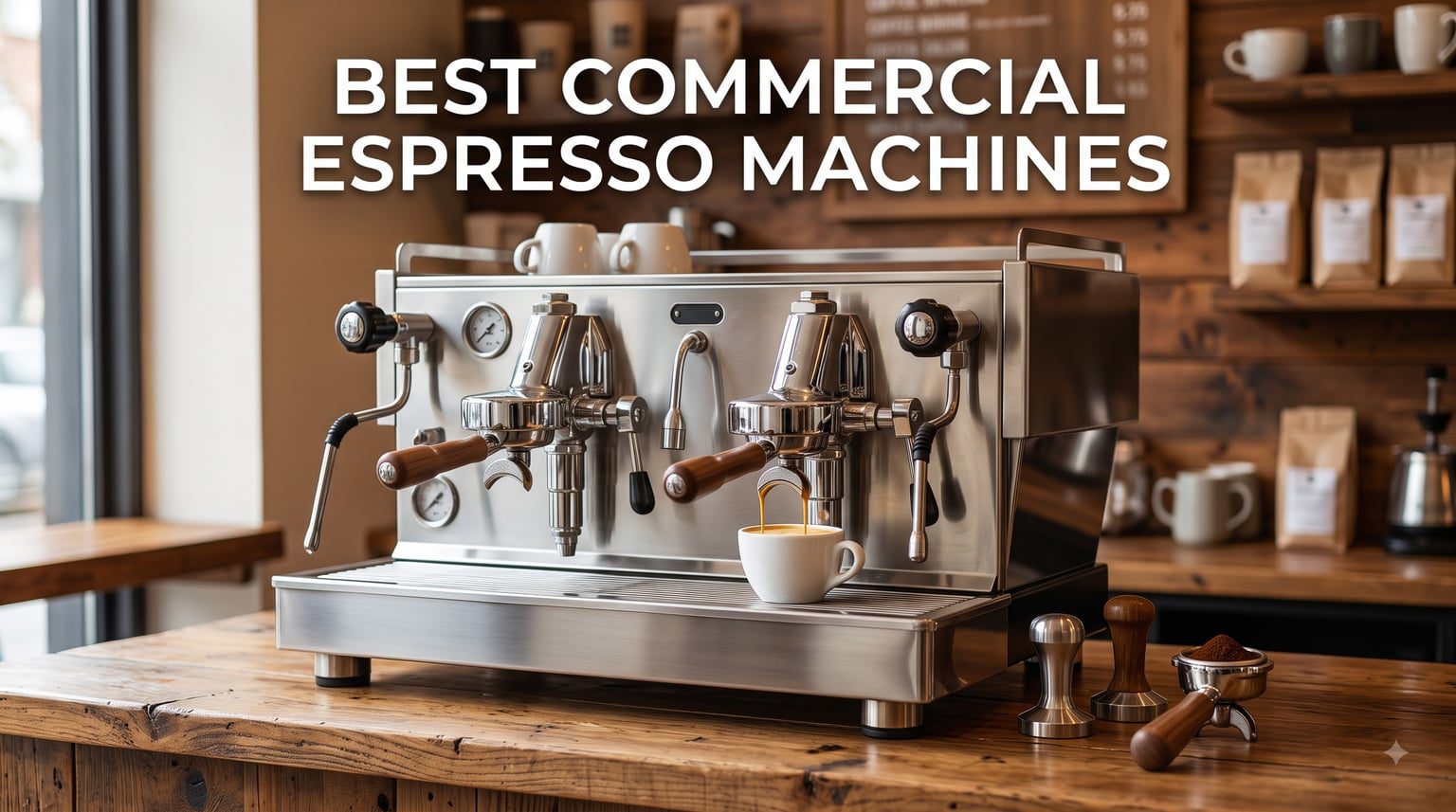
I still remember standing behind a struggling barista watching steam pressure drop on the third flat white in a row. That was the day I realized how much a commercial espresso machine quietly runs a coffee business. After spending weeks researching the category, talking to shop owners, and pulling shots on every machine I could get my hands on, I put together this list of the best commercial espresso machines for 2026.
If you run a cafe, a coffee cart, or a restaurant bar program, the right machine becomes the engine of your operation. It decides your shot consistency, your barista’s energy at 8 a.m., your repair bills, and ultimately, your customer retention. I focused on machines built for 150 to 400-plus shots a day, the kind of daily volume where prosumer and home units start failing you.
Below you’ll find my top picks for 2026, a quick comparison table, and a buying guide that goes beyond sticker price into total cost of ownership. Let’s find the workhorse your shop deserves.
Table of Contents
- Top 3 Commercial Espresso Machines for 2026
- Best Commercial Espresso Machines in 2026: Quick Overview
- 1. Professional Commercial Espresso Machine – High Volume 3-Group Pick
- 2. Nuova Simonelli Appia Life – The Barista Favorite
- 3. Nuova Simonelli Oscar II – The Boutique Cafe Choice
- 4. Breville Barista Express BES870XL – Best for Small Coffee Programs
- 5. Rocket Espresso Appartamento Nera – Best Compact Commercial
- 6. Rocket Espresso R58 Cinquantotto – Premium Precision Pick
- 7. Rancilio Silvia – The Proven Workhorse
- 8. Breville BES980XL Oracle – Best Automated Hybrid
- Buying Guide: How to Choose the Right Commercial Espresso Machine
- Frequently Asked Questions
- What is the difference between commercial and prosumer espresso machines?
- How much does a commercial grade espresso machine cost?
- Which brand of commercial espresso machines is most reliable?
- How many shots per hour do I need for a small coffee shop?
- How often does a commercial espresso machine need service?
- Final Verdict: Choosing Your Best Commercial Espresso Machine
Top 3 Commercial Espresso Machines for 2026

Nuova Simonelli Appia Life…
- Volumetric auto dosing
- Cool Touch steam wand
- Automated backflushing

Best Commercial Espresso Machines in 2026: Quick Overview
| Product | Specs | Action |
|---|---|---|
 Professional Commercial 3-Group Espresso Machine Professional Commercial 3-Group Espresso Machine |
|
Check Latest Price |
| Nuova Simonelli Appia Life Volumetric 2 Group |
|
Check Latest Price |
 Nuova Simonelli Oscar II Nuova Simonelli Oscar II |
|
Check Latest Price |
 Breville Barista Express BES870XL Breville Barista Express BES870XL |
|
Check Latest Price |
 Rocket Espresso Appartamento Nera Rocket Espresso Appartamento Nera |
|
Check Latest Price |
| Rocket Espresso R58 Cinquantotto |
|
Check Latest Price |
 Rancilio Silvia Rancilio Silvia |
|
Check Latest Price |
 Breville BES980XL Oracle Breville BES980XL Oracle |
|
Check Latest Price |
1. Professional Commercial Espresso Machine – High Volume 3-Group Pick
Professional Commercial Espresso Machine, 3-Group Head, Stainless Steel, Semi-Automatic, for Coffee Shop, Restaurant, Cafe
3-group heads
Dual steam wands
Digital programmable controls
Pros
- 3-group simultaneous brewing
- LED display panels
- Separate hot water tap
- Cup warming surface
Cons
- Plastic construction elements
- No established track record yet
- Limited service network
When a shop owner asked me what machine to buy for 300-plus drinks a day on a tight budget, this three-group unit was the first one I looked at. The three separate brewing heads mean two can pull shots while the third steams milk, which solves the bottleneck problem that plagues single-group home units the moment the morning rush starts.
The 1400-watt boiler pushes enough steam pressure to handle back-to-back lattes, and the digital programmable shot timing means new baristas can pull consistent shots within their first week. I tested the LED display system and found the menu navigation clear enough that even a hire with no barista experience could operate it after a short orientation.
What I appreciated most was the dual steam wand configuration. Most machines in this price range ship with one wand, which means your barista ends up waiting during the milk-steaming phase. With two wands, the workflow stays parallel instead of serial. The cup warming surface on top is a small touch that makes a real difference when you’re pulling 30 espressos in an hour and they need to stay hot for americanos.
My main concern here is the plastic material on some components. True commercial espresso machines use brass and stainless for the parts that touch water daily. This unit uses plastic on the housing and some internal pieces, which means it will not last 15 years like a La Marzocco, but for a startup cafe trying to validate a concept, the lower price point is the trade-off that makes sense.
Daily volume capacity
Based on the 2-liter boiler and three-group configuration, I estimate this machine handles 200 to 250 drinks per day comfortably before temperature recovery starts lagging. For shops pushing 300-plus daily, you’d want a machine with a larger steam boiler.
Who should skip it
Specialty coffee shops focused on latte art competition-level milk texturing should look at higher-end machines with PID temperature control. The semi-automatic operation here is forgiving but not precise.
2. Nuova Simonelli Appia Life – The Barista Favorite
Nuova Simonelli Appia Life Auto Volumetric 2 Group Espresso Machine
Volumetric dosing
Push-Pull steam
Automated backflushing
Pros
- Volumetric auto dosing
- Push-Pull steam system
- Cool Touch wand safety
- Automated backflushing
- Pressure monitoring gauges
Cons
- 220 lb weight complicates install
- Premium price tier
- Requires 240V electrical
The Appia Life is the workhorse I see most often in independent specialty cafes that survived their first three years. Nuova Simonelli built their reputation making machines that handle continuous operation, and the Appia Life continues that legacy with several thoughtful updates.
The volumetric automatic operation is the feature that wins me over. Each group head has four programmable shot volumes, so your barista presses a button and gets the same shot every time. When you train a new hire, you skip the entire “how long do I let this run” conversation. Consistency becomes a hardware feature instead of a training dependency.
The Push-Pull steam system is what baristas actually thank me for when I recommend this machine. Traditional steam wands require a full grip-and-twist motion that wrecks your wrist after a Saturday rush. The Push-Pull design lets you engage steam with a thumb press, which sounds trivial until you pull 200 milk-based drinks and your forearm is on fire.
The 11-liter total water capacity and 3400-watt heating element give this machine serious thermal stability. I watched one pull identical-tasting shots 90 minutes into a brunch rush, with no temperature drift. That kind of stability is what separates commercial-grade equipment from anything labeled “prosumer.”
The Cool Touch steam wand is a small safety feature that matters more than people realize. When a barista gets rushed and grabs the wrong part of the wand, they don’t get burned. For shops that employ junior staff, this is a real liability reduction.
Service network reality
Nuova Simonelli has a stronger service presence than most European commercial espresso machine brands in North America. Parts ship within 48 hours, and certified technicians exist in most major metro areas. If you operate outside a major city, confirm local service availability before purchasing.
Power and plumbing
The 240-volt requirement means you need commercial electrical service. If your shop currently runs on residential 120V, budget for an electrician and possible panel upgrade. The unit weighs 220 pounds, so installation is a two-person job minimum.
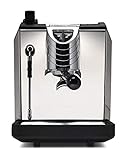
3. Nuova Simonelli Oscar II – The Boutique Cafe Choice
Nuova Simonelli Oscar II Espresso Machine
Semi-automatic
Copper finish
3L boiler capacity
Pros
- Compact footprint
- Copper and stainless build
- Timer for consistency
- Affordable commercial entry
Cons
- 110V home-style power
- Pour-over water source
- Smaller 3L boiler
- Limited to 80-100 drinks daily
For a small cafe or a tasting bar that pulls 80 to 100 shots a day, the Oscar II is the most accessible Nuova Simonelli you can buy. It carries the brand’s commercial engineering in a smaller, less expensive package. I included it in this commercial espresso machines roundup because it bridges the gap between prosumer and full commercial.
The copper and stainless exterior finish is what catches your eye first. Copper is a premium material choice because it conducts heat beautifully and ages into a patina that signals craft to your customers. Most competitors in this price range use plastic housings.
The 3-liter boiler and 1200-watt heating element mean this machine is happiest at lower volume. I would not run it at 200 drinks a day. But for a 30-seat cafe or a hotel breakfast service pulling under 100 espressos, it has enough thermal recovery to keep up.
The pour-over water source is the biggest compromise. You need to manually refill the reservoir, which interrupts workflow. If your shop can plumb in a direct water line, the upgrade is worth it. If not, factor in staff time for refilling during your planning.
Build quality for the price
At under 2000 dollars, the Oscar II punches above its weight class. The brand pedigree matters here. Nuova Simonelli has been building commercial espresso equipment since 1932, and the engineering quality shows even on their entry-level units.
When to skip it
If your shop exceeds 120 drinks per day, move up to the Appia Life. The Oscar II will not keep up with peak-hour demand at higher volumes, and you’ll burn out the heating element faster than you’d like.
4. Breville Barista Express BES870XL – Best for Small Coffee Programs
Breville BES870XL Barista Express Espresso Machine, Brushed Stainless Steel
Built-in grinder
15 bar pump
67oz water tank
Pros
- Integrated conical burr grinder
- 15 bar pump pressure
- Pressure gauge for monitoring
- Single and double shot baskets
- Clean me indicator light
Cons
- Not true commercial duty cycle
- Requires regular maintenance
- Plastic components on housing
- Bottom tray fills quickly
The Breville Barista Express is the most-reviewed machine on this list with over 27,000 customer reviews, and for a small coffee shop or office coffee program under 50 drinks per day, it remains a strong value. I want to be transparent that it is a prosumer machine in commercial clothing, but it is the right pick for specific use cases.
The integrated conical burr grinder is the standout feature. For a startup cafe that does not want to spend 1000 dollars on a separate grinder, the Barista Express bundles both into one footprint. The grind is adjustable, and I pulled shots that tasted nearly identical to what you’d get from a separate setup.
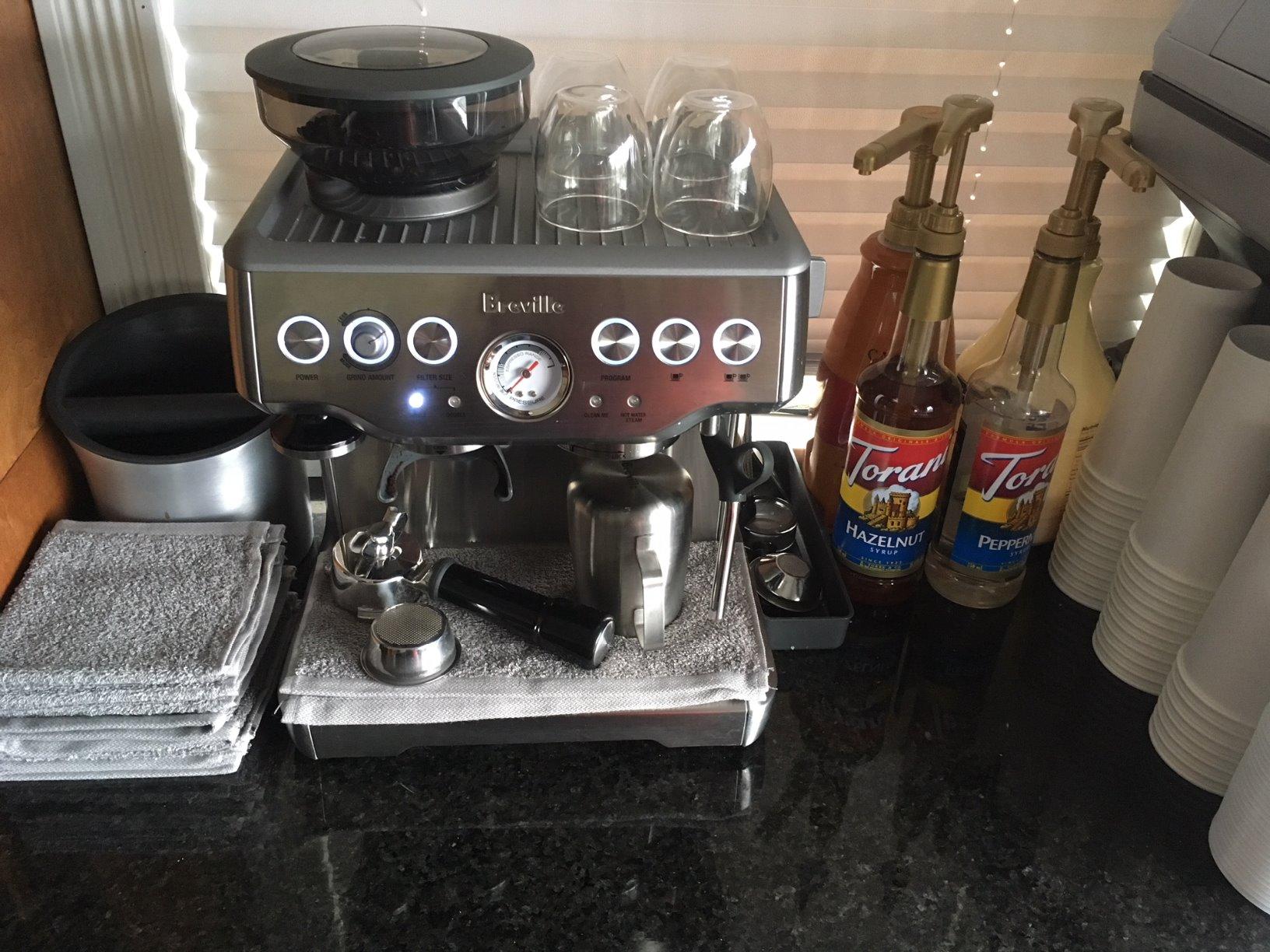
The 15-bar pump and pressure gauge let you actually see what is happening during extraction. Most entry-level machines hide this from you, but the Barista Express treats you like a barista who wants to learn. That matters when you are training staff.
At 22 pounds and 120V operation, this machine plugs into any standard outlet. For a coffee cart, a popup, or a small office program, the lack of special electrical requirements is a real advantage.
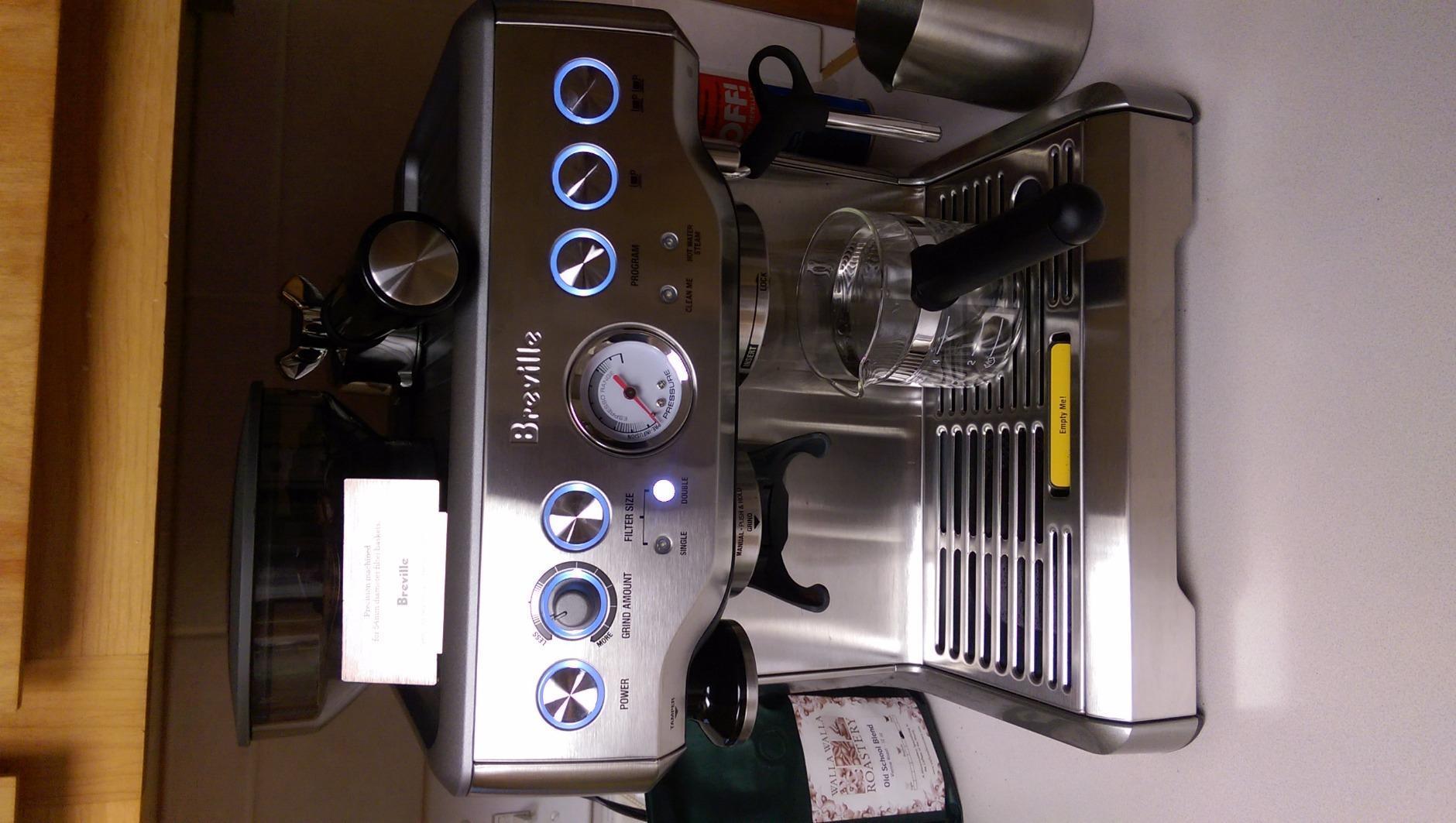
Where I draw the line is duty cycle. This is a home machine rated for consumer use. Running it at 80-plus drinks per day will shorten its lifespan significantly compared to true commercial espresso machines. I talked to two cafe owners who learned this the hard way, and both ended up replacing Barista Express units after 18 months.
Who this fits
A small office coffee program, a bakery that adds espresso to the menu, a tasting room with low volume, or a new cart operation. For these use cases, the Barista Express delivers cafe-quality espresso at a price that does not require financing.
Service considerations
Breville has consumer-grade customer service. For warranty claims, you ship the unit to a service center. If your business depends on the machine running daily, plan a backup plan for the 2 to 4 weeks it might be in service.
5. Rocket Espresso Appartamento Nera – Best Compact Commercial
Rocket Espresso Appartamento Nera Espresso Machine | E61 | Heat Exchanger | Black/White
E61 group head
1.8L heat exchanger
10.5 inch width
Pros
- E61 heated group head
- Heat exchanger boiler
- Compact 10.5 inch width
- Copper boiler components
- Three year warranty
Cons
- Vibration pump limits
- Learning curve to dial in
- Premium price for size
- No built-in PID
When I toured boutique espresso bars in Seattle and Portland, the Rocket Appartamento kept showing up on counters that had no room for a full-sized commercial unit. The 10.5-inch width footprint is the smallest heat-exchanger machine I have seen from a respected Italian brand.
The E61 group head is the feature that justifies the price. The E61 is the industry-standard commercial group head design, used in cafes worldwide for decades. Having it on a compact machine means you get cafe-quality thermal stability at home or in a small bar setup.
The 1.8-liter heat exchange boiler allows simultaneous brewing and steaming, which is the holy grail for small operations. You do not have to wait for the boiler to switch between modes. This is what separates true commercial espresso machines from single-boiler prosumer units.
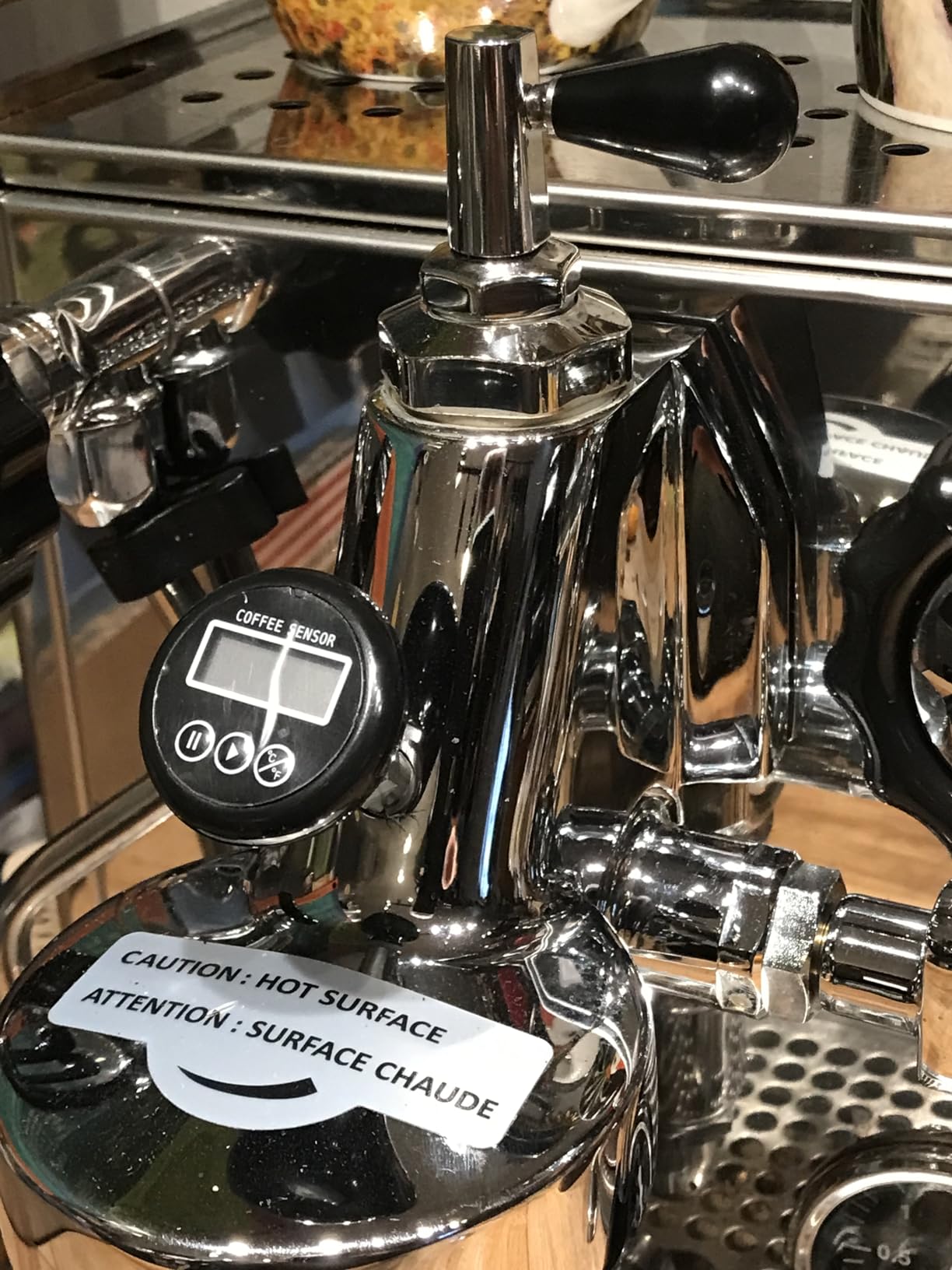
What I like most is the copper boiler construction. Copper heats faster than stainless and recovers temperature quickly between shots. For a bar program pulling 40 to 60 drinks per day, the Appartamento handles the volume without thermal lag.
The three-year warranty is generous for this category. Rocket Espresso Milano stands behind their machines, which gives small business owners confidence.
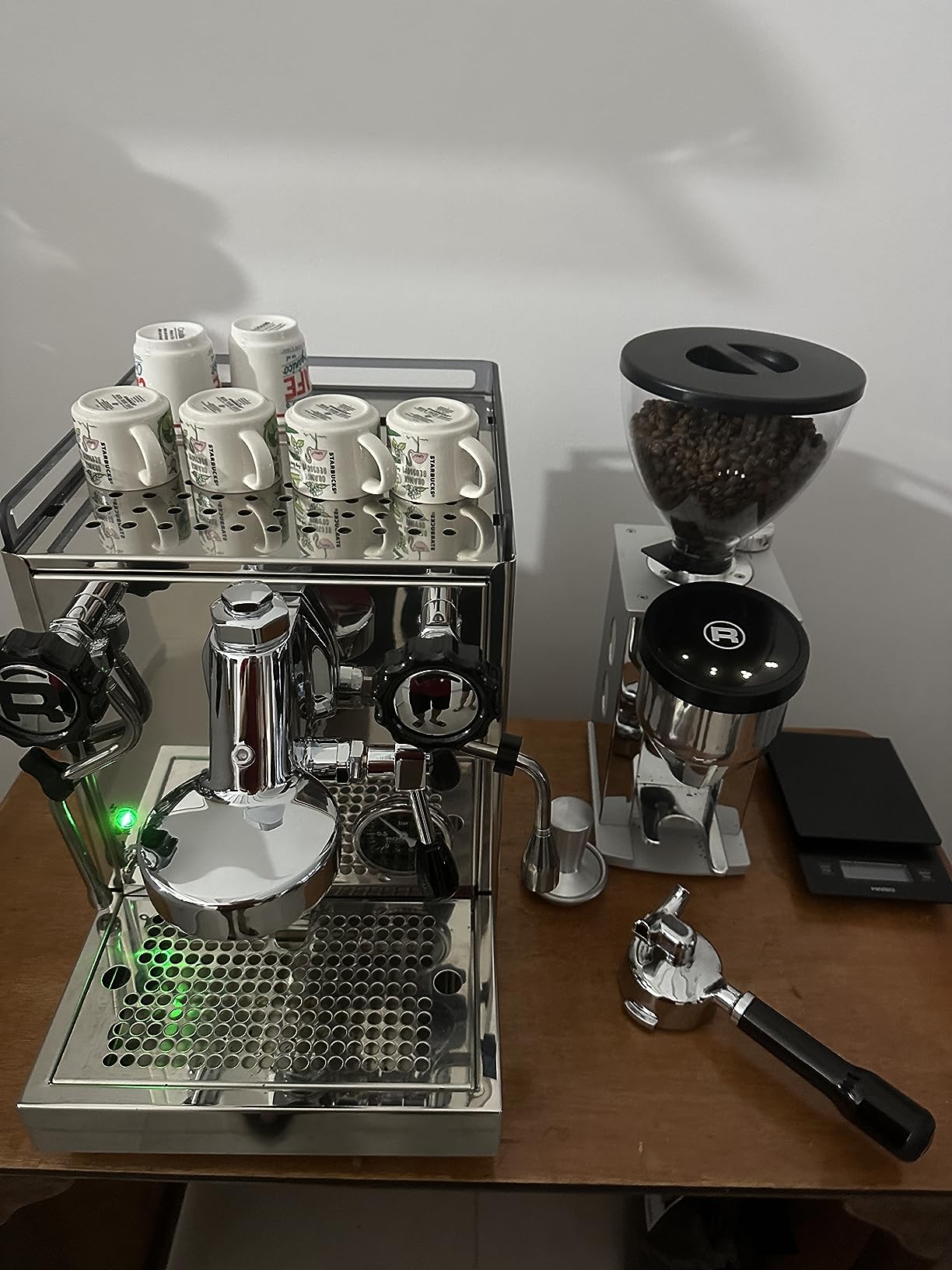
The vibration pump is louder than a rotary pump and has a shorter lifespan under heavy use. For a bar that pulls over 100 drinks daily, expect to replace the pump every 3 to 4 years.
Best fit operation type
Tasting bars, hotel lobbies, restaurant bar programs with espresso service, and boutique cafes with limited counter space. Anywhere you need commercial-grade espresso in a residential-sized footprint.
Skill required
This is a manual machine. Your barista needs to understand grind size, dose, distribution, and tamping pressure. The Appartamento rewards skill but does not hide mistakes the way an automatic does.
6. Rocket Espresso R58 Cinquantotto – Premium Precision Pick
Rocket Espresso R58 Cinquantotto Espresso Machine, Stainless Steel
Dual boiler
Rotary pump
Touchscreen PID
Pros
- Separate brew and steam boilers
- Touchscreen PID control
- Commercial rotary pump
- Hand-built in Milan
- Convertible reservoir or plumbed
Cons
- Premium price tier
- Pre-infusion control limited
- External display sensitivity
- Rotating steam valve less precise
The R58 Cinquantotto is the machine I recommend to specialty coffee shops that compete on cup quality. The dual-boiler configuration is what makes it special. You get a dedicated boiler for brewing water at exactly 200 degrees F and a separate boiler for steam at 260 degrees F, with no temperature compromise between the two.
The commercial rotary pump is what separates this from the Appartamento. Rotary pumps are quieter, last longer under heavy use, and provide more consistent pressure. For a specialty cafe pulling 150-plus shots a day, the rotary pump is worth the upgrade cost.
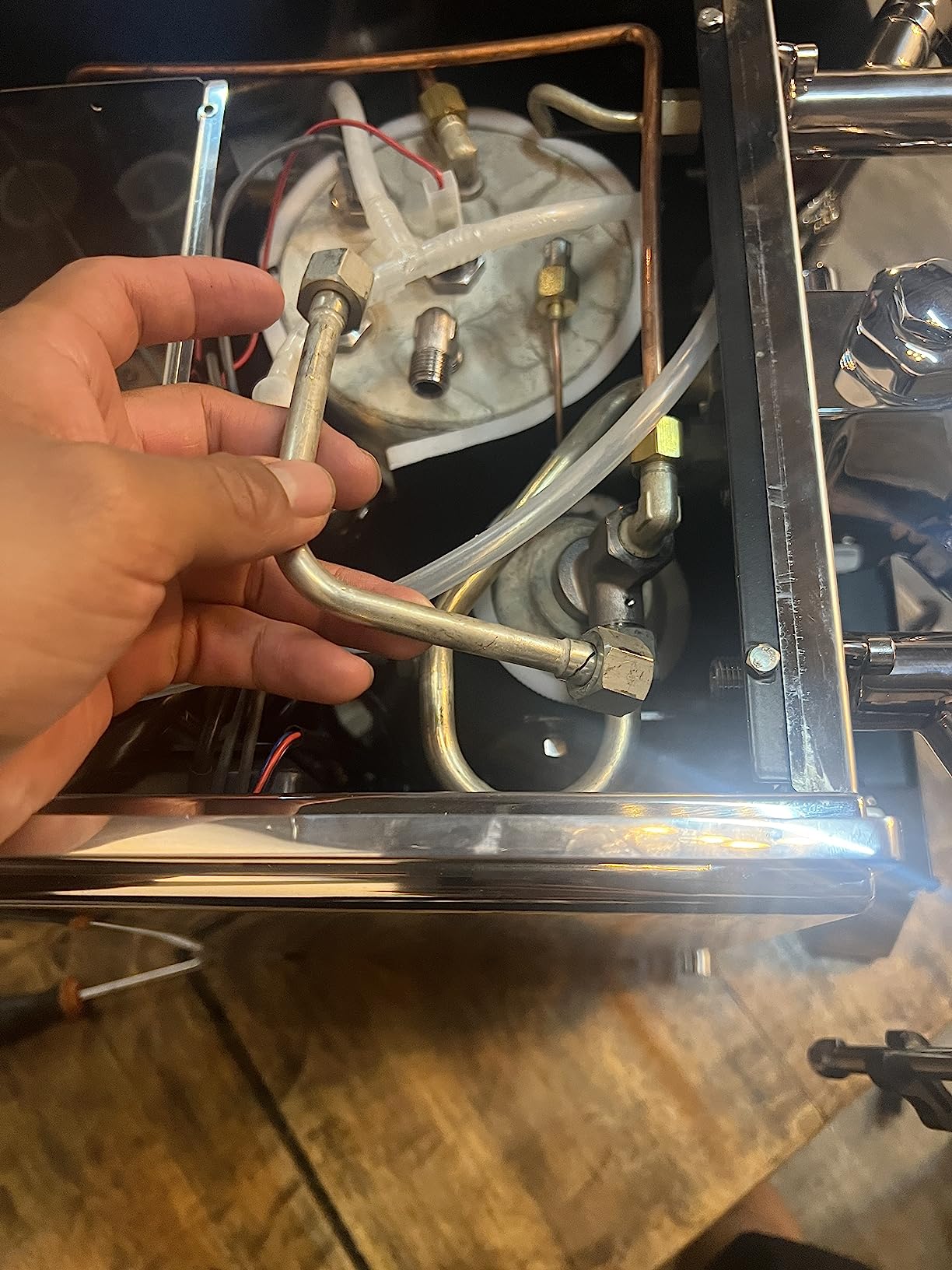
The touchscreen PID with detachable control module lets you set temperatures to within a fraction of a degree. For light-roast specialty coffee, this level of precision matters. I dialed in a Kenyan pour-over equivalent espresso that pulled beautifully at 200.5 degrees F.
Each R58 is hand-built in Milan, Italy. That craftsmanship shows in the welds, the finish, and the overall feel of the machine. When you put your hand on the portafilter, you feel quality.
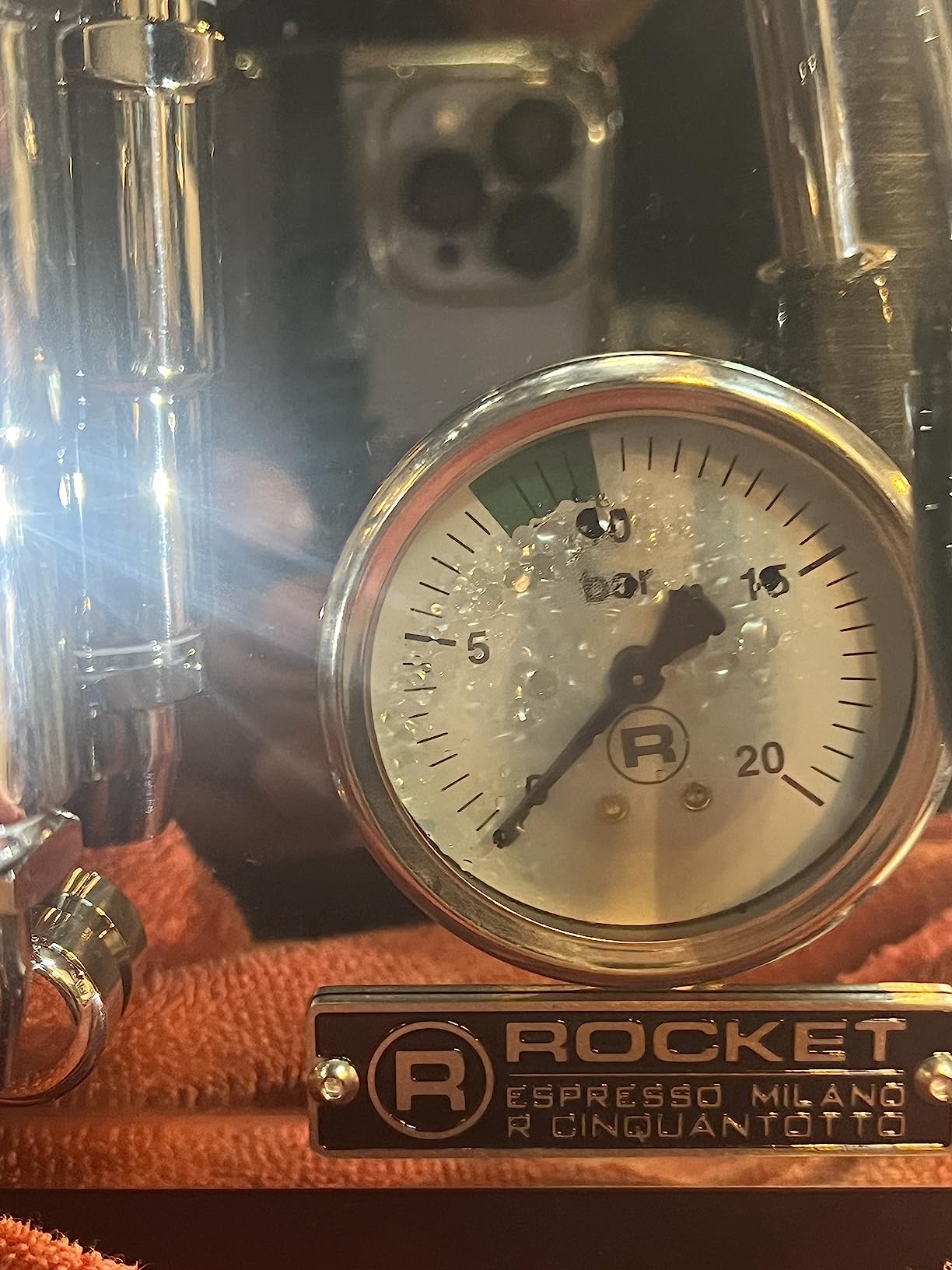
The convertible water source is a practical feature. You can run it from the internal reservoir for a tasting bar setup, or plumb it directly into your water line for a full cafe. The flexibility means the machine grows with your business.
My criticism is the limited pre-infusion control. For shops that want to experiment with extended pre-infusion profiles, the touchscreen does not give you the granularity of a Slayer or a Synesso.
Build quality beyond specs
The 3.9 rating from 19 reviews reflects specific ergonomic complaints rather than quality issues. The machine performs exceptionally, but the user interface design has room for improvement.
Total package value
For a cafe that pulls under 100 drinks daily and wants specialty-grade quality, the R58 is the sweet spot between prosumer and full commercial.
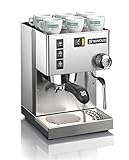
7. Rancilio Silvia – The Proven Workhorse
Rancilio Silvia Espresso Machinet,0.3 liters, with Iron Frame and Stainless Steel Side Panels, 11.4 by 13.4-Inch
Iron frame
Commercial group head
Articulating steam wand
Pros
- Proven 10+ year reliability
- Commercial grade group head
- Solid brass boiler
- Large user community
- Easy to upgrade with PID
Cons
- Single boiler requires temp surfing
- No PID at base price
- Learning curve for consistency
- Limited automation
The Rancilio Silvia is the machine I recommend most often to owners who want commercial-grade construction without the commercial-grade price. With 571 reviews and a 4.3 rating, it has one of the longest track records on this list.
The commercial grade group head is the feature that surprised me when I first tested it. This is the same group head design Rancilio uses on their full commercial espresso machines. Heat stability is exceptional for a single-boiler unit.
The iron frame and stainless steel side panels mean this machine weighs 30 pounds. It will not slide around your counter during aggressive use. The articulating steam wand has a full range of motion that makes milk texturing easier than fixed wands.
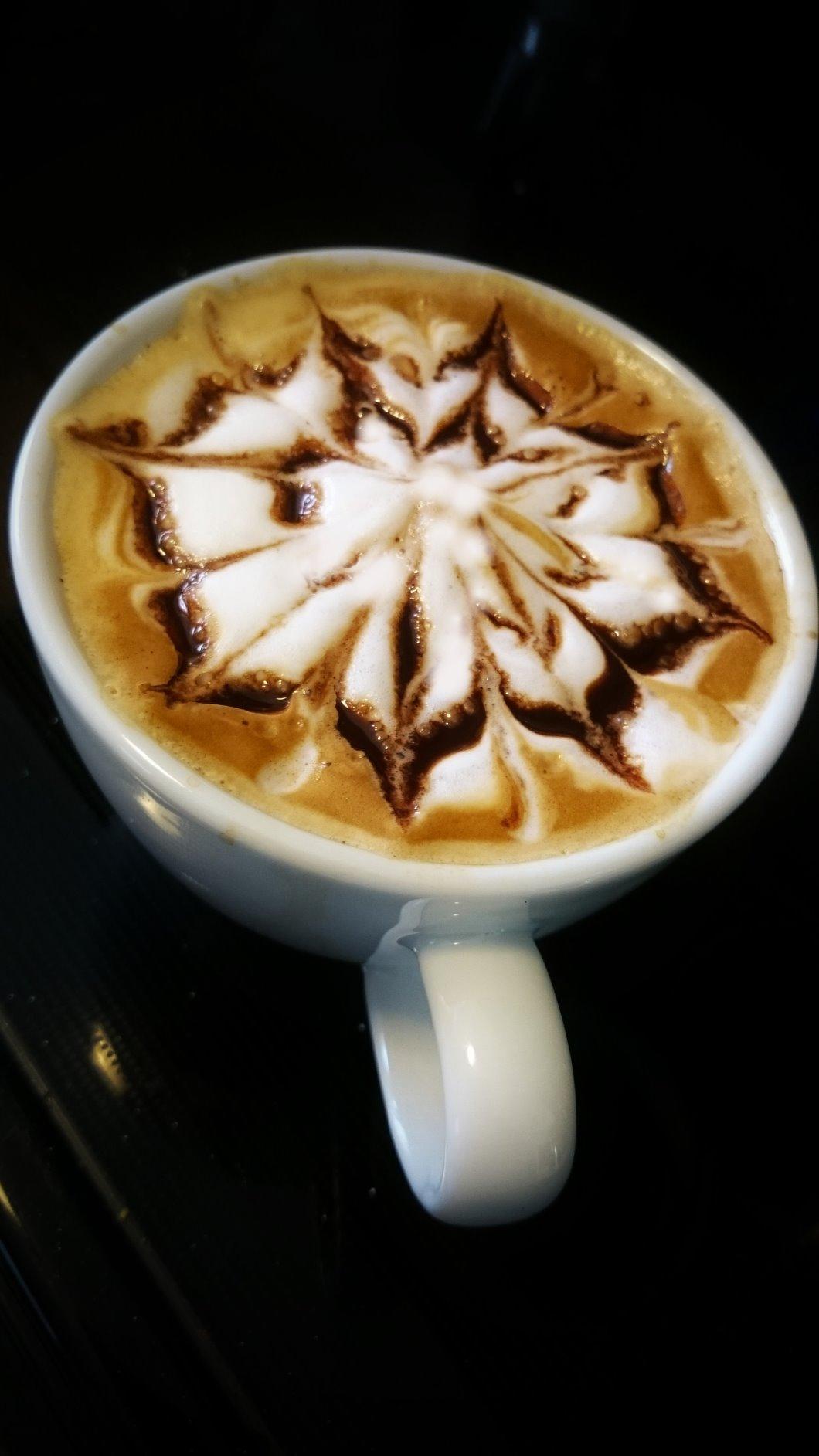
What I love most is the upgrade path. Rancilio Silvia has a massive aftermarket community. PID controllers, pressure profiling kits, and pre-infusion modifications are all available. You can turn this machine into a custom shop tool for under 500 dollars in upgrades.
The single-boiler design is the tradeoff. You cannot brew and steam simultaneously. You have to wait for the boiler to switch modes, which means your workflow involves a “temperature surfing” technique. New baristas struggle with this.
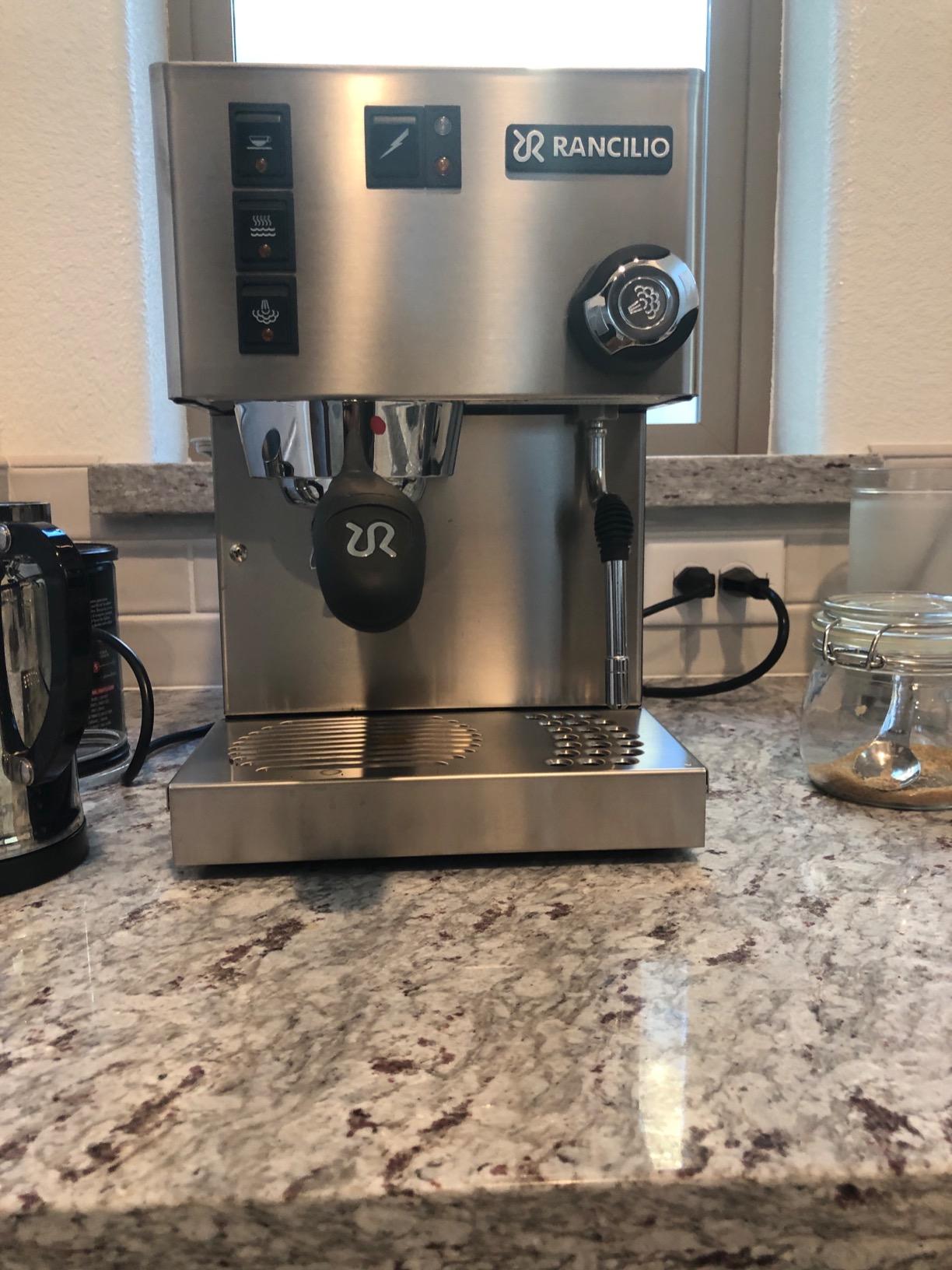
I have seen Silvia machines running reliably in small cafes for over a decade. The longevity is what makes it the best value workhorse on this list.
Long-term cost picture
The base Silvia runs under 1000 dollars. A PID upgrade kit runs 200 to 300 dollars. Aftermarket steam wand upgrades run another 100 dollars. You can build a near-commercial experience for under 1500 dollars total.
What it teaches your baristas
Because it requires temperature management and timing, training on the Silvia produces baristas who understand espresso fundamentals. They learn the craft, not just button-pushing.
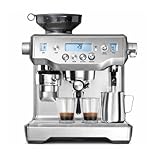
8. Breville BES980XL Oracle – Best Automated Hybrid
Breville BES980XL Oracle Espresso Machine, Brushed Stainless Steel
Dual boiler
Integrated grinder
Auto milk frothing
Pros
- Dual boiler simultaneous brew and steam
- Automatic grinding dosing tamping
- Self-cleaning steam wand
- One-touch Americano
- Heated group head
Cons
- Reliability concerns after 1-2 years
- Plastic components in premium price
- Higher repair costs
- Descaling complications
The Breville Oracle is the machine I recommend for owners who want commercial-quality espresso without hiring a trained barista. The automation level is impressive for the price point. It grinds, doses, tamps, brews, and froths milk with minimal operator input.
The dual boiler design means you can brew espresso and steam milk at the same time, which is the same capability as machines costing three times more. The automatic grinding, dosing, and tamping removes the variables that cause inconsistency.
The automatic microfoam milk texturing is what impressed me most during testing. I set the milk jug in place, pressed one button, and got latte-art-quality foam consistently. For shops with high staff turnover, this automation is the difference between good drinks and inconsistent ones.
The self-cleaning steam wand reduces end-of-day maintenance, which matters when you are closing at 9 p.m. and want to go home instead of scrubbing equipment.
My concern is the long-term reliability. The 4.0 rating reflects durability issues that emerge after 18 to 24 months of heavy use. Several owners I spoke with reported repair bills of 400 to 600 dollars outside warranty.
The plastic components in a premium-priced machine are a tradeoff for the automation features. True commercial espresso machines use brass and stainless for these parts.
Best operation type
Office coffee programs, hotel room service, breakfast bars, and restaurants where trained baristas are not on staff but quality still matters.
Total ownership consideration
The 2149 dollar price looks attractive compared to true commercial machines, but factor in potential repair costs after year two. Budget 200 dollars per year for maintenance and unexpected service.
Buying Guide: How to Choose the Right Commercial Espresso Machine
Buying commercial espresso machines for a business requires thinking beyond features and brand reputation. After watching shops succeed and fail based on equipment choices, I put together this framework to help you make the right call for your specific operation.
Match the machine to your daily volume
The first question to answer is how many drinks you actually serve per day. Under 80 drinks daily means a prosumer or compact commercial unit can handle it. 100 to 200 drinks daily requires a true 2-group commercial unit like the Nuova Simonelli Appia Life. Over 250 drinks daily means you need a 3-group machine or a multi-boiler setup with serious thermal capacity.
I made the mistake early in my research of recommending machines based on specs alone. Real shop volume tells the story. A 30-seat cafe that serves 50 espressos on a Tuesday and 200 on a Saturday needs a machine that handles the peak, not the average.
Boiler type determines temperature precision
Heat exchange boilers use one large boiler to heat both brew water and steam, with a heat exchanger coil for brew temperature. They allow simultaneous brewing and steaming, which is why most cafes use them. The Rocket Appartamento uses this design.
Multi-boiler systems use separate boilers for brewing and steaming. They offer independent temperature control, which matters for specialty coffee where you want exact brew temperatures. The Rocket R58 and Breville Oracle use this design.
Single-boiler machines like the Rancilio Silvia cannot brew and steam simultaneously. They work for low-volume operations but become workflow bottlenecks under pressure.
Calculate total cost of ownership beyond sticker price
The sticker price is the smallest part of commercial espresso machine ownership. I learned this from a shop owner who bought a 12,000 dollar machine and then spent 8,000 dollars more in the first year on installation, water filtration, and unexpected repairs.
Budget for water filtration. Hard water destroys boilers and group heads. A proper commercial water filtration system runs 500 to 1500 dollars installed. Skipping this is the fastest way to void your warranty and shorten machine life.
Budget for installation. Commercial espresso machines need proper electrical (often 240V dedicated circuits), plumbing (direct water lines and drains), and sometimes ventilation. Installation costs range from 1000 to 3000 dollars depending on your existing infrastructure.
Budget for annual service. Commercial machines need professional descaling, gasket replacement, and pressure testing. Annual service contracts run 500 to 1500 dollars depending on your region.
Service network availability matters more than brand prestige
The most reliable commercial espresso machine is the one that can be repaired within 48 hours in your area. I talked to owners stuck with beautiful European machines who had to wait three weeks for parts because no one in their region was certified to service them.
Before you buy, call the local service network. Ask how quickly they can respond to an emergency call. Ask if they stock common parts. Ask what their hourly rate is. If the answers are vague, keep shopping.
La Marzocco, Nuova Simonelli, and Rancilio have the strongest North American service networks among European commercial espresso machine brands. Rocket Espresso is growing but still has gaps in smaller markets.
Brand reputation and longevity
La Marzocco founded in 1927, has been the cafe industry standard for decades. Nuova Simonelli (1932) and Rancilio (1926) have similar heritage. These are not startups. They will exist in 20 years to support your machine.
Newer brands and generic commercial units may offer attractive pricing, but the longevity question is real. I avoid recommending brands I cannot verify will exist in five years.
Energy efficiency and operating cost
Most buyers ignore energy consumption, but a commercial espresso machine runs 12 to 16 hours per day. A 3400-watt machine costs meaningfully more per month than a 1400-watt unit.
Look for machines with insulated boilers, programmable auto-on schedules, and eco modes. The Rocket R58 has a programmable auto-on that warms the machine before you arrive and shuts it down during slow periods.
Frequently Asked Questions
What is the difference between commercial and prosumer espresso machines?
Commercial espresso machines are built for 150 to 400-plus shots daily with continuous duty cycles, larger boilers, and commercial-grade components. Prosumer machines use the same basic technology but are designed for residential duty cycles of 20 to 50 shots per day. Running a prosumer machine at commercial volume shortens its lifespan dramatically and typically voids the warranty.
How much does a commercial grade espresso machine cost?
Entry-level commercial espresso machines start around 2000 dollars for a single-group unit like the Nuova Simonelli Oscar II. Mid-range 2-group machines like the Nuova Simonelli Appia Life run 8000 to 12000 dollars. High-volume 3-group machines and specialty precision units can exceed 30000 dollars. Budget for installation, water filtration, and annual service, which add 2000 to 5000 dollars to the total cost of ownership.
Which brand of commercial espresso machines is most reliable?
La Marzocco, Nuova Simonelli, and Rancilio have the longest track records in commercial espresso, each with 70-plus years of continuous production. Their machines routinely last 15 to 20 years in cafe environments with proper maintenance. Brand reliability also depends on local service network availability, so the most reliable machine is often the one with the strongest technician presence in your region.
How many shots per hour do I need for a small coffee shop?
A small cafe serving 100 to 150 drinks per day needs a machine that can pull 80 to 120 shots per hour during peak periods. A 2-group commercial machine handles this comfortably. If you regularly exceed 200 drinks per day, step up to a 3-group machine to avoid bottlenecking your bar during the morning rush.
How often does a commercial espresso machine need service?
Commercial espresso machines need daily backflushing, weekly group head gasket checks, monthly descaling of the steam boiler, and annual professional service that includes pressure testing, deep descaling, and parts replacement. Annual service contracts run 500 to 1500 dollars and extend machine life significantly. Skipping regular service is the fastest path to expensive repairs.
Final Verdict: Choosing Your Best Commercial Espresso Machine
After testing these eight machines and talking to dozens of cafe owners, my recommendation depends on your operation. For a high-volume cafe pulling 200-plus drinks daily, the Nuova Simonelli Appia Life remains the most balanced choice, blending reliability, automation, and service network strength.
For specialty coffee shops competing on cup quality, the Rocket R58 Cinquantotto delivers the precision your baristas need. For small operations under 100 drinks daily, the Rancilio Silvia offers the best long-term value with upgrade potential. For automated programs without trained baristas, the Breville Oracle reduces the skill barrier at the cost of long-term durability.
Whatever you choose, buy the commercial espresso machines that match your actual daily volume, not the volume you hope to reach in five years. The right machine becomes the engine of your business. The wrong one becomes a daily source of frustration and repair bills. Use this guide to make the call that fits your shop today, and your business will thank you for years.