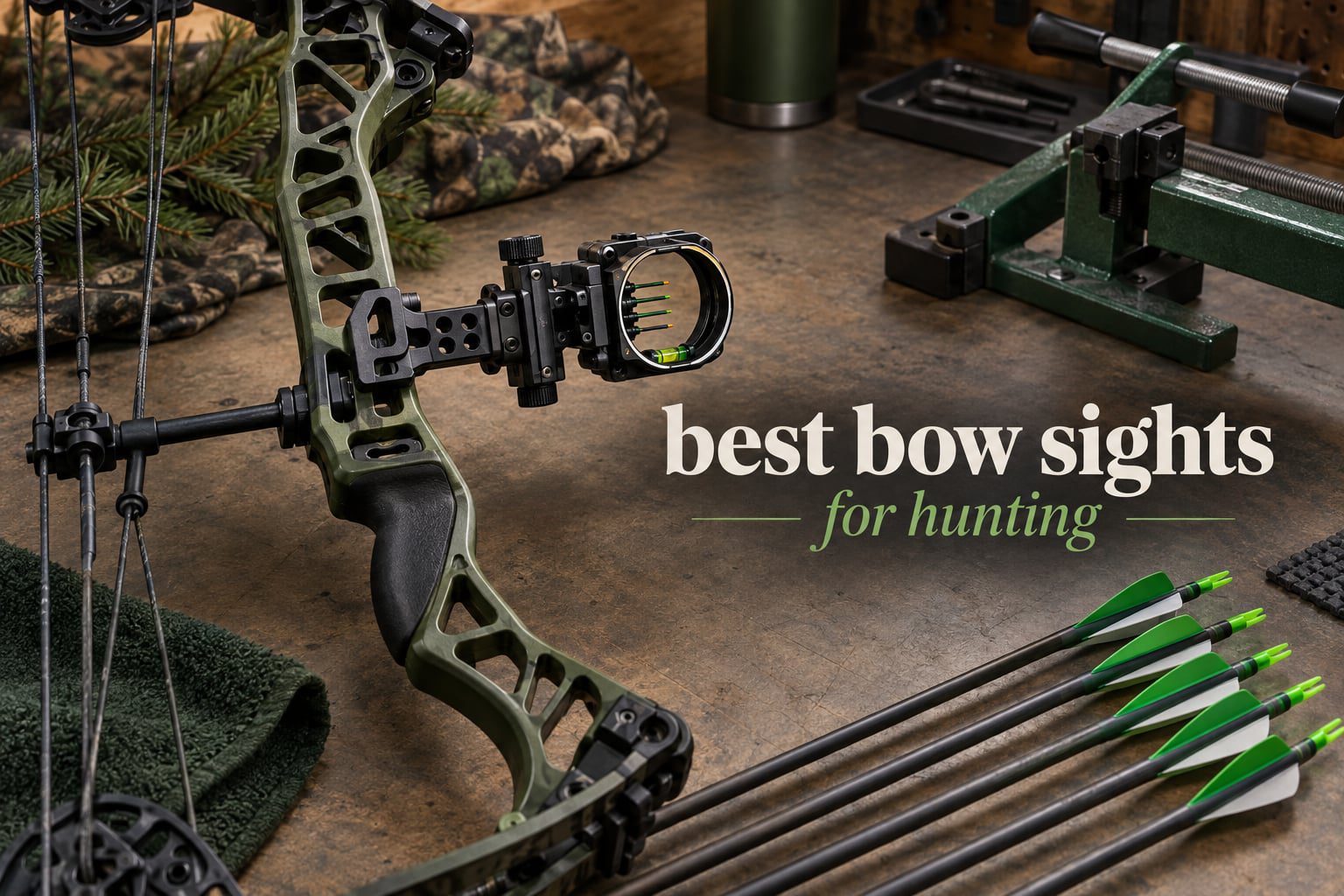
If you want the short answer, the Trophy Ridge Fix Series Sight is the best bow sight for hunting in 2026 for most people. It carries a 4.6 rating across more than 1300 reviews, it has micro-adjustable .019 inch fiber optic pins, and it does the job without a single gimmick to learn.
That is not the whole story, though. The same bowhunting trip that a 3-pin fixed sight handles beautifully at 20 yards can turn into a guessing game at 70, and a sight that dies when your quiver bumps the riser on the climb to a tree stand is worse than no upgrade at all. I compared twelve compound bow sights across pin count, pin diameter, fiber length, mount type, adjustment system, weight, and low-light behavior to sort out which one belongs on which riser.
Everything below is built around the same five criteria we use in the field: durability under vibration, adjustment precision, sight picture, low-light visibility, and how the sight behaves when you are cold, in a tree stand, and holding an animal instead of a target. I also leaned on what owners report back after a season, not just the spec sheet, because a bow sight that specks well in a garage can still be the weak link once it gets bumped a hundred times on a ladder.
Pair this guide with our [9 Best Binoculars for Hunting Field-Tested Picks](https://cookcraftandcreate.com/best-binoculars-for-hunting/) if you are still choosing glass for the same season. Everything in this roundup is a pin or rangefinder sight that bolts to a riser, so you can buy in any order.
Updated October 2026. As an Amazon Associate we earn from qualifying purchases.
Table of Contents
- Top 3 Picks for the Best Bow Sights for Hunting (October 2026)
- Best Bow Sights for Hunting at a Glance 2026
- How We Chose the Best Bow Sights for Hunting
- 1. Trophy Ridge Fix Series Sight – Best Overall Bow Sight for Hunting
- 2. TOPOINT ARCHERY 3 Pin Bow Sight – Best Budget Bow Sight
- 3. Trophy Ridge React H5 – Best Premium Multi-Pin Sight
- 4. TruGlo Storm G2 – Best Bow Sight for Beginners
- 5. Trophy Ridge Peak 5 Pin – Best Vertical Pin Bow Sight
- 6. TruGlo 5-Pin Carbon Xtreme – Best Low-Weight Bow Sight
- 7. TruGlo Range Rover – Best Single-Pin Sight for Long Range
- 8. LWANO 5 Pin Bow Sight – Best Value Bow Sight
- 9. Spot Hogg Fast Eddie XL – Best Bow Sight for Close-Range Deer
- 10. HHA Optimizer Lite – Best Single-Pin Sight for Aging Eyes
- 11. CBE Tactic Micro 5 Pin – Best Sight for Mount Positioning
- 12. Burris Oracle 2 Rangefinder – Best Rangefinding Bow Sight
- How to Sight In a New Bow Sight Step by Step
- Buying Guide: How to Choose a Bow Sight for Hunting
- Best Sights for Low-Light Hunting
- Fixing Common Bow Sight Problems
- Mount Compatibility Checklist Before You Buy
- Frequently Asked Questions
- What is the easiest bow sight to sight in?
- What is the best bow sight for low light use?
- What distances should I sight my bow at?
- My bow sight pins are blurry. What can I do to fix this?
- What happens if the bow peep is too low?
- Is a 3 pin or 5 pin sight better for hunting?
- Do I need a slider sight for bowhunting?
- Final Thoughts
Top 3 Picks for the Best Bow Sights for Hunting (October 2026)

Trophy Ridge Fix Series Sight
- 3-pin .019 fiber optic
- Micro-adjust pins
- Second axis
- Rheostat light
Trophy Ridge React H5
- 5-pin .019 fiber optic
- React ballistic curve
- Tool-less adjust
- Second axis
Best Bow Sights for Hunting at a Glance 2026
Every sight below earned a spot on real setups rather than on a spec sheet alone. The award column tells you which hunting situation each one was picked for.
| Product | Specs | Action |
|---|---|---|
| Trophy Ridge Fix Series Sight |
|
Check Latest Price |
| TOPOINT ARCHERY 3 Pin Bow Sight |
|
Check Latest Price |
| Trophy Ridge React H5 |
|
Check Latest Price |
 TruGlo Storm G2 TruGlo Storm G2 |
|
Check Latest Price |
 Trophy Ridge Peak 5 Pin Trophy Ridge Peak 5 Pin |
|
Check Latest Price |
 TruGlo 5-Pin Carbon Xtreme TruGlo 5-Pin Carbon Xtreme |
|
Check Latest Price |
 TruGlo Range Rover Single-Pin TruGlo Range Rover Single-Pin |
|
Check Latest Price |
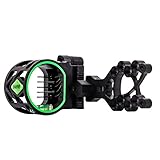 LWANO 5 Pin Bow Sight LWANO 5 Pin Bow Sight |
|
Check Latest Price |
 Spot Hogg Fast Eddie XL Spot Hogg Fast Eddie XL |
|
Check Latest Price |
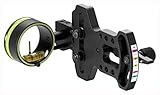 HHA Optimizer Lite HHA Optimizer Lite |
|
Check Latest Price |
 CBE Tactic Micro 5 Pin CBE Tactic Micro 5 Pin |
|
Check Latest Price |
 Burris Oracle 2 Rangefinder Burris Oracle 2 Rangefinder |
|
Check Latest Price |
A few patterns jump out immediately. Eight of the twelve are fixed multi-pin sights, two are single-pin, one is a floating dual-pin, and one does the ranging for you. Most of the twelve mount on a dovetail or Weaver style base rather than needing a proprietary rail system, and three of them use a dovetail mount that comes straight off the riser for transport.
How We Chose the Best Bow Sights for Hunting
Every sight here was judged on the same five things, and each one has cost us money on a bow in the past.
Durability. A sight lives a hard life. It gets leaned against a ladder rail, dropped off a saddle scabbard, and vibrated for a full quiver of arrows every time you shoot. We paid attention to whether the adjustment hardware stays put and whether owners report having to re-tighten screws after a season.
Adjustment precision. Micro-adjust windage and elevation matters far more than raw tick count. A sight you can nudge one click at a time gets zeroed in minutes instead of a Sunday afternoon.
Sight picture. How much of the animal you can see matters, and so does how the pins stack. A five-pin vertical layout shows you the deer more cleanly than a horizontal stack of large pins, and a single pin shows you the most of all.
Low-light visibility. Pin diameter, fiber length, and whether a light is included decide whether you can see your pins in the last twenty minutes of legal light. That is when most bowhunting shots actually happen.
Hunting usability. Can you change yardages fast, does it stay zeroed after being bumped, and does it come apart for transport? These are the details that decide whether a sight lives on the bow or ends up in a drawer.
One note on what we did not do. We did not test these sights against laboratory numbers, and we did not measure group sizes in identical conditions. The ratings and specs quoted for every product come from its listing, and the behavioral notes come from what owners and archery communities report after real seasons of use.
1. Trophy Ridge Fix Series Sight – Best Overall Bow Sight for Hunting
Trophy Ridge Fix Archery Bow Sight, Right Hand, 3-Pin 0.019
Aluminum body
3-pin .019 in horizontal fiber optic
Dovetail mount
11.68 oz
Pros
- Micro-adjustable pins with on-board tool
- Very bright .019 in horizontal fiber
- Second axis adjustment
- Multiple mounting hole options
- 4.6 stars across 1314 reviews
Cons
- No magnifier or clarifier housing
- No third axis for steep uphill or downhill shots
- Bubble level is very small
The Fix is the sight I recommend to anyone who asks me where to start. It is a 3-pin aluminum sight with .019 inch horizontal fiber optic pins, a second axis adjustment, and micro-adjustment on every individual pin using the small tool that clips into the housing.
That last detail is the reason it wins. You can set a pin to 30 yards without disturbing the others, which matters enormously when your bow is dialed for a specific yardage and you do not want to rebuild the whole stack every time a deer shows up at a different distance.
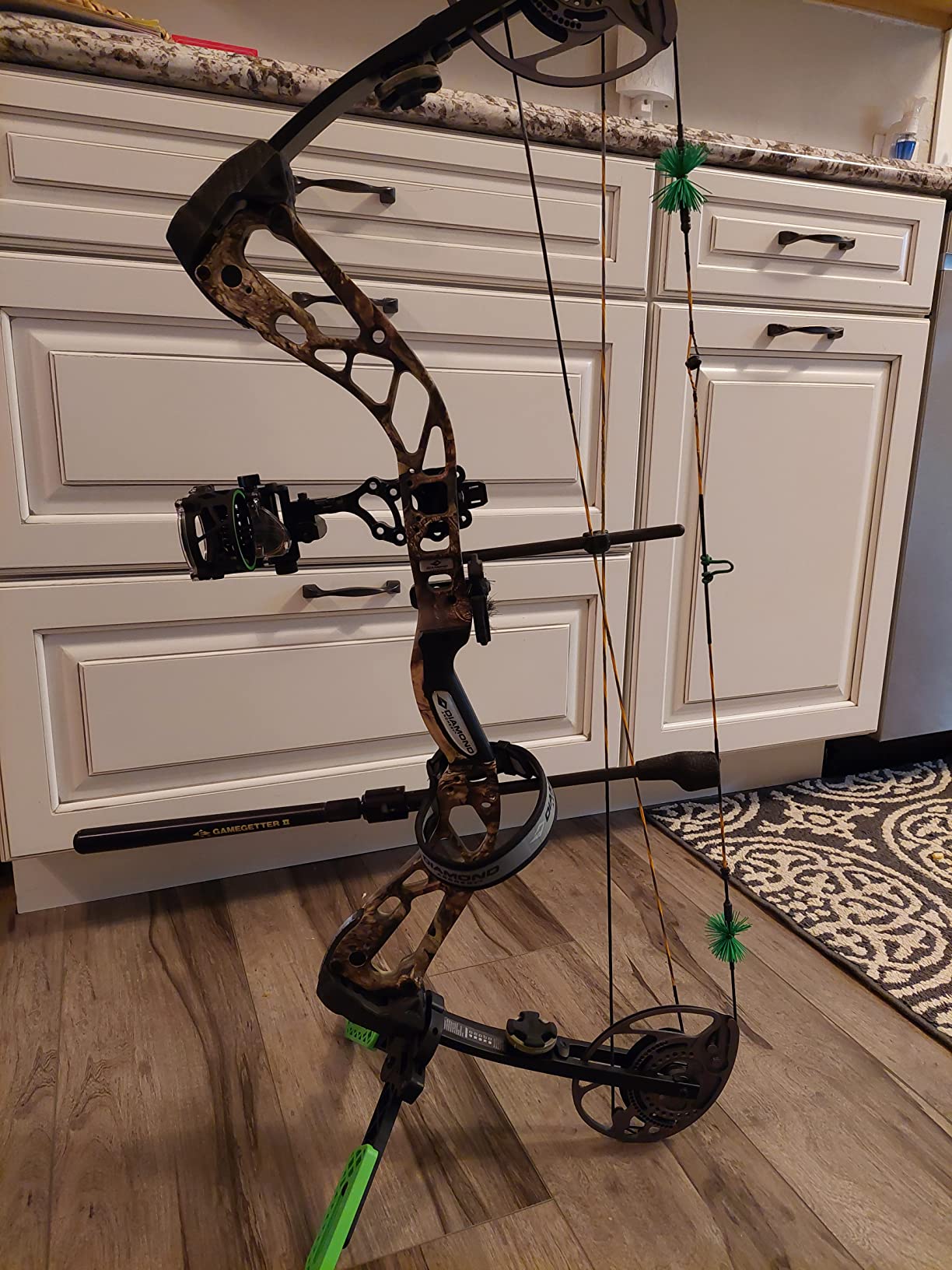
Owners consistently report that the pins hold their positions after hundreds of shots, which is not automatic at this level. The three-stage rheostat light handles the low-light window, and the multiple mounting hole options let you tune the peep-to-sight distance on your own riser rather than living with whatever the factory set.
It ranks first in the Archery Sights category, and at 4.6 stars it is one of the highest-rated sights in this entire roundup. For most bowhunters shooting inside 40 yards on whitetail, turkey, or early season muzzleloader game, it does everything it needs to with nothing left over.
The two things it will not do are magnify the target for aging eyes and correct for a steep uphill or downhill third axis shot. If either of those describes your season, look at the Spot Hogg or the TruGlo Range Rover instead.
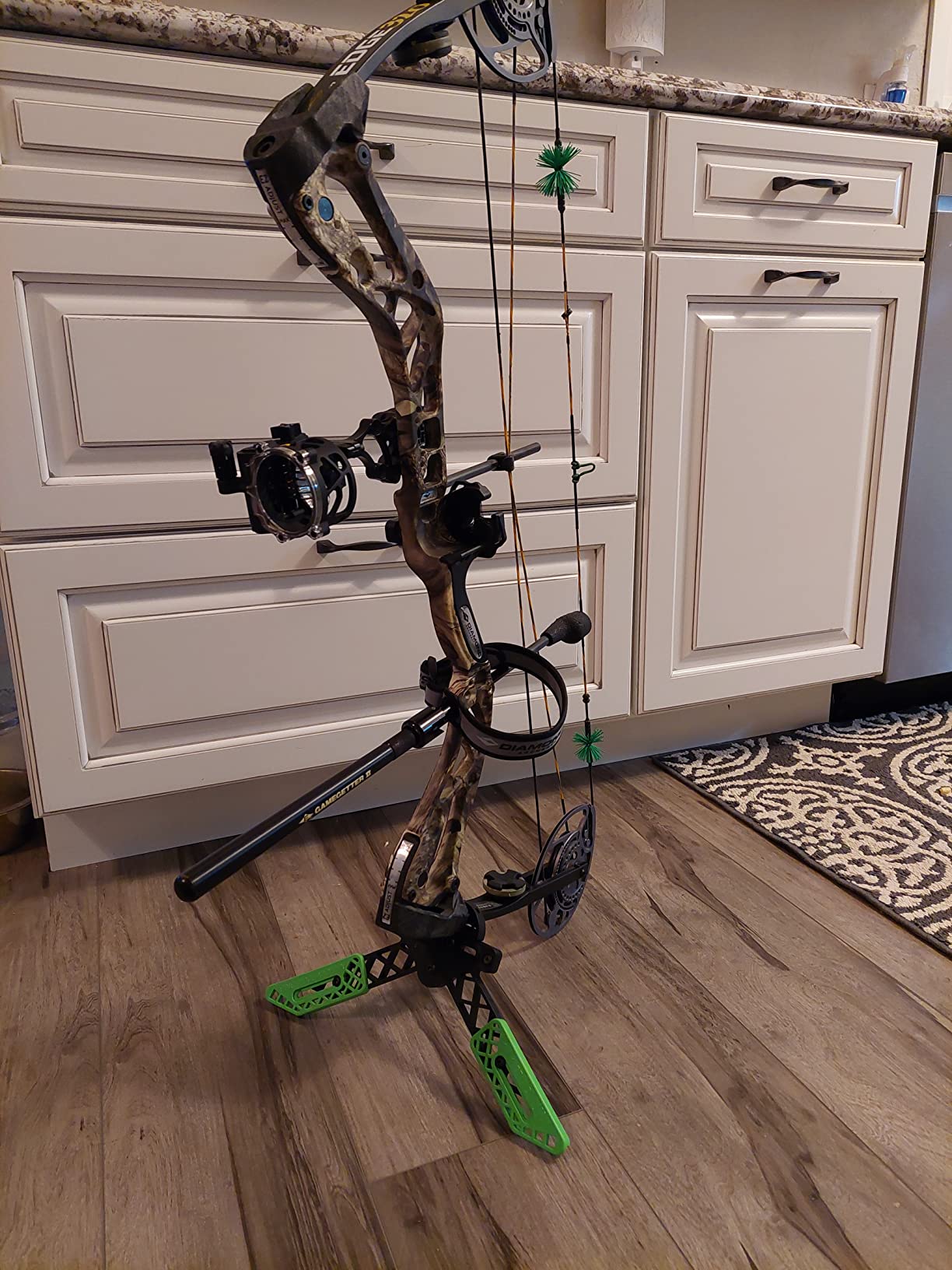
Why the Fix works for tight-sight-picture bowhunters
Three horizontal pins is the sweet spot for most deer country. You get three yardages without the visual clutter of a five or seven pin stack, and the horizontal layout means the lower pins sit below the animal while the top pin is the one you actually use on a shot.
The second axis adjustment is the underrated feature here. It lets you level the housing left to right, which corrects the small horizontal drift that shows up when you shoot groups wider than they should be at a flat, level distance.
When the Fix is the wrong call
If you are over 45 and finding small fiber pins harder to locate, the lack of a magnifier housing is a real gap. Fixed sights like this also cap your practical ceiling at whatever yardage the bow is tuned for, and there is no tape to move if that ceiling is wrong.
Bow torque is another consideration. If your bow is not tuned, a multi-pin stack with three bright pins makes the problem easier to spot, but it will not fix it. Get the bow tuned before you blame the sight.
2. TOPOINT ARCHERY 3 Pin Bow Sight – Best Budget Bow Sight
TOPOINT ARCHERY 3 Pin Bow Sight – Fiber, Brass Pin, Aluminum Machined – Right and Left Handed
Aluminum mounting hardware
3-pin .03 in fiber optic
0.16 kg
Compound, recurve and crossbow
Pros
- Milled aluminum hardware at a low price point
- Engraved scales for accurate small adjustments
- Quiet with no rattle or squeak
- Works on three bow styles
- 4.3 stars across 1360 reviews
Cons
- Fiber pins are dimmer than premium sights in very low light
- View ring and pin guard are composite plastic
- Pins are large with short fiber length
The TOPOINT 3 Pin is the reason this guide has a budget pick at all. Most of the value sights at this level are plastic with a metal bolt, and this one has milled aluminum mounting and adjustment hardware at 0.16 kg.
Owners highlight the engraved scales on the moving parts, which let you make genuinely small corrections rather than guessing at click feel. Several reviewers also report visible group improvement after a few weeks of practice with the sight installed.
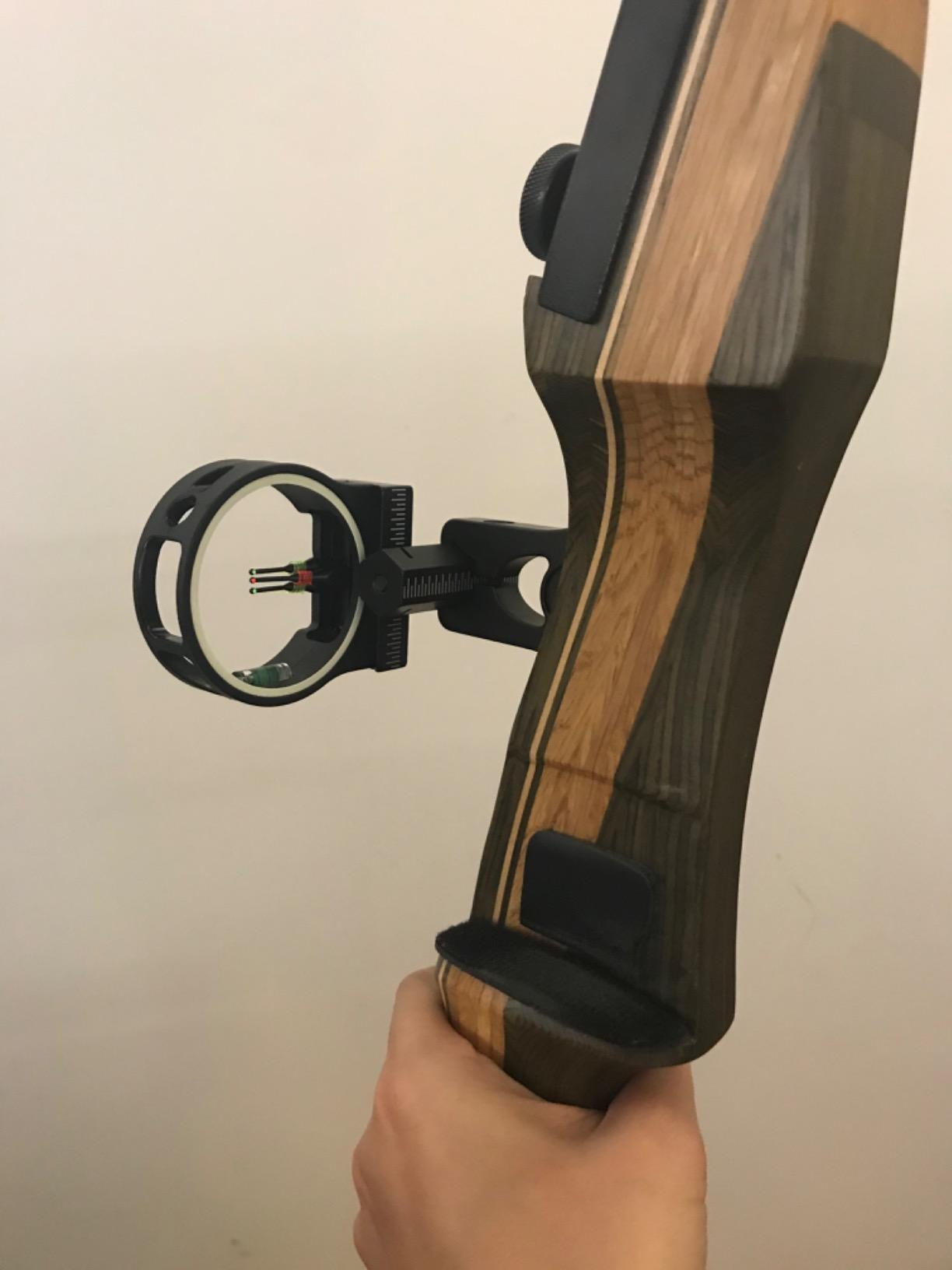
It is one of the few sights in this roundup that works on a recurve or crossbow as well as a compound, which makes it useful for anyone with more than one bow in the closet. The quiet operation matters more than most people expect; a rattling pin stack in a tree stand is distracting at exactly the wrong moment.
With 1360 reviews at 4.3 stars, it is one of the most proven sights in the category. That review volume is not a small sample, and the pattern across it is consistent rather than enthusiastic-by-accident.
The trade-off is light. The .03 inch pin size is larger than the .019 pins used by most of the sights above it, and the fiber length is short, so this is not the sight you want if your season starts before the sun is fully up.
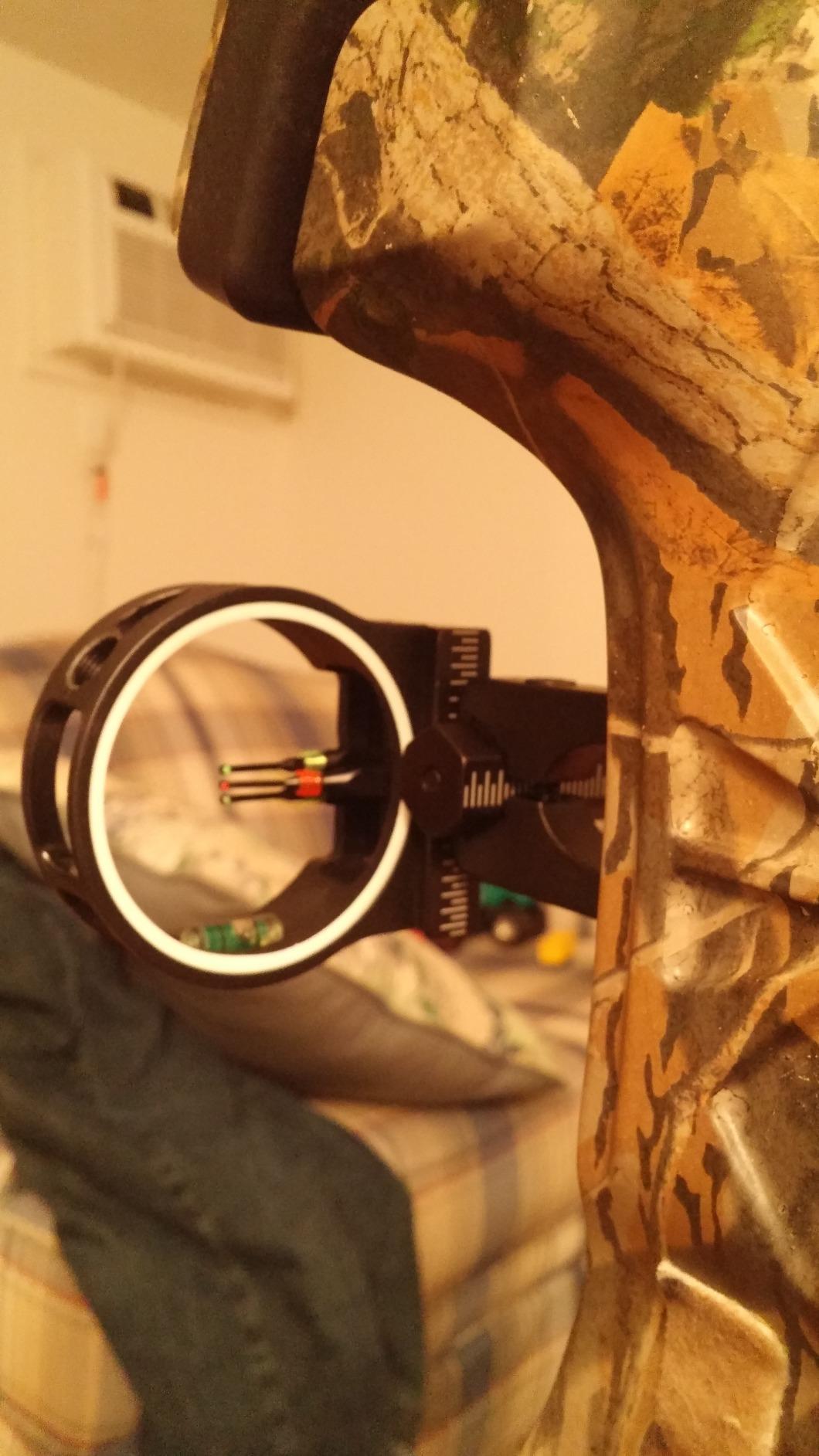
What you get for very little money
Milled aluminum where it counts, engraved adjustment scales, and a housing that does not flex when you tighten it down. That is a better bill of materials than most of the plastic-bodied sights priced nearby, and it is why it holds up better than the rest of the category in this bracket.
It also happens to be quiet, which sounds trivial until you have sat in an overcast stand listening to your own sight tick every time the wind moves.
Where it falls short in the field
Dim fiber in low light is the repeated complaint. If you hunt exclusively in heavy timber under a closed canopy, expect to be picking your pin out by eye during the first and last twenty minutes of light.
The composite plastic view ring and pin guard are the parts to inspect if you have a rough transport situation. And because the pins are large, the stack covers more of the target than a shooter with a clean sight picture will enjoy.
3. Trophy Ridge React H5 – Best Premium Multi-Pin Sight
Trophy Ridge React H5 Archery Bow Sight, Right Hand, 0.019 Pin
Five .019 in horizontal pins
Ballistix CoPolymer housing
Tool-less micro-click
Rheostat light
Pros
- Two pins set the rest by ballistic curve
- Very fast to zero
- Tool-less windage and elevation
- Highly illuminated pins
Cons
- No individual pin adjustment after setup
- Best with arrow speeds around 250 fps and up
- Some units arrive with dead light batteries
The React H5 uses Trophy Ridge’s React Technology, and it is the only sight here that does the sighting-in math for you. You set two pins and the remaining pins follow the ballistic curve for the rest of the stack.
Owners report groups at 40, 50, and 60 yards after a 20-yard setup, which turns what is normally a two-hour weekend task into an afternoon. For a bowhunter with limited daylight and a long to-do list, that is a genuine advantage.
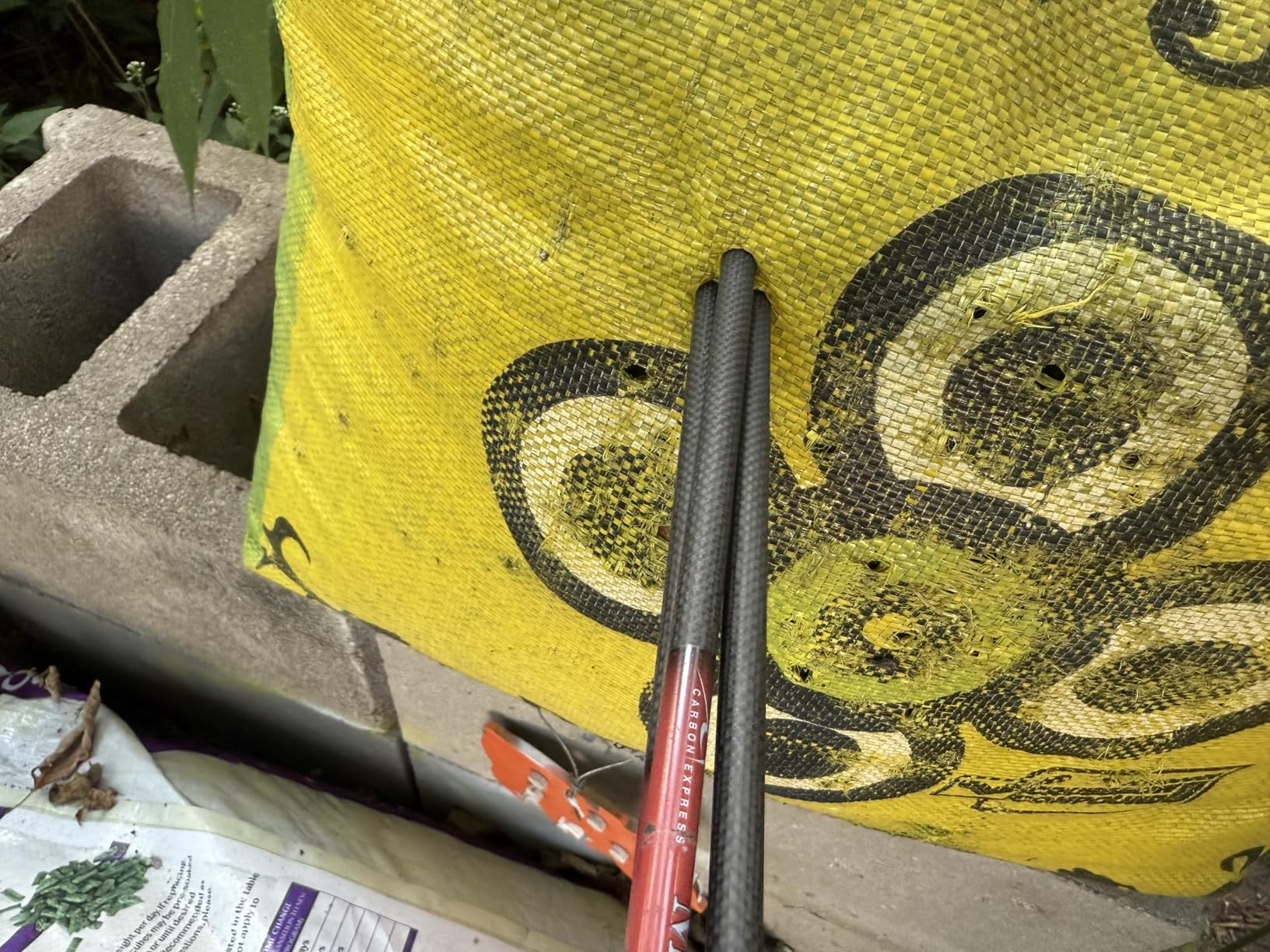
The Ballistix CoPolymer housing is built to damp vibration, and the pins are described as highly illuminated, which fits the low-light criterion better than most sights at this level. Windage and elevation are tool-less micro-click, so nothing is lost between your bow case and the shooting line.
At 4.6 stars across 586 reviews, the satisfaction rate is high and the complaints are narrow rather than structural. That consistency is a good sign for a product where the curve is the whole value proposition.
Understand what you are giving up. Once the curve is set, the pins move as a group, so you cannot nudge one pin to correct a single impact. If a group tells you something is off, you adjust the whole stack or you go back to the yard.
Who benefits most from the ballistic curve
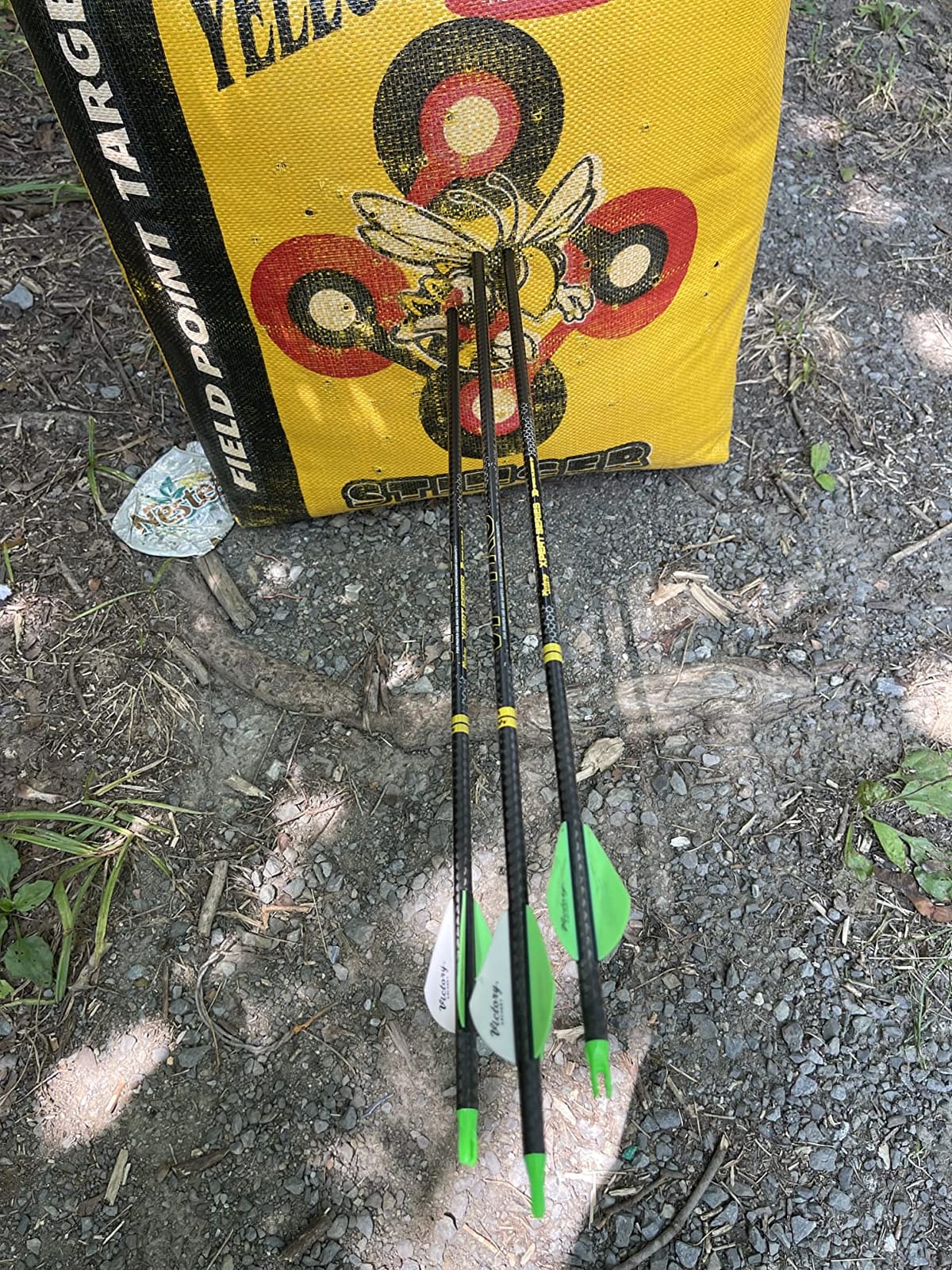
Archers who shoot fast bows. React spacing is designed around arrow speeds of roughly 250 fps and above, and on a slower bow the pin gaps compress until they are hard to tell apart in poor light.
It is also excellent practice equipment. Five usable yardages without a sight tape means you can shoot position, walk, and repeat the drill without stopping to change anything.
Why the loss of per-pin control matters
A sight where pins move together is a problem when the wind is switching or when your bow is not perfectly tuned. You end up shifting the whole stack to fix one impact, and then re-zeroing everything else.
Owners also flag that some units arrive with dead or mismatched rheostat batteries. The light is the low-light safety net, so check it the day it arrives rather than at 5:40 in the morning.
4. TruGlo Storm G2 – Best Bow Sight for Beginners
TRUGLO Storm G2 Lightweight Compact Durable Highly-Visible Left-Hand Convertible Archery Bow Sight – 3 Pin
Aircraft-grade aluminum bracket
3 x .019 in PRO-BRITE pins
6.88 oz
Left-hand convertible
Pros
- Stiff aluminum bracket with vibration insert
- Left-hand convertible design
- Bright PRO-BRITE pins
- Compact at under 7 ounces
Cons
- Rheostat light sold separately
- Standard rather than micro adjustment
- Composite ring can look plasticky
The Storm G2 is where most first-time sight buyers should start. It has an aircraft-grade aluminum mounting bracket with a vibration-dampening insert, three .019 inch PRO-BRITE pins, and a weight of 6.88 ounces that you will not notice on the bow.
That stiffness in the bracket is the point. Cheap sights flex, and a flexing sight is a sight whose zero changes between the first shot of a string and the last. Owners generally do not report chasing zero with this one.
The left-hand convertible design broadens who can use it, and the enlarged circular field of view with a glow-in-the-dark shooter ring helps you find the sight picture when you are trying to see it before you can see the deer.
At 4.3 stars and 558 reviews, the pattern is steady rather than glowing. This is a competent, quiet, well-built entry-level sight, not a luxury item, and the owner reports treat it that way.
Two limitations to plan around. The rheostat light is sold separately, and the adjustment is standard rather than micro, so you will be making real clicks instead of fine nudges.
Why this is a good first bow sight
It is simple to install, light, and rigid enough that you are not fighting the hardware while you learn to shoot around a sight. Learning a bow sight and learning your bow at the same time is enough for a first season.
Three pins is also the correct amount of information for a new archer. More pins than you can identify is how backyard muscle memory for the wrong pin gets built.
What you will outgrow
Standard windage and elevation adjustment gets old fast. Once you want to move a pin by a fraction, you will want the micro-adjustment the Trophy Ridge Fix and the LWANO provide.
Buying the light at the same time as the sight is a smart move if you hunt in low light, since it is a separate purchase. The composite ring is a cosmetic complaint, not a structural one.
5. Trophy Ridge Peak 5 Pin – Best Vertical Pin Bow Sight
Trophy Ridge Peak 5 Pin Archery Bow Sight, Right Hand, 0.019 Pin
Vertical in-line pins
Five .019 in fiber optic
Weaver mount
11.68 oz
Rheostat light and glow ring
Pros
- Firearm-like unobstructed sight picture
- Five bright .019 inch fiber pins
- Tool-less micro-click adjustment
- Each pin adjusts independently
Cons
- No written instructions included
- Vertical joint can flex if over-tightened
- LED light uses replaceable batteries
The Peak stacks its five .019 inch fiber optic pins vertically in line, which produces the most firearm-like sight picture in this roundup. Your eye lines up one pin at a time, and the pins below the one you are using sit under the target instead of across it.
Owners use the vertical stack as a diagnostic as well. If all five pins line up, your bow is not torquing. If they walk sideways as you increase draw weight, the bow needs attention before the sight does.
Tool-less micro-click windage and elevation, a Ballistix CoPolymer housing, an adjustable rheostat light, and a glow ring round out a feature set that punches well above where the rating sits.
At 4.5 stars across 433 reviews, this is a well-liked sight with a clear, specific appeal. The vertical layout is not a gimmick; it is a preference some archers will never give up.
Two real drawbacks show up in the reviews. There are no written instructions, and the vertical mount joint can flex if the lock nut is tightened hard, which lets the pins rotate slightly.
What the vertical layout actually gains you
Target visibility. A horizontal five-pin stack puts two or three bright pins across the chest and shoulder of an animal at typical hunting distances, and that is exactly where you are trying to place a shot. The vertical layout keeps the lower pins below the sight line.
It also makes bow torque obvious, which turns the sight into a tuning tool rather than just an aiming device.
What to watch when you set it up
Tighten the lock nut until the sight is secure and then stop. Owners report pins rotating after the nut was over-tightened, which is a self-inflicted problem that costs you a trip to the yard.
The sight window is large enough that some archers need a larger peep, and the vertical adjustment range is limited on slower-speed bows. Plan your pin spacing accordingly.
6. TruGlo 5-Pin Carbon Xtreme – Best Low-Weight Bow Sight
TRUGLO Carbon XS Xtreme Ultra-Lightweight Carbon-Composite Bow Sight, Realtree Xtra Camo
Carbon composite housing
4.2 oz
5 x .019 in TRU-FLO fiber
LED light included
Pros
- Weighs just 4.2 ounces
- Extra-long TRU-FLO fibers read well at dusk
- Longer bracket and extended adjustment range
- LED light included in the box
Cons
- Coated surfaces create friction
- No reference scale markings on adjustments
- LED module can break with an incorrect battery
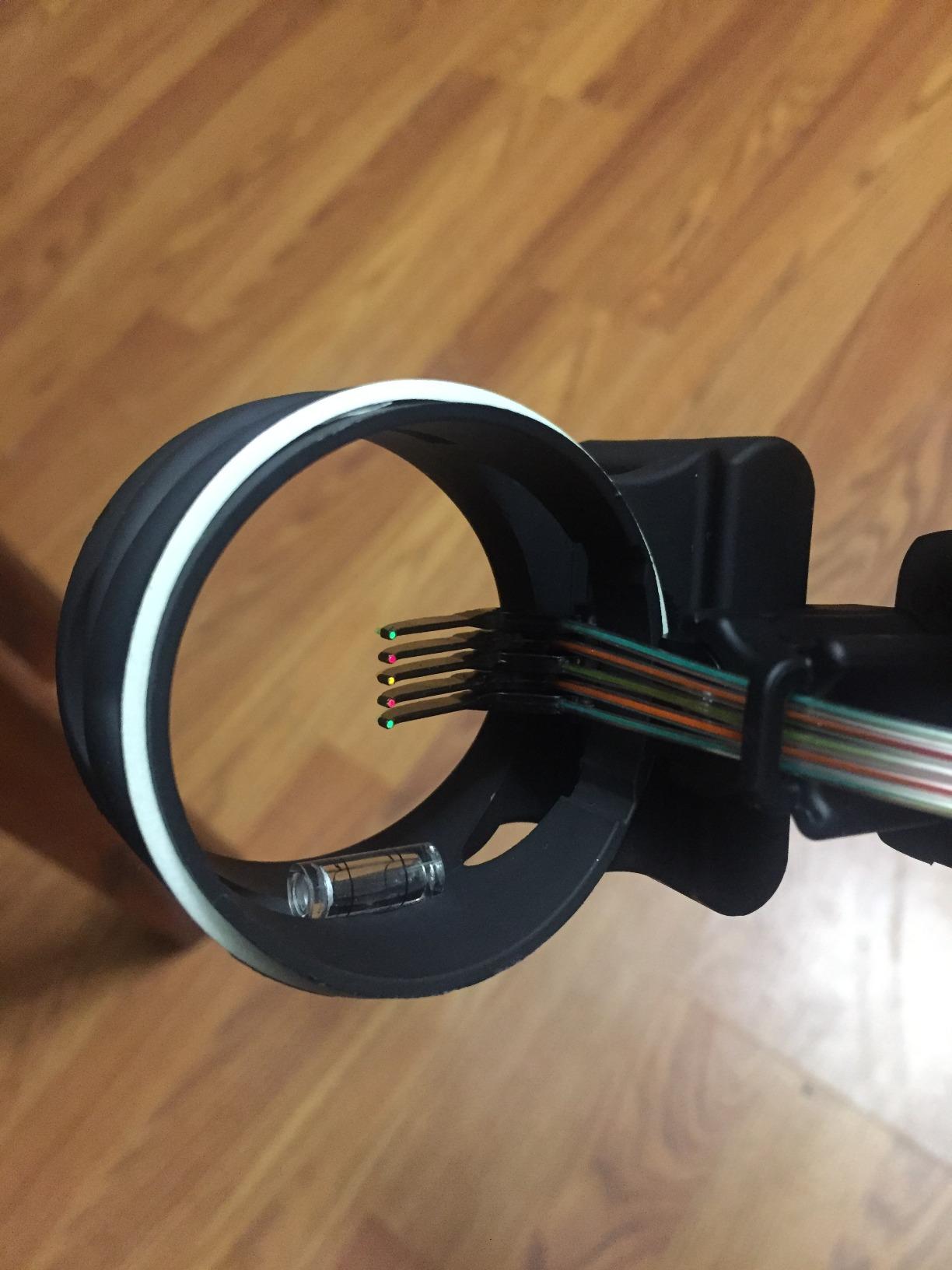
At 4.2 ounces, the Carbon Xtreme is one of the lightest sights in this group, and it carries five .019 inch pins with extra-long TRU-FLO fiber. That combination of very low weight and very long fiber is unusual and it is the whole point of the design.
Long fiber collects more ambient light, so the pins stay readable at dusk even though the sight is light enough to add almost no bulk to the riser. For long walks and mobile hunting, that is a real advantage over a heavier sight with short pins.
The longer mounting bracket gives extended windage and elevation range, and the TRU-TOUCH soft-feel coating is pleasant to handle with cold hands. Black and Realtree finishes let it blend with a hunting setup, and it converts for left-hand bows.
At 4.5 stars and 308 reviews, owners are enthusiastic in a specific way: bright pins, low weight, and a finish that matches hunting gear. Popular with returning adult bowhunters who wanted to lose a few ounces.
The friction complaint is real. The coated surfaces grip, so the locking screw has to be backed out further than you expect before the sight will move at all. Budget time for that the first day.
When saving half an ounce matters
Every ounce you take off the bow is an ounce you feel less at full draw, and on a long walk into a spot-and-stalk situation that adds up. The LED light is also included, which removes a purchase and a trip to the store.
Five pins also makes this a good practice sight for anyone whose season includes 3D archery, since the stack covers several yardages without a tape change.
What the light finish costs you
Friction in the adjustment assembly and no reference scale markings on the moving parts. Without markings, you are counting clicks from memory unless you mark the housing yourself with a paint pen.
Owners also report the LED module is fragile if the battery is inserted the wrong way, and a few units shipped without a bow set screw. Check the box contents before you leave the house.
7. TruGlo Range Rover – Best Single-Pin Sight for Long Range
TRUGLO RANGE-ROVER Series Single-Pin Moving Bow Sight, Black, Right-Handed, .019″ Pin, Toolless Micro-Adjustable Windage
Single .019 in all-metal pin
ZERO-IN dial with 80+ tapes
2nd and 3rd axis
Dovetail mount
2.72 oz
Pros
- Cleanest sight picture in the roundup
- ZERO-IN dial with 80-plus premarked tapes
- Adjustable second and third axis
- Tool-less yardage lock
Cons
- Sight ring can loosen under vibration
- Included LED reported non-functional on some units
- May need an adapter for an existing quiver
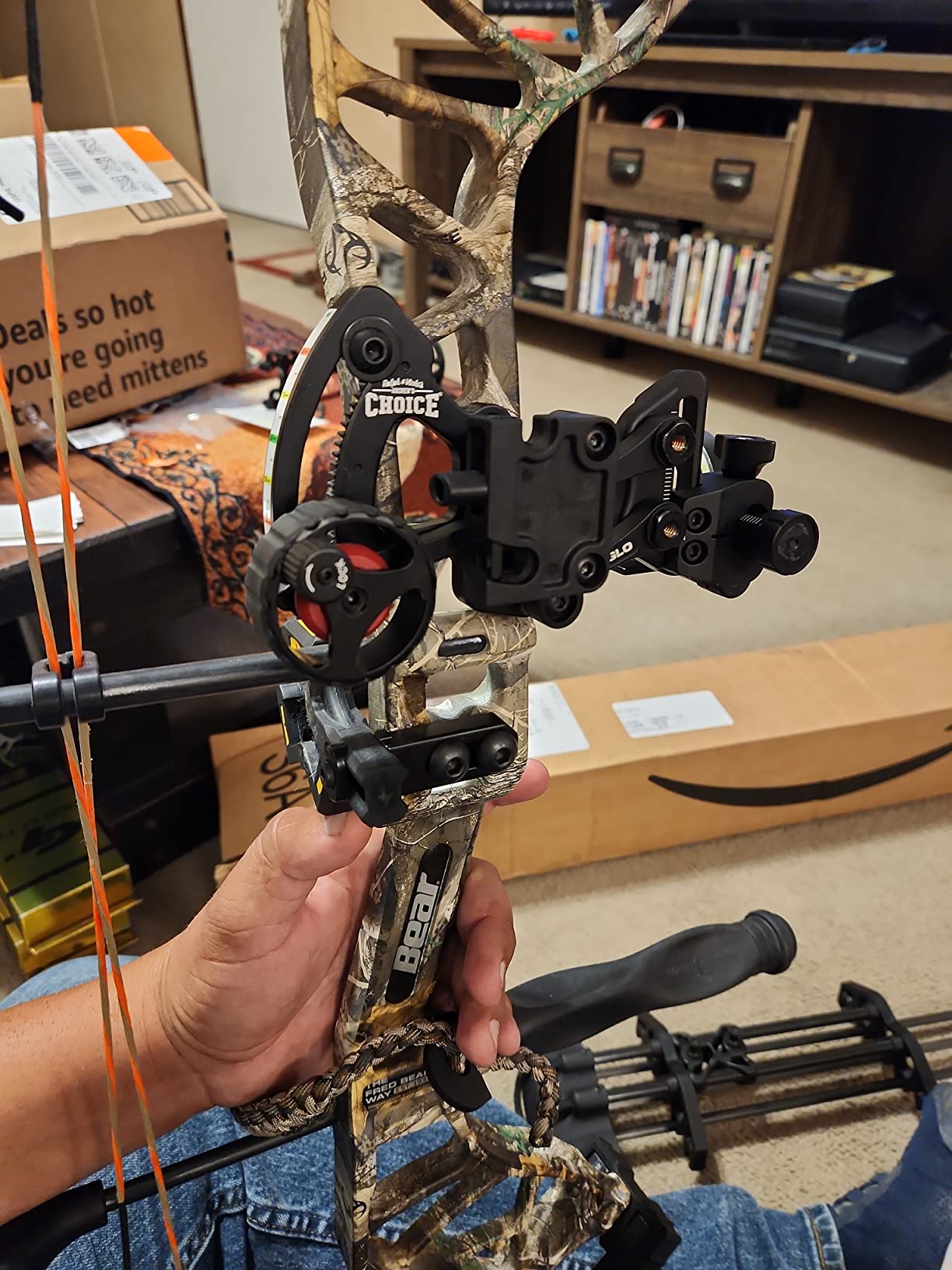
The Range Rover is the pure single-pin option here: one .019 inch all-metal pin with extra-long fully protected wrapped fiber, an elevation dial marked with more than 80 premarked yardage tapes, and adjustable second and third axis correction.
That third axis is the feature that separates it from the other slider-style sights on this list. It is what you need when the shot is uphill at a western game animal, and most compound bow sights simply cannot address it.
Owners who have moved to this sight from a multi-pin setup report a cleaner picture and a genuine drop in pin confusion. There is exactly one pin to identify, so the field mistake of grabbing the wrong one disappears entirely.
The alloy steel construction and 2.72 ounce weight make it the lightest mechanical sight here. Tool-less yardage changes and laser-engraved windage and elevation references make tape work quick once you are used to the dial.
The 4.2 star rating across 304 reviews is the lowest of the mechanical sights in this guide, and the reasons are specific: a ring that loosens with vibration, an LED that is not always functional, and tape setup that still takes practice.
Where a single pin earns its keep
Anything past 50 yards. With one pin, the fiber is long, the housing is smaller, and there is nothing between your eye and the animal. Shooters with astigmatism or difficulty focusing report the largest accuracy gains of any sight in this roundup.
It is also the simplest answer to pin confusion. If you have ever shot a deer because you picked the wrong pin, this configuration removes the possibility entirely.
Why the rating is lower than the metal suggests
The .019 inch pin is genuinely small, and archers past 50 often report difficulty locating it on a daylight target. That is the direct trade for the clean sight picture, and it is worth naming before you buy.
The ring also loosens under vibration and needs re-tightening after a session. Sight tapes add setup steps, and the quiver mount may need an adapter on an existing setup. Budget an afternoon for the first zero.
8. LWANO 5 Pin Bow Sight – Best Value Bow Sight
LWANO 5 Pin Bow Sight with Rheostat Light and Reversible Mount Design
Aluminum windage and elevation
Five .019 in horizontal pins
Four mounting hole sets
Rheostat light included
Pros
- Five bright .019 inch horizontal pins
- Aluminum adjustment hardware
- Four sets of mounting holes
- Reversible left or right mount
Cons
- Less established brand than the leaders
- Limited specification detail in the listing
- No magnifier housing for aging eyes
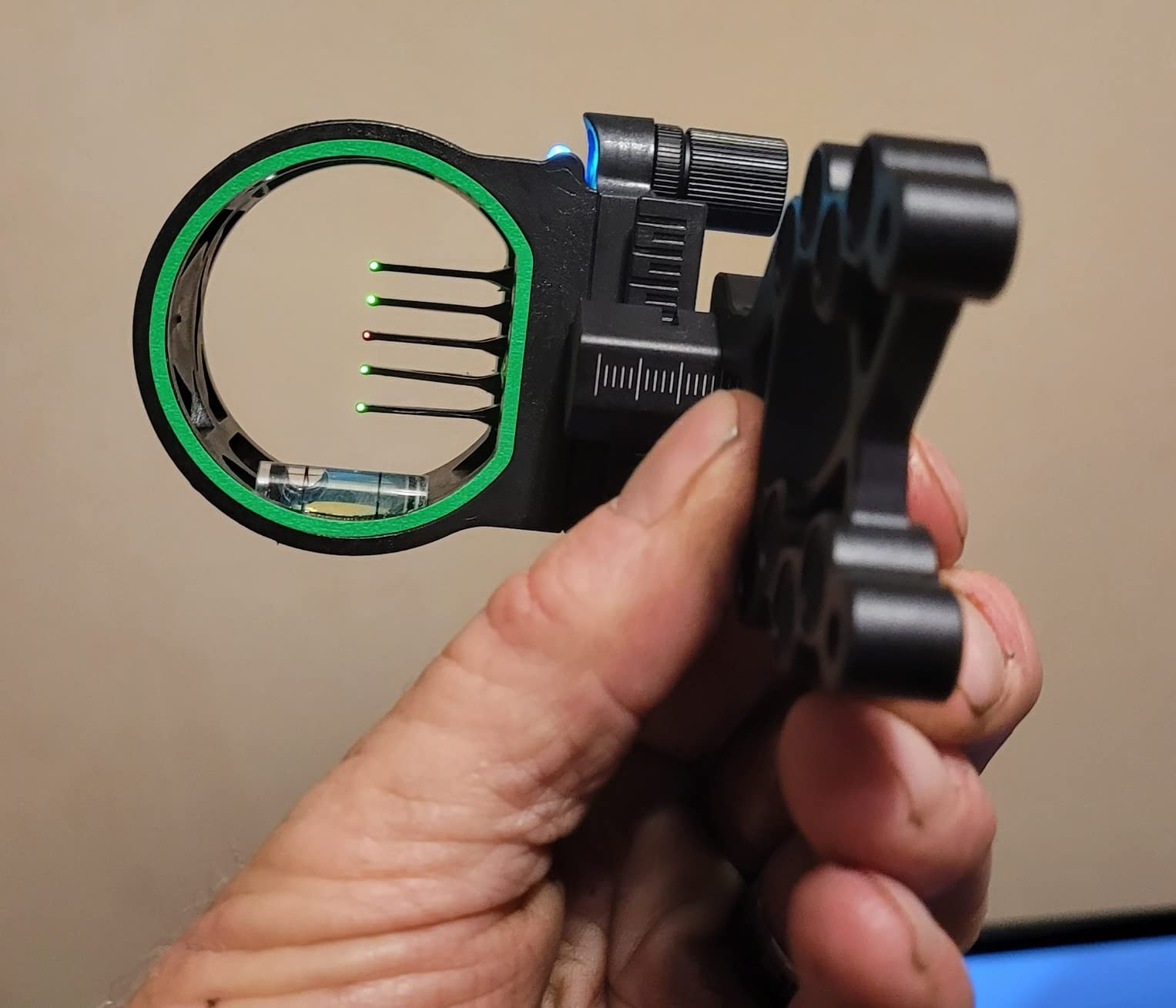
The LWANO 5 Pin covers a lot of ground: five ultra-bright .019 inch horizontal fiber optic pins, aluminum windage, elevation, and pin adjustments, and four separate sets of mounting holes on the bracket.
Those mounting holes matter more than they sound. Four sets means you can reposition the sight to change the peep-to-sight distance on your particular riser, which is a real variable in how a pin stack reads and how the bow feels.
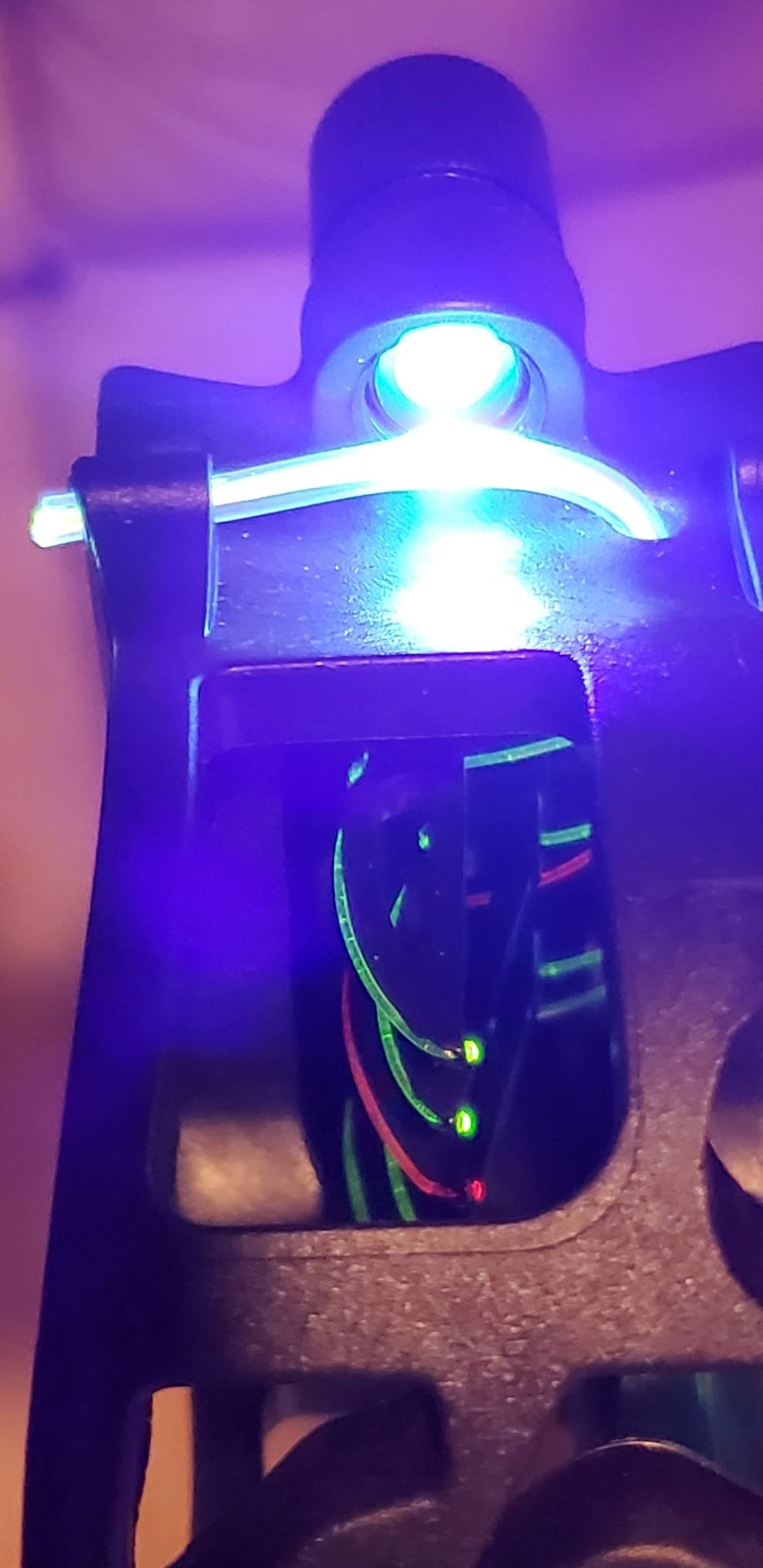
The reversible mount serves both left- and right-handed archers, and the rheostat light is included, which puts it ahead of several more established sights that sell the light separately. The aluminum alloy and composite construction is heavier on paper than the carbon sights here, and the stability shows.
It rates 4.4 across 300 reviews and sits near the top of the Archery Sights best sellers list. Owners consistently describe the pins as holding up in low and changing light, which is the hardest part of a budget sight to get right.
The honest caveat is brand maturity. With a smaller review base and thinner specification detail than Trophy Ridge or TruGlo, you are buying a good sight with less long-term field history behind it.
Why four mounting sets of holes matter
Peep-to-sight distance changes the sight picture and how much the sight window covers your target. A sight that only offers one position leaves you stuck with whatever the factory chose. The LWANO lets you move it and solve for your own bow.
It is also a cheap way to convert a bow for another archer in the household, since the reversible bracket swaps the whole assembly rather than mirroring one part.
Where the brand has less to offer
Reviewers who compare it against the big names note the smaller review base and a generic feature listing. Long-term durability feedback is simply thinner, which is a fair reason to look elsewhere if you are buying for a decade of use.
There is no magnifier housing, so archers with reduced eyesight should consider the TruGlo Carbon Xtreme’s long fiber instead, or a lit pin sight.
9. Spot Hogg Fast Eddie XL – Best Bow Sight for Close-Range Deer
Spot Hogg Fast Eddie XL, Double Pin Bow Sight, RH, .019 Pin Diameter
Aluminum construction
Floating second pin near 35 yards
Dovetail mount
16 oz
Yardage stop
Pros
- Best-rated sight in this roundup at 4.8
- Holds adjustment under vibration
- Unobstructed picture versus a five or seven pin stack
- Lifetime warranty
Cons
- Sight tapes are tedious to change in the field
- Quiver attachment hardware needs an Allen wrench
- Thumb screws need checking before shooting
The Fast Eddie XL double-pin is the best-rated sight in this roundup at 4.8 stars, and the reason is simple: it does not try to do everything. It gives you a main pin and one floating second pin, and nothing else to distract you.
That floating pin sits near the 35-yard mark, which makes it a natural fit for whitetail season. Two pins, two distances, and a sight picture with a single bright element between your eye and the animal.
Owners describe the construction as solid and consistent about holding its adjustment under vibration, and 92 percent of reviews are five star. The dovetail mount means the whole sight comes off the riser for transport in seconds, which is how a lot of us actually carry a bow.
The yardage stop is a small feature that deserves attention. It prevents you from dialing below 20 yards, which means you cannot accidentally shoot a deer at 15 yards with a pin set for 30.
At 16 ounces it is among the heavier mechanical sights here, and the dovetail thumbscrew makes quiver mounting awkward, with a set screw and an Allen wrench included for anyone who wants it fixed instead.
Why two pins beat five for close-range deer
Inside 40 yards, a five-pin stack is a liability. You are looking at a deer filling a good part of your view, and every extra bright pin crossing that view is something your eye has to filter out under adrenaline.
Two pins give you a primary zero and one alternate distance. That is enough range coverage for tree stand and ground blind whitetail hunting without cluttering the picture.
What the tape-based setup costs you
Changing yardages means changing a tape, and owners find that process tedious in the field. Plan your pin spacing ahead of a hunt and mark the dial so the field adjustment is a single step.
The second axis sits behind the slider bar, so on a riser that is not parallel you can pick up a small left-right error at long range. Check your thumbscrews before every session, because that is the most common owner advice in the reviews.
10. HHA Optimizer Lite – Best Single-Pin Sight for Aging Eyes
HHA Optimizer Lite Sight – OL-3019 RH,Black
Single floating pin
Aluminum housing
8 oz
Weaver mount
1-5/8 in housing
Pros
- Single pin helps archers with astigmatism or focus trouble
- Reported to hold zero even after a drop
- Tool-free adjustments
- Aluminum rather than plastic
Cons
- Pin is hard to see in low light because the fiber is short
- Tape selection and installation take longer than expected
- Some slower bows run out of usable range
The Optimizer Lite is a single-pin sight that has been in production long enough to have an unusual amount of long-term owner feedback. It sights in at 20 and 60 yards and covers 20 to 80 yards in 5-yard increments, and it is entirely tool-free to adjust.
Reviewers who struggled to focus on a multi-pin stack report the largest accuracy gains here, in some cases going from wide groups to 2 inch groups. At 8 ounces, it is also light.
The most repeated durability note across the reviews is that the zero holds even after the sight has been dropped. Owners with a lot of tree stand and ladder miles on their bows care about that more than any feature list.
At 4.6 stars across 172 reviews, satisfaction is high, and the pattern is consistent: solid, simple, aluminum, and reliable, with a slower, tape-heavy setup process.
The single weakness owners keep pointing to is fiber length. A 2 foot fully protected fiber is durable and protected, but short fiber collects less ambient light, so this is not a low-light sight by design.
Why a single pin helps as eyesight changes
Focusing a small bright point against a busy background gets harder as contrast sensitivity drops. Removing four other pins from the picture makes the one remaining pin much easier to acquire and hold, which is the entire argument for a single-pin layout.
If you are past 45 and your small-pin hunting has become frustrating, this is a common and well-regarded place to land. Reviewers over 50 describe it as the move that brought their accuracy back.
Where the short fiber costs you
Low light. The pin is described as hard to see in dim conditions, and there is no light included in the box. If your season starts in the dark, plan around it or choose a long-fiber sight instead.
Tape selection and installation take longer than most people expect, and on a slower bow you can run out of usable range before the tape runs out. The listed dimensions are also bulky for an eight ounce sight, so check clearance on a tight riser.
11. CBE Tactic Micro 5 Pin – Best Sight for Mount Positioning
CBE | Tactic Micro Bow Sight 5 Pin | Ambidextrous
Smart multi-positioning mount
Five .019 in blade pins
Gang micro adjustment
12 in spare fiber included
Pros
- Multiple mounting holes for per-bow positioning
- Gang micro windage and elevation with laser markings
- 12 inches of fiber optic stock included
- Rheostat light included
- Reversible bracket
Cons
- Smaller review base than the major brands
- Blade pins can be harder to see than round fiber
- Gang adjustment limits individual pin correction
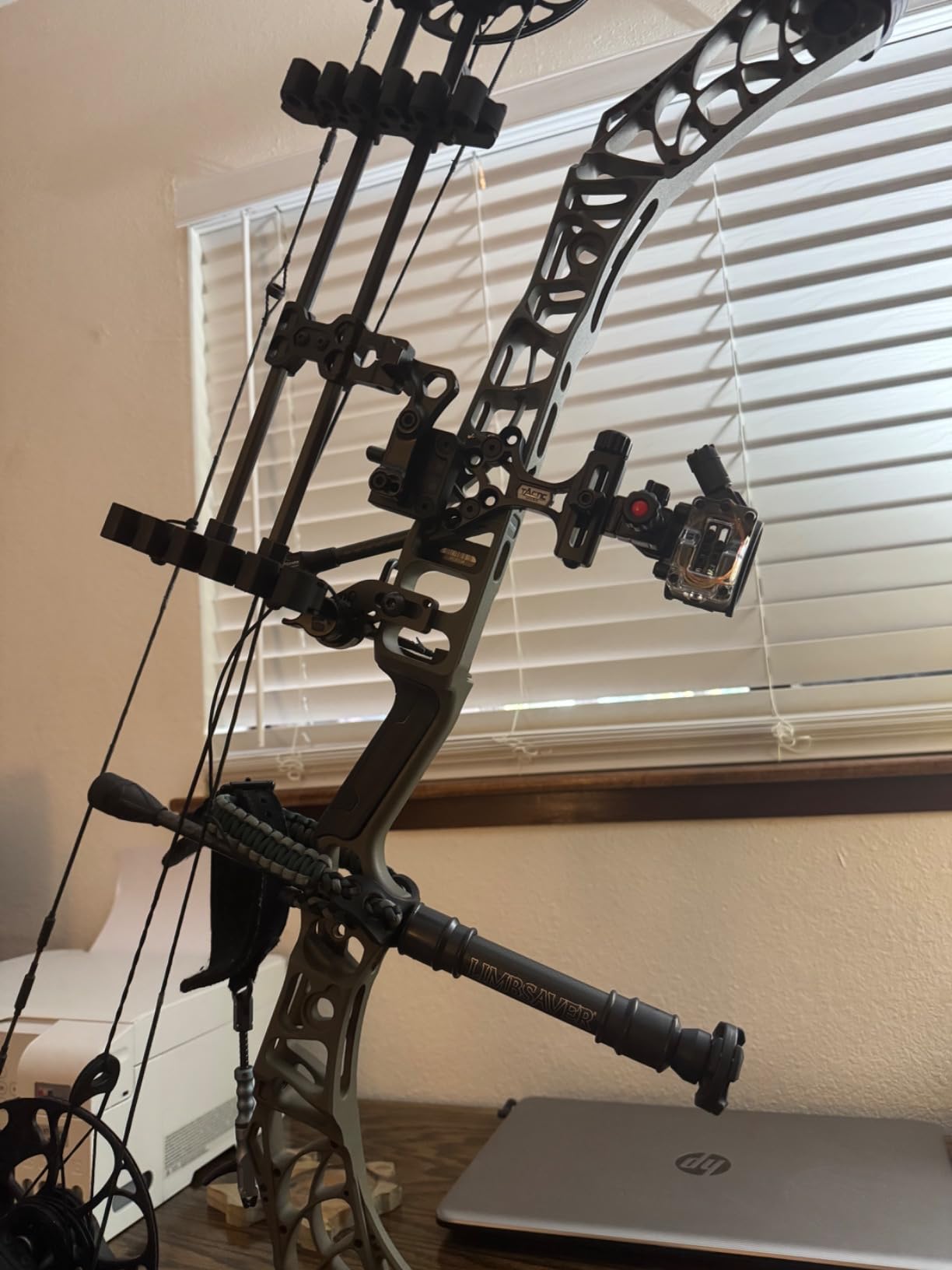
The CBE Tactic Micro is a 5-pin aluminum sight built around positioning. Its Smart multi-positioning mount and multiple mounting holes let you place the housing exactly where your riser and peep setup want it, and the laser engraved gang adjustment markings show where you left it.
It also ships with 12 inches of fiber optic material and an integrated rheostat light. Having spare fiber in the box means a broken pin is a two-minute fix at a parking lot instead of a trip home.
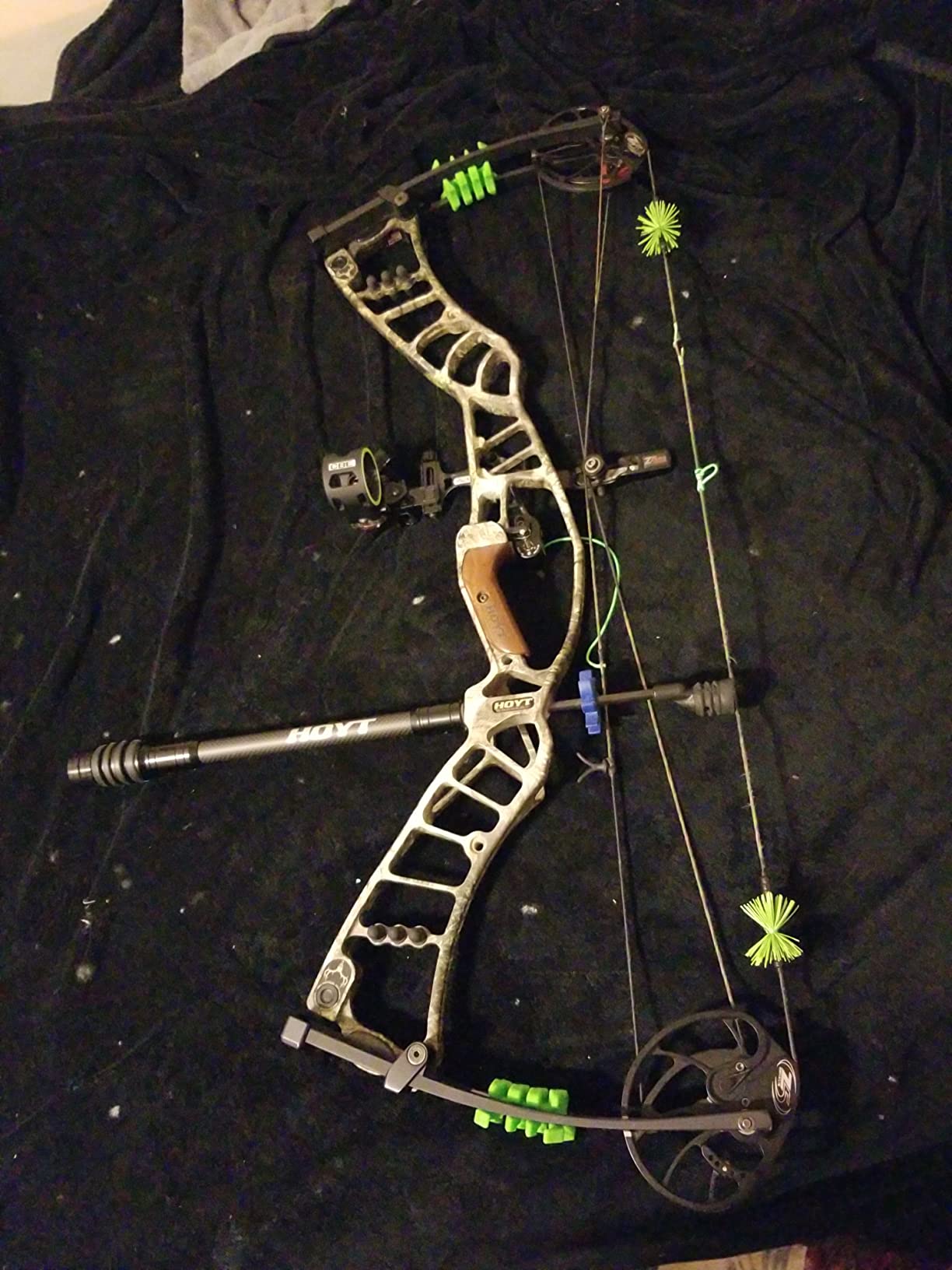
The .019 inch blade pins across the 5-pin housing give you several distances to work with, and the laser marked hashes make pin alignment easy to check against the target rather than by eye in low light.
At 4.5 stars across 126 reviews, the ratings are strong, but the volume is small. That is not a warning sign; it is a signal that long-term durability feedback is thinner here than for the Trophy Ridge and TruGlo models.
Because the windage and elevation adjust as a gang, the pins move together. Correct for wind and you correct for everything, but you cannot rescue a single bad pin on its own.
Why position beats specification
Where a sight sits relative to the peep changes how the pins read and how much of the target the housing covers. Most sights give you one or two positions. This one gives you several, which is the difference between a sight that works on your bow and one you keep adjusting.
The laser markings are a quiet feature that pays off every time you return to the same bow. You put the housing back where it was without trial and error.
Reading the thin specification data
The listing gives a weight of 9.07 grams, which is far below what a mechanical multi-pin sight with a light realistically weighs. Treat that number as unreliable and judge the sight by its materials and build instead.
Blade pins are also described as harder to see than round fiber pins in some conditions, and the smaller review base means fewer long-horizon reports. Owners still rate the feature set highly for the money.
12. Burris Oracle 2 Rangefinder – Best Rangefinding Bow Sight
BURRIS The Oracle Bowsight Oracle2 (300401)
Built-in laser rangefinder to 200 yards
Calculated aim point display
IP67 water resistance
1.3 lb
Pros
- Rangefinding removes distance estimation
- Calculates aim point for distance and shot angle
- Micro-adjustable on the sight and the laser
- Weather resistant in the field
Cons
- Heavier than the pin sights in this roundup
- Setup is involved and the manual is incomplete
- Range button placement is awkward on a bow
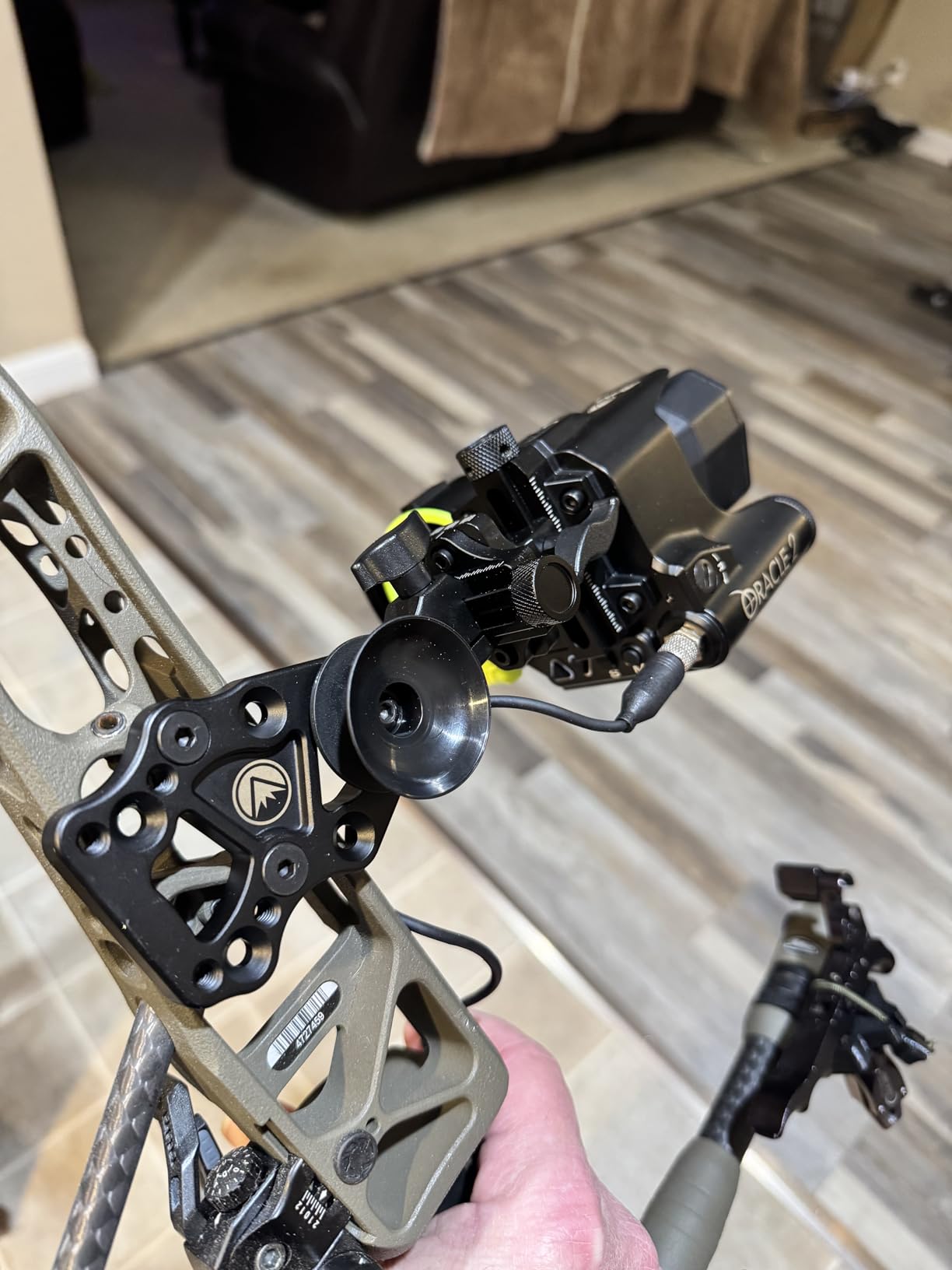
The Oracle 2 is the only true rangefinder in this roundup. The built-in laser measures to 200 yards and displays distance at full draw, then calculates the exact aim point factoring in shot angle, with auto-brightness detection and micro-adjustments on both the sight and the laser.
That is a different way to hunt. Instead of dialing a yardage and hoping, you get a number and a hold point, which removes an entire category of miss for anyone hunting open country where estimating distance is the hard part.
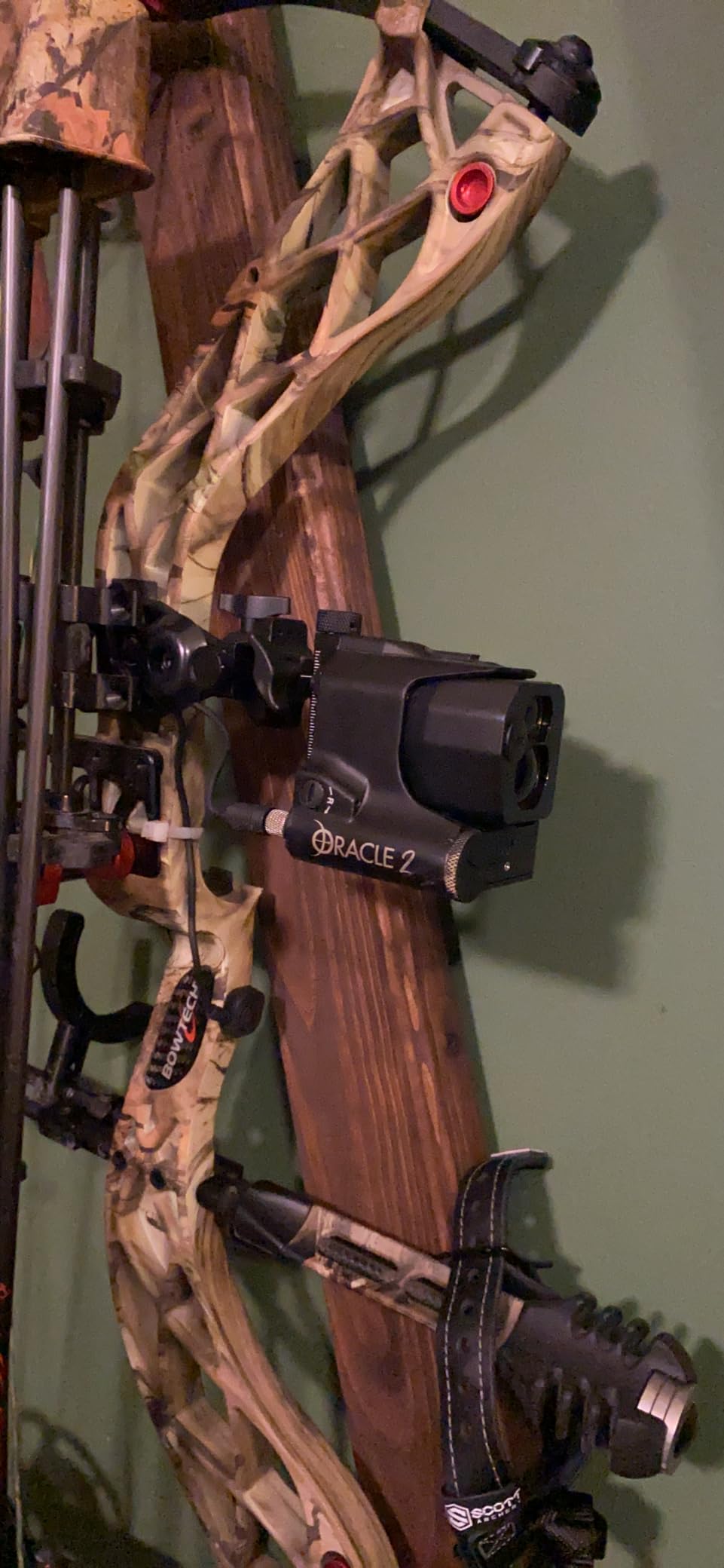
Owners report the ranging matched handheld laser measurements in practice, faster setup than some competing electronic units, and good survival after rain, snow, and knocks. It is backed by the Burris Forever Warranty and carries an IP67 water resistance rating.
At 4.3 stars across 81 reviews, the rating is fine rather than remarkable, and the review base is the smallest here. That is normal for an electronic sight at this end of the category.
The weight is the real cost. At 1.3 pounds it is the heaviest sight in the roundup by a wide margin, and it sits closer to the riser than some competing units. Setup is also involved, and the manual omits a step you will need.
What rangefinding actually buys a hunter
Distance estimation is where a lot of long shots are lost, and the aim point calculation accounts for both range and angle. For a bowhunter who cannot dial every yardage for every wind condition, that is a meaningful accuracy gain.
Auto-brightness means the display is readable at dawn without a separate control, and the micro-adjustments on both units make zeroing quick once you know the process.
Why the setup learning curve matters
Read the directions carefully before you rely on it. The manual omits a key laser bulb removal step, and the oversized range button can be awkward to reach on a bow. Owners also report the extra weight takes practice to stop noticing.
And there is a discipline point worth repeating: releasing on the rangefinder reading without judging the yardage yourself is a mistake. The unit measures, it does not decide. Practice with it at the range before the season.
How to Sight In a New Bow Sight Step by Step
The easiest bow sights to sight in are fixed multi-pin sights with micro-adjustment, because you set each pin independently. The Trophy Ridge Fix and the LWANO both fall into that group. A slider with a hard stop at 20 yards is the second easiest, since you have a fixed starting point.
Here is the process we use, and it works on any of the twelve sights in this guide.
Set the bow first. Shoot the bow, check arrow spine and point weight, and confirm the bow is not torquing. Adjusting a sight to compensate for a tuning problem is the most common reason a sight appears to lose zero.
Install the peep and sight together. Peep height and sight position change each other, so set the peep, install the sight, and then fine tune the peep until your sight picture and the pins agree.
Start at a hard reference distance. Shoot at 20 yards, the standard for a reason: it is long enough to be accurate and short enough that a bad group is obvious.
Use the lowest pin first. Put the bottom pin on the target and adjust windage and elevation until the arrow hits center at 20 yards. Do not touch the other pins yet.
Set the middle pin at 30 or 40 yards. With micro-adjust, move only that pin. Without it, mark the adjustment and re-verify the bottom pin afterward.
Set the top pin at your maximum distance. Set it at the longest yardage you will realistically shoot, and confirm the middle pin is still on target afterward.
Re-verify in the dark. Shoot the setup at dawn or dusk with the light you will actually use. A zero that only exists at noon is not a hunting zero.
Record it. Write your windage and elevation settings for each pin, and mark the sight with a paint pen or tape. The most common forum complaint is losing a zero that was never recorded.
Give yourself a full session rather than rushing it. Experienced archers confirm the most common sighting error is over-adjusting after a bad group, and a written record is the fastest way to avoid doing that twice.
Buying Guide: How to Choose a Bow Sight for Hunting
Most of the wrong sight purchases come down to two questions: how far do you actually shoot, and what does your riser accept. Answer those first and the shortlist writes itself.
Fixed multi-pin, single-pin, or slider
Fixed multi-pin sights are built for a bow tuned to one distance or a narrow range. Three pins cover most whitetail seasons inside 40 yards. Five pins cover a wider spread and are the standard for target and 3D archery. They are the fastest to zero and the least flexible.
Single-pin sights trade convenience for a cleaner picture and wider range. You change yardages with a tape or dial, which costs you time in the field, and you gain the ability to shoot from 20 to 80 yards with one sight. They are the right answer for aging eyes, astigmatism, and long-range shots.
Sliders and hybrids combine a moving pin with fixed yardage options, which is the most versatile configuration and the most complex to zero. The Burris Oracle 2 goes further and handles ranging electronically.
Red dot and illuminated pins are the fourth category. They show up well in dim light and are intuitive, but they add battery management and a different aiming skill to learn.
Pin size: .010, .019, or .029
The .019 inch pin is the most common because it balances pin visibility against how much of the animal you can still see. The .010 pin is the smallest and gives the cleanest picture for archers with sharp eyesight, but it disappears in low light. The .029 pin is the largest and the easiest to see, at the cost of covering more of the animal.
If you are over 45, or you have noticed that your small pins are harder to find than they used to be, move up a size or add length to your fiber before buying anything else. Eyesight changes are normal, and a sight that ignores that is working against you.
Pin count and orientation
Horizontal pin stacks place pins side by side, which some archers prefer because the lower pins sit outside the target. Vertical in-line stacks put one pin above the other, which reads as a firearm sight and covers less of the animal. Either works; what matters is that you can identify your intended pin instantly.
A good default setup is 20, 30, and 40 yards for whitetail inside 40 yards. For general or western hunting, 20, 40, and 60 covers more ground. A five-pin layout at 20, 30, 40, 50, and 60 is the most versatile option and a good choice if you also shoot 3D archery.
First, second, and third axis adjustment
First axis is left-to-right centering, and every sight here has it. Second axis levels the housing so it sits square to the riser, which several of these sights offer and many budget sights skip.
Third axis rotates the housing to correct for uphill and downhill shots, and only one sight in this roundup has it. The test is simple: put the bow on a level surface at 45 degrees and check the bubble. If the bubble is not centered at 45 degrees, your sight has no usable third axis.
It is worth measuring to the nearest 1/16 inch. Small but real errors compound across distance, and a quarter inch by 40 yards is a group the size of your hand.
Weight, mounting, and low light
Weight ranges from 2.72 ounces on the TruGlo Range Rover to 16 ounces on the Spot Hogg Fast Eddie XL among the pin sights, with the Burris Oracle 2 rangefinder a different order of magnitude at 1.3 pounds. Every ounce is felt at full draw, and the heaviest sight on the list changes how a bow handles on a long walk.
Low light is decided by fiber length, pin diameter, and whether a light is included. The TruGlo Carbon Xtreme gets brightness from very long fiber, the TruGlo Range Rover and HHA Optimizer Lite get theirs from a bright single pin, and the Trophy Ridge and LWANO sights include a rheostat light in the box.
Whatever you choose, match the peep to the sight. A Verifier peep with a small aperture forces your eye to focus on one pin against the target, which solves both blurry pins and pin confusion at the same time.
Best Sights for Low-Light Hunting
The best bow sight for low light use is the one with the longest fiber and the largest pin you can stand to look past. Those two variables, plus whether a light is in the box, decide more than the brand name does.
The TruGlo Carbon Xtreme pairs extra-long TRU-FLO fiber with a housing that weighs 4.2 ounces. The TruGlo Range Rover wraps its fiber fully for protection and adds a glow-in-the-dark shooter ring. The Trophy Ridge React H5 pairs highly illuminated pins with an adjustable rheostat light.
For sights that include a light out of the box, the Trophy Ridge Fix, the Trophy Ridge Peak, and the LWANO 5 Pin all qualify. Sights where the light is a separate purchase need that purchase made before the season, not at dawn on opening morning.
Blurry or starbursting pins are the opposite problem, and they come from too much brightness rather than too little. Sliding the fiber cover down dulls the pin so you can focus on it instead of the halo. If the halo persists, move up a pin size before you spend money on anything else.
One warning from the field: check that your sight comes with a light, then confirm the light works. Dead or mismatched rheostat batteries are a recurring complaint on more than one model in this roundup.
Fixing Common Bow Sight Problems
Blurry or starbursting pins. Add a Verifier peep so your eye focuses on a single pin. If that does not work, dull the fiber with the cover or slide it, and consider a larger .019 or .029 pin. If your pins have always been hard to find, book an eye exam; eyesight is a component here, not a character flaw.
Pin stack covering the target. This is a diameter and layout problem, not an eyesight problem. Move to a smaller pin, a single pin, or a vertical in-line layout such as the Trophy Ridge Peak, where the lower pins sit below the target.
Pins that move after shooting. Multi-pin stacks rattle loose after thousands of arrows. Check the housing screws before the season, tighten them with a dab of thread locker, and mark the housing position so you can put it back exactly.
Pin confusion in the field. The fix is a smaller number of pins and a written record of your setup. Hunters report grabbing the wrong pin after thousands of backyard shots at one distance. A single-pin sight removes the problem entirely.
A sight that will not hold zero. Usually a mounting issue. Over-tightened lock nuts, a stripped adjustment bolt, and a flexing vertical joint all show up as a zero that wanders. Loosen to firm and hand-tight, check the riser threads, and re-verify at 20 yards.
Peep too low or too high. Peep height changes the sight window and therefore how the pins read against the sight picture. A peep set too low shifts your group high and low depending on the shot, and it pushes the third axis adjustment outside its useful range. If your groups move when you change pin, check the peep before the sight.
Mount incompatibility. If the sight needs a rail your riser does not have, nothing about the sight itself matters. Verify the mount type before you buy.
Mount Compatibility Checklist Before You Buy
Mismatched rails are the single most purchase-blocking complaint in archery forums. Buyers assume a sight fits their bow, then discover it needs a Bridge-Lock, Picatinny, or dovetail rail the riser does not have. Five questions settle it before you spend anything.
What mount does your riser have? Look for a dovetail rail, a Picatinny rail, an integrated Bridge-Lock pattern, a Weaver thread, or nothing at all.
Does the sight come with the right base? A Weaver or dovetail sight needs a base block installed on the riser. Several of the sights here are sold as sight plus a base kit.
Can you change peep-to-sight distance? Multiple mounting hole sets, such as on the LWANO 5 Pin and the CBE Tactic Micro, let you tune this. A single-position sight forces the factory setting on you.
Is it removable for transport? The Spot Hogg Fast Eddie XL and the TruGlo Range Rover use a dovetail mount, which takes seconds to remove and protects the adjustment in a bow case.
Does the weight suit the bow? A 1.3 pound rangefinder changes how a bow feels at full draw and after four hours in a stand. A 2.72 ounce sight does not.
When in doubt, the part number on the riser and the mounting type listed for the sight will tell you in about a minute what a return would take three weeks to tell you.
Frequently Asked Questions
What is the easiest bow sight to sight in?
Fixed multi-pin sights with micro-adjustment are the easiest to zero, because each pin moves independently and you can set them one at a time without disturbing the rest. Sliders with a hard stop at 20 yards are a close second, since the stop gives you a fixed starting point you do not have to look for. Start at 20 yards, set the bottom pin, then work up the stack.
What is the best bow sight for low light use?
Pin diameter, fiber length, and whether a light is included decide low-light performance more than the brand. The TruGlo Carbon Xtreme pairs extra-long fiber with a 4.2 ounce housing, and the Trophy Ridge Fix and LWANO 5 Pin include a rheostat light. Sights that include a light out of the box save you a separate purchase before opening morning.
What distances should I sight my bow at?
For whitetail inside 40 yards, 20, 30, and 40 yards is the standard setup. For general or western hunting, 20, 40, and 60 covers more ground. A five-pin layout at 20, 30, 40, 50, and 60 yards is the most versatile. Always set the top pin at the longest distance you will realistically shoot, then re-verify the others.
My bow sight pins are blurry. What can I do to fix this?
Install a Verifier peep with a small aperture so your eye focuses on one pin against the target. If the pins still blur, dull them by sliding the fiber cover down, or move up to a larger .019 or .029 inch pin. Starbursting usually means too much brightness rather than too little. If small pins have always been hard to find, have your eyes checked.
What happens if the bow peep is too low?
A peep set too low shrinks the sight window and changes how the pins align with the sight picture, which shows up as groups that shift high or low. It also pushes the usable range of a third axis adjustment outside what the hardware can correct. If your groups move when you change pin, check and reset your peep height before adjusting the sight again.
Is a 3 pin or 5 pin sight better for hunting?
Three pins are better for close-range deer hunting because fewer bright pins cross the animal at full draw, and the target stays visible. Five pins are better if you shoot a wider range of distances or also shoot 3D and target archery, since the extra pins add yardages without a tape change. Most bowhunters inside 40 yards are best served by three.
Do I need a slider sight for bowhunting?
Only if you shoot past the range your bow is tuned for. A fixed multi-pin sight is faster to zero and simpler in the field, and it covers most whitetail seasons. A slider or single-pin sight earns its complexity when you need 50 to 80 yard capability, or when you want a clean sight picture and better focus at closer ranges.
Final Thoughts
The best bow sights for hunting in 2026 are not a single winner; they are a short list matched to a specific season. The Trophy Ridge Fix Series Sight is the all-around answer, with micro-adjustable .019 inch pins, second axis correction, and the strongest combination of rating and owner feedback in this roundup.
Pick the TOPOINT 3 Pin if you are building a first setup on a budget. Choose the Spot Hogg Fast Eddie XL if you hunt close-range deer and want the cleanest picture available. Move to the TruGlo Range Rover or the HHA Optimizer Lite if your eyesight or your yardages call for a single pin, and consider the Burris Oracle 2 if you hunt open country where distance estimation decides the shot.
Whichever one you choose, verify the mount fits your riser before you order, write down your zero the day you set it, and re-check it after a few hundred arrows. The best sight in 2026 is the one that is still zeroed when the buck steps out.