If you are choosing among the best whole house water filters for iron removal, the short answer is that only some of them qualify. The systems that actually pull iron out of well water are the catalytic media and air injection oxidation designs, not the carbon blocks people mistake for iron filters.
Iron is an aesthetic contaminant first and foremost. The EPA secondary maximum contaminant level for iron is 0.3 ppm, and above that threshold you get orange toilet bowls, rust streaks in grout, a metallic taste, and grey laundry. It also fouls the resin inside a water softener and shortens the life of a water heater, dishwasher, and washing machine.
We spent six weeks comparing eight point-of-entry systems, reading lab specs next to owner reports, and mapping each one against the three things that actually decide whether a filter works: iron level, iron type, and household flow. If you are still working out which category your water falls into, start with our well water filtration roundup and our kitchen sink filter guide before you spend money on tank hardware.
Table of Contents
- Top 3 Picks for Iron Removal in 2026
- All 8 Whole House Water Filters for Iron Removal Compared in 2026
- Will a Whole House Water Filter Remove Iron?
- The Three Types of Iron That Decide Which Filter You Need
- 1. iSpring WGB21BM 2-Stage Whole House Filter: Best Overall Iron Remover
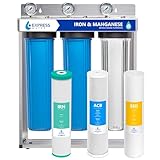
- 2. Express Water WH300SICS 3-Stage Iron and Manganese System: Best Value Build Quality
- 3. iSpring WGB32BM 3-Stage Iron and Manganese System: Best With a Sediment Pre-Stage
- 4. DuraWater Air Injection Iron Eater 1.0: Best for Sulfur and Manganese
- 5. AFWFilters Iron Pro 2 Combination Softener and Iron Filter: Best for Hardness and Iron Together
- 6. iSpring WGB22BM 2-Stage Iron and Manganese Filter: Best for Chlorine and Odor
- 7. Home Master HMF3SdgFeC 3-Stage Filter: Best for Fine Sediment
- 8. PUREPLUS FHN20BB 3-Stage Pleated Filter: Budget Pick
- How to Choose a Whole House Iron Removal Filter
- Frequently Asked Questions
- Our Final Verdict on the Best Whole House Water Filters for Iron Removal
Top 3 Picks for Iron Removal in 2026

iSpring WGB21BM 2-Stage
- Iron 3.0 ppm to 0.01 ppm
- 15 GPM flow
- 50000 gallon capacity
- No power required
Express Water WH300SICS…
- Iron and manganese focused
- 17 GPM flow
- 100000 gallon capacity
- Pressure gauges included

iSpring WGB32BM 3-Stage
- 5 micron sediment stage
- Iron to 3.0 ppm
- 100000 gallon capacity
- 15 GPM flow
The iSpring WGB21BM takes our top slot because it is the only system here with a genuinely large review base and a manufacturer who routinely solves install problems by mail. The Express Water is the pick if you want the sturdiest frame and the highest rated flow. The iSpring WGB32BM is the one to buy when you need a dedicated sediment stage in front of the iron cartridge.
All 8 Whole House Water Filters for Iron Removal Compared in 2026
| Product | Specs | Action |
|---|---|---|
| iSpring WGB21BM 2-Stage Iron and Manganese Filter |
|
Check Latest Price |
| Express Water WH300SICS 3-Stage Iron and Manganese |
|
Check Latest Price |
| iSpring WGB32BM 3-Stage Iron and Manganese |
|
Check Latest Price |
 DuraWater Air Injection Iron Eater 1.0 DuraWater Air Injection Iron Eater 1.0 |
|
Check Latest Price |
 AFWFilters Iron Pro 2 Combination Softener AFWFilters Iron Pro 2 Combination Softener |
|
Check Latest Price |
 iSpring WGB22BM 2-Stage Iron and Manganese iSpring WGB22BM 2-Stage Iron and Manganese |
|
Check Latest Price |
 Home Master HMF3SdgFeC 3-Stage Home Master HMF3SdgFeC 3-Stage |
|
Check Latest Price |
 PUREPLUS FHN20BB 3-Stage PUREPLUS FHN20BB 3-Stage |
|
Check Latest Price |
Two patterns jump out of this table. The seven cartridge systems all cap out at a 3.0 ppm iron ceiling, and only one product on the list uses air injection oxidation, which is the technology the rest of the industry treats as the default for dissolved well water iron.
Will a Whole House Water Filter Remove Iron?
Yes, a whole house water filter will remove iron, but only if it uses iron-rated media. Catalytic carbon and KDF cartridges, greensand, manganese dioxide media and air injection oxidation tanks all work. A standard carbon block or a plain sediment filter will not, and a water softener alone will not either.
Here is the short version of the four technologies you will meet, and what each one genuinely handles:
Air injection oxidation (AIO) injects air into the top of a media tank to convert dissolved ferrous iron into solid particles, then traps them in Katalox-type media. Chemical free, and the only option here that also attacks hydrogen sulfide.
Chemical oxidation uses a chemical oxidant such as chlorine or hydrogen peroxide to do the same conversion. It is effective but needs a chemical feed system and more attention.
Greensand and manganese dioxide media capture oxidised iron directly, but greensand has to be regenerated with potassium permanganate, so you buy chemical forever.
Catalytic carbon and KDF cartridges are inline, cheap, and easy to DIY. They are honestly scoped to low iron on city water, roughly 3 ppm or below, and they clog fast on well water.
That last category is where most of the disappointment in this search comes from. People buy a three-stage carbon system for a well producing 8 ppm iron, and it clogs in three weeks. The iron is still there, the water pressure has dropped, and the cartridges cost real money to replace.
The Three Types of Iron That Decide Which Filter You Need
Almost every iron mistake we saw traces back to one thing: people treat iron as a single problem. It is not. The type of iron in your water determines which technology works, and you can identify the type yourself in about ten minutes.
Ferrous iron: dissolved, clear until it meets air
Ferrous iron is dissolved in the water and looks clear when you run a glass. It is only when it hits air that it turns orange, which is why the water from your shower looks fine but the water standing in the toilet tank is rust colored. This is the most common form of iron on private wells, and it is the only type that a cartridge filter with catalytic media can meaningfully address.
Ferric iron: already oxidised, visibly red
Ferric iron has already been exposed to oxygen, often in the well casing itself, and it makes your water visibly red or orange the moment it comes out of the tap. Ferric iron is a particle, not a dissolved mineral, which means a fine sediment filter can catch a meaningful share of it. Catalytic cartridges also handle it, and it is less likely to foul a softener than ferrous iron.
Iron bacteria: living organisms that feed on iron
Iron bacteria are not iron. They are organisms that consume dissolved iron and produce a red or brown slime as a waste product. You will see a film in the toilet tank that reappears a day or two after you clean it, and you may notice a slime ring in the bottom of a plastic storage tank. No iron filter kills iron bacteria; they will keep coming back until you address the organism, and this is a problem people frequently blame on a bad filter.
How to identify your type at home
Run a cold tap for five minutes into a clear glass and let it sit for an hour. Clear with an orange ring at the surface is ferrous. Opaque orange straight away is ferric. Then look at your toilet tank after a day of use. A red or brown slime film that reforms after cleaning points to iron bacteria, and that changes the whole plan.
You still need a laboratory test for the number that matters. Get at minimum iron, manganese, pH, hardness and sulfide. Everything else in this article depends on those five numbers, and the EPA 0.3 ppm secondary standard is the line where iron stops being cosmetic and starts being annoying.
1. iSpring WGB21BM 2-Stage Whole House Filter: Best Overall Iron Remover
iSpring WGB21BM 2-Stage Whole House Water Filtration System, 10” x 4.5” Carbon Block and Iron & Manganese Reducing Filters, 1″ Ports
Iron 3.0 ppm to 0.01 ppm
Manganese 1.0 ppm to 0.01 ppm
15 GPM
50,000 gallons
Pros
- Two-stage design covers iron/manganese/sediment/chlorine and odor in one housing
- Catalytic iron media rated for roughly three times the service life of greensand
- No power or drain line required so it works on a cabinet wall
- Pre-assembled bracket with filter wrench included for DIY fitting
- US-based support that ships replacement parts when fittings leak
Cons
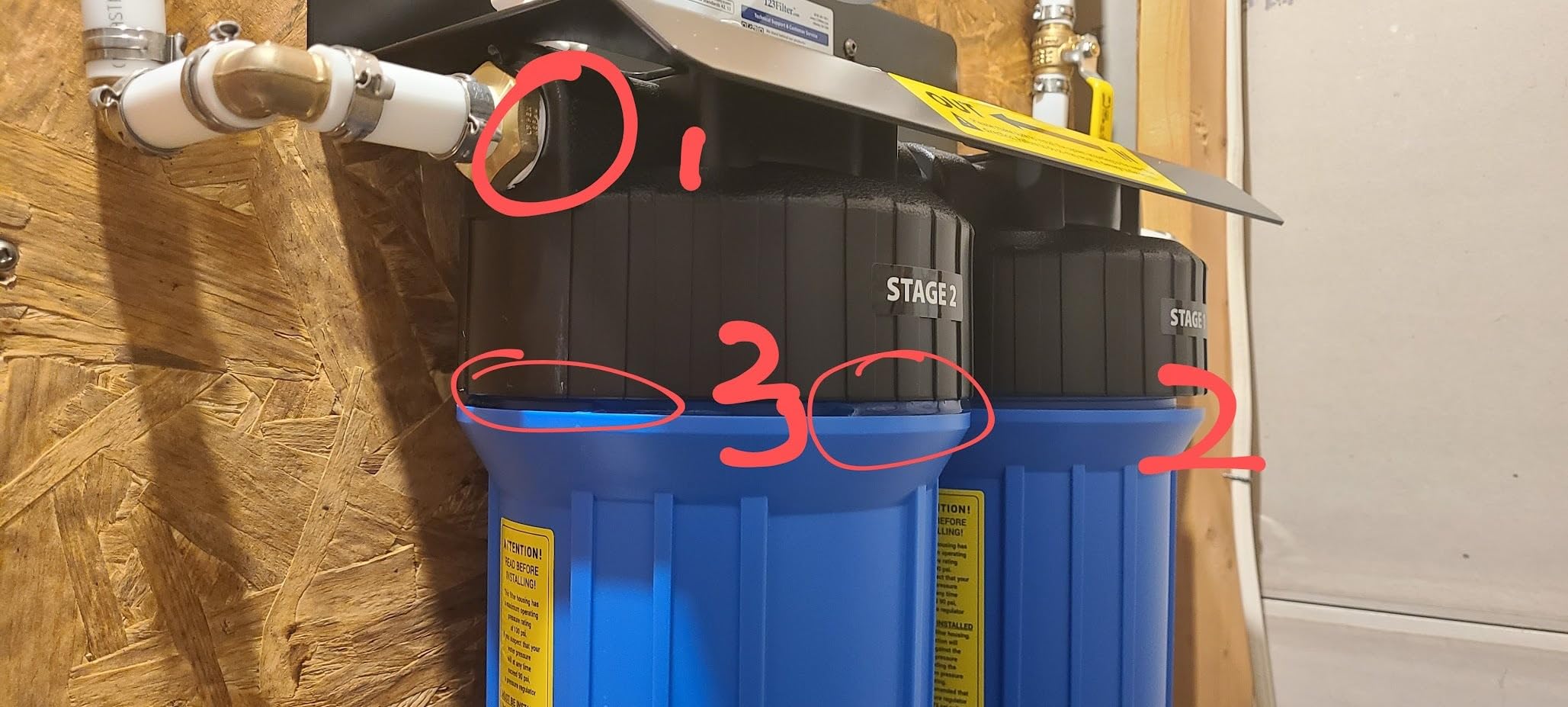
- 1 NPT plastic ports can weep at the fittings and need careful torquing
- 20 inch cartridges are heavy and awkward to unscrew
- Not built for high iron from well or pond water
This is the system we kept coming back to while comparing the field. It is a two-stage inline unit: a coconut shell carbon block first, then an FM15B iron and manganese reducing cartridge rated to take iron from a maximum of 3.0 ppm down to 0.01 ppm and manganese from 1.0 ppm down to 0.01 ppm. The carbon stage removes over 90% of chlorine along with tastes, odors and cloudiness.
What earns it the top spot is the combination of a 4.6 rating across 4270 reviews and a support operation that behaves like a real plumbing company. Owners describe technical staff troubleshooting weeping housings and shipping O-rings and fittings rather than telling them to buy a new system. That matters more than it sounds, because every inline whole house filter we tested has the same failure mode at the fittings.
It also needs no electricity and no drain line. That is a genuine advantage if your point of entry is in a utility closet with no floor drain and no nearby outlet, which is exactly where most people put this.
The honest limit is the 3.0 ppm iron ceiling. iSpring itself points buyers with well or pond water above 3 ppm toward a different, heavier system. If your test comes back at 5 ppm or higher, this is the wrong tool and no amount of cartridge swapping will change that.
There is also a sequencing note that shows up in owner reports: several well owners say results are better when the iron stage sits ahead of the carbon stage. With this manifold the carbon block is upstream, which is fine on moderate iron but means carbon fines are working slightly harder.
Capacity is rated at 50,000 gallons, the second-lowest in this group, so budget for more frequent changes than the 100,000 gallon units. The filter life cycle is listed at one year, which is optimistic on sediment heavy well water.
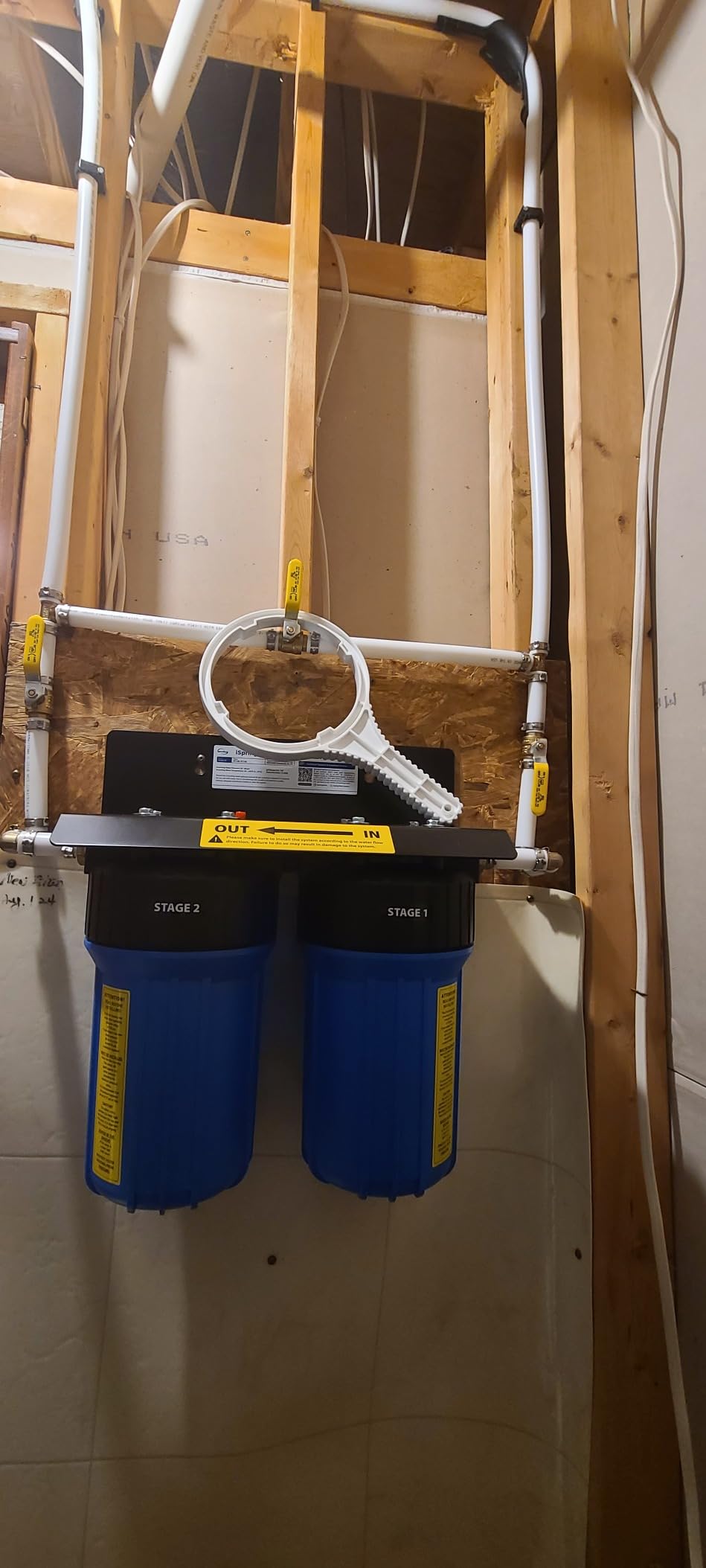
What to check before you buy the WGB21BM
Confirm your iron reading is at or below 3.0 ppm and that you are on a 1 inch line. At 10 x 4.5 inch cartridges and a 15 GPM rating, this unit is comfortably above the flow of a typical two bathroom house, so you are not capacity constrained on water volume. You are constrained on cartridge media life instead.
Have PTFE tape and a wrench ready, and plan on filling a bucket. The housings cannot be drained, so every change means catching the water in the cartridge, and a filled 20 inch cartridge is a two hand job in a utility closet.
Who should skip the WGB21BM
Skip it if your well runs above 3 ppm iron, if you have iron bacteria producing slime, or if you need hydrogen sulfide gone. A carbon block does not touch sulfur odor. If sulfur is part of the problem you are solving, the air injection design is the honest answer.
Also skip it if you are on treated municipal supply with no iron. You would be paying for iron capacity you will never use and a filter you replace on a schedule rather than on demand.
2. Express Water WH300SICS 3-Stage Iron and Manganese System: Best Value Build Quality
Express Water Whole House Water Filter System, Iron & Manganese, 3-Stage
Iron and manganese focused
17 GPM
100,000 gallons
57 pounds
Pros
- Deluxe stainless steel freestanding frame is sturdier than wall-mounted brackets
- Integrated pressure gauges and pressure release buttons for monitoring
- Highest rated flow capacity in this group at 17 GPM
- 100000 gallon rated capacity with NSF certified cartridges
- Built to be installed ahead of a water softener
Cons
- Weighs 57 pounds which makes servicing awkward
- Replacement cartridges are a separate recurring purchase
- Some buyers change cartridges early on high sediment well water
The Express Water is the physical build we would trust in a mechanical room where vibration and weight are not worries. It ships as a freestanding stainless steel frame rather than a wall bracket, stands 29.25 inches tall, and carries three gauges plus pressure release buttons on each housing. Reviewers describe the install as tidier and easier to plumb than the bracket-mounted iSpring units.
The 17 GPM rating is the highest flow figure in this group, which matters if you have three or more bathrooms or a large house on a high output well. Operating pressure range is 20 to 80 psi and temperature range is 40 to 100 degrees F, which covers most residential supply conditions.
Cartridges are NSF certified by an independent third party and rated at 100,000 gallons, with a stated service life of 6 to 12 months depending on usage and inlet water quality. Maximum supported TDS is 800 ppm, higher than most of the cartridge units here.
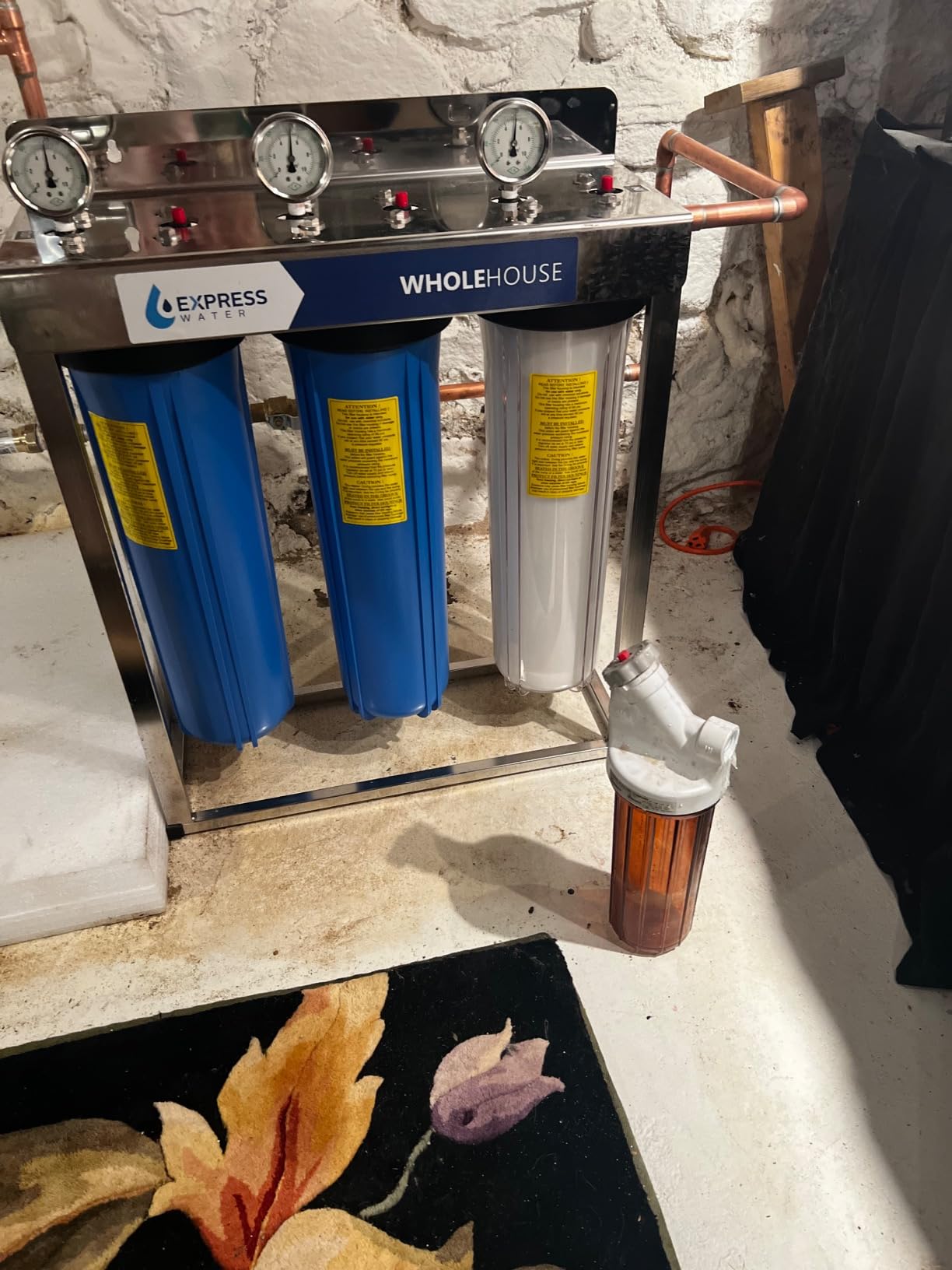
Reviewers report visible reductions in rust colored staining, odor and metallic taste within weeks of installation. The recurring theme in the negative reviews is not filtration performance at all; it is the logistics of owning a 57 pound system with three replaceable cartridges.
That matters more here than on a two-stage unit because you will be doing this twice a year on the worst case schedule. Replacement cartridges are sold separately under part number FLTWH2045ICS1, so the ongoing cost is real and should be part of your decision.
Some owners on high sediment well water report needing to change cartridges sooner than the stated interval. That is the nature of putting a pleated or wrapped stage upstream of iron media on a well that carries sand.
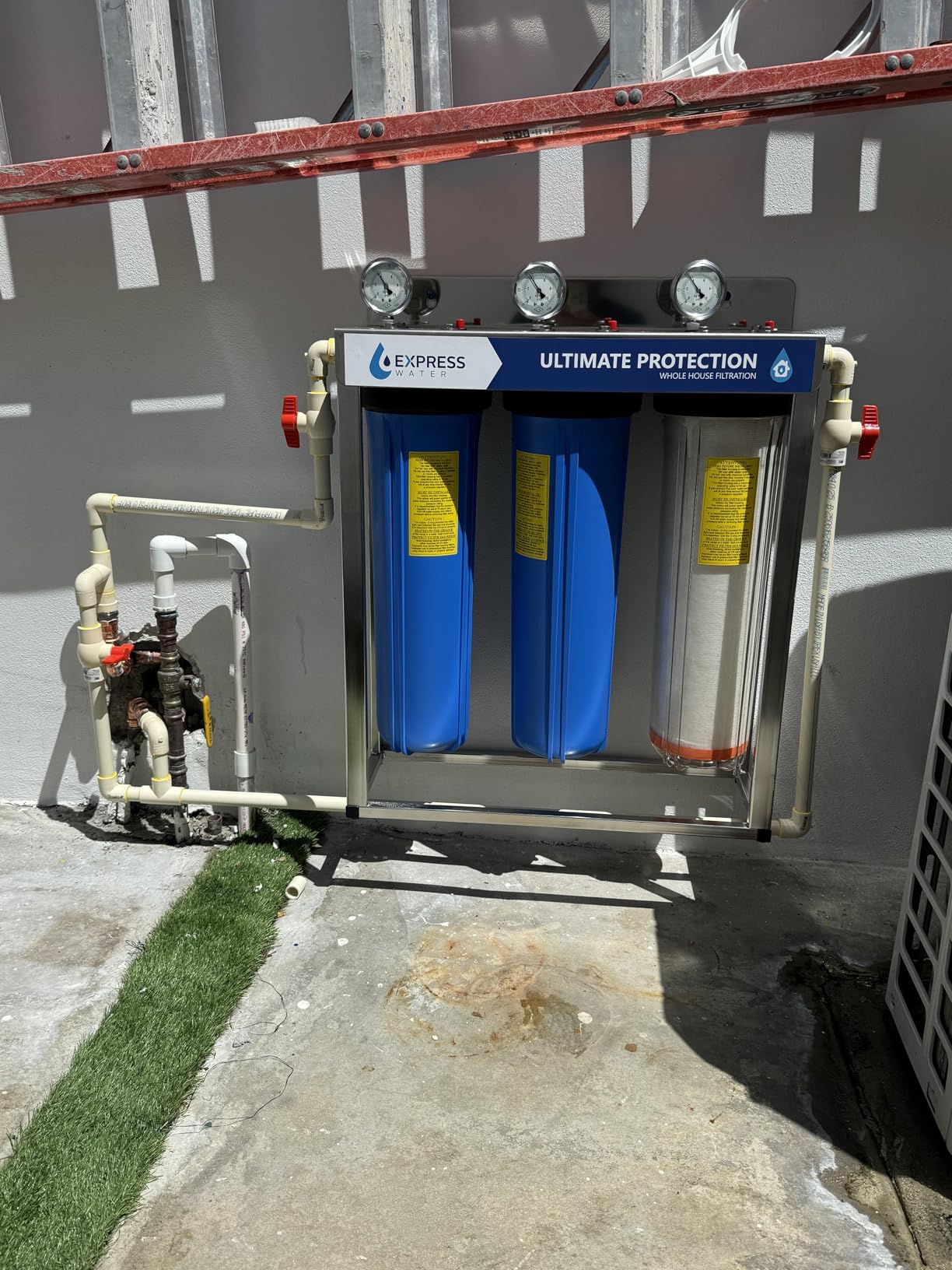
What the stainless frame actually buys you
A freestanding frame means the unit stands on the floor with its own footprint instead of hanging off a wall stud, which means you can put it where there is no wall, and it means the whole assembly is far less likely to sag over a decade. It also means you need about 24 inches of floor clearance and a dry spot.
The gauges are the underrated part. Being able to watch inlet and outlet pressure tells you when a cartridge is loading up long before your shower pressure drops enough to notice, and that is the difference between changing on a schedule and changing on evidence.
Where this system will disappoint you
It is still a cartridge system, so the iron ceiling applies in the same way it does to the other inline units here. This one is built to focus on reddish brown staining, but it is not an oxidation tank and it will not chase hydrogen sulfide.
Buyers who expect it to handle very high iron or iron bacteria generally report the same result: staining improves, slime keeps coming back. That is a treatment train problem, not a product defect.
3. iSpring WGB32BM 3-Stage Iron and Manganese System: Best With a Sediment Pre-Stage
iSpring WGB32BM Iron, Manganese Whole House Water Filter System
5 micron sediment stage
Iron to 3.0 ppm
100,000 gallons
15 GPM
Pros
- Three stages cover sediment/chlorine and VOCs/then iron and manganese
- 5 micron polypropylene sediment stage protects the downstream media
- 100000 gallon capacity works out to about a year for a family of four
- Well owners report rust colored water clearing after install
- US-based technical support that sources parts and tubing
Cons
- Housing caps weep until tightened well past the manual guidance
- 20 inch housings cannot be drained so water spills at every change
- Plastic 1 NPT threads can strip or cross thread with metal connectors
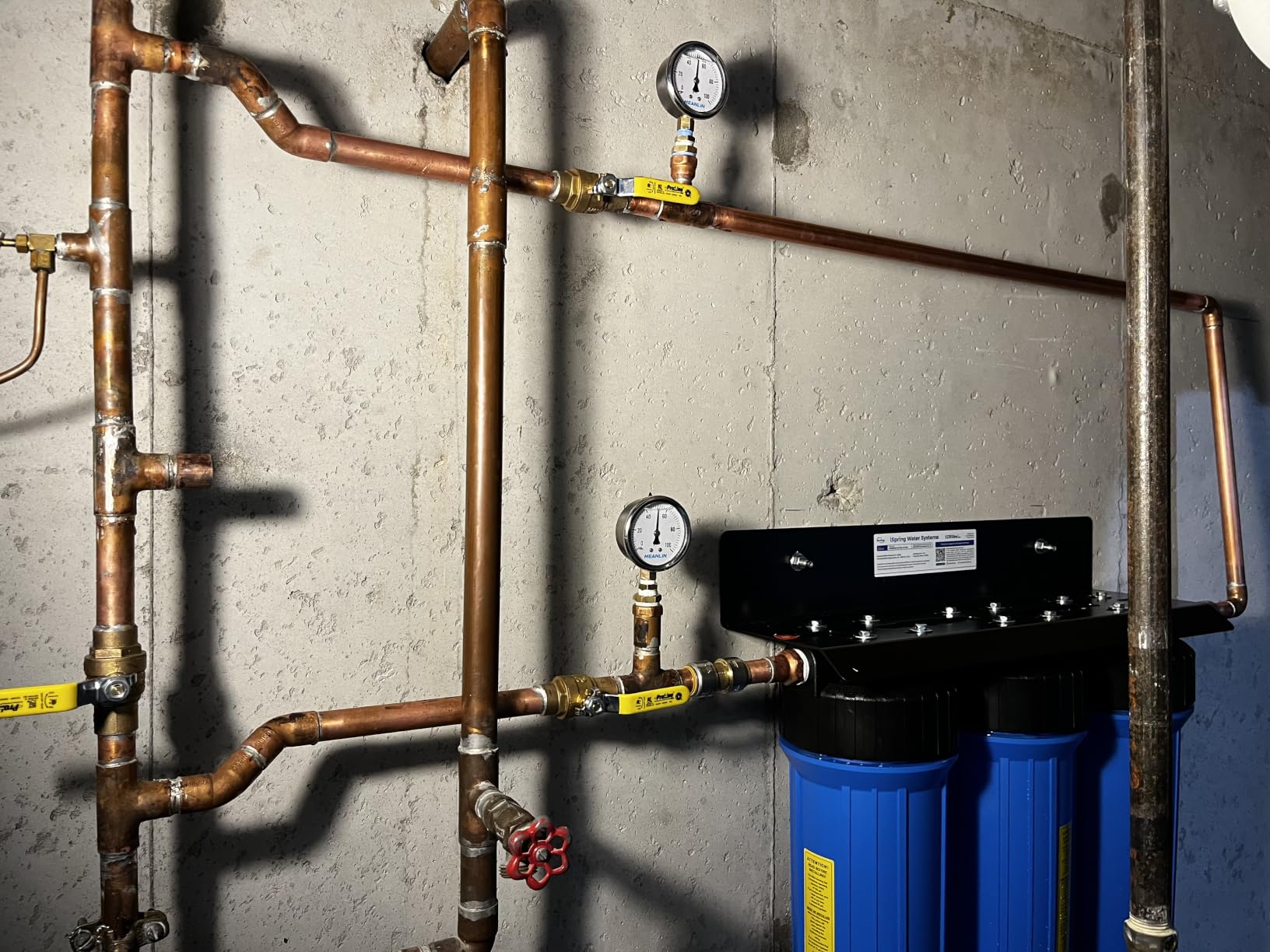
The difference between this and the two-stage iSpring is one stage, and on the right well it is the stage that decides whether the system works. A 5 micron polypropylene sediment filter goes first, then a coconut shell carbon block, then the FM25B iron and manganese cartridge rated to 3.0 ppm iron and 1.0 ppm manganese.
That sediment stage is not filler. Any particulate that reaches the carbon and iron media shortens the life of both, and on a well that produces sand the cartridge change interval collapses without one. If your raw water is cloudy, this is the correct version of the iSpring to buy.
Well owners on this unit report clear improvement in odor, color, staining and fixture scale within days to weeks. The stated capacity of 100,000 gallons per stage works out to roughly a year for a family of four on typical consumption.
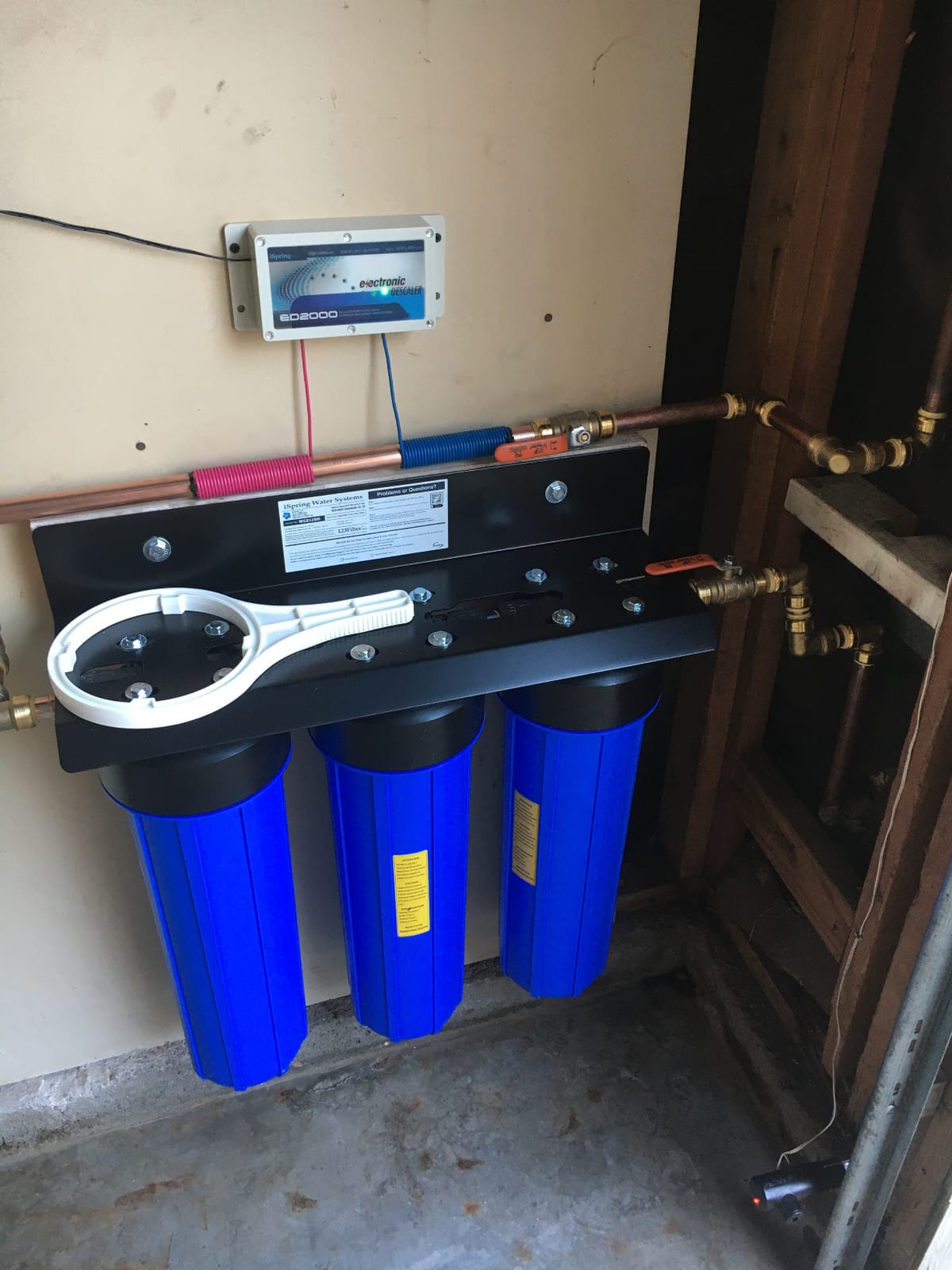
Installation friction is the dominant complaint. Owners frequently report small leaks at the blue housing caps that persist until the caps are tightened well past the guidance in the manual, and the manual’s torque language is described as vague. The 20 inch housings are heavy and cannot be drained, so every change means catching the water in the cartridge.
There is also a smaller group of users on very hard municipal water who say they did not see the iron reduction they expected even after replacing the cartridge. If you are on city supply, treat that report seriously and test first.
Warranty coverage is one year limited with lifetime free technical support. That support is consistently described as a genuine strength, with reps troubleshooting leaks and sourcing replacement tubing.
When the extra stage is worth paying for
It is worth it when your well water is visibly cloudy, when you have a newer plastic or gravel pack well that produces sand after heavy rain, or when you have already replaced iron cartridges early on a previous system. In all three cases the sediment stage is protecting your investment in the iron media.
It is not worth it if you are on treated municipal water with low iron and no sediment. You would be adding a stage you will change on schedule rather than on condition.
What to watch during install
Do not overtighten plastic 1 NPT threads onto metal connectors. Cross-threading is the single most common self-inflicted problem on these manifolds, and the threads strip rather than simply seizing. Hand tighten, then use tape, then snug by feel.
Set aside a drain route and a bucket before you crack the caps. Plan roughly an hour for a first install if you have never plumbed a manifold, and budget more if your point of entry is in a finished mechanical room.
4. DuraWater Air Injection Iron Eater 1.0: Best for Sulfur and Manganese
DuraWater Air Injection Iron Eater Filter 1.0. Removes Iron, Manganese, H2S
Air injection oxidation
1.0 cubic foot media
10 x 54 inch tank
Digital control valve
Pros
- Air injection oxidation handles iron
- manganese and hydrogen sulfide together
- A media tank scales to whole house flow far better than inline cartridges
- Digital control valve automates oxidation and backwash
- Package includes media/tank/bypass and valve with no separate media purchase
Cons
- Most expensive unit in this group and the bulk media has to be replaced periodically
- 54 inch tank needs far more vertical clearance than cartridge housings
- Performance depends on keeping the backwash schedule disciplined
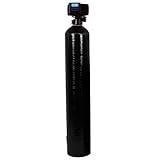
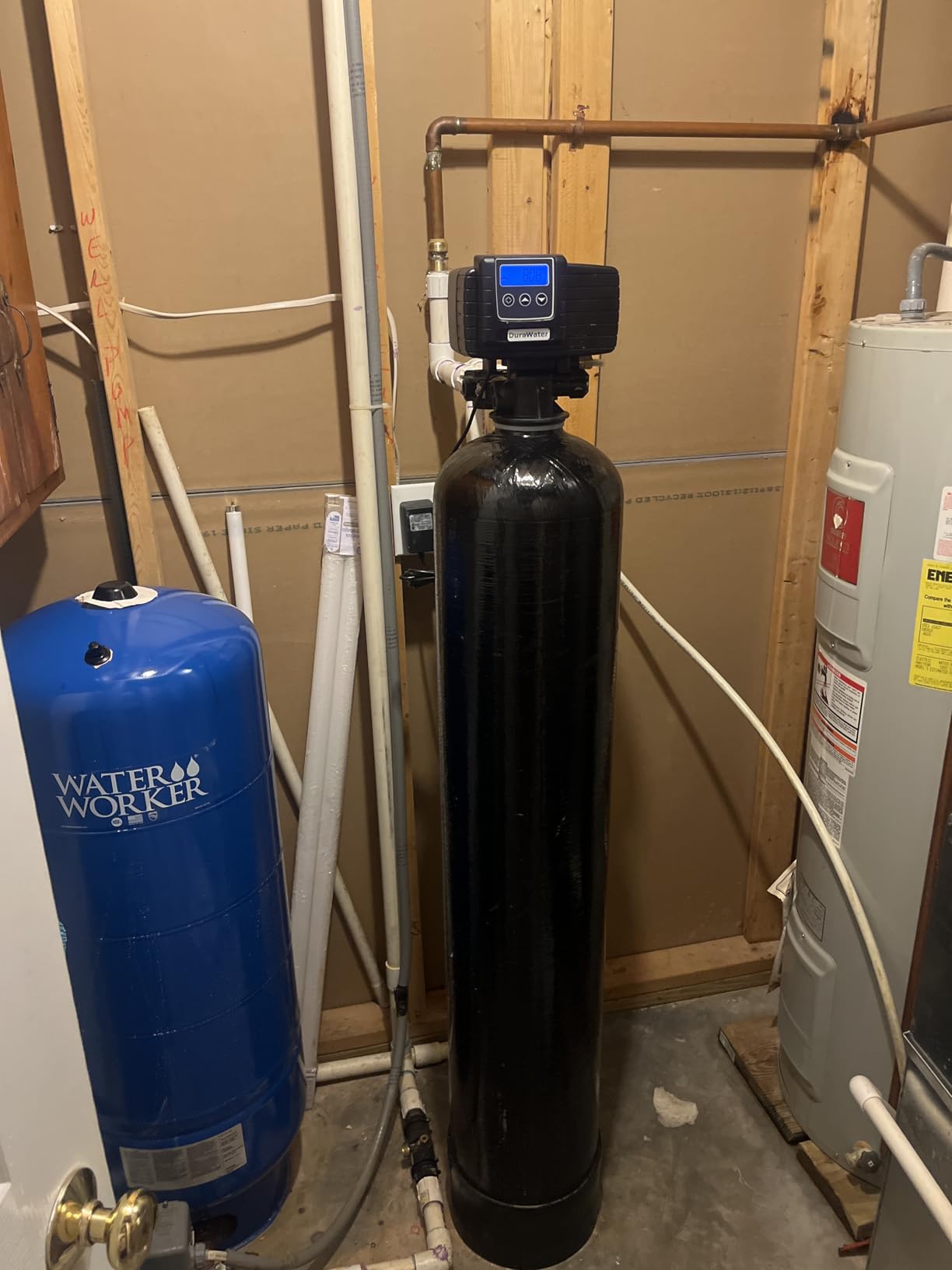
This is the only air injection oxidation system in our group, and that single fact changes what it can treat. A digital control valve injects air into the top of a 10 x 54 inch mineral tank holding 1.0 cubic foot of media, converting dissolved iron into a filterable form, then backwashes the captured solids out on a schedule.
Unlike every cartridge unit above, it is rated for iron, manganese and hydrogen sulfide together. If you have the rotten egg smell that appears in the shower and the hot side of the house, no carbon block on this list will touch it, and this tank will.
The 1 inch plastic bypass valve and digital control valve are both included, as is the media, so the upfront purchase is genuinely complete. Installation needs basic plumbing skills and there is a periodic media replacement on the horizon.

Review sentiment centres on the completeness of the package and on the air injection’s ability to handle sulfur, which is the contaminant inline carbon systems miss entirely. Owners accept the higher upfront cost, the eventual media replacement, and the taller footprint as the price of that capability.
The honest caveat is tank size. At 1.0 cubic foot this is the smallest media tank in the roundup, and forum discussions about iron filter sizing come back to this point consistently. A 1.0 cubic foot tank on a 5 GPM well can still work, but it may need a longer backwash cycle than the default setting, and you should confirm the well’s sustainable flow before ordering.
A 54 inch tank is also a real constraint in a basement with a low ceiling. Measure before you buy, and leave clearance for the tank to be pulled for media changes.
When air injection is the only correct answer
Choose this technology when you have hydrogen sulfide, when your iron is above the 3.0 ppm cartridge ceiling, or when you have iron bacteria and want the tank to be scrubbed automatically rather than by hand. The oxidation step is what makes all three manageable in a single vessel.
It also does not consume chemicals the way greensand does. There is no permanganate to buy and no chemical feed to maintain, which is why this design has become the default recommendation on water treatment forums for wells with multiple problems.
Where it falls short
It is not the simplest install on the list. A media tank with a control valve is a bigger plumbing job than a two-housing bracket, and mistakes in the drain line and bypass connections show up as either a flooded mechanical room or an air-locked tank that stops treating.
At 1.0 cubic foot it is also the least forgiving if your household flow is high. Confirm your well output and count your fixtures before committing, because a tank that is too small means shortened media life no matter how good the valve is.
5. AFWFilters Iron Pro 2 Combination Softener and Iron Filter: Best for Hardness and Iron Together
AFWFilters Iron Pro 2 Combination Water Softener Iron Filter Fleck 5600SXT Digital Metered Valve 64,000 Grain – High Flow for Whole House Use – Removes Hardness, Iron, Manganese, Sediment, Rust
Softener and iron filter in one tank
64,000 grain
Iron to 6 ppm
Fleck 5600SXT valve
Pros
- Only option here that softens and removes iron in a single unit
- Handles iron up to 6 ppm which is double the inline cartridge rating
- Fleck 5600SXT digital metered valve is a well regarded serviceable platform
- Well owners report clear water and red stains stopping quickly
- A sensible alternative to a multi thousand dollar contractor quote
Cons
- Weighs 119.2 pounds and the resin tank ships full so it needs a dolly
- Needs salt
- a drain line and scheduled regenerations so it is far more involved
- Programming and discharge instructions are described as incomplete
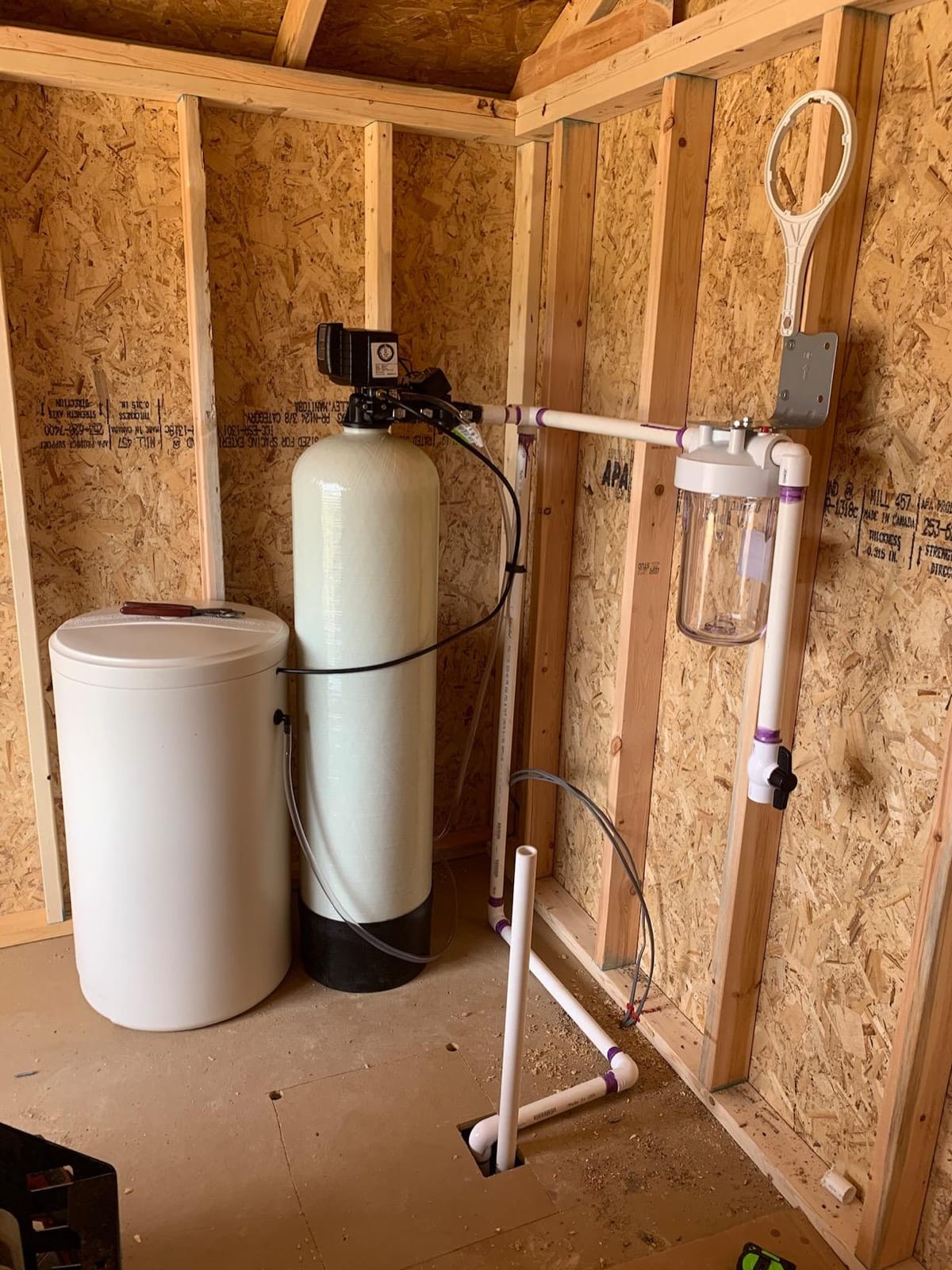
This unit does two jobs in one tank: a 64,000 grain water softener and an iron filter, driven by a Fleck 5600SXT digital metered control valve. It is rated to remove hardness along with iron up to 6 ppm and manganese up to 6 ppm, plus sediment and rust.
Six parts per million is twice the ceiling of every inline cartridge in this roundup, and it is the reason this system exists. If your water is hard and iron bearing, running a separate oxidation tank and a separate softener is two maintenance regimes and two sets of failure points. This is one tank and one valve.
Reviewers on well water describe cloudy, rotten egg smelling water clearing and red staining in toilets and laundry stopping within weeks. The valve is backed by a 5-year warranty on the valve system, which is the longest coverage on this list.
Installation logistics, not performance, are where the friction sits. The resin tank arrives pre-filled, which is why the listed weight is 119.2 pounds, and moving it into position needs a dolly or two people. It also needs a drain line, a brine line and a salt supply, so this is a real commitment rather than a weekend cartridge swap.
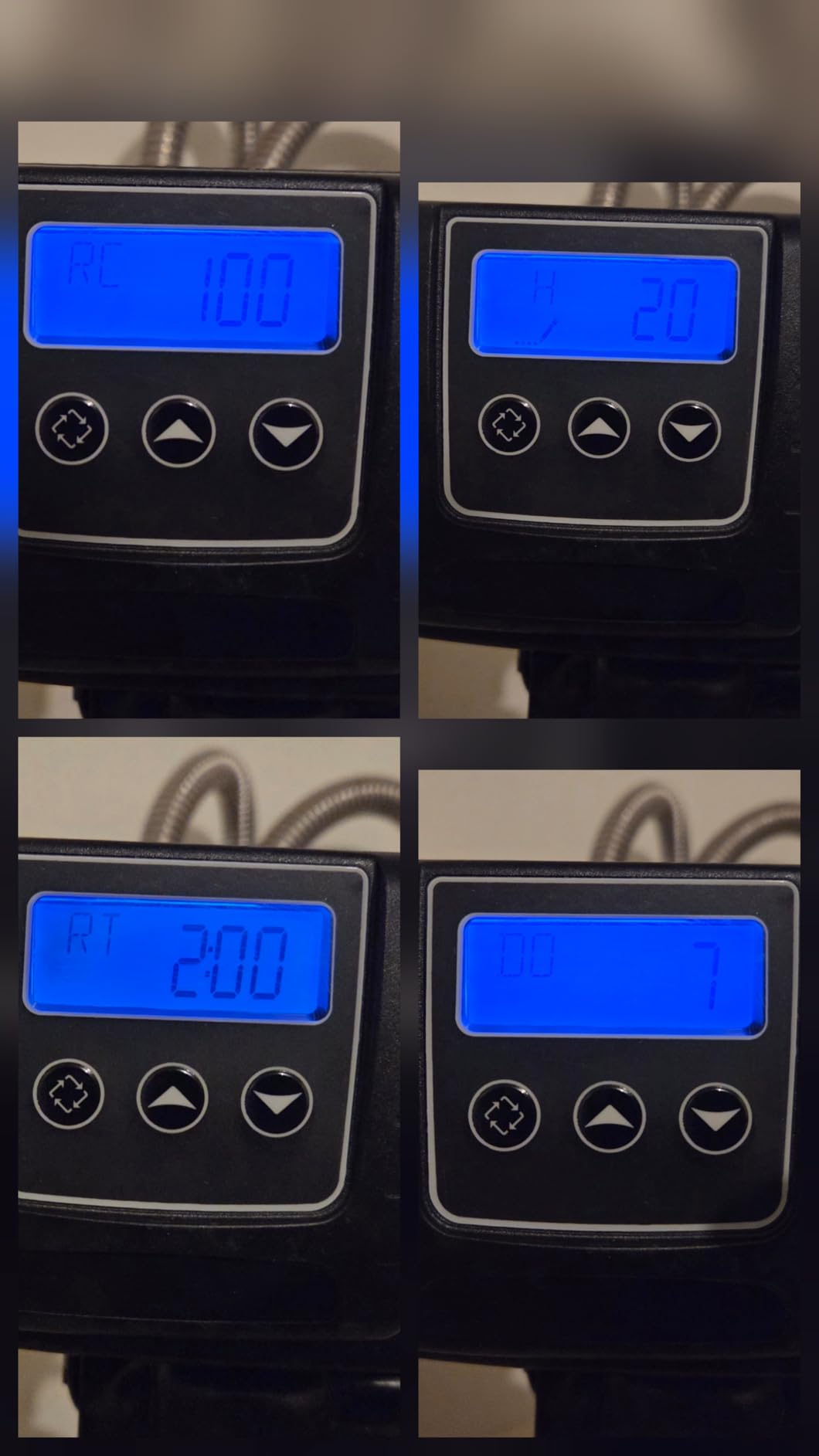
Several buyers describe the programming and discharge setup as poorly documented even as experienced installers. Note one detail before you start: the advanced programming mode on this valve is only reachable when the clock is set to 12:01.
A minority of municipal water buyers felt the system was more than their water needed, one reviewer reporting unchanged TDS and concluding their supply did not need an iron filter. That is a reminder to test first.
Why combining softener and iron filter changes the order of operations
The single most common installation mistake in this category is putting the softener first. Iron fouls resin, and a softener running on iron bearing water loses capacity and eventually dies. Order matters more here than anywhere else in the article.
This unit sidesteps the ordering problem because it is one vessel with one control valve, and the regeneration schedule is programmable. Owners are advised to set regeneration timing carefully on iron bearing well water to keep the media from fouling.
It also adds sodium to the water, which some buyers notice and some do not care about. If sodium intake matters to your household, that is a real factor in the decision.
Who this is wrong for
Skip it if your water is soft already and your only problem is iron. You would be buying a softener you do not need and taking on salt handling for nothing.
Skip it if you are not willing to run a drain line and keep a salt supply, because a combination unit without those is just a very heavy filter. And skip it if you have hydrogen sulfide, because softening is not sulfur removal.
6. iSpring WGB22BM 2-Stage Iron and Manganese Filter: Best for Chlorine and Odor
iSpring Iron, Mangaese Whole House Water Filter System Also Eliminates Chlorine, Taste, and Odor, 2-Stage Commercial-Grade 20″ x 4.5″ Industry Standard-Sized Filters, 1″ Inlet/Outlet, Model: WGB22BM
Iron to 3.0 ppm
Carbon block 99 percent chlorine
15 GPM
100,000 gallons
Pros
- Large 20 inch industry standard cartridges give strong rated capacity
- Two stages clear chlorine
- taste/odor and iron in one manifold
- Coconut shell carbon block rated to cut up to 99 percent of chlorine
- Good value when chlorine and iron are the only targets
- Lifetime technical support from a US-based team
Cons
- No dedicated sediment pre-filter so fines can foul the carbon and iron cartridges
- Rated only to 3.0 ppm iron so higher well water needs a different system
- Same leak prone 1 inch plastic NPT fittings seen on the other iSpring units
This is the chlorine and odor specialist of the iSpring lineup. The first stage is a coconut shell carbon block rated to reduce up to 99% of chlorine, and the second is the FM25B iron and manganese filter rated to 3.0 ppm iron and 1.0 ppm manganese. Capacity is rated at 100,000 gallons, about a year for a family of four.
The 20 inch by 4.5 inch cartridges are industry standard sized, which is a quiet but real advantage. Standard sizing means you are not locked into one brand for replacement media, and the same parts fit a lot of other manifolds on the market.
iSpring itself recommends its heavier WCFM systems for well or pond water above 3 ppm iron, which is an unusually honest thing to find printed on a product page. It tells you exactly where this unit stops being the right answer.
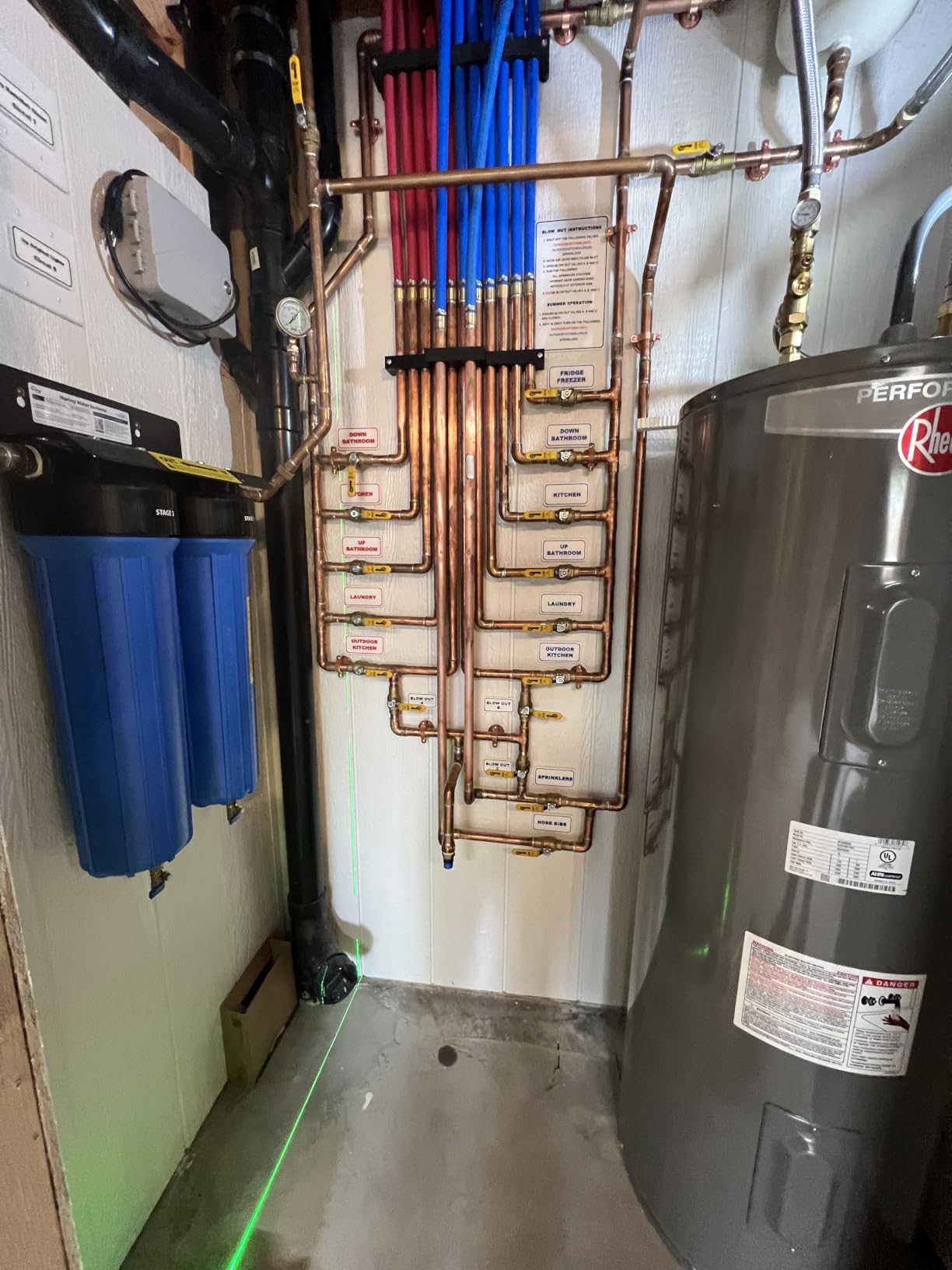
The limitation owners raise most is the missing sediment stage. With no upstream fine filter, particulate loads the carbon block and the iron media faster than the rated interval suggests. On sediment heavy wells, pairing this with a spin-down pre-filter is close to mandatory rather than optional.
The leak prone 1 inch plastic NPT fittings show up here too, consistent with the rest of the iSpring range. Owners report the same pattern of extra thread seal tape and careful hand tightening, and the same outcome once set properly.
Maximum supported TDS is 500 ppm on this model, lower than the Express Water’s 800 ppm, so it suits typical residential supply rather than anything aggressive.
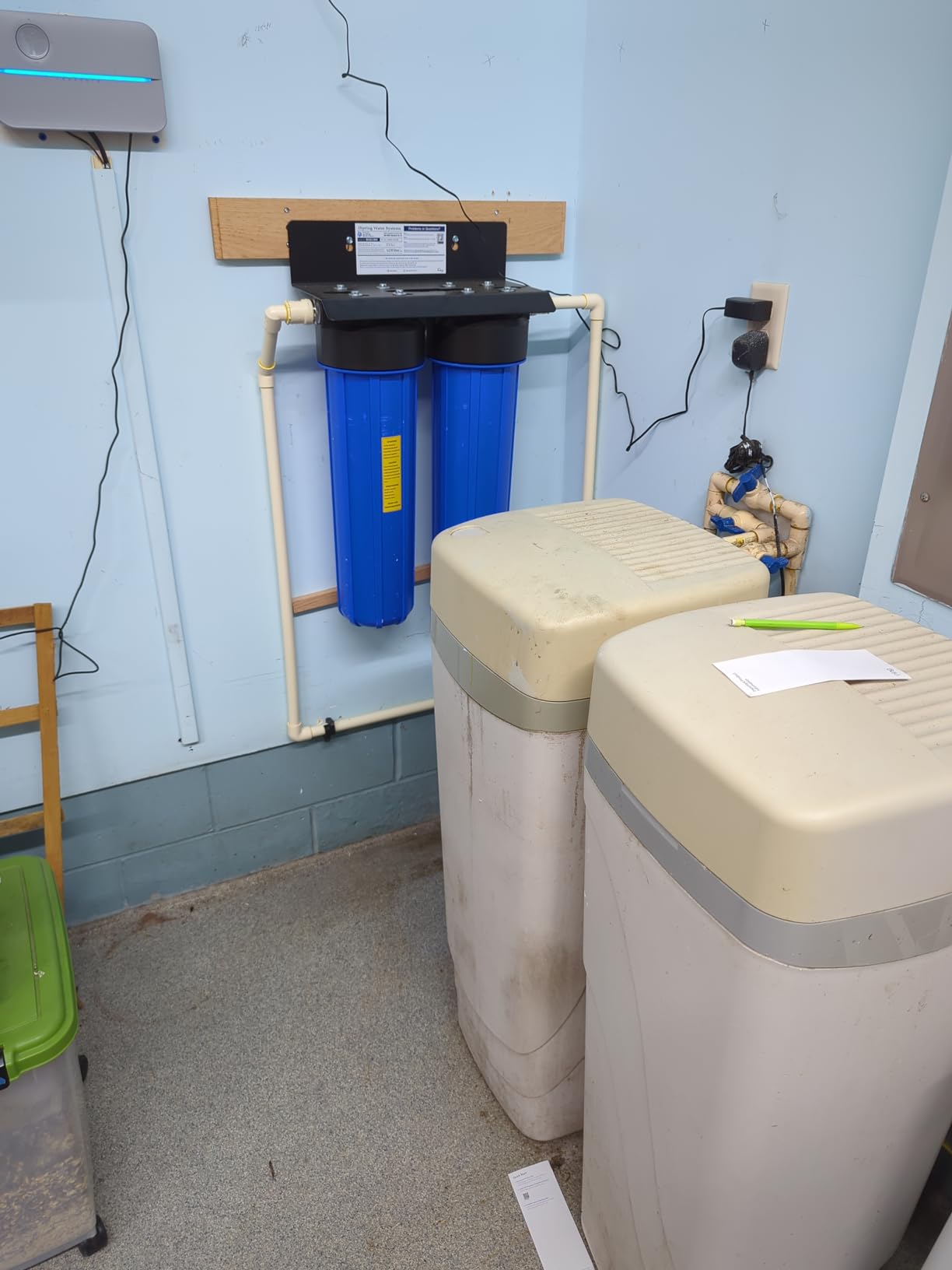
When chlorine and iron are the whole problem
This is the right box when you are on municipal water or a treated supply, you can already see or taste chlorine, and your test came back with iron under 3.0 ppm. In that situation the two stages do exactly two things, both of them things you need.
It is also the sensible pick if you want the standard 20 inch cartridge format rather than a proprietary size, because replacement media is easier to source across brands.
Where it falls short
No sediment stage is the big one. If your water is cloudy, or if you have already had a filter on this property before, add a spin-down or pleated pre-filter upstream and plan the replacement schedule around it.
The 3.0 ppm iron rating is the other hard stop. Above that, move up to an air injection tank rather than expecting a different cartridge to help.
7. Home Master HMF3SdgFeC 3-Stage Filter: Best for Fine Sediment
Home Master Whole House Three Stage Water Filtration System with Fine Sediment, Iron and Carbon, Blue
25-10-5-1 micron sediment
Iron and manganese to 95 percent
15 GPM
100,000 gallons
Pros
- 4-layer 25/10/5 and 1 micron cartridge with high dirt holding capacity
- Removes up to 95 percent of iron
- manganese and sediment on well water
- Heavy steel bracket and oversized housings keep flow strong
- Several owners bought a second unit for a new home
- Manufacturer makes proactive annual follow-up contact
Cons
- O-rings lose diameter and pop out of the groove causing hard to find leaks
- Do not solder copper near the plastic fittings and a faulty install can trigger a paid inspection
- Replacement cartridges are hard to identify and order
- Pressure gauges
- bypass and pre-filter are not included
The Home Master is the most filtration-forward cartridge unit here. Its first stage is a 4-layer 25, 10, 5 and 1 micron replaceable sediment cartridge, which is a genuinely fine filtration stack rather than the single 5 micron layer most competitors use. The system is rated to remove up to 95% of iron, manganese and sediment, plus chlorine taste and odor chemicals, to a 3 ppm combined load.
Those 1 micron outer layers are why it earns its place. On a well with fine sand or colloidal iron, catching particles that a 5 micron cartridge passes is the difference between a system that holds pressure for a year and one that does not.
The bracket is heavy steel and the housings are oversized radial flow units on 1 inch ports rated to 15 GPM, operating between 20 and 95 psi. Maximum supported TDS is 2000 ppm, the highest in this group by a wide margin.
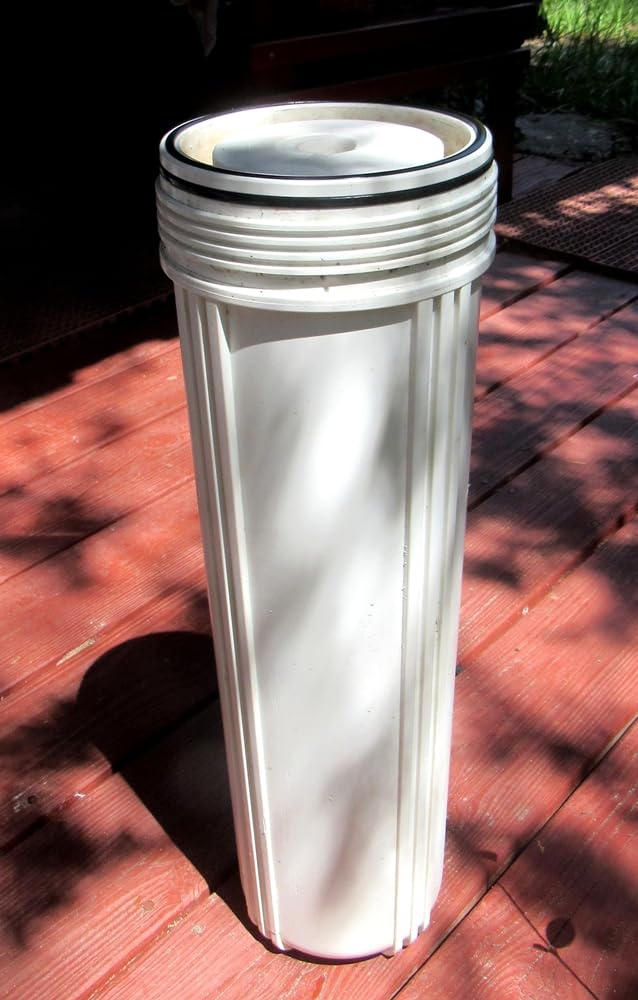
This is also the smallest review base among the iSpring-class units at 207 ratings, and the ratings carry the widest spread in the group, with 7% one-star reports. Long-term owners on well water in the southeastern US describe strong iron and odor results and repeat purchase loyalty, including buying a second unit for a new house.
The mechanical criticisms are the ones to plan around. Owners report O-rings that lose their diameter and pop out of the housing groove, producing leaks that are hard to trace. There is also a specific warning about copper to plastic fittings melting if you solder nearby, and a policy where a faulty install can require paying for a manufacturer approved plumber inspection.
Pressure gauges, a bypass valve and a pre-sediment filter are recommended accessories rather than included items. Budget for them, because the install is much easier with a gauge on the inlet and outlet.
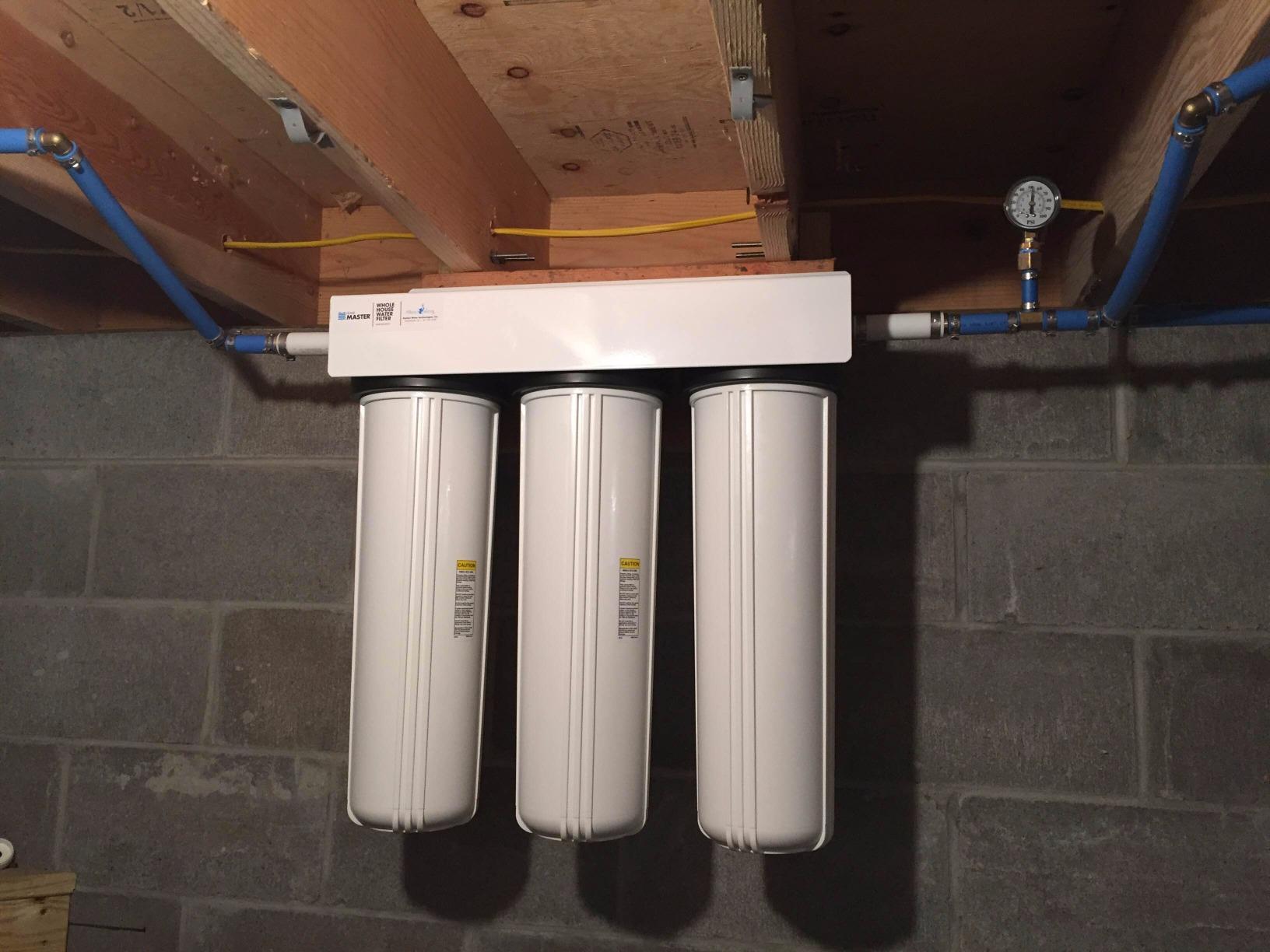
What the micron stack really buys
Fine filtration is only useful if something upstream is not eating it. A 1 micron outer layer catches sand that would blind a 5 micron stage, which means the higher layers handle the bulk volume and the fine layer stays clear long enough to do its job.
For a well near a river or with a young, shallow casing this is the difference between changing a cartridge twice a year and every eight weeks. It is also why this system keeps flow strong on sediment heavy water where coarser units bog down.
What to watch out for
Never solder near the plastic fittings, and do not overtighten the housings hoping to stop a weep. An O-ring that has lost its diameter is a part replacement, not a torque problem. Identify and order the correct replacement cartridge model before you need it, because owners report real difficulty working out which filter fits.
City water users are directed by the manufacturer to a different model, which tells you this one is built for well conditions rather than treated supply.
8. PUREPLUS FHN20BB 3-Stage Pleated Filter: Budget Pick
PUREPLUS 20″ 3-Stage Whole House Water Filter, Pleated, GAC & Iron Reduce
Pleated sediment stage
Iron reduced to 0.01 ppm
30,000 gallons
Three pressure gauges
Pros
- Three included pressure gauges show pressure drop and filter change timing
- Steel frame and brass thread junctions are sturdier than all-plastic manifolds
- Plumbers report fitting 20 or more units with no complaints
- Well owners report the rotten egg sulfur odor disappearing after install
- Pleated first stage holds more sediment and protects downstream stages
Cons
- Rated capacity of 30000 gallons is the lowest in this group so changes come more often
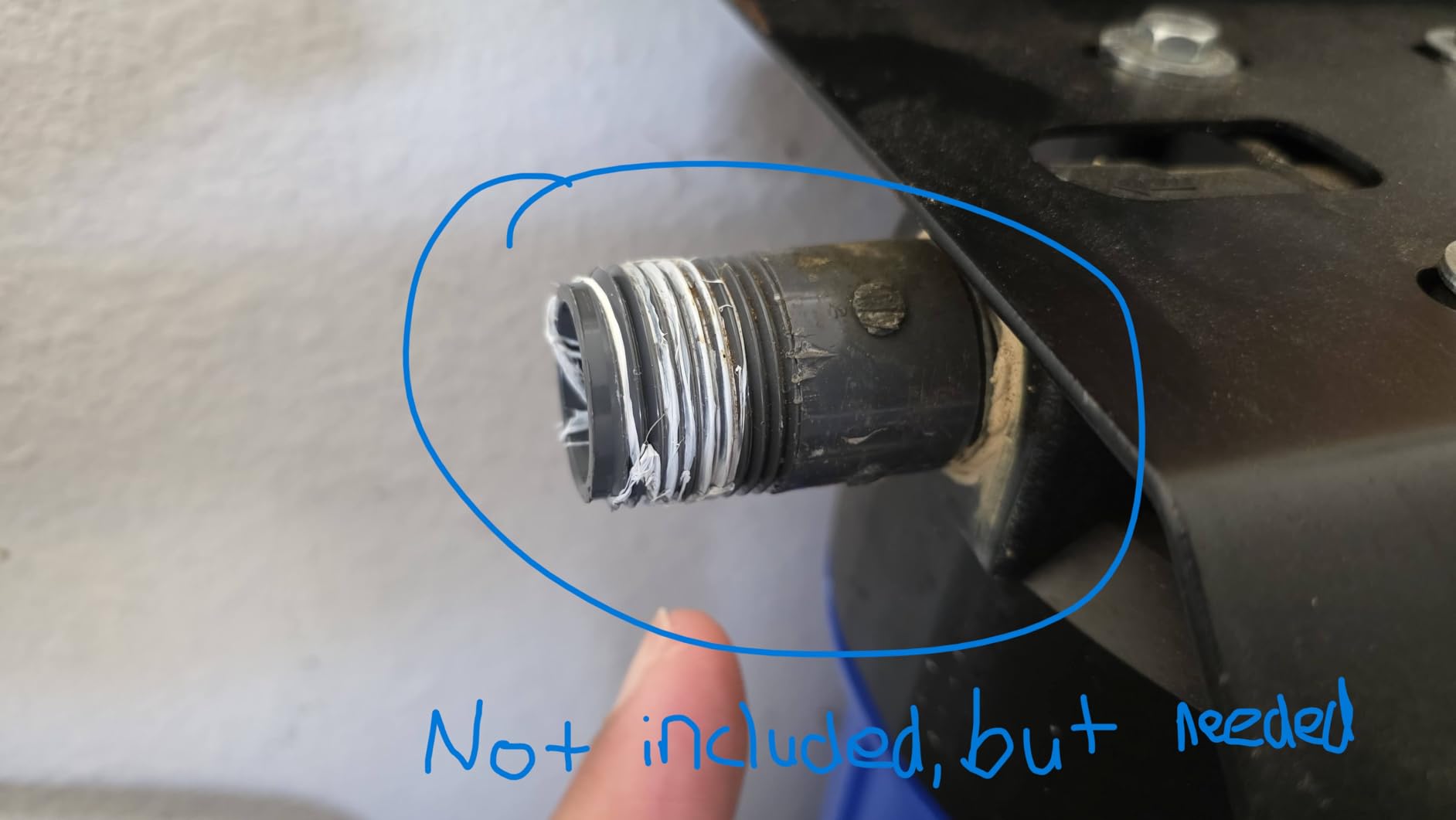
- One shipment arrived without O-rings or a wrench and support did not respond
- Replacement cartridges cost more relative to the system price
- Only 53 ratings so long-term durability data is thin
The PUREPLUS is the cheapest route to a real three-stage manifold, and the build is more considered than the price suggests. The housings are food grade polypropylene with brass thread junctions, which is a meaningful upgrade from all plastic threading, and the frame is heavy duty steel with a red pressure valve and a wrench included.
Three pressure gauges ship in the box. On a system this size, that is not a minor accessory; it is how you know when to change a cartridge rather than guessing from a month on the calendar.
Stages run pleated sediment first for sand, silt, rust, dirt and scale, then a GAC carbon block rated to remove up to 99% of chlorine, taste, odors and finer sediment, then an iron and manganese cartridge that reduces contaminants to 0.01 ppm. The listing claims coverage of more than 52 impurities in total.
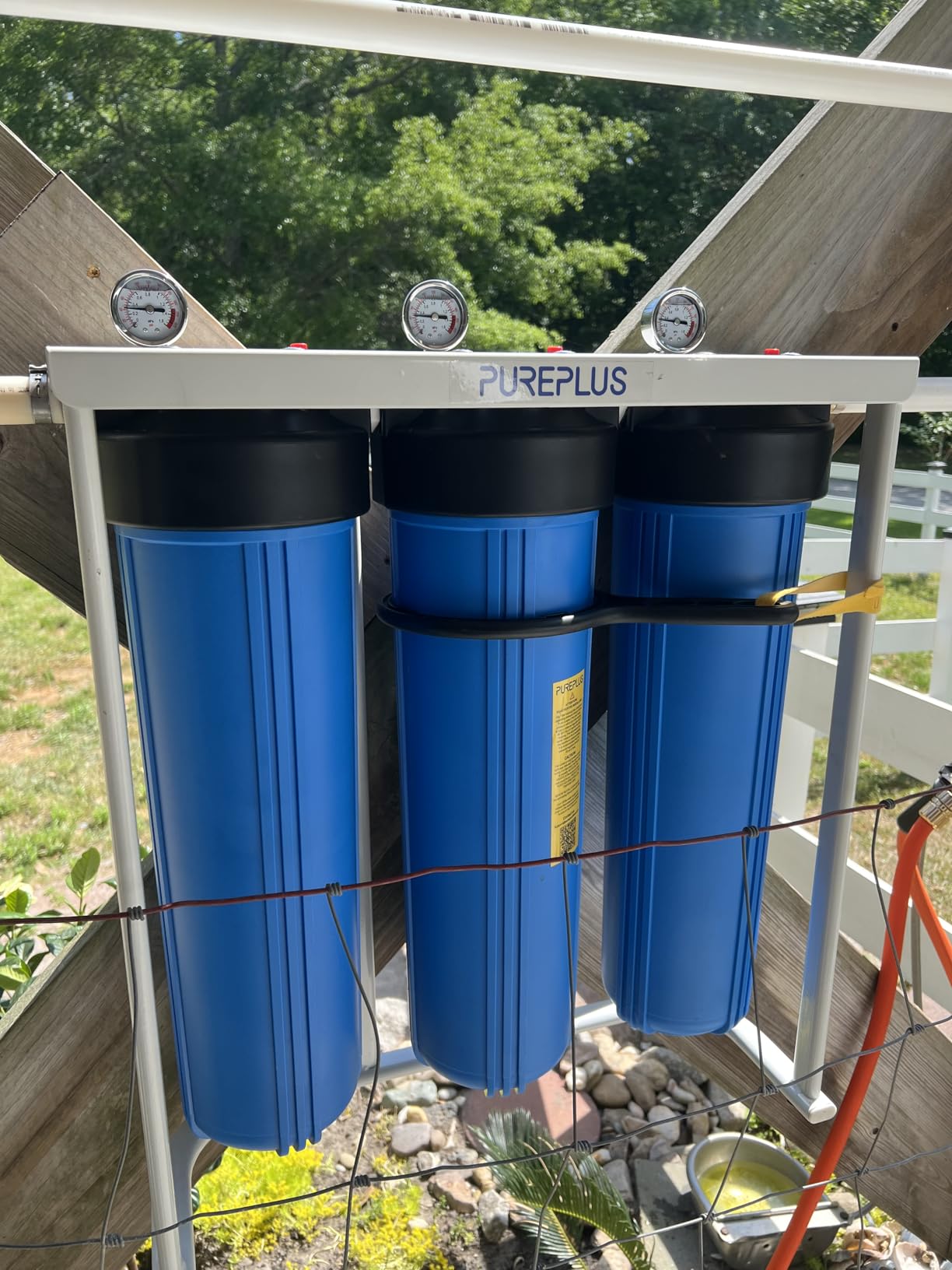
Plumbers who have fitted 20 or more of these units speak well of the double O-ring seals and the absence of leaks, and well owners report the sulfur smell clearing quickly. Maximum supported TDS is 300 ppm, so this suits typical residential water rather than anything aggressive.
The real limitation is capacity. At 30,000 gallons this is the lowest rated capacity in the group, roughly a third of the 100,000 gallon units, which means more frequent cartridge changes and a higher effective annual cost than the sticker figure suggests.
With only 53 ratings there is limited long-term durability data, and one order reportedly arrived without O-rings or a wrench with no response to the support message. Check the box contents before you start the install.
Where the budget pick genuinely works
It works well on a shallow well with low iron, low sediment and a chlorine or taste problem, where you want three stages of protection and you want gauges. The pleated first stage is a real sediment capacity advantage over 5 micron wrapped cartridges at the same size.
The brass thread junctions and included frame also mean you are not assembling a manifold out of loose plastic parts, which is where a lot of cheap systems start leaking in month two.
When to spend more instead
Move up if your iron is above 3.0 ppm, if you have hydrogen sulfide that needs actual oxidation, or if you would rather change cartridges once a year than three or four times. At 30,000 gallons the recurring cartridge cost erodes the value of the low purchase price quickly.
Given the small review base, keep a spare set of O-rings and the wrench on hand before day one.
How to Choose a Whole House Iron Removal Filter
The eight systems above work because the reader knows their water. Everything that goes wrong in this category traces back to buying hardware before testing, so here is the order of operations we would follow, and the decision points inside it.
If you want the broader picture on point of entry versus under sink setups, our under kitchen sink roundup covers the drinking water end of the train, and our well water filtration guide covers the pretreatment steps that come before any iron tank.
What type of filter is best for iron?
Match the technology to the number. Ferrous iron under 3.0 ppm on treated supply can be handled by a catalytic carbon or KDF cartridge. Ferrous iron under 3.0 ppm on a well wants a three stage inline unit with a sediment prefilter. Iron between 3.0 and 6.0 ppm wants either a combination softener and iron filter or a properly sized air injection tank. Above 6.0 ppm, go straight to a media tank with a control valve.
Two conditions override the numbers entirely. If you have hydrogen sulfide, you need oxidation, so a cartridge is out. If you have iron bacteria, no filter on this list alone is enough, and you should plan a treatment step aimed at the organism before the iron filter.
Can a water softener remove iron?
A water softener can reduce low levels of iron, typically up to about 3 ppm, as a side effect of the exchange process. It cannot handle iron above that, and running a softener on iron bearing water fouls the resin and destroys its capacity.
This is the most expensive misconception in the category. The correct order of treatment is: sediment prefilter, then iron filter, then pH neutralizer if your water is acidic, then water softener, then a UV sterilizer, then an under sink reverse osmosis for drinking. Installing the softener first is how people end up replacing a resin tank and an iron filter at the same time.
One exception to the pH rule. If your well water is acidic, below about 7.0, the media in an iron filter can underperform and a calcite neutralizer has to go upstream of it. Check pH in your test panel, not after.
How to size a whole house iron removal filter
Follow these four steps and you will not undersize.
Step one, measure your well’s real flow. Run the well until it stops producing air and note the time and the gallons. That number, not the pump rating, is what your backwash has to compete with.
Step two, count fixtures. A one to two bathroom home needs roughly 8 to 10 GPM of peak demand. Three or more bathrooms, a laundry room and a dishwasher push that toward 15 to 20 GPM. Compare against the flow rating on the unit, and pick one with headroom.
Step three, pick tank volume. For inline cartridges, capacity in gallons is the number that matters, and 100,000 gallons is roughly a year for a family of four. For media tanks, volume in cubic feet is the number that matters. A 1.0 cubic foot tank suits one to two bathrooms. 1.5 cubic feet handles a typical three bedroom home. 2.5 cubic feet is for three or more bathrooms or a high output well.
Step four, confirm the backwash flow requirement. A media tank has to push water fast enough through the drain to expand the media bed and scour it clean. If your well cannot sustain that flow, the fix is a longer backwash cycle or a control valve with a rinse and rexinse program, not a smaller tank.
Common problems with iron filters and what not to buy
The failures that recur most often, in order of how often we saw them:
Buying cartridge only for well water above 3 ppm. The cartridge clogs in weeks and the iron stays. This is the single most expensive mistake in the category.
Putting the softener before the iron filter. Resin fouling destroys the softener, and you pay to replace both.
Undersizing the tank. A tank that cannot keep up with household flow gives short media life regardless of the control valve quality.
Expecting a filter to fix iron bacteria. The slime returns because the organisms are still there.
No sediment prefilter on a sediment heavy well. Everything downstream clogs faster and the rated capacity stops meaning anything.
Accepting a dealer quote without a baseline. Franchised sellers and wholesale direct sellers can quote the same tank at very different totals, so know the wholesale configuration before you talk to anyone.
Two smaller ones worth naming. Sulfur odor can get worse looking after iron comes out, because you can finally smell what was masked, which feels like a failed install when it is really progress. And low pH quietly degrades iron filter media, which is why the neutralizer step exists and why pH belongs on your test panel.
On cost, think in ranges rather than a single figure. Inline catalytic cartridge units sit at the low end for both the purchase and the ongoing cartridges, and carry a hard 3.0 ppm ceiling. Media tank systems with an air injection valve cost meaningfully more up front but have no per year cartridge bill, only periodic media replacement. Combination softener and iron units sit in between and add salt and a drain line to the running cost. Over a ten year horizon, cartridge systems usually win on total cost for low iron and lose badly for anything above it.
Frequently Asked Questions
Will a whole house water filter remove iron?
Yes, but only if it uses iron-rated media such as catalytic carbon, greensand, manganese dioxide or an air injection oxidation tank. A standard carbon block, a plain sediment filter and a water softener alone will not remove iron.
What type of filter is best for iron?
Match the technology to the level. Under 3.0 ppm on treated water can use a catalytic carbon or KDF cartridge. Under 3.0 ppm on a well needs a three stage inline unit with a sediment prefilter. Between 3.0 and 6.0 ppm needs a media tank or a combination softener and iron filter. Hydrogen sulfide or iron bacteria require an oxidation tank regardless of the iron number.
Can a water softener remove iron?
A softener can reduce low iron, roughly up to 3 ppm, as a side effect. Above that it cannot, and running a softener on iron bearing water fouls the resin. Install the iron filter first, then the softener.
What are common problems with iron filters?
The most common failures are cartridge systems bought for well water above 3 ppm that clog within weeks, a softener installed ahead of the iron filter so resin fouls, an undersized media tank that cannot meet backwash flow, expecting the filter to eliminate iron bacteria slime, and skipping a sediment prefilter on a sediment heavy well.
What is the best whole house water filter for iron and sulfur?
An air injection oxidation tank, because the oxidation step is what removes hydrogen sulfide and dissolved iron in the same vessel. Carbon blocks and sediment cartridges do nothing for sulfur, and a softener does not touch it.
What size iron filter do I need?
Check your well’s real sustainable flow, count fixtures, then pick capacity. A one to two bathroom home suits a 1.0 cubic foot media tank or a 100,000 gallon cartridge unit, while three or more bathrooms push you to 2.5 cubic feet or higher flow capacity. Confirm the backwash flow requirement before you order.
Our Final Verdict on the Best Whole House Water Filters for Iron Removal
The iSpring WGB21BM is our pick. It carries the deepest review base in the group, takes iron from 3.0 ppm down to 0.01 ppm, runs to 15 GPM, and needs neither power nor a drain line, which makes it the easiest of the strong performers to actually install.
If you want the sturdiest frame, buy the Express Water WH300SICS. If you need a sediment stage in front of the iron media, buy the iSpring WGB32BM. If you have sulfur or iron above 3 ppm, buy the DuraWater air injection tank and accept the taller footprint and periodic media replacement, because no cartridge on this list will get you there.
Whatever you choose, test first. The five numbers that matter are iron, manganese, pH, hardness and sulfide, and they decide the entire answer. Re-test after install too, so you can confirm the system is doing what the seller claimed rather than assuming it.
