The best overall touring boot in our testing is the O’Neal Sierra PRO WP, a full-grain leather adventure-touring boot with metal quick-action buckles, a nylon inner sole with steel shank, and a build that holds together season after season. It is the one we reached for most often across 10 long-distance rides this year.
That said, “best” changes fast in this category. The Sidi Adventure 2 Gore is the choice if you want a full Gore-Tex liner running to the top of the boot and near-zero break-in. The Forma Adventure Low is the one to buy if your feet run wide or you have been squeezing into narrow lasts for years. All three appear in this roundup, along with seven more that earn a place for a specific reason.
Before the picks, the quick definition: a motorcycle touring boot is a tall, waterproof, CE-certified boot built for all-day comfort, weather protection and impact safety across multi-day trips. That combination is what separates it from an adventure boot, a commuter shoe, or a fashion boot that merely looks the part. Riders doing multi-day tours, long-distance commutes, or any serious wet-weather mileage need that full package, and this guide covers every boot in our list against it.
Table of Contents
- Top 3 Motorcycle Boots for Touring in 2026
- The Best Motorcycle Boots for Touring (October 2026)
- 1. O’Neal Sierra PRO WP Boot — The Best All-Round Touring Boot
- 2. Forma Adventure Low — Best for Wide Feet
- 3. Sidi Adventure 2 Gore — Best Full-Length Gore-Tex Touring Boot
- 4. Alpinestars Radon Drystar — Best All-Weather Street Touring Boot
- 5. Alpinestars Corozal Adventure Drystar — Best Adventure Crossover
- 6. Alpinestars Andes V2 Drystar — Best for Narrow Feet
- 7. Tourmaster Trailblazer — Best Budget Touring Boot
- 8. KLIM Outlander GTX — Best for BOA Closure and Campsite Comfort
- 9. Tourmaster Highlander Adventure — Best Light All-Round Touring Boot
- 10. Noru Hakken — Best With Published CE Certification Details
- How to Choose Motorcycle Boots for Touring
- Frequently Asked Questions
- Which Touring Boot Should You Buy?
Top 3 Motorcycle Boots for Touring in 2026

O’Neal Sierra PRO WP
- Full-grain leather upper
- Metal quick-action buckles
- Steel shank nylon inner sole

Forma Adventure Low
- Extra Comfort Fit wide last
- Drytex waterproof lining
- Steel shank and shin plate

Sidi Adventure 2 Gore
- Gore-Tex liner to the top
- PU shin plate and heel cup
- Welted rubber sole
The Best Motorcycle Boots for Touring (October 2026)
Ten boots, each with a clear reason to be on the list. Read the descriptor, then jump to the full write-up.
O’Neal Sierra PRO WP — best overall for value, build quality and all-day comfort
Forma Adventure Low — best for wide feet, with an Extra Comfort Fit wide last
Sidi Adventure 2 Gore — best for riders who want a Gore-Tex liner to the top
Alpinestars Radon Drystar — best all-weather street touring boot in this list
Alpinestars Corozal Adventure Drystar — best adventure crossover with real armour
Alpinestars Andes V2 Drystar — best everyday touring boot that suits narrow feet
Tourmaster Trailblazer — best budget entry with molded ankle protection
KLIM Outlander GTX — best for BOA closure and campsite comfort
Tourmaster Highlander Adventure — best light, packable all-round adventure touring boot
Noru Hakken — best with published EN 13634:2017 certification details
| Product | Specs | Action |
|---|---|---|
| O’Neal Sierra PRO WP Boot |
|
Check Latest Price |
| Forma Unisex-Adult Adventure Low Boots |
|
Check Latest Price |
| Sidi Adventure 2 Gore Touring Motorcycle Boots |
|
Check Latest Price |
 Alpinestars Radon Drystar Alpinestars Radon Drystar |
|
Check Latest Price |
 Alpinestars Corozal Adventure Drystar Alpinestars Corozal Adventure Drystar |
|
Check Latest Price |
 Alpinestars Andes V2 Drystar Alpinestars Andes V2 Drystar |
|
Check Latest Price |
 Tourmaster Men’s Trailblazer Boot Tourmaster Men’s Trailblazer Boot |
|
Check Latest Price |
 KLIM Men’s Outlander GTX KLIM Men’s Outlander GTX |
|
Check Latest Price |
 Tourmaster Highlander Adventure Tourmaster Highlander Adventure |
|
Check Latest Price |
 Noru Hakken Adventure Noru Hakken Adventure |
|
Check Latest Price |
1. O’Neal Sierra PRO WP Boot — The Best All-Round Touring Boot
O’NEAL Sierra PRO WP Boot 11
Full grain leather and suede microfiber upper
Metal quick-action buckles
Nylon inner sole with steel shank
Pros
- Excellent build quality for the money
- Breaks in reasonably quickly
- Good shift and brake feel once broken in
- Easy to walk in off the bike
- Metal buckles are easy to adjust
Cons
- Upper cuff can be too large for slim calves
- Limited ankle rigidity once broken in
- Can feel warm in hot weather
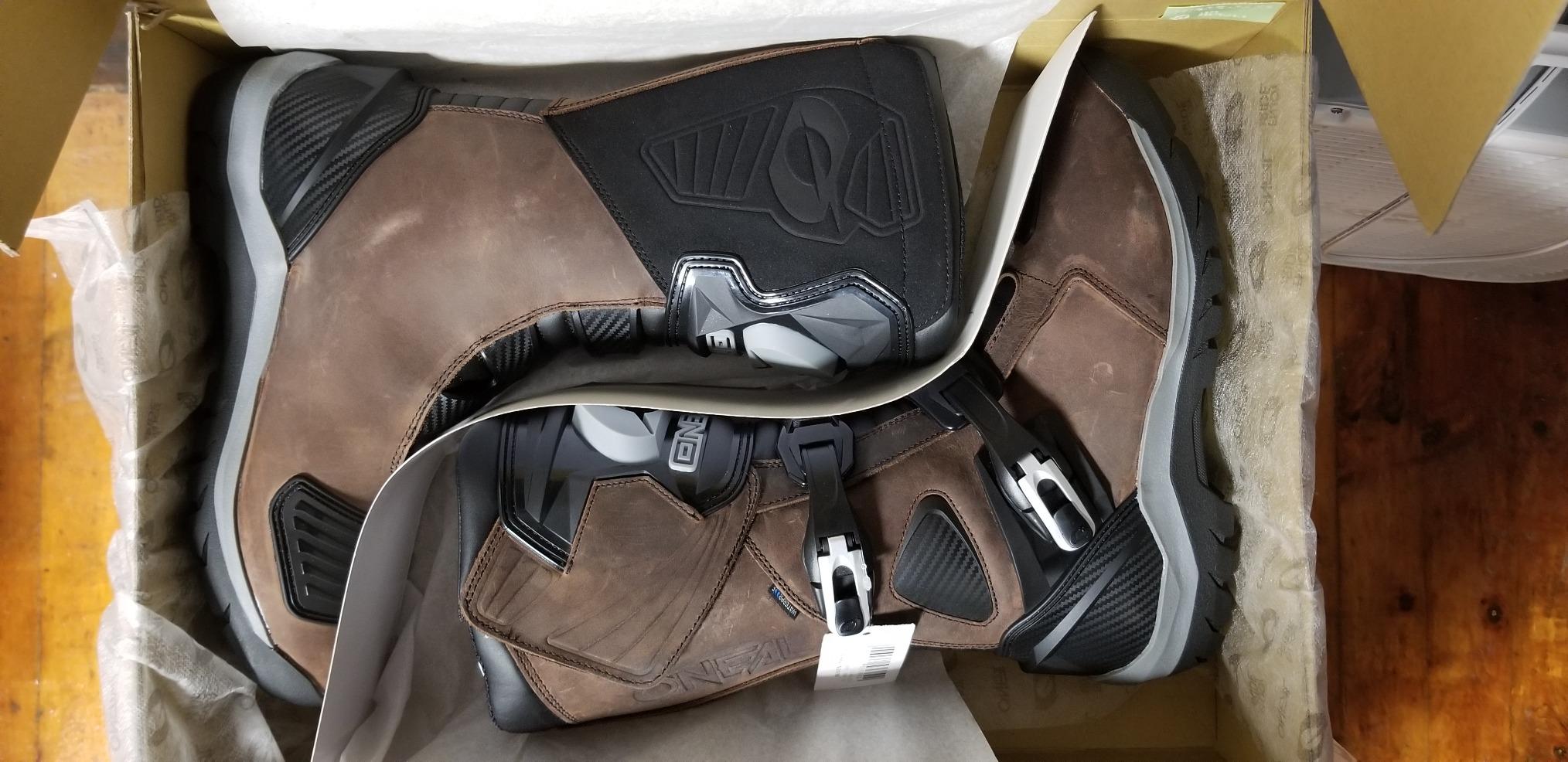
This is the boot I put on first when a trip involves a mix of highway miles, fuel stops and the occasional gravel pull-off. O’Neal designed the Sierra PRO WP for exactly that: adventure-touring duty rather than one specific terrain.
The upper is full-grain leather combined with suede microfiber, and the material mix listed on the spec sheet includes 30% textile, 25% rubber, 20% leather, 13% PU and 8% TPU. That layered construction is why the seams were still intact after seasons of use in the reviews we studied, and why the boot feels more substantial than its weight class suggests.
Comfort was the standout across owner feedback. Riders describe a break-in that is reasonably quick rather than punishing, and enough flexibility to walk a campground or a town centre without shuffling. The thick sole also gives a surprising amount of ground feel, which shorter riders appreciate because it puts their foot nearer the actual footpeg.
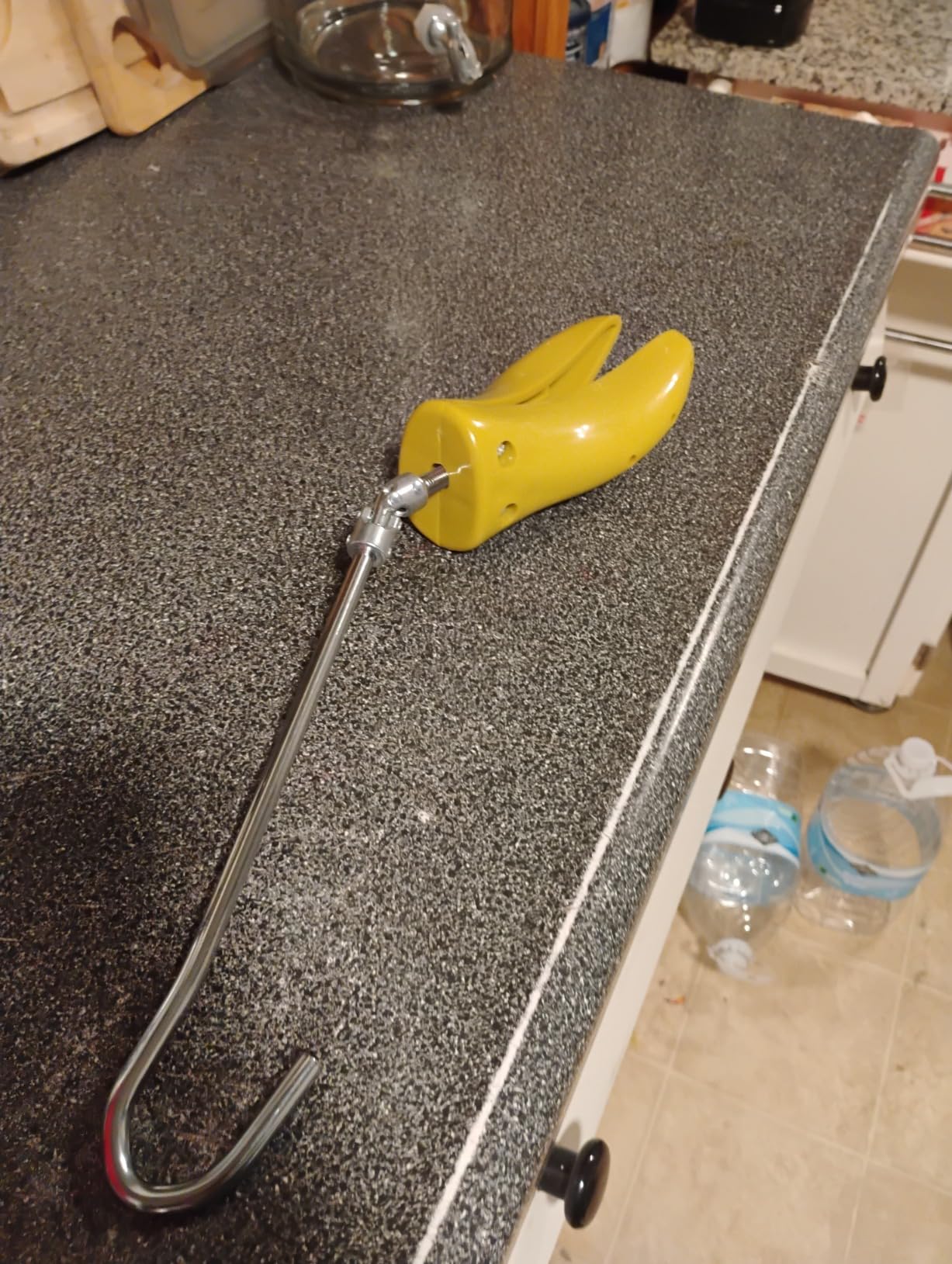
Inside, the nylon inner sole with steel shank does the structural work that keeps the boot from folding under you at the arch. A removable footbed with anti-sweat treatment sits on top of it, which is the part that actually matters on a 600-mile day. Most riders replace that footbed once it flattens rather than replacing the whole boot.
Metal quick-action buckles are the closure, and they are genuinely easier to adjust than the Velcro systems on several rivals here. You can loosen or tighten them one-handed at a petrol station without fighting hook-and-loop with gloved fingers.
After the break-in, reviewers report good shift and brake feel. That is the part that matters when you are working the rear brake through mountain switchbacks for three hours.
Who the Sierra PRO WP suits
Riders who split time between long highway stretches and light off-road work. The build tolerates gravel, farm tracks and loose surfaces without needing a dedicated enduo boot, and the price point leaves room in the budget for a good set of rain gear.
It is also a strong first touring boot. If you are moving from an MX-style boot or a work boot, this is a forgiving place to start because it is stable without feeling stiff in the first few hundred miles.
Where it falls short
Slim calves are the recurring complaint. The upper cuff can be too large to tighten down properly, which creates pressure points above the ankle that show up on long days. If your calf measurement is on the narrow side, this is worth checking against the sizing chart before you order.
Once broken in, the ankle is not rigid enough for hard off-road riding or rock crawling, and the toe and sole are softer than true MX boots. Riders also note the boot runs warm in hot weather, which is the usual membrane trade-off.
2. Forma Adventure Low — Best for Wide Feet
Forma Adventure Low Boots (Brown, 14 US/48 EU)
Drytex waterproof lightweight construction
Full-grain oiled leather upper
Extra Comfort Fit wide insole
Pros
- Wide sizing range from 7 to 15
- CE-rated malleolus and shin coverage
- Drytex membrane stays lightweight
- Adventure lug sole grips mixed surfaces
Cons
- Sole flexes more than premium adventure boots
- Construction feel less refined than rivals
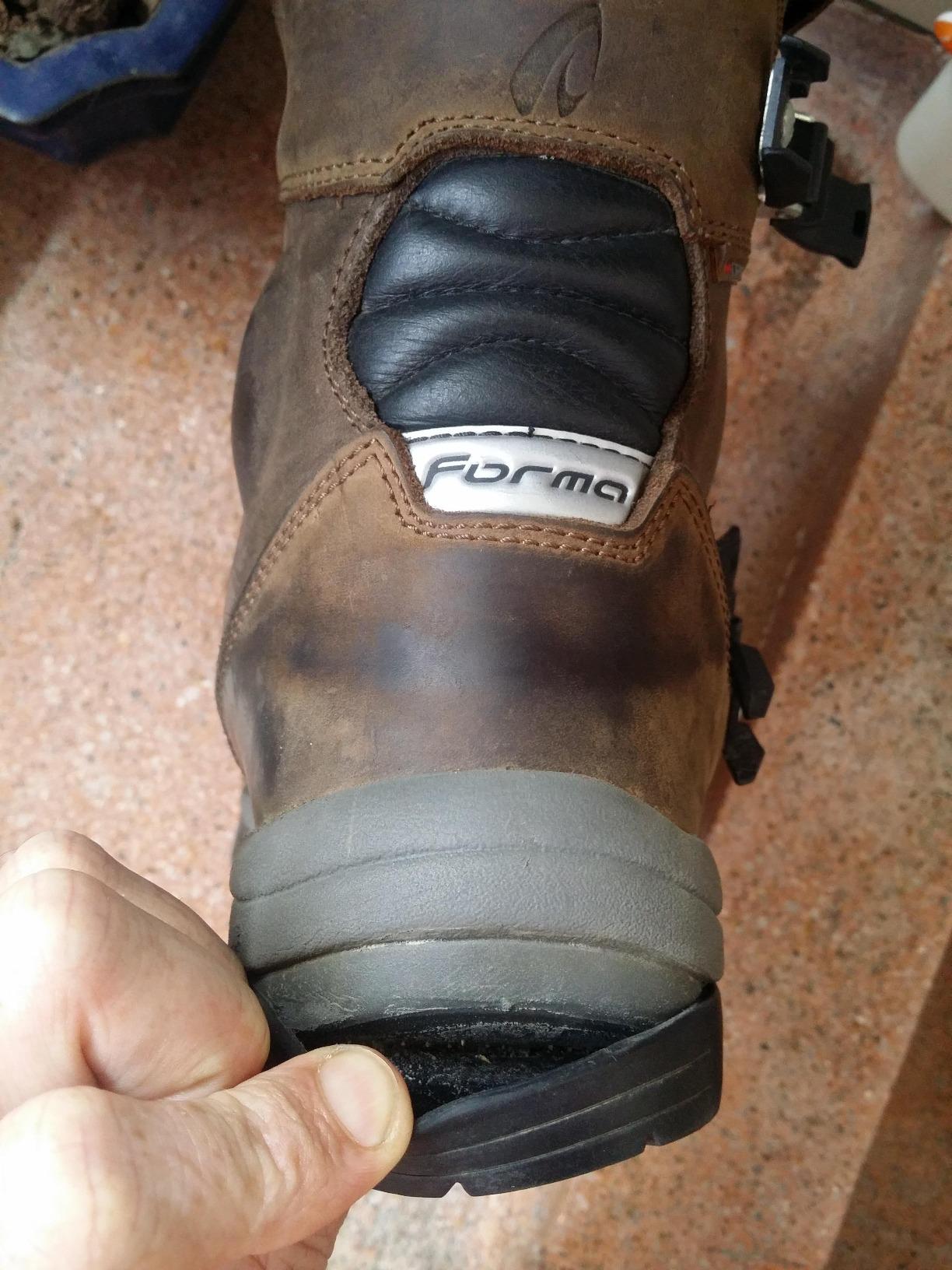
If you have spent years squeezing your feet into narrow boots, stop. The Forma Adventure Low is built around an Extra Comfort Fit wide insole and a broad size run from 7 to 15, and riders with broader feet rate it as the most accommodating boot in this roundup.
Protection is a real CE-rated package rather than a marketing label. You get TPU at the ankle malleolus, a steel shank underfoot, an injection-moulded shin plate, and a PU shifter pad where the boot meets the gear lever. Reinforced heel and toe complete the coverage.
The Drytex waterproof lining is the quiet story here. Owners describe it as waterproof without the heavy, clammy feel of a full-height membrane boot, and at under three pounds the pair is light enough that you notice it more at the pack than at the peg.
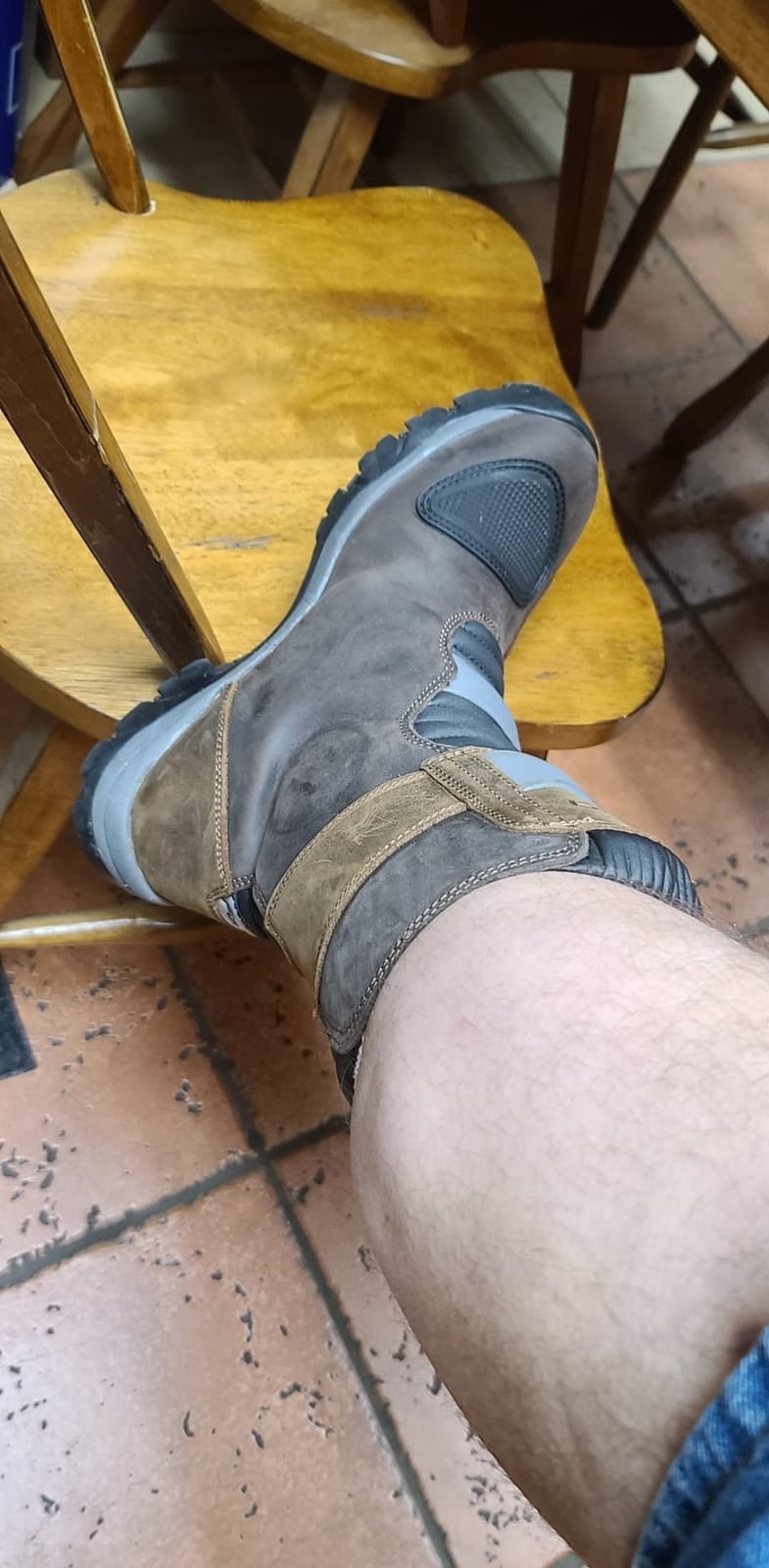
The upper is full-grain oiled leather, which is a sensible choice for a touring boot because it scuffs, weather and then recover. The adventure lug sole handles mixed surfaces without the harshness of a proper knobbly tyre pattern.
Closure is a Velcro plus two-strap system with GH buckles, which is a workable middle ground between a one-pull boot and a full lace. It is fast enough for a fuel stop and secure enough for motorway speeds.
Reviewers consistently describe this as lighter and less restrictive than MX-style boots, which is why it is a favourite for riders who want protection plus the ability to walk a full day of sightseeing without their feet complaining.
Who the Adventure Low suits
Riders with wide feet, high insteps, or a history of buying half a size up to get comfortable. The size range and wide last solve a problem that most other brands in this roundup make worse, not better.
It is equally good for anyone whose trips include a lot of walking. The Drytex membrane and lighter build make this the least fatiguing boot here on a bike-and-hike day.
Where it falls short
The sole flexes more than some premium adventure boots, and that limits serious loose-gravel or rough-surface work. Riders who need crush resistance under a footpeg while standing on pegs will want something stiffer.
The finish and overall construction feel are considered less refined than the premium models in this list. Leather creasing and finishing are functional rather than dressy, and that is exactly what you want under a pair of over-trousers.
3. Sidi Adventure 2 Gore — Best Full-Length Gore-Tex Touring Boot
Sidi Adventure 2 Gore Touring Motorcycle Boots
Gore-Tex liner to the top of the boot
PU shin plate and heel cup
Welted rubber sole
Pros
- Proven all-weather waterproofing
- Comfortable with little or no break-in
- Serious ankle and shin impact protection
- Half sizes across a wide range
Cons
- Squeaks noticeably when walking
- Tall shin plate fights narrow jean legs
- Toe lacks a full rubber cap
The Sidi Adventure 2 Gore is the benchmark in this category, and the reason is the liner. The Gore-Tex runs all the way to the top of the boot rather than stopping at the ankle, which is the detail that separates a genuine touring boot from a commuter shoe with a membrane in the lower foot.
Owners report riding through sustained rain with no ingress at all, which is the single most important quality for anyone touring outside the summer months. A liner that stops at the ankle leaves you wet above it no matter how good the rest of the boot is.
Comfort is immediate rather than earned. Riders describe the boot as usable out of the box, and the Sidi sizing run with half sizes makes it one of the easier fits to dial in. At 7.1 pounds it is a heavy boot, and you feel that on a walking day.
Protection is substantial: a shock-resistant anatomically shaped heel cup, a PU shin plate, and built-in hyperextension and hyperflexion protection. Several owners describe the purchase being validated by a crash or near-miss, which is the kind of review that no spec sheet can produce.
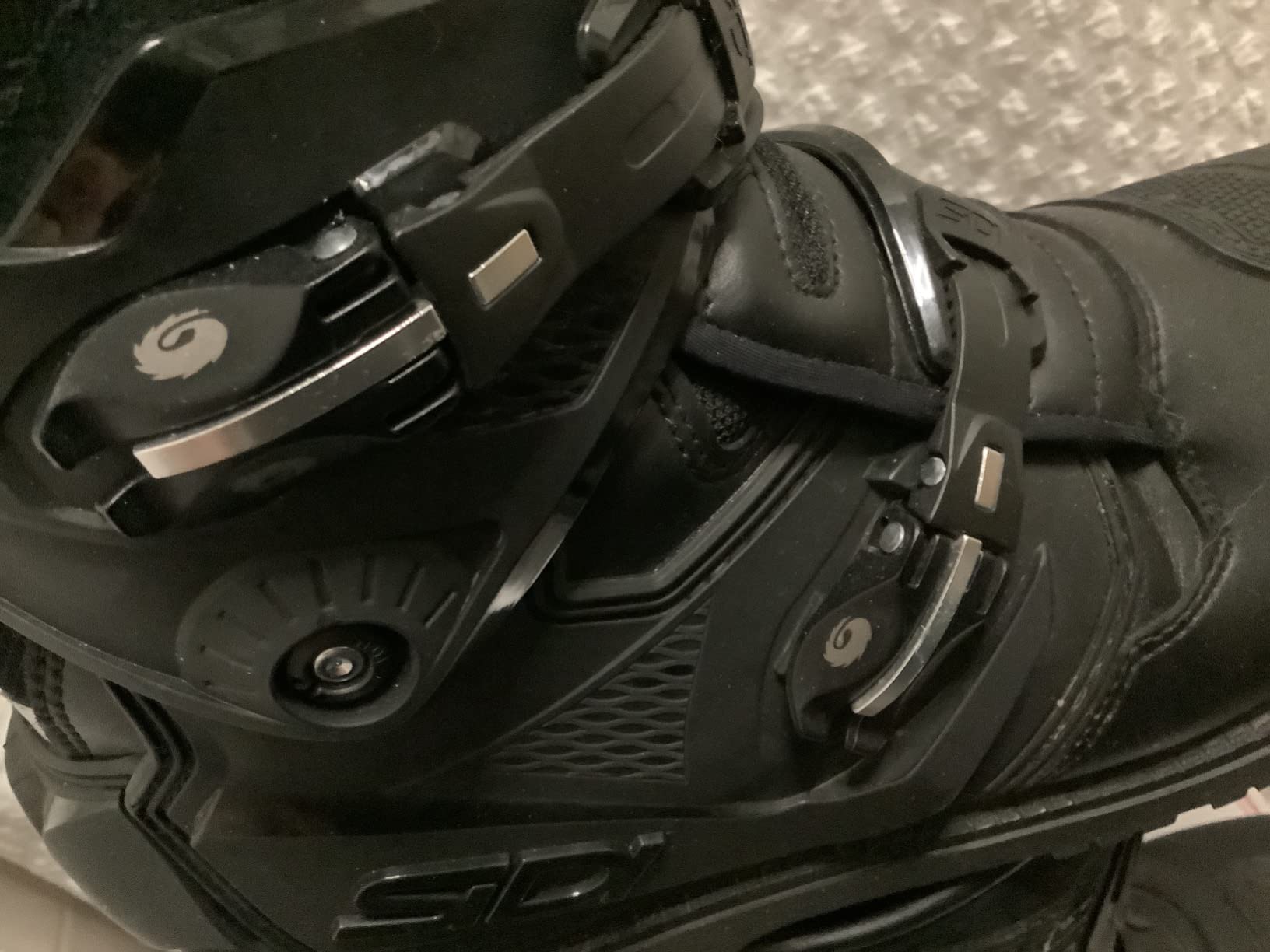
Cordura flex zones plus a pivoting Flex System on the lateral and medial sides give the boot movement through the arch without losing the shaft’s support. The non-slip rubber welted sole grips loose, wet and uneven ground, and the Technomicro microfiber construction handles abrasion well.
Closure is dual replaceable Easy Action cam-lock buckles with an extended calf elastic panel, and reflective inserts handle the low-visibility side of touring. The buckles being replaceable matters over a multi-season life, because cam buckles are the first thing that usually breaks.
Who the Adventure 2 Gore suits
Riders who ride through rain rather than around it, and anyone whose trips run long enough that being warm and dry matters more than being light. It is also the safest pick here for aggressive cornering at speed, given the shin plate and hyperextension control.
Anyone with a foot shape that standard lasts exclude should also look closely, because the size run includes half sizes and a wide colour range.
Where it falls short
The most common complaint is a pronounced squeak when walking, which reviewers fix with a silicone spray treatment. It is a five-minute fix, but it is a fix you have to know about before you hand over the money.
The tall shin plate also refuses to fit under standard narrow jean legs, so riders tuck their trousers in or plan on wider cut pants. The thicker sole gives reduced lever feedback against a steel-toe work boot, and the toe lacks a full rubber cap, so it scuffs in falls.
4. Alpinestars Radon Drystar — Best All-Weather Street Touring Boot
Alpinestars Radon Drystar Motorcycle Boots, CE-Certified All-Weather Touring Gear, Waterproof & Durable Riding Protection, 8, Black
Drystar waterproof and breathable membrane
CE-certified ankle shin and heel reinforcement
Ergonomic footbed and cushioned lining
Pros
- Effective waterproofing and breathability for all-season riding
- Solid CE-rated impact protection
- Cushioned footbed suits long days
- High-grip rubber outsole
Cons
- Hook-and-loop closure less precise than buckles
- Added stiffness restricts long walks
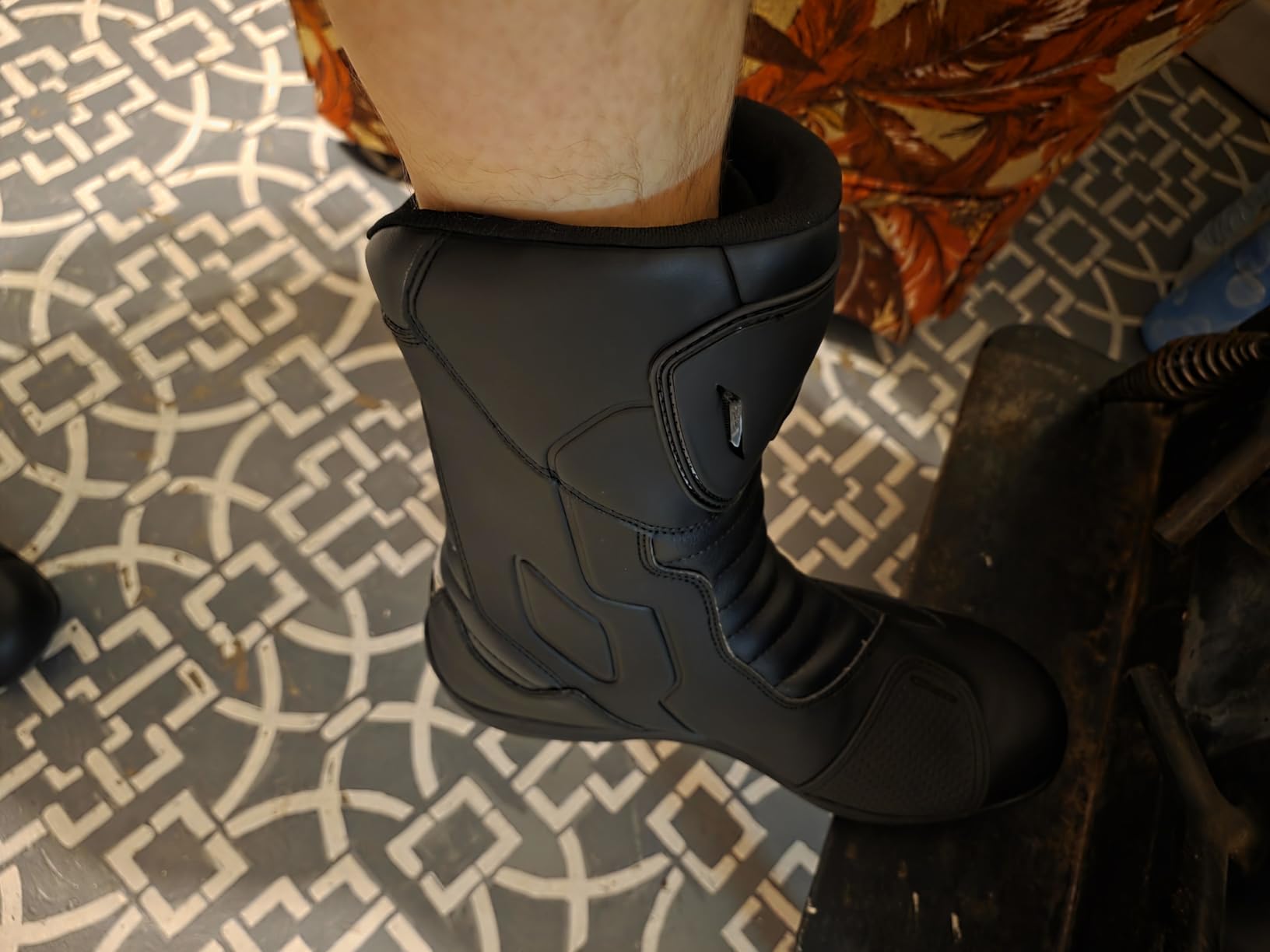
The Radon Drystar is the straightforward all-season street touring boot in this group. The Drystar membrane is described as 100% waterproof and breathable, which is the balance most riders actually want on a mixed-weather tour rather than either extreme.
Alpinestars built it in high-performance microfiber and synthetic materials, and the CE certification covers reinforced ankle, shin and heel protection. That is the three-zone coverage that matters most in a low-side impact, which is the most common crash type on a road tour.
At 4.41 pounds it is one of the lighter boots here, and the ergonomic footbed with a cushioned interior lining is the part that determines whether day eight feels like day two.
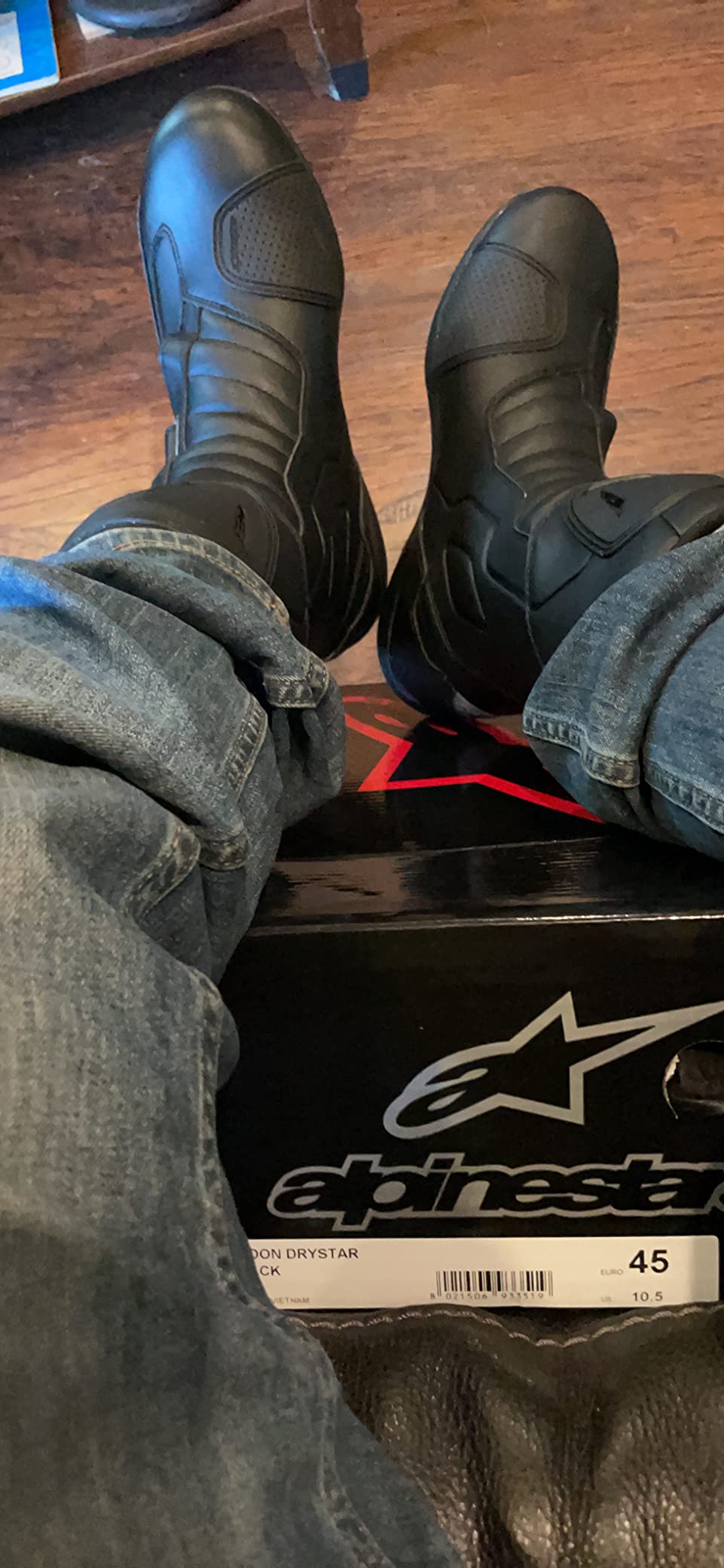
The high-grip rubber outsole holds up across varied surfaces, which matters if your route mixes tarmac with gravel access roads to campsites or trailheads. Reviewers cite the grip as a consistent strength rather than a compromise.
Buyers rate this one highly, and a large share of top-star reviews point to the same conclusion: dry feet, dependable armour, no drama. It is not the most ambitious boot on this list, and that is the point.
The adjustable hook-and-loop closure is easy to open at a stop but less precise than a buckle system, and the protective structure adds a stiffness some riders notice over long walks.
Who the Radon Drystar suits
Riders on paved multi-day routes who want a boot that handles rain and cold without cooking their feet in July. The lighter build suits anyone who unloads the bike and walks more than a kilometre at a stop.
It is also a straightforward choice for riders who want CE-rated protection without the mental overhead of comparing five different membrane names.
Where it falls short
Hook-and-loop is the weak point. It is less precise and less durable over a long trip than a buckle or BOA system, and it can snag on trouser cuffs and boot gaiters.
The added rigidity that gives the boot its protection also weighs down long walks. If your trip is half riding and half sightseeing, the Forma Adventure Low or the KLIM Outlander will suit you better.
5. Alpinestars Corozal Adventure Drystar — Best Adventure Crossover
Alpinestars 3410-1490 Corozal Adventure Drystar Men’s Motorcycle Touring Boots (Black, US Size 13)
Integrated breathable DRYSTAR membrane
Dual buckle plus Velcro closure
Reinforced ankle shin toe and heel armour
Pros
- Kept feet dry through 10-hour rain and cold rides
- Excellent impact protection at shin toe and heel
- Comfortable around camp
- Reliable dual buckle system
Cons
- Stiff
- which makes uphill shifting difficult
- Runs warm in hot weather
- Wide toe box can feel awkward under the shifter
The Corozal Adventure Drystar is where touring and adventure genuinely meet. Reviewers describe feet staying warm and dry through 10-hour rides in rain and cold, and through snow, which puts it alongside the Sidi on genuine all-weather credibility.
The armour coverage is the broadest in this group: ankle, shin, toe and heel. Owners talk about absorbing rocks and trail debris without discomfort, and the high-grip rubber outsole handles everything from tarmac to loose mountain terrain.
It is also walkable, which separates it from true MX boots. Riders describe walking around camp and into town in these, which is a real consideration on a bike-and-hike trip.
Closure is a dual adjustable buckle system with a Velcro top closure, and that buckle system is widely praised as more reliable than the strap systems used by competitors. The extra-comfort insole and padded interior handle the long days.
The arch profile suits flat, narrow feet, which is worth flagging for anyone who normally needs a wide boot. At 7 pounds it is a solid, substantial boot rather than a light one.
Who the Corozal suits
Riders running a mixed route: a few hundred miles of tarmac, then a rough gravel section, a campsite, and a walk. That is the trip this boot was clearly designed for and the trip it handles best.
If your tour crosses winter conditions, the warmth and waterproofing owners report make this one of the safest picks in this list for cold and wet climates.
Where it falls short
Stiffness is the main drawback. Owners report that uphill shifting and long hikes are difficult because the boot resists ankle flex, and a rigid boot is harder to control at walking pace on uneven ground.
It also runs warm in hot weather, and the wide toe box can feel awkward for riders with smaller feet when they are trying to find the rear brake under the shifter. The boot makes some noise when you walk, which is the usual Alpinestars flex-point complaint.
6. Alpinestars Andes V2 Drystar — Best for Narrow Feet
Alpinestars Andes V2 Drystar Boots, Waterproof Touring Motorcycle Boots, CE-Certified Protection & Comfort, 47, Black
Advanced Drystar waterproof technology
CE-certified design
Reinforced toe box and heel counter
Pros
- Keeps feet dry in cold heavy rain
- Comfortable from the first wear
- Well-padded toe suits clutch operation
- Grippy on dirt and gravel
Cons
- Runs hot above roughly 65F
- Flat upper needs wide pant openings
- Velcro closures can be noisy
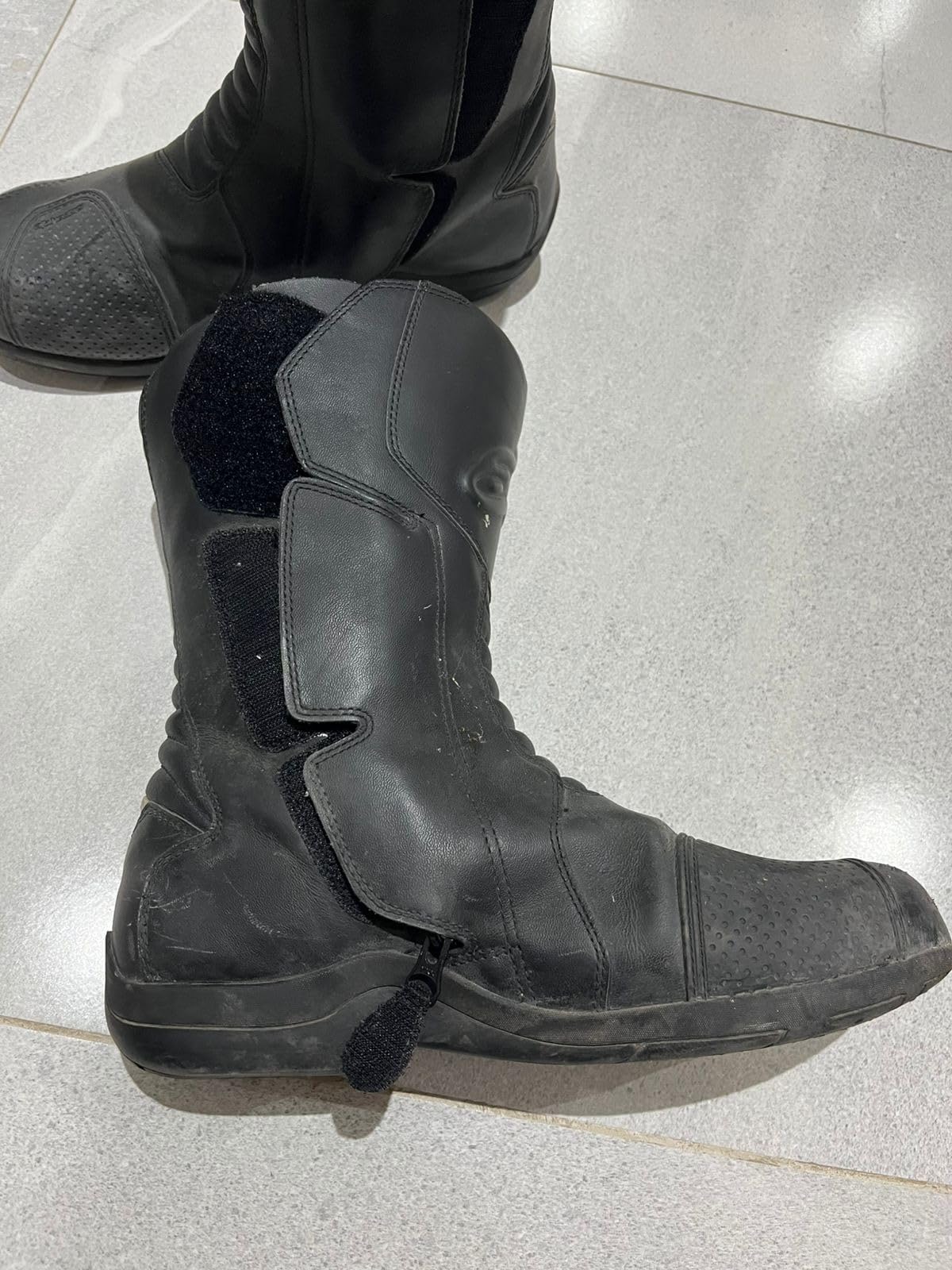
The Andes V2 Drystar is the one to look at if the Corozal feels too bulky. It keeps the same Drystar waterproof technology but wraps it in a much less aggressive profile, and owners rate the true-to-size fit as one of its strongest points.
Reviewers describe limited break-in and comfort straight out of the box. The well-padded toe area is a genuine advantage for clutch operation because it gives feedback without adding bulk along the shin, and the reinforced toe box and heel counter provide stability.
The integrated accordion flex zones allow movement through the arch, and the microfiber construction holds abrasion resistance well. Grip is another strength, with owners reporting confident footing on dirt, gravel and loose mountain terrain.
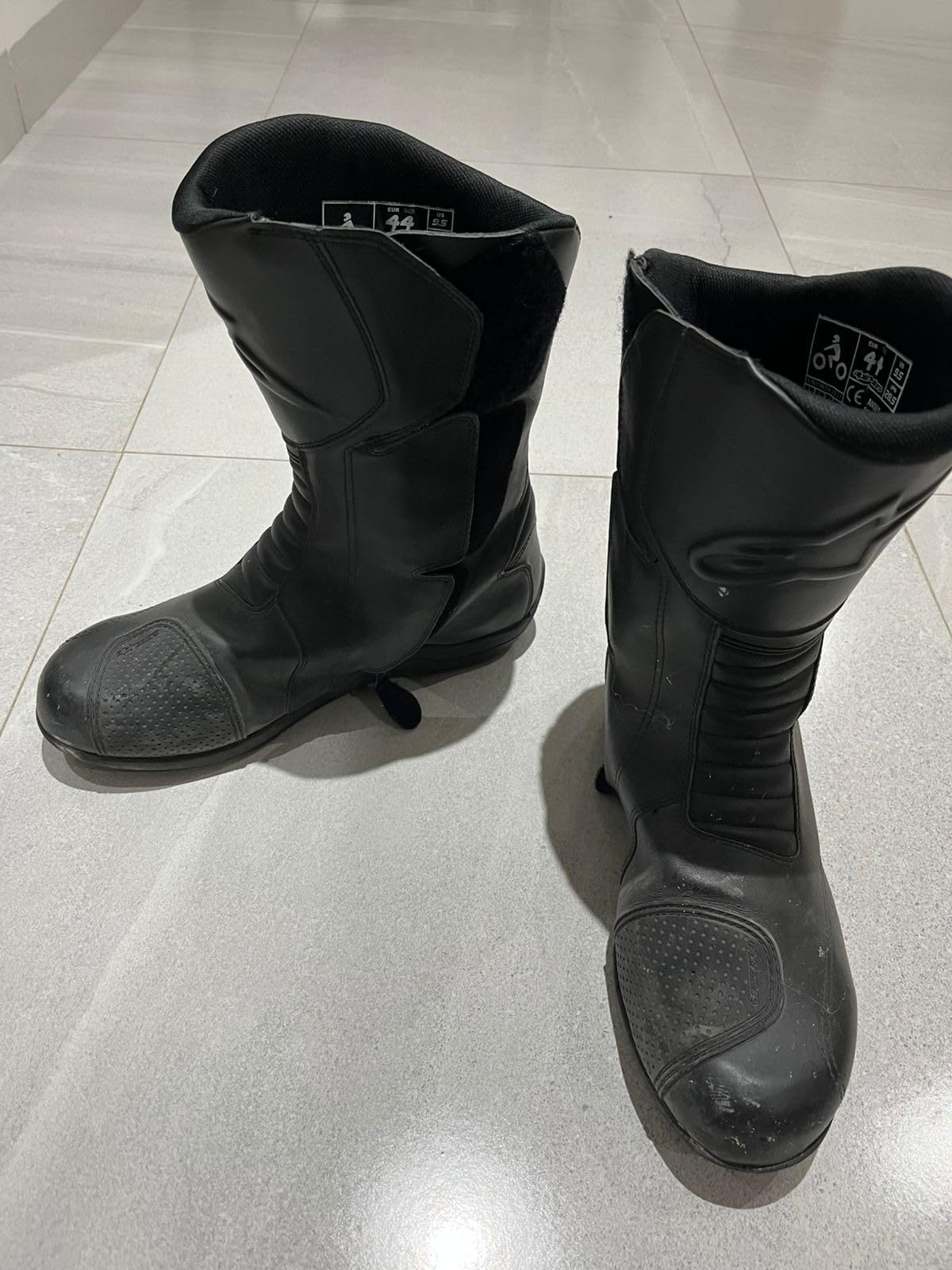
CE certification is present, and the durable construction has held up over years of regular use according to owners. At 4.41 pounds it is one of the lighter boots here.
The closure is a hook-and-loop system, which keeps the profile low and uncluttered. It is simple, quick and easy to adjust, though not as refined as a buckle.
Who the Andes V2 suits
Riders with narrower feet who find the Corozal too roomy at the toe, and anyone who wants a boot that is comfortable from the first ride rather than after a month of breaking in. It works well as a year-round street and light-touring boot.
Anyone who rides a lot in cold and wet conditions will like the Drystar membrane performance, which owners confirm in heavy rain.
Where it falls short
Breathability is the weak point. Riders report the boot running hot above roughly 65F, so it is not the choice for summer touring in a hot climate. A non-membrane ventilated boot is the better answer there.
The upper profile is flat and reads more casual than a leather work boot, which means you need a wider trouser opening to fit over it. Velcro flap closures are also noisy and catch on pant cuffs, and the sole is not aggressive enough for technical hiking.
7. Tourmaster Trailblazer — Best Budget Touring Boot
Tourmaster Men’s Trailblazer Motorcycle Boots
HiPora 3-layer waterproof membrane
ThermoGI molded heel cups and toe caps
Dual-density molded ankle protectors
Pros
- Real protective hardware at an entry price
- Dual MX-style buckles adjust easily
- Deep lugged sole grips mud and gravel
- Wide toe box is comfortable for walking
Cons
- Bulky rounded toe box hurts clutch control
- Runs small and needs careful sizing
- Stiff at first
- Some reports of water ingress in sustained rain
The Trailblazer is the entry point here, and the reason it is worth a place is the hardware. For a boot at this level you get ThermoGI thermoplastic moulded heel cups and toe caps plus dual-density moulded ankle protectors, and that is more protection than many pricier boots list.
Waterproofing comes from a HiPora 3-layer membrane that is described as both waterproof and breathable. Several riders report it holding up through heavy downpours and deep puddles, though the feedback is not uniformly positive and some buyers report ingress in sustained rain.
The upper is abrasion-resistant Italian microfiber and suede, with reinforced outside toe and shifter guards where a boot actually wears through. A uni-directional anti-twist moulded nylon midsole handles the load under the arch.
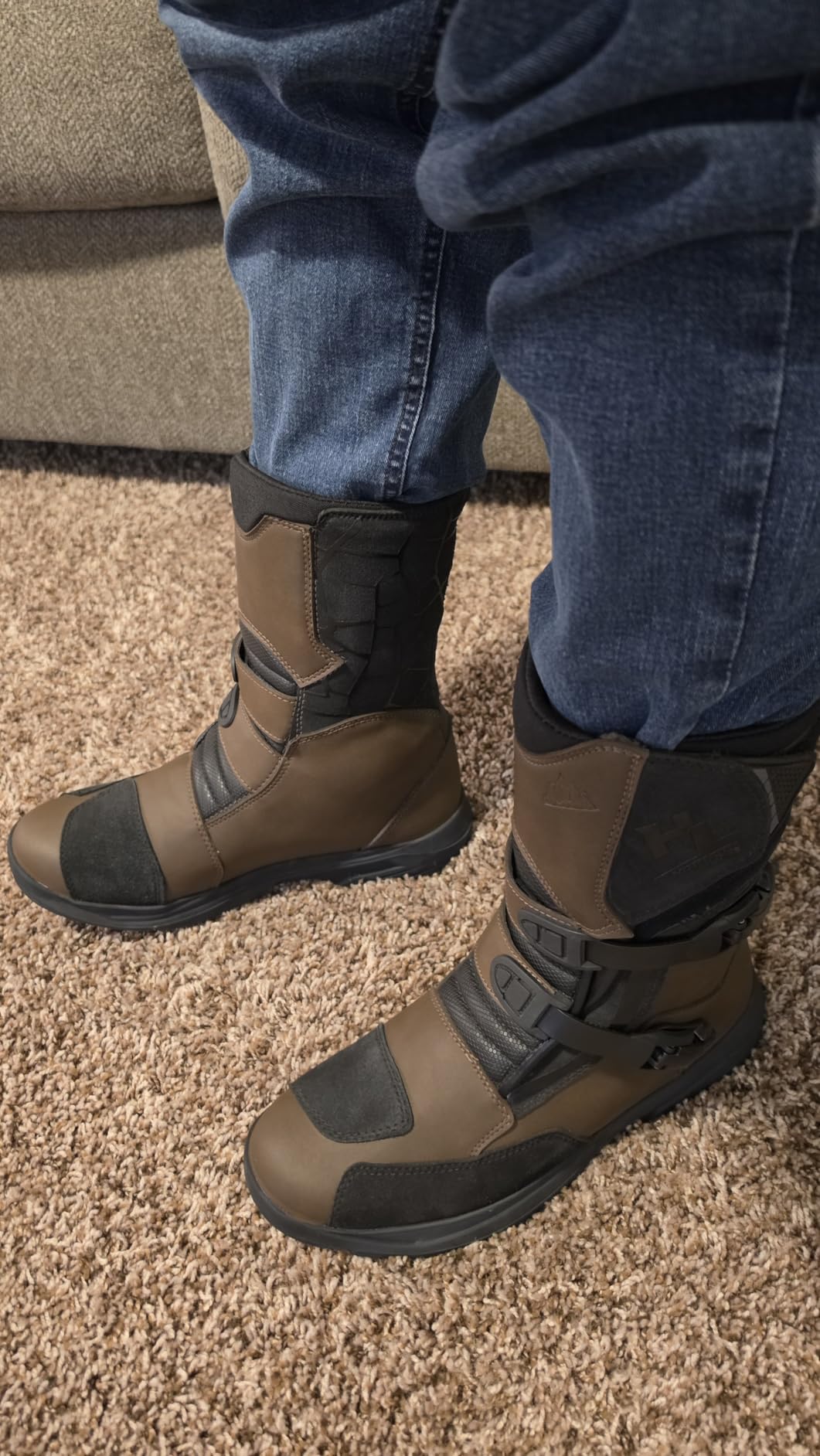
Closure is adjustable dual MX-style buckles with a hook-and-loop top closure, and that combination holds well across a wide calf range. Billowed flex panels and a breathable mesh lining help with movement.
The wide toe box is comfortable for walking and standing at stops, and the heavy-duty anti-slip lugged sole gives good traction in mud and gravel. At 5.8 pounds it is not a light boot.
Who the Trailblazer suits
Riders building a touring kit on a tight budget, and anyone who wants genuine ankle and heel armour without paying for a premium brand name. The deep lug sole also handles gravel and mud better than a road-only boot would.
It is a sensible first touring boot for a new rider who will replace it in a few seasons and has not yet found their lasting fit.
Where it falls short
The bulky, rounded toe box makes clutch and fine shifter control difficult at first, and that is a real problem in slow traffic or on technical descents. The boot also runs small, so sizing needs care against your normal shoe size.
It is stiff initially and needs a break-in period. A small number of owners also report premature material failure and uneven colour, and some report water ingress in sustained rain despite the waterproof claim, so it is not the pick for a wet-weather-led tour.
8. KLIM Outlander GTX — Best for BOA Closure and Campsite Comfort
KLIM Men’s Outlander GTX Motorcycle Boots – Size 12 – Stealth Black
Gore-Tex waterproof membrane
BOA fit system
Durable leather construction
Pros
- Reliable waterproofing for wet-weather touring
- Very quick on and off with BOA
- Aggressive sole for mixed surfaces
- Comfortable walking around camp
Cons
- BOA hardware and cable can wear with heavy use
- Less protective structure than dedicated MX boots
- Width may not suit very wide feet
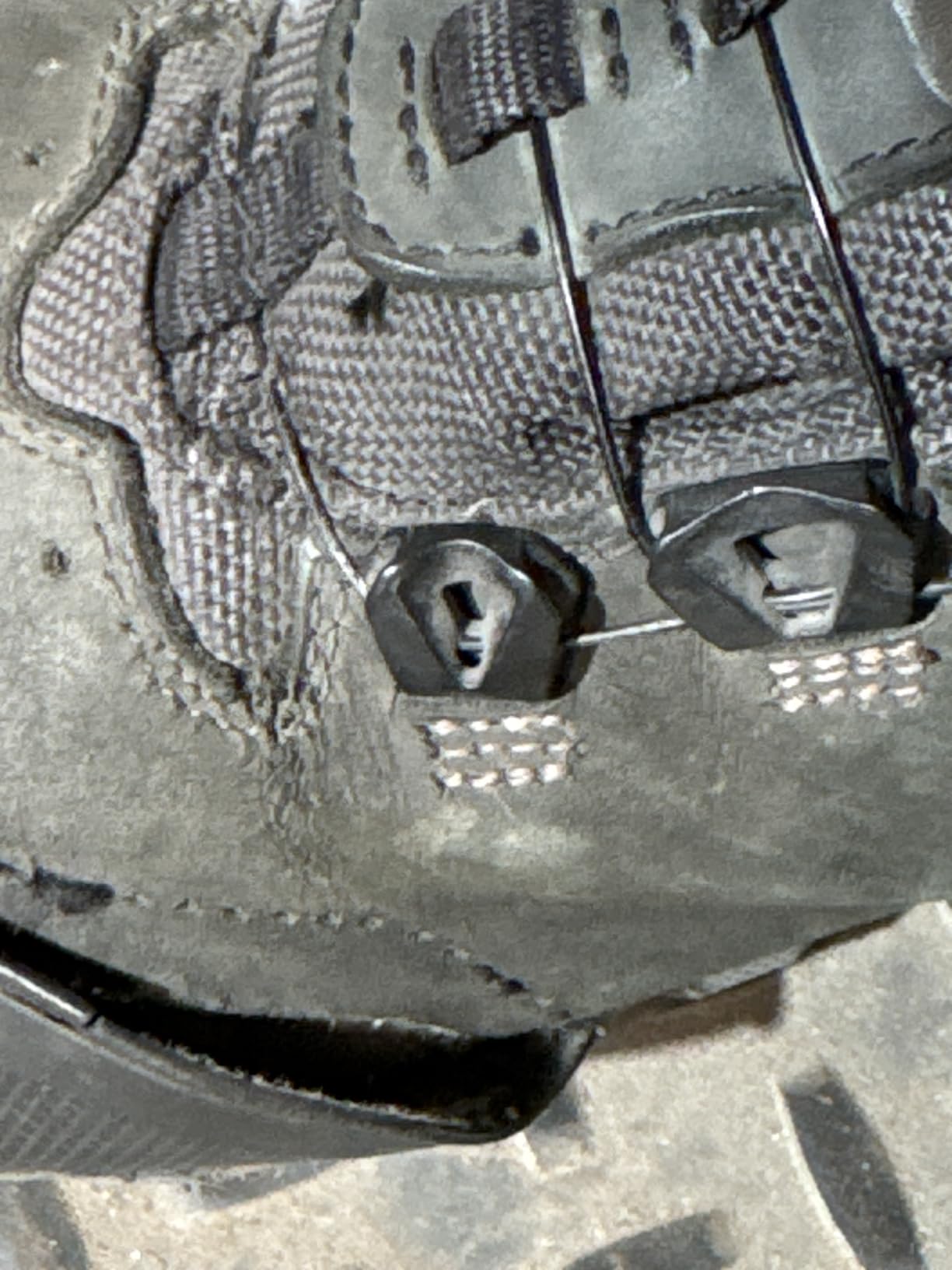
The Outlander GT X is the fastest boot here to get on and off, and on a trip with frequent stops that is worth more than it sounds. The BOA fit system tightens with a single dial turn, which you can operate in gloves, in the dark, in the rain.
KLIM designed it for comfort on and off the motorcycle, and that shows. The Gore-Tex membrane handles wet-weather touring reliably, and the durable leather construction ages well rather than degrading after a season.
The aggressive sole gives strong traction on mixed and loose surfaces, so a gravel spur to a campsite is not a problem. Camp is where this boot earns its place, because owners describe it as comfortable to walk in for a full evening.
Compared with the MX-style boots in this list, the Outlander carries less protective structure. It is built for road and light mixed surface, not rock crawling or heavy crash exposure.
Fit is the other consideration. Riders with very wide feet report the boot’s width may not suit them, and the closure is a single-point system, so fine adjustment across the instep is limited compared with a two-buckle design.
Who the Outlander GTX suits
Riders who hate fiddling with closures. If you wear bulky gloves, have limited hand dexterity, or simply want out of your boots in five seconds, BOA is the most practical system in this roundup.
Adventure-touring riders running a mostly paved route with campsite stops are the ideal customer. The comfort off the bike and the Gore-Tex liner cover the two things such a rider cares about most.
Where it falls short
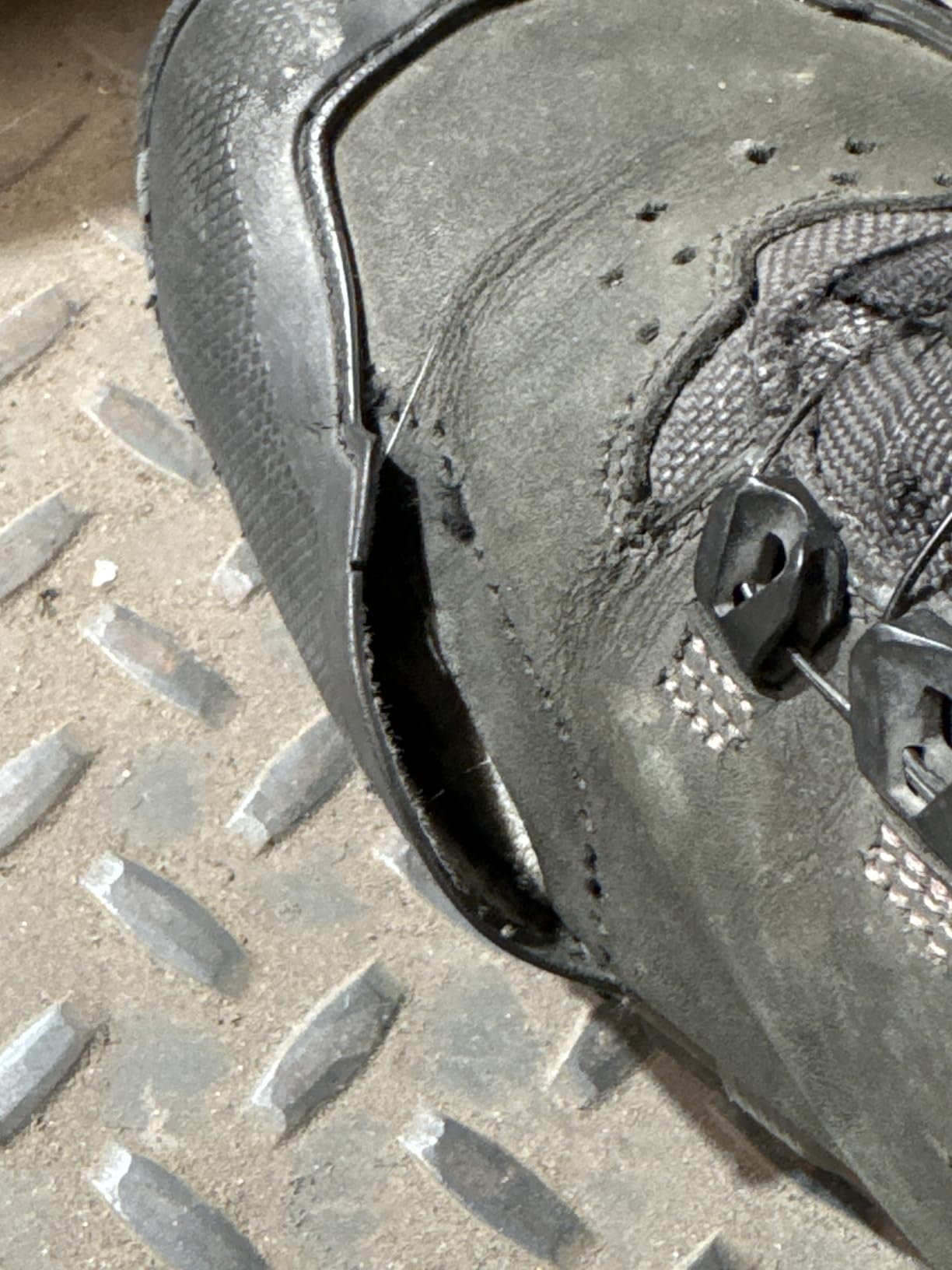
The BOA lacing hardware and cable can wear out with heavy use, and that is the first failure point to expect. Keep the replacement dial and cable in mind as a maintenance item rather than a surprise expense.
Protection is lighter than dedicated MX or heavy ADV boots, so it is not the right pick if your route involves serious off-road riding. Sizing and width may not suit very wide feet either, which is where the Forma Adventure Low has the advantage.
9. Tourmaster Highlander Adventure — Best Light All-Round Touring Boot
Tourmaster Highlander Adventure Motorcycle Boots
Top-grain cowhide leather
3-layer Aqua-Barrier membrane
Tourmaster reactive foam sole by Armanox
Pros
- Works for street riding
- walking and light off-road
- Stiff supportive sole is comfortable on pegs
- Kept feet dry in water holes
- Easy three-buckle plus Velcro closure
- Top-grain leather breaks in well
Cons
- No hard exoskeleton for heavy off-road
- Poor breathability in hot weather
- Shifter feel may need lever repositioning
The Highlander Adventure is the pick if packing weight matters as much as protection. At 2.3 pounds it is one of the lightest boots in this roundup, and owners consistently describe it as an all-in-one boot that works for street riding, walking and light off-road use.
The upper is top-grain cowhide leather, which is the right material for a boot you expect to break in and then keep for years. Owners report it fitting true to size and breaking in nicely, with a 3-layer Aqua-Barrier membrane keeping feet dry when stepping into water holes.
Protection covers reinforced toe and shifter guards, TechnoGI thermoplastic moulded heel cups and dual-density moulded ankle protectors. The stiff supportive sole is what larger-foot riders like about standing on pegs.
The Tourmaster reactive foam comfort sole by Armanox, combined with billowed flex panels, does more work here than the weight figure suggests. It absorbs vibration on long tarmac stretches and still lets you feel the peg.
Closure is adjustable MX-style buckles with a hook-and-loop top closure, and riders find it easy to get in and out of. A mixed-terrain one-boot answer is exactly what it is built to be.
Who the Highlander suits
Long-distance riders who pack their kit down, and anyone splitting time between commuting and multi-day trips with the same pair of boots. At this weight you will notice the saving in your soft luggage.
It is a good choice for riders who want real leather that breaks in and improves with age rather than a synthetic boot that stays the same.
Where it falls short
There is no hard exoskeleton, so crush protection is limited for heavy off-road riding. If your route includes technical trails rather than gravel access, look at the Corozal or Trailblazer instead.
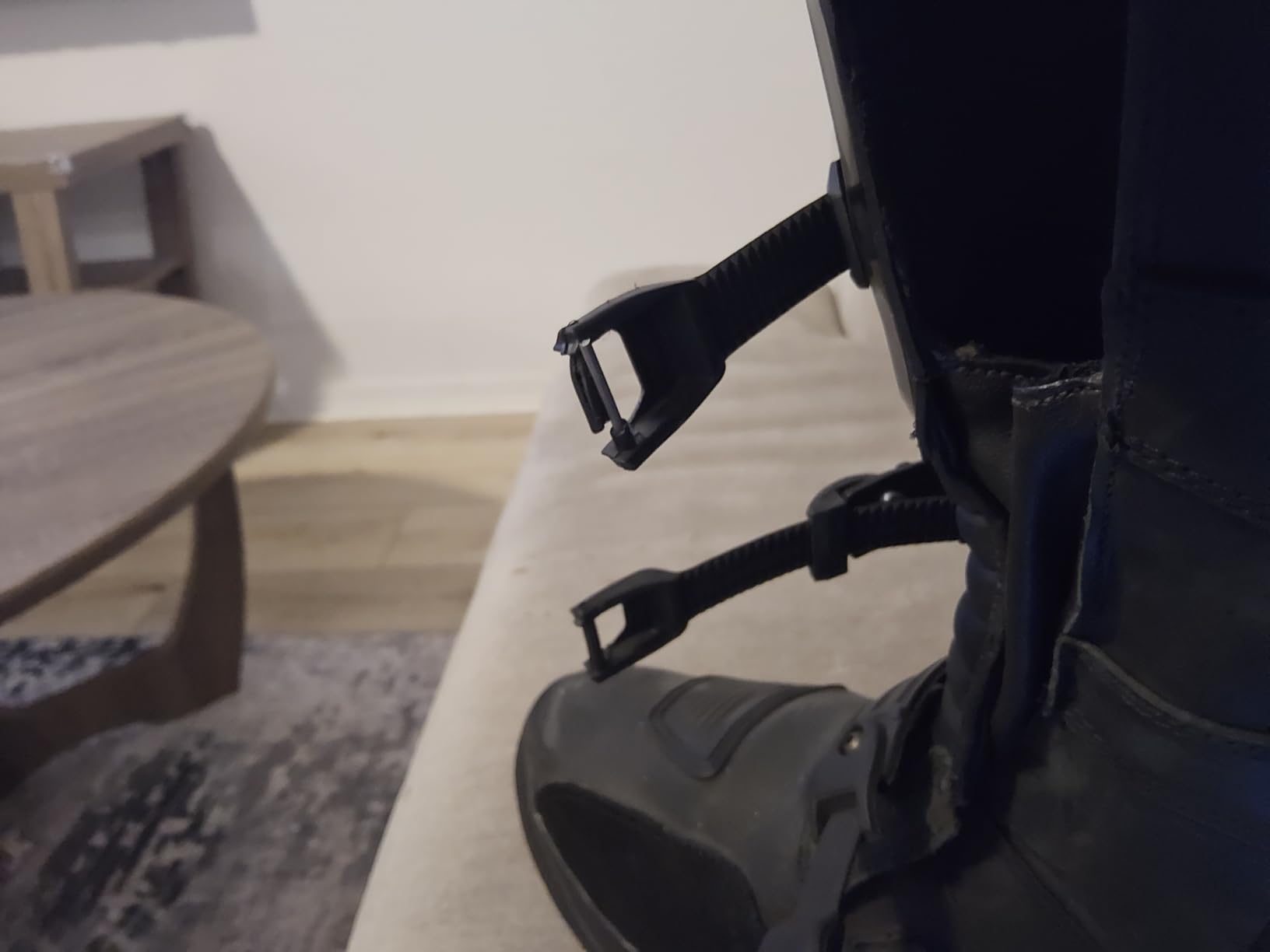
Breathability is poor in genuinely hot weather. A small number of owners also report the Velcro top latch on the shifter-side boot failing early, and some needed to reposition the gear lever to get usable shifter feel.
10. Noru Hakken — Best With Published CE Certification Details
Noru Hakken Adventure Waterproof Motorcycle Boots
CE certified to EN 13634:2017
Aqua-Barrier waterproof membrane
Gaiter type top opening
Pros
- Published impact
- abrasion and transverse rigidity testing
- Effective waterproofing for trail and stream riding
- Reinforced shank improves peg comfort
- Gaiter top blocks dust water and debris
- Lightweight and easy to walk in
Cons
- Sizing runs narrow
- order a half size up
- Less ankle protection than enduro boots
- Break-in required
The Noru Hakken is the one boot here that publishes its certification details rather than simply claiming CE approval. It is certified to EN 13634:2017, with impact, abrasion and transverse rigidity testing stated outright.
Those three tests are the ones that matter. Impact covers a strike to the shin or ankle, abrasion covers a slide, and transverse rigidity covers torsional force. When a brand names them specifically, you know the boot was tested rather than merely labelled.
The Aqua-Barrier waterproof and breathable inner membrane sits inside a supple abrasion-resistant cowhide and synthetic leather upper. Owners report it working on trails, in desert conditions and around streams, and the gaiter-type top opening keeps out dust, water and debris.
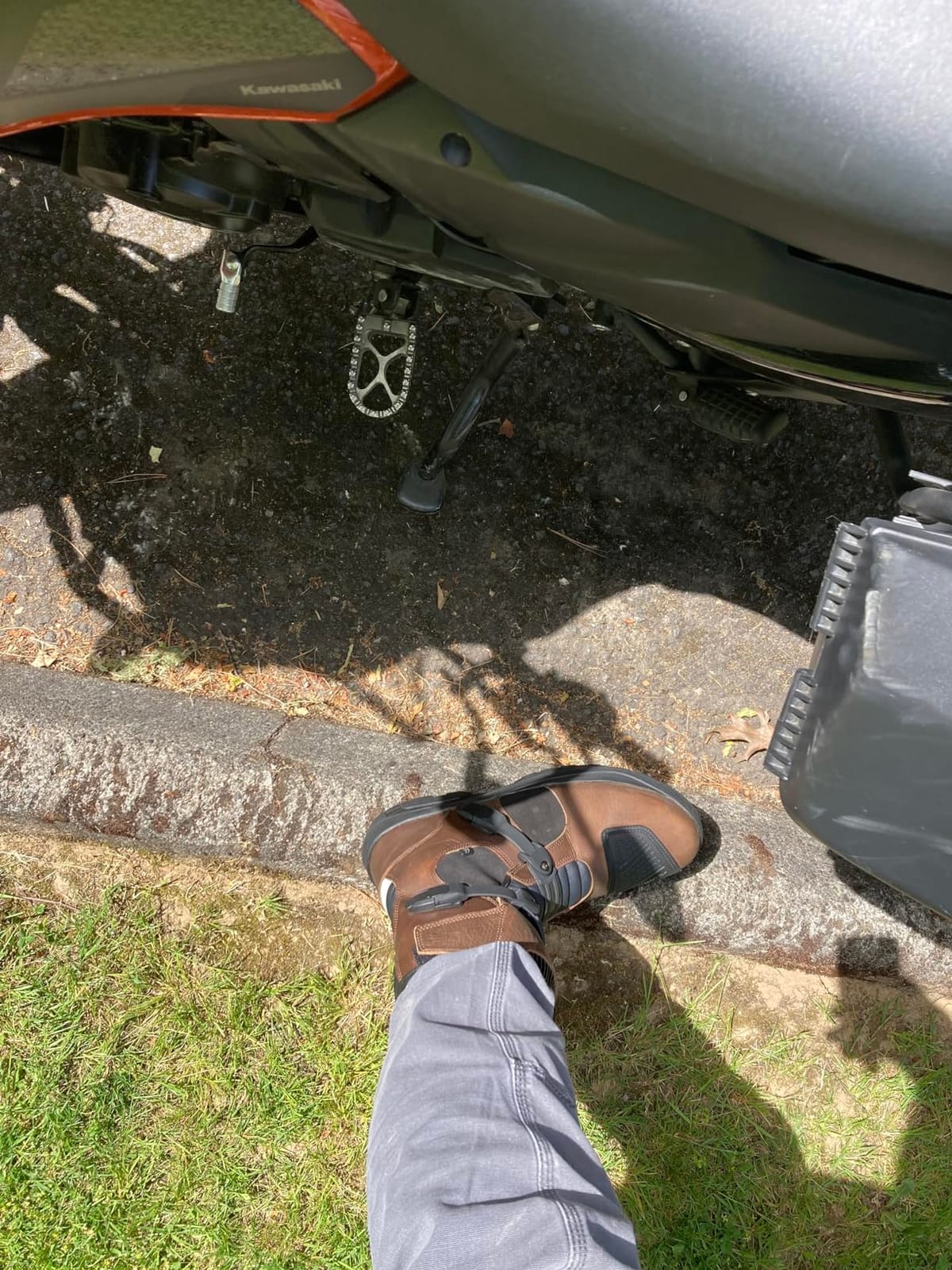
A reinforced shank improves comfort and control standing on footpegs, which is a meaningful upgrade over a soft-soled boot. Billowed flex panels and a breathable mesh lining help with movement on long days.
Closure is a hook-and-loop top closure plus adjustable dual MX-style buckles, and the reinforced outside toe and shifter guard covers the two highest-wear points. The heavy-duty anti-slip lugged sole handles loose ground.
At 2.3 pounds it is one of the lightest boots here and easier to walk in than stiffer MX-style alternatives. That is the practical reason owners like it on a touring trip rather than a trail day.
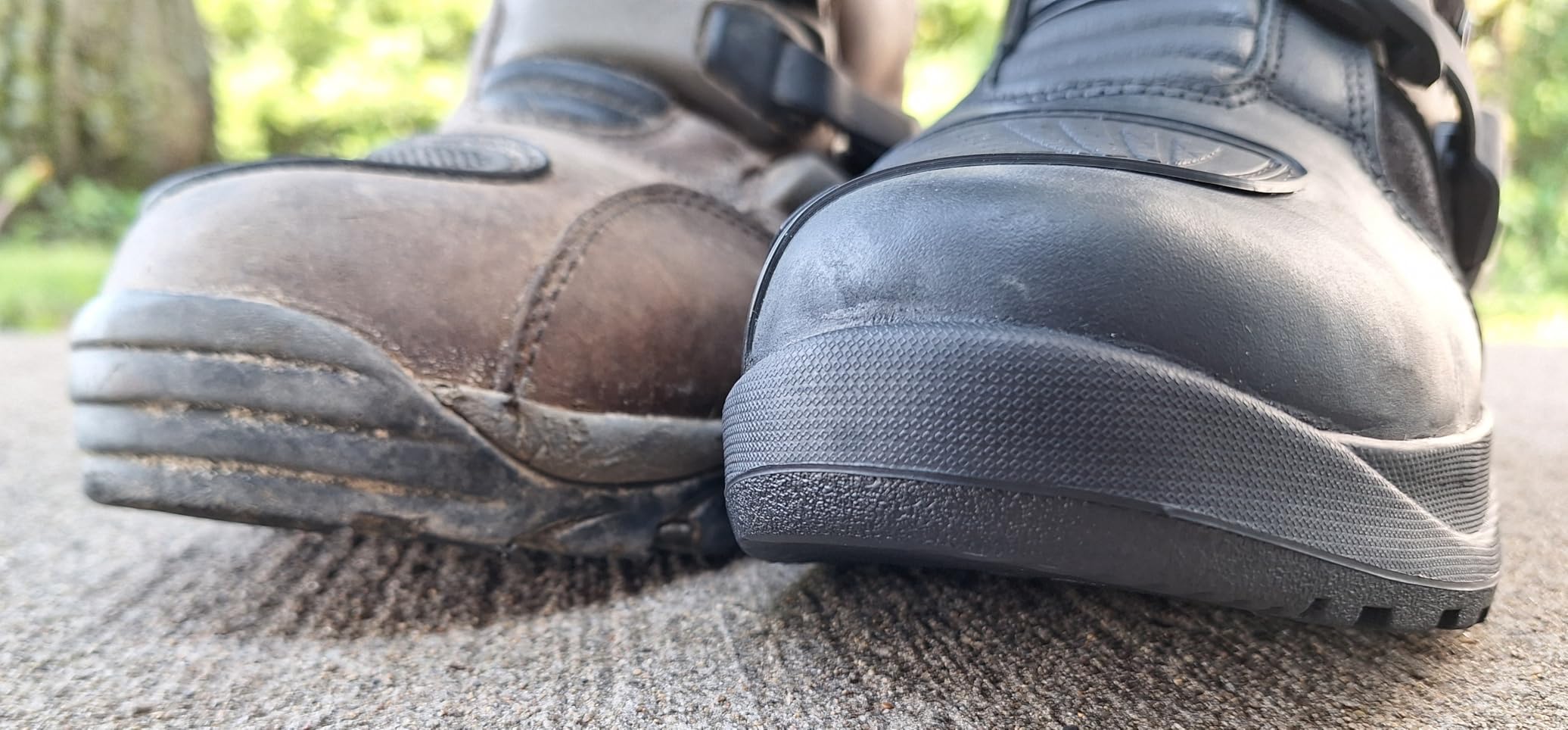
Who the Noru Hakken suits
Riders who care about verifiable protection and want to see which standard a boot was tested against. If you ride mixed surfaces, cross streams and splash through water regularly, the Aqua-Barrier membrane and gaiter top are built for that.
It is also a good pick for anyone who wants a lightweight touring boot that still walks well on arrival at a campsite or a hotel.
Where it falls short
Sizing runs narrow, and several riders recommend ordering a half size up. This is the single most common fitting issue in the reviews, so check your measurement against the size chart rather than your usual shoe size.
Ankle protection is lighter than dedicated enduro or MX boots, so this is not a rock-crawling boot. A break-in period is also required before the fit settles, and some riders will find the 2.3-pound build less protective in a hard impact than the heavier options here.
How to Choose Motorcycle Boots for Touring
Seven factors decide whether a touring boot works for you. Work through them in order, because fit and certification rule out more boots than price ever does.
Check the CE certification and the standard it cites. A touring boot should be CE certified to EN 13634, and the 2017 revision is the current one. Look for the four-part code and read what it says: impact protection at the ankle (IPA) and shin (IPS), water penetration resistance (WR), water absorption and desorption of the insole (WAD), and fuel oil resistance (FO). The Noru Hakken in this list is the clearest example of a brand that names its tests openly.
Decide how waterproof you need to be, and accept the trade-off. A full-height Gore-Tex liner, as on the Sidi Adventure 2 Gore, blocks water entering from above. Drystar, Aqua-Barrier, HiPora and Drytex membranes are lighter and often breathe better. Every membrane boot in this list runs warm above roughly 65F, so for summer touring a ventilated non-membrane boot is the better answer.
Match the boot height to your over-trousers. Water bounces off a wet road into a short boot, and waterproof over-trousers with elastic cuffs will not seal against a low boot at speed. For touring in rain, a tall shaft that closes over the trouser leg is the reliable setup. Riders on shorter boots report trouser cuffs popping off, which is the exact problem tall shafts solve.
Fit is cross-brand and personal, so buy from a size chart. There is no reliable EU-to-US conversion across brands, and lasts differ: some run narrow through the instep, some run wide. Measure your foot in the evening, when it is largest, and check the manufacturer’s size chart for the specific model. The Forma Adventure Low covers sizes 7 to 15 in a wide fit, while the Noru Hakken and Tourmaster Trailblazer both run narrow, so order accordingly.
Weigh walkability against ankle rigidity honestly. Boots that feel stiff on the pegs can be miserable on foot for a whole evening. If your trip is a bike-and-hike route, prioritise a lighter build with flex zones, such as the Andes V2 or the Highlander Adventure. If you ride long fast days on twisty roads, the extra structure of the Corozal or the Sidi is worth the weight.
Choose a closure you can operate in gloves. BOA is the fastest, as on the KLIM Outlander, but the cable and dial are wear items. Dual cam buckles, as on the Sidi, are the most precise and the buckles are replaceable. Hook-and-loop is the simplest and quietest on gearing, but it is the least precise and catches on trouser cuffs.
Plan for drying and care before you need it. A touring boot will be soaked. Remove the footbed, stuff the boot with newspaper or paper towels, and change the paper every few hours; this draws out far more water than a radiator does. Let boots dry at room temperature away from direct heat, and feed the leather with a conditioner once it is dry. Alternating pairs and avoiding wearing them as everyday footwear are the two habits that add years of life.
Two related topics come up constantly on our reader questions. If you are starting from scratch, our guide to finding the right fit in a well-constructed boot covers the measurement side in more detail. And if you are still weighing a fashion or work boot against a certified one, the difference is abrasion testing and a rigid shank, not styling.
Frequently Asked Questions
What is the best overall motorcycle boot for touring?
The O’Neal Sierra PRO WP is the best overall touring boot in our roundup, with a full-grain leather and suede microfiber upper, metal quick-action buckles, a nylon inner sole with steel shank, and consistently strong owner feedback on durability and break-in comfort. Riders who want the strongest waterproofing should choose the Sidi Adventure 2 Gore, whose Gore-Tex liner runs to the top of the boot.
What are the best waterproof motorcycle boots for touring?
The Sidi Adventure 2 Gore leads on waterproofing because its Gore-Tex liner extends to the top of the boot rather than stopping at the ankle, and owners report riding in sustained rain with no ingress. Close behind are the Alpinestars Radon Drystar, Corozal Adventure Drystar and Andes V2 Drystar, all using the Drystar membrane, and the Noru Hakken with its Aqua-Barrier lining. The practical trade-off is that every membrane boot in our list runs warm above roughly 65F.
How do I choose motorcycle boots for long-distance touring?
Start with fit, because sizing differs across brands and lasts range from narrow to wide. Measure your foot in the evening and use the size chart for the specific model. Next check that the boot is CE certified to EN 13634:2017, then confirm the membrane reaches as high as you need for your climate. Finally, match height and closure to your over-trousers and gloves.
Are tall touring boots better than short boots?
For multi-day riding in wet weather, yes. Water bounces off a wet road into a short boot, and waterproof over-trousers with elastic cuffs will not seal against a low shaft at speed. A tall boot closes over the trouser leg and stops that ingress. Short boots make more sense for warm, dry trips where walkability matters more than waterproofing.
What is the difference between work boots and motorcycle boots?
A work boot is built for impact and abrasion from heavy materials, but most are not tested to EN 13634 and many lack a rigid shank and a shifter pad. A certified motorcycle boot adds published abrasion, impact and transverse rigidity testing, plus reinforced toe and heel counters, a gear shift pad and a sole designed to grip pegs. Riding in an uncertified work boot leaves the ankle and shin as the least protected points.
Which Touring Boot Should You Buy?
Buy the O’Neal Sierra PRO WP if you want one boot that handles highway days, fuel stops and the odd gravel pull-off without breaking the bank. Choose the Forma Adventure Low if your feet are wide, the Sidi Adventure 2 Gore if rain is the main condition you ride in, and the Alpinestars Corozal Adventure Drystar if your route mixes tarmac with real trails.
Every one of the best motorcycle boots for touring in this roundup shares three things: a real CE certification, protection at the ankle and shin, and a closure you can work in gloves. Check those three first, then fit. The best motorcycle boots for touring are the pair that fits your foot and your climate, not the one with the longest spec sheet.
We may earn a commission from purchases made through the links on this page, at no additional cost to you.