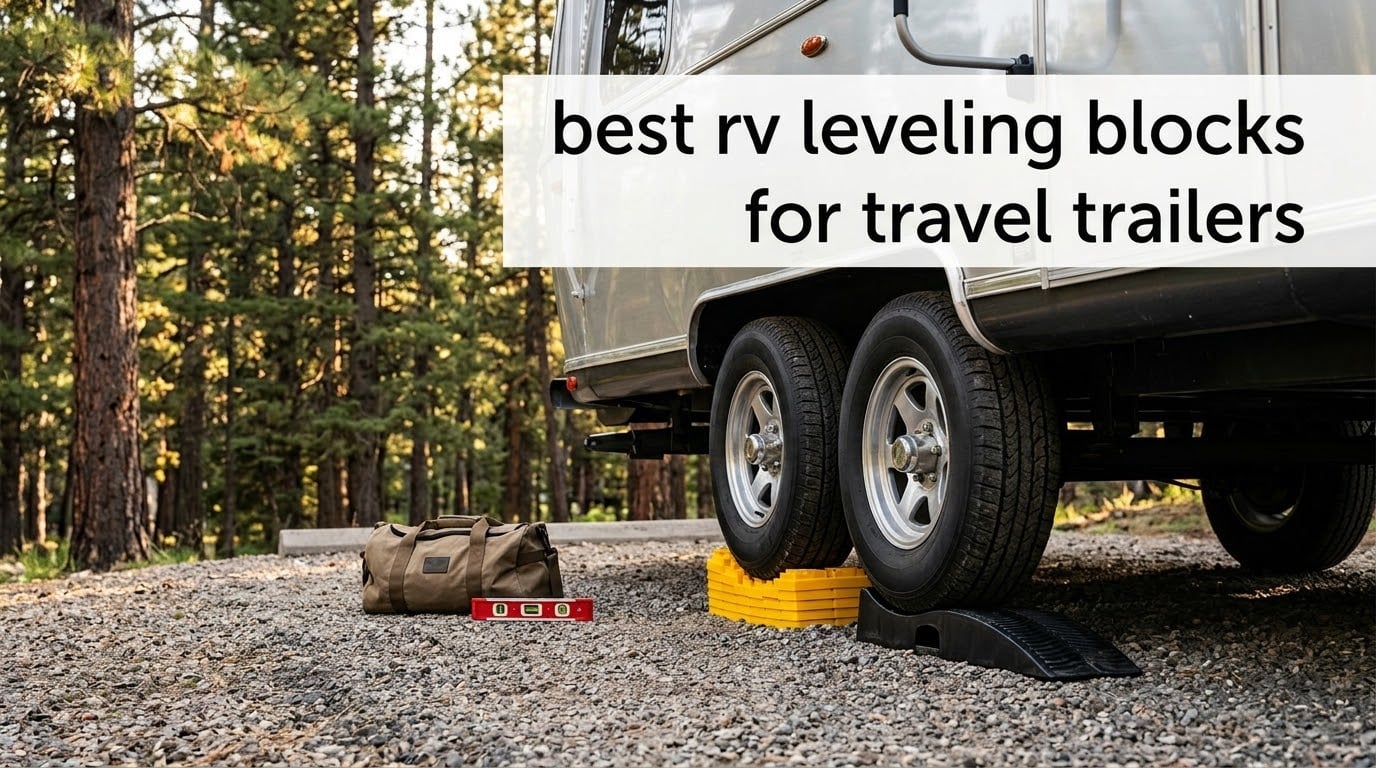
Best overall pick: the Tri-Lynx Lynx Levelers 11 Pack for most travel trailers. Best value: the Camco FasTen 10-Pack. Best premium option: the Andersen Hitches 2-Pack Camper Leveler for drive-on side-to-side leveling.
A travel trailer that sits nose-high on a sloped site puts the absorption refrigerator on its side, traps water in the shower drain, and makes slide-outs bind. Levelling blocks fix all three, and the right set turns a ten-minute struggle with loose lumber into a two-minute job.
We spent several months camping with these 12 sets across gravel pads, sloped grass sites and hard concrete, comparing load ratings, stack height, how they pack for storage and what happens after the first season of UV and grit. This guide covers the best rv leveling blocks for travel trailers, ranked by what actually matters when you are backing into a site at dusk.
Table of Contents
- Top 3 Picks for Best RV Leveling Blocks for Travel Trailers (October 2026)
- All 12 Picks at a Glance in 2026
- 1. Lynx Levelers 11 Pack – Best Overall for Travel Trailers
- 2. Camco FasTen RV Leveling Blocks 10-Pack – Best Value
- 3. Andersen Hitches 2-Pack Camper Leveler – Best Premium Drive-On System
- 4. OX BLOX Heavy Duty Trailer Jack Block – Best for Jacks and Stabilizers
- 5. RVMATE 12 Pack RV Leveling Blocks – Best for Tire Tread Protection
- 6. Kohree RV Leveling Blocks – Best for Dual Axle Fit
- 7. OULEME 12 Pack Stackable Leveling Blocks – Best UV-Resistant 12-Pack
- 8. VEVOR Trailer Jack Blocks 4-Pack – Best for Maximum Lift Height
- 9. Homeon Wheels 10 Pack with Ramps and Chock – Best All-in-One Kit
- 10. ROBLOCK 6 Inch Trailer Jack Block – Best for Compact Storage
- 11. ROBLOCK 12 Pack Leveling Blocks with Rubber Tops
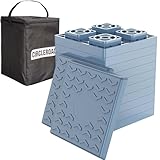
- 12. CircleRoad 12 Pack RV Leveling Blocks – Best Starter 12-Pack
- How to Level a Travel Trailer Step by Step
- Why Not Just Use Wood? DIY Blocks and Ground Pads
- How to Choose RV Leveling Blocks for Your Trailer
- Frequently Asked Questions
- How do RV leveling blocks work?
- How many leveling blocks do I need for a travel trailer?
- What is the proper way to level a travel trailer?
- What is the 3-3-3 rule for travel trailers?
- Do I need leveling blocks if my trailer has auto-leveling jacks?
- How do I stop leveling blocks from sinking into soft ground?
- Final Call on the Best RV Leveling Blocks for Travel Trailers in 2026
Top 3 Picks for Best RV Leveling Blocks for Travel Trailers (October 2026)

Lynx Levelers 11 Pack
- Rated to 40
- 000 lbs
- Interlocking 1 inch layers
- Includes cap top and bag
- Made in USA since 1992
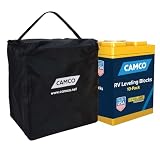
Camco FasTen 10-Pack
- Each block adds 1 inch
- Solid bottoms resist sinking
- Bright yellow finish
- Zippered storage bag
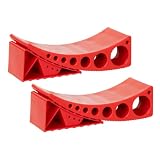
Andersen 2-Pack Leveler
- Levels both sides in one pass
- 1/2 to 4 inch range
- Lifetime warranty
- Trailers up to 30
- 000 lbs
All 12 Picks at a Glance in 2026
| Product | Specs | Action |
|---|---|---|
| Lynx Levelers 11 Pack |
|
Check Latest Price |
| Camco FasTen 10-Pack |
|
Check Latest Price |
| Andersen 2-Pack Camper Leveler |
|
Check Latest Price |
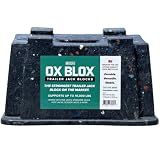 OX BLOX Heavy Duty Jack Block OX BLOX Heavy Duty Jack Block |
|
Check Latest Price |
 RVMATE 12 Pack RVMATE 12 Pack |
|
Check Latest Price |
 Kohree Leveling Blocks Kohree Leveling Blocks |
|
Check Latest Price |
 OULEME 12 Pack OULEME 12 Pack |
|
Check Latest Price |
 VEVOR Jack Block 4-Pack VEVOR Jack Block 4-Pack |
|
Check Latest Price |
 Homeon Wheels 10 Pack Homeon Wheels 10 Pack |
|
Check Latest Price |
 ROBLOCK 6 Inch Jack Block ROBLOCK 6 Inch Jack Block |
|
Check Latest Price |
 ROBLOCK 12 Pack ROBLOCK 12 Pack |
|
Check Latest Price |
 CircleRoad 12 Pack CircleRoad 12 Pack |
|
Check Latest Price |
1. Lynx Levelers 11 Pack – Best Overall for Travel Trailers
Lynx Levelers 11 Pack Including 1 Lynx Cap Level Top for RV/Trailer/Motorhome/Vanlife Interlocking Leveling Blocks with Storage Bag for Most Leveling and Stabilizing Functions. 00015, Made in USA.
Rated to 40,000 lbs
Blocks 8.5 x 8.5 x 1.5 in
1 in per interlocked layer
Made in USA since 1992
Pros
- Interlocking modular design fits most leveling and stabilizing setups
- Holds up to 40000 lbs
- Cap level top adds fine height control
- Nylon storage bag included
- Made in the USA
Cons
- Blocks can sink into soft ground without a pad underneath
- Not a wheel chock so chocks are still needed
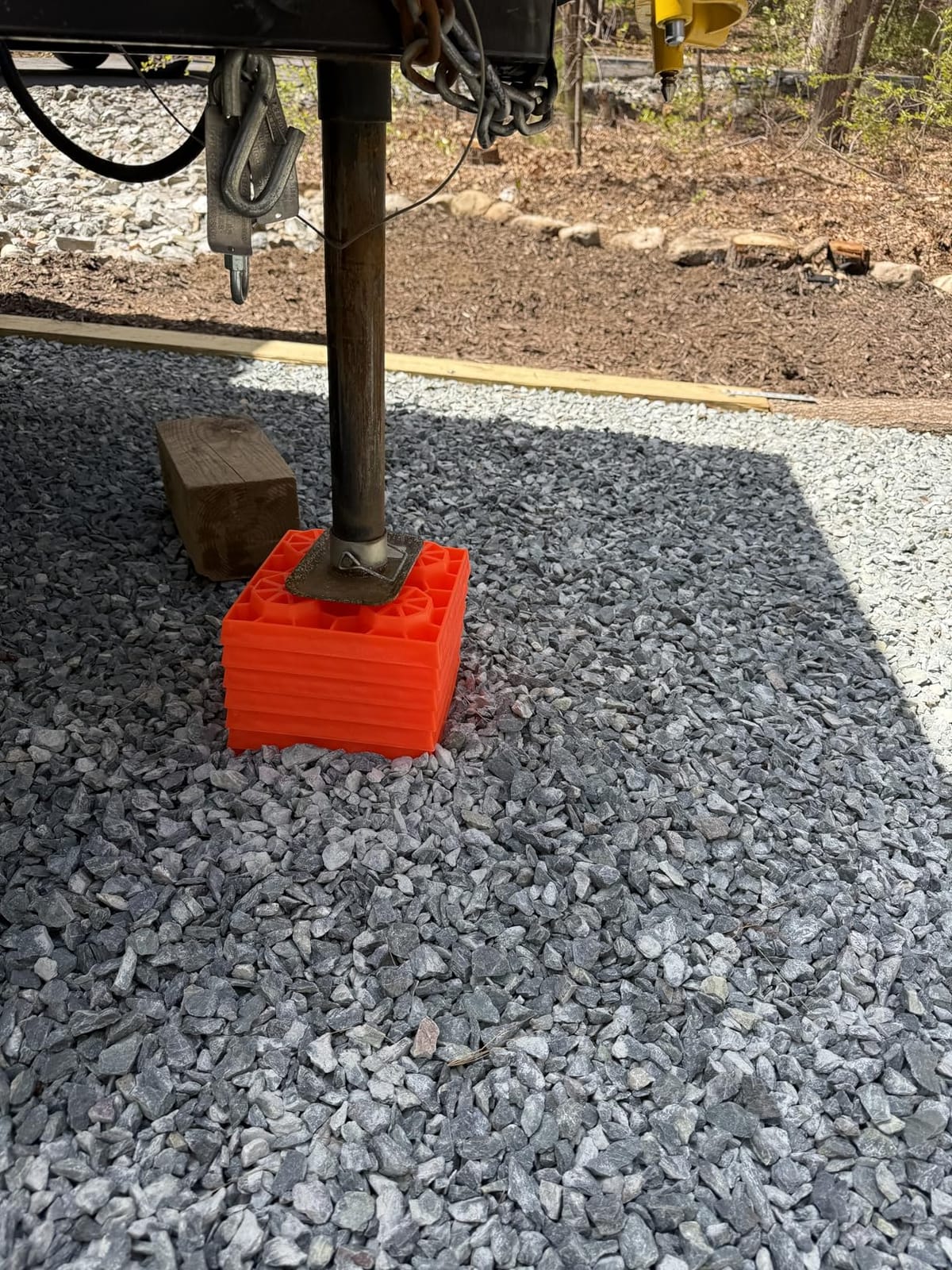
This is the set we keep in the truck. The interlocking blocks measure 8.5 x 8.5 x 1.5 inches and lock together so a stack adds exactly one inch per layer, which makes stack math simple on a dark site.
The included Lynx Cap Level Top is 8.5 x 8.5 x 0.5 inches and adds about a quarter inch when interlocked, so you can fine-tune the last sliver without hunting for a thinner block. On a site that needed four inches on the low side and three on the high side, that cap saved a second trip to the pile.
With 18k+ reviews averaging 4.8 stars, this is the most proven option in the group, and long-term owners on RV forums describe Tri-Lynx blocks as close to indestructible after multiple seasons. The nylon bag with a premium handle also packs down flatter than a loose pile of lumber ever will.
The one weakness is soft ground. Because the footprint is fixed, a stack on wet lawn will settle unless you lay a pad underneath it.
Why this one works for most trailers
The 40,000 lb modular rating means a single set covers anything from a small teardrop to a loaded Class C, and the same blocks double as stabilizer jack pads and appliance supports. One purchase covers side-to-side, tongue jack and stabilizer jobs without a second kit.
Storage is the other quiet win. The whole set fits in the supplied bag behind a seat, which matters more than any spec once you start trading bed space for camping gear. Our travel backpack picks make the same argument about weight and volume.
Where it falls short
These are not chocks, so you still need separate wheel chocks once the trailer is on the stack. And on peaty ground after rain, nothing but a plywood or paver pad under the stack will stop it from sinking and tilting the rig.
2. Camco FasTen RV Leveling Blocks 10-Pack – Best Value
Camco RV Leveling Blocks – Features Interlocking Nested Design & Storage Bag for RV Storage and Organization – Each Leveling Block Measures 8.5″ x 8.5″ x 1″ – 10-Pack, Design May Vary (44510)
Each block adds 1 inch
8.5 x 8.5 x 1 in blocks
UV-stabilized resin
10-pack with bag
Pros
- Stack to any height one inch at a time
- Works with dual wheels and tongue or stabilizer jacks
- Solid bottoms resist sinking
- Bright yellow so you find them again
- Hose-off clean and bagged
Cons
- Can still settle on very soft or uneven ground
- Design may vary between production runs
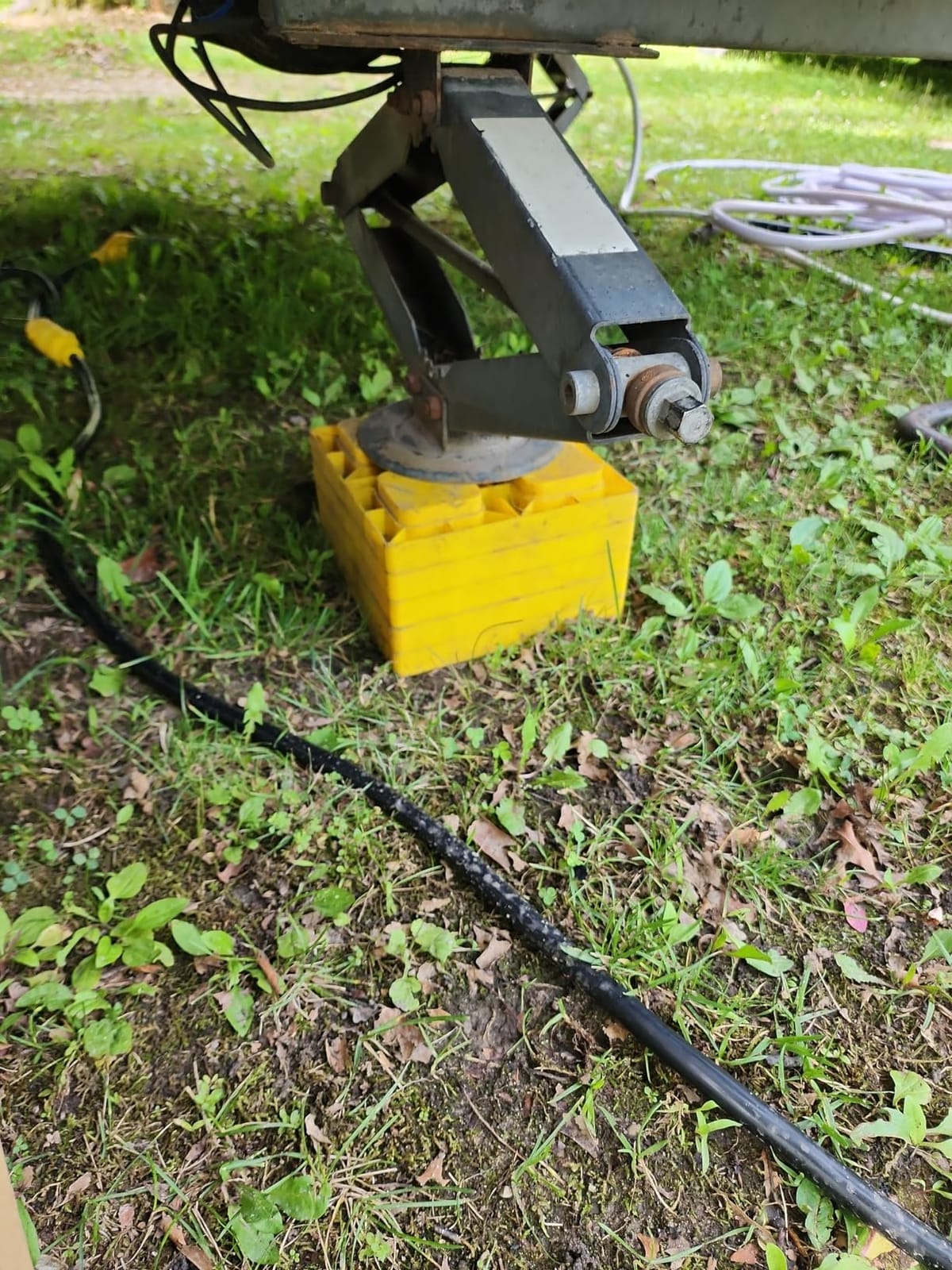
Camco’s 10-pack is the mainstream default for a reason. Each 8.5 x 8.5 x 1 inch block interlocks into the next and adds one inch, and the UV-stabilized resin has held shape for us through two full seasons of Florida sun without fading or going brittle.
What we like most is the compatibility list. These blocks work with single and double wheels, hydraulic jacks, tongue jacks, stabilizer jacks, fifth wheel hitches and tandem axles, so one kit covers every lift point on the trailer.
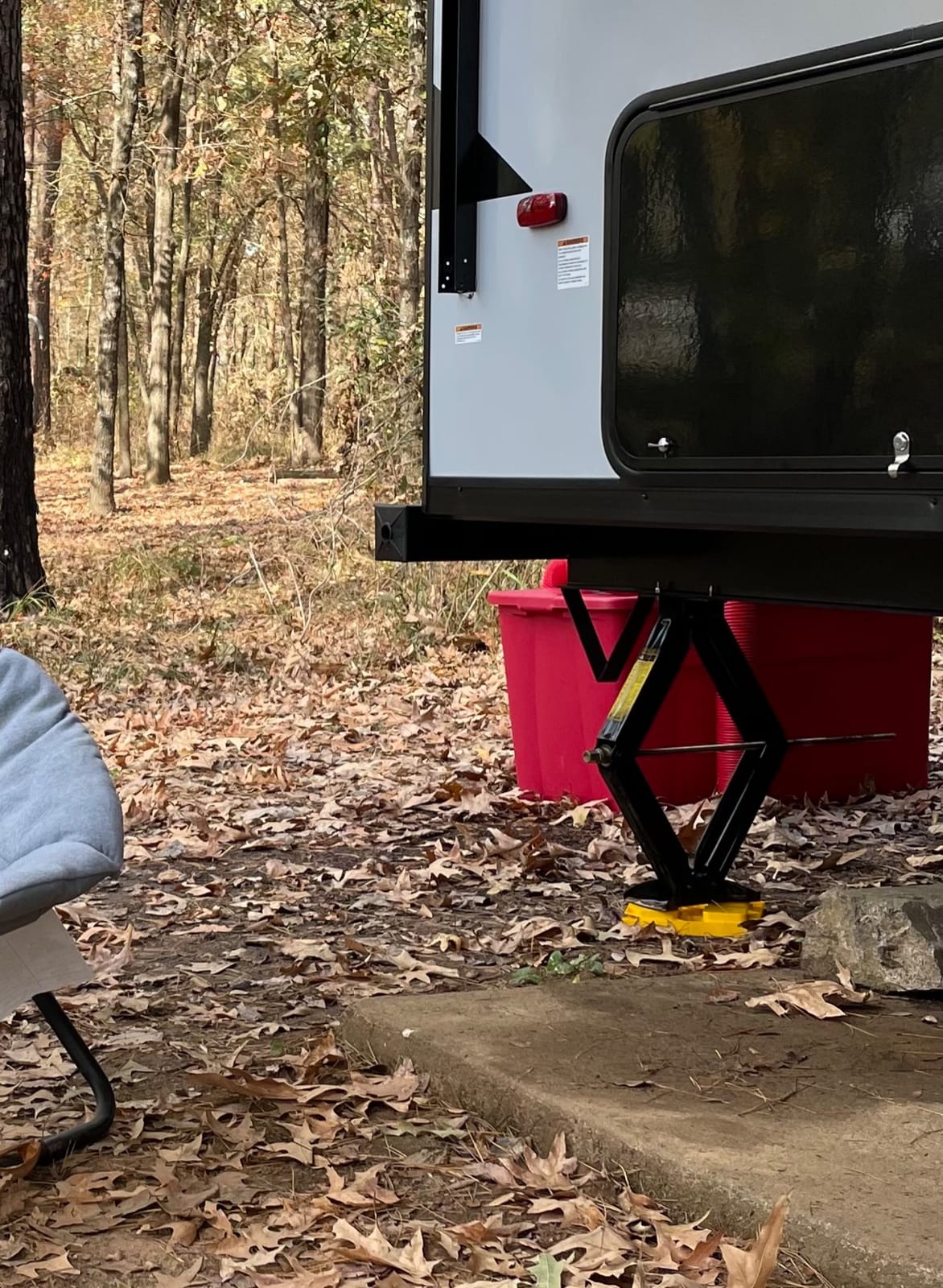
With 14k+ reviews at 4.7 stars, the feedback pattern is remarkably consistent: owners like the customisable height and the bright yellow colour, which solves the age-old problem of leaving blocks behind at a campground after a storm moves you along.
The solid bottoms are a real improvement over hollow competitors on gravel and packed dirt, though they are not a guarantee on soft soil.
Why we call it the best value
It delivers the same one-inch-per-layer behaviour as the premium sets at a fraction of the outlay, and 10 blocks is enough to level a typical dual-axle trailer plus the tongue jack without doubling up. Hose it off and it drains clean in seconds.
If you also cook on the road, our RV induction cooktop picks follow the same logic: match the hardware to the trailer, not to the trend.
Where it falls short
There is no fine-height top piece in the pack, so sub-inch adjustments mean improvising with a board or the cap block from another kit. The yellow resin also scuffs visibly, which is cosmetic but worth knowing if you keep the trailer looking new.
3. Andersen Hitches 2-Pack Camper Leveler – Best Premium Drive-On System
Andersen Hitches 2-Pack Camper Leveler Blocks for RVs and Trailers Up to 30000 lbs Precise 1/2 to 4 Inch Leveling Made in USA
Adjusts 1/2 to 4 inches
Trailers up to 30,000 lbs
Tires up to 32 in
15 x 5.75 x 3 in each
Pros
- Levels both sides in one setup pass
- 1/2 to 4 inch range at any increment
- Rated for trailers to 30000 lbs
- Drive-on design needs no heavy lifting
- Lifetime manufacturer warranty
Cons
- May need trimming for closely spaced tandem tires
- Slick rubber can slide on gravel as you drive up
- Sinks into soft ground without a pad underneath
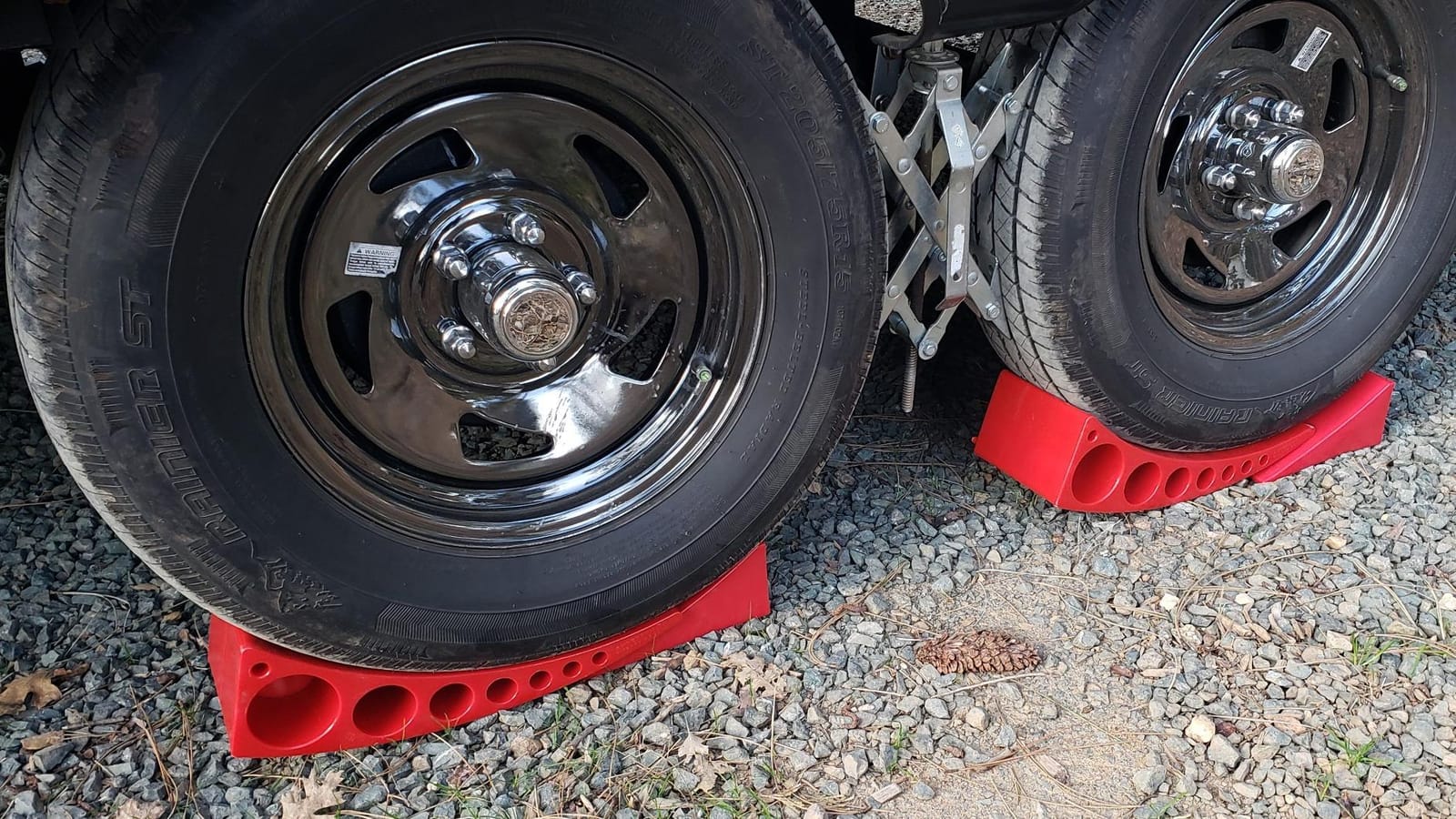
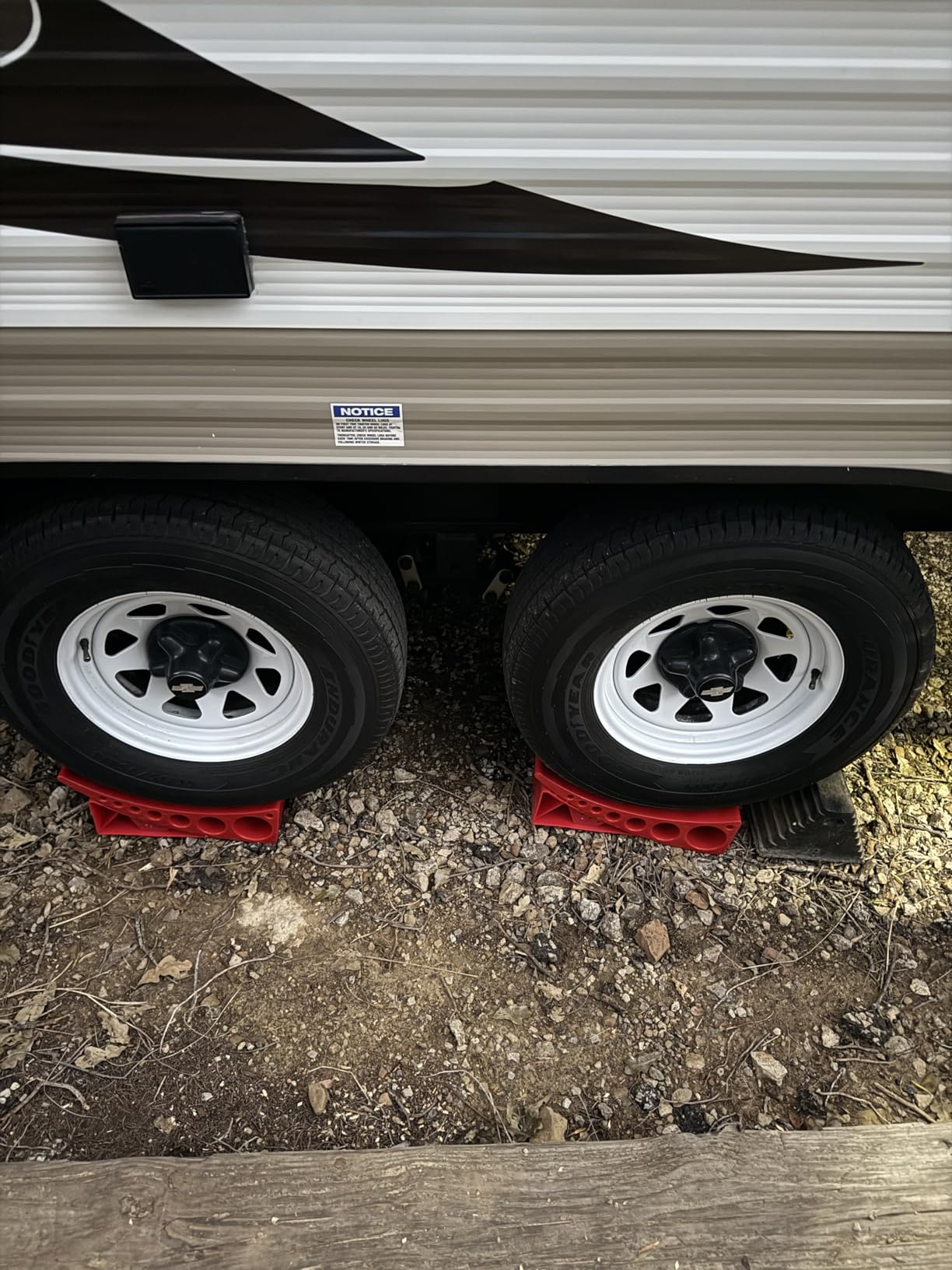
The Andersen approach skips stacking entirely. You place each 15 x 5.75 x 3 inch leveler, drive the tire up the wedge until the trailer sits where you want, then drop the built-in chock behind the wheel to lock it in place. One leveler handles one side, so a two-pack handles both in a single pass.
Because you control the final position with the vehicle, the adjustment is genuinely continuous between half an inch and four inches rather than locked to one-inch steps. On our sloped gravel test site, the whole side-to-side levelling took under five minutes.
The 5,565 reviews at 4.7 stars cluster around the same two points: owners love the speed and the storage footprint, and they warn about tandem-axle clearance. Measuring your tire spacing before you buy saves a trip to the hardware store for a cutting saw.
A lifetime manufacturer warranty is the strongest warranty coverage of any pick in this roundup, and the rubber construction is gentle on both pavement and tire sidewalls.
Who should buy the Andersen
Travel trailers with generous tire spacing, owners who level often, and anyone who would rather not wrestle with a stack of blocks in the dark. A single set for both sides means one less thing to carry out of the storage bay.
It is also the best option if you rent the same campsite pad every season and want repeatable results. The wedge angle does not change between trips.
Who should skip it
Tight dual-axle setups often need the leveler trimmed, and that is a real modification. On sand or gravel the smooth rubber ramp can also shift as you climb it, so a second person guiding the driver makes the job far less stressful.
4. OX BLOX Heavy Duty Trailer Jack Block – Best for Jacks and Stabilizers
OX BLOX Heavy Duty Trailer Jack Block – 10,000 lb Capacity – Made in USA
10,000 lbs per block
9.29 x 11.89 x 6.5 in
100% recycled plastic
Made in USA
Pros
- Solid build rated to 10000 lbs even when stacked
- Handles tongue post foot scissor and stabilizer jacks
- Patented geometry cuts wobble and sway
- Handles on both sides for carrying
- Stackable with full rating retained
Cons
- Heavier than hollow polypropylene alternatives at just over 8 lbs each
- Sold as a single block so you may need several
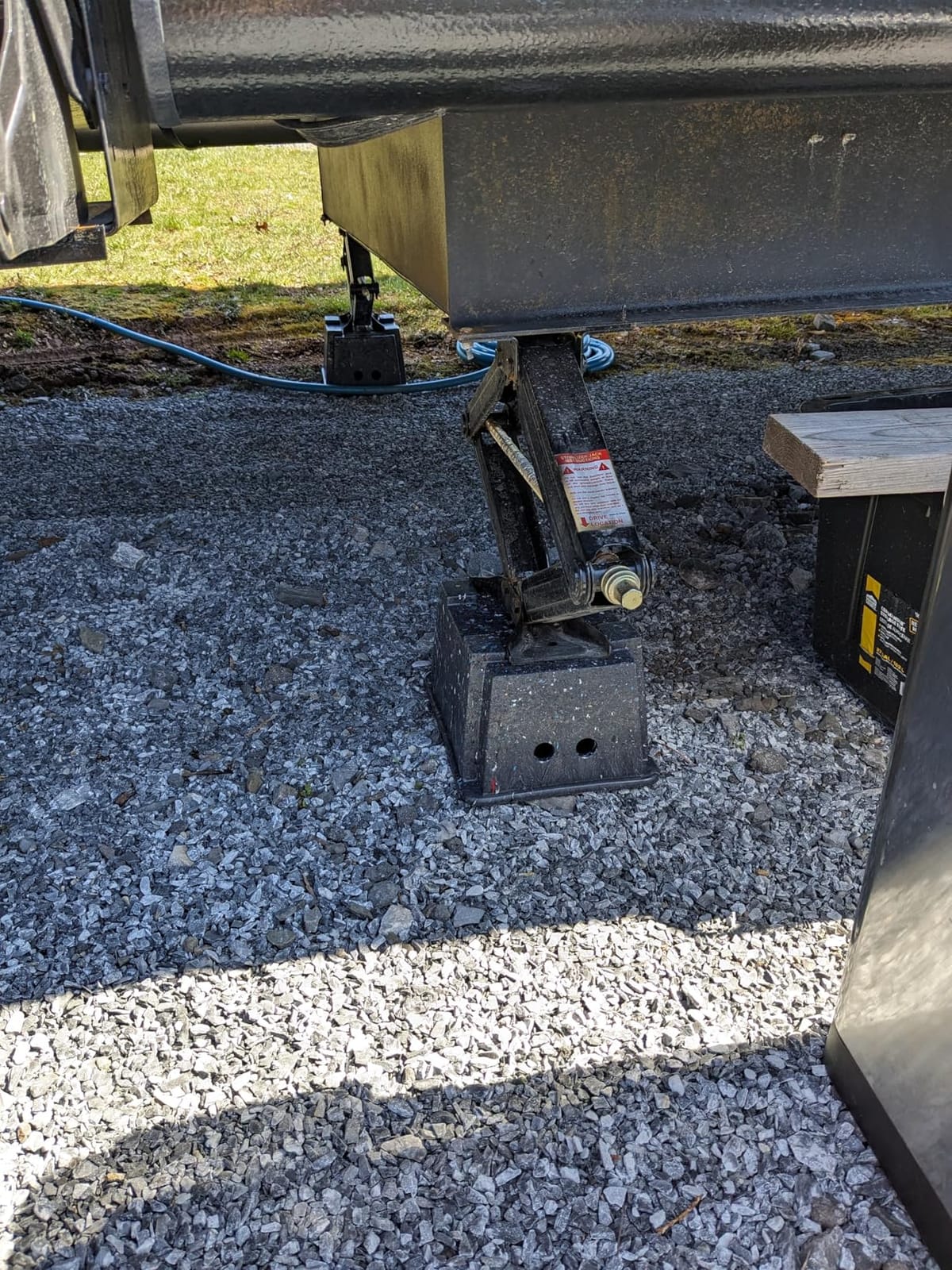
Jack blocks take a different beating than wheel blocks. They sit under a concentrated point load with the trailer fully extended, which is exactly where hollow plastic pads fail, so this one is compression moulded at 10,000 lbs per block and still stackable at full rating.
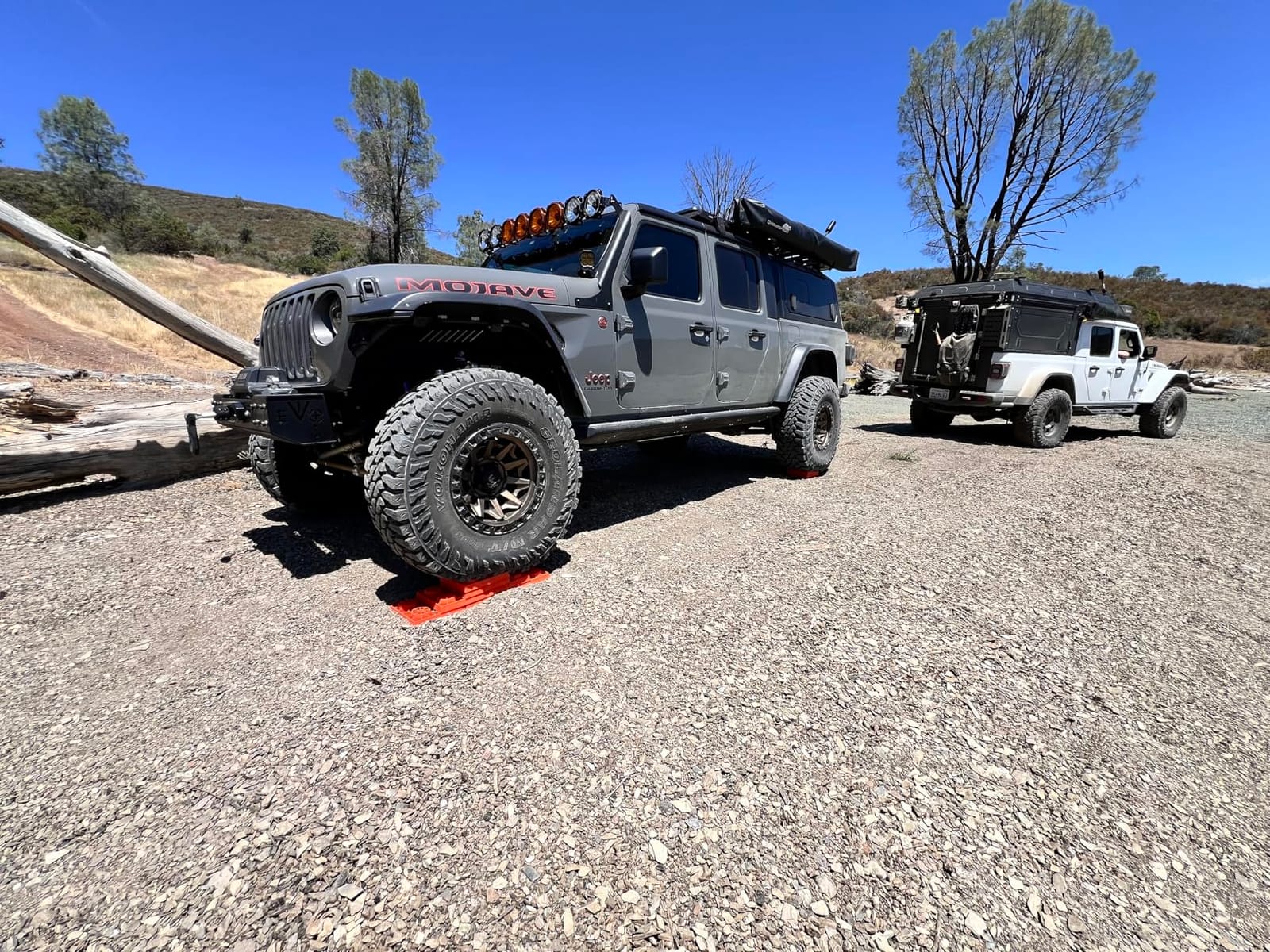
It accepts tongue, post, foot, scissor and stabilizer jacks, round or square, and the wide footprint spreads the load so the jack foot does not punch into soft ground the way a narrow pad does.
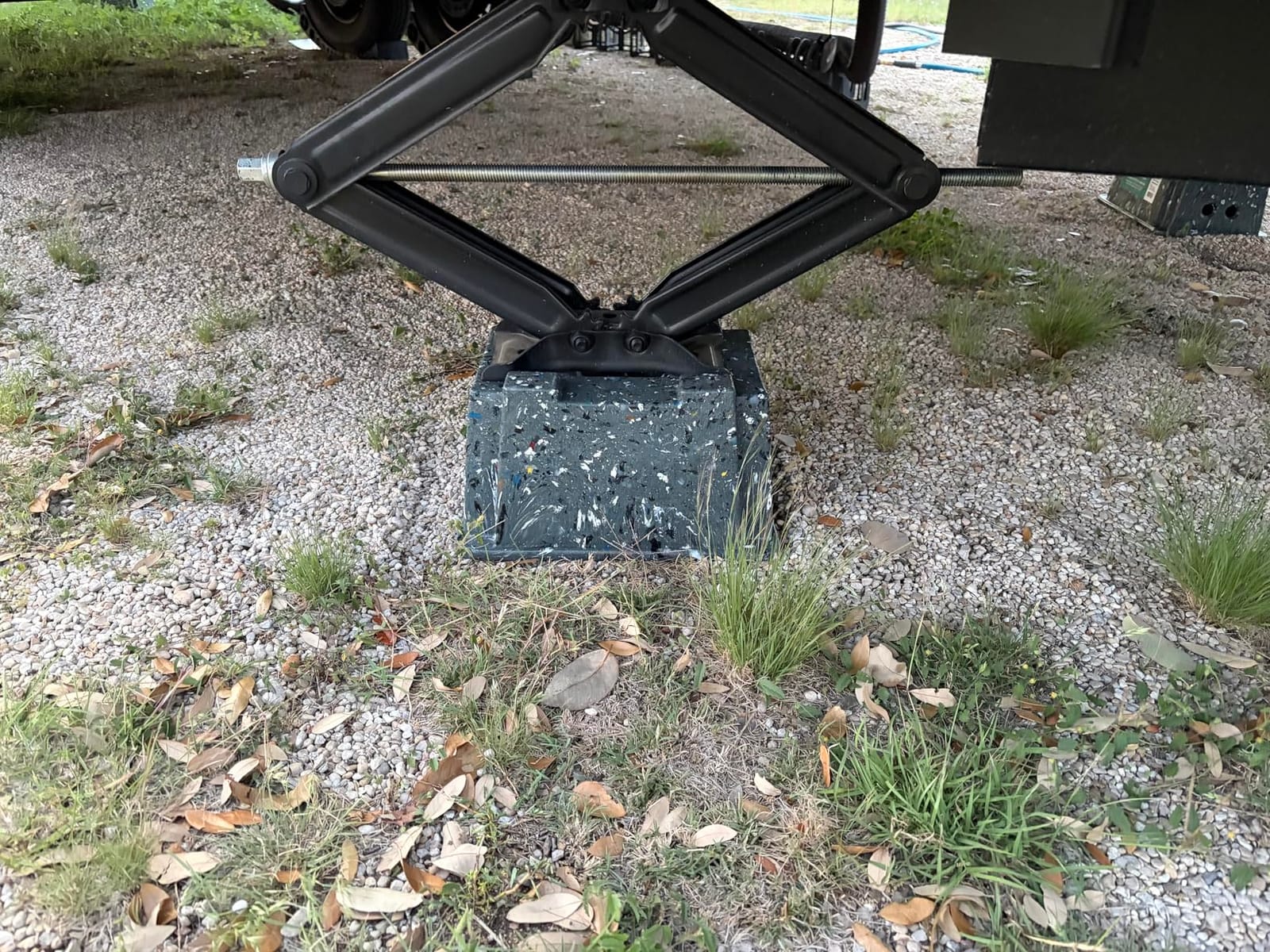
Owners on RV forums frequently single out jack supports as the spot where cheap blocks crack, which is why a rated solid block matters here. The 1,966 reviews at 4.8 stars reflect that: people using it under stabilizers report markedly less sway.
Side grab handles on each face make it easy to reposition after the jack is already down.
Best use case
Tongue jack support on soft campsites, and stabilizer jack pads where you want the trailer to stop moving in wind. UV and temperature resistance matter for anyone storing gear in a hot Arizona or Gulf Coast truck bed.
Pairing one of these under the tongue jack with a stackable set under the tires covers both failure points with a single purchase decision.
Where it falls short
At just over eight pounds each, two of them are a real chunk of weight to lift repeatedly, and the single-unit pack means you buy several to cover a full trailer. It is a jack block, so it does not handle wheel levelling.
5. RVMATE 12 Pack RV Leveling Blocks – Best for Tire Tread Protection
RVMATE 12 Pack RV Leveling Blocks, Camper Trailer Leveling Blocks
Blocks 8.5 x 8.5 x 1.5 in
Top blocks 8.5 x 8.5 x 0.75 in
1 inch per layer
10 blocks 2 tops and bag
Pros
- Rubber-style top covers prevent direct tire-to-block contact
- High-density reinforced interlocking construction
- Works with dual wheels and fifth wheel jacks
- Carrying bag included
- Each block adds a full inch
Cons
- Blocks can still settle into soft ground
- Loose blocks can shift if stacks are not aligned
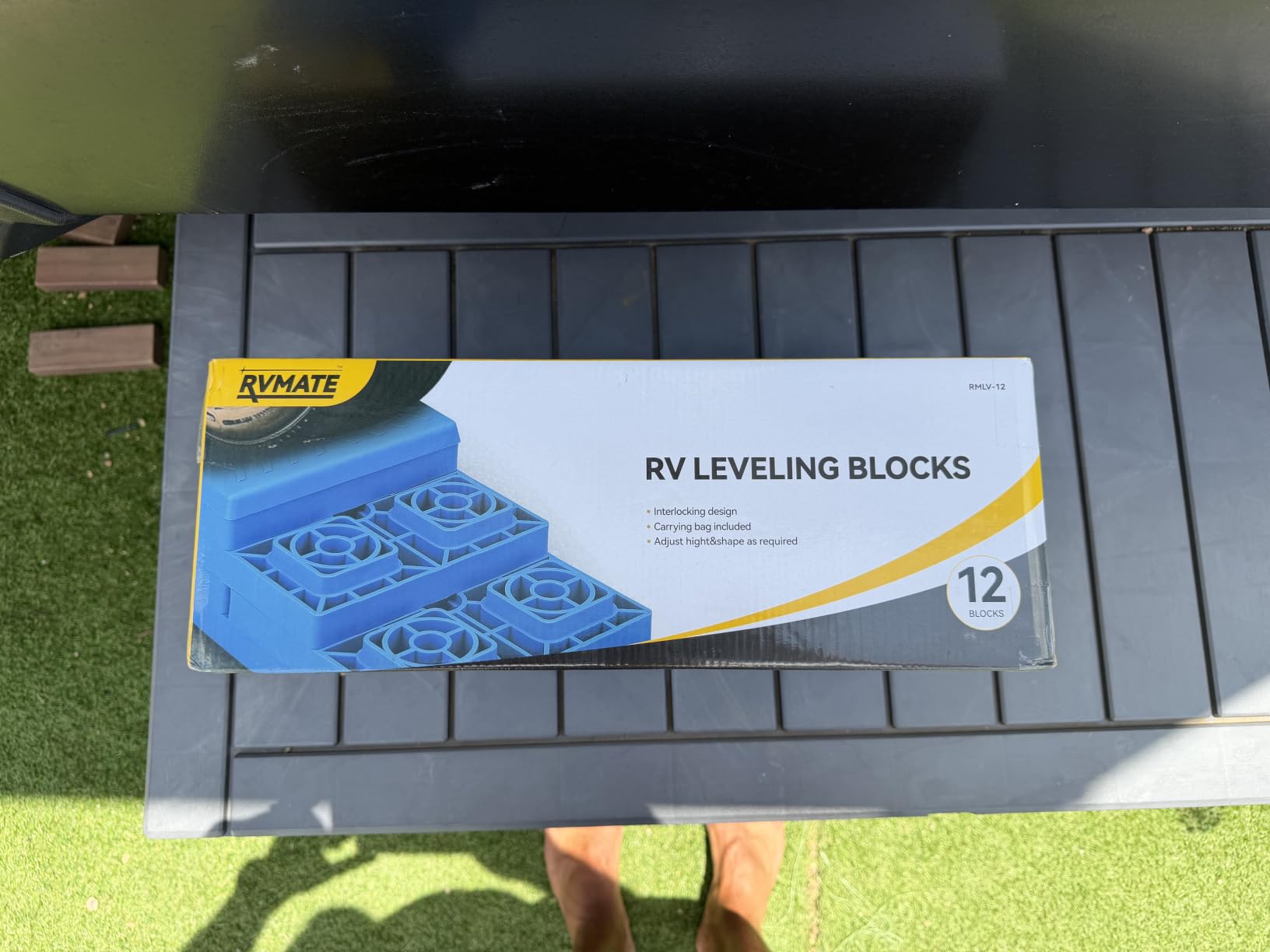
The distinguishing feature here is the pair of 8.5 x 8.5 x 0.75 inch top covers. Place one on the finished stack and the tire rolls onto rubber rather than onto a hard plastic edge, which is the single biggest cause of tread wear and sidewall scuffing when levelling.
The main blocks measure 8.5 x 8.5 x 1.5 inches and interlock, adding a full inch per layer. You get ten blocks, two top covers and a carrying bag, which is a complete wheel-leveling kit in one bag.
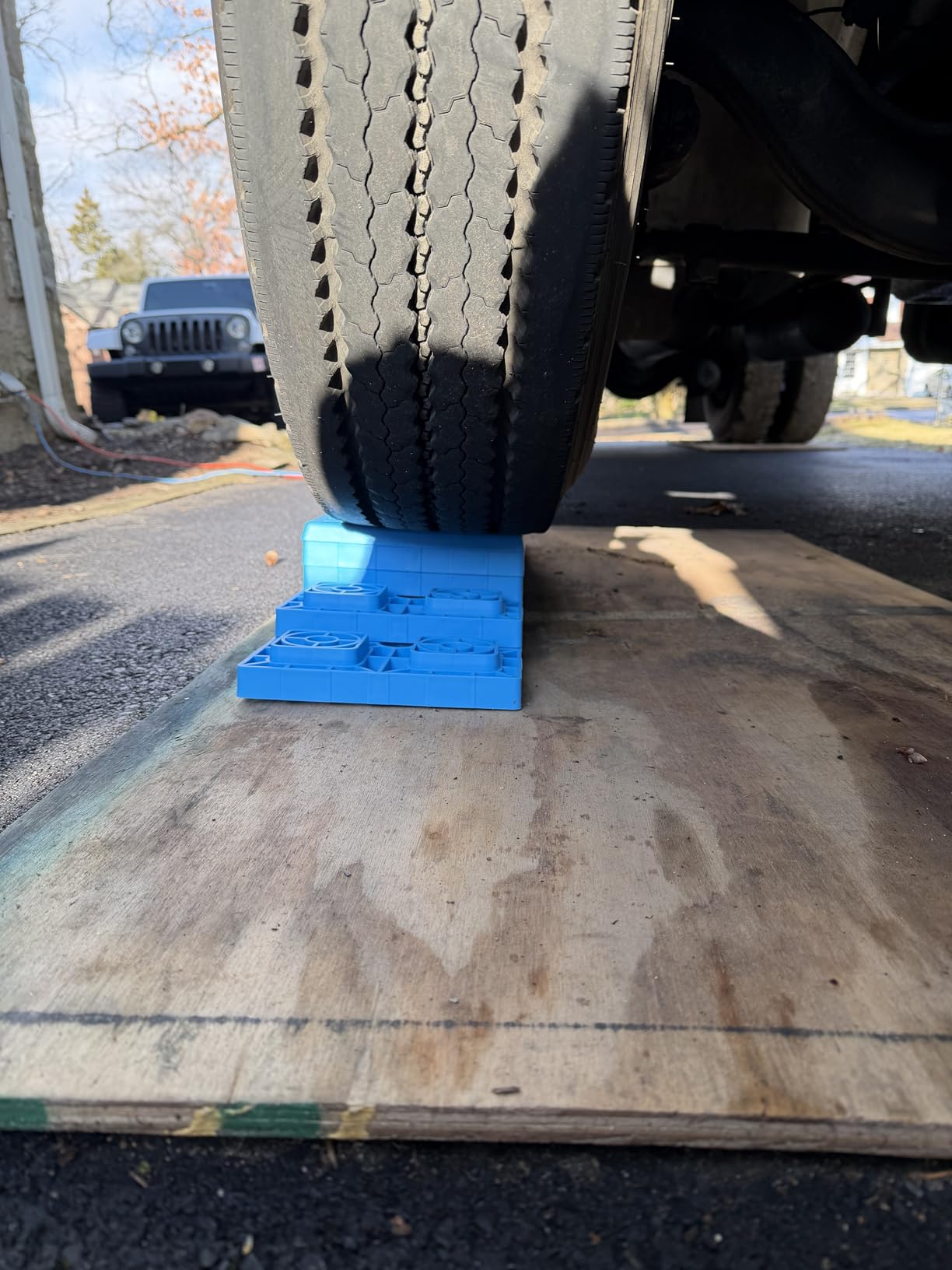
At 4.6 stars from 1,534 reviews, this is a well-liked mainstream set with 80 percent five-star ratings. Owners point to the top caps and the value; the recurring note is that you need to line the stack up carefully before driving onto it.
Compatibility covers single and dual wheels, hydraulic, tongue, stabilizer and fifth wheel jacks, so it works on tandem-axle travel trailers without modification.
Why the top caps matter
Blocks with a sharp top edge can pinch a tire sidewall at the contact line, and repeated use on the same stack wears tread blocks down unevenly. The caps spread that load across the full block face.
They also make stacks safer to drive onto, because the tire climbs a slightly compliant surface instead of a hard corner.
Where it falls short
The caps add height, so a stack topped with them is not a clean one-inch-per-block measurement. Measure the finished height before relying on it for front-to-back levelling.
6. Kohree RV Leveling Blocks – Best for Dual Axle Fit
Kohree RV Leveling Blocks, Up to 35,000 lbs, 4″ Max Level System
Supports up to 35,000 lbs
1/2 to 4 inch range
15.74 x 8.85 x 6.88 in
Anti-skid base
Pros
- Levels in 1/2 to 4 inch increments in about 5 minutes
- Rated for 35000 lbs and tires to 32 inches
- Anti-skid base plus included non-slip mats
- No cutting required on most dual axle trailers
- Bundled wheel chock holds the trailer
Cons
- Needs the non-slip mat in place to work as designed
- Can still sink on very soft ground
- Less suited to heavy fifth wheel loads
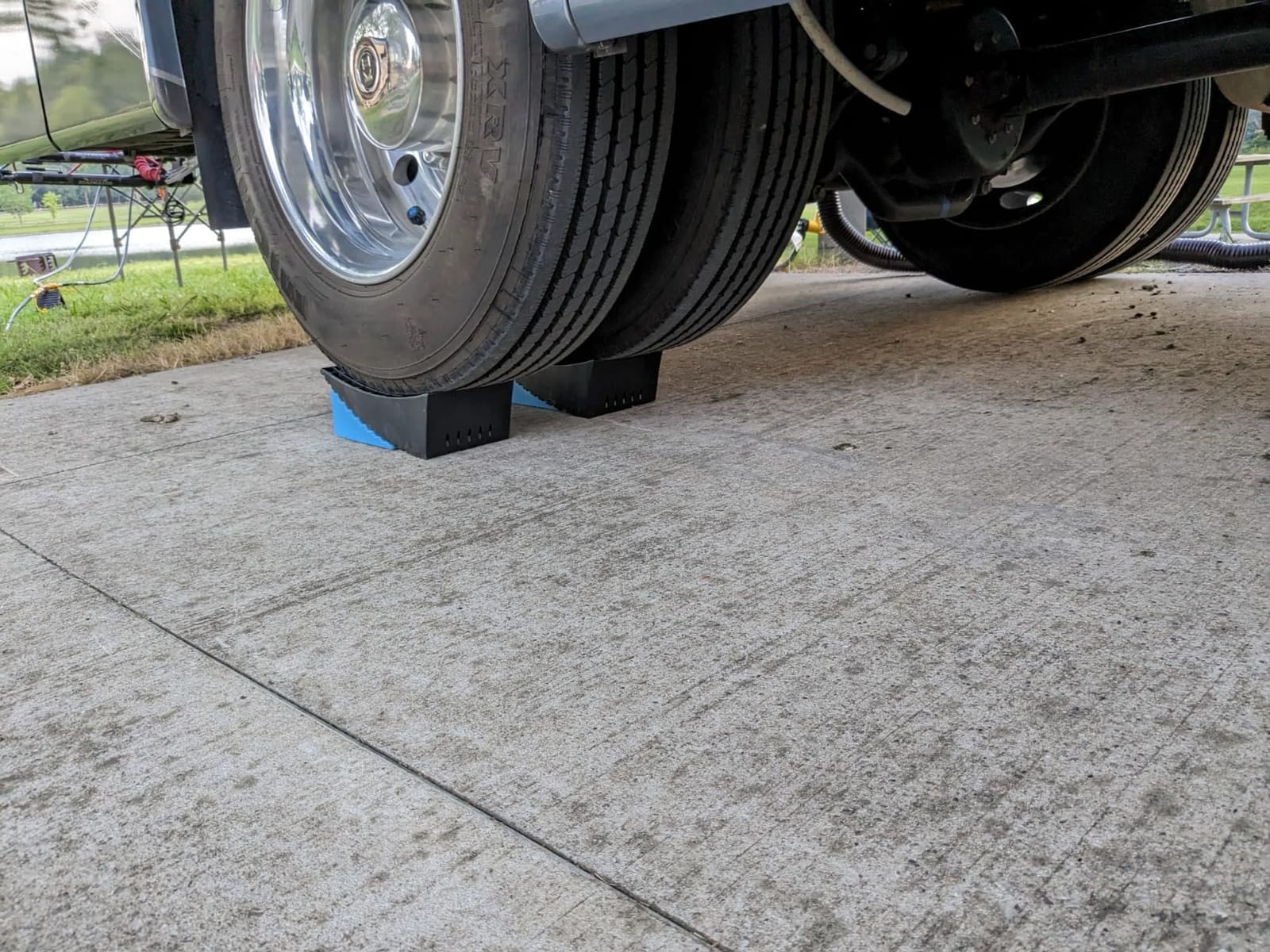
Kohree is a curved ramp leveler, and its selling point over the Andersen is fit. The manufacturer states no cutting is required for most RVs, motorhomes and dual-axle trailers, which removes the most common complaint about ramp-style systems.
The 35,000 lb support rating and 32-inch tire compatibility cover the full range of travel trailers, and the ramp adjusts in half-inch increments rather than one-inch steps.
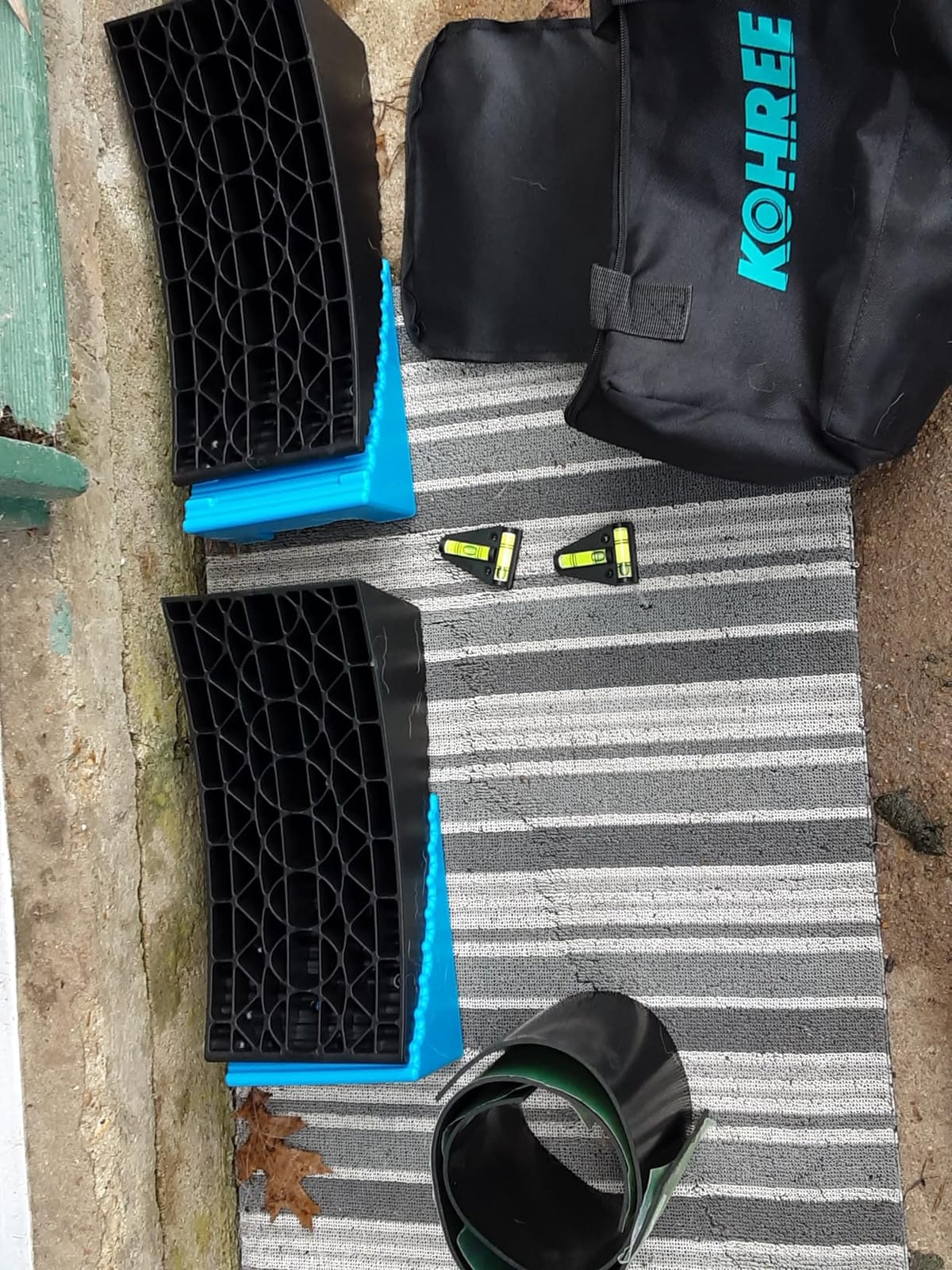
Two blue blocks and two non-slip mats ship in the box. The mats are not decoration, they are what keeps the ramp from skating on gravel, and at 4.6 stars across 1,471 reviews about 77 percent of buyers rate it five stars.
A wheel chock is included, so you can secure the trailer without buying a second accessory.
Best for closely spaced axles
If you have measured your tandem tire gap and found it tight, this is the ramp system most likely to slot in untouched. The narrower profile avoids the cutting step that trips up some owners of premium ramp kits.
The anti-skid base plus mat combination also makes it a good option on gravel, where smooth rubber ramps usually slide.
Where it falls short
Skip the mat and the design stops working as intended, so treat it as a two-part system. On deep soft soil, a pad underneath is still needed, and it is not built for the heaviest fifth wheel traffic.
7. OULEME 12 Pack Stackable Leveling Blocks – Best UV-Resistant 12-Pack
OULEME 12 Pack RV Leveling Blocks, Stackable Jack Blocks, Interlocking Leveling Pads with Carrying Bag, for Camper Travel Trailer
Blocks 8.5 x 8.5 x 1.5 in
Top blocks 8.5 x 8.5 x 0.7 in
Polypropylene with anti-UV additives
12-piece pack
Pros
- Dense polypropylene with anti-UV additives resists fading
- Interlocking design keeps stacks locked together
- Top blocks reduce tire wear
- Carrying bag included
- Each block adds a full inch
Cons
- Lighter-gauge plastic than premium blocks
- Can crack under high stacking on uneven ground
- Top blocks are thin and offer less traction
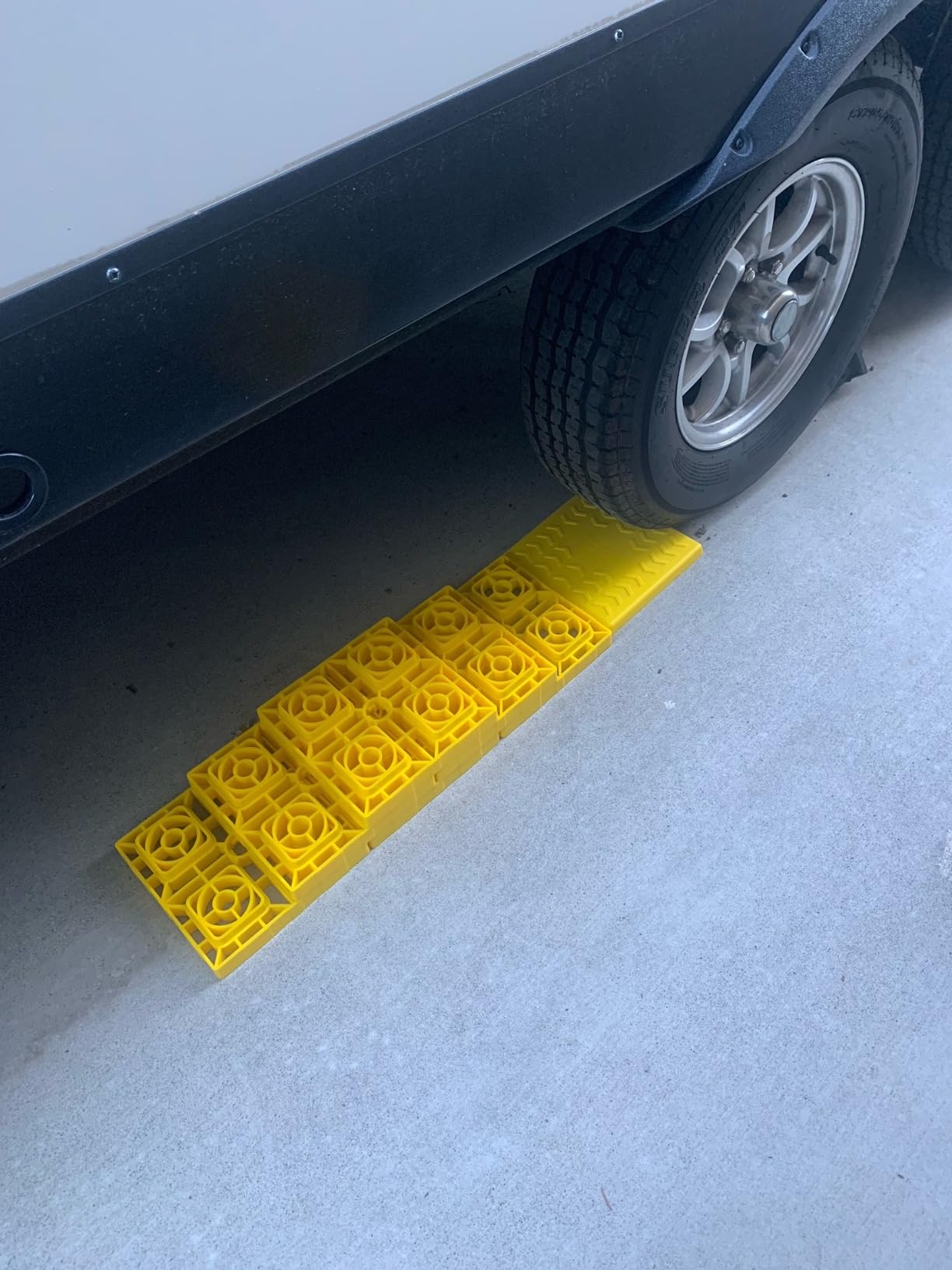
This is a straight twelve-piece kit: ten interlocking blocks at 8.5 x 8.5 x 1.5 inches, two top blocks at 8.5 x 8.5 x 0.7 inches and a bag. Each block adds one inch, so you can build any pyramid your site requires.
The polypropylene carries anti-UV aging additives and increased wall thickness, which matters in the southern states where a black or dark block left in direct sun can become brittle after a single season.

At 4.7 stars from 898 reviews with about 85 percent five-star ratings, the feedback leans positive on thickness and price. A handful of owners report cracking when the stack sits on uneven ground, so check your base layer before stacking high.
The blocks also work under trailer jacks and stabilizers, which makes the twelve-pack more versatile than the count suggests.
Why pick this 12-pack
Twelve pieces is the sweet spot for a dual-axle trailer with a demanding site. Most side-to-side levelling uses four to six blocks, and the spares cover the tongue jack and stabilizers without a second purchase.
The top blocks give you a softer landing surface for the tire without needing an entirely separate cap accessory.
Where it falls short
The plastic is lighter-gauge than the Lynx and Camco sets, and reviews mention cracking under tall stacks on rough ground. The thin top blocks also provide less traction than the main blocks when the ramp angle is steep.
8. VEVOR Trailer Jack Blocks 4-Pack – Best for Maximum Lift Height
VEVOR Trailer Jack Block, 6000 lbs Capacity per RV Leveling Block, Polypropylene RV Camper Stabilizer Blocks, RV Travel Accessories Use for Any Tongue Jack, Post, Foot, 5th Wheels, 4-Pack
6,000 lbs per block
Up to 8 in lift height
9.65 x 9.65 x 8.03 in
Polypropylene T30
Pros
- 6000 lbs capacity per block across the 4-pack
- Larger footprint improves stability
- Resists UV water heat oil tar and soil
- Integrated drainage holes limit rust
- No installation required
Cons
- Heavy at about 20 lbs for a 4-pack
- Bulky shape uses more storage space
- Designed for jacks rather than wheel levelling
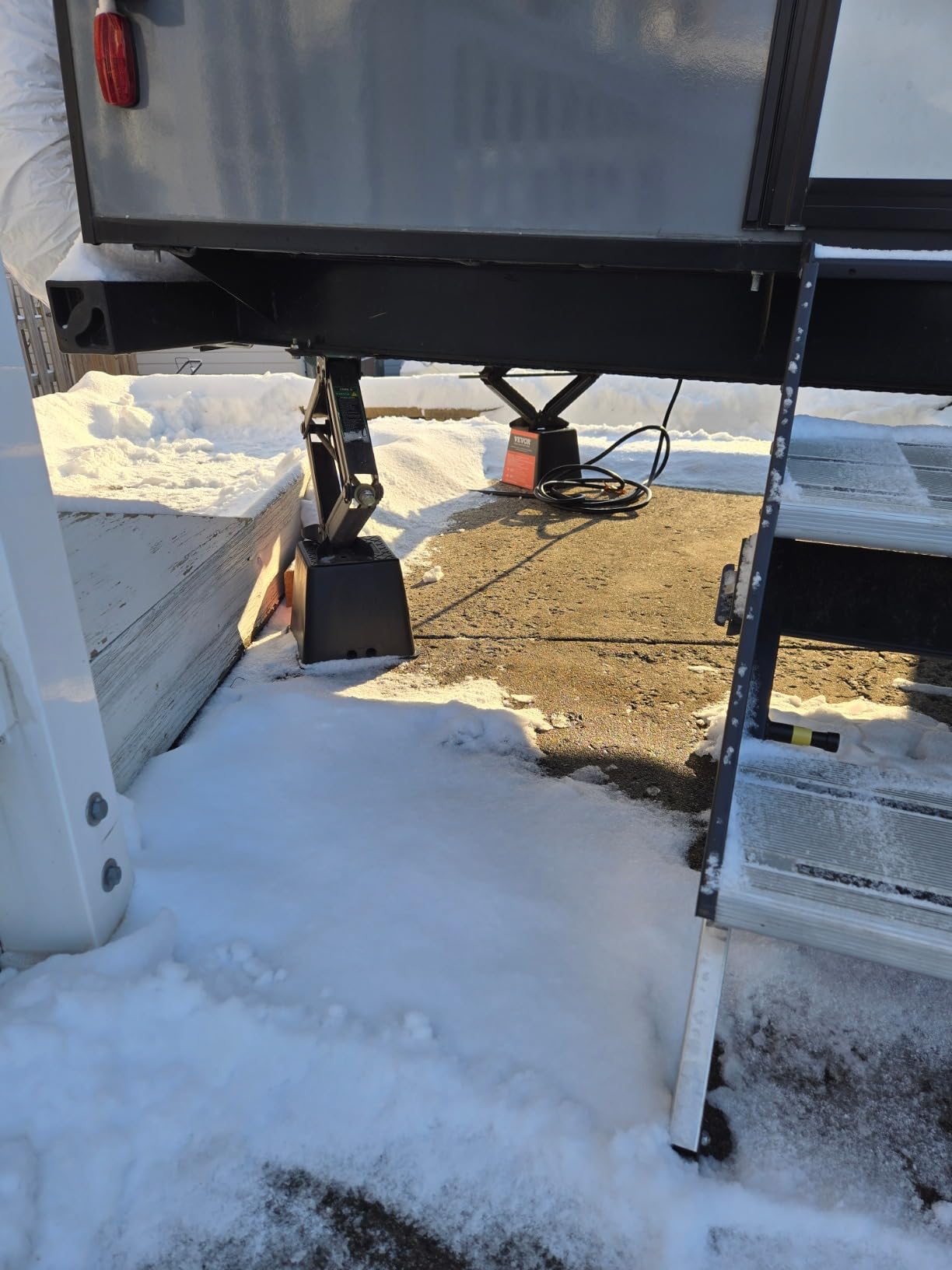
Four to six inches is typical lift from a stack of standard blocks. These VEVOR jack blocks reach eight inches, which covers a severe front-to-back drop on a badly sloped site without leaving to hunt for lumber.
Each block is rated at 6,000 lbs, and the four-pack handles tongue, post and foot jacks as well as fifth wheel connections. The polypropylene T30 body resists UV, water, high temperatures, oil, tar and soil.
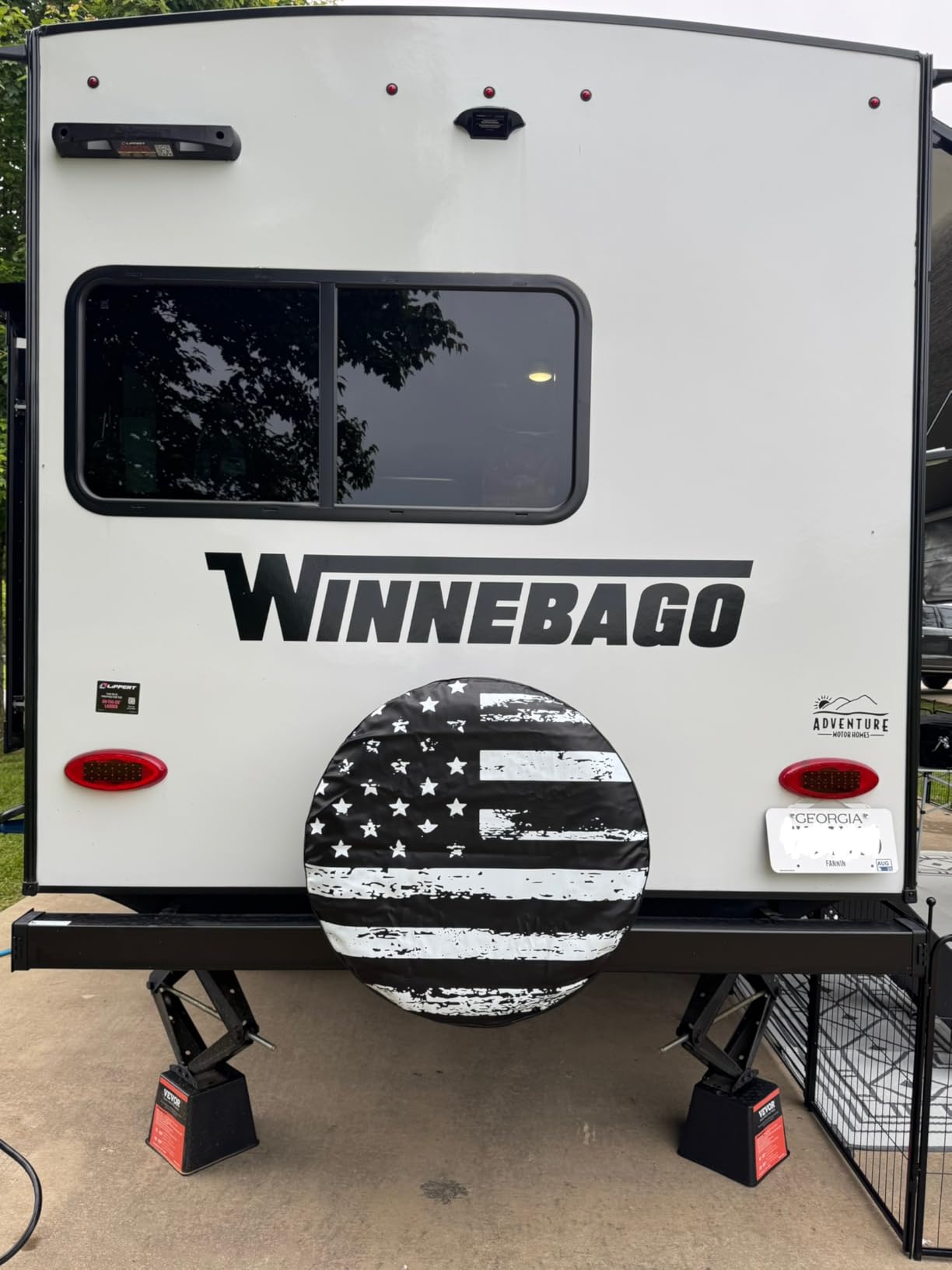
The integrated drainage holes are a small but smart detail: water leaves the cavity instead of sitting inside the block and freezing, which is a common way cheaper blocks get destroyed in winter storage.
At 4.7 stars from 759 reviews, with roughly 86 percent five-star ratings, buyers consistently mention the per-block rating as the deciding factor.
Where it earns its place
Extreme front-to-back pitch on a hillside site, and any jack that needs a lot of extension. The large footprint keeps a fully extended jack stable where a narrow pad would rock.
Because the blocks stack to a full eight inches, one block can replace a tall pile of wood at the tongue, saving the hauling and storage headache.
Where it falls short
Twenty pounds for a four-pack is heavy in the bed of a truck, and the shape does not nest the way pyramid blocks do. These support jacks and stabilizers, not wheels, so you still need a wheel set for side-to-side work.
9. Homeon Wheels 10 Pack with Ramps and Chock – Best All-in-One Kit
Homeon Wheels 10 Packs Rv/Camper Leveling Blocks, Chocks Anti-Slip Pads Design Include One Wheel Chock and Carrying Bag for Camper Travel Trailer
Blocks 8.5 x 8.5 x 1.3 in
Ramps 8.5 x 4.2 x 1 in
9 blocks 3 ramps 1 chock
Under 7 lbs total
Pros
- Slanted ramps make driving on and off easy
- Solid bottom resists sinking on soft ground
- Interlocking pieces nest compactly
- Wheel chock and zippered bag included
- Under 7 lbs for thirteen pieces
Cons
- Blocks can crack on uneven or grassy ground
- Can deform if stacked more than two high
- Carrying bag is too small for the full kit
- Lower build quality than premium blocks
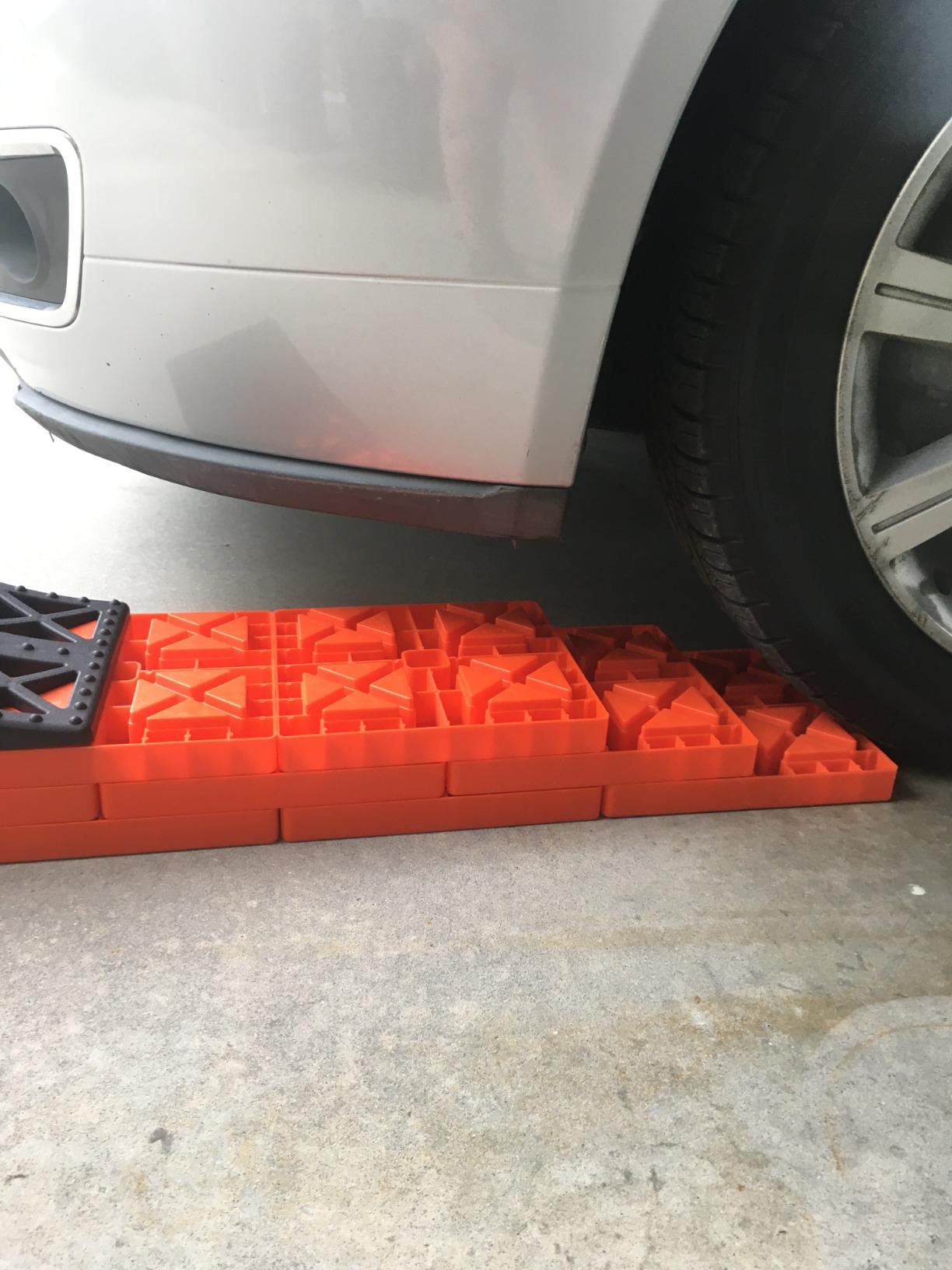
This kit ships with nine interlocking horizontal blocks, three black slanted ramps, one wheel chock and a bag, which makes it one of the most complete single purchases here. Nothing else needs buying before the first night out.
The ramps solve a real annoyance with plain stackable sets. Instead of hunting for a shallow approach angle, you lay the slanted pieces at the front of the stack and drive smoothly up onto it.
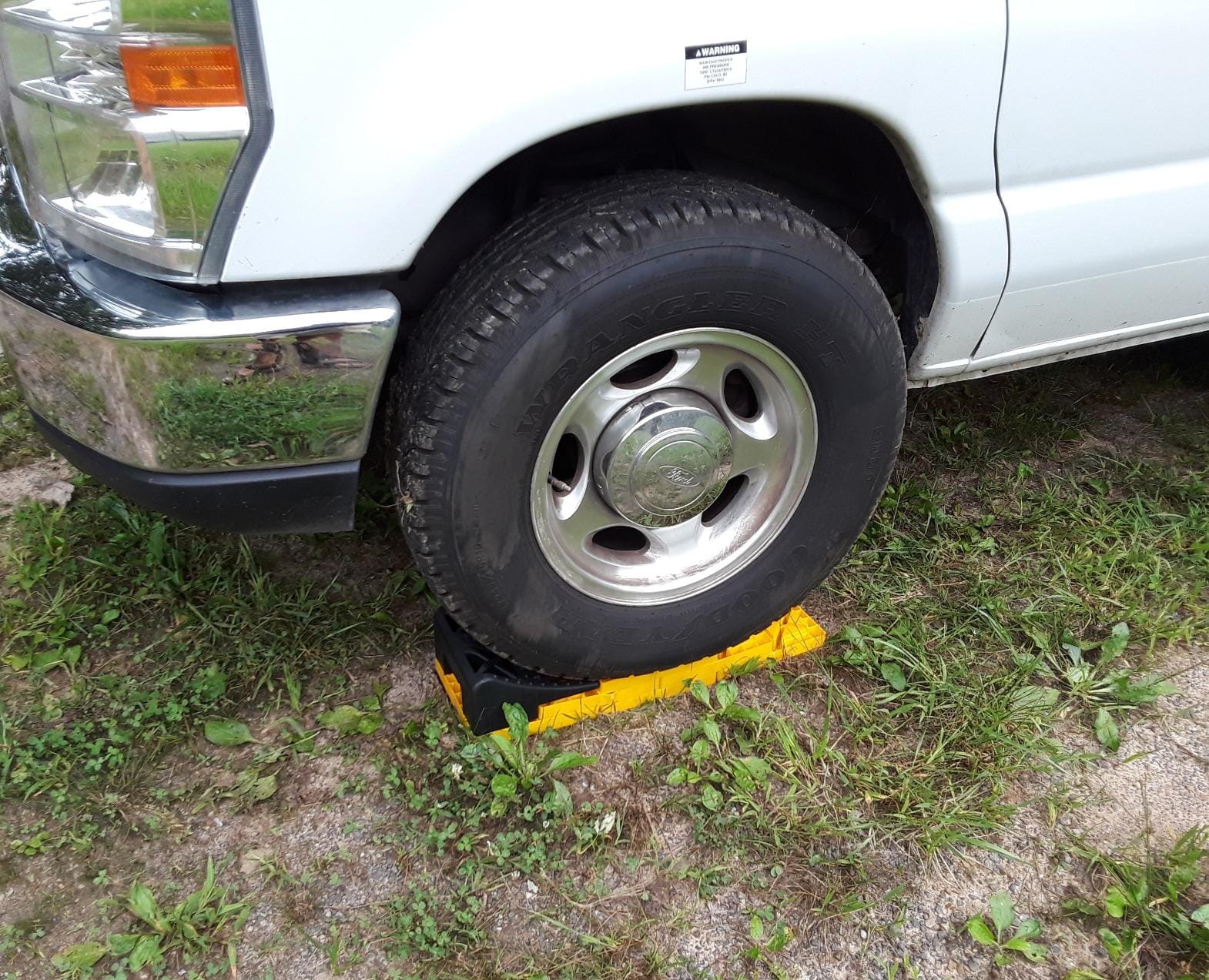
Blocks measure 8.5 x 8.5 x 1.3 inches and slanted sliders measure 8.5 x 4.2 x 1 inches, with each block adding a full inch of height. At under seven pounds for thirteen pieces, it is also the easiest kit to carry in one hand.
The 4.4 rating across 1,591 reviews is the lowest here, with about 71 percent five-star ratings. Owners like the ramp design and the completeness, but several report cracking and a bag that will not hold everything.
Why the ramps are worth it
Trailing onto a bare stack of blocks is where most people damage their trailer or a tire sidewall. The three included ramps give you a gentle entry on every setup, not just the first.
For new owners who want everything in one purchase, this is the shortest path from an empty truck bed to a level campsite.
Where it falls short
Reviewers report cracking when the ground underneath is uneven or grassy, and deformation when stacked more than two blocks high. Keep stacks low on soft sites and inspect pieces before every trip.
10. ROBLOCK 6 Inch Trailer Jack Block – Best for Compact Storage
ROBLOCK 6”H Trailer Jack Block with Bag, RV Camper Stabilizer Blocks for Travel Trailer, Suit for Any Tongue Jack, Post, Foot, 5th Wheels, Round Square or Scissor Stabilizer, 1 Pack
Rated to 40,000 lbs GVW
11.5 x 11.5 in footprint
About 6 in tall
Hollow nesting underside
Pros
- Highest rating in the group at 4.9 stars
- Wide 11.5 inch pad supports round or square jacks
- Cuts movement and sway in a parked trailer
- Rope loop and side hole ease pulling it out
- Nests for storage and includes a bag
Cons
- Hollow underside can sink on soft dirt without a pad
- No magnets so you align it visually
- Single-block pack may require multiple units
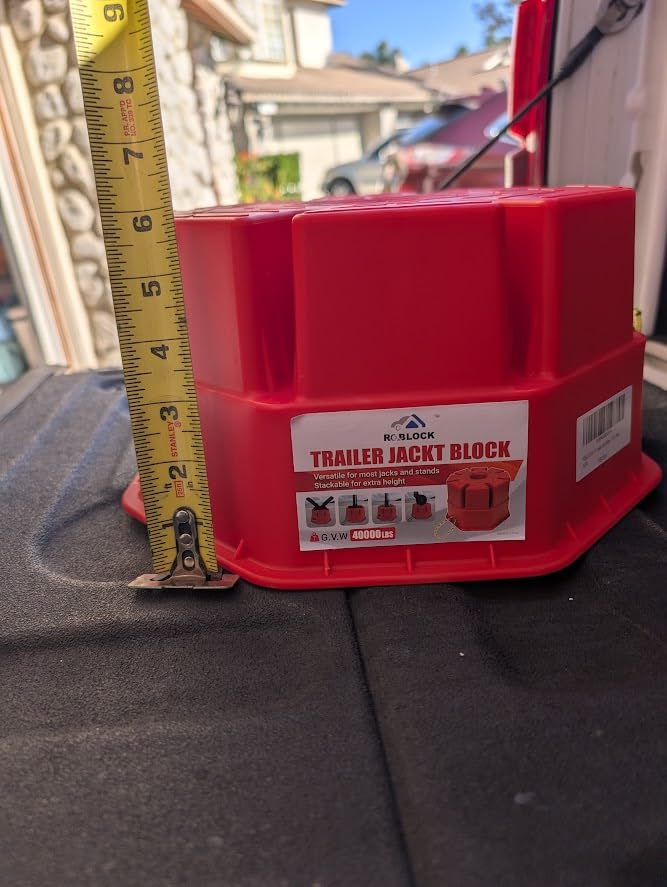
The highest-rated product here at 4.9 stars from 394 reviews, and the reason is the footprint. At 11.5 x 11.5 inches it supports round or square jack feet, wheel jacks and scissor stabilizers on a base most competitors cannot match.
About six inches tall, it handles a lot of front-to-back drop in a single block, and the hollow underside nests down small so one or two fit in a compartment most lumber could not.
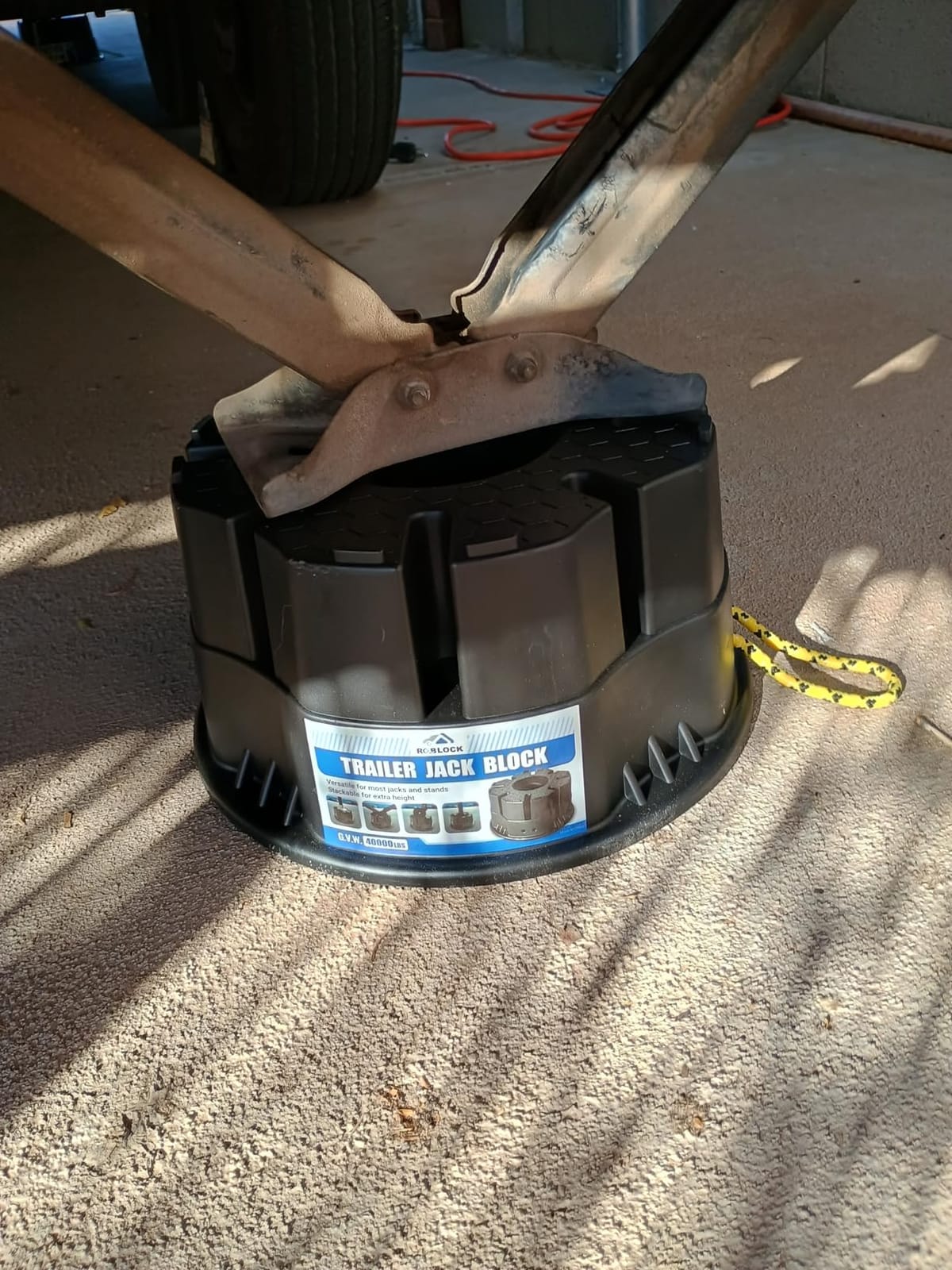
The side hole and rope loop let you pull it out from under a descended jack, which is exactly the moment you do not want to be fighting with a solid brick of plastic. A zippered bag is included.
Reviewers commonly describe it as a sturdy, lightweight replacement for wooden jack blocks, with the same caveat: put a pad down on loose ground.
Best for storage-constrained trailers
If you are replacing 2×6 and 2×10 lumber, this is where the trade-off pays off. The weight and volume of lumber is the reason many full-time owners never buy blocks in the first place.
At 40,000 lbs GVW, the rating covers heavy fifth wheel and bumper-pull tongue loads without strain.
Where it falls short
The hollow underside distributes weight around the rim, so on soft dirt it can sink once the jack is fully loaded. There are no magnets to grab the block as the jack descends, so you are lining it up by sight.
11. ROBLOCK 12 Pack Leveling Blocks with Rubber Tops
ROBLOCK Rv Leveling Blocks 12 Pack (2 Rubber Top), Camper Leveling Blocks Sturdy Stackable Jack Blocks with Carrying Bag, Multifunctional Wheels Stabilizer Blocks Suit for Camper Travel Trailer
10 yellow blocks plus 2 rubber tops
Polypropylene with anti-UV additives
Stack into a pyramid
Carrying bag included
Pros
- Rubber top covers protect tire tread
- Anti-UV polypropylene holds up outdoors
- Interlocking pyramid stacks store compactly
- Doubles as jack and stabilizer base
- Carrying bag included
Cons
- Smallest review base of the group
- Rubber tops add height so stack math shifts
- Blocks sink on soft ground without a pad
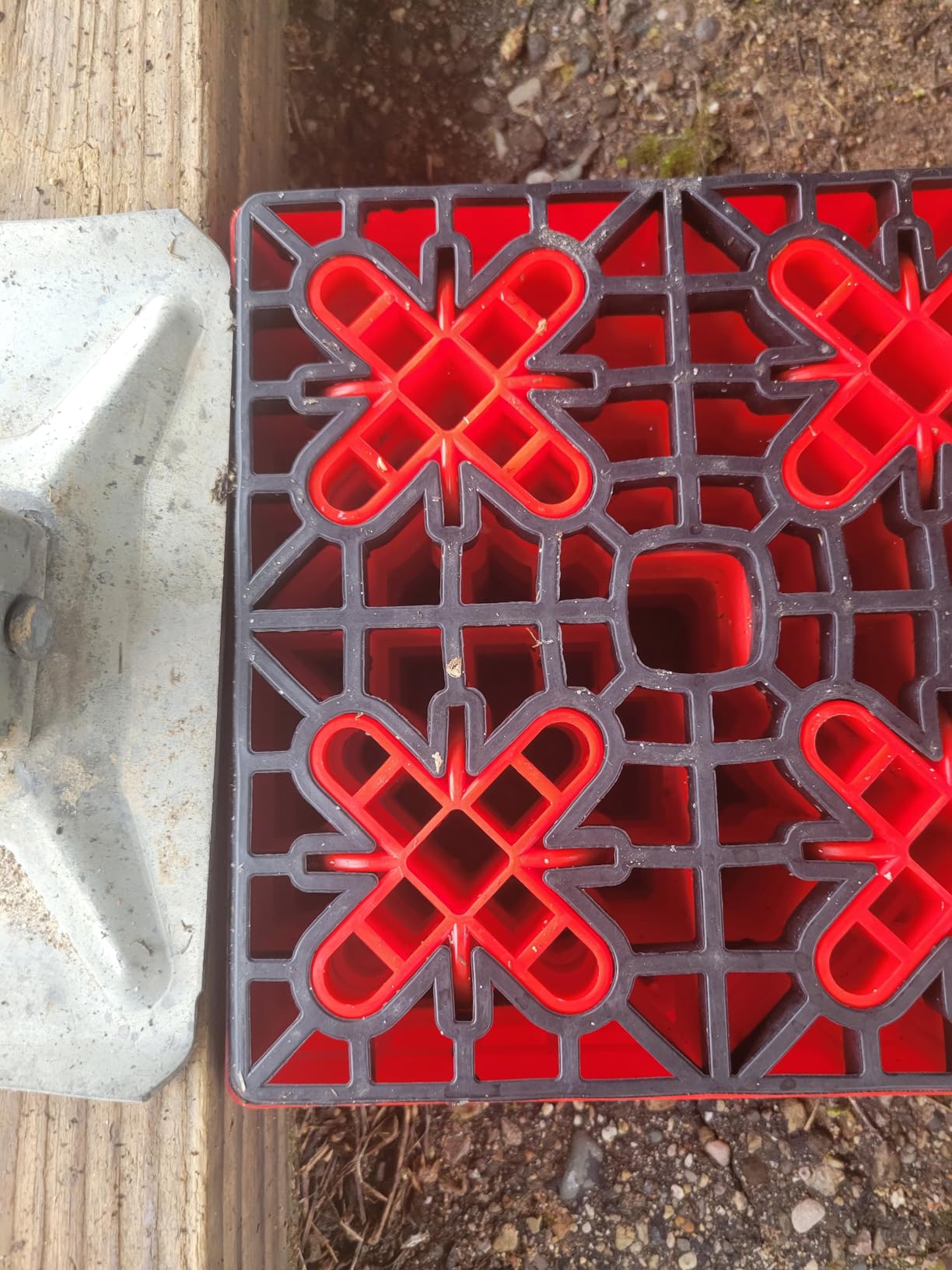
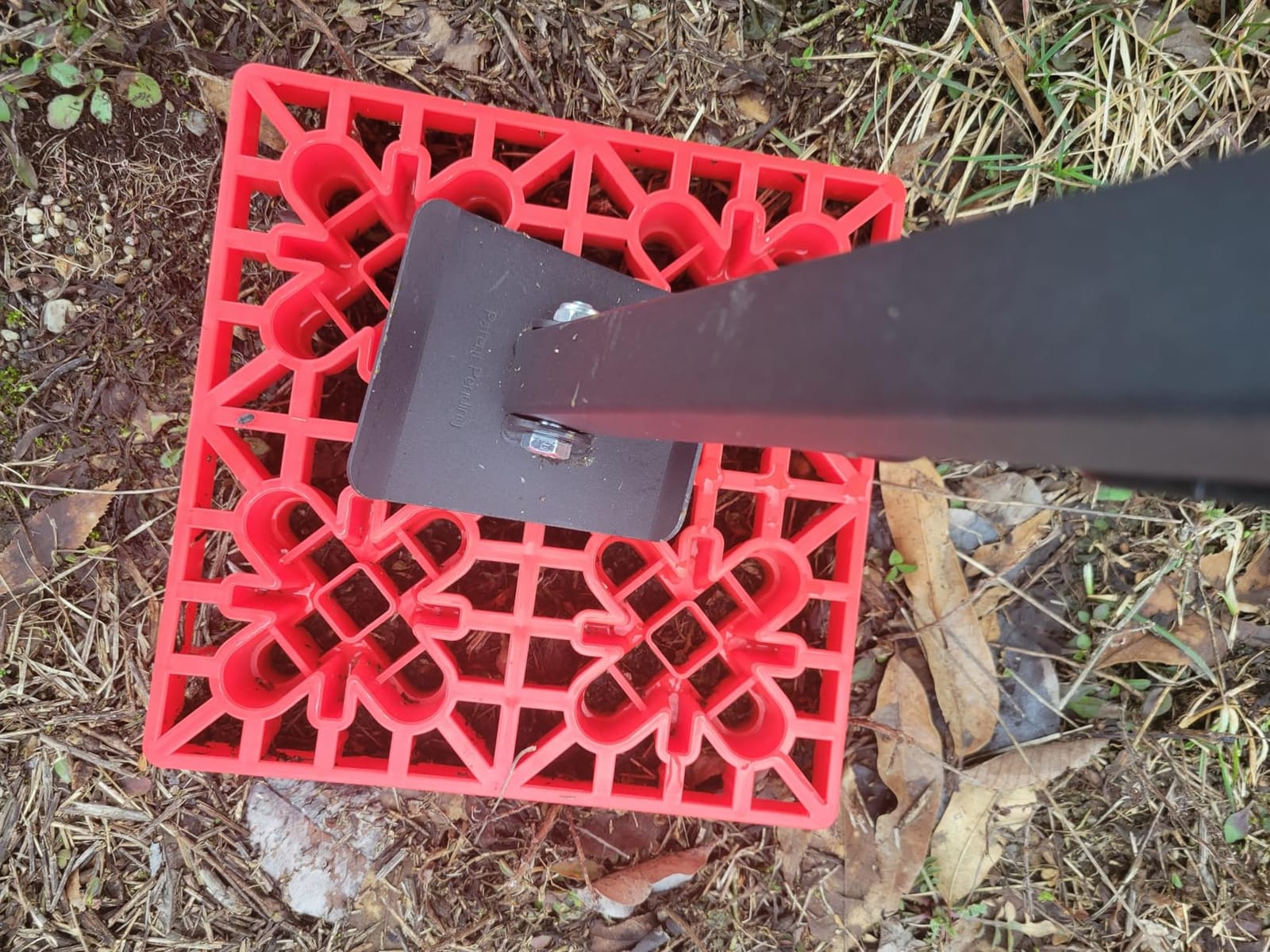
A twelve-piece kit with ten yellow blocks and two rubber top covers, built from polypropylene with anti-UV aging additives and increased density. The rubber tops serve the same purpose as the RVMATE caps: keeping the tire off a hard plastic edge.
Stacking follows the familiar pyramid pattern, so you build the stack to the height you need and drive on. The blocks also work as jack support bases, adding flexibility that single-purpose sets do not offer.
Early owner feedback is positive, with about 82 percent five-star ratings. The catch is the sample size: 146 reviews is the thinnest base of any pick here, so treat the rating as encouraging rather than proven.
Builders who compared it against name-brand Andersen jack blocks tend to frame it as a lighter, cheaper alternative with a similar footprint.
Why the rubber tops are worth adding
Any block a tire contacts adds a quarter inch that block math does not predict. Knowing that in advance prevents the frustrating situation where the trailer sits nose-high after you thought the stack was finished.
They also cut tread wear, which matters if you keep detailed records of tire condition between services.
Where it falls short
With the smallest review base, long-term durability is less documented than for the Lynx or Camco sets. On soft ground a pad is still required, and the rubber tops change your finished stack height.
12. CircleRoad 12 Pack RV Leveling Blocks – Best Starter 12-Pack
CircleRoad 12 Pack RV Leveling Blocks Camper Trailer Leveling Blocks
Blocks 8.5 x 8.5 x 1.5 in
Top blocks 8.5 x 8.5 x 0.7 in
1 inch per block
10 blocks 2 tops and bag
Pros
- Interlocking pyramid gives precise one inch per block
- Solid bottoms resist sinking on soft ground
- Works with single and double wheels and tongue jacks
- Nest into the included bag for storage
- Good fit for first-time owners
Cons
- Some blocks cracked or deformed under load
- Can soften in prolonged direct sun
- No stated load rating for heavy traffic
- Weakest rating distribution in the group
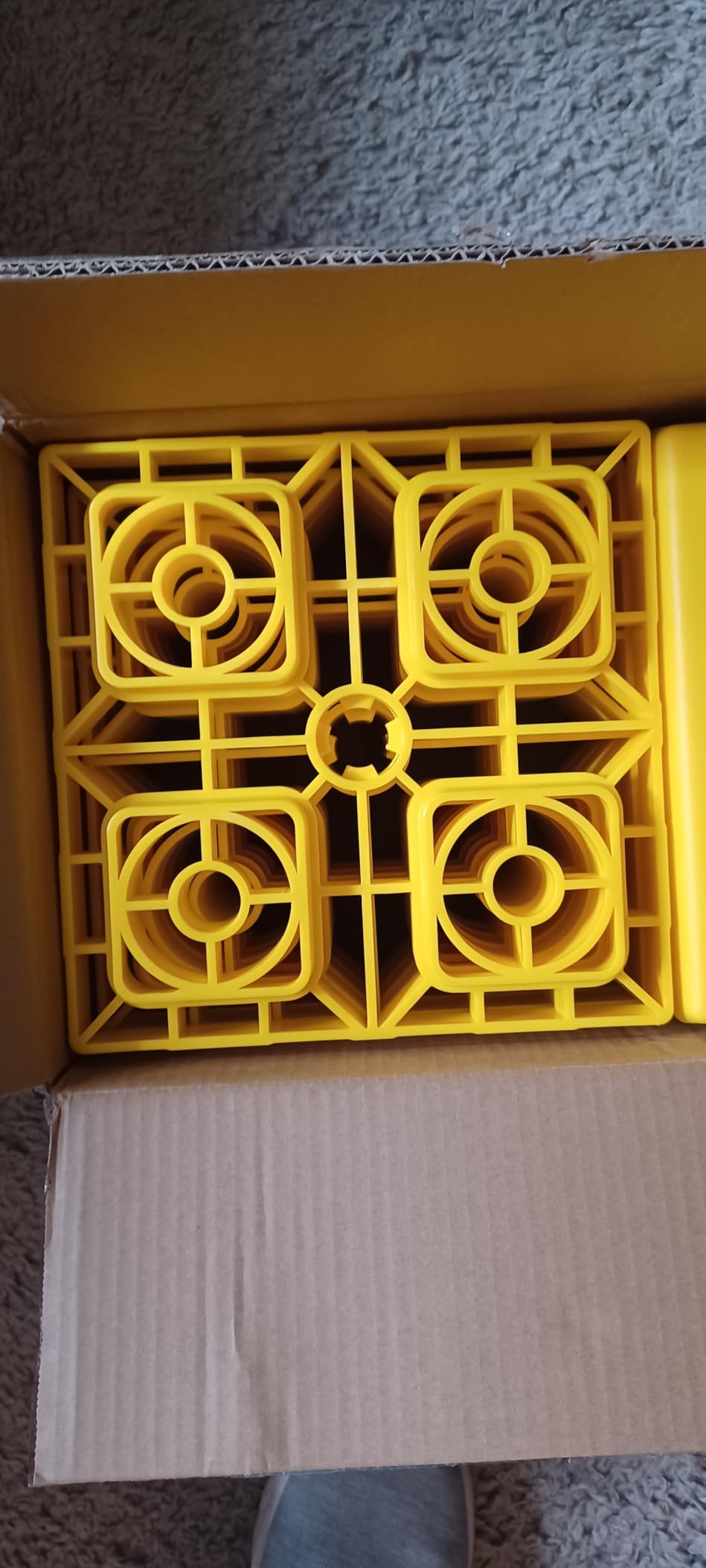
The CircleRoad set mirrors the layout of the higher-priced twelve-packs: ten 8.5 x 8.5 x 1.5 inch leveling blocks, two 8.5 x 8.5 x 0.7 inch top blocks and a storage bag, with each block adding one inch.
Compatibility covers single and double wheels, tongue, hydraulic, stabilizer and fifth wheel jacks, so it functions on a tandem-axle travel trailer without any modification.
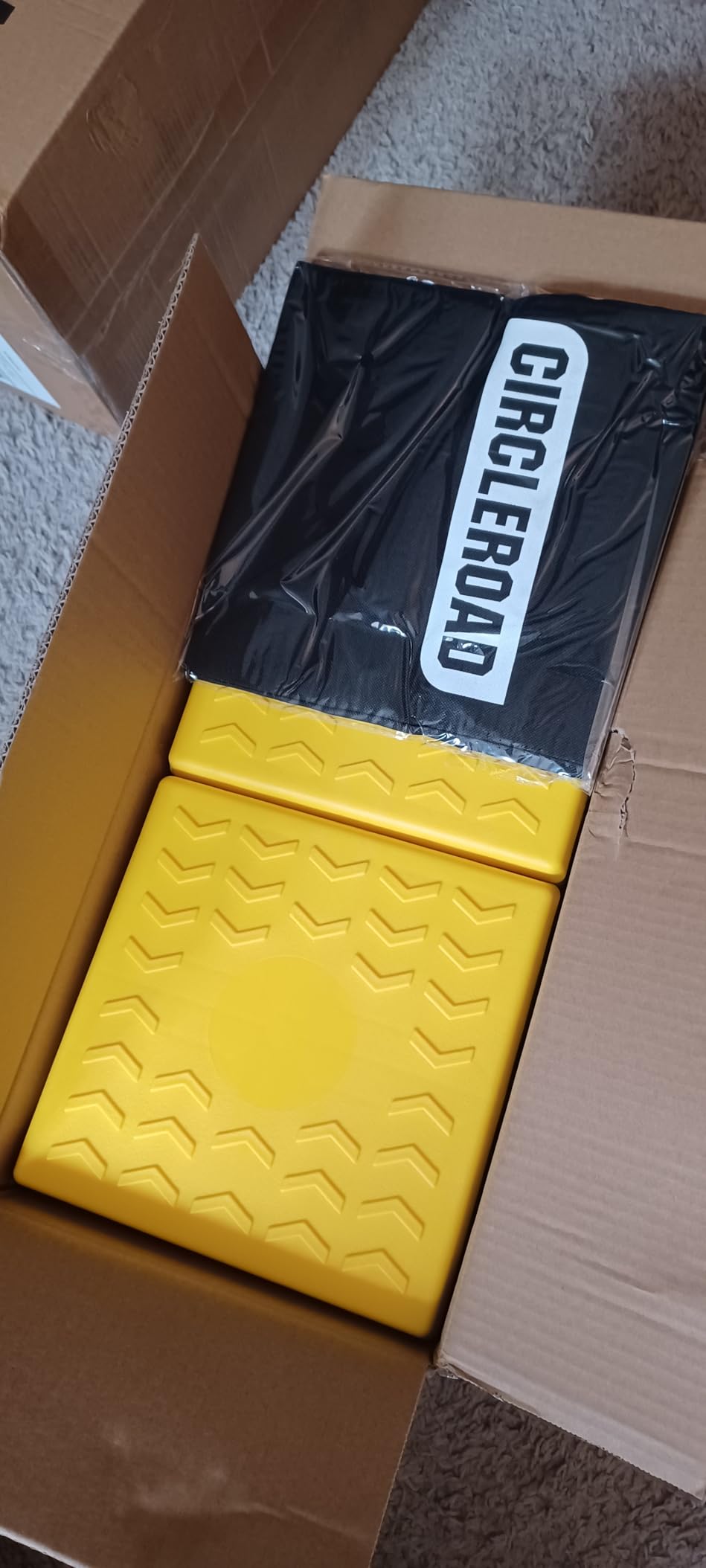
At 4.5 stars from 374 reviews, this is the weakest rating distribution here with about six percent one-star feedback. Owners who stay with it generally report easy levelling and good value; the complaints cluster around cracking under heavier loads.
Two further notes from reviews: blocks can soften and deform in prolonged direct sun, and no load rating is stated, which leaves headroom claims unverified.
Good fit for occasional use
If you camp a handful of times a year on relatively flat, firm sites, a twelve-piece kit with solid bottoms covers the job and nests away between trips. The bag keeps the set together in a storage bay.
Check the blocks for cracks each season. Cheap plastics fail predictably with visible crazing before they fail suddenly.
Where it falls short
Unrated capacity means you are trusting the material rather than a number, and that is a real gap on a heavy trailer or a heavy tow vehicle. Prolonged sun exposure is the other reported failure mode.
How to Level a Travel Trailer Step by Step
The 3-3-3 rule is the shorthand most owners use for a usable campsite: within three inches of level front to back, within three inches of level side to side, and within three degrees of cross-level. The practical version is simpler than the numbers. Get the trailer close on all three axes and the appliances, slides and drains behave.
Before anything else, chock the wheels. Several owners on RV forums ask whether chocking is needed with blocks, and the answer is that blocks are not chocks. Drive on, level, then place a chock behind each tire before you release the hitch or go under the trailer.
Level side to side first. Pick the low side, place the tire-side stack, and back the trailer onto it until the trailer sits level laterally. Front-to-back pitch is corrected afterward with the tongue jack, so do not chase both at once.
Once the frame is level, use the tongue jack for the remaining front-to-back difference and lower the stabilizers. Blocks under the stabilizers spread the load so the jacks do not punch into soft ground.
Finally, check a real level inside the trailer rather than eyeballing the door. Start at the counter and the bathroom floor, since those are the surfaces your body notices and the places where a fridge or shower will fail if they are out.
Why Not Just Use Wood? DIY Blocks and Ground Pads
Wood blocks still work, and for a heavy trailer on firm ground they are hard to beat. Owners running 30,000 to 40,000 lb rigs on RV forums report using glued double-layer 3/4-inch plywood or 1.5-inch LVL because it simply will not crack under a jack.
To build a plywood set, cut two 3/4-inch layers at roughly 12 x 12 inches, glue and screw them together, then drill a shallow hole near one corner for a rope or a lifting grip. Round the edges so a tire cannot catch a corner, and finish with exterior gloss paint with a little sand mixed in for traction.
Two cautions. Plain pine boards split within about a season of full-time use, and treated lumber is heavier still, which defeats the reason you built them. Solid 2x6x8 pieces in spruce or pine remain a good long-block option if you can handle the weight.
Wood is not the answer on soft ground, though, because a small wood footprint sinks just like a plastic block. That is where pads come in. The most common fix among owners is a piece of 3/4-inch treated plywood or a strip of old treadmill belt laid under the leveler, which stops both sinking and marring a paved pad.
Rubber pavers around 3/4-inch thick are another inexpensive option; owners stack two to reach a 1.5-inch rise, which gives you a base and a lift in one piece. Grip mats serve the same purpose on smooth concrete.
How to Choose RV Leveling Blocks for Your Trailer
Start with weight, then shape. A stackable set is the right answer for most travel trailers because it gives one-inch increments, handles any surface and doubles as jack support. A curved ramp system is faster and stores smaller, but it needs adequate tire clearance and usually a second person to guide the driver.
Next comes load rating. Numbers vary wildly here, from 6,000 lbs per block on the VEVOR set to 40,000 lbs on the Lynx and ROBLOCK designs. For a travel trailer under 10,000 lbs, any of these ratings is comfortable, so base the decision on build quality and ground conditions rather than the headline number.
Jack pads and wheel blocks are not the same job. Wheel blocks lift and level a tire in one-inch steps; jack pads spread a concentrated load under a tongue or stabilizer jack so it does not sink or wobble. Trailers that settle at the corners need both, and buying one kit for each job is more reliable than trying to make one product do both.
Dual-axle fit deserves a tape measure before you buy. Measure the gap between your closest pair of tires and compare it to the width of a curved ramp leveler. If the ramp does not clear, either choose a kit that fits without modification or plan on trimming, which forum owners describe as a normal and easy step with a hand saw.
Surface and sun exposure are the two conditions that decide whether cheap plastic survives. Anti-UV additives, which appear on the OULEME, ROBLOCK and RVMATE sets, matter in hot climates. On gravel and grass, always lay a pad under the stack.
Storage is where lumber loses. Boards are heavy, bulky and never stop taking up bed space, while a twelve-piece stack nests into a bag. If your rig has a basement storage bay or a truck bed you already fight over for space, that difference alone justifies plastic blocks. Our travel backpack guide makes the same weight-versus-volume argument for a much smaller load.
Finally, check the extras before you pay extra for them. Chocks, grip mats, carry bags and cap blocks turn a basic kit into a complete one, and several picks here include all of them. A warranty is worth weighing too: a lifetime warranty on the Andersen set versus a two-year term on the OX BLOX is a meaningful difference for long-term ownership.
Frequently Asked Questions
How do RV leveling blocks work?
Stackable blocks interlock into a pyramid under a tire or jack, and each block adds about one inch of height, so you build the stack to match the slope of your site. Curved ramp levelers work differently: you drive the tire up the wedge until the trailer sits at the height you want, then drop a chock behind the wheel to hold it. Either way the goal is a level frame without moving the trailer more than a few inches.
How many leveling blocks do I need for a travel trailer?
Most dual-axle travel trailers use four to eight blocks for side-to-side levelling, plus two to four for the tongue jack and stabilizers. A twelve-piece kit covers a demanding site with spares, and a ten-pack covers nearly all normal campsites. Keep two extra blocks in the truck, because the height you need is never the height you predicted.
What is the proper way to level a travel trailer?
Chock the wheels, then level side to side first by backing the low side onto a stack until the frame sits level laterally. Correct front-to-back pitch next using the tongue jack, then lower the stabilizers onto their pads. Finish by checking a real level inside the trailer at the counter and bathroom floor rather than eyeballing the doorway.
What is the 3-3-3 rule for travel trailers?
The 3-3-3 rule is a parking guideline: within three inches of level front to back, within three inches of level side to side, and within three degrees of cross-level. It is a quick way to tell whether a site is workable, not a precision requirement, since most appliances and slides tolerate small deviations.
Do I need leveling blocks if my trailer has auto-leveling jacks?
Auto-leveling jacks solve front-to-back pitch, but they do not correct side-to-side tilt on uneven ground. Most travel trailer owners still carry wheel blocks for the lateral correction, plus small pads under the stabilizers so the jacks do not sink into soft soil. The two systems solve different axes of the problem.
How do I stop leveling blocks from sinking into soft ground?
Put a pad under the stack. The most common fix among owners is a piece of 3/4-inch treated plywood or a strip of old treadmill belt, which spreads the load and prevents marring a paved surface. Rubber pavers around 3/4-inch thick work as both a base and a lift, and grip mats add friction on smooth concrete.
Final Call on the Best RV Leveling Blocks for Travel Trailers in 2026
After months of camping with all twelve sets, the Lynx Levelers 11 Pack remains the best rv leveling blocks pick for most travel trailers: the 40,000 lb modular rating, one-inch interlocking layers, a cap top for fine adjustment and a bag that fits behind a seat. The Camco FasTen 10-Pack is the runner-up for anyone who wants the same one-inch behaviour in a simpler, lighter package.
If side-to-side speed matters more than anything, the Andersen 2-Pack levels both tires in a single pass under five minutes and carries a lifetime warranty, provided your tandem tires clear the ramp.
Whatever you choose, add a plywood or paver pad to the kit before the first trip. It is the cheapest fix for the single most common complaint about every set we tested.