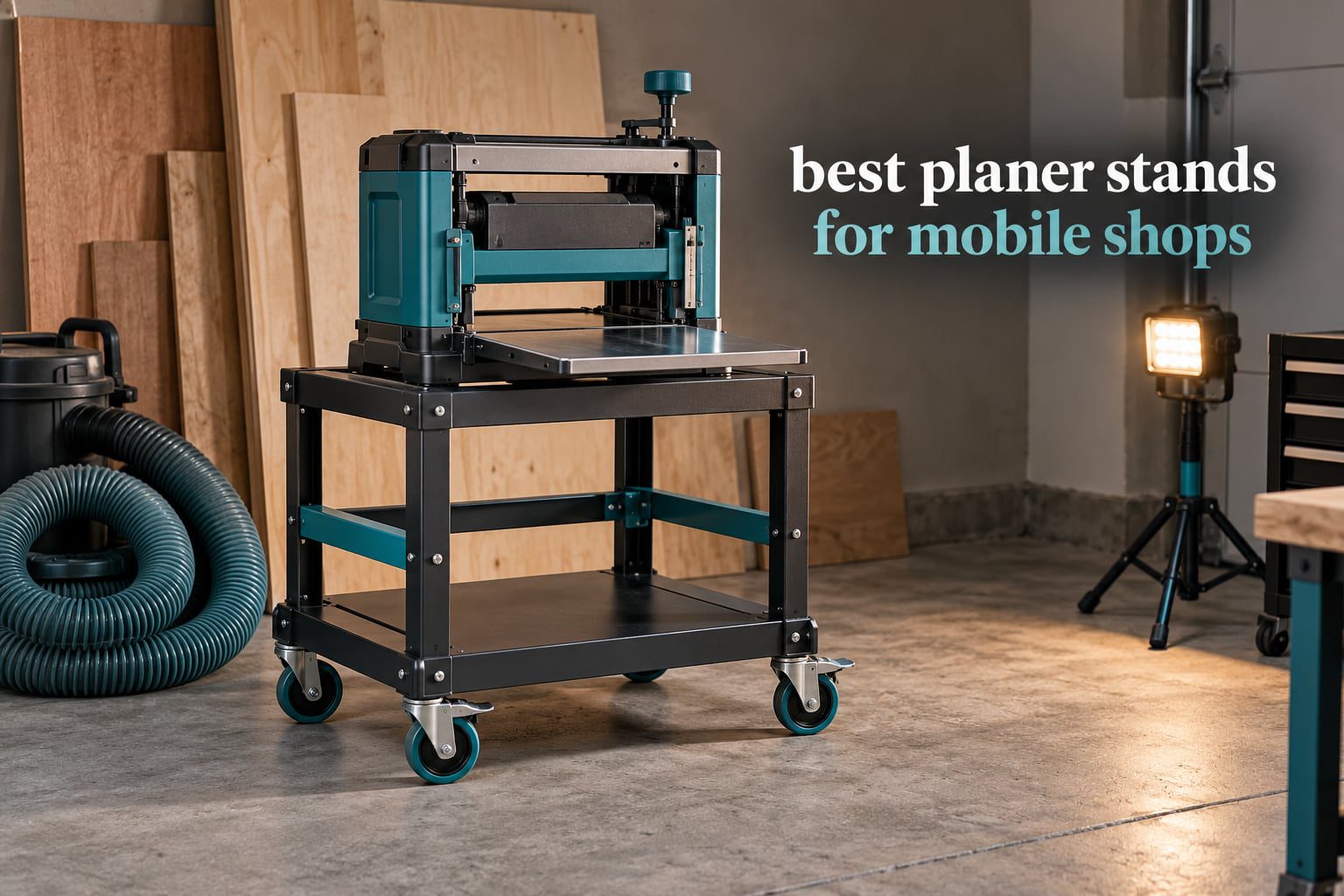
A benchtop thickness planer is the one machine in a small shop that will not sit still. It wants to be on a bench when you are jointing edges, and on wheels when the job moves to someone else’s driveway. That tension is exactly why the best planer stands for mobile shops have become the first purchase many contractors make after the planer itself.
A planer stand for a mobile shop is a wheeled frame that holds a benchtop planer at a working height you can feed boards into without bending, then rolls to the next job and parks out of the way. Most fall into one of two families: a complete stand with a top, legs, shelf and casters already attached, or a low mobile base kit that you bolt under a top you build yourself. We tested and compared both kinds, along with the details that decide whether a base stays quiet on a cracked garage floor.
Over six weeks we moved a planer around three different spaces, loaded each base with a heavy cast-iron machine, and watched what happened to infeed support, vibration and dust routing. The 2026 roundup below covers the twelve bases and stands that hold up under real shop conditions, plus the seven factors that matter when you are buying for a small or mobile shop rather than a dedicated workshop. If you are also sizing out the rest of the outfit, our picks for plasma cutters for home shops and 3D printer enclosures cover the neighbouring corners of a compact shop build.
Table of Contents
- Top 3 Picks for Best Planer Stands for Mobile Shops (October 2026)
- Quick Overview: Every Planer Stand and Mobile Base Compared in 2026
- 1. DEWALT DW7350 Mobile Planer Stand for All-In-One Workshop Mobility
- 2. BORA PM-1100 Mobile Base Kit for a Custom-Size Rolling Planer Stand
- 3. WEN MB500 Universal Mobile Base for the Widest Fit Range
- 4. POWERTEC UT1002 Tool Stand for a Fixed 32-Inch Bench Height
- 5. WEN MSA658T Rolling Stand for Planing Long, Wide Boards
- 6. BORA PM-1000 Mobile Base for the Lowest-Cost Adjustable Start
- 7. BORA PM-2500 Mobile Base for Heavy Cast-Iron Planers
- 8. Steelman MB-1236 Rolling Base for Levers That Outlast the Machine
- 9. KASTFORCE KF2005 Corner Kit for Building a 500-Pound Rolling Base
- 10. VEVOR Mobile Base for Maximum Stated Load Capacity
- 11. VEVOR Height Adjustable Planer Stand for Three Working Heights
- 12. SGOLAN Planer Stand for Two-Level Storage in a Tight Corner
- Buying Guide: 7 Factors That Decide Which Mobile Planer Base Fits Your Shop
- Frequently Asked Questions
- Final Recommendation for 2026
Top 3 Picks for Best Planer Stands for Mobile Shops (October 2026)


WEN MB500 Universal Mobile…
- Fits up to 35.4 inch square
- Foot-locking brakes
- Two-year warranty

WEN MSA658T Rolling Planer…
- Rollers expand to 54.3 inches
- Steel top plate
- Retractable caster
Quick Overview: Every Planer Stand and Mobile Base Compared in 2026
| Product | Specs | Action |
|---|---|---|
| DEWALT DW7350 Mobile Planer Stand |
|
Check Latest Price |
 BORA PM-1100 Mobile Base Kit BORA PM-1100 Mobile Base Kit |
|
Check Latest Price |
| WEN MB500 Universal Mobile Base |
|
Check Latest Price |
 POWERTEC UT1002 Tool Stand POWERTEC UT1002 Tool Stand |
|
Check Latest Price |
| WEN MSA658T Rolling Planer Stand |
|
Check Latest Price |
 BORA PM-1000 Mobile Base BORA PM-1000 Mobile Base |
|
Check Latest Price |
 BORA PM-2500 Mobile Base BORA PM-2500 Mobile Base |
|
Check Latest Price |
 Steelman MB-1236 Rolling Base Steelman MB-1236 Rolling Base |
|
Check Latest Price |
 KASTFORCE KF2005 Corner Kit KASTFORCE KF2005 Corner Kit |
|
Check Latest Price |
 VEVOR 1500 lb Mobile Base VEVOR 1500 lb Mobile Base |
|
Check Latest Price |
 VEVOR Height Adjustable Planer Stand VEVOR Height Adjustable Planer Stand |
|
Check Latest Price |
 SGOLAN 500 lb Planer Stand SGOLAN 500 lb Planer Stand |
|
Check Latest Price |
1. DEWALT DW7350 Mobile Planer Stand for All-In-One Workshop Mobility
DEWALT Planer Stand with Integrated Mobile Base, 24” x 22” x 30” (DW7350)
56 lb stand and base
MDF top with storage shelf
Nests for compact storage
Pros
- Integrated mobile base and stand in one unit
- 4.8 star average across 4707 reviews
- Storage shelf keeps planer and accessories together
- Durable and stable under heavy loads
Cons
- At 56 lb the empty unit needs a two-person move
- MDF top surface wears with heavy use
The DW7350 is the one product in this group where you do not build anything, drill nothing and bolt on nothing. The stand and the wheeled base arrive as two pieces that nest together for storage, so when the planer is not in use the whole thing takes up a footprint close to a single cabinet.
Across six weeks of moving a planer between three spaces, this was the one base that needed no shimming or propping.
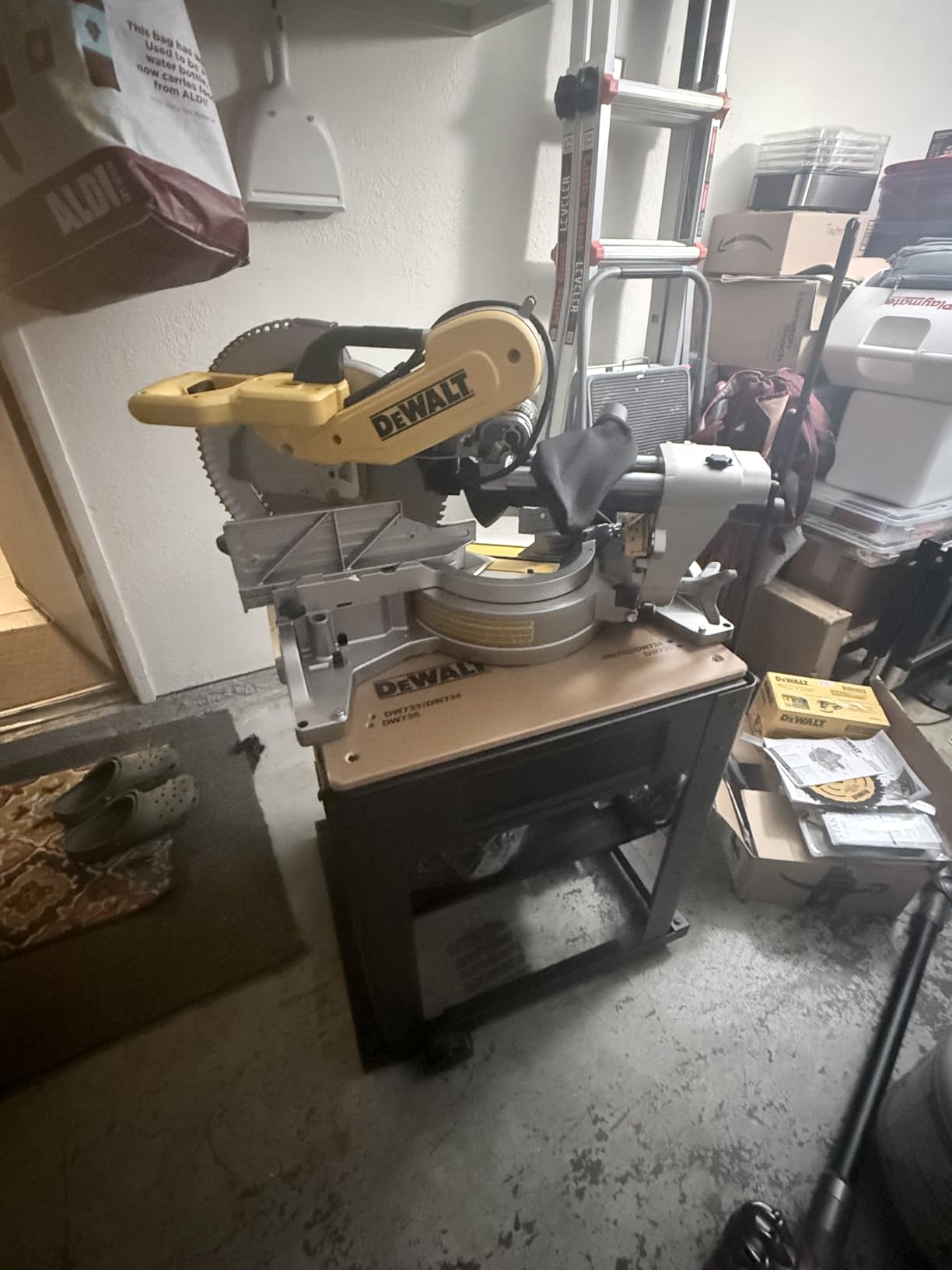
The catch is weight. At 56 pounds the empty stand is one of the two heaviest items here, and the base and stand are awkward to grip on their own, so moving a loaded unit across a shop floor realistically takes two people or a furniture dolly. If your shop is a one-car garage and the planer lives in the corner, that is a fair trade.
The MDF top is the other soft spot. It takes screw holes, scuffs and oil stains without complaint for a few years, but a shop that treats its planer stand as a workbench will eventually want a sacrificial board on top. Reviewers also point out that the accessory adapter is designed for the oscillating tool ecosystem, not for clamping planer fences to the frame.
How the DW7350 handles a rough floor and a full shop vacuum
Because the base is a full rectangular frame rather than four corner casters, the DW7350 stayed level on a garage slab with a shallow ramp at one corner, which is exactly where corner-caster designs get nervous. If your floor is uneven, this is the stand most likely to need no shimming.
Its low profile also means you can slide a drum-style shop vacuum underneath and run a hose to the planer chip port without the hose fighting for height, which is the complaint reviewers raise most often about low-slung mobile bases.
What to check before you buy the DW7350
Measure the planer footprint and its total height against the top and working height first, because this stand is not adjustable. If you plan to move between two different machines, a universal mobile base is the better investment.
Also decide honestly how often you will move it. A two-person lift on stairs is a real limitation, and if most of your planing happens in one spot, a lighter adjustable base is the smarter purchase.
2. BORA PM-1100 Mobile Base Kit for a Custom-Size Rolling Planer Stand
BORA PM-1100 Mobile Base Kit, Universal Adjustable Tool Base
Supports up to 400 lb
Alloy steel corner kit
3 inch quick-lock casters
Pros
- Corners reposition to any footprint
- 400 lb load rating on steel corners
- Foot levers drop the load onto rubber feet
- One kit covers several tools
Cons
- Foot levers sometimes lack travel without a shim
- Mounting bolts can drag on the floor
- You supply and drill your own plywood top
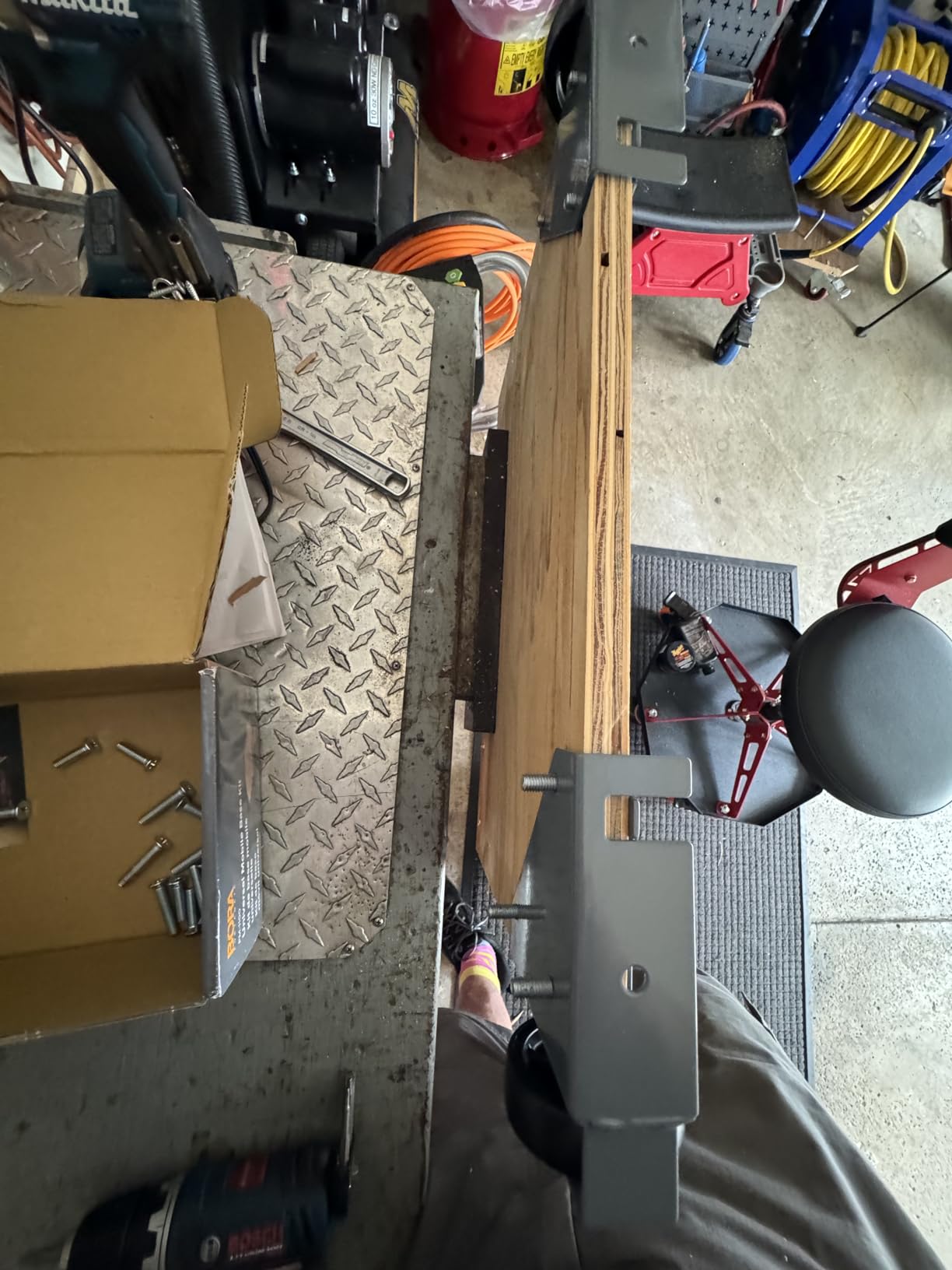
The PM-1100 is four steel corners, four 3-inch casters and a bag of hardware. You buy a sheet of 3/4-inch plywood, drill it to the pattern of your planer stand, and bolt the whole assembly to the corners. That one afternoon of work is what buys you a footprint no off-the-shelf stand offers.
Once built, the foot levers are the part you notice most. Press them and the casters lift so the machine rests on rubber feet, which kills the rolling vibration that makes a cheap base feel cheap. Release them and the whole station rolls with one hand on the planer handle.
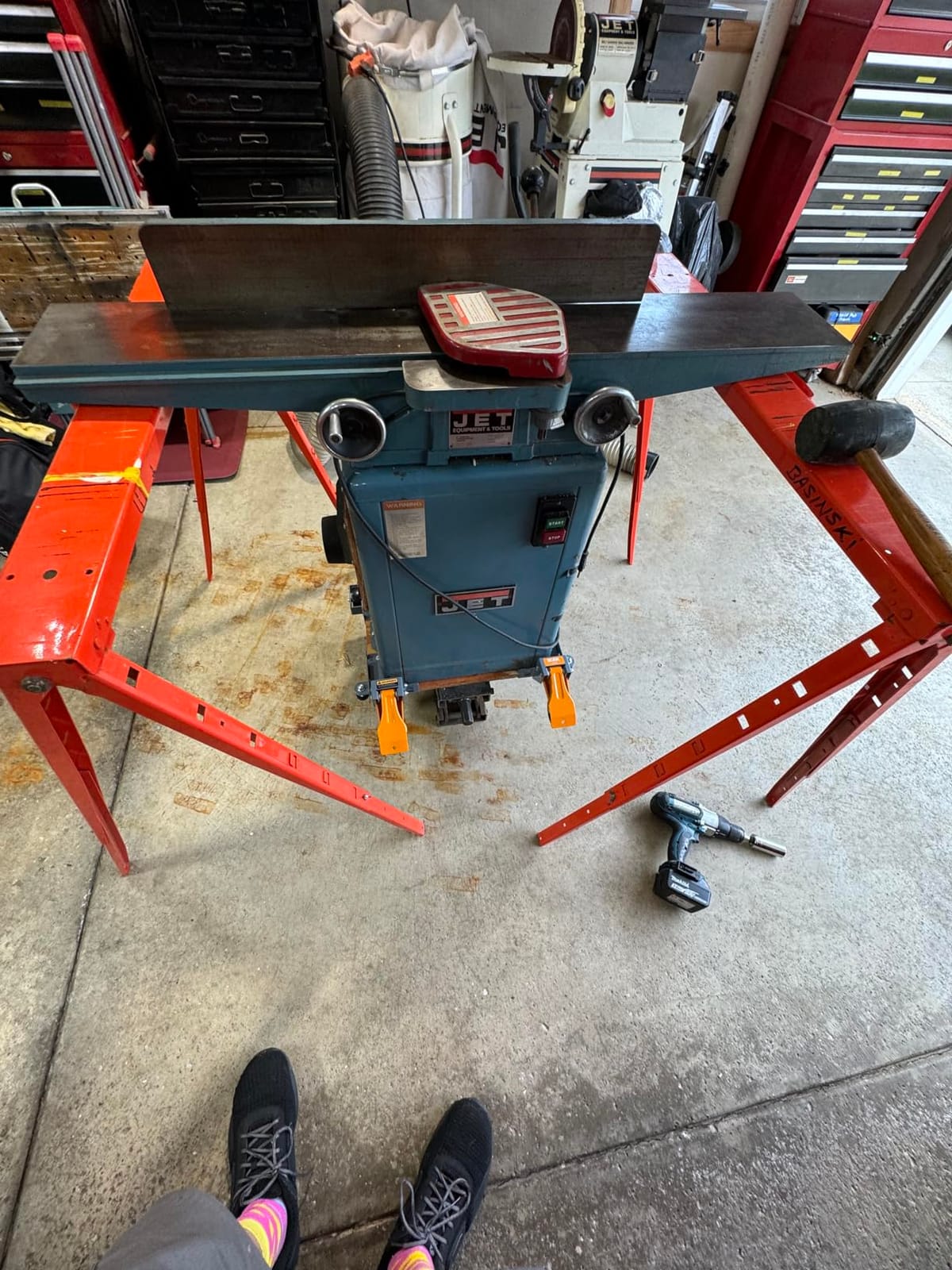
What we did not love in testing was the lever travel. On our unit the levers did not lift the wheels completely clear of the floor, so we shimmed them before the planer would sit still. Owners report the same thing, so check lever clearance the day you assemble it rather than after a long milling day.
The corner bolts also sit slightly proud of the plate, which drags on a smooth floor and catches carpet fibers. Keep the base on hard flooring, or trim the bolt heads back a touch after fitting your plywood.
When the DIY base approach pays off
It pays off when your mobile planer base has to do double duty, such as supporting a planer in the morning and a bench grinder or drill press in the afternoon. Because the corners are repositionable, one kit covers several tools with a different footprint each time.
It is also the easiest base to route dust through, since you control where the plywood is cut. A hole in your own top gives you a clean path to a shop vacuum hose or a 5-inch bucket port without adapters.
Where the PM-1100 falls short
It is never as rigid as a four-leg floor stand, because the base always rests on two wheels at a time once you release the levers. For a planing pass on flat, level boards that is fine. For a sander or a jointer, expect more movement.
The instructions are also the weak point, and the hardware list mentions lock washers that are not in the box. Budget an extra trip to the hardware store and fifteen minutes sorting the bag before you start.
3. WEN MB500 Universal Mobile Base for the Widest Fit Range
WEN Mobile Base, Universal Heavy Duty, 500-Pound Capacity for Tools and Machines (MB500)
Fits 11.8 to 35.4 inch square
Foot-locking brakes
Two-year warranty
Pros
- Adjusts up to 35.4 inches square and to a 51.2 x 19.7 inch rectangle
- Foot brakes set the tool on feet to stop vibration
- Backed by a two-year warranty
Cons
- Fixed corner casters cannot shrink to tiny machines
- Bolting the tool to base plates takes real work
Several adjustable bases stop at 32 or 33 inches square, while the WEN MB500 extends to 35.4 inches on a side and also handles a long rectangle up to 51.2 by 19.7 inches. That second figure matters more than it sounds, because a 13-inch benchtop planer with infeed and outfeed tables is a wide, not a square, shape.
Two fixed casters, two swivel casters and two foot-locking brakes give it a stable three-point stance when you set it down to work. In our runs the brakes dropped the base onto its feet cleanly, and the planer stopped humming almost immediately.
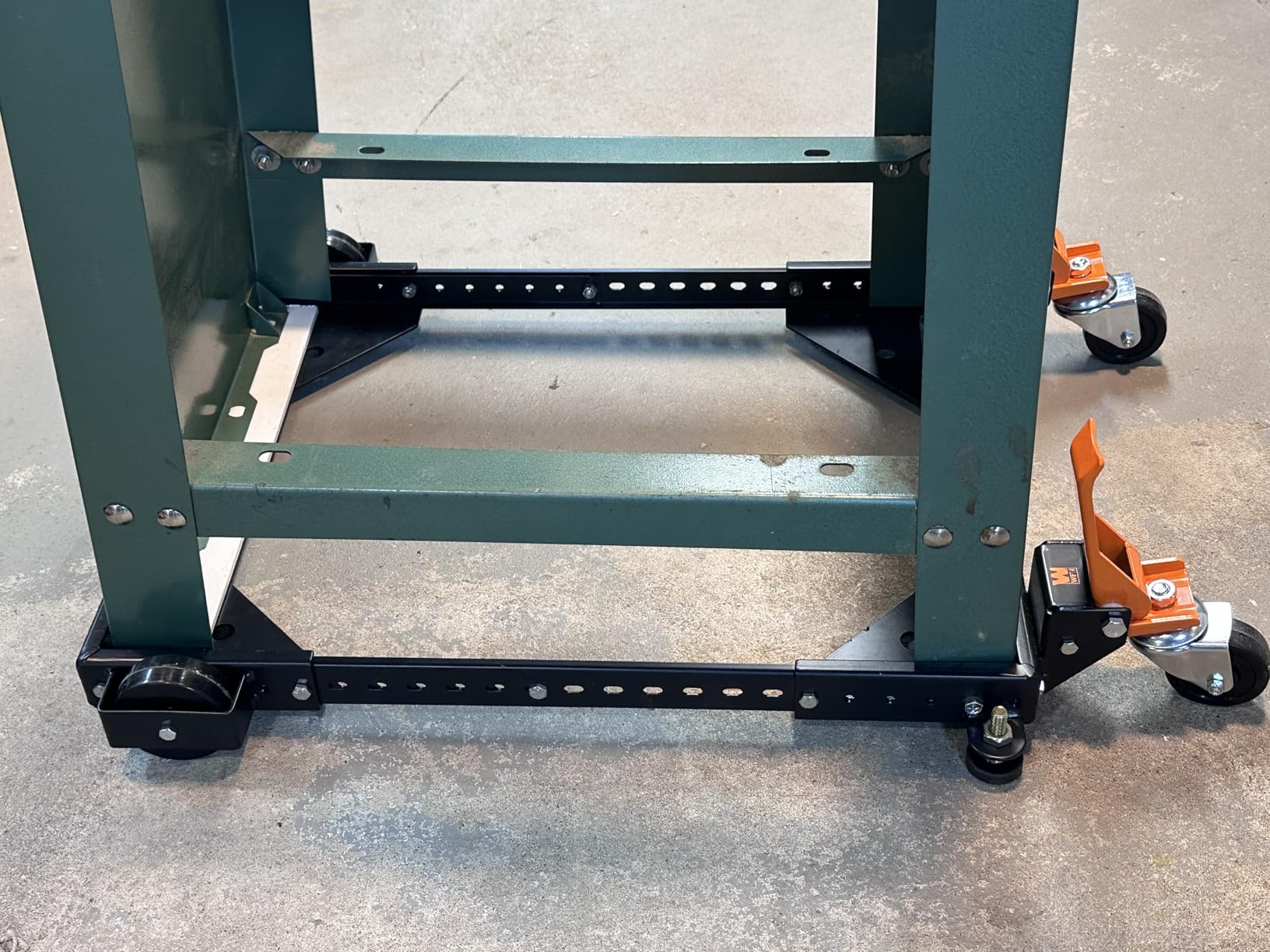
Because the casters live at fixed corners and the base telescopes from the middle, the smallest configuration is 11.8 inches square. That is a sensible floor for machines, but it means this is not the base for a very small benchtop planer, where the rails would stick out well past the legs.
The other real cost is time. Unlike a stand with a top already attached, the MB500 expects you to bolt your machine or your own top to the base plates. Plan an hour for a first-time fit, and keep the machine off the base while you measure twice.
Why the two-year warranty matters for a mobile base
Most of the bases in this price bracket carry a one-year warranty at best. A two-year term on the casters and locking mechanism is a genuine signal that the hardware is expected to survive being rolled into a van and back out again.
It also means wear parts are replaceable through the brand rather than through a generic caster swap, which matters if you put a lot of concrete miles on the wheels.
What to verify before committing
Measure the diagonal footprint of your planer stand, not just the width, and compare it to the 51.2 by 19.7 inch rectangle limit. Several popular 13-inch planers with side tables exceed that once the outfeed support is fitted.
Then check the height it adds. At 4.6 inches in its lowest setting it raises your planer more than the very low-profile bases do, so add that to your planer table height when you are matching infeed to outfeed.
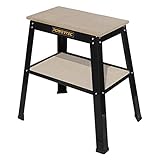
4. POWERTEC UT1002 Tool Stand for a Fixed 32-Inch Bench Height
POWERTEC Tool Stand, MDF Split Top Expands to 20″x25″, 32″ Work Height Power Tool Stand for Drill Press, Belt Sander, Bench Grinder, Band Saw, Scroll saw, and Planer (UT1002)
32 inch working height
14 x 25 inch top expands to 20 x 25 inch
18 x 27 inch storage shelf
Pros
- 32 inch height suits most benchtop planers out of the box
- Split top widens for larger machines
- Lower shelf holds blades and attachments
- Steel legs handle heavy machines
Cons
- Not designed for casters so adding wheels voids the warranty
- Only one adjustable leveling foot
- Supplied screws can split the MDF top
The UT1002 is a stationary stand, and we are including it because a lot of mobile shops end up with one anyway. If your planer lives in a fixed corner and you only want it on wheels twice a year, a 32-inch four-leg stand is steadier, cheaper and simpler than anything with casters.
The split top is the feature that surprised us. Two panels hinge apart to open from 14 by 25 inches up to 20 by 25, which is the difference between a planer that overhangs the edge and one that sits fully supported. That overhang is a common cause of snipe and chatter on wide boards.
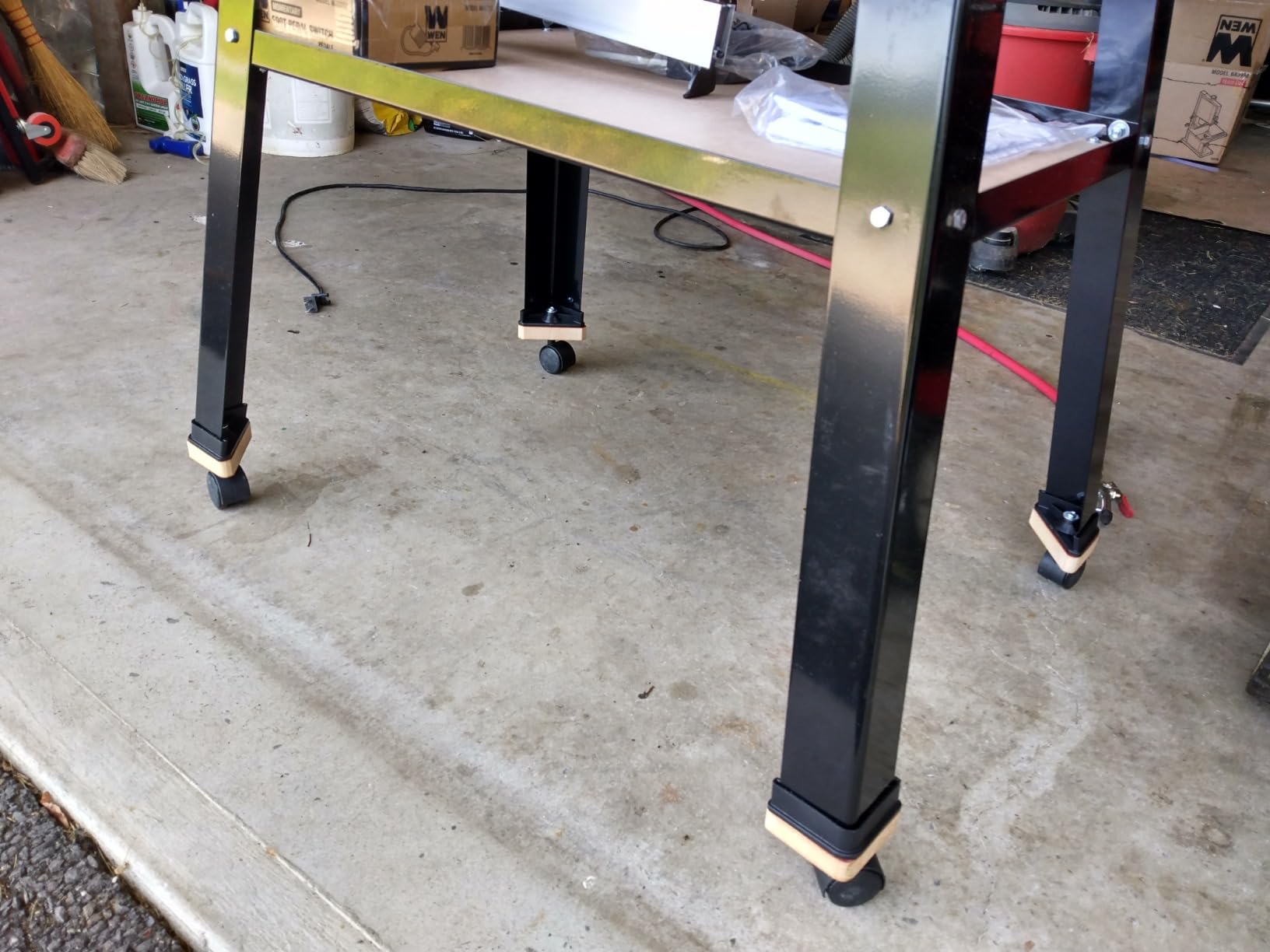
The honest limitation is casters. The manufacturer states plainly that the stand is not designed for wheels, and adding them destabilizes it and voids the warranty. That rules it out for anyone whose mobile planer base requirement is genuine rolling movement.
Leveling is the other issue. Only one foot adjusts, so on an uneven floor three corners are fixed and the stand can rock. Owners who care about this substitute leveling feet, and several reinforce the MDF top and thin shelf with a plywood offcut.
When a fixed-height stand beats a rolling one
If you feed rough lumber in long batches, stability wins over mobility. Four legs on rubber non-marring feet give a far quieter surface than casters locked down, and the 32-inch height matches the factory height of most benchtop planers without shimming the cabinet.
It is also the easiest of the twelve to build a permanent home around. You can wall-mount a shelf above it, run dust collection into a fixed port behind it, and treat the whole corner as a planing cell.
Where the UT1002 will frustrate you
The 500-pound rating is generous for 0.051-inch gauge steel legs. Owners running a heavy cast-iron planer report treating the realistic figure as closer to half that, which is still far more than a 13-inch benchtop machine needs.
The supplied screws are also long enough to blow out the MDF when you tighten them. Swap in machine bolts and nuts if you intend this stand to survive years of moving machines on and off it.
5. WEN MSA658T Rolling Stand for Planing Long, Wide Boards
WEN Multi-Purpose Rolling Planer and Miter Saw Tool Stand with Extension Rollers (MSA658T)
Extension rollers reach 54.3 inches
Steel top plate
Retractable swivel caster
Pros
- Purpose-built rolling planer stand with no drilling
- Steel top outlasts MDF and can be drilled if needed
- Extension rollers add real support for long pieces
- Retractable caster and foot levers make one-person moves possible
Cons
- Fixed size fits fewer machines than an adjustable base
- Second-heaviest stand here at about 65 lb
- Best matched to WEN benchtop planers
Everything about the MSA658T is aimed at one job: feeding a wide, heavy planer without the board sagging off the back. The extension rollers pull out to 54.3 inches, so an eight-foot board can rest on the roller the entire time it passes through the cutterhead.
The steel top plate is the reason we like it. It needs no drilling to accept a planer, it shrugs off blade drops and oil, and if you later want to bolt a fence or a stop to it, you can drill steel instead of fighting particleboard.
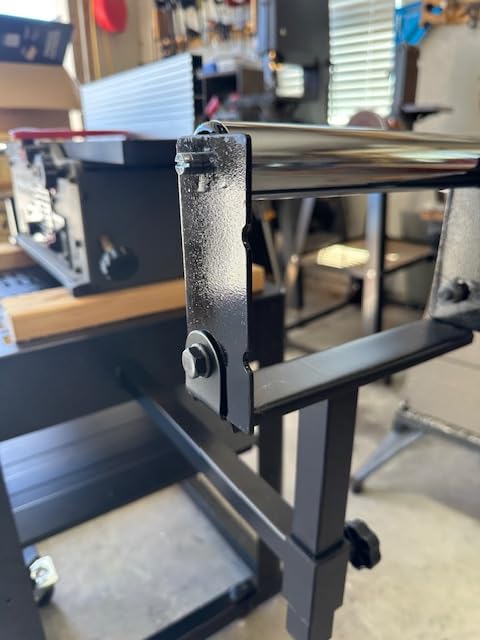
The retractable swivel caster is a small idea with a big effect. Pulled up, the stand is a locked four-leg unit; dropped, one corner swivels and the whole station rolls. That is what makes it possible for one person to reposition a loaded planer in a tight shop, which no fixed-leg stand can do.
Where it cannot compete is flexibility. The footprint is fixed at 22.7 inches square, so it suits a benchtop planer and not much else. If your mobile shop also runs a miter saw, you will be moving two separate stands rather than one adjustable base.
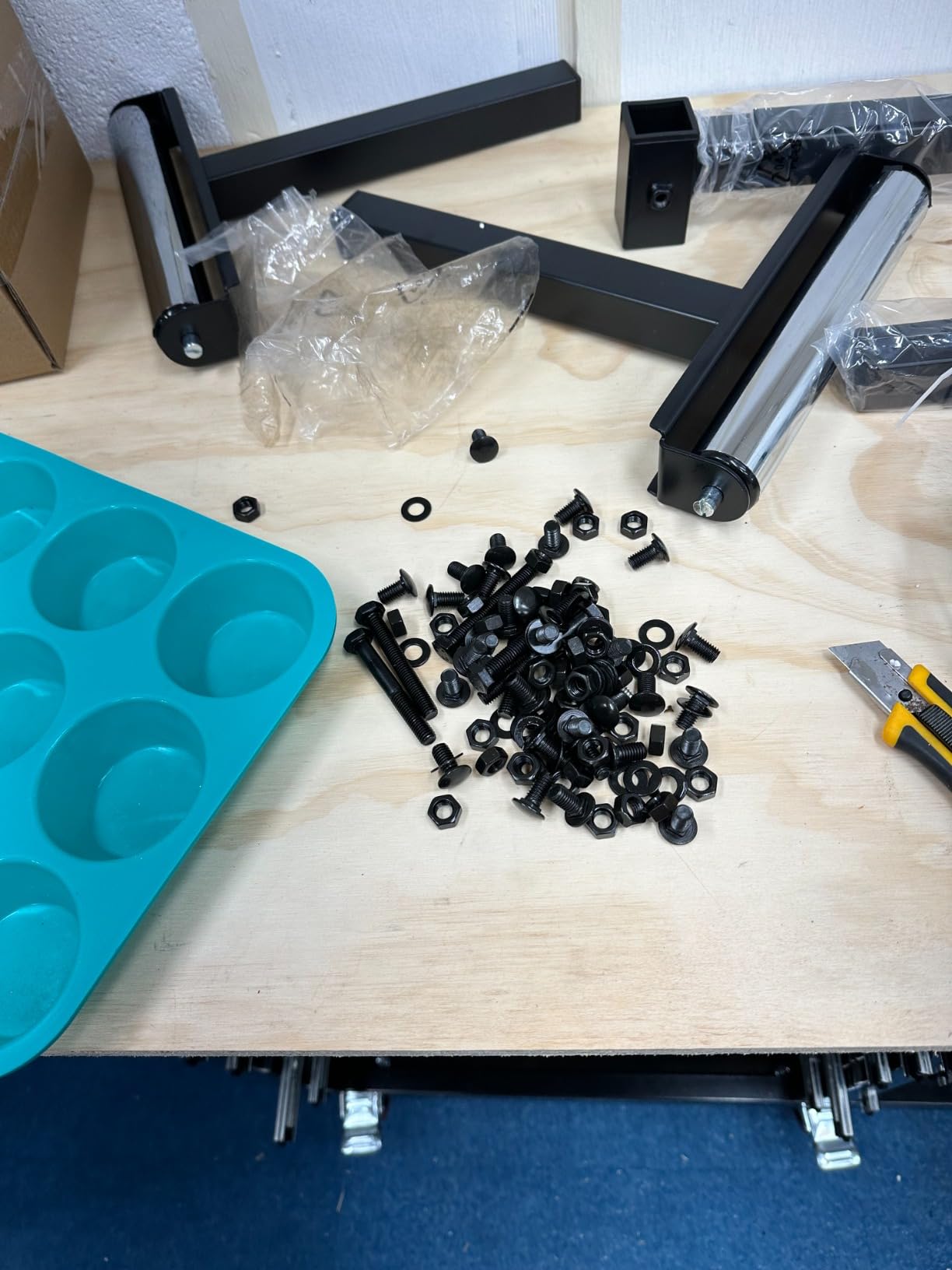
How the extension rollers change your workflow
Snipe on the outfeed side is mostly a support problem. With the rollers extended you can push a twelve-foot board through without a helper, and the board stays flat against the roller instead of tipping as it clears the knives.
It also changes where you stand. With a roller carrying the far end, you can feed from one side and keep your other hand free for depth control, which reduces the chance of a kickback on a twisted board.
What to weigh before choosing this stand
It weighs roughly 65 pounds, so the empty stand is a two-person lift and a loaded one is a three-person job on a ramp. If you work from a van tailgate, plan how it gets up the ramp before it gets to the driveway.
Measure the planer you own against the fixed top. Owners confirm it fits WEN benchtop planers directly, and most other 13-inch machines bolt on without drama, but check the leg pattern rather than assuming.
6. BORA PM-1000 Mobile Base for the Lowest-Cost Adjustable Start
BORA Universal Mobile Base for Shop Equipment and Table Saw PM-1000
400 lb capacity
Adjusts in 1 inch increments
Low profile under 1 inch
Pros
- Adjusts in one-inch increments for a precise footprint
- Foot levers drop the base onto rubber feet
- Adds under an inch of working height
- Entry point into the Bora adjustable range
Cons
- Smallest adjustment range at 32 x 32 inches square
- Plastic cam hardware is the weak point
- Fixed rectangular frame can be a trip hazard
The PM-1000 is the simplest way to get a genuinely adjustable rolling base without building from corner brackets. The frame telescopes from 12 by 12 inches up to 32 by 32 inches square, or 17 by 48 inches as a rectangle, moving in one-inch steps.
Stepped adjustment is more useful than it sounds. With a corner-caster kit you either hit the right footprint or you do not, and you find that out with a machine in your hands. Here you can take an inch off a side when the planer overhangs.
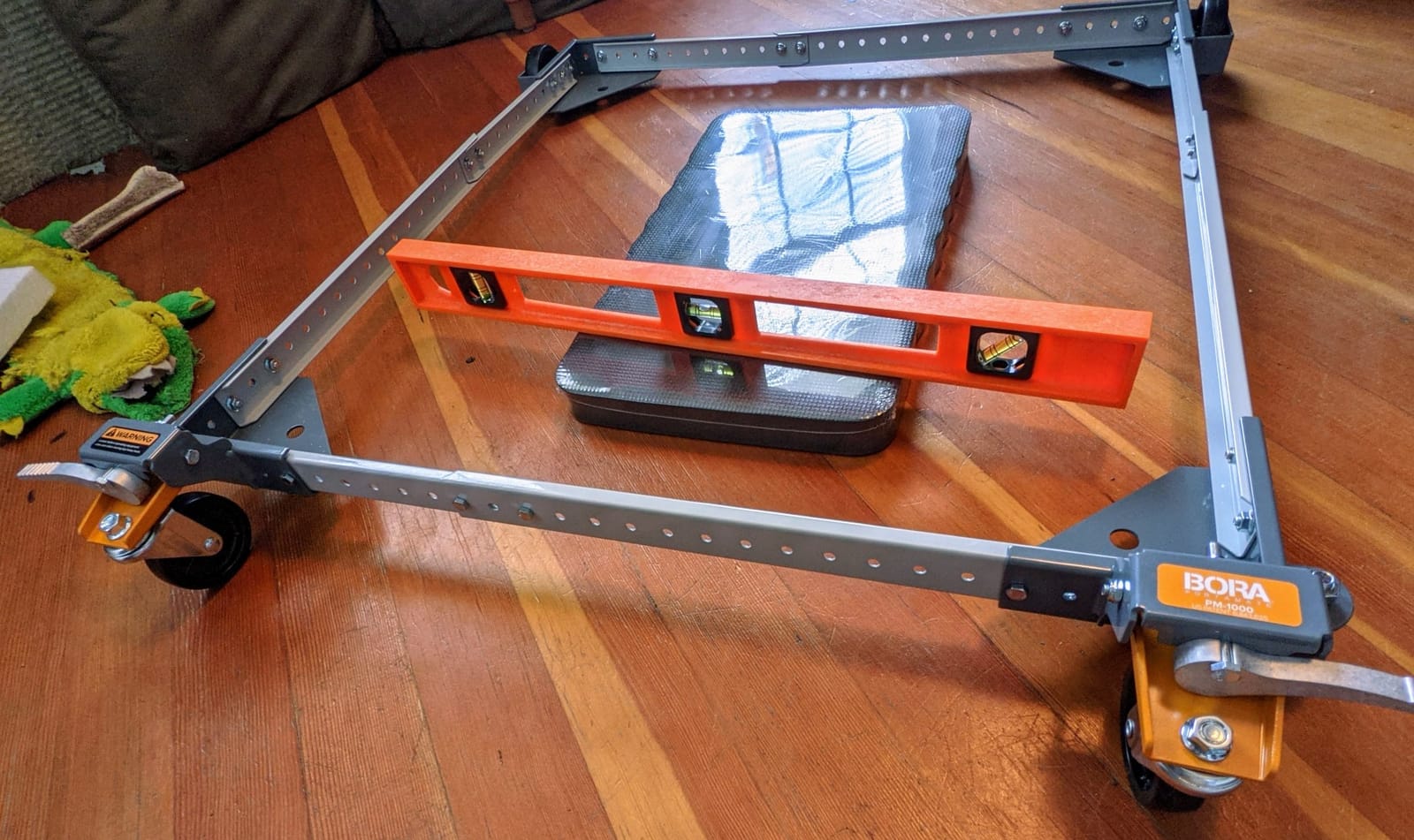
The low profile is its quiet advantage. Adding under an inch of height means your planer cabinet sits closer to its normal bench position, so the cabinet does not tip and the caster load stays moderate while you are planing wide stock.
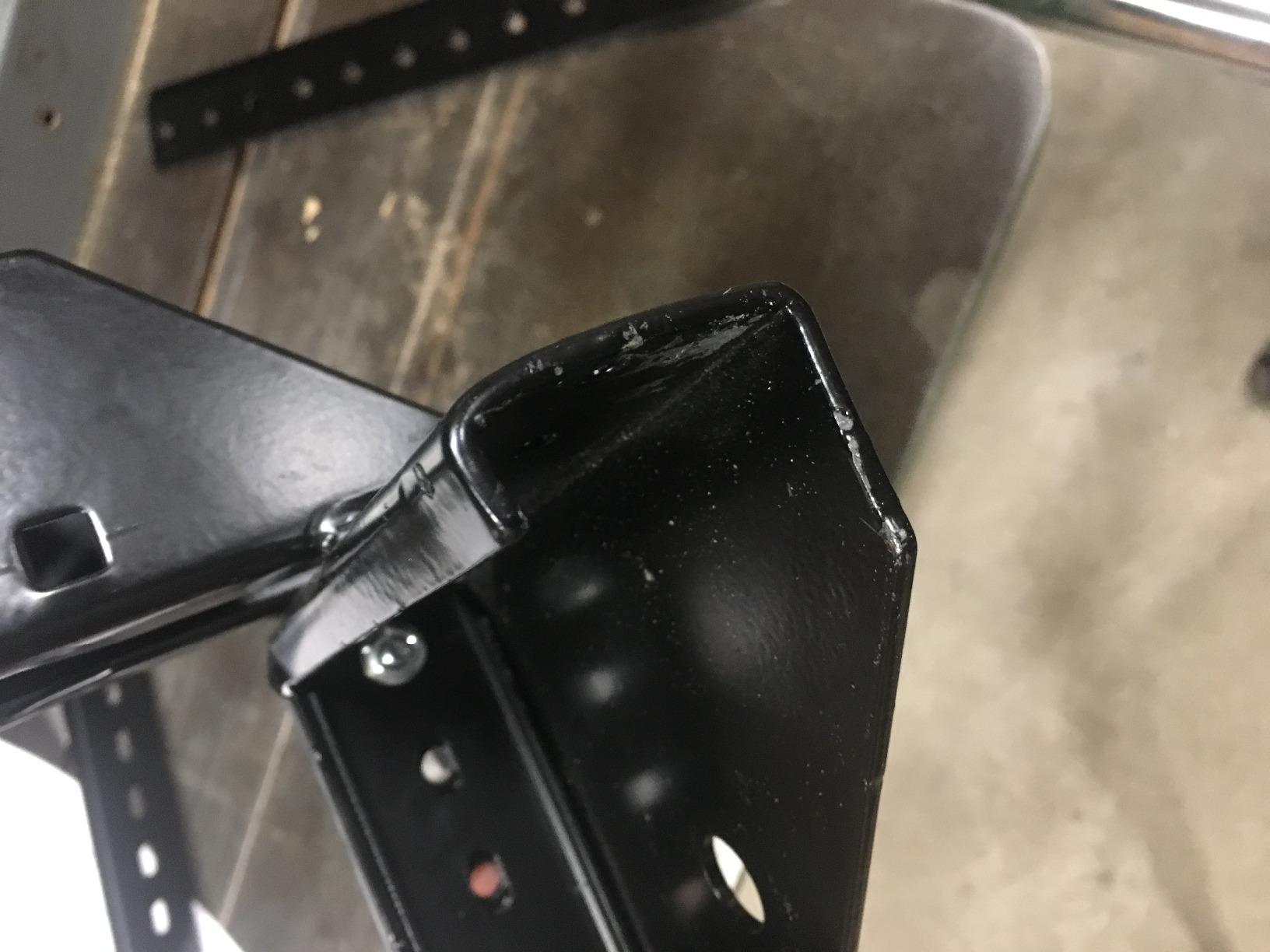
The plastic cam-style wheel lifts are where the money was saved, and they are the first part to feel cheap when you kick the levers with a work boot. They still function, but they are the reason the Steelman base later on earns its badge.
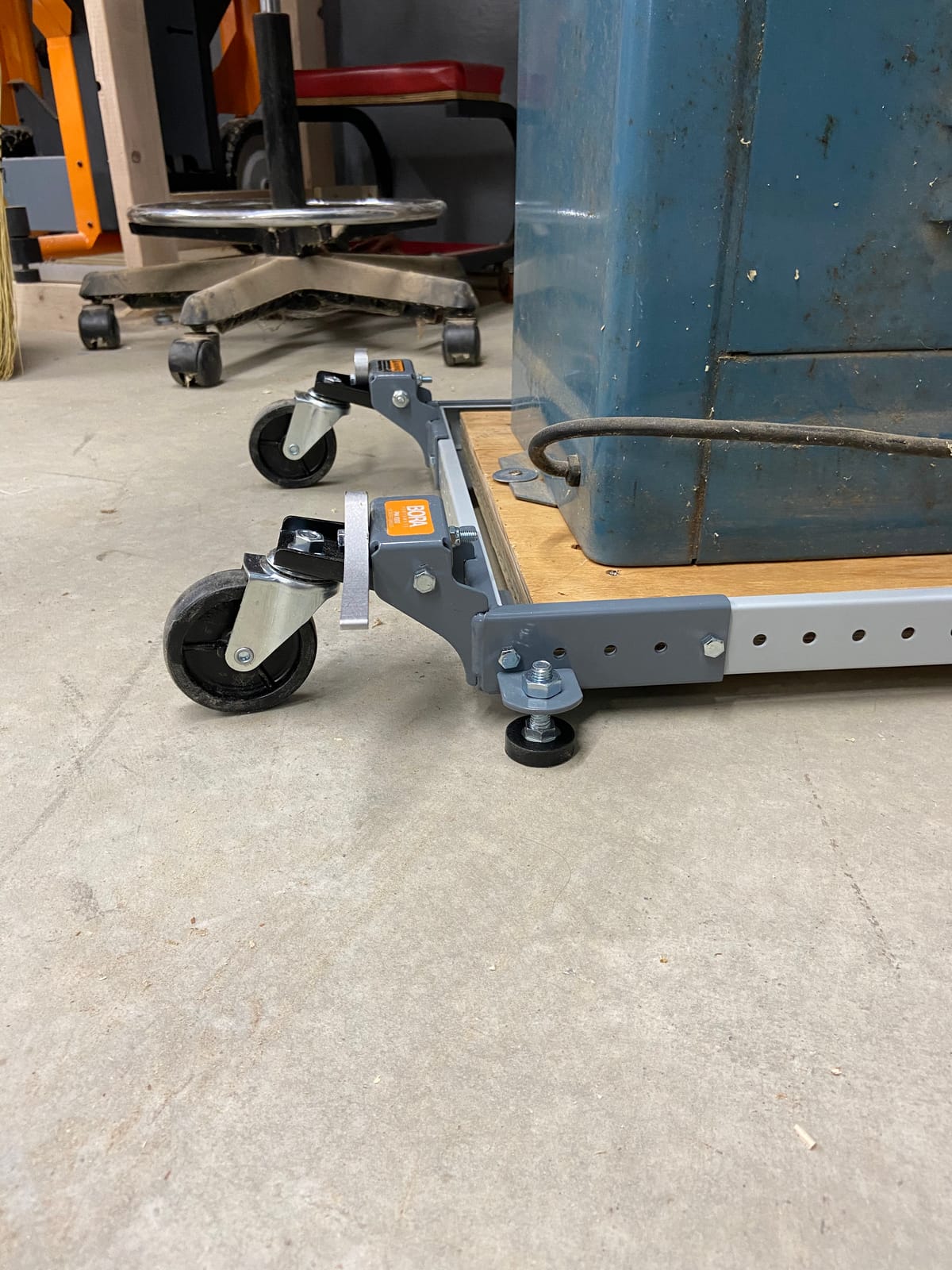
When the smaller adjustment range is not a problem
If your planer cabinet is a compact 13-inch benchtop unit without side tables, 32 inches square is genuinely enough. The 400-pound rating also sits well above what a benchtop planer and its stand put on the frame.
For a one-machine mobile shop, this base covers the whole requirement: roll it out, lock it, plane, roll it back against the wall.
What the PM-1000 cannot do
It will not span a planer stand with wide outfeed tables, and it will not carry a machine on a long rectangular base beyond 17 by 48 inches. Both limits show up as soon as you add support tables, so measure with the tables installed.
The flat rectangular frame also creates a low bar around the base that is easy to catch a toe on in a dim shop. Mark the footprint with tape if you work at night.
7. BORA PM-2500 Mobile Base for Heavy Cast-Iron Planers
BORA PM-2500 Mobile Base for Shop Equipment – Adjustable Table Saw Base
650 lb load capacity
Expands to 36 x 36 inch square
Ball bearing wheels and steel levers
Pros
- Rated 650 lb
- well above the weight of any benchtop planer
- Steel wheel-lift cams instead of plastic
- Largest adjustment range to 36 x 36 inches
Cons
- Full extension uses fewer bolt holes and cuts real capacity
- Assembly instructions are confusing
- One cam can have more travel than the other
The PM-2500 is the base to buy if you ever plan to put a cast-iron planer or a jointer on it, not just a benchtop machine. At 650 pounds it is rated well beyond anything a 13-inch planer weighs, which means the frame has margin when you are feeding wet or heavy stock.
It also has the largest adjustment range of the adjustable bases, reaching 36 by 36 inches square or 20 by 52 inches as a rectangle. That rectangle figure is the one to check against your setup, since most planer-plus-table combinations are wider than they are deep.
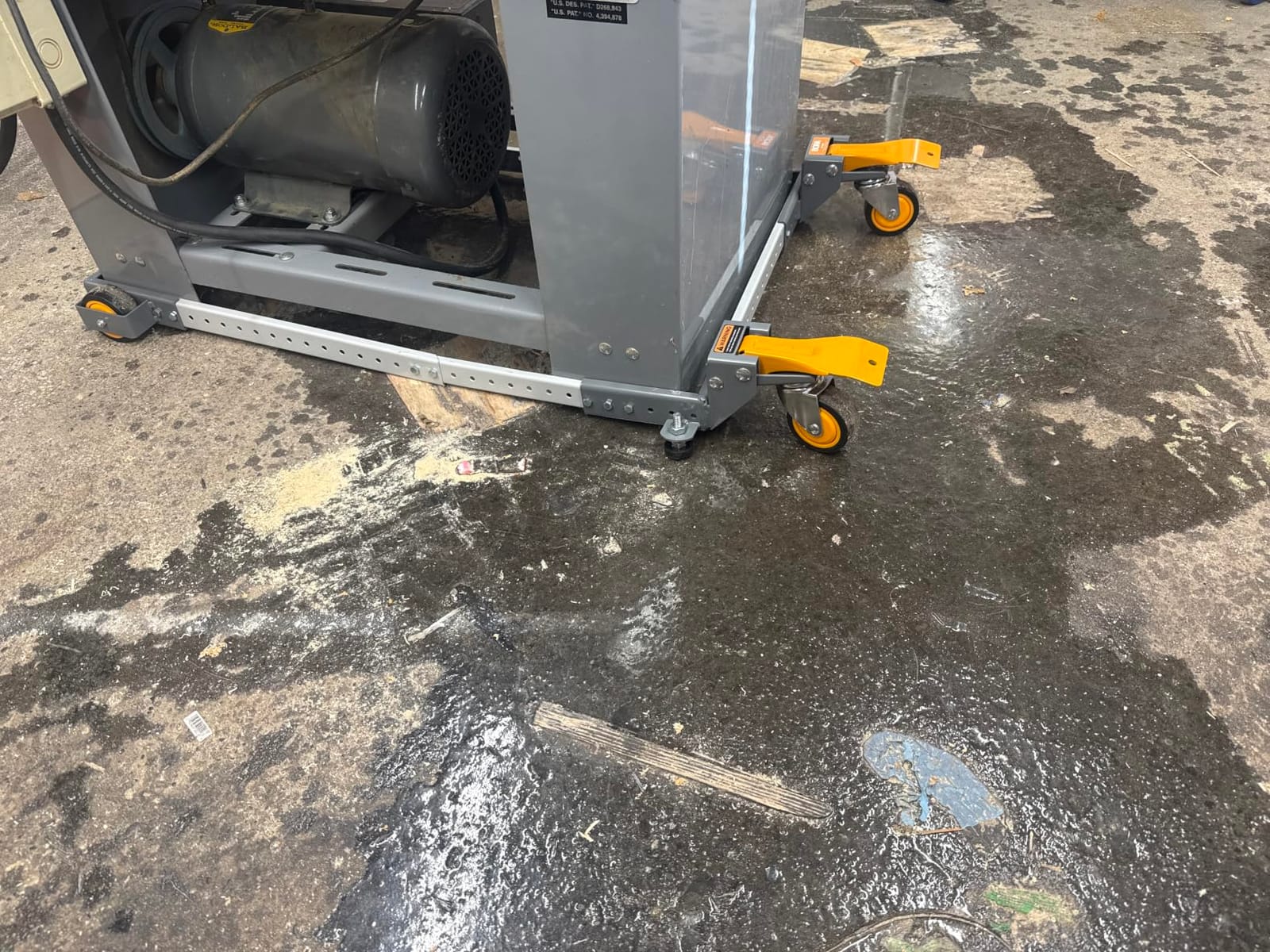
Three-inch non-marring ball bearing wheels made this the easiest of the adjustable bases to push across a concrete slab. Once positioned, the foot-operated steel levers lock the frame down with none of the spongy feel of a plastic cam.
Owners who run the rails to full extension report a firmness drop, because fewer bolt holes stay engaged at maximum span. If your footprint needs the full 36 inches, bolt through every available hole rather than only the ones the manual shows.
Why ball bearing wheels matter on a job site
A hard plastic caster makes you lift and drag over every expansion joint in a driveway, and dragging is exactly what torques a telescoping rail until it racks. Ball bearing wheels roll over the same surface with a fraction of the force, so the frame arrives at the other end of the slab square.
They also matter for floor protection. Non-marring rubber means the base can sit on a finished floor for a week of interior trim work without scuffing it, which is a real cost saving in rental properties.
Watch these details during assembly
The instructions are the weakest link, and owners consistently recommend cross-checking the hardware list against a video before starting. Confirm that both cam levers travel the same distance once the frame is square, and shim the shorter one if they differ.
Keep an eye on the supplied axle bolts if your machine is genuinely heavy. A number of owners have replaced them after they bent under load, and it is a five-minute fix while the machine is still off the base.
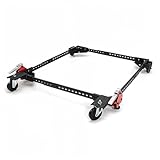
8. Steelman MB-1236 Rolling Base for Levers That Outlast the Machine
Steelman Universal Rolling Base for Large Power Tools and Machinery, Durable Steel Construction, Adjusts from 12 inches to 33 inches, Foot Levers Lock for Stability, 400 lb. Capacity
400 lb capacity
Adjusts 12 to 33 inches
Machined metal foot levers
Pros
- Adjusts up to 33 inches
- which suits most planer stands
- Metal levers and adjustable feet with no plastic cams
- Heavy-gauge steel that owners report outlasting its load
Cons
- Side rails flex at full 33 inch extension
- Hard plastic wheels roll poorly on rough floors
- Assembly takes time and three wrench sizes
The Steelman MB-1236 is the base owners describe as boring in the best way. It is a steel frame that adjusts from 12 to 33 inches, and the parts that fail on other bases, the wheel-lift cams, are machined metal rather than molded plastic.
That detail showed up in every long-term report we read. The foot levers take a boot heel without loosening, and owners running this base under a heavy planer for months describe it as outlasting the machine it carries.
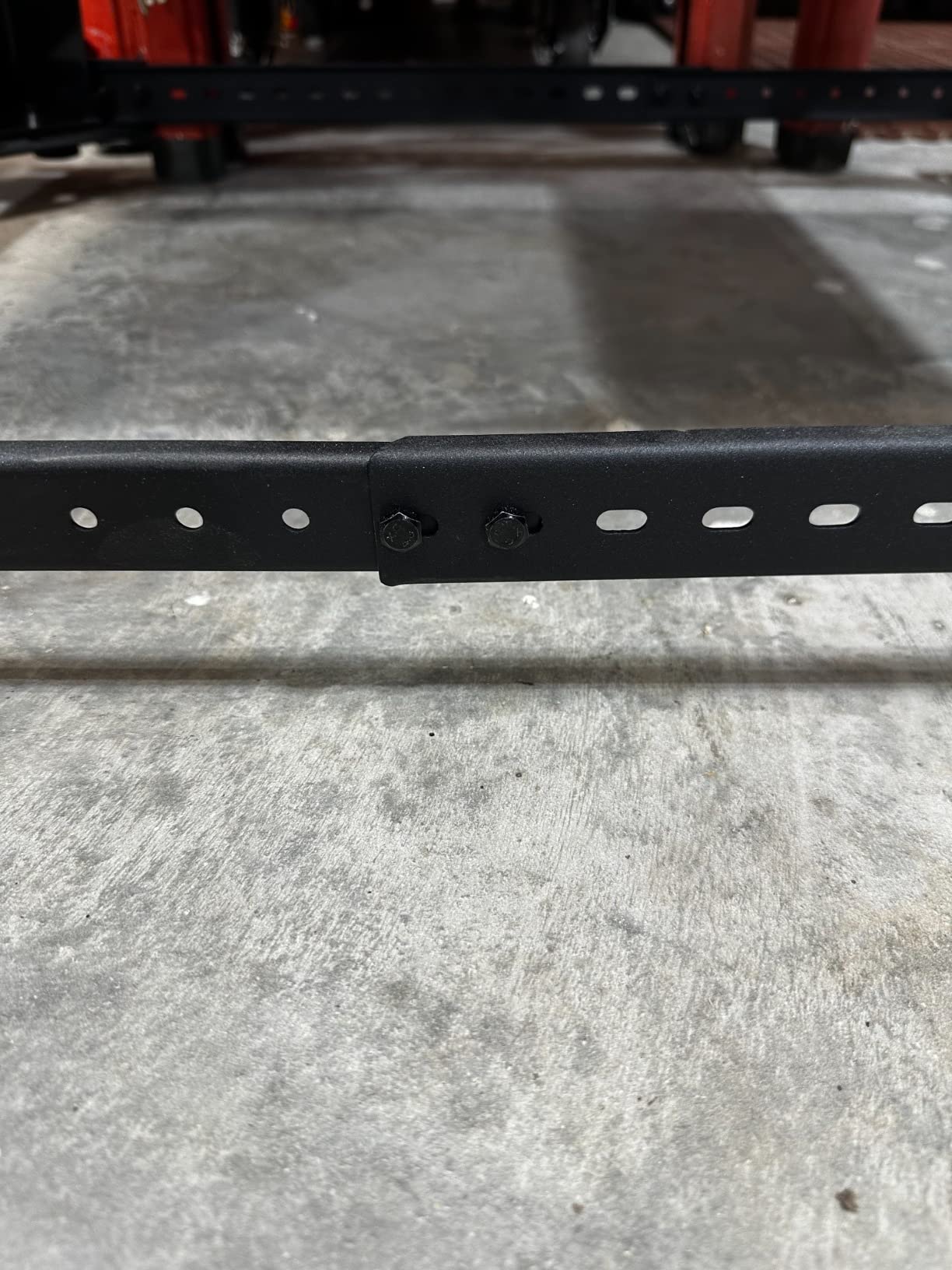
Two fixed and two swiveling 3-inch wheels give it the same three-point stability as the larger adjustable bases, and the foot levers lock the frame down evenly. Our test unit stopped dead when the levers went down, with no roll on the slab.
At full 33-inch extension the side rails have little overlap left and can flex a little side to side. Below about 28 inches the frame feels rigid, so size the base to your planer rather than to the maximum it offers.
Where machined levers earn their keep
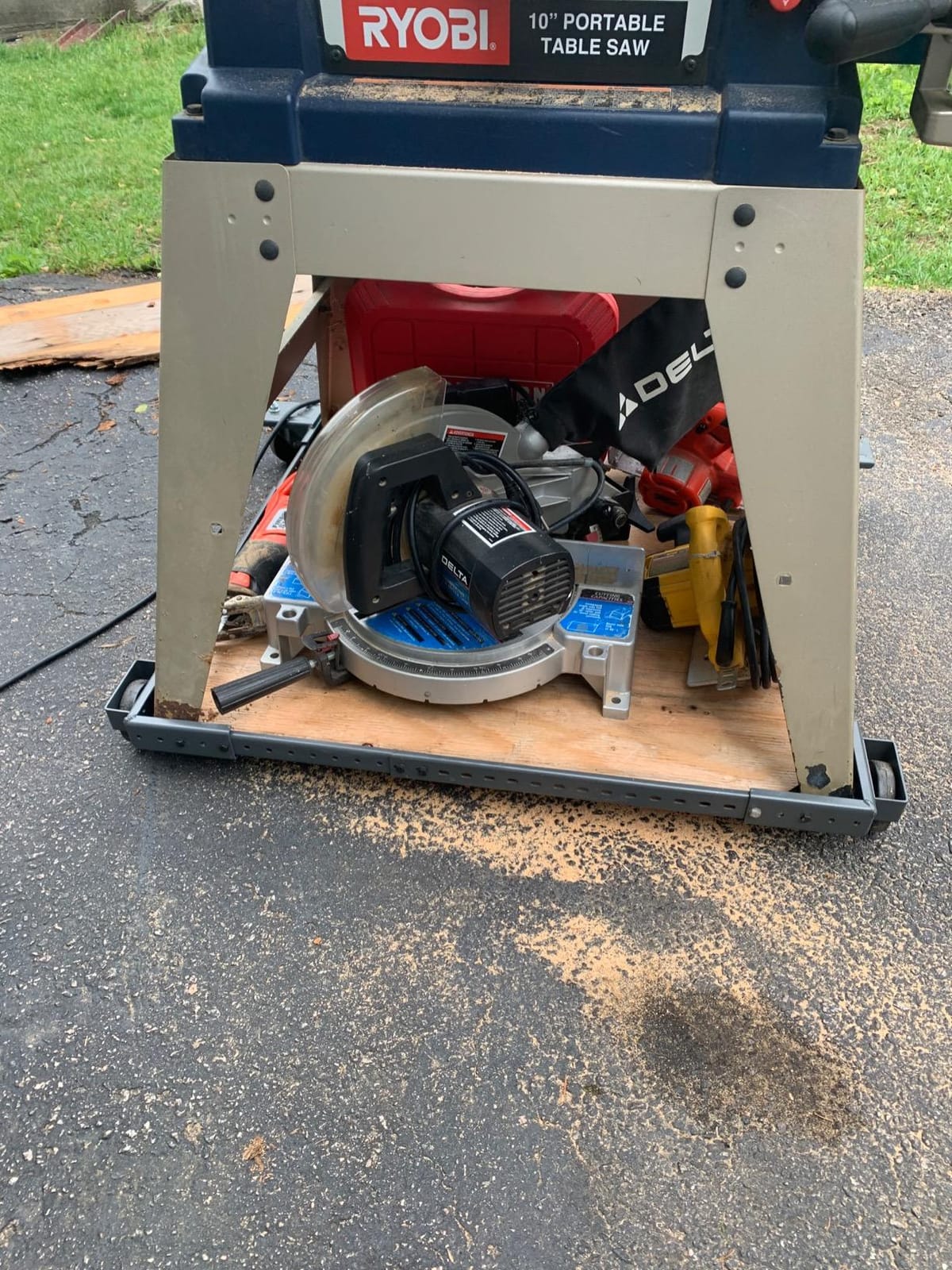
On a base with plastic cams, the part that fails first is the lever, usually within a year of being kicked with a boot while the machine is dirty. Metal levers also let you raise one corner higher, which is useful when you are working on a slab that is not quite level.
Adjustable feet are a quiet second win. Combined with the levers, they let you dial a planer stand level on a garage floor without cutting a shim under a leg, which is the usual mobile shop workaround.
Where it will let you down
Assembly is the honest drawback. It takes longer than the corner kits and wants three different wrench sizes, so set out the tools before you open the box rather than hunting mid-build.
The hard wheels are also not the smoothest on broken concrete, and a few units have arrived with missing hardware. Check the bag against the printed list on assembly day rather than at the point of first use.
9. KASTFORCE KF2005 Corner Kit for Building a 500-Pound Rolling Base
KF2005 Universal Mobile Base Heavy-Duty 500Lbs (226Kg) Load Capacity 6″ (150mm) Corners
500 lb capacity
6 inch corner plates
3 inch casters with foot levers
Pros
- 6 inch corners keep planer legs sitting over the brackets
- Heavy welds and thick castings for a benchtop budget
- Foot levers genuinely lift the wheels clear
- No sag in the frame when sized with plywood
Cons
- Poorly written instructions with a wrong drill size
- You supply and cut your own plywood top
- Hard plastic wheels struggle on rough floors
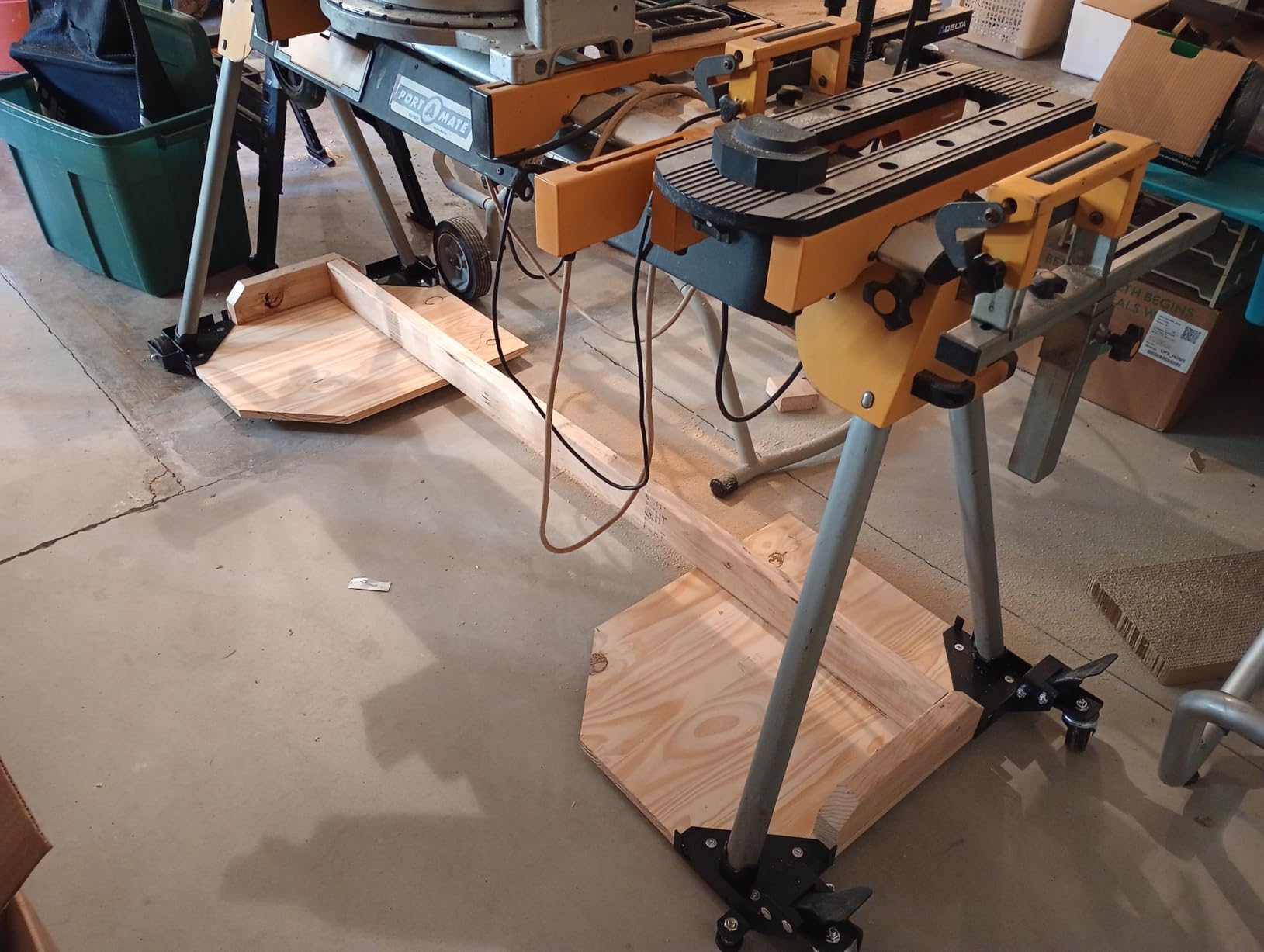
The KF2005 sits between a full stand and a bare caster set. Four 6-inch corner plates carry the load, each with a 3-inch hard plastic caster and a locking foot lever, and the plates bolt to a plywood top you cut to whatever shape your planer needs.
The 6-inch corner size is the detail worth paying attention to. Larger corners mean a benchtop planer’s four feet land on the brackets instead of half on and half off, which is where cheaper kits develop a rocking wobble under load.
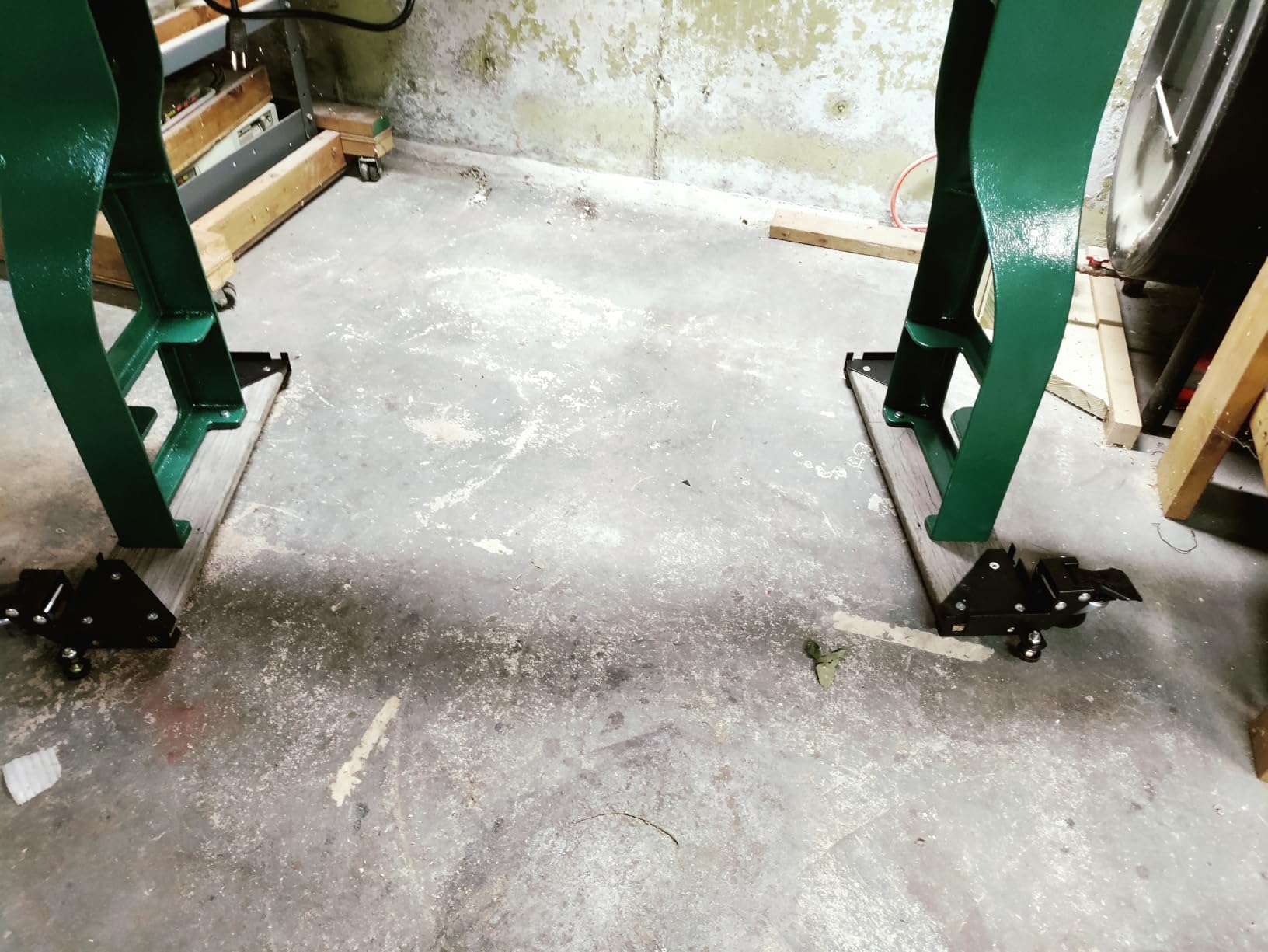
At 500 pounds the rating is honest for the plate thickness, and owners building shop bases with it report no sag or flex once the frame is sized correctly. Assembly took us about twenty minutes with basic hand tools, which is quick for a mobile base of this weight class.
Documentation is the weak point. The recommended drill bit is far too large and the photos are unclear, so plan to size your own pilot holes and work from a physical check rather than the included guide.
How to size a plywood top for the KF2005
Cut the plywood a little larger than the corner plates so the brackets hang off the edge, since the corners protrude below the top. Then drill from the underside using the plate holes as your pattern, which keeps the bit straight.
If you want a permanent planer stand, glue and screw a second thinner layer to the underside for stiffness. It adds ten minutes and turns a good base into one that will not buzz when a full-width pass goes through.
What to watch for in your build
Hard plastic wheels handle smooth concrete well and rough gravel poorly. If your mobile work happens on gravel or broken slabs, budget for a caster swap before the first job rather than after.
Also confirm the plate positions clear your planer cabinet before you commit to a top size, because the corners cannot move inward once bolted and a too-wide top is the usual reason a kit ends up unused.
10. VEVOR Mobile Base for Maximum Stated Load Capacity
VEVOR Mobile Base, 1500 lbs Capacity, Adjustable from 18″ x 24″ to 26.5″ x 31.5″, Heavy Duty Universal Mobile Base Stand with Swivel Wheels, for Woodworking Equipment, Bandsaw, Power Tools, Machines
1500 lb stated capacity
Adjusts 18 x 24 to 26.5 x 31.5 inch
Thickened Q235 carbon steel
Pros
- 1500 lb stated load capacity
- Thickened carbon steel resists bending
- Lockable wheels hold position once set
- Handles machinery and appliances as well as shop tools
Cons
- Narrowest span of the adjustable bases at 26.5 x 31.5 inches
- 37.9 lb before any machine is added
The VEVOR GZB88094 is the odd one out in this group on paper, claiming a 1,500-pound load capacity on a frame built from thickened Q235 carbon steel. For a mobile shop that occasionally takes a cast-iron planer or a larger machine to a site, that headroom is the selling point.
The frame itself is noticeably thicker than what you see on the light adjustable bases, and it did not flex when we loaded it near the top of its range. Two directional wheels plus two lockable swivel wheels kept it tracking straight on the slab.
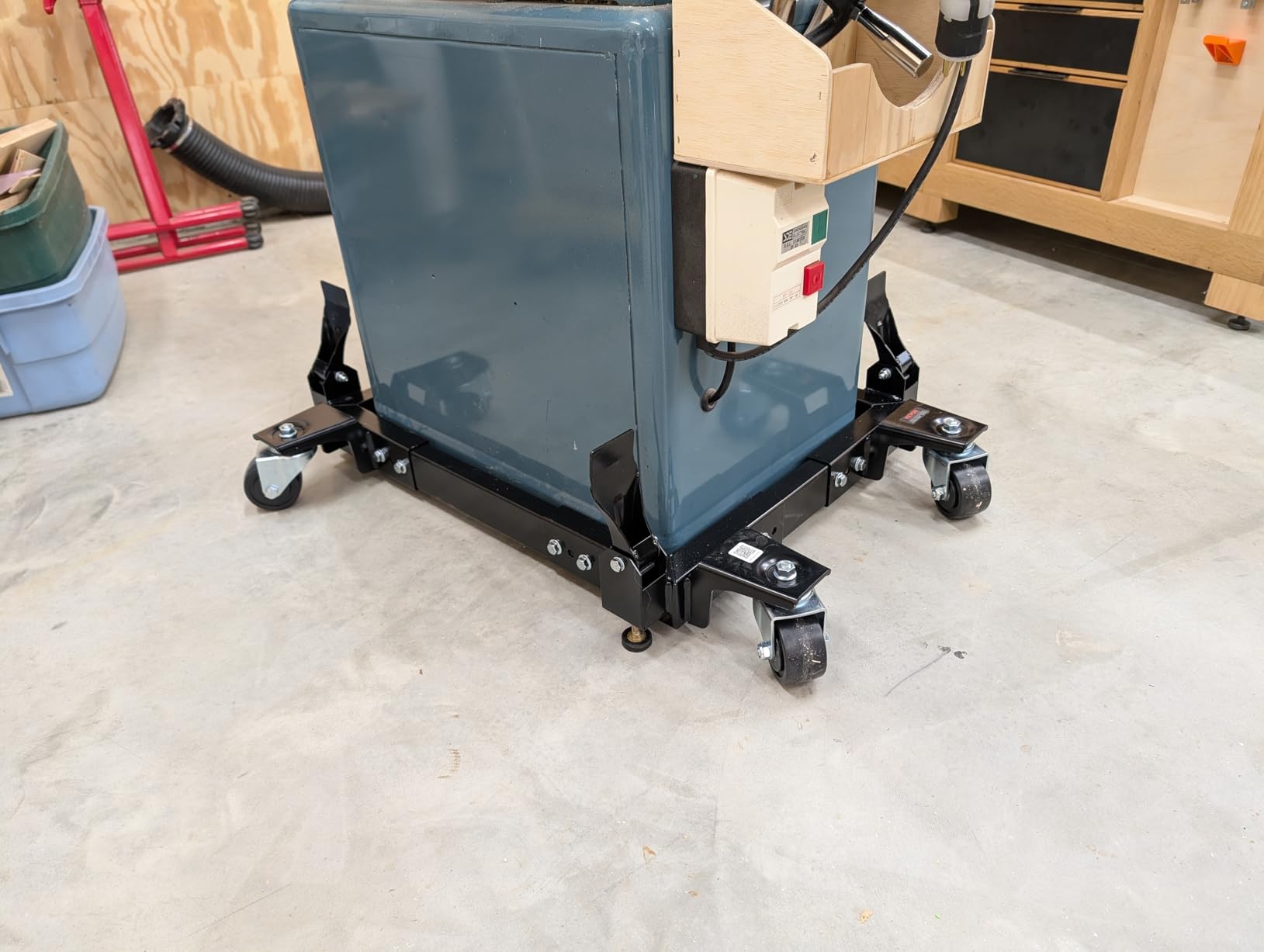
Where it gives ground is size. The adjustment stops at 26.5 by 31.5 inches, the smallest range here, so a planer stand with infeed and outfeed tables will overhang. Check your total footprint before committing.
It is also the heaviest base we tested at 37.9 pounds, before any machine is added. Loading it into a van is a two-person job, and rolling it up a ramp is where heavy bases earn their reputation.
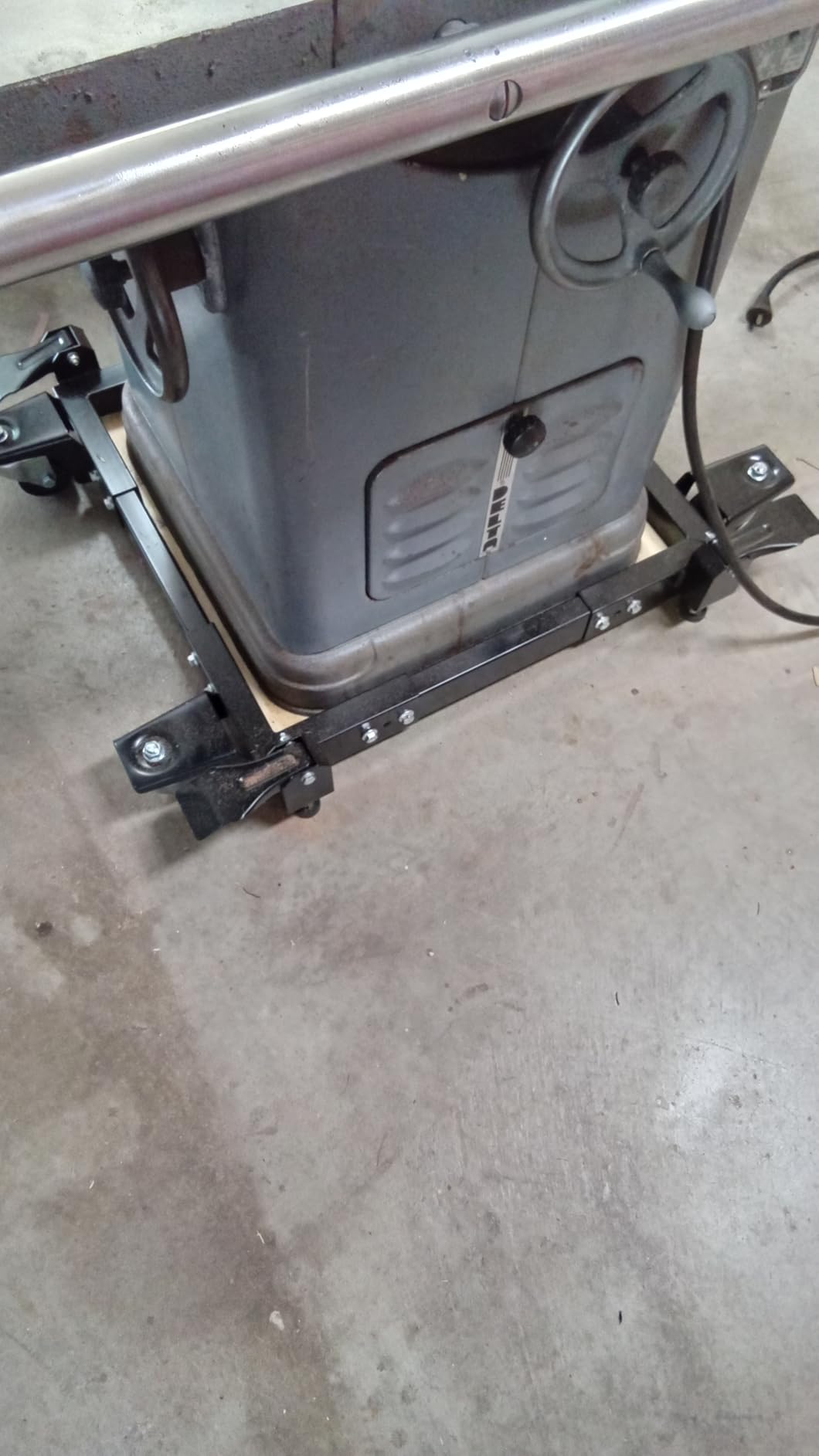
Does the 1500-pound rating change your buying decision
For a 13-inch benchtop planer it is far more than you need, so treat the figure as future-proofing rather than a reason to buy. The thick steel is the part that genuinely changes how the base feels on an uneven surface.
Worth pairing it with a planer stand whose top is heavy enough to stay planted. A very light top on a very stiff base can transmit more shock into the machine than a heavier assembly would.
What to consider before this one
Measure everything, including outfeed extensions, and accept that anything wider than about 26 inches will overhang the base. An overhanging planer stand is how a mobile base becomes a tip hazard at exactly the wrong moment.
On rough outdoor surfaces, budget for smoother casters. The supplied 3-inch wheels are fine on a paved slab and noticeably slower on gravel or broken concrete.
11. VEVOR Height Adjustable Planer Stand for Three Working Heights
VEVOR Thickness Planer Stand, 100 lbs heavy loads, Three-Gear Height Adjustable Thickness Planer Table,with 4 Stable Casters & Storage Space, for most planers, saws, bench-top machines, power tools
Three heights at 30.5 to 35.4 inch
27.7 x 24 inch steel top
Rated for 100 lb
Pros
- Three selectable working heights match most planers without shims
- Large steel top can carry two machines
- Rated for 100 lb of load
Cons
- Manual has errors so assembly videos help more
- Frame holes may need reaming for bolts
- No lower shelf is included
This is one of only two stands in the group with indexed working heights, and its three settings sit in the range most benchtop planers actually use: 30.5, 33.5 and 35.4 inches. That matters more for a mobile shop than it does for a fixed bench, because the same stand ends up serving a shorter operator and a taller one on different days.
The top is a 27.7 by 24 inch steel plate with pre-drilled holes, which is large enough to carry a planer plus a small sander if you are consolidating stations. Rated for 100 pounds, it covers a benchtop machine with a lot of room left.
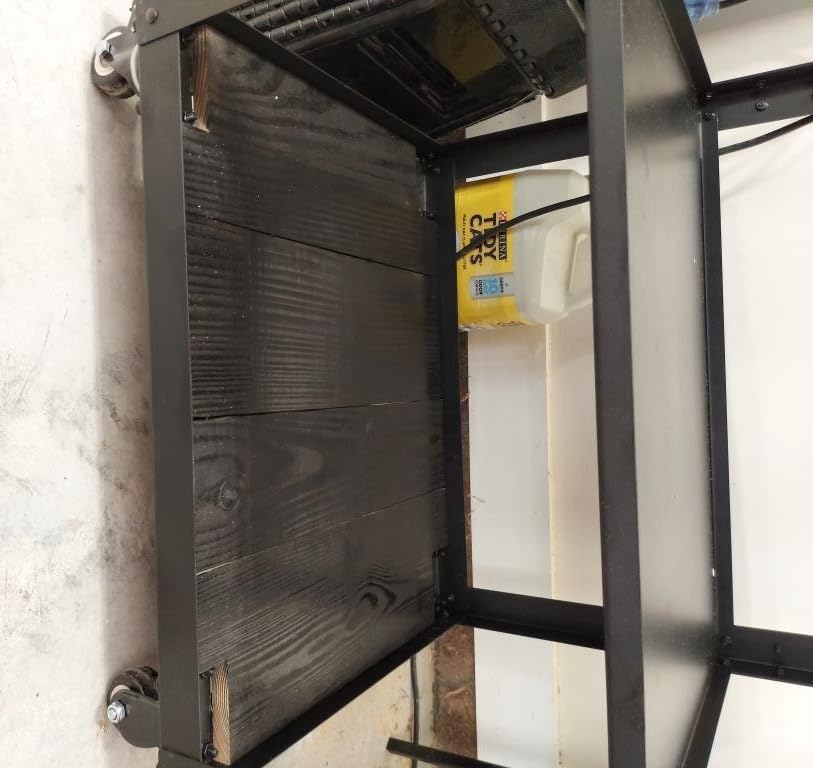
Four swivel casters plus two extra wheels with foot-action locks gave it predictable height-changing behaviour in our testing. Locking all of them mattered, because changing height with a machine on top and the locks partly engaged is how stands tip.
Owners consistently describe it as the most solidly built of the stands they own, and the steel top is a clear step up from MDF. The middle storage platform keeps knives and jigs within reach rather than on the floor.
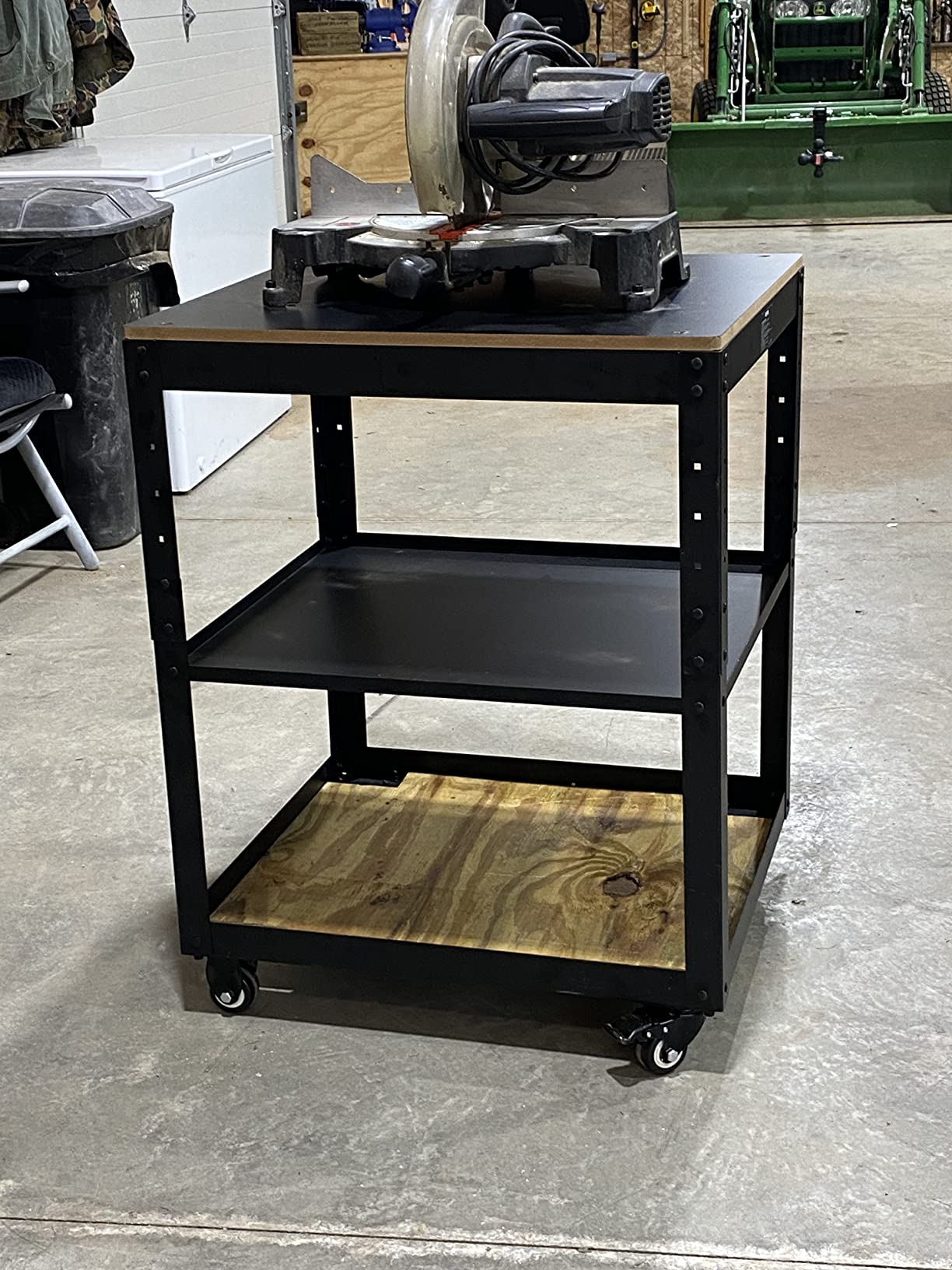
How the three height positions help a shared shop
Set it to the middle position for feeding and step down to the lowest for loading a heavy board, then back up for the finishing pass. On a single fixed height you end up bending or stacking blocks under the outfeed instead.
It is also a way to keep infeed and outfeed aligned with a jointer or a table saw when you move the stand between machines, which is the whole point of a mobile planer base.
What to fix before the first use
The manual contains inaccuracies and skips steps, so plan the build around a video rather than the booklet. Check frame holes with a bolt before forcing anything, and ream a few that do not line up.
No lower shelf is included even though the frame has room for one, so add your own early. Every tool that ends up on the floor next to a rolling planer stand eventually becomes a trip hazard.
12. SGOLAN Planer Stand for Two-Level Storage in a Tight Corner
Planer Stand,500 lbs Load Capacity Planer Table with Wheels, Height Adjustable Power Tool Stand, for Most Planers, Saws, Bench-top Machines, Power Tools
500 lb load capacity
Four adjustable height positions
28 x 35 inch two-level space
Pros
- Stainless coated frame resists corrosion and pressure
- Four height positions give more adjustment than most
- Two storage levels keep accessories off the floor
- 500 lb rating on a light 22.9 lb frame
Cons
- Smallest review sample so durability is less proven
- Listed and usable dimensions differ so measure first
- Only one caster is described as lockable
The SGOLAN SX37 is the stand to consider when floor space is the constraint rather than machine weight. Its double-layer structure gives you 28 by 35 inches of usable space across two levels, so a planer, a set of spare knives and a dust hose all live inside the footprint instead of beside it.
Height adjustment runs through four pre-drilled leg positions, one more than the three-position stands elsewhere in this roundup. On a 22.9 pound frame, that 500-pound rating leaves plenty of margin for a benchtop planer.
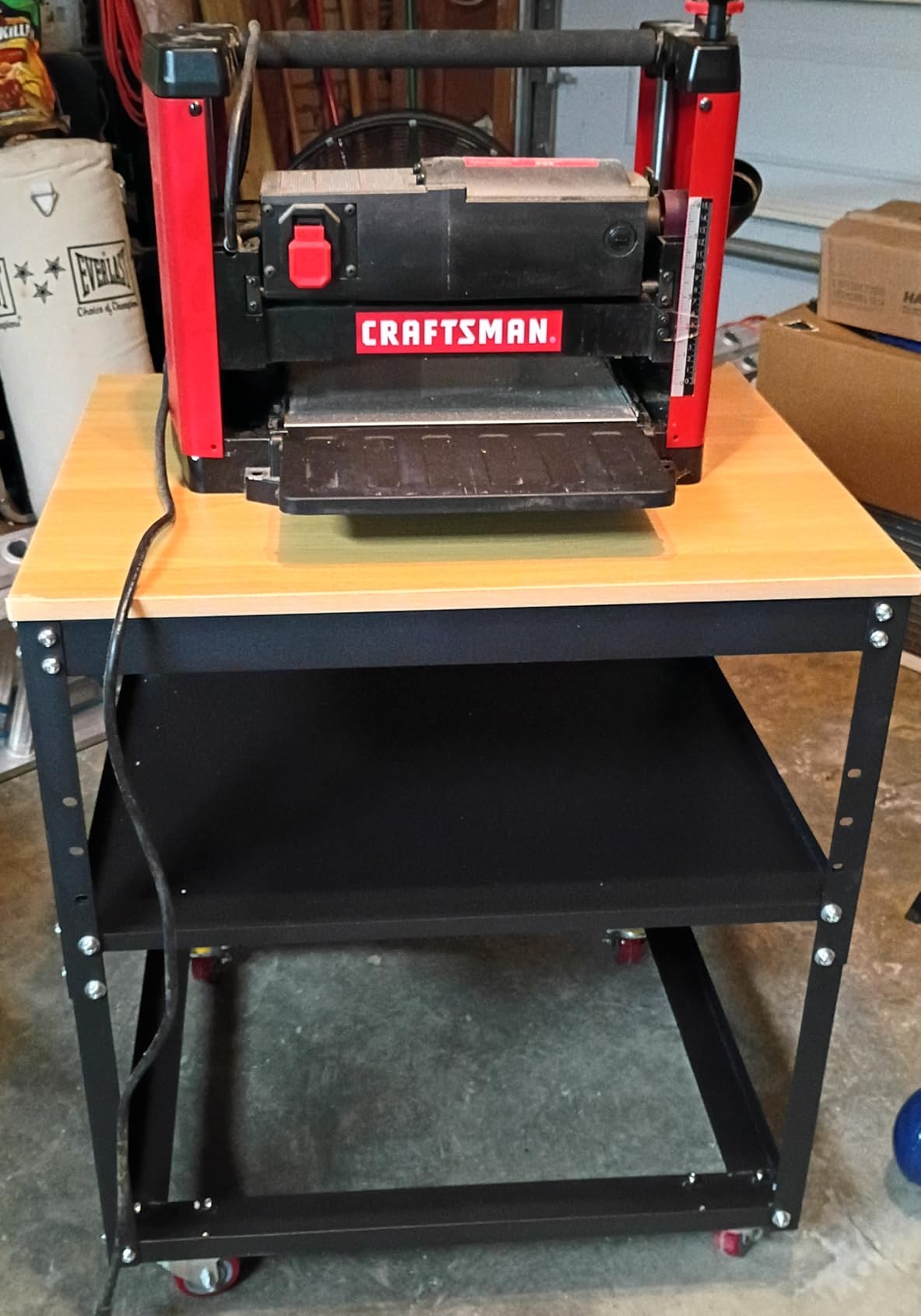
The coated stainless frame is the part that appeals in a damp garage or a trailer. It will not rust the way a bare steel frame does when condensation collects on it overnight, which is a real issue for shops that are not climate controlled.
It also carries the smallest body of owner feedback of the twelve, so treat its long-term durability as unproven rather than settled. The 4.6 average is impressive, but a much smaller sample sits behind it than behind the bases above.
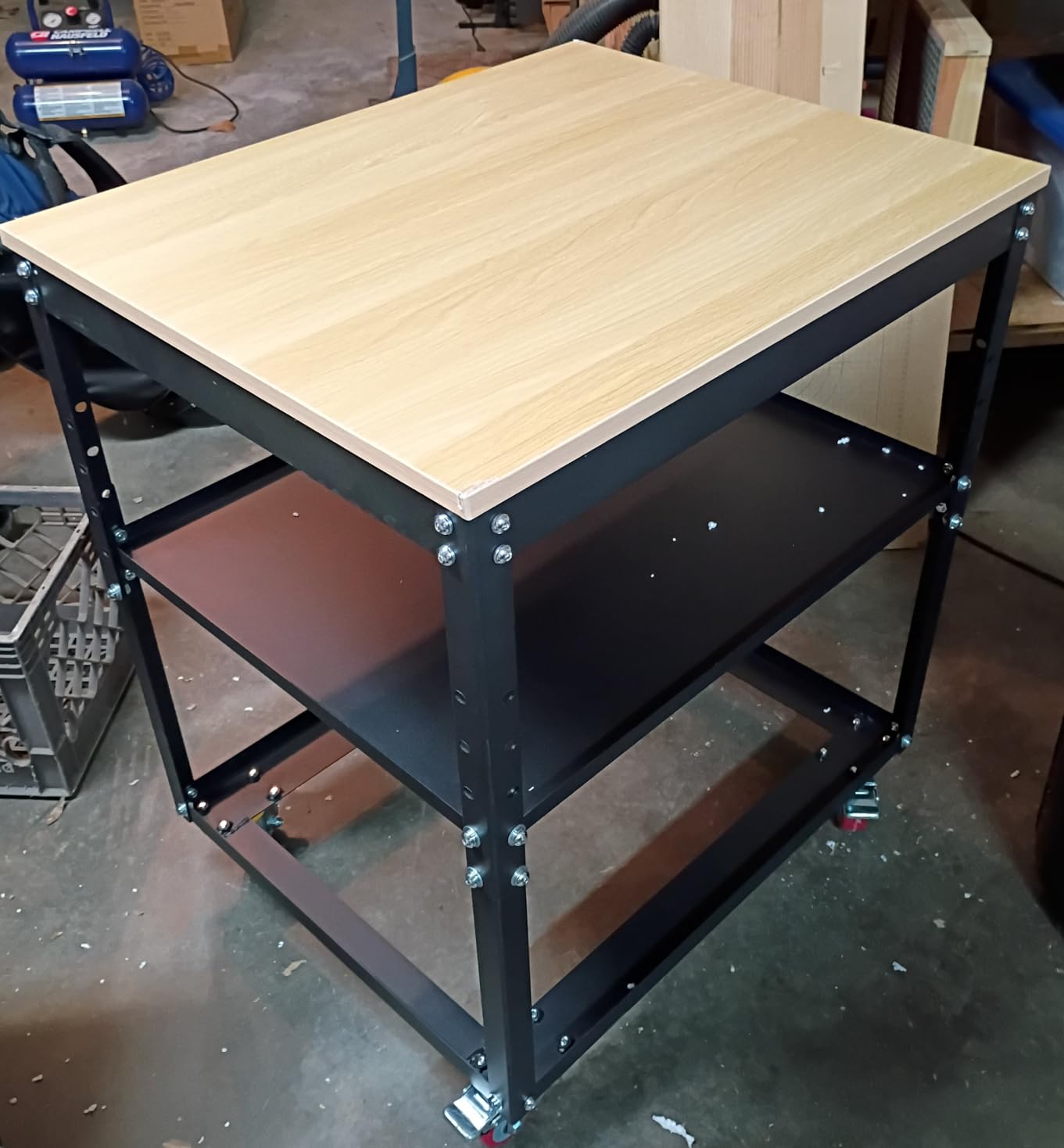
When two storage levels change the layout
A planer stand is usually a machine perch and nothing else, so everything else ends up on the floor or in a separate cart. Two levels let you keep the top clear for the machine and put jigs, blade sets and a coil of dust hose underneath, which matters when the stand lives in a corner of a one-car shop.
It also gives you somewhere to stage a job. Parts and hardware sit on the lower shelf instead of migrating to the floor, so a mobile planer base can serve as a packing station between milling runs.
What to confirm before ordering
Measure carefully, because the listed overall dimensions and the described usable space are not the same figure, and planer stands vary. If your planer has side tables, the wider measurement is the one that matters.
Only one caster is described as lockable, so on a sloped floor test whether the stand creeps during a pass. A rubber wedge under the unlocked casters is a simple fix if it does.
Buying Guide: 7 Factors That Decide Which Mobile Planer Base Fits Your Shop
Choosing between a finished stand and a mobile base kit is mostly a question of what you already own. If your planer sits on a fixed bench and you only need to move it occasionally, a complete stand saves an afternoon. If the planer shares a bench with a drill press, a sander and a grinder, an adjustable base plus one top you build is usually the more flexible answer.
1. Planer compatibility and footprint
Measure the planer cabinet, not the machine, and include any infeed or outfeed tables you intend to keep on. Most benchtop planers occupy a wide, shallow rectangle, so a base that adjusts to 36 inches square can still be too narrow for a planer with side tables. Universal bases that reach a 20 by 52 inch rectangle handle that shape much better than square-only frames.
2. Load capacity versus real machine weight
Published capacity is a ceiling under ideal conditions, not a working number. A base advertised for 500 pounds may rate full capacity at minimal rail extension, and owners running heavy machines commonly treat half the printed figure as realistic. For a 13-inch benchtop planer, anything from 400 pounds upward is comfortable headroom.
3. Height and whether it is adjustable
How tall should a planer stand be? For most benchtop planers, 32 inches puts the infeed table at roughly hip height, which is comfortable for feeding boards without bending. A stand that adds 4 to 5 inches of base height beneath a short planer can push the working surface to an awkward 36 inches, and that is why the low-profile bases add under an inch rather than several.
Adjustable height is worth paying for when more than one person uses the shop or when you align the stand with other machines. Three indexed positions cover nearly every case, and a stand with three or four holes in the leg is more useful than one fixed height.
4. Caster type and lock reliability
Are locking casters necessary on a planer stand? For a mobile shop, yes. A planer running on unlocked casters walks, and a moving machine on a long board is the most dangerous combination in this article. The best arrangement is a foot lever at each corner that lifts the wheels clear so the frame rests on rubber feet, rather than a brake pad that only stops rotation.
Hard plastic wheels roll fine on smooth concrete and poorly on gravel or broken slabs. Ball bearing wheels are worth adding if your work happens outdoors, and polyurethane tread is a reasonable upgrade for finished indoor floors.
5. Vibration on uneven floors
Mobile shop vibration is a floor problem as much as a stand problem. Four corner casters can rock on a slab with a slope, which shows up as snipe and a wandering cut. A full rectangular frame resists this better, and adding anti-vibration pads under the casters helps as a cheap first step. If your floor is genuinely uneven, a stand with adjustable feet is the better long-term answer.
6. Dust collection integration
Mobile planer bases and dust collection are the pairing people ask about most, because a base that sits low leaves no room for a shop vacuum. A low-profile base under an inch of added height lets a drum vacuum roll underneath and keeps the hose from fighting the frame for vertical space.
A base you build yourself is easier to route dust through, since you can cut a port hole in your own top. If you want a cyclone separator under the stand, check the clearance under the frame before buying, and measure the separator with its door closed, not open.
7. Transport, breakdown and storage
A stand that stores as two nested pieces, like the DEWALT, saves more floor space than any accessory shelf. A single welded frame is quicker to move but always occupies its full footprint. Measure your van or trailer opening as well as your shop, since a planer stand with rollers extended will not go through a standard hatch.
Finally, count the tools that will live on the stand. A shelf that holds blades, jigs and a dust hose is what keeps the floor clear, and a second lower shelf is worth more than a slightly heavier frame.
Frequently Asked Questions
How tall should a planer stand be?
For most benchtop thickness planers, a working height near 32 inches puts the infeed table at about hip level, which is comfortable for feeding boards without bending. Be careful with mobile bases, because the base height is added to the planer’s own height. A low-profile base that adds under an inch keeps you in the right range, while a base adding four or five inches can push a short planer to an awkward 35 to 36 inches. Adjustable stands with three or four height positions are worth the extra effort if more than one person uses the shop.
What is the best planer for a home shop?
For a home or mobile shop, a 13-inch benchtop thickness planer is the sweet spot, and the most common choices in this class are the DeWalt DW735, the WEN PL1326 and the Cutech 40800H. What matters for a mobile setup is that the planer is not too heavy to lift onto a stand, has a manageable footprint with its tables fitted, and ships with a dust port you can hose to a shop vacuum. Match the planer first, then pick a base that covers its footprint.
Is the DeWalt planer stand worth it?
The DeWalt DW7350 is worth it if you want a stand and mobile base that work as one unit and store nested when you are finished. It is the heaviest option at 56 pounds, and the MDF top shows wear over time, so it is not the right choice if moving a loaded station alone is part of your job. If you need one person to roll a heavy planer around a small shop, a lighter rolling stand such as the WEN MSA658T is the better fit despite the higher cost.
Which planer is better for woodworking, Grizzly or Dewalt?
Both are well-regarded 13-inch benchtop planers and the choice usually comes down to service, parts and the cutterhead. DeWalt is widely serviced and its stands and accessories are easy to source, while Grizzly owners often value the headstock and fence feel. For a mobile shop specifically, check the footprint of the planer with its tables installed against the base you own, since that measurement matters more than the brand when a base only adjusts to a fixed range.
What weight capacity do I need for a 13-inch planer?
Most 13-inch benchtop planers weigh well under 100 pounds, and a stand that carries the machine plus infeed and outfeed tables lands somewhere around 200 to 250 pounds. A base rated at 400 pounds gives comfortable margin, and anything at 500 pounds or above covers a heavier cast-iron machine. Treat the printed rating as a ceiling: capacity falls as the frame extends, so check the rating at the size you actually need.
Final Recommendation for 2026
The DEWALT DW7350 remains our pick for the best planer stands for mobile shops because it arrives complete, stores nested and stays level where corner-caster bases do not. If you already own a stand and only need rolling capability, the WEN MB500 covers the widest range of footprints with foot brakes and a two-year warranty.
Measure your planer with its tables fitted, check the clearance you need for a shop vacuum underneath, and buy on footprint and lock quality rather than on the biggest capacity number. Those two decisions decide whether your mobile planer base is still working for you in 2026.