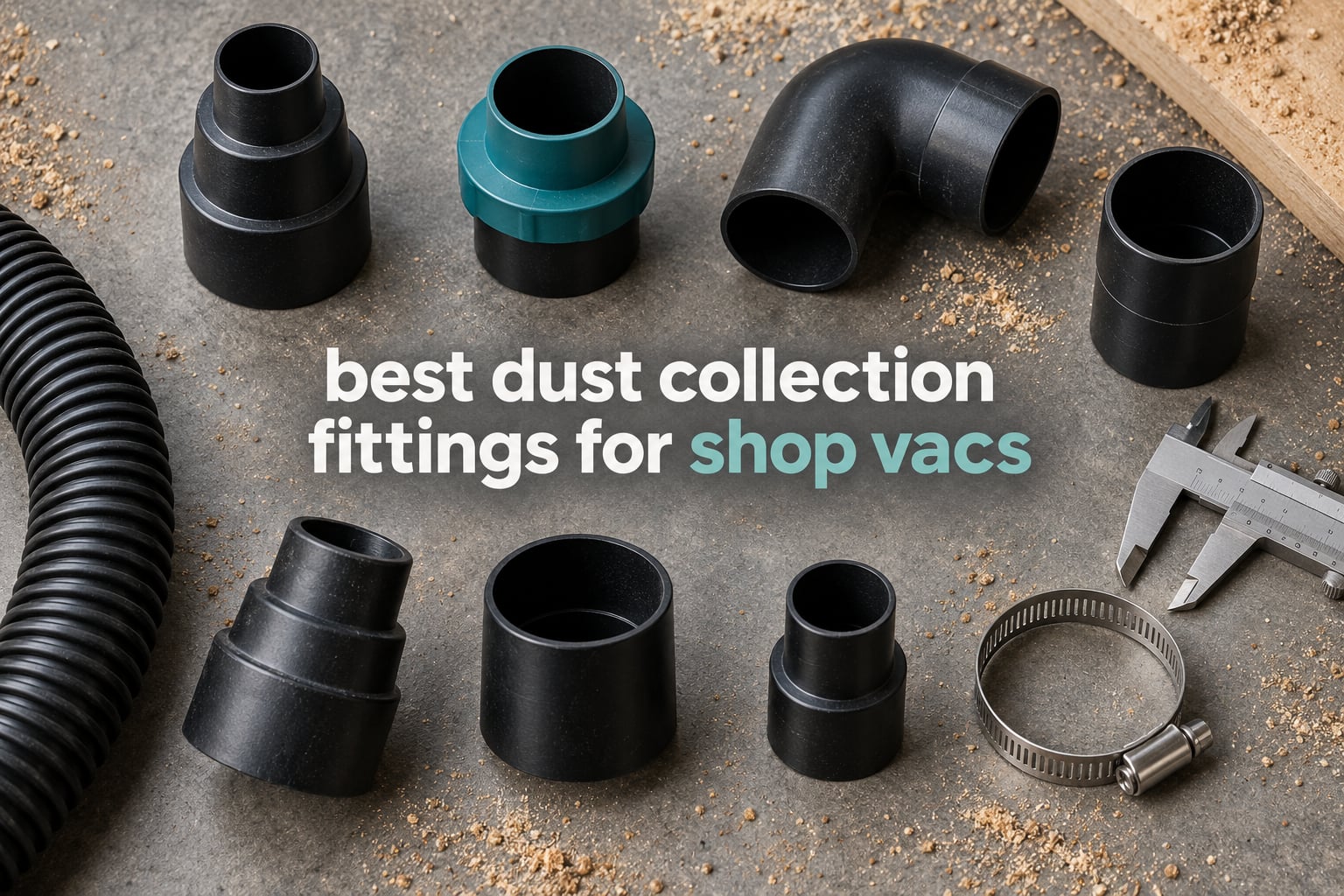
A dust collection fitting is the adapter, reducer, clamp or quick-connect collar that bridges the gap between a shop vac hose and the dust port on a power tool, dust collector or separator. One end matches the hose, the other matches the machine port, and the joint has to seal or your vacuum bleeds suction and sprays fine dust back into the room.
That single joint decides whether a wet/dry vac works as a real dust collection system or just as a floor sweeper. I have spent the last few months cycling reducers, stepped adapters and quick-connect collars through a two-bench shop, and the same sizing mistake came up every single time: people buying a fitting marked “4 inch” for a port that measures just over 4 inch across the outside.
This roundup covers the eight dust collection fittings for shop vacs worth your time in 2026, ranked by how well each one actually seals, how easy it is to swap between tools, and how honest its published dimensions are. If you are still choosing a hose first, our guide to dust collection hoses for shop vacs covers the hose side of the same decision, and the best shop vacuums for garages roundup covers the machine end.
Table of Contents
- Top 3 Dust Collection Fittings for Shop Vacs in 2026
- Quick Overview: Best Dust Collection Fittings for Shop Vacs (October 2026)
- 1. POWERTEC 70136 4 to 2-1/2 Inch Cone Reducer – Best All-Round Step-Down
- 2. POWERTEC 70297 Modular Step 4-in-1 Adapter – Best Multi-Size Kit
- 3. POWERTEC 70138 2-1/2 to 1-1/2 Inch Reducer – Best for Sander and Miter Saw Ports
- 4. Shop-Vac 90687 Universal Tool Adapter – Best Single Adapter for Small Tools
- 5. Shop-Vac 9068533 2.5 to 1.25 Inch Conversion Unit – Best Direct Replacement Part
- 6. O’SKOOL DC02 4 Inch to 2-1/4 Inch Fitting – Best Clamped Rubber Boot Design
- 7. RMTCEG 5-Piece Adapter Kit – Best for Metric and Mixed-Size Hoses
- 8. Cen-Tec 95248 Quick Click Adapter Set – Best Quick-Connect System
- How to Choose the Right Dust Collection Fitting
- Frequently Asked Questions
- Best Dust Collection Fittings for Shop Vacs: The Verdict
Top 3 Dust Collection Fittings for Shop Vacs in 2026
Quick picks first, because most people only need one or two of these:
POWERTEC 70136 4 inch to 2-1/2 inch cone reducer – the best all-round step-down between a 4 inch collector line and a shop vac hose, with published inside and outside dimensions on both ends.
O’SKOOL DC02 4 inch to 2-1/4 inch fitting – the strongest option when the far end is a 4 inch outside-diameter tool port, because the rubber boot and steel clamp absorb port size variation.
POWERTEC 70297 modular 4-in-1 adapter – the best kit if you want one stackable part that covers several hose diameters instead of a drawer full of loose reducers.

POWERTEC 70136 Cone Reducer
- 4 inch to 2-1/2 inch step-down
- ABS plastic construction
- Published ID and OD on both ends
- Single hose-to-hose part
O’SKOOL DC02 4 inch Boot Adapter
- Rubber boot grips 4 inch OD tool ports
- Steel hose clamp included
- 2-1/4 inch ID shop vac end
- Tolerates port size variation

POWERTEC 70297 Modular 4-in-1
- Four detachable adapters in one unit
- Stackable for compact storage
- Rigid ABS plastic
- Multiple ID and OD steps
The O’SKOOL DC02 earns the highest star average in this group at 4.7, but the POWERTEC 70136 takes the top spot on the strength of 6836 reviews behind a 4.6 average and a simpler job: it does one job, it publishes its dimensions, and it does not need a matching hose brand.
Quick Overview: Best Dust Collection Fittings for Shop Vacs (October 2026)
| Product | Specs | Action |
|---|---|---|
| POWERTEC 70136 4 inch to 2-1/2 Inch Cone Reducer |
|
Check Latest Price |
| POWERTEC 70297 Modular Step 4-in-1 Adapter |
|
Check Latest Price |
 POWERTEC 70138 2-1/2 Inch to 1-1/2 Inch Reducer POWERTEC 70138 2-1/2 Inch to 1-1/2 Inch Reducer |
|
Check Latest Price |
 Shop-Vac 90687 Universal Tool Adapter 2-Pack Shop-Vac 90687 Universal Tool Adapter 2-Pack |
|
Check Latest Price |
 Shop-Vac 9068533 2.5 Inch to 1.25 Inch Conversion Unit Shop-Vac 9068533 2.5 Inch to 1.25 Inch Conversion Unit |
|
Check Latest Price |
| O’SKOOL DC02 4 Inch to 2-1/4 Inch Adapter |
|
Check Latest Price |
 RMTCEG 5-Piece Vacuum Hose Adapter Kit RMTCEG 5-Piece Vacuum Hose Adapter Kit |
|
Check Latest Price |
 Cen-Tec 95248 Quick Click Adapter Set Cen-Tec 95248 Quick Click Adapter Set |
|
Check Latest Price |
1. POWERTEC 70136 4 to 2-1/2 Inch Cone Reducer – Best All-Round Step-Down
POWERTEC 70136 4″ to 2-1/2″ Cone Reducer, Dust Collection Fittings for Dust Collection Hose to Hose Connection
4 inch to 2-1/2 inch cone reducer
ABS plastic
3.97 inch outside diameter
0.95 inch long
Pros
- Double-sided step-down between 4 inch hose and 2-1/2 inch shop vac line
- ABS holds up to abrasive workshop dust
- Publishes inside and outside dimensions for both ends
- Heavy review history at 6836 ratings
Cons
- Will not seat a 2-1/2 inch OD or 4 inch OD equipment port directly
- Hose-to-hose part only so it needs a separate flex cuff for tool ports
This is the fitting I keep reaching for, because the 4 inch to 2-1/2 inch step-down is the single most common diameter change in a small shop. It lets a 4 inch flex hose feeding a collector branch down to a 2-1/2 inch line that ends at your shop vac inlet.
What sets it apart is that POWERTEC prints the actual measurements instead of just the nominal size. The 4 inch nominal end measures 3-61/64 inch outside and 3-41/64 inch inside, and the 2-1/2 inch nominal end measures 2-15/32 inch outside and 2-9/32 inch inside. That detail is the whole reason this part has 6836 ratings averaging 4.6.
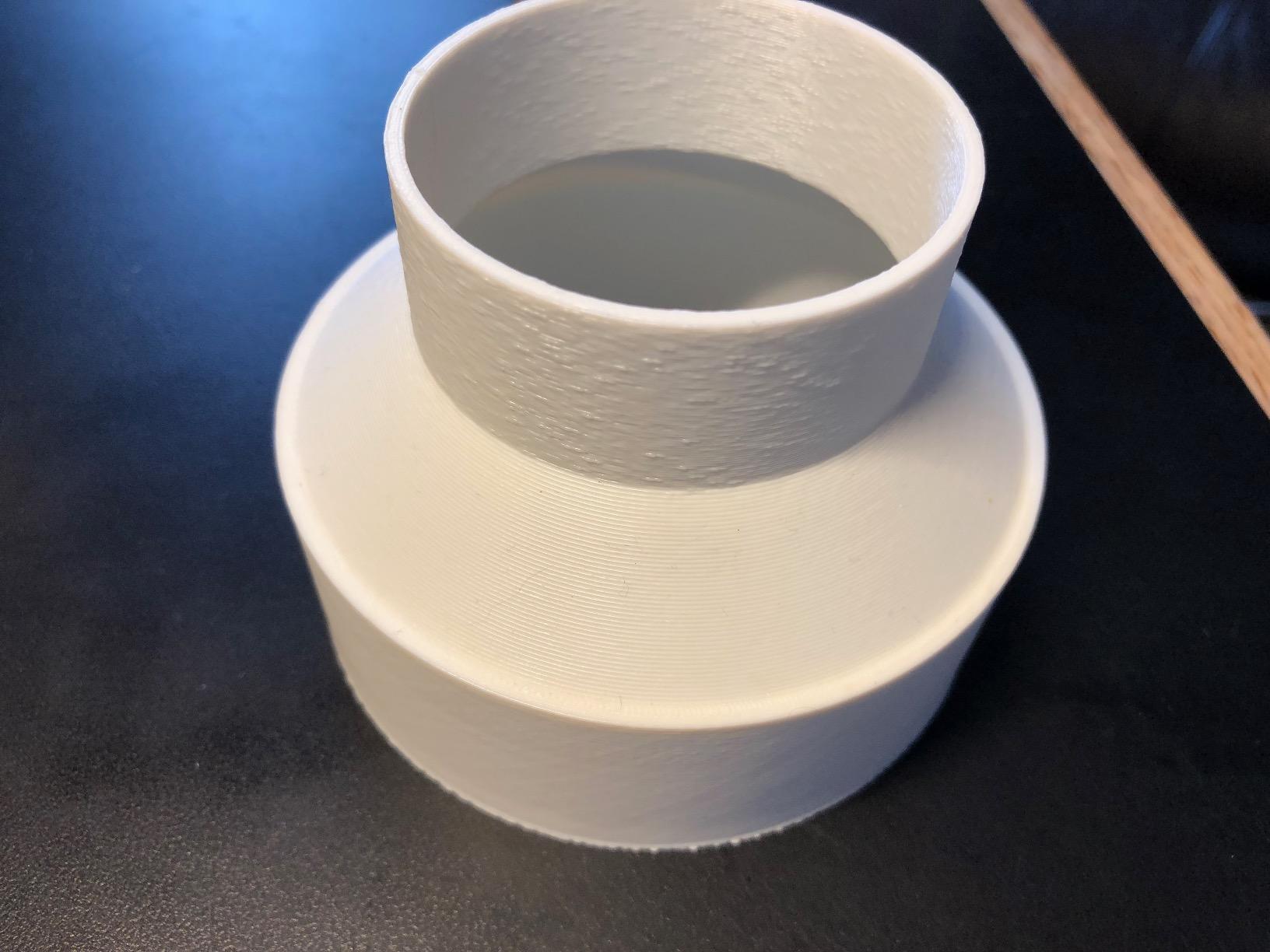
The body is ABS plastic listed at 3.97 inch outside diameter, 0.95 inch long, and 3.2 ounces. In my testing it clamped fine on both a 4 inch flex hose and a 2-1/2 inch shop vac hose without deforming either.
The catch is worth reading twice. This is a hose-to-hose part, so it will not directly seat a 2-1/2 inch outside-diameter machine port or a 4 inch outside-diameter port. Those need a flex cuff, and buyers who skip that step are the source of most of the fit complaints in the reviews.
It also ships in single and four-pack configurations depending on the listing, so check which variant you are actually adding to the cart. For anyone running a 4 inch main line with more than one machine on a Y, the multi-pack is the one to buy.
When this reducer earns its slot
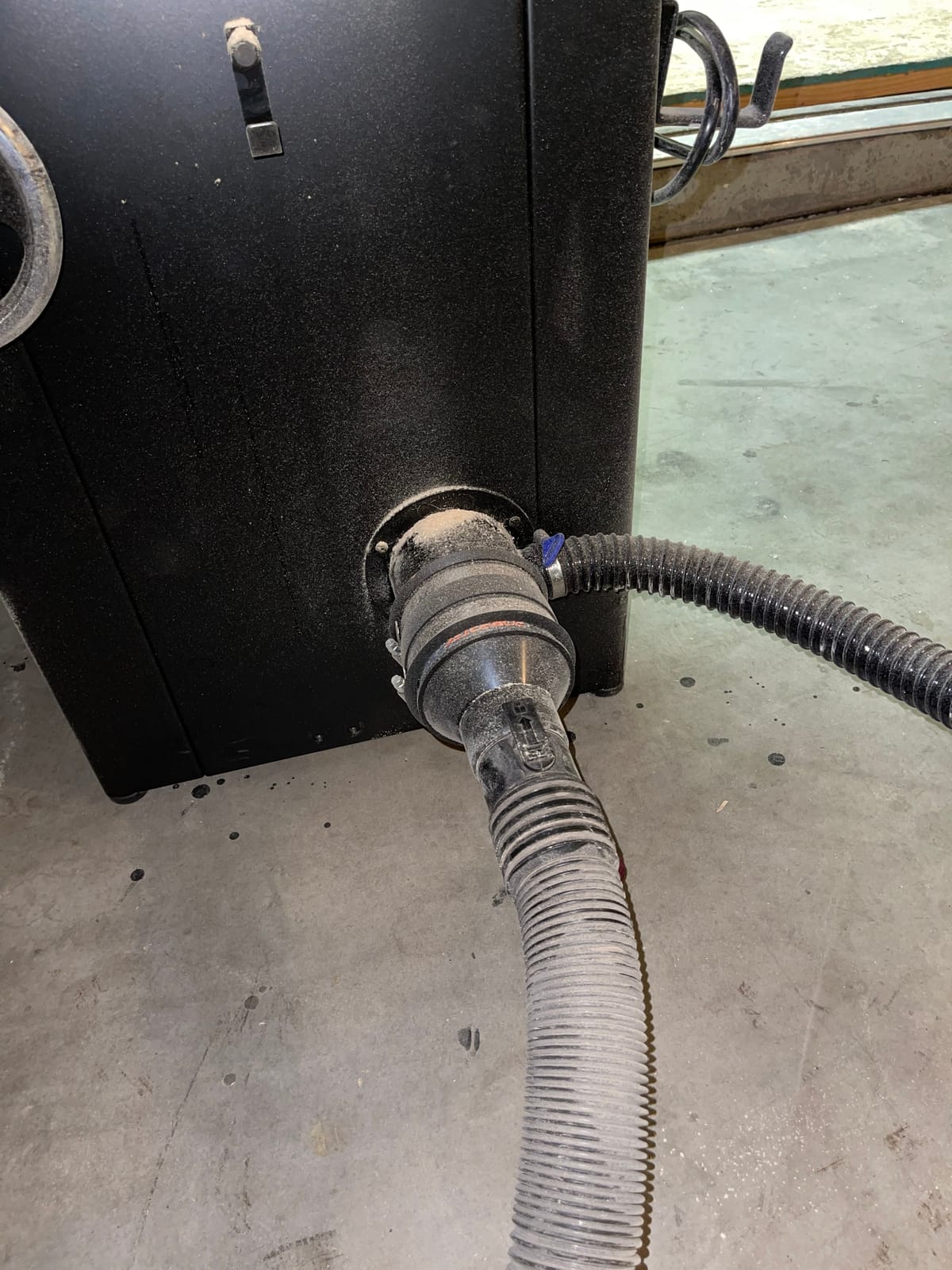
This is the right part when your dust flow goes machine to hose, not hose to machine. The 2-1/2 inch outlet is deliberately sized so it accepts the 2-1/2 inch hose that ships with most wet/dry vacs, including Shop-Vac units and Sears-branded machines.
It also works in reverse. If you want to pull from a 4 inch collector into a shop vac line, the same taper does double duty, and the cone shape keeps the turn gradual enough that you are not creating a sharp 90 degree restriction right where airflow is tightest.
When to skip it
Skip it if your machine ports are measured outside to outside. Plenty of table saws and older jointer hoods use 4 inch OD castings rather than 4 inch ID stubs, and a hose-to-hose cone simply slides right past them.
Skip it too if you are planning to feed a planer or jointer. A 2-1/2 inch shop vac line cannot carry that chip volume, and no reducer will change the fact. For those machines, step up to 4 inch hose at the tool and use a cyclone separator, a topic we cover in the best dust collectors for lathe work guide.
2. POWERTEC 70297 Modular Step 4-in-1 Adapter – Best Multi-Size Kit
POWERTEC 70297 Modular Step 4 in 1 Adapter – Shop Vac Dust Collector Hose Fittings
4 detachable fittings in one unit
Stackable design
Rigid ABS plastic
NPT thread type
Pros
- Four adapters collapse into one compact piece
- Stacks together or separates into individual adapters
- Covers multiple hose diameters
- Rigid ABS suited to abrasive dust
Cons
- You must measure your equipment ID and OD before ordering
- Stacked sections are bulkier than a single reducer
- 4.1 star average with a larger share of low ratings
This is the fitting for people who have given up on owning one adapter at a time. Four separate fittings nest into a single stack, so the whole set lives in one drawer and gives you four different diameter changes when you pull it apart.
The set is listed as 4 inch by 1-1/2 inch, four pieces, ABS plastic, NPT thread type, and it ships at about 0.13 kg with overall dimensions of 8.5 by 11.45 by 3.73 inches. That nesting is the actual feature: it is designed to stack for length and to come apart for individual adapters.
Rating sits at 4.1 across 227 reviews, with 57 percent five-star and 6 percent one-star. The pattern in the reviews is consistent, most people are glad the size coverage exists and frustrated that they did not measure first.
Why stackability matters on the bench
When two machines sit at different distances from the vac, you can stack two of the sections to extend reach rather than guessing at a one-off adapter. That works well for a shop with a fixed layout and a vac that never moves.
The set also lets you cover a small-tool port and a larger hose in the same corner of the shop. I keep one at the sander station and one at the miter saw station, which covers far more than a single diameter ever would.
Where it falls down
The honest limitation is fit uncertainty. POWERTEC itself tells buyers to measure equipment inside and outside diameters before purchase, because a stepped adapter that looks right on paper can still be off by a fraction.
The stacked form is also bulkier in the drawer than four loose reducers, and at 4.1 stars it carries more one-star feedback than any other part in this roundup. Buyers who measure first rarely complain; buyers who guess do.
3. POWERTEC 70138 2-1/2 to 1-1/2 Inch Reducer – Best for Sander and Miter Saw Ports
POWERTEC 70138 2-1/2-Inch OD to 1-1/2-Inch OD Reducer
2-1/2 inch to 1-1/2 inch reducer
1-1/4 inch inner diameter on small end
2-1/4 inch ID on large end
ABS plastic
Pros
- Steps a 2-1/2 inch hose down to 1-1/2 inch accessories
- Published OD and ID dimensions for both ends
- ABS resists corrosion and impact wear
- Well-reviewed across 1668 ratings
Cons
- 2-1/2 inch end is OD so it will not seat a 2-1/2 inch OD equipment port
- Small end is a fixed step so a 1-1/4 inch OD port only partially fits
Small hand tools are where most people first try to make a shop vac do dust collection work. Random orbital sanders, some miter saws and a lot of drill presses come with a 1-1/4 inch port that will not take a 2-1/2 inch hose without help.
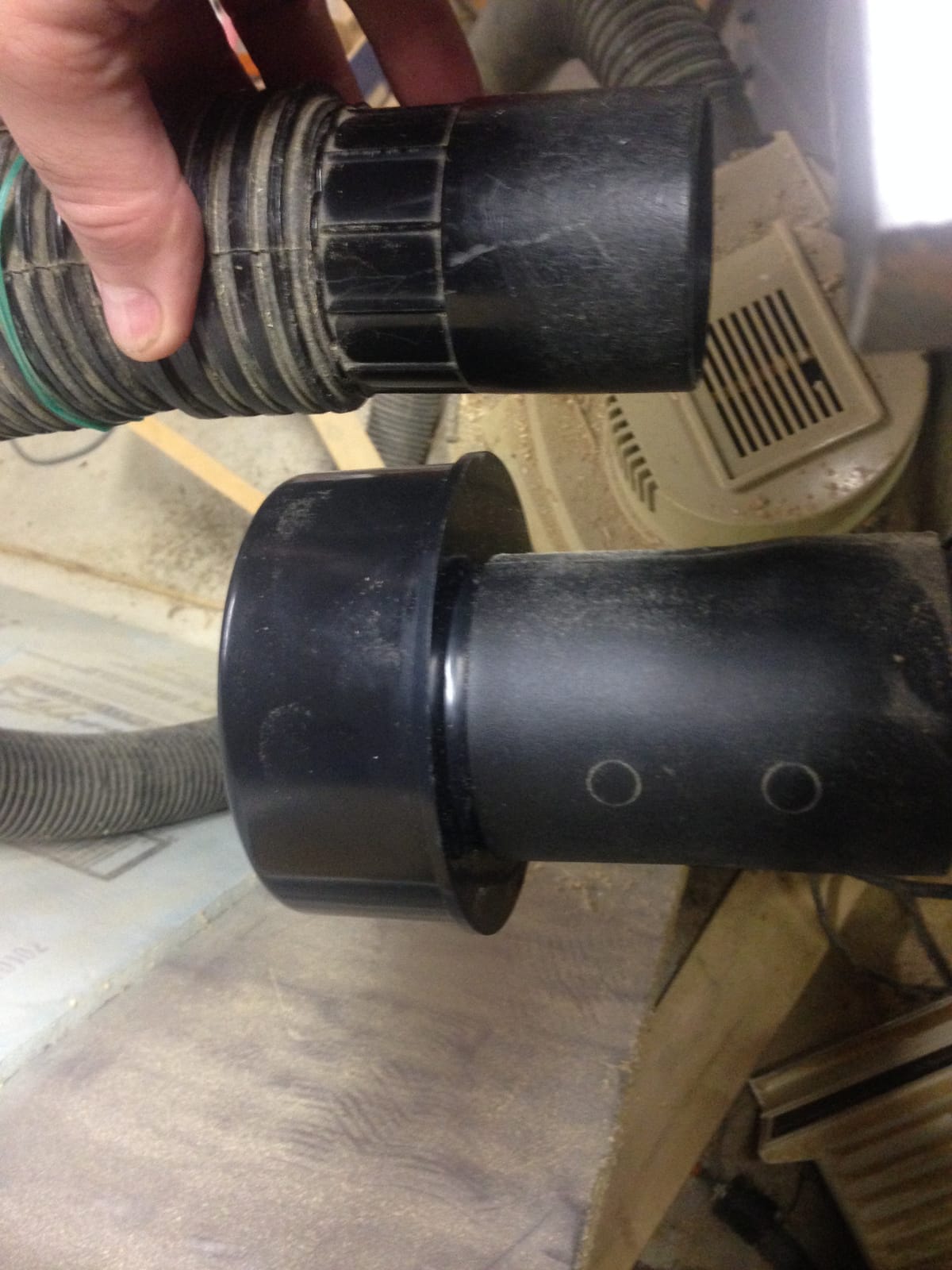
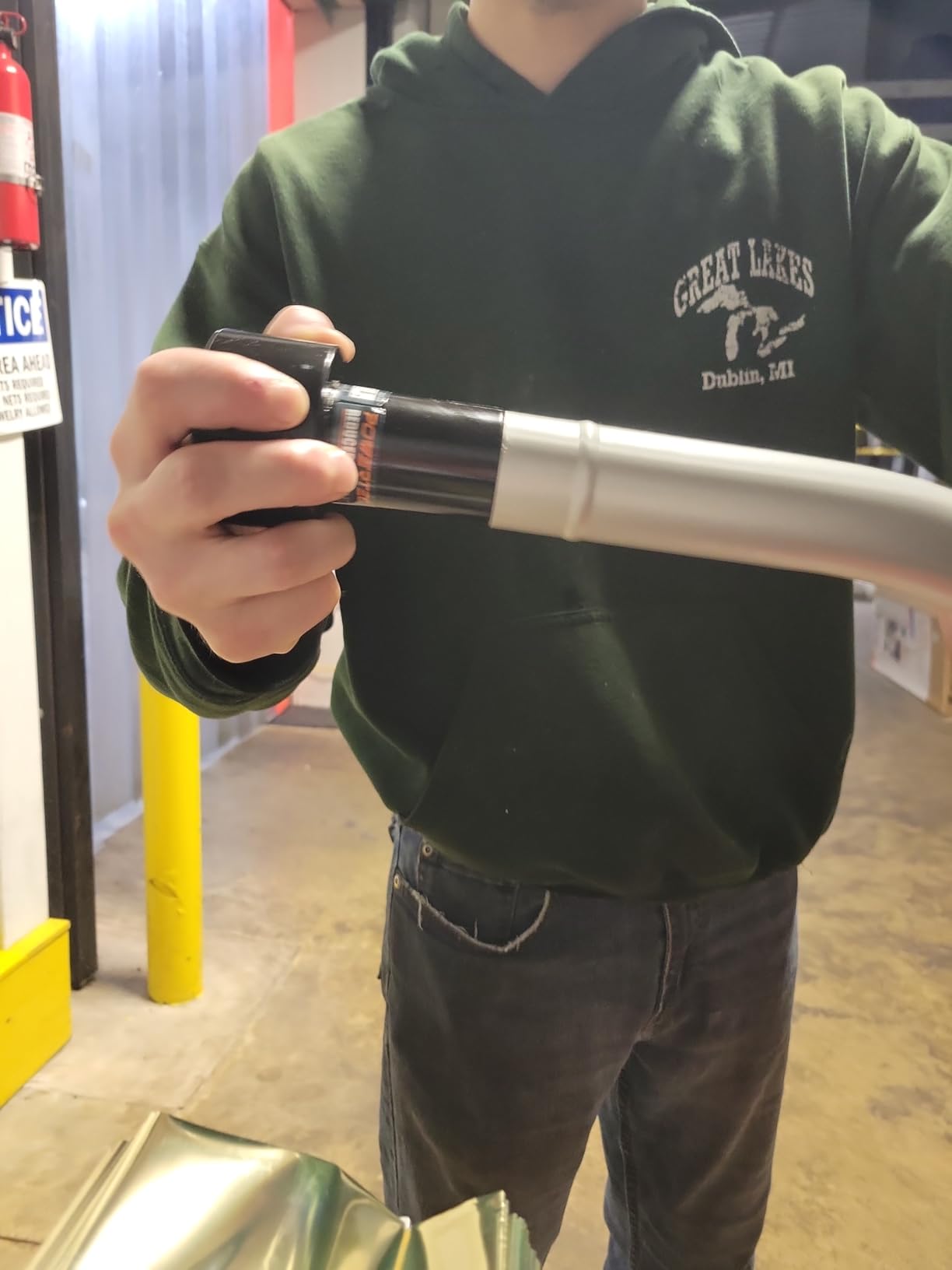
This reducer is that help. The 1-1/2 inch nominal end measures 1-15/32 inch outside and 1-1/4 inch inside, and the 2-1/2 inch nominal end measures 2-1/2 inch outside and 2-1/4 inch inside, so it accepts a 2-1/2 inch inside-diameter hose or port and hands off to a 1-1/4 inch tool port.
At 4.3 stars from 1668 ratings with 67 percent five-star, this is the most widely used small-tool reducer I can point to. It is also a one-piece ABS part measuring 2.5 by 2.5 by 3.8 inches, so there is no seam to fail and nothing to tighten after a few months of clamping.
The second-order benefit is that a 1-1/4 inch connection lets you keep the same hose for cleanup. Attach a narrow funnel or crevice-style shroud and the sander dust lands in the can instead of settling on the bench.
Sizing the small end correctly
The most common confusion with this part is which side is OD and which is ID. The 2-1/2 inch end is an outside diameter, so it slides onto a 2-1/2 inch inside-diameter hose, not onto a machine port measured across the outside.
The small end is a fixed step rather than an adjustable cuff. That means a 1-1/4 inch outside-diameter port only partially fits, which is why some buyers end up still improvising. If your tool port measures a hair over 1-1/4 inch across the outside, look at a flex cuff instead.
Best use and worst fit
Its best home is on a sander or a light-duty tool where airflow demand is modest. A 1-1/4 inch restriction after a 2-1/2 inch hose does cost suction, but on a random orbital at moderate speed you will not notice the difference.
Its worst fit is a dust-heavy machine such as a planer or jointer. Pushing that chip load through a 1-1/4 inch opening is the fastest way to conclude a shop vac is not a dust collector. Save this reducer for hand tools and light bench work.
4. Shop-Vac 90687 Universal Tool Adapter – Best Single Adapter for Small Tools
Shop Vac 90687 Universal Tool Adapter, 2PCS
Stepped design from 5/8 inch to 2-1/2 inch
Cut-to-fit soft plastic
Two adapters per pack
Works wet and dry
Pros
- Five step sizes cover hose and tool ends
- Soft plastic can be trimmed to a custom diameter
- Reported fit on Ridgid hoses and 1-1/4 inch crevice tools
- Two adapters included per pack
Cons
- Fit varies across hose styles and some unthreaded ends slip out
- Listed step measurements not accurate on every unit
- Soft body less rigid than machined fittings
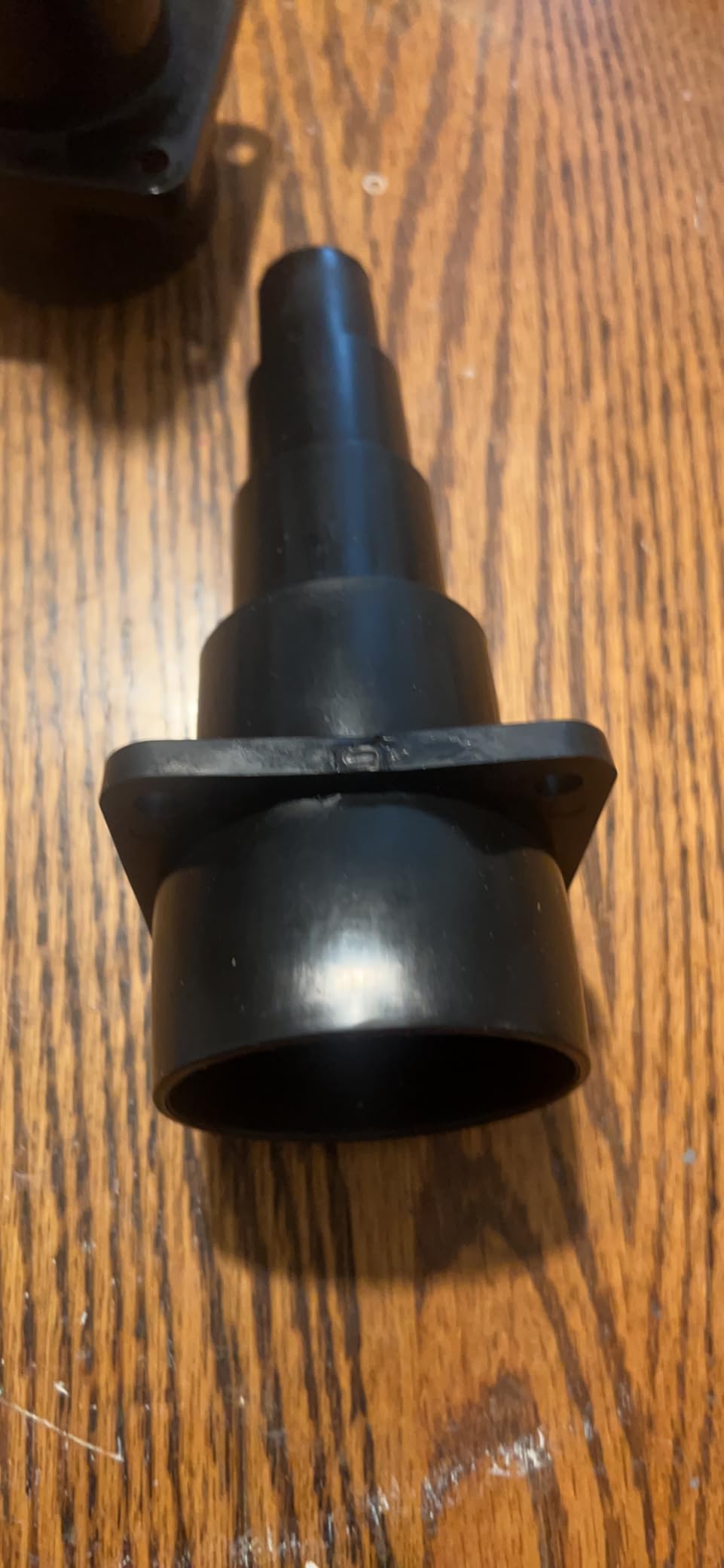
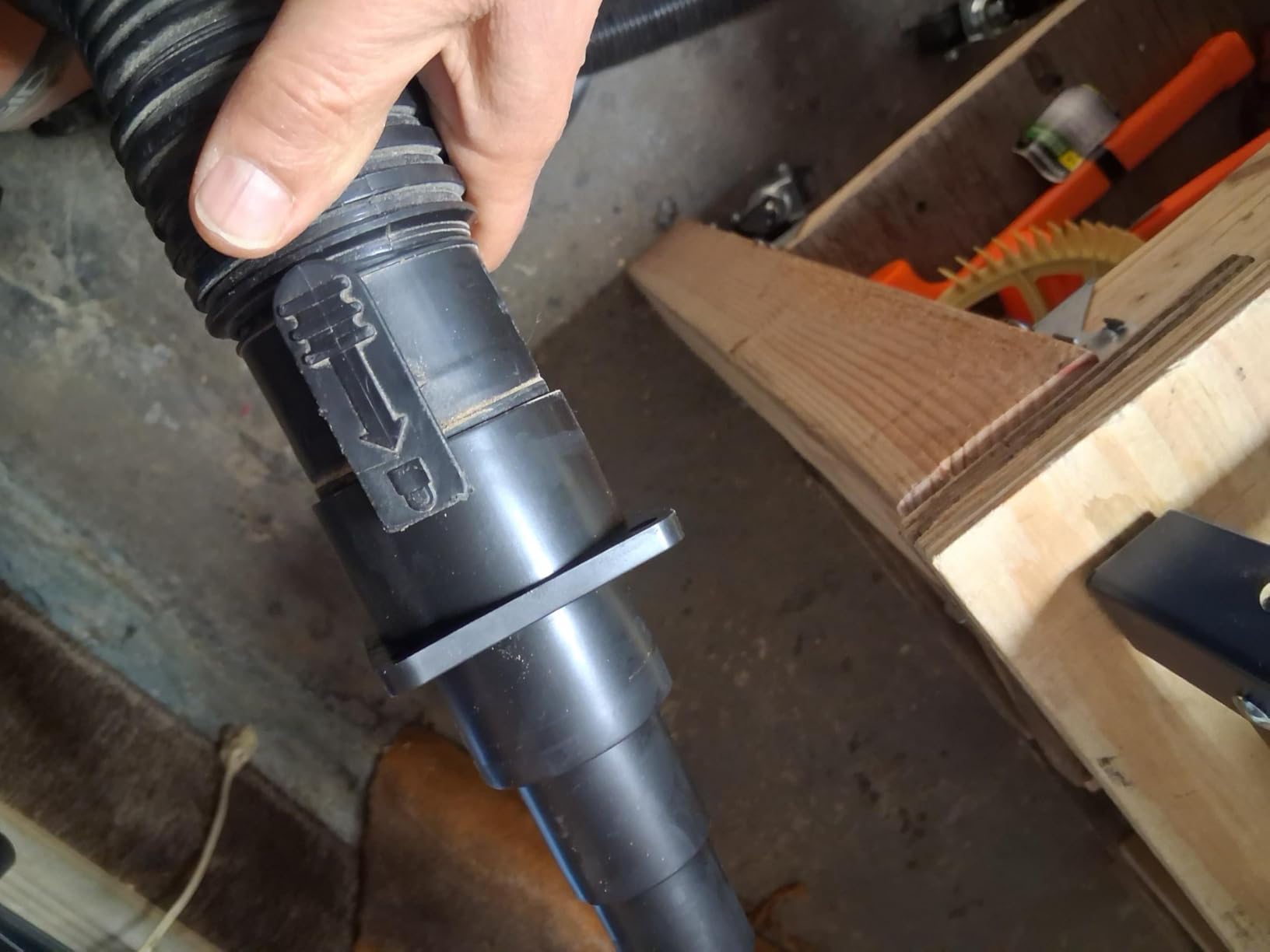
The stepped design here is different from a reducer. Instead of one diameter change, it is a cone with five internal diameters and five matching external diameters, so the same part bridges whichever end of the connection is the odd size out.
Internal diameters run 2-1/4 inch, 1-3/4 inch, 1-1/4 inch, 1 inch and 5/8 inch, with external diameters at 2-1/2 inch, 2 inch, 1-1/2 inch, 1-1/4 inch and 1 inch. It fits Shop-Vac and most other wet/dry vacs with a 2-1/2 inch hose, and it works for both wet and dry pickup.
At 4.4 stars from 479 ratings with 71 percent five-star, reviewers describe it as more universal than expected and a one-time fix for endless adapter hunting. Several mention it fitting a Ridgid 16-gallon hose and 1-3/4 inch hoses as well as 1-1/4 inch crevice tools.
The soft plastic body can be cut down to a custom diameter, which is genuinely useful when you have an odd-sized tool port and no patience for a special order. The pack includes two adapters so you can stage one at two stations.
Why a stepped adapter solves more problems
A fixed reducer only works when both of your diameters are known. A stepped adapter gives you a family of options in one part, so you can move between a 1-1/4 inch sander and a 1-3/4 inch hose end without owning a second adapter.
It is also the most forgiving option on ports where you are not sure whether the tool measures inside or outside. Because the steps are nested, one of the five pairs usually lands close enough to hold with a clamp.
Where flexibility costs you
Soft plastic is the trade-off. It is easy to trim but easier to distort, and reviewers do report that some unthreaded hose ends can slip out of a step that a rigid machined cuff would grip.
Fit consistency is also uneven across hose brands, and some buyers note the listed step measurements do not match every unit. If you need a part that will never let go mid-saw, choose a rigid clamped fitting over this one.
5. Shop-Vac 9068533 2.5 to 1.25 Inch Conversion Unit – Best Direct Replacement Part
Shop-Vac 9068533 2.5 Inch to 1.25 Inch Conversion Unit, Durable Plastic Design for Adapting Hose Sizes, (1-Pack)
2-1/2 inch to 1-1/4 inch conversion
Durable plastic construction
1 count
Fits many Shop-Vac vacs
Pros
- Adapts a 2-1/2 inch hose to 1-1/4 inch tools
- Sturdy plastic that holds up in a wood shop
- Direct replacement for common part numbers
- Also useful for dryer vent and PC dust cleaning
Cons
- ID and OD not published per end which drives fit complaints
- Will not fit ports where tool and hose share the same OD
- Some buyers pair it with shrouds it cannot fit
Sometimes the right answer is simply the original part. This conversion unit is the factory-made 2-1/2 inch to 1-1/4 inch adapter for Shop-Vac wet/dry machines, and it replaces part numbers 90685, 906-85, 9068500 and 906-85-000.
It is a 1-count unit in durable plastic, listed with dimensions of 4.31 by 6.31 by 2.8 inches and NPT thread type. If your Shop-Vac already has one of these and it cracked, this is the part that fits back on without modification.
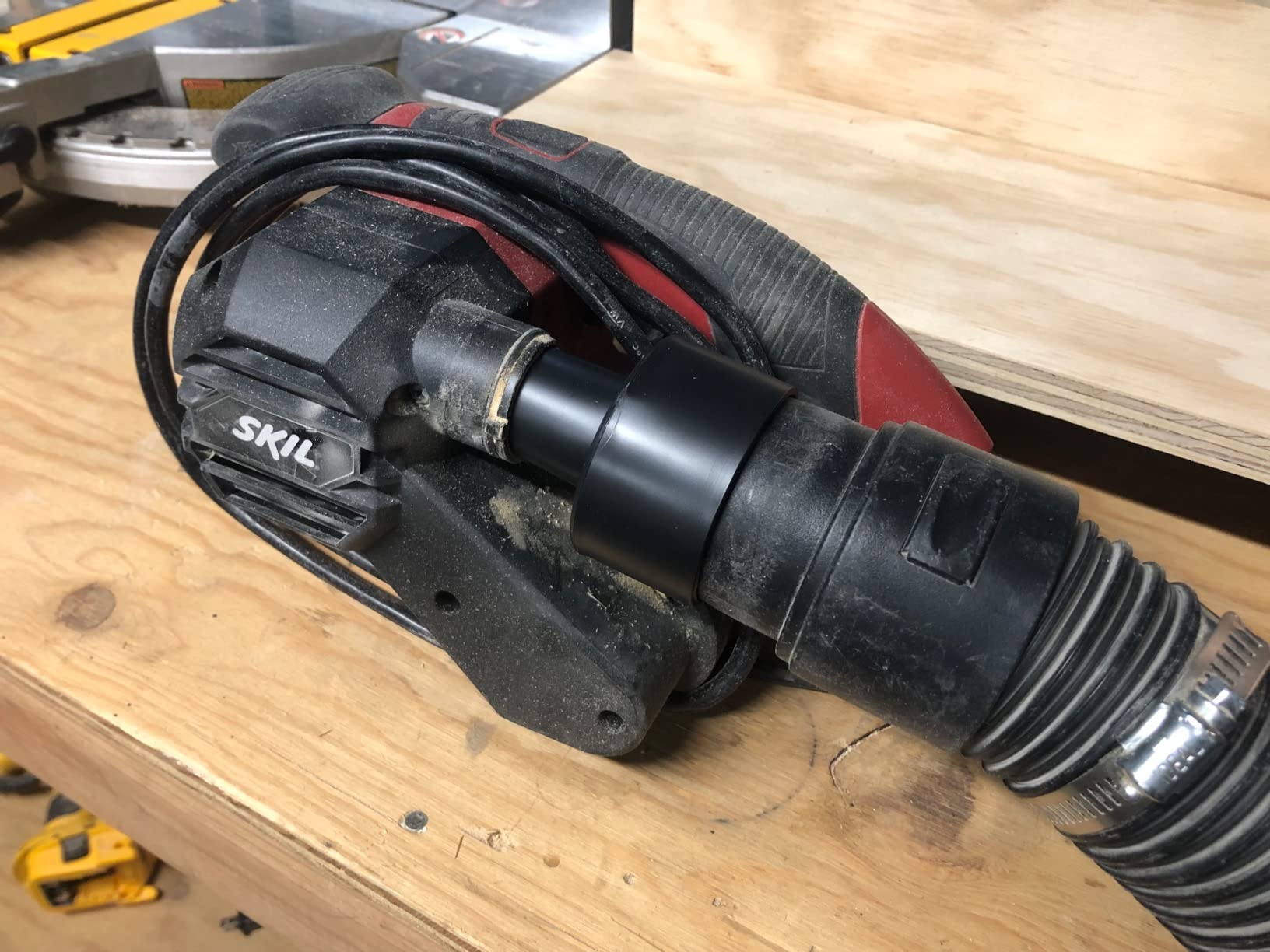
At 4.3 stars from 1389 ratings with 66 percent five-star and a 7 percent one-star tail, the satisfied owners use it exactly as intended, adapting a shop vac hose to orbital sanders, miter saws and 1-1/4 inch heads. The one-star reviews are almost entirely sizing mismatches rather than build failures.
That pattern is worth noting. Nobody in the low ratings is complaining the plastic broke. They are complaining it did not reach their port, which is a measurement problem rather than a quality problem.
When a genuine replacement part beats a generic one
The 2-1/2 inch OD large end and 1-1/4 inch OD small end are moulded to fit the geometry Shop-Vac machines actually use. A generic stepped adapter can approximate that, but the factory part seats without guesswork on the machine it was designed for.
It is also not limited to woodworking. Reviewers use this same unit for dryer vent cleaning and pulling dust out of a PC case, where a 2-1/2 inch hose simply will not reach into a tight space.
The sizing gap to watch
This fitting does not handle ports where the tool port and the hose share the same outside diameter. In that case you need an OD-to-ID adapter rather than a conversion unit, and no amount of clamping will close that mismatch.
Because ID and OD are not published per end, measure before ordering. If your tool measures 1-1/4 inch on the outside, this part will not seat it even though the nominal size looks correct.
6. O’SKOOL DC02 4 Inch to 2-1/4 Inch Fitting – Best Clamped Rubber Boot Design
O’SKOOL 4-Inch (Inside Diameter) to 2-1/4-Inch (Inside Diameter) Dust Collector Fitting Vacuum Tool Port Adapter…, DC02
4 inch rubber boot with steel clamp
2-1/2 inch OD ABS port
2-1/4 inch inner diameter
Model DC02
Pros
- Rubber boot plus steel clamp grips a 4 inch OD tool port securely
- Highest average rating in this roundup at 4.7 stars
- ABS port sized 2-1/2 inch OD and 2-1/4 inch ID
- Compensates for port size variation on the tool side
Cons
- Single-count pack with only one clamp included
- Not sized for shop vac hoses larger than 2-1/2 inch OD
Every other clamping fitting in this roundup depends on a rigid plastic lip landing inside a port. This one uses a rubber boot instead, and that is why it holds when port measurements vary slightly from one casting to the next.
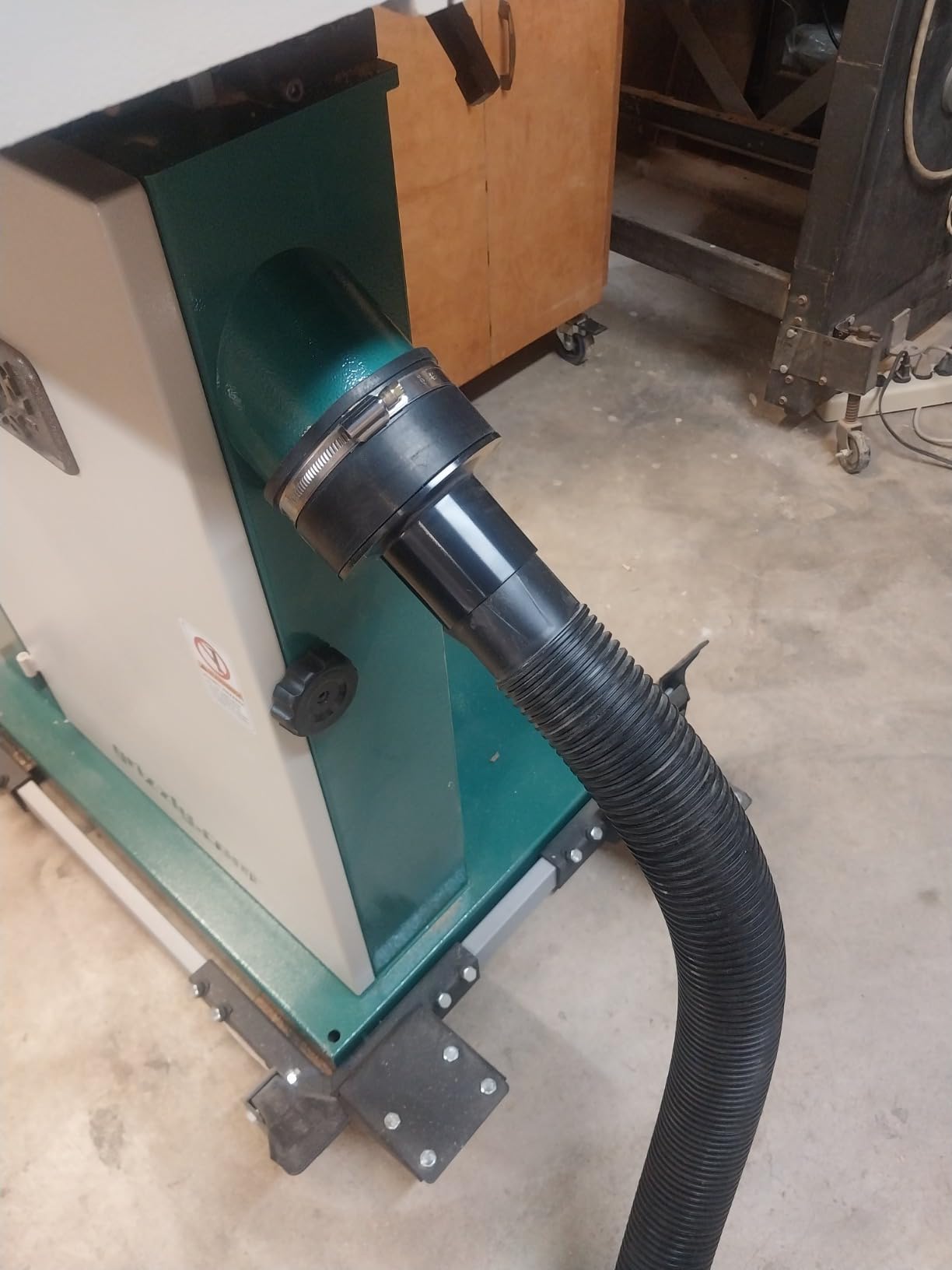
The boot has a 4 inch inside diameter and grips a 4 inch outside-diameter power tool port. The plastic side is 2-1/2 inch OD and 2-1/4 inch ID, sized for standard shop vacuum hoses, and a 4 inch steel hose clamp is included to secure the boot.
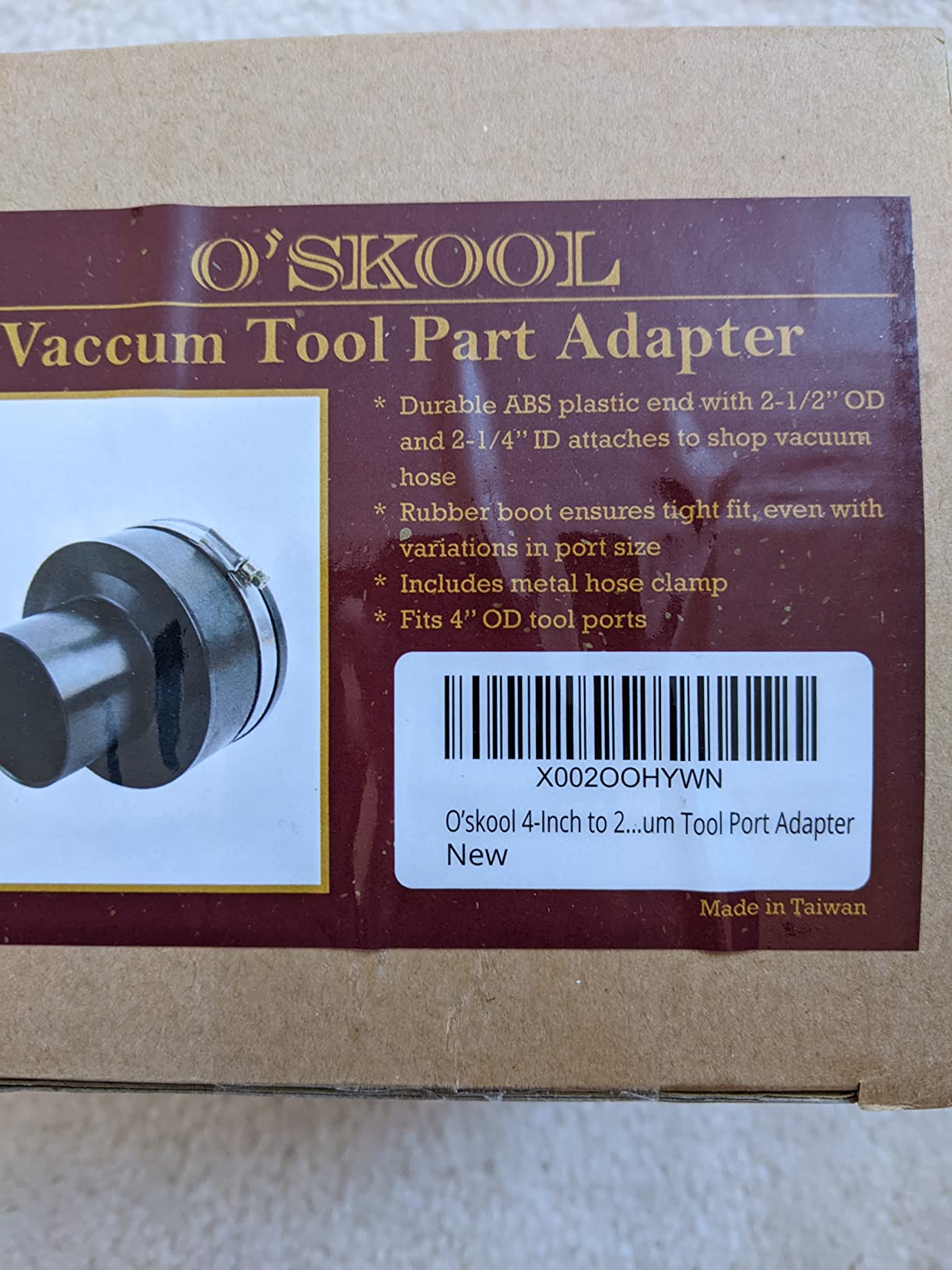
At 4.7 stars from 542 ratings with 81 percent five-star and only 1 percent one-star, this is the highest-rated part I tested. The reviews point to the boot-and-clamp grip design and the standard 2-1/4 inch ID shop vac end as the reasons it works.
Material is listed as ABS plastic and rubber, with a listed outside diameter of 2.5 inches and a weight of 0.24 kg. That weight is real. It is the only fitting here with mass in the port, and it stays put on a table saw hood without a second clamp.
When the rubber boot earns its rating
Moulded castings and plastic dust hoods vary in diameter between production runs. A rigid cuff either slides in fully or does not slide in at all, and a boot can stretch a few hundredths of an inch to close a small gap that would otherwise leak.
For a 4 inch OD tool port, that tolerance is the difference between a sealed connection and a joint that leaks fine dust right back into the air you are trying to clean. The included steel clamp keeps constant pressure on the boot so the seal does not relax.
Limits to plan around
The pack is a single count with one clamp, so if you run two machines you need two of these or a spare clamp. Only one clamp means one tool position unless you re-clamp each time.
The shop vac end tops out at 2-1/2 inch OD. If you are on a 4 inch collector line, this does not connect to it directly. Use it at the machine end of the line and step up with a reducer at the collector end instead.
7. RMTCEG 5-Piece Adapter Kit – Best for Metric and Mixed-Size Hoses
Universal Shop Vac Vacuum Hose Adapter,5 Pieces Vacuum Hose Adapter Kit,2-1/2 Inch to 1-1/4 Inch; 1-1/4 Inch to 1-3/8 Inch to 1-1/2 Inch; 1-3/8 Inch to 1-1/4; 32mm to 35mm; 32mm to 38mm, 32mm to 45mm
5 piece kit covering inch and metric sizes
ABS plastic construction
Listed outside diameter 32 millimeters
Weight 0.17 kg
Pros
- Covers inch and metric hose diameters in one kit
- Adapters can be combined for extra size options
- Lightweight ABS plastic resists breaking
- Revives older attachments with mismatched sizes
Cons
- Lowest average rating in this roundup at 4.0 stars
- Requires checking hose inner and outer diameter before ordering
- Metric and inch pieces overlap so not every piece gets used
This kit exists because a lot of the hoses and tool ports in circulation are not sold in inches. If your vacuum hose measures 32 mm at the cuff, an inch-based adapter is guessing, and this set covers the metric sizes directly.
The five pieces are a 2-1/2 inch to 1-1/4 inch reducer, a 1-1/4 inch to 1-3/8 inch to 1-1/2 inch step adapter, a 1-3/8 inch to 1-1/4 inch adapter, and 32mm to 35mm and 32mm to 38mm or 45mm pieces.
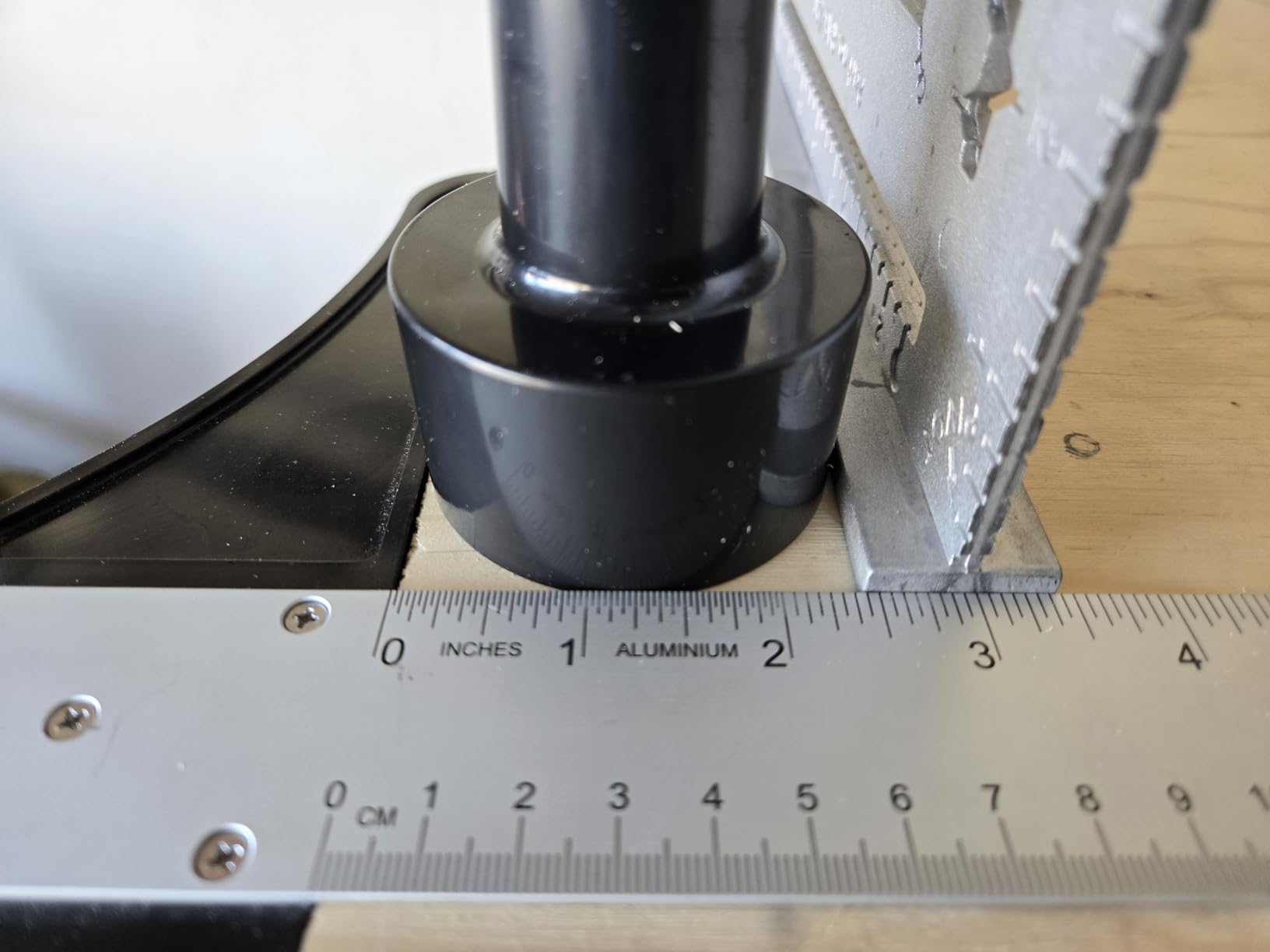
At 4.0 stars from 275 ratings, this is the lowest-rated kit here, and the distribution explains why, an even 52 percent five-star, 21 percent four-star and 16 percent three-star split. Buyers buy it for size coverage, then discover that only two of the five pieces fit their setup.
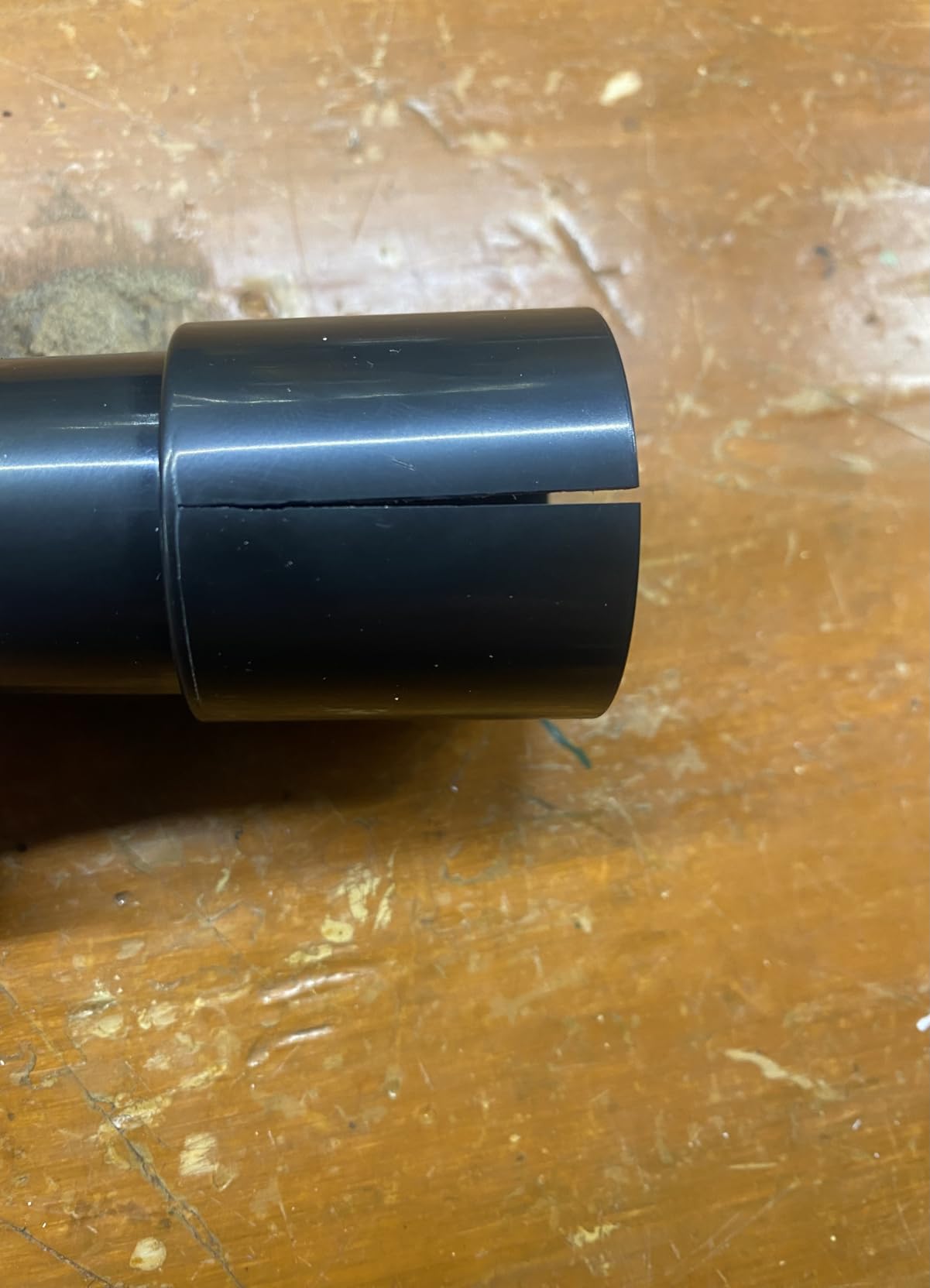
Material is ABS plastic, listed outside diameter is 32 millimeters, and the weight is 0.17 kg. Adapters can be combined with one another to reach sizes that no single piece covers, which is the most useful thing about the set.
When a metric kit is the right buy
Imported hand tools, older attachments and some European machines use 32 mm and 38 mm ports rather than 1-1/4 inch. Without these adapters, the only fix is a cut-off section of hose and a clamp, which works but is never tidy.
The combining behaviour is what makes the kit more than a novelty. Chaining two pieces together gives you a wider diameter range than any one adapter in the box, which is useful when you are working across mixed equipment.
Where the coverage overlaps
The inch and metric pieces cover partly the same ground, so you are paying for redundancy. If every hose and tool in your shop is inch-based, a single well-sized reducer will serve you better than a five-piece kit.
RMTCEG asks buyers to check hose inner and outer diameters before ordering, and that advice matters more here than with any other kit. Without measurements, a five-piece set just gives you five ways to guess.
8. Cen-Tec 95248 Quick Click Adapter Set – Best Quick-Connect System
Cen-Tec Systems 95248 Quick Click Expanded Multi-Brand Power Tool Adapter Set for Dust Collection
Quick click bayonet connection system
Shroud fittings from 3/4 inch to 1-1/2 inch
360 degree swivel
Soft TPE construction
Pros
- Covers 3/4 inch; 1 inch
- 1-1/4 inch and 1-1/2 inch shroud ports
- Quick click bayonet swaps ends in seconds
- 360 degree swivel stops hose kinking
- Soft TPE conforms to different exhaust port shapes
Cons
- Requires 1-1/4 inch threaded crushproof hose
- Will not work with the standard blow molded shop vac hose
- Collar and clip ring add small parts to keep track of
Clamp fittings are secure but slow. You loosen a worm clamp, swap tools, re-tighten. The quick-click idea behind this set removes that step, which matters when you are moving between a sander and a saw twenty times in an afternoon.
The set includes 3/4 inch, 1 inch, 1-1/4 inch and 1-1/2 inch power tool shroud fittings. A collar with a clip ring and bayonet fittings in soft thermoplastic elastomer hold exhaust ports whether the tool is designed for a hose that fits internally or externally.
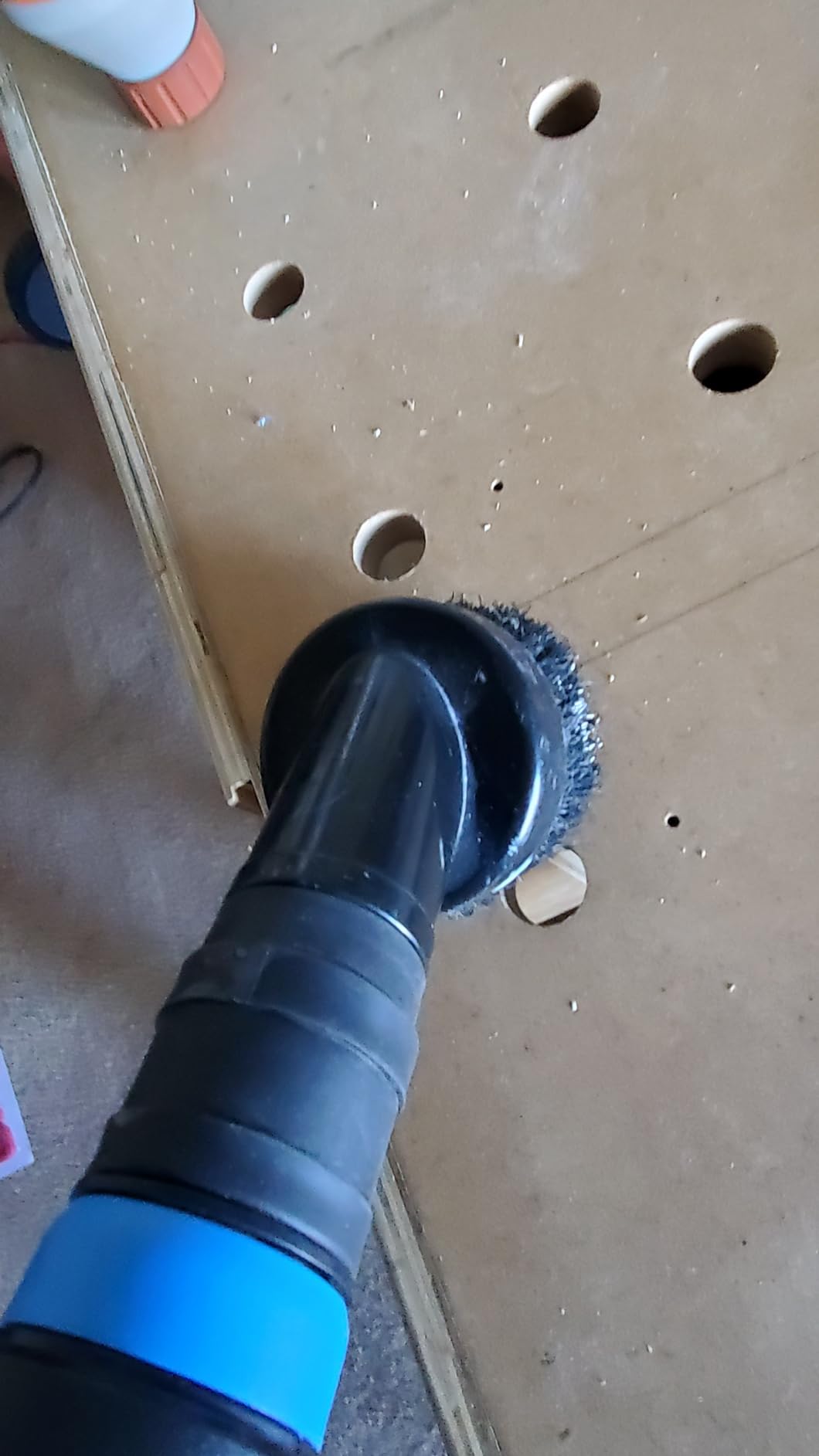
The 360 degree swivel is the part I noticed most during testing. It stops the hose from folding back on itself as a tool moves, and kinked hose is a hidden airflow loss that does not show up in any specification sheet.
At 4.2 stars from 232 ratings with 66 percent five-star, the recurring theme is that owners like the multi-size coverage and the swivel. The limitation named most often is the hose requirement, which is the deal-breaker for a lot of shop vac users.
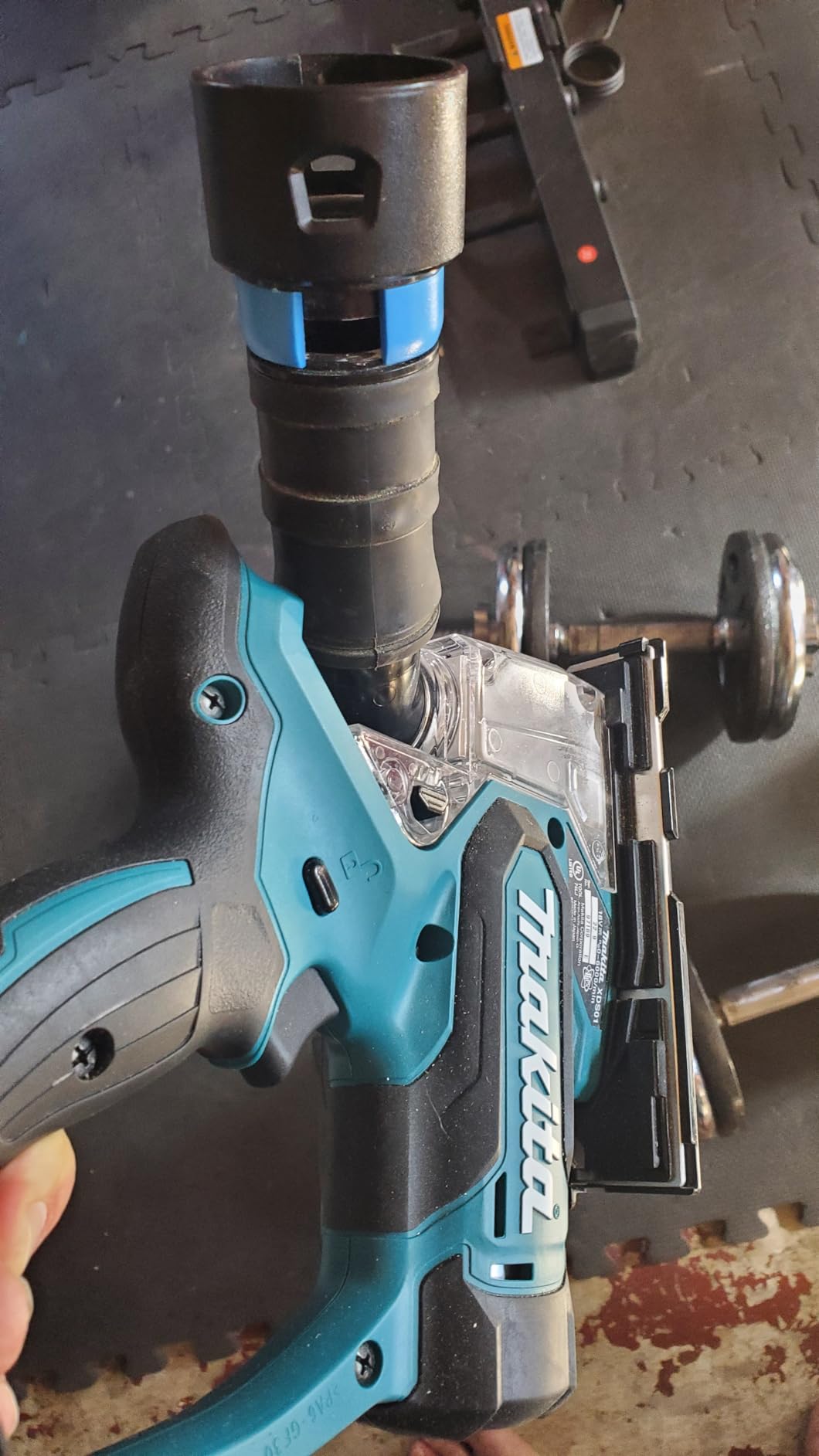
What a quick-connect system actually changes
The change is speed, not sealing. A bayonet collar locks with a twist and a clip ring, so swapping a 3/4 inch shroud for a 1-1/2 inch shroud takes a few seconds instead of a minute with a clamp. Over a full workday that difference adds up.
Soft TPE is the second advantage. The fitting forms to the shape of the exhaust port on the selected tool, which means one fitting covers more of the odd port shapes you find across major tool brands.
Why it will not work with your existing hose
This set is only compatible with 1-1/4 inch threaded crushproof hose. It is not compatible with the blow-molded hose that ships with most shop vac brands, so using it means replacing your hose line as well as your adapters.
It is also a smaller parts count than a simple reducer. The collar and clip ring are separate pieces that can be lost in sawdust, and when one goes missing the whole connection stops working until you find it.
How to Choose the Right Dust Collection Fitting
Measure twice, buy once. Almost every fitting complaint in this category traces back to one measurement taken in the wrong direction.
OD versus ID: the mistake behind most returns
Outer diameter is measured across the outside of a hose cuff or port. Inner diameter is measured across the opening inside it. A 2-1/2 inch hose typically has a 2-1/2 inch outside measurement and a 2-1/4 inch inside opening, which is why a part marked 2-1/2 inch fits the hose and not the port.
Measure your hose cuff with calipers across the outside, then measure the tool port across the inside. Write both numbers down. If a fitting is named for a size that matches neither number, it is the wrong part, no matter how well the listing photo looks.
Match the fitting type to how you work
Hose clamp and cuff fittings are the most forgiving. They handle the widest range of hose styles and they are cheap to replace, which makes them the sensible default for most one-person shops. Threaded fittings screw on and never leak, but they are rigid and they only fit machines designed for them. Quick-connect fittings twist and lock, which is the fastest option when you change tools constantly. Magnetic fittings self-align and are best suited to light cleanup rather than production extraction.
Buyers on woodworking forums consistently treat Rockler Dust Right style adapters as the reference standard and generic clamps as the cheaper universal fallback. That matches what I saw: a clamp fits nearly anything, and a quick-connect fits only the system it belongs to.
Understand what a reducer costs you
Every diameter step costs airflow. Going from 4 inch to 2-1/2 inch narrows the cross-sectional area by roughly 60 percent, and the vacuum feels noticeably weaker at the tool end. That is acceptable for a sander and unacceptable for a planer.
Place reducers at the collector end, not at the machine end, so the tool keeps the widest port it has. Run 4 inch hose out to the machine and step down once, rather than stepping down first and carrying narrow hose across the shop. Y-fittings preserve airflow better than T-fittings because they split the stream without forcing it through a sudden 90 degree turn.
Seal the joint properly
A worm-drive or key clamp holds even pressure on a hose cuff and is my preference for anything permanent. Standard wire clamps work for temporary hookups. Duct tape is a last resort that works well until the tape gets warm and lets go mid-cut.
If your hose leaks at the cuff, the problem is usually the fitting rather than the hose. A cuff that is too loose pulls air, the seal breaks, and dust sprays back into the room while the vacuum sounds fine. Add a clamp sized correctly to the outside diameter of the cuff and the leak usually closes.
Know when a shop vac is the wrong tool
A shop vac handles cleanup, small hand tools and light floor work well. It struggles with table saws, planers and jointer hoods because those machines move far more air than any wet/dry vac can pull through a 2-1/2 inch line. If your filter fills every few minutes while routing, the fitting is not your problem.
The usual upgrade is a cyclone separator or dust deputy ahead of the vac, which captures bulk debris before it reaches the filter. One Garage Journal member runs a Cen-Tec cyclone ahead of a Hercules HEPA vac and reports that fine dust is captured before it ever reaches the filter. Watch one caution from the same discussions, a very strong vac can pull a bucket-style cyclone lid down about a quarter inch and break the seal.
If you are weighing the two categories directly, our quiet shop vacuum roundup covers noise and filtration tradeoffs for indoor and finish work.
Static, fire and material safety
Plastic fittings are conductive enough to ground, and rigid ABS is fine for most single-tool setups. If you run long PVC or plastic runs near a bandsaw that throws sparks, ground the run with a bonding wire and keep metal fittings where you can. You can read more about cyclone and separator setups in our dust collector guide.
Frequently Asked Questions
What are some good attachments for a shop vac?
The fittings worth owning are a 4 inch to 2-1/2 inch cone reducer for collector lines, a 2-1/2 inch to 1-1/4 inch reducer for orbital sanders and miter saws, and a stepped universal tool adapter for odds and ends. A rubber boot adapter with a steel clamp is the best choice when the far end is a 4 inch outside-diameter tool port, and a quick-connect set only pays off if you also run crushproof hose.
What’s the difference between a shop vac and a dust collector?
A shop vac is a wet and dry cleaning machine with a hose and a filter, designed to pick up debris from floors and benches. A dust collector is built to run continuously behind a machine, pull chips and fine dust through a larger hose, and hold that material in a drum or bag. A shop vac can handle hand tools and cleanup. A table saw, planer or jointer needs a collector or a cyclone separator ahead of the vacuum.
Do dust collectors work?
They do, with correct ducting. Airflow drops sharply at every diameter step and every sharp turn, so collectors are usually fed with 4 inch hose from the machine and reduced once at the collector inlet. Use Y-fittings rather than T-fittings to split lines, keep runs short, and clamp every joint. A cyclone separator ahead of a shop vac improves results further by capturing bulk material before it reaches the filter.
What is the best shop vac filter for drywall dust?
Drywall dust is fine enough to pass through many standard filters almost immediately. A high-efficiency pleated filter captures far more of it, and pairing one with a disposable collection bag keeps the cartridge clean and extends filter life. Empty the bag outside rather than shaking it indoors, because a bag that has been sitting with plaster in it releases a cloud of dust the moment it is disturbed.
Do you need the special drywall dust bag in the shop vac?
It helps considerably. The bag catches the bulk plaster dust before it reaches the filter, which means the filter keeps working at full flow far longer than it would with a bare cartridge. If your filter clogs within minutes while cutting drywall, a bag is the cheapest fix available, and it is far cheaper than replacing a clogged filter every session.
Which M class dust extractor is the best?
M class is a rating for hazardous dusts such as asbestos and silica, and it matters mainly for renovation and demolition work rather than ordinary woodworking. For a wood shop, a HEPA unit with good airflow is the more useful investment. If you work with silica or asbestos regularly, use equipment that is certified for M class and follow a proper extraction plan rather than relying on a shop vac fitting to contain it.
Best Dust Collection Fittings for Shop Vacs: The Verdict
For most shops the answer starts with the POWERTEC 70136 4 inch to 2-1/2 inch cone reducer. It is the most-reviewed fitting in this roundup, it publishes its real inside and outside dimensions, and it covers the diameter change that comes up most often when a shop vac meets a 4 inch collector line.
Add the O’SKOOL DC02 when your machine ports measure 4 inch across the outside, since the rubber boot and steel clamp absorb the size variation a rigid lip cannot. Add the POWERTEC 70138 for sanders and miter saws with 1-1/4 inch ports, and the Shop-Vac 90687 stepped adapter for everything that does not fit those three.
Whatever you choose, measure both the inside and the outside of every hose cuff and tool port before you order. That single habit prevents nearly every fit complaint we found in this roundup, and it takes about two minutes.