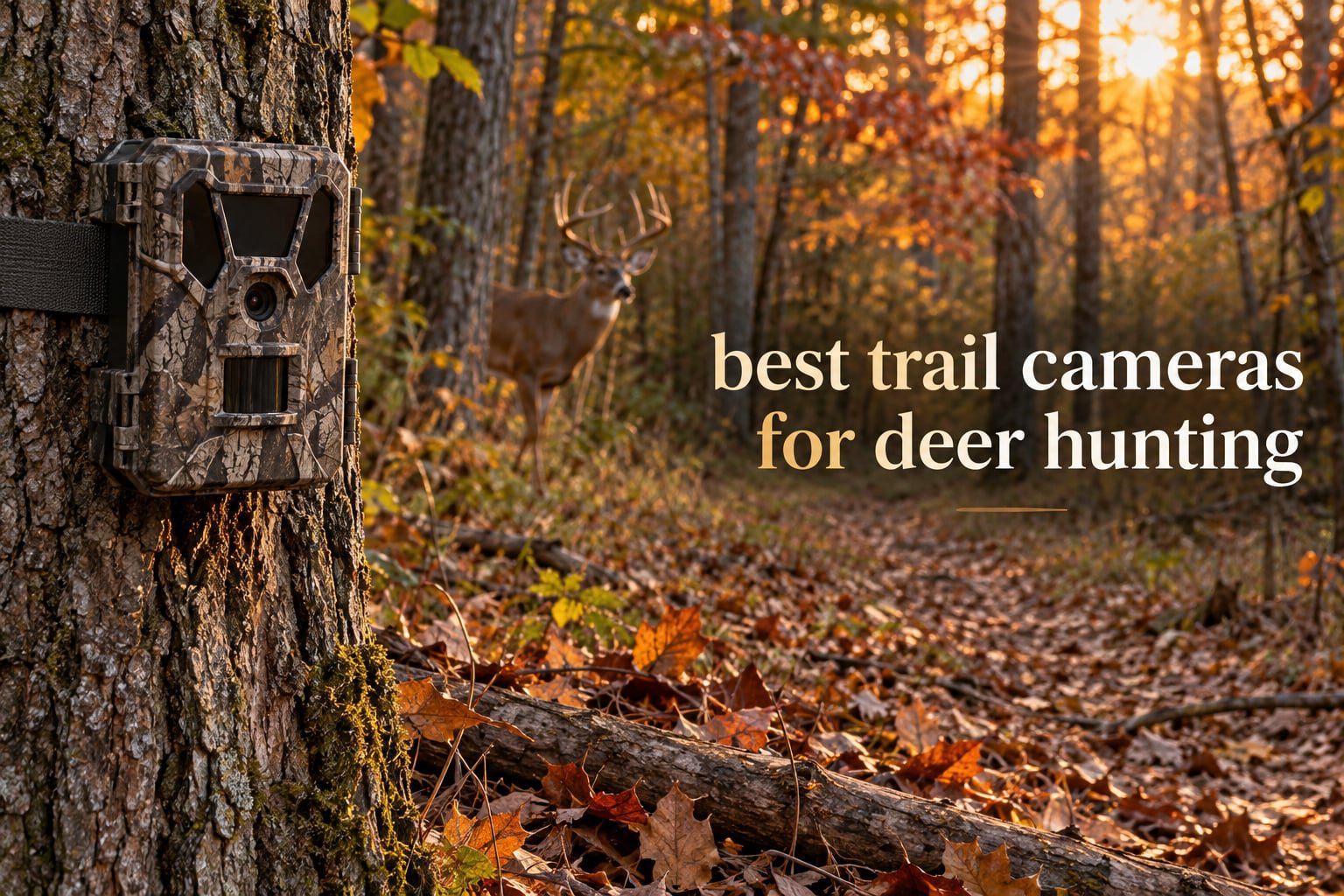
The best trail cameras for deer hunting in 2026 split into two groups: cameras that shoot to an SD card and cameras that send pictures straight to your phone. Our best overall pick is the WOSODA 2 Pack, two non-cellular cameras in one box that cost less per camera than most single units and carry nearly 3,000 owner reviews. For the best value in a WiFi model, the GardePro E6 2.0 is the most-reviewed camera here. The best cellular option is the Moultrie Edge 2 with multi-carrier 4G and 100-foot detection, and for night work with sound, the GardePro A3S records 1296P video with audio on a Sony Starvis sensor.
We spent weeks reading spec sheets and digging through thousands of owner reviews across all twelve cameras in this roundup. Nothing below is a spec-sheet promise we have not seen repeated by real hunters. Where a number comes from a manufacturer claim rather than field data, we say so.
The one thing that trips up most new deer hunters is paying for the wrong kind of camera. A cellular camera sends photos to your phone from miles away, which is the whole point when a buck is using your food plot before you wake up. A non-cellular camera does the same job for free, but you have to walk in and pull the card. If your land has no reliable signal, the cellular option is dead weight anyway.
We break down every camera below, then cover what actually matters when you spec one out: trigger speed, flash type, power, and where to put it in the woods.
Table of Contents
- Top 3 Best Trail Cameras for Deer Hunting (October 2026)
- All 12 Trail Cameras for Deer Hunting Compared in 2026
- How We Picked and Evaluated These Cameras
- 1. WOSODA 2 Pack Trail Cameras: Best Overall for Deer Hunting
- 2. GardePro E6 2.0 WiFi: Best Value With 4K Video
- 3. Digitgarden 4K 48MP WiFi Camera: Best Budget Pick
- 4. MAXDONE Solar Trail Camera: Best for Hands-Free Power
- 5. Moultrie Edge 2 Cellular: Best Cellular Trail Camera for Deer
- 6. TACTACAM Reveal X 3.0: Best for Rut Scouting at Distance
- 7. GardePro E5S Non-Cellular: Best for Timber and Bedding Areas
- 8. Meidase P70 Non-Cellular: Best for Large Camera Fleets
- 9. MagicEagle 4G Cellular: Best Cellular Solar Setup
- 10. VIDVIS 4K 64MP Solar WiFi: Best for Fixed-Point Scouting
- 11. XTU 4K Solar WiFi: Best for Remote Power Setups
- 12. GardePro A3S Non-Cellular: Best Night Video With Sound
- Trail Camera Buying Guide for Deer Hunters
- Where to Place Trail Cameras for Deer Hunting
- Frequently Asked Questions
- Final Verdict for Deer Hunters in 2026
Top 3 Best Trail Cameras for Deer Hunting (October 2026)

WOSODA 2 Pack Trail Cameras
- Two cameras in one box
- 48MP stills
- 0.3s trigger
- 850nm low-glow IR


Moultrie Edge 2 Cellular
- 4G LTE multi-carrier
- 100ft detection
- 36MP photos
- 8GB internal memory
All 12 Trail Cameras for Deer Hunting Compared in 2026
| Product | Specs | Action |
|---|---|---|
| WOSODA 2 Pack Trail Cameras |
|
Check Latest Price |
| GardePro E6 2.0 WiFi |
|
Check Latest Price |
 Digitgarden 4K 48MP WiFi Cam Digitgarden 4K 48MP WiFi Cam |
|
Check Latest Price |
 MAXDONE Solar WiFi Camera MAXDONE Solar WiFi Camera |
|
Check Latest Price |
| Moultrie Edge 2 Cellular |
|
Check Latest Price |
 TACTACAM Reveal X 3.0 TACTACAM Reveal X 3.0 |
|
Check Latest Price |
 GardePro E5S Non-Cellular GardePro E5S Non-Cellular |
|
Check Latest Price |
 Meidase P70 Non-Cellular Meidase P70 Non-Cellular |
|
Check Latest Price |
 MagicEagle 4G Cellular MagicEagle 4G Cellular |
|
Check Latest Price |
 VIDVIS 4K 64MP Solar WiFi VIDVIS 4K 64MP Solar WiFi |
|
Check Latest Price |
 XTU 4K Solar WiFi Camera XTU 4K Solar WiFi Camera |
|
Check Latest Price |
 GardePro A3S Non-Cellular GardePro A3S Non-Cellular |
|
Check Latest Price |
How We Picked and Evaluated These Cameras
Our evaluation is built on two things: the published specifications from each manufacturer, and patterns that repeat across the owner review base. With nearly 20,000 ratings across these twelve cameras, a complaint that shows up in forty reviews means something different than one that shows up twice.
We weighted four things for deer hunting specifically. Trigger speed decides whether a running buck is centered in the frame or a blurry crop. Night flash type matters because a red-glowing emitter at 30 feet can end your sit early. Power strategy decides how many trips to a treestand stand you make in October. And reliability across a full season matters more than any resolution number on the box.
We also cross-checked what owners say against what forums report. Deer hunters on Reddit and hunting forums consistently name the same recurring problems: false triggers from wind-blown vegetation, SD cards that need long-formatting before first use, and night triggering that quietly dies on cameras that perform well in daylight. Where those complaints show up, we say so.
One note on accuracy: we did not bench-test these cameras against a measured 100-foot walkthrough corridor, so we are not quoting detection numbers as if we measured them. Everything below is traceable to a spec sheet or an owner report.
1. WOSODA 2 Pack Trail Cameras: Best Overall for Deer Hunting
WOSODA 2 Pack Trail Cameras with Night Vision Motion Activated Waterproof,48MP Hunting Game Camera,1080P HD Trail Cam for Wildlife Monitoring,Outdoor Scouting & Security(Non-Cellular Non-WiFi)
2 cameras in one pack
48MP stills and 1080P video
0.3s trigger at 60ft
850nm low-glow IR
Pros
- Two cameras for the price of one
- Dependable triggering at 40-50ft
- Clear 48MP stills
- Responsive replacement service
Cons
- Video described as soft with noise and ghosting
- Wind-blown plants cause empty clips
- Slow shutter on fast-moving deer
The WOSODA 2 Pack is the reason we keep coming back to budget trail cameras. You get two complete cameras in one box, which changes the math immediately when you are trying to cover a trail funnel and a food plot at the same time. One camera tells you what is passing through. Two cameras on the same pattern tell you what is holding.
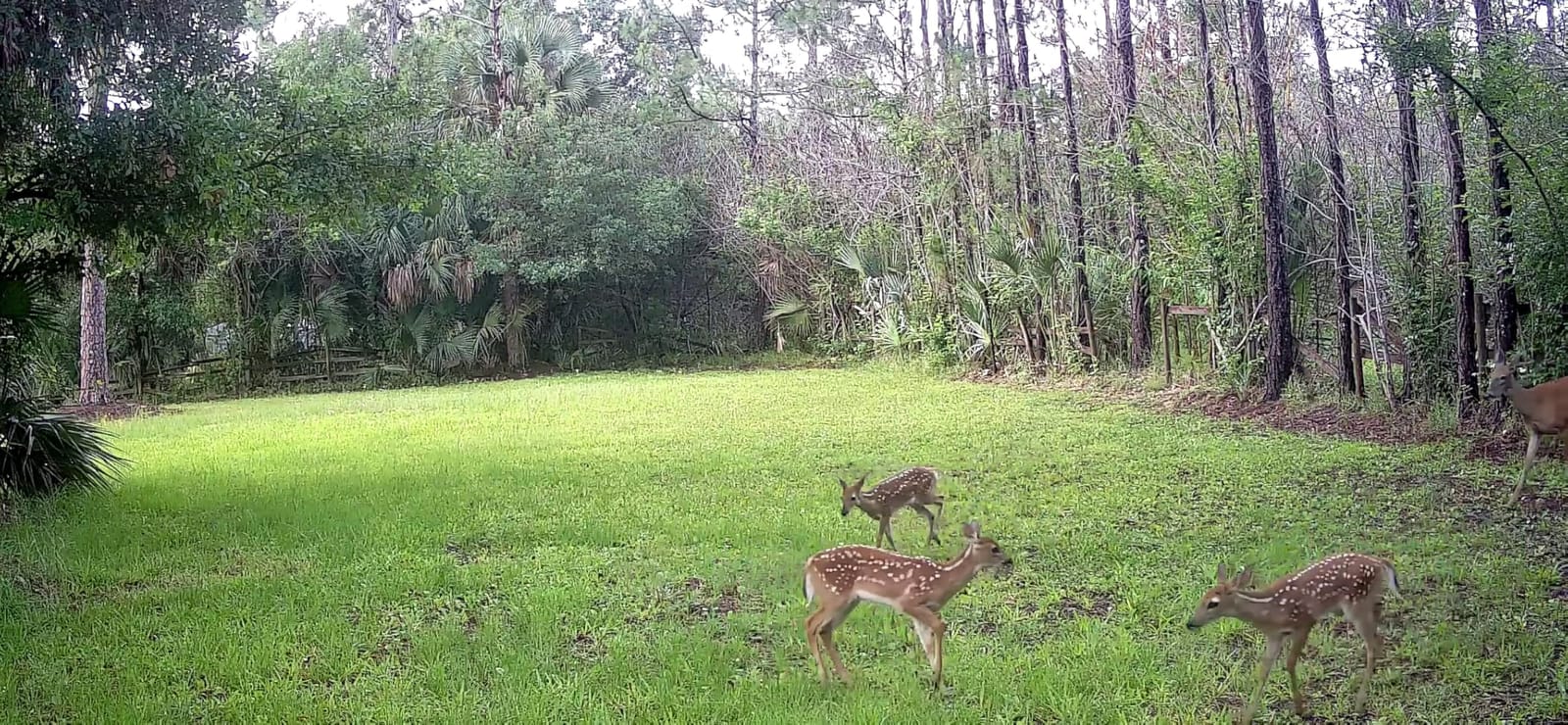
Owners running nearly 3,000 ratings point to dependable triggering even on smaller animals at 40 to 50 feet, and clear 48MP stills that are more than enough to identify a buck by antler size. The 850nm low-glow infrared handles night work cleanly for identification purposes.
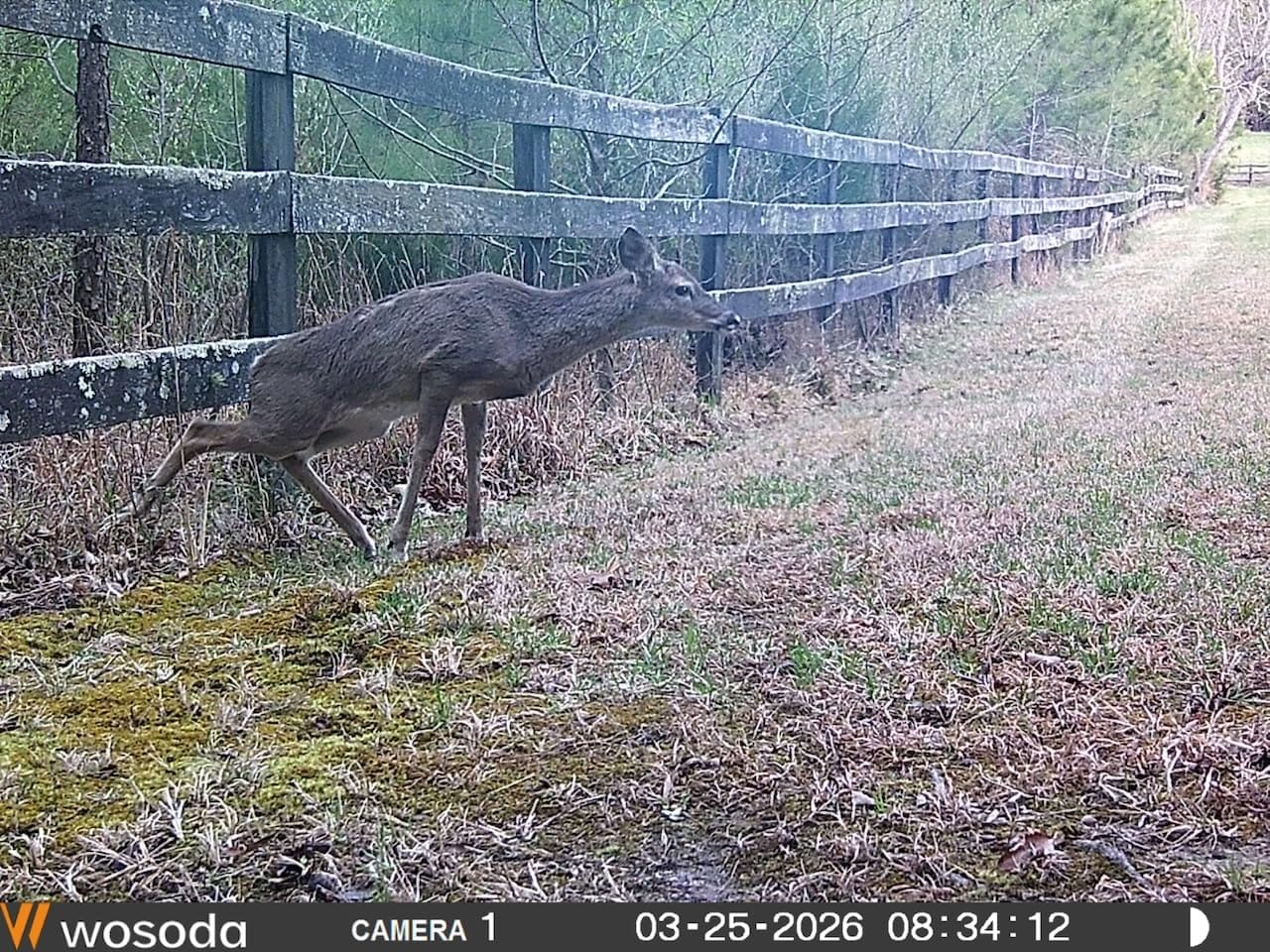
The weaknesses are consistent enough to plan around. Video is soft, with noise and ghosting that reviewers describe plainly, so treat this as a photo-first camera. If you want crisp 4K clips, look at the GardePro E6 below.
A more practical issue is false triggering from vegetation. If you mount it across a trail with grass or leaves in the near field, you will fill a card with empty clips and burn batteries faster than the spec sheet suggests. Aim it slightly higher and trim what you can before you hang it.
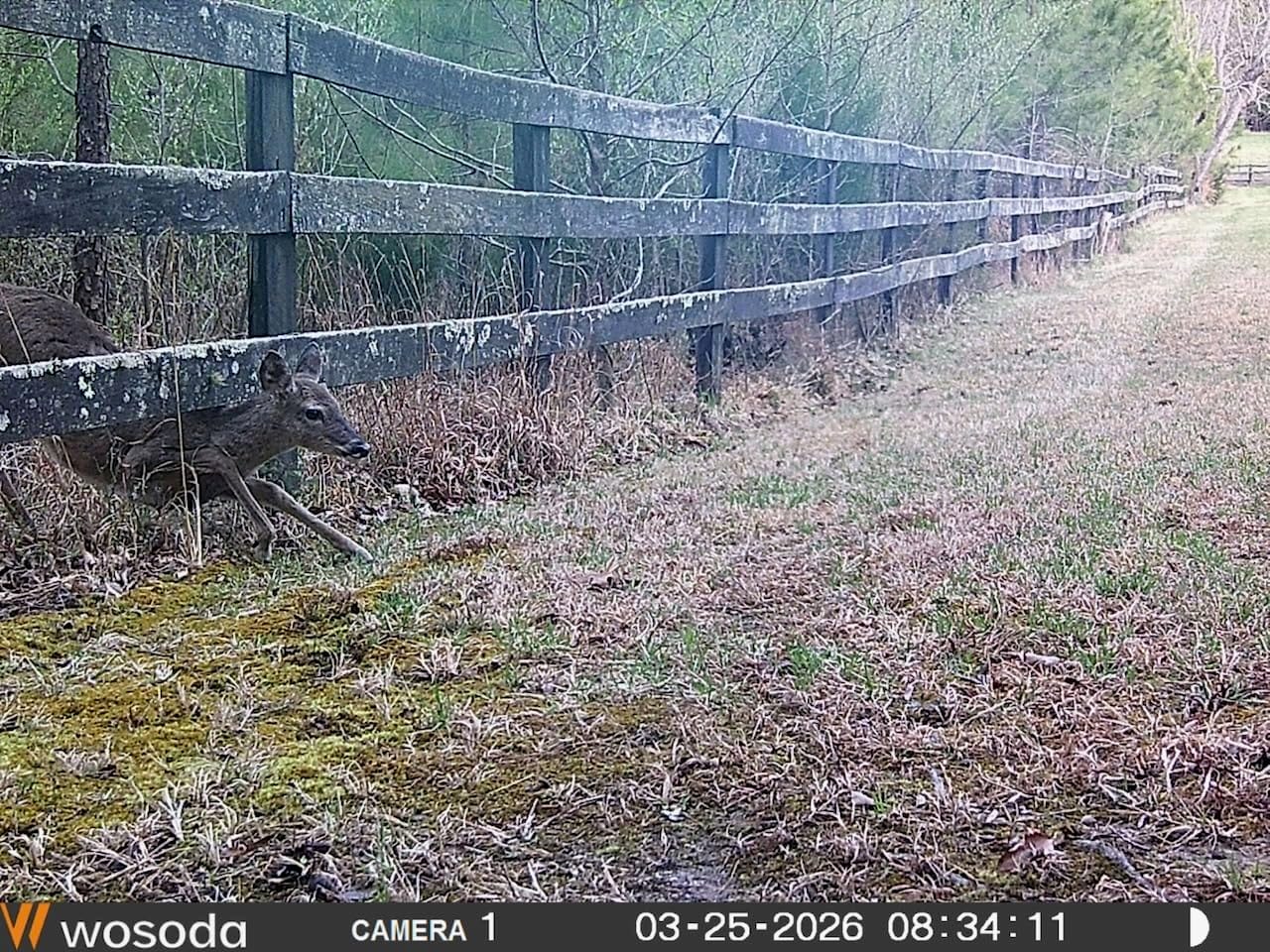
What this pair is good for covering a whole buck pattern
Two cameras let you do the thing single-camera scouting cannot: separate movement from residency. Put one on a funnel trail between a bedding area and a food source, and the second on the open feeding area itself. Does movement show up but not linger? You have found a travel corridor. Does it show up at both, all night, for several weeks? You have found a holding area worth sitting over.
That is the difference between setting up on a real pattern and guessing. It also means you can run one camera through the fall while the second sits pointed at a scrape or rub tree where you have already seen sign.
Where it falls short
The slow shutter is the honest weak point for rut hunting. A 0.3-second trigger with a slow shutter means a buck trotting past is often recorded mid-stride or partially out of frame. That matters if your goal is a wall-mounted trophy photo rather than a count of deer on the property.
There is also no photo-then-video-clip capture mode, which is the single most requested feature among deer hunters. Every capture is either a still or a clip, not both in sequence. A minority of long-term owners also report needing a factory reset after emptying the SD card, so budget five minutes with the manual on day one.
2. GardePro E6 2.0 WiFi: Best Value With 4K Video
GardePro E6 2.0 WiFi Trail Camera, 4K Video, Dual Antennas
4K video with audio
Up to 64MP stills
0.3s trigger,940nm no-glow IR
Pros
- On-site app aiming saves a card pull
- 4K video with audio widely praised
- No monthly fee
- 940nm no-glow IR is genuinely invisible
Cons
- Rear LCD hidden behind the body
- Battery door is very tight for rechargeables
- App transfers hang on larger batches
With close to 5,000 ratings, the GardePro E6 2.0 is the most battle-tested camera in this group, and the reviews are sharply split. Owners who compared it head to head against older GardePro models and competing budget cameras consistently rated it the best of that class. The reason is the built-in WiFi.
You pair your phone to the camera on its own hotspot and aim, preview, and download without removing the SD card. The dual external antennas extend the working range to roughly 165 feet in open ground. For a hunter standing at the edge of a food plot with a ladder and cold hands, that is the difference between a productive trip and a wasted one.
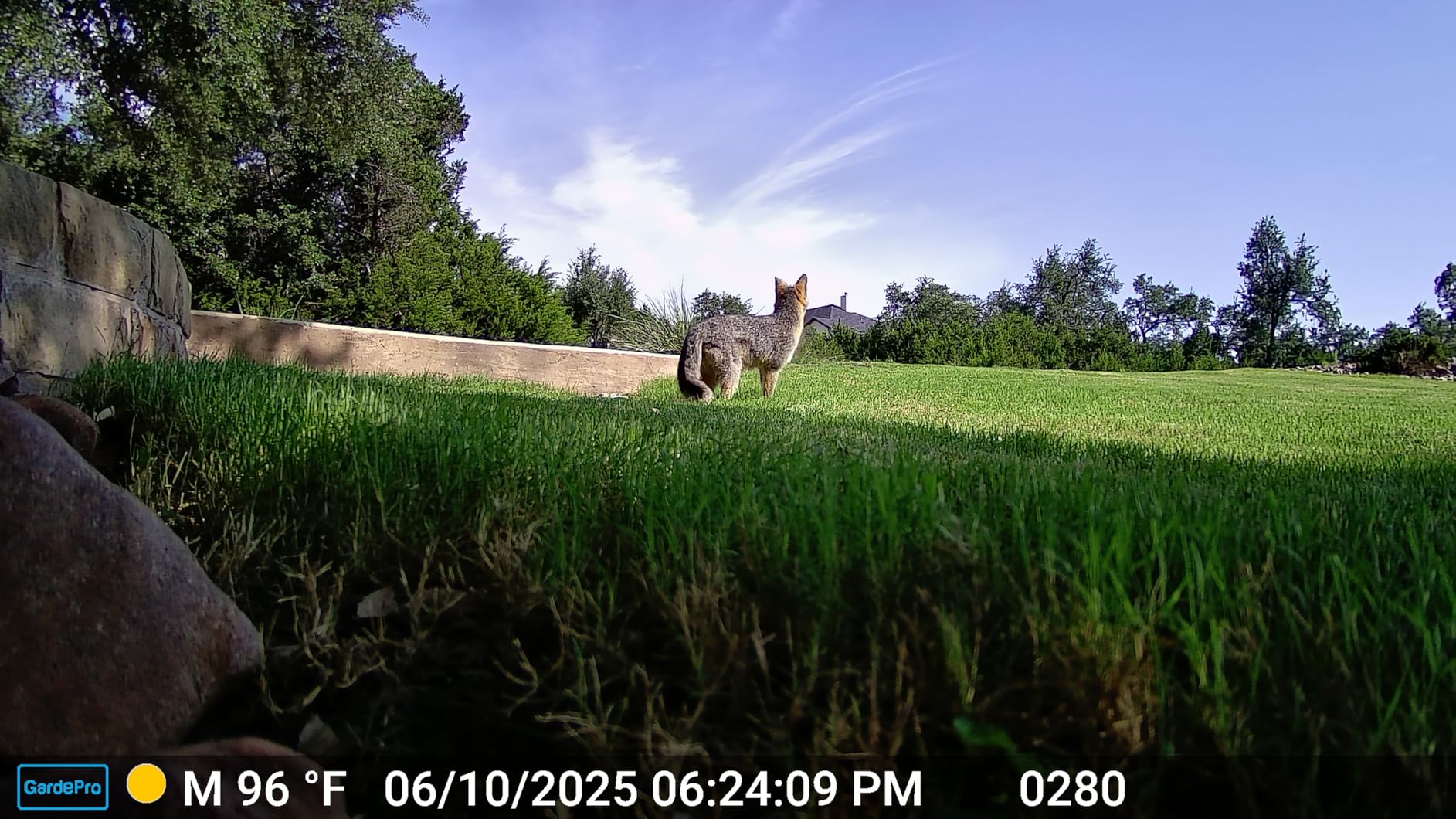
Video quality with synchronized audio is the other reason people keep buying it. At a 0.3-second trigger with a 110-degree detection angle and 940nm no-glow infrared, it captures a usable photo and a usable clip on most deer movement. Eight AA batteries are rated for up to 30,000 daytime photos or 13,000 at night, which is a real figure in photo-first mode.
It is not flawless. Reviewers report slow app transfers that hang when moving more than five or six files at once, and videos that occasionally contain frozen frames where a moving subject pauses. Sustained high desert heat is also cited as a limit by owners in the Southwest.
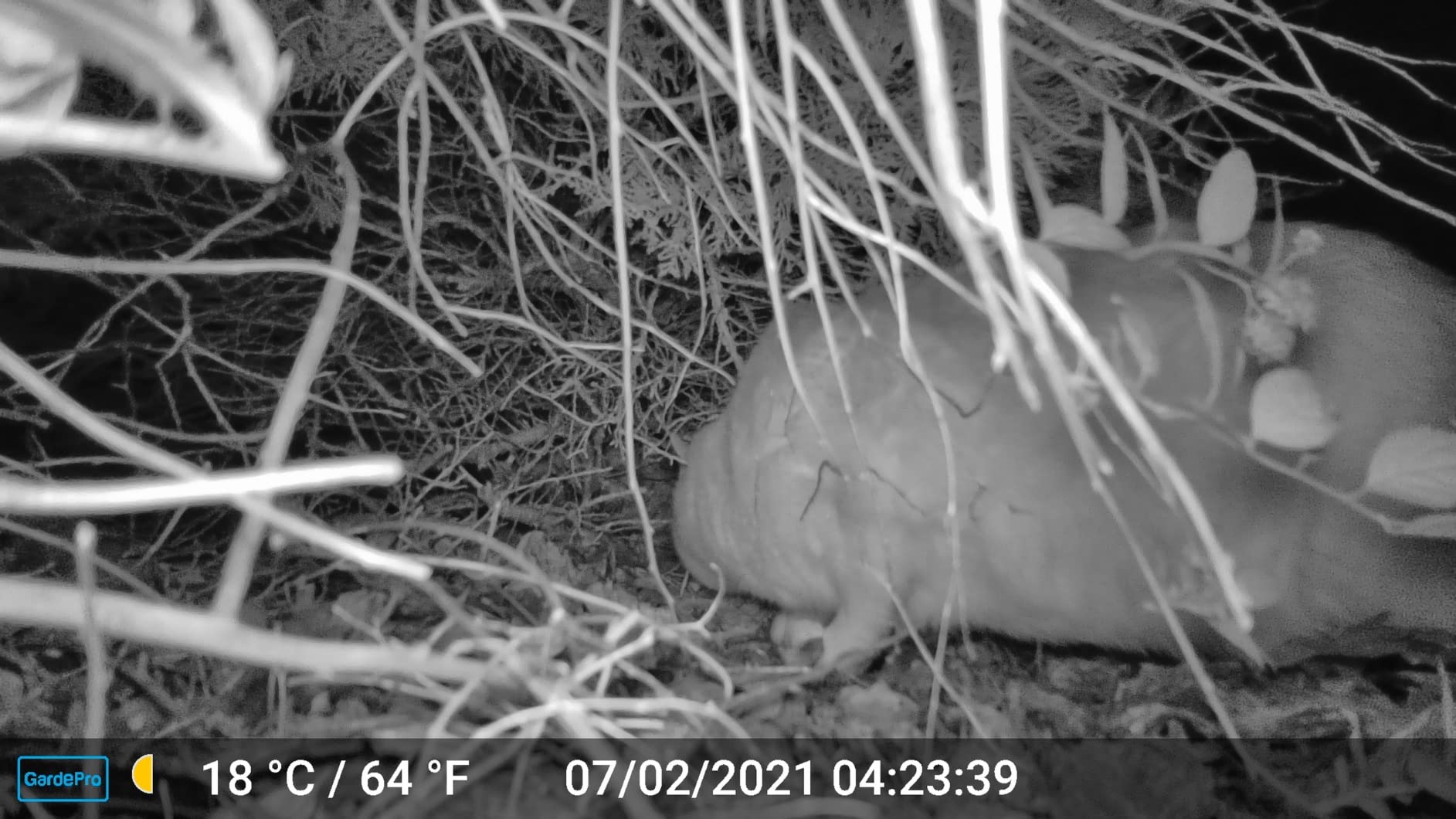
When WiFi beats pulling the card
The local WiFi workflow changes your scouting routine. Instead of walking every camera on a schedule regardless of what you expect, you walk the ones with signal you care about and glance at the rest later. It also makes aiming a two-minute job on the first try, which matters when a camera mounted 15 feet up is aimed at a tree instead of a trail.
Because the app talks only to the camera and not to a cloud server, there is no subscription and no data plan. That is the honest reason this camera edges out its non-WiFi siblings on value for many hunters.
Where it falls short
Two physical design complaints come up repeatedly. The rear LCD sits behind the camera body, so manual aiming without the app is awkward. And the battery compartment lid is tight enough that some rechargeable AA cells physically will not seat properly, which is a real annoyance if you prefer lithium rechargeables over primary lithium.
There is also no remote viewing. This is a walk-up camera with better ergonomics, not a cellular one. Several owners report units that stopped recording or lost WiFi connectivity after a few weeks, and very small close-range targets can be missed by the detection cone.
3. Digitgarden 4K 48MP WiFi Camera: Best Budget Pick
Digitgarden WiFi Trail Camera 4K 48MP, Night Vision Game Camera for Wildlife Hunting, 0.1s Trigger IP66 Waterproof (32GB Card Included)
4K video and 48MP stills
940nm IR to 100ft
0.05-0.3s trigger
32GB card included
Pros
- Lowest entry cost with a 32GB card included
- 940nm no-glow IR reaches further than most budget cams
- IP66 shell survived torrential rain
- Simple menu and 2.4-inch screen
Cons
- WiFi range limited to roughly 30 feet
- Will not record while the app is connected
- Needs all 8 AA batteries to power on
The Digitgarden is the cheapest camera here, and the 32GB microSD card and reader in the box are a big part of why. Long-term owners single out two things consistently: the 940nm invisible infrared, which reaches 100 feet and produces no visible red glow, and the wide 120-degree field of view.
On night detection, that IR reach is genuinely competitive with cameras costing meaningfully more. Deer that spook at an emitter popping red at 40 feet will not spook at a 940nm array at 100. For timber work and close bedding areas, that combination of stealth and reach is the reason to pick this one.
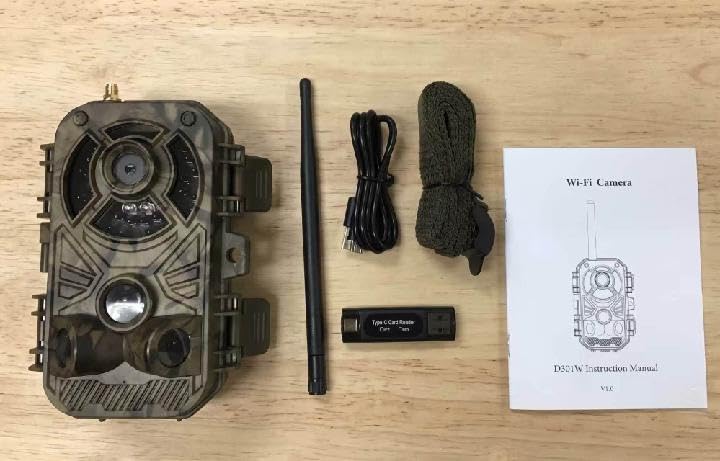
The 0.05 to 0.3-second motion trigger with a PIR range up to 98 feet puts it near the front of the budget field for catching moving deer. Owners report holding up through sustained heavy rain, and replacement service worked smoothly when a defective camera failed.
The catch is the app. Effective WiFi range is about 30 feet in practice, which means you are kneeling at the base of the tree. And the camera will not record while the app is open, so reviewing images and capturing images cannot happen at the same time.
When 100 feet of no-glow infrared earns its cost
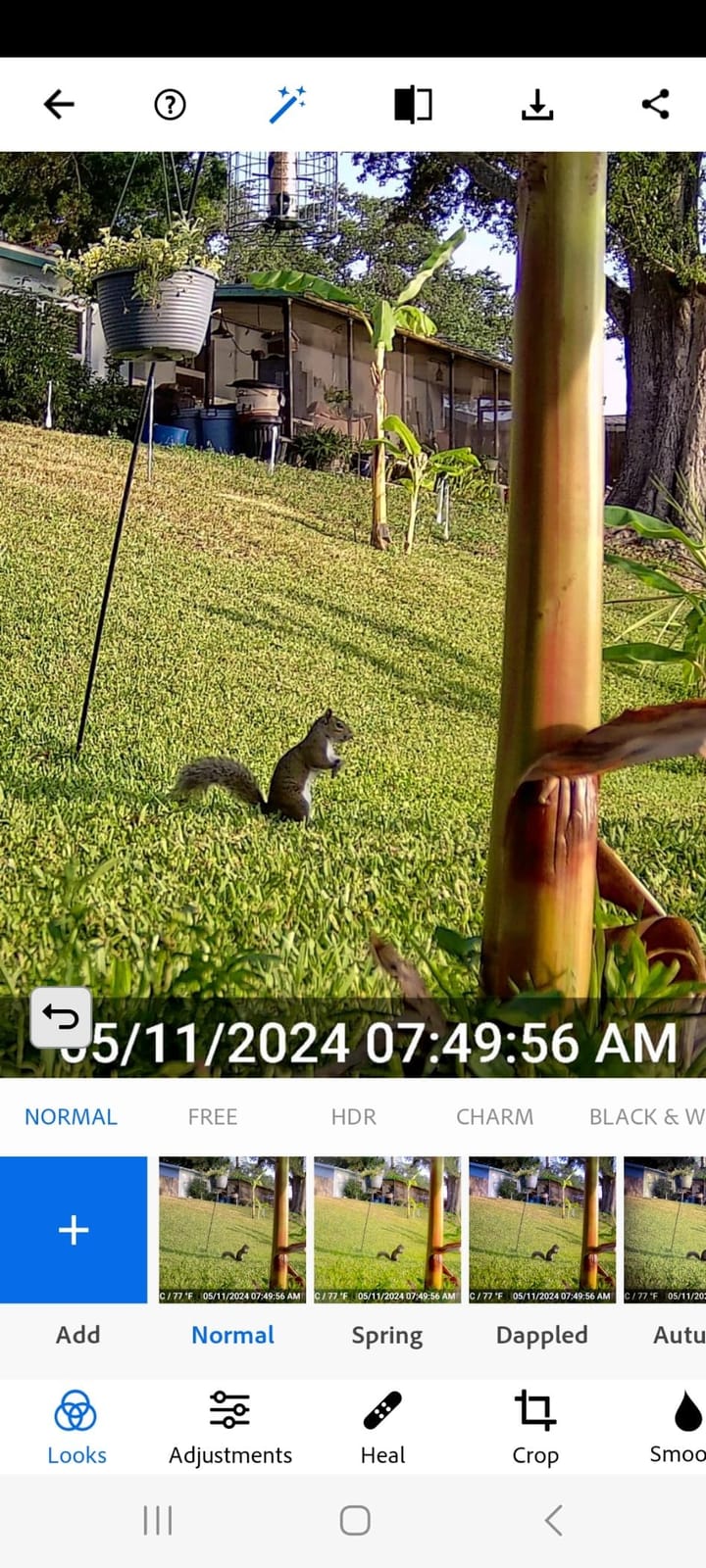
No-glow flash is the single most important night feature for a deer hunter, because deer see the red emitter long before the picture ever reaches you. A camera with 940nm infrared that reaches 100 feet can sit across a wide trail or at the edge of a clearing and still give you identification-quality images without the glow giving your position away.
The included 32GB card also removes the most common first-season mistake. Plenty of new hunters buy a camera, hang it in October, and discover in November that no card was in the box.
Where it falls short
SD card recognition is unreliable according to a fair number of owners, and some had to swap cards or use an adapter to get it recognized. The shutter is slow and not adjustable, so a good share of captures come back with the subject partially out of frame or soft.
It also requires all 8 AA batteries to power on and will not run on four. And several owners report cameras that failed after a year or two with a dead screen or stopped photo capture, so for a season-long plan, buy a spare.
4. MAXDONE Solar Trail Camera: Best for Hands-Free Power
MAXDONE Solar Trail Camera WiFi Bluetooth, 4K 64MP Night Vision Game Camera
Integrated solar panel,6000mAh battery
64MP stills and 4K video
0.1s trigger,65ft IR
Pros
- Solar panel removes battery swaps entirely
- Photo and video quality praised for the class
- Small and fast to set up
- Holds charge in semi-shaded woodland
Cons
- App takes a long time to connect
- Power switch and card slot sit on the underside
- 65ft night range is shorter than rivals
The MAXDONE solves the problem every hunter with a remote food plot has: getting back to the tree. The solar panel is permanently attached and charges an internal 6000mAh lithium battery, so there are no AA swaps and no spare batteries to haul. Reviewers consistently frame this as the best value in the solar category for exactly that reason.
Picture and video quality is regularly described as the best in the moderately priced class, with 64MP stills and 4K MP4 at 30 fps, a sensitive microphone, and a 0.1-second trigger with a 100-degree detection angle and 5-shot burst. The burst matters more than most buyers expect.
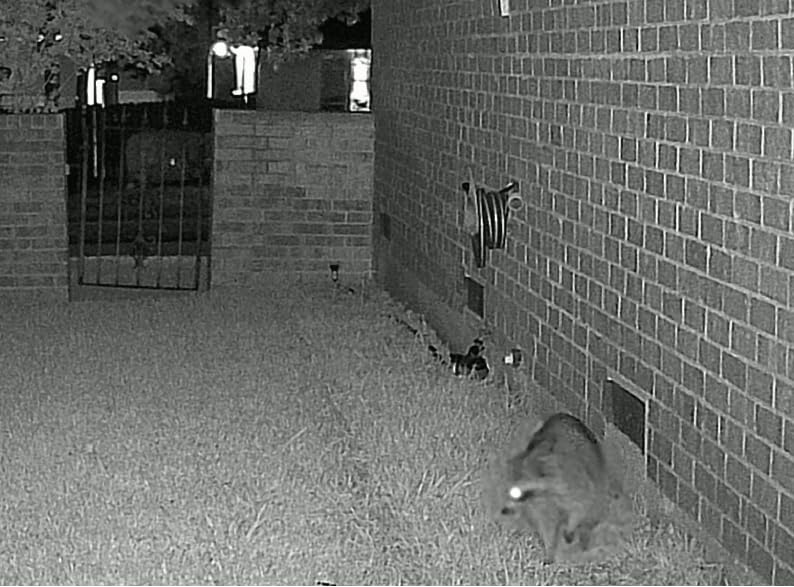
A 5-shot burst at 0.1 seconds gives you a real chance of getting a clean frame on a buck walking past at a normal pace rather than a single gamble. Owners also report the panel holding charge in semi-shaded woodland, which is where most food plot cameras actually end up.
Both a strap mount and a swivel mount base are included, and support is responsive with a two-year warranty behind it. A 32GB TF card ships pre-installed and expands to 256GB.
When solar power changes your season plan
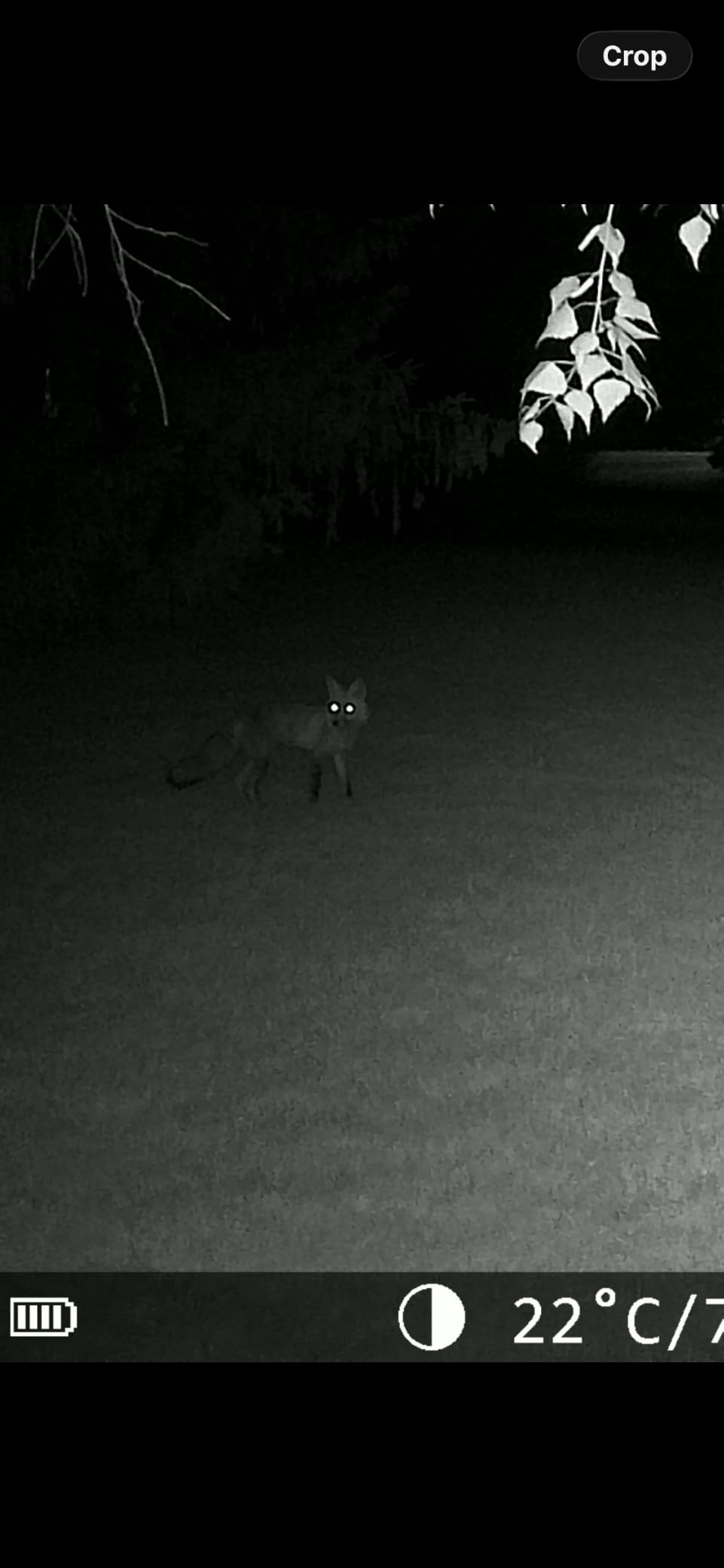
Consider the actual cost of the alternative. If you are running four AA batteries per camera and checking three cameras every two weeks through fall, you are making a lot of trips, and every trip risks being seen. A camera that holds its own charge changes your behavior: you set it and leave it, and you only walk in when you actually want to look.
That is especially useful on a lease where you want to minimize your presence. Fewer human visits means less human scent in the timber, which matters during the rut when a mature buck is already jumpy.
Where it falls short
The app takes a long time to connect, which is annoying every single time you approach the camera. More importantly, the on/off switch and the memory card slot are both on the underside, and the unit cannot be opened at the top like a traditional trail camera. That is a genuine problem if you mount it on a tripod or a swivel base at chest height.
The 65-foot night vision range is also the shortest among the no-glow or low-glow options here, so it is not the camera for a wide open approach. And it does not connect to home WiFi or cellular networks, only its own local hotspot.
5. Moultrie Edge 2 Cellular: Best Cellular Trail Camera for Deer
Moultrie Edge 2 Cellular Trail Camera 2-Pack – 36MP, Low-Glow Flash
4G LTE multi-carrier
36MP stills,1080p video with audio
100ft detection
8GB internal memory
Pros
- Multi-carrier 4G with no SIM swapping
- USA-based customer support
- Built-in 8GB memory means no SD card
- Scouting analytics in the app
Cons
- Requires a paid monthly cellular data plan
- Power and solar accessories sold separately
- Not the cheapest option once the plan is counted
The Moultrie Edge 2 is the best-known name here, and for deer hunters who need pictures on their phone without driving to the woods, it is the pick. The Auto Connect feature binds to the strongest available carrier automatically, so there is no SIM swapping and no carrier lock-in when you move between parcels.
Detection range is 100 feet with a discreet low-glow flash, photos are 36MP, and video is 1080p with audio. The 8GB built-in memory means you never buy or format an SD card, and everything also goes to unlimited cloud storage.
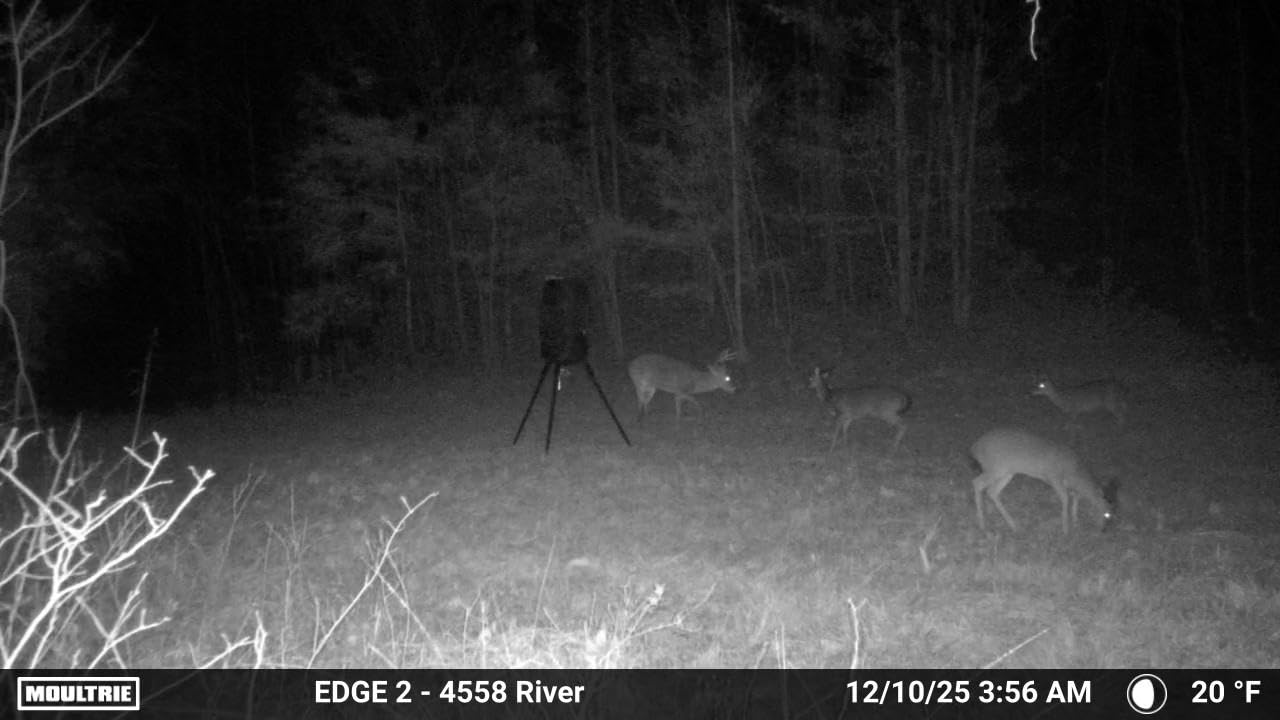
Where Moultrie genuinely leads is the app. Game Plan and activity charting turn a month of photos into an actual pattern: when deer are moving, where they are moving, and how the movement shifts. Several owners point out that the 50-degree viewing angle is narrower than the wide-angle budget cameras, which means you need to aim it deliberately rather than just pointing at a clearing.
A two-year warranty from activation and USA-based support are both real advantages over the no-name budget units in this list.
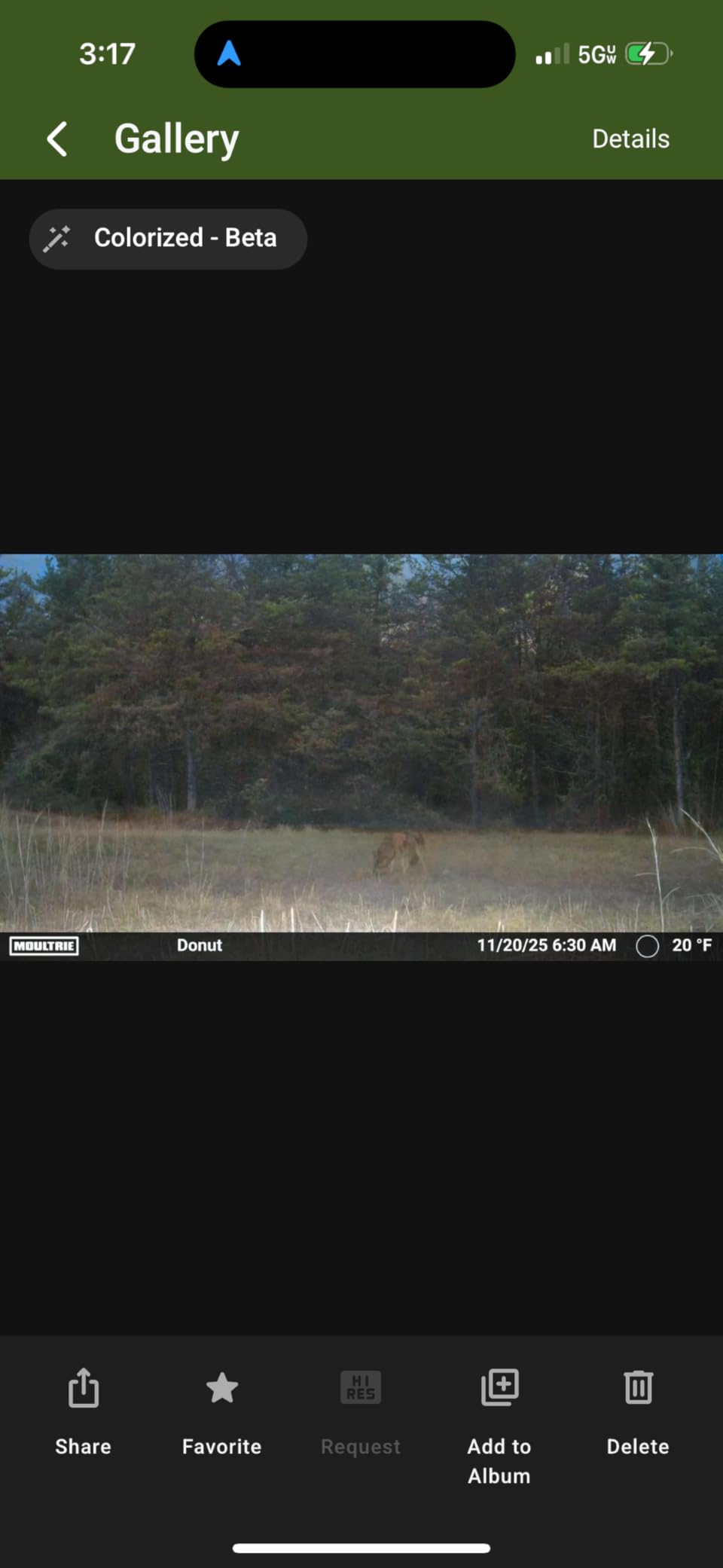
When cellular actually earns its monthly cost
Cellular pays for itself in one specific scenario: a food plot or bait site you cannot easily reach during work hours or in bad weather. If a buck shows up at 6:40 in the morning and you have an alert, you can adjust your day. If you have to drive out Saturday to pull a card, the subscription has to be cheaper than the gas and the lost Saturday.
It also helps with multi-camera patterning on scattered land. Two or three cellular cameras on different parcels let you build a picture of movement across the whole property instead of one corner of it.
Where it falls short
The data plan is the trade-off everyone accepts. You need a paid monthly cellular plan for remote viewing, and once twelve months of that is added to the purchase price, the Moultrie is no longer the economical choice. Hunters buying on total cost of ownership should run that number before committing.
Solar panels and external power accessories are sold separately, so a fully off-grid setup needs a second purchase. And if your hunting land has weak or no cell coverage, none of these features matter.
6. TACTACAM Reveal X 3.0: Best for Rut Scouting at Distance
TACTACAM Reveal X 3.0 Cellular Trail Camera, Night Vision, Waterproof
Auto-Connect LTE on AT&T and Verizon
Sub-0.5s trigger,3-shot burst
GPS with 32GB onboard storage
Pros
- Fast trigger plus burst catches running bucks
- Built-in GPS and onboard storage
- Pre-installed antenna gets you live fast
- 6+ month battery claim leads the class
Cons
- Needs a separate cellular data subscription
- Recurring monthly cost across a season
- Power accessories sold separately
During the rut, trigger speed is the spec that matters most, because a 130-pound buck covering ground at a trot does not wait for a slow shutter. The Reveal X 3.0 fires in under half a second and offers a 3-shot burst, which is the combination that actually produces usable photos of moving deer.
It also auto-connects across AT&T and Verizon, picks the stronger signal, and ships with a pre-installed antenna and pre-activated SIM. Owners report being live in roughly ten minutes, which matters when you are installing it an hour before dark.
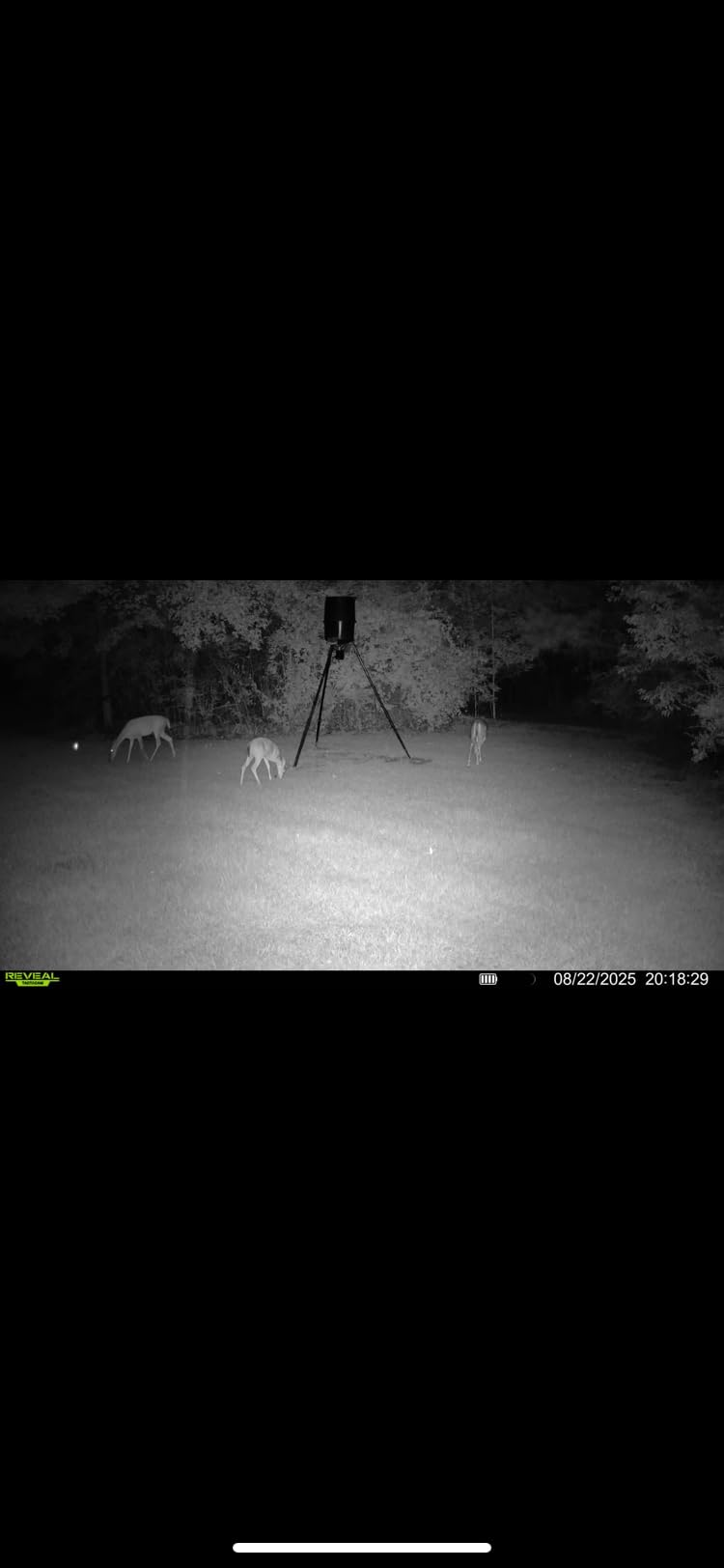
Built-in GPS with 32GB of onboard storage means no SD card and no card formatting step. You can also drop a pin for the location, which is helpful when you are running cameras on land you scout once and then depend on remotely for the rest of the season.
The battery claim of up to 6+ months in this class is the strongest figure in the cellular category, though treat it as a manufacturer claim rather than a field guarantee. Night vision reaches 96 feet with a 60-degree field of view.
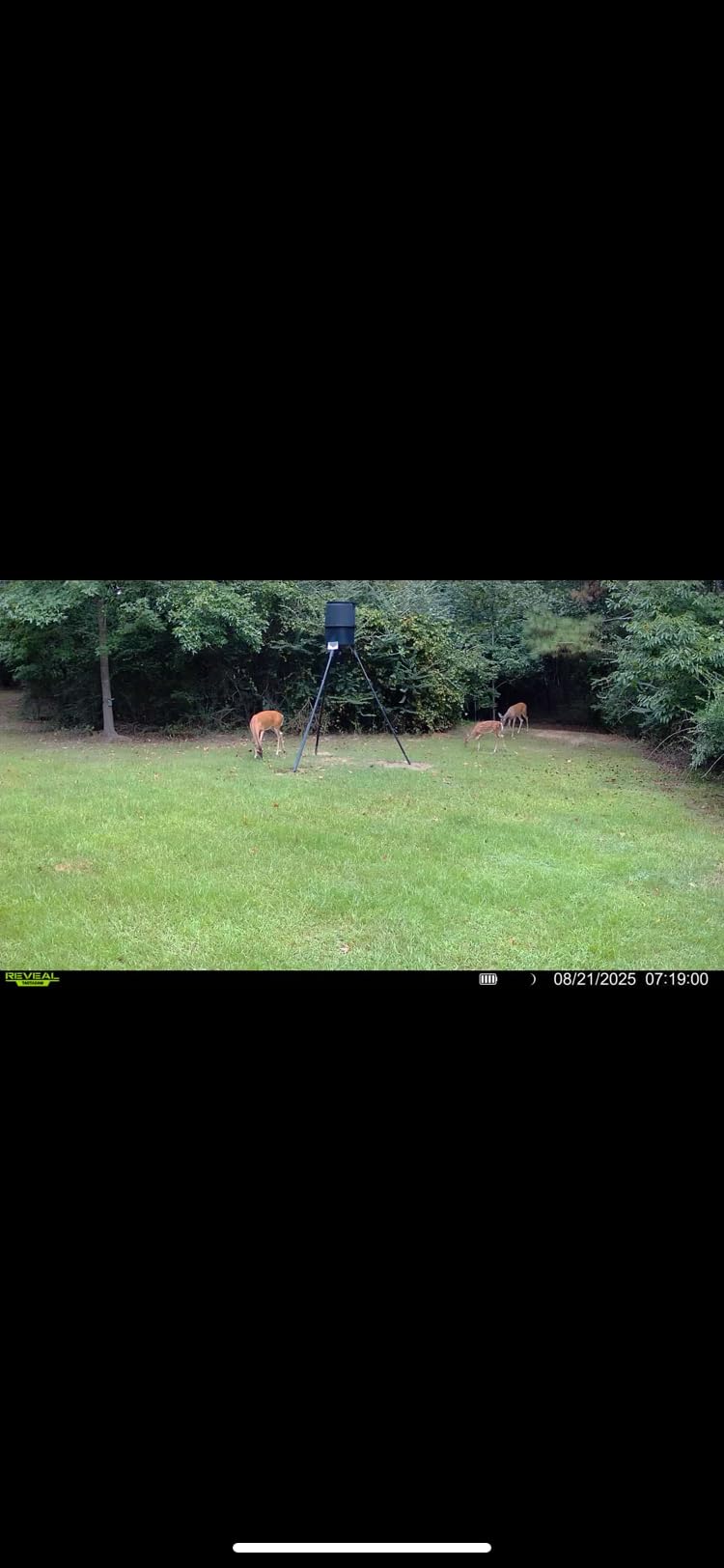
When burst mode earns its place in the rut
Think about what a running buck looks like to a PIR sensor. The camera wakes, fires, and the deer has already covered ground. If you only get one shot, you take what the camera gives you. Three shots spaced a fraction of a second apart give you three chances to have the animal centered, full frame, and in focus.
That is why the Reveal X 3.0 shows up in so many rut-specific recommendations even though it is not the highest-rated camera here. Owners who bought it for the trail often end up using it at funnels where bucks are moving fast and direction is unpredictable.
Where it falls short
The recurring cost. A separate cellular data subscription is required for remote viewing, and that monthly fee is the trade-off buyers accept. Over a full season it is the single largest hidden cost in this roundup, larger than batteries or memory cards.
Solar panels, the lithium cartridge, and the battery belt are all sold separately. It also doubles as a general property monitor, which is a genuine plus if you want one camera doing both jobs, but the price reflects that broader role.
7. GardePro E5S Non-Cellular: Best for Timber and Bedding Areas
GardePro E5S Non-Cellular Trail Camera, 64MP Photo & 1296P HD Video
64MP stills and 1296P video
0.1s trigger,3 PIR sensors
100ft no-glow IR
120 degree view
Pros
- Daytime image and video quality rivals costlier name-brand cameras
- Lithium AAs carried a full bow season
- 5-minute startup delay avoids setup photos
- Settings survive battery removal
Cons
- Nighttime PIR triggering much weaker than daytime
- High sensitivity yields some blank frames
- Audio has a crackling noise
The E5S is a no-connected workhorse that owners buy in multiples. Its strongest theme in the reviews is that daytime photo and video quality holds up against cameras costing two or three times as much, and that lithium AA batteries carried one owner through an entire bow season on a single charge.
Three PIR sensors give a 0.1-second trigger and a 120-degree field of view, so it covers a lot of ground from one mount point. The 100-foot no-glow night vision reaches as far as most cameras here, and the IP66 housing has a 1/4-20 thread for real tripod hardware.

A detail worth copying: the 5-minute power-on delay means the camera ignores the person installing it. That single feature removes the single most annoying category of photo, the one where you find 400 pictures of yourself setting up the camera.
Settings are retained after the batteries are removed, so a dead battery swap does not cost you your configuration. Build quality reads as solid, and customer service responded quickly when an owner had an audio defect.
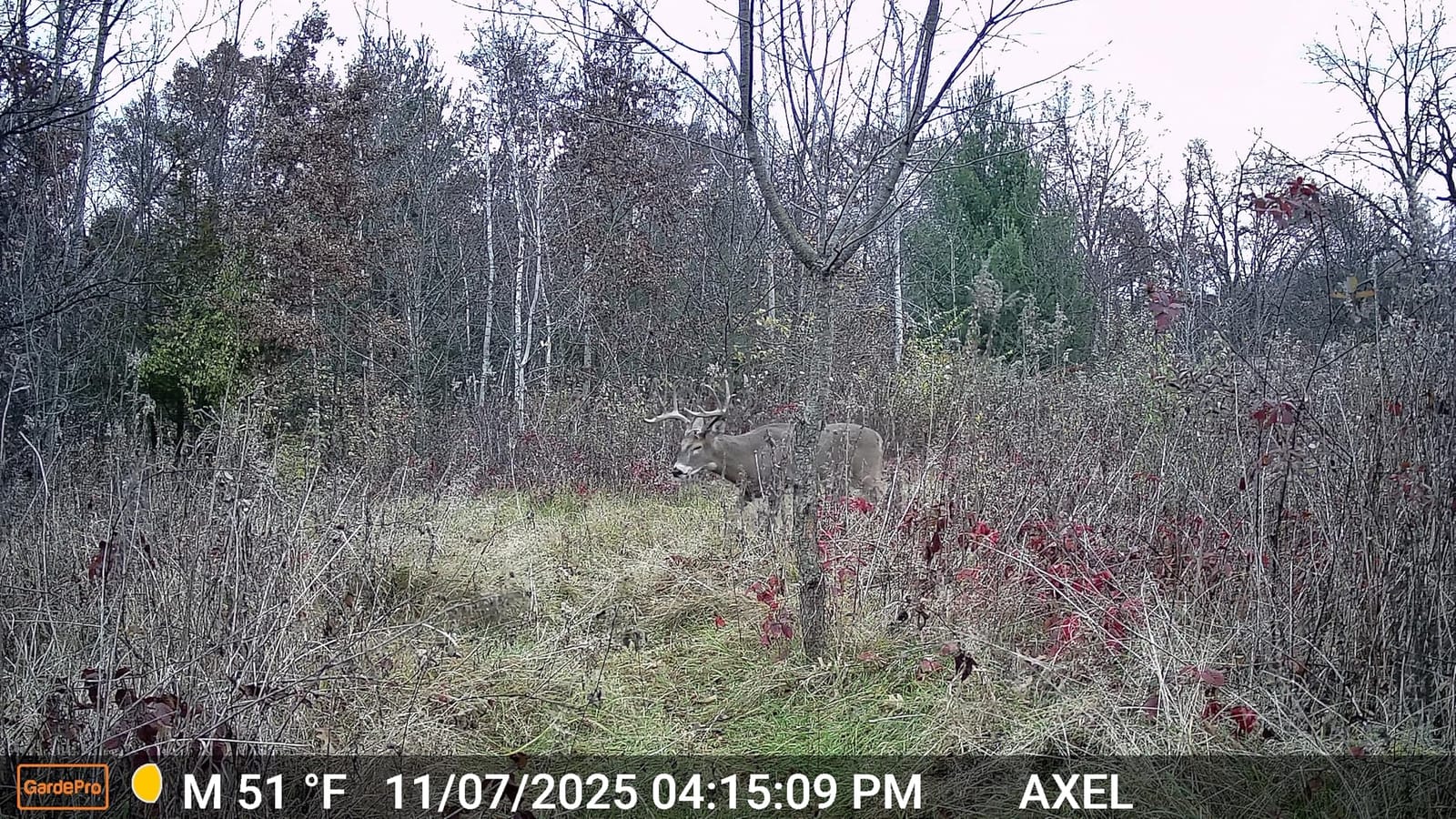
When daytime accuracy is what you are buying
Most trail camera photography happens between last light and first light in the fall, but a lot of real patterning happens in the hours around dawn and dusk when deer move between bedding and feeding. On daytime triggering, owners rate this camera very highly, and the 64MP stills give you enough crop to judge antler size from a distance.
That makes it a strong fit for a trail camera mounted on a funnel crossing in open-to-soft timber, where your goal is counting and identifying rather than filming.
Where it falls short
Nighttime PIR triggering is much weaker than daytime triggering, and that is the most common complaint in the reviews. If your area does most of its movement after dark, this is not the camera. Several owners found that disappointing given how much night activity they expected.
Crackling audio on video clips comes up too, along with the need to buy 8 AA batteries and an SD card separately. Running the sensitivity high also produces blank photos of wind and branches.
8. Meidase P70 Non-Cellular: Best for Large Camera Fleets
Meidase P70 (Non-Cellular,Non-WiFi) Trail Camera, 64MP 1296p, Game Cameras with No-Glow IR Night Vision, Motion Activated, Waterproof for Wildlife Deer Cams, Hunting
64MP stills and 1296p video
f/1.6 lens
0.1s trigger with side sensors
100ft no-glow IR
Pros
- Photo video and sound quality rated above rival fleet units
- Side sensors catch the animal rather than its hindquarters
- Described as near indestructible after bear damage
- Support answers within a day
Cons
- SD card and 8 AA batteries not included
- Rechargeable batteries perform poorly
- Night video trigger range only about 15 feet
The P70 is the camera that owners running lots of gear tend to standardize on. One owner running a 16-camera fleet described the housings as effectively indestructible after bear damage, and reported better photo, video and sound quality than the Stealthcam, Muddy, and Tasco units in the same mixed fleet.
The f/1.6 aperture lens is unusually fast for a trail camera, and it shows up in low light. Side motion sensors improve the odds of catching the animal instead of its hindquarters, which is a small engineering decision that noticeably improves your usable photo rate.
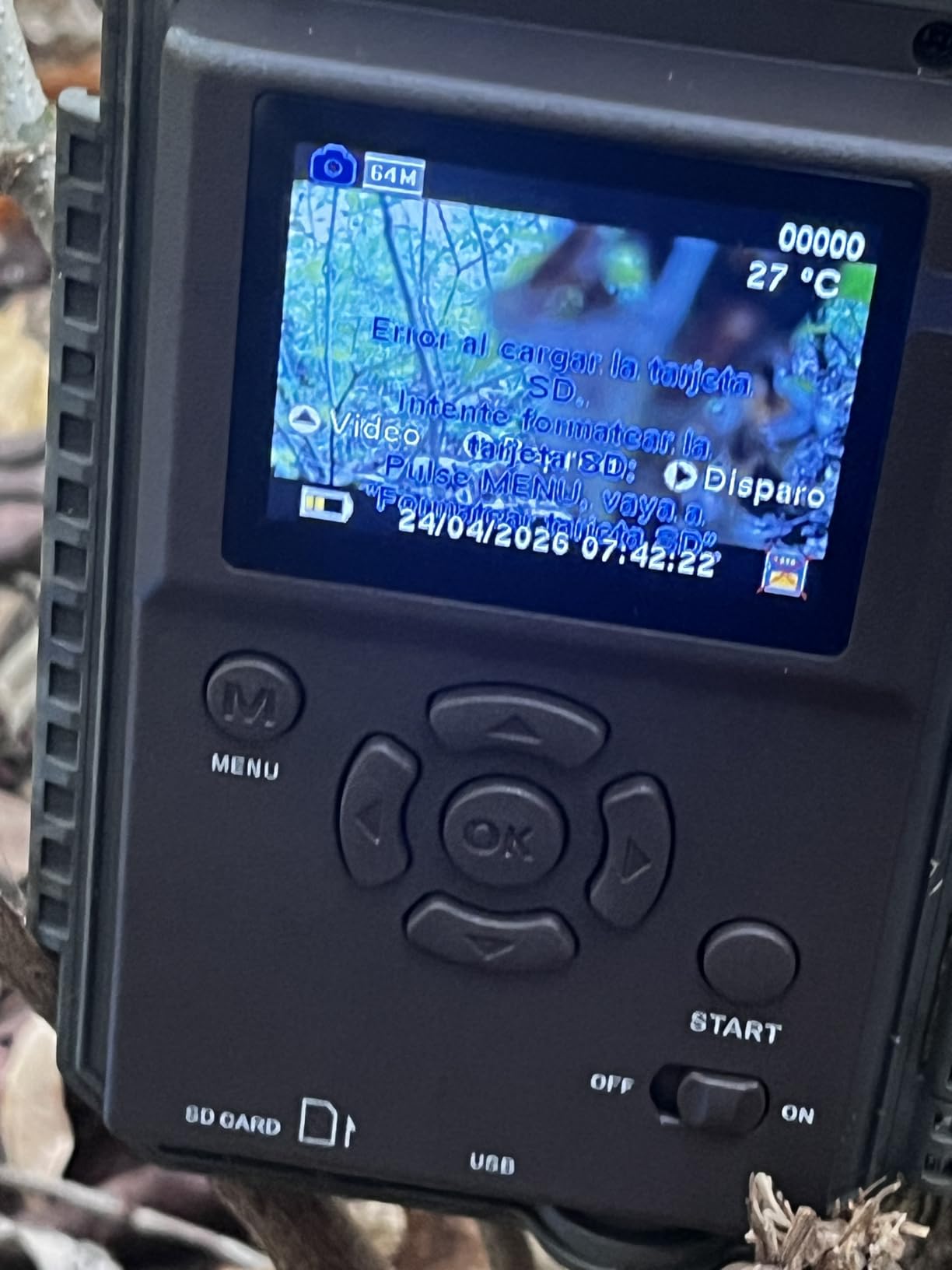
The 2.4-inch color display with on-device playback means you can review shots at the tree before deciding to pull the card. H.264 compression keeps files smaller and playback faster, and cards up to 512GB are supported. The IP66 ABS housing is solar-ready with the Meidase SP350 panel.
Customer support is a genuine strength here, with one-day response times and replacement parts rather than replacements of whole cameras.
When you are buying five cameras, not one
Fleet economics change what matters. At one camera, a two-year warranty is nice. At eight cameras spread across a large lease, what matters is whether the housing survives a season, whether support answers, and whether parts are available. The P70 review base is unusually strong on all three points.
The on-camera display is also a fleet advantage. Reviewing thirty photos at the tree and knowing the camera is aimed correctly before you leave saves a second trip that every hunter who owns multiple cameras knows well.
Where it falls short
The night video is the limitation to plan around. Nighttime shutter speed is too slow for action shots, and the night video trigger range is only about 15 feet, well short of the 100-foot flash range. Use it for stills at night and video during daylight movement.
Moving subjects can look blurry or pixelated while the rest of the frame stays sharp. Also note that the SD card and 8 AA batteries are not included, and rechargeable cells perform poorly, so use Energizer lithium primaries.
9. MagicEagle 4G Cellular: Best Cellular Solar Setup
MagicEagle® Cellular Trail Camera 4G Wild Game Cameras 13,000 mAh Battery Solar Panel 2K Audible Video No-Glow IR Night Vision IP66 Waterproof for Wildlife Deer Monitoring Home Security (Army Green)
13000mAh battery with solar panel
SignalSync no-SIM 4G cellular
AI species recognition and live view
940nm no-glow IR at 90ft
Pros
- Highest average rating in this roundup at 4.8
- Solar charging works so well owners stop thinking about power
- Very easy setup for first-time users
- AI species identification and live view
- Compact housing did not frighten wildlife
Cons
- Manual must be read carefully to avoid setup errors
- Data plan required after the free trial
- 5MP stills are lower resolution than rivals
The MagicEagle has the highest average rating in this roundup at 4.8, though on the smallest review base of the cellular options at 267. Buyers are enthusiastic about one combination in particular: a 13,000mAh battery paired with an integrated solar panel, which removes both battery swaps and the separate panel that most cellular cameras require.
Setup simplicity is the other repeated theme. Owners who describe themselves as technically challenged report getting it running without trouble. Cloud AI species recognition flags deer in the app, and real-time live view lets you confirm what is on the property without driving out.
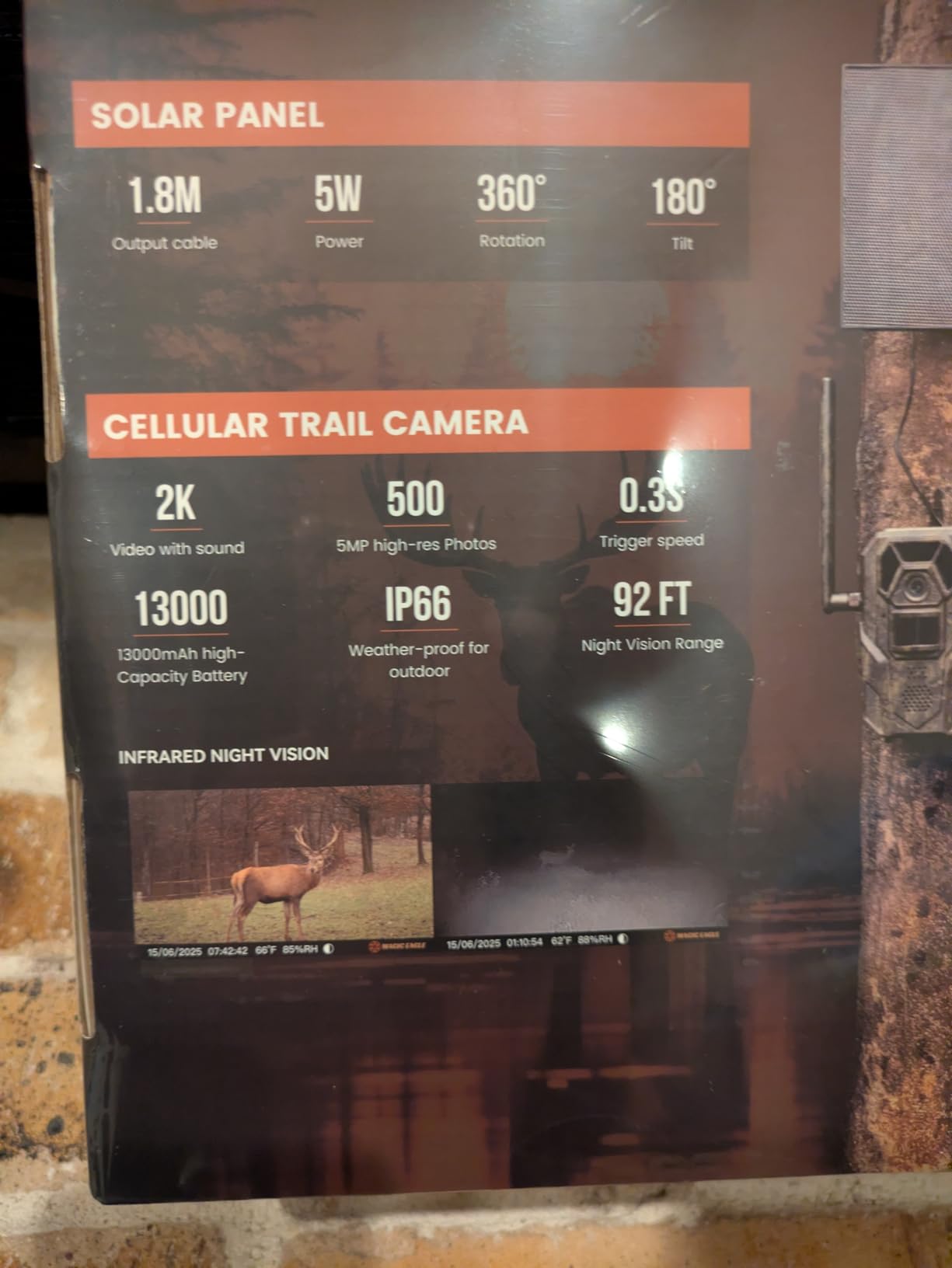
Night performance is respectable: 940nm no-glow infrared to 90 feet with a 108-degree viewing angle, and a 0.3-second trigger. A gravity sensor with A-GPS and an electronic fence adds real anti-theft value if your cameras sit on public land or a shared parcel.
A 32GB SD card is included and expandable to 256GB, so it works as a cellular camera or a local card camera. It is rated IP66 for -20C to 50C, which covers most of North American fall and winter, and the warranty runs two and a half years with registration.
When solar power plus cellular is the whole point
This is the configuration that solves the hardest problem in deer hunting with cameras: keeping a remote food plot both powered and connected. A 13,000mAh battery holding up to three months of standby, topped up by the panel, means fewer service trips than any other cellular camera here. SignalSync uses a no-SIM cloud card that selects the strongest carrier automatically.
For a hunter running one camera on a remote parcel with no reliable signal testing habits, automatic carrier selection removes the most common cellular failure mode.
Where it falls short
Still photo resolution is 5MP, which is the lowest in this roundup. If you plan to crop heavily to judge antler size or rack, a 36MP or 64MP camera serves you better. Video is 2K with audio, which is fine for confirming presence but not for detail work.
The manual genuinely needs careful reading, owners say, and a few report needing extra screws to attach the solar panel mount when using the strap. Cellular data is a paid add-on once the free trial ends.
10. VIDVIS 4K 64MP Solar WiFi: Best for Fixed-Point Scouting
4K 64MP Solar Trail Camera WiFi, 32GB SD Card,Night Vision Motion Activated
Built-in solar panel with rechargeable battery
0.2s trigger,70ft PIR detection
850nm low-glow IR to 85ft
32GB card included, expandable to 256GB
Pros
- No monthly fees with a local hotspot app
- Preview and download within about 50ft
- Free 32GB card included
- IP66 shell with built-in solar charging
Cons
- Listed video resolution is 1440p despite 4K in the title
- No home WiFi or cellular connectivity
- App range limited to about 50ft
The VIDVIS is built around a simple idea: no monthly fees, no card pulling, and no separate solar panel to mount. The app pairs to the camera’s own hotspot within about 50 feet, and a 32GB card ships in the box inside an IP66 housing with a built-in solar panel.
For a hunter who wants to check a food plot or a fixed crossing without walking in on a schedule, that is a workable setup at a modest price. Time-lapse, 5-shot burst, and loop recording modes are all present, which gives you flexibility for fixed-point work where deer are in frame reliably.
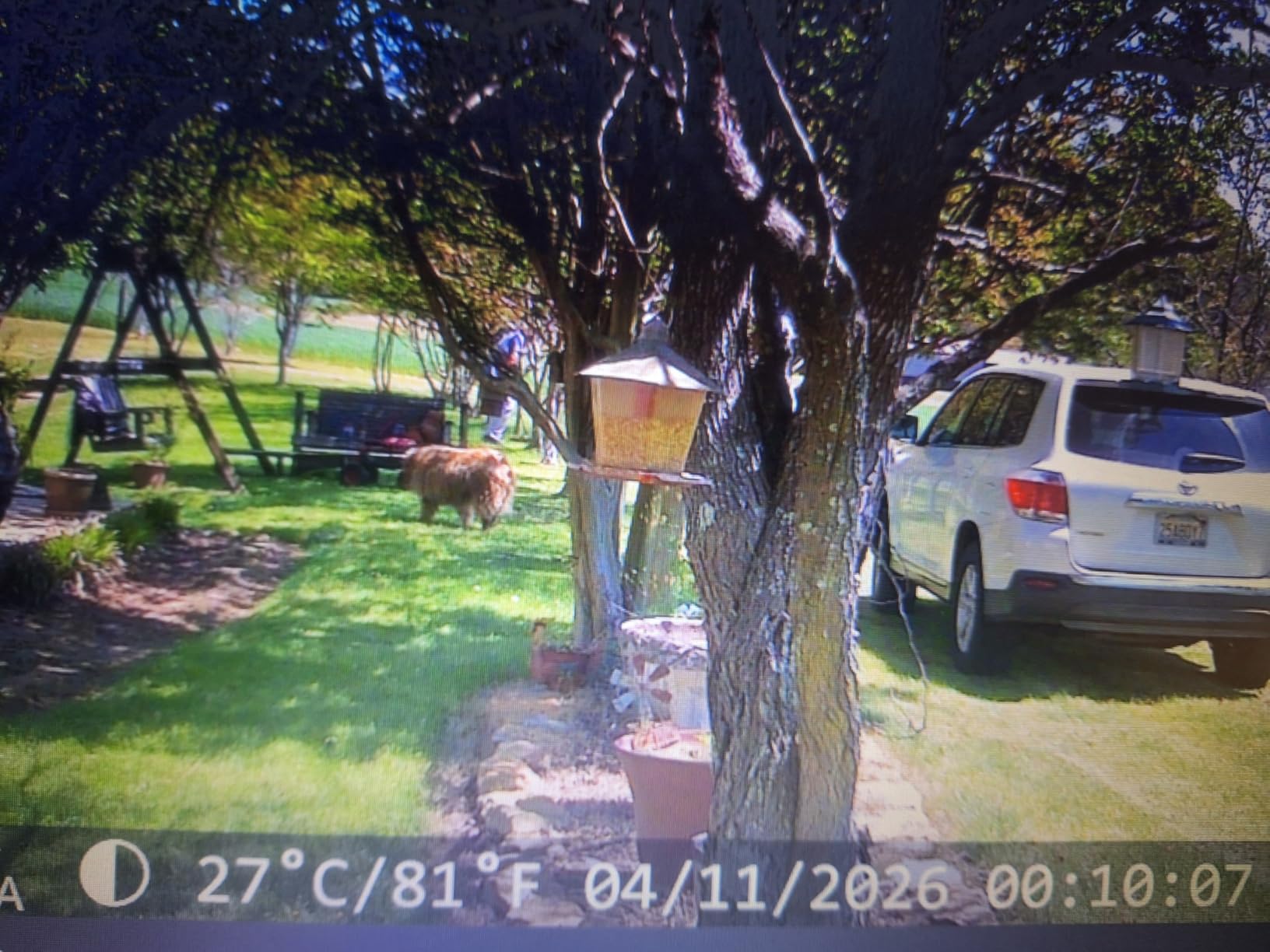
The 0.2-second trigger with a 70-foot PIR detection distance is solid for its class, and the 90 to 110-degree viewing angle covers a decent swath. Photo resolution goes up to 64MP, which is unusually high for a solar model.
One detail worth flagging honestly: the technical listing shows 1440p video capture resolution even though the product title advertises 4K. Buyers comparing spec sheets should know that before they buy for video.
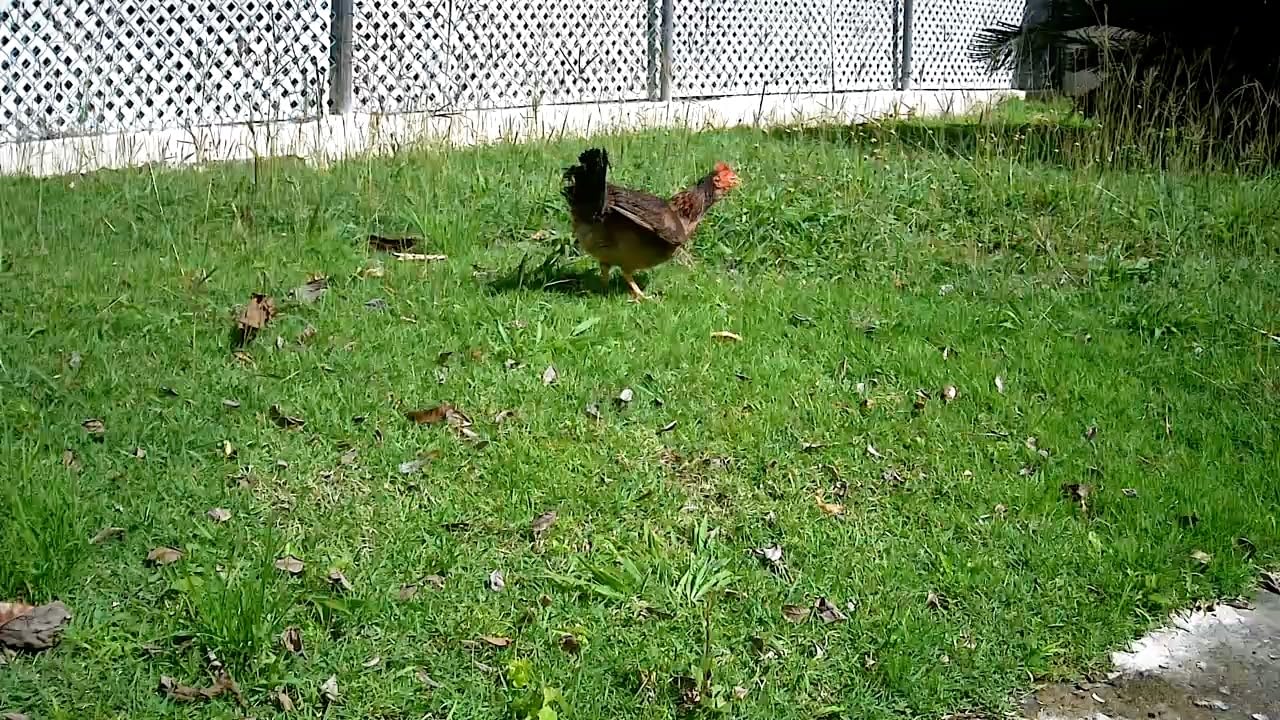
When a hotspot app is the right amount of technology
There is a middle ground between pulling a card in the dark and paying a monthly data plan. A local hotspot gives you on-site preview and download without a subscription, which is enough for most hunters who visit their food plot every few days anyway.
Add the built-in solar panel and the operating cost approaches zero, which matters if you are running several cameras across a lease and would rather not manage batteries on each one.
Where it falls short
It does not connect to home WiFi or cellular networks, so there is no remote viewing of any kind. Roughly 50 feet of app range also means you are standing at the tree, which limits it to situations where you are already there.
The 850nm low-glow flash at 85 feet emits some visible red at close range, so if spook-proof night work matters more than the solar panel, a 940nm no-glow model is a better fit.
11. XTU 4K Solar WiFi: Best for Remote Power Setups
XTU 4K Solar Trail Camera WiFi Bluetooth, Night Vision, IP66 Waterproof
Solar plus internal rechargeable,USB-C and DC 6V power
4K video and 64MP photos
0.2s trigger,70ft 850nm IR
Local WiFi app within about 49ft
Pros
- Five different power options in one body
- Falsetrigger filtering and adjustable burst intervals
- Full mounting kit in the box
- Scheduled recording and time-lapse modes
Cons
- Lowest average rating here at 4.1
- microSD card not included and must be formatted in-camera
- WiFi is local only with no remote viewing
The XTU sits at the low end of the price range, and its unusual strength is power flexibility. You get solar charging, an internal rechargeable battery, USB-C recharging, DC 6V external input, and 4 AA backup cells in a single body. That combination suits a remote food plot or a cabin where no power exists.
It also handles false triggers better than most. Adjustable PIR sensitivity, one to five shot bursts, adjustable trigger intervals, and scheduled recording all let you tune the camera to reduce the empty-clip problem that plagues budget units in wind.
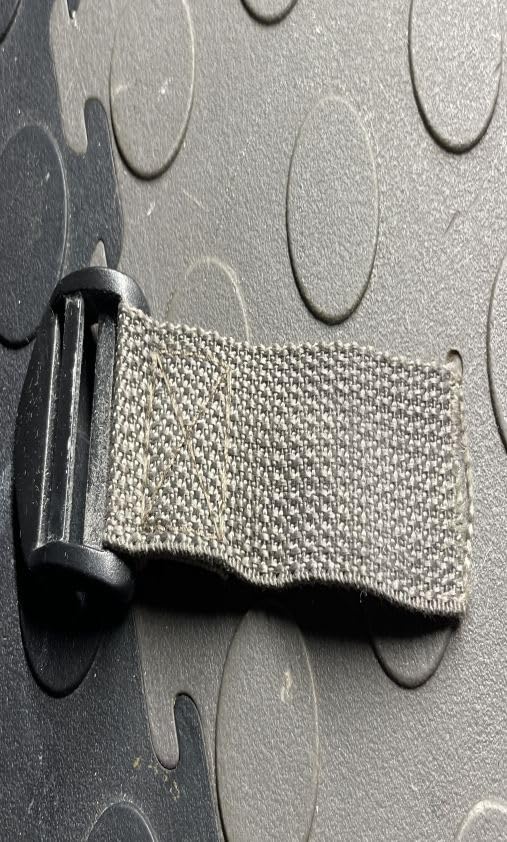
The mounting kit is unusually complete for the price, with a strap, bracket, metal base, screws, and a hex key in the box. Cards up to 128GB work in FAT32 or exFAT and are formatted inside the camera.
At 0.2 seconds with 70-foot detection and 70-foot 850nm infrared night vision, the core performance is adequate rather than standout. The 90-degree viewing angle and 2-inch LCD round out a straightforward design.
When five power options beat one good one
Redundancy is the real argument here. If your camera is on a tree a long walk from a vehicle, a dead battery means a dead camera and a wasted scouting window. Having solar as the primary, USB-C as a backup for a cabin, and four AAs as the emergency option means there is very little that strands you.
Scheduled recording is also useful if you know deer cross a certain point at a certain hour. Set the window, point the camera across the opening, and let it run.
Where it falls short
It carries the lowest average rating in this group at 4.1, with about 10 percent one-star reviews. The microSD card is not included and has to be formatted in the camera before first use, which is a step people skip and then wonder why the camera will not record.
The built-in WiFi is local only at roughly 49 feet with no remote viewing, and the 850nm low-glow flash is visible to deer up close. If you need stealth more than power redundancy, spend up on a no-glow model instead.
12. GardePro A3S Non-Cellular: Best Night Video With Sound
GardePro A3S Non-Cellular Trail Camera, 1296P HD Video with Sound
Sony Starvis sensor for low light
64MP stills and 1296P video with sound
0.1s trigger,120 degree PIR angle
100ft no-glow IR, 36 LEDs
Pros
- Sony Starvis sensor is the best low-light performer here
- Video with audio lets you identify animals by sound
- Most proven non-connected unit with 1904 reviews
- 0.1s trigger plus 5-shot burst
Cons
- 8 AA batteries and SD card sold separately
- No WiFi or cellular for remote viewing
- Some earlier models in this line recorded blank clips
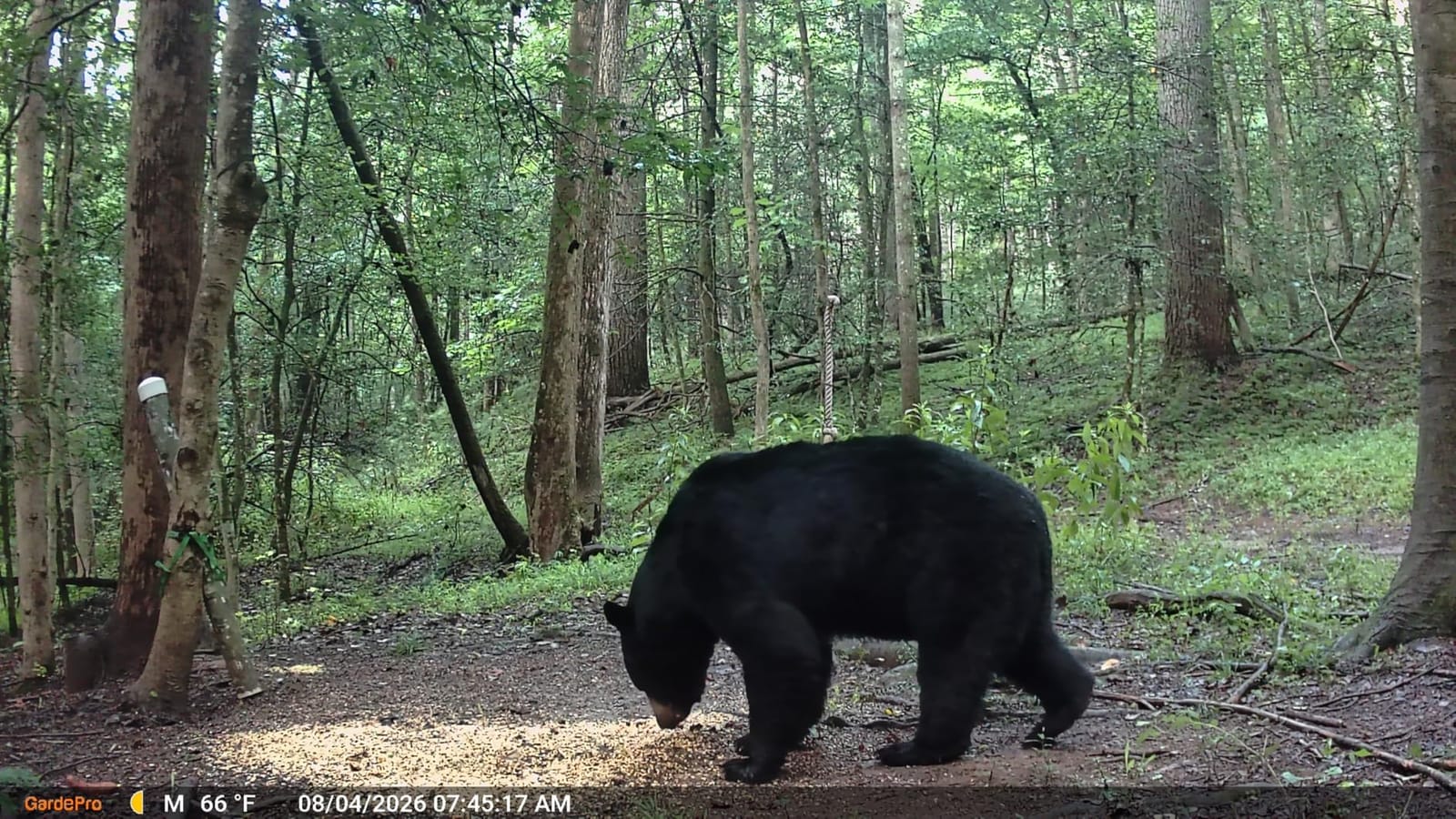
The A3S is the most proven non-connected camera in this group with just under 1,900 ratings, and the Sony Starvis sensor is the reason. Starvis is a low-light CMOS sensor built for cameras, and here it delivers 100-foot no-glow night vision that stays usable where budget sensors turn to grain.
Video is 1296P with sound at 30 fps. That audio channel is the feature most often overlooked and the one deer hunters care about most at night. Identifying a deer by the sound of its movement, or hearing that something larger than a deer is moving through the timber, is genuinely useful information that a silent camera cannot give you.
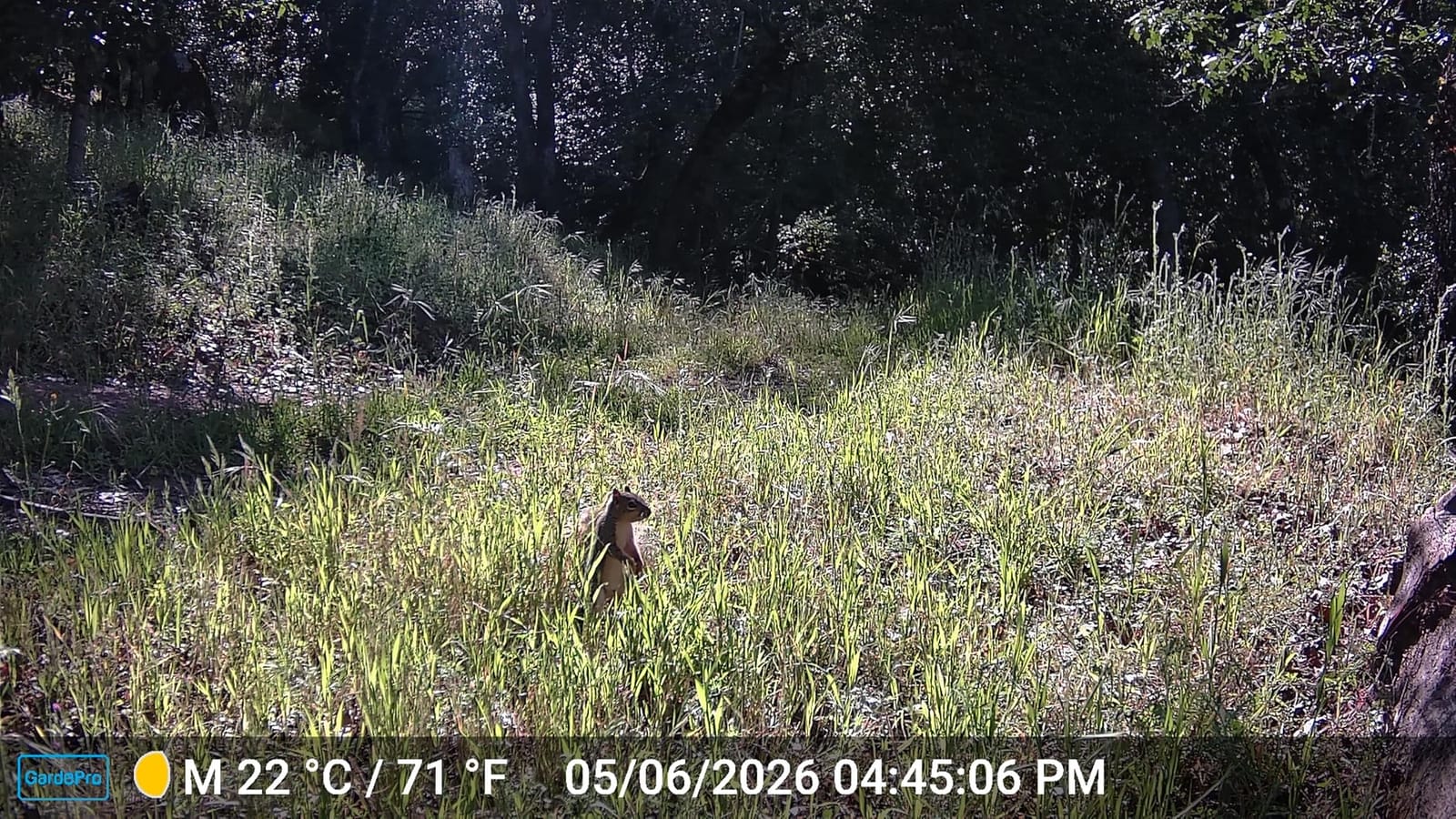
Trigger is 0.1 seconds with a 120-degree PIR detection angle and up to a 5-shot burst, covering a wide area from one mount. Non-connected operation also means lower power draw, which means fewer battery changes over a season than a WiFi camera in the same position.
A 2.31-inch screen with in-camera playback lets you check shots before pulling the card, and motion detection, time-lapse, and hybrid recording modes cover most scouting styles.
When night audio changes what you learn
During the rut, sound carries information that pictures do not. The scrape of hooves on wood, the sound of a buck snorting, or the difference between a deer walking and something heavier moving through your bedding area all point to timing and location information.
Starvis plus no-glow infrared at 100 feet is the combination that makes night identification reliable without spooking. In dense timber where deer are close and lighting is limited, that pairing is the reason to pick this camera.
Where it falls short
You supply the 8 AA batteries and the SD card, and there is no WiFi or cellular connectivity, so every look at the camera is a physical visit. That is fine on land you can reach and inconvenient on land you cannot.
Some owners of earlier GardePro models in this line reported black or blank video clips. If that happens, a reformat of the card in the camera usually resolves it. Test a few clips before you rely on it for the rut.
Trail Camera Buying Guide for Deer Hunters
Most deer hunters pick a trail camera by megapixel count, and most deer hunters regret it. The specs that decide whether you get usable photos are trigger speed, night flash type, power strategy, and whether the camera actually triggers in the conditions you are hunting.
Trigger speed and why it matters in the rut
Trigger speed is the delay between the PIR sensor detecting movement and the shutter firing. Anything at or under 0.2 seconds is good; 0.1 seconds is better. The cameras here range from 0.05 to 0.3 seconds, and the difference shows up on moving deer.
Pair trigger speed with burst mode. A single shot at 0.1 seconds still gives you one chance to have a buck centered. Three or five shots spaced closely give you several. Both the TACTACAM Reveal X 3.0 and the MAXDONE offer burst, and that combination is the single biggest upgrade for rut photography.
Detection range versus flash range
These are different numbers and manufacturers rarely distinguish them clearly. Detection range is how far the PIR sensor can see movement. Flash range is how far the infrared array actually illuminates. A camera with 100-foot detection and a 40-foot flash catches the deer in the frame and then records it too dark to identify.
For open ground and long approaches, both numbers need to be large. For timber and trail funnels where deer come within 20 feet, flash range matters much less and detection angle matters more.
No-glow versus low-glow infrared
No-glow cameras use black filters over 940nm infrared emitters so nothing visible is emitted. Low-glow cameras at 850nm illuminate further but leak a faint red glow. Deer can see that glow, which is the entire reason flash type exists as a spec.
If your camera will sit near a funnel trail or a bedding area that deer approach close to, choose 940nm no-glow. The GardePro E5S, GardePro A3S, Meidase P70, GardePro E6 2.0, Digitgarden, and MagicEagle all use it. Only do this at a distance where deer will not pass directly in front of the lens.
Battery life, solar panels and power options
Two things drive camera power: how often it triggers, and how often it transmits. A photo-only non-cellular camera on lithium AA cells can run a season. A cellular camera recording video every time something moves will not, unless it has solar.
Built-in solar with an internal battery is the cleanest solution for unattended cameras. The MAXDONE and VIDVIS do it at modest prices, and the MagicEagle pairs it with a 13,000mAh battery for cellular use. The XTU goes furthest with five power options including USB-C and DC input.
Long-format your SD card in your computer before every season. It is standard forum advice and it prevents most write-speed failures.
Cellular versus non-cellular and the data plan
Cellular cameras send images to your phone. Non-cellular cameras write to an SD card you pull by hand. Neither is better in the abstract; the right choice depends on how you scout and whether your land has signal.
The hidden cost is the subscription. Multiply the monthly plan by the number of cameras and by the number of months you will run them, then compare that against the cost of extra batteries and extra trips to the woods. Hunters running several cameras on a remote lease should run that number honestly before buying.
Two additional points: check cell coverage at your specific parcel before buying cellular, and confirm your state’s rules. A few states restrict electronic trail cameras on state land, so verify before you spend the money.
SD cards, mounts and other field accessories
A high-endurance microSD card is the one accessory you should not economize on. Look for high-endurance rated cards, and note that some cameras only accept up to 128GB while others handle 512GB. Check the limit before formatting a large card.
A metal mounting strap with a security screw beats the thin nylon strap that comes with most budget cameras. A 1/4-20 threaded tripod mount, which the GardePro E5S has built in, lets you use real mounting hardware. And if you run a camera on a post in a food plot, a solar panel and a battery box are almost always worth the add-on.
Where to Place Trail Cameras for Deer Hunting
Placement matters more than any spec. The best camera pointed at the wrong ground produces beautiful pictures of nothing, and this is where most scouting guides go quiet.
For trail funnels, find the narrow point between a bedding area and a feeding area. Mount at roughly waist to chest height, angled across the trail rather than down it, and set sensitivity low enough that wind-blown leaves do not fill your card. Trigger speed matters most here because bucks move through a funnel quickly and direction is unpredictable.
For food plots, place the camera 15 to 25 feet off the plot edge at a height where it can see the open ground, and angle it along the edge rather than into the corn. Wide field of view helps here. If you are using bait or a feeder, a fixed-point camera aimed straight at the site with time-lapse and burst enabled is the better tool.
For bedding areas in timber, use no-glow infrared and mount at a lower height. Deer in thick cover are close, so detection angle matters more than flash range. Keep the camera far enough from the bedding area itself that your scent and noise do not push them out before the camera tells you anything useful.
For scrapes and rub trees, a camera pointed at the ground in front of the scrape with a motion-activated setting catches the bucks working the sign during daylight hours. This is a daylight setup, so trigger speed and photo resolution matter more than night capability.
For open ridgetops, you need the largest detection and flash range you can get, and you should mount as high as the post allows and angle downward to flatten the field of view. Wide-angle cameras work better here than the narrow 50 to 60 degree units.
Whatever you mount, check images at a consistent time each visit so you can line up activity hour by hour. And if you are protecting a food plot from deer rather than hunting them, our guide to deer repellers for gardens covers the non-lethal side of keeping browsed plants out of reach.
Frequently Asked Questions
Is Moultrie or Tactacam better?
Both are strong cellular options here. Moultrie leads on app features like Game Plan and activity charting, multi-carrier 4G, and 100-foot detection. Tactacam leads on trigger speed with a sub-half-second trigger plus 3-shot burst, built-in GPS, and a claimed 6-plus month battery life. Pick Moultrie for scouting analytics and Tactacam for rut photography.
Which trail camera is best without a subscription?
The GardePro E6 2.0 WiFi, GardePro E5S, Meidase P70, GardePro A3S, MAXDONE, VIDVIS, and XTU all run with no monthly fee. WiFi models like the E6 2.0 let you view and download on site without pulling the card. Pure non-cellular models like the A3S and Meidase P70 write to an SD card with zero connectivity cost at all.
Do bucks avoid trail cameras?
Rarely, and it is usually the flash rather than the camera. Deer can see the red glow from a low-glow 850nm emitter, which is why 940nm no-glow infrared cameras are the safe choice for trail funnels and bedding areas. A camera body strapped flush against the trunk, positioned above eye level, and aimed across rather than along the trail is rarely the reason a buck changes course.
What state is banning trail cameras?
Restrictions vary and change, so verify current rules for your specific parcel before buying. A number of states limit electronic trail cameras on state-managed land, and some impose rules about locating or retrieving them during hunting hours. Check your state wildlife agency and your land manager directly, since non-residents hunting on private ground may have different rules than residents.
Which trail camera has the best battery life?
For cellular cameras the TACTACAM Reveal X 3.0 claims up to 6-plus months, and the MagicEagle pairs a 13000mAh battery with an integrated solar panel for multi-month standby. For non-connected cameras, the GardePro E5S runs a full season on lithium AA batteries in photo-only mode. Solar-equipped models like the MAXDONE and VIDVIS avoid battery swaps entirely.
What SD card should I use in a trail camera?
Use a high-endurance microSD card and stay within your camera’s capacity limit, which ranges from 128GB on the XTU to 512GB on several GardePro and Meidase models. Long-format the card in your computer before every season rather than deleting files in the camera, since write-speed problems are the most common cause of corrupted clips.
Final Verdict for Deer Hunters in 2026
For most deer hunters, the best trail cameras for deer hunting in 2026 come down to two questions: can you walk to the camera, and does your land have cell coverage.
If you can walk to it, the WOSODA 2 Pack gives you two cameras and the coverage that comes with them for the price of one. Add a GardePro A3S on your bedding area for its Sony Starvis sensor and night video with audio, and you have a scouting setup that costs nothing monthly.
If you cannot walk to it, the Moultrie Edge 2 gives the most complete scouting analytics, while the TACTACAM Reveal X 3.0 gives the best odds of a clean photo of a moving buck. Budget for the monthly data plan before you buy either, because that is where cellular hunters get surprised.
Whatever you choose, mount it where deer are already moving rather than where you hope they might be, and check your state’s rules on electronic cameras before the season starts. Once you take that buck down, our guide to meat grinders for deer processing handles the next step.