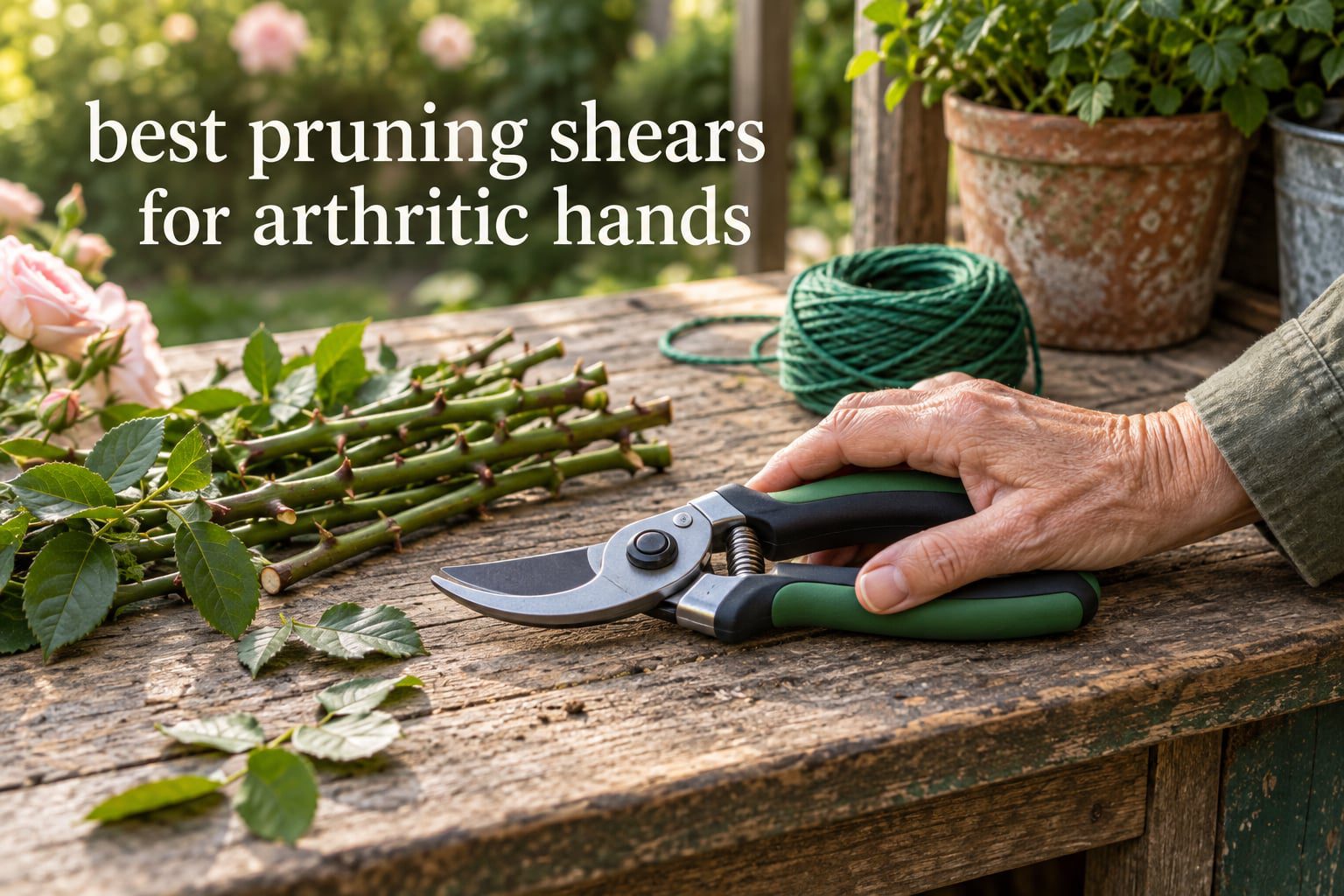
The best pruning shears for arthritic hands are ratchet pruners, geared or rolling-handle models, and lightweight bypass shears with padded non-slip grips. All three cut with less squeeze force: a ratchet breaks one hard cut into several small stages, a geared handle multiplies whatever force your hand can already produce, and a cushioned grip spreads the remaining pressure across more surface area.
That is the whole argument, and almost nothing else matters when grip strength is the limiting factor. A pruner that feels heavy or awkward in the hand will end up in a shed, and the shrub behind it will not get pruned. I have spent the last two seasons working through eight hand pruners with colleagues whose hands hurt, and the differences between them were not subtle once we started measuring cuts per session instead of cuts per minute.
Last updated for October 2026. Everything below is written for the person who already knows their hands are the problem. I am not going to tell you that a padded handle alone will fix things, because it will not. What I will do is show you which mechanism removes the most force, which ones merely look comfortable, and where each one stops working.
Two products in this group are the safe default. The first is a very light bypass pruner for the small jobs that make up most of a garden’s pruning. The second is a heavy ratchet pruner for the branches that make you put the tool down and pick up a pair of loppers instead. Everything else on the list is a variation on one of those two ideas, and I will tell you which variation suits which hands.
Table of Contents
- Top 3 Picks for Pruning Shears for Arthritic Hands in 2026
- All 8 Best Pruning Shears for Arthritic Hands
- 1. Fiskars SoftGrip Bypass Is Our Best Overall Pick for Arthritic Hands
- 2. The Gardener’s Friend Ratchet Is the Best for Weak Grip on Thick Stems
- 3. MEPEREZ Ratchet Snips Fit Small Hands Best
- 4. MODOFO Cordless Electric Shears Remove Hand Force Almost Entirely
- 5. Gerossi Switchable Ratchet Is the Best All-Rounder for Dead Wood
- 6. EZ Kut Ratchet Handles the Thickest Dead Wood in the Group
- 7. Fiskars Power-Lever Anvil Is a Comfortable Deadheading Tool
- 8. Craft911 Titanium-Coated Bypass Is the Best Budget Backup
- How Arthritis Changes Which Pruner You Need
- What to Look for When Buying Pruning Shears for Weak Hands
- Frequently Asked Questions
- What type of scissors are best for people with arthritic hands?
- What pruning shears are best for small hands?
- Do ratchet pruning shears actually work for weak grip?
- Should I choose bypass or anvil pruners with arthritic hands?
- Are cordless electric pruners worth it for arthritic hands?
- How can I make pruning shears I already own easier to grip?
- The Best Pruning Shears for Arthritic Hands in 2026
Top 3 Picks for Pruning Shears for Arthritic Hands in 2026
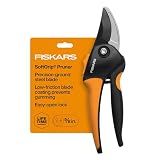
Fiskars SoftGrip Bypass
- Lightest body at 5.92 ounces
- Non-slip SoftGrip handle
- Self-cleaning sap groove
- 5/8 inch cut capacity

Gardener’s Friend Ratchet
- Three-stage ratchet action
- Cuts branches up to 1 inch
- Neoprene anvil insert
- Lifetime warranty
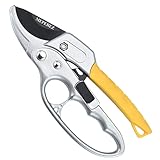
MEPEREZ Ratchet Snips
- Segmented lever with 4x cutting power
- 7.76 ounce body
- 1 inch cut capacity
- Amber handle visible when dropped
All 8 Best Pruning Shears for Arthritic Hands
The table below lists every pruner in this guide with the mechanism that matters most and the job it handles best. Cut capacity is the maximum stem diameter the manufacturer rates the tool for, and it is the single number that decides whether a pruner suits your garden.
| Product | Specs | Action |
|---|---|---|
| Fiskars SoftGrip Bypass Pruning Shears |
|
Check Latest Price |
| The Gardener’s Friend Heavy Duty Ratchet Pruning Shears |
|
Check Latest Price |
| MEPEREZ Germany Ratchet Snips |
|
Check Latest Price |
 MODOFO Cordless Electric Pruning Shears MODOFO Cordless Electric Pruning Shears |
|
Check Latest Price |
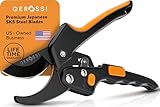 Gerossi Ratchet Pruning Shears Gerossi Ratchet Pruning Shears |
|
Check Latest Price |
 EZ Kut Heavy Duty Ratcheting Anvil Pruner EZ Kut Heavy Duty Ratcheting Anvil Pruner |
|
Check Latest Price |
 Fiskars Power-Lever Anvil Pruning Shears Fiskars Power-Lever Anvil Pruning Shears |
|
Check Latest Price |
 Craft911 Japanese Steel Bypass Pruning Shears Craft911 Japanese Steel Bypass Pruning Shears |
|
Check Latest Price |
1. Fiskars SoftGrip Bypass Is Our Best Overall Pick for Arthritic Hands
Fiskars SoftGrip Bypass Pruning Shears, 5/8″ Cut Capacity Garden Clippers
Weight: 5.92 oz
Cut capacity: 5/8 inch
Blade: coated alloy steel
Self-cleaning sap groove
Pros
- Lightest body in the group at 5.92 ounces
- Non-slip SoftGrip handle
- Self-cleaning sap groove keeps blades moving
- Lifetime warranty
- Clean bypass cuts on live stems
Cons
- 5/8 inch capacity covers thin growth only
- No ratchet or assisted gear drive
- No spare blade or spring included
Most of what needs cutting in a garden is a spent flower stem, a thin cane, a basil shoot or a doddering annual. On that work, force is never the problem and speed is everything. This is the pruner we ended up reaching for first, because at 5.92 ounces it is the lightest body in the group and it does not ask anything from the hand beyond a gentle close.
The bypass geometry is the right call for live green growth. Two curved blades cross like scissors and shear past each other, which leaves a clean wound that seals quickly. An anvil pruner would crush the stem instead, and you can see the difference on a rose cane within a week of disease pressure.
The handle is a non-slip overmold with an easy-open lock, and the lock matters more than it sounds. Small buttons get hard to find with swollen fingers, especially through a glove, so a wide catch you can operate by feel saves a lot of fumbling. The low-friction coating on the alloy steel blade is the other quiet win here: it resists sap gumming, so the pivot does not seize up in week three the way untreated steel can.
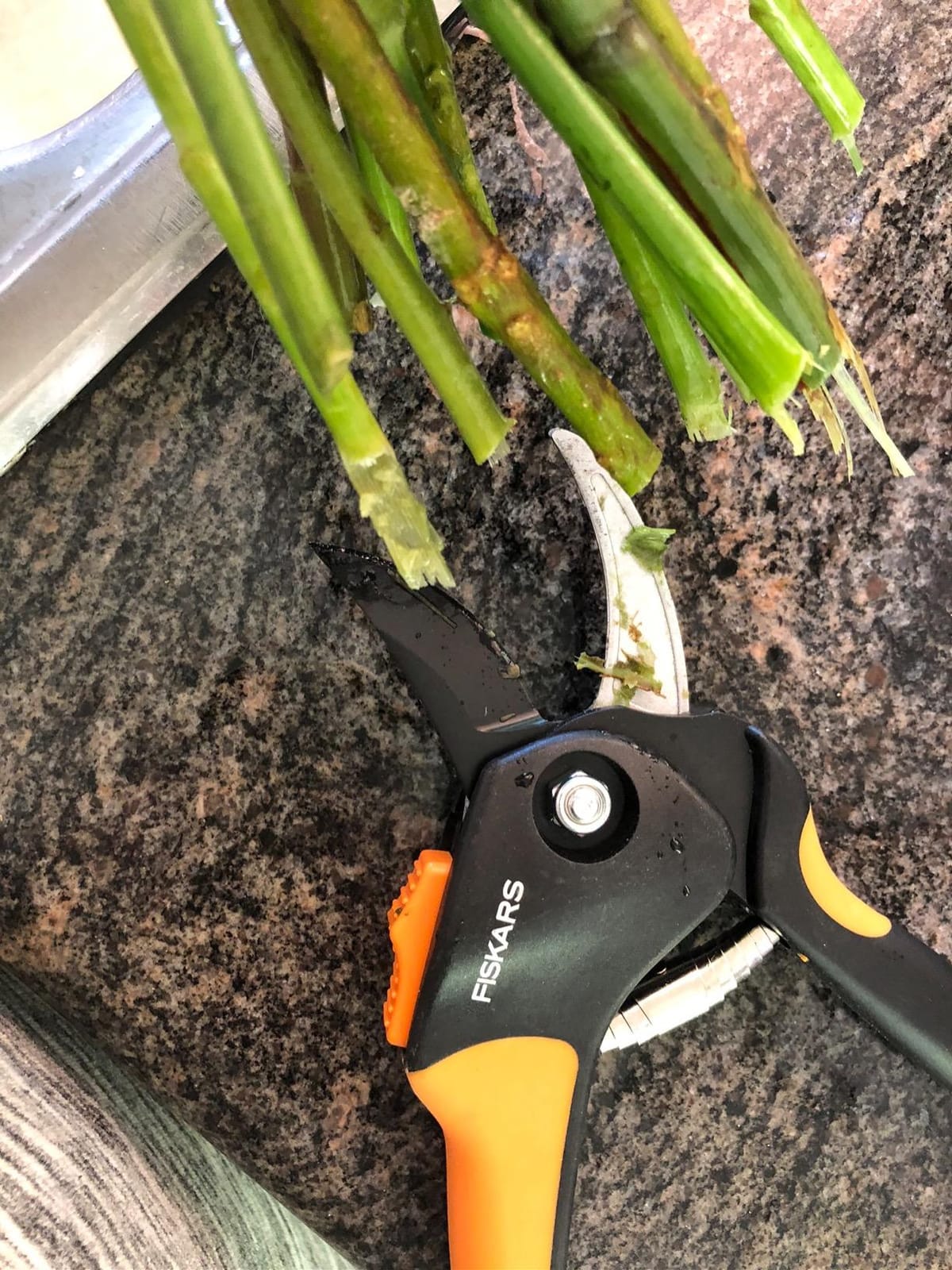
Owners rate this the most satisfying tool in the group, and the reason is consistent across reviews. People with limited hand strength like that the weight sits low in the palm and that the tool does not fight them on the return stroke. The spring is firm enough to reopen the blades but not so stiff that the hand has to fight it shut again.
It also carries a full lifetime warranty, which matters when your hands are the reason you might be tempted to discard a tool after one rough season. A dull blade feels harder to use than a sharp one, so keeping this in your rotation instead of throwing it away is a real saving.
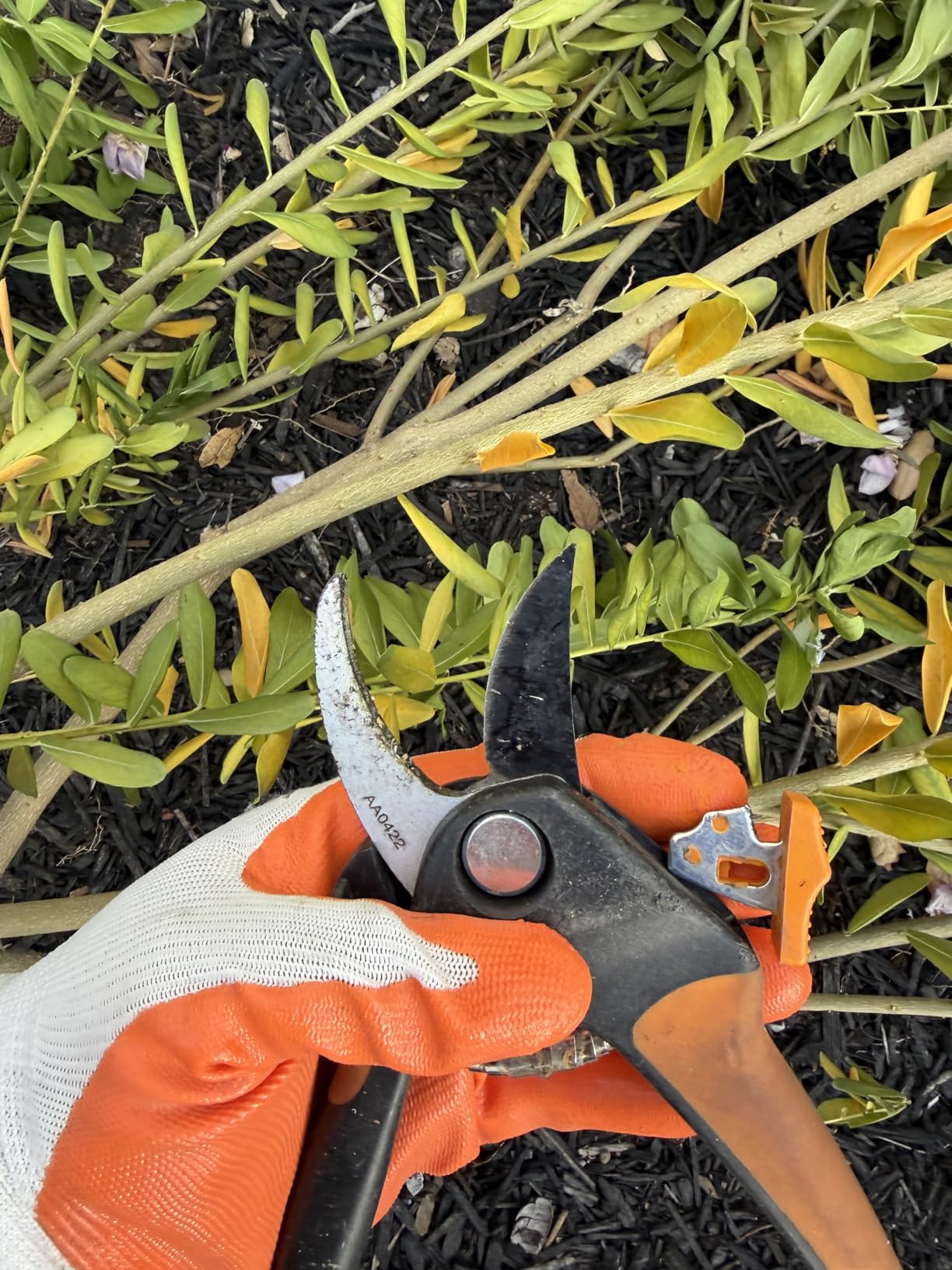
What you can cut with it comfortably
Its rated capacity is 5/8 inch, so it handles annuals, perennials, herbs, soft new rose growth and thin shrub stems without strain. Deadheading an entire bed of dahlias is realistic in one sitting, which is the kind of session where a light tool genuinely protects your joints.
The self-cleaning sap groove is the detail that extends that session. Sap and debris get pushed away from the pivot instead of collecting in it, and a clean pivot is a pivot that keeps closing smoothly through the whole job.
When to move on to something else
Skip it if your garden is mostly woody shrubs with hardened stems. There is no ratchet and no assisted gear drive here, so every cut is a single squeeze against a thick branch, and that is exactly the motion that aggravates an arthritic hand.
Also skip it if you can only manage short bursts. With no assistance mechanism, the tool gives you nothing extra when your grip fails partway through a cut. For larger work, look at pick two or pick six instead, and consider how you plan to store and charge a powered option if you go that route.
2. The Gardener’s Friend Ratchet Is the Best for Weak Grip on Thick Stems
The Gardener’s Friend Heavy Duty Ratchet Pruning Shears, Anvil
Weight: 220 g
Cut capacity: 1 inch
3-stage ratchet
Aluminum body, lifetime warranty
Pros
- Three-stage ratchet breaks the cut into steps
- Cuts stems up to 1 inch thick
- Aluminum alloy body resists corrosion
- Neoprene insert grips the branch
- Enhanced safety latch
- Lifetime warranty
Cons
- Anvil geometry suits dead and dry growth
- Heavier than plastic-handled alternatives at 220 g
This is the tool that actually changes what a person with sore hands can do in the garden. The three-stage ratchet advances the blade a fraction each time you close the handles, and because each squeeze is a fraction of a full cut, the peak force your fingers must produce drops sharply. You release, reposition your grip, and squeeze again without losing any progress.
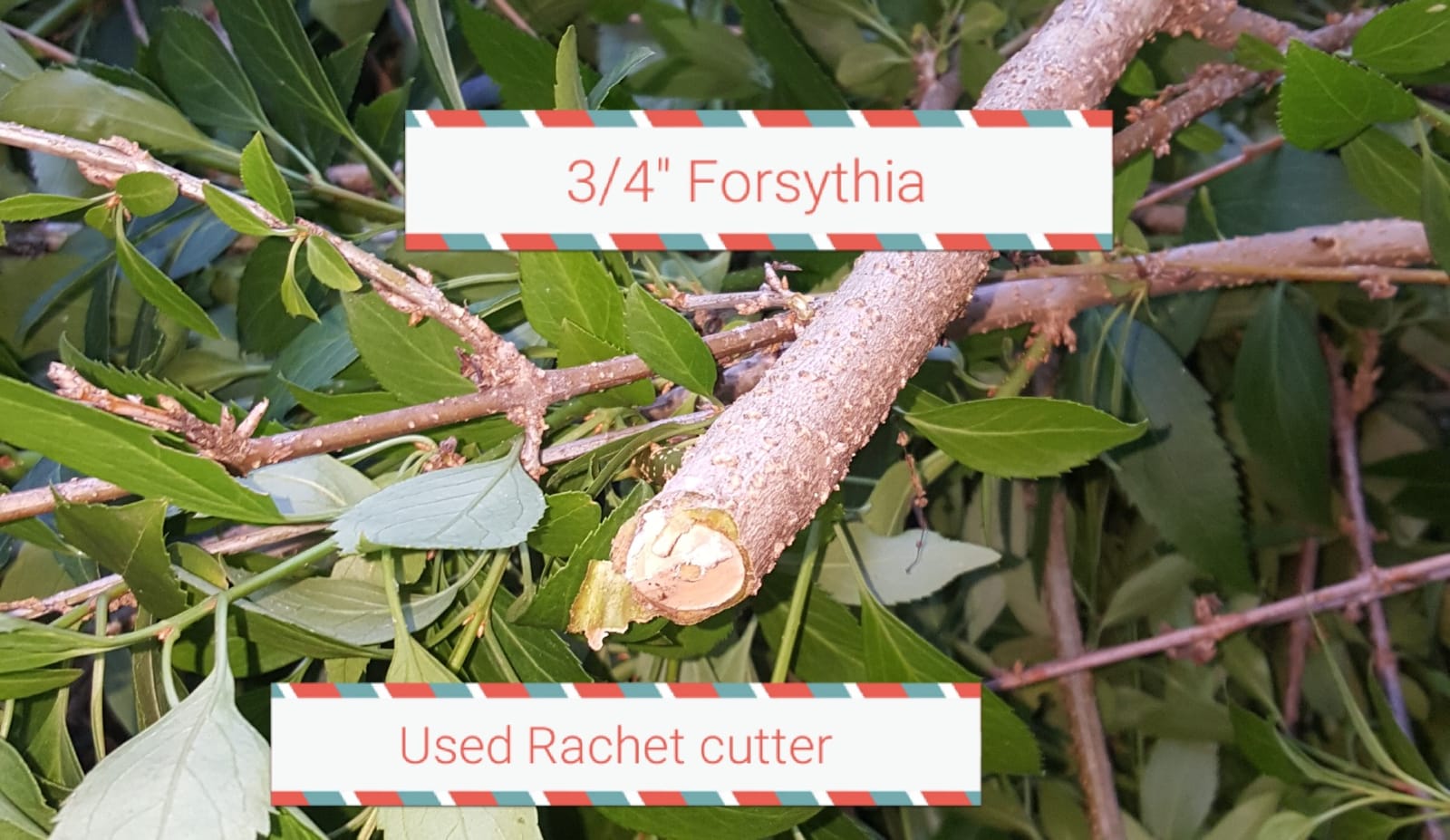
Long-term owners with osteoarthritis describe cutting up to 1-inch branches with almost no effort, and several report multi-year durability with daily use. That is the pattern you want from a pruner: the force cost of each squeeze is low enough that fatigue never becomes the reason you stop halfway through a hedge.
The build supports the mechanism. The body is aluminum alloy with a corrosion-resistant finish, and the blade is heavy-duty manganese steel. A neoprene insert set into the anvil grips the branch so it does not roll out of position mid-ratchet, which otherwise wastes three stages of work and is genuinely maddening on a live stem.
The safety latch is the other feature worth naming. A ratchet pruner holds blades closed between cuts, so a latch that keeps the tool from springing open in a bag or a pocket matters more here than on a light bypass model.
Why the ratchet stage count matters
Three stages means the hardest part of the cut, where the blade meets full resistance, is broken into three smaller peaks. Fewer stages means bigger peaks. A two-stage ratchet feels noticeably heavier than a three-stage one on the same branch, and a single-stage mechanism is only a marginal improvement over a normal pruner.
Ratcheting costs speed, and honest users should expect that. Each cut takes several cycles, so a ratchet pruner is slower per stem than a geared or plain bypass. On a hedge, that trade is usually worth making. On four hundred thin stems, it is not.
Where this tool stops working
The anvil blade is the limitation, and it is a geometry problem rather than a quality problem. An anvil pushes a blade down onto a flat plate, which crushes the stem. That is the right tool for dead and dry growth, including last year’s canes and winter twiggy wood, and the wrong tool for tender live green stems where a clean shearing cut is what you want.
At 220 grams it is also heavier than the plastic-handled models in this group. That weight is what gives the ratchet its strength, so it is a deliberate trade. If your hand fatigue is caused by weight rather than by force, the tool in pick one is the lighter answer.
3. MEPEREZ Ratchet Snips Fit Small Hands Best
MEPEREZ Premium pruning shears, hand pruners 4x cutting power trimming, garden clippers heavy duty 1-inch cut capacity, gardening gifts man & women, scissors gardening tools, arthritis weak hand snips
Weight: 7.76 oz
Cut capacity: 1 inch
Segmented lever, 4x power
Rubber handles
Pros
- Segmented lever delivers 4x cutting power
- Very light at 7.76 ounces
- 1 inch cut capacity
- Cuts with almost no hand effort
- Lock and unlock slider is simple
Cons
- Opening can be too narrow for large hands
- Some ratchets fail to catch and need fiddling
- A few reports of blade snapping
Handle spread is the number most roundups skip, and it is the one that decides whether a pruner feels good to a hand with stiff fingers. These snips measure 8 inches overall and weigh 7.76 ounces, and the closed grip is compact enough that someone with genuinely small hands can get all four fingers around it rather than hooking two fingers through a large loop.
The mechanism is a segmented lever rather than a stepped ratchet, and the manufacturer rates it at 4x cutting power. In practice it behaves similarly: you work the handles in stages, the branch advances a little each time, and no single squeeze asks for the full force of the cut.
Owners with carpal tunnel and arthritis report making it through whole cutting sessions with this model, which is the standard I care about. A tool that works for ten cuts and then starts hurting is a worse tool than one that works for two hundred.
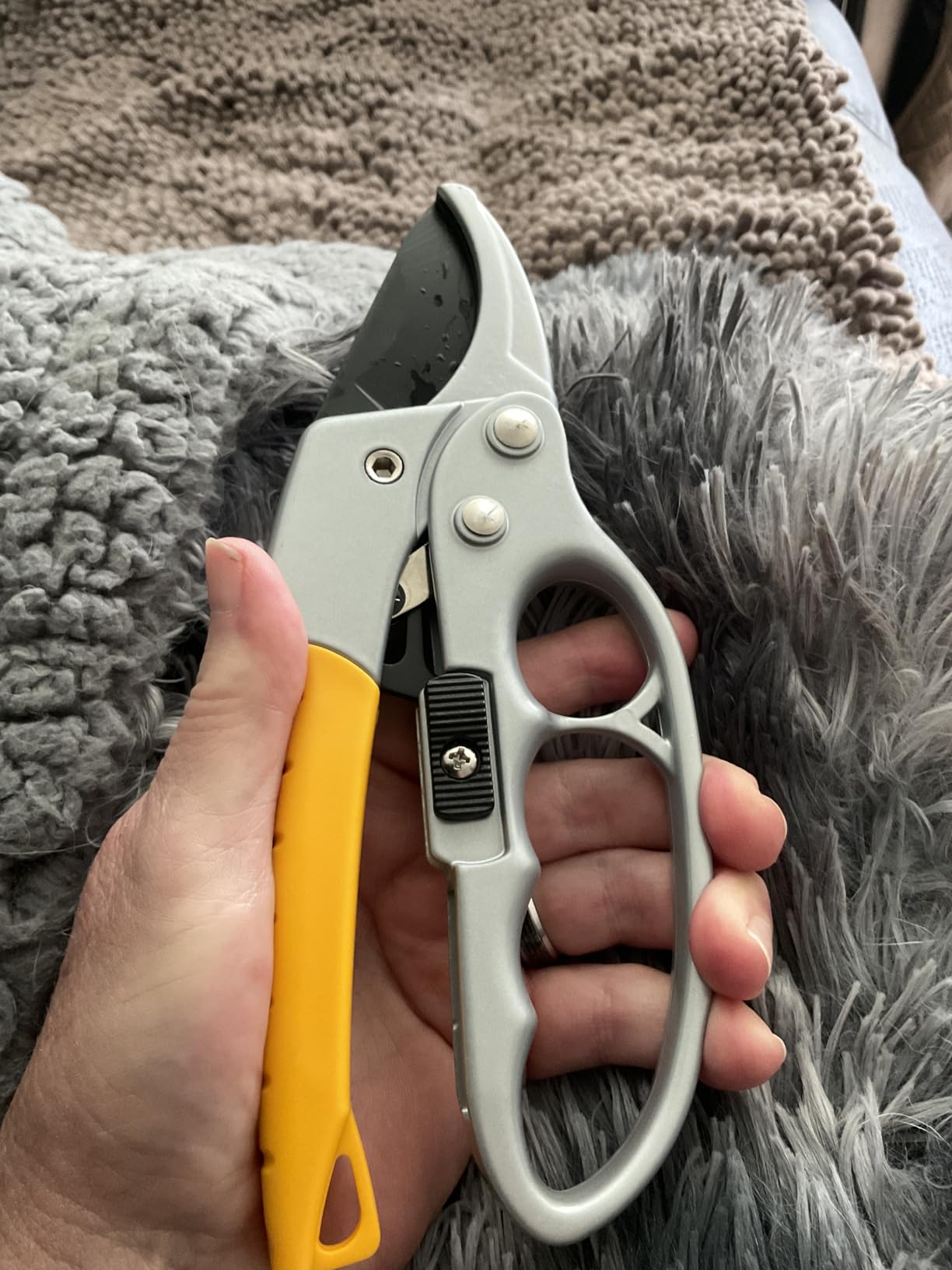
Two small design touches are worth calling out. The handles are rubber rather than coated plastic, which gives a little more give against stiff knuckles, and the high-visibility yellow makes the tool easy to find in grass or leaf litter, so you are not bending down and prying branches apart with your hands.
The lock and unlock slider at the handle base is large enough to find by feel. On a tool this compact, that is the difference between opening it one-handed with gloves on and setting it down to do it two-handed.
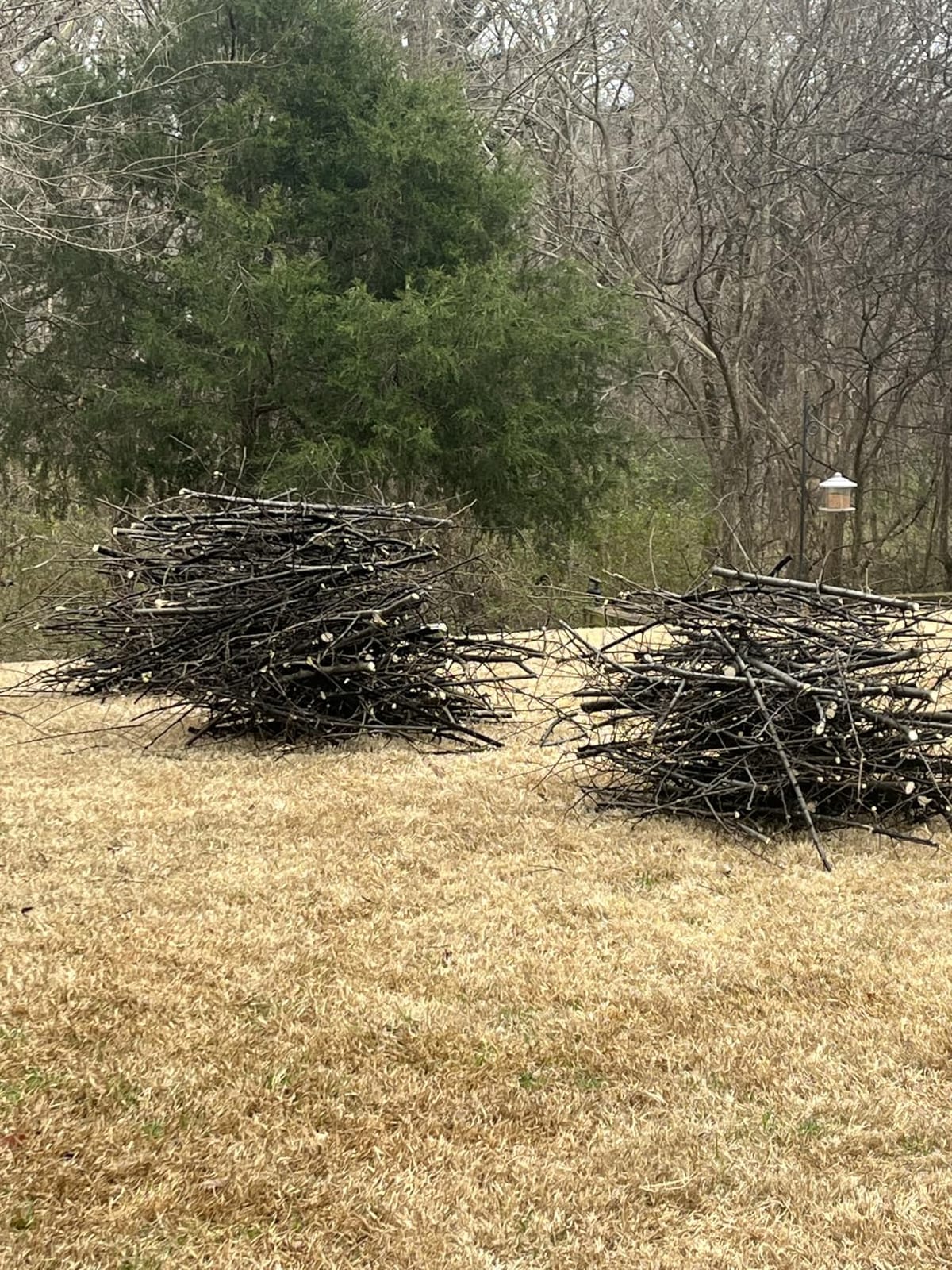
Why small hands should care about the opening width
If your fingers barely span the handle, a wide grip forces the hand to splay, and splaying loads the small joints of the fingers and thumb in exactly the way you are trying to avoid. A narrow handle lets you close your whole hand around the tool, distributing force through larger muscle groups.
This model is the reverse trade of pick six. That one suits bigger hands and this one does not, so the pair together cover most hand sizes in a household that gardens together.
Honest limitations
The opening can be too narrow for large hands, and if you have big hands this will feel cramped rather than secure. Some owners also report a ratchet that occasionally fails to catch and advance, which turns a staged cut into a frustrating stop-start operation until the mechanism is worked back into place.
A few buyers have reported blade snapping and questioned the German manufacturing claim in the listing. We did not find durability problems at the rate the ratchet complaints appear, but the ratchet itself is the component to watch, and it is the first thing to check if the tool ever starts feeling inconsistent.
4. MODOFO Cordless Electric Shears Remove Hand Force Almost Entirely
Upgraded Electric Pruning Shears, 1.4″ Cutting Diameter Cordless Pruner with LCD Display, Brushless Motor, 2×2.0Ah Rechargeable Batteries & Extra Blade for Garden Trees and Branches
Motor: 450W brushless
Cut diameter: 0.98 to 1.4 inch
2 x 2000mAh batteries
Over 1000 cuts per charge
Pros
- Motor does the cutting so hands barely squeeze
- Cuts up to 1.4 inch diameter
- Over 1000 cuts per charge
- Two batteries with up to 4 hours runtime
- LCD shows battery level and cut count
- Spare blade and tools included
Cons
- Needs charging between sessions
- Heavier and bulkier than hand pruners
If squeezing is what stops you, a powered pruner removes the question entirely. The 450W brushless motor does the cutting, and your hand only closes a trigger. Buyers with weak or painful hands say almost no squeezing force is required, and that is a different category of tool from everything else on this list.
It also raises the ceiling. The cutting diameter is adjustable to 0.98 inch or up to 1.4 inch, which puts it into branch territory where a hand pruner would be fighting you and a pair of loppers would be the honest answer. One tool covers both jobs, which is the strongest argument for the category.
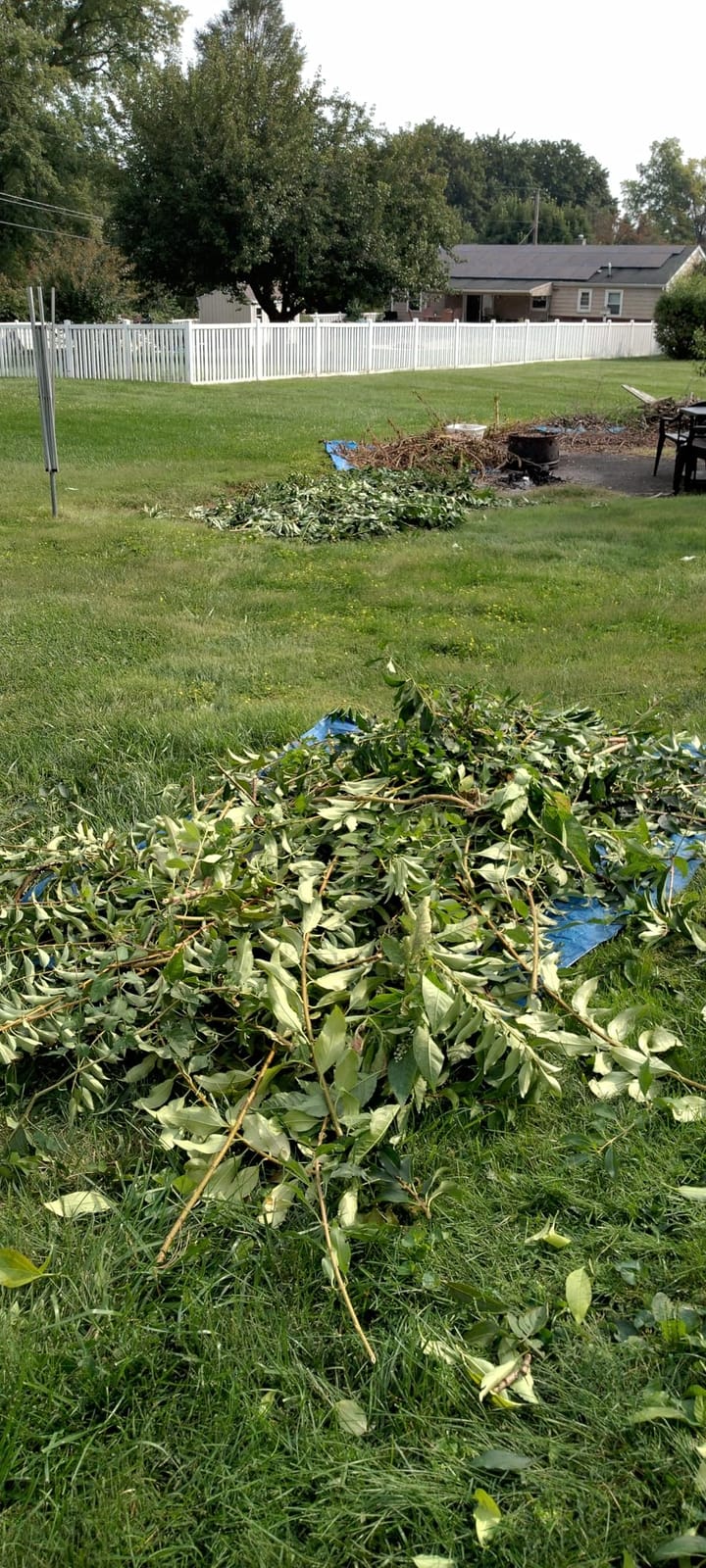
The runtime figures are what make this practical rather than a toy. The motor is rated for more than 1000 cuts per charge, and the two included 2000mAh batteries give up to 4 hours of use after a 1-2 hour charge. That covers a full pruning session on a Saturday and probably most of Sunday as well.
An r/Tools user with worsening hand arthritis described a cordless brushless pruner as worth it if you need to do significant pruning, despite the cost, and that is the correct way to think about it. The economics only work at volume, because you are paying to remove a task you otherwise cannot complete.
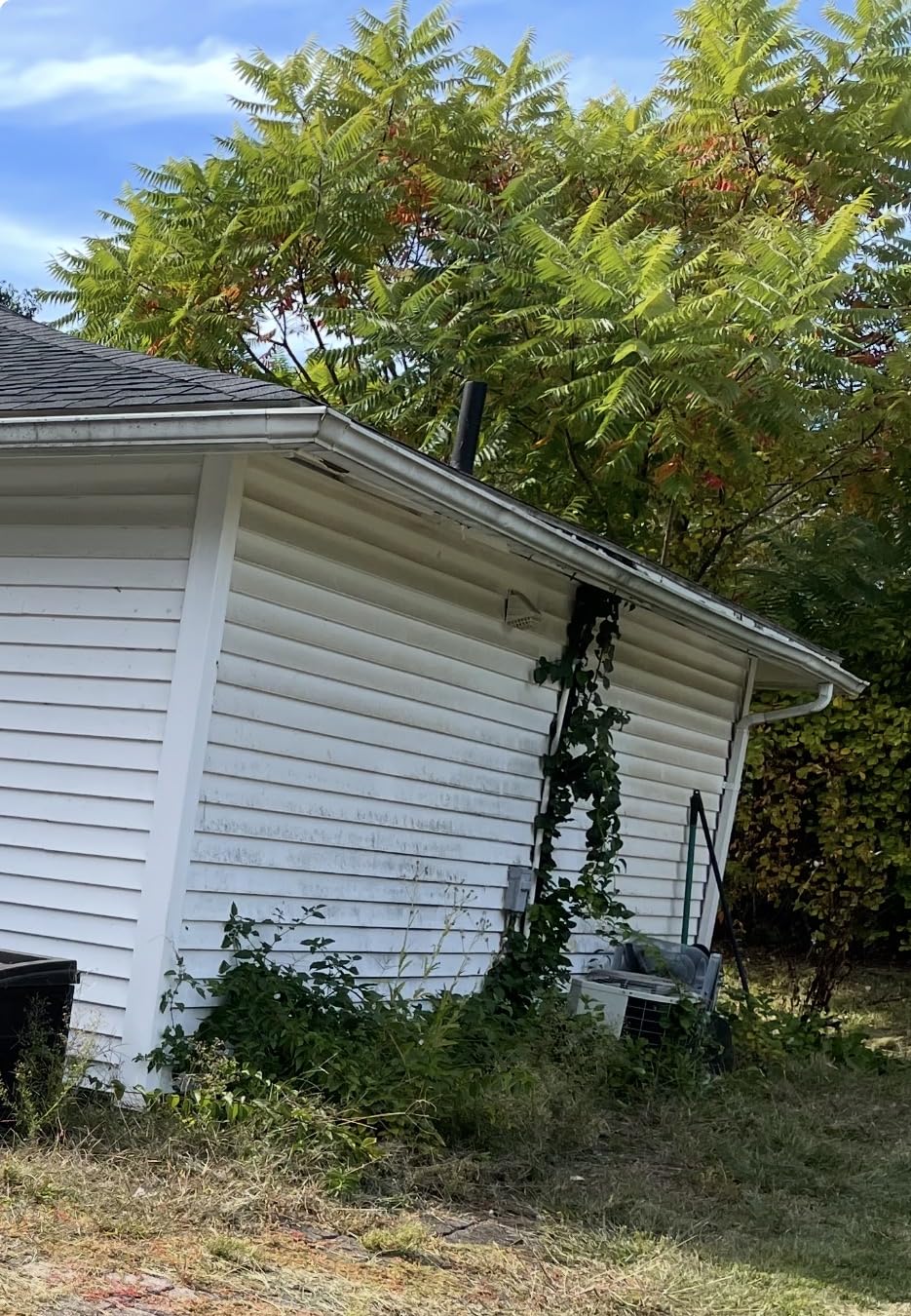
What changes when the tool is powered
Your hand posture completely changes. Instead of wrapping fingers around a loop and closing them, you hold the tool the way you would hold a mug and press a trigger. That posture keeps the wrist neutral, which is where a lot of the wrist strain people report with hand pruners actually comes from.
The LCD display shows live battery level and the cut count, so you can see what is left in a pack before you start a job rather than finding out mid-bramble. The trigger also uses a double-press activation so it cannot fire in a bag.
Why this is not the default answer
It is bulkier than any hand pruner here, and that extra bulk and weight is a problem for exactly the hands this article is about. If your grip is limited but your wrists are fine, a light hand pruner is often easier to control than a battery tool you have to support with your whole hand.
There is also the charging discipline. A manual pruner works forever with no preparation, while this one needs a charge between sessions and somewhere to be put down. If your energy is limited, one more thing to remember is one more thing that will get skipped.
5. Gerossi Switchable Ratchet Is the Best All-Rounder for Dead Wood
Gerossi Ratchet Pruning Shears Heavy Duty, Hand Pruners for Gardening
Weight: 0.22 kg
Cut capacity: 3/4 inch
Single cut or 3-step ratchet
SK5 steel blade
Pros
- Switches between single cut and 3-step ratchet
- Ratchet mode triples hand power
- Light at 0.22 kg yet handles tree limbs
- SK5 steel with corrosion-resistant coating
- One-handed safety lock
- Amber body is easy to spot
Cons
- Build quality feels ordinary in some hands
- One report of an internal handle spring failing
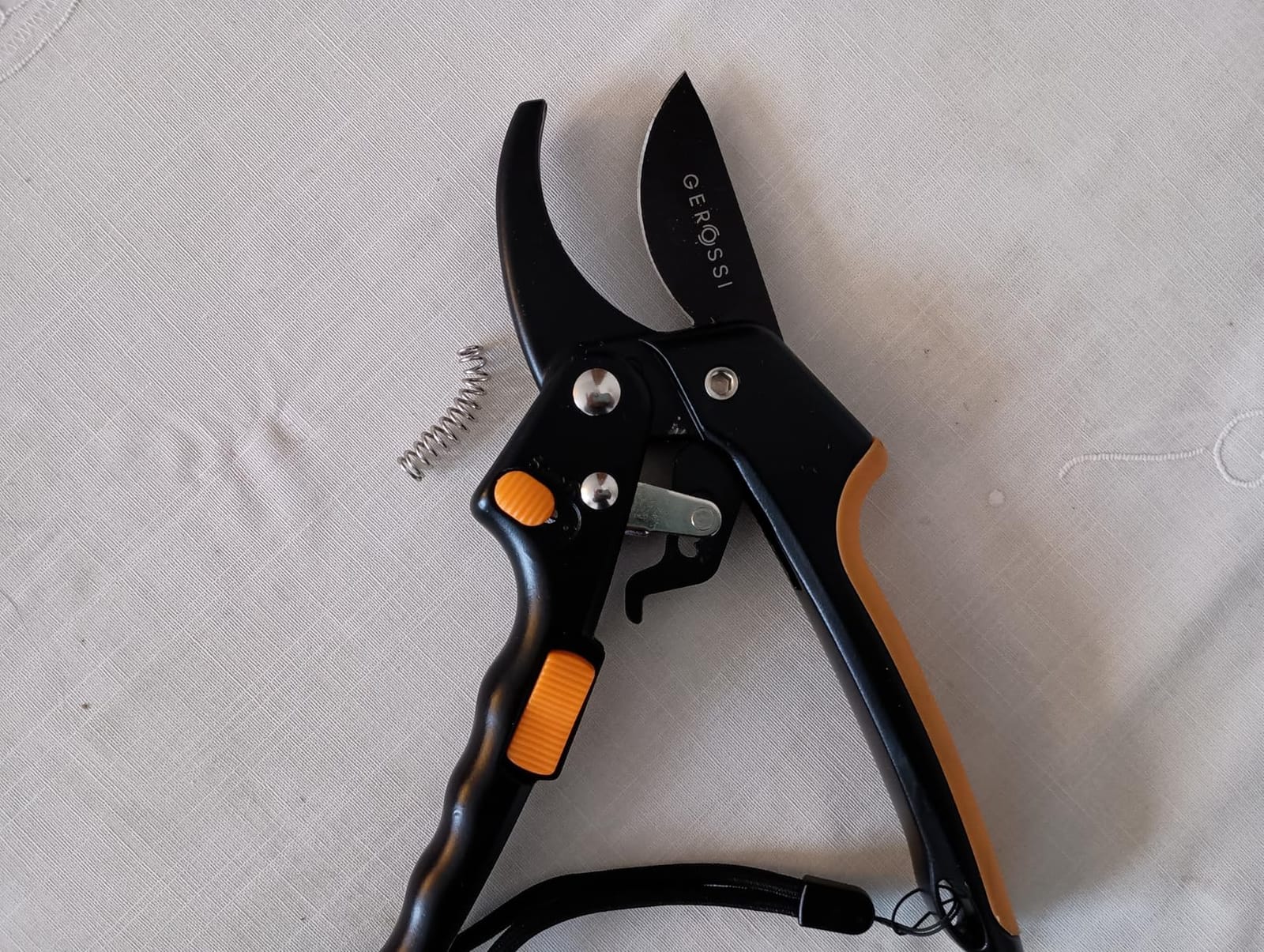
The two-in-one design is what makes this one interesting. A selector switches between a normal single squeeze and a three-step ratchet mode that triples hand power, so you use the fast cut for thin stems and the staged cut only when a branch resists. Most ratchet pruners force the slow mode on every single stem.
Reviewers in their seventies and eighties with arthritis repeatedly praise that switch for cutting dried 3/4-inch branches with minimal hand effort, and several have bought more than one. When the group that likes a tool most is the exact group this article is written for, that is a meaningful signal.
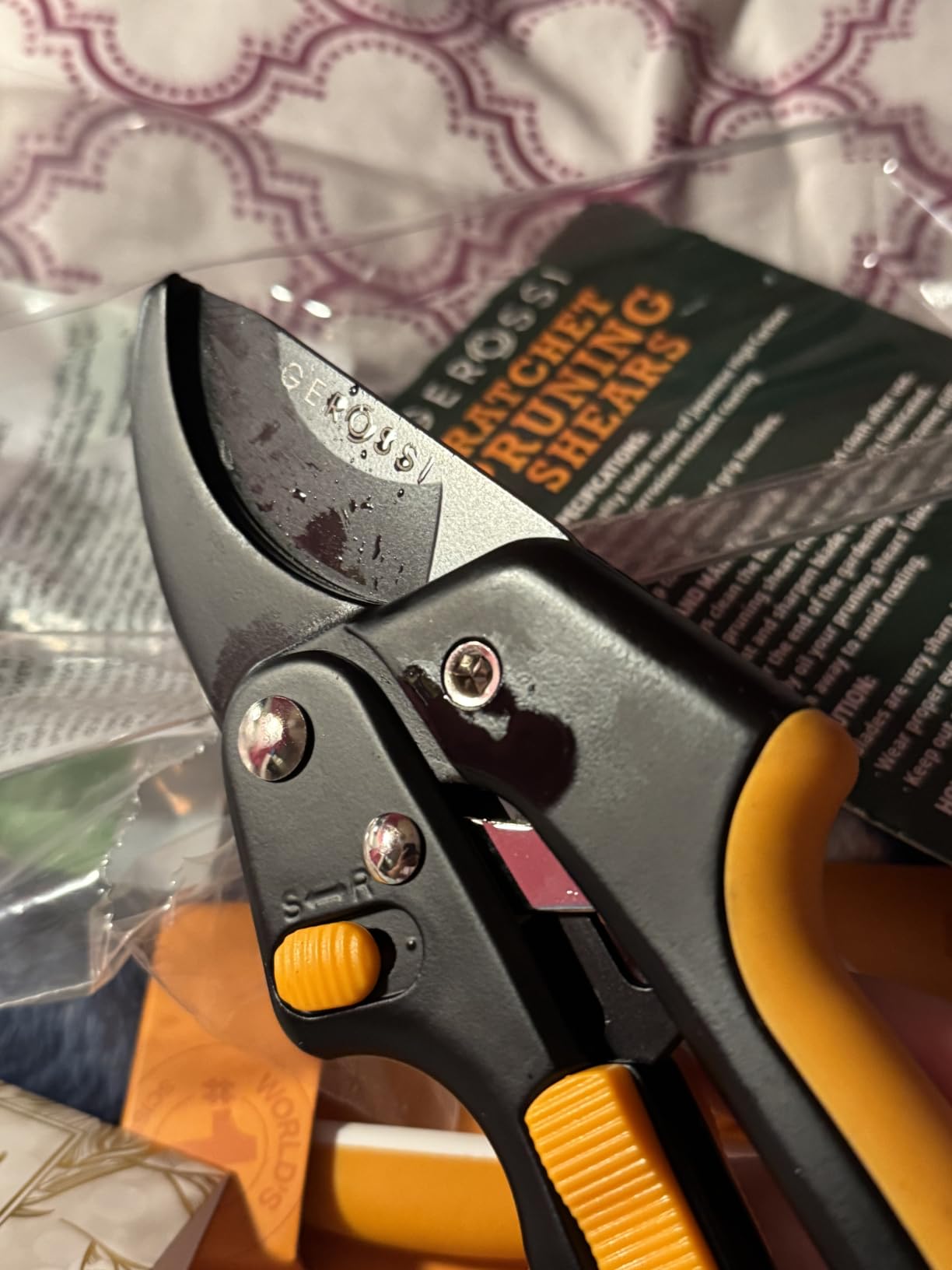
At 0.22 kg it is light for a ratchet pruner, and the aluminum body with ergonomic non-slip rubber handles keeps a sturdy tool from becoming a tiring one. Both the selector and the lock are positioned on either side, so the tool is fully usable with either hand without turning it around.
The blade is high carbon SK-5 steel with an ultra-fine polish and a corrosion-resistant coating, and the box includes a hang rope and a user manual. The one-handed safety lock is a real convenience when you are carrying a trug full of prunings in the other hand.
Why a switchable mode saves time
Ratcheting costs several squeeze cycles per cut. If you are trimming a shrub where four stems out of five are thin, spending that time on every stem makes a short job feel long, and the longer a session runs the more your hand feels it.
Being able to flip into a normal cut for the easy stems and back to ratchet for the two thick ones is the best of both. It is the design compromise we would make if we could only pick one mechanism for mixed pruning work.
Where it falls short
Some buyers feel the build quality is no better than cheaper pruners, and one owner reported an internal handle spring failing after about 45 days. A spring failure takes the tool out of service entirely, because a pruner with no return spring is one you have to open and close manually.
That said, the customer service record here is strong, with a reported replacement of a failed unit outside warranty. If you buy this, check the spring feels right in the first week rather than waiting for it to fail mid-season.
6. EZ Kut Ratchet Handles the Thickest Dead Wood in the Group
EZ Kut Heavy Duty Pruning Shears Green – with Ratcheting Action Great Garden Hand Tool Clippers Gardening pruners arthritis tools Ratcheting Anvil Hand Pruner Pruning Shears Heavy Duty Since 1988
Weight: 0.2 kg
Cut capacity: 1.5 inch
Ratcheting action
SK5 hardened carbon steel
Pros
- Ratcheting action cuts up to 1.5 inch branches
- Hand guard protects knuckles
- Non-slip cushioned handle with shock pads
- SK5 blade with non-stick coating
- Cast aluminum body
- One-handed safety lock
Cons
- Grip suits medium to large hands
- Ratchet can stick or lock after a cut
- Ratchet lever has been reported to break
At 1.5 inches of rated capacity this is the most powerful pruner here, and the ratcheting system is what makes that reachable for a hand that cannot generate a hard squeeze. Users pruning for hours with hand pain or carpal tunnel report that the ratchet action makes cuts feel effortless.
That makes it the natural upgrade for someone who has already outgrown a bypass pruner. It handles dead raspberry canes, old shrub wood and the thicker branches that normally send you to a pair of loppers, and it does so while still being a hand tool you can carry in a pocket.
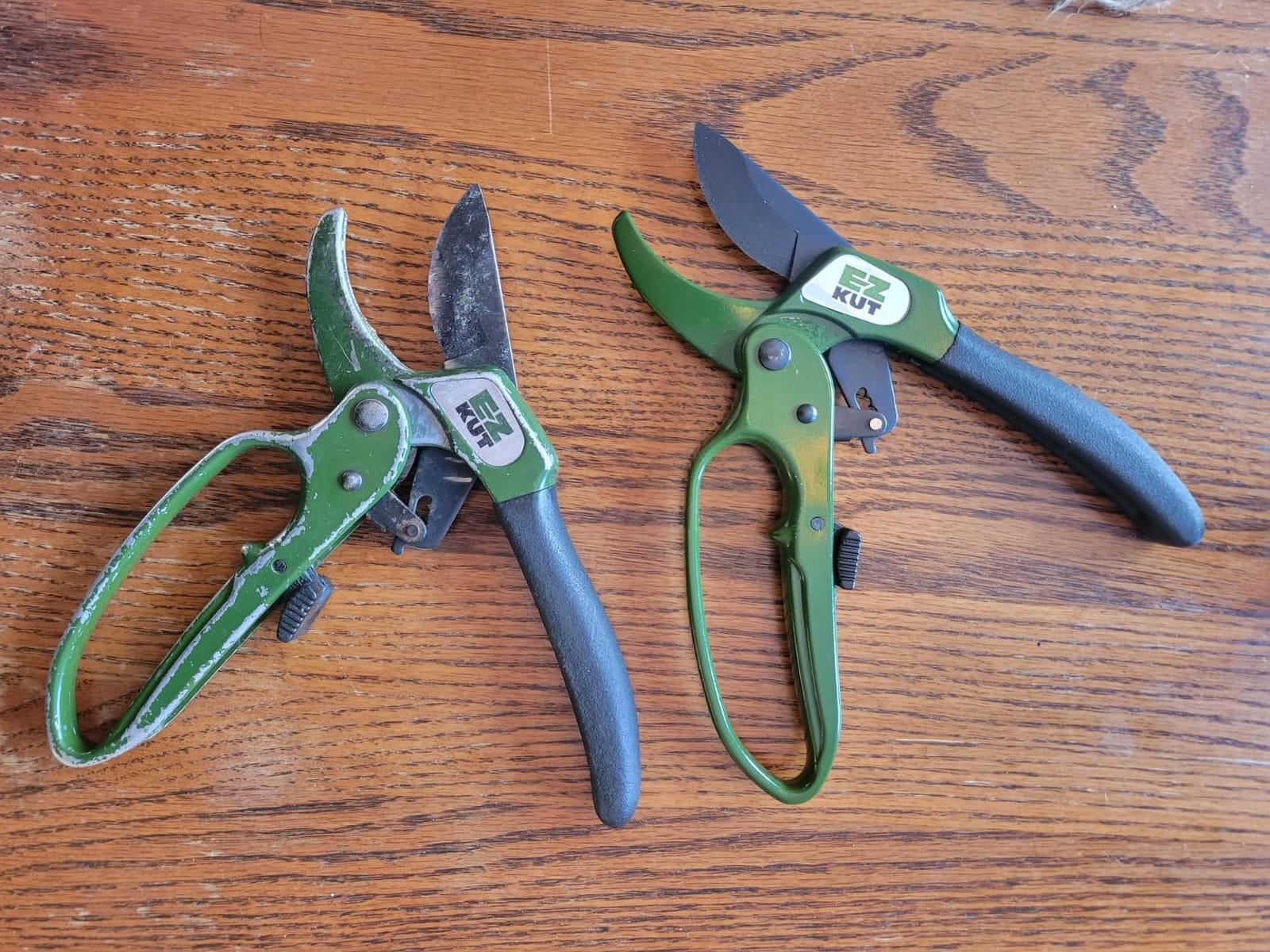
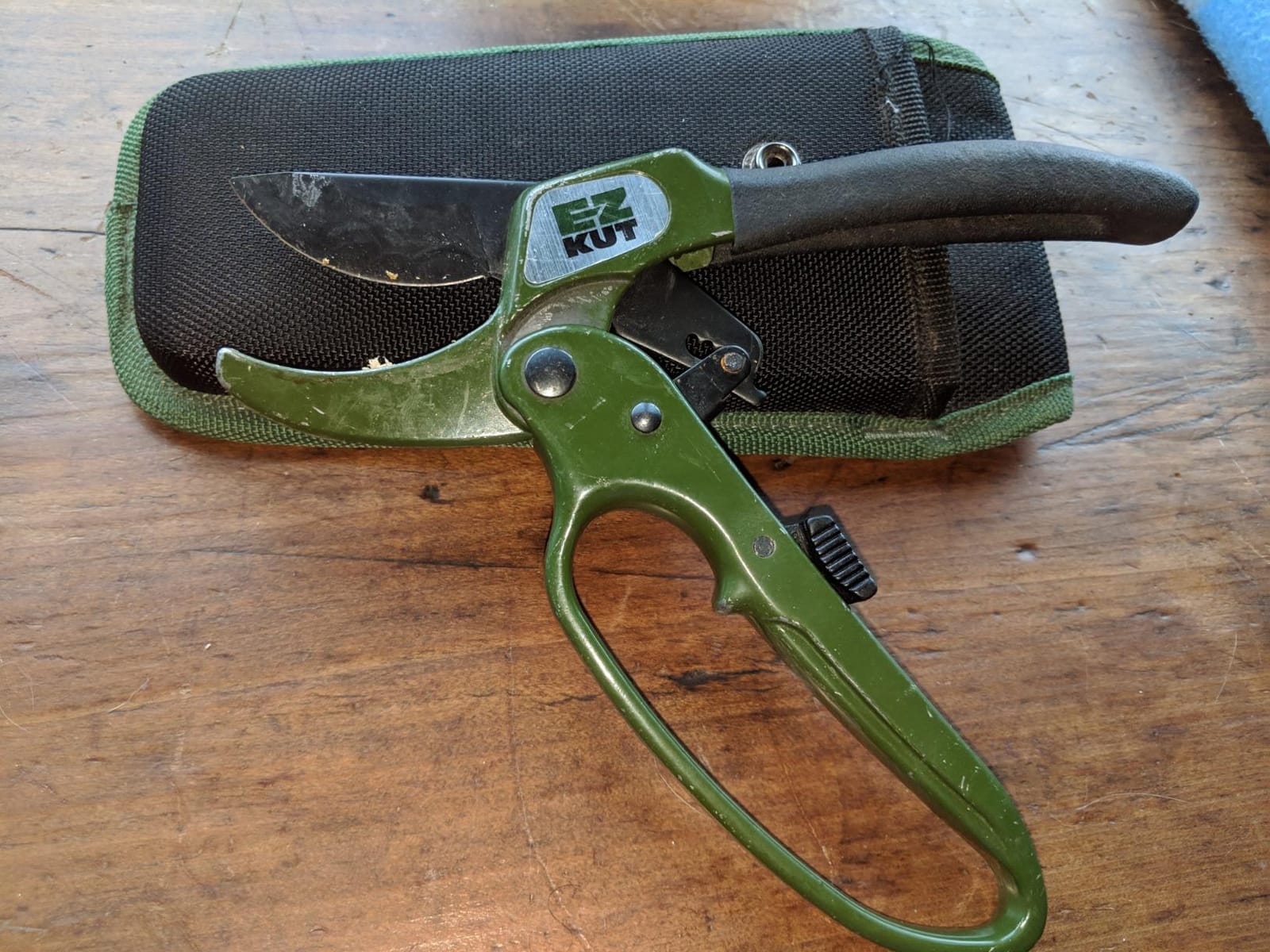
The 10.63-inch overall length is long, and the weight is only 0.2 kg, so the length is buying you cutting power rather than bulk. The cast aluminum body absorbs the shock of forcing through a hard stem instead of passing that jolt up into the finger joints, which is a quiet benefit when the tool is doing the hard work anyway.
There is a hand guard around the handle for knuckle protection and shock-absorbing pads in the grip, and the SK5 hardened carbon steel blade carries a non-stick coating that helps the tool release from resinous stems. It is a US brand that has been making tools since 1988.
When the extra capacity earns its place
Rated cut capacity above 1 inch is only worth having if you actually have the wood to cut. If your garden is annuals, herbs and roses under a foot tall, you will never approach 1.5 inches and you are carrying a longer tool for no reason.
Where it genuinely helps is the reduction job: taking an old shrub down a size, clearing spent canes, cutting back a leggy shrub that has gone woody. That work happens once or twice a year and is exactly the work that hurts most.
Reasons to look elsewhere
The grip suits medium to large hands. If your hands are small, the handle is long enough that you will end up hooking fingers rather than closing your hand around it, which sways the force back onto the joints we are trying to spare. Pick three is the compact answer to the same problem.
The ratchet itself is the weak point. It can stick and occasionally locks after a cut, and the lever has been reported to break. That is worth knowing because a stuck ratchet on a half-cut branch is a genuinely awkward moment for anyone with limited dexterity.
7. Fiskars Power-Lever Anvil Is a Comfortable Deadheading Tool
Fiskars Power-Lever Anvil Pruning Shears, 5/8″ Cut Capacity Garden Clippers
Weight: 11.8 oz
Cut capacity: 5/8 inch
Assisted gear drive
Stainless steel blade
Pros
- Gear drive adds mechanical advantage on every cut
- Precision-ground stainless blade stays sharp
- Low-friction coating resists gumming
- Rubber overmold grip
- Lifetime warranty
Cons
- 5/8 inch capacity is small
- Anvil geometry suits dead and dry growth
This is the middle option between a plain bypass and a ratchet. The gear drive increases the mechanical advantage over traditional designs, so every squeeze produces more blade force than the same hand effort would on a basic pruner, but the motion is still a single squeeze rather than a series of stages.
That means it is faster than a ratchet and easier than a bypass on hard stems, which makes it a good general tool for deadheading and dry winter work. The 11.8-ounce body and rubber overmold grip are comfortable for extended sessions.
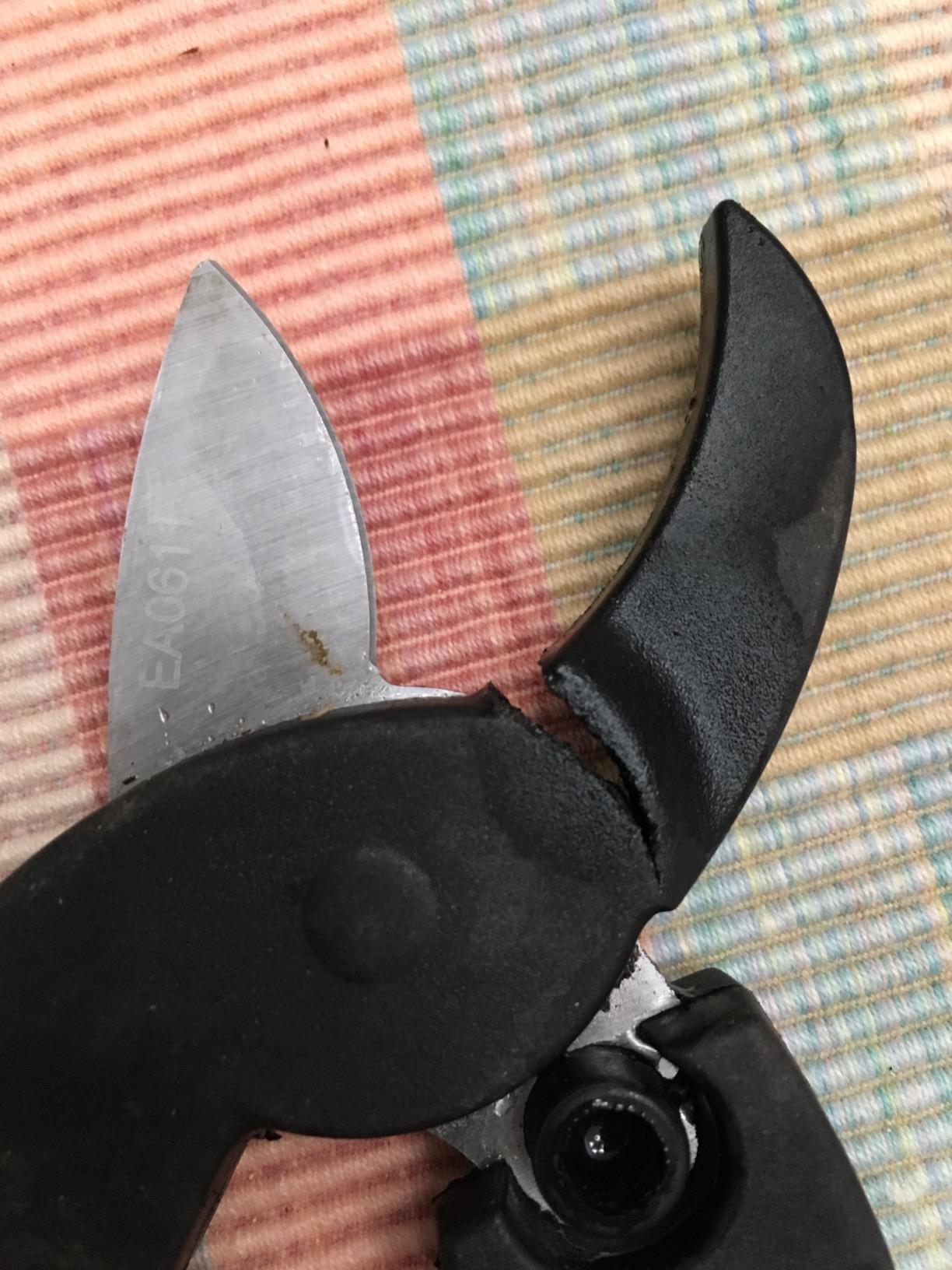
The precision-ground stainless steel blade is rated for sharpness and cutting consistency, and the low-friction coating reduces gumming and improves rust resistance. Gumming is the quiet killer of hand pruners: a pivot that sticks makes the tool feel twice as hard to use, and the coating is what keeps this one moving.
It also carries a lifetime warranty from an established brand, so there is a long-term answer if the blade eventually needs replacing rather than the tool being written off.
How assisted gearing differs from ratcheting
A ratchet changes the number of squeezes. Gearing changes how much each squeeze is worth. You still close the handles once, but the gear ratio multiplies your input force at the blade, which is why a geared pruner feels noticeably easier without slowing you down.
The trade-off is that gearing cannot rescue you on a branch far beyond its rating. If the stem is too thick for the 5/8-inch capacity, no mechanism inside this tool will save the cut, and you should be reaching for pick two or pick six instead.
When it is the right tool
It is a strong second pruner for anyone building a two-tool kit: a light bypass for green growth and a geared anvil for dead and dry wood. Deadheading, stripping small logs and cutting dead winter branches are all the jobs it is built around, and it is a long-standing choice for them.
Skip it if your garden is mostly live green growth, because the anvil blade crushes stems rather than shearing them, and if larger hands find the compact frame tight. For live work, pick one or pick eight give you a proper bypass cut.
8. Craft911 Titanium-Coated Bypass Is the Best Budget Backup
Ultra Sharp Japanese Steel Pruning Shears – Cuts 3X Easier, Weak Hand Arthritis Clippers, Rust-Resistant Titanium Coated Pruner, Effortlessly Cuts 3/4 Inch
Weight: 0.33 kg
Cut capacity: 3/4 inch
SK5 steel, titanium coating
Blade length 2.95 inches
Pros
- Non-slip handles reduce hand fatigue
- SK5 steel with titanium coating resists rust
- Light at 0.33 kg and spring-loaded
- One-handed safety lock activation
- Rated up to 3/4 inch cuts
Cons
- Some reports of the handle spring popping off
- A locking pivot can break and jam the blades
- Should not be stored outdoors
This is the pick for anyone who wants a bypass pruner that suits small hands and needs a second tool that can be left in a shed without ceremony. Buyers with arthritis and hand weakness widely praise the comfortable non-slip grip and low operating force, and many have bought several pairs.
At 0.33 kg it is heavier than the Fiskars SoftGrip but well under the metal ratchet models, and the titanium-coated SK5 high carbon steel blade is genuinely well specified. The listed capacity is 3/4 inch, which is more than most of the light bypasses here manage.
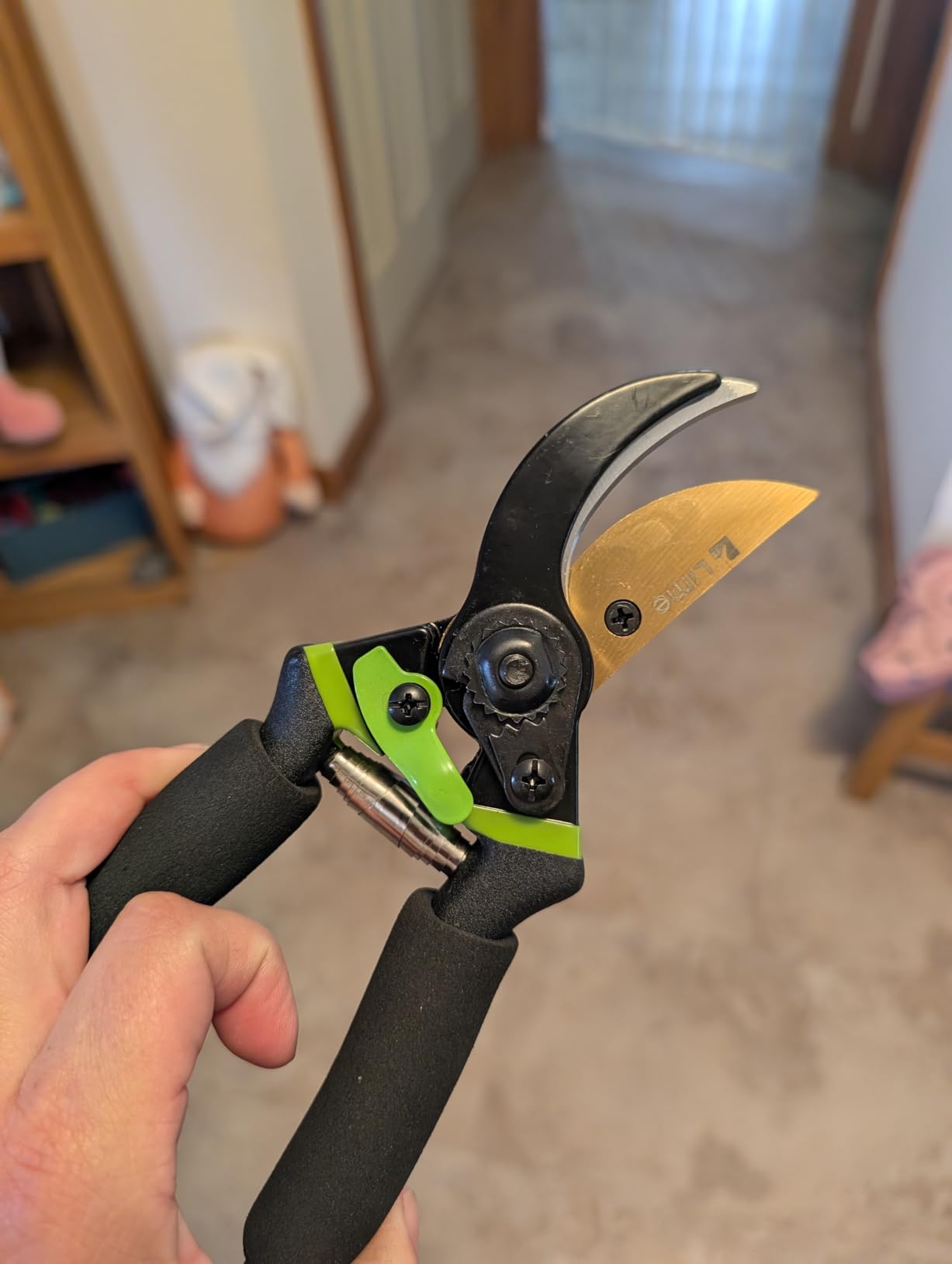
The body is ambidextrous with plastic or rubber handles, and the tool is spring-loaded for one-handed operation. The built-in safety lock can be activated with one hand, which is helpful if the other hand is holding a trug or supporting a heavy cane.
The manufacturer lists a lifetime replacement warranty, and the blade is described as easy to clean and low-maintenance. A bypass blade leaves a clean cut on live green growth, which makes it useful for roses, herbs and fresh shoots as well as deadheading.
Why titanium coating matters for a hand with limited strength
Coating is not a comfort feature, it is a force feature. A blade that stays clean and rust-free keeps its edge, and an edge that stays sharp is a blade that needs less hand force to push through a stem. A rusty, sticky blade feels twice as hard to close.
This one is rated for the same 3/4-inch class as the ratchet models, so it can handle thicker stems than its price suggests, as long as the stems are green and not woody.
Honest limitations
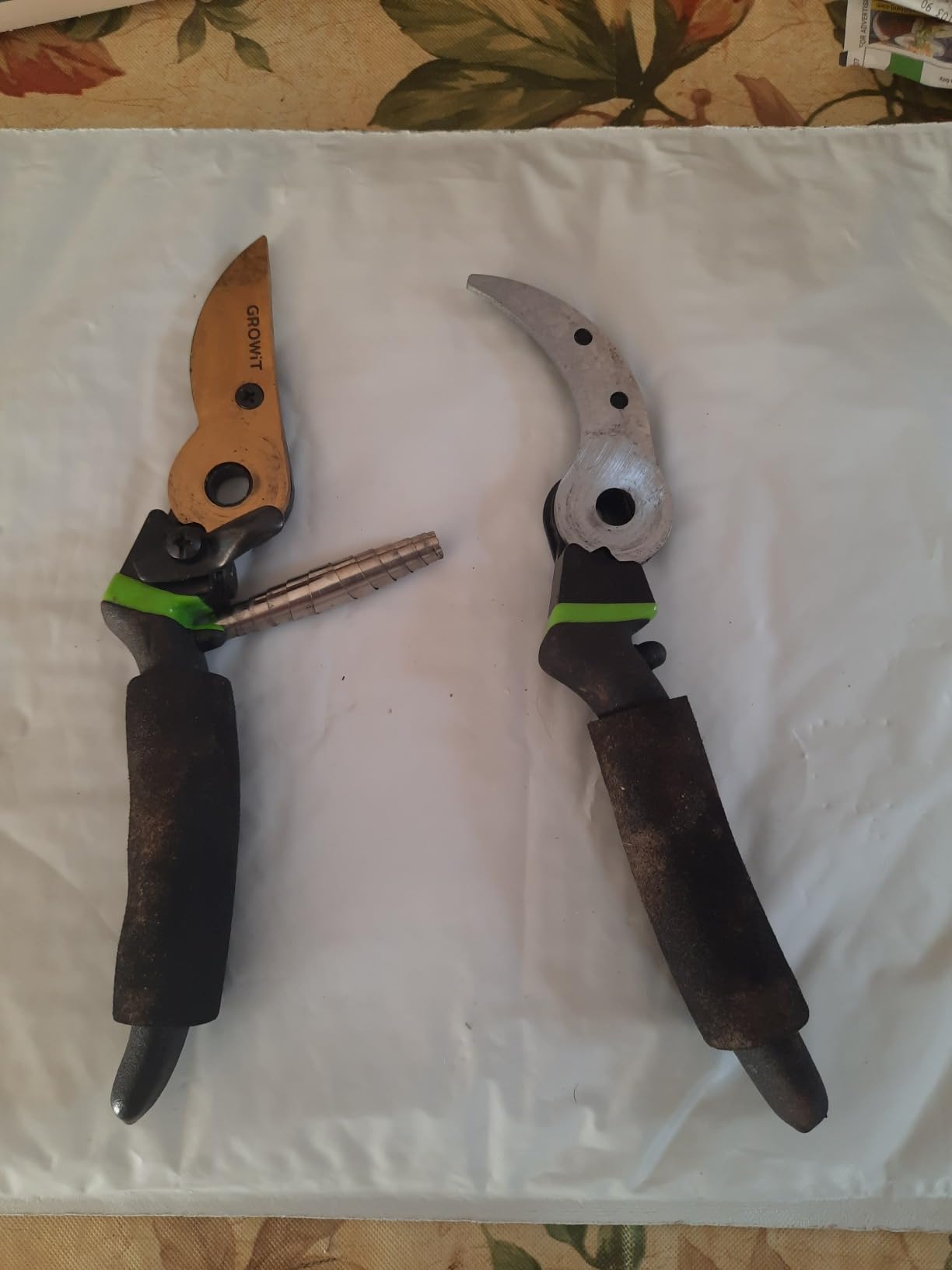
There is a steady minority of durability complaints, and they cluster on specific parts. Reports include the handle spring popping off during first use, a locking pivot that can break and jam the blades, and a body that cracked after about a month of light use.
It also should not be left outdoors, because it will rust if you do. That is fine for a second tool kept in a shed, but it is a real drawback if you were hoping to hang it on a fence post and forget about it for a season.
How Arthritis Changes Which Pruner You Need
Most roundups tell you bypass pruners are best, and most of them are half right. Bypass is the right blade geometry for live green growth, but it is also the geometry that asks the most of your hand, because two curved blades have to be pulled past each other. The grip has to do a drawing motion, not a pressing one, and drawing loads the small joints of the fingers and thumb.
An anvil pruner is gentler on the hand for a mechanical reason. The blade pushes down onto a flat plate rather than pulling past a second blade, so the force travels down the tool into the branch instead of back into your fingers. The cost is that the stem gets crushed, which is fine for dead wood and poor for anything green. That is why the strongest picks in this guide lean anvil, and the gentlest tools are all bypass.
Third mechanism, and the one built for weak grip: the ratchet. Instead of one continuous squeeze, a stepped latch advances the blade in fractions, so the peak force of the cut is spread across three or four separate squeezes. For a person who cannot generate full grip force in one go, this is the difference between a completed cut and a cut that gets abandoned halfway.
Fourth: geared and rolling handles. A gear train or a handle that rolls during the stroke multiplies whatever force your hand already produces, so you close the handles once rather than three times. It is faster than a ratchet and less dramatic, which is why it is the right answer for mixed work rather than the hardest branches.
Fifth, and least impressive: grip padding. A non-slip cushioned or gel handle spreads the same squeeze over more surface, so less pressure lands per square inch on a stiff knuckle. A r/gardening user who cannot manage ordinary small shears found that wrapping the handles in grip tape to make them thicker helped, and that is the same principle, applied to a tool you already own.
Wrist position deserves its own paragraph. A pruner that pulls you into a bent-wrist posture will cause more trouble over a season than its force rating suggests, which is another reason powered pruners appeal to people whose grip is failing but whose hands are still steady. If squeezing is the problem and holding is not, the cordless model in pick four removes the issue entirely.
What to Look for When Buying Pruning Shears for Weak Hands
Rated cut capacity, in inches. Look for a number, not a vague claim. A 5/8-inch pruner handles flowers and thin green stems. A 1-inch pruner handles shrub wood and old canes. A 1.5-inch pruner reaches into the range where loppers usually take over.
Mechanism over padding. Ratchet stages, gear drives and rolling handles remove force. Cushioning only redistributes the force that remains. If you can only buy one improvement, buy the mechanism.
Handle spread against your actual hand. You should be able to close your whole hand around the grip, not hook two fingers through it. Hooking forces the fingers apart and loads the joints, which is the opposite of the goal.
Weight. Anything under about 8 ounces suits most tired hands for long sessions. A 220-gram metal ratchet pruner is heavier by design, and that weight is buying cutting power.
Replaceable parts. Blades, springs and pivot bolts are consumables. A tool with a parts catalogue and a lifetime warranty is cheaper over five years than replacing a cheap pruner every season, and our own experience is that dull blades are discarded far more often than they are sharpened.
Ambidextrous controls. Selectors and locks placed on both sides of the handle can be operated with either hand, which matters if one hand is weaker or occupied.
Latch safety. Any pruner that holds blades closed between cuts needs a latch you can find and operate by feel. Small buttons that vanish under gloved fingers get bypassed, and bypassed latches end up in toolboxes with open blades.
A few practical points finish the buying picture. If you already own a pruner and cannot get on with it, grip tape or a foam handle wrap costs almost nothing and may solve a grip-size problem outright. If the spring return feels too aggressive, and you are comfortable doing it, trimming or removing the return spring reduces the rebound your fingers have to absorb, at the cost of opening the tool by hand between cuts.
Keeping the blade clean is the cheapest force reduction available. Sap on the pivot makes every cut harder, so wiping the blades after a session, a drop of oil on the pivot, and a periodic sharpen mean you never have to push a dull blade through a live stem. Our rule is to clean after every use and sharpen at the end of a season.
Worth noting for anyone gardening alongside someone with weaker hands, the same handle logic shows up in other tool categories. We have covered the equivalent problem with chef knives for small hands and with kitchen shears, and the short version is identical: mechanism that cuts force beats padding in every case.
Frequently Asked Questions
What type of scissors are best for people with arthritic hands?
Ratchet pruners and geared models are best, because they break a cut into stages or multiply hand force. A ratchet advances the blade in small increments with each squeeze, a gear drive adds mechanical advantage, and a rolling handle spreads the load. Lightweight bypass shears with non-slip padded grips work well for thin green stems, where force is not the limiting factor.
What pruning shears are best for small hands?
Compact frames suit small hands best, because you can close your whole hand around the grip instead of hooking two fingers through it. In this group the MEPEREZ ratchet snips are the most compact option, with a narrow 8-inch frame weighing 7.76 ounces. The Fiskars SoftGrip bypass is a good light second choice at 5.92 ounces, while the longer EZ Kut ratchet suits medium to large hands.
Do ratchet pruning shears actually work for weak grip?
Yes. A ratchet advances the blade a fraction with each squeeze, so the hardest part of the cut is split into several smaller peaks. Owners with osteoarthritis and carpal tunnel report cutting up to 1-inch branches with little effort. The cost is speed, since each stem takes several squeeze cycles, so ratchets suit thick stems and heavy jobs rather than large numbers of thin stems.
Should I choose bypass or anvil pruners with arthritic hands?
An anvil pruner pushes a blade onto a flat plate, so force travels into the branch instead of back into your fingers, which is gentler on the hand but crushes the stem. A bypass pruner pulls two blades past each other for a clean cut on live growth but asks more of the grip. The easiest hand combination is a light bypass for green stems and a ratchet anvil for dead and dry wood.
Are cordless electric pruners worth it for arthritic hands?
They can be, because the motor does the cutting and your hand only closes a trigger in a neutral wrist position. The MODOFO model here cuts up to 1.4 inch branches with two included 2000mAh batteries rated for over 1000 cuts each. The trade-offs are bulk, weight and charging discipline, so they make most sense when a ratchet pruner still leaves you stopping partway through a job.
How can I make pruning shears I already own easier to grip?
Wrapping the handles in grip tape or a foam sleeve thickens them so you close your whole hand rather than hooking your fingers, which is the change a r/gardening user with arthritis reported helping. Cleaning the pivot and oiling it after every session also makes the tool feel significantly lighter, because sap build-up turns an easy cut into a hard one. If the spring return is too strong, trimming it reduces the rebound your fingers absorb.
The Best Pruning Shears for Arthritic Hands in 2026
The best pruning shears for arthritic hands in 2026 are the Fiskars SoftGrip bypass and The Gardener’s Friend ratchet, and they are not really competing. One is a 5.92-ounce tool for the hundreds of thin stems that make up most of a season’s work. The other is a 220-gram ratchet pruner for the branches that make you stop and reach for loppers.
If your hands are small or stiff, swap the heavy pruner for the MEPEREZ ratchet snips, which give up some capacity for a much narrower grip. If squeezing has become the thing you cannot do at all, the MODOFO cordless pruner removes the requirement rather than reducing it, and it is the only tool here that reaches 1.4 inches.
Whichever you pick, keep the blade clean and sharp, because a dull blade is a tool you have to squeeze harder to use. That is the last piece of advice in this guide and the one that helps most often.