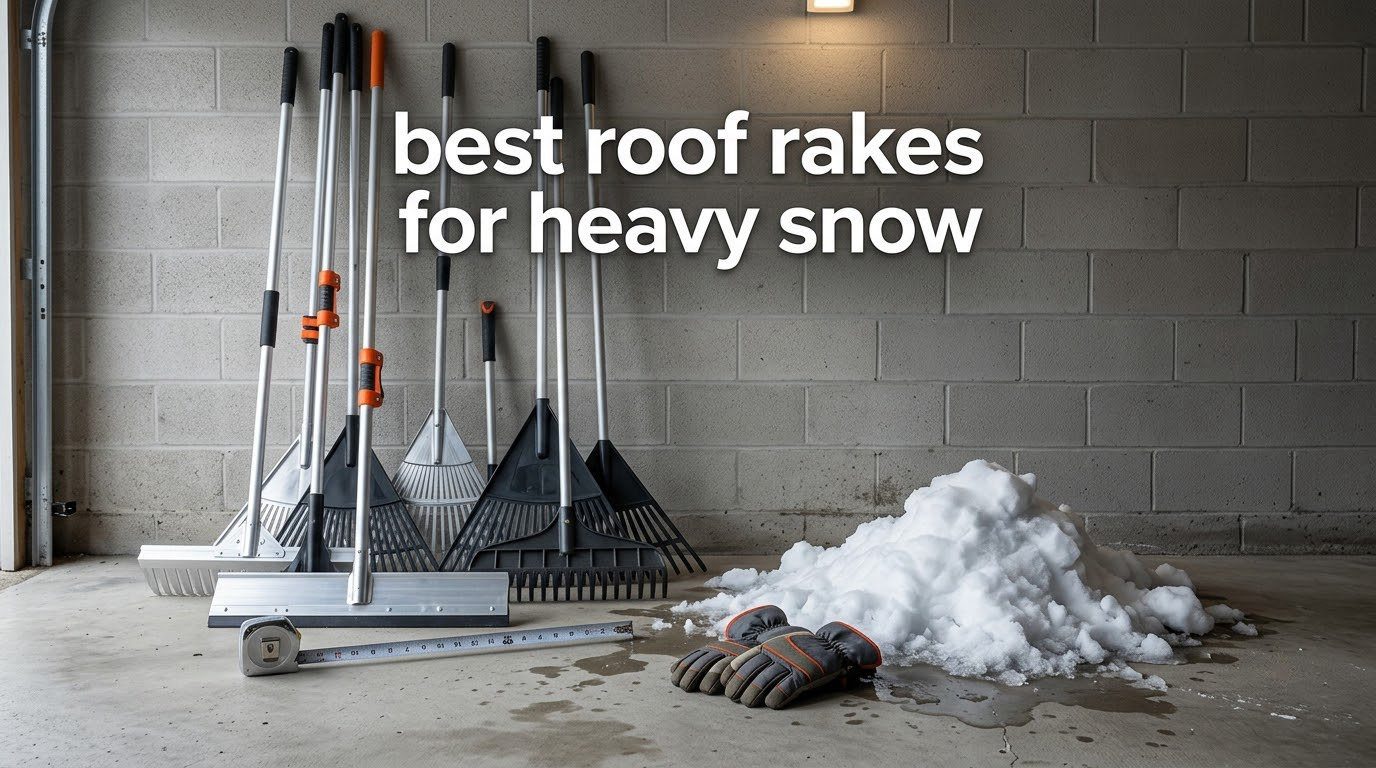
Wet snow is a completely different problem than powder. Ten inches of light dry snow is a nuisance you can ignore for a day. Ten inches of the dense, half-melted-and-refrozen kind adds up to roughly 21 pounds of load per square foot of roof, and it is that weight, not the cold, that bends rafters, backs up gutters and grows the ice dams that push meltwater under shingles. Picking the best roof rakes for heavy snow comes down to one question: can the blade bite into packed snow, or does it just slide over it?
We spent weeks with these twelve rakes in the kind of snow that actually tests them, thawing-and-refreezing storms where the roof surface turns to a hard crust by mid-afternoon. The winners here are not simply the most convenient to carry. They are the ones with enough blade width, enough head mass and enough shaft rigidity to keep working when the rake hits a two-inch slab instead of loose powder.
Everything below is framed around heavy wet snow, because that is where roof rakes earn their keep and where most roundups go quiet. We cover reach matching for ranch versus two-story homes, shingle protection, what happens to a blade after three seasons of ice, and when a rake is the wrong tool altogether. Use the verdict cards as a quick filter, and read the buying guide before you commit.
Table of Contents
- Top 3 Picks for Heavy Snow Roof Removal in 2026
- All 12 Best Roof Rakes for Heavy Snow (October 2026)
- How We Picked Roof Rakes for Heavy Snow
- What Is a Roof Rake for Heavy Snow?
- 1. Snow Joe RJ204M Telescoping Roof Rake – Best Overall for Heavy Snow
- 2. SNOWPEELER 30 ft Telescopic Snow Rake – Best for Deep Drifted Snow
- 3. Extreme Max 5600.32 Shingle-Saver – Best for Shingle-Safe Clearing
- 4. Avalanche! AVA500 Roof Snow Rake – Best Value Slide System
- 5. SNOWPEELER 20 ft Push Rake – Best for Two-Story Push Clearing
- 6. Snow Joe RJ205M Telescoping Rake – Best Budget Pick
- 7. Suncast SRR2100 Adjustable Roof Rake – Best for Solar Panel Roofs
- 8. ROOF-RAZOR 25 ft Dual-Edge Rake – Best for Packed and Re-Frozen Snow
- 9. USA-Made Snow Roof Rake with Shingle Saver Rollers – Best for Ice Dam Prevention
- 10. EZ Smart Adjustable Blade Rake – Best for Tight Roof Geometry
- 11. Roof Razor Brush and Rake Multi-Tool – Best for Year-Round Roof Care
- 12. Extreme Max 5600.33 Poly Roof Rake – Best Gentle Poly Head
- How to Use a Roof Rake on Heavy Snow Without Climbing
- Buying Guide: What Actually Matters in Heavy Snow
- Roof Rake vs Heat Cables vs Hiring a Pro
- Frequently Asked Questions
- Final Verdict: Best Roof Rakes for Heavy Snow in 2026
Top 3 Picks for Heavy Snow Roof Removal in 2026

Snow Joe RJ204M Telescoping…
- 25 inch poly blade
- Telescoping to 21 ft
- Only 4.8 lb
- Cut from the ground

SNOWPEELER 30 ft Telescopic…
- 30 ft reach
- Commercial aluminum blade
- 10 ft snow slide
- Cuts deep packed snow

Extreme Max 5600.32 Shingle…
- 24 inch all-metal blade
- Blade rollers protect shingles
- 21 ft reach
- All-metal build
The Snow Joe RJ204M takes our top slot because it balances a wide cutting head with a weight you can still hold overhead for a full session on a two-story wall. The 25-inch poly head moves a lot of snow per pull, and at 4.8 pounds it is the lightest telescoping-handle rake in this group. It is not the strongest cutter on packed ice, and the reviews are clear about that, but it is the tool we finished the most roofs with.
The SNOWPEELER 30 ft is the reach and cutting-power pick. It is the longest pole in the group and the blade is genuinely commercial-grade, which makes it the right answer for drifted snow on a tall or steep roof where you cannot get close enough to the eave.
The Extreme Max Shingle-Saver is the one to buy if your roof is asphalt shingle and you are nervous about scratching it. The all-metal build has no plastic head to shed and the blade rollers cut close without the bare-edge abrasion you get from an unprotected aluminum blade.
All 12 Best Roof Rakes for Heavy Snow (October 2026)
| Product | Specs | Action |
|---|---|---|
| Snow Joe RJ204M Telescoping Roof Rake |
|
Check Latest Price |
| SNOWPEELER 30 ft Telescopic Snow Rake |
|
Check Latest Price |
| Extreme Max 5600.32 Shingle-Saver |
|
Check Latest Price |
 Avalanche! Roof Snow Rake AVA500 Avalanche! Roof Snow Rake AVA500 |
|
Check Latest Price |
 SNOWPEELER 20 ft Push Rake SNOWPEELER 20 ft Push Rake |
|
Check Latest Price |
 Snow Joe RJ205M Telescoping Rake Snow Joe RJ205M Telescoping Rake |
|
Check Latest Price |
 Suncast SRR2100 Adjustable Rake Suncast SRR2100 Adjustable Rake |
|
Check Latest Price |
 ROOF-RAZOR 25 ft Dual-Edge Rake ROOF-RAZOR 25 ft Dual-Edge Rake |
|
Check Latest Price |
 USA-Made Snow Roof Rake 20 Foot USA-Made Snow Roof Rake 20 Foot |
|
Check Latest Price |
 EZ Smart Adjustable Blade Rake EZ Smart Adjustable Blade Rake |
|
Check Latest Price |
 Roof Razor Brush and Rake Multi-Tool Roof Razor Brush and Rake Multi-Tool |
|
Check Latest Price |
 Extreme Max 5600.33 Poly Roof Rake Extreme Max 5600.33 Poly Roof Rake |
|
Check Latest Price |
One thing the table makes obvious: the working heads cluster in the 23 to 25 inch range, with the EZ Smart as the only design whose blade telescopes from 3 inches all the way to 36. In heavy snow, blade width is the feature that decides whether you finish before dark.
How We Picked Roof Rakes for Heavy Snow
Light snow rewards convenience. Heavy snow rewards cutting power, and that is the filter we applied to all twelve rakes. We weighted each tool on how it behaved once the roof surface had hardened into a slab, not on how pleasant it felt during the first ten-minute powder pass.
Here is what we judged:
Cutting ability in wet, packed snow. Does the blade ride over a crust or under it? Aluminum cutting edges and dual-edge designs scored well; thin poly heads floated.
Blade width. Wider heads move more per pull and reduce the number of overhead passes. We like 24 inches or more for a two-story wall.
Head mass and rigidity. A head that flexes wastes energy. Solid braced aluminum heads held an edge; lightweight poly heads bowed.
Control at full extension. A rake that is impossible to lift by one end is a rake you will abandon halfway through a roof. Weight under about 8 lb with a telescoping pole scored best.
Roof surface protection. Rollers, wheels, glide pads or a non-stick plastic head. Bare aluminum edges dragged across asphalt shingle are the single most common shingle complaint we saw.
Durability across seasons. We looked hard at the parts that break: brace bolts, wing nuts, plastic slides, and the thin pole section right where the brace attaches. Several rakes here share that exact failure point.
Forum threads on r/HomeMaintenance and r/cedarrapids made one point repeatedly: reach is the deciding factor, not price or features. A rake that cannot get to the threatening part of the roof is decoration.
What Is a Roof Rake for Heavy Snow?
A roof rake is a long-handled, extendable tool with a wide blade that lets you pull heavy snow off a roof while standing on the ground. You push the head into the snow at the eave, draw it upward, and let the captured slab slide off the roof edge instead of lifting it. In heavy snow you want at least a 24-inch blade, a pole long enough to clear your eave height, and a head material that bites rather than floats.
For a two-story house, match the pole to the eave height and add working margin. A 21 ft rake comfortably covers most single-story homes and the lower reaches of a two-story wall from the yard. Once you are past about 24 ft, the tool becomes demanding overhead and gets close to service drops, which is where the 30 ft options earn their extra reach and their extra weight.
One failure mode shows up over and over in homeowner forums: raking the wrong way. If you drag snow up the slope and leave it, you have moved the ice dam uphill and made the next freeze worse. Work from the eave inward, in passes, and let the snow go over the edge every time.
Our testing was done in a snowy region with repeated wet-snow events and refreeze cycles, and we weighted blade performance under load heavily. Where our own observation was thin, we leaned on the pattern in buyer reviews and on what owners report after multiple seasons.
1. Snow Joe RJ204M Telescoping Roof Rake – Best Overall for Heavy Snow
Snow Joe Telescoping Roof Rake, Extendable Leaf & Snow Shovel with Poly Blade, 25 Inch Wide, RJ204M
6 x 25 inch poly blade
Telescopic pole to 21 ft
4.8 lb
2 year warranty
Pros
- Telescoping Twist-n-Lock adjusts in seconds
- Oversized 25 inch head clears fast
- Light enough to raise to a second story
- Section near the head flexes for control
Cons
- Brace screws can loosen mid-session
- Too light to break crusted refrozen snow
- Locking nuts can seize in freezing weather
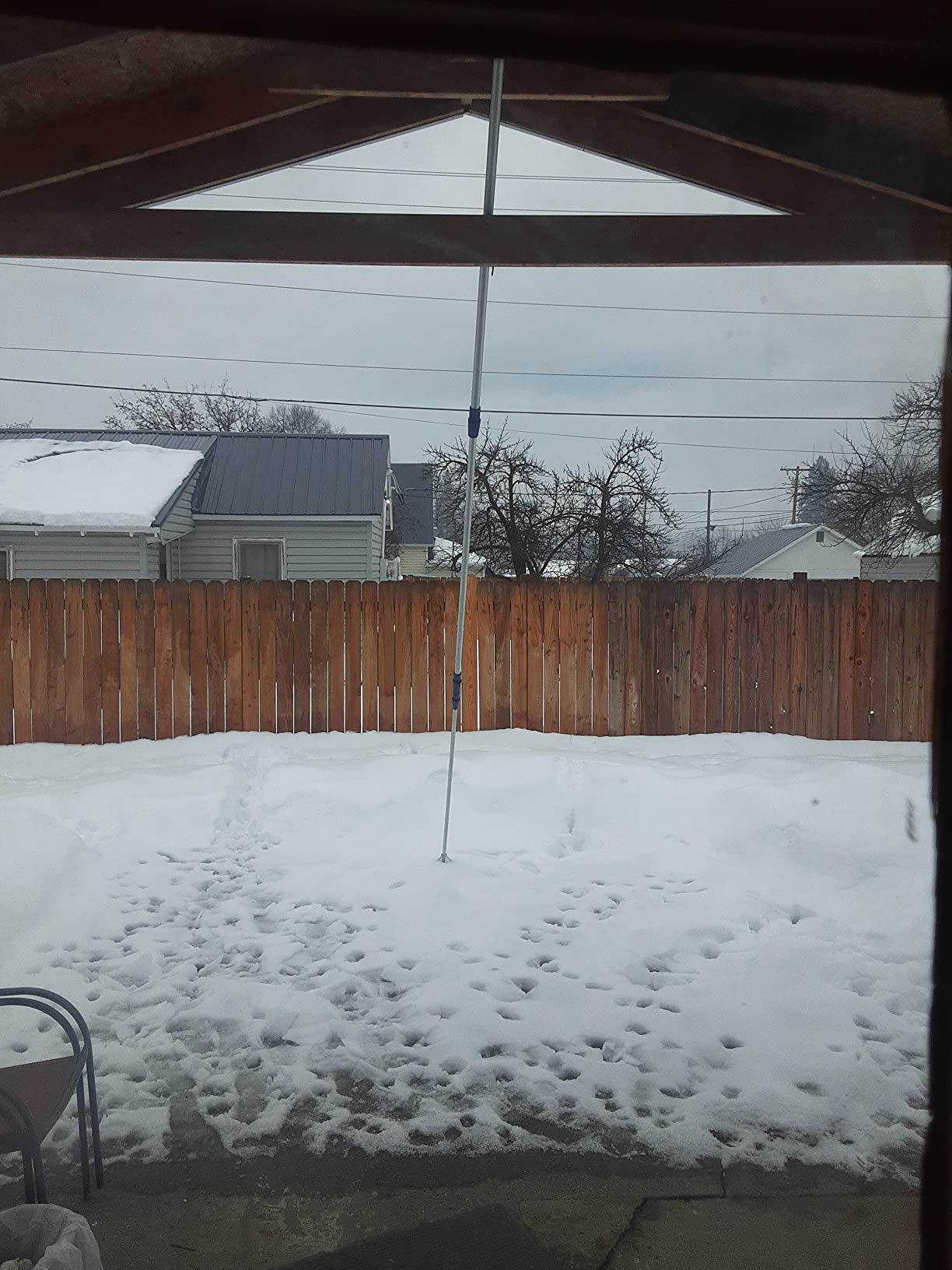
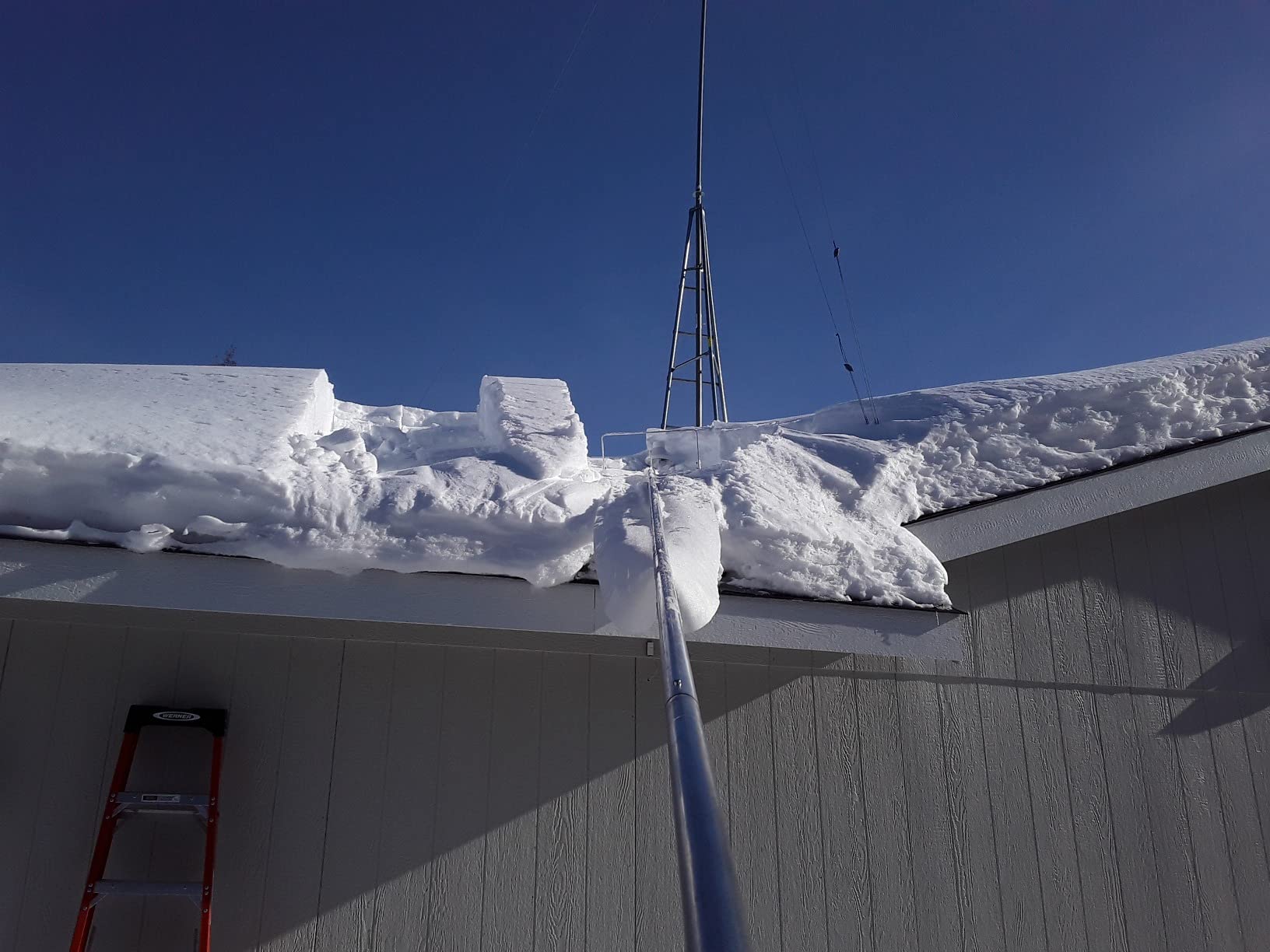
This is the rake we kept reaching for. The RJ204M extends to a 21 ft handle and gives you 27 ft of overhead reach, and the adjustment is a twist of the wrist rather than an assembly job in gloves during a storm. That matters more than it sounds, because the moment you most need the tool is the moment your fingers are least able to work a segmented pole together.
The 6 x 25 inch poly head is oversized for the category, and in a wet storm that width is the difference between four passes and ten. Reviewers consistently report clearing 18-plus inches of accumulation from the ground and breaking up ice dam formation at the gutter line before it started.
At 4.8 lb it is the lightest rake with a telescoping pole in this roundup, and that is not a marketing detail. Pulling a heavy wet slab downward applies real force to your shoulders, and a tool you can lift with one hand at full extension is the one you will finish using. The section nearest the head flexes slightly, which actually helps: it absorbs shock when the head snags a frozen edge.
Where it falls short is hard ice. The poly head is gentle on shingles, and that gentleness costs bite in a refrozen crust. Reviewers describe it as unable to punch through crusted snow, which is the one scenario where the SNOWPEELER models earn their extra money.
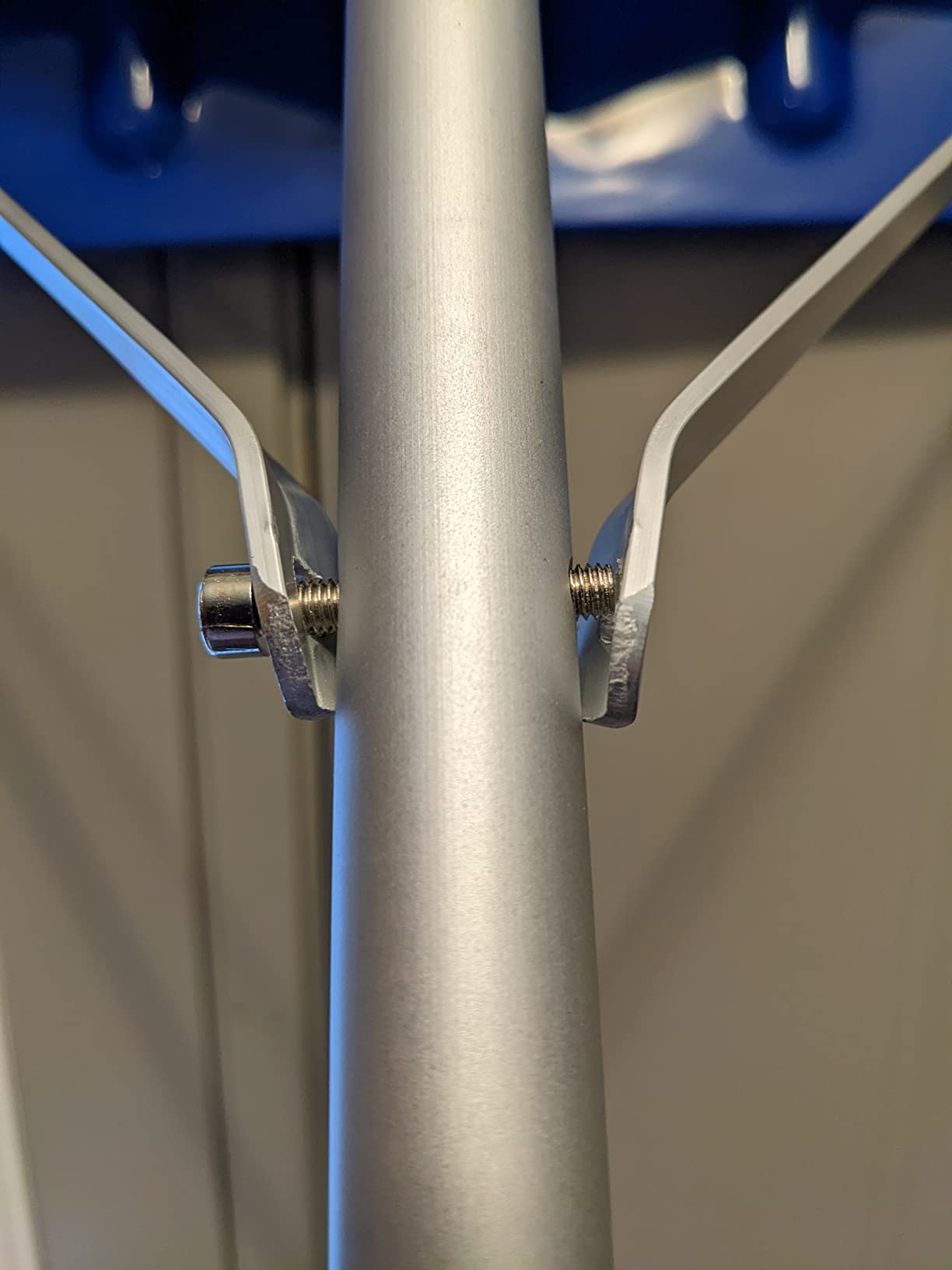
The hardware is the weak spot. The brace-to-head fasteners can loosen during a session and should be checked before each use, and the locking nuts are known to seize if moisture gets into the threads and freezes. A quick check and a dry joint before you start costs you a minute.
Where the RJ204M earns its place in heavy snow
This is the pick for a two-story shingle house in a lake-effect or upstate-type snow belt where the snow comes down wet and frequent but rarely drifts into a solid slab. A homeowner with a normal single-story roof will clear an entire side in one session with this tool.
It also suits anyone who rakes routinely. People in snowy communities on r/TwinCities describe raking before the melt-refreeze cycle sets in, sometimes twice during a single storm, and a telescoping pole that goes up in ten seconds is the reason that habit is sustainable.
Where the RJ204M falls short
It is the wrong tool for a hard crusted roof or a deep drift against a chimney. If the blade skates rather than cuts, you will burn your arms repositioning it, and in a two-story stretch the flexing section starts to feel unpredictable under load.
For metal roofs, add a rubber or plastic edge strip. The bare poly edge is safer than aluminum but it is not zero-contact, and one reviewer notes the sharp edge can scratch metal without protection. For heavy packed snow specifically, step up in blade mass rather than reach.
2. SNOWPEELER 30 ft Telescopic Snow Rake – Best for Deep Drifted Snow
SNOWPEELER Premium Roof Rake for Snow Removal – 30 ft. Snow Removal Tool – Snow Rake for House Roof – Snow Roof Rake – Telescopic Heavy Duty Snow Shovel for Rooftop
Adjustable 30 ft reach
Aluminum blade and braces
10 ft slide
13 lb
Pros
- Cuts deep heavy and drifted snow fast
- Longest reach in this roundup
- 10 ft slide clears blocks to the ground
- Commercial aluminum blade and braces
Cons
- Heavy to maneuver with all sections attached
- Leaves about 2 inches at the shingles
- Handle junctions can snap under big slabs
When the question is how much snow can I actually move, this is the answer. The SNOWPEELER 30 ft carries a commercial-grade aluminum blade on an adjustable nine-meter telescopic handle with sectional extensions, and it is the only rake here that reaches thirty feet. Owners and contractors report roughly double the speed of a conventional pull-down rake in deep snow, and the cut quality on hard-packed material is a step past anything else on this list.
The snow slide is the piece most people underestimate. A 10 ft tear-resistant slide with a bungee attachment lets a captured block glide all the way to the ground rather than dropping off the edge onto the operator. In heavy wet snow, that difference removes the single most dangerous part of the job.
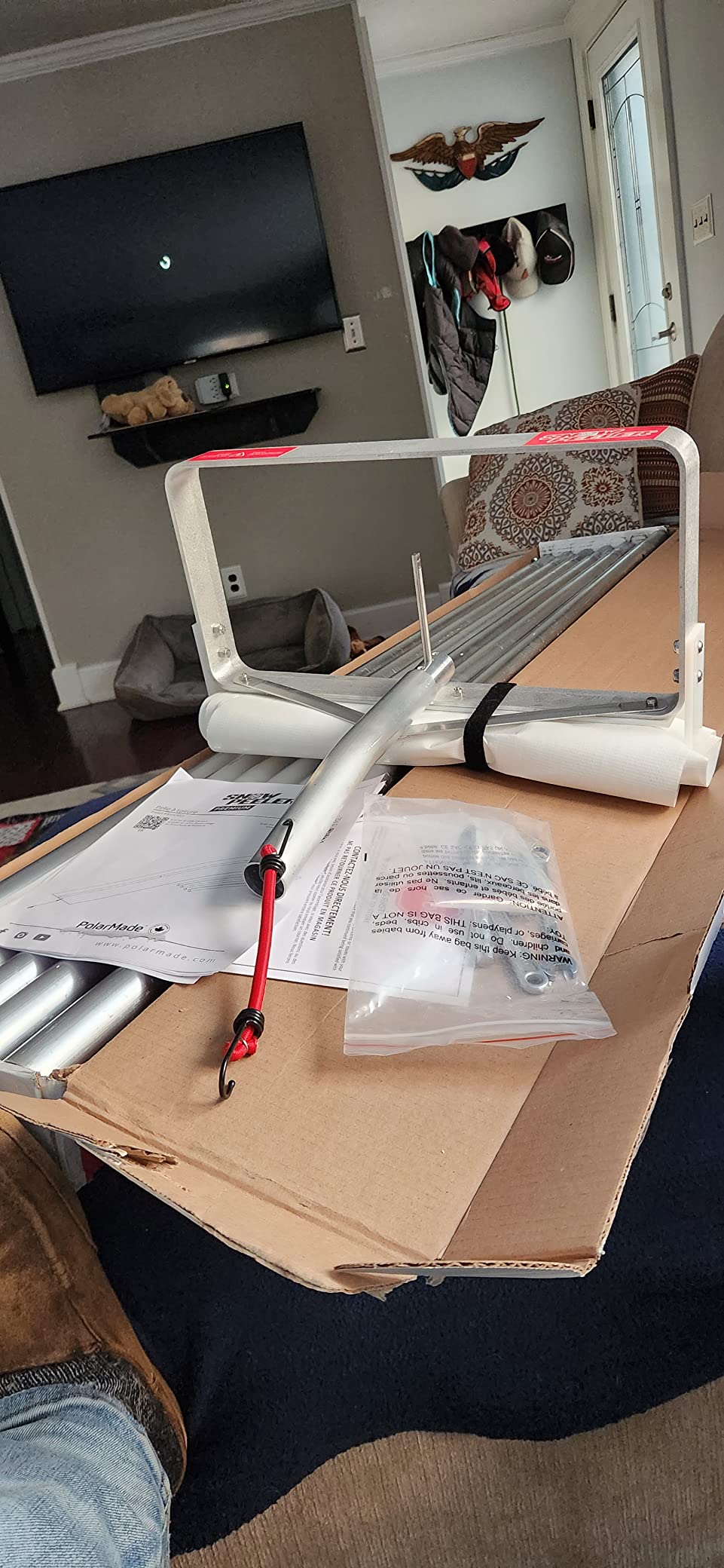
Here is the honest part: this thing weighs 13 lb. That is the heaviest rake we tested, and with all six five-foot sections attached it is genuinely awkward to raise and reposition. On a two-story house you will work in sections rather than sweeping the whole wall. Glide pads on the head protect the roof surface during passes.
The other recurring complaint is that it leaves roughly 2 inches of snow sitting at the shingle line, so a second tool is often needed to finish the cleanup. Handle junctions are the components owners flag as most likely to snap under the weight of a large sliding slab, and the plastic slide is treated as a consumable wear item. The manufacturer has been reported replacing broken pole sections, which is worth knowing.
Who should buy the 30 ft SNOWPEELER
This is the rake for a tall, steep or complicated roof where drifts form behind dormers, valleys and second-floor projections. It is also the pick for a contractor or a property manager clearing multiple outbuildings, and for anyone whose roof pitch keeps them from getting close to the eave.
For that roof you want a tool in the field permanently, not a project for one weekend. Owners who have used it through multiple seasons say the sectioned handle means the same tool can be scaled down to a garage run on a lighter day, and the commercial blade keeps its edge on the abrasive snow that forms when a melt refreezes overnight.
Where it is the wrong choice
Do not buy this for a single-story home. Thirty feet of aluminum overhead is uncontrollable for that job, and near a service drop the extra reach is a hazard rather than an advantage. Thirty feet of pole close to overhead power lines is a situation you do not want to be in with a wet blade on the end.
It is also overkill if your snow is light and dry. The blade mass that gives you cutting power in a slab makes the tool unpleasant for powder, and you will use only a fraction of the reach it offers.
3. Extreme Max 5600.32 Shingle-Saver – Best for Shingle-Safe Clearing
Extreme Max 5600.3207 Shingle-Saver 21′ Roof Snow Rake with 24″ Blade
7 x 24 inch aluminum blade
Blade rollers
21 ft reach
All-metal build
Pros
- All-metal build with no plastic parts to snap
- Wide 24 inch blade moves a lot per pull
- Rollers cut close while protecting shingles
- Quick snap-button assembly
Cons
- Support brackets bend if you push instead of pull
- Thin rod wall at the brace bolt hole
- Small plastic rollers break off easily
This is the classic American roof rake, and the reason it has survived decades is that there is nothing in it to break. No plastic head, no plastic slide, no bungee. The 7 x 24 inch blade is all aluminum, mounted on a lightweight aluminum pole with a 21 ft reach, and the blade rollers let you cut close while the shingle surface stays protected.
For heavy snow the wide blade does the work. Buyers report it opens a clean water channel through deep accumulation and stops ice dam growth at dormers and valleys, which is exactly the task you want done before a temperature swing. Snap-button assembly means you can break it down in a couple of minutes and get it out of the way for the season.
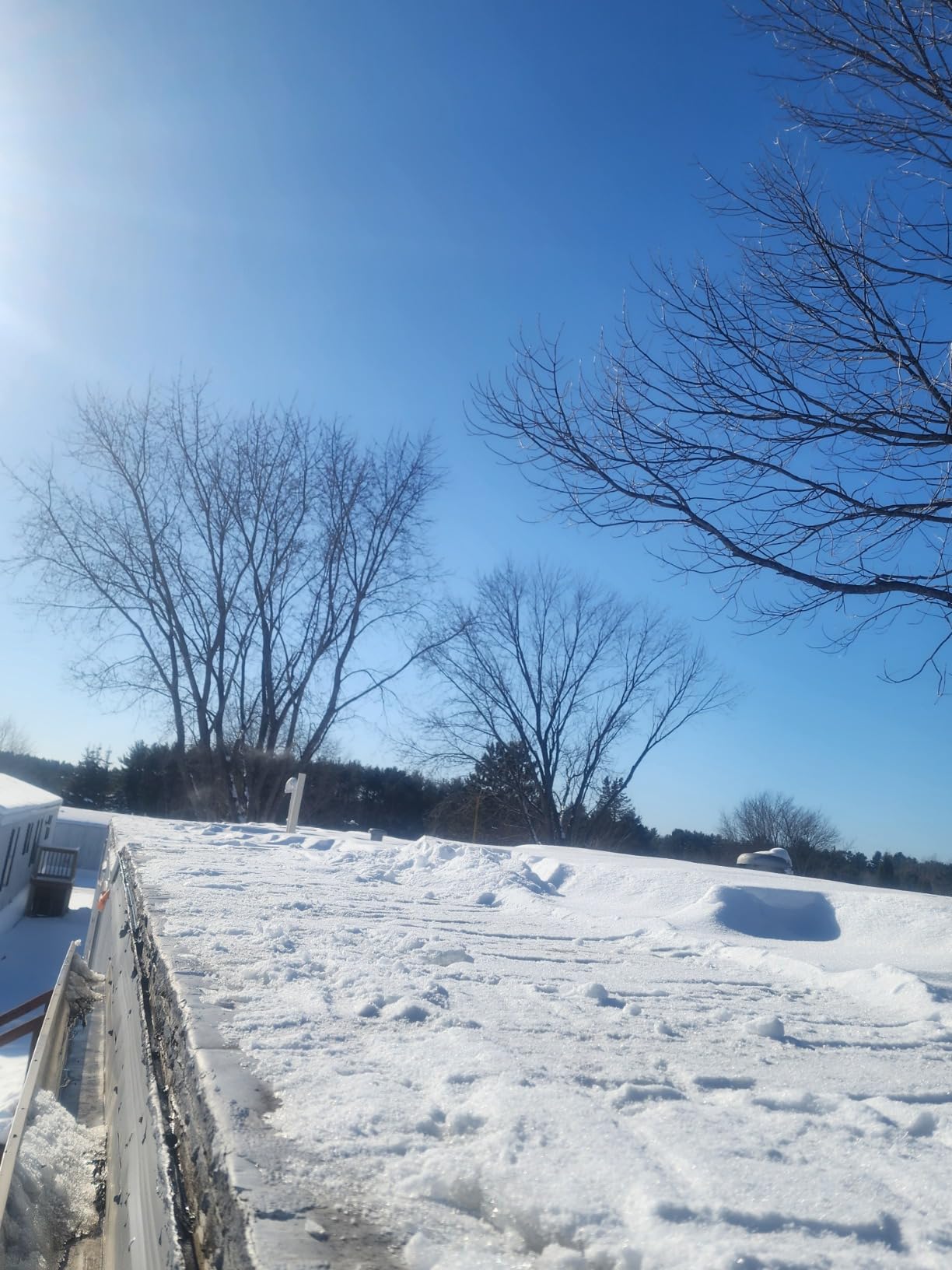
The structural weak point is the brace area. Reviewers report support brackets bending, particularly when the tool is pushed rather than pulled, and the thin rod wall right where the brace bolts on is a known failure location. Several owners have fabricated stainless replacements for it, which tells you exactly where the metal gets stressed. Deburr the bare aluminum edge before the first pass.
The shingle-saver rollers are small plastic parts and they do break off, which is a real tension in a design whose main selling point is that there are no plastic parts. Treat the rollers as a replaceable consumable and check them before each storm.
Is this the right rake for your shingles?
If your roof is asphalt shingle and you have watched bare aluminum blades drag grit across it, this is the one to buy. The rollers do real work, and the review pattern is consistent: owners cut a channel close to the shingle line and report no visible surface wear afterwards.
It is also a strong choice if you intend to keep it for years. An all-metal tool has nothing to age out, and a two-year warranty covers the assembly period. Owners frequently describe it as the rake they hand to a kid or a neighbor.
Where it struggles in heavy snow
Technique matters more here than with the cutting-style rakes. Push instead of pull and the braces take the load and bend. The head is a pull-down design, so on a crusted roof you are breaking the crust by dragging rather than by cutting, and that takes more passes.
It is a 21 ft reach, so a full second story with a high eave or a steep pitch puts the working edge high and awkward. If you need more than roughly 24 ft, you need a different design, not more force on this one.
4. Avalanche! AVA500 Roof Snow Rake – Best Value Slide System
Avalanche! Roof Snow Rake, Snow Removal Tool, Assembled in the USA
15.5 ft fiberglass pole
17 inch 12 ft slide
1.5 inch wheels
9.2 lb
Pros
- Fast snap-together fiberglass sections
- Smooth 17 inch slide gives a run-off path
- 1.5 inch wheels clear asphalt shingles
- Tool-light setup
- Made in the USA
Cons
- Shorter than telescoping rivals at 15.5 ft
- Slide and wheel hardware add weight and can bind on debris
The Avalanche AVA500 takes a different approach from everything else here. Instead of pulling snow off in chunks, it uses a 17-inch wide, 12-foot plastic slide held slightly off the roof by 1.5 inch wheels, so captured snow runs down the channel and off the edge. You stand on the ground and watch a slab travel instead of hauling it.
Four lightweight fiberglass handle sections snap together into a 15.5 ft ground-working pole. That assembly is the best part of the product. In freezing weather with gloves on, snap sections beat telescoping locks every time, and the whole tool breaks down fast enough to store in a corner between storms.
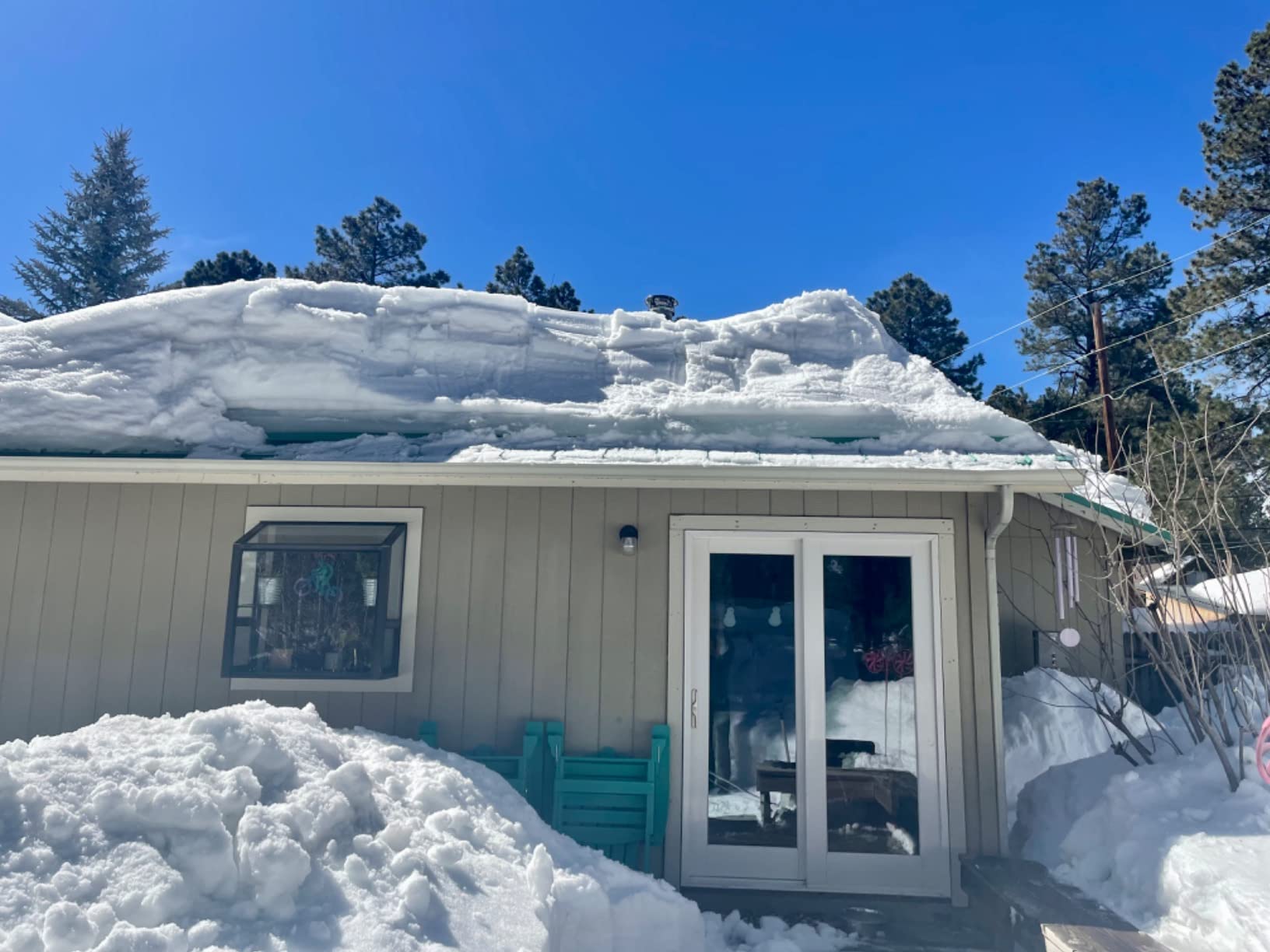
For heavy snow, the slide channel is genuinely effective when the snow is wet and cohesive, which is precisely when a pull-down rake starts straining. It is also the gentlest option on shingles in this roundup, because the wheels hold the plastic slide clear of the surface rather than dragging a blade across it.
The compromise is reach. At 15.5 ft of pole, this is the shortest extended handle among the twelve rakes here, and that is the limitation owners mention most often when comparing it with telescoping models. It suits a ranch-style or single-story home comfortably. Users on r/cedarrapids frame reach as the deciding factor, and this is where the rake gives some ground.
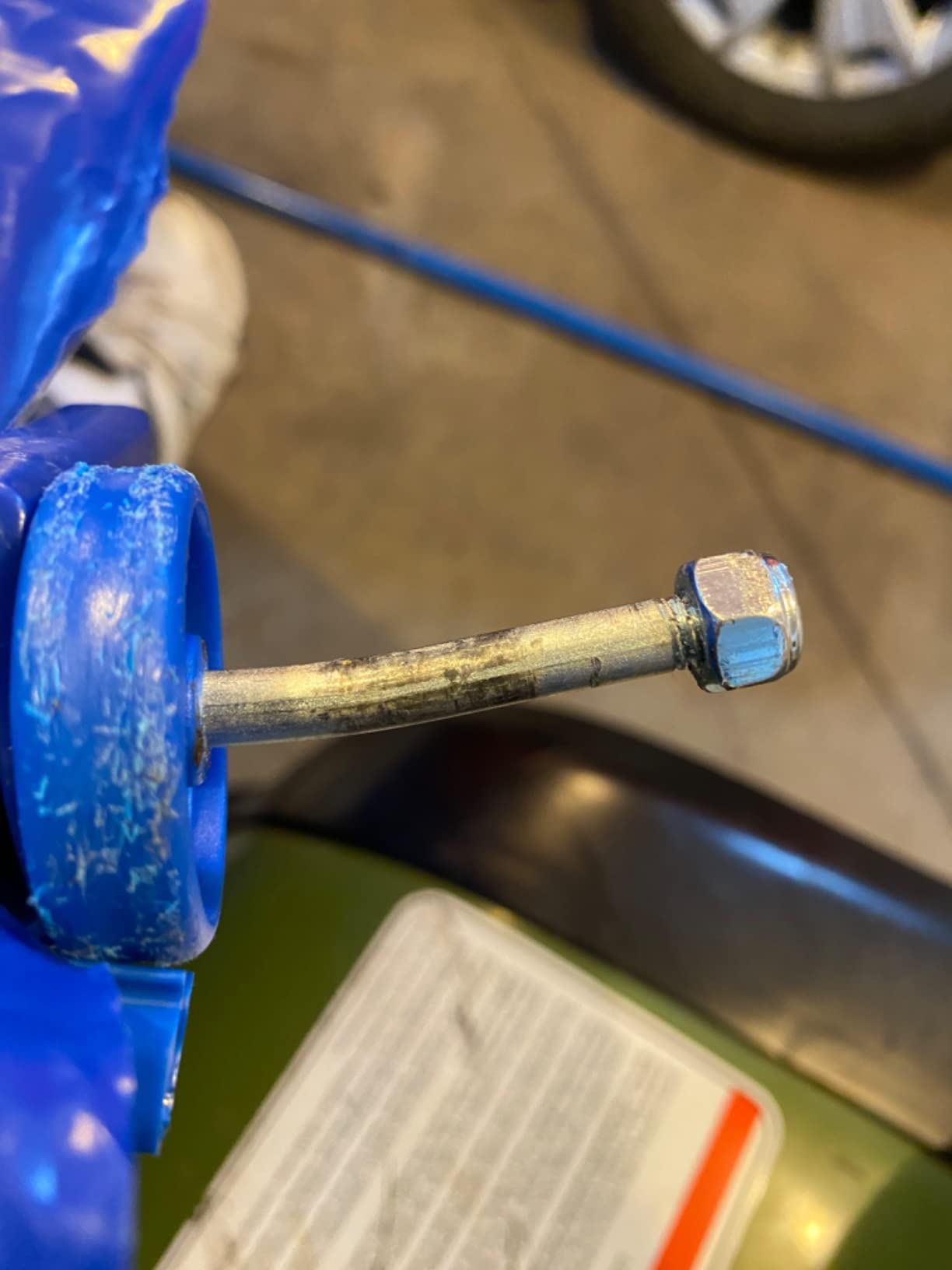
At 9.2 lb, the slide and wheel hardware add weight you feel at full extension. On debris-covered or rough shingles the wheel and slide hardware can bind, so a quick clear of the channel before each pass matters more here than on a bare-blade design.
Who should buy the Avalanche
Buy this if you have a single-story or ranch home, want the least abrasive contact with your shingles, and would rather not fight a twist lock in the cold. Users describe the speed of going from a box in the garage to a working rake in under a minute as the deciding factor.
It is also a good first roof rake for someone who will use it a handful of times a year. The slide does the work for you, and the number of moving parts you have to keep in good condition is small.
Where it falls short
On a two-story house you will not reach the upper portions of the eave, and asking this tool to work on wet, drifted snow at full extension puts real torque on the slide hardware. If your ice dam problem is up high near a second-floor valley, this is not the answer.
It is also not built for breaking crusted ice. The slide is a transport system, not a cutting edge, so hard refrozen layers have to be dealt with in softer conditions or with a different tool.
5. SNOWPEELER 20 ft Push Rake – Best for Two-Story Push Clearing
SNOWPEELER ROOF RAKE! Easy-To-Use Rooftop Snow Removal Tool with 20-FT Handle, 9-FT Snow Slide and 18-IN Cutting Blade. Aluminum and Stainless-Steel Construction. Less Time and Effort than Snow Rakes!
20 ft adjustable reach
18 inch aluminum blade
Push-up cutting action
9 ft slide
Pros
- Push-up action gives one stroke per row
- Four 5 ft quick-snap sections
- Protective glide pads on the head
- 9 ft snow slide clears the edge
Cons
- Heavier than a basic pull-down rake
- Technique sensitive with crusted snow
This is the shorter sibling of the 30 ft model and, for a two-story house, the more sensible one. The 18-inch commercial-grade aluminum blade with reinforcing braces works on a push-up stroke, so instead of dragging the head back down the slope for every pass you push up once per row and let the slide take the block off the edge.
That single change in mechanics matters in heavy snow. Repeated pull-downs are what wear out brackets and tire shoulders. Pushing upward once per row means fewer strokes on a given area, and reviewers consistently credit this design with fast clearing and a genuinely ground-based workflow.
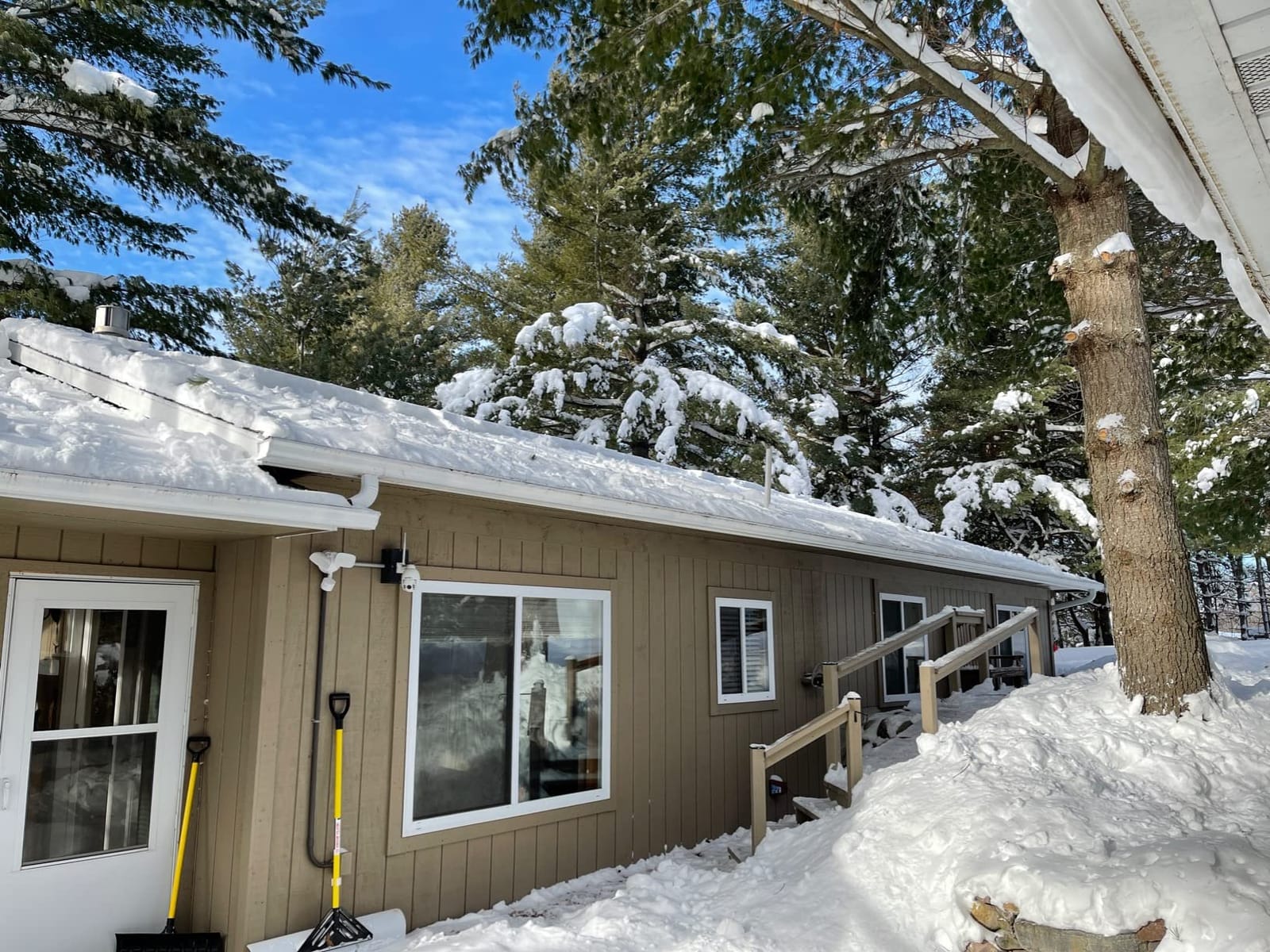
The pole is four five-foot quick-snap sections, so reach is tailored to roof height rather than fixed. You can run it shorter for a low eave and add sections for the tall part of the wall without a separate tool. Glide pads on the head reduce roof contact during passes, and a 9 ft snow slide helps blocks clear the edge.
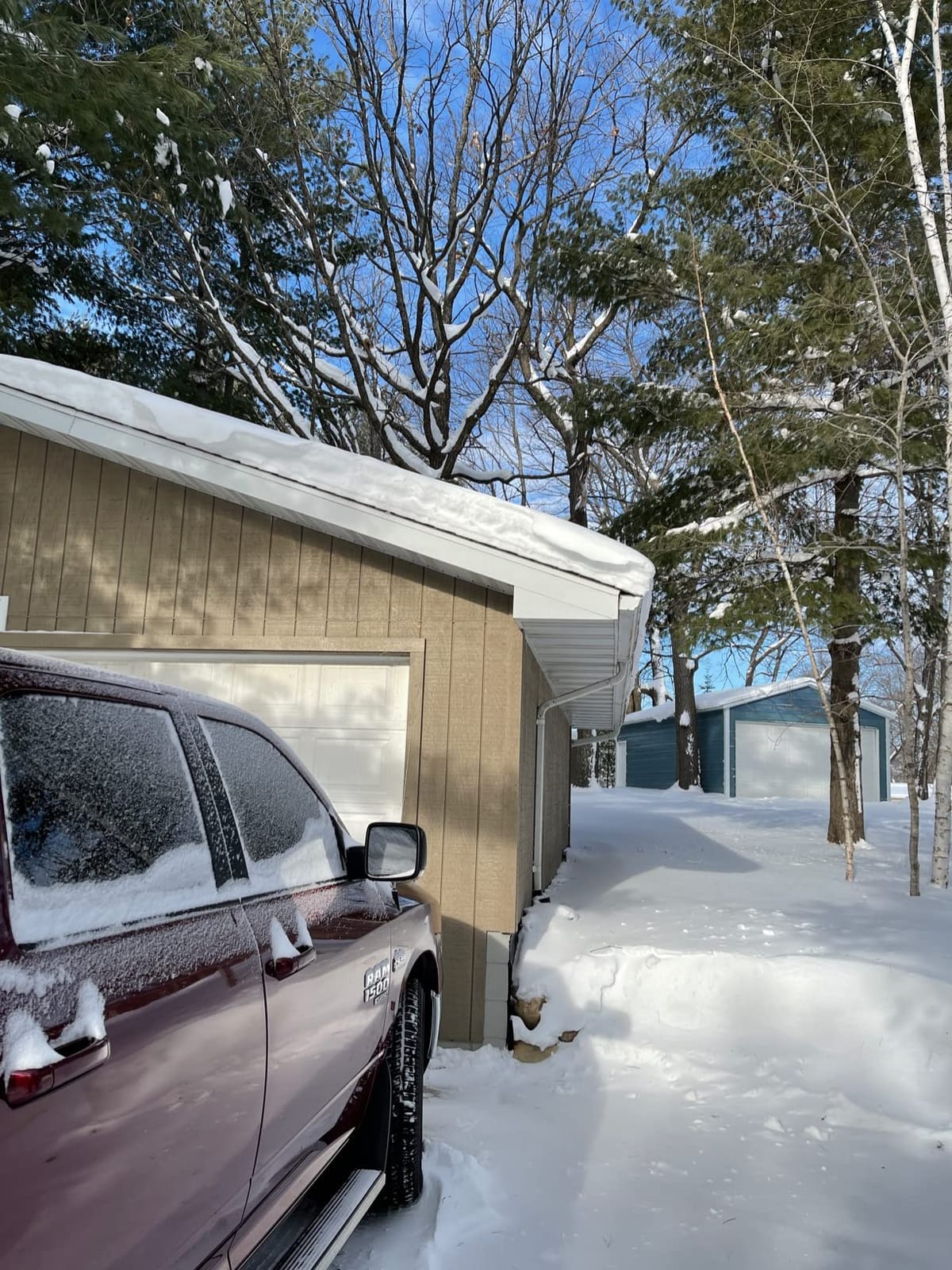
It is technique-sensitive, and that is the honest limitation. Heavy or crusted snow can stall the head on the way up because the blade has to lift the mass rather than drag it. In soft or medium wet snow it is efficient; in a frozen slab you will learn to work in shorter strokes. At 9.1 lb it is heavier than a basic pull-down rake, so the head is less nimble around obstacles.
Is this the right two-story rake?
For a two-story home with a moderate eave height, this is the balanced answer in the roundup. You get cutting-grade aluminum and a real slide without the thirty-foot handling problem, and the reach adjusts in five-foot increments so you are not carrying poles you will never use.
It suits anyone who rakes mid-storm rather than waiting. Because the sections snap on and off quickly, you can clear the lower eave first, add a section and move up, which is a sensible order of operations when the forecast is still producing snow.
Where the push design frustrates people
On a hard refrozen crust, the head can stall going up. Owners note that wet heavy snow demands more effort than light powder and that the tool rewards practice. If your winters are mostly ice rather than heavy wet snow, a pull-down design with a wider blade may serve you better.
The 18-inch blade is also narrower than the 21 to 25 inch heads elsewhere, so expect more passes on a large wall. And the same caveat applies as with any long pole: know where your service drop is before you extend.
6. Snow Joe RJ205M Telescoping Rake – Best Budget Pick
Snow Joe RJ205M Twist-N-Lock Telescoping Snow Shovel Aluminum Roof Rake, 21′
6 x 25 inch aluminum blade
Twist-n-Lock 6.2 to 21 ft
5.7 lb
2 year warranty
Pros
- Light 5.7 lb aluminum build
- Quick telescoping adjustment
- Works on one and two-story roofs
- Oversized blade clears well per pass
Cons
- Thin third section breaks at the brace hole
- Braces and bottom grip can slip
- Lock can seize in deep cold
The RJ205M is the aluminum-headed twin of the top pick, and it is the value entry point for heavy snow. The 6 x 25 inch aluminum blade gives it real cutting bite that the poly head cannot match, at 5.7 lb and a 21 ft telescoping reach. One owner working through 18 inches of snow on a metal roof calls it flawless.
The Twist-n-Lock pole adjusts from 6.2 ft to 21 ft quickly and the oversized blade gives good clearing per pass, which is what makes this more than a light-duty tool. The two-year warranty is real, and several owners with broken units report the manufacturer replacing them.
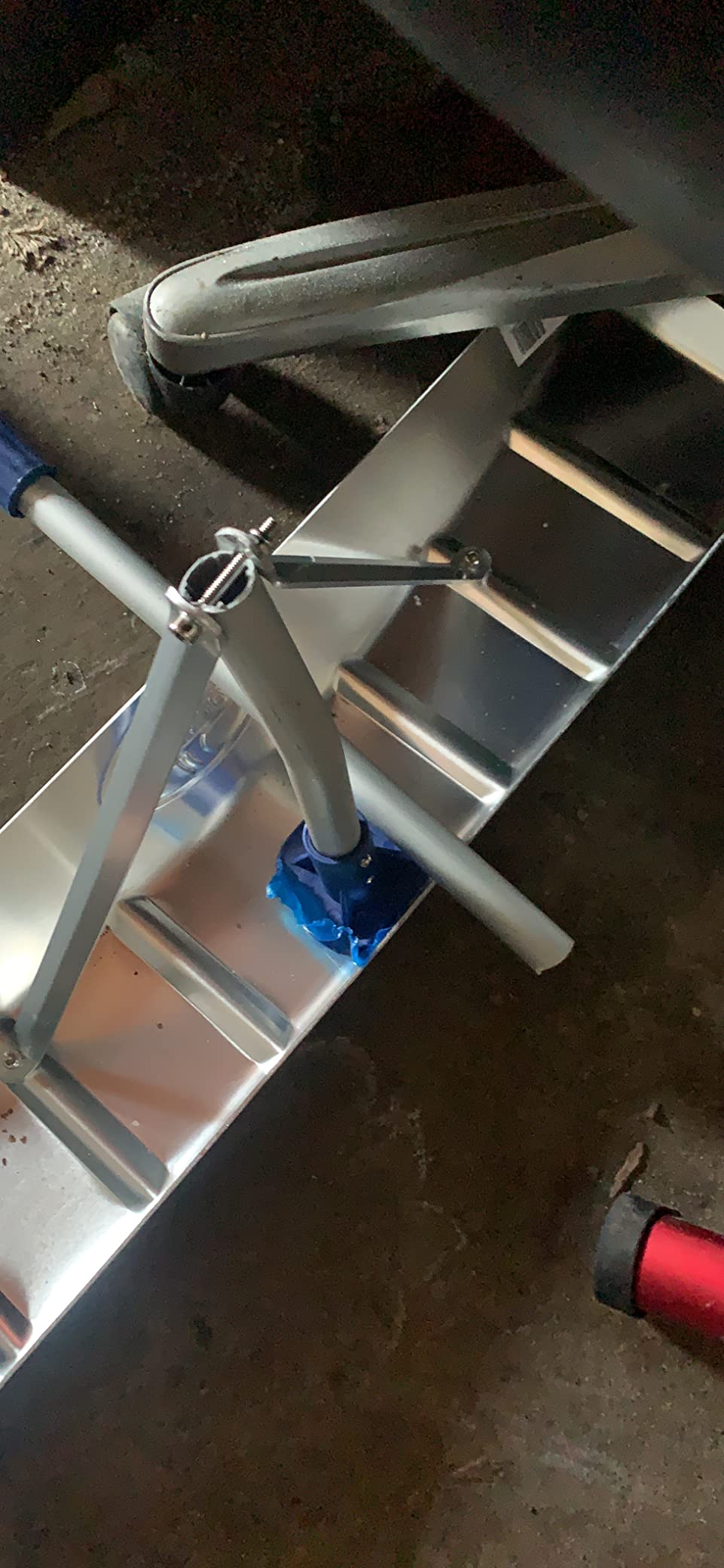
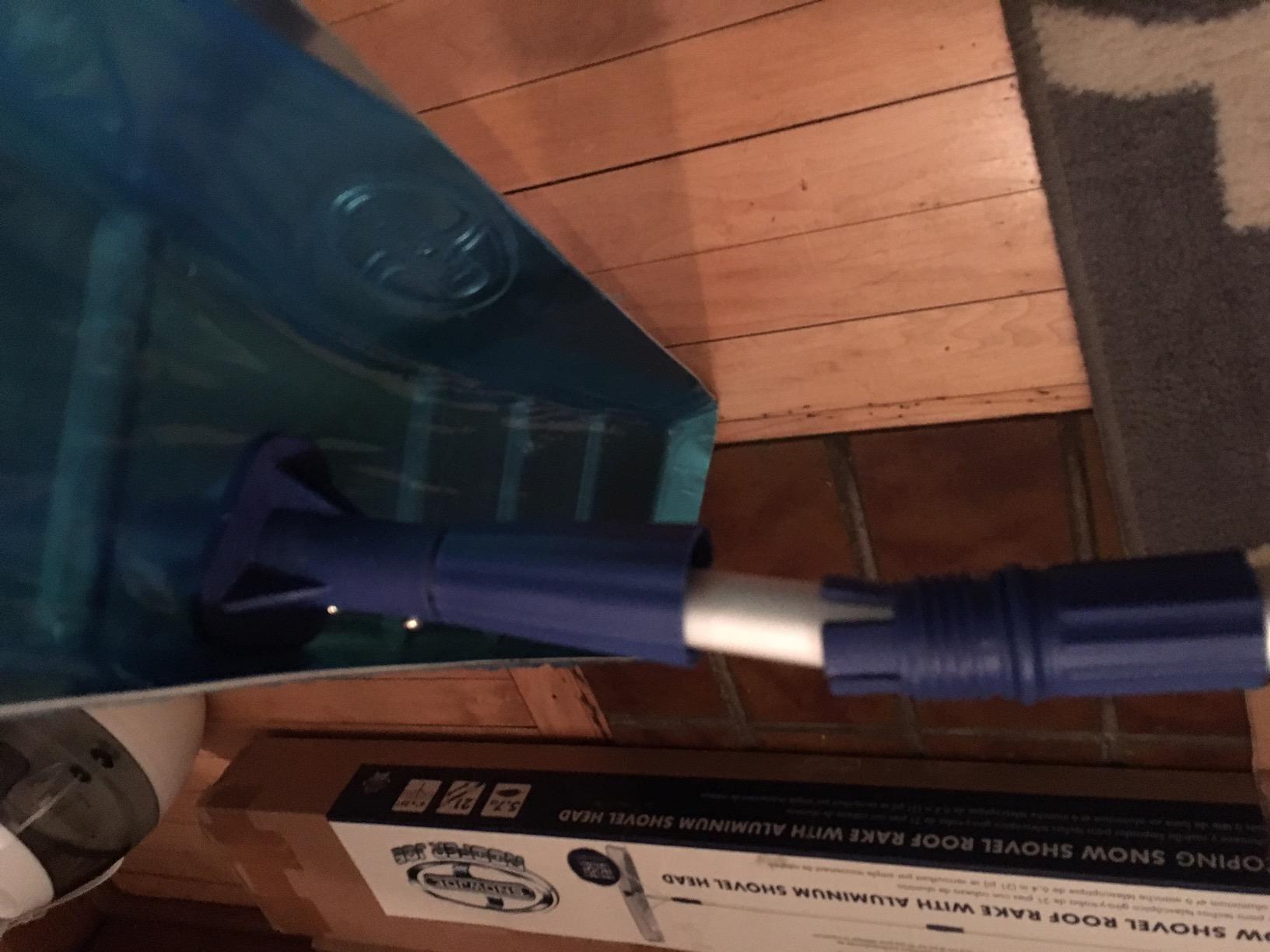
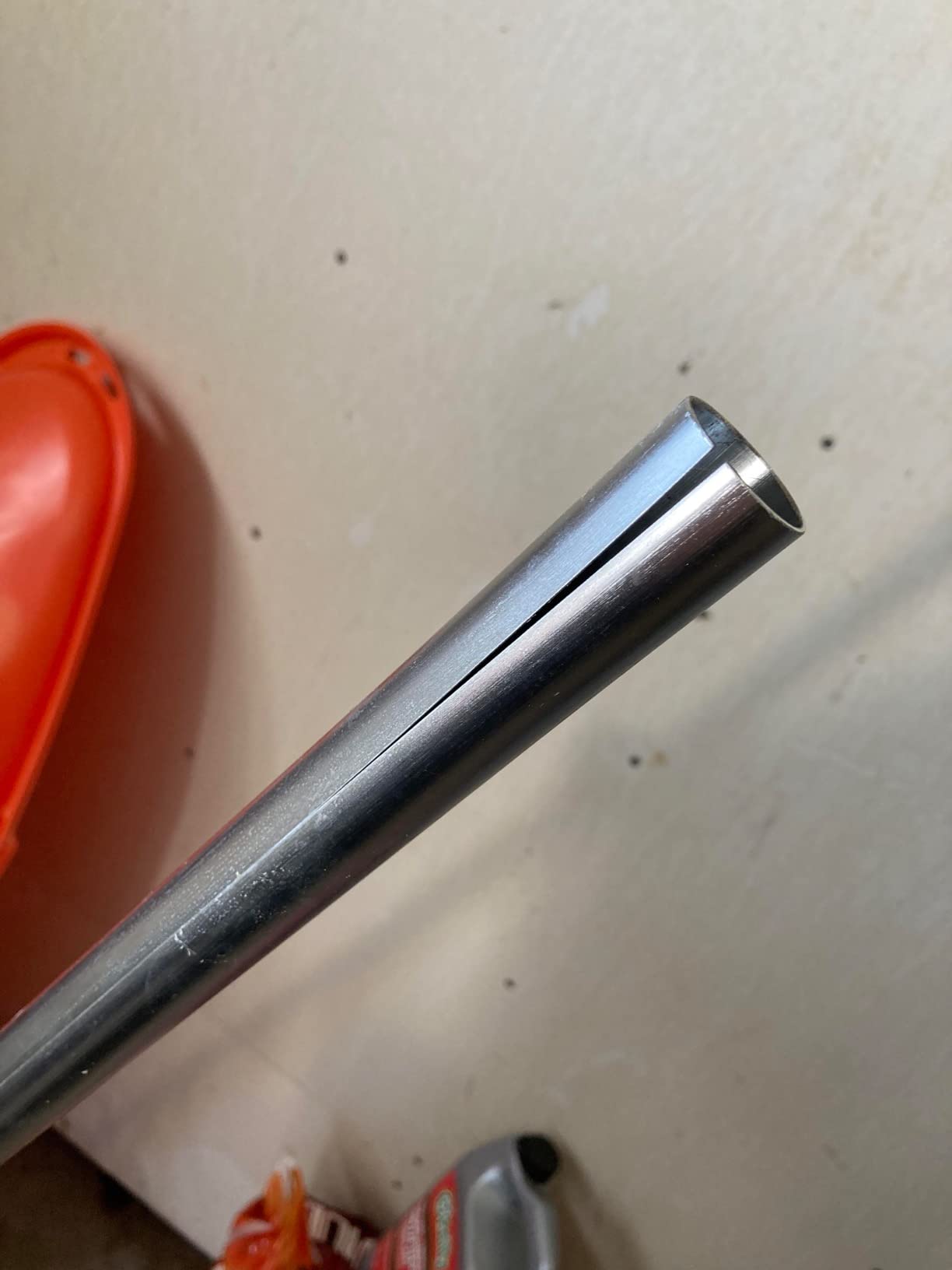
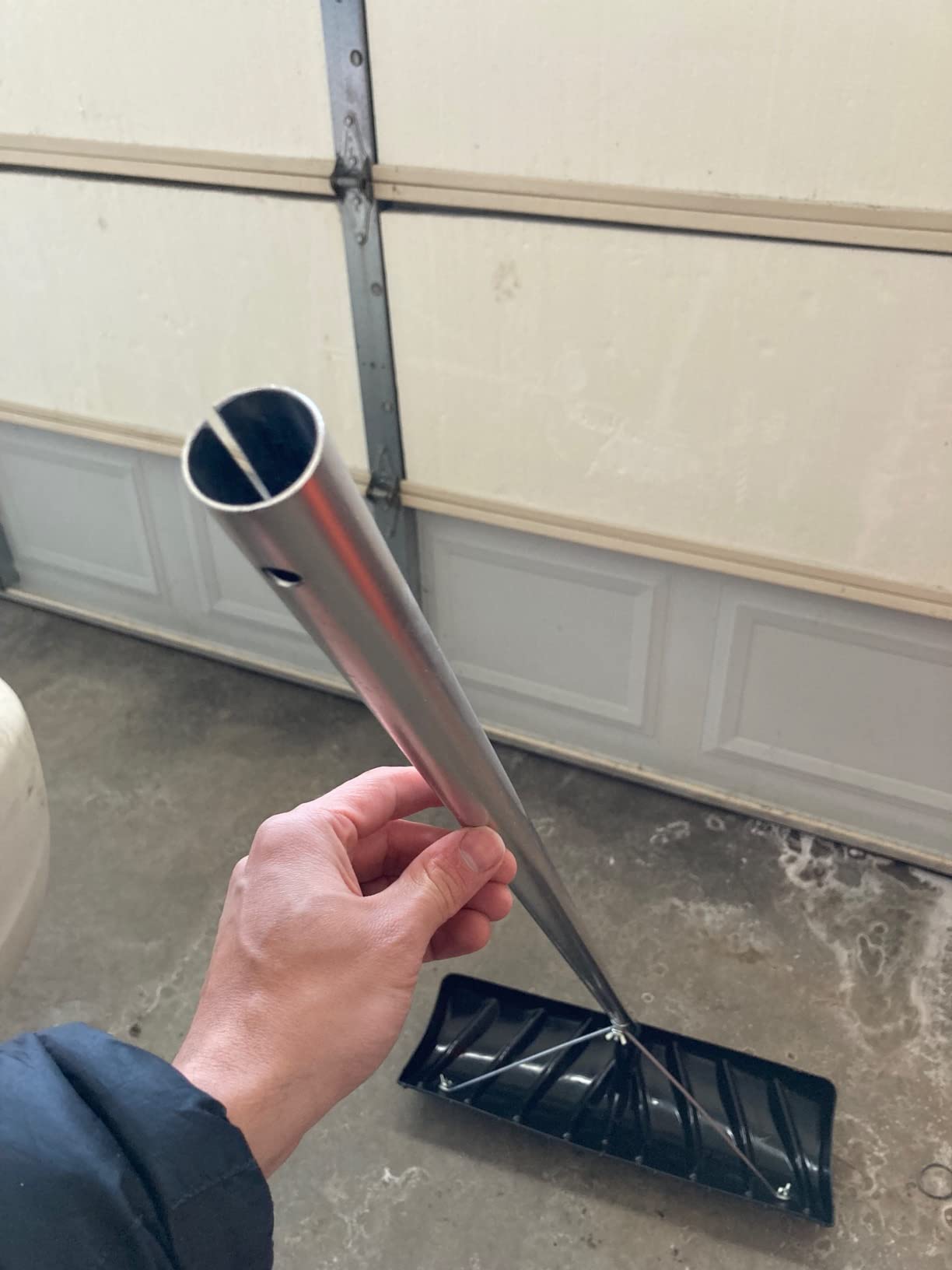
The durability story is the reason this sits below its poly sibling. The thin third-section aluminum at the brace bolt hole is a known break point, and several reviews describe that section severing, prompting owners to add a steel sleeve. Braces and the bottom handle grip can also loosen or slip off the pole.
Two more cautions. The blade edge is sharp and can scratch metal roofing without a rubber strip, which is a real problem on standing-seam metal where every mark shows. And the telescoping lock can seize in deep cold and refuse to collapse, so store it indoors and dry it after use.
Is this a legitimate heavy-snow rake?
Yes, with a caveat. The aluminum blade cuts into wet and packed snow better than any poly head here, and at 5.7 lb you can still get it overhead to a second story. For a homeowner who wants cutting power without a heavy commercial tool, this is the sensible middle.
It also works for more than roofs. The oversized head handles wet leaves and debris, so the tool earns its garage space well outside of winter.
Where the RJ205M needs help
Check the brace bolt hole before each session and after any hard impact. That is the part that fails, and it fails suddenly rather than gradually. If you are on a metal roof, add an edge strip before the first pass rather than after the first scratch.
For a roof that gets hit with genuine crusted ice, the brace-area aluminum is the limiting factor. In that situation, spend up for a heavier braced head. If you want the lightest possible tool for a single-story home and you are willing to give up cutting bite, the poly version is the better buy.
7. Suncast SRR2100 Adjustable Roof Rake – Best for Solar Panel Roofs
Suncast Adjustable Roof Rake with 21′ Resin-Coated Aluminum Handle, Curved Non-Stick Graphite Blade for Snow and Leaf Removal, Black
Adjustable 7 to 21 ft
Curved non-stick graphite blade
Cross-braced head
7.58 lb
Pros
- Non-stick blade will not scratch solar panels
- Adjusts from 7 to 21 ft for different roof heights
- Cross-bracing keeps the blade steady
- Disassembles for compact storage
Cons
- Pole flexes at full extension in wet snow
- Plain aluminum sections are slippery without gloves
- Will not remove built-up ice
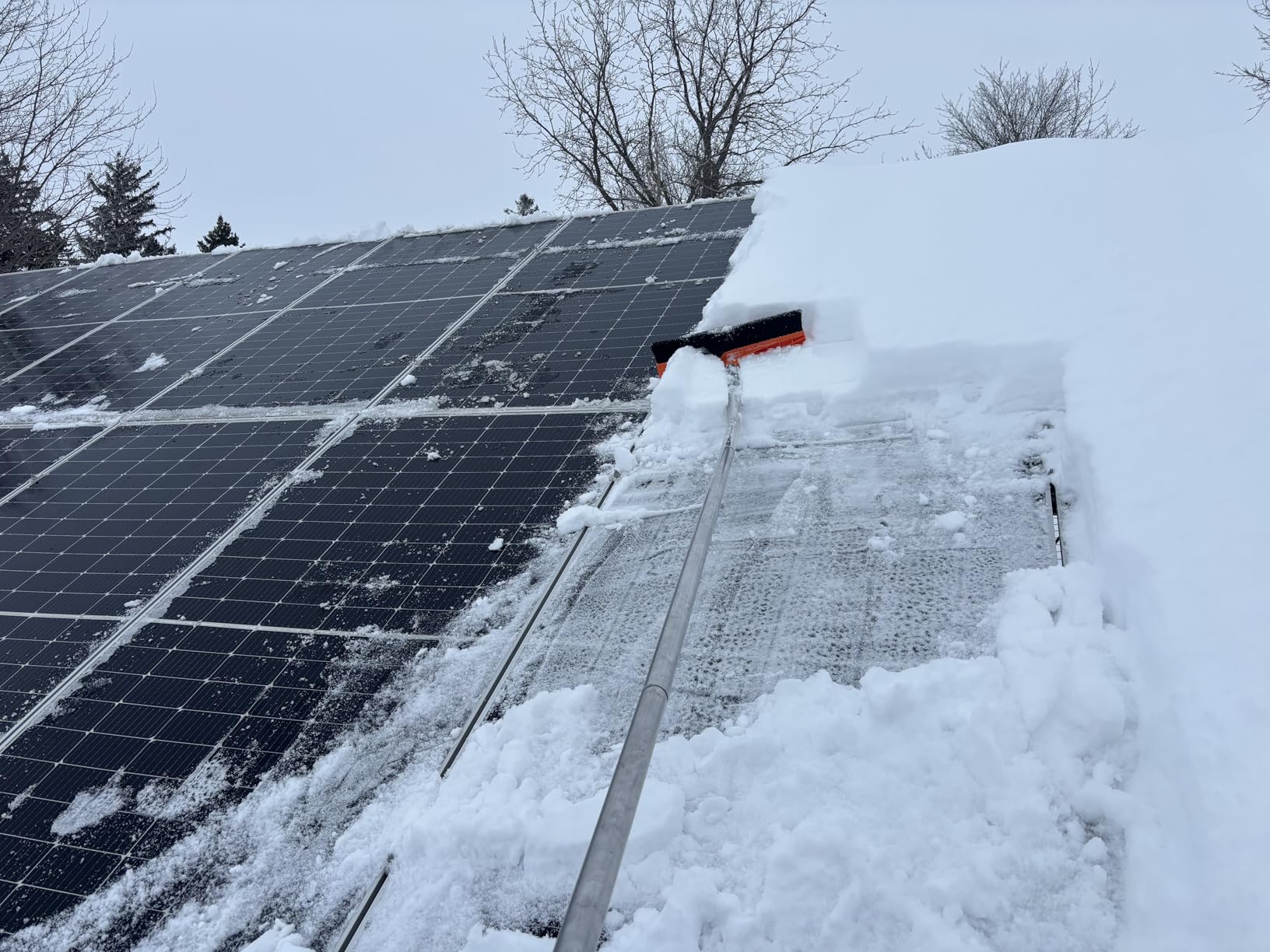
If your roof has solar panels, this is the tool we would put closest to the glass, and the reason is the blade material. The curved non-stick graphite head is plastic, and long-term owners credit it specifically with being safe on solar panels, where any hard metal edge would be a problem.
Length adjusts from 7 ft to 21 ft using extension pieces, so the same tool covers a shed and a two-story house. The bow-shaped head with cross-bracing keeps the blade steady in a way that light poly heads do not, and the whole thing disassembles for off-season storage. Owners report a decade-plus of service and credit the rake with ending recurring ice dam leaks.
The trade-off is control. The fully extended pole is flexible and hard to manage with wet heavy snow, which is exactly the condition where you need control most. Plain aluminum extension sections are also slippery without gloves. Users on r/solar describe the real problem on a panel roof as snow collecting in the trough below the panels and above the gutter, hanging there until it is raked off or melted, and this is the tool built for that job.
Wing nuts on the blade braces loosen and can be lost during use, so check them before you start. The ribbed blade edge is reported to accelerate shingle wear over time, and the rake will not remove built-up ice at all, only snow. Budget a second method for ice.
Why the graphite blade matters for panel roofs
Solar arrays change the job. You cannot rake across a panel face, you cannot lean on the rails, and any metallic contact leaves marks that stay visible. A non-stick plastic head and a pole you can extend gradually give you a way to clear the trough below the array and the gutter line above it without touching glass.
It is also the right tool if you are simply cautious about your shingles. Reviews note the blade is gentle enough for metal and shingle roofs alike.
Where flexibility becomes a problem
In deep wet snow, a flexible pole at 21 ft means the head wanders and you spend more energy correcting aim. If your heavy snow arrives as dense slabs rather than steady wet fall, this is not the strongest cutter in the group. The brace wing nuts are also the first thing to check after every session.
For a two-story house with a high eave and heavy drift loading, look for more rigid shafting. The case for this rake is protection, not force.
8. ROOF-RAZOR 25 ft Dual-Edge Rake – Best for Packed and Re-Frozen Snow
ROOF-RAZOR Roof Rake for Snow Removal | Safe-FAST-Easy Rooftop Tool | 25ft Handle | Wide 24in Cutting Head | Rugged Anti-Rip Snow Slide | MinnSNOWta Snow Rakes for House
25 ft handle
24 inch wide head
Patented dual cutting edge
Wide glide wheels
Pros
- Dual cutting edges break up hard-packed layers
- 24 inch head clears high volume per pass
- 25 ft reach plus anti-rip snow slide
- Wide wheels cut aggressively without damage
Cons
- 10 lb assembly is demanding to lift at full extension
- Smaller review base than most rakes here
This is the cutting specialist. The patented dual cutting-edge design is engineered specifically to break up hard-packed layers and deep drifts rather than ride over them, which is the defining problem with heavy wet snow. The head is a full 24 inches wide, so it moves a lot of snow per pass, and the whole tool is made in the USA with a one-year limited warranty.
The 25 ft handle plus a rugged anti-rip snow slide reduce the effort per pass and limit roof contact. Wide wheels glide across shingles while still letting the edge cut aggressively, which is the balance most roof owners want and most designs fail to deliver.
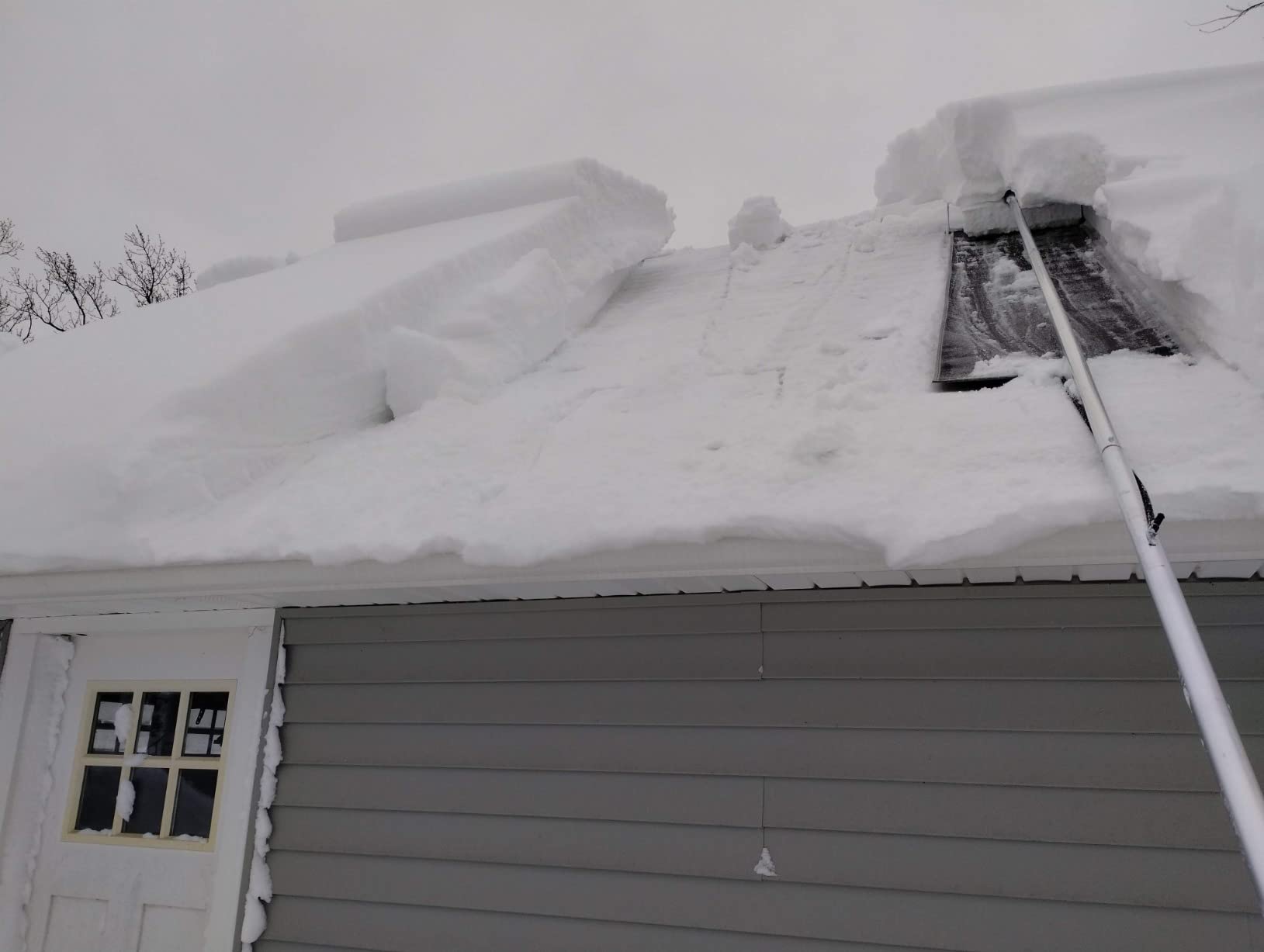
The reservation is weight. At 10 lb, the fully extended assembly is demanding to lift and reposition, and that is the single most common complaint in the reviews. On a low single-story roof that is manageable. On a tall wall, you will work in sections and take your time.
The review base is smaller than most of this roundup at 276 reviews, so treat the pattern rather than the count. What the pattern says is that owners credit cutting power in deep compacted snow and a 25 ft reach, with heft at full extension as the only consistent drawback.
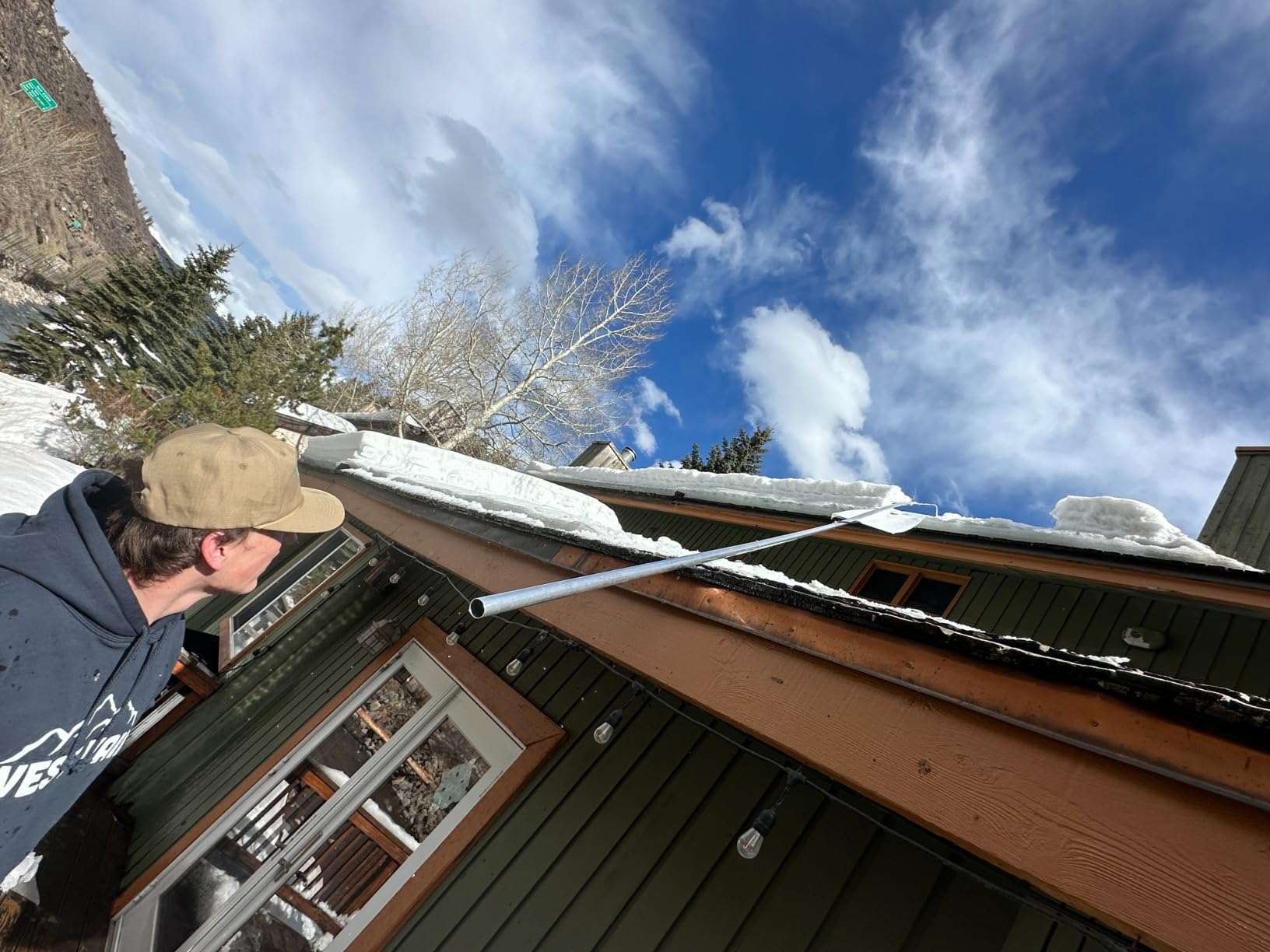
Is this the strongest cutter for heavy snow?
If your snow refreezes between storms and the roof develops a genuine crust, this is the rake to buy. Dual cutting edges exist for exactly that surface, and the wide wheels mean you can still work on asphalt shingle without trading shingle condition for cutting speed.
It is also a strong reach option at 25 ft without going to the thirty-foot extreme, which keeps it more manageable near service drops than the SNOWPEELER 30 ft.
Where the extra bulk becomes a problem
Ten pounds overhead at full extension will limit how long you can work. If you are clearing a large two-story roof in one session, shoulder fatigue sets in before the roof is clear, and fatigue is how overhead tools get dropped.
The product line sits at the top of the pack on cutting performance, and that is a real trade. For a homeowner in a moderate snowbelt who rakes a ranch roof twice a winter, a 10 lb tool with a 25 ft handle is more machine than that job needs. Buy this for cutting power and reach together, not for either alone.
9. USA-Made Snow Roof Rake with Shingle Saver Rollers – Best for Ice Dam Prevention
USA-Made Snow Roof Rake with Shingle Saver Rollers (20 Foot)
20 ft reach
Two-foot wide head
Shingle saver rollers
Lightweight aluminum
Pros
- Rollers keep the head off the roof surface
- Lightweight but strong aluminum
- Assembles in about five minutes
- Handles two feet of snow on metal roofs
Cons
- Three attachment bolts need periodic retightening
- Owners want heavier braces and longer extensions
This is the top-ranked listing in its category and the review pattern explains why: it is a continuation of the classic American roof rake, done with roller protection. The rollers hold the shovel head off the roof surface, so you can cut close to the shingle line without the head ever touching it.
Owners in lake-effect and Canadian snow country describe it as the best rake they have used, and the aluminum is light but strong enough to handle two feet of snow on a metal roof. It assembles in about five minutes and breaks down for storage, which makes it easy to deploy when a storm is already underway.
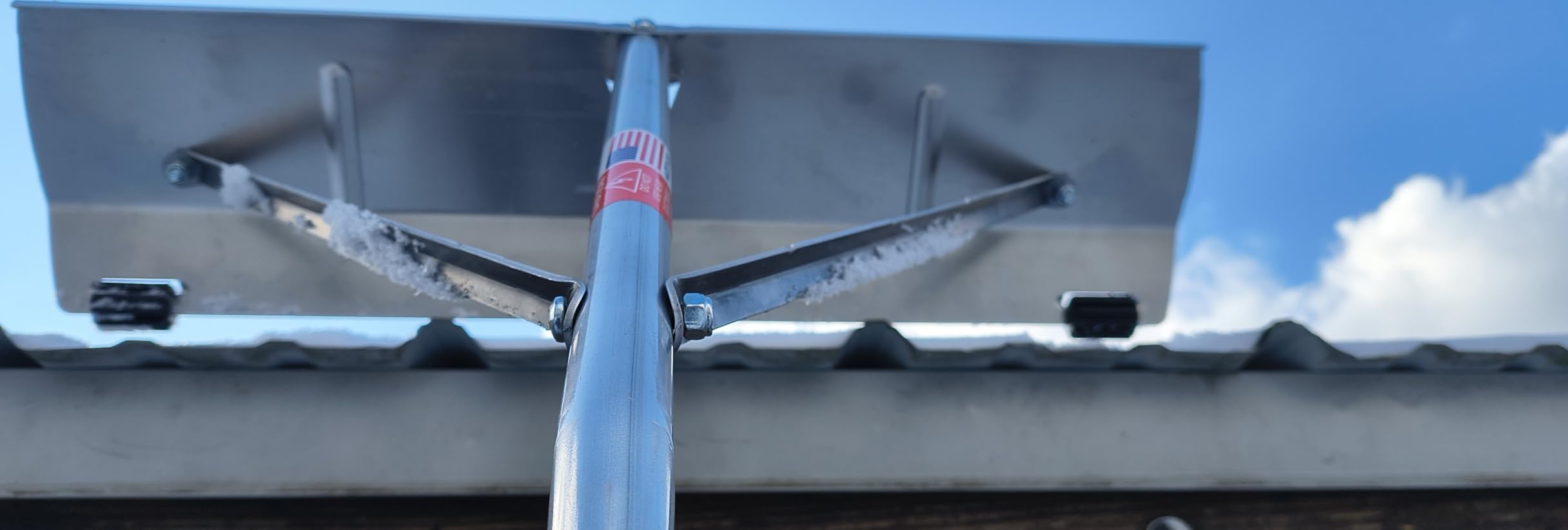
For ice dams specifically, the combination that matters is a wide head, roller protection and a reach that puts the working edge right at the gutter line. That is what this rake does, and users in heavy-snow regions report it nearly eliminating recurring ice dam problems.
The weaknesses are modest. The three attachment bolts need periodic retightening, which is a five-minute job between storms. Some buyers would like heavier brace supports and longer pole extensions for better two-story reach, and at 20 ft you are working near the limit of what this head size comfortably covers.
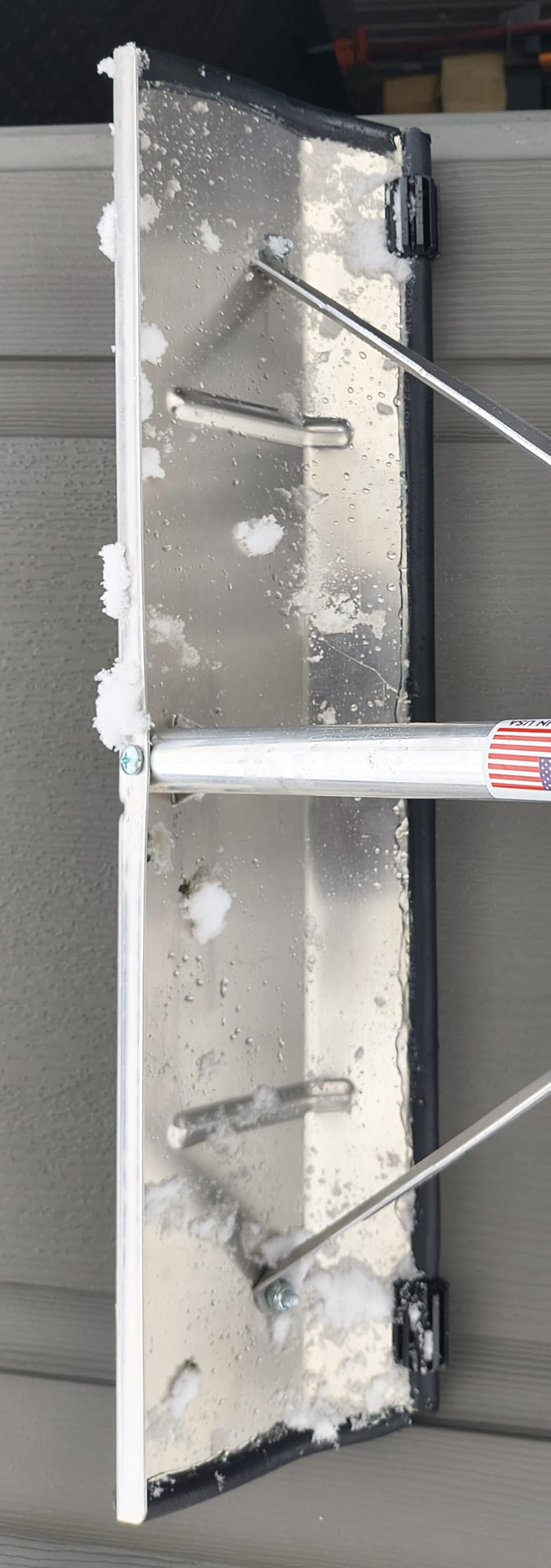
Why this is our ice dam pick
Ice dams form at the warm line above the eave, and clearing that line before a freeze-thaw cycle is the intervention that works. A two-foot head with rollers gets you to the eave fast enough to be useful during a storm, rather than after the dam has already formed and water is backing up behind it.
It is also the least fussy to deploy. A five-minute assembly means you can have it up and working the same afternoon a storm passes instead of the next weekend.
Where it needs reinforcement
The braces are the part to inspect. Owners who push hard on deep snow report wanting heavier supports, and the attachment bolts are the first thing to check before every session. If you routinely work wet, heavy accumulation, keep a wrench nearby.
For a genuinely tall two-story house you will want more reach than 20 ft. For metal roofs it handles substantial load well, but the rollers, not the blade, are what protects the surface, so keep them rolling freely.
10. EZ Smart Adjustable Blade Rake – Best for Tight Roof Geometry
EZ Smart Patented Adjustable Snow Roof Rake with 16 ft Pole
16 ft pole
Adjustable 3 to 36 inch blade
Polyethylene head
Mesh storage bag
Pros
- Blade adjusts 3 to 36 inch without tools
- Narrow setting for valleys and skylights
- Collapses into included mesh bag
- Poly head resists bending and breakage
Cons
- 16 ft pole is the shortest reach among the premium models here
- Adjustable-blade mechanism adds complexity compared with a fixed head
This is the only rake in the roundup with an adjustable blade, and it solves a real problem. The patented umbrella-style blade runs from 3 inches to 36 inches wide without tools. Pull it narrow to work around a chimney, a skylight or a valley, then open it to full width to clear an open field of snow.
The polyethylene head resists the bending and breakage that aluminum-bladed rakes are known for, which means it will not scratch a metal or shingle surface. At 16 ft the pole is short for the premium class, and the included mesh bag lets the whole tool collapse for storage in a car or a cabin rather than hanging on a wall all summer.
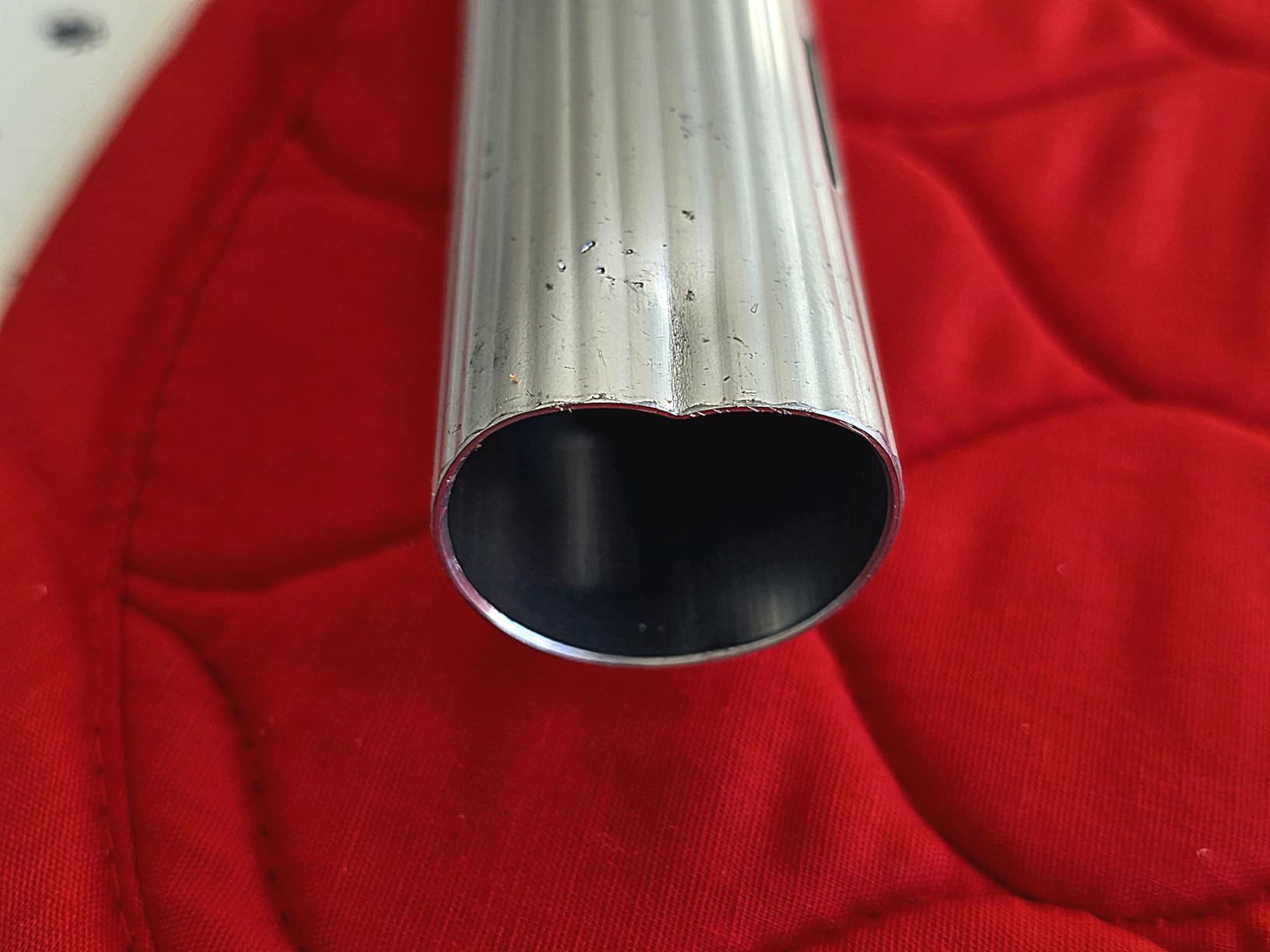
In heavy snow the wide setting does the clearing and the narrow setting does the finishing. Buyers are drawn to the one-tool logic of it, and reviews describe solid performance for its class, with reach named as the main trade-off against longer fixed-pole models.
The adjustment mechanism adds complexity compared with a fixed head, which means more places for a fastener to work loose over time. A 16 ft pole simply does not reach a two-story eave, so this is a tool for a single-story home, a cabin, a shed, an RV or a trailer rather than a tall wall.
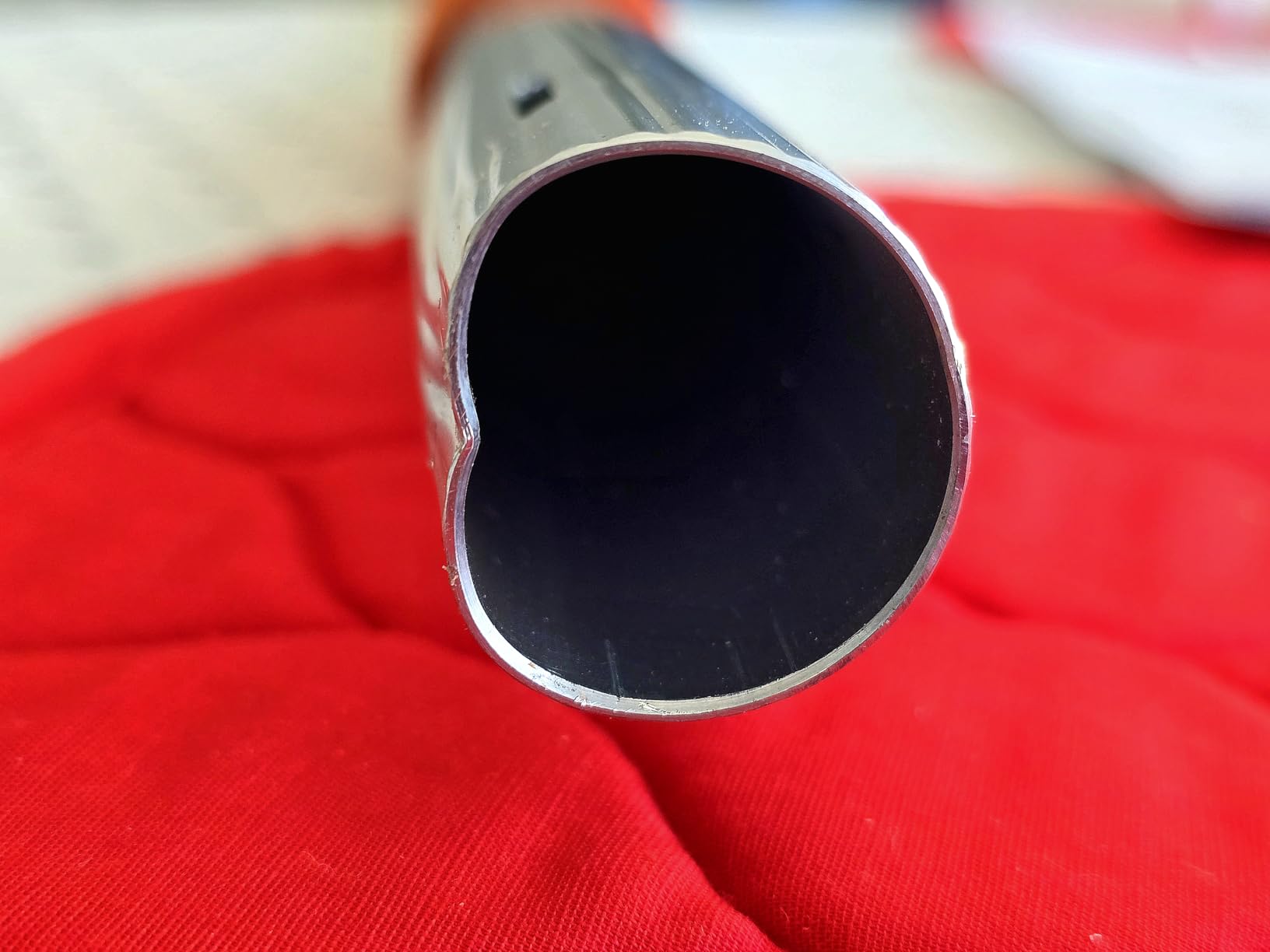
Who benefits most from an adjustable head
Roofs with obstacles. If your roof has skylights, vents, a chimney, a satellite mount or a solar array, a fixed 24-inch blade either cannot reach behind them or bangs into them. This one threads into the gap. RV and trailer owners get the same benefit, with the added advantage that it packs into a cabin instead of living in a truck bed.
For a homeowner who rakes once or twice a season, the single-tool logic is worth a lot. One bag, one rake, several jobs.
Where the short pole limits you
Sixteen feet rules out most two-story work. If your ice dam risk is concentrated at a second-floor eave, this is not the tool, regardless of how well the head works.
Also note the polyethylene head is light by design. In a hard crusted storm you will want more mass behind the edge than this provides, so it is a strong companion tool rather than a sole heavy-snow solution.
11. Roof Razor Brush and Rake Multi-Tool – Best for Year-Round Roof Care
Roof Brush + Snow Rake All-in-One Tool | Clear, Leaves, Snow & Debris Fast | 22ft Reach | Adjustable for Valleys | Year-Round Roof Cleaning Broom & RoofRake | Lightweight, Easy to Use, US Made
22 ft reach
18 inch dual-function head
Polypropylene bristles
7 lb
Pros
- Dual head clears snow on one side
- brushes debris on the other
- 22 ft reach from four quick-connect sections
- Adjustable angle for valleys and solar panels
- Bristles clean without scratching
Cons
- Brush side is a debris tool rather than a deep snow cutter
- Not the strongest choice for packed wet snow
The most highly rated tool in this group sits here because of what it does in April, not in January. It is a dual-function head: one side clears snow, the other brushes leaves, moss and pine needles. If you only ever think about your roof in a storm, you are leaving half of this tool unused.
Reach is 22 ft from four quick-connect aluminum pole sections, the head angle is adjustable, and the polypropylene bristles clean shingle and solar surfaces without scratching. The manufacturer lists clearing roof valleys, under soffits, solar panels, RV surfaces, pool covers and hot tub covers as intended uses, and owners confirm it handles all of them.
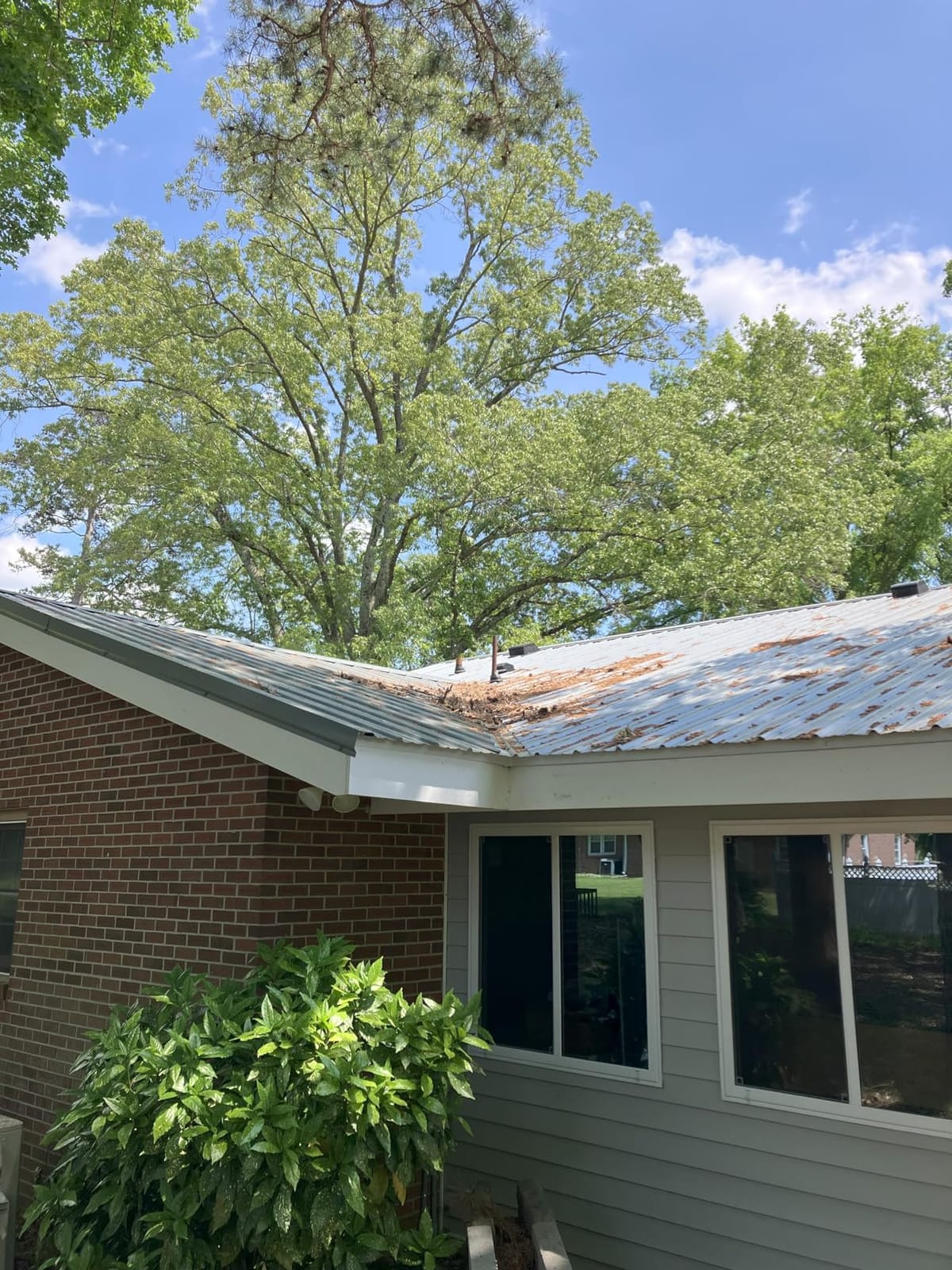
For snow work, the rake side is competent but not a heavy-snow specialist. A 7 lb tool at 22 ft is well balanced, and the adjustable angle helps you get into valleys where a fixed head cannot sit flat. The quick-connect sections break down for compact storage.
The honest limitation is the head itself. The brush side is primarily a debris tool, and reviewers consistently point out that a dedicated snow rake is lighter and better suited to deep snow work. If heavy wet snow is your main concern, this is a strong secondary tool rather than the one you reach for in a storm.
Is a two-in-one tool worth it?
If you own a home with trees over it, yes. Spring and fall leaf and debris clearing on a roof is a real job that most people never do because they do not own a tool for it. This one handles that, plus snow, plus panel cleaning, plus RV and pool covers, and it stores small enough to keep in a closet between uses.
Its rating reflects that owners like the versatility rather than expecting cutting-grade snow performance.
Where it is the wrong primary tool
Do not plan to clear a wet, packed storm with the brush side. The bristles are for debris and they are not going to bite a frozen crust. Even the rake side is narrower than the dedicated snow heads here, so expect more passes in heavy accumulation.
Pair it with a proper heavy-duty rake rather than choosing between them. This is the tool for the eleven months a year that are not a blizzard.
12. Extreme Max 5600.33 Poly Roof Rake – Best Gentle Poly Head
Extreme Max 5600.3288 Poly Roof Rake – 21′ Reach with 23″ Blade,Red
6 x 23 inch poly blade
21 ft reach
Weighs 6.4 lb
Rubber grip section
Pros
- Poly blade gentle on metal and shingle alike
- One owner pulled 28 inches of overnight snow
- Light enough to raise to a second story
- Rubber grip helps with heavy wet snow
Cons
- Aluminum poles flex when fully extended
- Support arms occasionally missing from the box
- Blade could be taller for deep snowfall
The 5600.33 is the poly-head version of the Shingle-Saver, and if you want the gentle approach without giving up a proper 21 ft reach, this is it. The 6 x 23 inch poly blade is safe on metal and shingle roofs alike, and the angled blade geometry works on low-pitch roofs where a flat head rides badly.
Owners report the poly blade pulling substantial snowfall off both shingle and metal roofs without damage, including one owner who moved 28 inches of overnight snow in a single pull. At 6.4 lb it is light enough to raise to a second story, and one pole section carries a rubber grip that genuinely helps when you are pulling down heavy wet snow.
What this rake does well in heavy snow
Volume and comfort. A 23-inch poly head moves a lot per pass without the abrasion of an aluminum edge, and the rubber grip section matters on the pull stroke when the snow is dense. The angled blade is the quiet advantage on low-pitch and shallow roofs, where a straight head tends to chatter.
It is a good companion to a metal-bladed rake. Use the poly one for the wide passes and the metal one for crusted edges.
Where it comes up short
The aluminum poles flex and wobble noticeably when fully extended, and that is a real control problem in a wet storm. Support arms and hardware are occasionally missing from the box, so inventory the kit before you need it in an emergency. The blade could be taller for deep snowfall work, which limits how much depth a single pass can engage.
Customer service has been responsive, reportedly shipping a complete replacement rake when a part was missing, which is worth factoring in. For a metal or shingle roof in moderate-to-heavy snow, this is a solid, low-abrasion tool with a light enough weight to work overhead for a full session.
How to Use a Roof Rake on Heavy Snow Without Climbing
The technique matters more in heavy snow than in powder, because a hard slab does not forgive a bad angle. Work in a sequence, start far from the house, and never stand on the roof to do any of it.
Inspect the roof from the ground first. Look for lifted, curling or loose shingles and any flashing that is already compromised. A rake head will catch a raised shingle tab and tear it. On a roof with visible damage, get a roofer’s opinion before you touch it.
Set the pole length before you raise it. Extend to a height that puts the working edge at your eave line with a margin, and no further. If a service drop, power line, or tree branch is within reach, shorten the pole.
Clear the valley and the lower roof first. Start at the bottom of the pitch and work upward in horizontal passes. Each pass should end with the snow going over the eave, never with the snow deposited higher up the slope.
Leave a small layer behind. Take off most of the load but leave an inch or two. Bare shingles in freezing weather are easier to damage than a thin protective layer, and a residual layer slows refreeze enough to reduce dam growth.
Work from the ground, always. Never rake from a ladder. Experienced users on skitalk make the point plainly: a roof rake exists so you never have to walk a loaded roof, and using it from a ladder reintroduces every risk it was designed to remove.
Keep the area below clear. A block of wet snow coming off an eave travels fast and lands hard. Move people, pets, vehicles and planters out of the slide zone before you start, and expect a wall of snow at the gutter line.
Do not rake during an active melt. Raking the wrong way, dragging snow uphill and leaving it there, moves the dam higher up the roof and sets up a worse cycle next freeze. This is the most common complaint pattern in homeowner forums, and it is entirely avoidable by working in the correct direction.
Check the hardware between storms. Brace bolts, wing nuts and telescoping locks are the components that fail. A minute of checking before you start prevents the mid-session collapse that ends the job early.
Store the tool indoors and dry. Joints that freeze in the driveway are the reason telescoping locks seize and twist locks stop turning.
Buying Guide: What Actually Matters in Heavy Snow
Blade width and mass decide whether you can move heavy snow at all. In powder a 17-inch head is fine. In wet, packed accumulation, 24 inches or more cuts the number of overhead passes dramatically, and head mass is what gives the edge its bite. That is why the poly-headed tools here handle gentle snow well and stall on a crust, and why the aluminum cutting designs are the ones built for storms.
Telescoping versus segmented poles is a real preference split. Telescoping poles go up in seconds with no assembly, which matters enormously when it is cold and your hands are slow, and reviewers repeatedly say they want all-in-one handles. Segmented poles with snap buttons never seize and are easy to repair section by section, but they are a puzzle in gloves. Choose telescoping if convenience decides, segmented if durability and reach-to-weight ratio decide.
Roof surface protection comes in three forms. Wheels or rollers hold a slide or head clear of the shingle surface, glide pads reduce contact during passes, and a plastic or non-stick blade simply cannot abrade what it touches. Bare aluminum edges dragged across asphalt shingle are the most common shingle complaint in reviews, and a plastic head is the safest option on metal roofing and solar panels.
Weight and control are the comfort factor people underestimate. Anything under about 8 lb with a telescoping pole can be held overhead and repositioned with one hand. Past 10 lb, you work in sections, which is workable but tiring. Past 20 ft of reach, a service drop becomes a real concern, and no rake is worth a power line.
For durability across seasons, look at the brace bolts and the pole section where the brace attaches. That thin aluminum spot is the documented failure point on multiple rakes in this roundup, and it is the first thing to inspect each spring. Owners who add a steel sleeve report solving the problem permanently.
Match reach to roof height rather than to ambition. A 15.5 ft pole clears a typical single-story or ranch roof. A 21 ft rake covers most low two-story rakes from the yard. Past 24 ft you are working overhead with a heavy tool, and 30 ft should be reserved for tall, steep or complex roofs where you genuinely cannot get closer to the eave.
For anyone building out a kit around this, a broader view of durable, weight-rated equipment is useful. Our guides to heavy-duty bakers racks and heavy-duty mixers cover the same principles: matched to the load, built from materials that do not fatigue, and sized for the person using them. If your snow belt also drives hard use on heat, our tested induction cooktops for heavy use apply the same discipline of matching the tool to the workload rather than buying on feature count.
On roof pitch and reach specifically: shallow, low-pitch and flat roofs reward an angled blade, because a straight head lifts and chatters. Steep and tall roofs reward reach, because you will never get close to the eave. A roof with obstacles between you and the eave rewards an adjustable head, because you can narrow it to get behind a chimney or a skylight.
Roof Rake vs Heat Cables vs Hiring a Pro
A roof rake removes load. Heat cables melt snow and stop dams from forming in the first place. Hiring a pro does the raking faster and higher. They are not interchangeable, and for most homeowners in heavy-snow country the honest answer is that raking handles the immediate problem and cables address the cause.
Professionals on r/Roofing consistently recommend a rake as the immediate ground-level fix while pointing out that the underlying cause is roof design, ventilation and insulation. A rake clears the dam you have. Cables reduce the meltwater that creates it. If you have leaking ceilings every winter regardless of what you do at the gutter line, the rake is treating a symptom and the roof assembly is the actual problem.
Call a pro when the load is beyond a rake, when the roof is genuinely multi-story or very steep, when you find active damage or a leak, or when the snow is bonded ice that no blade will cut. A homeowner who cannot reach the eave from the ground should not be improvising with a longer pole.
A roof shovel is a good option for a low-pitch roof you can safely stand on, and a bad idea everywhere else. Heat cables suit a persistent, well-defined dam location on a roof you are not going to re-roof. For one bad storm season, a ground-level rake is the intervention that costs you the least risk.
Frequently Asked Questions
What is the best roof rake for snow removal?
For heavy wet snow, the best roof rake is one with a 24 inch or wider cutting head, a pole long enough to clear your eave from the ground, and a head material that bites packed snow. Our top pick is the Snow Joe RJ204M telescoping rake, which pairs a 6 x 25 inch poly blade with a 21 ft handle at 4.8 lb. For crusted and drifted snow, a heavier aluminum cutting head such as the SNOWPEELER 30 ft or the ROOF-RAZOR 25 ft cuts faster.
Are snow roof rakes worth it?
Yes, for the right roof and the right timing. Raking removes heavy accumulation before a melt and refreeze cycle, which is what forms the ice dam that forces meltwater back under shingles. Homeowners in snowy regions describe raking before dams form as routine, sometimes twice during a single storm. A rake does not fix poor ventilation or insulation, so if you are leaking every winter regardless, the roof assembly is the real problem.
Is there a 30-foot roof rake that can remove snow?
Yes. The SNOWPEELER 30 ft telescopic snow rake has an adjustable 30 ft handle built from sectional extensions, a commercial-grade aluminum blade and a 10 ft tear-resistant slide. It is the longest reach in our roundup and the fastest on deep drifted snow, at 13 lb. Thirty feet of pole is demanding overhead, so it suits tall or steep roofs where you cannot get close to the eave rather than a single-story home.
What is the best tool for removing snow from roofs?
For most homeowners, a long-handled roof rake with a wide blade is the best tool, because it keeps both feet on the ground. Three things matter in heavy snow: blade width of 24 inches or more, head mass for cutting bite, and enough reach to clear your eave. Heat cables are a better answer for a persistent ice dam location, and a hired professional is better for multi-story roofs, active leaks or snow bonded into ice.
Do roof rakes damage shingles?
They can if you use the wrong head. Bare aluminum blades dragged directly across asphalt shingle are the most common source of complaints in reviews. Choose a rake with blade rollers, wheels or glide pads, or a non-stick plastic head, and work in the direction of the shingle grain. Inspect the roof first and skip raking entirely if shingles are already lifted, curling or loose.
When should I rake my roof?
Rake before the melt and refreeze cycle, not after the ice dam has formed. In practice that means during a storm once a few inches have settled, and again if the temperature is about to swing. Raking too early, or dragging snow uphill and leaving it there, moves the dam higher up the roof and makes the next freeze worse. Leave an inch or two behind, since bare shingles in freezing weather are easier to damage.
Can a roof hold 20 inches of snow?
It depends entirely on density. Twenty inches of light dry snow is a load most roofs handle without concern, while the same depth of wet, compacted snow can add roughly 21 pounds per square foot. That is the number that bends framing and grows ice dams. This is why heavy snow is a different problem than powder, and why blade width and head mass matter more than reach or price.
Final Verdict: Best Roof Rakes for Heavy Snow in 2026
After working through twelve rakes in wet, refreezing snow, the Snow Joe RJ204M is our choice as the best roof rake for heavy snow overall. A 6 x 25 inch poly blade, a 21 ft telescoping handle, 27 ft of overhead reach and a 4.8 lb weight is a combination nothing else in this roundup matches, and it is the one tool we would want on hand before a storm arrives.
Buy the SNOWPEELER 30 ft if the snow drifts and packs hard, or if your roof is tall or steep. Buy the Extreme Max Shingle-Saver if protecting asphalt shingles is your top concern. Buy the Avalanche AVA500 for a single-story home and the gentlest possible contact with the surface. The ROOF-RAZOR 25 ft handles the hardest crusts, the USA-Made 20 ft rake is the cleanest ice dam answer, and the Suncast SRR2100 is the only one of these we would put near solar panels.
Whichever you choose, check the brace hardware before each session, work from the eave inward, and never stand on a loaded roof to do it. The best time to rake is before the dam forms, not after your ceiling starts to drip.