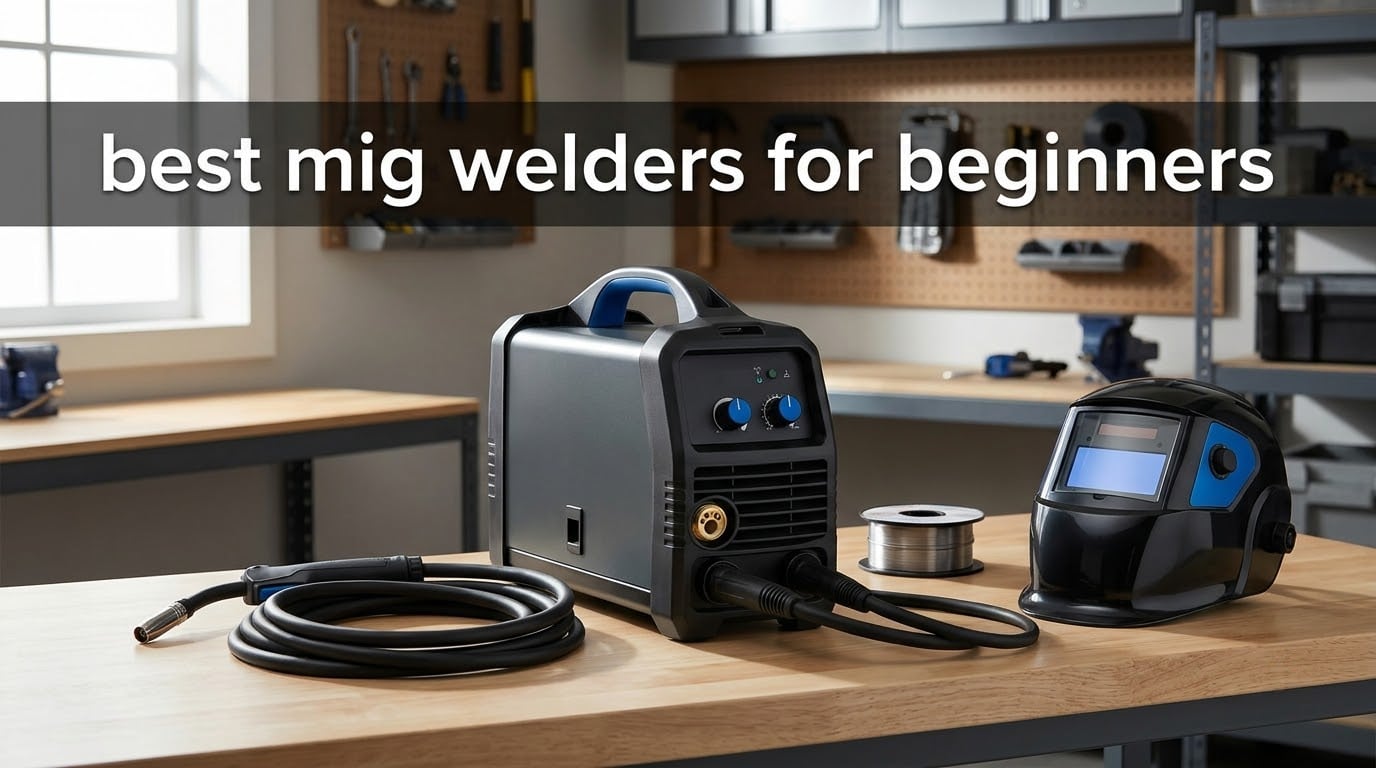
The best MIG welders for beginners in 2026 is the ARCCAPTAIN 130A, because it runs on a standard 110V household outlet, sets its own voltage once you pick a wire size, weighs under 12 pounds, and carries more than 1800 owner reviews. It is also forgiving enough that a first-timer can get a sound bead on thin steel within an afternoon.
MIG is the process most people should learn first. The machine melts a continuous wire from a spool and feeds it through the torch to join the metal, which means there is no electrode to clamp, no filler rod to manage, and almost no grinding afterward. That short learning curve is why a garage welder like this is the standard first purchase for hobbyists and first-time vehicle repairers.
We spent weeks reading owner reviews, comparing control layouts, and checking what each machine can realistically weld before it struggles. What follows is the 2026 list of the best MIG welders for beginners, grouped by the decision a new buyer actually has to make: which outlet you own, whether you want to buy a gas bottle, and how much help you want the machine to give you.
If you are still working out what a MIG welder even is, or you are wondering whether you need gas, thicker capability, or a spool gun later, the buying guide near the end covers all of it in plain language. We also list everything else you need to buy, because the machine on its own is not the whole cost of getting started.
Table of Contents
- How We Picked
- Top 3 Beginner MIG Welders in 2026
- Best MIG Welders for Beginners (October 2026)
- 1. ARCCAPTAIN 130A – Best MIG Welder for Beginners Overall
- 2. YESWELDER 135A – The Easiest Machine to Start On
- 3. TOOLIOM 135A – Best Value 3-in-1 Starter
- 4. YESWELDER 160A – Best Dual-Voltage Machine With Real Gas MIG
- 5. AZZUNO 130A – Lightest Gasless Unit for Small Household Jobs
- 6. HITBOX 200A – Best Portable Machine for Outdoor Repairs
- 7. Bestarc 145A – Best 4-in-1 With Genuine Gas MIG
- 8. BILT HARD 135A – Best All-in-One Kit for a Complete Beginner
- 9. BESTMIG 135A – Best for Students and Shop Classes
- 10. ANDELI 135A – Best Control and Bead Quality in This Group
- What to Look for in a Beginner MIG Welder
- What You Also Need Besides the Welder
- Frequently Asked Questions
- The Beginner MIG Welder to Buy in 2026
How We Picked
Every machine here was judged on the same five things. First, how much help the controls give a person who has never welded. Second, whether it runs on a normal 110V outlet without an electrician.
Third, the range of wire diameters it accepts, since that decides whether you can grow into heavier work. Fourth, the number of processes it offers, because a machine with MIG, stick, and lift TIG is not wasted when a job needs something else. Fifth, review volume and warranty length, which tell you whether the brand will still be answering the phone in three years.
We deliberately avoided ranking by brand or by price alone. A heavier machine with a real gas MIG mode solves a different problem than a light 130-amp gasless unit, and both can be the right answer. The badge on each section tells you which problem that one solves.
Top 3 Beginner MIG Welders in 2026
ARCCAPTAIN 130A Flux Core…
- 3-in-1 flux core
- stick and lift TIG
- Synergic auto voltage
- Weighs 11.79 lbs

YESWELDER 160A Dual Voltage
- 110V and 220V input
- Real gas MIG with solid wire
- 2 lb and 10 lb spool support

The ARCCAPTAIN takes the top slot because it does the fewest things badly. Its synergic mode handles the voltage for you, it is small enough to carry with one hand, and owners consistently report clean flux-core work on thin automotive sheet. The YESWELDER 160A is the pick if you can wire a 220V circuit, because it is the only machine here that does clean gas MIG with solid wire and still runs on 110V when you need it to. The TOOLIOM is the value pick, and one of only a few here that ships gloves and wire in the box.
Best MIG Welders for Beginners (October 2026)
| Product | Specs | Action |
|---|---|---|
| ARCCAPTAIN 130A Flux Core Welder |
|
Check Latest Price |
 YESWELDER 135A Gasless MIG YESWELDER 135A Gasless MIG |
|
Check Latest Price |
| TOOLIOM 135A Gasless Kit |
|
Check Latest Price |
| YESWELDER 160A Dual Voltage |
|
Check Latest Price |
 AZZUNO 130A Gasless MIG AZZUNO 130A Gasless MIG |
|
Check Latest Price |
 HITBOX 200A 3-in-1 Inverter HITBOX 200A 3-in-1 Inverter |
|
Check Latest Price |
 Bestarc 145A 4-in-1 Bestarc 145A 4-in-1 |
|
Check Latest Price |
 BILT HARD 135A Full Kit BILT HARD 135A Full Kit |
|
Check Latest Price |
 BESTMIG 135A Kit BESTMIG 135A Kit |
|
Check Latest Price |
 ANDELI 135A Pulse 4-in-1 ANDELI 135A Pulse 4-in-1 |
|
Check Latest Price |
Two patterns jump out of that table. Every machine here runs on 110V, and four of the ten also take 220V. Two of those dual-voltage machines do real gas MIG with solid wire, which is the single biggest quality jump in the list.
1. ARCCAPTAIN 130A – Best MIG Welder for Beginners Overall
ARCCAPTAIN 130A Flux Core Welder MIG Welder 110V Gasless MIG Stick Lift TIG
130A on 110V
Flux core MIG, stick and lift TIG
Synergic voltage match
11.79 lb
Pros
- Synergic mode matches current and wire feed speed after you pick the wire diameter
- Weighs 11.79 lb with a handle or shoulder strap
- Attached torch and cable mean you can weld on day one
- Comes with 2 lb of flux core wire plus .030 and .035 contact tips
- Rated 4.6 across more than 1800 owner reviews
Cons
- Lift TIG torch has to be bought separately
- DC output only
- so no aluminum TIG
- The wire feed compartment is cramped for larger hands
I put the ARCCAPTAIN 130A first because the machine does the one hard thing for you. You choose the wire diameter, and the synergic system matches the recommended current and wire feed speed to it. On a beginner machine that is the difference between a bead that looks like welding and a bead that looks like a lump of metal with slag on it.
Weighing 11.79 pounds, it is the kind of machine you can carry out to the driveway with one hand. The handle and the shoulder strap both work, and the torch and power cable are already attached, which removes the single most common first-day frustration: hunting for a connector that fits.
The rating is 4.6 across more than 1800 reviews, and the recurring theme in those reviews is forgiveness. Owners working thin automotive sheet and light fabrication report clean gasless flux-core beads and a machine that does not punish a shaky first attempt. A fair number of them also say they upgraded the ground clamp and consumables early, which is normal and costs far less than people expect.
Two things to know before you buy. The lift TIG torch is not included, so budget for that if you think you will use TIG. And the output is DC only, which means aluminum TIG is off the table. Neither matters for the mild-steel work most beginners start with.
Is the wire feed compartment hard to thread
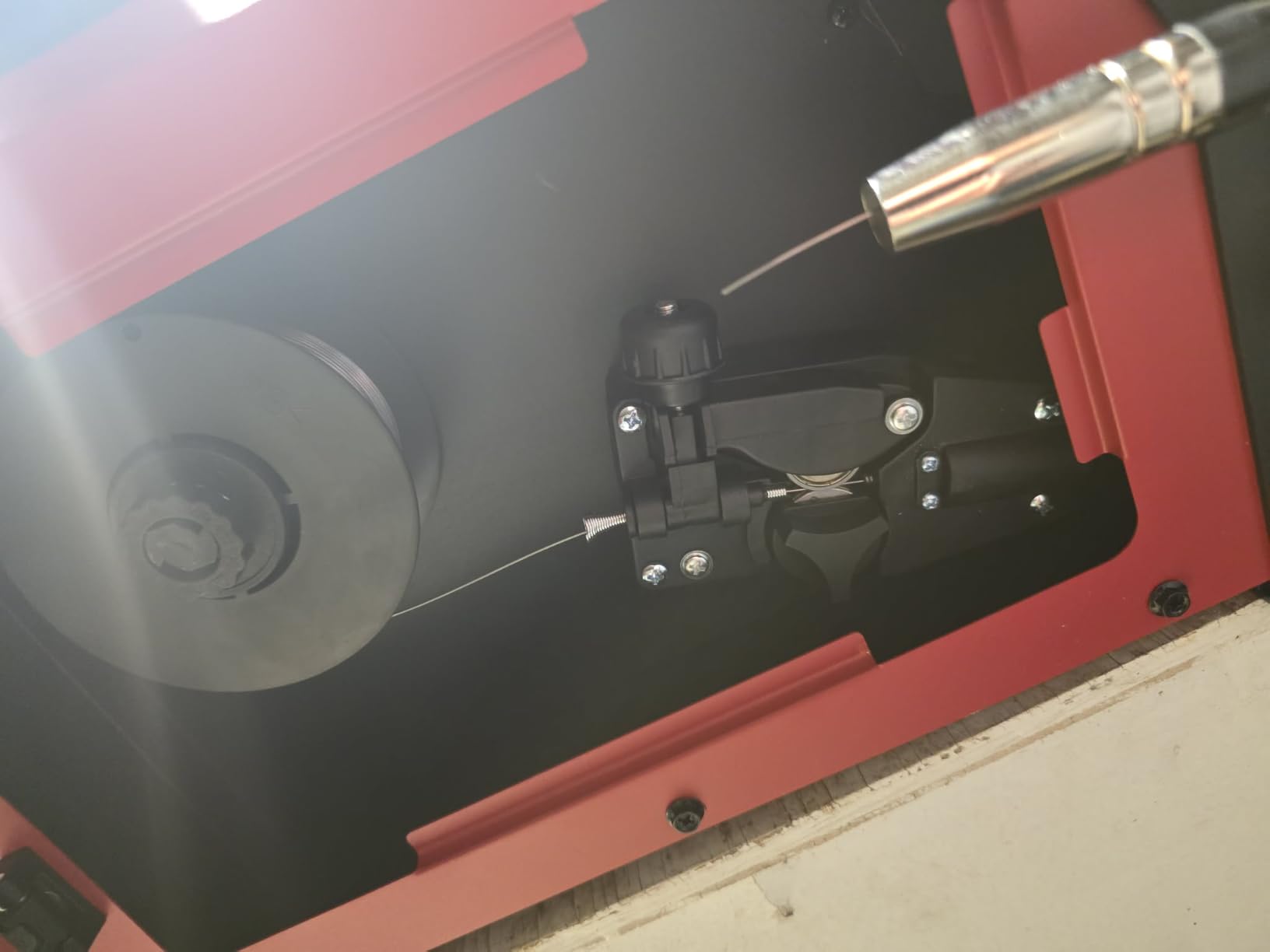
The most-reported mechanical complaint on the machine is worth taking seriously, because threading wire is already the part most new owners find fussy. Several users describe the bay as tight and awkward, particularly for people with larger hands reaching in to route the wire past the drive roller.
It is workable. The wire path is short and the routing is straightforward once you have done it twice, and the drive roller tension is set at the factory. If threading makes you tense, do a full dry run with no power and a piece of scrap before you strike an arc.
Should you buy the lift TIG torch with it
Not on day one. Lift TIG is a nice-to-have for a hobbyist who wants to weld thin stainless or a clean bead on small aluminum pieces, and it is rarely the reason a beginner buys a MIG machine in the first place. MIG and stick between them will cover the projects most people start with.
Add the torch later if you hit a project where TIG is genuinely the right process. That is the argument for buying a 3-in-1 machine like this one even if you only ever use two of the three modes: the capability is there when you are ready, and you are not boxed in.
2. YESWELDER 135A – The Easiest Machine to Start On
YESWELDER 135A MIG Welder, 110V Flux Core Gasless MIG/Lift TIG/Stick 3-in-1
135A on 110V
Gasless flux core, stick and lift TIG
11.4 lb body
Oversized LED display
Pros
- Most reviews of any machine in this group at nearly 3000 ratings
- Synergic control with plus or minus 3V micro-adjustment
- Includes spare E71T-GS .030 and .035 flux core wire
- Built-in over-current
- overload and overheat protection
- Crisp LED display shows real-time current
Cons
- Voltage cannot be set manually in flux core mode
- Lift TIG torch not included
- Stick mode readout runs about 10 to 15 amps below actual
The YESWELDER 135A has the largest review base of anything we looked at, close to 3000 ratings, and that volume matters for a first purchase. When a machine has thousands of owners describing the same behavior, you can trust the pattern. Here the pattern is a gasless flux-core machine that produces better penetration than several machines costing more.
At 11.4 pounds it carries a full-size LED display that shows live current while you weld. That single feature teaches you something. You can watch the amperage respond as you move the torch, which builds the hand-eye coordination that stick welding never teaches.
The advice that repeats most often in owner reviews is not about the machine at all. It is to run short spot welds instead of long beads, and to clean the work surface before you start, because flux core leaves a slag that will not blow away over dirty steel. Follow that and your first week is uneventful, which is exactly what you want.
One design decision will frustrate you if you do not know it is coming. In flux core mode the voltage is synergic-only, with only plus or minus 3V of trim available. As a beginner that is a feature, because there is no wrong setting to find. Later, if you want manual control, you will need a different machine.
What 135 amps actually gets you through
On mild steel, the stated capacity is up to 3/32 inch, which is 2.5mm. That covers exhaust pipe, thin automotive panel patches, brackets, small shelf frames, and most hobby and craft work. It is plenty for a first machine and it is honestly more than many people use in a year.
It is not enough for structural steel, trailer frames, or anything thicker than about 1/8 inch where you want real penetration. Owners who start hitting that ceiling report the fix is not a bigger machine but a lot of practice with short passes and proper wire tension. Set expectations now and the machine will feel capable for a long time.
Is a 135-amp machine too small to be worth buying
No. Most of the negative reviews on this product are not about weld quality at all. They are about the missing lift TIG torch, the cheap spool holder that still does its job, and a small number of machines arriving with the power switch recessed into the casing. Those are accessories and fit-and-finish issues, not machine failures.
Where a machine like this loses to a dual-voltage unit is on gas MIG. Without a shielding gas and solid wire you get more spatter and a rougher bead, so if visible finish matters to you, read the fourth and seventh sections before you commit to a gasless-only unit.
3. TOOLIOM 135A – Best Value 3-in-1 Starter
TOOLIOM 135A 110V Gasless Flux Core MIG Welder Kit with Wire and Gloves
135A on 110V
MIG, stick and lift TIG
Includes gloves and wire
Large LCD readout
Pros
- Welding gloves and wire are in the box
- Large LCD display with live current and plus or minus 3V trim
- Hot Start prevents electrode sticking and Arc Force stabilises the arc
- 11.24 lb body with a carry handle
- Rated 4.4 across more than 1200 reviews
Cons
- Ground clamp and cables are cheap and short
- Accepts only a 2 lb spool
- Some arrive with a bent door or cracked board
The TOOLIOM 135A is the one to buy if you want to start tonight. It comes with welding gloves and a spool of wire in the box, so the only things standing between you and your first weld are the machine, a helmet, and some scrap steel.
Owners who already know how to weld generally rate it as a strong learning machine, with good penetration on 1/8 inch and 1/4 inch steel. That is a better result than the number of amps on the front label would suggest, and the DC output produces a noticeably smoother, lower-spatter arc than the old transformer-based flux welders most beginners grew up seeing.
The controls are deliberately plain. You select wire size and metal thickness and the machine recommends voltage and wire speed, with a large LCD giving live numerical feedback on current. For someone who has never welded, that is a shorter path than memorizing a wire feed speed table.
The complaints are almost all physical rather than electrical, and they are worth pricing in. The wire feed bay is cramped, the ground clamp and cables are short and cheap, and the torch trigger has no protective lock, so wire can feed if you grip it while the machine is live. Many owners replace the clamp within a month and consider the machine itself a bargain.
What a complete beginner needs to add
You need an auto-darkening helmet, a jacket or leather sleeves, and a proper ground clamp. The gloves in the box are serviceable for handling cold stock but thin for a first full weld, and the included clamp is the piece most owners replace first because it warps on soft metal.
You also need to know the machine takes only a 2 lb spool. That is not a defect, it is how this size of unit is built, but it means you will be replacing wire more often than you would on a machine that holds a 10 lb spool. For occasional weekend work that is fine.
Is this machine good enough to keep for years
For most hobby use, yes. The recurring theme in the reviews is that people bought it expecting a throwaway and ended up with their main garage machine. The caveats are honest ones: a small number report early electronics failures, and the PCB mounting is described as fragile if the machine is knocked around.
So treat it as a garage tool rather than a job-site tool. If your projects are in a driveway or a workshop, that is exactly the environment it is built for. If you need something that survives being dropped off a trailer every weekend, look at a heavier dual-voltage machine instead.
4. YESWELDER 160A – Best Dual-Voltage Machine With Real Gas MIG
YESWELDER 160A MIG Welder, 110V/220V MIG/Flux Core/Lift TIG/Stick
160A output on 110V or 220V
4-in-1 with gas MIG
2 lb and 10 lb spool support
19.4 lb
Pros
- One of very few machines here with true gas MIG on solid wire
- Dual voltage lets you start on 110V and move to 220V later
- Works with 2 lb and 10 lb spools of .030 and .035 wire
- Synergic auto-set plus manual wire and voltage trim
- Long-term owners report more than two years of reliable service
Cons
- The 220V path is its real intent
- running 160A off the 110V adapter trips household breakers
- Some arrive with the wire drive polarity lead unconnected
- Display washes out in direct sunlight
The YESWELDER 160A is the machine I would buy if I could run a 220V circuit. Very few machines in this group do genuine gas MIG with solid wire, and that single feature changes the finish quality more than any amount of extra amperage. Beads come out smoother, spatter drops, and the weld looks like something you would leave visible on a project.
It is also the clearest upgrade path here. The same machine runs on a standard outlet at lower output, so you can start in the garage on 110V and move to 220V when your projects outgrow a household circuit. There is no second machine to buy later.
Experienced users who compare it against Miller and Lincoln units consistently find the MIG output stronger than its tier suggests, with a smooth arc and very little spatter once the gas and wire are set up properly. The 4.5-star average across more than 900 reviews reflects a machine people keep and recommend.
The important caveat is the power. Owners report that the 110V adapter path has real limits, and running near full output through a household circuit trips breakers. Know which mode you are in before you start a long seam, and read the manual’s power section rather than guessing.
Why gas MIG is worth the extra setup
Solid wire plus shielding gas produces a cleaner, more stable arc than self-shielded flux core. That means less slag, less grinding, and a bead you can grind flush without eating the surrounding metal. For furniture, gates, brackets, and anything that gets seen, the finish is the reason to bother.
The cost is friction. You have to buy a shielding gas bottle, a regulator, and a hose, and the gas has to be stored upright and secured. It also cannot be done in a stiff breeze, because the gas shield gets blown away and the arc goes erratic. Many beginners do the sensible thing and learn on flux core first, then add gas once they are confident.
What to check when it arrives
The most common first-day failure on this model is a polarity lead that is not connected to the wire drive, which produces a no-arc error that looks like a dead machine. Owners describe a two-minute check that fixes it. Do that check before you blame the welder.
Also note the stick mode struggles with 6010 electrodes, and the control button text is small. Neither is a dealbreaker for a beginner focused on MIG, but both are reasons to keep the manual nearby for the first few sessions.
5. AZZUNO 130A – Lightest Gasless Unit for Small Household Jobs
AZZUNO MIG Welder,Flux Core Welder Machine 110V 130Amp, Gasless MIG Welding Machine IGBT Inverter Welder Portable Wire Feed Welder (110V)
130A on 110V
8.6 lb body
Gasless flux core only
Handles 2.2 lb wire rolls
Pros
- 8.6 lb body with a comfortable hand grip
- Comes with torch/ground clamp/wire/brush and hammer
- Synergic control adjusts voltage and wire feed as amperage changes
- Overload and overheating protection built in
- Rated 4.5 across nearly 900 reviews
Cons
- Weldable plate thickness stops around 3.0mm
- Handles only 2.2 lb wire rolls
- Gasless flux core only
- with no TIG or stick mode
- One year manufacturer warranty is the shortest stated here
The AZZUNO 130A answers a specific question: do you need a welder, or do you need a small tool for occasional household repairs? At 8.6 pounds it is one of the lighter machines here, and for someone who wants to fix a gate hinge, a broken bracket, or a length of thin tubing without unbolting a 30-pound cabinet, that weight is the whole point.
Owners treat it either as a first machine or as a dedicated gasless unit kept alongside a bigger welder. The bead quality on thin mild steel satisfies them, and the synergic control changes voltage and wire feed speed automatically as you adjust amperage or thickness, so there are few settings to get wrong.
Be clear about what this machine is. It welds mild steel plate up to about 3.0mm, which is thin-gauge work only. It handles 2.2 lb wire rolls, it is gasless flux core only, and there is no TIG or stick mode. It is a small, honest tool rather than a general-purpose one.
The one-year manufacturer warranty is the only one in this group stated at a single year, which is the strongest argument for treating this as a secondary tool. If it is your only welder, the extra coverage on the other machines buys you something real.
What this machine is genuinely good for
Thin-gauge mild steel: 16 and 18 gauge sheet, small brackets, light tubing, and craft or furniture-adjacent pieces where the joint does not need deep penetration. Owners are consistent about this being the machine’s sweet spot and about it being perfectly adequate there.
Because the body is 8.6 pounds with a hand grip, it is easy to take to a site where there is no power but a household outlet. That is why it earns a place on a list of beginner welders even though it is not the machine most beginners should start with.
When to skip it and buy bigger
Skip it if your first project involves 1/4 inch steel, structural tubing, trailer work, or anything load-bearing. A 3.0mm plate limit means you will be fighting the machine rather than learning from it, and that is a bad way to spend your first month.
Also skip it if you want TIG or stick, because neither process exists here. Three-in-1 machines such as the favourite all-round beginner picks in this category cost only a little more and give you modes you can grow into.
6. HITBOX 200A – Best Portable Machine for Outdoor Repairs
HITBOX 200A MIG Welder, 110V/220V Flux Core MIG/Lift TIG/Stick 3-in-1
200A dual voltage inverter
6.6 lb item weight
Flux core, stick and lift TIG
Welds mild steel to 4.0mm
Pros
- Item weight listed at 6.6 lb with a built-in carry handle
- Dual 110V and 220V operation works on either household circuit
- Synergic control simplifies setup
- Quiet inverter operation with clean low-spatter flux-core beads
- Metal housing and a full accessory kit in the box
Cons
- Owners measuring with a clamp meter report output 20 to 30 percent below the displayed figure
- Will not hold an arc with 3/32 inch 6010
- 6011 or 7018 stick rods
- No hot start in stick mode
- Only holds a 2 lb spool
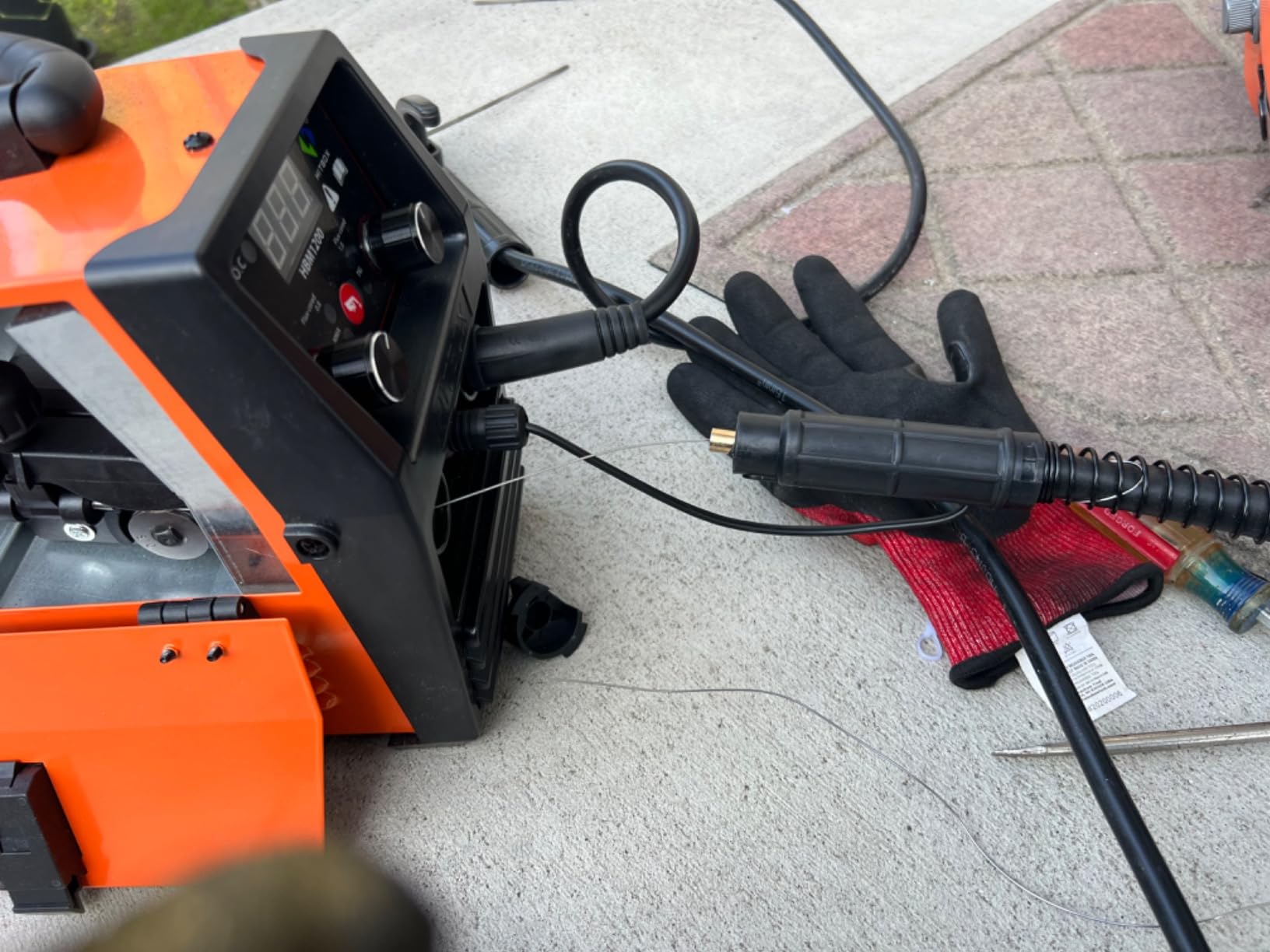
The HITBOX 200A is the machine to buy if your welding happens where the power socket is inconvenient. At 6.6 pounds listed item weight with a built-in carry handle, you can move it from the garage to the yard in one trip, and the dual 110V and 220V input means it works on either household circuit.
Owners consistently say this inexpensive inverter punches well above its weight for flux-core repairs and small shop jobs, with quiet operation and very little spatter on typical work. The metal housing is a nice touch at this size, because thin plastic is the usual weak point on small machines.
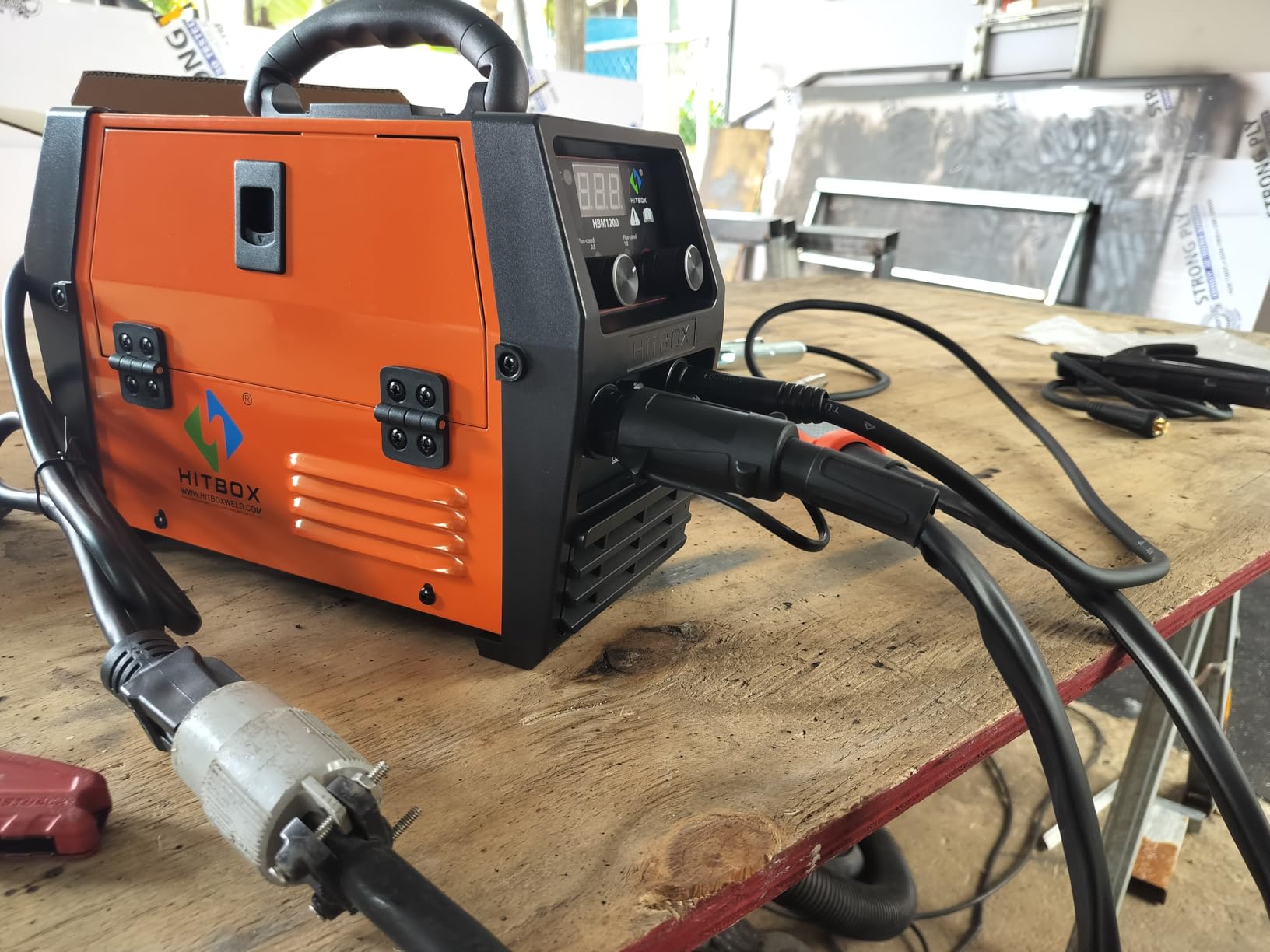
There is a measurement caveat worth taking seriously. Owners who clamped a meter to the output report actual amps running 20 to 30 percent below what the display shows. Plan your settings from the feel of the bead and the thickness of the material rather than trusting the number on the panel.
Stick mode is where this machine is weakest. It will not hold an arc with 3/32 inch 6010, 6011, or 7018 rods, and there is no hot start to help an electrode strike. Owners mostly accept this and use the machine for flux core, which is the honest way to think about it.
Is 200 amps on the label misleading
Possibly, and this is the single most important caveat in the section. The inverter is rated to 200A output, but measured results reported by owners fall meaningfully below the displayed figure. The machine is still capable, just less capable than the label suggests.
Treat the real-world figure as closer to 145 amps on the 110V setting, which still handles mild steel up to 4.0mm. That covers exhaust work, fencing, brackets, and light plate fabrication. It does not cover heavy structural work, and you should not plan on it.
Why owners keep buying it anyway
Two reasons come up constantly. The weight is the headline, and few machines at this capability level are easier to carry. The second is dual voltage, which owners of other budget inverters single out as the feature they wish their own machine had.
The documentation is the weak point, and the instructions are described as hard to follow with little after-sales support. Budget a few extra minutes with a general MIG setup guide, and this becomes a machine that does a lot for very little. Our own beginner tool testing notes make the same point about accessories mattering more than the label.
7. Bestarc 145A – Best 4-in-1 With Genuine Gas MIG
Bestarc 145A MIG Welder, Flux Core/Gas MIG Stick Lift TIG Welding, 110/220V
145A on 110V or 220V
Gas MIG, gasless MIG, lift TIG and stick
60 percent duty cycle
13.7 lb with strap
Pros
- Real gas MIG mode alongside gasless flux core/stick and lift TIG
- Auto-detects 110V or 220V input and shows the selected voltage
- 60 percent duty cycle is high for this tier
- Comes with both flux core and solid wire
- Heavier-gauge cable and a good ground clamp
Cons
- MIG gun lead is short on early production runs
- Non-knurled drive roller on early units hurts flux-core stability
- Spool holder tension is not adjustable
- No gas regulator included
The Bestarc 145A is the machine that gets closest to a real gas welder without leaving the entry-level tier. It runs solid wire with shielding gas, and it also runs gasless flux core, stick, and lift TIG, which makes it a genuine 4-in-1 rather than a three-mode machine with a TIG sticker on it.
The auto-detecting dual voltage is the feature that makes it flexible. It detects whether it is on 110V or 220V and shows the selection on the display, so you can move the same machine between a home garage, a shop, or a farm without a second unit. The synergic voltage match plus plus or minus 3V of fine trim gives beginners a baseline and still leaves real control for anyone who wants it.
Users with production welding backgrounds rate the 120V weld quality highly, often placing it above a well-known budget competitor. A 60 percent duty cycle at this level is genuinely strong, and reverse polarity means you can experiment with stainless flux-core wire later.
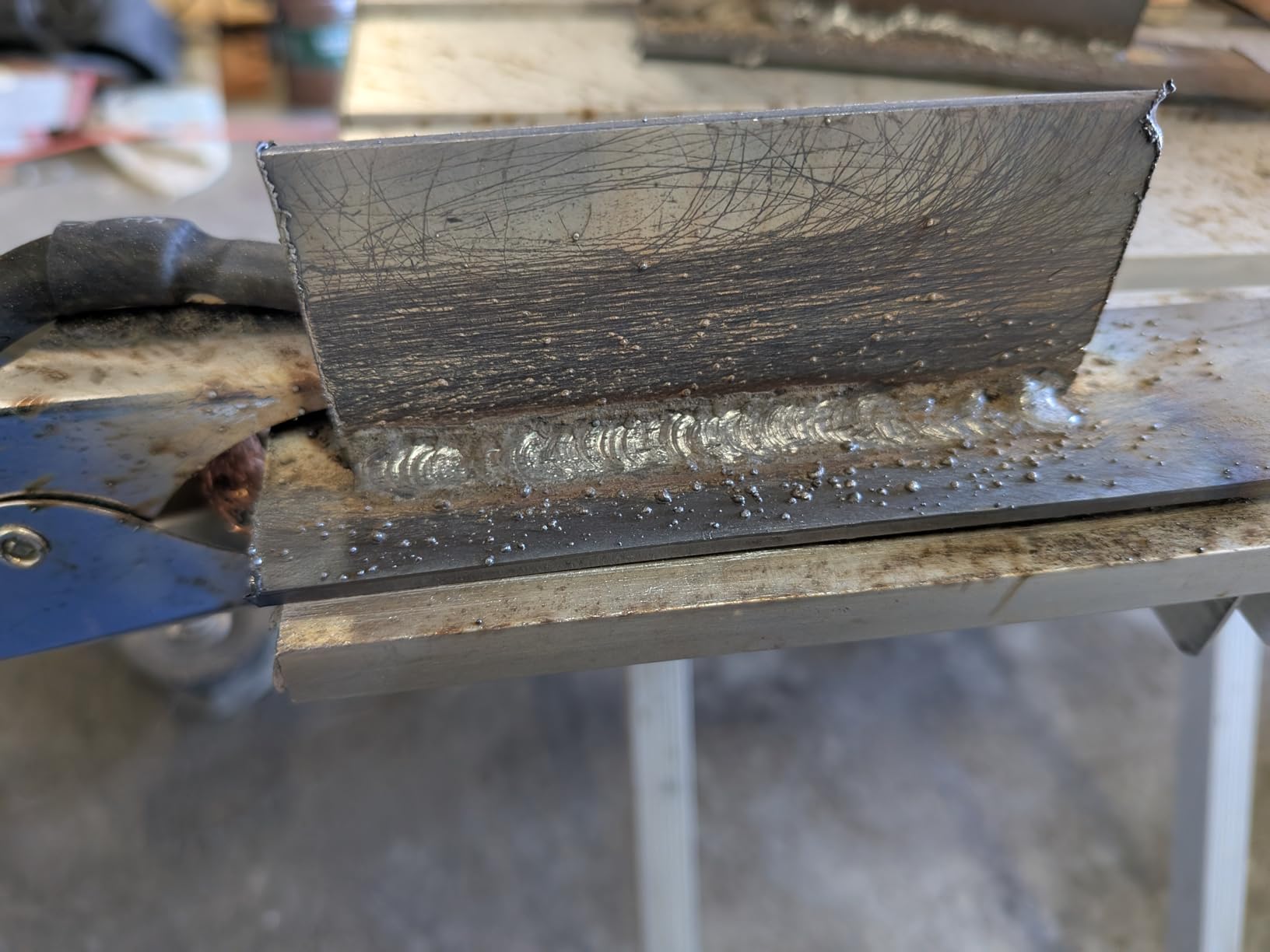
There is a short list of early-production gripes. Some early machines came with a short MIG gun lead, a non-knurled drive roller that degrades flux-core arc stability, and a spool holder tension set too tight with no adjustment. Owners also note the stick mode output looks limited to about 130 amps. Later production runs have corrected several of these, so check what generation you receive.
What dual voltage actually unlocks
On 110V you get a comfortable working range for thin and medium mild steel, which covers most hobby and auto work. Move to 220V and the same machine pushes higher amperage into thicker material, which means fewer passes, better penetration, and less distortion on heavier plate.
That is the growth path. A dual-voltage machine lets you keep one welder from the first weekend project through to the point where you are welding 1/4 inch steel or heavier structural work, rather than hitting a ceiling and starting over.
What to buy alongside it
A gas regulator is not included, so add that to your first order along with a bottle of shielding gas and a hose. The solid wire and flux core wire in the box get you started immediately, but you will want a larger spool once you are running serious wire volume.
Also budget for a knurled drive roller if you will be running .035 or .040 flux core, and check the spool tensioner. The manual also does not clearly explain what the rotary knob does when it is pressed in, so set aside ten minutes with a general MIG guide before your first session.
8. BILT HARD 135A – Best All-in-One Kit for a Complete Beginner
BILT HARD 135A 3-in-1 IGBT Inverter Welder, 110V Flux Core MIG/Lift TIG/Stick Welding Machine with Synergic Control, LED Display, 2T/4T/SPOT Modes & Full Kit (Solar Helmet)
135A on 110V
Flux core MIG, lift TIG and stick
Solar helmet and full kit included
2T, 4T and spot modes
Pros
- Kit includes a solar-powered helmet/gloves/wire/tips
- clamp and chipping hammer
- LED screen menu at this price is unusual in the segment
- Error codes E1 and E2 with automatic shutdown and fan cooldown
- 2T/4T and spot trigger modes add real flexibility
- Handbooks explain the power requirements per process
Cons
- Spool spindle is too short to properly engage the supplied wingnut
- Default settings run too hot and the wire feed too fast
- Included solar helmet drifts between shade settings
- Duty cycle limits longer welding tasks
The BILT HARD 135A is one of only three machines here that ship a helmet, and for someone starting from absolutely nothing that is the pitch. The kit covers the welder, the solar-powered helmet, gloves, a 6.6 foot MIG gun, a 10 foot ground clamp, 2 lb of flux core wire, a spare tip, and a brush and hammer.
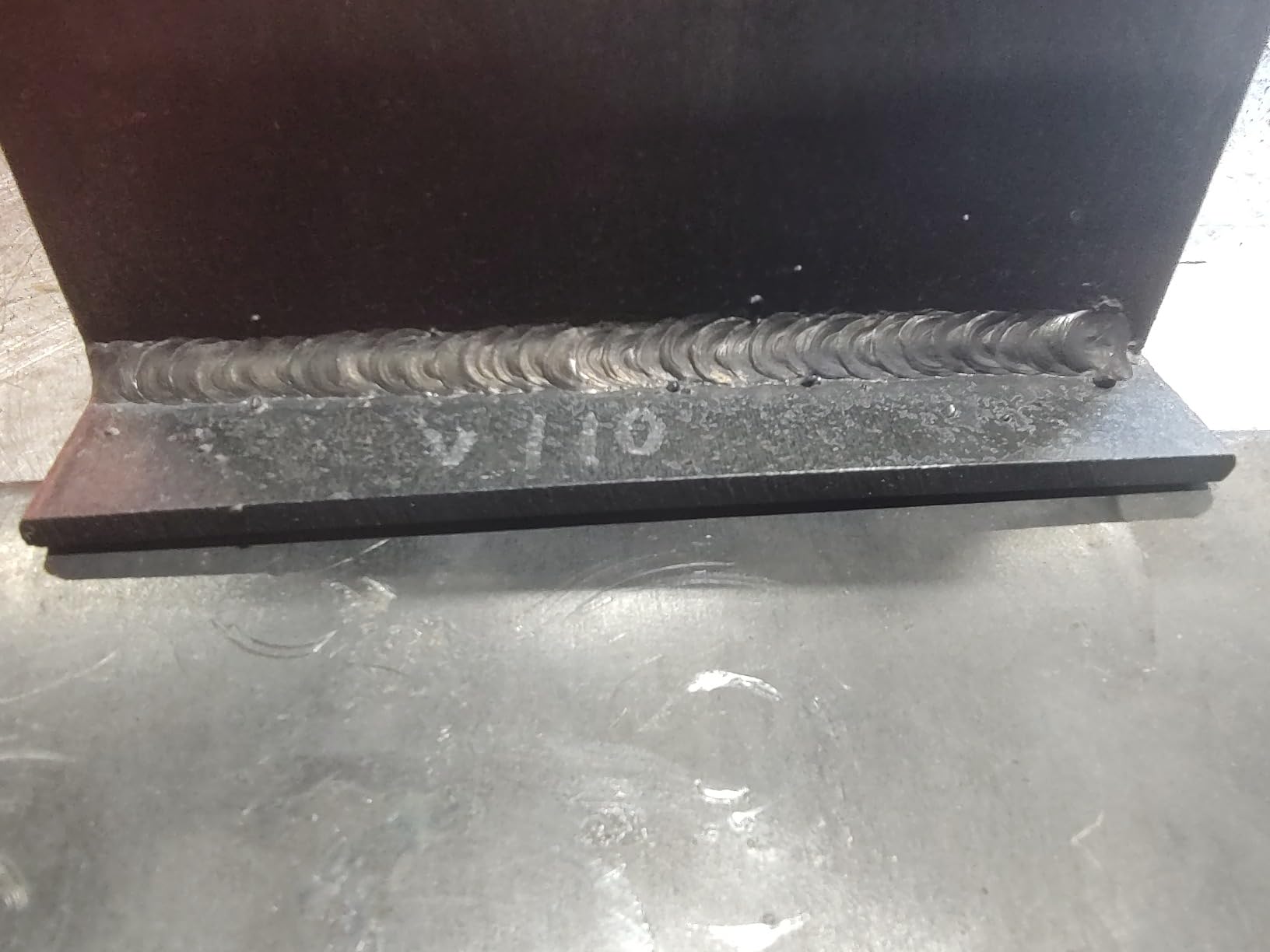
First-time welders report consistent success with it on exhaust pipe and hardware repairs, and they are struck by getting a screen-equipped multi-process machine at this level. The LED tracks real-time voltage, current, and wire speed, and it carries dedicated MIG burn-back and inductance settings plus stick hot start, arc force, and voltage reduction settings.
The trigger modes are a genuine bonus rather than a gimmick. Two-tick gives you spot welding, four-tick lets you hold the wire feed for long seams without a locked trigger, and the spot mode is useful for tacking and for anything where you do not want a continuous bead.
Almost all the complaints are about the accessories, not the welder. The spool spindle is too short to properly engage the supplied wingnut, which makes fitting wire genuinely awkward, and the solar helmet’s shade knob turns too easily and drifts. Owners of the machine itself are satisfied with the arc across MIG and stick on various thicknesses.
Is the included helmet safe enough to use
It is a solar-powered auto-darkening helmet, which means it will darken when an arc strikes. Treat it as a learning helmet, not a daily one. The shade drift is real, the head band is difficult to assemble and arrives unassembled, and buying a proper helmet later is the most common upgrade owners make.
For the first few sessions, in a well-lit garage with nobody behind you, it does the job. For regular work in a shop, plan on replacing it. Our advice on beginner tools, similar to how we treat everyday gear a beginner buys, is that the first purchase should be cheap and the second should be the one you keep.
What to fix before your first weld
Two things. The default settings run too hot with the wire feed set too fast, so dial both down before your first pass. And the spool spindle needs replacing or adapting, because owners who fight that wingnut lose most of their first session to threading.
The duty cycle will limit long tasks, so plan your seams in sections and let the machine cool. It also flags overheat and overcurrent as E1 and E2 on the display, shuts down, and keeps the fan running for a minute or two before it is safe to restart, which is good behaviour for a machine in this price range.
9. BESTMIG 135A – Best for Students and Shop Classes
BESTMIG 135A MIG Welder – 3-in-1 Flux Core Welder, MIG/Lift TIG/Stick Welding Machine – Portable IGBT Inverter – 110V with Welding Helmets and Gloves (Red Black, MIG 135A Welder)
135A on 110V
Flux core MIG, lift TIG and stick
Wire from .030 to .040
10.71 lb with full kit
Pros
- Full accessory kit with helmet/gloves/torch
- clamp and electrode holder
- Digital control adjusts voltage and wire feed to reduce spatter
- Full-colour LED display shows real-time parameters
- Handles .030 to .040 flux core on stainless and carbon steel
- A popular choice as a first welder for students and hobbyists
Cons
- TIG torch not included despite lift TIG mode being listed
- Some sets arrive with missing kit accessories
- Supplied plug is not UK compatible and support was unresponsive
The BESTMIG 135A is the one to consider if the machine is for a shared space, a school workshop, or a gift for someone you are trying not to spend a lot of money on. At 10.71 pounds it is light enough for a teenager to move, and the accessory kit means there is nothing else to buy to get started.
Users doing DIY work and student practice report a stable arc and controls that are easy to set, and they call the included helmet and gloves a real bonus rather than a token. The digital control adjusting voltage and wire feed reduces spatter enough to produce a cleaner bead than most gasless machines at this level.
Its wire range is the standout spec. Running .030 through .040 flux core covers both thin sheet and heavier plate, and the listing says it handles stainless and carbon steel, which is a wider claim than most of the gasless units here make.
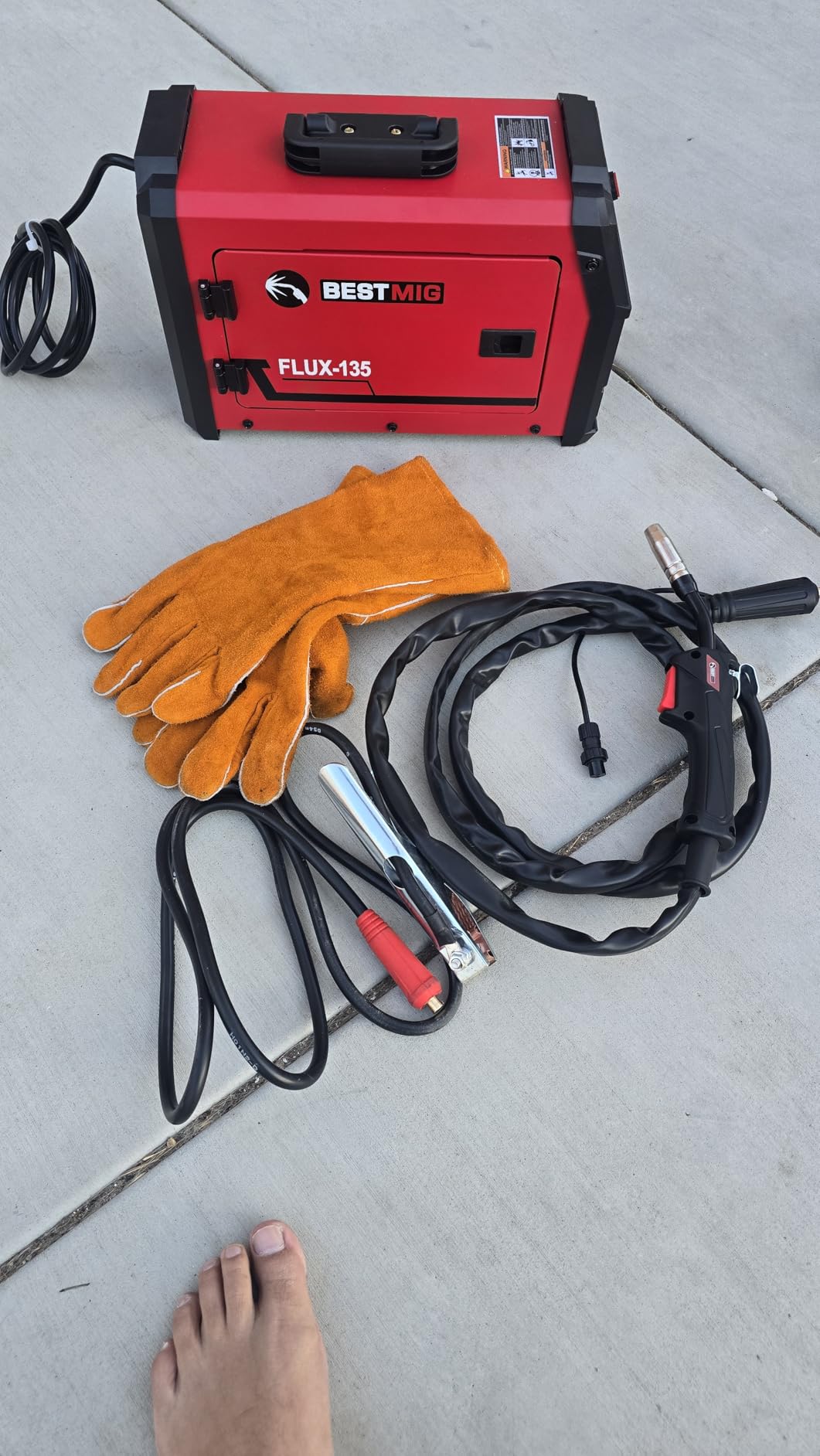
Read the negative reviews carefully, because they are almost entirely about fulfilment. Owners report sets arriving with missing accessories, torch cable connections that do not fit the machine, a plug that is not UK compatible, and support responses that never came. That is a warehouse problem rather than a welding problem, but it will ruin a first purchase if it happens to you.
Is this good enough to grow into
For practice work, mild steel up to 1/8 inch, and the kind of hobby fabrication most people do, yes. The digital control gives you a stable starting point and the full-colour display means you can see what the machine is doing, which is genuinely useful while you are learning what the numbers mean.
The limit is the 1/8 inch output figure. If you already know you will be welding thicker structural material within a year, a dual-voltage machine is a better buy. If you are starting on exhaust work, brackets, and small frames, this does everything you need.
How to avoid the fulfilment problems
Check the full accessory list the moment the box arrives, and photograph the contents before you assemble anything. Confirm the torch cable seats fully into the machine. It takes two minutes and it converts the most common complaint on this product into a five-minute support conversation rather than a return.
If you are outside the US, the plug is a real consideration. Verify the plug type and the voltage configuration with the seller before you commit, because that is the issue that cannot be fixed with an adapter in every case.
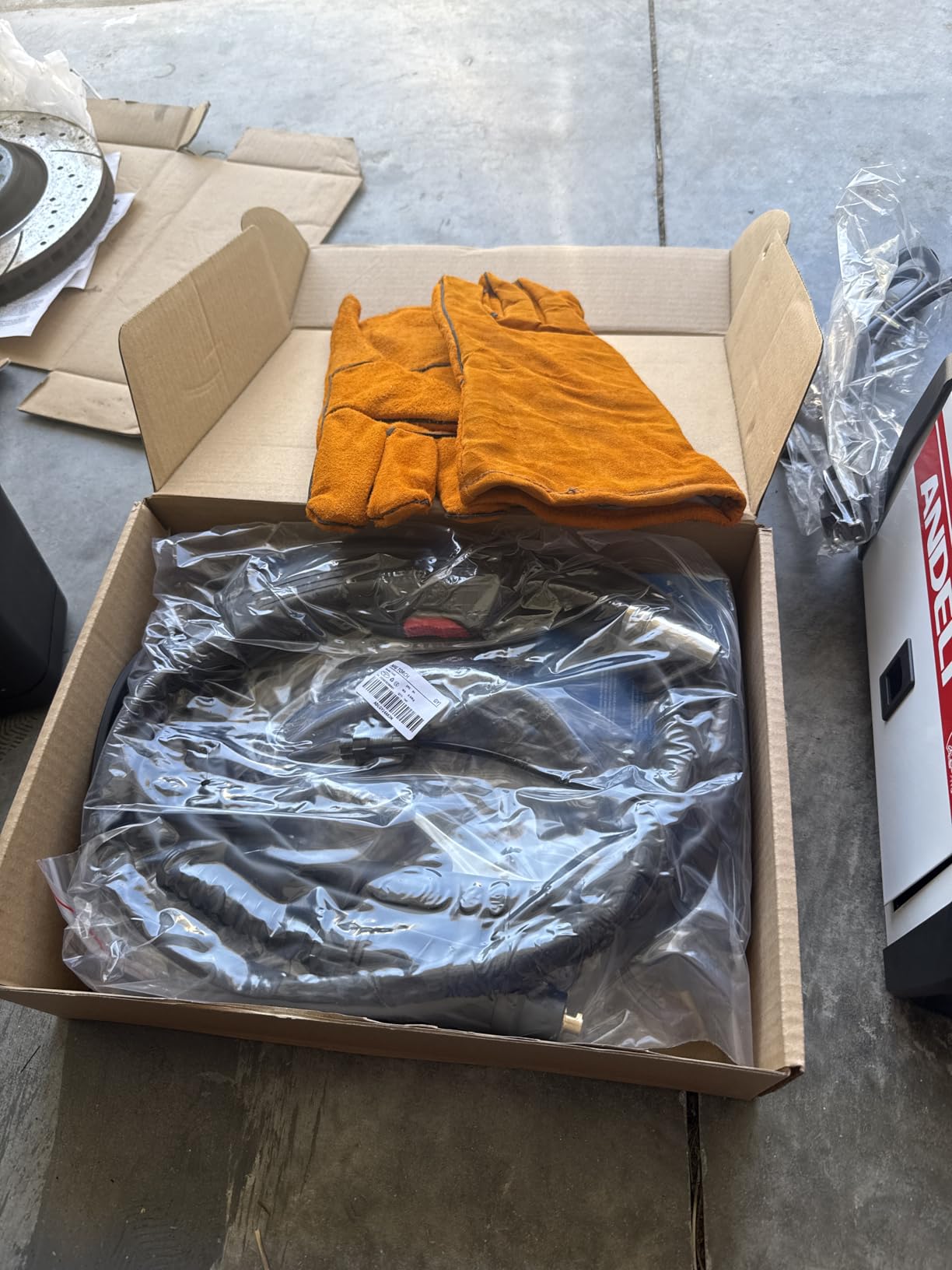
10. ANDELI 135A – Best Control and Bead Quality in This Group
ANDELI 110V/220V MIG Welder 135A ,PULSE Flux Core/Lift TIG/Stick 4-in-1
135A on 110V or 220V
Pulse flux core, MIG, lift TIG and stick
Welds to 5.0mm
9.04 lb
Pros
- Pulse flux core gives a smoother arc and finer
- more uniform beads
- Adjustable inductance plus hot start and arc force give real spatter control
- 4.1 inch LED display with a protective cover readable without lifting the helmet
- Only 9.04 lb with a carrying handle
- Handles .030
- .035 and .040 flux core wire
Cons
- Included welding helmet is poor quality and worth replacing
- Only accepts 2 lb wire spools
- One drive roller covers .030 and .035
- the .040 roller must be bought separately
The ANDELI 135A is the one to buy if you want to learn proper machine control rather than just make a weld. It is the only machine here with a pulse flux-core mode, and experienced hobbyists rate it as the strongest 135-amp unit in the group for bead quality and adjustability.
Pulse is the feature that matters. It modulates the arc on and off at a high rate, which produces finer, more uniform beads and stronger joints with less heat input. That means less burn-through on thin material and less distortion on everything else, and it is a real technique rather than a marketing word.
The inductance control, hot start, and arc force settings give you genuine command over spatter. Combined with a 4.1 inch LED display under a reinforced transparent cover that you can read without lifting your helmet, this is one of the best-equipped control panels in the list at this output level.
It is also light, 9.04 pounds, and dual voltage, so it works on a household outlet or a 220V circuit. The kit is generous, with a helmet, goggles, gloves, contact tips, wire, and a 220V to 110V adapter included.
The universally repeated advice from owners is to replace the helmet and buy the .040 drive roller. The helmet is described as poor quality, and the included roller only covers .030 and .035, so .040 wire needs a separate purchase. The synergic display also reports wire feed in amps rather than inches per minute, which confuses anyone used to US units.
Does pulse mode actually help a beginner
It helps, but not on your first afternoon. Pulse is a refinement that pays off once you are moving consistently and want a bead that looks uniform along a long seam. On day one, most beginners are still learning how far to hold the torch and how fast to travel.
What it does give you immediately is a wider safety margin on thin material. If you can run pulse from the start, you are less likely to burn a hole through a piece of 16-gauge sheet on attempt three, which is the fastest way to lose confidence.
What to buy with it
A proper welding helmet is the first upgrade, and owners agree without exception. Second, the .040 drive roller, if you plan to run heavier flux core wire. Third, note that it only accepts 2 lb spools, so factor in more frequent wire changes than on a 10 lb spool machine.
Also get in the habit of grounding the machine before you change modes. Owners report the stinger can go live if it sits on the workbench while you switch processes, and that habit costs nothing to build now.
What to Look for in a Beginner MIG Welder
Three features decide whether a machine is right for you: how it takes power, whether it runs with gas or without, and how much help the controls give you. Get those three right and the rest is preference. The section below covers each one, then the wire and duty-cycle details that catch first-time buyers out.
1. Power input: 110V against dual voltage
Outlet access is the number one constraint, and it should be your first question. Almost every home has 110V outlets and far fewer have a 220V circuit, which is why so many machines in this list are 110V only. A 110V machine is the correct choice if a standard wall socket is all you have, and it will handle mild steel up to roughly 3/16 inch on the better units.
A dual-voltage machine is the better buy if you can install or use a 220V circuit, because it runs on either. It is also the only way to avoid a ceiling later. One caveat: the 110V adapter path on these machines is real but limited, and owners report tripping household breakers when they push near full output through it. Treat 110V as a light-duty mode on a dual-voltage machine, not a substitute for the 220V circuit.
2. Gas MIG against gasless flux core
Gas MIG uses solid wire and a shielding gas, usually an argon and CO2 mix. It gives the cleanest bead of any beginner option, with very little spatter and almost no cleanup. The cost is friction: you need a bottle, a regulator, a hose, and somewhere secure to store the bottle upright, and you cannot weld in a stiff breeze because the gas shield blows away.
Gasless flux core uses self-shielded wire that creates its own shielding. There is nothing to buy but wire, it works outdoors in the wind, and the setup is one button. You pay for that convenience with more spatter, a rougher bead, and the need to grind or chip off slag. For a first machine, gasless is genuinely the better teaching tool. Once you are making things that need to look finished, gas MIG is the better tool.
3. Synergic and auto-set controls
Synergic control means the machine matches voltage to wire feed speed automatically once you tell it the wire diameter and material thickness. For a beginner this is the single most valuable feature on the page, because it removes the exact thing that makes people quit. You set amperage, the machine handles the rest, and you learn by watching the arc instead of guessing at numbers.
The best setups let you go both ways. A synergic baseline plus a plus or minus 3V manual trim means a beginner gets help and an experienced user still has control. A synergic-only machine with no trim, like the flux core mode on the YESWELDER 135A, is fine while you are learning and limiting once you are not.
4. Wire diameter compatibility
Wire diameter is the detail that catches people. Most machines run .030 and .035 wire, and a good number also run .040. The .030 and .035 spools are the ones you will see in almost every beginner kit. A .040 roller, when a machine accepts .040, is what you need for heavier plate and it is often a separate purchase, as it is on the ANDELI.
Check the spool size too, not just the diameter. Some small machines accept only a 2 lb spool or even a 2.2 lb roll, which means replacing wire more often. Others handle both 2 lb and 10 lb spools, which matters if you end up welding in volume.
5. Duty cycle, translated
Duty cycle is written as a percentage and an amperage, and it means how long the machine can work at that output before it needs to cool. A machine rated 20 percent at 90 amps is on 2 minutes out of every 10. A 60 percent duty cycle at this class of machine is genuinely good and means longer seams before a cooldown.
Beginners rarely hit this limit because they are not welding continuously. If you plan to do long seams on heavy plate regularly, look for a higher duty cycle and expect to pause and let the machine cool, which is a normal part of the process rather than a fault.
6. Spool threading, the thing nobody warns you about
Threading the wire is the most-reported beginner frustration in this category, and it has nothing to do with welding skill. Several machines here have cramped wire feed bays, and two of them have a spool spindle that does not properly engage the supplied wingnut, which is a genuine assembly problem rather than user error.
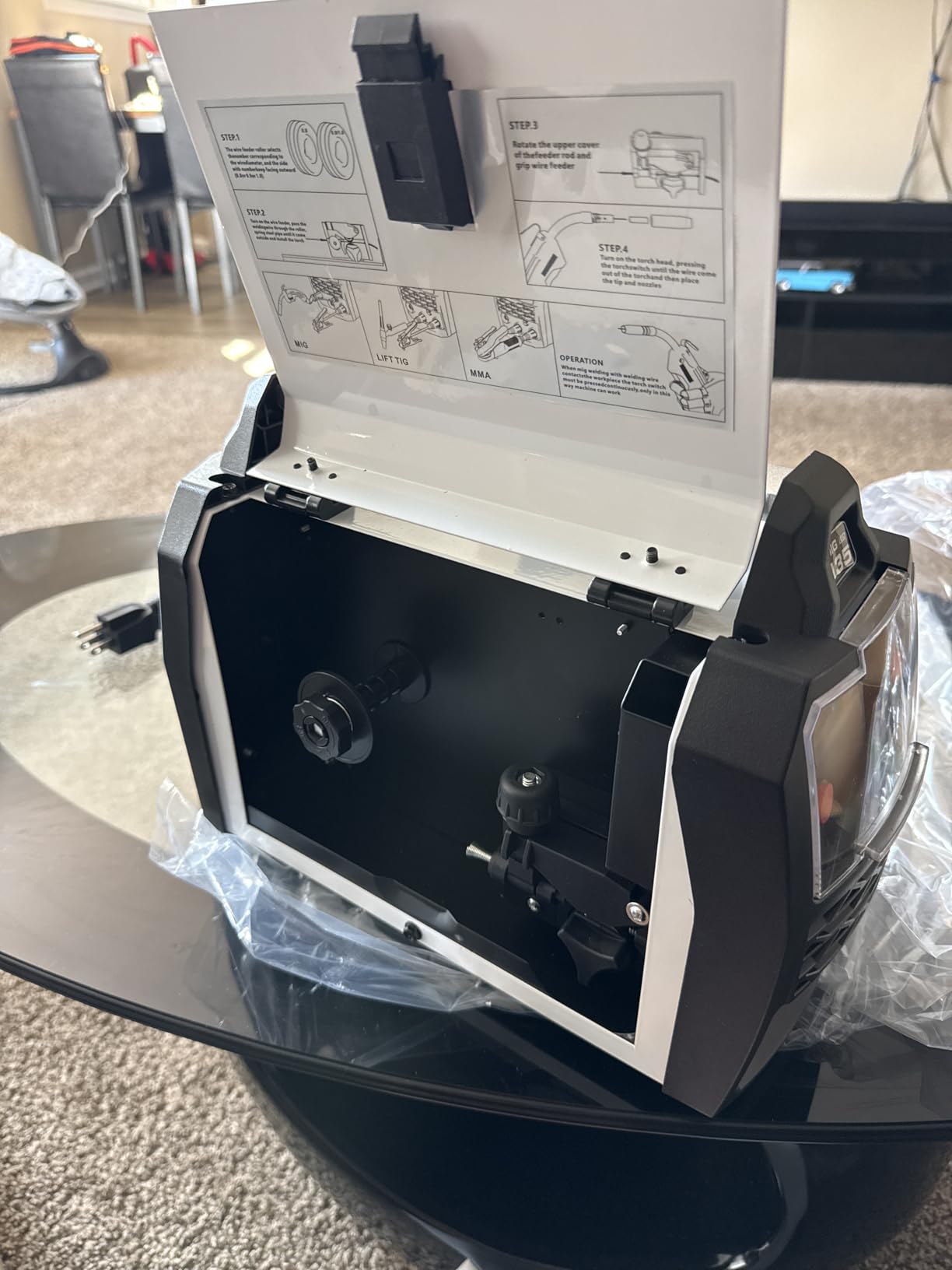
Before you buy, check whether the drive roller and tensioner are adjustable and whether the manufacturer explains the wire path clearly. Before your first weld, do a full dry run with the power off. Five minutes of threading practice on scrap will save you an hour of frustration.
A word about stainless and aluminum
Do not plan to learn stainless or aluminum on any of the machines in this guide. Those are different purchase categories. Stainless needs the ability to run stainless wire and a compatible liner, and aluminum needs spool gun capability plus alternating current, which none of the budget machines here provide. If marine work or aluminum fabrication is your actual goal, buy for that job directly rather than buying a beginner machine and hoping it grows.
What You Also Need Besides the Welder
The machine is the cheapest part of getting into MIG welding. This is the list that turns a box in the garage into a working setup, and it is the part most buying guides skip.
An auto-darkening helmet is non-negotiable. Do not use sunglasses, do not use a welding mask from a craft store, and do not watch an arc without one. A solar or battery-powered auto-darkening model is fine to learn on, and you can upgrade later.
Gloves and a jacket come next. Leather welding gloves rated for MIG work, plus a jacket or leather sleeves, are what stand between a beginner and a routine burn on the inside of the arm. The gloves included with some kits here are fine for handling cold stock and thin for a first full weld.
A ground clamp you trust matters more than most people expect. The clamps in cheap kits warp on soft metal, and a bad ground causes arc wandering that beginners blame on the machine. Replace it early.
Consumables and shielding gas are the running cost. If you go gasless, budget for .030 and .035 flux core wire and a spool gun is not needed. If you go gas MIG, add a bottle of shielding gas, a regulator, and a hose, and remember the gas is a recurring cost that never goes away.
A cart and a proper torch for a TIG mode round out the setup, along with a chipping hammer, a wire brush, and a spool of the wire you will actually use. If your machine takes lift TIG, the TIG torch is almost always sold separately, so factor that into the first order.
For your first projects, work through a ladder: tack and fillet a 16-gauge steel shelf bracket, then a 14-gauge steel box, then a small 3/16 inch bracket or a length of 1/8 inch square tubing, then a trailer hitch bracket or a set of shelf brackets in mild steel. Add a gas bottle only once you are making something that needs to look finished.
Frequently Asked Questions
Are MIG welders good for beginners?
Yes. MIG is widely considered the easiest welding process to learn. The wire feeds continuously from a spool, so there is no electrode to clamp and no filler rod to manage, and the bead needs far less cleanup than stick welding. Most first-time welders get a sound bead on thin mild steel within a few hours.
Which welders are the easiest to use for beginners?
The easiest machines share three traits: synergic control that sets voltage for you, a gasless flux core mode that needs no bottle, and a light body. The ARCCAPTAIN 130A, YESWELDER 135A, and TOOLIOM 135A all score well on all three. The control style matters most, because picking wire size and letting the machine set the voltage removes the most common reason beginners stall.
What kind of welder should a beginner start with?
If your only power is a standard 110V outlet, start with a gasless flux core multi-process inverter in the 130 to 140 amp range. If you can run a 220V circuit, buy a dual-voltage gas machine so you get clean solid-wire welds now and higher output later. The decision rule is simple: outlet access first, then gas if you care about appearance.
Are Harbor Freight MIG welders any good?
The Harbor Freight Titanium range is generally capable for the money, with owner review counts in the hundreds. The honest caveats are that the popular entry models are gasless flux core only, which means more spatter and rougher beads, and that duty cycle is limited on sustained loads. For light-gauge hobby work they are a reasonable buy, but they are not the cleanest-welding option.
What is the best entry-level MIG welder for beginners?
The ARCCAPTAIN 130A is the best entry-level pick. It runs on a standard 110V outlet, matches voltage automatically once you select the wire diameter, weighs 11.79 pounds, and carries a 4.6 rating across more than 1800 reviews. The TOOLIOM 135A is the runner-up if you want gloves and wire included in the box.
How thick of metal can a 120V MIG welder handle?
A good 120V machine handles mild steel up to about 3/16 inch, which covers exhaust pipe, brackets, and light fabrication. The smaller 130-amp gasless units stop around 3/32 inch. For 1/4 inch steel and heavier you want a dual-voltage machine on a 220V circuit, where higher amperage gives you better penetration on fewer passes.
The Beginner MIG Welder to Buy in 2026
If you take one thing from this guide, buy the ARCCAPTAIN 130A. It runs on an outlet you already have, it does the hardest part of welding setup for you, it is light enough to carry in one hand, and more than 1800 owners have already documented how it behaves. Nothing else on this list matches that combination of simplicity and evidence.
Pick the TOOLIOM 135A if you want gloves and wire in the box and the least fuss on your first afternoon. Pick the YESWELDER 160A or the Bestarc 145A if you can run a 220V circuit and want clean gas MIG welds now instead of grinding slag off every bead later.
And buy the rest of the setup at the same time. A helmet, a pair of leather gloves, a real ground clamp, and a spool of wire will cost you less than you think, and they are what separates your first hour of welding from your first ten.