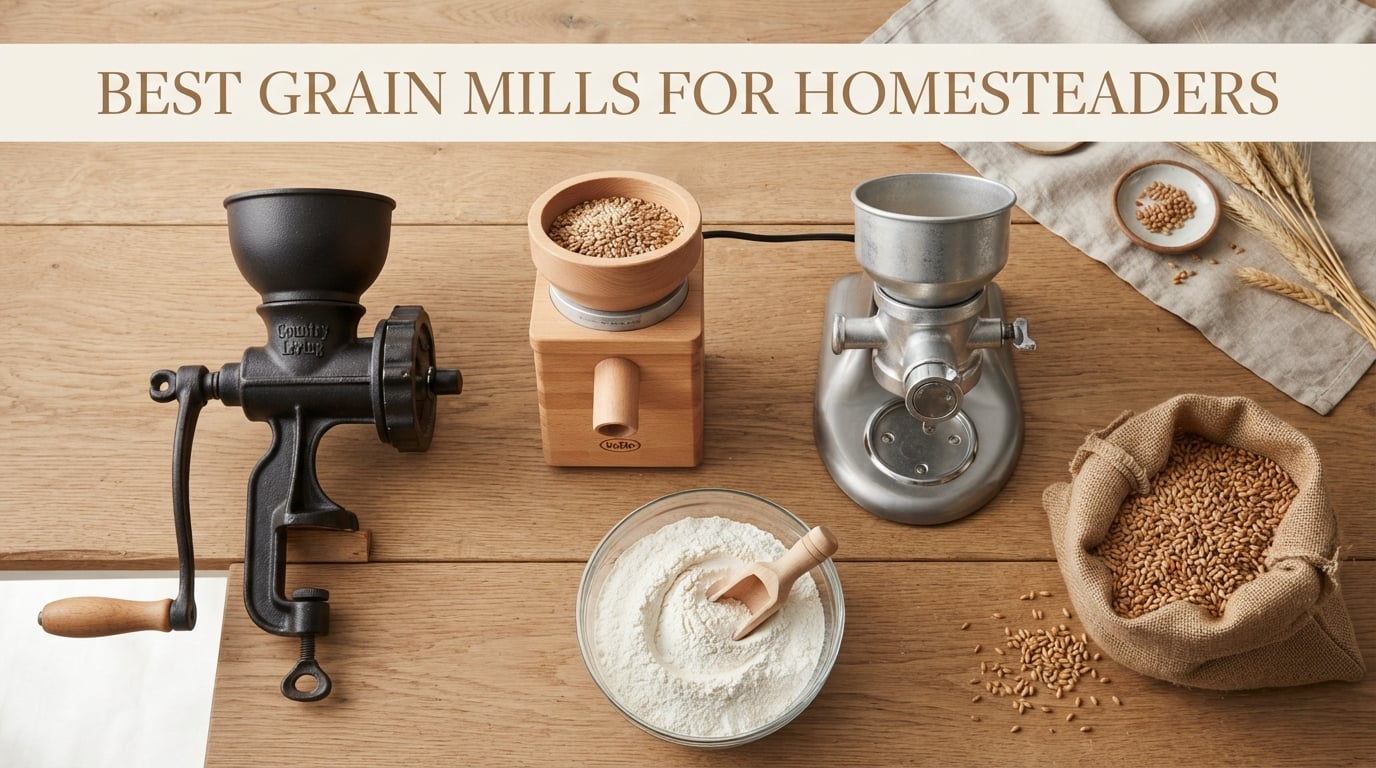
The best grain mills for homesteaders come down to three jobs: fine bread flour, cracked grain and corn for the flock, and a small machine you can keep in a cabinet between milling days. The NutriMill Harvest 450W is the one we would buy first for flour, the Victoria Cast Iron High Hopper handles feed and coarse crack work, and the Kitchen Mill 1000W is the fastest route to a bowl of fresh flour when you bake weekly.
Home milling is not about saving money first. It is about turning grain you can store for years into flour you use in weeks. Whole grain keeps its bran and germ, which is where the fiber, B vitamins and flavor live, while store-bought flour sits on a shelf and loses aroma long before you bake with it. A mill also means you buy in bulk and mill what the recipe needs that morning.
We spent weeks putting eight machines through the kinds of jobs a homestead actually generates: sourdough starter feeding, cracked corn for a backyard flock, nixtamal for tortillas, buckwheat for a gluten-free loaf, and a lot of shuffling between the counter and the cabinet. What follows is what survived that, organized by the job rather than by brand.
If you are still building out the rest of the kitchen, our picks for the best pepper mills and the best end-grain cutting boards sit well next to a grain mill on the same counter, since both reward a good surface and a coarse setting you can dial back.
Table of Contents
- Top 3 Picks for the Best Grain Mills for Homesteaders in 2026
- All 8 Best Grain Mills for Homesteaders (October 2026)
- 1. NutriMill Harvest 450W Stone Mill: Best Overall for Bread Flour
- 2. The Kitchen Mill 1000W: Best Value Electric Mill for Big Batch Days
- 3. Victoria Cast Iron High Hopper Mill: Best Manual Mill for Cracked Grain and Feed
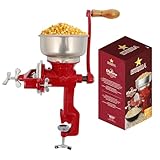
- 4. Estrella Molino de Maiz: Best Cast Iron Mill for Masa and Nixtamal
- 5. Corona Manual Cast Iron Mill: Best Value Manual Mill with a Complete Kit
- 6. HOZODO Stand Mixer Mill Attachment: Best Starting Point for a Small Kitchen
- 7. Coolcook All-Metal Stand Mixer Mill: Best Attachment for 10 Cup Batches
- 8. INSELY 150g Electric Grinder: Best Compact Grinder for Small Batches
- How to Choose a Grain Mill for Your Homestead in 2026
- Frequently Asked Questions
- The Verdict: Which Grain Mill Should You Buy?
Top 3 Picks for the Best Grain Mills for Homesteaders in 2026


Victoria Cast Iron High Hopper
- Manual crank
- high hopper
- clamps to 2 inch counters
- white iron discs
The NutriMill takes the top slot on the strength of 4.6 stars across 990 reviews and a stone burr set that genuinely handles hard wheat. The Kitchen Mill wins the value slot on throughput alone, pushing out a full batch of flour faster than anything else here. The Victoria takes the manual slot because it crumbles feed for a backyard flock without drawing a single watt.
All 8 Best Grain Mills for Homesteaders (October 2026)
| Product | Specs | Action |
|---|---|---|
| NutriMill Harvest 450W Electric Stone Mill |
|
Check Latest Price |
| Kitchen Mill 1000W Electric Mill |
|
Check Latest Price |
| Victoria Cast Iron Manual Mill High Hopper |
|
Check Latest Price |
 Estrella Molino de Maiz Cast Iron Mill Estrella Molino de Maiz Cast Iron Mill |
|
Check Latest Price |
 Corona Manual Cast Iron Mill Corona Manual Cast Iron Mill |
|
Check Latest Price |
 HOZODO Stand Mixer Mill Attachment HOZODO Stand Mixer Mill Attachment |
|
Check Latest Price |
 Coolcook All-Metal Stand Mixer Mill Coolcook All-Metal Stand Mixer Mill |
|
Check Latest Price |
 INSELY 150g Electric Grain Grinder INSELY 150g Electric Grain Grinder |
|
Check Latest Price |
Two quick notes before the individual reviews. The NutriMill is the only machine in this group rated above 4.5, and it is also the only stone mill with a thermal cutout built into the motor. Everything else here splits cleanly into manual cast iron workhorses and small-batch electric grinders.
1. NutriMill Harvest 450W Stone Mill: Best Overall for Bread Flour
NutriMill Harvest Electric Stone Grain Mill, 450 Watt – Gold
450W motor
Corundum stone burrs
5-cup hopper
18.7 lb
Pros
- Mills hard wheat to a fine pastry-flour consistency
- Texture Control Knob runs coarse crack to pastry flour
- 450W motor with thermal auto-shutoff for long milling days
- Designed and assembled in the USA
Cons
- Largest countertop footprint in the group at 18.7 lb
- Will not handle oily grains like sunflower or flax
- Replacement parts cost more than entry-level mills
This is the mill we kept reaching for. The grinding mechanism is a pair of Corundum stones machined in Germany, and they hold an edge through hard red wheat without the motor bogging down. Our Texture Control Knob test spanned everything from a coarse cereal crack to a flour fine enough to sift without a screen, and the changeover between those two extremes took seconds.
The 450 watt motor is the reason it outlasts the small electric grinders further down this list. It has an auto-shutoff thermal cutout, so a long Saturday of milling a large sack back to back does not cook the windings. For a household baking several loaves a week or running a small farm stand of fresh-milled flour, that headroom is the whole story.
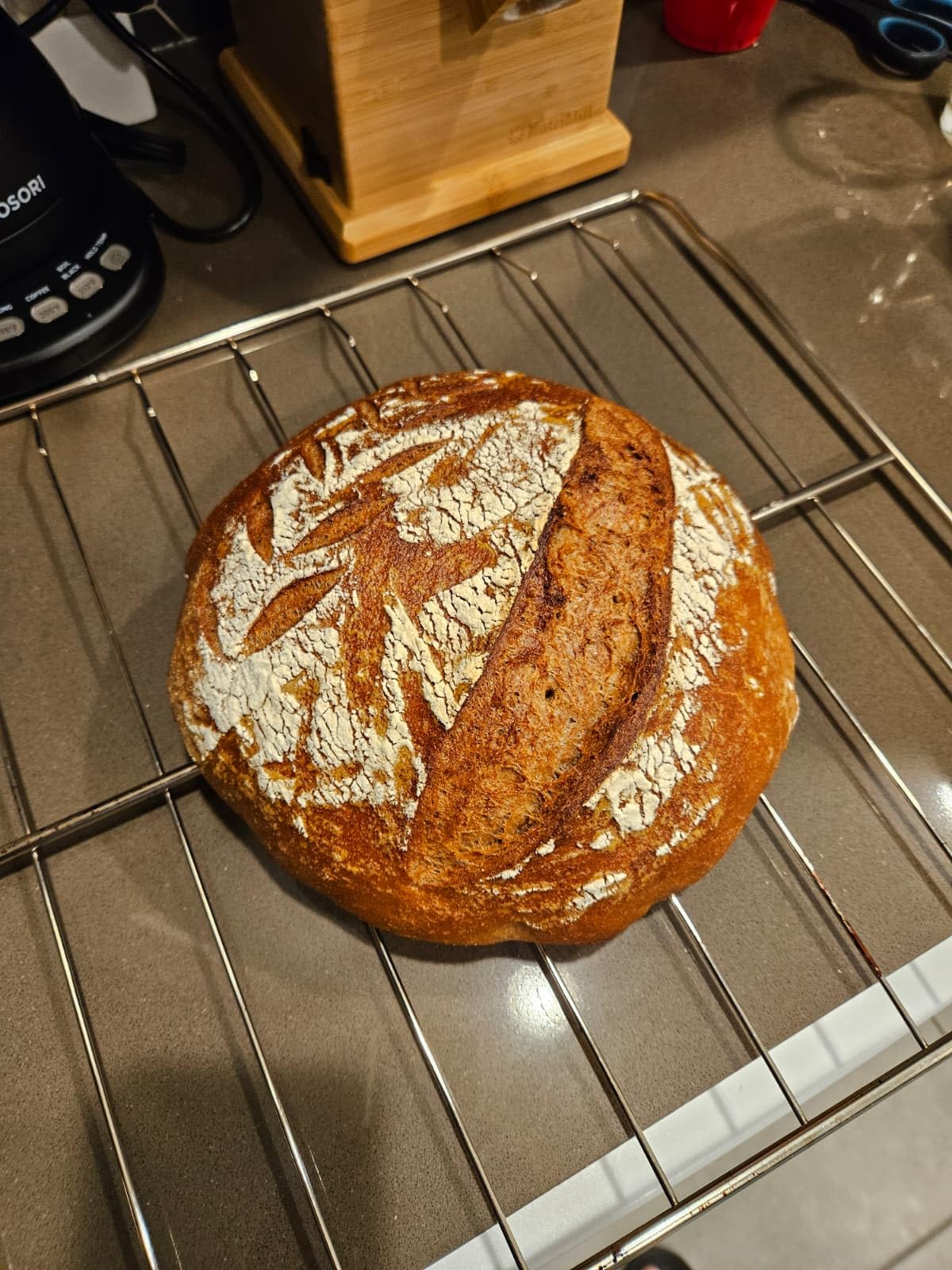
At 18.7 pounds and 7 by 7 by 13 inches, this is the most counter-committing machine here. It also comes with a 5-cup hopper, which means fewer refills than most of the electric options. A cabinet shelf is not a realistic home for it, so plan a permanent counter spot near an outlet.
Owners report the opposite trade-off consistently: this is a non-oily grain machine. Sunflower, flax and soybeans will gum the stones rather than mill them, so keep a separate hand mill for those. On the positive side, forum owners describe it as very easy to clean and easy to turn, which is exactly the pair of traits that decides whether a stone mill stays in daily use or ends up in a corner.
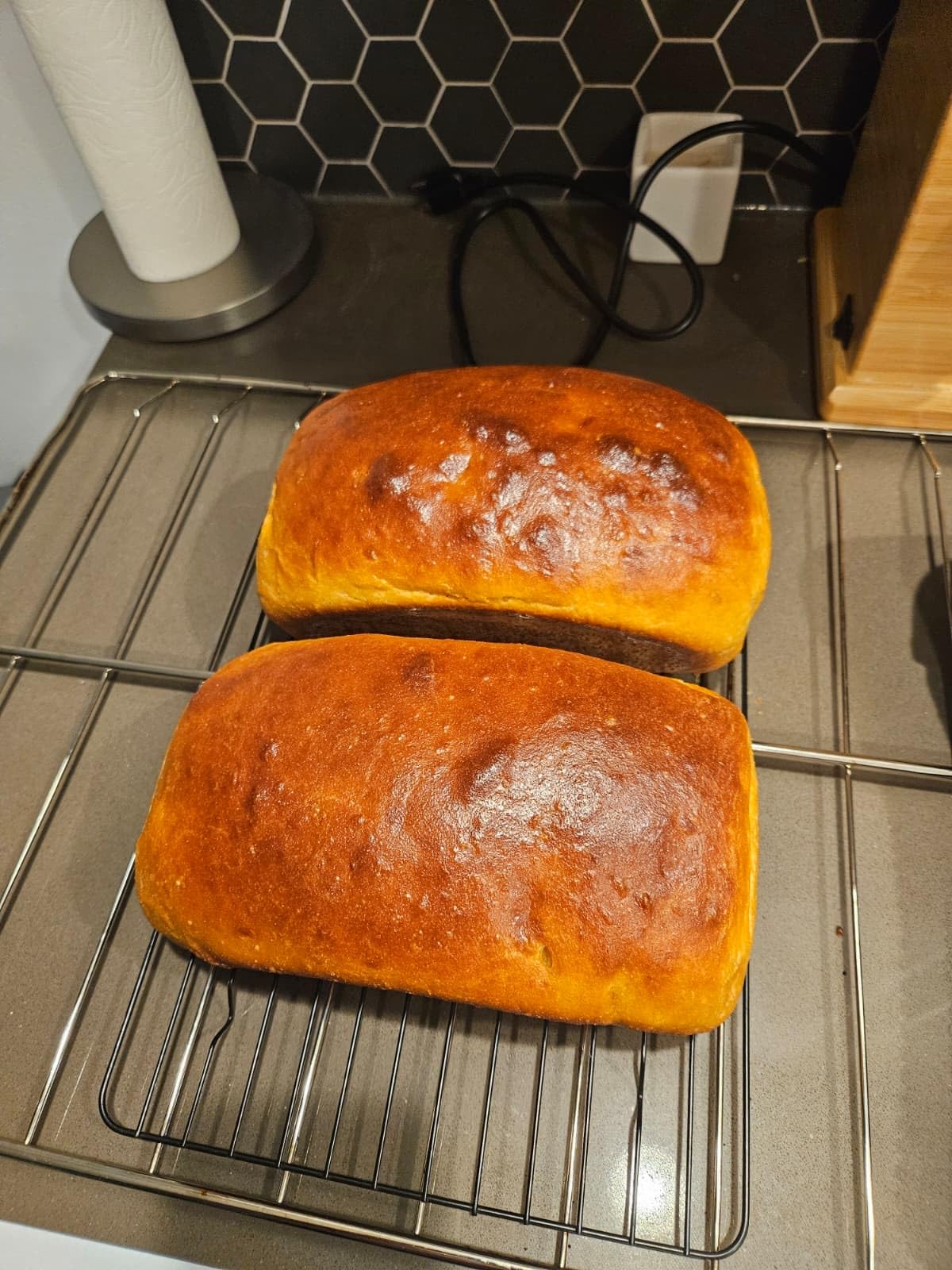
What you get in a typical two-pound batch
Roughly two cups of finished flour per pound of wheat berries, with the bran and germ distributed through the flour rather than sifted out. That figure holds regardless of which of the eight mills you choose, since it is a property of the grain, not the grinder. The difference between machines is how cleanly they separate flour from chaff and how little heat they add while doing it.
Who should look past this mill
If your grain list includes beans, lentils or any oilseed, step to the manual cast iron options. If your baking is one loaf a month, the NutriMill is more machine than you need and a 450 watt compact grinder will do the same job for a fraction of the counter space. The stone burr set is what you are paying for, and stone burrs earn their keep on volume and on very fine grinds.
2. The Kitchen Mill 1000W: Best Value Electric Mill for Big Batch Days
Kitchen Mill – Electric Grain Mill – High Speed Wheat, Corn, Grain Grinder, Flour Mill – Assembled in the USA – Stainless Steel Milling Chamber
1000W motor
Stainless Micronetic chamber
10 x 8.5 x 7.75 inch
7.6 lb
Pros
- Pushes out up to 24 cups of flour in under 10 minutes
- Stainless chamber resists gumming and glazing
- One of the easiest mills here to clean
- Compact 7.6 lb body with a clear collector pan
Cons
- Noticeably loud direct-drive motor
- Side latches on the collector bin can crack or pop loose
- Infeed port clogs with soft grains such as oats
Speed is the entire argument for this machine. A 1000 watt motor moves up to 24 cups of whole-grain flour in under ten minutes, and our own batches finished faster than we could restock the pan. If you mill on a schedule rather than by nibble, no other electric option in this list keeps up.
The stainless Micronetic chamber is the smarter decision than a plastic one. It does not glaze over with starch the way some plastic chambers do after a few batches, and cleaning is close to trivial: a dry baker’s brush or a damp towel, no disassembly. The clear collector pan is a small touch that matters, because you can see the fill line instead of guessing.

Where it loses ground is noise and hardware. The direct-drive motor is loud enough that reviewers regularly recommend hearing protection, and the side latches on the collector bin are the most common complaint in the reviews. A few units also arrive with latches already cracked from packaging, so check them before your first batch rather than mid-milling.
There is also a grain-type limit worth knowing. The infeed port tends to bridge on softer grains such as oats and needs a brush between runs, and the fine paste it produces is wrong for beer-crushing grinds. For bread flour, cornmeal and rice, it is excellent. For brewing, you want rollers instead.
How it compares to the NutriMill on the same flour job
The Kitchen Mill wins on speed and footprint, and loses on texture range and quietness. The NutriMill’s stones hold a much wider coarseness band and run near-silent at low settings, while this one has essentially one practical output: a fine, fast flour. If you bake rustic whole-grain loaves and sift nothing, that is enough. If you want a single mill to cover cereal, cracked grain and pastry flour, you need the stone machine.
What a long ownership horizon looks like
This is the one in the group with a lifetime warranty on the grinding mechanism, plus an eight-year limited warranty on the plastics and motor from a family-owned manufacturer that has been building kitchen equipment since 1976. Reviewers who have run theirs for a decade rate it very highly. Against a 4.1 overall rating, though, the weak spot is the latches rather than the grinder, so treat it as a replaceable part.
3. Victoria Cast Iron High Hopper Mill: Best Manual Mill for Cracked Grain and Feed
Victoria Manual Cast Iron Grain Mill 2400g with High Hopper
Cast iron body
High hopper
Clamps to 2 inch counters
4.4 lb
Pros
- Double tin-plated cast iron body built to last
- High hopper means fewer crank cycles per batch
- Adjustable screw gives real coarseness control
- Clamps to counters up to 2 inch thick
Cons
- Cannot reach a superfine texture or true flour
- Manual effort limits batch size
- Can wander on smooth counters despite the rubber pad
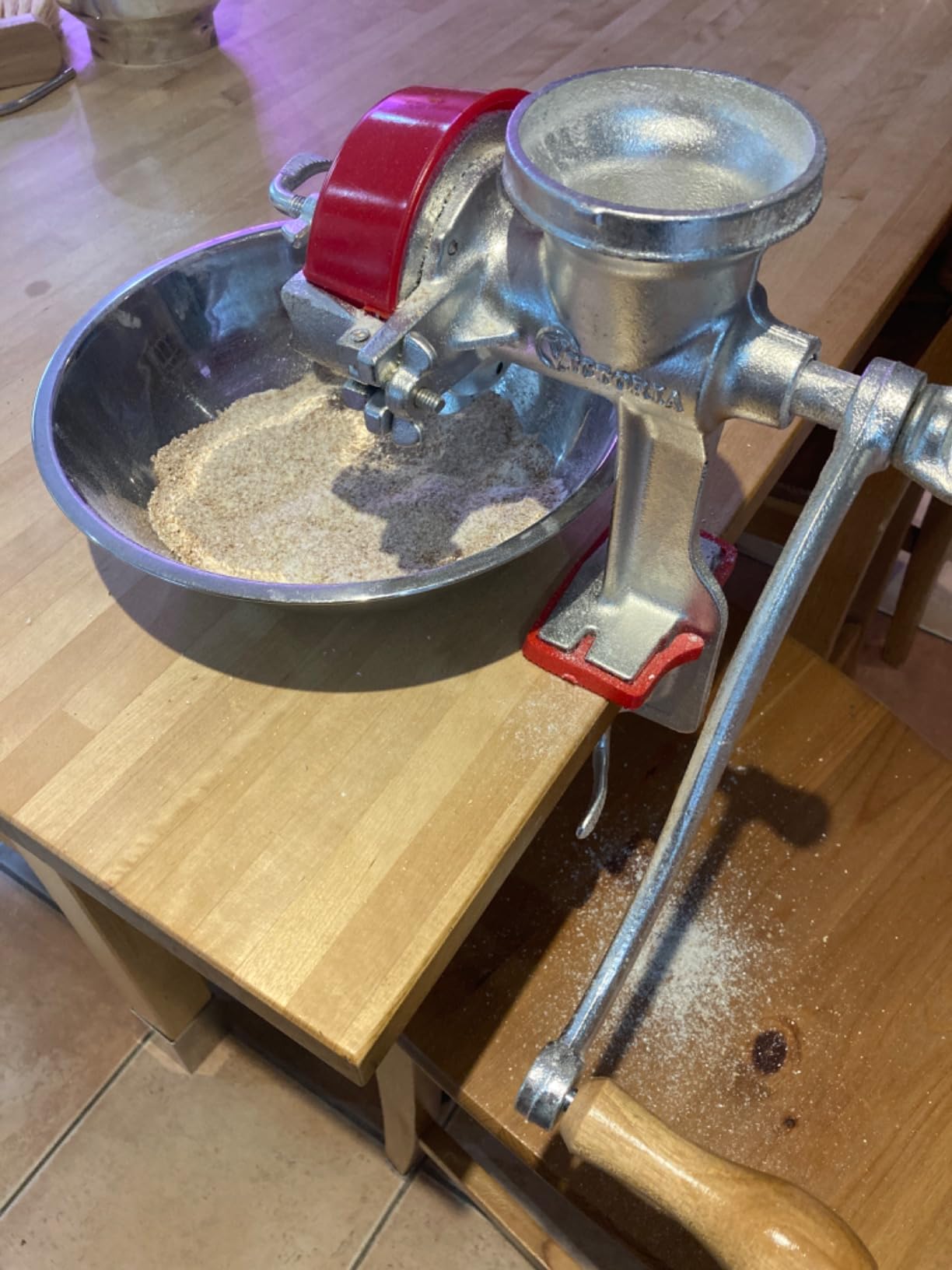
This is the mill for the half of the homestead that keeps birds. Double tin-plated cast iron with white iron grinding discs, an adjustable screw for coarseness, and a high hopper big enough that you are not refilling every forty seconds. It also handles coffee, seeds, spices and dried beans, which makes it a genuinely multipurpose machine rather than a single-job grinder.
The 4561 reviews attached to it are the largest owner base of any product in this roundup, and that matters for a manual tool. Cast iron is not a category where designs quietly change, so a large review count here is a genuine longevity signal rather than a marketing artifact. Many owners report using it for the full range from corn crack to pet food.
Be clear about what it is not. The manufacturer states plainly that this grinder cannot reach a superfine texture and will not turn whole wheat into a fine powder. Every set of reviews repeats the same caveat. If bread is your target, this is the wrong tool, and no amount of tightening the screw changes that.
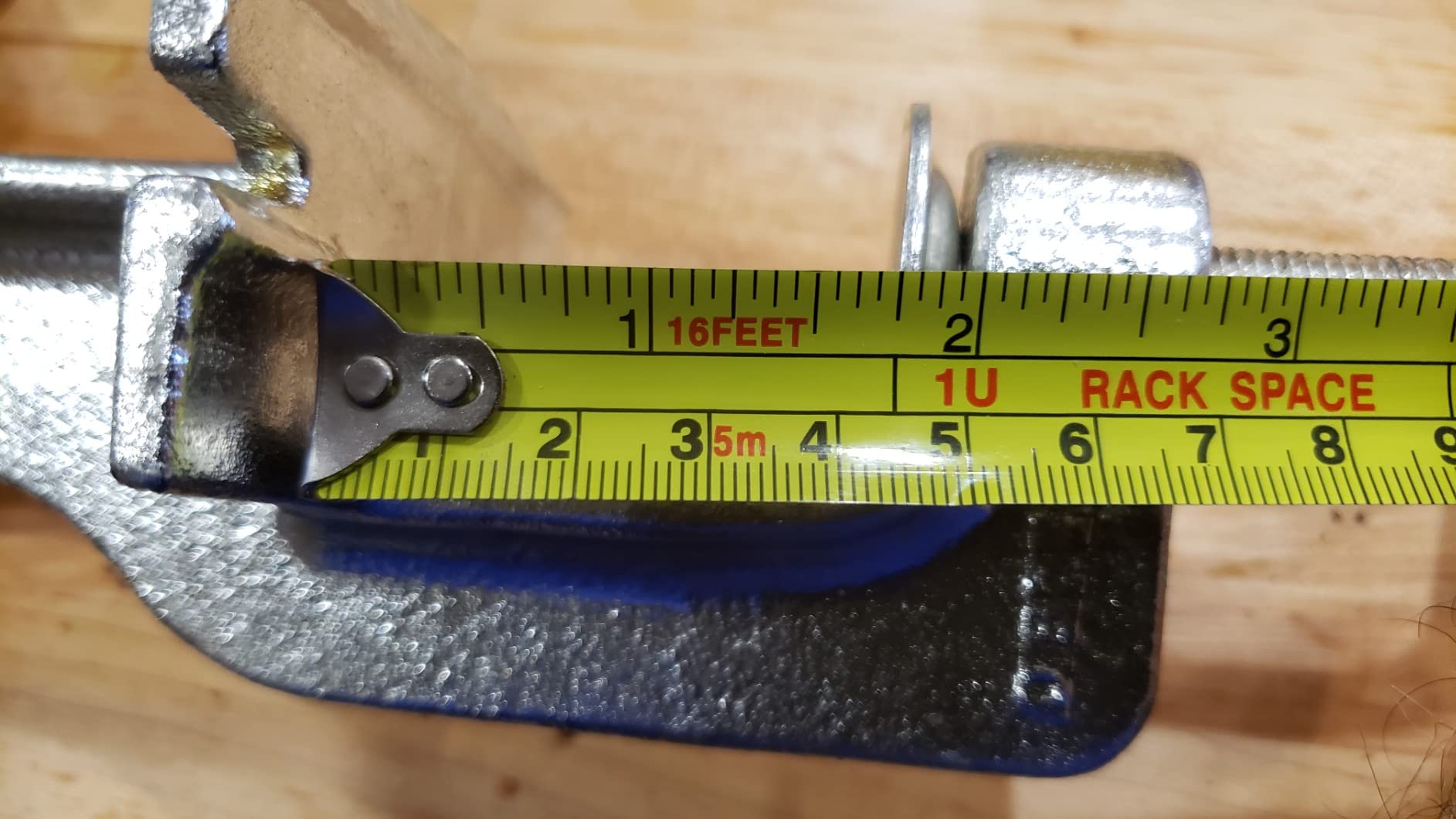
Two practical notes. The high hopper is a real upgrade over the low-hopper models because it cuts your crank cycles roughly in half, and the clamp fits counters and tables from a half inch to two inches thick, with a rubber pad underneath to protect the surface. On a smooth, slick counter it can still walk a little, so clamp it near the edge rather than in the middle of the counter.
Why a high hopper matters more than you expect
Cracked corn and whole corn for poultry are the highest-volume milling job most homesteaders have, and they are pure arm work. A larger hopper means a bigger batch per crank cycle, which is the only real lever you have on fatigue. For a household feeding a flock, that is the difference between a five-minute job and a twenty-minute job every week.
When to add a second mill instead
If you bake bread regularly, do not try to make this one stretch. The cast iron mills in this roundup all stop at coarse meal, and the fastest way to a good loaf is a second machine dedicated to fine flour. Many owners run exactly this pairing: a Victoria at the outdoor table for feed, and something like the NutriMill indoors for bread.
4. Estrella Molino de Maiz: Best Cast Iron Mill for Masa and Nixtamal
Estrella Manual Grain Mill, Molino para Moler Maiz, Cast Iron Grinder
Cast iron body
Dough hook included
Clamps to 1.5 inch counters
12.2 x 5.6 x 14 inch
Pros
- Traditional Estrella design built for masa and nixtamal
- Solid cast iron that feels heavy and durable
- Clamp mount fits tables
- counters and even a 2x8
- Removable parts make cleaning and storage quick
Cons
- Grinding faces are not parallel
- so the grind stays coarse
- No dust cover
- so flour dust escapes
- Auger stem is too thick to attach to a drill
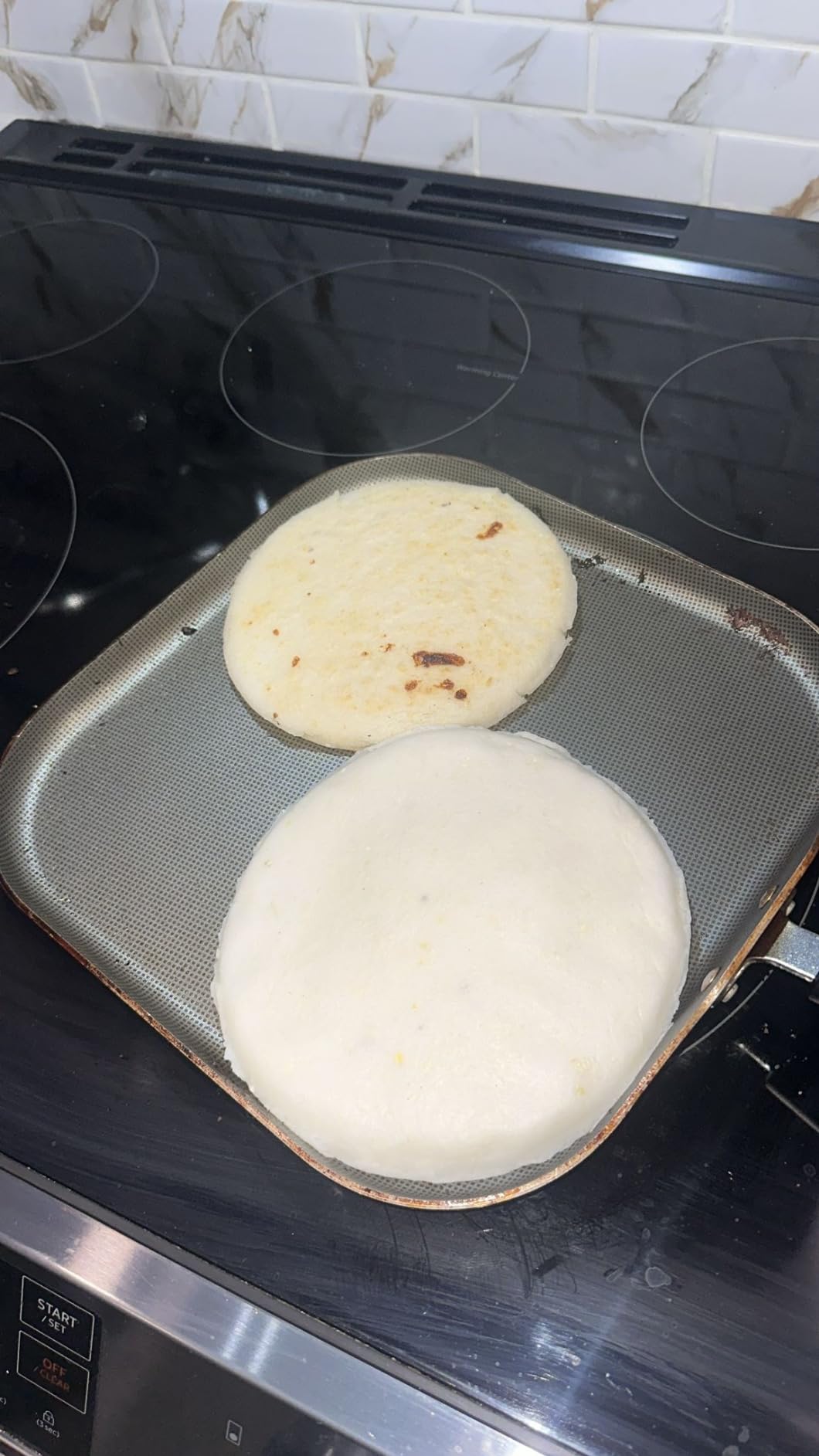
This is the mill to buy if corn is food rather than feed. The Estrella molino de maiz is a Mexican kitchen design, not a farm tool, and it is built for nixtamal, masa, tortillas, tamales, atole, pupusas and arepas. A dough hook is included in the box for pulling masa straight off the plates, which is the detail that tells you this is a cooking appliance.
The cast iron body is substantial, and reviewers describe it as exceptionally sturdy for the money. It takes corn, nixtamal, chickpeas, wheat, rice, coffee beans, spices and soybeans, and the adjustable grind settings let you move between coarse and finer meal as your recipe needs.
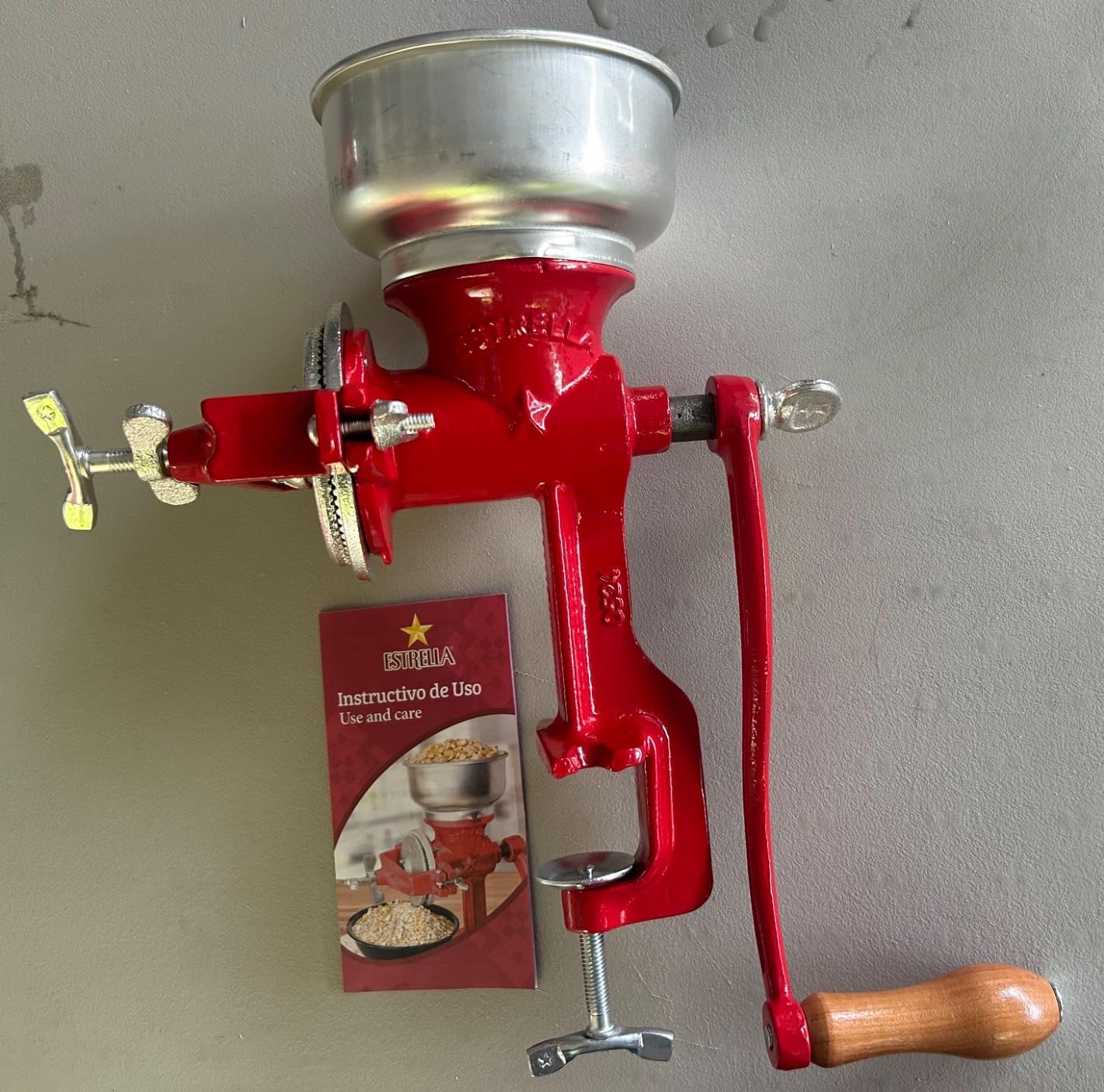
There is a real mechanical limitation here that reviewers keep flagging. The grinding faces are not parallel, so the finest setting still produces a coarse meal rather than flour. That is fine for tortillas and arepas, where you want texture, and wrong for bread. The same reviews note that the clamp ridges can let it slide on a flat table and walk while you are grinding hard.
Two more things to plan around. There is no dust cover, so a fine meal escapes the top of the mill while you work, and the internal auger stem is too thick to fit a standard drill chuck. If you want drill-drive milling, this body will not take one.
What makes this different from the other cast iron mills
The Victoria is a general-purpose farm grinder with a high hopper and a long list of non-food uses. The Estrella is a single-purpose kitchen tool with a tighter form factor, a lower clamp limit of 1.5 inches, and the masa accessories that make it useful for a cooking workflow rather than a feed workflow. Owners report pushing it well past its stated purpose, including grinding clay powder and pottery slip.
Where it will frustrate you
Clamp slippage on smooth surfaces is the most common complaint, and it is a genuine safety issue because the handle can catch a hand if the body walks mid-crank. Mount it on a wooden board or a rough-edged bench rather than a polished counter. Beyond that, the coarse ceiling on the grind is the only real limit, and it is a hard mechanical one.
5. Corona Manual Cast Iron Mill: Best Value Manual Mill with a Complete Kit
Corona Manual Grain Mill, Molino para Moler Maiz, Cast Iron Grinder
Cast iron with tin plating
0.8-quart hopper
Clamps to 1.45 inch counters
Complete hardware kit
Pros
- Solid cast iron with food-safe tin plating
- 0.8-quart hopper is generous for a manual mill
- Smooth adjustment from coarse crack to fine meal
- Complete kit includes hopper/plates/clamp/handle and pad
Cons
- Manual crank effort caps your batch size
- Low hopper style means more refills than the Victoria
- Not designed to produce true fine flour
The Corona is our value pick among the manual mills here, and the reason is mostly the box. Hopper, grinding plates, clamp, handle, mounting hardware and a stabilizing pad all come in the box, so there is no second trip to a hardware store before your first batch. For a first manual mill, that completeness is worth more than a small spec difference.
Crafted in Colombia from solid cast iron with food-safe tin plating, it matches the traditional Corona molino design and takes corn, wheat, rice, coffee, spices and dried peppers. The adjustment moves smoothly across the range, from a coarse crack down to a fine meal suitable for masa and arepas.
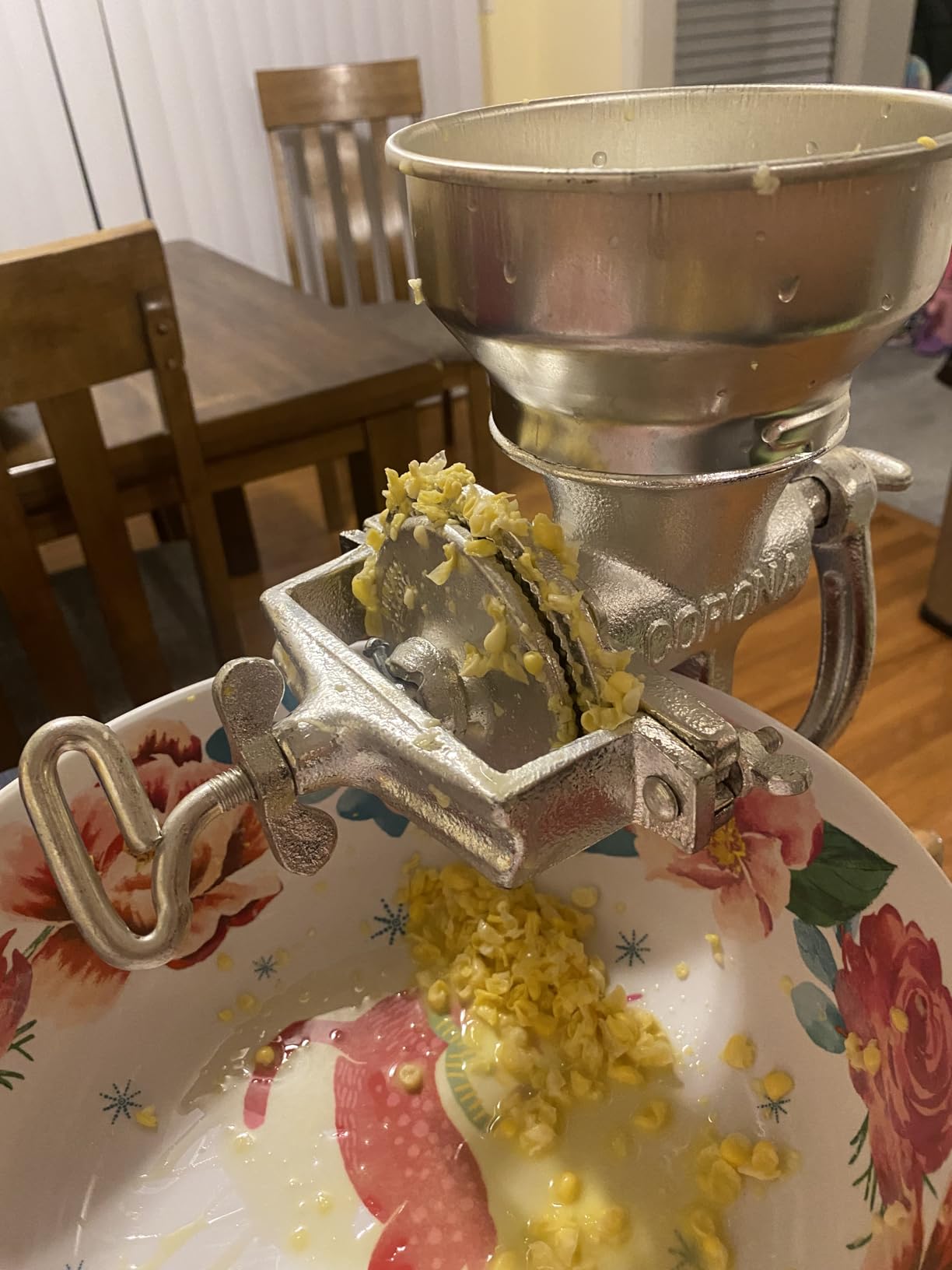
Its 0.8-quart hopper is a real upgrade over the typical low-hopper manual mill, though it is still a step below the Victoria’s high hopper. That translates directly into more refills on a big batch of cracked corn, and it is the main reason the Victoria ranks above it for heavy feed work.
Owners accept the same trade-off across the board: this is a meal and crack grinder, not a flour mill. If a recipe needs true flour, the grind stops short. Reviewers nonetheless rate it highly for what it does, and 77% of its reviews sit at five stars, the highest five-star share of the hand mills here.
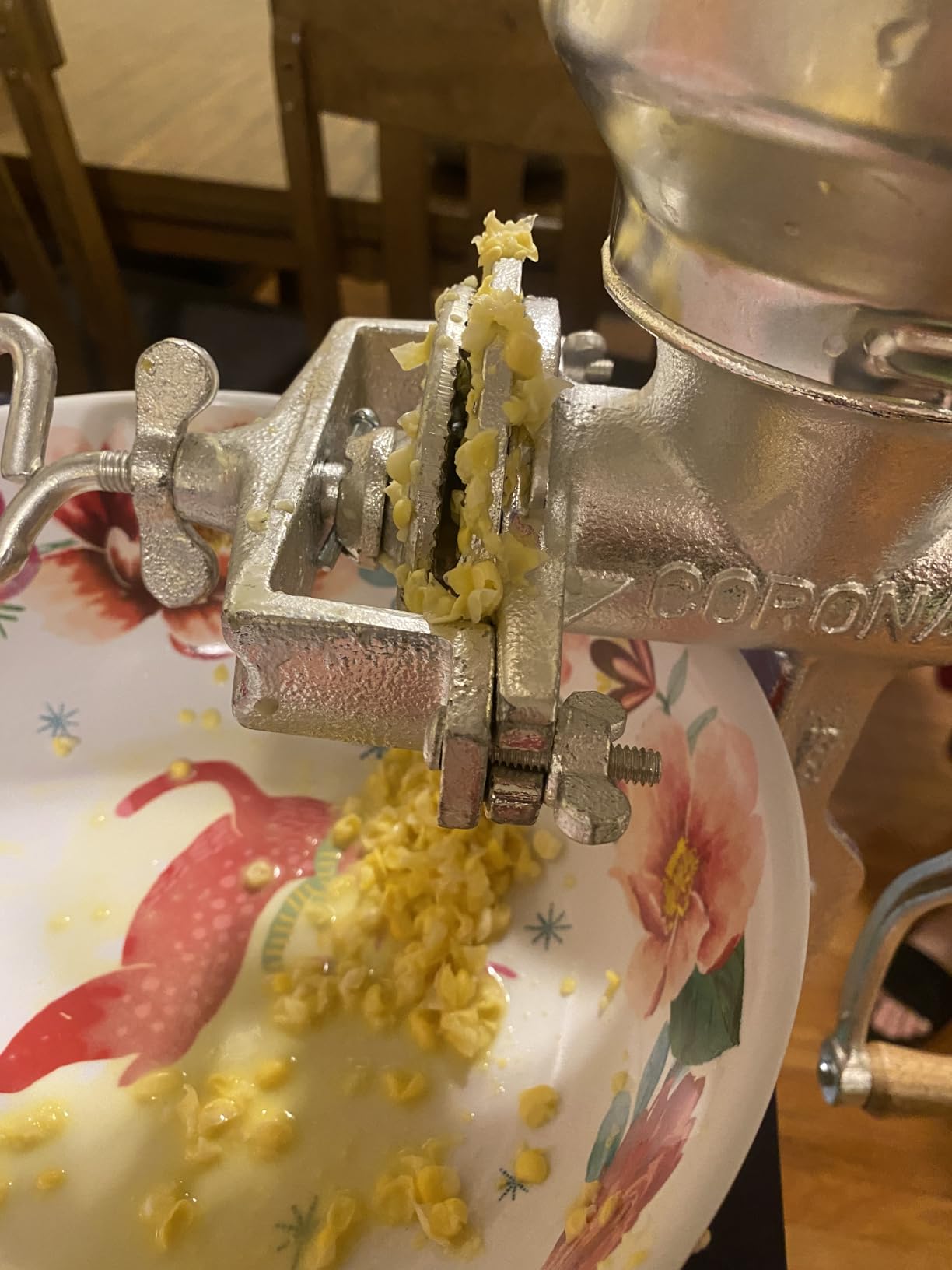
Corona or Victoria: which manual mill
Choose the Corona if you want everything in the box, if masa and arepas are on your list, and if your batches are measured in a few pounds. Choose the Victoria if cracked corn for poultry is a weekly job, because the high hopper cuts your crank cycles and the wider clamp range fits more counters.
What to expect from a long session
Both cast iron mills are honest about the trade: your arm sets the batch ceiling. A drill adapter is the common workaround people reach for, and the Corona will not take one because of its auger stem. Plan on twenty-minute sessions, keep a second container under the output, and wipe the plates dry afterward to keep the tin plating from rusting.
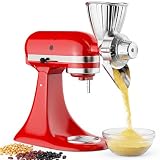
6. HOZODO Stand Mixer Mill Attachment: Best Starting Point for a Small Kitchen
HOZODO Grain Mill Attachment for KitchenAid Stand Mixer, All Metal
Die-cast aluminum alloy
Nine grind settings
2.64 lb
Brush clean only
Pros
- Uses the stand mixer you already own
- so no new motor or counter space
- Nine adjustable coarse-to-fine settings
- Upgraded larger hopper for dry grains
- Removable chamber and included brush make cleanup easy
Cons
- Mixer warms up and needs 30-45 minute cool-down breaks
- Third-party attachments can seat improperly and stress the drive
- Not suitable for oily foods like peanuts or soybeans
Beginners keep asking the same question on homestead forums: can I start small, with something that attaches to the mixer I already own and will not break? This is a credible answer. The die-cast aluminum body weighs 2.64 pounds, mounts to the power hub, and disappears into a cabinet when milling day is over. There is no separate motor to buy, service or store.
Nine adjustable settings cover coarse to fine, with the manual’s advice to start coarse and step finer to avoid clogging. The upgraded hopper handles wheat, oats and corn, and the same chamber doubles as a coffee and spice grinder. It also runs at a fraction of the cost of the mixer-brand equivalent.
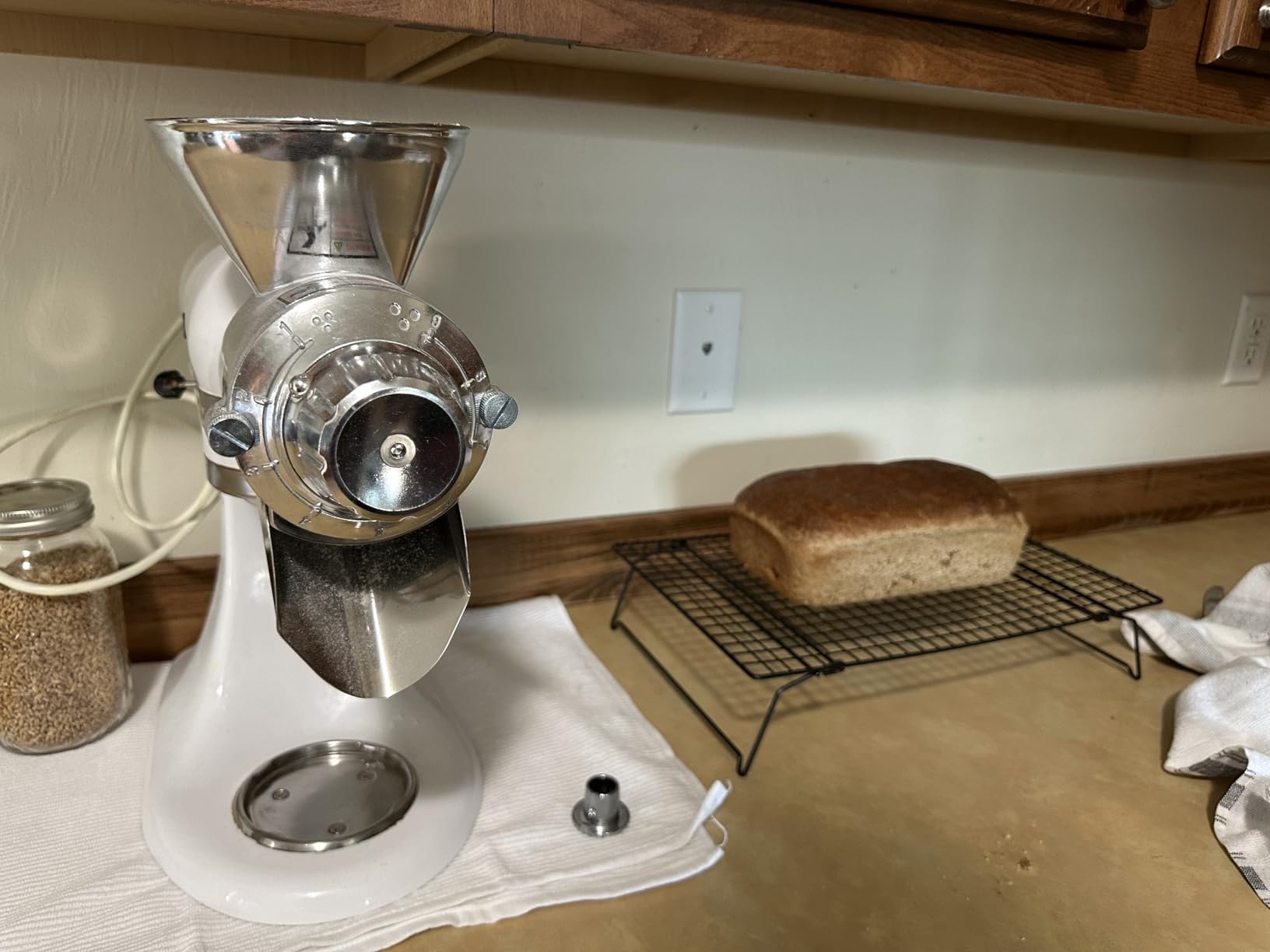
The heat is the issue. Extended batches warm the mixer itself, and the manufacturer calls for 30 to 45 minute cool-down breaks between runs. Treat that as a hard limit rather than a suggestion, because a stressed stand mixer motor is a much more expensive repair than a small attachment.
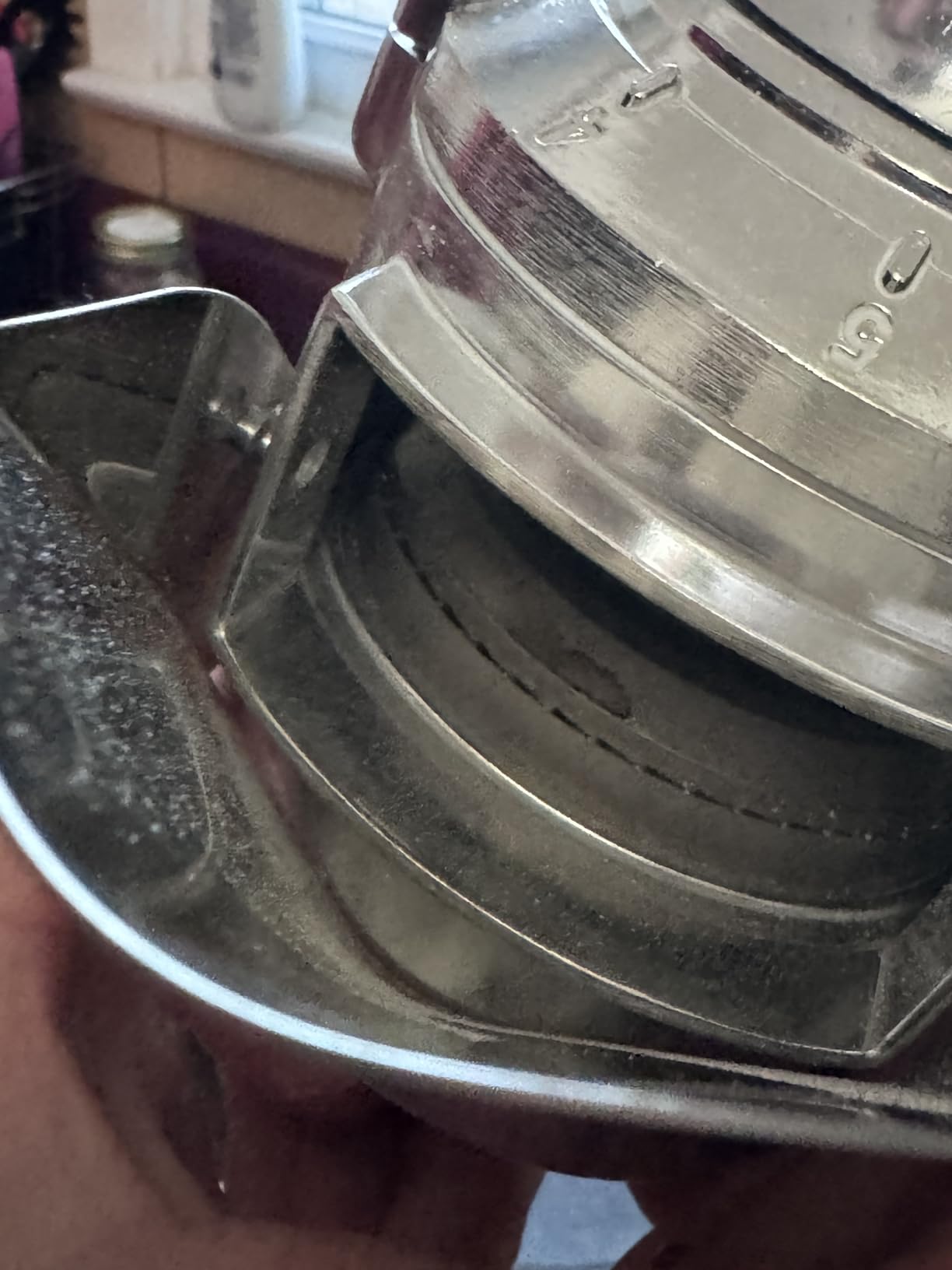
There is one serious failure report worth taking seriously: an attachment that did not seat fully in the power hub reportedly damaged a reviewer’s mixer. On any third-party hub attachment, confirm it locks in by watching the collar before you apply power. Fine flours may also need a second pass, and nothing oily like peanuts or soybeans belongs in this chamber.
What a beginner should measure first
Before buying any mill, weigh a week’s worth of grain in a bag. If it is ten pounds, an attachment is genuinely sufficient and the money is better spent on grain. If it is fifty pounds or more, a dedicated electric mill with a large hopper will save you enough time to matter within a season.
Mixer care during milling
The cooling rule is the whole story here. Run in short bursts, let the mixer sit with the attachment attached and the motor off between batches, and never rinse the chamber with water, since water and the die-cast aluminum body do not get along. A dry brush is all the cleaning this machine ever needs.
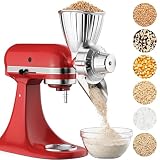
7. Coolcook All-Metal Stand Mixer Mill: Best Attachment for 10 Cup Batches
Grain Mill Attachment for KitchenAid, Food-Grade All-Metal 9 Levels
Die-cast aluminum alloy
10 cups per session
Nine levels
9.33 x 8.19 x 5.47 inch
Pros
- Largest capacity in the attachment class at 10 cups per session
- Nine settings from ultra-fine powder to coarse particles
- Tool-free attachment to the mixer power port
- Removable chamber wipes clean with the included brush
Cons
- Side adjustment screw can loosen mid-grind and spill
- Can sit loosely on the power hub on some mixers
- Finer flours need a second pass
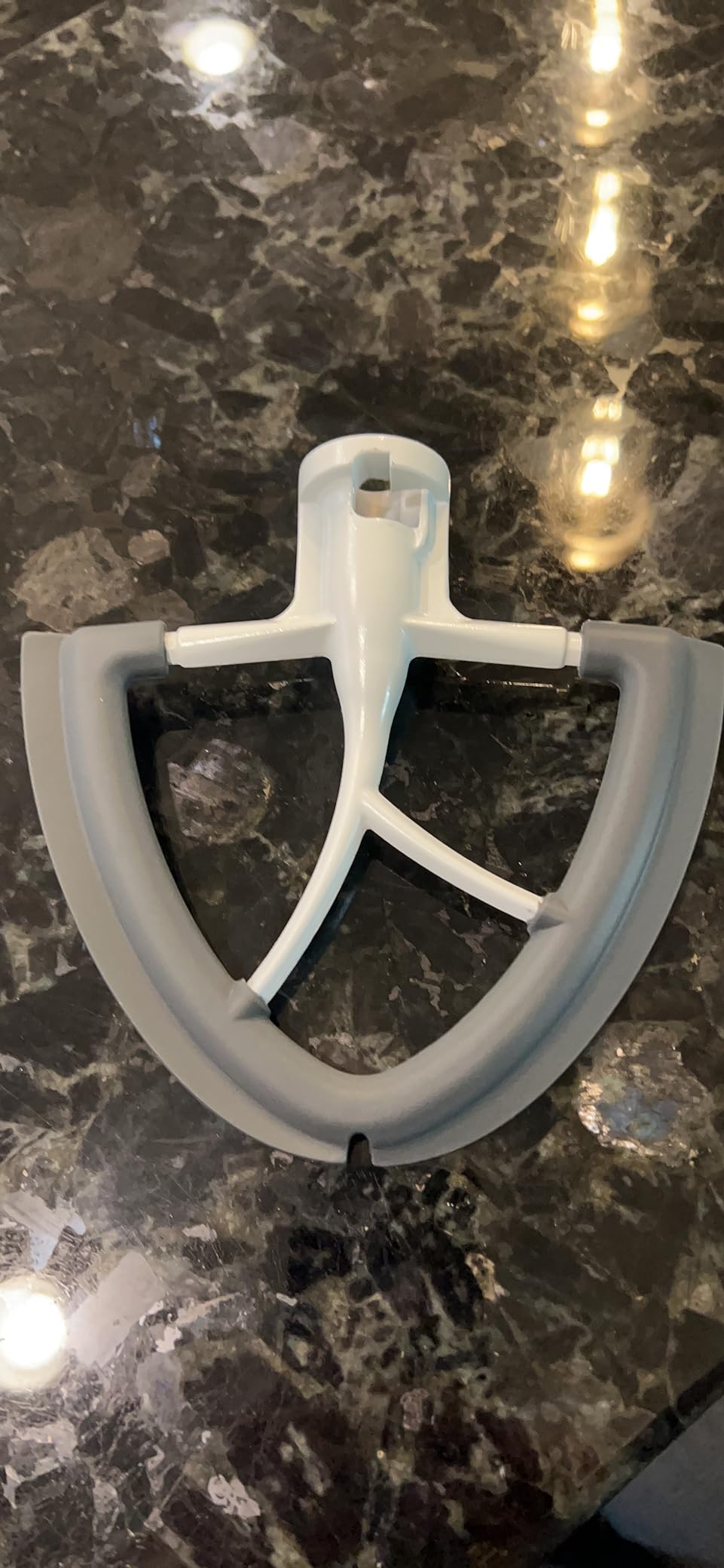
This is the same idea as the attachment above, with one meaningful upgrade: 10 cups of capacity per grinding session, roughly 2.4 liters, which is the largest in the attachment class. If you are limited to a stand mixer and you want to mill more than a couple of pounds at a time, that is the deciding spec.
It also fits every KitchenAid stand mixer model and attaches to the power port with no tools. The nine settings run from ultra-fine powder at one to coarse particles at nine, and the grain list is broader than its competitor’s: wheat, corn, oats, buckwheat, millet, rice and coffee beans, including gluten-free grains like millet and buckwheat that a homesteader with a wheat intolerance actually cares about.
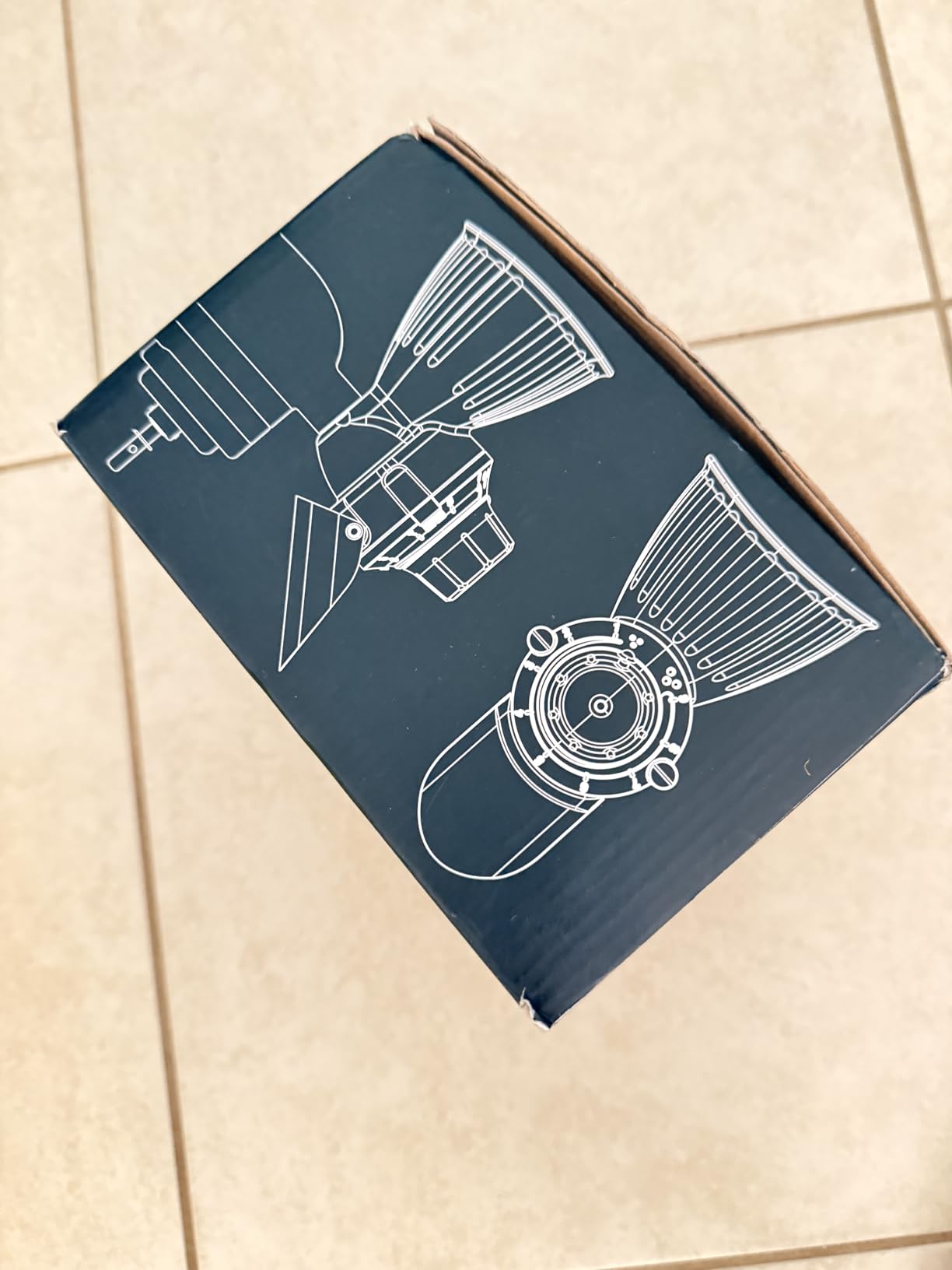
The recurring complaint is the side adjustment screw, which reviewers report loosening during grinding and throwing grain and flour across the counter. Check it with a firm hand before every session, and if it keeps loosening, a wrap of food-safe tape around the screw head is a serviceable fix. Some units also sit loosely on the hub or need a height adjustment to seat properly.
As with any attachment in this class, plan on a 30 to 45 minute cool-down after a prolonged run, and never rinse the chamber or put it in the dishwasher. The brush is the entire cleaning method.
Attachment versus a dedicated electric mill
The honest comparison is capacity against permanence. A 10-cup attachment handles a small household’s weekly bake. A dedicated electric mill with a bowl and a larger hopper handles a 50 pound milling day without a cool-down every batch, and it does not put your stand mixer’s motor into the milling job at all.
Gluten-free grains and the second-pass problem
Both attachments list gluten-free grains, and both need a second pass to hit a genuinely fine flour at the finer settings. Mill buckwheat, millet or rice at setting three or four, then run it back through at one or two. Budget double the time for gluten-free baking, and keep the batches small enough that the mixer stays cool.
8. INSELY 150g Electric Grinder: Best Compact Grinder for Small Batches
Grain Mill 150g,flour mill grinder for home,Electric Stainless Steel Grain Grinder for Wheat,Spices,coffee,Corn and Other Dry Food Grinders for Kitchen
150g bin
1000W motor at 25000 rpm
50 to 300 mesh
5.9 x 4.3 x 12.6 inch
Pros
- 1000W copper motor spins a batch in under a minute
- Fineness adjustable from 50 to 300 mesh
- Vertical body stores in a cabinet
- Includes spare blades
- spare carbon brushes and a cleaning brush
Cons
- Small 150g bin means frequent stopping to reload
- Overheats quickly at a 3 minute on
- 5-10 minute off limit
- Blades can arrive dull and leave metal residue
This is the most compact machine in the roundup and the answer to a specific problem: you want a mill for spices, coffee and a couple of cups of flour, and you do not want it on your counter. The vertical body stores in a cabinet, and the 1000 watt pure copper motor at 25,000 rpm finishes a 150 gram batch in under a minute.
Fineness is adjustable across a 50 to 300 mesh range in a single minute, which is a wider span than most machines in this group. Owners repeatedly praise how clean and fine the output powder is, and 71% of its reviews sit at five stars. The package also includes four spare blades, two spare carbon brushes, a sleeve, a cleaning brush and a manual.
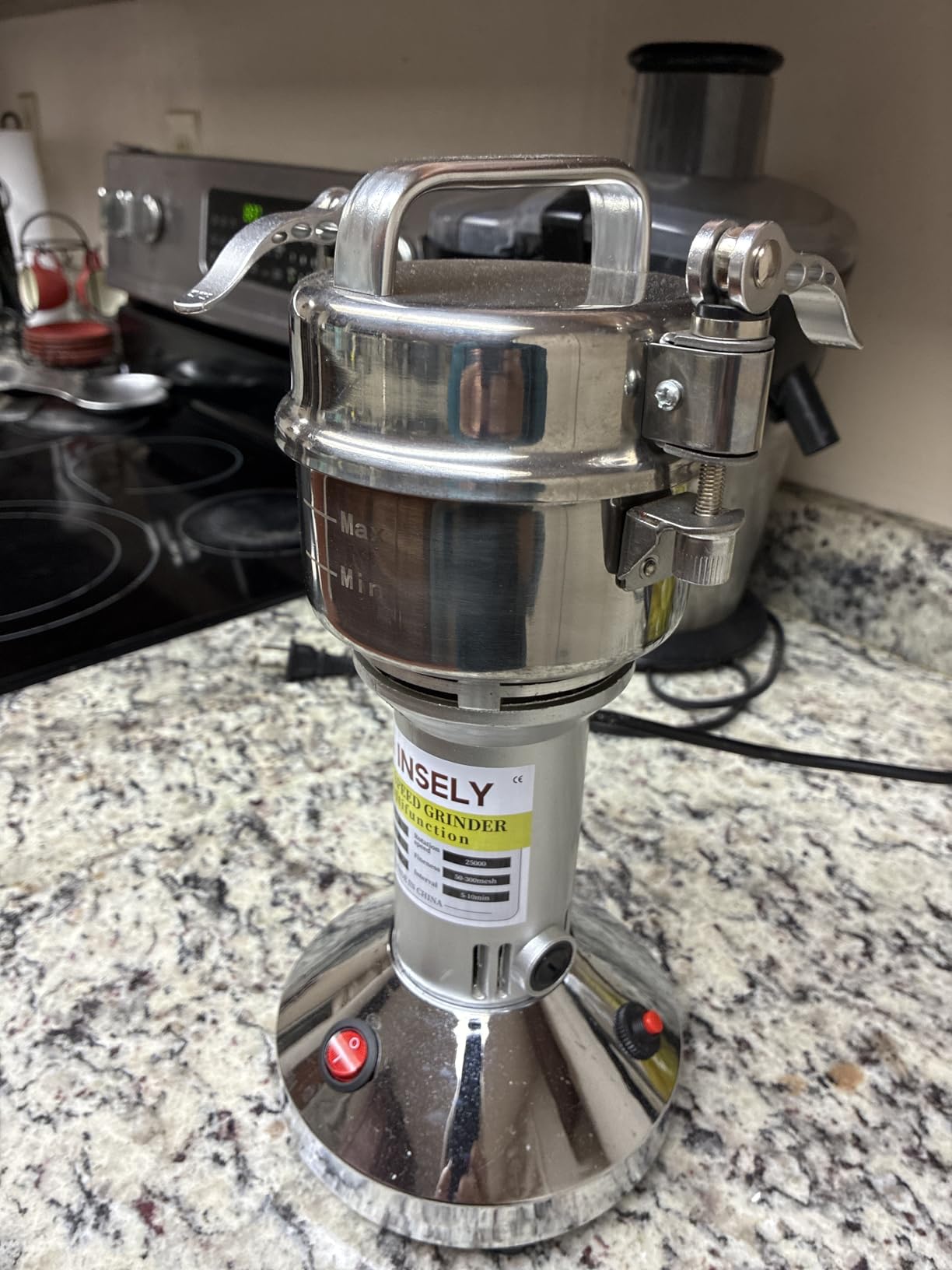
Heat is the recurring theme in the reviews, and the manufacturer’s own guidance is the clearest: a maximum of three minutes of use, then five to ten minutes of rest. Several owners report it getting very hot and auto-shutting off after short runs. That is workable for a spice jar, and frustrating for a bag of wheat.
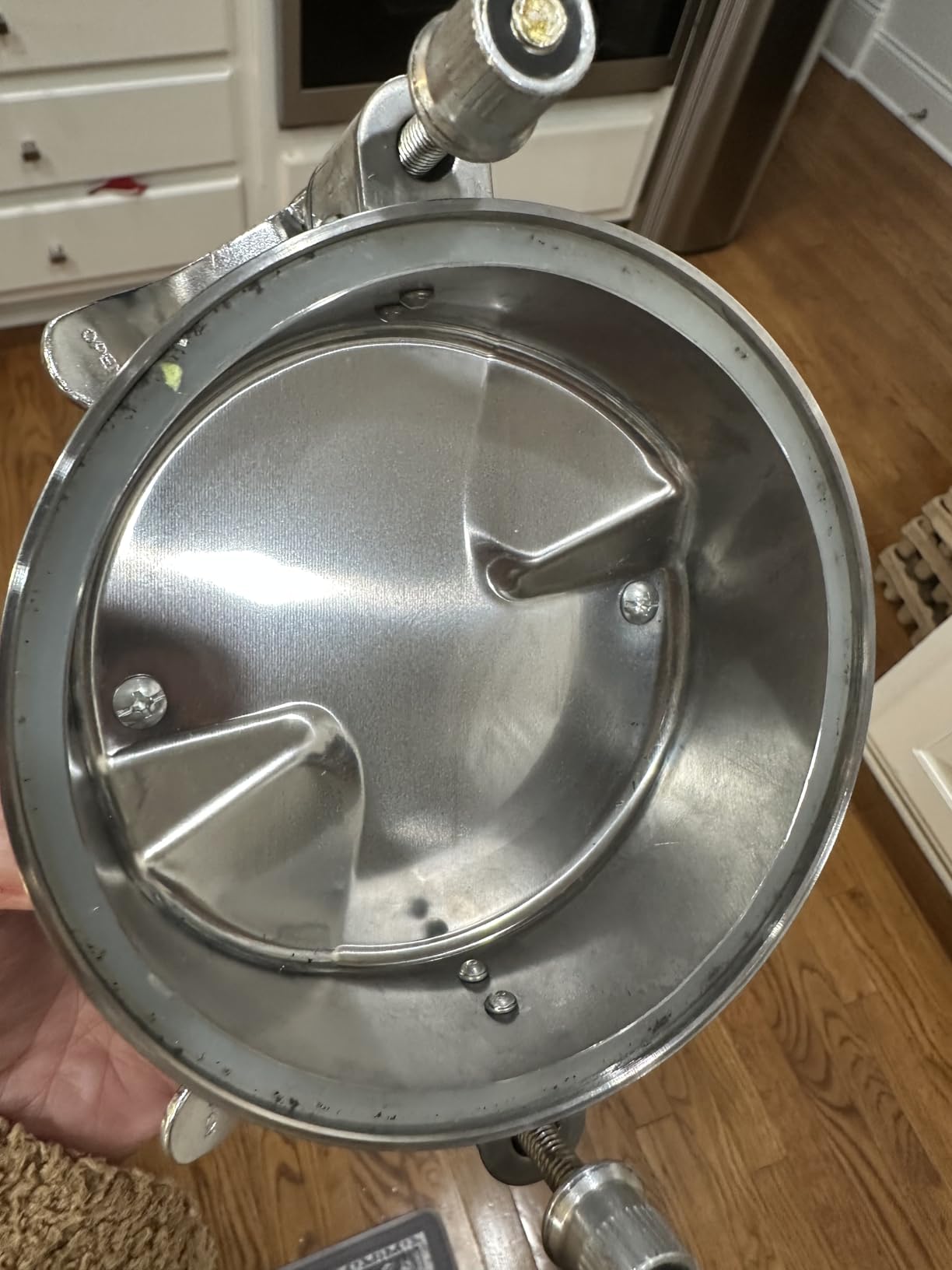
Two more cautions. Stamped blades can arrive dull and may need sharpening before hard items, and owners report occasional metal residue from blade burrs in the flour if they are not filed down. The first run also carries a normal manufacturing odor that clears after you grind a batch of rice, which the manual recommends. A first-use run of rice is a cheap ten minutes of insurance.
What this grinder is actually good at
Think of it as a second appliance rather than a first. It is excellent for peppercorns, dried herbs, coffee beans and a small batch of cornmeal, and it handles rice and wheat for a few cups at a time. For a weekly two-loaf bake, the Kitchen Mill or NutriMill finishes the job with far fewer interruptions.
Blades, cleaning and storage
Check the blades before the first hard batch and deburr any rough stamped edge. Clean by brushing or wiping, never by rinsing, since water at the bin and motor base is what kills this class of grinder. Store it dry, covered and ventilated, and you should get years out of the motor with the spare carbon brushes already in the box.
How to Choose a Grain Mill for Your Homestead in 2026
Choose by mechanism first, then by the grain you actually buy. Everything else on the spec sheet is secondary to those two answers, and getting them wrong means buying the wrong category of machine entirely.
Stone and burr mills: slower, cooler, wider range
Stone and burr mills shear kernels between two close surfaces at low speed, which keeps heat low and lets the gap between surfaces set the coarseness anywhere from a coarse cereal crack to pastry flour. The trade is throughput: you get the widest coarseness range and the best-flavored flour, and you pay for it in milling time and countertop footprint. The NutriMill is the only example in this roundup, and it is the machine we recommend for a working bread kitchen.
Impact and high-speed electric mills: fast, loud, hot
Impact mills spin metal heads at high speed and throw grain against them, which is why the Kitchen Mill and the compact 150g grinder move a batch in under a minute or under ten. The trade-offs are explicit: more noise, more heat, and a narrower useful coarseness range. Search results and owner reports for this category pair raw speed with being louder and dustier, which is why both manuals in this roundup cap continuous run time.
Roller and malt-style mills: not a flour mill
Roller mills crush malted barley between counter-rotating rollers, cracking the husk while leaving the endosperm intact, which is exactly what homebrewers need for efficient extraction. A roller mill cannot make flour, and a burr mill cannot produce a consistent malt crush. This is the most common wrong-tool purchase among new homebrewers, so decide which job you have before choosing a drive mechanism.
Seven criteria before you buy
First, drive power: manual, electric, or mixer attachment. Second, mill type: stone, impact or roller. Third, coarseness range, and whether you need fine flour or only cracked grain. Fourth, hopper capacity matched to your realistic batch size, weighed in a bag before you buy. Fifth, grain compatibility, especially whether you need oilseeds. Sixth, motor wattage and heat management. Seventh, warranty length and the availability of replacement parts.
Add an eighth if you are off-grid: whether the mill works without electricity at all. For homesteaders, a manual cast iron mill is outage insurance in the truest sense, because it needs nothing but arms. It is also the reason we would not recommend a first electric purchase to someone who stores a year of grain and expects the lights to stay on.
On durability, the community signal is consistent: warranty length and years of reported use matter more than wattage. A lifetime warranty on a grinding mechanism is a stronger durability claim than any motor specification, and a cast iron body that a manufacturer has built since 1939 tells you something a wattage figure does not.
Yield and cost: what a bushel of wheat really gives you
Fifty pounds of clean wheat berries yields roughly one hundred cups of flour, which is about fifty pounds of finished flour after a small allowance for bran and moisture. The number is the same on every machine in this roundup because it is a property of the grain. What changes between mills is how much of that flour ends up as fine powder versus coarse meal you would have to re-mill.
Home milling is rarely cheaper than store-bought flour on raw material cost alone. It is cheaper per pound once you factor in that whole grain stores for years while flour goes stale, and it is the only route to freshly milled flour for sourdough, where the flavor difference is the entire point. Buy grain in bulk, store it airtight and cool, and mill against a recipe rather than a calendar.
A useful way to sort the options is by commitment rather than by specification. A cast iron manual mill is the low-commitment choice: nothing to power, nothing to replace, and no learning curve beyond setting the screw. A stand mixer attachment is the medium commitment, giving you real milling in a package that stores in a cabinet, at the price of sharing your mixer’s motor and living with cool-down pauses. A dedicated electric or stone mill is the high commitment, and it is the only category here that treats a fifty pound bag of wheat as a routine rather than an event.
Within the manual cast iron group, the split is workload. The Victoria high hopper wins on volume, the Corona wins on included hardware, and the Estrella wins on cooking rather than feeding. Within the electric group, the NutriMill wins on coarseness range and heat management, the Kitchen Mill wins on throughput, and the compact 150g grinder wins on nothing more than fitting in a cupboard.
Cleaning, storage and the run-dry rule
Never run a mill dry. It is the rule repeated on every mill in this roundup, and it is the leading cause of destroyed bearings: with nothing to absorb the energy, the stones or burrs grind against each other. Keep a spoon in the hopper if your attention wanders.
Wipe the milling chamber dry after every session, especially on cast iron and cast aluminum parts, because trapped moisture is what causes rust. Brush attachments clean and never rinse them. Store your grain airtight, cool and dark, in the container it came in. Check the burr gap or adjustment screw periodically, since a setting that drifts is the most common reason a mill suddenly feels harder to turn.
Expect a dust and static conversation with any electric mill. Mill outdoors or in a ventilated space, ground the appliance, and keep a wall outlet clear of flour dust, which is combustible. If you mill indoors all day, a stand mixer attachment keeps the mess small because the whole thing is already on your counter.
Frequently Asked Questions
Which grain mill is the best for home use?
It depends on the job. For fine bread and sourdough flour, a stone mill such as the NutriMill Harvest gives the widest coarseness range and the coolest milling. For cracked corn, animal feed and other coarse work, a cast iron manual mill like the Victoria high hopper model is faster per pound because it needs no electricity. For a small kitchen that already owns a stand mixer, a hub attachment covers both at a fraction of the counter space.
Is it cheaper to mill my own grains?
Not on raw material cost alone. Buy the same volume of grain you would buy in flour and the numbers are close before you count electricity or the mill itself. Home milling wins on freshness, on flavor in sourdough baking, and on shelf economics: whole grain stores for years while flour goes stale within months, so you buy in bulk and mill only what the recipe needs that morning.
How much flour will 50 lbs of wheat berries make?
About 100 cups of flour, close to 50 pounds by weight, once you allow for bran and residual moisture. The figure is the same on every mill because it is a property of the grain, not the grinder. What differs between machines is how much of that output lands as fine powder versus coarse meal that would need a second pass.
Is a grain mill worth it?
For a baker, yes, and the reason is flavor and freshness rather than savings. Whole grain keeps the bran and germ, where the fiber, B vitamins and aroma sit, and store-bought flour loses that aroma long before you bake with it. A mill also lets you buy grain in bulk and keep it for years, milling only what a recipe calls for. If you never bake, a small grinder for coffee and spices is the honest answer.
What is the difference between a flour mill and a malt mill?
A flour mill uses stones, burrs or high-speed heads to shear kernels into fine powder, and heat is the main quality risk to manage. A malt mill uses counter-rotating rollers to crack the husk while leaving the endosperm intact, which is what homebrewers need for efficient extraction. The two are not interchangeable: a roller mill cannot make flour, and a burr mill will not produce a consistent malt crush.
Can I grind corn into cornmeal with a home grain mill?
Yes, and the cast iron manual mills are the traditional choice for it. The Victoria and Corona both adjust from a coarse crack down to a fine meal suited to cornmeal, masa and arepas, and the Estrella is built specifically for nixtamal and tortilla masa. None of the manual cast iron mills here reach true fine flour, so a second electric or stone mill is worth having if you bake as well as cook.
The Verdict: Which Grain Mill Should You Buy?
For most homesteaders, the NutriMill Harvest 450W is the single machine that covers the most jobs well, and it is our pick for the best grain mills for homesteaders who bake. Pair it with a Victoria cast iron mill if you keep poultry, and you have a setup that handles bread flour, cracked corn, cornmeal and a dozen non-grain chores between them.
If you have never milled before, start smaller. The HOZODO or Coolcook attachment on the stand mixer you already own tells you whether you enjoy the workflow before you commit a permanent counter to a stone mill. Add the compact 150g grinder for spices and coffee, and plan on pairing a stone or high-speed electric mill with a manual cast iron mill rather than searching for one machine that does everything.
Whichever route you take, mill only what you need that morning, keep the grain airtight and cool, and never run a mill dry. That last habit is the one that decides how long the machine lasts. For more on how the rest of the kitchen works, start with our stainless steel food mill picks for fruit and vegetables, and our whole grain cracker recipe for putting a freshly milled bag to work immediately.