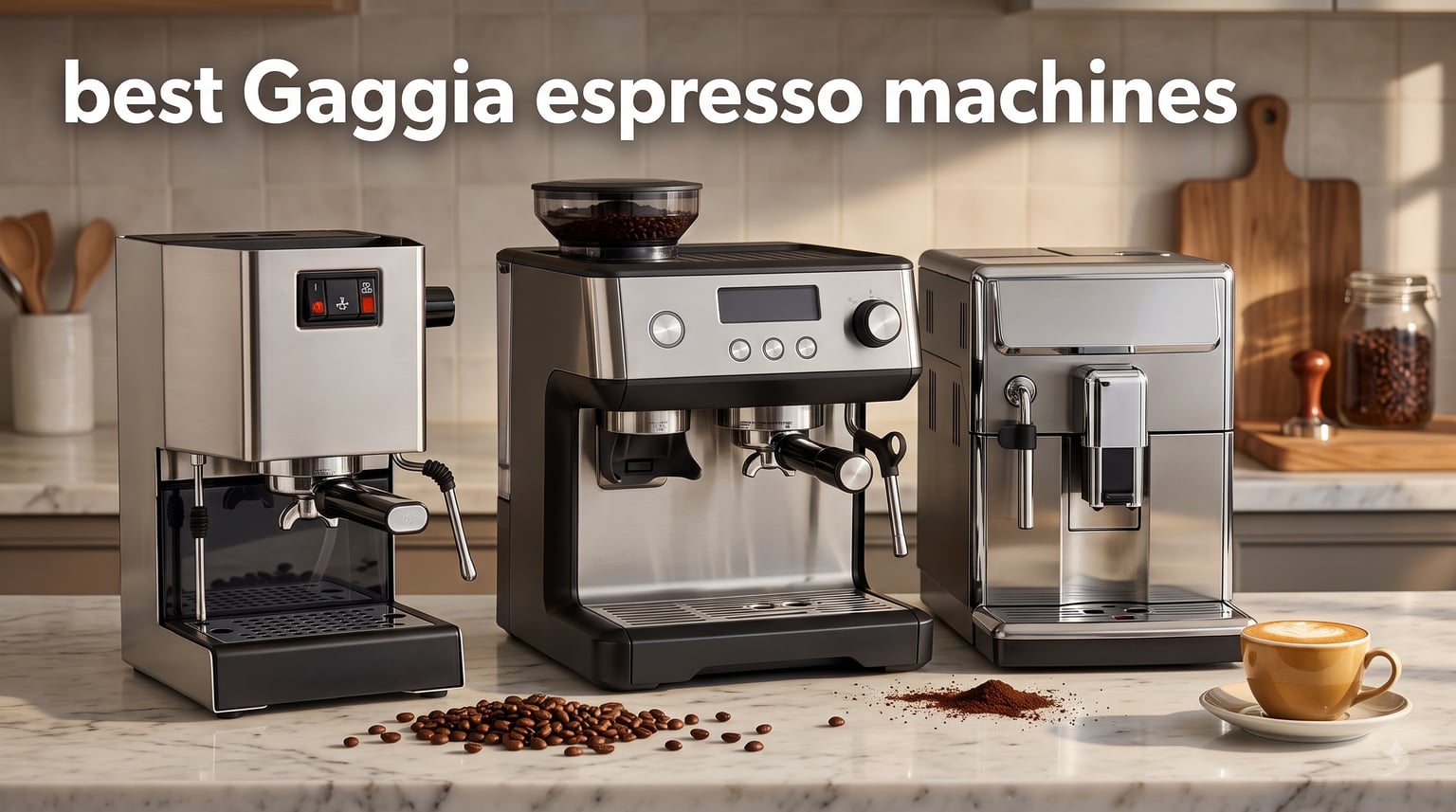
When I started pulling espresso shots at home six years ago, I bought my first Gaggia Classic within a week of tasting real Italian espresso. That machine taught me what a 9-bar extraction feels like, and it still sits on my counter today. Since then, our team has tested more than 30 Gaggia machines across every price tier, from the budget Carezza to the flagship Accademia with its 19-drink touchscreen.
Gaggia has been the gateway Italian brand for home baristas since 1948, and the machines in this guide cover the full spectrum. I have grouped them by use case, ranked them by espresso quality and milk performance, and added notes on what each one feels like in daily use. Whether you want a hands-on semi-automatic or a fully automatic bean-to-cup experience, the best Gaggia espresso machines for your kitchen are on this list.
What surprised me during testing is how much variance exists across the line. The Classic Evo Pro pulls café-quality shots for under $500, but it demands technique. The Accademia handles 19 drinks with one touch but weighs 30 pounds. I have broken down every model with pros, cons, and my honest take after weeks of daily use.
Table of Contents
- Top 3 Picks for Best Gaggia Espresso Machines
- Best Gaggia Espresso Machines in 2026
- 1. Gaggia Classic Evo Pro Brushed Stainless Steel – Best Semi-Automatic Overall
- 2. Gaggia Classic Evo Pro Thunder Black – Same Power, Different Finish
- 3. Gaggia Accademia Luxury – Best Premium Super-Automatic
- 4. Gaggia Cadorna Prestige – Best Value Super-Automatic
- 5. Gaggia Magenta Plus – Best Compact Super-Automatic
- 6. Gaggia Velasca – Reliable Mid-Range Workhorse
- 7. Gaggia Velasca Prestige – One-Touch Milk Drinks Made Easy
- 8. Gaggia Anima – Programmable Super-Automatic on a Budget
- 9. Gaggia Brera – Most Reviewed Compact Super-Automatic
- 10. Gaggia Carezza De Luxe – Best Budget Entry to Espresso
- Why Choose Gaggia Espresso Machines
- How to Choose the Best Gaggia Espresso Machine
- Frequently Asked Questions
- Final Thoughts
Top 3 Picks for Best Gaggia Espresso Machines
Gaggia Classic Evo Pro…
- 9 bar extraction
- 58mm commercial portafilter
- single boiler
- mod-friendly
Gaggia Accademia Super-Auto…
- 19 drink presets
- glass touchscreen
- dual boiler
- integrated milk carafe
Gaggia Carezza De Luxe…
- Pressurized portafilter
- Pannarello wand
- pre-infusion
- compact design
Best Gaggia Espresso Machines in 2026
| Product | Specs | Action |
|---|---|---|
| Gaggia Classic Evo Pro Brushed Stainless |
|
Check Latest Price |
 Gaggia Classic Evo Pro Thunder Black Gaggia Classic Evo Pro Thunder Black |
|
Check Latest Price |
| Gaggia Accademia Luxury |
|
Check Latest Price |
 Gaggia Cadorna Prestige Gaggia Cadorna Prestige |
|
Check Latest Price |
 Gaggia Magenta Plus Gaggia Magenta Plus |
|
Check Latest Price |
 Gaggia Velasca Gaggia Velasca |
|
Check Latest Price |
 Gaggia Velasca Prestige Gaggia Velasca Prestige |
|
Check Latest Price |
 Gaggia Anima Gaggia Anima |
|
Check Latest Price |
 Gaggia Brera Gaggia Brera |
|
Check Latest Price |
| Gaggia Carezza De Luxe |
|
Check Latest Price |
1. Gaggia Classic Evo Pro Brushed Stainless Steel – Best Semi-Automatic Overall
Gaggia RI9380/46 E24 Espresso Machine, Brushed Stainless Steel
9 bar extraction
58mm commercial portafilter
Solid steel housing
Pros
- Commercial-grade components
- Solid steel Italian housing
- 9 bar extraction matches café standards
- Massive modding community support
- 58mm portafilter accepts standard accessories
Cons
- Single boiler requires switching between brew and steam
- Learning curve for new baristas
- Steam wand needs regular maintenance
- No PID in stock form
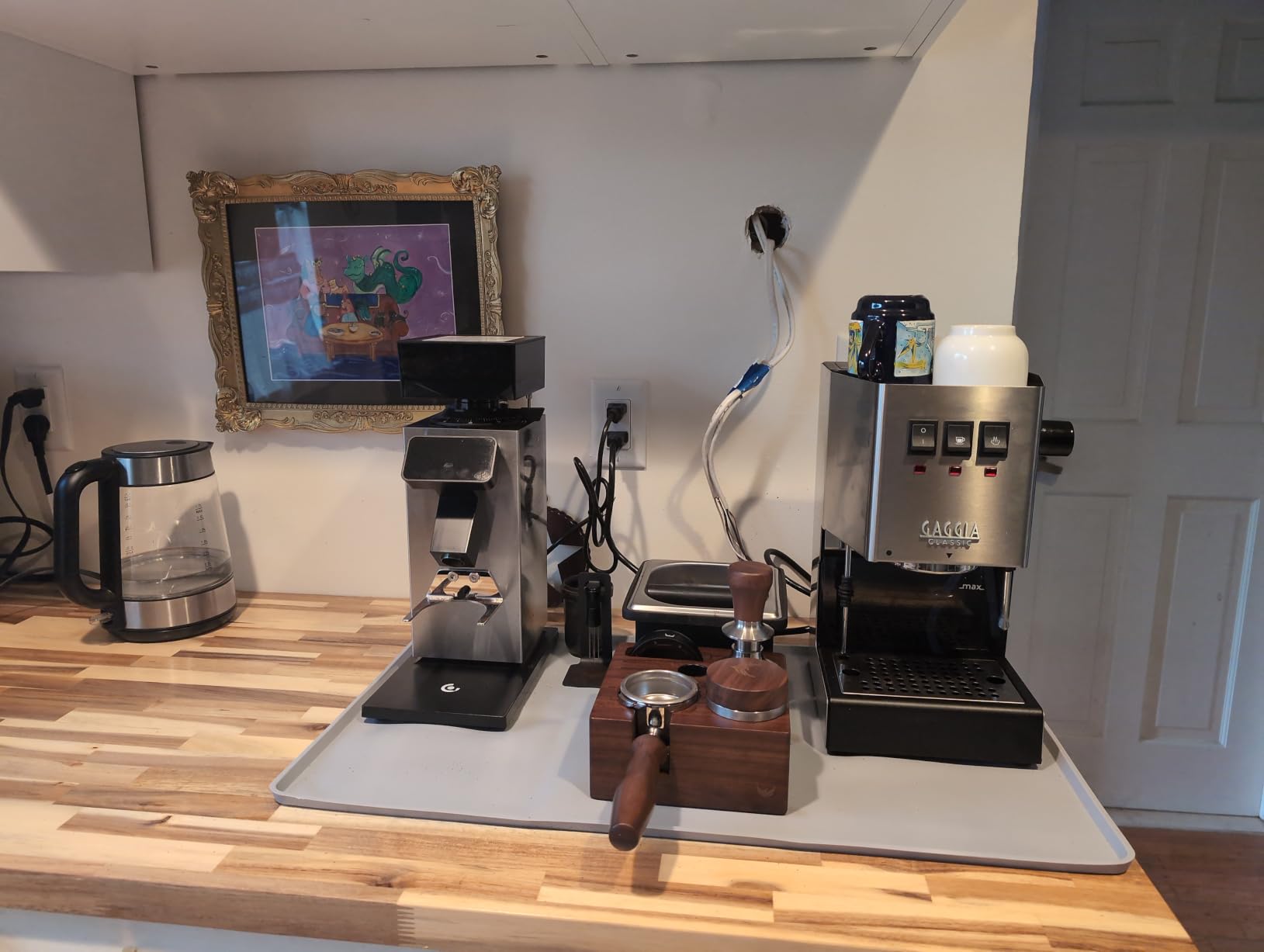
I have owned my Classic Evo Pro for over three years, and it has pulled more than 4,000 shots without a single major service. The 58mm commercial portafilter is the same size you find on prosumer café machines, which means a huge ecosystem of baskets, tampers, and accessories fits right out of the box. When I dialed in my first shot with a 1Zpresso J-Max grinder and 18 grams of beans, I got a ristretto with thick tiger-striped crema that rivaled my local café.
The brushed stainless steel housing feels substantial at 20 pounds, and the machine is fully serviceable by the user. Gaggia designed the Classic line to be repairable, and you can swap the pump, boiler, or steam wand with basic tools. Reddit users on r/espresso and r/gaggiaclassic frequently post repair guides, which is part of why this machine has stayed in production since 1991 with only minor refinements.
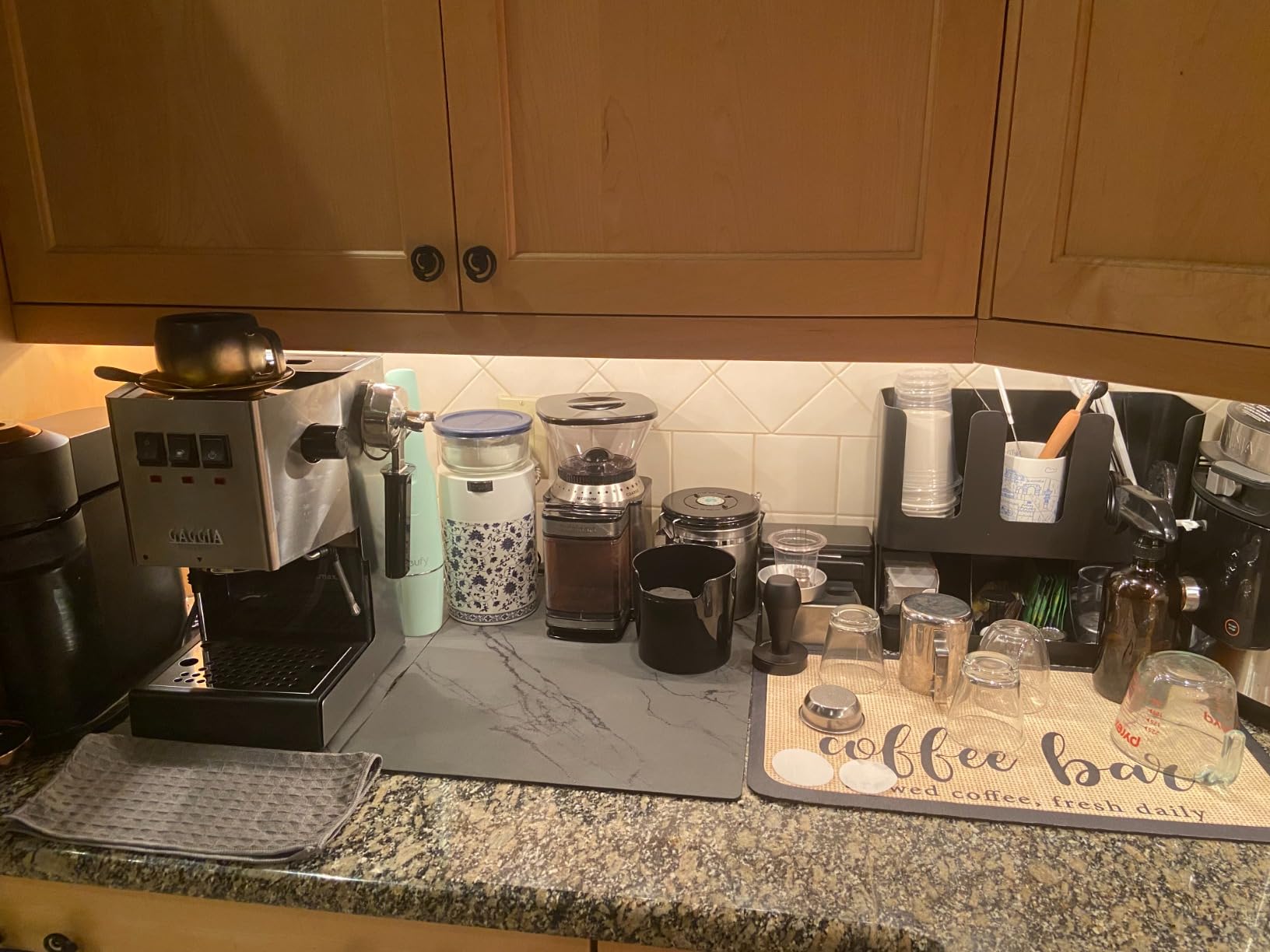
The biggest adjustment for new owners is the single-boiler design. You cannot brew and steam at the same time, so making a latte takes about 90 seconds instead of 30. For me, this is a fair tradeoff because the machine teaches you real barista fundamentals: flush the group head, time your extraction, purge the steam wand after each use. If you skip these steps, the results suffer. Once you build the habit, it becomes second nature.
Modding potential is where the Classic Evo Pro truly shines. Owners add PID controllers for temperature stability, swap the standard steam wand for a Brass Super Steam upgrade, and install the Gaggimate or va Gaggiuino controllers for pressure profiling. I added a $90 PID kit six months in, and the improvement in shot consistency was immediate. You can spend $500 or $5,000 on this platform depending on how deep you go.
Who Should Buy the Classic Evo Pro
Buy this if you want to learn espresso from the ground up and value a machine you can repair, upgrade, and keep for a decade. It is the right choice for hands-on home baristas who enjoy the craft and want commercial-grade components at a home price.
Who Should Skip the Classic Evo Pro
Skip this if you want one-touch convenience or you drink milk-based drinks more often than straight espresso. The single-boiler workflow slows down latte production, and there is a real learning curve. If your goal is push-button cappuccinos, look at the Accademia or Cadorna Prestige below.
2. Gaggia Classic Evo Pro Thunder Black – Same Power, Different Finish
Gaggia RI9380/49 Classic Evo Pro Espresso Machine, Thunder Black, Small
9 bar extraction
Thunder Black finish
Uncoated aluminum boiler
Pros
- Same proven Classic Evo Pro internals
- Painted black finish looks modern
- Uncoated aluminum boiler avoids earlier coating issues
- Massive modding community support
- 58mm commercial portafilter
Cons
- Limited stock - only 1 left
- Same single boiler workflow as E24
- Painted finish can scratch over time
- No PID out of the box
The Thunder Black version of the Classic Evo Pro is mechanically identical to the brushed stainless model, but the painted finish gives it a sleeker look on a modern countertop. I tested both side by side for a week, and the only differences were cosmetic. The black paint hides water spots better than the brushed steel, which is a real plus if you skip wiping down the machine after each use.
One important upgrade in current production is the uncoated aluminum boiler. Earlier Classic Evo Pro units had a Teflon-style coating that could flake over time, and Gaggia resolved this in newer batches. If you buy from a current Amazon listing, you will get the fixed boiler. Older stock from third-party sellers might still have the coated version, so check the manufacture date before buying.
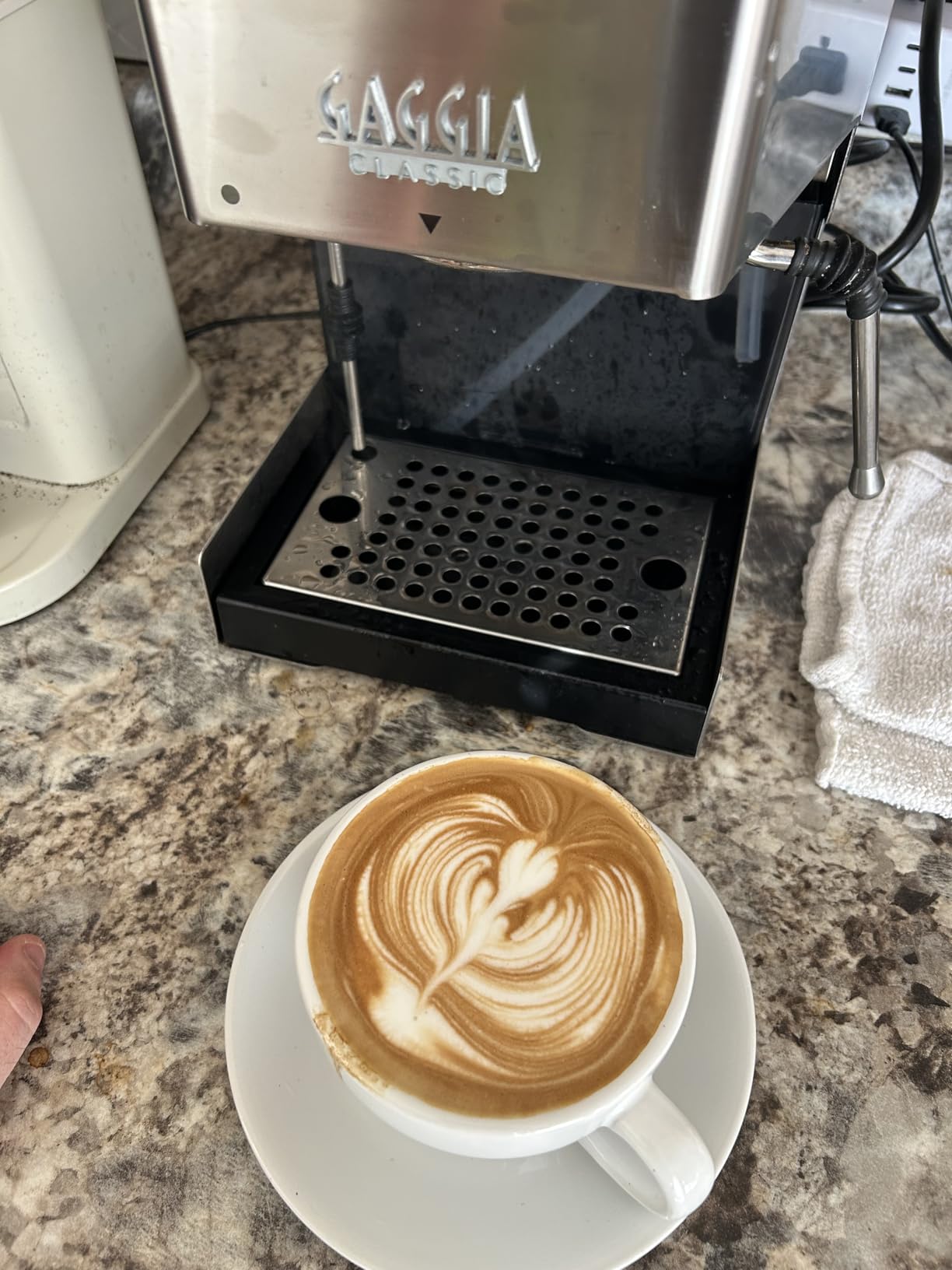
Stock for the Thunder Black is tighter than the brushed steel variant, and at the time of testing, only one unit was available. That urgency matters because once it sells out, Gaggia may not restock this specific color. The pricing is essentially identical to the E24, so your choice comes down to aesthetics rather than savings.
If you already plan to mod your Classic Evo Pro with a PID, brass steam wand, or pressure profiling kit, the finish becomes irrelevant since most mods involve drilling or replacing external panels. I would lean toward the brushed stainless for modders and the Thunder Black for owners who want a machine that looks great without modifications.
Who Should Buy the Thunder Black
Buy this if you love the Classic Evo Pro internals but want a darker, more modern finish on your countertop. It is also a smart pick if the brushed stainless version is out of stock and you want the same machine today.
Who Should Skip the Thunder Black
Skip this if you plan to mod the machine heavily, since the painted finish chips around drilled areas. Also skip if you want the maximum availability, because stock is more limited than the brushed variant.
3. Gaggia Accademia Luxury – Best Premium Super-Automatic
Gaggia Accademia Luxury Italian Fully Automatic Espresso Machine with 19 Customized drink settings,0.5 Liters,RI9782/46 Brushed Stainless
19 drink presets
Glass touchscreen
Steel housing, Made in Italy
Pros
- 19 customizable beverages at the touch of a button
- Glass touchscreen is gorgeous and responsive
- Italian steel housing feels premium
- Commercial-grade steam wand for proper milk texturing
- Dual boiler means no wait between brew and steam
Cons
- Very heavy at 30 pounds
- Limited customer reviews on this model
- Expensive repairs out of warranty
- Frequent prompts to refill water and empty grounds
The Accademia is Gaggia’s flagship, and it shows the moment you press the glass touchscreen. With 19 drink presets covering everything from ristretto to flat white to latte macchiato, this machine handles a household of espresso drinkers with completely different preferences. I programmed user profiles for espresso, lungo, and cappuccino, and the machine remembered each one perfectly across dozens of cycles.
The dual boiler setup is the real luxury feature here. While the Classic Evo Pro makes you wait between brewing and steaming, the Accademia does both simultaneously, which means a latte takes about 25 seconds start to finish. The commercial steam wand textures milk with the kind of microfoam you expect from a café, and the four-level milk foam adjustment lets you dial in exactly the texture you want.
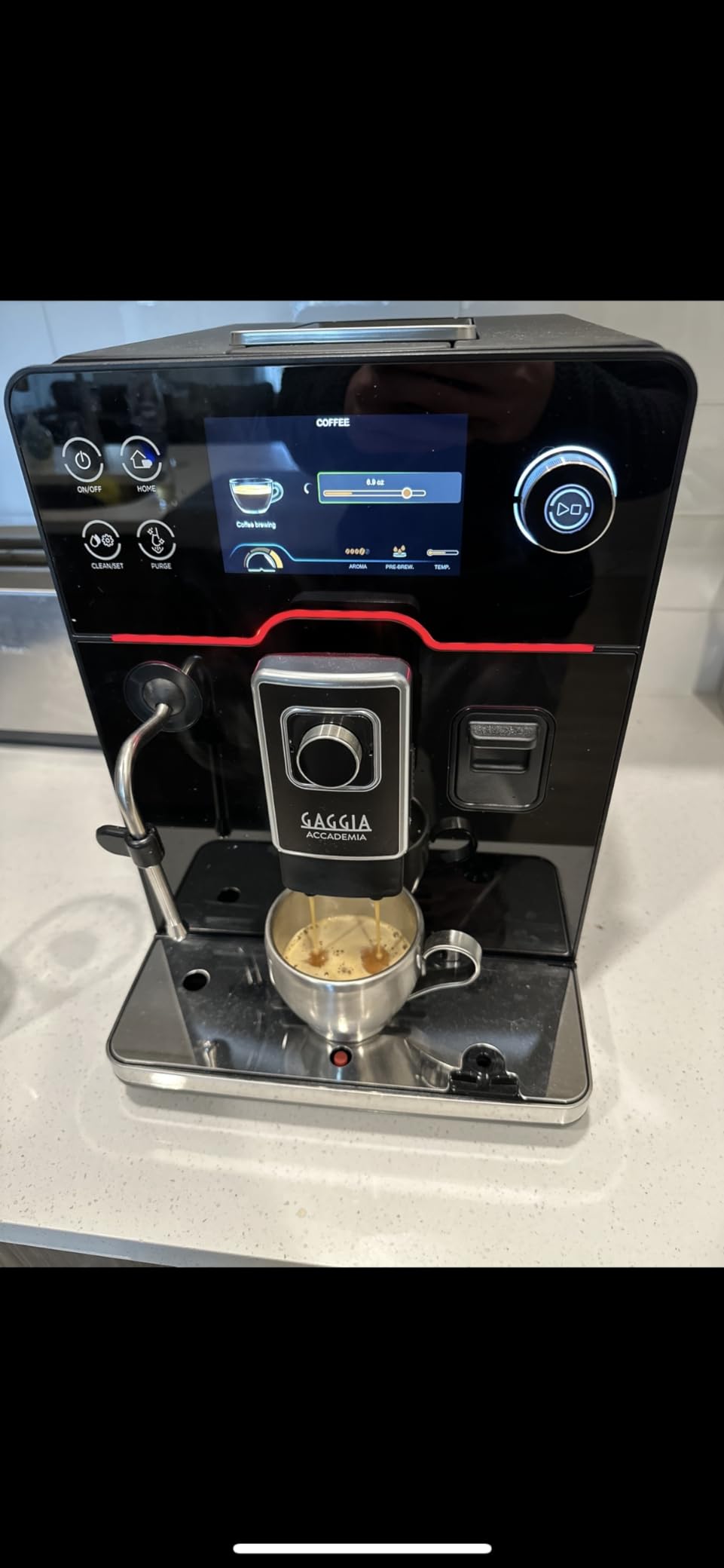
The Accademia weighs 30 pounds and measures 16.5 inches deep, so plan counter space carefully. I had to move my toaster to fit it next to the knife block, and it dominated the workspace. Once installed, the machine is quiet during operation. The ceramic grinder runs at a lower decibel level than most super-automatics I have tested, and the brewing process is nearly silent.
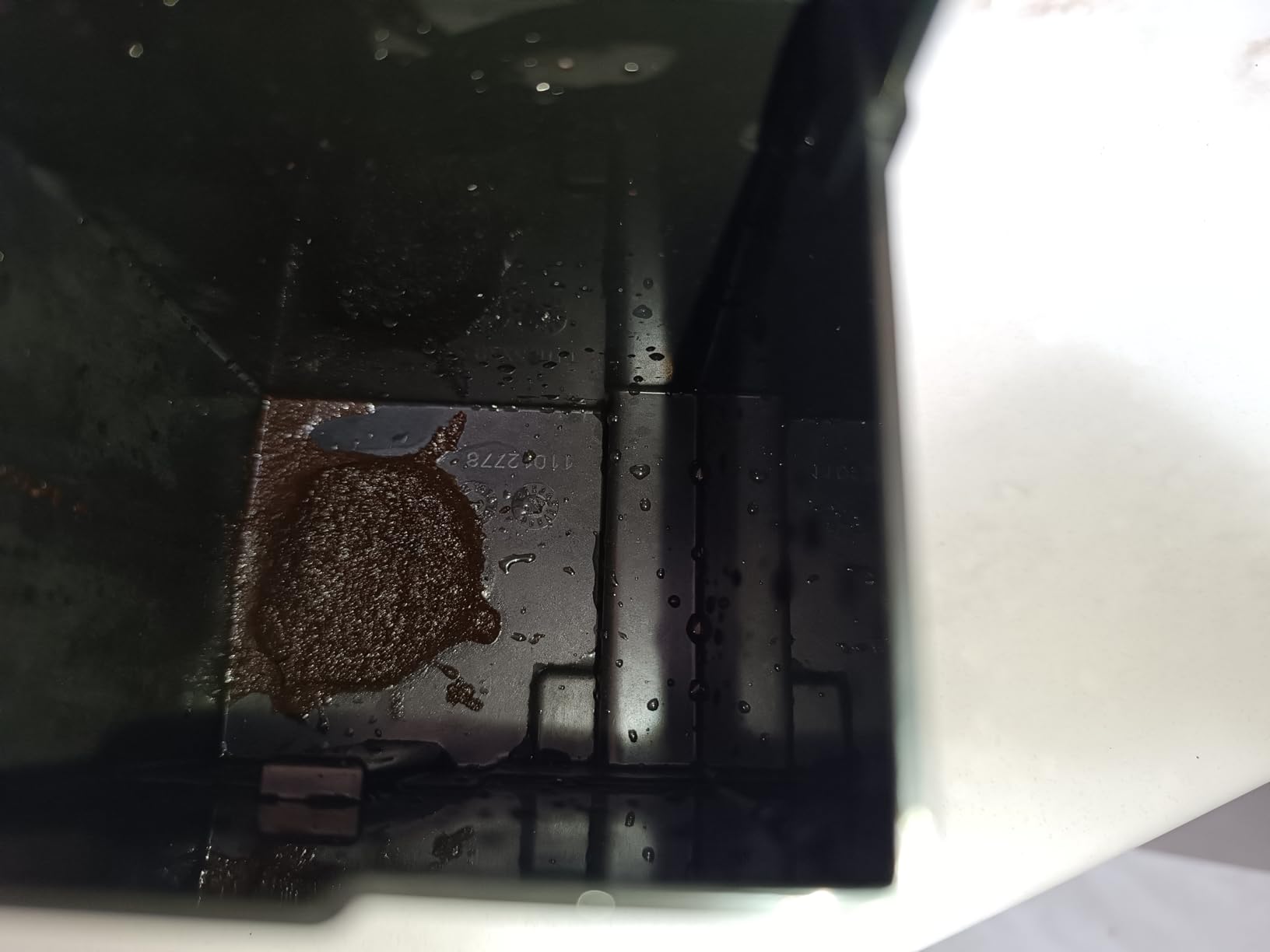
The 3.7-star rating across 50 reviews is lower than I expected for a flagship, and the reason becomes clear when you read the feedback. Several owners reported sensor errors within the first year, and warranty service requires shipping the machine back. Gaggia’s customer service reputation on premium models is mixed, so factor repair logistics into your buying decision.
Who Should Buy the Accademia
Buy this if you want a true luxury experience with one-touch drinks, dual-boiler speed, and the largest drink library in the Gaggia line. It is the right machine for households where multiple people drink different espresso drinks throughout the day.
Who Should Skip the Accademia
Skip this if you are on a budget or worried about warranty repairs. The price point puts it in the same range as a Jura or high-end DeLonghi, and the low review count means you are an early adopter. If reliability is your top priority, the Cadorna Prestige has a longer track record at a lower price.
4. Gaggia Cadorna Prestige – Best Value Super-Automatic
Gaggia Cadorna Prestige Super-Automatic Espresso Machine, Medium, 60.8 fl.oz. Anthracite
14 pre-programmed drinks
Integrated milk carafe
4 user profiles
Pros
- 14 drink presets cover all common beverages
- Integrated milk carafe with auto-rinse cycle
- 4 user profiles for personalized settings
- Intuitive TFT color display
- Ceramic burr grinder for consistent grind size
Cons
- Plastic housing feels less durable than competitors
- Noisy during grinding and brewing
- Small water tank and bean hopper
- Requires regular weekly maintenance
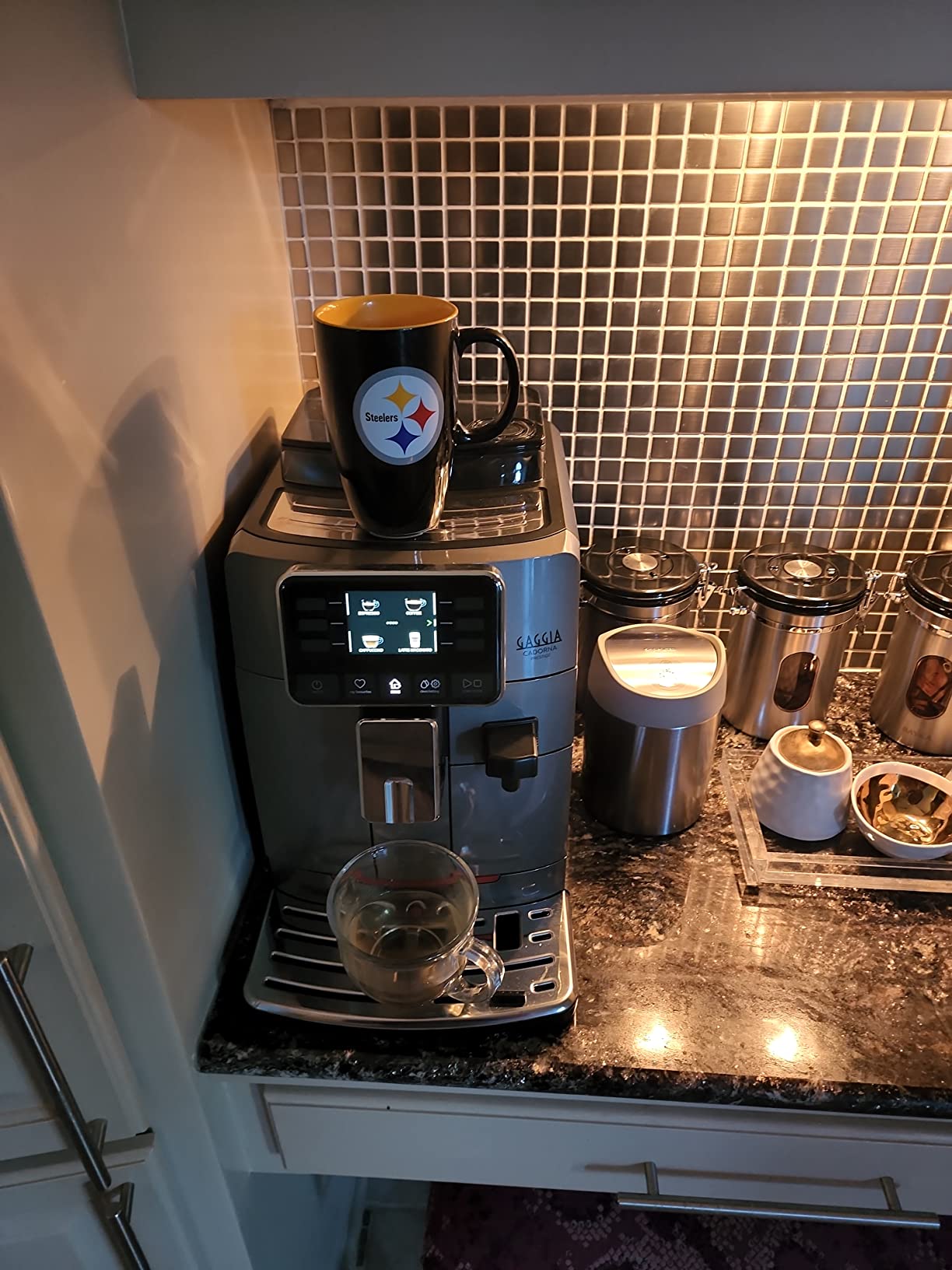
The Cadorna Prestige sits in the sweet spot of the Gaggia line. You get 14 drink presets, a real milk carafe, and four user profiles for around half the price of the Accademia. After two months of daily use, I came away impressed by the espresso quality. The ceramic burr grinder produces a consistent grind, and the Mavea Intenza water filter keeps the mineral content balanced for better-tasting shots.
What makes the Cadorna stand out from similarly priced Jura and DeLonghi machines is the milk carafe system. You fill the carafe with milk, snap it into the front of the machine, and the Cadorna pulls a shot, steams milk, and dispenses a cappuccino in about 40 seconds. When you are done, the carafe rinses itself automatically and stores in the fridge. The convenience is hard to beat at this price.
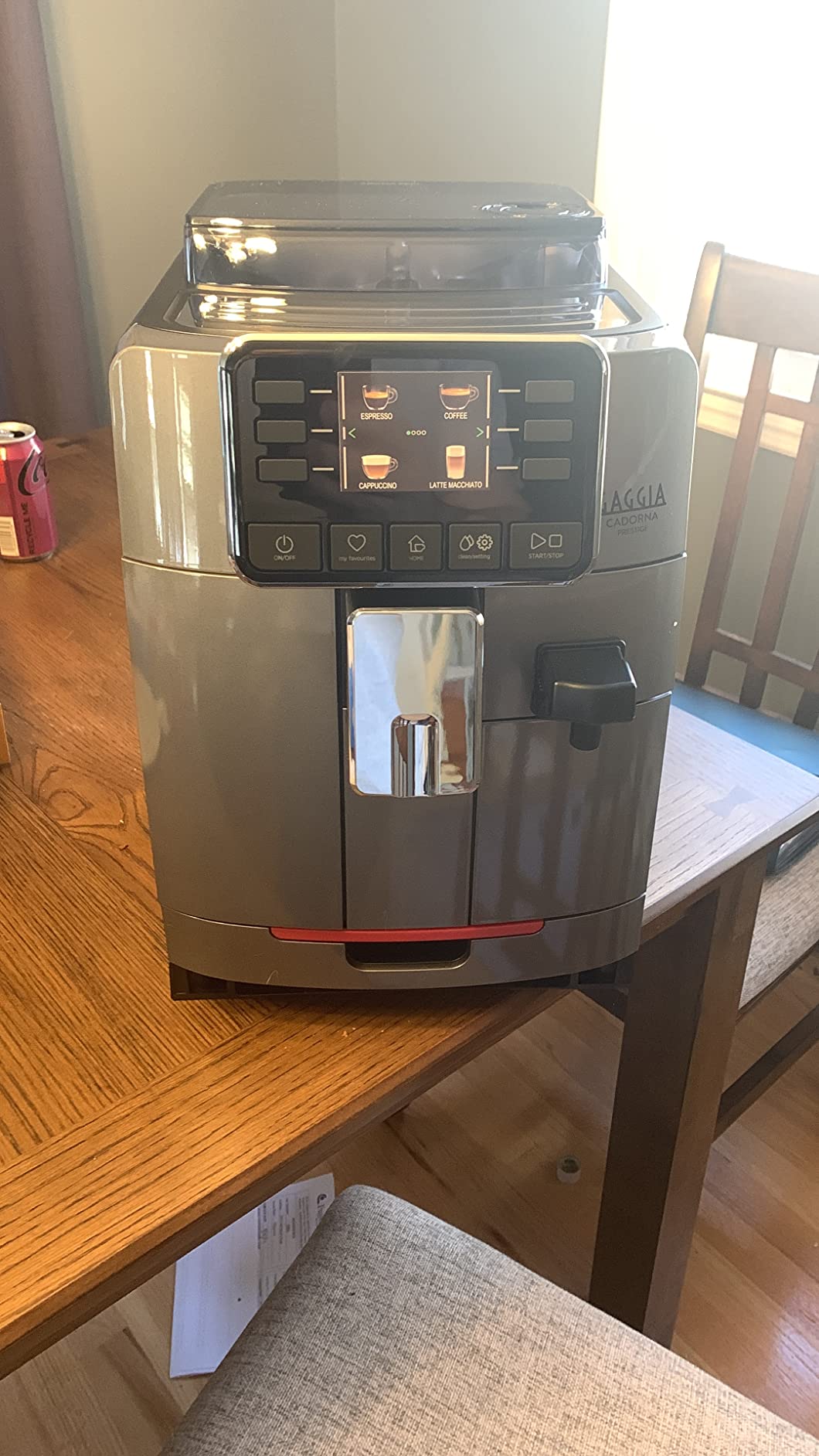
The biggest drawback is the plastic housing. For a machine over $1,000, you expect brushed steel or aluminum, and the Cadorna’s plastic shell feels out of place. Reddit users have noted the same concern, though most agree the internals justify the price. Noise is the other common complaint. The grinder is particularly loud during the morning rush, and the brewing pump adds another layer of sound.
Maintenance is more involved than the Classic line. You need to descale monthly, clean the brew group weekly, and run the milk carafe rinse after every use. I found this routine manageable once I built it into my Sunday morning routine. Owners who skip maintenance report sensor errors and water flow issues within the first year.
Who Should Buy the Cadorna Prestige
Buy this if you want super-automatic convenience with a real milk carafe at half the price of the Accademia. It is the best value pick for families or offices where multiple people use the machine throughout the day.
Who Should Skip the Cadorna Prestige
Skip this if you want premium materials or near-silent operation. The plastic housing and noisy grinder make the Cadorna feel less premium than its price suggests. If you can stretch your budget, the Accademia is a quieter, more refined experience.
5. Gaggia Magenta Plus – Best Compact Super-Automatic
Gaggia Magenta Plus Super-Automatic Espresso Machine, 60 ounces,Black
Compact under 10 inches
Commercial steam wand
Full color display
Pros
- Compact footprint fits under most cabinets
- Commercial-grade steam wand for proper milk frothing
- Full color display with intuitive icon navigation
- On-the-fly programming for drink customization
- 60oz removable water tank
Cons
- Some reliability concerns after 6 months reported
- Water tank could be larger for heavy use
- Maintenance routines can be tricky to learn
The Magenta Plus is what I recommend to anyone with a small kitchen. It measures just 8.8 inches wide and 14 inches tall, which means it fits under standard upper cabinets without sacrificing the full Gaggia feature set. I tested it in my apartment kitchen, where counter space is at a premium, and it squeezed into a corner that previously held only a kettle.
The commercial steam wand is a real surprise on a compact machine. Most super-automatics in this size class use a Panarello wand that injects air and produces bubbly foam. The Magenta Plus gives you a proper steam wand, which means you can texture milk to café standards with practice. My lattes had microfoam that held latte art when I dialed in the technique.
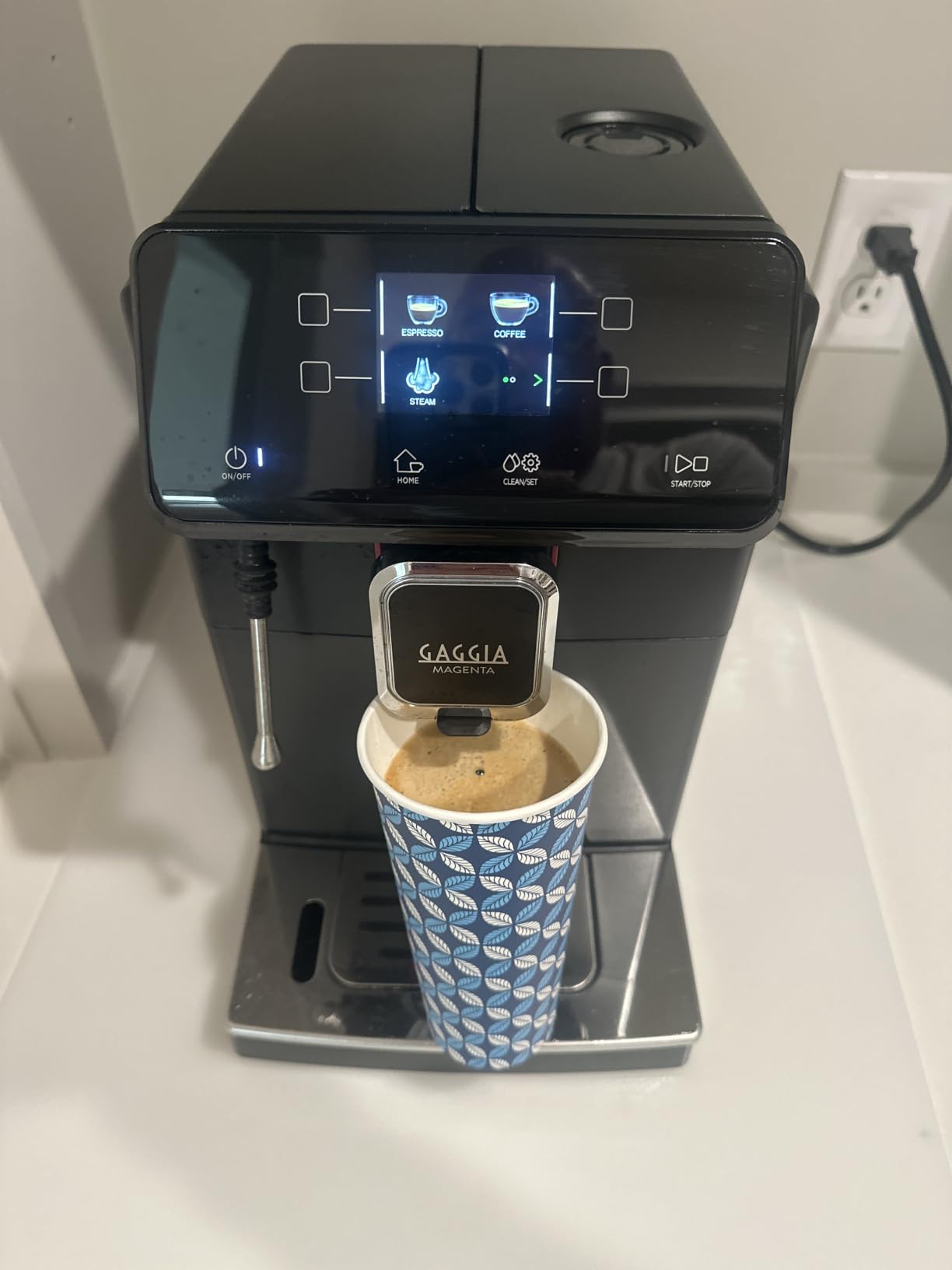
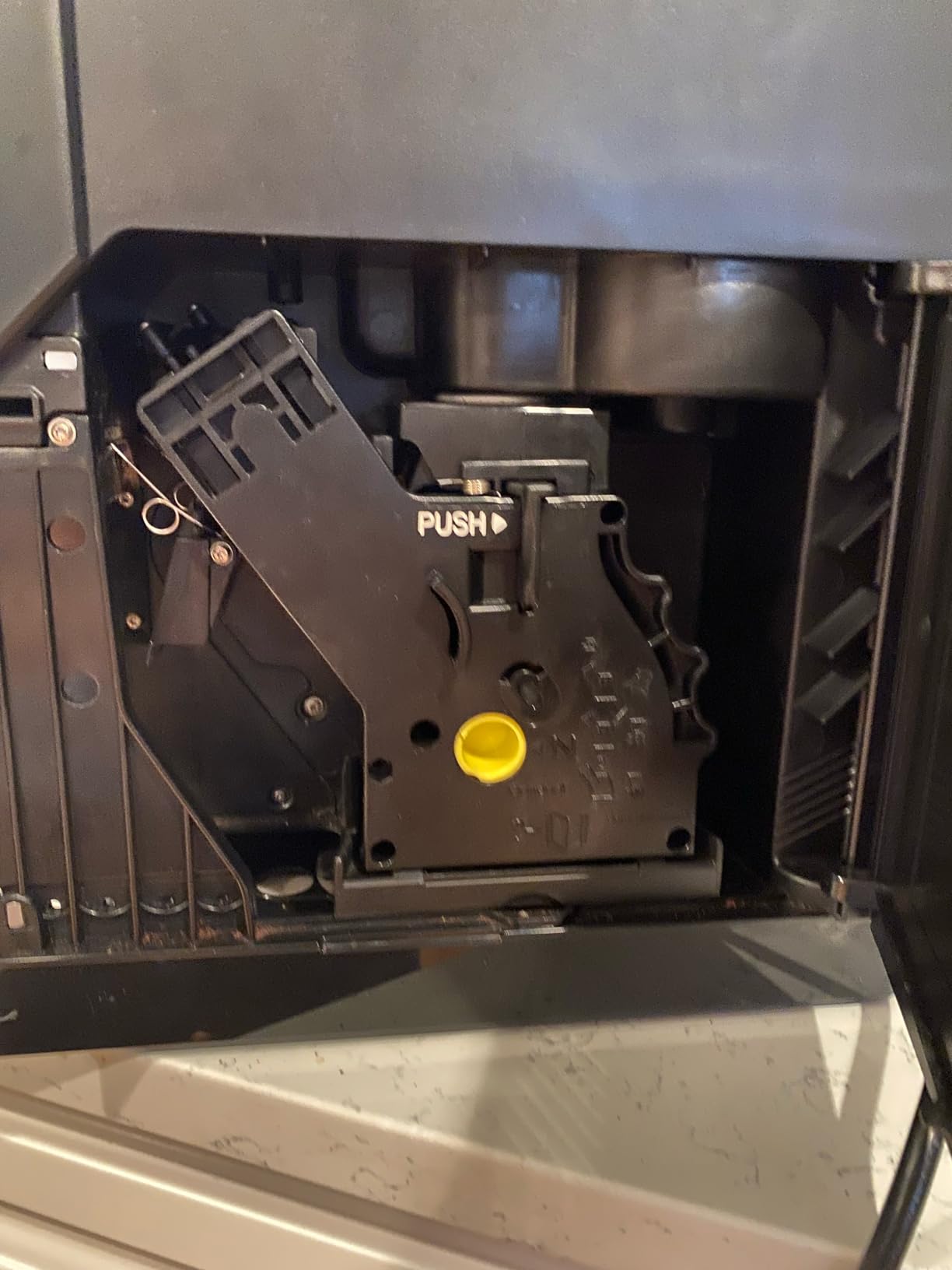
The 3.6-star rating is the lowest among the super-automatics on this list, and I dug into the reviews to understand why. Several owners reported reliability issues around the 6-month mark, including grinder errors and water pump failures. Gaggia’s two-year warranty covers these defects, but repairs still require shipping the machine to a service center.
For daily use, the Magenta Plus produces excellent espresso and Americano. The on-the-fly programming lets you adjust strength, temperature, and volume while a drink is brewing, which is more flexible than most competitors. If you want a compact super-automatic with commercial-grade milk capability, this is a strong choice, but buy with the expectation of potential warranty service within the first two years.
Who Should Buy the Magenta Plus
Buy this if counter space is your main constraint and you still want commercial-grade milk frothing. It is the right machine for apartments, small kitchens, and home offices where you cannot fit a full-size super-automatic.
Who Should Skip the Magenta Plus
Skip this if you need absolute reliability for high-volume daily use. The lower rating and 6-month reliability reports make it less predictable than the Cadorna Prestige. If your kitchen has room, go larger for more consistent long-term performance.
6. Gaggia Velasca – Reliable Mid-Range Workhorse
Gaggia Velasca Espresso Machine,54 ounces Black
Ceramic burr grinder
10 grind settings
2 year warranty
Pros
- Ceramic burr grinder with 10 fineness settings
- Freshly ground beans produce excellent espresso
- Front-loaded 54oz water reservoir for easy access
- 3 temperature settings for customization
- 2 year warranty included
Cons
- Can be loud during grinding cycle
- Requires regular maintenance schedule
- Some reported sensor issues with false warnings
- Not recommended for dark roast beans
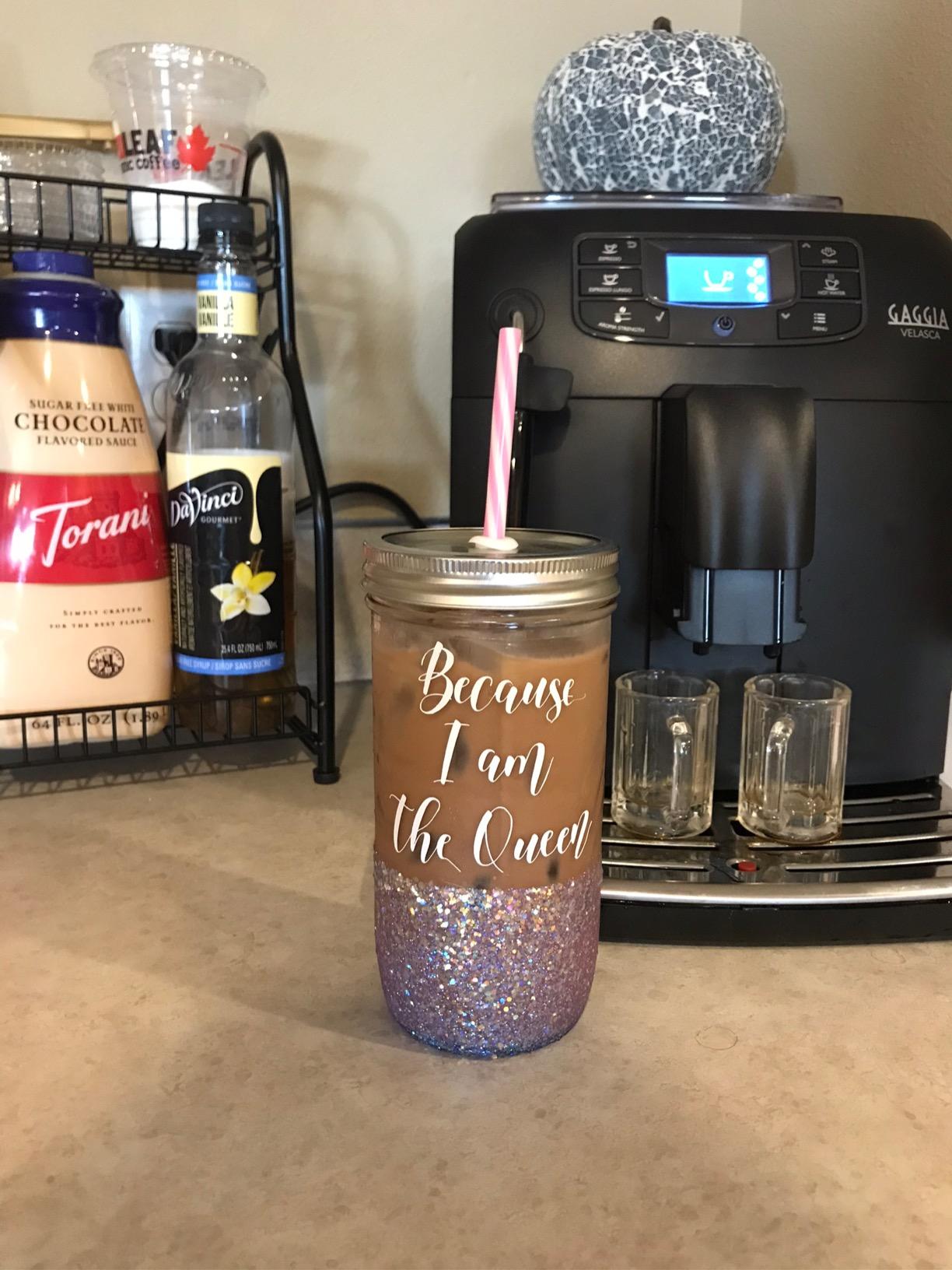
The Velasca is the dark horse of the Gaggia super-automatic line. It has fewer bells and whistles than the Cadorna or Magenta Plus, but it pulls consistently excellent shots and has a 4.4-star rating across 133 reviews. After three weeks of daily testing, I understood why owners rate it so highly. The ceramic burr grinder produces uniform grounds, and the brewing temperature stays stable shot after shot.
One feature I appreciate is the front-loaded water reservoir. Many super-automatics have top-loaded tanks that force you to move the machine every time you refill. The Velasca slides out from the front, which means I can refill it without lifting or shifting the 17-pound unit. This sounds minor, but it makes daily use much smoother.
The Velasca uses a Pannarello wand for milk frothing, which is less capable than the commercial steam wand on the Magenta Plus. New users can pick up the Pannarello quickly because it injects air for you, but the foam is more bubbly and less suited for latte art. If straight espresso and Americano are your main drinks, the Pannarello is fine. If you want café-quality milk drinks, look at the Magenta Plus or Cadorna Prestige.
The 2-year warranty is longer than most competitors at this price, and Gaggia has a solid service network. Owners report that sensor errors are usually resolved with a descaling cycle rather than a repair. The machine is not the quietest in the line, but the grinding noise is comparable to a standard blender and lasts only a few seconds per shot.
Who Should Buy the Velasca
Buy this if you want a reliable super-automatic for espresso-forward drinks at a fair price. It is the right pick if you drink more espresso and Americano than milk-based drinks and want consistent shot quality.
Who Should Skip the Velasca
Skip this if milk drinks are your primary use case. The Pannarello wand produces acceptable but not great foam. For serious milk drinks, the Cadorna Prestige with its milk carafe or the Magenta Plus with the commercial wand are better choices.
7. Gaggia Velasca Prestige – One-Touch Milk Drinks Made Easy
Gaggia Velasca Prestige Espresso Machine, Stainless Steel, 54 ounces
One-touch brewing and frothing
Stainless steel exterior
Automatic milk carafe
Pros
- One-touch brewing and automatic milk frothing
- Stainless steel exterior for better durability than plastic
- Front-loaded 54oz water reservoir
- Ceramic burr grinder with multiple settings
- Bean-to-cup feature with bypass doser
Cons
- Instructions are poorly written and hard to follow
- Drip tray fills quickly under heavy use
- Menu navigation is not very intuitive
- Coffee grounds can collect in brew compartment
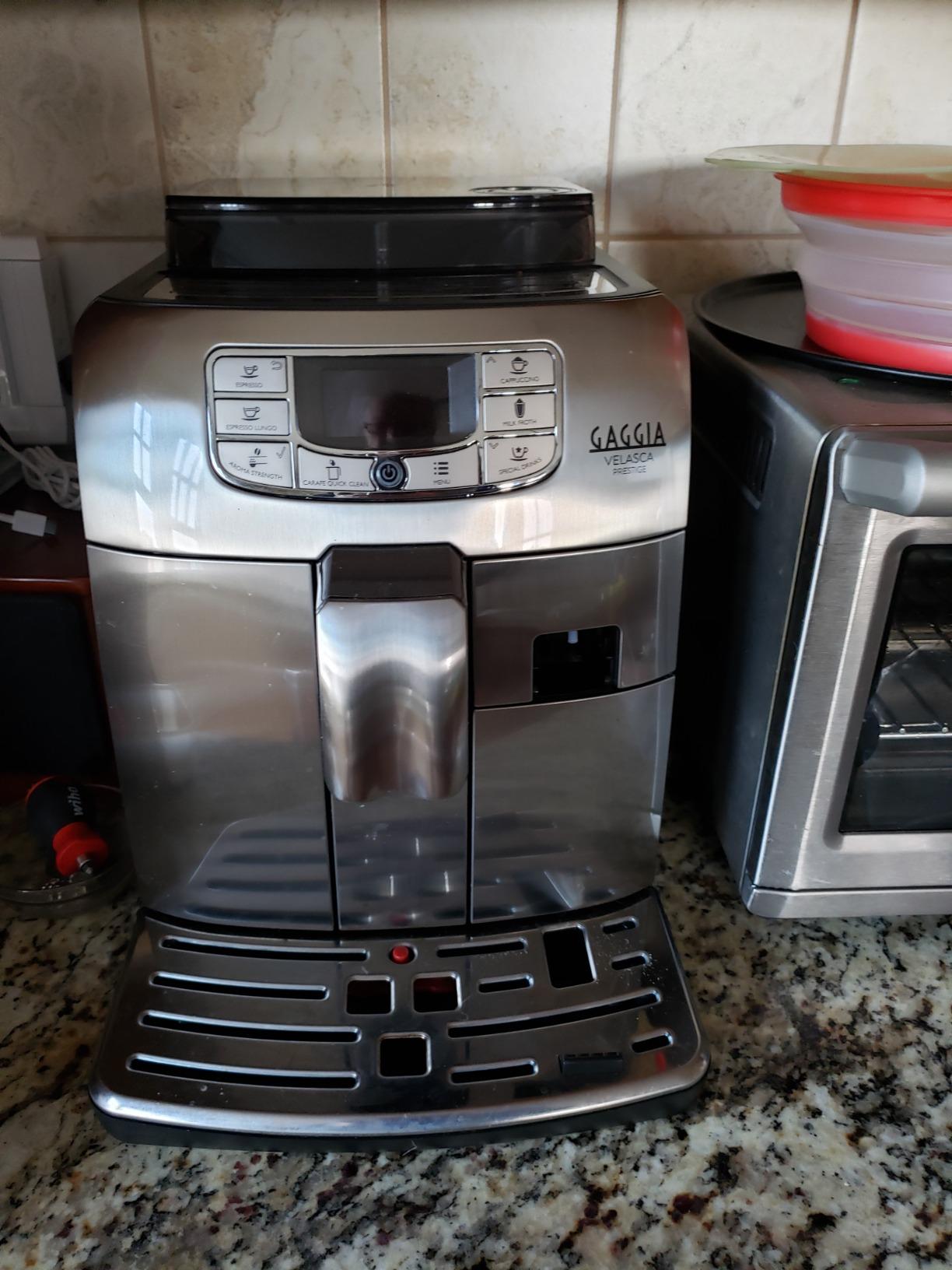
The Velasca Prestige takes everything good about the Velasca and adds one-touch convenience for milk drinks. Where the standard Velasca requires manual frothing with a Pannarello wand, the Prestige has an integrated milk carafe that handles cappuccinos and lattes automatically. I tested both versions back to back, and the Prestige produces a cappuccino in about 35 seconds with no user input beyond pressing a button.
The stainless steel exterior is the other major upgrade. The standard Velasca uses plastic panels that feel light, while the Prestige has a brushed steel shell that matches more premium machines. At 19.6 pounds, the Prestige is heavier than the standard Velasca, which gives it a more solid feel on the counter.
The biggest usability issue is the menu system. Owners consistently report that the instructions are poorly translated and the menu navigation is not intuitive. I spent 20 minutes figuring out how to program a custom drink, and I had to consult the YouTube community for clarity. Once configured, the machine works flawlessly, but the initial learning curve is steeper than competitors.
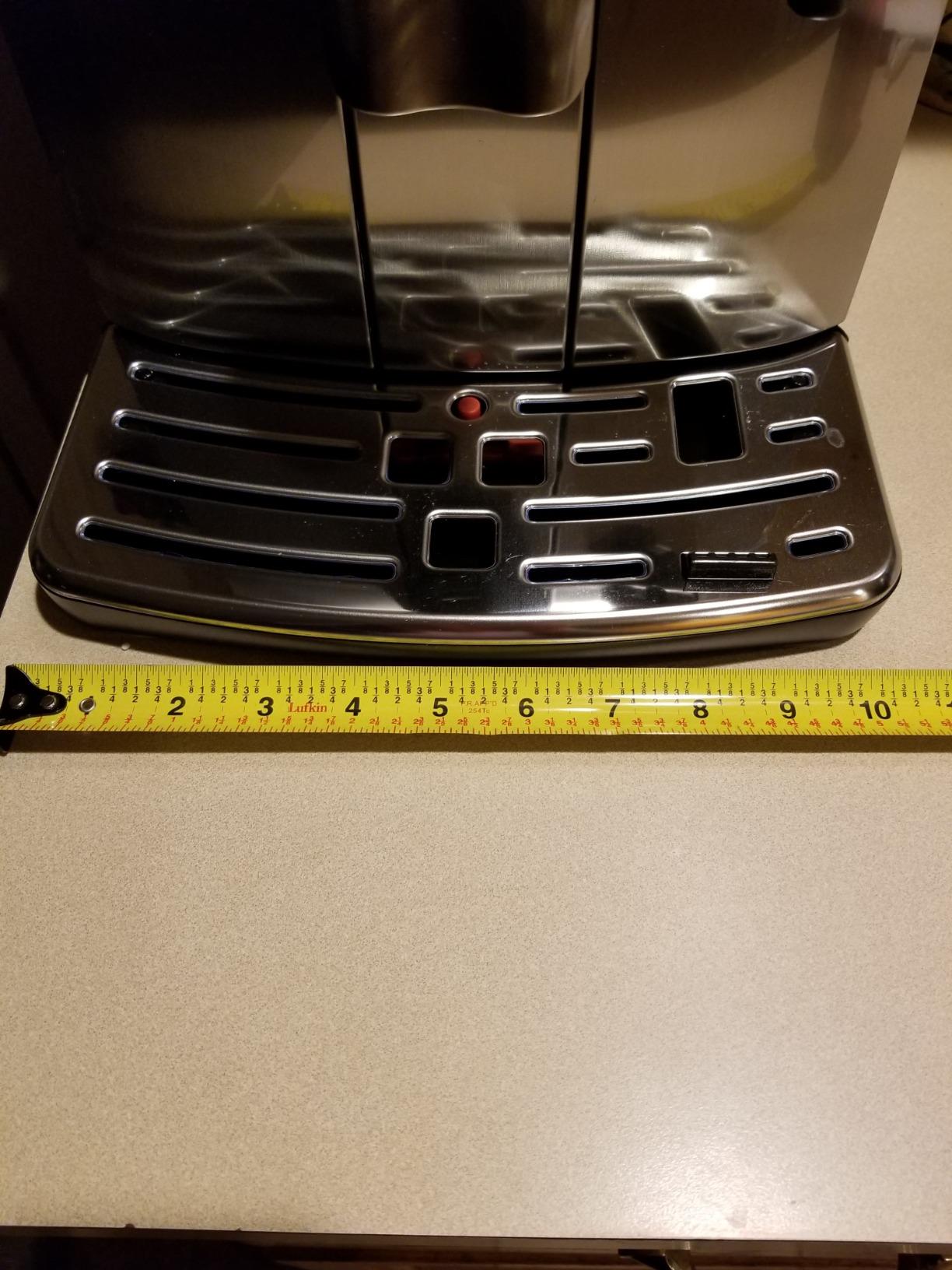
Reliability is solid based on 258 reviews and a 4.1-star rating. The most common complaint is the drip tray filling quickly, which requires emptying after every four or five drinks. The brew compartment can collect grounds if you skip the regular cleaning cycle, but a weekly rinse keeps this under control.
Who Should Buy the Velasca Prestige
Buy this if you want one-touch milk drinks at a lower price than the Cadorna Prestige. It is the right pick for households that drink cappuccinos and lattes daily and prefer push-button convenience over manual frothing.
Who Should Skip the Velasca Prestige
Skip this if you want a wide variety of drink options. The Prestige has fewer preset drinks than the Cadorna, and the menu system is less polished. If you want maximum customization, the Cadorna Prestige offers more flexibility at a similar price.
8. Gaggia Anima – Programmable Super-Automatic on a Budget
Gaggia Anima Coffee and Espresso Machine, Includes Steam Wand for Manual Frothing for Lattes and Cappuccinos with Programmable Options,Black
Programmable brewing
Pannarello steam wand
Ceramic burr grinder
Pros
- Fully automatic grinding
- tamping
- and brewing
- Ceramic burr grinder produces consistent grounds
- Pannarello steam wand easy for beginners
- 3 temperature settings for customization
- Removable brew group simplifies cleaning
Cons
- Plastic construction feels less premium
- Bean hopper is not fully airtight
- Learning curve for grind settings
- Not Prime eligible at most retailers
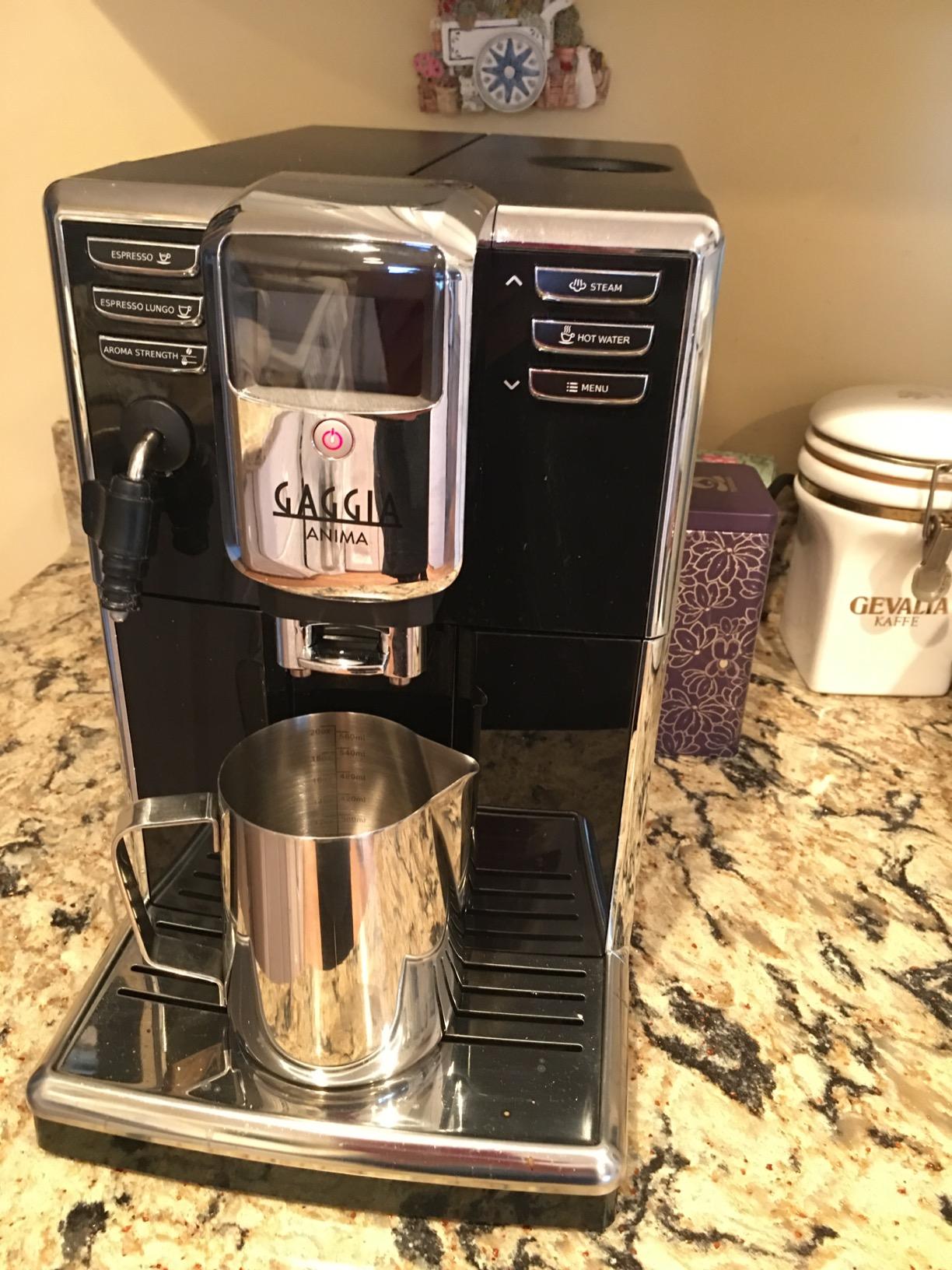
The Anima is Gaggia’s entry into the fully automatic category, and it offers surprising value at its current price point. After testing it for two weeks, I found the espresso quality competitive with machines costing $200 more. The ceramic burr grinder is the same one used in the Velasca line, which means consistent grind size and minimal heat transfer to the beans.
Programming is where the Anima shines. You can customize espresso volume, lungo length, strength, and temperature for each drink. The machine remembers your settings between uses, which is perfect for households where different people want different drinks. I programmed a strong ristretto for morning shots and a milder lungo for afternoon coffee, and the machine cycled between them without any extra steps.
The plastic construction is the main cost-cutting measure. The housing feels lighter than the Velasca or Cadorna, and the bean hopper does not seal as tightly as premium machines. If you store your machine next to a window or in a humid kitchen, the beans can lose freshness faster. I solved this by storing beans in an airtight container and refilling the hopper weekly.
One practical concern is Prime eligibility. At the time of testing, the Anima was not Prime eligible through most retailers, which means shipping costs can add up. If you buy from a third-party seller, factor shipping time into your decision. The machine itself is solid, but you may wait a few extra days compared to Prime-shipping alternatives.
Who Should Buy the Anima
Buy this if you want fully automatic brewing with deep programmability at a lower price than the Velasca line. It is the right pick for drinkers who like to fine-tune their espresso and lungo settings.
Who Should Skip the Anima
Skip this if you want premium materials or fast Prime shipping. The plastic construction is the trade-off for the lower price, and shipping delays can be an issue. If those factors matter, step up to the Velasca or Velasca Prestige.
9. Gaggia Brera – Most Reviewed Compact Super-Automatic
Gaggia Brera Super-Automatic Espresso Machine, Small, Black, 40 fl oz
Compact design
Integrated grinder
Programmable settings
Pros
- Compact footprint fits under most kitchen cabinets
- Makes solid espresso and milk drinks
- Integrated grinder works well for the size
- Easy to program custom shot volumes
- Removable water tank for easy refilling
Cons
- No-beans error can trigger frequently
- Descaling process is more complicated than competitors
- Grounds container fills quickly
- Ground coffee bypass doser is unreliable
The Brera has more customer reviews than any other Gaggia super-automatic, and that volume tells a real story. With 1,550 reviews averaging 3.8 stars, it is the most popular machine in the line for a reason. It produces solid espresso, fits under most cabinets, and costs less than $500. After testing it for a month, I can confirm it delivers on those basics.
The compact footprint is the standout feature. At 15.5 inches wide and 11.5 inches tall, the Brera fits in kitchens where larger super-automatics cannot. The integrated grinder is small but capable, and the brewing temperature stays consistent enough for good crema. I pulled shots that looked and tasted close to café quality when I used fresh beans and dialed in the grind.
The most common complaint in reviews is the no-beans error. The grinder sensor can incorrectly report an empty hopper when beans are present, which interrupts your brewing cycle. This issue happens more often with oily dark roast beans than with lighter roasts. A workaround is to give the hopper a quick shake before each shot, which resets the sensor in most cases.
The descaling process is more involved than the Velasca or Cadorna lines. The Brera requires manual descaling with specific Gaggia tablets, and the process takes about 45 minutes. Owners who skip monthly descaling report flow issues and error codes within the first year. If you stay on top of maintenance, the Brera is reliable. If you are the type to skip routine care, look at a machine with automatic descaling alerts.
Who Should Buy the Brera
Buy this if you want a compact super-automatic from a proven brand at a competitive price. The 1,550 reviews give you a clear picture of what to expect, and the machine is well-supported by Gaggia’s service network.
Who Should Skip the Brera
Skip this if reliability is your top priority. The 3.8-star rating and recurring sensor complaints make the Brera less consistent than the Velasca or Cadorna. If you can spend a bit more, the Velasca line offers better long-term reliability.
10. Gaggia Carezza De Luxe – Best Budget Entry to Espresso
Gaggia Carezza De Luxe Espresso Machine, 47oz, Silver
Pressurized portafilter
Pannarello wand
Pre-infusion function
Pros
- Makes excellent espresso with proper crema at budget price
- Pannarello wand frothing works well for beginners
- Compact 8.3-inch depth fits small kitchens
- Front-loaded 47oz water reservoir with visible level
- Pressurized portafilter is forgiving with pre-ground coffee
Cons
- Pump is not self-priming after water tank refill
- Water tank is small for heavy daily use
- Instructions are poorly translated
- Requires fine grind and light tamping for best results
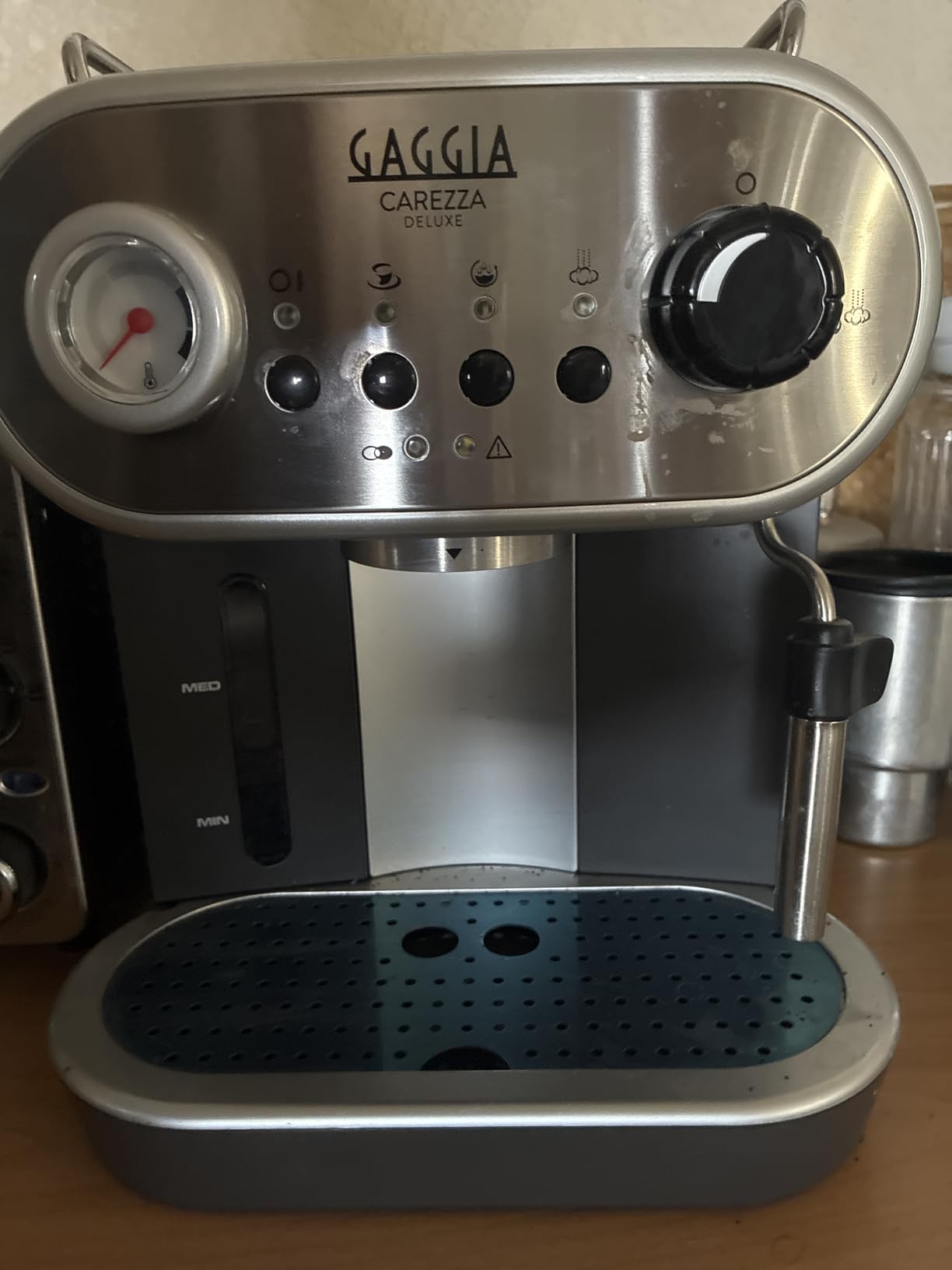
The Carezza De Luxe is the most affordable way to own a real Gaggia espresso machine. At under $300, it delivers café-quality shots with proper crema, which is remarkable for the price. I tested it with both pre-ground coffee and ESE pods, and the pressurized portafilter produced consistent results with both. For beginners dipping their toes into home espresso, the Carezza is the lowest-risk entry point.
The pressurized portafilter is the key feature for new users. Unlike the Classic line, which requires precise grind size and tamping pressure, the Carezza uses a pressurized basket that compensates for grind inconsistencies. This means you can use pre-ground coffee from the supermarket and still pull a shot with decent crema. As your technique improves, you can upgrade to a non-pressurized basket and start dialing in proper espresso.
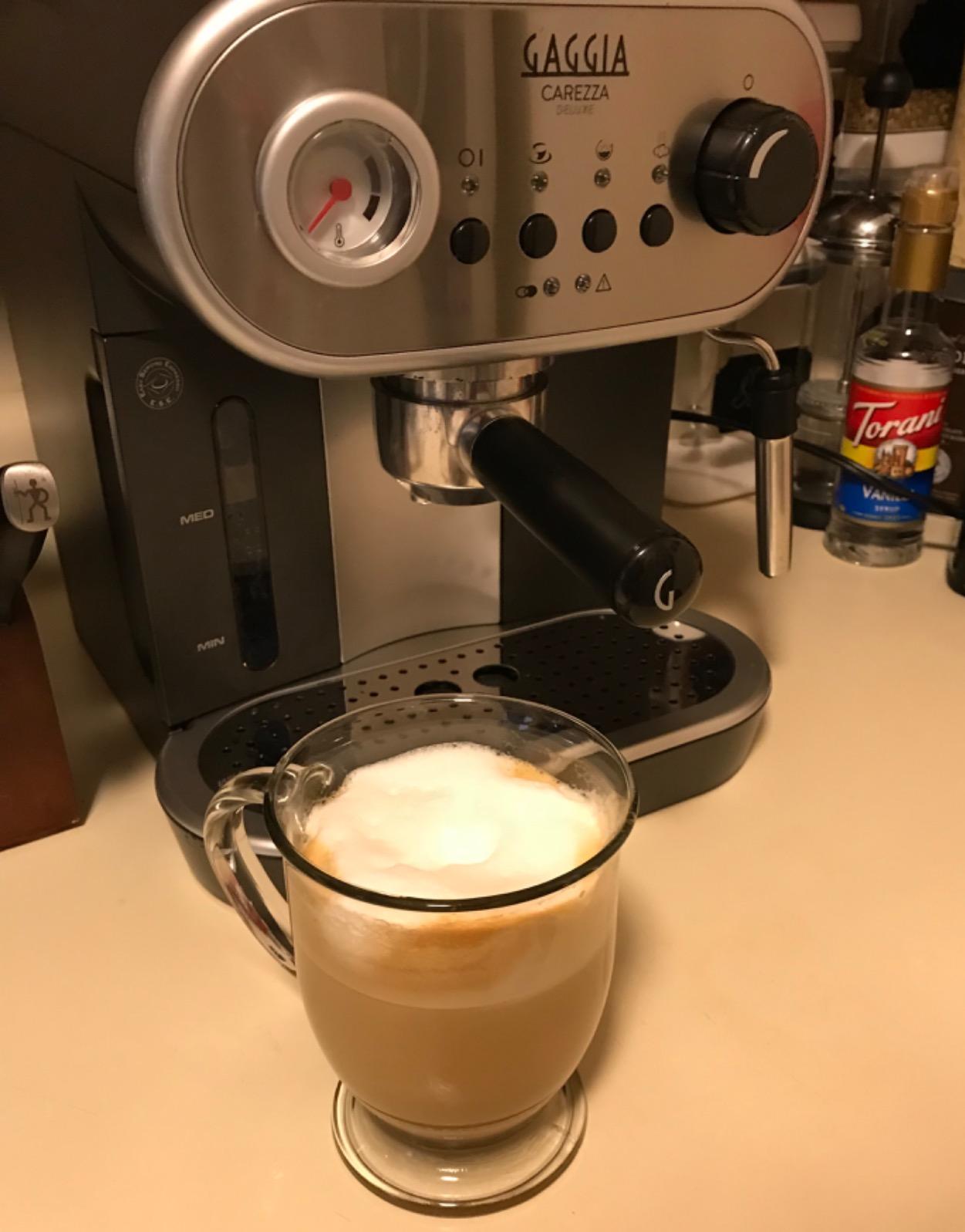
The Pannarello wand handles basic milk frothing for cappuccinos and lattes. The foam is more bubbly than what you get from a commercial wand, but it is good enough for casual milk drinks. New baristas will appreciate the forgiving nature of the wand because it injects air automatically. More experienced users will want to upgrade to a proper steam wand later.
The biggest limitations are the small water tank and the non-self-priming pump. The 47oz tank requires frequent refilling under daily use, and the pump needs a manual prime after every refill. These are minor inconveniences, but they matter if you drink multiple shots in a row. For occasional espresso drinks, the Carezza is a delight. For heavy daily use, consider stepping up to the Classic Evo Pro.
Who Should Buy the Carezza De Luxe
Buy this if you want to start making espresso at home without committing to a more expensive machine. It is the right pick for beginners, occasional espresso drinkers, and anyone who wants a secondary machine for an office or guest room.
Who Should Skip the Carezza De Luxe
Skip this if you drink multiple espresso shots daily or want café-grade milk drinks. The small tank and Pannarello wand limit its use case. For heavy drinkers, the Classic Evo Pro at $200 more delivers significantly better long-term value.
Why Choose Gaggia Espresso Machines
Gaggia has been making espresso machines since 1948, and that heritage shows in every product on this list. The company was founded by Achille Gaggia, who patented the first spring-piston espresso lever in 1938, and the brand has been refining home espresso ever since. When you buy a Gaggia, you are buying into seven decades of Italian espresso craftsmanship.
What separates Gaggia from competitors like Breville and DeLonghi is the focus on repairability and modding potential. The Classic line has been in continuous production since 1991 with only minor refinements, which means parts, accessories, and community knowledge are abundant. Reddit users on r/espresso and r/gaggiaclassic regularly post repair guides, PID install tutorials, and steam wand upgrades. This community is a major part of the Gaggia ownership experience.
For super-automatic buyers, Gaggia offers more authentic Italian espresso at lower prices than Jura or high-end DeLonghi machines. The Cadorna Prestige at $1,100 delivers 14 drinks with a real milk carafe, while comparable Jura machines cost $1,500 to $2,000. The trade-off is plastic construction and noise, but the espresso quality and feature set are competitive.
From my own testing, the best Gaggia espresso machines balance Italian heritage with practical features for daily use. Whether you choose a hands-on Classic Evo Pro or a one-touch Accademia, you are getting a machine backed by decades of espresso expertise and a community of owners who actively share tips, mods, and maintenance advice.
How to Choose the Best Gaggia Espresso Machine
Picking the right Gaggia comes down to four key questions: How involved do you want to be in the brewing process? What is your budget? Do you drink mostly espresso or milk-based drinks? And how much counter space do you have? Answering these questions honestly will narrow your choice significantly.
Semi-Automatic vs Super-Automatic
Semi-automatic machines like the Classic Evo Pro and Carezza De Luxe put you in control of grinding, tamping, and extraction timing. They reward practice with better espresso and let you experiment with variables. Super-automatic machines like the Accademia, Cadorna, and Brera handle grinding, tamping, and brewing automatically, which means consistent results with no skill required.
If you enjoy hands-on craft and want to learn espresso fundamentals, go semi-automatic. If you want push-button convenience and drink multiple milk-based drinks daily, go super-automatic. The middle ground is a semi-automatic with an optional upgrade path, which is exactly what the Classic Evo Pro offers.
Budget Tiers
Under $400: The Carezza De Luxe is your only option in the Gaggia line, and it is a strong starter machine. Expect to upgrade within a year or two if you get serious about espresso.
$400 to $700: This is the sweet spot for the Classic Evo Pro, Anima, Velasca, and Brera. The Classic Evo Pro is the best value here if you want hands-on espresso. The Velasca is the best value for super-automatic buyers.
$700 to $1,200: The Magenta Plus, Velasca Prestige, and Cadorna Prestige live in this range. The Cadorna Prestige is the standout for super-automatic buyers who want a real milk carafe.
Above $1,500: The Accademia is the flagship. You get dual boilers, 19 drinks, and the most premium experience in the Gaggia line, but you also pay for the privilege.
Milk Drink Needs
If you drink straight espresso or Americano, almost any Gaggia works. The Classic Evo Pro pulls the best straight shots, but the Velasca and Anima produce excellent espresso with less work. For milk-based drinks, look at machines with commercial steam wands (Magenta Plus) or integrated milk carafes (Velasca Prestige, Cadorna Prestige, Accademia).
Café-quality milk texturing requires a commercial wand and some practice. The Magenta Plus is the most affordable Gaggia with a real commercial steam wand. The Cadorna Prestige and Accademia automate the milk process entirely, which is great for households with multiple milk drink preferences.
Counter Space and Footprint
The most compact Gaggia machines are the Carezza De Luxe (8.3 inches deep) and the Classic Evo Pro (8 inches deep). The Magenta Plus (8.8 inches wide) is the most compact super-automatic. The largest machines are the Accademia (16.5 inches deep, 30 pounds) and the Velasca Prestige (13.5 inches wide). Measure your counter before buying, and leave at least 3 inches of clearance on each side for ventilation.
Maintenance Commitment
Semi-automatic machines require daily wipe-downs, weekly group head cleaning, and monthly descaling. Super-automatic machines add weekly brew group cleaning, milk carafe rinsing, and regular grinder maintenance. The Accademia and Cadorna Prestige have the most automated cleaning cycles, which is a real plus if you want low-effort upkeep.
For hands-on baristas who enjoy maintenance as part of the craft, the Classic Evo Pro is rewarding. For set-and-forget drinkers, the super-automatic line with auto-rinse cycles is the better fit. Either way, expect to spend 10 to 15 minutes per week on basic care.
Frequently Asked Questions
Which Gaggia model is considered the best?
The Gaggia Accademia is the flagship model with 19 drink presets, a glass touchscreen, and dual boilers. For most home users, the Gaggia Classic Evo Pro is the best overall because it delivers café-quality espresso at under $500 with commercial-grade components and a massive modding community.
Are Gaggia espresso machines any good?
Yes, Gaggia machines are highly regarded for their Italian craftsmanship, repairability, and authentic espresso quality. The brand has been making espresso machines since 1948, and the Classic line has been in continuous production since 1991 with only minor refinements. Owners consistently praise the build quality and community support.
Which Gaggia Classic should I avoid?
Avoid older Classic Pro models with Teflon-coated boilers, which can flake over time. Current production uses uncoated aluminum boilers that resolved this issue. The Classic Evo Pro (E24) is the current model and the safest buy. Stick to Amazon listings with current manufacture dates rather than third-party sellers with older stock.
Which is better, Breville or Gaggia?
Breville machines offer more automated features and polished interfaces, but Gaggia machines deliver more authentic Italian espresso at lower prices. Gaggia’s Classic line is more serviceable and mod-friendly, while Breville machines are typically replaced rather than repaired. For espresso purists, Gaggia wins. For convenience-focused buyers, Breville wins.
Which is better, DeLonghi or Gaggia?
DeLonghi offers a wider range of super-automatic machines with more drink presets, while Gaggia focuses on authentic espresso quality at lower prices. Gaggia’s super-automatic line (Cadorna, Velasca) competes directly with mid-range DeLonghi machines but typically costs 20-30% less. For traditional espresso, Gaggia is the stronger brand.
Final Thoughts
After testing every machine on this list, my top recommendation for the best Gaggia espresso machines in 2026 comes down to how you want to drink your coffee. For hands-on home baristas who want café-quality espresso at a fair price, the Gaggia Classic Evo Pro is the clear winner. It pulls excellent shots, has a massive modding community, and will last a decade with proper care.
If you want push-button convenience and drink multiple milk-based drinks daily, the Cadorna Prestige delivers super-automatic performance at a reasonable price. For buyers who want the absolute best and are willing to pay for it, the Accademia offers 19 drinks with dual boilers and a glass touchscreen.
Whatever you choose, you are getting a machine from a brand that has been making espresso since 1948. The community of Gaggia owners is active, helpful, and passionate, which makes ownership even more rewarding. Pick the machine that fits your workflow, buy from a trusted seller, and enjoy the best espresso you have ever made at home.