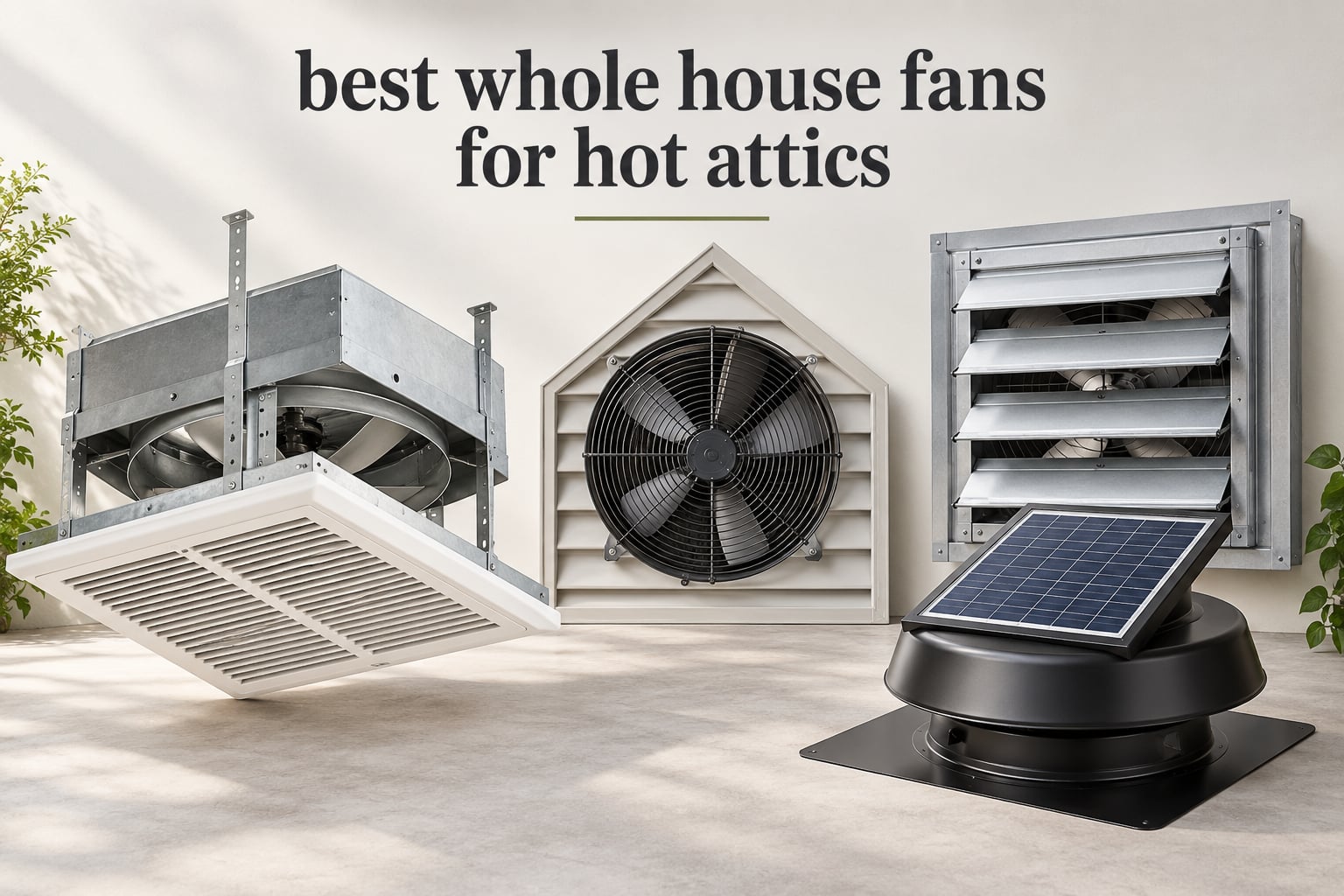
If your attic hits 130 degrees in July, you have two very different machines you could buy, and most people confuse them. A whole house fan hangs in a ceiling and pulls air out of your living space into the attic. A powered attic vent sits in the gable or on the roof and pushes hot attic air out to the sky. One cools the house, the other cools the attic, and on most homes you want both.
That distinction matters more than any other single decision in this roundup. Buy a big roof vent to cool your house and nothing happens. Buy a ceiling fan into an under-vented attic and the fan stalls out against the restriction. Pick the wrong class of hardware and the money is spent by afternoon.
I spent weeks reading installation logs and owner reports for the ten fans below, comparing rated airflow, control options, mounting style, and the failure modes owners actually describe. What surprised me is how much of the real decision happens before you pick a model: how much vent area your attic has, how cool your outdoor air gets at night, and whether your roof deck can take a fan at all. Those three answers narrow this list to two or three units instead of ten.
This roundup covers every product we could verify as of 2026, including one hardware change worth flagging up front. The category has shifted toward plug-and-play corded units and solar roof mounts, which means most of these installs no longer require an electrician in the attic.
We also have broader whole-house upgrade guides, including our picks for whole house water filters for wells and whole house filters for kitchen sink setups, if you are working through the rest of the mechanicals at the same time. If your project also covers filtration beneath the sink, our under-sink whole house filter picks cover that decision.
Table of Contents
- Top 3 Whole House and Attic Fans for Hot Attics in 2026
- All 10 Best Whole House Fans for Hot Attics (October 2026)
- 1. QuietCool AFG PRO-2.0 Gable Fan for the Highest Rated Pick
- 2. iLiving ILG8G14-12T for the Most Airflow per Dollar Spent
- 3. Air Vent 53315 as the Straightforward Small Attic Fix
- 4. QuietCool AFG SMT ES-3.0 for App Control and Humidity Logic
- 5. iLiving 20 Inch Wall Mount Shutter Fan for Maximum Raw Airflow
- 6. Centric Air QA-Deluxe 5500 as the True Whole House Fan Pick
- 7. Remington Solar 30 Watt as the Roof Mount Pick Without Wiring
- 8. Remington Solar Builder Series 40 Watt for After-Dark Venting
- 9. QuietCool AFR SLR-40 for Panel Adjustment and 24/7 Runtime
- 10. 4SEASONS 400 CFM Solar Vent for Small Spaces and Light Handling
- How to Size Your Fan: One CFM per Square Foot
- Attic Venting: The NFVA Rule That Decides Whether a Fan Works
- Whole House Fan vs Powered Attic Vent vs Solar Roof Fan
- Humidity, Dew Point, and When Not to Run the Fan
- Installation, Roof Integrity, and Keeping Your Fan Through a Reroof
- Frequently Asked Questions
- How much CFM whole house fan do I need for my house?
- Do I need a powered attic vent if I have a whole house fan?
- Can I use ridge vents and attic fans together?
- How much attic ventilation do I need for a whole house fan?
- Will a whole house fan make my house more humid?
- Do solar attic fans actually work?
- Why did my roofer remove my attic fan?
- How much cooler can a whole house fan make a house than outside?
- The Best Whole House Fans for Hot Attics Compared
Top 3 Whole House and Attic Fans for Hot Attics in 2026

QuietCool AFG PRO-2.0
- Two speed PSC motor
- 1945 CFM high and 1495 CFM low
- Adjustable thermostat from 50 to 120 F
- Plug-and-play with 20 foot cord
iLiving ILG8G14-12T
- 2339 CFM for attics up to 3400 sq ft
- Built-in adjustable thermostat
- Hardwired galvanized steel housing
- 230 watts at 1010 rpm

Air Vent 53315
- 1050 CFM for attics up to 1500 sq ft
- Stainless steel gable mount
- UL listed with toggle switch
- Direct replacement for 14 inch gable fans
All 10 Best Whole House Fans for Hot Attics (October 2026)
| Product | Specs | Action |
|---|---|---|
| QuietCool AFG PRO-2.0 Gable Attic Fan |
|
Check Latest Price |
| iLiving ILG8G14-12T Gable Attic Fan |
|
Check Latest Price |
| Air Vent 53315 Gable Ventilator |
|
Check Latest Price |
 QuietCool AFG SMT ES-3.0 Smart Fan QuietCool AFG SMT ES-3.0 Smart Fan |
|
Check Latest Price |
 iLiving 20 inch Wall Mount Shutter Fan iLiving 20 inch Wall Mount Shutter Fan |
|
Check Latest Price |
 Centric Air QA-Deluxe 5500 Whole House Fan Centric Air QA-Deluxe 5500 Whole House Fan |
|
Check Latest Price |
 Remington Solar 30 Watt Roof Fan Remington Solar 30 Watt Roof Fan |
|
Check Latest Price |
 Remington Solar Builder Series 40 Watt Remington Solar Builder Series 40 Watt |
|
Check Latest Price |
 QuietCool AFR SLR-40 Solar Roof Fan QuietCool AFR SLR-40 Solar Roof Fan |
|
Check Latest Price |
 4SEASONS Solar Attic Vent Fan 4SEASONS Solar Attic Vent Fan |
|
Check Latest Price |
1. QuietCool AFG PRO-2.0 Gable Fan for the Highest Rated Pick
Quietcool AFG PRO-2.0 Attic Fan for Gable Vents – 1945 CFM – Adjustable Thermostat – 20ft Power Cord – Plug-and-play – Two Speed Capable
1945 CFM high
1495 CFM low
Thermostat 50-120 F
20 ft plug-and-play cord
Pros
- Two speed PSC motor gives real low speed for evening use
- Adjustable thermostat spanning 50 to 120 F
- Anti-vibration mounting tabs cut transmitted noise
- Vent covers included to block backdrafting
- Plug and play so no wiring in the attic
Cons
- 20 foot cord runs short in large or steeply pitched attics
- Two speeds are less granular than a three speed or variable controller
- No app or smart home integration
This is the highest rated fan in the category at 4.7 stars across more than 1300 reviews, and the rating holds up once you read the specifics. The motor is a permanent split capacitor design with two speeds, which means 1945 CFM at 108 watts on one and 1495 CFM at 77 watts on two.
The low speed matters more than it looks on paper. A high speed attic fan dumps a large volume of air into an attic in minutes, and many owners who start at high report the house goes from stuffy to uncomfortably drafty before they find the level they like. Having a real 1495 CFM low setting lets you hold a purge going all night without fighting the controller.
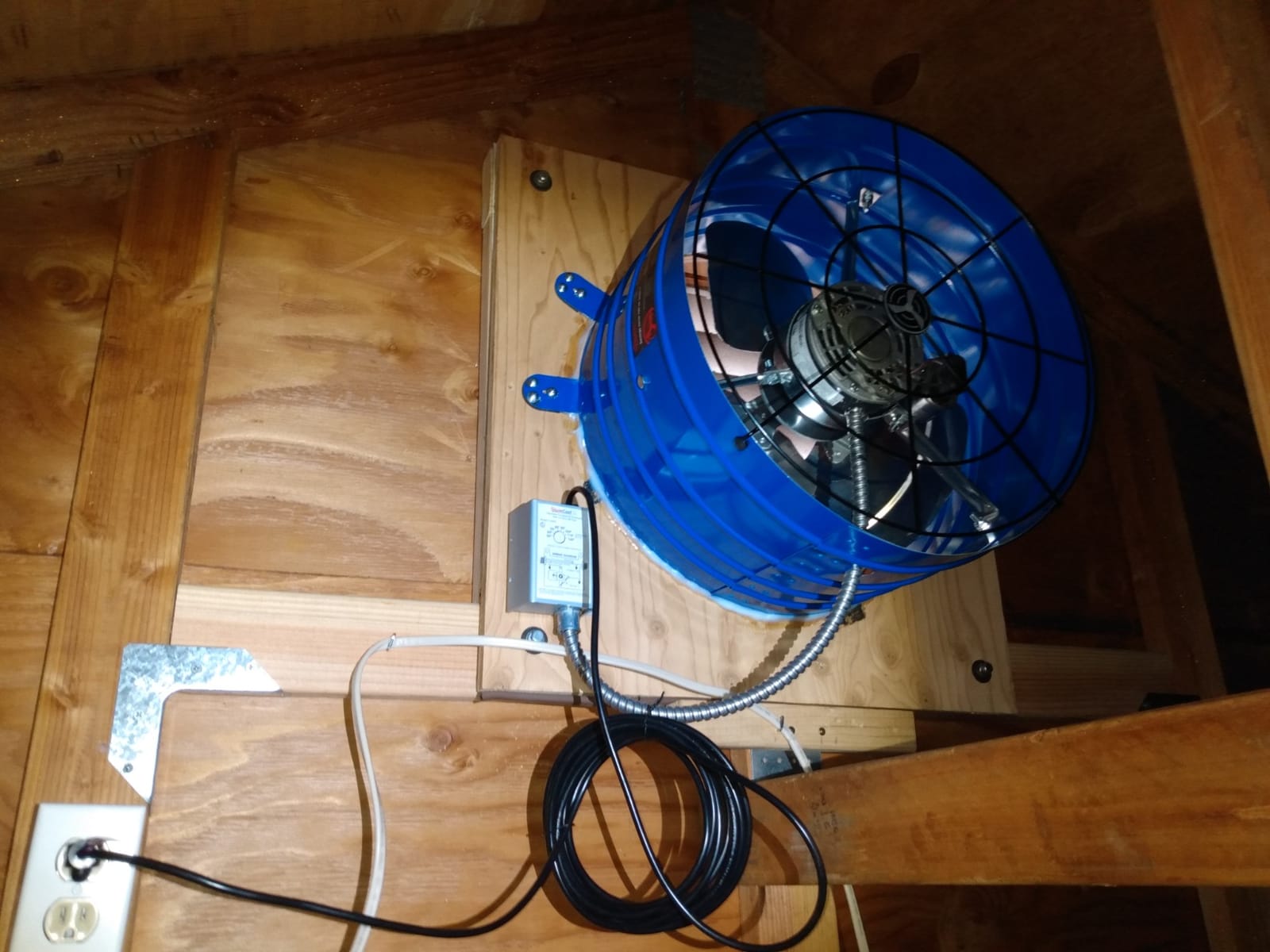
The thermostat dial covers 50 to 120 degrees, which is unusually wide. Most gable fans in this group top out lower, which matters in hot climates where you want the fan to trigger before the attic becomes a furnace. Setting it to 100 means the fan starts pulling when the attic is still recoverable rather than after it is already at 140.
Owners consistently mention the anti-vibration mounting tabs as the reason the unit is barely audible from the house below, which is the opposite of what people expect from a fan blowing through a gable vent. The included vent covers matter too, because an open gable vent above a running fan will pull attic air and roof dust back into the attic instead of exhausting to outside.
Built-in fire safety shutoff is standard on this one and worth having in a space full of old wood framing and paper insulation.
What to check before you buy this fan
Count your vent openings first, because the gable opening has to be physically large enough to pass 1945 CFM without choking the fan. A gable vent sized for a much smaller 1050 CFM fan is the usual reason a unit like this sounds strained after installation.
Then measure to the nearest outlet, since the plug-and-play cord is the main installation advantage here and a 20 foot cord only reaches so far.
Where this one falls short
There is no remote or app control, so the fan is committed to whatever position you left the dial in. If you want to run the house on a timer through the night without walking to the attic, this is not the tool for that job.
Two speeds is also a compromise. Households that wanted fine-grained control in owner reports end up wishing for three speeds or a variable controller, which the smart QuietCool model further down the list does provide.
2. iLiving ILG8G14-12T for the Most Airflow per Dollar Spent
iLiving ILG8G14-12T Automatic Gable Mount Attic Ventilator Fan with Adjustable Thermostat, 2.85 Amp, 2339 CFM, Single-Speed
2339 CFM
Covers up to 3400 sq ft
Adjustable thermostat
Hardwired 120V
Pros
- 2339 CFM covers attic floor up to 3400 sq ft
- Adjustable built-in thermostat picks the trigger temperature
- Galvanized steel housing with mounting brackets
- Often replaces an existing fan using the same housing
- Owners report attic drops of 15 to 20 F
Cons
- Hardwired so you need an attic power source
- Blade collar can separate from the shaft if not seated at the factory
- Runs at 63 dB which is louder than the brushless ECM units
This is the most reviewed fan in the roundup at more than 1600 reviews, and the reason owners keep buying it is straightforward: 2339 CFM out of a single-speed 120 volt motor at 230 watts and 1010 rpm. The rated coverage is attic floor up to 3400 square feet, which puts it well past the size where most residential gable fans stop being useful.
Because it is single speed, there is no low setting to find. Everything the fan does it does at one speed, and the dial thermostat is your only lever. Owners running this in a two story home commonly pair it with a second ceiling unit rather than trying to modulate this one.
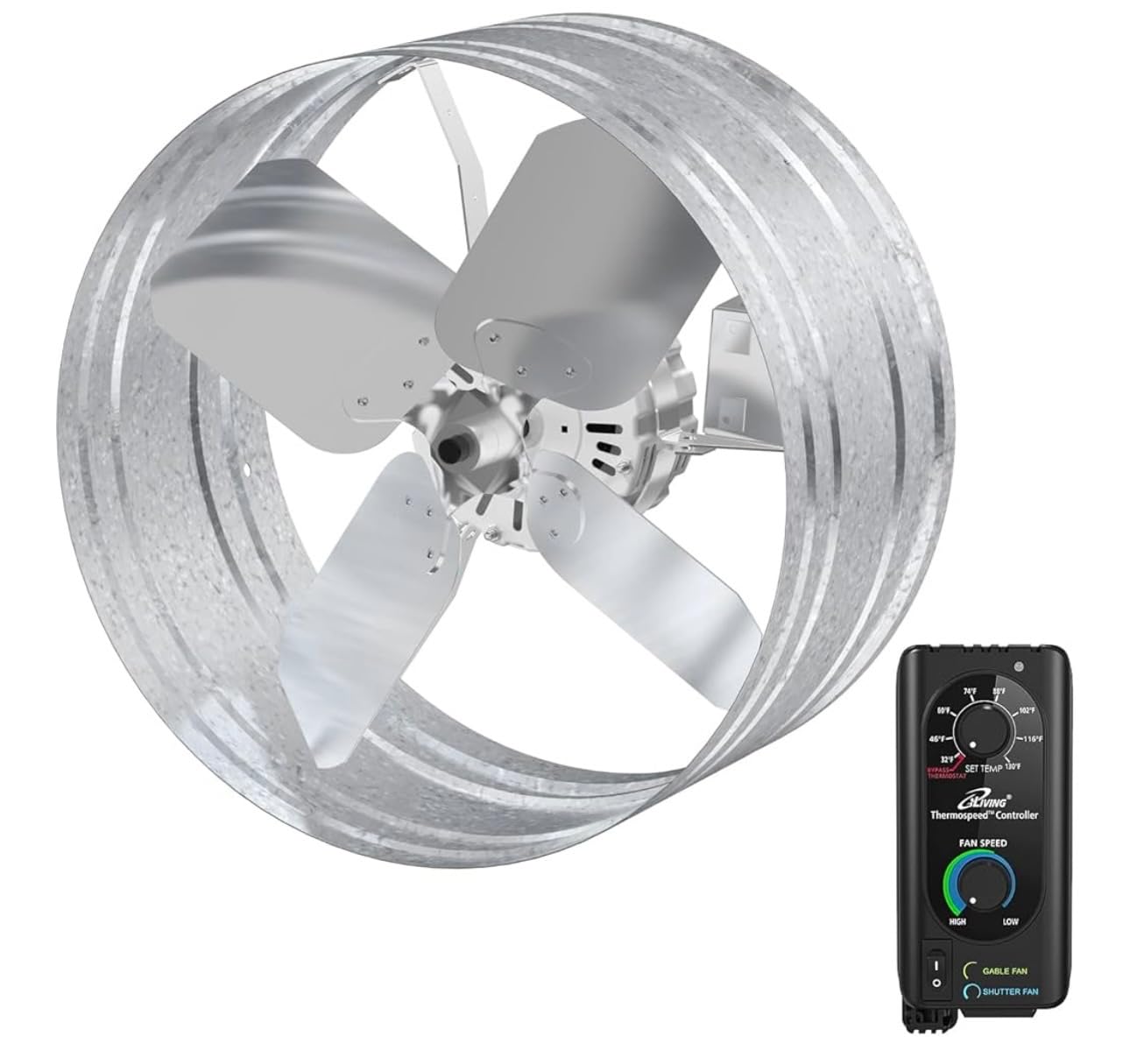
The adjustable built-in thermostat is the feature that gets singled out most in owner reports. It lets you set the trigger above the point where the fan would cycle constantly, which matters in shoulder seasons when a fan running all night on a marginal temperature difference just moves warm air around and costs you nothing.
Reporters commonly see attic temperatures fall by 15 to 20 degrees with this unit. From inside the home it reads as a slight hum rather than a roar, though the 63 dB rating is genuinely higher than the brushless ECM units in this group and some owners notice a light rattle from a room directly beneath the gable.
The galvanized alloy steel housing and included mounting brackets are why it also works as a like-for-like replacement. If you are pulling a twenty year old fan out of the same opening, the brackets frequently line up with the existing framing and support poles.
What to check before you buy this fan
Hardwiring is the deciding factor. There is no cord here, so you need a 120 volt circuit reachable in the attic and a licensed electrician if you do not have one. Budget that into the decision rather than discovering it on install day.
Check the blade collar at installation. A recurring owner report is that the propeller assembly can separate from the shaft collar if it was not pressed tightly at the factory, so seat it firmly before you power the fan up.
Where this one falls short
Single speed is the honest drawback. There is no quiet low setting for sleeping or for mild evenings when a big purge would just create a draft, and the higher noise rating means it is a worse choice if the fan sits directly over a bedroom.
Warranty coverage is a one year limited component warranty, which is thinner than the fifteen year coverage on the smart QuietCool model. On a unit expected to run for many summers that difference matters.
3. Air Vent 53315 as the Straightforward Small Attic Fix
Air Vent Gable Ventilator 53315 Attic and Whole House Fans, Multicolor,Medium
1050 CFM
Attics up to 1500 sq ft
14 inch blade
UL listed
Pros
- 1050 CFM suits attics up to 1500 sq ft
- Stainless steel housing with UL listing
- Thermostat included and owners find it accurate
- Mounts in a gable or near-horizontally in a roof vent
- Drop-in replacement for older 14 inch gable fans
Cons
- Plastic frame ribs can resonate at line frequency
- Blade hub can be loose and needs tightening on install
- Motor bearings can wear after several years especially on an incline
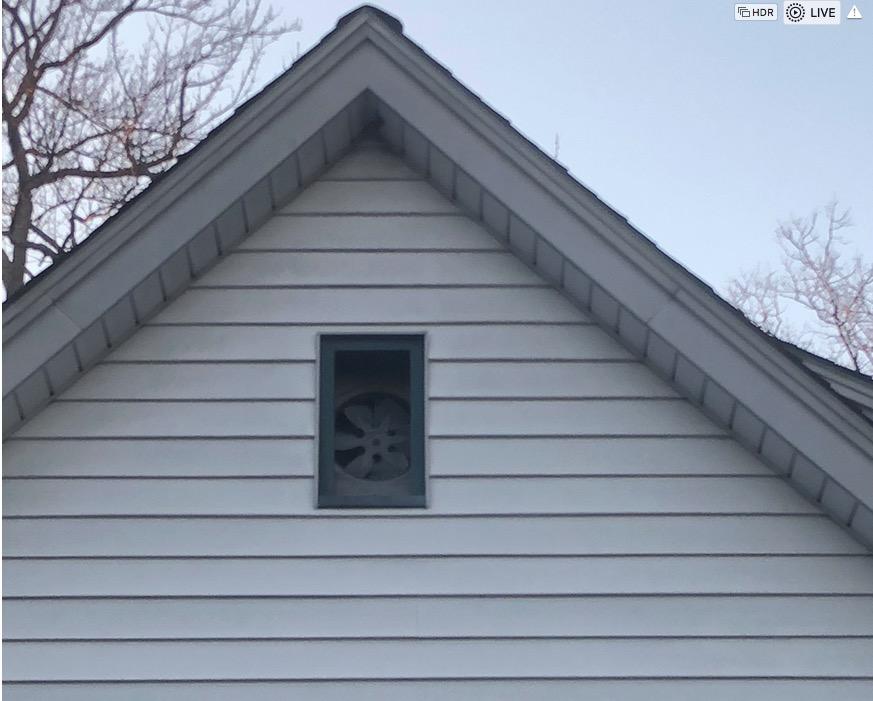
This is the fan for a small attic and an older house where a fourteen inch gable vent is already in place. At 1050 CFM from a 1/12 horsepower, 180 watt motor it is correctly rated for attic floor up to 1500 square feet, and because the footprint matches older gable fans it often drops straight into the existing opening.
The stainless steel housing is the durable part. The plastic components that owners complain about are the frame ribs and the blade hub, not the shell.
The included thermostat gets more credit than it deserves. Owners describe it as accurate, which matters because a thermostat that drifts will either run the fan continuously in mild weather or never switch it on during a heat wave.
Mounting flexibility is the underrated part here. It can sit in a gable or be set near-horizontally inside a roof vent, which gives you an option when the gable end is finished or blocked.
Owners replacing aging units report noticeable attic temperature drops for a modest outlay, which is why this model has stayed in the category so long.
What to check before you buy this fan
Size matters more than usual with a 1050 CFM unit. If your attic floor is much over 1500 square feet you will want more than one, or a bigger fan, and stretching a small unit across a large attic is the most common sizing mistake in this category.
Have a clamp and a screwdriver ready on install day. The two most common owner fixes are clamping the plastic frame ribs to stop resonance and tightening the blade hub set screw, both of which take a few minutes.
Where this one falls short
1050 CFM is a genuinely small number next to the other gable fans here. It is the right answer for a small attic and the wrong answer for cooling a second story in a house over about 1800 square feet.
Motor shaft bearings are the long term weak point, particularly when the unit is mounted on an incline inside a roof vent where the load sits off-axis. Expect bearing noise eventually if you mount it that way.
4. QuietCool AFG SMT ES-3.0 for App Control and Humidity Logic
Quietcool AFG SMT ES-3.0 Smart Attic Fan for Gable Vents – Up to 2801 CFM – As low as 22 Watts – Smart App Control – Thermostat and Humidistat – 20ft Power Cord – Plug-and-play – Three Speed
Up to 2801 CFM
Three speed brushless ECM
App with thermostat and humidistat
45 dB
Pros
- Up to 2801 CFM on high at 142 watts
- Three speed brushless ECM motor runs very quiet on low and medium
- App control with both thermostat and humidistat
- 20 foot cord means no attic wiring
- 15 year manufacturer warranty
Cons
- Bluetooth app is unreliable beyond roughly 25 to 30 feet
- Low thump audible in the room below on high speed
- Does not resume on its own after a power interruption
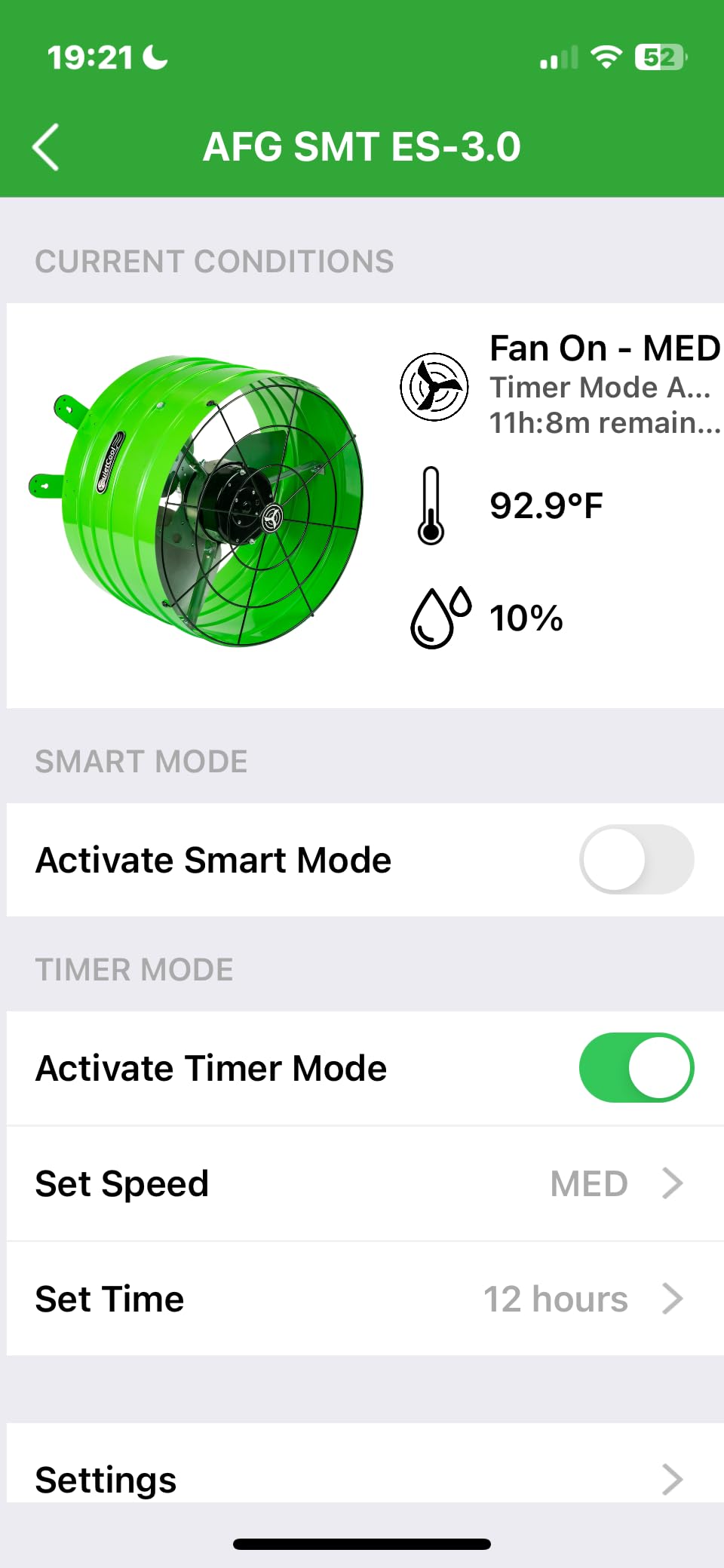
This is the most capable control package in the group. The brushless ECM motor puts out up to 2801 CFM on high at 142 watts, and the app exposes both a thermostat and a humidistat, which is the pairing most people in humid climates actually want.
A humidistat is more useful than it sounds. It holds the fan off when moisture is high rather than waiting for a temperature trigger, which is the difference between ventilating an attic at the right moment and pulling damp evening air in when it should not.
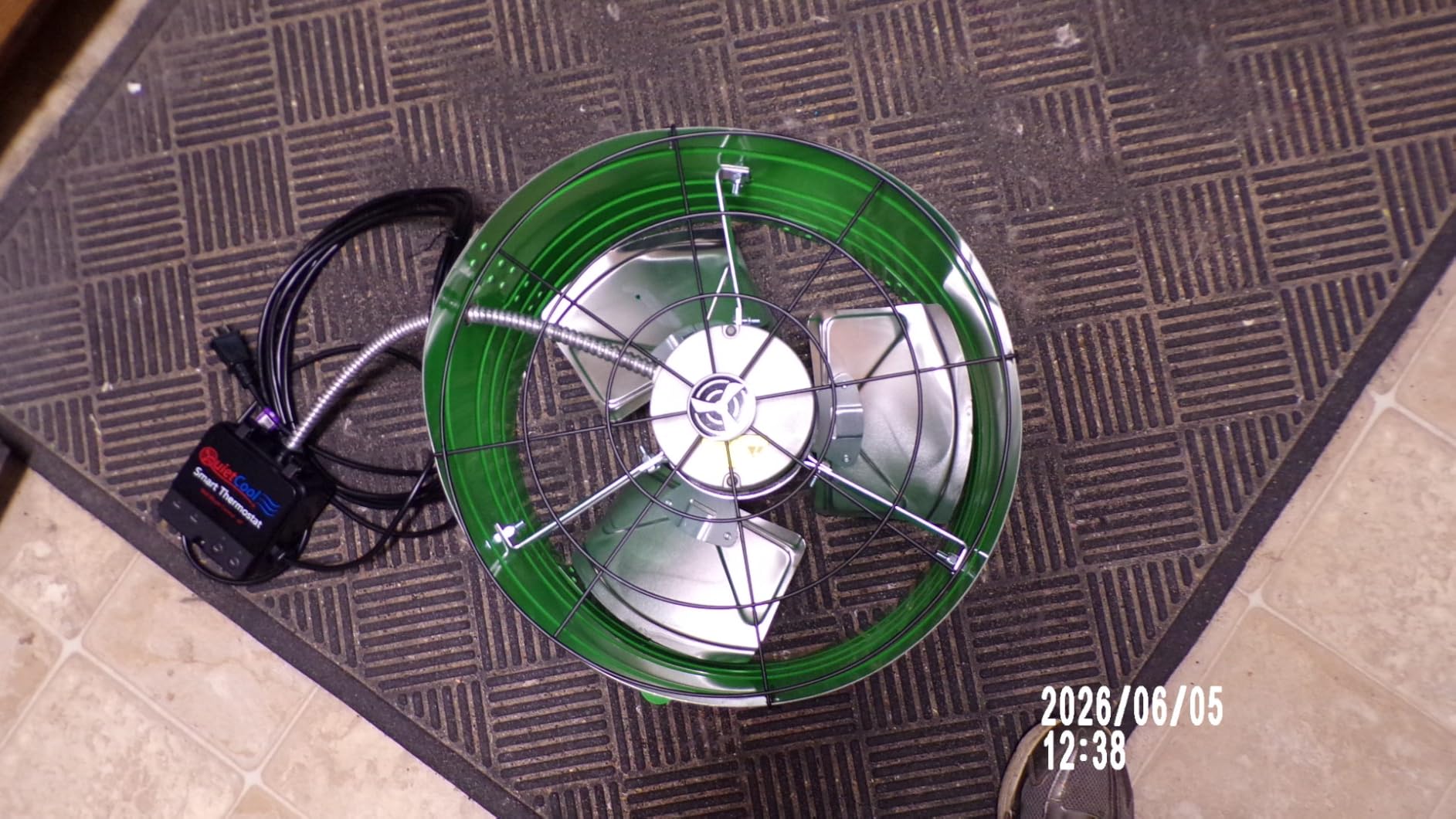
The 16 inch three-blade propeller is the reason the airflow number is so high for a gable-mounted fan. It is a physically larger fan than most of the gable units in this roundup, and it weighs 14 pounds, which tells you something about the housing.
At 45 dB this is the quietest rated electric model here, and owners confirm the low and medium speeds are genuinely unobtrusive. The three speeds solve the modulation problem that the two-speed units have.
Fire safety sense shutoff is specified at 182 degrees, and the warranty is 15 years from the manufacturer.
What to check before you buy this fan
Bluetooth range is the thing that catches people. The connection is reported as unreliable past about 25 to 30 feet, so if your phone or hub sits on the other side of the house the app will pair intermittently and you will end up using the physical controls instead.
Confirm the fan will fit your gable opening. At 20 by 20 inches with a 16 inch propeller this is a larger footprint than the other gable fans listed here and is not a drop-in for a small existing vent.
Where this one falls short
The app is the weak spot across owner reports. It keeps no run history, it has no off button in early firmware versions, and it does not tell you the current speed, so it is a convenience rather than a control system you can build a routine around.
After a power interruption the fan does not restart on its own. In a house where you want overnight purge cooling, that means remembering to turn it back on after any outage.
5. iLiving 20 Inch Wall Mount Shutter Fan for Maximum Raw Airflow
iLIVING 20″ Wall Mounted Shutter Exhaust Fan, Automatic Shutter, with Thermostat and Variable Speed controller, 2.2A, 3368 CFM, 5000 SQF Coverage Area Silver (ILG8SF20V-ST)
3368 CFM
Variable speed 32-130 F thermostat
Aluminum shutters
26 lb wall mount
Pros
- 3368 CFM with coverage rated up to 5000 sq ft
- Variable speed controller with a 32 to 130 F thermostat range
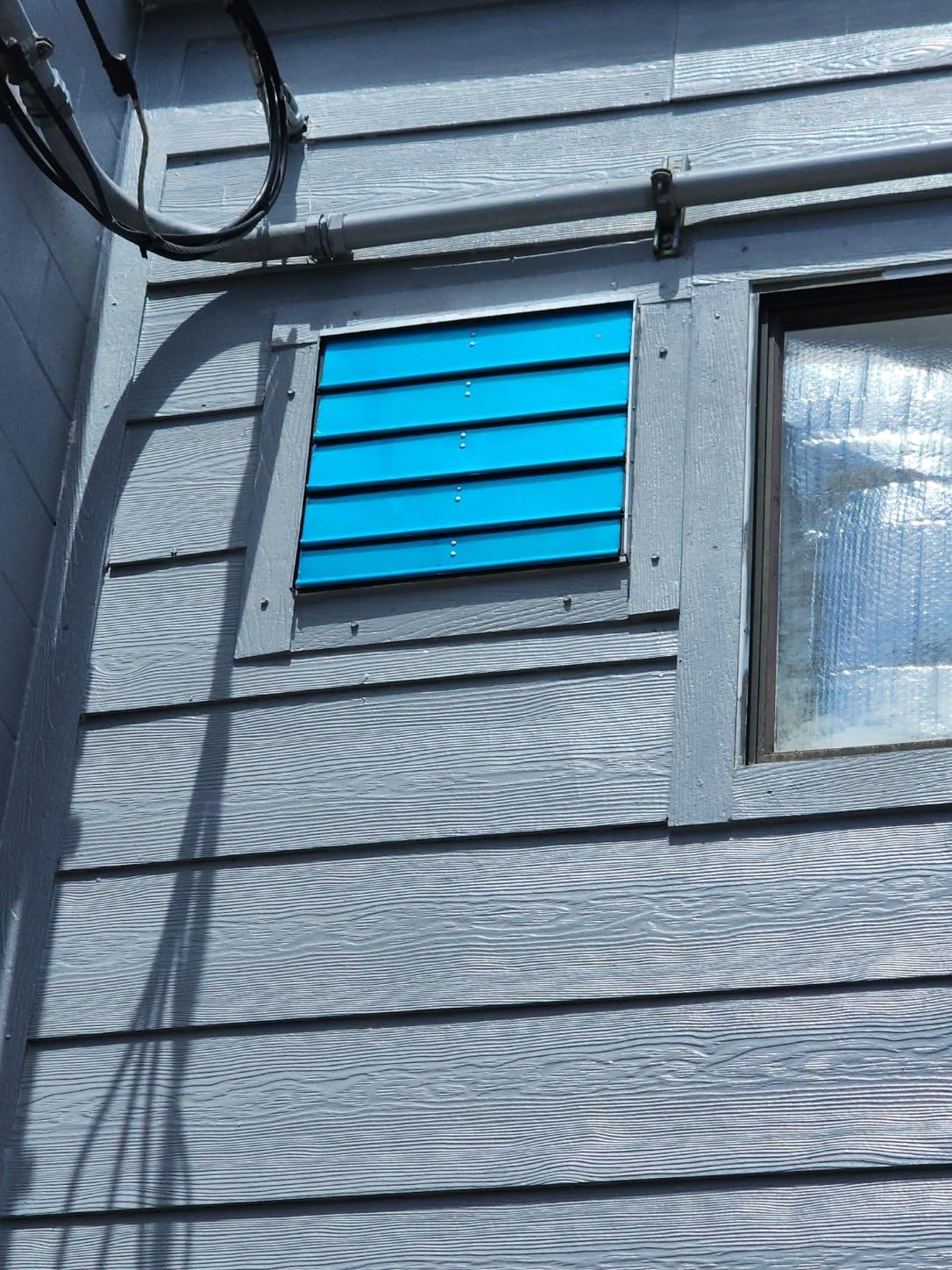
- Aluminum gravity shutters open with airflow and close when off
- Arrives fully assembled and is UL and cUL listed
Cons
- Light aluminum shutter louvers rattle or blow open in high wind
- Gravity shutters can admit wind-driven rain in strong gusts
- Insect entry is possible through shutter gaps without added screening
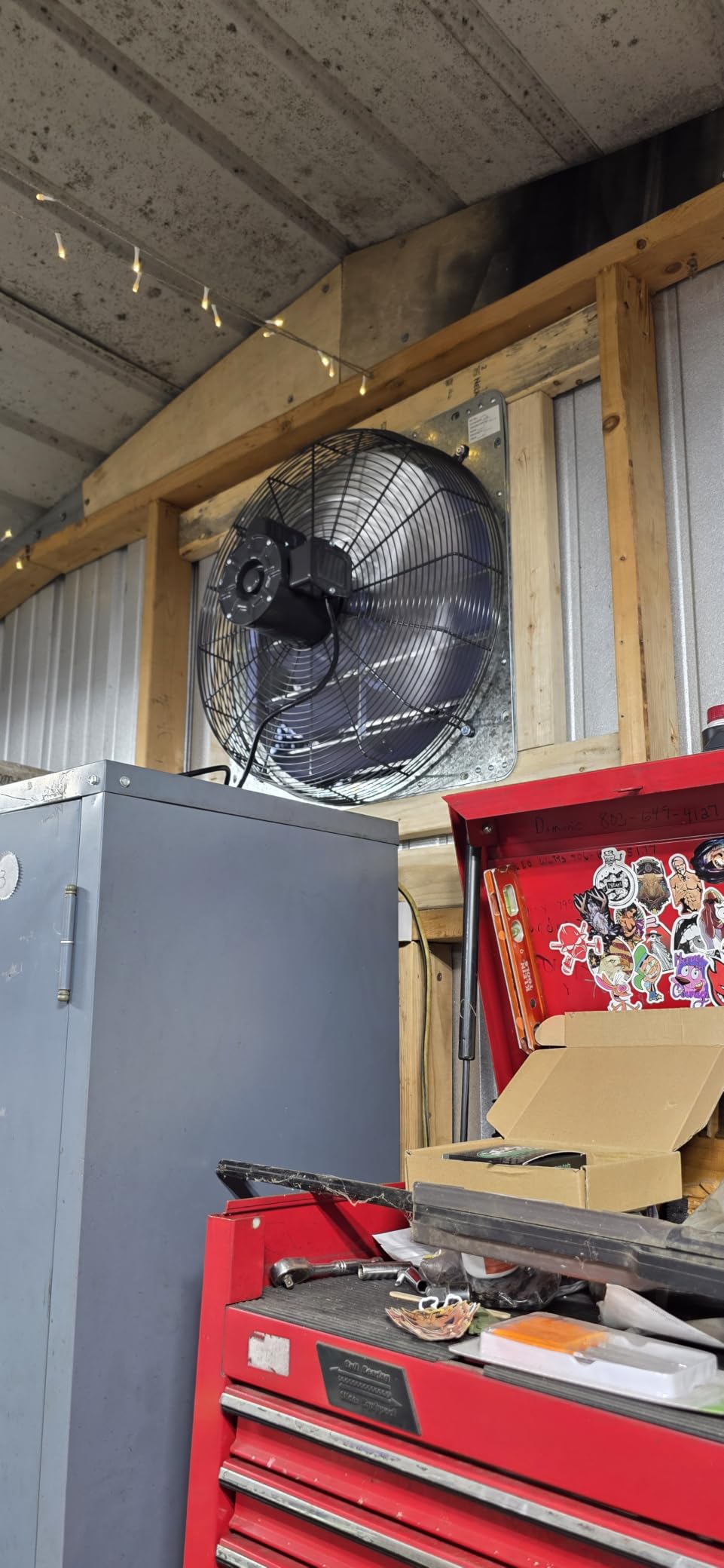
At 3368 CFM this is the highest airflow number among the electrically powered units in the roundup. It is a 1/5 horsepower direct drive motor turning 980 rpm on 115 volts at 253 watts, with a three blade aluminum propeller in deep pitch, rated for coverage up to 5000 square feet.
It mounts in a wall opening rather than a gable vent, which makes it the right call for garages, workshops, and finished gable ends where a louvered opening is not an option. It also works as an attic vent if you have a large gable wall to cut into.
The Thermospeed controller combines variable speed with temperature control across a 32 to 130 degree range. That is the widest temperature span here, and it means you can set a trigger well above the point where the fan would short cycle on a mild night.
The automatic shutters open with airflow and close when the fan stops, which keeps insects and weather out without a manual cover to forget. A full safety grating and an OSHA compliant wire guard come as part of the housing.
Owners using this in garages and warehouses report temperature drops of 50 to 80 degrees within minutes, which is a fair indication of how much air it moves once it is actually pointed at hot trapped air.
What to check before you buy this fan
The opening size is 23 by 23 inches and the unit weighs 26 pounds, so this is a framing job rather than a bolt-in replacement. Plan the header and the rough opening before you commit, and make sure someone can hold 26 pounds overhead while you fasten it.
Plan on screening. Owners note insect entry through the shutter gaps, and adding a screen is far easier now than after the fan is installed.
Where this one falls short
The aluminum louvers are light. In wind they can rattle audibly or blow open, and the common owner fix is adding small weights or magnets to damp them. They can also admit a small amount of wind-driven rain in strong gusts.
At 69 dB this is the loudest rated unit here. For an attic vent at the far end of the space that is usually fine, but do not plan to hang one directly outside a bedroom window.
6. Centric Air QA-Deluxe 5500 as the True Whole House Fan Pick
QA-Deluxe 5500 Energy Efficient Whole House Fan 2 Speed Wall Switch & Timer
Up to 5500 CFM
3945 CFM CA Title 24
Two speed wall switch and timer
51 dB
Pros
- Up to 5500 CFM and 3945 CFM under CA Title 24
- Cools up to 3400 sq ft two story or 2400 sq ft single story
- R-5 insulated damper keeps attic air out of living space
- Fits between 16 and 24 inch on center joists with no framing
- Two speed wall switch with integrated timer
Cons
- Installation is demanding in tight attics and needs electrical and duct work
- Low speed can produce a rattle that needs tracking down
- Hardwired with no power cord included
This is the only true whole house fan in the roundup. Every other product here pushes attic air out. This one pulls air out of your conditioned space and dumps it into the attic, which is the machine that actually cools the house in minutes rather than just cooling the space above the ceiling.
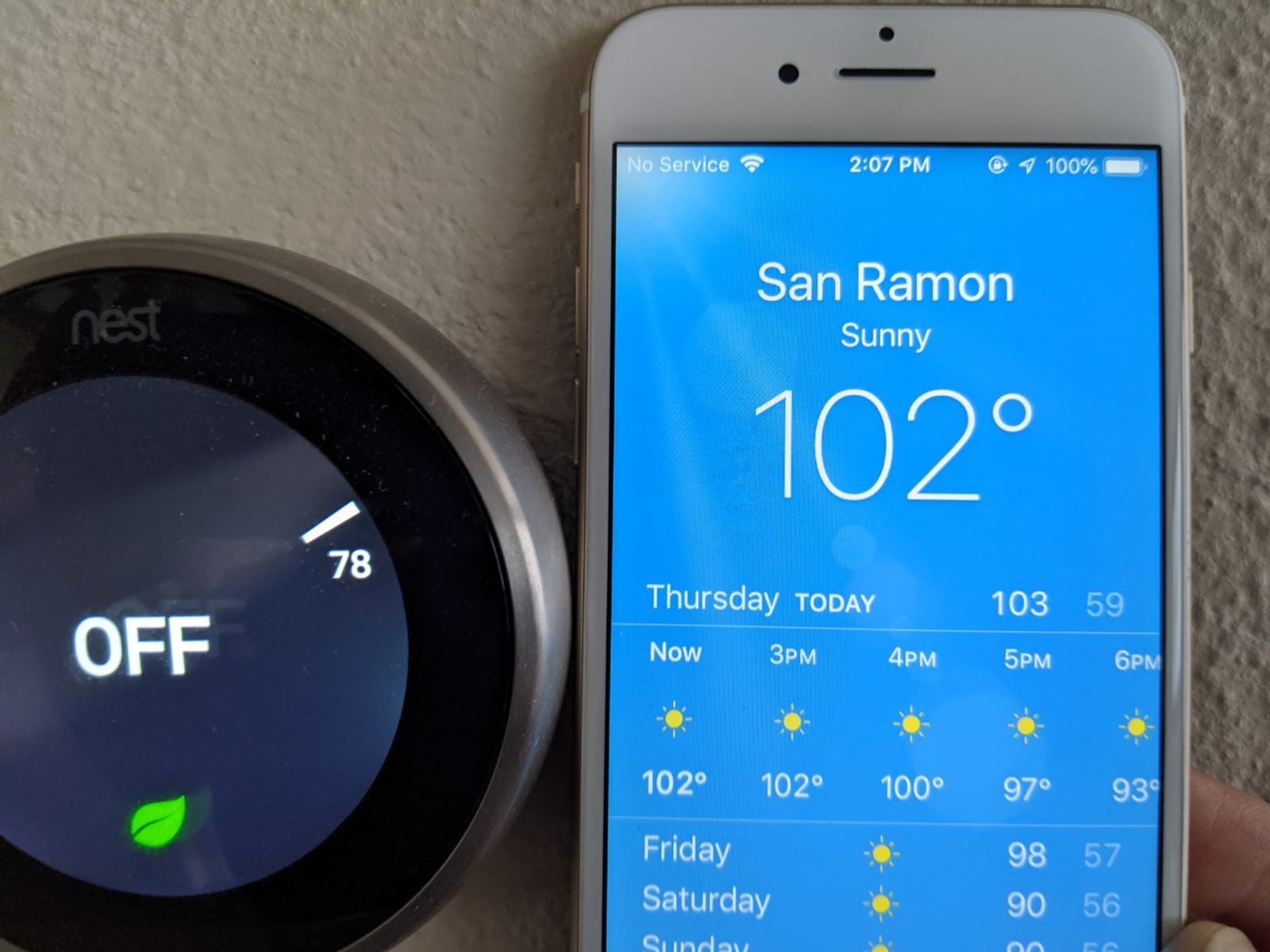
At up to 5500 CFM it is in a different class from everything else on this page. The California Title 24 figure is the more meaningful number if you are in that state, where the same fan rates 3945 CFM. Owners in cooling climates report interior drops of 6 to 20 degrees when overnight air is genuinely cool.
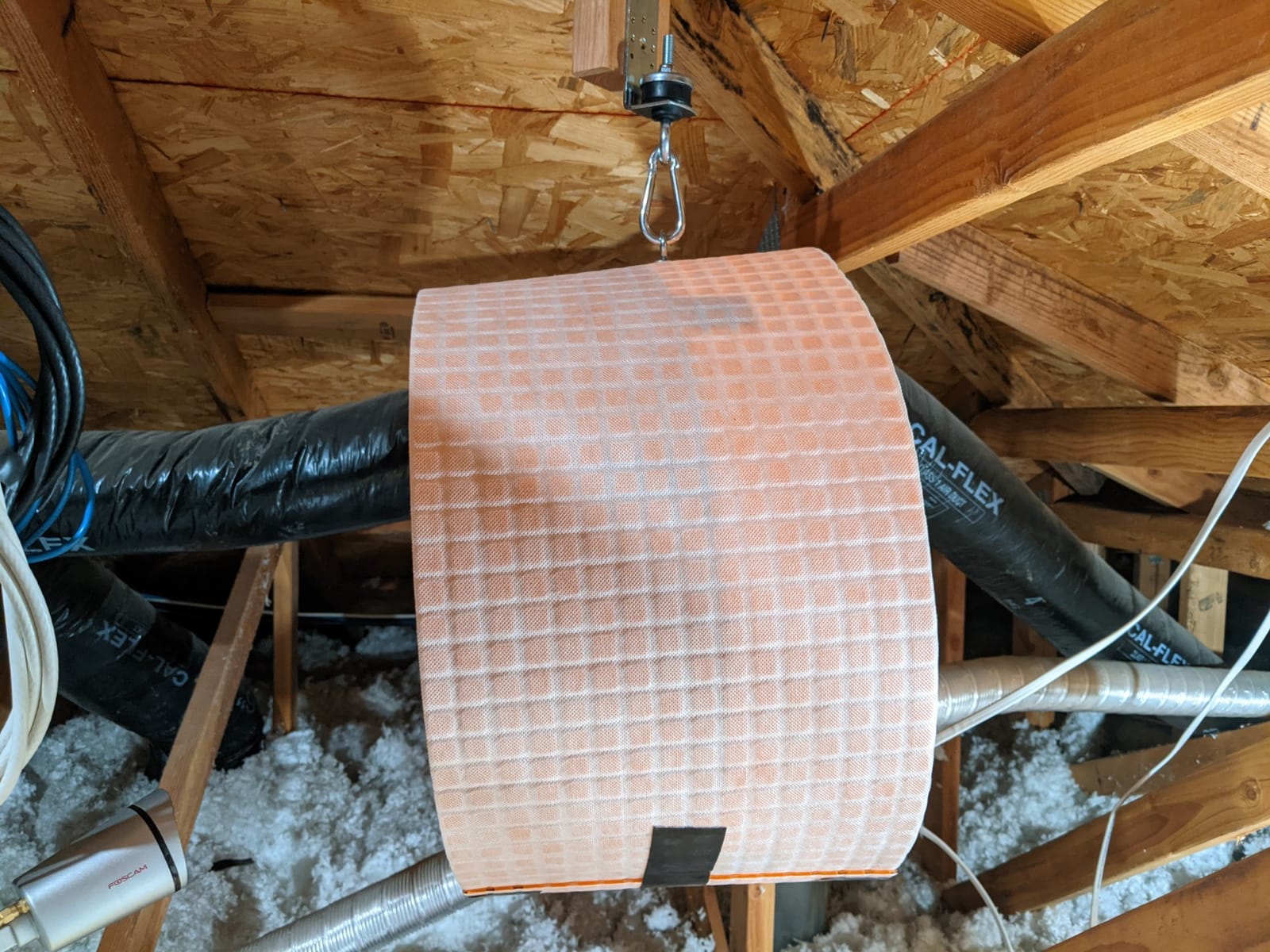
The R-5 insulated damper is the part that separates it from a cheaper attic fan. Without a sealed damper, the air you just pulled out of your living space falls straight back down the ceiling assembly, which is why some whole house fans disappoint. This one is designed to keep it out.
At 51 dB it is also quieter than most ceiling mounted whole house fans of its size, and it fits between 16 and 24 inch on center joists without new framing, which is a genuinely useful constraint in older homes.
The wall switch carries both speeds and a timer, so you can set an overnight purge without going to the attic. It is assembled in the USA with a 10 year motor warranty and 3 year parts coverage.
What to check before you buy this fan
Makeup air is not optional. Opening a door or two windows on a low setting is usually enough, but a home with tight modern envelopes can pull combustion gases back through a gas appliance, which is the safety reason this fan demands a working attic and a real air inlet.
Measure your joist spacing and confirm you have attic access and an electrical run. It weighs 55 pounds and the install is the hardest of any fan in this roundup.
Where this one falls short
Owner reports include a low speed rattle that some people had to track down and fix. At 55 pounds and with a brushed motor, this is also the most hands-on install here, and the learning curve is real in a cramped attic.
It is hardwired with no power cord included, and it is worth nothing if your outdoor air does not actually cool off at night. In a climate where evening temperatures stay near daytime temperatures, this machine moves air around without cooling anything.
7. Remington Solar 30 Watt as the Roof Mount Pick Without Wiring
Remington Solar 30 Watt Roof Mount Solar Attic Fan
1550 CFM
0.08 sones
30 watt solar panel
Thermostat and humidistat
Pros
- 1550 CFM from a brushless DC motor at 0.08 sones
- Built-in thermostat and humidistat modulate output automatically
- 22.5 by 22.5 inch steel flashing designed to prevent leaks
- Texas Windstorm Certified for hail and severe weather
- Limited lifetime warranty
Cons
- No nighttime operation without the separate hybrid adapter
- 30 pound unit needs a comfortable roof working position
- Airflow scales with sunlight and drops in overcast weather
The solar category solves the problem that stops most people from putting a fan on the roof, which is running power to the ridge. A 30 watt panel and a brushless DC motor handle 1550 CFM with no wiring at all, and at 0.08 sones it is effectively silent.
Unlike most of the gable fans in this roundup, this one has both a thermostat and a humidistat built in. That combination is what makes solar venting usable on its own schedule rather than running whenever the sun happens to be out.
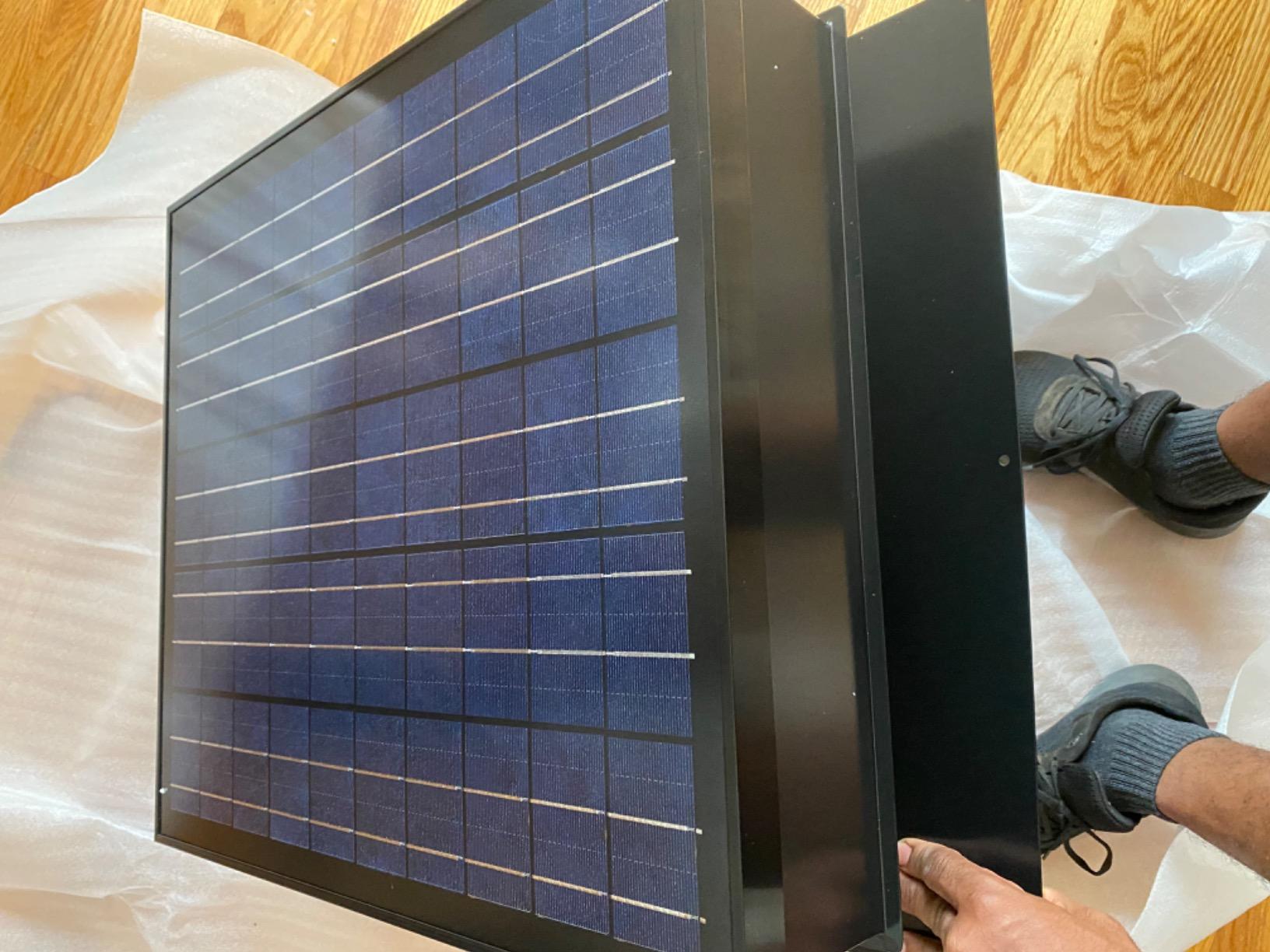
The 22.5 by 22.5 inch powder coated steel flashing is oversized on purpose. Roof penetrations are the single most common failure point of attic fans, and a generous flashing deck with proper sealant is what keeps water out of the attic you are trying to dry.
Texas Windstorm Certified matters if you are anywhere with hail, which covers a lot of the country that needs attic venting most.
Owners highlight the brushless motor for longevity specifically, since there is no commutator wear and nothing to lubricate.
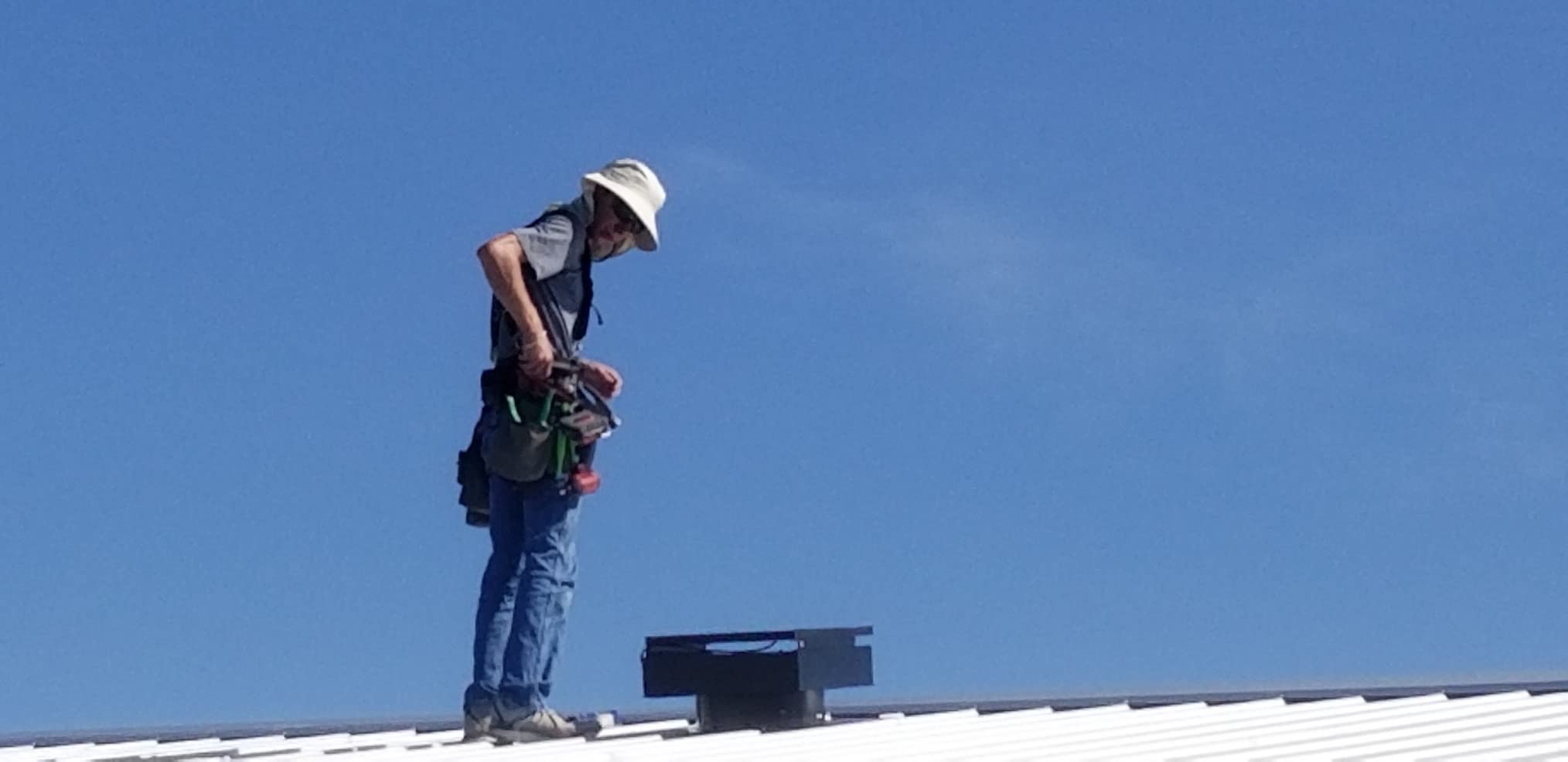
What to check before you buy this fan
Roof pitch and access matter. The unit is 30 pounds and 22.5 inches square, and installing it means working on a roof rather than in an attic, so safety setup is part of the job.
Check your shading. A roof vent that sits under late afternoon tree shade will underperform all afternoon, and a fan that only works in full sun is a fan you will switch off.
Where this one falls short
There is no night operation without buying the separate hybrid adapter, which adds cost and voids the adapter warranty if you run it without a surge protector.
Output tracks sunlight. In heavy overcast conditions the fan slows down, so on a cloudy stretch you are getting far less than the rated CFM.
8. Remington Solar Builder Series 40 Watt for After-Dark Venting
Remington Solar Builder Series 40 Watt Solar Attic Fan – Includes 110V Adapter for auto-Run Night time Operation
40 watt solar panel
Includes 110V night adapter
Thermostat and humidistat
0.08 sones
Pros
- Included 110V adapter allows automatic night time running
- 40 watt panel with adjustable angle for better sun capture
- Brushless motor is long lived and near silent
- Built-in thermostat and humidistat
- 22.5 inch heavy steel flashing
Cons
- Adapter requires a surge protector or the adapter warranty is voided
- Adapter cut-off temperature is not adjustable
- Some early failures with warranty covering parts but not roof labor
This is the solar model to pick if you want venting to continue after dark without running an extension cord to the ridge. The included 110 volt hybrid adapter lets the fan draw power when the panel is not producing, which closes the gap that limits every solar-only fan.
The 40 watt panel has an adjustable angle so you can capture more sun on a shallow roof pitch, and the built-in thermostat and humidistat handle the rest of the scheduling.
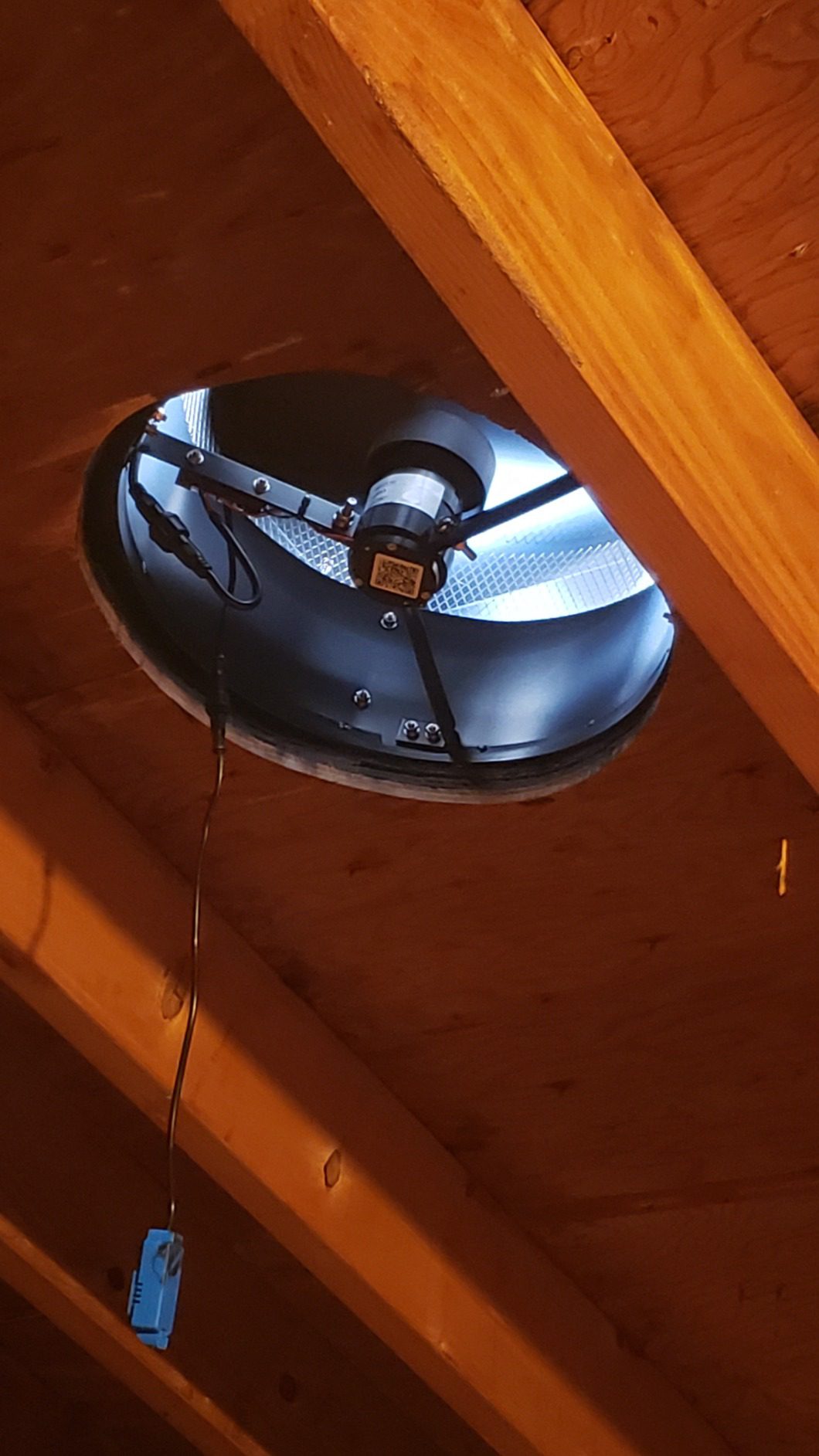
Owners who have had one for multiple years report trouble-free operation, which tracks with the brushless motor and the absence of any mechanical speed control to wear out. The 0.08 sone rating means it will not disturb anyone sleeping directly below.
The 22.5 inch heavy steel flashing is the same generous footprint as the smaller model, and it is the part of the install that determines whether you ever have a leak.
Warranty on the fan is limited lifetime, which is the strongest coverage in the solar group.
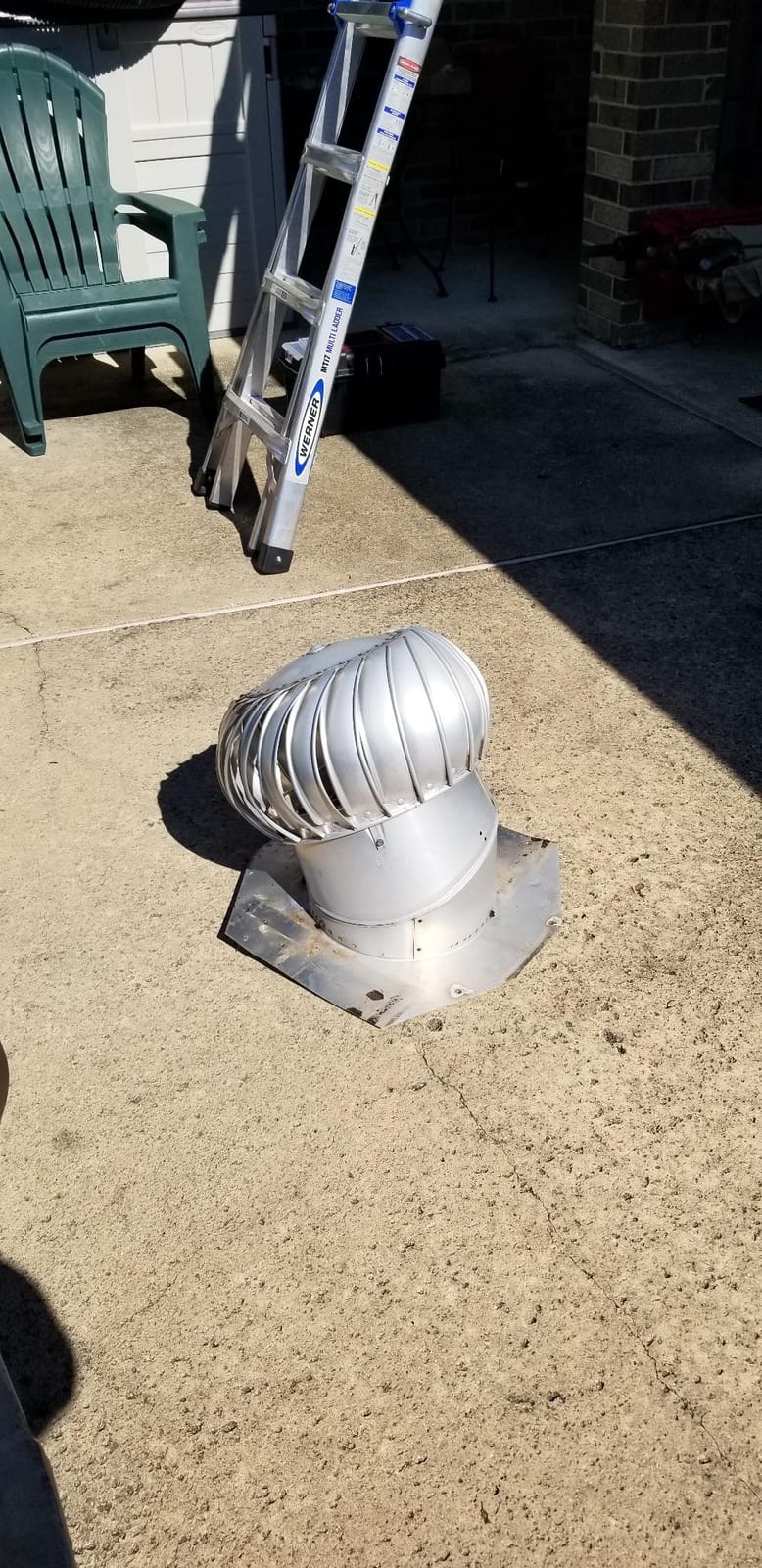
What to check before you buy this fan
Install a surge protector on the adapter circuit. Owners report the adapter warranty is voided without one, and an attic roof penetration plus unconditioned power is not where you want a voltage spike.
Confirm where the 110 volt supply comes from. If the nearest outlet is far from the roof, you are back to running cord, which defeats the point of the solar panel.
Where this one falls short
The adapter cut-off temperature is not adjustable, so there is no way to tune when it stops drawing power overnight. Owners also report the app does not show whether the fan is currently running, which matters if you are relying on it as an attic moisture control.
Customer support is a real weak point. Owners describe advertised round-the-clock email support that is actually business hours, and some report early failures where the warranty replaces the part but not the labor to get a roof worker back out to it.
9. QuietCool AFR SLR-40 for Panel Adjustment and 24/7 Runtime
QuietCool AFR SLR-40 Roof Mount Solar Attic Fan – 40 Watt Adjustable Panel – Included AC/DC Inverter for 24/7 Runtime – Thermostat Controlled
1104 CFM
40 watt adjustable panel
Included AC/DC inverter
Preset thermostat at 88 F
Pros
- Panel adjusts up to 60 degrees tilt and 180 degrees rotation
- Included AC/DC inverter gives 24/7 runtime instead of daylight only
- Preset thermostat starts the fan at 88 F with no thermostat wiring
- 15 year panel and unit warranty plus 5 year motor
Cons
- Roof mounted installation means climbing onto the roof
- 1104 CFM is modest next to the larger gable fans
- Inverter can add an electronics hum in some installs
The panel on this one is the most adjustable in the roundup, tilting up to 60 degrees and rotating 180 degrees. On a low pitch roof or one with an odd orientation, being able to point the panel at the sun is worth more than a few hundred CFM.
The included AC/DC inverter is what separates it from a solar-only design. It stores daytime output and keeps the fan running after dark without a separate adapter purchase, and owners consistently single this out as the reason they picked it.
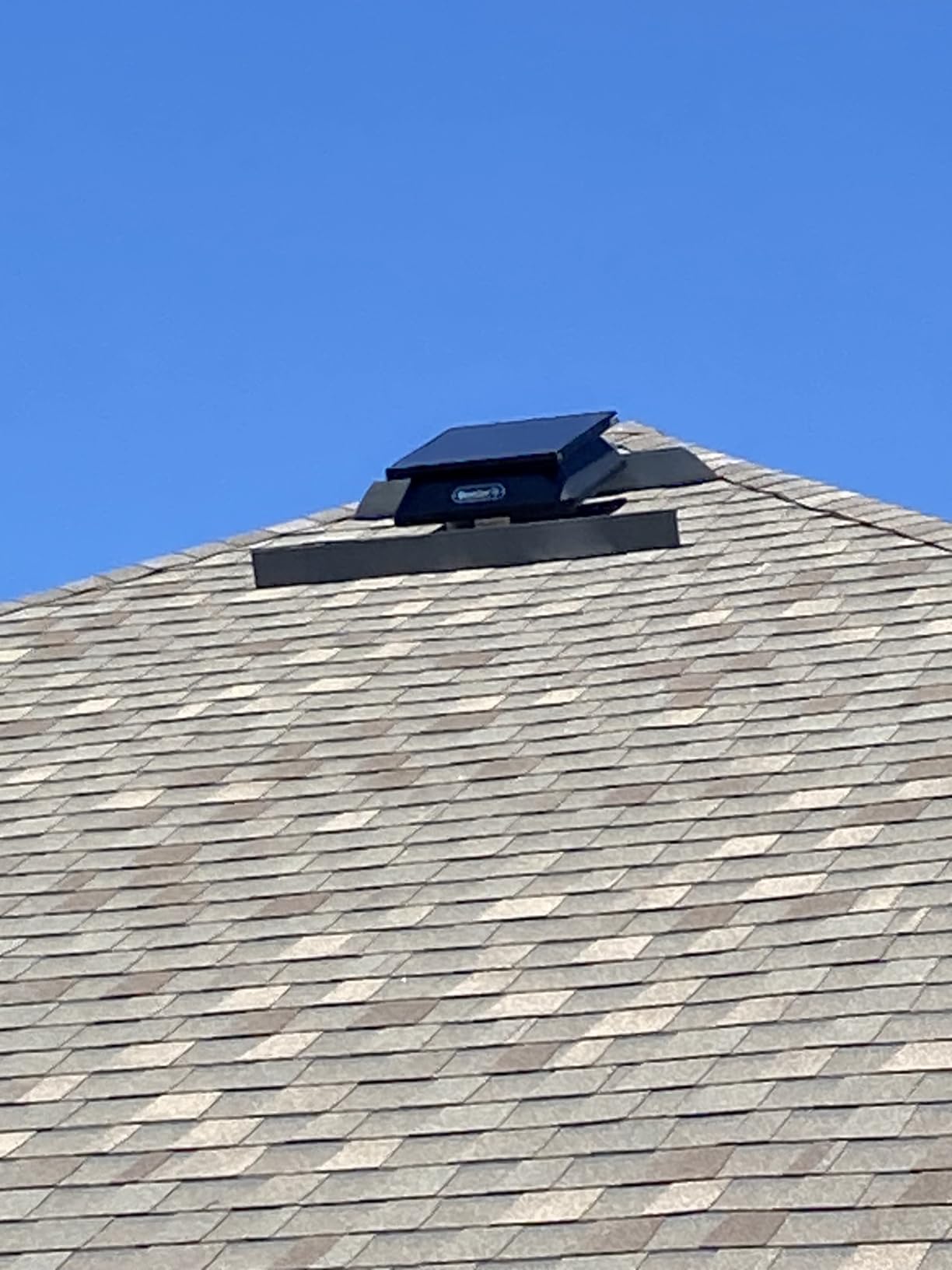
Control is deliberately simple. A preset thermostat starts the fan at 88 degrees, and there is no wiring to a thermostat circuit and no app to learn, which makes this a good fit for a straightforward attic you want ventilated and then left alone.
Warranty coverage is the strongest in the group at 15 years on the panel and unit plus 5 years on the motor.
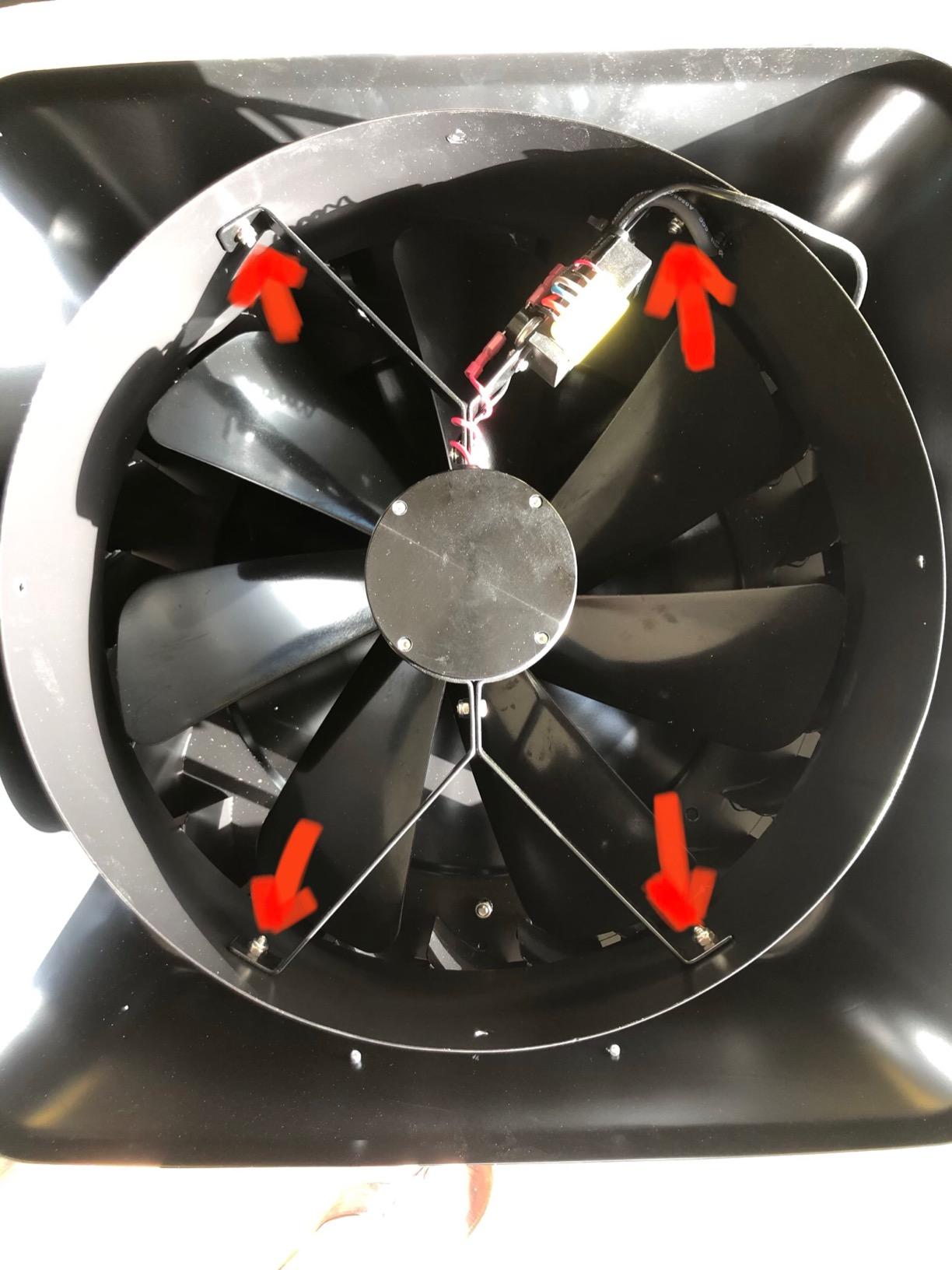
A 20 foot power cord is included for easier installation and the ultra efficient DC motor keeps consumption very low during long summer days.
What to check before you buy this fan
Work out the vent area match before you commit. At 1104 CFM this moves considerably less air than the gable fans earlier in this list, so a small attic needs one and a large attic needs several.
Plan the roof access. This is a roof-mounted unit and the install involves getting onto the roof, so if you are not comfortable there this is a job for a roofer.
Where this one falls short
1104 CFM is a modest number next to the 1945, 2339 and 3368 CFM electric gable fans here, and owners who moved up from a smaller attic notice the difference.
Some installs pick up a faint electronics hum from the inverter. It is not universal, but it is worth mentioning if you are mounting near a bedroom ceiling.
10. 4SEASONS 400 CFM Solar Vent for Small Spaces and Light Handling
4SEASONS Solar Attic Vent Fan – 400 CFM Airflow, Up to 500 sq. ft., 12W Solar Panel, CSA A93 Certified, Polycarbonate Housing, Quiet Roof Ventilation
400 CFM
Attics up to 500 sq ft
12 watt panel
5.6 lb polycarbonate
Pros
- Lightest unit here at 5.6 pounds and easy to handle solo on a roof
- 12 watt monocrystalline panel speeds up and slows down with sunlight
- Brushless motor runs quiet with minimal vibration
- Fully assembled with integrated flashing and no wiring
- Impact resistant polycarbonate housing
Cons
- Rated only for attics up to 500 sq ft so larger spaces need multiple
- No on off switch so it runs whenever the sun allows
- Some models admit wind-driven rain back through the fan opening
This is the small attic and light-handling option. At 5.6 pounds it is the only unit in the roundup one person can comfortably carry up a ladder and position on a roof alone, and it arrives fully assembled with integrated flashing so there is no on-site build.
At 400 CFM it is rated for attic floor up to 500 square feet. That is a real constraint, and it means larger spaces need more than one. Owners using it in small spaces report a measurable 4 to 6 degree drop upstairs and lower air conditioning runtime, and it is also popular in RVs and trailers for the same reason.
The 12 watt monocrystalline panel is not a fixed output. It speeds up and slows down with available sunlight, so the fan runs harder at midday than at dawn, which is the opposite of the fixed-speed gable units.
Polycarbonate housing and CSA A93 plus TDI certification make it the most weather-tolerant housing in this roundup, and it holds up in heavy rain and wind.
At 17 by 17 by 4.7 inches, it is also the lowest profile unit here, which matters if roof clearance is tight.

What to check before you buy this fan
Do the coverage math before anything else. Four hundred CFM against a 2000 square foot attic does almost nothing. If your attic is bigger than 500 square feet you need to plan for several of these, which means several roof penetrations, and each one is a future leak risk.
Measure your rough opening rather than following the instructions literally, since owners report the suggested cutout is larger than what the housing actually needs.
Where this one falls short
There is no on off switch, so the fan runs whenever the sun allows. That is efficient but it also means you cannot keep it off during a stretch of damp weather when you would rather not push more moisture into the attic.
Some owners report wind-driven rain entering back through the fan opening rather than at the flashing. Shimming may also be needed to stop the blade rubbing the housing.
How to Size Your Fan: One CFM per Square Foot
The sizing rule installers reference most often is simple: budget roughly one CFM for every square foot of conditioned living space. A 2000 square foot house with a finished basement needs about 2000 CFM of capacity, whether you are buying one large fan or two smaller ones.
For attic exhaust fans rather than whole house fans, the number you are matching is the attic floor area instead, and the manufacturers on this page publish coverage figures you can read directly. The iLiving gable fan covers attic floor up to 3400 square feet, the Air Vent covers up to 1500, and the 4SEASONS solar unit covers up to 500.
800 to 1200 sq ft of living space needs 800 to 1200 CFM. One small gable fan, or a solar vent sized to the attic.
1200 to 1800 sq ft needs 1200 to 1800 CFM. One mid-range gable fan, or two on separate gable ends.
1800 to 2500 sq ft needs 1800 to 2500 CFM. One large gable fan, or two smaller fans on opposite ends.
2500 to 3400 sq ft needs 2500 to 3400 CFM. This is ceiling whole house fan territory for the living space, plus attic vents above.
Above 3400 sq ft, plan multiple zones rather than one oversized unit.
Two fans usually beat one big fan for a reason worth stating plainly. Running a fan on opposite gable ends pulls air across the full attic width instead of down one corridor, and it gives you a low setting and a high setting that are not the same room. The variable speed and multi speed models on this list do the same thing with one housing.
Attic Venting: The NFVA Rule That Decides Whether a Fan Works
Net free vent area is the number that decides whether your fan runs at its rating or stalls out. The common rule of thumb quoted by homeowners and installers is about one square foot of vent area per 100 square feet of attic floor, so a 2000 square foot attic wants roughly 20 square feet of free vent area, with intake and exhaust split between soffits or gable vents and ridge or roof vents.
Two qualifications make that number honest. First, vent labels overstate free area, because every louver and screen blocks part of the opening, so a vent rated for 8 square feet of free area might really deliver 5. Second, you need intake as well as exhaust. Air cannot leave the attic if it cannot enter, and an attic with only roof vents will run nearly silent and move almost nothing.
Here is a real worked example from an installation log. One installer combined eight low profile roof vents with 25 feet of ridge vent and calculated a net free vent area of 8. Paired with a fan measured at 4195 CFM on high, that worked out to 3.2 minutes for a full volume turnover, or roughly 19 air changes per hour. On low it took 5.9 minutes, about 10 air changes per hour. That is what adequate venting looks like in practice.
If your audit comes up short, the honest answer is that you are not shopping for a bigger fan. You are shopping for a smaller fan that serves one floor, or for more venting hardware. One Southern California homeowner was told by an installer that the attic could not support a full size fan and was advised to cool the second story instead, while a second opinion without an attic visit said the larger unit would be fine. The homeowner went with the smaller fan and that is the safer path.
Whole House Fan vs Powered Attic Vent vs Solar Roof Fan
These three do different jobs and are frequently complementary rather than redundant. A whole house fan moves air out of your living space into the attic. A powered attic vent moves air from the attic out to the sky. A solar roof fan does the same attic job with no power at the roof.
Running a whole house fan into an attic that cannot exhaust that air creates negative pressure and reduces the airflow through the ceiling unit, which is the mechanical reason roofers and HVAC technicians end up arguing about whether fans and ridge vents work together.
On the ridge vent question, both camps are describing a real constraint. Ridge vents on their own provide passive ventilation sized for heat and moisture, which is all they were ever designed for. They do not move the volume a 2000 CFM whole house fan needs. Adding powered roof vents alongside ridge vents does not cancel them out, as long as you retain a working soffit or gable intake and you have not sealed the attic airtight. The roofer argument is usually about roof warranty and penetrations rather than airflow.
Humidity, Dew Point, and When Not to Run the Fan
Run a whole house fan only when outdoor air is both cool and drier than what is inside. If the outdoor dew point is at or above your indoor dew point, you are importing moisture, and over a humid evening or overnight run you can raise indoor relative humidity enough to condense on ducts, supply registers, or cooler attic surfaces.
One installer tracked this properly with a remote attic sensor rather than guessing, and found the dew point consistently well below both attic and outdoor air temperature in that climate, which is why humidity was not a problem there. That conclusion was only valid because the measurement was taken. Check your own numbers before assuming.
Thermal mass is the second thing that trips people up. Attic temperature can fall 14 degrees in about 30 minutes on high speed and then rebound to its prior reading within roughly 15 minutes of switching off. Running at midday is largely wasted effort, and evening operation is where the payoff is. If you check a hot attic in the afternoon and conclude the fan does nothing, you are measuring the wrong time of day.
Unvented attics and spray foam conditioned attics are a genuine exception. If the attic deck is sealed into the conditioned envelope, pulling house air into that space is counterproductive at best, so a whole house fan is the wrong answer and the fix belongs in the roof assembly instead.
Installation, Roof Integrity, and Keeping Your Fan Through a Reroof
Attic fans get removed during reroofing more often than most buyers expect, usually because the roofer replaces powered vents with ridge vents to avoid roof penetrations and keep the warranty clean. One homeowner had an original fan that ran for thirty years disappear at exactly that moment, and the area was plywooded and shingled over with the wire left uncapped.
The fix is procedural and starts before the crew arrives. Get the decision in writing on the contract, specify the fan by model and location, and respond to the sales email immediately, since that missed reply is exactly how owners lose the argument.
Roof penetrations are where most solar and roof mount fans succeed or fail, and the flashing footprint matters more than the fan. The Remington models in this roundup use a 22.5 by 22.5 inch steel flashing deck for that reason. Any roof mount fan also needs to be specified to the roofer in advance rather than discovered after the new shingles go down.
Finally, watch the dust. High speed operation moves decades of loose fill paper insulation and new roof dirt around, and air leaks back down around an unsealed ceiling hatch, where one installer measured 3 to 4 degrees warmer locally. Angling the fan along a slight upward slant reduces the blasting, and foam strips around the hatch cover stop the leak.
Frequently Asked Questions
How much CFM whole house fan do I need for my house?
Budget roughly one CFM per square foot of conditioned living space. A 2000 sq ft house with a finished basement needs about 2000 CFM of capacity. Two smaller fans mounted on opposite gable ends usually work better than one oversized unit, because they pull air across the full attic width and give you two different speeds.
Do I need a powered attic vent if I have a whole house fan?
Usually yes, and they do different jobs. A whole house fan pulls air out of your living space into the attic, while a powered attic vent pushes that hot air out through the roof. Without exhaust capacity the ceiling fan stalls against the restriction and moves far less air than its rating.
Can I use ridge vents and attic fans together?
Yes, as long as you keep a working soffit or gable intake and have not sealed the attic airtight. Ridge vents alone are passive and sized for heat and moisture, not for the volume a whole house fan moves. Powered roof vents alongside ridge vents do not cancel them out. Roofers often object for warranty reasons rather than airflow reasons.
How much attic ventilation do I need for a whole house fan?
The common rule of thumb is about one square foot of vent area per 100 square feet of attic floor, so a 2000 sq ft attic wants roughly 20 sq ft. Discount vent labels for louvers and screens that block free area, and split the total between intake and exhaust. Air cannot leave the attic if it cannot enter.
Will a whole house fan make my house more humid?
It can, if you run it when the outdoor dew point is at or above your indoor dew point. You are then importing moisture rather than removing it, and over a humid evening that can raise indoor relative humidity enough to condense on ducts and supply registers. Check your local dew point before deciding a fan night is a fan night.
Do solar attic fans actually work?
They ventilate effectively in daylight and need no wiring at the roof, which removes both install cost and electrical risk. Their limit is night. Solar-only models stop when the sun goes down, so models with an included AC/DC inverter or 110V hybrid adapter, such as the QuietCool AFR SLR-40 and the Remington Builder Series, keep running after dark.
Why did my roofer remove my attic fan?
Roofers usually replace powered attic vents with ridge vents to avoid roof penetrations and protect the roof warranty. One homeowner had a fan that ran for thirty years removed during a reroof, with the area plywooded and shingled over. Specify the fan by model and location in the contract before work starts, and answer the sales email promptly.
How much cooler can a whole house fan make a house than outside?
More than most people expect. In one documented installation, running a whole house fan on high brought the living space 4 to 5 degrees below the outdoor air temperature in about 30 minutes, because the evaporation and air exchange outpace simple outside air. Owners of larger units report interior drops of 6 to 20 degrees on genuinely cool nights.
The Best Whole House Fans for Hot Attics Compared
For most people the QuietCool AFG PRO-2.0 is the best whole house fans for hot attics pick, because the two speed PSC motor, wide 50 to 120 degree thermostat, and plug-and-play cord make it flexible without an app, and it holds the highest rating in this group at 4.7 stars across more than 1300 reviews.
If you want more airflow in a larger attic, the iLiving ILG8G14-12T moves 2339 CFM from a simpler hardwired package. If you want phone control with a humidistat, the QuietCool AFG SMT ES-3.0 is the one. If you cannot run wire to the ridge, a solar roof fan handles the attic side, and the Remington Builder Series 40 Watt is the one that keeps running after dark.
Before you buy anything, measure your vent area and check your outdoor dew point. Those two numbers will save you more money than any amount of shopping between models.