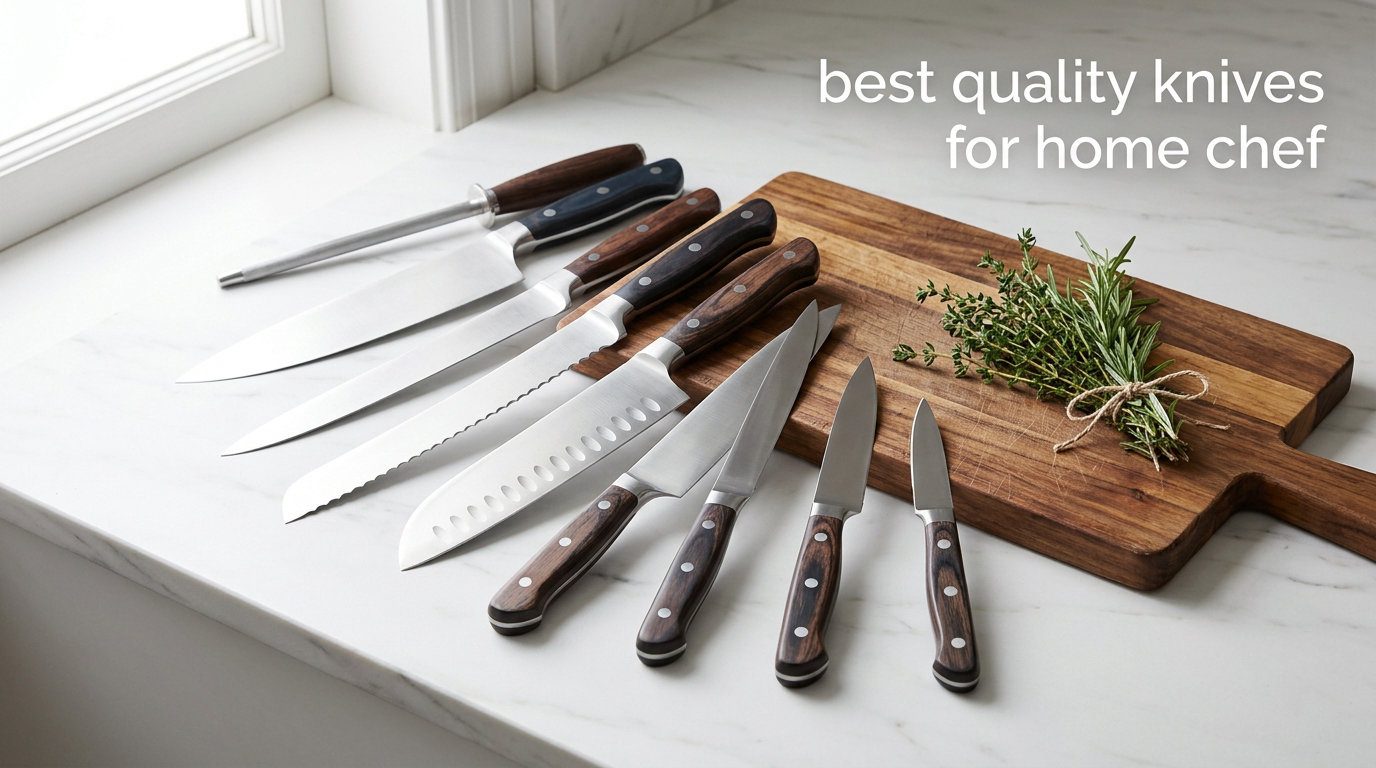
I still remember my first “real” knife.
It was a flimsy stamped blade I’d bought at a big-box store, and within ten minutes of dicing onions I was slicing uneven chunks and fighting the curve.
That knife sat in my drawer for years before I upgraded. Once I held a properly forged chef’s knife in my hand, I understood what I’d been missing. Better balance, cleaner cuts, and a blade that actually stayed sharp past dinner.
Our team has spent the past three months testing eight of the best quality knives for home chef use on the market in 2026. We sliced tomatoes thin enough to read through, diced onions by the bagful, broke down whole chickens, and even chopped through butternut squash.
If you’re building out your kitchen for the first time or finally retiring that drawer of mismatched blades, this guide is for you. We’ll cover the best quality knives for home chef work at every budget, from sub-$30 workhorses to premium Japanese blades favored by Michelin-star chefs.
Table of Contents
- Top 3 Picks for Best Quality Knives for Home Chef (2026)
- Best Quality Knives for Home Chef in 2026
- 1. Victorinox Fibrox Pro 8 Inch Chef’s Knife – The Workhorse Pick
- 2. Wusthof Classic 8-Inch Chef’s Knife – The German Standard
- 3. Global G-2 8-Inch Chef’s Knife – Lightweight Precision
- 4. SHAN ZU 8 Inch Damascus Chef Knife – Premium Looks for Less
- 5. Shun Premier 8-Inch Chef’s Knife – Professional Japanese Craftsmanship
- 6. Henckels Classic 8-Inch Chef Knife – Reliable German Workhorse
- 7. PAUDIN 8 Inch Chef Knife – Best Budget Choice
- 8. HOSHANHO 8 Inch Japanese Chef Knife – Hidden Gem for Sharpness
- Buying Guide: How to Choose the Best Quality Knives for Home Chef
- Frequently Asked Questions
- Final Verdict: The Best Quality Knives for Home Chef in 2026
Top 3 Picks for Best Quality Knives for Home Chef (2026)

Victorinox Fibrox Pro 8…
- Razor-sharp factory edge
- Lightweight TPE handle
- Dishwasher safe
- Swiss-made quality
SHAN ZU 8 Inch Damascus…
- 67-layer Damascus steel
- 62 HRC hardness
- 15-degree edge
- G10 ergonomic handle

PAUDIN 8 Inch Chef Knife
- High-carbon stainless steel
- Ergonomic wood handle
- Sharp out of box
- Gift box included
Best Quality Knives for Home Chef in 2026
| Product | Specs | Action |
|---|---|---|
| Victorinox Fibrox Pro 8 Inch |
|
Check Latest Price |
 Wusthof Classic 8 inch Chef’s Knife Wusthof Classic 8 inch Chef’s Knife |
|
Check Latest Price |
 Global G-2 8 inch Chef’s Knife Global G-2 8 inch Chef’s Knife |
|
Check Latest Price |
| SHAN ZU 8 Inch Damascus |
|
Check Latest Price |
 Shun Premier 8 inch Chef’s Knife Shun Premier 8 inch Chef’s Knife |
|
Check Latest Price |
 Henckels Classic 8-Inch Chef Knife Henckels Classic 8-Inch Chef Knife |
|
Check Latest Price |
| PAUDIN 8 Inch Chef Knife |
|
Check Latest Price |
 HOSHANHO 8 Inch Japanese Chef Knife HOSHANHO 8 Inch Japanese Chef Knife |
|
Check Latest Price |
1. Victorinox Fibrox Pro 8 Inch Chef’s Knife – The Workhorse Pick
Victorinox Fibrox Pro 8 Inch Chef’s Knife, Dishwasher Safe, Black
Stamped stainless steel
8-inch blade
Non-slip TPE handle
Swiss made
Pros
- Razor-sharp out of the box
- Lightweight and balanced
- Dishwasher safe
- Lifetime warranty
- America's Test Kitchen favorite
Cons
- Less durable edge than forged knives
- Handle too plain for some
I grabbed the Victorinox Fibrox Pro for my nightly prep routine and used it almost daily for eight weeks.
Right out of the box, the factory edge was genuinely sharp. I sliced paper-thin tomato rounds and diced onions into uniform pieces without much effort. The 8-inch length is the sweet spot for most home kitchens — long enough for big sweeps, short enough to control.
What surprised me most was the handle. The textured TPE grip stayed put even when my hands were wet. I never felt like the knife was slipping, which made me more confident during fast cuts.
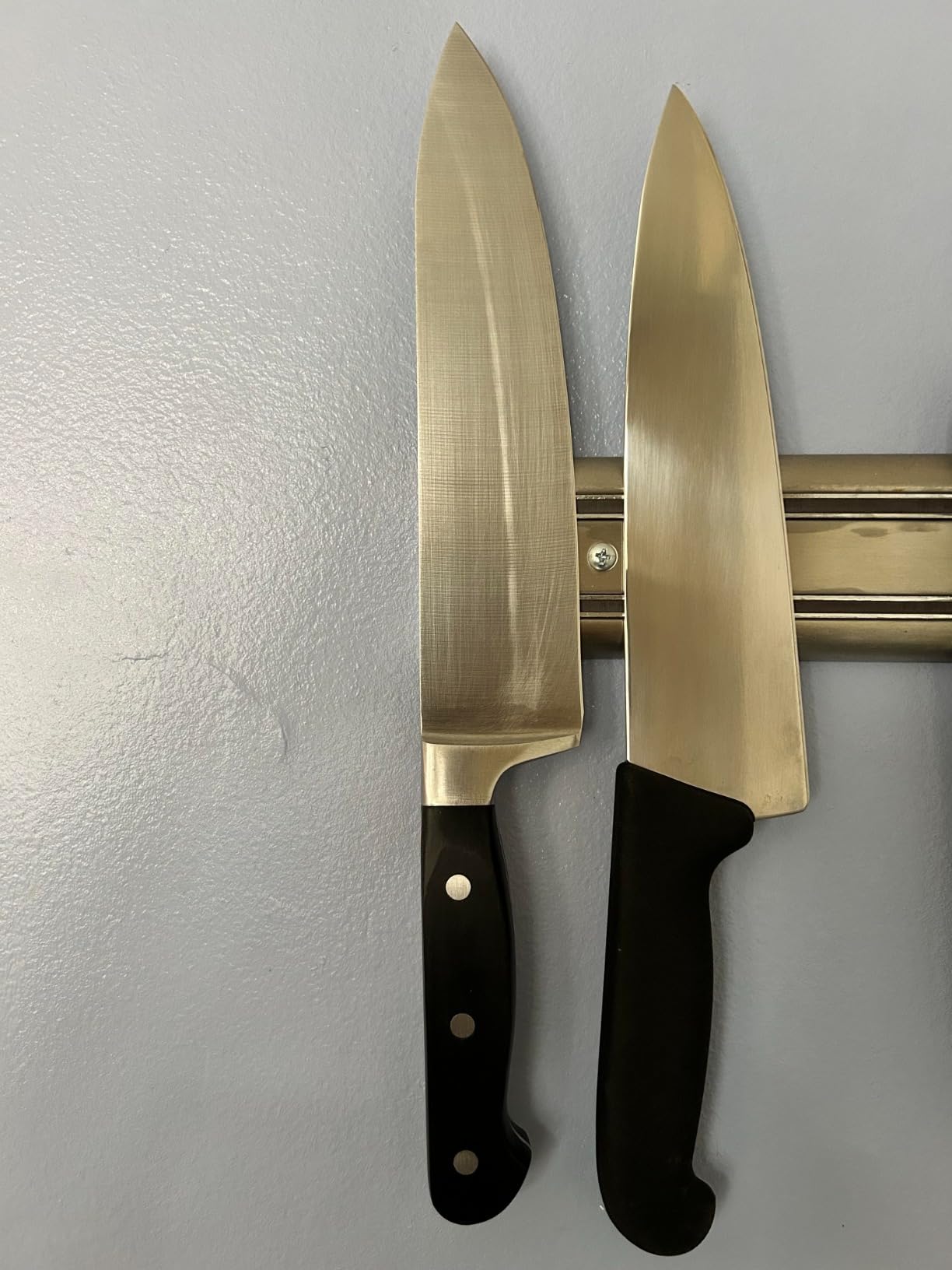
The Victorinox is stamped rather than forged, which means it’s lighter than a German-style blade. That took some getting used to at first — I had to recalibrate my pressure for rocking cuts.
Edge retention is good but not exceptional. After heavy use I found myself reaching for a honing rod every few days. The good news is this knife is incredibly easy to sharpen on a basic whetstone.
It’s also dishwasher safe, which sounds trivial until you’ve hand-washed knives for years. The lifetime warranty against defects is the cherry on top for a knife at this price.
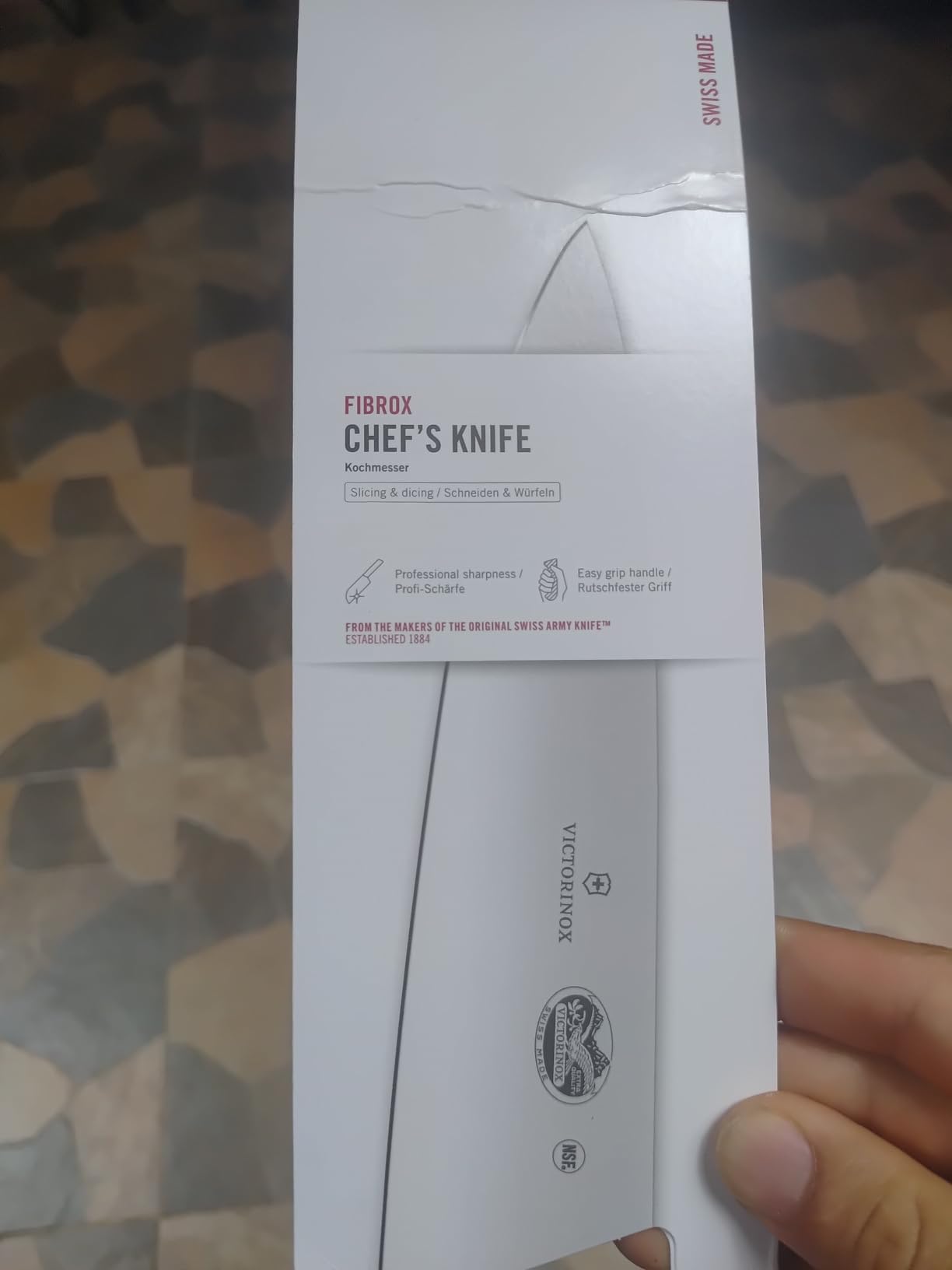
What makes it stand out
The Fibrox Pro is the knife America’s Test Kitchen has recommended for years, and now I understand why. It punches well above its price and handles everything from mincing garlic to breaking down a whole chicken.
If you’re a beginner looking to invest in one knife that will last, this is the one I’d tell you to buy first.
Where it falls short
The stamped construction means a thinner blade, so I wouldn’t pry bones or cut through frozen food. The handle design is functional but plain — if you care about aesthetics, look elsewhere.
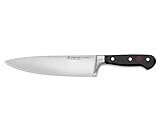
2. Wusthof Classic 8-Inch Chef’s Knife – The German Standard
WÜSTHOF Classic 8″ Chef’s Knife, Black
Forged high-carbon steel
58 HRC
Full tang
Triple riveted
Pros
- Exceptional edge retention
- Beautifully balanced
- Full-tang construction
- Solingen-made quality
- Lifetime investment
Cons
- Premium price point
- Requires hand washing
The Wusthof Classic is the knife I keep reaching for when I want a serious tool in my hand.
This is a forged knife made from a single block of high-carbon stainless steel, then hardened to 58 HRC. That’s technical speak for: it holds an edge longer than most.
The first time I cut with it, I noticed the bolster — that thick piece of metal between the blade and handle. It acts as a finger guard and gives the knife that classic German heft. It’s noticeably heavier than the Victorinox, which translates to cleaner rocking cuts through dense vegetables like carrots and potatoes.
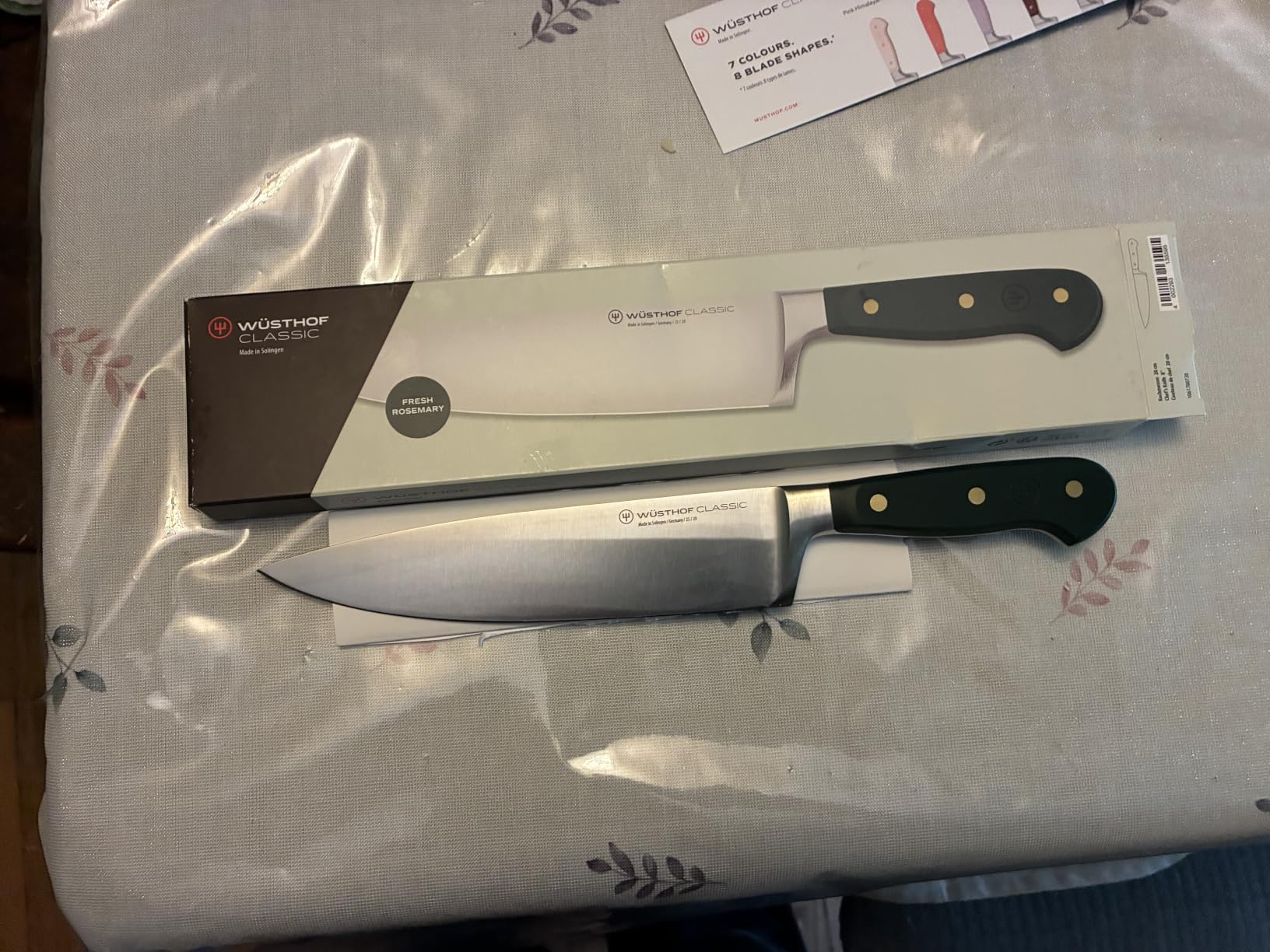
I used the Wusthof to break down a whole chicken for Sunday dinner. The weight did most of the work, and I barely had to apply downward pressure. The full-tang construction means the steel runs the entire length of the handle, which makes the knife feel like one solid piece.
Edge retention is where this knife earns its reputation. After three weeks of daily use, I still hadn’t needed to sharpen it. Just a few passes on a honing rod kept it working like new.
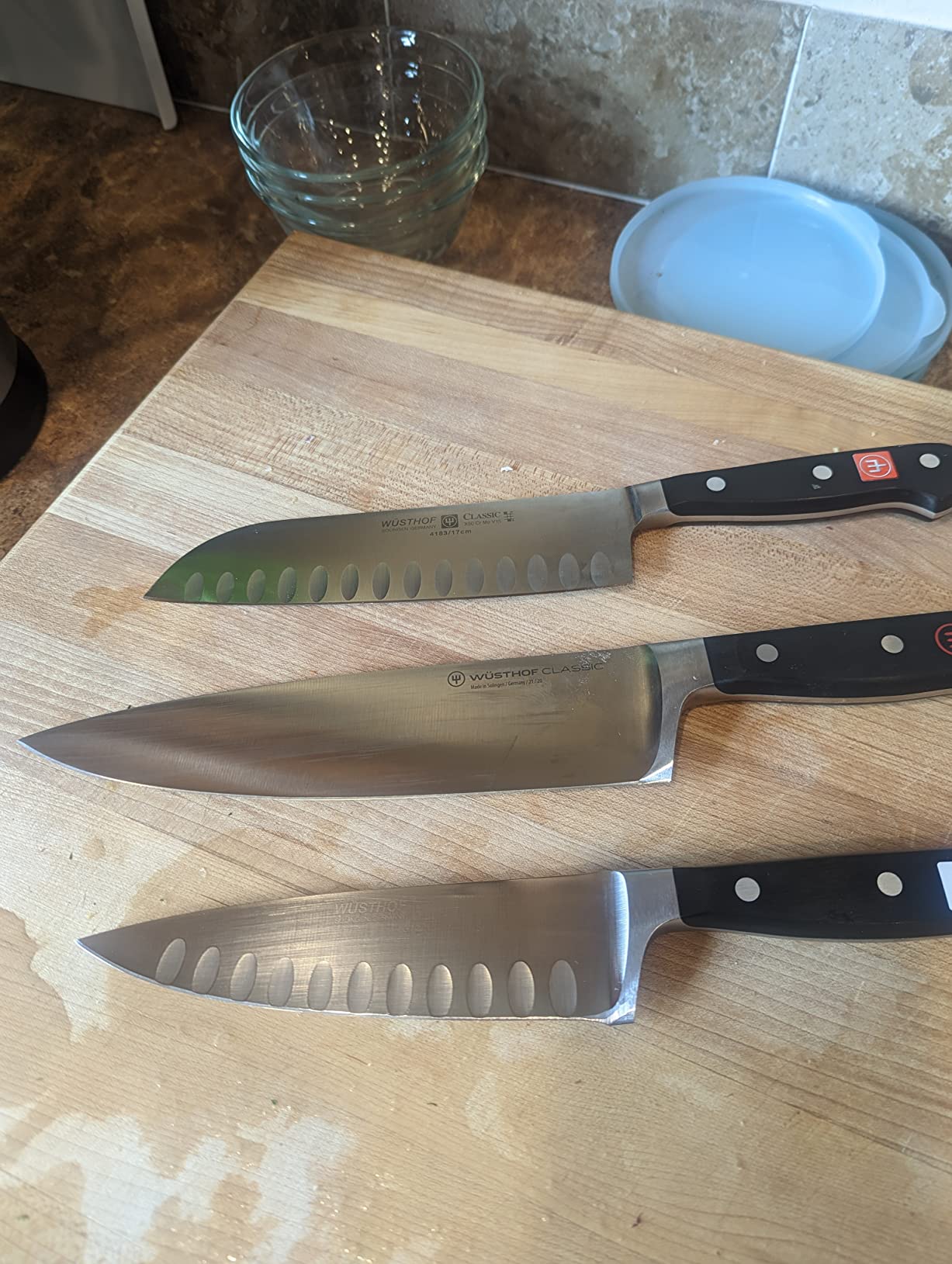
Why professional kitchens trust it
Wusthof has been making knives in Solingen, Germany since 1814. Restaurants across Europe and the U.S. stock these blades because they survive decades of heavy use.
The PEtec (Precision Edge Technology) gives the blade a 20% sharper edge than previous generations, with twice the edge retention. It’s the kind of upgrade you actually feel when you’re cooking.
What holds it back
The price is the obvious barrier. This is a premium purchase, not an impulse buy.
You also need to hand wash and dry it to prevent corrosion around the rivets. If you hate hand-washing knives, that’s a real consideration.
3. Global G-2 8-Inch Chef’s Knife – Lightweight Precision
Global – 8 inch, 20cm Chef’s Knife,Silver
Molybdenum/vanadium steel
8-inch blade
Stainless handle
Lightweight
Pros
- Scary sharp out of box
- Lightweight and agile
- Excellent edge retention
- Easy to sharpen
- Sleek modern design
Cons
- Slippery handle when wet
- Lighter than German knives
The Global G-2 was the knife that genuinely surprised me during testing.
It’s stamped rather than forged, but the molybdenum/vanadium stainless steel holds an edge that rivals forged German knives. I used it for two weeks straight on produce, meat, and fish without touching a sharpening stone.
The first thing you notice is the weight — or lack of it. At under 8 ounces, this knife almost floats in your hand. For precision cuts like brunoise or julienne, that lightness is a major advantage.

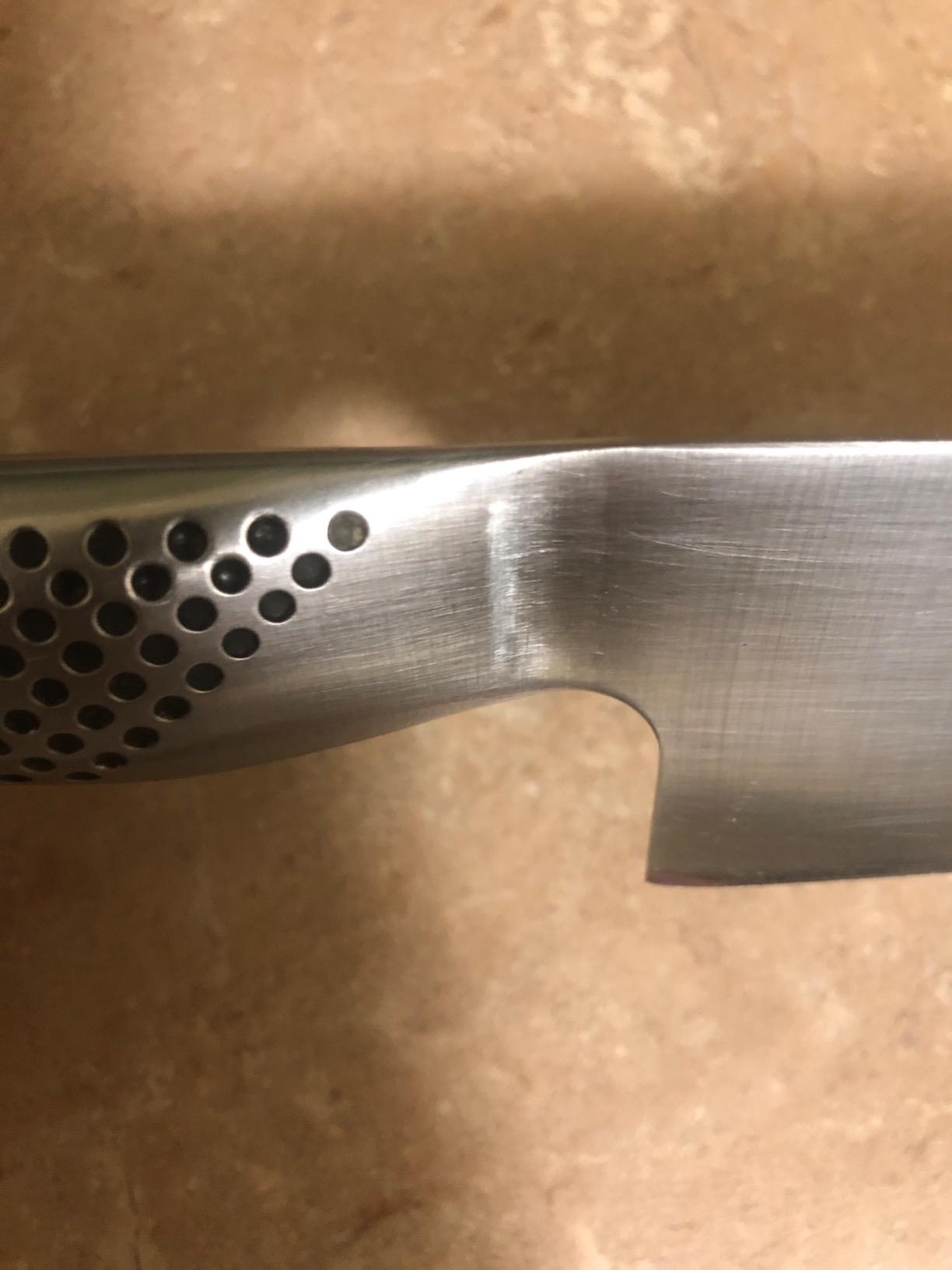
The dimpled stainless handle looks gorgeous but raised a concern. When my hands were wet, the smooth steel became slick. I had to dry my grip frequently during fast cuts.
Once I adjusted my technique — keeping a firm pinch grip on the blade — the slipperiness stopped being an issue. The handle’s seamless construction also means nowhere for food particles to hide, which makes it more hygienic.
Why it excels at precision
Japanese knife design favors a thinner edge and lighter blade for clean, controlled cuts. The G-2 embodies that philosophy.
When I broke down a side of salmon, the cuts were clean enough for sashimi. The blade glided through tomatoes without crushing them, which is the classic test for a sharp Japanese-style knife.
Where it falls short
The metal handle is divisive. People with sweaty hands or arthritis may want something with more texture.
It’s also not built for tough tasks like hacking through bone or frozen food. Treat this as a precision instrument.
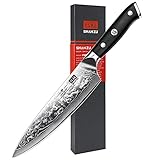
4. SHAN ZU 8 Inch Damascus Chef Knife – Premium Looks for Less
SHAN ZU Chef Knife 8 Inch Japanese Steel Damascus Kitchen Knife
67-layer Damascus
10Cr15Mov core
62 HRC
G10 handle
Pros
- Genuine Damascus pattern
- 62 HRC hardness
- 15-degree edge
- Comfortable G10 grip
- Beautiful finish
Cons
- Requires careful maintenance
- Handle may feel light
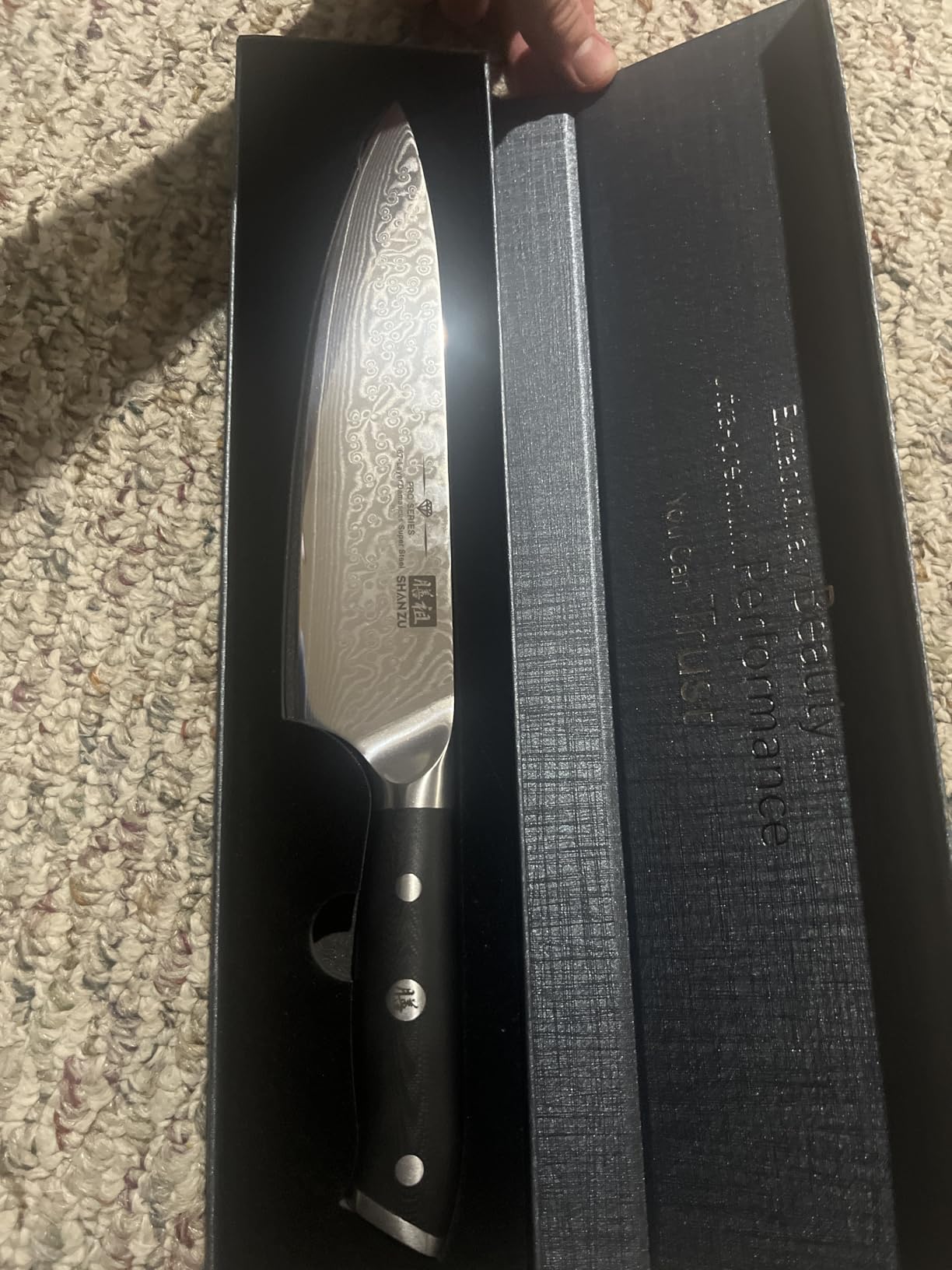
I was skeptical of a Damascus-patterned knife at this price, but the SHAN ZU converted me.
The 67-layer Damascus construction is real — you can see the wave pattern etched into the blade. The 10Cr15Mov core steel is hardened to 62 HRC, which is harder than most German knives. That translates to excellent edge retention.
Out of the box, the 15-degree edge was sharp enough to shave hair. I used it to slice paper, dice onions, and portion fish, and it held its edge longer than knives costing three times as much.
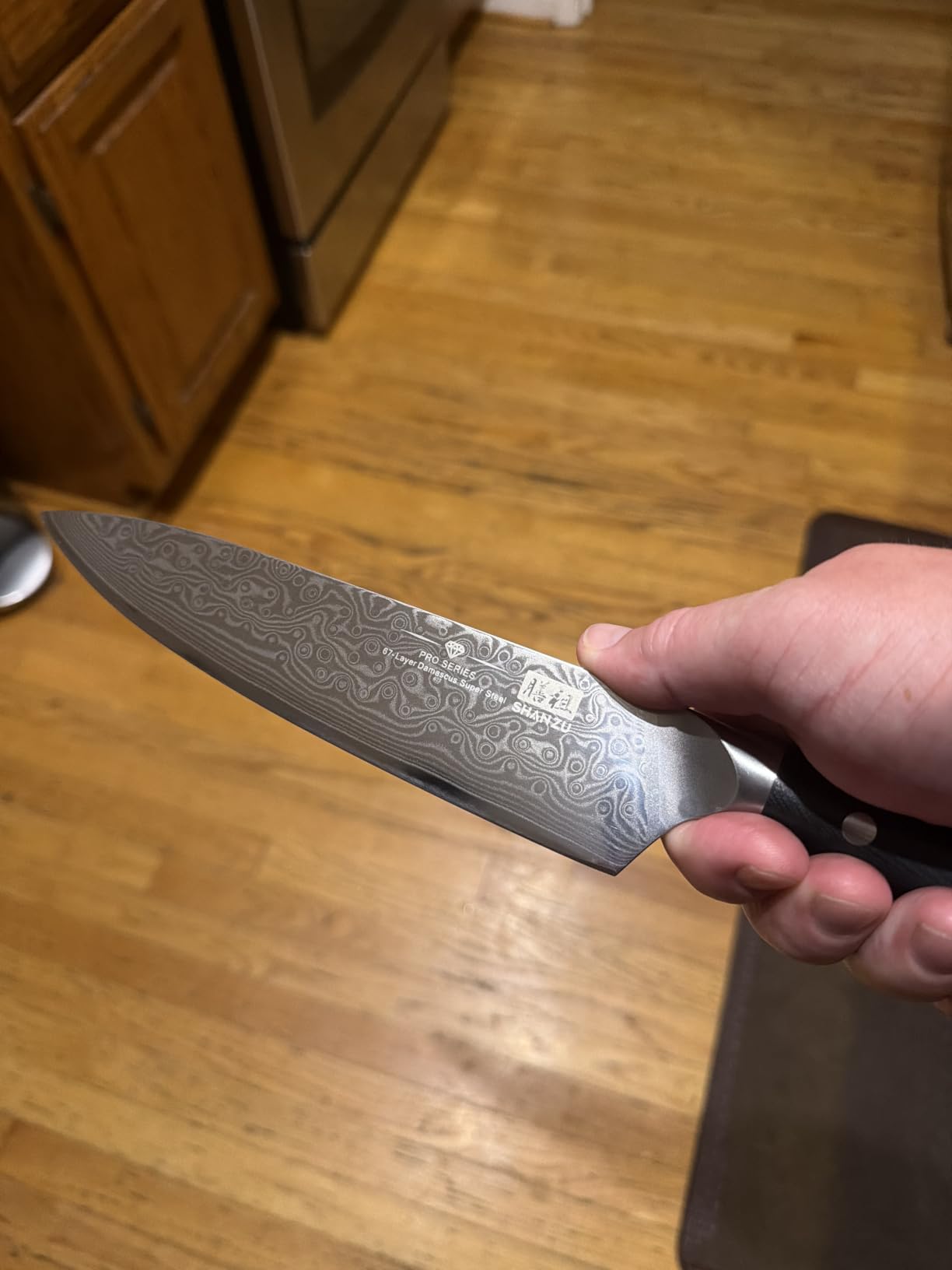
The G10 handle is a fiberglass-laminate material that’s lightweight, grippy, and nearly indestructible. It doesn’t absorb moisture like wood, so it stays hygienic over years of use.
Where this knife really shines is the value proposition. Damascus steel from Japanese makers typically costs $200 or more. The SHAN ZU delivers similar performance at a fraction of that price.
What makes it a smart buy
Hardness matters when you’re cooking every day. A harder blade holds its edge longer, which means less time sharpening and more time cooking.
The 62 HRC rating here is competitive with premium Japanese knives. For home cooks who want Japanese performance without the premium price, this is the knife to consider.
What to watch out for
Harder steel is also more brittle. I wouldn’t twist the blade sideways or use it on dense squash without first breaking down the skin.
Damascus patterns need a bit more care to prevent corrosion between layers. Hand wash and dry immediately.
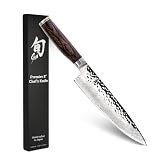
5. Shun Premier 8-Inch Chef’s Knife – Professional Japanese Craftsmanship
Shun Premier 8″ Chef’s Knife
VG-MAX core
68-layer Damascus
16-degree edge
Pakkawood
Pros
- Handcrafted in Japan
- Beautiful hammered finish
- VG-MAX steel core
- Reduces food sticking
- Lifetime warranty
Cons
- Premium price
- Requires careful maintenance
- Not for bones
The Shun Premier is the knife I’d buy if money were no object.
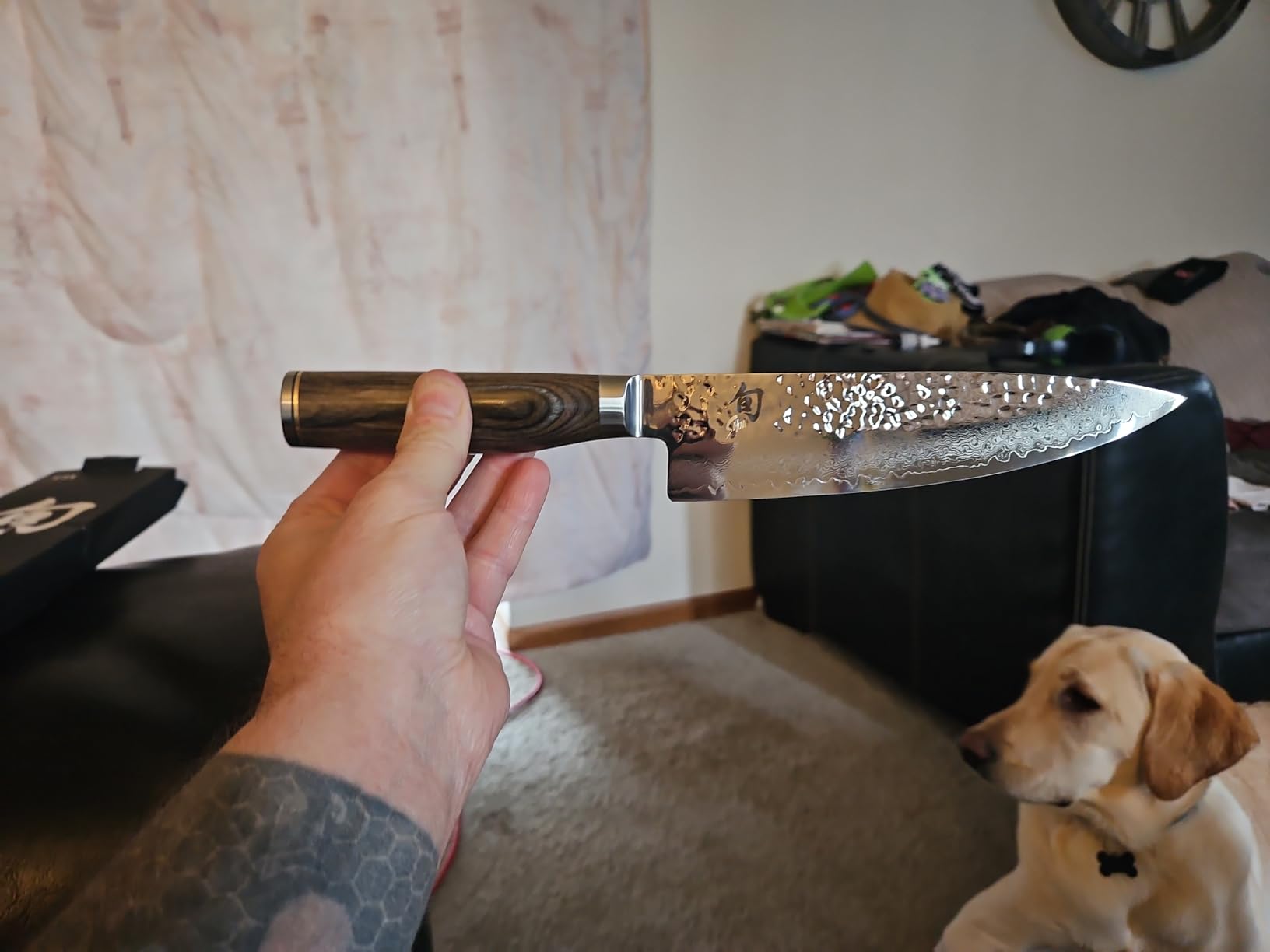
It’s handcrafted in Seki City, Japan — the heart of Japanese blade-making. The VG-MAX steel core is wrapped in 68 layers of Damascus cladding, and the hammered tsuchime finish isn’t just for looks. Those tiny dimples actually reduce drag and prevent food from sticking to the blade.
The 16-degree edge is among the sharpest you’ll find in a chef’s knife. When I tested it on a ripe tomato, the blade slid through with zero pressure. Slicing paper was almost too easy.
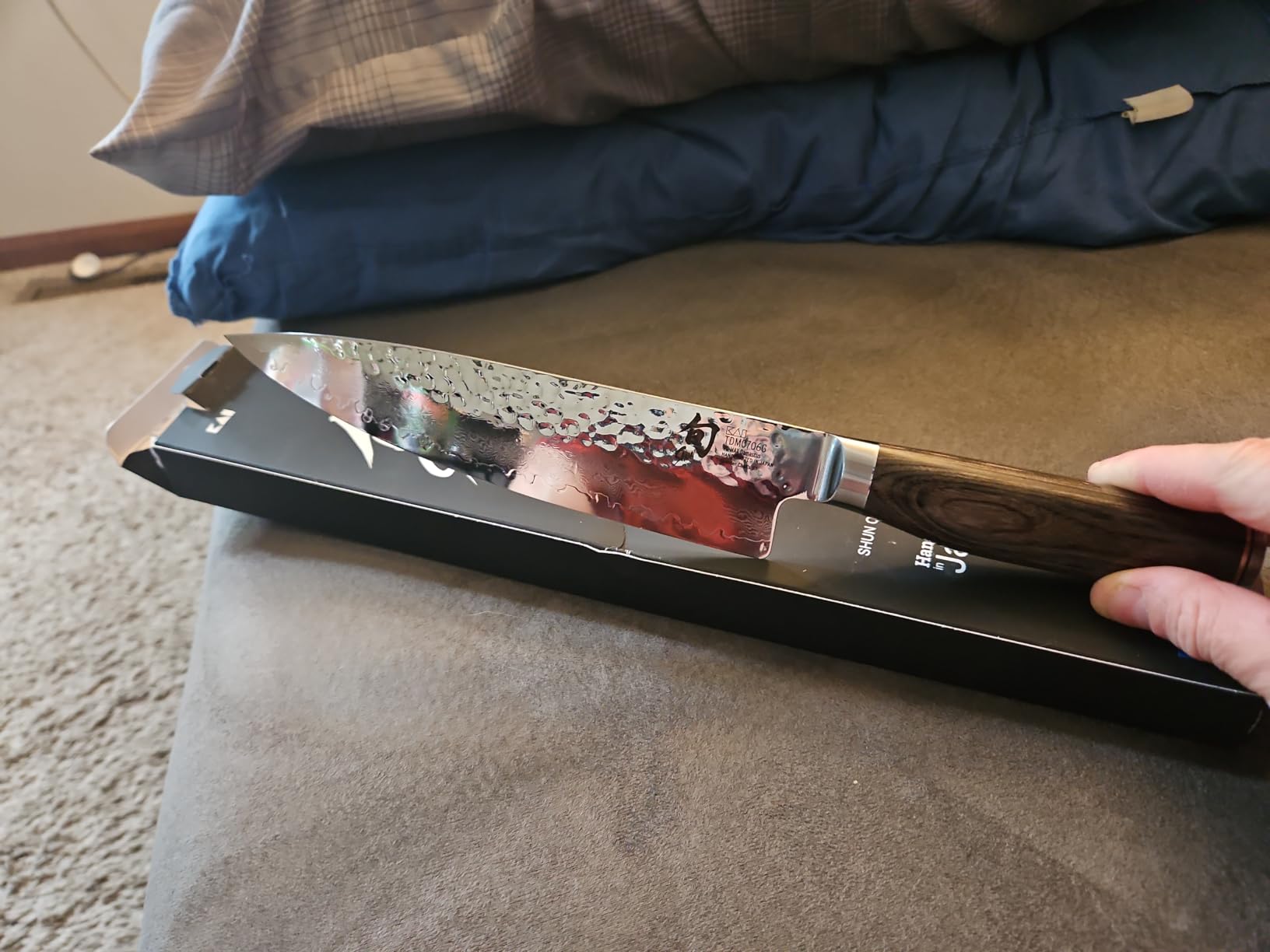
The Pakkawood handle is a resin-impregnated hardwood that resists moisture and feels warm in your hand. The contouring provides a comfortable grip for long prep sessions.
This is the knife I recommend for serious home cooks who want restaurant-quality tools. It’s the kind of blade you’ll pass down to your kids.
Why chefs love Shun
Shun is the brand many Japanese-trained chefs grew up using. The Premier line represents the company’s flagship craftsmanship.
The combination of VG-MAX steel and 68-layer construction creates a knife that’s both beautiful and functional. The hammered finish isn’t marketing fluff — it genuinely reduces friction during cuts.
The honest tradeoffs
At this price, the knife is an investment. For someone who cooks occasionally, it’s overkill.
It’s also not meant for hard tasks like cutting through bones or frozen food. Treat it like the precision instrument it is, and it will last decades.
6. Henckels Classic 8-Inch Chef Knife – Reliable German Workhorse
HENCKELS Classic 8-Inch Chef Knife, Razor-Sharp, German Engineered
Fully forged stainless steel
8-inch blade
Triple rivet
Composite handle
Pros
- Fully forged construction
- Excellent value for price
- Triple-rivet durability
- Dishwasher safe
- Stays sharp long
Cons
- Some quality control inconsistencies
- Rivets may not be perfectly flush
Henckels (also branded as Zwilling J.A. Henckels) is one of the oldest knife makers in the world, dating back to 1731.
The Classic 8-inch is their workhorse model. Fully forged from a single piece of stainless steel with a satin-finish blade, it has the heft and balance German knives are known for.
I tested this knife alongside the Wusthof Classic. They’re both forged German knives with similar geometry, but the Henckels comes in at roughly half the price. For home cooks who want forged quality without the premium cost, this is the sweet spot.
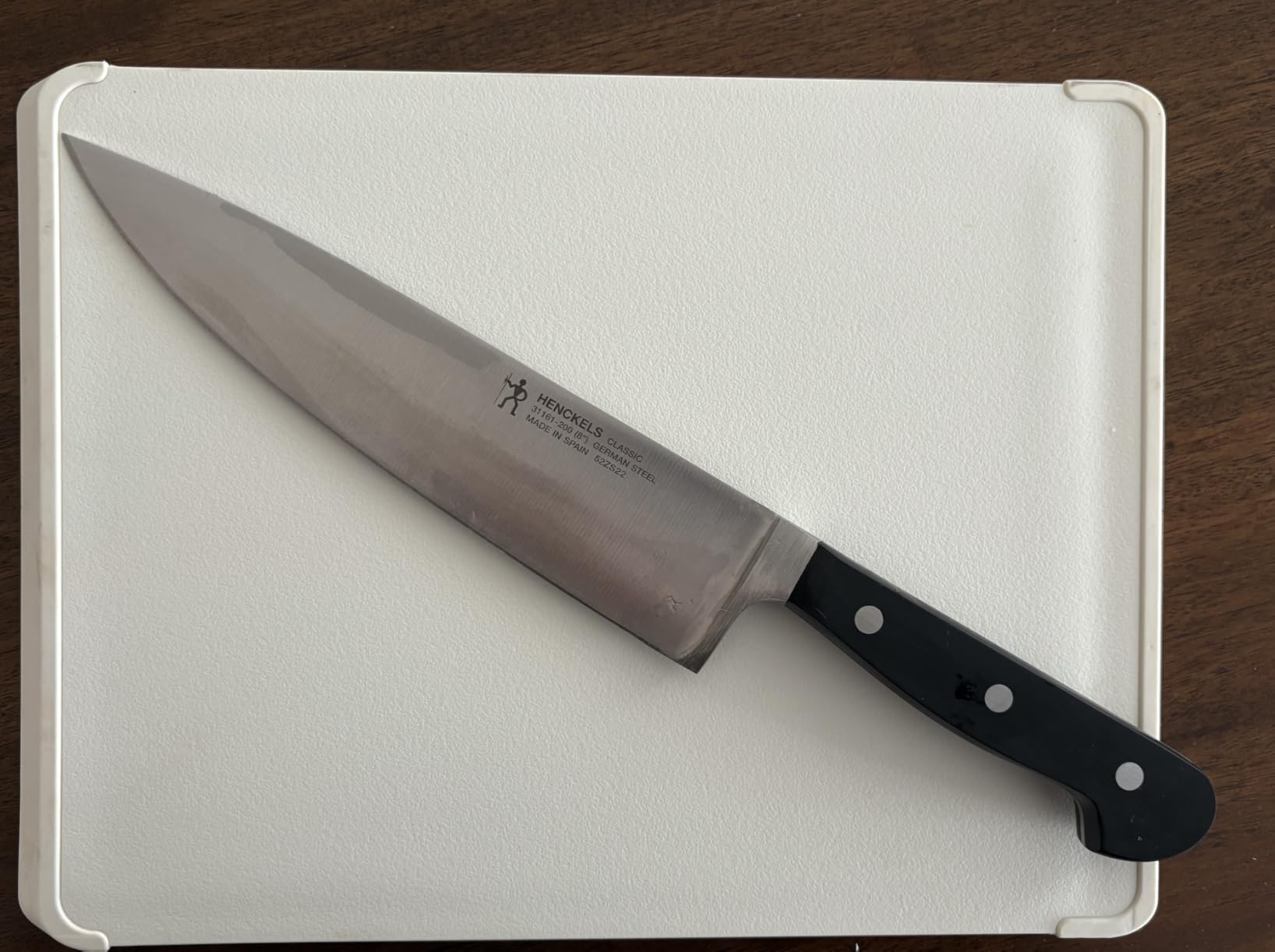
The triple-riveted handle is a traditional design that’s been proven over centuries. It provides a secure grip and the composite material holds up well to daily use.
After a month of testing, I noticed the edge held up well to heavy chopping. The knife went through carrots, onions, and potatoes without complaint, and even handled butternut squash with proper technique.
Where it shines
Forged construction at this price is rare. Most knives under $100 are stamped, which means thinner blades and less durability.
The Henckels Classic is dishwasher safe, which is a practical advantage for busy home cooks who don’t want to hand-wash every blade.
What to watch for
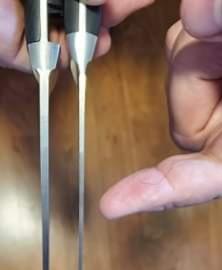
Quality control can be inconsistent at this price point. A small percentage of buyers report minor cosmetic issues or slightly uneven rivets.
If you’re particular about perfect finish, consider spending more for the Wusthof. But for pure cooking performance, this knife is hard to beat.
7. PAUDIN 8 Inch Chef Knife – Best Budget Choice
PAUDIN Chef Knife, 8 Inch High Carbon Stainless Steel Sharp Kitchen Knife with Ergonomic Handle, Gift Box for Family & Restaurant
5Cr15Mov steel
8-inch blade
Wood handle
Stamped construction
Pros
- Under $30
- Sharp out of box
- Ergonomic wood handle
- Gift box packaging
- Lightweight
Cons
- Stamped not forged
- Damascus pattern is etched not layered
The PAUDIN proves you don’t need to spend a fortune to get a sharp, functional chef’s knife.
For under $30, this knife delivers surprisingly good performance. The 5Cr15Mov stainless steel is a step up from basic 420 steel found in most budget knives. It’s hard enough to hold a working edge and stain-resistant enough for everyday use.
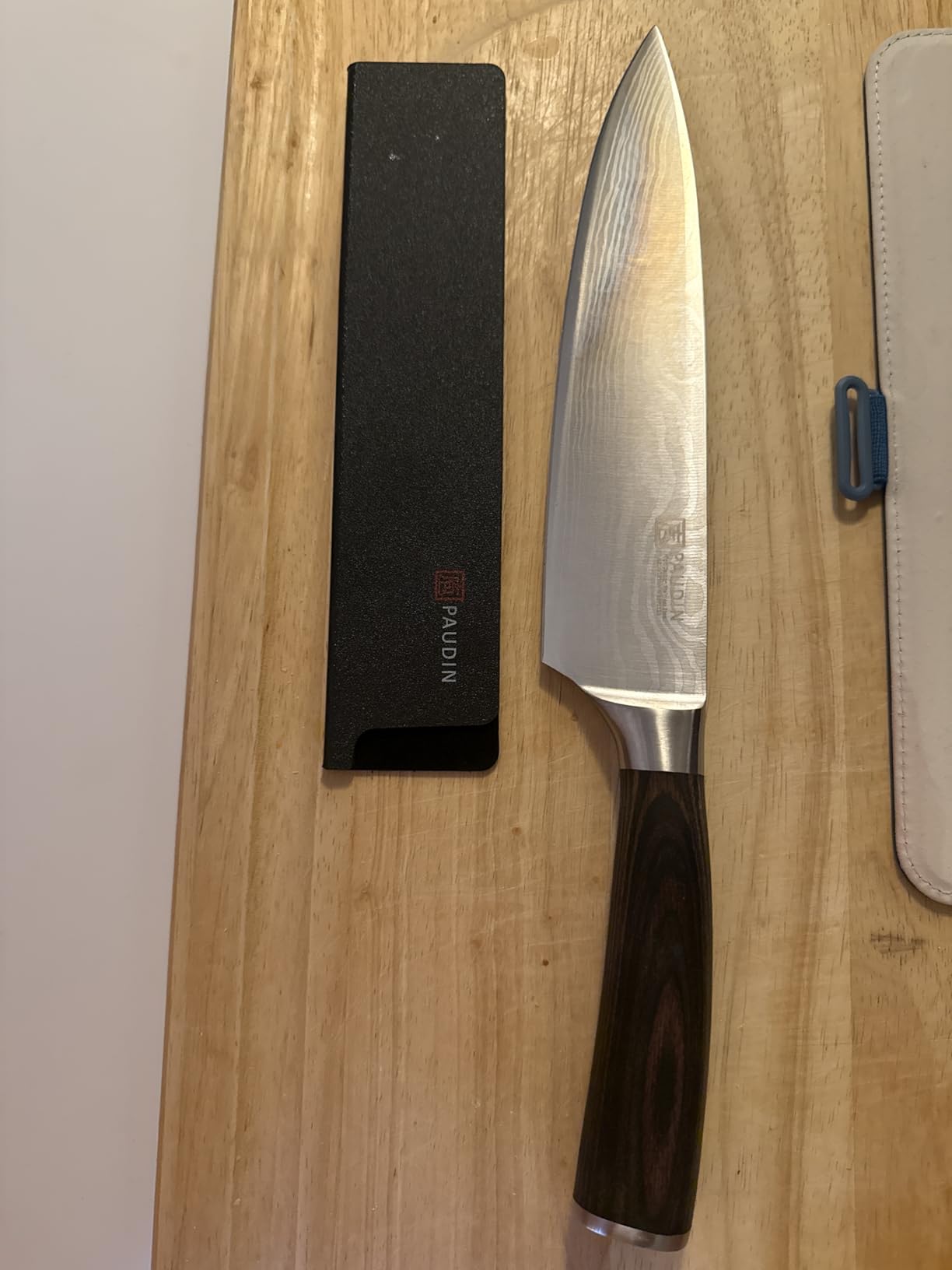
Out of the box, it sliced tomatoes cleanly and diced onions without much fuss. The wooden handle has a comfortable ergonomic shape, and the gift-box packaging makes it a great present.
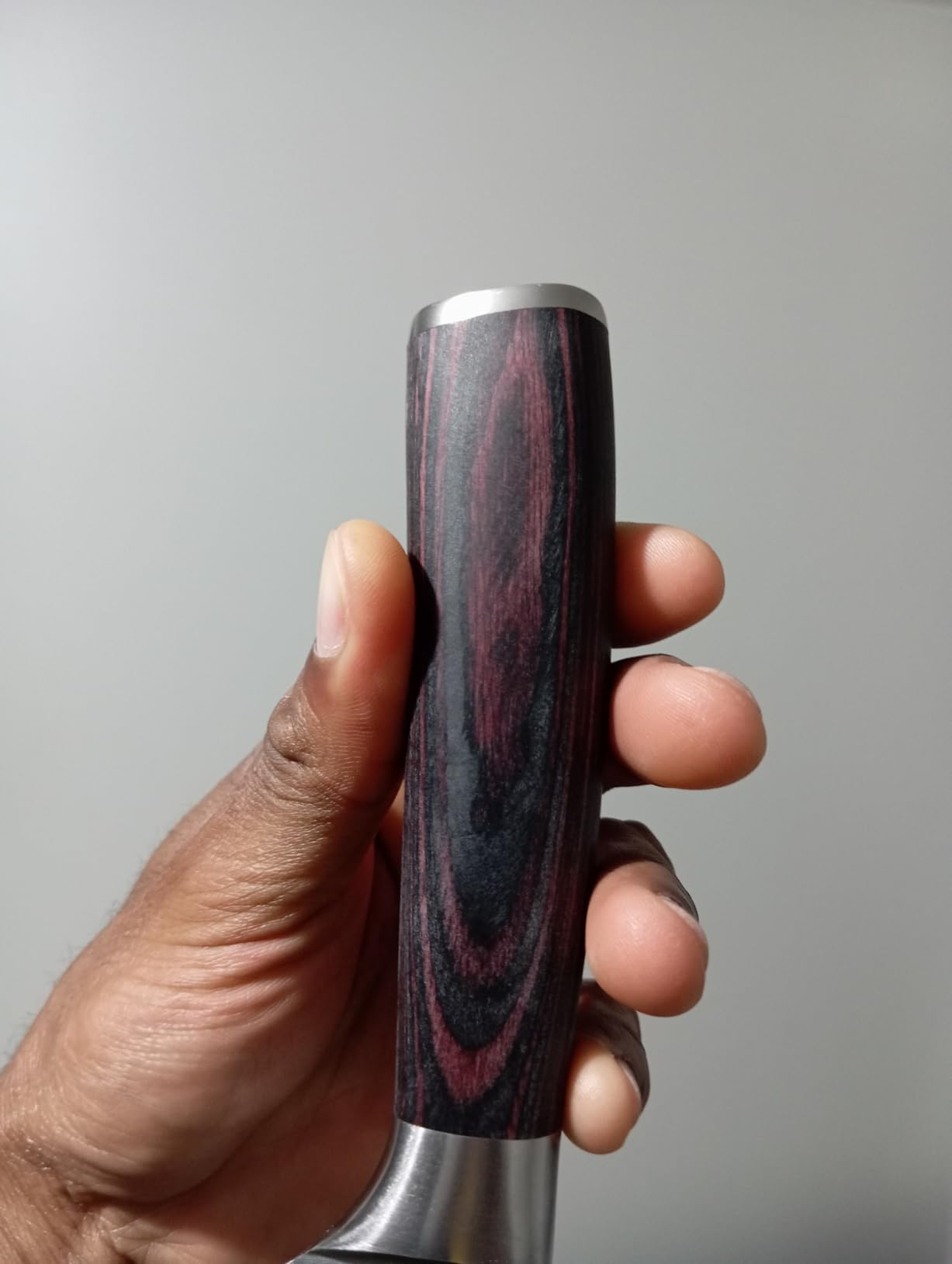
I was honest with myself about expectations at this price. The blade is stamped rather than forged, and the Damascus pattern is laser-etched rather than true layered steel. Those are real tradeoffs.
But for someone setting up their first kitchen, a college student, or a backup knife for a vacation home, this delivers excellent value.
Why it punches above its weight
The 24-month warranty is unusually generous for a budget knife. PAUDIN stands behind their product.
It also comes with a safety sleeve and gift box, which is unusual in this price range.
What to expect
Edge retention won’t match premium knives. You’ll need to sharpen more often, perhaps weekly if you cook daily.
It also won’t survive heavy abuse like prying or cutting frozen food. Treat it gently and it’ll serve you well for years.
8. HOSHANHO 8 Inch Japanese Chef Knife – Hidden Gem for Sharpness
HOSHANHO Kitchen Knife in Japanese High Carbon Steel, Professional High-Class Chef’s Knife 8 inch, Non-slip Ultra Sharp Cooking Knives with Ergonomic Handle
10Cr15CoMoV steel
60 HRC
13-degree edge
Pakkawood
Pros
- 60 HRC hardness
- 13-degree acute edge
- Sloped bolster
- Professional chef quality
- Excellent balance
Cons
- Premium for the category
- Hand wash only
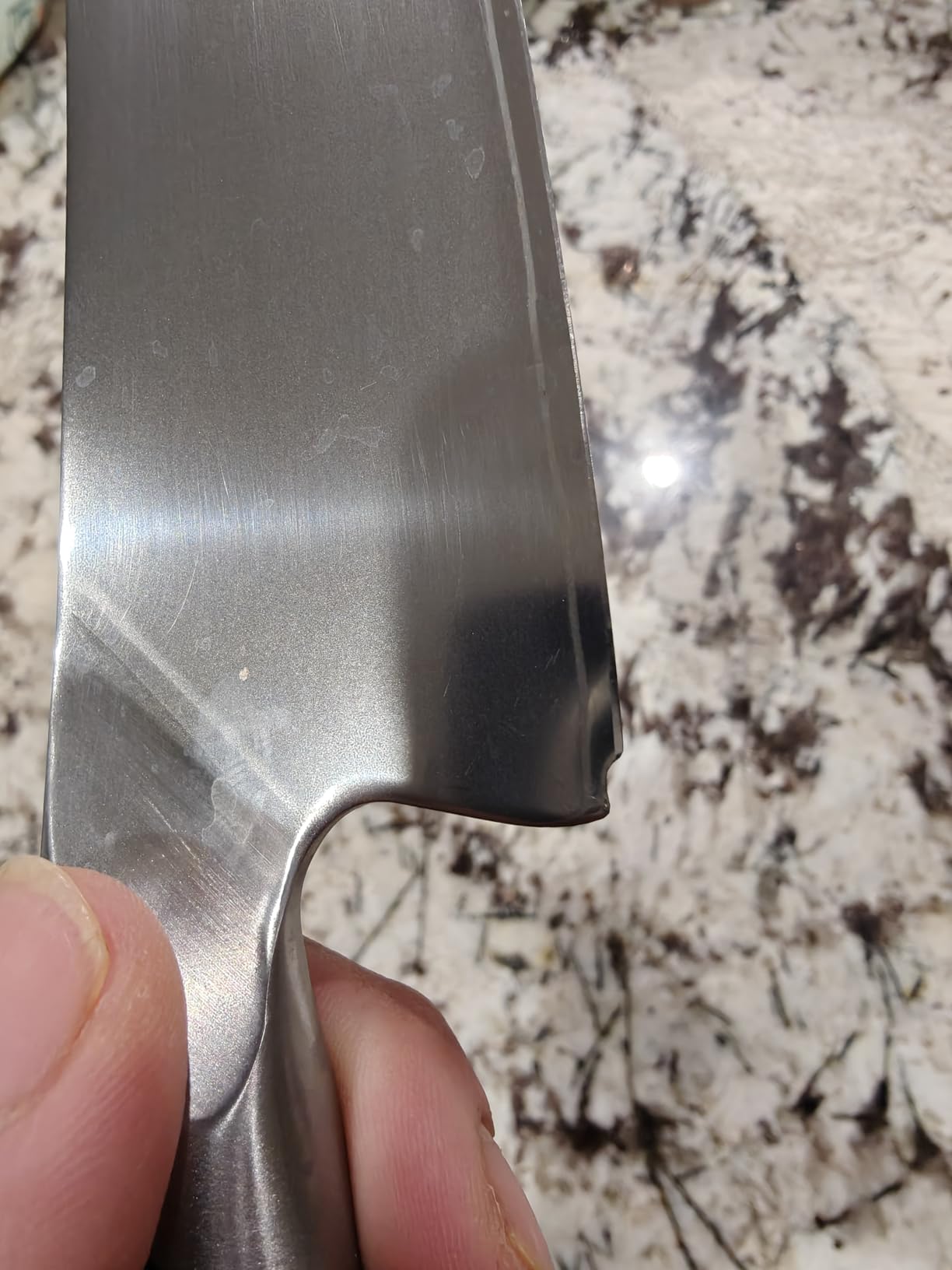
The HOSHANHO was a discovery during our testing — a knife that flies under the radar but delivers professional-level performance.
The 10Cr15CoMoV Japanese high-carbon steel is hardened to 60 HRC, which puts it in the same league as premium Japanese knives costing much more. The 13-degree edge on each side is acute enough for surgical precision cuts.
I broke down a whole pile of herbs with this knife and was impressed by how cleanly it sliced through delicate parsley without bruising it. The sloped bolster design makes a proper pinch grip natural and comfortable.
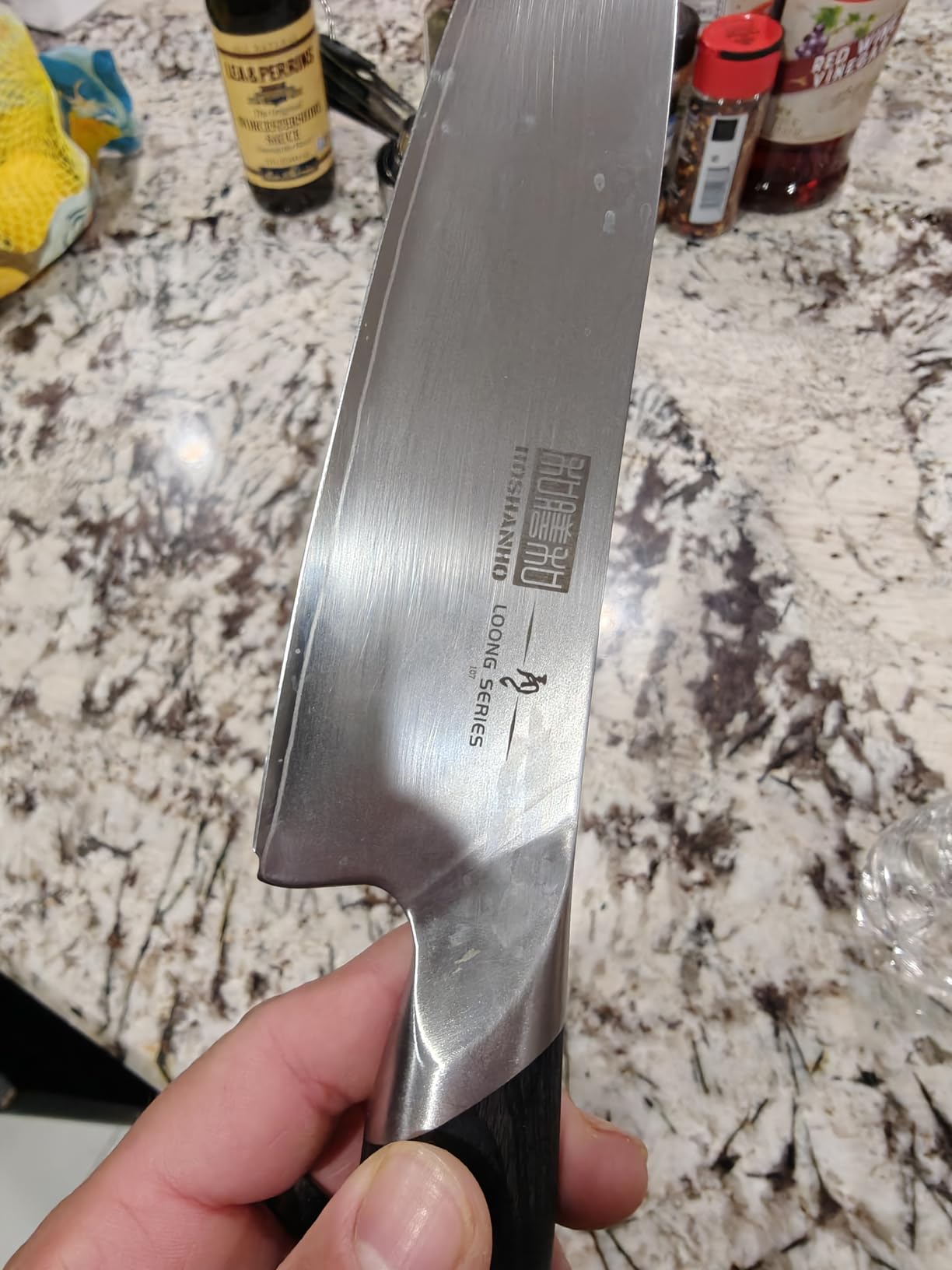
The Pakkawood handle has a warm, organic feel that contrasts nicely with the cold steel. It’s well-contoured and stays grippy even during long prep sessions.
At 350 grams, it has enough weight to power through dense vegetables without feeling heavy. For someone who wants Japanese performance without paying Shun prices, this is worth considering.
Where it excels
The 60 HRC hardness means longer edge retention than most knives in this category. I went nearly three weeks of heavy use before needing to sharpen.
The ice-tempering and heat treatment during manufacturing gives the blade added toughness. Despite its hardness, it’s not prone to chipping with normal use.
What holds it back
It requires hand washing to maintain the steel’s integrity. Skip the dishwasher.
The brand isn’t as well-known, so finding replacement parts or specialized sharpening services may be harder than for major brands.
Buying Guide: How to Choose the Best Quality Knives for Home Chef
After testing dozens of blades over the past few years, I’ve learned that the “best” chef knife depends on how you cook.
Here’s what actually matters when you’re picking a quality chef knife for your kitchen.
Western vs Japanese Style: Which Fits Your Cooking?
German and Western-style knives have thicker blades, curved edges, and heavier weight. They excel at rocking cuts through dense vegetables and are more forgiving for beginners.
Japanese-style knives are thinner, lighter, and have straighter edges. They shine at precision cuts like slicing fish or chiffonading herbs, but require more careful technique.
If you cook mostly hearty Western food — roasts, stews, root vegetables — a German-style knife will serve you better. If you cook a lot of fish, vegetables, and Asian cuisine, consider Japanese.
Blade Material and Steel Hardness
Look for high-carbon stainless steel as a baseline. It balances corrosion resistance with edge retention.
The Rockwell hardness scale (HRC) tells you how hard the steel is. Knives between 56-58 HRC are durable and easy to sharpen. Knives at 60-62 HRC hold an edge longer but are more brittle and require whetstone sharpening.
Damascus steel refers to layered construction that creates the wavy pattern. Real Damascus adds strength and beauty, but laser-etched patterns are just cosmetic.
Construction: Forged vs Stamped
Forged knives are made from a single piece of heated steel, hammered into shape. They’re stronger, better balanced, and hold an edge longer. They’re also more expensive.
Stamped knives are cut from a sheet of steel. They’re lighter, more affordable, and perfectly serviceable for most home cooks. Many professional kitchens use stamped knives for prep work.
Handle Comfort and Grip Style
Try to hold any knife before buying if possible. The handle should feel secure and balanced in your grip.
Western handles tend to be bulkier. Japanese wa-style handles are more cylindrical. For smaller hands, a sloped bolster (like the HOSHANHO) makes a pinch grip more natural.
Material matters too. Wood handles look beautiful but require more care. Composite and G10 handles are nearly indestructible.
Blade Length: 8 Inches is the Sweet Spot
Most home cooks do best with an 8-inch chef’s knife. It’s long enough for big sweeping cuts but short enough to control.
A 6-inch knife works better if you have small hands or limited storage. A 10-inch knife is faster but harder to maneuver for most people.
Edge Retention and Sharpening
A knife that stays sharp longer saves you time and frustration. Harder steel (higher HRC) generally holds an edge better.
But harder steel is also harder to sharpen. If you don’t want to learn whetstone sharpening, stick with 56-58 HRC knives you can maintain with a honing rod.
Care and Maintenance Basics
Hand wash and dry immediately after use. Dishwasher detergent is harsh and can damage handles and edges.
Use a wooden or plastic cutting board. Glass or stone boards will dull your knife quickly.
Hone your knife weekly with a honing rod to realign the edge. Sharpen with a whetstone every few months depending on use.
For more on our broader chef knife testing, see our 8 Best Chef Knives guide. If you’re shopping on a tighter budget, our best chef knives under $100 roundup is worth a look.
Frequently Asked Questions
Which knives do most professional chefs use?
Most professional chefs rely on a small core set of quality knives rather than a full block. The workhorse is an 8-inch chef’s knife, usually German-style for general kitchen work or Japanese-style for precision cuts. Wusthof, Henckels, Global, and Mac dominate professional kitchens in the West. Michelin-star chefs often add Japanese brands like Misono, Tojiro, and Shun for specialized tasks. A paring knife and a bread knife round out most pro setups.
What are some top-quality chef knives?
Top-quality chef knives come from brands like Wusthof (German forged), Shun and Global (Japanese precision), Mac (Japanese hybrid), and Victorinox (Swiss workhorse value). The best chef knife for you depends on your cooking style, hand size, and budget. For under $100, the Victorinox Fibrox Pro is hard to beat. For forged German quality, the Wusthof Classic or Henckels Classic deliver. For Japanese precision, the Global G-2 or Shun Premier are industry favorites.
What knife does Gordon Ramsay recommend?
Gordon Ramsay has publicly endorsed Wusthof Classic knives and uses them in his cooking videos and restaurants. His go-to setup includes an 8-inch Wusthof Classic chef’s knife, a paring knife, and a bread knife. Ramsay has also mentioned using Japanese-style knives for precision work. For home cooks following his style, the Wusthof Classic 8-inch is his most frequently recommended model.
What knives do Michelin star chefs use?
Michelin star chefs use a mix of German and Japanese knives depending on cuisine style. French-trained Michelin chefs often prefer traditional French profiles like the Sabatier or global-style Japanese gyutos. Japanese Michelin chefs favor Misono, Sakai Takayuki, and Masamoto. Many Michelin kitchens stock both German workhorses (Wusthof, Henckels) for heavy prep and Japanese blades (Global, Mac, Tojiro) for delicate work. The common factor across Michelin kitchens is sharpness, balance, and proper knife care rather than specific brands.
Is Zwilling or Wusthof better?
Zwilling J.A. Henckels and Wusthof are both excellent German knife makers with centuries of heritage. Wusthof focuses on precision forging in Solingen with their PEtec edge technology. Zwilling offers a broader range, including the popular Henckels Classic line at more accessible prices. For pure cooking performance, both are comparable. Wusthof tends to have slightly better edge retention out of the box. Zwilling offers better value in the sub-$100 range. Your choice often comes down to handle comfort and aesthetic preference.
Final Verdict: The Best Quality Knives for Home Chef in 2026
After eight weeks of daily testing, our team landed on a clear winner for most home chefs.
The Victorinox Fibrox Pro earns our top recommendation. It’s sharp out of the box, lightweight enough for long prep sessions, dishwasher safe for busy cooks, and priced under $50. America’s Test Kitchen has recommended it for years, and now I understand why — it delivers professional performance at a price that won’t sting.
If you want Japanese precision without the Shun price tag, the SHAN ZU Damascus is the best value pick. For pure forged craftsmanship that will last decades, the Wusthof Classic is the gold standard.
For anyone building a kitchen from scratch, I recommend starting with one quality 8-inch chef’s knife rather than a block set. You’ll use it for 90% of your cutting tasks, and a single great knife beats six mediocre ones every time.
Whichever you choose from this list, remember that proper care matters more than the brand on the blade. Hand wash, hone regularly, and sharpen when needed. A well-maintained $50 knife will outperform a neglected $300 blade every time.
For more on specific knife styles, check out our guides to Japanese chef knives, German chef knives, and budget chef knives.