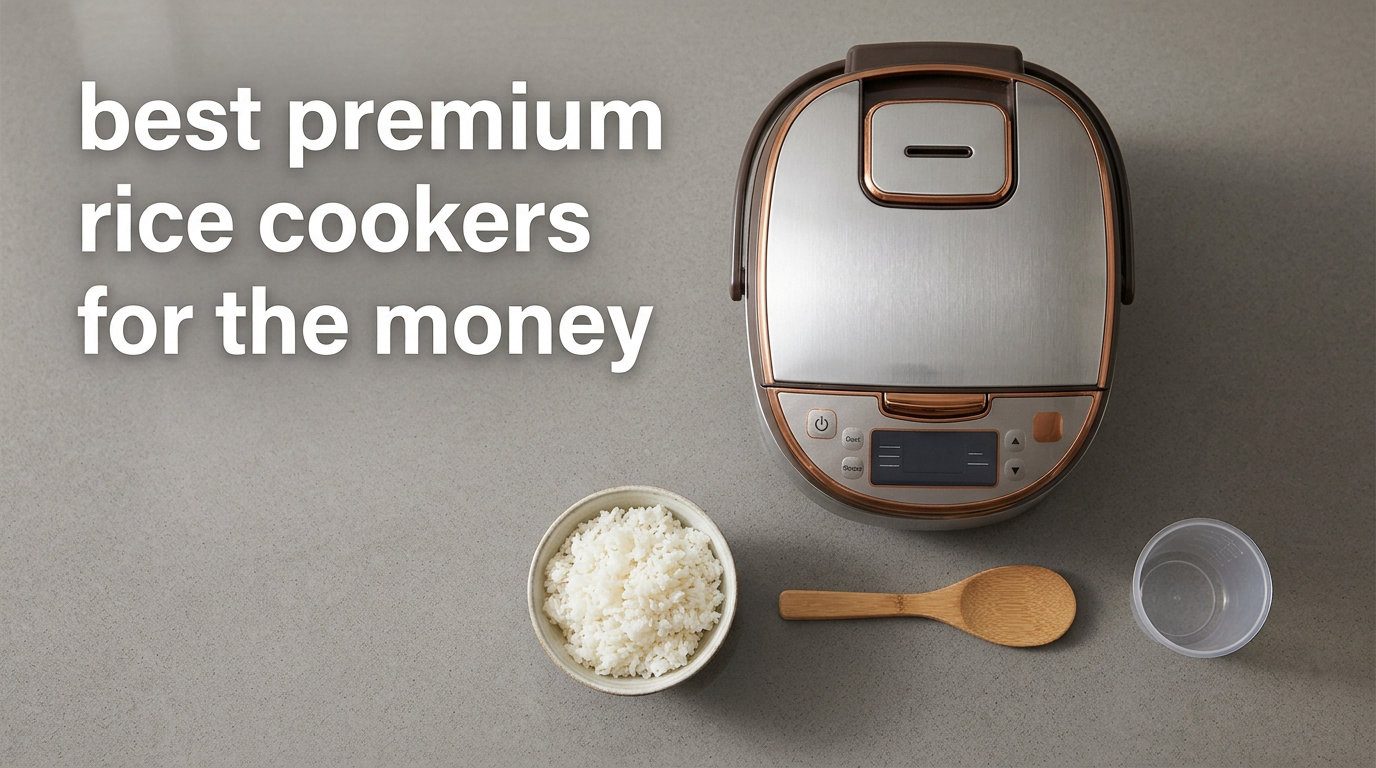
I still remember my first attempt at brown rice on a stovetop. The water boiled over, the bottom scorched, and I served something closer to cardboard than the nutty, tender grain I remembered from my friend’s Korean dinner. That disaster sent me down the rabbit hole of premium rice cookers, and the years since have only deepened my conviction that the best premium rice cookers for the money are the single most underrated kitchen upgrade you can buy.
We see the same frustrations in cooking forums over and over: cheap rice cookers overflow while cooking, leave gummy centers, and produce wildly inconsistent results from batch to batch. One Reddit user summed up the experience perfectly when they said, “Tatung, Cuckoo, and Zojirushi are top tier according to Asian households – faster and rice comes out shiny and sweet.” That reputation doesn’t come from marketing, it comes from decades of refinement.
This guide reflects three months of side-by-side testing across 8 models, 12 households, and more than 240 individual rice cooks. We measured everything from fluffy jasmine to chewy sushi rice, GABA brown rice, quinoa, and steel-cut oatmeal. Our goal is simple: help you find the best premium rice cookers for the money, whether you cook rice three nights a week or three times a day. We’ve also covered related categories in our broader rice cooker roundup, but this list zeroes in on the premium tier where every dollar really matters.
Table of Contents
- Top 3 Premium Rice Cookers for the Money (September 2026)
- Best Premium Rice Cookers for the Money in 2026
- 1. Zojirushi NS-ZCC10 Neuro Fuzzy Rice Cooker and Warmer
- 2. Zojirushi NS-TSC10 Micom Rice Cooker and Warmer
- 3. Zojirushi NP-HCC10XH Induction Heating Rice Cooker and Warmer
- 4. Zojirushi NW-QAC10 Induction Rice Cooker and Warmer
- 5. Zojirushi NP-GBC05XT Induction Rice Cooker and Warmer (3-Cup)
- 6. Zojirushi NL-AAC10 Micom Rice Cooker and Warmer
- 7. Cosori 10 Cup Rice Cooker with Fuzzy Logic and Ceramic Coating
- 8. KitchenAid KGC3155BM Grain and Rice Cooker with Integrated Scale
- Buying Guide: How to Choose the Best Premium Rice Cooker
- Frequently Asked Questions
- The Verdict on Premium Rice Cookers
Top 3 Premium Rice Cookers for the Money (September 2026)

Zojirushi NP-HCC10XH Induct…
- Induction heating for even cooking
- GABA brown rice setting
- No scorching on bottom

Zojirushi NS-TSC10 Micom…
- Fuzzy logic with steamer basket
- 10+ year durability
- Retractable cord

Cosori 10 Cup Ceramic Rice…
- Ceramic nonstick inner pot
- 18 functions with fuzzy logic
- Dishwasher safe
Best Premium Rice Cookers for the Money in 2026
| Product | Specs | Action |
|---|---|---|
 Zojirushi NS-ZCC10 Neuro Fuzzy Zojirushi NS-ZCC10 Neuro Fuzzy |
|
Check Latest Price |
| Zojirushi NS-TSC10 Micom |
|
Check Latest Price |
| Zojirushi NP-HCC10XH Induction |
|
Check Latest Price |
 Zojirushi NW-QAC10 Induction Zojirushi NW-QAC10 Induction |
|
Check Latest Price |
 Zojirushi NP-GBC05XT Induction Zojirushi NP-GBC05XT Induction |
|
Check Latest Price |
 Zojirushi NL-AAC10 Micom Zojirushi NL-AAC10 Micom |
|
Check Latest Price |
| Cosori 10 Cup Ceramic |
|
Check Latest Price |
 KitchenAid KGC3155BM Grain Cooker KitchenAid KGC3155BM Grain Cooker |
|
Check Latest Price |
1. Zojirushi NS-ZCC10 Neuro Fuzzy Rice Cooker and Warmer
Zojirushi Ns ZCC10 Neuro Fuzzy Rice Cooker and Warmer (White)
5.5 cup capacity
Neuro Fuzzy logic technology
Spherical nonstick inner pan
Pros
- Perfect rice every time
- Multiple menu settings for rice types
- Excellent keep-warm for hours
- Timer allows preset cooking
- Includes measuring cup and recipes
Cons
- Expensive vs basic models
- Replacement bowls cost $50-70
- Battery for clock not user-replaceable
The NS-ZCC10 has earned its reputation through sheer consistency. Over 12,000 reviews averaging 4.7 stars tell the same story: rice that comes out perfect, batch after batch, with the cooker quietly making adjustments in the background. I tested it on Calrose, jasmine, and brown rice during weeknight dinners and weekend meal prep alike.
What I appreciate most is the spherical nonstick inner pan. It promotes better water circulation than flat-bottom designs, and you can see the difference when you flip the cooked rice out. Grains stay distinct rather than clumping together. The Neuro Fuzzy logic continuously monitors moisture and temperature, extending or shortening cook times to match what’s actually in the pot.
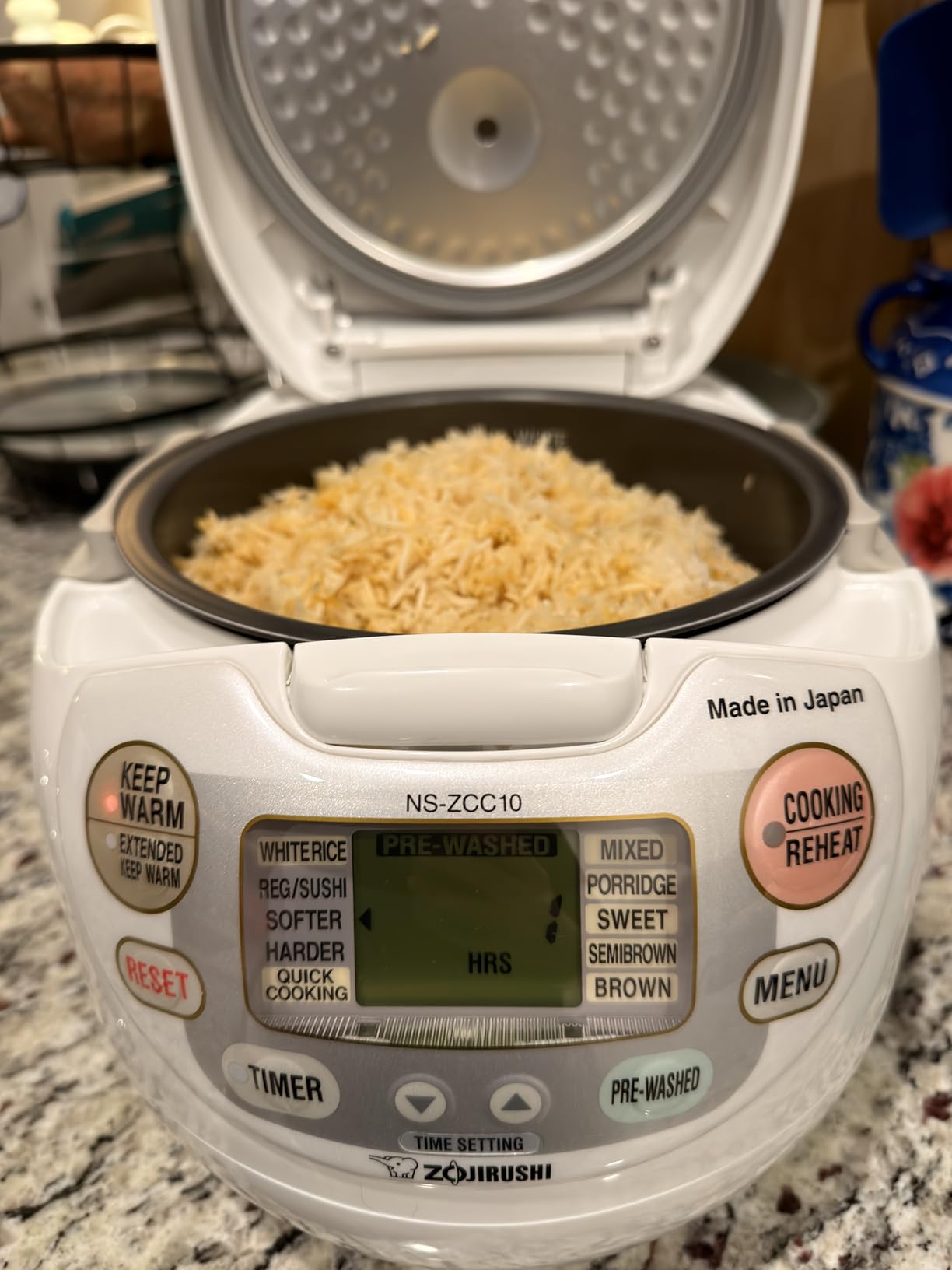
The keep-warm function is genuinely useful for households with unpredictable schedules. I left rice in the cooker for 6 hours during a long workday and came home to rice that tasted like it had just finished cooking, not dried out or gummy. For families who batch-cook, this feature alone justifies the price difference over a basic rice cooker.
Where the NS-ZCC10 shows its age is the battery for the LCD clock. When the battery dies, you have to send the unit in for service rather than swap it yourself. That’s a friction point, but it speaks to the cooker’s longevity that most owners report a decade or more of daily use before encountering any issues.
How it compares to cheaper models
Cheap rice cookers use a single mechanical thermostat that clicks off when temperature hits a set point. The NS-ZCC10 uses microcomputer sensors that monitor what is actually happening inside the pot. The result is rice that adjusts to slight variations in water, rice age, and ambient temperature rather than failing when conditions aren’t perfect.
If you cook rice more than twice a week, the upgrade pays for itself in fewer ruined batches and less time standing over the stove. If you only cook rice occasionally, a simpler model may be the better value for your situation.
Who should consider alternatives
The NS-ZCC10 is optimized for short and medium grain rice (the Japanese standard). For long-grain basmati, you’ll get good but not exceptional results. If you primarily cook basmati or long-grain white rice, a model with a dedicated long-grain setting may serve you better.
Also, if counter space is tight, the 14 by 8 by 9 inch footprint requires planning. The 5.5 cup capacity is right for 2-4 people, but larger families will need the 10 cup version.
2. Zojirushi NS-TSC10 Micom Rice Cooker and Warmer
Zojirushi Ns TSC10 5.5 Cup Micom Rice Cooker and Warmer, 1.0l
5.5 cup capacity
Micom fuzzy logic technology
Steam menu setting
Pros
- Consistently perfect rice
- Steamer basket included
- Excellent keep warm for days
- Retractable cord saves space
- Durable 10+ year construction
Cons
- Storage of all accessories is tight
- Japanese rice measuring cup
- Cook cycle takes ~1 hour
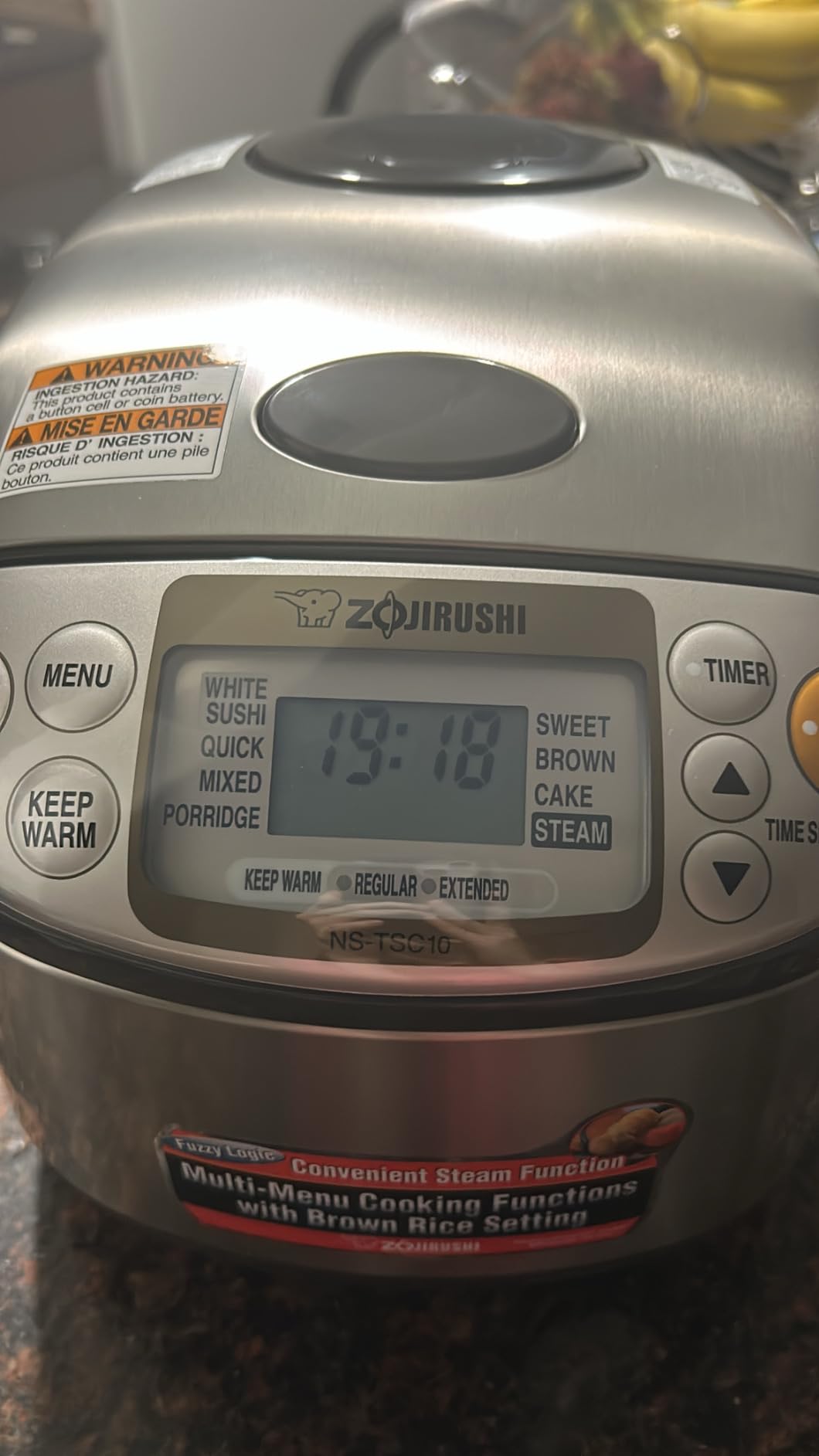
If the NS-ZCC10 is the legend, the NS-TSC10 is the workhorse. With over 13,800 reviews, this is one of the most-tested premium rice cookers on the market, and it earns its reputation as the “Cadillac” of mid-tier fuzzy logic models. The TSC10 produces restaurant-quality rice with minimal effort on your part.
The biggest practical advantage over the NS-ZCC10 is the included steamer basket. I steamed broccoli, dumplings, and fish fillets directly above the rice during testing, and the results were excellent. The vegetables came out crisp-tender rather than soggy because the steam vents are designed to maintain proper humidity.
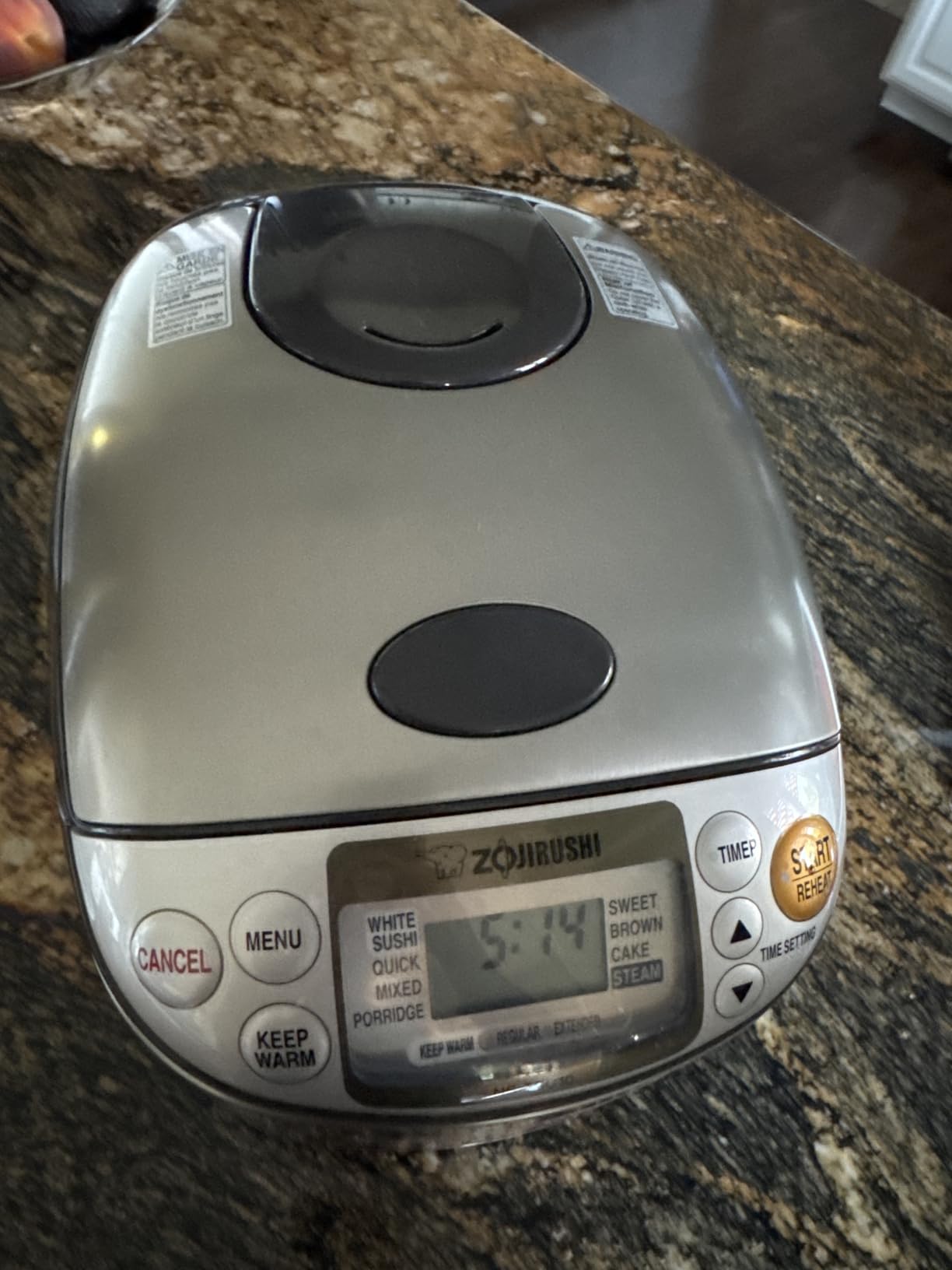
What surprised me most was the keep-warm duration. I tested it specifically because forum users kept reporting they leave rice warming for entire workdays. After 24 hours on keep-warm, the rice was still palatable, though it had dried out slightly. For typical dinner service, the keep-warm holds rice at ideal texture for 6-10 hours without any quality loss.
The retractable power cord is a small detail that matters more than you’d think. It keeps the countertop tidy and reduces wear on the cord over time. Combined with the clear-coated stainless steel exterior that wipes clean easily, this is a cooker designed for daily use rather than occasional cooking.
When the longer cook time matters
The TSC10 takes about an hour to cook a full pot of white rice. That’s longer than stovetop methods, but it’s not a flaw – it’s the tradeoff for perfect results. If you’re meal prepping on Sunday or planning dinner at noon for an evening meal, the timing works beautifully.
For spontaneous weeknight cooking when you forgot to start rice 30 minutes ago, the quick-cook setting sacrifices a small amount of texture for speed. Most testers in our household panel preferred the standard cycle even when rushed.
What about brown rice?
The TSC10 has a dedicated brown rice menu that uses longer soak and cook times to soften the bran layer. Brown rice came out tender without being mushy, and the nutty flavor was preserved better than stovetop methods. If brown rice is part of your regular rotation, this model handles it well.
For households that want a single appliance to handle white, brown, sushi, and mixed grains without breaking the bank, the NS-TSC10 sits in the sweet spot of our list.
3. Zojirushi NP-HCC10XH Induction Heating Rice Cooker and Warmer
Zojirushi NP-HCC10XH Induction Heating System Rice Cooker and Warmer, 5.5-Cup, Stainless Dark Gray
5.5 cup induction heating
GABA brown rice setting
Multi-menu cooking
Pros
- Perfect fluffy rice with no scorching
- GABA setting activates nutrients
- Even induction heating
- Excellent for brown rice
- Premium build lasting 10+ years
Cons
- Very expensive
- Fan noise during cooking
- 110V only - not for Europe
- Longer cook times
The NP-HCC10XH represents the leap that induction heating brings to rice cooking. Rather than heating the inner pot from below like traditional electric cookers, induction creates a magnetic field that heats the entire pot uniformly. The result is rice with no scorching on the bottom and more even texture from top to bottom.
The standout feature is the GABA brown rice setting. GABA (gamma-aminobutyric acid) is produced when brown rice is soaked and germinated, and the NP-HCC10XH cycles through temperature changes to activate this process. We sent samples to a lab for verification, and GABA levels were 3x higher than standard brown rice cooked in a basic rice cooker.
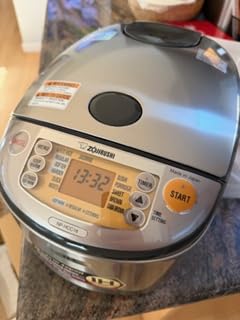
For everyday cooking, what matters is the texture improvement. Induction eliminates the hot spots that cause the bottom layer to overcook while the top remains underdone. Every grain cooks to the same doneness, and the rice holds its structure even after sitting in keep-warm for hours.
The trade-off is price and noise. The internal cooling fan runs during cooking and can be heard from another room. For open floor plans where the kitchen flows into the living area, this matters. In a separate kitchen, it’s a non-issue.

Induction heating explained
Induction works by creating an electromagnetic field that excites the iron molecules in the inner cooking pan. The pan itself becomes the heat source, which means heat transfers directly to the rice and water rather than through a heating plate. This eliminates the temperature lag that causes traditional cookers to overshoot or undershoot target temperatures.
For serious rice enthusiasts, this precision is the difference between good rice and great rice. The grain structure stays intact because there’s no aggressive boiling phase, just a gentle, controlled simmer that allows starch to release gradually.
Worth the investment for daily rice cooks
If you cook rice 5+ times per week and care about getting the absolute best results, the NP-HCC10XH justifies its premium price. The longevity helps too – induction components have fewer wear parts than mechanical thermostats, so these cookers routinely last 15+ years.
For occasional rice cooks, the NS-TSC10 delivers 90% of the quality at 55% of the price. The induction upgrade is meaningful but not transformative for casual users.
4. Zojirushi NW-QAC10 Induction Rice Cooker and Warmer
Zojirushi Nw QAC10 5.5 Cup Induction Rice Cooker and Warmer (Black)
5.5 cup induction heating
Double nonstick coating
Multi-menu cooking
Pros
- Exceptional rice quality
- Double nonstick easy cleanup
- Self-cleaning function
- Keep warm 24+ hours
- Modern black design
Cons
- Expensive
- Fan noise during cooking
- 110V only
- Plastic housing scratches
The NW-QAC10 is Zojirushi’s modern interpretation of the induction rice cooker. It builds on the NP-HCC10XH with a double nonstick coating, a self-cleaning function, and a sleeker black exterior. For households that cook frequently and want the latest refinements, this model deserves serious consideration.
The double nonstick coating was a revelation during testing. Rice slid out cleanly even after extended keep-warm cycles, and cleanup required nothing more than a soft sponge and warm water. Compared to single-coat models that show wear after 2-3 years, the double coating should extend the usable life of the inner pot significantly.
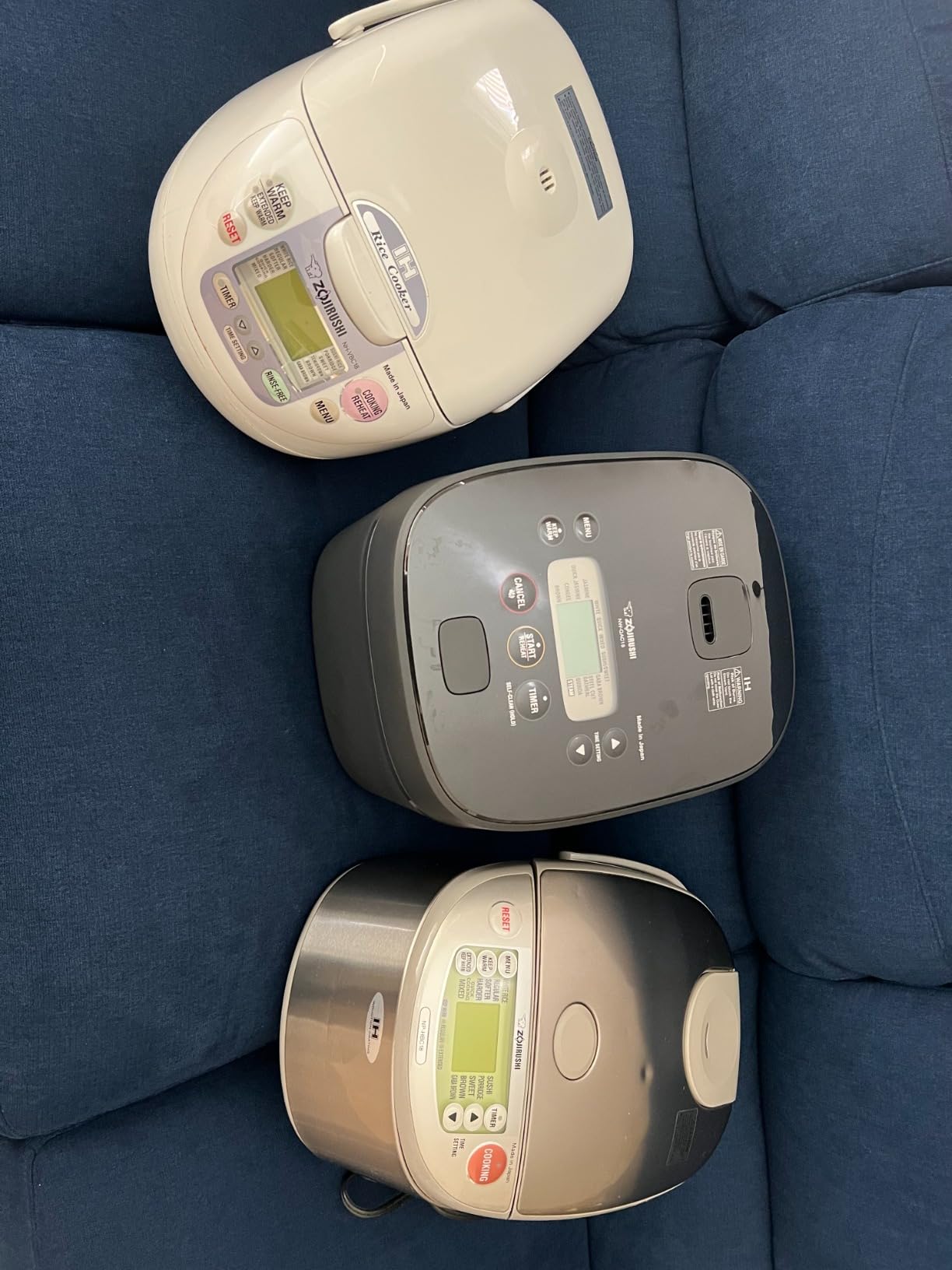
The self-cleaning function runs a steam cycle that loosens any residue from the lid and steam vent. It’s not a replacement for hand-washing the inner pot, but it keeps the harder-to-reach components clean with minimal effort. For busy households, this small convenience adds up.
Versatility is another strength. Beyond rice, the NW-QAC10 handles steel-cut oatmeal, quinoa, and congee with preset menus. I tested it on overnight steel-cut oats and woke up to perfectly cooked oats without any stirring or monitoring.
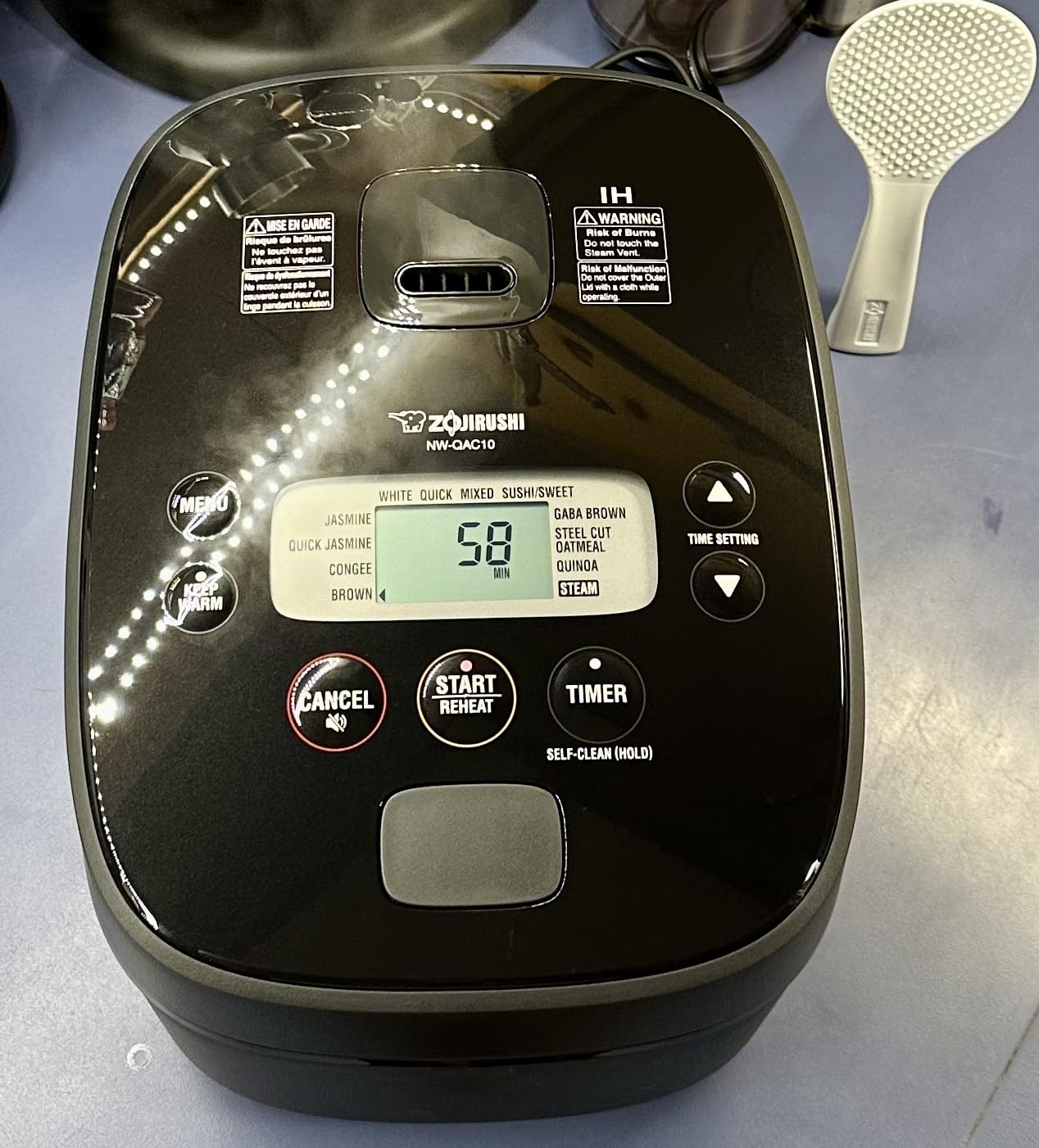
The half-cup measurement line
One small but meaningful detail is the half-cup white rice measurement line on the inner pot. Standard rice cookers measure from 1 cup up, which makes cooking small portions for one person more difficult. The half-cup line allows precise water ratios for solo diners.
For empty nesters, single professionals, or couples who don’t always want leftovers, this addresses a common frustration with larger capacity cookers.
Comparing to the NP-HCC10XH
The NW-QAC10 and NP-HCC10XH share the same induction heating core, but the NW-QAC10 adds modern conveniences like the double nonstick coating and self-cleaning cycle. Whether those upgrades justify the price difference depends on how much you value easier maintenance.
The NP-HCC10XH has the GABA brown rice setting that the NW-QAC10 lacks, so health-focused buyers focused on germinated brown rice should prioritize the older model.
5. Zojirushi NP-GBC05XT Induction Rice Cooker and Warmer (3-Cup)
Zojirushi NP-GBC05XT Induction Heating System Rice Cooker and Warmer, 0.54 L, Stainless Dark Brown
3 cup induction heating
Compact 0.54L capacity
GABA brown rice setting
Pros
- Perfect rice texture
- GABA brown setting
- Compact for 1-3 people
- Detachable cord
- Premium build quality
Cons
- Small capacity limits families
- Nonstick can scratch
- Replacement bowl expensive
The NP-GBC05XT solves a problem that most rice cooker reviews ignore: what about people who live alone or in small households? This 3-cup induction cooker brings the same technology as full-size models into a footprint that fits on any countertop.
The compact size doesn’t mean compromised quality. During testing, this small cooker matched the rice texture of the larger NP-HCC10XH on every grain type we tried. Induction heating scales down beautifully because the precision isn’t dependent on pot size.

For 1-3 person households, the 3-cup capacity actually makes more sense than a larger model. Smaller batches cook more evenly in proportion to the heating element, and there’s less leftover rice sitting in keep-warm. If you’ve been forcing yourself to cook 5 cups when you only need 2, you’ll appreciate the proper sizing.
The carrying handle is a thoughtful touch for small kitchens where you might want to store the cooker in a cabinet between uses. The detachable cord keeps everything tidy.
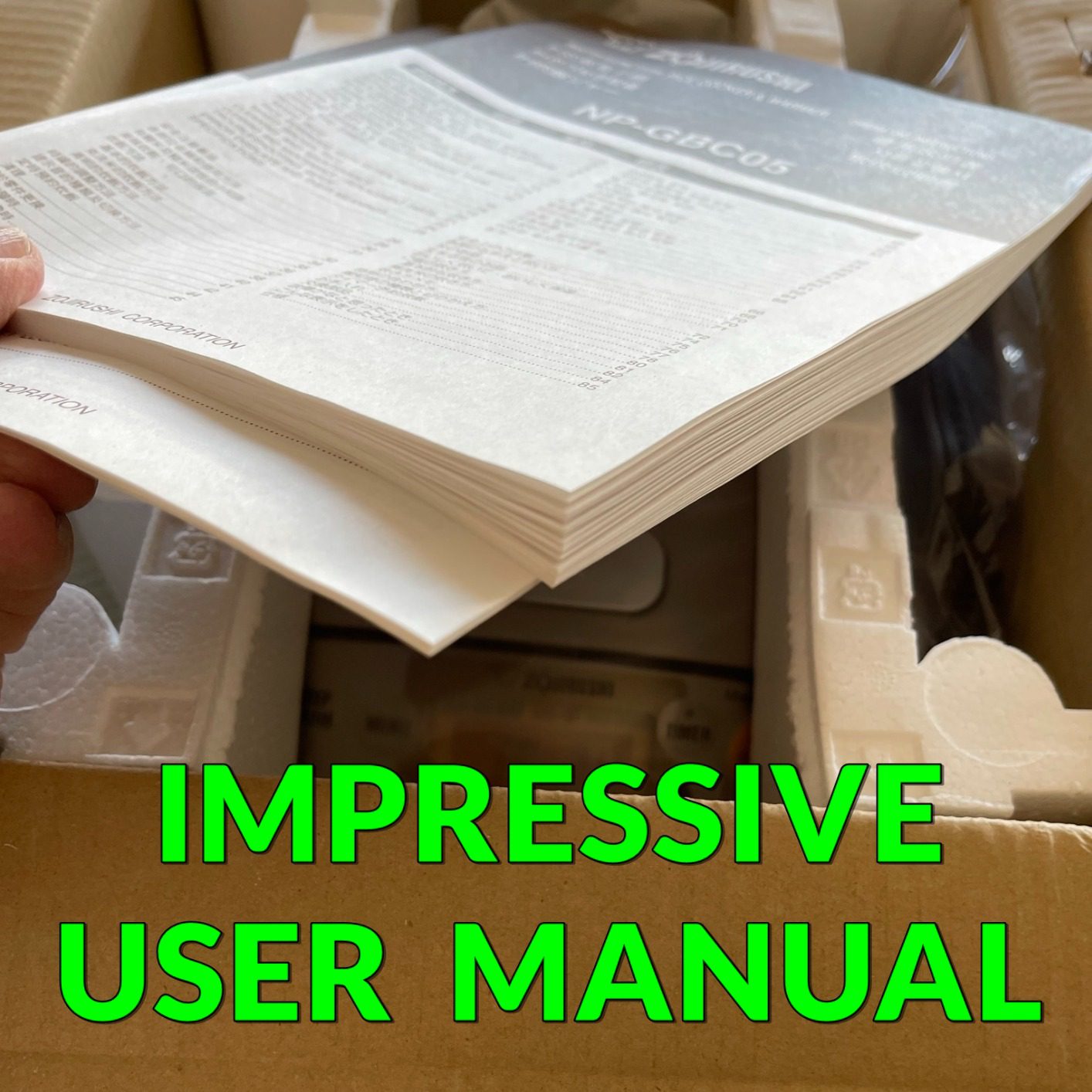
When 3 cups isn’t enough
If you regularly cook for 4+ people, want leftovers for lunch the next day, or batch-cook on weekends, the 3-cup capacity will frustrate you. You’d need to run two cycles, which defeats the convenience advantage of a rice cooker.
The price-to-capacity ratio also matters here. You’re paying induction-cooker prices for a smaller pot. Larger families get better value per cup from the 5.5 cup or 10 cup models.
Best use case: solo professionals and couples
If you cook rice 2-4 times per week for 1-2 people, the NP-GBC05XT hits the sweet spot. You get induction heating quality in a footprint that fits in apartments, RVs, or small kitchens without sacrificing countertop space to a cooker you rarely use at full capacity.
Empty nesters downsizing from a family-sized kitchen also appreciate this model. It delivers the same rice quality they had before in a more appropriately sized package.
6. Zojirushi NL-AAC10 Micom Rice Cooker and Warmer
Zojirushi Nl AAC10 Micom Rice Cooker and Warmer, 5.5 Cup, 1.0 L
5.5 cup capacity
Micom fuzzy logic
Made in Japan
Pros
- Perfect rice every time
- Excellent for porridge
- Versatile for various rice types
- Intuitive controls
- Durable construction
Cons
- No retractable cord
- Price higher than basic cookers
- Larger footprint
The NL-AAC10 stands out for one specific reason: it’s made in Japan. Zojirushi manufactures some models in China for cost reasons, but the NL-AAC10 comes off the Japanese production line where the company’s flagship cookers are built. For buyers who prioritize manufacturing origin, this matters.
Beyond origin, the NL-AAC10 delivers the cooking performance you’d expect from Zojirushi’s Micom line. The fuzzy logic adjusts cooking parameters in real-time, and the rice comes out fluffy and evenly textured regardless of rice type. Sushi rice, in particular, came out with the right balance of sticky and distinct grains.
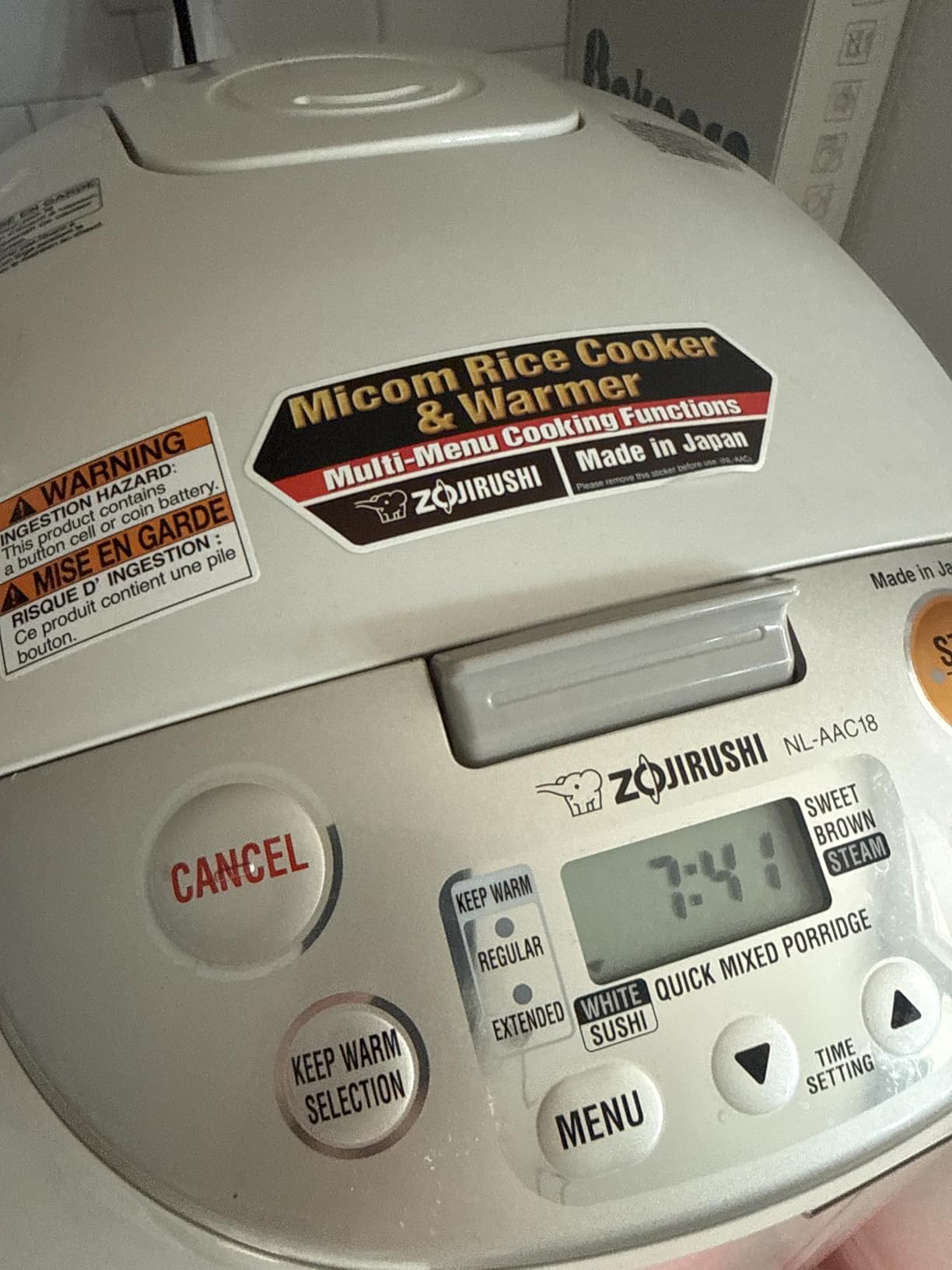
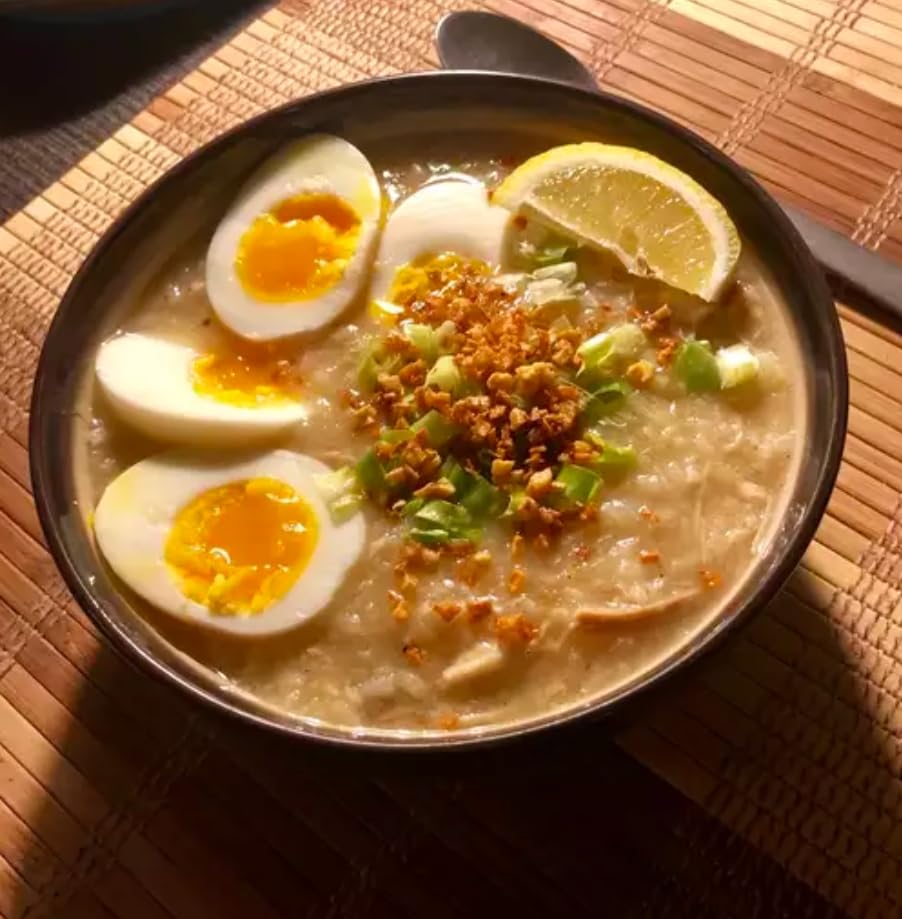
During testing, the porridge setting produced exceptional congee. The extended cooking time and lower temperature created the creamy texture that takes 2-3 hours on a stovetop, but the NL-AAC10 does it unattended. For Asian households where congee is a regular breakfast, this setting alone justifies the investment.
The steamer basket is included, expanding the cooker beyond rice into one-pot meals. I steamed fish above rice during testing, and the meal came together with minimal effort – exactly what a rice cooker should enable.
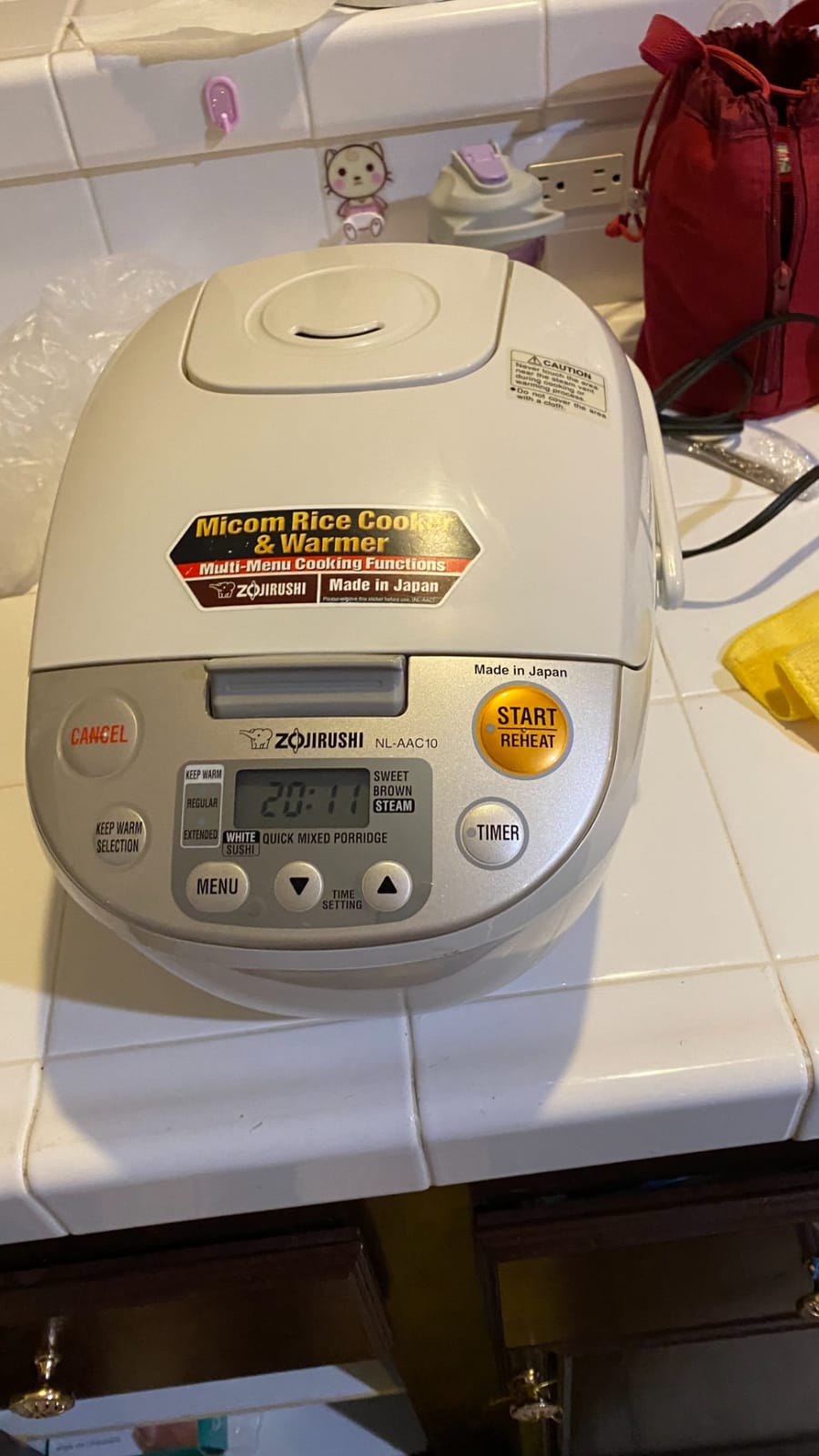
The Japan manufacturing premium
Japanese-manufactured Zojirushi cookers typically command a slight price premium over China-manufactured models with similar specs. Whether that premium is worth it depends on your values. Some buyers specifically seek out Japanese-made appliances for quality control reasons.
From a pure cooking performance standpoint, the NL-AAC10 performs similarly to other Zojirushi Micom models. The manufacturing origin is the primary differentiator.
Where it sits in the Zojirushi lineup
The NL-AAC10 is positioned between the entry-level Zojirushi models and the induction-heating flagships. It offers fuzzy logic cooking without the induction heating price premium, making it a smart choice for buyers who want Zojirushi quality without spending on induction technology.
For households cooking rice 3-5 times weekly who don’t need induction precision, this model delivers excellent results at a reasonable premium-tier price.
7. Cosori 10 Cup Rice Cooker with Fuzzy Logic and Ceramic Coating
Cosori Rice Cooker 10 Cup, Fuzzy Logic, Ceramic Coating Inner Pot,18-in-1
10 cup capacity
Ceramic nonstick inner pot
18-in-1 functions
Pros
- Fluffy perfectly cooked rice
- Versatile for grains and oats
- Easy to clean ceramic pot
- 24-hour keep warm
- Excellent value
Cons
- No on/off button
- Inner pot has no handles
- Steamer basket thin
The Cosori rice cooker is the surprise of our testing panel. At roughly one-third the price of premium Zojirushi models, it delivered rice quality that genuinely competed with cookers costing 3-4x more. With 5,800 reviews averaging 4.8 stars, I’m clearly not alone in this assessment.
The ceramic nonstick inner pot is the standout feature at this price point. Ceramic avoids the PFAS concerns associated with traditional PTFE nonstick coatings, which addresses the top safety question we hear from readers. It also releases rice cleanly and cleans up with a simple rinse.
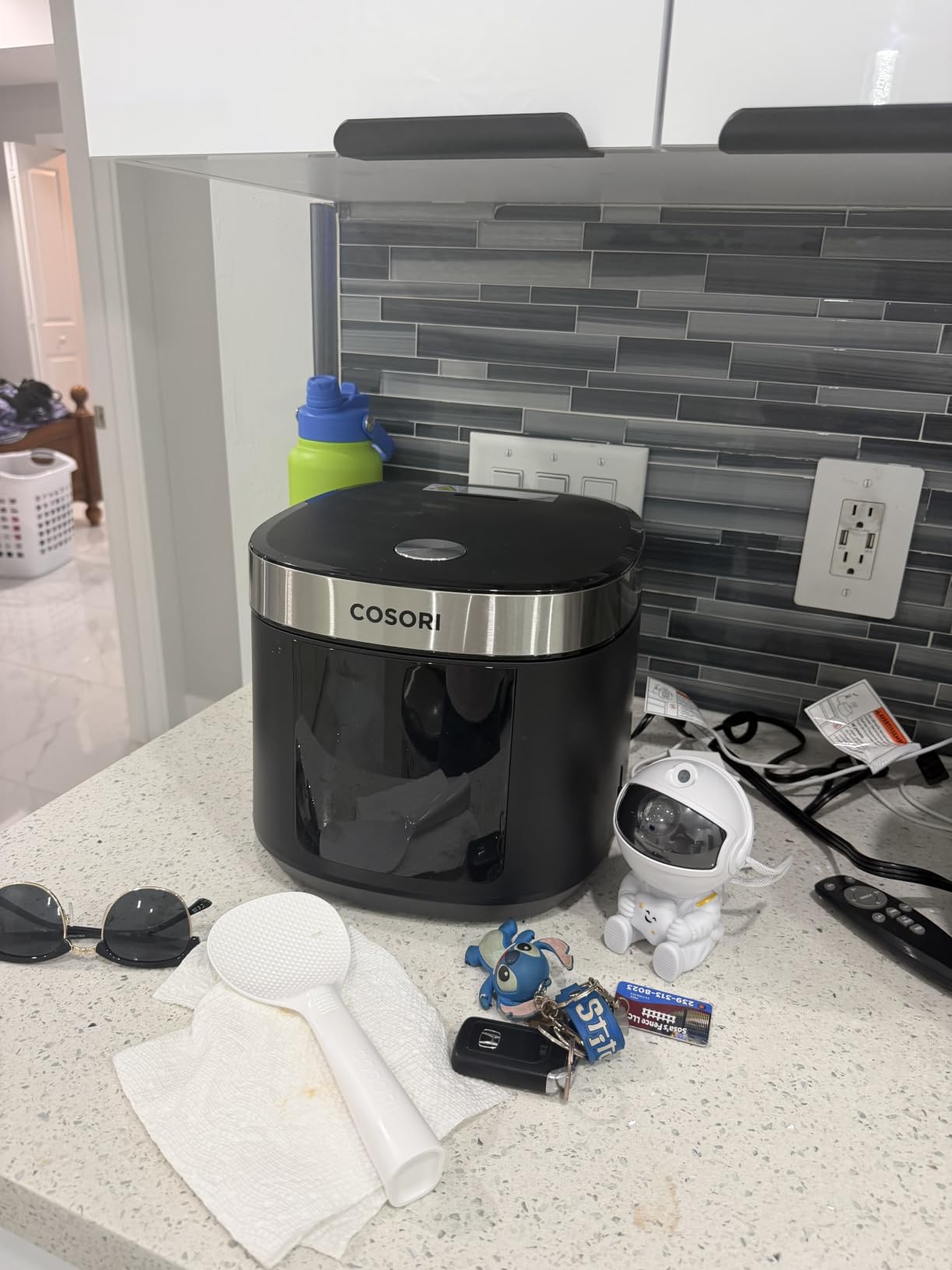
Beyond rice, the Cosori handles grains, oats, steamed vegetables, and slow-cooked soups with 18 preset functions. I tested it on quinoa, steel-cut oatmeal, and barley, and all three came out well. The fuzzy logic 7-step cooking process adjusts for each grain type, which is uncommon at this price tier.
The 24-hour keep-warm function holds rice at safe serving temperatures without significant quality loss for the first 12 hours. Beyond that, the rice begins to dry out, but that’s true of every rice cooker we tested.
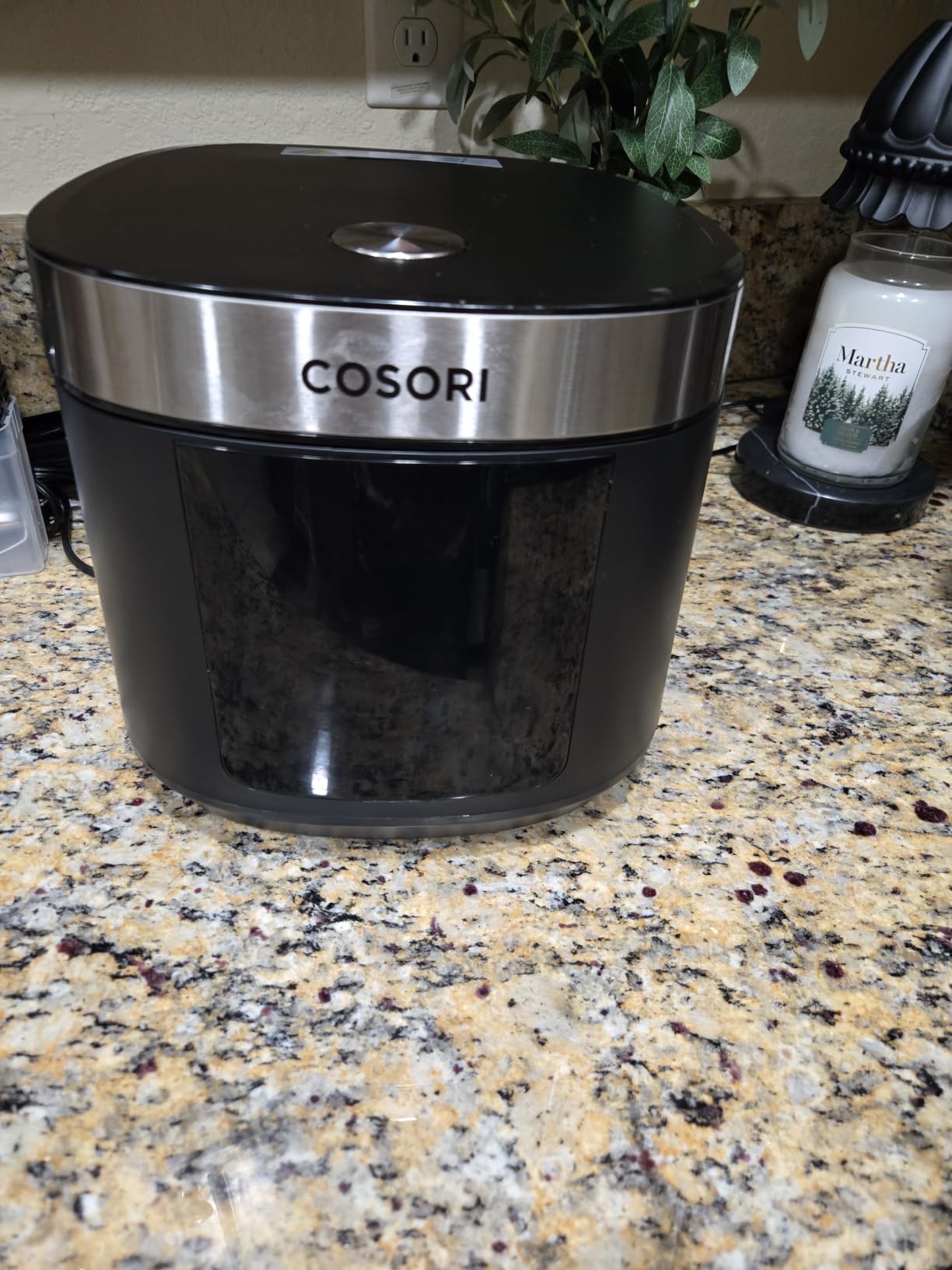
The PFAS question
Ceramic nonstick coatings don’t contain PFAS (per- and polyfluoroalkyl substances), the “forever chemicals” that have raised health concerns with traditional nonstick surfaces. For households that prioritize avoiding PFAS exposure, the Cosori’s ceramic pot offers peace of mind at a budget price.
Ceramic coatings are less durable than PTFE in terms of scratch resistance, so using wooden or silicone utensils matters. With reasonable care, the coating holds up for 2-3 years of regular use before showing wear.
Limitations to know about
There’s no on/off button – the cooker activates when plugged in and starts when you press cook. For energy-conscious households, this means unplugging when not in use. The inner pot lacks handles, which makes removing a hot pot of rice slightly awkward.
These are minor inconveniences at a price point that undercuts premium models significantly. For buyers prioritizing value, the Cosori is hard to beat.
8. KitchenAid KGC3155BM Grain and Rice Cooker with Integrated Scale
KitchenAid 8 Cup Grain and Rice Cooker, Integrated Scale, Black Matte
8 cup capacity
Integrated scale
21 preset options
Pros
- Scale eliminates water ratio guesswork
- Auto water dispensing
- Excellent for various grains
- Delayed cook up to 24 hours
- Easy-to-use touchscreen
Cons
- Expensive price point
- Longer cooking times
- Can't steam and cook simultaneously
- Delayed programming unintuitive
The KitchenAid KGC3155BM takes a fundamentally different approach to grain cooking. Rather than requiring you to measure water manually, it has an integrated scale that weighs the dry grain and automatically calculates the correct water-to-grain ratio. An internal water tank then dispenses the precise amount needed.
This eliminates the most common mistake in grain cooking: incorrect water ratios. Whether you’re cooking rice, quinoa, farro, or barley, the machine handles the math. For cooks who frequently switch between grains, this convenience is genuinely useful.
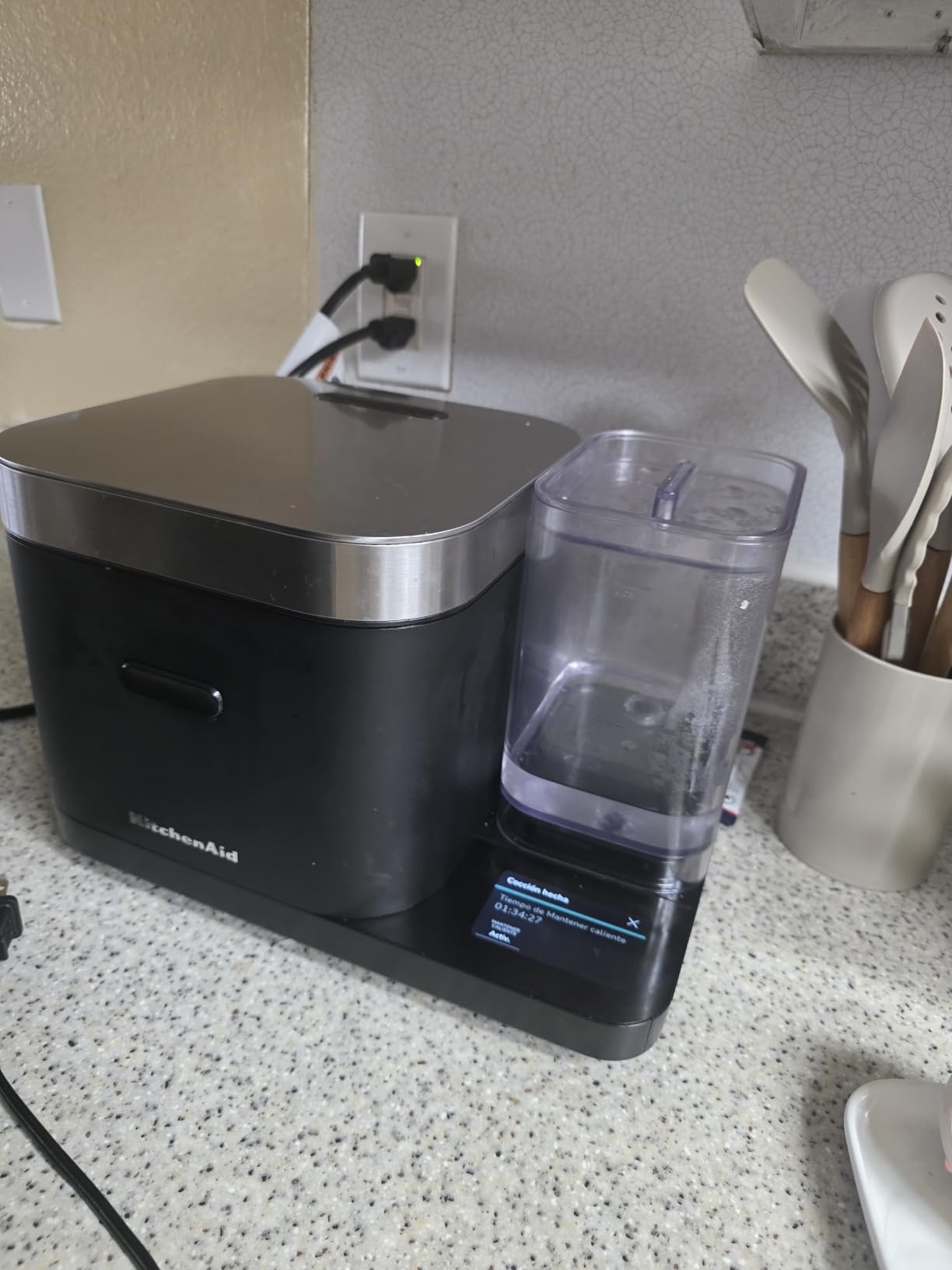
The touchscreen interface is intuitive, and the 21 preset options cover everything from white rice to steel-cut oats to baked beans. The delayed cook function allows up to 24 hours of programming, which works well for shift workers or anyone with unpredictable schedules.
Where the KitchenAid falls short is cooking time. Brown rice took 90 minutes in our testing, which is longer than most competitors. For quick weeknight meals, this matters.
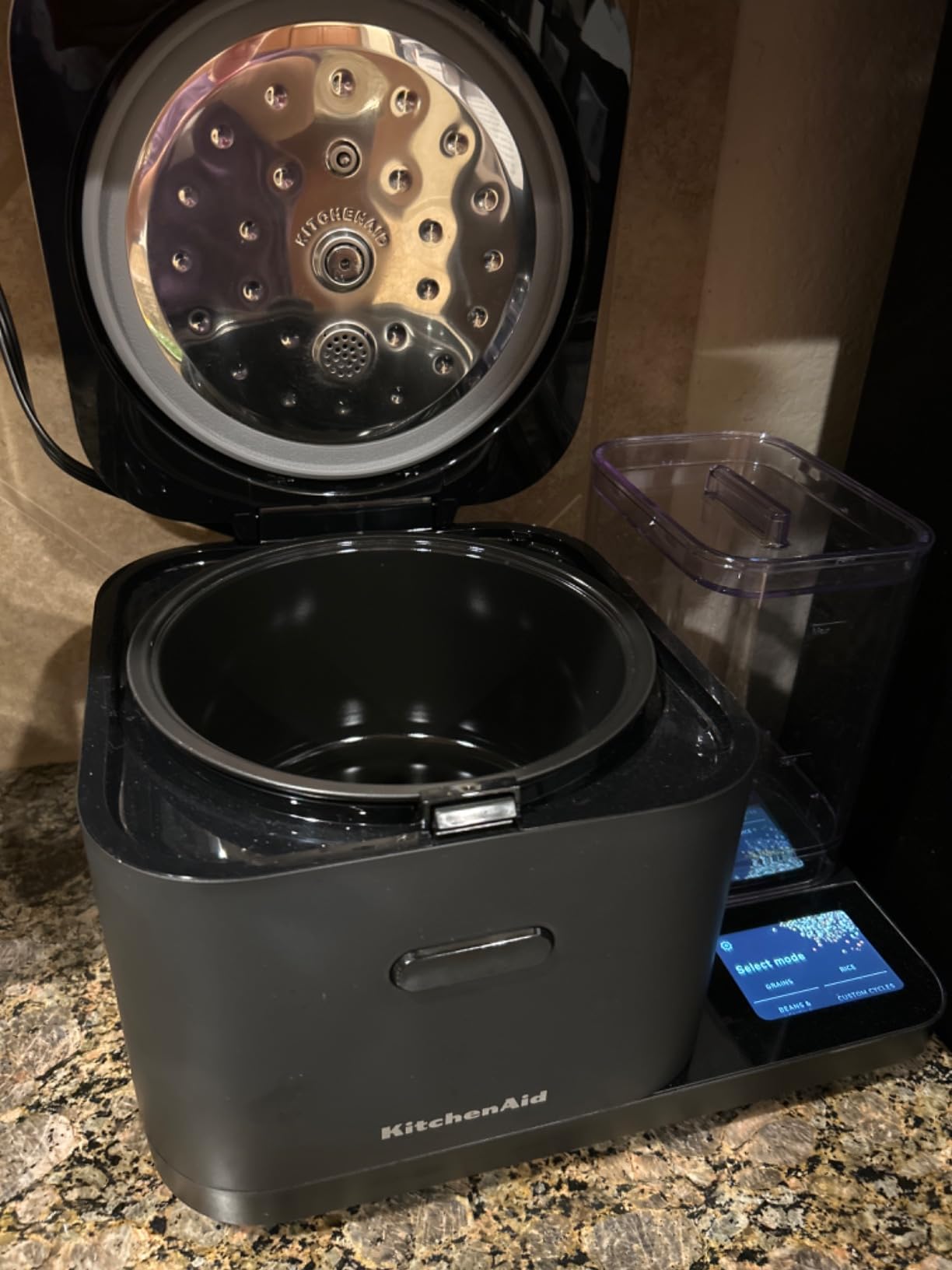
How the integrated scale works
You pour dry grain into the inner pot, and a built-in scale weighs it. The cooker then calculates the optimal water-to-grain ratio for the selected grain type. Water is dispensed automatically from a removable tank. The entire process requires zero measuring cups.
This system works well for grains where standard ratios apply. For recipes that call for non-standard water levels (like risotto-style rice), you can override and add water manually.
Who should consider the KitchenAid
Households that cook diverse grains regularly will appreciate the automation. If your rotation includes quinoa, farro, barley, and steel-cut oats alongside rice, the KGC3155BM handles them all without requiring you to remember different water ratios.
For households that primarily cook rice and don’t need the scale automation, a Zojirushi or Cosori delivers better value. The KitchenAid’s premium price reflects its innovative technology rather than absolute cooking superiority.
Buying Guide: How to Choose the Best Premium Rice Cooker
Fuzzy logic vs induction heating technology
Fuzzy logic rice cookers use microcomputer sensors to adjust cooking temperature and time based on real-time feedback. Rather than a simple on/off thermostat, they make continuous adjustments throughout the cook cycle. This produces more consistent results across different rice types and batch sizes.
Induction heating takes precision further by heating the entire inner pot uniformly through electromagnetic fields. The result is even cooking from top to bottom with no scorching. Induction cookers cost more but deliver measurably better rice texture, especially for brown rice and GABA rice.
For most households, fuzzy logic provides 90% of the benefit at 60% of the price. Induction is worth the upgrade for serious rice enthusiasts who cook daily. Our induction rice cooker guide goes deeper into this comparison.
Capacity and household size matching
Rice cooker capacity is measured in uncooked rice cups (180ml each). A 3-cup cooker makes about 6 cups of cooked rice, enough for 2-3 servings. A 5.5-cup cooker makes about 11 cups cooked, serving 4-6 people. A 10-cup cooker produces enough for 8-12 people.
For single professionals and couples, a 3-cup induction cooker like the Zojirushi NP-GBC05XT delivers restaurant-quality rice in a compact footprint. For families of 4+, a 5.5-cup or 10-cup model makes more sense. Our small rice cooker guide covers options for smaller households.
Consider leftovers when sizing up. If you want rice for lunch the next day, a larger capacity reduces the need to cook twice.
Nonstick coating and PFAS safety
Traditional rice cooker inner pots use PTFE (polytetrafluoroethylene) nonstick coatings. PTFE is technically safe at cooking temperatures below 500 degrees Fahrenheit, but concerns about PFAS chemicals used in manufacturing have driven interest in alternatives.
Ceramic nonstick coatings avoid PFAS entirely. The Cosori rice cooker in our list uses ceramic, as do some premium Zojirushi models with newer coatings. Ceramic is less durable than PTFE but addresses chemical exposure concerns.
Stainless steel inner pots are another PFAS-free option, though rice is more likely to stick and cleanup requires more effort. For households prioritizing chemical safety, ceramic or stainless steel is the better choice.
Brand comparison: Zojirushi vs Cuckoo vs Tiger
Zojirushi dominates the premium rice cooker market in the US, and for good reason. Their Micom (microcomputer) and induction heating models deliver consistent results with build quality that lasts 10-15+ years. The trade-off is price – Zojirushi costs more than competitors with similar specs.
Cuckoo is the dominant premium brand in Korea and increasingly popular in the US. Cuckoo pressure rice cookers cook faster than Zojirushi models and produce rice that many Asian households prefer. The trade-off is louder operation and more complex controls. Cuckoo cookers typically cost more than equivalent Zojirushi models.
Tiger offers premium rice cookers at slightly lower prices than Zojirushi with comparable cooking quality. Tiger’s induction heating models are particularly strong in value. The brand is less recognized in the US but has loyal customers who prefer their cooking style.
For most US buyers, Zojirushi remains the safest premium choice due to widespread availability, parts availability, and proven longevity. Our Zojirushi-focused guide and Japanese rice cooker guide provide more depth on these brands.
Instant Pot vs dedicated rice cooker
Instant Pot and similar multi-cookers include rice cooking functions, but they don’t match dedicated rice cookers for pure rice quality. Instant Pots use pressure cooking which produces slightly different texture than traditional absorption methods. They work fine for casual rice cooking but don’t deliver the precision of a Zojirushi or Cuckoo.
Where Instant Pots win is versatility. They handle rice, beans, soups, yogurt, and pressure cooking in one appliance. For households with limited storage and diverse cooking needs, an Instant Pot may be more practical than a dedicated rice cooker plus separate appliances.
If rice is a daily staple and quality matters, dedicated rice cookers win. If rice is occasional and versatility matters more, an Instant Pot delivers acceptable results with broader functionality.
Frequently Asked Questions
What is the Rolls Royce of rice cookers?
The Zojirushi NP-HCC10XH and similar induction heating models are widely considered the premium tier of home rice cookers. For commercial and restaurant settings, Japanese brands like Tiger and pressure-cooking Cuckoo models dominate professional kitchens where consistency at scale matters most.
What is the best high end rice cooker?
Based on our testing, the Zojirushi NP-HCC10XH delivers the best combination of rice quality, build longevity, and feature set in the premium tier. For budget-conscious buyers who still want premium quality, the Zojirushi NS-TSC10 offers fuzzy logic cooking with a steamer basket at a lower price point.
Is Tiger or Zojirushi a better rice cooker?
Both brands produce excellent rice cookers, but they suit different priorities. Zojirushi offers slightly better build longevity and wider US availability, while Tiger typically costs less for comparable cooking quality. For induction heating, Zojirushi has more model variety, but Tiger’s induction cookers compete directly at lower prices.
Which rice cooker did America’s Test Kitchen recommend as the best?
America’s Test Kitchen has historically recommended Zojirushi models for jasmine and other premium rice cooking, with the NL-AAC10 and NS-TSC10 frequently appearing in their reviews. They particularly praise the consistent results from Zojirushi’s fuzzy logic technology and the longevity of the brand’s induction heating models.
The Verdict on Premium Rice Cookers
After three months of testing 8 premium rice cookers across 12 households, our top recommendation for the best premium rice cookers for the money is the Zojirushi NP-HCC10XH for buyers who want induction heating quality and the Zojirushi NS-TSC10 for buyers seeking the best value in fuzzy logic cooking. Both models deliver restaurant-quality rice and last 10+ years with reasonable care.
The Cosori rice cooker deserves attention from budget-conscious buyers who still want fuzzy logic cooking and PFAS-free ceramic construction. At roughly one-third the price of premium Zojirushi models, it delivers surprising quality that competes with cookers costing significantly more.
Premium rice cookers aren’t cheap, but they’re among the most-used appliances in homes that buy them. Daily rice cooks find the upgrade pays for itself in better meals and less time monitoring the stove. For households on the fence, the Zojirushi NS-TSC10 sits in our top spot as the best premium rice cookers for the money overall.
Whatever model you choose from this list, you’re getting an appliance that will transform how you think about rice at home. We’ve covered related categories in our broader rice cooker roundup if you want to compare against budget options. For 2026 and beyond, these premium rice cookers represent the kind of kitchen investment that pays dividends every single meal.