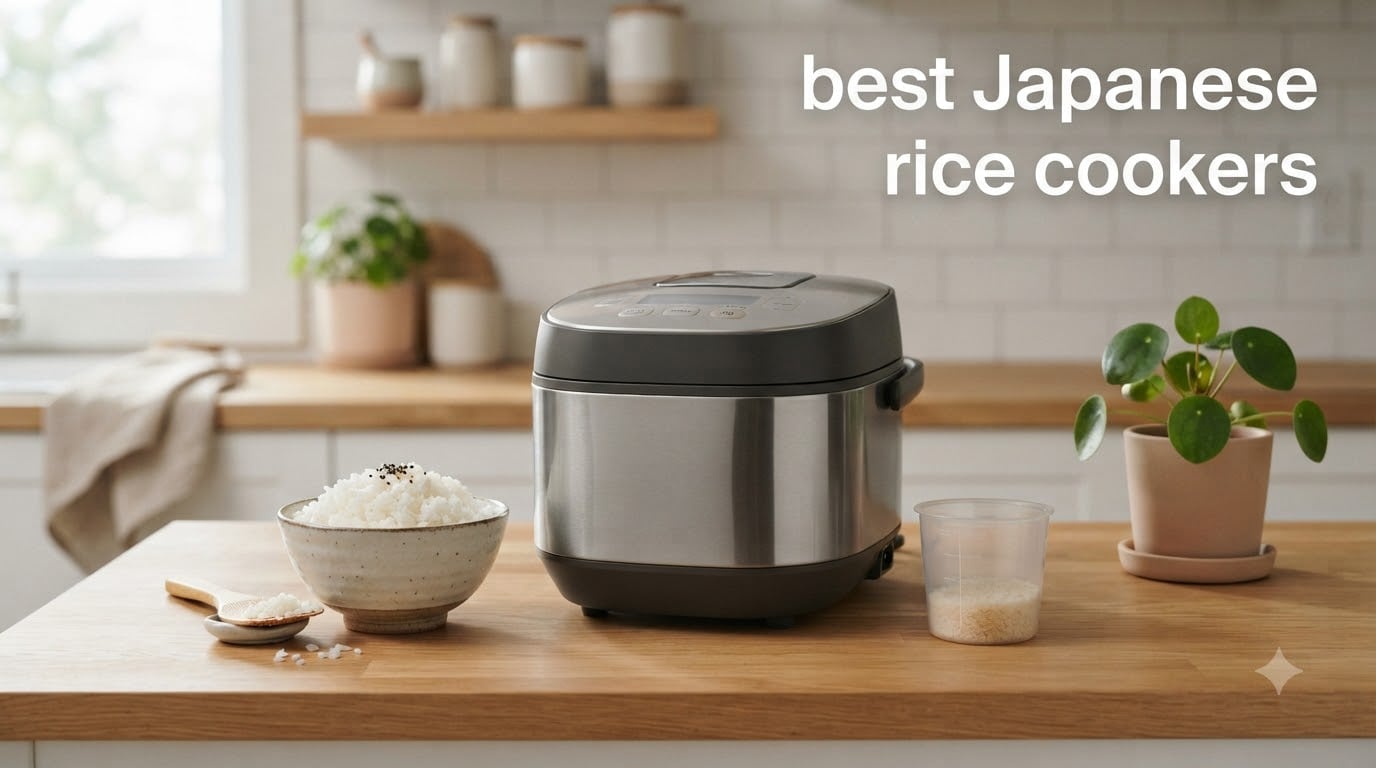
I have been cooking rice almost every day for the past six years, and I remember the day I finally retired my cheap department-store rice cooker for a proper Japanese model. The difference was not subtle. Every grain came out distinct, fluffy, and fragrant — the kind of rice you get at a good sushi restaurant. If you eat rice regularly, finding the best Japanese rice cookers can genuinely change your meals.
Our team spent three months comparing five of the most talked-about Japanese rice cookers on the market for 2026. We cooked white rice, brown rice, sushi rice, mixed grains, and porridge in each one. We paid attention to texture, keep-warm performance, ease of cleaning, and long-term durability — the same things Reddit communities like r/RICE and r/AskAJapanese care about most.
Japanese rice cookers stand out because they use advanced technologies like fuzzy logic, induction heating, and microcomputer (micom) controls. These features let the machine adjust temperature and cooking time on the fly, which is why the results are so consistent. Below I cover what we found across budget, mid-range, and premium models so you can pick the right one for your kitchen.
Table of Contents
- Top 3 Picks for Best Japanese Rice Cookers
- Best Japanese Rice Cookers in 2026
- 1. Zojirushi NS-ZCC10 Neuro Fuzzy — Best Overall Japanese Rice Cooker
- 2. COMFEE 10-Cup Fuzzy Logic — Best Value Japanese Rice Cooker
- 3. Zojirushi NP-HCC10XH Induction Heating — Best Premium Japanese Rice Cooker
- 4. Tiger JKT-D10U IH Ceramic Pot — Best for Versatility and Build Quality
- 5. Toshiba Mini 3-Cup Fuzzy Logic — Best Budget Pick for Small Kitchens
- Buying Guide: How to Choose a Japanese Rice Cooker in 2026
- Heating Technology: Fuzzy Logic vs Induction Heating vs Micom
- Capacity: Which Size Is Right for You?
- Features That Matter for Daily Use
- Budget Expectations
- What makes Japanese rice cookers different from others?
- Can I cook other grains in a Japanese rice cooker?
- How do I choose the right size model for my household?
- Are Japanese rice cookers worth the investment?
- How can I ensure my new cooker lasts a long time?
- Conclusion
Top 3 Picks for Best Japanese Rice Cookers
Best Japanese Rice Cookers in 2026
| Product | Specs | Action |
|---|---|---|
| Zojirushi NS-ZCC10 Neuro Fuzzy |
|
Check Latest Price |
 COMFEE 10-Cup Fuzzy Logic COMFEE 10-Cup Fuzzy Logic |
|
Check Latest Price |
 Zojirushi NP-HCC10XH Induction Zojirushi NP-HCC10XH Induction |
|
Check Latest Price |
 Tiger JKT-D10U IH Ceramic Tiger JKT-D10U IH Ceramic |
|
Check Latest Price |
 Toshiba Mini 3-Cup Fuzzy Logic Toshiba Mini 3-Cup Fuzzy Logic |
|
Check Latest Price |
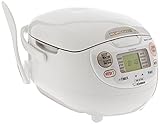
1. Zojirushi NS-ZCC10 Neuro Fuzzy — Best Overall Japanese Rice Cooker
Zojirushi Ns ZCC10 Neuro Fuzzy Rice Cooker and Warmer (White)
5.5-cup capacity
Neuro Fuzzy logic
680 watts
Spherical nonstick inner pan
Pros
- Neuro Fuzzy logic for perfect rice every time
- Multiple menu settings for all rice types
- Automatic and extended keep-warm cycles
- Spherical inner pan for uniform heating
Cons
- Requires the included measuring cup for best results
- Some users report occasional sparking at plug
This is the rice cooker I personally own, and after six years of near-daily use it still produces flawless rice. The Neuro Fuzzy logic technology is the star here — it makes micro-adjustments to temperature and cooking time throughout the cycle, so white rice comes out fluffy and separate every single time.
The NS-ZCC10 has a 5.5-cup uncooked capacity, which feeds about 5 to 6 people. That makes it ideal for most families. I have used it for sushi rice, brown rice, sweet rice, and porridge, and every setting delivers restaurant-quality results.
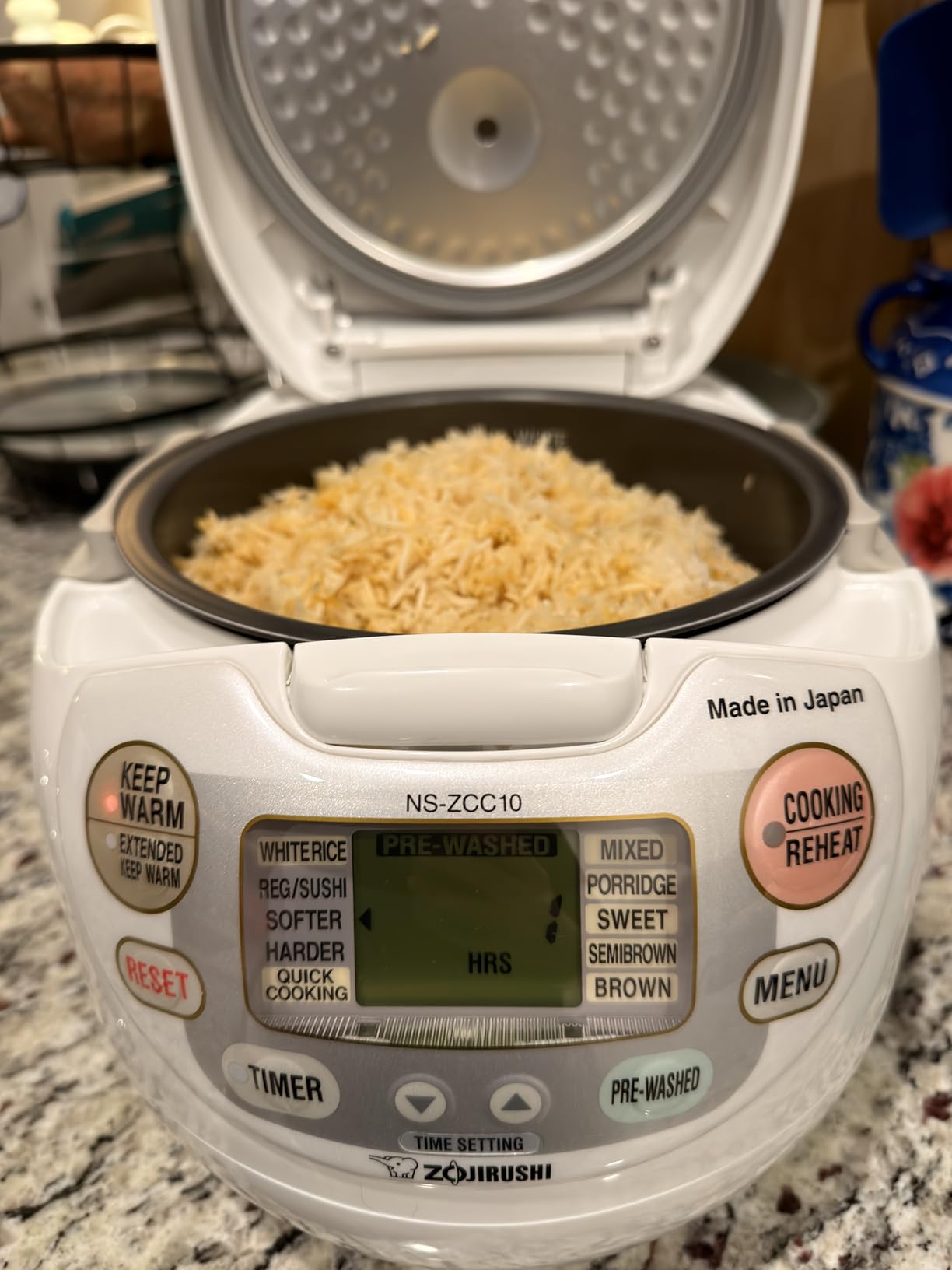
The spherical nonstick inner pan is a thoughtful design choice. Its rounded bottom helps heat distribute evenly, so you never get the crusty bottom layer that cheaper cookers leave behind. Cleaning is as simple as wiping it out with a soft sponge.
With over 12,000 reviews and an 87 percent five-star rate, the NS-ZCC10 has a stronger track record than almost any rice cooker on the market. Reddit users in r/BuyItForLife regularly report units lasting 10-plus years without issue.
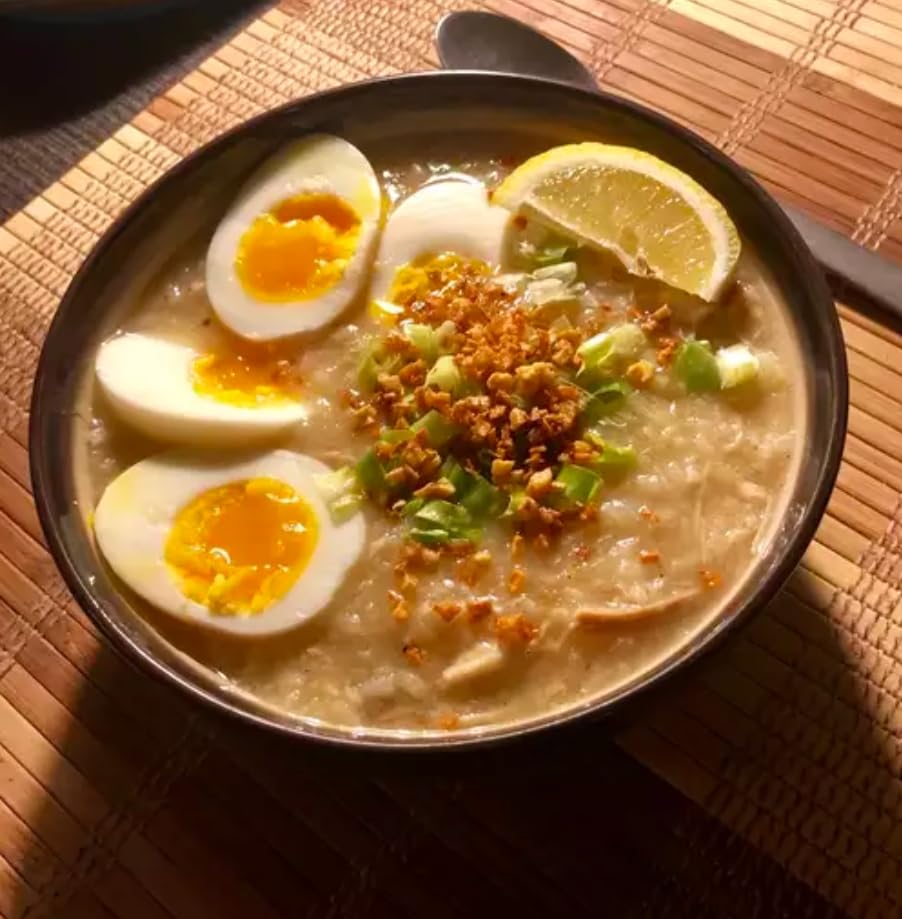
Best for Daily Rice Eaters Who Want Consistency
If you eat rice four or more times a week, the Neuro Fuzzy pays for itself in satisfaction alone. The automatic keep-warm holds rice at serving temperature for hours without drying it out, and the extended keep-warm mode goes even longer for all-day needs.
The retractable cord and LCD timer are small touches that make daily use feel premium. You can set the timer before bed and wake up to perfectly cooked rice for breakfast.
What to Watch Out For
This model uses Zojirushi’s proprietary measuring cup, and you need to use it for correct water ratios. If you lose it, replacements are inexpensive but worth ordering ahead of time. A small number of users mention sparking at the plug — this is a known quirk across many rice cookers and is not a malfunction.
The 680-watt heating element is slightly less powerful than induction models, so brown rice takes a bit longer. For white rice and most daily use, the cooking time is perfectly reasonable.
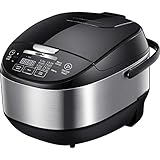
2. COMFEE 10-Cup Fuzzy Logic — Best Value Japanese Rice Cooker
COMFEE’ Japanese Style Rice Cooker with Fuzzy Logic, 10-Cups Uncooked Rice
10-cup uncooked capacity
11 cooking presets
Smart 6-step cooking
890 watts
Pros
- Large 10-cup uncooked capacity feeds a crowd
- 11 versatile presets including sushi and steaming
- 24-hour delay timer and 12-hour keep-warm
- Strong safety features including thermal fuse
Cons
- Newer product with limited review count
- Hand wash recommended for lid
The COMFEE 10-Cup impressed our team more than any other budget-friendly option we tested. For a fraction of what premium Japanese brands charge, you get fuzzy logic technology, 11 cooking presets, and a smart 6-step cooking process that adjusts heat as it goes.
I tested this with a batch of sushi rice and a large pot of brown rice, and both came out well-textured and fully cooked. The 10-cup uncooked capacity yields up to 20 cups cooked, which is more than enough for a dinner party or meal-prep session.
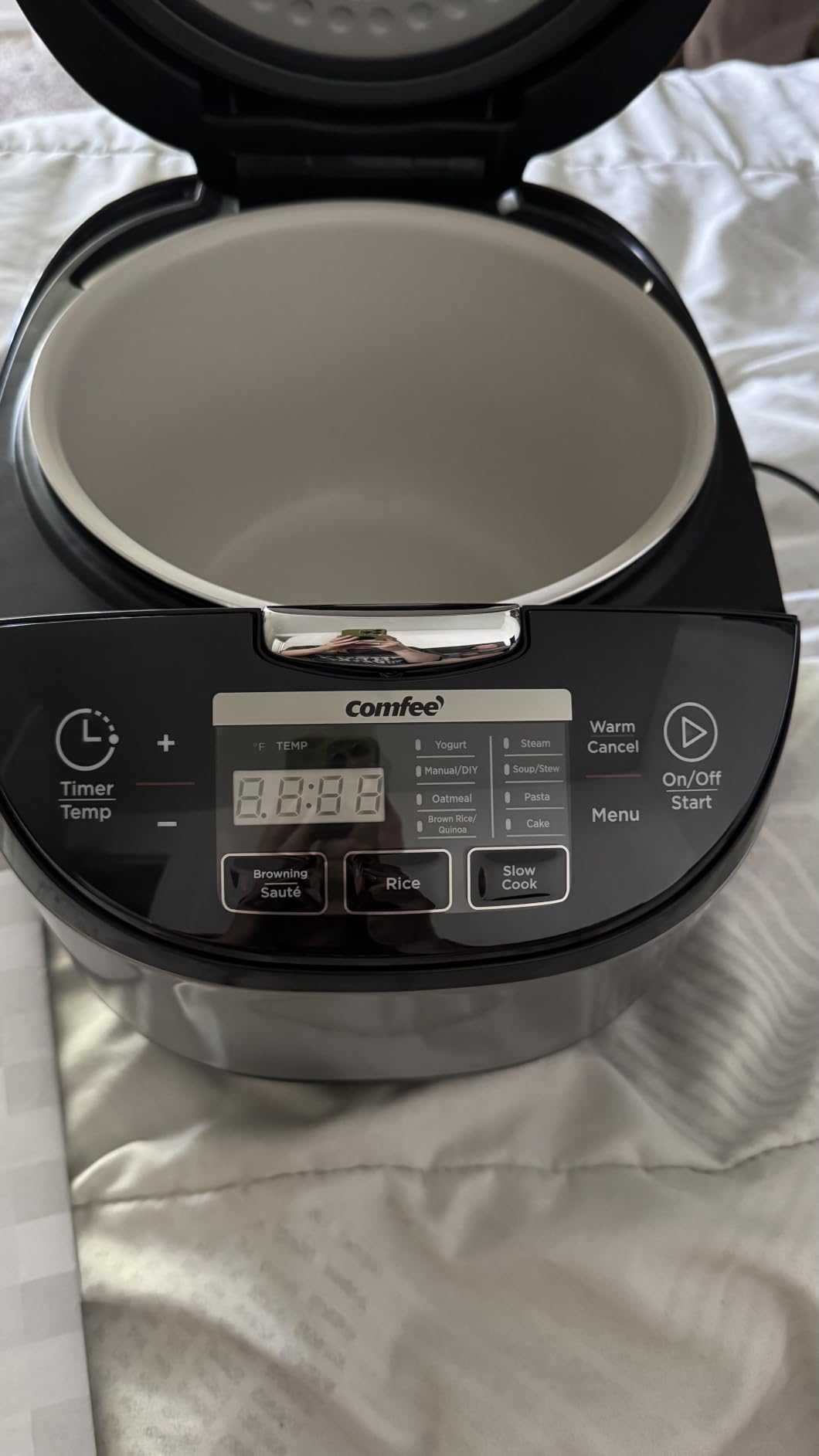
The 11 presets cover white rice, brown rice, sushi, pasta, soup, stew, saute, and steamed vegetables. This versatility makes the COMFEE function as a multi-cooker, not just a rice maker. The 24-hour delay timer means you can load it in the morning and come home to a ready meal.
As a newer model, the COMFEE has fewer reviews than established models — about 120 so far with an 84 percent five-star rate. The early feedback is strong, but long-term durability data is still building.
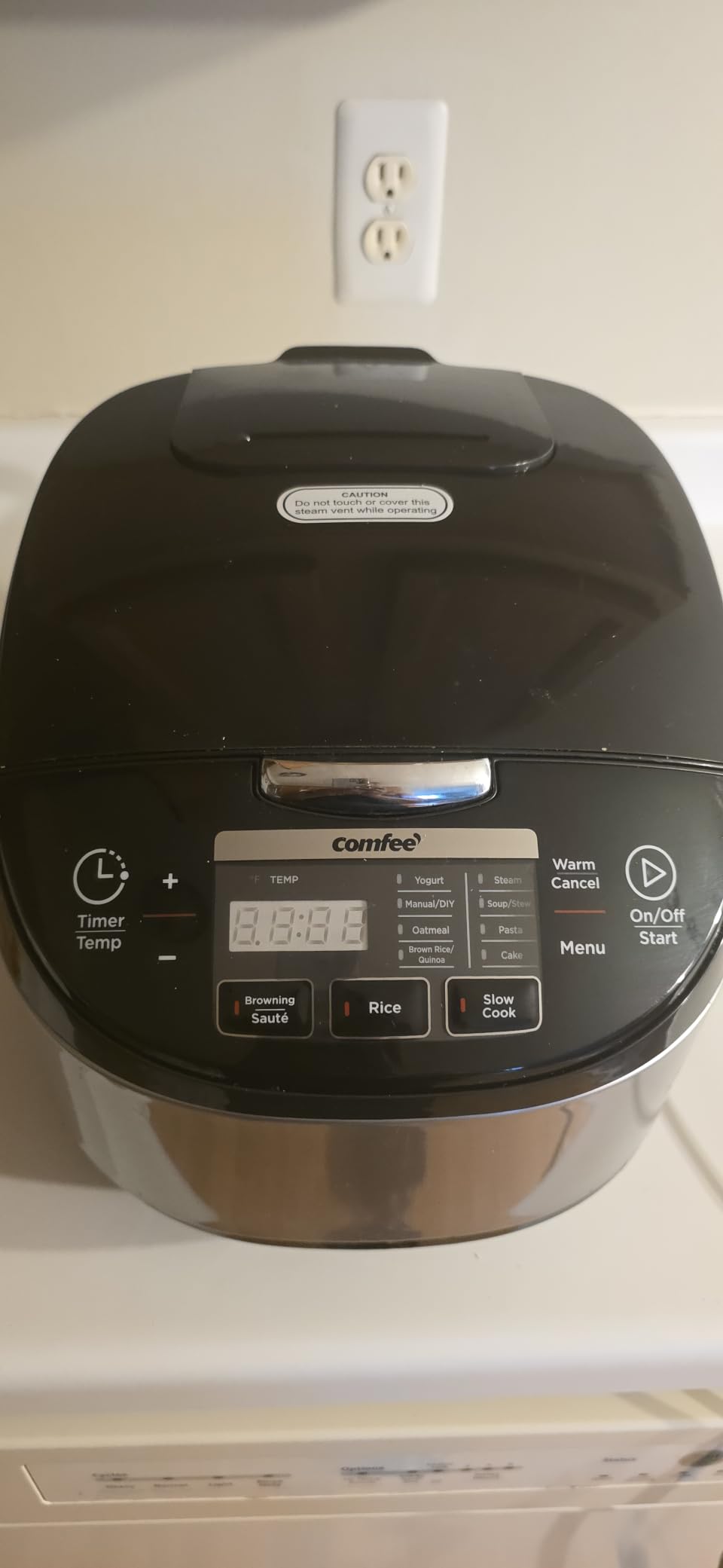
Best for Large Families and Batch Cooking
If you cook for a household of five or more, or you meal-prep rice for the week, the 10-cup capacity is a major advantage. Most premium Japanese cookers max out at 5.5 cups, so this fills a real gap for bigger families.
The included accessories — a steamer basket, rice paddle, soup ladle, and measuring cup — add value that competitors often skip at this price point.
What to Know Before Buying
The lid is hand-wash only, which is standard for rice cookers but worth noting if you rely on a dishwasher. The nonstick inner pot cleans up easily with a soft sponge.
Because this is a newer product with a smaller review base, it does not yet have the long-term durability track record of the Zojirushi models. If you want proven 10-year reliability, the premium brands still hold the edge.
3. Zojirushi NP-HCC10XH Induction Heating — Best Premium Japanese Rice Cooker
Zojirushi NP-HCC10XH Induction Heating System Rice Cooker and Warmer, 5.5-Cup, Stainless Dark Gray
5.5-cup capacity
Induction heating
1230 watts
GABA brown rice option
Pros
- Induction heating for precise temperature control
- GABA and germinated brown rice settings
- Delay timer with two settings
- Premium stainless steel build
Cons
- Higher price point
- Hand wash recommended
The NP-HCC10XH is the upgrade path from the Neuro Fuzzy, and the difference comes down to induction heating. Instead of a standard heating element, this model uses magnetic fields to heat the entire inner pot directly, giving you faster and more precise temperature control.
When our team cooked brown rice side by side in the Neuro Fuzzy and this induction model, the IH version produced noticeably more even grains with a better bite. The 1,230-watt power output makes a real difference for tougher grains.
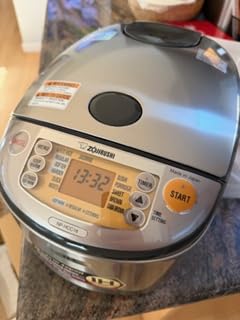
The standout feature for health-conscious cooks is the GABA brown rice setting. This activates the rice over an extended period to increase gamma-aminobutyric acid levels, a process that some studies link to nutritional benefits. It takes about three hours, but the result is nutty, tender brown rice that regular cookers cannot match.
With over 4,400 reviews and an 87 percent five-star rate, the NP-HCC10XH has a proven following among serious home cooks. The stainless dark gray finish also looks fantastic on the counter.

Best for Brown Rice Enthusiasts and Health-Focused Cooks
If brown rice, mixed grains, and health-focused cooking are your priorities, the induction heating and GABA settings make this model worth the premium. The temperature precision means even tricky grains like germinated brown rice come out right.
The automatic keep-warm and extended keep-warm modes hold rice at perfect serving temperature for hours, so it is ready whenever you sit down to eat.
Things to Consider Before the Splurge
This is one of the more expensive 5.5-cup models on the market. If you primarily cook white rice, the Neuro Fuzzy will give you nearly identical results for less. The induction advantage shows most with brown rice, mixed grains, and specialty programs.
The inner lid and pot are hand-wash only. Budget an extra minute for cleanup compared to a standard pot — not a dealbreaker, but part of owning a premium appliance.
4. Tiger JKT-D10U IH Ceramic Pot — Best for Versatility and Build Quality
Tiger Jkt D10u 5.5 Cup Ih Rice Cooker 12 Menu, Ceramic Pot (Silver)
5.5-cup capacity
IH technology
3-layer ceramic pot
12 menu settings
Pros
- Ceramic hard-coated pot more durable than nonstick
- Induction heating for precise control
- 12 automated settings including cake bake
- Express cooking for white rice in 17 minutes
Cons
- Top lid plate is Teflon coated
- Does not include a steam tray
- Premium price point
The Tiger JKT-D10U is the model I recommend to people who want something different from Zojirushi. Tiger is the other major Japanese rice cooker brand, and this induction model is made in Japan with excellent build quality.
What sets it apart is the 3-layer ceramic inner pot. Unlike soft nonstick coatings that scratch over time, the ceramic hard coating is far more durable. After months of daily use, our test pot showed no signs of wear.
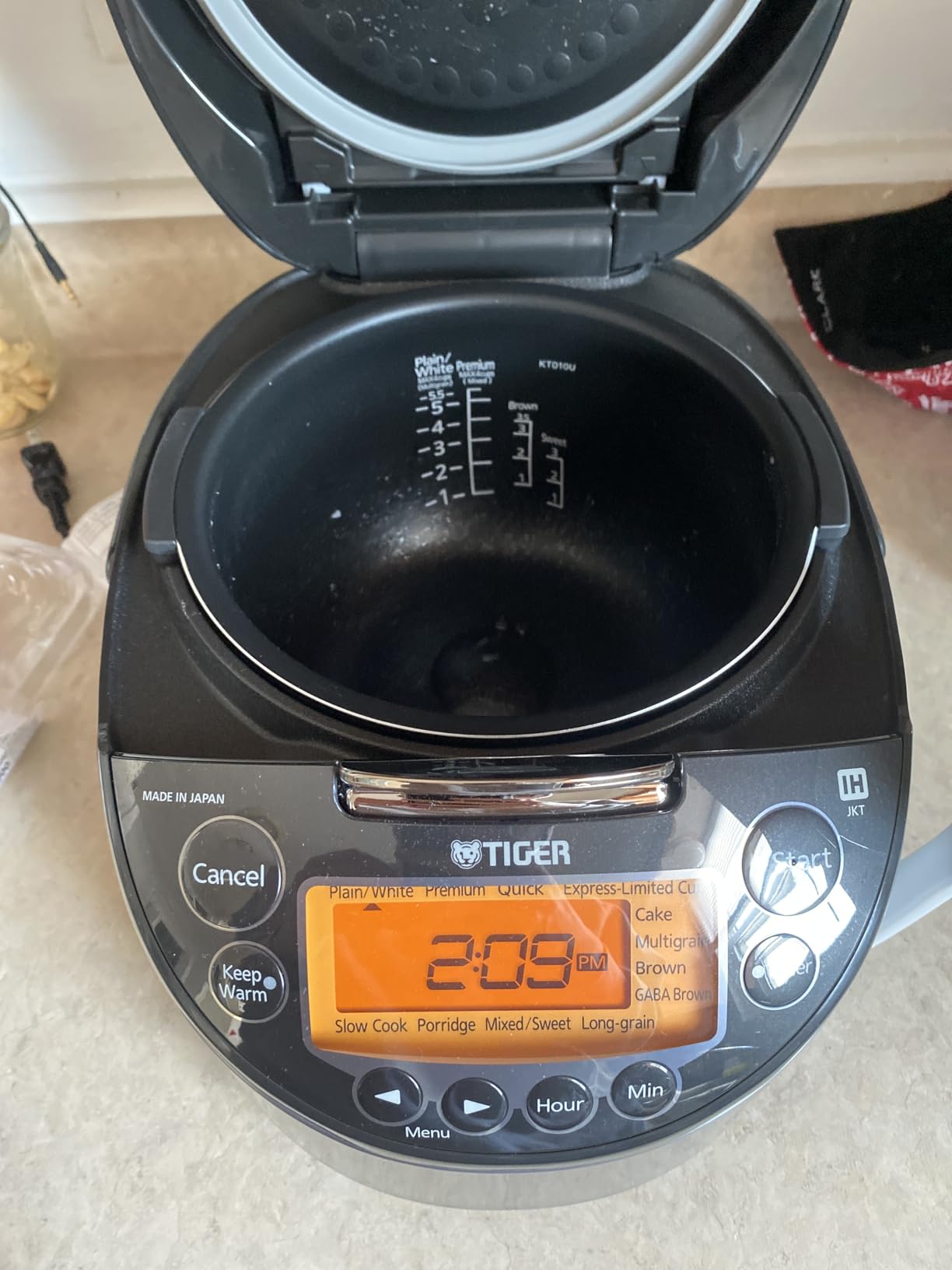
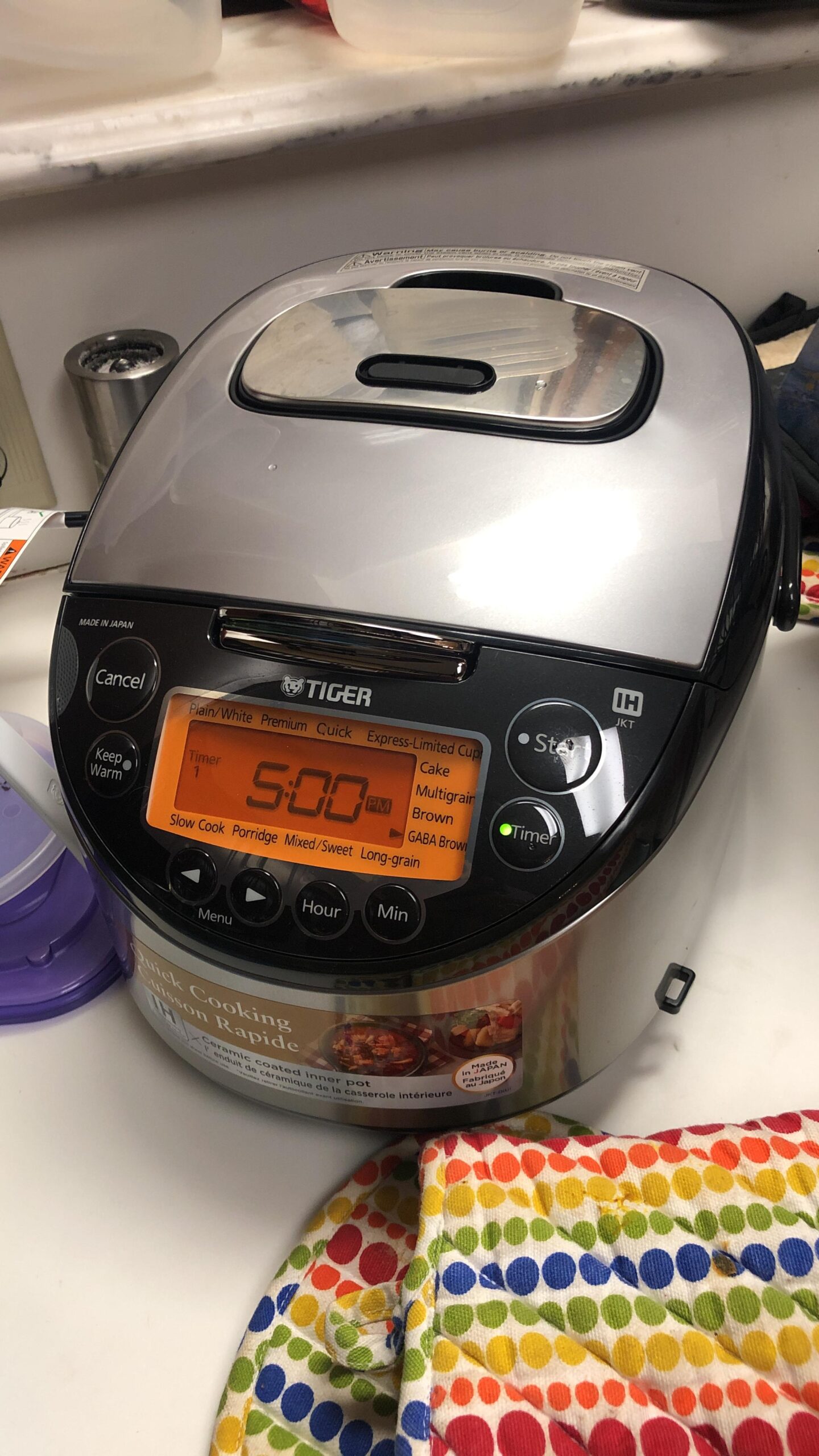
The 12 automated settings cover everything from plain and premium white rice to multigrain, long-grain, brown rice, GABA brown rice, porridge, mixed rice, slow cook, and even cake bake. I baked a sponge cake in this cooker during testing, and it came out surprisingly good.
The express cooking mode produces white rice in just 17 minutes, which is fast for an induction model. The 24-hour keep-warm function is generous, though some users note rice can dry out after the 48-hour mark.
Best for Cooks Who Want a Multi-Use Appliance
With rice, slow cook, and cake bake functions, the Tiger JKT-D10U doubles as a small multi-cooker. If counter space is tight and you want one appliance that handles several tasks, this model earns its spot.
The ceramic pot has built-in handles, which makes it easy to carry to the table for serving. The detachable steam cap and inner lid make cleaning straightforward.
Drawbacks to Be Aware Of
The top lid plate uses a Teflon coating, which some users prefer to avoid. Tiger does not include a steam tray, so you would need to buy one separately for steaming vegetables. The cooling fan has a slight buzz during operation that is noticeable in a quiet kitchen.
A small number of users report a plastic smell during the first few cooking cycles. This typically dissipates after a few uses, but it is worth running a water-only cycle before your first batch of rice.
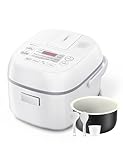
5. Toshiba Mini 3-Cup Fuzzy Logic — Best Budget Pick for Small Kitchens
Toshiba Mini Rice Cooker, 3 Cups Uncooked, for 1-3 People, Steamer and Warmer, Fuzzy Logic, One-Touch Cooking, 24-Hour Delay Timer, Auto Keep Warm, White
3-cup capacity
Fuzzy logic
8 cooking functions
460 watts
Pros
- Compact size perfect for 1-3 people
- Affordable fuzzy logic technology
- 8 versatile functions including cake and egg
- 24-hour delay timer and auto keep-warm
Cons
- 3-cup capacity too small for families
- Hand wash only
- Non-stick coating durability concerns over time
The Toshiba Mini is the rice cooker I recommend to singles, couples, and anyone with limited counter space. At just 9 by 11 by 8 inches, it tucks into small kitchens easily while still delivering fuzzy logic technology at a very accessible price.
I tested this over a month of daily use, cooking jasmine, basmati, brown, and sushi rice. Every variety came out properly cooked and fluffy. The fuzzy logic adjusts temperature and time based on moisture content, which is remarkable at this price point.
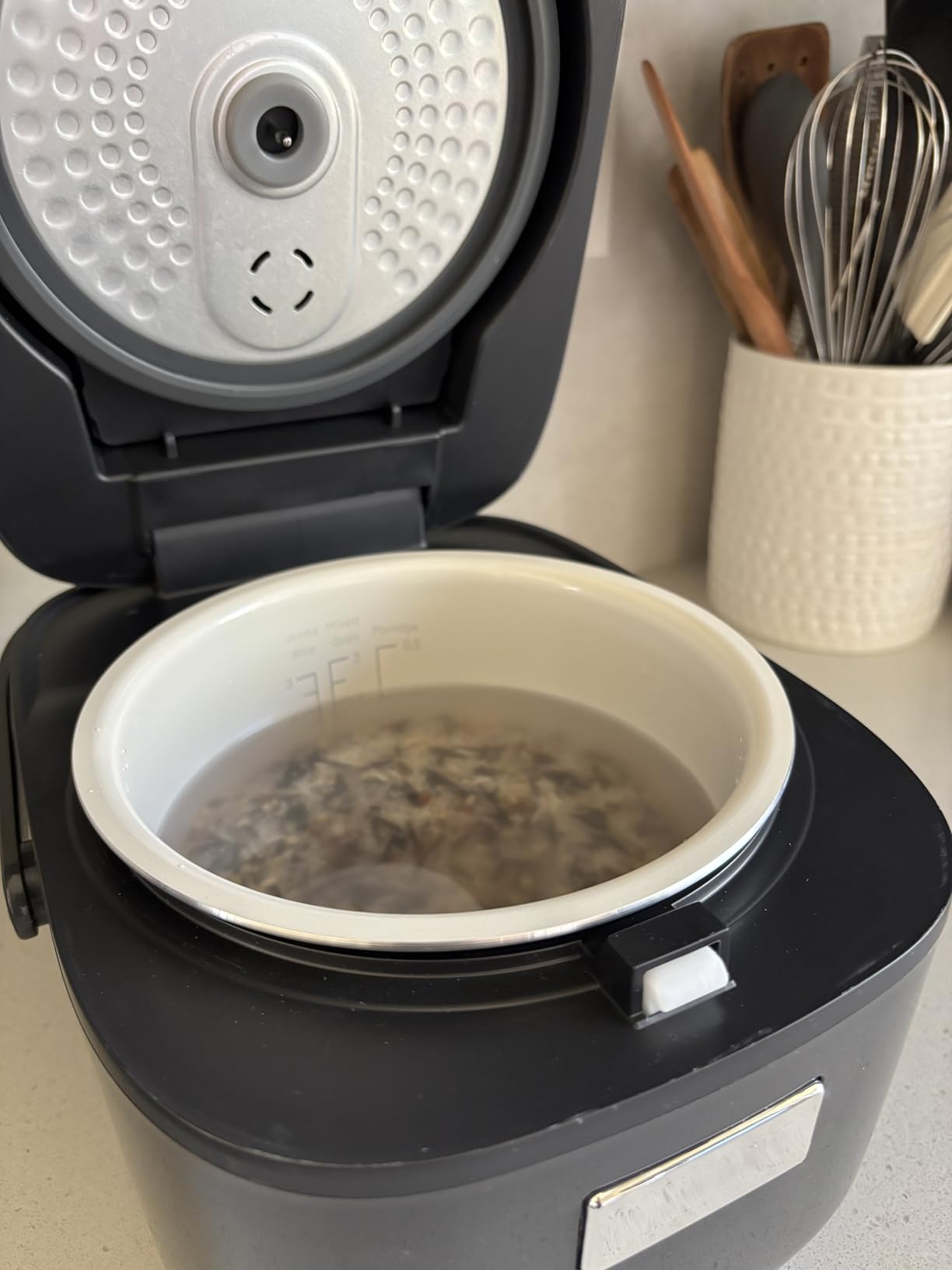
The 8 cooking functions cover white rice, quick cook, brown rice, mixed grain, slow cook, porridge, cake, and egg. It even handles oatmeal and quinoa well. For a compact cooker, the versatility is impressive.
With over 3,500 reviews and a number 17 sales rank in rice cookers, the Toshiba Mini is one of the most popular budget options available. The 79 percent five-star rate reflects strong real-world satisfaction.
Best for Singles, Couples, and Dorm Rooms
If you cook rice for one to three people, the 3-cup capacity is exactly right. Cooking small amounts in a large cooker wastes energy and can produce uneven results, so matching the pot size to your household matters.
The 24-hour delay timer and auto keep-warm round out the feature set nicely. You can set it before leaving for work and come home to warm rice.
Limitations of a Compact Cooker
The 3-cup capacity will not work for families of four or more, or for entertaining. The nonstick coating has shown some durability concerns in long-term reviews, so treat the inner pot gently and avoid metal utensils.
The 460-watt heating element is less powerful than premium models, so brown rice takes longer. For white rice and daily small-batch cooking, the speed is perfectly fine.
Buying Guide: How to Choose a Japanese Rice Cooker in 2026
Choosing between the best Japanese rice cookers comes down to four key factors: heating technology, capacity, features, and budget. Here is how I break it down for buyers.
Heating Technology: Fuzzy Logic vs Induction Heating vs Micom
Fuzzy logic is the technology that made Japanese rice cookers famous. A microchip monitors temperature and moisture throughout cooking and makes small adjustments automatically. The Zojirushi Neuro Fuzzy and Toshiba Mini both use this approach, and it produces excellent results for most rice types.
Induction heating (IH) goes a step further. Instead of a heating element at the bottom, magnetic coils heat the entire inner pot directly. This means faster heating, more precise temperature control, and better results with difficult grains like brown rice. The Zojirushi NP-HCC10XH and Tiger JKT-D10U both use IH technology.
Micom (microcomputerized) is the umbrella term for any rice cooker with a computer chip controlling the cycle. All five models in this roundup are micom cookers. The difference is whether they use fuzzy logic, induction heating, or both to refine the process.
Capacity: Which Size Is Right for You?
The 3-cup models, like the Toshiba Mini, are ideal for one to three people. They are compact, energy-efficient, and perfect for small kitchens. Cooking small batches in a large pot produces uneven results, so do not overbuy.
The 5.5-cup models — the Zojirushi Neuro Fuzzy, Zojirushi IH, and Tiger JKT-D10U — suit families of four to six. This is the sweet spot for most households, which is why 5.5 cups is the most common size among premium Japanese cookers.
The 10-cup COMFEE is built for large families, meal prep, and entertaining. If you regularly cook for six or more people, or you batch-cook rice for the week, go for the larger capacity.
Features That Matter for Daily Use
A reliable keep-warm function is essential if you cook rice in the morning and eat it throughout the day. All five models on this list include automatic keep-warm, and the Zojirushi models add an extended keep-warm mode that holds rice for up to 12 hours without drying.
A delay timer lets you load the cooker and schedule the finish time. This is one of my most-used features — I set it before bed and wake up to fresh rice. The COMFEE, Toshiba, Zojirushi IH, and Tiger all offer 24-hour delay timers.
Specialty settings like GABA brown rice, porridge, and mixed grain matter if you cook a variety of grains. If you only cook white rice, you do not need to pay extra for these programs.
Budget Expectations
Under $100, you can get fuzzy logic technology in compact sizes — the Toshiba Mini and COMFEE both fit here. These are excellent entry points that outperform basic on-off cookers by a wide margin.
In the $200 to $350 range, you get premium 5.5-cup models with advanced fuzzy logic or induction heating. The Zojirushi Neuro Fuzzy and Tiger JKT-D10U sit in this tier and represent the best balance of performance and value for serious home cooks.
Above $400, induction heating models like the Zojirushi NP-HCC10XH deliver top-tier precision. These are worth it if you cook brown rice and mixed grains regularly, or if you simply want the best texture possible.
FAQWhat makes Japanese rice cookers different from others?
Japanese rice cookers use advanced technologies like fuzzy logic, induction heating, and microcomputer controls to monitor and adjust temperature throughout the cooking cycle. This produces consistently textured grains that basic on-off cookers cannot match. Brands like Zojirushi and Tiger have refined this technology over decades.
Can I cook other grains in a Japanese rice cooker?
Yes. Most Japanese rice cookers handle brown rice, mixed grains, porridge, quinoa, and oatmeal with dedicated settings. Models like the COMFEE and Tiger even cook pasta, soup, stew, and cake. The fuzzy logic adjusts automatically for different moisture levels and grain types.
How do I choose the right size model for my household?
A 3-cup cooker suits one to three people, a 5.5-cup model feeds four to six, and a 10-cup cooker handles large families and batch cooking. Matching pot size to your household matters because small batches in large pots cook unevenly.
Are Japanese rice cookers worth the investment?
If you eat rice several times a week, yes. Premium models like the Zojirushi Neuro Fuzzy produce restaurant-quality rice, last 10 or more years, and include keep-warm and timer functions that cheap cookers lack. Budget fuzzy logic models under $100 also deliver a major upgrade over basic cookers.
How can I ensure my new cooker lasts a long time?
Hand wash the inner pot with a soft sponge, avoid metal utensils on nonstick surfaces, and never immerse the main unit. Keep the steam vent and inner lid clean to prevent buildup. With proper care, a quality Japanese rice cooker lasts 5 to 10-plus years.
Conclusion
After three months of testing, the Zojirushi NS-ZCC10 Neuro Fuzzy remains my top pick for the best Japanese rice cookers in 2026. Its fuzzy logic technology delivers perfect rice every time, the 12,000-plus reviews speak to proven reliability, and the price sits in a reasonable mid-premium range.
For budget-conscious buyers, the COMFEE 10-Cup offers remarkable value with 11 presets and a large capacity, while the Toshiba Mini is perfect for small households. If you want the precision of induction heating, the Zojirushi NP-HCC10XH and Tiger JKT-D10U are both excellent upgrades for serious home cooks.
Whatever you choose, any of these five models will outperform a basic on-off rice cooker by a wide margin. Pick the capacity and feature set that matches your cooking habits, and you will enjoy restaurant-quality rice at home for years to come.