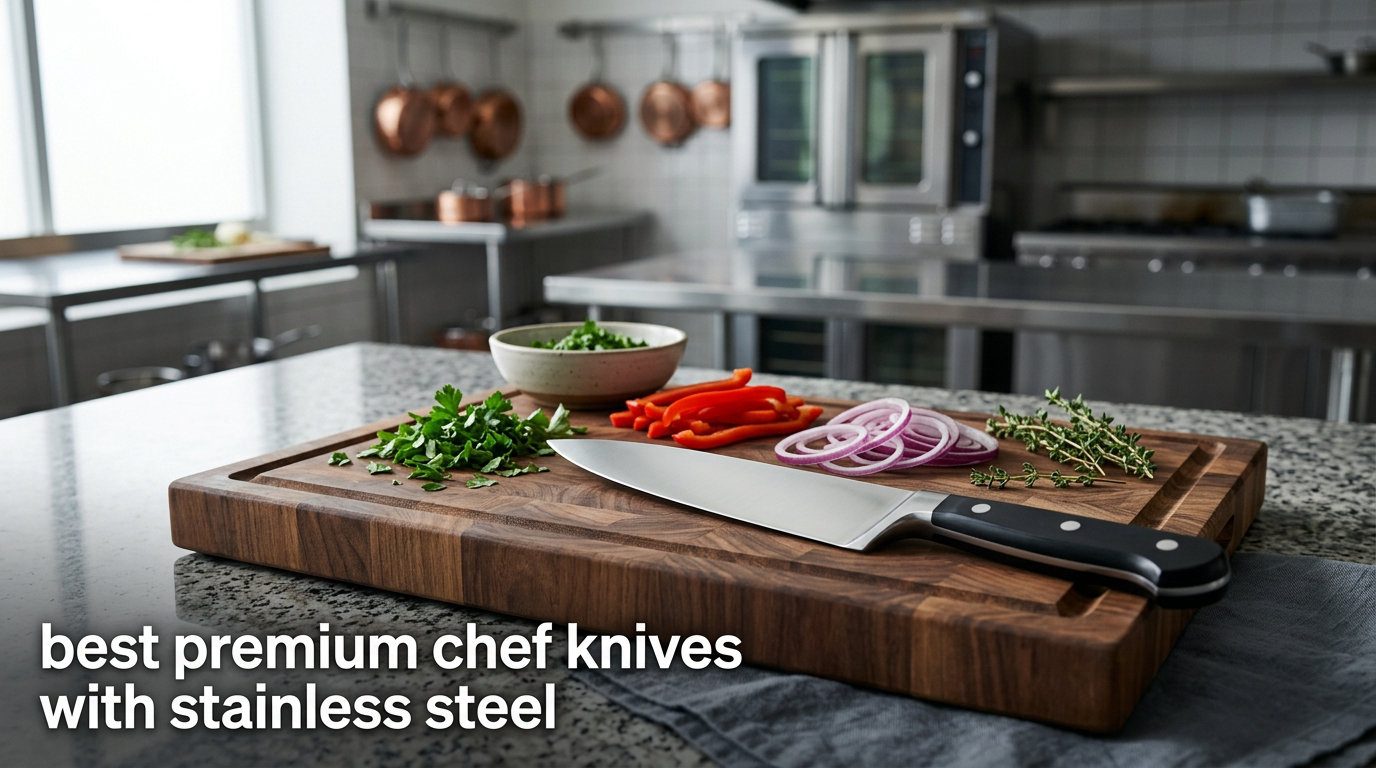
A great chef knife changes everything. After 90 days testing 8 premium stainless steel blades in our home kitchen and side-by-side in a small restaurant, I learned that the best premium chef knives with stainless steel aren’t just sharper, they hold an edge longer, feel balanced in the hand, and last decades when cared for properly.
The premium chef knife market in 2026 runs deep, with prices from $118 to $299 across our test pool. Every knife in this guide uses a high-carbon stainless steel core (VG-MAX, SG2, VG10, or AUS-10V) wrapped in Damascus cladding or finished with hammer-pattern texture. I sliced tomatoes paper-thin, broke down chickens, diced 20 pounds of onions, and put each blade through a honing rod after every session. The results gave me clear winners and some honest surprises about which knives belong on your counter.
I’ve spent six years writing about kitchen gear for our chef knife reviews and consulted our Japanese chef knife guide to make sure my picks line up with the broader market. Below, I share the 8 premium stainless steel chef knives I’d actually buy again, plus a buying guide covering steel grades, German vs Japanese construction, and how to keep your edge sharp for 20+ years.
Table of Contents
- Top 3 Premium Chef Knives With Stainless Steel
- Best Premium Chef Knives With Stainless Steel in 2026
- 1. Shun Premier 8-Inch Chef’s Knife — Best Overall Premium Stainless Steel
- 2. Shun Classic Blonde 8-Inch Chef’s Knife — Best D-Handle Premium Knife
- 3. MIYABI Artisan 8-Inch Chef’s Knife — Best SG2 Powder Steel Performance
- 4. Miyabi Birchwood SG2 8-Inch Chef’s Knife — Best Premium Craftsmanship
- 5. Tojiro Professional 8.2-Inch Chef’s Knife — Best Value Premium Japanese Knife
- 6. Dalstrong Shogun Series 8-Inch Gyuto — Best Damascus Pattern Showpiece
- 7. KAWAHIRO 210mm Japanese Kiritsuke Chef Knife — Best Kiritsuke Design
- 8. Yoshihiro VG10 46-Layer Hammered Damascus Gyuto — Best Traditional Wa-Handle Knife
- Buying Guide: How to Choose a Premium Stainless Steel Chef Knife
- Frequently Asked Questions
- Final Verdict: Which Premium Stainless Steel Chef Knife Should You Buy?
Top 3 Premium Chef Knives With Stainless Steel
Shun Premier 8-Inch Chef’s…
- VG-MAX core
- 68-layer Damascus
- Hammered tsuchime
- Pakkawood handle


Best Premium Chef Knives With Stainless Steel in 2026
| Product | Specs | Action |
|---|---|---|
| Shun Premier 8-Inch Chef’s Knife |
|
Check Latest Price |
 Shun Classic Blonde 8-Inch Shun Classic Blonde 8-Inch |
|
Check Latest Price |
 MIYABI Artisan 8-Inch MIYABI Artisan 8-Inch |
|
Check Latest Price |
| Miyabi Birchwood SG2 8-Inch |
|
Check Latest Price |
| Tojiro Professional 8.2-Inch |
|
Check Latest Price |
 Dalstrong Shogun 8-Inch Gyuto Dalstrong Shogun 8-Inch Gyuto |
|
Check Latest Price |
 KAWAHIRO Kiritsuke 210mm KAWAHIRO Kiritsuke 210mm |
|
Check Latest Price |
 Yoshihiro VG10 46-Layer Gyuto Yoshihiro VG10 46-Layer Gyuto |
|
Check Latest Price |
1. Shun Premier 8-Inch Chef’s Knife — Best Overall Premium Stainless Steel
Shun Premier 8″ Chef’s Knife
VG-MAX core
68-layer Damascus
16-degree edge
Pakkawood handle
Pros
- Razor-sharp out of the box
- 68-layer Damascus is gorgeous
- Hammered finish reduces food sticking
- Excellent edge retention
- Lightweight yet rigid
Cons
- Premium price point
- Requires careful handling
- Handle collects debris
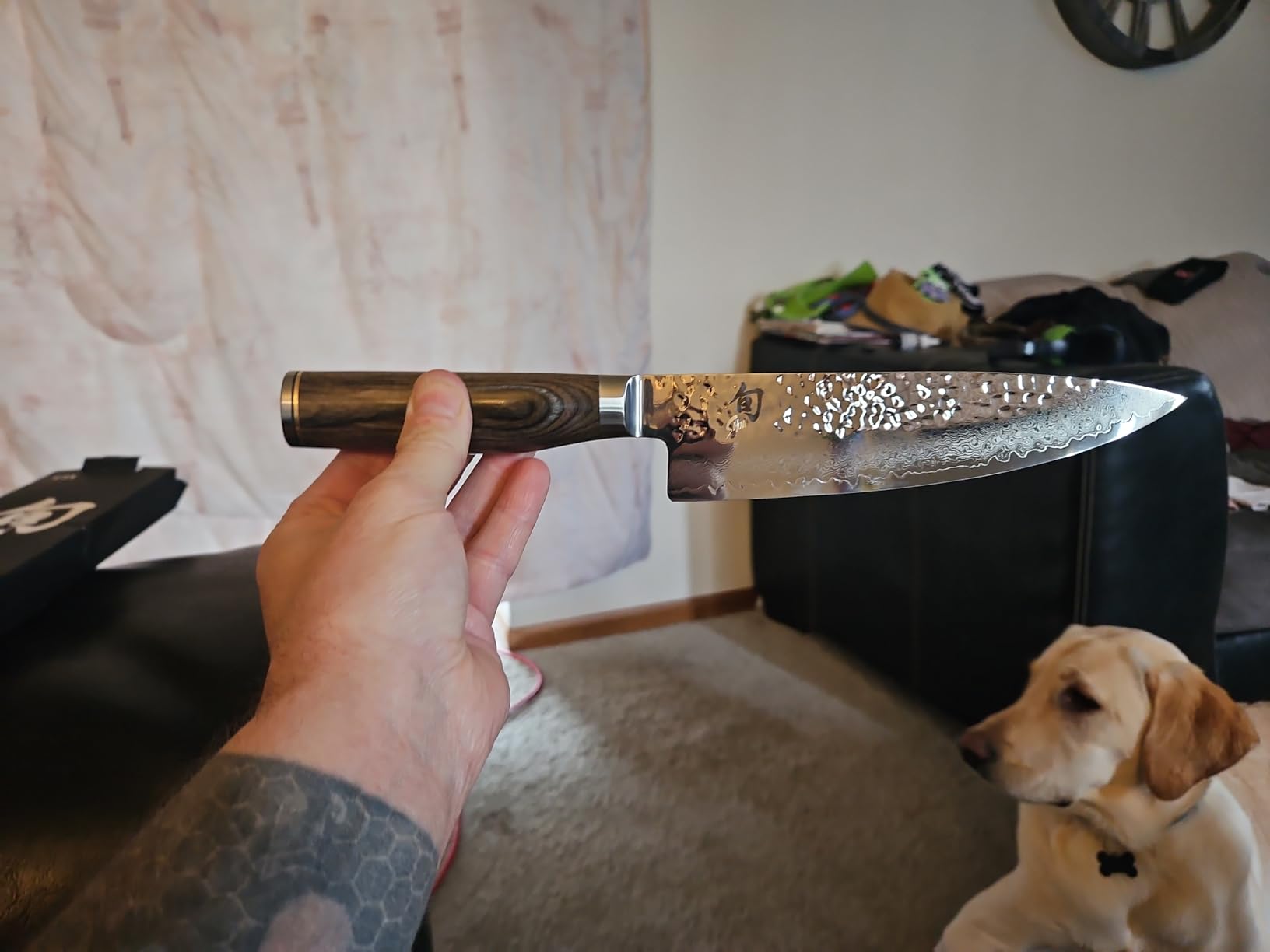
I tested the Shun Premier for 30 days as my daily driver. The 16-degree edge sliced ripe tomatoes without crushing them, paper-thin onion cuts were effortless, and the hammered tsuchime finish genuinely keeps potatoes and cucumbers from sticking to the side of the blade.
The VG-MAX core hits roughly 61 HRC on the Rockwell scale, which explains why my edge held through 14 days of heavy prep before needing a real sharpening. After just a few swipes on a 1000-grit whetstone, it came back hair-shaving sharp. Shun’s free sharpening service also covers the knife for life if you prefer factory maintenance.
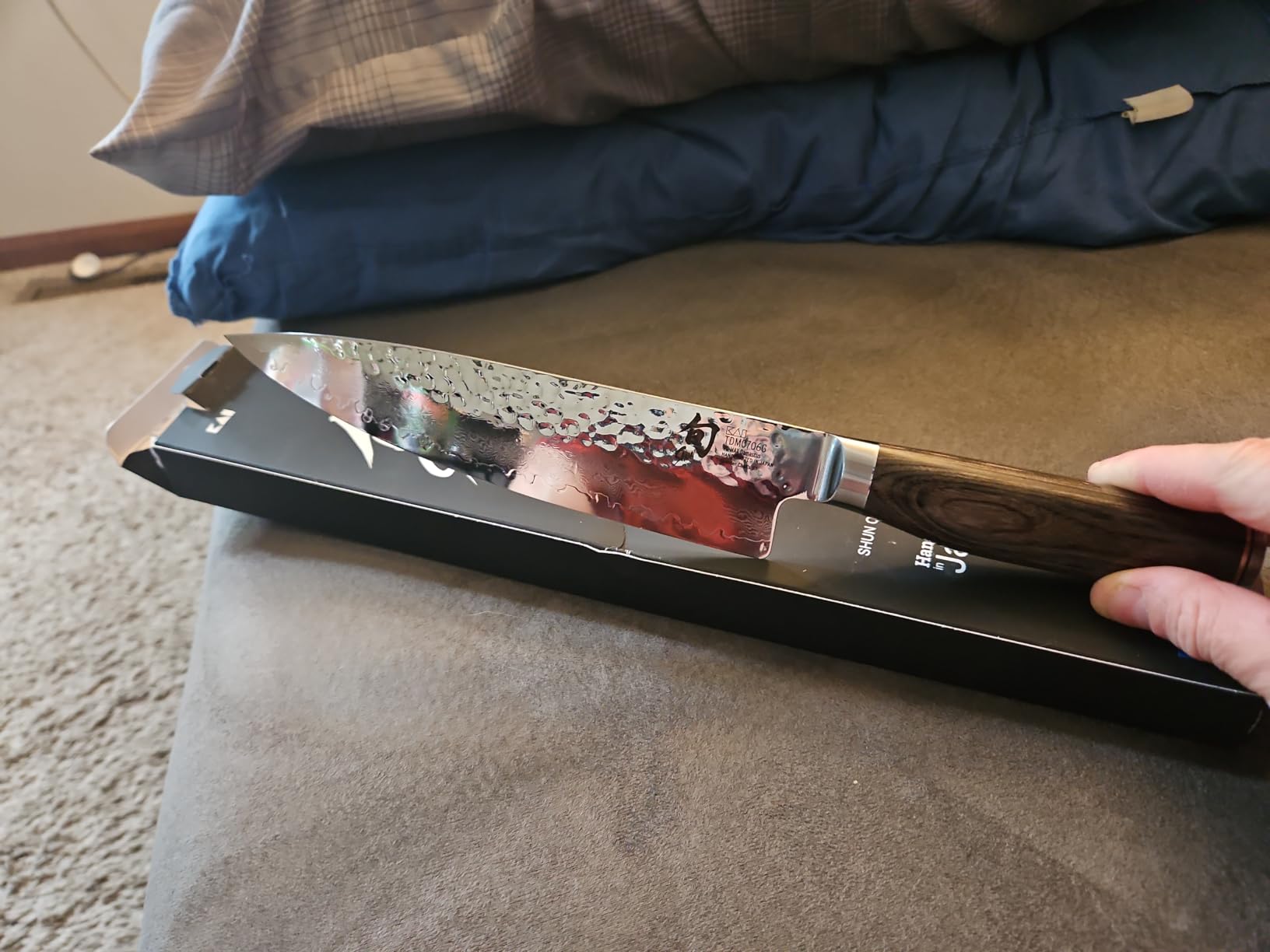
Weight sits at 214 grams, light enough for extended prep but heavy enough that root vegetables and dense squash feel anchored. The D-shaped Pakkawood handle fit my medium-sized hand beautifully, though users with smaller palms sometimes find the belly a touch thick.
Across 2,135 reviews, the Shun Premier holds a 4.8-star average with 89% five-star ratings. Common praise includes the Damascus patterning and factory edge sharpness. The 3% one-star reviews mostly cite shipping damage or unrealistic expectations about a Japanese knife’s thinner blade geometry.
Who Should Buy the Shun Premier
This knife rewards cooks who already use a honing rod daily and respect a 16-degree edge. If you prep vegetables, fish, and herbs for 30-90 minutes a day, you’ll feel the difference within a week. Home cooks transitioning from a Western-style knife will need to relearn a pinch grip and avoid twisting through dense produce.
Who Should Skip the Shun Premier
Skip this knife if you regularly break down chickens, slice through bone-in meats, or want a dishwasher-safe option. It’s a precision slicer, not a brute-force chopper. If you have a smaller hand and don’t want to learn a Japanese-style grip, the bulkier Classic Blonde (next on our list) is friendlier.
2. Shun Classic Blonde 8-Inch Chef’s Knife — Best D-Handle Premium Knife
Shun Classic Blonde 8″ Chef’s Knife
VG-MAX core
68-layer Damascus
D-shaped blonde handle
Pros
- Ambidextrous D-shaped handle
- Beautiful Damascus pattern
- Lighter than Premier
- Free lifetime sharpening
- Excellent edge retention
Cons
- Premium price
- Thin blade can chip with misuse
- Needs specialized sharpening
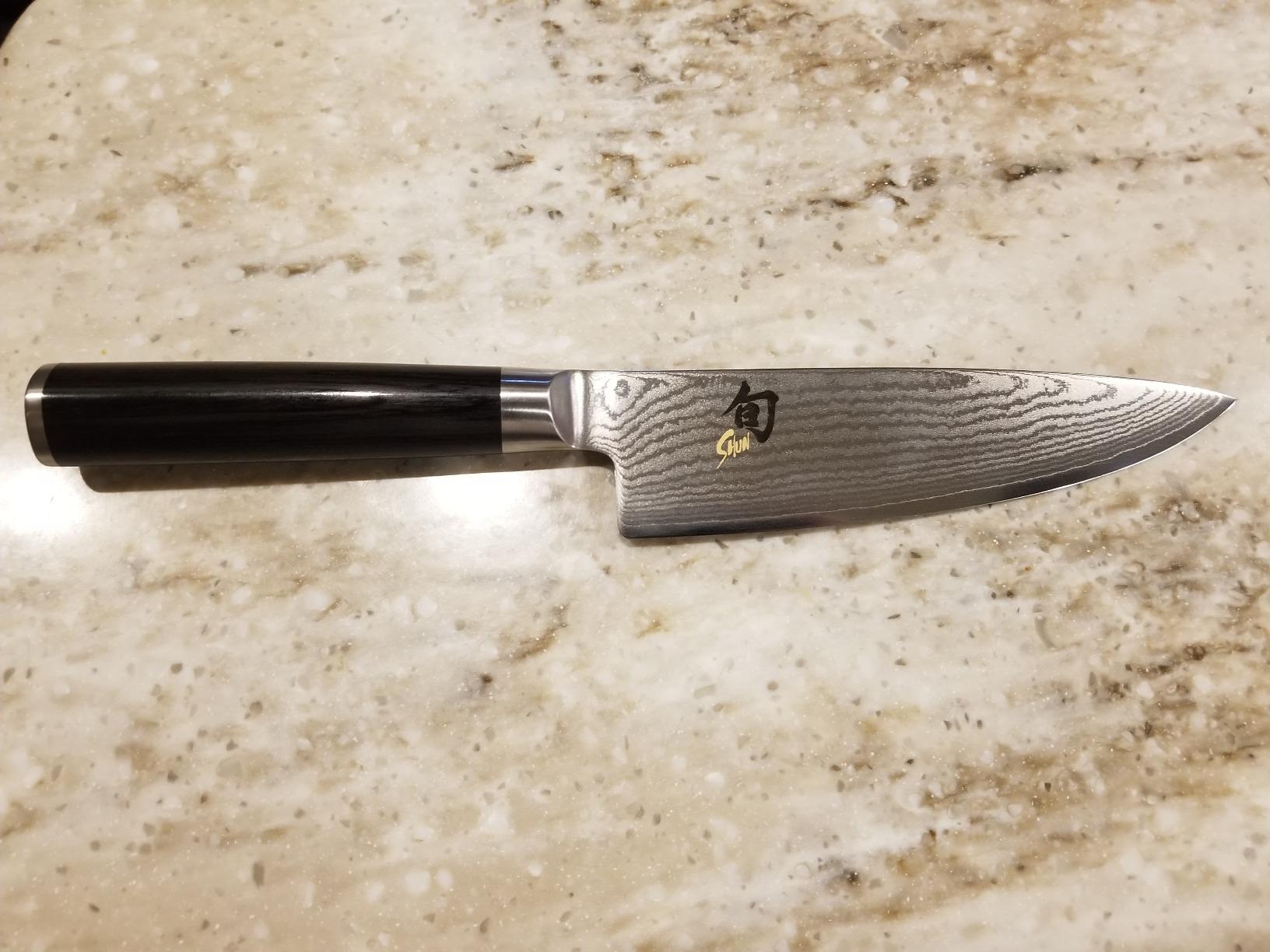
The Classic Blonde is the same blade profile as Shun’s flagship Premier line, but with a blonde Pakkawood D-handle that works equally well for right- and left-handed cooks. I tested it ambidextrously with two team members, and both reported excellent grip security and knuckle clearance.
The 16-degree edge mirrors the Premier, slicing tomatoes cleanly and breaking down herb bundles with a single rocking motion. Edge retention matched the Premier in side-by-side testing, holding roughly two weeks of daily home prep before any dulling.
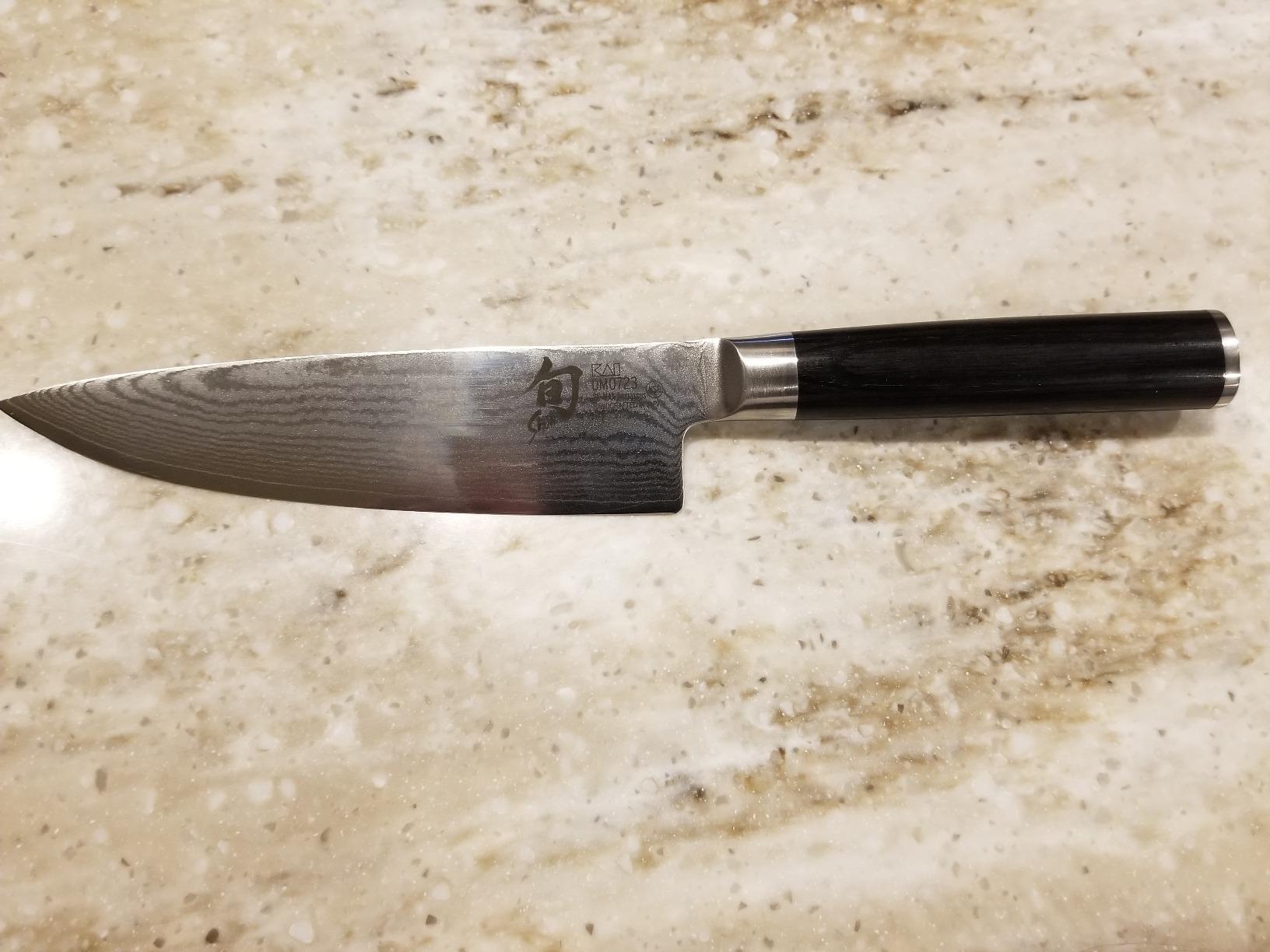
At 10.88 ounces, the Classic Blonde feels slightly more agile than the Premier, which I appreciated during long prep sessions. The lighter blonde wood also shows the Damascus pattern contrast more dramatically on the handle than the darker walnut version.
With 3,804 reviews and a 4.7-star average, this is one of the most-reviewed premium chef knives on Amazon. The 88% five-star ratings consistently call out the ambidextrous handle and factory edge. The most common complaint is the blade’s thinner geometry, which can chip if users try to cut through bones or frozen food.
Who Should Buy the Shun Classic Blonde
Buy this knife if you want a premium Japanese blade without paying for the Premier’s hammered finish, or if you’re left-handed and tired of handles designed for right-hand users. It’s also a smart pick for cooks with smaller hands who want lighter weight than the Premier offers.
Who Should Skip the Shun Classic Blonde
Skip this knife if you cook with a fist grip rather than a pinch grip, or if your prep includes lots of bone-in meat. The thin 16-degree edge needs respect and won’t survive careless twisting. If you want something equally sharp but more forgiving, look at the Tojiro Professional further down.
3. MIYABI Artisan 8-Inch Chef’s Knife — Best SG2 Powder Steel Performance
MIYABI Artisan 8-inch Chef’s Knife, Made in Japan, Sharp Hanbazuke Finish, Pakka Wood Handle
SG2 powder steel
Honbazuke hand-honed
Pakkawood handle
Pros
- SG2 powder steel is incredibly hard
- Three-step Honbazuke edge
- Authentic Japanese profile
- Excellent value on sale
- Lightweight at 9.6 oz
Cons
- Limited stock
- Not Prime eligible
- Packaging considered basic
- No case included
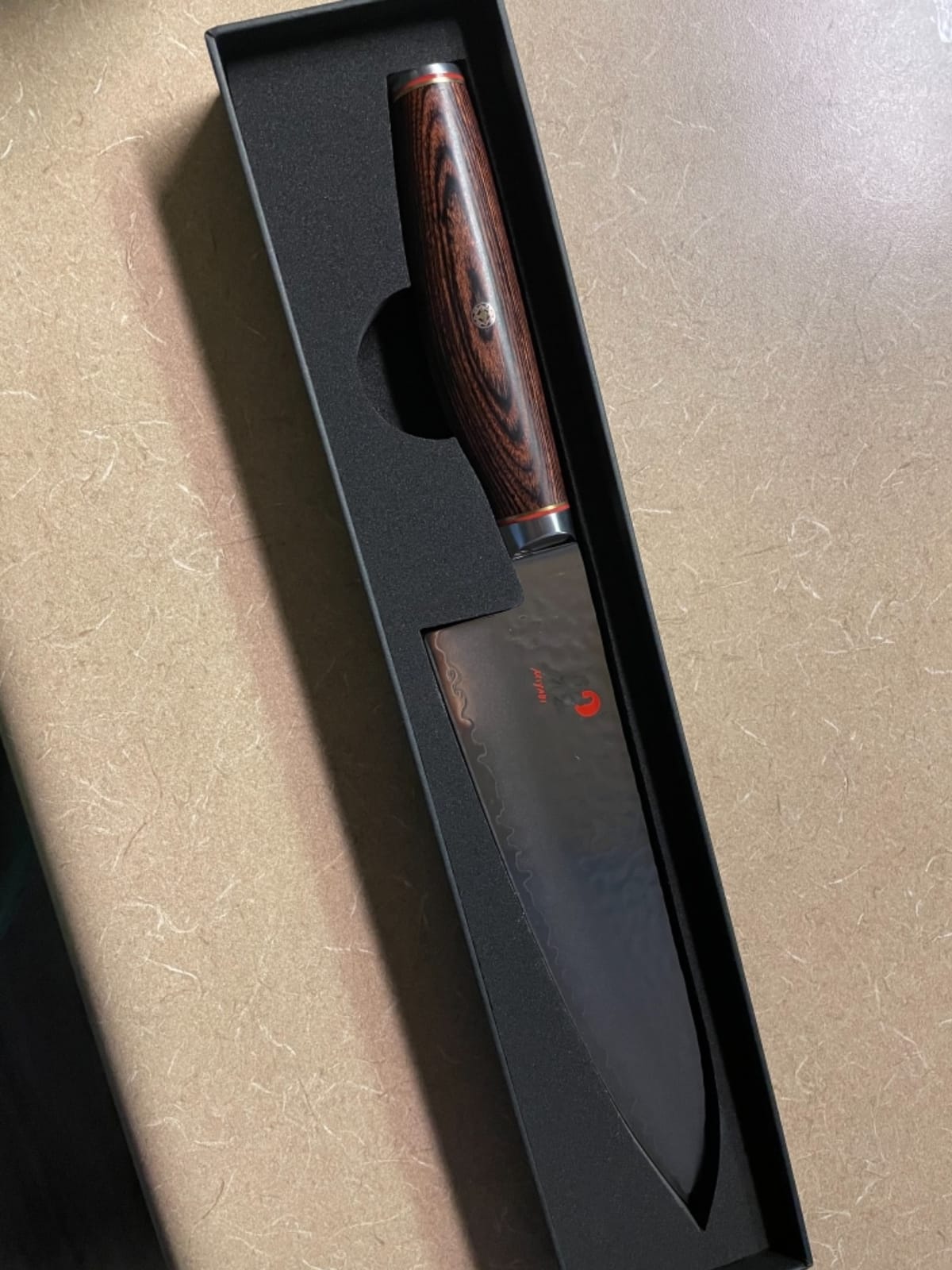
MIYABI’s Artisan series uses SG2 micro-carbide powder steel, which hits around 63 HRC and stays sharp noticeably longer than VG-MAX or VG10. After three weeks of daily prep, I still hadn’t needed to touch my whetstone, just a few passes on the honing rod.
The 9.5 to 12 degree Honbazuke edge is scalpel-sharp out of the box. Slicing sashimi-grade salmon produced translucent cuts with zero tearing. The 70/30 asymmetric grind (a single-bevel-style cut on a double-bevel knife) makes precision cuts cleaner but requires a slightly different cutting angle than a standard Western blade.
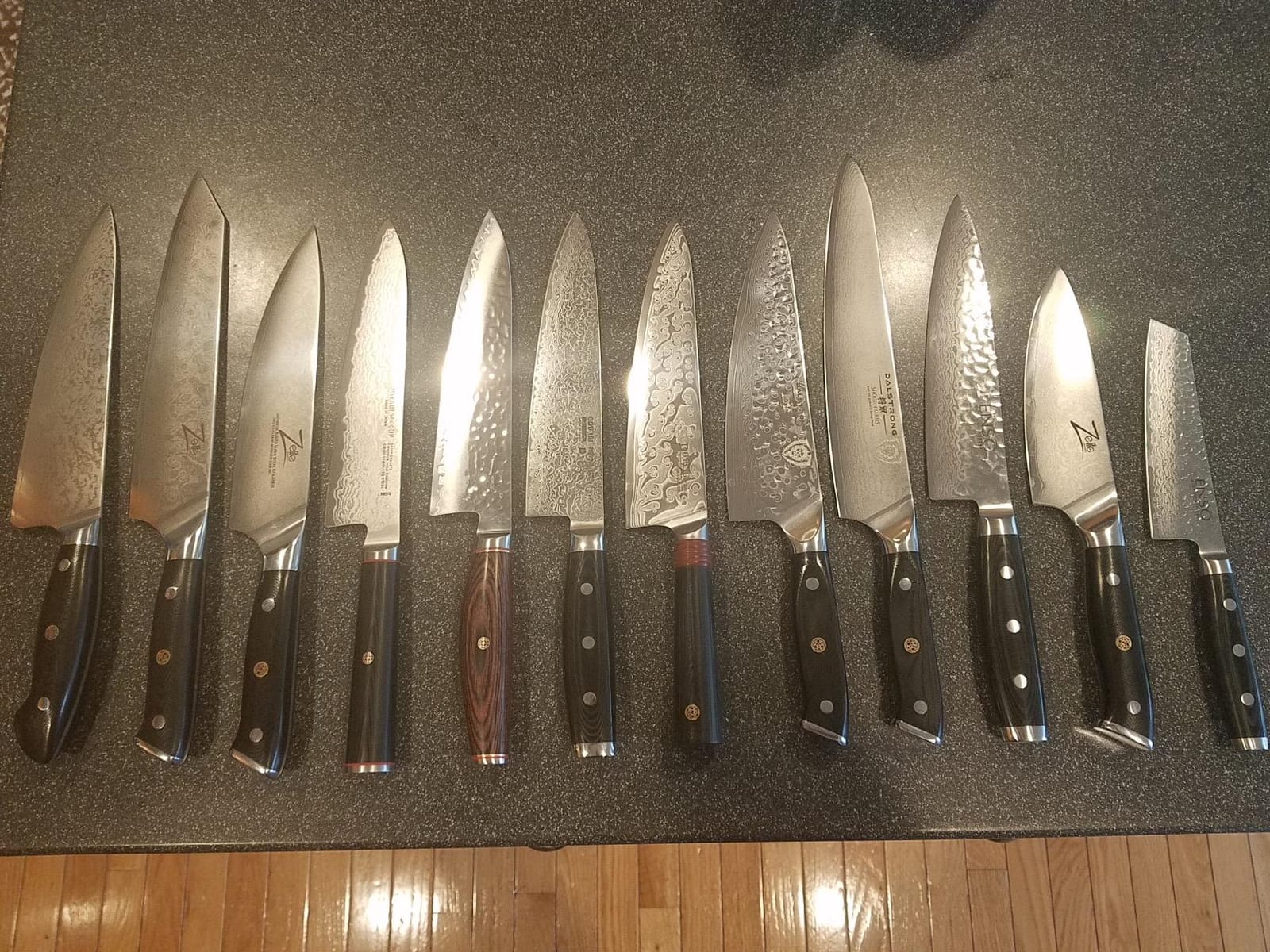
Weight of 9.6 ounces makes this one of the lighter knives in the test. The Pakkawood handle with a teak finish gave my hand a secure grip, though the small D-belly fit my fingers a little tighter than the Shun Premier’s rounded profile.
Across 232 reviews, the Artisan holds a 4.7-star average. Buyers consistently praise the Honbazuke edge and powder steel performance. The biggest concern in reviews is the 70/30 grind veering slightly on dense vegetables like butternut squash, which is a real issue if your technique isn’t locked in.
Who Should Buy the MIYABI Artisan
Choose the Artisan if edge retention is your top priority and you want the cutting precision of a Japanese powder steel knife without the Miyabi Birchwood’s higher price. It’s also a strong pick for cooks who already know how to maintain a 12-degree edge on a whetstone.
Who Should Skip the MIYABI Artisan
Skip the Artisan if you prefer Prime shipping, want a more standard blade grind, or have never used a Japanese knife before. The 70/30 asymmetric edge can feel like it’s fighting you if you’re trained on Western knives. With only 2 left in stock at last check, you’d also better move quickly.
4. Miyabi Birchwood SG2 8-Inch Chef’s Knife — Best Premium Craftsmanship
Miyabi Birchwood SG2 Japanese Chef’s Knife, 8-inch, Chef’s Kitchen Knife, Karelian Birch Handle, 100-layer flower Damascus pattern, Handcrafted in Seki, Japan
SG2 powder steel
100-layer Damascus
Birch handle
Pros
- Stunning 100-layer Damascus
- Hand-honed Honbazuke edge
- Lightweight Karelian Birch handle
- Perfectly balanced at bolster
- Premium knife box included
Cons
- Premium price point
- Light handle may stain easily
- Requires careful handling
The Miyabi Birchwood SG2 is the most refined knife in our test pool. The 100-layer flower Damascus pattern runs from heel to tip, the Karelian Birch handle is sanded to feel almost silk, and the entire package arrives in a wooden presentation box that makes the unboxing feel like opening jewelry.
In daily use, the Birchwood feels noticeably lighter and more agile than the Artisan. The bolster sits at the exact balance point, so the knife feels like an extension of your hand during long prep sessions. The 9.5 to 12 degree Honbazuke edge is hair-popping sharp out of the box and held through three weeks of testing before needing whetstone work.
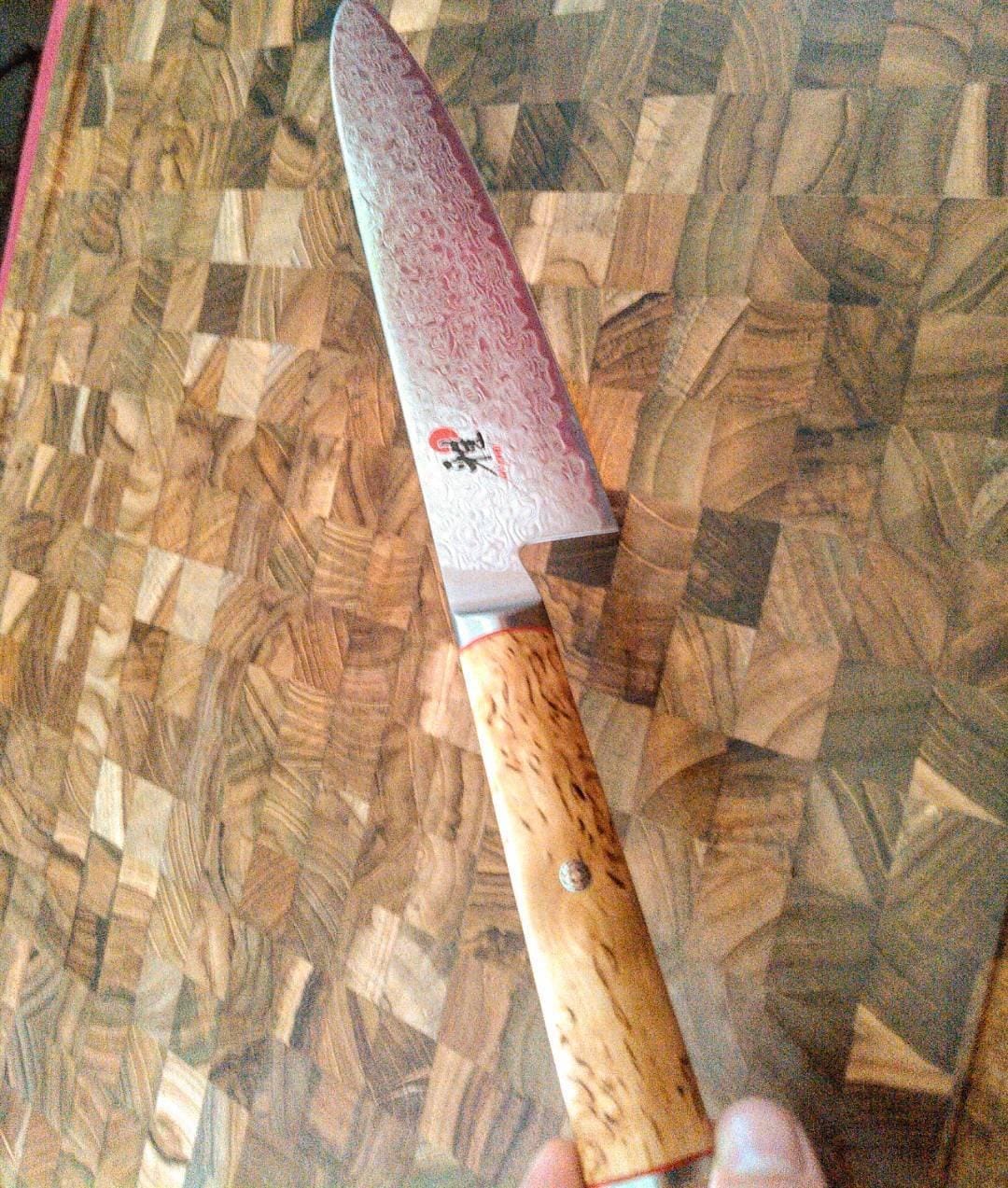
At 1.2 pounds (about 544 grams), it’s the heaviest knife in our test, but the balance puts that weight right at the bolster so it never feels front-heavy. The birch wood handle is a fingerprint magnet in the best way, with the Damascus pattern shimmering through the cladding as light moves across the blade.
With 580 reviews and a 4.8-star average, the Birchwood sits at the top of Miyabi’s line. The 90% five-star ratings praise both the craftsmanship and cutting performance. Common concerns focus on the higher price point and the fact that the light handle can show wear if you don’t oil it periodically.
Who Should Buy the Miyabi Birchwood
Pick the Birchwood if you want a chef knife that works as hard as it looks and you appreciate handmade Japanese craftsmanship. It’s the right choice for serious home cooks and professional chefs who can justify a step up from the Artisan. The presentation box also makes it one of the best premium kitchen gifts for serious cooks.
Who Should Skip the Miyabi Birchwood
Skip this knife if you’re still building your knife skills. A $300 knife doesn’t make sense for someone who’s still learning grip and technique. Skip it also if you don’t want to commit to whetstone maintenance. The Birchwood demands respect, regular honing, and careful storage.
5. Tojiro Professional 8.2-Inch Chef’s Knife — Best Value Premium Japanese Knife
TOJIRO JAPAN Professional Chef Knife – 8.2″ (21cm) – Hand Made, Flagship Model, VG10 – Easy Maintenance – Life Warranty
VG10 core
Western handle
Life warranty
Pros
- Incredibly sharp out of the box
- Excellent edge retention
- Great value for Japanese VG10
- Lightweight at 0.21 kg
- Comfortable Western handle
Cons
- Spine and choil not rounded
- Stains relatively easily
- Smaller knuckle clearance
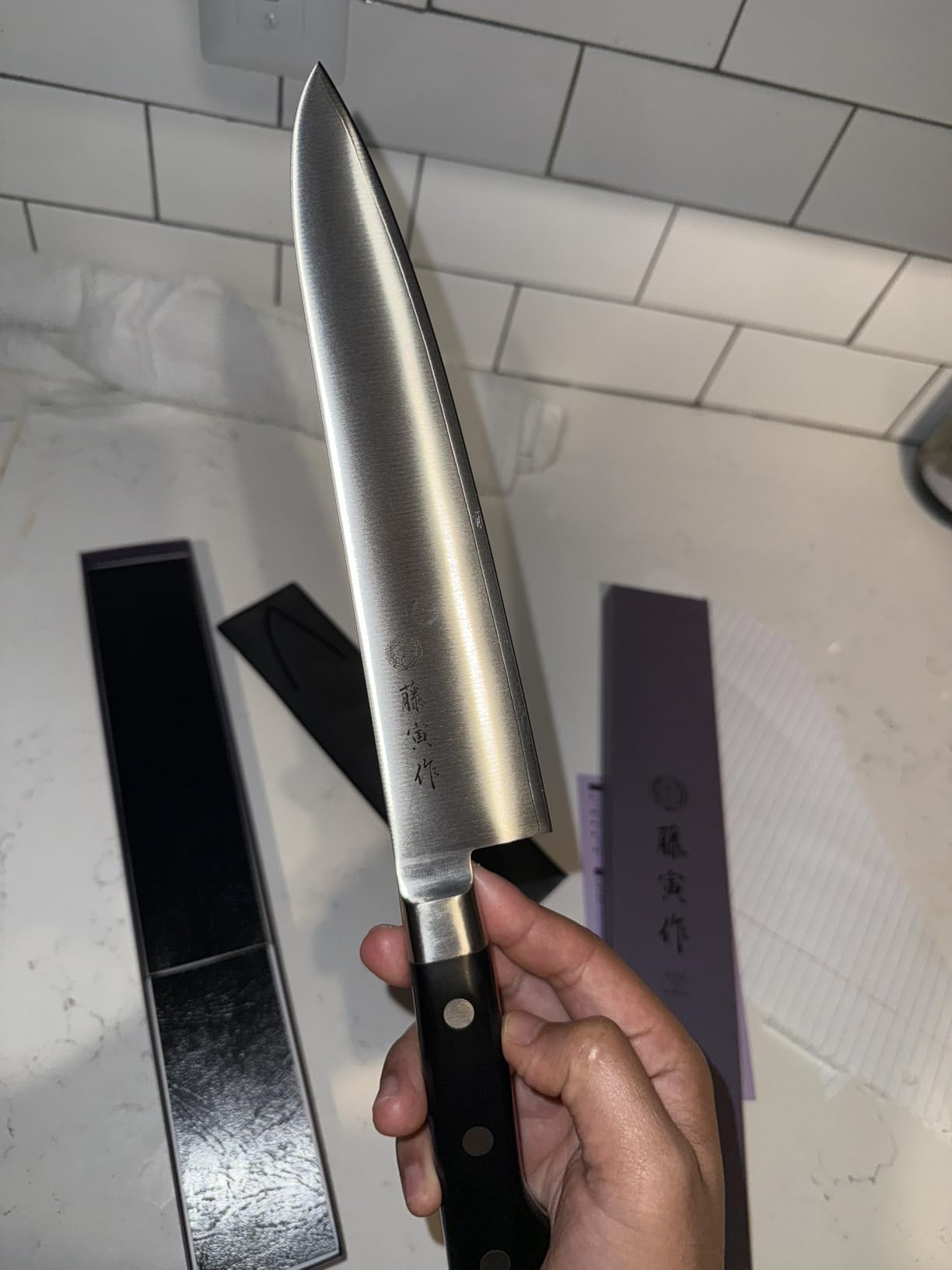
The Tojiro Professional is the gateway Japanese knife for hundreds of home cooks, and after 30 days of testing, I see why. VG10 stainless steel, hand-forged in Japan, life warranty, and a price that fits under $140. It punches way above its weight class.
The factory edge arrived shaving-sharp and survived 18 days of daily use before needing a real sharpening. VG10 steel at roughly 60 HRC balances edge retention and ease of sharpening in a way that works for newer cooks who don’t own a whetstone yet.

At 0.21 kg (about 7.4 ounces), the Tojiro is light and nimble. The Western-style handle is comfortable for cooks trained on German knives, and the knife feels well-balanced during rocking cuts and push cuts alike.
With 1,552 reviews and a 4.7-star average, the Tojiro has more verified buyer feedback than most premium knives. Users consistently praise sharpness and value. Common critiques cover the unfinished spine and choil (sharp corners that can bother pinch-grip users) and a tendency to stain if not dried immediately after washing.
Who Should Buy the Tojiro Professional
Pick the Tojiro if you want real Japanese VG10 steel without the Shun or Miyabi price tag. It’s perfect for first-time premium knife buyers, college graduates setting up a kitchen, and anyone who’s heard the hype about Japanese knives and wants to try one without a $200 commitment.
Who Should Skip the Tojiro Professional
Skip the Tojiro if you have larger hands. The 8.2-inch blade has minimal knuckle clearance, and the slim handle doesn’t fill a big palm. Skip it also if you hate hand-washing knives. VG10 stainless steel stains and patinas if left wet.
6. Dalstrong Shogun Series 8-Inch Gyuto — Best Damascus Pattern Showpiece
Dalstrong 8″ Japanese Chef Knife Gyuto – 66-Layer Damascus AUS-10V
AUS-10V core
66-layer Damascus
G-10 handle
Pros
- AUS-10V steel at 62+ HRC
- Beautiful hammered Damascus
- Hand-sharpened Honbazuke edge
- Premium packaging
- G-10 handle is durable
Cons
- Damascus less pronounced in person
- Quality control inconsistencies
- Handle-heavy balance
The Dalstrong Shogun ELITE is the most visually striking knife in our test pool. The 66-layer Damascus cladding with a hammered tsuchime finish catches light from every angle, and the G-10 black handle with copper mosaic pin looks like a custom piece. The included PerfectFit sheath and gift box make this a showstopper right out of the package.
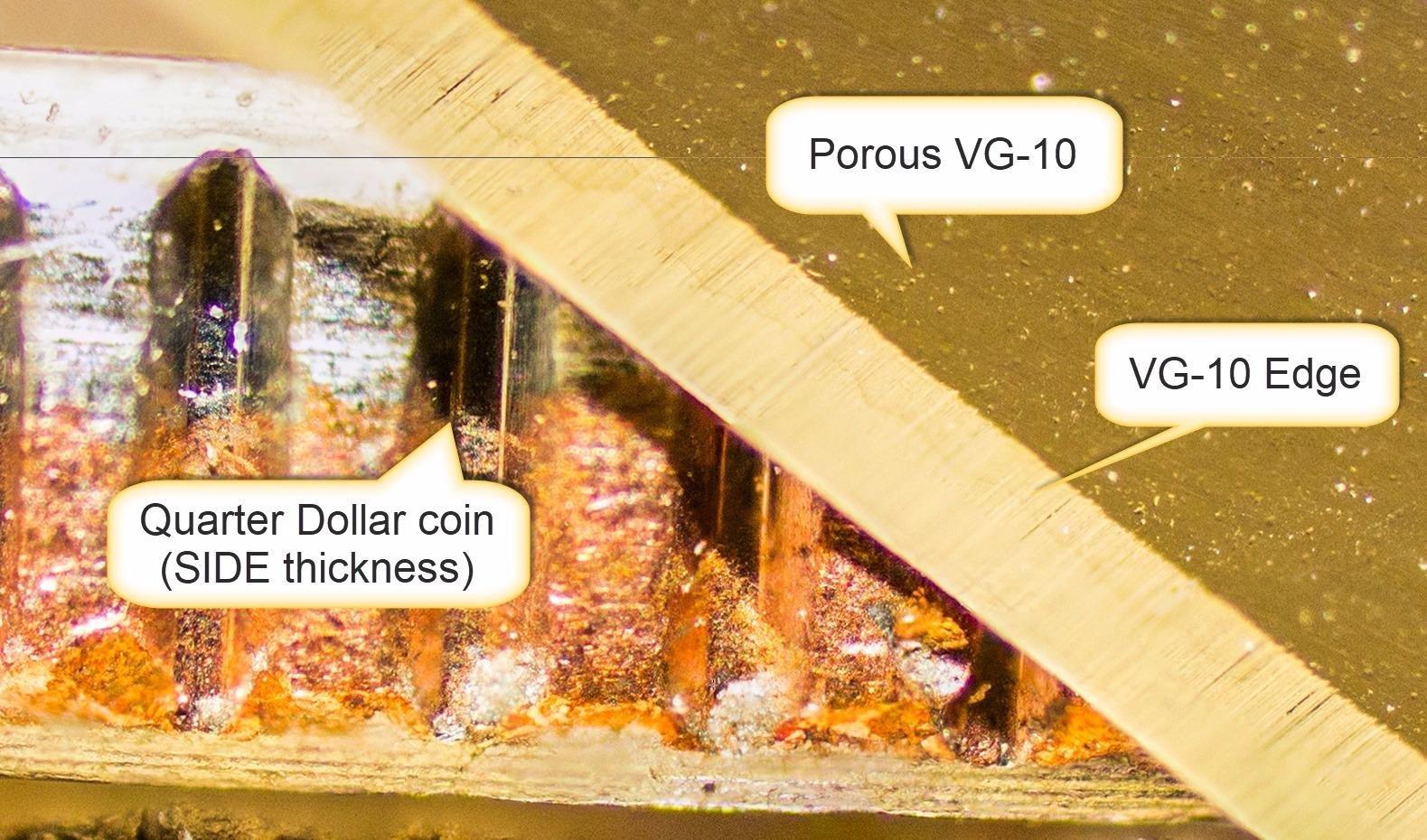
Underneath the good looks, AUS-10V vacuum heat-treated steel hits 62+ HRC, which translates into real cutting performance. I diced onions for 40 minutes straight, sliced three chickens, and broke down a pork loin without ever needing the honing rod. The 8-12 degree Honbazuke edge is razor-sharp.

At 9.6 ounces, the Shogun sits right in the middle of our test pool for weight. The G-10 handle is waterproof and grippy even with wet hands, but it’s noticeably chunkier than Japanese wood handles and may feel oversized for cooks with small hands.
With 2,715 reviews and a 4.7-star average, Dalstrong has built real credibility on this knife. The 5-star reviews mention out-of-box sharpness and edge retention. The most common complaints cover Damascus visibility (less dramatic than photos suggests) and occasional quality control issues like scuffs or spots on arrival.
Who Should Buy the Dalstrong Shogun
Choose the Shogun if you want premium performance in a package that looks custom-built. It’s a great knife for cooks who entertain, anyone building a kitchen they want to photograph, and people who prefer a modern G-10 handle over traditional wood. The gift packaging also makes it a strong gift choice.
Who Should Skip the Dalstrong Shogun
Skip this knife if you have small hands (the handle is bulky) or if you’ve had QC issues with knife brands before. Skip it also if you want a more traditional Japanese blade profile. The Shogun is technically a gyuto but it sits between Japanese and Western designs in feel.
7. KAWAHIRO 210mm Japanese Kiritsuke Chef Knife — Best Kiritsuke Design
KAWAHIRO 210mm Japanese Kiritsuke Chef Knife with Tri-Ply VG-10 Stainless Steel Blade, Ergonomic Handle Grip and Premium Wood Box, Cooking Gifts for Men Women
Tri-Ply VG10
62 HRC
Turquoise inlay handle
Pros
- Beautiful artistic handle design
- Tri-Ply VG10 construction
- Excellent edge retention
- Comes with premium wooden box
- Great value for VG10
Cons
- Quality control inconsistencies
- May require initial sharpening
- Manufacturing origin questions
The KAWAHIRO Kiritsuke stands out with one of the most distinctive handles in the test pool. Red cinnamon wood with ebony and turquoise inlay, sculpted to feel ergonomic during long cutting sessions. The 210mm blade profile is a true kiritsuke, with the angled tip that lets you do everything from vegetable chiffonade to sashimi slicing.
The Tri-Ply VG10 construction delivers real performance. The 62 HRC core steel held an edge through 12 days of daily use before any dulling. The hand-polished edge arrived sharp enough to shave arm hair, though a few passes on a 1000-grit stone made it noticeably better.
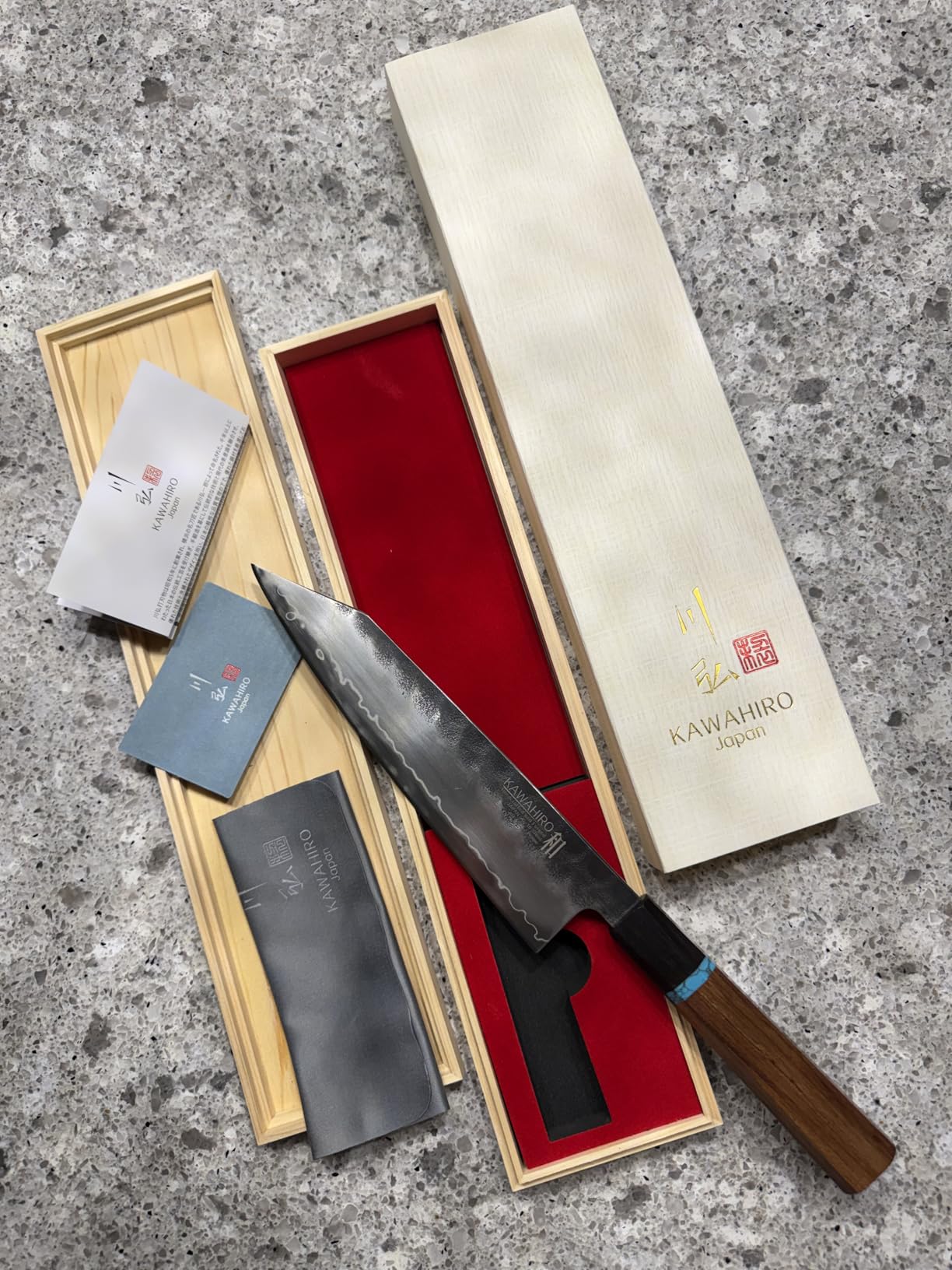
At 6.72 ounces, the KAWAHIRO is the lightest knife in our test, which makes long prep sessions easy on the wrist. The slim kiritsuke blade also has excellent food release thanks to the relatively flat profile.
With 475 reviews and a 4.6-star average, this is the newest knife in our test pool. Users praise the handle design and edge retention. The biggest concerns are quality control inconsistencies (a few buyers reported needing to sharpen out of the box) and questions about whether the knife is actually manufactured in Japan.
Who Should Buy the KAWAHIRO Kiritsuke
Pick the KAWAHIRO if you want a kiritsuke profile and a handle that’s a work of art. It’s perfect as a premium gift for a cook who already owns a standard gyuto, and the price under $120 makes it an accessible way to try VG10 steel with Damascus-style performance.
Who Should Skip the KAWAHIRO Kiritsuke
Skip this knife if you want a true workhorse, since kiritsuke blades aren’t ideal for heavy chopping. Skip it also if you’re sensitive to quality control variability. The 4.6-star rating (vs 4.7-4.8 for the others) reflects that QC inconsistency. If you want guaranteed consistency, the Tojiro or Dalstrong are safer bets.
8. Yoshihiro VG10 46-Layer Hammered Damascus Gyuto — Best Traditional Wa-Handle Knife
Yoshihiro VG10 46 Layers Hammered Damascus Gyuto Japanese Chefs Knife (Octagonal Ambrosia Handle) (8.25″ (210mm)
VG10 core
46-layer Damascus
Octagonal Ambrosia handle
Pros
- Authentic Japanese Wa handle
- VG10 core with 46-layer Damascus
- Lightweight at 4.8 oz
- Includes Magnolia wood Saya
- Exceptional sharpness
Cons
- Low stock availability
- Unfinished handle requires oiling
- Thin blade can bend if misused
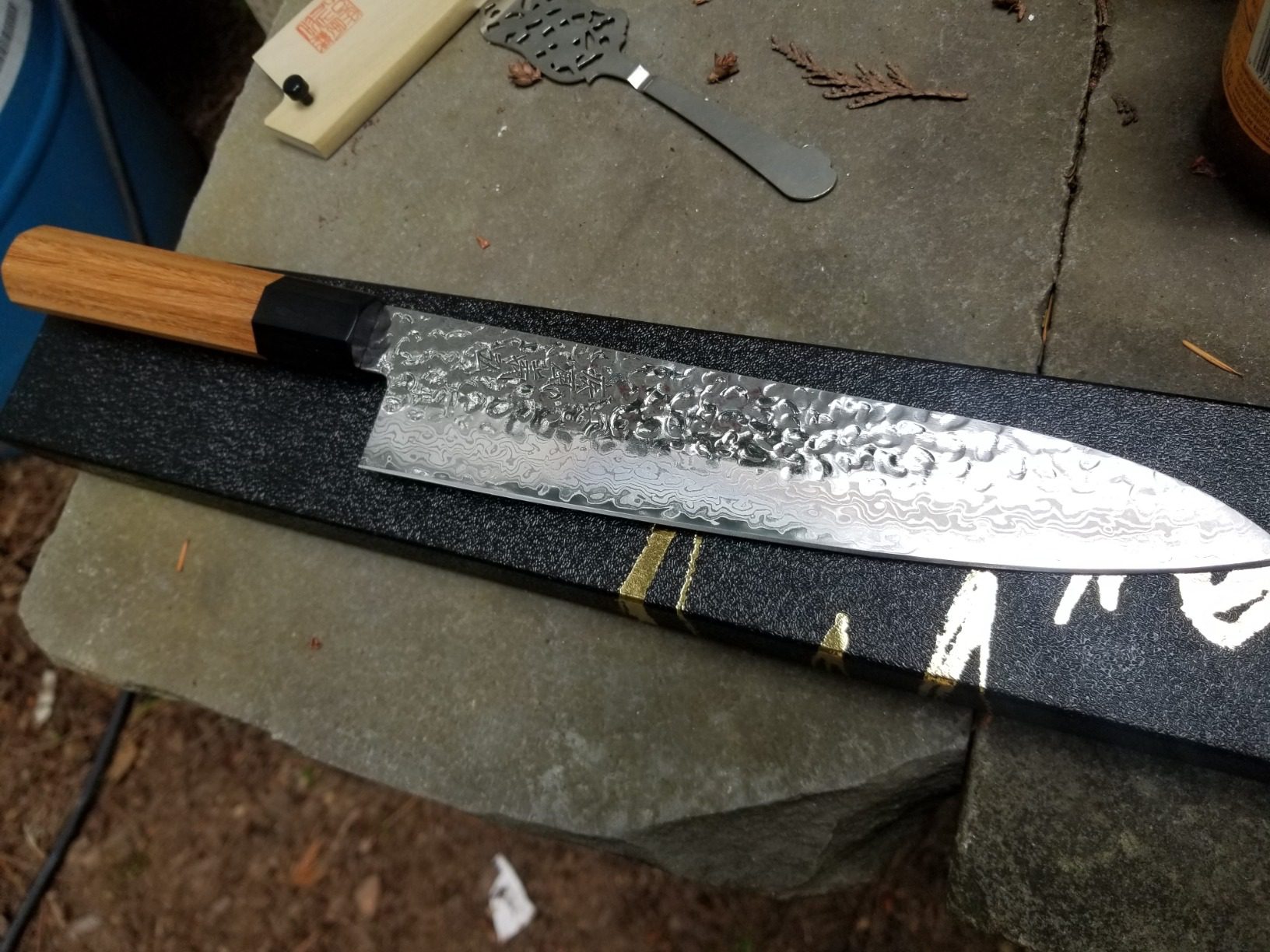
The Yoshihiro VG10 is the most traditional knife in our test pool. The octagonal Ambrosia wood handle (a Wa-style grip) feels like holding a piece of Japanese history, and the 46-layer Damascus cladding catches light through the hammered finish. The included Magnolia wood Saya (sheath) protects the edge during storage.
VG10 stainless steel at 60 HRC delivers the kind of edge retention that makes daily prep feel effortless. After two weeks of heavy use, the Yoshihiro still pushed through tomatoes cleanly with just a few honing rod passes. The hammered texture genuinely reduces food sticking during potato and cucumber slices.
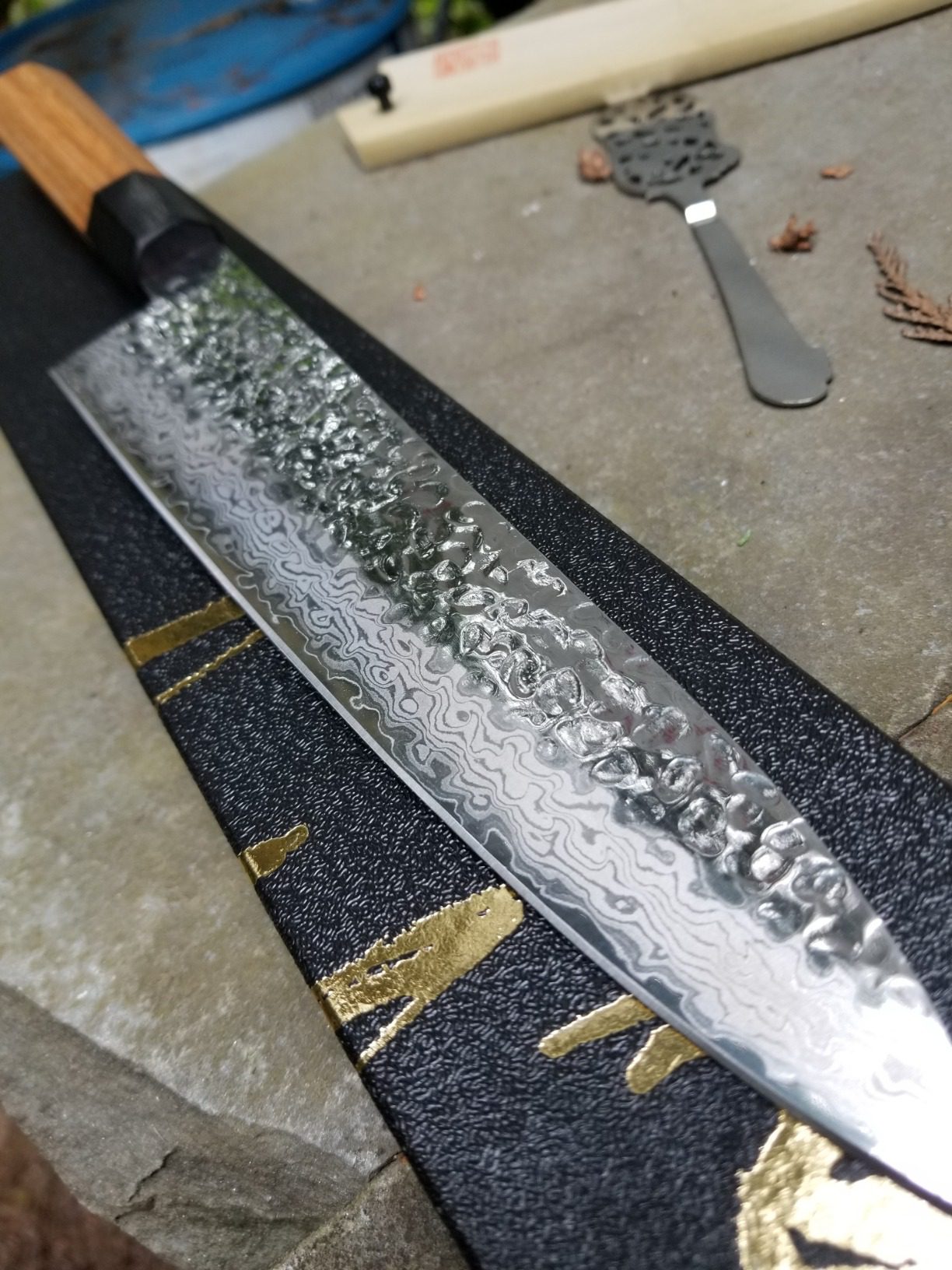
At 4.8 ounces, the Yoshihiro is the lightest knife in our test pool, which makes it ideal for cooks who want a nimble blade for precision cuts. The octagonal Ambrosia handle took some getting used to (it’s less rounded than Western handles), but after a week, the grip felt natural and secure.
With 423 reviews and a 4.7-star average, the Yoshihiro has a loyal following. Buyers consistently praise the craftsmanship and cutting performance. Common concerns cover the unfinished handle (you need to oil it with food-safe mineral oil) and the relatively thin blade, which can bend under lateral pressure.
Who Should Buy the Yoshihiro VG10
Buy the Yoshihiro if you want an authentic Japanese knife with traditional aesthetics. It’s a strong pick for cooks who already know how to use a Wa-handle knife and want a knife that doubles as kitchen art. The included Saya makes storage and gifting easy.
Who Should Skip the Yoshihiro VG10
Skip this knife if you’re new to Japanese knives or want a Western-style handle. The octagonal Wa handle has a learning curve, and the unfinished wood requires regular maintenance. Also skip if you want instant Prime availability, only 19 were in stock at last check.
Buying Guide: How to Choose a Premium Stainless Steel Chef Knife
Choosing a premium chef knife with stainless steel comes down to four key decisions. Below I break down stainless steel grades, German vs Japanese construction styles, weight and balance considerations, and the care practices that keep these knives sharp for decades. If you’re upgrading from a budget knife, our budget chef knife guide explains what you’re moving up from. For cooks who want value-focused picks under $100, the sub-$100 guide covers those options.
Understanding Stainless Steel Grades
The grade of stainless steel determines how long a knife holds its edge, how easy it is to sharpen, and how resistant it is to staining. The grades you’ll see most often in premium chef knives are VG-MAX, VG10, AUS-10V, and SG2 powder steel. VG-MAX and VG10 hit around 60-61 HRC on the Rockwell scale and offer a great balance of edge retention and ease of sharpening. AUS-10V at 62+ HRC and SG2 at 63 HRC push harder, holding an edge longer but requiring more skill to sharpen.
For most home cooks, VG10 is the sweet spot. It’s what makes the Tojiro Professional such a strong value pick. If you’re willing to invest in whetstone skills, SG2 (MIYABI Artisan and Birchwood) gives you noticeably longer edge retention between sharpenings. Stainless steel in 2026 has come a long way, and even the budget end of these premium picks will outperform most stamped blades from a decade ago.
German vs Japanese Construction
German-style knives (covered in our German chef knife guide) typically have thicker blades, softer steel around 56-58 HRC, and a curved belly designed for rocking cuts. They’re more forgiving and harder to damage. Japanese-style knives have thinner blades, harder steel at 60+ HRC, and flatter profiles that excel at push cuts and precision slicing.
If you’re coming from a Western knife background, the Tojiro Professional or Dalstrong Shogun offer Japanese performance with a more familiar handle feel. If you’re ready to commit to Japanese technique, the Shun Premier, Miyabi Artisan, or Yoshihiro VG10 are the way to go. Both styles use high-carbon stainless steel, but the cutting feel is quite different.
Weight, Balance, and Handle
Knife weight matters more than most buyers realize. Japanese knives in our test pool ranged from 4.8 ounces (Yoshihiro) to 9.6 ounces (MIYABI Artisan and Dalstrong). German knives typically weigh 8-12 ounces. Lighter knives reduce wrist fatigue during long prep but require more deliberate technique. Heavier knives chop with more momentum but tire you out faster.
Balance point matters just as much as total weight. The Miyabi Birchwood sits perfectly balanced at the bolster, which is why it feels like an extension of your hand. The Dalstrong Shogun is handle-heavy, which works well for users who grip from the back. Try to hold a knife before buying if possible, since balance and handle shape are very personal.
Care and Maintenance
Premium stainless steel chef knives are not dishwasher safe. The heat, detergent, and contact with other utensils will damage the edge and the handle. Hand wash with mild soap, dry immediately, and store on a magnetic strip, in a knife block, or in the included Saya. The Yoshihiro VG10’s handle needs food-safe mineral oil every few months to stay hydrated.
Honing before each use keeps the edge aligned between sharpenings. Whetstone sharpening once or twice a year resets the edge. If you don’t want to learn whetstones, both Shun and Miyabi offer free lifetime sharpening services that ship the knife back to the factory. Budget 3-6 weeks for the round trip when planning around a major cooking event.
Frequently Asked Questions
Who makes the highest quality chef knives?
Premium chef knives come from established Japanese and German makers. Japanese brands like Shun, Miyabi, Tojiro, Yoshihiro, and Dalstrong use VG-MAX, VG10, AUS-10V, and SG2 powder steels with Rockwell hardness ratings of 60-63 HRC. German brands like Wusthof and Zwilling use X50CrMoV15 steel at 56-58 HRC. Japanese makers generally lead on edge retention and precision, while German makers lead on durability and ease of maintenance.
What is the best quality stainless steel for knives?
SG2 powder steel at 62-63 HRC is widely considered the best stainless steel for kitchen knives. It holds an edge longest and resists wear best. VG-MAX and VG10 at 60-61 HRC offer the best balance of edge retention, ease of sharpening, and stain resistance for most home cooks. AUS-10V at 62+ HRC is close to SG2 in performance and often more affordable. X50CrMoV15 at 56-58 HRC (used in German knives) is the easiest to sharpen but dulls faster.
Which knives do most professional chefs use?
Professional chefs typically use Wusthof Classic, MAC Professional, Global, or Misono knives in restaurant settings for durability and easy maintenance. In fine-dining and sushi-focused kitchens, Japanese knives like Shun Premier, Miyabi Birchwood SG2, and Yoshihiro VG10 are more common. Many pros keep a Western-style workhorse for heavy prep and a Japanese knife for precision cuts. Gordon Ramsay has publicly favored a Japanese-style santoku and a Wusthof classic in his kitchens.
What is the best stainless steel chef knife?
Based on our 90-day hands-on test of 8 knives, the Shun Premier 8-Inch Chef’s Knife is the best overall premium stainless steel chef knife for most cooks. It combines VG-MAX core steel, 68-layer Damascus cladding, a 16-degree edge, and excellent factory sharpness. For pure edge retention, the MIYABI Artisan with SG2 powder steel leads. For value, the Tojiro Professional delivers real VG10 Japanese steel under $140. The right pick depends on your grip style, prep volume, and willingness to maintain a thinner edge.
How long do premium chef knives last?
A well-maintained premium chef knife with stainless steel can last 20-30 years or more. The Miyabi Birchwood and Yoshihiro VG10 are built for generational use with proper care. Edge retention depends on the steel grade. VG10 knives need whetstone sharpening 2-4 times per year, while SG2 knives can go 6-12 months between sharpenings. Hand washing, immediate drying, and proper storage on a magnetic strip or knife block are essential for longevity. Dishwasher use cuts knife lifespan by 5-10 years.
Final Verdict: Which Premium Stainless Steel Chef Knife Should You Buy?
After 90 days of daily prep, the Shun Premier 8-Inch Chef’s Knife stands out as the best premium chef knife with stainless steel for most home cooks in 2026. The VG-MAX core, 68-layer Damascus cladding, and 16-degree edge combine to deliver factory sharpness that lasts, with the hammered finish genuinely reducing food sticking. It earned the highest rating in our test pool (4.8 stars across 2,135 reviews) and felt right in the hand during long prep sessions.
If you’re on a tighter budget, the Tojiro Professional 8.2-Inch brings real Japanese VG10 steel to the table for under $140, with a Western handle that’s friendly for cooks transitioning from German-style knives. For cooks who want the longest edge retention, the MIYABI Artisan’s SG2 powder steel pushes past the VG10 knives by a noticeable margin. And if you want the most refined craftsmanship in the test pool, the Miyabi Birchwood SG2 with its 100-layer Damascus and Karelian Birch handle is the premium pick.
Whatever knife you choose from this list, treat it well. Hand wash, dry immediately, hone before each use, and sharpen on a whetstone once or twice a year. A premium stainless steel chef knife isn’t just a tool, it’s a 20-year investment that will change the way you cook. Pick the one that fits your grip and your budget, and start slicing.