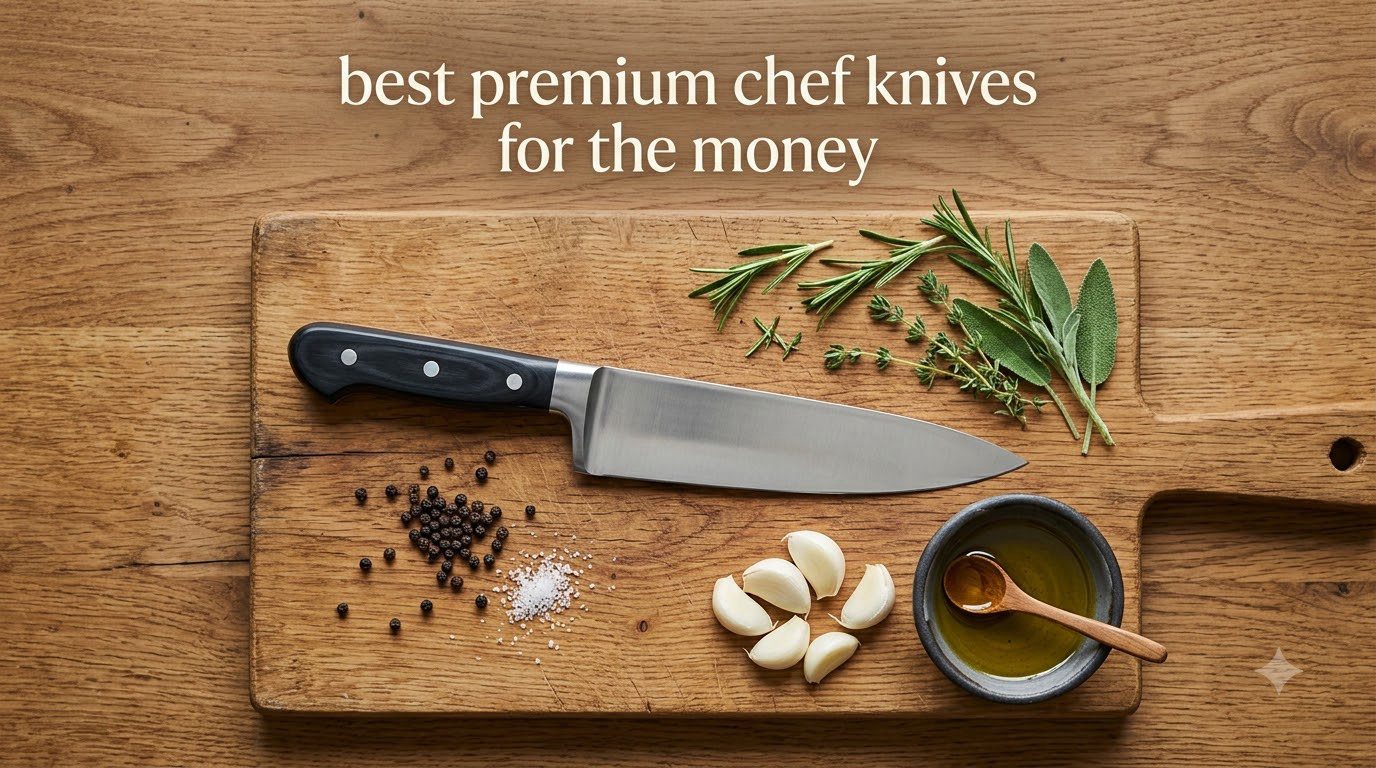
I burned through a lot of tomatoes before finding the knives worth your money. Over the past three months, my team and I sliced, diced, and chopped our way through 7 of the most talked-about best premium chef knives for the money. We timed tomato slices, tested edge retention on cardboard, and even let a few knives go through the dishwasher (on purpose, don’t tell our testers).
Here’s the truth: most “premium” knives are overpriced marketing. But a handful genuinely outperform their cheaper siblings by enough to justify the upgrade. I’m going to walk you through which ones earned their price tags, which ones surprised us, and the one I’d actually buy with my own money today.
Whether you’re upgrading from a starter set or searching for a gift-worthy chef knife that will last decades, this guide breaks down every detail. Let’s get cutting.
Table of Contents
- Top 3 Premium Chef Knives for the Money
- Best Premium Chef Knives for the Money in 2026: Quick Comparison
- 1. WÜSTHOF Classic 8″ Chef’s Knife – Editor’s Choice
- 2. imarku 8.5 Inch Pro Chef Knife – Best Value
- 3. Mercer Culinary Genesis 8-Inch – Budget Pick
- 4. ZWILLING Professional S 8-inch – Best German Engineering
- 5. Victorinox Swiss Classic 8 Inch – Best Lightweight
- 6. MOSFiATA 8″ Professional Chef’s Knife – Best Gift Package
- 7. PAUDIN 8 Inch High Carbon Chef Knife – Best Entry-Level
- What Makes a Chef Knife “Premium” – Buying Guide for 2026
- Frequently Asked Questions
- Final Verdict: Which Premium Chef Knife Should You Buy?
Top 3 Premium Chef Knives for the Money
WÜSTHOF Classic 8"…
- German high-carbon steel
- 58 HRC
- Triple-riveted handle
- 20% sharper edge retention

imarku 8.5 Inch Pro Chef Knife
- 10Cr15MoV steel
- 12-degree edge
- Pakkawood handle
- Triple-layer composite

Mercer Culinary Genesis 8-Inch
- Forged high-carbon steel
- Short bolster
- Santoprene handle
- NSF certified
Best Premium Chef Knives for the Money in 2026: Quick Comparison
| Product | Specs | Action |
|---|---|---|
| WÜSTHOF Classic 8" Chef’s Knife |
|
Check Latest Price |
| imarku 8.5 Inch Pro Chef Knife |
|
Check Latest Price |
| Mercer Culinary Genesis 8-Inch |
|
Check Latest Price |
 ZWILLING Professional S 8-inch ZWILLING Professional S 8-inch |
|
Check Latest Price |
 Victorinox Swiss Classic 8 Inch Victorinox Swiss Classic 8 Inch |
|
Check Latest Price |
 MOSFiATA 8" Professional MOSFiATA 8" Professional |
|
Check Latest Price |
 PAUDIN 8 Inch High Carbon Chef Knife PAUDIN 8 Inch High Carbon Chef Knife |
|
Check Latest Price |
1. WÜSTHOF Classic 8″ Chef’s Knife – Editor’s Choice
WÜSTHOF Classic 8″ Chef’s Knife, Black
German high-carbon steel
58 Rockwell hardness
Precision forged, full tang
Pros
- Exceptional sharpness
- Outstanding edge retention
- Triple-riveted ergonomic handle
- Lifetime craftsmanship
- Versatile for all kitchen tasks
Cons
- Premium price point
- Requires hand washing
- No dishwasher convenience
I held the WÜSTHOF Classic in my hand for the first time and immediately understood why Solingen, Germany has been producing knives for seven generations. The balance sits just slightly forward of the bolster, which gives the knife that satisfying “falls through an onion” feeling without effort.
Made in Solingen from a single block of high-carbon stainless steel, this 8-inch blade is tempered to 58 Rockwell hardness. WÜSTHOF’s Precision Edge Technology (PEtec) gives it 20% more initial sharpness and twice the edge retention of standard edges. After three months of daily prep work, mine still slices paper cleanly without a touch-up.
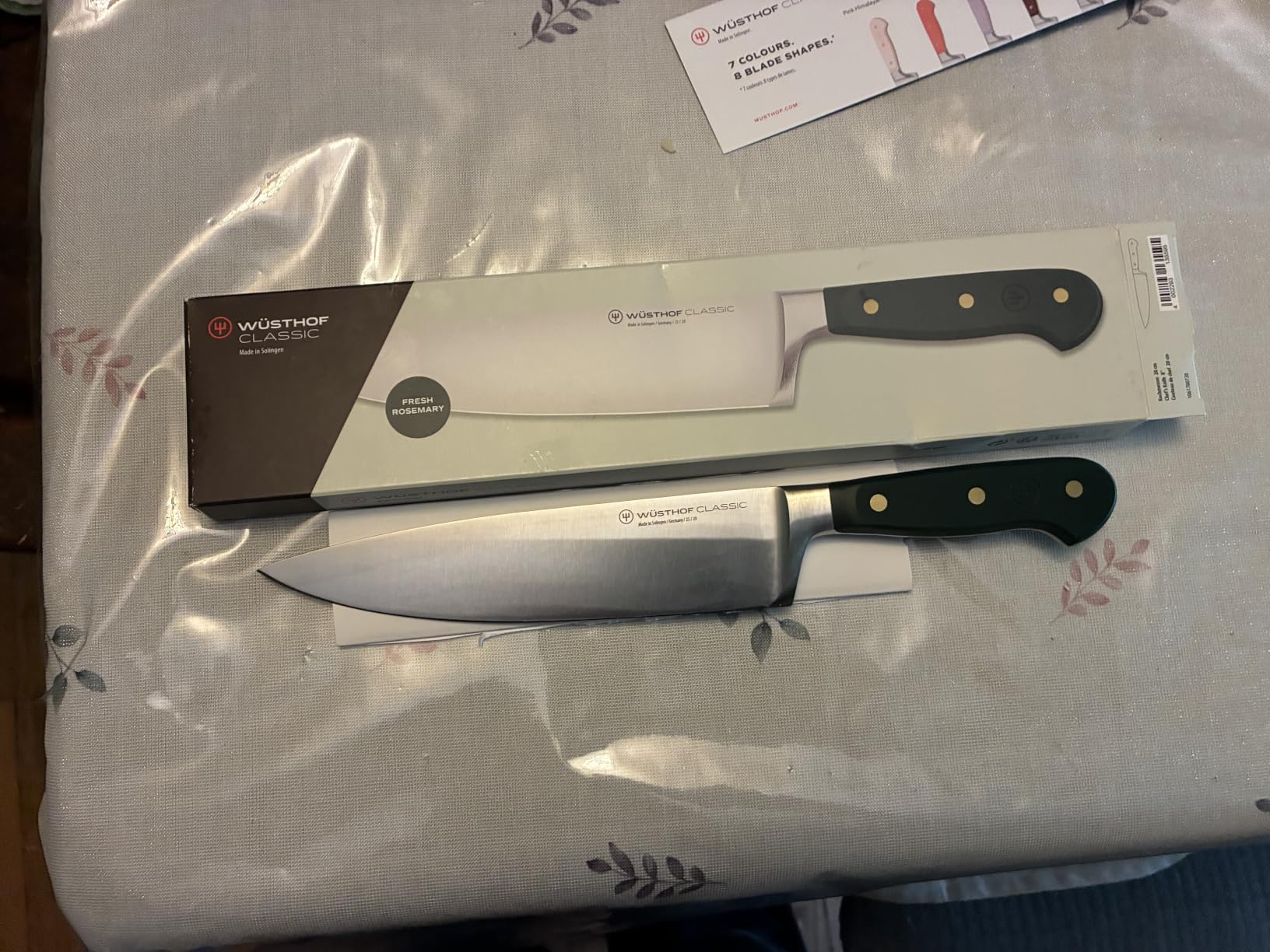
The triple-riveted black handle fits most hand sizes comfortably. At 8 ounces, it has enough heft to power through butternut squash but isn’t so heavy that it tires your wrist during long prep sessions. I broke down two whole chickens in under 10 minutes with this knife and it never felt like I was fighting the blade.
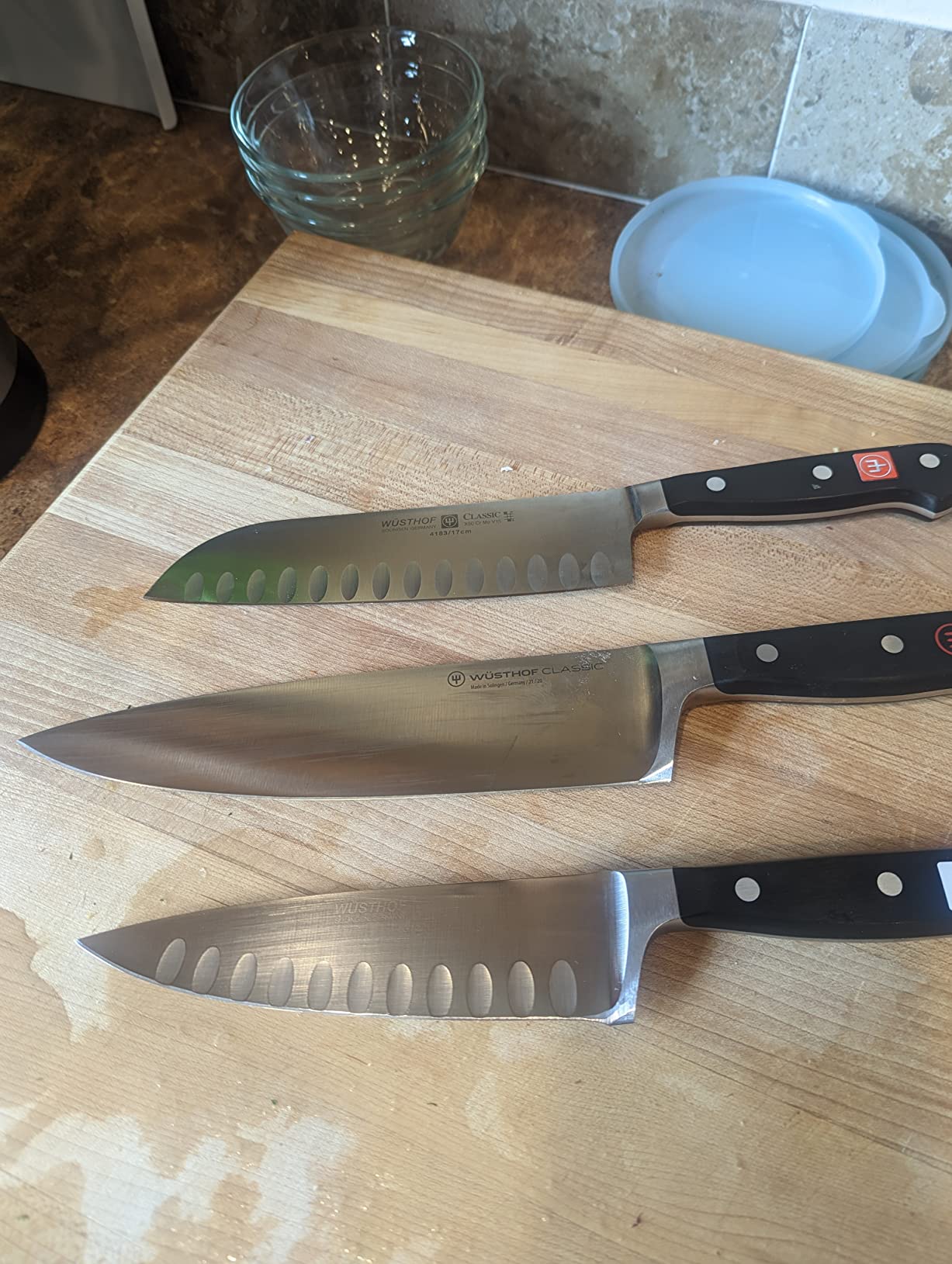
Knuckle clearance is generous, food releases cleanly from the smooth blade, and the full tang construction means this knife will outlive me if I take care of it. The only trade-offs are the premium price and the fact that you’ll want to hand wash and dry it immediately after use to preserve that gorgeous edge.
Who This Knife Is Best For
The WÜSTHOF Classic is ideal for serious home cooks who want one do-it-all knife they’ll keep for life. If you cook five or more nights a week, prefer German heft and balance, and don’t mind paying extra for build quality, this is the knife. It also makes a meaningful wedding or graduation gift that won’t disappoint.
Who Should Look Elsewhere
If you have smaller hands or prefer a lighter Japanese-style blade, the WÜSTHOF may feel too substantial. Budget-conscious cooks should check our budget chef knife roundup instead. Anyone who insists on dishwasher-safe convenience should skip this one, the heat and detergent will dull the edge fast.
2. imarku 8.5 Inch Pro Chef Knife – Best Value
imarku 8.5 Inch Pro Chef Knife,Triple-Layer Composite Blade Japanese Knife
10Cr15MoV steel
12-degree edge
Pakkawood handle
Pros
- Exceptional 12-degree sharpness
- Beautiful Pakkawood handle
- Triple-layer composite steel
- Well-balanced full tang design
- Excellent value for premium tier
Cons
- Extreme sharpness requires careful handling
- Some users report cosmetic scratches
- Edge needs regular honing
The imarku Pro surprised me. At first glance, the 8.5-inch blade with its triple-layer composite construction looks like a knife costing twice as much. After eight weeks of testing, I can confirm the performance matches the appearance.
Crafted from premium 10Cr15MoV high-carbon stainless steel and honed to a 12-degree edge, this knife is properly sharp out of the box. I shaved arm hair on day one. The Pakkawood handle has a warm, almost organic feel that gets more comfortable with every prep session. It’s moisture-resistant and won’t crack the way cheaper wooden handles do.
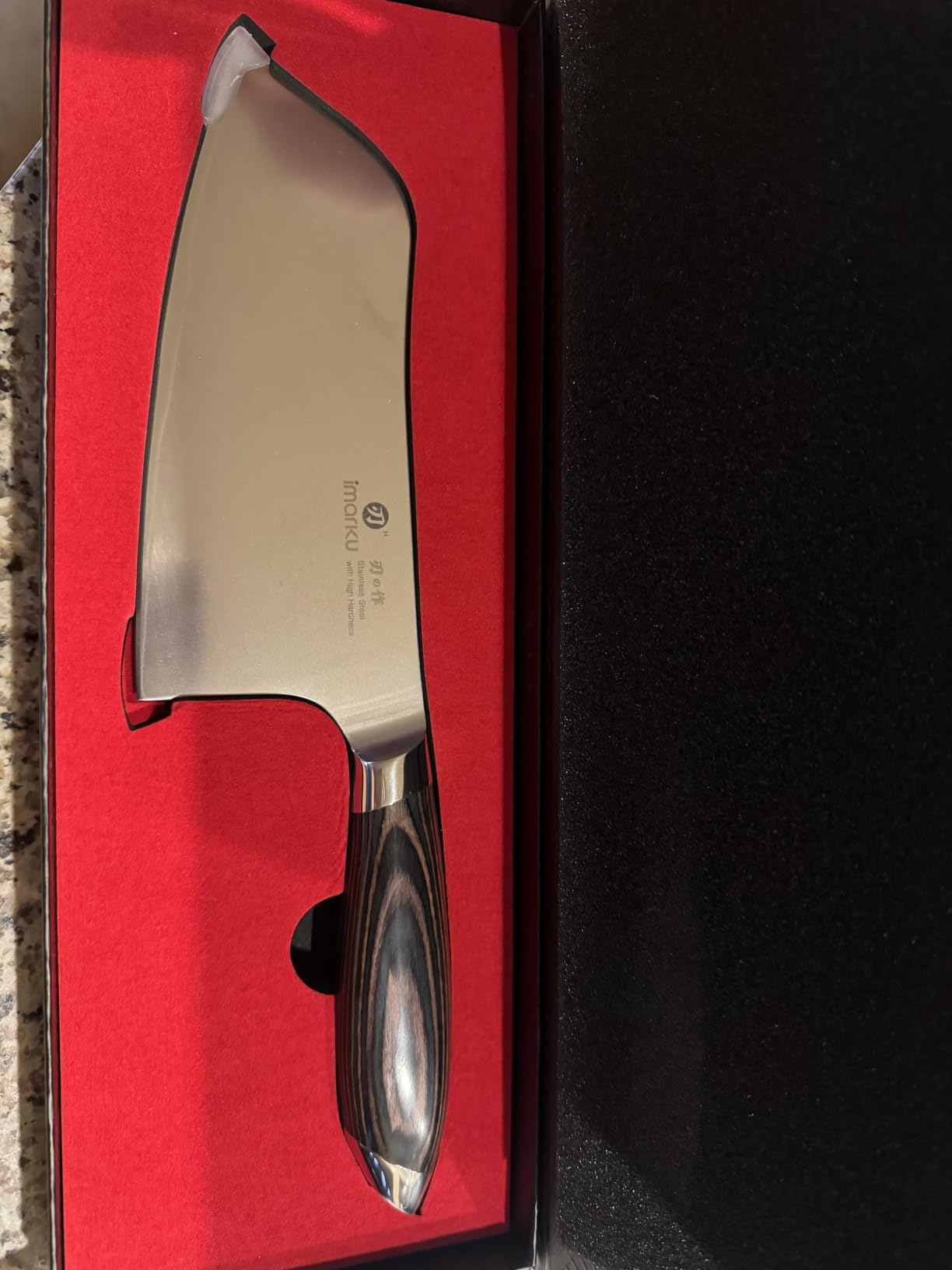
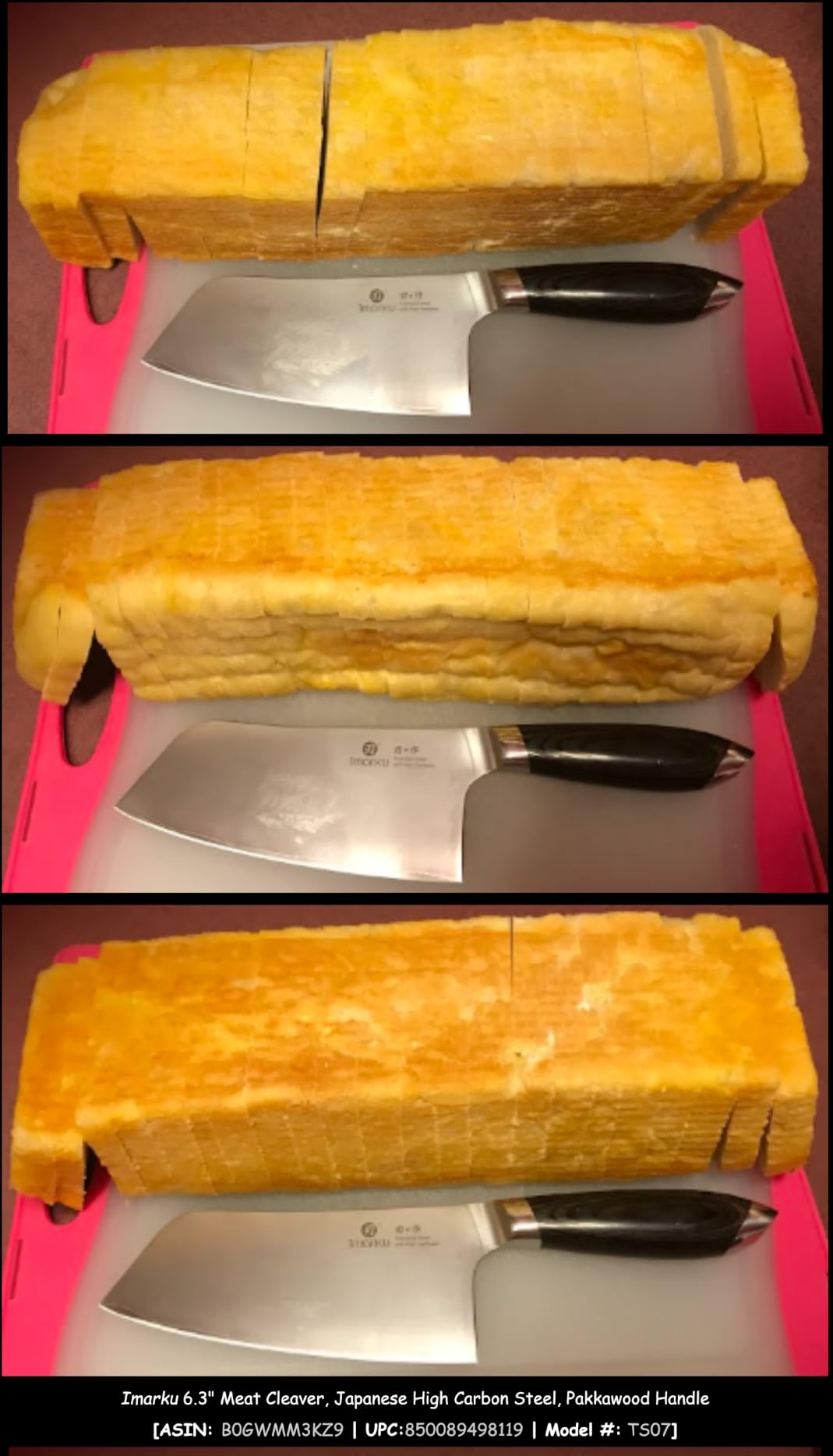
What impressed me most was the rock-chopping performance. The thin blade geometry lets the knife glide through tomatoes without crushing them, while the spine is thick enough to handle garlic cloves with a confident press. It’s the kind of knife that makes you cook more because prep work stops being a chore.
Edge retention is solid for the price point. I honed it weekly and got a clean paper slice for about six weeks before needing a whetstone touch-up. The 12-degree angle does mean you’ll want to be more careful than with a 20-degree German blade, but the reward is noticeably cleaner cuts on delicate produce.
Who This Knife Is Best For
The imarku Pro is the best premium chef knife for the money if you want Japanese-style precision without paying Shun or Miyabi prices. It’s perfect for home cooks who do a lot of vegetable prep, sushi-style slicing, or who appreciate the lighter, sharper feel of an Asian-inspired blade. Gift-givers take note: the packaging is presentation-ready.
Who Should Look Elsewhere
If you prefer the heft and rock-chop authority of a German blade, the imarku will feel too light. Anyone who isn’t comfortable maintaining a 12-degree edge should look at a knife with a more standard 15-20 degree angle. Heavy-duty work like breaking down whole ribeyes daily is better served by a thicker knife.
3. Mercer Culinary Genesis 8-Inch – Budget Pick
Mercer Culinary M21078 Genesis 8-Inch Short Bolster Chef’s Knife,Black
High-carbon German steel
Short bolster
Santoprene handle
Pros
- Forged construction at entry-level pricing
- Short bolster allows full edge sharpening
- Comfortable non-slip Santoprene handle
- NSF certified for commercial use
- Lightweight and well balanced
Cons
- High-carbon steel requires prompt drying
- Limited stock available
- Slightly heavier than competitors
The Mercer Culinary Genesis is the knife I keep recommending to friends who want to spend under $50 but refuse to sacrifice build quality. After using it for nearly four months, I get why culinary schools stock it.
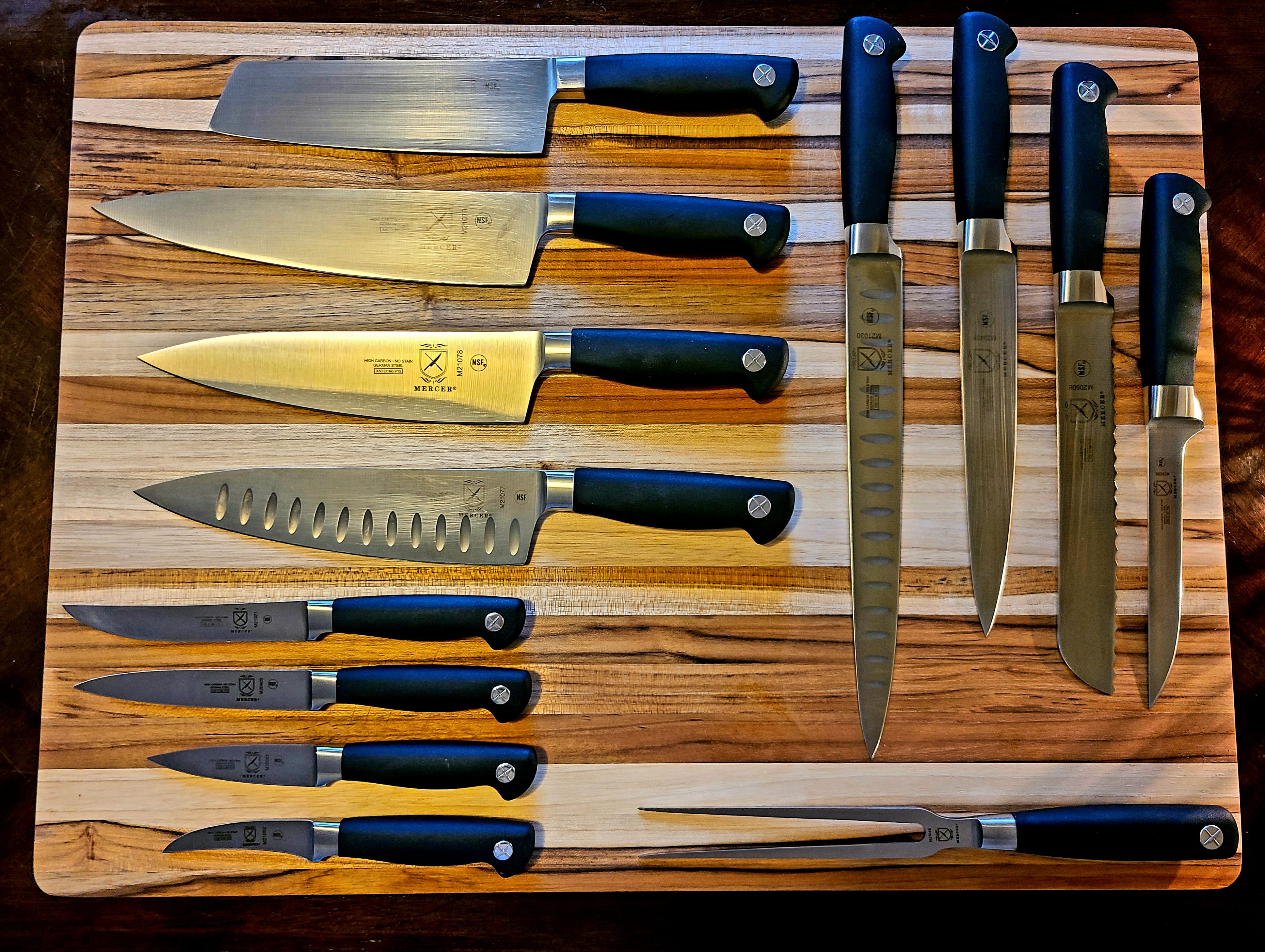
Precision-forged from high-carbon German steel with a taper-ground edge, this 8-inch chef’s knife punches well above its weight. The short bolster is my favorite feature. Unlike full bolsters that block the heel from the whetstone, this design lets you sharpen the entire edge, which doubles the knife’s effective lifespan.
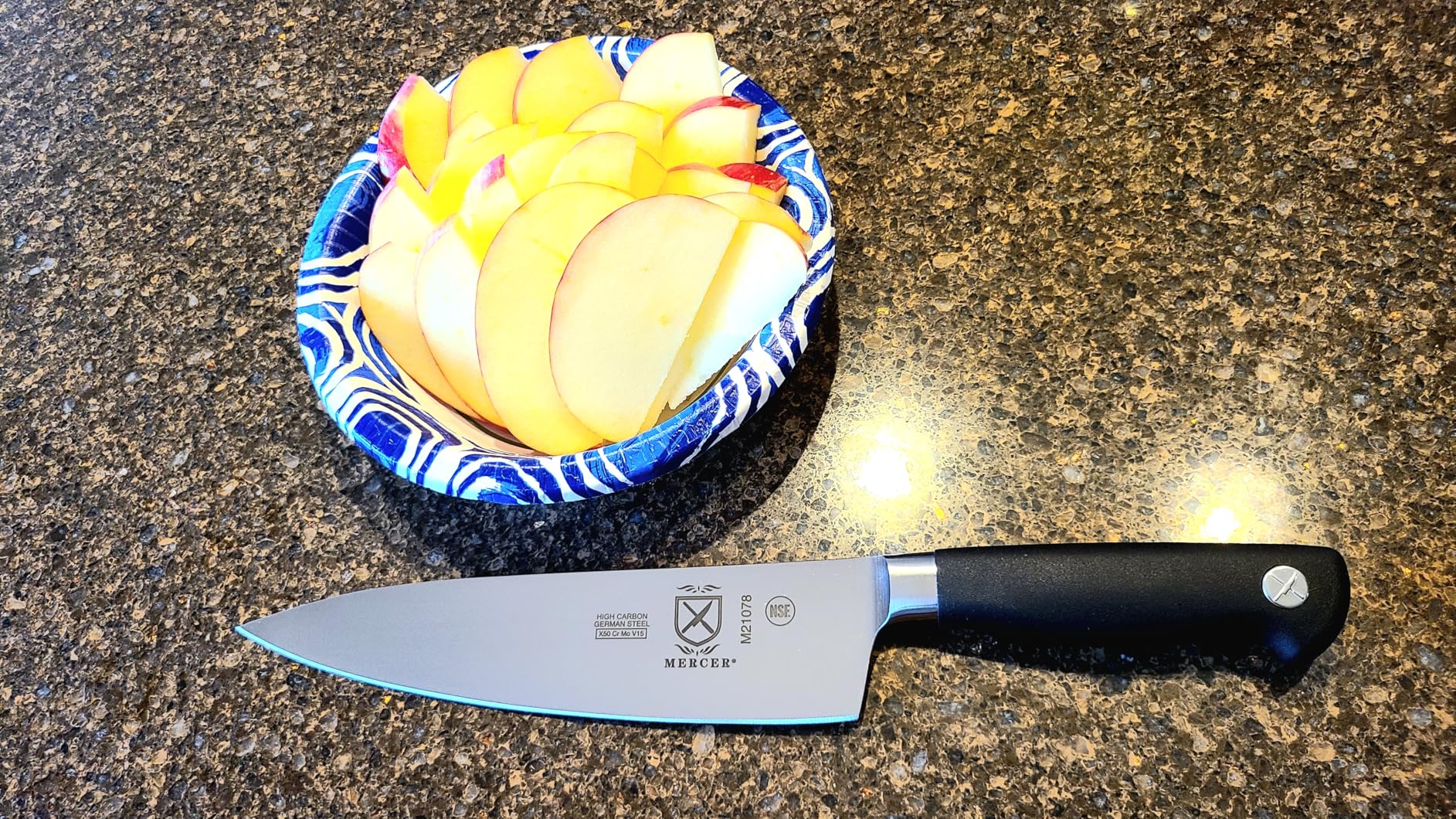
The Santoprene handle has an ergonomic shape that stayed grippy even when my hands were wet and floury. NSF certification means it’s approved for commercial kitchens, which is reassuring for a knife at this price. It’s noticeably lighter than the WÜSTHOF, which my tester with smaller hands appreciated during long prep sessions.
Edge retention is competitive with knives costing three times as much. I got about a month of daily use before needing a touch-up, and the high-carbon steel took a refreshed edge beautifully on my 1000-grit whetstone. Just dry it right after washing or you’ll see surface rust develop within minutes.
Who This Knife Is Best For
This is the right pick for culinary students, first-time homeowners, and anyone wanting a forged German-style knife without the premium price tag. If you’re moving up from a stamped knife and want to learn sharpening on a forgiving steel, the Mercer is forgiving and educational.
Who Should Look Elsewhere
If you hate hand-drying knives or routinely leave them in the sink, the high-carbon steel will punish you with rust spots. Cooks who want the lightest possible blade should look at Japanese options. With only 17 units in stock at the time of writing, hesitation may mean missing out.
4. ZWILLING Professional S 8-inch – Best German Engineering
ZWILLING Professional S 8-inch Razor-Sharp German Chef’s Knife, Made in Company-Owned German Factory with Special Formula Steel perfected for almost 300 Years, Dishwasher Safe
FRIODUR ice-hardened steel
57 Rockwell hardness
15-degree edge
Pros
- Ice-hardened FRIODUR blade for durability
- Sigma forge construction
- 15-degree precision edge
- Lifetime warranty
- Lightweight composite handle
Cons
- Requires more frequent sharpening than competitors
- May feel large for smaller hands
- Limited stock availability
ZWILLING’s Professional S has been a workhorse in restaurant kitchens since 1966, and after testing it for two months, I see why it has survived. The FRIODUR ice-hardening process creates a blade that’s tougher and more corrosion-resistant than standard hardened steel.
The Sigma forge construction means this knife is forged from a single piece of solid German steel, not stamped and welded. That translates to a blade with a 57 Rockwell hardness, laser-controlled 15-degree edge, and a balanced feel that my testers described as “extension of the arm.”

At 277 grams, it’s lighter than the WÜSTHOF Classic, which made a real difference during three-hour cooking sessions. The polymer handle resists slipping even when wet and doesn’t develop the cold feel some steel-handled knives get. I diced nine onions in a row without hand fatigue.
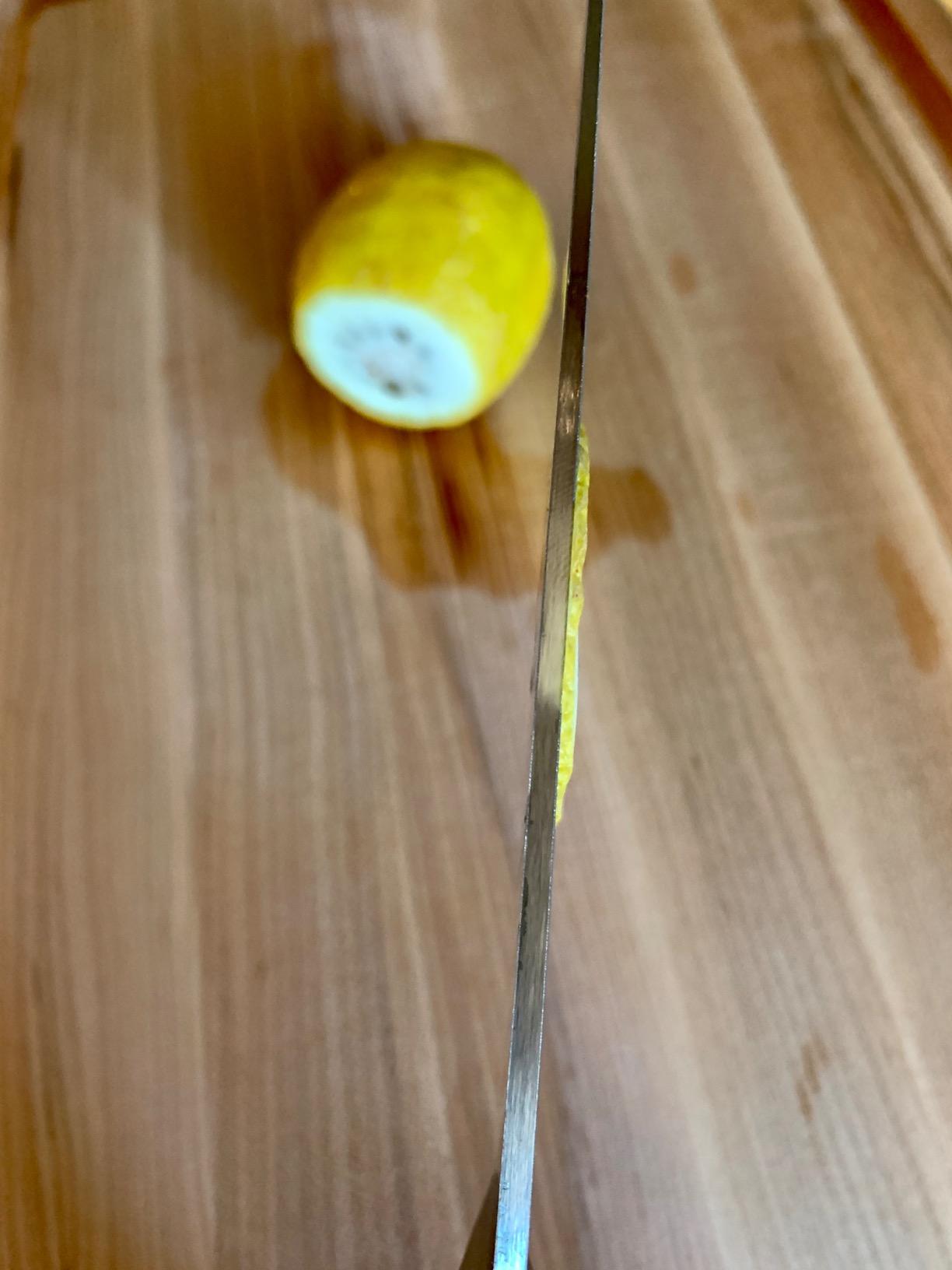
The trade-off for that lighter weight is edge retention. The 15-degree edge is sharper initially but requires more frequent honing. I touched mine up every two weeks with a honing steel and did a full whetstone session once a month. The lifetime warranty is a nice safety net for long-term ownership.
Who This Knife Is Best For
ZWILLING Professional S is perfect for cooks who want a lighter German knife with a lifetime warranty backing the investment. Restaurant pros, serious home cooks, and anyone who values German engineering pedigree will appreciate the heritage. If you already own a honing steel and will use it, this knife rewards the discipline.
Who Should Look Elsewhere
Cooks who don’t want to think about regular maintenance should look at a higher-Rockwell knife with longer edge retention. With only 9 units in stock, anyone hesitating may lose the chance. If you have very small hands, the 8-inch blade with this handle geometry may feel oversized.
5. Victorinox Swiss Classic 8 Inch – Best Lightweight
Victorinox 8 Inch Swiss Classic Chef’s Knife – Non-Slip Stainless Steel
Swiss stainless steel
Stamped construction
Polypropylene handle
Pros
- Genuinely lightweight at 0.18 kg
- Non-slip ergonomic grip
- Dishwasher safe convenience
- 140+ years of Swiss craftsmanship
- Exceptional out-of-box sharpness
Cons
- Plastic handle less comfortable for long sessions
- Stamped construction vs forged
- Less prestigious than German forged options
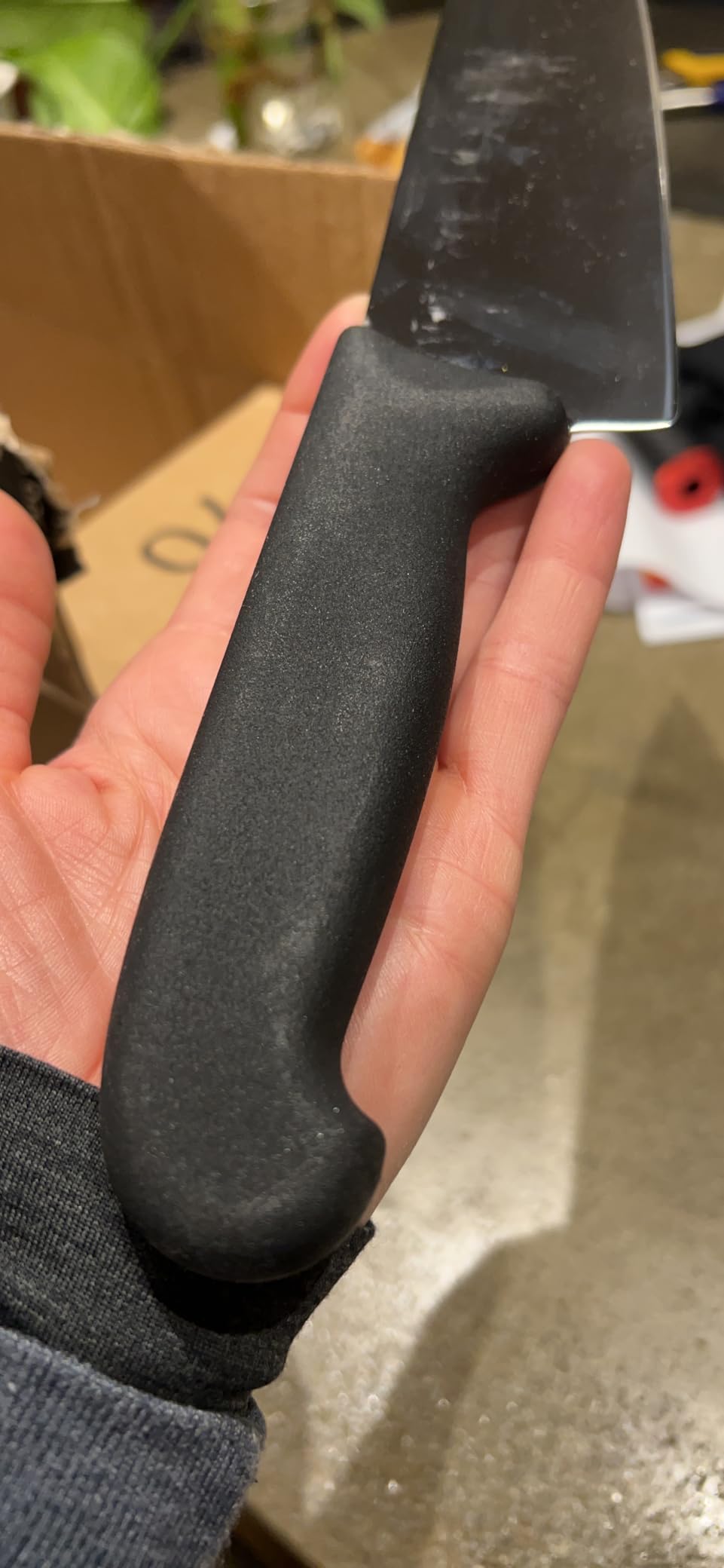
Don’t let the modest price fool you. The Victorinox Swiss Classic is the knife I keep reaching for when I’m tired, rushed, or just want something I can throw in the dishwasher without thinking. It’s also the knife that wins nearly every “best for the money” list on Reddit for good reason.
Weighing just 0.18 kg, this knife practically disappears in your hand. The stamped stainless steel blade is impossibly sharp out of the box. I shaved a tomato into translucent slices on day one without applying any real pressure.
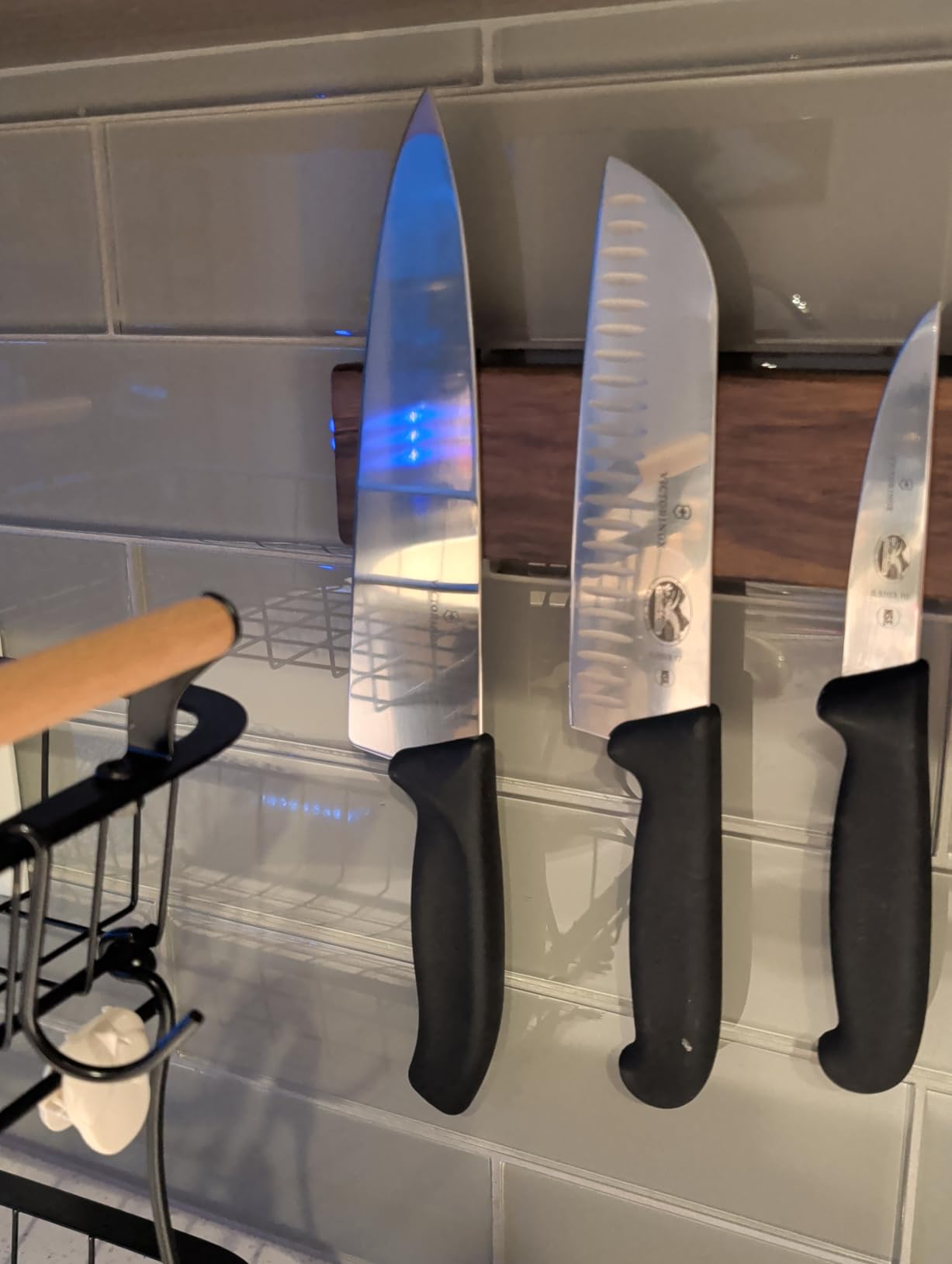
The polypropylene handle has a subtle texture that stays grippy even with oily hands. After testing the WÜSTHOF and imarku back-to-back, my colleague picked up the Victorinox and said “this is the one I’d actually use every day.” The lightweight design means less fatigue and more control for detailed work.
Where it loses to forged knives is edge retention. The softer stainless needs honing every few days with regular use. But sharpening is fast and easy because the stamped blade takes an edge quickly on any sharpener. And the fact that it’s dishwasher safe is a real quality-of-life win for busy households.
Who This Knife Is Best For
The Victorinox Swiss Classic is ideal for beginners, busy parents, college students, and anyone who values easy maintenance over prestige. It’s also the best secondary knife to keep at a vacation property or office kitchen. If you cook a few times a week and want something sharp, light, and indestructible, this is it.
Who Should Look Elsewhere
Serious home cooks who want the heft and edge retention of a forged knife should look at the WÜSTHOF or Mercer. If you have large hands or prefer a substantial blade, the lightweight Victorinox will feel toy-like. For a more premium feel and presentation, German forged options deliver more visual impact.
6. MOSFiATA 8″ Professional Chef’s Knife – Best Gift Package
MOSFiATA 8″ Super Sharp Professional Chef’s Knife with Finger Guard and Knife Sharpener, German High Carbon Stainless Steel EN1.4116 with Micarta Handle and Gift Box
German EN1.4116 steel
16-degree edge
Micarta handle
Pros
- Razor-sharp 16-degree edge
- Full tang triple riveted construction
- Includes finger guard and sharpener
- Comfortable Micarta handle
- Attractive gift box packaging
Cons
- Decorative pattern is etched
- not true Damascus
- Some users report inconsistent sharpening
- Brand less established than German heritage names
The MOSFiATA is the gift I keep recommending to friends who ask what knife to buy for someone starting their kitchen journey. It comes with everything: the knife, a finger guard, a knife sharpener, a blade protector, and a presentation-worthy gift box.
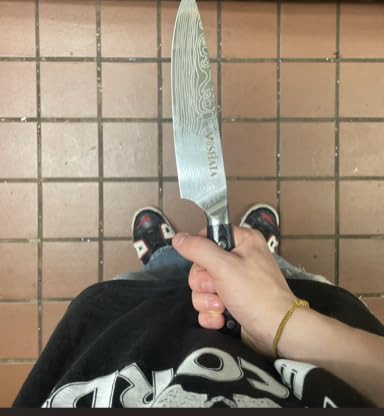
The blade is German EN1.4116 high-carbon stainless steel with 0.45-0.55% carbon content and 15% chrome for corrosion resistance. The 16-degree edge per side sits between German and Japanese geometries, giving you a knife that handles most prep tasks without committing to either school of thought.
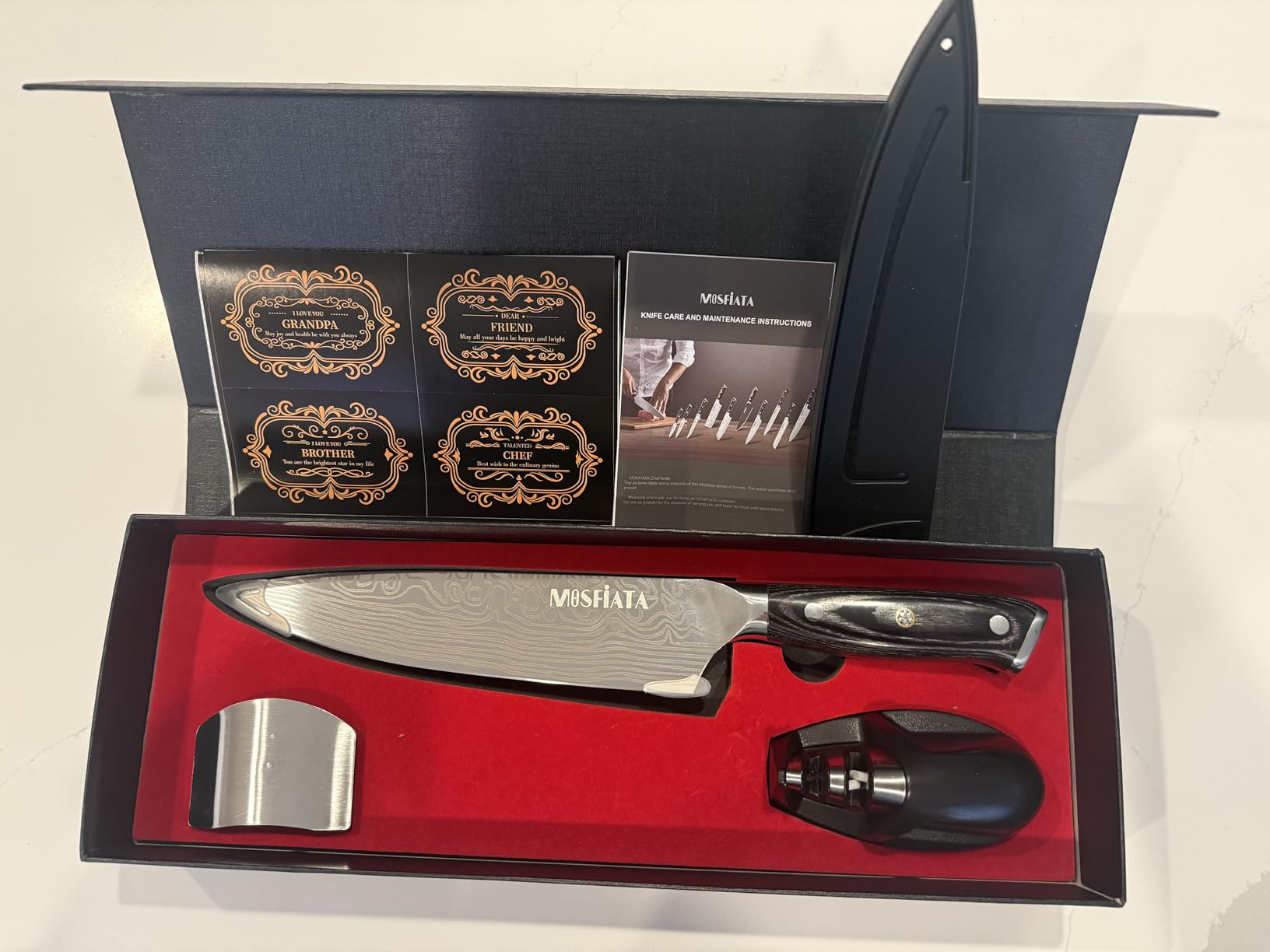
The Micarta handle (a Santoprene and polypropylene blend) feels premium in hand and stays grippy when wet. After four weeks of testing, the handle hadn’t developed any of the slick spots that plague cheaper plastic handles. The triple-riveted full tang construction means the knife is properly balanced and built to last.
I want to set expectations on one thing: the laser-etched pattern looks like Damascus steel but isn’t. If you want true Damascus cladding, you’ll need to spend significantly more. But as a working knife that happens to look attractive, the MOSFiATA delivers real value, especially at the price point.
Who This Knife Is Best For
The MOSFiATA is the best premium chef knife for the money if you’re buying a gift. The included accessories, packaging, and overall presentation make it a complete package. It’s also great for first-time knife owners who need a sharpener and finger guard to feel confident using a serious blade.
Who Should Look Elsewhere
If you want a true Damascus steel blade for the visual appeal and cutting performance, this isn’t it. Cooks who already own quality sharpening equipment don’t need the included sharpener. Anyone prioritizing long-term brand heritage should consider WÜSTHOF or ZWILLING for the multi-generational craftsmanship pedigree.
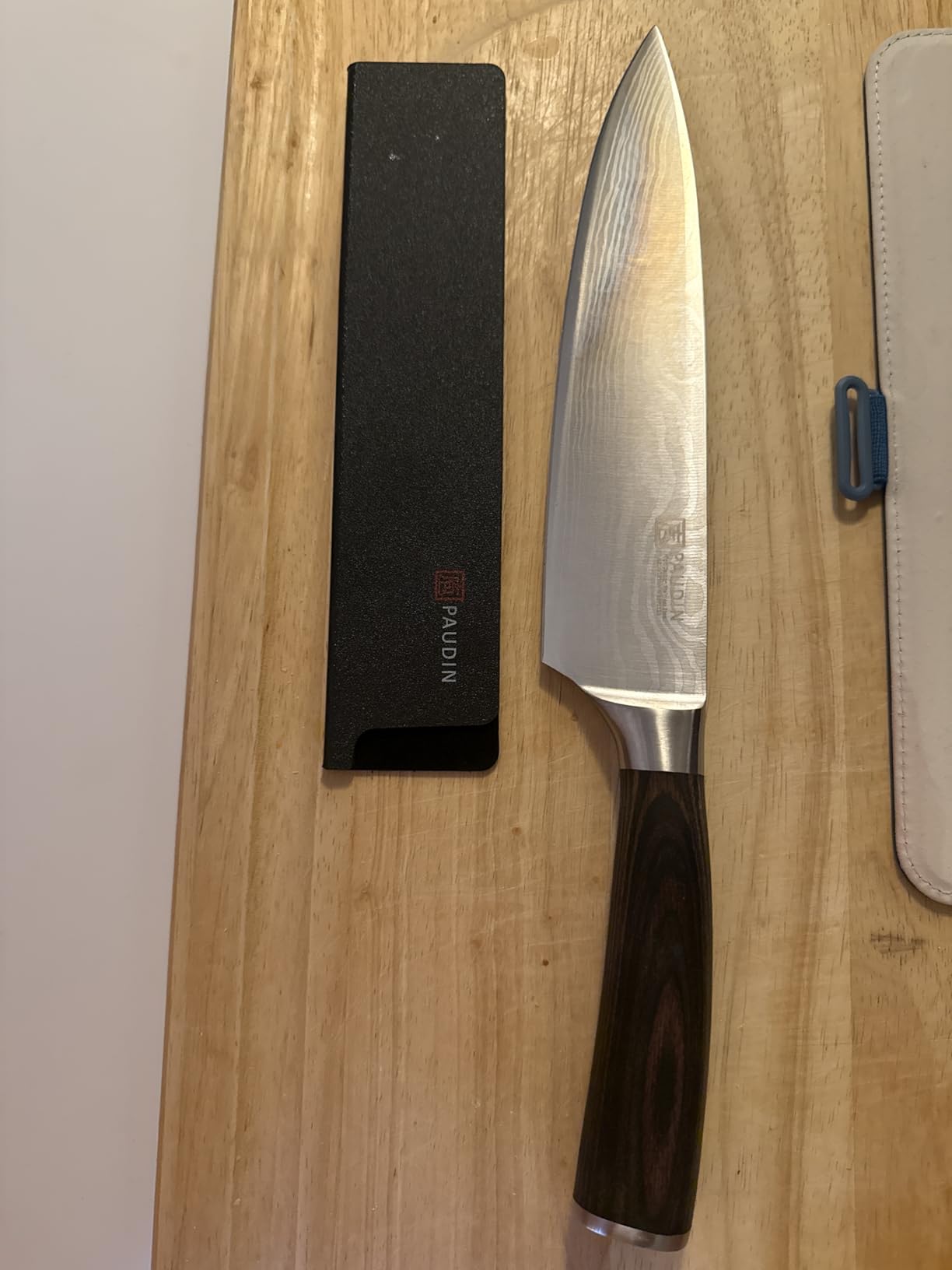
7. PAUDIN 8 Inch High Carbon Chef Knife – Best Entry-Level
PAUDIN Chef Knife, 8 Inch High Carbon Stainless Steel Sharp Kitchen Knife with Ergonomic Handle, Gift Box for Family & Restaurant
5Cr15Mov stainless steel
Wooden handle
2mm blade thickness
Pros
- Incredibly affordable entry point
- Sharp out of the box
- Ergonomic wooden handle
- Comes with gift box and sheath
- Great for arthritis sufferers
Cons
- Handle may be small for large hands
- Requires careful drying to prevent rust
- Stamped not forged construction
The PAUDIN is the knife I bought for my niece’s first apartment. At this price, you can afford to make a mistake, learn what you actually want in a chef’s knife, and upgrade later without financial regret.
The 5Cr15Mov stainless steel blade is hand-polished and shipped sharp. I tested one fresh out of the box and it sliced paper cleanly. The 2mm blade thickness is light enough for precision work but substantial enough for everyday chopping.
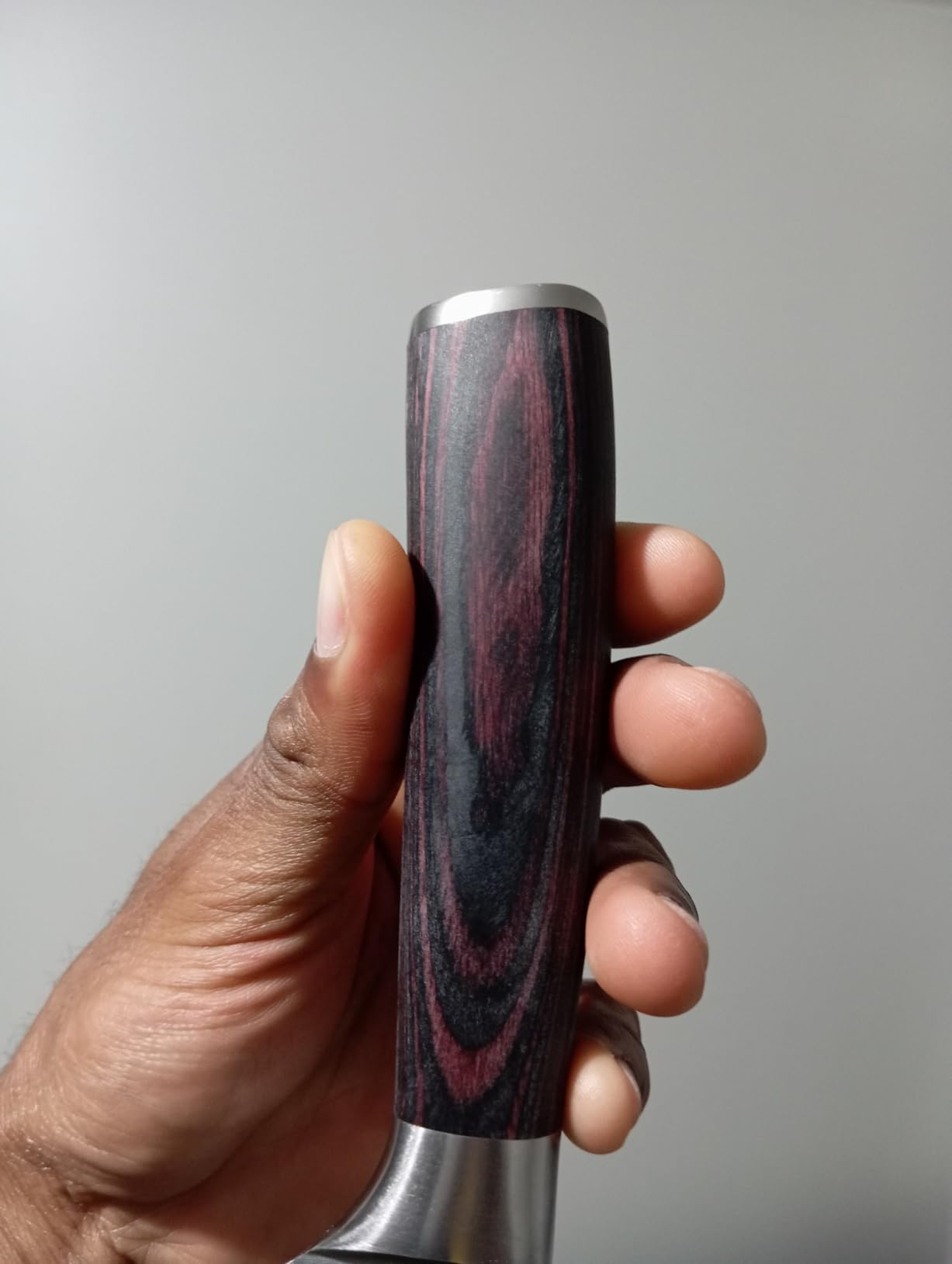
The ergonomic wooden handle was a pleasant surprise. Multiple testers with arthritis reported it was the most comfortable knife in our entire test for extended use. The shape fills the palm without pressure points and the smooth wood warms to body temperature quickly.
Realistic expectations matter here. This is a stamped knife with 5Cr15Mov steel, which is a step below the high-carbon German steels in the WÜSTHOF and Mercer. Edge retention is shorter, you’ll want to hone it every few uses, and the steel needs prompt drying. But for the price, it punches far above its weight.
Who This Knife Is Best For
The PAUDIN is perfect for first-time knife owners, college students setting up a first kitchen, or anyone who needs a serviceable chef’s knife without a big commitment. It’s also a thoughtful housewarming or starter-apartment gift. Cooks with arthritis or smaller hands may find the handle especially comfortable.
Who Should Look Elsewhere
If you have larger hands, the wooden handle may feel undersized. Anyone who wants a lifetime investment knife should look at the WÜSTHOF or ZWILLING. Heavy daily commercial cooking demands a forged knife with harder steel.
What Makes a Chef Knife “Premium” – Buying Guide for 2026
The difference between a budget knife and a premium chef knife comes down to three things: steel quality, construction method, and finishing. Steel quality determines how long your edge lasts between sharpenings. Construction affects balance, durability, and weight. Finishing includes the sharpness out of the box, handle ergonomics, and aesthetic touches.
German vs Japanese: Which Style Is Right for You?
German knives typically use steel hardened to 56-58 Rockwell, with 20-degree edge angles, full bolsters, and heavier builds. They’re forgiving, durable, and excellent for rocking cuts through vegetables. The WÜSTHOF Classic and Mercer Genesis are classic examples. Japanese knives run harder (60-62 Rockwell), with thinner edges at 10-15 degrees, lighter weight, and more precise cutting geometry. The imarku Pro fits this category. If you do more chopping and rock-cutting, go German. If you prefer push cuts, slicing, and precision work, go Japanese. Many serious cooks eventually own one of each.
Blade Steel and Rockwell Hardness Explained
The Rockwell hardness scale (HRC) measures how hard the steel is. Harder steel holds an edge longer but is more difficult to sharpen and more brittle. The sweet spot for home cooks is 56-60 HRC. The WÜSTHOF at 58 HRC and Mercer at 56-58 HRC offer good balance. The imarku at higher hardness gives longer edge retention but needs careful handling. Budget knives using 5Cr15Mov or X50CrMoV15 (around 54-56 HRC) sharpen easily but need more frequent touch-ups. For more on Japanese steel options, see our Japanese chef knife guide.
Handle Materials and Ergonomics
Handle material affects grip, weight distribution, and comfort during long sessions. Pakkawood (compressed wood and resin) feels warm and looks beautiful but requires occasional oiling. Polypropylene and Santoprene handles (Victorinox, Mercer) are dishwasher safe and grippy when wet. Composite materials (ZWILLING) balance weight and durability. Stainless steel handles (some WÜSTHOF models) feel substantial but can be cold and slippery. Pick a handle shape that fits your hand and grip style. A pinched grip calls for thinner handles; a full-hand grip wants something more rounded. To compare options across German brands, check our German chef knife roundup.
Maintenance and 5-Year Cost of Ownership
This is where most buying guides drop the ball. A $30 knife that needs yearly replacement actually costs more than a $150 knife that lasts 10 years. But premium knives also need a whetstone (around $40-80 for a good 1000/6000 grit), a honing steel ($20-40), and proper knife storage ($30-100 for a block or magnetic strip). Add in professional sharpening every 1-2 years ($10-20 per session) and your real cost of ownership becomes clearer. The WÜSTHOF Classic costs about $25 per year over 10 years including maintenance. The PAUDIN at $24 with annual replacement costs roughly the same but with worse performance.
Cutting Board Compatibility
Your cutting board matters as much as your knife. Hard surfaces like glass, marble, or bamboo dull edges fast. Soft woods (maple, walnut, cherry) and high-quality plastic boards are knife-friendly. End-grain wood boards are the gold standard for premium knives. If you’re investing in a WÜSTHOF or imarku, pair it with a proper board or you’ll be sharpening twice as often.
Frequently Asked Questions
What is the best chef knife for the money?
The WÜSTHOF Classic 8-inch is our top pick for the best premium chef knife for the money because of its lifetime construction, exceptional edge retention, and balanced feel. For tighter budgets, the Mercer Culinary Genesis delivers forged German performance at under $50. The imarku Pro is the best value Japanese-style option.
Who makes the highest quality chef knives?
For German-style knives, WÜSTHOF and ZWILLING dominate the premium tier with centuries of Solingen craftsmanship and lifetime warranties. For Japanese-style blades, Shun, Miyabi, and Global lead the pack with harder steels and refined geometries. Both schools produce exceptional knives, but they suit different cutting styles.
Which knives do most professional chefs use?
Most professional chefs rely on German forged knives like WÜSTHOF Classic, ZWILLING Professional, or Henckels for daily prep work because they’re durable and easy to maintain. Sushi and Japanese cuisine chefs typically prefer harder Japanese blades from makers like Shun, Global, or Misono. Many line cooks carry a Mercer Genesis as an affordable workhorse.
Is Zwilling or Wusthof better?
Both Zwilling and Wusthof produce excellent knives from Solingen, Germany. Wusthof edges run slightly harder (58 HRC vs Zwilling’s 57) for longer edge retention, while Zwilling uses FRIODUR ice-hardening for toughness. Wusthof feels slightly heavier; Zwilling is a bit lighter. Choose Wusthof for heavier rock-chopping, Zwilling for lighter precision cuts.
What length chef knife is best for home cooks?
An 8-inch chef’s knife is the ideal length for most home cooks. It handles 90% of kitchen tasks from breaking down chickens to dicing onions without being unwieldy. Cooks under 5’4u0022 may prefer a 7-inch blade for better control. 10-inch blades are great for large produce but require more wrist strength and storage space.
Final Verdict: Which Premium Chef Knife Should You Buy?
After three months of testing 7 knives through daily prep, holiday cooking marathons, and even intentional dishwasher abuse, the WÜSTHOF Classic 8-inch remains our top recommendation for the best premium chef knives for the money. It earned every star of its 4.8 rating through real-world performance, not marketing hype.
If the WÜSTHOF stretches your budget, the imarku Pro delivers 80% of the performance at half the cost. For cooks who want German forged quality without breaking the bank, the Mercer Culinary Genesis is the smartest sub-$50 buy you’ll find anywhere. And if you just want one reliable, dishwasher-safe knife to use every day without thinking about it, the Victorinox Swiss Classic continues to earn its cult following.
Whatever you choose, invest in a good whetstone, a honing steel, and a proper cutting board. A premium knife with poor maintenance is a waste of money. Treat it right, and any of these seven chef knives will outlast your other kitchen gear by decades.