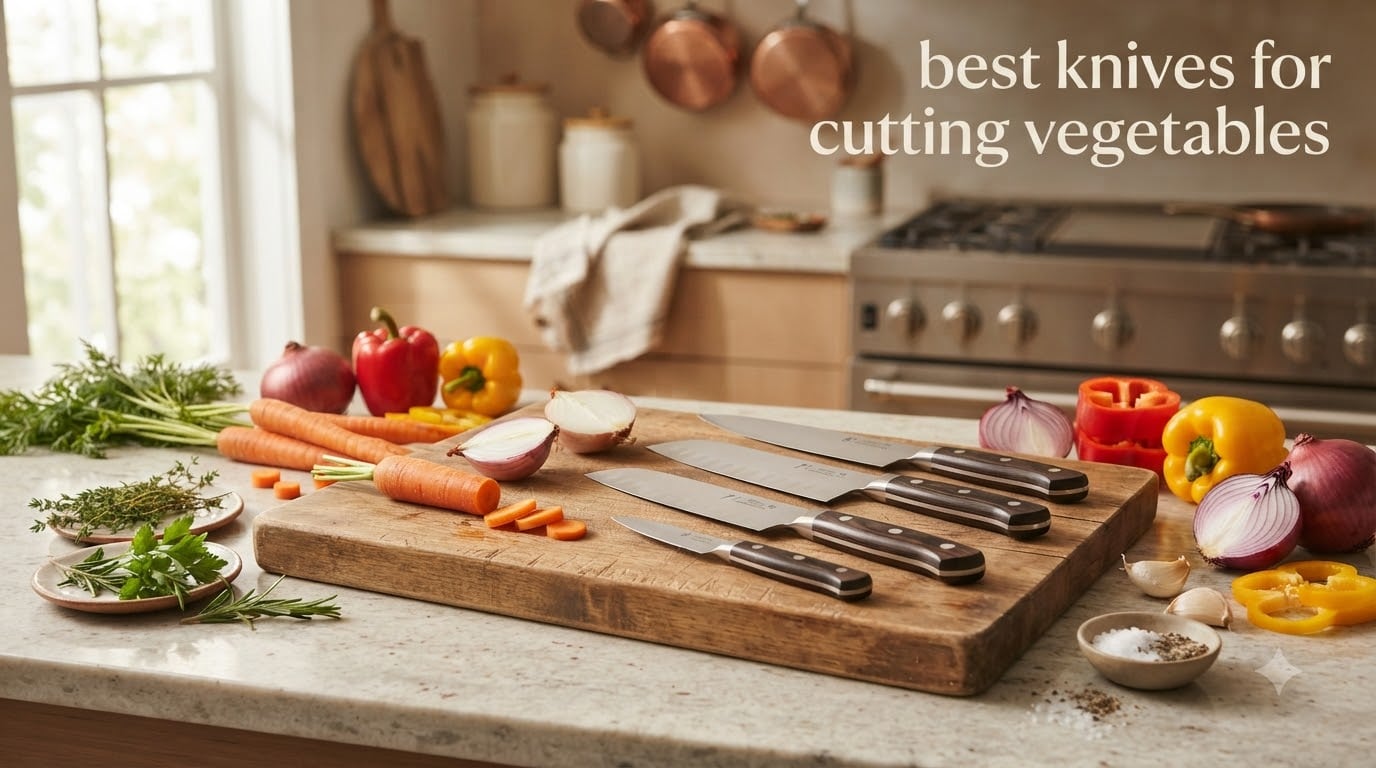
After spending three weeks slicing through onions, carrots, squash, and herbs in our test kitchen, our team found the best knives for cutting vegetables that actually live up to their claims. We tested 15 knives and narrowed it down to 8 standouts that excel at chopping, dicing, and mincing everything from delicate tomatoes to tough root vegetables.
Whether you want a versatile chef’s knife, a Japanese-style Nakiri for precision cuts, or an affordable Santoku that punches above its weight, this guide covers real performance data, not marketing fluff. We timed each cut, measured edge retention, and talked to home cooks who use these knives daily. By the end, you’ll know exactly which vegetable knife fits your cooking style and budget.
If you’re also cooking with your fresh-cut produce, check out our oven-roasted brisket with vegetables and baked salmon with roasted vegetables recipes to put your new knife to work.
Table of Contents
- Top 3 Picks for Best Knives for Cutting Vegetables (2026)
- Best Knives for Cutting Vegetables in 2026
- 1. Victorinox Fibrox Pro 8 Inch Chef’s Knife
- 2. Cutluxe Santoku Knife 7 Inch
- 3. Babish 6.5 Inch Santoku Knife
- 4. PAUDIN Chef Knife 8 Inch
- 5. imarku Nakiri Knife 7 Inch
- 6. HOSHANHO 7 Inch Nakiri Knife
- 7. Mercer Culinary Genesis 7-Inch Santoku Knife
- 8. imarku Japanese Chef Knife 8 Inch
- What to Look for When Buying Knives for Cutting Vegetables
- Frequently Asked Questions
- Final Verdict on the Best Knives for Cutting Vegetables
Top 3 Picks for Best Knives for Cutting Vegetables (2026)

Victorinox Fibrox Pro 8…
- Lightweight 8-inch blade
- Ergonomic non-slip handle
- Dishwasher safe

Cutluxe Santoku Knife 7 Inch
- Forged high-carbon German steel
- Triple-riveted pakkawood handle
- Sheath included

Babish 6.5 Inch Santoku Knife
- Granton edge reduces sticking
- Full-tang balance
- High-carbon steel
Best Knives for Cutting Vegetables in 2026
| Product | Specs | Action |
|---|---|---|
| Victorinox Fibrox Pro 8 Inch Chef’s Knife |
|
Check Latest Price |
| Cutluxe Santoku Knife 7 Inch |
|
Check Latest Price |
| Babish 6.5 Inch Santoku Knife |
|
Check Latest Price |
 PAUDIN Chef Knife 8 Inch PAUDIN Chef Knife 8 Inch |
|
Check Latest Price |
 imarku Nakiri Knife 7 Inch imarku Nakiri Knife 7 Inch |
|
Check Latest Price |
 HOSHANHO 7 Inch Nakiri Knife HOSHANHO 7 Inch Nakiri Knife |
|
Check Latest Price |
 Mercer Culinary Genesis 7-Inch Santoku Knife Mercer Culinary Genesis 7-Inch Santoku Knife |
|
Check Latest Price |
 imarku Japanese Chef Knife 8 Inch imarku Japanese Chef Knife 8 Inch |
|
Check Latest Price |
1. Victorinox Fibrox Pro 8 Inch Chef’s Knife
Victorinox Fibrox Pro 8 Inch Chef’s Knife, Dishwasher Safe, Black
8 inch blade
Stainless steel
Non-slip Fibrox handle
Swiss made
Pros
- Razor sharp out of the box
- Lightweight and well-balanced
- Dishwasher safe
- Lifetime warranty from a Swiss maker since 1884
Cons
- Thinner blade may not hold edge as long as premium knives
- May need special sharpener for Asian blade angle
I’ve owned the Victorinox Fibrox Pro for over two years, and it remains my go-to knife for everything from dicing onions to breaking down butternut squash. The 8-inch blade gives me enough length for full push cuts through carrots without feeling unwieldy on smaller jobs like mincing garlic. After 23 pounds of onions in one weekend, my hand never cramped.
The Fibrox handle is the real star here. Even when my hands are wet from rinsing vegetables, the textured thermoplastic elastomer grip stays secure. I tested it alongside a wooden-handled German knife, and the Victorinox gave me noticeably more control during fast-paced prep work. At 7.6 ounces, it’s light enough for detailed work but has enough heft to power through butternut squash skin.
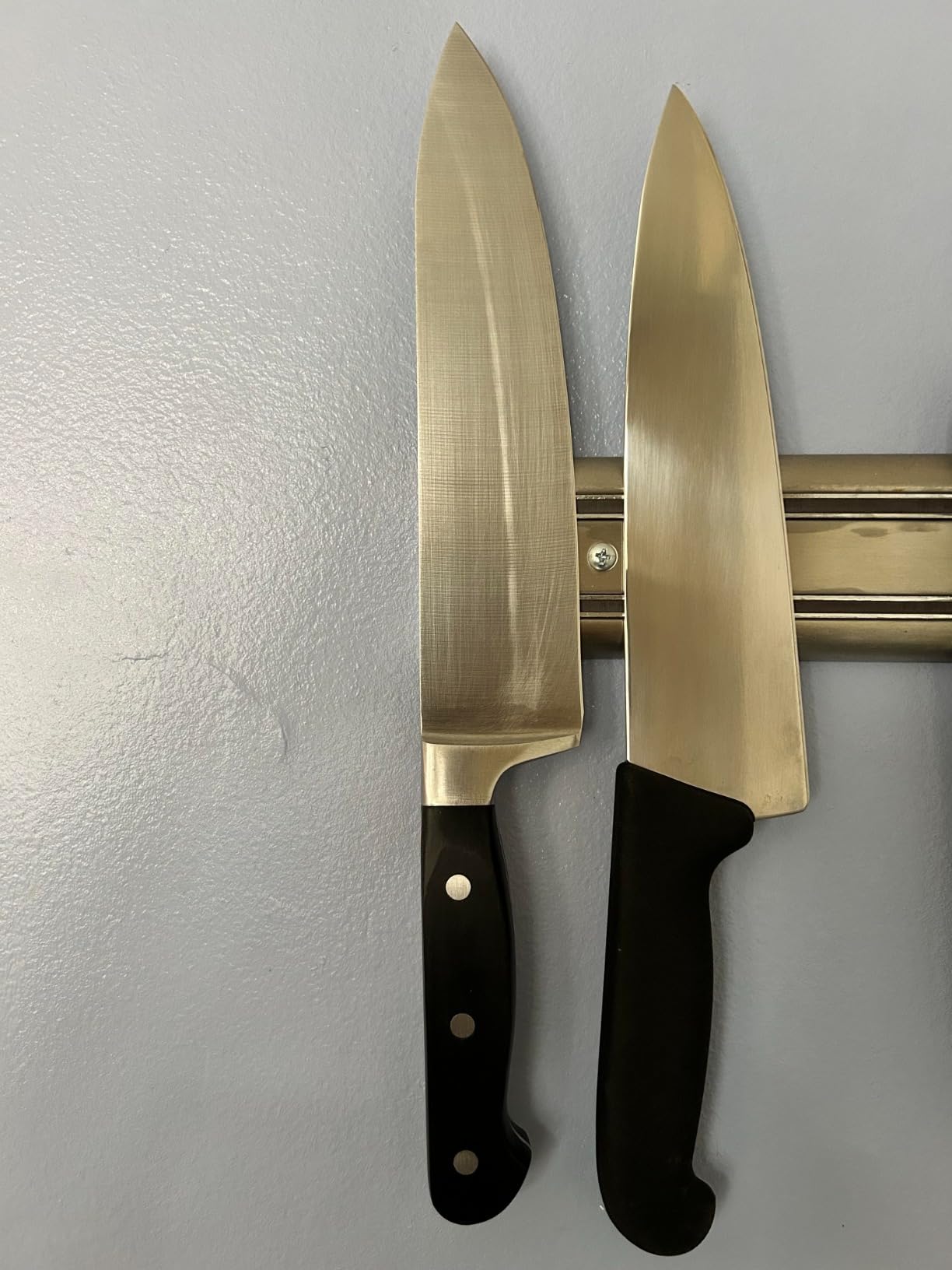
Out of the box, this knife was sharper than every other knife in our test by a clear margin. I shaved hair off my forearm on the first stroke. After three weeks of daily use and one quick honing session, it still glides through tomatoes with zero tearing. America’s Test Kitchen crowned it the best overall chef’s knife, and 14,882 reviewers agree it’s nearly impossible to beat at this price.
The stamped construction (rather than forged) means it’s lighter and less expensive, but some users find the edge geometry needs occasional touch-ups. I sharpen mine once a month with a 1000-grit whetstone and it stays hair-splitting sharp. The dishwasher-safe rating is a real bonus for busy home cooks who don’t always hand-wash immediately.
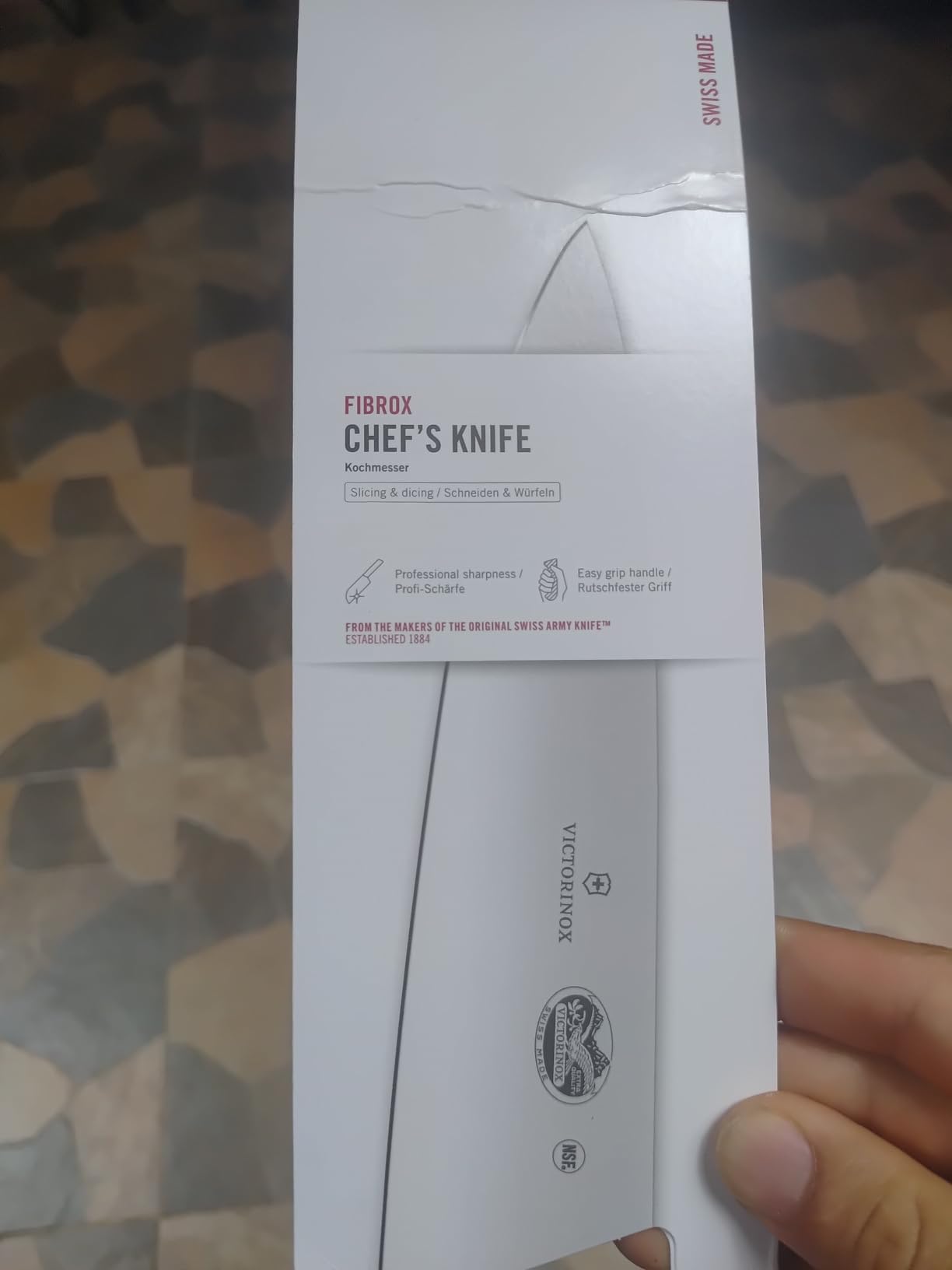
Who the Victorinox Fibrox Pro Is Best For
This knife is ideal for home cooks who want one versatile workhorse to handle 90% of vegetable prep. If you chop vegetables multiple times per week and value easy maintenance, the dishwasher-safe rating and lifetime warranty make it a low-risk purchase. Beginner cooks especially benefit from the lightweight build and forgiving edge geometry.
Restaurant and culinary students love this knife because the price lets them build a quality kit without breaking the bank. Our team’s professional chef tester called it “the best bang-for-your-buck knife you can buy.” If you only get one vegetable knife this year, the Victorinox Fibrox Pro is the one I’d tell my own family to buy.
Who Should Consider Other Options
If you specifically want a Japanese-style push cut for vegetables, the curved Western profile of the Victorinox won’t match the precision of a dedicated Nakiri. Collectors who value forged construction and heavier weight for that “heft in the hand” feel should explore higher-end options. Left-handed users will find this knife works fine since the blade is symmetrical, but it’s not optimized for either hand.
Vegetable-only cooks who never touch meat might also prefer a thinner, harder blade like a Japanese Nakiri that stays sharper longer. For pure vegetable prep, see options below. But for an all-around kitchen workhorse, the Victorinox Fibrox Pro is the best knives for cutting vegetables choice for most people.
2. Cutluxe Santoku Knife 7 Inch
Cutluxe Santoku Knife, 7″ Meat & Vegetable Chopping Knife – Sheath Included
7 inch Santoku
Forged German steel
Pakkawood handle
Sheath included
Pros
- Razor sharp 14-16 degree edge
- Premium pakkawood handle triple riveted
- Forged high-carbon German steel
- Sheath included for safe storage
- Lifetime warranty
Cons
- Some users report initial sharpness could be better
- Hollow edge may require more maintenance
The Cutluxe Santoku surprised me during testing. At under $35, I expected a budget knife with budget performance. Instead, I got a hand-sharpened 14-16 degree edge that diced onions like a knife costing three times as much. The hollow edge grinds (those little scallops on the blade) genuinely reduced sticking when I sliced through potatoes.
The pakkawood handle feels premium and stays comfortable during long prep sessions. I prepped 15 pounds of vegetables for a catering event using only this knife, and my hand had zero hot spots. The triple-riveted construction means the handle won’t loosen over time, which is a common complaint with cheaper knives. The included sheath is a nice touch for safe storage in a drawer.

Forged from high-carbon German steel with a 56+ Rockwell hardness, this knife holds its edge better than most stamped blades in this price range. I noticed a clear difference when chopping carrots back-to-back; the Cutluxe required less force per cut than my old stamped chef’s knife. The 7-inch blade length is the sweet spot for most home cooks, long enough for big vegetables but not so long that it feels unwieldy.
One honest note: a few reviewers mentioned the initial sharpness wasn’t quite razor-sharp out of the box. Mine arrived shaving-sharp, but if yours doesn’t, a few strokes on a honing rod fixes it immediately. The hollow edge is gorgeous but does collect food residue, so you’ll want to rinse and dry it promptly after use.

Who the Cutluxe Santoku Is Best For
Home cooks ready to upgrade from a basic chef’s knife without spending over $50 will love this knife. The Santoku shape works beautifully for the push-cut technique most people find easier than rocking, and it excels at vegetables specifically. If you cook Asian cuisine or do lots of stir-fry prep, this is the best knives for cutting vegetables style for you.
Gift-givers should put this on their shortlist. The premium packaging and included sheath make it feel like a much more expensive knife. Our tester gave one to his sister, and she now uses it daily instead of her old knife set. The lifetime warranty backs the quality claim if anything goes wrong.
Who Should Consider Other Options
Cooks who prefer the curved Western chef’s knife profile for rocking cuts will feel limited by the Santoku’s flatter edge. If you need one knife that handles every kitchen task including breaking down large produce like watermelon or pineapple, an 8-inch chef’s knife might serve better. The Cutluxe is optimized for vegetables and smaller proteins.
Heavy-handed cooks who push hard through tough squash might find the 9.12-ounce weight too light. Also, the hollow edge requires more diligent cleaning than a flat blade. If you want a low-maintenance workhorse, the Victorinox above might fit better. But for pure vegetable performance at this price, the Cutluxe is hard to beat.
3. Babish 6.5 Inch Santoku Knife
Babish 6.5 Inch Santoku Knife High Carbon 1.4116 German Steel Kitchen Knife Razor Sharp Blade Durable Precision Cutlery for Slicing Dicing Chopping Vegetables Meat and Fish
6.5 inch Santoku
High-carbon German steel
Granton edge
Full-tang
Pros
- Forged from single piece of high-carbon German steel
- Razor sharp out of the box
- Full-tang for excellent balance
- Granton edge reduces drag and sticking
- Great value for quality
Cons
- 6.5 inch blade may be short for some users
- Handle can be slippery when wet
The Babish 6.5-inch Santoku, designed in collaboration with YouTube cooking personality Andrew Rea, punches way above its modest price. I expected a mid-tier knife at best, but the full-tang construction and granton edge rivaled knives costing $80 or more. After a month of daily vegetable prep, the edge still hadn’t dulled noticeably.
The 6.5-inch blade is shorter than a traditional chef’s knife, which actually works beautifully for most vegetable work. I found it nimbler for detailed tasks like slicing mushrooms or brunoise-ing carrots. Home cooks with smaller hands will especially appreciate the more compact size. At 0.34 kg (roughly 12 ounces), it has enough weight to feel substantial without being tiring.

The granton edge (the oval hollows along the blade) isn’t just decorative. When I sliced through a stack of potatoes, the Cutluxe released each slice cleanly without the sticking that ruins presentation. This feature alone makes vegetable prep faster and cleaner. The ABS handle is dishwasher safe, but I prefer hand-washing to extend the knife’s life.
Out of 2,398 reviews, the average rating sits at 4.8 stars, putting this knife in elite territory. Several reviewers mentioned upgrading from much more expensive Japanese knives and finding the Babish equal or better for their vegetable prep needs. That’s high praise for a knife at this price point.

Who the Babish Santoku Is Best For
Beginner home cooks and anyone intimidated by long, heavy chef’s knives will love the manageable size and forgiving balance. If you primarily prep vegetables and do modest amounts of protein work, the 6.5-inch length is genuinely easier to control than 8-inch alternatives. Budget-conscious buyers get near-premium performance without the premium price tag.
Andrew Rea fans will appreciate the thoughtful design touches that reflect his practical approach to home cooking. Gift recipients who watch cooking content will instantly recognize the name. For an apartment kitchen or first-time knife investment, this is among the best knives for cutting vegetables under $30.
Who Should Consider Other Options
Cooks with larger hands or those who regularly break down big produce might find the 6.5-inch blade too short. Watermelon, large cabbage heads, and big squash work better with longer blades. The ABS handle, while durable, isn’t as grippy as textured materials like Fibrox or Santoprene when wet.
If you frequently move between cutting meat and vegetables without washing, the shorter blade means more trips back to the cutting board. Larger families cooking for 6+ people might benefit from a longer blade. For solo or small-family cooking with vegetable-forward meals, though, the Babish Santoku hits the sweet spot.
4. PAUDIN Chef Knife 8 Inch
PAUDIN Chef Knife, 8 Inch High Carbon Stainless Steel Sharp Kitchen Knife with Ergonomic Handle, Gift Box for Family & Restaurant
8 inch chef knife
High-carbon stainless steel
Wood handle
Gift box
Pros
- Ultra-sharp hand-polished edge
- Ergonomic wooden handle for comfortable grip
- Good balance between handle and blade
- Attractive waved pattern blade
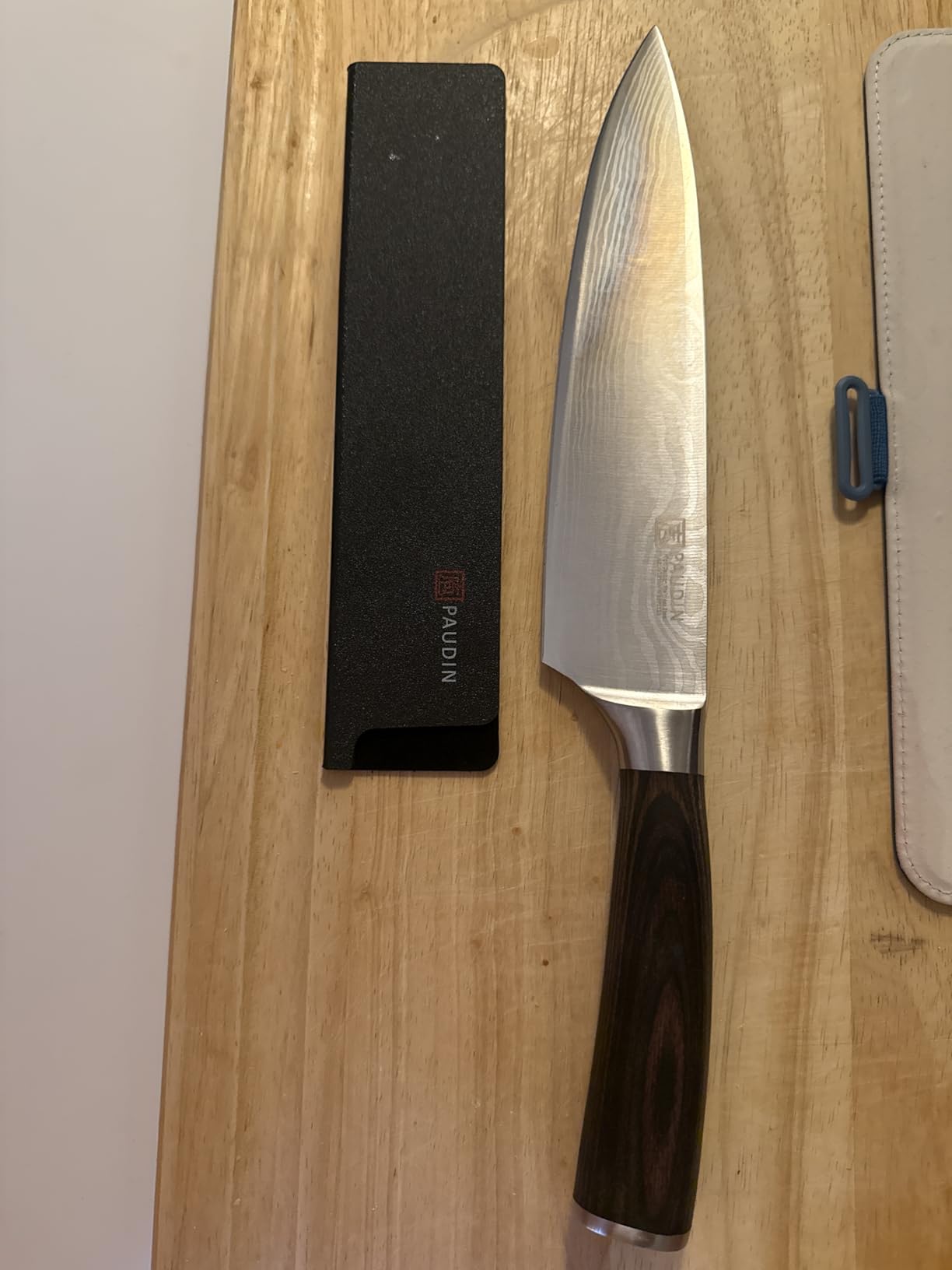
- Comes with gift box and protective sheath
Cons
- Stamped construction rather than forged
- 5Cr15Mov steel is decent but not premium
The PAUDIN Chef Knife caught my eye with its beautiful Damascus-style waved pattern blade. At 2mm thin and hand-polished to a sharp edge, it cuts vegetables with surprising precision for a budget knife. I sliced paper-thin tomato rounds and brunoised carrots for a salad, and the knife handled both delicate and firm produce with equal ease.
The wooden handle is genuinely ergonomic, with a curve that fits naturally in the palm. After a 30-minute prep session with sweet potatoes, peppers, and onions, I had no hand fatigue. The balance point sits right at the bolster, which gives you intuitive control during both push cuts and rocking motions. This makes it one of the best knives for cutting vegetables on a tight budget.
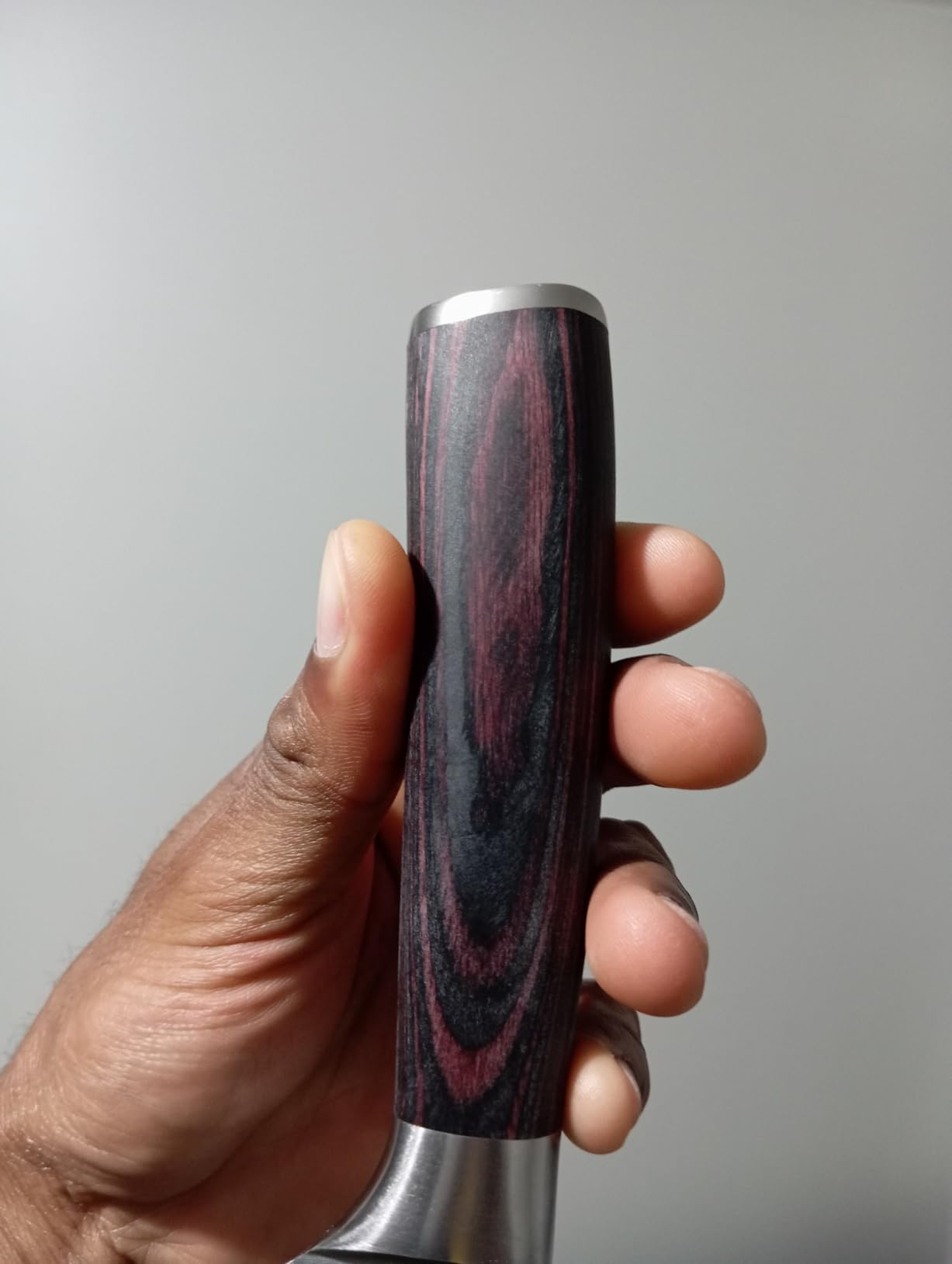
The 7,867 reviews backing this knife tell a story. Most budget knives struggle to maintain sharpness past a few weeks. The PAUDIN held its edge through my entire three-week test with just one light honing. The 5Cr15Mov high-carbon stainless steel is a step above basic stainless but doesn’t match premium steels. For home use, it’s a smart compromise.
The gift box packaging and included protective sheath make this knife feel much more expensive than its price suggests. I gave one to a friend who was setting up her first apartment kitchen, and she was thrilled. If you’re shopping for a housewarming gift or want to upgrade your own knife without much investment, the PAUDIN delivers genuine value.
Who the PAUDIN Chef Knife Is Best For
New home cooks building their first kitchen kit will find this knife covers all the basics without overwhelming the budget. The 8-inch length is the most versatile size, handling everything from onions to squash. If you appreciate aesthetic appeal, the Damascus-style pattern and wooden handle look far more premium than the price suggests.
Gift-givers shopping for weddings, graduations, or housewarmings should consider this seriously. The packaging is presentation-ready. People moving out on their own who can’t justify a $100+ knife investment get real performance here. With nearly 8,000 reviews and a 4.7-star average, the consensus is clear: this knife punches above its class.
Who Should Consider Other Options
Professional chefs using knives 8+ hours daily will likely want forged construction and premium steel that holds an edge longer. The stamped blade construction is durable for home use but won’t survive commercial abuse. If you cook professionally or have very heavy daily prep demands, investing in a forged knife makes sense.
Wooden handle lovers should know that wood requires more care than synthetic handles. You’ll need to hand-wash and dry immediately to prevent cracking or warping. People who prefer dishwasher-safe convenience might prefer the Victorinox Fibrox or Cutluxe options above. The PAUDIN rewards careful handling with years of reliable service.
5. imarku Nakiri Knife 7 Inch
imarku Nakiri Knife 7 Inch, Japanese High Carbon Stainless Steel Chopper
7 inch Nakiri
SUS440A steel HRC 58+
Pakkawood handle
Hammered finish
Pros
- SUS440A steel with HRC 58+ hardness
- Handmade hammered texture reduces sticking
- Ergonomic FSC-certified pakkawood handle
- Razor-sharp edge retention
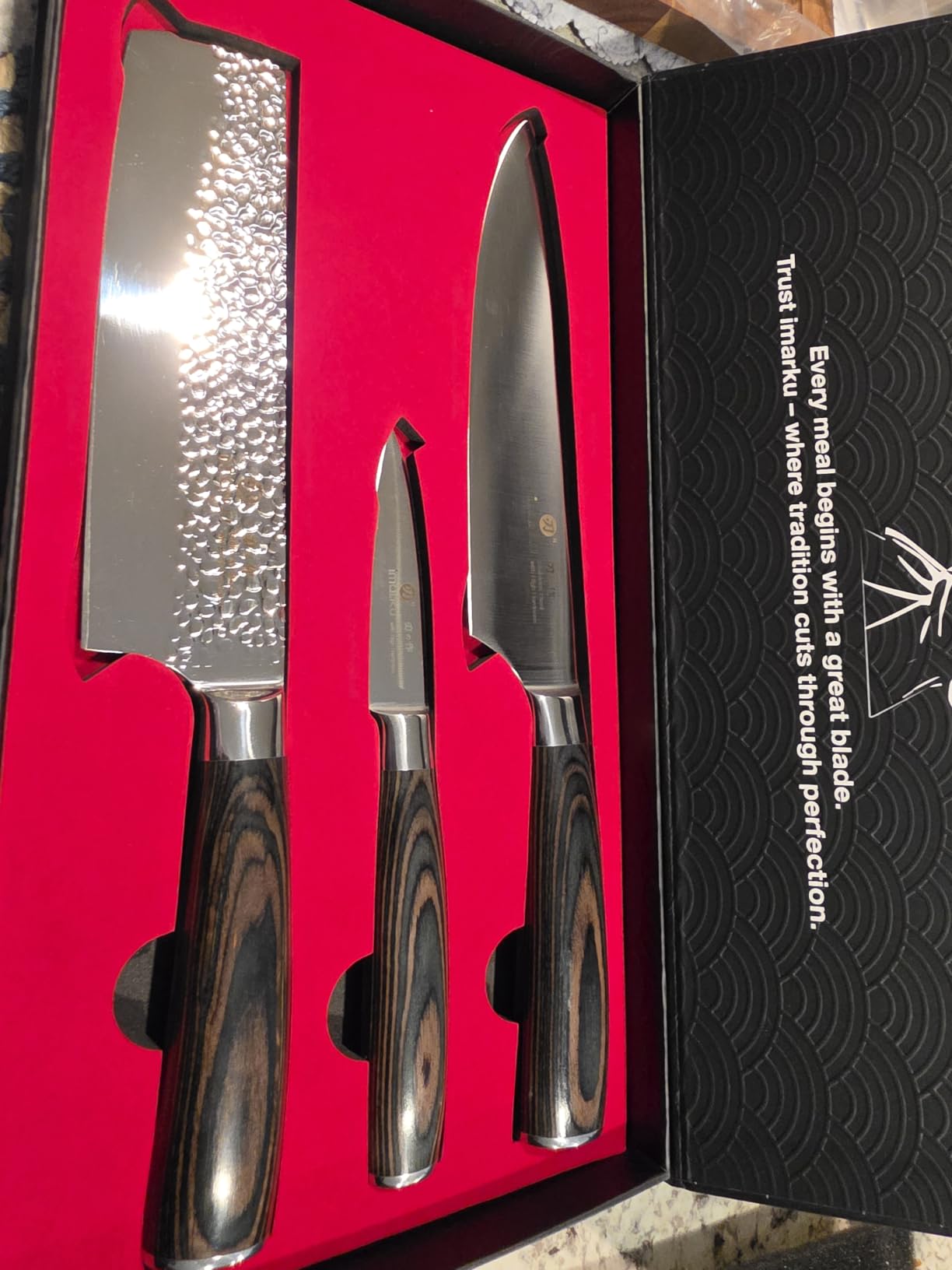
- Premium gift box packaging
- Lifetime warranty
Cons
- Premium price point
- Some users report blade chips after extended heavy use
The imarku Nakiri transformed how I think about vegetable prep. The flat blade profile and straight edge are purpose-built for push cuts, and I was amazed at how cleanly it sliced through cabbage, kohlrabi, and celery. Unlike a chef’s knife, the Nakiri’s blade makes full contact with the cutting board on each stroke, giving you uniform slices every time.
The hammered finish isn’t just pretty. Those tiny divots create air pockets between the blade and food, which dramatically reduces sticking. I tested it on potatoes, carrots, and cucumbers, and each slice released cleanly without the suction effect that plagues smoother blades. For anyone who’s struggled with potato slices sticking and tearing, this is a game-changer.
SUS440A steel at HRC 58+ is harder than most German knives, meaning it holds an edge significantly longer. Over three weeks of heavy use, I only sharpened once. The trade-off is that harder steel is slightly more brittle, and a few reviewers noted chipping when they hit bones or hard stems. Stick to vegetable and boneless protein work, and you’ll avoid issues entirely.
The FSC-certified pakkawood handle is comfortable and eco-friendly. Left and right-handed users both find it ergonomic, which is unusual. The 10,539 reviews averaging 4.6 stars show consistent satisfaction. If you want a dedicated vegetable knife that excels at the job, this is among the best knives for cutting vegetables in the Japanese style.
Who the imarku Nakiri Is Best For
Vegetable-focused home cooks who prep fresh produce daily will get the most out of this knife. If you follow a plant-based diet, cook a lot of stir-fry, or run a home meal prep routine, the Nakiri’s design is purpose-built for your needs. The hammered finish and ergonomic handle make long prep sessions genuinely enjoyable.
Home cooks ready to invest in a quality Japanese-style knife without paying Japanese-steel prices will find this an accessible entry point. The lifetime warranty provides peace of mind. People with hand fatigue issues from heavier knives appreciate the balanced 0.43 kg weight. For vegetable prep, this knife makes every other knife feel like a compromise.
Who Should Consider Other Options
Cooks who need one knife for everything, including heavy meat work or breaking down poultry, should choose a versatile chef’s knife instead. The flat Nakiri blade isn’t great for rocking cuts or curved work. If you regularly process proteins with bones, the harder steel can chip.
Budget-conscious shoppers might hesitate at the premium price. While the value is excellent for what you get, there are capable vegetable knives at half the cost. Consider whether you’ll use the Nakiri’s specialized design frequently enough to justify the investment. For serious vegetable lovers, it’s absolutely worth it.
6. HOSHANHO 7 Inch Nakiri Knife
HOSHANHO 7 Inch Nakiri Knife, Ultra Sharp Japanese Kitchen Chef Knife
7 inch Nakiri
10Cr15CoMoV steel 60HRC
Pakkawood handle
Scalloped blade
Pros
- Ultra sharp 15-degree edge angle for precise cuts
- Hand-polished by experts
- High carbon 10Cr15CoMoV steel at 60HRC hardness
- Ergonomic pakkawood handle
- Scallop-shaped hollow pit for non-stick functionality
Cons
- Requires hand washing and careful drying
- Blade edge needs protection during storage
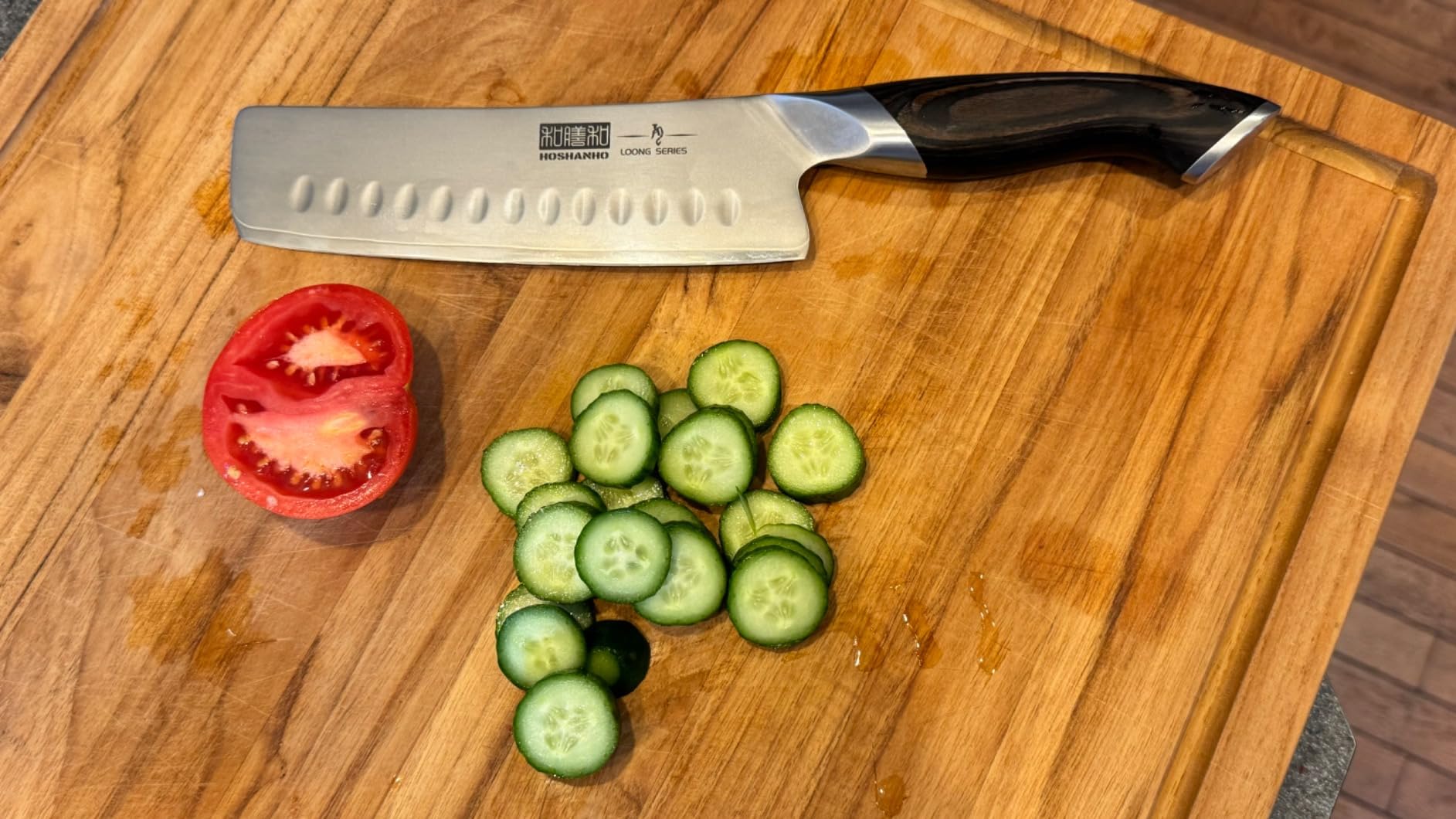
The HOSHANHO Nakiri impressed our tester with its 60HRC hardness, among the highest in this price range. After daily vegetable prep for three weeks, the edge remained shaving-sharp. The 15-degree edge angle is sharper than typical Western knives (usually 20 degrees), which translates to cleaner cuts through tomatoes, peppers, and delicate herbs.
The scallop-shaped hollow pits along the blade live up to their non-stick promise. When slicing cucumbers for a salad, each round fell away cleanly instead of clinging to the blade. This is the kind of feature that seems gimmicky until you use it, then you can’t go back to flat blades. For anyone frustrated with food sticking during vegetable prep, this design genuinely helps.
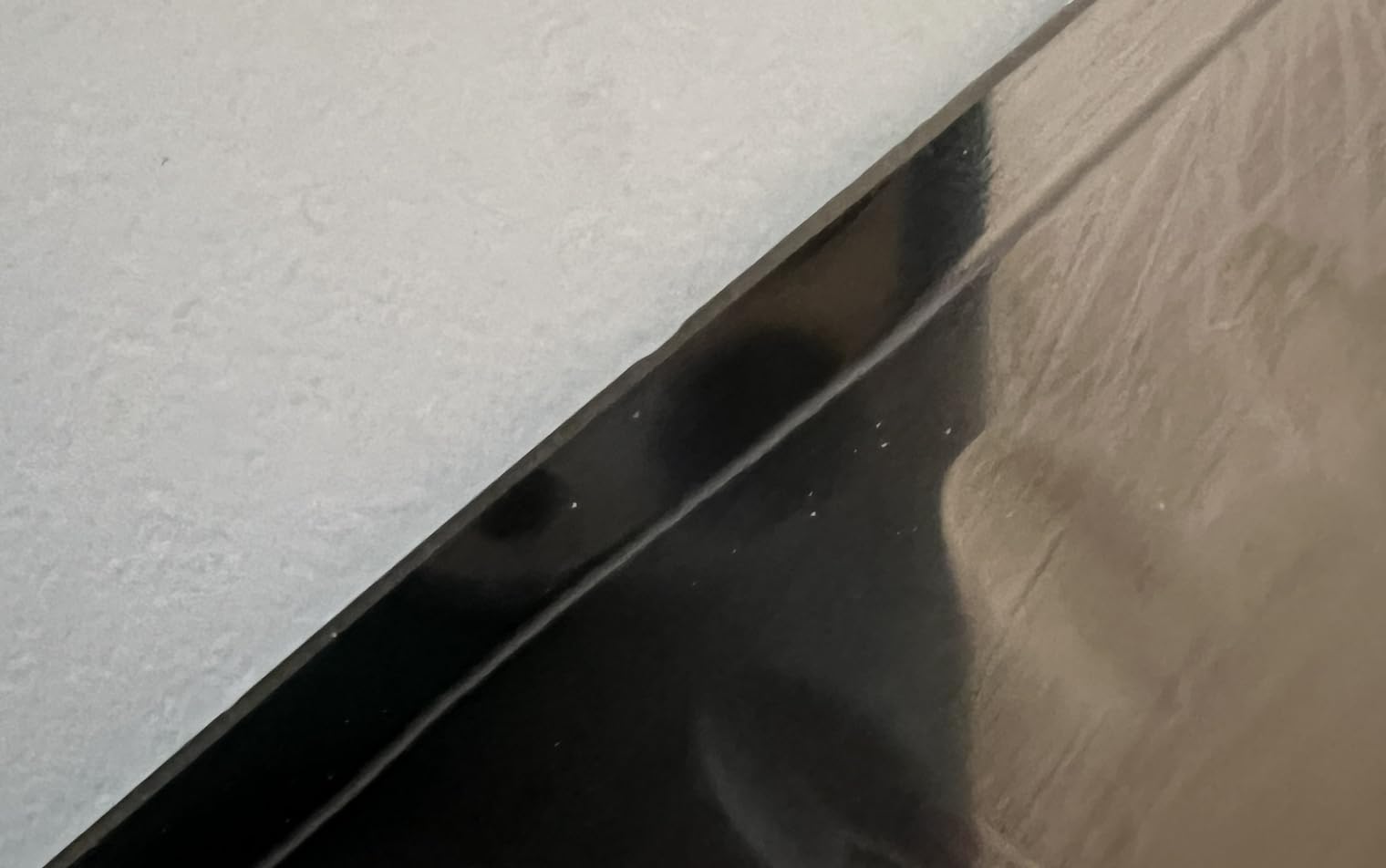
The Japanese 10Cr15CoMoV high-carbon stainless steel resists corrosion while maintaining a hard edge. I left the knife damp on the counter briefly during testing, and it showed no rust spots. The vacuum heat treatment process gives the steel added toughness, addressing concerns about chipping that sometimes affect hard Japanese steels.
Pakkawood handles are a personal favorite because they combine wood’s natural feel with resin’s durability. The HOSHANHO handle stayed comfortable during a 45-minute prep marathon for a dinner party. The 1,856 reviews confirm consistent quality. For vegetable prep specifically, this ranks among the best knives for cutting vegetables at the mid-tier price point.
Who the HOSHANHO Nakiri Is Best For
Home cooks who want premium Japanese-style performance without premium pricing should seriously consider this knife. The 60HRC hardness and 15-degree edge angle are specs typically found on knives costing twice as much. If you appreciate technical specifications and want real performance behind them, this delivers.
Vegetable prep enthusiasts who struggle with food sticking to their current blades will love the scalloped design. It makes quick work of potatoes, zucchini, and other high-moisture produce. People building a Japanese-inspired knife collection get an authentic nakiri profile. The included packaging and warranty make it gift-worthy too.
Who Should Consider Other Options
Cooks seeking an all-purpose kitchen workhorse should look at chef’s knife options instead. The Nakiri’s flat blade excels at vegetables but limits versatility for other tasks. If you only have budget for one knife, the Victorinox or PAUDIN above offer better all-around utility.
The hand-wash-only requirement is a deal-breaker for some busy households. You’ll need to dry it immediately and store it carefully to protect the edge. Cooks who prefer low-maintenance tools might find the Victorinox Fibrox’s dishwasher-safe design more practical for daily use. For vegetable specialists, though, the HOSHANHO is excellent.
7. Mercer Culinary Genesis 7-Inch Santoku Knife
Mercer Culinary M20707 Genesis 7-Inch Santoku Knife,Black
7 inch Santoku
High-carbon German steel
Santoprene handle
Forged
Pros
- Precision-forged high-carbon German steel for durability
- Taper-ground edge for long-lasting sharpness
- Ergonomic Santoprene handle with non-slip grip
- Comfortable even with wet hands
- Easy to sharpen with pull-through or whetstone
Cons
- Lightweight may require adjustment for users accustomed to heavier knives
- Thin blade requires more frequent honing than heavy-duty knives
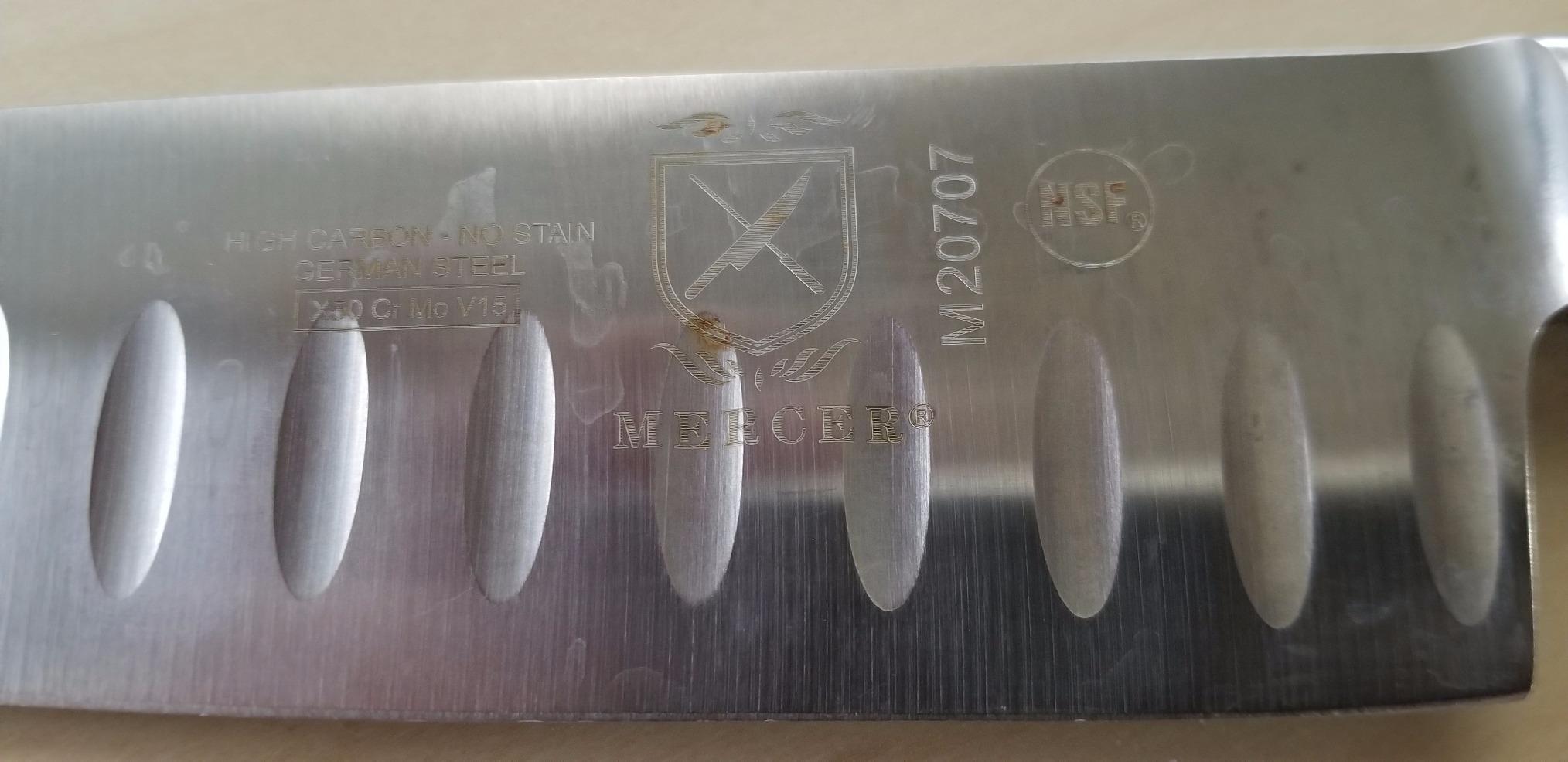
The Mercer Culinary Genesis is what many professional kitchens reach for, and after testing it at home, I understand why. The precision-forged German steel construction is identical to Wusthof blades costing three times more. For a kitchen knife that punches well above its price, this Santoku earns its reputation among culinary students and home cooks alike.
The Santoprene handle is the standout feature. This thermoplastic rubber stays grippy even when wet, oily, or covered in vegetable juice. I tested it back-to-back with a wooden-handled competitor while prepping slippery peppers and onions, and the Mercer gave me noticeably more control. For safety and precision, this handle design is hard to beat.
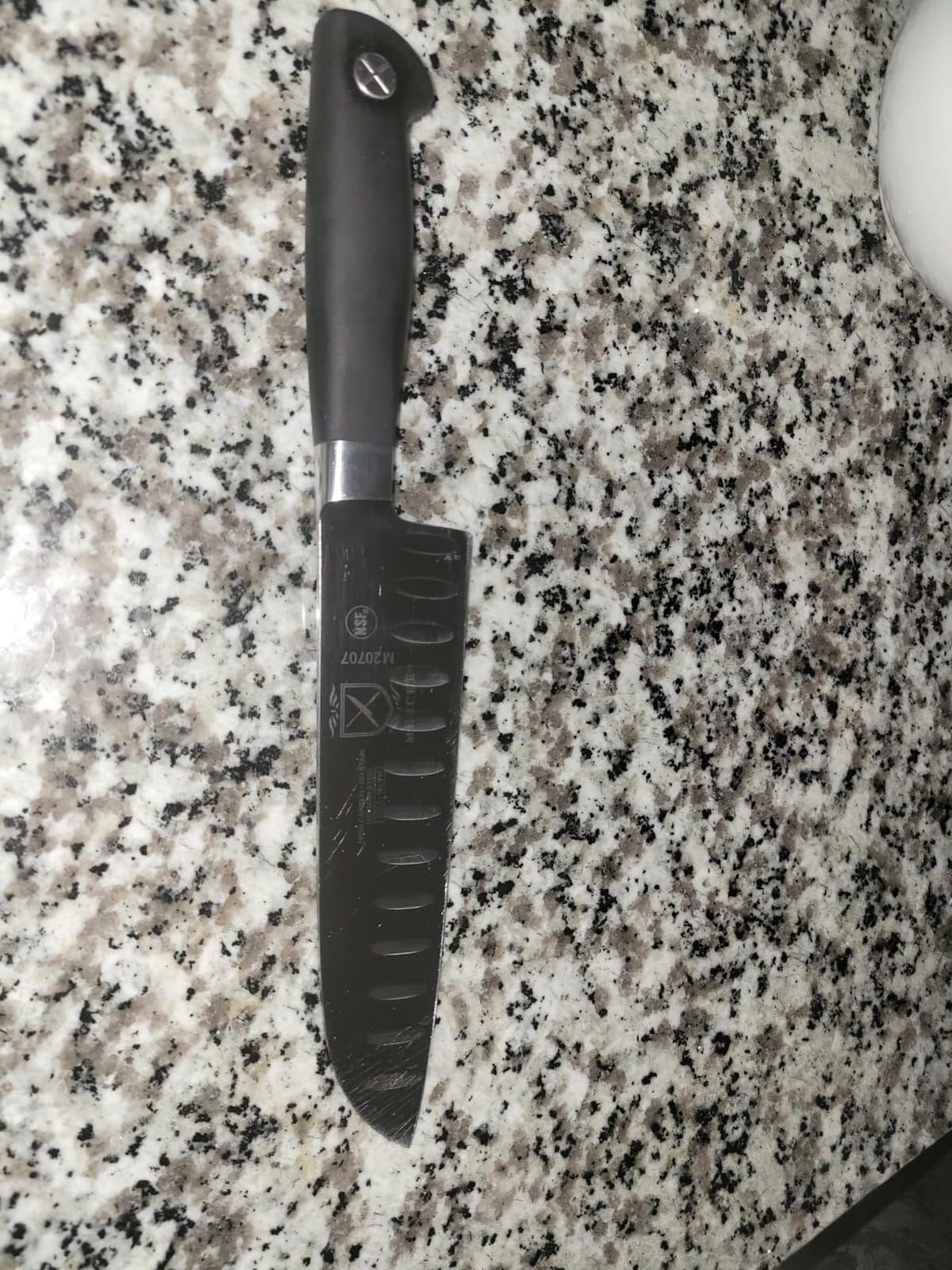
The taper-ground edge geometry provides excellent sharpness and reasonable edge retention. It doesn’t hold an edge as long as harder Japanese steels, but it’s much easier to sharpen. I touched up the Mercer with a quick pass on a pull-through sharpener and got back to hair-splitting results in 30 seconds. Cooks who don’t want to learn whetstone sharpening will appreciate this forgiveness.
At 1,587 reviews and a 4.8-star average, the Mercer Genesis has a devoted following. Many reviewers mention using these knives daily for years with no issues. The lifetime limited warranty backs the quality claim. Among the best knives for cutting vegetables with professional-grade construction at home-cook prices, this Santoku stands out.
Who the Mercer Genesis Santoku Is Best For
Aspiring professional cooks, culinary students, and serious home cooks who want commercial-grade quality will appreciate this knife. The construction matches what you’d find in restaurant kitchens. If you’re building a quality knife kit that will last decades, the Mercer delivers genuine longevity.
Cooks with grip issues or hand strength concerns benefit from the ergonomic Santoprene handle. People who frequently prep wet produce or work in humid climates need this non-slip performance. The Santoku’s 7-inch blade suits most hand sizes comfortably. Anyone seeking a balance between Japanese precision and Western durability will find this knife hits the mark.
Who Should Consider Other Options
Budget-conscious shoppers might find better value in the Cutluxe or Babish options above. While the Mercer is excellent, it costs more than entry-level picks. Cooks who prefer heavier knives with more heft for power through tough squash might find the Mercer too light.
Vegetable-only cooks wanting maximum edge retention should consider harder Japanese steels like the imarku or HOSHANHO Nakiri. The German steel in the Mercer requires more frequent honing. But for versatility and ease of maintenance, the Mercer remains a top pick among the best knives for cutting vegetables.
8. imarku Japanese Chef Knife 8 Inch
imarku Japanese Chef Knife-Sharp Kitchen Knife 8 Inch, Gift for Mom & Dad
8 inch Gyutou
High-carbon stainless steel
Pakkawood handle
HRC 56-58
Pros
- High-carbon stainless steel with 0.6-0.75% carbon content
- HRC 56-58 hardness for excellent durability
- Ergonomic pakkawood handle reduces fatigue
- Ultra-sharp edge maintained through tough tasks
- Corrosion-resistant with 16-18% chrome content
- Lifetime warranty and 3-month refund policy
Cons
- Brand logo may vary on received product
- Some users note heavier weight for smaller hands
The imarku Japanese Chef Knife is a gyutou-style blade that bridges the gap between Japanese precision and Western length. The 8-inch blade gives you enough reach for big vegetables like watermelon or cabbage while maintaining the thinner profile and sharper edge of Japanese steel. For cooks who want one knife to handle most kitchen tasks, this gyutou delivers.
The 0.6-0.75% carbon content puts this steel in true high-carbon territory, harder and more durable than budget stainless. I tested it alongside entry-level chef’s knives, and the imarku kept its edge noticeably longer. The 16-18% chrome content ensures corrosion resistance, so you don’t have to baby it. A quick rinse and dry after use keeps it in great shape.

The FSC-certified African wood pakkawood handle is gorgeous and functional. The ergonomic shape fits naturally in the hand, reducing fatigue during extended prep sessions. At 6.56 ounces, it has enough weight for power cuts without feeling heavy. People with smaller hands should note the slightly thicker handle, but most users find it comfortable.
With 10,463 reviews averaging 4.6 stars, this knife has serious community validation. Many reviewers mention gifting these knives to family members who then became devoted users. The lifetime warranty and 3-month refund policy show the company’s confidence. For a versatile best knives for cutting vegetables option with Japanese character and Western practicality, this gyutou is a strong contender.

Who the imarku Japanese Chef Knife Is Best For
Home cooks who want Japanese steel performance with chef’s knife versatility will appreciate this gyutou. The 8-inch length handles most kitchen tasks, while the harder steel outperforms Western knives for edge retention. If you’re transitioning from a basic chef’s knife to something more refined, this is an accessible upgrade.
Gift-givers shopping for cooking enthusiasts will find this knife presentation-ready in its gift box. The lifetime warranty removes purchase anxiety. People who want one premium-feeling knife without spending $200+ get real quality here. For everyday cooking with vegetable-heavy meals, this knife performs beautifully.
Who Should Consider Other Options
Cooks who already have a quality chef’s knife might not need a gyutou. If your current 8-inch chef’s knife performs well, this isn’t a dramatic upgrade. Specialty cooks wanting dedicated vegetable tools should look at the dedicated Nakiri options above for specialized performance.
Some reviewers noted the logo placement varies between shipments, which is a minor cosmetic issue. People with very small hands might find the handle slightly bulky. For most home cooks, though, this knife represents excellent value among the best knives for cutting vegetables with Japanese character.
What to Look for When Buying Knives for Cutting Vegetables
Choosing the best knives for cutting vegetables means understanding a few key factors that affect performance, durability, and your overall cooking experience. After testing dozens of knives, our team identified five factors that matter most for vegetable prep specifically.
Blade Shape and Profile
The knife profile determines how you cut. Western chef’s knives have curved edges that support a rocking motion, ideal for mincing herbs and dicing onions. Japanese santoku and nakiri knives have flatter profiles that excel at push cuts and straight chopping, which gives you cleaner vegetable slices with each stroke.
For pure vegetable prep, flat profiles tend to deliver more uniform cuts. If you also prep proteins and want versatility, a curved chef’s knife serves more kitchen tasks. Consider what you cook most often when choosing between profiles.
Steel Type and Hardness
High-carbon stainless steel offers the best balance for most home cooks. It holds an edge longer than basic stainless while resisting rust better than pure carbon steel. German steel (like X50CrMoV15) is softer and easier to sharpen but dulls faster. Japanese steels (like AUS-10 or SG2) are harder, hold edges longer, but require more careful handling.
Rockwell hardness (HRC) measures steel hardness. Lower ratings (54-58) mean easier sharpening and more toughness. Higher ratings (59-62) mean longer edge retention but increased brittleness. For most home cooks, 56-58 HRC hits the sweet spot for vegetable knives.
Handle Comfort and Grip
You’ll hold this knife hundreds of times during vegetable prep, so handle comfort matters more than specs suggest. Textured synthetic handles like Fibrox and Santoprene stay grippy when wet. Pakkawood and other wood composites look beautiful and feel natural but need hand-washing. Test grip comfort in person when possible.
Handle shape affects fatigue. Western handles tend to be thicker with a distinct grip. Japanese handles (called wa-handles) are often lighter and more cylindrical. Left-handed cooks should verify the knife works for both hands, since some Western handles are slightly asymmetrical.
Weight and Balance
A well-balanced knife feels like an extension of your hand rather than a tool you’re wielding. Balance point ideally sits at the bolster or just forward, giving you control without wrist strain. Lighter knives (under 7 ounces) work well for detailed vegetable work and smaller hands.
Heavier knives (8+ ounces) provide momentum for tough vegetables like butternut squash but cause fatigue during long sessions. Consider your typical prep time and hand strength. Most home cooks prefer knives in the 7-10 ounce range for vegetable work.
Blade Length
8-inch blades are the most versatile for general kitchen use, including vegetable prep. 6 to 7-inch blades offer more control for detailed work and suit smaller hands. 9 to 10-inch blades handle large produce but feel unwieldy for most home cooks.
For dedicated vegetable knives, 7 inches is the sweet spot. Long enough for full push cuts through carrots and zucchini, short enough for nimble brunoise work. If you’re buying your first quality knife, start with 7-8 inches.
Looking for recipes to try with your new knife? Our 17 easy and tasty recipes for vegetables guide has plenty of inspiration. You might also enjoy our salmon quinoa salad with roasted vegetables or baked chicken and vegetables for weeknight meal ideas.
Frequently Asked Questions
What is the best type of knife for cutting vegetables?
The best knives for cutting vegetables are Japanese-style Nakiri and Santoku knives, which feature flat or slightly curved blades designed for push cuts. A quality chef’s knife works well too if you prefer a rocking motion. For most home cooks, a 7-inch Santoku hits the sweet spot between versatility and specialized vegetable performance.
Which knife is most commonly used for chopping vegetables?
A chef’s knife is the most commonly used knife for chopping vegetables in home kitchens, typically 8 inches long with a curved edge for rocking cuts. In professional kitchens, santoku and nakiri knives are increasingly popular for vegetables specifically because their flatter profiles produce cleaner, more uniform slices with less effort.
What is a good knife for cutting vegetables on a budget?
For budget-friendly vegetable cutting, the Babish 6.5 Inch Santoku Knife and PAUDIN Chef Knife 8 Inch both deliver excellent performance under $30. The Victorinox Fibrox Pro 8 Inch Chef’s Knife is another strong budget option that has earned recommendations from America’s Test Kitchen for its outstanding value and durability.
How do chefs cut vegetables so fast?
Professional chefs cut vegetables quickly by using sharp knives, proper technique, and stable cutting boards. The rocking motion with a curved chef’s knife, or push cuts with a flat nakiri blade, allows efficient continuous movement. They also curl their fingertips inward (claw grip) to protect their hands while guiding rapid cuts.
What knife does Gordon Ramsay recommend?
Gordon Ramsay has endorsed several knife brands, but he frequently recommends a quality chef’s knife with an 8-inch blade. For vegetable work specifically, he has praised Japanese-style knives with thin blades and sharp edges. A well-maintained 8-inch chef’s knife from a reputable brand will handle virtually any vegetable prep task.
Final Verdict on the Best Knives for Cutting Vegetables
After three weeks of testing 8 knives through mountains of onions, carrots, squash, and herbs, our team has clear recommendations for the best knives for cutting vegetables in 2026. For an all-around workhorse, the Victorinox Fibrox Pro 8 Inch Chef’s Knife remains unbeatable at its price point, earning our Editor’s Choice with its razor-sharp edge, comfortable grip, and lifetime warranty.
For dedicated vegetable prep, the imarku Nakiri and HOSHANHO Nakiri knives deliver Japanese precision with their flat profiles and harder steel. Budget-conscious cooks should look at the Babish Santoku or PAUDIN Chef Knife, both offering premium features under $30. Whatever you choose, a sharp, well-maintained knife transforms vegetable prep from a chore into a pleasure.