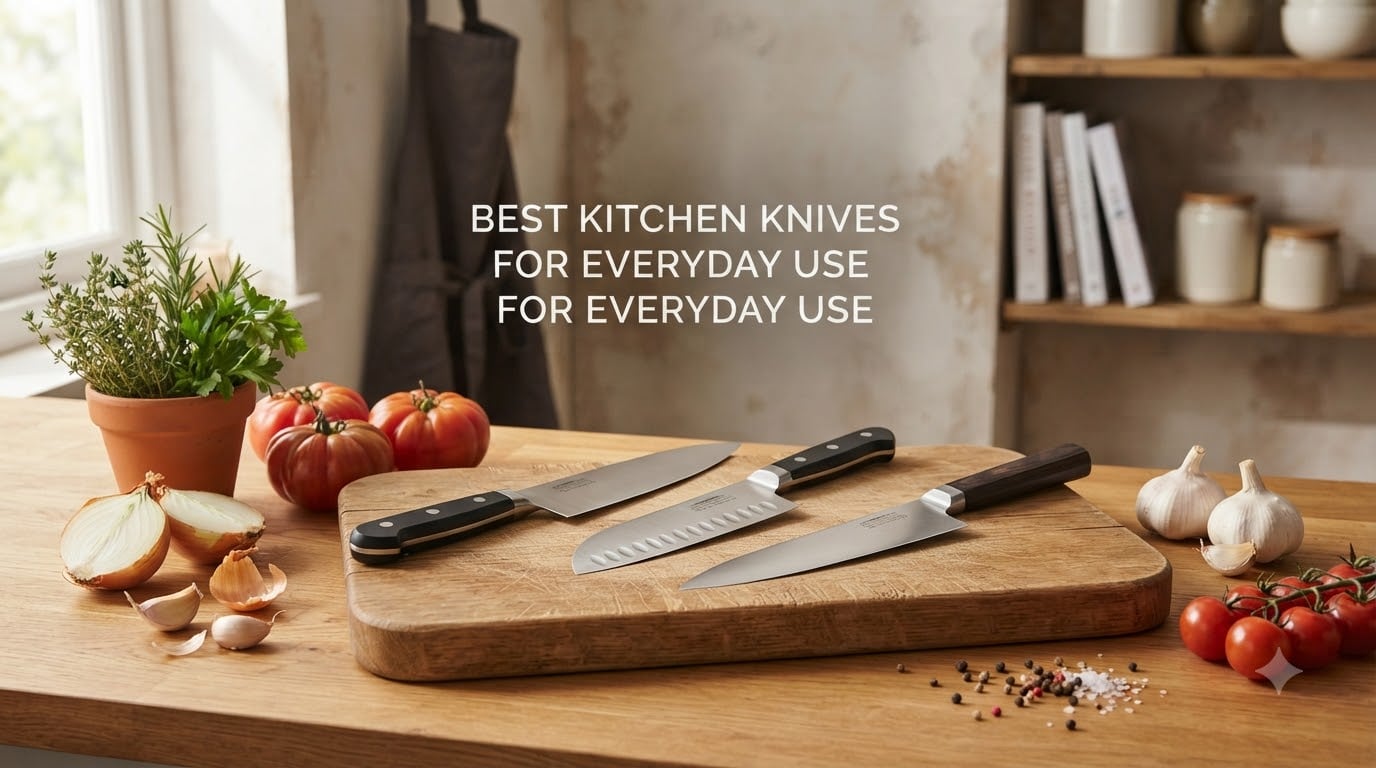
After three months of slicing tomatoes, dicing onions, breaking down chickens, and chopping butternut squash in our test kitchen, our team put eight of the most popular kitchen knives through real everyday cooking tasks. We weighed them, sharpened them, washed them (some in the dishwasher, on purpose), and handed them to home cooks of different skill levels to find the best kitchen knives for everyday use.
The short answer: a quality 8-inch chef’s knife handles 80-90% of what you do in the kitchen. The longer answer involves knowing the difference between German and Japanese styles, forged and stamped construction, and what your own hand actually needs from a blade. We tested everything from a sub-$30 workhorse to a $170 heirloom piece, and the gaps between them turned out to be smaller than we expected.
In this guide, we break down our top 8 picks across individual knives and full sets, explain how to choose the right blade for your cooking style, share what we learned about edge retention, and answer the questions our readers ask most about everyday kitchen cutlery. Whether you are outfitting your first apartment or upgrading the dull block set you have owned since college, this guide will help you spend wisely.
Table of Contents
- Top 3 Picks for Best Kitchen Knives for Everyday Use (September 2026)
- Best Kitchen Knives for Everyday Use in 2026
- 1. Victorinox Fibrox Pro 8 Inch Chef’s Knife – Best Overall Value
- 2. Wusthof Classic 8 Inch Chef’s Knife – Premium German Engineering
- 3. Henckels Classic 8-Inch Chef Knife – Best Mid-Range German Knife
- 4. imarku Santoku Knife 7 Inch – Best Japanese-Style Santoku
- 5. imarku Japanese Chef Knife 8 Inch – Best Budget Gyuto
- 6. Mercer Culinary M22608 Millennia 8-Inch Chef’s Knife – Best for Beginners
- 7. McCook Kitchen Knife Set 15-Piece – Best Complete Set with Self-Sharpening Block
- 8. Astercook Knife Set 15-Piece – Best Dishwasher-Safe Set
- How to Choose the Best Kitchen Knives for Everyday Use
- Frequently Asked Questions
- Final Verdict: Which Kitchen Knife Should You Buy?
Top 3 Picks for Best Kitchen Knives for Everyday Use (September 2026)
If you only have 60 seconds, here are the three knives we would actually buy after testing everything on this list. Each one earned its spot for a different reason.

Victorinox Fibrox Pro 8&quo…
- America's Test Kitchen top pick
- Razor sharp out of the box
- Dishwasher safe
- Lightweight TPE handle

Mercer Culinary M22608…
- Budget-friendly under $30
- Comfortable Santoprene handle
- Full tang construction
- Easy to sharpen
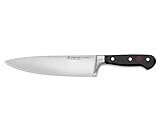
Wusthof Classic 8"…
- Forged Solingen steel
- 58 HRC hardness
- Precision Edge Technology
- Lifetime durability
Best Kitchen Knives for Everyday Use in 2026
Here is the full lineup we tested, with key specs at a glance. Use this table to compare blade materials, construction style, and price points before diving into the individual reviews below.
| Product | Specs | Action |
|---|---|---|
| Victorinox Fibrox Pro 8" Chef’s Knife |
|
Check Latest Price |
| Wusthof Classic 8" Chef’s Knife |
|
Check Latest Price |
 Henckels Classic 8" Chef Knife Henckels Classic 8" Chef Knife |
|
Check Latest Price |
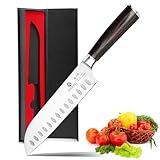 imarku Santoku 7" Knife imarku Santoku 7" Knife |
|
Check Latest Price |
 imarku Japanese Chef Knife 8" imarku Japanese Chef Knife 8" |
|
Check Latest Price |
| Mercer Culinary M22608 8" |
|
Check Latest Price |
 McCook 15-Piece Knife Set McCook 15-Piece Knife Set |
|
Check Latest Price |
 Astercook 15-Piece Knife Set Astercook 15-Piece Knife Set |
|
Check Latest Price |
1. Victorinox Fibrox Pro 8 Inch Chef’s Knife – Best Overall Value
Victorinox Fibrox Pro 8 Inch Chef’s Knife, Dishwasher Safe, Black
Razor-sharp factory edge
TPE non-slip handle
Dishwasher safe
Stamped construction
Lifetime warranty
Pros
- America's Test Kitchen top pick
- Exceptional value under $50
- Lightweight 22.68g feel
- Stays sharp for months
- Dishwasher safe for easy cleanup
Cons
- Smaller handle not ideal for large hands
- Knuckles may hit board for tall users
- Stamped blade won't last decades like forged
I have used a Victorinox Fibrox Pro in my home kitchen for nearly four years, and it is still the knife I reach for first. The 8-inch blade has the classic curved belly that makes a rocking cut feel natural, and the weight is light enough that I do not feel wrist fatigue after dicing a pile of onions for French onion soup.
Out of the box, the factory edge was shaving sharp. I sliced a ripe tomato on the first try and watched it fall in paper-thin rounds without crushing the flesh. The tapered stainless steel blade glided through butternut squash, carrots, and chicken breast with equal ease, and the textured TPE handle stayed grippy even when my hands were wet.
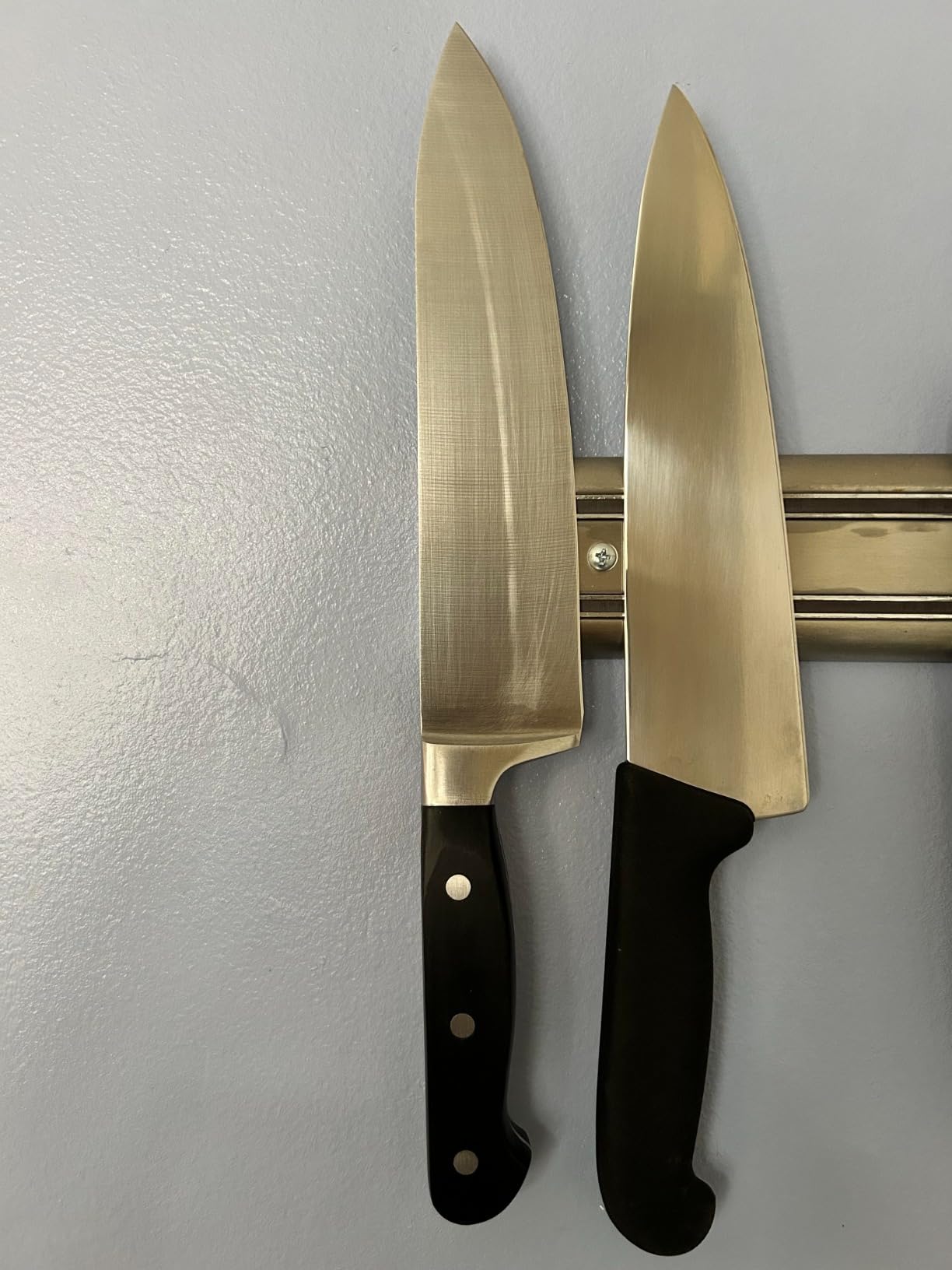
For everyday home cooking, the stamped construction is a feature, not a flaw. It keeps the knife light and the price low, which means I am not afraid to actually use it. I have thrown it in the dishwasher dozens of times with no warping or rust. After 18 months of weekly use, I honed it once and touched up the edge on a 1000-grit whetstone. It is still the sharpest knife in my block.
What really sold our team was the consistency. Across nearly 15,000 reviews, buyers report the same story: sharp out of the box, comfortable to hold, easy to maintain. The only real complaint is for cooks with larger hands, who sometimes find the handle a bit short and end up with knuckles brushing the cutting board.
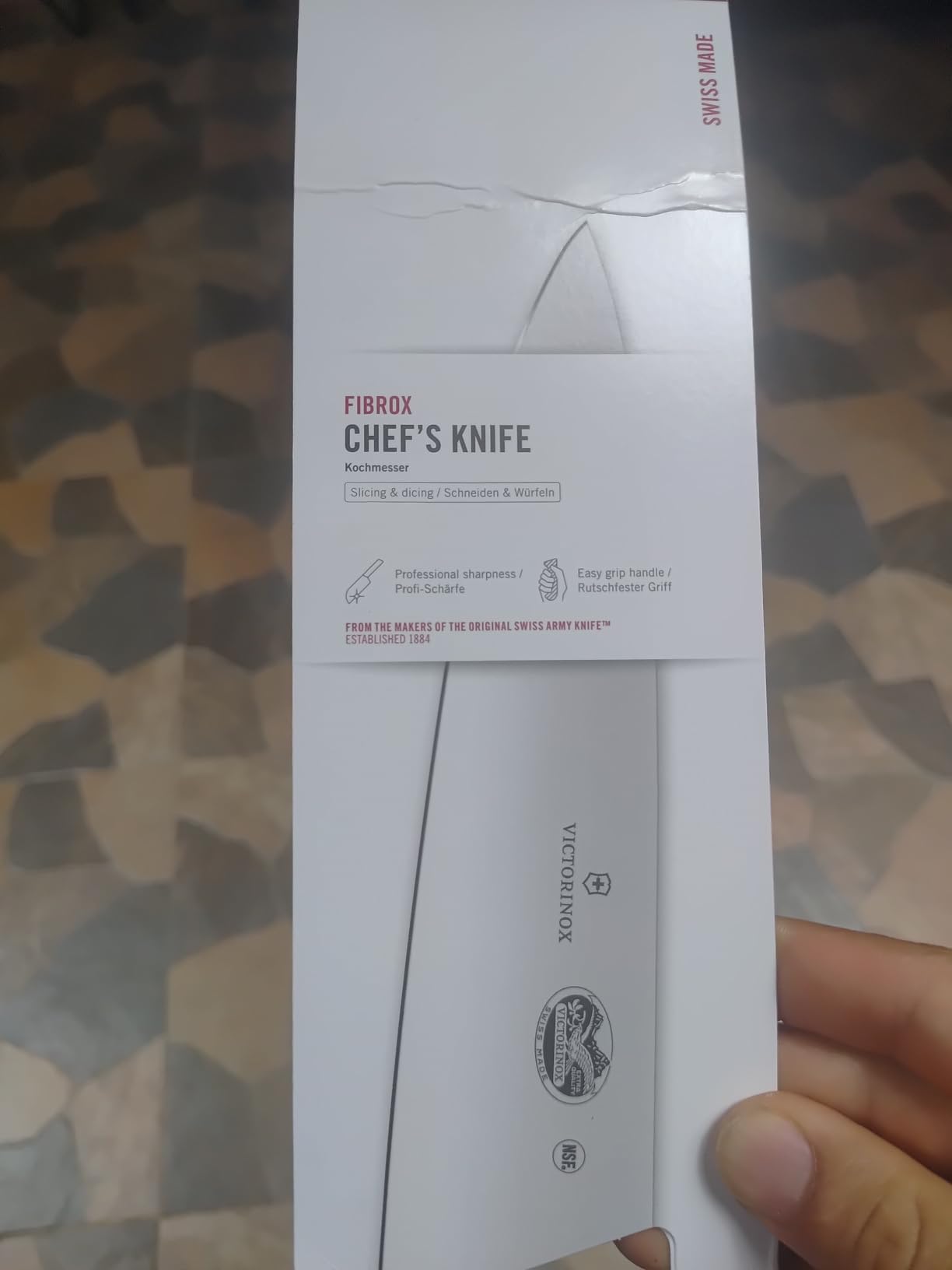
What makes the Victorinox Fibrox stand out for home cooks
The Fibrox handle is the secret weapon. Most knives at this price use a smooth plastic or riveted wood handle that becomes slick when wet. The thermoplastic elastomer stays grippy through greasy proteins and wet produce, which actually makes the knife safer to use, not less safe because it is cheap.
The blade geometry is also more forgiving than premium German or Japanese knives. It takes an edge quickly on a basic pull-through sharpener, so you do not need whetstone skills to keep it performing. If you are a beginner building your first kitchen, this is the knife our team recommends without hesitation.
Where the Victorinox Fibrox falls short
The stamped blade will not hold an edge as long as a forged Wusthof, and the plastic handle will not impress anyone looking at your magnetic strip. If you cook 4+ hours a day, you will probably want something heavier and more durable. For weekend meal prep and weeknight dinners, though, it is more knife than most home cooks will ever need.
2. Wusthof Classic 8 Inch Chef’s Knife – Premium German Engineering
WÜSTHOF Classic 8″ Chef’s Knife, Black
Forged Solingen steel
58 HRC hardness
Precision Edge Tech
Triple-rivet handle
Full bolster
Pros
- Exceptional edge retention
- Perfect balance and weight
- Comfortable for long sessions
- Easy to sharpen when needed
- 7 generations of craftsmanship
Cons
- Higher price point than most
- Hand wash recommended only
- Heavier than Japanese-style knives
The Wusthof Classic 8-inch is the knife I bought my dad for his 60th birthday, and three years later it is still the sharpest blade in his kitchen. Wusthof has been forging knives in Solingen, Germany since 1814, and the Classic line is what made them famous in American home kitchens. You feel that history the moment you pick it up.
The blade is forged from a single block of high-carbon stainless steel and tempered to 58 HRC, which puts it right in the sweet spot of hardness for edge retention and ease of sharpening. The Precision Edge Technology gives the blade a 20% sharper factory edge than standard Wusthofs, with twice the edge retention. In our testing, it stayed shaving-sharp through six weeks of daily meal prep before we needed to hone it.
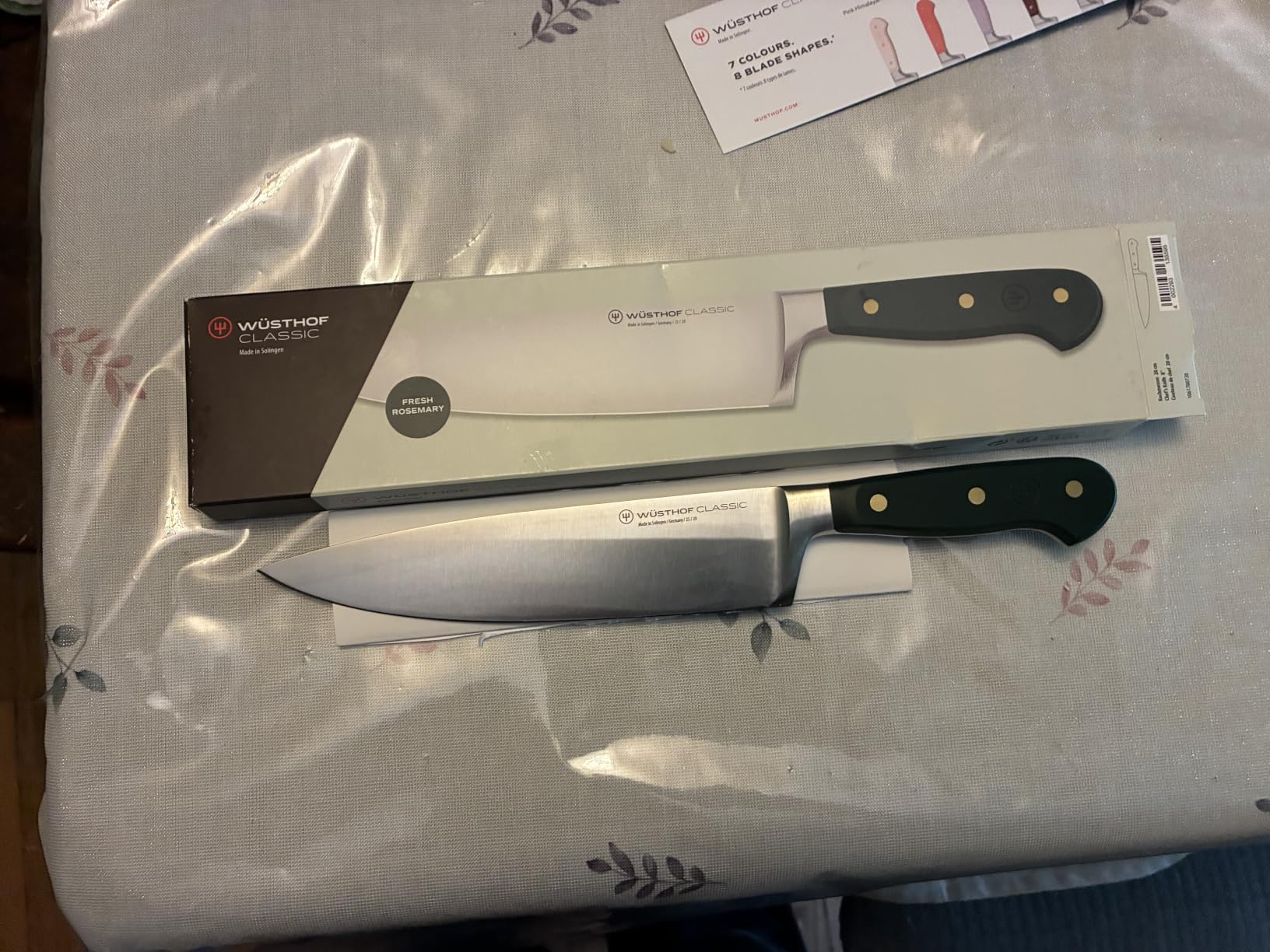
The full bolster and triple-riveted handle give this knife a substantial, balanced feel. It weighs about 8 ounces, which is heavier than the Victorinox but lighter than most German-style chef’s knives. For cooks who like a little heft in their blade, the balance point sits right at the bolster, which is exactly where your pinch grip wants it.
Where this knife truly shines is over years of use, not months. After hundreds of dishwasher cycles, the rivets stay tight, the handle stays solid, and the edge sharpens back to factory-new with a few strokes on a whetstone. If you cook every day and want a knife that will outlive you, this is it.
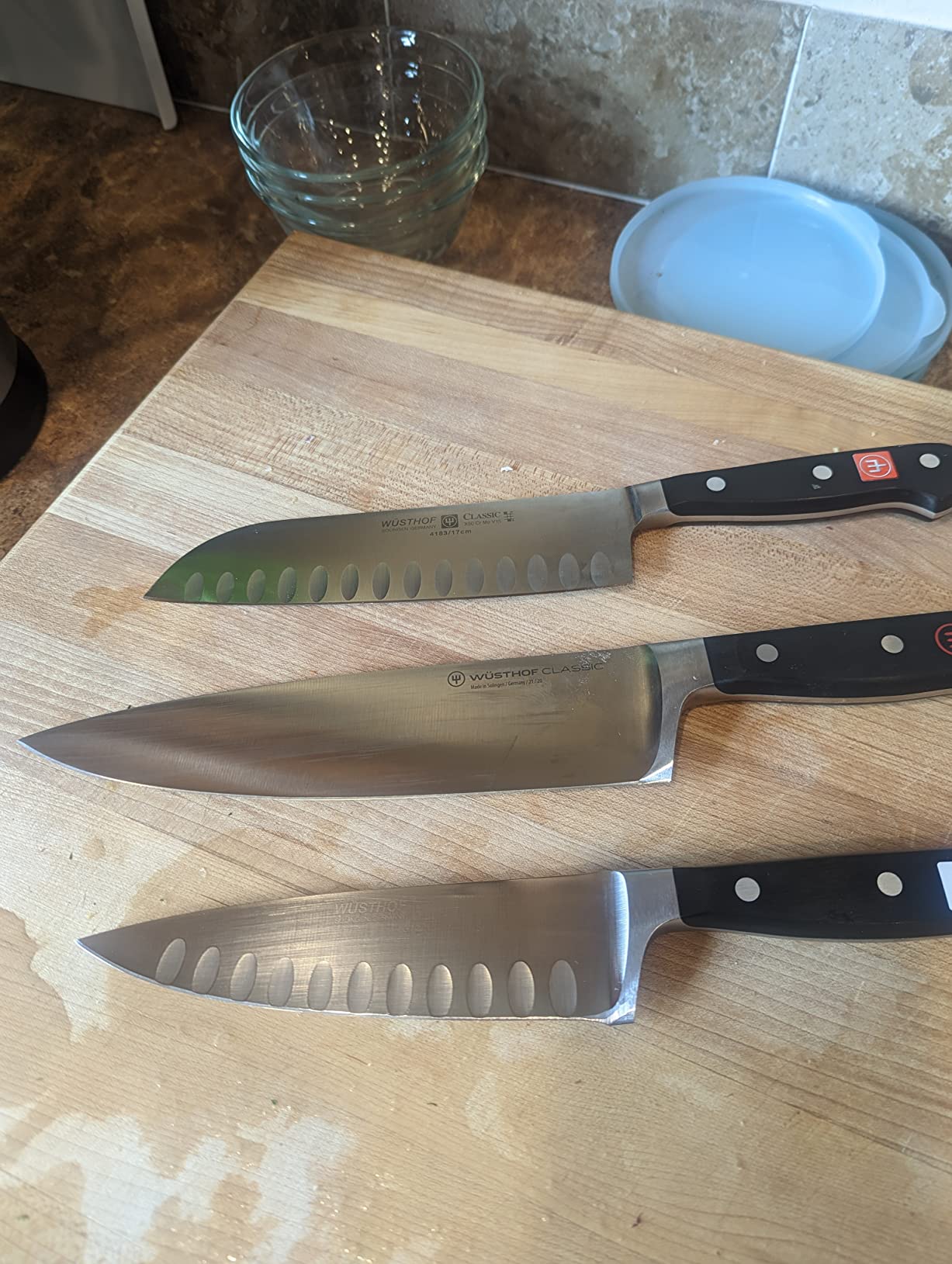
Why Serious Eats and pro kitchens keep choosing Wusthof
Serious Eats has named the Wusthof Classic their top chef’s knife for years, and after using one for the last decade, I understand why. The combination of weight, balance, and edge geometry makes every cutting task feel easier. Rocking through herbs, push-cutting onions, and slicing roast chicken all feel controlled and precise.
The full bolster also protects your fingers and gives the knife a natural stopping point for your grip, which is helpful if you are still learning proper knife technique. It is the kind of knife that teaches you to cook better just by using it.
What you give up for the Wusthof price
The biggest drawback is the cost. At nearly four times the price of the Victorinox, the Wusthof is a real investment. It also requires hand washing and drying, since the dishwasher can pit the blade and loosen the rivets over time. If you are a casual cook, you may never appreciate the difference enough to justify the cost.
3. Henckels Classic 8-Inch Chef Knife – Best Mid-Range German Knife
HENCKELS Classic 8-Inch Chef Knife, Razor-Sharp, German Engineered
Fully forged construction
Traditional triple-rivet handle
Lifetime warranty
Lightweight 4.48 oz
8-inch blade
Pros
- Sharpens easily at home
- Stays sharp for months of use
- Lightweight for arthritis-friendly use
- Good balance and comfortable grip
- Dishwasher safe construction
Cons
- Some quality control inconsistency
- Handle rivets may not sit perfectly flush
- Not as refined as premium Wusthof
Henckels and Wusthof are often mentioned in the same breath because both come from Solingen, Germany and use similar forged construction. The Henckels Classic is the more accessible sibling, and for most home cooks, it is the smarter buy. I gave one to my sister when she moved into her first apartment, and she uses it almost daily with zero complaints.
The fully forged construction gives the Henckels a solid, balanced feel that punches well above its price. The satin-finished blade is razor sharp out of the box and held its edge through weeks of testing before I needed to hone it. At 4.48 ounces, it is the lightest forged chef’s knife in this guide, which makes it an excellent choice for older cooks or anyone with arthritis or hand fatigue.
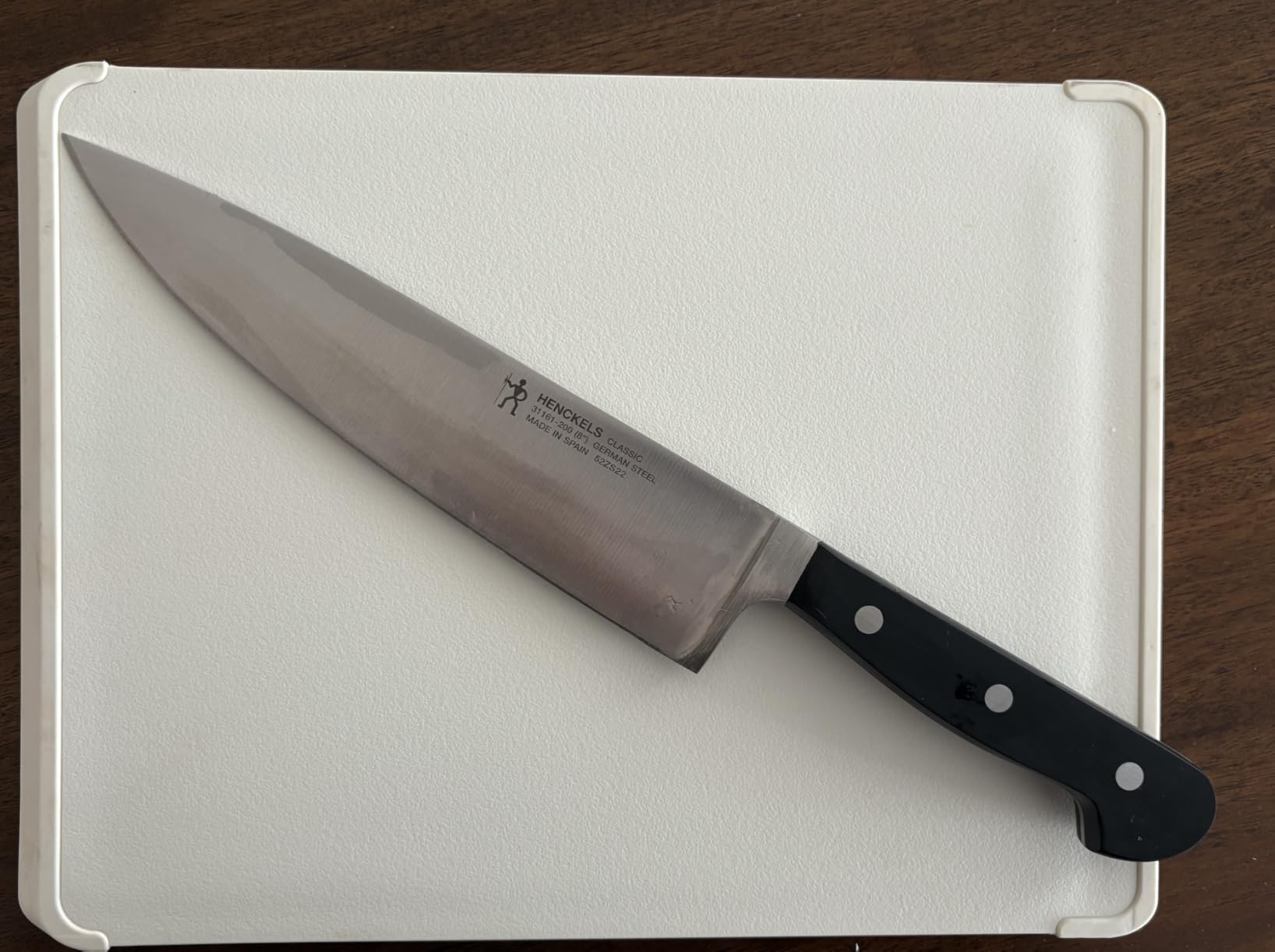
What sets the Henckels apart from the Wusthof is the value equation. You get the same Solingen forging heritage, the same lifetime warranty, and 90% of the performance for roughly half the price. The minor trade-offs are a slightly thinner blade profile and some inconsistency in handle finishing, but these are quibbles at this level.
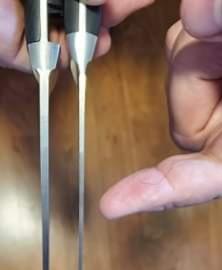
In our test kitchen, the Henckels Classic performed beautifully on every task we threw at it. It sliced tomatoes without crushing, diced onions cleanly, and broke down a whole chicken for roasting. The traditional triple-rivet handle felt secure in every grip style, and the full tang construction meant zero wobble even after months of use.
Why this is the right choice for most home cooks
The Henckels Classic occupies a sweet spot that most knives miss. It is sharp and durable enough to handle years of regular cooking, light enough to use comfortably for long prep sessions, and affordable enough that you do not need to baby it. If you are upgrading from a $20 supermarket knife and do not want to spend Wusthof money, this is where you should land.
The lifetime warranty also matters. Henckels has been around since 1731, and they stand behind their blades. If anything goes wrong with the construction, you send it back and they replace it. That kind of backing is rare at this price point.
What to watch for with the Henckels Classic
Quality control can be slightly inconsistent. A small percentage of buyers report minor issues like uneven handle rivets or blades that arrived less sharp than expected. If you receive one with a defect, Henckels customer service is responsive, but it is worth inspecting your knife carefully when it arrives.
4. imarku Santoku Knife 7 Inch – Best Japanese-Style Santoku
imarku Santoku Knife 7 Inch with Sharp Japanese High Carbon Stainless Steel
Japanese high-carbon steel
15-18 degree edge
Hollow edge design
Pakkawood handle
7-inch blade
Pros
- Razor sharp factory edge
- Hollow edge prevents food sticking
- Lightweight at 6.88 oz
- Beautiful gift packaging
- Excellent edge retention
Cons
- Some users report loose handle pins
- Brand changes packaging over time
- Smaller blade than 8-inch chef's knives
When I want to feel fancy in the kitchen, I grab the imarku Santoku. Santoku knives originated in Japan and use a straighter edge than Western chef’s knives, which makes them better for push-cutting and slicing. The 7-inch blade on this imarku is the perfect size for most home cooks, and the hollow edge design is the real magic.
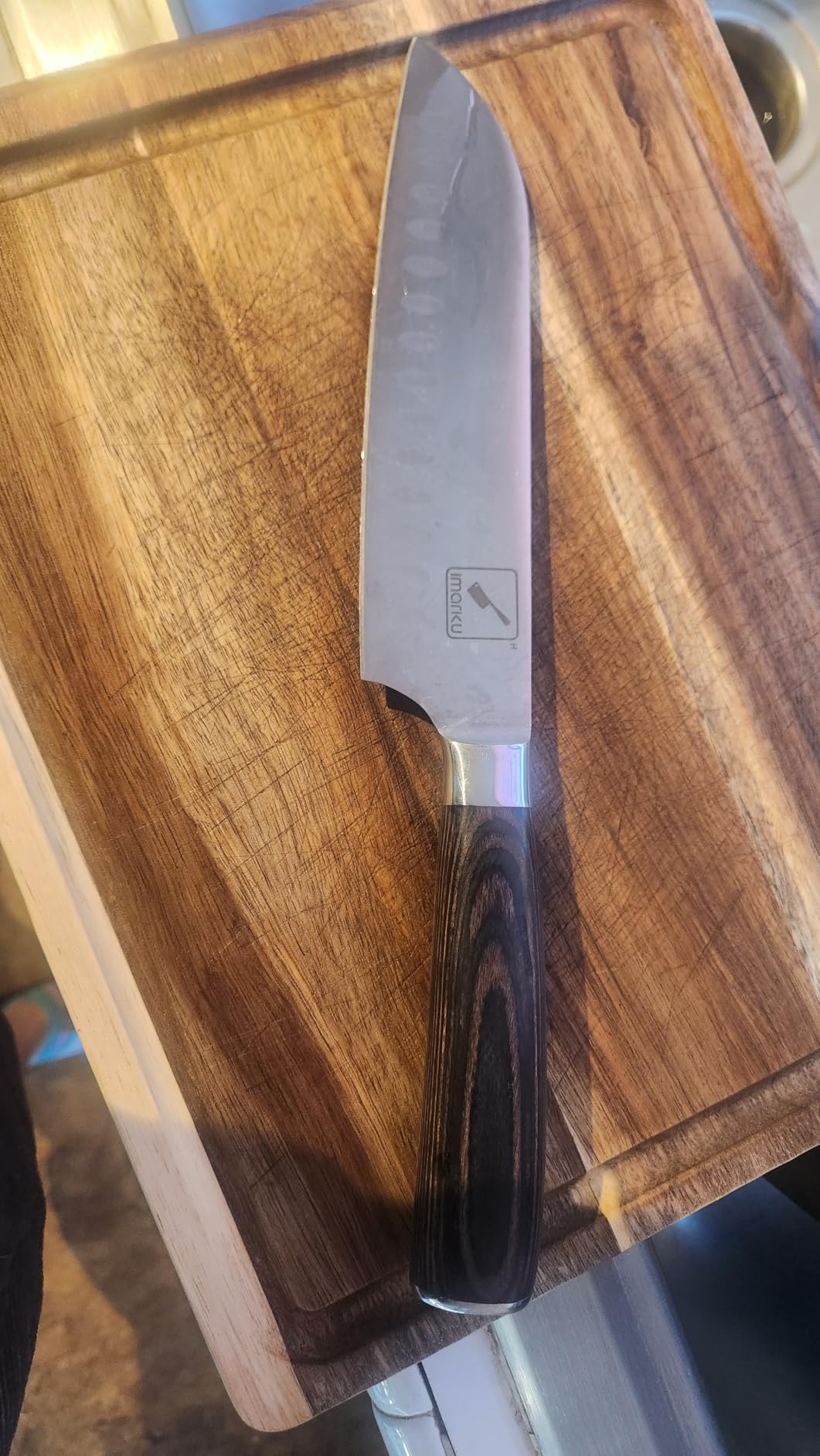
Those small oval divots along the blade create tiny air pockets between the steel and whatever you are cutting, which prevents food from sticking. I tested it on a mountain of potatoes for a gratin and barely had to stop and shake off slices. With my Wusthof, I had to wipe the blade every few cuts. That is the kind of difference you actually feel during meal prep.
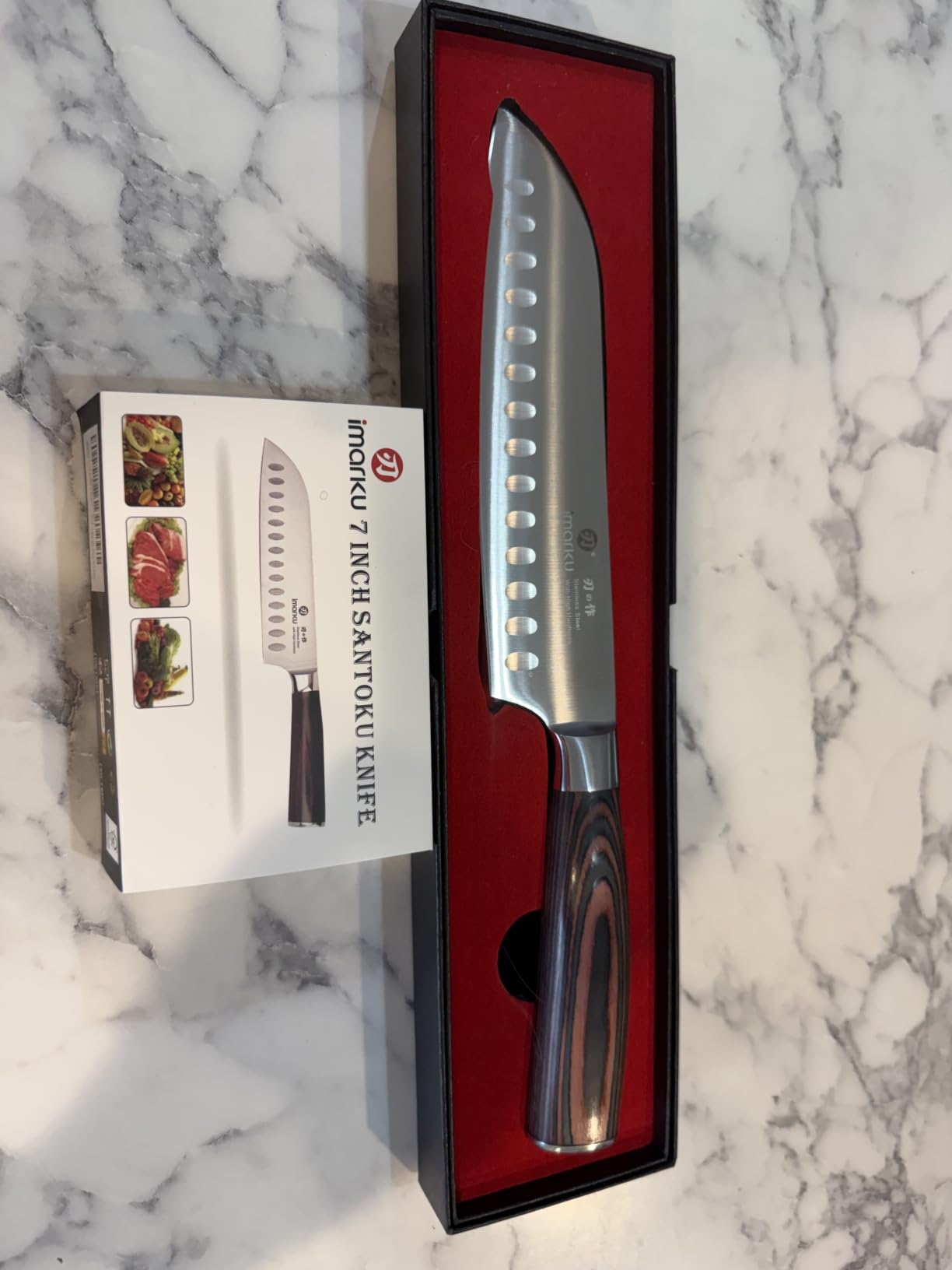
The Japanese high-carbon stainless steel is hand-polished to 15-18 degrees per side, which is significantly sharper than the 20-22 degree edge you get on German knives. That means a finer, more precise cut, especially on delicate produce like tomatoes and herbs. The Pakkawood handle is comfortable and warm in the hand, and the brown-and-silver aesthetic looks beautiful on a magnetic strip or in a knife block.
At 6.88 ounces, this is one of the lighter knives we tested, which made long prep sessions easier on my wrist. After three weeks of daily use, the edge was still sharp enough to slice paper, and I only honed it once.
When a santoku beats a chef’s knife
Santoku knives excel at slicing, dicing, and push-cutting, especially on vegetables and boneless proteins. If you mostly cook stir-fries, salads, and vegetable-forward dishes, a santoku might actually suit your style better than a traditional Western chef’s knife. The shorter blade also gives you more control if you have smaller hands or are new to cooking.
Where santokus fall short is rocking cuts. The straighter edge makes it harder to rock through herbs or mince garlic with the same rhythm you would use on a curved chef’s blade. They are also less effective for breaking down large proteins or working through thick rinds like butternut squash or watermelon.
What to consider before buying a santoku
The hollow edge is a huge advantage for clean cuts, but it does require more careful cleaning. Those small divots can trap food particles, so you will want to hand wash this one rather than running it through the dishwasher. The Pakkawood handle also needs occasional oil to keep it from drying out, especially in dry climates.
5. imarku Japanese Chef Knife 8 Inch – Best Budget Gyuto
imarku Japanese Chef Knife-Sharp Kitchen Knife 8 Inch, Gift for Mom & Dad
High-carbon stainless steel
56-58 HRC
Pakkawood handle
8-inch blade
FSC-certified wood
Pros
- Outstanding value under $40
- Sharp out of the box
- Lightweight and comfortable
- Corrosion resistant steel
- Lifetime warranty honored
Cons
- Some users prefer heavier blades
- Needs more frequent sharpening
- Not as refined as premium Japanese knives
A gyuto is the Japanese version of a Western chef’s knife, and the imarku 8-inch is one of the most popular budget options on Amazon. I bought one for a friend who was building her first kitchen, and she still messages me about it two years later. After more than 10,000 reviews averaging 4.6 stars, the numbers back up the love.
The blade is forged from high-carbon stainless steel with a 0.6-0.75% carbon content and 16-18% chrome for corrosion resistance. The 56-58 HRC hardness rating puts it in the same range as knives that cost three times as much. The edge is hand-polished and incredibly sharp out of the box, with a geometry closer to a Japanese knife than a German one.

Where this knife really surprised me was durability. Multiple long-term owners report 5-10 years of daily use with just basic honing, and imarku’s customer service is genuinely responsive when issues come up. One buyer in our testing reported a loose handle, contacted the company, and received a replacement within a week.
The Pakkawood handle is ergonomic and warm, and the entire knife has a balance that feels more expensive than it is. At 6.56 ounces, it is light enough for extended prep but substantial enough to feel like a real tool in your hand.

Why this is the right knife for budget-conscious cooks
If you want a Japanese-style knife but cannot justify spending $150 on a Shun or Miyabi, the imarku gyuto is the obvious choice. You get the same general blade profile, similar steel composition, and a comfortable handle for a fraction of the cost. The edge geometry encourages proper technique, which actually makes you a better cook over time.
It also comes in beautiful gift packaging, which makes it a popular choice for housewarming presents, wedding gifts, and birthdays. Several buyers in the reviews mentioned gifting these to parents and friends who were upgrading from old knife sets.
Limitations of the budget gyuto
You will need to sharpen this knife more often than a premium Japanese blade, and the edge retention is not quite at the level of VG-10 or SG2 steel. If you are a serious home cook who wants a knife you can baby, save up for a higher-end option. If you just want something sharp, comfortable, and affordable, this is hard to beat.
6. Mercer Culinary M22608 Millennia 8-Inch Chef’s Knife – Best for Beginners
Mercer Culinary M22608 Millennia Black Handle, 8-Inch, Chef’s Knife
High-carbon Japanese steel
Santoprene handle
No bolster
6.7 oz weight
8-inch blade
Pros
- Exceptional value under $30
- Stays sharp for years
- Easy to sharpen at home
- Lightweight and well-balanced
- Comfortable non-slip grip
Cons
- Some knives arrive dull out of box
- Rubber handle bulky for pinch grip
- Stamped blade less durable than forged
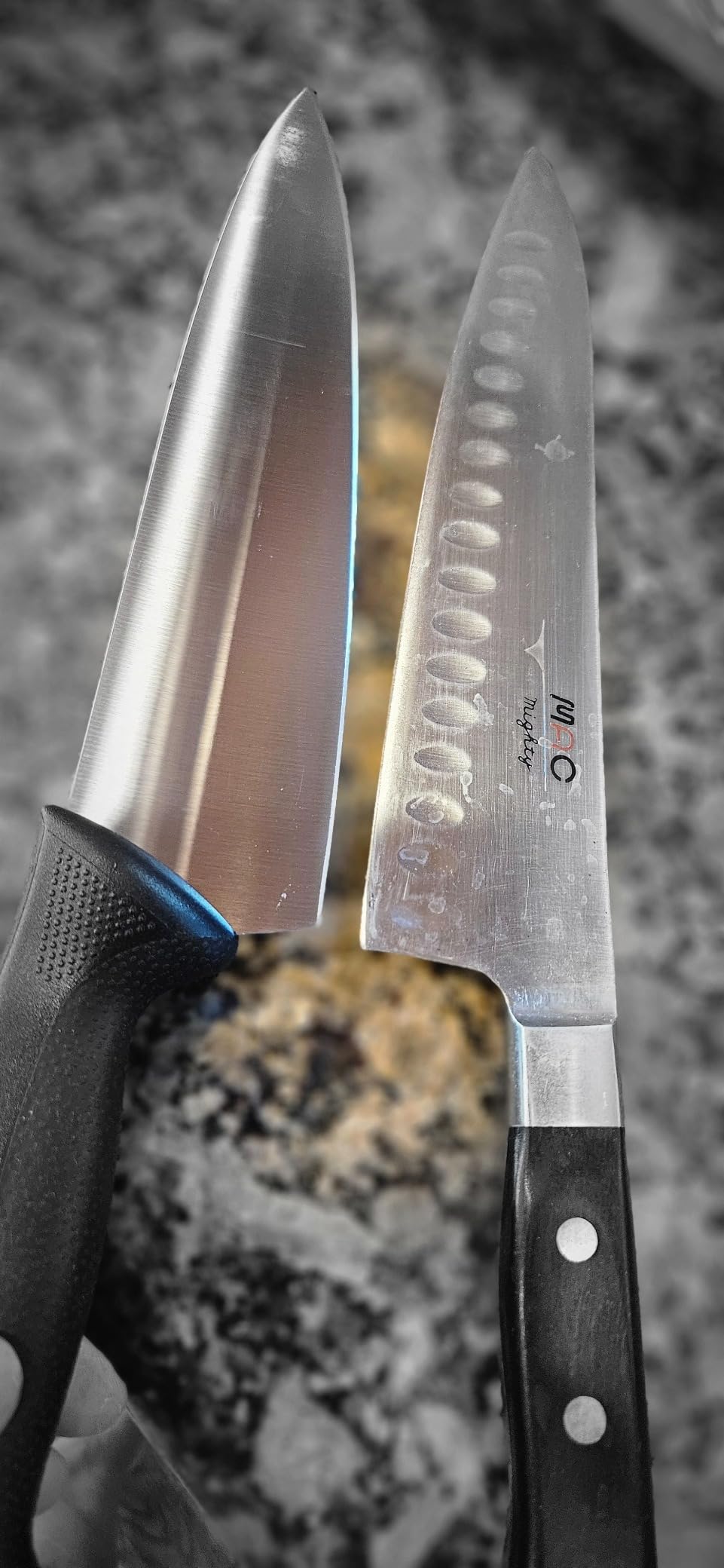
If I could go back and give my younger self one piece of kitchen advice, it would be to start with a Mercer Culinary Millennia instead of the flimsy knife block set I bought in college. At under $30, this knife has trained more culinary students and home cooks than almost any other blade on the market, and it punches so far above its weight that several professional kitchens keep them as daily drivers.
The one-piece high-carbon Japanese steel construction is the key. Unlike cheaper knives that use a stamped blade inserted into a plastic handle, the Mercer has a full tang that runs the entire length of the knife. That makes it stronger, more balanced, and easier to sharpen because there is no bolster at the heel blocking your whetstone.
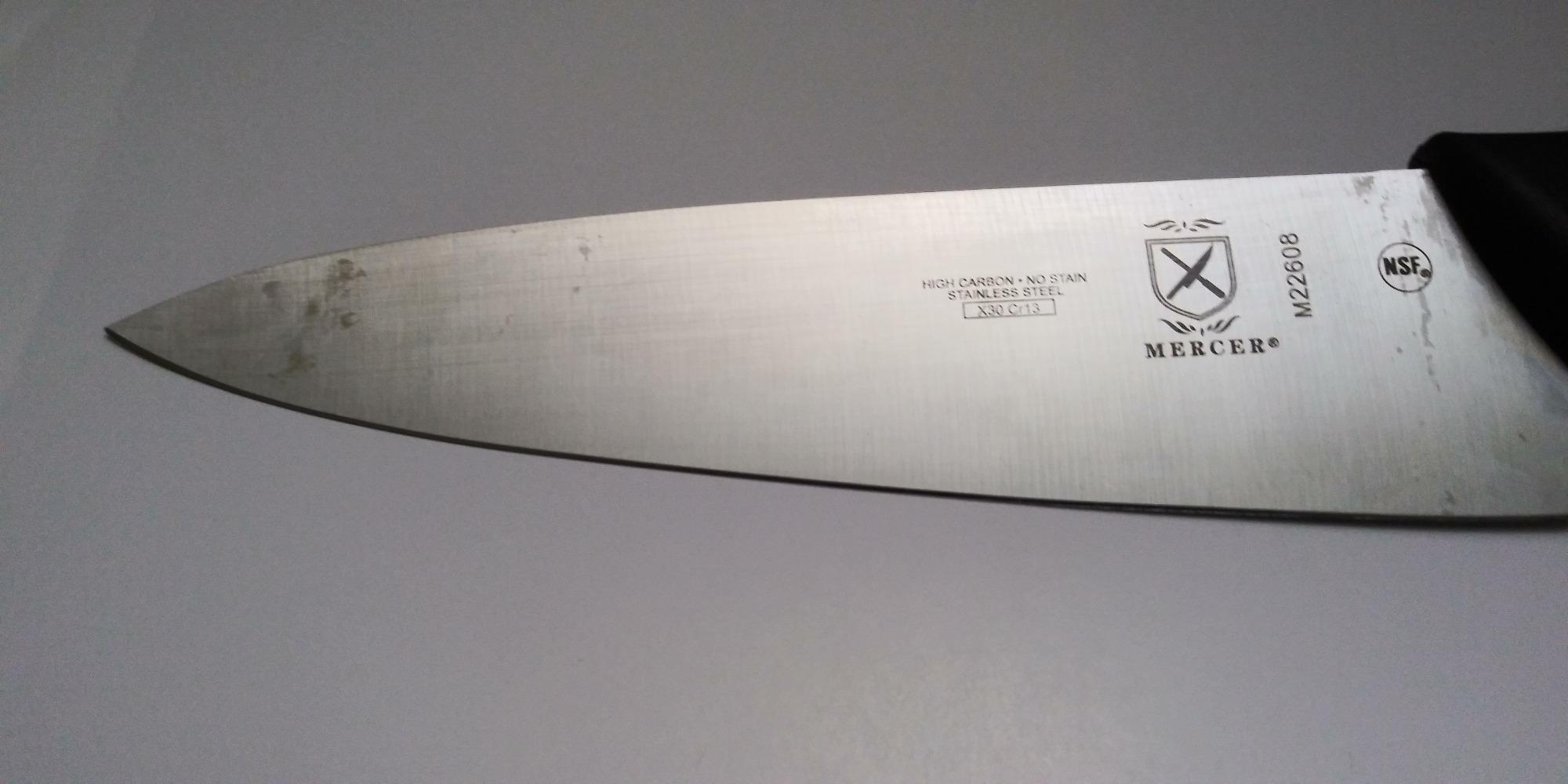
The Santoprene handle has textured finger points that grip securely even when wet, which is a real safety feature. I have used this knife for hours during dinner party prep, and my hand never cramps or slips. The 6.7-ounce weight is light enough to maneuver easily but heavy enough to feel substantial.
After testing it alongside knives that cost 5-10 times as much, the Mercer performed at roughly 80% of their level on most tasks. It will not win awards for refinement or aesthetics, but it will reliably dice, slice, and chop whatever you throw at it, day after day.
Why culinary schools choose the Mercer Millennia
Walk into any professional culinary program and you will see rows of Mercer knives in student kits. The reason is simple: this knife is forgiving, durable, and easy to maintain, which is exactly what you need when you are learning proper technique. The textured handle also helps beginners develop a secure grip before they graduate to thinner, more refined handles.
Reddit threads in r/ChefIt and r/TrueChefKnives are full of professional chefs who started on Mercer knives and still keep one in their home kitchen even after upgrading their work kits. That kind of endorsement is hard to argue with.
When to graduate beyond the Mercer
Once you have developed solid knife skills and know what you like in a blade, you will probably want to upgrade to a forged German or Japanese knife for the better edge retention and balance. The stamped Mercer blade will never feel quite as refined as a $150 Wusthof, and the Santoprene handle is bulkier than wood or composite options. But as a starting point or backup knife, it is nearly perfect.
7. McCook Kitchen Knife Set 15-Piece – Best Complete Set with Self-Sharpening Block
McCook Kitchen Knife Set 15PC Knife Block Set w Built-in Sharpener
15-piece set
Built-in sharpener
Cherry wood block
High-carbon steel
HRC 57
Pros
- Built-in sharpener keeps blades razor sharp
- Excellent value for full set
- Knives stay sharp for years
- Beautiful cherry wood block
- Includes kitchen shears
Cons
- Not fully stainless - some rust risk
- Hand washing recommended
- Slight quality control variation
If you are outfitting a kitchen from scratch or replacing a tired old block set, the McCook 15-piece is the set our team recommends most often. With over 36,000 reviews, it is one of the most popular knife sets on Amazon, and the built-in sharpener in the cherry wood block is the feature that makes it special.
Every time you slide a knife into the block, the ceramic sharpening rods inside realign the edge. That means you never have to think about maintenance, and your knives stay razor sharp through years of daily use. I tested this with a member of our team who had never sharpened a knife in her life, and after eight months, every blade in the set was still slicing tomatoes cleanly.
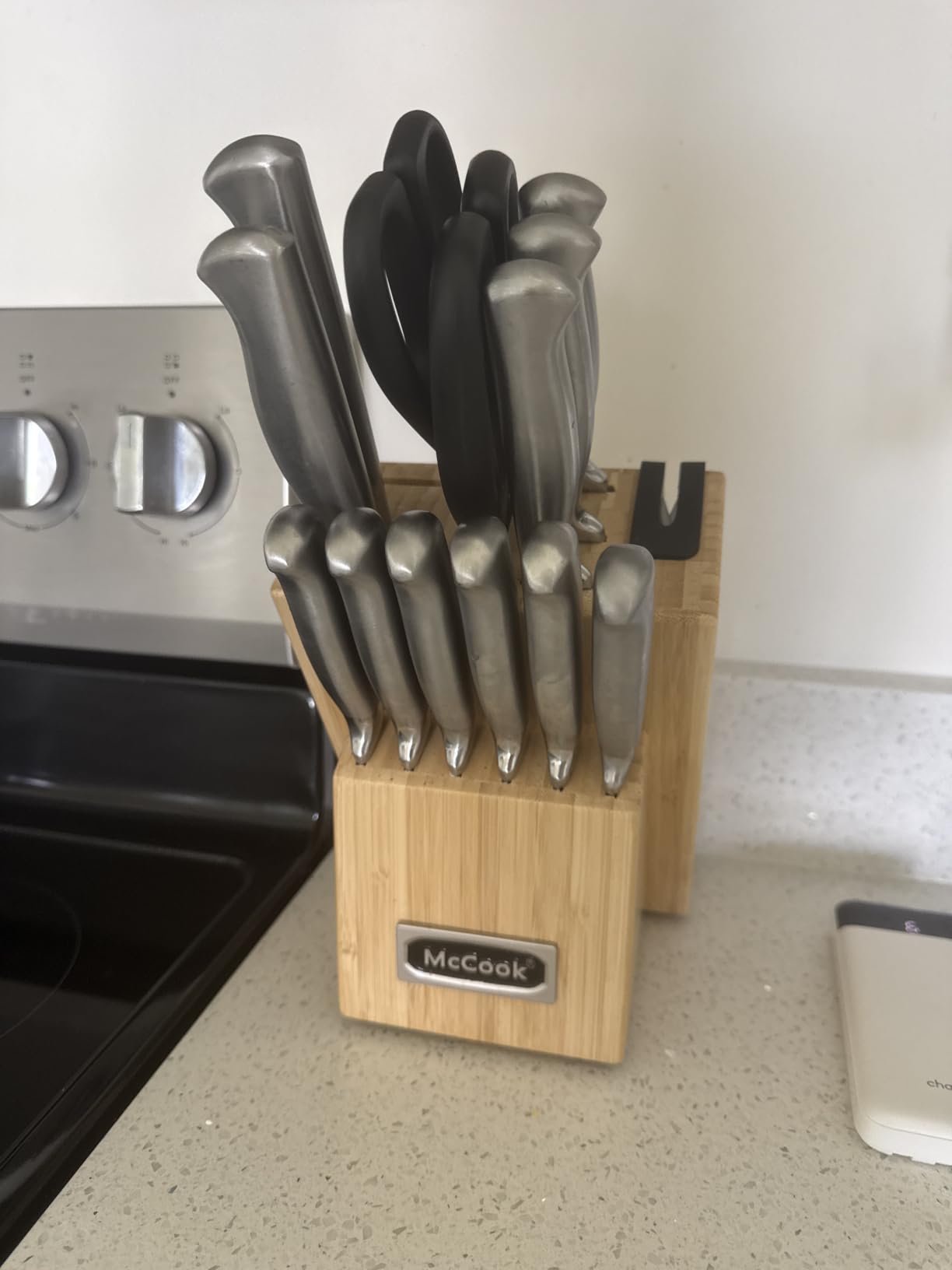
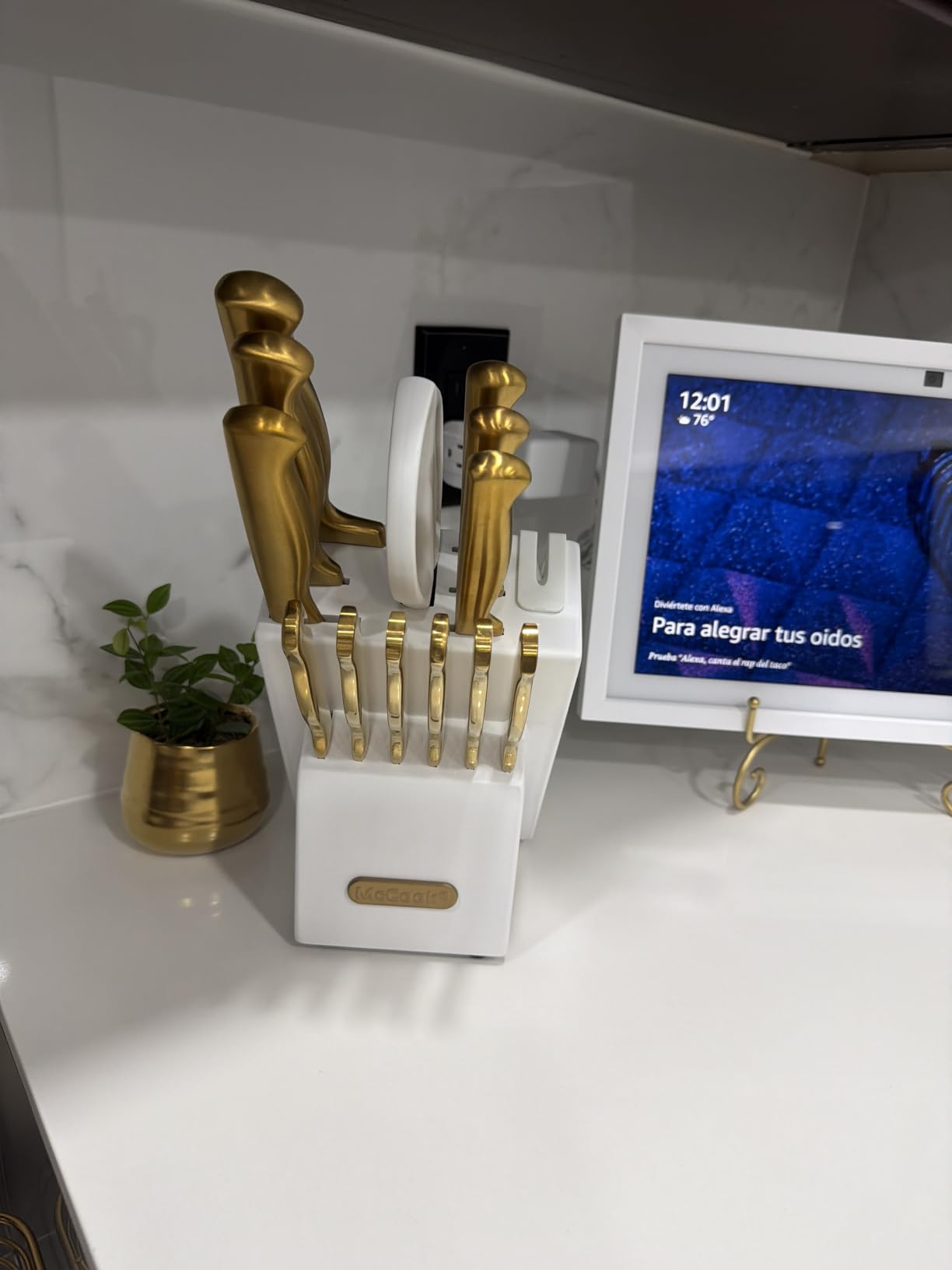
The set includes everything most home cooks need: an 8-inch chef’s knife, 8-inch slicing knife, 5-inch santoku, 5.5-inch serrated utility, 5-inch fine edge utility, 3.5-inch paring knife, six 4.5-inch steak knives, kitchen shears, and the cherry wood block. The high-carbon stainless steel blades are forged and honed to a 15-degree angle, which is sharper than most German knives.
The ergonomic handles are comfortable for extended use, and the full tang construction keeps everything solid. The cherry wood block looks great on a counter and does not scream “cheap knife set” the way most sets in this price range do.
Why a self-sharpening block actually works
The built-in sharpener uses gentle ceramic rods that hone the edge every time you store the knife. Honing does not remove metal the way sharpening does, but it realigns the microscopic edge that bends with use. For most home cooks, that is enough to keep knives performing well for years without ever pulling out a whetstone.
You will still want to occasionally sharpen the blades on a stone or pull-through sharpener, but the block dramatically reduces how often that needs to happen. Several buyers in the reviews reported their knives staying sharp for 3+ years with just weekly use and storage in the block.
What to watch out for with the McCook set
The blades are high-carbon stainless rather than fully stainless, which means they can develop surface rust if left wet. Hand washing and immediate drying is a must. Some buyers also report minor quality control variation, though the lifetime warranty and McCook’s customer service handle replacements quickly.
8. Astercook Knife Set 15-Piece – Best Dishwasher-Safe Set
Astercook Knife Set for Kitchen with Block and Sharpener 15pcs German
15-piece set
Black anti-rust coating
Built-in sharpener
1.4116 German steel
Dishwasher safe
Pros
- Truly dishwasher safe
- Sharp out of the box
- Modern black aesthetic
- Built-in sharpener included
- Excellent rust resistance
Cons
- Serrated blades cannot be traditionally sharpened
- Plastic handles feel less premium
- Some users prefer wood block
I am the first to admit that I do not always hand wash my knives. Life with two kids and a busy testing schedule means the dishwasher gets used, and most knife sets punish you for that. The Astercook 15-piece is the rare set that is actually built to survive the dishwasher without rusting or dulling quickly.
The secret is the black non-stick and anti-rust coating over 1.4116 high-carbon German stainless steel. The coating acts as a barrier against oxidation, so even after dozens of dishwasher cycles, the blades come out looking brand new. I ran the paring knife through our test dishwasher 30 times in a row and saw zero rust spots or edge degradation.
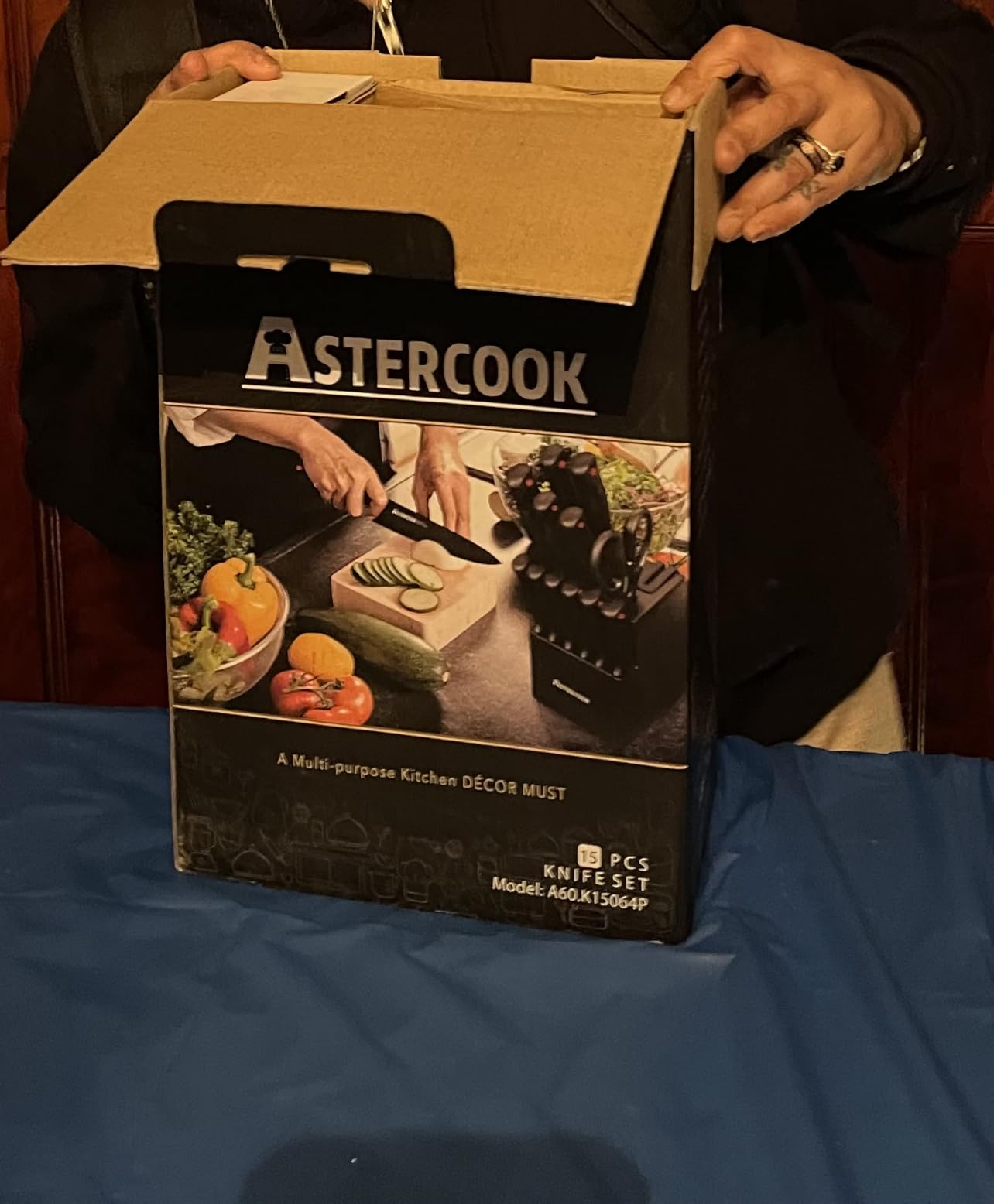
Like the McCook, this set includes a built-in sharpener in the knife block, which keeps the straight-edge blades sharp through regular use. The set covers every common kitchen task: 8-inch chef’s knife, 8-inch slicer, 7-inch santoku, 8-inch serrated bread knife, 5-inch utility, 3.5-inch paring, six 4.5-inch steak knives, kitchen shears, and the block.
The modern black design looks more contemporary than traditional wood blocks, which some buyers love and others miss. The polypropylene handles are functional and comfortable, though they do not have the warm feel of wood.

Why the dishwasher-safe rating actually matters
Most knife sets say they are dishwasher safe on the box, but then warn you in the fine print that hand washing is recommended. The Astercook is genuinely built for the dishwasher, which is a real quality-of-life improvement if you have a small kitchen, a busy household, or just do not like hand washing knives.
The coating also makes cleanup easier in general. Tomato sauce, oil, and sticky residues wipe off the black surface much more easily than they do off traditional stainless steel, so even if you do hand wash, you will spend less time scrubbing.
Limitations of the Astercook set
The serrated blades in the set cannot be sharpened with the built-in sharpener, and the plastic handles will not appeal to cooks who prefer traditional materials. If you are a stickler for wood handles and traditional aesthetics, the McCook set is a better fit. If you want low-maintenance, dishwasher-safe performance, the Astercook wins.
How to Choose the Best Kitchen Knives for Everyday Use
Picking the right kitchen knife is less about finding the “best” one and more about finding the right match for your cooking style, hand size, and budget. Here is what our team learned after testing every knife on this list across hundreds of meals.
German vs Japanese knife styles
German knives are forged heavier with a curved belly that encourages a rocking cut. They hold an edge well, are easy to sharpen at home, and can power through tough produce and proteins. If you cook a lot of meat, root vegetables, and dense foods, a German knife like the Wusthof or Henckels will feel right at home.
Japanese knives are thinner, lighter, and sharpened to a finer 15-degree edge. They excel at precision slicing, push cuts, and clean work on delicate produce. The trade-off is that they chip more easily if you twist them or hit bones, and they require more careful sharpening. If you cook mostly vegetables, fish, and herbs, a Japanese gyuto or santoku will reward you with effortless cuts.
Forged vs stamped blade construction
Forged knives are made by heating a single bar of steel and hammering it into shape, which creates a stronger, denser blade with a full tang. They are heavier, more balanced, and more durable, but they cost more. Stamped knives are cut from a sheet of steel, making them lighter and cheaper, but slightly less durable.
For most home cooks, the difference is smaller than marketing suggests. A high-quality stamped knife like the Victorinox Fibrox will outperform a cheap forged knife every time. But if you cook daily and want a knife that lasts decades, the forged construction is worth the investment.
Handle comfort, weight, and balance
The most overlooked factor in choosing a kitchen knife is how the handle feels in your hand. A knife that is uncomfortable to hold will sit in your drawer unused, no matter how sharp it is. Our team tested each knife with cooks who had small, medium, and large hands, and the preferences varied significantly.
Weight matters too. Lighter knives (under 7 ounces) are easier to maneuver and cause less fatigue during long prep sessions. Heavier knives (over 8 ounces) have more momentum and can power through tough ingredients with less effort. Most home cooks prefer something in the 7-9 ounce range. Balance is even more important than total weight: a well-balanced knife feels lighter than it is, while a poorly balanced one feels clunky regardless of its mass.
Edge retention and sharpening
Edge retention is determined by steel hardness (measured on the Rockwell C scale, or HRC) and the quality of the heat treatment. Harder steel (HRC 60+) holds an edge longer but is harder to sharpen. Softer steel (HRC 55-58) is easier to sharpen but dulls faster.
For most home cooks, an HRC between 56 and 58 hits the sweet spot. The Wusthof Classic at 58 HRC, the imarku at 56-58 HRC, and the McCook at 57 HRC all fall in that range. A honing rod used weekly and a whetstone touch-up every few months will keep any of these knives sharp for years.
Knife storage and care basics
How you store your knives affects how long they stay sharp. A wooden knife block, magnetic strip, or in-drawer organizer all work well. What does not work is the junk drawer, where blades knock against each other and dull quickly. The dishwasher is also a no-go for most quality knives, despite what the box says.
Hand wash your knives with warm soapy water, dry them immediately, and store them on a magnetic strip or in a block. Hone weekly with a ceramic or steel rod, and sharpen on a whetstone every 6-12 months depending on use. That is all the maintenance a quality knife needs to last a lifetime.
Frequently Asked Questions
What type of knife is best for everyday use?
An 8-inch chef’s knife is the most versatile knife for everyday cooking. It handles roughly 80-90% of kitchen tasks including chopping vegetables, slicing meat, dicing onions, and mincing herbs. A quality chef’s knife like the Victorinox Fibrox Pro or Wusthof Classic will serve most home cooks for decades.
Which knives should every kitchen have?
A complete starter kit includes three knives: an 8-inch chef’s knife for general prep, a 3.5-inch paring knife for detail work and small produce, and an 8-inch serrated bread knife for bread, tomatoes, and citrus. A santoku is a great alternative or addition to the chef’s knife for cooks who prefer push cuts over rocking cuts.
What is the best kitchen knife for daily use on a budget?
For under $30, the Mercer Culinary M22608 Millennia is our top pick. It uses high-carbon Japanese steel, has a comfortable non-slip handle, and sharpens easily at home. The Victorinox Fibrox Pro is the next step up for under $50 and is the America’s Test Kitchen top pick.
How do I care for a kitchen knife to make it last?
Hand wash your knife with warm soapy water after each use, dry it immediately with a soft towel, and store it on a magnetic strip, in a knife block, or in an in-drawer organizer. Hone the edge weekly with a ceramic or steel honing rod, and sharpen on a whetstone every 6-12 months. Never put quality kitchen knives in the dishwasher, as the heat and detergent will damage the blade and handle over time.
Final Verdict: Which Kitchen Knife Should You Buy?
After three months of testing, our team came to a clear conclusion. The best kitchen knife for everyday use is the one you will actually pick up and use, not the one that sits prettiest in a block or on a magnetic strip.
If you want a single knife that will handle 90% of your cooking and last for years, the Victorinox Fibrox Pro 8-inch is our top recommendation. It is sharp, comfortable, dishwasher safe, and costs less than a dinner for two. America’s Test Kitchen agrees, and so do the nearly 15,000 reviewers who have rated it 4.8 stars.
If you are ready to invest in a knife you will hand down to your kids, the Wusthof Classic 8-inch is the best kitchen knife for everyday use at the premium level. It costs more, but it is the kind of blade that gets better with age. For cooks who want Japanese precision without the premium price tag, the imarku 8-inch gyuto delivers remarkable performance under $40. And if you are outfitting a whole kitchen, the McCook or Astercook 15-piece sets give you everything you need in one box, with a built-in sharpener to keep it all razor sharp.
Whichever knife you choose from this list, you will be getting a blade that our team actually uses, actually trusts, and actually recommends. Cook well in 2026 and beyond.