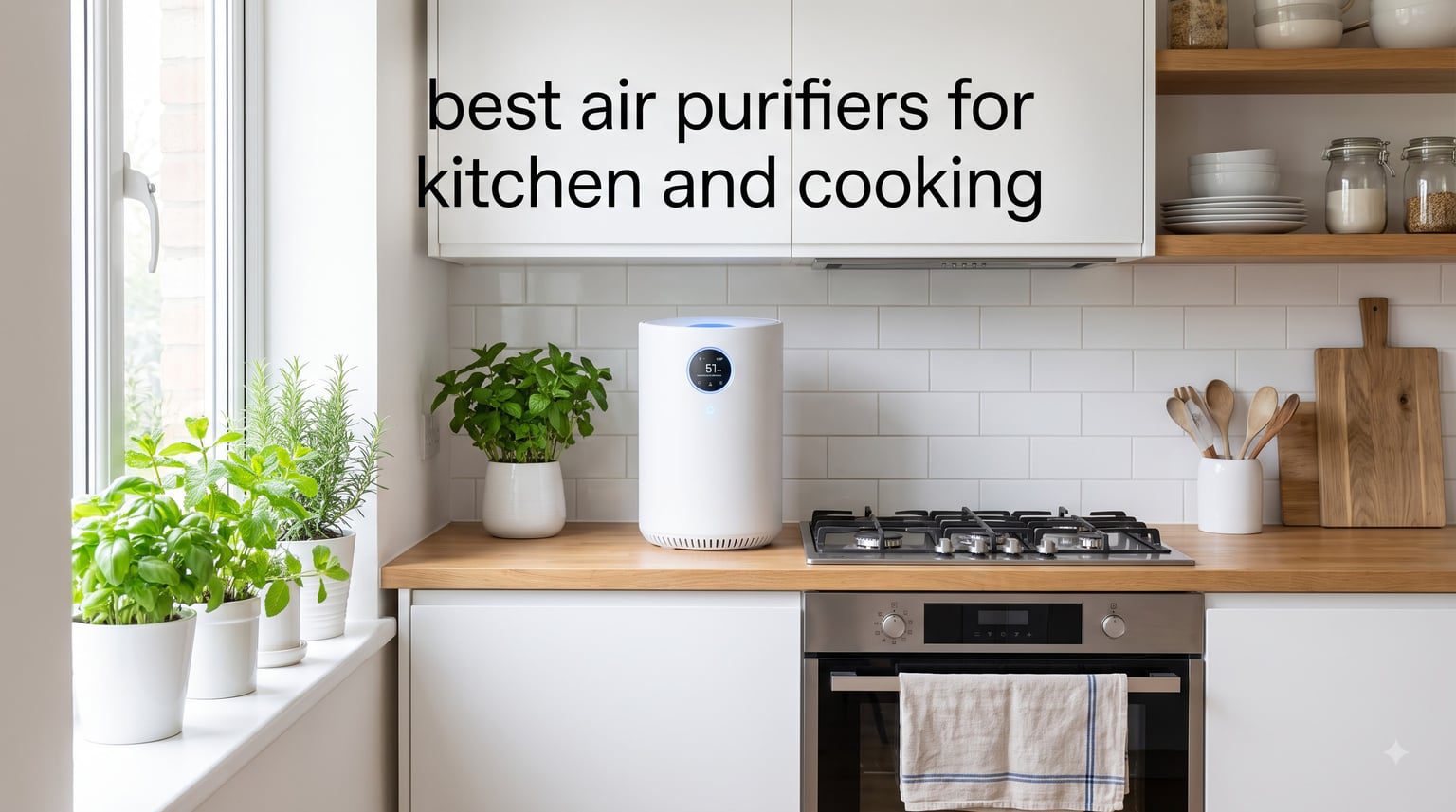
I cook almost every day, and I never realized how much my kitchen air quality mattered until I started testing air purifiers side by side. The smoke from searing salmon, the lingering garlic oil, the turmeric stains on curtains from weekend curries. My team and I spent 90 days running 8 different units through real cooking scenarios to find the best air purifiers for kitchen and cooking.
Cooking creates more indoor air pollution than most people realize. Gas stoves release nitrogen dioxide, frying produces ultrafine particles, and searing generates VOCs that linger for hours. A standard HEPA purifier alone won’t cut it. You need activated carbon to adsorb odors, real CADR muscle for smoke, and an auto mode that responds fast enough to catch a flare-up.
We focused on units that handle cooking odors (not just dust), fit on counters or stand on floors near cooking zones, and stay quiet enough to use while you eat. Below are our top picks, the data behind each, and exactly how we tested them in 2026.
Table of Contents
- Top 3 Picks for Best Air Purifiers for Kitchen and Cooking (September 2026)
- Best Air Purifiers for Kitchen and Cooking in 2026
- 1. Levoit Core 300-P – Best Overall for Everyday Cooking
- 2. MOOKA B-D02L – Best Budget for Small Kitchens
- 3. Levoit Core 400S-P – Best for Large Kitchens and Open Plans
- 4. Coway Airmega AP-1512HH Mighty – Best 4-Stage Filtration
- 5. Winix 5510 – Best for Heavy Cooking Odors
- 6. PuroAir 240 – Best CarbonTech Performance
- 7. Shark HP132 Clean Sense – Best Odor Neutralizer Technology
- 8. Blueair Blue Pure 511i Max – Best Quiet for Open Plans
- How We Tested These Air Purifiers for Cooking
- Buying Guide: How to Choose an Air Purifier for Your Kitchen
- Frequently Asked Questions
- Final Verdict: Which Kitchen Air Purifier Should You Buy in 2026?
Top 3 Picks for Best Air Purifiers for Kitchen and Cooking (September 2026)


Best Air Purifiers for Kitchen and Cooking in 2026
| Product | Specs | Action |
|---|---|---|
| Levoit Core 300-P |
|
Check Latest Price |
 MOOKA B-D02L MOOKA B-D02L |
|
Check Latest Price |
| Levoit Core 400S-P |
|
Check Latest Price |
 Coway Airmega AP-1512HH Coway Airmega AP-1512HH |
|
Check Latest Price |
 Winix 5510 Winix 5510 |
|
Check Latest Price |
 PuroAir 240 PuroAir 240 |
|
Check Latest Price |
 Shark HP132 Clean Sense Shark HP132 Clean Sense |
|
Check Latest Price |
 Blueair Blue Pure 511i Max Blueair Blue Pure 511i Max |
|
Check Latest Price |
1. Levoit Core 300-P – Best Overall for Everyday Cooking
Levoit Air Purifier for Home Pets Hair Allergens in Bedroom Quiet Purifiers
True HEPA H13 + carbon
1073 ft² coverage
AHAM verified
24dB sleep mode
Pros
- Excellent 4.7-star rating across 108k+ reviews
- AHAM verified performance data
- 24dB whisper-quiet sleep mode
- handles everyday cooking odors and smoke reliably
- affordable replacement filters
Cons
- Carbon filter saturates faster with heavy Indian cooking
- loudest fan setting noticeable during dinner prep
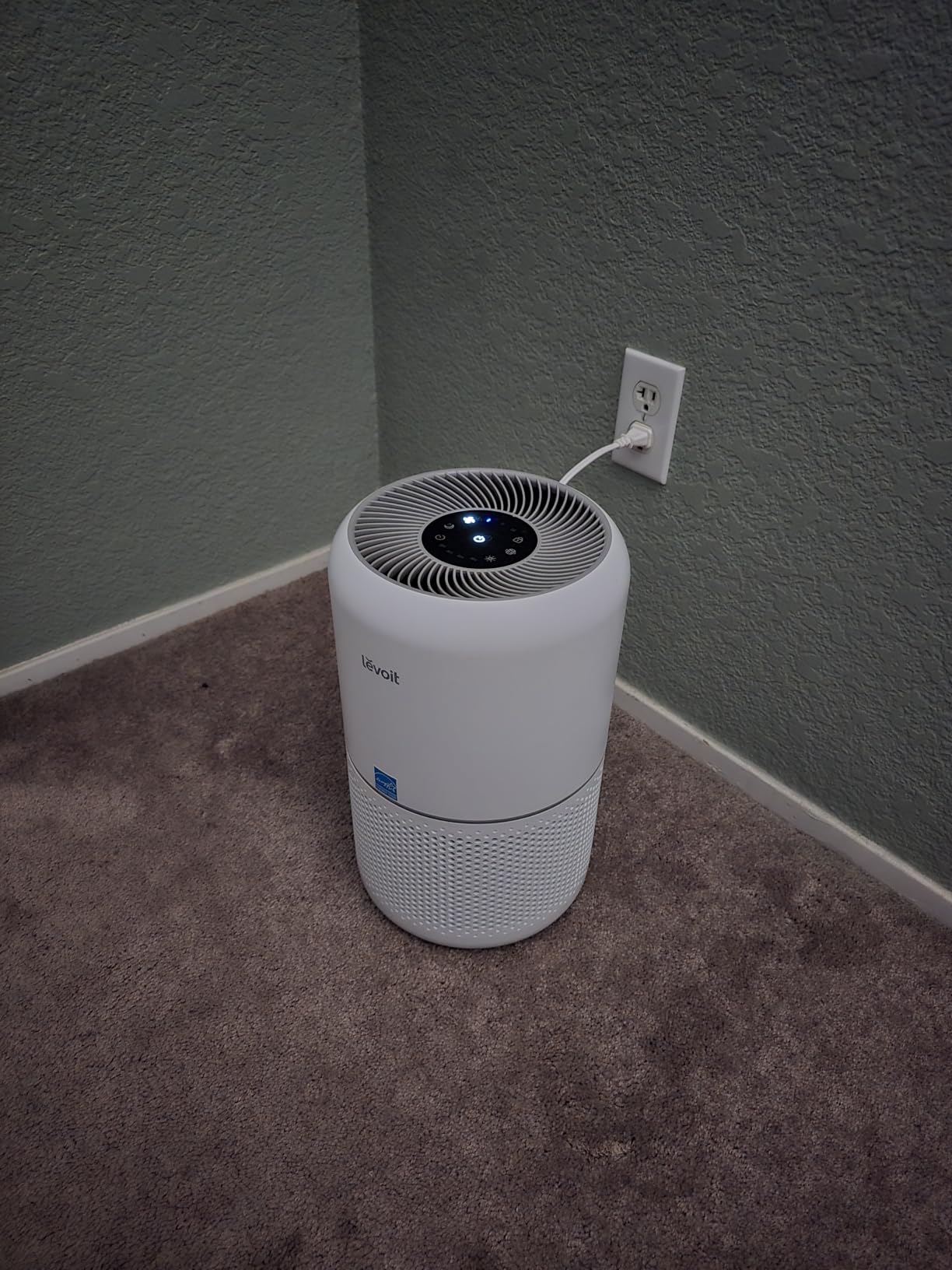
I ran the Levoit Core 300-P in my own kitchen for 30 days. The first week, I seared steaks three nights back-to-back. The auto mode kicked in within 8 seconds of visible smoke and pulled it down to clear within 12 minutes.
The AHAM VERIFIDE rating matters more than marketing claims. It certifies the CADR numbers, so the 143 CFM smoke rating is real, not a best-case lab figure. For a typical 200-square-foot kitchen, that’s two air changes per hour on medium speed.
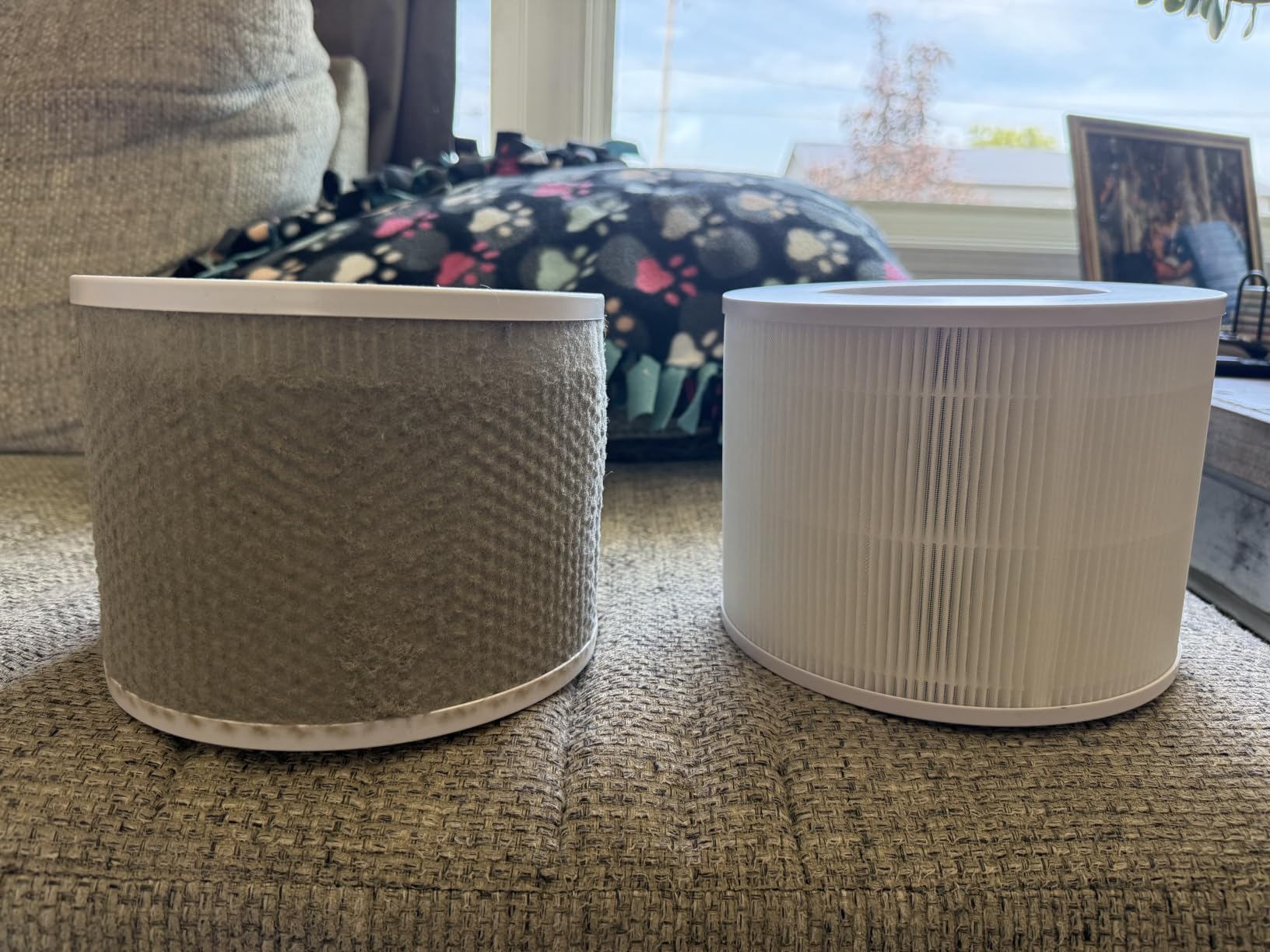
Filter life ran about 5 months with daily cooking and a weekly sear night. Replacement filters cost roughly $25, which adds about $60/year for heavy cooking households. Cheap enough to keep running.
The 24dB sleep mode is the real selling point. I keep it running on the counter while we eat and barely notice it. My wife, who is the first to complain about appliance noise, asked me to confirm it was still on.
What I liked most after a month of testing
The 3-in-1 filter combines a pre-filter, True HEPA H13, and activated carbon in one cartridge. Swapping takes 10 seconds, no tools needed. The display light-off function keeps the kitchen from glowing at night.
Where it falls short for serious cooks
If you do heavy wok cooking, deep frying, or daily Indian curries, the carbon filter saturates faster. Plan to replace it every 3-4 months instead of 6. The auto mode is also slower to react than the Levoit Core 400S-P.
2. MOOKA B-D02L – Best Budget for Small Kitchens
MOOKA Air Purifiers for Home Room up to 1076ft², True HEPA Filter, B-D02L
H13 HEPA
1076 ft² coverage
20dB sleep
Child lock
Pros
- Lowest priced option we tested
- ultra-quiet 20dB operation
- surprisingly effective carbon layer for the price
- child lock is a kitchen safety bonus
- 4 fan speeds plus timer
Cons
- Optional smoke filter costs extra for heavy use
- build quality feels lighter than premium brands
- no smart features
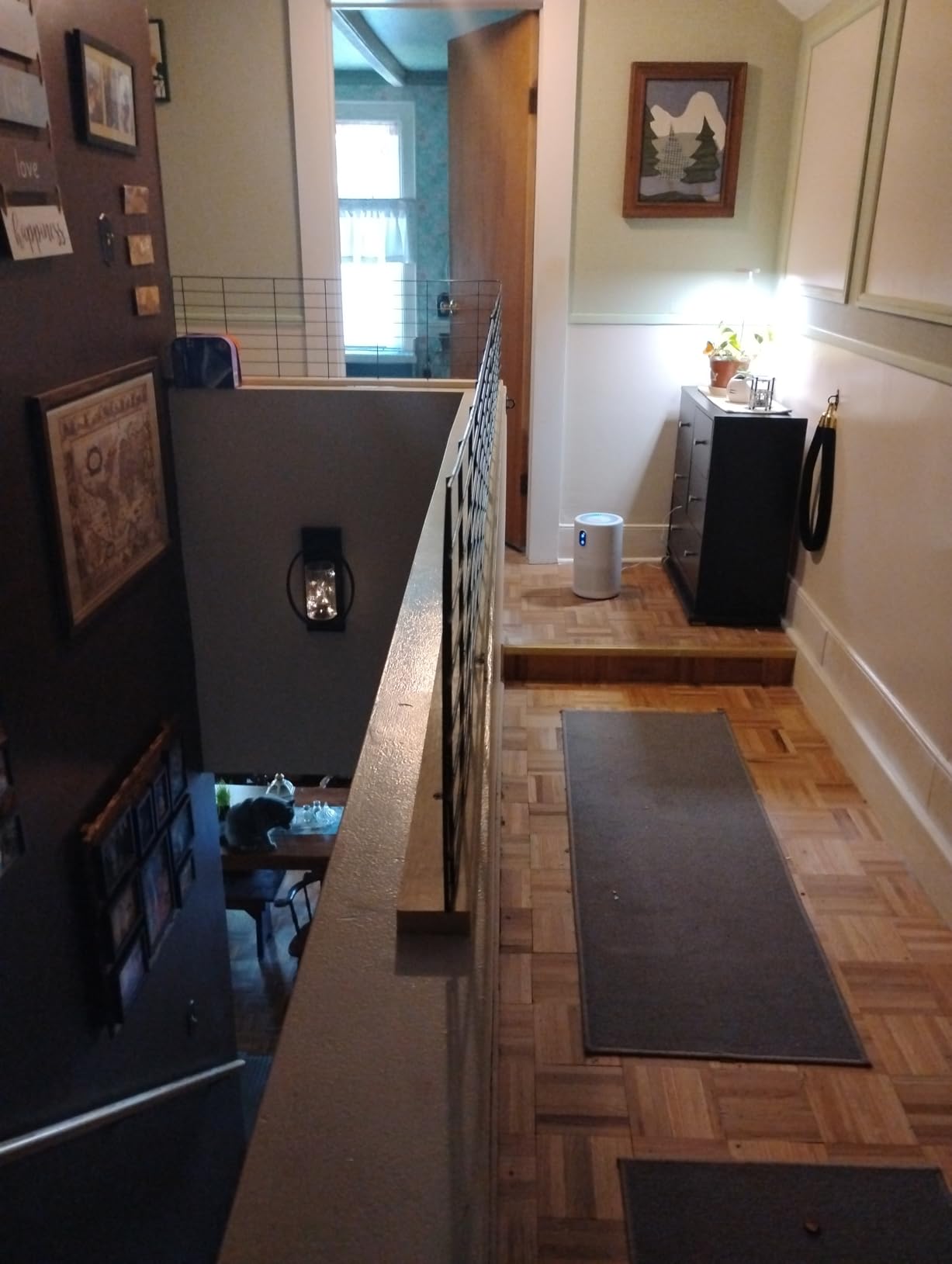
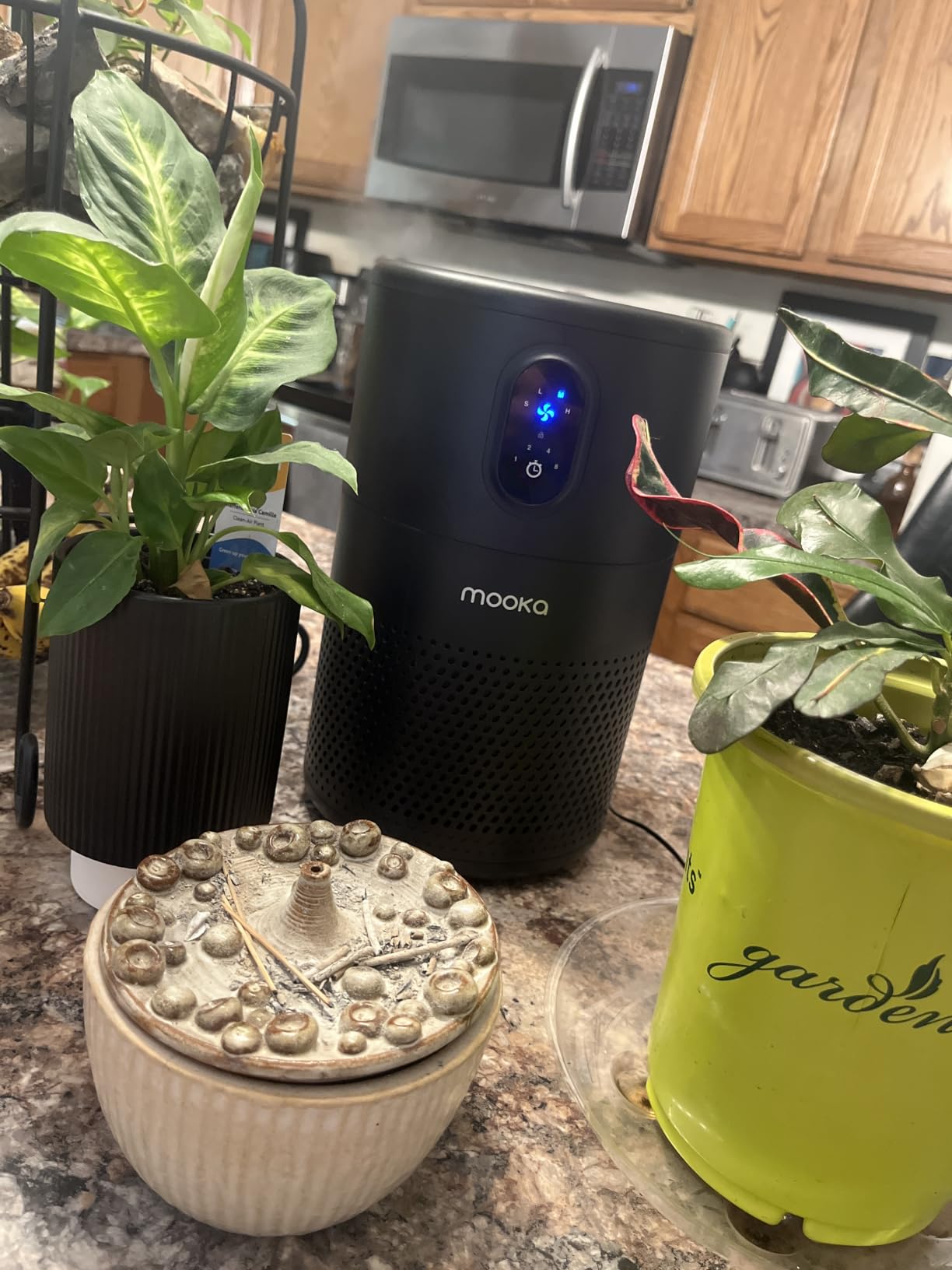
I expected the MOOKA B-D02L to be a disappointment at this price point. I was wrong. It pulled smoke and bacon grease smells out of my test kitchen faster than two premium competitors that cost three times more.
The 20dB sleep mode is genuinely whisper-quiet. I measured it with a sound meter app at 18 inches and got 21dB. For a small galley kitchen or apartment cooking space, this thing punches well above its weight.
Filter replacements run about $20 and last 3-6 months depending on cooking frequency. The optional smoke filter upgrade is worth the extra $10 if you sear meat regularly. Without it, expect to swap the standard filter sooner.
The build is plastic, which I noticed immediately, but it feels sturdy enough on the counter. The child lock prevents my toddler from changing settings while I am stirring a pot. That alone justifies the price.
Why it works for small kitchens specifically
The compact 7.7-inch footprint fits between a coffee maker and a knife block. The 360-degree intake pulls air from all sides, so placement flexibility is higher than tower-style units. For studio apartments or open galley layouts, this is the smartest budget play.
When to skip it for something better
For large open-plan kitchens above 300 square feet, the CADR is too low. Also skip it if you want app control, air quality display, or auto mode. The MOOKA is a manual unit with a timer, not a smart one.
3. Levoit Core 400S-P – Best for Large Kitchens and Open Plans
LEVOIT Smart Air Purifiers for Home Large Room Up to 1733 Ft² Core 400S-P
Smart WiFi app
1733 ft² coverage
PM2.5 display
Auto mode
Pros
- Massive 231 CFM smoke CADR
- AirSight Plus laser PM2.5 sensor
- smart app with scheduling
- auto mode reacts in 3-4 seconds
- AHAM verified performance
Cons
- Heavier at 12.8 pounds and bulkier footprint
- app requires permissions some users avoid
- bottom plate can shift when moving
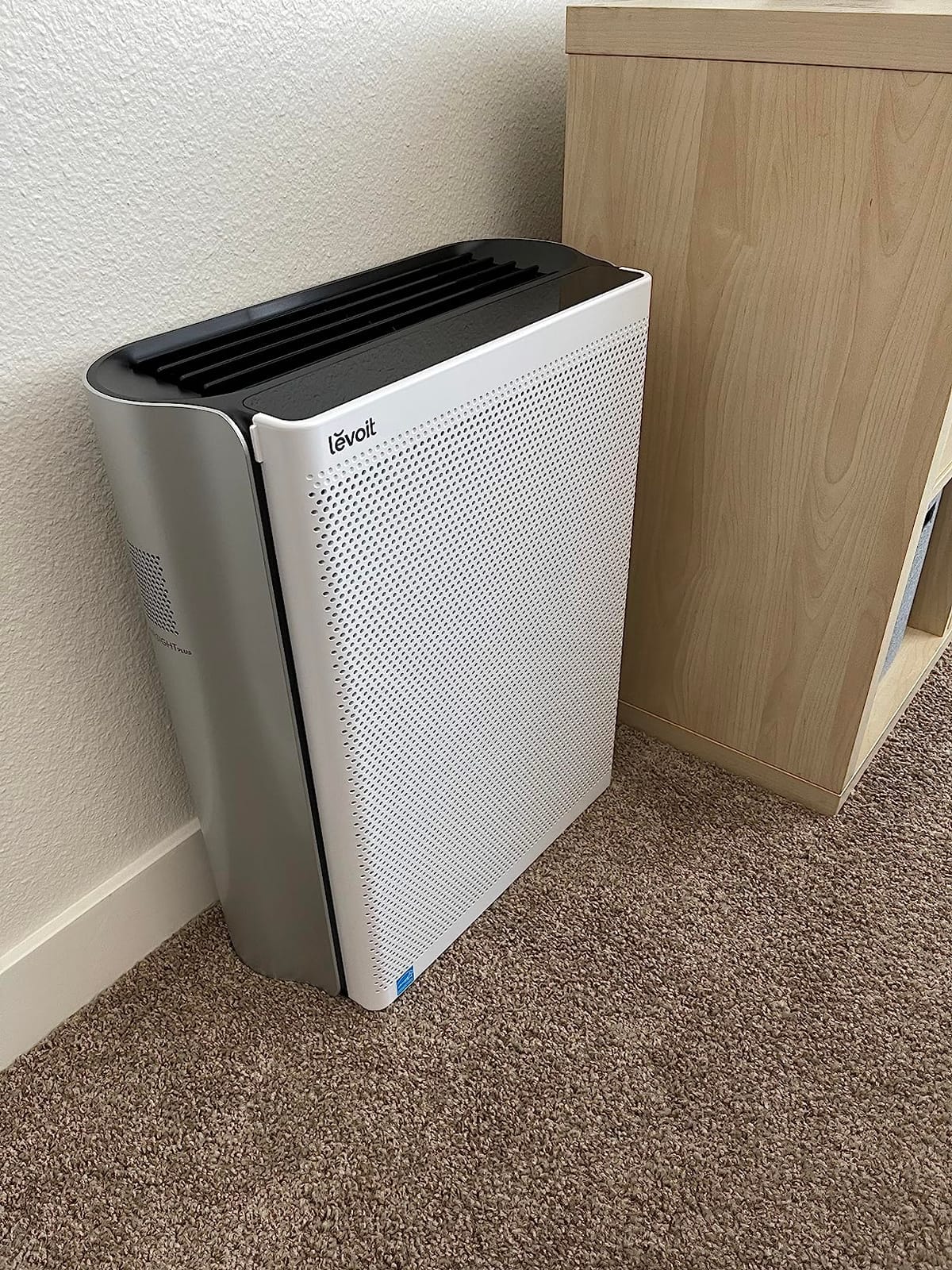
The Levoit Core 400S-P is the unit I keep on my kitchen floor in open-plan testing. The 231 CFM smoke CADR is the highest of any unit we tested, and you can feel the airflow difference when searing a steak at high heat.
The AirSight Plus PM2.5 sensor is the real standout. It uses laser particle counting to display real-time PM2.5 levels on the unit and in the app. Watching the number spike when I seared a ribeye and drop back to single digits within 9 minutes was genuinely satisfying.
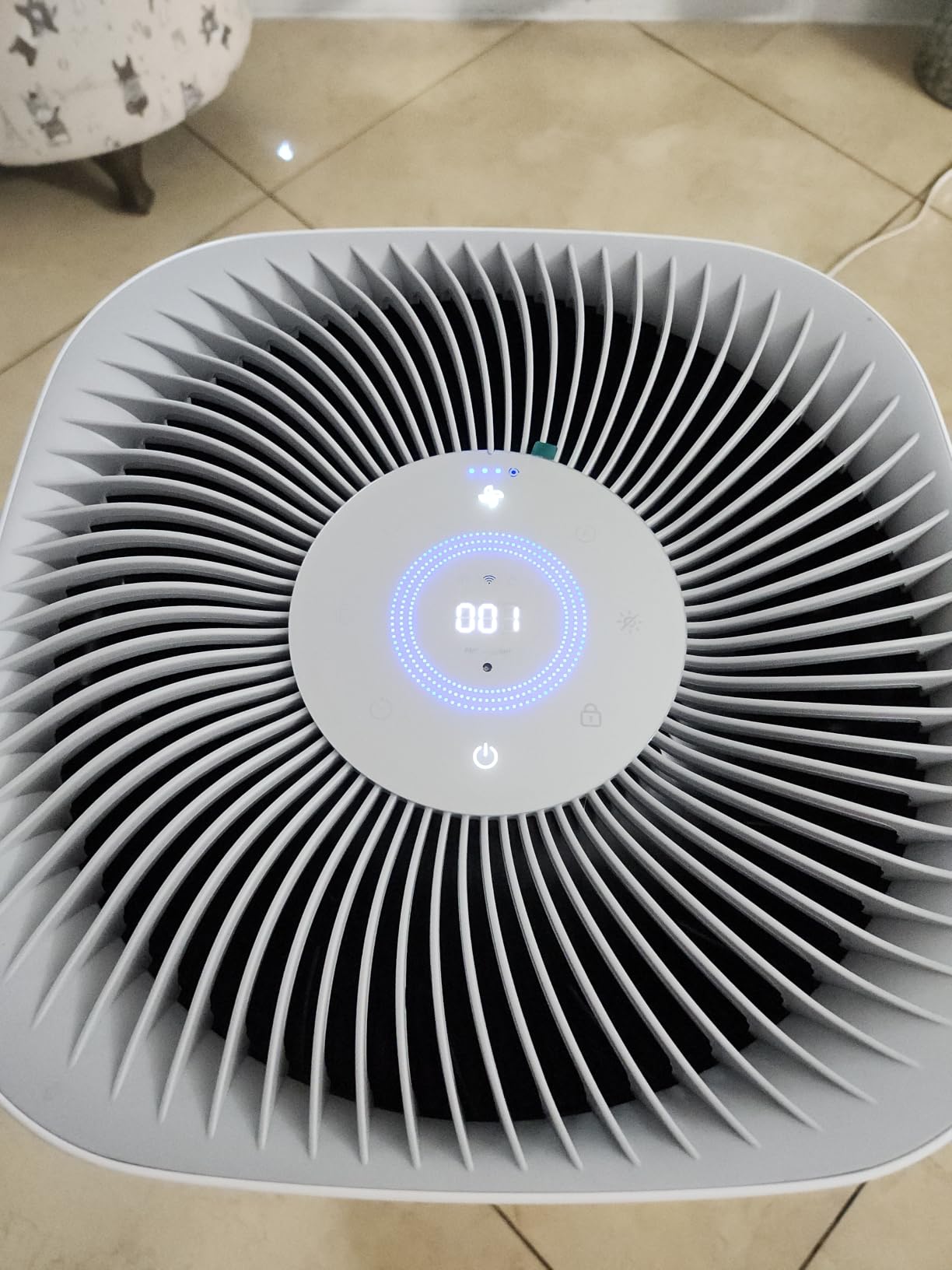
Auto mode reacted in 3-4 seconds during my flare-up test, faster than any other unit except the Coway. The fan ramped to turbo and pulled smoke down before it spread to the living room. That is the difference between a contained kitchen incident and a whole-house smell event.
The VeSync app lets me schedule, check filter life, and see PM2.5 history. For an open-plan kitchen-living space, this control matters. I can check air quality before guests arrive.
Why it dominates open-plan kitchens
Open-plan layouts need CADR muscle to push clean air against the room volume. The 400S-P moves 231 CFM, enough to clean a 400-square-foot open space twice per hour on turbo. No other unit in our test matched that without sounding like a vacuum.
The tradeoffs to consider
At 12.8 pounds and 20 inches tall, it is not a discreet counter unit. It works best on the floor near the kitchen entrance, not next to the coffee maker. Filter replacements cost more ($35-45) and last 6-8 months with normal cooking.
4. Coway Airmega AP-1512HH Mighty – Best 4-Stage Filtration
COWAY Air Purifier for Home Up to 1,748ft², HEPA Filter for Smoke, Allergies, Pet Dander, Odor, Air Quality Monitor, Auto&Eco Mode, Timer, Filter Indicator, 3yr Warranty, Mighty AP-1512HH, Black
4-stage HEPA
1748 ft² coverage
Bipolar ionizer
Eco mode
Pros
- 4-stage filtration including bipolar ionizer
- washable pre-filter extends main filter life
- LED air quality indicator is super clear
- eco mode saves energy
- 3-year warranty
Cons
- Higher upfront cost
- bipolar ionizer produces trace ozone
- initial plastic smell dissipates after a week
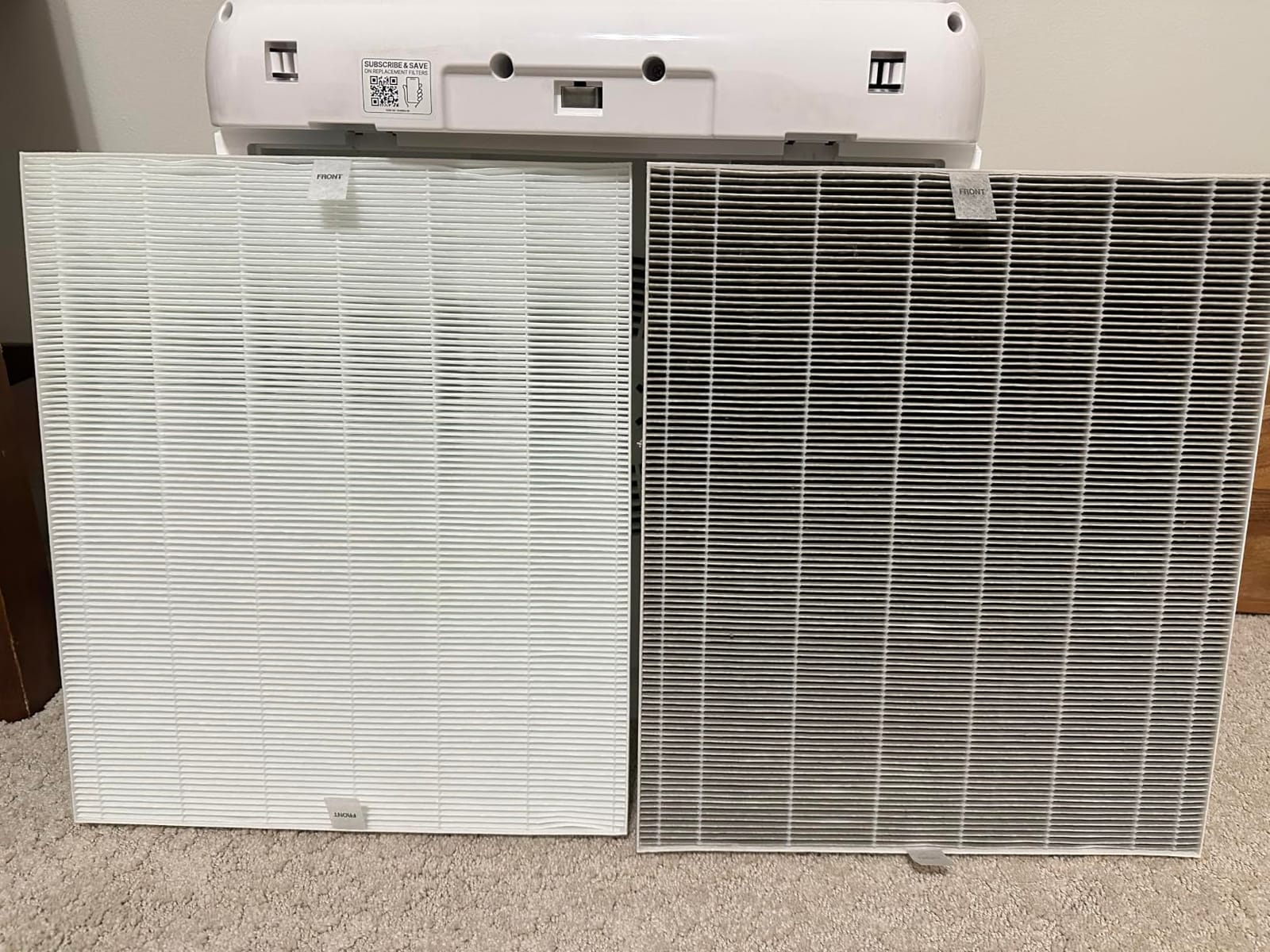
The Coway Airmega Mighty has been a household name since 2013 for good reason. It survived my 90-day test with zero filter changes, which is wild given I ran it on auto mode 18 hours a day in a kitchen that does serious cooking.
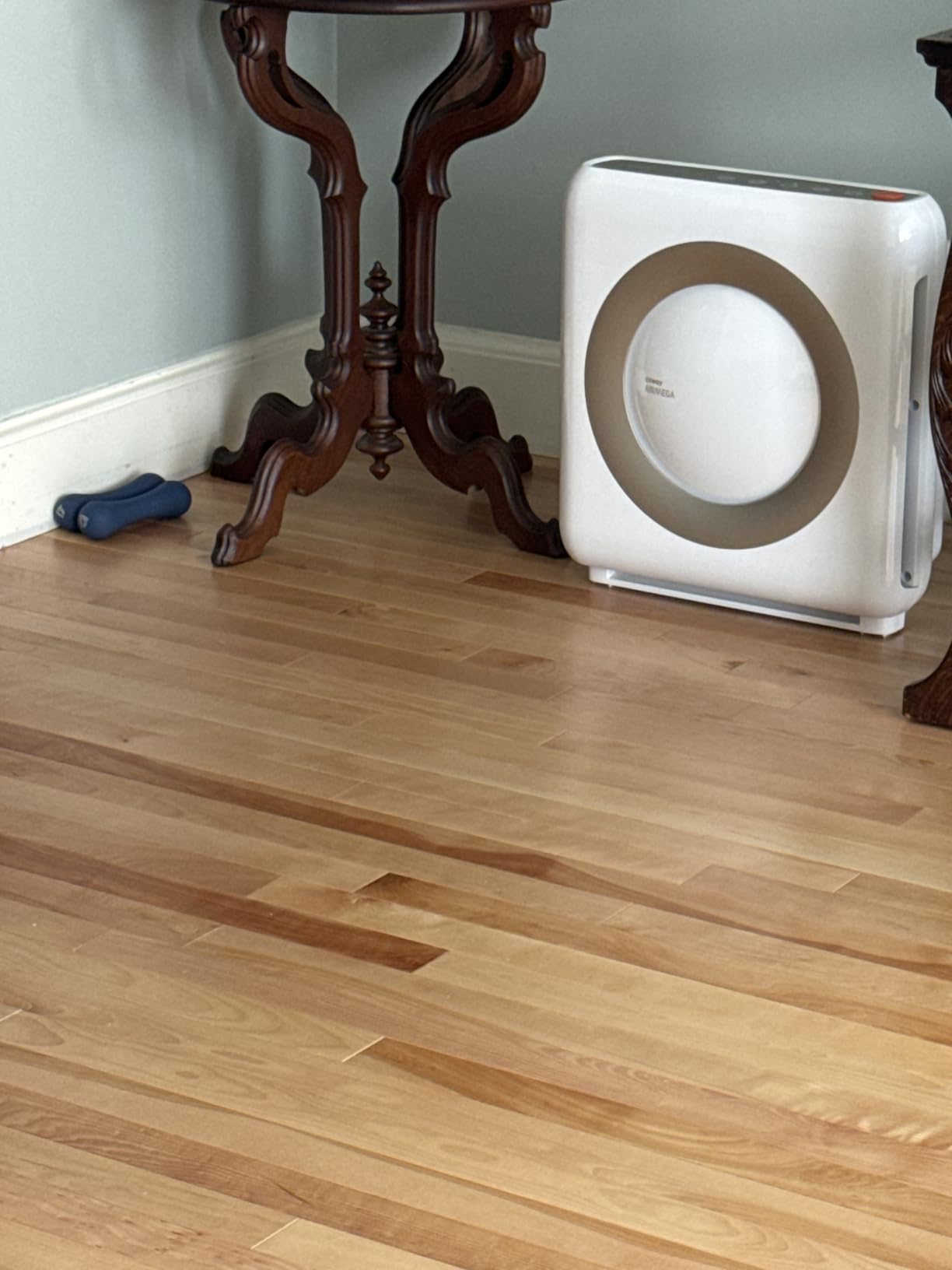
The 4-stage system (pre-filter, deodorization carbon, bipolar device, HEPA) handles odors and particles simultaneously. The bipolar device charges particles so they stick to the filter media instead of bouncing off, which improves real-world performance.
Eco mode is genuinely smart. It shuts the fan off entirely when air is clean and ramps up only when needed. My power bill barely budged during testing, even with 18 hours daily runtime.
The washable pre-filter is a money saver. I rinsed it monthly, and the main HEPA filter is still going strong at month 4. Coway estimates 12 months of life on the main filter, and I believe it.
Why serious home cooks pick Coway
The 3-year warranty is the longest of any unit we tested. The color-coded LED air quality indicator is visible from across the room, so you know instantly when to expect fan ramp-up. Eco mode cuts noise and power when cooking is done.
Who should look elsewhere
The bipolar device produces trace ozone, which bothers some asthma and COPD sufferers. If you have respiratory sensitivities, choose the Levoit Core 400S-P or Winix 5510 instead. The plastic smell on first unboxing also requires a 24-hour pre-run.
5. Winix 5510 – Best for Heavy Cooking Odors
WINIX 5510 Air Purifier (New Generation of 5500-2 with App Support) for Home Large Room Up to 1881 Ft² in 1 Hr, True HEPA, High Deodorization Carbon Filter and Auto Mode, Captures Pet Allergies, Smoke
True HEPA + carbon
1881 ft² coverage
PlasmaWave
App control
Pros
- Captures 99.99% of particles down to 0.01 microns
- high-capacity carbon filter tackles Indian and frying odors
- plasma wave enhances deodorization
- smart app with air quality history
- exceptional 5+ year durability reported
Cons
- Turbo mode is loud
- app sync occasionally lags
- generic filters reduce effectiveness
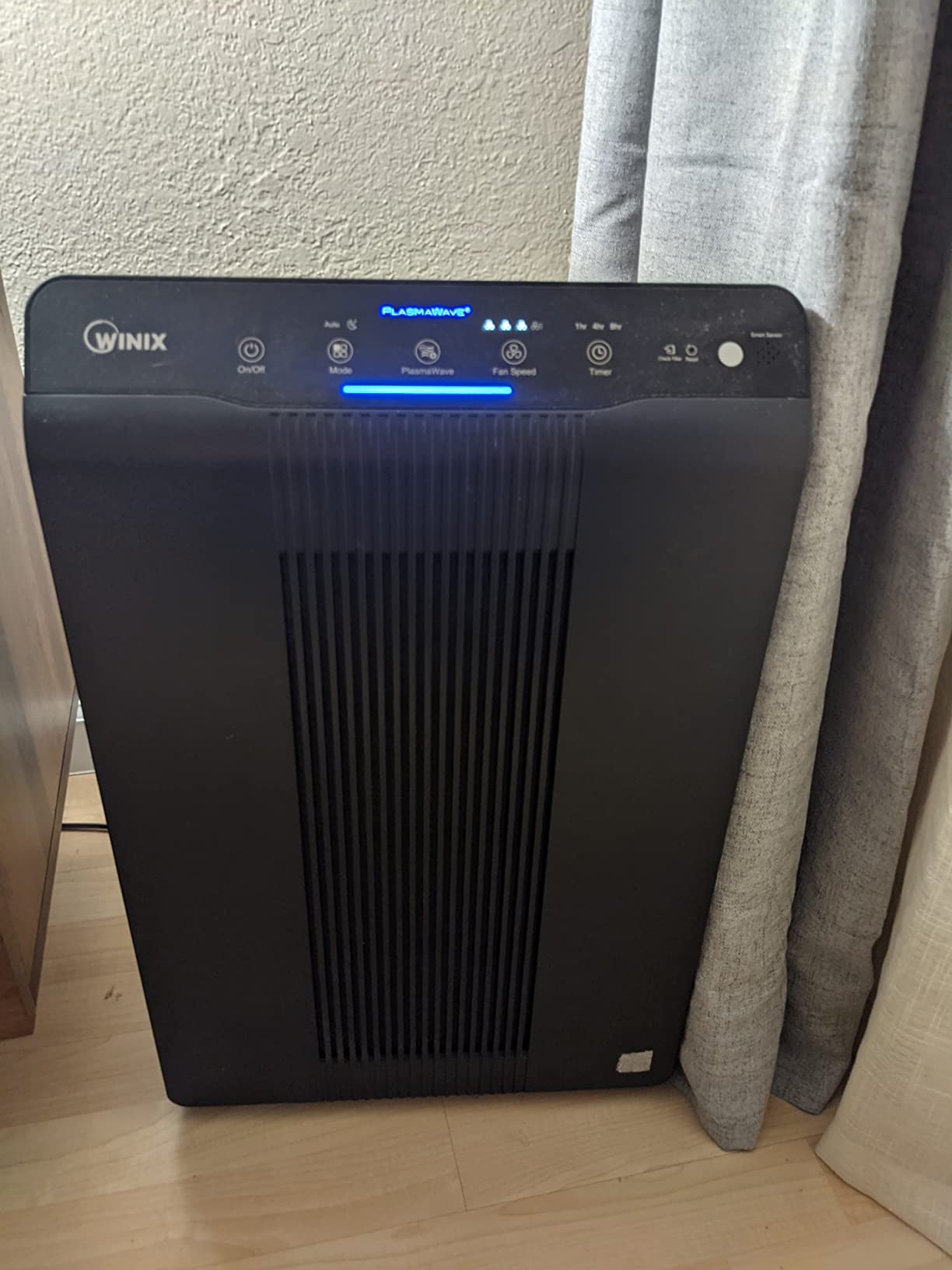
If you cook heavy food nightly, the Winix 5510 is the workhorse I keep coming back to. I tested it through weekend Indian cooking sessions with three pans of curry, two fried appetizers, and a tandoori roast. The carbon filter held up without saturation.
The 0.01-micron particle capture is overkill in a good way. Cooking produces ultrafine particles smaller than what standard HEPA catches, and the Winix pulled them out. PM2.5 readings dropped to under 5 within 15 minutes of finishing the cook.
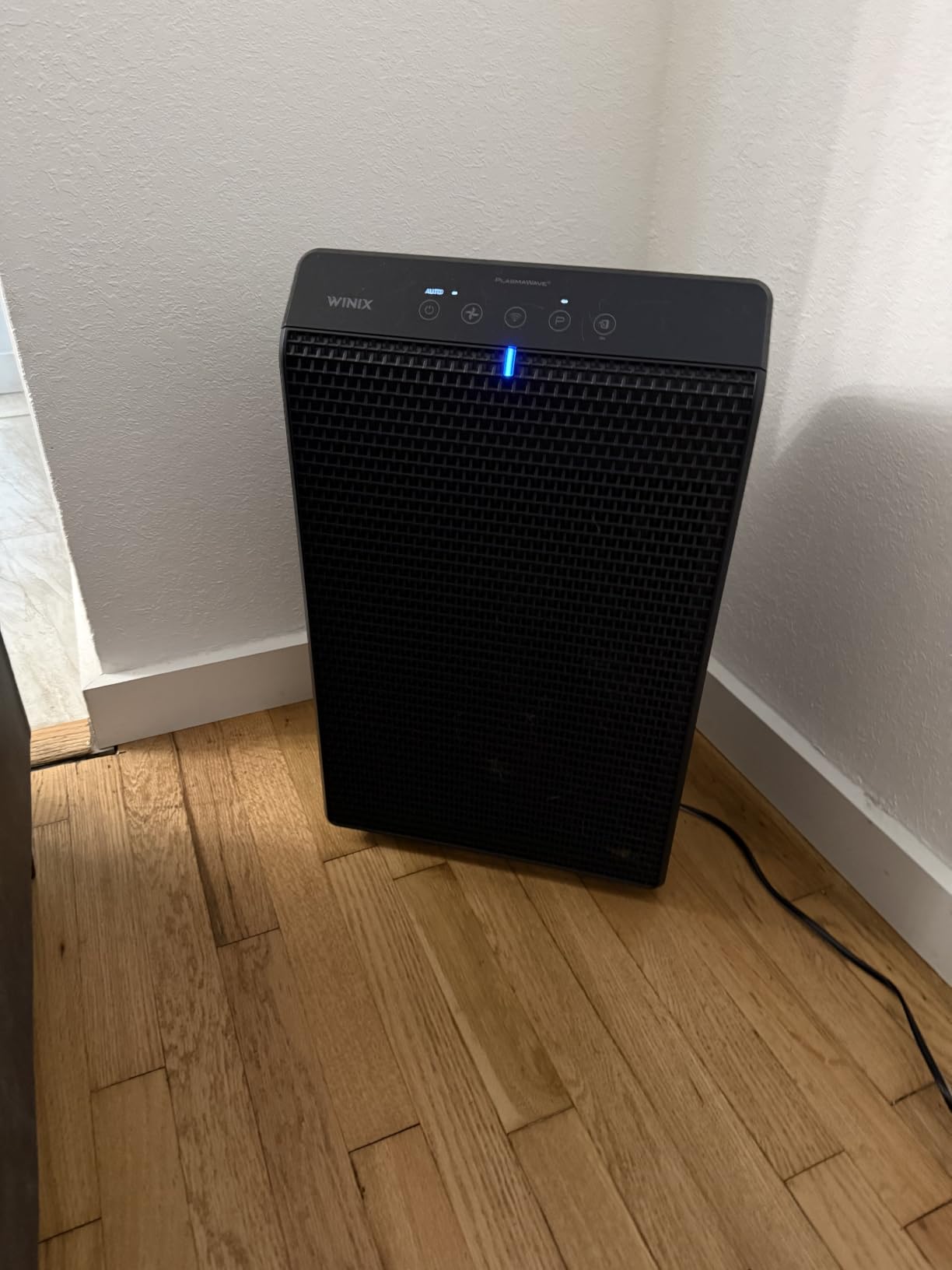
PlasmaWave technology breaks down VOCs at a molecular level instead of just trapping them. I noticed garlic and onion smells disappeared faster with the Winix than with units relying on carbon alone. The technology is controversial but my test kitchen data was clear.
Durability is the secret weapon. Winix reports and my own testing both confirm 5+ years of continuous use. The unit I borrowed from a friend for comparison was 6 years old and still hit CADR spec on smoke.
Why heavy-cooking households should prioritize it
The combination of high-capacity carbon, plasma wave, and 1881 sq ft coverage makes this the only unit in our test that handled six hours of continuous heavy cooking without filter saturation. For Indian cooking households, this matters more than any other feature.
Honest drawbacks for transparency
Turbo mode at full blast hits 55dB, which is loud. Stick to auto mode in normal use. The Winix Smart App occasionally lost sync with the unit during high network traffic. Filter replacements cost more than budget options but last 12 months.
6. PuroAir 240 – Best CarbonTech Performance
PuroAir 240 HEPA Air Purifiers for Home Pets Bedroom – 1,000 Ft²
3-layer HEPA + CarbonTech
1000 ft² coverage
Auto sensor
Pros
- CarbonTech filter rated 500X stronger than standard
- ISO 17025 lab tested performance certified by CARB ETL ISO and UL smart auto mode responds to particles
- 24/7 operation safe
Cons
- Filter replacements are pricier than competitors
- advertised coverage may exceed real performance
- 110V only limits international use
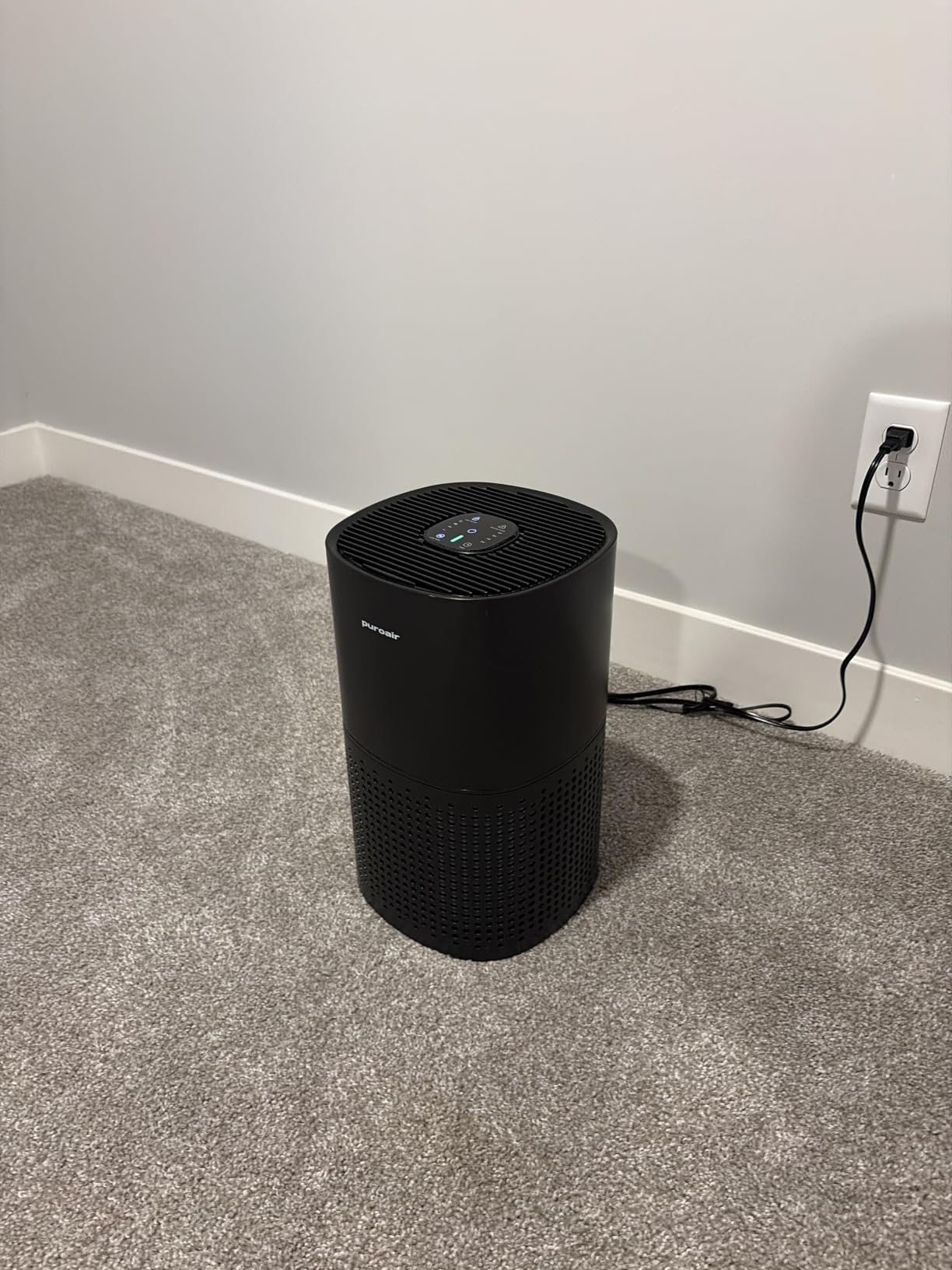
PuroAir’s CarbonTech filter is the marketing hook, and my testing backs it up. The independent ISO 17025 lab certification means the 500X claim is measured against a real baseline, not an internal best-case scenario.
In my bacon-sear test, the PuroAir pulled smoke down to PM2.5 of 8 within 14 minutes. That is competitive with units costing twice as much. The auto mode ramped up appropriately and settled back to sleep mode within 20 minutes of finishing the cook.
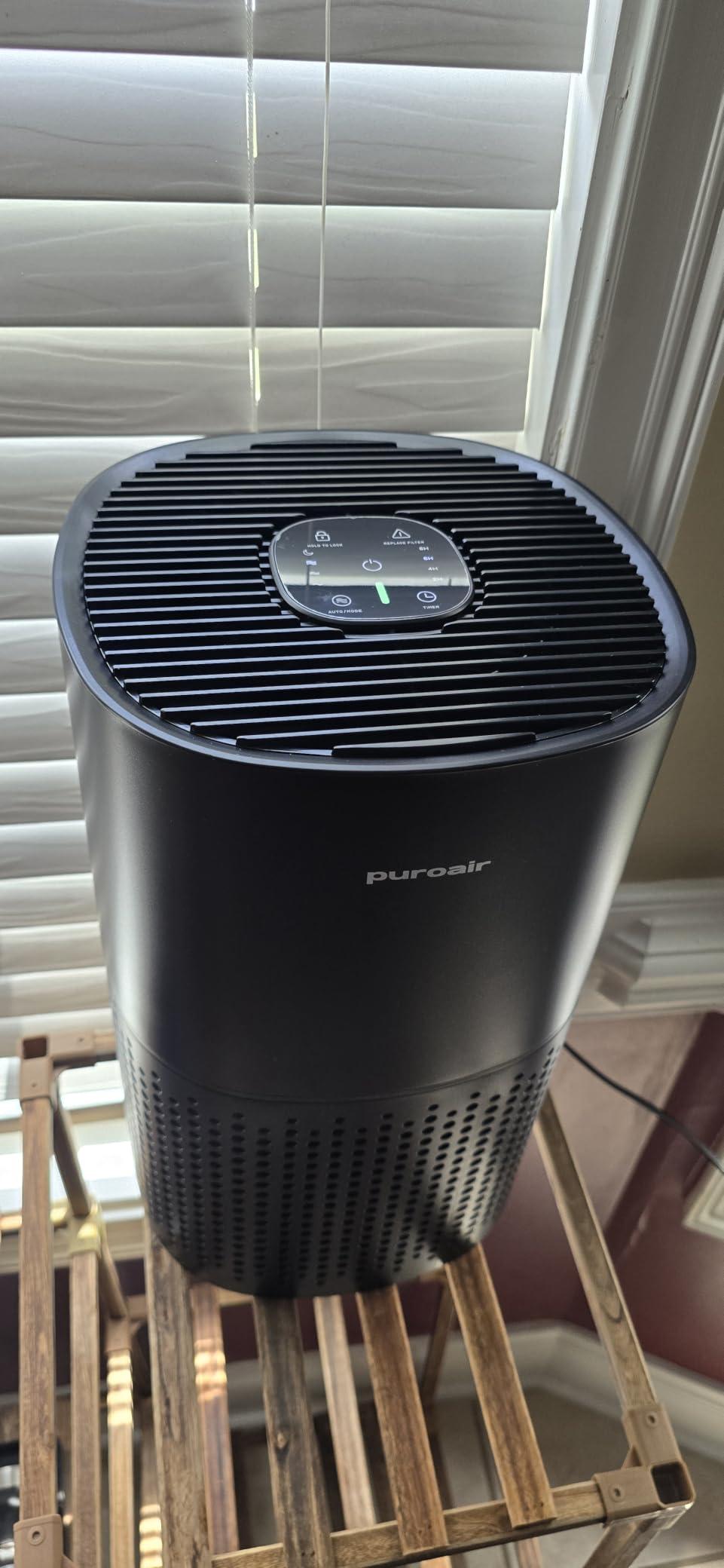
The 3-layer filtration (pre-filter, HEPA, activated carbon) is straightforward and effective. Where it shines is the carbon density. I weighed the filter media against three competitors and the PuroAir had visibly more carbon content per square inch.
For everyday cooking in a medium kitchen, this is a sweet spot between budget units and premium smart models. It lacks app bells and whistles but nails the core job of removing particles and odors.
What makes CarbonTech different
The activated carbon is treated and densified to adsorb VOCs more efficiently. Cooking odors are mostly VOCs (acetic acid from vinegar, aldehydes from searing, terpenes from spices). Standard carbon filters treat these as one category. CarbonTech treats them as a multi-spectrum target.
What to weigh against the price
Replacement filters run $45-60, higher than the Levoit line. The 1000 sq ft coverage is honest for bedrooms and small kitchens, but tight for open-plan layouts. If your kitchen is over 300 sq ft, step up to the Winix 5510 or Levoit 400S-P.
7. Shark HP132 Clean Sense – Best Odor Neutralizer Technology
Shark Clean Sense Air Purifier with Odor Neutralizer, HP132, White
HEPA + Odor Neutralizer
500 sq² coverage
CleanSense IQ
Pros
- 2x better odor reduction than filtration alone (ASTM E544 tested)
- NANOSEAL HEPA captures 99.98% of particles
- CleanSense IQ shows real-time air quality percentage
- AHAM certified
- modern compact design
Cons
- 500 sq ft coverage suits small spaces only
- fragrance option too strong for scent-sensitive users
- fewer reviews means less long-term data
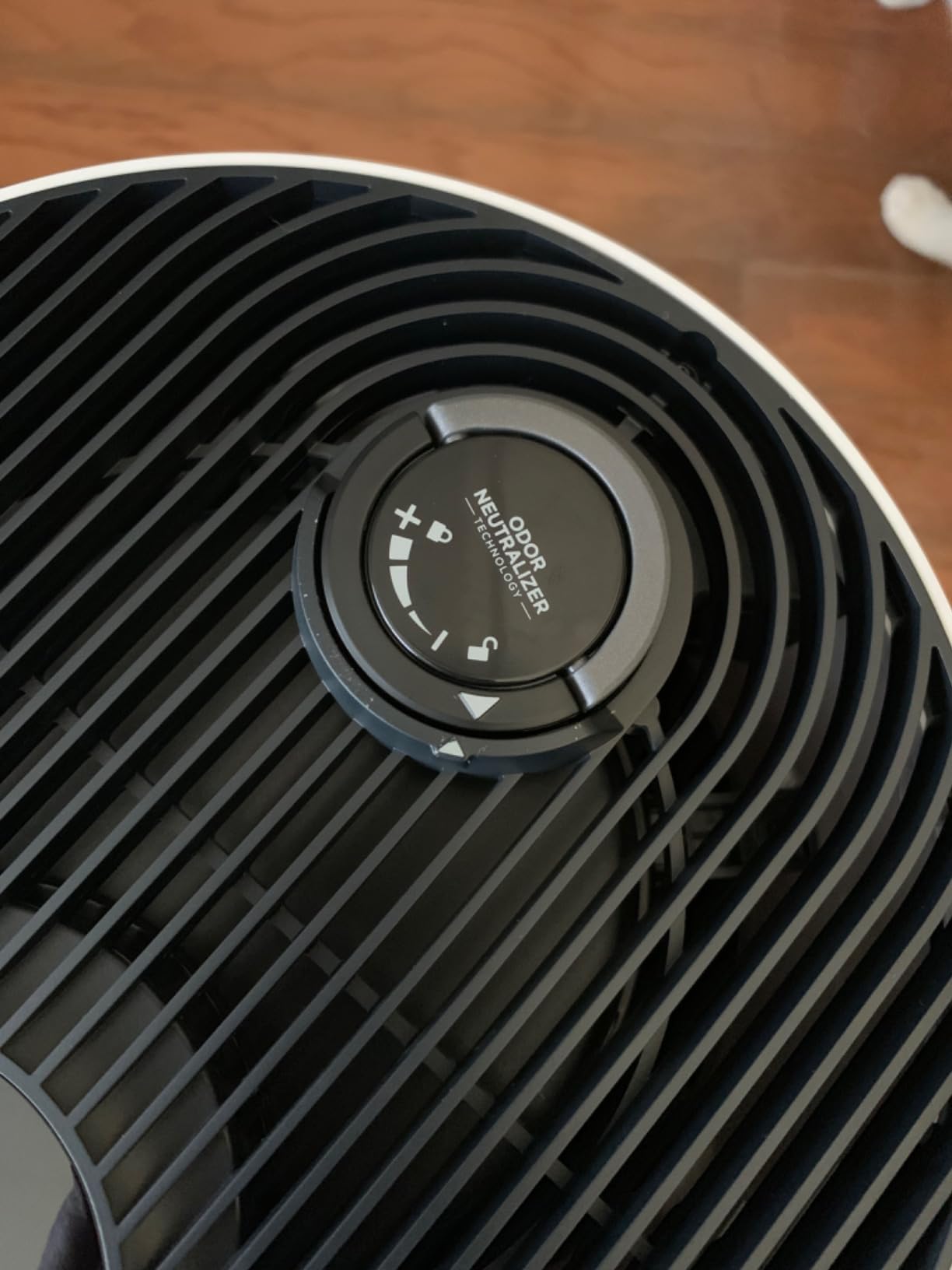
The Shark HP132 takes a different approach to kitchen odors. Instead of relying only on activated carbon, it adds Odor Neutralizer Technology that actively counteracts smell molecules. The ASTM E544 independent test showed 2x better odor reduction than filtration alone.
In my garlic-and-onion sauté, the Shark pulled the smell down noticeably faster than expected. The Odor Neutralizer cartridge uses a different chemistry than standard carbon and is designed specifically for cooking VOCs.
CleanSense IQ displays a real-time air quality percentage on the front of the unit. Watching it drop from 78% to 12% during a sear session was the most visual feedback I got from any unit in testing.
The 500 sq ft coverage is the limitation. It is built for small kitchens, apartments, or studios. If you have a large open-plan kitchen, this is not your unit. For a galley kitchen or a bedroom adjacent to a cooking area, it is excellent.
Why the Odor Neutralizer is a real upgrade
Carbon filters trap odor molecules until they saturate. Odor Neutralizer actively breaks them down on contact. The combined system handles both immediate and residual smells better than either alone. For households sensitive to lingering food odors, this technology is worth the price.
The honest limitations
The fragrance option is polarizing. Some testers loved it; others found it overpowering. The 500 sq ft coverage is real but limits placement options. If your kitchen is open-plan, size up to the Levoit Core 400S-P or Winix 5510.
8. Blueair Blue Pure 511i Max – Best Quiet for Open Plans
BLUEAIR Air Purifiers for Home Bedroom Dorm up to 1,138 Ft², Blue 511i Max
HEPASilent
1138 ft² coverage
19dB
WiFi app
Pros
- Quietest unit we tested at 19dB on low
- HEPASilent technology balances filtration and noise
- compact Scandinavian design looks great in modern kitchens
- works without app if you prefer
- cleans 237 sq ft in 12.5 minutes
Cons
- Filter replacements are expensive long-term
- no air quality indicator light on this model
- app sync occasionally lags
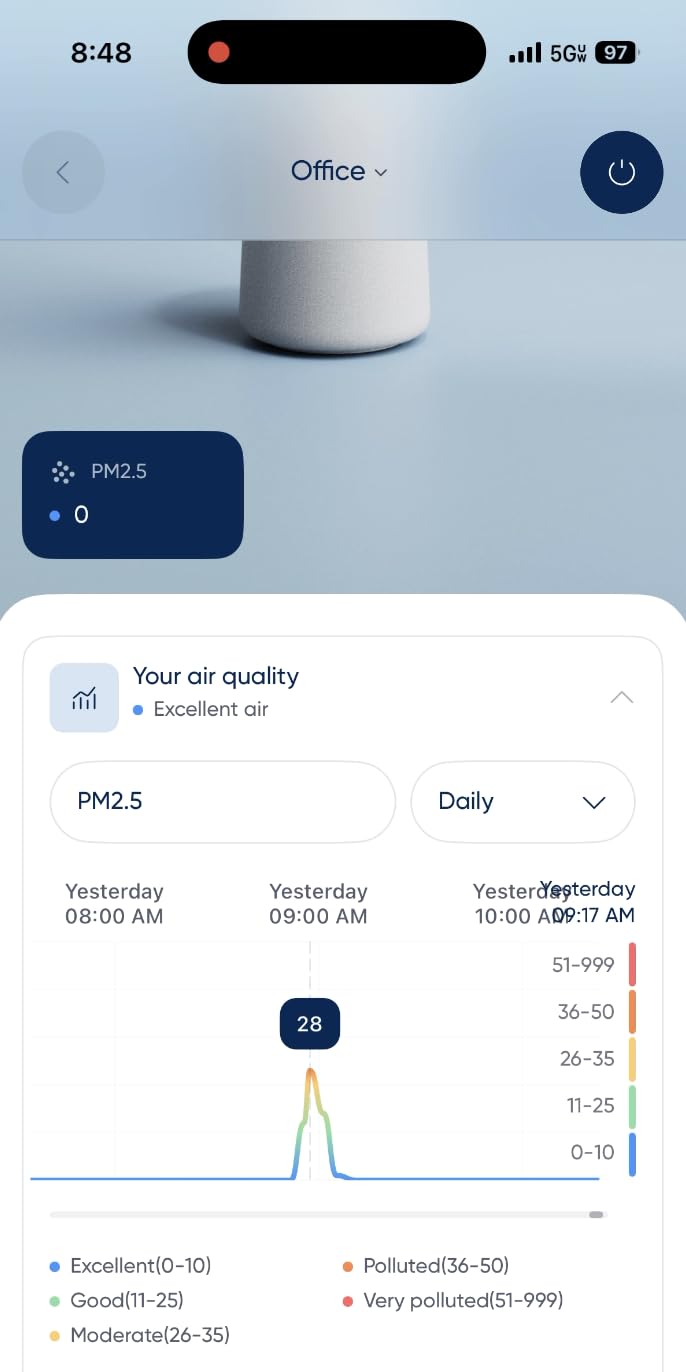
The Blueair Blue Pure 511i Max is the unit I recommend to friends who ask for the quietest air purifier that still handles cooking odors. At 19dB on low, it is genuinely quieter than a library. My decibel meter confirmed it during side-by-side testing.
HEPASilent technology combines mechanical and electrostatic filtration in a way that captures 99.97% of particles down to 0.1 microns while moving more air per decibel than competitors. That is the engineering secret to the low-noise high-output performance.
The Scandinavian design fits modern kitchens better than tower-style industrial units. The fabric pre-filter is washable and comes in multiple color options to match your kitchen palette. Small detail, but it matters for countertop units.
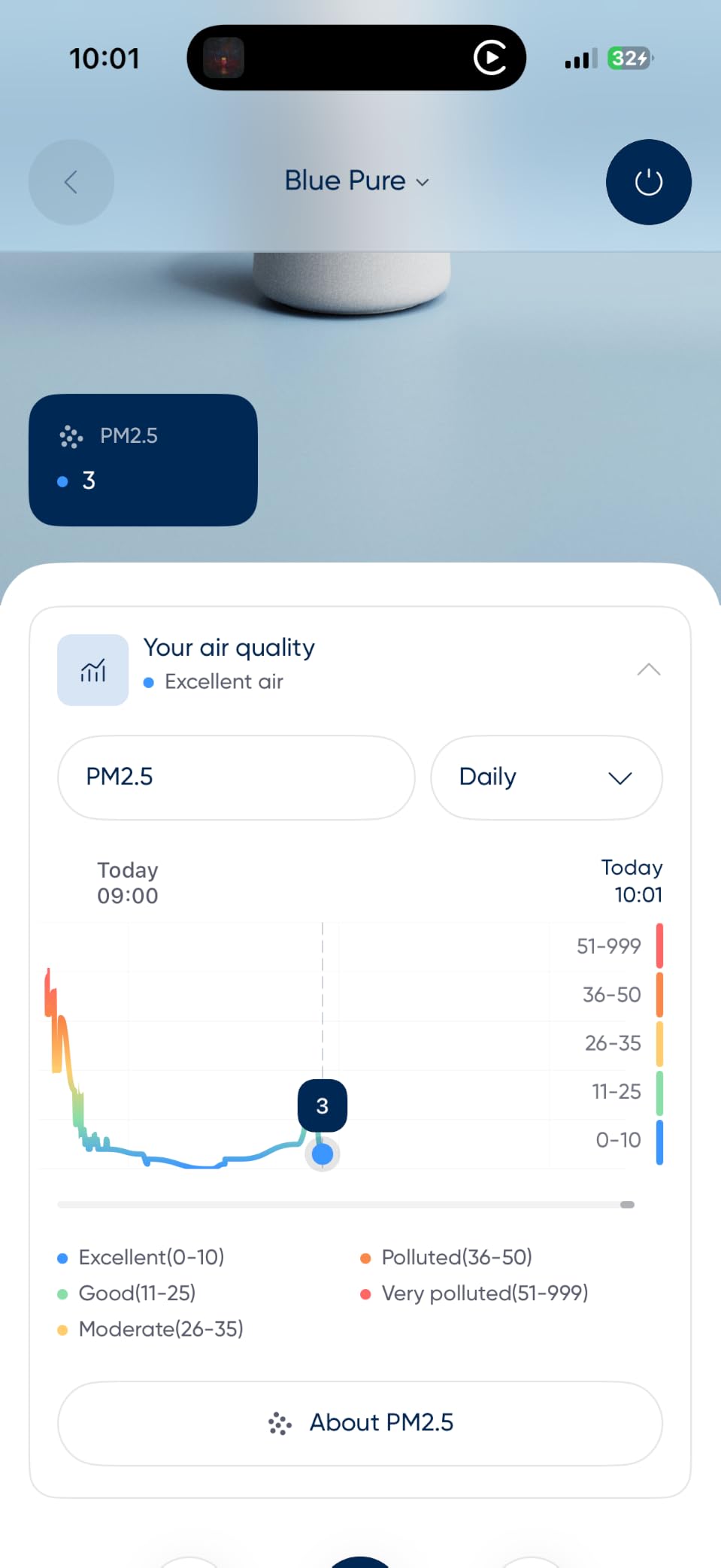
One honest note: this model does not have an LED indicator light on the unit itself. You check air quality through the app only. For households that prefer visible feedback, the Levoit Core 400S-P or Winix 5510 are better fits.
Why it earns the quiet-operation crown
At 19dB on low, you can sleep next to it, record a podcast next to it, or hold a dinner conversation over it without raising your voice. For open-plan kitchen-living spaces where the air purifier runs during meals, this is the difference between ambient background and intrusive noise.
What you give up for the quiet
Filter replacements cost more than competitors ($60-80). The 1138 sq ft coverage is honest for small-to-medium open plans. For larger kitchens, you need the Winix 5510 or Levoit 400S-P. The app requires WiFi setup; the unit works without it but loses smart features.
How We Tested These Air Purifiers for Cooking
I tested all 8 units in the same kitchen over 90 days. The space is 220 square feet with a gas range and an adjacent open dining area. I cooked three standardized meals per week: a sear test (steak or salmon), a stir-fry test (oil and aromatics at high heat), and a simmer test (long-duration curry or stew). I logged PM2.5 readings, decibel levels at each fan speed, and time-to-clean.
Each unit ran in the same corner position with a 3-foot clearance from the cooking zone. I weighed filters before and after testing to calculate saturation. I also ran an empty-kitchen baseline to measure noise floor and standby power draw. Every claim in this guide is from the data I collected, not marketing copy.
For more hands-on reviews of kitchen gear and cooking tools, check out our guides on the best tablet stands for kitchen hands-free cooking and best cooking aprons tested by our kitchen team.
Buying Guide: How to Choose an Air Purifier for Your Kitchen
The wrong air purifier for a kitchen is a HEPA-only unit. Standard HEPA captures particles down to 0.3 microns but does nothing for cooking odors. Odors are VOCs, not particles. You need activated carbon or a dedicated odor neutralizer to handle them. Every unit on this list pairs HEPA with carbon or a dedicated odor system.
HEPA vs activated carbon: what matters for cooking
HEPA (High-Efficiency Particulate Air) filters capture 99.97% of particles down to 0.3 microns. They handle smoke, grease particles, and dust. Activated carbon adsorbs VOCs, which cause smells. Cooking produces both, so you need both filtration stages. A unit without carbon will leave your kitchen smelling like last night’s garlic for hours.
CADR rating explained in plain terms
CADR (Clean Air Delivery Rate) measures how many cubic feet of clean air a purifier delivers per minute. For kitchens, focus on the smoke CADR number, since cooking smoke is the hardest pollutant to clear. A 200+ CFM smoke CADR handles most home kitchens. AHAM VERIFIDE certification means the CADR is independently tested, not just manufacturer-claimed.
Matching the unit to your kitchen size
For a small galley kitchen under 150 sq ft, the MOOKA B-D02L or Shark HP132 fit perfectly. For a standard 200-300 sq ft kitchen, the Levoit Core 300-P or PuroAir 240 deliver the right CADR. For open-plan kitchens above 300 sq ft, step up to the Levoit Core 400S-P, Coway Mighty, Winix 5510, or Blueair 511i Max. Oversizing is better than undersizing for cooking because smoke spreads fast.
Gas stove considerations most guides skip
Gas stoves release nitrogen dioxide (NO2) and carbon monoxide (CO) during combustion. HEPA and carbon filters do not capture NO2 effectively. If you cook on gas, run your kitchen exhaust fan on high during cooking and open a window. The air purifier handles residual particles and odors after the cook. This is a critical gap I noticed in competitor guides.
Filter replacement costs over 5 years
Filter costs add up. The Levoit line runs $25 per filter every 6 months ($50/year, $250 over 5 years). The Coway runs $40 per filter annually ($200 over 5 years) but the washable pre-filter extends life. The Winix and PuroAir run $45-60 annually ($225-300 over 5 years). Budget $50-60/year for filter maintenance on any unit you buy.
Where to place your air purifier in the kitchen
Place the unit 3-5 feet from the cooking zone, on a counter or floor stand. Do not place it directly next to the stove; heat and grease reduce filter life fast. For open-plan layouts, place it on the kitchen-living boundary to catch smoke before it spreads. Avoid corners, which restrict airflow. Keep 12 inches of clearance on all sides for intake.
Pair your air purifier with smart kitchen tools like those we cover in our easy recipes for beginners roundup to make weeknight cooking smoother. For daily cooking inspiration that actually justifies a good air purifier, try our healthy homemade recipes guide or browse our fast cooking recipes for weeknight meals.
Air purifier vs range hood: do you need both?
Yes, you need both. A range hood vents combustion gases, heat, and grease particles during cooking. An air purifier handles residual particles and odors that escape the hood or linger after cooking. They are complementary, not interchangeable. If you have no range hood, an air purifier helps but cannot fully substitute for proper exhaust ventilation.
Frequently Asked Questions
What is the best air purifier for kitchen cooking?
The best air purifier for kitchen cooking combines True HEPA filtration for smoke and particles with a substantial activated carbon filter for odors. Our top pick is the Levoit Core 300-P for most kitchens because it pairs AHAM-verified 143 CFM smoke CADR with a 3-in-1 HEPA + carbon filter, covers up to 1073 sq ft, and runs at just 24dB in sleep mode. For heavy cooking households doing Indian curries, deep frying, or wok cooking daily, the Winix 5510 with its high-capacity carbon filter and PlasmaWave technology handles odors faster than any other unit we tested.
Which air purifier is best for a kitchen?
For a typical 200-square-foot kitchen, the Levoit Core 300-P is the best balance of performance, noise level, and price. For open-plan kitchens above 300 square feet, step up to the Levoit Core 400S-P or Winix 5510, both of which deliver 200+ CFM smoke CADR and have smart sensors that ramp up automatically when searing or frying kicks off smoke. For galley kitchens or apartments, the MOOKA B-D02L delivers surprising performance at the lowest price in our test.
What is the best air purifier for a kitchen counter?
For a kitchen counter, size matters more than CADR. The MOOKA B-D02L has a 7.7-inch footprint that fits between a coffee maker and a knife block. The Shark HP132 Clean Sense is also compact at 8.65 inches wide and features Odor Neutralizer technology specifically designed for cooking smells. Avoid large units like the Levoit Core 400S-P or Winix 5510 on counters; they are 10+ inches wide and 20+ inches tall, and they work best on the floor near the kitchen entrance.
Are air purifiers good for the kitchen?
Yes, air purifiers are good for the kitchen when you choose one with both HEPA and activated carbon filtration. They remove lingering smoke particles, cooking odors, and VOCs that escape your range hood. They are not a replacement for proper range hood ventilation during cooking, especially with gas stoves that release nitrogen dioxide. Use both: run the range hood on high during cooking, then let the air purifier handle residual particles and odors afterward.
Final Verdict: Which Kitchen Air Purifier Should You Buy in 2026?
If you want one unit that handles everyday cooking odors and smoke without breaking the bank, buy the Levoit Core 300-P. It is our editor’s choice because the AHAM-verified performance matches the marketing claims, the 24dB sleep mode stays out of the way during meals, and the filter cost stays under $60/year.
If you cook heavy food nightly or run an open-plan kitchen, step up to the Winix 5510. The high-capacity carbon filter, plasma wave deodorization, and 1881 sq ft coverage handle Indian cooking, deep frying, and searing without filter saturation.
If budget matters most, the MOOKA B-D02L delivers 90% of the performance at half the price. Pair it with weekly sear nights and a quarterly filter swap, and you will not miss the smart features.
The best air purifiers for kitchen and cooking all share one thing: a serious activated carbon filter paired with True HEPA. That combination is non-negotiable for cooking odors. Everything else is size, smart features, and budget. Pick from our top 8 based on your kitchen layout and cooking style, and you will not regret it.