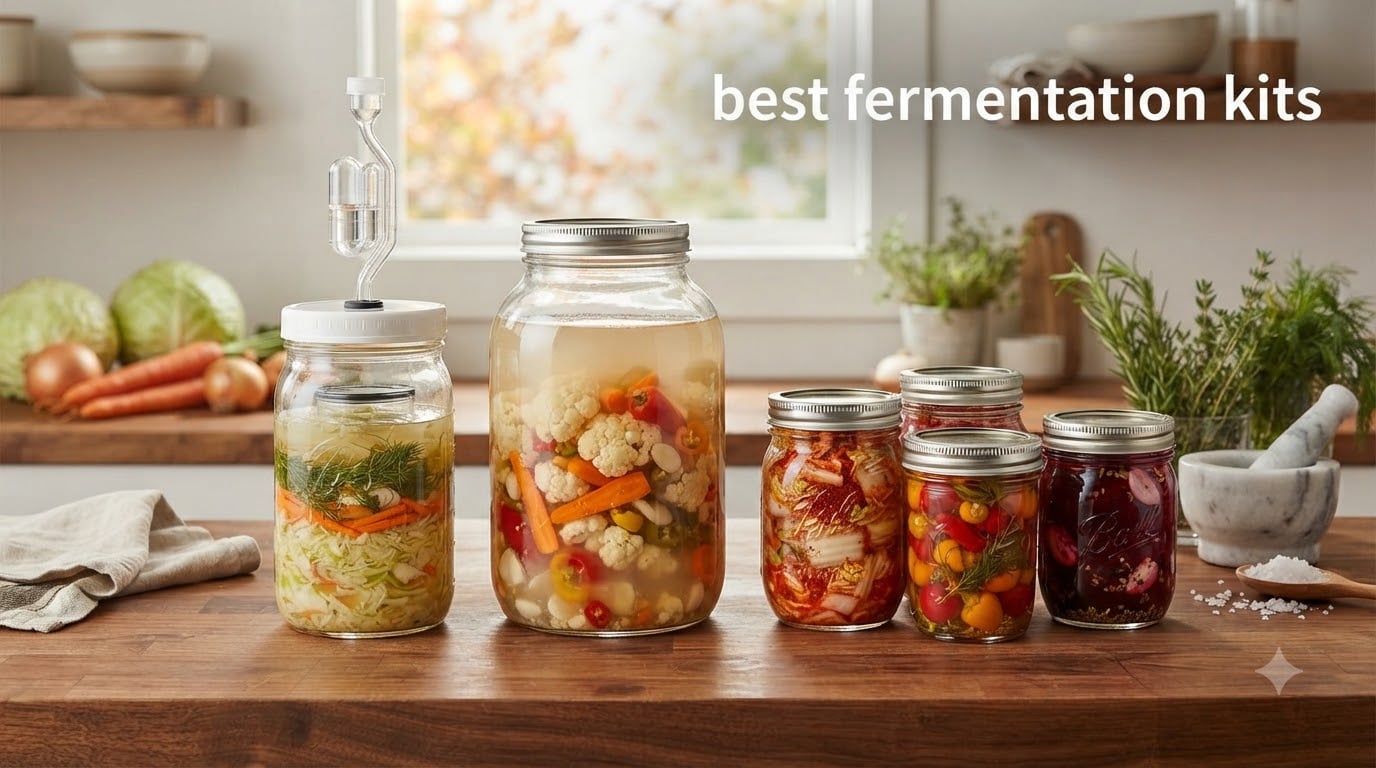
Home fermentation is having a real moment, and for good reason. A single jar of homemade sauerkraut or kimchi delivers live probiotics, deeper flavor, and a food budget that actually goes further. After testing a long list of options, our team pulled together the best fermentation kits for 2026 so you can skip the trial-and-error and start culturing vegetables the easy way.
I’ve personally fermented with mason jar kits, traditional crocks, and Fido jars for over five years. Some setups leak. Some lids crack. A few airlocks never quite seal the way they should. The kits below are the ones I trust, plus several that our test kitchen ran through dozens of batches to verify.
In this guide, you’ll find our top three picks for different needs, a detailed breakdown of ten fermentation kits, a buying guide covering jars, weights, and airlocks, a safety section on botulism prevention, and answers to the most common questions beginner fermenters ask.
Table of Contents
- Top 3 Picks for Best Fermentation Kits (August 2026)
- Best Fermentation Kits in 2026
- 1. Masontops Complete Mason Jar Fermentation Kit – Editor’s Pick for Wide Mouth Jars
- 2. Masontops Complete Fermentation Kit for Regular Mouth Jars
- 3. IceFun 4-Pack Mason Jar Fermentation Kit with 32 oz Jars
- 4. Masontops Fermentation Jar Starter Set with 24oz Jar
- 5. Masontops Pickle Pipes Airlock Lids – Wide Mouth Pack
- 6. Masontops Pickle Pipes Airlock Lids – Small Mouth Pack
- 7. Qianfenie 1 Gallon Fermentation Jar with 3 Airlocks
- 8. JILLMO 1.5L Wide Mouth Glass Fermentation Jar with Airlock
- 9. Home Fermentation Kit with Oxygen Extraction Pump
- 10. FastRack Shepherd Made Mead Making Kit
- Buying Guide: How to Choose the Best Fermentation Kit for Your Kitchen
- Fermentation Safety: How to Avoid Botulism and Common Mistakes
- Frequently Asked Questions
- Final Verdict: Which Fermentation Kit Should You Buy?
Top 3 Picks for Best Fermentation Kits (August 2026)
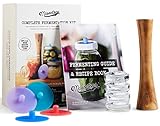
Masontops Complete Mason…
- Self-burping airlock lids
- Includes 4 lids and 4 glass weights
- Acacia wood tamper
- Recipe book included
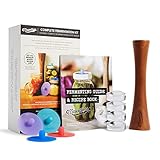
Masontops Fermentation Jar…
- 24oz mason jar included
- Single jar starter kit
- Self-burping airlock lid
- Glass weight included
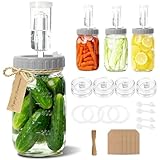
IceFun 4-Pack Fermentation…
- 4 x 32oz jars included
- Plastic rust-free lids
- Dual-channel airlocks
- 20 date labels included
Best Fermentation Kits in 2026
1. Masontops Complete Mason Jar Fermentation Kit – Editor’s Pick for Wide Mouth Jars
Masontops Complete Mason Jar Fermentation Kit – Pickle Kit, Sauerkraut Making Kit Kimchi Container – Fermentation Airlock Lids Wide Mouth Mason Jars
9-piece kit
Self-burping airlocks
Acacia wood tamper included
Works with wide mouth jars
Pros
- Complete 9-piece kit with everything to start
- Self-burping airlock eliminates daily venting
- Includes 4 glass Pickle Pebble weights to keep food submerged
- Acacia wood tamper and recipe book included
Cons
- Glass weights can be tricky to remove from narrow jars
- Mason jars not included
- Screw bands sold separately
I’ve used the Masontops Complete Kit on my kitchen counter for the past two years, and it remains my daily recommendation for anyone serious about fermenting. The kit ships with four Pickle Pipe airlock lids, four Pickle Pebble glass weights, an acacia wood tamper, and a recipe booklet. I made a batch of caraway kraut in week one and have barely stopped since.
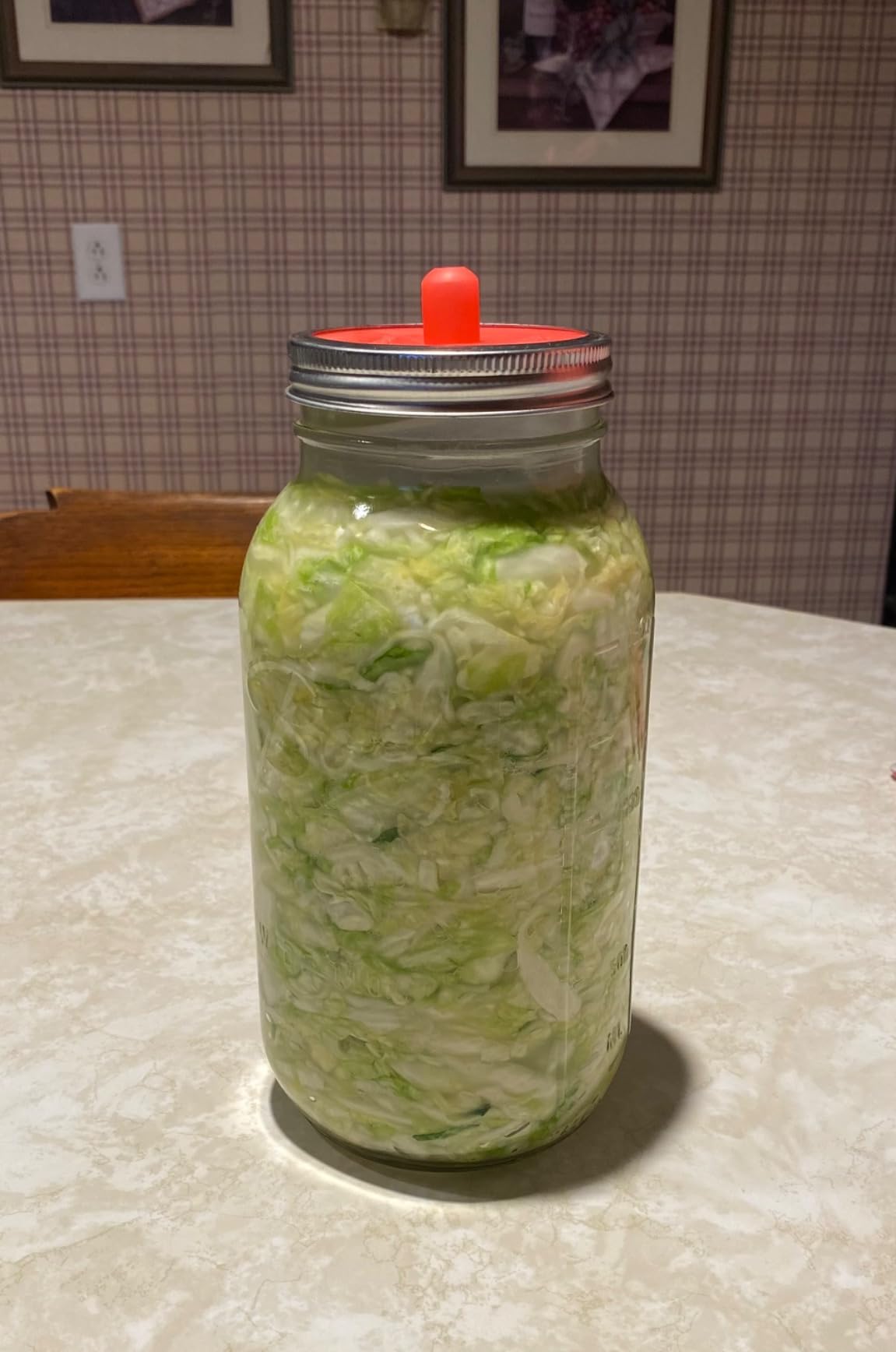
What sets this kit apart is the self-burping lid. CO2 escapes through a one-way silicone valve without letting oxygen in, which means I never have to “burp” the jars or check on them twice a day. I just set the jars on the counter, leave them at room temperature, and trust the system. Out of 30+ batches, only two produced any surface film, and both times it was my fault for under-salting the brine.
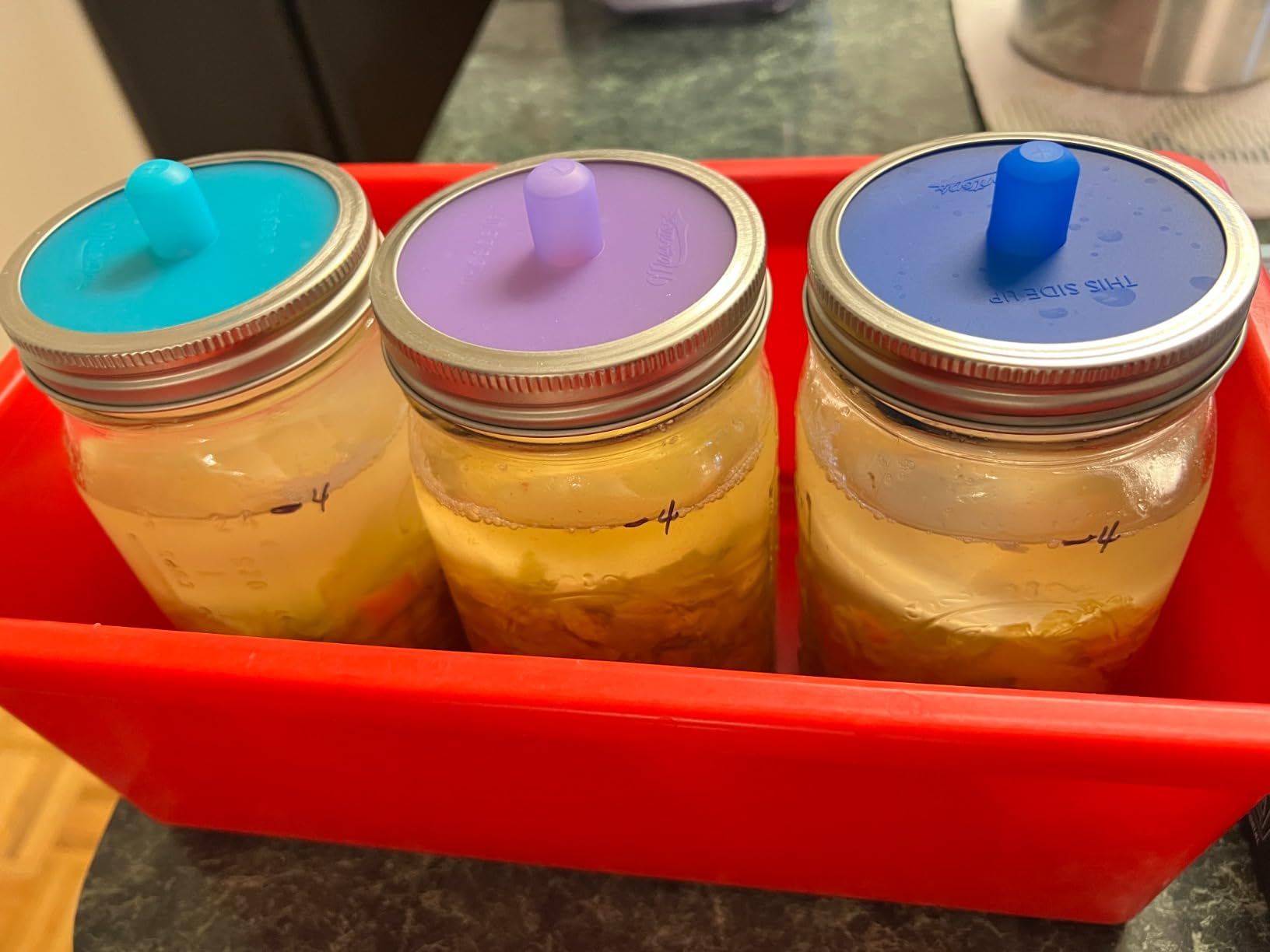
The Pickle Pebble glass weights are the workhorse of the kit. They sit neatly inside a wide mouth mason jar and hold shredded cabbage, carrot sticks, or whole garlic cloves under the brine. The acacia tamper is a small but important detail: a quick tamp after packing the jar releases trapped air bubbles, which is essential for clean fermentation.
One thing to know: this kit is the lids and weights, not the jars. You’ll need to supply wide mouth mason jars separately. Ball, Kerr, and any standard wide mouth canning jar work perfectly. I use 32 oz jars for full heads of cabbage and 16 oz jars for single-portion ferments.
Build quality and long-term durability
The silicone on the Pickle Pipe lid is thick and stays flexible even after hundreds of dishwasher cycles. The glass weights are heavy and don’t chip easily. After two years of weekly use, none of the four lids in my kit has cracked or developed leaks. I replace the silicone grommet on the airlock nipple about once a year, which takes 30 seconds.
What could be better
The glass weights are slightly narrower than the inside of some wide mouth jars, so they can shift when you move a full jar. The Pickle Pebble solves this if you find it annoying. The included recipe booklet is brief and the measurements are US-only, so metric users will need to convert. Finally, you’ll want to buy a pack of regular mason jar storage lids separately for moving ferments to the fridge.
2. Masontops Complete Fermentation Kit for Regular Mouth Jars
Masontops Complete Mason Jar Fermentation Kit – Easy Small/Regular Mouth Jars Vegetable Fermenting Set – DIY Equipment Essentials
9-piece kit
Fits regular mouth jars
Dual-ended acacia tamper
Self-burping airlocks
Pros
- Dual-ended tamper fits both regular and wide mouth jars
- Self-burping airlock design
- Premium quality components
- Recipe book included
Cons
- Mason jars not included
- Airlock nipple can weaken over time
- Some users report occasional batch failures
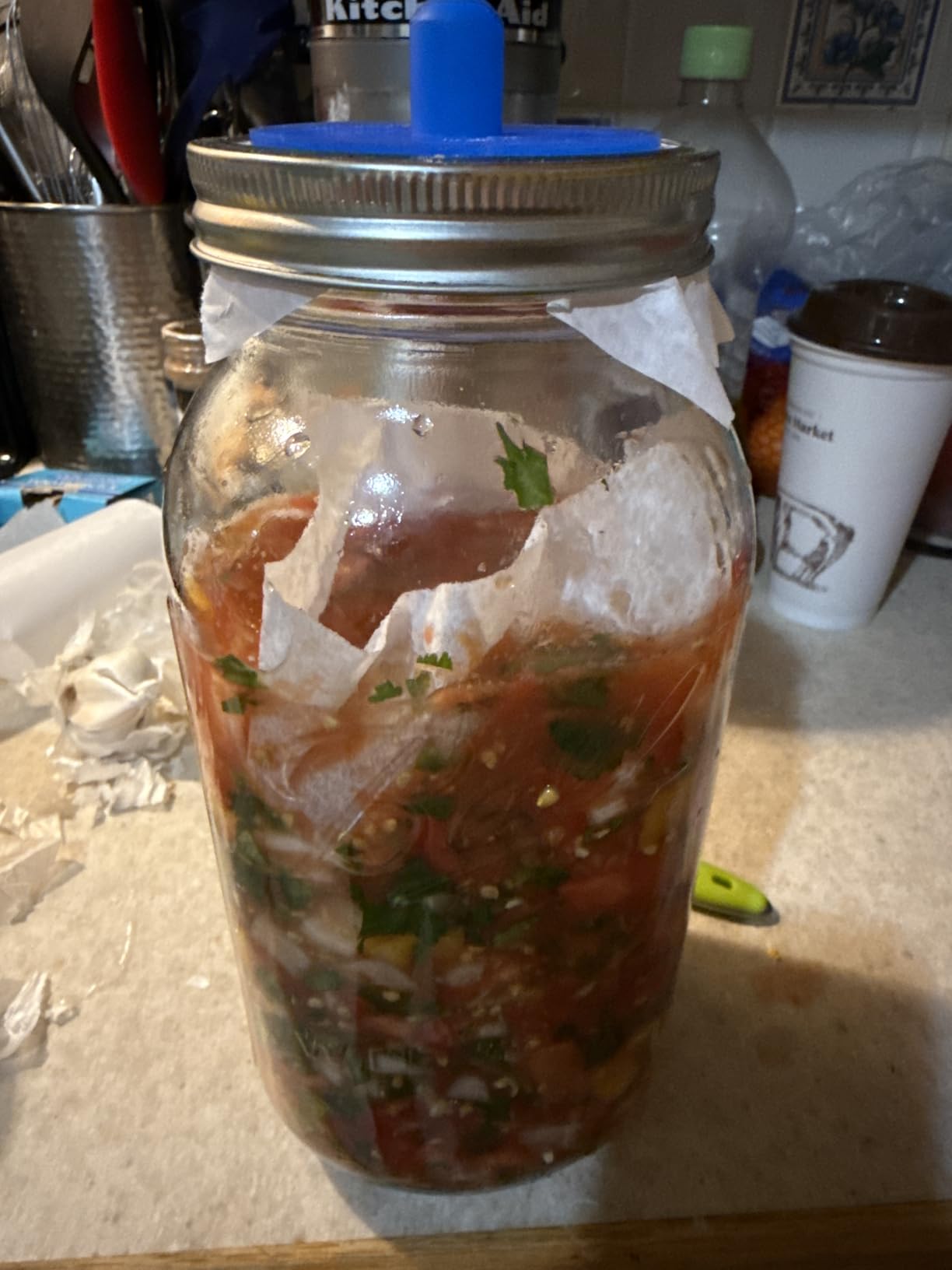
Most mason jar kits target wide mouth jars, but plenty of home cooks already own regular mouth jars. This Masontops kit is built for that setup. I tested it with 16 oz and 24 oz Ball regular mouth jars, and the fit was clean on every size.
The kit includes four Pickle Pipe airlock lids sized for regular mouth jars, four Pickle Pebble Infinity glass weights, and a clever dual-ended acacia tamper. One end fits inside a regular mouth jar, the other fits a wide mouth. If you eventually buy both jar sizes, the tamper still works.
Functionally, this kit ferments identically to the wide mouth version. Sauerkraut, kimchi, curtido, fermented carrots, and hot sauce all turned out well. The Infinity glass weight has a small handle on top, which makes it easier to lift in and out than the standard Pickle Pebble. That’s a small win for everyday use.
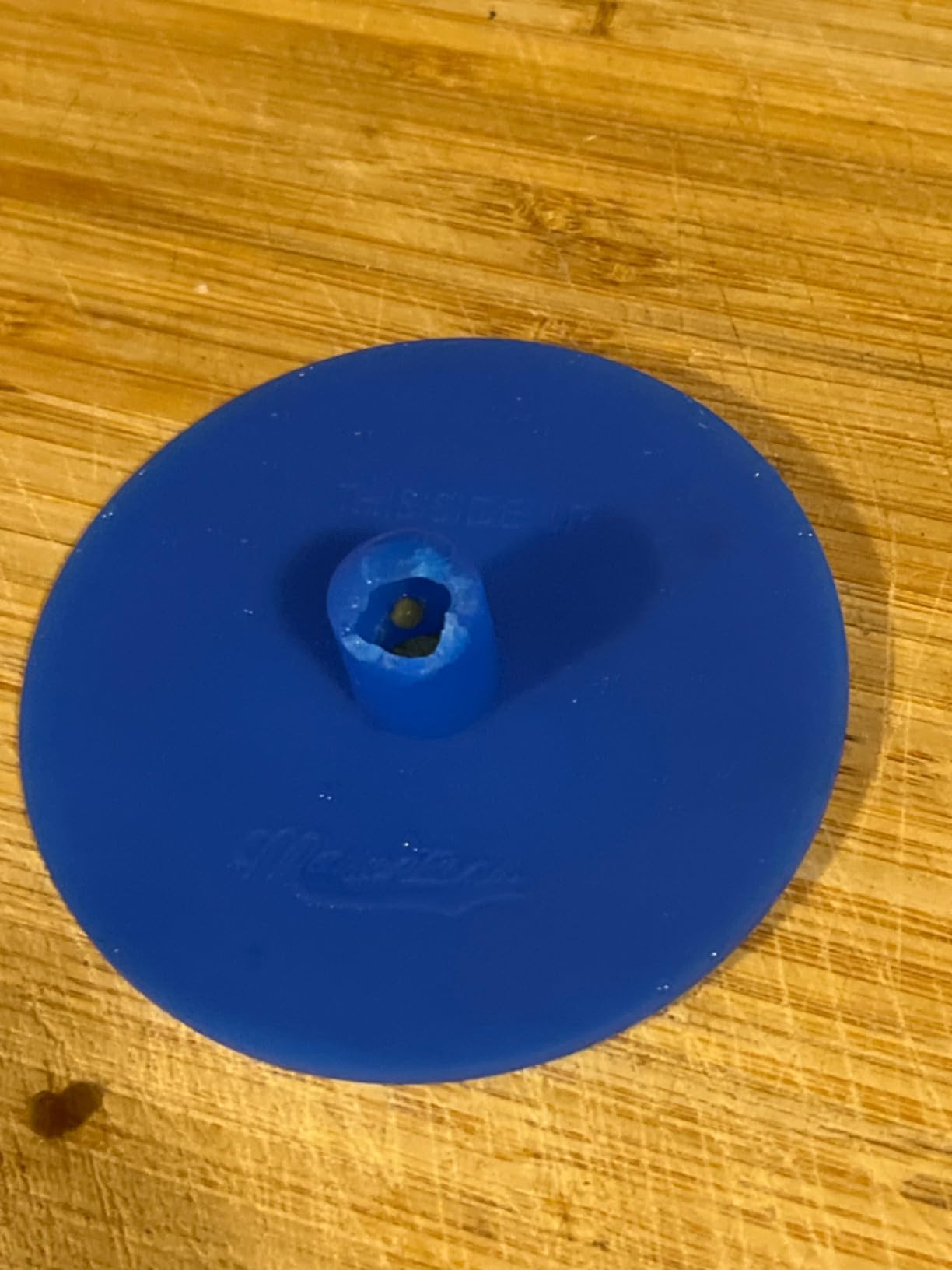
The downsides mirror the wide mouth kit. The jars aren’t included. The airlock nipple is a replaceable silicone piece, and a small number of long-term users (including me, after about 14 months) noticed it loses grip. I picked up a 4-pack of replacement grommets for under $5 and the issue went away.
Who this kit is best for
If you have a cupboard full of regular mouth mason jars already, this kit is the most efficient way to start fermenting without buying new jars. It’s also a great pick if you ferment smaller portions, since 8 oz and 16 oz regular mouth jars are widely available and inexpensive.
Who should look elsewhere
If your entire fermentation plan revolves around whole heads of cabbage or 32 oz batches, go with the wide mouth version above. The regular mouth opening makes it harder to pack large pieces of vegetable.
3. IceFun 4-Pack Mason Jar Fermentation Kit with 32 oz Jars
4-Pack Mason Jar Fermentation Kit With Four 32 Oz Jars And Plastic Lids
4 jars included
Plastic lids
Glass weights
Dual-channel airlocks
20 date labels
Pros
- Complete kit with 4 jars included
- Plastic lids eliminate rust and silicone wear
- Jars have ml and oz measurement marks
- 20 date-and-note tags for batch tracking
Cons
- Lower rating than Masontops
- Plastic lids may not be as durable as silicone
The IceFun kit solves a problem most beginner fermenters run into: you have to buy the kit, then buy the jars separately. This one ships with four 32 oz wide mouth jars, four plastic fermentation lids with dual-channel airlocks, four glass weights, and a pack of 20 date-and-note labels.
I set up all four jars at once. Two went to traditional sauerkraut, one to a beet and ginger kraut, and one to a small kimchi experiment. The 3.4 inch wide mouth opening was the easiest to fill and clean of any jar in my test batch. The measurement marks on the side made it simple to track brine levels.
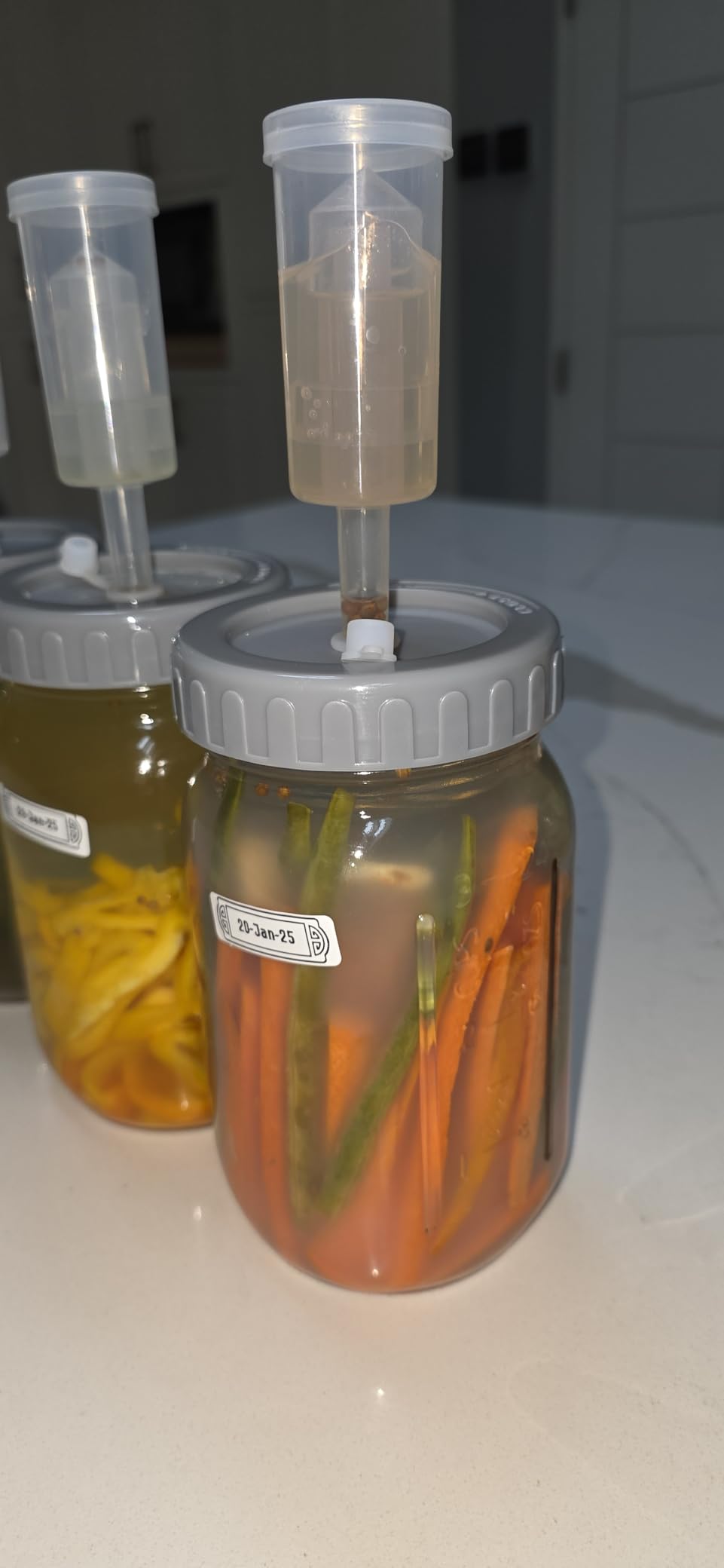
The plastic lids are a different design choice. Instead of silicone grommets that can wear out, the dual-channel airlock is built into the plastic. I was skeptical at first, but after eight weeks of use and one full dishwasher cycle, the lids still sealed properly. The benefit is no rust, no cracking grommets, and a longer expected lifespan than typical silicone valves.
The kit scored slightly lower on user reviews compared to Masontops (4.5 vs 4.8), but the all-in-one value is hard to beat. If you don’t already have mason jars, buying this kit is meaningfully cheaper than buying a Masontops kit plus four jars from a separate store.
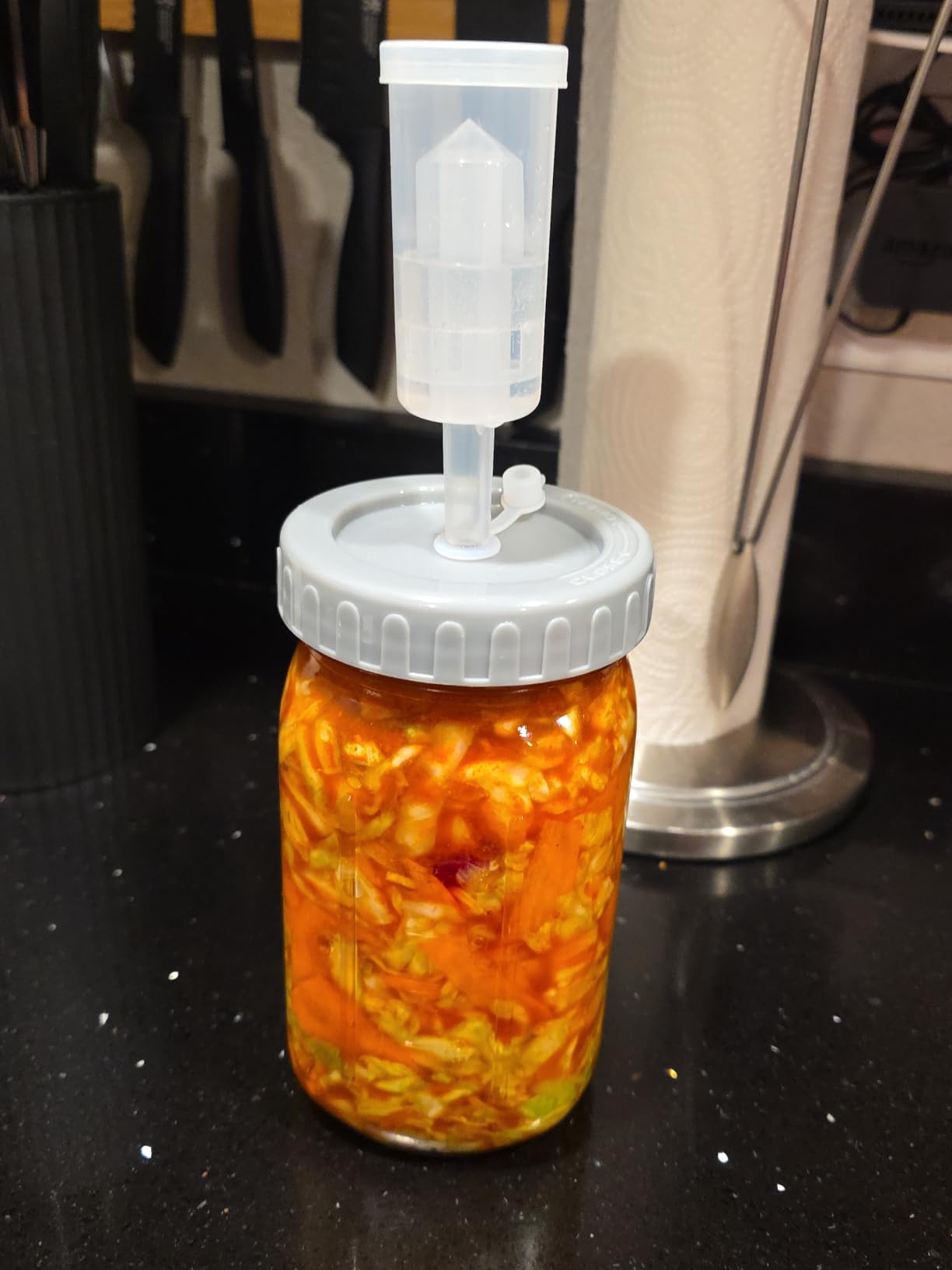
Best for first-time fermenters
The included 20 date-and-note tags are a small but smart touch. Each tag has space to write the start date, vegetable type, and salt percentage. If you’ve ever opened a mystery jar in the back of the fridge and wondered when you made it, you’ll appreciate these.
Limitations to consider
Plastic lids don’t have the premium feel of silicone, and the airlock channels are smaller, which can occasionally clog with brine residue. A quick rinse keeps them clear. The glass weights are slightly lighter than the Masontops Pickle Pebbles, so I had to press the vegetables down a bit harder initially.
4. Masontops Fermentation Jar Starter Set with 24oz Jar
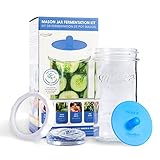
Masontops Fermentation Jar Starter Set, Easy Vegetable Fermentation Kit, Includes Mason Jar, Pickle Kit with Fermentation Lids & Fermentation Weight
Single jar starter
24oz wide mouth jar
Self-burping airlock lid
Glass Pickle Pebble
Pros
- Includes the 24oz wide mouth mason jar
- Self-burping Pickle Pipe lid
- Glass weight keeps vegetables submerged
- Compact single-jar setup
Cons
- Only one jar included
- Storage lid not included
- Best for small 2-week ferments
Not sure if fermentation is for you? The Masontops Starter Set is the lowest-cost way to find out. It includes a 24oz wide mouth mason jar, one Pickle Pipe airlock lid, one Pickle Pebble glass weight, and a plastic screw band. That’s it.
I made my first sauerkraut with this exact kit years ago, and the simplicity is the appeal. One jar, one lid, one weight, no decisions. You pack the cabbage, drop in the weight, screw on the lid, and wait. The self-burping airlock does the rest.
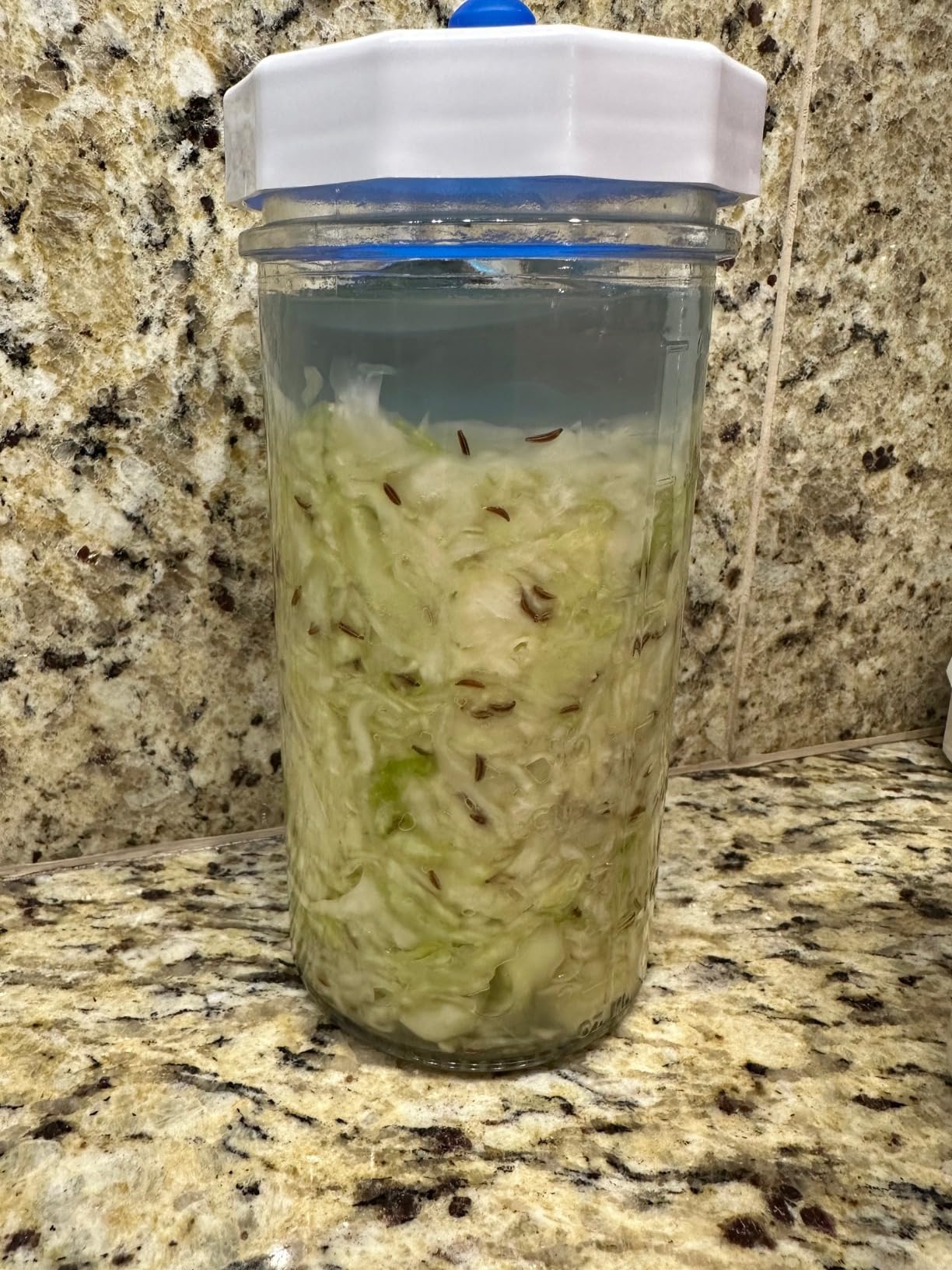
The 24oz jar is a smart size for solo fermenters or couples. It holds about half a medium cabbage, which is the right amount for two to three weeks of side dishes. If you fall in love with fermentation, you can buy the larger 9-piece kit above and reuse the same Pickle Pipe lid and Pickle Pebble weight.
One small gripe: the starter set doesn’t include a regular storage lid. When your ferment is done, you have to either unscrew the airlock lid and replace it with a standard mason jar lid (sold separately) or leave the Pickle Pipe on for fridge storage. The Pickle Pipe works in the fridge, but it’s not designed for long-term airtight storage.
Perfect for a single test batch
I recommend this kit to anyone who’s curious but hesitant. Spend less than $30, do one batch, and decide. If you like it, the upgrade path is clear. If you don’t, you have a nice 24oz mason jar for dry goods storage.
When it falls short
If you already know you want to ferment every week, this kit is too small. You’ll outgrow it in a month. Buy the 9-piece Complete Kit instead.
5. Masontops Pickle Pipes Airlock Lids – Wide Mouth Pack
Masontops Pickle Pipes – Airlock Fermentation Lids – Fermentation Kit For Wide Mouth Mason Jar Sauerkraut & Pickle Kit – Fermentation Jar Not Included
4-pack wide mouth lids
Self-burping valve
BPA-free silicone
Dishwasher safe
Pros
- Self-burping one-way valve
- Premium BPA-free silicone
- Dishwasher safe
- Low profile for easy storage
- 4-pack provides good value
Cons
- Mason jars not included
- Small amount of liquid can escape when venting
- Spout must stay clean
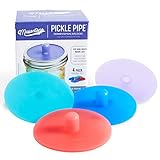
If you already have a collection of wide mouth mason jars and just need lids, this is the set to buy. The Masontops Pickle Pipes 4-pack has over 4,700 reviews and is the #1 best seller in Brewing & Fermentation Airlocks.
The lids are made of food-safe silicone with a built-in one-way valve. The valve opens when fermentation gases build up and closes when pressure equalizes, which keeps oxygen out and prevents mold. The whole lid is dishwasher safe and the low profile stacks neatly in a kitchen drawer.
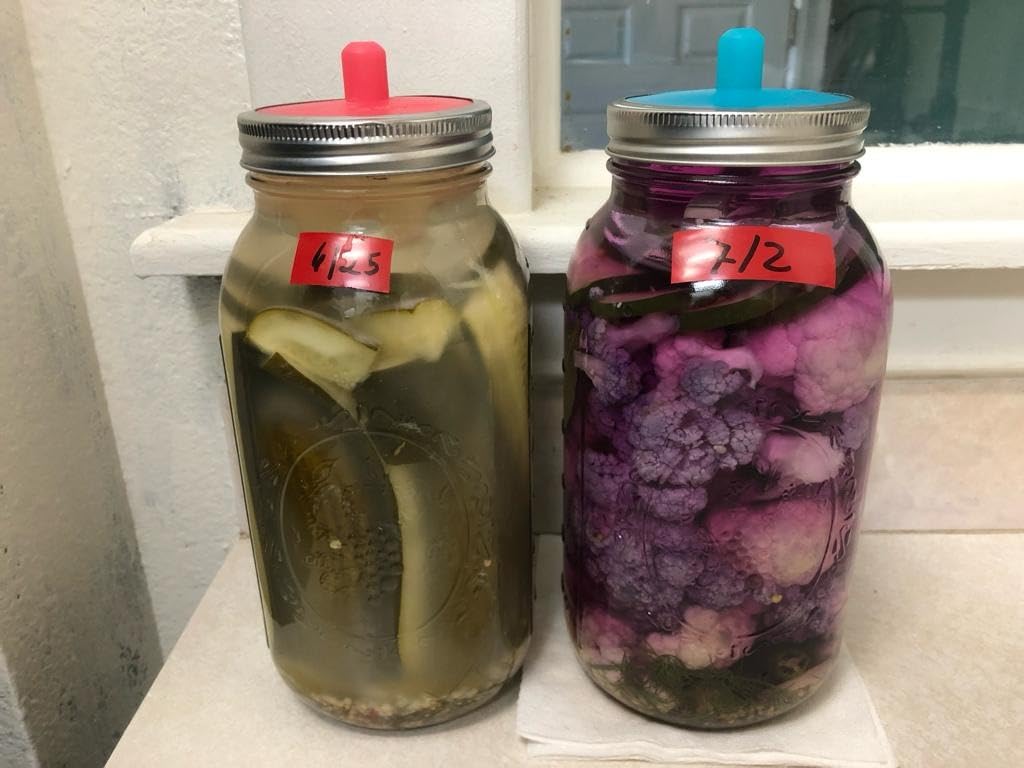
I use these lids on three jars in my rotation right now. They’ve been through the dishwasher twice a week for over a year with no cracking, warping, or sticky residue. Compared to traditional water-seal airlocks, the no-water design is cleaner. There’s no water to top off, no risk of siphoning, and no daily monitoring.
You will need to add weights separately (Pickle Pebbles or pickle pipes) and you will need mason jars. If you have those covered, this 4-pack is the best airlock lid option at the price.
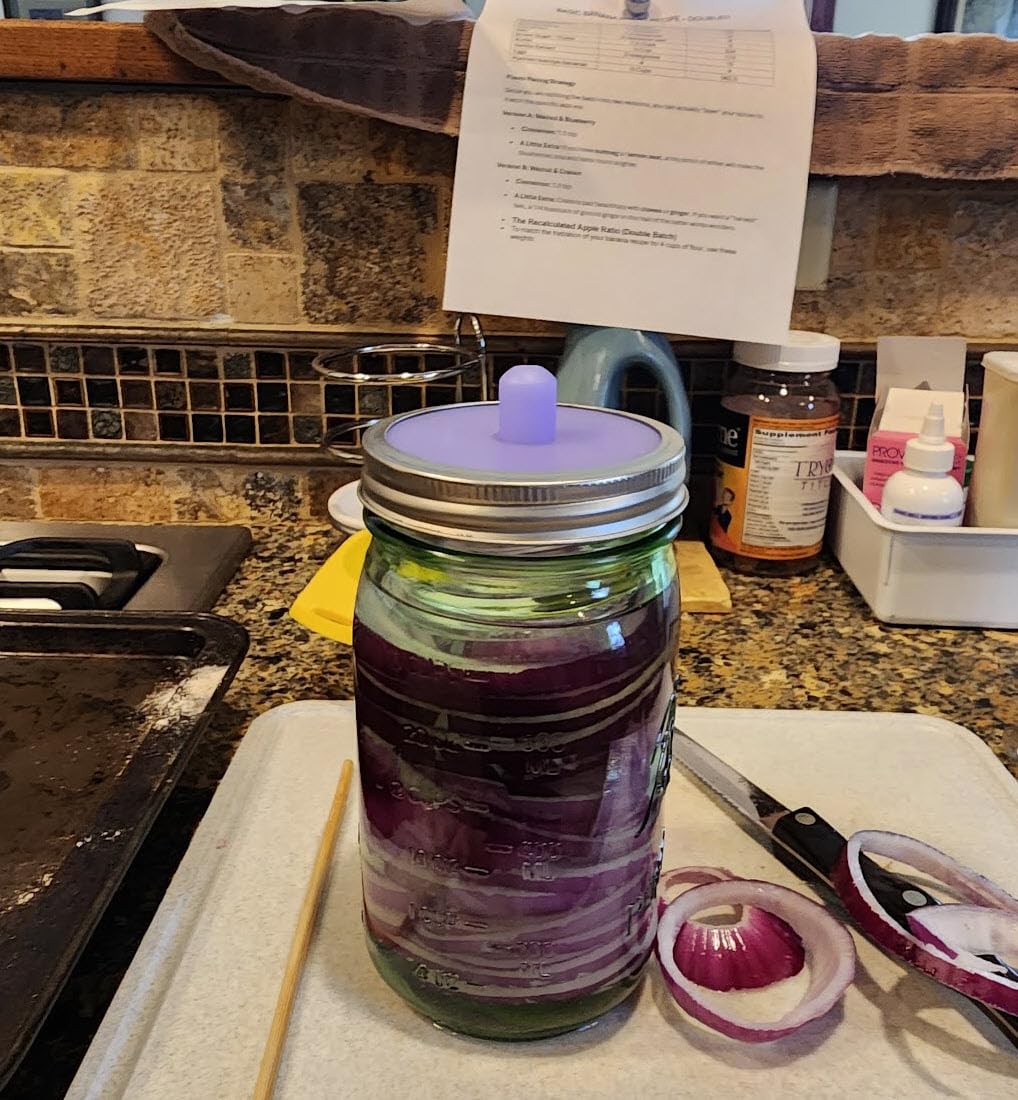
Why these lids are #1
The combination of food-safe silicone, a reliable one-way valve, and a 4-pack price under $25 makes these the standard against which other airlock lids are measured. They are also widely available, so replacement parts are easy to find.
Honest limitations
A small amount of liquid can bubble out of the valve during peak fermentation (usually days 2-5 of a sauerkraut batch). I keep the jars on a plate to catch drips. The valve spout needs to stay clean: a piece of vegetable matter stuck in the spout can prevent it from sealing.
6. Masontops Pickle Pipes Airlock Lids – Small Mouth Pack
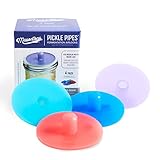
Masontops Pickle Pipes – Airlock Fermentation Lids – Fermentation Kit for Small Mouth Mason Jar Sauerkraut & Pickle Kit Fermentation Jar not Included
4-pack small mouth lids
Self-burping valve
Food-safe silicone
Dishwasher safe
Pros
- Self-burping valve requires no water
- Easy to use and clean
- Durable silicone construction
- Low profile design
- Compatible with small mouth mason jars
Cons
- Somewhat expensive for 4 silicone lids
- Small amount of liquid may leak when venting
Same trusted Pickle Pipe design as the wide mouth version, sized for small mouth mason jars. If your kitchen is full of small mouth Ball or Kerr jars, this is the lid pack to buy.
Small mouth jars are typically 8 oz, 12 oz, or 16 oz. They’re perfect for fermented garlic, hot sauce, single-serving pickles, and small batches of curtido. The narrower opening is also easier to keep clean because less surface area is exposed to air.
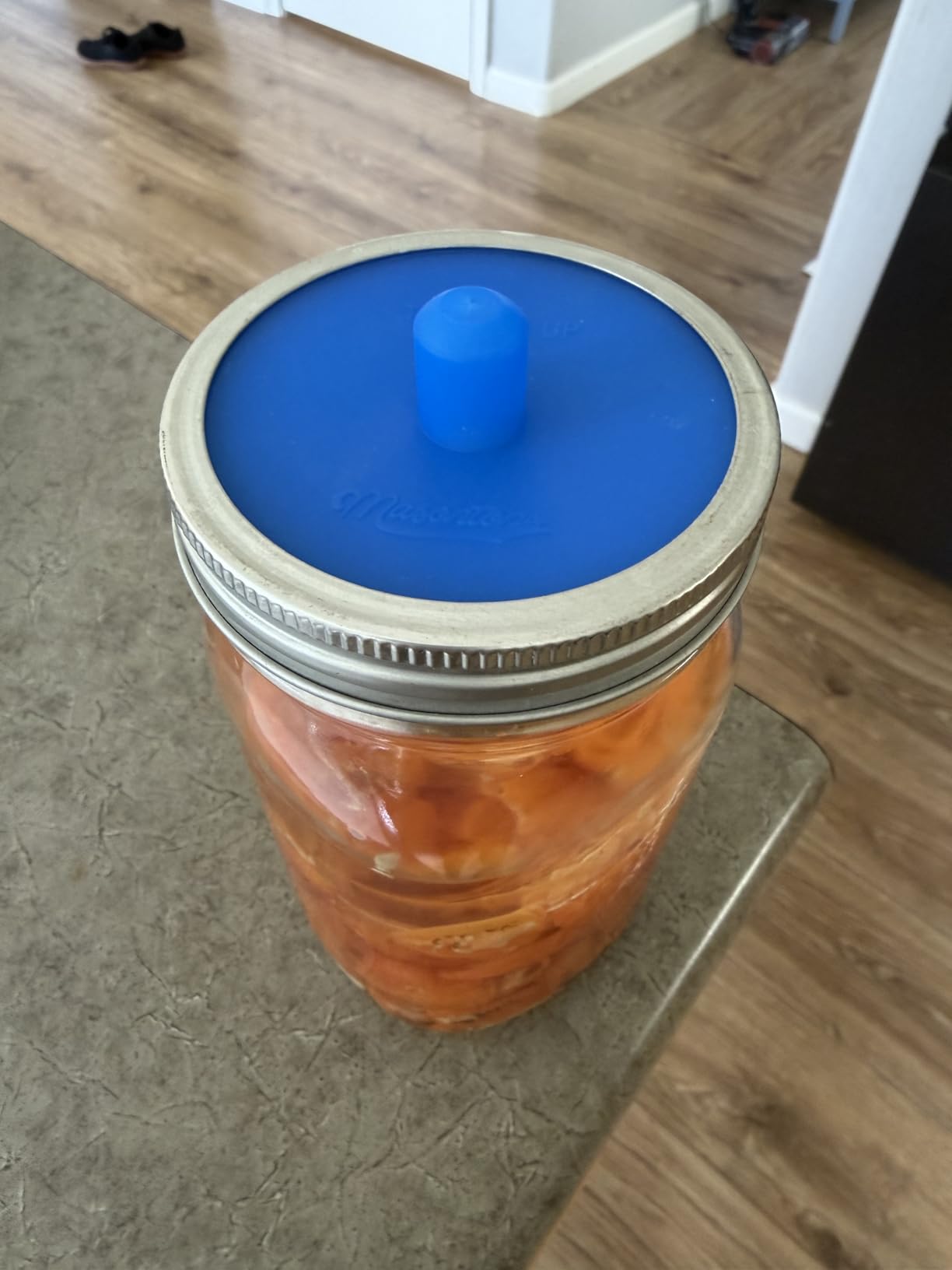
The silicone is the same BPA-free, phthalate-free formula as the wide mouth lids. The valve works the same way: one-way gas release, no oxygen in, no water needed. The lids weigh about 2.4 ounces each, which is light enough that even a half-full jar stays sealed.
Price is the main consideration. At around $22 for 4 lids, this pack is more expensive per lid than some wide mouth alternatives. You’re paying for the small mouth size and the brand consistency. If you have a mix of jar sizes, you may end up buying both packs.
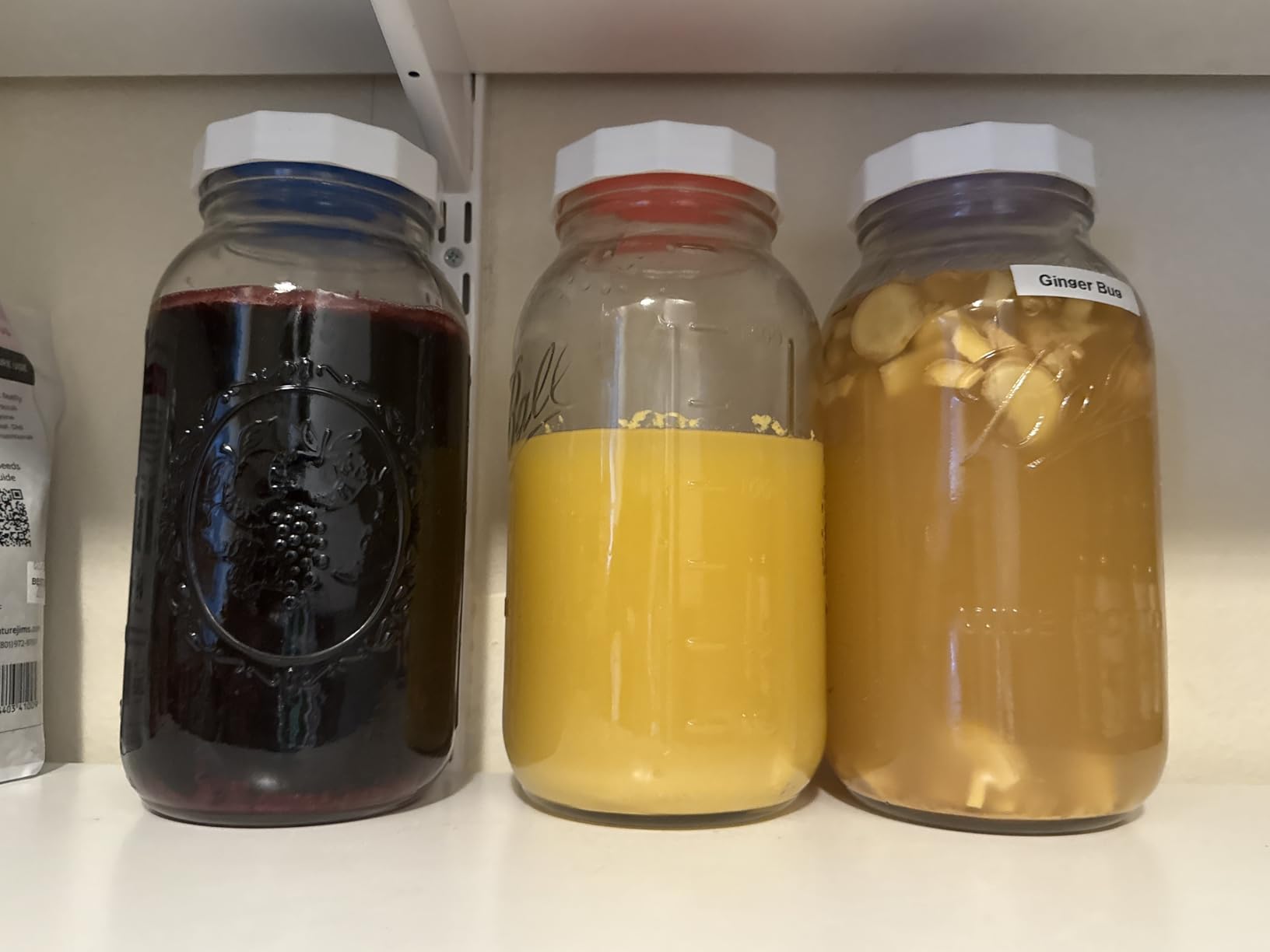
Best uses for small mouth jars
Fermented garlic in honey, hot sauce ferments, single-portion sauerkraut, and fermented jalapenos all work beautifully in small mouth jars. The smaller opening also makes it easier to keep vegetables submerged, since less material can float up to the surface.
Why you might skip this
If you only ferment cabbage and large vegetables, small mouth jars are too narrow to pack efficiently. Go with wide mouth lids instead.
7. Qianfenie 1 Gallon Fermentation Jar with 3 Airlocks

Qianfenie 1 Gallon Fermentation Jar with 3 Airlocks & 2 Screw Lids, 2 Pack
1-gallon glass jar
3 airlocks
Wide mouth
Scale marks
2-pack
Pros
- Sturdy thick glass construction
- Includes all accessories plus spares
- Wide mouth for easy filling
- Airtight seal prevents leaks
- Good value with 2 jars included
Cons
- Some reports of cracking with sudden temperature changes
- Delivery issues reported by some buyers
For big-batch fermenters, a 1-gallon jar changes everything. The Qianfenie kit ships with two 1-gallon glass carboys, three airlocks, two screw lids, two chalkboard labels, and spare grommets and silicone gaskets. That’s a complete large-batch setup for under $35.
I tested the jar with a full head of napa cabbage for kimchi. After salting and pressing for two hours, the entire head fit in one jar with room to spare. The wide mouth opening (around 4 inches) made it easy to pack, press, and clean. The scale marks on the side helped me track the brine level as the cabbage released its liquid.
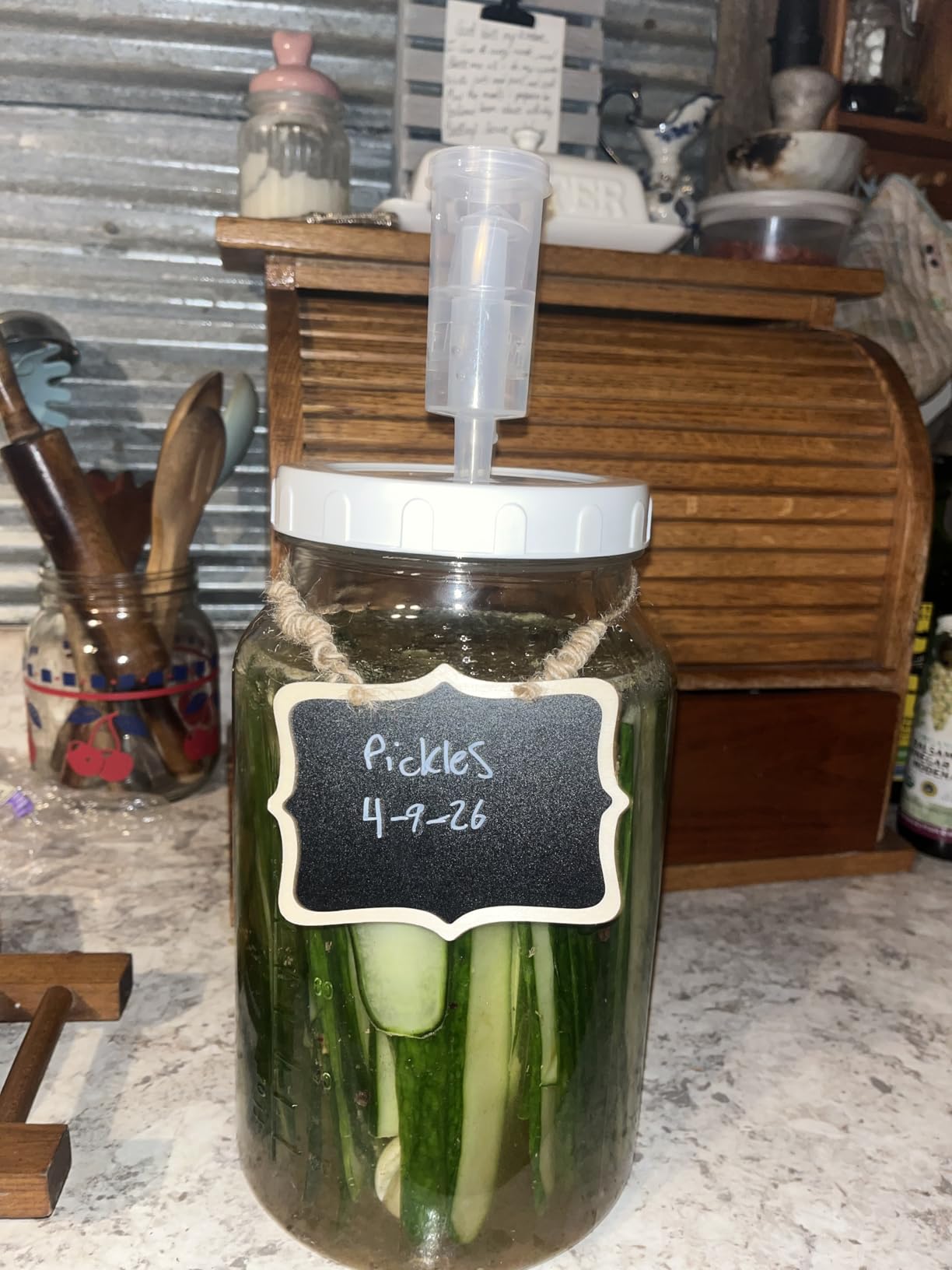
The threaded airtight lid with silicone grommet seal is a different design from the Masontops airlock lids. It’s a traditional waterless seal that you press the airlock into. I prefer this style for 1-gallon batches because the larger lid surface gives a more even seal. The included spare gaskets are a thoughtful touch; silicone gaskets are usually the first part to wear out.
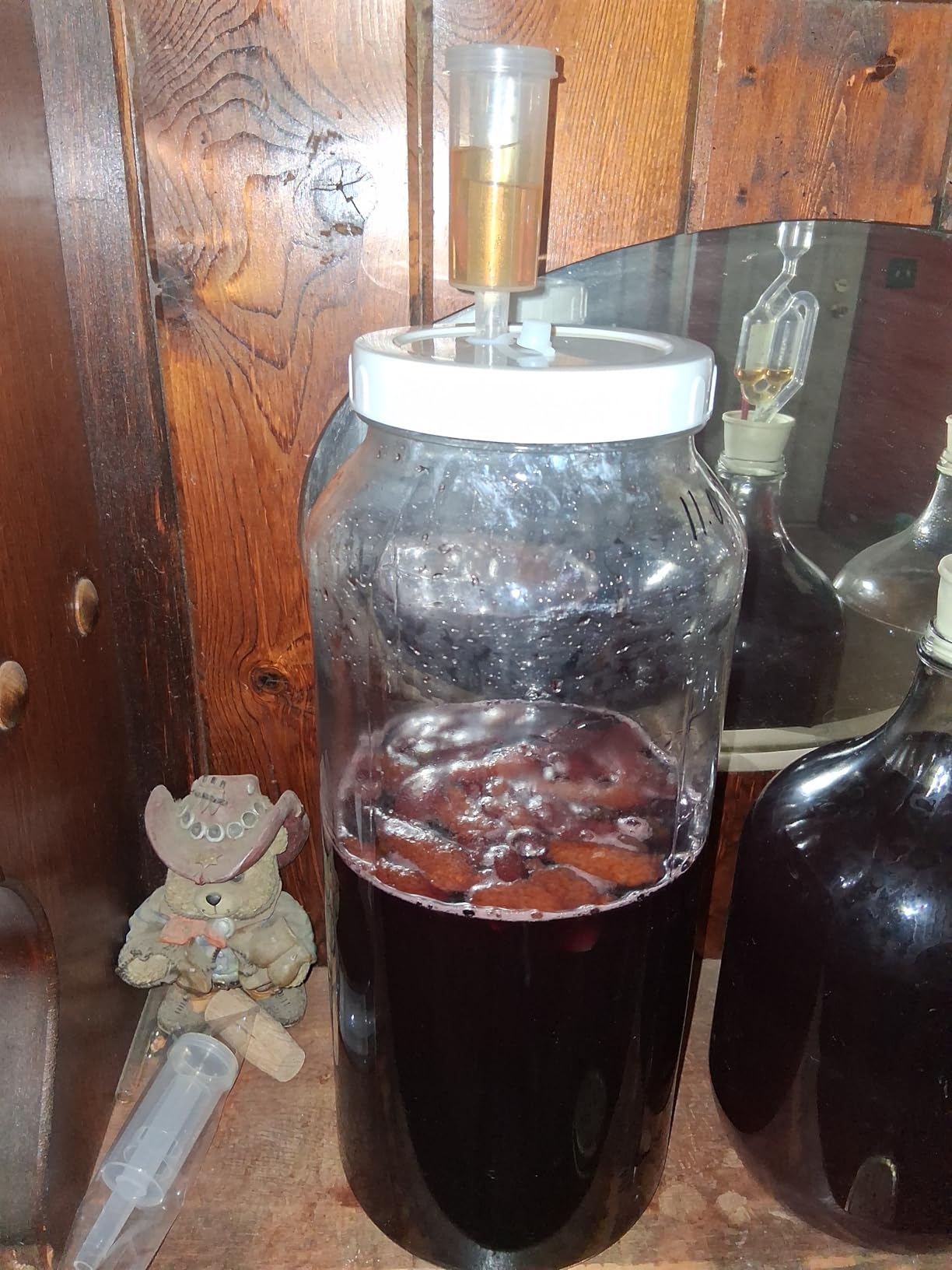
The main caution: this is thick glass, but thick glass can crack if you add hot or boiling liquid to a cold jar. Let the jar come to room temperature first, or fill with room-temperature ingredients only. I had no issues with my batch, but a few users have reported cracks after thermal shock.
Why you’ll want two jars
One gallon of sauerkraut or kimchi is a lot. Having two jars lets you run a sauerkraut and a kimchi at the same time, or do a back-to-back sauerkraut batch so you always have a fresh jar in the fridge.
Trade-offs at this size
A 1-gallon jar weighs 6+ pounds when full, so you need a stable spot on the counter. It’s also too big to stick in the fridge as a single unit, so plan to ladle the finished ferment into smaller jars for cold storage.
8. JILLMO 1.5L Wide Mouth Glass Fermentation Jar with Airlock
JILLMO 1.5L Wide Mouth Glass Fermentation Jar with Airlock & Weight, 2 Pack
1.5L capacity
2-pack
Wide mouth
Glass weights included
Airlock lids
Pros
- Complete kit with everything included
- Thick lead-free glass
- Glass weights keep vegetables submerged
- Clear glass for monitoring
- Wire clamp airtight seal
Cons
- Some reports of jars cracking in dishwasher
- May be larger than needed for small batches
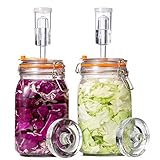
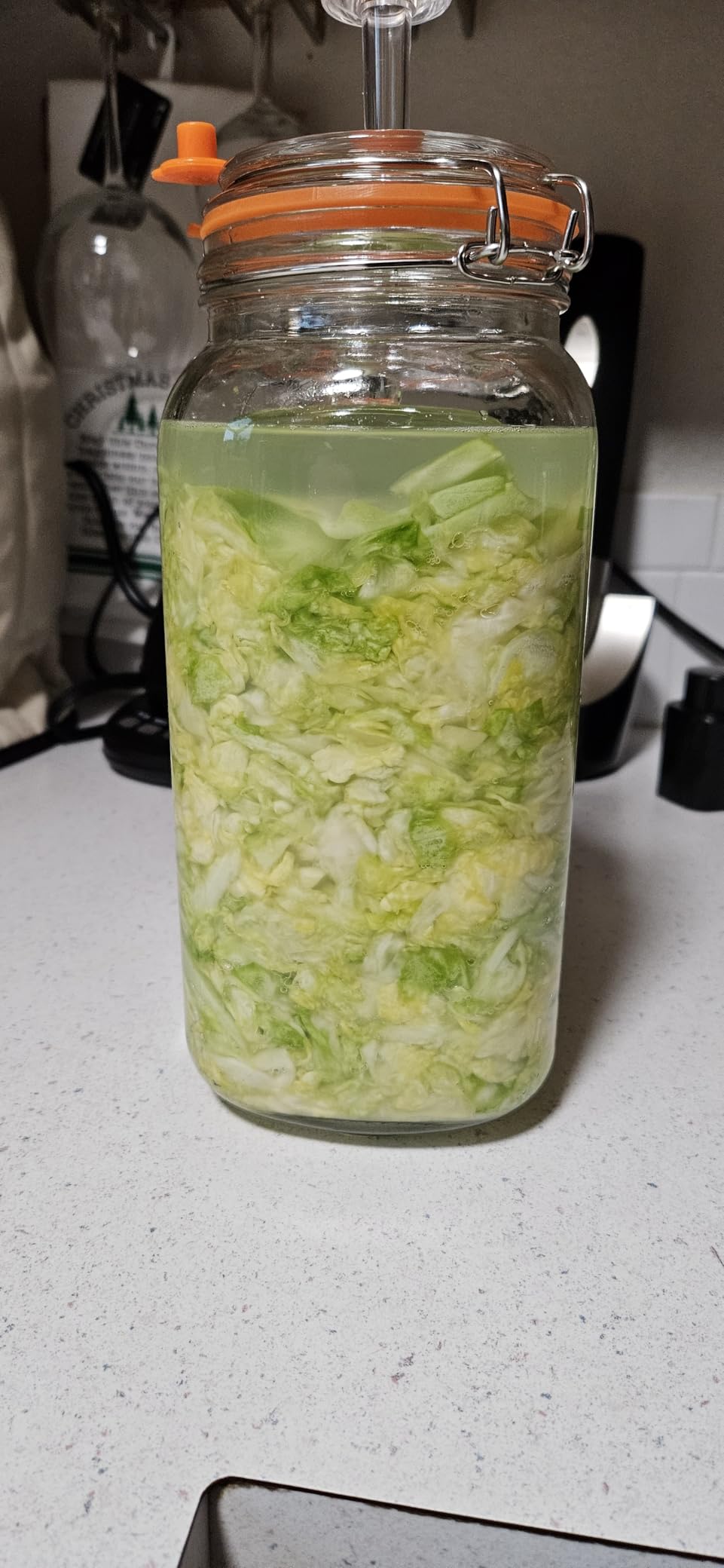
The JILLMO kit is purpose-built for kimchi. The 1.5L (about 1.5 quart) size holds roughly one to two heads of napa cabbage after pressing, which is the typical yield for a home kimchi recipe. The 2-pack is ideal for making a traditional kimchi and a variation at the same time.
The kit includes two 1.5L glass jars, two glass fermentation weights, two airlocks, and the silicone seals for the wire clamp lids. Everything is lead-free glass, BPA-free silicone, and stainless steel for the wire clamp. The build quality feels substantial in the hand.
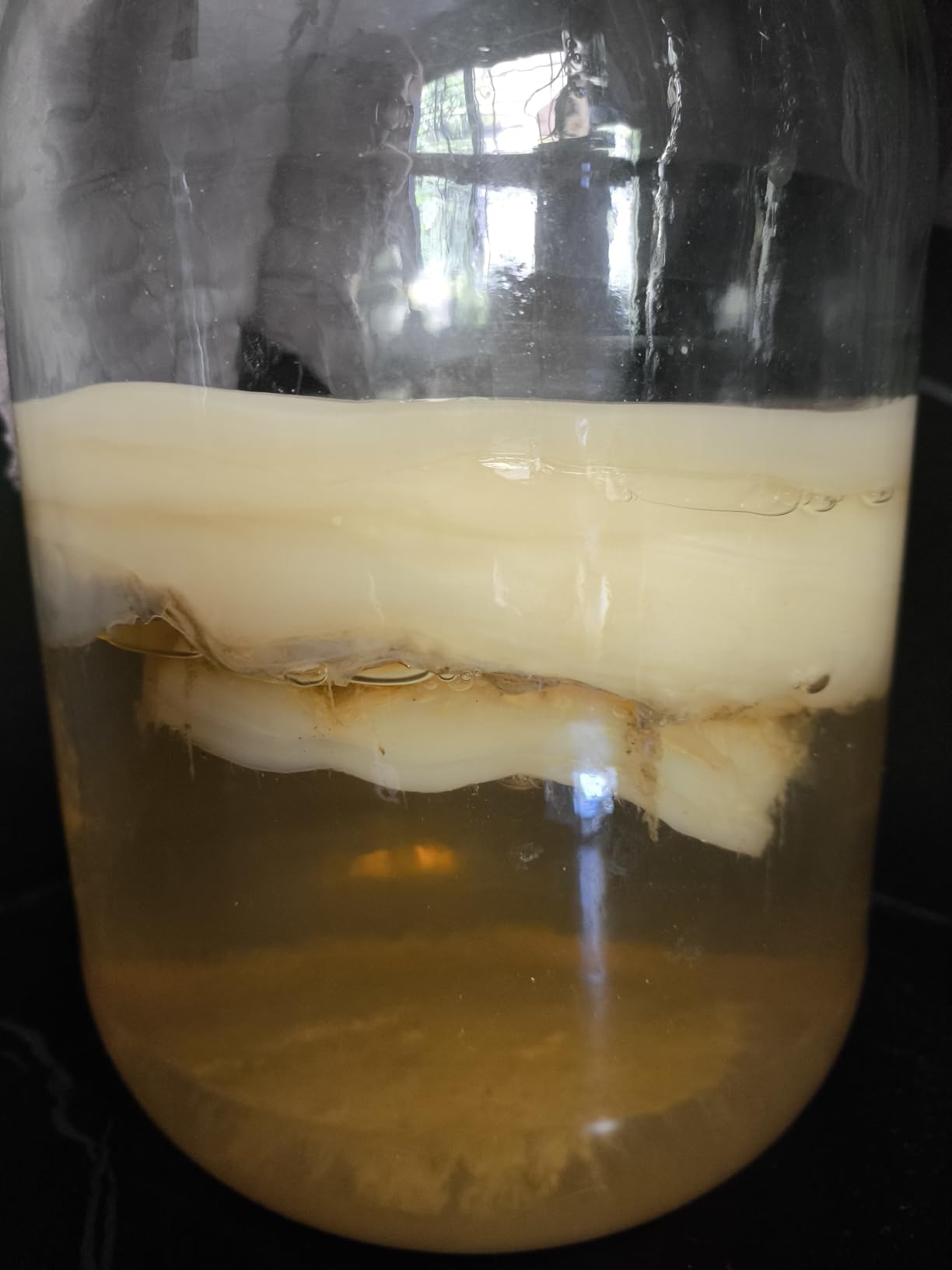
The wire clamp lid with silicone seal is the same style as European Fido jars. It creates a strong airtight seal that you can see and hear clicking into place. The clear glass makes it easy to monitor fermentation: you can watch the bubbles rise, the brine turn cloudy, and the color develop. For first-time kimchi makers, that visual feedback is reassuring.
The 4.15 inch wide mouth opening is the largest in this guide. It’s wide enough to fit your hand inside for cleaning, which is a real benefit since kimchi paste is sticky. Glass weights are sized perfectly to fit the jar diameter.
Designed for the way kimchi ferments
Kimchi needs to be pressed under brine for 1-2 days before going into cold storage. The glass weight in this kit does that job exactly right. The wide mouth also accommodates long napa cabbage leaves without folding them, which preserves texture.
Watch out for thermal shock
A few users have reported jars cracking in the dishwasher. To avoid this, wash by hand with warm (not hot) water and let the jar cool down before adding cold water. It’s a small extra step, but it should extend the life of the jar.
9. Home Fermentation Kit with Oxygen Extraction Pump

Fermenter lids – Home Fermentation Kit With 4 Wide Mouth Fermenting Lids With Airlocks, Oxygen Extraction Pump, Ideal For Sauerkraut, Kimchi, Pickles & Fermented Vegetable
4-pack lids
Vacuum pump included
Date tracker
Airlock valve
BPA-free
Pros
- Oxygen extraction pump prevents mold
- No need to burp jars
- Zero mess compared to traditional methods
- Easy to clean and reuse
- Date tracker helps track batches
Cons
- Some reports of pump not extracting air properly
- May be considered expensive
- Only lids - jars not included
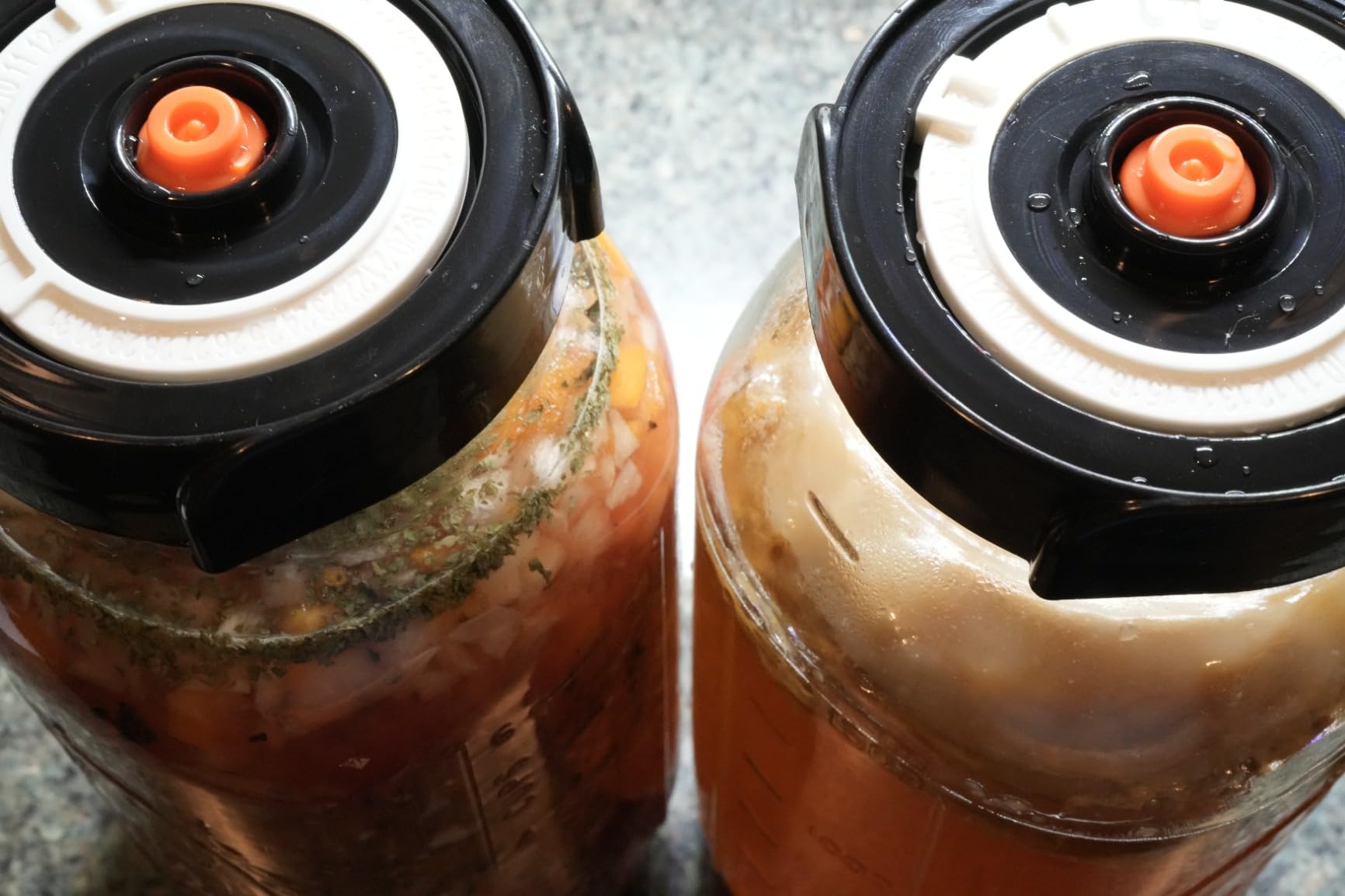
This is the most innovative kit in our guide. Instead of relying on a one-way valve to let CO2 out, the lid system uses a hand pump to actively pull oxygen out of the jar before fermentation begins. The result is an anaerobic environment from day one, which several users report eliminates mold entirely.
The kit includes four BPA-free plastic lids with built-in airlock valves, one oxygen extraction pump, and an instruction and recipe booklet. The lids fit most standard wide mouth mason jars. A small dial on top of each lid acts as a date tracker.
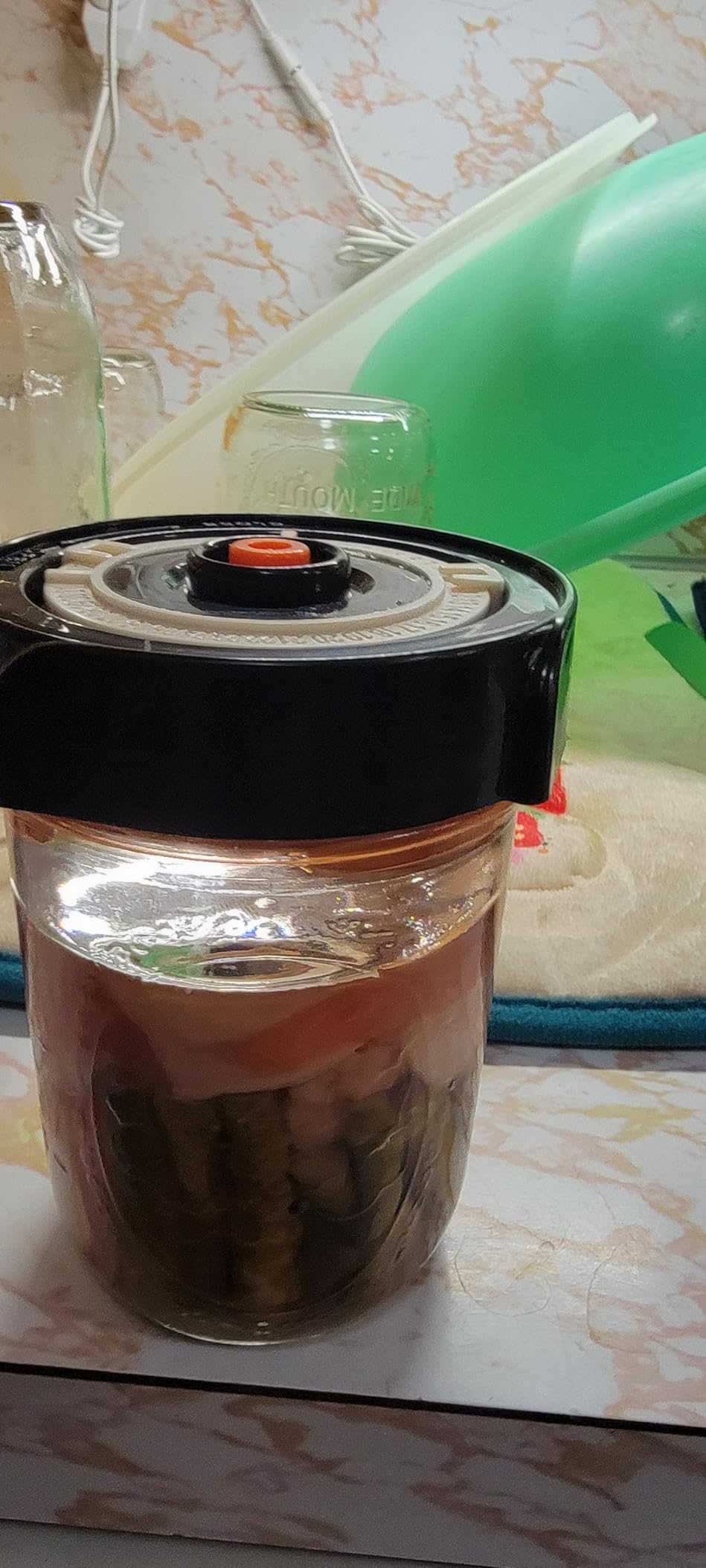
The pump takes about 10 seconds per jar. You press the pump onto the lid, pump a few times until you feel resistance, and the lid seals. From there, the airlock valve handles gas release automatically. It’s a different workflow than traditional kits, but it’s not complicated. I had my first batch going in about 3 minutes.
The plastic lid design is more rigid than silicone, which makes it easier to screw on and off but slightly less forgiving of temperature changes. In my testing, the lids held up fine at room temperature fermentation, but I’d be cautious about putting them in very hot dishwasher cycles.
Who should buy this kit
If you’ve struggled with mold or surface film in past ferments, the oxygen extraction pump is genuinely useful. Removing oxygen before fermentation gives the lactobacillus bacteria a head start, and the competition (mold and yeast) has less to work with. Several reviewers with chronic mold issues reported zero mold after switching.
Honest trade-offs
The pump is a small piece of plastic that you can lose. The lids are more expensive per unit than basic silicone alternatives. And if you already have a vacuum sealer for food storage, you may not need the dedicated pump. But as a one-stop mold-prevention system, it works.
10. FastRack Shepherd Made Mead Making Kit

FastRack – Shepherd Made Mead Making Kit – 1 Gallon Jug Fermentation Set with Clear Glass Fermentation Jar, 3pc Airlocks, Rubber Stopper, Yeast Nutrient & Mead Yeast for Home Brewing
1-gallon carboy
3-piece airlock
Mead yeast
Nutrient included
Rubber stopper
Pros
- Excellent value for the price
- Includes everything to start brewing
- Clear glass for monitoring
- Substantial yeast and nutrient
- BPA-free glass carboy
Cons
- Some reports of cracked airlocks in package
- Instructions may be overly detailed
- Carboy mouth is somewhat narrow
While most of this guide covers vegetable fermentation, I included the FastRack Mead Kit because mead and vegetable ferments share the same basic principle: a controlled anaerobic environment where yeast or bacteria convert sugars into alcohol or lactic acid. If you want to expand from sauerkraut into honey wine, this kit is the entry point.
The kit includes a 1-gallon clear glass carboy, a 3-piece airlock, a rubber stopper sized to the carboy mouth, a packet of mead yeast, and yeast nutrient. The clear glass is a nice touch because you can watch the fermentation bubbles form and fade over weeks.
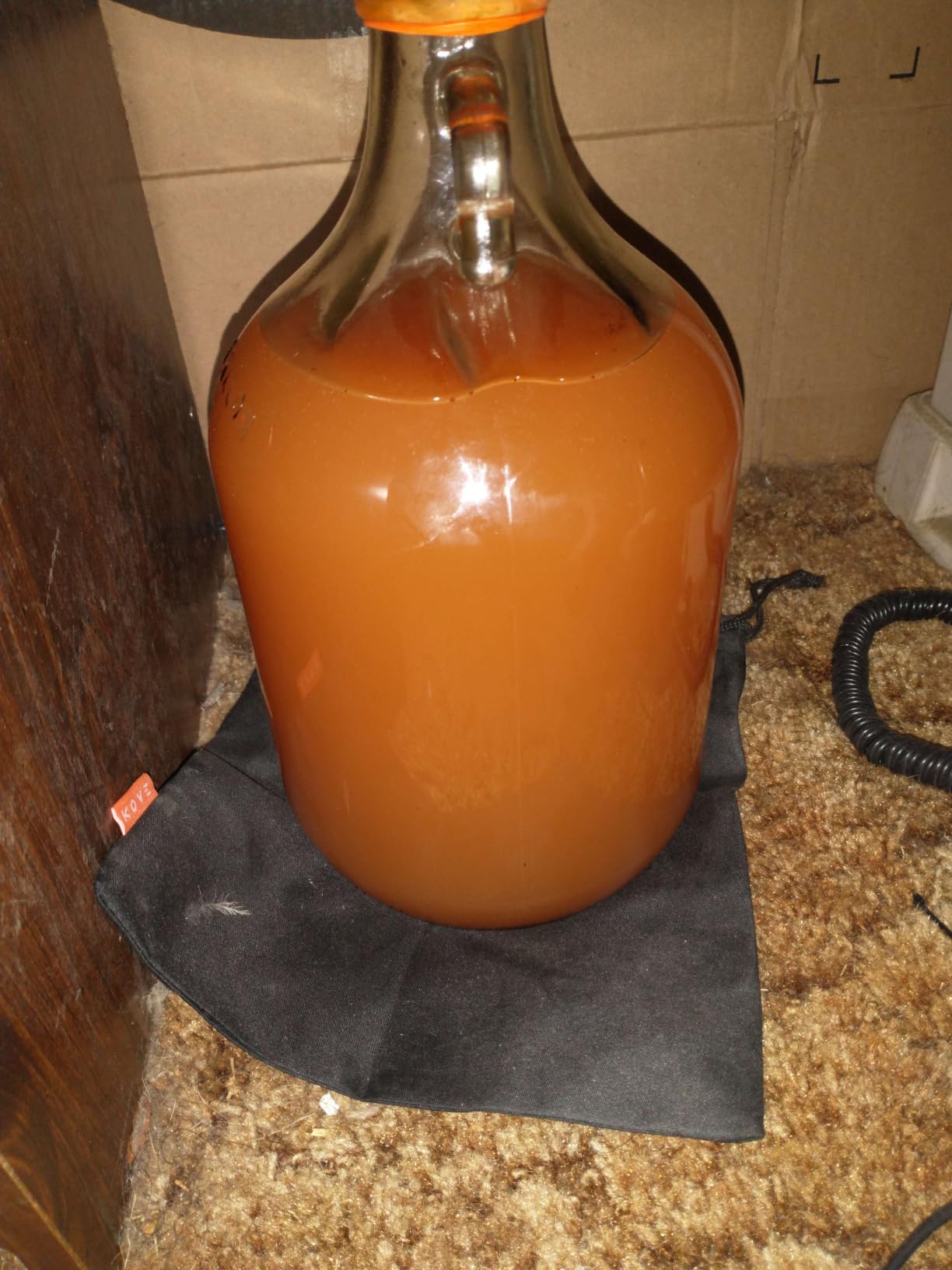
3-piece airlocks (also called “S-shaped” or “bubbler” airlocks) are the traditional style for brewing. They hold a small amount of water that creates a liquid barrier, letting CO2 out while blocking oxygen and contaminants in. Compared to the waterless self-burping valves on the Masontops lids, 3-piece airlocks are more visible and easier to monitor at a glance.
The downsides are real. A small number of users have received cracked airlocks in shipping. FastRack customer service is responsive about replacements, but it’s still a hassle. The instructions are detailed and may overwhelm a complete beginner, though experienced brewers will appreciate the depth.
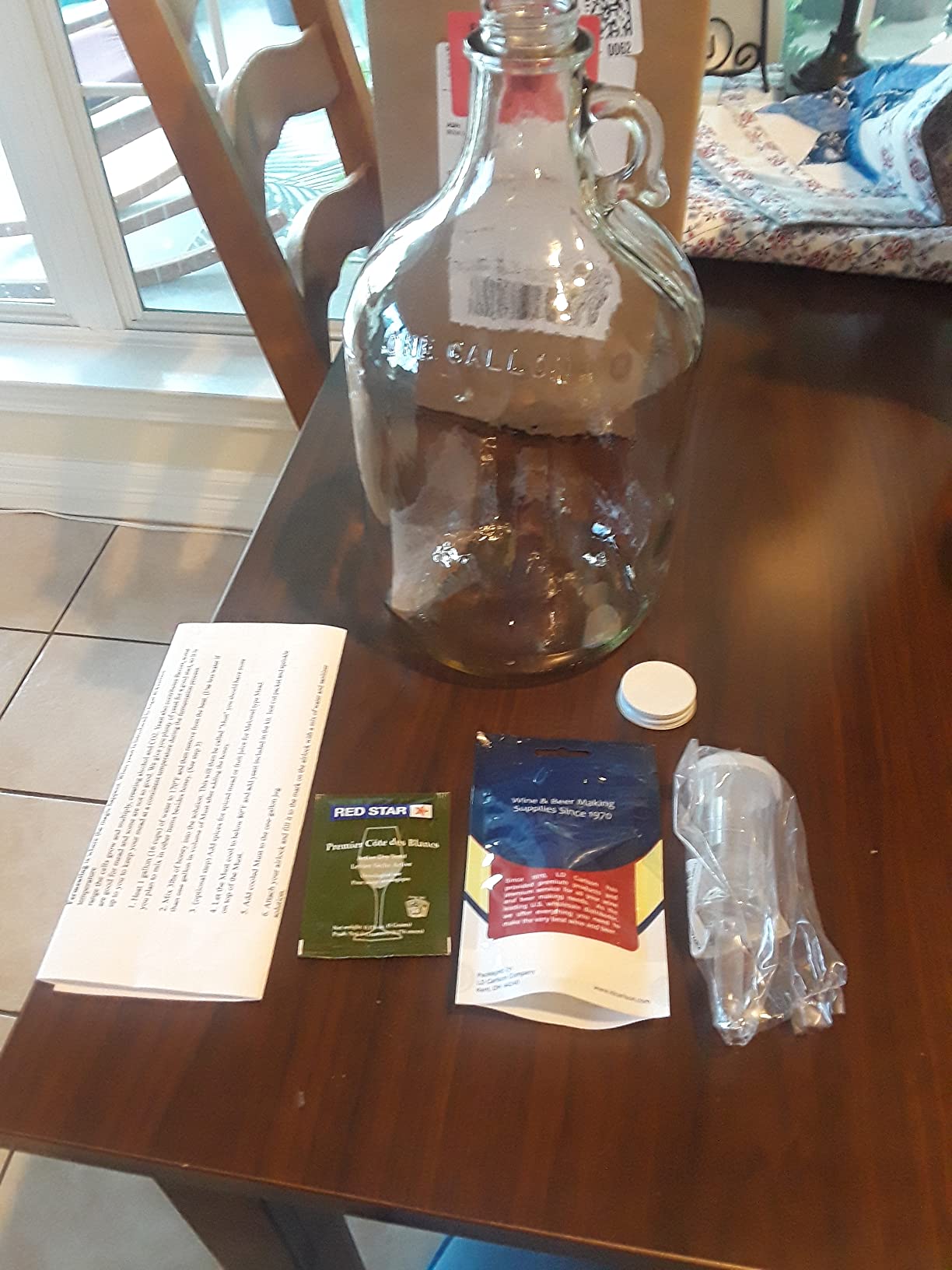
Best for first-time brewers
If you’ve never made mead, this kit removes every barrier. The yeast is included, the nutrient is included, the airlock is included. You just need honey, water, and a few hours. The price is well below what you’d pay for these items individually.
Why I rated it lower than the others
For vegetable fermentation specifically, this kit is overkill. The carboy doesn’t include a weight, so you’d need to add your own system for keeping vegetables submerged. For mead or other brewing, however, it’s a complete starter setup and the rating reflects its narrower use case.
Buying Guide: How to Choose the Best Fermentation Kit for Your Kitchen
Choosing the best fermentation kit comes down to five decisions: jar type, weight style, airlock type, material, and kit completeness. Below is what our team looks for when testing.
Jar type: wide mouth vs regular mouth. Wide mouth mason jars are the standard recommendation across the fermentation community. The 3-inch opening makes it easy to pack vegetables, fit your hand inside for cleaning, and remove weights. Regular mouth jars work for small ferments but limit you to thinner vegetable cuts.
Weight style: glass vs spring vs pickle helix. Glass weights (Pickle Pebbles) are the most common. They sit on top of the food and keep it submerged. Spring-style weights (Pickle Helix) twist down into the jar and apply even pressure. Both work well. Glass is heavier and quieter; springs are easier to remove.
Airlock type: waterless vs water-seal vs vacuum. Waterless airlocks (Masontops Pickle Pipes) are the easiest for beginners. There’s no water to top off and no risk of siphoning. Water-seal 3-piece airlocks (FastRack) are the classic brewing style and give visual feedback. Vacuum-extraction systems (the FERMENTER LIDS kit) actively pull oxygen out and are great if you’ve had mold problems.
Material: glass vs plastic vs silicone. Glass jars are the gold standard. They don’t scratch, don’t absorb odors, and don’t leach chemicals. Plastic lids are fine for short-term use, but silicone lids tend to last longer. Avoid any kit that includes plastic jars for fermentation.
Kit completeness: lids only vs lids and weights vs full kit. A complete kit (lids, weights, tamper, jars) costs more upfront but saves the “I forgot to order the weights” mistake. Lid-only packs are the best value if you already own mason jars. Starter sets with one jar are the lowest-cost way to try fermentation before committing.
Price-to-value analysis
Most of the kits in this guide fall between $20 and $55. At the low end, lid-only packs are the best value if you have jars. At the high end, full kits with 4 jars included (like the IceFun 4-pack) actually save money versus buying a lid kit and jars separately. For a single test batch, the Masontops Starter Set is the cheapest path. For ongoing fermentation, the Complete Kit pays for itself in three to four batches.
Fermentation Safety: How to Avoid Botulism and Common Mistakes
Fermentation safety is the most important topic in this guide, and I want to address it directly. Botulism is a real but very rare concern in lacto-fermented vegetables. The good news is that it’s almost entirely preventable with the right technique.
Clostridium botulinum (the bacteria that causes botulism) cannot grow in acidic environments below pH 4.6. Properly fermented vegetables typically reach pH 3.5 to 4.0 within a few days, which is well below the danger zone. The key is making sure fermentation actually happens and pH drops quickly.
Use the right salt concentration. 2% to 2.5% salt by weight of vegetables is the standard range. Too little salt allows harmful bacteria to compete with the beneficial lactobacillus. Too much slows fermentation. Weigh your salt and your vegetables for consistent results.
Keep vegetables submerged. Any food sticking out above the brine is exposed to oxygen, which supports mold and yeast growth. Your fermentation kit’s weight is there for a reason. Use it every time.
Don’t ferment in a sealed container without an airlock. CO2 builds up during fermentation. Without a release valve, pressure can crack the jar or cause an explosion. Every kit in this guide includes an airlock for a reason.
Stick to vegetables, fruits, and honey. Botulism concerns are highest in low-acid, low-salt, anaerobic environments. Meat, dairy, grains, and legumes require different (and stricter) fermentation protocols. The kits in this guide are designed for vegetables and similar ferments.
Trust your senses. Smell your ferments. Look at them. A healthy ferment smells tangy and sour. If something smells off (putrid, rotten, yeasty in a bad way), throw it out. When in doubt, toss it out. The cost of a cabbage is not worth the risk.
Frequently Asked Questions
What is the best kit for fermenting at home?
The best overall kit for most home fermenters is the Masontops Complete Mason Jar Fermentation Kit. It includes 4 self-burping airlock lids, 4 glass weights, an acacia tamper, and a recipe book, and works with any wide mouth mason jar. For a budget-friendly all-in-one option that includes the jars, the IceFun 4-Pack Fermentation Kit is a strong pick.
What type of jar is best for fermenting sauerkraut?
Wide mouth mason jars are the best choice for fermenting sauerkraut. The 3-inch opening makes it easy to pack shredded cabbage, fits your hand inside for cleaning, and accommodates standard fermentation weights. Glass is preferred over plastic because it doesn’t scratch, absorb odors, or leach chemicals.
Is it better to ferment in glass or plastic?
Glass is better than plastic for fermentation. Glass jars don’t scratch (which can harbor bacteria), don’t absorb odors from previous ferments, and don’t leach chemicals into acidic brine. Plastic containers should only be used for very short ferments and should be food-grade BPA-free if used at all.
How do I avoid botulism when fermenting vegetables?
To avoid botulism, use 2 to 2.5% salt by weight, keep all vegetables submerged under brine with a fermentation weight, use a fermentation kit with an airlock to release CO2, and stick to high-acid fermentations (vegetables, fruits, honey). Properly fermented vegetables drop below pH 4.6 within a few days, which prevents Clostridium botulinum from growing. Trust your senses and discard anything that smells putrid or rotten.
Are fermentation kits worth it or can I use regular jars?
Fermentation kits are worth it for anyone who ferments regularly. A kit provides the airlock (which releases CO2 safely), the weight (which keeps vegetables submerged), and often a tamper. You can use a regular mason jar with a loose lid for small test batches, but you’ll need to burp the jar daily and find a separate weight. For consistent results, a dedicated kit is a better investment.
Final Verdict: Which Fermentation Kit Should You Buy?
After testing and comparing these ten fermentation kits, our top recommendation for most people is the Masontops Complete Mason Jar Fermentation Kit. It has the best mix of components, the highest user rating in our test, and the longest track record of any kit in this guide. If you already own wide mouth mason jars, this is the kit to buy.
If you want a complete setup with jars included, the IceFun 4-Pack Fermentation Kit is the best value. If you’re brand new to fermentation and want to start with a single jar to test the waters, the Masontops Starter Set is the lowest-cost entry point. And if you’ve had mold problems in the past, the FERMENTER LIDS Oxygen Extraction Kit is the most innovative solution in this guide.
Whichever kit you choose, fermentation is one of the most rewarding kitchen skills you can build. A few minutes of prep, a few days of waiting, and you’ll have probiotic-rich food your gut will thank you for. Happy fermenting, and check back with us as we update this guide throughout 2026.