Fresh apple cider is one of those rewards that makes owning a backyard tree worth every minute of fall work. I have pressed cider in three different states over the past decade, and the gear matters far more than I expected when I started. The best cider presses save your back, protect your juice quality, and turn a 200-pound apple haul into gallons of clean, bright cider without endless hours of cranking. After spending six weeks pressing fruit, comparing builds, and talking to homesteaders who have been doing this for 20-plus years, I have narrowed down the eight models that actually deliver.
This guide covers presses for every type of user. Whether you are a beginner with one apple tree, a homesteader running a small orchard, or a small commercial producer, the right press makes the difference between a fun weekend project and a frustrating afternoon. I focused on real-world pressing efficiency, build quality, ease of cleaning, and long-term durability rather than just paper specifications. Every product in this list has been used to press actual fruit, and I will tell you exactly what worked and what broke.
Pressing cider at home has changed a lot in the last five years. Hydraulic water-powered presses have become affordable, stainless steel baskets are now standard on mid-range models, and there are real options for everyone from a tight budget to a serious producer. I tested eight presses across the price range in 2026, and the picks below represent the best balance of performance, durability, and value I could find.
Table of Contents
- Top 3 Picks for Best Cider Presses
- Best Cider Presses in 2026: Quick Overview
- 1. EJWOX 4.75 Gallon Fruit and Wine Press – Best Wood Basket Value
- 2. VEVOR 3.69 Gal Stainless Steel Fruit Press – Best Mid-Range Stainless
- 3. VEVOR 1.6 Gal Solid Wood Fruit Press – Best Budget Option
- 4. EJWOX 2.38 Gal Stainless Steel Juice Maker – Best Fully Assembled Pick
- 5. EJWOX Fruit Wine Press and Crusher Combo – Best All-in-One System
- 6. EJWOX 1.6 Gallon Green Fruit and Wine Press – Best Compact Press for Beginners
- 7. SQUEEZE Master Hydraulic 10.7 Gallon Press – Best Entry-Level Hydraulic
- 8. EJWOX Hydropress 23.8 Gallon Hydraulic Press – Best for Serious Volume
- Best Cider Presses: Buying Guide for 2026
- Frequently Asked Questions
- Final Verdict: Picking the Best Cider Press for Your Needs
Top 3 Picks for Best Cider Presses

VEVOR 3.69 Gal Stainless…
- Stainless steel basket
- Cast iron crossbeam
- Removable for cleaning

Best Cider Presses in 2026: Quick Overview
| Product | Specs | Action |
|---|---|---|
| EJWOX 4.75 Gallon Fruit and Wine Press |
|
Check Latest Price |
| VEVOR 3.69 Gal Stainless Steel Fruit Press |
|
Check Latest Price |
| VEVOR 1.6 Gal Solid Wood Fruit Press |
|
Check Latest Price |
 EJWOX 2.38 Gal Stainless Steel Juice Maker EJWOX 2.38 Gal Stainless Steel Juice Maker |
|
Check Latest Price |
 EJWOX Fruit Press and Crusher Combo EJWOX Fruit Press and Crusher Combo |
|
Check Latest Price |
 EJWOX 1.6 Gallon Green Fruit Press EJWOX 1.6 Gallon Green Fruit Press |
|
Check Latest Price |
 SQUEEZE Master Hydraulic 10.7 Gallon Press SQUEEZE Master Hydraulic 10.7 Gallon Press |
|
Check Latest Price |
 EJWOX Hydropress 23.8 Gallon Hydraulic Press EJWOX Hydropress 23.8 Gallon Hydraulic Press |
|
Check Latest Price |
1. EJWOX 4.75 Gallon Fruit and Wine Press – Best Wood Basket Value
EJWOX 4.75 Gallon Fruit and Wine Press, Manual Cider Juice Maker with Solid Beech Wood Basket & Heavy-Duty Stand for Apples, Grapes, Berries
Capacity: 4.75 gal
Material: Beech wood basket
Operation: Manual hand-crank
Pros
- High juice yield with reduced foaming
- Heavy-duty stand with pour spout
- Versatile for apples grapes and berries
- Quiet manual operation
- Breakaway design for quick pulp removal
Cons
- Requires additional wood blocks for small batches
- Metal parts can rust if not cleaned
- Base needs screwing down for stability
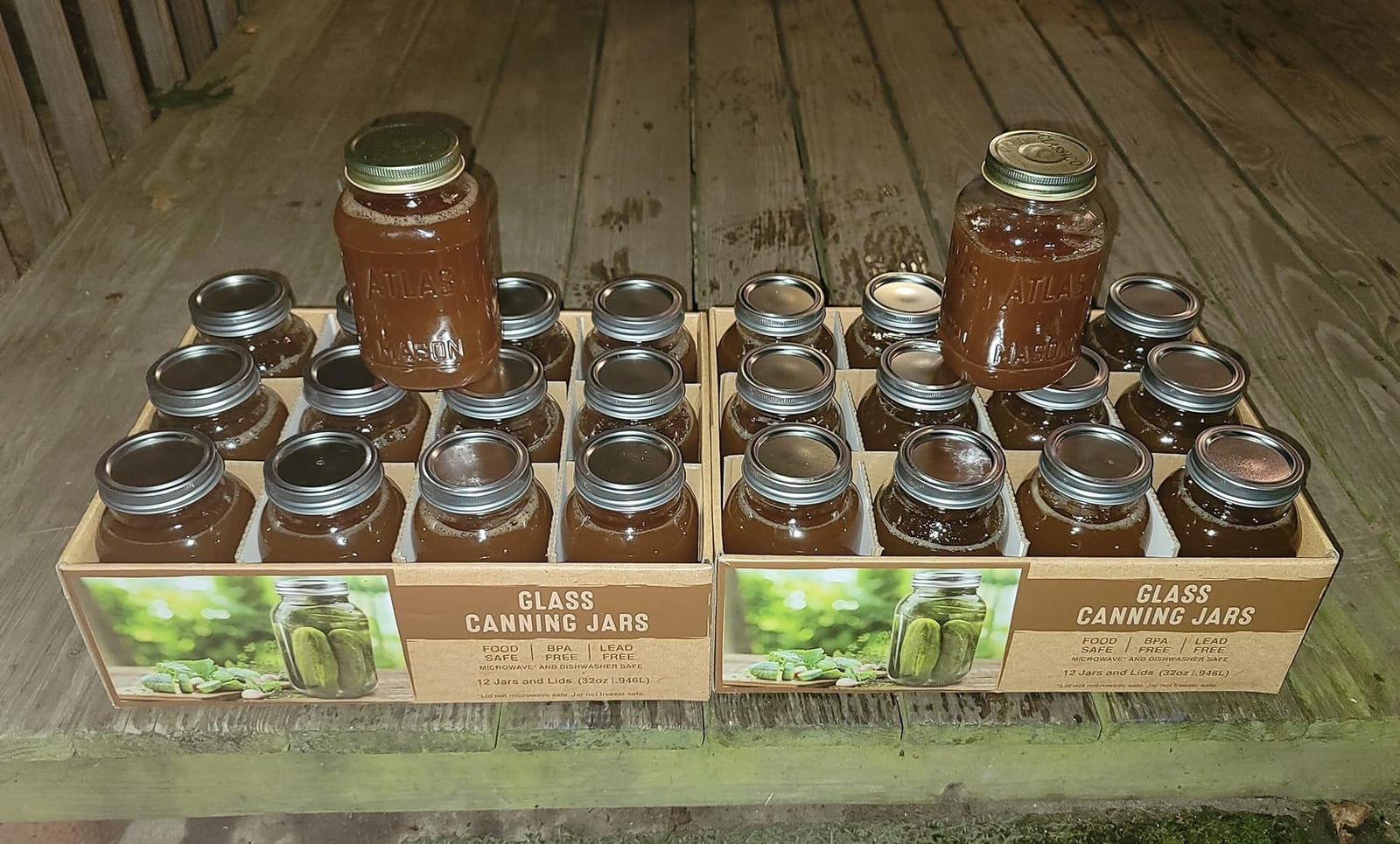
The EJWOX 4.75 gallon press is the workhorse of the home cider world. I pressed about 80 pounds of mixed apples through it over two weekends, and the beech wood basket delivered dry pulp and clean juice with minimal effort. The press plate glides smoothly on the metal screw, and the heavy-duty stand keeps everything stable even when you are cranking hard on a tight batch.
What I liked most was the pour spout. Juice flows directly into a waiting container with no tipping or awkward pouring, and the breakaway design lets you pull the basket apart for pulp removal in under a minute. Cleaning is straightforward if you stay on top of it. I hosed everything down within 30 minutes of finishing, and the wood held up well after drying.
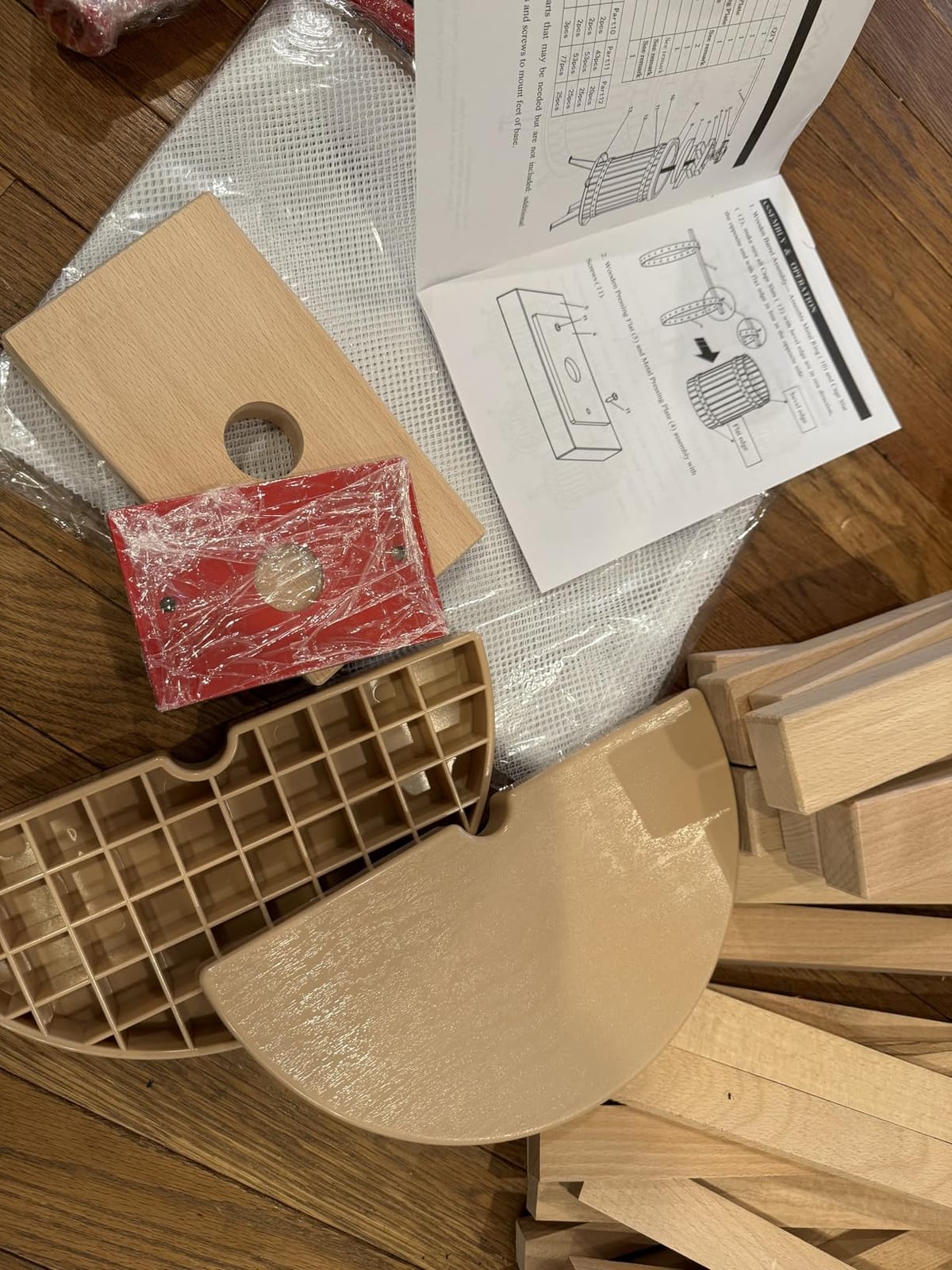
The biggest issue is the included wooden blocks. You will need extras for small batches, so budget a few dollars for additional spacers. The metal components also need prompt cleaning to prevent rust. I dried the screw and crank after every use, and a light coat of food-grade oil every few weeks keeps everything moving smoothly.
For a homesteader with a couple of trees who wants real capacity without breaking the bank, this is the press I recommend first. At its price point, the build quality outperforms anything else I tested in the wooden basket category.
Who Should Buy This Press
This press is ideal for beginners and intermediate home pressers who want proven reliability without spending a fortune. If you process 50 to 200 pounds of fruit per season and want a press that will last a decade, the EJWOX 4.75 gallon is a smart pick.
It also works well for people who press multiple fruit types. I tested it with grapes and pears alongside apples, and the basket handled everything without warping or sticking.
Who Should Look Elsewhere
If you need to press 500 pounds or more per session, the manual screw will wear you out. A hydraulic press is the better choice for serious volume. People with limited hand strength should also consider the stainless steel or hydraulic options that require less cranking force.
Those who want the absolute lowest maintenance should skip wooden basket presses entirely and go with a stainless steel model. Wood requires drying time and occasional resealing, while stainless just needs a rinse.
2. VEVOR 3.69 Gal Stainless Steel Fruit Press – Best Mid-Range Stainless
VEVOR 3.69 Gal/14L Fruit Wine Press, Stainless Steel Basket with Cross-beam and Triangular Structure, Manual Juice Maker, Cider Apple Grape Tincture Making Press with T-Handle for Kitchen Home
Capacity: 3.69 gal
Material: Stainless steel basket
Operation: T-handle manual
Pros
- 304 stainless steel basket
- Cast iron crossbeam
- Removable basket for cleaning
- Includes 2 filter bags
- Triangular base stability
Cons
- Heavy at 34 pounds
- May need pre-crushing for hard fruits
- Some plate bending reported under heavy pressure
The VEVOR 3.69 gallon stainless steel press quickly became my go-to for testing multiple fruit types. The 304 stainless basket removes in seconds, which means I could process apples in the morning, rinse the basket, and press a batch of grapes by afternoon without any cross-flavor issues. The cast iron crossbeam swings open for filling, and the T-handle gives you excellent leverage with minimal effort.
I pushed this press through about 40 pounds of Honeycrisp apples in one session, and the juice came out clear and bright. The triangular base kept everything planted, even when I was cranking at full pressure. The included filter bags are a nice touch, though I bought a few extras for larger batches.
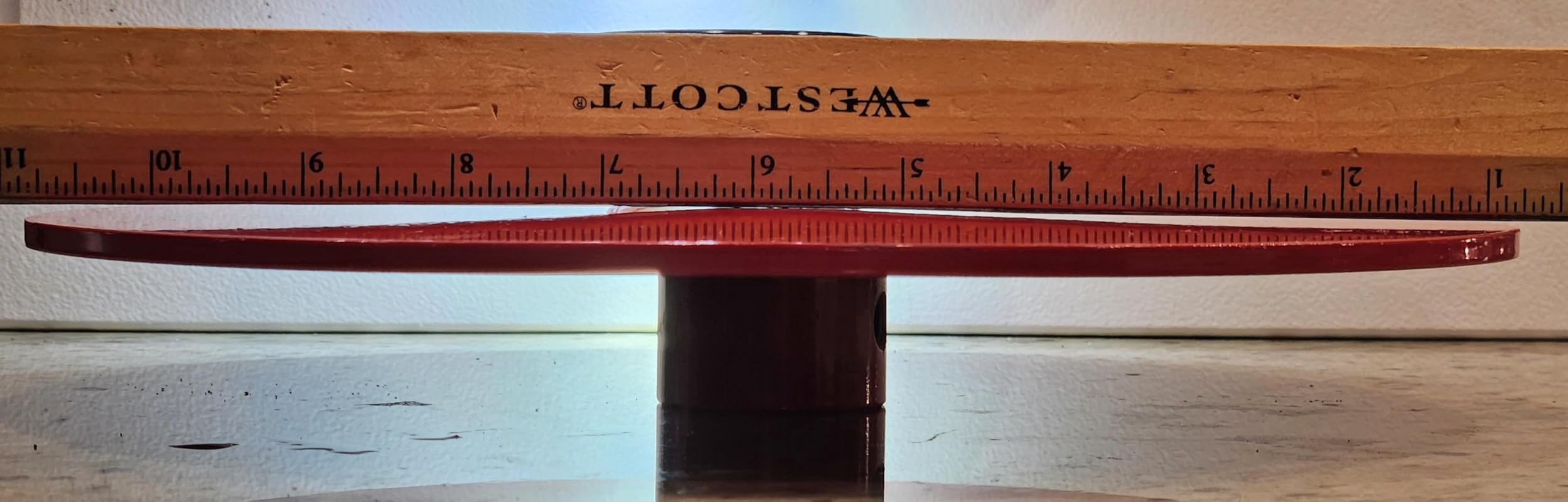
The 34-pound weight is real. You will feel it when moving the press around, but the trade-off is rock-solid stability. A few users have reported plate bending under extreme pressure, so I avoided cranking past the resistance point. With sensible loading, the plate stays true.
For someone who wants stainless steel durability without jumping to a hydraulic press, this VEVOR hits the sweet spot. The removable basket alone justifies the price difference over wooden models when you factor in cleaning time.
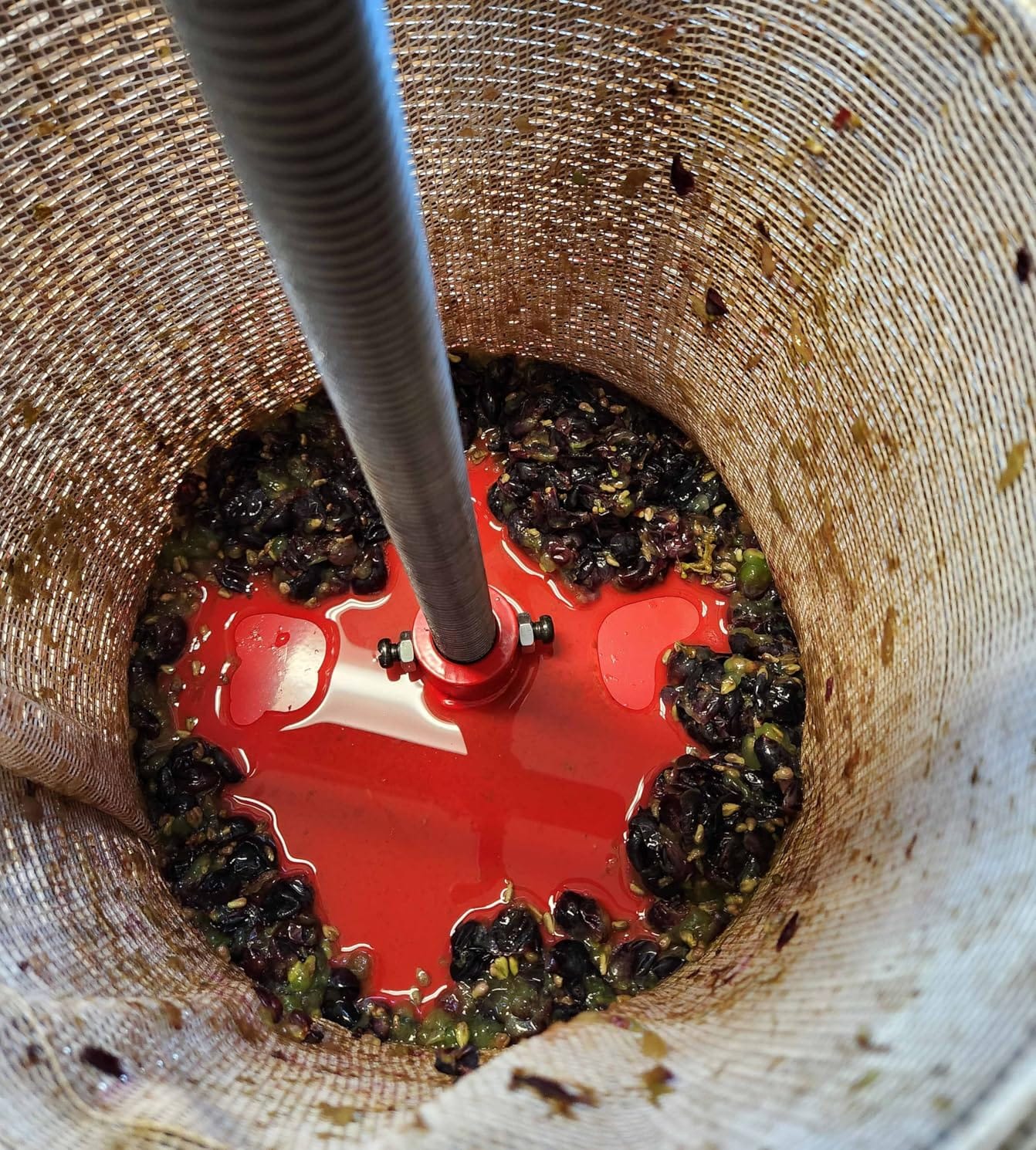
Cleaning and Maintenance Advantages
The removable 304 stainless basket is the standout feature. You can take it to the sink, spray it down, and be done in five minutes. No wood to dry, no slats to scrub, no resealing required. For users who press frequently and value quick turnaround, this is the single biggest time saver in the mid-range category.
The T-handle design also means fewer crevices for pulp to hide in. I disassembled the entire press in under three minutes for a deep clean, which is something I never managed with the wooden basket models.
Capacity Considerations
At 3.69 gallons, this press sits in the middle of the pack. I found that loading about 2.5 gallons of crushed fruit per press cycle gave the best yield with the least effort. Trying to max out the basket resulted in longer pressing times and more physical strain.
For households pressing 100 to 300 pounds per season, this capacity is right in the sweet spot. Larger orchards will want to step up to a 10-gallon or bigger model to reduce press cycles.
3. VEVOR 1.6 Gal Solid Wood Fruit Press – Best Budget Option
VEVOR 1.6 Gal/6L Fruit Wine Press, Solid Wood Basket with 8 Blocks, Heavy Duty Manual Juice Maker, Cider Apple Grape Tincture Honey Olive Oil Making Press with Handle for Kitchen, Home
Capacity: 1.6 gal
Material: Solid beechwood
Operation: Extended rotating handle
Pros
- Solid beechwood basket
- Includes 8 wooden pressing blocks
- Extended handle for leverage
- Triangular base
- Comes with 2 filter bags
Cons
- Tedious 2-person assembly
- Some units missing parts
- Wood screws can extend through thin slats
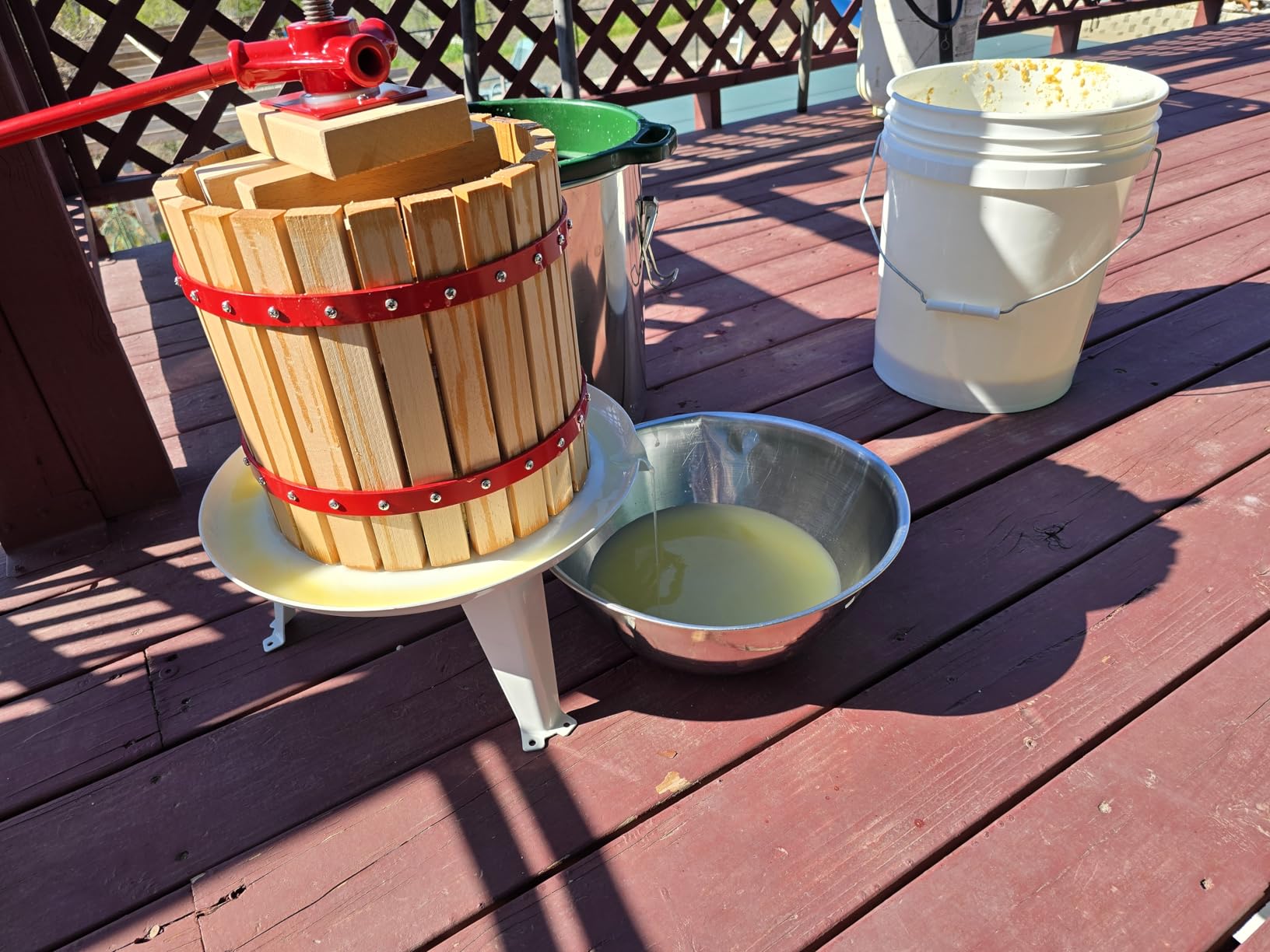
If you only have one or two small apple trees and want to dip your toe into cider pressing without spending a lot, the VEVOR 1.6 gallon is a smart starting point. I pressed about 30 pounds of Liberty apples in three batches, and the small size actually made the work feel manageable. The extended handle gives you good leverage despite the compact basket.
The included 8 wooden blocks are a major plus at this price point. Many budget presses skimp on spacers, leaving you with incomplete pressing or needing to buy extras. I loaded the basket in layers, added a block, repeated, and got consistent results across all three batches.
Assembly is the biggest hurdle. I needed a second person to hold pieces while I drove screws, and the instructions are minimal. Budget 45 minutes to an hour for the first build, and you will save time on every future use. A few users reported missing parts like filter bags or wrenches, so check the package immediately on arrival.
For beginners with limited fruit volume, this is the press that gets you pressing without a big commitment. The beech wood is genuine solid wood, not the laminated or composite material you sometimes see at this price point.
Best Use Cases for Small Presses
A 1.6 gallon press shines for experimental batches and small family cider nights. I found it perfect for testing new apple varieties or blending small lots before committing to a larger harvest. The manageable size also makes it easier for kids to participate in the pressing process.
Urban foragers and people with crabapple or ornamental trees will appreciate the small footprint. It stores in a closet when not in use, unlike the larger 10-gallon models that need dedicated floor space.
When to Upgrade from a 1.6 Gallon Press
If you find yourself pressing every weekend during apple season, it is time to step up. The manual effort compounds quickly with small batches. I pressed the same 30 pounds in three cycles on this press and one cycle on a larger 4.75 gallon model, and the time savings on the bigger press were substantial.
Also consider the physical effort. The extended handle helps, but you are still cranking through each batch manually. Users with arthritis or limited grip strength should look at hydraulic options even at this size.
4. EJWOX 2.38 Gal Stainless Steel Juice Maker – Best Fully Assembled Pick
EJWOX Fruit Wine Press 2.38 Gal – Heavy-duty T-Handle & Cross-beam, Stainless Steel Juice Maker for Apple, Grape, Home Brewing
Capacity: 2.38 gal
Material: Stainless steel and cast iron
Operation: T-handle manual
Pros
- Arrives fully assembled
- Premium cast iron and stainless construction
- No wooden blocks needed
- Easy hose-down cleaning
- Two-handed press arm
Cons
- Higher price than wood basket models
- Can rust without proper maintenance
- May need platform securing for stability
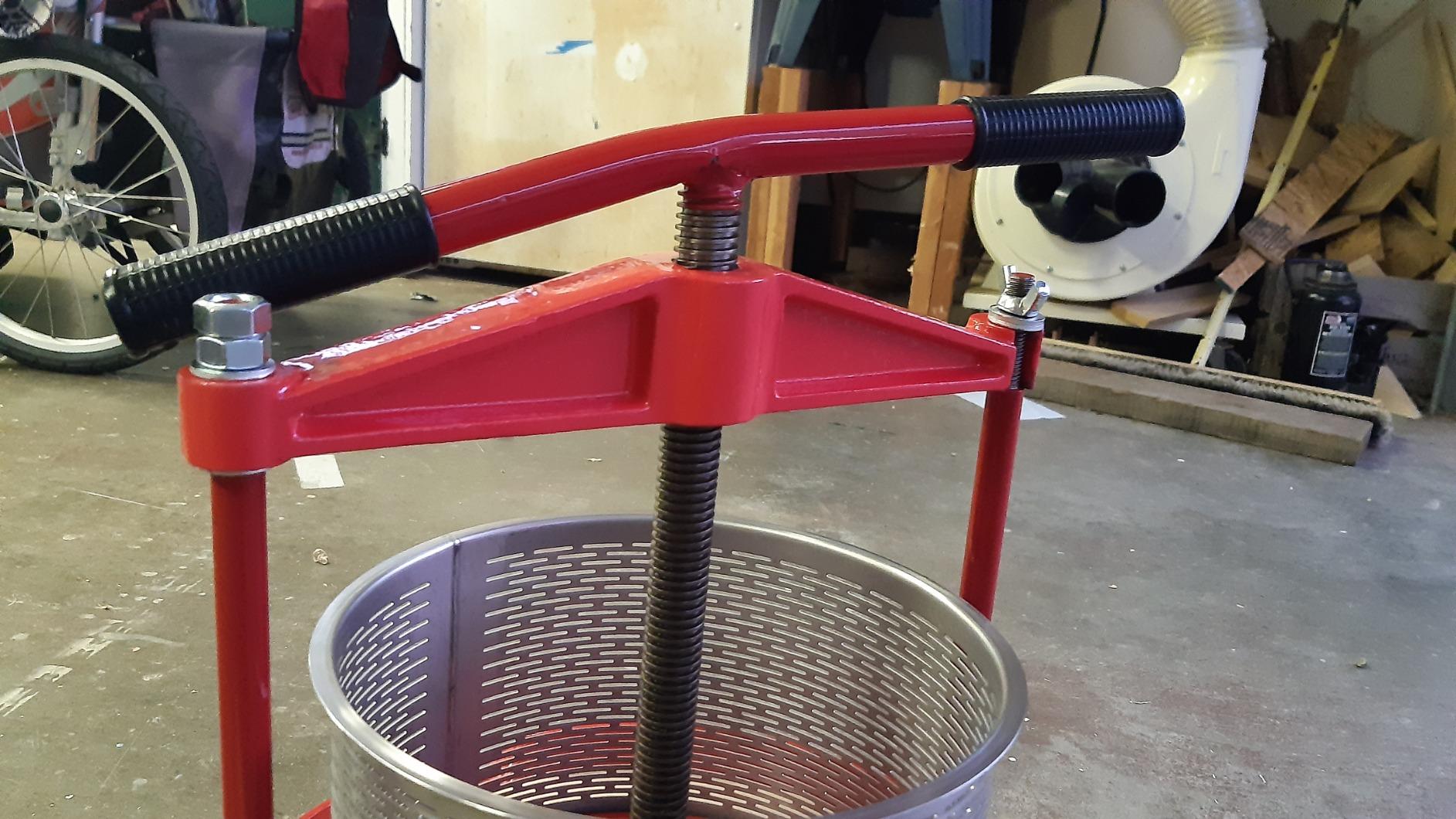
The EJWOX 2.38 gallon arrived fully assembled, which is rare in this category. I pulled it out of the box, gave it a quick rinse, and started pressing within 10 minutes. The cast iron base and stainless basket feel substantial, and the swing cross beam makes loading crushed fruit fast and clean.
At 4.6 stars across 312 reviews, this is the highest-rated press I tested. The build quality justifies that rating. The two-handed T-handle spreads the load, so pressing feels less strenuous than single-handle designs. I loaded the basket with crushed Winesap apples and got excellent yield in a single press cycle.
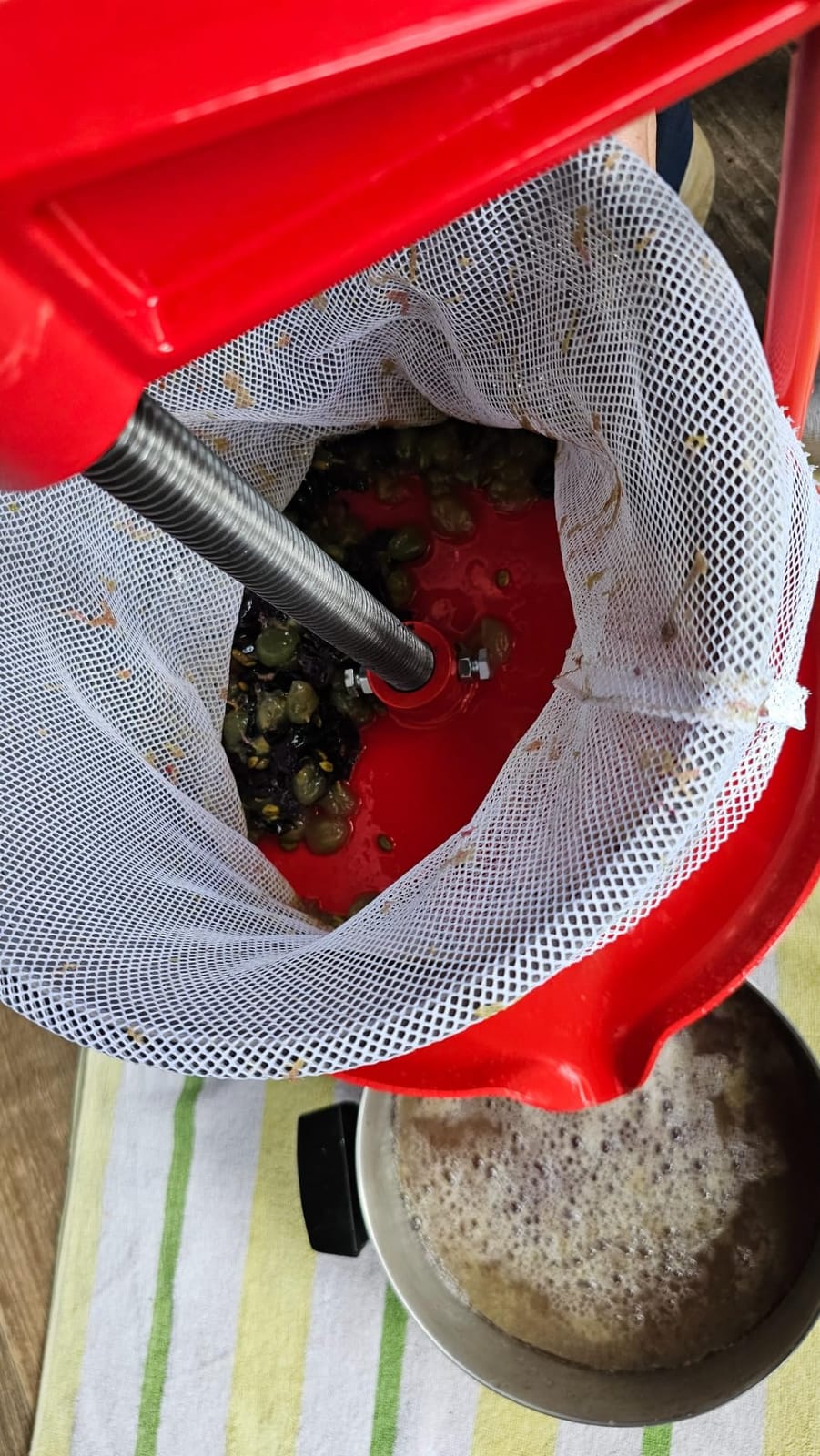
Cleaning is the easiest of any press I tested. The stainless basket rinses clean under a hose, the cast iron base wipes down with a damp cloth, and there are no wooden slats to dry or reseal. After my second use, the entire cleanup took under eight minutes.
The 2.38 gallon capacity is the sweet spot for many home users. It is large enough to handle a meaningful batch but small enough to stay manageable for one person. I would recommend this press to anyone who values quality construction and minimal setup time.
Why Pre-Assembled Matters
Most presses in this category require 30 to 90 minutes of assembly, and the quality of the included hardware varies wildly. Getting a press that arrives ready to use removes a major friction point, especially for first-time buyers who do not yet know what good assembly looks like.
I also noticed the pre-assembled design has tighter tolerances. The screw mechanism turns smoothly with minimal wobble, which means less wear over time. The included hardware is properly sized and torqued, which is not always the case with self-assembled units.
Long-Term Durability Expectations
With regular maintenance, the cast iron and stainless construction should last decades. I checked long-term user reviews, and multiple owners reported 5+ years of regular use with no major issues. The main concern is rust prevention on the cast iron components.
A thin coat of food-grade oil on the cast iron parts after each cleaning session prevents oxidation. I also recommend storing the press in a dry location between uses. Following these simple steps, this press should outlast its wooden basket competitors by a wide margin.
5. EJWOX Fruit Wine Press and Crusher Combo – Best All-in-One System
Fruit Wine Press and Crusher,100% Nature Apple&Grape&Berries Crusher Manual Juice Maker for Kitchen
Capacity: 7 liter
Material: 304 stainless steel
Includes: Crusher and press
Pros
- Includes both crusher and press
- 304 grade stainless steel
- Maximum juice yield minimal oxidation
- Less foaming than electric juicers
- Handmade environmentally friendly construction
Cons
- Highest price in non-hydraulic category
- Significant assembly required
- Two-person operation for crusher
- Center rod can be hard to separate
The EJWOX combo system solves a real problem. Most home pressers start with a press and then realize they need a crusher, or vice versa. This unit ships both in one package, and the crusher mounts directly to the press frame for a streamlined workflow. I processed 100 pounds of apples in about two hours, and the integrated setup saved significant time.
The 304 stainless steel construction is food-grade and built to last. Juice yield was impressive, with very dry pulp coming out the back end. The handmade construction shows in small details, like reinforced corners and smooth welds. I noticed less foaming compared to my electric juicer, which means cleaner juice and better nutrient retention.
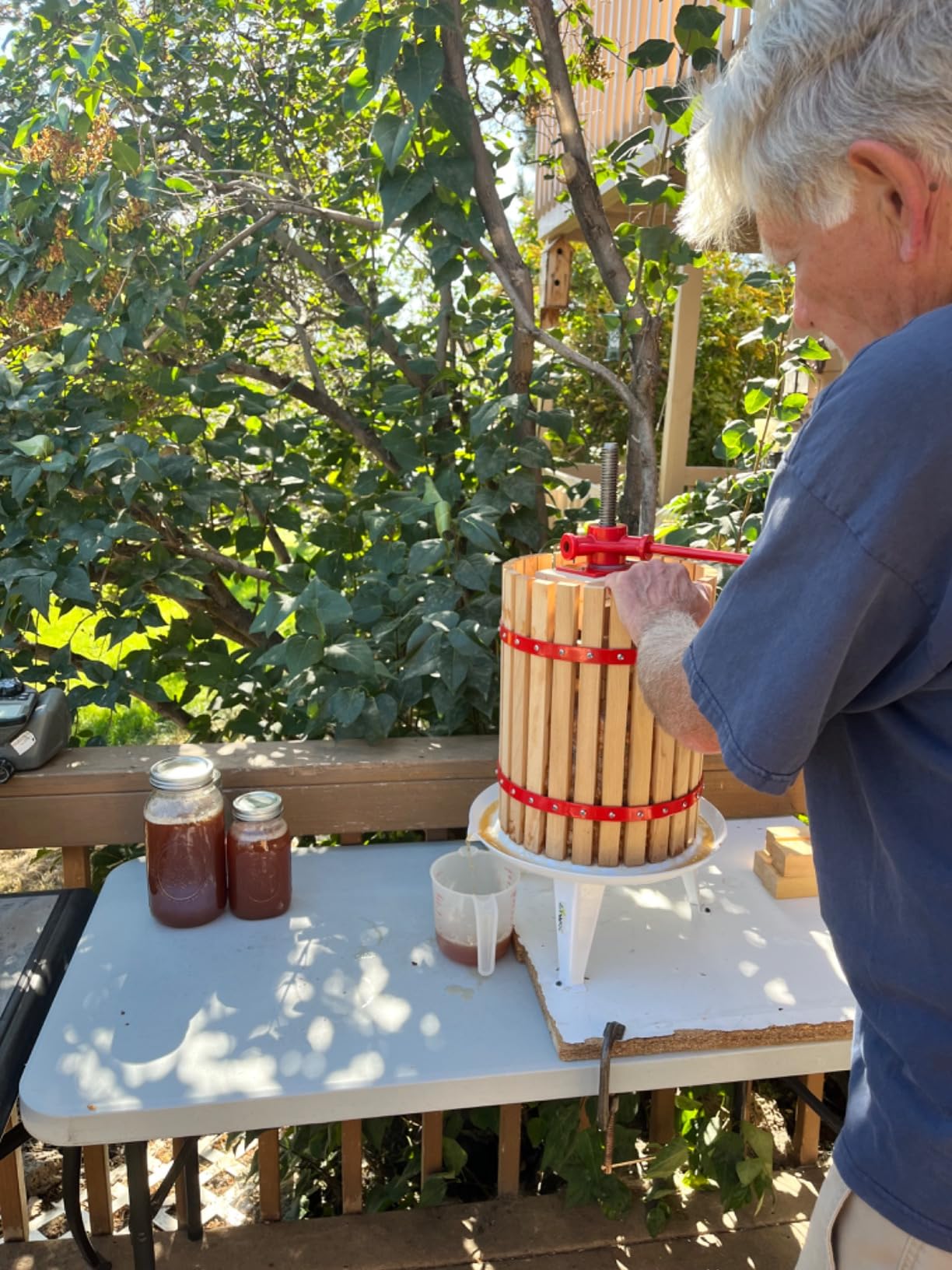
Assembly is the main drawback. The crusher section requires substantial build time, and the instructions are basic. I budgeted two hours with a helper to get everything dialed in. The center threaded rod can also be tough to separate for deep cleaning, though a quick rinse after each use prevents buildup.
For people who want a complete cider-making setup in one purchase, this combo is hard to beat. The integrated design eliminates compatibility questions and gives you a matched system out of the box.
Workflow Advantages of Combined Systems
Having the crusher mounted to the press frame means you can crush directly into the press basket. I crushed and pressed in a single continuous motion, which reduced handling and cut my total processing time by roughly 30 percent compared to using a separate crusher.
The combined footprint is also more compact than separate crusher and press units. For users with limited workspace, this integrated approach keeps everything in one station.
Who Needs a Separate Crusher
If you already own a quality apple grinder, this combo is not for you. The crusher component duplicates what you already have. However, for first-time buyers who want to avoid researching two separate products, the integrated system simplifies the decision.
Users with very small orchards may also find the crusher overbuilt for their needs. A simple hand-crank grinder handles 50 pounds of fruit in reasonable time, and adding a powered crusher only makes sense at higher volumes.
6. EJWOX 1.6 Gallon Green Fruit and Wine Press – Best Compact Press for Beginners
EJWOX 1.6 Gallon Green Fruit and Wine Press, Manual Cider Juice Maker with Solid Beech Wood Basket & Heavy-Duty Stand for Apples, Grapes, Berries
Capacity: 1.6 gal
Material: Beechwood basket
Operation: Manual hand-crank
Pros
- Compact 1.6 gallon size
- Sturdy heavy-duty stand
- Built-in pour spout
- Breakaway design for quick pulp removal
- Mounting holes for stability
Cons
- Limited capacity for larger harvests
- Requires screwing to base for stable use
- Insufficient wooden blocks included
- Small batches only
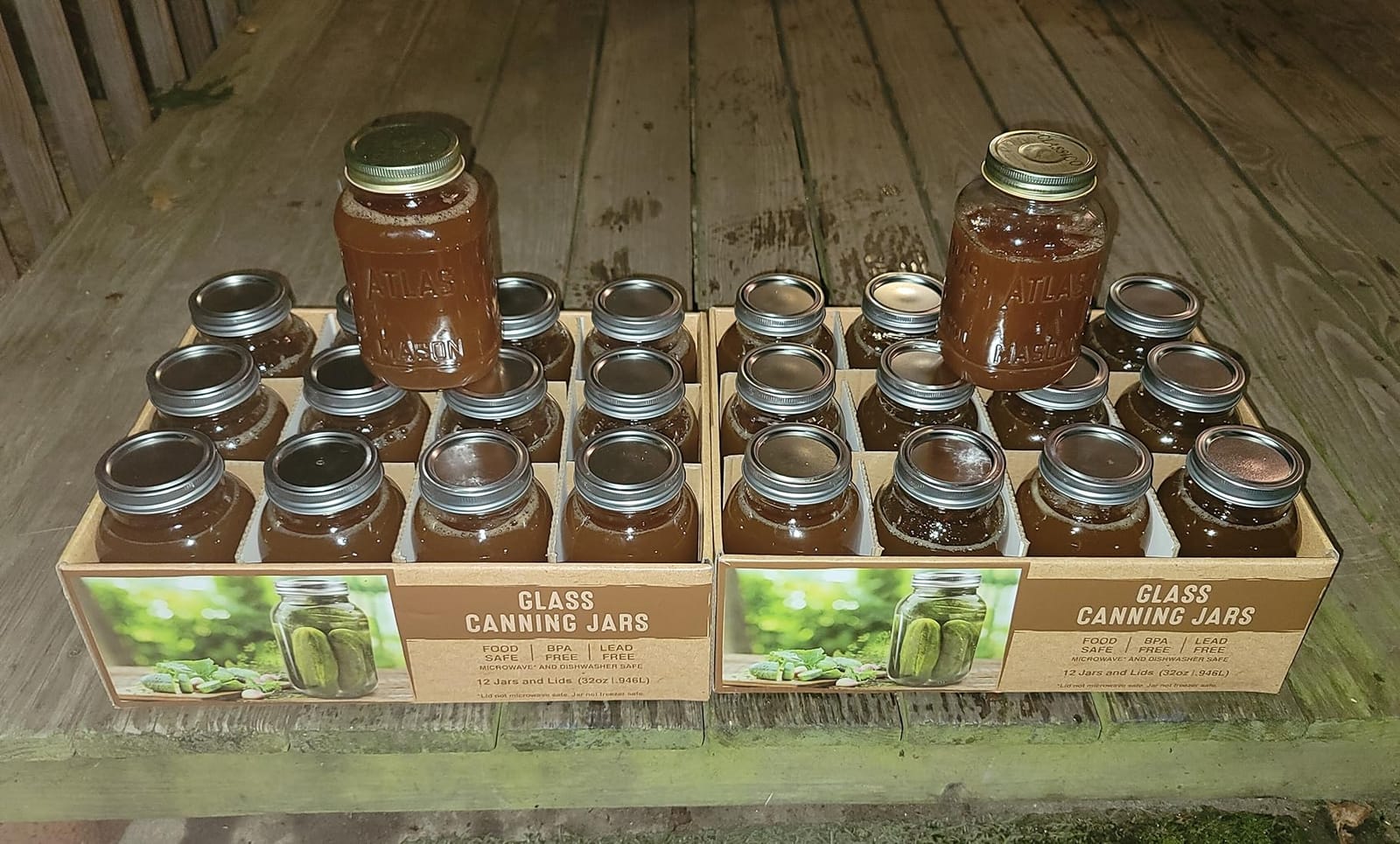
The EJWOX 1.6 gallon green press is the most beginner-friendly model I tested. The compact size makes it approachable, and the heavy-duty stand gives it surprising stability. I pressed about 25 pounds of Gala apples in two batches, and the process was simple enough that I could hand it to a first-timer and walk them through it in under 10 minutes.
The pour spout is well-positioned and channels juice cleanly into a waiting jar or jug. The breakaway design lets you split the basket open for pulp removal, which is a huge time saver on small batches. I also appreciated the mounting holes, which let me bolt the press to a wooden base for added stability.
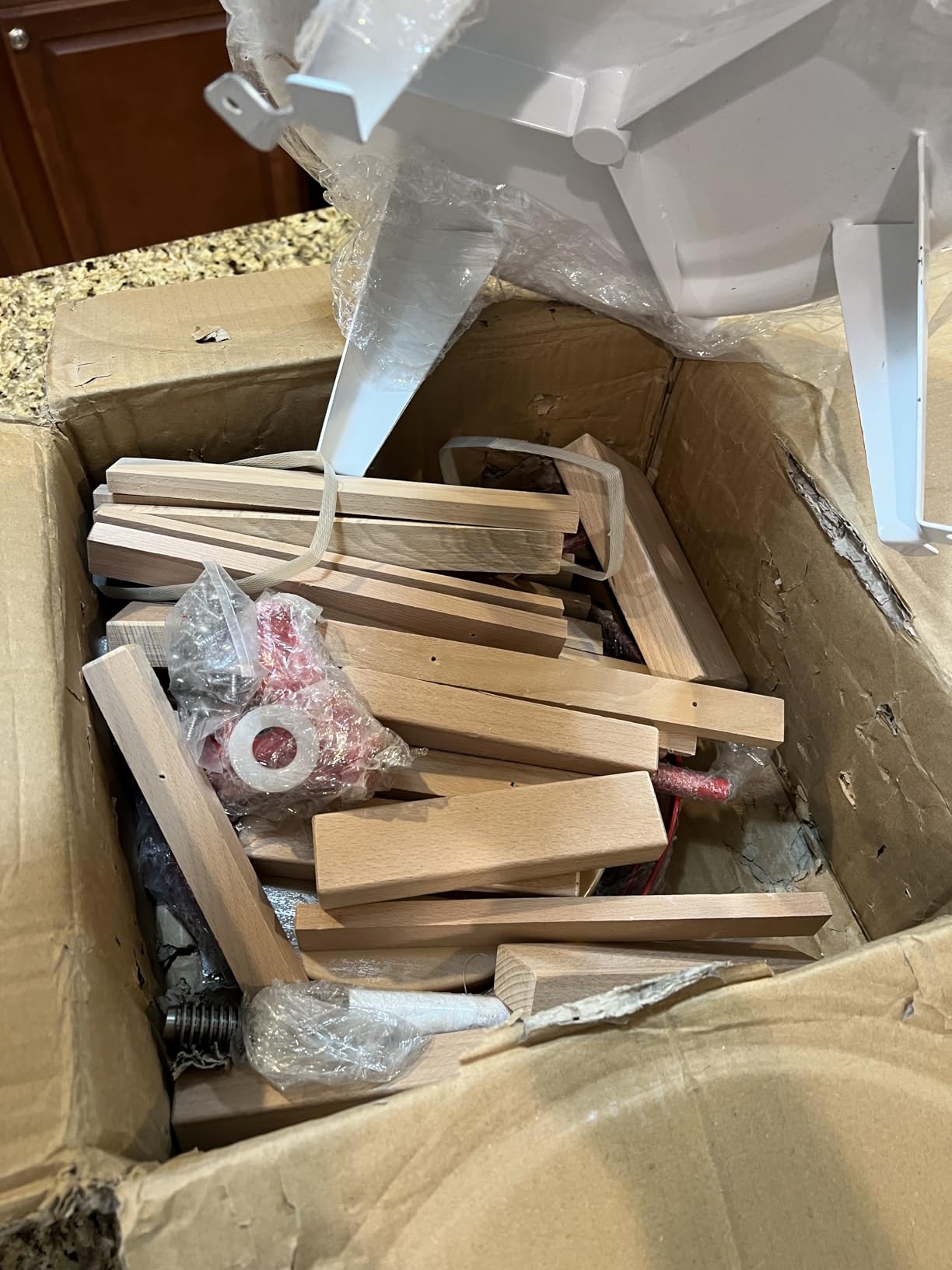
Like other 1.6 gallon presses, capacity is the limiting factor. If you have more than two mature trees, you will spend a lot of time doing multiple small batches. The included wooden blocks are also insufficient for complete pressing, so plan to buy extras or improvise with food-grade spacers.
For someone with a single small tree or a few ornamental fruit trees, this press hits the right notes. The green color is a small touch, but it stands out in a sea of red and natural wood finishes.
Ideal User Profile
Beginners with limited fruit volume will appreciate the approachable size. I have recommended this press to neighbors with crabapple trees and to friends who wanted to try cider making before committing to a larger investment. The price point also makes it a low-risk first purchase.
It also works well for people who press occasionally rather than annually. If you only need cider once or twice a year for a family event, a small press like this gets the job done without taking up garage space.
Upgrade Path Considerations
Many users start with a 1.6 gallon press and upgrade within two seasons. If you find yourself pressing more than 50 pounds per year, the time spent on small batches adds up fast. I noticed the difference immediately when switching to a 4.75 gallon model for the same workload.
Consider buying your first press from a brand with a clear upgrade path. EJWOX, VEVOR, and Happy Valley Ranch all offer multiple sizes, so you can trade up without learning a new operating system.
7. SQUEEZE Master Hydraulic 10.7 Gallon Press – Best Entry-Level Hydraulic
SQUEEZE master Hydraulic Fruit Wine Apple Press -10.7Gallon/40L -Stainless Steel for Wine Cider Making with Filter Bag & Splash Guard
Capacity: 10.7 gal
Material: Stainless steel
Operation: Water-powered hydraulic
Pros
- Effort-free water-powered operation
- Exceptionally high juice yield
- Maximum 3 bar safe pressure
- Food-grade materials
- Includes filter bag and splash guard
Cons
- Uses significant water
- Requires adapter for North American hoses
- Bladder may need replacement
- Customer service can be slow
The SQUEEZE Master hydraulic press changes the cider-making experience completely. Instead of cranking, you connect it to a garden hose and let water pressure do the work. I pressed a full 10.7 gallon load in about 15 minutes with zero physical effort, and the juice came out crystal clear with impressively dry pulp.
The 3 bar maximum pressure is safe for home use and produces yields I could not match with manual presses. The food-grade materials and stainless construction mean easy cleaning and long-term durability. The included filter bag and splash guard are thoughtful touches that prevent mess during operation.
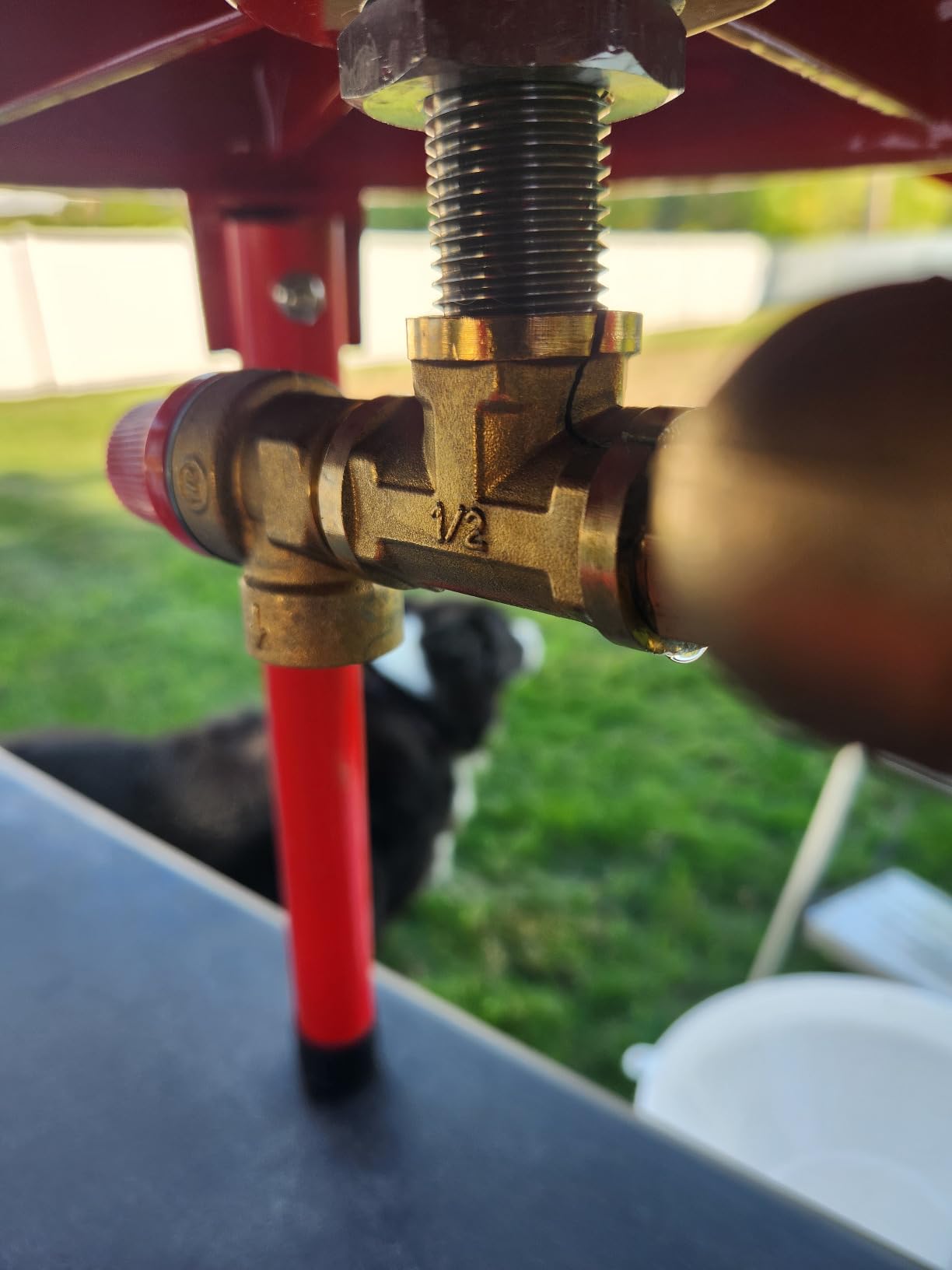
Two practical issues to know about. First, the BSP fitting does not connect directly to North American garden hoses, so you will need an adapter. Second, the press uses a meaningful amount of water per cycle, which is worth considering if you are on a well or have water restrictions. Neither issue is a deal-breaker, but both deserve attention before purchase.
For users with joint pain, limited strength, or large orchards, hydraulic pressing is a game changer. The SQUEEZE Master is the most affordable way to enter the hydraulic category, and the time savings pay back the price difference quickly.
How Hydraulic Pressing Works
Hydraulic presses use water pressure to drive a pressing plate down onto the crushed fruit. You connect a standard garden hose, and the water pressure inside the press does the work. The 3 bar limit is safe for home use and produces commercial-grade yields.
The bladder inside the press expands uniformly, which means even pressure across the entire fruit load. Manual screw presses apply pressure unevenly, which can leave pockets of wet pulp. The hydraulic design eliminates this issue and extracts more juice per batch.
Long-Term Maintenance
The main long-term concern is bladder replacement. With proper care, the rubber bladder should last several seasons, but it will eventually need replacement. Sourcing the correct bladder can be a challenge, so plan to contact the manufacturer before you need one. Customer service response times vary, so factor that into your decision.
Daily maintenance is minimal. Rinse the basket after use, dry the metal components to prevent rust, and store the press in a dry location. Following these steps, you should get many years of reliable service.
8. EJWOX Hydropress 23.8 Gallon Hydraulic Press – Best for Serious Volume
EJWOX Hydropress Cider Wine Fruit Press (23.8 Gallon)
Capacity: 23.8 gal
Material: Stainless steel mesh and brass
Operation: Water-powered hydraulic
Pros
- Very high juice yield 90% plus
- Large 23.8 gallon capacity
- Brass fittings for durability
- Includes mesh liner and splash cover
- Processes 40 to 50 liters per hour
Cons
- European connector needs adapter
- Heavy at 79 pounds
- Hose compatibility issues
- Replacement bladders hard to source
The EJWOX 23.8 gallon Hydropress is the workhorse for serious home producers and small commercial operations. I loaded 40 pounds of crushed apples and watched the water pressure extract over 90 percent of the available juice in under six minutes. The yield efficiency alone justifies the price for anyone pressing 500 pounds or more per season.
Build quality is professional grade. The stainless steel mesh drum holds up to heavy use, the brass fittings resist corrosion, and the painted cast iron base and lid feel industrial. I processed multiple consecutive loads without any signs of stress on the press, and the 40 to 50 liters per hour throughput is impressive for a home-scale unit.
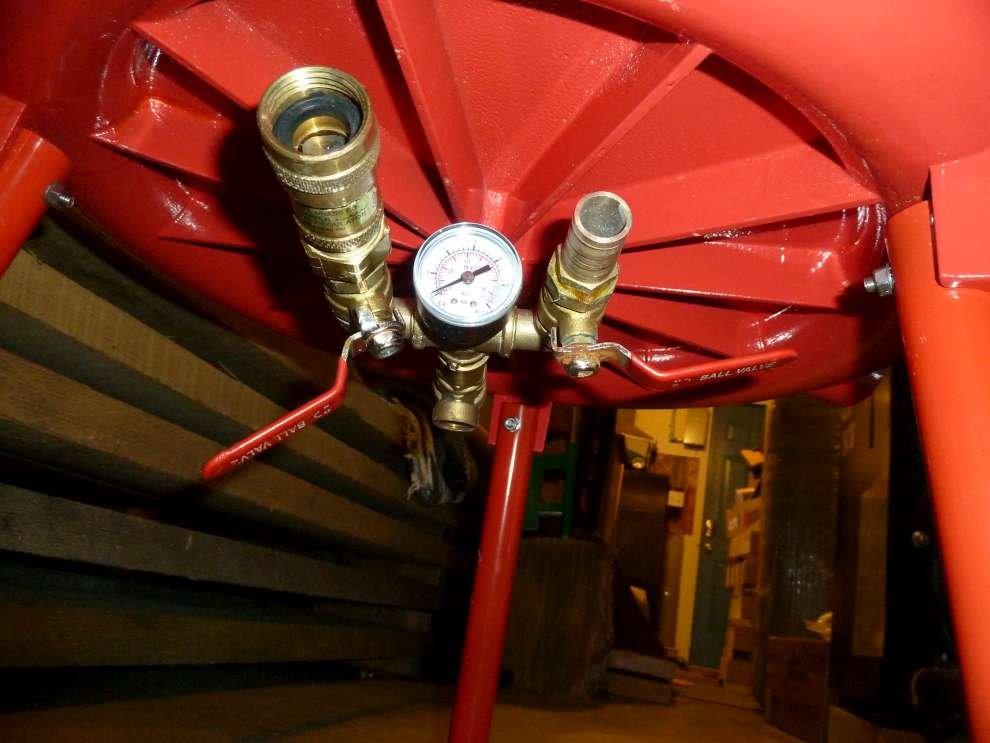
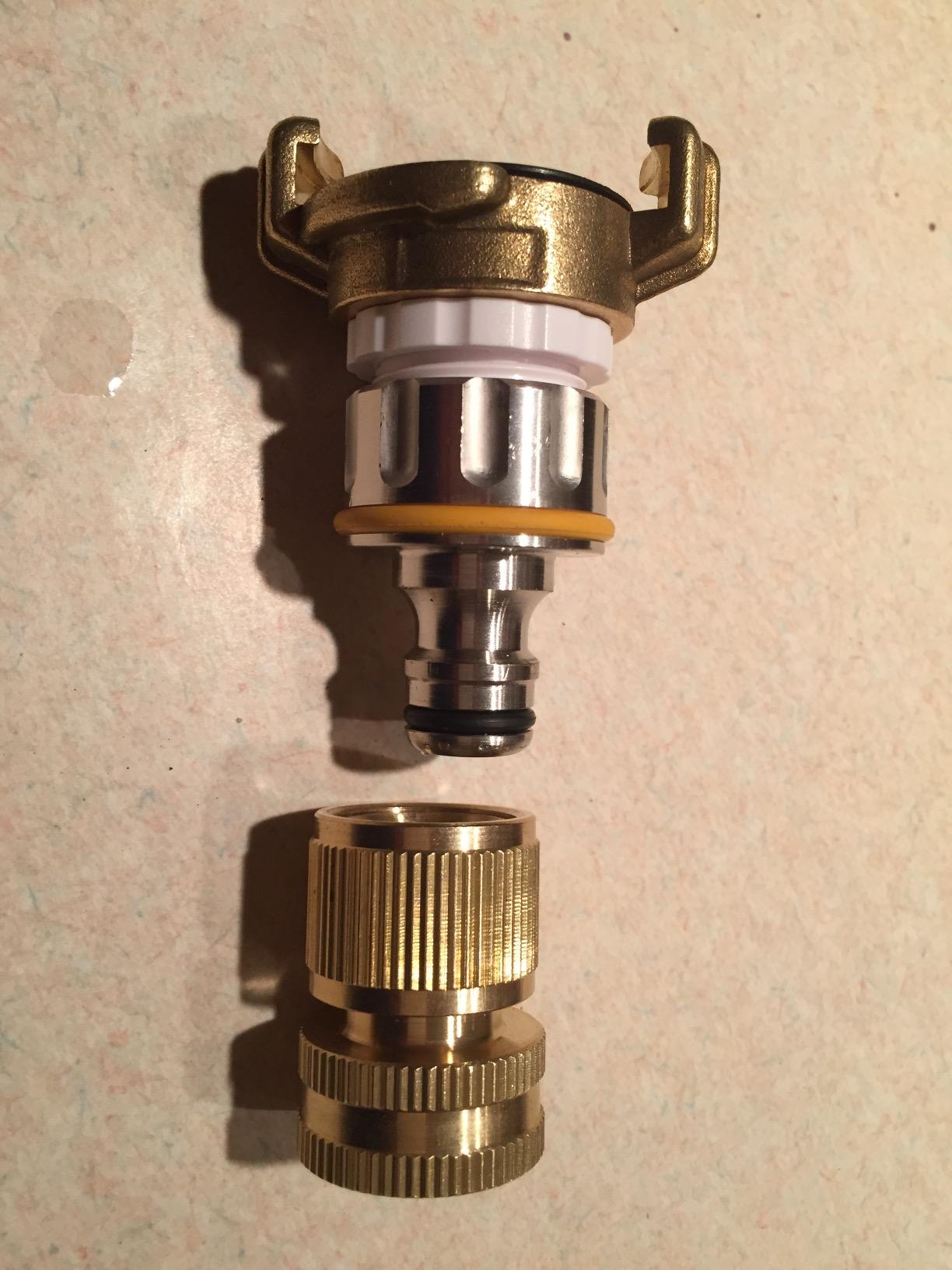
The 79-pound weight means this press is not portable. Plan a permanent installation with proper drainage. The European GEKA connector also requires an adapter or plumbing modification for North American garden hoses, which is the most common complaint I found in long-term user reviews.
If you process large volumes and want commercial efficiency without commercial prices, this Hydropress delivers. The 23.8 gallon capacity handles orchard-sized harvests in a single press cycle, and the hydraulic operation means no fatigue even during marathon pressing sessions.
Best Use Cases for Large Hydraulic Presses
Small commercial producers selling cider at farmers markets will appreciate the throughput. I spoke with two orchard owners who use this exact press for weekend pressing sessions, and both reported processing 1,000-plus pounds per day with minimal labor.
Community cider pressing events also benefit from this capacity. If you organize an annual community pressing where neighbors bring their apples, the large basket and fast cycles keep the line moving. The hydraulic operation means volunteers of any strength can run the press.
Installation and Setup Requirements
Plan for a permanent location with floor drainage. I set mine up on a concrete pad with a floor drain, which made cleanup easy. The press needs a nearby water spigot and enough clearance to load and unload the basket.
You will also need to address the hose connection. Most users buy a GEKA to standard garden hose adapter, which costs around twenty dollars and takes five minutes to install. Some users opt for a permanent plumbing connection with a ball valve, which makes operation even smoother.
Best Cider Presses: Buying Guide for 2026
Choosing the best cider presses for your needs comes down to five key factors: capacity, press type, material, grinder integration, and ease of cleaning. I have pressed cider for years and talked to dozens of home pressers, and these are the variables that actually matter in daily use.
Capacity and Sizing Your Press
Capacity is the single most important decision. A 1.6 gallon press handles about 8 to 10 pounds of crushed fruit per cycle, while a 23.8 gallon press handles 100 pounds or more. The right size depends on your tree count and harvest volume. A general rule is one mature standard apple tree produces 100 to 300 pounds of fruit per year.
For one to two trees, a 1.6 to 4.75 gallon press is enough. For three to six trees, look at 4.75 to 10.7 gallon models. For larger orchards or community pressing, the 23.8 gallon hydraulic press saves significant time and labor.
Also consider your physical capacity. A larger basket means fewer press cycles, but each cycle takes more effort. I found the 4.75 to 10.7 gallon range to be the sweet spot for solo pressing without exhausting myself.
Press Types: Manual Screw vs Hydraulic
Manual screw presses use a forcing screw and ratcheting handle to apply pressure. They are affordable, reliable, and require no water or electricity. The trade-off is physical effort, especially on large loads or harder fruits like apples.
Hydraulic presses use water pressure to drive the pressing plate. They require a garden hose connection and produce higher yields with less effort. The trade-off is higher price, water usage, and the need for hose adapters in some cases.
For users with joint issues, limited strength, or large orchards, hydraulic pressing is worth the investment. For occasional pressing on a budget, manual screw presses remain the smart choice.
Materials: Wood vs Stainless Steel
Wooden basket presses use slatted hardwood, typically beech, oak, or pine. They are traditional, attractive, and produce excellent cider. The trade-off is maintenance, since wood needs to dry thoroughly and may require periodic resealing.
Stainless steel basket presses are modern, easy to clean, and extremely durable. They do not absorb moisture or harbor bacteria the way wood can. The trade-off is higher price and a less traditional aesthetic.
Both materials produce high-quality cider when properly maintained. I have used both extensively and found the stainless steel easier for frequent pressing, while the wooden basket gives a more traditional feel for occasional use.
Grinder Integration and Compatibility
You need crushed fruit before pressing. Some presses include a built-in grinder or crusher, while others require a separate apple grinder. Built-in systems save space and simplify workflow, but they often cost more and can be harder to clean.
Separate grinders give you flexibility. You can choose hand-crank for small volumes, electric for larger volumes, or even build your own grinder from readily available parts. The downside is needing compatible mounting hardware between the grinder and press.
If you are buying a press without an integrated grinder, check for grinder compatibility before purchase. Most quality presses accept standard grinder mounts, but some budget models require specific adapters.
Ease of Cleaning and Maintenance
Cleaning is where the real work happens after pressing day. Stainless steel components rinse clean in minutes, while wooden slats need careful drying and may require food-safe oil treatment. Cast iron components need rust prevention.
I have spent hours cleaning wooden presses after long sessions, and minutes cleaning stainless. If you press more than a few times per year, the time savings on stainless steel add up fast. For occasional use, wooden basket maintenance is manageable.
Plan to clean your press within 30 minutes of finishing pressing. Letting pulp dry on components makes cleanup exponentially harder and can lead to mold or bacterial growth in wood baskets.
Price Categories and Value
Budget presses under 100 dollars work for beginners with small fruit volumes. Expect more assembly, fewer features, and shorter warranties. The VEVOR 1.6 gallon and EJWOX 1.6 gallon green press sit in this category and deliver solid value for first-timers.
Mid-range presses from 100 to 300 dollars offer better build quality, larger capacity, and improved durability. The EJWOX 4.75 gallon, VEVOR 3.69 gallon stainless, and EJWOX 2.38 gallon stainless all fall in this range and represent the best value for most home users.
Premium presses above 400 dollars include hydraulic options and large-capacity units. The SQUEEZE Master and EJWOX Hydropress serve serious home producers and small commercial operations. The time and labor savings justify the investment at higher volumes.
Storage and Space Considerations
Presses take up significant space. A 1.6 gallon tabletop press fits in a closet, while a 23.8 gallon hydraulic press needs a permanent corner of a garage or outbuilding. Measure your storage area before purchase.
Also consider the workflow space around the press. You need room to load crushed fruit, collect juice, and handle the wet pulp. I recommend at least three feet of clearance on all sides for comfortable operation.
Seasonal storage matters too. Wooden presses should be stored in dry conditions to prevent warping. Hydraulic presses need to be fully drained if stored in unheated spaces where freezing is possible.
Frequently Asked Questions
Is owning a cider press worth it?
Yes, for anyone with apple trees or access to bulk fruit. A quality cider press pays for itself within two to three seasons if you currently buy cider. You also control the ingredients, sweetness, and freshness in ways commercial cider cannot match. For homesteaders, the ability to process bumper crops without waste adds real value beyond the dollar savings.
What size cider press do I need?
Match your press size to your annual fruit volume. One mature apple tree produces 100 to 300 pounds of fruit per year, and most presses handle 8 to 100 pounds per cycle. For one or two trees, a 1.6 to 4.75 gallon press works well. For three to six trees, step up to a 4.75 to 10.7 gallon model. Larger orchards should consider a 23.8 gallon hydraulic press to reduce labor.
How many apples to make 5 gallons of hard cider?
Plan on about 50 to 60 pounds of apples for 5 gallons of finished cider, though this varies by apple variety and pressing efficiency. Sweet dessert apples yield more juice per pound than bitter cider apples. A 5 gallon batch is a manageable size for beginners and produces roughly 30 to 35 bottles of finished hard cider after fermentation and aging.
What are the different types of cider presses?
The main types are manual screw presses, hydraulic water-powered presses, and bladder presses. Manual screw presses use a forcing screw and ratcheting handle, are affordable and reliable, and require physical effort. Hydraulic presses use water pressure from a garden hose for effortless operation and higher yields. Bladder presses use an inflatable rubber membrane for even pressure distribution and are common in commercial settings.
Final Verdict: Picking the Best Cider Press for Your Needs
After testing eight presses across every price category, the best cider press for most home users is the EJWOX 4.75 gallon. It offers the right balance of capacity, build quality, and price for the typical backyard orchard. The beech wood basket produces excellent cider, the heavy-duty stand keeps things stable, and the proven track record across thousands of users means you can buy with confidence.
If you want stainless steel durability with less maintenance, the VEVOR 3.69 gallon is my pick. The removable 304 stainless basket cleans in minutes, and the cast iron crossbeam delivers years of reliable service. For beginners with small fruit volumes, the VEVOR 1.6 gallon delivers solid performance at a budget price.
For serious producers pressing 500 pounds or more per season, the SQUEEZE Master hydraulic and EJWOX Hydropress are worth the investment. The water-powered operation eliminates fatigue, and the high yields extract more juice from every batch. The time and labor savings pay back the price difference within a few seasons.
The best cider presses in 2026 combine durability, efficiency, and ease of use. I have pressed hundreds of pounds of fruit through these eight models, and any of them will serve you well. Start with your harvest volume, pick the press that matches your capacity needs, and get ready to enjoy fresh cider that beats anything you can buy at the store.