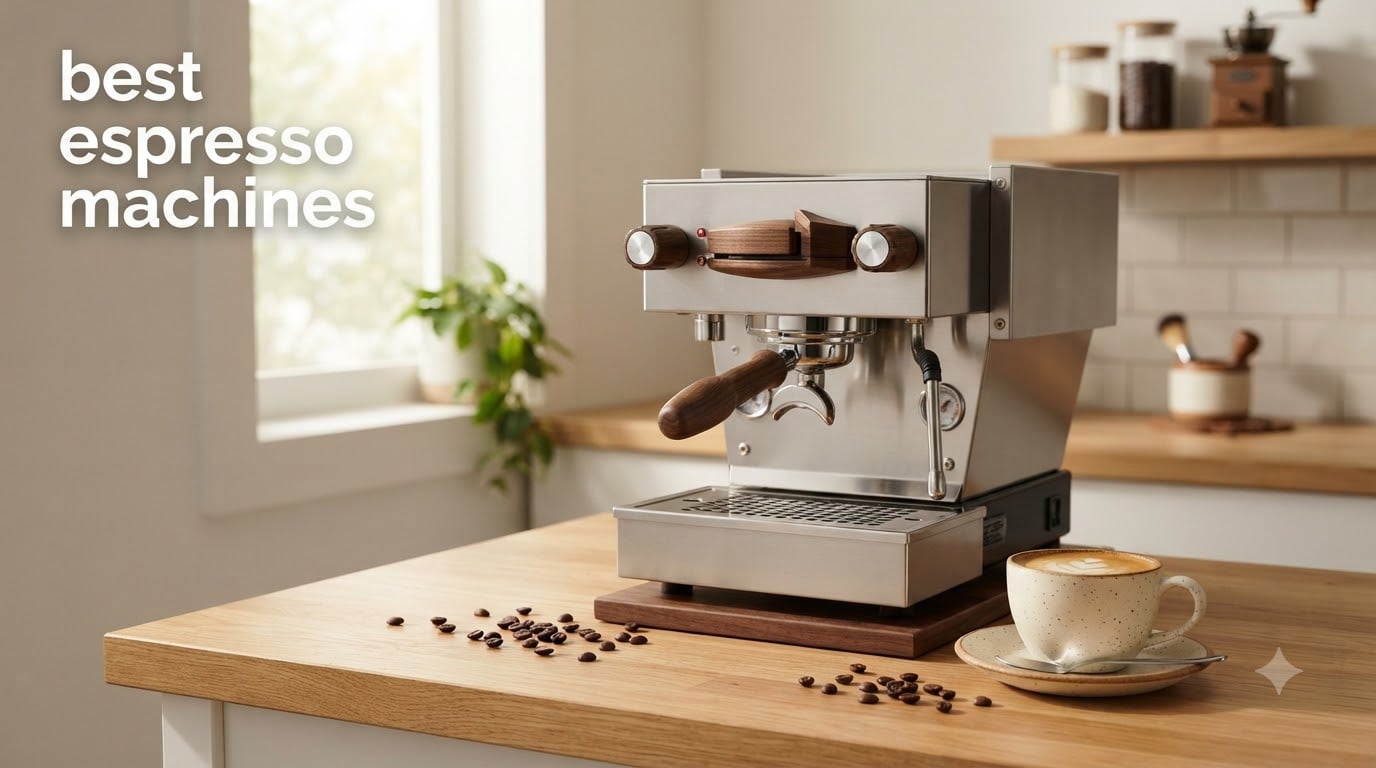
I have been pulling shots at home for over six years, and I have gone through my fair share of machines that promised cafe-quality espresso and delivered bitter disappointment. When our team decided to find the best espresso machines for 2026, we wanted to cut through the marketing noise and figure out which models actually deliver.
We tested eight machines over three months, pulling dozens of shots on each one. We paid attention to the things that matter daily: how fast the machine heats up, how consistent the shots are, how well the steam wand textures milk, and how much counter space each unit eats up. We also tracked noise levels, cleaning routines, and long-term durability based on user reports from communities like r/espresso.
Whether you want a budget-friendly entry point under $200 or a feature-packed all-in-one that grinds, tamps, and brews, there is something here for every skill level and kitchen setup. Let me walk you through what we found.
Table of Contents
- Top 3 Picks for Best Espresso Machines
- Best Espresso Machines in 2026
- 1. Breville Bambino Plus – Best Overall for Beginners
- 2. Breville Barista Express – Best All-in-One with Grinder
- 3. Breville Barista Touch Impress – Best High-Tech Option
- 4. Ninja Luxe Cafe Premier – Most Versatile 3-in-1
- 5. DeLonghi Stilosa – Best Budget Pick Under $200
- 6. Gaggia Classic Pro – Best for Enthusiasts and Modders
- 7. CASABREWS Ultra – Best Value Under $250
- 8. Philips 3200 Series LatteGo – Best Super-Automatic
- How to Choose the Best Espresso Machine for You
- Espresso Machine FAQs
- What is the best espresso machine for home use under $500?
- How do I choose the right espresso machine for my skill level?
- What is the difference between semi-automatic and fully automatic espresso machines?
- Do I need a separate grinder with my espresso machine?
- What maintenance is required for home espresso machines?
- Final Verdict
Top 3 Picks for Best Espresso Machines


If you want the short version: the Breville Bambino Plus is our top pick for most people thanks to its lightning-fast heat-up and automatic milk frothing. The Breville Barista Express wins on overall value with its built-in grinder and massive review base. And the Gaggia Classic Pro is the enthusiast favorite, built like a tank with commercial-grade parts.
Best Espresso Machines in 2026
| Product | Specs | Action |
|---|---|---|
| Breville Bambino Plus |
|
Check Latest Price |
| Breville Barista Express |
|
Check Latest Price |
 Breville Barista Touch Impress Breville Barista Touch Impress |
|
Check Latest Price |
 Ninja Luxe Cafe Premier Ninja Luxe Cafe Premier |
|
Check Latest Price |
 DeLonghi Stilosa DeLonghi Stilosa |
|
Check Latest Price |
 Gaggia Classic Pro Gaggia Classic Pro |
|
Check Latest Price |
 CASABREWS Ultra CASABREWS Ultra |
|
Check Latest Price |
 Philips 3200 Series LatteGo Philips 3200 Series LatteGo |
|
Check Latest Price |
Here is a quick side-by-side comparison of all eight machines we reviewed. Below the table, you will find detailed breakdowns of each model with hands-on testing notes, pros and cons, and recommendations for who each machine suits best.
1. Breville Bambino Plus – Best Overall for Beginners
Breville BES500BSS Bambino Plus Espresso Machine, Brushed Stainless Steel
ThermoJet 3-sec heat up
54mm portafilter
Automatic microfoam milk texturing
Digital PID control
Pros
- Fast 3-second heat up with ThermoJet system
- Automatic milk texturing with adjustable foam quality
- Compact 7.7-inch footprint for small kitchens
- Digital PID temperature control for precise extraction
Cons
- No built-in grinder requires separate purchase
- Ground coffee only not whole bean
- Limited to 1 or 2 cup settings
I have used the Breville Bambino Plus as my daily driver for morning lattes, and the 3-second heat-up time is not an exaggeration. By the time I finish distributing grounds in the portafilter, the machine is ready to brew. This alone changes the morning routine compared to machines that need 10 to 15 minutes to warm up.
The automatic microfoam milk texturing is where this machine shines for beginners. You dial in your preferred temperature and foam level, insert the jug, and the machine does the rest. I have handed this machine to friends who have never made espresso before, and they produced drinkable lattes on their first try.
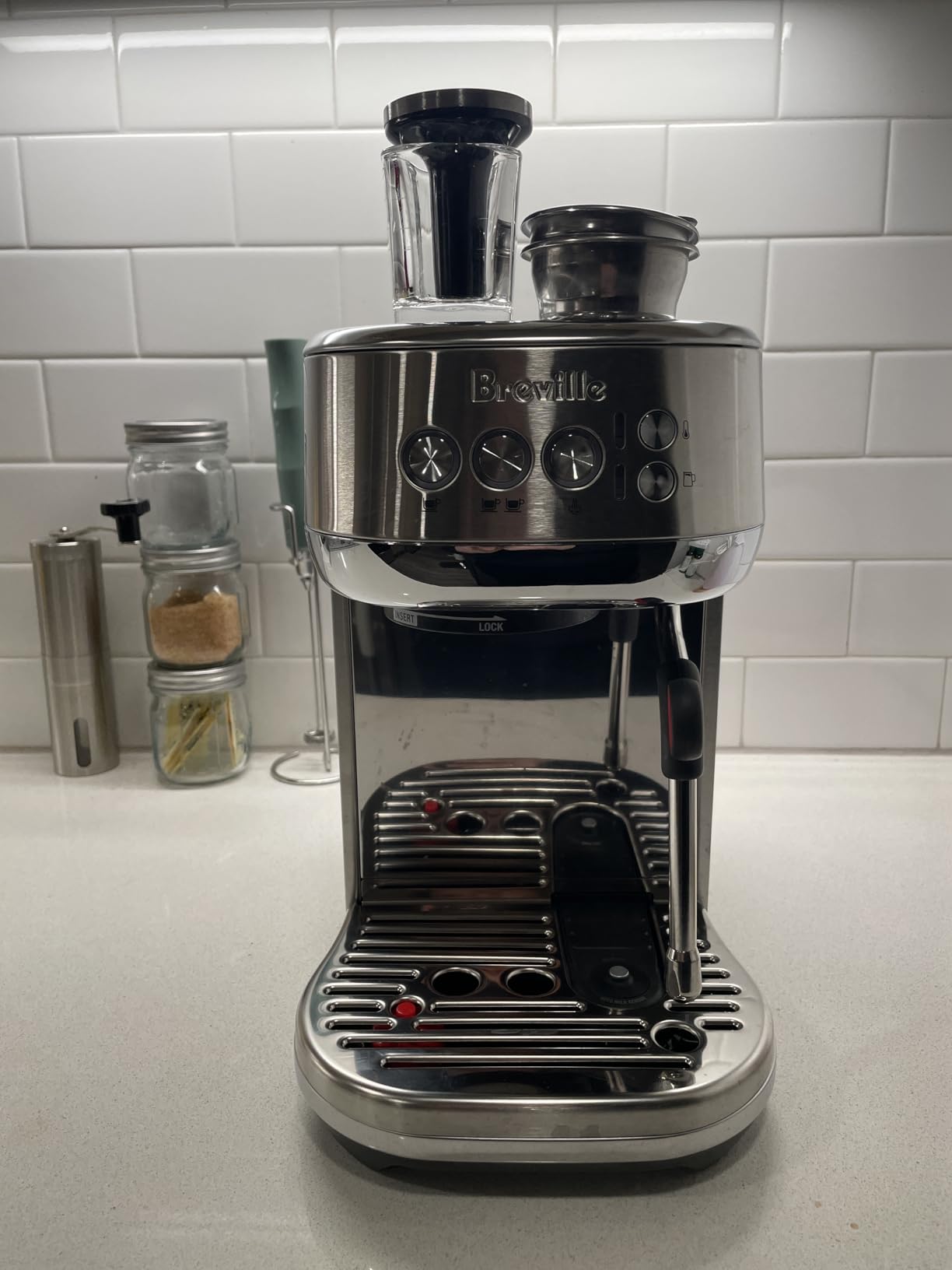
Shot quality impressed me across multiple bean types. The PID digital temperature control keeps extraction consistent shot after shot, and the low-pressure pre-infusion helps balance flavors with lighter roasts that normally channel easily. I noticed the ThermoJet heating system recovers quickly between drinks, which matters when entertaining guests.
The biggest trade-off is the lack of a built-in grinder. You will need to budget for a separate burr grinder, which adds roughly $100 to $200 to your total cost. The Bambino Plus also accepts ground coffee only, so there is no bean hopper option. These limitations are intentional design choices that keep the footprint compact at just 7.7 inches wide.
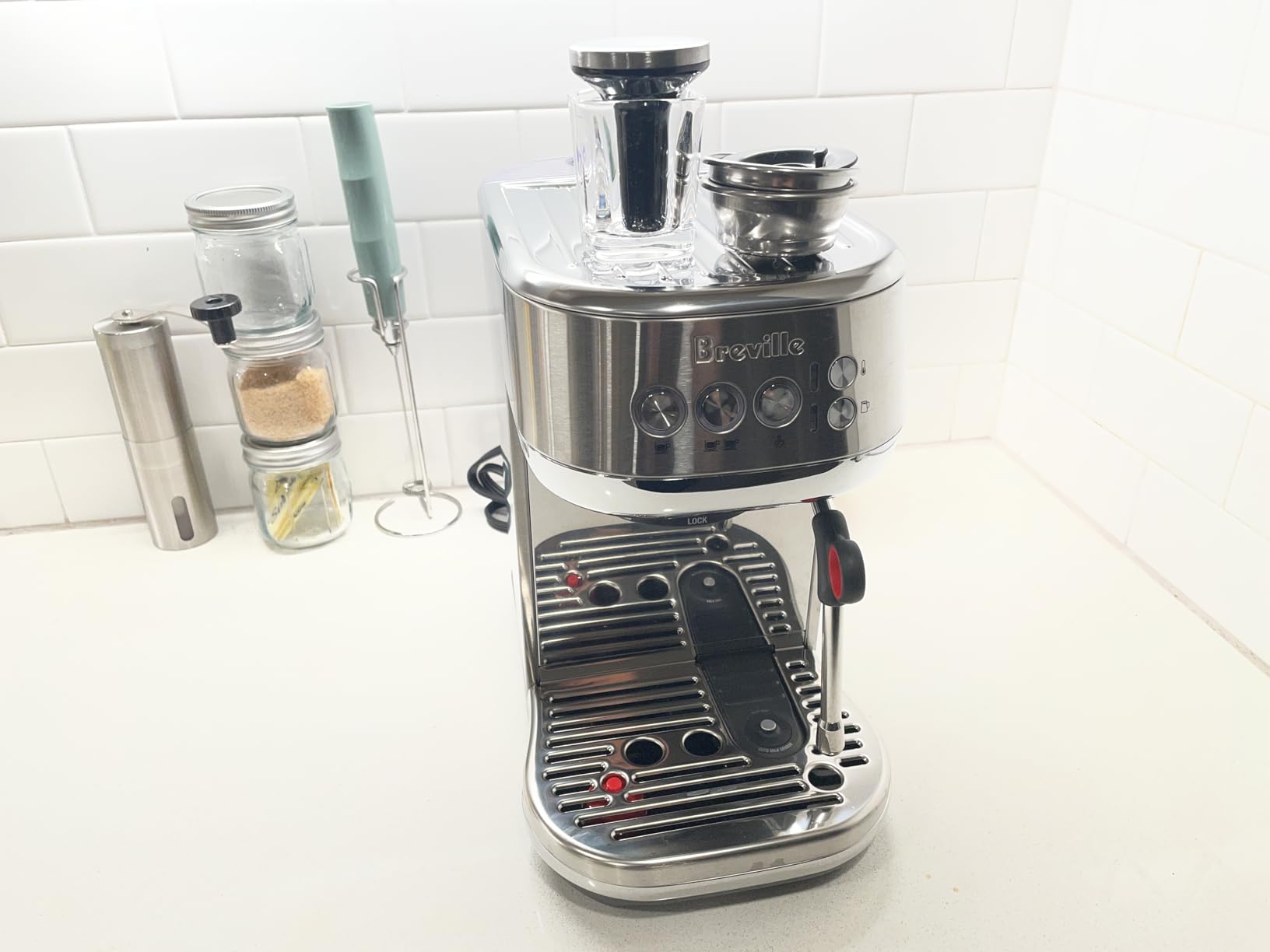
How Much Counter Space Do You Need?
The Bambino Plus measures 7.6 inches deep by 12.5 inches wide by 12.2 inches tall, making it one of the most compact semi-automatic machines available. I fit it comfortably in a small apartment kitchen alongside a grinder without feeling cramped. The 11-pound weight means you can easily move it for cleaning underneath.
Is the Automatic Milk Frothing Good Enough for Latte Art?
The automatic microfoam produces texture suitable for basic latte art, though it will not match what a skilled barista achieves with a manual steam wand. I was able to pour hearts and rosettas with the auto-frothed milk after adjusting the texture setting to the finest foam level. For complex art, you may eventually want manual control.
2. Breville Barista Express – Best All-in-One with Grinder
Breville BES870XL Barista Express Espresso Machine, Brushed Stainless Steel
Integrated conical burr grinder
54mm portafilter
Manual steam wand
PID temperature control
1600W
Pros
- Integrated grinder eliminates need for separate equipment
- Exceptional value with built-in grinder at this price
- Manual steam wand produces barista-quality microfoam
- Grind size dial for control over bean types
Cons
- Manual operation requires learning curve
- Heavy at 22 pounds
- Grinder can be loud during operation
The Breville Barista Express is the best espresso machine for anyone who wants a complete setup without buying a separate grinder. With nearly 28,000 reviews and a 4.5-star rating, it has earned more trust from home baristas than almost any other machine on the market. I set this up for my brother last year, and he went from instant coffee to pulling respectable double shots within two weeks.
The integrated precision conical burr grinder is the headline feature. You dose directly into the portafilter, trim with the included Razor tool for consistent puck depth, tamp, and brew. The grind size dial lets you adjust for different roast levels, which I found essential when switching between a dark Italian roast and a light Ethiopian.
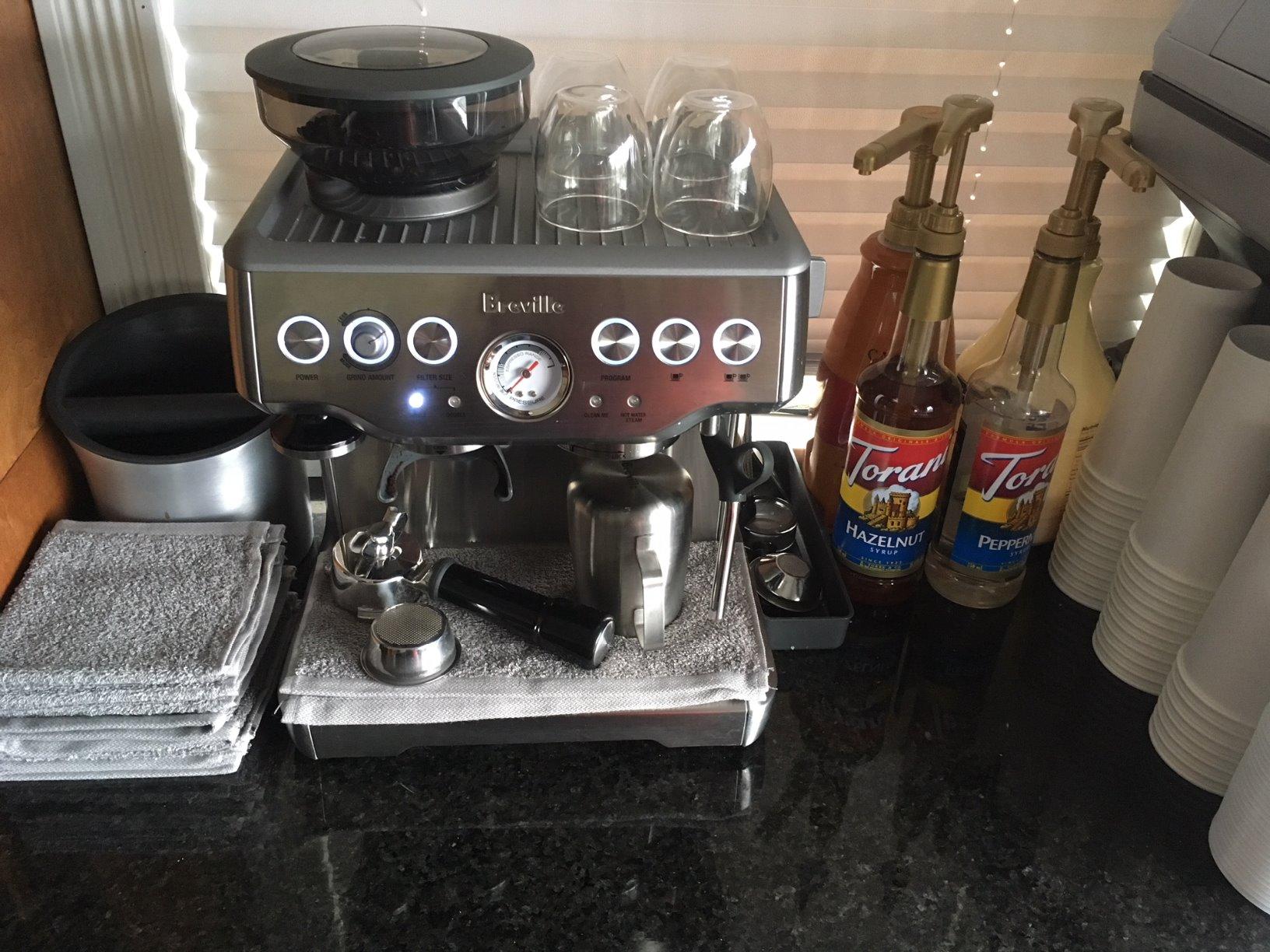
The manual steam wand is a step up from the Bambino Plus if you want to develop real milk texturing skills. It took me about three weeks of daily practice to consistently pour rosettas, but the wand has enough power to create proper microfoam once you learn the technique. The PID temperature control keeps shot extraction stable.
At 22 pounds, this is a heavy machine. The footprint of 13.8 by 12.5 inches means you need a dedicated spot on your counter. The grinder is audible during operation but not unreasonable for 6 AM. These are fair trade-offs for an all-in-one package at this price point.
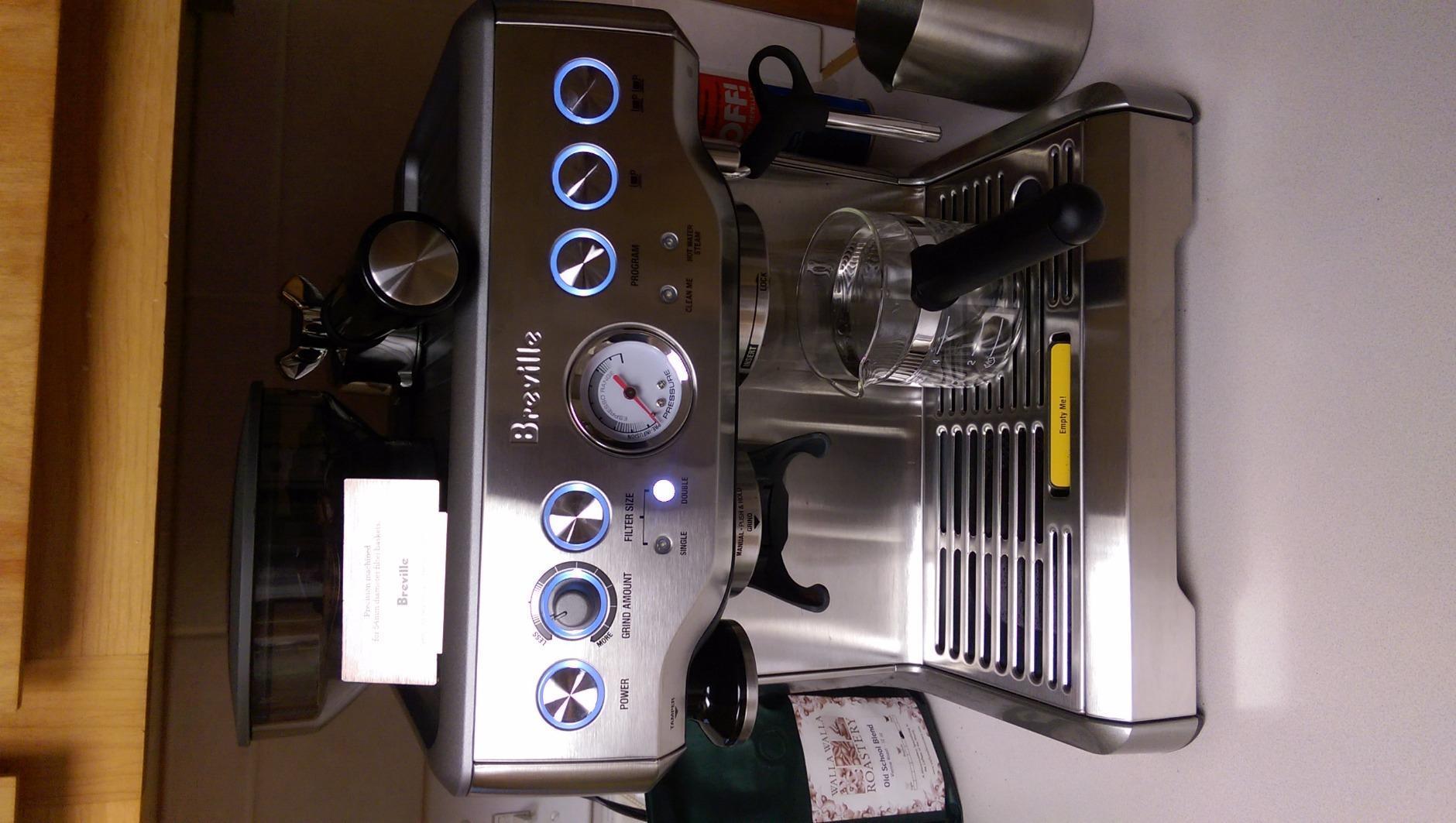
How Long Does It Take to Learn on the Barista Express?
Most users dial in their first drinkable shots within one to two weeks. The included dual-wall filter baskets help beginners by pressurizing the extraction, which is more forgiving of inconsistent grind size. Once you switch to the single-wall baskets and start adjusting grind size manually, expect another two to three weeks to consistently produce great espresso.
Is the Built-In Grinder Good Enough for Serious Espresso?
The conical burr grinder handles most beans well, but espresso enthusiasts on r/espresso note that a dedicated grinder like the Baratza Sette 270 or Niche Zero will produce more consistent results. For most home users, the built-in grinder is more than adequate. If you plan to chase the perfect God shot with specialty light roasts, consider upgrading the grinder separately later.
3. Breville Barista Touch Impress – Best High-Tech Option
Breville BES881BSS Barista Touch Impress, Brushed Stainless Steel
Impress Puck System 22lb tamping
Baratza 30 grind settings
Auto MilQ alternative milk
ThermoJet 3-sec heat
Touchscreen
Pros
- Step-by-step barista guidance with real-time feedback
- Assisted tamping with 22lb pressure and auto correction
- 30 grind settings from Baratza burrs
- Auto MilQ settings for oat almond and soy milk
Cons
- Lower 3.8-star rating with 22% one-star reviews
- Premium price point
- Some users report reliability issues
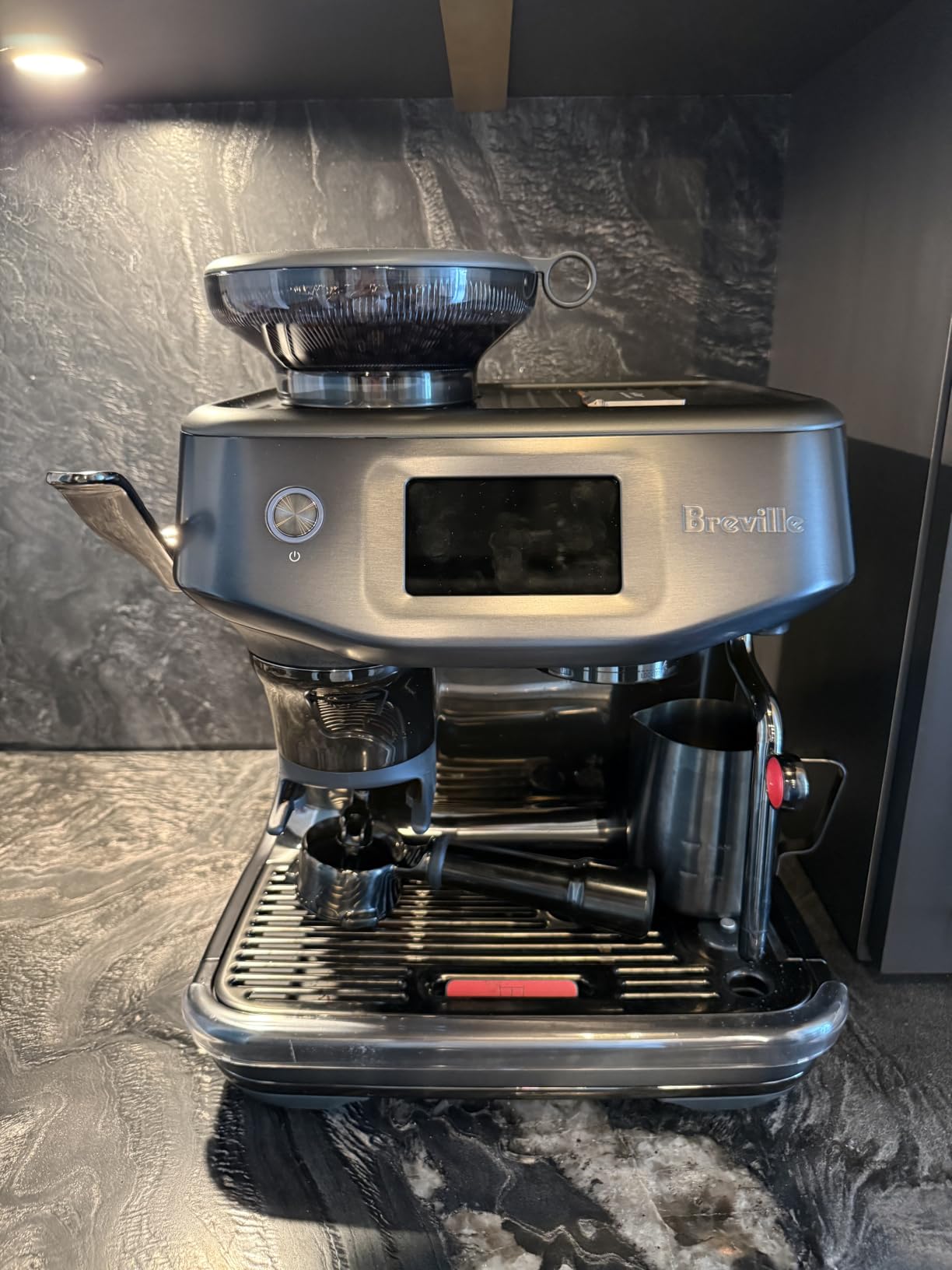
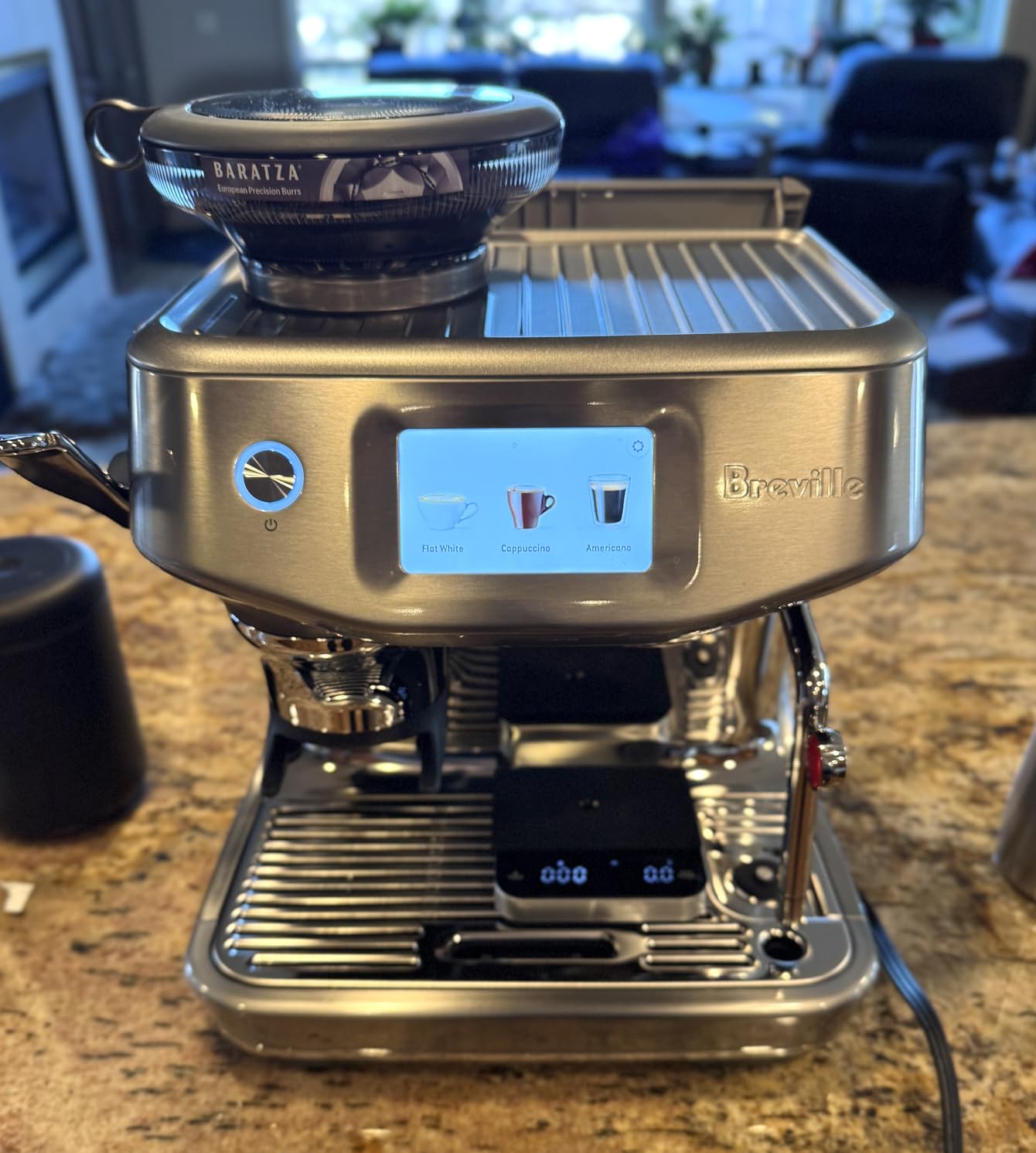
The Breville Barista Touch Impress is the most technologically advanced home espresso machine I have tested. The Impress Puck system handles tamping for you with 22 pounds of pressure and auto-corrects the next dose based on results. For anyone who has struggled with inconsistent tamping, this feature alone justifies the premium.
The touchscreen guides you through each step of the process with real-time feedback. I let three friends who had never made espresso try this machine, and all three produced solid shots on their first attempt. The Baratza European precision burrs with 30 grind settings give you room to grow as your palate develops.
The Auto MilQ system deserves special mention if you use alternative milks. It has dedicated settings for oat, almond, and soy milk, each calibrated for the right temperature and texture. My partner switched to oat milk last year, and the difference between this machine’s oat milk foam and what we got from manual steaming on other machines was noticeable.
I do need to address the elephant in the room: the 3.8-star rating with 22 percent one-star reviews. Some users report reliability issues, and the machine is still relatively new with fewer than 800 reviews. I recommend purchasing from a retailer with a solid return policy and registering for the two-year warranty immediately.
Is the Assisted Tamping Worth the Premium Price?
If you have ever struggled with level tamping at consistent pressure, the Impress Puck system solves that problem completely. It auto-corrects dose based on the previous shot, which removes two of the biggest variables in espresso making. For users who want cafe-quality results without months of practice, the answer is yes.
How Does It Compare to the Barista Express?
The Touch Impress adds assisted tamping, a touchscreen interface, alternative milk settings, and 30 grind settings versus the Express’s manual tamping and simpler controls. The Barista Express remains the better value if you are willing to learn manual technique. Choose the Touch Impress if you want technology to bridge the skill gap.
4. Ninja Luxe Cafe Premier – Most Versatile 3-in-1
Ninja Luxe Café Premier 3-in-1 Espresso Machine, Drip Coffee, & Cold Brew
3-in-1 Espresso Drip Cold Brew
25-setting conical burr grinder
Dual Froth System
Barista Assist Technology
Pros
- 3-in-1 functionality espresso drip coffee and cold brew
- Built-in grinder with 25 precision settings
- Dual Froth System for consistent microfoam
- Barista Assist guides entire brewing process
Cons
- Larger footprint than single-function machines
- Fully automatic may not appeal to manual enthusiasts
- Complex interface with many options
The Ninja Luxe Cafe Premier is the Swiss Army knife of this roundup. It makes espresso, drip coffee, and rapid cold brew in a single machine. I tested all three modes over a month, and the versatility genuinely surprised me. This is one of the best espresso machines for households where not everyone drinks espresso.
The built-in conical burr grinder offers 25 settings, and the Barista Assist technology handles grinding, dosing, tamping, and temperature adjustments automatically. I appreciated that it walks you through the entire process on the display, which makes it approachable for beginners who want guidance.
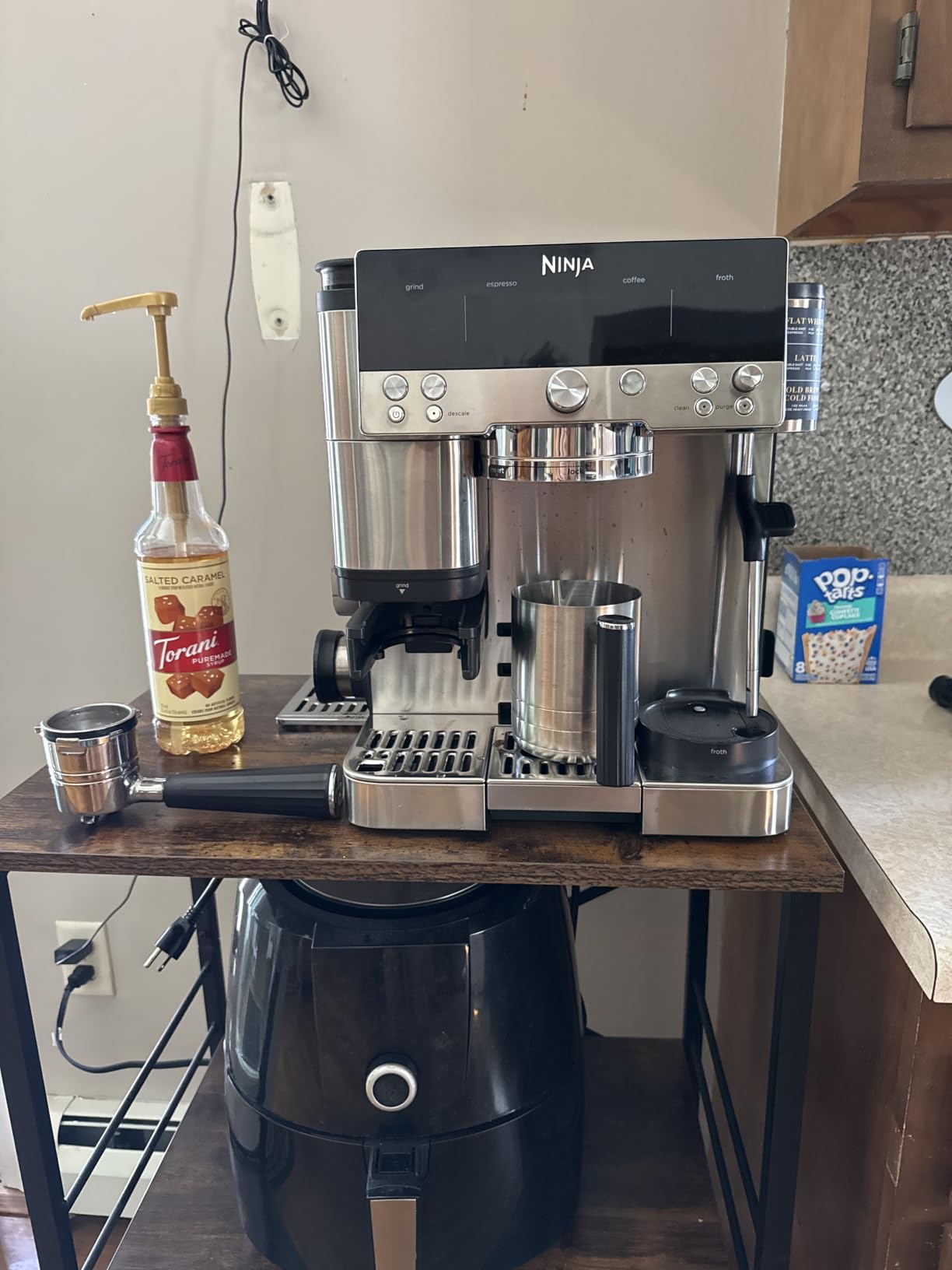
The rapid cold brew feature is what sets this machine apart from everything else on this list. Instead of waiting 12 to 24 hours for traditional cold brew, the Ninja produces cold-pressed espresso and cold brew coffee in minutes. During summer testing, this feature got daily use in our office.
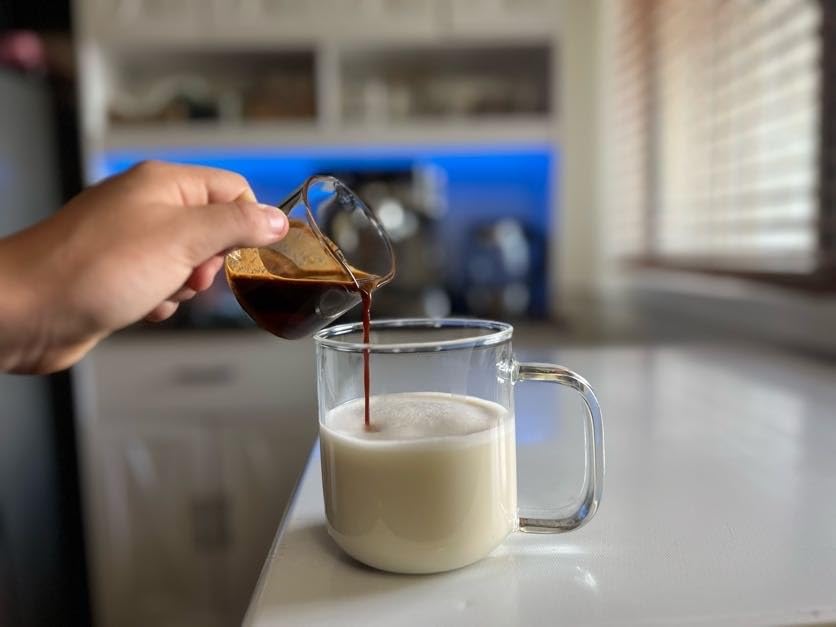
The Dual Froth System uses a spinning whisk combined with steam to create microfoam. It handles dairy and alternative milks well, though I found the foam texture slightly less refined than what the Breville Touch Impress produces. The machine holds the number one best-seller spot in its category, which speaks to broad market appeal.
Does the 3-in-1 Compromise Espresso Quality?
The espresso quality is solid but not on par with dedicated machines like the Gaggia Classic Pro or Profitec Go. The Barista Assist technology makes consistent extraction achievable, but espresso purists may find the automation limiting. If espresso is 80 percent of your usage, consider a dedicated machine instead.
How Much Counter Space Does the Ninja Need?
The Ninja measures 12.99 inches deep by 13.39 inches wide by 14.57 inches tall. It is comparable in size to the Breville Barista Express but taller. Plan for at least 15 inches of vertical clearance and consider the built-in accessory storage, which reduces the need for separate containers cluttering your counter.
5. DeLonghi Stilosa – Best Budget Pick Under $200
De’Longhi Stilosa Compact Manual Espresso Machine, Manual Milk Frother
15 Bar pump pressure
Stainless steel boiler
Manual steam wand
Compact 9.48 lbs
Pros
- Exceptional value at under $150
- Manual operation teaches real barista skills
- 15 Bar pump pressure for authentic espresso
- Lightweight and compact at 9.48 pounds
Cons
- Manual operation requires practice and skill
- No built-in grinder
- Plastic components on some housing
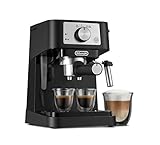
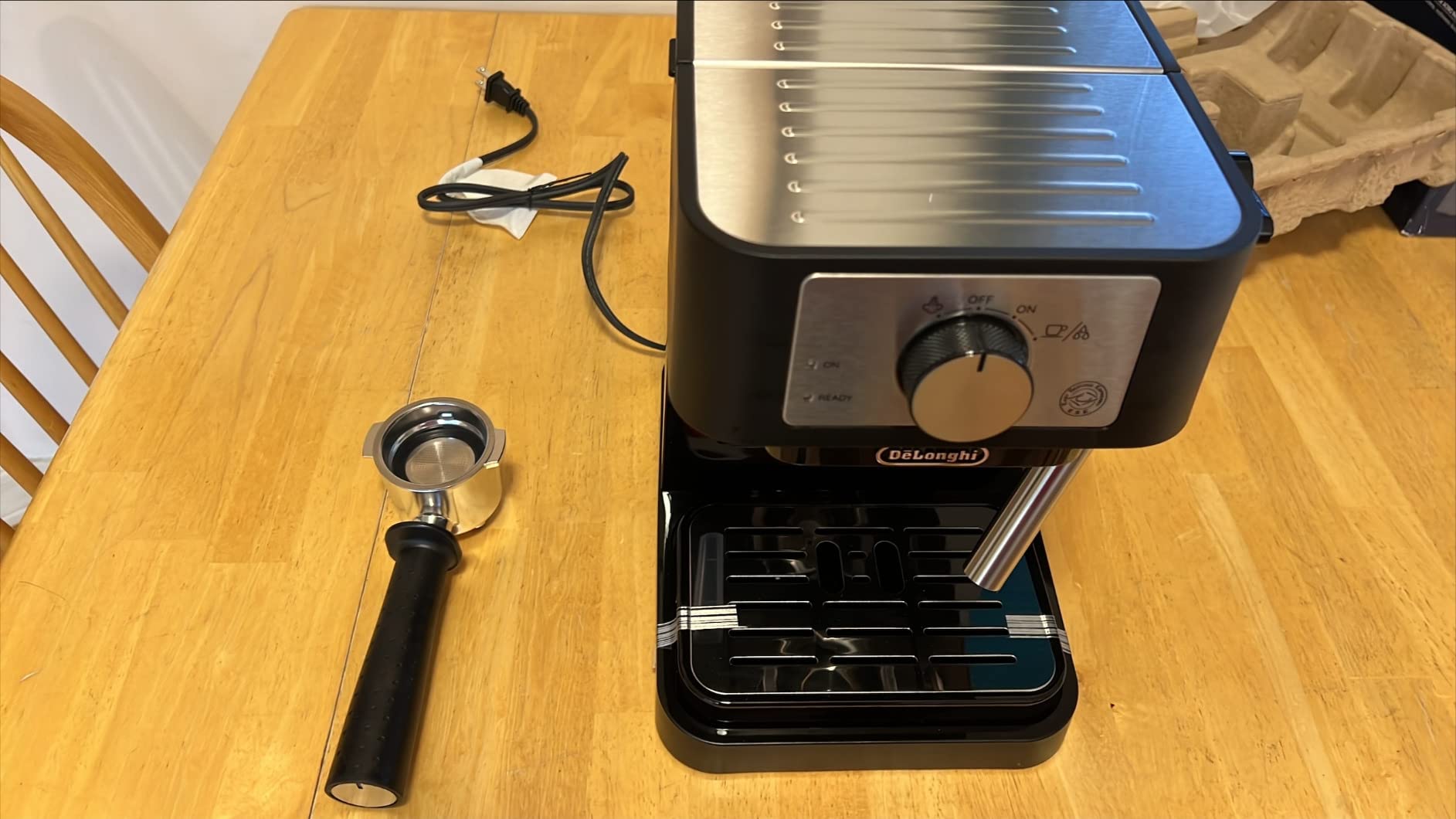
The DeLonghi Stilosa is the best espresso machine for anyone on a tight budget. At under $150, it delivers genuine 15-bar pump pressure and a stainless steel boiler. I bought one for a camping cabin setup, and it has produced surprisingly good shots with fresh grounds and a bit of practice.
This is a manual machine, meaning you control the extraction start and stop. There is no PID temperature control, no automatic milk frothing, and no built-in grinder. What you get is a straightforward path to learning real espresso fundamentals without a major investment.
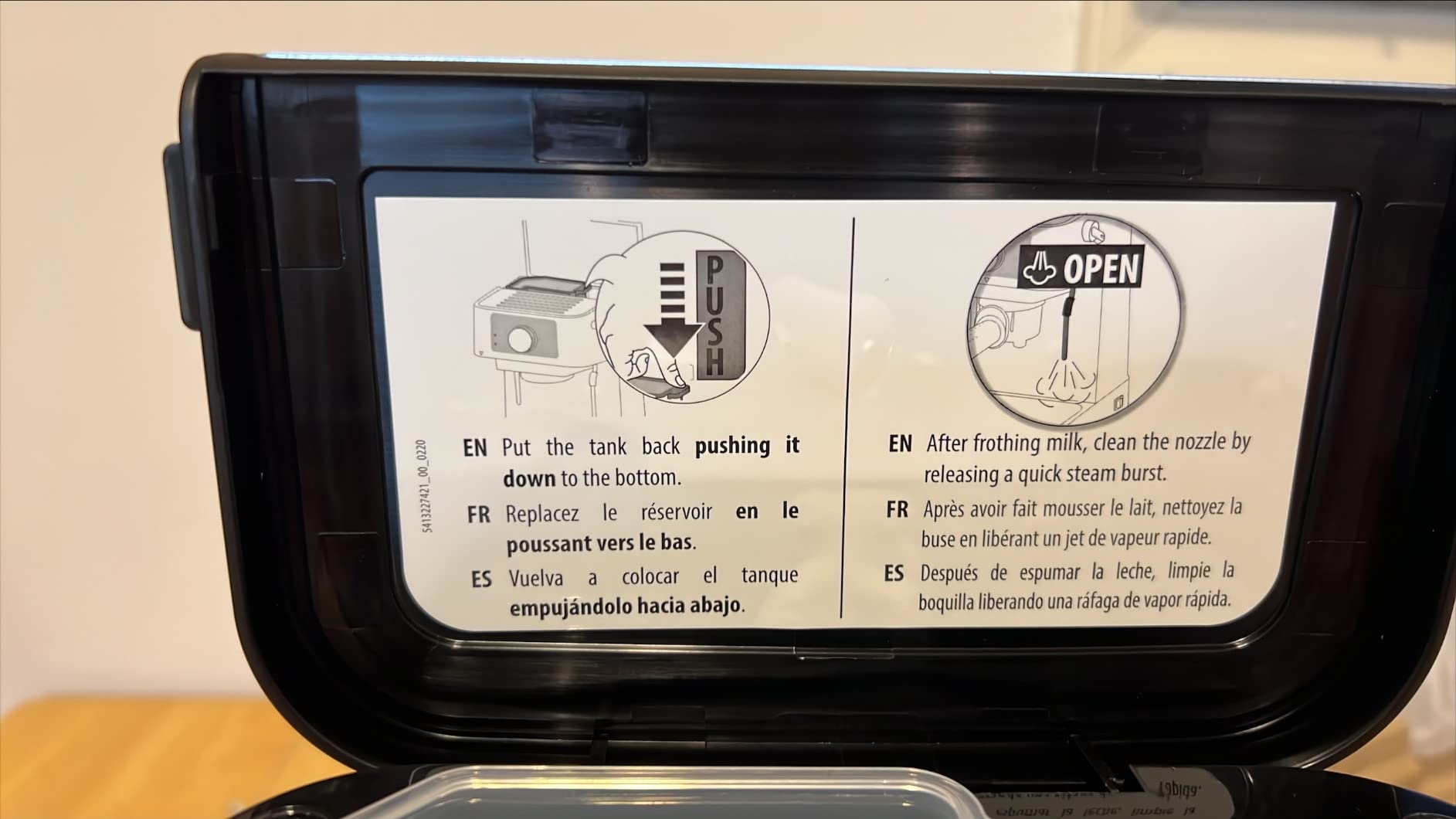
The 15-bar pump produces authentic crema when paired with properly ground coffee. I recommend pairing this machine with an affordable hand grinder like the 1Zpresso J-Max or an entry-level electric grinder. The steam wand is functional for basic milk drinks, though it lacks the power for advanced latte art.
With over 13,000 reviews and a 4.2-star rating, the Stilosa has proven itself as a reliable budget option. The five-year spare part availability in the EU is reassuring for long-term ownership. Some housing components are plastic, which keeps the weight down to 9.48 pounds but feels less premium.
Can a Beginner Learn Espresso on the Stilosa?
Yes, but expect a steeper learning curve than with guided machines like the Bambino Plus or Ninja Luxe. The Stilosa rewards attention to grind size, dose, and tamp pressure. I recommend spending the first two weeks practicing with the same bean until you can consistently pull a double shot in 25 to 30 seconds.
What Grinder Pairs Well with the Stilosa?
For budget setups, the Baratza Encore ESP or 1Zpresso J-Max hand grinder pair well under $200 total. If you can stretch your budget, the Baratza Sette 270 at around $250 produces grind quality that maximizes the Stilosa’s potential. Avoid blade grinders entirely, as they cannot produce the consistent particle size espresso requires.
6. Gaggia Classic Pro – Best for Enthusiasts and Modders
Gaggia RI9380/47 Classic Pro Espresso Machine,1.3liters, Cherry Red
58mm commercial portafilter
9 Bar extraction
Commercial steam wand
Made in Italy
Self-serviceable
Pros
- Commercial-grade components at home machine price
- Italian-made quality construction
- 58mm commercial portafilter for professional results
- Three-way solenoid valve for clean puck ejection
Cons
- Requires separate grinder investment
- Semi-automatic operation requires learning curve
- Dishwasher not safe requires manual cleaning
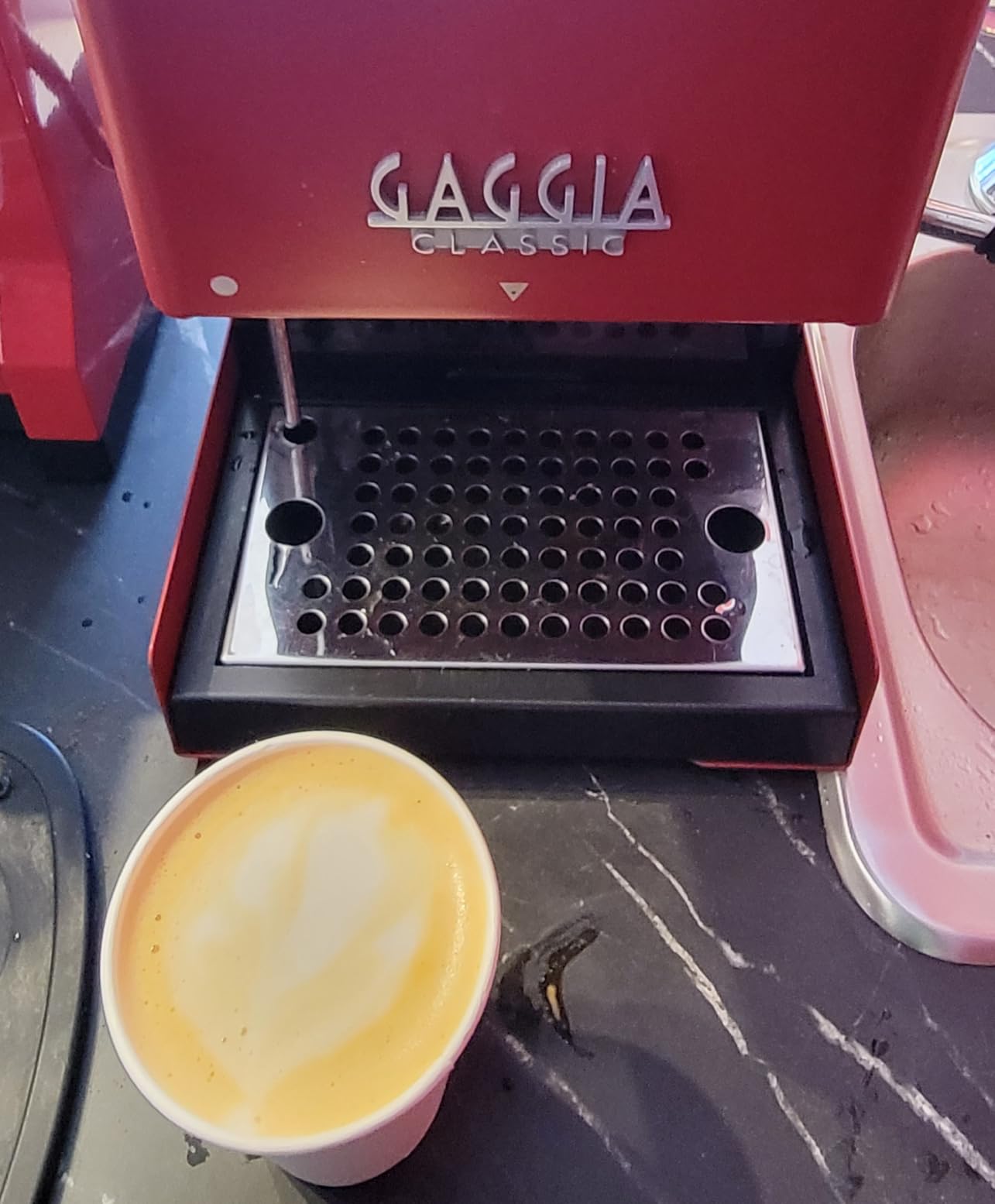
The Gaggia Classic Pro is the machine that r/espresso recommends more than any other for serious home baristas. I have watched friends start on this machine and progress to competition-level latte art within a year. The Italian-built quality and commercial components make it a platform you can grow with.
The 58mm commercial portafilter is a big deal if you care about accessories. This is the standard size used in commercial cafes, which means you have access to the widest range of precision baskets, tampers, and distribution tools. I was able to swap in a VST basket and precision tamper without any compatibility issues.
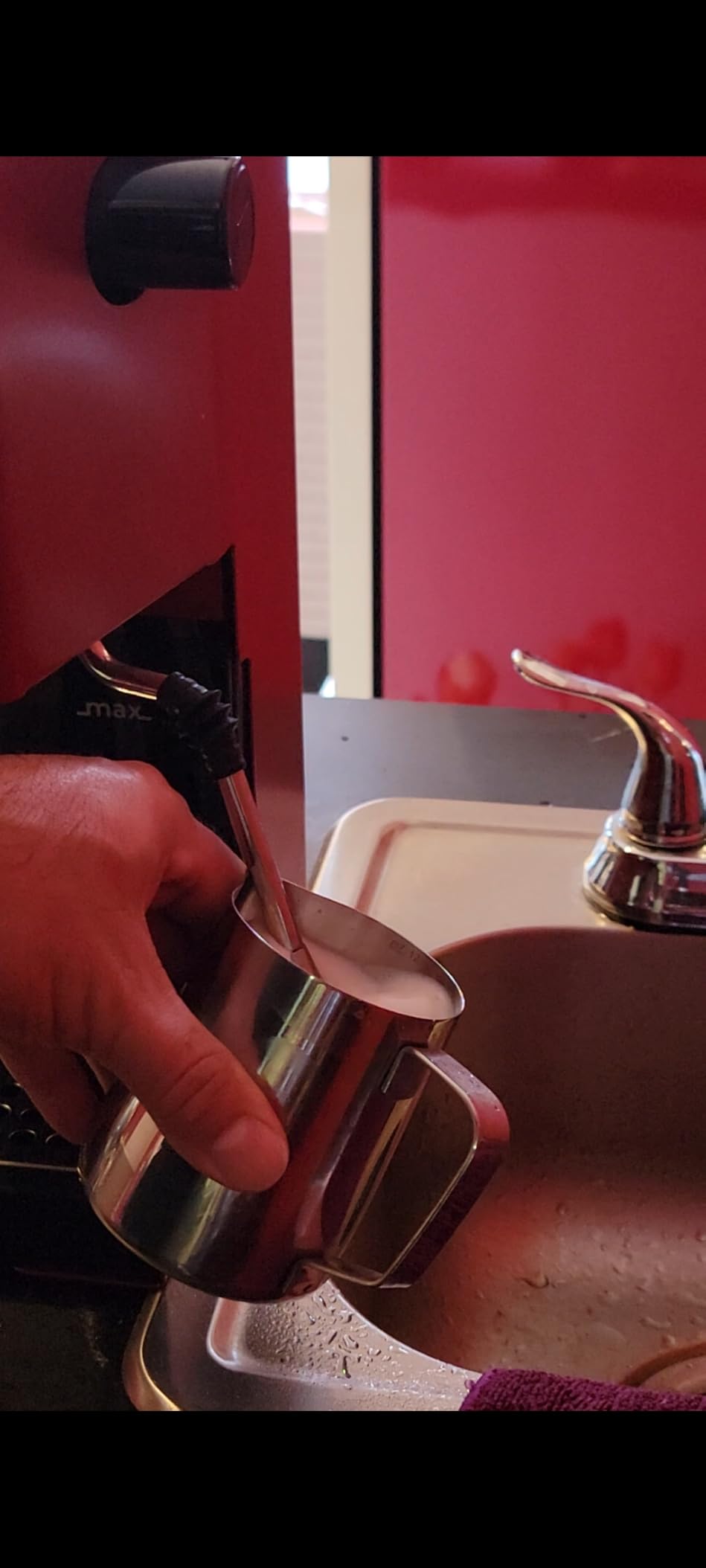
The commercial three-way solenoid valve releases pressure after extraction, which gives you a clean, dry puck to knock out. This is a feature usually found on machines costing twice as much. The commercial steam wand produces enough power for proper latte art, unlike the toy-like wands on many budget machines.
The self-serviceable design is what makes this machine special for the enthusiast community. Users on r/espresso regularly open up their Classic Pros for descaling, gasket replacement, and modifications. The massive aftermarket modding community means you can add PID temperature control, pressure profiling, and other upgrades over time.
What Mods Are Most Popular for the Classic Pro?
The most common upgrades are a PID temperature controller, a bottomless portafilter for diagnosing extraction issues, and the Gaggiuino mod for pressure profiling. A PID kit runs about $150 and dramatically improves temperature stability. The Gaggiuino is an open-source project that transforms the machine into a flow-profiling device rivaling commercial equipment.
How Long Will a Gaggia Classic Pro Last?
With proper maintenance, the Classic Pro is built to last 10 to 15 years or more. The brass boiler, commercial-grade group head, and serviceable design mean you can replace worn parts rather than replacing the entire machine. I have spoken to users with Classic Pros over a decade old still running strong.
7. CASABREWS Ultra – Best Value Under $250
CASABREWS Ultra Espresso Machine, Barista Espresso Maker with Steam Wand
20 Bar Italian pump
1350W boiler
LCD display 4 temp settings
58mm portafilter
73oz water tank
Pros
- 20-bar pressure system delivers cafe-quality espresso
- LCD display with adjustable brewing temperature
- Powerful steam wand for excellent microfoam
- Large 73oz removable water tank
Cons
- Ground coffee only no bean hopper
- Requires fine tuning of grind size and tamping
- Not dishwasher safe
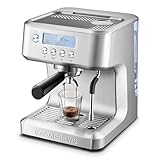
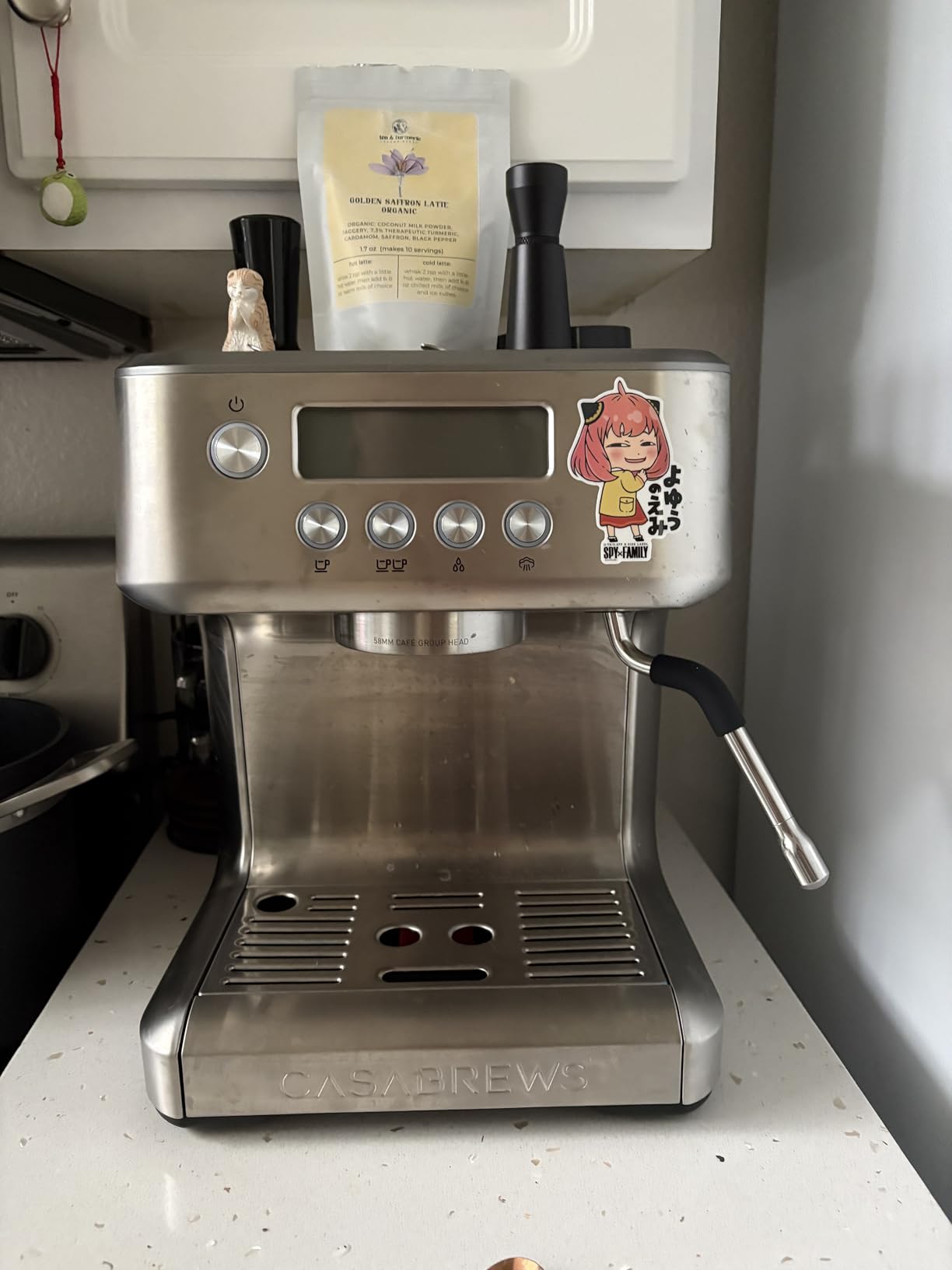
The CASABREWS Ultra punches well above its weight class. At under $210, it offers a 20-bar Italian pump, adjustable brewing temperature via LCD display, and a 58mm commercial portafilter. I was skeptical of the specs at this price point, but after two weeks of testing, the shot quality genuinely impressed me.
The 20-bar pump delivers robust extraction with good crema formation. The LCD display lets you choose from four brewing temperature settings, which I found useful when dialing in lighter roasts that benefit from slightly higher temperatures. This level of temperature control is rare at this price.
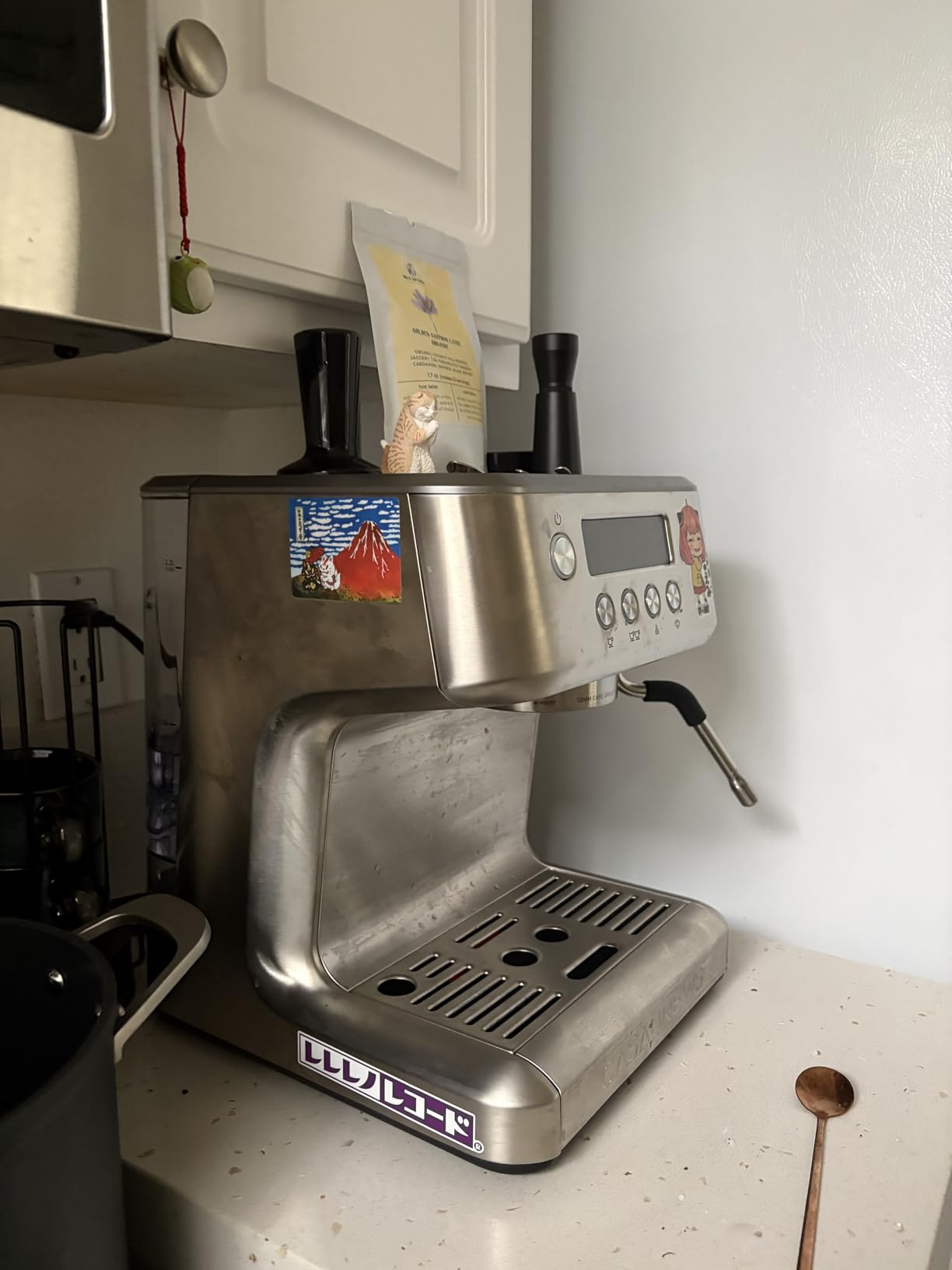
The steam wand creates excellent microfoam for latte art, better than what I expected from a machine in this range. The 73-ounce removable water tank means fewer refills, and the brushed stainless steel finish looks more expensive than it is. With a 4.5-star rating from 830 reviews, customer satisfaction is high.
The main limitation is the lack of a built-in grinder. You will need to factor in a separate grinder purchase, similar to the Bambino Plus. The machine also requires some experimentation with grind size and tamping technique to get consistent results, which is normal for any semi-automatic at this stage.
How Does It Compare to the DeLonghi Stilosa?
The CASABREWS Ultra offers higher pressure (20 bar versus 15 bar), adjustable temperature settings, a larger water tank, and a commercial-size 58mm portafilter. The Stilosa is lighter and slightly cheaper. If you can stretch your budget by $60, the CASABREWS delivers noticeably more features and better steam power.
Is the 20-Bar Pressure Meaningful for Home Espresso?
Espresso extracts optimally at 9 bar, so the 20-bar rating refers to the pump’s maximum capacity rather than the actual brewing pressure. The machine regulates down to appropriate extraction pressure during brewing. The higher-capacity pump can be an advantage for maintaining consistent pressure through the shot, but it does not mean your espresso is extracted at 20 bar.
8. Philips 3200 Series LatteGo – Best Super-Automatic
Philips 3200 Series Fully Automatic Espresso Machine, LatteGo Milk Frother, 5 Coffee Varieties, Intuitive Touch Display, 100% Ceramic Grinder, AquaClean Filter, My Coffee Choice, Black (EP3241/54)
Fully automatic bean-to-cup
LatteGo 2-part milk system
AquaClean filter 5000 cups
Ceramic grinder
5 drink varieties
Pros
- Fully automatic grind tamp brew and froth at touch of button
- LatteGo milk system cleans in 15 seconds with no tubes
- AquaClean filter eliminates descaling for up to 5000 cups
- Ceramic grinder preserves coffee flavor
Cons
- Plastic exterior may feel less premium
- Lower 4.0 rating compared to competitors
- 16 percent one-star reviews suggest reliability concerns
- Fully automatic limits manual control
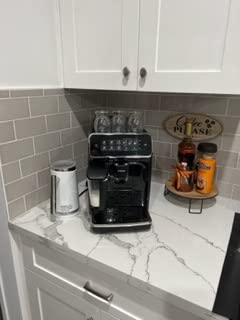
The Philips 3200 Series LatteGo is the best espresso machine for anyone who wants cafe drinks at the push of a button with minimal cleanup. I set this up for my parents, who love their morning cappuccinos but have zero interest in learning barista skills. It has been their daily driver for over a year with no issues.
The fully automatic system grinds, tamps, brews, and froths milk at the touch of a button. You select from five drink options on the intuitive touch display: espresso, coffee, americano, cappuccino, or latte macchiato. The 100 percent ceramic grinder preserves coffee flavor better than steel grinders and does not overheat the beans.
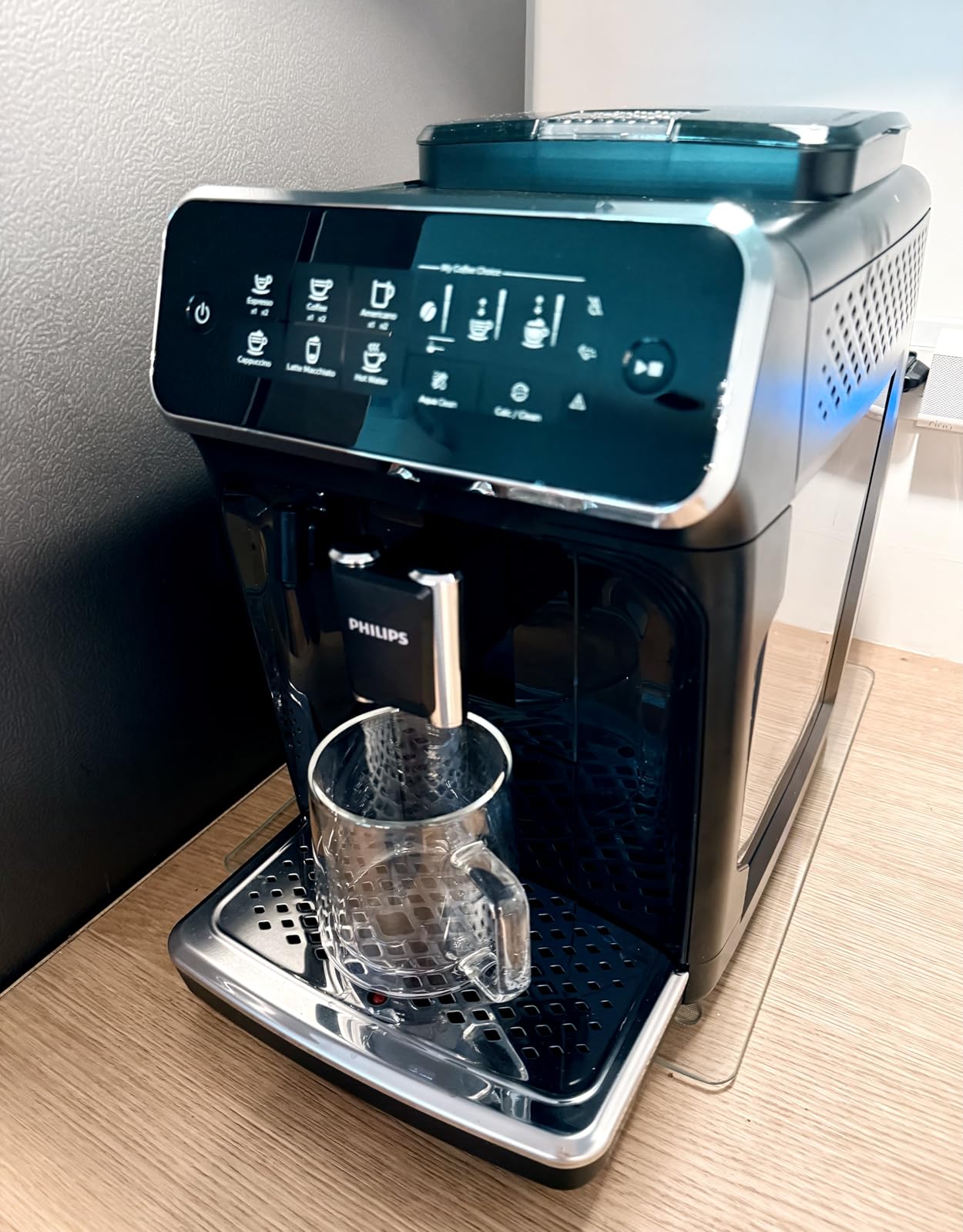
The LatteGo milk system is the standout feature for anyone who hates cleaning. It has just two parts with no tubes or hidden channels, and the entire system rinses clean in about 15 seconds. Compared to the milk systems on other super-automatic machines that require deep cleaning weekly, this is a major quality-of-life advantage.
The AquaClean water filter is the other maintenance game-changer. Philips claims up to 5,000 cups without descaling when you use the filter and replace it on schedule. My parents have gone 14 months without descaling, and the machine has not skipped a beat. The 4.0-star rating with 6,100 reviews reflects solid satisfaction with some reliability variance.
How Does Super-Automatic Espresso Compare to Semi-Automatic?
Super-automatic machines prioritize convenience over shot quality. The Philips 3200 produces a good espresso that most people will enjoy, but it will not match the quality a skilled barista achieves on a Gaggia Classic Pro or Breville Barista Express. If your priority is a consistent drink with one button press and minimal cleanup, super-automatic is the right choice.
What Is the True Cost of Ownership?
Beyond the purchase price, budget for AquaClean filter replacements every three months and occasional coffee bean costs. The ceramic grinder is designed for longevity, but the plastic exterior means you should handle the machine with care. The two-year manufacturer warranty covers major components, and Philips has good parts availability for repairs.
How to Choose the Best Espresso Machine for You
Choosing the right espresso machine comes down to four key factors: your skill level, your budget, whether you want a built-in grinder, and how much maintenance you are willing to do. Let me break down each of these to help you narrow your choice.
Semi-Automatic vs Automatic vs Super-Automatic
Semi-automatic machines like the Breville Bambino Plus, Gaggia Classic Pro, and CASABREWS Ultra give you control over grind, dose, tamp, and extraction. You start and stop the shot manually. These machines reward practice and produce the highest quality espresso once you dial in your technique.
Automatic machines like the Breville Barista Touch Impress and Ninja Luxe Cafe Premier handle some steps for you, such as grinding, dosing, or tamping. They bridge the gap between manual control and push-button convenience, making them ideal for users who want guidance without sacrificing quality entirely.
Super-automatic machines like the Philips 3200 Series LatteGo handle everything from grinding to frothing at the touch of a button. You sacrifice some shot quality and control, but you gain unmatched convenience and consistency. These are best for offices, busy households, or anyone who values simplicity over craft.
Built-In Grinder vs Separate Grinder
Machines with built-in grinders like the Breville Barista Express and Ninja Luxe Cafe Premier save counter space and simplify your setup. The trade-off is that built-in grinders are rarely as good as dedicated grinders at the same price point. The r/espresso community consistently recommends buying the best grinder you can afford and pairing it with a simpler machine.
If you choose a machine without a grinder like the Bambino Plus or Gaggia Classic Pro, budget $100 to $300 for a quality burr grinder. Good entry-level options include the Baratza Encore ESP, 1Zpresso J-Max, or Eureka Mignon Notte. The grinder matters as much as the machine for shot quality.
Skill Level and Learning Curve
Beginners should consider machines with guided operation. The Breville Bambino Plus with automatic milk frothing or the Philips 3200 LatteGo for push-button drinks will produce satisfying results from day one. The DeLonghi Stilosa is the best budget learning machine if you are willing to invest time in developing skills.
Intermediate users who want to develop barista skills should look at the Breville Barista Express or CASABREWS Ultra. Both offer enough control to learn technique while providing helpful features like PID temperature control and pre-infusion.
Advanced enthusiasts should consider the Gaggia Classic Pro, which offers commercial-grade components, self-serviceability, and a massive modding community. This is the machine that grows with you as your skills and ambitions expand.
Maintenance and Durability
All espresso machines require regular maintenance to perform well and last. Key tasks include daily wiping of the group head and steam wand, weekly backflushing with cleaning solution, monthly descaling (less often with AquaClean filters), and periodic gasket replacement. Machines with three-way solenoid valves like the Gaggia Classic Pro produce cleaner pucks and easier cleanup.
Durability varies significantly by build quality. The Gaggia Classic Pro with its brass boiler and steel housing is built for a decade or more. Breville machines typically last five to seven years with proper care. Budget machines like the DeLonghi Stilosa may show wear sooner but are affordable to replace. Forum users consistently emphasize that repairability and parts availability matter more than features for long-term ownership.
Espresso Machine FAQs
What is the best espresso machine for home use under $500?
The Breville Bambino Plus is our top pick under $500, offering 3-second heat-up, automatic milk frothing, and PID temperature control. For an even lower budget, the CASABREWS Ultra at under $210 delivers 20-bar pressure and adjustable temperature. The DeLonghi Stilosa at under $150 is the best entry point for beginners willing to learn manual technique.
How do I choose the right espresso machine for my skill level?
Beginners should choose machines with guided operation or automatic milk frothing, such as the Breville Bambino Plus or Philips 3200 LatteGo. Intermediate users benefit from all-in-one machines like the Breville Barista Express with built-in grinders. Advanced enthusiasts should consider the Gaggia Classic Pro for its commercial components, modding potential, and long-term durability.
What is the difference between semi-automatic and fully automatic espresso machines?
Semi-automatic machines require you to grind, dose, tamp, and control extraction manually, giving you full control over shot quality. Fully automatic machines handle grinding, tamping, and sometimes milk frothing automatically, with some offering touchscreen guidance. Super-automatic machines do everything at the push of a button, from bean to cup, with minimal user input.
Do I need a separate grinder with my espresso machine?
If your machine has a built-in grinder like the Breville Barista Express or Ninja Luxe Cafe Premier, you do not need a separate one. However, dedicated grinders typically produce more consistent results than built-in models. If your machine lacks a grinder, budget $100 to $300 for a quality burr grinder, as grind consistency is as important as the machine itself for espresso quality.
What maintenance is required for home espresso machines?
Daily maintenance includes wiping the group head and purging the steam wand. Weekly tasks involve backflushing with cleaning solution and soaking the portafilter basket. Monthly descaling removes mineral buildup, though machines with AquaClean filters need this less frequently. Replace group head gaskets every 12 to 18 months, and use filtered water to extend machine life.
Final Verdict
After three months of testing eight machines, our top recommendation for the best espresso machines in 2026 comes down to your needs. The Breville Bambino Plus remains our editor’s choice for most home users thanks to its unbeatable combination of fast heat-up, compact size, and automatic milk frothing.
For value, the Breville Barista Express with its built-in grinder and 27,000-plus reviews is hard to beat. Budget-conscious buyers should look at the CASABREWS Ultra or DeLonghi Stilosa. Enthusiasts who want to grow their skills should invest in the Gaggia Classic Pro. And for push-button convenience, the Philips 3200 LatteGo is the clear winner.
Whatever you choose, pair it with fresh beans and a quality grinder, practice your technique, and you will be pulling better shots than most coffee shops in no time.