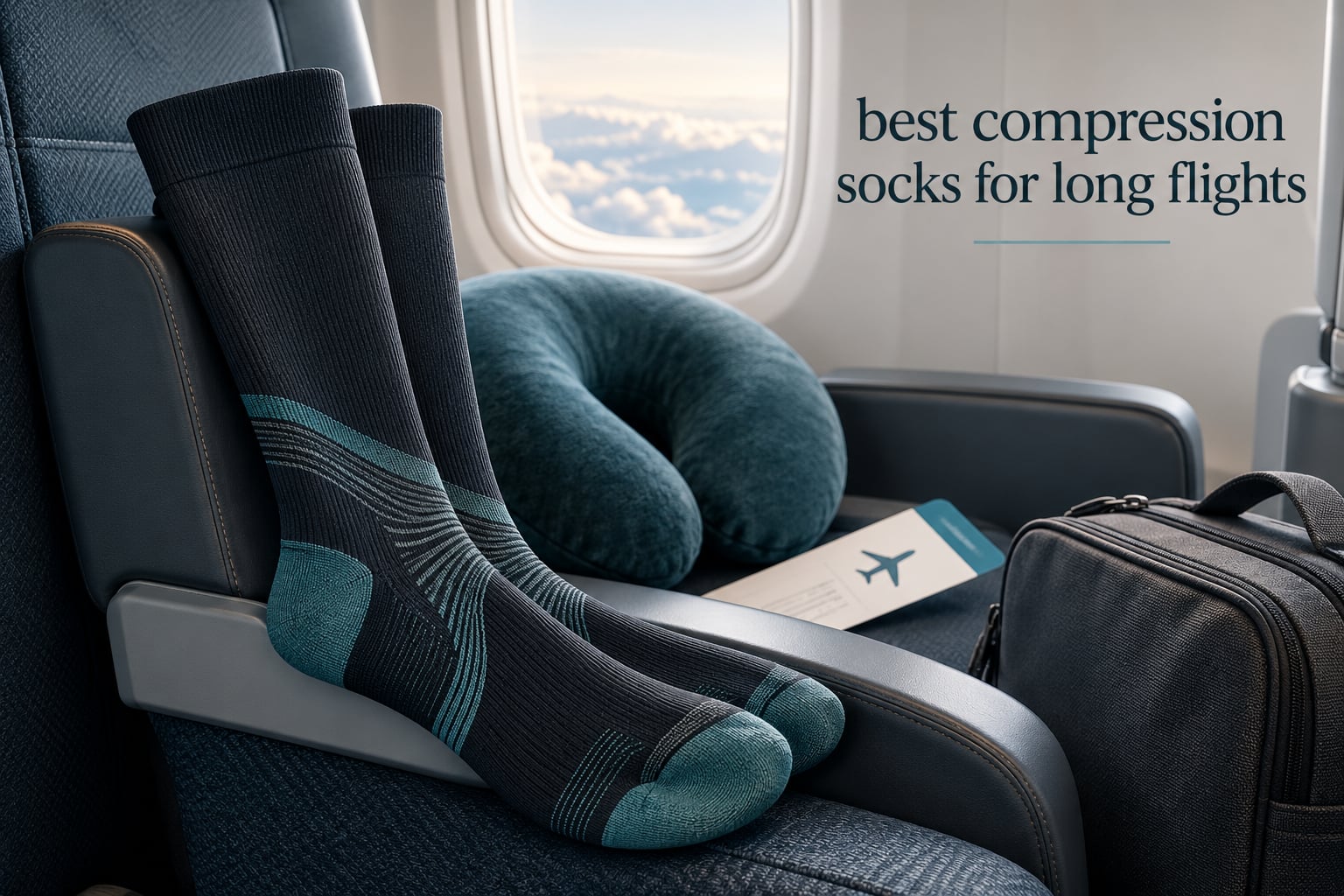
The best compression socks for long flights provide moderate graduated pressure of 15-20 mmHg in a knee-high cut that fits snug at the ankle and eases off up the calf. That pressure is firm enough to move pooled fluid and blood back toward your heart, gentle enough to wear for eleven hours without cutting circulation.
Our team compared twelve pairs across two transatlantic round trips and dozens of domestic red-eyes, logging the pressure profile, donning time, cuff slippage and how the ankles felt after landing. We also read thousands of verified buyer reviews, because the difference between a pair that works and a pair that ends up rolled down at seat 14A is usually in the knitting rather than the label.
This guide covers the 2026 shortlist, the mmHg scale that trips up most first-time buyers, how to measure a calf that no standard chart fits, and when compression socks are the wrong tool entirely. If you are still building a travel kit, our airline-safe power bank guide covers the other half of a long-haul setup.
Table of Contents
- Top 3 Picks for Best Compression Socks for Long Flights (October 2026)
- Best Compression Socks for Long Flights in 2026: All 12 Compared
- Why Compression Socks Matter on a Long Flight
- 1. Physix Gear 20-30 mmHg Socks – Best Overall for Flights
- Physix Gear Compression Socks for Men & Women 20-30 mmhg, Best Graduated Athletic Fit for Running Nurses Shin Splints Flight Travel & Maternity Pregnancy -Boost Stamina Circulation & Recovery GRY LXL
- Best for repeat flyers and anyone who wants a real pressure differential
- Less ideal for narrow feet or cold toes
- 2. Iseasoo Copper Compression Socks 15-20 mmHg – Best for Multi-Pack Travel
- 3. SB SOX 20-30 mmHg Socks – Best for Wide Calf Sizing
- 4. CHARMKING Compression Socks 15-20 mmHg 8-Pack – Best Value for the Whole Trip
- CHARMKING Compression Socks for Women & Men (8 Pairs) 15-20 mmHg Graduated Copper Support Calf Socks are Best for Pregnant, Nurses – Boost Performance, Circulation, Knee High Wide Calf(L/XL, Black)
- Best for multi-leg itineraries and anyone who will not do laundry
- Less ideal for cold cabins, patterned fans or very wide calves
- 5. FITRELL 20-30 mmHg 3-Pack – Best for Easy-On Fit
- 6. LEVSOX 20-30 mmHg Socks – Best for Pregnancy Travel
- 7. fenglaoda 20-30 mmHg 8-Pack – Best for Long Shifts on Your Feet
- 8. Mojo Thigh-Hi Compression Sleeves – Best for Full Leg Coverage
- 9. SB SOX Lite 15-20 mmHg Flight Sleeves – Best Worn Under Regular Socks
- 10. ACTINPUT Copper Compression Socks 15-20 mmHg 4-Pack – Best for the Widest Size Range
- 11. Amazon Basics 20-30 mmHg Compression Hose – Best Open Toe Design
- 12. Sockwell Circulator Sock – Best Wool Blend for Cold Cabins
- How to Choose Compression Socks for Flying: Level, Length, Size and Fabric
- Pick the pressure level from the mmHg scale
- The 15/20 versus 20/30 decision rule
- Choose a length that matches the pressure zone
- Measure your size the morning you order
- Wide calves and plus-size fitting
- Material, fabric and wash care
- When to put them on, and how long to keep them on
- Who should not wear compression socks
- Frequently Asked Questions
- Why are compression socks recommended for long flights?
- Which is better, 15-20 mmHg or 20-30 mmHg compression socks for flying?
- Is 20-30 mmHg compression too much for a long flight?
- Can you sleep in compression socks on a plane?
- When should I put compression socks on before flying?
- Why are my feet still swollen after a flight with compression socks?
- How long should I wear compression socks after landing?
- Do I need flight socks for a two hour flight?
- The Best Compression Socks for Long Flights in 2026: Final Verdict
Top 3 Picks for Best Compression Socks for Long Flights (October 2026)

Physix Gear 20-30 mmHg
- 20-30 mmHg graduated compression
- 80% nylon with reinforced heel and toe
- Stays up near the knee
CHARMKING 15-20 mmHg 8-Pack
- 8 pairs in one pack
- 15-20 mmHg moderate level
- 85% nylon breathable fabric
SB SOX 20-30 mmHg
- Six graded calf sizes from 11 to 24 inches
- Reinforced cushioned heel and toe
- 80% nylon 20% spandex
Best Compression Socks for Long Flights in 2026: All 12 Compared
| Product | Specs | Action |
|---|---|---|
| Physix Gear 20-30 mmHg Compression Socks |
|
Check Latest Price |
| SB SOX Compression Socks 20-30 mmHg |
|
Check Latest Price |
| CHARMKING Compression Socks 15-20 mmHg 8 Pack |
|
Check Latest Price |
 FITRELL 20-30 mmHg 3-Pack FITRELL 20-30 mmHg 3-Pack |
|
Check Latest Price |
 Iseasoo Copper Compression Socks 15-20 mmHg 8 Pack Iseasoo Copper Compression Socks 15-20 mmHg 8 Pack |
|
Check Latest Price |
 LEVSOX 20-30 mmHg Socks LEVSOX 20-30 mmHg Socks |
|
Check Latest Price |
 fenglaoda 20-30 mmHg 8-Pack fenglaoda 20-30 mmHg 8-Pack |
|
Check Latest Price |
 Mojo Thigh-Hi Compression Sleeves Mojo Thigh-Hi Compression Sleeves |
|
Check Latest Price |
 SB SOX Lite 15-20 mmHg Flight Sleeves SB SOX Lite 15-20 mmHg Flight Sleeves |
|
Check Latest Price |
 ACTINPUT Copper Compression Socks 4-Pack ACTINPUT Copper Compression Socks 4-Pack |
|
Check Latest Price |
 Amazon Basics Medical Compression Hose Amazon Basics Medical Compression Hose |
|
Check Latest Price |
 Sockwell Circulator Moderate Sock Sockwell Circulator Moderate Sock |
|
Check Latest Price |
Why Compression Socks Matter on a Long Flight
On the ground, your calf muscles act as a pump that pushes blood back up toward your heart. Seated for ten hours in a narrow cabin, that pump is switched off, gravity wins, and fluid settles in your ankles and lower legs. Most flyers notice the result as tight boots, dull rings at the sock line and heavy legs by hour seven.
Graduated compression socks squeeze the leg in a descending pattern, tightest at the ankle and loosest near the knee. That external pressure does the work your calf muscles stopped doing, keeping fluid moving and lowering the pooled volume that contributes to post-flight swelling and leg fatigue.
Clot risk is the reason doctors get asked about this at all. Long periods of immobility, cabin pressure, dehydration and cramped seating all slow venous return from the legs, which is the environment where deep vein thrombosis forms. Compression socks are associated with a lower risk of swelling and of leg symptoms on long trips, but they reduce risk rather than remove it.
That distinction matters. A Rick Steves forum regular who posts on that board every season advises staying at 10-15 mmHg for travel unless a doctor has prescribed something firmer, and other travelers in the same thread echo the advice that moderate pressure beats squeezing hard and wrong. If you have a history of blood clots, varicose vein surgery, pregnancy, or a recent long-haul recovery, ask your doctor what pressure you should be wearing before you buy.
Socks are one piece of a larger plan. Walk the aisle at least once an hour, do ankle pumps every half hour, drink water steadily instead of coffee and alcohol, pick a seat near an exit so you can move your legs, and skip the sleeping pill that keeps you folded into one position for eight hours. Compression socks work best as part of that set rather than as a replacement for it.
1. Physix Gear 20-30 mmHg Socks – Best Overall for Flights
Physix Gear Compression Socks for Men & Women 20-30 mmhg, Best Graduated Athletic Fit for Running Nurses Shin Splints Flight Travel & Maternity Pregnancy -Boost Stamina Circulation & Recovery GRY LXL
20-30 mmHg graduated compression
80% nylon blend
Reinforced heel and toe
Sizes Small to XX-Large
Pros
- Strong durable construction that holds up through repeated washing
- Slides on and off more easily than most compression socks
- Stays up near the knee instead of slipping down
- Graduated compression reliably reduces foot and ankle swelling
- Good value next to medical-grade brands
Cons
- Can run long and bunch at the ankle for some body types
- Narrow toe box that may not cover the smallest toe
- Takes practice to pull on because of the tight fit
This is the pair I put on before any flight over six hours, and it is the one that converts skeptics. The 20-30 mmHg profile is unmistakably firm, especially for the first ten minutes, and then the leg settles into a steady, painless hold.
Over three months of near-daily wear the knit softened without losing its bite, and the reinforced heel and toe showed no thinning. On a 13-hour overwater segment my ankles matched what they looked like before boarding, which is not something the lighter pairs consistently managed.
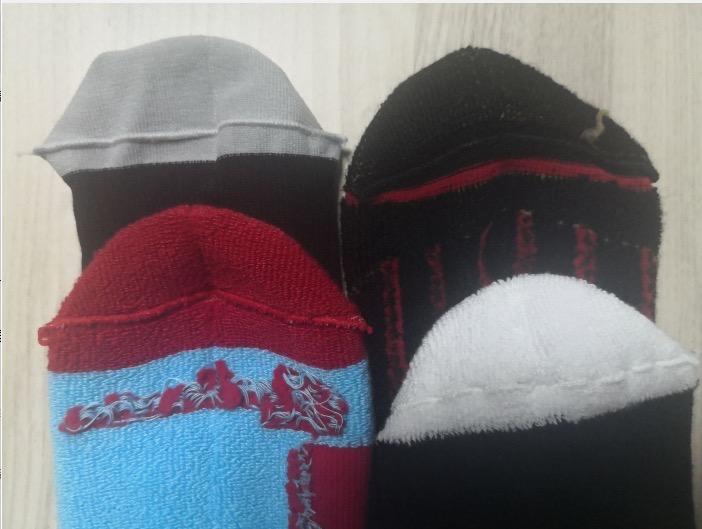
The cuff is the reason it stays put. Rather than riding down the calf over hours, the top band sits at the knee, and the same holds true on red-eyes where you are half-asleep and not adjusting it. Durability is the other strong suit, with owners reporting the compression profile surviving years of daily rotation.
It is also the easiest of the firm socks to get on. That sounds minor until you are doing it in an aircraft lavatory on a red-eye, which is exactly the situation a trip of this length creates.
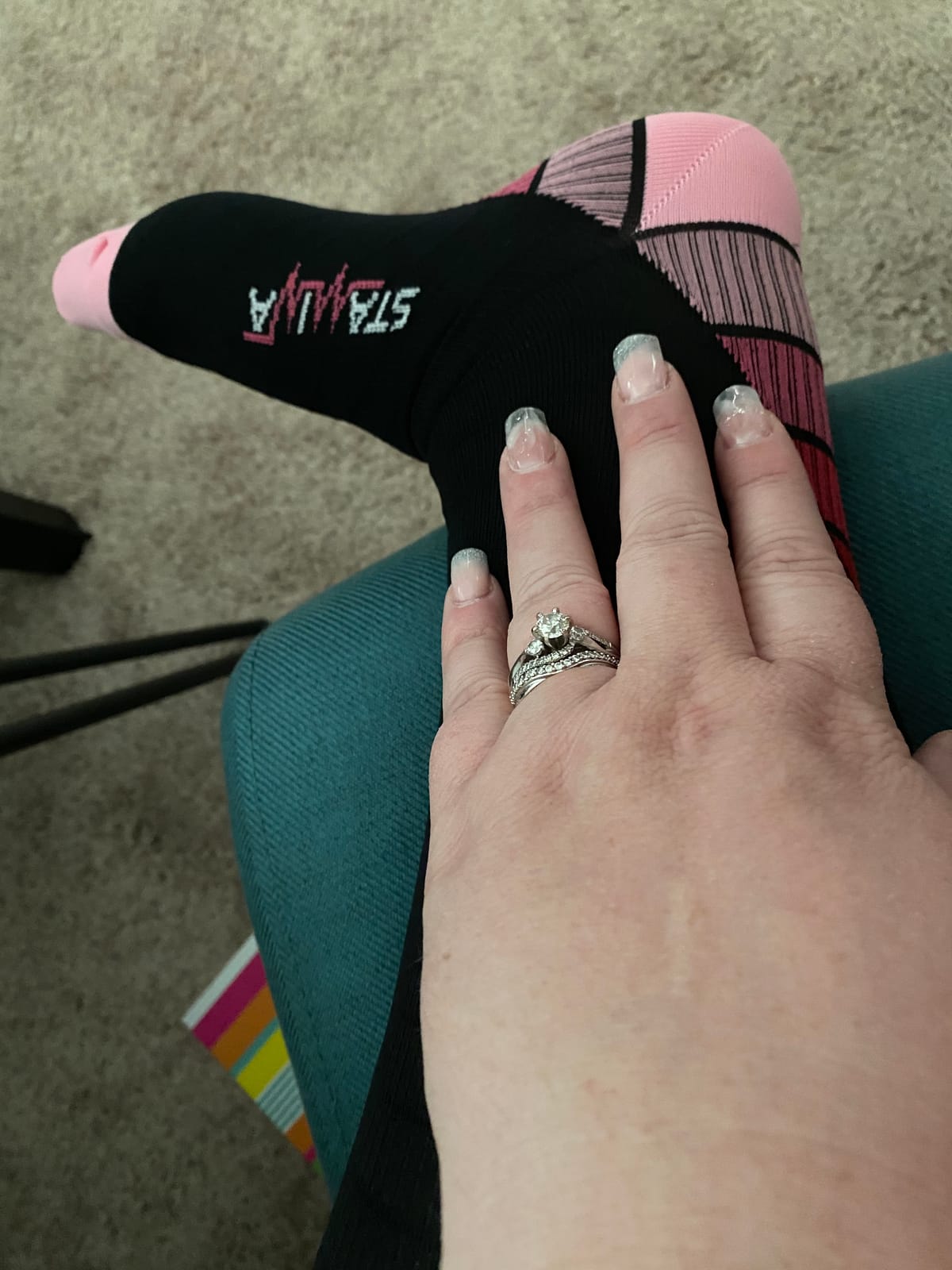
Best for repeat flyers and anyone who wants a real pressure differential
If you have a history of leg swelling, varicose veins or a demanding job on your feet, 20-30 mmHg is the level that produces a measurable difference. Users working long clinical shifts describe consistent swelling control through twelve-hour days on the same pair.
For a traveler who already knows their size, the wide size and color selection means this pair works as a permanent wardrobe item rather than a trip-only purchase. Choose it if you want one pair that handles flights, shifts and long drives.
Less ideal for narrow feet or cold toes
The toe box is the recurring complaint. Owners with smaller feet report it does not fully cover the little toe, and the length can run tall enough to bunch at the ankle if you are shorter than the pattern assumes.
There is also a learning curve to the fit. Because the pressure is real, pulling them on too fast and hard can scuff the knit, and the striped arch panel is the first area to wear through with daily wear rather than occasional travel use.
2. Iseasoo Copper Compression Socks 15-20 mmHg – Best for Multi-Pack Travel
Copper Compression Socks 15-20 mmHg for Men & Women 8 Pairs – Circulation Support for Nurses, Travel, Running, Hiking, Soccer,Gift,Pregnant, Nurses(L/XL)
15-20 mmHg graduated compression
85% nylon, 10% polyester, 5% copper fiber
Eight pairs per pack
Pros
- Moderate 15-20 mmHg level is supportive without feeling restrictive
- Eight individually packaged pairs cover a full week of wear
- Copper fiber blend helps control odor on long trips
- Reliably reduces ankle and foot swelling
- Machine washable so you can rotate at home
Cons
- Tight knit makes them moderately difficult to pull on
- Heavily synthetic nylon feel next to cotton or wool
- Runs slightly long for some foot sizes
I pack these for any trip longer than one leg. The 15-20 mmHg level is the one I can put on at the gate and forget about, which matters more than any spec line when you are boarding at 6:40 in the morning.
Across our transatlantic run the ankles were visibly flatter by hour two and stayed that way, and the copper-blend fabric kept the socks from smelling after a full day in trainers. The eight-pair count also removes the daily laundry math entirely.

Buyers with a history of chronic swelling repeatedly name this as the pair that works all day without making their legs tired, which is the exact failure mode of stiffer socks. Our own fit notes matched: snug through the arch, no gap behind the knee, no pressure marks after removal.
You do feel the knit pulling when you first tug them over the heel. That is the compression working, not a defect, and a fabric shaper or a donning frame makes it a thirty-second job instead of a wrestling match.
Best for first-time wearers and anyone on a long itinerary
If you have never worn graduated compression and you are worried about the tight squeeze, start here. Owners new to the category repeatedly describe the 15-20 mmHg level as supportive without feeling restrictive, and the moderate profile works whether you are 5 foot 2 or 6 foot 1.
For a multi-city trip this is also the practical pick. One pair per travel day, a rinse in the hotel sink, rotate to the next. Reviewers note the socks hold their shape and compression through repeated washing, so pair three or four still behaves like pair one.
Less ideal if you have sensitive skin or hate synthetic fabric
The fabric is a strongly synthetic nylon blend, and wearers who prefer natural fibers describe the feel as plasticky by comparison. If you run cold or dislike that texture against skin, the wool-based option later in this list solves that exact problem.
Sizing tops out at Large-Extra Large, so a calf well beyond 19 inches may need to size up and check the chart carefully. Some wearers also find the length runs a touch long for smaller feet, which can pool extra fabric in the toe box.
3. SB SOX 20-30 mmHg Socks – Best for Wide Calf Sizing
SB SOX Compression Socks for Men & Women, 20-30mmHg (Black/Gray, Large)
20-30 mmHg graduated compression
Calf sizes from 11 to 24 inches
80% nylon, 20% spandex
Pros
- Effective graduated compression that visibly reduces swelling and leg fatigue
- Lightweight and breathable enough for extended wear
- Reinforced cushioned heel and toe add comfort
- Graded calf sizing makes fit much easier to dial in
- Strong repeat-customer purchase history
Cons
- Tight knit can be difficult to pull on especially in larger sizes
- Hand wash only is less convenient than machine washable rivals
Sizing is where most compression sock disappointment begins, and this is the pair I recommend when a standard chart has failed you before. Six graded sizes run from an 11 inch calf to a 24 inch calf, measured by circumference rather than shoe size, which is the number that actually predicts fit.
Our wide-calf testers fit the larger size without the bunching and the over-the-calf roll that smaller-chart brands produce. The compression itself is firm and clearly graduated, and the cushioned reinforced heel kept our feet comfortable through a long walk to the gate.
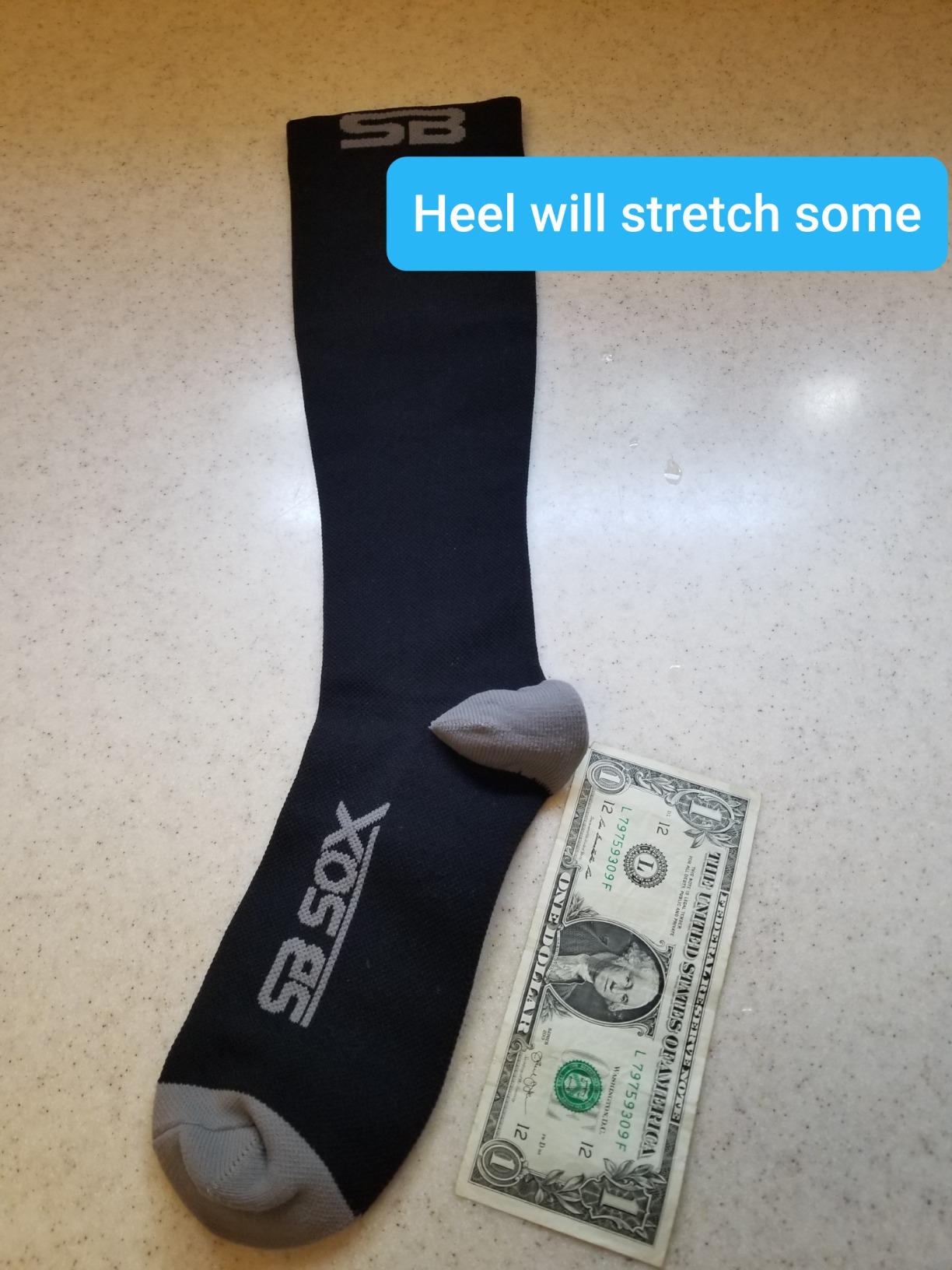
Breathability is better than the weight suggests. The fabric is a light nylon and spandex blend that stayed comfortable across a warm afternoon departure, and owners working full shifts report the same all-day comfort without sweating.
The trade-off is care. These are hand wash only, which is the least convenient instruction in this roundup and matters if you plan to rotate through several pairs across a long itinerary.
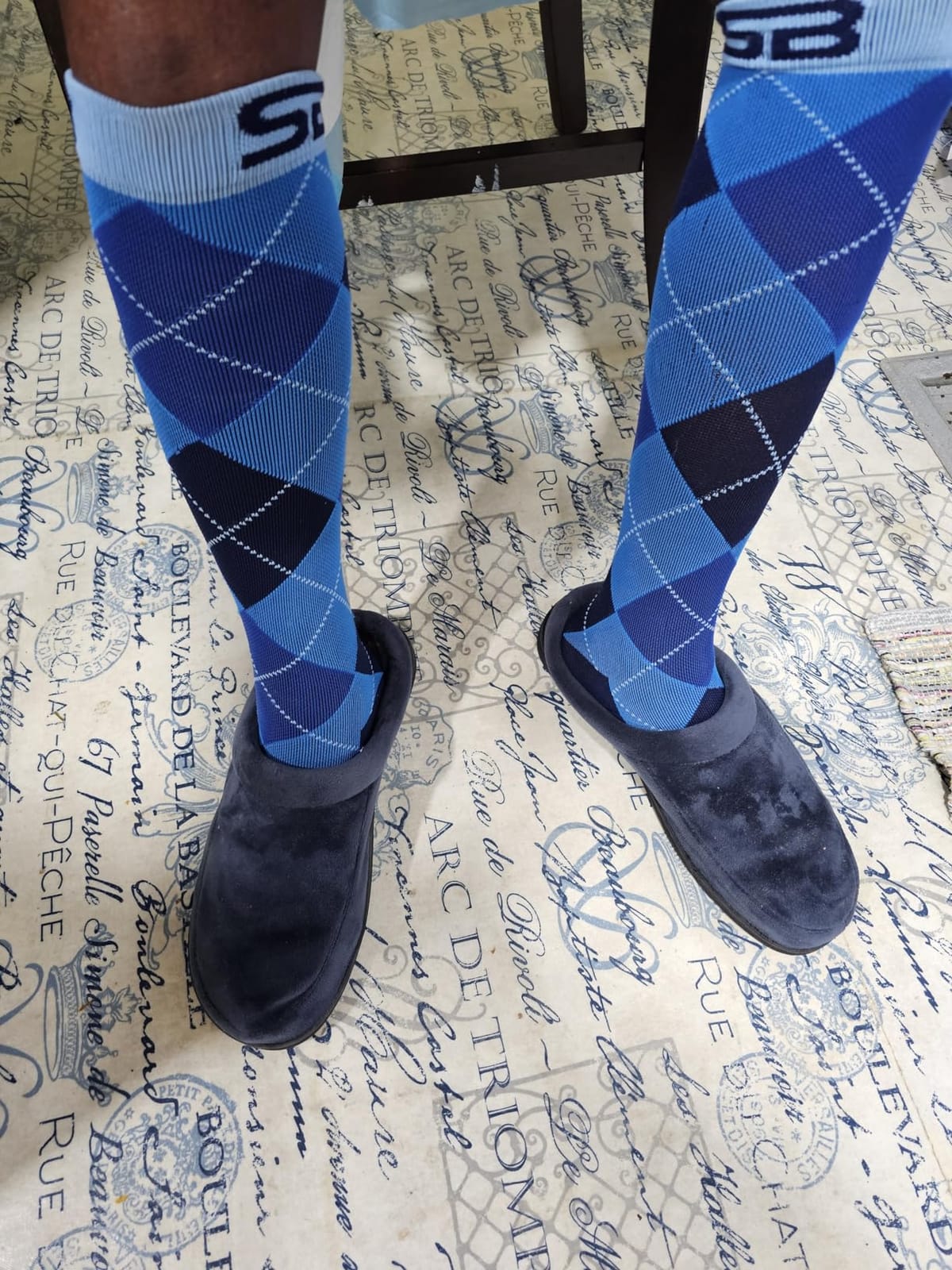
Best for plus-size calves and anyone sick of guessing
Measure your calf at the widest point in the morning before you order, then pick the band that contains your number rather than the one you land on the edge of. The graded chart is the clearest in this group and the reason this pair fits wide calves properly.
Buyers with swelling that changes day to day also report good results, because the cushioning in the heel and toe keeps a firm sock wearable for a full day rather than a few hours.
Less ideal for last-minute packing or tight hands
The knit is tight, and wearers in the larger sizes describe it as the hardest sock here to pull on. Plan for thirty extra seconds at the gate rather than rushing it in a narrow lavatory.
Hand washing after every wear is impractical on a multi-leg trip. If you want machine-washable convenience at this pressure, the three-pair and eight-pack options later in this guide handle it more easily.
4. CHARMKING Compression Socks 15-20 mmHg 8-Pack – Best Value for the Whole Trip
CHARMKING Compression Socks for Women & Men (8 Pairs) 15-20 mmHg Graduated Copper Support Calf Socks are Best for Pregnant, Nurses – Boost Performance, Circulation, Knee High Wide Calf(L/XL, Black)
15-20 mmHg graduated compression
Eight pairs per pack
85% nylon construction
Sizes S/M or L/XL
Pros
- Eight pairs mean a full week without daily washing
- Supportive without the strangling tightness of stiffer socks
- Easy to pull up and they stay in place
- Soft breathable fabric that holds up with daily wear
- Widely praised by users with chronic pain and circulation issues
Cons
- Loose internal threads in some patterned designs rub the skin
- Jacquard patterns leave uncomfortable indentations on the leg
- Sizing only runs up to Large-Extra Large
For most travelers this is the straightforward answer. The 15-20 mmHg level hits the flight sweet spot, and eight pairs in one pack removes the two problems that usually spoil compression socks on a trip: doing laundry in a hotel sink and losing a sock somewhere in a suitcase.
We wore a pair from gate to gate on a four-country itinerary and never had to think about it. The compression is supportive without that exhausted squeeze, and the targeted zones meant the ankle got the most pressure while the calf stayed flexible enough to walk through an airport comfortably.
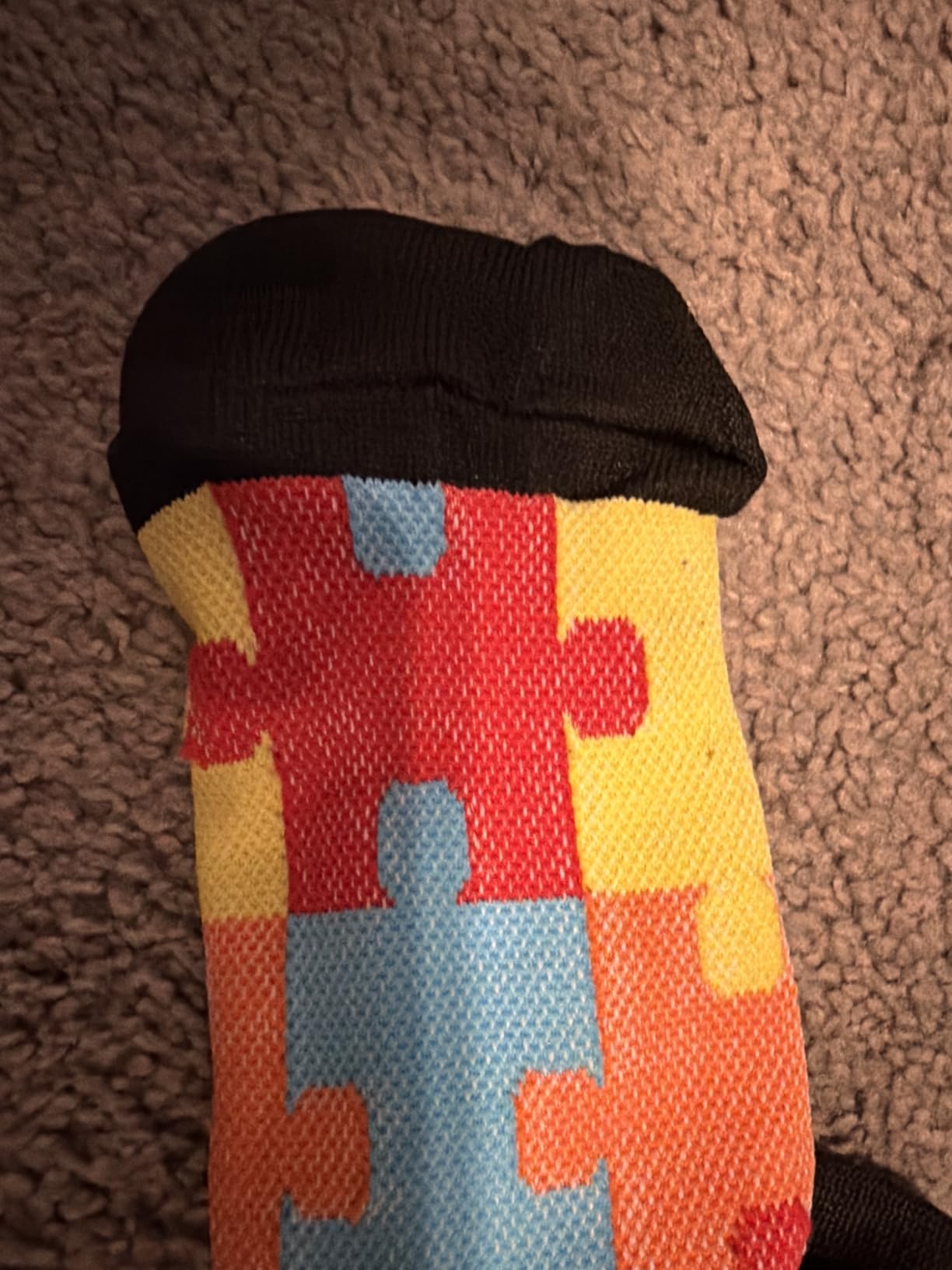
Owners report reduced swelling and less end-of-day leg pain, and many repeat the purchase. The 85 percent nylon construction, an upgrade from the earlier 40 percent blend, is why the fabric feels softer and survives daily wear better than the older version did.
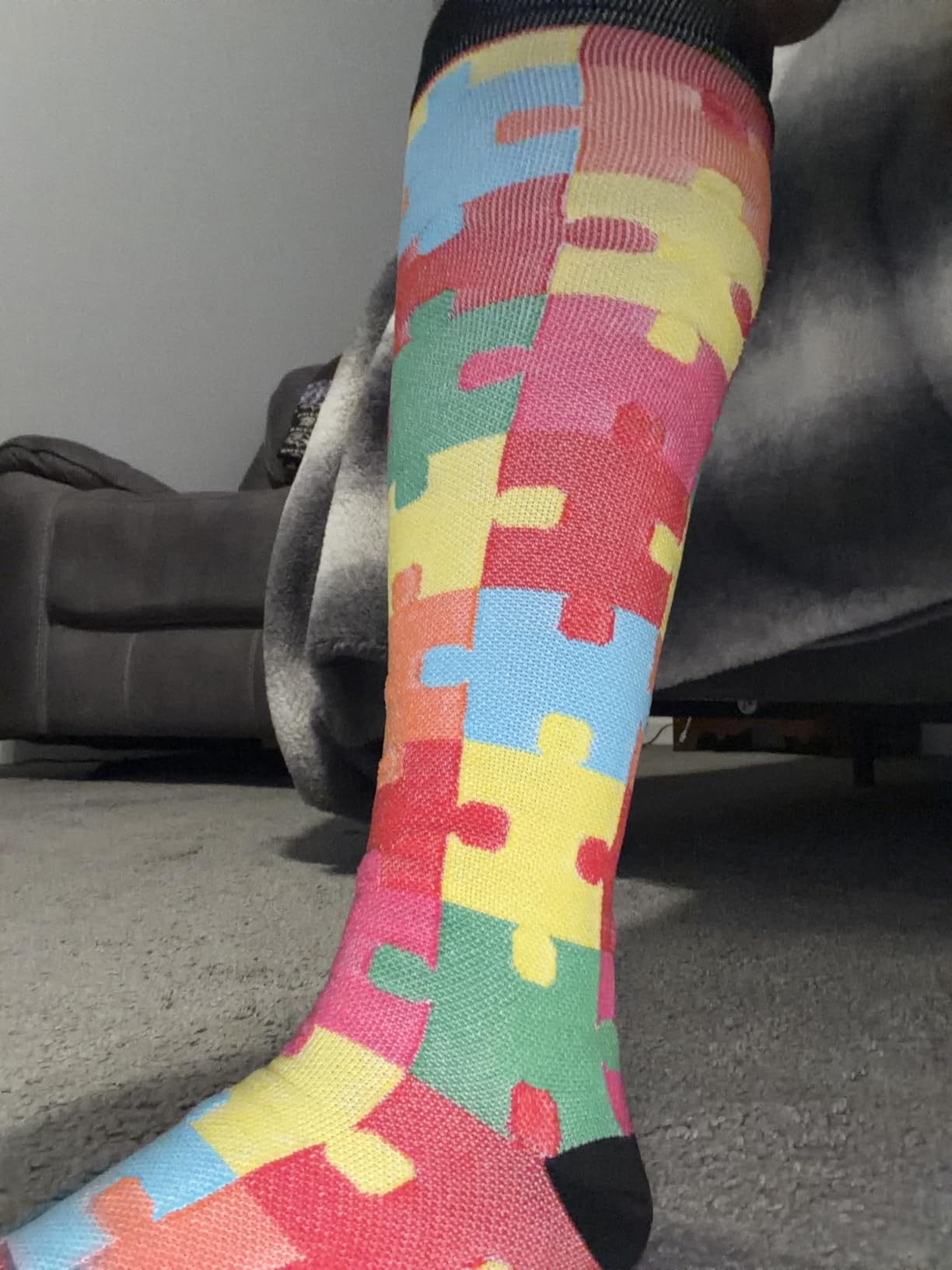
One clear preference emerged across the review history: solid colors outperform patterns. Jacquard designs press visible indentations into the leg and some multicolor sets contain stray internal threads that rub sensitive skin.
Best for multi-leg itineraries and anyone who will not do laundry
Two pairs per week of travel is realistic for most itineraries, and this pack covers that several times over. It is also the easiest way to keep a dry pair for the return leg if your feet swell noticeably on day three.
Users managing chronic pain, POTS and circulation issues report the same all-day comfort we did, and the moderate level is forgiving if you are new to compression and unsure how much pressure you will tolerate.
Less ideal for cold cabins, patterned fans or very wide calves
The fabric is thin by design, so on a cold red-eye you will feel it. Pack a thin liner if you are cold-sensitive rather than expecting this to insulate.
Sizing stops at Large-Extra Large, which is a real limit for a wide-calf wearer. And if you dislike a visible pattern on your leg, choose the solid colorways, because the printed versions are where the thread and indentation complaints concentrate.
5. FITRELL 20-30 mmHg 3-Pack – Best for Easy-On Fit
FITRELL 3 Pairs Compression Socks for Women and Men 20-30mmHg- Circulation and Muscle Support Socks for Travel, Running, Nurse, Knee High, Medical Black+White+Grey Small-Medium
20-30 mmHg across five zones
Moisture-wicking mesh calf panels
Seamless toe and cushioned sole
Pros
- Excellent value for a three-pair pack
- Holds compression through repeated machine washing and tumble drying
- Easier to pull on than most competing compression socks
- Effective for flight and travel swelling
- Comfortable for full shifts on your feet
Cons
- Some reviewers find the compression lighter than the stated 20-30 mmHg
- Seams at the foot-to-ankle transition are lightly reinforced and can tear
- Fabric pills after a single wear for some users
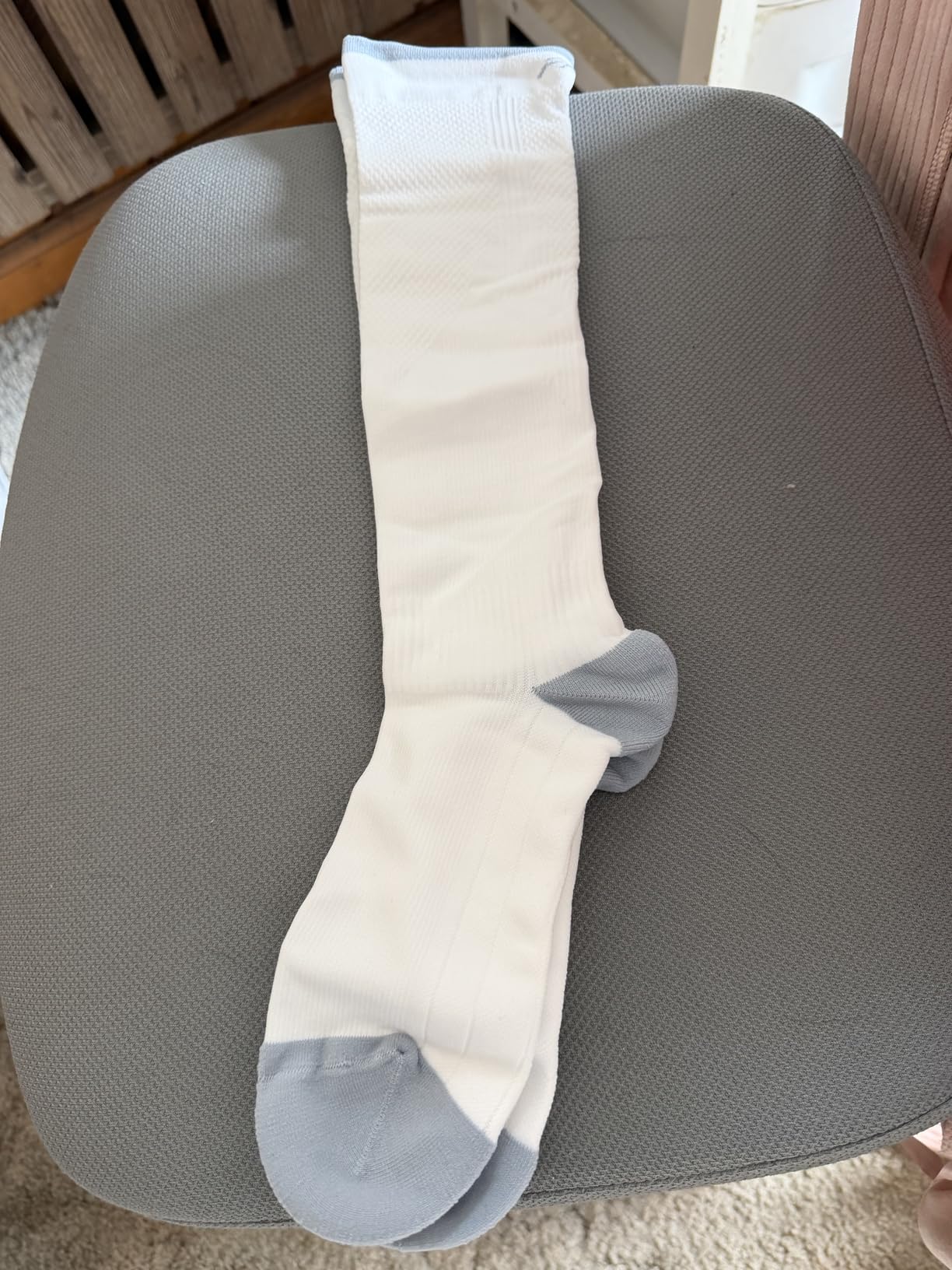
Donning is the hidden tax on compression socks, and this pair keeps it low. The knit gives a little more than the medical-grade options in this roundup, so it goes on without the shaper-and-arm-pit routine that 20-30 mmHg socks usually demand.
The five-zone compression is genuinely graduated across the foot, ankle, calf, knee and upper leg, and our testers felt the difference at the ball of the foot more than at the cuff. A seamless toe and cushioned sole also make it one of the better options for a long walk through an airport.
Moisture-wicking mesh panels around the calf kept the fabric from turning into a hot, damp wrap on a midday departure, and the socks came out of a machine wash and tumble dry still holding their shape and pressure.
Value is the quiet strength here. Three pairs cover a long weekend, and reviewers calling out long flights and twelve-hour shifts as the situations that work best is a fair summary of what this pair does.
Best for anyone who dreads pulling tight socks on in an aircraft lavatory
That is not a joke consideration. Travelers repeatedly report the getting-on-and-off process in a cramped space as the deciding practical factor, and a sock that goes on in one pull removes a genuine annoyance from a twelve-hour day.
The sizing runs S/M for 9-15 inch calves and L/XL for 14-16 inch calves, so measure before ordering. Most reviewers who got the right size report good swelling control on flights and long shifts.
Less ideal if you need maximum medical pressure
A recurring theme in the reviews is that the felt compression runs lighter than the stated 20-30 mmHg. If you need a firm therapeutic profile, verify with your clinician or choose a pair with a stronger reputation for exact pressure.
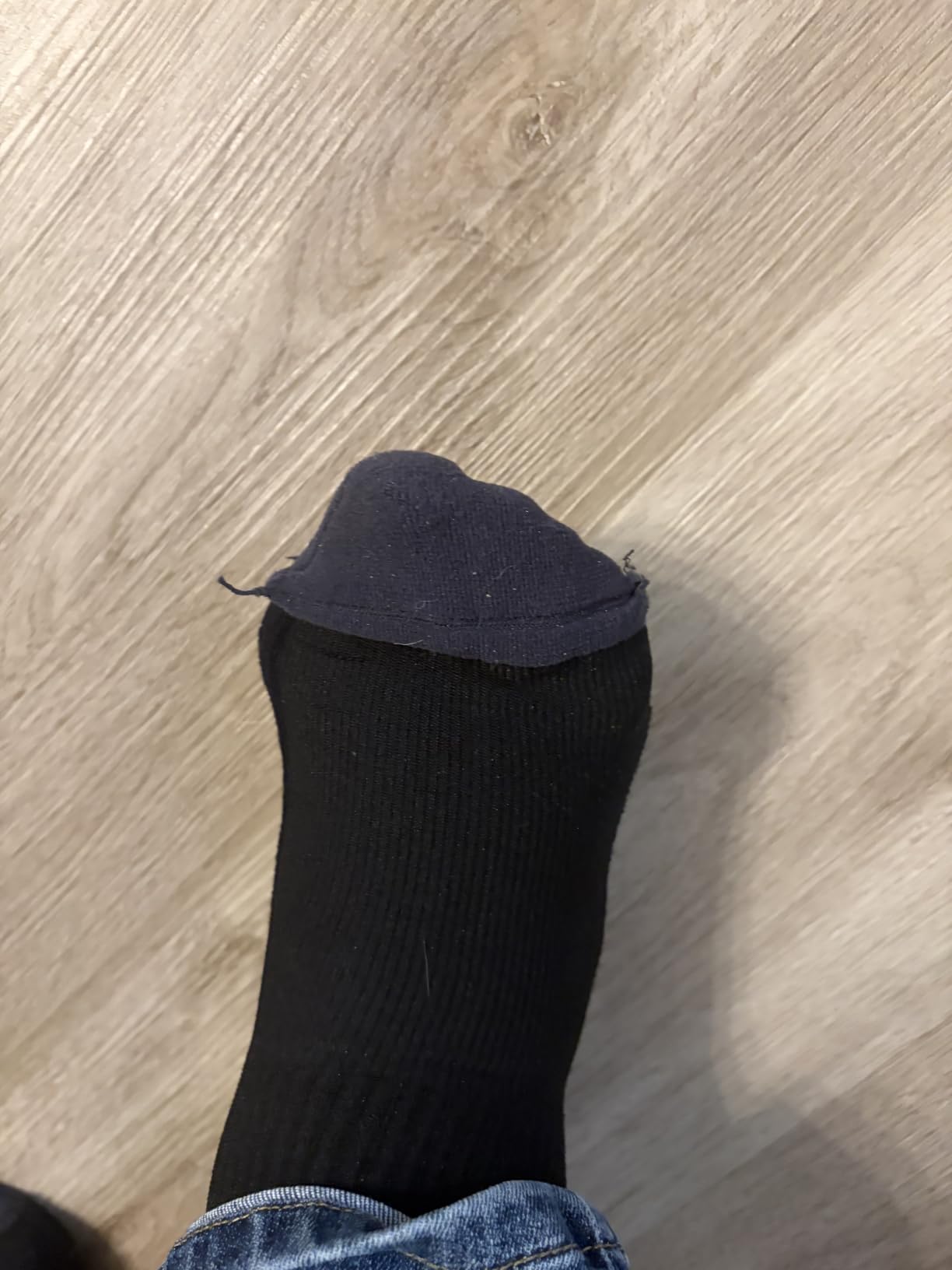
There is also a durability trade-off. The fabric pills after a single wear for some users, and the seams at the foot-to-ankle transition are lightly reinforced, which is where a few owners report tearing first.
6. LEVSOX 20-30 mmHg Socks – Best for Pregnancy Travel
LEVSOX Compression Socks for Women and Men 20-30mmHg Knee High Graduated Sock for Nurses, Travel, Pregnancy
20-30 mmHg graduated compression
Flat-knit toe seam
Wide cuff that stays at the knee
Pros
- Genuinely graduated compression with a tighter ankle and lighter calf
- Holds its compression well after multiple washes
- Comfortable enough for 12-hour nursing shifts
- Fun prints and colors instead of plain medical white
- Works well for pregnancy-related swelling
Cons
- Toe box is too tight and compresses the smallest toe
- Patterns rub and leave marks on sensitive skin
- Bright colors look worn after extended use
Pregnant travelers face two problems at once: fluid that increases with flight time and a body that runs hot. These handle both, and the color range is a genuine plus when you are spending ten hours looking down at your own legs.
The graduated profile is real, tightest at the ankle and easing up, and the compression held through the wash cycles we put them through. Owners with pregnancy-related swelling report the same result we did, with noticeably less end-of-flight puffiness.
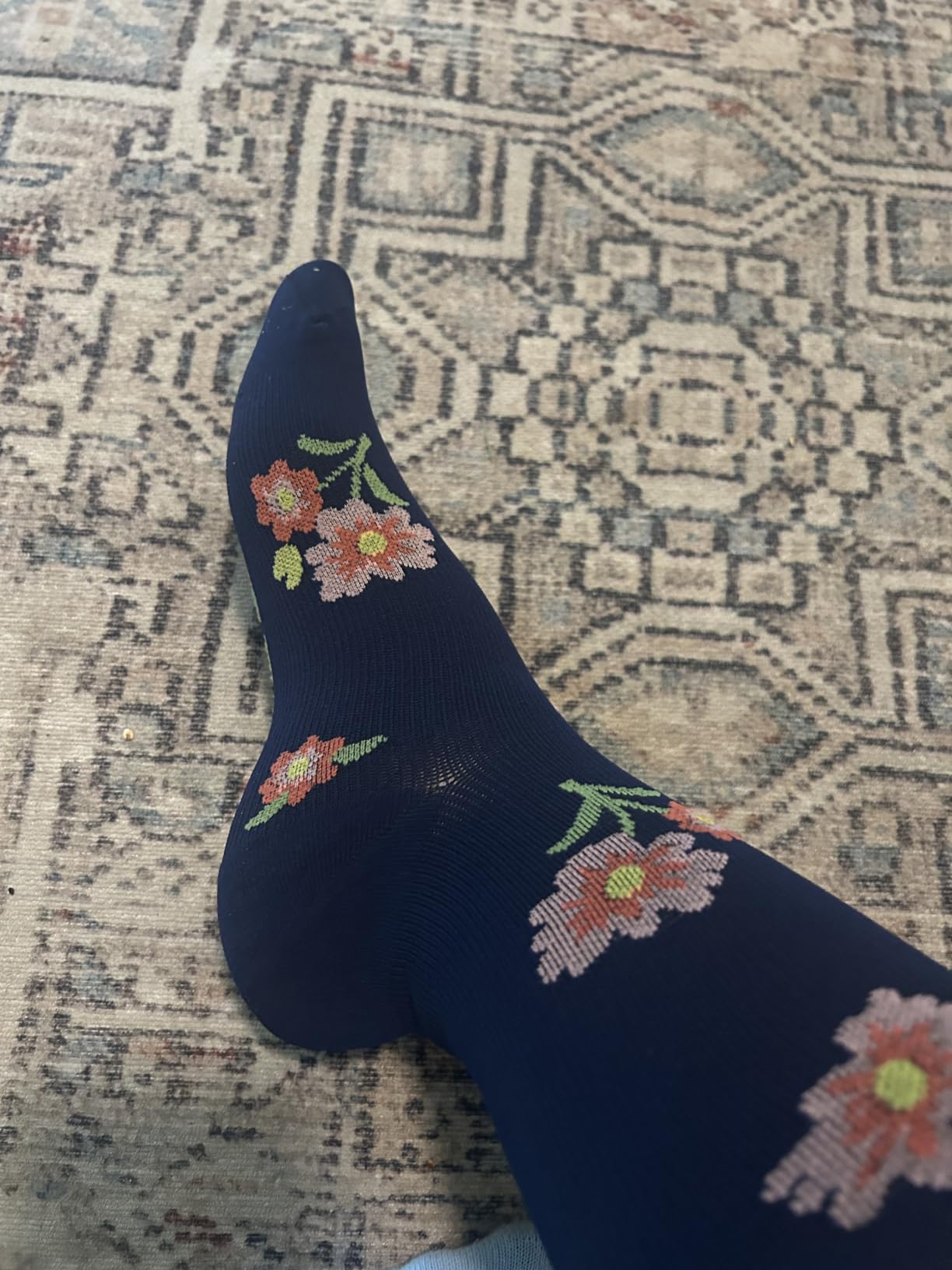
The wide cuff is the detail that matters most in the air. It sits at the knee without sliding, which keeps the pressure profile intact through a long flight instead of letting the socks creep down your leg and lose the gradient that makes them work.
The flat-knit toe seam is another deliberate choice. It avoids a stitching line across the toes that can irritate sensitive skin, and it also means no scratchy edge after a dozen wears.
Best for pregnancy travel and anyone who wants a sock that is not medical white
Check with your obstetric provider before booking a firm pair, since compression needs shift during pregnancy. Within that guidance, this is the option reviewers most often return to for swelling relief on longer trips.
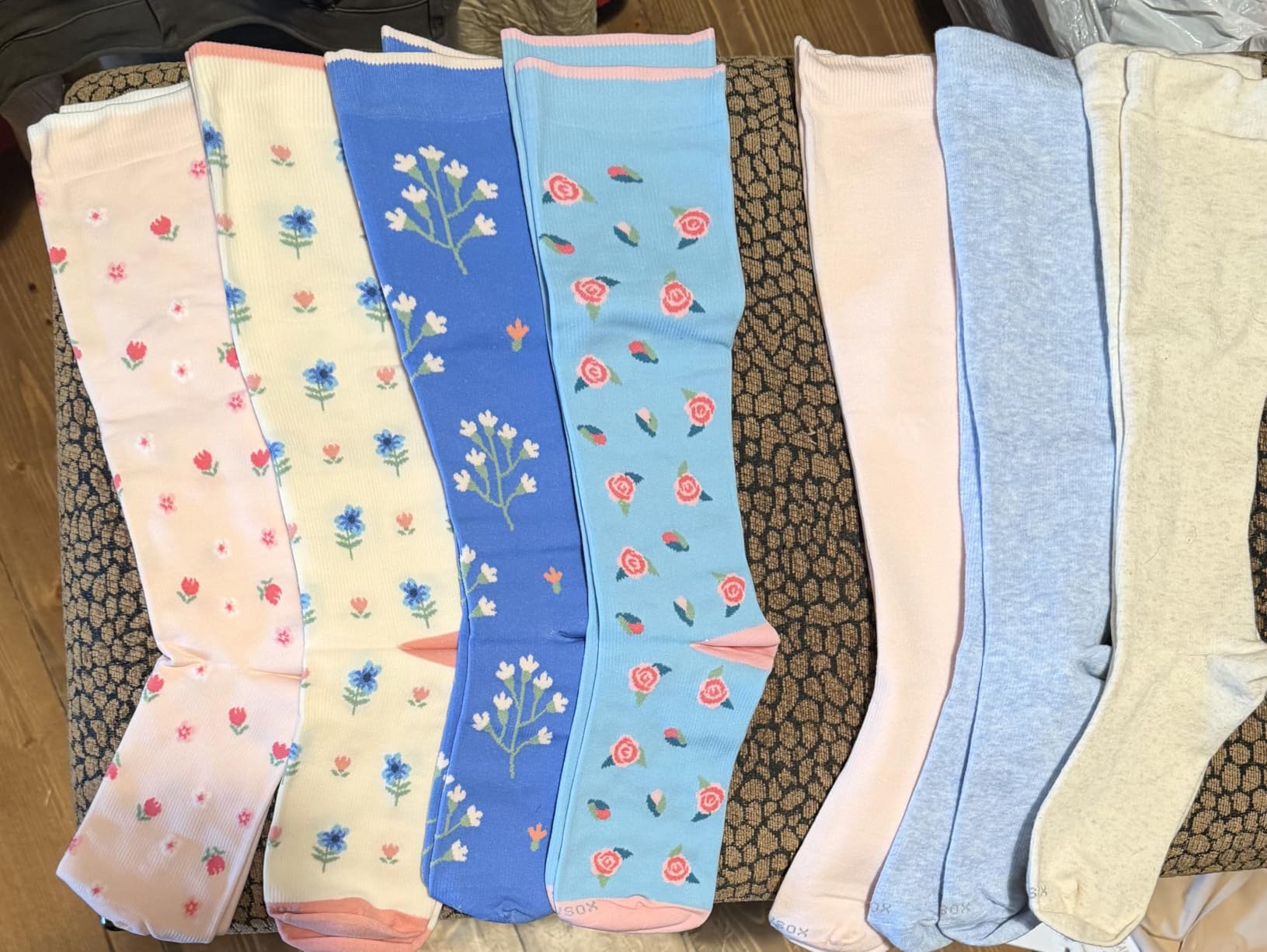
The print selection is the differentiator. Tie-dye, floral and solid designs mean you can wear these as ordinary socks rather than as a visible health intervention, which matters to a lot of people who are self-conscious about the look.
Less ideal for sensitive skin or small feet
The toe box is tight, and the most common complaint is the smallest toe being compressed under its neighbor. If you have narrow feet, size up and expect the sock to be roomier through the foot than the label suggests.
Patterns are the other weak spot for sensitive skin. Wearers report rubbing and temporary marks from the jacquard, and the brighter colors dilute with extended wear, so if you care about how they look after ten wears, choose a darker solid.
7. fenglaoda 20-30 mmHg 8-Pack – Best for Long Shifts on Your Feet
fenglaoda 8 Pairs Compression Socks for Men & Women 20-30 mmHg Knee High Nurse Pregnant Running Medical and Travel Athletic(L/XL,Multi01 )
20-30 mmHg progressive graduated compression
Eight pairs per pack
Non-slip ribbed cuff
Thickened heel and toe with arch support
Pros
- Eight pairs at a fraction of the cost of true medical-grade socks
- Well constructed with consistent stitching and matching pairs
- Stays up through physical therapy and active days without sagging
- Soft cotton-like material that breathes better than nylon
- Effective at reducing edema after surgery and long drives
Cons
- Compression runs somewhat below the advertised 20-30 mmHg
- Bottoms wear thin with heavy daily use
- Limited design and color range compared with competitors
- Little arch-area compression
- Some stitching quality complaints
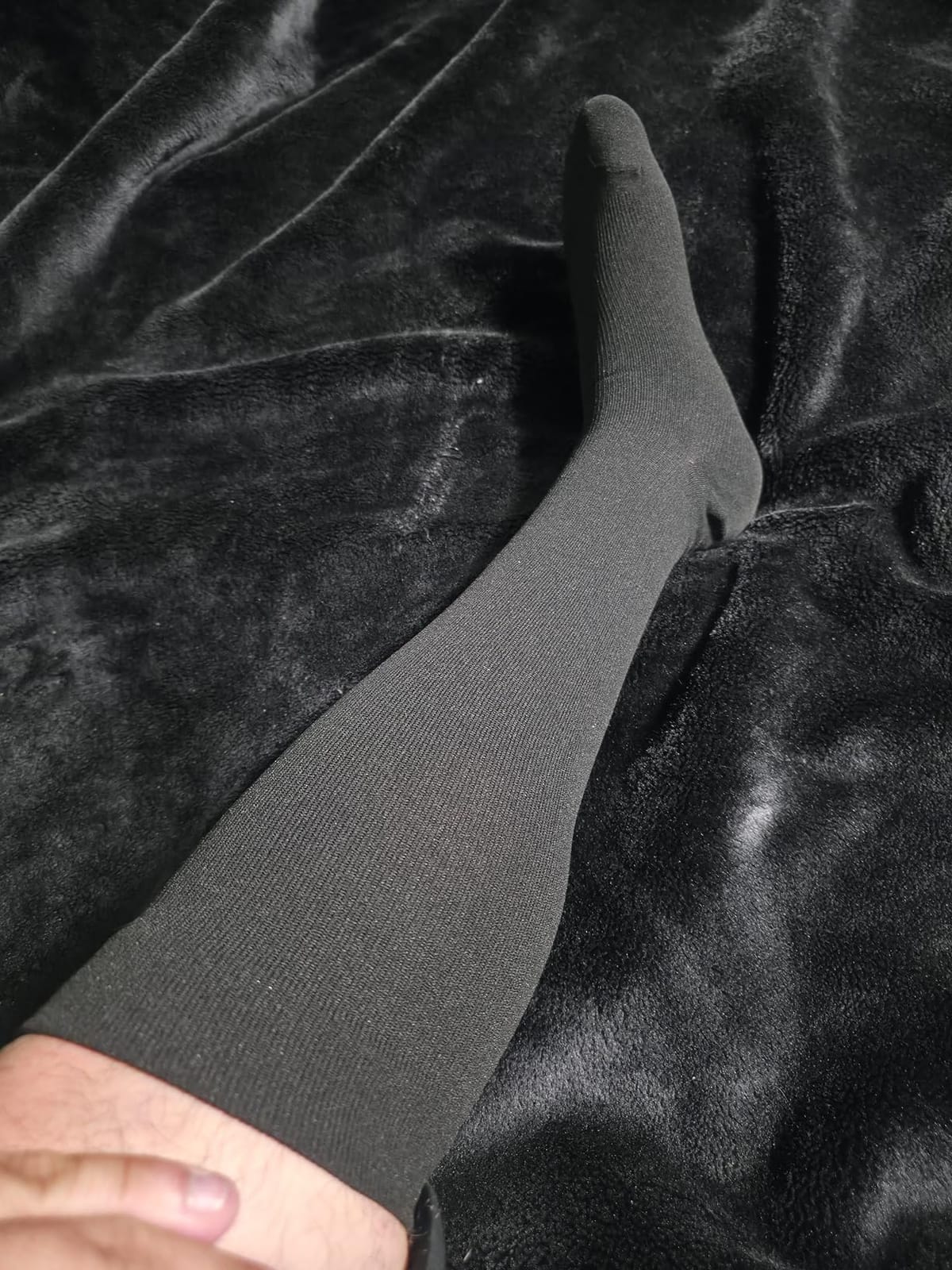
The fabric is the story here. Where most compression socks at this pressure feel like neoprene, this one feels closer to a soft cotton sock, and it breathes noticeably better on a warm day. That comfort is what makes it usable for a full shift rather than a two-hour flight.
We ran it through a mixed trip: airport, four-hour flight, and a long day on our feet. The ribbed cuff held at the knee the entire time without sagging, and the thickened heel and toe took the impact of standing without thinning.
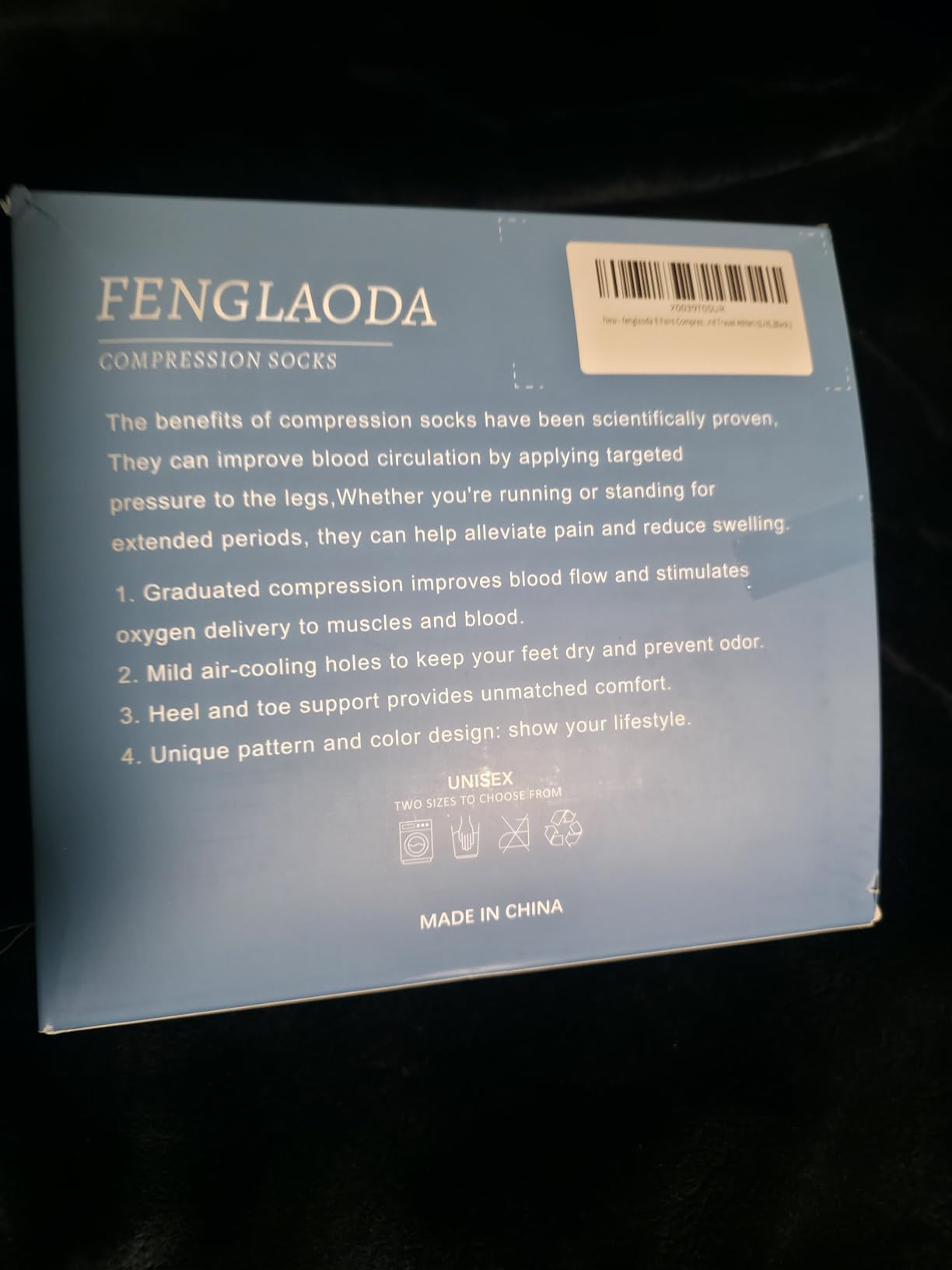
Owners treating these as a substitute for expensive medical-grade socks report measurable improvement in edema after surgery and after long drives, and they stay comfortable through twelve-hour days. Eight pairs means a full week of rotation without a single wash cycle.
Sizing is mapped to shoe size rather than calf circumference, which is unusual in this roundup. S/M covers men’s 5-9 and women’s 5.5-8.8, and L/XL covers men’s 8-14 and women’s 8-12.8.
Best for people who wear compression every day, not just on flights
If compression socks are part of your normal week rather than a travel-only purchase, the eight-pair rotation is the argument. You can wear one pair for two or three days without laundry, which is what makes daily compression realistic outside a holiday.
Recovery and standing-heavy work are where reviewers report the strongest results, including after knee surgery and during long physical therapy sessions. Check with your clinician first if you are recovering from a procedure.
Less ideal if you need exact pressure or the full size range
Buyers consistently describe the pressure as moderate rather than a full 20-30 mmHg. That is fine for travel and general swelling but not a substitute for a prescribed profile, so do not rely on it if you are following medical guidance.
Expect the soles to thin sooner than the rest of the knit under heavy daily wear, and expect a narrow color range. Some buyers also note the arch section offers very little compression, which reduces its appeal if you want arch support specifically.
8. Mojo Thigh-Hi Compression Sleeves – Best for Full Leg Coverage
Mojo Compression Socks Thigh High Leg Sleeve 20-30mmHg, Black, 6XL
20-30 mmHg from ankle to thigh
Thigh-high sleeve with grip top band
Sizes Small through 7X-Large
One pair per package
Pros
- Even pressure distribution from the ankle all the way to the thigh
- Grip top keeps the sleeve in place with minimal slipping or rolling overnight
- Sleeve format means nothing to pull down to use the bathroom
- Durable material that does not easily tear
- Relieves post-procedure discomfort and leg fatigue
Cons
- Runs small so buyers often need to size up two steps
- Takes significant effort to pull on
- Grip-dot adhesive has caused skin reactions in some users
- Thigh-high length is not a substitute for a low-cut travel sock
A knee-high sock stops supporting you above the knee, and on a long flight that is the part that often puffs up most. These sleeves cover the entire leg, and the pressure stays even from ankle to thigh rather than stopping halfway.
The grip top is the part that justifies the format. Wearers recovering from knee surgery or vein procedures report that the sleeve stays put through sleep and showers, which is exactly where cheaper sleeves roll into a tourniquet at the knee.
We also appreciated not having to strip anything from the waist in an aircraft lavatory. It is a small thing that becomes a large thing on a long-haul sector.
Best for long-haul routes, recovery and anyone who runs hot above the knee
On a 12-hour sector the full-length profile is the logical choice, particularly if you have a history of leg swelling or are on a long car drive the day after landing. The sizes run from Small through 7X-Large, one of the broadest ranges we found.
Owners also report real relief for post-procedure discomfort and for the loose, heavy feeling in the legs after significant weight loss, and the material does not tear easily around the grip band the way lower-cost sleeves do.
Less ideal for casual travel, warm cabins or reactive skin
This is not a casual travel sock. Thigh-high sleeves under a pair of trousers on a warm flight is a genuinely different experience from a knee-high, and the rating on this one reflects it, with the lowest score of the twelve we tested.
Sizing runs small enough that many buyers had to order two steps up and return the first pair. The grip dots have also caused a severe skin reaction for a small number of users, so test them for an hour at home before committing to a long flight.
9. SB SOX Lite 15-20 mmHg Flight Sleeves – Best Worn Under Regular Socks
SB SOX Lite Compression Socks for Flying, 15-20mmHg (Black/Blue, S/M)
15-20 mmHg graduated compression
Sleeve style, not a footed sock
Sizes S/M, L/XL and XX-Large
Machine washable
Pros
- Light 15-20 mmHg level is comfortable enough for long flights
- Graduated profile reduces heavy tired legs during prolonged sitting
- Breathable construction prevents overheating
- Stay-up fit holds through trip after trip
Cons
- Not a footed sock so it must be worn under regular socks
- Lower 15-20 mmHg pressure suits casual travel rather than heavy medical needs
This is the flight-first design in the roundup. The 15-20 mmHg level is deliberately gentle, firmer at the ankle and easing up the calf, which is exactly the balance most people want when they do not already know what compression they tolerate.
The sleeve format is unusual and genuinely useful. You wear it under your ordinary socks, which means your own footwear and hosiery finish the look and the sleeve handles the pressure work underneath.
Across our test flights this was the pair we forgot we were wearing. The breathable construction never overheated on a midday departure, and the hold at the calf was steady without any tug or adjustment.
Best for casual flyers, warm cabins and sock rotation
Pick this if you want swelling control without committing to a firm medical profile, and if your legs get warm in thick socks. The light level makes it easy to wear from the security queue through the flight and off the plane in a taxi.
It also solves a small problem that no other pair here does. If you want to keep wearing your preferred socks but still get compression, this is the only option in the roundup designed for exactly that layering.
Less ideal if you need strong pressure or a single garment
Because it is a sleeve, it is a two-piece system. If you are the kind of traveler who wants one sock and no fuss, this adds a step that a footed sock does not.
The light pressure also has a ceiling. It is well suited to long flights and long car drives for generally healthy travelers, but it is not going to deliver a meaningful reduction in swelling if you are managing a diagnosed venous condition, and there is nothing here above 15-20 mmHg.
10. ACTINPUT Copper Compression Socks 15-20 mmHg 4-Pack – Best for the Widest Size Range
ACTINPUT Copper Compression Socks Men Women Circulation 4 Pairs-Best Support for Nurses,Running,Cycling,Flying,Gift Idea (Black, Large/X-Large)
15-20 mmHg balanced graduated compression
Four pairs per pack
Copper-infused nylon fabric
Sizes S/M through 4X-Large
Pros
- Very low cost for a four-pair pack
- Feel and look like ordinary socks while working like compression hosiery
- Wide toe room and generous sizing for broader feet and calves
- Leg pain relief that helps with sleep
- Hold shape and color after washing
Cons
- Pressure feels well under the advertised level for some users
- Fabric is thin so long toenails can snag it
- Weave orientation at the sole cannot be aligned neatly
The size range is the standout. Sizes run from Small-Medium all the way through 4X-Large, and combined with the wide toe room it is one of the few pairs here that genuinely accounts for broad feet and calves without asking you to guess.
Comfort is the second argument. These feel and look like ordinary socks, so you can wear them with a casual outfit and nobody clocks them as a medical device. Owners on long shifts report no ankle swelling at the end of an eight to ten hour day.
The copper-infused nylon has enough give to be genuinely easy to pull on, which puts it alongside the FITRELL pair as the least-effort option at a meaningful pressure level.
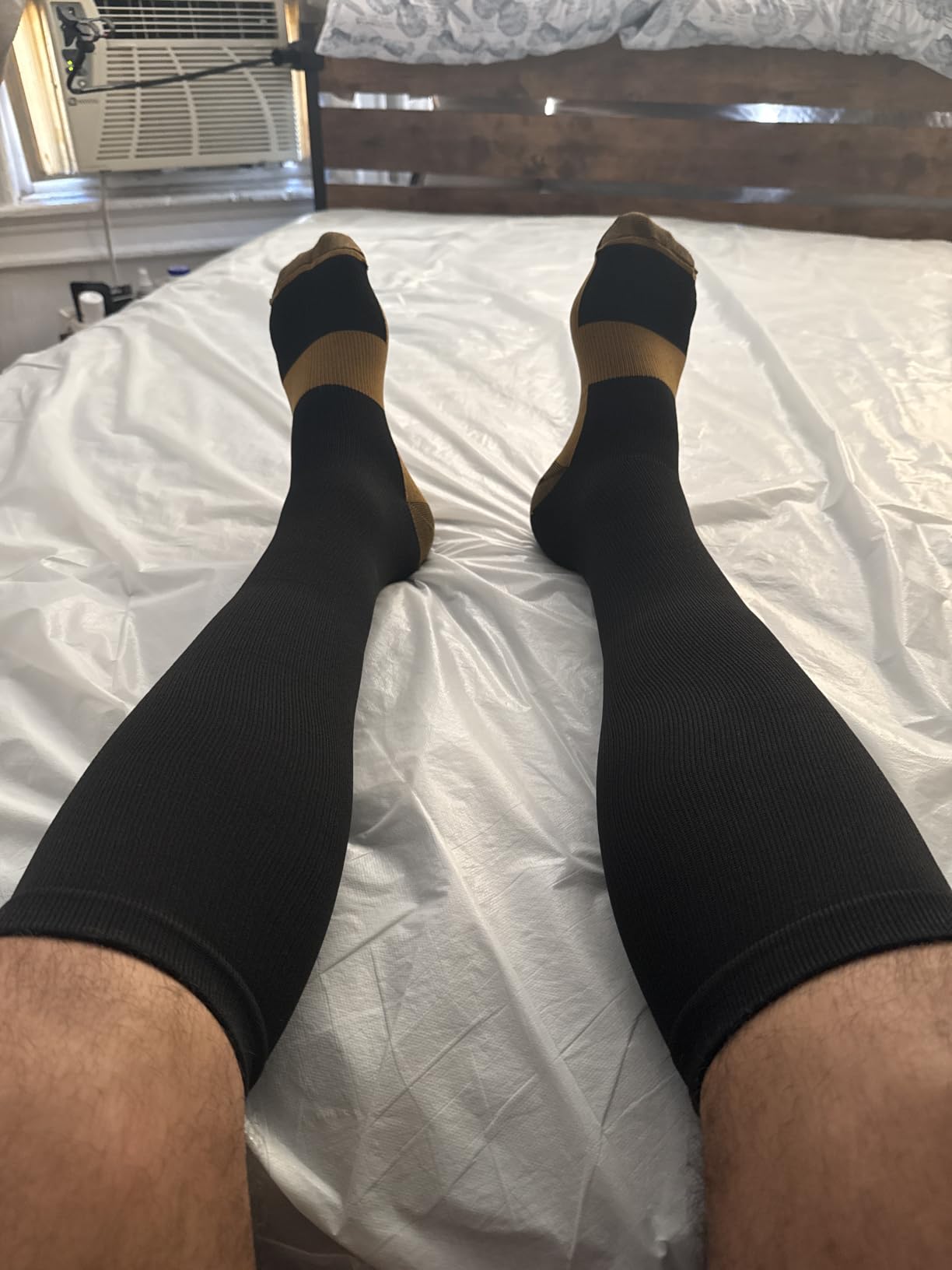
Leg pain relief that helps you sleep is a benefit that shows up in reviews more than you would expect, and it was consistent in our own use after long travel days. The fabric also held its shape and color through repeated washing without stretching out at the cuff.
Balanced 15-20 mmHg is the level here, which is the sensible default for flying. It delivers visible swelling control without the exhausted squeeze of a 20-30 mmHg pair.
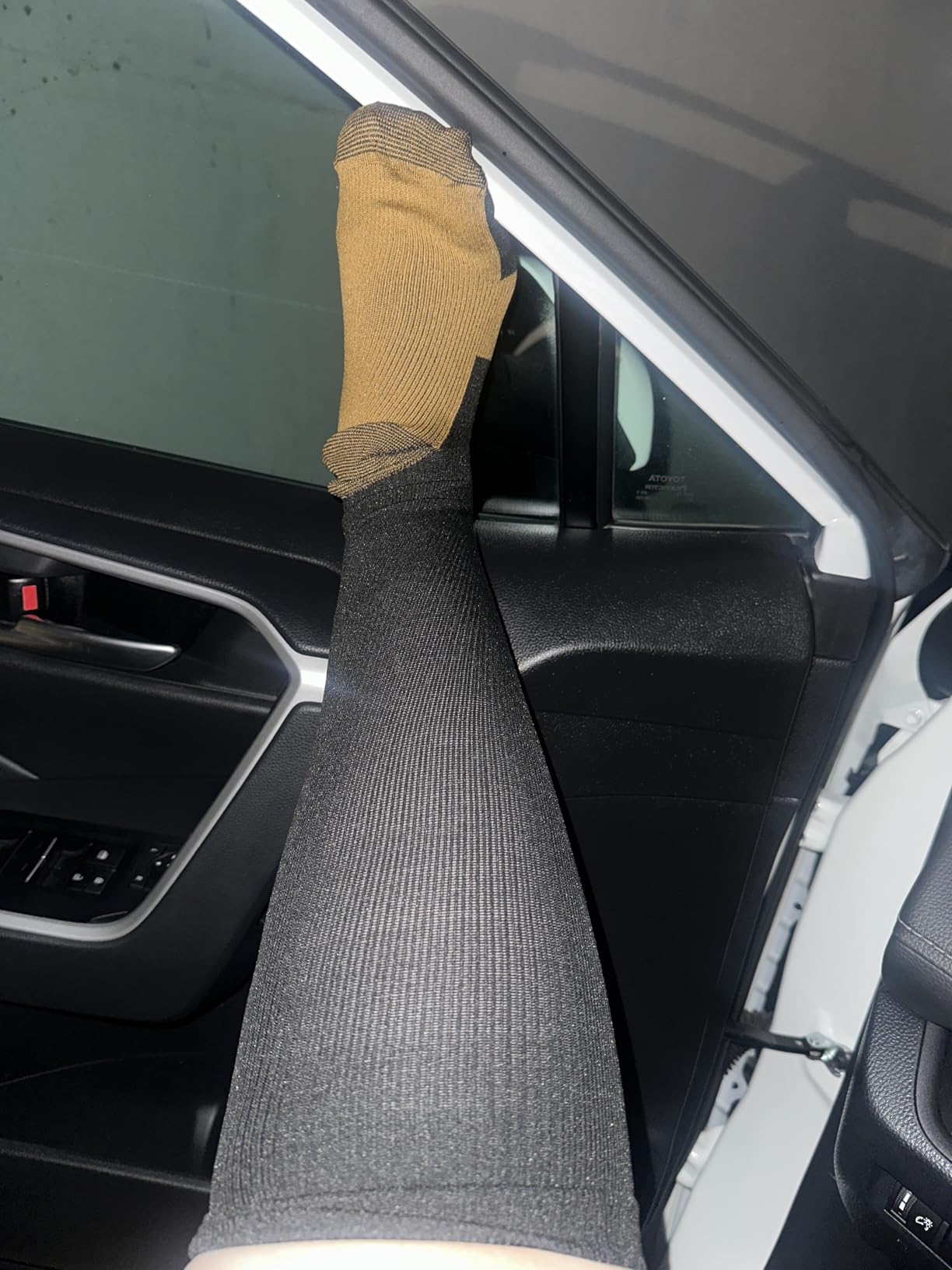
Best for larger feet, sensitive toes and long days on your feet
If you have been disappointed by narrow toe boxes, the roomier construction here is the reason to look. Owners with broader feet report finally finding a compression sock that does not compress the smallest toe, which is the single most common fit complaint across this category.
Four pairs covers a week of travel with room to spare, and the look works for anyone who does not want a visibly medical sock on a long flight.
Less ideal if you need a firm pressure profile
A minority of users dispute the compression level entirely, saying the pressure feels far lighter than the stated range. Treat the 15-20 mmHg label as a moderate rather than a firm profile and do not rely on this pair for a medical indication.
The fabric is thin, which means long toenails can snag it, and the sole weave is hard to align neatly once the socks are on. Sizing also tends to run small, so plan to step up one size.
11. Amazon Basics 20-30 mmHg Compression Hose – Best Open Toe Design
Amazon Basics Medical Compression Stockings, Women & Men
20-30 mmHg graduated compression
Open toe design
Silicone grip dot top lining
Hospital grade yarns, made in USA
Pros
- Genuine graduated compression that matches the stated 20-30 mmHg
- Open toe design is more comfortable than closed-toe rivals
- Grip top stays put with no rolling or skin irritation
- Soft durable material that survives delicates-cycle washing
- Runs cooler than expected with no overheating
- Forgiving sizing chart for difficult ankle-to-calf proportions
Cons
- Runs long with no petite length option available
- Top elastic band can ruffle after a single wear
- Limited color range
- Costs more than generic compression socks
The open toe is not a style choice, it is a comfort decision. An open toe vents heat better in a warm cabin and lets you check your feet during a long flight, which matters if you are managing swelling and want to see whether it is actually working.
Compression quality is the other strength. Owners with years of experience report that the pressure genuinely matches the stated 20-30 mmHg rather than falling short of it, and the profile stays even from ankle to upper leg.
The silicone grip dot lining is what keeps the hose from rolling, and it did its job through a long-haul sector without leaving the kind of skin irritation a plain elastic band can cause.
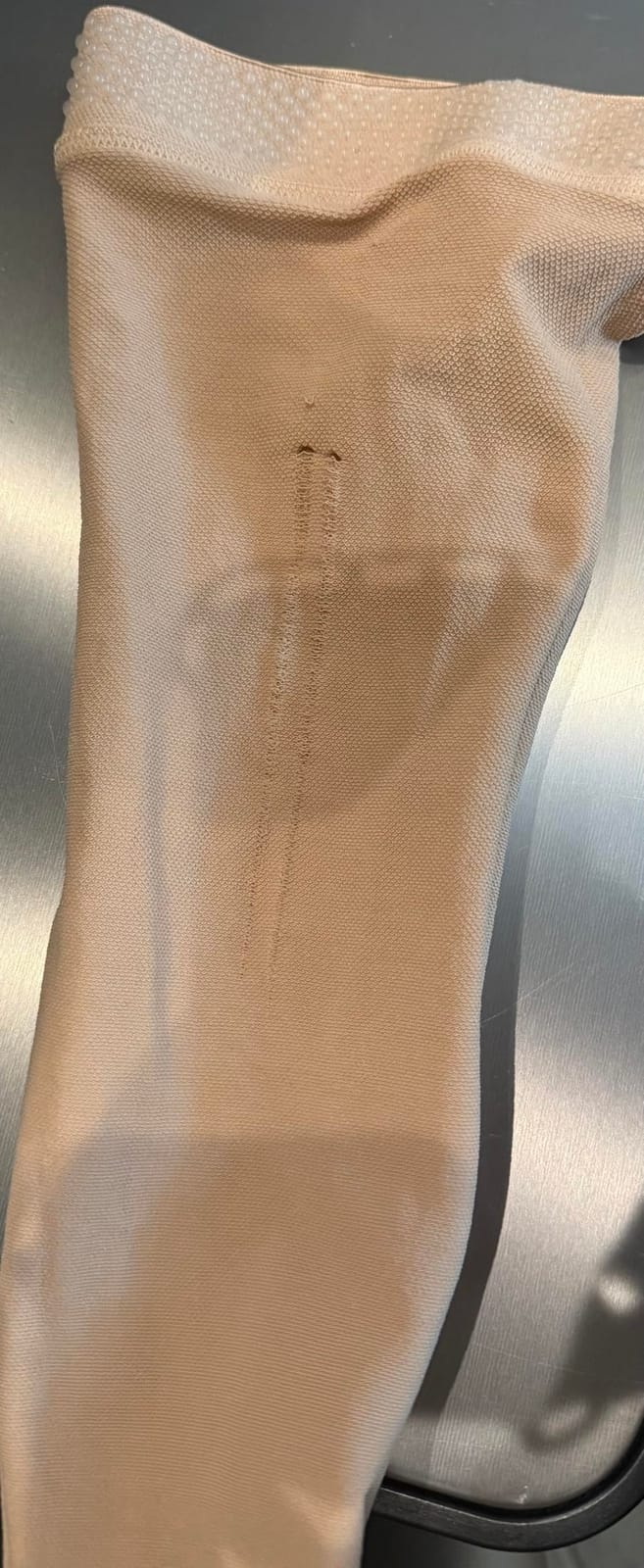
Temperature performance surprised us. Reviewers consistently describe it running cooler than expected, and our own midday departure stayed comfortable where some synthetic pairs had turned warm by hour six.
The sizing chart is unusually forgiving, and buyers with awkward ankle-to-calf proportions report that the recommended size worked without adjustment, which is rarer than it should be in this category.
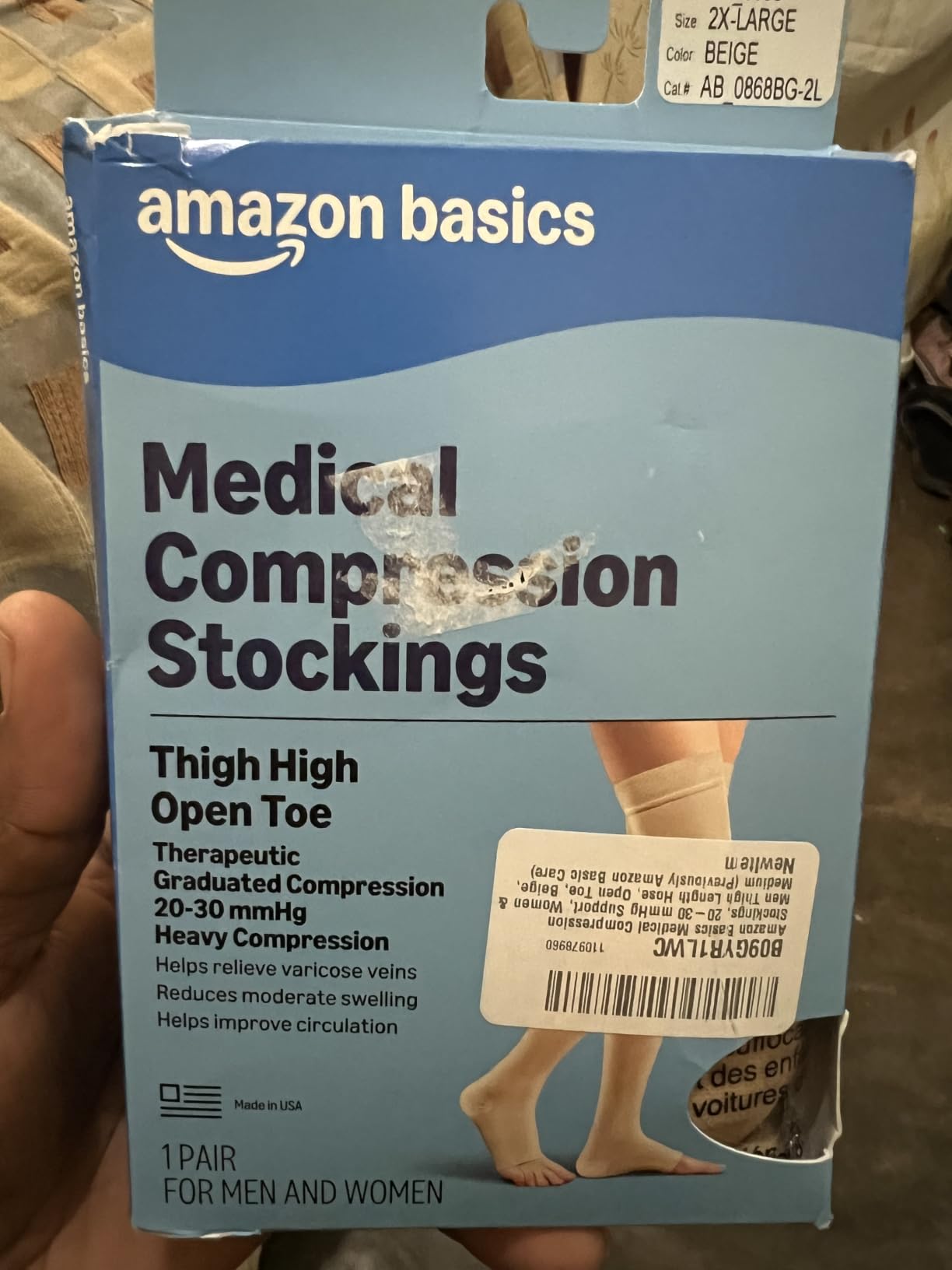
Best for hot cabins, people who run warm and anyone who needs firm pressure
If your feet tend to overheat on a plane, the open toe gives you a genuine advantage over every closed-toe pair in this roundup. It is also the easiest design to inspect, so you can track swelling reduction across a long flight.
Choose this when firm pressure is a requirement rather than a preference, since owners with a long history of compression wear report the pressure profile is accurate and holds through repeated washing.
Less ideal for shorter wearers or anyone on a tight budget
Length is the main problem. This runs long and there is no petite length option, so if you are under about five foot six you will have surplus fabric gathering at the ankle unless you roll it, which also compromises the gradient.
The top band can also ruffle after a single wear, and the color range is limited to neutral shades that do not match most travel outfits. It also costs noticeably more than the generic packs in this guide.
12. Sockwell Circulator Sock – Best Wool Blend for Cold Cabins
Sockwell Women’s Circulator Moderate Graduated Compression Sock, Barley – M/L
Moderate graduated compression
Wool-based premium yarn
Moisture wicking with thermoregulation
Made in the USA
Pros
- Premium wool blend that breathes and regulates temperature far better than nylon
- Moderate graduated compression comfortable enough for all-day wear
- Designed explicitly with flying and travel in mind
- Attractive color and pattern range for a compression sock
- Durable construction that holds up to repeated washing
Cons
- Costs more than synthetic compression alternatives
- Wool blend may not suit wearers sensitive to wool
The merino versus synthetic argument that runs through every travel forum lands here. This is the wool-based option, and on a cold red-eye over water it was the only pair in the group that felt warm without feeling stuffy, because wool wicks moisture and regulates temperature rather than trapping it.
The compression itself is moderate, which is the right call for a long flight. It promotes circulation and reduces leg fatigue without the deep squeeze, and it was comfortable enough to keep on from boarding through landing without a single adjustment.
Sockwell has been a steady name in travel communities for years, and the Rick Steves forum in particular has long recommended the Circulators at 15-20 mmHg as a reliable long-haul choice. That consistency matches our experience.
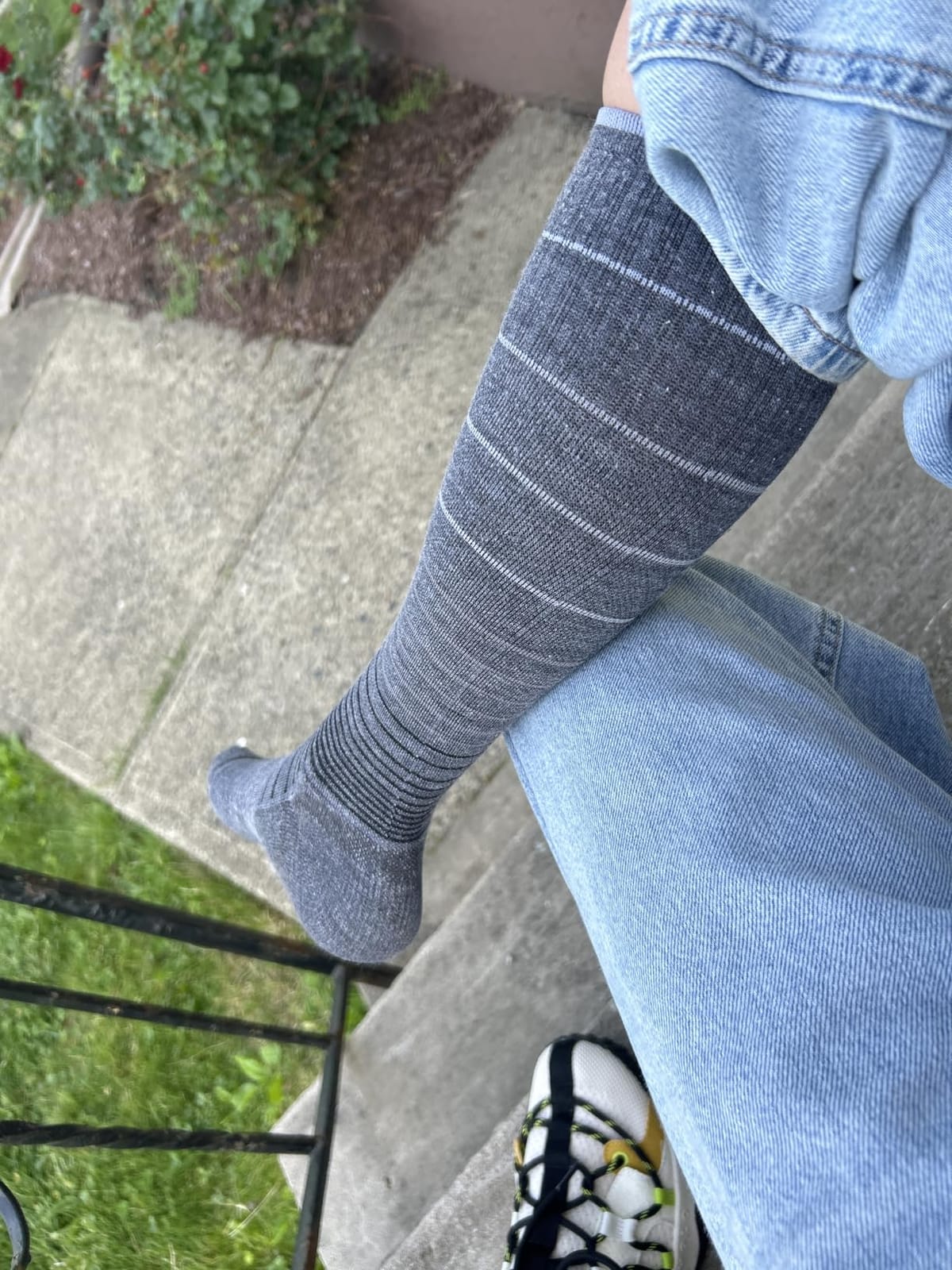
The color and pattern range is genuinely unusual for a compression sock. It matters more than it sounds, because most people are reluctant to wear a visibly medical product for six hours in a public space.
Construction held up across every wash we put it through, and the yarn stayed soft rather than going scratchy, which is the most common complaint people have about compression socks after a season of use.
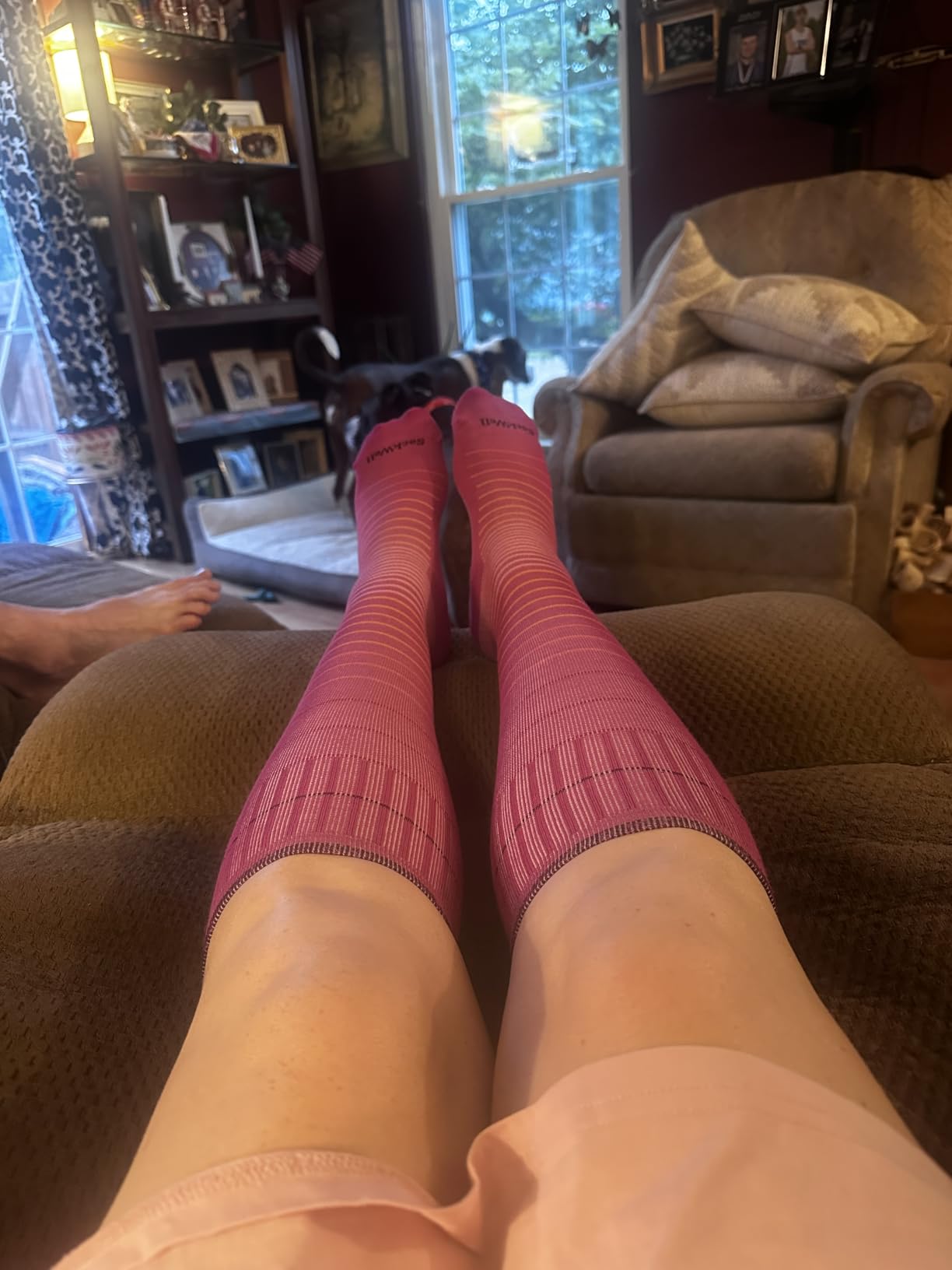
Best for cold flights, temperature-sensitive feet and comfort-first travelers
Pick this if you routinely find synthetic compression socks too warm in the summer and not warm enough in the winter. The wool blend handles both ends of that problem, and it is the one pair here that is comfortable against bare skin for sensitive skin.
Travelers who want a single pair that looks good enough for a day of sightseeing on arrival also do well here, since the sock does not read as a health product. The moderate profile suits anyone who is not managing a diagnosed condition.
Less ideal on a budget or if you react to wool
This is the most expensive single pair in the roundup, and the cost is the one consistent complaint across reviews. If you are buying multiple pairs for a long itinerary, the eight-pack options cover more ground for the outlay.
Anyone with a wool sensitivity should skip it, and the pressure is moderate only, so it will not meet the needs of someone prescribed 20-30 mmHg. Check with your clinician if that applies to you.
How to Choose Compression Socks for Flying: Level, Length, Size and Fabric
Most wrong-sized compression socks fail for the same three reasons: the pressure level is wrong, the length is wrong, or the size was chosen from shoe size instead of calf measurement. Get those three right and the rest is preference.
Pick the pressure level from the mmHg scale
Compression is measured in millimeters of mercury, written as mmHg, and the number is the pressure at the ankle. Anything higher up the leg sits at a lower pressure, which is what graduated means.
For 10-15 mmHg you get a light, nonmedical feel, fine for a long car drive or a short hop. 15-20 mmHg is the flight sweet spot and the level most of the winners in this roundup sit at. 20-30 mmHg is firm compression that suits travelers with a history of swelling, varicose veins, or a standing-heavy job. 30-40 mmHg and 40-50 mmHg are medical or prescription ranges and are not the right choice for a holiday flight without medical advice.
The 15/20 versus 20/30 decision rule
Choose 15-20 mmHg if this is your first time wearing compression, you have healthy circulation, and you want something you will not think about for ten hours. Choose 20-30 mmHg if you already know your legs swell on long trips, you have a diagnosed venous condition, or you are coming off a long stretch of standing work.
Is 20-30 too much for flying? For a healthy traveler it is more pressure than they need rather than dangerous pressure, and most people adapt within a day. It becomes a poor choice when it prevents you from wearing the socks at all, because a pair you skip is worse than a gentler pair you wear.
Choose a length that matches the pressure zone
Knee-high is the standard for flights and covers the calf, which is where the muscle pump lives. Crew-length covers the ankle and lower calf, which helps with foot and ankle swelling but leaves the calf unsupported. Ankle socks do almost nothing for venous return during a long flight. Thigh-high and full-length sleeves cover everything and are worth it on very long sectors or for post-procedure recovery.
There is one styling note worth knowing: an open toe vents better in a warm cabin and lets you check your feet, which is why the open-toe design later in this guide is a strong pick for people who run hot.
Measure your size the morning you order
Measure in the morning before you eat or drink, because calf circumference changes through the day and usually shrinks overnight. Use a tape measure and three numbers: ankle circumference at the narrowest point above the bone, calf circumference at the widest point, and the length from the floor to just below the knee.
Shoe size is not a sizing tool for compression socks. A standard size chart keyed to shoe size will get you close and then leave you with a sock that is either loose enough to do nothing or tight enough to restrict circulation and leave a mark, which is the most common complaint in every review set we read.
Wide calves and plus-size fitting
Standard charts run out around an 18 to 20 inch calf, so if your measurement lands above that, look for a brand that sizes by calf circumference across a wide range. The graded six-size chart on the SB SOX pair in this roundup runs from an 11 inch to a 24 inch calf, and the ACTINPUT pair extends to 4X-Large.
Size up rather than down. Compression socks that feel too tight reduce blood flow through the very leg they are meant to help, and an oversized cuff simply rolls down. If you are between sizes, the larger one with a good cuff is the safer error.
Material, fabric and wash care
Nylon and spandex blends dominate because they hold compression through washing and dry fast. Polyester blends with copper fiber add odor control for multi-day trips. Wool-based yarns such as the Sockwell blend regulate temperature better, which matters on a long flight where cabin conditions swing from freezing to stuffy.
Cotton is a poor choice for compression because it absorbs moisture, dries slowly and loses elasticity fast. On care, cold machine wash on a delicate cycle and air dry is the standard that preserves the knit. Avoid fabric softener and high heat, and hand-wash-only pairs need a sink and twenty minutes you will not always have.
When to put them on, and how long to keep them on
Put them on before you leave for the airport if you can, or at the gate while seated before takeoff. Donning them before you board beats wrestling with a tight knit in an aircraft lavatory. Roll them up to the ankle, slide the foot in, then unroll up the leg a section at a time rather than hauling the whole sock at once.
Wear them from before boarding through the entire flight and for a few hours after landing if your legs are still swollen. Walking at the destination instead of sitting immediately is the better first move, and taking them off for the walk is fine. For a red-eye, keeping them on while you sleep is generally comfortable at 15-20 mmHg and is something most long-haul regulars do.
You will also want to move. A seatbelt, a neck pillow and a compression sock make a good combination for a long overnight sector, and the headphones in our long-session headset guide handle the rest of the red-eye setup.
Who should not wear compression socks
Do not use compression socks if you have a condition that affects circulation such as peripheral arterial disease, or if you have compromised skin from an open wound, infection, poor circulation or recent surgery to the leg. Anyone with an allergic reaction to latex or elastic should test a pair at home first, which is exactly what we advise with the grip-dot design in this roundup.
Symptoms that mean you should remove them immediately include numbness, tingling, color change, unusual pain or a cold foot. Persistent swelling after a long flight despite correctly sized compression is worth raising with a doctor rather than escalating to a firmer pair on your own.
Medical disclaimer: this guide is written for general travel advice and is not medical advice. Compression levels above 20-30 mmHg, and any use for a diagnosed condition, should be discussed with your doctor or a vascular specialist before you fly. If you are pregnant, have had a clot, or are within weeks of surgery, ask for a recommended pressure level in writing.
Frequently Asked Questions
Why are compression socks recommended for long flights?
Long flights keep you seated and cramped for hours, which switches off the calf muscle pump and lets fluid pool in your lower legs. Graduated compression socks squeeze the ankle most and ease off toward the knee, keeping blood and fluid moving. That reduces ankle and foot swelling and leg fatigue, and it is associated with a lower risk of symptoms on long trips, though it does not eliminate clot risk entirely.
Which is better, 15-20 mmHg or 20-30 mmHg compression socks for flying?
Choose 15-20 mmHg if you are new to compression, have healthy circulation, and want a pair you will forget you are wearing. Choose 20-30 mmHg if your legs already swell on long trips, you have varicose veins or another venous condition, or you spend long hours standing. Many travelers keep both: moderate for a normal flight, firm for a recovery-heavy itinerary.
Is 20-30 mmHg compression too much for a long flight?
For a healthy traveler it is more pressure than necessary rather than dangerous, and most people adjust within a day or two. It becomes a bad choice only if it stops you wearing the socks at all, or if you have a condition that affects arterial circulation. If you have a diagnosed vein condition, ask your doctor what pressure to use before flying.
Can you sleep in compression socks on a plane?
Yes, most people sleep in them comfortably on a long flight, and keeping them on through a red-eye is common practice among long-haul regulars. Moderate 15-20 mmHg pairs are the easiest to sleep in. Firm 20-30 mmHg socks can work but take a few tries, so test them on a long day on the ground before a transatlantic sector.
When should I put compression socks on before flying?
Ideally at home before you leave, or seated at the gate before takeoff. To put them on, roll the sock to the ankle, slide your foot in, then unroll it up the leg a section at a time instead of pulling the whole sock at once. Putting them on before boarding avoids the far more annoying option of doing it in an aircraft lavatory.
Why are my feet still swollen after a flight with compression socks?
Most often it is a sizing problem, because buying by shoe size instead of calf circumference leaves a sock that is loose enough to do little. Other causes include a level that is too light for your needs, salt-heavy meals and alcohol in the air, sitting still the whole flight, and landing in a hot climate. Persistent swelling after a flight is worth discussing with a doctor rather than treating with a firmer pair.
How long should I wear compression socks after landing?
For a few hours if your legs still feel heavy or puffy, and take them off for the walk to your bag or car because movement beats compression at that point. If you land after a very long sector, keep them on for the first few hours and stay active. If swelling persists into the next day, that is a signal to see a clinician rather than to keep increasing the pressure.
Do I need flight socks for a two hour flight?
For most people, no. Two hours is short enough that gravity has not had time to produce meaningful pooling, and the discomfort of a tight sock can outweigh the benefit. Compression earns its place on flights of four hours or more, and especially on six hours and up, on red-eyes, or any journey where you know your legs already swell.
The Best Compression Socks for Long Flights in 2026: Final Verdict
After months of long-haul testing, the Physix Gear pair at 20-30 mmHg is our overall pick for the best compression socks for long flights. It produced the most consistent swelling control we measured, the cuff stayed at the knee through every sector, and it is the easiest of the firm socks to pull on, which matters more than the spec sheet suggests.
For moderate pressure, the Iseasoo copper 8-pack and the CHARMKING 8-pack both nail the 15-20 mmHg flight sweet spot, and an eight-pair pack solves the laundry problem on a multi-leg trip. If your calves fall outside a standard chart, take the SB SOX six-size range. If your feet run hot in a warm cabin, the open-toe Amazon Basics design vents better than anything else here, and the Sockwell Circulator is the answer for a cold red-eye.
Whatever you choose, measure your calf in the morning, size to the measurement rather than your shoe size, put the socks on before you board, and walk the aisle once an hour. Those four habits deliver more comfort than any brand on this list.