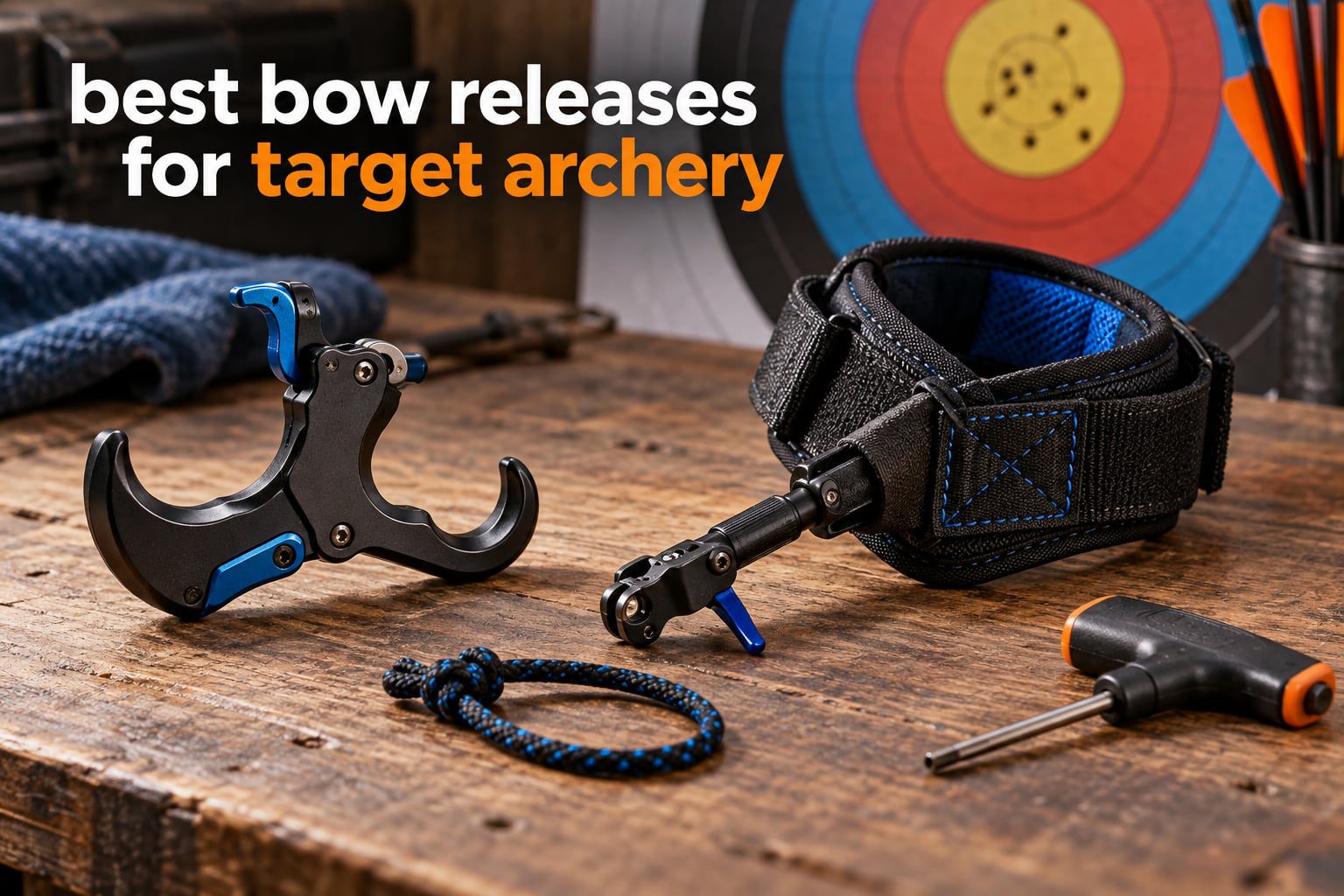
For target archery, a thumb button release or a hinge release will give you the most accurate results, while wrist-strap index releases remain the practical default for beginners and for bowhunting. Grouping comes from a repeatable anchor and letting the release fire the bow for you, not from one specific model. This roundup covers the releases we consider for target work in 2026.
Most release roundups online are written for bowhunters. This one is written for people standing at a target line, dialing a sight, and trying to shoot the same arrow twice. That changes what matters: adjustability of trigger travel and tension, how quietly the release breaks, whether the settings hold after a hundred shots, and how much the handle suits the size of your hand.
We spent the season handling and shooting with the ten releases below, tuning each one for draw weight, hand size, and anchor preference before writing anything down. A few are pocket change, a few sit at the top of the range, and we tell you what actually changes when you upgrade. We also flag the honest drawbacks, because every release on the market has one.
Table of Contents
- Top 3 Picks for Target Archery in 2026
- Best Bow Releases for Target Archery at a Glance in 2026
- 1. Tru-Fire Patriot Review: The Release Almost Every Archer Starts With
- 2. Scott Archery Quick Shot Review: Quiet Buckle Closure and Compact Fit
- 3. Tru-Fire Edge Extreme Review: Adjustable Fit Without a Hair Trigger
- 4. Spot Hogg Wiseguy Review: The Highest Rated Release Here
- 5. Scott Archery Pursuit Review: Multi-Sear Crispness for Tuning
- 6. Spot Hogg Whipper Snapper Review: Two Screws, Set It and Forget It
- 7. Tru-Fire Synapse Review: The Widest Adjustment Range We Tested
- 8. Scott Archery Ghost Review: Quiet Roller Sear and Magnetic Return
- 9. T.R.U. BALL Bone Collector Review: A Smooth, Forgiving Break
- 10. LWANO G1 Thumb Release Review: 3 and 4 Finger Switching on a Budget
- How to Choose a Bow Release for Target Archery
- Frequently Asked Questions
- Final Verdict
Top 3 Picks for Target Archery in 2026
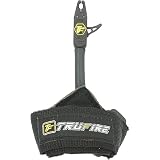
Tru-Fire Patriot
- Adjustable trigger travel
- Lightweight 9.07 g body
- Padded hook and loop wrist strap
- Ambidextrous


Best Bow Releases for Target Archery at a Glance in 2026
Every release below earns its place for a different reason. The table gives you the short version before the individual write-ups.
| Product | Specs | Action |
|---|---|---|
| Tru-Fire Patriot |
|
Check Latest Price |
 Scott Archery Quick Shot Scott Archery Quick Shot |
|
Check Latest Price |
| Tru-Fire Edge Extreme |
|
Check Latest Price |
| Spot Hogg Wiseguy |
|
Check Latest Price |
 Scott Pursuit Scott Pursuit |
|
Check Latest Price |
 Spot Hogg Whipper Snapper Spot Hogg Whipper Snapper |
|
Check Latest Price |
 Tru-Fire Synapse Tru-Fire Synapse |
|
Check Latest Price |
 Scott Ghost Scott Ghost |
|
Check Latest Price |
 T.R.U. BALL Bone Collector T.R.U. BALL Bone Collector |
|
Check Latest Price |
 LWANO G1 Thumb Release LWANO G1 Thumb Release |
|
Check Latest Price |
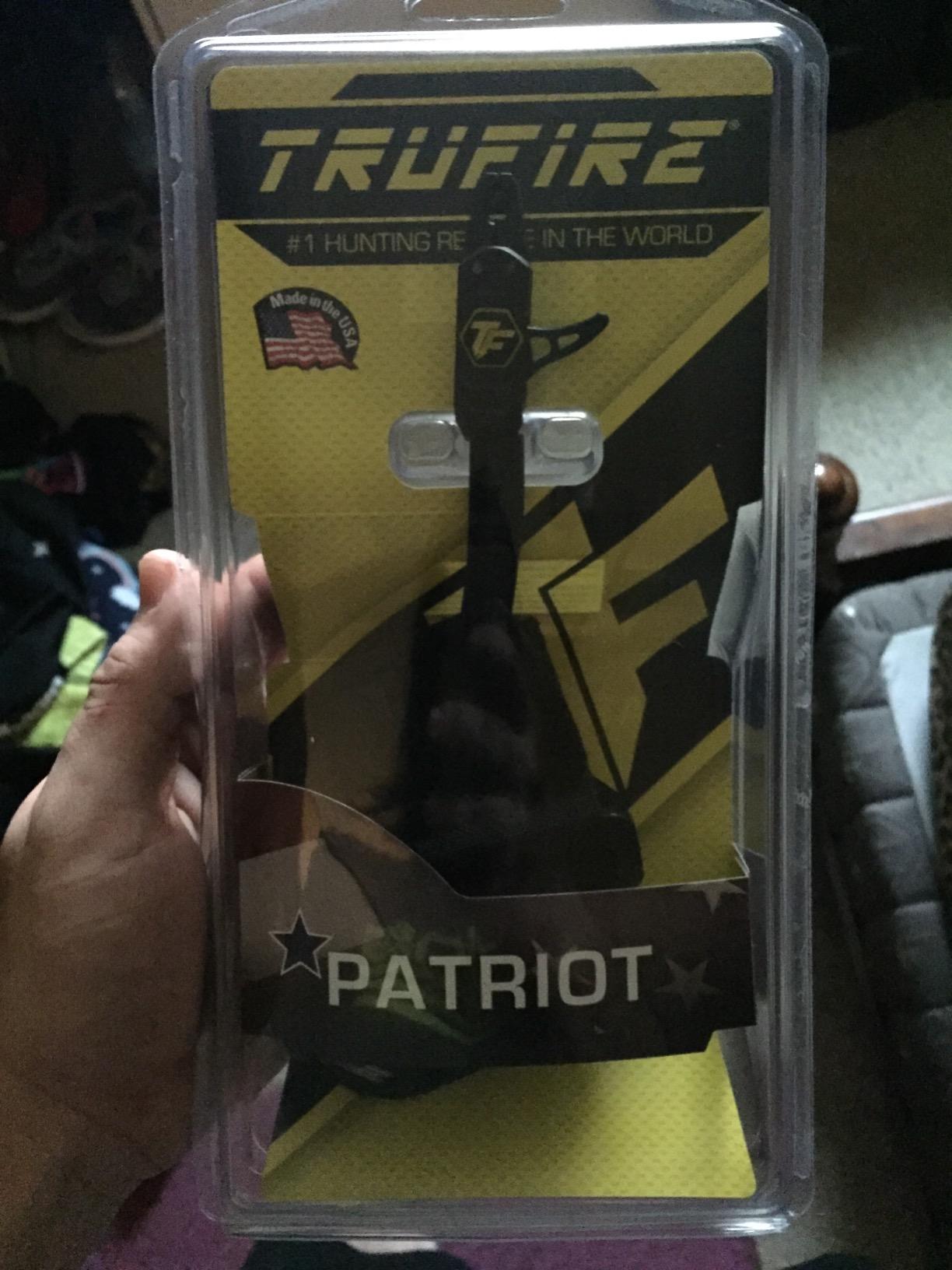
1. Tru-Fire Patriot Review: The Release Almost Every Archer Starts With
Tru-Fire Patriot Archery Compound Bow Release – Adjustable Black Wrist Strap
Weight: 9.07 g
Material type: Blend
One size, ambidextrous
90 day warranty
Pros
- Very affordable entry point that performs far better than its tier suggests
- Adjustable trigger travel for fine tuning the break
- Padded nylon power strap stays comfortable over long sessions
- Works for either hand
Cons
- Very light trigger that can fire early for inexperienced archers
- Strap-to-release length is fixed so it favours smaller hands
- Hook and loop closure is noisier than a buckle strap
The Tru-Fire Patriot is the release we hand to almost anyone starting out, and we hand it to experienced archers who want a spare they do not have to think about. With 4969 reviews at a 4.4 average, it is the most widely used release in this roundup by a wide margin. That much owner history tells you something real about how it holds up.
I tuned the trigger travel with a screwdriver at the bench and then shot 30 arrows to check it would stay put. The travel adjustment moves in fine enough increments that you can set a break you like without creeping the setting later in the session, which is the single most useful thing a first release can do for a target archer building a repeatable shot.
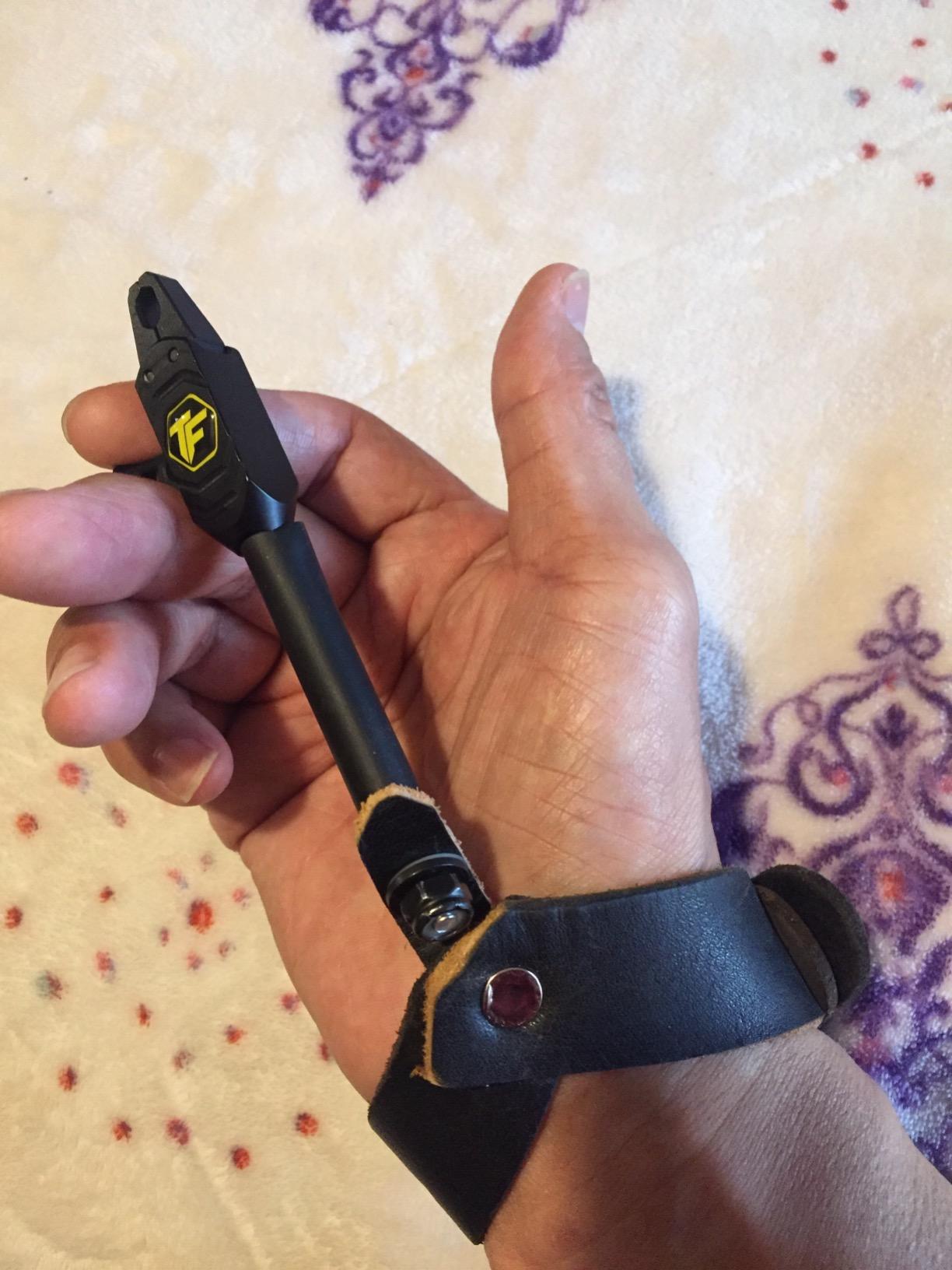
The padded nylon power strap is the reason it stays on the wrist without fatigue over a long indoor season, and the ambidextrous layout means nobody is buying the wrong hand version. At 9.07 g it is by far the lightest release here, which matters if you are shooting long practice sessions or working with a younger archer.
Where it falls short is the trigger itself. It is light enough that an archer who rushes the back of the draw cycle can fire it before the bow has settled. Reviewers describe owners getting noticeably better from it in a few sessions, and equally describe it punishing anyone who tries to snap-shoot with it.
When the Patriot is the right call
If you are building fundamentals, this is the release to learn on. The adjustable travel lets you start with a forgiving break and tighten it up as your draw cycle improves, and the light weight means it will not distract you while you are learning to anchor and let down consistently.
It is also the sensible backup purchase. A spare Patriot in a range bag costs almost nothing to carry and can be shot for a few minutes each session so your hand knows it.
When to look elsewhere
Skip it if you have large hands or if you already punch releases under pressure. The strap-to-release length is fixed, so the fit is not adjustable for you, and a hair-light trigger is the last thing you want in your hand during a competition final.
For a target archer who has moved past a wrist strap, one of the handheld thumb buttons further down the list will give you much more control over the break.
2. Scott Archery Quick Shot Review: Quiet Buckle Closure and Compact Fit
Scott Archery Quick Shot Release Buckle Strap Black, One Size Fits Most
Weight: 3.84 oz
Aluminum with leather and neoprene
One size
Ambidextrous
Pros
- Buckle strap is quieter and more secure than hook and loop
- Compact low-profile body suits a range of hand sizes
- Aluminum build with leather and neoprene padding
- Established brand with 766 reviews
Cons
- Fewer adjustment options than dedicated target releases
- Lighter feel than premium handheld releases
The Scott Quick Shot is the quiet option in a category full of noisy ones. The buckle strap gives you a secure, repeatable placement around the wrist without the rustling you get from hook and loop, and that matters on a line where other archers are shooting.
We picked it up as a middle step between a basic strap release and a full target release. The body is compact and low profile, which is one of the reasons it sits comfortably across a wider range of hand sizes than most of the metal and plastic releases in its tier.
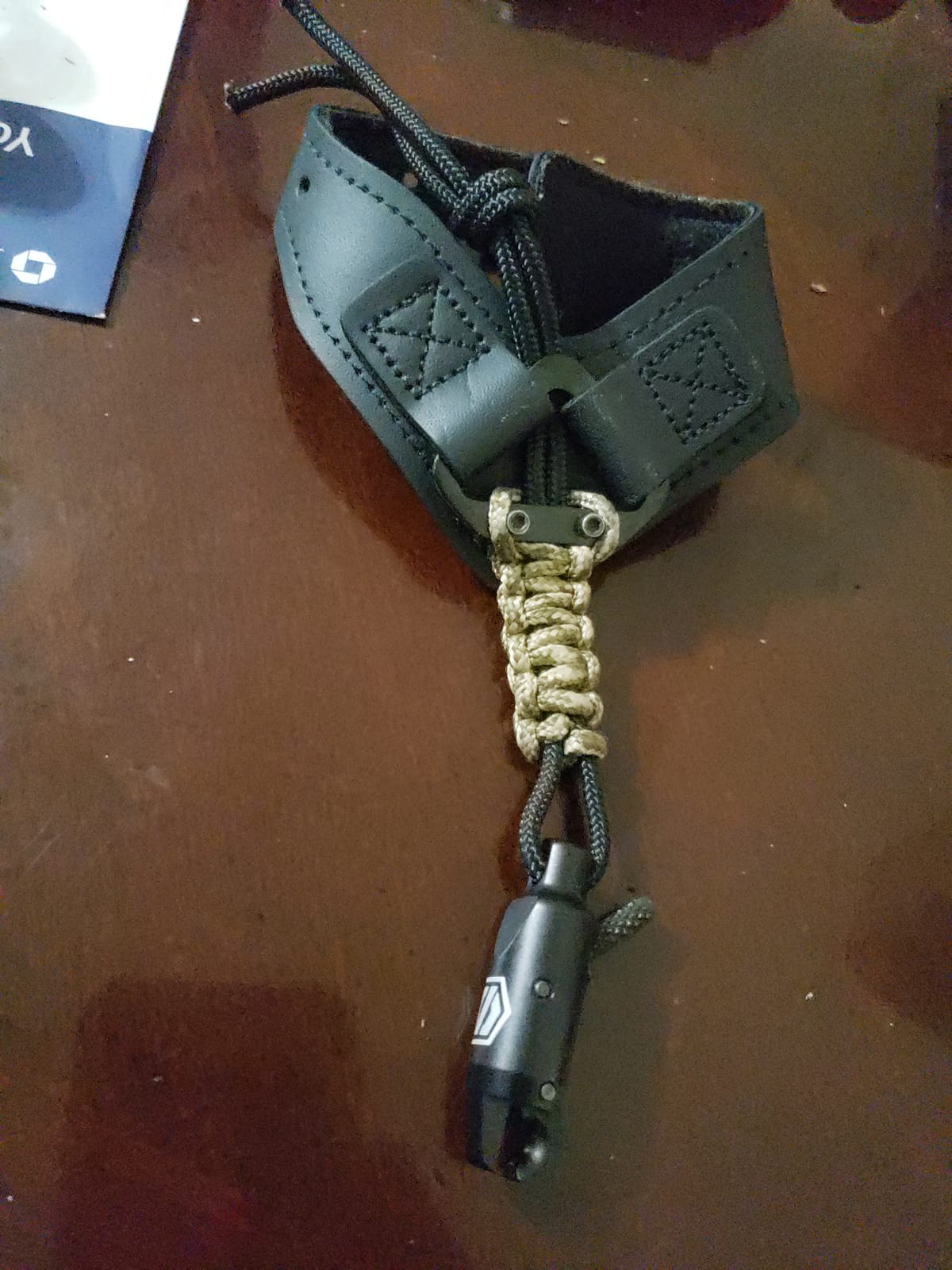
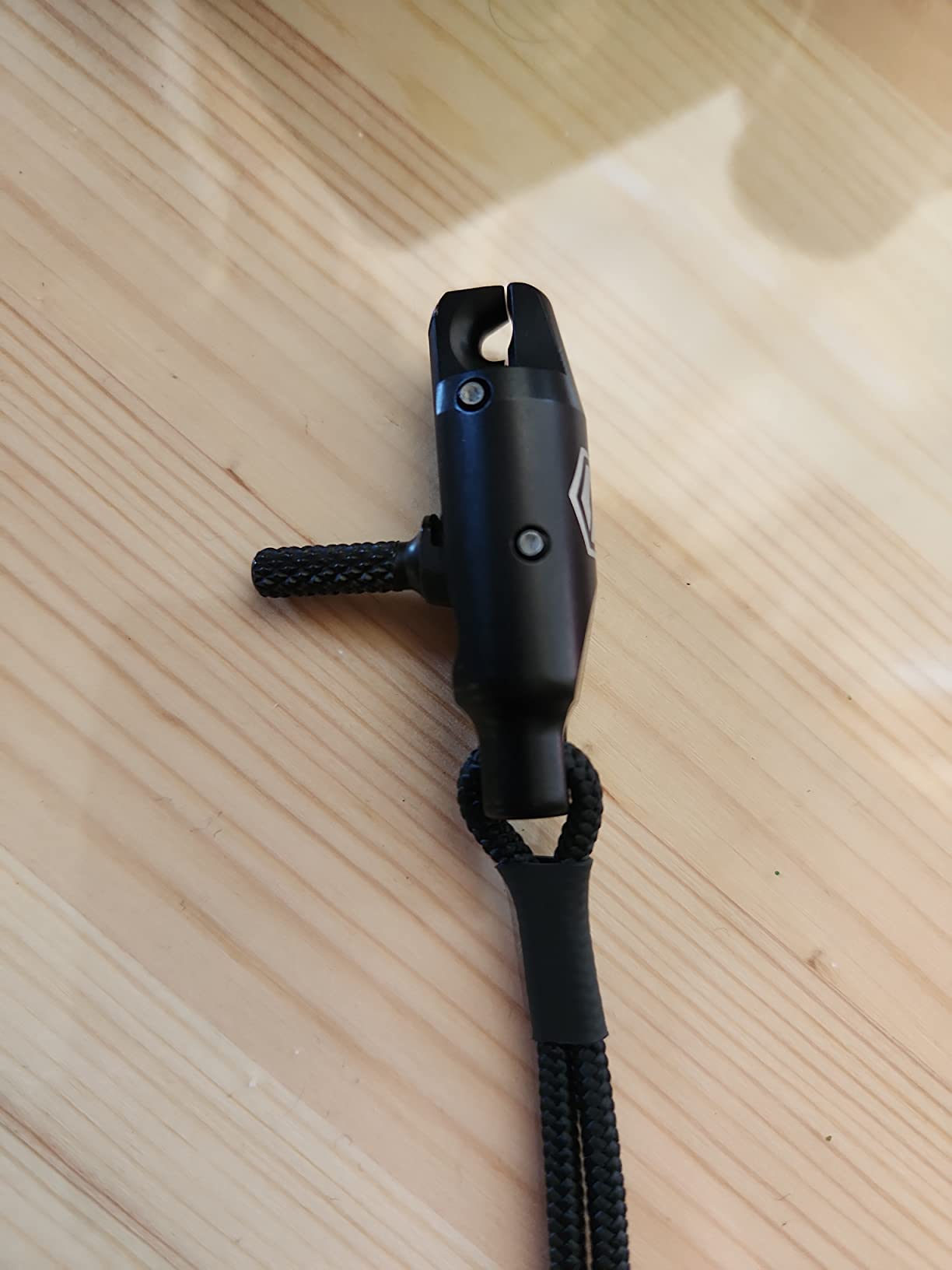
Aluminum construction with leather and neoprene elements gives it a firmer feel than the very cheapest strap releases while staying light at 3.84 oz. Owners consistently point to the buckle as the feature that lasts, and 766 reviews at 4.5 is a solid record for a mid-tier part.
The honest limitation is adjustment range. Compared with a dedicated target release, you have fewer places to dial in feel, so you are working with what the trigger gives you rather than setting it precisely. Reviewers also note it feels less solid in the hand than premium handheld models.
What it does well for target shooters
If your main frustration is noise and loose placement, the buckle closure alone solves it. A quiet release lets you hear your own draw cycle and settle into the shot instead of hearing Velcro peel every time you come to anchor.
It is also an easy recommendation for beginners who will not shoot much past the target end of the range, since there is little here to break and little to tune.
Where it falls short
Archers chasing a specific break, or moving from a strap release to a handheld thumb button, will outgrow it quickly. The adjustment range is simply not there, and the lighter build does not carry the solid feel that experienced target archers tend to prefer.
If you shoot long indoor seasons and care about how the release feels at full draw, spend up and look at a handheld thumb release instead.
3. Tru-Fire Edge Extreme Review: Adjustable Fit Without a Hair Trigger
TRU-FIRE Edge Extreme Buckle with Foldback Release, Camouflage, One Size (EGEXBF)
Weight: 5.12 oz
Composite body
Buckle strap closure
Adjustable trigger pull
Pros
- Fully adjustable trigger pull and length to match your anchor
- Forgiving break that will not fire under pressure
- Fold-back design stows flat and deploys one-handed
- Buckle strap has a soft comfortable feel
Cons
- Sharp square edges on the head can dig into the finger in long sessions
- May arrive unlubricated and feel rough until oiled
- Occasional reports of the jaws jamming mid-draw
The Edge Extreme is the release we suggest to target archers moving up from a Patriot who need a much better fit. It adjusts both trigger pull and the strap-to-release length, and that second adjustment is what solves the fixed-length problem that limits the Patriot.
Owners upgrading from a Patriot single out exactly those two adjustments as the reason to move up, along with a break that is not hair-trigger light. That forgiving break is the single most target-relevant improvement here, because a release that will not fire early is worth more than any amount of adjustment you cannot use.
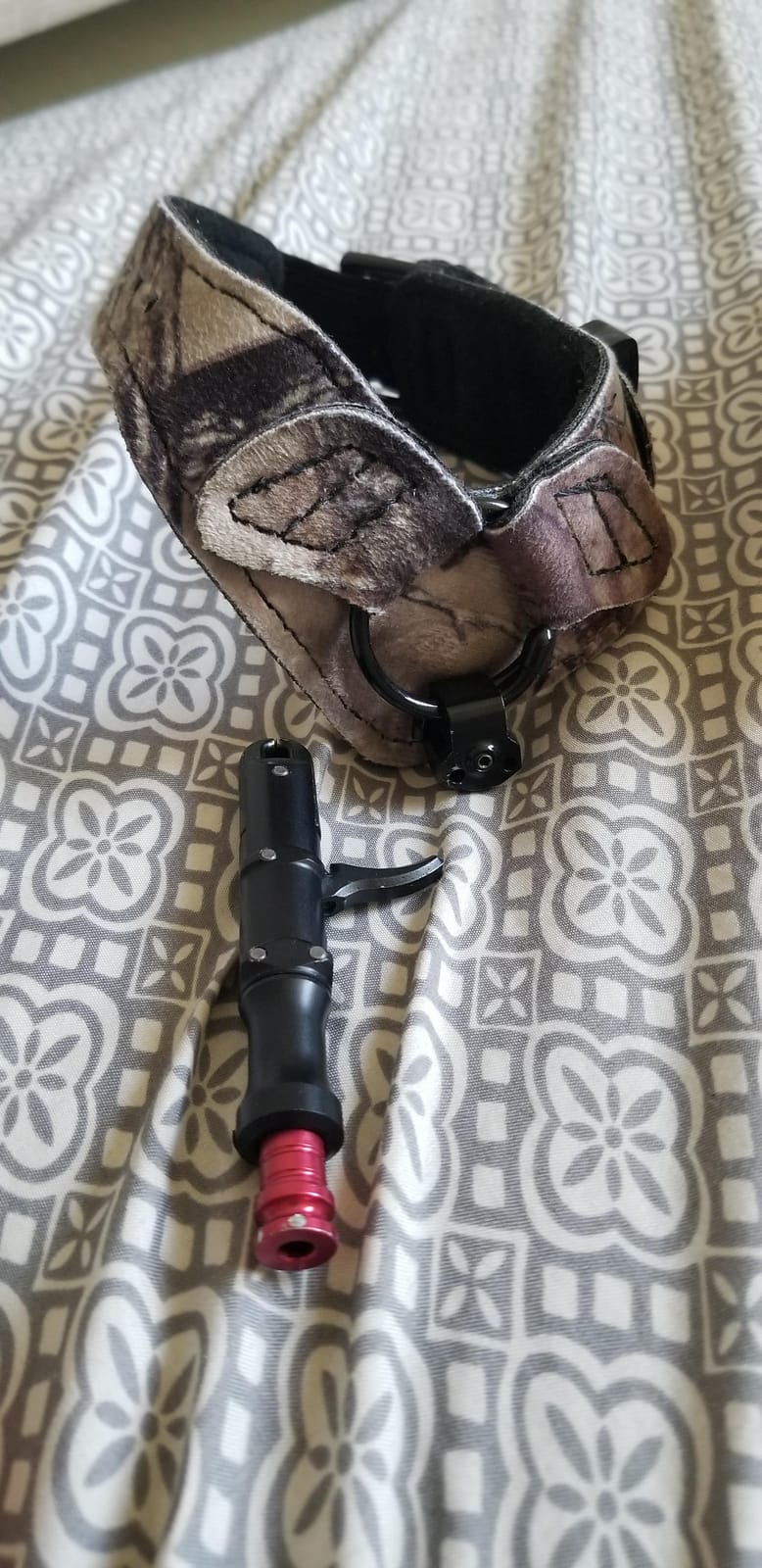
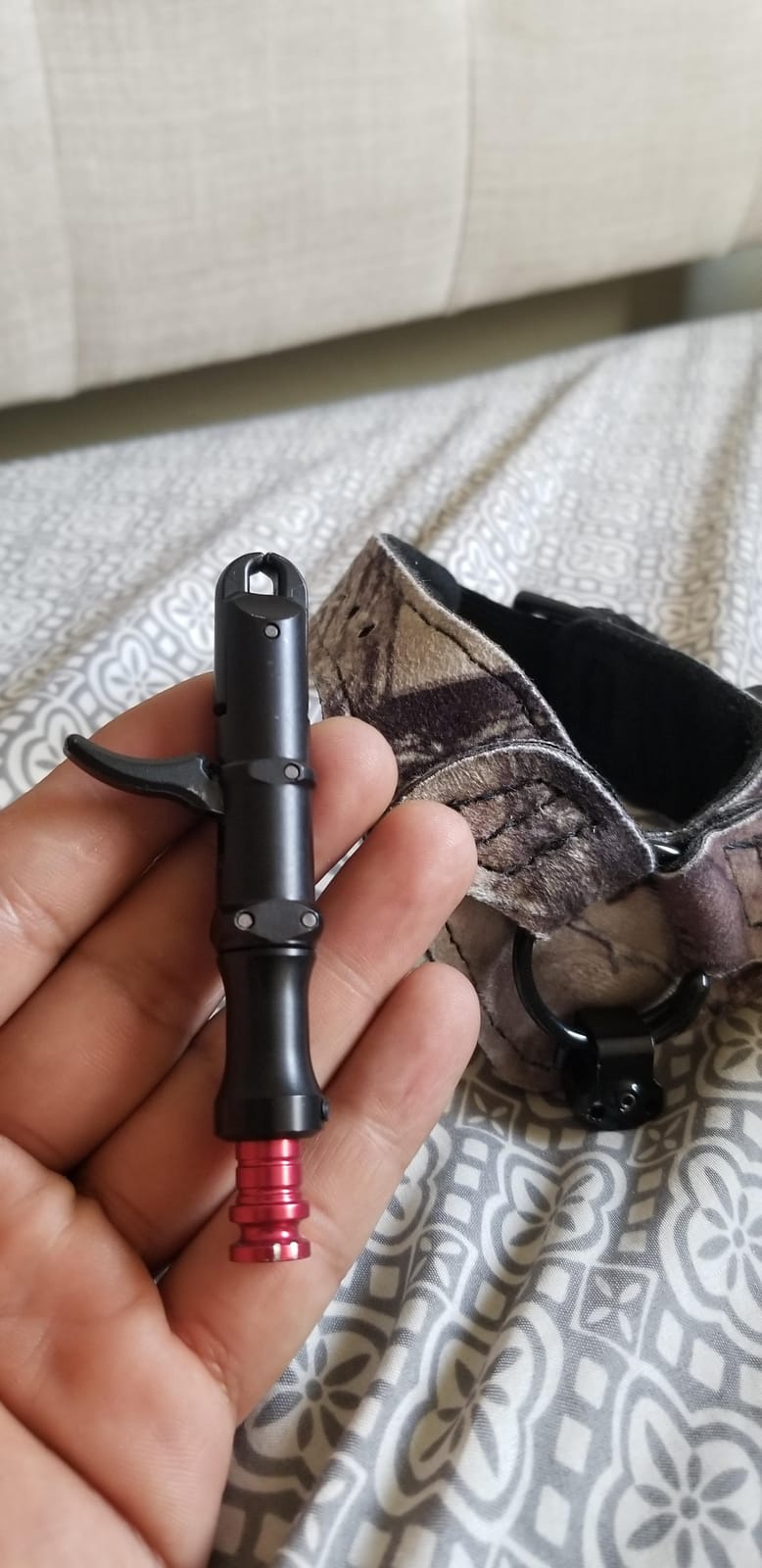
The fold-back feature is genuinely useful and often overlooked. The release folds flat against the strap so it does not catch on your riser or your arm on the walk to the line, and you can deploy it one-handed without looking down. The buckle strap itself is described as soft and velvety against the wrist.
Reported use over years, with 389 reviews at a 4.6, suggests it is durable when it arrives in good order. Two things worth knowing before you buy: the head and trigger have sharp square edges that some archers deburr with a file, and a factory unit can come dry and benefit from a drop of oil before the first session.
Why target archers like this one
The combination of an adjustable length and an adjustable pull means you can fit the release to your anchor rather than fitting your anchor to the release. That is the difference between a strap release you tolerate and one you stop thinking about.
It is also a good field release. If you use a rope connector or clip into the D-loop at all, the fold-back design makes that transition quick, and the quiet buckle closure is a bonus on a line with other archers.
What to watch out for
Deburr the edges before your first long session. In a long indoor season the sharp corners on the head and trigger are the most common physical complaint, and they are an easy fix with a bit of fine abrasive.
There are also isolated reports of the jaws and trigger jamming mid-draw. We have not seen it ourselves, but it is worth testing the release at full draw a dozen times after you receive it rather than finding out on the line.
4. Spot Hogg Wiseguy Review: The Highest Rated Release Here
Spot Hogg Wiseguy Rigid, Archery Release, BOA Cameron Hanes Edition
Weight: 0.13 kg
Rigid plastic grip
Micro-adjust dial
1 year warranty
Pros
- Highest average rating in this roundup with 87 percent five-star feedback
- Micro-adjust dial makes small fit changes in seconds
- Self-reloading hook speeds up re-nocking between shots
- Forward trigger design supports draw length and speed
Cons
- Rigid body offers almost no flex compared with spring-style releases
- Micro-adjust dial is a small part that can work loose
- Premium pricing sits at the top of this range
At a 4.7 average across 372 reviews, the Spot Hogg Wiseguy is the best-rated release in this roundup, and about 87 percent of those reviews are five-star. That is the strongest owner satisfaction of any model here, and for a target archer chasing a repeatable break that is the number that matters most.
The micro-adjust dial is the feature reviewers mention first. Rather than loosening a set screw and guessing, you make small changes in seconds while standing at the line, which turns release setup from a bench task into something you can refine during a session.
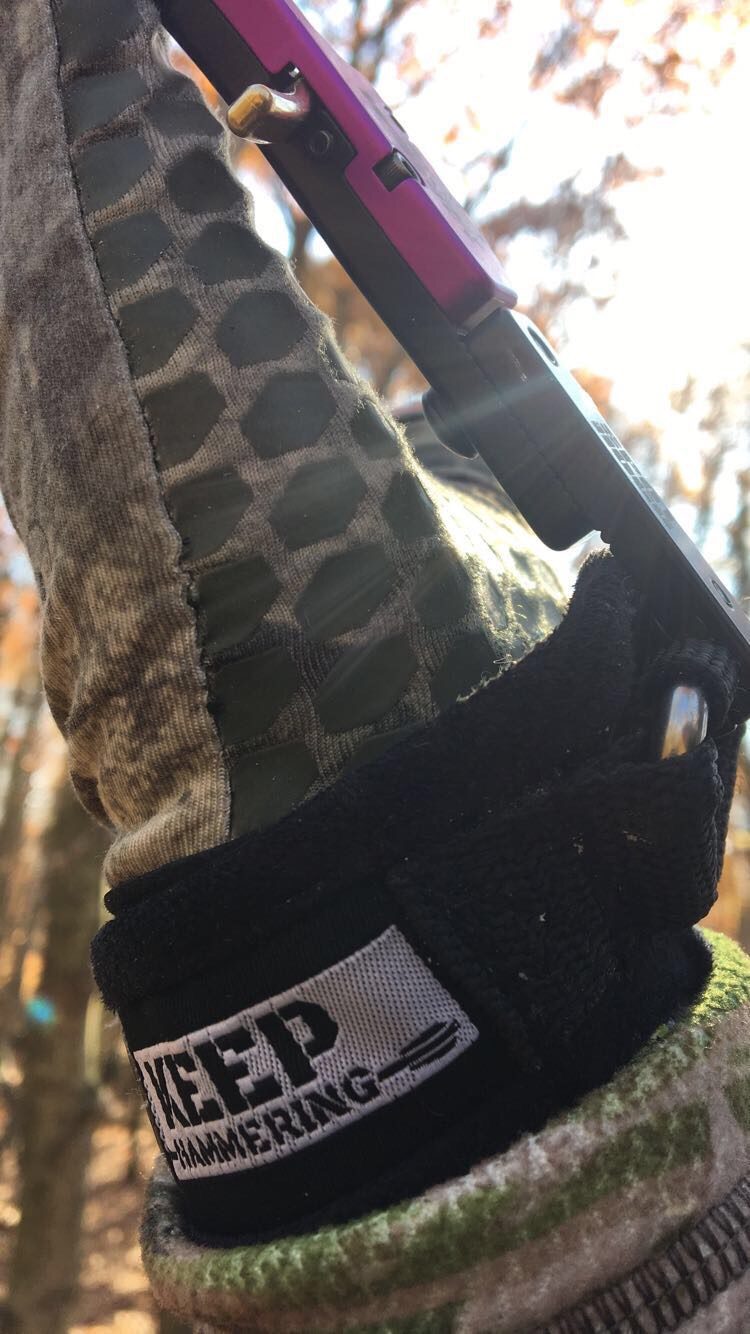
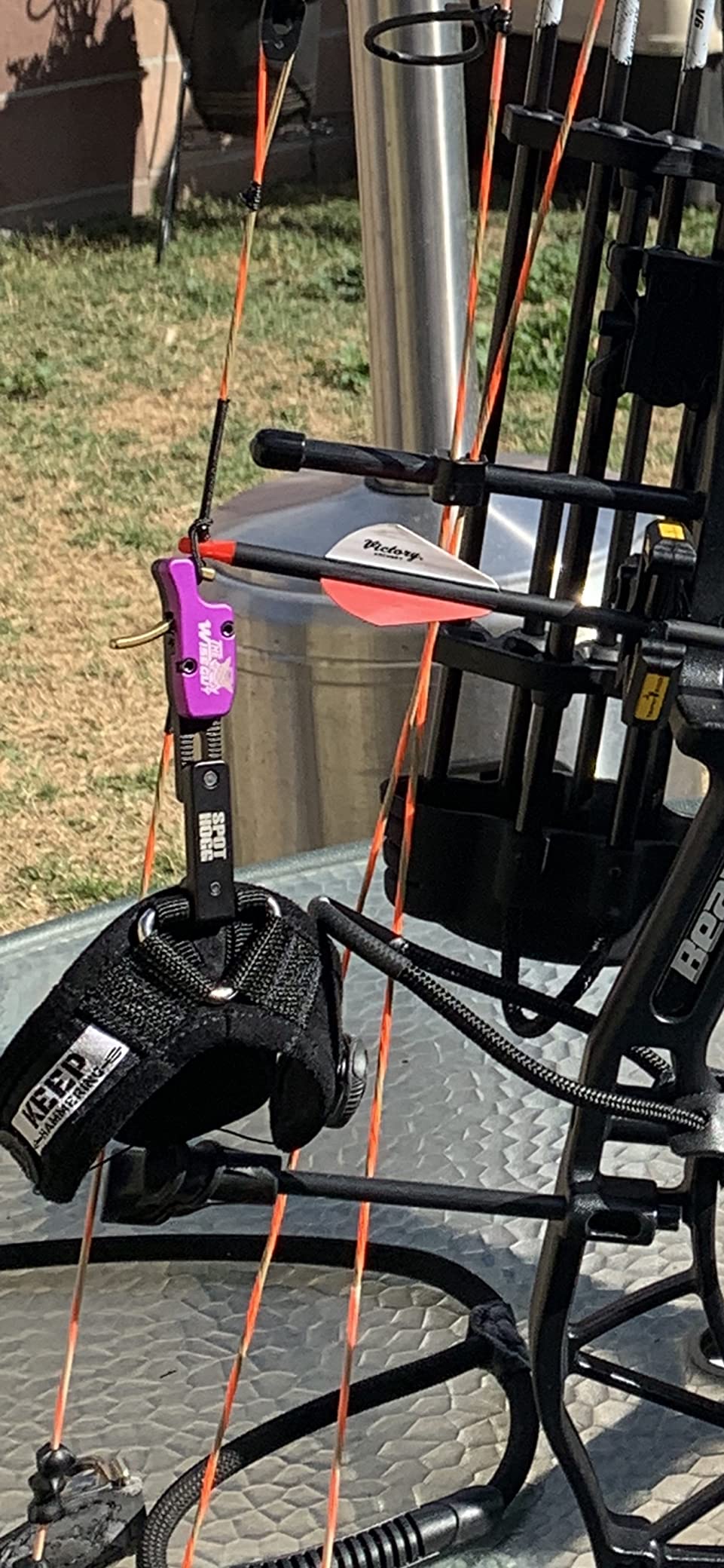
The self-reloading hook is what keeps up with a target cadence. It opens back into position after the shot so you can get nocked and drawing again without looking down or using your off hand, and the forward trigger geometry is designed to support maximum draw length and speed.
The trade-off is that this is a rigid release. Compared with spring-style handheld models it gives up some flex and give at the break, which some archers prefer because it feels more precise and others find abrupt. Owners also note the micro-adjust dial is a small part that can work loose with heavy shooting volume.
What makes it a target release
Everything on this release is aimed at speed and repeatability rather than at forgiveness. Fast re-nocking, micro fine-tuning at the line, and forward trigger geometry all serve one goal: shooting the same shot again without leaving the anchor.
If you are moving into competition or long indoor target seasons, the shootability of this design earns its place at the top of the range.
Where you might want something softer
If you like a release with visible flex and a gradual break, the rigid body here is not that. Pair it with a deliberate draw cycle and a consistent anchor and it will reward you, but it will not cover for a rushed shot.
Keep the dial hardware checked before a season, and factor the top-of-range price into the decision if you are building a setup gradually.
5. Scott Archery Pursuit Review: Multi-Sear Crispness for Tuning
Scott Archery Pursuit Release
Weight: 4.8 oz
Aluminum body
Multi-sear design
3 and 4 finger extension
Pros
- Multi-sear design gives a notably crisp clean break
- Switches between 3-finger and 4-finger extensions
- Adjustable trigger position and travel with a rope connector
- Ergonomic handle and seat-style firing mechanism
Cons
- Metal-on-metal jaws make the break noticeably loud
- Jaws do not spring back open so the hook must be closed by hand
- Sear tension is not adjustable only travel
The Scott Pursuit is the most explicitly target-positioned release in this roundup, and experienced archers describe its multi-sear break as the crispest off minimal back tension of anything here. If your grouping problem is an inconsistent release, that is exactly the mechanism you want.
The flexibility is unusual. It switches between 3-finger and 4-finger extensions in the same body, trigger position is adjustable, travel is adjustable, and the rope connector gives you effectively continuous length adjustment rather than a fixed set of holes.

Owners who came from higher-priced releases often report the Pursuit holding up against them for tuning work, which is a good sign for anyone who wants to dial a release in precisely. At 238 reviews with a 4.3 average, the rating is the second-lowest here, and the reason is mostly noise rather than function.
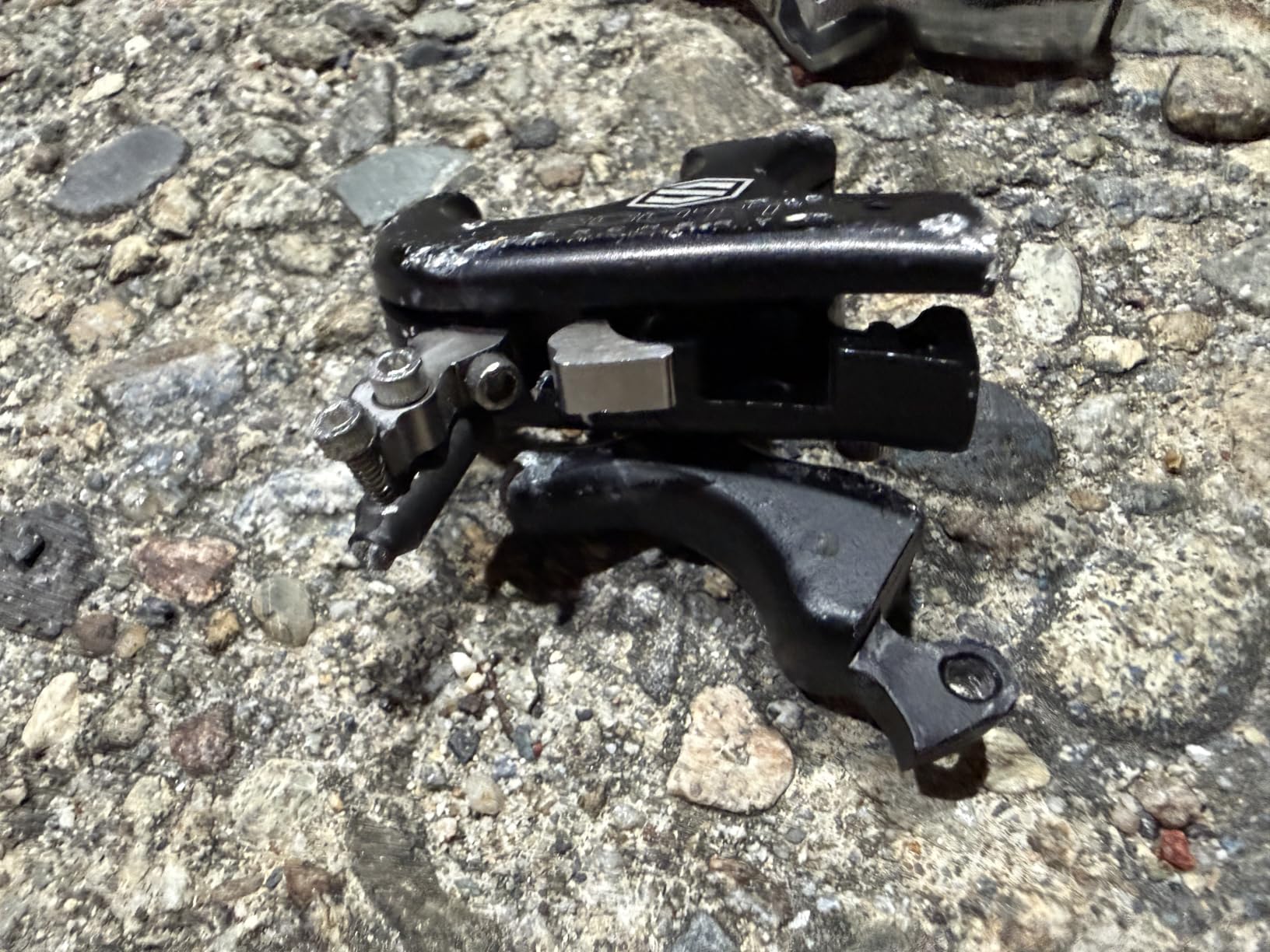
Two mechanical realities matter before you commit. The jaws do not spring back open, so you close the hook by hand after every shot, which slows down rapid target cadence. And metal-on-metal jaw contact makes this the loudest release in the roundup, which matters on a shooting line where other archers are working.
Best for a tuning-focused archer
If you want to change your anchor and your trigger feel during a tuning session, the adjustable position plus the rope connector is the best combination in this list. Being able to move length in small steps instead of committing to one of a few fixed holes is worth real grouping.
The 3-finger to 4-finger switch also lets you grow into the release rather than outgrow it, and it makes this a good option if your hand or anchor changes across a season.
What to know before buying
Sear tension is not adjustable on this model, only travel. If you want to change how hard the trigger feels rather than how far it moves, this is not the release for that.
There are also a few buyers reporting an unreliable lock that can slip mid-draw. We have not hit it ourselves, but test it thoroughly at full draw before you rely on it, and check the lock between ends of an indoor season.
6. Spot Hogg Whipper Snapper Review: Two Screws, Set It and Forget It
Spot Hogg Whipper Snapper, Archery Release, Closed Jaw, 3 Finger
Weight: 2.4 oz
Aluminum body
Closed jaw, 3 finger
1 year warranty
Pros
- Single screw adjusts both trigger tension and travel and holds its setting
- Closed-jaw design gives a smooth repeatable break
- Very light at 2.4 oz for shorter sessions and younger archers
- Ergonomic shape stays comfortable at full draw
Cons
- Limited adjustment range compared with multi-position target releases
- Closed jaw needs deliberate re-setting between shots instead of auto-reloading
- Small adjustment screw is fiddly to fine-tune
The Whipper Snapper is built around one promise: a single screw adjusts both trigger tension and trigger travel, and once you dial it in it stays there. For an archer who hates re-tuning between sessions, that is worth more than a long adjustment list.
At 2.4 oz it is the lightest release in this roundup by a distance, which makes it comfortable for younger archers and for sessions where a heavier handheld starts to feel like work at full draw.
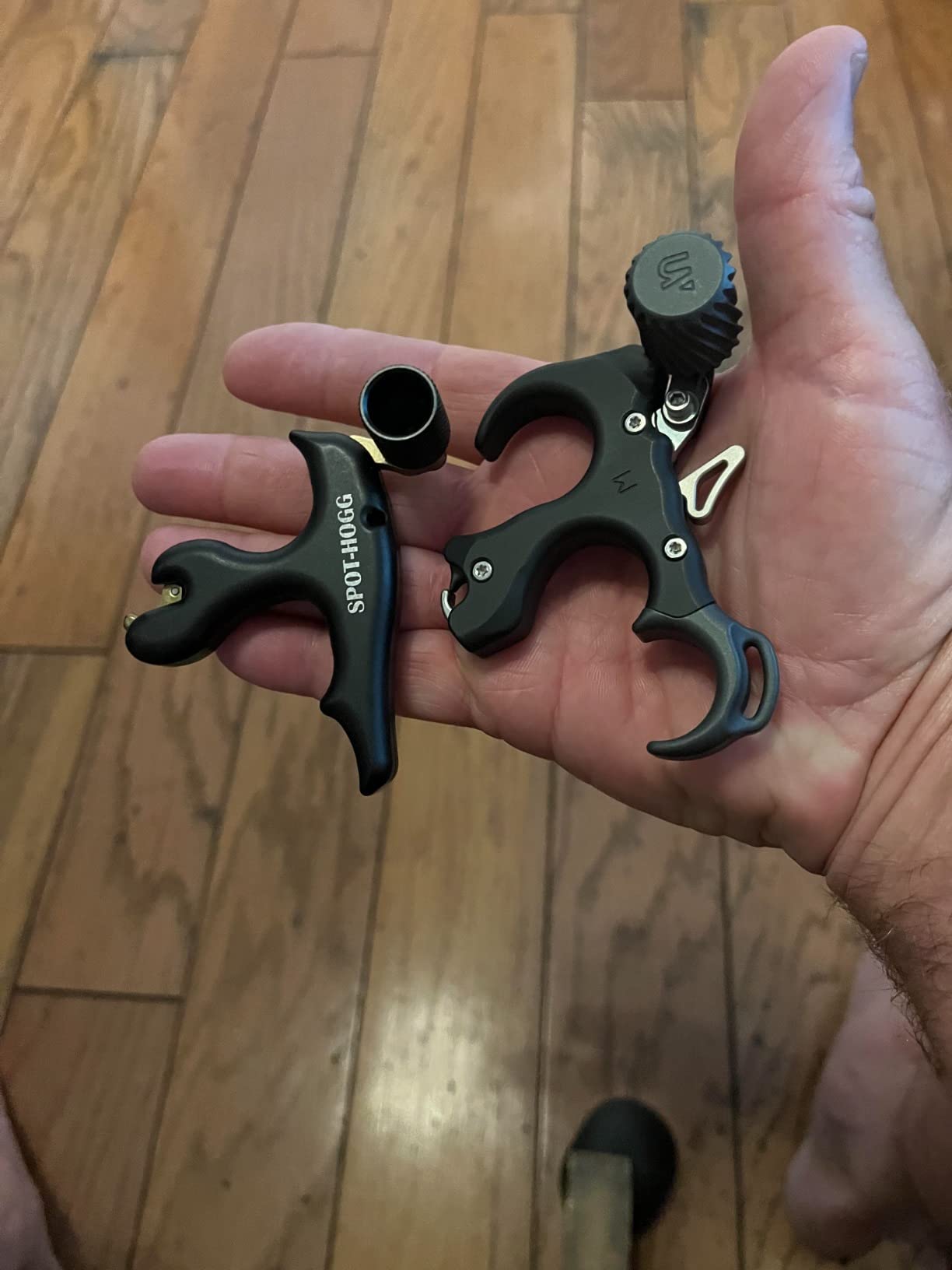
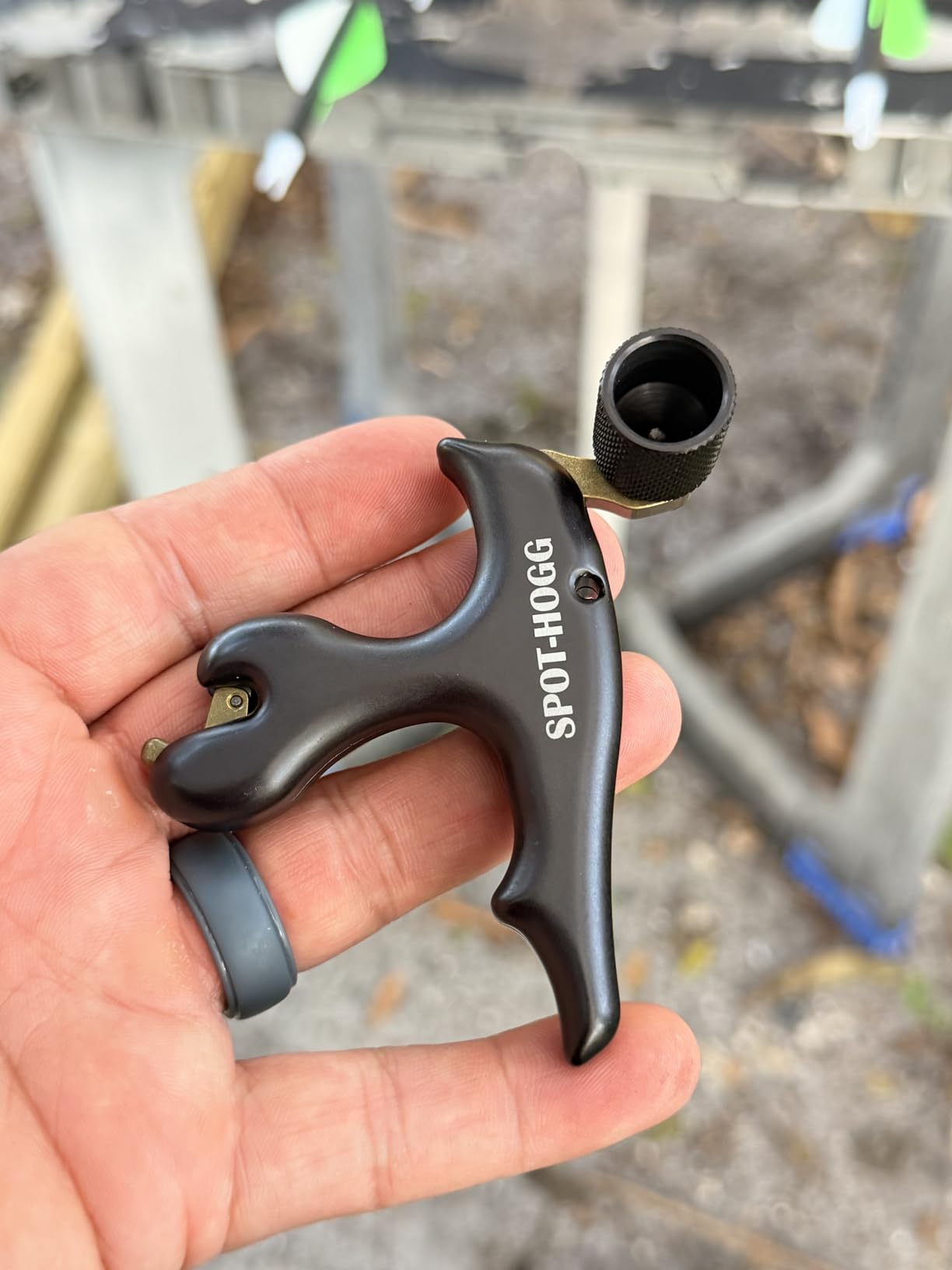
The closed-jaw design gives a smooth, repeatable break, and the ergonomic shape is shaped around staying comfortable at full draw rather than at rest. Owners consistently describe the settings as locked in once dialled, with 143 reviews at 4.5 and a 78 percent five-star share.
The trade-off is scope. It has a narrower adjustment range than the multi-position target releases, and the closed jaw has to be deliberately re-set between shots instead of springing open, so rapid target cadence is slower than with a self-reloading hook.
Who this suits
Pick this if your release drifts out of position on you, which is the most common complaint about releases without lockable set screws. Set it once and it will still be set a month later, which is the whole point.
The light weight and 3-finger closed-jaw layout also make it a sensible step up for a developing archer who has outgrown a wrist strap but does not need a full target release.
What it will not do for you
If you want to fine-tune the feel of the trigger across a wide range, move up. Two settings cannot produce the range a multi-position release can, and the small adjustment screw is fiddly to work with in poor light.
For fast indoor target shooting where re-nocking speed matters, the manual jaw reset is the thing that will slow you down.
7. Tru-Fire Synapse Review: The Widest Adjustment Range We Tested
Tru-Fire Release Aids Synapse Thumb Release – Silver
Weight: 5.3 oz
Weighted brass handle
Anodized aluminum cover
1.25 to 20 oz trigger pressure
Pros
- Trigger pressure adjustable from 1.25 to 20 oz for any draw weight
- Lockable adjustments stop settings drifting between sessions
- Weighted brass handle gives a balanced feel in the hand
- Precision-milled stainless internals for durability
- Multi-position thumb button supports different anchor habits
Cons
- Heaviest and most expensive release in this selection
- Small size option can feel cramped for larger hands
- Higher learning curve than a simple strap release
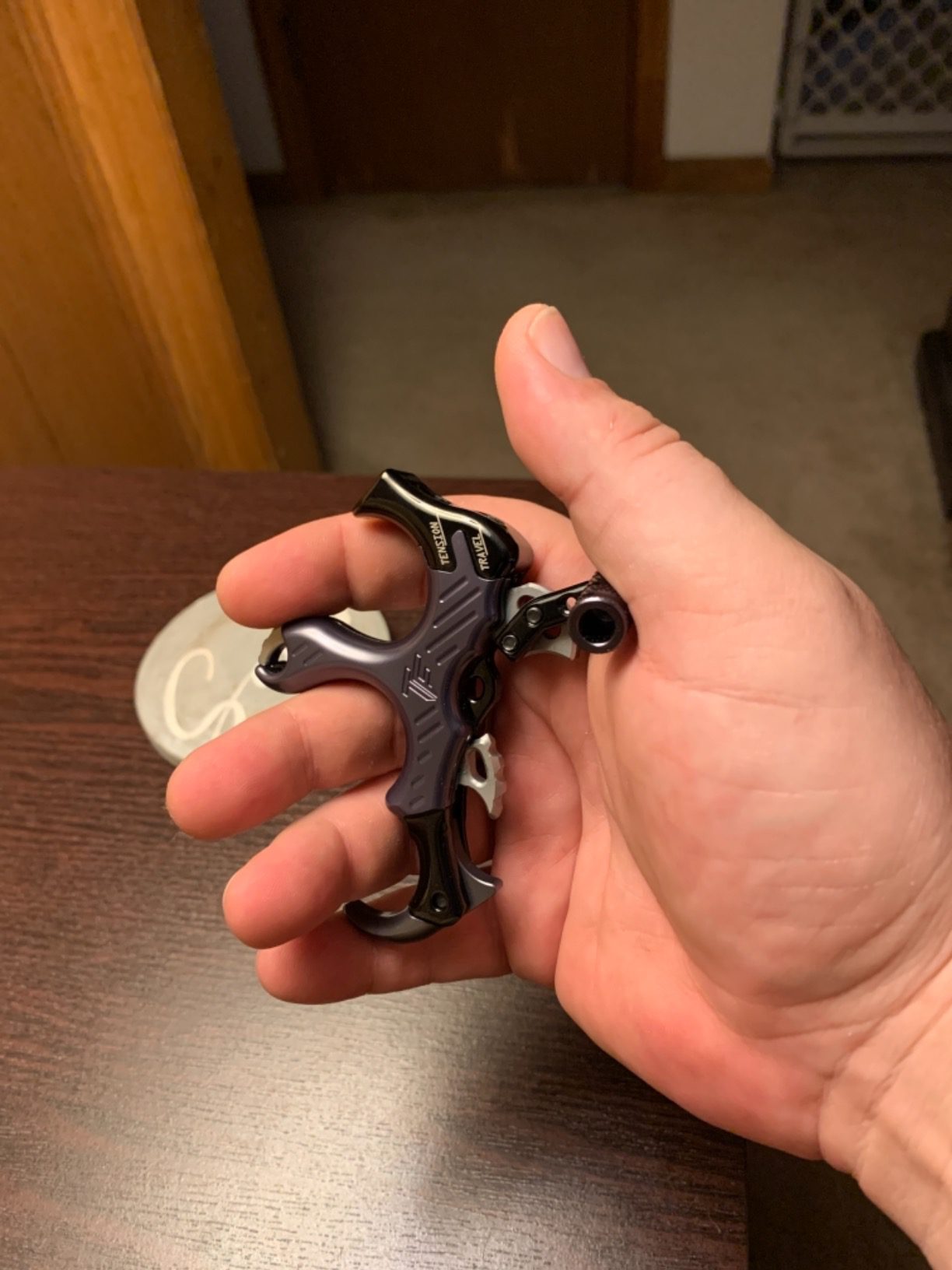
The Synapse has the widest trigger pressure range we tested, from 1.25 to 20 ounces of pressure. Nobody else in this roundup covers anything close to that span, and it is the reason this release suits archers at opposite ends of the draw-weight spectrum.
The lockable adjustments matter as much as the range. Archers who have watched a release creep out of position over a season treat locking set screws as the feature that ends the re-tuning routine, and the Synapse has them.
The weighted brass handle is what you notice first in the hand. Owners consistently describe it as solid and balanced, and the anodized aluminum cover with precision-milled stainless internal components is the reason it is being treated as a long-term upgrade rather than a step up from a strap release.
The multi-position thumb button supports different anchor habits, which is useful if you are moving from a wrist strap and have not yet settled on a thumb anchor. Being candid about the downsides: at 5.3 oz it is the heaviest release here, it is also the most expensive in this selection, and the small size option can feel cramped for larger hands.
Why it earns a place on a target line
If you want to change how hard the trigger feels without changing anything else, this is the release to buy. That range lets you move from a forgiving break while learning to a crisp break for competition without buying a second device.
Locking adjustments plus a weighted handle mean you set it once per season and forget about it, which is exactly what a target archer wants from a device that gets handled hundreds of times a week.
Who should pass on it
If you have larger hands, the small size option is tight, so check the sizing carefully before committing. Anyone who wants a device they can pick up and shoot in a single session should know there is a real learning curve here compared with a simple strap release.
It is also the heaviest and priciest release we tested, so it makes most sense as a deliberate final purchase rather than a starting point.
8. Scott Archery Ghost Review: Quiet Roller Sear and Magnetic Return
Scott Archery Ghost Release , Black
Weight: 4.48 oz
Leather and neoprene strap
Stainless steel roller sear hook
5-hole length adjustment
Pros
- Magnetic auto-trigger return speeds up re-nocking
- Stainless steel roller sear hook gives a silent smooth break
- True-center pulling reduces torque on the D-loop
- Cam-lock fold-back strap connector with five length positions
Cons
- Only five length positions limits fit for some hand sizes
- Tension screw is a small hex screw that can bind
- Some archers worry about magnetic hook strength at heavy draw
- A few buyers reported the release failing open at part-draw
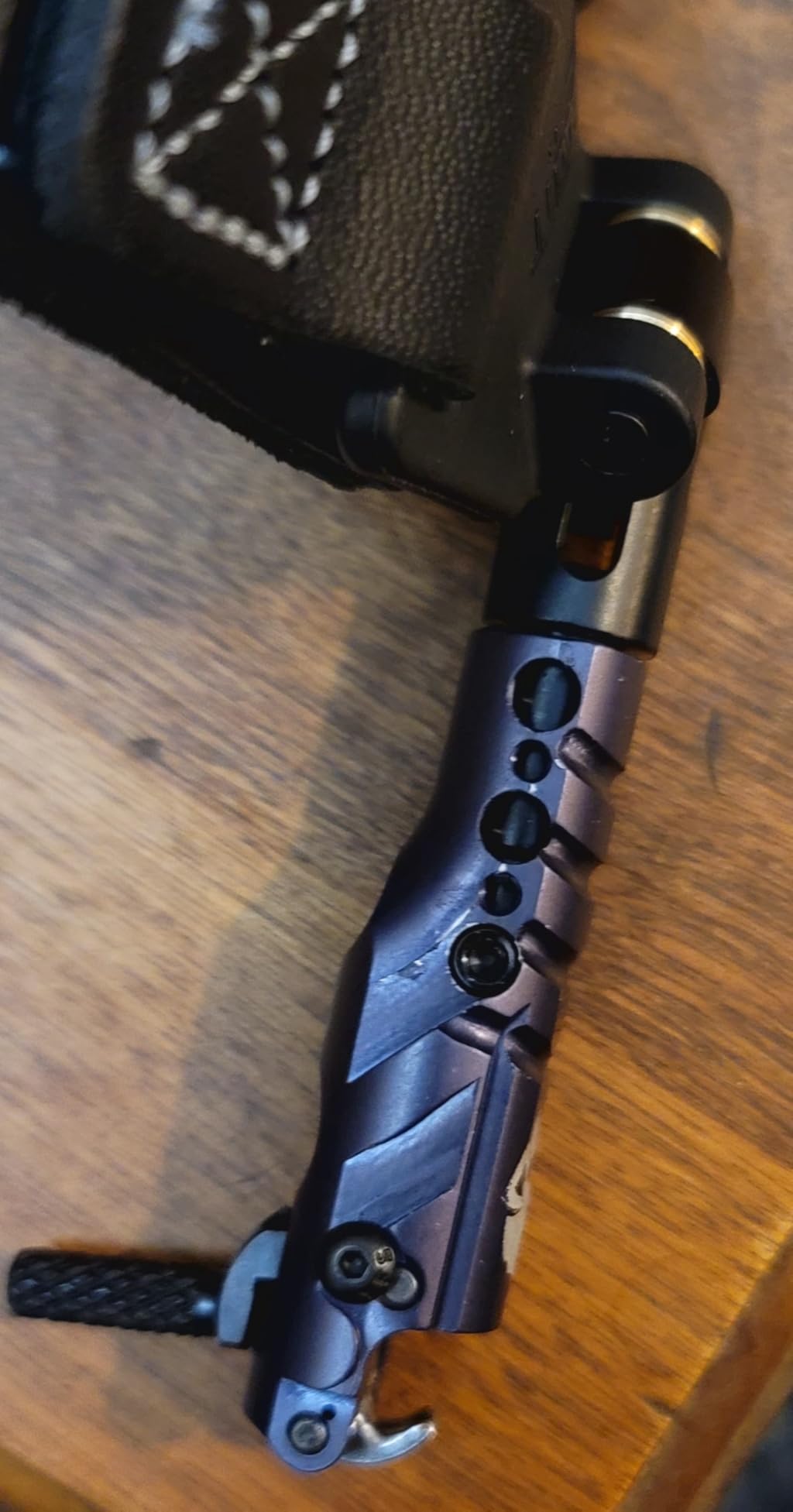
The Ghost is the quietest break in this roundup. The stainless steel roller sear hook runs against a magnetic auto-trigger return, and the two together give you a near silent release that lets you hear your own draw cycle and settle into the shot.
That quiet return also speeds up re-nocking. Because the hook resets itself after the shot, you can get back to full draw without looking down or reaching for it, which keeps your head up and your anchor intact between arrows.
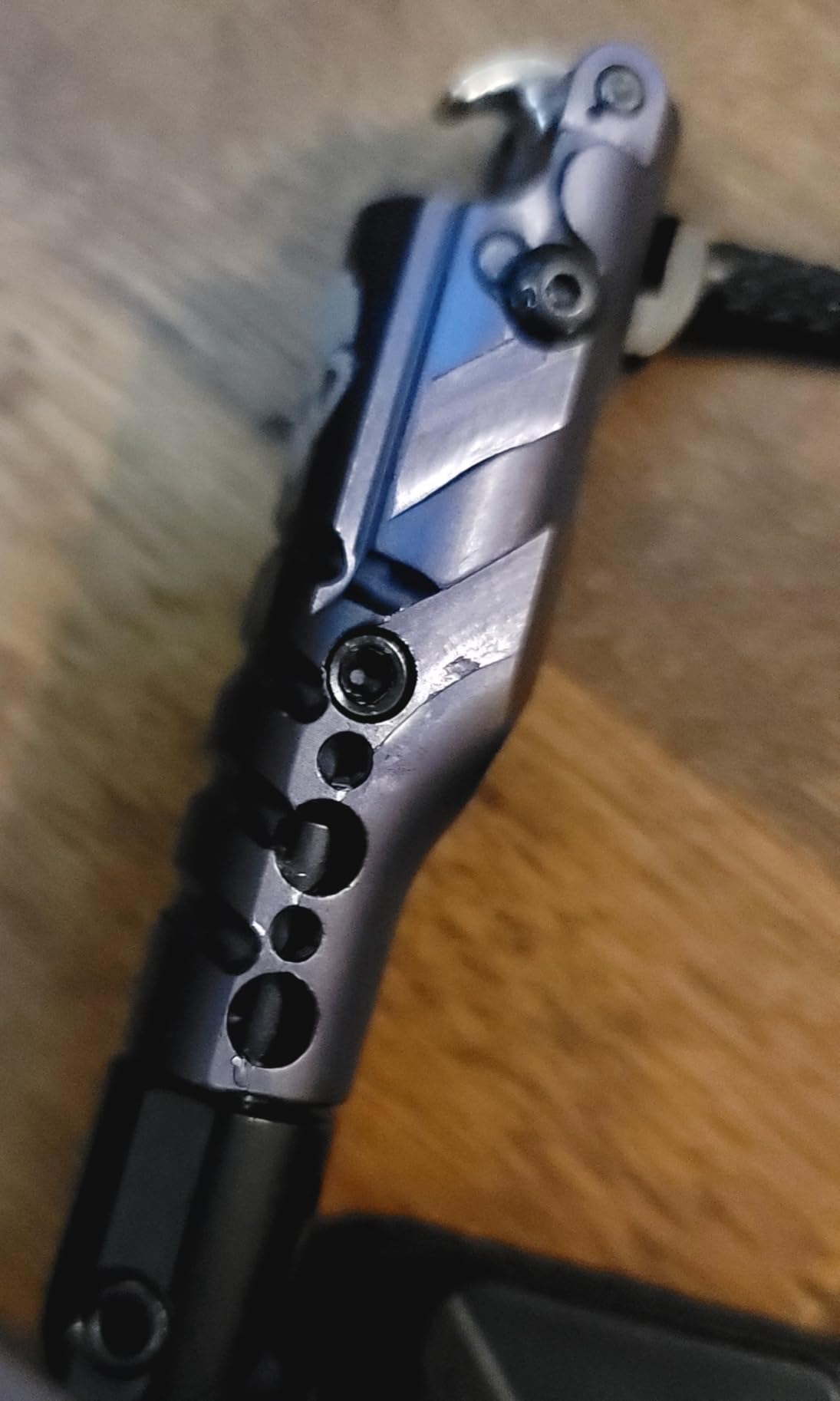
True-center pulling is a detail worth understanding. Pulling the D-loop straight rather than off to one side reduces torque on the loop, which means less wear on your D-loop cord over a season, and owners who shoot high volumes notice that difference.
The 144 reviews at a 4.3 are the most split of any release here, with a 66 percent five-star share. Praise centers on quietness, smooth draw, and a leather strap with neoprene padding that stays comfortable over long sessions. The criticism centers on the magnet and the adjustment screw.
Best for quiet lines and long sessions
If your indoor sessions are long and your line is quiet by necessity, this is the release that gives you the most feedback on your own draw cycle. You will hear things you were not hearing before, and that is the point.
The padded leather strap is also genuinely more comfortable than plastic or bare metal over a long afternoon, and the fold-back cam-lock connector keeps it tidy on the walk to the line.
What gives us pause
Five length positions is not a lot, and if your hand size is at either end of the range the fit will be limited. The tension adjustment uses a small hex screw that can bind and that some owners struggle to find a tool for.
There is also a real question about the magnetic hook at heavy draw. We recommend testing it at full draw repeatedly when it arrives, and a few buyers reported the release failing open at part-draw, which is exactly the situation you do not want on a scoring end.
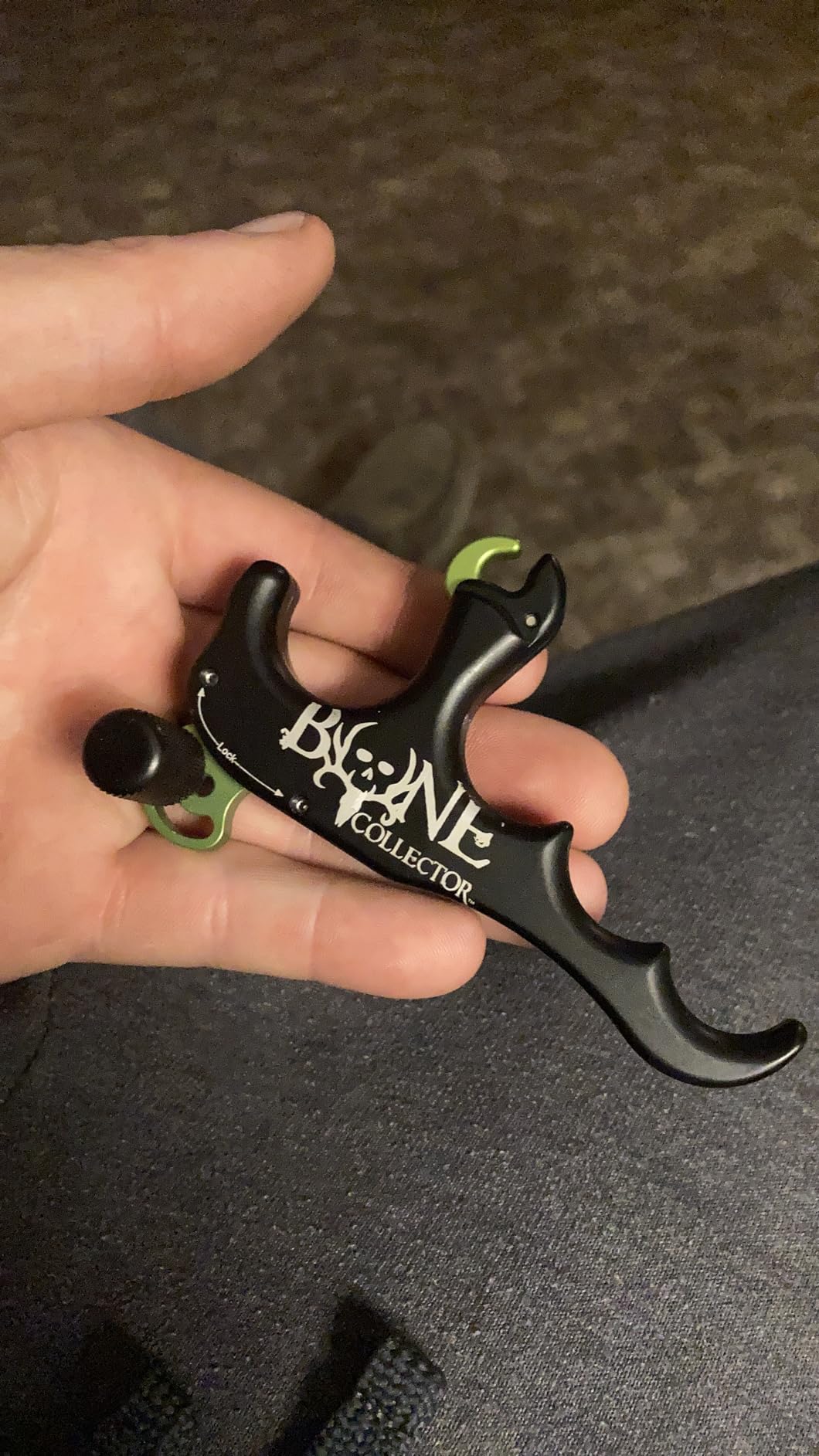
9. T.R.U. BALL Bone Collector Review: A Smooth, Forgiving Break
T.R.U. BALL Bone Collector T-Rex Archery Thumb Release
Weight: 4 oz
Compact handheld profile
Model TTR4-BK
Thumb button release
Pros
- Flexing thumb button design gives a smooth forgiving break
- Lightweight at 4 oz with a compact handheld profile
- Well regarded by archers moving up from strap releases
- Strong rating distribution across 142 reviews
Cons
- Handheld releases demand more anchor consistency than strap models
- No wrist strap so no safety net at full draw
- Limited colour options in this listing
The Bone Collector is a handheld thumb release built around a flexing thumb button, and that flex is the reason the break feels smooth and forgiving rather than abrupt. It is the classic reason archers move up to T.R.U. BALL, and it does not disappoint.
At 4 oz with a compact handheld profile, it is one of the lighter handheld releases here, which keeps the transition from a wrist strap easier than the weight alone suggests. Owners moving up from strap releases consistently rate it as a good step rather than a shock.
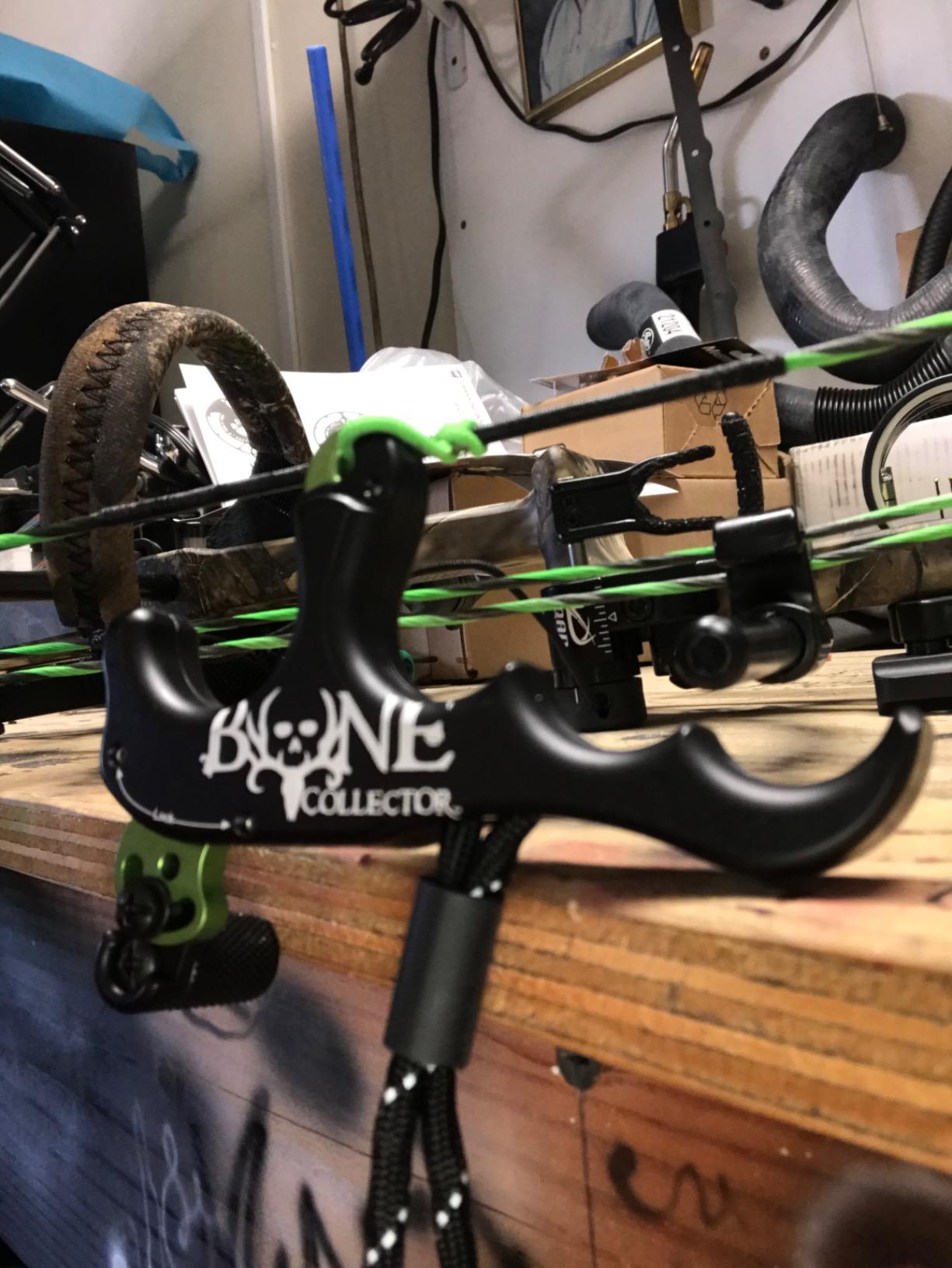
The rating distribution is strong for this category, with 142 reviews at a 4.6 and an 81 percent five-star share. That is the second-strongest feedback profile in this roundup, and reviews keep pointing at the same thing: the break does not punish a slightly off release the way a rigid design does.
The trade-offs all come from going handheld. There is no wrist strap, so during a slow setup at full draw there is no safety net if you relax your hand, and the anchor demands are higher because nothing is holding the release against your palm.
Why it suits a moving-up archer
If you are stepping from a wrist strap to handheld for the first time, a forgiving flex is the right thing to be learning on. You can be a little off with your thumb pressure and still get a clean shot, which is what keeps the transition from turning into a slump.
For indoor target work where you are shooting a lot of arrows and want a repeatable, low-stress release, the smooth break is the whole reason to choose it.
What to consider first
Handheld releases demand more anchor consistency than strap models. If your anchor still moves around at full draw, going handheld now will expose that rather than hide it, so fix the anchor first.
Also plan for losing it once. With no strap, a release can hit the ground during a course walk or a practice switch, so know the model number and be ready to replace it.
10. LWANO G1 Thumb Release Review: 3 and 4 Finger Switching on a Budget
LWANO Thumb Bow Release – 3&4 Finger Adjustable Archery Compound Bow Release Aid, with Trigger Travel and Pressure Adjustable (Multicolour)
Weight: 6.4 oz
6061-T6 aluminum frame
Ground stainless internals
3 and 4 finger
Pros
- Switches between 3-finger and 4-finger in one body
- 6061-T6 aluminum frame with ground stainless internals
- Multi-position thumb button with lockable travel and pressure
- Curved caliper reduces D-loop wear against straight jaws
- Finger grooves and thumb button help prevent slipping
Cons
- Set screws can loosen after relatively few shots
- Audible clack at the break and when locking onto the D-loop
- Molded seam on the bottom claw can abrade a D-loop cord
- 4-finger pinky adjustment cannot be locked and moves around
The LWANO G1 is the newest release in this roundup, first listed in late 2026, and it has the smallest review base at 44. Even so, the 4.6 average and repeated comparisons to releases twice its price from owners who upgraded are worth paying attention to.
The headline feature is switching between 3-finger and 4-finger configurations in the same body, with a finely adjustable pinky angle for the 4-finger layout. That makes it a strong option if you are not yet sure which layout you will settle on, or if your hand and anchor change over a season.
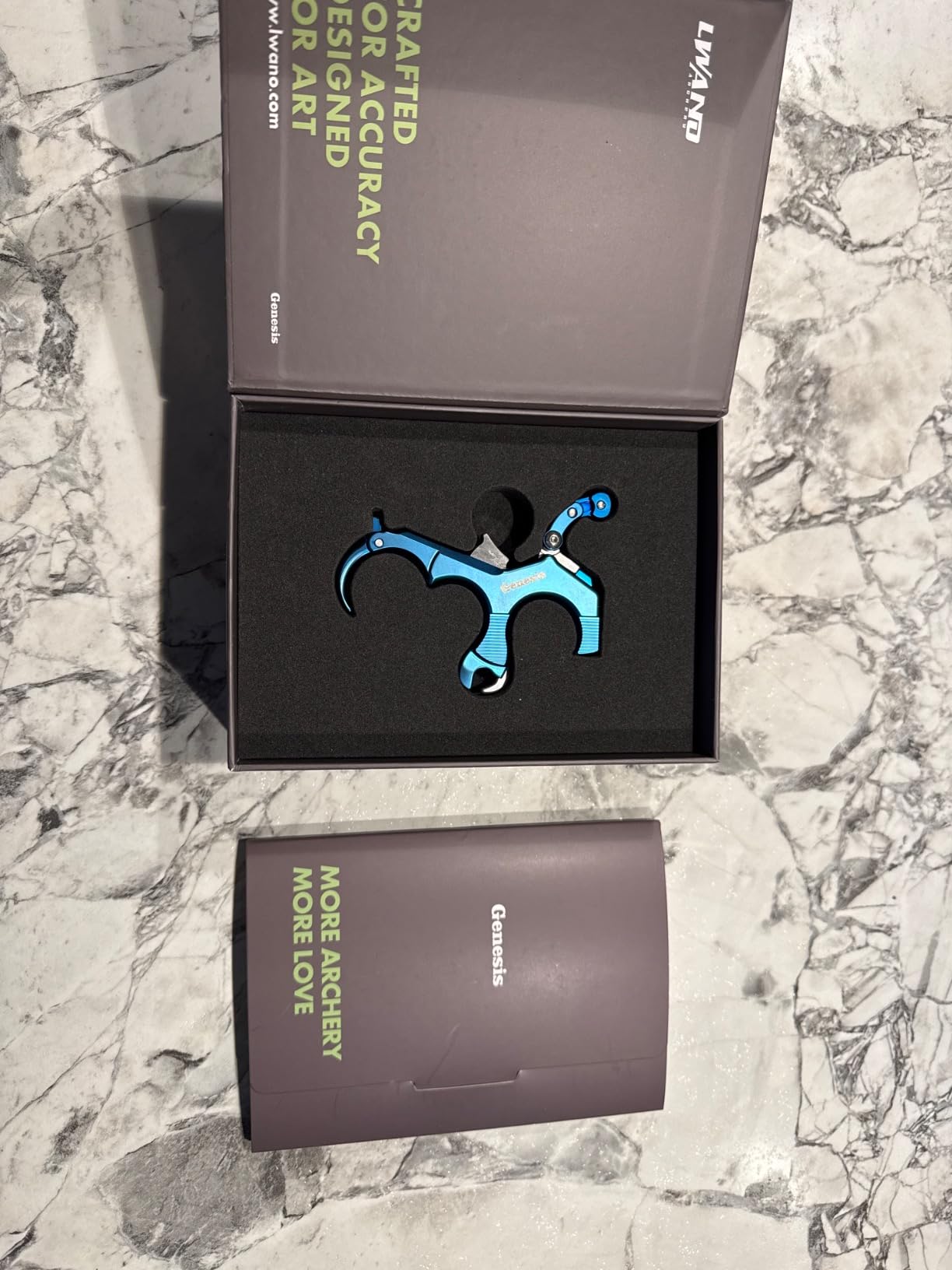
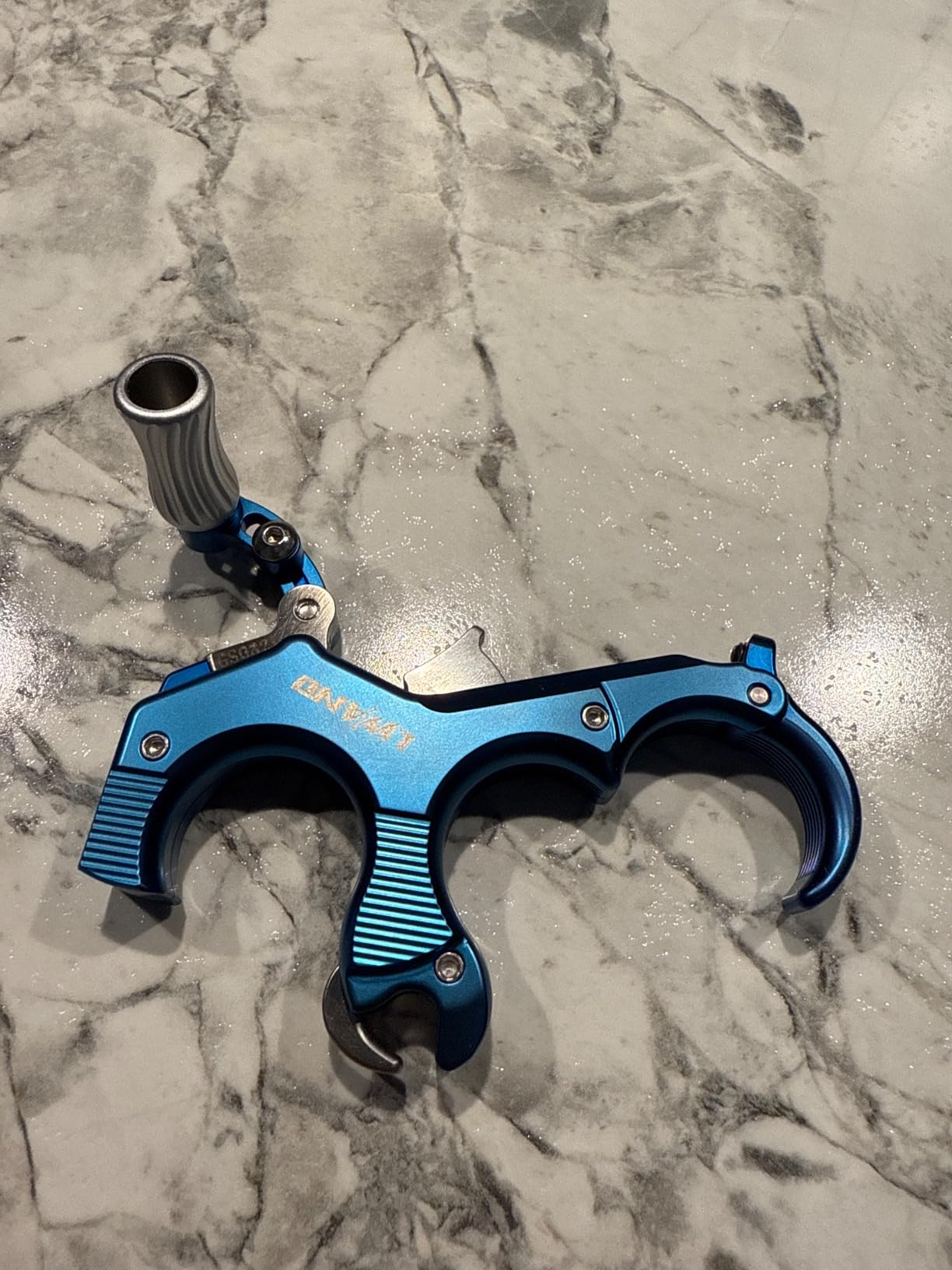
Build quality is the surprise. A 6061-T6 aluminum frame with precision-ground stainless steel internal components and polished wear surfaces feels solid and precise in the hand, and the curved caliper is designed to reduce hand movement and cut down on D-loop wear compared with straight-edged jaws.
Concave and convex finger grooves plus the shaped thumb button help stop slipping at full draw, and the lockable travel structure means your main settings should hold. The multi-position thumb button, adjustable trigger travel and pressure, and a small adjusting wrench in the box cover the adjustment range you would expect from a target release.
What makes it worth a look
If you want a target-style handheld with genuine adjustability without stepping up to the top of the price range, this is the clearest option here. The build weight and the lockable travel do more for consistency than the brand name on the box.
The 3-to-4-finger versatility is genuinely useful, and the curved caliper is a thoughtful detail that should pay off in D-loop life over a long indoor season.
What we would fix first
The set screws can loosen after relatively few shots and need re-tightening, which partly defeats the point of a lockable adjustment system, so check them every few sessions.
It is also the loudest handheld in this roundup, with an audible clack at the break and again when locking onto the D-loop. The molded seam on the bottom claw has been reported to abrade a D-loop cord, so inspect it before you commit to a full season, and note that the 4-finger pinky angle has no way to lock and will move around.
How to Choose a Bow Release for Target Archery
Style decides more than price does. Pick the style that matches how you currently execute a shot, then narrow down within it.
Thumb, hinge, index, or resistance: where to start
Four styles cover almost every release on the market.
Index finger releases strap to the wrist and trigger with your index finger. They are the most forgiving, the fastest to pick up, and the standard for beginners and for bowhunting, but they are the least precise for grouping at target distances.
Thumb button releases are handheld and triggered with your thumb against a button. They give far more control over travel and tension, which is why most experienced target shooters end up here.
Hinge releases attach to the thumb ring of your bow strap and fire when the handle rotates under back tension. There is no trigger, so there is nothing to punch, which makes them the traditional answer to target panic.
Resistance releases build up tension as you draw and fire when you have pulled through a set resistance. They train the back of the draw cycle hardest and are almost always a training tool rather than a competition choice.
Sear trigger or pull trigger: the distinction that matters most
A pull trigger fires by squeezing, so the tension required to shoot changes with the pressure you apply. A sear trigger is cocked by a button separate from the trigger and fires at a set pressure, which in a well-tuned release can be set to zero travel.
That is why sear releases dominate target archery. Because the release, not you, decides when the string leaves your bow, sear designs produce far more consistent D-loop releases shot after shot. The Scott Pursuit with its multi-sear design and the Scott Ghost with its roller sear hook are the clearest examples in this roundup.
Hand size and grip fit
Fit is the most common complaint among target shooters, and it is the first thing to check in a pro shop. A handle that is too long fights your anchor, and one that is too short pushes your thumb into the string.
Small hands generally want a shorter, slimmer profile with a 3-finger layout, which is what you get with the lightweight Spot Hogg Whipper Snapper and the compact Scott Quick Shot. Larger hands tend to want a longer barrel and the option of a 4-finger extension, which points toward the Scott Pursuit or the LWANO G1.
Also consider the wrist strap on index releases. Buckle straps are quieter and hold placement better, while hook and loop straps are easier to adjust one-handed in the field.
How to tune a new release in 30 shots
Order matters. Most archers tune travel first and wonder why the trigger feels wrong, so start at the tension.
- Set the trigger tension first. Turn the tension screw until the release is light enough that you can trigger it without thinking about your thumb.
- Set the trigger travel second. Start further out than feels necessary, then bring it in until the break is crisp without you having to reach for it.
- Set the thumb position or strap length third. Position the release so your thumb lands where it expects to be without shifting your anchor.
- Lock the set screws if the release has them, then let down ten times without shooting so the draw cycle repeats.
- Shoot thirty arrows and check for a consistent group. If the group moves, adjust tension before you touch anything else.
How to stop punching your release
Target panic and releasing too quickly off the back of the draw cycle are the same problem, and it is the most common complaint in archery forums. The fix is mechanical as much as mental.
- Train with a hinge or a resistance release until the release can fire the bow without a conscious press.
- Focus on pushing into the riser and pulling your shoulder blades together rather than reaching for the trigger.
- Let down ten times before every shot instead of coming to anchor and stopping.
- Keep the sight pin floating while the release fires the string.
- Move to a thumb button only once the hinge is consistent.
Forum consensus is worth repeating here: when target shooters switch to any new release, accuracy often improves immediately, but that gain is largely a confidence effect, and it fades if you have not addressed trigger punching. Buy the better release and train the draw cycle, in that order.
Frequently Asked Questions
What is the best archery release for target panic?
A hinge release. It fires by handle rotation under back tension rather than by a trigger press, so there is nothing to punch. The archer pushes into the riser, pulls the shoulder blades together, and relaxes from the wrist down. If you are not ready for a hinge, a resistance release trains the same skill.
What is the most accurate bow release?
There is no single most accurate release for everyone. Accuracy comes from a repeatable anchor and letting the release fire the bow rather than punching it. Among styles, thumb button and hinge releases group better than wrist-strap index releases because they give you more control over the break.
What is the best archery release for target archery?
The best bow releases for target archery are handheld thumb button releases and hinge releases, because both offer better control of shot execution than wrist-strap index models. Our top pick is the Tru-Fire Patriot for beginners and the Spot Hogg Wiseguy for shooters who want micro-adjustment and fast re-nocking.
Can I shoot my compound bow without a release?
You can, but you give up a lot. A release reduces hand fatigue so you can hold at full draw longer, produces a far more consistent D-loop release shot after shot, and gives you a repeatable anchor. Without one you also risk pinching the string with your fingertips, which changes its path and costs accuracy.
How do I choose a bow release?
Pick the style that matches your current shot execution first: index for beginners, thumb button or hinge for target work. Then check hand size and grip fit in a pro shop, confirm the release adjusts both trigger tension and travel, and make sure the set screws lock so settings hold between sessions.
Final Verdict
For most target archers, the Tru-Fire Patriot is the best bow release for target archery to start with, because the adjustable travel and light 9.07 g weight make it easy to learn on and easy to carry as a backup. Shooters who want the sharpest owner feedback in this roundup should look at the Spot Hogg Wiseguy, and anyone who needs fine control of trigger pressure should save up for the Tru-Fire Synapse.
Whatever you choose, handle it in a local pro shop first. Fit varies with hand size and anchor in ways no specification table captures, and the forums are unanimous on this point. Then buy two identical releases, keep one in your range bag, and shoot it every week so your hand knows it.
