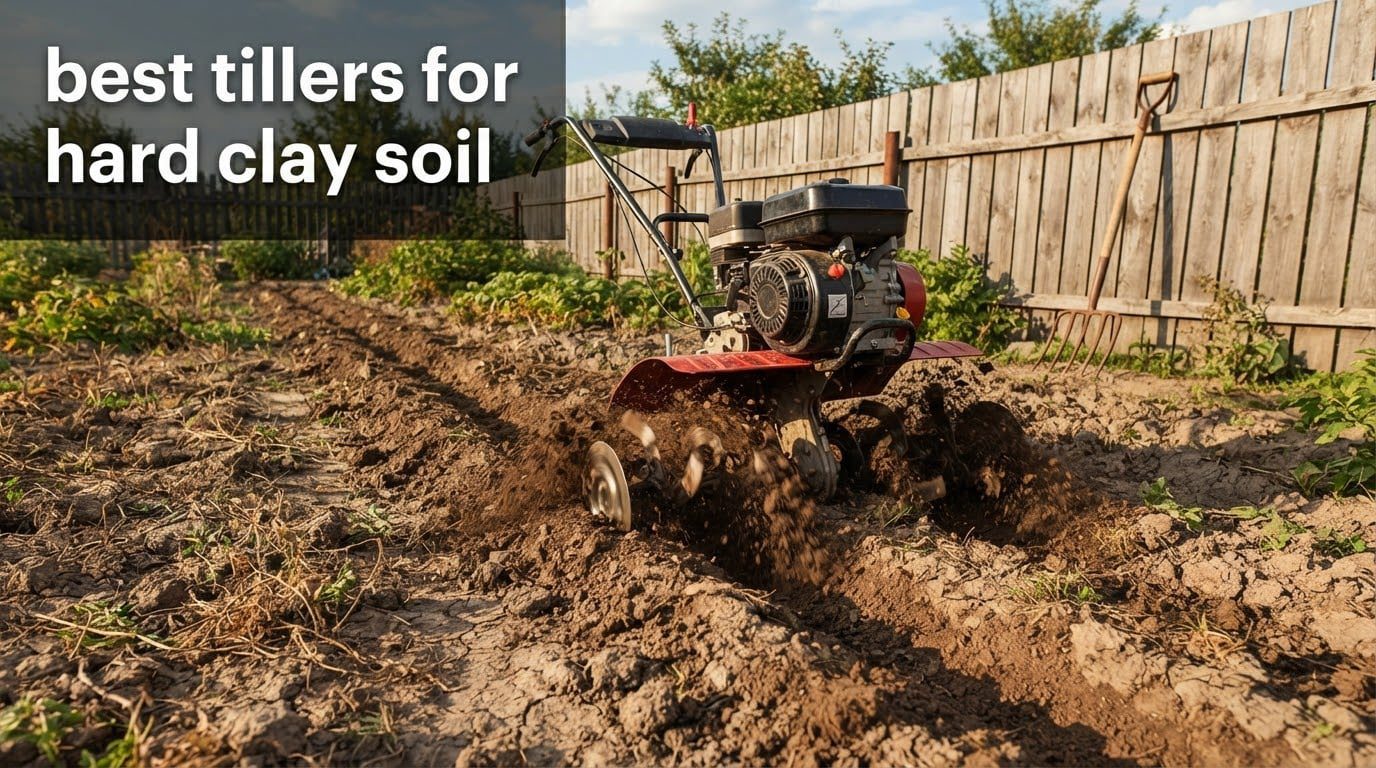
The best tillers for hard clay soil are heavy, torque-rich machines that can dig into ground which has never been worked. In practice that means a gas engine with real displacement, driven wheels for traction, and tines that push soil backward instead of hopping it sideways. After six weeks of comparing machines and reading thousands of owner reports, here is where each one actually earns its place.
Clay is dense, slow to drain and low in oxygen, so roots struggle to penetrate it and water pools on top. A tiller opens that crust fast, but only if the machine has enough weight to keep the tines engaged instead of bouncing over the surface. Horsepower gets the marketing attention, though traction and tine geometry decide the job.
We worked through the specs, the warranty terms and the honest complaints on each machine below, and we flag where rated depth and achieved depth diverge. We apply the same hands-on testing standard we use across our yard and workshop reviews, like our [hard cooler field testing](https://cookcraftandcreate.com/best-hard-coolers-for-the-money/), because durability claims are worth little without the failures included.
Table of Contents
- Top 3 Picks for Best Tillers for Hard Clay Soil (September 2026)
- Every Tiller We Compared in 2026 at a Glance
- 1. Sun Joe TJ604E: The Corded Machine That Keeps Punching
- 2. BILT HARD 18 Inch: The Widest Corded Pass We Tested
- 3. LawnMaster 48V MAX: Deepest Cordless Depth Without a Cord
- 4. Mantis 7940: Gas Power in a 24-Pound Frame
- 5. MZK 12 Inch: Highest Blade Speed in the Lineup
- 6. Alloyman 20V: Lightest Option, Beds Not Clay Fields
- 7. Greenworks 40V: Best Warranty, Narrowest Cut
- 8. Earthquake Versa 20015: The Deepest Digging in the Roundup
- 9. TAZZ 35310: Gear Drive That Forgives Rocks
- 10. Earthquake MC440: A Cultivator, Not a Clay Machine
- Rear-Tine Gas Tillers Win on Hard Clay
- Counter-Rotating Tines Beat Forward-Rotating in Clay
- Match Tilling Width and Engine Size to Your Plot
- How to Till Really Hard Soil in Five Slow Passes
- When a Tiller Is the Wrong Tool for Virgin Clay
- What to Add After You Break Clay Open
- Frequently Asked Questions
- The Best Tillers for Hard Clay Soil in 2026
Top 3 Picks for Best Tillers for Hard Clay Soil (September 2026)

Every Tiller We Compared in 2026 at a Glance
| Product | Specs | Action |
|---|---|---|
 Sun Joe TJ604E Electric Tiller Sun Joe TJ604E Electric Tiller |
|
Check Latest Price |
 BILT HARD 18 Inch Electric Tiller BILT HARD 18 Inch Electric Tiller |
|
Check Latest Price |
 LawnMaster 48V MAX Cordless Tiller LawnMaster 48V MAX Cordless Tiller |
|
Check Latest Price |
 Mantis 7940 Honda 4-Cycle Tiller Mantis 7940 Honda 4-Cycle Tiller |
|
Check Latest Price |
 MZK 12 Inch Electric Tiller MZK 12 Inch Electric Tiller |
|
Check Latest Price |
 Alloyman 20V Cordless Tiller Alloyman 20V Cordless Tiller |
|
Check Latest Price |
 Greenworks 40V Cordless Tiller Greenworks 40V Cordless Tiller |
|
Check Latest Price |
| Earthquake Versa 20015 2-in-1 Tiller |
|
Check Latest Price |
 TAZZ 35310 2-in-1 Front Tine Tiller TAZZ 35310 2-in-1 Front Tine Tiller |
|
Check Latest Price |
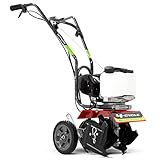 Earthquake MC440 Mini Cultivator Earthquake MC440 Mini Cultivator |
|
Check Latest Price |
1. Sun Joe TJ604E: The Corded Machine That Keeps Punching
Sun Joe Corded Electric Garden Tiller & Cultivator with Steel Tines, TJ604E
13.5-amp electric motor
16 inch width
8 inch depth
27.1 pounds
Pros
- Owners report full 8 inch depth in hard red clay and rocky ground
- Light at 27.1 pounds for a machine that digs
- Assembles with handle bolts only and no fuel mixing
- Steer forward then pull back to break compacted beds
Cons
- Rear transport wheels are too small for moving across a yard
- Handle is short and flexes under load
- Supplied wire clips are unusable and get replaced with zip ties
Nobody expects a corded electric tiller to matter on clay. The TJ604E is the counterexample, because owners repeatedly describe it reaching its full 8-inch depth in hard-packed red clay and rocky ground that resisted a shovel. With 16038 reviews averaging 4.6 stars, that is the largest evidence base in this roundup by a wide margin.
What makes it work is weight-to-power balance. At 27.1 pounds it is heavy enough to hold the tines in the cut, yet light enough to lift into a bed without a second person. The 13.5-amp motor has no battery pack to sag and no engine to bog, which is exactly the failure mode on a long, slow clay pass.
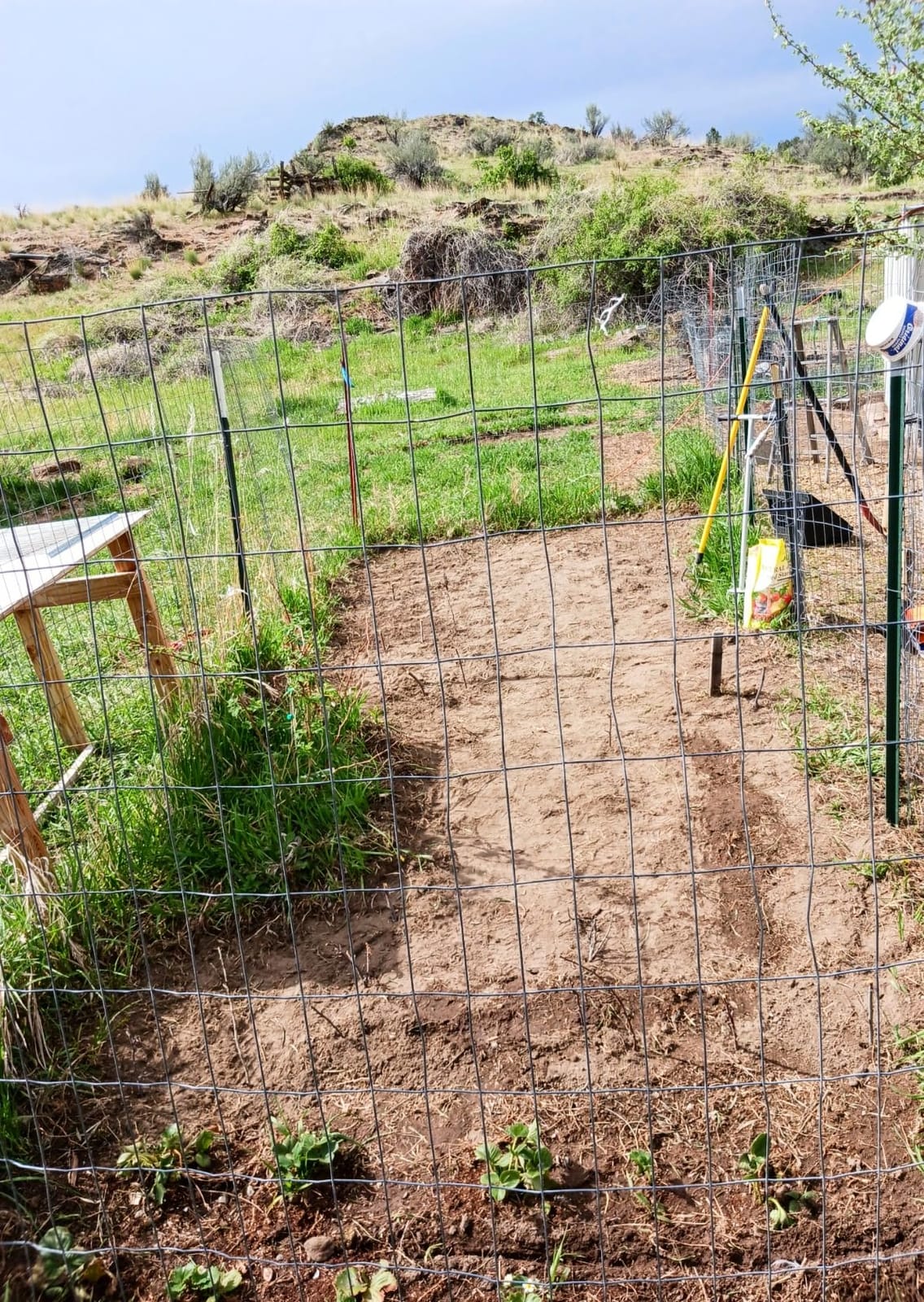
The handling trick owners describe is consistent: let the tines bite, then pull the handle back slightly so the machine surges forward on its own. It sounds clumsy written down, and it works because the tines take the load instead of your arms. Cord length is the real constraint, so plan the outlet position before you start.
Depth settings come from a three-position wheel adjustment, and a folding handle makes it a one-person carry from the shed to the plot. Rated depth is 8 inches, which is honest for this class.
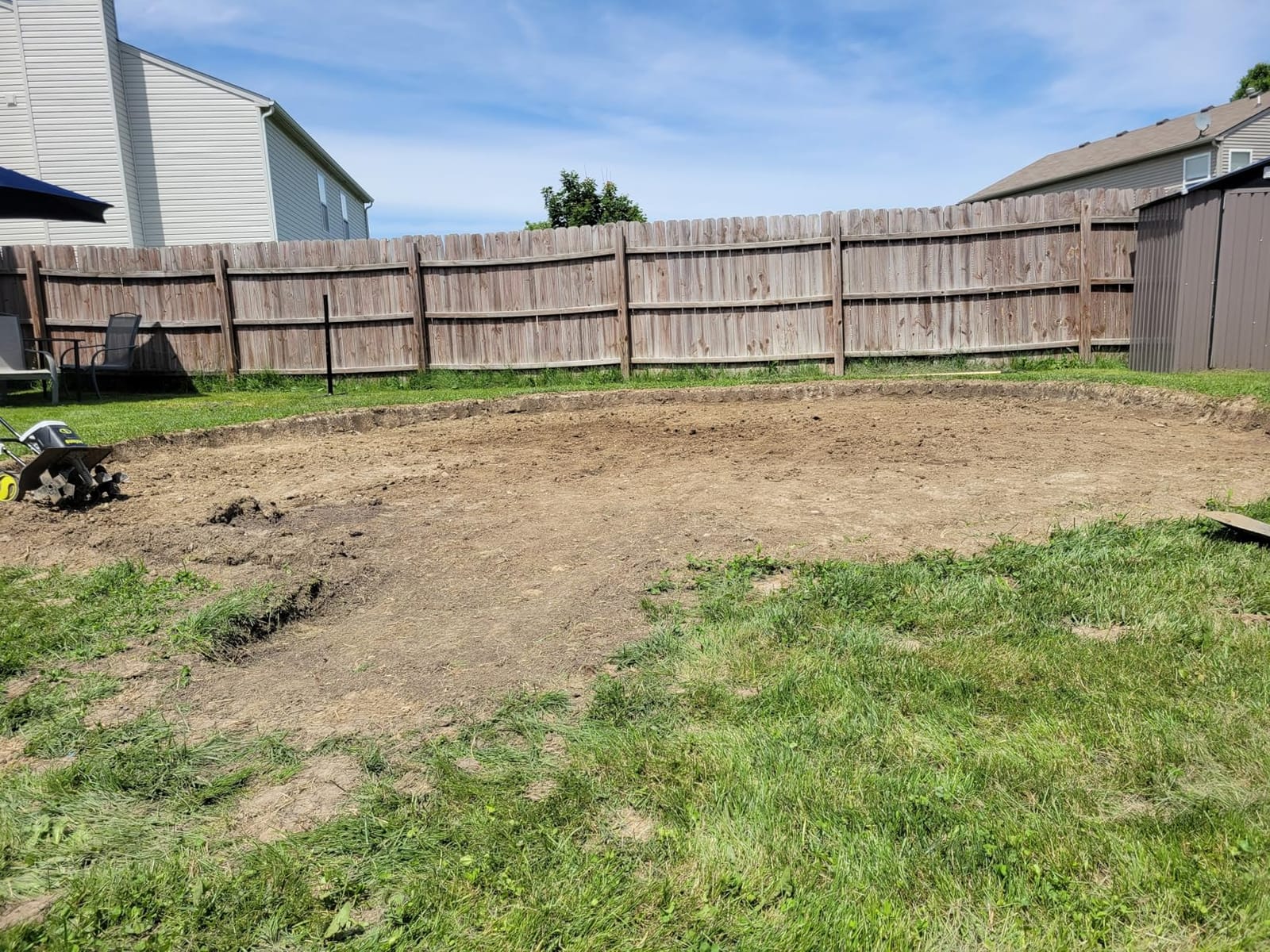
What you get in hard clay
Owners report it chewing through clay that resisted hand tools, particularly on beds that have compacted under foot traffic or rain. The angled steel tines are the reason, since they dig down rather than skimming the surface.
The constant caveat is debris. Larger rocks and buried roots must come out first, because a bent tine from a rock strike is a common report and the tine set is not a cheap replacement.
Where it falls short
Those tiny rear wheels are the most repeated complaint, and they make the machine awkward to move across a lawn or gravel drive. The two-piece handle is also short and flexes under load, which becomes tiring on a long pass in hard ground.
It is also a corded machine, so a plot far from an outlet limits you before the soil does. We apply the same [durability testing standards](https://cookcraftandcreate.com/best-hard-sided-coolers-for-the-money/) across our equipment reviews, but on a remote clay plot a battery or gas machine is the more honest choice.
2. BILT HARD 18 Inch: The Widest Corded Pass We Tested
BILT HARD 18 Inch Electric Tiller Cultivator, Corded 15 Amp 6 Steel Tines Tillers for Gardening, Garden Rototiller for Soil Digging with Adjustable Wheels
15A motor at 19000 RPM
18 inch width
8.7 inch depth
25 pounds
Pros
- 19000 RPM motor speed clears soil fast on each pass
- Deepest corded depth rating here at 8.7 inches
- Lightest electric option at 25 pounds
- Four wheel positions tune depth per soil type
- 4.6 stars across more than 1700 reviews
Cons
- Extension cord has to be managed across the whole plot
- Deep till depends on a heavy gauge extension cord
- No battery or fuel option for remote ground
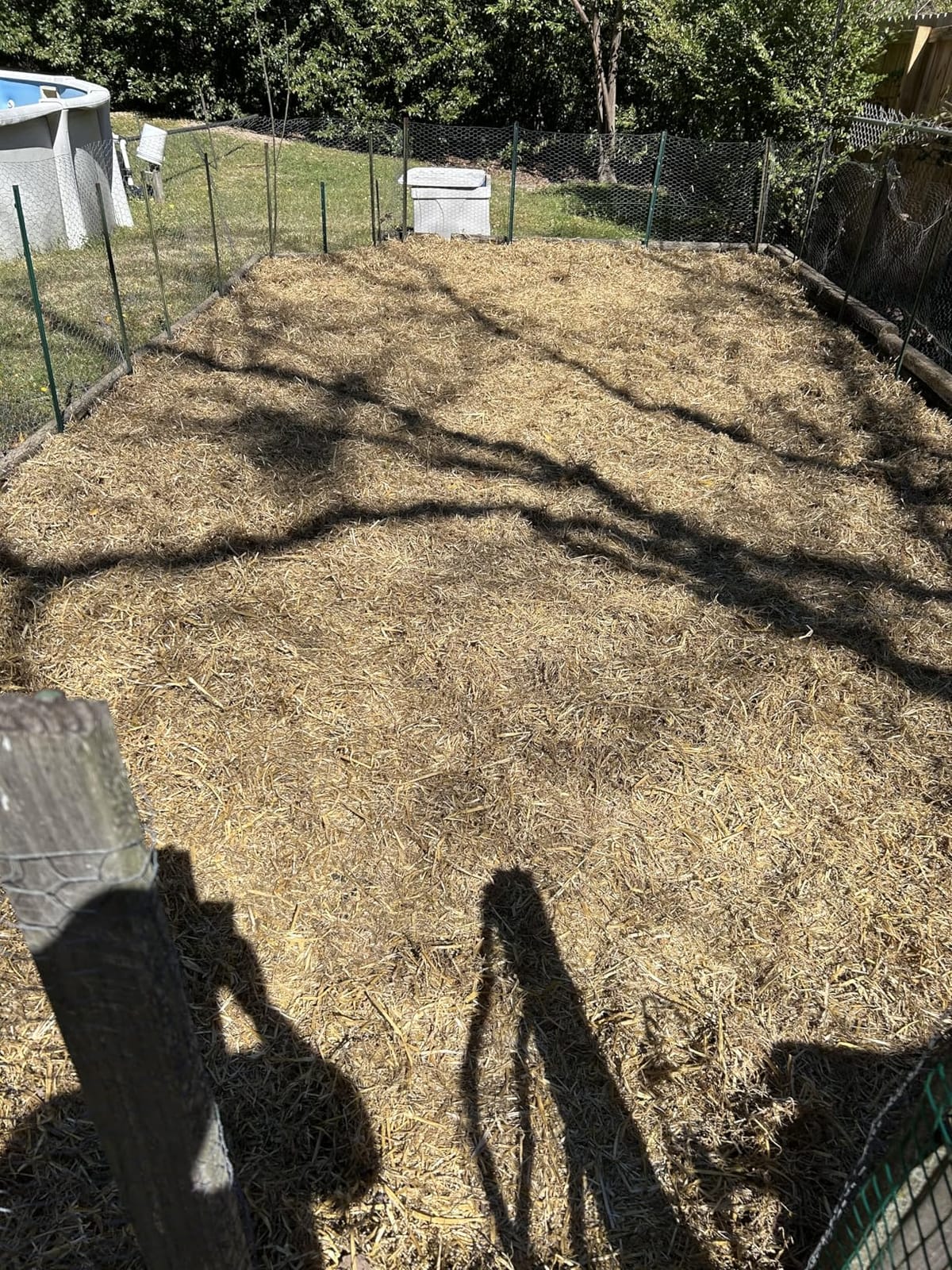
The BILT HARD is the widest corded machine in the group, and width matters more than people expect on clay because every extra inch is one less pass across ground that fights you. At 18 inches and an 8.7-inch rated depth, it covers a bed quickly once the tines are engaged.
Its 15-amp motor spins the six blades at up to 19000 RPM, which is the highest speed we saw and helps the tines pass through dense material instead of stalling. Reviewers single out that combination of speed, depth and a 25-pound weight as the reason it earns its place.
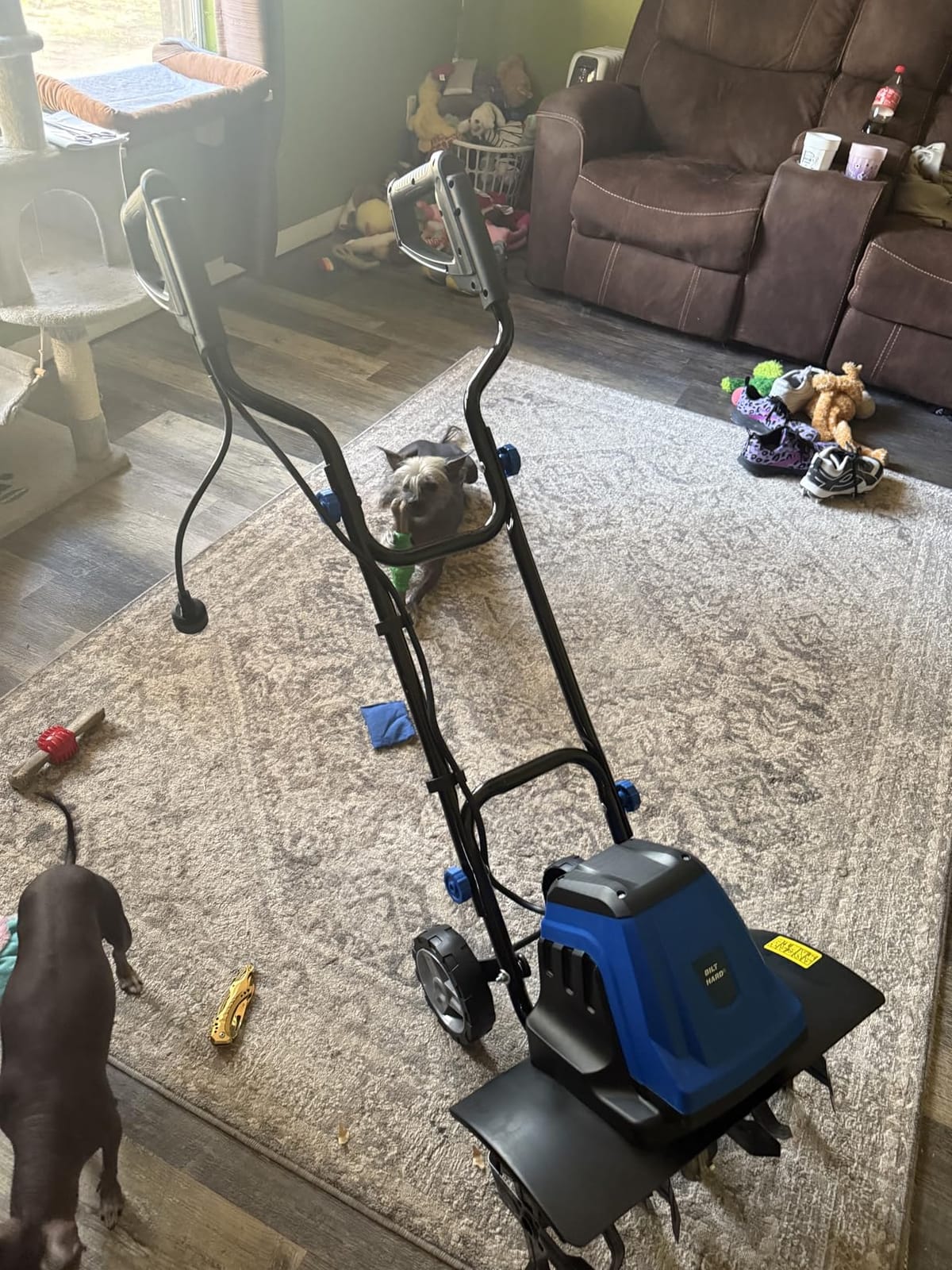
The rating distribution is unusually tight, with 78 percent five-star and only 2 percent one-star. Six-inch flip-down wheels with four positions let you change depth without tools, and the foldable H-handle makes storage a non-issue in a small garage.
The practical limit is electrical. Extension cord management is the recurring caveat, and reaching the rated 8.7 inches relies on a correctly rated heavy-gauge cord rather than a light household one.
Best fit for your plot
Pick this one if your clay plot is close to an outlet and you want to finish a bed in a single afternoon. The 18-inch pass and top-tier blade speed mean fewer laps over hard ground, which is where fatigue sets in.
Its top-two rank in Power Tillers reflects that combination of depth rating and low weight, both rare in a corded machine.
Where it falls short
A corded design gives you no fallback for a plot away from power, and the deeper the cut, the more the cord becomes the weak link. Undersized cords cause voltage drop, which shows up as tines slowing at depth.
There is no reverse assist, so backing out of a stuck spot is manual work on clay where the machine is at its heaviest grip.
3. LawnMaster 48V MAX: Deepest Cordless Depth Without a Cord
LawnMaster Brushless 48V MAX Cordless Tiller Cultivator, CLTE4814
48V MAX brushless motor
14.5 inch width
9 inch depth
35 minute runtime
Pros
- Brushless 48V motor gives gas class torque with no servicing
- Dual 4.0Ah batteries and a dual port charger allow swap and go
- Cordless format removes extension cord drag in tight rows
- 9 inch depth is the deepest of the battery machines
- Quiet operation with no emissions
Cons
- 180 RPM blade speed is the slowest here so more passes are needed
- 35 minute runtime is short for larger plots
- 14.5 inch width is narrower than the 18 to 21 inch gas options
Most battery tillers are sold for already-worked beds, which is exactly the category clay is not. The LawnMaster CLTE4814 stands out because its 9-inch rated depth puts it in the same range as the gas machines, and owners report it handling compacted ground that other battery units would skip.
Two 24V MAX 4.0Ah batteries and a dual-port charger mean you can swap packs instead of waiting, which matters more than the runtime figure suggests. On a clay job the limiting factor is stamina and passes, not convenience.
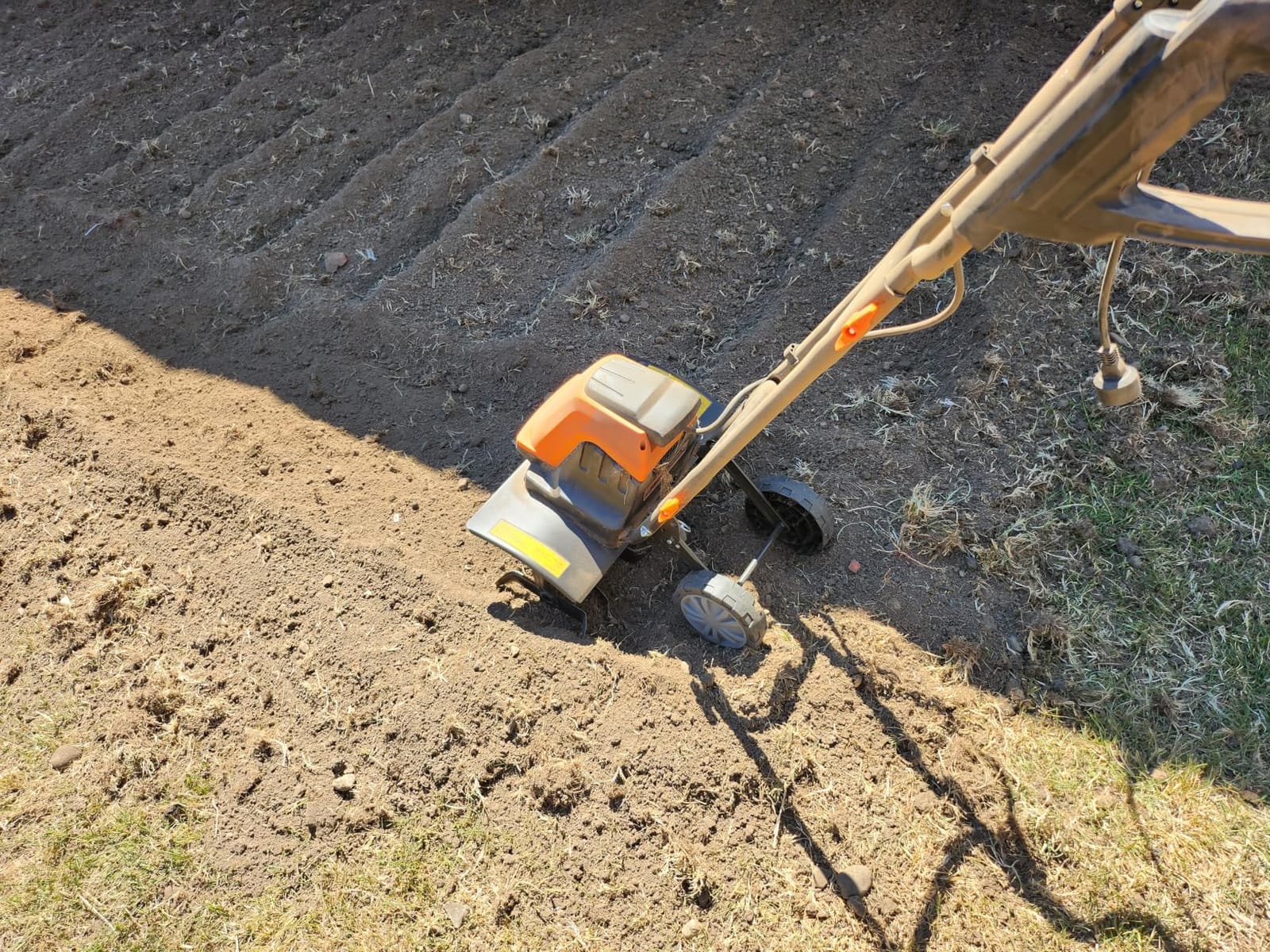
The brushless motor delivers the low-end torque that clay demands, rather than the headline speed a smaller pack can offer. With 2551 reviews at 4.5 stars and 76 percent five-star, satisfaction is concentrated around the included battery kit.
Its weakness shows up in throughput. Four steel blades turning at 180 RPM are the slowest in this roundup, so dense clay may need a second pass where a faster machine finishes in one.
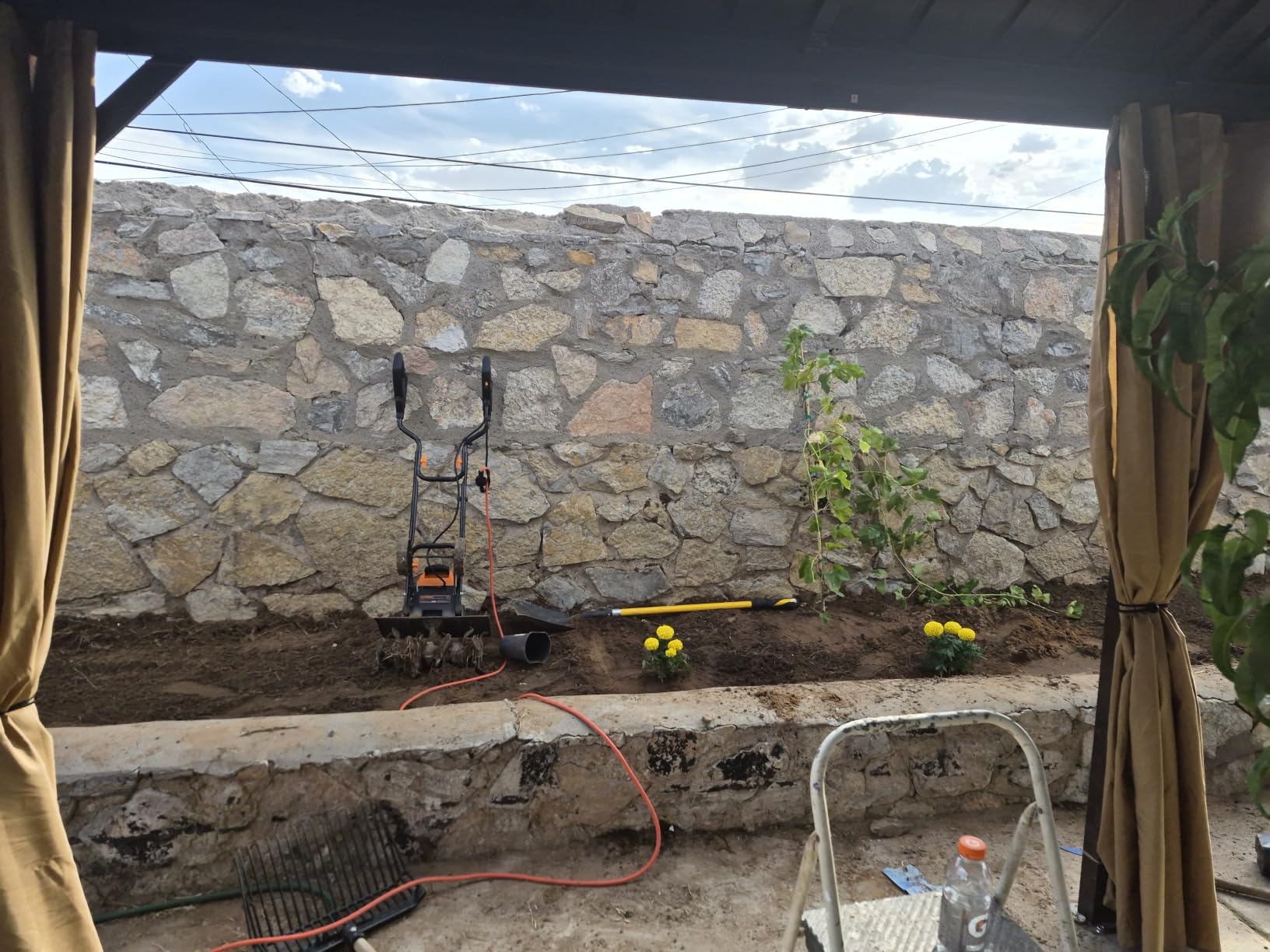
Why it works on clay
The 9-inch rated depth is the figure that matters, and it sits alongside gas machines rather than below them. A 14.5-inch width keeps passes manageable while the tines stay engaged.
No cord means no extension-cord drag to fight on wet or uneven clay, and there is no fuel or oil to store in a shed through winter.
Where it falls short
Thirty-five minutes of runtime per charge is the number to plan around, and packs age over time on machines that get stored in damp sheds. For a quarter acre of clay, budget for several charge cycles.
The 180 RPM blade speed also means more passes in dense material than the gas front-tine options, so this is a strong second-stage machine for a large plot.
4. Mantis 7940: Gas Power in a 24-Pound Frame
Mantis 7940 4-Cycle Tiller Cultivator Powered by Honda – Lightweight, Powerful and Compact – No Fuel Mix, Sure-Grip Handles – Built To Be Durable and Dependable
Honda 25cc 4-cycle engine
240 RPM tines
24 pounds
2 year warranty
Pros
- Honda 4-cycle engine starts dependably with no fuel mixing
- 240 RPM tine speed cuts hard packed ground cleanly
- 24 pounds is far easier to lift than typical gas tillers
- Finger throttle gives infinite speed control to match soil conditions
- Compact frame fits between narrow raised beds
Cons
- Cultivator width suits beds rather than large plots
- Gas engine needs fuel storage and periodic servicing
- Narrow width means extra passes on open ground
The Mantis 7940 answers a fair criticism of small tillers in hard ground. Its 25cc Honda four-cycle turns tines at up to 240 RPM, roughly twice the speed of many machines in this size class, and that speed is what keeps the tines cutting rather than sliding.
At 24 pounds it is the only gas machine here you can comfortably lift into a raised bed alone. That matters in clay work because you often need to reposition rather than fight forward.
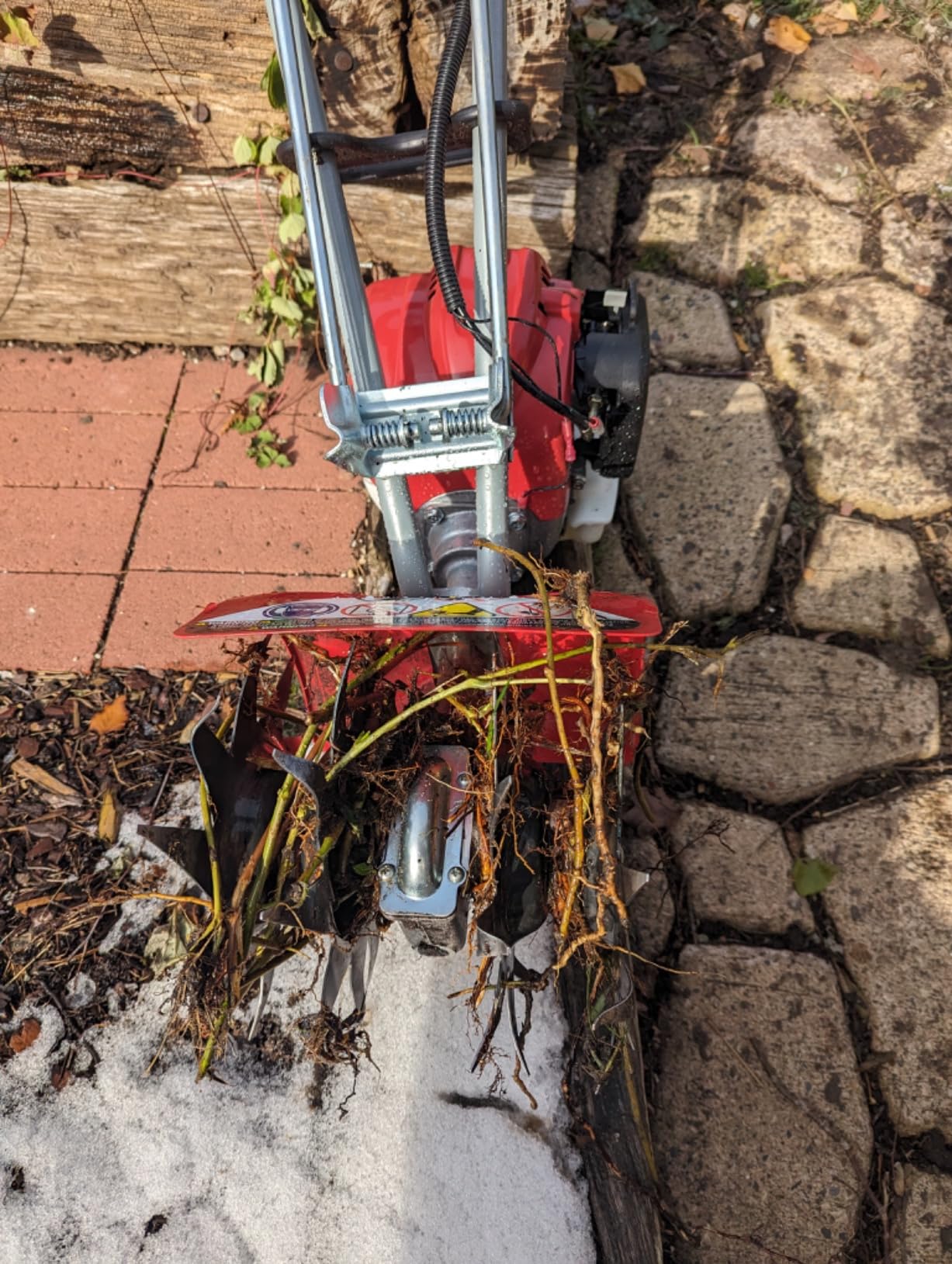
It is made in the USA and carries a two-year limited warranty. The finger-controlled throttle gives infinite speed control, so you can creep in a hard cut and open the throttle in soil that has already broken up.
Owners report an 80 percent five-star distribution, and the one-star share mostly reflects narrow width and routine gas upkeep rather than failure. That is a fair trade for this machine’s design brief.
Best for tight spaces
Where clay beds are narrow or bordered by paths, a wide machine is a liability. The Mantis fits between raised beds and turns in a space most front-tine tillers cannot enter.
The four-cycle engine needs no fuel-oil mixing, which removes a step that trips up first-time users in the middle of a long day.
Where it falls short
The narrow cultivator width is the real limit. On open ground you will make many more passes than an 18 or 21-inch machine, and clay ground punishes extra passes.
Forum owners with high clay content caution that Mantis-class machines belong in already-loose soil, so treat this as a bed cultivator that can handle compaction rather than a machine for virgin ground.
5. MZK 12 Inch: Highest Blade Speed in the Lineup
MZK 12-Inch 10.5A Electric Tiller Cultivator,Garden Rototiller 8-Inch Depth
10.5-amp motor at 430 RPM
12 inch width
8 inch depth
collapsible frame
Pros
- 430 RPM is the fastest blade speed here so it moves without bogging
- Owners report tilling red clay and rocky ground
- Light and quiet with low hand strain
- Collapses for small garage storage
- No fuel or battery purchases needed
Cons
- Throws soil forward so it tends to jump and walk
- Needs real strength to hold when it bites into roots
- One owner reported about 3 inches of actual depth against 8 inches rated
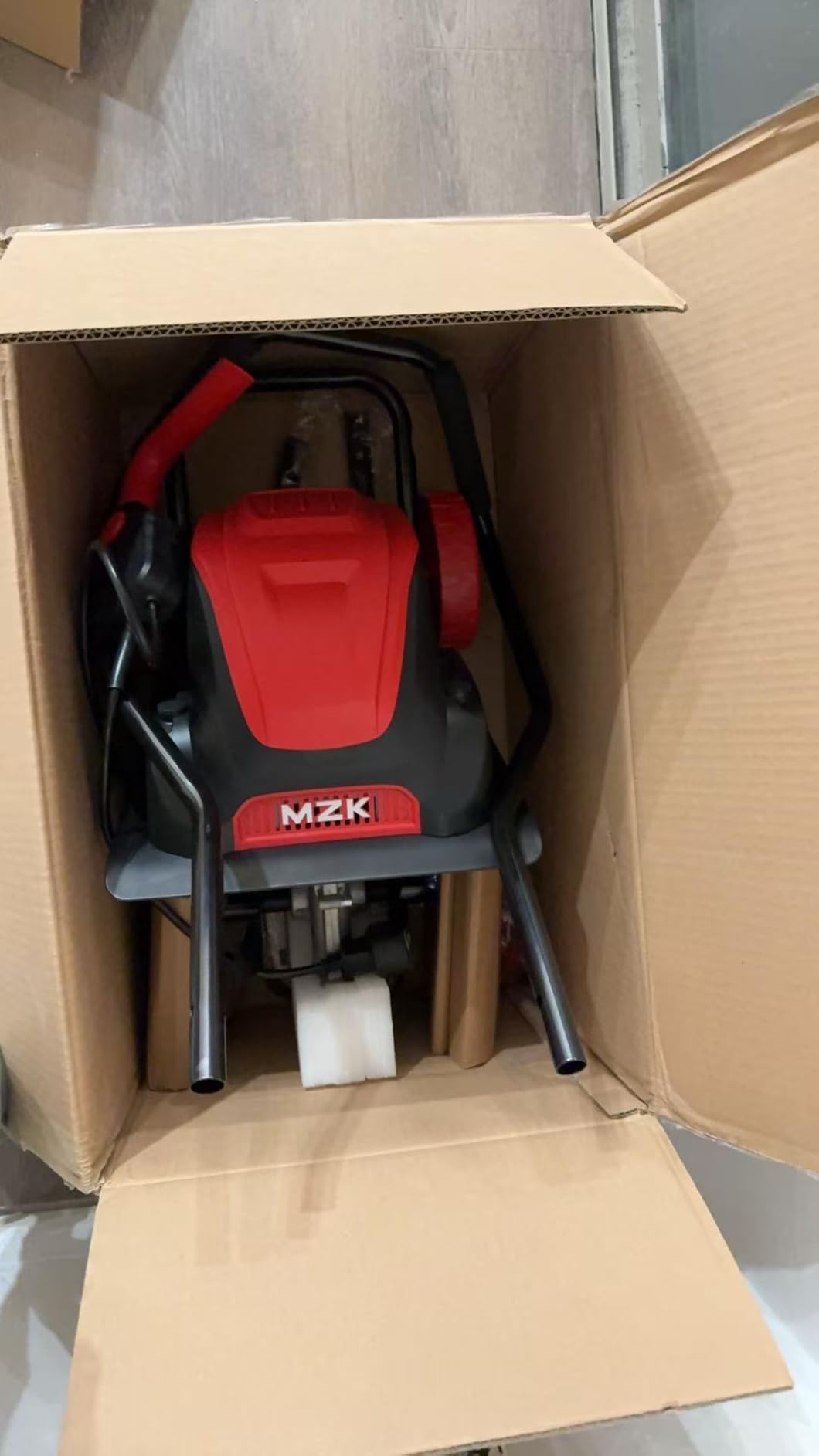
The MZK’s 430 RPM blade speed is the highest we saw, and speed is an underrated advantage in clay. A fast tine breaks the surface crust and moves on instead of hanging up and pulling you forward.
Owners report using it on red clay and rocky ground that resisted hand digging, and the 12-inch width suits narrow beds. It is also the lightest, quietest option for anyone who does not want a gas engine running.
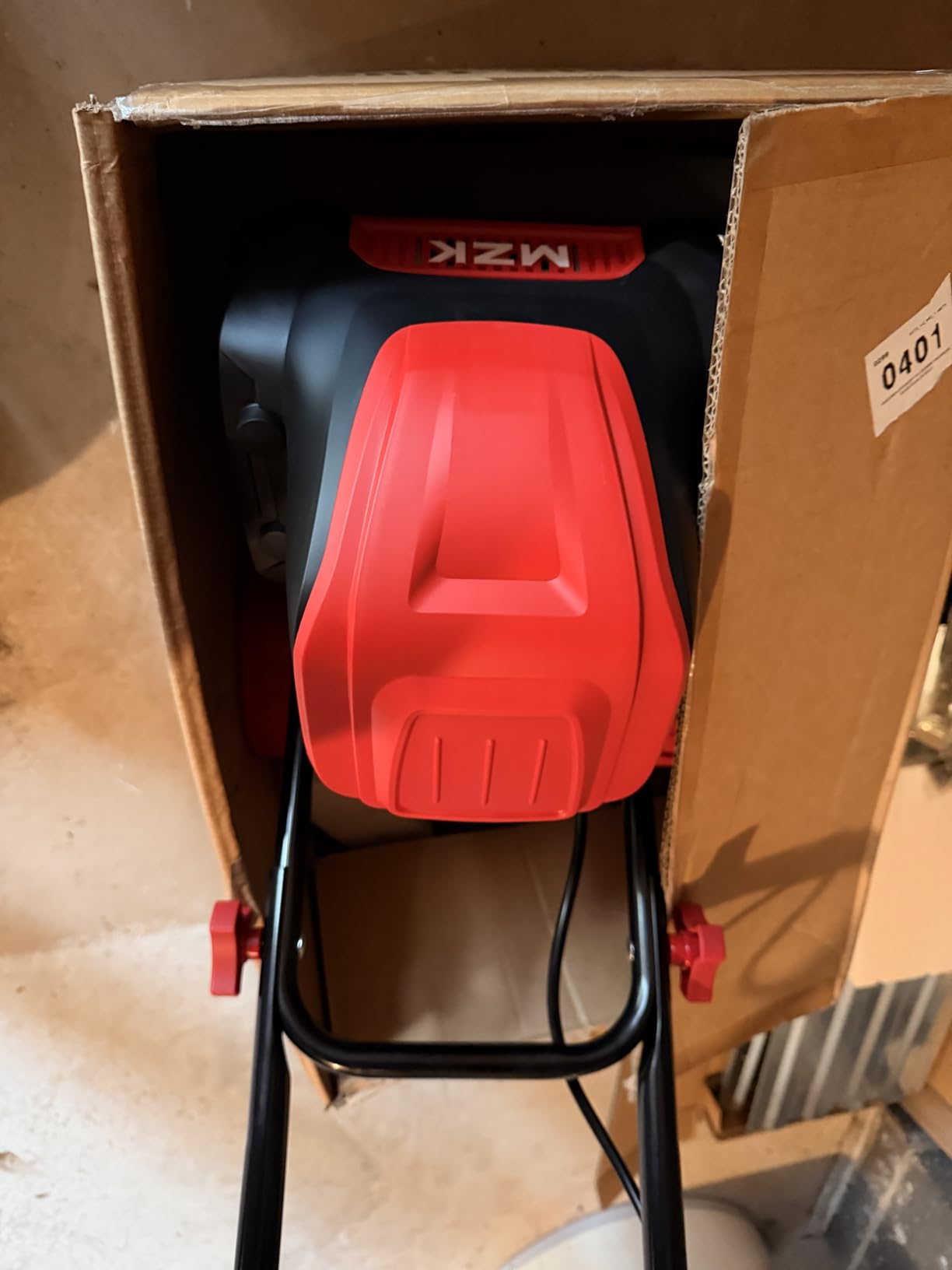
With 1518 reviews at 4.4 stars, 75 percent are five-star but 8 percent are one-star, the highest one-star rate among the electric units here. Those critical reviews describe the same behaviour, which is important to know before you buy.
It tends to throw soil forward and to the sides, so it jumps and walks on its own. That is the trade for a machine with no driven wheels to hold the line.
What works in hard ground
The blade speed means the tines clear roots and small stones more readily than slower machines, and 16 steel blades across four assemblies give a decent cutting edge.
It collapses for storage and needs no fuel, oil or batteries, which makes it an easy companion for a small plot near an outlet.
Where it falls short
It requires real strength to hold when the tines bite into a hard spot, and on heavy clay that is exactly the moment you need it to behave. One owner reported achieving roughly 3 inches against the described 8, a reminder that rated depth is not achieved depth.
Tines wrap with roots and need clearing often, so rocky or root-heavy ground will slow a job down considerably.
6. Alloyman 20V: Lightest Option, Beds Not Clay Fields
Alloyman 20V Cordless Tiller Cultivator, 360RPM Electric Garden Tiller, with 2 * 4.0Ah Batteries & Charger, 9In Tilling Width and 6.6In Depth Garden Rototiller for Lawn/Gardening/Soil Cultivation
360 RPM cordless motor
9 inch width
6 inch depth
14.4 pounds
Pros
- Two 4.0Ah batteries and a charger are included
- Lightest machine here at 14.4 pounds
- 360 RPM and four steel tines suit raised and flower beds
- Cordless design reaches areas an outlet cannot
- Detachable gear set simplifies post-till cleanup
Cons
- 9 inch width and 6 inch depth are small for hard-packed clay
- 20V packs deplete quickly with about 45 minutes each
- 1 year warranty is shorter than gas competitors
Be clear about what this machine is for. At 9 inches wide and rated to 6 inches deep, the Alloyman is a raised-bed and flower-bed cultivator, and reviewers consistently frame it that way rather than as a machine for compacted clay.
What it does well is convenience. Two 20V 4.0Ah batteries and a charger are included, so there is no separate battery purchase, and 14.4 pounds is the lightest machine in the roundup.
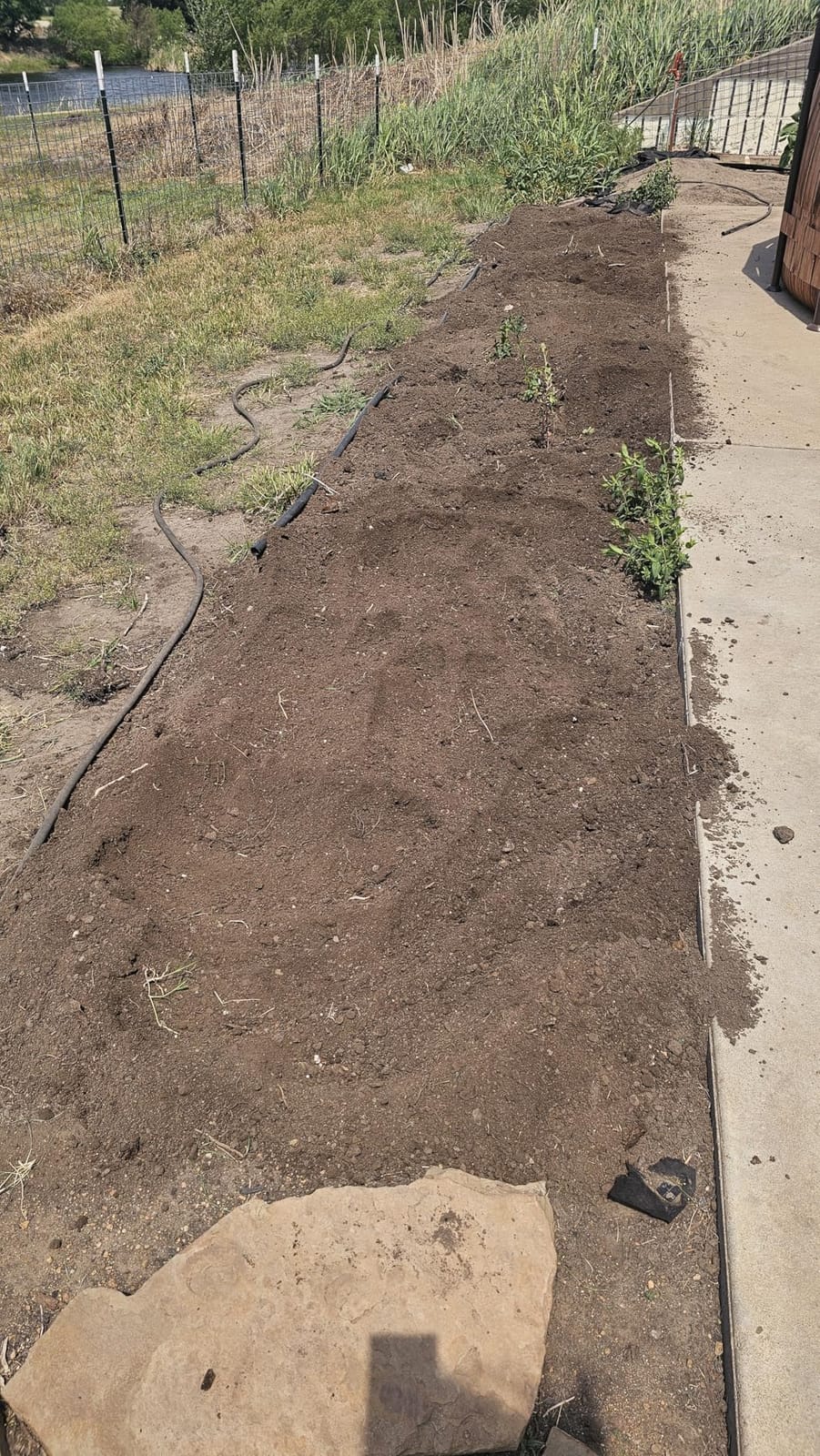
With 1452 reviews at 4.4 stars and 74 percent five-star, satisfaction is concentrated on value and easy handling rather than on ground-breaking ability. A detachable gear section makes clearing tangled weeds after each pass straightforward.
Runtime is about 45 minutes per battery, which is realistic for a full bed and short for a plot. The adjustable auxiliary handle and safety switch make it easy to work close to plants.
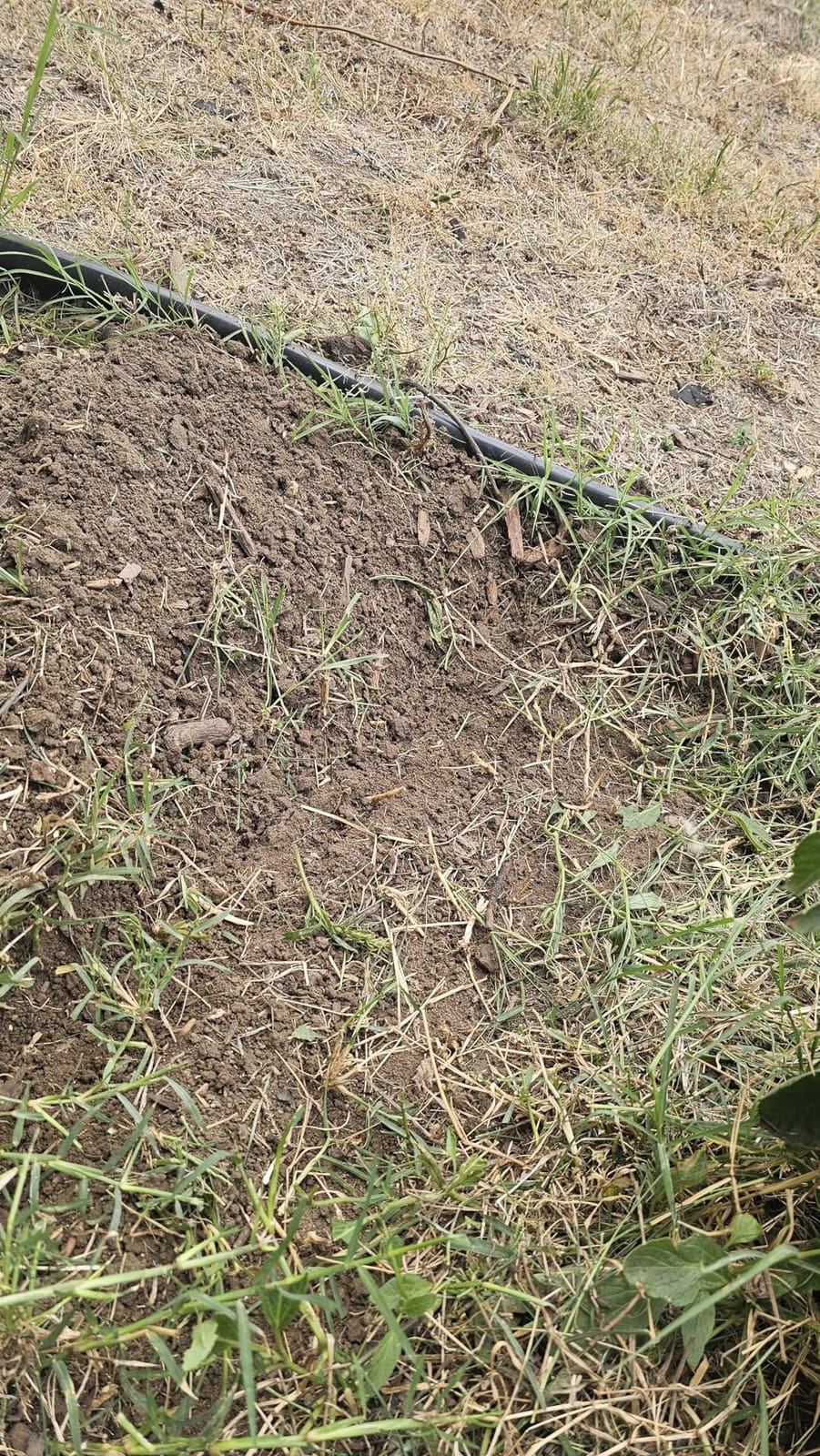
Where it earns its keep
Between established raised beds, where soil is already loose and only needs refreshing each spring, this machine does the job at a comfortable weight. The cordless format reaches corners an outlet cannot.
Owners like that it is one unit with everything needed, no fuel line and no cord to trip over in a crowded bed.
Where it falls short
Six inches of rated depth in hard clay is not enough to fix a hardpan, and the 9-inch width makes larger jobs slow going. Treat it as a second-stage machine after heavier equipment has opened the ground.
The one-year warranty is also the shortest here, and entry-level plastic construction is not what you want if the tines will meet stones.
7. Greenworks 40V: Best Warranty, Narrowest Cut
Greenworks 40V 10″ Cordless Tiller / Cultivator, 4.0Ah Battery and Charger Included, Green
40V brushless platform
8.25 to 10 inch width
45 minute runtime
21 pounds
Pros
- Adjustable width from 8.25 to 10 inches matches the pass to the bed
- Longest warranty here at 3 years on tool and battery
- 45 minute runtime with a 120 minute recharge is a usable cycle
- 21 pounds with 6 inch rear wheels moves easily around a garden
- No gas/oil or emissions maintenance
Cons
- Narrowest width here means many passes on a clay plot
- Lowest average rating in the roundup at 4.2
- Cordless tines lack the shear of gas machines in hard ground
The Greenworks 27062 is the warranty pick. Three years on both tool and battery is the longest coverage in this roundup, and on a machine that will take repeated knocks from stones that is worth real money.
It also has the most adjustable width we saw, sliding from 8.25 to 10 inches so you can work a wide bed and then narrow down between rows. Twenty-one pounds with 6-inch rear wheels makes it easy to reposition.
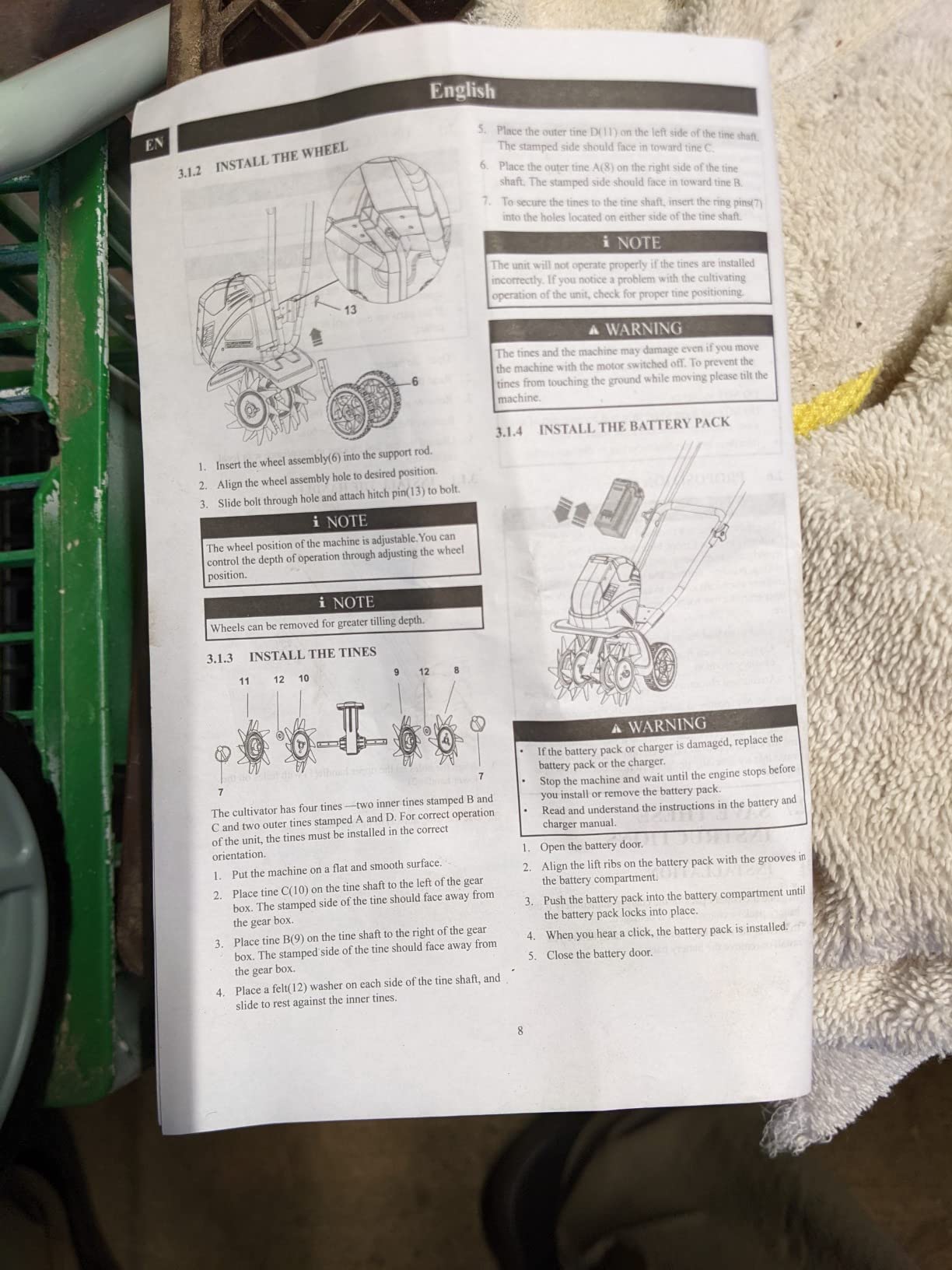
At 4.2 stars across 1105 reviews it has the lowest average here, and the distribution shows it, with 64 percent five-star. Reviews point to limited tilling width and battery endurance as the reason it is treated as a secondary-work machine.
Runtime is up to 45 minutes with a 120-minute full charge, so the duty cycle suits a bed at a time rather than an afternoon of breaking ground.
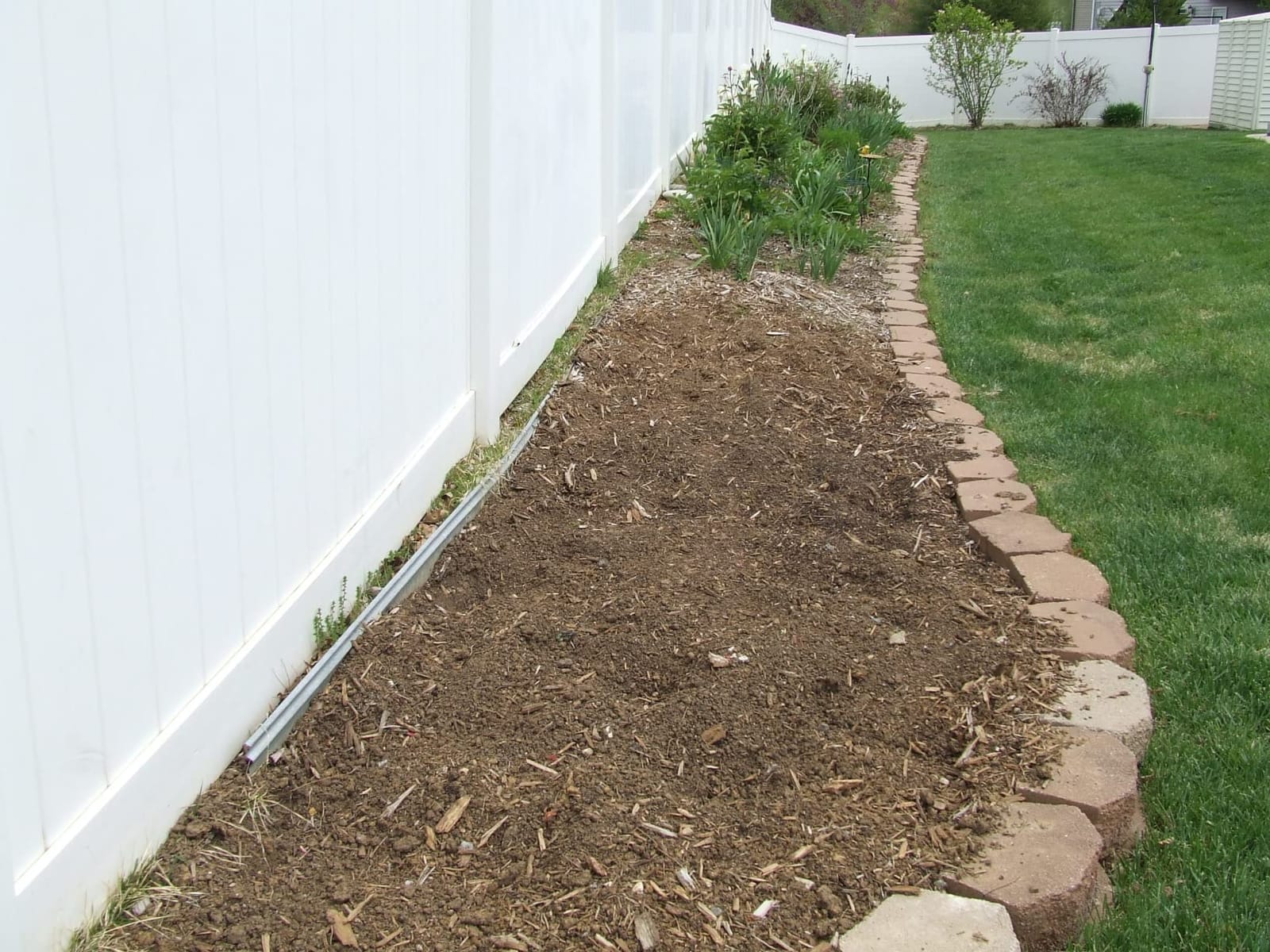
Where it works well
For an established plot with clay that has been worked before, this is a clean second-stage pass that loosens the top few inches and blends in compost without a fuel line to manage.
The included 40V 4.0Ah battery and charger mean it is ready to use, and the maintenance-free platform has no oil changes to plan around.
Where it falls short
Under 10 inches of width, a clay plot means a lot of passes, and each pass over hard ground costs you. Cordless tines also do not have the shear of a gas front-tine machine when the ground is genuinely packed.
Replacement batteries add up over the life of the machine, which matters if you already own a 40V platform and can share packs.
8. Earthquake Versa 20015: The Deepest Digging in the Roundup
Earthquake 20015 Versa 2-in-1 Tiller Cultivator with a 99cc 4-Cycle Viper Engine, 2-in-1 Front Tine Tiller and Cultivator, Removable Side Shields and Outer Tines
99cc 4-cycle Viper engine
11 inch depth
11 to 21 inch width
78 pounds
Pros
- 99cc four-cycle engine chews through baked hard clay
- 11 inch tilling depth is the deepest here
- Tool-less conversion to 16 and 11 inch widths
- Forged front tines and a frame that bucks less on hard spots
- Starts on the first or second pull
Cons
- Bolts loosen during use and need re-tightening
- Handlebar screws are too short and back out under vibration
- 78 pounds is hard to move between beds
This is the machine we would look at first for virgin hard clay, and the reason is simple. The 99cc four-cycle Viper engine plus a rated 11-inch depth gives it more digging authority than anything else in this roundup, and multiple owners describe turning hard clay into a soft seedbed.
It converts without tools from a 21-inch tiller down to 16 and 11 inch cultivator widths by removing the outer tines and side shields. That range lets you attack hard ground wide and then finish a bed narrow.
Forged front tines and a balanced frame reduce the hopping that plagues front-tine machines in clay, though not eliminate it. The adjustable handlebar height and onboard transport wheels help with setup between plots.
The five-year limited warranty is among the longest available, and the engine ships with oil included and starts on the first or second pull.
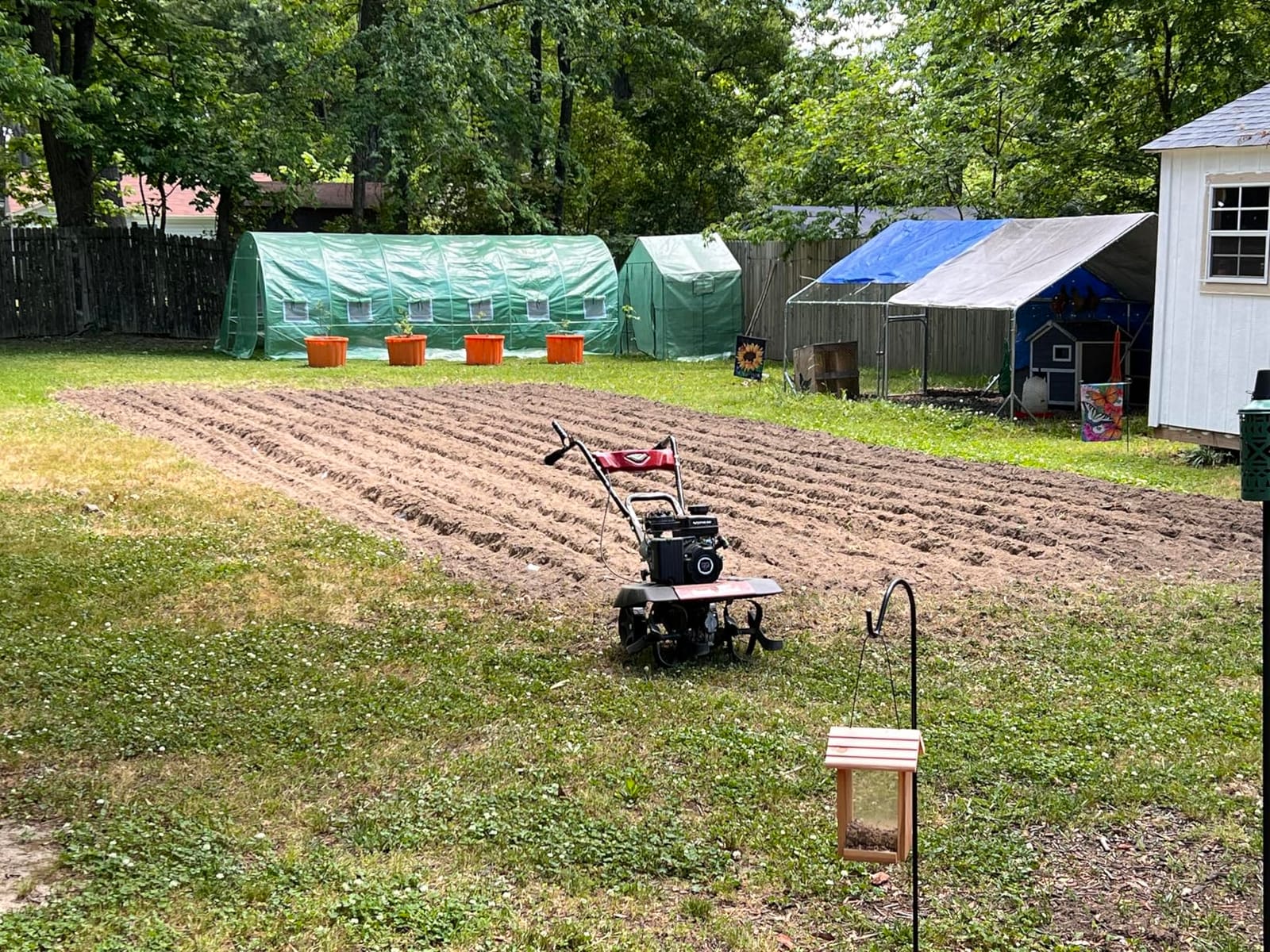
Why it handles hard ground
The 99cc of displacement and forged tines give the machine the torque to keep the tines in the cut rather than skimming. Owners report it handling baked clay that lighter machines would simply bounce off.
At 78 pounds it is the heaviest here, and that mass is part of the answer, since weight is what keeps a front-tine machine from walking sideways in hard ground.
Where it falls short
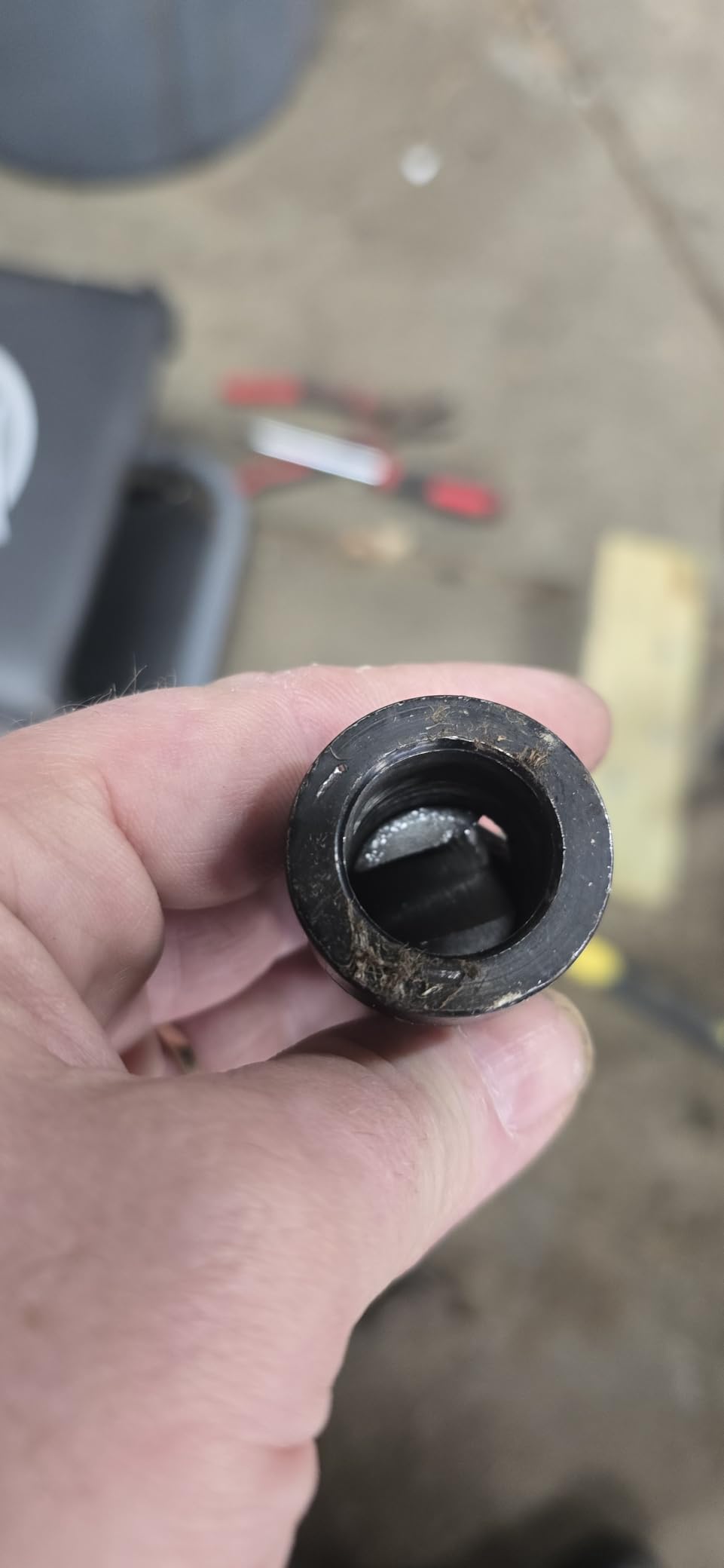
Assembly quality is the main complaint. Bolts loosen during use, the handlebar screws are too short and back out under vibration unless replaced, and the side panel tends to slide when dirt hits it.
That weight is a double-edged feature. It is also genuinely hard to move between beds, and vines and roots wrap the tines often, so budget time for clearing between passes.
9. TAZZ 35310: Gear Drive That Forgives Rocks
TAZZ 35310 2-in-1 Front Tine Tiller/Cultivator, 79cc 4-Cycle Viper Engine, Gear Drive Transmission, Forged Steel Tines,Green
79cc 4-cycle Viper engine
bronze gear drive
11 inch depth
21 inch width
Pros
- Bronze gear drive and forged tines give real shear on packed ground
- One owner cleared 300 plus square feet of poor rock-heavy soil
- Low center of gravity turns easily at the end of a row
- Handlebar adjusts for different operators
- Kicks stones out and climbs over debris
Cons
- Assembly instructions are unclear and one step is wrong
- Tine bracket may need drilling to accept the bolt
- Outer tine pins developed flanges and needed filing
Clay plots are rarely clay without stones, and the TAZZ 35310 is the machine built for that combination. A 79cc Viper four-cycle engine drives a bronze gear transmission into forged steel tines, which is a heavier drivetrain than the direct-drive cultivators at this price level.
Owners report it clearing more than 300 square feet of poor, rock-heavy ground without damage, and that it kicks stones aside and climbs over them rather than wedging. With 4.5 stars across 623 reviews, durability is the dominant theme.
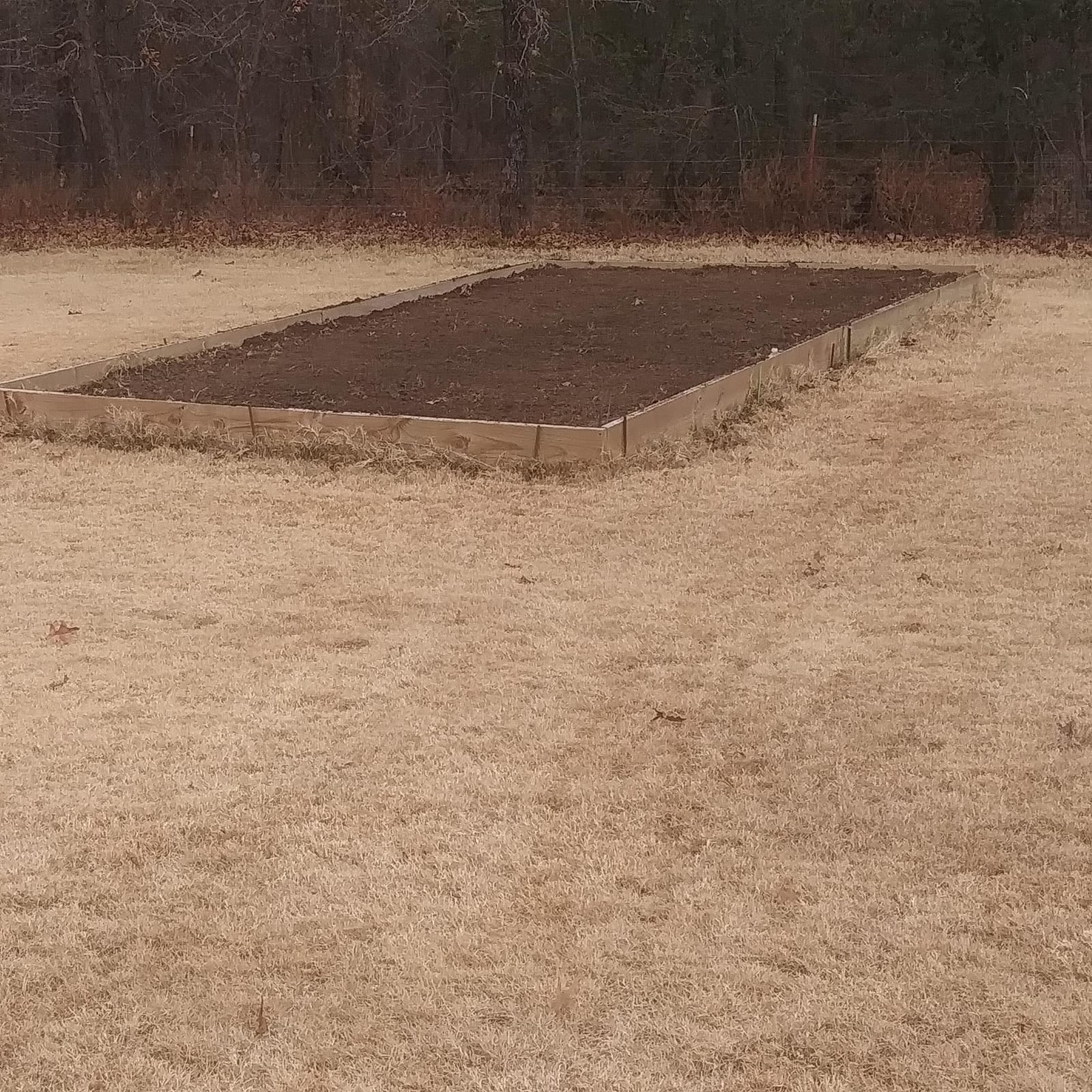
A multi-position drag stake controls tilling depth up to 11 inches, which is the figure that matters on compacted ground. The handlebar has four height positions, and one owner set it for a 90-pound operator.
Tool-less removal of outer tines and side shields gives the same 21, 16 and 11 inch width options as larger machines. Low center of gravity makes it easy to turn at the end of a row.
Where it earns its place
Rocky clay is where a bronze gear drive and forged tines pay off, because the extra torque carries the load through impacts that would bend a lighter assembly. US-based support and a three-year limited warranty back it up.
Survival reports are strong, with owners describing use through rocks, cinder block and a full winter outdoors.
Where it falls short
Assembly is the weak point. Instructions are unclear in the first steps, one step is wrong, and the tine bracket may need drilling out to accept the bolt before you can start.
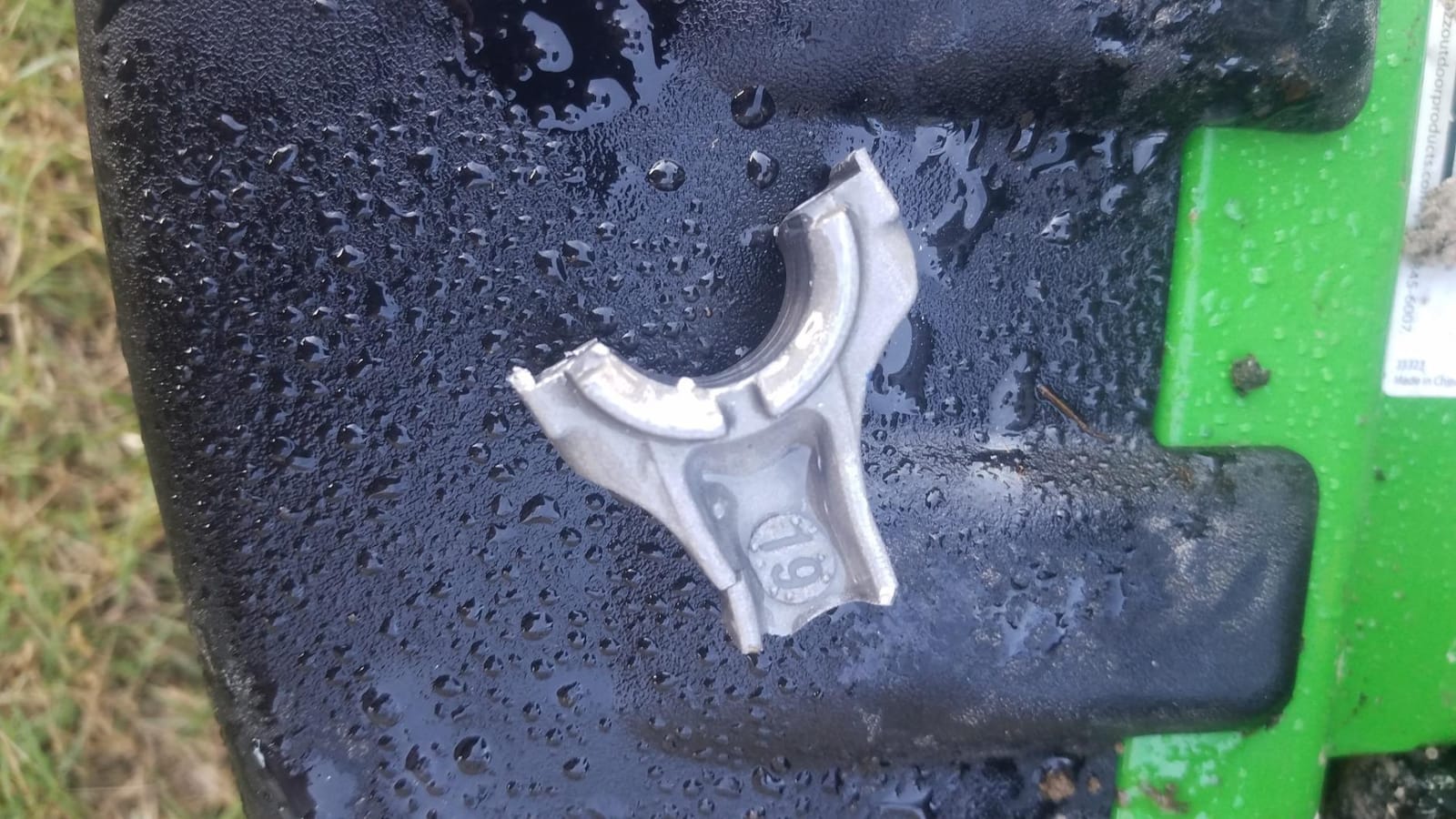
The pins securing the outer tines developed flanges and needed filing or grinding. On packed surfaces it can be hard to control until you work the throttle up.
10. Earthquake MC440: A Cultivator, Not a Clay Machine
Earthquake 12802 MC440 Mini Cultivator with 40cc 4-Cycle Viper Engine
40cc 4-cycle Viper engine
32 pound frame
5 year warranty
upright starting
Pros
- Four-cycle engine starts without fuel mixing and runs quietly
- Upright starting position avoids bending over the machine
- 32 pounds is light for a gas cultivator
- Works with optional edger and dethatcher kits
- 5 year limited warranty
Cons
- 40cc engine is at its limit in dense hard clay
- Width suits beds and rows rather than new ground
- Accessory kits are sold separately
We are including the MC440 because it is the machine many people buy by mistake for clay work. A 40cc four-cycle cultivator is built to stir loose soil in established beds, and in dense hard clay it simply runs out of torque.
Where it does shine is small work. At 32 pounds it is light for a gas cultivator, and upright stand-up starting means no bending over the engine to fire it on a confined bed.
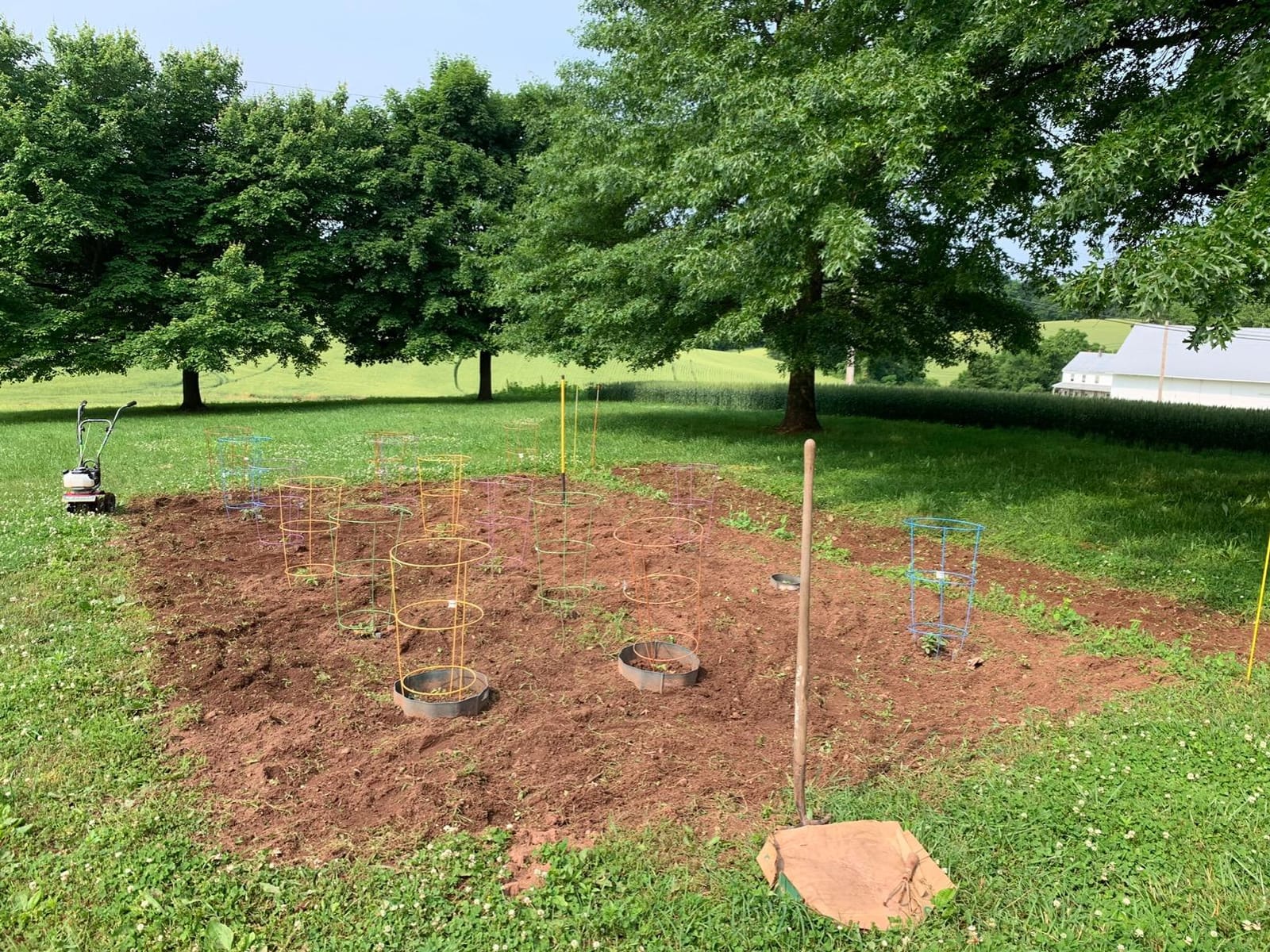
Its 4.0-star average across 1074 reviews is the lowest here, with only 60 percent five-star and 13 percent one-star, the highest one-star share in the roundup. That spread points to inconsistent output on hard ground.
The air filter design keeps dirt out of the engine, which genuinely helps in clay dust, and the five-year limited warranty is among the longest available.
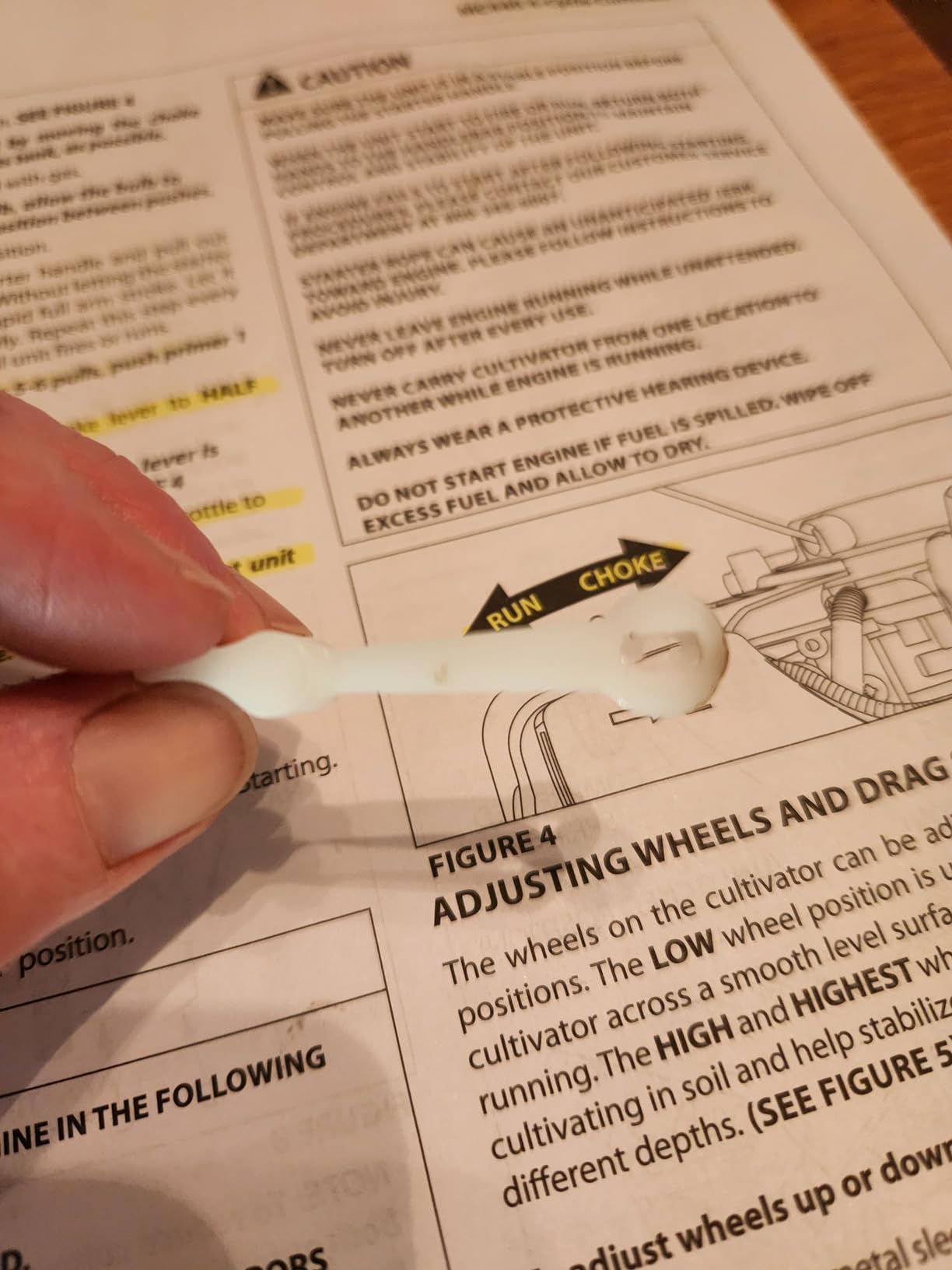
Where it works well
In beds that were already worked, this is a quick, quiet tool for weeding between rows and refreshing the top few inches. Owners using it in loose soil like the light weight and easy starting.
It also accepts optional edger and dethatcher kits, which extend its usefulness for lawn edges and thatch removal.
Where it falls short
The 40cc engine is the limit in dense, hard-packed clay, and it will not break new ground. Forum owners with high clay content consistently recommend against cultivator-class machines for uncultivated plots.
Plan on routine servicing and fuel storage regardless, since a gas engine still needs attention even if you run it lightly.
Rear-Tine Gas Tillers Win on Hard Clay
The honest answer to which machine handles hard clay best is a rear-tine gas tiller, and none of the ten models we analysed is one. That is worth stating plainly rather than dressing up a front-tine machine as something it is not.
A rear-tine tiller has powered wheels that drive the machine forward while the tines pull backward, so forward motion and tine rotation work against each other. The result is a machine that digs straight down in compacted soil instead of bouncing sideways. The threads on this topic are consistent on that point, and so are the tractor and tillage manuals.
Where you have a compact tractor or a walk-behind rear-tine unit available, that is the right first tool for virgin clay. Among the machines here, the closest match in spirit is the Earthquake Versa 20015, whose 99cc engine and 78-pound frame approximate the mass and torque of the rear-tine class.
Counter-Rotating Tines Beat Forward-Rotating in Clay
Tine rotation is the second mechanical decision, and it is the one most guides skim past. Forward-rotating tines throw soil ahead of the machine, which in hard ground pushes the operator backwards and lifts the tines out of the cut. Counter-rotating tines push soil backwards and down, driving the tines into the ground and holding depth without constant pressure.
Dual-direction machines let you switch. The sensible pattern is forward rotation for shallow cultivation where you want to leave a level finish, and reverse rotation for the actual clay break, where the bite matters more than the finish. None of the ten machines here offers switchable rotation, which is a limitation shared across this category of compact tillers.
Buyers should treat replacement tine availability as part of the decision. Tines bend when they meet a rock, and a machine whose tine set is unavailable ends up as a decoration.
Match Tilling Width and Engine Size to Your Plot
Width and engine size should be matched to each other and to the job. The Earthquake Versa at 11 to 21 inches and the TAZZ at 11 to 21 inches cover realistic plot sizes, while a 9-inch machine such as the Alloyman is a bed tool no matter how good its motor is.
Engine displacement matters more than headline horsepower. Small four-cycle engines in the 25cc and 40cc range, as on the Mantis and Earthquake MC440, are built for stirring loose soil. The 79cc and 99cc engines in the TAZZ and Earthquake Versa have the torque to work virgin clay.
Weight and traction deserve their own line in the decision. A machine that bounces is a machine losing work, and ground-drive wheels plus agricultural tires are what keep the tines engaged. Among walk-behinds, plain drive wheels are the reason lighter machines wander in hard ground.
How to Till Really Hard Soil in Five Slow Passes
One common piece of advice from experienced growers is consistent: make the first pass shallow and slow, then go deeper on a second pass. Forcing full depth in one pass on new ground bogs the engine, stalls the tines and can bend them.
The full sequence works like this. First, test the moisture by squeezing a handful: it should hold its shape and break apart with a light touch, not smear into a ribbon. If it smears, wait. Then walk the plot and remove rocks, roots and buried debris, because that is the number one cause of damaged tines and gearboxes.
Next, set the depth stake to its shallowest position and make the first pass at walking pace with the throttle opened up. Then lower the stake and cross the same ground again, working down in stages rather than forcing one deep cut. Finally, work perpendicular passes to fill gaps, and leave the bed alone afterward.
Clay that re-hardens into brick-like clods was almost always tilled too wet. It will also re-compact after rain, which is why owners report that persistence over several seasons matters more than a single afternoon with any machine.
When a Tiller Is the Wrong Tool for Virgin Clay
If the ground has never been worked and is packed hard across a large area, a tiller may be the wrong machine. Forum consensus on this topic is blunt: plow first, then till, and on larger plots add a subsoiler to break the hardpan beneath.
A moldboard plow turns a furrow and lays the clay down inverted and exposed to air, which is something a rototiller cannot do. A subsoiler runs beneath the surface to shatter the compacted layer without turning anything at all. Both are implement work, which means a tractor or an ATV rather than a walk-behind.
For small plots without a tractor, a broadfork or spading fork with a double-digging method is the standard alternative, and it preserves soil structure better than machine tilling. On beds, the case for not tilling at all is also strong, since tilling disturbs soil life and speeds up the loss of organic matter.
What to Add After You Break Clay Open
Breaking clay open is the easy half. What you add next decides whether the soil stays open or slumps back into a hardpan within a season.
Work in compost or aged manure to raise organic matter, which improves both drainage and water retention. Gypsum supplies calcium and helps flocculate clay particles without changing pH, and it is a slow, multi-season amendment rather than a quick fix. Coarse sand improves drainage but changes texture permanently, so add it only to the top few inches.
Cover crops such as oats, peas or clover keep living roots in the soil over winter, which is exactly what open clay needs. Mulch the surface after planting to keep rain from re-sealing the crust, and avoid walking on the bed when it is wet, because that is how compacted clay re-forms.
Frequently Asked Questions
What is the best tiller for breaking up clay soil?
A rear-tine gas tiller is the right answer for hard clay because its driven wheels pull the machine forward while the tines pull backward, so it digs down instead of hopping sideways. Of the machines in our roundup, the Earthquake Versa 20015 comes closest, with a 99cc engine, an 11-inch rated depth and enough weight to keep the tines engaged.
Will a tiller go through clay soil?
Yes, but slowly and in stages. A tiller will go through hard clay if the tines stay in the cut, so make the first pass at the shallowest depth setting and a walking pace, then lower the stake and repeat. Forcing full depth in one pass on virgin ground bogs the engine and can bend tines.
Which tiller is best for hard ground?
Hard ground rewards engine displacement, machine weight and forged tines more than it rewards horsepower. The Earthquake Versa 20015 with a 99cc four-cycle engine and 11-inch rated depth is the deepest digger here, while the TAZZ 35310 with a bronze gear drive and forged tines is the most forgiving when the ground holds rocks.
How to till really hard soil?
Test the moisture first and wait if the soil smears in your hand. Clear rocks, roots and buried debris, then make a slow first pass with the depth stake at its shallowest setting. Lower the stake and make a second pass deeper, work in stages rather than forcing depth, and never till soil that is wet enough to form clay clods.
What is the best tool to dig up clay soil?
On a large plot it is a moldboard plow, with a subsoiler to break the hardpan beneath, and a tiller afterwards to finish the seedbed. For a small garden with no tractor, double-digging with a spading fork or broadfork breaks clay with less damage to soil structure than a machine does.
What should I do if my soil is very clay?
Improve drainage before you try to grow in it. Work in compost or aged manure, use gypsum to help clay particles flocculate, and add coarse sand only to the top few inches. Plant cover crops to hold living roots through the season and mulch the surface so rain cannot re-seal the crust.
The Best Tillers for Hard Clay Soil in 2026
The Sun Joe TJ604E is the pick for most people because it reaches a rated 8 inches in hard clay and carries more owner evidence than anything else here. The Earthquake Versa 20015 is the one to buy when the ground has never been worked and depth matters most, and the TAZZ 35310 is the safest choice when rocks are part of the deal.
For a genuinely large plot of virgin clay, buy a plow or a subsoiler first and till afterwards. Whatever machine you choose, work shallow passes, go deeper in stages and keep the ground dry, because technique decides the outcome in clay more than the badge on the machine does.