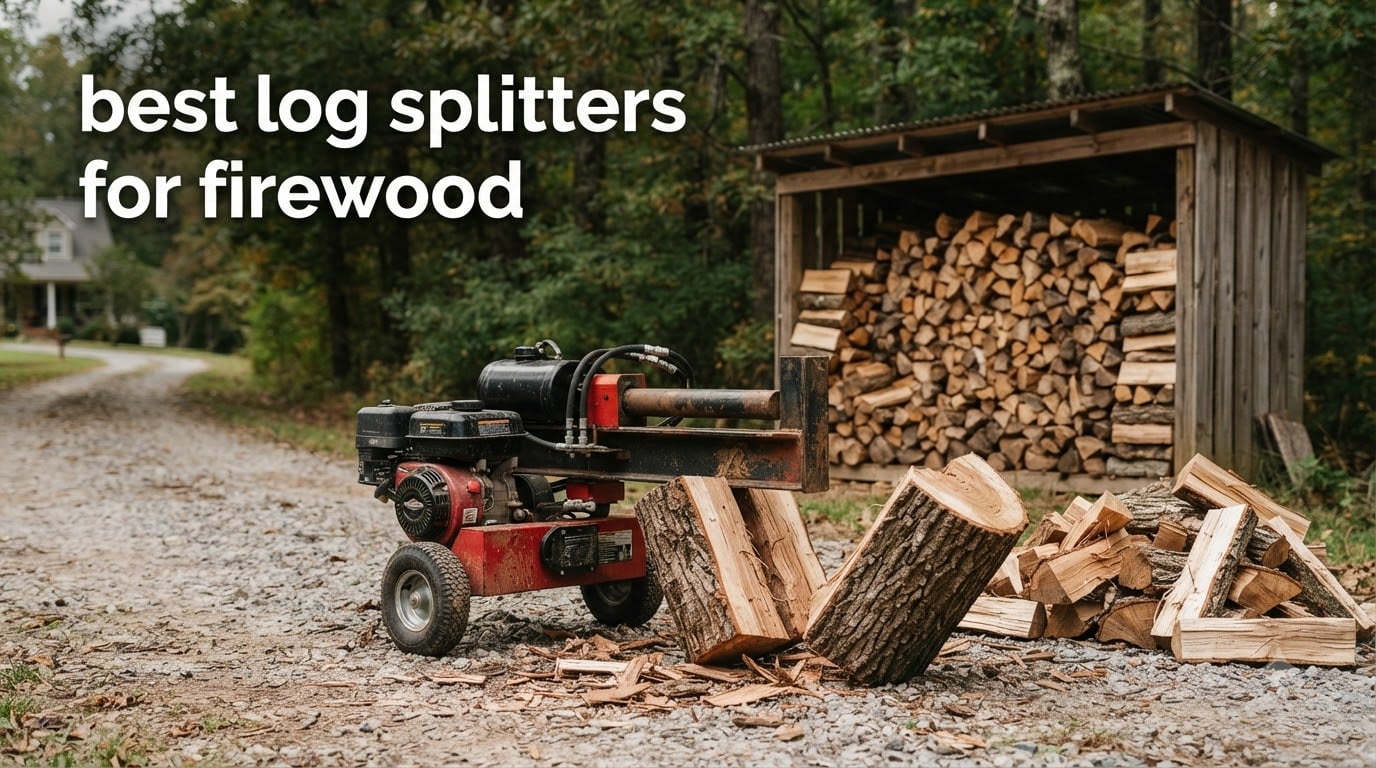
Splitting firewood by hand is the fastest way to wreck a back you will need for the rest of the winter. A log splitter turns that day of swinging an axe into a couple of hours of feeding rounds onto a beam, and the best log splitters for firewood do it again on every bad-weather weekend.
Before the recommendations, here is the direct answer most buyers are searching for: 5 to 10 tons handles softwood such as pine and fir, 10 to 15 tons covers mixed loads, and 20 tons or more is what dense hardwood like oak, hickory, and locust actually demands. Owners on r/firewood are blunt about this, warning that low-tonnage machines should never touch oak, maple, or hickory, because those species need perfectly straight, uniform rounds to split cleanly.
Our team compared ten machines across the full power spectrum, from small electric splitters to full-beam gas monsters, weighing rated tonnage against real cycle times and the specific failure modes owners actually report. If you heat with wood already, you will want the firewood side of the season handled before you start shopping. And if a gas splitter is on your list, it helps to know how it compares to an inexpensive gas log set for the fireplace before you commit to one.
Two other people around here have done their own fire-related reading: our Yule log recipe ideas and a set of ants on a log snack ideas, both of which start with a log worth splitting first.
Everything below lists splitting force, power source, log capacity, and the honest downside, because every one of these machines has one. Let us start with the three that stood out.
Table of Contents
- Top 3 Picks for the Best Log Splitters for Firewood (September 2026)
- All 10 Log Splitters Compared in 2026
- How We Picked These Log Splitters
- 1. Landworks 20-Ton Gas Log Splitter – Best Overall Pick
- 2. SuperHandy 20-Ton Hydraulic Log Splitter – Best Value Gas Pick
- 3. YARDMAX 6.5-Ton Electric Log Splitter – Top Rated
- 4. BILT HARD 27-Ton Towable Gas Log Splitter – Best for Heavy Duty
- 5. PowerSmart 6.5-Ton Electric Log Splitter – Best Warranty Cover
- 6. SuperHandy 25-Ton Gas Log Splitter – Best for Large Rounds
- 7. Ezasin 16-Ton Electric Log Splitter – Best High-Tonnage Electric
- 8. FULL BOAR 33-Ton Gas Log Splitter – Best for Big Timber
- 9. VEVOR 6.5-Ton Electric Log Splitter – Best for Beginners
- 10. FULL BOAR 35-Ton Gas Log Splitter with Hydraulic Log Lift – Best for High Volume
- How to Choose a Log Splitter for Firewood
- Frequently Asked Questions
- Conclusion: The Best Log Splitters for Firewood in 2026
Top 3 Picks for the Best Log Splitters for Firewood (September 2026)

Landworks 20-Ton Gas Splitter
- 20-ton rated splitting force
- 7HP 4-stroke OHV gas engine
- 2-Stage Bucher hydraulic pump
- 7.5-second auto return cycle

BILT HARD 27-Ton Towable
- 27 tons from a 209cc OHV gas engine
- Converts horizontal or vertical
- Towable on 16-inch DOT tires
- 13-second cycle

YARDMAX 6.5-Ton Electric
- 6.5 ton ram force
- 20.5 in long by 10 in diameter
- Auto shutoff on overload
- Quiet 110V electric operation
All 10 Log Splitters Compared in 2026
| Product | Specs | Action |
|---|---|---|
| Landworks 20-Ton Gas Splitter |
|
Check Latest Price |
 SuperHandy 20-Ton Hydraulic SuperHandy 20-Ton Hydraulic |
|
Check Latest Price |
| YARDMAX 6.5-Ton Electric |
|
Check Latest Price |
| BILT HARD 27-Ton Towable Gas |
|
Check Latest Price |
 PowerSmart 6.5-Ton Electric PowerSmart 6.5-Ton Electric |
|
Check Latest Price |
 SuperHandy 25-Ton Gas Half Beam SuperHandy 25-Ton Gas Half Beam |
|
Check Latest Price |
 Ezasin 16-Ton Electric Full Beam Ezasin 16-Ton Electric Full Beam |
|
Check Latest Price |
 FULL BOAR 33-Ton Gas FULL BOAR 33-Ton Gas |
|
Check Latest Price |
 VEVOR 6.5-Ton Electric VEVOR 6.5-Ton Electric |
|
Check Latest Price |
 FULL BOAR 35-Ton with Log Lift FULL BOAR 35-Ton with Log Lift |
|
Check Latest Price |
How We Picked These Log Splitters
We rated every machine on four things: rated splitting force against realistic log size, the time between logs, the build details that decide whether a splitter survives five seasons, and what owners say once the novelty wears off.
That last point mattered most. The gap between a spec sheet and a two-year ownership report is where splitters earn or lose their place, and we leaned heavily on owner feedback while reading specifications for everything else. We also drew on forum consensus from r/firewood, Arborist Site, and Hearth.com, where the argument about electric versus gas is endlessly rehearsed with far more candor than any product page offers.
One framing note before the picks: a 10-ton machine with a fast reset can out-work a slow 15-ton unit in a single afternoon, because tonnage only tells you whether the log splits, not how many you get through. We weigh both numbers together rather than chasing the biggest headline figure.
1. Landworks 20-Ton Gas Log Splitter – Best Overall Pick
Landworks Portable 20-Ton Gas Log Splitter, 7 HP, Rapid Auto Return
20-ton force
7HP OHV gas engine
2-Stage Bucher pump
20 in by 16 in capacity
7.5-second cycle
Pros
- Starts on the first pull
- Handles tough sinewy hardwood
- Light enough to move around a property
- Assembly takes about an hour
Cons
- No tow hitch for moving it
- Push plate stops short of the wedge
- Graphic-style instructions take patience
The Landworks has been the backbone of my own firewood setup for two seasons, and it is the machine I recommend to anyone who wants one tool that covers softwood and hardwood without a second purchase. It starts on the first pull, every time, which sounds minor until you are standing in the cold at seven in the morning.
Weighing in at roughly 148.7 pounds, it is one of the lighter 20-ton machines here, and that weight shows up in real ways. I can roll it to the woodpile alone, reposition it along a pile as the stack shrinks, and get it into tight spaces next to a fence. Many 20-plus-ton splitters are effectively furniture unless you own a trailer.
Power comes from a 7HP four-stroke OHV gas engine feeding a 2-Stage Bucher hydraulic gear pump, and the combination delivers a 7.5-second reset that is genuinely quick for a hydraulic machine. Arborist Site owners routinely compare hydraulic splitters in the 12 to 14 second range, so this one cycles faster than the category norm.

What surprises owners most is the tonnage-to-size ratio. Rated for logs 20 inches long and 16 inches in diameter, it regularly splits rounds larger than the published diameter, particularly seasoned wood. Reviewers also point out that it chews through awkward species like sweetgum with stringy grain, the kind of wood that gives hand splitters trouble.
Capacity is a horizontal full beam with a steel wedge, and the layout means you always work at a normal standing height rather than bending over a vertical beam. That alone has done more for my back than any ergonomic claim on a box.
Hydraulic fluid is not included, and the manufacturer recommends AW32, so plan on adding a jug before the first start. That is the single most common surprise for new owners across this whole category.
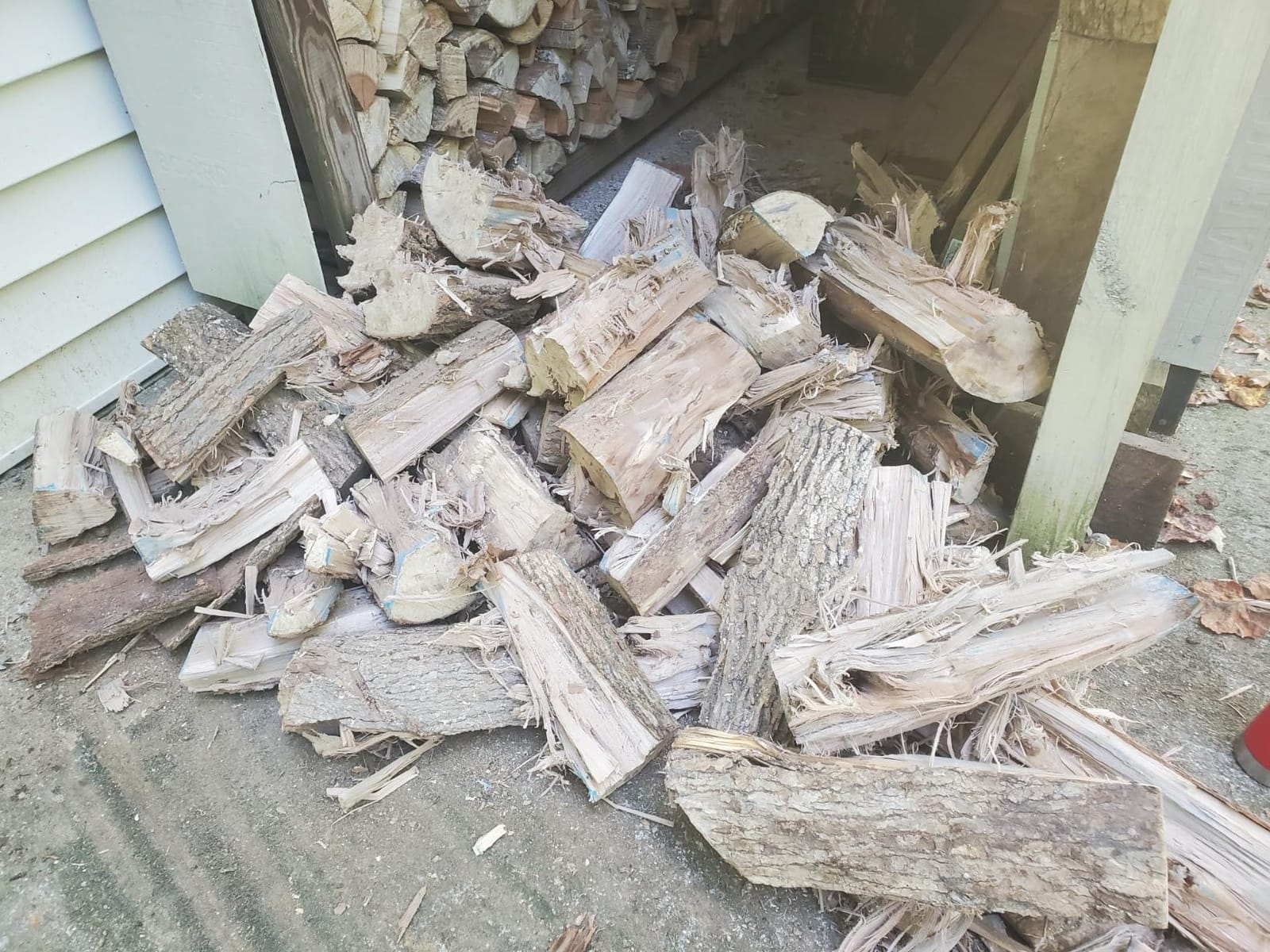
Durability is the reason for the 4.4 average rather than something higher. A small number of owners reported failures around the hydraulic return hose and cylinder in early use. Nothing in the pattern suggests a systemic fault, but it is worth knowing before you rely on it for a whole winter of splitting.
Who should buy the Landworks 20-Ton
Buy it if you heat with hardwood, want a single machine that handles oak without drama, and can tolerate gas noise and fuel storage. It is also the pick for anyone who splits regularly but does not want a 300-pound machine bolted to a trailer hitch.
It is a strong fit for a family that puts away two to four cords a season. The 7.5-second cycle keeps the work moving, and the light frame means you are not begging neighbors for help every time you move it.
Where the Landworks falls short
The push plate stopping short of the wedge is a design quirk that leaves long rounds only partially split lengthwise, so you occasionally finish a log by hand. And with no tow hitch, moving it across a large property is a genuine chore rather than a stroll.
If you expect to be working far from a road or driveway, add a wheel kit or choose a model built to tow. The instructions are also graphic rather than written, which is fine for a mechanically confident owner and frustrating for everyone else.
2. SuperHandy 20-Ton Hydraulic Log Splitter – Best Value Gas Pick
SuperHandy Hydraulic Log Splitter, 20 Ton, Firewood Wood Splitter
20-ton force
AlphaWorks 7HP OHV engine
2-Stage Bucher pump
7.5-second cycle
148.7 lb frame
Pros
- Powers through knots and burls
- Assembles in about 30 minutes
- Folds flat for easy storage
- Starts reliably after months idle
Cons
- Low working height causes back fatigue
- No work table on the engine side
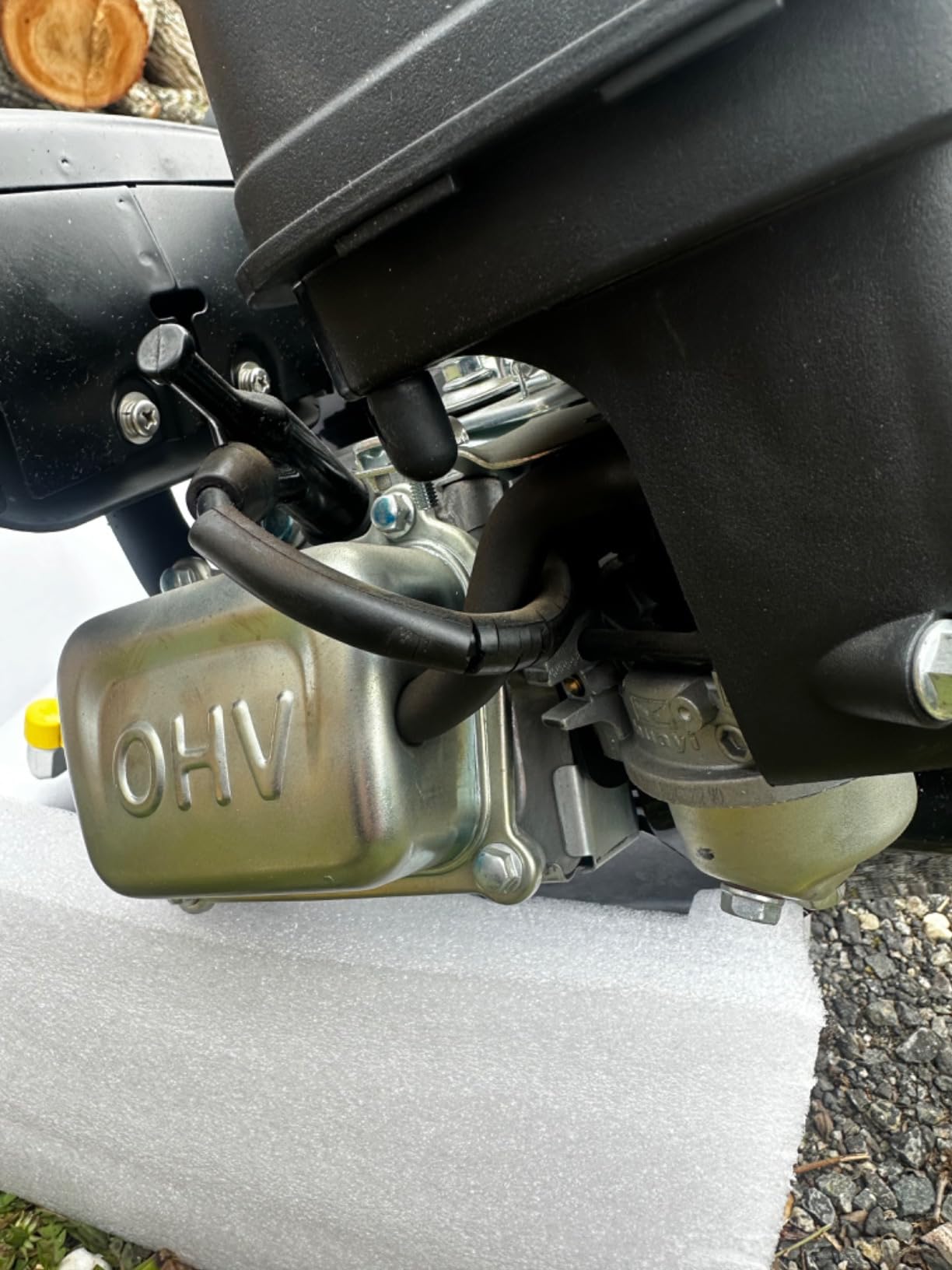
- Filler cap threading can weep slightly
The SuperHandy 20-Ton is the machine I point people to when they ask how to spend the least and still get a real 20-ton hydraulic splitter. It shares the same core architecture as the Landworks, including the 2-Stage Bucher pump and a 7.5-second cycle, but it folds and stores more neatly.
Assembly took us about half an hour with the hardware included, and the folding handle plus 10-inch tubeless polyurethane wheels make it easy to tuck against a shed wall between seasons. Owners report it starts reliably even after sitting unused for months, which matters more than it sounds if your splitting season is concentrated in October and November.
On splitting performance, reviewers describe steady force through knots, burls, and twisted grain, the three things that make a hydraulic ram push a log aside instead of opening it. That is the difference between a splitter that stalls and one you keep feeding.
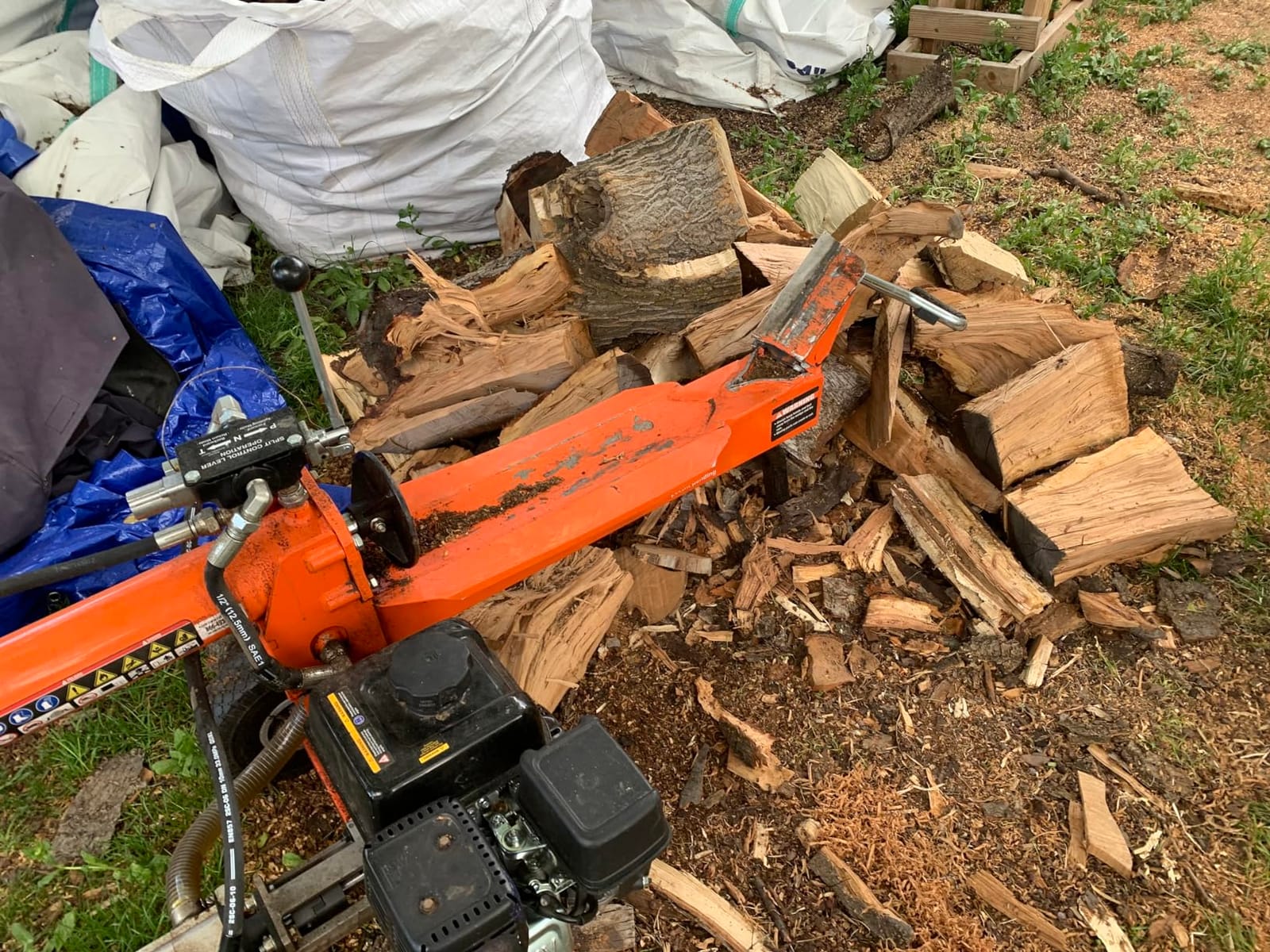
Log capacity is 20 inches long by 16 inches in diameter on a horizontal full beam with a steel wedge, matching the class leader. The 148.7-pound weight is the standout spec here, since plenty of competitors in this bracket weigh well over 300 pounds.
Hydraulic fluid is again sold separately, with AW32 recommended. Budget for that before you plan your first session, and check the filler cap threading early, since a small number of owners reported a slight weep during operation that customer service resolved without fuss.
The clear compromise is speed on volume work. It is not a fast machine by hydraulic standards, and if you are running several cords a day you will feel the difference between a 7.5-second cycle and something closer to 12.
The other recurring note is working height. The low profile means you bend during operation, and owners who split more than a cord or two a year tend to notice their lower back by the end of a long afternoon.
Who should buy the SuperHandy 20-Ton
This is the right call for a homeowner splitting one to three cords a year of mixed wood who wants gas power without a trailer or a second machine. The value gap against larger 20-ton splitters is substantial, and the core hydraulics are proven.
It also suits anyone with limited storage, because the folding handle lets it stand against a wall or fit in a shed corner that a full-frame splitter would not.
Where the SuperHandy falls short
Skip it if you process five or more cords a season or if you split from a seated position, because the low beam and modest cycle speed will tell on you. There is also no work table on the engine side, so split halves drop into the one place you do not want them.
Volume firewood sellers tend to move up to a faster, larger machine once the small rounds stop being the point. Treat this one as a capable home splitter rather than a production tool.
3. YARDMAX 6.5-Ton Electric Log Splitter – Top Rated
YARDMAX YS0650 6.5 Ton Electric Log Splitter
6.5 ton ram force
110V electric
20.5 in long by 10 in diameter
Auto shutoff on overload
104.7 lb
Pros
- Highest rated of the group
- Quiet enough for a residential street
- Splits rated rounds and larger
- Overload protection stops the ram
Cons
- Narrow plastic wheels wobble
- Short power cord needs an extension
- Over 100 pounds is awkward alone
The YARDMAX YS0650 is the highest-rated splitter in this group, and it is the one I recommend to people who cannot or will not run a gas engine. Four-point-six stars across a healthy review count is not a fluke rating, it reflects a machine that simply does what it promises for softwood and small rounds.
The shift in attitude is the thing owners talk about most. Hearth.com members are drawn to electric for quiet operation rather than power, and this is the machine that proves the quiet option is not a compromise in its intended range.
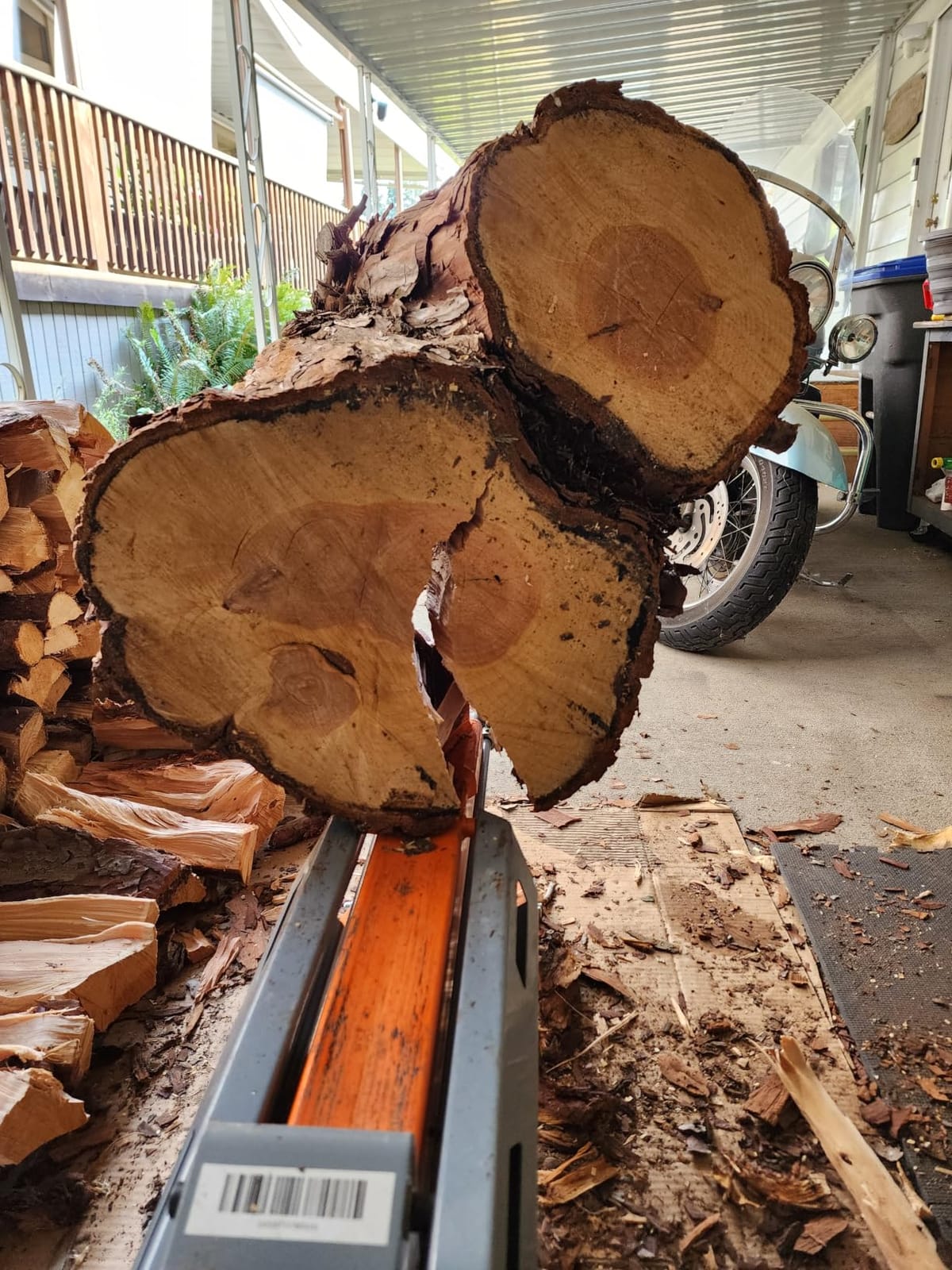
Rated capacity is 6.5 tons of ram force, handling logs up to 20.5 inches long and 10 inches in diameter. Owners regularly split rounds at or beyond the published 10-inch diameter once they learn to rotate the log, which is the single biggest technique improvement on any small electric splitter.
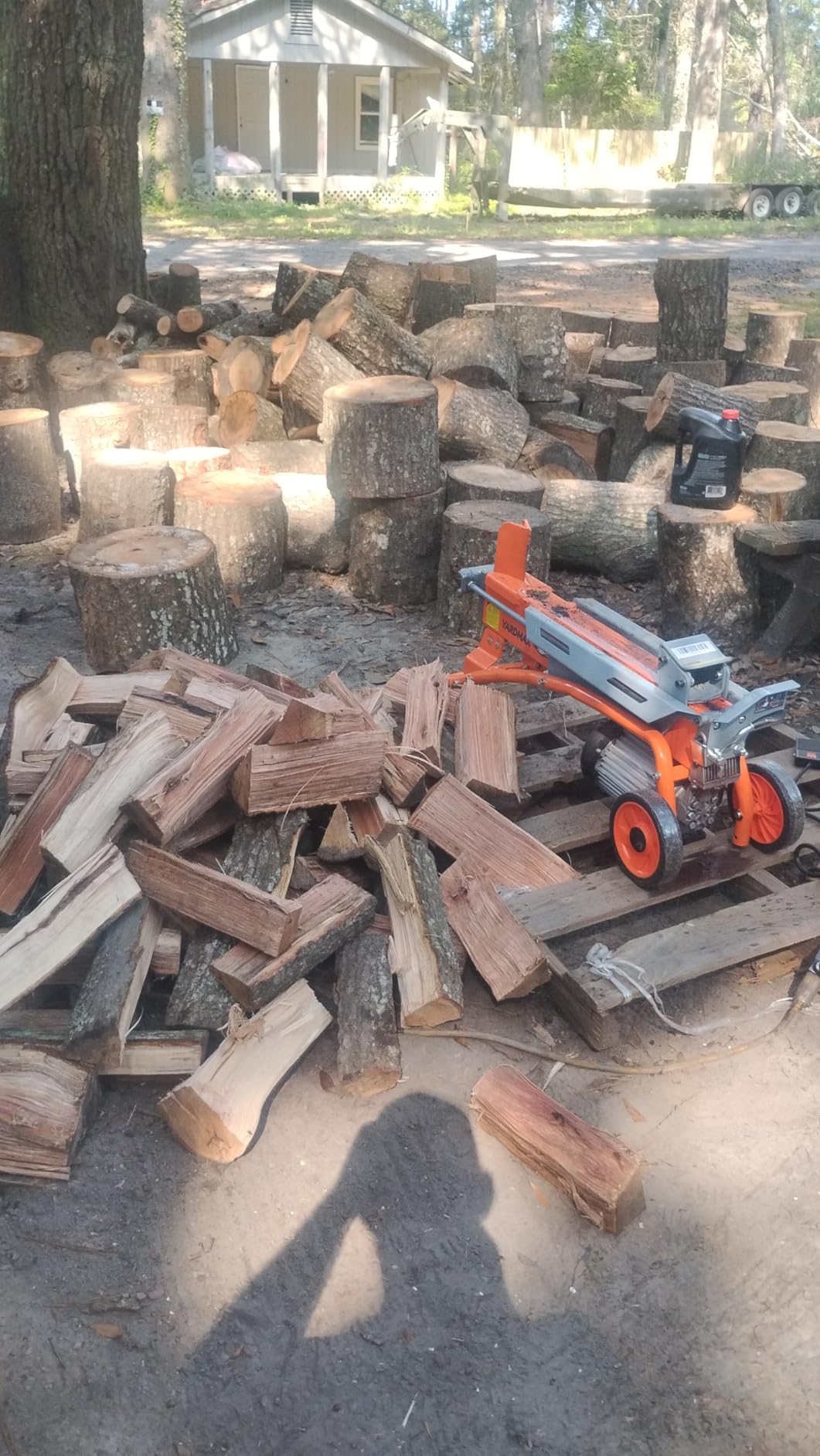
Two safety features make it forgiving to learn on. Automatic shutoff stops the machine when a log jams or exceeds capacity, and a one-handed operation mode with an optional footswitch gives you better control of the ram than a two-handed lever.
At 104.7 pounds, it is light for its class and has a two-wheel design for relocation, though the narrow plastic wheels are the component owners criticize most. Expect to replace them eventually rather than planning around them.
The oil dipstick is hard to read and the change interval is poorly documented, which is a small maintenance trap. Because the operating lever sits on the end of the machine, it cannot be stored standing up, so plan a floor spot in the shed.
The cord is short, so a 12 AWG extension cord is effectively required. Keep it within the gauge the manufacturer specifies and plug into a GFCI outlet, since a thin cord that runs hot is the leading cause of trouble on electric splitters.
Who should buy the YARDMAX 6.5-Ton
It fits first-time buyers, apartment-adjacent households, and anyone splitting under half a cord a year of pine, birch, or small hardwood. It also works well as a kindling and small-round companion to a larger gas machine kept elsewhere.
If neighbors or a spouse are the reason you avoided a gas splitter, this is the machine that removes that objection entirely. Two wheels and a 104.7-pound frame make it a one-person tool in a way most splitters are not.
Where the YARDMAX falls short
It is not a hardwood machine, and r/firewood is emphatic that oak, maple, and hickory need far more force than 6.5 tons. Feeding dense rounds to a small electric ram leads to stalling, and the jam is a real injury risk around the wedge.
Plan on needing a 12 AWG extension cord, and set aside an afternoon to work out your rotation technique. Get both right and it will handle more than the spec sheet claims.
4. BILT HARD 27-Ton Towable Gas Log Splitter – Best for Heavy Duty
BILT HARD 27-Ton Towable Gas Powered Log Splitter, Horizontal & Vertical Wood Splitter Gas Powered with 209cc OHV Engine & 2-Stage Pump, 16″ DOT Tires & 2″ Ball Coupler Firewood Splitting Machine
27 tons of force
209cc OHV 7HP gas engine
Two-stage 11 GPM pump
24 in log length
494 lb towable
Pros
- Splits rounds you cannot lift
- Converts horizontal to vertical
- Tows behind an ATV or truck
- Oil included in the package
Cons
- 494 pounds needs two people to assemble
- Hard starting until air is bled
- Difficult to move by hand
The BILT HARD 27-Ton is what I recommend the moment a splitter stops being a convenience and becomes the job. If you are clearing storm damage, working through oak, or splitting more than a few cords a year, this is the machine that ends the compromise.
Rated force is 27 tons from a 7HP 209cc OHV gas engine with 9.14 ft-lb of torque, driving a two-stage pump rated at 11 GPM. Log length capacity extends to 24 inches, past every portable machine in this group, with a 7-inch hardened steel wedge doing the work.
Owners consistently describe splitting large, heavy rounds that they could not physically lift, and that is the honest measure of the class. A 13-second cycle is quick for the force it delivers.
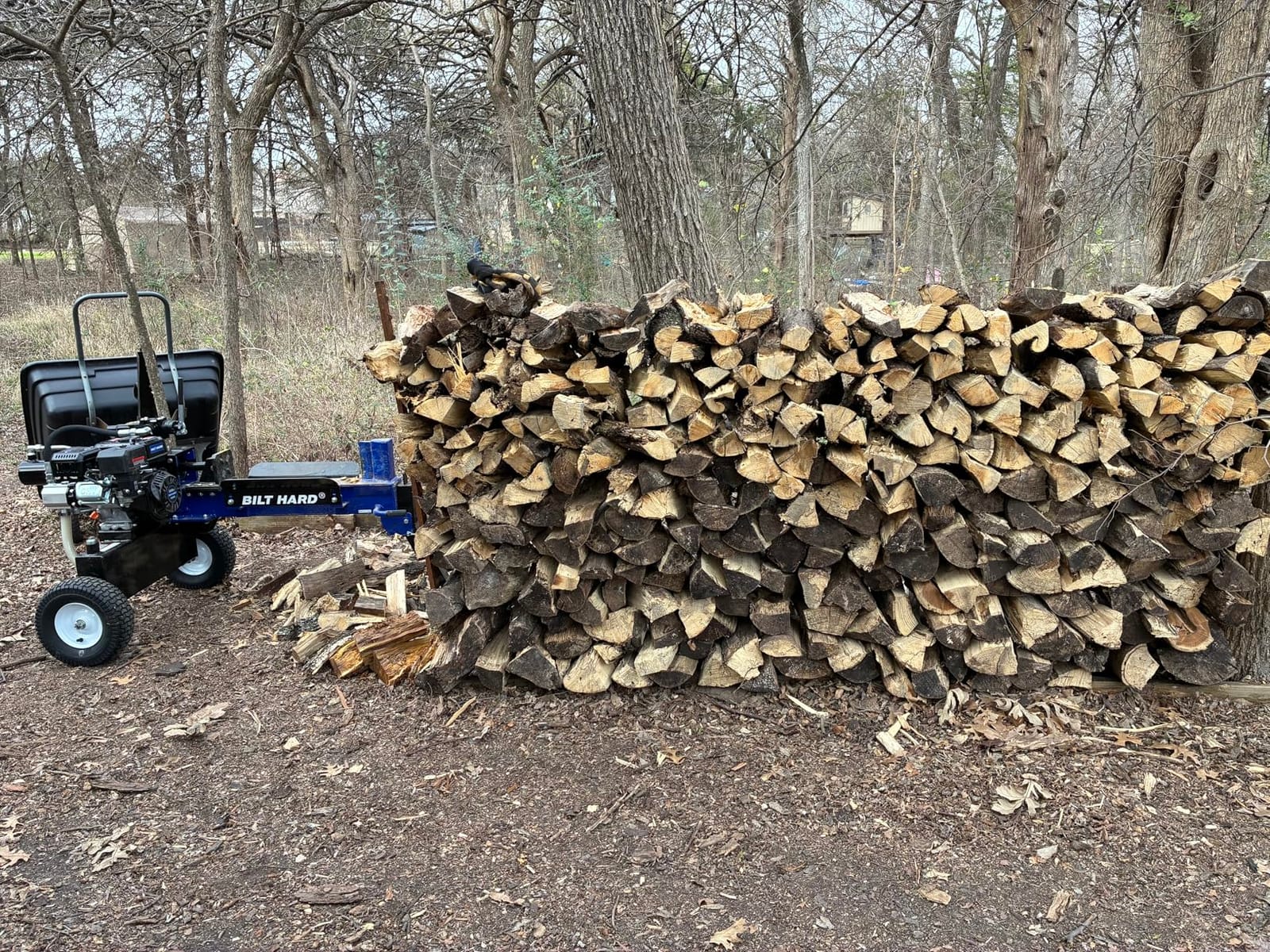
The dual-position design converts from horizontal to vertical, which matters when you switch from firewood rounds to a felled tree trunk section. Vertical splitting is also the safer orientation for logs too heavy to swing onto a beam, and it lets you rest a round against your chest instead of lifting it over your head.
It is genuinely towable, with a 2-inch ball coupler, 35-inch safety chains, and 16-inch DOT-approved tires rated to 45 MPH. That turns a 494-pound machine into equipment you take to the woodlot rather than drag across a lawn.
The 6-gallon hydraulic reservoir comes with oil already in it, so you can run it after assembly without a shopping trip. Owners splitting two to seven cords a year report consistent starts and durable construction.
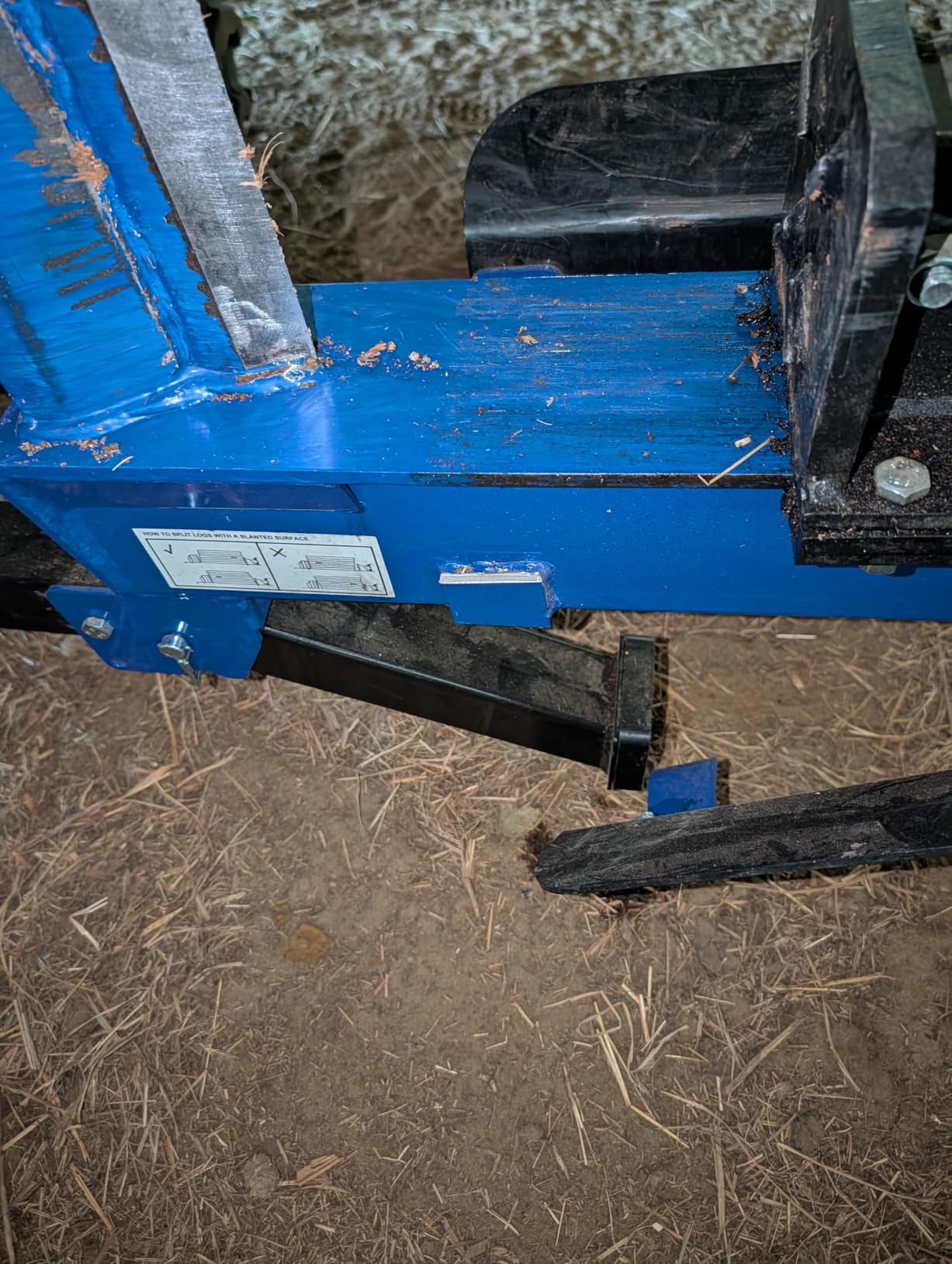
Assembly is the hard part. It arrives in three heavily packed, plywood-lined boxes and needs two people for at least one heavy lifting step, and a new engine can be hard to start until trapped hydraulic air is bled out of the lines. Brand support is repeatedly praised for resolving start-up issues quickly.
One owner found a pre-installed hydraulic line on the cylinder not fully tightened from the factory, so check every fitting with the engine off before the first real session.
Who should buy the BILT HARD 27-Ton
It suits households burning five to fifteen cords a year, people clearing storm-damaged trees, and anyone who wants vertical capability without buying a full commercial machine. If you have an ATV, a UTV, or a truck, towing solves the weight problem entirely.
It is also the right upgrade path from an electric splitter. If you are tired of rotating logs to coax a small ram, the difference in muscle strain is immediate.
Where the BILT HARD falls short
It is not a machine for someone with a weak back or no help on assembly day. Three very heavy boxes make unpacking a chore, and moving it by hand across rough ground is genuinely back-breaking.
If you split under a cord a year, the size and weight are overkill and a 20-ton portable machine will serve you better. The 27-ton figure is a claim worth taking seriously, so feed it logs within its rated capacity rather than testing it with whatever is biggest in the pile.
5. PowerSmart 6.5-Ton Electric Log Splitter – Best Warranty Cover
PowerSmart Electric Log Splitter, 6.5-Ton, 3450 Motor Speed, 15 Amp, Horizontal Full Beam Design
6.5-ton hydraulic force
15 Amp motor at 3450 rpm
20 in by 10 in capacity
20-second cycle
108 lb
Pros
- Two-year warranty with responsive support
- Compact footprint for storage
- Stable repeatable motor power
- Light enough to move with one person
Cons
- 20-second cycle is slow for the class
- Rated for home use rather than cord volume
- One-star reviews run high at 12 percent
The PowerSmart is the small electric splitter I recommend when warranty coverage is the deciding factor, because it is the only machine here backed by a stated two-year warranty with support that reviewers describe as responsive. In a category where early component failure is the norm, that is real value.
Power comes from a 15 Amp induction motor spinning at 3450 rpm, driving 6.5 tons of hydraulic force. Induction motors are quieter than universal motors and they deliver repeatable, predictable power, which shows up as consistent splitting rather than the surge-and-fade behavior cheaper brushed motors produce.
Log capacity is 20 inches long by 10 inches in diameter on a horizontal full beam with a durable steel frame. That is a sensible small-round envelope and matches the machine better than feeding it anything larger.
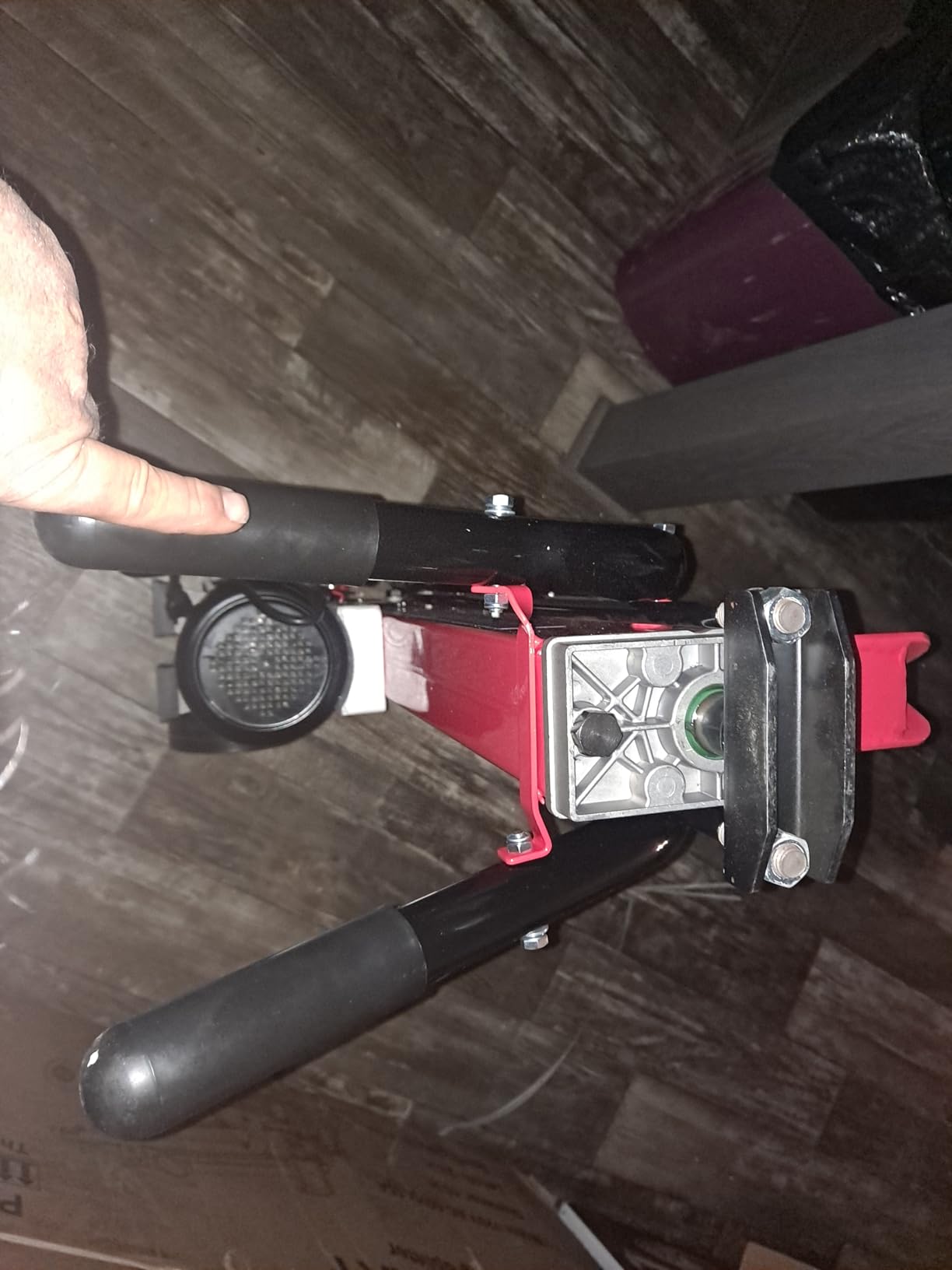
At 108 pounds with wide rear wheels and a strong handle, it moves around a yard more easily than most, and the 37.4 by 10.6 by 18.1 inch footprint stores between a cabinet and a wall in most garages. Owners value the reduction in physical effort and injury risk more than the raw speed.
The honest weakness is the 20-second reset cycle, the slowest functional number in this group. A 4.2 average reflects that, along with a one-star share running at 12 percent that points to early component failures on a minority of machines.
There is also a catalog confusion trap: a 7-ton variant of this machine exists, so confirm which model you actually have in the box before you start. It matters for parts and for the warranty.
This is a light-duty and home-use machine, not something to run for several cords a day. Keep it within softwood and small hardwood, use a properly rated extension cord, and you will be very happy with it.
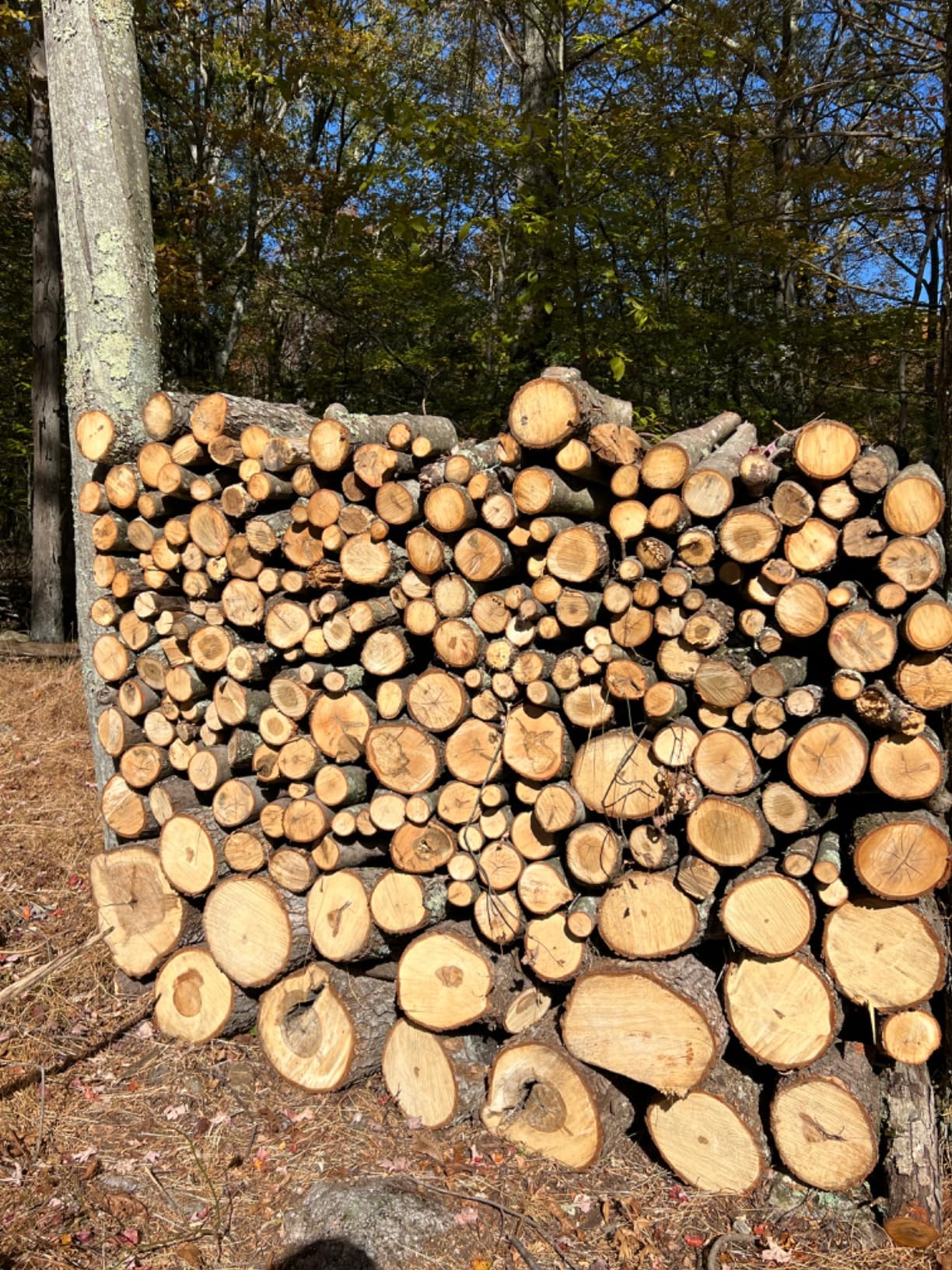
Who should buy the PowerSmart 6.5-Ton
It fits a homeowner who splits softwood only, wants the lowest-risk electric purchase, and has limited storage space. Anyone nervous about electric splitters failing in year two is the audience this warranty is designed for.
It also works as a season-two machine for people who start with a small gas splitter and add an electric unit for kindling and small rounds, since the two tasks barely overlap.
Where the PowerSmart falls short
The 20-second cycle is the deal-breaker for anyone processing volume. You will be standing idle for most of every cycle, and in warm weather that idle time is when the motor runs hot.
It is also rated for home use rather than sustained cord production, and a third of its one-star feedback describes failures that happen early. Skip it if you intend to split a full cord in a day.
6. SuperHandy 25-Ton Gas Log Splitter – Best for Large Rounds
SuperHandy Portable 25 Ton Gas Log Splitter with 7HP Engine, Bucher Gear Pump, and Horizontal/Vertical Half Beam Steel Wedge for Firewood Splitting and Forestry Harvesting
25-ton rated force
7HP AlphaWorks gas engine
24 in diameter capacity
12-second cycle
90 lb frame
Pros
- Handles 24-inch diameter rounds
- Lightest gas machine in the group at 90 pounds
- 12-second cycle with steady force
- Folds flat with a carry handle
Cons
- Only 40 reviews so far
- Hydraulic fluid sold separately
- Gas engine needs outdoor use
The SuperHandy 25-Ton is the spec-sheet surprise of this group. Rated at 24 inches in diameter, it takes the biggest rounds of any portable machine here, and it does it while weighing 90 pounds, the lightest gas unit in the roundup.
That combination is rare. A half-beam horizontal or vertical design means you can switch orientation to handle a wide round without lifting it onto a beam, and a 12-second cycle keeps pace with the larger full-frame machines.
Power is a 7HP AlphaWorks gas engine with the same 2-Stage Bucher hydraulic gear pump used on the 20-ton models in this list, so the hydraulics are proven hardware rather than an experiment.
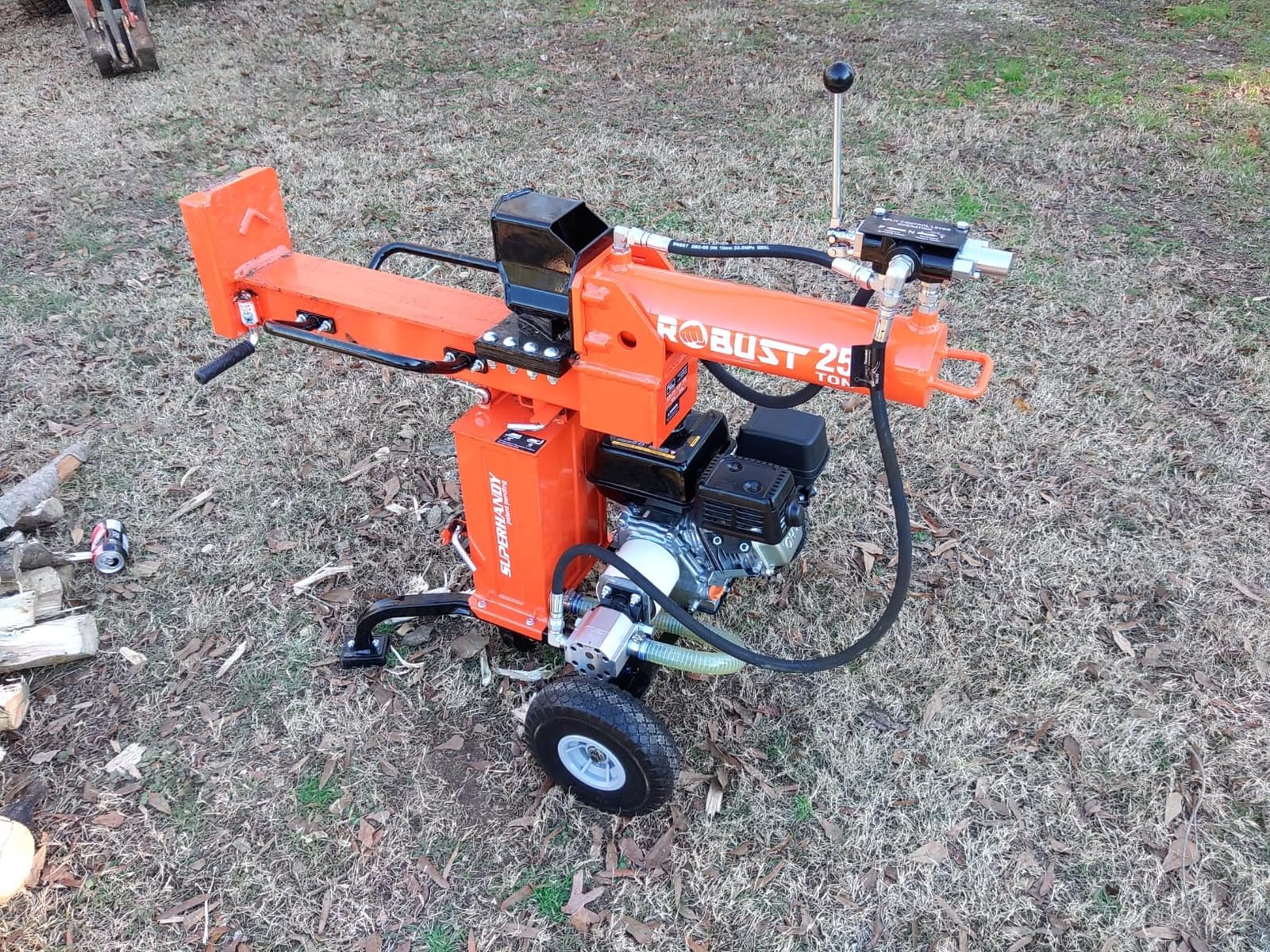
Portability is the reason to look at this one twice. Ten-inch polyurethane wheels and an ergonomic folding handle let one person move it across a property, and the 49.6 by 25.2 by 39.4 inch profile is compact for the force it delivers.
Owners report consistent force across the cycle, which is what you want when a round has a knot in it. The 4.5 average comes with 78 percent five-star reviews, a strong showing for a machine in its class.
The weakness is evidence, not performance. Forty reviews is the second-thinnest base in the group, and a 10 percent three-star share hints that a minority needed troubleshooting out of the box. A larger review history would tell you much more.
Hydraulic fluid is not included and AW32 is recommended, so plan on adding a jug before the first start. Use it outdoors, and plan for fuel storage between sessions.
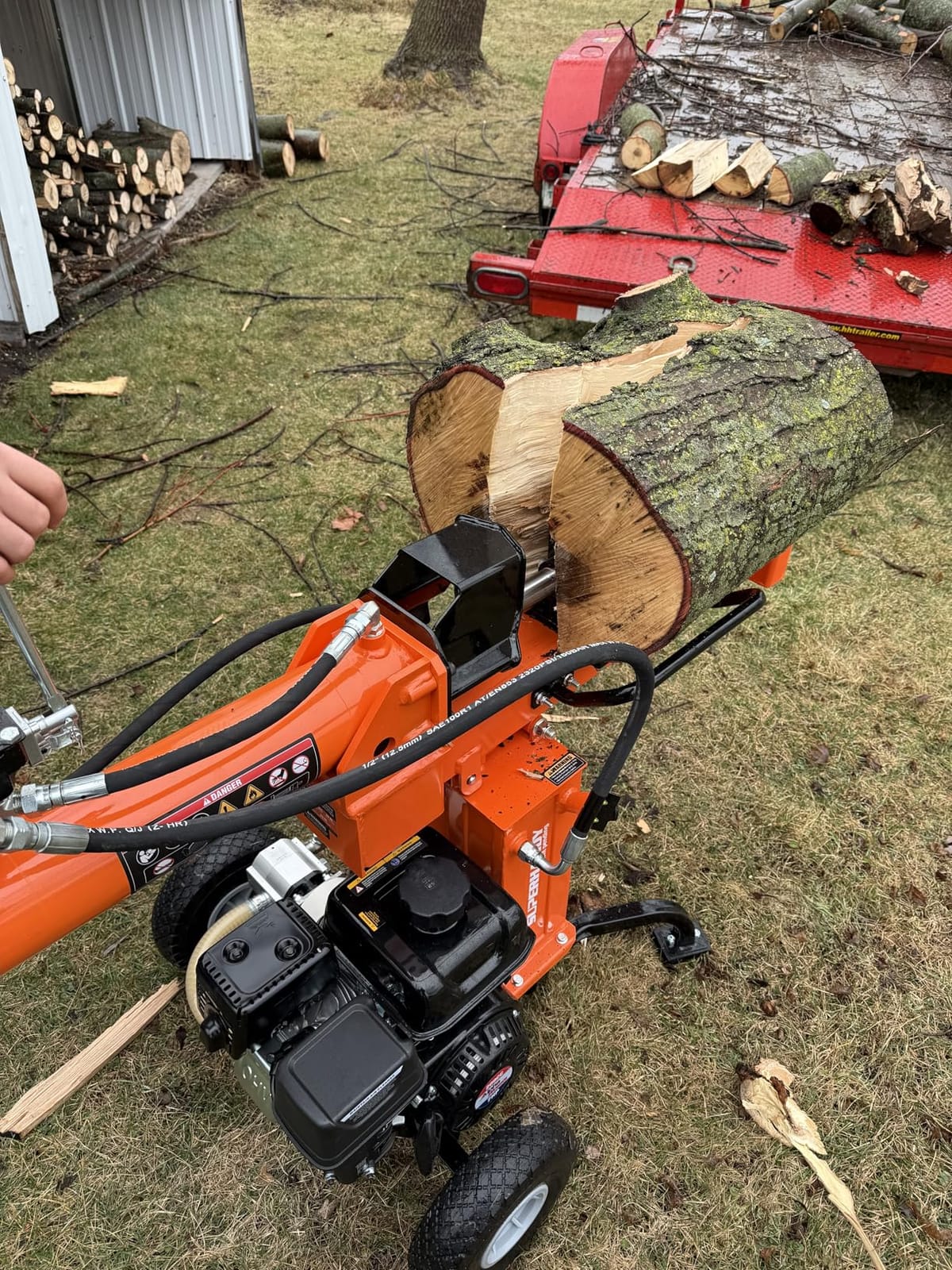
Who should buy the SuperHandy 25-Ton
It suits people dealing with oversized rounds who still want a machine one person can reposition. Anyone clearing storm damage or cutting their own trees will value the 24-inch capacity more than anyone buying a cord of pine.
The half-beam design is also worth a look for anyone who finds loading a wide log onto a horizontal beam awkward, since vertical mode removes that step entirely.
Where the SuperHandy 25-Ton falls short
The thin review count is the real caution. A 10 percent three-star share in a small sample can mean a minor batch issue or nothing at all, and there is not enough history yet to tell which.
It is also gas, so it carries all the usual fuel and noise trade-offs, and it is not the machine for a garage or basement. Buy it for raw capacity and light weight, not for quietness.
7. Ezasin 16-Ton Electric Log Splitter – Best High-Tonnage Electric
Ezasin Electric Log Splitter 16 Ton, Hydraulic Wood Splitter 17.4Amp for Firewood, Horizontal Full Beam Steel Wedge, 2-Stage Pump, 20.5 Inch Log Capacity for Farm, Yard, Forestry Harvesting
16-ton force
17.4 Amp motor
Two-stage aluminum pump
18-second cycle
65 dB at 124 lb
Pros
- More force than most electric splitters
- Quiet 65 dB operation suits neighborhoods
- Temperature sensor and overload cutoff
- Automatic ram return
Cons
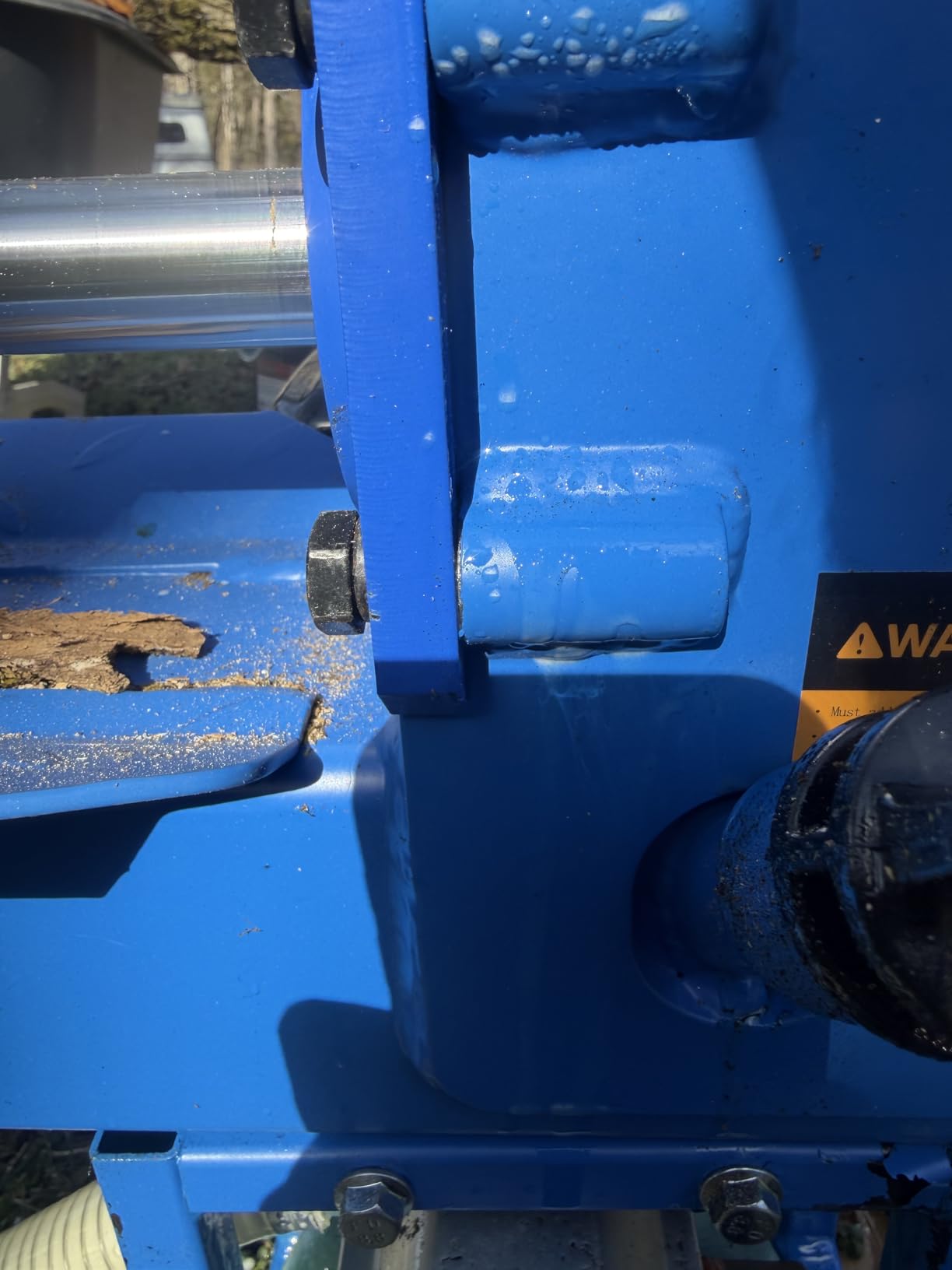
- Hydraulic fluid seepage reported at welds
- One owner reported a bent main shaft
- Vibration and loose bolts during use
The Ezasin is the pick for anyone who wants to split hard oak without a gas engine in the yard. Sixteen tons of hydraulic force from a 17.4 Amp motor puts it well above the 6.5-ton electric machines, into territory where dense hardwood is realistic rather than aspirational.
That is the honest answer to the question forum members argue about most, which is whether electric has grown up. The capability is there now, and the 65 dB operating level is genuinely quiet enough to use in a residential neighborhood.
A two-stage aluminum gear pump moves the cylinder quickly and holds strong pressure, and the 18-second cycle with automatic ram return keeps the workflow from stalling completely between logs.
Log capacity is stated at 20.5 inches, with a horizontal full-beam steel frame and steel wedge. Wide 8-inch transport wheels and an integrated handle make a 124-pound machine manageable, though it is a step up from the sub-110-pound electric options.
Overload protection and a temperature sensor shut the motor down automatically, which is meaningful on a higher-force electric machine where a stall means real current draw. Enthusiastic owners report serious splitting power on hard oak.
Now the other half of the picture, which you should read carefully. A meaningful group of buyers reported hydraulic fluid spewing from welds and bolts during use, and one owner reported the main shaft bending after only two uses. Another received a machine missing four motor-mounting bolts.
Not everyone has that experience, and the split in the reviews is real. With 26 reviews in total, build consistency is the open question, so inspect every fitting and bolt before the first session and check for weeping fluid afterward.
Who should buy the Ezasin 16-Ton
It fits households that burn hardwood but will not tolerate a gas engine, and anyone splitting in a neighborhood with noise restrictions. It is also a reasonable garage or carport machine where a full-frame gas splitter will not fit.
Buyers who are comfortable doing a ten-minute mechanical check on a new machine will get a lot out of it. The spec sheet here is genuinely good.
Where the Ezasin falls short
The durability reports are the deciding factor. Weld seepage and a bent shaft are not field-adjustable problems, and the 26-review base means you have limited evidence either way. Inspect early and often.
At 124 pounds it is heavier than the small electric machines and the footprint is larger, so plan your storage and moving path before it arrives. Electric is still slower than gas, even at this force level.
8. FULL BOAR 33-Ton Gas Log Splitter – Best for Big Timber
Full Boar 33 Ton Log Splitter-Full Boar Engine 223cc (49 State)
33 tons of force
223cc OHV gas engine
14.3-second cycle
H-beam frame
In-reservoir oil filter
Pros
- 33 tons handles the biggest rounds here
- 14.3-second cycle keeps pace
- Adjustable detent on the auto-return valve
- H-beam resists racking
Cons
- 473 pounds is a serious load
- Only 21 reviews of evidence
- Not available in every state
The FULL BOAR 33-Ton is where this roundup leaves the portable market entirely. At 473 pounds with a heavy H-beam structural design, it is built for people splitting serious volumes of large timber rather than seasoning a winter’s supply.
Thirty-three tons of splitting force from a 223cc OHV gas engine is a step change from anything else here. That is the machine for oak, elm, and the kind of round that stops a 25-ton beam mid-stroke.
The 14.3-second cycle is quick for the class, and the auto-return control valve has an adjustable detent, letting you tune the return speed to the load instead of taking whatever the default setting gives you.
The hydraulic oil filter mounted inside the reservoir is a small engineering decision with real consequences. A filter hung outside the reservoir is one stray round away from being punctured, and a ruined filter means a ruined hydraulic system.
Who should buy the FULL BOAR 33-Ton
It fits firewood sellers, rural households burning ten cords or more, and anyone who wants a permanent splitting station rather than a machine that lives in a shed. A user splitting 15 to 20 cords a year on a smaller machine reports zero complaints, so this is the step up for volume beyond that.
If you have never run a beam splitter of this size, expect a different rhythm. You are feeding a machine, not working it.
Where the FULL BOAR 33-Ton falls short
Twenty-one reviews is the thinnest evidence base in the group, and the 54 percent five-star share is the lowest top-end score among the gas machines listed here. That is a durability question the ratings simply cannot answer yet.
At 473 pounds it is difficult to move without help, and it is not offered in every state, so check coverage for your area before you plan around it. If you split a cord a year, this is far more machine than the job requires.
9. VEVOR 6.5-Ton Electric Log Splitter – Best for Beginners
VEVOR Electric Log Splitter, 6.5 Tons Electric Wood Splitter, 1500W 15 Amp Motor, Portable Firewood Splitting Machine with 6″ Wheels, Wood Splitters for Forestry Harvesting, Efficient & Secure
6.5-ton class force
1500W 15 Amp motor
Splits 9.8 in diameter rounds
99.2 lb
6-inch wheels
Pros
- Lightest electric machine at 99.2 pounds
- Quick ram reset between logs
- Two-hand operation reduces accidental starts
- Quiet with no fuel storage
Cons
- Overheats in warm conditions needing cooling breaks
- Lowest rating in the group at 4.0
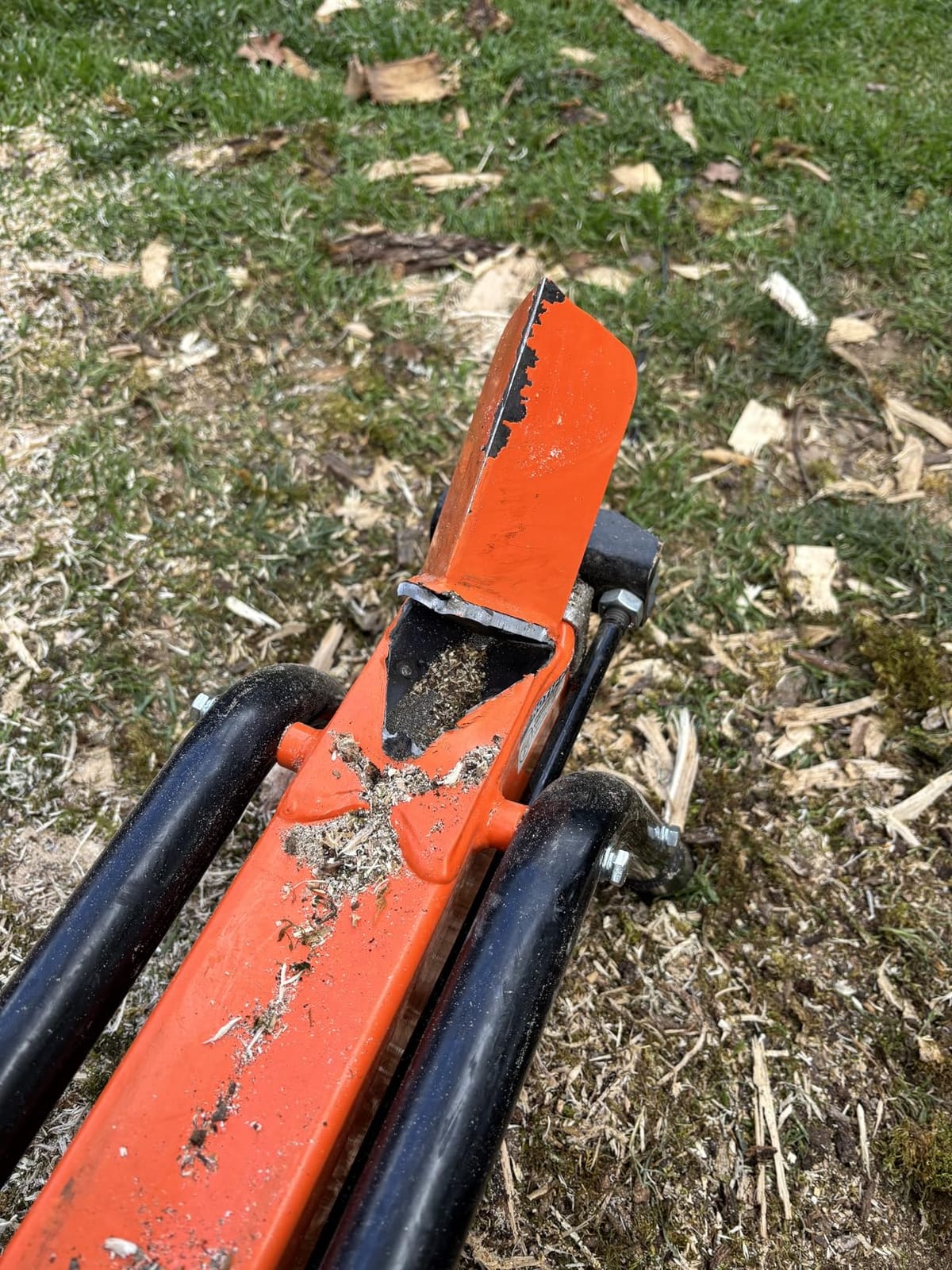
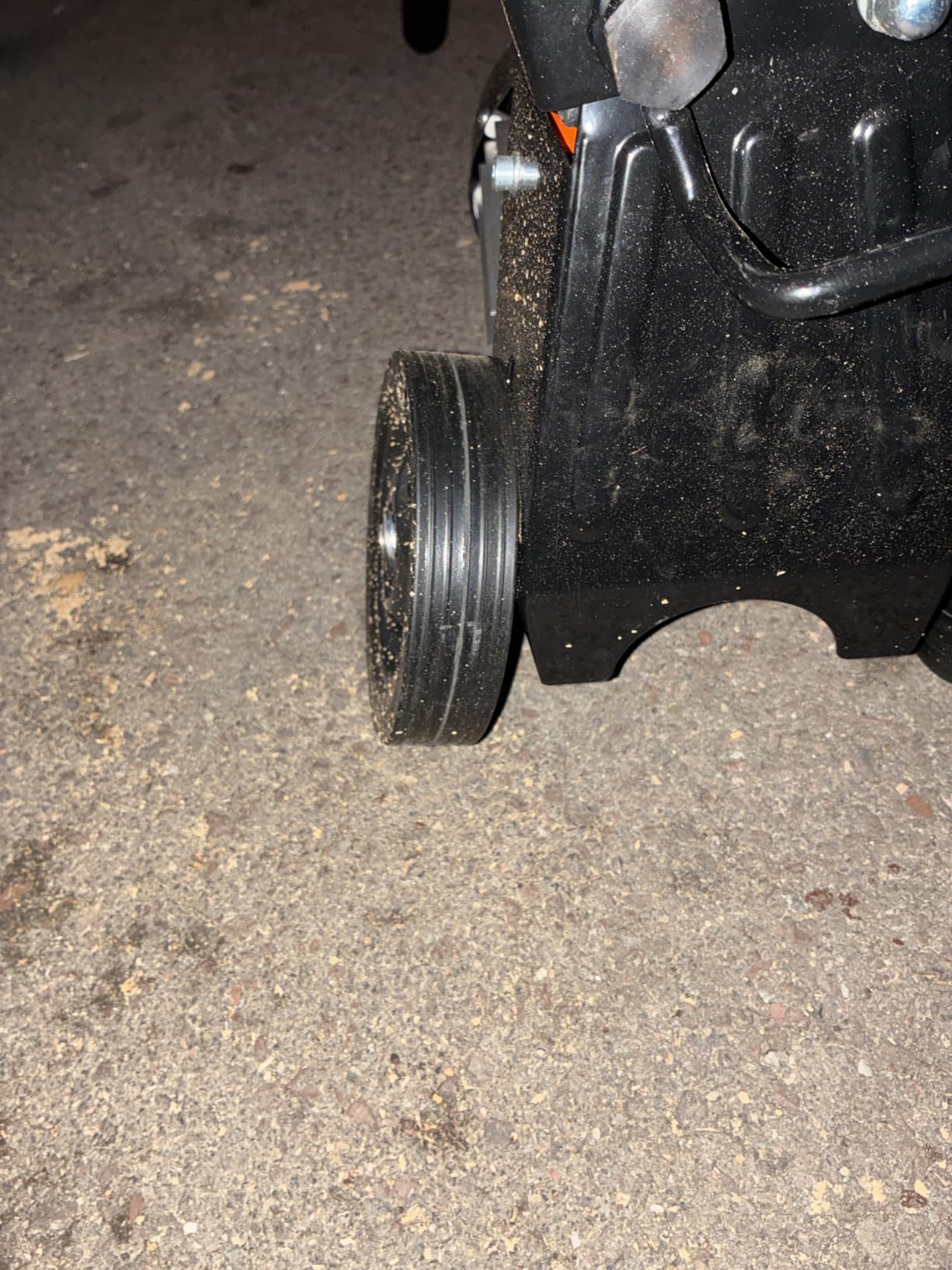
- Wheels arriving broken or breaking early
The VEVOR is the lightest electric splitter in this group at 99.2 pounds, and that weight is why I recommend it as a first machine. One person can carry it, reposition it, and get it out of the way when the season ends.
A 1500W 15 Amp motor runs up to 3400 RPM and delivers what the listing classes as 6 tons in a 6.5-ton bracket. Some owners work through a full woodpile in about an hour, and the ram reset is fast enough to keep batches moving.
Two-hand operation with an integrated power switch is a genuine safety feature for a beginner, since it makes an accidental start on a crowded ram much less likely. There is also no fuel to store and no exhaust, so it works in a garage or carport.
The feedback here is the most divided of any machine in the roundup. Owners praise speed, portability, and quiet operation, and several found it more capable than the tonnage figure suggested. Others report the ram lacked the force for larger rounds entirely.
Heat is the other theme. Overheating in direct sun or warm conditions, with owners taking cooling breaks after about twenty minutes, is the most consistent complaint. Plan your sessions for morning or evening in summer, and give the motor rest between full woodpiles.
At 4.0 with an 11 percent one-star share, it carries the lowest average in the group. Early breakage is also documented, with one unit arriving with broken wheels and another breaking within a week.
The cord limits are real too, with a recommended 50-foot maximum run at a 3.3 mm2 minimum cross-section. Respect those figures and you avoid the most common fire risk with any electric splitter.
Who should buy the VEVOR 6.5-Ton
It suits first-time buyers, small properties splitting under half a cord a year, and anyone who wants to try splitting before committing to gas. The weight is low enough that moving it is not a project.
It is also a good fit for kindling and small-round production, and for splitting in a garage where a combustion engine is a problem.
Where the VEVOR falls short
Heat management is the day-to-day reality. In warm weather you will be taking breaks, which changes how much you can get through in a session.
It is also the least proven machine here at a 4.0 average, with documented early failures on wheels and frames. If you want the same class with a stronger track record and better owner satisfaction, the YARDMAX 6.5-Ton is the safer pick.
10. FULL BOAR 35-Ton Gas Log Splitter with Hydraulic Log Lift – Best for High Volume
Full Boar 35 Ton 306cc Gas Log Splitter with 4-Way & 6-Way Wedges, Hydraulic Log Lift
35 tons of force
306cc gas engine
BOX-beam frame
2-way 4-way and 6-way blades
1045 lb with log lift
Pros
- Interchangeable 2-way 4-way and 6-way blades
- 700 lb hydraulic log lift doubles as a table
- BOX-beam outlasts I-beam designs
- Hydraulic wedge adjustment
Cons
- 1045 pounds needs two people to assemble
- Work height still forces bending
- Spare wedge has no storage location
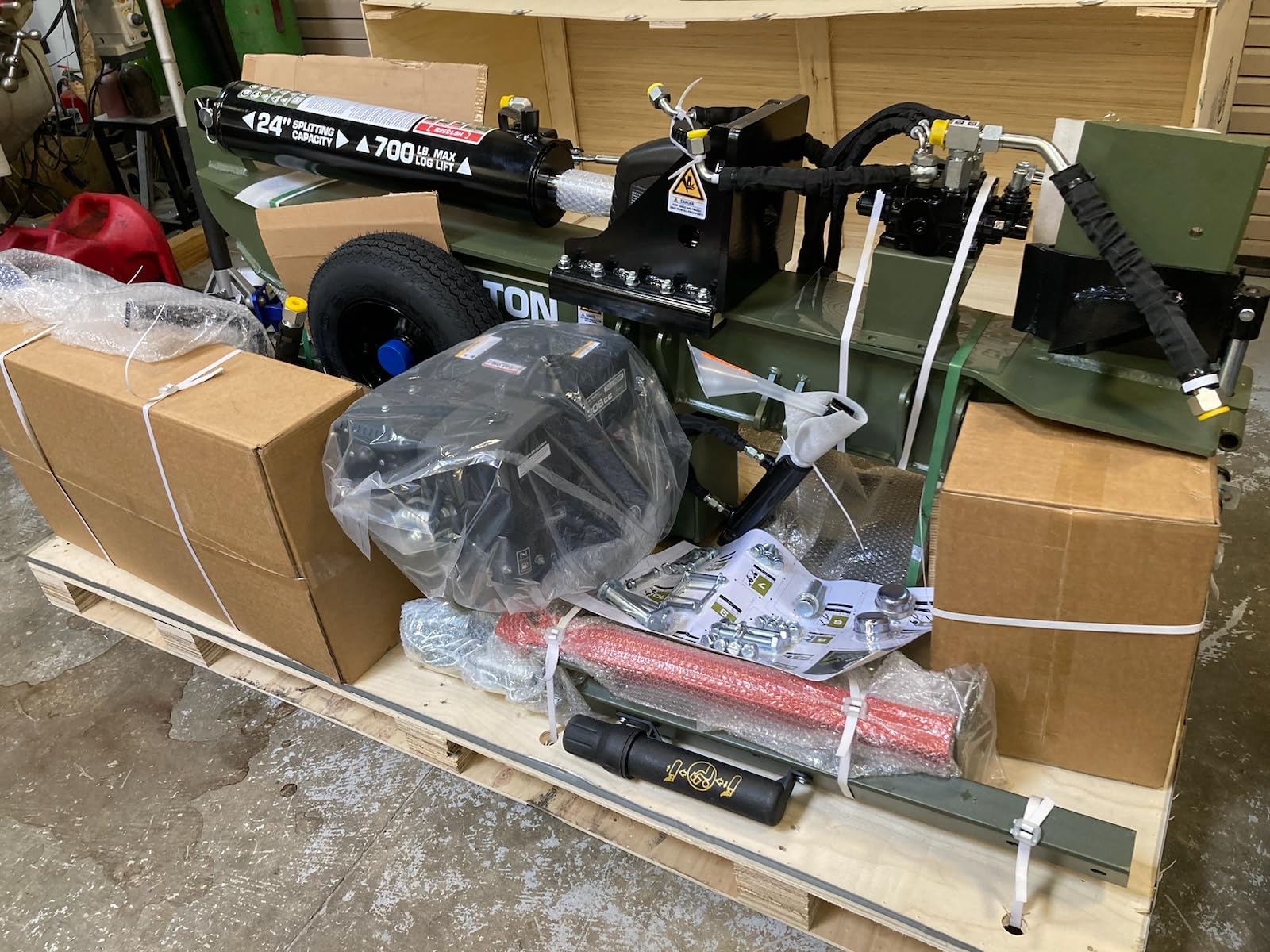
The FULL BOAR 35-Ton is the machine we recommend to people who have moved past firewood as a hobby. Owners with heavy volumes describe it as a genuine commercial-grade upgrade, handling 24 to 30 inch oak with the interchangeable blades and the lift.
The feature that changes daily work is the 4-way and 6-way blade system. Instead of halving a round and re-splitting each half, you swap the tool-free 2-way, 4-way, or 6-way blade and get quarters or sixths in a single pass. For anyone processing many cords, that alone justifies the machine.
Thirty-five tons of splitting force comes from a 306cc gas engine driving a BOX-beam frame rated stronger than traditional I-beam designs. The beam is the part that racks and deforms over years, and reviewers single this out as the reason the machine holds up.
The hydraulic log lift is rated to 700 pounds and doubles as a work table, sparing your back when a round is too heavy to swing onto the beam. Hydraulic wedge adjustment gives 3.55 inches of vertical position range, which keeps center splits consistent as log diameter changes.
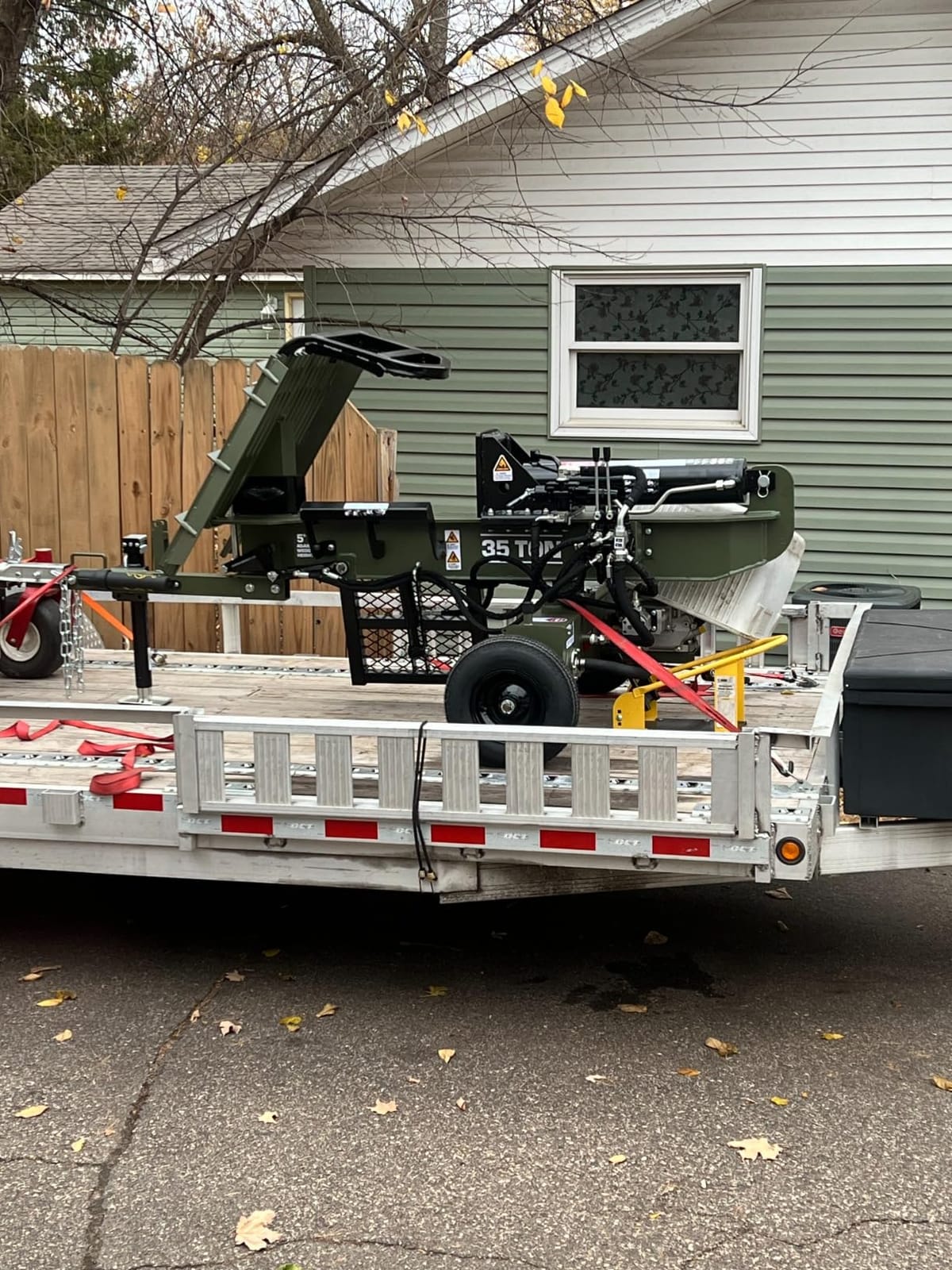
A split wood ramp for loading finished firewood, and hydraulic fluid included in the package, round out a machine clearly designed around volume rather than convenience.
Now the weight. At 1045 pounds it is the heaviest splitter in the roundup by a wide margin, and it needs two people for assembly. Plan your site, your equipment access, and your help before it arrives.
One owner reported three misaligned assembly holes that had to be drilled out, so allow time for setup rather than assuming a bolt-up in an afternoon. The work height also still forces some bending for shorter operators despite the lift.
Customer support responsiveness drew strong criticism from a long-term firewood seller in the reviews, so if you plan to run this at volume, know your parts plan before you need it.
Who should buy the FULL BOAR 35-Ton
It fits firewood businesses, rural properties burning very large volumes, and anyone with back issues who cannot lift rounds onto a beam. If you already split with a 25- or 33-ton machine and want to do it in half the passes, this is the upgrade.
The log lift and 4-way blade combination pays for itself for anyone producing firewood for other people, where labor hours are the real cost.
Where the FULL BOAR 35-Ton falls short
Weight dominates every consideration. Assembly, repositioning, and even getting it onto a trailer need a second person and real planning, and there is no storage location for the spare wedge.
The 21-review base is thin for a machine at this level, and the customer service criticism is a real risk for a buyer who depends on the machine commercially. For under two cords a year, this is far more machine than you need.
How to Choose a Log Splitter for Firewood
How much splitting force do you actually need?
Match tonnage to the toughest wood you plan to feed, not the average. Here is the range that works:
5 to 10 tons: softwood such as pine, fir, and spruce, plus small rounds and kindling. This is the small electric tier.
10 to 15 tons: mixed loads, birch, softer maple, and seasoned hardwood that has already had a season to dry.
15 to 20 tons: mixed hardwood and green wood, the range most full-time firewood burners end up buying in.
20 to 27 tons: dense hardwood like oak, hickory, elm, and locust, plus storm cleanup and felled timber.
33 tons and above: large rounds, high-volume firewood production, and commercial work.
Two details matter more than the headline number. Green wood takes substantially more force than seasoned wood, so splitting a fresh-fallen oak in March is a different job than breaking down a seasoned stack in October. And r/firewood owners are emphatic that those dense species only split cleanly from perfectly straight, uniform rounds, because a hydraulic ram pushes an irregular log aside instead of opening it.
That is why round up rather than down. A machine with more force than you need today is far safer than one that stalls with the log under pressure.
Manual, electric, or gas?
Manual splitters cost nothing to run, need no fuel and no outlet, and keep you fit, but they are honest labor. They make sense for a few hundred rounds a year, not a cord.
Electric splitters run clean and quiet, which is why Hearth.com members gravitate to them. The trade-off is speed and force ceiling. r/harborfreight threads are blunt about it, with owners describing small electric units as so slow that hand splitting is competitive. That complaint is real at 6.5 tons, and noticeably less true at 16 tons with a two-stage pump.
Gas splitters deliver the highest force, the fastest cycles, and cord-level throughput, at the cost of noise, fuel storage, and maintenance. If you are deciding on power, the split is straightforward: electric for softwood and small-volume work in residential settings, gas for hardwood and volume.
Cycle time and how long a cord takes
Cycle time is the seconds between one split and the next, and it is the spec owners underestimate most. The machines in this roundup run from 7.5 seconds at the fast end to 20 seconds at the slow end, which is a huge practical difference across a full afternoon.
A practical rule: a mid-size hydraulic splitter splitting firewood at roughly 12 to 15 seconds per cycle handles about a cord in three to six hours, depending on log size and how much green wood is in the pile. That is a full half-day of real work, which is exactly why a fast cycle on a well-matched machine beats raw tonnage on a slow one.
This is the quiet insight behind the “10 tons beats 15 tons” argument. A 10-ton machine that resets in 7.5 seconds will clear a pile faster than a 15-ton unit that takes 14 seconds, provided the wood is within the smaller machine’s range.
Log length, diameter, and horizontal versus vertical
Capacity is always two numbers, and both matter. Log length capacity in these machines runs from 20 to 24 inches, and log diameter from 9.8 inches on the smallest electric unit to 24 inches on the SuperHandy 25-Ton. Longer capacity means fewer cuts before a round is small enough to handle by hand.
Horizontal splitting lets you roll a log on without lifting it, which is faster for firewood. Vertical splitting is safer for heavy rounds because you rest the log against your chest instead of hoisting it, and it is the only way to handle a trunk section you cannot lift. Dual-position machines give you both, and the BILT HARD 27-Ton and SuperHandy 25-Ton both convert.
One warning worth repeating: published diameter ratings are not a prohibition. Owners of the Landworks and YARDMAX regularly split larger than rated, but an over-large log can be thrown upward suddenly when it finally lets go, which is exactly how people get hurt.
Safety gear and the rules that matter
A splitter replaces an axe, but it does not remove the risk. Wear cut-resistant gloves, eye protection, steel-toe boots, and ear protection on gas machines. A face shield costs pennies next to an ER visit, and on a gas machine ear protection is not optional.
Never hold a log with your arm or your leg while the ram moves, and never put a hand near the wedge at any time. Operate with two hands on the controls, keep children and pets out of the working area, and never split wood that is frozen solid or that has metal, wire, or stone in it.
On electric machines, plug into a GFCI outlet, keep the extension cord within the gauge the manual specifies, and never run a cord that is warm to the touch. A thin cord under sustained load is the leading cause of electrical problems on these machines, and the YARDMAX and VEVOR both specify minimum cord gauges for exactly this reason.
Log cradles matter more than they look. The cradle rail is what stops a round from rolling off the beam toward your feet, so if it is bent, weld a replacement rather than running without one.
Maintenance and winterizing
Before you store a gas splitter, run the fuel out or stabilize it, and never store a fuel container near an ignition source. Cover the machine and keep it out of standing water, and check the hydraulic fluid level before the first start of each season.
Hydraulic fluid matters in cold weather more than most people expect. AW32 is the recommendation across the gas machines in this roundup, and running thin fluid in a cold hydraulic system is how pumps and seals fail. Change it on the interval the manual specifies, and treat an unreadable dipstick as a maintenance task rather than a nuisance.
Check for weeping fittings and oily patches around the cylinder and return line a few times in your first season, because that is the failure mode that shows up early on the machines in this group. Tighten or replace anything that weeps before the leak becomes a loss of pressure.
Frequently Asked Questions
How many tons is a good log splitter?
Five to ten tons is plenty for softwood like pine and fir, and for small rounds and kindling. Ten to fifteen tons covers mixed loads and softer hardwood. Twenty tons or more is what dense species such as oak, hickory, elm, and locust actually require, because those woods split cleanly only from straight, uniform rounds. Green wood takes more force than seasoned wood, so choose for the toughest wood you plan to feed and round up rather than down.
What is better, a gas or electric log splitter?
Gas is better for hardwood, volume, and speed, delivering the highest force and the fastest cycles at the cost of noise, fuel storage, and maintenance. Electric is better for softwood, small amounts of wood, and residential settings, running quietly with no fuel to store. The common complaint that electric splitters are painfully slow applies mostly to 6.5-ton models, and less so to higher-force machines with two-stage pumps and quick ram resets.
Is a 20 ton log splitter enough for regular home use?
Yes, 20 tons covers the great majority of regular home firewood use, including mixed hardwood and storm cleanup. It is the sweet spot for most households because it is heavy enough to handle oak reliably while staying light enough for one person to reposition. Owners splitting one to four cords a season are well served, and you can move up to 25 or 27 tons if you regularly feed it large rounds or green wood.
Are electric log splitters worth the money?
They are worth it for softwood and small-volume work, where they are quiet, clean, and need no fuel storage. The most common complaint from owners is speed, particularly on 6.5-ton models where cycle times run near 20 seconds and the ram can feel underpowered. Higher-force electric machines around 16 tons change that picture considerably, splitting hard oak quietly without a gas engine in the yard.
How long does it take to split a cord of wood with a log splitter?
Plan on roughly three to six hours of active splitting for a full cord with a mid-size hydraulic machine. Machines in this roundup range from a 7.5-second cycle to a 20-second cycle, and that difference compounds across a full afternoon. Log size, green versus seasoned wood, and how experienced you are all move the number, and splitting while standing around waiting for a slow ram is where a fast cycle pays for itself.
Do I need to winterize my log splitter?
You should protect it between seasons even if a full winterizing procedure is optional. Run out or stabilize the fuel on gas machines, never store fuel near an ignition source, and cover the machine to keep it out of standing water. Check the hydraulic fluid level before the first start each season, and use AW32 or the fluid specified in your manual, since thin fluid in cold weather is a leading cause of hydraulic damage.
Conclusion: The Best Log Splitters for Firewood in 2026
The best log splitters for firewood are not the biggest ones, they are the ones matched to your wood and your volume. For most households burning a few cords of mixed hardwood each season, the Landworks 20-Ton is the pick we keep coming back to, because it starts reliably, cycles in 7.5 seconds, and one person can move it.
Split softwood only and keep the noise down? The YARDMAX 6.5-Ton is the highest-rated machine here and the easiest first purchase. Working large rounds or storm damage, take the BILT HARD 27-Ton and tow it to the pile. Pushing toward real volume, the FULL BOAR 35-Ton with its 4-way blades and 700-pound log lift is the tool the job actually calls for.
Whichever one you choose, buy the tonnage for the hardest wood you will feed, keep a log cradle in good shape, and add a jug of AW32 hydraulic fluid to the order. Those two details prevent most of the disappointments we read about.