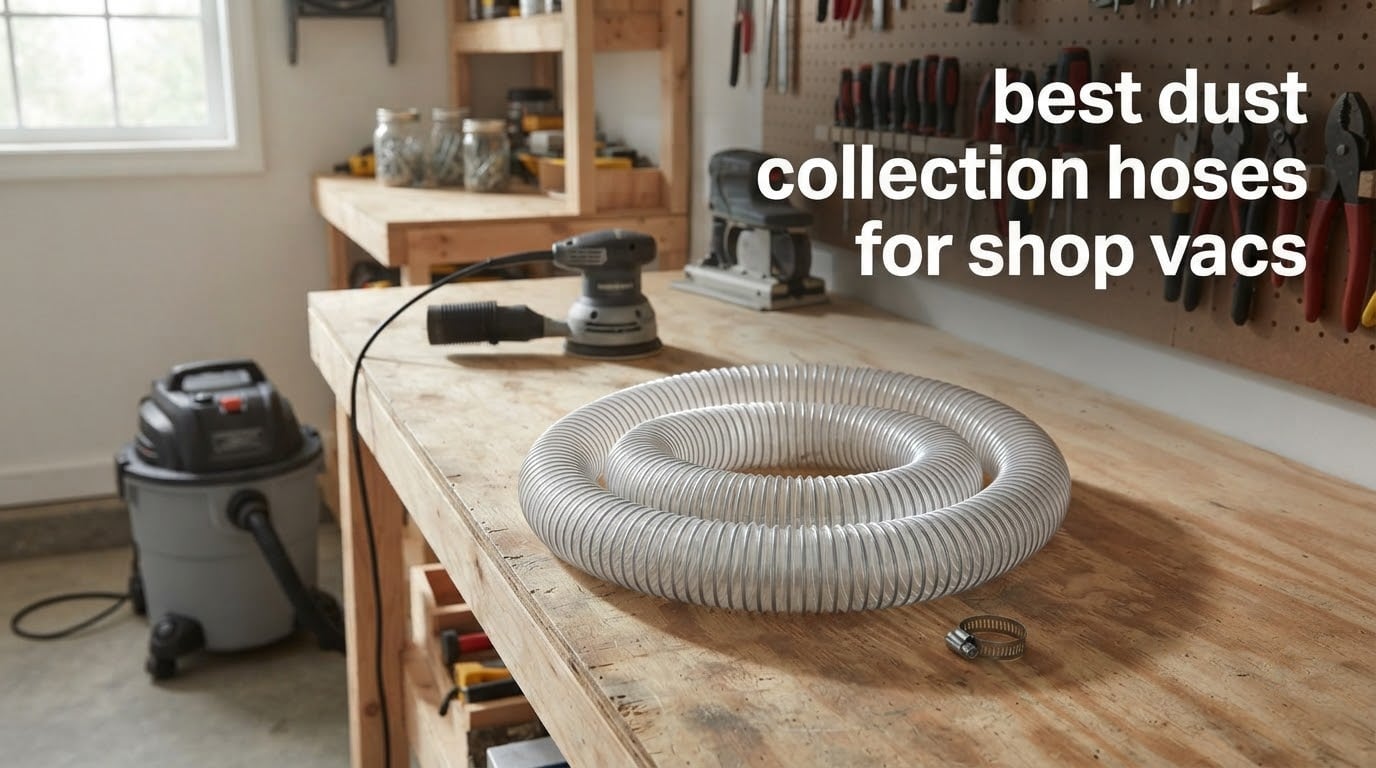
The best dust collection hose for a shop vac is the one whose bore matches both your tool port and your vac inlet, and there is no universal option. Shop vac hoses are not interchangeable across brands, so the right pick depends on what you are collecting and which machine is doing the sucking.
We spent weeks running these ten hoses off shop vacs in a small garage shop, moving them between a random orbital sander, a router, a track saw and a table saw. What separated the good ones from the disappointing was rarely price. It was flexibility in the hand, whether the bore collapsed at a bend, and whether the included adapters actually matched the ports on the tools we owned.
Two things came up again and again in workshop forums while we were testing. The first is stiffness: the hose that came with a vac is heavy, rigid and awkward to hold for a 25-minute sanding session, which is the single most common complaint we read about shop vac hoses. The second is the belief that a wider hose means more suction. It does not. A wide hose moves more air only if your vacuum has the airflow to fill it, and most wet/dry vacs do not. One LumberJocks user put it plainly: if you are running 2.5 inch hose, buy a bigger vac, because you get better suction from small diameter.
So this roundup is organised the way a small shop actually works. We cover the two-hose setup that most builders end up with, the fittings that decide whether one hose can serve four machines, and the compatibility questions that nobody answers with a straight table until they have already bought the wrong hose.
Table of Contents
- Top 3 Dust Collection Hoses for Shop Vacs in 2026
- Quick Overview: All 10 Best Dust Collection Hoses for Shop Vacs (September 2026)
- How We Picked These Hoses
- 1. Fulton 2-1/2 Inch Clear PVC Dust Collection Hose with Four Clamps
- 2. CRAFTSMAN 2-1/2 Inch x 20 ft POS-I-LOCK Wet Dry Vacuum Hose
- 3. Cen-Tec Systems Quick Click 16 Ft Hose with Multi-Brand Adapter Set
- 4. POWERTEC 4 Inch x 20 Ft Clear Reinforced Dust Collection Hose
- 5. Qucship 2-1/2 Inch x 20 Ft Clear PVC Hose with Stainless Clamps
- 6. Peachtree 10 Ft Dust Collection Hose Kit with Five Threaded Fittings
- 7. Rockler Dust Right FlexiPort Expandable Hose Kit, 3 to 12 Ft
- 8. Amylove 2-1/2 Inch x 50 Ft Clear PVC Dust Collection Hose
- 9. POWERTEC 1-1/4 Inch x 10 Ft Shop Vac Hose Kit
- 10. POWERTEC 2-1/4 Inch Segmented Flexible Dust Collection Hose Kit
- What Size Dust Collection Hose Do I Need?
- Hose Port Compatibility by Shop Vac Brand
- Material and Construction: PVC, Wire Coil and Rubber
- Adapters, Cuffs and Quick-Connect Systems
- Pairing Your Hose With a Dust Separator
- What to Avoid When Buying a Dust Collection Hose
- Frequently Asked Questions
- Final Verdict
Top 3 Dust Collection Hoses for Shop Vacs in 2026

Fulton 2-1/2 in Clear PVC Hose
- Clear wall shows clogs
- Embedded steel coil
- Pure extruded PVC
- Four clamps included

CRAFTSMAN POS-I-LOCK 20 ft
- 2-1/2 in x 20 ft
- POS-I-LOCK locking adapters
- 180 degree DUAL-FLEX ends

Quick Overview: All 10 Best Dust Collection Hoses for Shop Vacs (September 2026)
| Product | Specs | Action |
|---|---|---|
| Fulton 2-1/2 in Clear PVC Hose, 10 ft |
|
Check Latest Price |
| CRAFTSMAN POS-I-LOCK 2-1/2 in x 20 ft |
|
Check Latest Price |
| Cen-Tec Quick Click 1-1/4 in x 16 ft Kit |
|
Check Latest Price |
 POWERTEC 4 in x 20 ft Clear Hose POWERTEC 4 in x 20 ft Clear Hose |
|
Check Latest Price |
 Qucship 2-1/2 in x 20 ft Clear Hose Qucship 2-1/2 in x 20 ft Clear Hose |
|
Check Latest Price |
 Peachtree 10 ft Kit with Five Fittings Peachtree 10 ft Kit with Five Fittings |
|
Check Latest Price |
 Rockler FlexiPort Expandable Kit 3-12 ft Rockler FlexiPort Expandable Kit 3-12 ft |
|
Check Latest Price |
 Amylove 2-1/2 in x 50 ft Clear Hose Amylove 2-1/2 in x 50 ft Clear Hose |
|
Check Latest Price |
 POWERTEC 1-1/4 in x 10 ft Kit POWERTEC 1-1/4 in x 10 ft Kit |
|
Check Latest Price |
 POWERTEC 2-1/4 in Segmented Hose Kit POWERTEC 2-1/4 in Segmented Hose Kit |
|
Check Latest Price |
How We Picked These Hoses
Every hose here was run on a real wet/dry vacuum in a one-car garage shop, not a bench test. We judged them on five things: whether the bore held open through a 90-degree bend, how the hose felt after 20 minutes of guiding a sander, whether it stayed flexible in an unheated space, whether the included fittings matched common tool ports, and how much filter debris reached the vac after a full session.
We also read the long review threads on each product, because the failure modes show up in year-two complaints rather than first-week impressions. Hoses that cracked, stiffened in winter or arrived with soft clamps showed up clearly in that longer view.
1. Fulton 2-1/2 Inch Clear PVC Dust Collection Hose with Four Clamps
PVC Dust Collection Hose w/4 Thumbscrew Clamps 2-1/2″x10′
2-1/2 in x 10 ft clear PVC
Embedded steel coil extrusion
Pure PVC, not re-ground
4 thumb clamps included
Pros
- Clear wall shows clogs before they choke airflow
- Pure extruded PVC resists punctures
- Embedded steel coil resists collapse
- Four clamps tighten by hand
- Highest average rating in the group
Cons
- 10 ft is short for a fixed collector run
- Bare hose with no tool-end fittings included
Verdict: the hose we kept reaching for during testing, because the clear wall changed how we worked. When a clog starts, you see it instead of guessing.
The construction detail that separates it from the bargain hoses is the extrusion process. The steel coil is embedded in a single piece of pure PVC rather than a thin wall with a coil slipped inside and taped, which is how most low-cost hoses are built. Reviewers consistently report it holds up better after a couple of seasons of shop use.
At 10 feet, it is a short hose. For a one-machine setup or a spot where you can cut it to length and clamp it permanently, that is plenty. For feeding a fixed collector across a garage, you will want one of the 20-foot options.
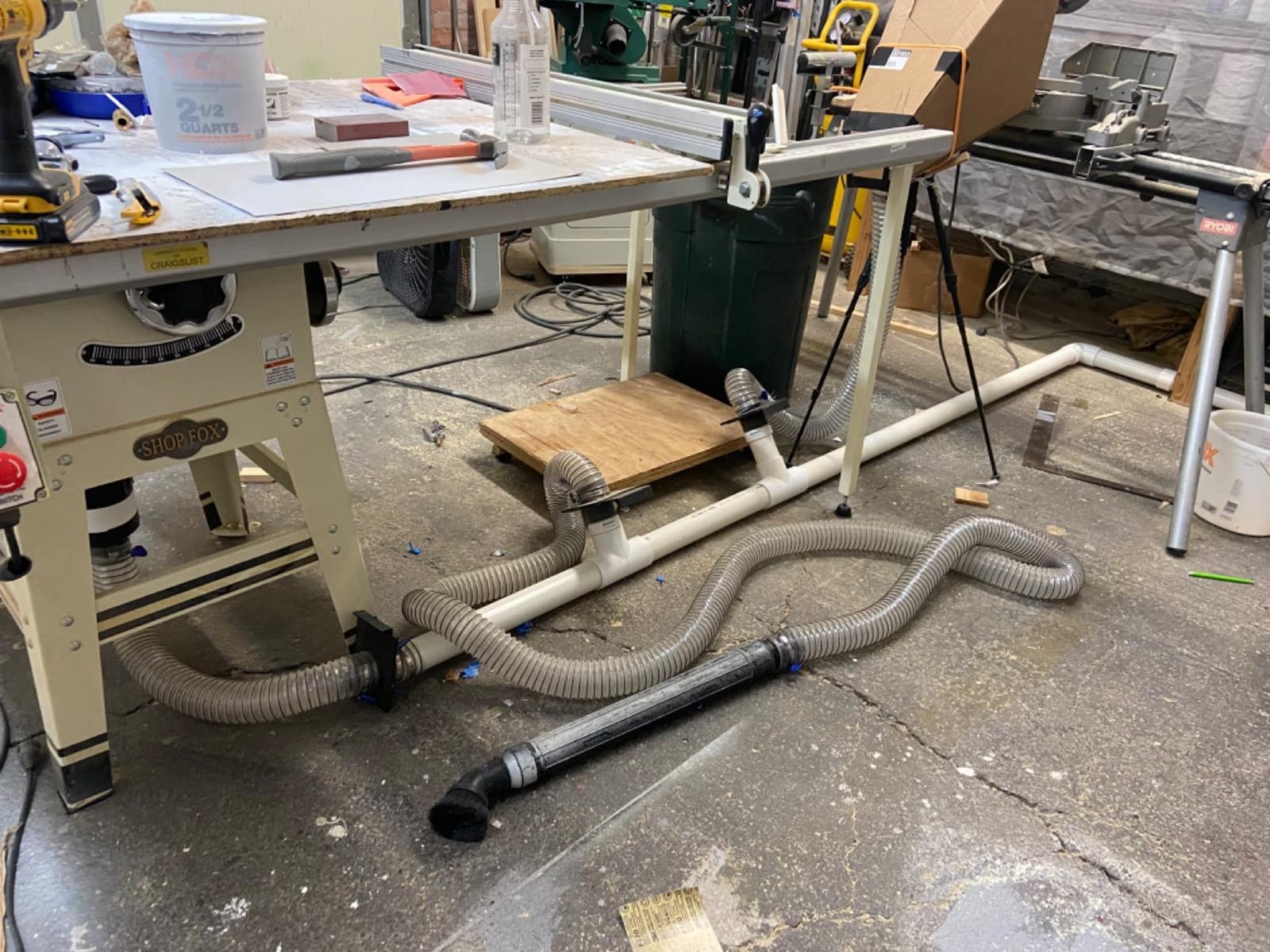
Flexibility was the thing we expected a 2-1/2 inch PVC hose to be bad at, and this one bends around a machine base without flattening. The four included thumb clamps secure it by hand, so no tools are needed at either port.
One practical note: the hose is clear PVC, so it is visible. That is a genuine advantage for troubleshooting and a small disadvantage in a finished workshop where you would rather not see a coil of hose behind the bench.
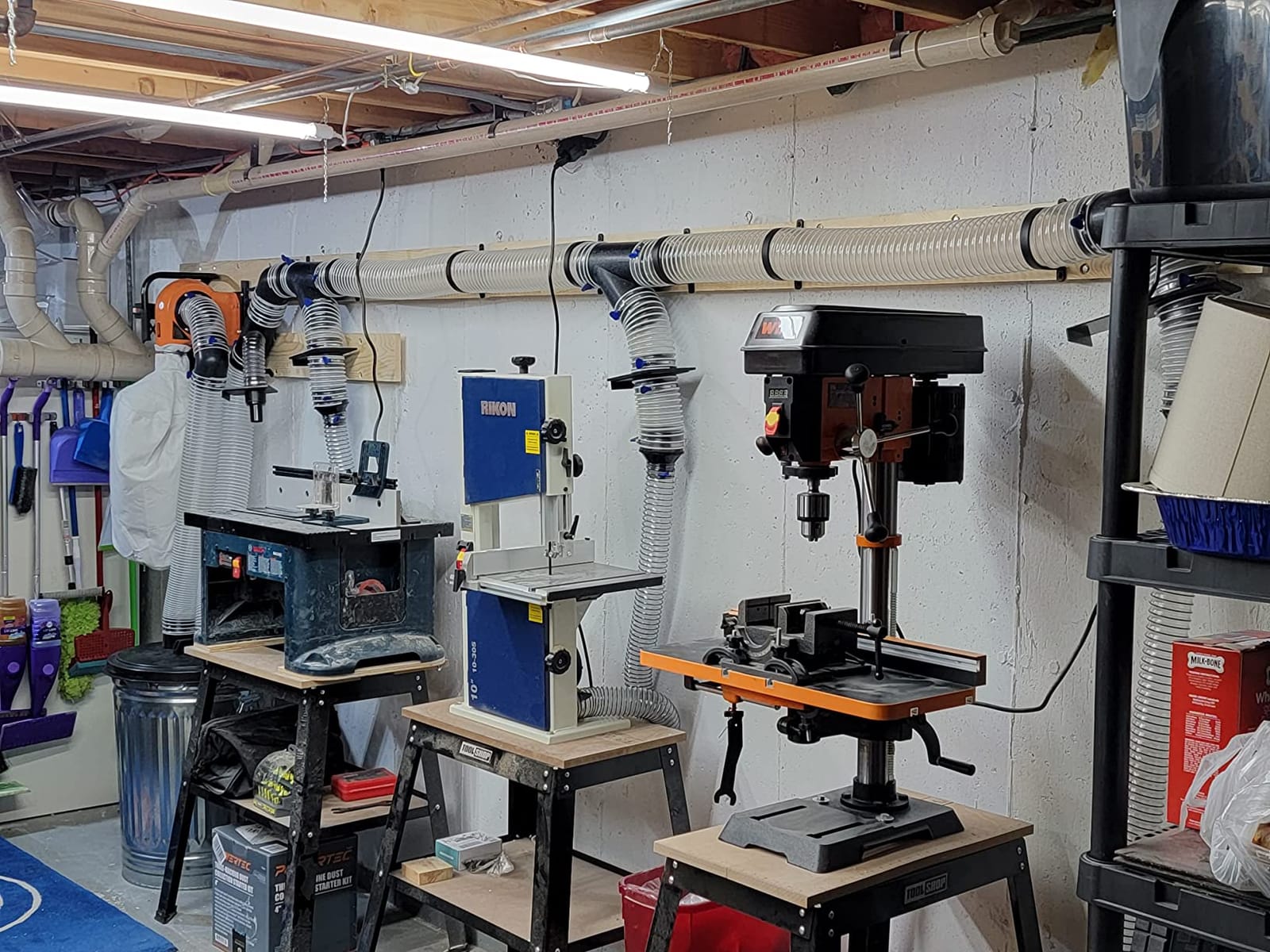
What you should check before ordering
Measure both ports. This is a 2-1/2 inch bore hose with no fittings on either end, so both your vac inlet and your tool port need to accept 2-1/2 inch connections or you will need adapters. It is also sold in several diameters and lengths, and the ten-foot version is the shortest of the range.
When this is the wrong hose
Skip it if you are collecting from a handheld sander, where a 2-1/2 inch bore is larger than the tool port and you will lose capture. It is also the wrong choice for anyone who needs one hose to reach a planer, jointer and table saw across a full shop. In that case a 20-foot reinforced hose is a better use of the same money.
2. CRAFTSMAN 2-1/2 Inch x 20 ft POS-I-LOCK Wet Dry Vacuum Hose
CRAFTSMAN CMXZVBE38759 2-1/2 in. x 20 ft. POS-I-LOCK Wet Dry Vacuum Hose
2-1/2 in x 20 ft polyethylene
POS-I-LOCK locking adapters
180 degree DUAL-FLEX ends
Adapters included
Pros
- Locking adapters stay attached during use
- 180 degree flexibility at both ends
- 20 ft reach across a garage shop
- Fits most 2-1/2 in shop vacs
Cons
- Opaque body hides clogs forming inside
- Locking system is brand specific rather than universal
- Listed with no manufacturer warranty
Verdict: the combination of reach and a genuinely locked connection that kept this hose on the vac for a full session.
Almost three times the length of the hose supplied with a comparable vac, 20 feet takes you from the table saw to a jointer without moving anything. That is the difference between actually using your vac for collection and using it for cleanup only.
Over a full session we never had a fitting back off, which removes a small irritation most flexible hoses have while you are dragging them around a bench. The connection to the vac is the one place where a 20-foot hose pays for itself, because you can leave it connected and simply follow the run.
It is also a hose that suits the way a wet/dry vac is actually used day to day, since the wide bore moves debris and water alike without the bore narrowing the way a small hose does. Owners running it behind a 2-1/2 inch shop vacuum report that the connection feels solid rather than temporary, which is the difference between leaving the hose attached between jobs and taking it down every time.
How the DUAL-FLEX ends matter in practice
The 180-degree flexibility at both ends is not a marketing flourish. It is what stops the hose from fighting you at the connection points, which are where most kinks actually start rather than in the middle of the run. If you route a long hose around a bench, this is the part that keeps the bore open.
When this is the wrong hose
The trade-off is visibility. The body is black polyethylene, so you cannot see a clog forming the way you can through a clear wall, and the locking fittings will not mate with a plain 2-1/2 inch port that has no lock ring. Measure your vac port and confirm the lock pattern before you order.
3. Cen-Tec Systems Quick Click 16 Ft Hose with Multi-Brand Adapter Set
Cen-Tec Systems 94709 Quick Click 16 Ft. Hose for Home and Shop Vacuums with Expanded Multi-Brand Power Tool Adapter Set for Dust Collection
1-1/4 in x 16 ft commercial grade
Thermoplastic elastomer body
Quick Click bayonet fittings
Smooth interior bore
Pros
- Adapter set covers most tool brands
- 360 degree swivel resists kinking
- Smooth interior sheds debris
- Light enough for handheld tools
- Swivel air relief for suction control
Cons
- 1-1/4 in bore suits handheld tools only
- Many fittings to learn at first setup
Verdict: the best answer to the most common question in workshop forums, which is how to make one hose fit a sander, a router and a track saw without buying three.
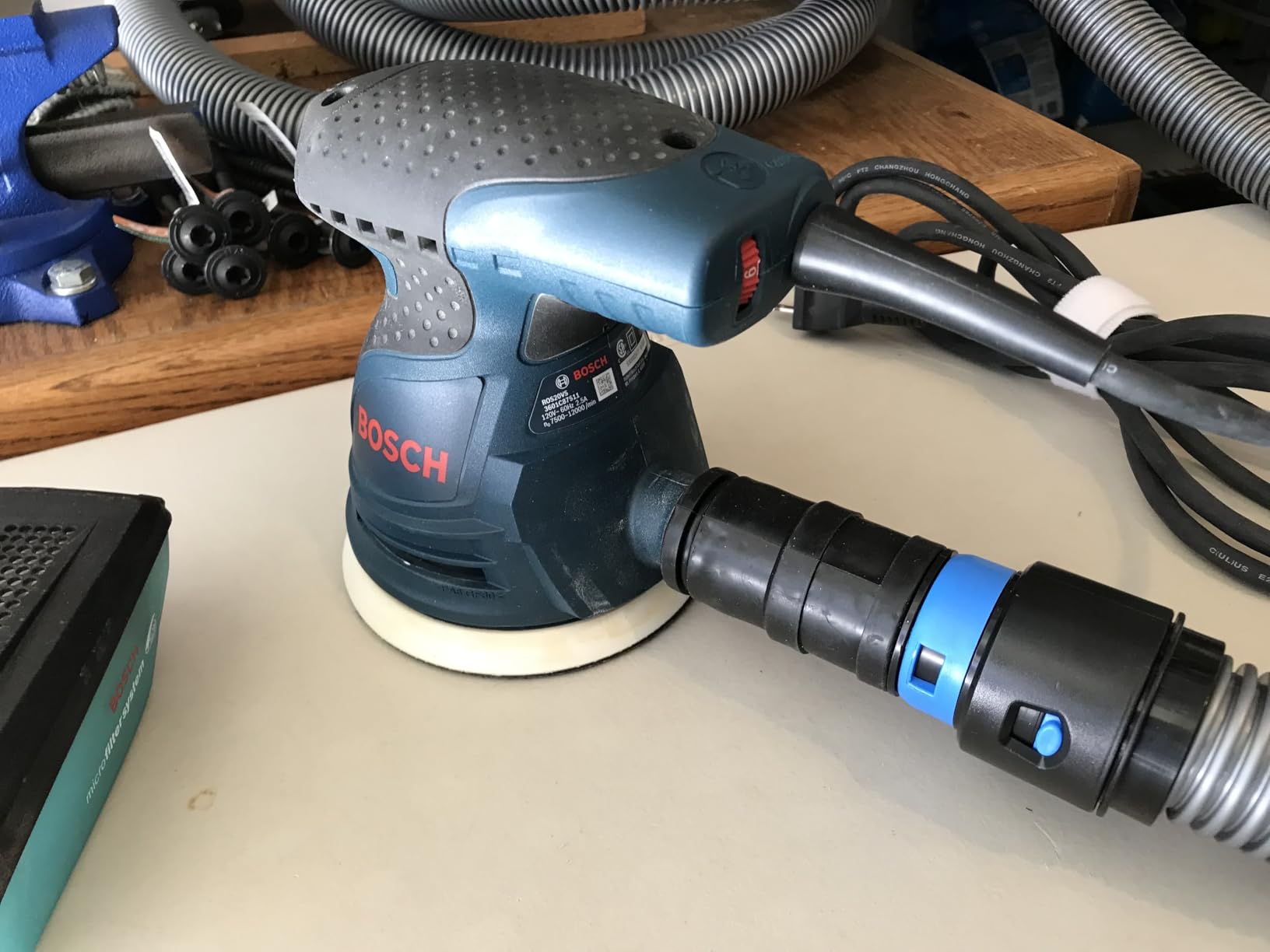
The adapter set is the reason to buy this one. It covers 3/4 inch, 1 inch, 1-1/4 inch and 1-1/2 inch internal and external connections, and the tank end fits major brands of wet/dry vacs. You can move from a random orbital sander to a track saw in seconds without re-fitting anything.
Reviewers highlight the 360-degree swivel as the feature that stops the hose from twisting back on itself, and the swivel air relief lets you bleed suction at the tool when you are sanding a panel and do not want swirl marks left behind.
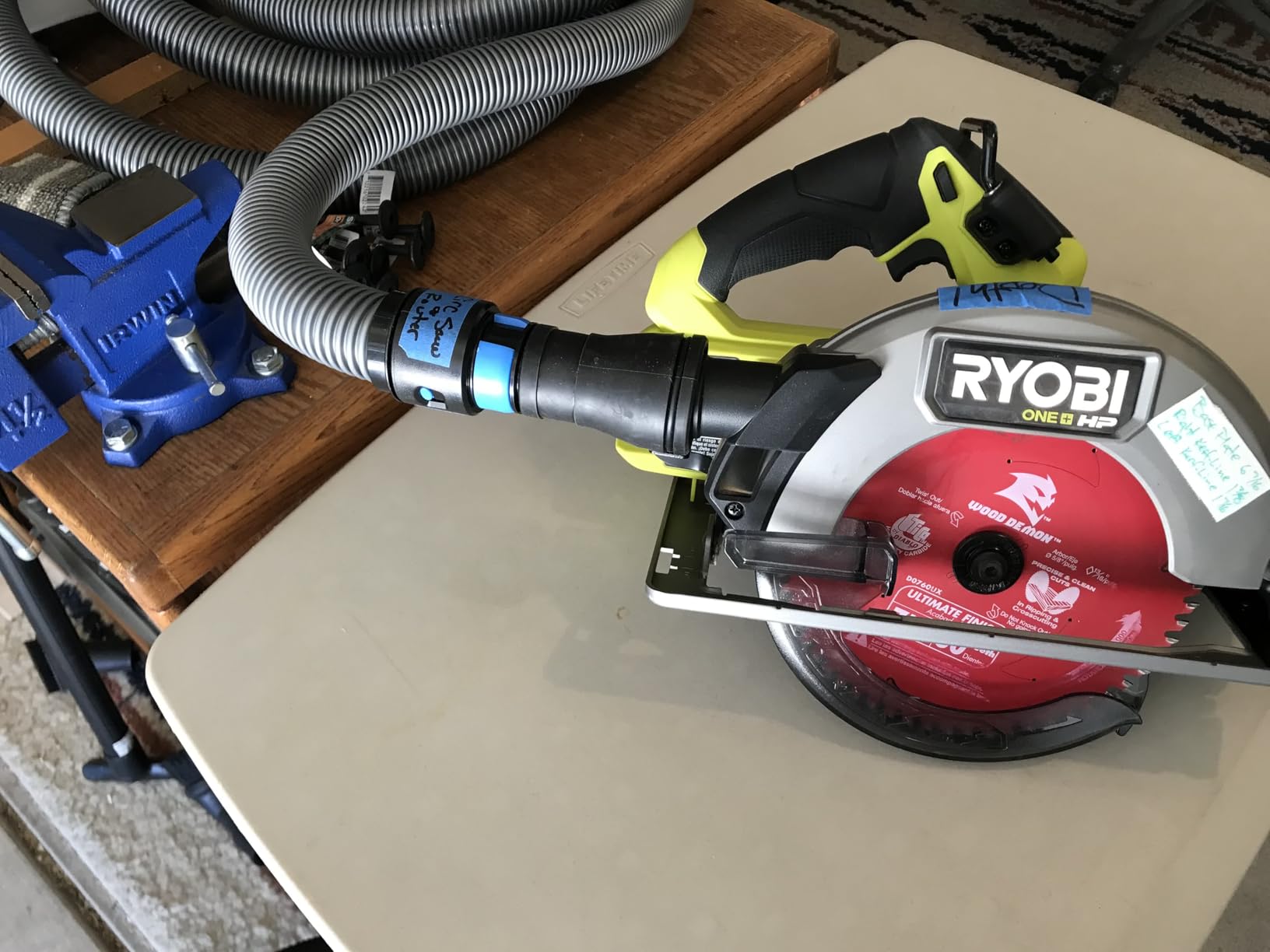
At 16 feet it sits in the middle of the length range, which is a sensible compromise in a garage where the vac sits roughly centrally. The smooth interior is worth noting if you have ever had a corrugated hose that kept collecting dust in its own ridges.
The honest criticism is the learning curve on day one. There are several bayonet fittings to sort through, and first-time users report being confused by how many parts are in the box. Give yourself ten minutes with a diagram before you start.
Which machines this hose suits
A 1-1/4 inch bore is the standard diameter for handheld tool ports, so this is the sander and router hose rather than the big-machine hose. If your only collection targets are sanders, routers, a drill press and a track saw, this single hose covers the whole list.
When this is the wrong hose
It will not carry a table saw, planer or jointer efficiently at that bore. And if your vac is a low-airflow model, even for a sander the smaller diameter is what keeps the air moving fast enough to pull dust in rather than push it out. Bigger is not the answer here.
4. POWERTEC 4 Inch x 20 Ft Clear Reinforced Dust Collection Hose
POWERTEC 4″ x 20′ Dust Collection Hose, 4 Inch Dust Collector Hose for Table Saw, Band Saw, Planer, Jointer, Woodworking and Wood Shop Dust Collection System (70143)
4 in diameter x 20 ft clear PVC
Spring steel wire reinforced
4.06 kg unit weight
240 in listed length
Pros
- Holds a full 4 in bore without collapsing
- Clear view for monitoring separation
- 20 ft reaches across several machines
- Survives sticks and periodic blockages
Cons
- Stiffer than premium flexible hoses in a tight shop
- Included clamps are not heavy duty rated
- Noticeable PVC odour on arrival
Verdict: the right hose if you have already built a 4 inch collector line and need a flexible section to connect a machine to it.
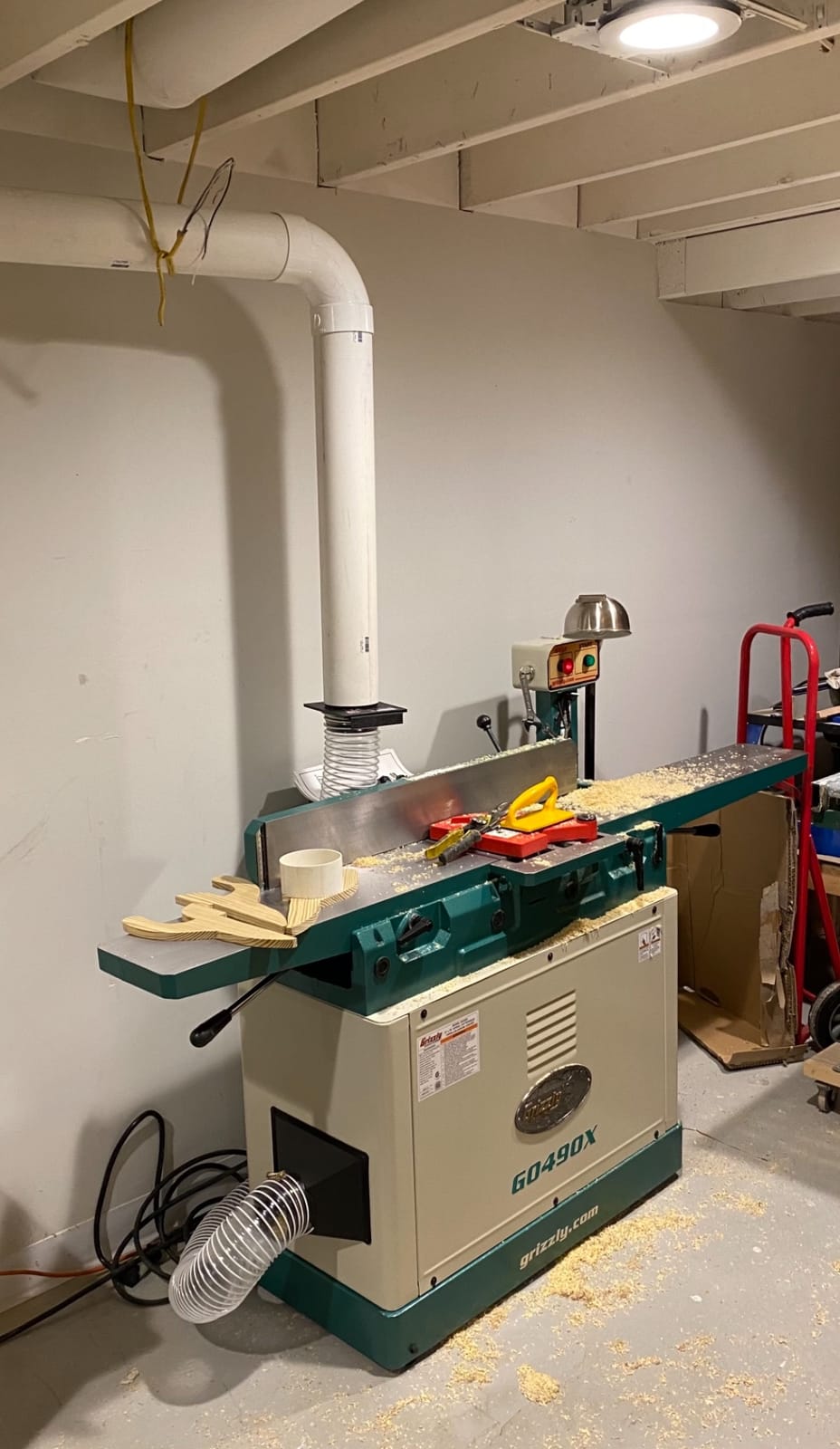
At 4 inches this is the largest bore in the group, and that changes the rules. A bore this wide only performs well behind a machine with real airflow behind it, because air moving slowly through a wide pipe will not carry chips to the filter. Pair it with something substantial, not a small wet/dry vac.
The spring steel wire reinforcement is what stops it going flat when you route it around a machine base or step over it in a tight shop. We pushed it hard and the bore stayed round.
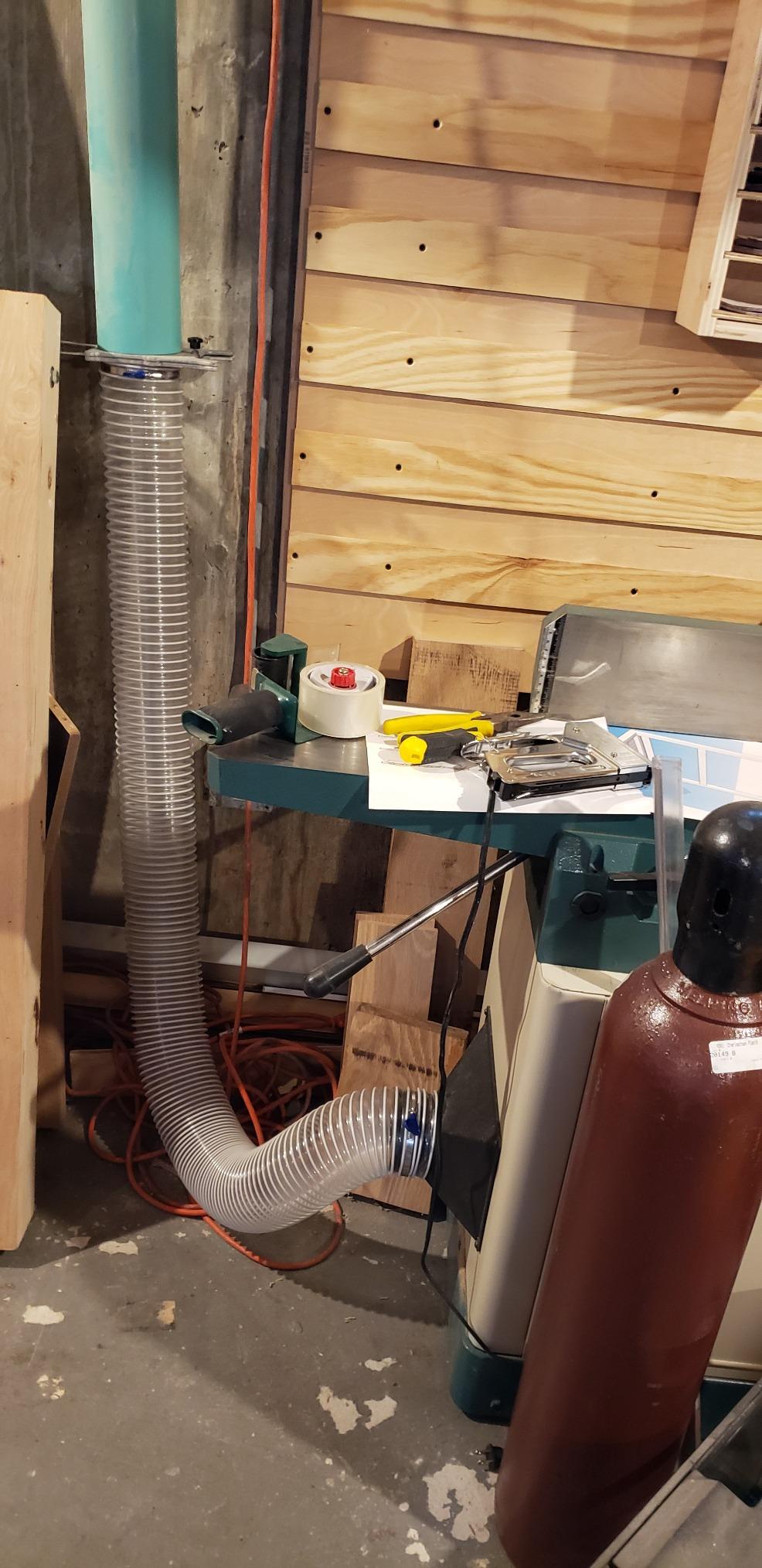
Reviewers note it takes abuse that thinner hoses do not, including sticks and partial blockages when used with a leaf vac. The same reviewers flag the supplied clamps as the weak link, which is common with kits at this level.
At just under 9 pounds, it is a hose you feel in your hands. Over a long session that weight tells, so we would not run it off a handheld tool.
What to check before you buy
Confirm that both ends of your run are actually 4 inch. A 4 inch hose stepped down to a 2-1/2 inch vac port loses most of its advantage and adds friction at the very junction where speed matters most. Mixing diameters is fine as a short connector, not as a permanent run.
When this is the wrong hose
Skip it for handheld tools and small shop vacs. It is too stiff to manoeuvre with a sander, too wide to fit most tool ports, and behind a modest vacuum the air will simply stall in the middle of the run. This is a hose for a fixed installation, not a portable one.
5. Qucship 2-1/2 Inch x 20 Ft Clear PVC Hose with Stainless Clamps
2-1/2″x20′ PVC Dust Collection Hose with 4 Stainless Clamps for Woodworking
2-1/2 in x 20 ft clear PVC
Carbon steel wire coil
3:1 compression ratio
3.7 pound listed weight
Pros
- Thick wall resists punctures and leaks
- Translucent wall shows buildup
- Hand-tightenable stainless key clamps
- Long enough to reconfigure a layout
Cons
- Bundled clamps draw the most complaints
- Some shipments arrive with plain clips
- Occasional coil damage from tight packaging
Verdict: a reinforced 2-1/2 inch clear hose that compressed the most in our testing and bent tightest around a machine without going oval.
The 3:1 compression ratio is the number to pay attention to here. It means the hose can be squeezed down to a third of its length without the bore collapsing, which is what lets it get around a bench leg or through a gap that a stiffer coil cannot.
The thickened wall was leak-free in our testing, and the translucent material let us watch sawdust moving through the run and spot where it was slowing down. At just under 4 pounds for a 20-foot length, it stays manageable for a handheld tool as well.
Reviewers also note that the wire coil is stiff enough to hold a drawstring collection bag connection on the end, which is a small convenience if you are catching chips from a planer rather than filtering at the vac.
Plan on replacing the clamps
This is the clearest example in the group of a good hose bundled with weak fittings. The stainless key-style clamps tighten by hand and work, but they are the most criticised part of the kit. Some shipments also arrive with plain hose clips instead, so check what is in the box before you plan a permanent installation.
When this is the wrong hose
It is a bare hose, so you need clamps and compatible ports at both ends. If you want one product to give you a working setup out of the box, this is not it. For anyone running a shop vac with a locking-cuff inlet rather than a plain port, budget for adapters as well.
6. Peachtree 10 Ft Dust Collection Hose Kit with Five Threaded Fittings
10 Foot Long Dust Collection Power Tool Hose Kit for Multiple Types/Brands
10 ft rubber hose, five fittings
0.79 kg listed weight
1.19 in outside diameter
Anti-kink design
Pros
- Light in the hand for long sanding sessions
- Five threaded fittings cover common tools
- Easy to reposition between machines
- Can be cut shorter for close work
Cons
- Small bore suits sanders not saws
- Some adapters need tape to seat
- Can feel stiff on routers
Verdict: the least tiring hose to hold for a sander, which matters more than almost any other spec when you are guiding one for 20 minutes.
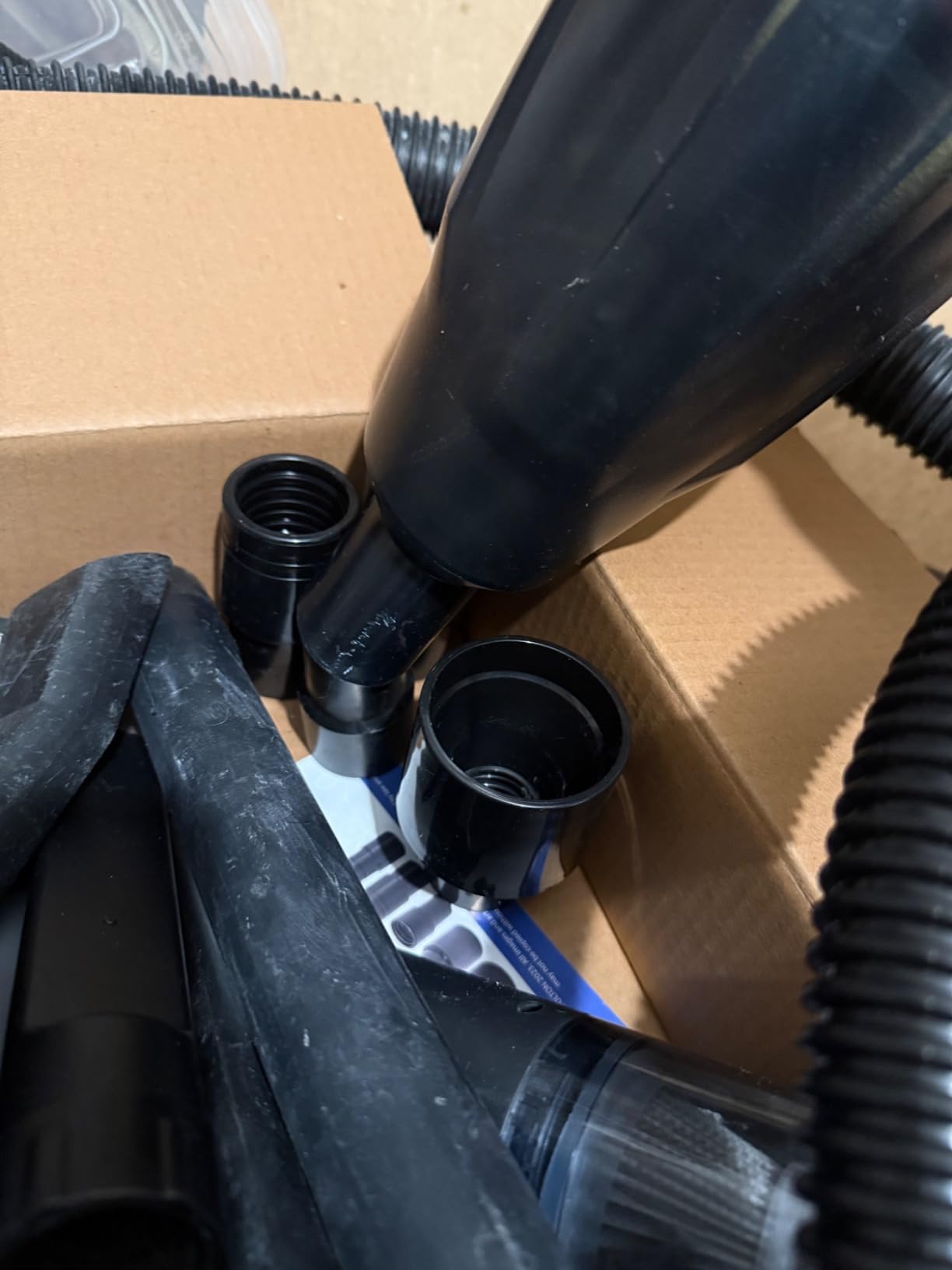
At under 2 pounds for the whole kit, this is the hose that gets used rather than the one that gets left in the corner. The rubber body flexes readily and the five threaded fittings cover orbital sanders, biscuit joiners and similar tools straight out of the box.
It is also a genuinely multi-purpose hose. Reviewers use it for car interiors and duct work, and note that it can be cut down to a shorter length for close-range connections.
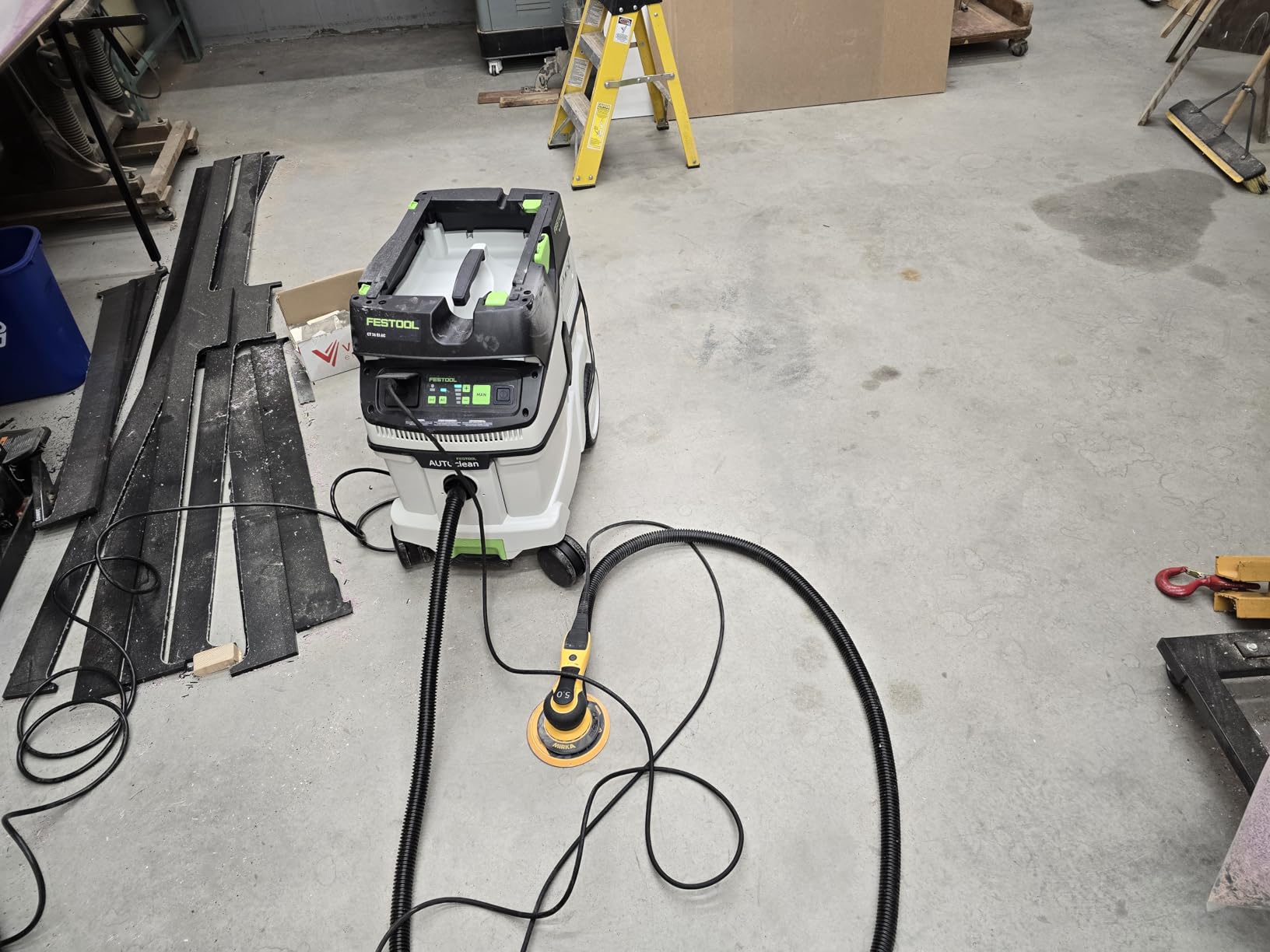
Durability was the one place we had reservations. The small bore means it is not built to carry chips, and reviewers do report it feeling stiff and saturating when pointed at a router or table saw. For sanding dust it did the job well.
The manufacturer is direct about one thing worth heeding: shop vacuum port sizes are not universal, so measure before ordering rather than assuming a fit.
Who should buy this one
If your collection targets are mostly random orbital sanders, drum sanders and biscuit joiners, and you care about how the hose feels after a long session, this is the pick. It is the one we would hand to someone with wrist and shoulder trouble from a stiff hose.
When this is the wrong hose
Do not expect it to handle a table saw, planer or jointer. The interior diameter is the limiting factor, and pushing a chip-producing machine through a small bore gets the hose blocked quickly. For those machines, pair this with a heavier reinforced hose rather than trying to make one hose do everything.
7. Rockler Dust Right FlexiPort Expandable Hose Kit, 3 to 12 Ft
Rockler Dust Right FlexiPort Expandable Power Tool Hose Kit 3-12 Ft
Expands 3 ft to 12 ft at 1-1/2 in
Click-Connect fitting system
2-1/4 in swiveling vac port
Suction control vent ring
Pros
- Stores down to 3 ft when not in use
- Gives a 12 ft working radius
- Light and easy on the wrist
- Click-Connect speeds tool changes
Cons
- Several FlexiPort sizes run small for common tools
- Hose shrinks under suction and pulls back
- Quick-connect ends not sold separately
Verdict: the cleverest storage answer in the group, and the one people with a genuinely small shop tend to end up with.
It expands from 3 to 12 feet, so it hangs on a wall when you are not using it and still reaches across a bench when you are. In a one-car garage where floor space is the scarcest thing in the building, that is worth more than another five feet of fixed length.
The Click-Connect system changes tools quickly, and the vent ring on the hose adapter lets you reduce suction at the tool to avoid swirl marks when finishing a panel.
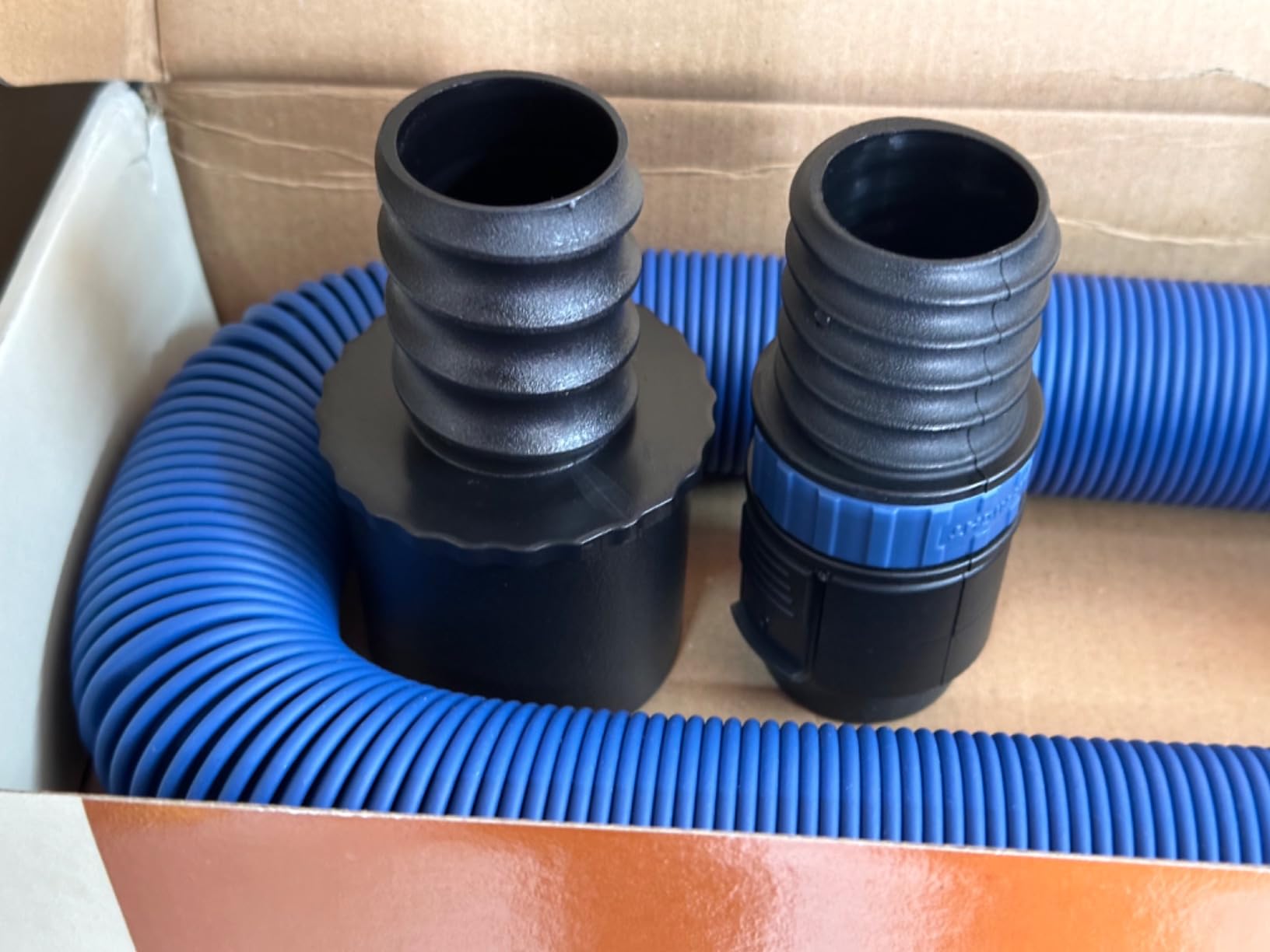
The recurring complaint is sizing on the included FlexiPorts. Several ports run small for popular tool brands, and the hose shrinking under suction can pull back toward the vac. If you already own Rockler tooling, the fit is predictable. If you are buying blind, check your tool port diameters first.
There is also no upgrade path. Newer quick-connect ends are not sold on their own, so an older Dust Right hose means replacing the whole kit rather than swapping an end.
How we used it in practice
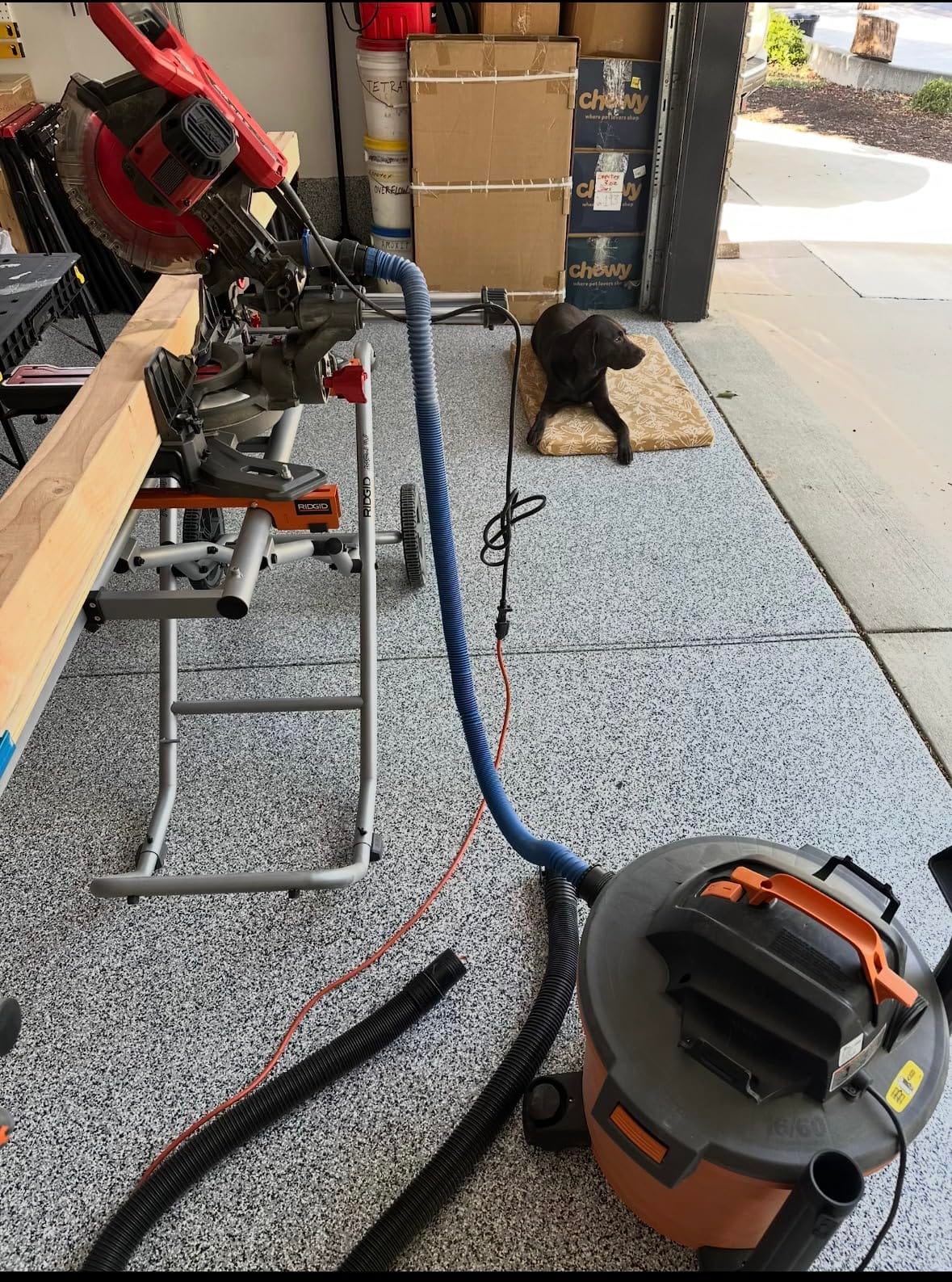
We used it as the travelling hose, moving between a router, a track saw and a sander without ever re-fitting an adapter. For anyone who works one machine at a time and wants the hose out of the way the rest of the time, that convenience is the entire selling point.
When this is the wrong hose
It is not a long-run hose. The 12-foot ceiling will not reach a planer at the far end of a garage, and the 1-1/2 inch bore is still a handheld-tool diameter. If your shop layout needs a permanent trunk run, buy a fixed 20-foot hose instead.
8. Amylove 2-1/2 Inch x 50 Ft Clear PVC Dust Collection Hose
Amylove 2-1/2″ x 50′ PVC Dust Collection Hose with 4 Stainless Clamps
2-1/2 in x 50 ft clear PVC
Stainless steel wire coil
7.6 pound listed weight
Four adjustable clamps
Pros
- Long enough to route a fixed collection line
- Thickened wall carries chips and sawdust
- Coil holds shape in tight layouts
- Four adjustable clamps included
Cons
- Bulky to store and handle at 50 ft
- Highest share of one-star reviews here
- Both ports must be 2-1/2 inch
Verdict: a 50-foot reinforced run, and the right hose if you are wiring a permanent line rather than moving a hose around a bench.
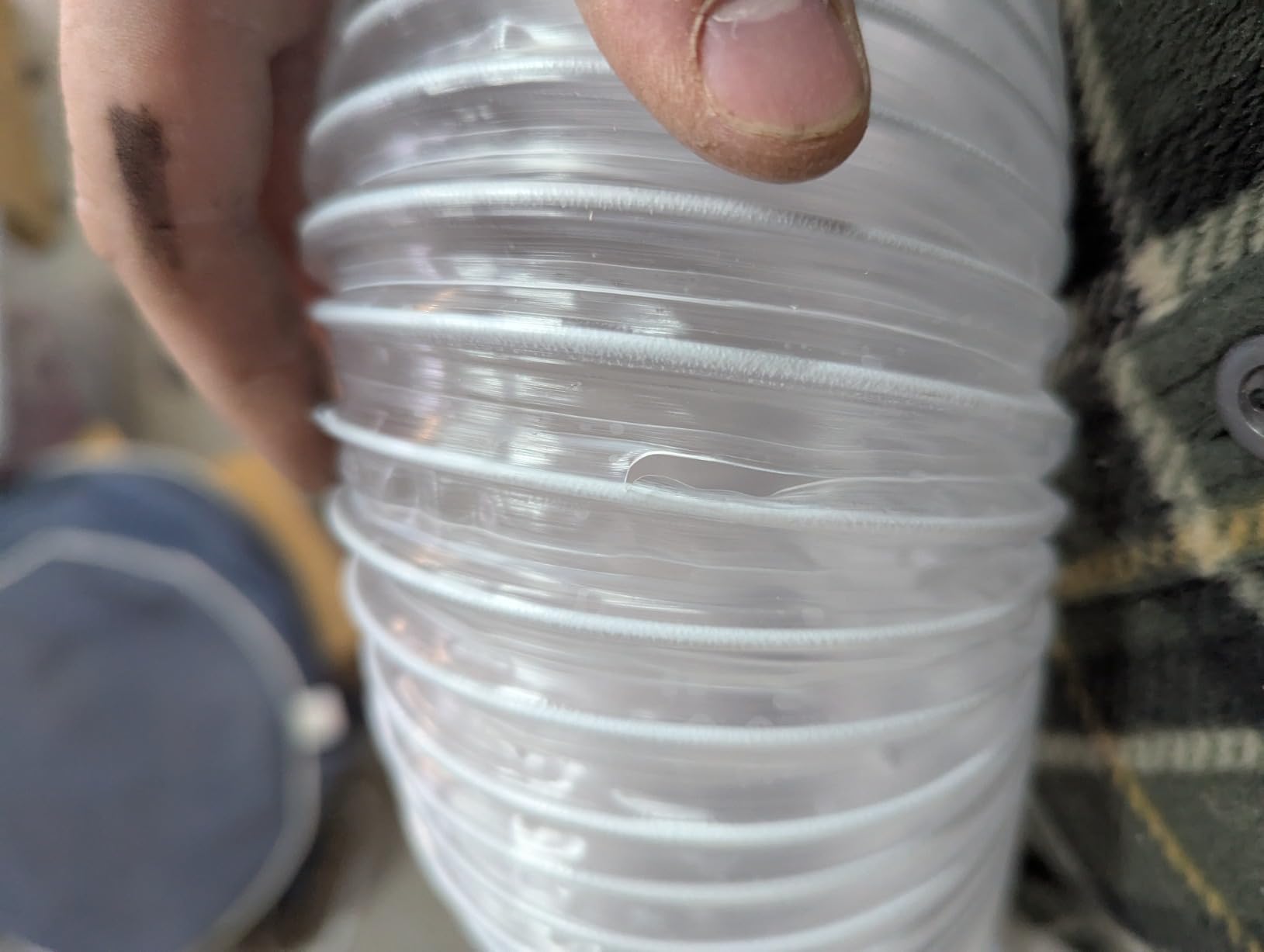
Fifty feet is a different category from everything else here. That is long enough to run from a collector in one corner to a machine on the opposite wall and still have slack, which is the distance most one-car shops actually need.
The stainless steel wire coil holds the shape around benches and through tight layouts, and the clear wall keeps airflow visible. If you ground the coil at both ends, reviewers note it can support a static-control setup.
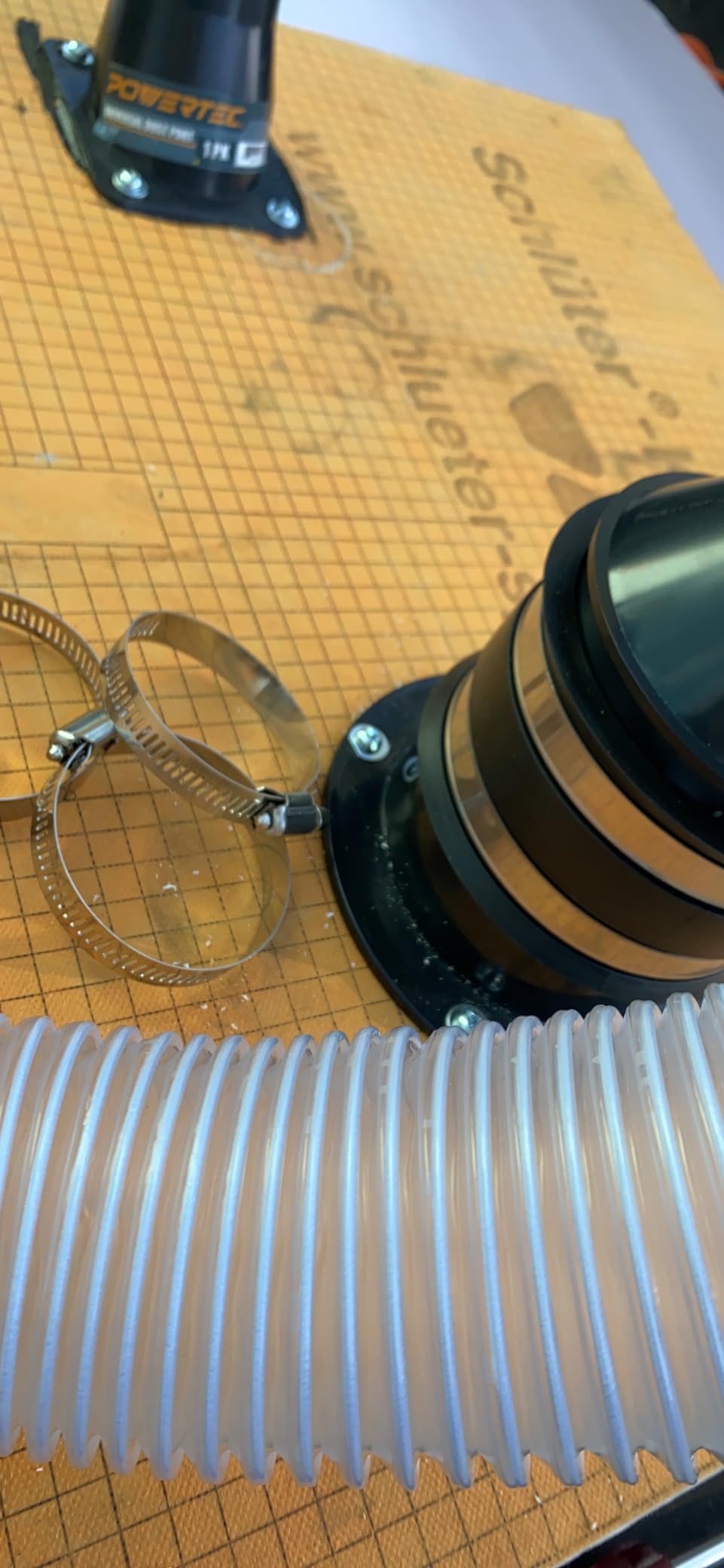
Consistency is the concern. Its 4.0 average is the lowest here, and a 14% share of one-star reviews points to more variation in build and clamping than the other 2-1/2 inch hoses in this roundup. At 7.6 pounds it is also one of the heavier items here, which is a real consideration for anything you plan to move around.
Long runs also need routing discipline. Keep the hose supported so it does not sag, because a low point is where settled dust turns into a blockage no amount of suction will clear.
When 50 feet is worth it
If you have settled on a fixed layout and do not intend to move machines, a permanent run removes the daily friction of dragging a hose. Just make sure the line is supported along its length and that both ends genuinely take 2-1/2 inch connections before you commit.
When this is the wrong hose
It is the wrong choice for a handheld tool and the wrong choice for a shop where the vac moves with the work. Storage is the real cost here. A 50-foot coil takes up a wall, and at this weight most people will find it easier to move the vacuum than the hose.
9. POWERTEC 1-1/4 Inch x 10 Ft Shop Vac Hose Kit
POWERTEC 2-1/2″ x 20 Ft. Shop Vac Hose Dust Collection Kit (70498)
10 ft EVA hose, 1 in bore
2-1/4 in vac hose adapter
Four tool port fittings
360 degree swivel fittings
Pros
- Four tool port sizes in one kit
- 360 degree swivels limit kinking
- Light and easy to move between tools
- Adapter fits standard wet/dry ports
Cons
- Small 1 in bore underperforms on large machines
- Lower average rating than the reinforced hoses
- Short and light duty next to the 2-1/2 in version
Verdict: a sensible entry kit if you want to try tool collection without committing to a dedicated hose, provided your targets are handheld tools.
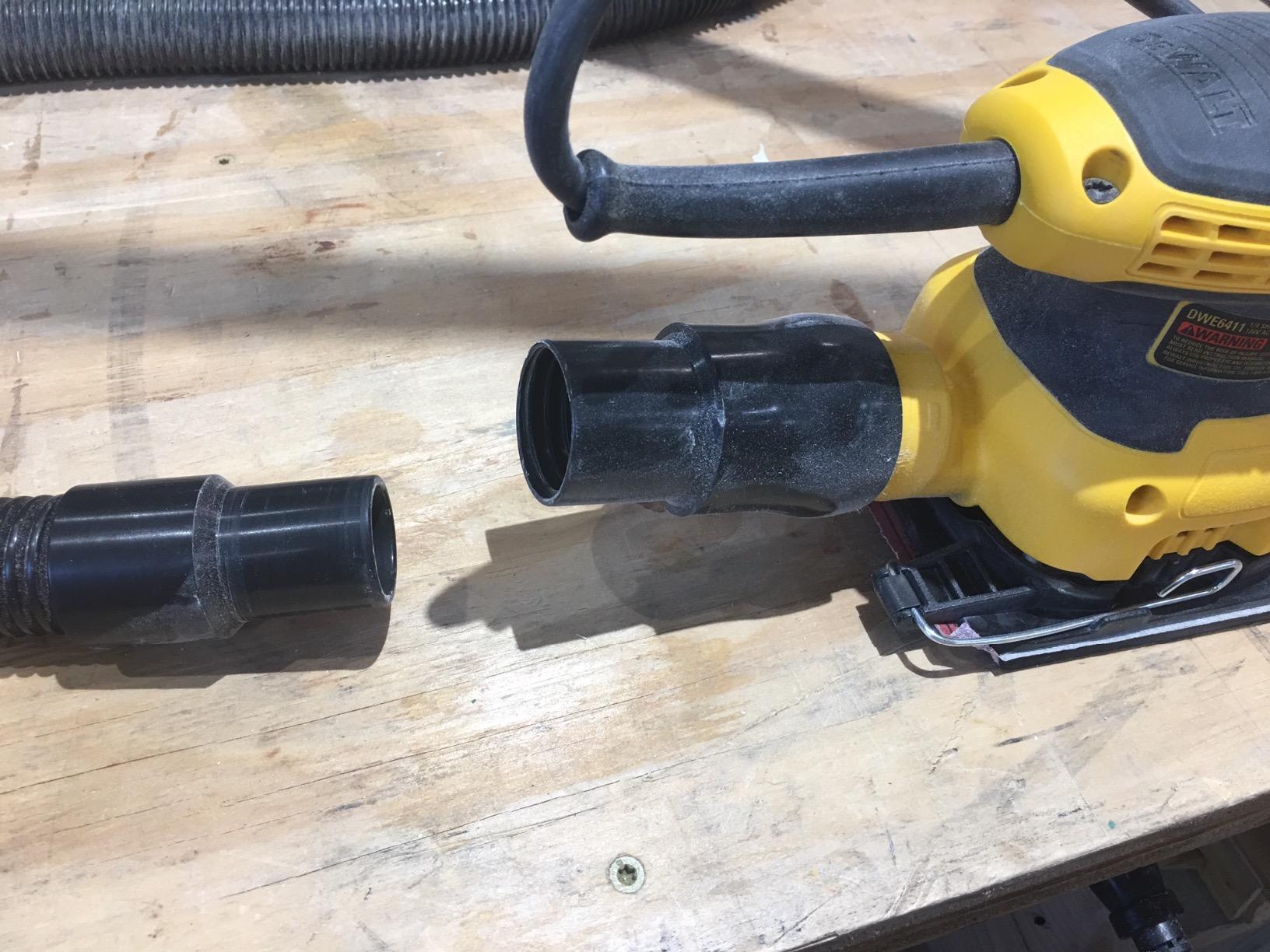
The four interchangeable tool port fittings cover 3/4 inch, 1 inch, 1-1/4 inch and 1-1/2 inch, and the 2-1/4 inch adapter handles most standard wet/dry vac ports. That is a complete setup in one box for a sander or a router.
The 360-degree swivel fittings are the part we liked most. They stop the hose twisting against itself, which is what usually causes the kink you spend the first month blaming on the hose.
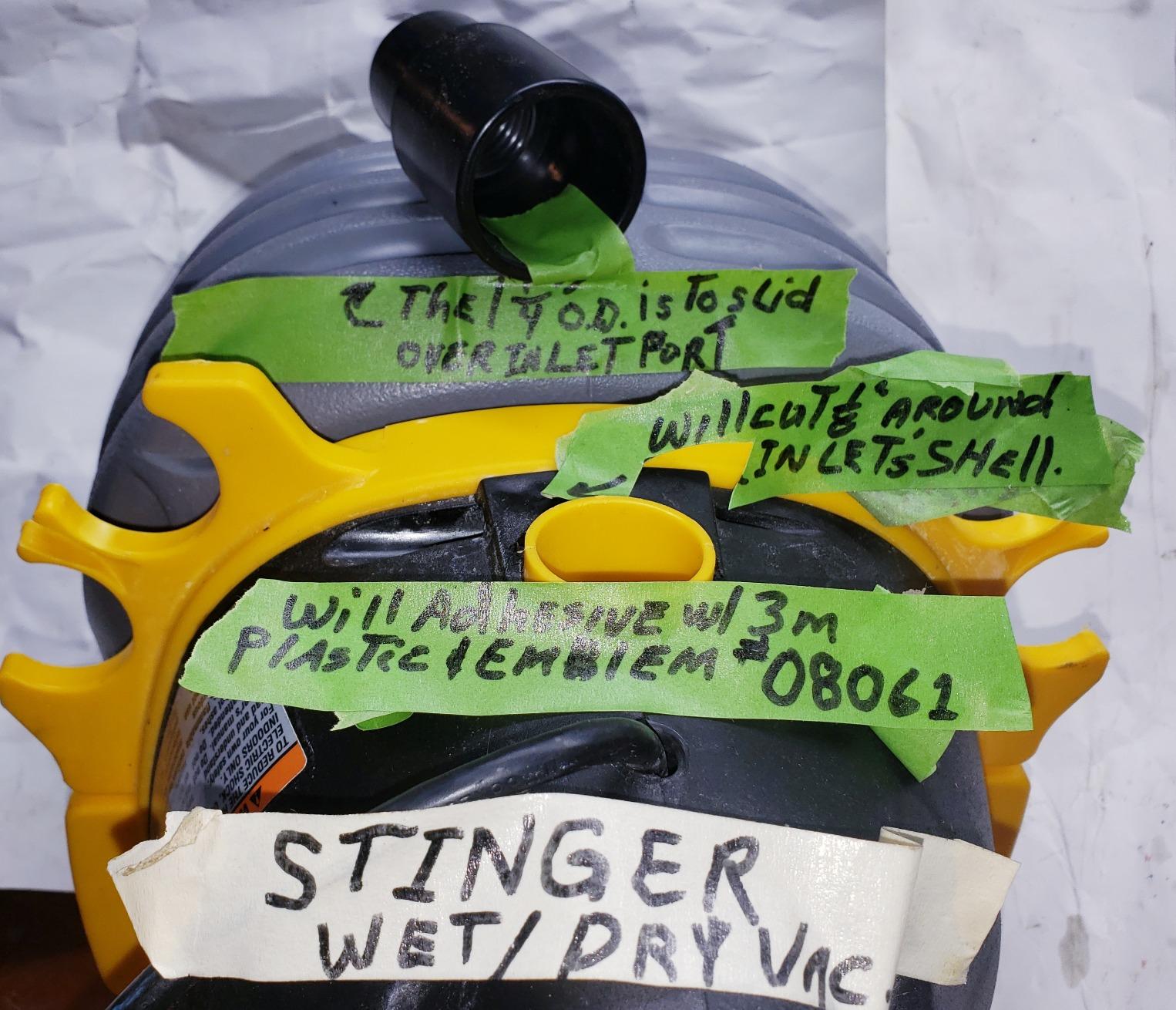
The 4.1 average tracks to a specific complaint: a 1 inch interior bore simply will not keep up with a machine producing volume. If you point it at a table saw or planer, you will spend more time clearing the hose than using it.
It is also worth knowing this is the 10-foot 1-1/4 inch version of a kit that comes in a longer, wider 2-1/2 inch form. If you are running a vac with a 2-1/2 inch port, the bigger version is the one you want.
Where it earns its place
For a first attempt at dust collection on a random orbital sander, or as a spare hose for a workshop where the main hose is always in use, it does a clean job. The fitting variety means one hose covers several tools without an adapter bag.
When this is the wrong hose
Skip it if you plan to grow into a table saw or planer. The one-inch bore is the constraint, not the fittings, and no adapter will change it. Buy the wider version of the same kit if your vac port takes 2-1/2 inch, or step up to a reinforced hose.
10. POWERTEC 2-1/4 Inch Segmented Flexible Dust Collection Hose Kit
POWERTEC 70208V 2-1/4 Inch Dust Collection Flexible Hose Kit,Black
12 in hose expands to 36 in
Segmented polypropylene body
Two screw end fittings
Tapered and rectangular nozzles
Pros
- Holds position without drooping
- Expands to triple its length
- Tapered and rectangular nozzles included
- Doubles as a short connector section
Cons
- Adapter plastic is softer than rivals
- Built for short runs not long ones
- Some report it will not hold position
Verdict: not really a vacuum hose but a connector, and the most useful thing in the roundup if your setup has awkward gaps between ports.
The segmented construction is the whole idea. The hose goes from pliable to firm as you pull it out, so it holds itself in position instead of sagging to the floor or drifting away from a port. Twelve inches extends to 36, which is enough to bridge the distance between a dust port and a collector inlet.
The tapered oval and rectangular nozzles suit sanders, drill presses, routers and saws, and reviewers single them out as the reason to buy the kit.
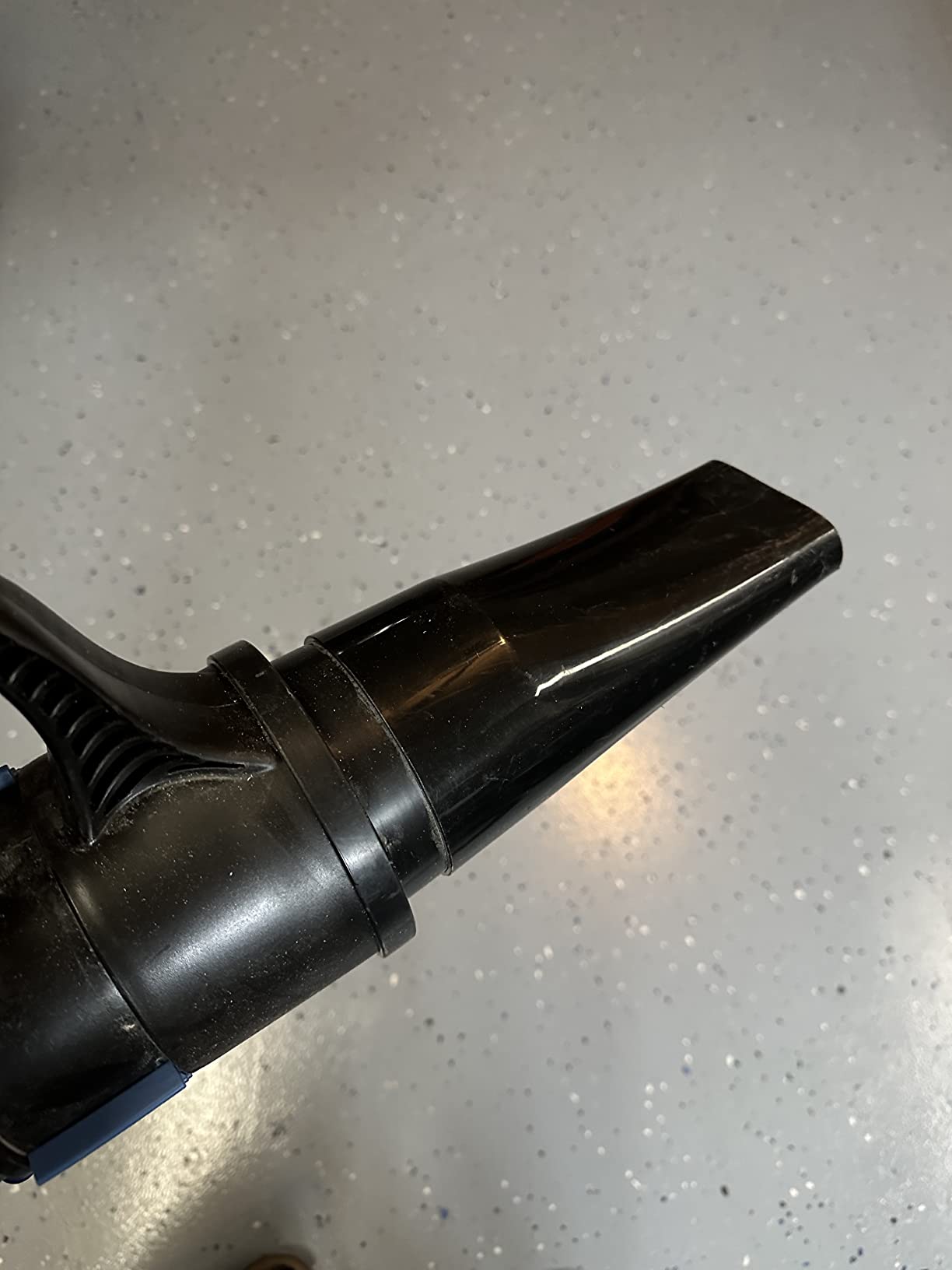
What it is not is a primary collection hose. It is a short connector, and treating it as one will disappoint anyone expecting 10 feet of reach.
The main reservation in reviews is that the adapter plastic is softer than competing fittings, and a small number of buyers report the hose not holding position as described.
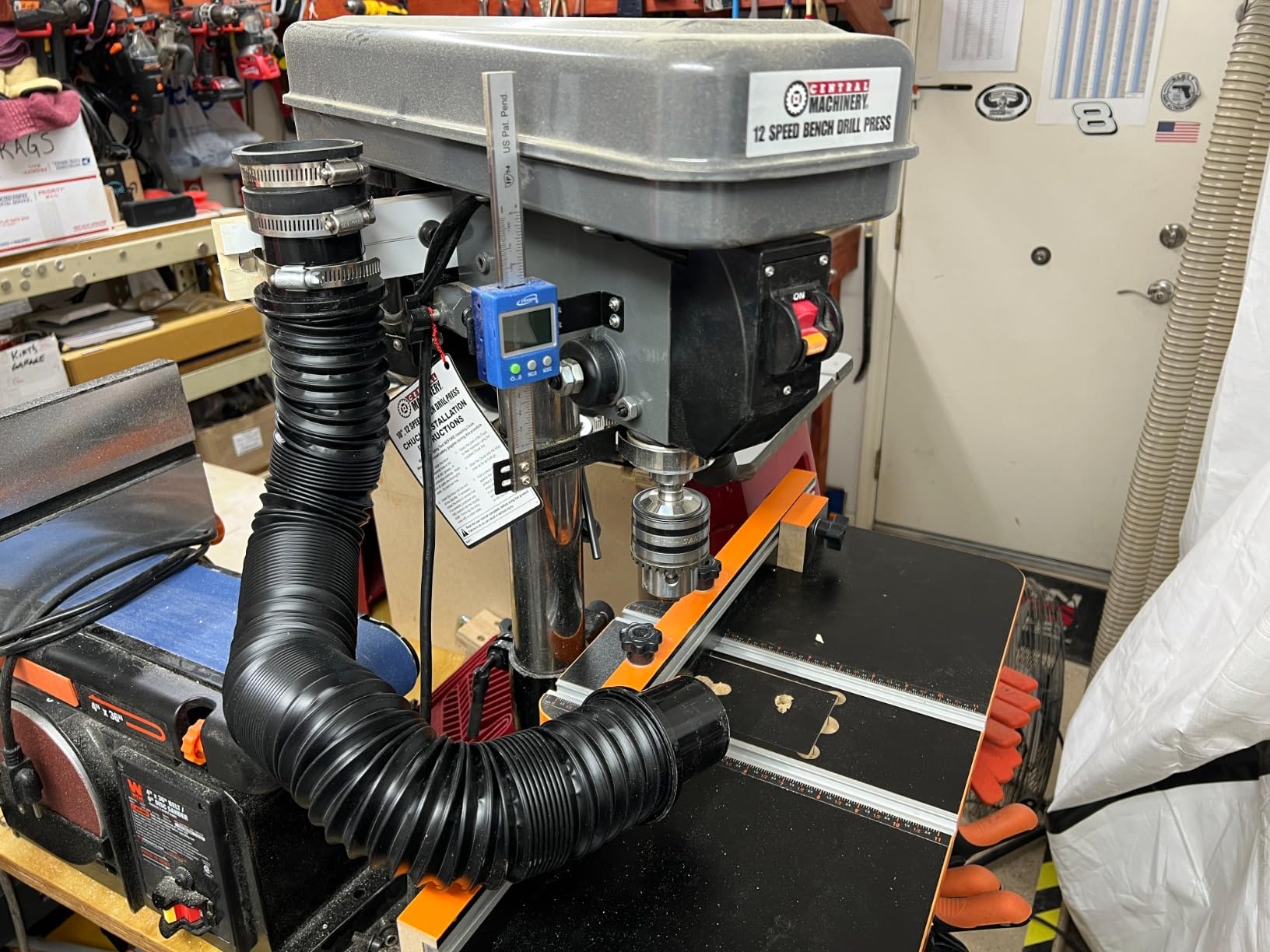
Where it earns its place in a system
Think of it as the link between two fixed pieces of kit. Run a 20-foot hose from the vac to a port selector or separator, then use one of these to drop from that port down onto a machine that sits lower or further back than the clamp can comfortably reach.
When this is the wrong hose
It is the wrong choice if you want one hose for the whole shop, and the wrong choice for any machine that produces real chip volume at speed. It also is not a substitute for a full-length hose between a vac and a sander. Use it where a fixed, short, self-supporting link is what you actually need.
What Size Dust Collection Hose Do I Need?
Match the bore to the tool port first, and only then to the vacuum inlet. A dust collection hose at 1-1/4 inch is the standard for handheld sander and router ports, 1-1/2 inch covers some dust ports and portable sanders, 2-1/2 inch is the common shop vac size for table saws, planers and jointers, and 4 inch belongs to fixed dust collection systems rather than portable vacs. A hose wider than the tool port will not capture properly no matter how good the vacuum is.
The second rule is the one most buyers get wrong. Air needs to move fast enough to carry wood dust back to the filter, roughly 4,000 feet per minute at the source. Every extra foot of hose and every extra elbow drags the air slower. Length is not free, and the widest hose on your bench is not automatically the strongest performer.
Work through it in this order. First, identify the smallest port among the machines you want to collect from, because a hose has to be no wider than that. Second, confirm the bore of your vacuum inlet. Third, check the airflow your vacuum actually delivers rather than its peak horsepower figure. Fourth, add up the run distance and count the bends, because every 90-degree elbow costs you more than an equivalent length of straight hose.
If your vacuum moves around 100 CFM, a 4 inch hose will do almost nothing for you, and a 1-1/4 inch hose off a 2-1/2 inch port through a reducer is a perfectly sensible setup. Most workshop advice gets this backwards by assuming a larger hose is a stronger one.
The two-hose setup most small shops end up with
If you can only afford one hose and want to cover a table saw, buy the 2-1/2 inch. If you want to cover a sander, a router and a track saw, buy the 1-1/4 inch with a multi-brand adapter set. If you genuinely want to cover both, buy both. The most common configuration in workshop build threads is a small-bore hose for handheld tools and a long reinforced hose for the big machine.
Running one hose across both job types means either living with a reduced capture on the sander or a choked table saw connection, and the compromise is worse than owning two hoses.
How much length you actually need
Measure the real distance from where the vacuum sits to the farthest machine you want to serve, then add roughly a third for routing around obstacles. Beyond that, extra length turns into friction and into a drag job every time you move the vac. The 7 foot hose that comes with most vacs is rarely enough; 20 feet is the common sweet spot.
Support long runs so they do not sag. A low point collects settled dust, and settled dust becomes a blockage that no amount of extra vacuum power will shift.
Hose Port Compatibility by Shop Vac Brand
No, shop vac hoses are not all the same size, and this is the single most common reason a new hose will not fit. The port diameter is a brand-level decision rather than a standard, so a hose that fits one vac will often need an adapter for the next. Before you order anything, measure the outside diameter of your vacuum inlet and the port you are connecting to, usually with calipers, and compare against the bore of the hose.
Ridgid wet/dry vacs typically use a 1-7/8 inch inlet, which is a common source of confusion because it is neither a 1-1/4 inch tool port nor a 2-1/2 inch shop vac port. You will generally need a reducer or an adapter with a 1-7/8 inch end to run a standard 2-1/2 inch hose, or a dedicated hose in that diameter.
Shop-Vac units and many generic buckets take 2-1/2 inch, which is why that diameter dominates the hose market. Henry and Karcher-style machines commonly use 32 mm, a size that needs a specific adapter rather than a step-down. DEWALT lines run narrower, with 1-1/4 inch and 1-7/8 inch ports appearing across different models.
The practical takeaway is simple. Buy a hose in the diameter of the larger of your two connections, then buy a reducer for the smaller one, rather than trying to find a hose that happens to match both. Adapters are cheaper than returns.
Material and Construction: PVC, Wire Coil and Rubber
PVC is the most common material and the right default for a flexible dust collection hose. It is light, inexpensive, easy to route and, when you choose a clear wall, gives you a built-in diagnostic: you can see the moment dust starts piling up. Its weakness is cold behaviour, since cheap PVC stiffens in an unheated garage and can crack over a few seasons.
Wire coil reinforcement is what keeps the bore open. A spring steel or stainless steel coil embedded in the wall resists kinking, crushing and shape collapse, and it is the single most important construction detail on any hose that will be stepped on or routed through a tight shop. A hose without a coil is fine for a sander; it is not fine around a table saw.
Rubber and thermoplastic elastomer bodies trade some of that crush resistance for genuine flexibility. They are the right choice for handheld tools where the hose has to stay light in your hand for a long session, and the wrong choice for chips and heavy debris.
Look for smooth interior walls wherever you can. Corrugated or ribbed interiors create pockets that hold dust permanently, and a smooth bore is one more reason the clear PVC hoses in this roundup stay clear longer.
Adapters, Cuffs and Quick-Connect Systems
There are three connection styles and they are not interchangeable. Worm-drive or thumb clamps are universal, cheap and forgiving, and they work with almost any port of the right diameter. Locking cuffs, such as the POS-I-LOCK system on our second pick, twist and hold firmly but only mate with ports carrying the matching lock ring. Quick-connect bayonet systems, like the Cen-Tec Quick Click or the Rockler Click-Connect, are the fastest to swap between tools but bind you to that brand’s accessories.
For most small shops, the deciding factor is not the fitting type but how many tools one hose has to serve. A kit with four or five tool port fittings beats a better hose with none, because it removes the friction of re-fitting adapters every time you move machines.
Watch the connection to the vacuum itself. A 2-1/4 inch hose adapter will not seat properly on a 2-1/2 inch port without a proper reducer, and forcing a mismatched cuff leaks air, which pulls unfiltered room air into the motor and kills suction.
Where a seal matters, a length of hose wrapped with tape at the joint is a legitimate repair and a legitimate way to get a temporary seal while you source the correct fitting.
Pairing Your Hose With a Dust Separator
A hose on its own sends everything, including fine dust, straight to the vacuum filter. A separator placed between the hose and the vac spins the larger debris out of the airstream so it drops into a bin, and the filter only ever sees the fine fraction.
The practical benefit shows up in how often you clean the filter. Users who add a separator report far fewer filter cleanings, and a clean filter is a filter that keeps its airflow, which is the whole reason you bought a wet/dry vacuum in the first place.
Shoppers running a Shop-Vac with a drum-style separator and a short hose under 15 feet describe it as a workable solution for sanders, track saws and routers. That is the pairing to consider if your filter is clogging after every session.
One community solution worth knowing about: people have successfully repurposed a cheap pool cleaner hose as a dust collection hose. It is a reminder that a hose is fundamentally a tube, and the expensive part of a good one is the coil and the fittings rather than the rubber itself.
What to Avoid When Buying a Dust Collection Hose
Avoid unbranded marketplace hose kits with few or no reviews. There is a cluster of listings in this category that look comprehensive on paper and turn out to arrive with soft fittings, plain clips instead of the advertised clamps, or coils deformed in packaging. A hose with no review history gives you no way to know which of those you will get.
Avoid buying a wide hose for a small vacuum. This is the most expensive mistake in the category because the hose looks like an upgrade. If your vacuum does not have the airflow to fill a 4 inch bore, the extra diameter buys you a slower airstream and worse capture at the tool.
Avoid the hose that comes with the vac for tool collection. It is built to move debris around a garage floor, not to be held against a spinning sander for half an hour. Keeping it for cleanup and adding a lighter, more flexible hose for tool work is the standard fix, and it is what nearly every shop ends up doing.
Avoid buying before measuring. Both ports matter, the diameters are not standardised across brands, and a reducer costs a fraction of what a return costs.
Frequently Asked Questions
What size hose for dust collection?
Match the bore to the tool port first, then the vacuum inlet. 1-1/4 inch suits handheld sanders and routers, 2-1/2 inch is the common shop vac size for table saws, planers and jointers, and 4 inch belongs to fixed dust collection systems. A hose wider than the tool port will not capture properly.
Are all shop vac hoses the same?
No. Port diameters are a brand-level decision rather than a standard. Shop-Vac and many generic buckets take 2-1/2 inch, Ridgid wet/dry vacs typically use 1-7/8 inch, Henry and Karcher-style machines commonly use 32 mm, and DEWALT lines run 1-1/4 inch or 1-7/8 inch. Measure both ports before ordering.
What size hose does a Ridgid shop vacuum typically use?
A Ridgid wet/dry vacuum typically uses a 1-7/8 inch inlet. Because that matches neither a 1-1/4 inch tool port nor a 2-1/2 inch shop vac port, most owners run a 2-1/2 inch hose with a reducer, or buy a dedicated hose in the 1-7/8 inch diameter.
Is a shop vac good enough for dust collection?
For a one-car garage shop running a sander, router, track saw and table saw one at a time, a wet/dry vacuum is genuinely good enough. Its weakness is fine dust: without a separator ahead of it, the filter clogs quickly and airflow drops. For high-volume chip production from a planer or jointer, a dedicated collector is a better match.
What type of tubing is best for dust collection?
Clear PVC with an embedded wire coil is the most practical all-round choice for portable shop vac work. The coil stops the bore collapsing at bends and when stepped on, and the clear wall lets you see clogs forming. Rubber or thermoplastic bodies are lighter and better for handheld tools but less crush resistant.
Will a bigger shop vac hose give me more suction?
No. A wider hose only helps if the vacuum has enough airflow to fill the extra volume. If it does not, air simply moves more slowly and capture at the tool gets worse. Judge a hose by airflow in CFM, not by diameter, and match the diameter to the machine you are collecting from.
Final Verdict
The best dust collection hoses for shop vacs are the ones that match your ports, stay open at a bend and give you fittings that reach your tools. For most single-machine setups, the Fulton 2-1/2 inch clear PVC hose is the one to start with, because the visible wall alone solves half of the troubleshooting you would otherwise do by guesswork.
If you need real reach across a garage, the CRAFTSMAN POS-I-LOCK 20-foot hose is the stronger choice, as long as your vacuum takes a locking cuff. If your tools are handheld, the Cen-Tec Quick Click kit with its multi-brand adapter set covers more machines with one hose than anything else we tested.
Where none of these fit, buy two hoses rather than forcing one. Keep the vac hose that came with the machine for cleanup, and stop expecting a wider hose to fix an airflow problem it cannot reach.