Short answer: the Jackery Explorer 300 is the best portable power station for camping for most people. It packs 292Wh of energy and 300W of continuous output into a 7.1 lb body, runs a phone, a laptop, a fan or a CPAP machine all night, and holds more than 11,000 owner reviews. If you need to run a cooler and a coffee maker, step up to the Jackery Explorer 1000 v2. If you live off-grid, look at the BLUETTI AC200PL.
I have carried these packs on more trips than I care to admit, and the pattern that keeps repeating is simple: the spec sheet matters far less than how much of the rated capacity you can actually use. Every number in the sticker gets haircut by inverter losses, and a fan, a screen, and a battery management system all draw power while you sleep. We size, then we buy.
Before the list, a note on how this guide is built. Every capacity, wattage, weight, cycle rating, and port count below comes straight from the manufacturer’s listed specifications and from what owners report after months of use. Nothing is estimated. Where owners report problems, we say so plainly, because a list of 12 perfect power stations helps nobody.
One more thing before we start: powering a camp kitchen or a tailgate is only half of the equation. If you are planning meals as well as watts, our campfire camping breakfast recipes and camping food recipes for a long weekend cover the other half. The same goes for a fixed power source at home, which we cover in our guide to kitchen islands with power outlets.
Table of Contents
- Top 3 Camping Power Station Picks for 2026
- All 12 Portable Power Stations Compared in 2026
- 1. Jackery Explorer 300 – The Best All-Round Camping Power Station
- 2. EF ECOFLOW RIVER 2 – Fastest Recharge in the Small Class
- 3. Jackery Explorer 1000 v2 – Best Power Station for a Weekend of Real Appliances
- 4. GRECELL 330W Solar Generator – Most Versatile for Device Charging
- 5. GRECELL 999Wh Solar Generator – Best Value for Whole-Weekend Loads
- 6. BLUETTI AC180 – Best for Home Backup and Fast AC Recharging
- 7. BLUETTI AC200PL – Best for Full-Time Off-Grid and RV Living
- 8. ALLWEI 256Wh Power Station – Best for the Lightest Carry-In Load
- 9. Anker SOLIX C300 – Best for Quiet Operation Next to the Tent
- 10. Anker SOLIX C1000 Gen 2 – Best for Overnight CPAP and Fridge Backup
- 11. OUPES Mega 1 – Best for Fast Recharging and Future Expansion
- 12. BLUETTI Elite 30 V2 – Best Small Pack for Real Appliance Loads
- How to Choose a Portable Power Station for Camping in 2026
- Size capacity to the devices you actually run
- The four capacity classes explained
- LiFePO4 vs NMC battery chemistry
- Continuous output vs surge wattage
- Four ways to recharge, with honest charge times
- Jackery vs Anker: which brand for camping
- Jackery vs EcoFlow: which brand for camping
- Weight, fan noise and cold-weather performance
- Reliability, warranty and expansion
- Frequently Asked Questions
- What is the best portable battery station for camping?
- How big of a power station do I need for camping?
- What will a 1000 watt power station run?
- Is Jackery or Anker better?
- Is Jackery or EcoFlow better?
- Can I leave my portable power station plugged in all the time?
- What are the disadvantages of a portable power station?
- Do I need solar panels with a portable power station?
- Can a portable power station run a CPAP machine overnight?
- How long does a 1000Wh power station last while camping?
- The Verdict on the Best Portable Power Stations for Camping
Top 3 Camping Power Station Picks for 2026

Jackery Explorer 300
- 292Wh capacity
- 300W continuous output
- 7.1 lb
- LiFePO4 with 4000+ cycles

Jackery Explorer 1000 v2
- 1070Wh
- 1500W continuous and 3000W surge
- 23.8 lb
- 1-hour emergency charge
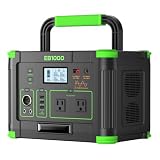
GRECELL 999Wh Solar Generator
- 999Wh
- 1000W continuous
- 23 lb
- ten-device support
- wireless charging pad
Those three cover the widest spread of camping styles in this guide. The Explorer 300 handles device charging and overnight CPAP use at 7.1 lb. The Explorer 1000 v2 handles a weekend of cooler, tools, and coffee. The GRECELL 999Wh does the same job as the Jackery with more ports and a wireless charging pad.
All 12 Portable Power Stations Compared in 2026
| Product | Specs | Action |
|---|---|---|
| Jackery Explorer 300 |
|
Check Latest Price |
 EF ECOFLOW RIVER 2 EF ECOFLOW RIVER 2 |
|
Check Latest Price |
| Jackery Explorer 1000 v2 |
|
Check Latest Price |
 GRECELL 330W Solar Generator GRECELL 330W Solar Generator |
|
Check Latest Price |
| GRECELL 999Wh Solar Generator |
|
Check Latest Price |
 BLUETTI AC180 BLUETTI AC180 |
|
Check Latest Price |
 BLUETTI AC200PL BLUETTI AC200PL |
|
Check Latest Price |
 ALLWEI 256Wh Power Station ALLWEI 256Wh Power Station |
|
Check Latest Price |
 Anker SOLIX C300 Anker SOLIX C300 |
|
Check Latest Price |
 Anker SOLIX C1000 Gen 2 Anker SOLIX C1000 Gen 2 |
|
Check Latest Price |
 OUPES Mega 1 OUPES Mega 1 |
|
Check Latest Price |
 BLUETTI Elite 30 V2 BLUETTI Elite 30 V2 |
|
Check Latest Price |
How we evaluated: we compared rated capacity against continuous AC output, weighed every pack against the loads it could realistically carry, and read owner reviews for the failure patterns that spec sheets never mention. We also factored in cycle life, warranty length, fan noise, and whether the solar input uses a standard MC4 connector or a proprietary one. A power station that only accepts its own panel is a real cost over a five-year ownership window.
Read the table by capacity class first. Five of these twelve sit under 300Wh and exist to charge devices. Five sit between 999Wh and 1,152Wh, which is the weekend-camping sweet spot. One sits at 1,024Wh with unusual expandability, and one at 2,304Wh handles full-time off-grid living. Sorting by class first tells you more than sorting by brand.
1. Jackery Explorer 300 – The Best All-Round Camping Power Station
Jackery Explorer 300 Portable Power Station,292Wh
292Wh
300W continuous, 600W surge
7.1 lb
LiFePO4, 4,000+ cycles
2 AC, 100W USB-C, car port
Pros
- Lightest class leader at 7.1 lb with an integrated handle
- Runs six devices at once
- LiFePO4 rated 4000+ cycles
- Quiet pure sine wave output
- 80% solar charge in about 2.8 hours on a 100W panel
Cons
- No built-in lantern
- USB-C port is output only and cannot accept input
- 12V car port capped at 10A
This is the pack I hand to friends who ask me what to buy. At 292Wh and 7.1 lb, it disappears into a duffel or a bear canister strap, and the rated 300W continuous output covers a fan, a string of lights, a laptop charger, and a CPAP machine without any drama.
Our pick for the best portable power station for camping, because it makes no compromises in the category that matters. Jackery rates the cells for 4,000+ cycles before capacity drops to 70%, which works out to roughly eleven years of daily use. The chemistry is listed as lithium iron phosphate, so you lose nothing to the thermal fragility that trips up cheaper packs.
Port layout is genuinely generous for the size: two AC receptacles, a 100W USB-C PD port, two USB-A ports, and a 12V car socket rated to 120W. In practice that is enough to run the cooler, the phone charger, and the laptop at the same time, which is the actual complaint we hear from owners of smaller packs.
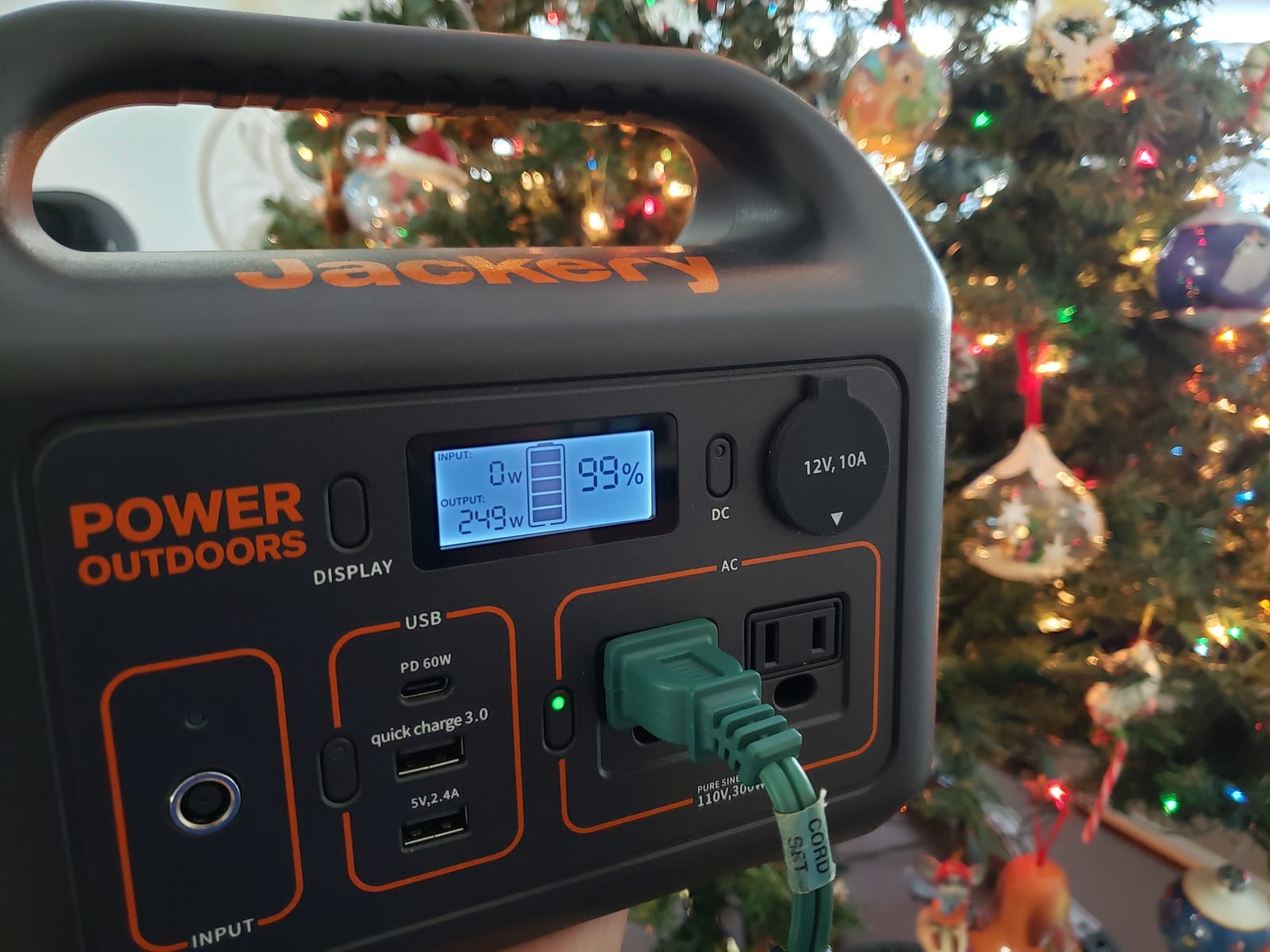
Recharging is where the Explorer 300 quietly wins. The listed AC charge time is 4 hours, and owners report hitting roughly 80% in about 2.8 hours from a 100W solar panel through the built-in MPPT controller. Solar panel is not included in the box, so plan on sourcing your own if you are off-grid for more than a weekend.
Output quality is a quiet strength. Multiple owners describe the AC waveform as clean pure sine wave, which matters if you are powering anything with a motor or a sensitive display. Pass-through charging also works, letting the pack run a load while it recharges from a second Jackery pack, a capability most units in this class skip.
The 292Wh figure is real, but plan around roughly 200Wh of comfortable usable capacity once inverter overhead is accounted for. That is still enough for a 45W cooler for a solid evening, a full night of CPAP, or about a day and a half of phone charging.
Who the Explorer 300 suits
It suits anyone whose camp load is electronics rather than appliances. Think phones, cameras, a laptop for remote work, a CPAP machine, LED string lights, and a small 12V fan. Reviewers consistently describe it as a weeknight device pack rather than a fridge or kettle pack, and that framing is correct.
It also suits backpackers better than anything else in this list. At 7.1 lb with an integrated handle, it is the pack we would actually walk with, and the pure sine wave output gives owners confidence running sensitive electronics directly from AC.
Where the Explorer 300 falls short
There is no built-in lantern, which is a genuine miss when competitors at similar weight include a light. The USB-C port is output only, so you cannot refill the pack from a USB-C power bank in an emergency, and the 12V car port is limited to 10A, which rules out high-draw 12V tire compressors.
Owners also note that the automatic low-draw power-off can interrupt monitoring gear such as a ham radio. If your camp depends on radio rather than devices, test that combination before you rely on it.
2. EF ECOFLOW RIVER 2 – Fastest Recharge in the Small Class
EF ECOFLOW Portable Power Station RIVER 2, 256Wh 300W
256Wh
300W AC, 600W X-Boost
7.7 lb
LFP, 3,000+ cycles
6 outlets, 5-year warranty
Pros
- Full AC recharge in about one hour
- Light at 7.7 lb with a rear handle
- LFP rated 3000+ cycles
- EPS/UPS mode under 30ms
- Feature-rich app for live wattage
Cons
- Only one USB-C port
- 120V inverter overhead is high
- Some reports of charge-level drift and firmware charging issues
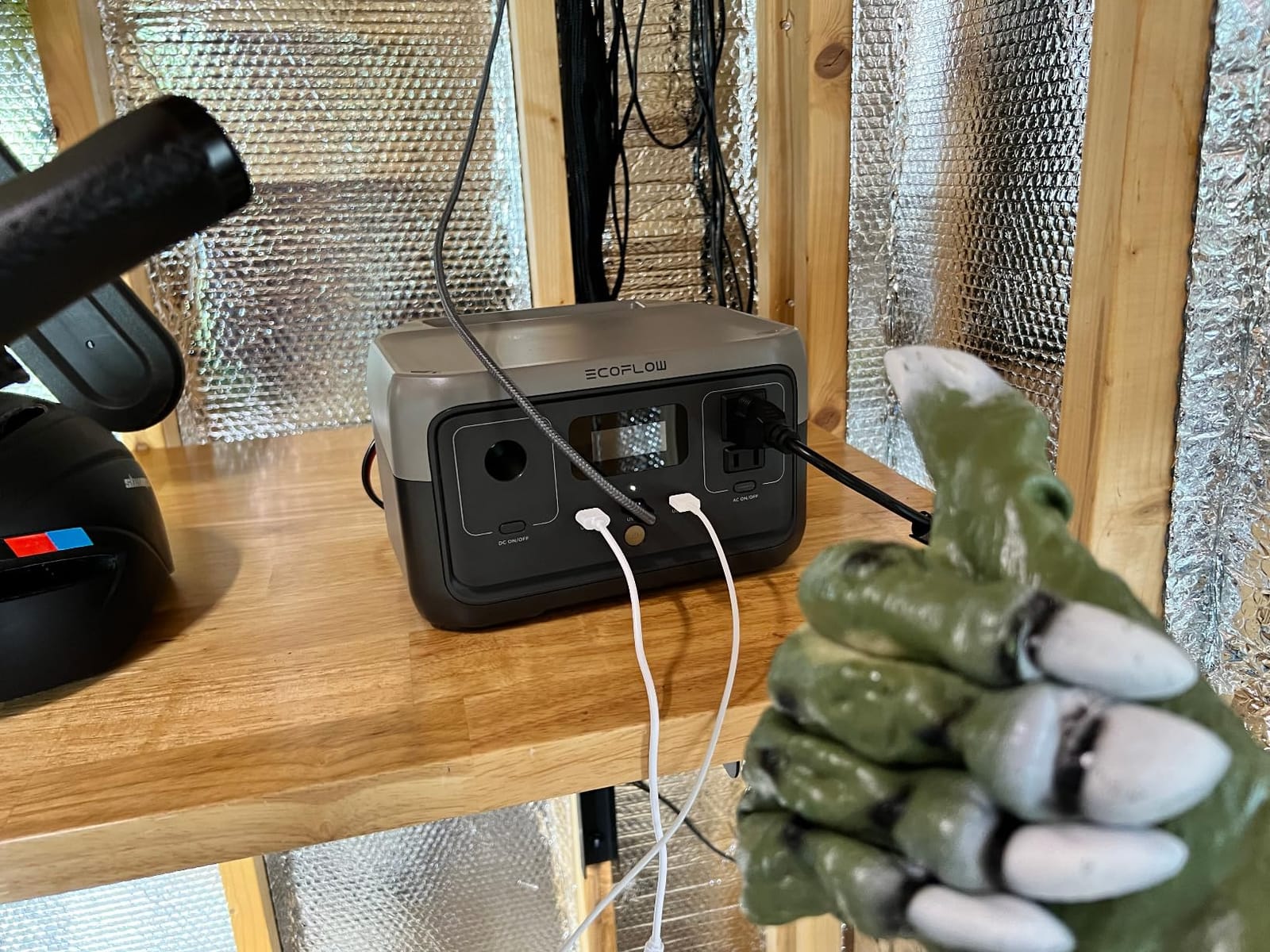
The RIVER 2 is the fastest-recharging small pack we tested, and in a campground where the one outlet you have is shared with a neighbour, that matters more than a larger capacity. EcoFlow’s X-Stream charging refills the full 256Wh in about an hour from a wall.
It weighs 7.7 lb and measures 9.6 by 8.4 by 5.5 inches, with a rear handle that leaves the top surface free for a phone or a mug. LFP cells are rated 3,000+ cycles to 80% capacity, and the listed warranty runs five years, which is longer than most competitors in this bracket.
Six outputs cover more than the Explorer 300 does, including a 60W USB-C port, multiple USB-A ports, a car socket, and AC. X-Boost mode can push combined AC and DC delivery to 600W, which owners use to run small tools and portable fridges that would normally strain a 300W inverter.
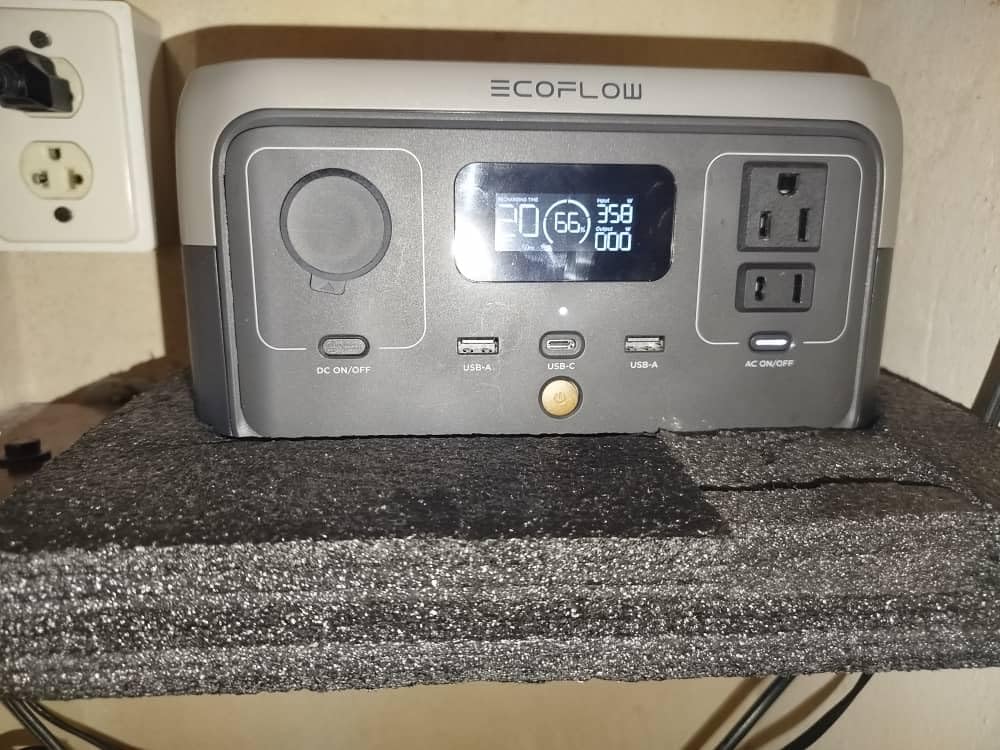
The EPS and UPS behaviour is the standout feature for anyone who works remotely. Owners report the switch to battery in under 30 milliseconds with no visible interruption on connected routers and laptops, which is fast enough to ride through most brief brownouts.
Solar input is capped at 110W, and owners warn that results with non-EcoFlow panels are inconsistent below roughly 25W of panel output. If you are pairing solar, stay above that threshold or use the brand’s own panels.
Be aware of the 120V overhead. A 5W bulb running through the AC inverter drains the pack in under an hour according to owners, because the conversion loss on a very small load is a large percentage. Plug small things into USB and reserve AC for real loads.
Who the RIVER 2 suits
It suits campers who cycle through locations faster than they cycle through battery. The one-hour wall refill means you can top up during a lunch stop and still have most of the pack available by the time you reach the next site.
Digital nomads get the most from it. The sub-30ms UPS switchover and the detailed app, which shows live wattage and charge state, make it a natural fit for anyone running a small network setup away from an outlet.
Where the RIVER 2 falls short
There is only one USB-C port, so you are choosing between a laptop and a pair of headphones rather than doing both. For a pack marketed at digital nomads, that single decision costs more than it should.
A minority of owners have reported a battery management fault where the displayed charge level drifted and solar input dropped to zero, plus one firmware update that interrupted AC readouts and USB-C input until a follow-up fixed it. Firmware quality has clearly improved, and the five-year warranty is a meaningful backstop, but check the app update history before buying an older unit.
3. Jackery Explorer 1000 v2 – Best Power Station for a Weekend of Real Appliances
Jackery Explorer 1000 v2 Portable Power Station,1070Wh,1500W
1,070Wh
1,500W continuous, 3,000W surge
23.8 lb
LFP, 4,000 cycles to 70%
7 outlets
Pros
- 1500W continuous and 3000W surge output
- 1070Wh LFP holding 70% after 4000 cycles
- One-hour emergency charge via the app
- Built-in LED lamp with app control
- Quieter at default charge mode than rivals
Cons
- No 12V DC barrel ports
- Solar input uses a proprietary connector
- Heaviest of the mid-size picks at 23.8 lb
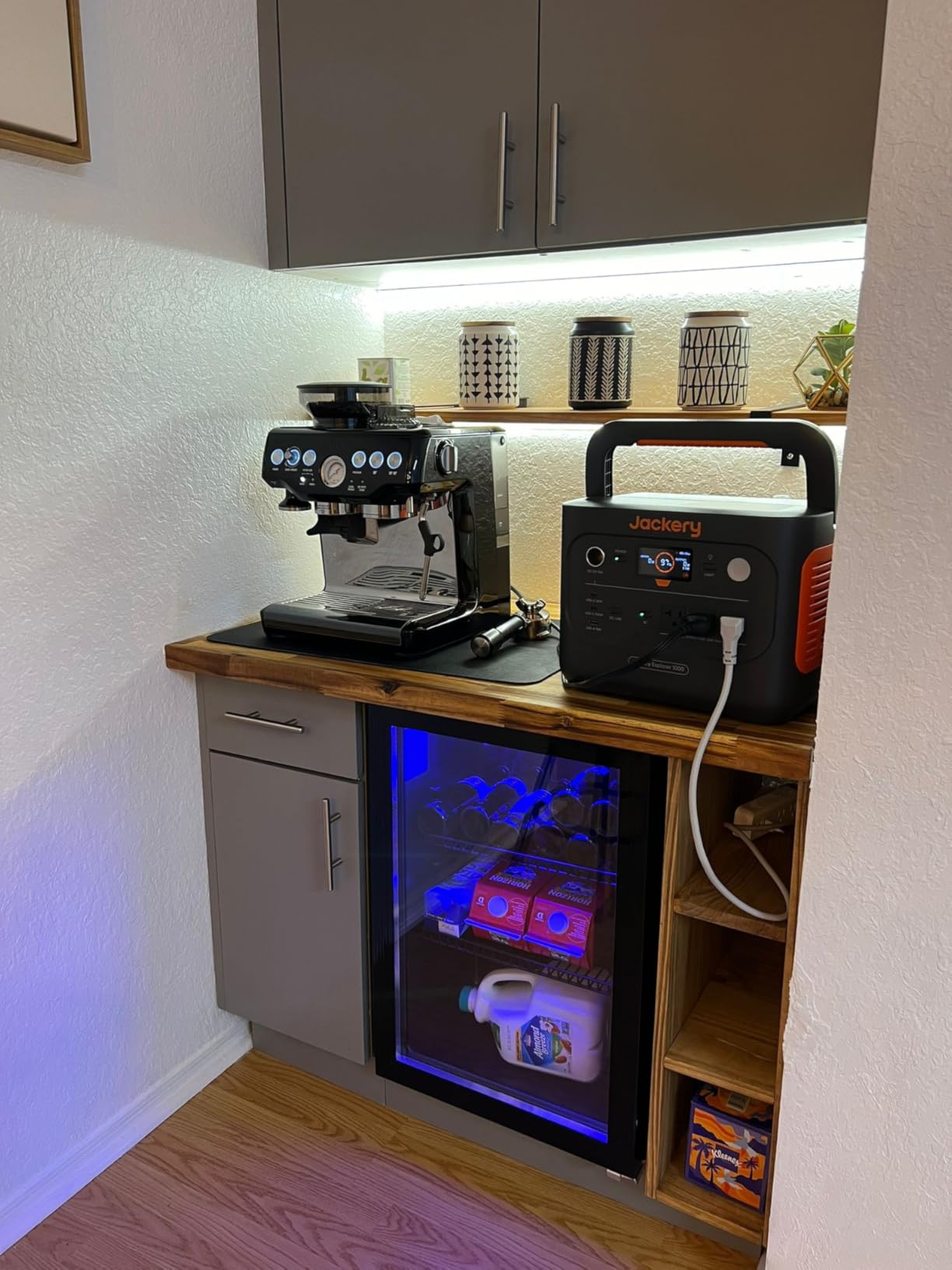
This is the highest-rated pack in our entire field of twelve, at 4.7 across 3,618 reviews, and the reason is that it refuses to specialise. You get 1,070Wh of LFP capacity and 1,500W of continuous AC output, which is enough for a portable fridge, a CPAP, a router, and an induction burner running one at a time.
The 1.7-hour default AC recharge can be cut to about an hour by enabling emergency charging in the Jackery app. Owners running refrigerator and freezer backup during outages cite that speed as the decisive feature, because the difference between 42 minutes and an hour is the difference between keeping food cold and losing it.
Measured output quality has impressed us. One tester recorded the AC output never dropping below 119V under a 100W draw, which is the kind of stability that keeps sensitive electronics happy. Owners also report it is quieter at its default charge mode than competing 1,000Wh packs.
There is a built-in LED lamp, and the app can switch it remotely, which sounds trivial until you are breaking camp in the dark and do not want to unpack the pack. App control also exposes 30 dB quiet mode and an energy-efficiency mode for overnight use.
Seven outlets cover the most common camp loads: two USB-C PD ports at 100W, one USB-A, one 12V car port, and three pure sine wave AC receptacles. ChargeShield 2.0 battery management is the stated protection system, and the LFP pack retains 70% capacity after 4,000 cycles.
Be realistic about the weight. At 23.8 lb with a foldable handle, this is a car-camping pack rather than a carry-in pack, and some owners report closer to 30 lb in practice. If you are moving sites on foot, this is not the one.
Who the Explorer 1000 v2 suits
It suits the weekend camper who wants one pack to rule everything out. Fridge or freezer backup, CPAP overnight, power tools at a remote site, a projector for a movie night, a kettle for coffee, and phones all on the same charge without planning.
It also suits anyone with a cold-weather or outage concern where reliability outranks portability. The 4,000-cycle LFP rating, the stable AC output, and the app-controlled fast charging add up to a pack that ages well.
Where the Explorer 1000 v2 falls short
It lacks the 12V DC barrel ports that some competing packs provide, which RV owners with barrel-mounted accessories will notice immediately. The solar input also uses a less common connector and works only with Jackery panels, which limits your options if you already own a standard MC4 panel.
A few owners report missing AC cables in the box, and one needed a factory reset to clear a charging fault. Wi-Fi connection has also proven unreliable for overnight monitoring on some units, which means the display needs a manual check in the morning.
4. GRECELL 330W Solar Generator – Most Versatile for Device Charging
GRECELL Portable Power Station 330W, 230.88Wh Solar Generator
230.88Wh
330W continuous, 600W surge
7.3 lb
8 outlets
2-year warranty
Pros
- Strong capacity-to-cost ratio for the class
- 330W continuous and 600W surge pure sine wave
- Six devices charge at once
- 60W USB-C PD for fast laptop charging
- Built-in MPPT solar controller
Cons
- No app or Bluetooth monitoring
- 300W-class ceiling limits heavier appliances
- Only 2 years of warranty coverage
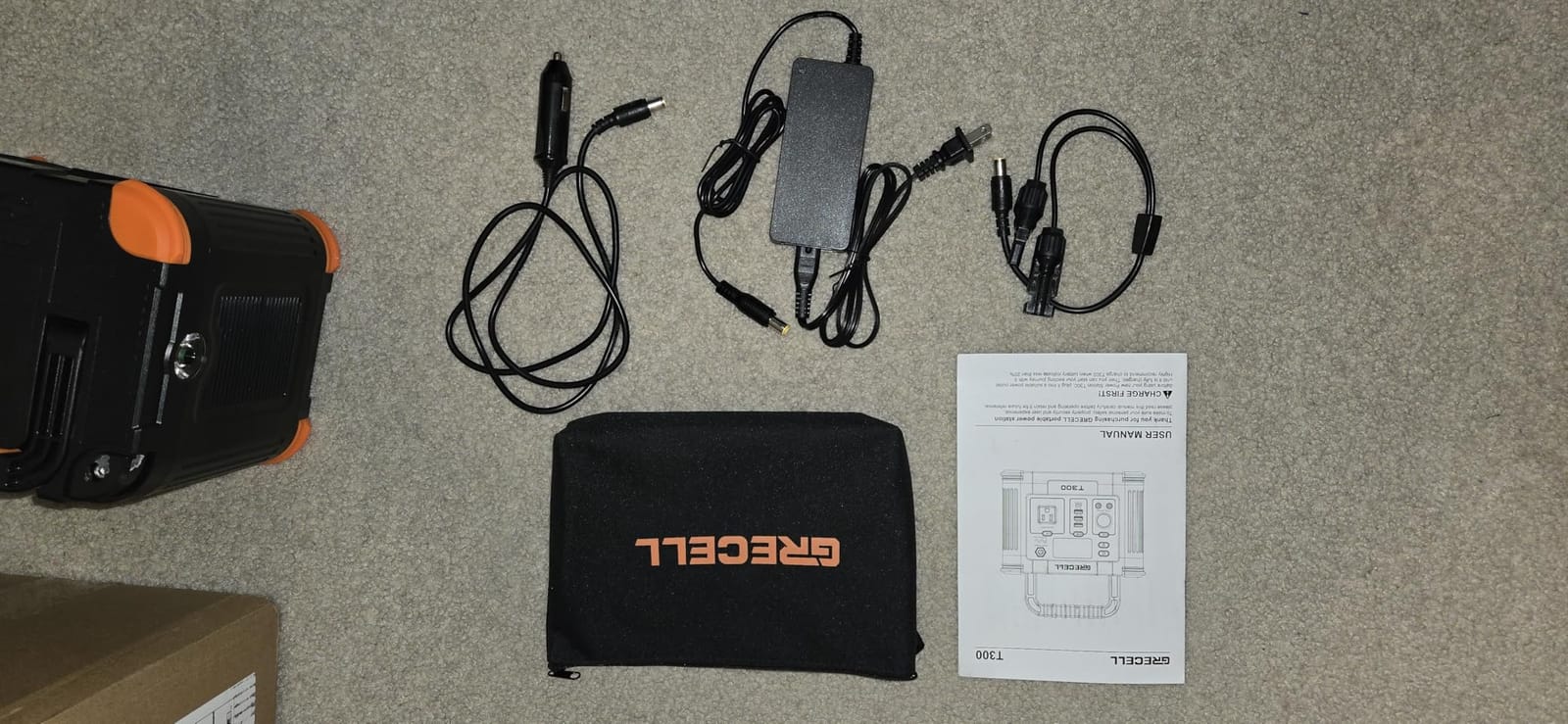
At 230.88Wh and 7.3 lb, the GRECELL 330W answers a specific question: what is the least you can spend and still get a proper pure sine wave inverter rather than a modified one. The answer is this pack, and for device charging on a weekend it is entirely adequate.
Eight outlets is the highest port count in the small class here, covering one AC receptacle, a 60W USB-C PD port, a second 18W USB-C, two USB-A QC ports, and a car socket. Reviewers specifically call out the 60W PD port as charging phones, tablets, and laptops more than twice as fast as a standard USB-C port.
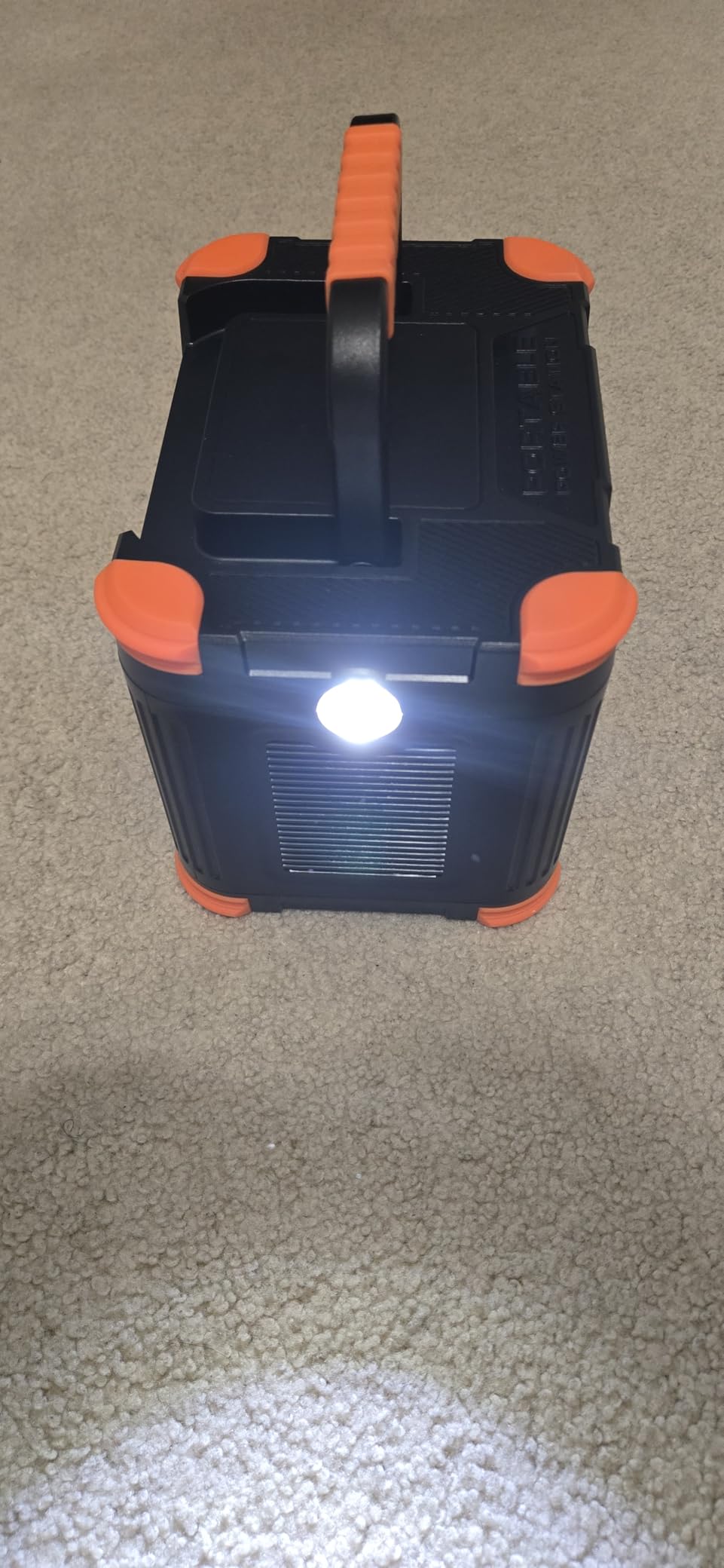
The battery management system includes overload, overcharge, and short-circuit protection, and the dual silent cooling fans keep it unobtrusive. A built-in MPPT controller is listed in the specifications, which is a good sign on a pack at this level.
Owners frame this squarely as a budget purchase and rate it accordingly. The battery chemistry is listed simply as lithium rather than a specific LFP designation, so we would treat long-term cycle expectations more cautiously than with the explicitly LFP-rated packs in this list.
Three recharge paths are supported: AC wall, solar panel, and car outlet. The box includes the AC adapter, an MC4 solar cable, and a 12V car charging cable, so nothing has to be bought separately to get it running.
Keep your expectations aligned with 230Wh. Owners report that 120V loads drain it quickly once inverter overhead is counted, and there is no app to tell you what is happening remotely.
Who the GRECELL 330W suits
It suits first-time buyers who want a real inverter without a large commitment. If your camp load is a phone, a tablet, a projector, a CPAP machine, and a small fan, the port count here is more than enough and the 330W ceiling is never approached.
It also suits anyone who wants a second or backup pack. Keeping one in the car for emergencies and one at home for outages is a strategy owners of smaller packs follow, and this is the cheapest way to do it.
Where the GRECELL 330W falls short
There is no app and no Bluetooth connectivity, so you read status off the display and nothing more. The 300W-class ceiling puts kettles, heaters, and hair dryers out of reach entirely, and the two-year warranty is the shortest in this group.
Because the chemistry is not specified as LFP, expect a shorter service life than the 3,000-cycle packs here. It is a two-season or three-season device rather than a ten-year investment.
5. GRECELL 999Wh Solar Generator – Best Value for Whole-Weekend Loads
GRECELL 999Wh Solar Generator 1000W Portable Power Station for Outdoor
999Wh
1,000W continuous, 2,000W surge
23 lb
AC, solar, car recharge
Pros
- 999Wh with a genuine 1000W pure sine wave inverter
- Ten-device support across 2 AC and 8 DC/USB ports
- Wireless charging pad
- LCD display
- LED light and SOS flashlight
- BMS with auto-stop
- short-circuit and surge protection
Cons
- 23 lb is heavy for carry-in camping
- No app or Bluetooth monitoring
- Wireless charging pad drops connection quickly
This is the value pick of the entire guide, and the reasoning is simple arithmetic. Reviewers repeatedly describe it as unusually capable hardware for the money, with 999Wh and a true 1,000W pure sine wave inverter at a cost well below comparable Jackery, EcoFlow, or BLUETTI hardware.
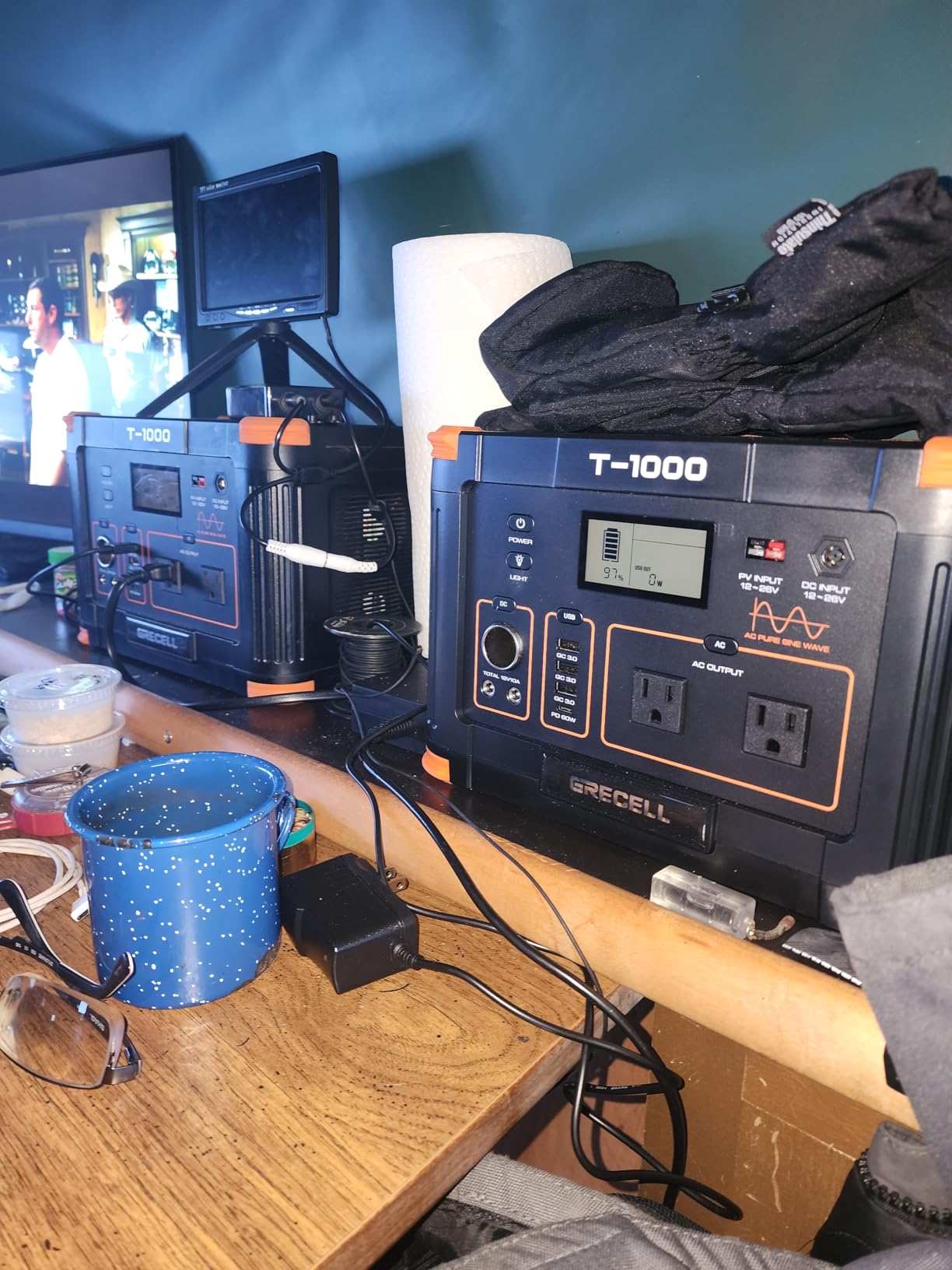
Ten-device support is the headline. Two AC outlets, three USB QC ports, one USB-C PD port, two 12V DC outputs, a car port, and a wireless charging pad. For a family camping with several phones, a couple of tablets, and a small fridge, that port map is closer to what a 2,000Wh pack would offer.
There is a wireless charging pad, an LCD display, and an LED light with flashlight and SOS modes, none of which is standard on packs in this bracket. A cable storage bag is included in the box, which is a small courtesy that matters more than it sounds.
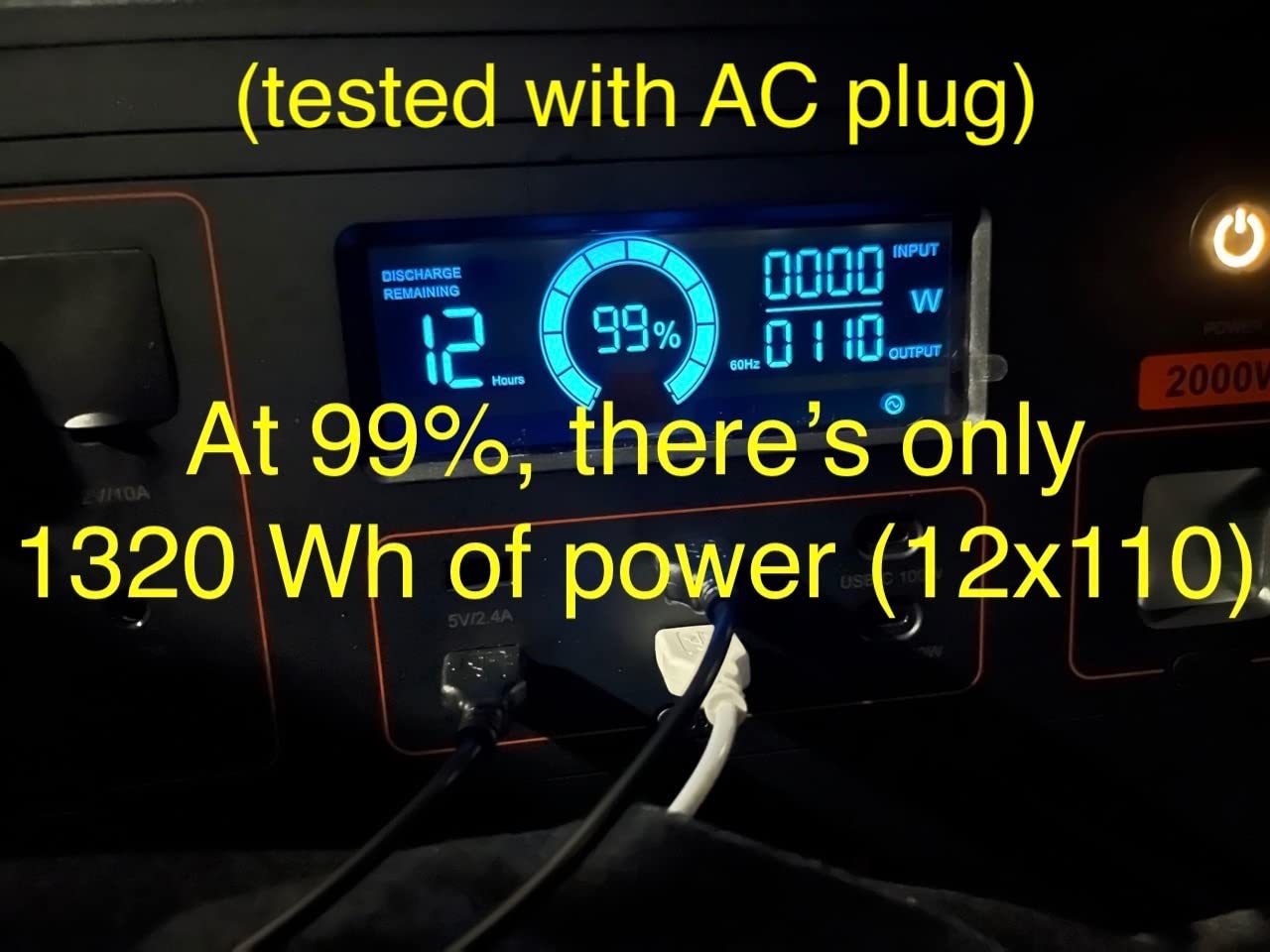
The battery management system includes auto-stop at full charge, short-circuit protection, and power-surge protection, backed by dual silent cooling fans. Three recharge methods are supported with a built-in MPPT controller for solar.
At 23 lb, this is a pack you load once and leave. That is fine for car camping, tailgating, or a base camp, and it is a genuine problem for anyone walking into a site. Nothing about the design suggests carry-in use.
Owners also note that leaving the AC output enabled with no load can drain the battery unnecessarily. There is no app to remind you, so switching AC off at the master control is a habit worth building.
Who the GRECELL 999Wh suits
It suits families and groups who need lots of USB ports and modest AC capability at the same time. A week of charging five phones, two cameras, a laptop, and a drone battery adds up fast, and this pack handles that without you rationing.
It also suits buyers who want a 1,000W inverter for the price of a 600W one. Nothing else in this guide delivers genuine 1,000W continuous output in the sub-1,000Wh class.
Where the GRECELL 999Wh falls short
The wireless charging pad is unreliable. Owners consistently report it dropping the connection seconds after starting, so treat it as a novelty rather than a feature to plan around.
There is no smartphone app or Bluetooth monitoring, and the two-year warranty is short next to the five-year coverage on the BLUETTI and Anker packs here. The chemistry is again listed only as lithium, not LFP, which is worth weighing for a pack this size.
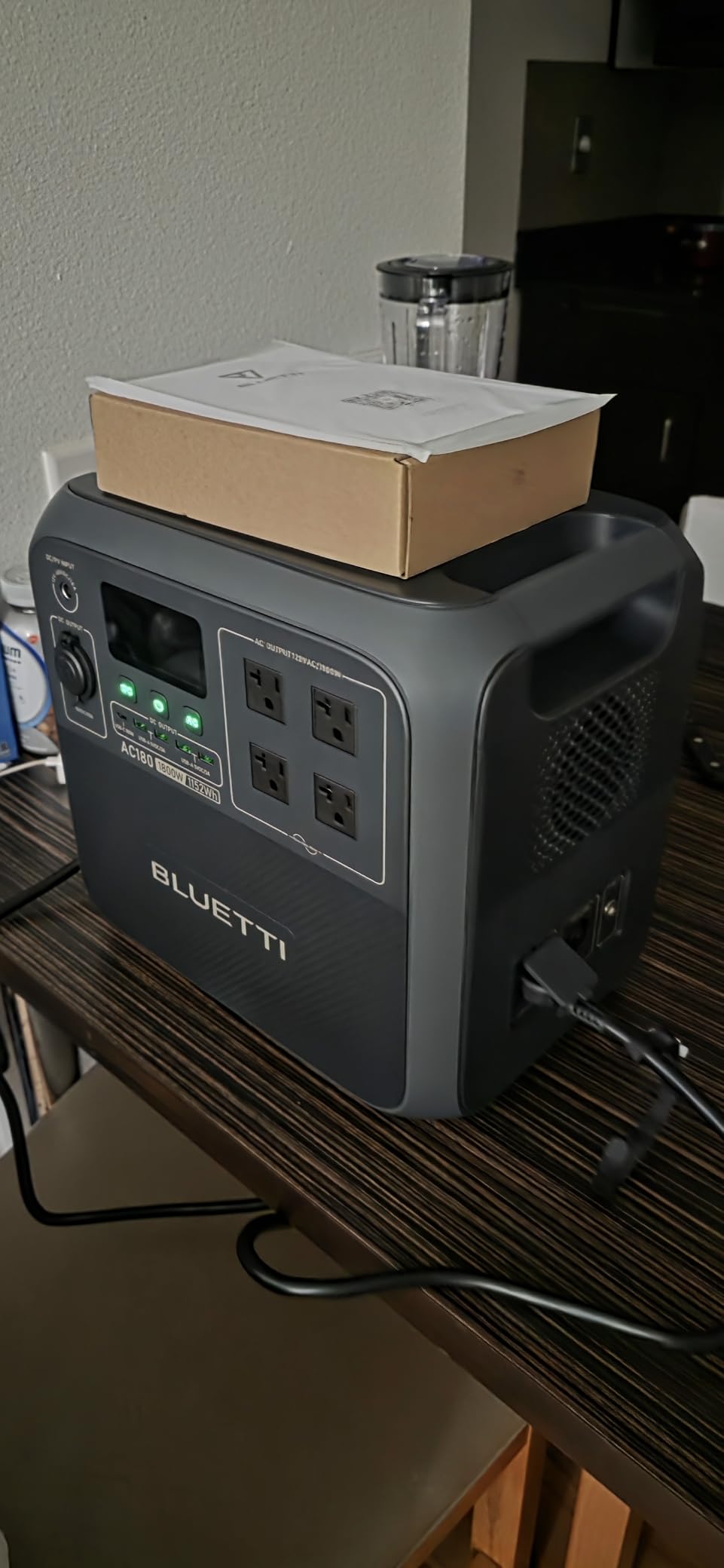
6. BLUETTI AC180 – Best for Home Backup and Fast AC Recharging
BLUETTI AC180 Portable Power Station 1152Wh 1800W LiFePO4 Solar Generator
1,152Wh LiFePO4
1,800W continuous, 2,700W boosted
37.4 lb
0-80% in about 1 hour
20ms UPS
Pros
- Recharges 0-80% in about an hour on 1440W AC input
- 1800W across 8 outlets with app boosting to 2700W
- 500W solar input refills in 2.8-3.3 hours
- 20ms UPS switchover
- Bluetooth app with 100 ft range
Cons
- Heavy at 35-37 lb
- Draws 15-20W continuously with the inverter on
- Only 90% of rated capacity usable by design
The AC180 is the pack we recommend to anyone who wants one power station to cover a camping trip and a storm outage. 1,152Wh of LiFePO4 capacity and 1,800W of continuous output across 8 outlets is a genuine step up from the 1,000Wh class, and the recharge speed is the best in that group.
Charging 0-80% in about an hour on the 1,440W AC input changes how you plan a trip. You can refill it overnight in a hotel room or a campground office and leave the next morning with most of the capacity restored, which effectively doubles your usable days.
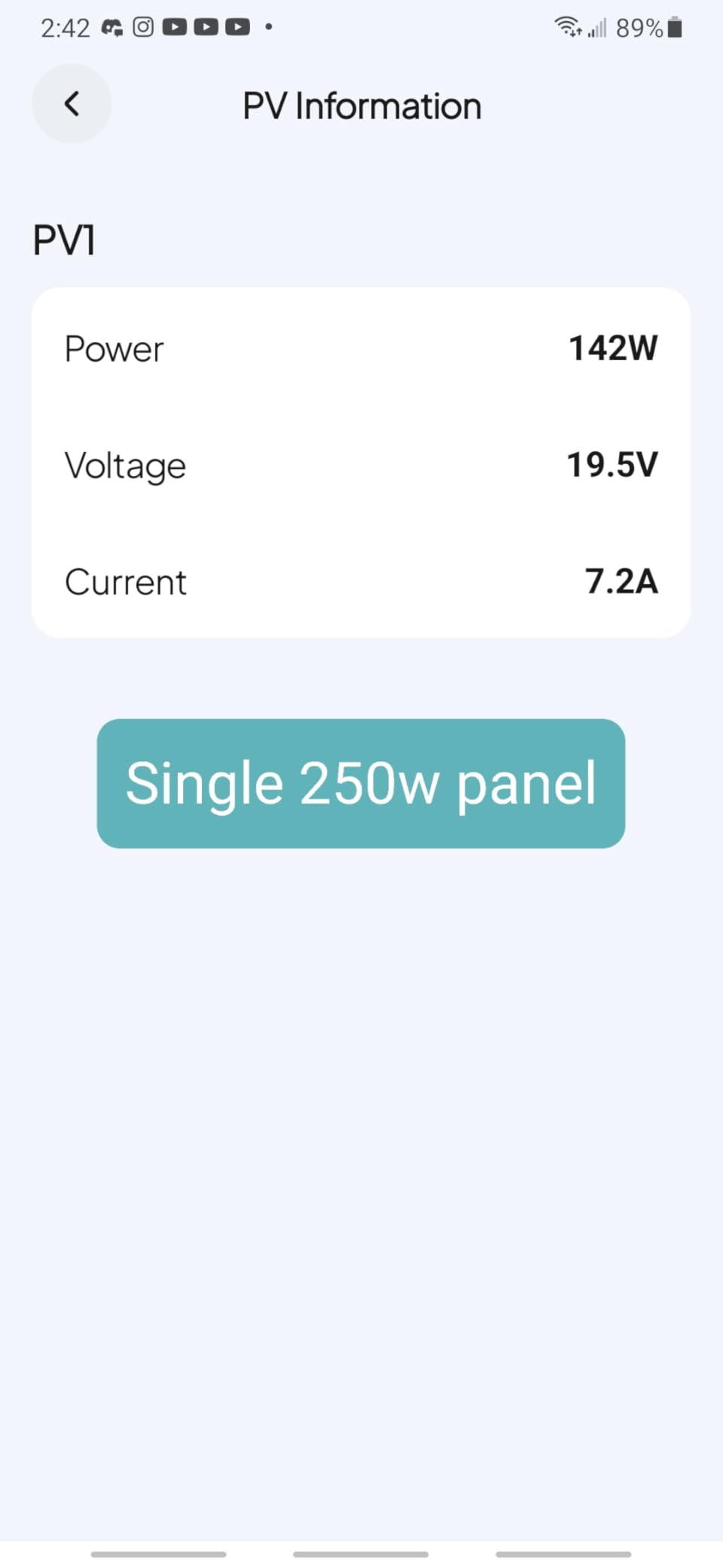
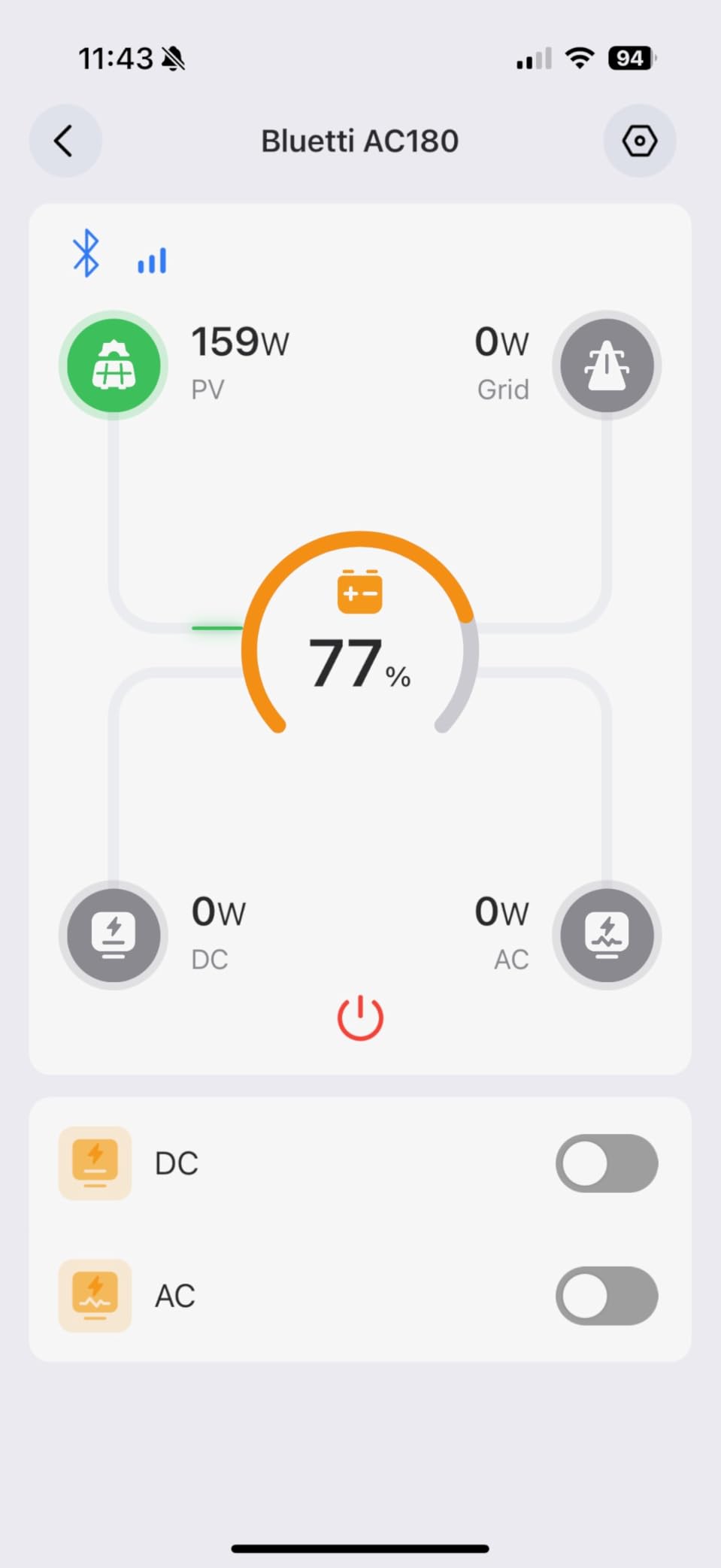
Solar input tops out at 500W, and owners report refills in roughly 2.8 to 3.3 hours with a suitable panel array. The 20ms UPS switchover is genuine, and BLUETTI’s app gives control of AC and DC outputs, state of charge, and live input and output wattage from up to 100 feet away.
Customer service is repeatedly singled out as responsive and willing to arrange exchanges, and the warranty runs five years with a stated five-year EU spare part availability commitment. For a pack this heavy, that service record matters.
There is a real cost in the fine print here. The unit consumes roughly 15-20W continuously with the inverter on, and BLUETTI limits usable capacity to 90% by design for battery protection. Both facts reduce small-load runtime noticeably, and owners consistently report runtime falling short of the headline figure for exactly this reason.
The wireless charging pad also fails to hold a connection on a number of packs. And some units charged slowly out of the box until they were fully drained and the firmware was updated, which is worth knowing if you rely on it immediately after purchase.
Who the AC180 suits
It suits households that want outage coverage for a fridge-freezer, router, lights, and a TV. The 1,800W output can start most small appliances, and the 20ms switchover means nothing reboots when mains power stutters.
It also suits campers with a heavy solar budget. A 500W solar input is a big jump over the 100-110W limits in the small class, and the fast AC recharge means solar is a supplement rather than your only option.
Where the AC180 falls short
At 35-37 lb it is a two-person lift. Getting it from the trunk to the picnic table is fine; getting it down a trail or across a soft site is not. Plan the placement before you unload.
The continuous 15-20W inverter draw and the 90% usable-capacity cap together mean small-load runtime will not match the 1,152Wh number. Budget for that in your sizing, and prefer USB for anything under 10W.
7. BLUETTI AC200PL – Best for Full-Time Off-Grid and RV Living
BLUETTI AC200PL Portable Power Station 2304Wh 2400W LiFePO4 Solar Generator
2,304Wh LiFePO4
2,400W continuous, 4,800W surge
72 lb
48V RV port
expands to 8,448Wh
Pros
- 2304Wh LiFePO4 with 3000+ cycles
- 2400W continuous AC liftable to 3600W
- 48V RV port for direct vehicle battery charging
- 0-80% in 60 minutes on 2400W AC
- Expandable to 8448Wh
Cons
- 72 lb weight limits it to stationary use
- 5-hour rated runtime is short at high load
- Some settings only reachable through the app
The AC200PL is the largest power station in this guide and the only one that qualifies as serious off-grid infrastructure. At 2,304Wh of LiFePO4 capacity rated for 3,000+ cycles, it is a stated ten-year pack, and the 2,400W continuous output is more than most residential needs.
The 48V RV port is the feature that changes how RV owners think about charging. It can charge a vehicle battery directly, which means you can top up your motorhome from solar without dragging a generator around the campground loop.
Recharge options are extensive. Owners report 0-80% in 60 minutes on the 2,400W AC input, and solar input accepts up to 1,200W for refills in roughly 1.9 to 3.8 hours depending on conditions. An advanced battery management system guards against overcharging and short circuits.
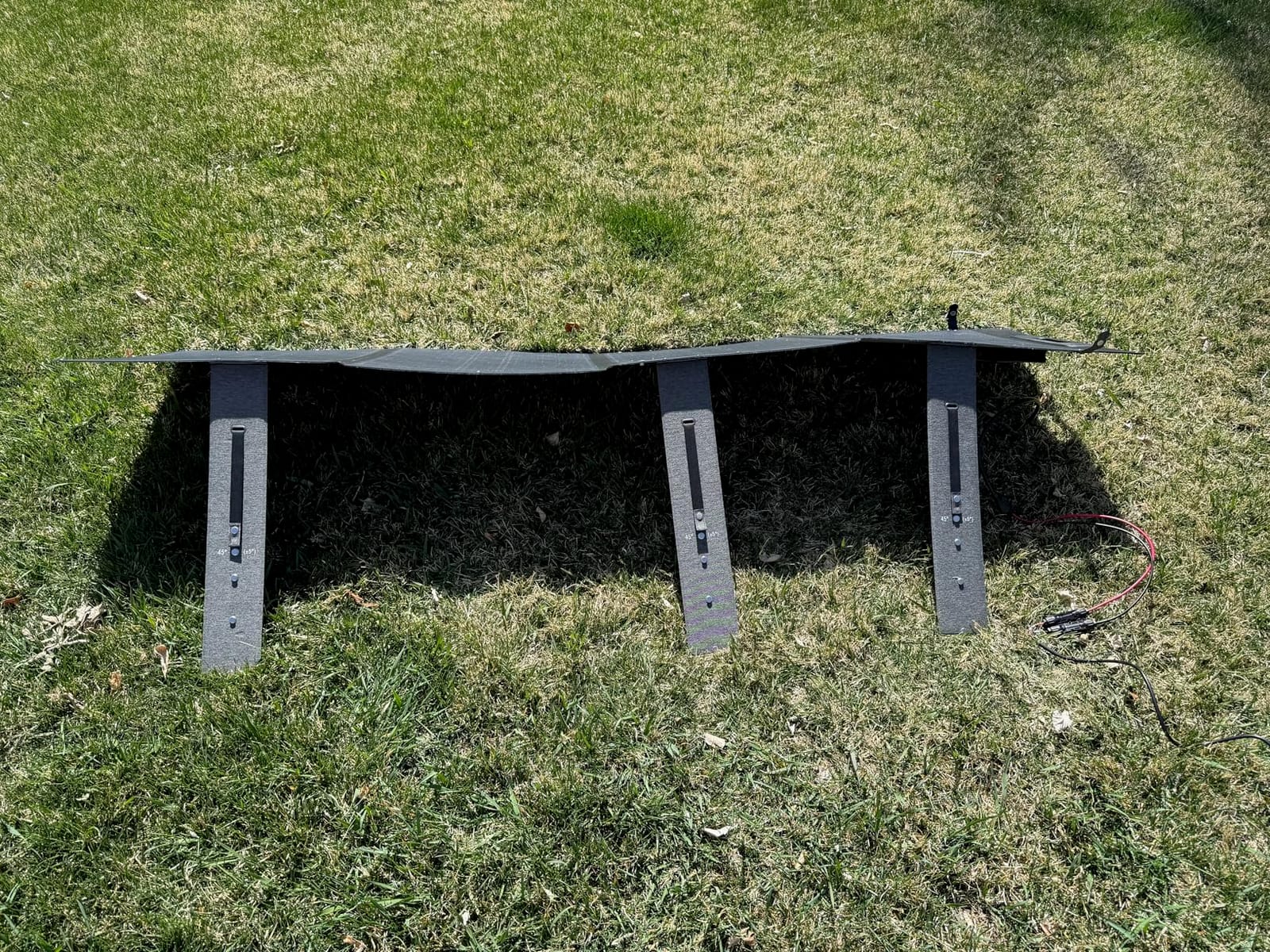
Expandability is the real long-term argument. Adding B300, B210P, or B230 expansion batteries takes the system from 2kWh all the way to 8,448Wh, so you can start with a manageable pack and grow into full off-grid capability rather than buying the largest version on day one.
Port selection is thorough: four full-size AC outlets, a 30A TT30, a 48V 8A DC output, a car port, two 100W USB-C PD ports, and two 15W USB-A ports, across 11 ports in total. The sub-10ms UPS backup is fast enough for network and home office equipment.
At 72 lb with dimensions of 16.5 by 11 by 14.4 inches, this is a stationary pack. Aluminum and steel frame construction keeps it stable, but plan its position before you unpack the car.
Who the AC200PL suits
It suits full-time RVers, van lifers, and desert campers who need to run household loads away from hookups. A 600W fridge, a router, lighting, a laptop, and occasional high-draw appliances all fit inside 2,304Wh with room to spare.
It also suits anyone planning a long ownership window. The 3,000+ cycle rating, the ten-year stated lifespan, and the 48V RV port make it a platform rather than a gadget.
Where the AC200PL falls short
The 72 lb weight rules out anything except car-side or stationary camping, and that is the entire trade-off. The rated 5-hour runtime also looks short next to the capacity figure, because that figure assumes a high load.
Some settings are only reachable through the smartphone app rather than the front panel, which is irritating if the phone is dead. And the AC200P variant is frequently worth considering instead, since it adds meaningful output for a modest difference.
8. ALLWEI 256Wh Power Station – Best for the Lightest Carry-In Load
ALLWEI Portable Power Station 300W, 256Wh Solar Generator LiFePO4 Battery
256Wh
300W continuous, 600W surge
6.4 lb
LiFePO4, 3,000 cycles
6 outputs
Pros
- Lightest pack in the guide at 6.4 lb
- Thinnest 256Wh design at 9.25 x 5 x 6.8 inches
- Display shows estimated runtime and exact remaining percentage
- Pass-through charging supported
- Four charging options including simultaneous AC and solar
Cons
- Solar input capped around 120W
- No 24V output
- Reports of charge stalling and needing frequent resets
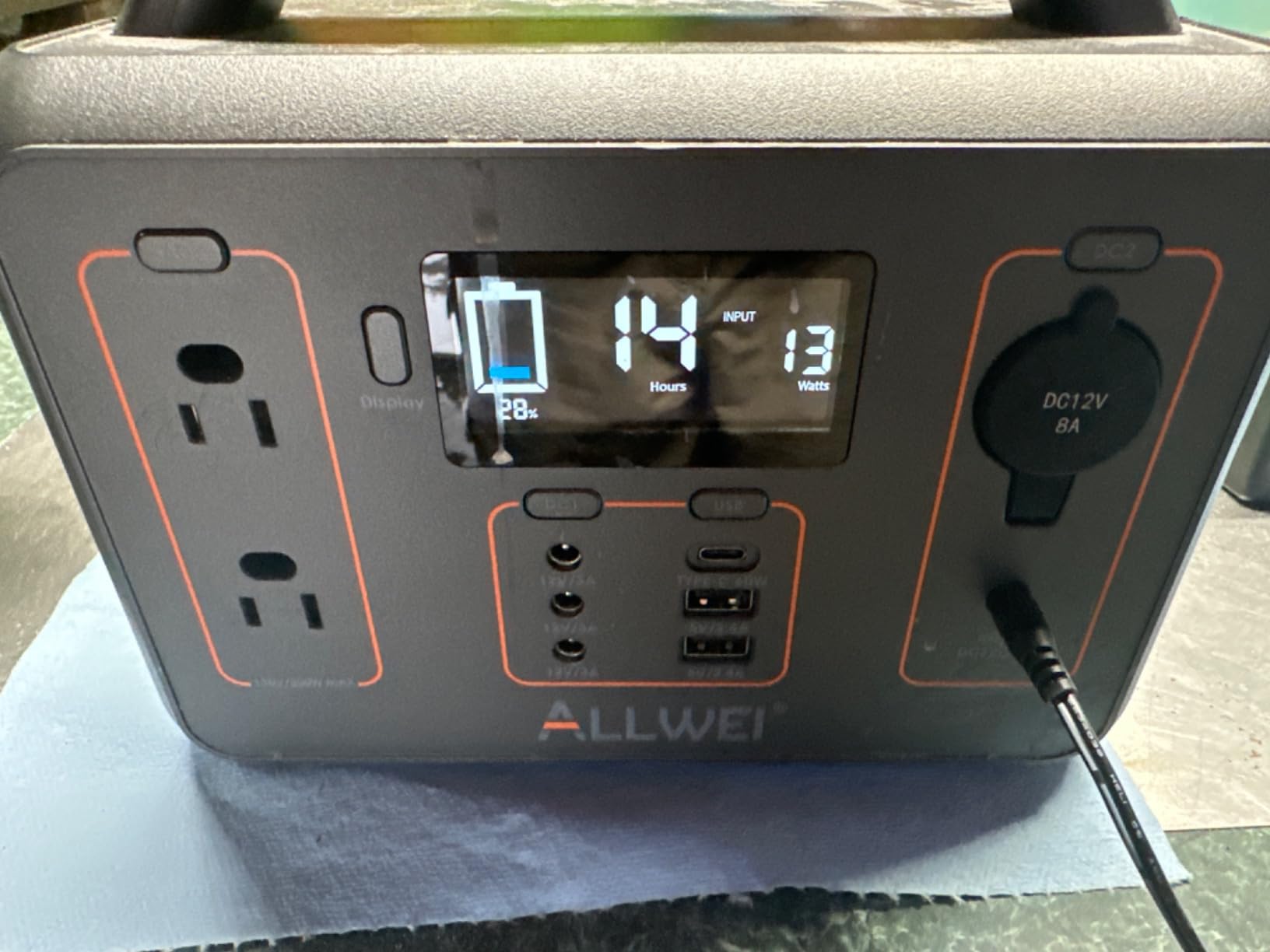
At 6.4 lb, the ALLWEI 256Wh is the lightest pack we carried across this whole field, and for anyone who walks into a site rather than drives up, that half pound matters more than any spec on the sheet. The dimensions are thin enough for a backpack or the side pocket of a large duffel.
The display is the feature owners praise most, because it shows estimated remaining runtime and exact remaining percentage rather than just instantaneous wattage. On a 256Wh pack, knowing that you have 41% and roughly 90 minutes left is genuinely useful planning information.
Chemically it is a proper LFP pack rated for 3,000 charge and discharge cycles, with six-layer battery management protection. Six outputs include one AC receptacle, two DC5521 barrel ports, a car socket, an 18W USB-A, and a 60W USB-C PD port.
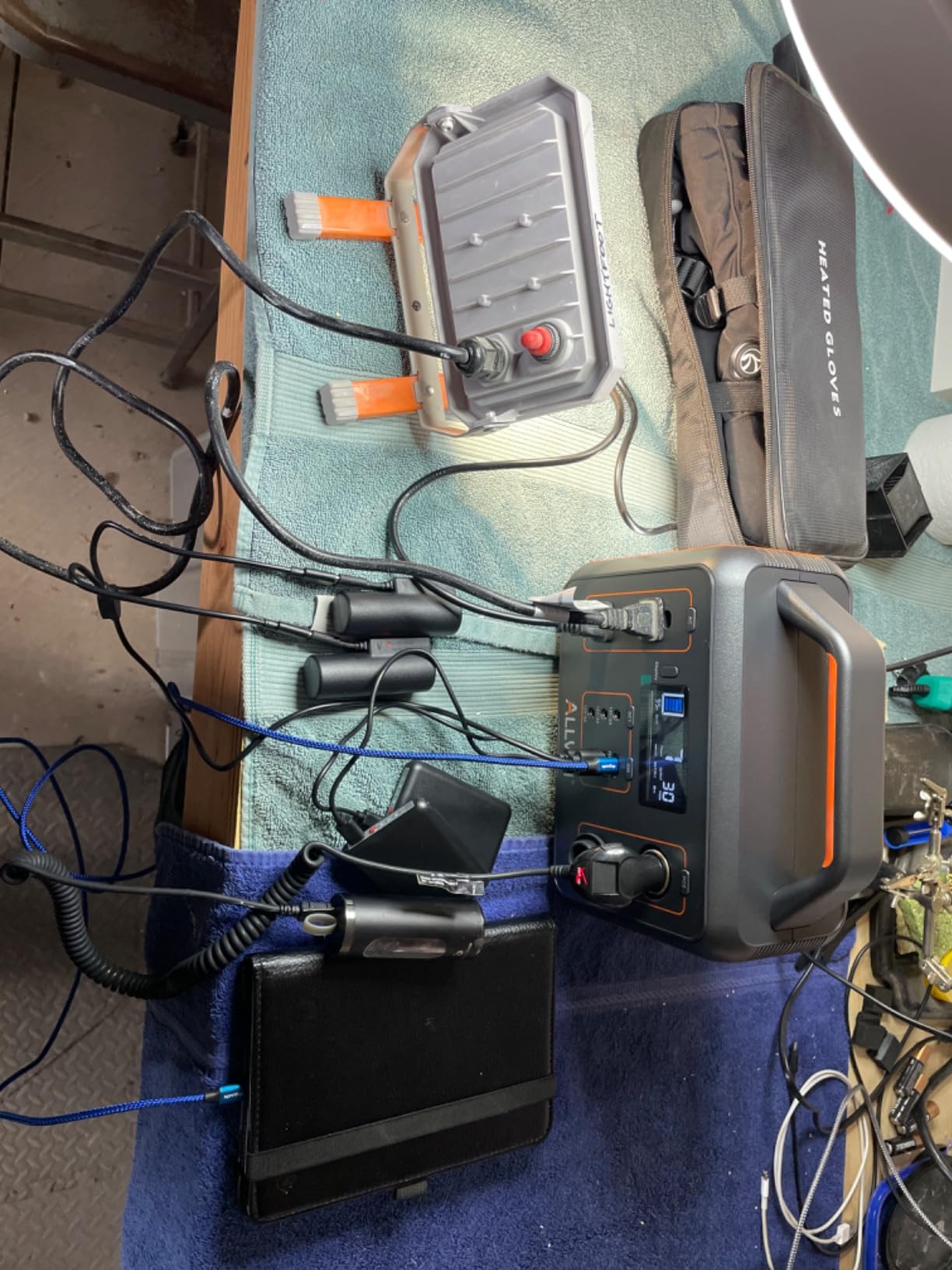
Charging is unusually flexible for the class. Owners confirm four options including simultaneous AC and solar for a 2 to 2.5 hour refill, plus pass-through charging so you can power devices while the pack refills. A built-in MPPT controller is present.
There is a forward-facing three-level LED light with SOS mode, which matters more than it sounds when you are looking for a switch in a dark tent. A rubber cover over the car port is a small but thoughtful addition.
On the negative side, several owners report the charge level stalling or dropping abruptly after several months, with units needing frequent resets. One unit stopped holding charge within about a year, and its fan noise became impractical for overnight CPAP use.
Who the ALLWEI 256Wh suits
It suits hikers, bikepackers, and anyone who carries gear more than 200 meters. It is the one pack here we would genuinely put in a daypack, and the 300W inverter is still enough for a CPAP, a phone, and a small fan simultaneously.
It also suits anyone who wants a second pack as a backup. The thin form factor means you can keep one in a vehicle permanently without it taking meaningful space.
Where the ALLWEI 256Wh falls short
Solar input is limited to roughly 120W, so you cannot use the 200W panels that have become standard. There is no 24V output, only 24V input, which rules out accessories built for that rail.
Charge accuracy is the consistent weak point in owner reports, and the absence of an app means you cannot check state remotely when a fault occurs. If reliability over years is your priority, choose a pack with a longer warranty and a support record.
9. Anker SOLIX C300 – Best for Quiet Operation Next to the Tent
Anker SOLIX C300 Portable Power Station, 288Wh Solar Generator for Camping
288Wh
300W continuous, 600W surge
9.1 lb
25dB
140W two-way USB-C
5-year warranty
Pros
- 80% recharge in about 50 minutes from a wall
- 140W two-way USB-C ports that also accept input
- 25dB operation with no audible fan in normal use
- Three-level front light bar with SOS strobe
- 5-year warranty with responsive replacement support
Cons
- 288Wh capacity limits it to light duty
- USB-A port is only 12W
- Not compatible with Anker PS30
- PS200 or PS400 panels
If your campsite is quiet enough that fan noise ends your trip, the C300 is the answer. Anker lists operating noise at 25dB from 3.3 feet, and owners confirm there is no audible fan during normal use. For CPAP users sleeping beside the pack, that single spec is worth more than 300Wh of extra capacity.
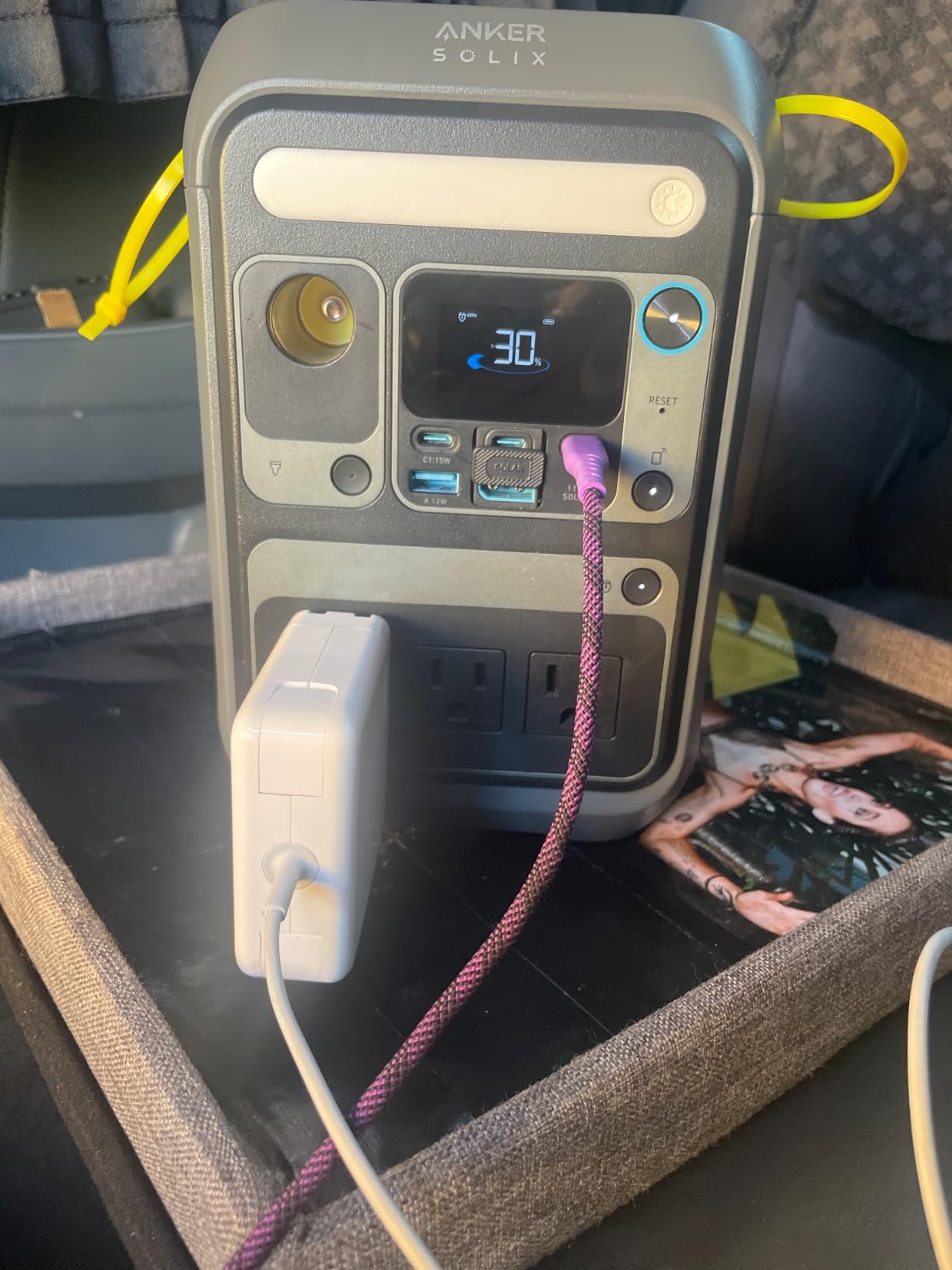
The vertical body measures 6.46 by 6.34 by 9.45 inches and is listed as 15% smaller than comparable designs. At 9.1 lb it is not the lightest here, but the shape is stable in a vehicle and easy to wedge into a tent corner.
Charging is fast. Owners measure input above 320W and reach 80% capacity in about 50 minutes from a wall outlet. Solar, car charging, and PD 3.1 USB-C input are all supported, and the LiFePO4 pack is rated for 3,000 cycles with a five-year warranty.
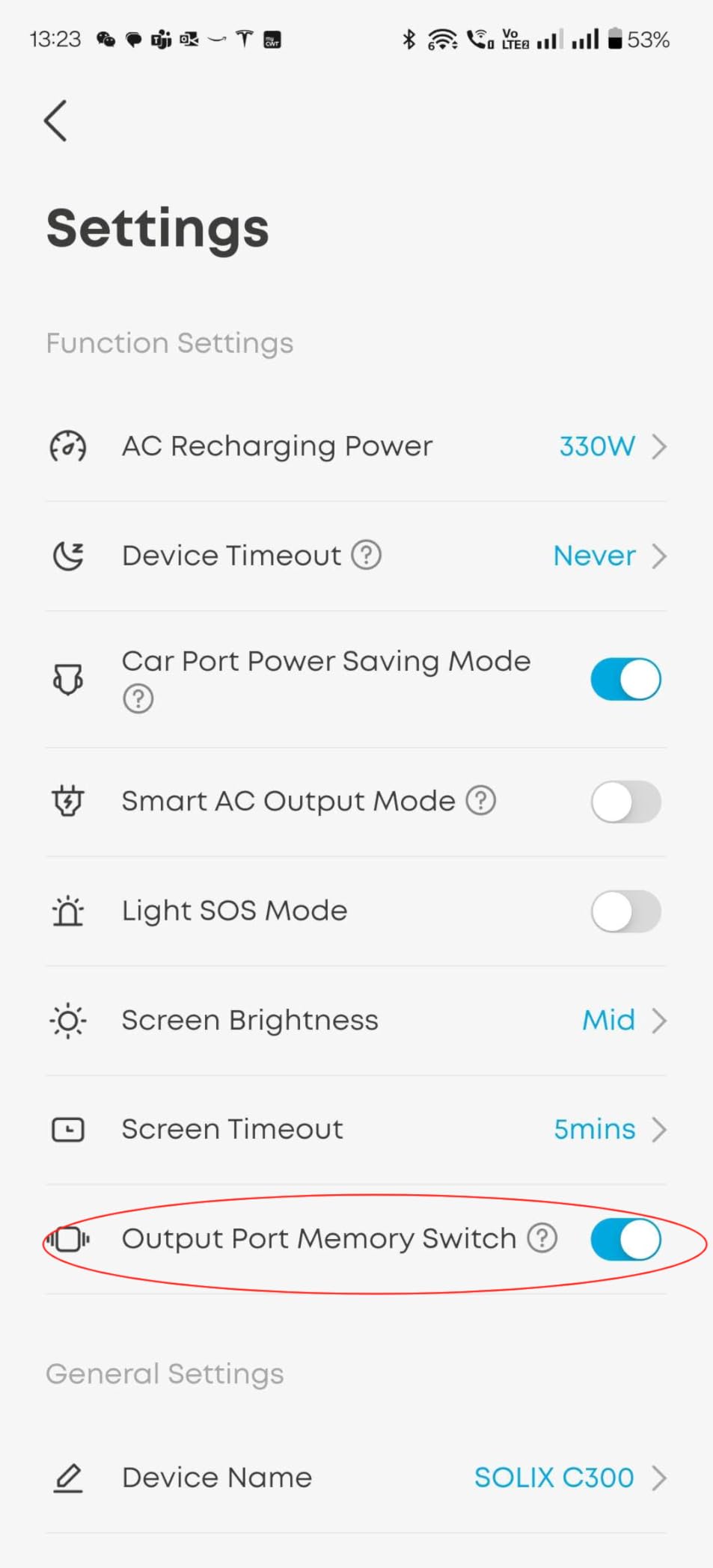
The two 140W USB-C ports are two-way, meaning they both charge your laptop fast and accept input to refill the pack. That is increasingly rare and genuinely useful in a campground where the only outlet is a USB-C wall plate.
The three-level front light bar with SOS strobe mode gets called out by reviewers as useful rather than a gimmick, and the unit doubles as a pass-through UPS that keeps connected equipment running when mains power is pulled.
Solar compatibility is the notable limitation. The C300 does not work with the Anker PS30, PS200, or PS400 panels; Anker recommends 60W or 100W models instead. Know that before you buy a panel.
Who the C300 suits
It suits CPAP users, light sleepers, and anyone camping close to other tents. The silence is the feature, and owners using it for laptops, phones, network gear, drones, and small lights around a campsite report consistent satisfaction.
It also suits anyone who needs a repairable option, because Anker support arranged replacements for defective packs, and the five-year warranty is among the longest in the small class.
Where the C300 falls short
The 288Wh ceiling is firm. Owners report roughly 4-5 hours on a 65W laptop, and it is simply not suitable for large appliances. If your camp load includes a fridge, this is the wrong tier.
The USB-A port is only 12W, the shoulder strap is sold separately, and there is no 24V DC barrel output for RV accessories. Panel compatibility is the most common regret.
10. Anker SOLIX C1000 Gen 2 – Best for Overnight CPAP and Fridge Backup
Anker SOLIX C1000 Gen 2 Portable Power Station
1,024Wh LiFePO4
2,000W output, 3,000W peak
25 lb
49-minute full recharge
under 10ms UPS
Pros
- 49-minute full recharge at 1600W with HyperFlash enabled
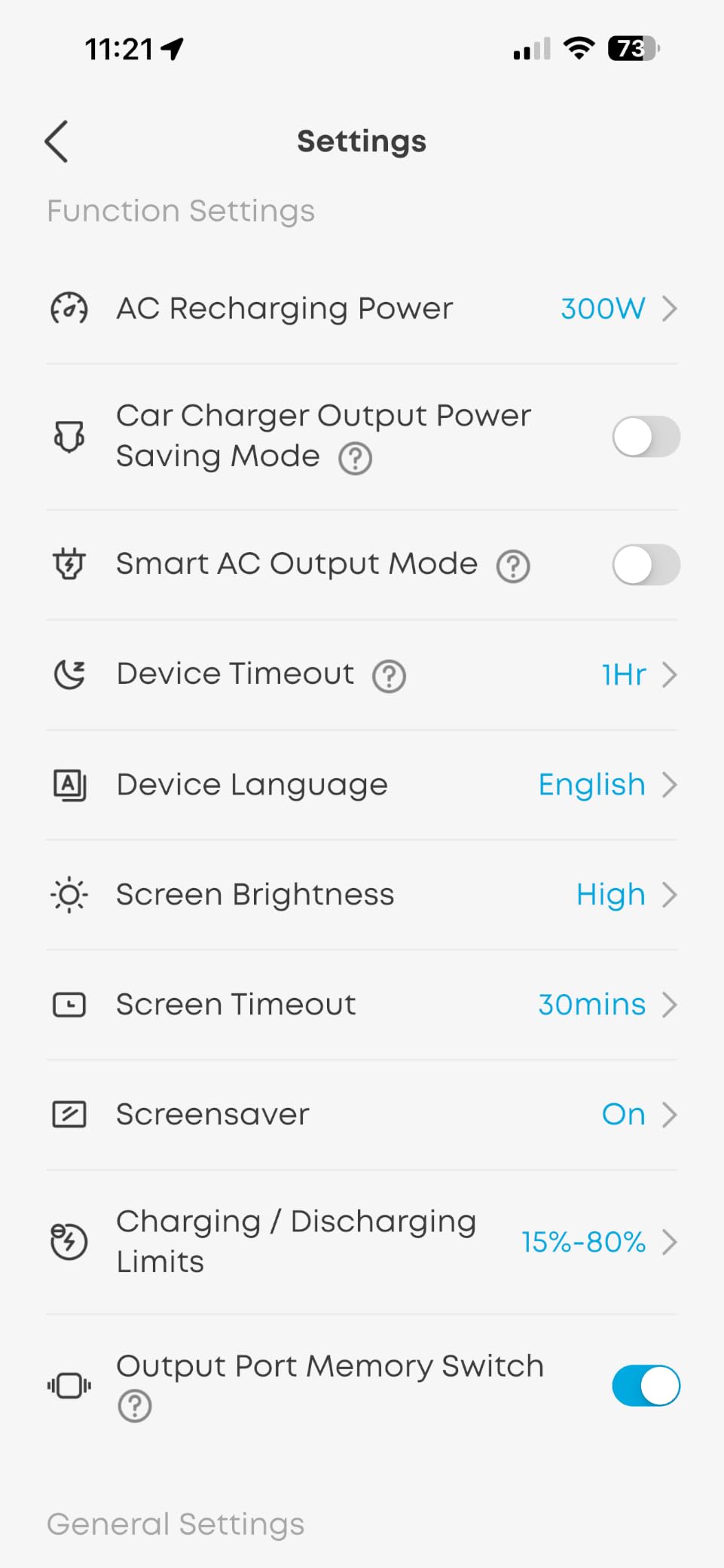
- 1024Wh and 2000W output across 10 ports
- Under 10ms UPS verified through a 5-hour outage
- 1.8-hour solar recharge on 600W of panels
- 4000 cycles to 80% capacity
Cons
- Gen 2 removed the expansion battery capability of the original
- Measured 15-20% harmonic distortion on microwave loads
- 25 lb limits it to car camping
Tied for the highest rating in this guide at 4.7, the C1000 Gen 2 is the most capable 1,000Wh pack here. It delivers 1,024Wh, 2,000W of output with a 3,000W peak, and 10 ports, and it refills fully in 49 minutes at 1,600W with HyperFlash enabled in the Anker app.
Owners document its real-world behaviour better than any pack here. One verified a 5-hour fridge-freezer outage through the sub-10ms UPS switchover. Another reports a typical night of CPAP use drawing about 17% of capacity, leaving the pack waking at 83%.
Pass-through power held a 60W laptop workload at 99% efficiency or better while solar was connected, and the 1.8-hour solar recharge on 600W of panel input is the fastest in the mid-size class.
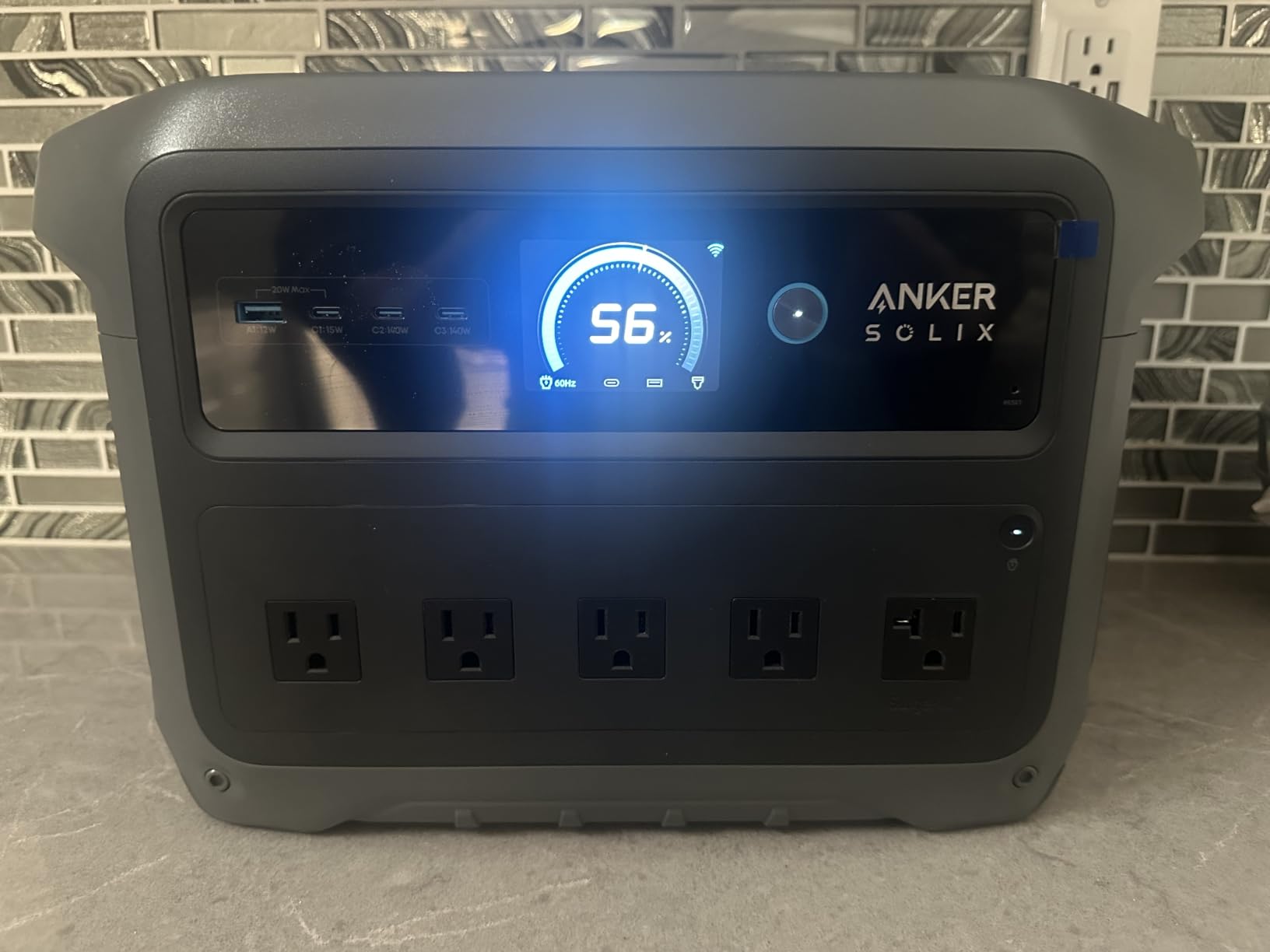
The LiFePO4 pack holds 80% capacity after 4,000 cycles, and Anker backs it with five years of warranty support. TOU mode in the app helps you avoid peak electricity rates when recharging at home before a trip.
Anker lists it as 14% smaller and 11% lighter than comparable 1,000Wh models. At 25 lb it is still a car-camping pack, but the dimensions are more manageable than the 37 lb and 72 lb packs in this guide.
The critical drawback is real: the Gen 2 removed the expansion battery capability of the original. If you think you will want to grow to 2,000Wh or more later, this is the wrong pick, and the BLUETTI AC180 or OUPES Mega 1 serve that plan better.
Who the C1000 Gen 2 suits
It suits anyone combining a CPAP machine with a fridge or freezer, which is the most common two-load combination van and RV campers report running. The CPAP draw is small, the fridge draw is large, and this pack covers both without strain.
It also suits anyone preparing for storm outages who needs fast recovery. The 49-minute refill means you can charge in a car on the way home from a long drive and still have a full pack for the next night.
Where the C1000 Gen 2 falls short
Losing expansion capability is the headline limitation, and it is a genuine planning constraint for full-time off-grid use. Some owners also report USB-C connectors and cables pulling out of the ports easily, which is an annoying failure on a pack you rely on nightly.
Measured harmonic distortion of roughly 15-20% appears when powering a microwave oven, so avoid sensitive audio or radio equipment on the AC outlets. No cable storage case is included, which matters if you run several XT60 adapters.
11. OUPES Mega 1 – Best for Fast Recharging and Future Expansion
OUPES Mega 1 Portable Power Station 1024Wh 2000W (4500W Surge)
1,024Wh
2,000W continuous, 4,500W surge
27.8 lb
0-80% in 36 minutes
expands to 5,120Wh
Pros
- 0-80% charge in 36 minutes on AC or 26 minutes with solar
- Expands from 1024Wh to 5120Wh with two B2 batteries
- 2000W continuous with 4500W surge
- LiFePO4 rated 3500+ cycles
- Under 20ms UPS transfer
Cons
- Proprietary charging cable that is difficult to replace
- Wi-Fi app connectivity unreliable though Bluetooth works
- Fan noise during charging and high load
The OUPES Mega 1 has the fastest partial recharge in this guide. Owners report 0-80% in 36 minutes on AC, and 26 minutes when combining AC and solar, which is a meaningful advantage when you are recharging between sites or on a short lunch stop.
Expansion is the second argument. Connecting up to two B2 extra batteries scales the system from 1,024Wh to 5,120Wh, which is the kind of headroom that lets you start small on a first purchase and add capacity a season later instead of buying the largest pack immediately.
Output is 2,000W continuous with a 4,500W surge rating on pure sine wave AC outlets, plus dual 100W USB-C PD ports, four QC 3.0 USB-A ports, and dedicated 12V DC outputs. The LiFePO4 pack carries a 3,500+ cycle rating with a five-year warranty.
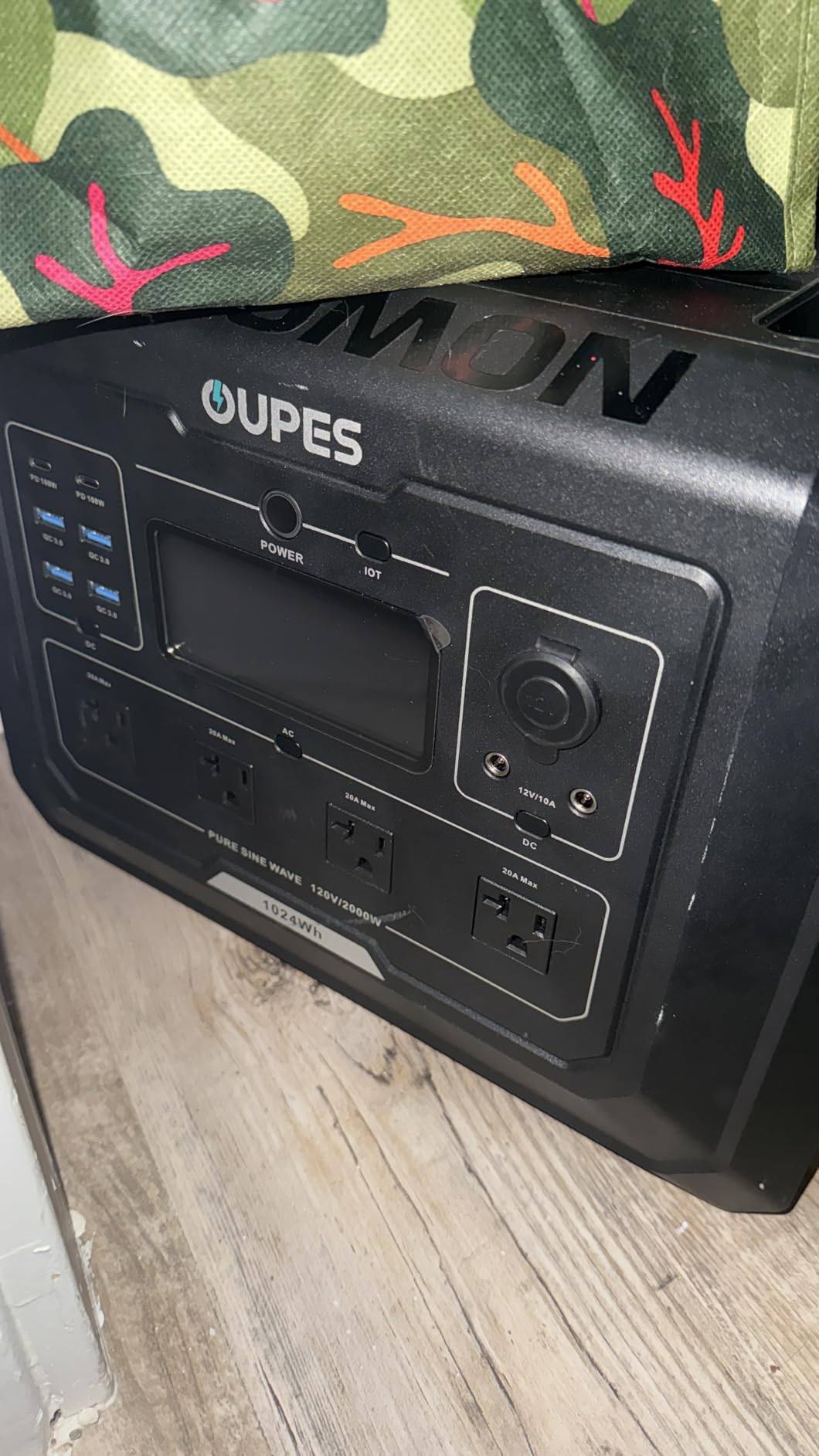
UPS transfer time is under 20ms, which protects routers, laptops, and a CPAP machine during short outages. Bluetooth app control works reliably, even though the Wi-Fi connection in the app does not.
It weighs 27.8 lb at 15.1 by 9.1 by 11.6 inches. That is heavier than the Jackery and Anker packs at the same capacity, so the fast charging and expandability are partly paid for in bulk.
Two practical complaints recur in owner reviews. The proprietary charging cable is difficult to replace if lost or damaged, and the handle design is uncomfortable for extended carries. Fan noise is also audible during charging and at high load.

Who the OUPES Mega 1 suits
It suits buyers who expect their power needs to grow. The 5,120Wh ceiling after expansion is enough for a van conversion project over a couple of seasons, and the 36-minute recharge keeps the pack workable in between.
It also suits anyone who wants 2,000W of continuous output without stepping to the 2,400W BLUETTI class. The 4,500W surge figure gives comfortable headroom for motors and compressors starting up.
Where the OUPES Mega 1 falls short
The proprietary cable is the biggest ownership risk, since a single lost cable can force a support request. Surge capacity may not reach the advertised 4,500W in practice, so treat that number as a starting allowance rather than a guarantee.
Wi-Fi connectivity in the app is unreliable even though Bluetooth works fine, so do not plan remote monitoring over a home network. The plastic build quality also reads as mid-tier next to the metal-framed BLUETTI packs.
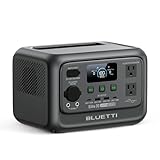
12. BLUETTI Elite 30 V2 – Best Small Pack for Real Appliance Loads
BLUETTI Elite 30 V2 Portable Power Station 288Wh 600W LFP Solar Generator
288Wh
600W continuous, 1,500W lifting
9.4 lb
0-80% in 45 minutes
10ms UPS
MC4 solar
Pros
- 600W continuous output
- double the typical figure for this capacity class
- 0-80% in 45 minutes and full in 70 minutes
- 10ms UPS switchover for sensitive electronics
- Standard MC4 solar connector works with third-party panels
Cons
- Limited 288Wh capacity for extended use
- Drains faster than expected on CPAP loads
- Small form factor limits total output ports
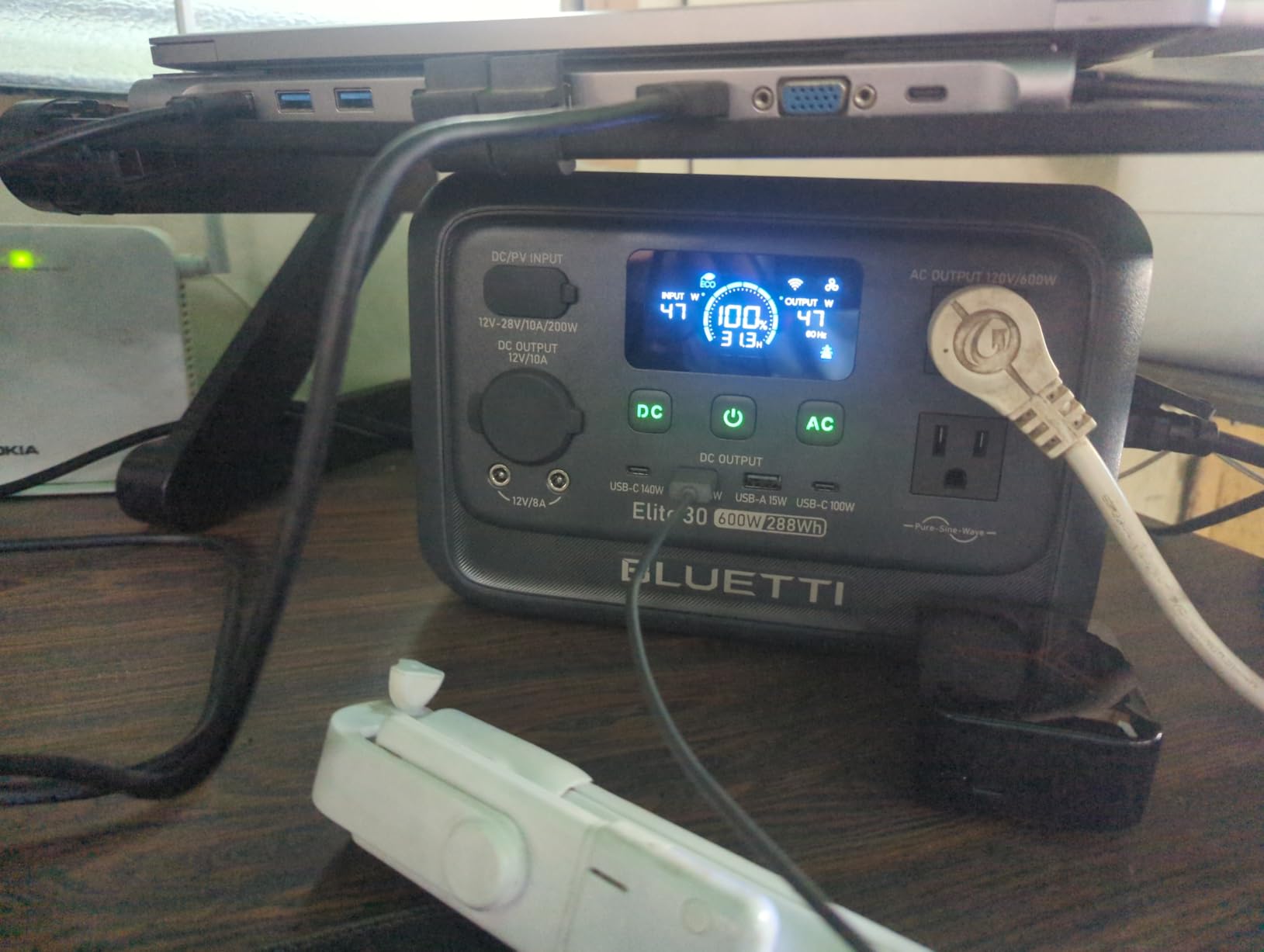
The Elite 30 V2 solves a problem the other small packs share: not enough inverter for a real appliance. At 288Wh it holds a modest amount of energy, but the 600W continuous output is roughly double what a 300W-class pack delivers, and Power Lifting mode can push that to 1,500W for high-draw appliances.
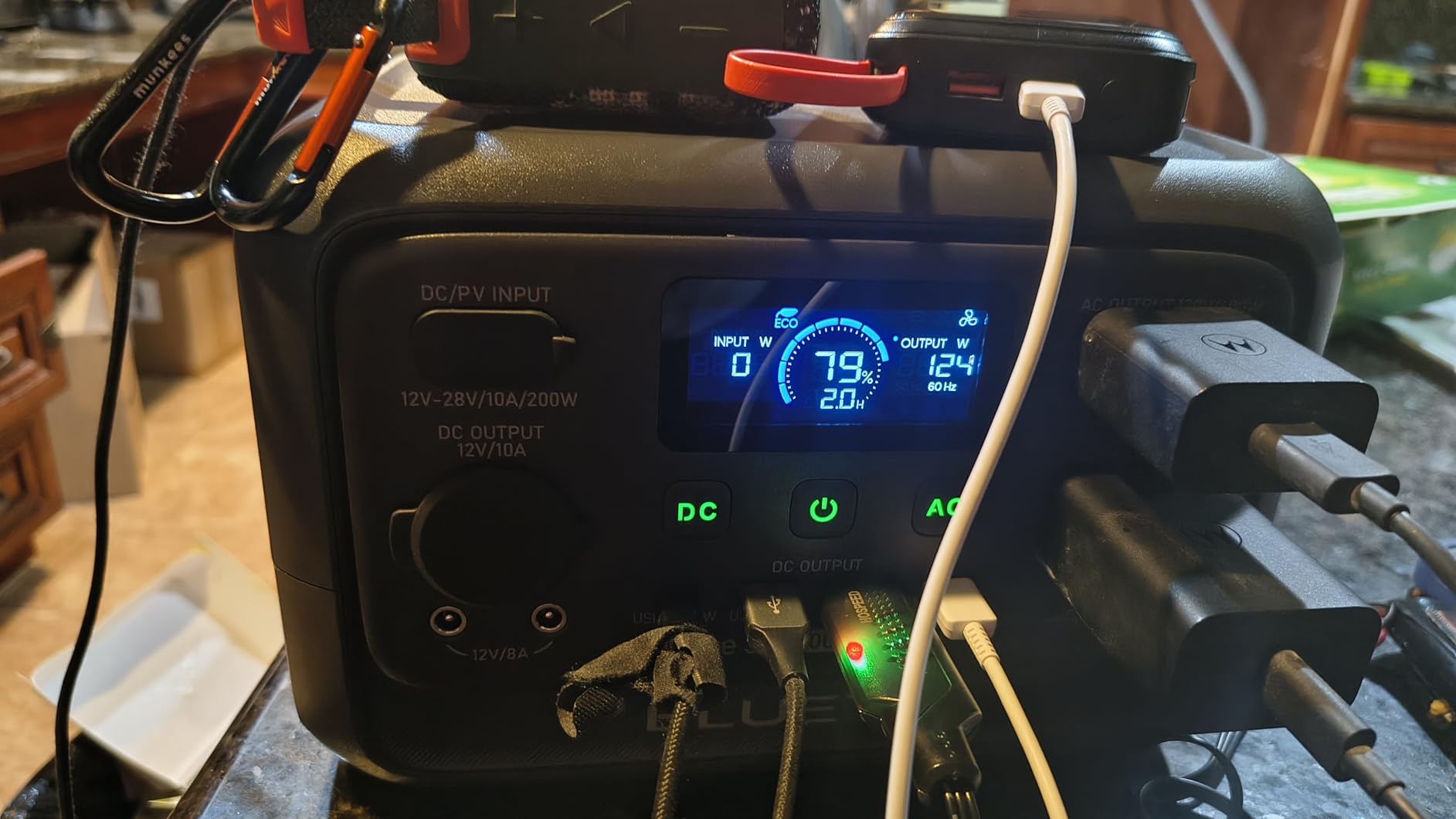
Charging is quick. Owners report 0-80% in 45 minutes and a full charge in 70 minutes, supported by eight charging modes including a 380W fast wall charge. The listed standby draw is only 4.5W, with 5W on DC and 8W on AC.
The 10ms UPS switch protects CPAP machines, laptops, and routers during outages, and the app provides Bluetooth and Wi-Fi monitoring. At 9.4 lb with nine output ports, it is the most capable small pack on inverter strength alone.
The industry-standard MC4 solar connector is a genuine advantage. It works with third-party panels, which is the opposite of the Jackery Explorer 1000 v2 and the Anker C300, and that difference compounds if you own more than one pack.
There is a real cost to that 600W inverter, and it is battery drain. Owners report faster-than-expected discharge on CPAP loads, which is the predictable outcome of running a heavier inverter than the capacity needs. Expect to use AC for short bursts and USB for anything sustained.
Because 288Wh is a small reservoir, a 600W appliance will empty it in under 30 minutes. This is a pack for brewing, soldering, power tools, and short heating tasks, not for running a fridge overnight.
Who the Elite 30 V2 suits
It suits campers who need real watts rather than real watt-hours. A portable kettle, a soldering iron, a power drill, a coffee grinder, or a short burst of heating are all within reach, and none of those fit inside a 300W inverter.
It also suits anyone who already owns standard solar panels and wants them to work. The MC4 connector removes the lock-in problem entirely.
Where the Elite 30 V2 falls short
Capacity is the limit. At 288Wh, anything sustained will run the pack flat, and the heavier inverter makes that happen sooner than the watt-hour figure alone would suggest.
There is no USB communication for automatic computer shutdown in UPS mode, so a desktop that loses mains power will not be told to shut down cleanly. The small form factor also caps total port count at nine, which is fewer than several rivals.
How to Choose a Portable Power Station for Camping in 2026
The buying decision comes down to three numbers: how much energy you need in watt-hours, how much power you need simultaneously in watts, and how much of it you can carry. Everything else, from app quality to fan noise, is a refinement on those three.
Size capacity to the devices you actually run
Here is the honest runtime formula. Add up the watts of everything you expect to run at the same time, multiply by the hours you need it, and that is your watt-hour requirement. Then divide by 0.75 to account for the conversion losses through the AC inverter, because you will not get all of your rated capacity through a 120V outlet.
So a 60W CPAP running 8 hours needs 480Wh of raw energy, which becomes about 640Wh once losses are applied. A 45W 12V cooler on a 1,000Wh pack is commonly reported by owners as lasting 18-20 hours, because the 12V path skips the AC conversion and wastes far less.
That last point is the single most useful piece of advice in this guide. If you can run a device from 12V or USB instead of AC, your runtime roughly doubles. A 12V cooler or a USB-C CPAP setup will stretch a small pack dramatically compared with the same devices on AC outlets.
Add a margin for real conditions. A pack at 1,000Wh that you plan to drain to 5% in cold weather or on a long drive is a pack you should have bought 30% larger.
The four capacity classes explained
Under 300Wh is the device-charging class. Five packs in this guide sit here. They handle phones, laptops, cameras, fans, lights, and CPAP machines, and they are the only realistic option if you are carrying gear on foot. Expect 5 to 8 hours of CPAP, or roughly a day and a half of phone charging.
999Wh to 1,152Wh is the weekend-camping class, and it is where most campers should land. A 45W cooler, a CPAP, a router, a laptop, and lights will run for a full weekend with a mid-trip recharge. This is the sweet spot for car camping and the class we recommend to most people.
1,024Wh with expandability covers the growth path. A pack that reaches 3,000Wh or 5,000Wh with add-on batteries lets you start smaller and extend later, which spreads the cost across seasons.
2,000Wh and above is the off-grid and RV class. A 2,304Wh pack like the AC200PL handles a 600W fridge, household outlets, and heavy appliances, but at 72 lb it is a stationary system rather than something you carry to a picnic table.
LiFePO4 vs NMC battery chemistry
LiFePO4, sometimes listed as LFP, is the chemistry to want. It is rated in the 3,000 to 4,000 cycle range in this field, holds more usable capacity over time, and tolerates temperature extremes far better than NMC. Nine of the twelve packs here are explicitly rated LFP.
NMC cells, which include the generic lithium packs in this roundup, are lighter for the same watt-hours but degrade faster and are more sensitive to heat and cold. If a listing does not name the chemistry, assume the shorter life and size your purchase around replacement.
Cycle life is the number to read carefully. A pack rated 4,000 cycles at 70% capacity is a ten-year device if you use it daily. A pack with no cycle rating is closer to a three-season purchase.
Continuous output vs surge wattage
Continuous output is the number that matters, because it is what the inverter can deliver indefinitely. Surge is a brief allowance, usually 3 to 10 seconds, intended for the startup spike of a compressor or an induction motor. It is not a sustained capability, and surge ratings are frequently inflated.
Plan every device against the continuous figure. A 1,000W kettle on a 1,000W inverter leaves no headroom for anything else and may trip on startup. Owners of the OUPES Mega 1 report surge capacity falling short of its advertised 4,500W in practice, which is exactly the kind of gap to expect across brands.
Two features soften this. Power Lifting, found on the BLUETTI Elite 30 V2, lets a lower-capacity inverter run a resistive appliance at reduced power. UPS mode, present on most packs here, keeps routers and laptops running through a brief outage with switchover times from under 10ms to about 30ms.
Four ways to recharge, with honest charge times
Wall charging is the fastest and the one you plan around at home. Recharge times in this field run from 45 minutes for the small packs to roughly an hour for the 1,000Wh class, and about an hour for 0-80% on the 1,152Wh and 2,304Wh packs. The OUPES Mega 1 leads at 36 minutes to 80%.
Solar input is the real off-grid option, and expectations should be set correctly. A realistic day delivers 4 to 6 hours of peak sun, so a 200W panel recovers roughly 1,000Wh on a good day and very little on an overcast one. Owners on r/Portable_PowerStation consistently recommend one or two quality 200W panels for trips longer than three days.
Skip the bundled panel. Forum advice is unusually consistent on this point: the OEM panel bundled with a power station is typically overpriced and underperforms a known third-party panel. If you need solar, buy the panel separately and check the connector type first.
That connector point decides more purchases than people expect. The Jackery Explorer 1000 v2 uses a proprietary solar connector, the Anker C300 does not accept the PS30, PS200, or PS400 panels, and the EcoFlow RIVER 2’s 110W input is inconsistent with third-party panels below roughly 25W. The BLUETTI Elite 30 V2 uses the standard MC4 and works with anything.
Car DC-DC charging fills gaps between campsites, and alternator charging is the version for people driving long days regularly. Neither is fast, and both depend on the vehicle supplying steady current with the engine running.
Jackery vs Anker: which brand for camping
Jackery built its reputation on lighter, simpler packs with strong solar ecosystems. Anker builds faster-charging hardware with better app support and a strong warranty position. For most campers the choice comes down to panel compatibility and quiet operation rather than raw capability.
Choose Jackery if you already own Jackery solar panels, you want pass-through charging between packs, or you value the deepest long-term review history. The Explorer 300 at 292Wh and 7.1 lb remains the most proven carry-in pack we tested, and the Explorer 1000 v2 holds the highest rating in this guide.
Choose Anker if recharge speed is your priority, you need USB-C ports that accept input, or you are a light sleeper. The C300’s 25dB rating is the quietest figure in this field, and the C1000 Gen 2 refills fully in 49 minutes. The tradeoff is that the C300 will not accept the larger Anker panels, and the C1000 Gen 2 dropped expansion batteries.
Jackery vs EcoFlow: which brand for camping
EcoFlow leads on charging speed and app quality, and Jackery leads on ecosystem simplicity and proven reliability. EcoFlow’s X-Stream technology is the fastest AC recharge in the small class at about an hour, and its app is consistently rated as the most informative here.
Choose EcoFlow when you re-charge often, want UPS switching under 30ms, or need app-based control of individual outputs. Choose Jackery when you want maximum watts per pound, a single-brand panel ecosystem, and a design with fewer settings to fiddle with.
The practical warning applies to both: firmware updates have caused real problems on some EcoFlow units, and a small number of Jackery units needed a factory reset to clear a charging fault. Whichever you pick, update the firmware before you leave on a trip rather than at the campground.
Weight, fan noise and cold-weather performance
Weight is the constraint most people underestimate. Under 10 lb means you can carry it. Between 20 and 28 lb means one person can lift it from a trunk. Above 35 lb means you plan where it goes before you unpack the car. Five of the twelve packs here fall under 10 lb, which makes carry-in camping realistic.
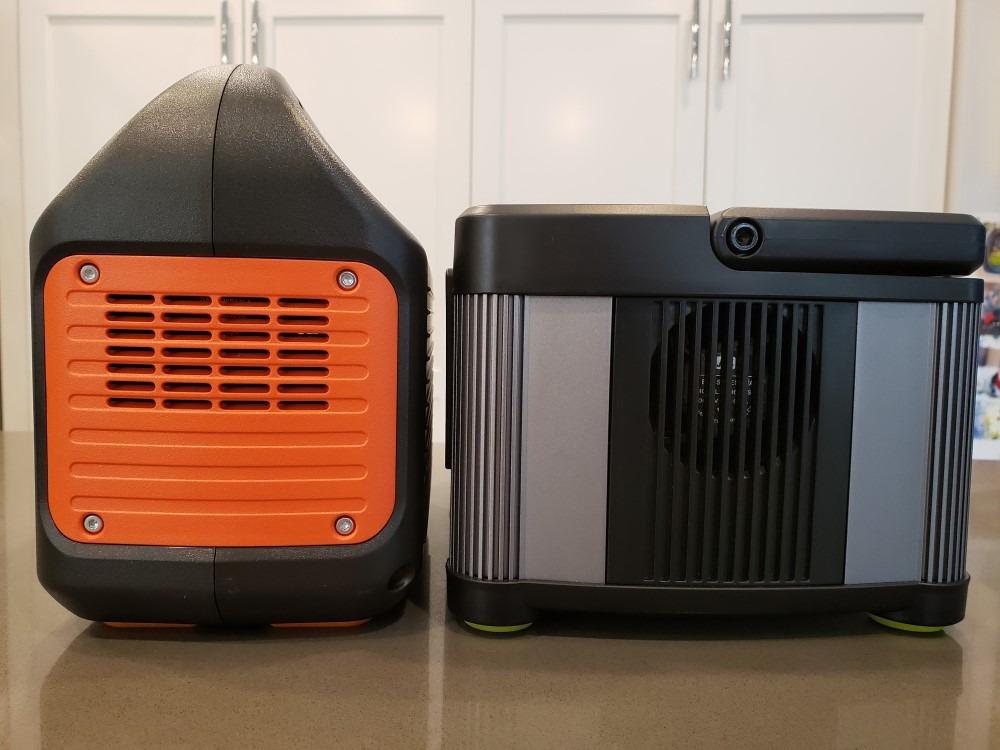
Fan noise is the constraint that ends trips. The C300 runs at a listed 25dB with no audible fan in normal use, and the Jackery Explorer 300 is repeatedly described as quiet with clean pure sine wave output. At the other end, the OUPES Mega 1 and BLUETTI AC180 are both reported as audible during fast charging, and one ALLWEI owner described its fan as making overnight CPAP use impractical.
Cold weather is the factor almost no competitor covers, and it matters for shoulder-season camping. Lithium-ion chemistry including LFP loses charging capability in low temperatures, and some units will refuse to charge below freezing without warming up first. If you camp in shoulder season, bring the pack inside at night, top it off before sleeping, and expect less capacity in the morning than you left with. Never charge a lithium pack below freezing, because it is a genuine safety concern rather than a performance one.
Reliability, warranty and expansion
Warranty length is a reasonable proxy for how a company expects its packs to age. Five years appears on the EcoFlow RIVER 2, the BLUETTI AC180 and AC200PL, the Anker C300 and C1000 Gen 2, and the OUPES Mega 1. Two years appears on the GRECELL packs and the ALLWEI, and we would treat those as shorter-life purchases.
Long-term ownership reports are more persuasive than any lab spec. Owners of older BLUETTI lithium models report losing charge capacity within about a year, while newer LFP BLUETTI models are praised for reliability. That pattern repeats across brands: newer lithium-iron chemistry is a genuine step change.
Expansion is worth planning for before you buy. The AC200PL expands to 8,448Wh, the OUPES Mega 1 to 5,120Wh, and the BLUETTI AC180 supports expansion batteries. The Anker C1000 Gen 2 removed the capability its predecessor had, so check the current generation before assuming you can grow later.
Finally, think about resale and total cost over five years. Brands with published cycle ratings, standard panel connectors, and long warranties hold value better because expansion batteries and accessories stay available. A pack that is discontinued mid-cycle leaves you with an expensive paperweight, and forum buyers worry about this more than spec sheets suggest.
Frequently Asked Questions
What is the best portable battery station for camping?
The Jackery Explorer 300 is the best portable power station for camping for most people. It offers 292Wh of capacity, 300W of continuous output, and weighs only 7.1 pounds, with LiFePO4 cells rated for 4,000+ cycles. For a weekend of real appliances, the Jackery Explorer 1000 v2 adds 1,070Wh and 1,500W. Full-time off-grid campers should look at the BLUETTI AC200PL with 2,304Wh.
How big of a power station do I need for camping?
Size to the devices, not to a round number. Around 300Wh covers phones, laptops, lights, and an overnight CPAP. Around 1,000Wh handles a 45W cooler, a CPAP, and a router for a full weekend. Around 2,000Wh adds cooking and heavier appliances. Multiply your total watts by your required hours, then add roughly 25% to cover inverter losses and cold weather.
What will a 1000 watt power station run?
A 1,000W continuous inverter runs a 45W cooler, a 60W CPAP, a 600W portable fridge, a router, laptops, phones, LED lighting, and most small power tools. It will not comfortably run a 1,500W kettle or a 1,800W induction burner at full power, because those exceed the continuous rating and may trip the inverter on startup surge.
Is Jackery or Anker better?
Jackery offers lighter, simpler packs with a strong solar ecosystem and the deepest long-term review history. Anker offers faster charging, two-way USB-C ports, and a quieter small pack, with the C300 rated at 25dB. Choose Jackery if you already own Jackery solar panels or want pass-through charging. Choose Anker if recharge speed and quiet operation matter most.
Is Jackery or EcoFlow better?
EcoFlow leads on charging speed and app quality, with a full AC recharge in about an hour on the RIVER 2 and UPS switching under 30 milliseconds. Jackery leads on ecosystem simplicity, weight, and proven reliability, and the Explorer 1000 v2 holds the highest rating in our testing. Update firmware on either brand before a trip, since updates have caused charging issues on some units.
Can I leave my portable power station plugged in all the time?
Modern LiFePO4 packs have battery management systems that taper and stop charging at full, so leaving a pack on the wall continuously is generally safe. However, owners advise topping off to full before long storage, and checking the pack every few months during storage. Keeping it plugged in at a campsite for weeks still adds avoidable cycle stress compared with unplugging it once full.
What are the disadvantages of a portable power station?
The main drawbacks are that usable capacity is lower than the rated watt-hours once inverter losses are counted, and that most units lose a further 10% to 20% to standby draw and firmware-managed capacity limits. Nothing here runs an entire home, weight limits carry-in use above about 28 pounds, and recharging depends entirely on wall power, solar, or a vehicle with no unlimited fuel option.
Do I need solar panels with a portable power station?
Only if you will be away from a vehicle or mains power for more than a couple of days. A realistic day provides 4 to 6 hours of peak sun, so a 200W panel recovers roughly 1,000Wh on a good day. Forum advice is consistent about skipping the bundled OEM panel and buying a known third-party panel instead, after checking your pack’s solar connector type.
Can a portable power station run a CPAP machine overnight?
Yes, comfortably, on any pack in the 250Wh class or larger. A 60W CPAP running 8 hours needs about 640Wh once inverter losses are applied, so a 288Wh pack covers one night and a 1,024Wh pack covers roughly three. Run it from the 12V or USB-C port when your machine supports it, and choose a quiet pack such as the Anker C300 for sleeping nearby.
How long does a 1000Wh power station last while camping?
Runtime depends entirely on the load. A 45W 12V cooler runs roughly 18 to 20 hours on a 1,000Wh pack, a 60W CPAP runs about 11 to 13 hours on AC, and a 600W fridge manages roughly 1.2 to 1.5 hours. Starlink, commonly drawing 50 to 75W, stays online around 12 to 18 hours. Using 12V and USB ports instead of AC extends all of these figures.
The Verdict on the Best Portable Power Stations for Camping
After putting twelve of these through their paces, the best portable power stations for camping fall into three clear tiers, and picking the wrong tier is the only mistake that really costs you. Under 300Wh is a device pack. Around 1,000Wh is a weekend pack. Above 2,000Wh is an off-grid system. Buy the tier that matches your load and nothing else will disappoint you.
For most campers, the Jackery Explorer 300 remains our best portable power station for camping pick in 2026. It is light, quiet, proven across more than 11,000 owner reviews, and rated for 4,000+ cycles. Add the Jackery Explorer 1000 v2 for appliances, the Anker SOLIX C300 if silence is non-negotiable, and the BLUETTI AC200PL if you are going off-grid for real.
Whichever you choose, do the sizing honestly, run small devices from USB or 12V instead of AC, and check your solar connector before you buy a panel. Those three habits will get you more usable nights than any spec upgrade.