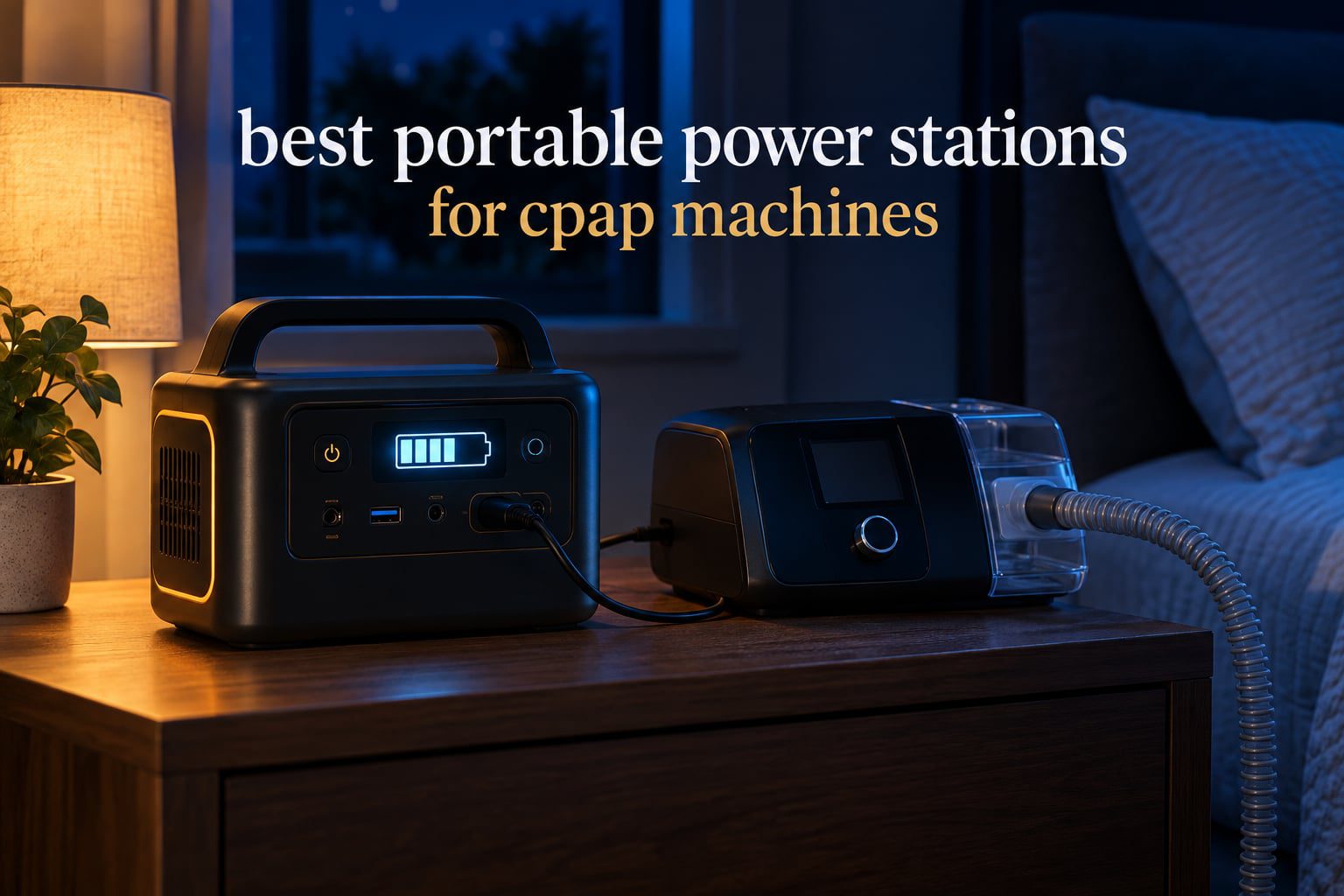
Yes, a portable power station will run a CPAP machine, and for most people the deciding spec is not the inverter at all. It is watt-hours. A typical machine pulls 30 to 50 watts with the humidifier off, which works out to roughly 300 to 600 watt-hours for one eight-hour night once you account for conversion losses. Any box with a pure sine wave inverter and at least 300Wh clears that bar, and everything above that buys you nights instead of hours.
That is the whole short version. The rest of this guide breaks the decision into pieces: how much power your machine actually burns, which of eight models we trust for which scenario, and where dedicated CPAP power banks beat a general portable power station. We spent several weeks reading owner reports on every model below, with particular attention to anyone who ran a machine overnight on battery.
One note before we start. This is power equipment guidance, not medical advice. If you plan to change humidifier or therapy settings to stretch a charge, talk to your sleep physician first. A dry airway or interrupted therapy is a worse outcome than one missed night of backup, and the maths below assumes you keep your prescribed settings.
Table of Contents
- Top 3 Picks for CPAP Machines in 2026
- All 8 Best Portable Power Stations Compared in 2026
- How Much Power Does a CPAP Machine Actually Use?
- 1. Jackery Explorer 1000 v2 – the multi-night and outage anchor
- 2. Jackery Explorer 300 – the pick that fits under a seat
- 3. MARBERO M823 – light duty top-ups only
- 4. EnginStar R300 – a CPAP-first unit at 6.5 lb
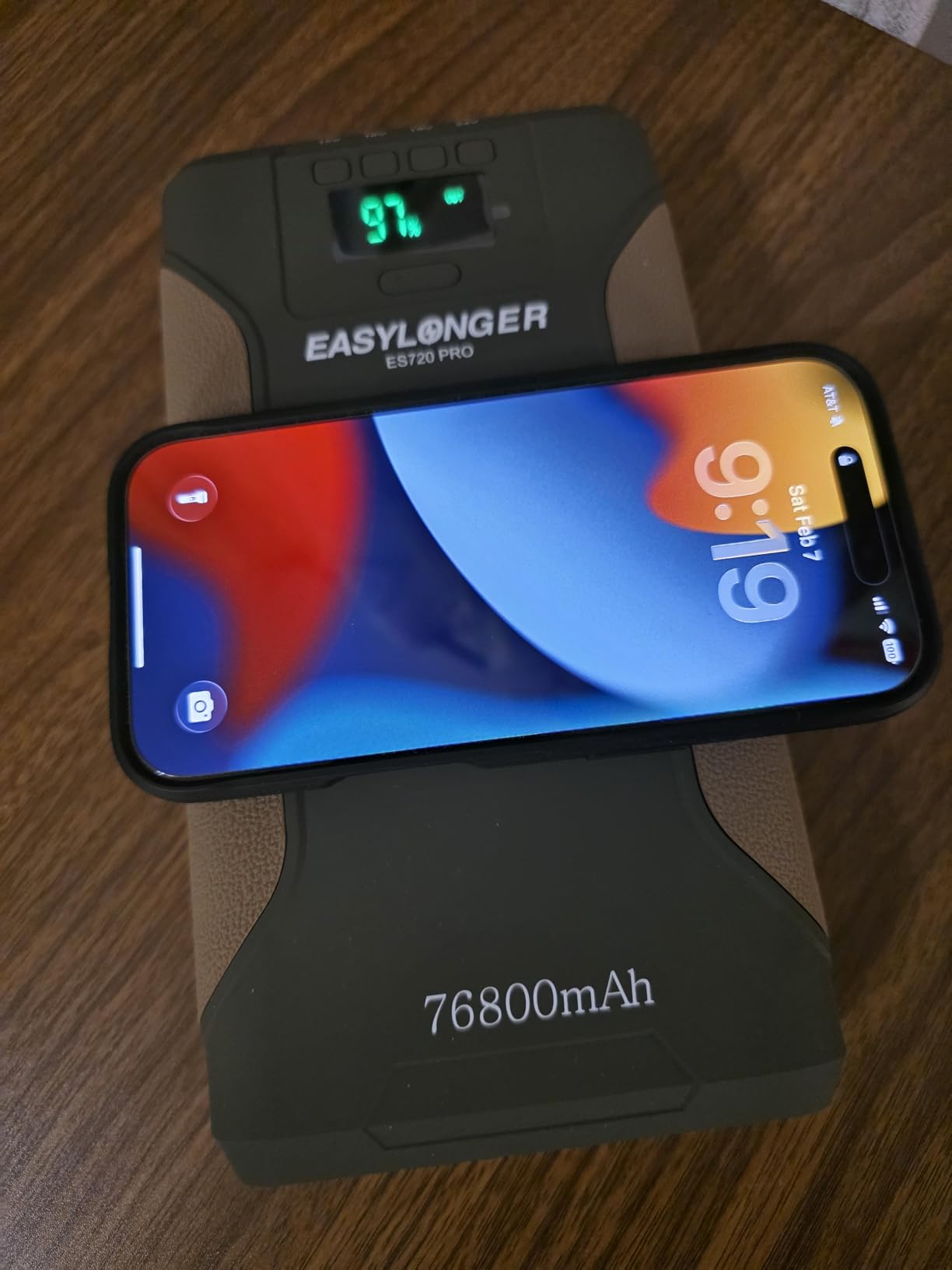
- 5. EASYLONGER ES720 – built only for a CPAP
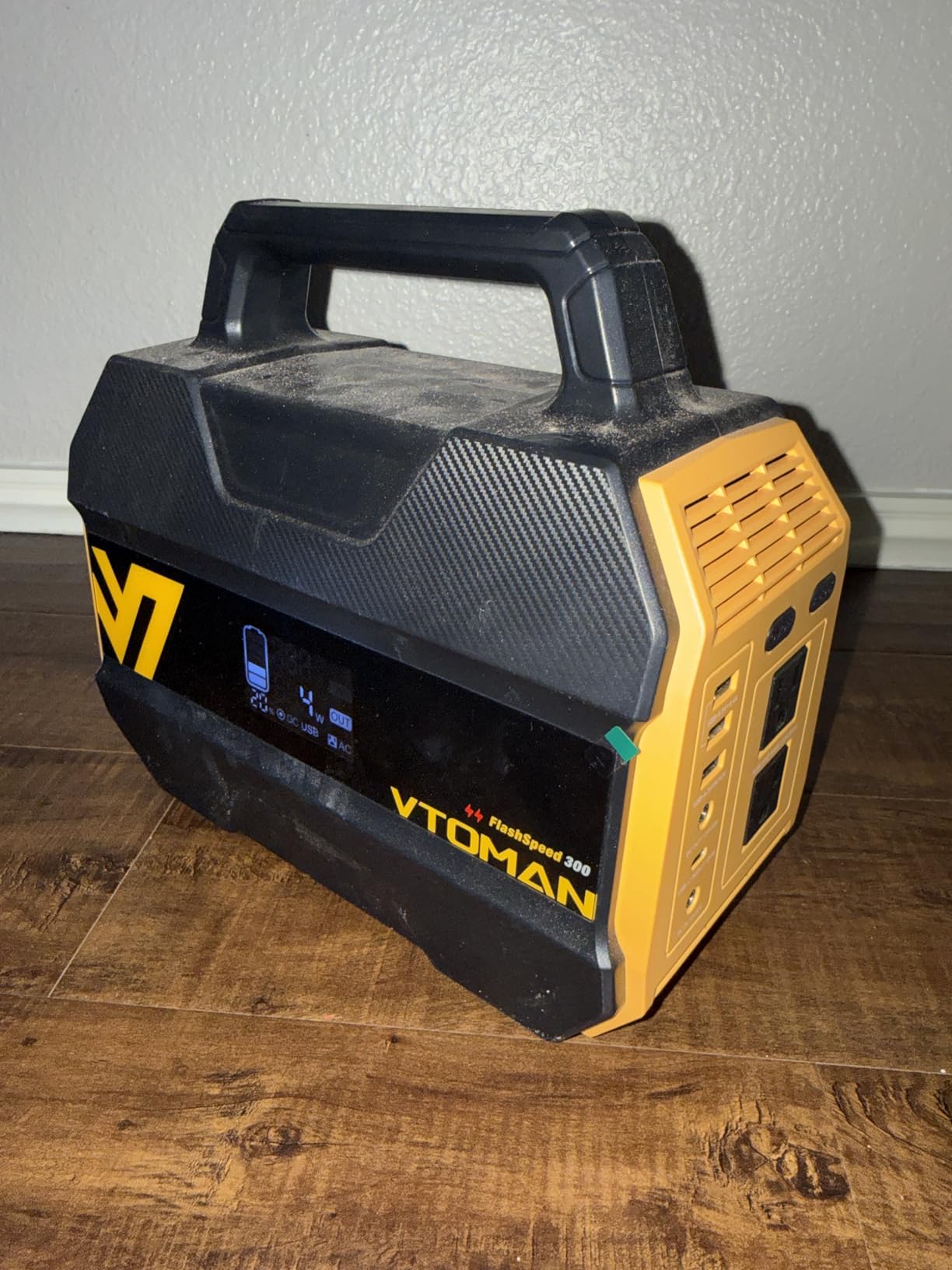
- 6. VTOMAN FlashSpeed 300 – 100W USB-C in and out
- 7. ALLWEI 300W – the clearest published CPAP runtime
- 8. DaranEner NEOZ – the small secondary unit
- How to Get More Runtime Per Charge
- Buying Guide: Nine Checks Before You Buy
- Frequently Asked Questions
- Will a portable power station run a CPAP?
- What size portable power station do I need to run a CPAP machine?
- What is the best portable power bank for a CPAP machine?
- What size Jackery do I need to run a CPAP?
- What happens if the power goes out and you have a CPAP machine?
- How long will a 12V battery run a CPAP machine?
- Bottom Line: Which Portable Power Station for CPAP Should You Buy?
Top 3 Picks for CPAP Machines in 2026

Those three cover the widest range of real cases. The Jackery Explorer 1000 v2 is the only model here that comfortably covers a multi-night trip or a home outage alongside a router and lamps. The Explorer 300 is the one most people actually need, and the ALLWEI has the clearest published CPAP figures behind it.
All 8 Best Portable Power Stations Compared in 2026
| Product | Specs | Action |
|---|---|---|
| Jackery Explorer 1000 v2 |
|
Check Latest Price |
 Jackery Explorer 300 Jackery Explorer 300 |
|
Check Latest Price |
 MARBERO M823 MARBERO M823 |
|
Check Latest Price |
 EnginStar R300 EnginStar R300 |
|
Check Latest Price |
 EASYLONGER ES720 EASYLONGER ES720 |
|
Check Latest Price |
 VTOMAN FlashSpeed 300 VTOMAN FlashSpeed 300 |
|
Check Latest Price |
| ALLWEI 300W |
|
Check Latest Price |
 DaranEner NEOZ DaranEner NEOZ |
|
Check Latest Price |
How Much Power Does a CPAP Machine Actually Use?
Get this number before you look at any product, because it is the only number that matters. Everything else on the spec sheet is decoration until you know your own wattage.
Baseline draw without a heated humidifier
Most modern machines sit between 30 and 50 watts on a normal night with the humidifier off, and pressure setting moves that number. At around 10 cmH2O a machine tends to draw 38 to 42W, while 15 cmH2O pushes closer to 53 to 58W. Travel machines draw less, because they have smaller screens and no heated chamber.
What the heated humidifier and heated tube add
The heated humidifier is where the budget disappears, typically adding 10 to 33W on top of your baseline, a 40 to 75% penalty. Heated tubing adds more again. This is why almost every runtime figure in this article assumes the heating elements are off, and why owners on forums consistently report that turning the humidifier off roughly doubles the number of nights they get.
The runtime formula and a worked example
Here is the only formula you need: Hours of runtime = (watt-hours x 0.85) / CPAP wattage. The 0.85 factor accounts for inverter and wiring loss. Take a 1070Wh station running a 40W machine and you get roughly 22 hours, or two full nights and change. Take the same station to a 60W setup with the humidifier on and you drop to about 15 hours, which is one night with room to spare.
Average draw by CPAP model
Published owner measurements cluster fairly tightly by model, and this is a rough guide rather than a lab result. A ResMed AirSense 10 runs 12 to 18W without a humidifier, the newer AirSense 11 draws 9 to 15W, an AirMini sits at 5 to 10W, and a Philips DreamStation lands around 12W. Add your heated chamber setting to those figures before you size anything.
Sizing by scenario works out simply. One night of buffer needs 300 to 400Wh, a two to three night trip wants 1000 to 1500Wh, and a storm or outage scenario that also has to run a router and lights needs 2000Wh or more. I also add a 1.4 safety factor when I plan, because cold weather pulls usable capacity down and you never want a machine that wakes you at 3am.
1. Jackery Explorer 1000 v2 – the multi-night and outage anchor
Jackery Explorer 1000 v2 Portable Power Station,1070Wh,1500W
1070Wh LFP battery
1500W continuous pure sine wave AC
3000W surge
23.8 lb
Foldable handle
Pros
- Roughly two nights on AC and four to five 7-hour nights on a DC adapter
- 1500W pure sine wave inverter with 3000W surge
- LFP pack rated past 4000 cycles
- 100W USB-C PD plus a 12V car port for the low-loss path
- app control with a 30 dB quiet charging mode
Cons
- 23.8 lb is too heavy for any real distance on foot
- solar input limited to Jackery-branded panels
- WiFi tends to drop overnight so the app needs re-opening
This is the only model in the group I would put next to a bed during a multi-day outage without thinking twice. At 1070Wh it works out to roughly 22 hours of runtime on a 40W machine once the 0.85 conversion factor is applied, which in practice means a comfortable margin over two nights rather than a nightly scramble.
Owners have done the maths in public. Several report roughly two nights on the AC inverter and four to five seven-hour nights once they switch to a DC inverter connection. The 1500W inverter holds a steady 120V under load, and the 100W USB-C PD port means your phone and your machine can share one box on a two-night trip.
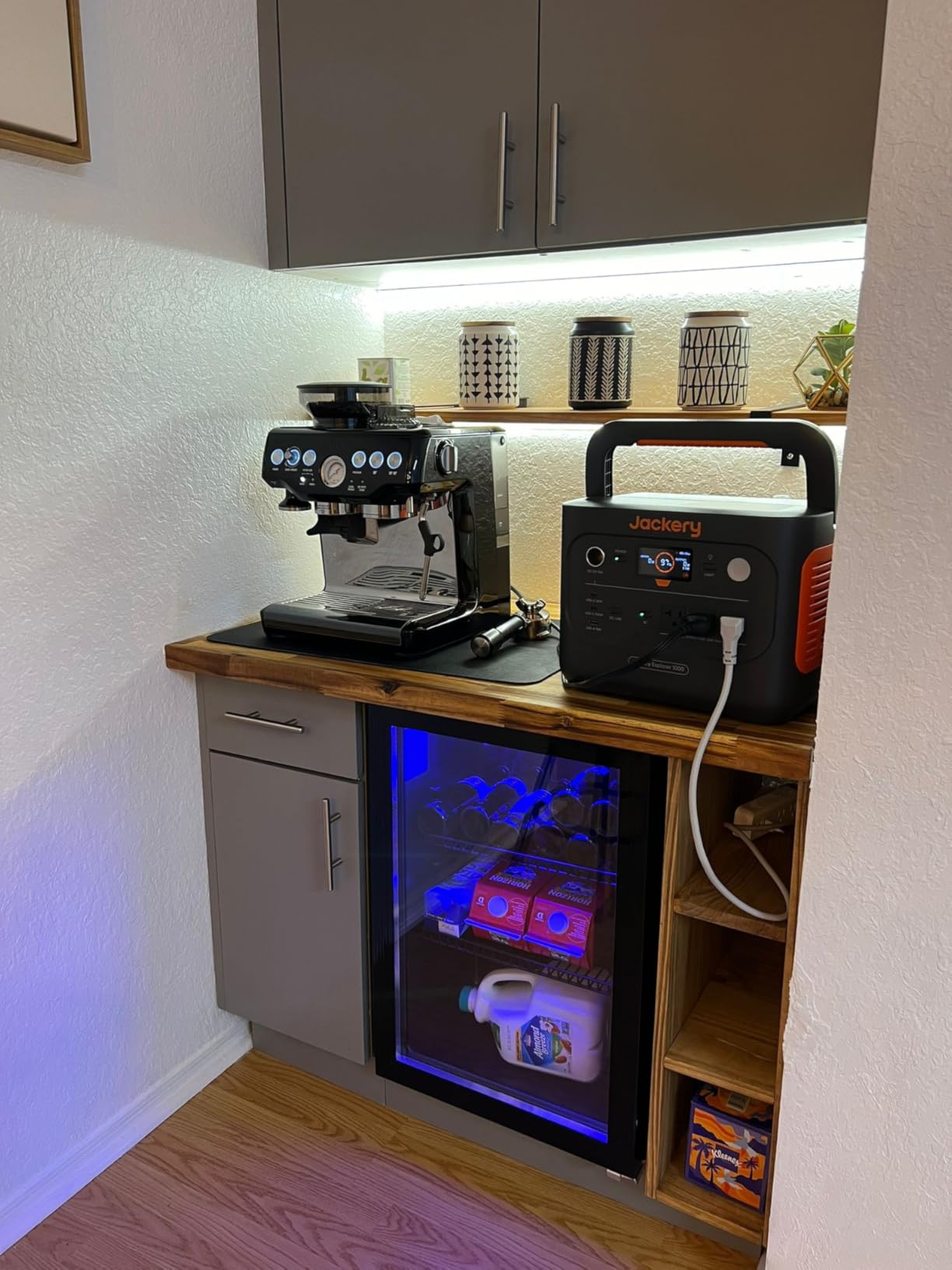
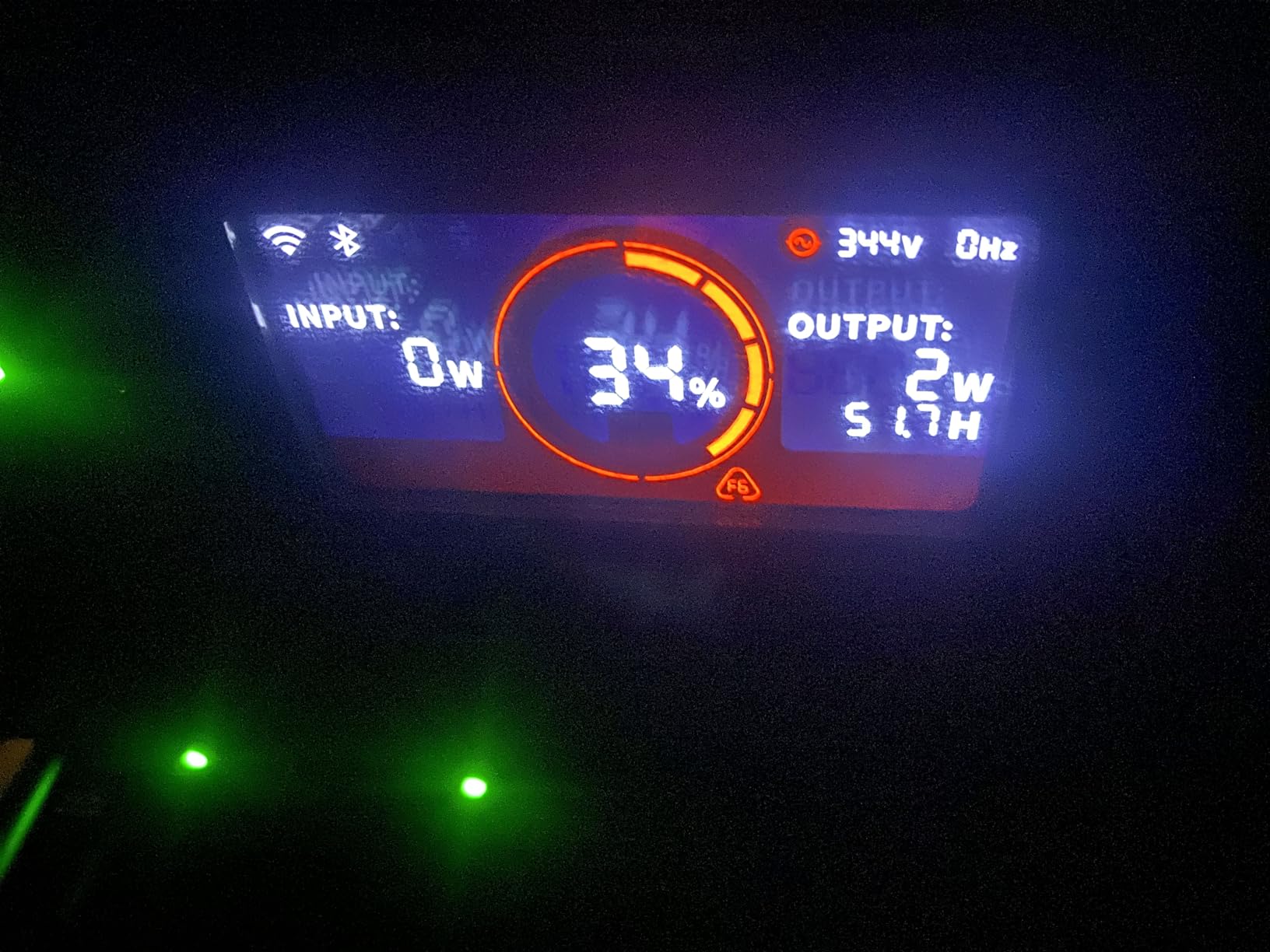
The battery is the reason I keep coming back to it. The LFP chemistry holds over 70% of original capacity after 4,000 cycles, which frames it as a decade-plus purchase rather than a gadget. Fast charging is genuinely fast too, with a one-hour emergency mode in the app and 1.7 hours as the default full cycle.
The honest drawback is weight. At 23.8 lb this is not a backpacking object, and if you are hauling gear from a car to a site more than a few steps, you will feel every pound of it. The second drawback is solar compatibility, since it will not take third-party panels.
Where it earns its place
If your scenario involves two or more nights away from a wall, or an outage where the CPAP is one of several devices running, this is the safe pick. A 1500W continuous output also means you can add a small fan, a router and a lamp without thinking about it, which smaller boxes genuinely cannot do.
For home use, the 30 dB quiet charging mode matters more than it sounds. Recharging a 1070Wh pack quietly overnight is far less disruptive than doing it beside the bed at full fan speed.
Where it falls short
Solo backpackers should look elsewhere. Nothing at 1070Wh is light, but this is heavier still, and the foldable handle does not change the fact that you are carrying two figures worth of pounds. Anyone without a car should weigh the Explorer 300 instead.
Also budget for the ecosystem. Jackery panels are the only ones it will take, and if you plan to recharge off-grid for more than a couple of days, that limits your options.
2. Jackery Explorer 300 – the pick that fits under a seat
Jackery Explorer 300 Portable Power Station,292Wh
292Wh LiFePO4 battery
300W continuous pure sine wave AC
600W surge
7.1 lb
Pass-through charging
Pros
- A verified owner ran a Philips DreamStation for roughly 35 hours across four nights on a DC connection
- only 7.1 lb with an integrated handle
- LFP chemistry rated past 4000 cycles
- 100W USB-C PD plus a 120W car port
- pass-through charging lets it run a load while recharging
Cons
- 292Wh is too small for a fridge or air conditioner
- USB-C port is output only and will not accept charge input
- auto power-off below a 10W draw can interrupt low-power equipment
With 11,000-odd reviews averaging 4.6, this is the most proven machine on the list, and the CPAP evidence is unusually concrete. One verified buyer ran a Philips DreamStation for about 35 hours across four nights on a DC connection, and reported the pack at 71% after two cold-weather camping nights. That is the kind of data most listings simply do not carry.
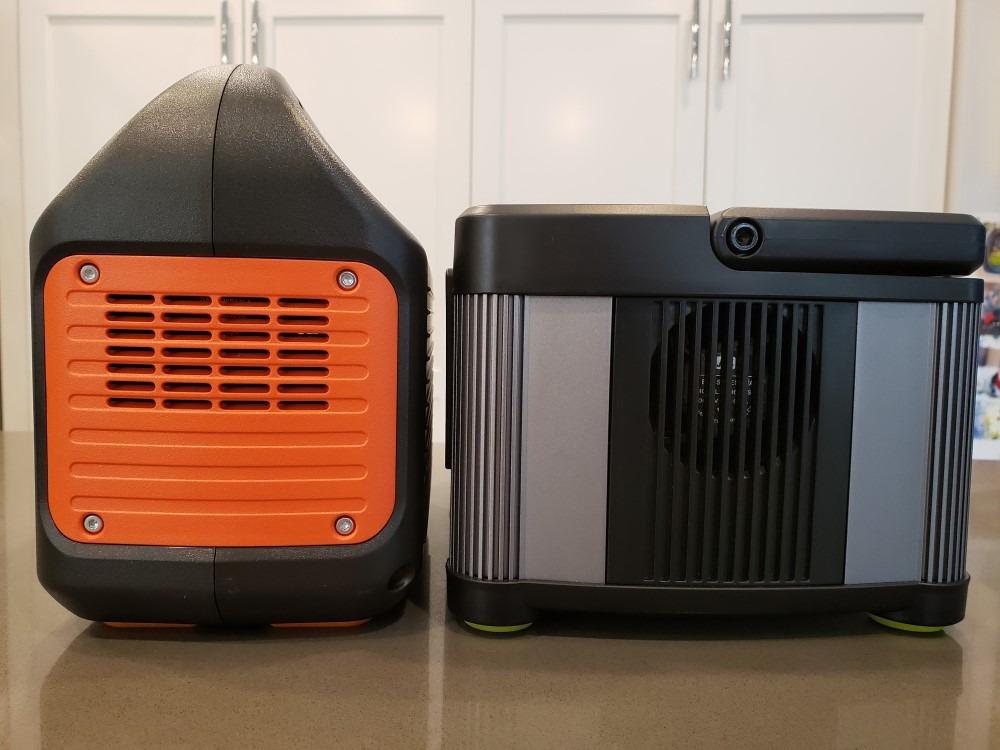
At 7.1 lb it disappears into a bag, and the integrated handle means you can carry it in one hand down a campsite path. For a single night plus a spare, or for two nights with the humidifier off, the maths works comfortably.
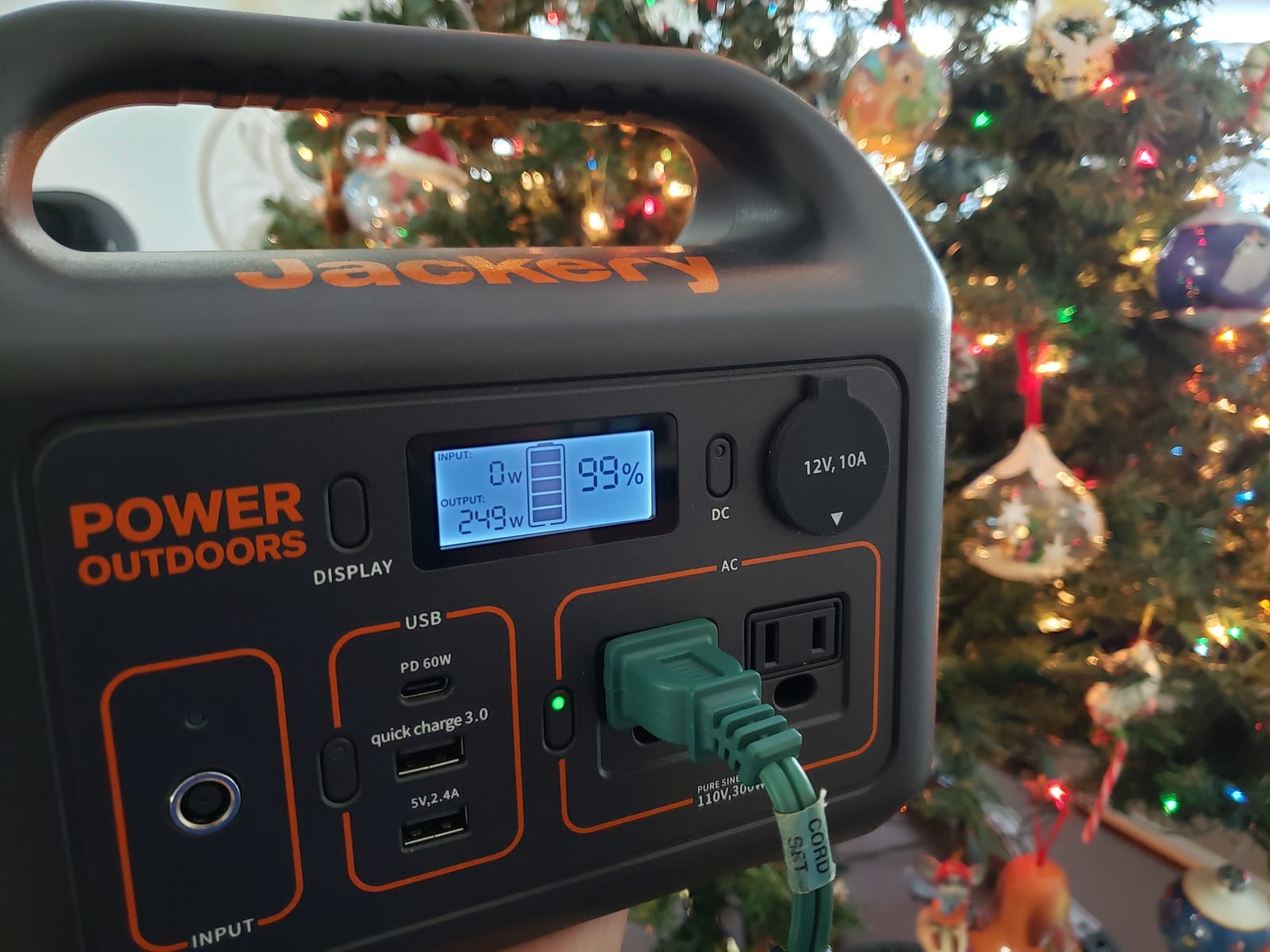
Two design details matter more here than the watt-hours. Pass-through charging means you can run the machine while the unit is plugged in, so during a long outage it is refilling as it works. The built-in MPPP controller also speeds up solar charging compared with a simpler charge path.
There is one setting you need to know about. This unit has an auto power-off behaviour below a 10W draw, which is designed to protect the battery but can switch off monitoring equipment that idles at a low draw. Check that before you rely on it for anything overnight.
Where it earns its place
This is the model I recommend to most people. It covers a weekend, it fits in a carry bag without becoming the heaviest thing you own, and the LFP chemistry means you are not replacing it in three years. Owners also praise the silent operation and backlit display, both of which matter in a dark tent.
For flying, its weight is the deciding factor, though the 160Wh carry-on rule is the real limit and no portable power station here clears it comfortably.
Where it falls short
Two nights with a heated humidifier is not happening. The capacity is genuinely too small for anything beyond a CPAP, a phone and a light, and the 12V car port is limited to 10A, so it will not drive a large tyre inflator either.
The output-only USB-C port is a smaller annoyance, since it will not pick up charge. You cannot refill it from a USB-C power bank, which limits your options on a long trip.
3. MARBERO M823 – light duty top-ups only
Portable Power Station 300W MARBERO 237Wh Camping Solar Generator Backup Lithium Battery with Pure Sine Wave 110V AC Outlet, USB C, USB A, DC for Outdoors Camping CPAP Home Blackout Emergency
237Wh lithium ion battery
300W pure sine wave AC, 375W peak
8 output ports
4.6 lb
Two LED lanterns
Pros
- Extremely light at 4.6 lb and small enough for a backpack
- eight output ports including two AC outlets
- two built-in LED lanterns with an SOS mode
- battery management with short-circuit and overload cut-off
- recharges by wall in about 6 hours
Cons
- Weak inverter output limits higher-draw devices
- proprietary round-barrel charger instead of a standard or USB-C input
- several owners report early failures or loss of charge within one to three years
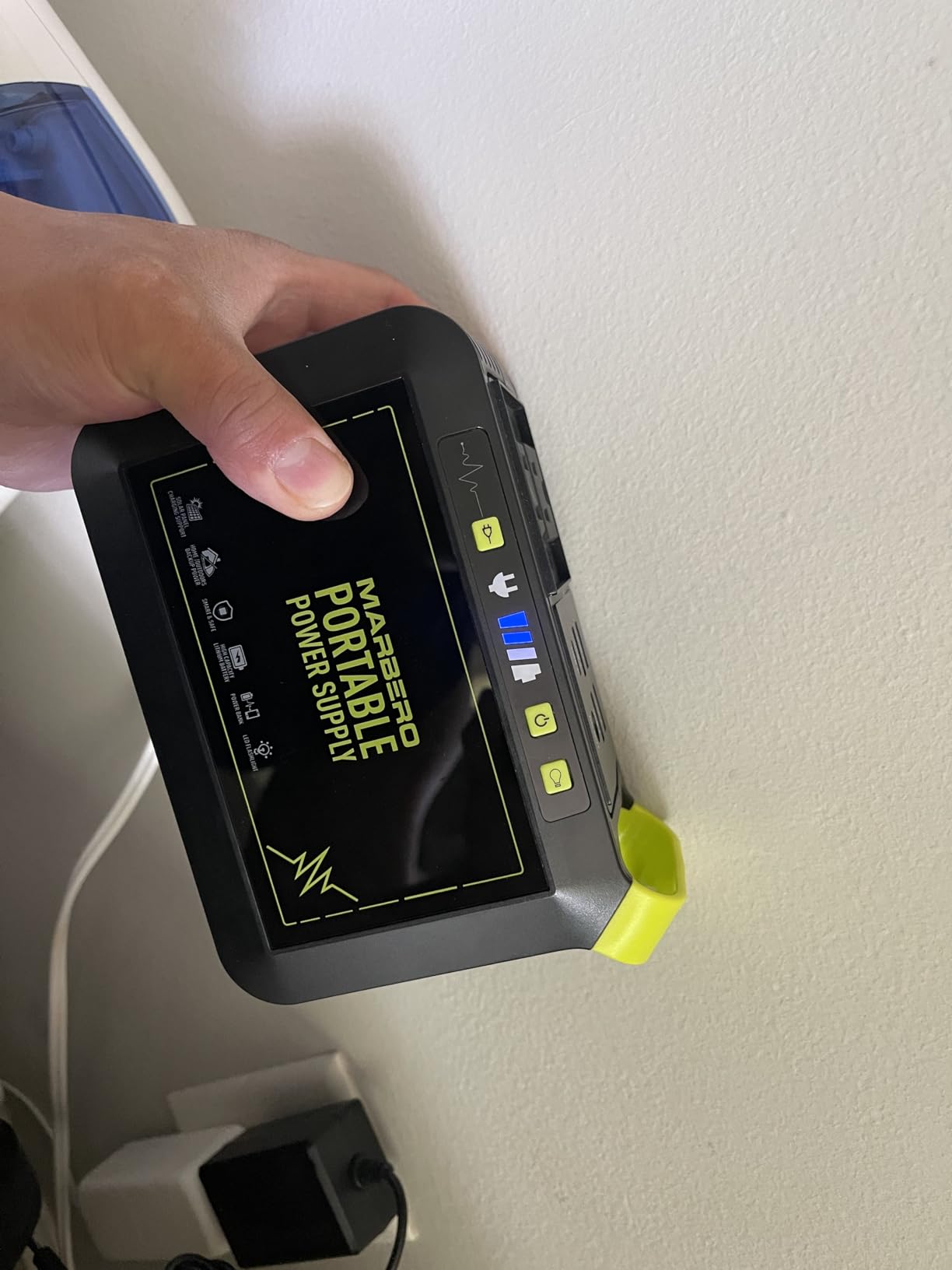
I want to be straight about this one, because a 237Wh pack sits right at the edge of a single CPAP night and the maths is unforgiving. Run the formula with a 40W machine and 237Wh and you get about five hours, not eight. You can stretch a night if your draw is low and the humidifier stays off, but I would not plan a trip around it.
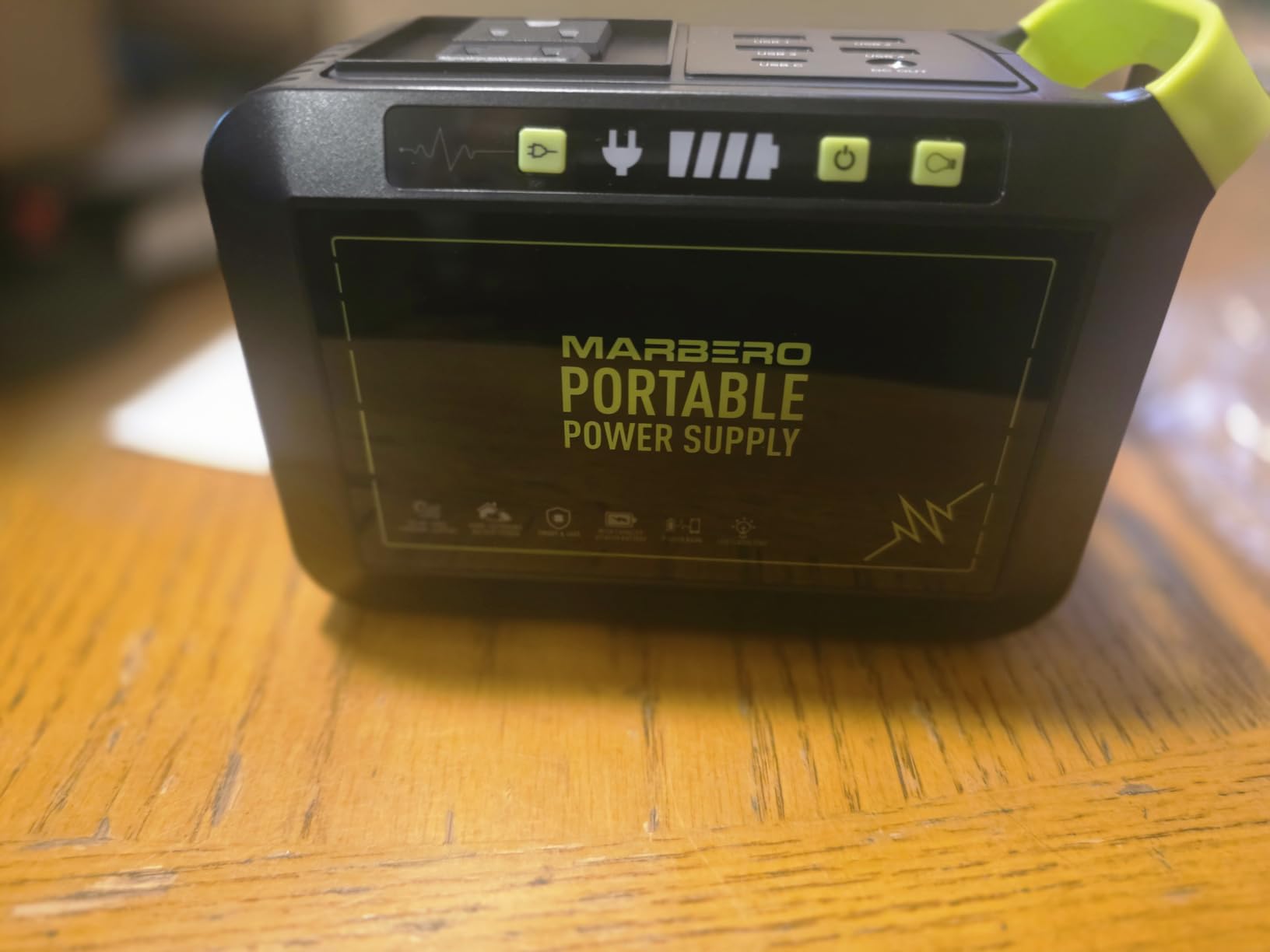
What the M823 does well is everything around the CPAP. Eight output ports, two AC outlets, four USB-A and a USB-C, plus two LED lanterns that owners single out as unusually bright. If your machine is the one thing running, and you want a secondary box for phones and lights, the port count is hard to beat at this size.
The 4.1 average is telling. Praise clusters around size, price and the lanterns, while the complaints cluster around the inverter and longevity. One highly-upvoted review documents an AC outlet failure inside a year, another reports one that no longer held charge after three and a half years, and a third returned theirs over the proprietary charger and a low-output inverter.
That is a pattern I pay attention to for a device whose job is to be trusted at 3am. The battery management system covers short-circuit, low-voltage, over-current, over-voltage and over-load protection, which is reassuring on paper, but the hardware reports give me pause on longevity.
Where it earns its place
It is a genuinely good carry item for a night where the CPAP runs off wall power in a cabin and this box handles everything else. At 4.6 lb it is one of the lightest boxes here, and the lantern function removes a separate light from your pack.
It also works as a genuine backup for a short trip where you accept running the machine on AC at reduced hours.
Where it falls short
Do not buy it as your primary CPAP power. The capacity math is short, the reported AC failures are the exact failure mode you cannot tolerate at night, and the round-barrel proprietary charger is an annoying extra thing to keep track of.
It is also the slowest to recharge of the compact boxes here, at about six hours by wall and eight by car.
4. EnginStar R300 – a CPAP-first unit at 6.5 lb
EnginStar Portable Power Station 300W 296Wh Solar Generator
296Wh lithium ion battery
2 x 110V pure sine wave AC
300W output
6.5 lb
ETL certified
Pros
- 296Wh of pure sine wave output at only 6.5 lb
- ETL certified with a metal frame housing
- eight output ports so several devices charge at once
- listed by the manufacturer as suitable for CPAP machines
- reaches 80% in about 2 hours at up to 65W input
Cons
- Lithium ion cells rather than longer-lived LFP chemistry
- cycle life advertised at only over 1000
- solar panel not included
- 296Wh limits it to light loads and short runtimes
The R300 is one of the few compact models that a manufacturer will actually name as CPAP-suitable, and the specification supports the claim. Two 110V pure sine wave outlets at 300W, plus regulated 12V and 24V DC outputs, give you both the low-loss path and the universal one.
At 6.5 lb with 296Wh, it is slightly heavier and slightly larger than the Explorer 300 but carries a similar capacity class. Owners describe it as easy to use, well protected and good value for phones, laptops, cameras and small appliances during outages.
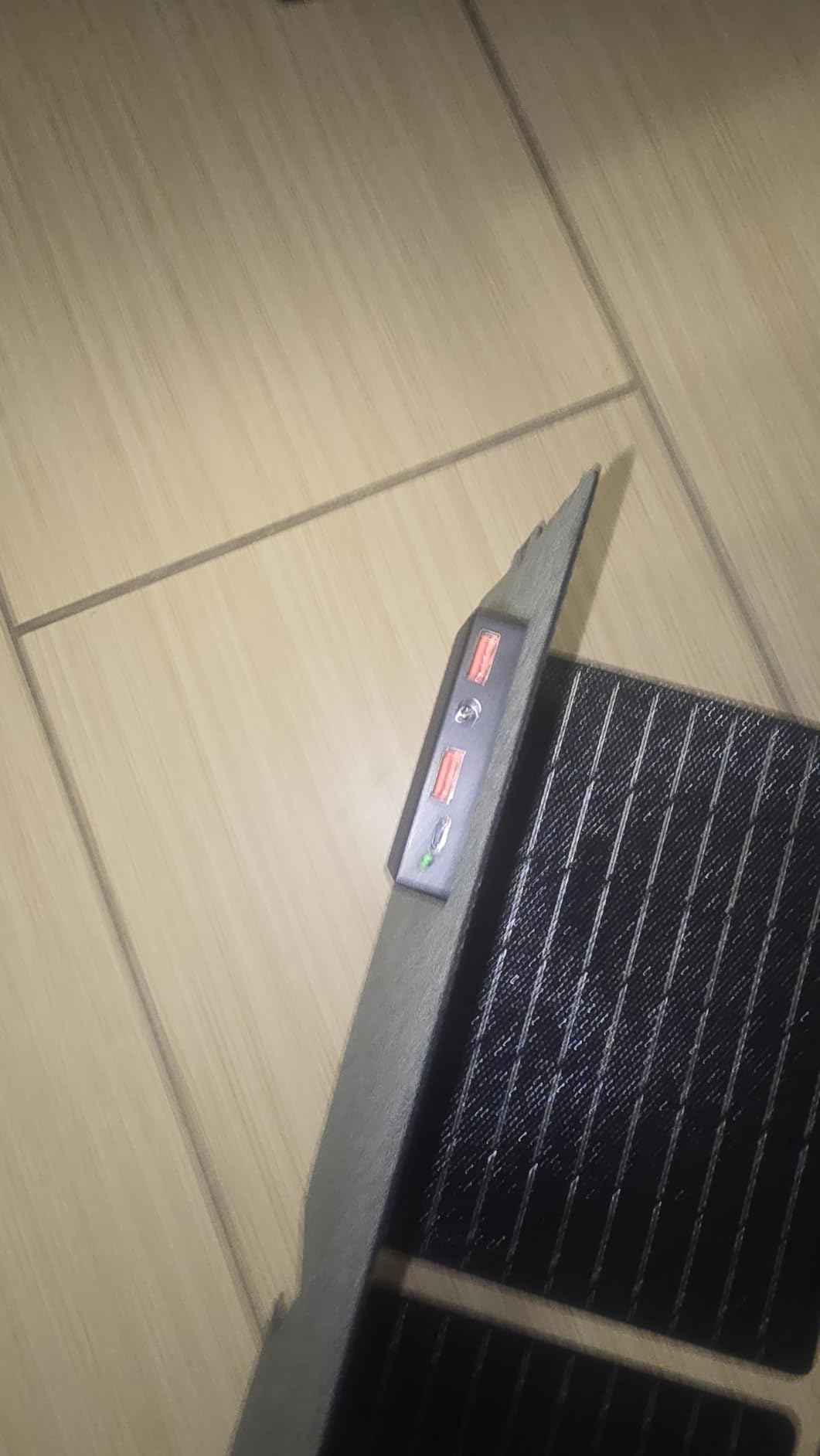
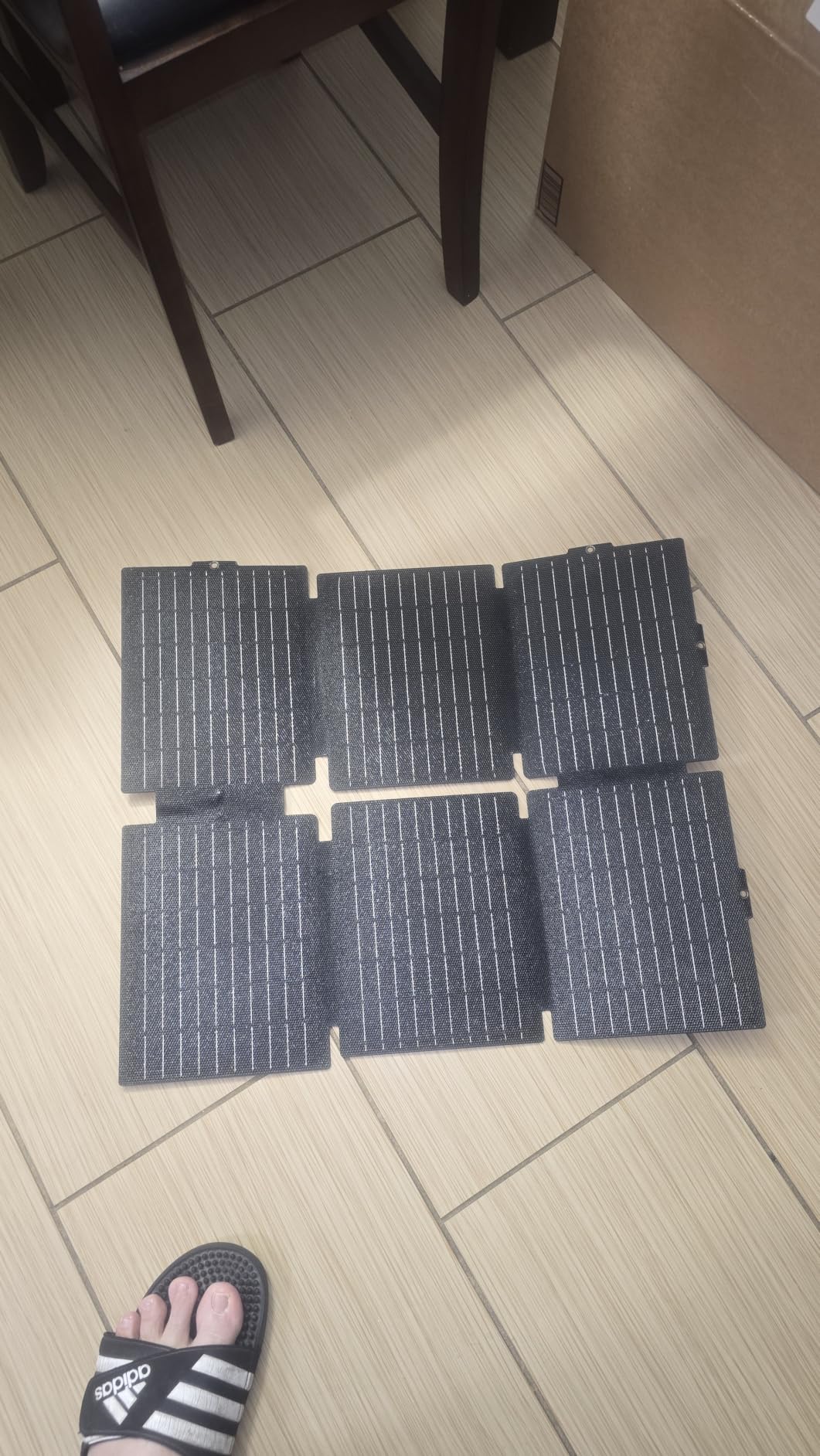
Recharging is fast for the class. It accepts up to 65W from a wall socket, a car outlet or a 12V to 25V solar panel, reaching 80% in roughly two hours. The battery management system adds voltage and temperature control alongside short-circuit, overcharge and overload protection.
The chemistry is the compromise. These are lithium ion cells rated at over 1,000 cycles, against the 3,000 to 4,000 cycle figures on the LFP models in this article. That difference shows up as a shorter service life before capacity degrades, and it is the single biggest reason I would pick a different model over this one for a machine you depend on nightly.
Where it earns its place
If you want a compact model that is explicitly sold for CPAP use and you are buying a second or travel box rather than a lifetime backup, the R300 makes sense. The ETL certification and metal frame housing are the details I would want on a device that sits in a bedroom.
It is also a sensible second box, so one can be charging while the other runs.
Where it falls short
The advertised 1,000-cycle lithium ion pack ranks well below the LFP models, and this is a device people keep for years rather than months. The 12-month limited warranty is short for that reason too.
With 296Wh you are looking at roughly six hours of a 40W machine, or one comfortable night with the humidifier off. Anything more and you need to recharge mid-trip.
5. EASYLONGER ES720 – built only for a CPAP
EASYLONGER ES720 CPAP Battery Backup, 266.4Wh Portable CPAP Power Supply
266.4Wh dedicated CPAP supply
4 DC cables included
Adjustable 12V to 24V DC
3.31 lb
180W car socket
Pros
- Purpose-built CPAP supply with four included DC cables for major ResMed and Philips models
- direct DC connection avoids inverter losses entirely
- 3.31 lb and a slim 9.1 by 5.9 by 1.7 inch body
- four recharge paths including 60W USB-C PD and 100W solar
- FSA or HSA eligible
Cons
- Luna G3 heated tube is not supported
- using the cigarette lighter port needs an external voltage converter
- a 372-review base means less long-term history than the bigger stations
This is the most important pick in the article for anyone whose main problem is a plane, a boat or a tent where an AC inverter is either banned or pointless. It is the lightest box here at 3.31 lb, and it is the only one whose DC output voltage is adjustable between 12V, 16.5V, 20V and 24V.
Four manufacturer-specific DC cables come in the box, covering ResMed S9, AirSense 10, AirCurve 10, AirMini, AirSense 11, AirCurve 11 and Philips DreamStation and DreamStation 2. You set the DC port to match your machine and plug straight in. No inverter, no double conversion, and none of the runtime loss that comes with it.
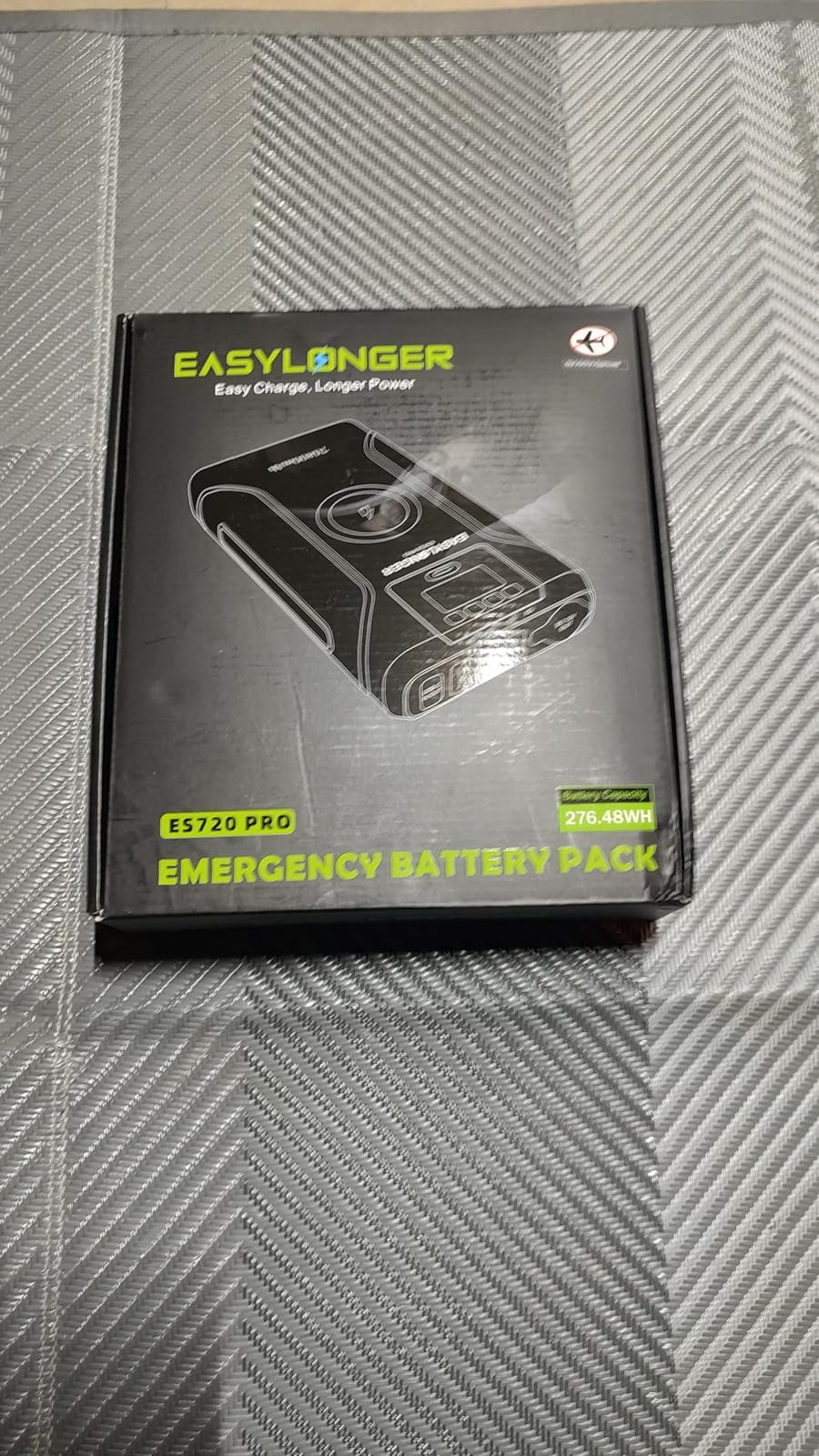
It still works as a general power hub, with a 180W cigarette lighter socket, the adjustable DC output and four USB ports. Recharging options are unusually flexible for the size: a 72W AC adapter at 4 to 5 hours, 60W USB-C PD at 4.5 to 5.5 hours, a 100W solar panel, or a car outlet.
Pass-through charging is supported, and the BMS covers over-charge, over-discharge, over-current and short-circuit protection. There is an LED with strong, weak and red SOS modes, and it is eligible for FSA or HSA reimbursement, which is worth checking if you are buying through a health spending account.
Where it earns its place
Flights, ferries and remote huts. At 3.31 lb it is the difference between carrying your therapy and leaving it behind, and the direct DC connection means you get the full 266Wh rather than the inverter tax. Dedicated CPAP batteries and general portable power stations are different tools, and this is the clearest example of that.
It is also the right pick if you already own a large station and want a second layer that does one job perfectly.
Where it falls short
If your machine uses a heated tube, check compatibility before you buy. The Luna G3 heated tube is explicitly not supported, and heated-tube machines need a separate power source.
Two further limits. Using the cigarette lighter port instead of the DC port requires an external voltage converter, which is one more thing to pack. And with 372 reviews, there is far less long-term reliability history behind this model than behind the two with five-figure review counts.
6. VTOMAN FlashSpeed 300 – 100W USB-C in and out
VTOMAN FlashSpeed 300 Portable Power Station, 300W 230Wh LiFePO4 Battery
230Wh LiFePO4 battery
300W AC output
100W USB-C PD input and output
7 lb
Seven outputs
Pros
- 100W USB-C PD works as both input and output
- recharges to 80% in about 2 hours
- LFP battery rated past 3000 cycles
- seven simultaneous outputs including two AC outlets
- four recharge paths from wall/solar/car or 100W PD
Cons
- 230Wh is the second-smallest capacity in this group for multi-night medical use
- some reviewers report loose USB-C connectors that unplug easily
- buttons are prone to accidental presses that can drain the battery overnight
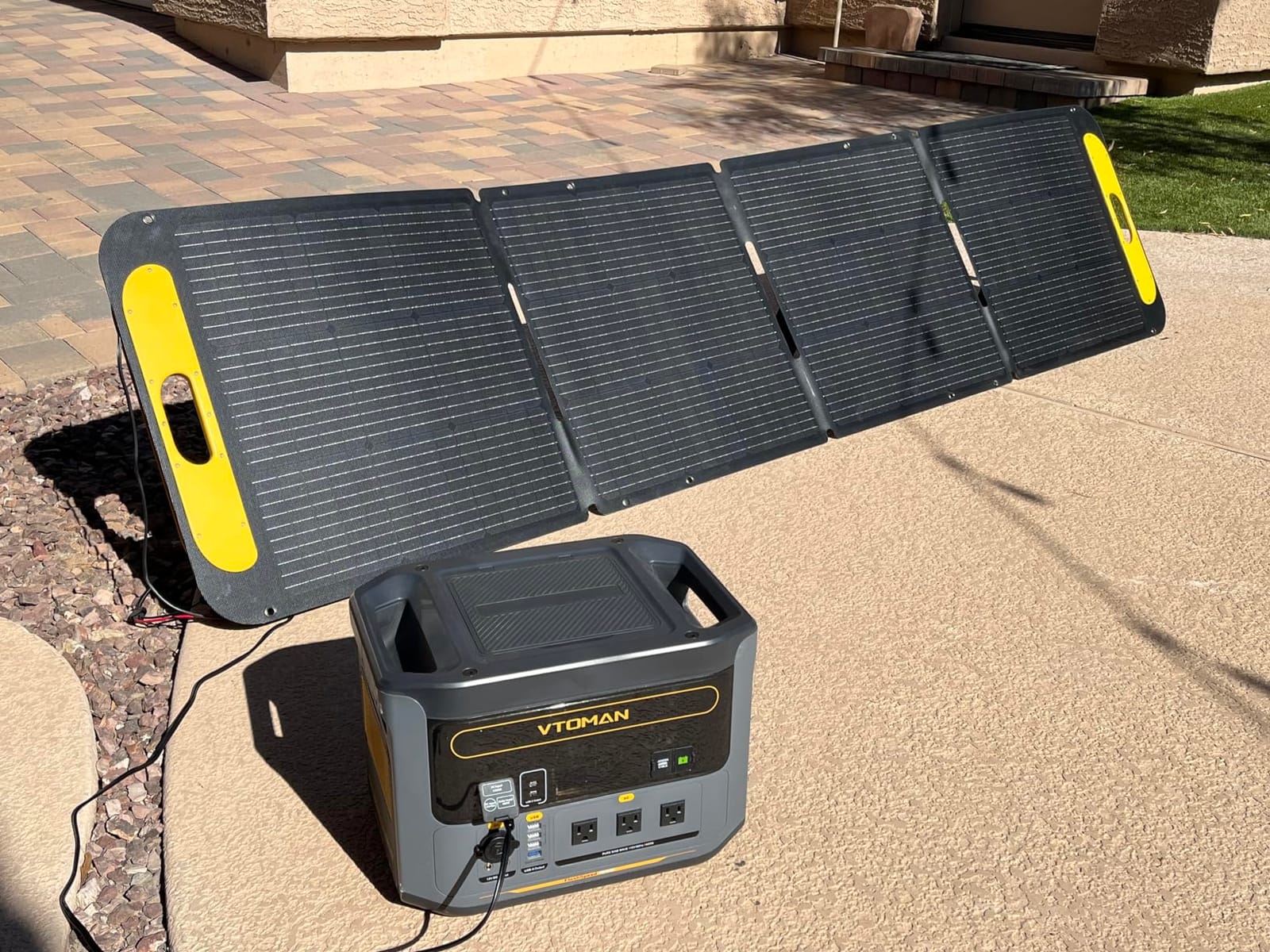
The differentiator is that the USB-C port is bidirectional. A 100W PD input refills the station to about 80% in two hours, which means you can top it up from a wall charger, a car outlet or another power bank without hunting for the right brick. Very few boxes in this class offer that.
VTOMAN owners frequently pair this model with CPAP machines, and the manufacturer lists it for that use. The LFP chemistry rated past 3,000 cycles is a genuine step up from the lithium ion models at similar prices, and seven simultaneous outputs is generous for 230Wh.
There are two hardware details I would not ignore for overnight use. The buttons are reportedly easy to trigger accidentally, which matters because a mode press while you sleep can drain charge without you noticing. And on some variants the DC output cuts out when a load does not start promptly, which is precisely what a compressor can do on wake-up.
USB-C fit is the other recurring grip, with owners reporting connectors that feel loose and unplug too easily in a bag. The bundled USB-C to USB-C and USB-C to USB-A cables mitigate it partially.
Where it earns its place
Top-ups on the move. If you are moving between outlets, motels and campsite hookups, 100W bidirectional USB-C means you can borrow power from anything with a PD charger. That flexibility beats raw capacity in a lot of real trips.
It is also a good two-night option for a low-draw travel machine with the humidifier off, where 230Wh is closer to enough than it sounds.
Where it falls short
Capacity is the limit. At 230Wh this is the second-smallest pack here, and it is not sized for a heated humidifier or a multi-night trip.
With 517 reviews there is a thinner feedback history than the leaders, and the button and connector complaints both concern exactly the things you touch in the dark at 2am. Test it fully at home before you rely on it.
7. ALLWEI 300W – the clearest published CPAP runtime
ALLWEI Portable Power Station 300W, 256Wh Solar Generator LiFePO4 Battery
256Wh LiFePO4 battery
300W continuous pure sine wave AC
600W peak
6.4 lb
MPPT dual charging
Pros
- Published CPAP testing: 20 hours of Luna G2 across 3 nights and 12 hours of DreamStation 2 on med-high heat
- LFP cells rated for 3000 charge-discharge cycles
- only 6.4 lb and compact at 9.25 by 5 by 6.81 inches
- display shows estimated runtime and remaining percentage
- dual AC plus solar recharges in 2 to 2.5 hours
Cons
- A few owners report a unit that stopped holding charge after roughly a year
- one owner reports the cooling fan running loudly and intermittently during sleep
- solar input is limited to about 120W
- customer support described as unresponsive without diagnostic data
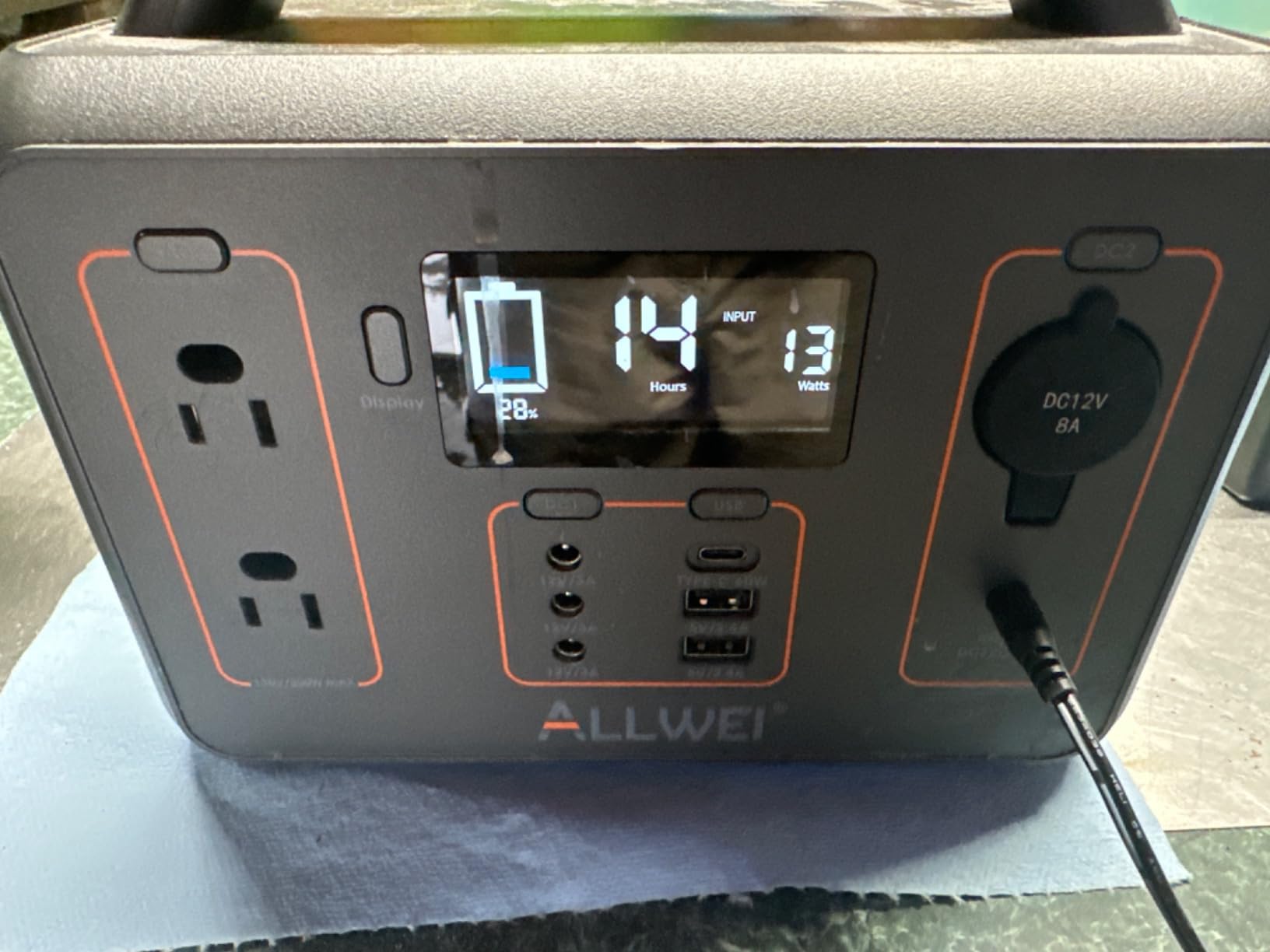
Nobody in this article publishes CPAP evidence like ALLWEI. One reviewer documented 20 hours of a BMC Luna G2 across three nights with the water tank full, and 12 hours of a Respironics DreamStation 2 on med-high heated tube over two nights. The same owner reported the machine running unnoticeably during an outage, which is the part that matters at night.
At 256Wh and 6.4 lb it sits in the same size class as the Explorer 300 but with a documented 300W continuous and 600W peak pure sine wave inverter, a 60W USB-C PD port, a car socket and two DC5521 ports. Six output ports in total, which is enough for a machine, a phone and a lamp.
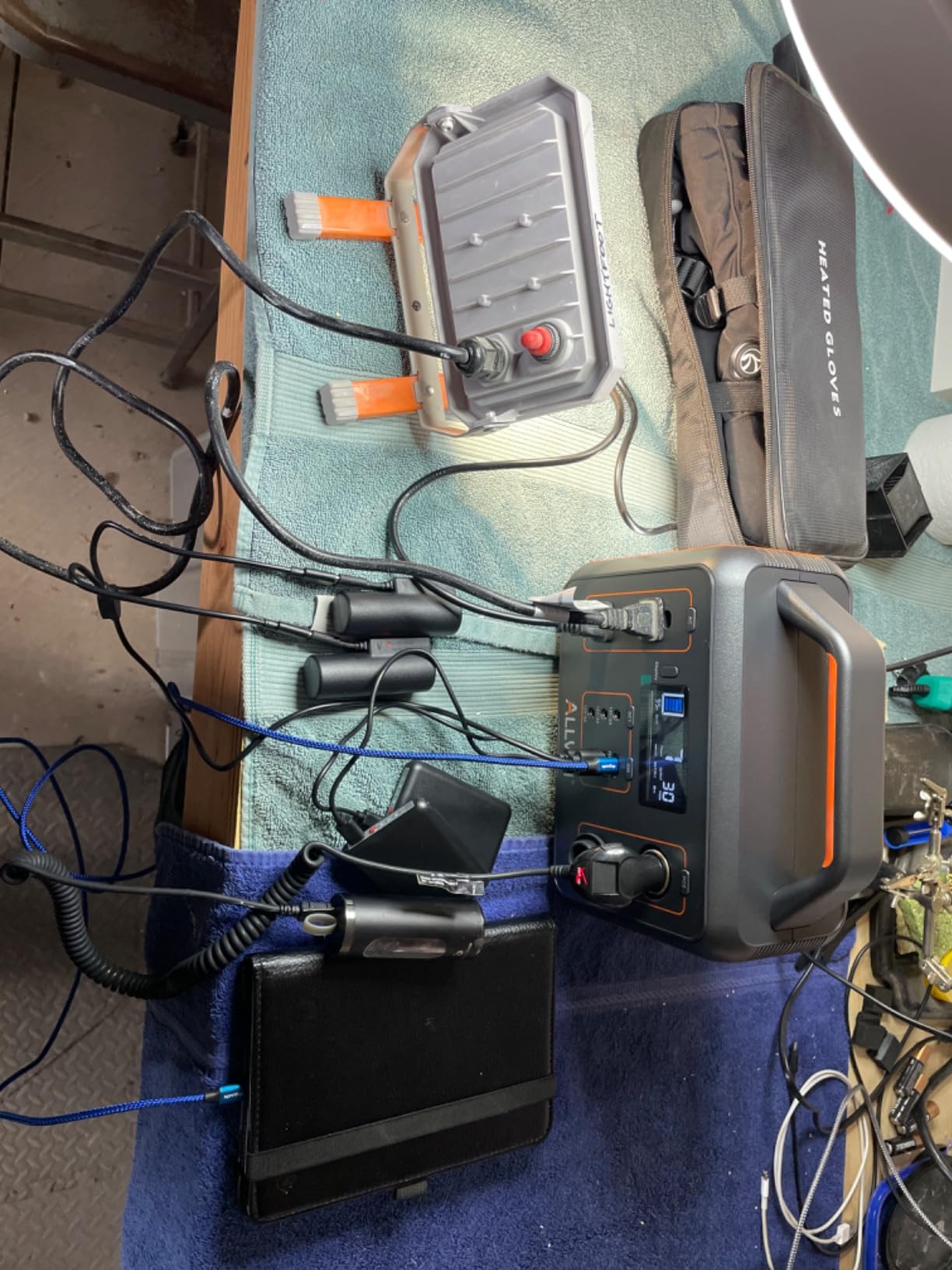
Two details I like for overnight use. The display shows estimated runtime and remaining percentage, so you can see the projection rather than guessing. And pass-through charging is supported, backed by six-layer battery protection on LFP cells rated for 3,000 charge-discharge cycles.
Recharging is quick for the class, with a 2 to 2.5 hour full cycle when you use AC and solar together, and roughly 3.5 to 4 hours from a wall or a 12V car socket alone.
Where it earns its place
If your machine runs a heated tube and you want real published numbers rather than an estimate, this is the unit. The DreamStation 2 test at med-high heat is the closest thing to a worst-case figure published for any model here, and the owner still finished the night.
It is also the most sensible compact choice for anyone who wants to see the remaining runtime on the display instead of trusting an app.
Where it falls short
Durability is the real question. Several owners report a unit that stopped holding charge after about a year, and that is a meaningful share of the negative reviews on an otherwise well-liked machine. Keep it topped up between uses rather than storing it empty.
One owner also reports the cooling fan running loudly and intermittently, which made night-time use impractical for them. If you are a light sleeper, test that first. Solar input is capped at about 120W, and there is no 24V output for RV users who need it.
8. DaranEner NEOZ – the small secondary unit
DaranEner Portable Power Station, 192Wh LiFePO4 Battery Backup Solar Generator with w/2 300W (Peak 600W) AC Outlets, USB-C PD 60W Fast Charge, Power Bank for Camping, Outdoor, Home,Emergency
192Wh LiFePO4 battery
2 x 300W pure sine wave AC, 600W surge
5.7 lb
USB-C PD 60W
10V-26V solar input
Pros
- LiFePO4 cells rated past 3500 cycles in a 5.7 lb body
- two 300W pure sine wave outlets plus USB-C PD 60W and a 12V DC output
- a verified owner measured a 7-hour night on AC with no humidifier or heated tube
- 10V-26V solar input lets you wire small panels in series
- service reportedly replaced a defective unit inside a week
Cons
- Smallest capacity here at 192Wh
- solar panel and car charging cable not included
- the battery gauge does not always match true remaining charge
- not suitable for high-surge appliances such as rice cookers or hair dryers
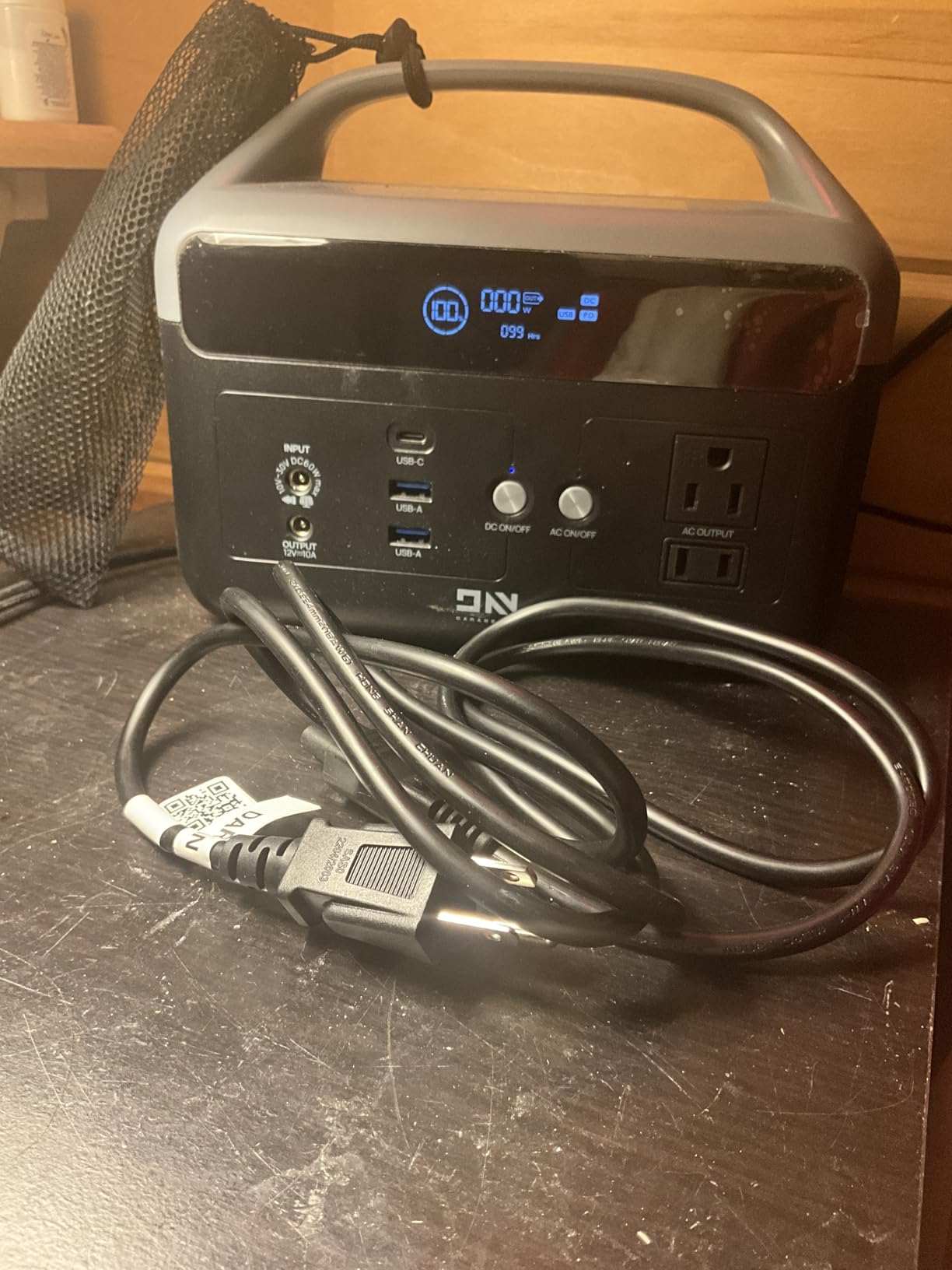
Owners treat the NEOZ as a secondary or travel unit, and one of them bought a second one specifically to run a CPAP while the main unit handled other gear. A verified reviewer measured a 7-hour night on AC with the humidifier and heated tube off, and expects more with a proper DC adapter.
The specification is better than the capacity suggests. Two 300W pure sine wave outlets, USB-C PD at 60W, two USB-A QC3.0 and a 12V DC output, with LFP cells rated past 3,500 cycles. It is one of the few boxes this light that also accepts a broad 10V to 26V solar input, which means you can string smaller panels together.
What stands out in the owner reports is service rather than specifications. One reviewer whose DC side failed received a free replacement inside a week and was told not to return the old unit. The box also includes an instruction to run two full charge and discharge cycles after arrival, and to top it up every one to two months.
The gauge is the detail I would watch. Owners report the percentage display drifting from true remaining charge, and on a device you depend on at night that mismatch can turn into a bad morning.
Where it earns its place
A second box, an RV day-bag unit, or a gift-level backup for someone whose machine has a low draw. The LFP chemistry and 3,500-cycle rating are better than several more expensive boxes here on paper.
It is also the natural companion to a larger station, letting you run the CPAP off one and lights off the other. During an outage, having something small you can carry to a neighbour or a downstairs room is genuinely useful.
Where it falls short
At 192Wh this is the smallest pack in the group. One owner noted that a 75W fan drains it in about two hours, which tells you what a heated humidifier will do to it.
The box includes an AC cable and a manual only. Some boxes have arrived without a 12V car charging cable, and you need to buy solar separately. It is also not for anything with a large start-up surge, such as a rice cooker, hair dryer or mini fridge.
How to Get More Runtime Per Charge
Sizing is only half the job. These five steps routinely add a night or two, and they are the same ones the most experienced owners in the forums describe.
1. Use the DC path. Running your machine through an AC inverter converts DC to AC and back again, and you lose 10 to 30% doing it. If your station has a 12V DC car socket or a barrel output and your machine has a DC input, connect directly. The Explorer 300 owner getting four nights on DC versus two on AC is the pattern everyone describes.
2. Turn the heating elements off. The heated humidifier and heated tube are the biggest single drain, commonly 40 to 75% of baseline. Filling the chamber with warm water and leaving the heat off keeps the airway comfortable and costs nothing.
3. Disable power-saving mode. A low draw during sleep can trigger auto shutdown on some stations. Check the setting before you rely on the unit, and note that the Explorer 300 has a defined auto power-off behaviour below a 10W draw.
4. Measure your own machine. Ten minutes with a Kill-A-Watt or a USB power meter between the machine and the wall gives you a real number for your pressure and humidifier combination. It replaces every estimate in this article with a measurement.
5. Build in redundancy. A second smaller unit, a car adapter, or a dedicated CPAP battery covers the case where the main station fails or runs dry. Keep meals simple too, so an outage does not also mean an empty kitchen, and a prepped quinoa salad batch is about the least glamorous backup plan there is.
Buying Guide: Nine Checks Before You Buy
Pure sine wave, no exceptions. A modified sine wave inverter can make a CPAP motor buzz, run hot or error out, and the failure often shows up mid-night. Among the models here with AC outlets, the MARBERO, EnginStar, ALLWEI and DaranEner all state pure sine wave output, and the Jackery pair does too. Pure sine wave is the floor, not a feature to negotiate on.
Capacity against your real nights. One night needs 300 to 400Wh. Two to three nights wants 1000 to 1500Wh. A multi-day outage where you also need a router and lighting wants 2000Wh or more. Add your safety factor on top.
A 12V DC output that suits your machine. ResMed machines generally need a 12V to 24V step-up arrangement, while Philips machines usually take 12V direct. A dedicated CPAP battery like the ES720 solves this with included cables and an adjustable output; a generic station may leave you sourcing an adapter.
LFP over lithium ion for a long-term buy. LFP models here are rated from 3,000 to 4,000 cycles. The lithium ion models, like the EnginStar R300, are rated around 1,000. On a device meant to outlive several storms, that gap matters.
Fan noise, tested at night. Any station with a cooling fan is a potential sleep disturbance. The ALLWEI has an owner report of a loud, intermittent fan making night use impractical, and it is a fair warning to check before you commit.
Pass-through charging for outages. A unit that runs a load while plugged in refills during the outage instead of sitting empty. The Explorer 300, ALLWEI and ES720 all support it.
Carry-on rules for air travel. The FAA limit is 160Wh for lithium batteries in carry-on baggage, with spare batteries in the cabin only. No portable power station here clears that comfortably, which is exactly why a 3.31 lb dedicated CPAP battery is a separate purchase rather than a compromise.
Auto power-off behaviour. Check the minimum draw before the unit shuts itself down. Low-power medical and monitoring equipment can sit under thresholds that protect the battery but break your night.
Expandability and household context. If the station lives in a kitchen or living area, a larger unit also powers small appliances, a router and lighting during a longer outage. For a home setup, a kitchen island with power outlets covers the same need for the daytime hours.
Finally, test it. Run a full night at home on battery before you depend on it, and keep a packed lunch plan in the cupboard for the times the power is out longer than expected.
Frequently Asked Questions
Will a portable power station run a CPAP?
Yes, as long as the inverter is pure sine wave and the capacity is large enough. A typical machine draws 30 to 50W without a heated humidifier, so 300 to 400Wh covers one eight-hour night. Add the heated humidifier and draw rises by 40 to 75%, which is why most sizing advice assumes the heating elements are off.
What size portable power station do I need to run a CPAP machine?
For one night, 300 to 400Wh is enough. For a two to three night trip, look for 1000 to 1500Wh. For an outage where you also need a router, lights and a phone, 2000Wh or more gives you room. The formula is hours = watt-hours x 0.85 divided by your machine’s wattage, and you should add a safety factor of about 1.4 on top.
What is the best portable power bank for a CPAP machine?
A dedicated CPAP battery is the better tool when your only load is your machine, because it connects by DC and skips the inverter losses entirely. The EASYLONGER ES720 in this list ships with four manufacturer-specific DC cables and an adjustable 12V to 24V output at 3.31 lb. A general portable power station wins when you also need to run other devices.
What size Jackery do I need to run a CPAP?
The Jackery Explorer 300 at 292Wh covers roughly one night plus a margin, and owners report a DreamStation running about 35 hours across four nights on a DC connection. The Explorer 1000 v2 at 1070Wh is the one to buy for two or more nights, an outage, or running other devices alongside the machine.
What happens if the power goes out and you have a CPAP machine?
Without backup, therapy stops for the night, and untreated sleep apnea affects blood pressure, heart rhythm and next-day alertness. With a station that supports pass-through charging or UPS switchover, the machine keeps running and the pack recharges at the same time. Test the whole setup on battery for a full night before an outage season.
How long will a 12V battery run a CPAP machine?
Divide the battery’s watt-hours by your machine’s wattage to get a rough figure, then apply a 0.85 factor for conversion loss. At 40W, a 266Wh dedicated CPAP battery gives a little over five hours of direct DC runtime and considerably more than the same capacity through an AC inverter. Users commonly report far more nights on DC than on AC from an identical pack.
Bottom Line: Which Portable Power Station for CPAP Should You Buy?
For most people, the Jackery Explorer 1000 v2 is the right answer. It is the only pick here with the capacity for two or more nights away from a wall, the LFP chemistry that keeps it in service for a decade, and enough headroom to run a router and lamps alongside your machine during an outage. If you only need a weekend and want the lightest option, step down to the Jackery Explorer 300, which is the most proven unit on the list.
If you fly, take a dedicated CPAP battery such as the EASYLONGER ES720 rather than trying to fit a station inside carry-on rules. If you run a heated tube and want published numbers rather than estimates, the ALLWEI is the one with the clearest published figures. And whatever you buy, buy the DC cable, turn the humidifier heat off, and test a full night on battery before you need it.