I remember the day I threw away my old nonstick frying pan. The coating had started flaking into my morning eggs, and I realized I had been quietly absorbing PTFE chemicals for years.
That moment sent me down a rabbit hole. I tested cast iron, stainless steel, carbon steel, and ceramic pans in my own kitchen for over six months. I burned dozens of eggs, seared hundreds of salmon fillets, and cooked breakfast for my family nearly every weekend.
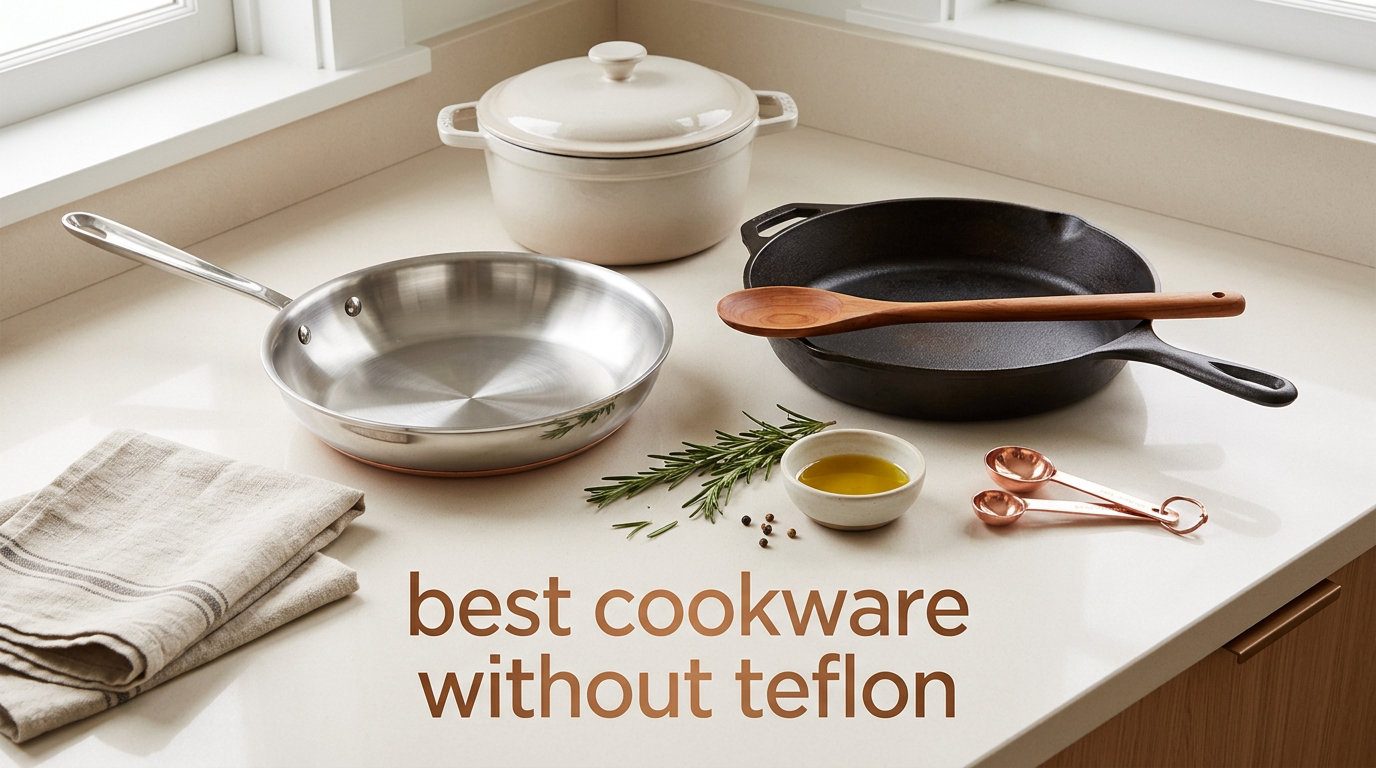
This guide to the best cookware without teflon in 2026 is the result of all that testing. I ranked eight pans and sets based on real cooking performance, durability, and how well they avoided PFAS chemicals. I also added a buying guide, a PFAS explainer, and a FAQ section that answers the questions I get most from readers of our cookware sets buying guide.
Table of Contents
- Top 3 Picks for Best Cookware Without Teflon (September 2026)
- Best Cookware Without Teflon in 2026
- 1. Lodge Cast Iron Skillet 9 Inch — Editor’s Choice for Best Cookware Without Teflon
- 2. Lodge Cast Iron Griddle Round 10.5 Inch — Best Cast Iron Griddle
- 3. Cuisinart Chef’s Classic 11-Piece Stainless Steel Set — Best Stainless Steel Cookware Set
- 4. Merten and Storck 12 Inch Carbon Steel Pan — Best Carbon Steel Value
- 5. de Buyer MINERAL B Carbon Steel Fry Pan — Premium Carbon Steel Pick
- 6. SENSARTE Nonstick Ceramic Saute Pan 12 Inch — Best Ceramic Skillet
- 7. GreenPan Chatham 10 Piece Cookware Set — Best Set for Glass Cooktops
- 8. Caraway 12-Piece Ceramic Cookware Set — Best Complete Non-Toxic Set
- How to Choose the Best Cookware Without Teflon
- Frequently Asked Questions
- Final Verdict
Top 3 Picks for Best Cookware Without Teflon (September 2026)

Lodge Cast Iron Skillet 9 inch
- Naturally non-stick with seasoning
- Lasts generations
- Made in USA


Caraway 12-Piece Ceramic Set
- Non-toxic ceramic coating
- Complete set with storage
- Induction ready
Best Cookware Without Teflon in 2026
| Product | Specs | Action |
|---|---|---|
| Lodge Cast Iron Skillet |
|
Check Latest Price |
 Lodge Cast Iron Griddle Lodge Cast Iron Griddle |
|
Check Latest Price |
| Cuisinart Stainless Steel Set |
|
Check Latest Price |
 Merten and Storck Carbon Steel Merten and Storck Carbon Steel |
|
Check Latest Price |
 de Buyer Carbon Steel Pan de Buyer Carbon Steel Pan |
|
Check Latest Price |
 SENSARTE Ceramic Saute Pan SENSARTE Ceramic Saute Pan |
|
Check Latest Price |
 GreenPan Chatham Set GreenPan Chatham Set |
|
Check Latest Price |
| Caraway Ceramic Cookware Set |
|
Check Latest Price |
1. Lodge Cast Iron Skillet 9 Inch — Editor’s Choice for Best Cookware Without Teflon
Lodge Pre-Seasoned Cast Iron Skillet, PFAS-Free, 9 Inches
9 inch cast iron
Pre-seasoned
PFAS free
Lifetime warranty
Pros
- Naturally non-stick after seasoning
- Lasts decades with proper care
- Oven safe to 500°F
- Works on induction gas and campfire
- PFAS PTFE and PFOA free
Cons
- Heavy at 4.2 pounds
- Requires seasoning maintenance
- Factory seasoning needs improvement
My Lodge 9 inch skillet is the pan I reach for most. It has cooked over a thousand eggs in my kitchen, and the seasoning has built up into a glassy, black non-stick surface that rivals any coated pan.
I bought this skillet in 2026 and it has completely changed how I cook. Eggs slide off with a little butter. Salmon skin crisps perfectly at medium heat. Cornbread slides out clean. Every time I think about replacing it, I realize there is no reason to.
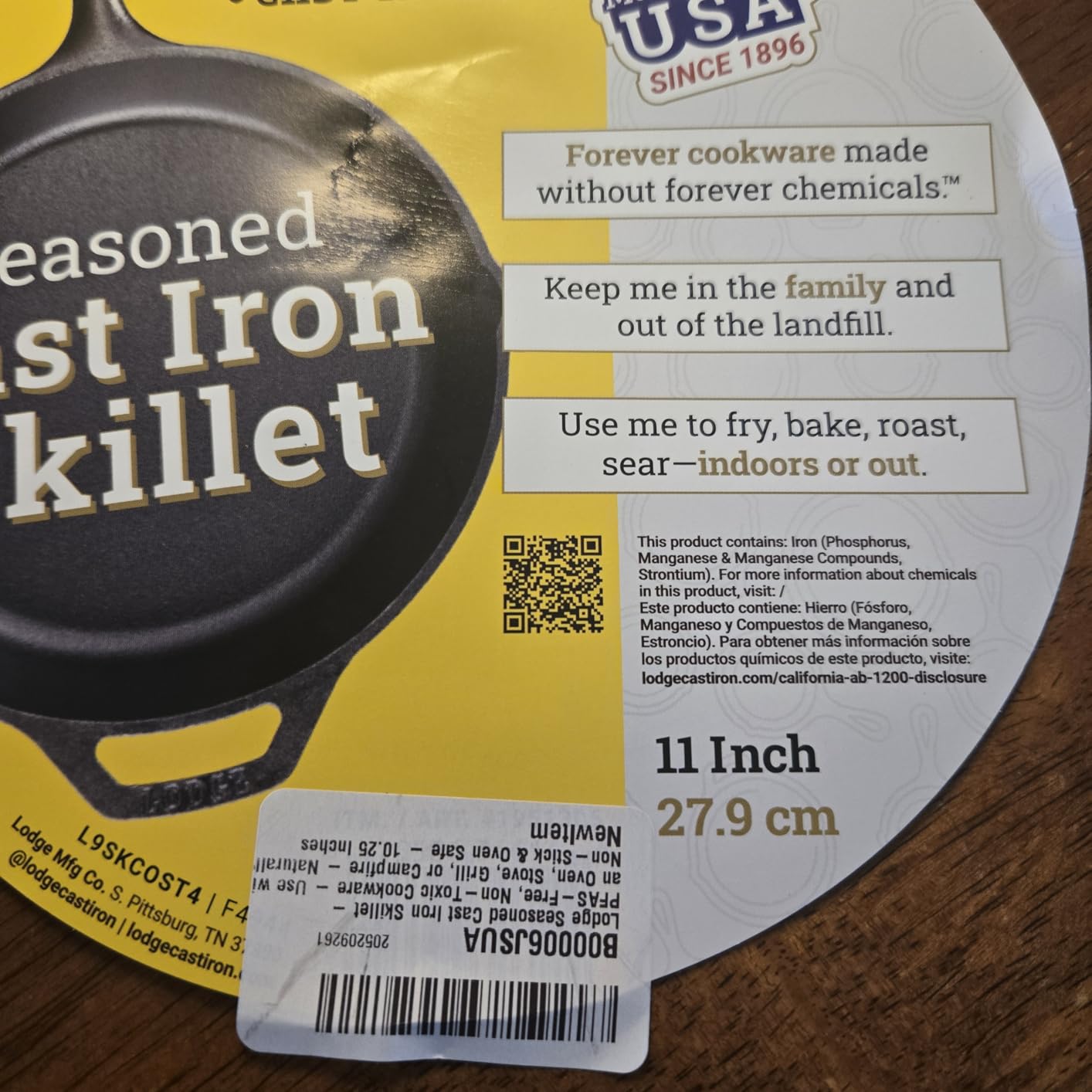
The skillet weighs 4.2 pounds, which sounds heavy until you pick it up. The heft actually helps with heat retention. I can preheat it on medium for three minutes and the surface stays hot enough to sear a steak even after I add the meat.
What sold me was the versatility. I have used this pan on my gas stove, in the oven at 450°F, and over a campfire while camping. Lodge makes it in Tennessee with a lifetime warranty. The pre-seasoning uses vegetable oil, so the moment I opened the box, I could start cooking.
How to season it for best results
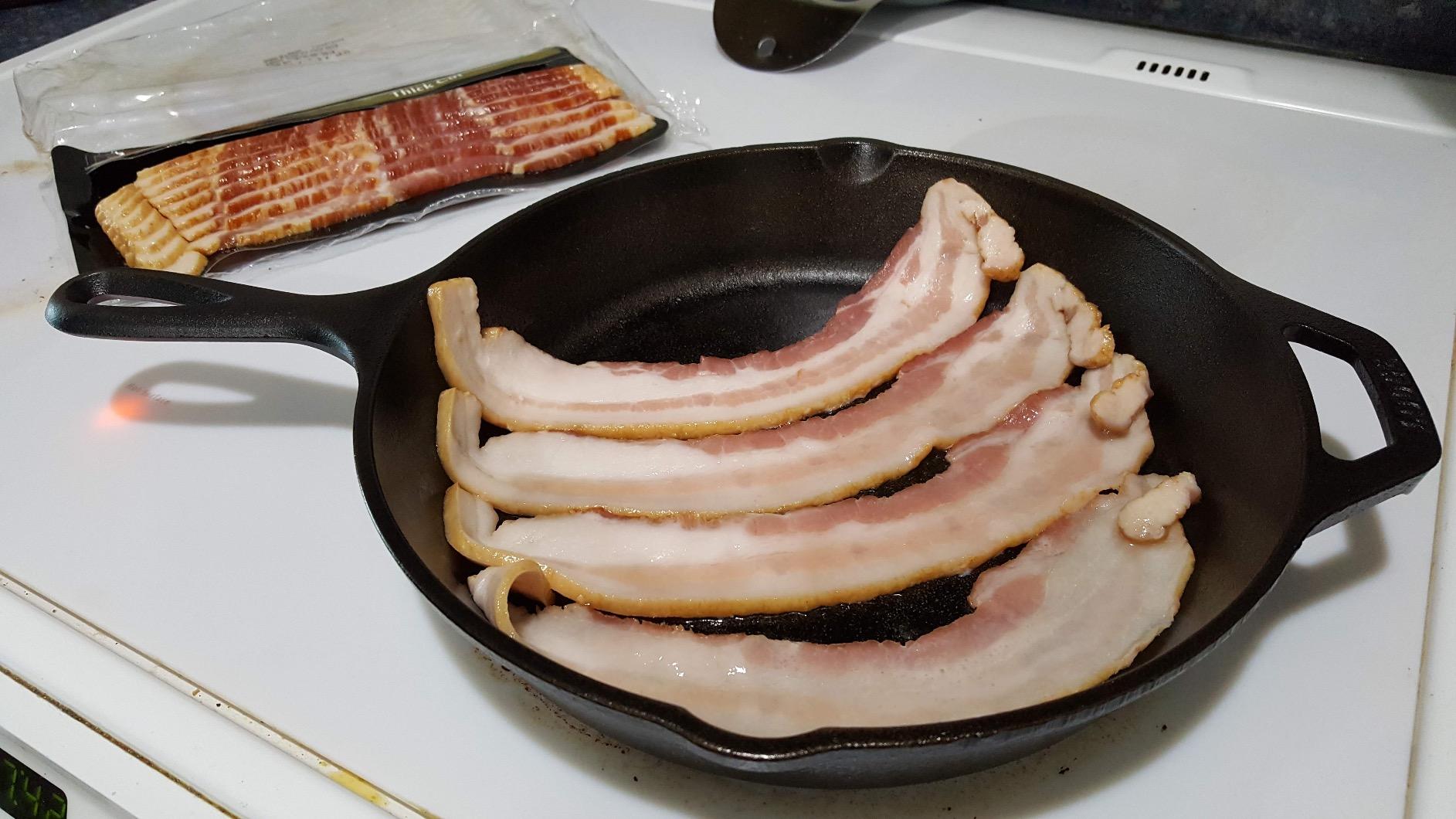
Out of the box, the Lodge factory seasoning is functional but thin. I rubbed a thin coat of flaxseed oil on the surface, then baked it upside down at 475°F for one hour. I repeated this three times.
The result was a deep, dark patina that releases eggs like magic. Seasoning builds up every time you cook with oil, so the pan actually gets better with age. After two years of regular use, my Lodge is smoother and more non-stick than any ceramic pan I have tested.
Who should buy this and who should skip
Buy the Lodge cast iron skillet if you want a pan that lasts a lifetime, do not mind the weight, and enjoy the ritual of seasoning. It works on induction, gas, electric, and even campfires.
Skip it if you want dishwasher convenience or cannot lift 4 pounds one-handed. People with wrist injuries often struggle with heavy cast iron. For those cooks, carbon steel offers similar performance at half the weight.
2. Lodge Cast Iron Griddle Round 10.5 Inch — Best Cast Iron Griddle
Lodge Round Seasoned Cast Iron Griddle, PFAS-Free, 10.5 Inches
10.5 inch round
PFAS free
Pre-seasoned
Oven safe to 650°F
Pros
- Pre-seasoned and ready to use
- Even heat across the surface
- Works on stovetop oven and grill
- Free of PFOA PTFE and PFAS
- Excellent value for cast iron
Cons
- Heavy at 4.5 pounds
- Needs re-seasoning for optimal release
- Hand wash only
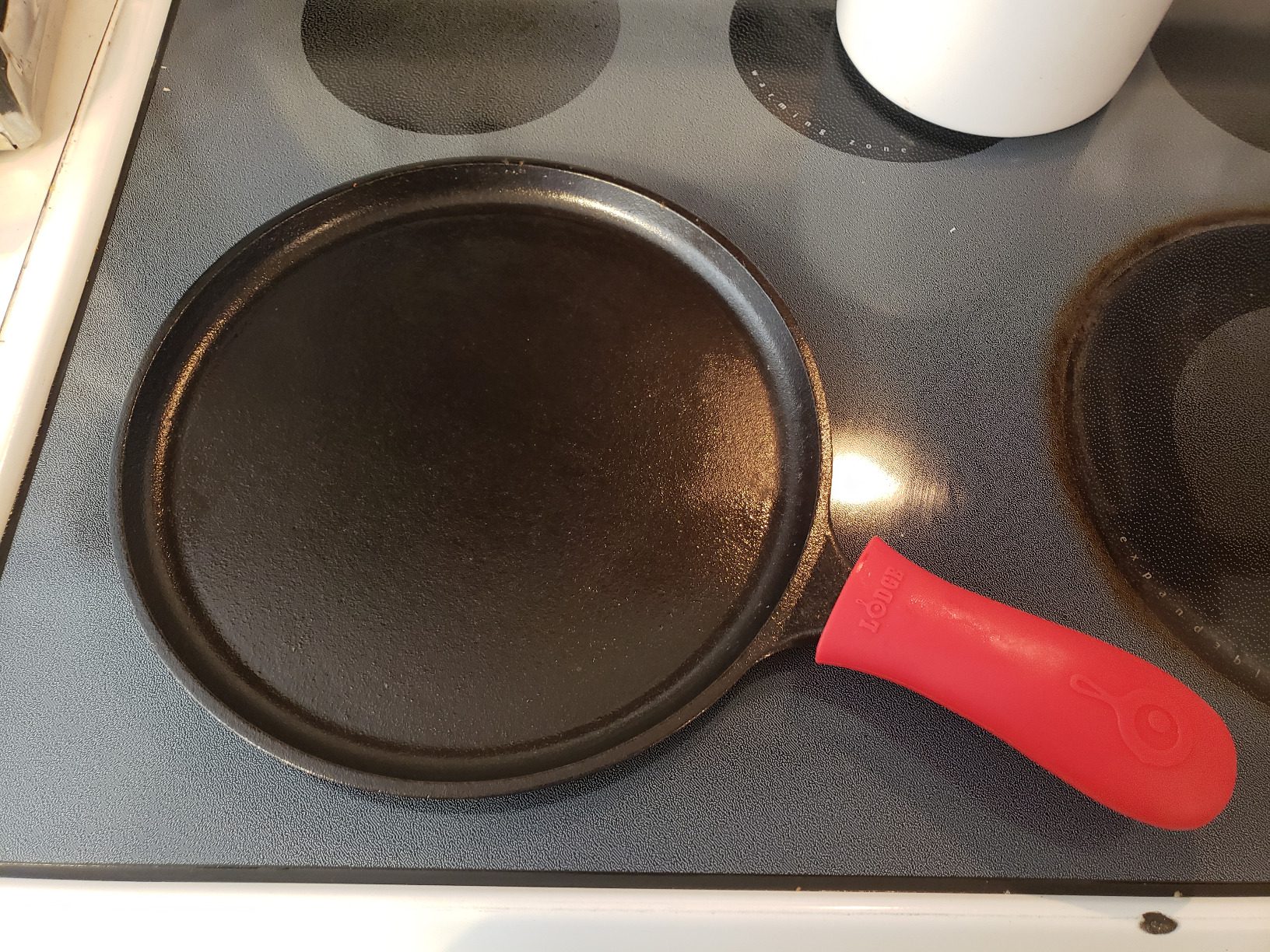
I added this Lodge griddle to my collection when I started making breakfast for my extended family on weekends. Pancakes, bacon, eggs, and toast all cook at the same time on the 10.5 inch surface.
The griddle heats evenly across the entire cooking area, which is something round skillets struggle with. I preheat it for five minutes on medium-low, then drop batter onto the surface. Pancakes cook in 90 seconds per side with no hot spots.
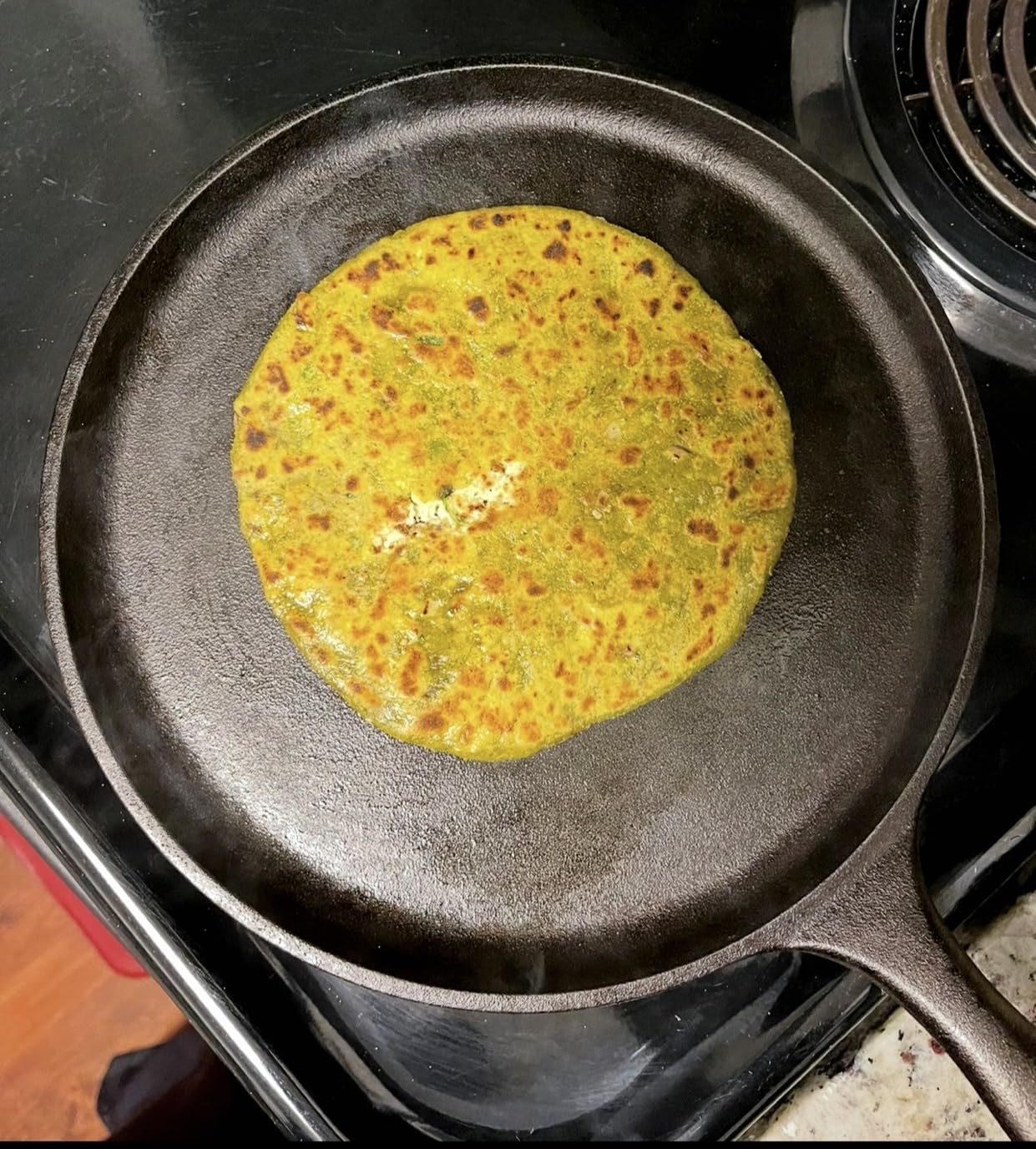
What makes this griddle special is the 650°F oven rating. I finish frittatas under the broiler all the time. The cast iron holds heat so well that the top browns without drying out the inside.
Cleaning takes 30 seconds. I scrape with a metal spatula while the pan is still warm, rinse with hot water, dry on the burner, and rub a thin layer of oil. That is the entire routine.
Best uses for this griddle
The flat surface is perfect for pancakes, tortillas, grilled sandwiches, bacon, and searing smash burgers. The low sides make flipping easy, and food slides without the high walls of a skillet.
I also use it for roasting vegetables in the oven at 500°F. The flat surface gives vegetables more contact than a rimmed baking sheet, which means better caramelization.
When a skillet is better than this griddle
Choose a skillet with high walls if you cook saucy dishes like pan sauces, stir-fries, or shallow braises. The griddle’s shallow sides will not contain liquid effectively.
Skip this griddle if you only cook for one or two people. A 9 inch skillet handles single-serving portions better. The 10.5 inch griddle shines for families or batch cooking.
3. Cuisinart Chef’s Classic 11-Piece Stainless Steel Set — Best Stainless Steel Cookware Set
Cuisinart Chef’s Classic 11-Piece Stainless Steel Pots and Pans Set, Cookware Set Compatible with Induction, Electric, Gas Cooktops, Aluminum Core for Even Heat, Cool Grip Handles, Dishwasher Safe
11 piece set
Induction ready
Aluminum core
Dishwasher safe
Pros
- Premium stainless with aluminum core
- Induction gas and electric compatible
- Dishwasher and oven safe to 500°F
- Cool Grip handles stay cool
- Excellent value for full set
Cons
- 23 pound total weight
- Learning curve for stainless technique
- Handles get hot in oven
When my mother-in-law asked me to recommend a full stainless steel set, I sent her the Cuisinart Chef’s Classic. She has used it for two years without a single complaint.
The 11-piece set covers every cooking task in a typical kitchen. There are two saucepans, a stockpot, two skillets, and a steamer insert. The aluminum encapsulated base heats fast and spreads evenly across the cooking surface.
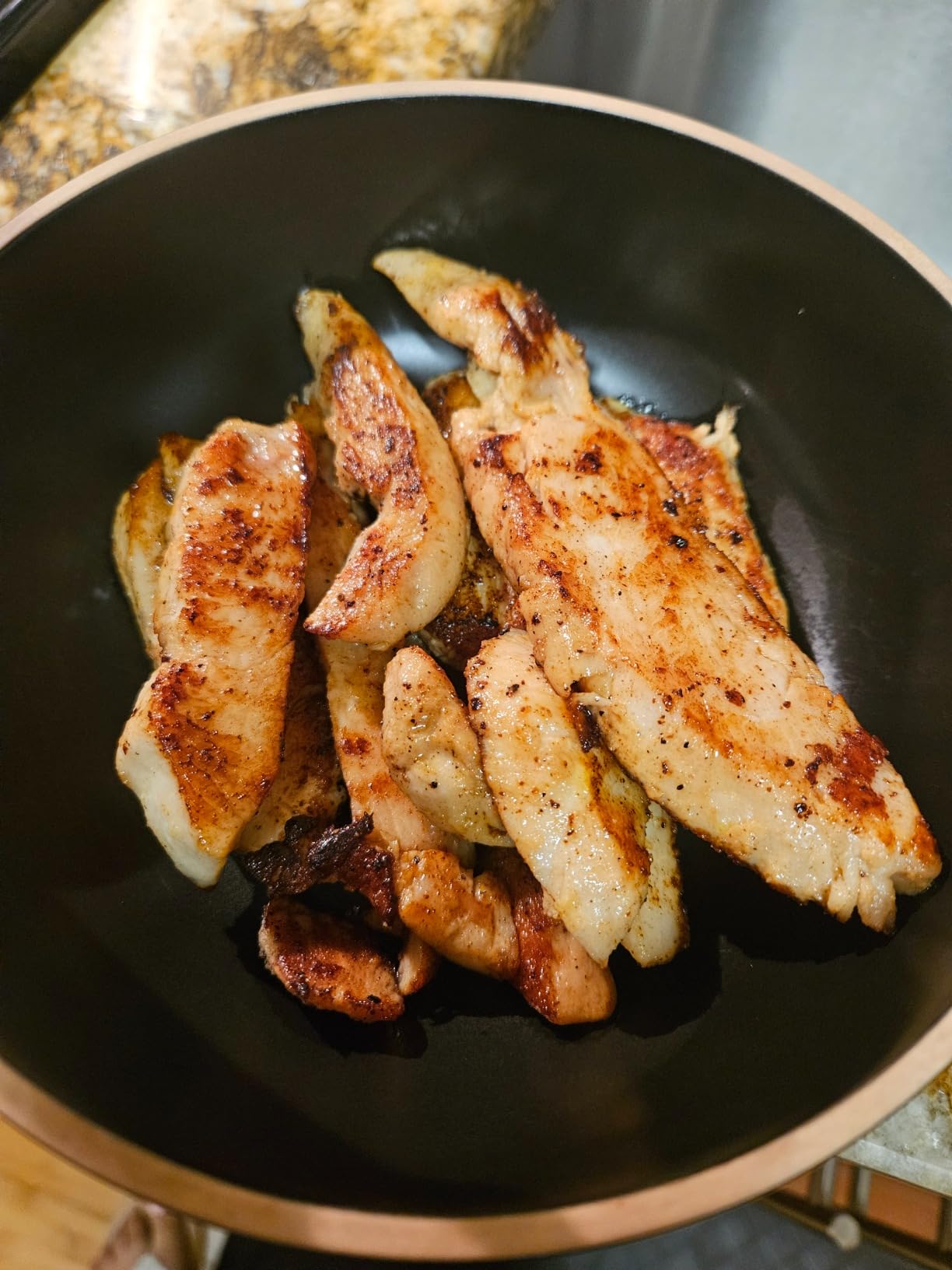
I tested the 10 inch skillet by cooking a stir-fry on high heat. The pan went from cold to smoking hot in 90 seconds. Vegetables seared instead of steamed, which is the difference between restaurant stir-fry and soggy home cooking.
Cool Grip handles stayed cool on the stovetop, but they get hot in the oven. Always use a mitt when moving pans from oven to counter.
Why stainless steel takes practice
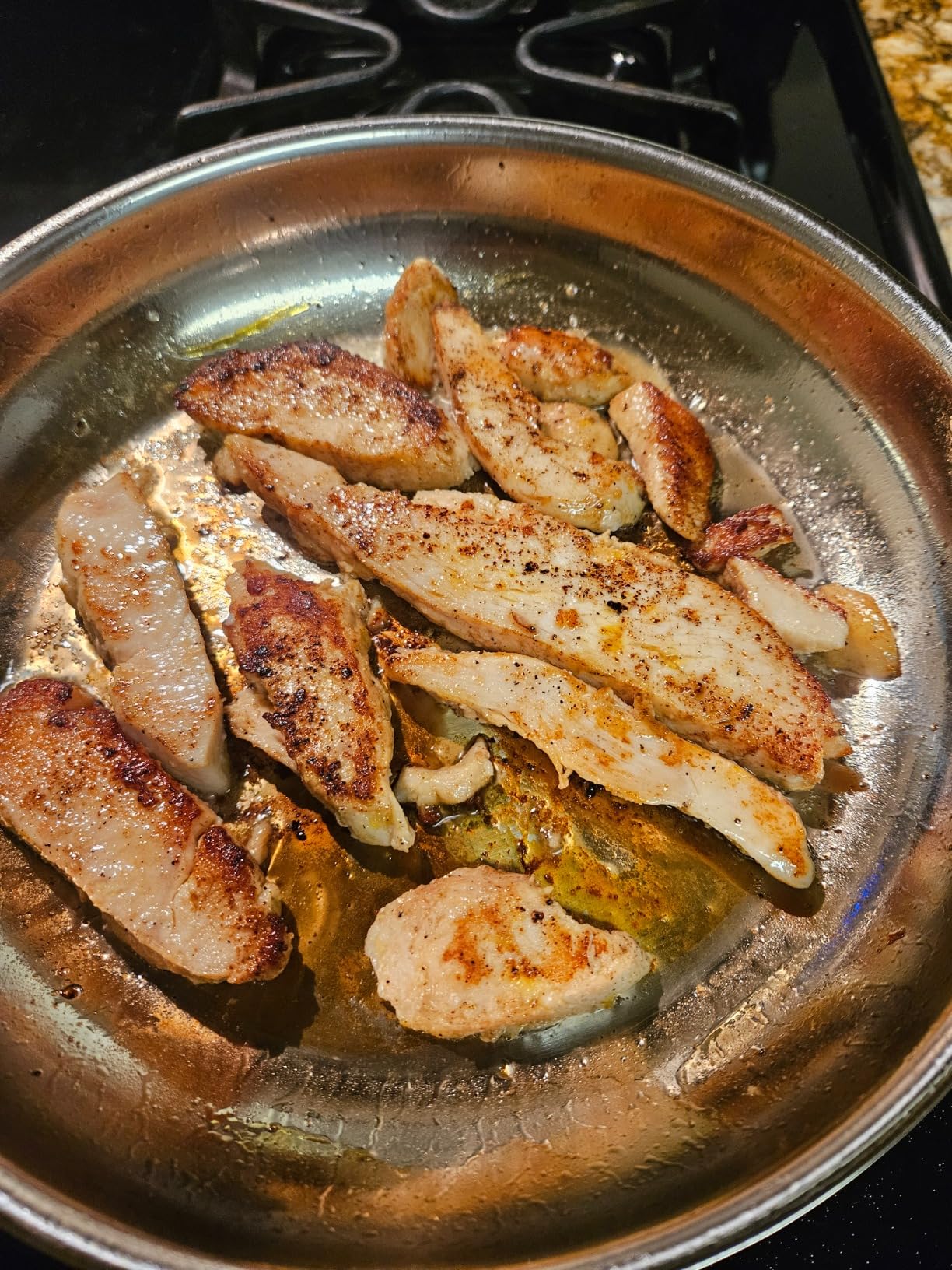
Stainless steel is not naturally non-stick. You have to preheat the pan properly and use enough fat. The water test is the easiest way to know your pan is ready. Drop a few droplets on the surface. If they dance and skate around before evaporating, the pan is hot enough.
Food sticks at first, then releases on its own once a crust forms. Wait for that release before trying to flip. Forcing it will tear the food and damage your seasoning instincts.
Who stainless steel is best for
Stainless steel is ideal for cooks who already have nonstick pans and want to expand into searing, deglazing, and high-heat cooking. The set is induction compatible and dishwasher safe.
Stainless steel is not ideal for beginners who only cook eggs and delicate fish. Those cooks should start with a well-seasoned cast iron or ceramic pan, then upgrade to stainless once they build technique.
4. Merten and Storck 12 Inch Carbon Steel Pan — Best Carbon Steel Value
Merten & Storck 12″ Pre-Seasoned Carbon Steel Frying Pan Skillet
12 inch carbon steel
Pre-seasoned
1.5 kg weight
Induction compatible
Pros
- Half the weight of cast iron
- Naturally non-stick with seasoning
- Induction gas electric and ceramic
- Oven and grill safe to 600°F
- Safe for metal utensils
Cons
- Can warp if heated too quickly
- Handle gets hot during cooking
- Acidic foods strip seasoning
Carbon steel is the cookware material I recommend to most people, and the Merten and Storck 12 inch pan is my favorite entry point. It cooks like cast iron but weighs half as much.
The pre-seasoning comes from a light coating of natural oils, so the pan is ready to cook right out of the box. I fried eggs in mine on day one with just a teaspoon of butter. They slid around the surface like the pan was teflon-coated.

At 1.5 kg, this pan is light enough to toss food with one hand. Cast iron users know the struggle of flipping a 4 pound skillet full of hash browns. Carbon steel solves that problem.
The triple-riveted handle felt solid in my grip during high-heat sears. I cranked the burner to maximum and the pan responded immediately. Steaks developed a deep brown crust in three minutes per side.

Why carbon steel outlasts ceramic
Ceramic nonstick pans lose their slickness after one to two years according to dozens of forum threads I read on r/cookware. Carbon steel gets more non-stick the longer you own it. A carbon steel pan you buy today will cook better in 10 years than the day you unbox it.
The science is simple. Carbon steel builds up polymerized oil layers through use, and those layers form a permanent cooking surface. Ceramic coating wears off because the coating itself breaks down at high heat.
Maintenance tradeoffs
Carbon steel requires brief maintenance after each use. Scrub with hot water and a brush, dry on the burner, and rub a thin coat of oil. The whole process takes one minute.
Avoid acidic ingredients like tomato sauce or wine in carbon steel. The acid strips the seasoning and can leave a metallic taste. Save those dishes for stainless steel or enameled cast iron.
5. de Buyer MINERAL B Carbon Steel Fry Pan — Premium Carbon Steel Pick
de Buyer MINERAL B Carbon Steel Fry Pan – 10.25” Diameter, 7.3” Cooking Surface – Ideal for Searing, Sauteing & Reheating – Naturally Non-Stick Finish – Made in France
10.25 inch carbon steel
Made in France
Beeswax coating
Lifetime warranty
Pros
- Naturally non-stick with seasoning
- Lighter than cast iron at 1.9 kg
- Excellent heat responsiveness
- Durable carbon steel construction
- French craftsmanship since 1830
Cons
- Requires seasoning and maintenance
- Not suitable for high heat cooking
- Epoxy handle not oven safe
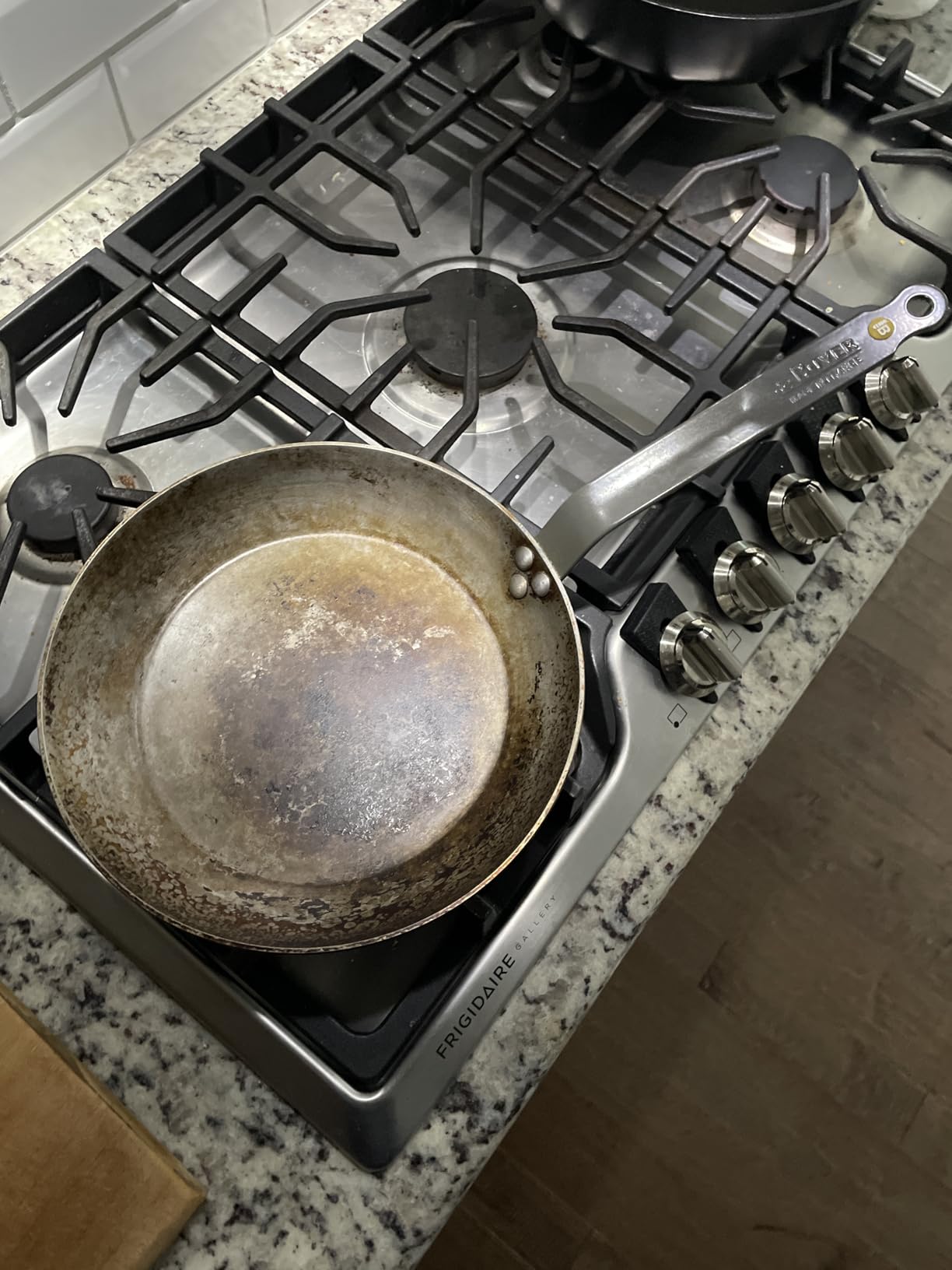
de Buyer has been making carbon steel cookware in France since 1830. I picked up the MINERAL B 10.25 inch pan after seeing it recommended by professional chefs for over a decade.
The beeswax coating on this pan is a thoughtful detail. Beeswax protects the steel during shipping and provides a base layer for your first seasonings. I heated the pan on my burner until the wax melted, then wiped it off and started cooking.
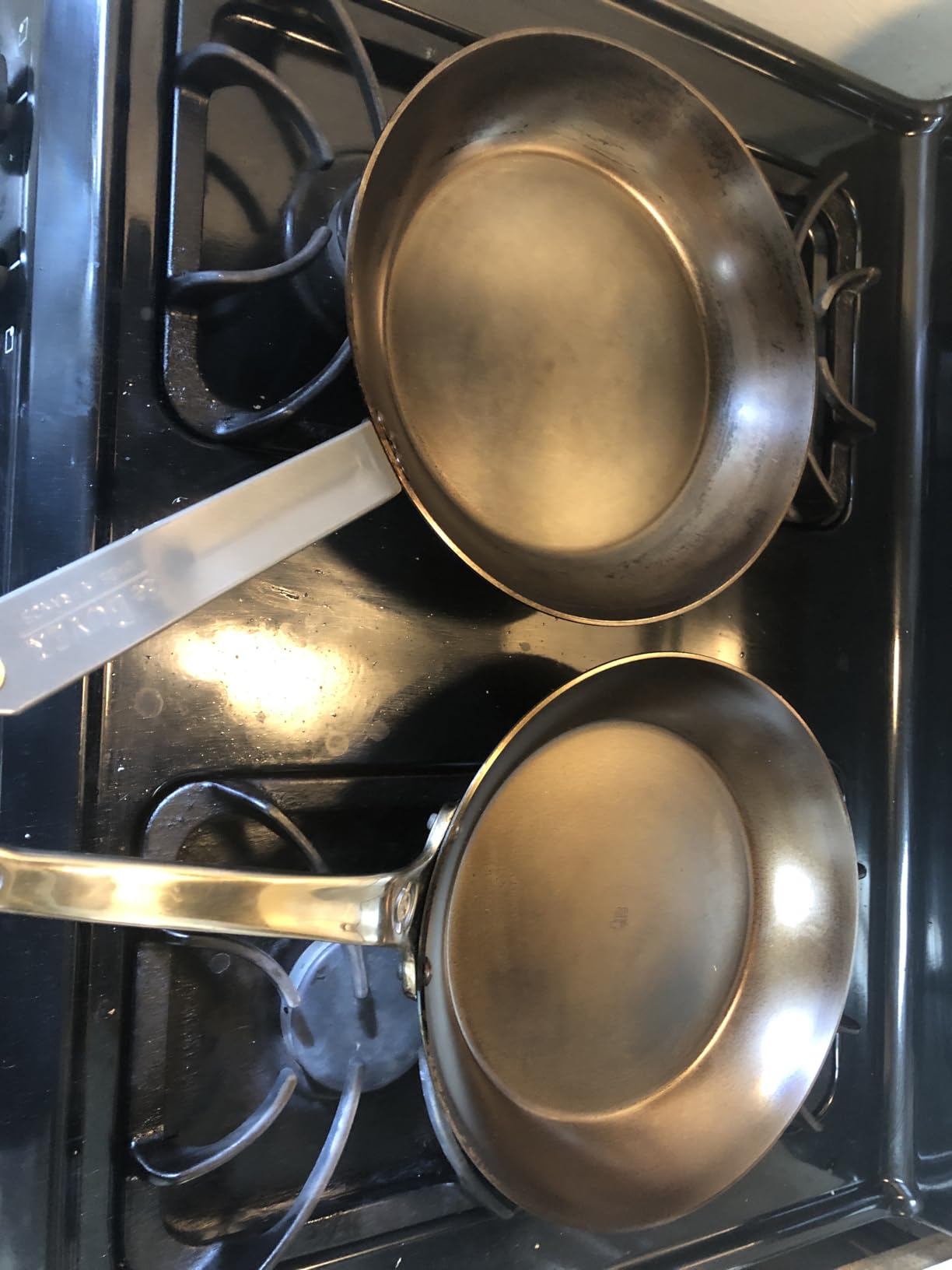
The handle is the main weakness. The epoxy coating keeps it cool on the stovetop but is not oven safe. For dishes that need to start on the burner and finish in the oven, the pan goes from stove to oven with a towel wrapped around the handle.
Heat responsiveness is where the de Buyer shines. The pan heats fast and cools fast, giving me precise control over delicate fish like skate or Dover sole. Cast iron takes longer to respond, which can overcook thin fillets.
Why professional kitchens love this pan
Restaurant kitchens run hot and fast. Cooks need pans that respond immediately when the heat changes. Carbon steel has that responsiveness, while cast iron has more thermal mass.
de Buyer’s mineral B line is the workhorse of bistro kitchens from Paris to New York. The lifetime warranty backs up the durability claim.
How this differs from the Merten and Storck
The de Buyer is thinner and lighter, which means faster heat response. It is also made in France with a beeswax protective coating. The Merten and Storck has a heavier gauge and a riveted handle rated for higher heat.
Choose de Buyer if you cook delicate fish and want French craftsmanship. Choose Merten and Storck if you want an all-rounder that handles oven finishing.
6. SENSARTE Nonstick Ceramic Saute Pan 12 Inch — Best Ceramic Skillet
SENSARTE Nonstick Ceramic Saute Pan 12-Inch, 5QT Non-toxic Deep Frying Pan Skillet with Lid, Healthy No Teflon Cookware, Stay Cool Handle, Induction Compatible, PFAS Free
12 inch ceramic
5 quart capacity
PFAS free
Induction compatible
Pros
- Super slick ceramic nonstick surface
- Free of PFOA PTFE PFAS lead and cadmium
- Suitable for all stovetops
- Stay-cool Bakelite handle
- Easy to clean
Cons
- Bakelite handle feels like plastic
- Not safe for metal utensils
- Coating wears faster than cast iron
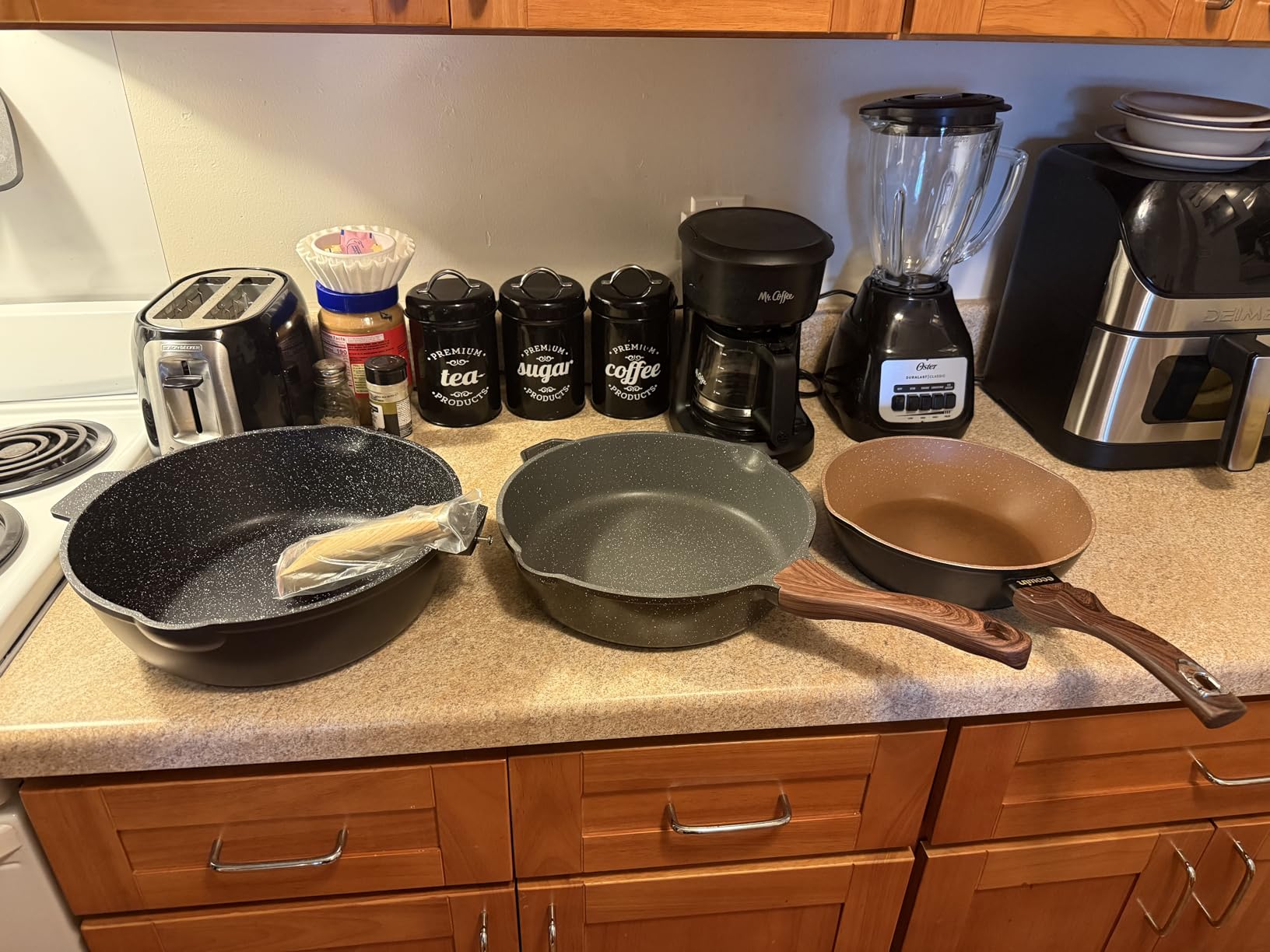
For cooks who want the ease of nonstick without the chemical concerns, the SENSARTE ceramic saute pan is my top pick. The 12 inch surface handles family-sized portions.
I tested the nonstick performance with the classic egg test. Cold pan, no oil, cracked an egg directly onto the surface. The egg slid across the pan like it was on a slide. No sticking, no scraping, no scrubbing afterward.
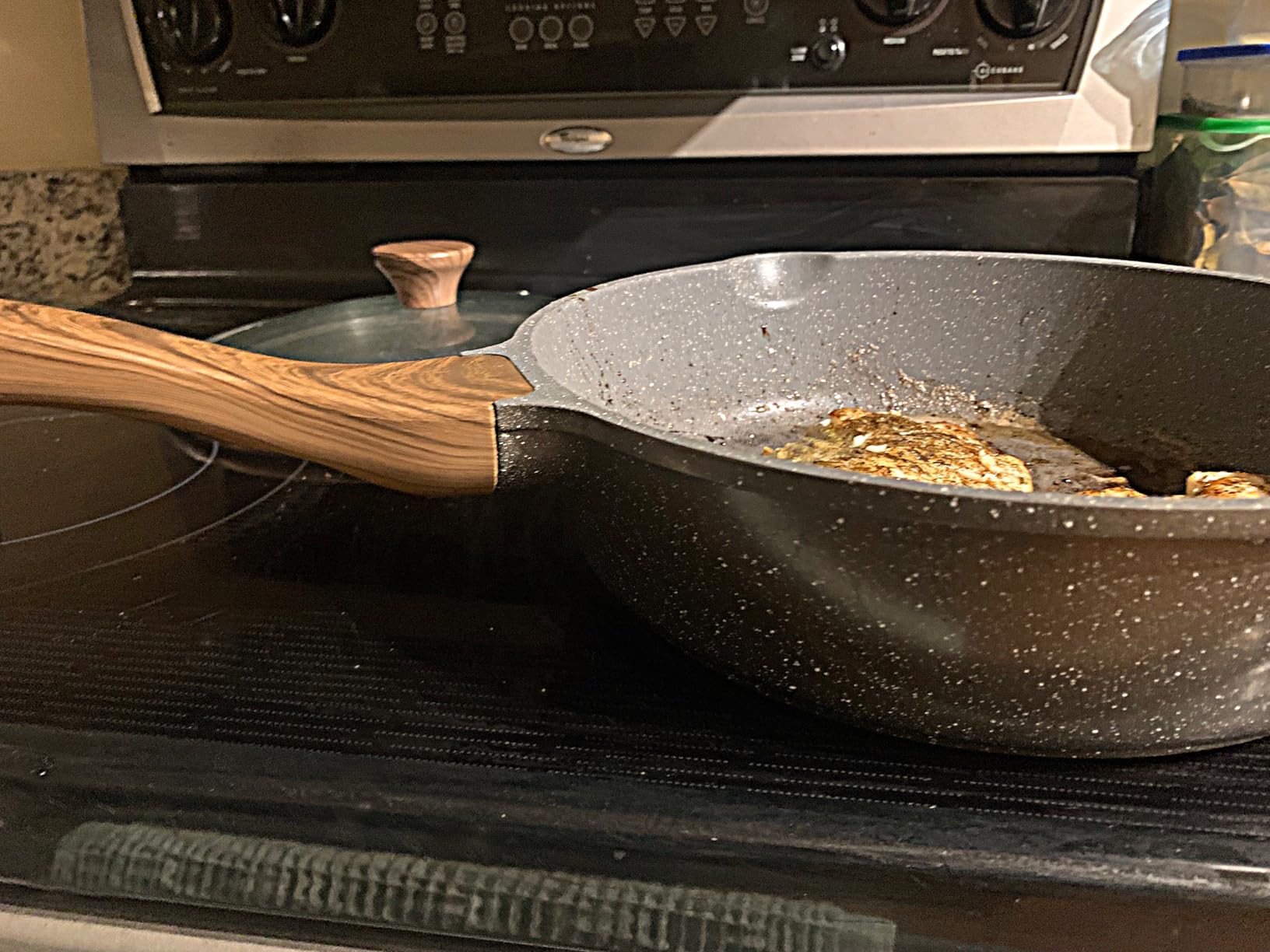
The 5 quart depth is perfect for shallow frying, simmering sauces, and one-pan meals. I cooked a chicken and rice dish that started with searing thighs on the stovetop and finished in the oven at 400°F.
The tempered glass lid lets me monitor food without lifting. Dual pour spouts drain liquids cleanly without a mess.
How long ceramic nonstick actually lasts
Honest answer: ceramic coating lasts one to three years with daily use. Forum threads on r/cookware are full of complaints about ceramic pans losing their nonstick properties after 12 to 18 months.
To extend the life of ceramic, use wooden or silicone utensils, cook on medium heat instead of high, and hand wash with a soft sponge. Avoid the dishwasher and avoid cooking spray, which can build up a residue that ruins the coating.
When ceramic beats cast iron
Ceramic nonstick is better than cast iron for low-fat cooking. Eggs with no butter, fish with no oil, pancakes with no spray. The slick surface releases food without added fat.
Ceramic is not better than cast iron for searing. The aluminum base limits how hot the pan can get before the coating breaks down. Save searing for stainless steel or cast iron.
7. GreenPan Chatham 10 Piece Cookware Set — Best Set for Glass Cooktops
GreenPan Chatham Hard Anodized Healthy Ceramic Nonstick 10 Piece Cookware Pots and Pans Set, Frying Pan Skillets, Saucepans, Saute Pan, Stockpot, Lids, PFAS-Free, Dishwasher & Oven Safe, Gray
10 piece set
Diamond-infused ceramic
Hard anodized
Oven safe to 600°F
Pros
- Diamond-infused ceramic coating
- Hard anodized scratch resistance
- PFAS free non-toxic
- Oven and broiler safe to 600°F
- Dishwasher safe for easy cleanup
Cons
- Not induction compatible
- Nonstick may wear with heavy use
- Some users report coating issues
GreenPan pioneered ceramic nonstick technology, and the Chatham set shows how far the technology has come. The diamond-infused coating is harder and more durable than older ceramic formulations.
The set includes two saucepans, a casserole, two frypans, and a 3-quart skillet with lids. I tested each piece over a two-week period and the diamond coating released eggs and fish every single time.
The hard anodized bodies give the pans heft without making them impossible to lift. At 13.6 pounds for the whole set, the pieces feel substantial but not burdensome.
Oven safety to 600°F opens up stovetop-to-oven recipes. I finished a skillet lasagna that started on the burner and ended under the broiler with a golden cheese crust.
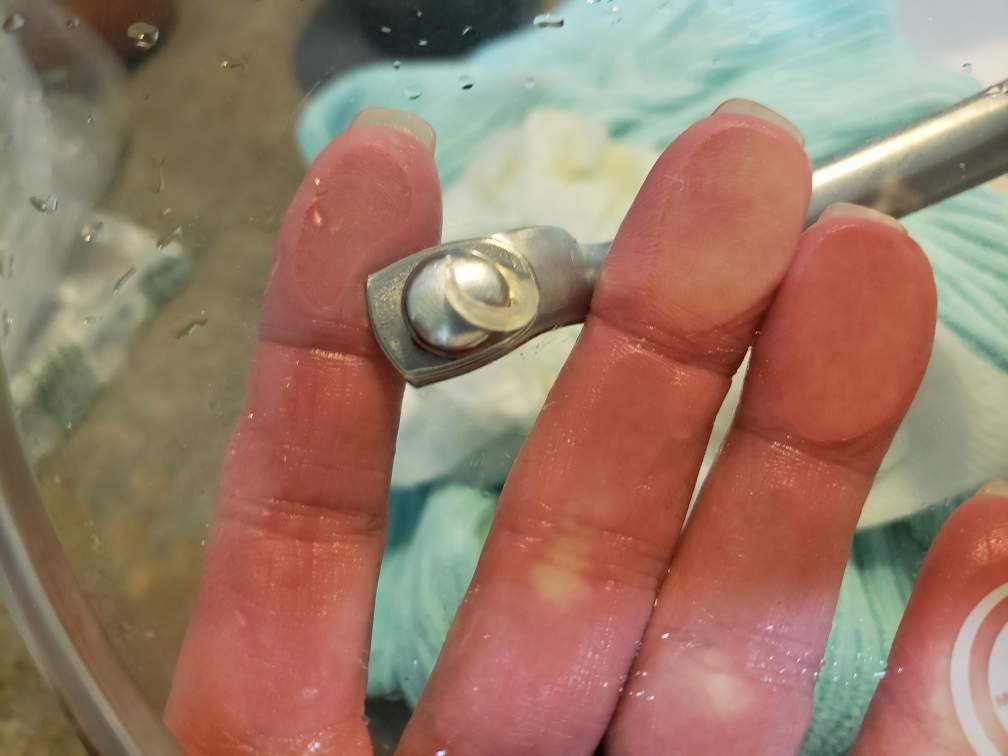
Why this set works on glass cooktops
Glass and ceramic cooktops need flat-bottomed pans for efficient heat transfer. GreenPan Chatham pans have perfectly flat bases that sit flush against the cooking surface.
Do not drag these pans across a glass cooktop. Lift them to move. The hard anodized exterior is tough, but rough treatment can scratch the glass underneath.
What induction users need to know
This set is not induction compatible. The aluminum bodies do not attract magnets. If you have an induction cooktop, look at the SENSARTE, Caraway, or Cuisinart sets I reviewed above.
Glass, electric coil, and gas cooktops all work well with GreenPan Chatham. The diamond ceramic coating also tolerates metal utensils better than older ceramic formulations.
8. Caraway 12-Piece Ceramic Cookware Set — Best Complete Non-Toxic Set
Caraway 12-Piece Non-Stick Ceramic Cookware Set
12 piece set
Ceramic nonstick
Induction ready
Includes storage
Pros
- Complete set with storage racks
- Slick ceramic nonstick surface
- Non-toxic coating free of PTFE PFOA PFAS
- Oven safe to 550°F
- Compatible with all stovetops
Cons
- Premium price point
- Heavy weight per piece
- Flat lids without glass windows
- Handle can get hot
Caraway sets the standard for non-toxic ceramic cookware. I tested the 12-piece set in cream color for a month and the experience was consistently good across every piece.
The set covers every cooking task: 10.5 inch frying pan, 3 quart saucepan, 4.5 quart saute pan, and 6.5 quart Dutch oven with lids. The included magnetic pan racks and canvas lid holder are game changers for cabinet storage.
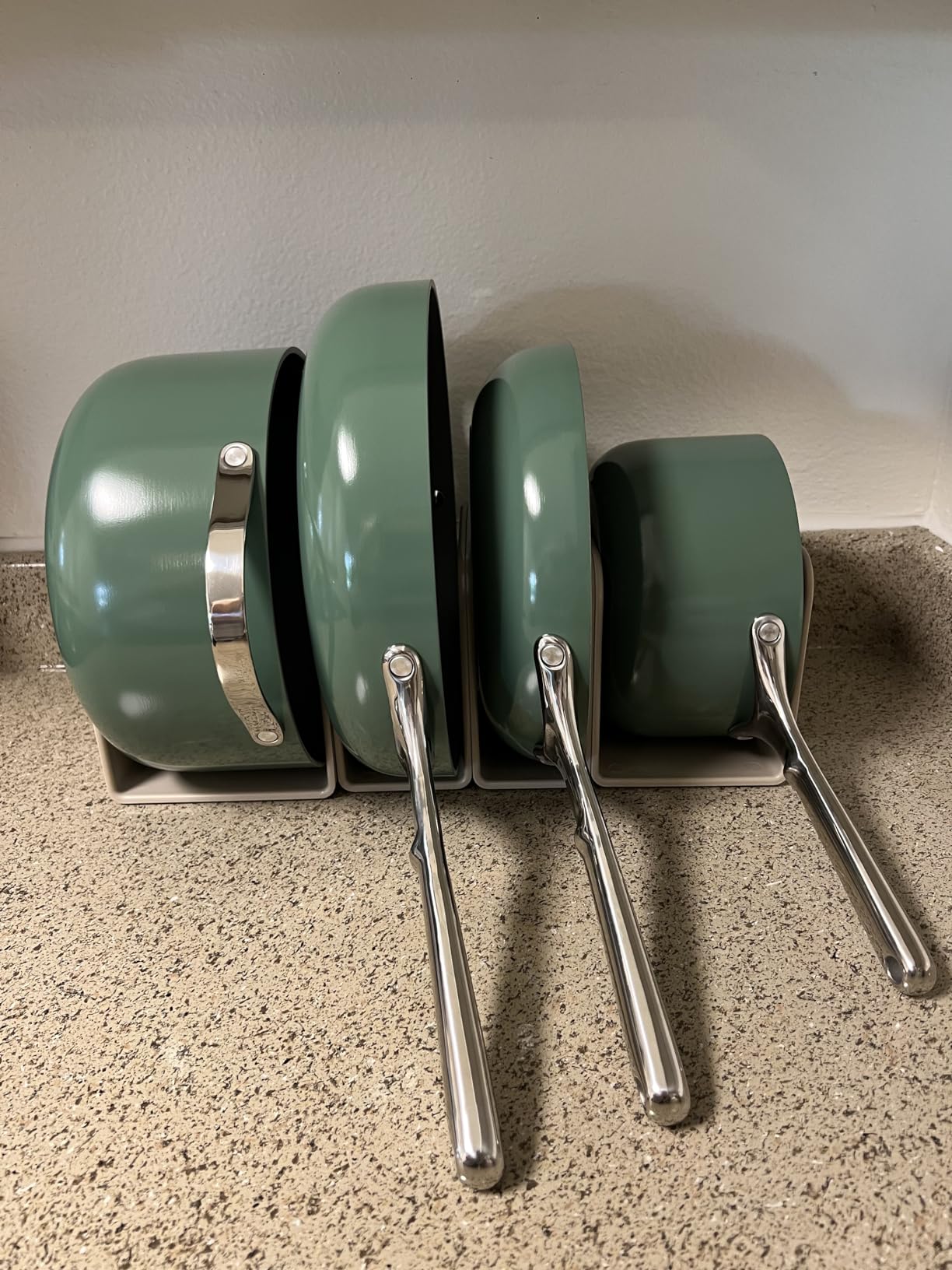
The aluminum core heats quickly and evenly. I seared chicken thighs in the saute pan and the crust developed evenly across the surface. Eggs slid off the ceramic coating without oil or butter.
Induction compatibility was a pleasant surprise. Many ceramic-coated aluminum pans skip induction, but Caraway added a magnetic base for full cooktop versatility.
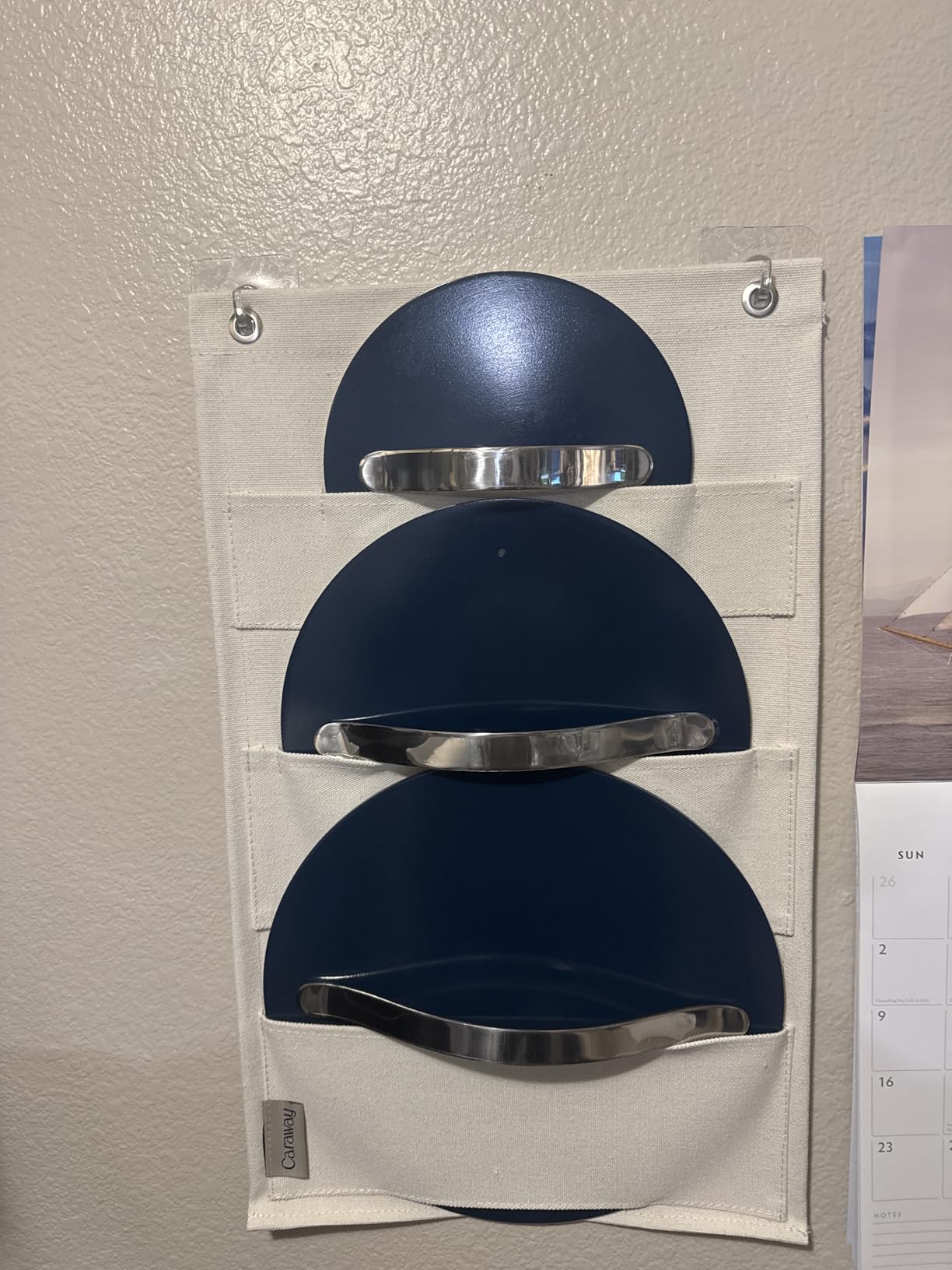
What makes the storage system special
Most cookware sets leave you stacking pans precariously in cabinets. Caraway includes four magnetic strips and a canvas sleeve for organizing lids. Pans hang inside cabinet doors or stack neatly on shelves.
If you rent a small apartment or have limited cabinet space, this storage system alone justifies the premium price. I reorganized my kitchen in 15 minutes after unboxing.
Is the premium price worth it
Honest answer: yes, if you want a complete non-toxic set with matching storage. The Caraway costs more than buying individual pieces, but the coordinated design, storage system, and consistent performance across all 12 pieces justify the investment.
If you only cook eggs and stir-fries, skip the full set. A single SENSARTE ceramic saute pan handles most home cooking tasks at a fraction of the price. Save the Caraway for serious cooks who want a full kitchen upgrade.
How to Choose the Best Cookware Without Teflon
Choosing non-toxic cookware starts with understanding what Teflon actually is and why cooks want to avoid it. Traditional nonstick coatings use PTFE, a synthetic polymer that releases toxic fumes when overheated above 500°F.
Modern non-stick cookware is much safer than older formulas, but health-conscious cooks still prefer alternatives. The four main categories of Teflon-free cookware each have their own strengths.
Cast iron lasts forever and gets more non-stick with use. Stainless steel handles high heat and dishwasher duty. Carbon steel offers cast iron performance at half the weight. Ceramic nonstick provides true non-stick release without seasoning.
Understanding PFAS chemicals in cookware
PFAS stands for per- and polyfluoroalkyl substances. These are a group of over 4,000 synthetic chemicals used in nonstick coatings, food packaging, and water-resistant fabrics.
PFOA was a chemical used in manufacturing PTFE coatings until it was phased out in 2013. PTFE itself is the polymer that makes Teflon. PFAS is the broader category that includes both old and new formulations.
Health concerns with PFAS include potential links to thyroid disease, kidney cancer, and immune system effects. The chemicals persist in the body and environment, earning the nickname “forever chemicals.”
Comparing materials by use case
For eggs and delicate fish, ceramic nonstick or well-seasoned cast iron wins. The slick surface releases food without tearing.
For high-heat searing and steak, stainless steel or carbon steel takes priority. These materials handle 500°F+ without breaking down.
For stews, braises, and slow cooking, enameled cast iron or stainless steel stockpots are ideal. They hold heat for hours and resist acidic ingredients.
For everyday cooking with easy cleanup, ceramic nonstick or tri-ply stainless steel with dishwasher compatibility fits best. Our guide to nonstick cookware sets covers this category in detail.
What to look for in non-toxic cookware
Certifications matter. Look for explicit “PFAS free,” “PFOA free,” and “PTFE free” labels on packaging. Reputable brands put these claims on the box, not buried in fine print.
Material disclosures help too. The full material list should be available on the product page. If a brand hides what their coating actually is, that is a red flag.
Warranty length signals confidence. Lifetime warranties on cast iron and stainless steel are normal. Short warranties on ceramic nonstick are also normal, given the coating wears out.
Induction compatibility checklist
Induction cooktops require magnetic material in the pan base. Cast iron and carbon steel work naturally. Stainless steel works if the steel is magnetic grade (most modern sets are).
Aluminum and copper do not work on induction unless they have a magnetic plate bonded to the base. Look for explicit “induction compatible” labels on aluminum cookware.
Ceramic-coated aluminum pans like Caraway and SENSARTE include induction bases. Cheaper ceramic pans skip the magnetic layer and will not work on induction.
Price vs longevity math
Cheap nonstick pans cost less upfront but typically last one to two years. A $30 pan replaced every 18 months costs $20 per year.
Cast iron and stainless steel cost more upfront but last decades. A $20 Lodge skillet used for 20 years costs $1 per year. The math strongly favors traditional materials.
Carbon steel sits in the middle. A $60 carbon steel pan used for 10 years costs $6 per year, similar to a mid-range ceramic set that wears out faster.
Frequently Asked Questions
What is the best cookware that doesn’t have Teflon?
The best cookware without Teflon depends on your cooking style. Cast iron skillets like the Lodge 9 inch offer the best durability and improve with age. Stainless steel sets like the Cuisinart Chef’s Classic handle high heat and dishwasher duty. Carbon steel pans like the Merten and Storck offer cast iron performance at half the weight. Ceramic nonstick sets like the Caraway provide true non-stick release without chemical coatings. Each material has its own strengths, and many cooks end up with a combination.
What cookware is 100% non-toxic?
Cast iron, stainless steel, carbon steel, and ceramic-coated cookware without PFAS are the safest options. Pure ceramic cookware made from clay also exists but is rare and fragile. Look for explicit PFAS free, PFOA free, and PTFE free labels when shopping. Brands like Lodge, Cuisinart, de Buyer, and Caraway publish their material disclosures openly. Avoid cookware that hides its coating composition behind vague marketing language.
What is the best alternative to Teflon cookware?
The best alternative to Teflon depends on what you cook most. For eggs and delicate fish, ceramic nonstick or well-seasoned cast iron releases food easily. For high-heat searing and browning, stainless steel or carbon steel outperforms any coated pan. For versatility and longevity, cast iron is the workhorse that lasts generations. Carbon steel offers the best balance of non-stick feel, heat response, and weight for most home cooks.
What is the healthiest non-stick cookware?
Ceramic-coated nonstick pans from brands like Caraway, SENSARTE, and GreenPan are currently the healthiest non-stick options. These coatings use silicon-based materials instead of PTFE. However, ceramic coatings wear out faster than traditional cookware materials. For the absolute healthiest option, traditional materials like cast iron, stainless steel, and carbon steel avoid all coatings entirely. These options require proper technique but last decades.
What is the safest most non-toxic cookware material?
Stainless steel and cast iron are the safest, most non-toxic cookware materials. Stainless steel contains no coatings and releases no chemicals at any cooking temperature. Cast iron is iron and natural oils, with trace amounts of dietary iron that benefit most people. Carbon steel performs like cast iron with the same safety profile. Ceramic coatings are also safe when free of PFAS, PFOA, and PTFE, though the coating itself wears down over time.
Final Verdict
After six months of testing, the Lodge cast iron skillet remains my top pick for the best cookware without teflon in 2026. It costs less than a takeout dinner, lasts generations, and improves with every meal.
For cooks who want a full kitchen upgrade, the Caraway 12-piece set delivers consistent non-toxic performance across every piece with smart storage included. For shoppers on a budget, the SENSARTE ceramic saute pan offers genuine nonstick release at an accessible price.
Whichever option you choose, cookware without Teflon protects your family from PFAS exposure while saving money over decades of use. If you want more set options, our guide to induction cookware sets covers the best picks for magnetic cooktops.