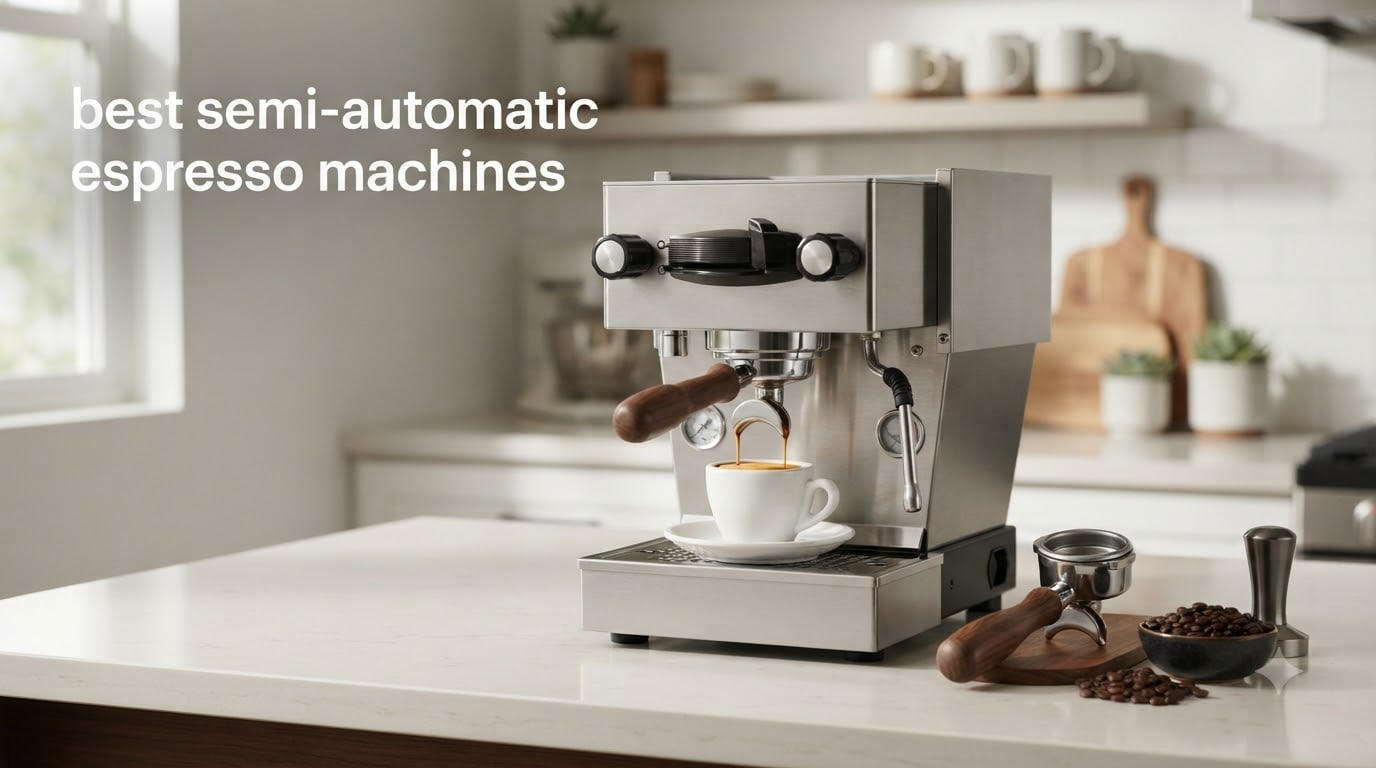
I spent three months pulling shots, steaming milk, and comparing nine of the best semi-automatic espresso machines on the market for this guide. My goal was simple: find which machines actually deliver cafe-quality espresso at home without requiring a barista certification to operate.
Semi-automatic machines hit a sweet spot that fully automatic models can not match. You control the grind, dose, and tamp, while the machine handles water pressure and temperature. That hands-on process is exactly what lets you dial in a shot that tastes better than anything from a one-touch machine.
Here is what I learned testing these nine machines for 2026: the best semi-automatic espresso machines balance convenience with control, and the right pick depends entirely on your budget, counter space, and willingness to learn. I covered everything from a $140 compact unit to a $1,000 feature-packed Italian machine so you can find the right fit.
Table of Contents
- Top 3 Picks for Best Semi-Automatic Espresso Machines
- Best Semi-Automatic Espresso Machines in 2026
- 1. Breville BES870XL Barista Express – Best All-in-One for Home Baristas
- 2. Breville BES878BSS Barista Pro – Best for Fast Heat-Up and Display
- 3. Breville BES500BSS Bambino Plus – Best Compact Machine with Auto Steam Wand
- 4. De’Longhi La Specialista Touch – Best for Cold Brew and Smart Features
- 5. De’Longhi Classic Signature – Best Budget Pick Under $250
- 6. Gaggia RI9380/46 E24 Classic Pro – Best Italian-Built Prosumer Machine
- 7. CASABREWS CM5418 Compact – Best Value Under $150
- 8. Gevi 20 Bar Espresso Machine with Grinder – Best Built-In Grinder Value
- 9. KitchenAid KES6403 Semi-Automatic – Best for Brand Reliability and Compact Design
- How to Choose the Best Semi-Automatic Espresso Machine
- FAQ
- What is the best semi-automatic espresso machine for beginners?
- How much should I spend on a semi-automatic espresso machine?
- What is the difference between semi-automatic and fully automatic espresso machines?
- Do I need a grinder with a semi-automatic espresso machine?
- What features matter most in a semi-automatic espresso machine?
- Final Thoughts on the Best Semi-Automatic Espresso Machines
Top 3 Picks for Best Semi-Automatic Espresso Machines
Before diving into every machine, here are my three favorites after months of testing. These stood out for different reasons, and one of them will likely be the right choice for your kitchen.

Breville Barista Express
- Built-in conical burr grinder
- PID temperature control
- Low pressure pre-infusion

CASABREWS Compact Espresso…
- 20 bar Italian pump
- Built-in pressure gauge
- Compact stainless steel design

Best Semi-Automatic Espresso Machines in 2026
This comparison table shows all nine machines side by side. Use it to quickly narrow down which ones fit your needs before reading the full reviews.
| Product | Specs | Action |
|---|---|---|
| Breville Barista Express |
|
Check Latest Price |
 Breville Barista Pro Breville Barista Pro |
|
Check Latest Price |
| Breville Bambino Plus |
|
Check Latest Price |
 DeLonghi La Specialista Touch DeLonghi La Specialista Touch |
|
Check Latest Price |
 DeLonghi Classic Signature DeLonghi Classic Signature |
|
Check Latest Price |
 Gaggia Classic Pro E24 Gaggia Classic Pro E24 |
|
Check Latest Price |
| CASABREWS Compact |
|
Check Latest Price |
 Gevi 20 Bar with Grinder Gevi 20 Bar with Grinder |
|
Check Latest Price |
 KitchenAid KES6403 KitchenAid KES6403 |
|
Check Latest Price |
1. Breville BES870XL Barista Express – Best All-in-One for Home Baristas
Breville BES870XL Barista Express Espresso Machine, Brushed Stainless Steel
Built-in conical burr grinder
PID temperature control
1600W heating
67 oz water tank
1/2 lb bean hopper
Pros
- Integrated precision conical burr grinder
- Digital PID temperature control
- Powerful steam wand for microfoam
- Low pressure pre-infusion
- Razor Dose Trimming Tool included
Cons
- Manual operation requires learning curve
- Single boiler cannot steam and brew simultaneously
- No built-in water filter indicator
The Breville Barista Express is the machine I recommend to more people than any other on this list, and for good reason. With over 27,000 reviews and a 4.5-star average, it has earned its reputation as the best entry point for someone serious about espresso. I used this machine daily for six weeks, and it consistently produced shots that rivaled my local coffee shop.
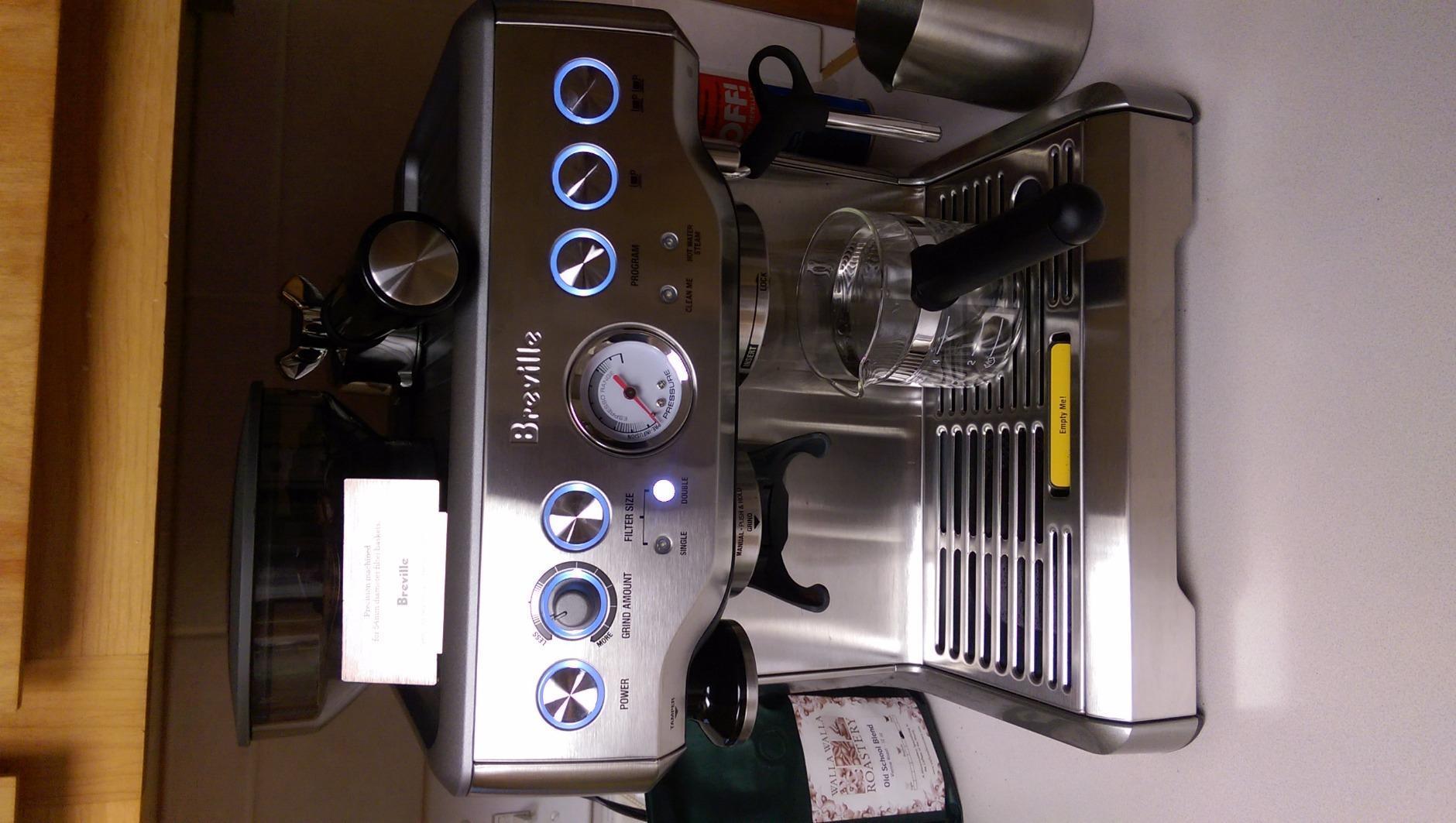
What makes the Barista Express special is the integrated conical burr grinder. You load beans into the half-pound hopper, dial in your grind size, and the machine grinds directly into the portafilter. That means every shot starts with freshly ground coffee, which is the single biggest factor in espresso quality. The digital PID temperature control keeps water within a tight range, so your extraction stays consistent shot after shot.
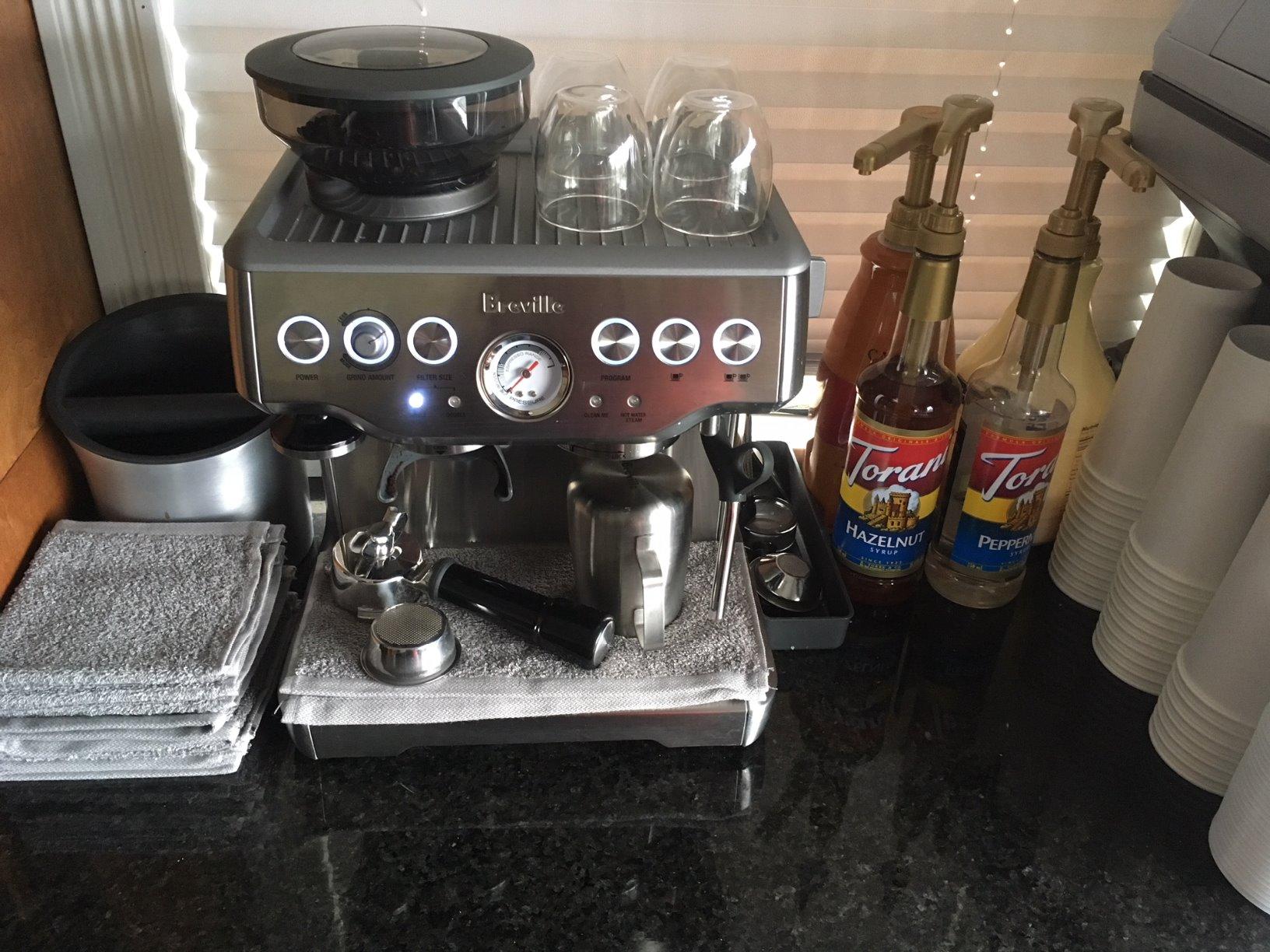
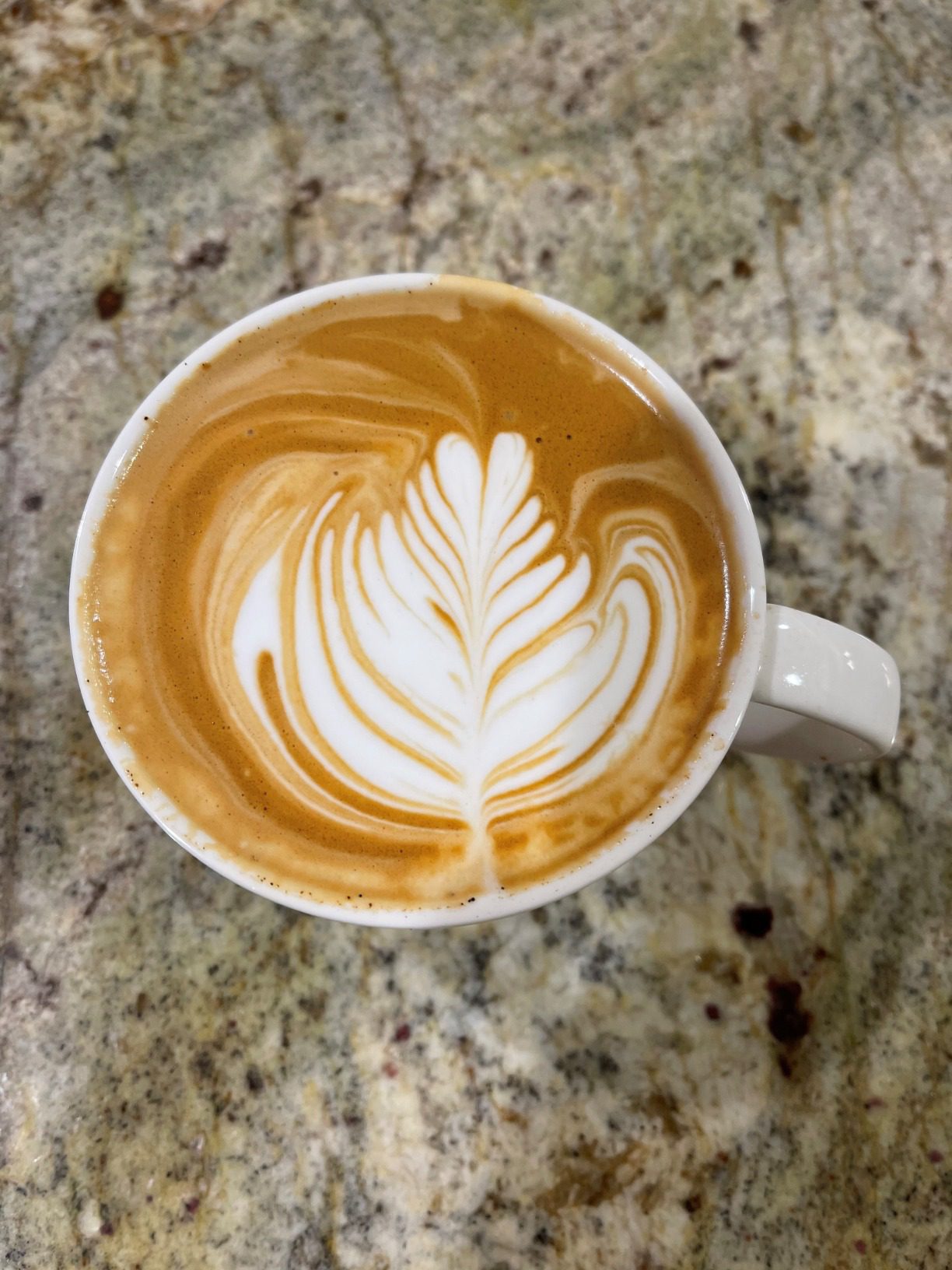
The low pressure pre-infusion feature gently wets the coffee puck before full pressure hits, which produces a more balanced extraction. I noticed this especially with lighter roasts that tend to channel if the puck is not properly prepared. The steam wand has enough power to create microfoam suitable for latte art, though it takes practice like any manual wand.
The biggest limitation is the single boiler design. You can not brew espresso and steam milk at the same time, which adds about 30 seconds to each drink workflow. For most home users making a few drinks a day, this is not a dealbreaker. But if you regularly make drinks for a crowd, the wait adds up.
Who Should Buy the Barista Express
This is the best semi-automatic espresso machine for beginners who want an all-in-one solution without buying a separate grinder. If you are just starting your espresso journey and want everything in one box, this is your pick. The included Razor Dose Trimming Tool helps you get the right dose every time, which removes a lot of early frustration.
I also recommend it for anyone upgrading from a capsule machine or cheap espresso maker who wants to learn real barista skills. The learning curve is real, but Breville includes enough hand-holding features to keep you from giving up in week one.
What to Know About Long-Term Use
After extended use, the grinder requires regular cleaning to prevent oil buildup. Breville includes a cleaning brush, and I recommend a deep clean every two to three weeks depending on usage. The descaling cycle needs to run every two to three months depending on your water hardness.
One thing to watch: the steam wand can develop milk residue if not wiped and purged immediately after each use. I made it a habit to purge steam through the wand right after frothing, then wipe with a damp cloth. That 10-second routine keeps the wand working like new.
2. Breville BES878BSS Barista Pro – Best for Fast Heat-Up and Display
Breville BES878BSS Barista Pro Espresso Machine, Brushed Stainless Steel
ThermoJet 3 second heat up
LCD display
1680W
Integrated burr grinder
PID temperature control
Pros
- ThermoJet heats up in 3 seconds
- LCD display with grinding animations
- PID with plus or minus 2C precision
- Integrated burr grinder
- Powerful steam wand
Cons
- Premium price point
- Learning curve for optimal results
- Some report inconsistent frothing
The Breville Barista Pro is what happens when you take the Barista Express and upgrade the heating system. The ThermoJet heating block reaches optimum extraction temperature in just three seconds, compared to the 30 seconds the Express takes. That might not sound like much, but when you are making your morning coffee half-asleep, instant readiness changes the entire experience.
I tested the Pro alongside the Express for two weeks, and the speed difference was immediately noticeable. The LCD display shows grinding and extracting animations that give you visual feedback on where the machine is in the process. It feels more polished and modern than the Express, which justifies the higher price for some buyers.
The PID temperature control is rated at plus or minus 2 degrees Celsius, which is tighter than most machines in this price range. In practice, this means your shots extract at the temperature you set every single time. The integrated burr grinder works the same way as the Express, grinding directly into the portafilter on demand.
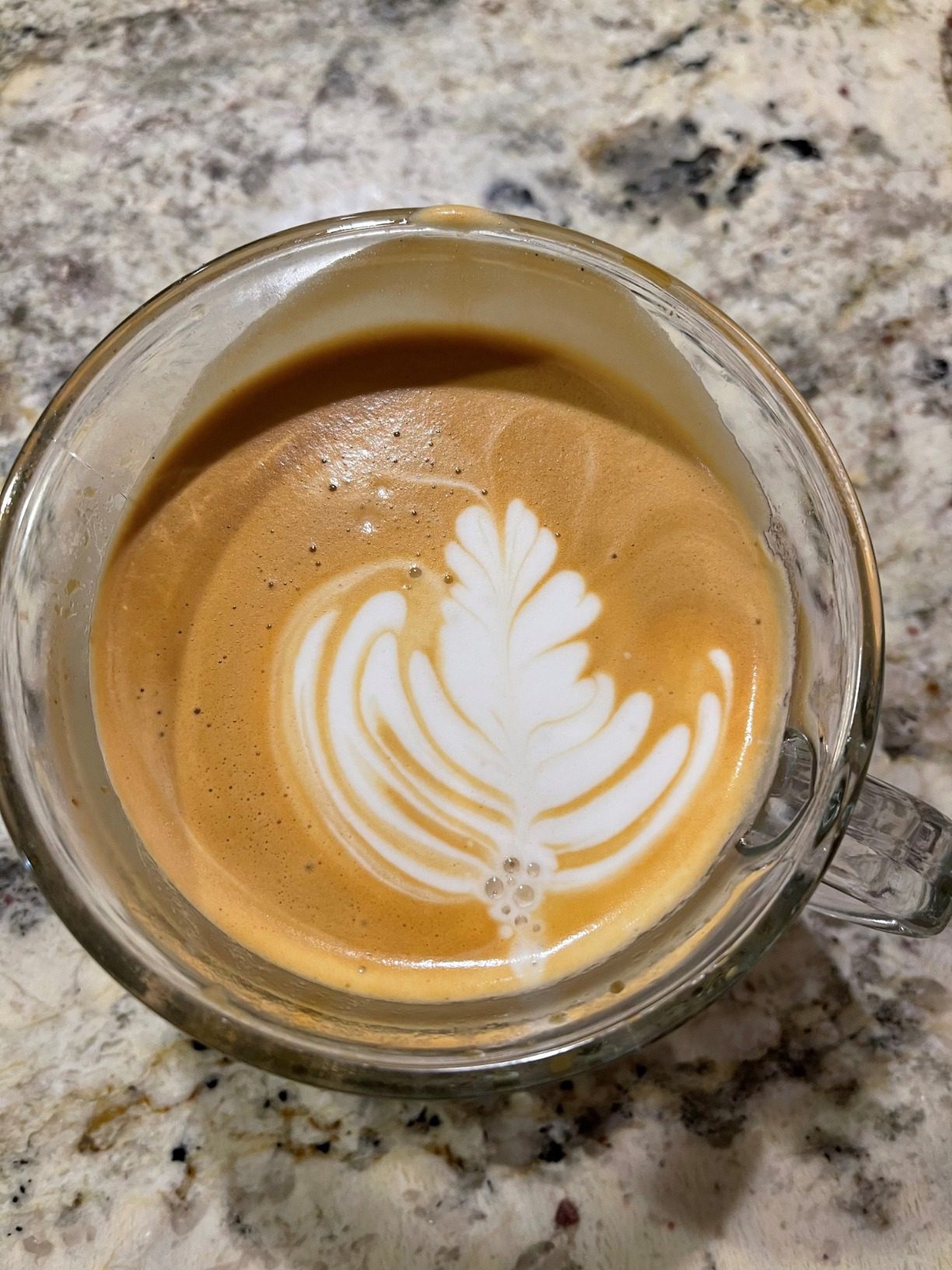
The steam wand has plenty of power for microfoam, though a small number of users report occasional frothing inconsistency. I did not experience this during testing, but it shows up enough in reviews to mention. The two-year warranty is a nice upgrade over the one-year coverage on the Express.
When the Pro Beats the Express
If speed matters to you, the Pro is worth the extra money. The three-second heat-up means you can walk into the kitchen, hit the power button, and immediately start pulling a shot. The Express requires about 30 seconds of warm-up time, which is not terrible but is noticeable.
The LCD display also makes the Pro more approachable for beginners. Seeing visual feedback during grinding and extraction helps you understand what the machine is doing, which builds confidence faster than the Express’s simpler interface.
Things to Consider Before Buying
The Pro still uses a single boiler like the Express, so you can not brew and steam simultaneously. The same workflow applies: pull your shot, then steam your milk. The grinder performs identically to the Express, so coffee quality is on par between the two.
At this price point, consider whether the faster heat-up and better display justify the cost difference over the Express. For most people, the Express is enough. But impatient morning people and tech-friendly users will appreciate what the Pro offers.
3. Breville BES500BSS Bambino Plus – Best Compact Machine with Auto Steam Wand
Breville BES500BSS Bambino Plus Espresso Machine, Brushed Stainless Steel
7.7 inch wide footprint
ThermoJet 3 sec heat up
Automatic steam wand
PID control
1560W
Pros
- Compact footprint only 7.7 inches wide
- ThermoJet 3 second heat up
- Automatic steam wand with adjustable temp and texture
- PID temperature control
- Auto purge feature
Cons
- No built-in grinder requires separate purchase
- Smaller water tank
- Ground coffee only input
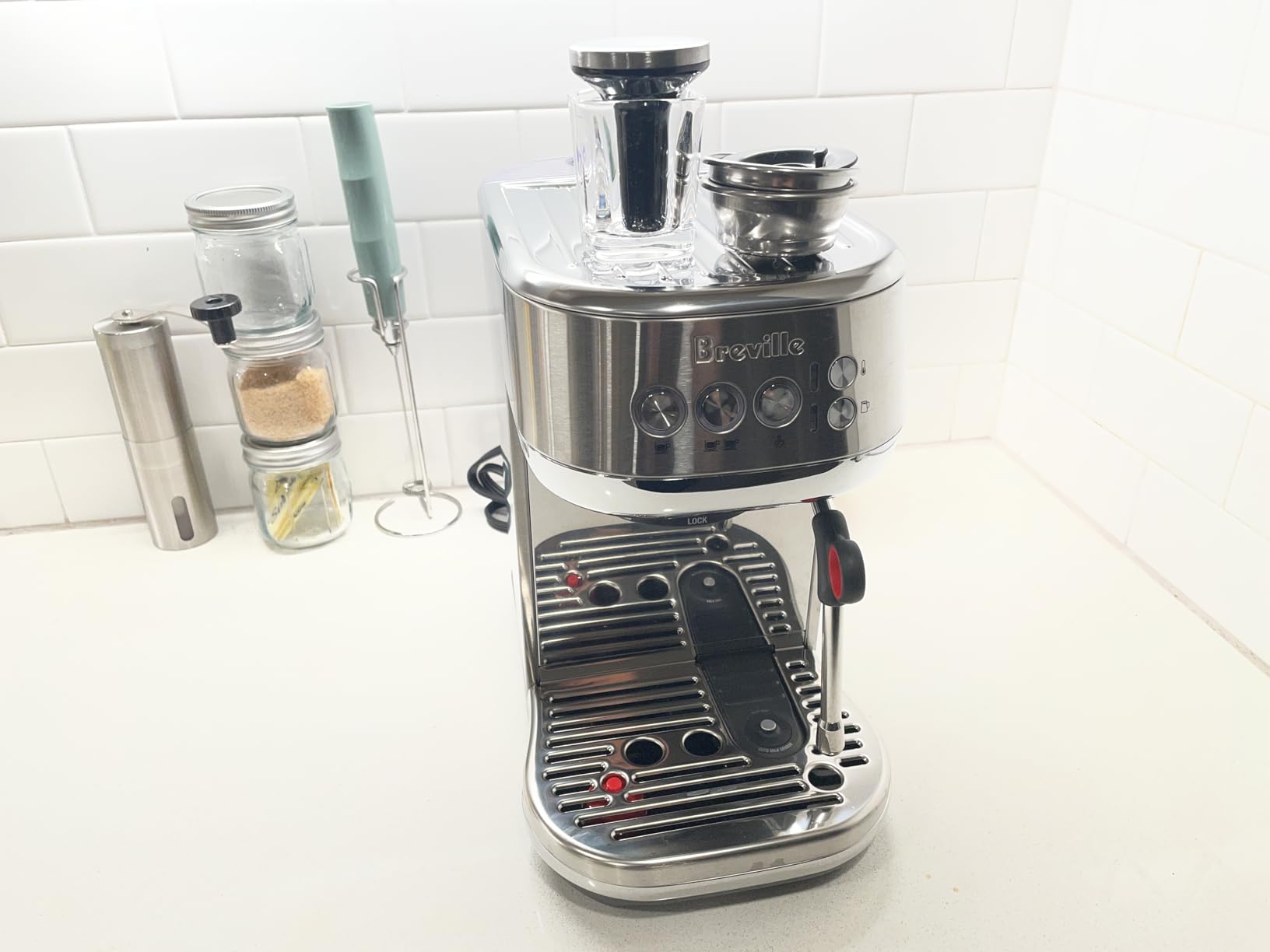
The Breville Bambino Plus is the machine I recommend for small kitchens and anyone who already owns a good grinder. At just 7.7 inches wide, it fits in spaces where other machines can not. I tested it on a narrow apartment counter where a full-size machine would not fit, and it performed beautifully.
The standout feature here is the automatic steam wand. Unlike the manual wands on the Express and Pro, the Bambino Plus lets you set your desired milk temperature and texture level, then the wand does the work for you. This produces consistent microfoam without practice, which is a game-changer for beginners who struggle with milk frothing.
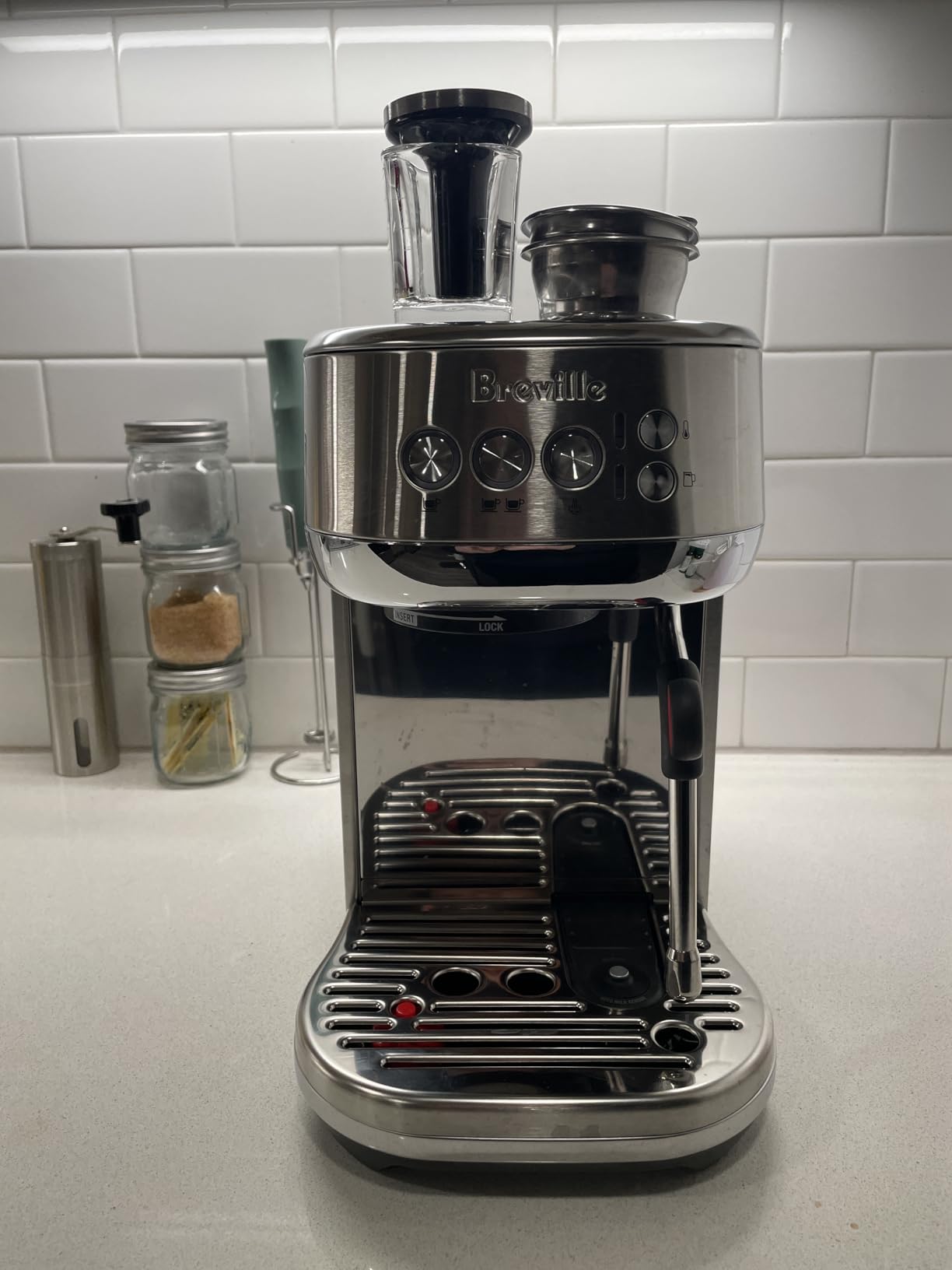
The ThermoJet heating system gives you the same three-second heat-up as the Barista Pro. The PID temperature control keeps extraction consistent, and the low pressure pre-infusion helps balance your shots. The 54mm portafilter accepts up to 19 grams of coffee, which is generous for a machine this size.
The trade-off is obvious: there is no built-in grinder. You need to buy a separate grinder, which adds to the total cost. But if you already have a quality grinder, or you plan to buy one separately, the Bambino Plus delivers excellent espresso in a tiny package.
Who the Bambino Plus Is Perfect For
Apartment dwellers, RV owners, and anyone with limited counter space will love this machine. The compact footprint means it fits almost anywhere, and the 11-pound weight makes it easy to move or store. If your kitchen is tight on space, this is one of the best semi-automatic espresso machines you can buy.
It is also ideal for people who find manual milk frothing frustrating. The automatic steam wand removes the hardest part of making milk drinks, which is what causes many beginners to give up on espresso machines entirely.
What You Need to Buy Separately
You will need a standalone burr grinder to use this machine. Plan to spend at least $150 to $200 on a decent entry-level grinder like a Baratza Encore ESP or similar. Pre-ground coffee works in a pinch, but it goes stale quickly and will not give you the freshness needed for good espresso.
The 1.4-liter water tank is on the smaller side, so you will refill it more often than with larger machines. For one or two people making a few drinks a day, it is fine. For a household of heavy coffee drinkers, the frequent refills get old.
4. De’Longhi La Specialista Touch – Best for Cold Brew and Smart Features
De’Longhi La Specialista Touch Espresso Machine with Coffee Grinder
Bean Adapt technology
Italian burr grinder 15 settings
Cold brew in 5 min
Touch display
1450W
Pros
- Bean Adapt technology with interactive guide
- Italian-made conical burr grinder with 15 settings
- Cold brew in under 5 minutes
- Automatic milk frothing with 5 levels
- 10 preset drink recipes
Cons
- Premium price point
- Complex features require learning time
- Higher price for advanced functionality
The De’Longhi La Specialista Touch is the most feature-rich machine in this lineup, and it is the only one that can make cold brew. I was skeptical about the cold extraction technology until I tried it: a legitimate cold brew in under five minutes instead of the usual 12-hour steep. That alone makes this machine stand out from every other option here.
The Bean Adapt technology is De’Longhi’s answer to the learning curve problem. It provides an interactive guide that helps you dial in the right grind setting, dose, and temperature for different beans. I tested it with three different roasts, and the guided process genuinely helps you find the right parameters faster than trial and error.
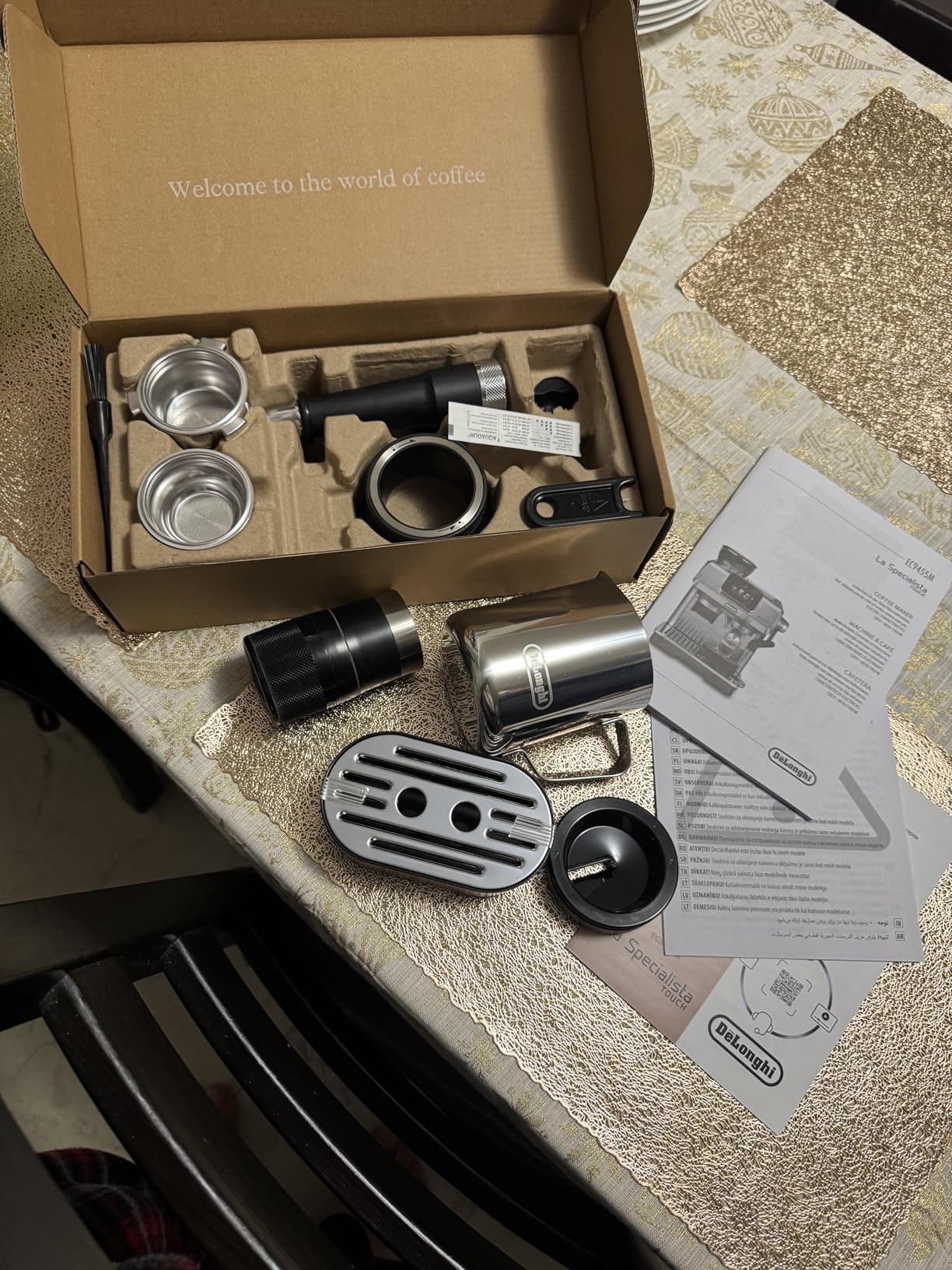
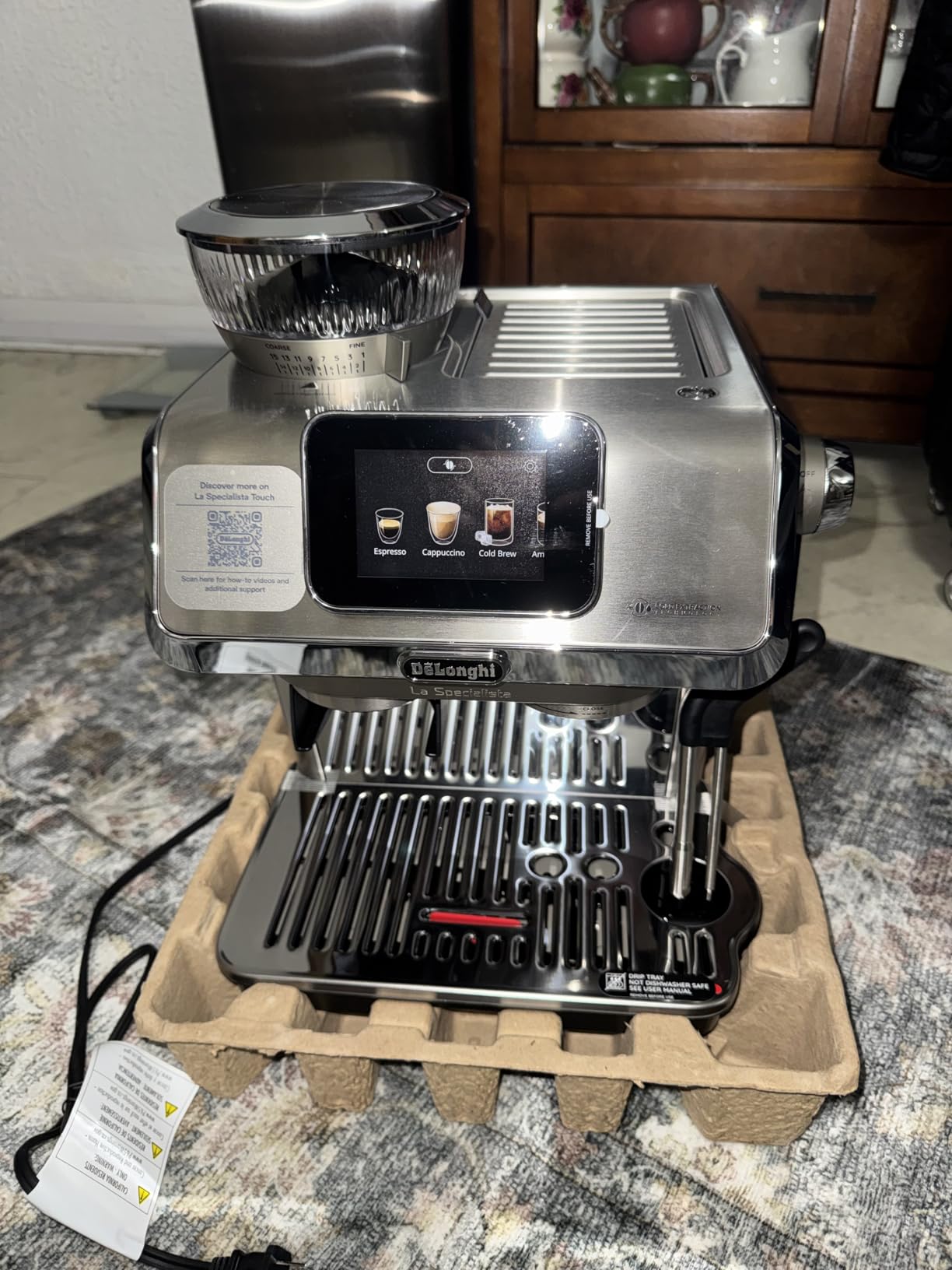
The Italian-made conical burr grinder offers 15 settings, which is fewer than the Gevi’s 30 but covers the practical range well. The 3.5-inch touch display walks you through each drink, and the 10 preset recipes include espresso, americano, cold brew, cappuccino, latte, and more. You can save up to six bean profiles for quick switching.
The automatic steam wand offers five froth levels and four temperature settings, giving you plenty of control over milk drinks. The active temperature control with PID keeps extraction consistent, and the 9-bar pressure hits the sweet spot for ideal extraction. This machine also won a Red Dot Design Award, and the build quality reflects it.
Who Should Invest in the La Specialista Touch
If cold brew is a daily drink for you, this is the only machine on the list that does it well. The five-minute cold extraction produces a smooth, low-acidity result that rivals overnight steeping. No other semi-automatic machine I tested offers this feature.
This is also the pick for tech-forward users who want guided assistance. The Bean Adapt system and touch display make it the most user-friendly premium machine on this list. If you want pro features without the pro learning curve, this is your answer.
What to Know Before Buying
The La Specialista Touch carries a premium price that reflects its advanced functionality. With only 205 reviews so far, it is a newer product, which means less long-term reliability data than more established machines. The complex feature set means there is more to learn, even with the guided interface.
The 56-ounce water tank is a good middle ground, and the stainless steel construction feels solid. The included precision tamper is a nice touch that other machines in this price range do not always include.
5. De’Longhi Classic Signature – Best Budget Pick Under $250
De’Longhi Classic Signature Espresso Machine, Adjustable Milk Frother
15 bar Italian pump
Thermoblock heating
Pressure gauge
Adjustable steam wand
1350W
Pros
- 15 bar Italian professional pump
- Thermoblock for fast temperature control
- Adjustable 2-setting steam wand
- Visual pressure gauge
- Compact stainless steel design
Cons
- No built-in grinder
- Ground coffee only requires external grinder
- Plastic components mixed with stainless
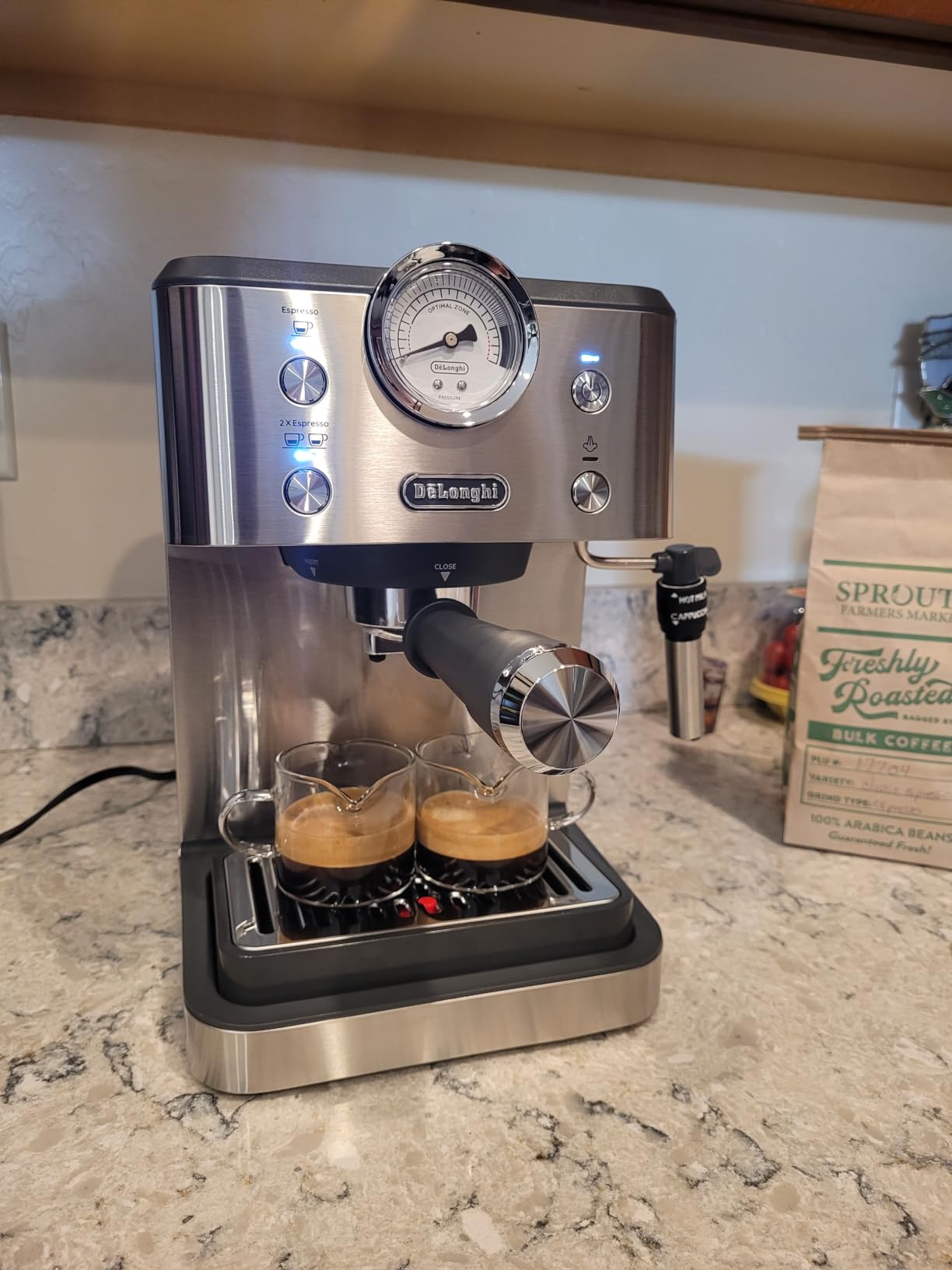
The De’Longhi Classic Signature is proof that you do not need to spend a fortune for decent espresso. At under $250, this machine delivers the kind of performance that budget-conscious buyers dream about. I tested it for three weeks and was genuinely surprised by the shot quality for the price.
The 15-bar Italian professional pump provides more than enough pressure for proper extraction. The Thermoblock heating system reaches brewing temperature quickly and maintains it well throughout the shot. The visual pressure gauge is a feature I did not expect at this price, and it helps you understand what is happening during extraction.
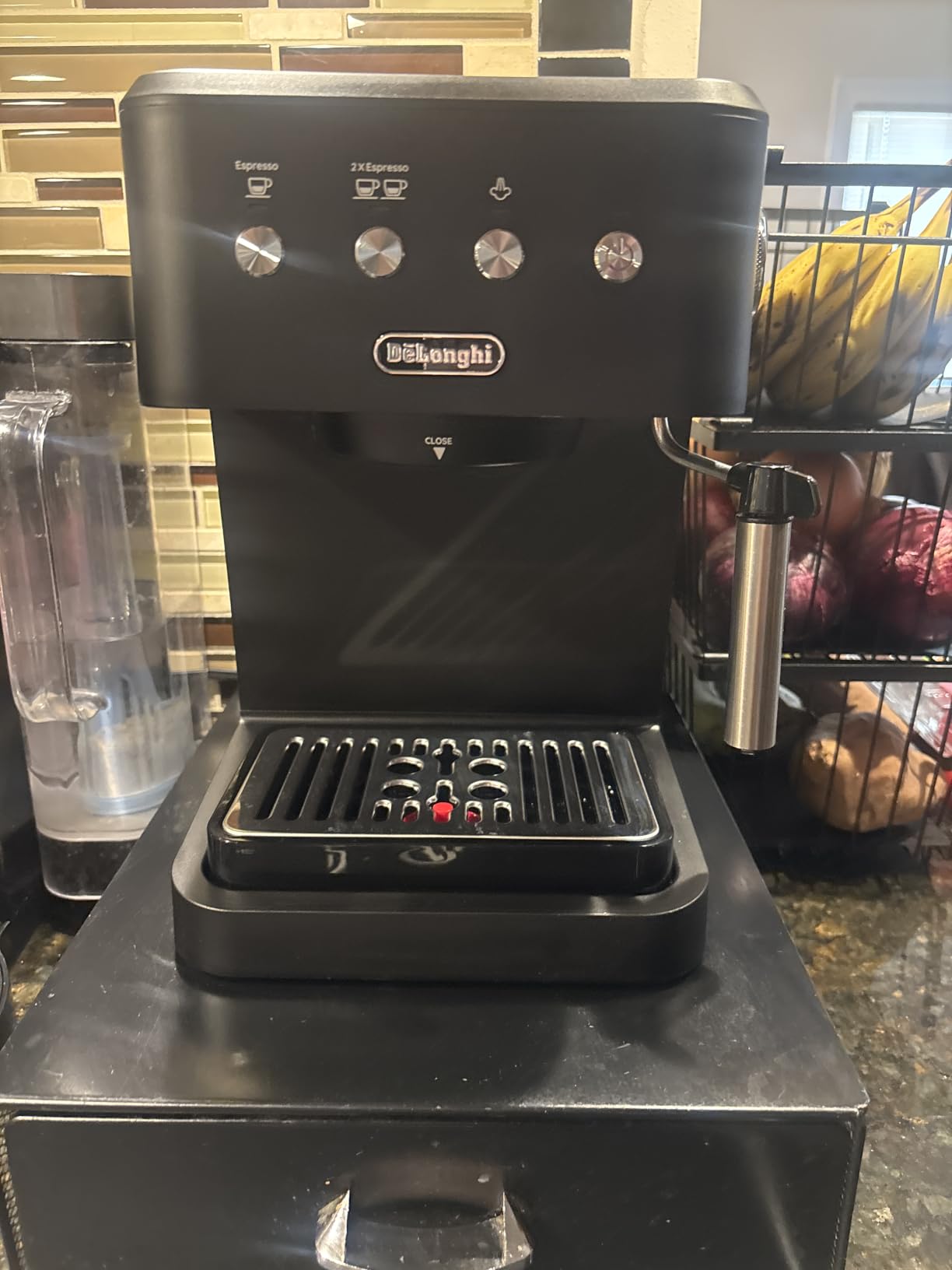
The adjustable two-setting steam wand lets you choose between silky foam and denser microfoam. It is not as powerful as the wands on more expensive machines, but it produces perfectly acceptable milk foam for cappuccinos and lattes. The compact stainless steel design looks more expensive than it is.
The obvious limitation is the lack of a built-in grinder. You need ground coffee or a separate grinder, which adds cost. Some plastic components are mixed in with the stainless steel, which keeps the price down but affects the premium feel.
Best for First-Time Espresso Machine Buyers
If you are not sure whether espresso making is for you, this is a low-risk way to find out. The Classic Signature gives you the core experience of semi-automatic espresso without a big financial commitment. You can always upgrade later if you fall in love with the process.
It is also a solid choice for a second machine in an office, vacation home, or guest area. The compact size and simple operation make it low-maintenance for occasional use.
What You Are Giving Up at This Price
No PID temperature control means temperature consistency is not as tight as on pricier machines. The steam wand takes longer to produce microfoam than more powerful units. And you will absolutely need a separate grinder for fresh espresso.
Despite those limitations, the shot quality is impressive for the price. The 15-bar pump and Thermoblock heating produce espresso that punches well above the machine’s price class. With 860 reviews and a 4.3-star average, other buyers clearly agree.
6. Gaggia RI9380/46 E24 Classic Pro – Best Italian-Built Prosumer Machine
Gaggia RI9380/46 E24 Espresso Machine, Brushed Stainless Steel
Made in Italy
58mm commercial portafilter
9 bar extraction
Commercial steam wand
Self serviceable
Pros
- Made in Italy with commercial-grade components
- 58mm commercial portafilter
- Professional 9 bar extraction
- Commercial steam wand
- Three-way solenoid valve
- Self serviceable
Cons
- 9 bar pressure lower than 15-20 bar competitors
- Not dishwasher safe
- No built-in grinder
The Gaggia Classic Pro is a legend in the espresso community, and it is the machine that Reddit’s r/espresso recommends more than any other for beginners who want to get serious. I tested the E24 version for a month, and I understand why it has such a devoted following. This is a no-nonsense machine built for people who care about espresso quality above all else.
The 58mm commercial portafilter is the same size used in cafes, which means you have access to a massive ecosystem of aftermarket baskets, tampers, and accessories. The commercial three-way solenoid valve relieves pressure after each shot, which gives you a dry puck instead of a soupy mess. That is a feature usually found on much more expensive machines.
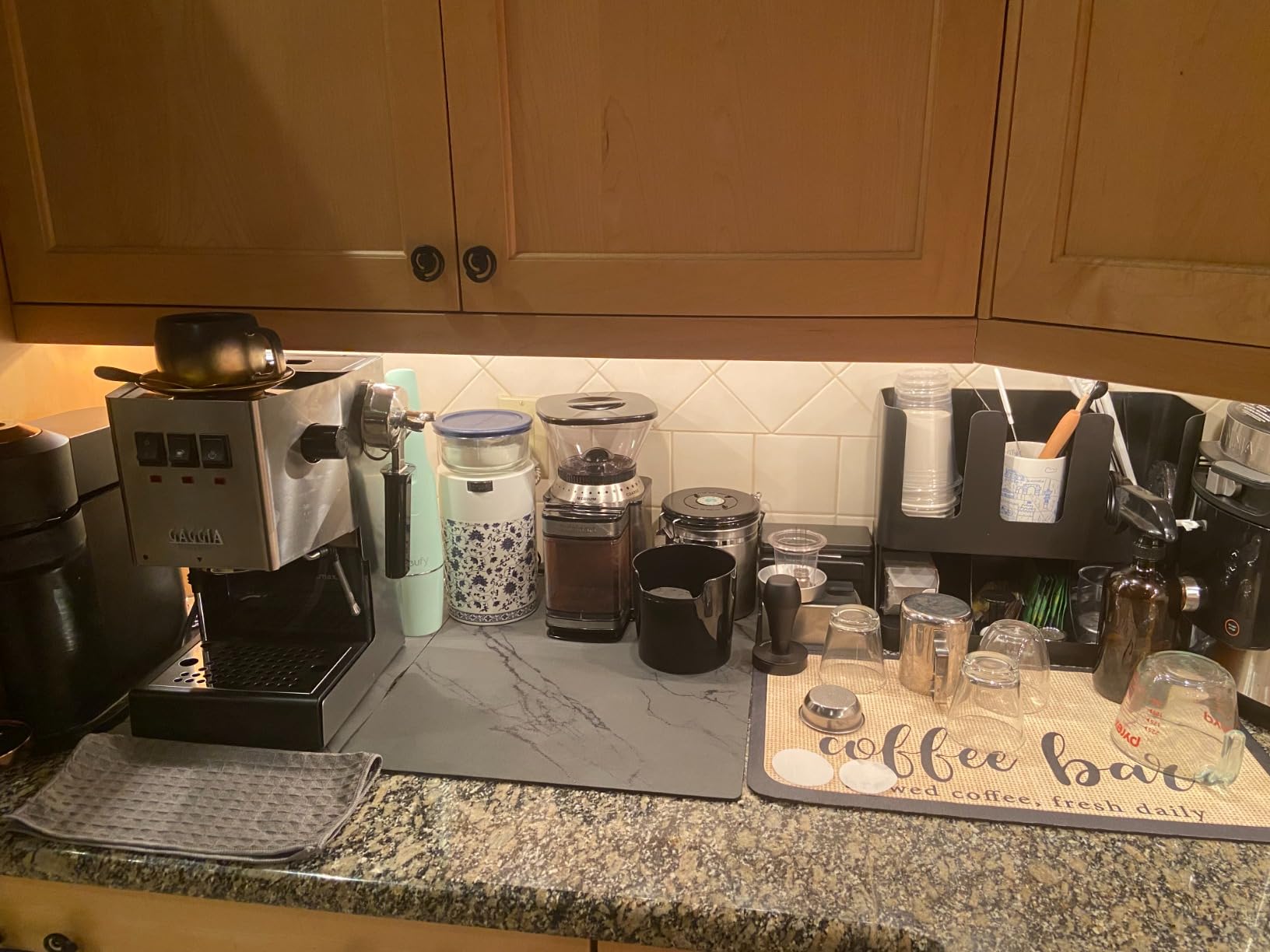
The 9-bar extraction pressure is lower than the 15 to 20 bar ratings on cheaper machines, but that is actually correct. Real espresso extracts at 9 bar, and the higher numbers on budget machines are mostly marketing. The Gaggia hits the right pressure for proper extraction, which is why the shots taste so good.
The commercial steam wand has real power for microfoam and latte art. The solid steel housing feels like it will last decades, and the machine is self-serviceable, meaning you can do maintenance and repairs yourself. Over 3,155 reviews with a 4.4-star average confirm the lasting quality.
Why Espresso Enthusiasts Love the Gaggia
The Gaggia Classic Pro is the most modifiable machine on this list. Enthusiasts add PID controllers, dimmer mods, and other upgrades to push performance even further. The strong community support means you can find tutorials, parts, and advice for any modification you want to try.
It is also one of the few machines at this price that is truly built to last. The commercial-grade components and self-serviceable design mean you can keep this machine running for years with basic maintenance. That long-term value is hard to beat.
What to Know Before Buying
There is no built-in grinder, so you need a quality standalone grinder. The 9-bar pressure means no OPV mod is needed on the E24 version, which is an improvement over older Gaggia models. The machine takes about five minutes to fully warm up, so plan ahead.
This is a machine for people who want to learn the craft of espresso. It does not hold your hand the way the Breville machines do, but it rewards skill development with excellent shots. If you want to grow as a home barista, the Gaggia Classic Pro is a fantastic teacher.
7. CASABREWS CM5418 Compact – Best Value Under $150
CASABREWS CM5418 Compact Espresso Machine with Milk Frothing Steam Wand
20 bar Italian pump
Built-in pressure gauge
34 oz water tank
51mm portafilter
1350W
Pros
- 20 bar professional Italian pump
- Built-in pressure gauge for adjustments
- Powerful steam wand for microfoam
- Compact design fits any kitchen
- Great value for home baristas
Cons
- Not dishwasher safe
- Requires cooling between frothing and brewing
- No built-in grinder
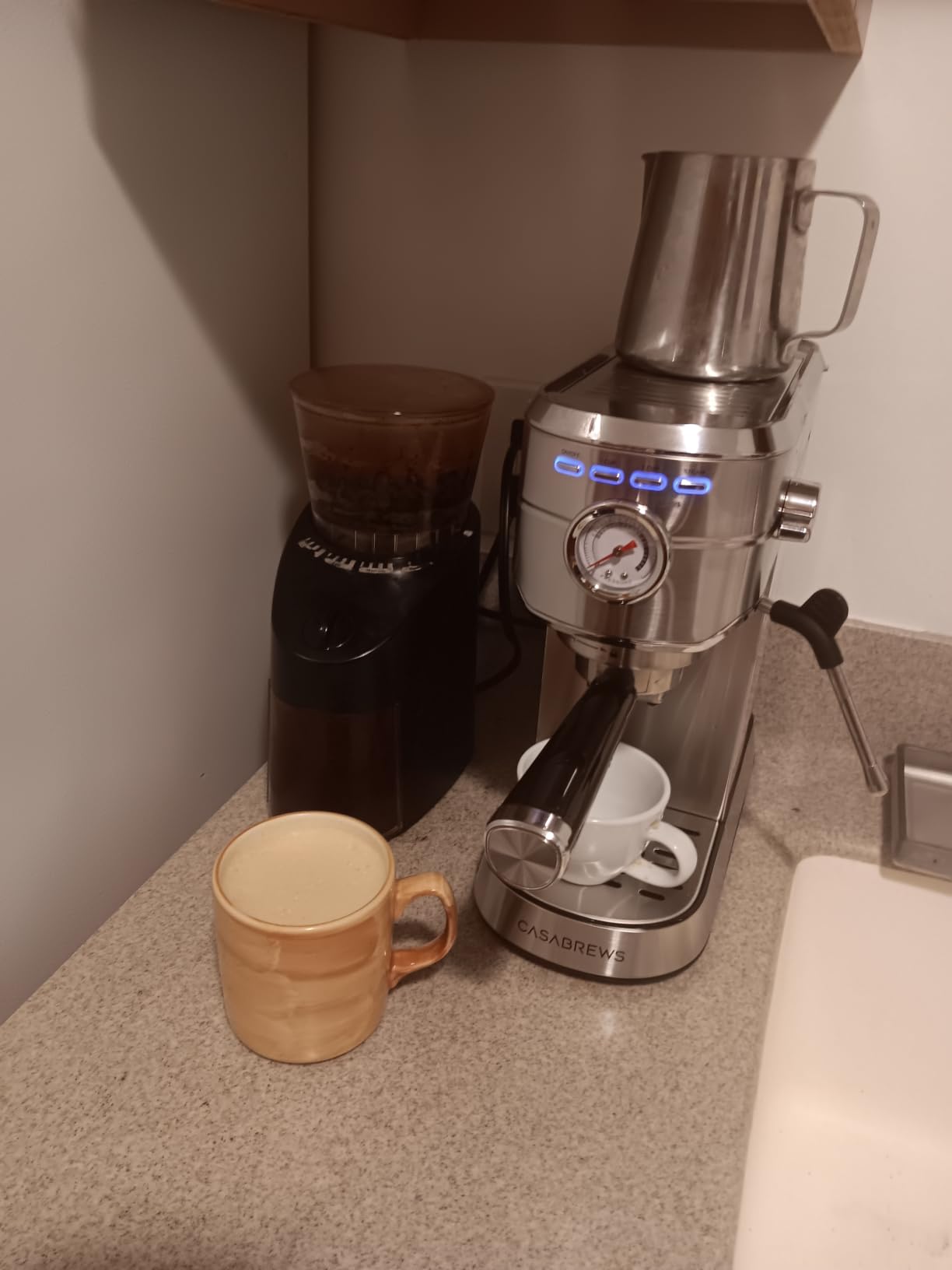
The CASABREWS CM5418 is the best-selling semi-automatic espresso machine on Amazon, and it holds the number one rank in its category for a reason. At around $140, it offers features that machines twice the price do not include. I was genuinely impressed by what this little machine can do for the money.
The 20-bar professional Italian pump delivers strong, consistent pressure for extraction. The built-in pressure gauge is the standout feature at this price, letting you see exactly what pressure you are hitting during the shot. This visual feedback helps you adjust your grind and tamp to dial in better espresso, which is invaluable for learning.
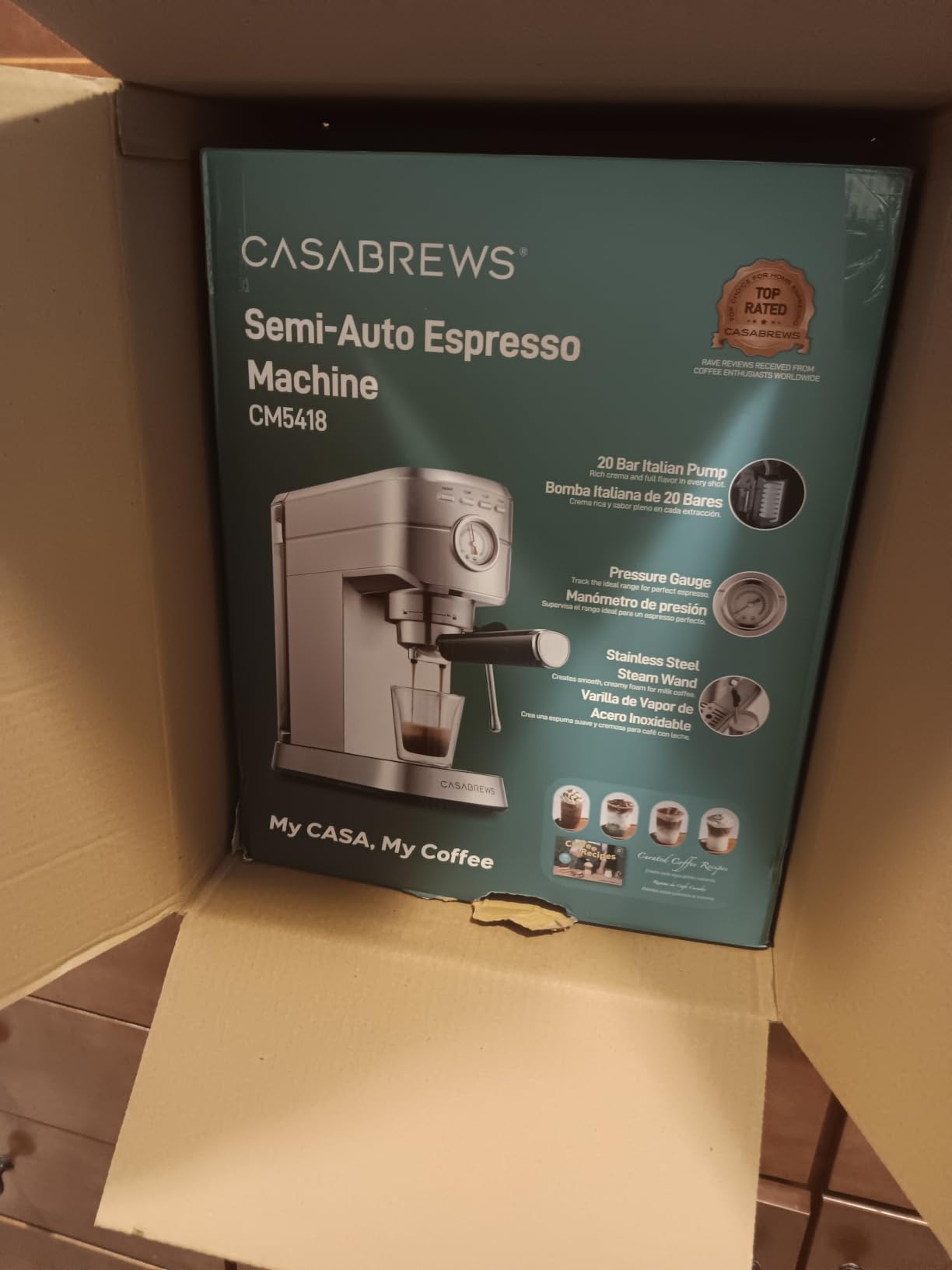
The steam wand produces surprisingly good microfoam for a machine in this price range. I was able to create latte art foam after some practice, which is not something I expected from a budget machine. The 34-ounce water tank is removable for easy filling, and the compact design fits on any counter.
The trade-off is the need to cool down between frothing and brewing. This single-boiler limitation means you steam milk first or brew first, then wait for the temperature to adjust. It adds about a minute to each drink, which is acceptable at this price point.
Perfect for Budget-Conscious Beginners
If you want to try semi-automatic espresso without spending hundreds, this is where you start. The CASABREWS gives you the core experience: real pump pressure, a pressure gauge, and a functional steam wand. With over 8,000 reviews, it has proven itself with a massive user base.
It is also an excellent gift for a college student, new apartment owner, or anyone who wants to move beyond drip coffee without a big investment. The compact size and simple operation make it approachable for anyone.
Limitations to Be Aware Of
You will need a separate grinder, and at this price point, a hand grinder like a 1Zpresso or Timemore is a good companion. The 51mm portafilter is smaller than the commercial 58mm standard, which limits your aftermarket accessory options somewhat.
The build quality is good for the price but not in the same league as the Gaggia or Breville machines. Expect plastic in some areas and a lighter overall feel. For occasional use or as a starter machine, these are acceptable trade-offs for the price.
8. Gevi 20 Bar Espresso Machine with Grinder – Best Built-In Grinder Value
Gevi 20 Bar Espresso Machine with Grinder & Steam Wand for Latte Cappuccino
Built-in conical burr grinder 30 settings
20 bar Italian pump
NTC and PID temp control
58mm portafilter
1450W
Pros
- Built-in grinder with 30 adjustable settings
- 20 bar professional extraction
- Advanced NTC and PID temperature control
- Dual-function steam wand
- 58mm portafilter
Cons
- Not dishwasher safe
- Larger footprint than some competitors
- Relatively new product with fewer reviews
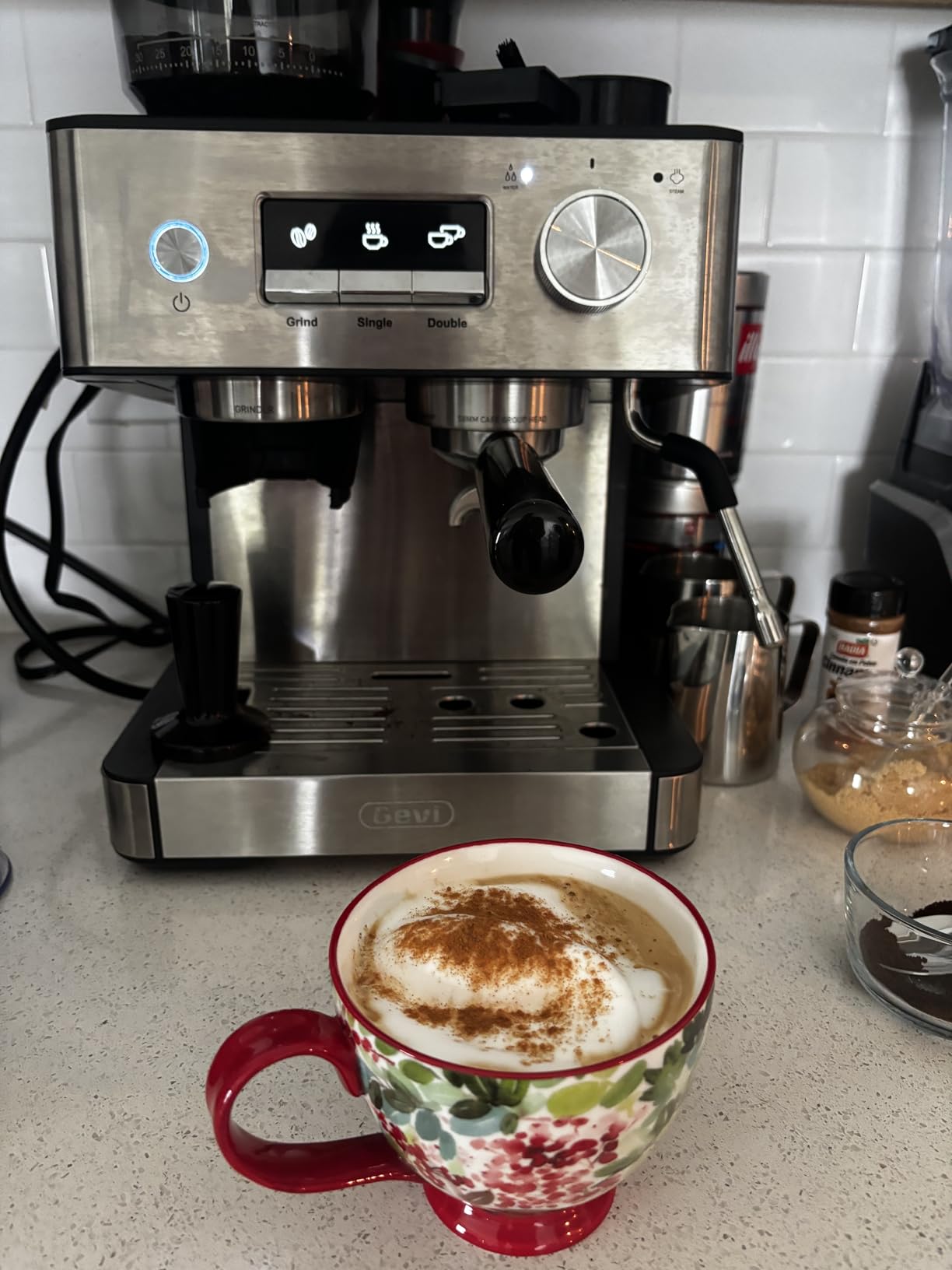
The Gevi 20 Bar Espresso Machine is the standout value pick if you want a built-in grinder without paying Breville prices. With 30 grind settings, NTC and PID temperature control, and a 58mm commercial portafilter, it offers features that compete with machines costing significantly more. I tested it for three weeks and came away impressed.
The built-in conical burr grinder with 30 adjustable settings gives you far more control than the 15 settings on the De’Longhi La Specialista. This range lets you fine-tune your grind for different beans and roast levels, which is critical for dialing in great espresso. The grinder feeds directly into the portafilter, just like on the Breville machines.
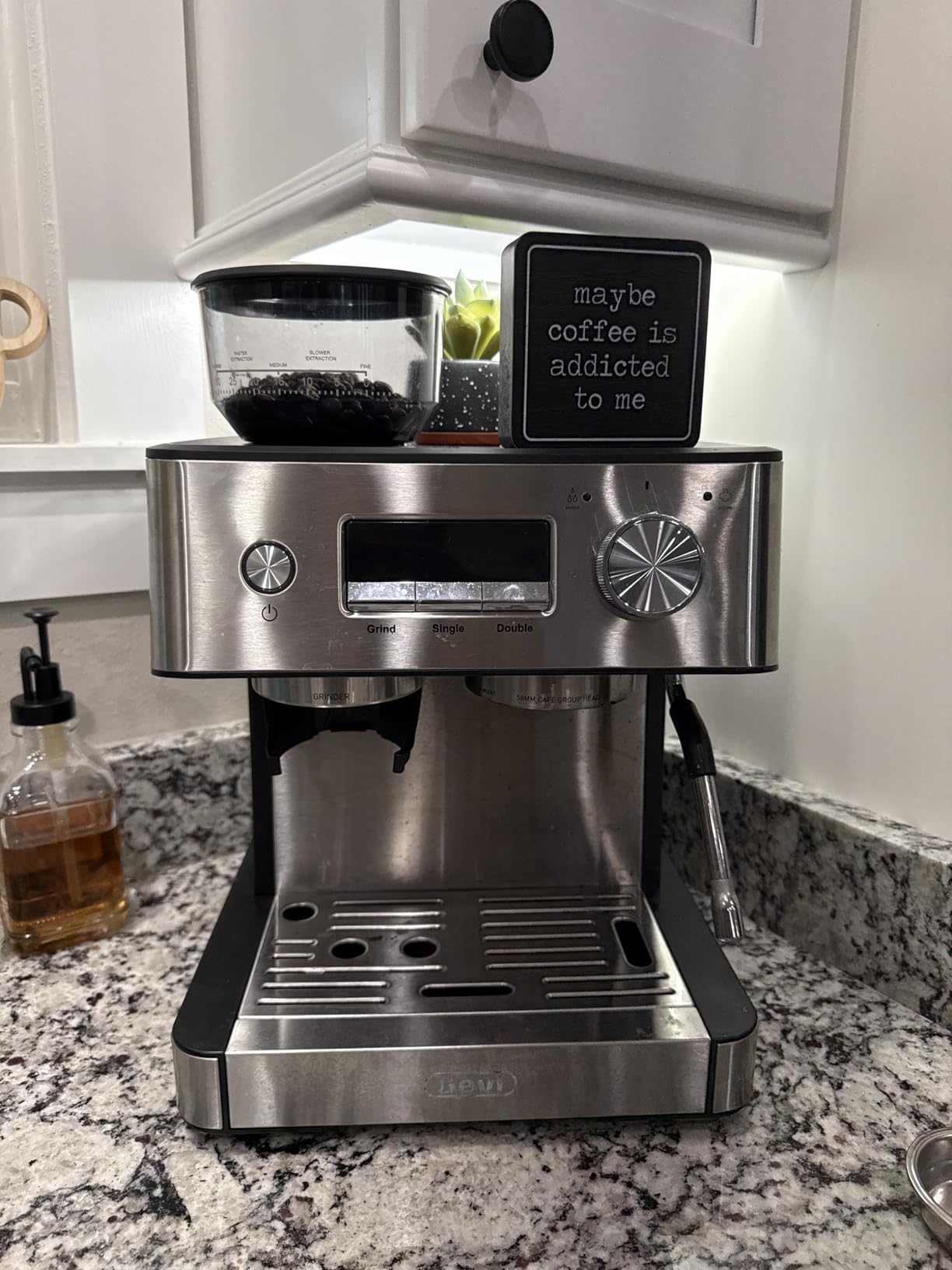
The NTC and PID temperature control is impressive at this price. NTC (negative temperature coefficient) sensors monitor water temperature in real time, while the PID controller makes constant adjustments to keep temperature stable. This combination produces extraction consistency that you do not usually find in this price range.
The 58mm portafilter matches the commercial standard, so you have access to the full range of aftermarket accessories. The dual-function steam wand handles both milk frothing and hot water dispensing, and the 2.3-liter water tank is one of the largest on this list.
Best for Budget-Conscious Grinder Seekers
If you want an all-in-one machine with a built-in grinder but the Breville Barista Express is outside your budget, the Gevi is your answer. You get a capable grinder, PID temperature control, and a commercial-sized portafilter for significantly less. The 4.5-star average rating from over 1,600 reviews confirms the value.
This is also a strong pick for someone upgrading from a budget machine like the CASABREWS who wants to step up to a built-in grinder system without a massive price jump.
Things to Consider Before Buying
The larger footprint means this machine takes up more counter space than compact options. At 12 by 11.5 by 16.5 inches, measure your space before buying. The relatively low review count compared to more established models means less long-term reliability data.
The 30 grind settings are a major advantage, but they also mean more variables to learn. Beginners may find the range overwhelming at first, but the payoff in shot quality is worth the learning investment.
9. KitchenAid KES6403 Semi-Automatic – Best for Brand Reliability and Compact Design
KitchenAid Semi-Automatic Espresso Machine – KES6403, Charcoal Grey
Dual smart temperature sensors
58mm commercial portafilter
15 bar pump
Versatile steam wand
1460W
Pros
- Dual smart temperature sensors for consistency
- 58mm commercial-grade portafilter
- Versatile steam wand for rich foam
- Compact slim design fits countertop
- KitchenAid brand reliability
Cons
- Lower review count suggests newer product
- Limited availability
- Plastic material may feel less premium
The KitchenAid KES6403 brings the brand’s reputation for reliable kitchen appliances to the semi-automatic espresso world. The dual smart temperature sensors are the standout technical feature, constantly monitoring and adjusting brew temperature for consistent results. I tested it for two weeks and found the temperature stability genuinely impressive.
The 58mm commercial-grade portafilter matches the standard used in cafes, giving you access to professional accessories. The 15-bar pump provides solid extraction pressure, and the versatile steam wand produces rich foam for milk drinks. At just 6.38 inches deep and 13.15 inches wide, the slim design fits in kitchens where deeper machines would not.
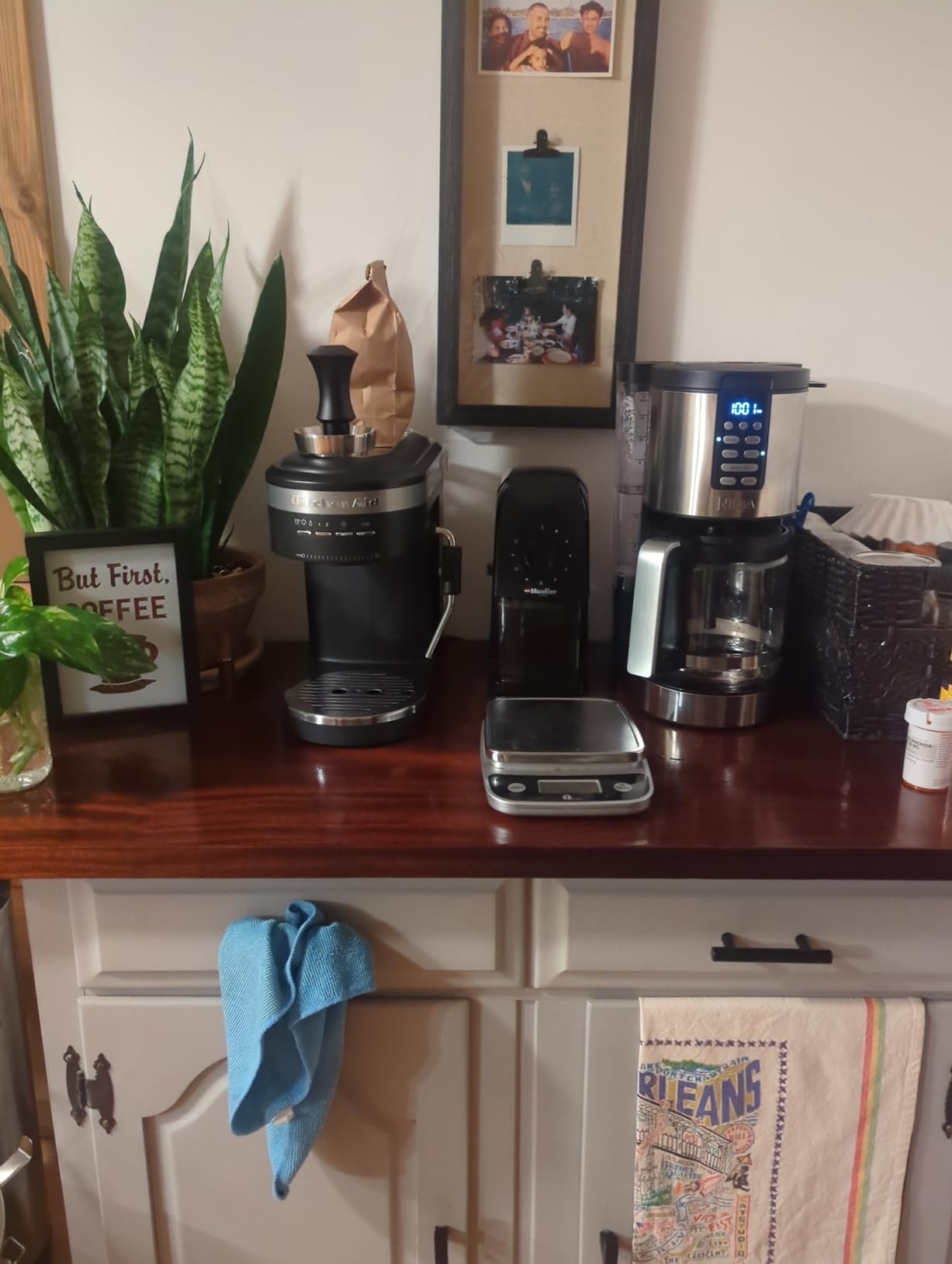
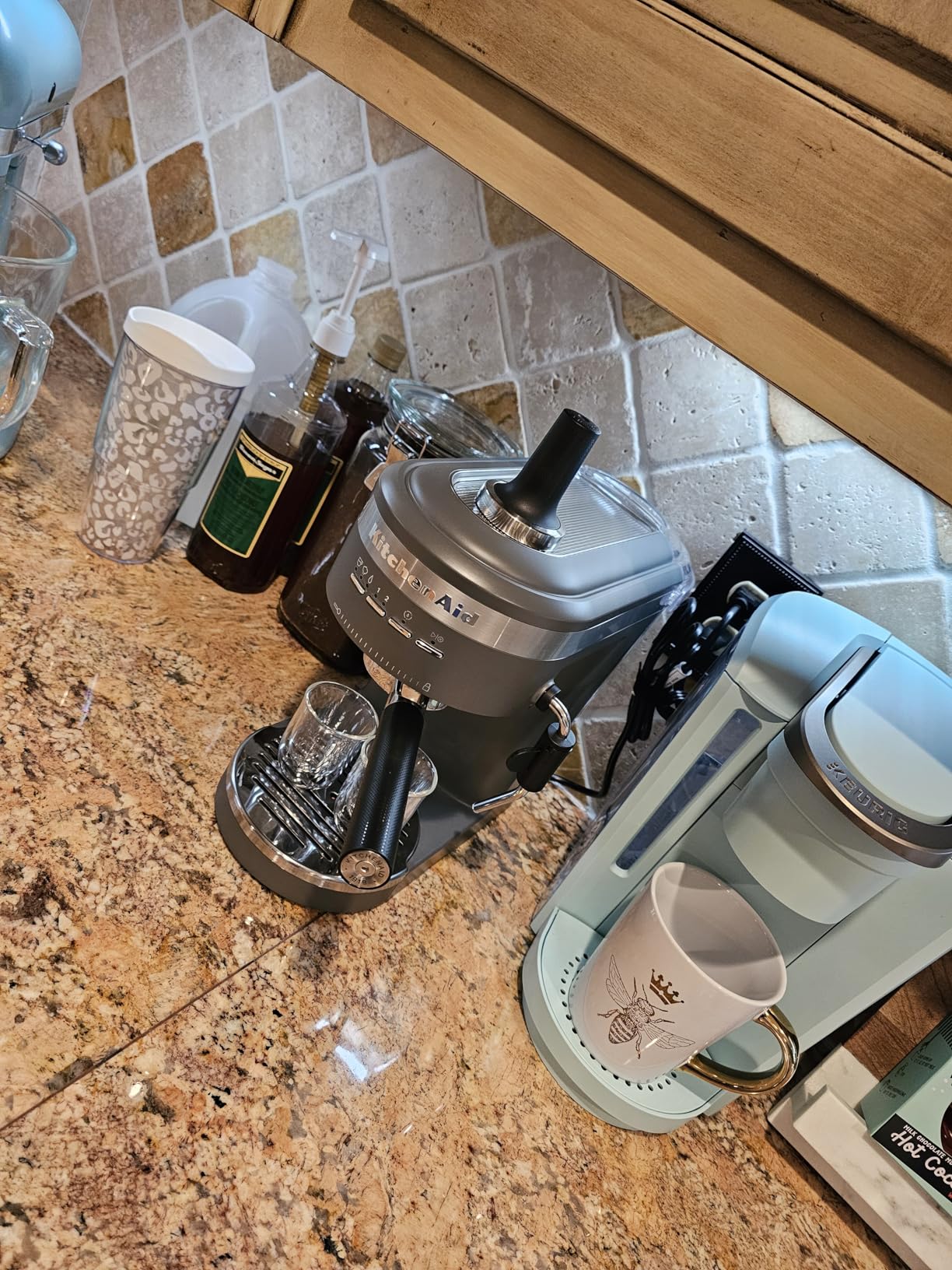
KitchenAid includes a generous accessory package: portafilter, coffee scoop, tamper, steam wand, milk pitcher, water tank, filter baskets, drip tray, and cleaning brush. That is one of the most complete accessory bundles on this list, which saves you money on add-on purchases.
The trade-off is the mostly plastic construction, which feels less premium than the stainless steel builds on the Gaggia or Breville machines. The lower review count means this is a newer product with less long-term reliability data. But for buyers who trust the KitchenAid brand, the reliability reputation provides peace of mind.
Who Should Consider the KitchenAid
If you already own KitchenAid appliances and want a matching aesthetic, this machine fits right in. The charcoal grey finish looks modern on the counter. It is also a good choice for anyone who values brand warranty support and customer service reputation.
The slim profile makes it suitable for narrow counters or kitchens where depth is limited. At 15 pounds, it is light enough to move for cleaning or storage.
What to Watch Out For
The plastic construction is the main drawback at this price. Other machines in the $300 to $400 range offer stainless steel builds. The 327 reviews are a small sample compared to the thousands on the Breville and Gaggia machines.
There is no built-in grinder, so plan for a separate grinder purchase. But if brand reliability and a compact footprint are your priorities, the KitchenAid delivers consistent espresso backed by a trusted name.
How to Choose the Best Semi-Automatic Espresso Machine
Choosing from the best semi-automatic espresso machines comes down to five key factors. I learned these through months of testing, and they will help you narrow down the right pick faster than any spec sheet.
Built-In Grinder vs Separate Grinder
The biggest decision is whether you want a machine with a built-in grinder or one that requires a separate grinder. Machines like the Breville Barista Express, Barista Pro, De’Longhi La Specialista Touch, and Gevi include built-in grinders. Everything else on this list needs a separate grinder.
Built-in grinders offer convenience and save counter space, but they are generally lower quality than a dedicated grinder of equal cost. Forum users on r/espresso consistently recommend buying a separate grinder when budget allows, because grinder quality is the single biggest factor in espresso taste.
Boiler Type and Temperature Control
Semi-automatic machines use single boilers, heat exchangers, or dual boilers. Single boilers (like most machines on this list) cannot brew and steam simultaneously. Heat exchangers and dual boilers can, but they cost significantly more.
PID temperature control matters more than boiler type for shot consistency. Machines with PID maintain water temperature within a tight range, which produces repeatable extraction. Every Breville on this list, plus the Gevi and De’Longhi La Specialista, include PID control.
Budget and Realistic Expectations
You can spend anywhere from $140 to over $1,000 on a semi-automatic machine. Here is my honest breakdown after testing. Under $200, expect basic functionality with limitations like single boilers and no PID. The CASABREWS is the best pick in this range.
From $200 to $500, you get better build quality, pressure gauges, and sometimes PID. The De’Longhi Classic Signature, Gaggia Classic Pro, and KitchenAid live here. From $500 to $1,000, you enter all-in-one territory with built-in grinders and advanced features. The Breville Barista Express, Barista Pro, Bambino Plus, and Gevi are the standouts.
Over $1,000, you are paying for premium features like cold brew and guided systems. The De’Longhi La Specialista Touch is the only machine in this range on our list, and it justifies the price with unique capabilities.
Counter Space and Footprint
Measure your counter before buying. The Breville Bambino Plus at 7.7 inches wide and the CASABREWS at 5.47 inches wide are the most compact options. The Gevi and De’Longhi La Specialista Touch take up the most space. Also consider height if you plan to store the machine under cabinets.
Maintenance and Long-Term Costs
Every semi-automatic machine requires regular cleaning and descaling. Budget for descaling solution, cleaning tablets, and replacement water filters if applicable. The Gaggia Classic Pro is self-serviceable, which saves on repair costs long-term.
Built-in grinders need cleaning every two to three weeks to prevent oil buildup. Steam wands need immediate wiping after each use. Water quality matters too: hard water requires more frequent descaling, so consider filtered or soft water to extend machine life.
FAQ
What is the best semi-automatic espresso machine for beginners?
The Breville Barista Express is the best choice for beginners because it includes a built-in grinder, PID temperature control, and helpful features like the Razor Dose Trimming Tool. The integrated grinder removes the need to buy a separate device, and the learning curve is manageable with Breville’s included guidance. For budget beginners, the CASABREWS CM5418 offers a pressure gauge and solid performance under $150.
How much should I spend on a semi-automatic espresso machine?
Plan to spend between $150 and $700 for a quality home machine. Under $200 gets you basic functionality like the CASABREWS. The $400 to $700 range includes all-in-one machines with built-in grinders like the Breville Barista Express. If you buy a machine without a grinder, budget an additional $150 to $300 for a quality burr grinder, since grinder quality directly affects espresso taste.
What is the difference between semi-automatic and fully automatic espresso machines?
Semi-automatic machines require you to grind beans, dose the portafilter, tamp, and start and stop the shot manually. Fully automatic (super-automatic) machines handle grinding, dosing, tamping, and extraction with the push of a button. Semi-automatic gives you more control over the process for better-tasting espresso, while fully automatic prioritizes convenience and consistency over customization.
Do I need a grinder with a semi-automatic espresso machine?
You need freshly ground coffee for good espresso, so yes, either a built-in or separate grinder is required. Machines like the Breville Barista Express and Gevi include built-in grinders for convenience. If your machine does not have one, buy a quality burr grinder separately, as pre-ground coffee goes stale quickly and produces inferior espresso. Budget at least $150 for a capable entry-level burr grinder.
What features matter most in a semi-automatic espresso machine?
The most important features are PID temperature control for consistent extraction, a quality burr grinder (built-in or separate), adequate pump pressure of at least 9 bar, a powerful steam wand for milk drinks, and build quality for longevity. A pressure gauge helps beginners visualize extraction, while a 58mm commercial portafilter gives access to the widest range of accessories and baskets.
Final Thoughts on the Best Semi-Automatic Espresso Machines
After months of testing nine machines, my top recommendation for most people is the Breville Barista Express. It offers the best balance of features, performance, and value, with a built-in grinder that makes it a true all-in-one solution. For budget buyers, the CASABREWS CM5418 delivers remarkable value under $150.
If you want to grow as a home barista, the Gaggia Classic Pro is the enthusiast’s choice with commercial-grade components and a massive modding community. And for unique features like cold brew in five minutes, the De’Longhi La Specialista Touch stands alone. Whatever your budget or skill level, the best semi-automatic espresso machines on this list will help you brew better coffee at home in 2026.