Discover a world beyond traditional dairy and sugary cereals. This guide delves into popular plant-based milk alternatives like almond, oat, and soy, alongside healthier cereal choices, including a simple homemade granola recipe.
Learn how to create nutritious and delicious breakfast bowls tailored to your dietary needs and taste preferences, ensuring a wholesome start to your day. Embrace variety and elevate your morning routine with these versatile options.
Table of Contents
Essential Components for Your Bowl
Crafting the perfect breakfast bowl involves selecting quality ingredients that nourish and delight. Here’s what you’ll need to consider for both your milk and cereal choices.
- Milk Alternatives:
- Almond Milk: Light, slightly nutty, low in calories. Great for those seeking a subtle flavor.
- Oat Milk: Creamy texture, naturally sweet, and often fortified with vitamins. A popular choice for its smooth consistency.
- Soy Milk: Rich in protein, often fortified with calcium and Vitamin D. A classic plant-based option.
- Coconut Milk (Beverage Type): Distinct tropical flavor, can be higher in fat. Best for those who enjoy its unique taste.
- Rice Milk: Hypoallergenic, thin consistency, mild flavor. Suitable for those with multiple allergies.
- Cereal Choices:
- Whole-Grain Cereals: Look for options with high fiber and low added sugar.
- Rolled Oats: The base for homemade granola, versatile and nutritious.
- Nuts & Seeds: Almonds, walnuts, pumpkin seeds, chia seeds (for granola or topping).
- Sweeteners (for granola): Maple syrup, honey, agave nectar.
- Healthy Fats (for granola): Coconut oil, olive oil.
- Flavorings (for granola): Vanilla extract, cinnamon, dried fruit (raisins, cranberries).
Crafting Your Perfect Breakfast Bowl
Creating a satisfying and nutritious cereal and milk alternative bowl is simple, whether you’re pouring from a box or making your own granola.
Step 1: Choose Your Cereal Base
For a quick option, select a whole-grain, low-sugar store-bought cereal. Alternatively, prepare a batch of homemade granola for a truly customizable and wholesome experience.
Step 2: Prepare Homemade Granola (Optional)
If opting for homemade granola, preheat your oven to 300°F (150°C). In a large bowl, combine 3 cups rolled oats, 1 cup mixed nuts/seeds, 1/2 cup shredded coconut (optional). In a separate small bowl, whisk together 1/2 cup maple syrup (or honey), 1/4 cup melted coconut oil, 1 teaspoon vanilla extract, and 1/2 teaspoon cinnamon. Pour the wet ingredients over the dry and mix until well coated. Spread evenly on a baking sheet lined with parchment paper.
Step 3: Bake the Granola (Optional)
Bake the granola for 25-35 minutes, stirring halfway through, until golden brown and crispy. Let it cool completely on the baking sheet before storing in an airtight container. This ensures maximum crunch.
Step 4: Select Your Milk Alternative
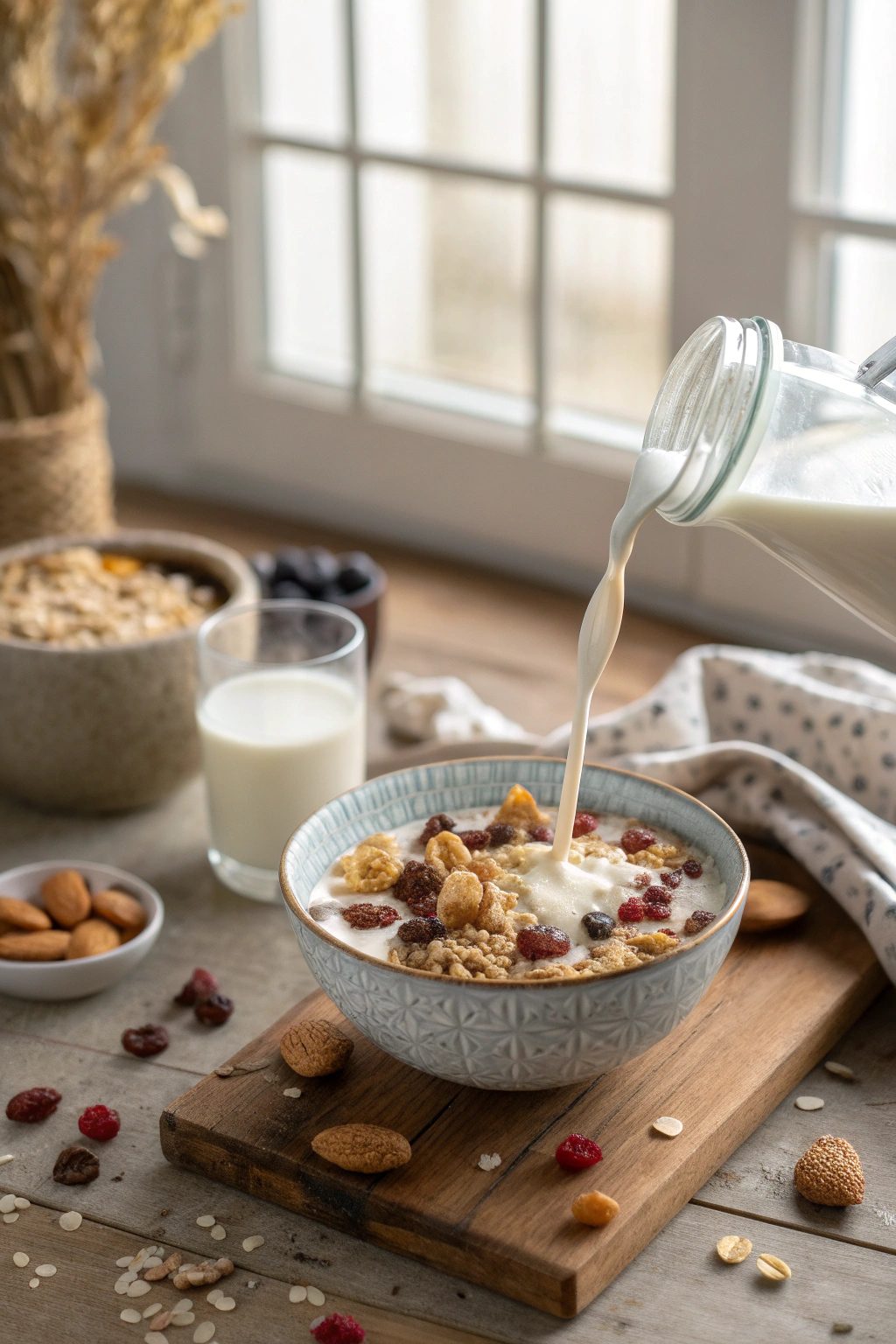
Pour your chosen plant-based milk alternative into your bowl. Consider the flavor profile and nutritional content that best suits your preferences and dietary needs.
Step 5: Assemble Your Bowl
Add your chosen cereal or homemade granola to the milk. For added flavor and nutrition, consider topping with fresh fruit (berries, banana slices), a sprinkle of extra nuts or seeds, or a dollop of plant-based yogurt.
Your Cereal & Milk Alternative Questions Answered
Navigating the world of plant-based options can bring up questions. Here are some common queries to help you make informed choices.
What is the healthiest milk alternative for cereal?
The ‘healthiest’ milk alternative depends on individual needs. Oat milk offers creaminess and often fiber, soy milk is rich in protein, and almond milk is low in calories. Look for unsweetened varieties fortified with calcium and Vitamin D.
Can I make my own cereal alternatives at home?
Absolutely! Homemade granola is a fantastic option, allowing you to control sugar content and ingredients. You can also create simple mixes of nuts, seeds, and dried fruits for a quick, no-cook cereal alternative.
How do plant-based milks compare nutritionally to cow’s milk?
Plant-based milks generally have fewer calories and less fat (except some coconut milks) than cow’s milk. Protein content varies significantly; soy milk is comparable to dairy, while almond and rice milks are much lower. Fortified versions often match dairy for calcium and Vitamin D.
What are good low-sugar cereal options?
Look for cereals with whole grains as the first ingredient and minimal added sugars. Plain rolled oats, shredded wheat, and certain bran cereals are excellent choices. Always check the nutrition label for sugar content per serving.
How long does homemade granola last?
When stored in an airtight container at room temperature, homemade granola typically stays fresh and crispy for 2-3 weeks. For longer storage, it can be frozen for up to 3 months.
Pro Tips for Elevated Cereal Bowls
Enhance your breakfast experience with these expert suggestions, transforming a simple meal into a delightful culinary moment.
- Texture Play: Add a variety of textures like crunchy nuts, chewy dried fruits, and fresh, juicy berries.
- Spice It Up: A pinch of cinnamon, nutmeg, or even a dash of cardamom can elevate the flavor of both your cereal and milk.
- Overnight Soaking: For oats, consider making overnight oats with your chosen milk alternative for a creamy, ready-to-eat breakfast.
- Warm or Cold: Enjoy your cereal cold with chilled milk, or gently warm your milk alternative for a comforting hot cereal experience, especially with oats.
- Sweetener Control: If using unsweetened milk, add natural sweeteners like a drizzle of maple syrup, a few dates, or ripe banana slices to taste.