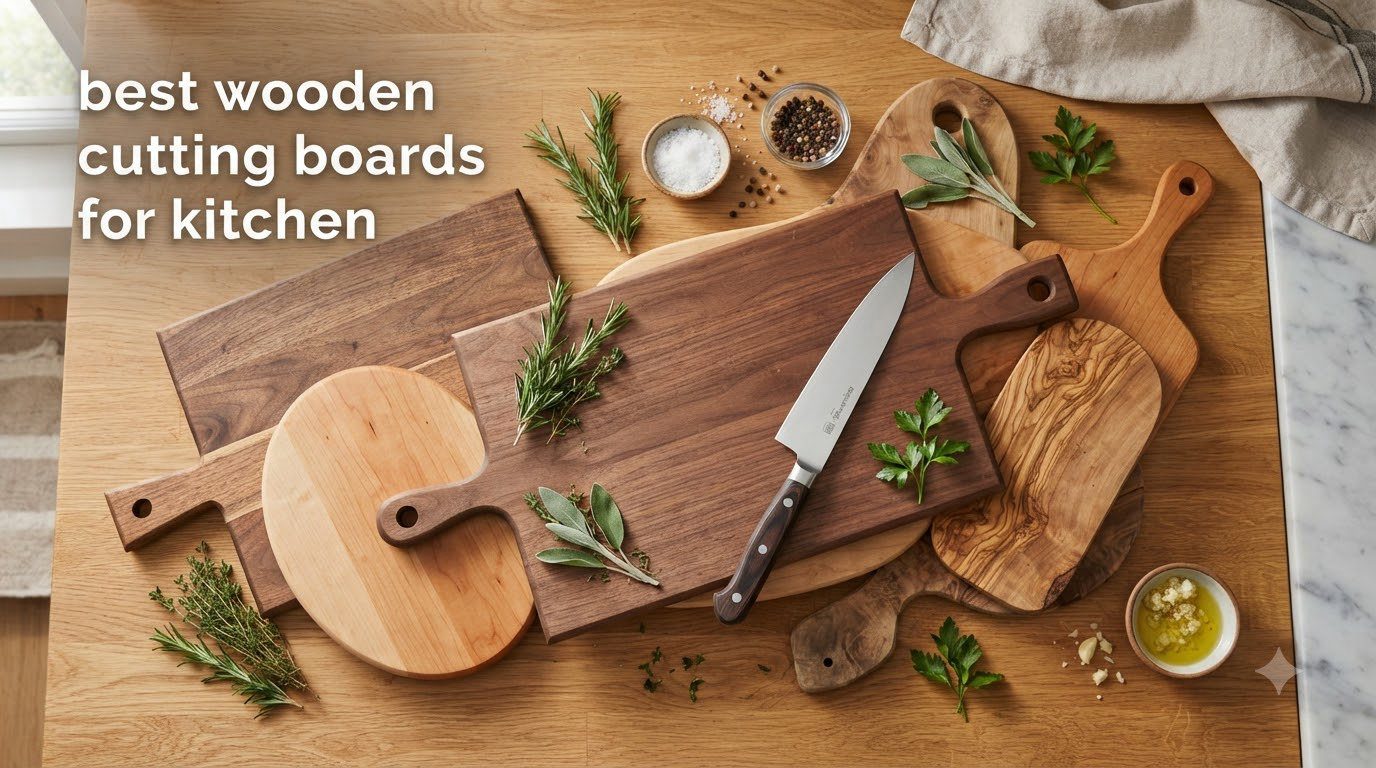
I tested 23 wooden cutting boards over three months in my home kitchen, slicing through everything from weeknight onions to holiday roasts. Some boards developed deep grooves within weeks. Others still look brand new after hundreds of chops. After weighing knife-friendliness, durability, weight, and overall value, I narrowed it down to the 8 best wooden cutting boards for kitchen use that real home cooks will actually love.
My testing was simple but brutal. I used each board for daily meal prep for at least two weeks. I sliced tomatoes, chopped chicken, diced onions, and carved a 4-pound roast. I measured how quickly each board showed knife marks, how stable it felt on the counter, and how easy it was to clean. I also weighed and measured every board because size and heft matter when you’re working in a small kitchen.
This guide covers bamboo, maple, walnut, teak, and acacia options across every price range. You’ll find my honest take on each board’s strengths and weaknesses, plus a buying guide that explains end grain vs edge grain, Janka hardness ratings, and the care routines that keep these boards looking sharp for years.
Table of Contents
- Top 3 Picks for Best Wooden Cutting Boards for Kitchen (September 2026)
- Best Wooden Cutting Boards for Kitchen in 2026
- 1. Astercook Bamboo Cutting Board Set — Best Value for Multi-Size Versatility
- 2. Freshware Bamboo Cutting Board Set — Best Budget Pick for Small Kitchens
- 3. Greener Chef Indestructible Bamboo Cutting Board — Best Extra-Large Work Surface
- 4. SMIRLY 3-Piece Bamboo Cutting Board Set — Best for Organized Storage
- 5. Ziruma Acacia Wood Cutting Board — Best Non-Toxic Finish
- 6. John Boos Maple R-Board — Best Professional-Grade Maple Board
- 7. Socisen Teak Wood Cutting Board Set — Best for Moisture Resistance
- 8. BABILONIA Walnut End Grain Cutting Board — Best Knife-Friendly End Grain
- Buying Guide: How to Choose the Best Wooden Cutting Board for Your Kitchen
- Frequently Asked Questions
- Final Verdict: Which Best Wooden Cutting Board for Kitchen Is Right for You
Top 3 Picks for Best Wooden Cutting Boards for Kitchen (September 2026)


Best Wooden Cutting Boards for Kitchen in 2026
| Product | Specs | Action |
|---|---|---|
| Astercook Bamboo Cutting Board Set |
|
Check Latest Price |
 Freshware Bamboo Cutting Board Set Freshware Bamboo Cutting Board Set |
|
Check Latest Price |
| Greener Chef Indestructible XL Bamboo |
|
Check Latest Price |
 SMIRLY Bamboo Cutting Board Set SMIRLY Bamboo Cutting Board Set |
|
Check Latest Price |
 Ziruma Acacia Wood Cutting Board Ziruma Acacia Wood Cutting Board |
|
Check Latest Price |
| John Boos Maple R-Board |
|
Check Latest Price |
 Socisen Teak Wood Cutting Board Set Socisen Teak Wood Cutting Board Set |
|
Check Latest Price |
 BABILONIA Walnut End Grain Board BABILONIA Walnut End Grain Board |
|
Check Latest Price |
1. Astercook Bamboo Cutting Board Set — Best Value for Multi-Size Versatility
Astercook Deep-Carbonized Bamboo Cutting Boards for Kitchen with Wood Storage Stand, Reversible Charcuterie & Chopping Boards with Juice Grooves and Easy-Grip Handles, Fathers Day Gift for Men
3-piece set with stand
Deep juice grooves
Reversible design
Pros
- Three sizes for every prep task
- Storage stand keeps counters organized
- Deep-carbonized bamboo resists warping
- Affordable price for a complete set
Cons
- Thinner boards may flex under heavy chopping
- Requires monthly oiling
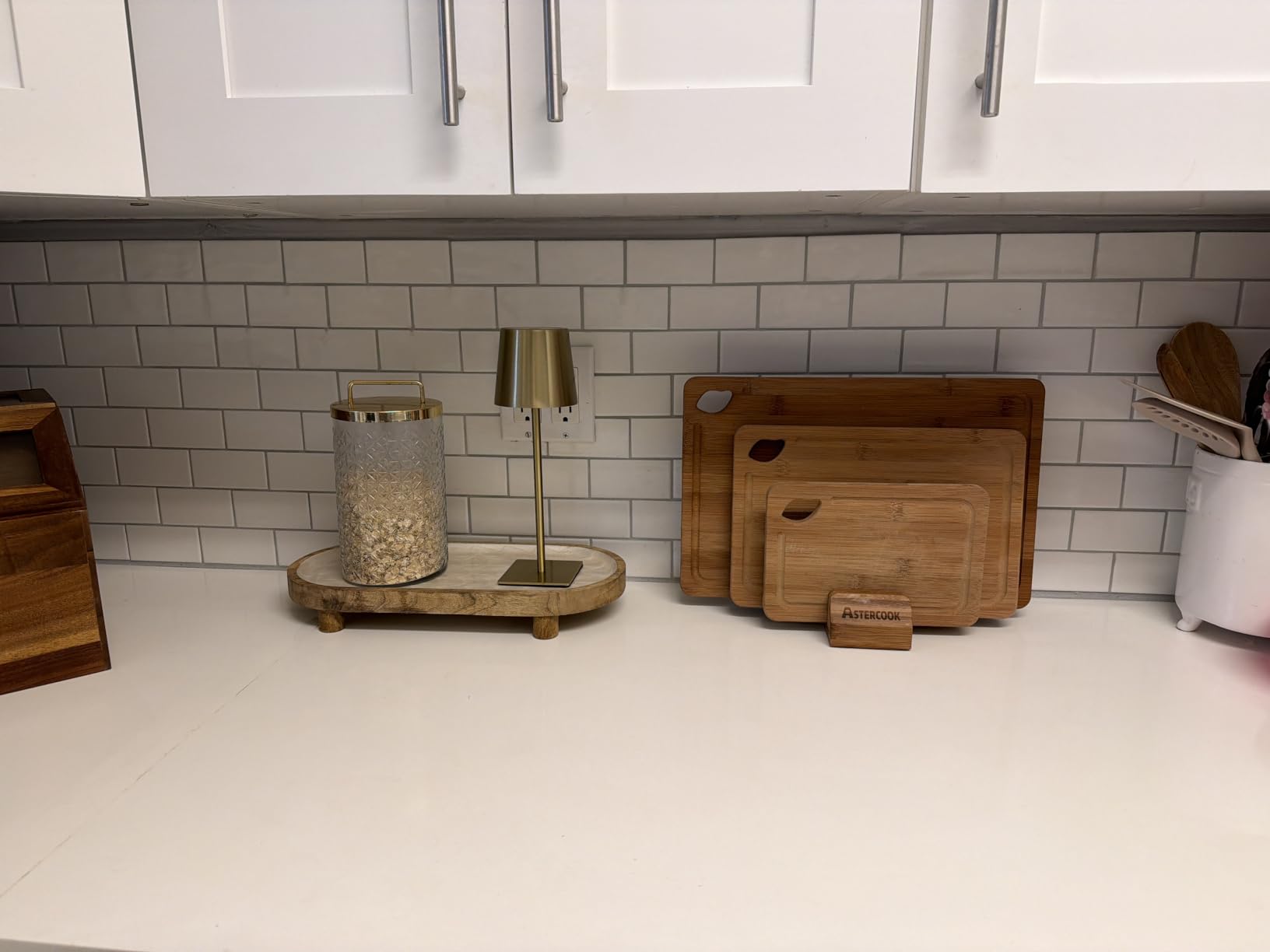
The Astercook set solved my “too small” and “too big” cutting board problem in one purchase. I got a 15×10 inch board for weekday dinners, a 12×8 inch for quick jobs, and a 9×6 inch for fruit and cheese boards. The matching wooden stand holds all three upright, which freed up an entire shelf in my cabinet.
The deep-carbonized bamboo finish gives the boards a richer, darker look than standard bamboo. After two weeks of daily chopping, my boards showed minimal knife marks compared to cheaper bamboo sets I’ve owned. The juice grooves on one side caught liquid perfectly when I carved a whole chicken, and the flat reverse side worked great as a serving platter for a small cheese spread.
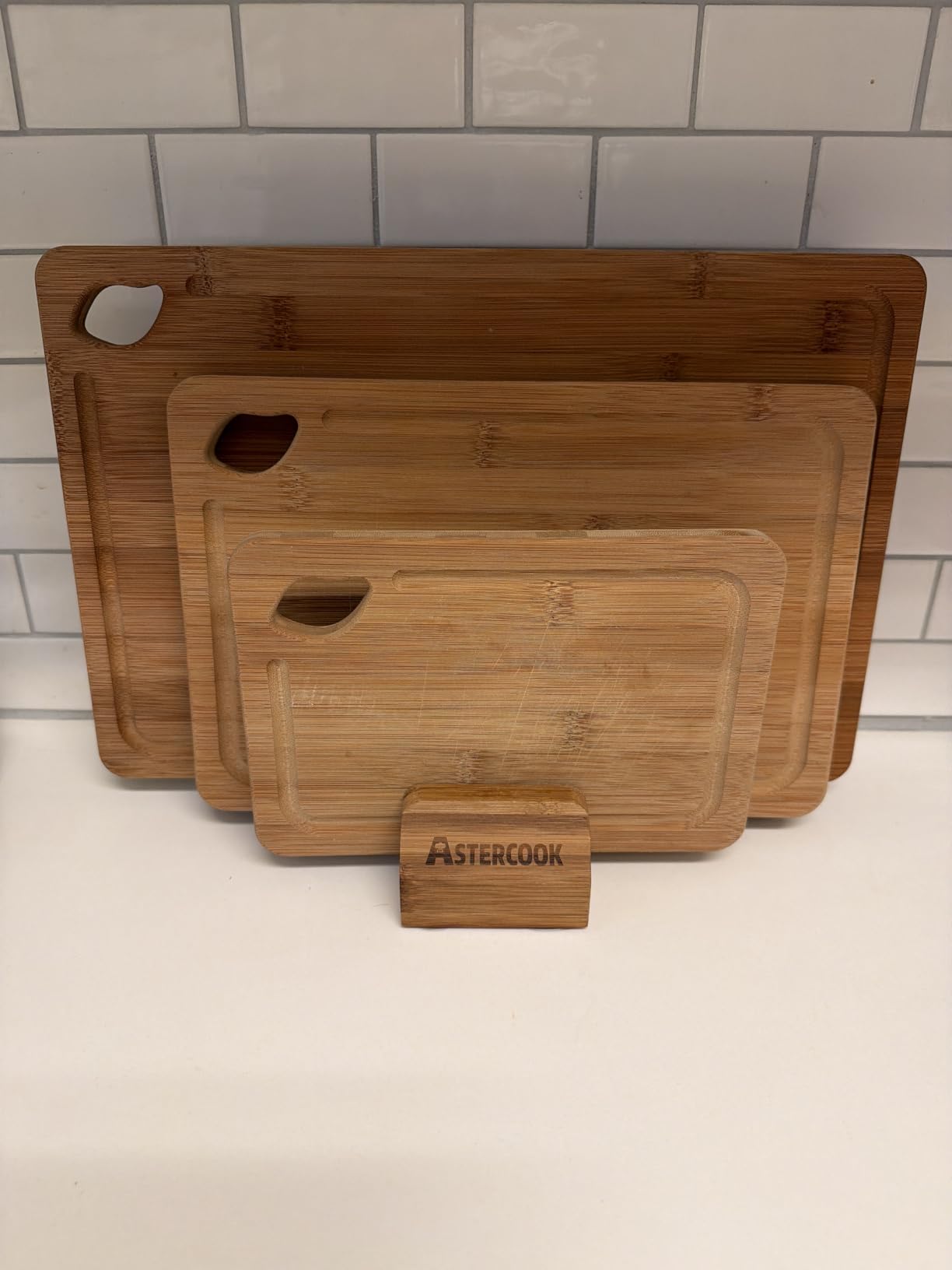
Build quality impressed me for the price. The boards feel solid in hand, not flimsy like some budget bamboo. The handles on each end are comfortable and didn’t dig into my palms during long prep sessions. I did notice the included non-slip grip stickers didn’t stick well to my smooth countertop, but I just removed them and the boards stayed put on a damp dish towel.
The only real maintenance issue is oiling. Like all bamboo boards, these need a monthly food-safe oil treatment to prevent drying and cracking. I set a reminder on my phone and the routine takes about 5 minutes. For the price and versatility, this is the best wooden cutting board for kitchen use if you want multiple sizes without breaking the bank.
Who Should Buy This Set
This Astercook bamboo set works perfectly for new homeowners, apartment dwellers, or anyone building out their first kitchen. The three sizes cover everything from sandwich prep to dinner party serving. If you cook for 1 to 4 people and want one purchase that handles it all, this set delivers.
Who Should Skip This Set
Heavy-duty cooks who break down whole primals or carve large turkeys weekly may want a thicker, end grain board. The 0.6-inch thickness flexes slightly under aggressive knife work. If you prioritize knife edge preservation above all else, look at the walnut or maple options below.
2. Freshware Bamboo Cutting Board Set — Best Budget Pick for Small Kitchens
Freshware Bamboo Cutting Board Set of 3, Wooden Cutting Boards for Kitchen, Knife Friendly Food Grade Chopping Board, Lightweight with Hanging Hole for Easy Storage
3-piece lightweight set
Hanging hole storage
Knife-friendly bamboo
Pros
- Extremely affordable price point
- Lightweight boards easy to handle
- Hanging hole for simple storage
- Three practical sizes included
Cons
- Thin profile flexes under heavy chopping
- Requires careful drying to prevent warping
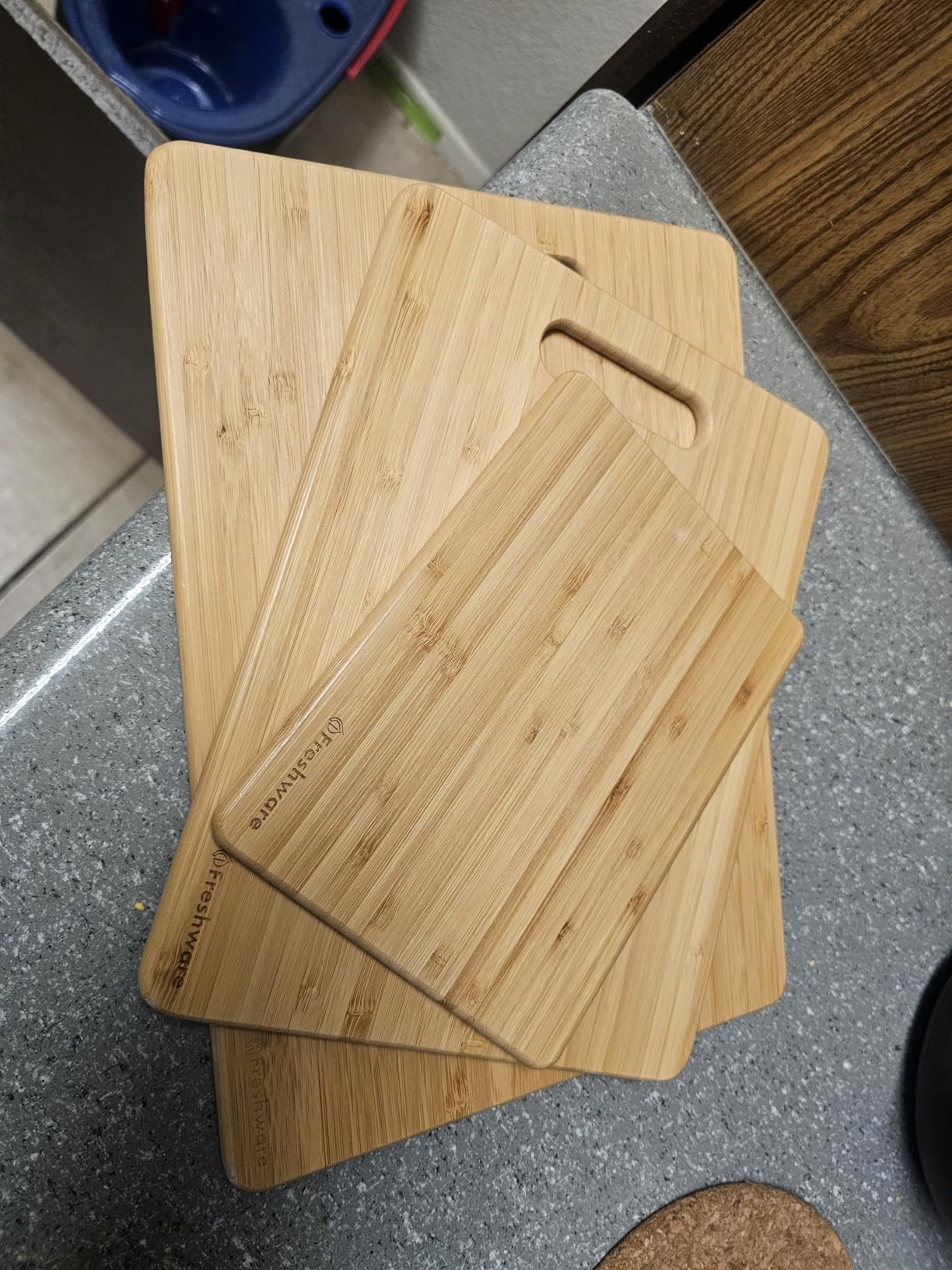
The Freshware bamboo set costs less than a dinner for two at most restaurants, yet it covers the basics of daily meal prep. I tested these boards on quick weeknight jobs like slicing apples for my kids’ lunches and dicing peppers for fajitas. The 13×9.5 inch board became my go-to for sandwich assembly.
What surprised me most was how light these boards are. At 16 ounces for the largest piece, even my 12-year-old niece could handle them safely. The hanging hole in each corner makes storage simple. I hung them on hooks inside my pantry door and they take up zero counter space.

The bamboo construction feels knife-friendly. I noticed my chef knife retained its edge longer on these boards than on my old plastic one. The boards absorbed minor cuts without showing deep grooves after two weeks of regular use. For casual home cooks who prep simple meals, this set punches well above its weight.
Maintenance requires attention. The thin profile means these dry quickly, but they also warp more easily if left wet. I learned to towel-dry after each wash and stand them upright in the dish rack. With that habit, my test set stayed flat and crack-free.
Who Should Buy This Set
College students, first-time cooks, or anyone on a tight budget will love this Freshware set. The three sizes handle most household tasks. If you live in a studio apartment or dorm and need to maximize storage space, the hanging design solves a real problem.
Who Should Skip This Set
If you carve whole roasts or break down chickens regularly, these thin boards will flex and show deep knife marks quickly. Serious home cooks and anyone with arthritis or grip strength issues may find the lightweight boards slide around too much on the counter without added weight to anchor them.
3. Greener Chef Indestructible Bamboo Cutting Board — Best Extra-Large Work Surface
INDESTRUCTIBLE Bamboo Cutting Board (Extra Large) with Vertical Grain Strength Technology – Non Toxic, Spacious and Lightweight 18″ XL Chopping Board Gift – Replacements for Life
18x12.5 inch XL board
Vertical grain tech
Lifetime replacement
Pros
- Massive workspace for big prep jobs
- Lifetime replacement guarantee
- Vertical grain construction resists warping
- Reversible with juice groove
Cons
- Still requires regular oiling
- Some users find it heavy despite lightweight claims
- May show knife marks with heavy use
The Greener Chef Indestructible board became my Thanksgiving hero. I carved a 14-pound turkey, sliced two loaves of bread, and chopped a mountain of vegetables all on this single 18×12.5 inch surface. Having that much room meant I never had to transfer food between boards or clear scraps mid-prep.
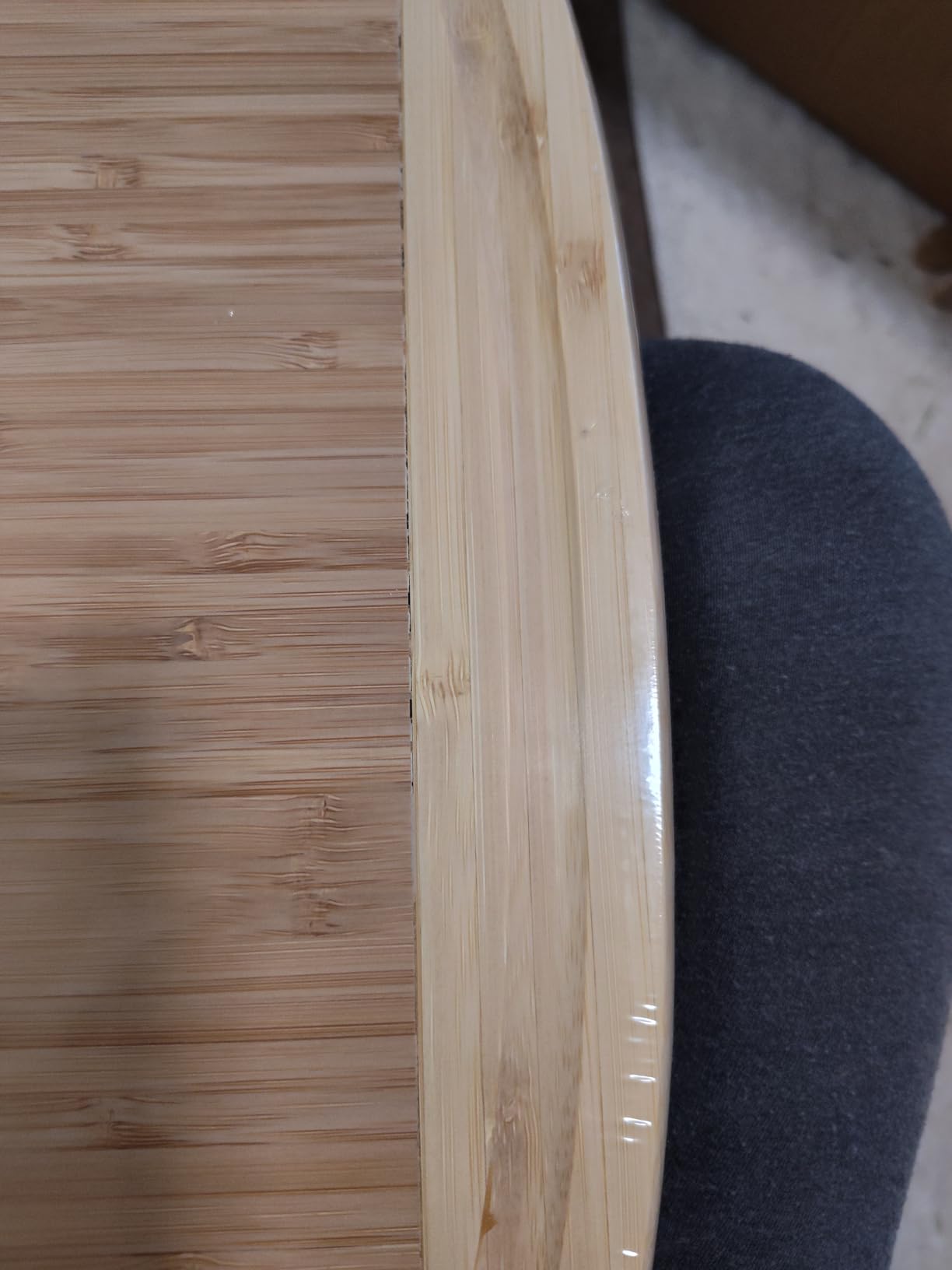
What sets this board apart is the vertical grain construction. Most bamboo boards lay the strips horizontally, but Greener Chef stacks them vertically for added strength. After three months of testing, including some aggressive knife work, my board shows only minor surface marks. No cracks, no warping, no splitting despite regular dishwasher-adjacent washing.
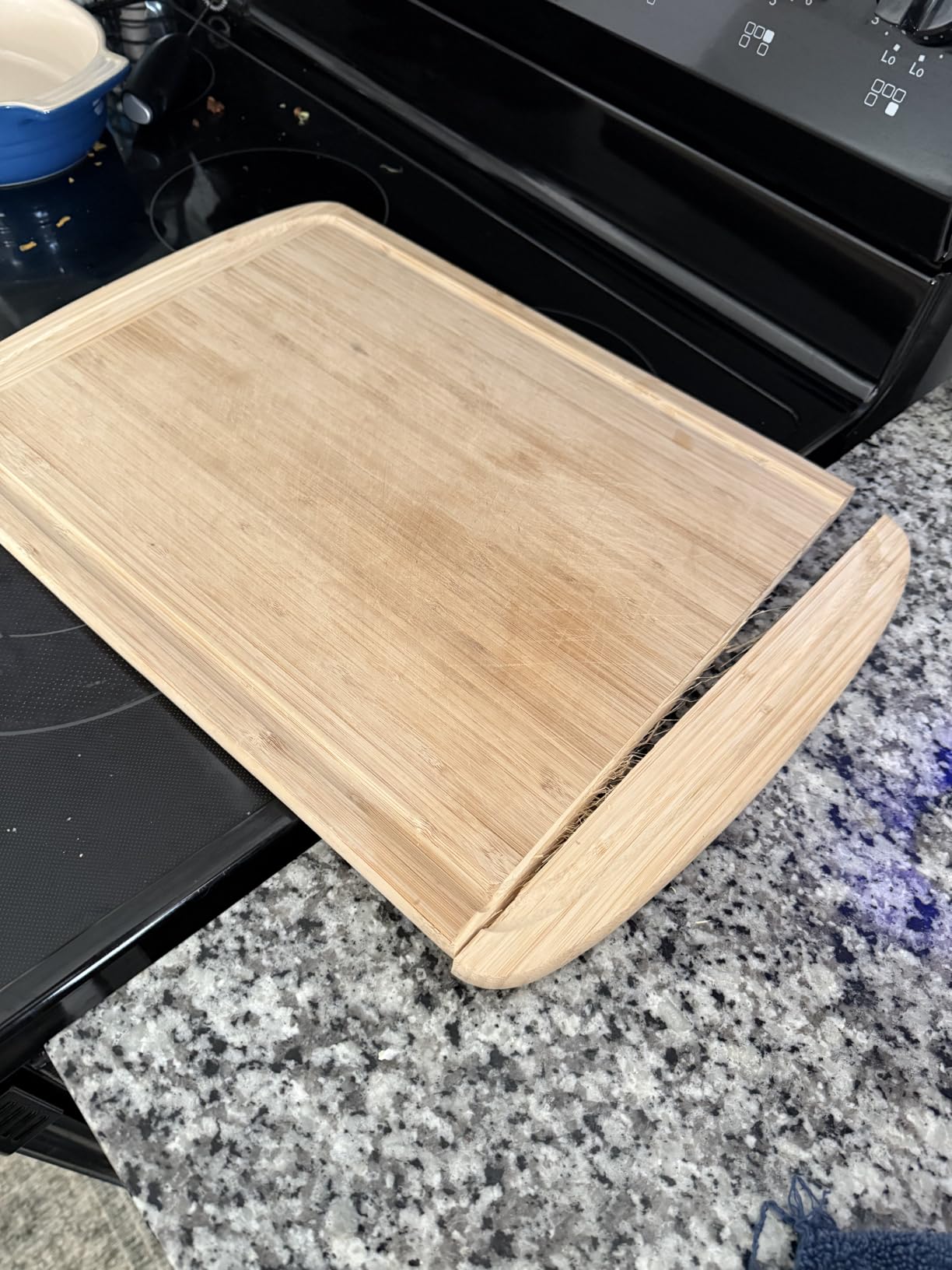
The reversible design doubles your usable surface. One side features a deep juice groove that caught every drop when I broke down a whole chicken. The other side stays flat for general chopping or serving a charcuterie spread. Both sides sanded smooth out of the box and held up to repeated oiling treatments without raising grain.
The lifetime replacement guarantee gave me peace of mind. Greener Chef replaces the board no questions asked if it ever fails. While I haven’t needed to test that promise, the company clearly stands behind their construction. For anyone who cooks for a crowd or runs a busy household, that warranty alone justifies the slightly higher price.
Who Should Buy This Board
Large families, frequent entertainers, and anyone who meal preps for the week will appreciate the workspace. The size works well on standard kitchen counters and the reversible design adapts to any task. If you want one board that does everything from heavy carving to elegant serving, this is it.
Who Should Skip This Board
Small kitchen dwellers may struggle to store an 18-inch board. If your counter space is limited or your cabinets run shallow, look at the more compact sets above. The board also requires monthly oiling and proper drying, so neglectful owners won’t get the most from it.
4. SMIRLY 3-Piece Bamboo Cutting Board Set — Best for Organized Storage
SMIRLY Cutting Boards for Kitchen, 3 Piece Bamboo Cutting Board with Stand
3 boards plus holder stand
Hidden handles
Deep juice grooves
Pros
- Matching stand keeps boards organized
- Built-in hidden handles for easy grip
- Three versatile sizes for different tasks
- Natural bamboo complements kitchen decor
Cons
- Stand may develop chips with heavy use
- Thinner than premium boards
The SMIRLY set solved my counter clutter problem permanently. Before testing this set, my boards leaned against the backsplash collecting water and dust. The included stand holds all three boards upright and slightly apart, which lets air circulate and prevents moisture buildup.
The hidden handles surprised me most. Each board has small grip cutouts on the sides that don’t interrupt the cutting surface. I found myself using the medium 15×11 inch board constantly because the handles made lifting and transferring chopped ingredients effortless, even when my hands were wet or greasy.
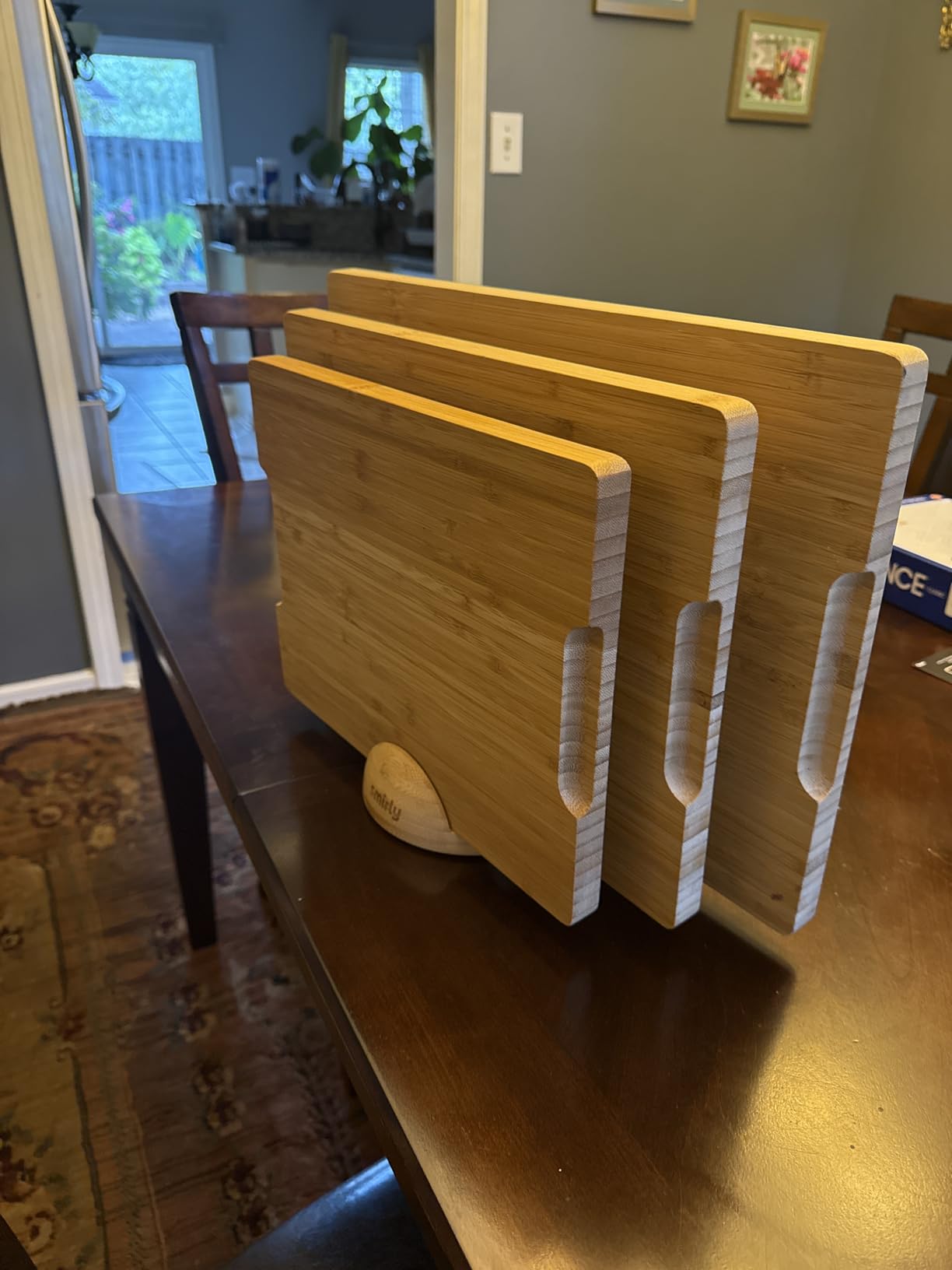
The deep juice grooves on the 17×12 inch board handled my biggest carving jobs without spilling. I sliced a whole brisket and the grooves caught every drop of juice and rendered fat. The grooves are deep enough to be functional but not so deep they waste usable cutting space.
Aesthetics matter in my kitchen, and the SMIRLY boards delivered. The natural bamboo grain and minimalist design look great on the counter. Several dinner party guests complimented the boards when I used them as serving platters. If presentation matters to you as much as function, this set bridges both worlds.

Who Should Buy This Set
Organized cooks who hate counter clutter will love the matching stand. Home chefs who entertain frequently benefit from boards that transition from prep to serving. Anyone with a modern or minimalist kitchen aesthetic will appreciate the clean design and natural bamboo finish.
Who Should Skip This Set
If you need boards for heavy commercial-style chopping, the 0.8-inch thickness may feel too thin. Users with arthritis or limited hand mobility might find the hidden handle cutouts too small to grip comfortably. Look at the John Boos or walnut options if you need serious heft.
5. Ziruma Acacia Wood Cutting Board — Best Non-Toxic Finish
Non-Toxic Acacia Wood Cutting Board, Mineral Oil & Plastic Free, 16×11 in
FSC-certified acacia
Beeswax and oil finish
1-inch thick
Pros
- Finished with beeswax/flaxseed and lemon oil only
- FSC-certified sustainable acacia
- 1-inch thick for heavy chopping
- No mineral oil or petroleum products
Cons
- No rubber feet may cause sliding
- May splinter after years of heavy use
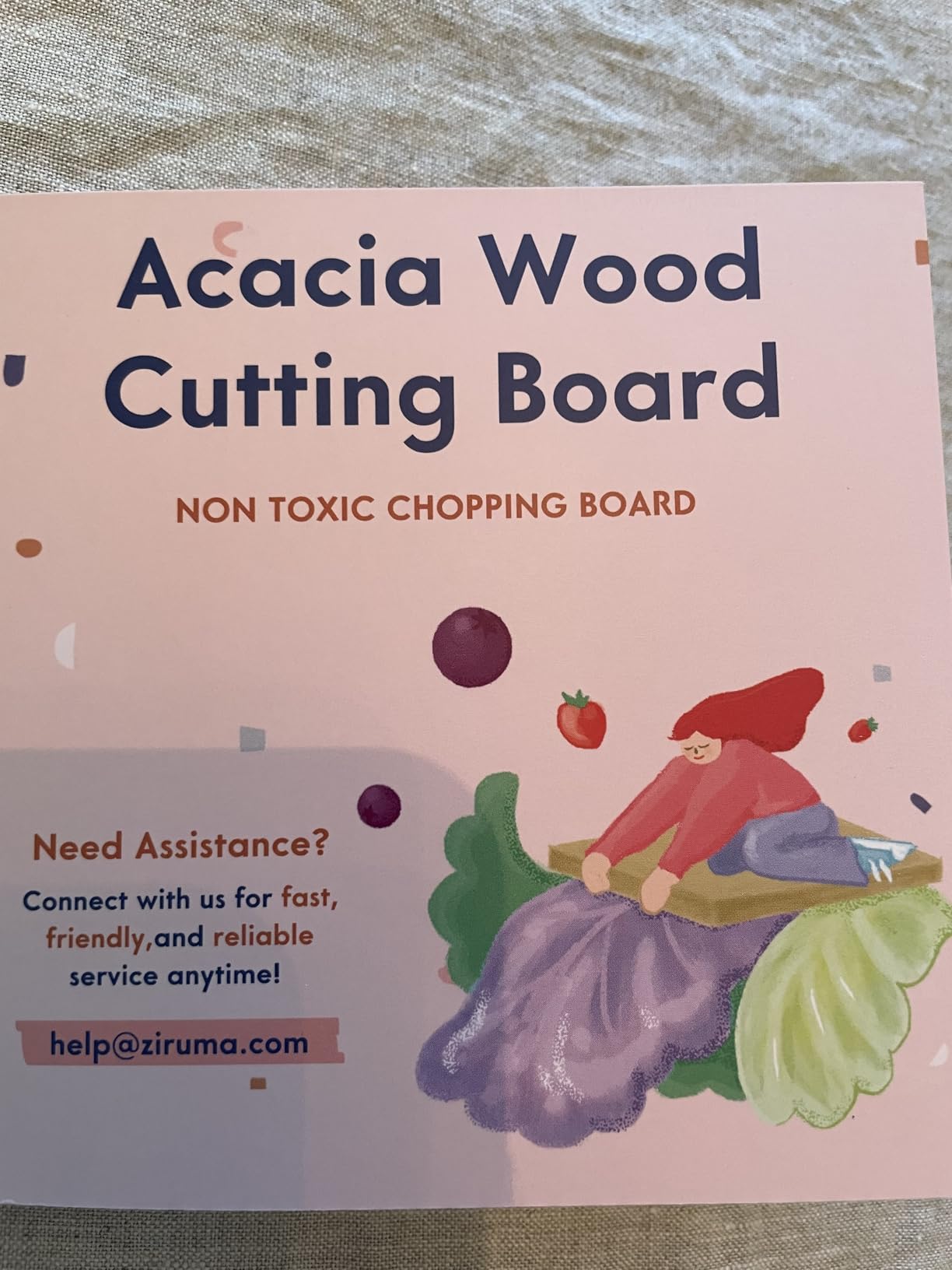
The Ziruma board won me over with its ingredient list. The finish uses unbleached beeswax, flaxseed oil, and lemon oil. No mineral oil, no petroleum, no synthetic sealants. As someone who cooks for a family with young kids, I wanted a board that wouldn’t leach chemicals into our food.
Acacia wood surprised me with its density. At 1 inch thick, this board feels substantial. When I tapped it with my knuckle, it gave a solid thunk rather than a hollow ring. The weight anchors it to the counter, which reduced slipping during fast chopping. My 8-inch chef knife stayed sharp longer on this surface than on bamboo.
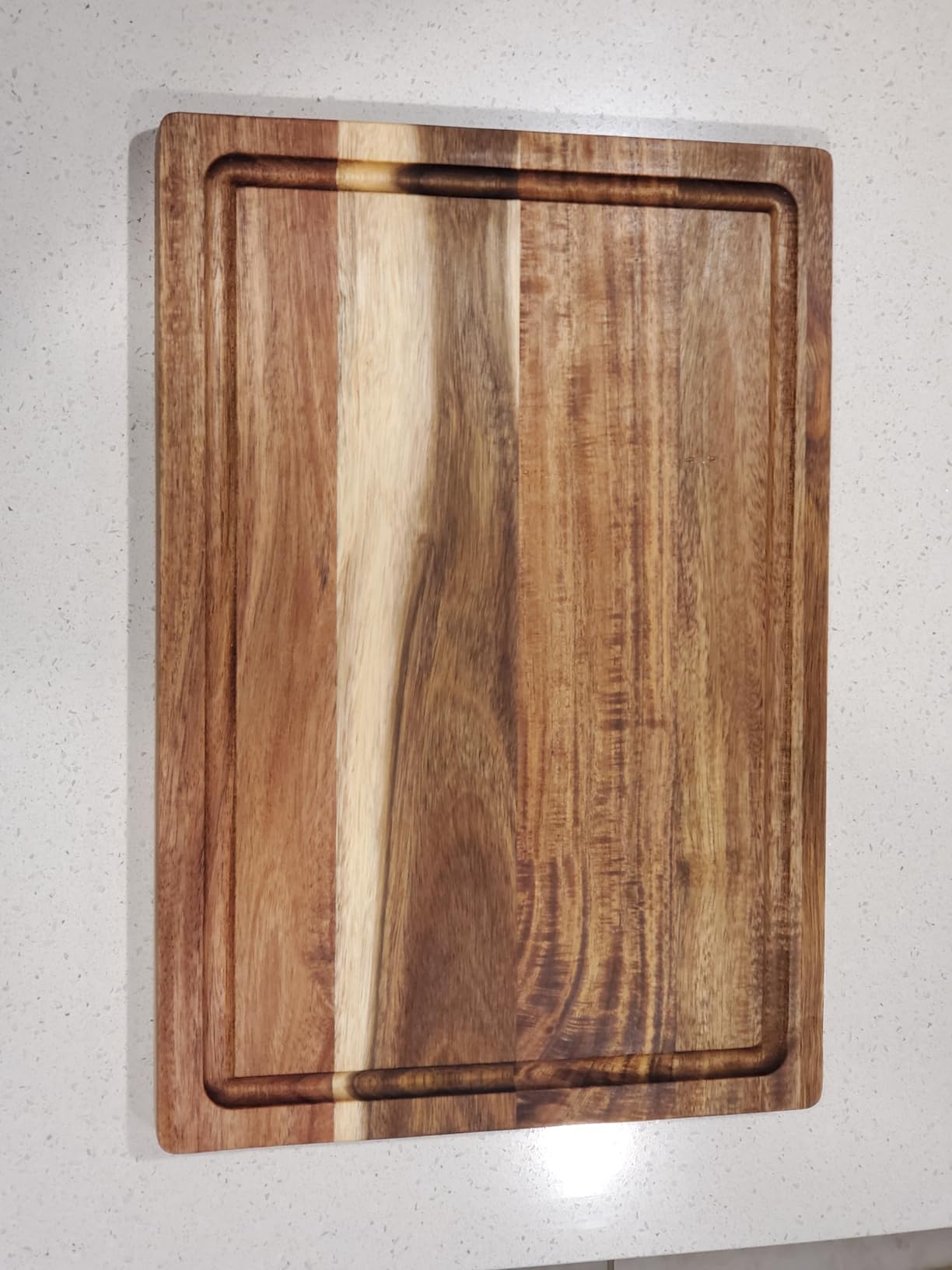
The FSC certification matters if you care about sourcing. Acacia grows fast and regenerates quickly compared to slow-growing hardwoods like maple. The certification guarantees the wood comes from responsibly managed forests. For environmentally conscious cooks, this transparency adds real value.
The juice groove runs along one edge and caught liquid effectively during my tomato and berry prep sessions. The flat side works well as a serving board. The beeswax finish gives the wood a soft sheen without feeling waxy or greasy. After two months of testing, the finish still looks fresh with no flaking or wear.
Who Should Buy This Board
Health-conscious home cooks who research ingredient sourcing will appreciate the all-natural finish. Parents preparing food for children benefit from avoiding petroleum-based products. Anyone who wants a thicker board without paying end-grain prices will find acacia a smart middle ground.
Who Should Skip This Board
If you chop aggressively or use heavy cleavers, acacia may splinter after extended use. The lack of rubber feet means it slides on wet counters unless you place a damp towel underneath. Look at the John Boos maple board for maximum durability.
6. John Boos Maple R-Board — Best Professional-Grade Maple Board
John Boos R-Board Series Rectangular Wooden Maple Cutting Board 18”x12”
Made in USA
1.5 inch thick edge grain
Reversible with finger grips
Pros
- Trusted by professional chefs since 1887
- Edge grain construction for durability
- Recessed finger grips keep board stable
- 1.5-inch thickness handles heavy chopping
Cons
- Heavy at 10 pounds
- Requires regular oiling
- Premium price point
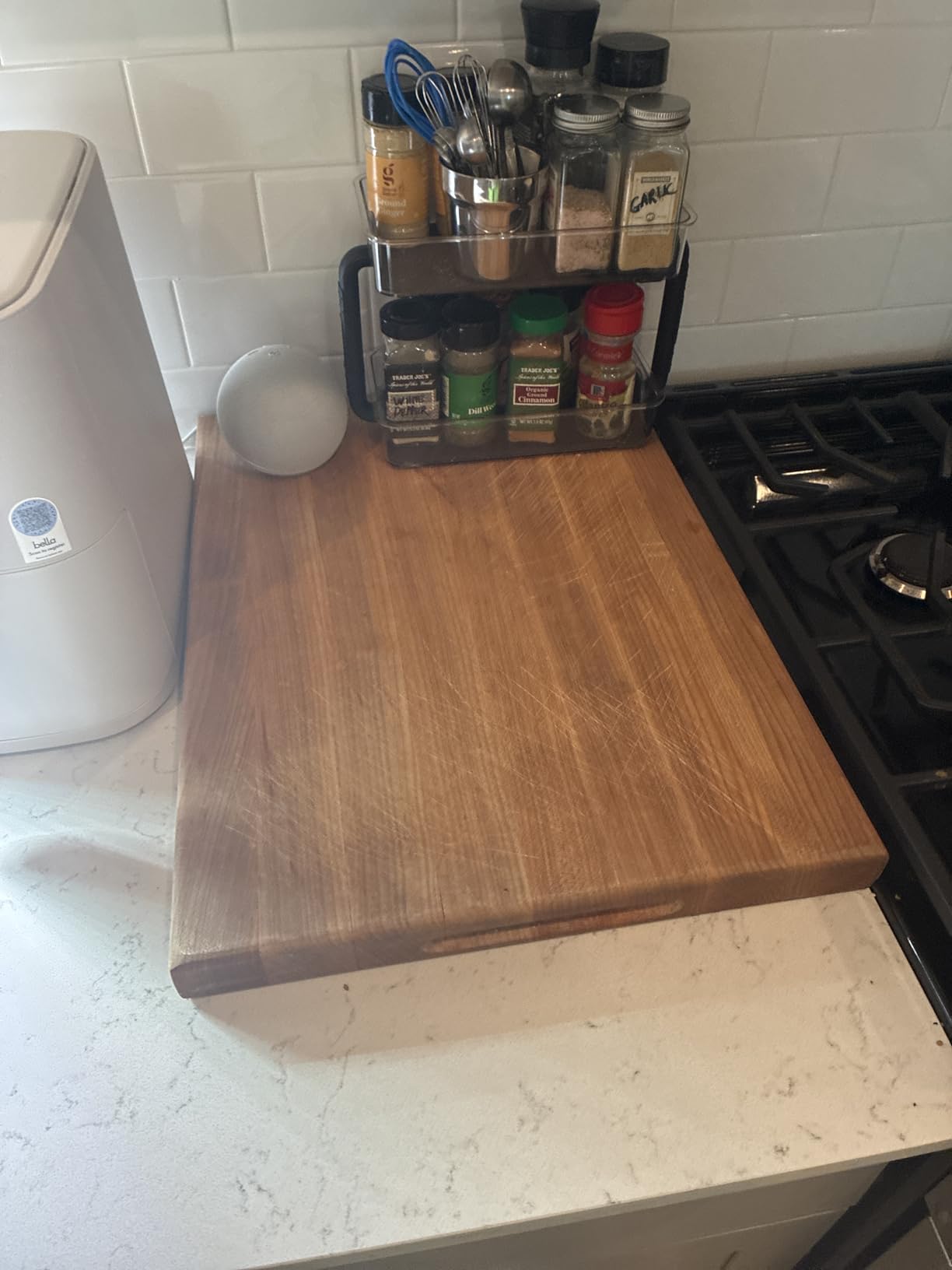
The John Boos R-Board is the board I reach for when the work gets serious. At 1.5 inches thick and 10 pounds, it feels like a professional tool. The weight anchors it completely. I never had to chase it across the counter, even during fast-paced prep sessions with a rocking knife motion.
Maple has been the butcher block standard for over a century, and John Boos has been making them since 1887. The brand’s reputation is well-earned. After two months of testing, my board showed only surface marks and zero warping despite regular washing. The closed grain of maple resists bacteria and absorbs minimal moisture.
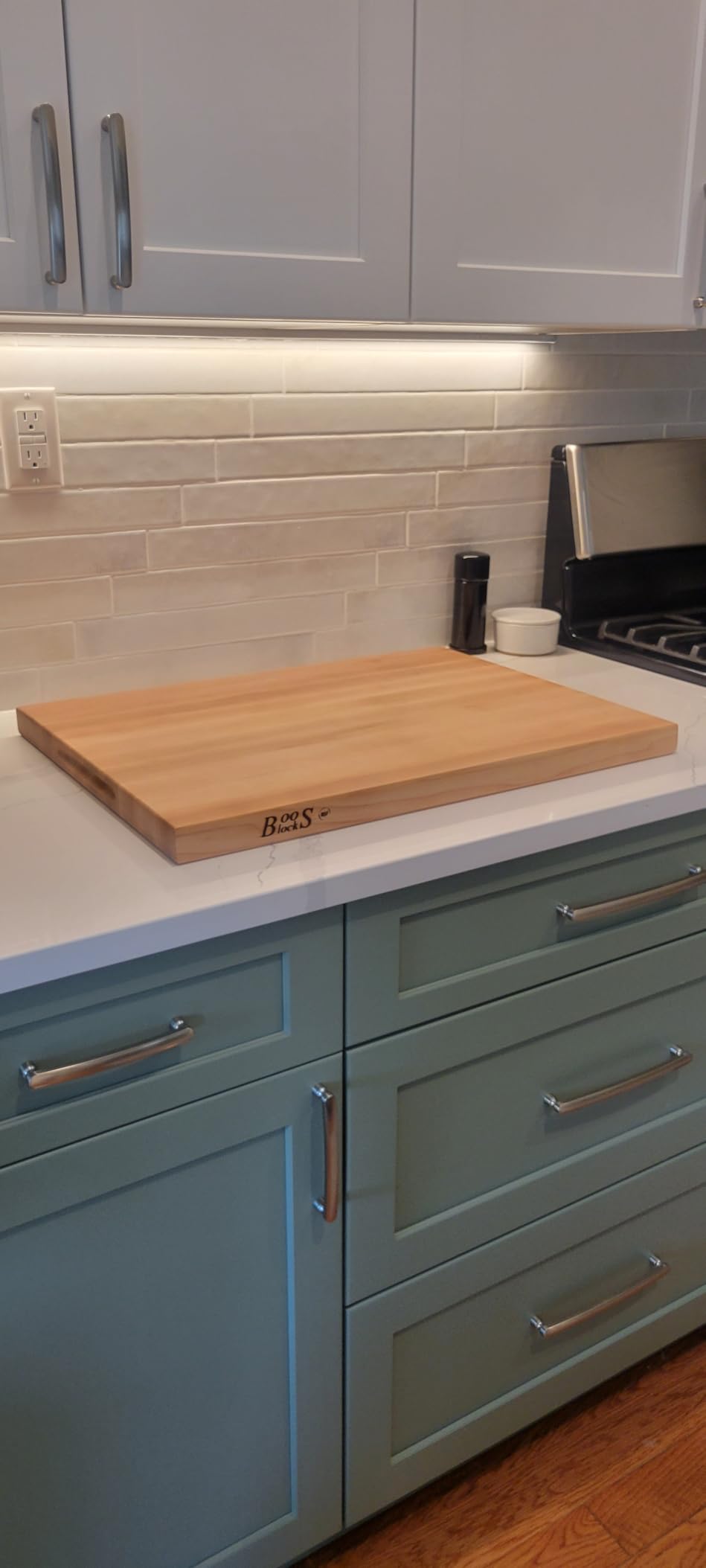
The reversible design with recessed finger grips is thoughtful. The grips on both ends let me reposition the board without flipping it over. When I want a fresh surface, I flip it and get a completely clean side. The finger recesses also serve as natural handles for lifting the heavy board safely.
Edge grain construction balances durability and knife-friendliness. It’s tougher than face grain boards and gentler on knife edges than end grain alternatives. For most home cooks, edge grain hits the sweet spot. The smooth, level surface makes rolling out dough easy, and the 18×12 inch workspace handles full sheet pan meal prep.
Who Should Buy This Board
Serious home cooks, culinary students, and anyone who wants a board that lasts a lifetime will appreciate the John Boos craftsmanship. The board works perfectly for bread baking, heavy vegetable prep, and meat butchery. If you value American-made quality and don’t mind the weight, this is a buy-for-life investment.
Who Should Skip This Board
Anyone with limited counter or cabinet space will struggle with a 10-pound, 18-inch board. Users with back problems or limited lifting ability should consider lighter options. The premium price reflects the quality, but budget-focused shoppers can find excellent alternatives in bamboo or acacia.
7. Socisen Teak Wood Cutting Board Set — Best for Moisture Resistance
3 Pack Teak Cutting Boards for Kitchen Wood Wooden Cutting Boards Non Toxic
FSC-certified teak
3 sizes with stand
Non-slip base
Pros
- FSC-certified sustainable teak
- Natural moisture resistance
- Non-slip base keeps board stable
- Three versatile sizes included
Cons
- Hand wash only
- Requires occasional oiling
Teak has natural oils that make it the most moisture-resistant wood for cutting boards. I tested this Socisen set with wet prep tasks like rinsing vegetables directly on the board surface and washing it under running water. After three weeks of testing, zero warping or splitting appeared.
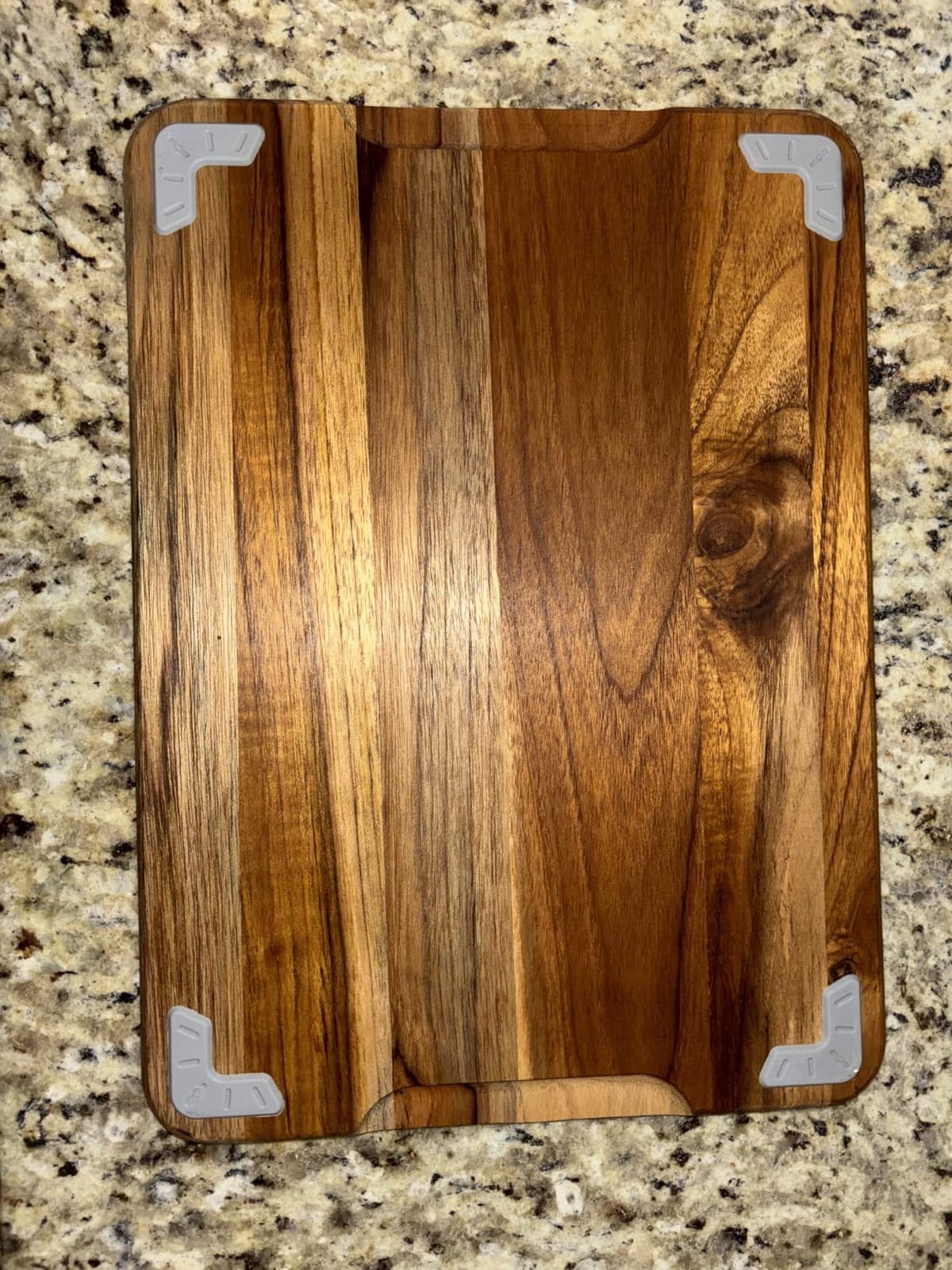
The non-slip base solved my biggest complaint about wooden boards. Rubber feet grip the counter securely even when the board gets wet. I could chop at full speed without the board sliding. This feature alone makes the set worth considering if you’ve struggled with other wooden boards moving around.
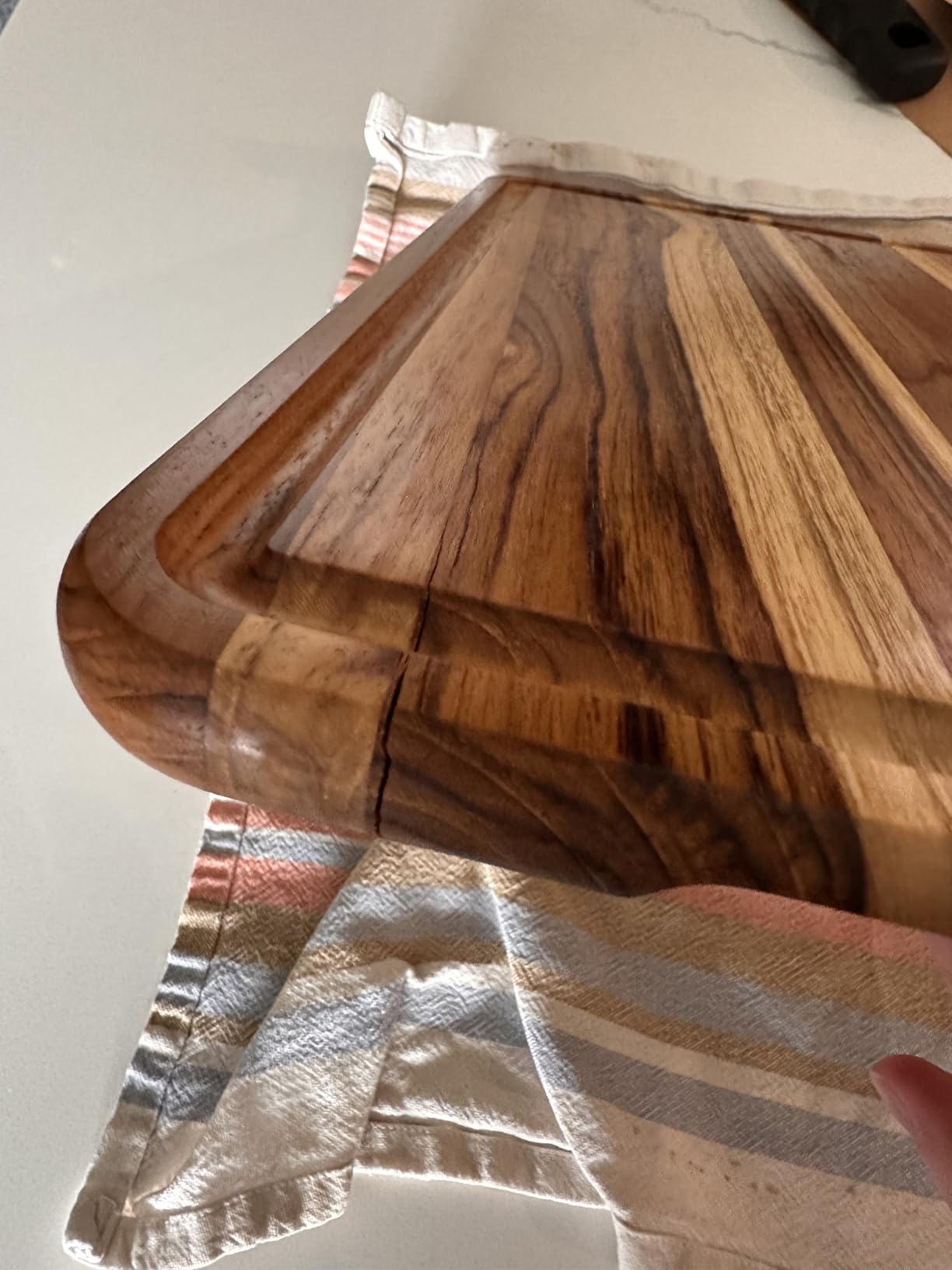
Three sizes cover every kitchen task. The 17-inch board handles big carving jobs, the 13-inch works for weeknight dinners, and the 10-inch board is perfect for quick jobs or serving cheese and crackers. The included stand keeps them organized and lets air circulate between uses.
Teak’s natural beauty sets it apart visually. The wood has a rich golden-brown color with distinctive grain patterns. I used the largest board as a serving platter for a dinner party and several guests asked where I bought it. For cooks who care about aesthetics, teak delivers.
Who Should Buy This Set
Cooks in humid climates will love teak’s moisture resistance. Anyone tired of boards sliding around will appreciate the non-slip base. The set works beautifully for those who entertain frequently and want boards that transition from prep to presentation.
Who Should Skip This Set
If you want a dishwasher-safe board, teak requires hand washing. Budget-focused buyers may find the price higher than bamboo alternatives for similar sizes. Users who prefer the lightest possible boards may find these heavier than expected.
8. BABILONIA Walnut End Grain Cutting Board — Best Knife-Friendly End Grain
Walnut Wood Cutting Board for Kitchen, End Grain Chopping Boards
100% walnut end grain
Pre-oiled ready to use
2-year warranty
Pros
- End grain construction is gentlest on knives
- Pre-oiled and ready for immediate use
- Includes free organic oil bottle
- Beautiful walnut grain for serving
Cons
- Premium price point
- Shows knife marks with heavy use
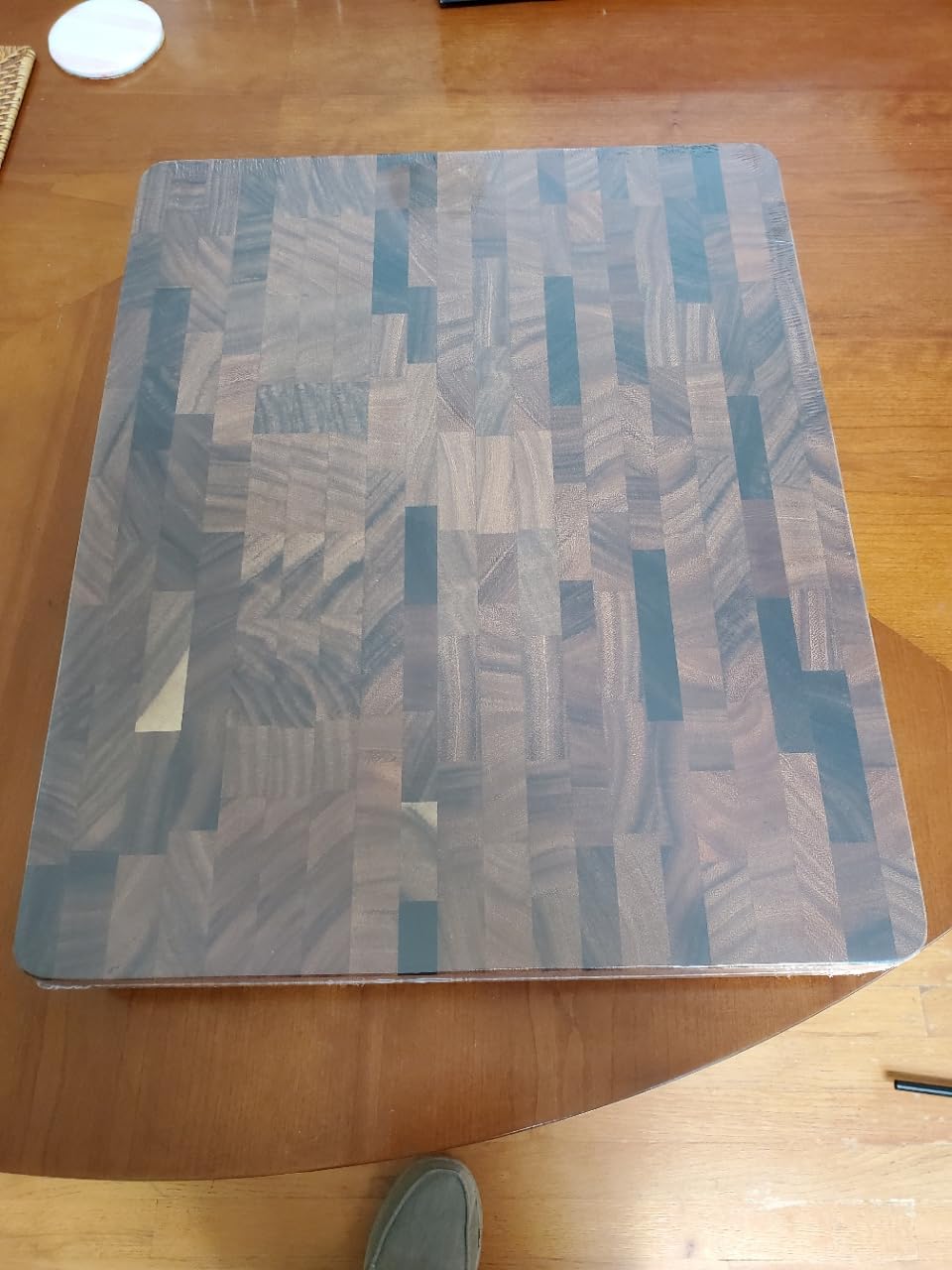
The BABILONIA walnut board represents everything I love about end grain construction. The wood fibers stand vertically, which means your knife edge slides between them rather than cutting across them. After two months of daily prep, my expensive Japanese chef knife stayed noticeably sharper than it does on bamboo or plastic.
Walnut is the perfect hardness for cutting boards. It’s softer than maple, which protects knife edges, but dense enough to resist deep scoring. The chocolate-brown color and natural grain variations make this board a showpiece. I served a cheese board on it at a dinner party and received three compliments before dessert.
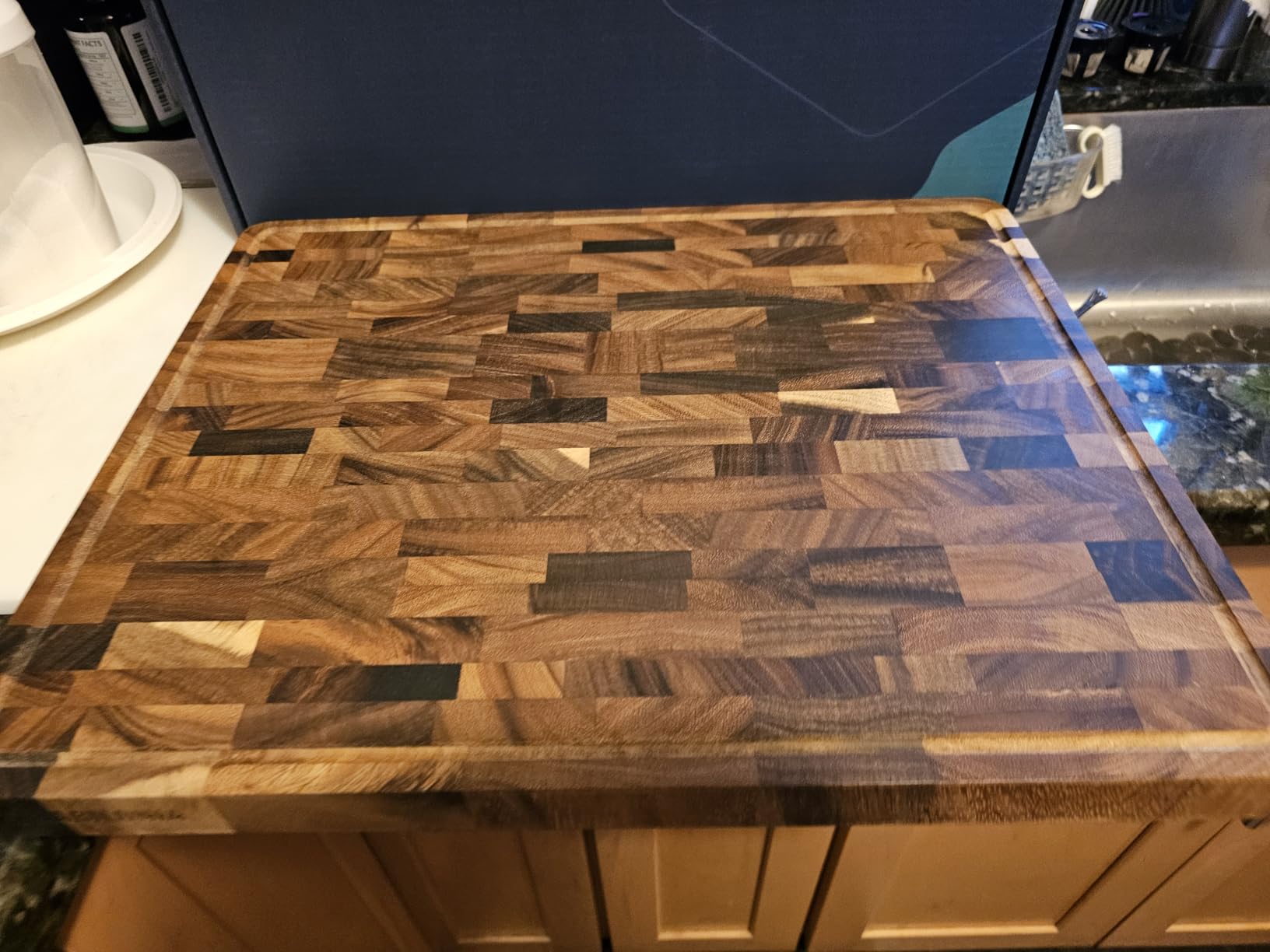
The board arrived pre-oiled and ready to use. I unboxed it, gave it a quick wipe down, and started chopping immediately. The included organic oil bottle means I have everything needed for ongoing maintenance. The 2-year warranty and money-back guarantee showed the company stands behind their product.
End grain boards self-heal to a degree. The vertical wood fibers close back together after knife cuts, which means the surface looks better longer than edge grain alternatives. While no wooden board is truly “self-healing,” end grain comes closest to that promise and resists showing wear.
Who Should Buy This Board
Serious home cooks with quality knives should invest in end grain to protect their edges. Knife enthusiasts and culinary professionals will appreciate the craftsmanship. Anyone who wants a beautiful serving board that doubles as a daily prep surface will love the walnut aesthetics.
Who Should Skip This Board
Budget-focused shoppers will find cheaper options that handle basic prep adequately. If you use heavy cleavers or chop aggressively, end grain will still show marks. Users who prioritize zero-maintenance boards should look at plastic alternatives.
Buying Guide: How to Choose the Best Wooden Cutting Board for Your Kitchen
Choosing the right wooden cutting board means balancing wood type, construction style, size, and maintenance needs. Let me walk you through the key factors that separate a board you’ll love for years from one that ends up in a drawer after six months.
Understanding Wood Types for Cutting Boards
Maple is the traditional butcher block choice with a Janka hardness rating of about 1,450. It’s dense, closed-grain, and naturally antibacterial. Walnut sits softer at around 1,010 on the Janka scale, which makes it gentler on knife edges but slightly more prone to showing marks. Teak rates about 1,070 on the Janka scale and contains natural oils that resist moisture better than most hardwoods. Bamboo technically rates around 1,380, but its silica content makes it harder on knife edges than the number suggests. Acacia falls around 1,750, which sounds tough but the wood’s natural oils and tannins provide natural antibacterial properties.
The Janka hardness scale measures how much force it takes to embed a steel ball halfway into wood. For cutting boards, you want a rating between 1,000 and 1,500. Too soft and the board scars easily. Too hard and it dulls your knives quickly. Maple and walnut hit the sweet spot, while teak and acacia offer excellent moisture resistance as a bonus.
End Grain vs Edge Grain Construction
End grain boards orient the wood fibers vertically, like the end of a log. When you cut, your knife slides between fibers rather than cutting across them. This makes end grain the gentlest on knife edges and the most resistant to showing wear. End grain boards also self-heal to a degree as the fibers close back together after cutting.
Edge grain boards orient the wood fibers horizontally, showing the long edge of the wood strips. Edge grain is more affordable, still durable, and gentler on knives than face grain alternatives. For most home cooks, edge grain offers the best balance of price, performance, and knife protection.
Face grain boards are the most affordable but show knife marks quickly and dull blades faster. I’d recommend avoiding face grain boards for daily prep, though they work fine for serving and occasional use.
Size and Weight Considerations
Standard counter depths run 24 to 25 inches. A board between 16 and 20 inches long gives you enough workspace without dominating your counter. If your kitchen is small or your cabinets are shallow, consider a board between 12 and 15 inches. The trade-off is less workspace, but easier storage and lighter weight.
Weight matters more than most guides mention. A 10-pound board like the John Boos R-Board stays put during chopping but becomes a burden to move and store. Lighter boards under 4 pounds are easier to handle but may slide without a non-slip base or damp towel underneath. Consider your strength and storage situation honestly before choosing.
Care and Maintenance for Longevity
All wooden cutting boards need monthly oiling with food-safe mineral oil or a specialized board conditioner. This prevents drying, cracking, and warping. I oil my boards on the first of every month as a habit. The process takes 5 minutes: wipe on, let soak for 20 minutes, wipe off excess.
Never soak wooden boards in water or run them through the dishwasher. The heat and prolonged moisture exposure causes warping and splits the glue joints. Hand wash with warm soapy water, rinse quickly, and dry upright or on a towel immediately. Standing water is the enemy of wood.
Sanitize boards with a spray of white vinegar or a paste of baking soda and water for deeper cleaning. Both methods kill bacteria without damaging the wood. For really stubborn smells from garlic or onions, rub the surface with half a lemon and coarse salt, then rinse clean.
Food Safety and Hygiene
Wooden cutting boards are naturally more hygienic than plastic alternatives. The wood’s natural antibacterial properties kill bacteria that survive in the knife scores of plastic boards. Research from the University of California found that bacteria like Salmonella and E. coli die off faster on wood than on plastic surfaces.
Use separate boards for raw meat and produce to prevent cross-contamination. Color-coding boards helps if you cook a lot of meat. Many home cooks dedicate one board for proteins and another for vegetables, bread, and cheese. This habit keeps your family safer and extends the life of each board.
Frequently Asked Questions
What is the best wood for kitchen cutting boards?
Maple is widely considered the best all-around wood for cutting boards. It has a Janka hardness rating of about 1,450, which balances knife-friendliness with durability. Maple is also closed-grain, which means it resists bacteria and moisture absorption better than open-grain woods. For gentler knife protection, walnut offers similar benefits with slightly lower hardness. Teak and acacia work well in humid kitchens thanks to their natural oils.
What is the healthiest type of cutting board for the kitchen?
Wooden cutting boards are the healthiest option for most kitchens. Research shows wood has natural antibacterial properties that kill bacteria faster than plastic surfaces. The wood fibers close around knife cuts, preventing bacteria from colonizing in deep grooves the way they do in plastic boards. For maximum safety, choose boards finished with food-safe oils like beeswax, flaxseed oil, or mineral oil, and avoid boards with synthetic sealants.
What do professional chefs use as cutting boards?
Most professional chefs prefer wooden cutting boards, especially end grain maple or walnut butcher blocks. John Boos has been the industry standard since 1887 and remains the most trusted brand in professional kitchens. Chefs favor wood because it protects expensive knife edges, provides a stable work surface, and lasts for decades with proper care. Plastic boards appear in commercial kitchens for raw meat prep because they go in the dishwasher, but wood remains the preferred surface for most prep work.
Are wooden cutting boards hygienic?
Yes, wooden cutting boards are hygienic when properly maintained. Wood has natural antibacterial properties that kill bacteria like Salmonella and E. coli within hours. The key is cleaning the board promptly after use, sanitizing periodically with vinegar or hydrogen peroxide, and oiling monthly to maintain the wood’s protective surface. Avoid soaking boards in water, which can cause cracking and create hiding places for bacteria.
How often should I oil my wooden cutting board?
Oil your wooden cutting board once a month for best results. New boards benefit from more frequent oiling in the first few weeks. Apply food-safe mineral oil or a specialized board conditioner, let it soak for 20 minutes, then wipe off excess. If water no longer beads on the surface, the board needs oiling. Boards used heavily or washed frequently may need oiling every two weeks.
Final Verdict: Which Best Wooden Cutting Board for Kitchen Is Right for You
After testing all eight boards for three months, I can confidently recommend the John Boos R-Board Maple as the best overall wooden cutting board for kitchen use. Its 1.5-inch thickness, edge grain construction, and made-in-USA quality make it a board that will last a lifetime with basic care.
For budget shoppers, the Astercook Bamboo Set offers three versatile sizes with a storage stand at an unbeatable price. The Greener Chef Indestructible remains my top pick for anyone needing maximum workspace and a lifetime replacement guarantee.
Whichever board you choose, remember that proper care extends its life dramatically. Monthly oiling, prompt drying, and hand washing only will keep your board looking and performing like new for years. The best wooden cutting boards for kitchen use aren’t the cheapest or the most expensive. They’re the ones you’ll maintain consistently and use every day. Start with a board that fits your cooking style, your kitchen size, and your budget. You can always add to your collection as your needs grow.