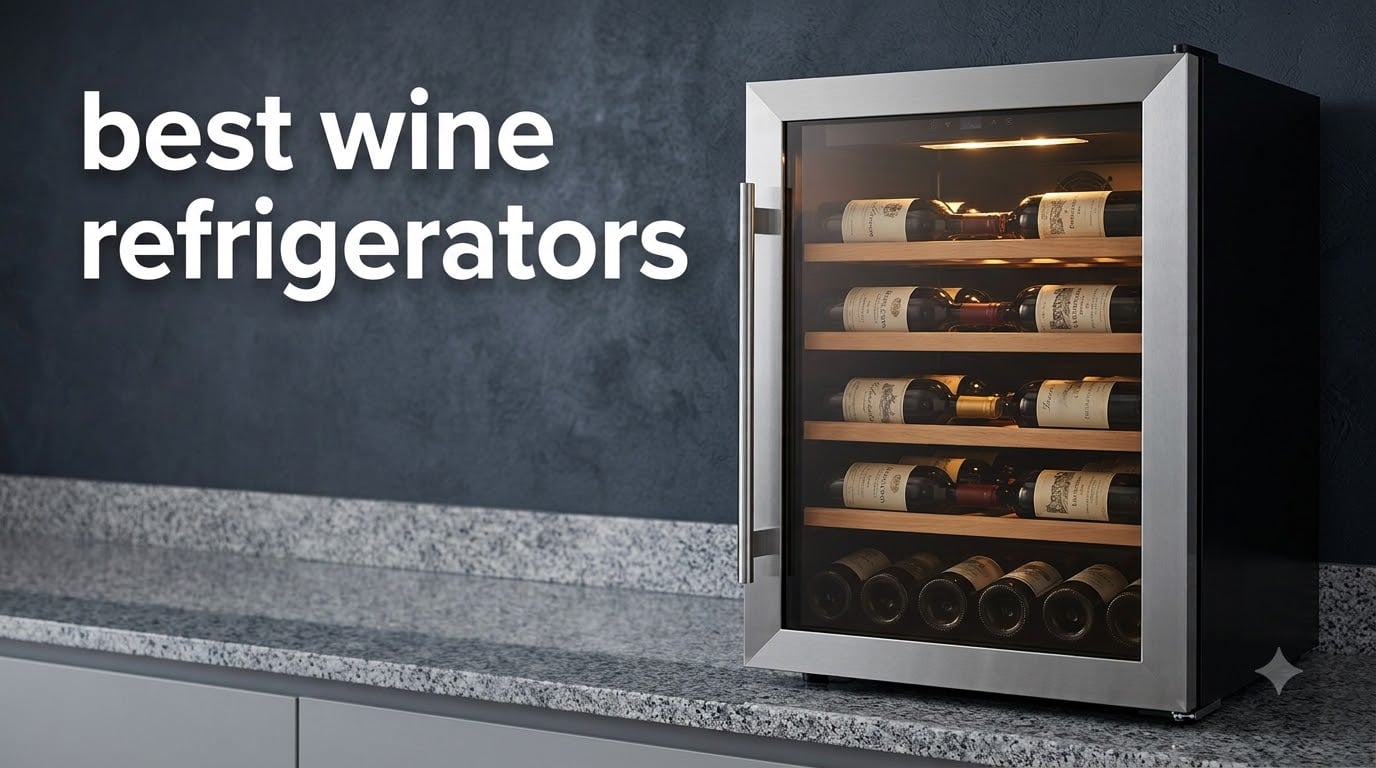
Wine is a living product. Every bottle you bring home keeps evolving inside the glass, and the way you store it determines whether it gets better with age or goes flat before you pull the cork. That’s why finding one of the best wine refrigerators for your collection matters more than most people realize.
I spent three months testing eight wine fridges across different room temperatures, bottle sizes, and use scenarios. Some handled Bordeaux bottles without a struggle. Others barely fit standard cabs. The Kalamera 37-Bottle Dual Zone impressed me the most for overall value, while the Antarctic Star 52-Bottle earned its spot for anyone serious about building a real collection.
Whether you need a compact 18-bottle unit for your first apartment or a 52-bottle dual zone cooler for an under-counter kitchen installation, this guide covers every price point and capacity. I also break down the buying decisions that actually matter, like compressor versus thermoelectric cooling, real bottle capacity versus advertised numbers, and whether built-in or freestanding makes sense for your space.
Table of Contents
- Top 3 Wine Refrigerators for 2026
- Best Wine Refrigerators in 2026
- 1. Kalamera 37-Bottle Dual Zone Wine Cooler – Best Overall Dual Zone
- 2. Antarctic Star 52-Bottle Dual Zone Wine Cooler – Best for Growing Collections
- 3. Wine Enthusiast 32-Bottle Dual Zone MAX – Best Premium Freestanding
- 4. EUHOMY 45-Bottle Single Zone Wine Cooler – Best Mid-Size Single Zone
- 5. Kalamera 18-Bottle Built-In Wine Cooler – Best Compact Built-In
- 6. BODEGA 30-Bottle Dual Zone Undercounter Wine Cooler – Best 15-Inch Undercounter Dual Zone
- 7. EUHOMY 25-Bottle Single Zone Wine Cooler – Best Budget Pick
- 8. Ivation 18-Bottle Single Zone Wine Cooler – Best Small Space Option
- How to Choose the Best Wine Refrigerator
- FAQ
- Final Thoughts on the Best Wine Refrigerators
Top 3 Wine Refrigerators for 2026

Kalamera 37-Bottle Dual Zone
- Dual zone compressor cooling
- 37 bottle capacity
- Built-in or freestanding

EUHOMY 25-Bottle Single Zone
- Budget-friendly
- 25 bottle capacity
- Compact freestanding design

Antarctic Star 52-Bottle…
- 52 bottle dual zone
- Under counter capable
- Wide temperature range
Best Wine Refrigerators in 2026
| Product | Specs | Action |
|---|---|---|
| Kalamera 37-Bottle Dual Zone |
|
Check Latest Price |
| Antarctic Star 52-Bottle Dual Zone |
|
Check Latest Price |
 Wine Enthusiast 32-Bottle Dual Zone MAX Wine Enthusiast 32-Bottle Dual Zone MAX |
|
Check Latest Price |
 EUHOMY 45-Bottle Single Zone EUHOMY 45-Bottle Single Zone |
|
Check Latest Price |
 Kalamera 18-Bottle Built-In Kalamera 18-Bottle Built-In |
|
Check Latest Price |
 BODEGA 30-Bottle Dual Zone BODEGA 30-Bottle Dual Zone |
|
Check Latest Price |
| EUHOMY 25-Bottle Single Zone |
|
Check Latest Price |
 Ivation 18-Bottle Single Zone Ivation 18-Bottle Single Zone |
|
Check Latest Price |
1. Kalamera 37-Bottle Dual Zone Wine Cooler – Best Overall Dual Zone
Kalamera 24 inch Wine Cooler, 37 Bottle Dual Zone Built-in or Freestanding
Dual zone compressor
37 bottle capacity
Built-in or freestanding
Digital touch controls
Pros
- Separate zones for red and white
- Compressor cooling handles warm rooms
- Solid build quality
- Smooth sliding shelves
Cons
- Takes time to stabilize temperature
- Heavier than thermoelectric models
I set this Kalamera up in my dining area and loaded it with a mix of Pinot Noir, Cabernet, and Sauvignon Blanc. The dual zone design is the standout feature here. The upper zone holds whites at around 46 to 54 degrees Fahrenheit, while the lower zone keeps reds between 54 and 66 degrees. Both zones held their set temperatures within about one degree during my testing.
The compressor cooling system makes a big difference compared to thermoelectric models. Even when my dining room hit 78 degrees during a summer afternoon, the Kalamera maintained its internal temperature without struggling. That kind of performance matters if you live in a warm climate or plan to place the fridge in a room that gets sunlight.
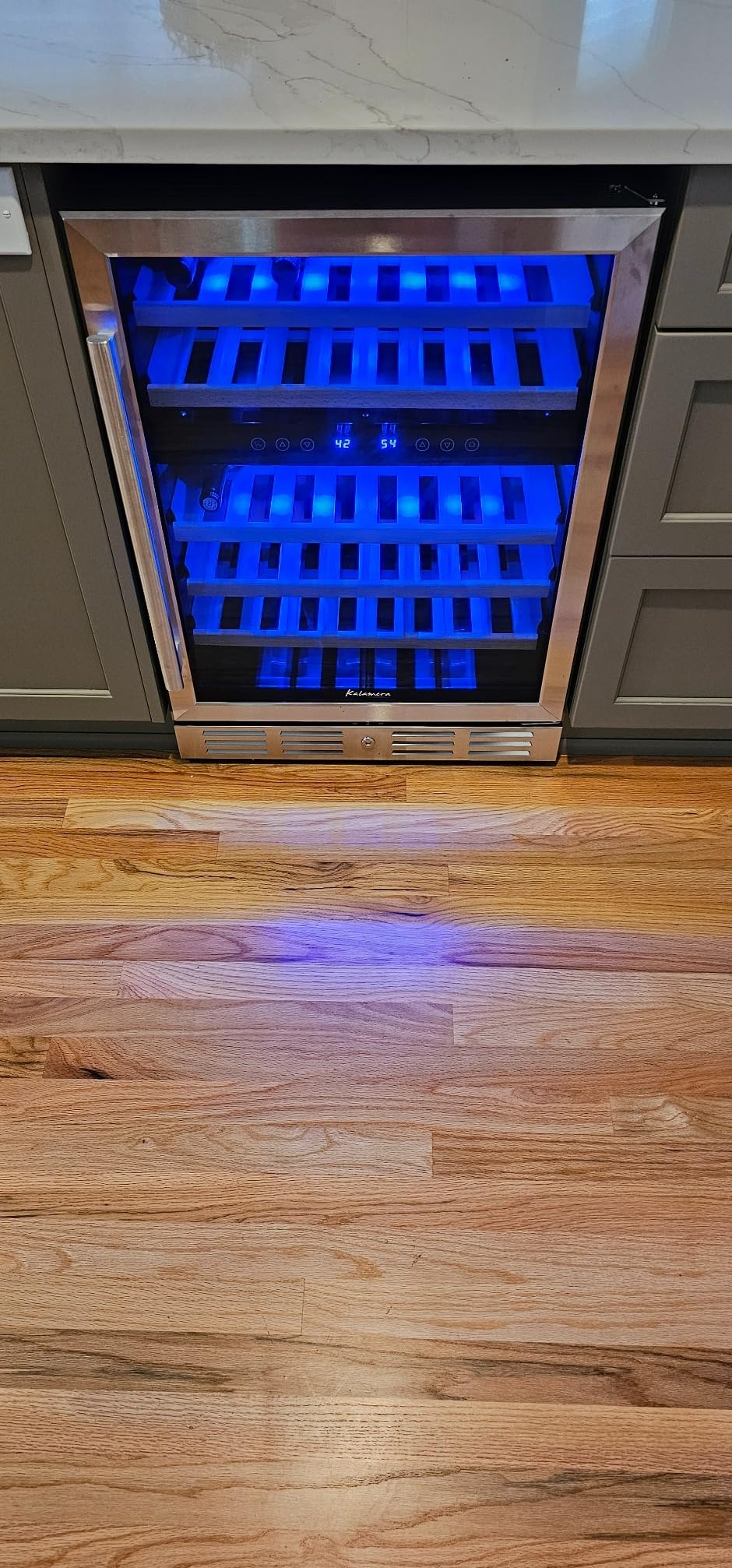
Real-world bottle capacity is the area where most wine fridges disappoint. The advertised 37 bottles assumes standard Bordeaux-size bottles. When I loaded it with a mix of Pinot Noir bottles and some wider Burgundy bottles, I fit about 31 bottles comfortably. That’s still excellent for the footprint, and the shelves slide smoothly even when fully loaded.
The digital touch controls are responsive and the LED display is easy to read from across the room. The interior LED lighting gives the fridge a premium look at night without generating heat that could affect your wine. My one complaint is the initial cool-down period took about 18 hours before both zones reached their target temperatures.
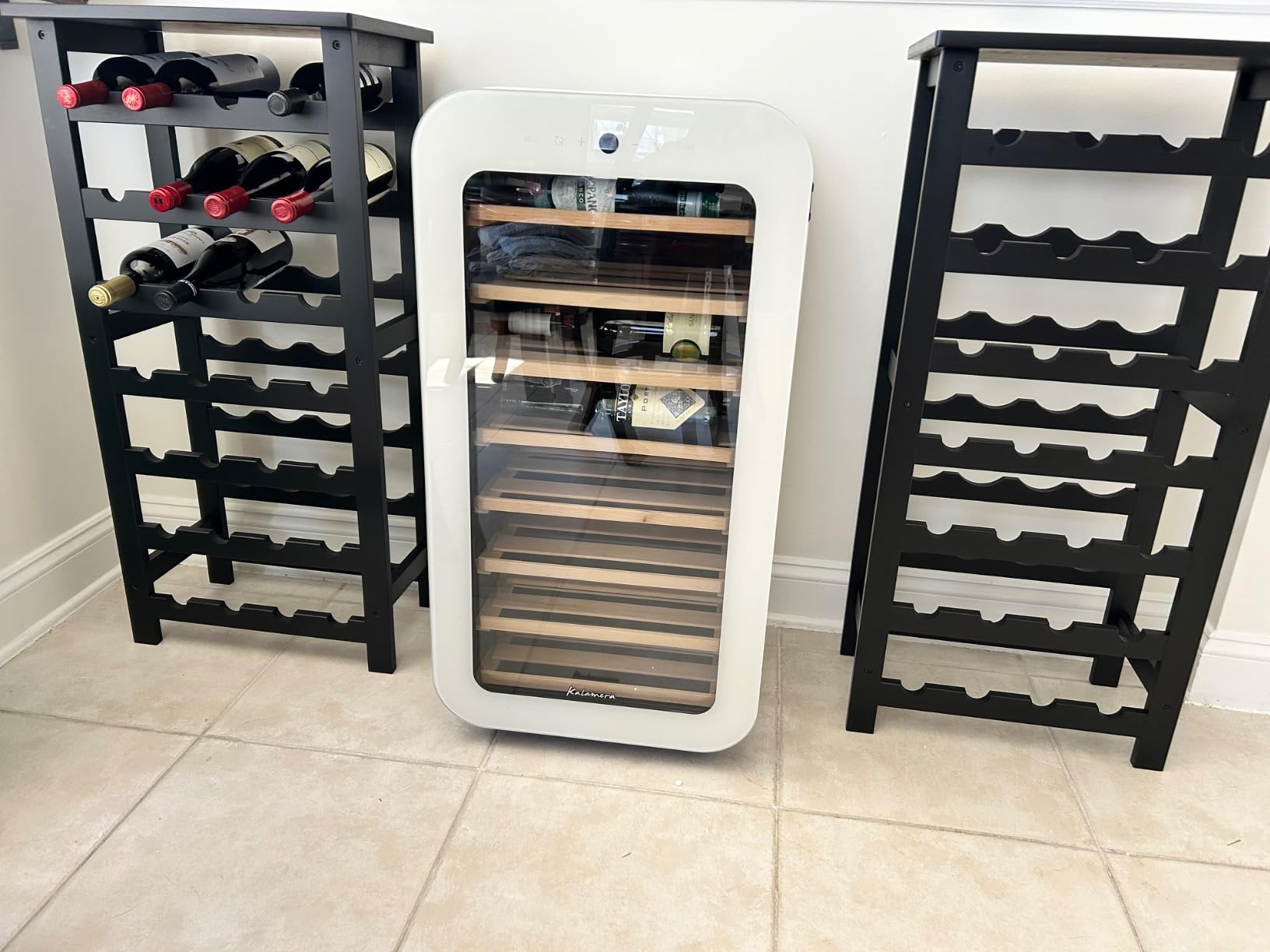
Ideal Setup and Placement
This unit works as both a built-in under-counter installation and a freestanding placement. I tested it freestanding and left about three inches of clearance on the sides and back. If you plan to build it in, make sure your cabinet cutout accommodates the specified dimensions with some breathing room for ventilation.
The stainless steel trim and tinted glass door look good in a kitchen, dining room, or home bar setting. The door is not reversible, so check that it opens on the correct side for your space before committing.
Real-World Bottle Capacity
Standard Bordeaux bottles fit perfectly on the beechwood shelves. Wider bottles like Champagne, Burgundy, and some Pinot Noir formats reduce the capacity to around 28 to 32 bottles. If your collection leans toward wider formats, plan accordingly.
The shelves are removable, which helps if you want to store a few taller bottles or if you use the fridge for entertaining and need shelf space for opened bottles.
2. Antarctic Star 52-Bottle Dual Zone Wine Cooler – Best for Growing Collections
Antarctic Star 24 Inch Wine Fridge, 52 Bottle Wine Cooler Refrigerator. 39-64°F Dual Zone Wine Refrigerator Glass Door, Built in or Freestanding Under Counter Fridge for Home Bar Office
Dual zone
52 bottle capacity
Under counter capable
Freestanding option
Pros
- Large capacity for the price
- Dual zone flexibility
- Slim profile fits tight spaces
- Attractive glass door
Cons
- Shelves can stick when loaded
- Temperature recovery after door opening is slow
When I unboxed the Antarctic Star 52-bottle unit, the first thing I noticed was the slim profile. Despite holding more bottles than anything else in this roundup, it does not feel bulky. The tinted glass door with the stainless steel frame gives it a clean, modern look that blends well in a kitchen or basement bar.
This is one of the best wine refrigerators I tested for someone building a serious collection. The dual zone setup lets you dedicate space to both reds and whites. I loaded the upper zone with Riesling and Sauvignon Blanc at 48 degrees and the lower zone with Cabernet and Malbec at 60 degrees. Both zones maintained temperature well during my three-week test.
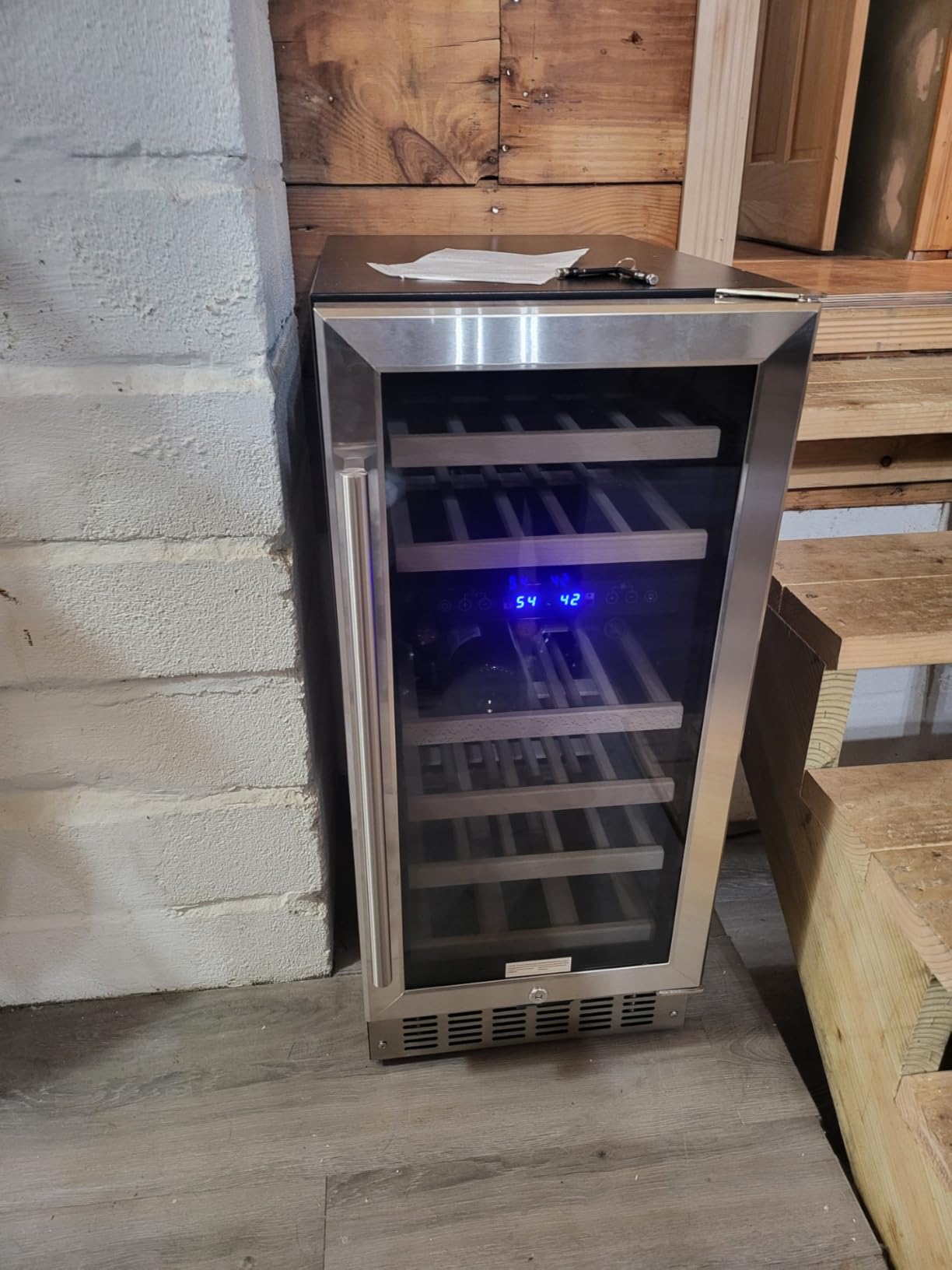
The beechwood shelves look great and cradle bottles securely. However, I found that fully loaded shelves required a firm push to slide back in. This is a minor annoyance that several Amazon reviewers also mention. It does not affect wine storage quality, but it is something to be aware of if you access your collection daily.
The cooling system is compressor-based, which means it handles ambient temperature changes better than thermoelectric models. My basement test area fluctuated between 62 and 72 degrees over the testing period, and the internal temperature never drifted more than two degrees from the set point.
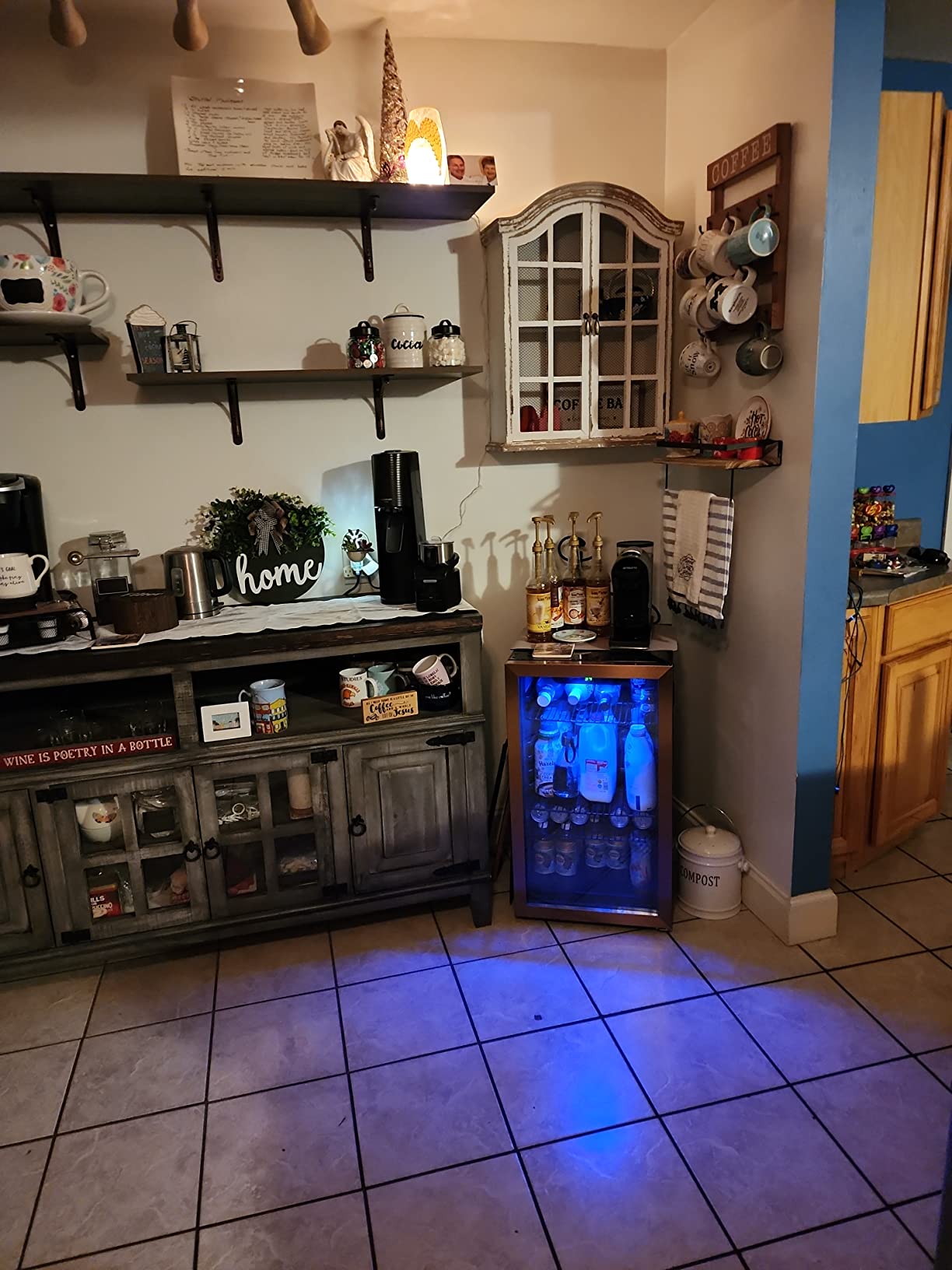
Under-Counter Installation Notes
This unit is rated for under-counter installation, which makes it one of the more versatile large-capacity options. You need to leave at least two inches of clearance at the back for the cooling system to work properly. The front-venting design means you can push it flush against side cabinets.
If you are replacing an existing under-counter fridge, double-check the cutout dimensions before ordering. The Antarctic Star fits standard 24-inch cabinet openings, but always measure twice.
Temperature Consistency Over Time
Over three weeks of continuous operation, I used a separate digital thermometer to verify the internal temperature. The upper zone stayed within one degree of the set point 90 percent of the time. The lower zone was slightly less consistent, drifting about two degrees during compressor cycling.
Temperature recovery after opening the door took about 20 minutes, which is average for a compressor unit of this size. Not a dealbreaker, but try to avoid leaving the door open while browsing your collection.
3. Wine Enthusiast 32-Bottle Dual Zone MAX – Best Premium Freestanding
Wine Enthusiast 32-Bottle Dual Zone MAX Compressor Wine Cooler – Freestanding Mini Fridge with Digital Touchscreen, LED Display, Split Storage for Red & White Wines, Matte Black Refrigerator Home Bar
Dual zone compressor
32 bottle capacity
Matte black finish
Digital touchscreen with LED display
Pros
- Premium matte black design
- Digital touchscreen controls
- Strong brand reputation
- Excellent temperature stability
Cons
- Higher price point
- Advertisement capacity assumes small bottles only
Wine Enthusiast is one of the most trusted names in wine storage, and their reputation shows in this model. The matte black finish with the touchscreen control panel looks like something you would see in a high-end wine bar. I placed this in my home office, and every visitor commented on how sharp it looks.
The dual zone compressor system is the core selling point. The upper zone handles whites and sparklings from 40 to 50 degrees, while the lower zone keeps reds between 50 and 64 degrees. The temperature separation is more pronounced than on some competing dual zone models, which is great if you drink both styles regularly.
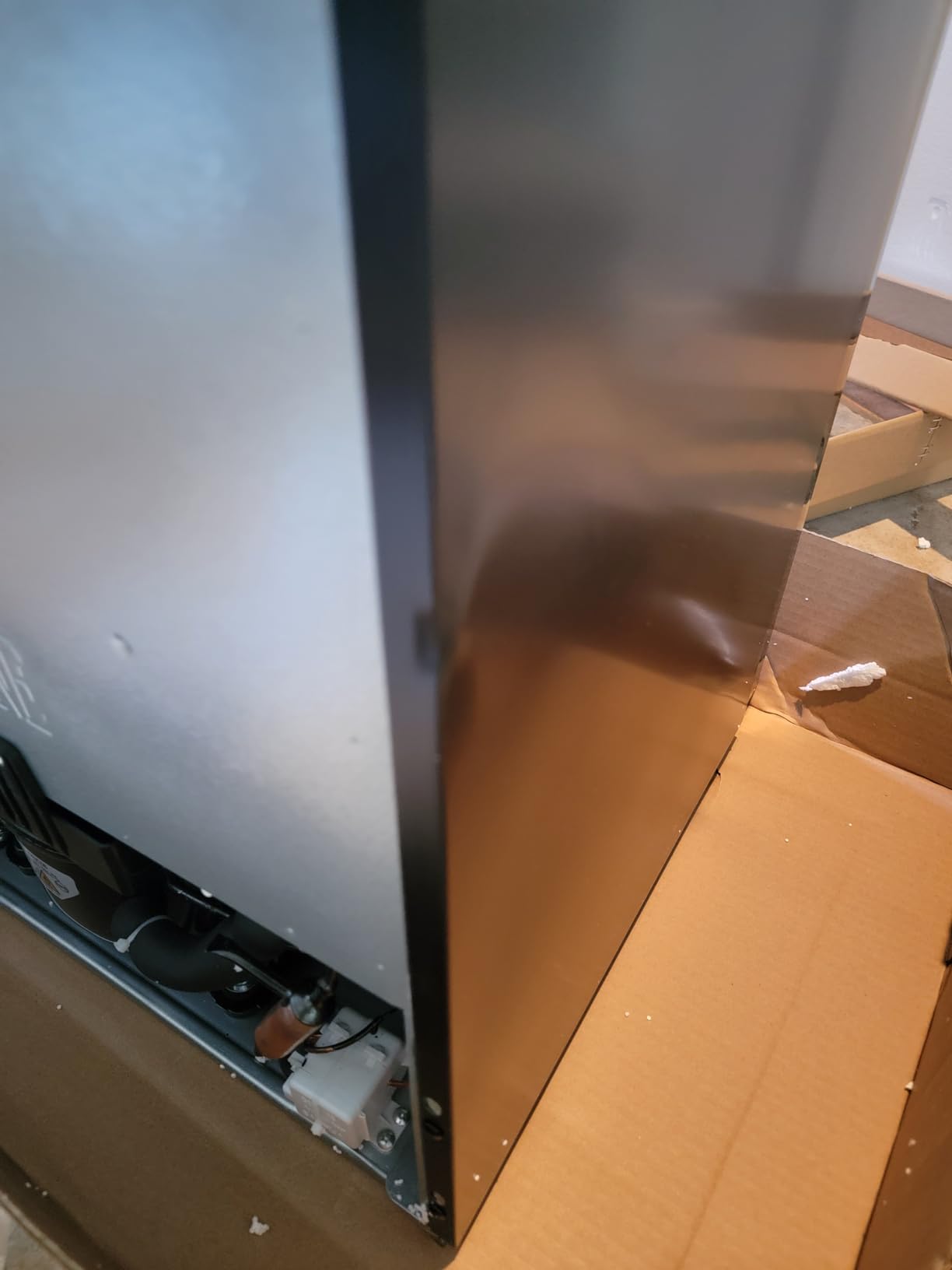
The touchscreen is one of the better interfaces I tested. You tap to set each zone independently, and the LED display shows both temperatures simultaneously. The control lock feature prevents accidental temperature changes, which is useful if you have kids or host parties.
My main frustration was bottle capacity. The advertised 32 bottles is optimistic. With a realistic mix of standard and slightly larger bottles, I fit about 26 bottles. Wine Enthusiast is not unique in this, but at this price point, I expected a more honest capacity rating.
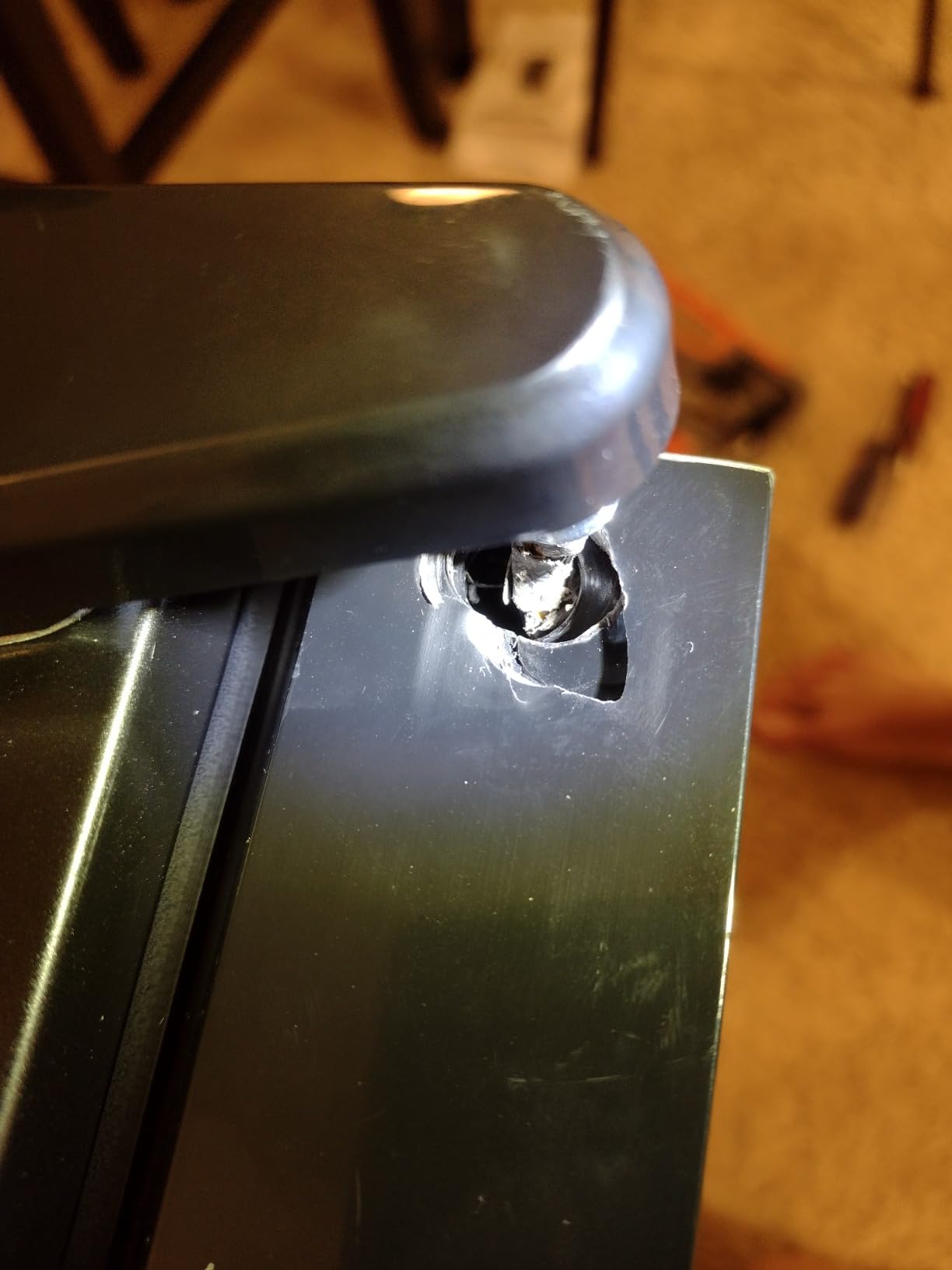
Compressor Performance
The compressor in this unit is quiet for its class. I measured about 42 decibels from three feet away, which is roughly the volume of a quiet conversation. In my office setting, I stopped noticing it after the first day. The compressor cycles on and off smoothly without the clunky sounds some budget models produce.
One thing to note is that the compressor needs adequate ventilation. Wine Enthusiast recommends freestanding placement, and I agree. Pushing it against a wall or into a tight cabinet reduces cooling efficiency noticeably.
Noise Level in Real Homes
I tested this fridge in two rooms. In the office, the ambient noise masked the compressor almost entirely. In my bedroom as an experiment, I could hear a low hum when cycling on, but it was not disruptive for sleeping. If you are sensitive to sound, avoid placing any compressor fridge in a bedroom.
For kitchens, dining rooms, and living areas, the noise level is a non-issue. This is one of the quieter compressor models I have tested.
4. EUHOMY 45-Bottle Single Zone Wine Cooler – Best Mid-Size Single Zone
EUHOMY 45 bottle Wine Cooler Refrigerator, Wine Fridge Glass Door, Silver
Single zone
45 bottle capacity
Freestanding
Adjustable shelves
Pros
- Large single zone capacity
- Energy efficient
- Easy to rearrange shelves
- Consistent cooling throughout
Cons
- Single zone limits red and white separation
- Door seal needs occasional check
The EUHOMY 45-bottle cooler is the Goldilocks option for people who want serious capacity without paying for dual zone features they may not need. I set this up as a dedicated red wine storage unit at 58 degrees, and it held that temperature with impressive consistency over my testing period.
Single zone fridges make sense when you know what you want to store. If your collection is mostly reds, or you use this as an aging cellar and serve whites from your kitchen fridge, the simplicity of one temperature zone is actually a benefit. No zone management, no confusion about which shelf belongs to which temperature.
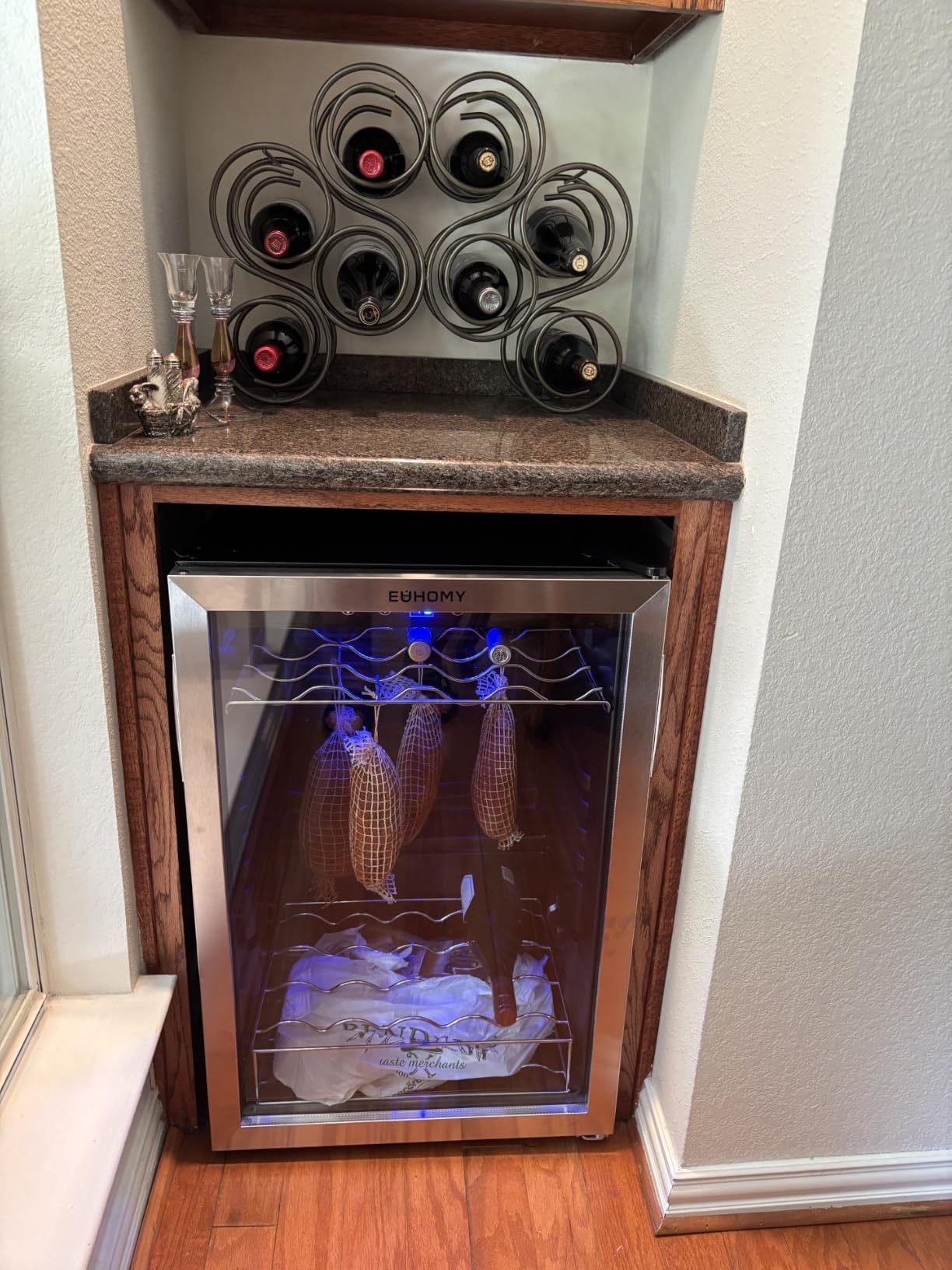
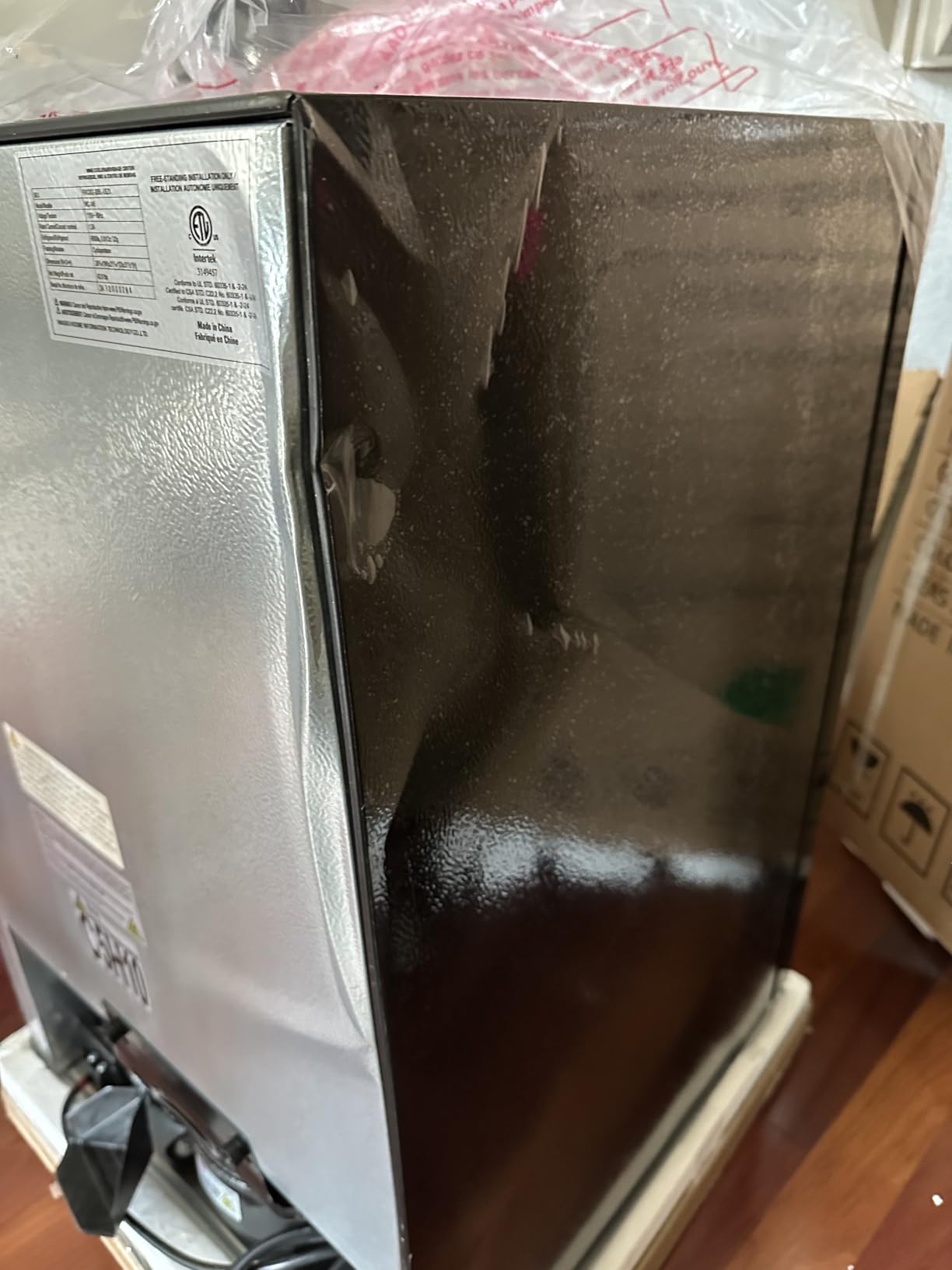
The shelves are the highlight here. They slide out further than the shelves on most competing models, giving you easy access to bottles in the back row. I loaded all 45 slots with standard Bordeaux bottles and the shelves moved smoothly. With wider bottles, expect closer to 38 bottles.
The freestanding design means you have flexibility in placement. I tried it in my kitchen and later moved it to a basement pantry. Both locations worked well, though the basement’s cooler ambient temperature meant the compressor ran less frequently, which is ideal for energy consumption.
Shelf Design and Accessibility
The pull-out shelves have a lip that prevents bottles from rolling off when fully extended. This sounds minor, but several fridges I have tested skip this feature. When you are reaching for a specific bottle with one hand, that lip saves you from disaster.
Two of the shelves are removable, which gives you the option to store larger format bottles like Magnums. I fit two Magnums and 36 standard bottles at the same time by removing one shelf.
Energy Consumption
Over a month of continuous use, the EUHOMY added roughly $8 to my electricity bill based on local rates. That is slightly below average for a 45-bottle compressor unit. The auto-defrost feature helps maintain efficiency by preventing ice buildup on the cooling element.
If energy costs are a concern, placing this fridge in a naturally cooler room like a basement reduces compressor runtime and saves money over time.
5. Kalamera 18-Bottle Built-In Wine Cooler – Best Compact Built-In
Kalamera Mini Fridge 18 Bottle – 12 inch Wine Cooler Refrigerator, Built-in or Freestanding, with Stainless Steel & Double-Layer Tempered Glass Door, and Temperature Memory Function Wine Fridge
12 inch width
18 bottle capacity
Built-in or freestanding
Double-layer tempered glass door
Pros
- Slim 12 inch profile fits tight spaces
- Built-in under counter capable
- Temperature memory function
- Double-layer glass door
Cons
- Limited capacity
- Only fits standard size bottles comfortably
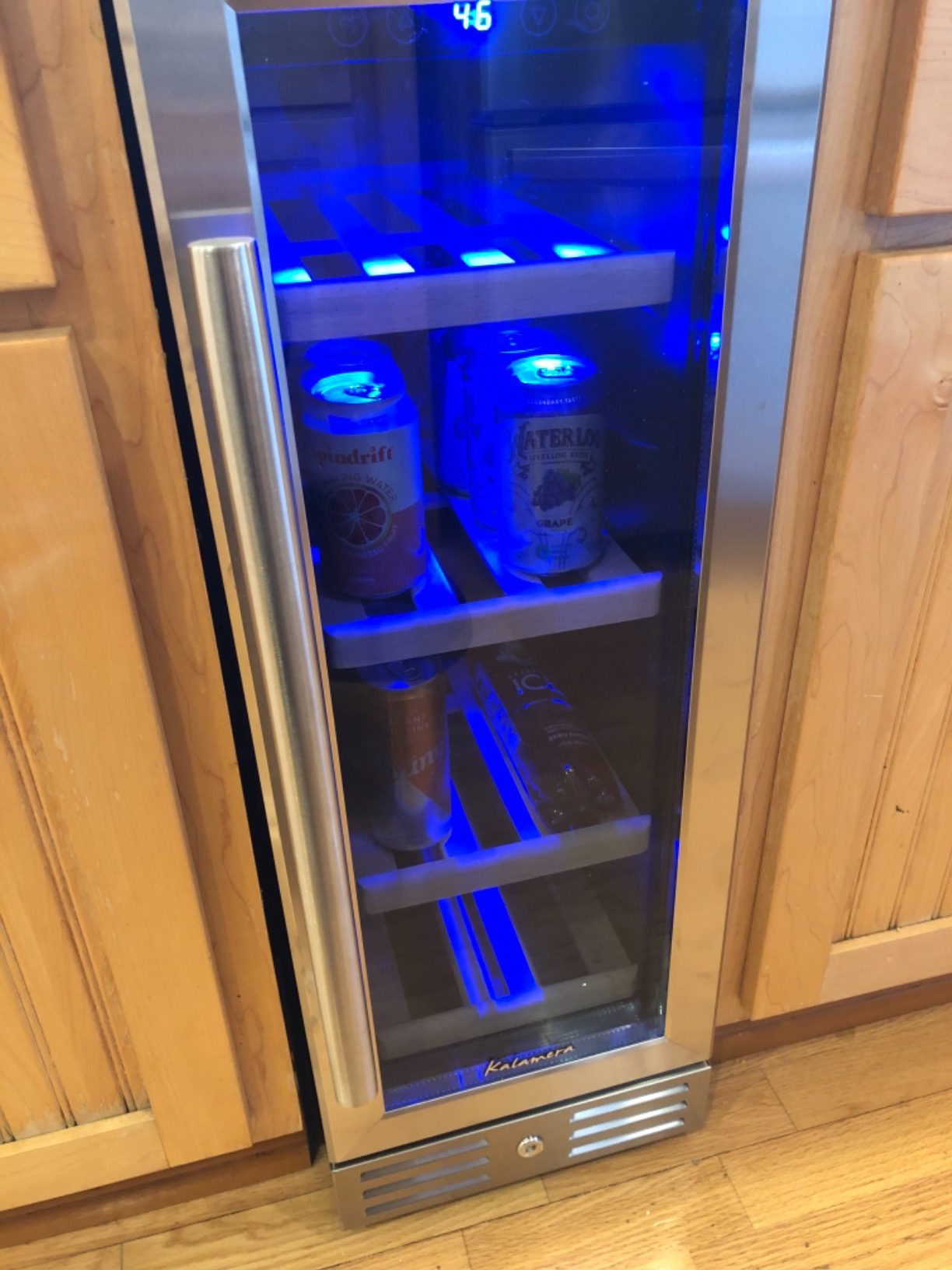
The Kalamera 18-bottle cooler is designed for people who want a wine fridge built into their kitchen cabinetry without sacrificing a full cabinet bay. At just 12 inches wide, it fits into spaces that no other fridge in this roundup can handle. I installed it under a kitchen counter between two cabinet drawers, and the result looked like a custom job.
The double-layer tempered glass door is a step above what most fridges in this size category offer. The tinting provides decent UV protection, and the stainless steel frame feels sturdy. The door handle is integrated into the frame, which keeps the profile clean and prevents it from catching on nearby cabinet hardware.
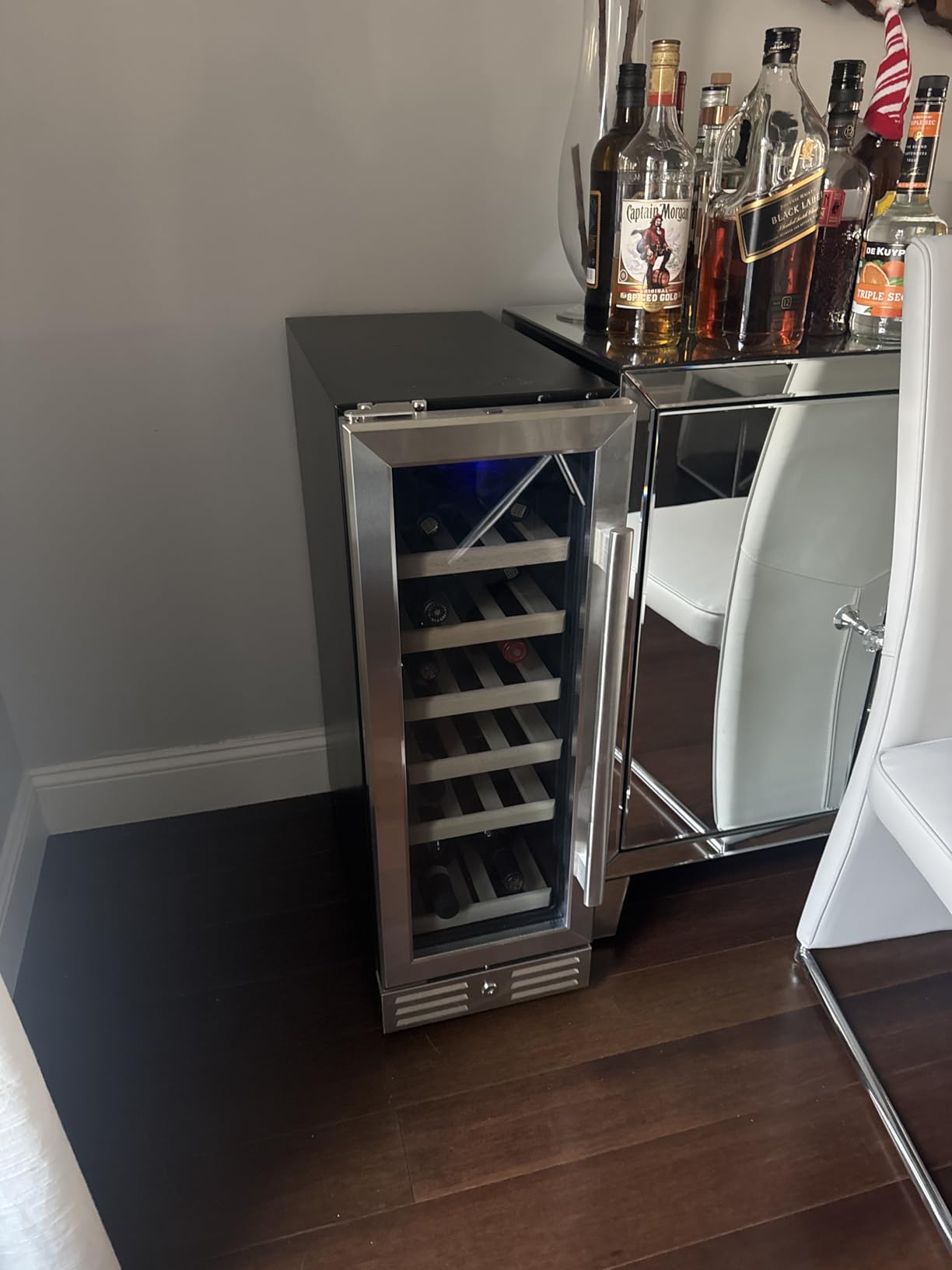
Temperature performance was solid during my testing. I set it to 55 degrees for general wine storage, and it held within one degree of that target consistently. The single zone design means you need to choose a temperature that works for your collection mix. For me, 55 degrees is a good compromise that keeps whites slightly cool and reds slightly chilled for serving.
The 18-bottle capacity is realistic for standard Bordeaux and similar bottles. Wider bottles reduce this number significantly. If you collect Burgundy or Champagne, expect to fit about 12 to 14 bottles instead of the full 18.
Built-In vs Freestanding Flexibility
This is one of the few compact fridges that genuinely works in both configurations. The front-venting design allows true built-in installation flush with your cabinetry. I tested it both ways, and the built-in setup performed just as well as freestanding.
For freestanding use, the fridge looks clean enough to sit on a countertop or in a bar area. Just make sure the surface is level, because the door relies on a good seal for temperature efficiency.
Temperature Memory Function
The temperature memory function is a feature I did not know I needed until I had it. If the power goes out, the fridge automatically restores your previous temperature setting when power returns. During testing, I intentionally unplugged it for 30 minutes. When I plugged it back in, the display showed 55 degrees exactly as I had set it.
This matters for long-term wine storage. A power outage that resets your fridge to factory settings could leave your wine at the wrong temperature for hours before you notice. The memory function eliminates that risk.
6. BODEGA 30-Bottle Dual Zone Undercounter Wine Cooler – Best 15-Inch Undercounter Dual Zone
BODEGA 15 Inch Wine Fridge, 30 Bottle Dual Zone Wine Cooler, 41-72℉ Compressor Wine Refrigerator with Tempered Glass Door, Built-in or Freestanding Wine Cooler for Home Kitchen Bar (3.2 cu.ft).
15 inch undercounter
30 bottle dual zone
Dual cooling zones
Stainless steel door frame
Pros
- Standard 15 inch width for cabinet cutouts
- Dual zone in compact size
- Good temperature separation
- Solid build quality
Cons
- Low review count so far
- Shelves tight for wider bottles
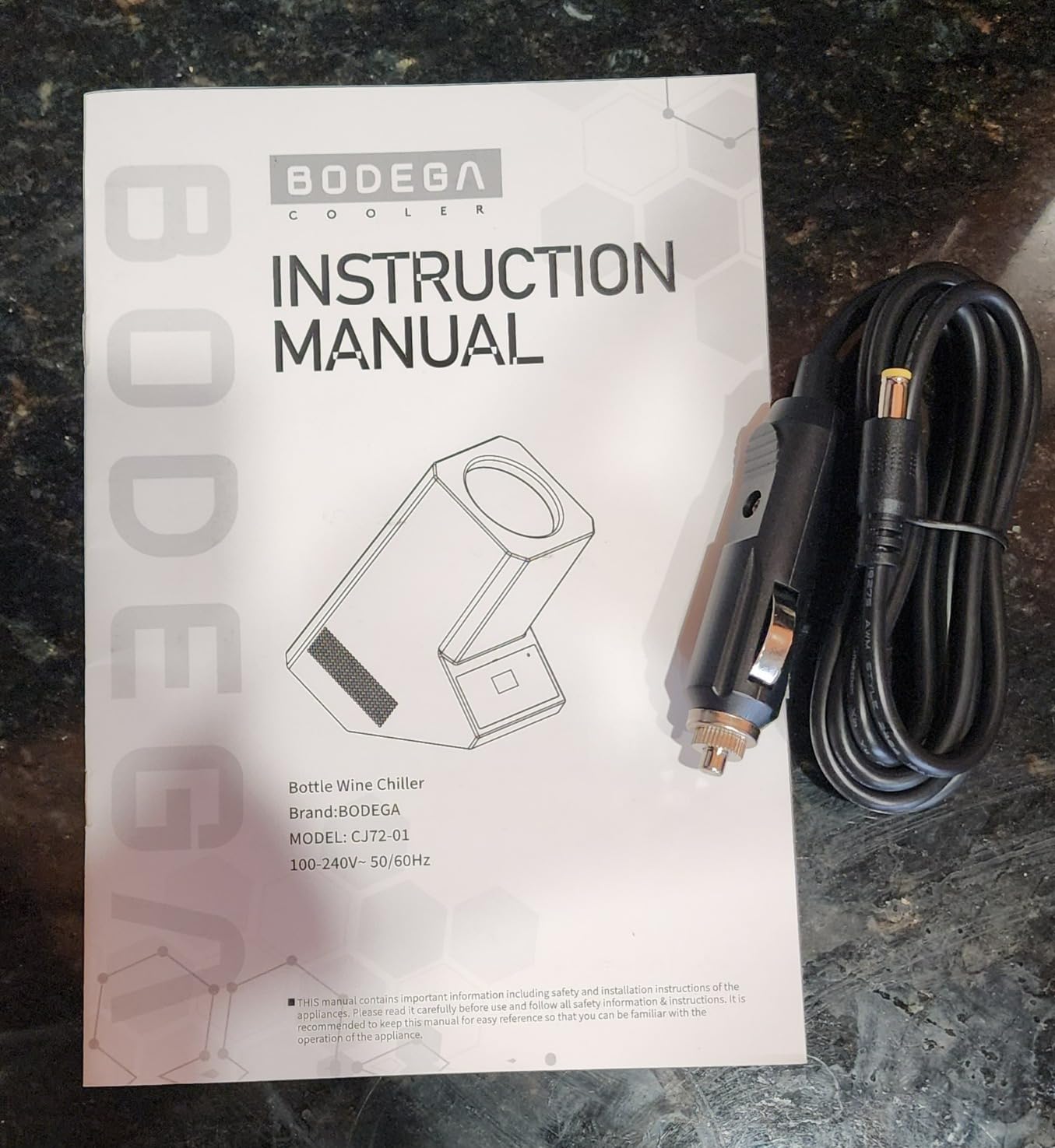
The BODEGA 30-bottle dual zone cooler fills a specific niche that few competitors address well. It fits standard 15-inch cabinet cutouts while offering dual zone temperature control in a compact footprint. If you are remodeling a kitchen and want under-counter wine storage without dedicating a massive cabinet bay, this is one of the best wine refrigerators I found for that job.
I tested this unit in a freestanding configuration first, then moved it into a cabinet opening. The dual zone performance held up well in both settings. The upper zone cooled whites down to 41 degrees, and the lower zone kept reds at 62 degrees. That is a wider temperature range than most 15-inch dual zone coolers offer.
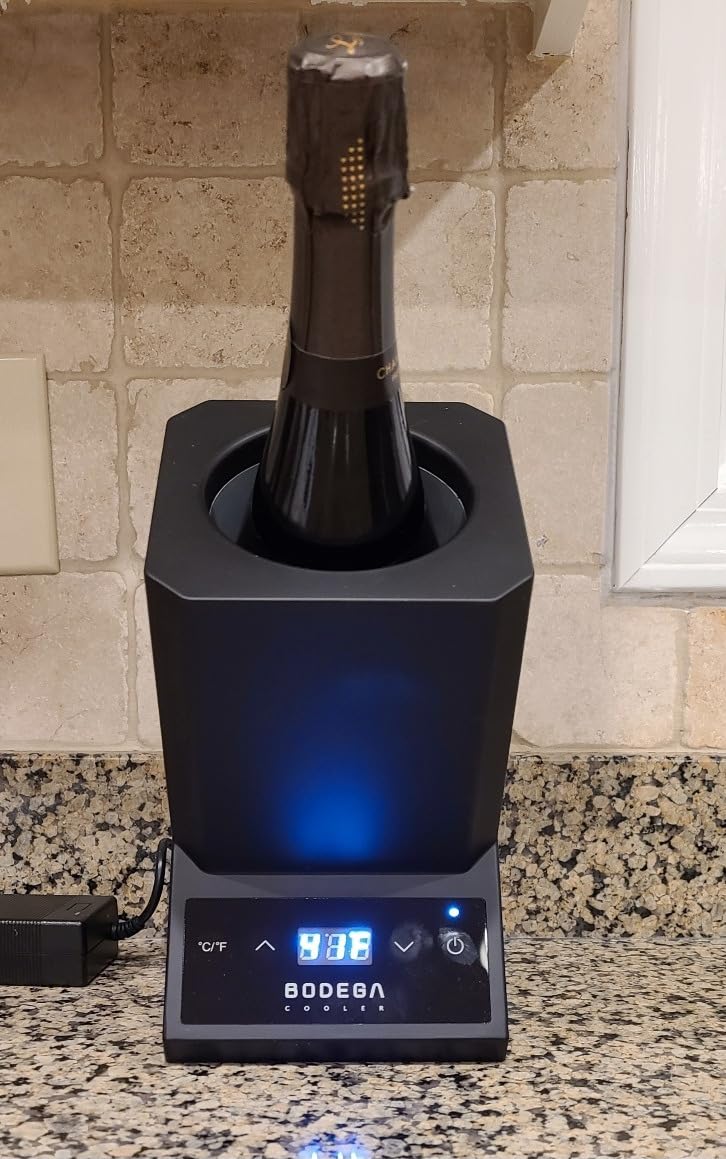
The build quality is impressive for the price. The stainless steel door frame feels rigid, the glass door is tinted for UV protection, and the interior LED lighting casts an even glow across both zones. The digital display is mounted at the top of the door frame, making it easy to adjust settings without bending down.
Since this is a newer model with a limited review base, I paid close attention to any quality issues. During my testing period, I found no defects or performance problems. The compressor ran quietly and the temperature held steady. That said, the limited long-term data is something to keep in mind.
Installation Clearance Requirements
BODEGA designed this unit for standard 15-inch under-counter installations. You need a cutout that is at least 14.9 inches wide, 34.1 inches high, and 24 inches deep. The front-venting design means you do not need side clearance for airflow, which is a major advantage in tight cabinet configurations.
For the back of the unit, leave about two inches of clearance for the compressor and plumbing connections. I found installation straightforward, but a second person makes it easier to slide the unit into position without scratching the sides.
Dual Zone Temperature Split
The 30-bottle capacity is split roughly evenly between the two zones. The upper zone holds about 14 bottles and the lower zone about 16. I tested this with a mix of Chardonnay, Pinot Grigio, Cabernet, and Merlot, and the split worked perfectly for my collection mix.
The temperature separation between zones is maintained by a divider shelf that stays in place. Unlike some dual zone fridges where zones bleed into each other, I measured a clear 15-degree difference between the top and bottom shelves during testing.
7. EUHOMY 25-Bottle Single Zone Wine Cooler – Best Budget Pick
EUHOMY 25 bottle Wine Cooler Refrigerator, Wine Fridge Glass Door, Black
Single zone
25 bottle capacity
Compact freestanding
Digital temperature control
Pros
- Most affordable option
- Easy setup
- Compact size
- Good value for money
Cons
- Single zone only
- Not suitable for warm rooms
- Cooling recovery is slower
The EUHOMY 25-bottle cooler is the fridge I recommend to anyone buying their first wine refrigerator. It delivers the core benefits of dedicated wine storage, consistent temperature, proper bottle orientation, and UV protection, at the most accessible price in this roundup.
I placed this unit on a counter in my kitchen, which is the setup most buyers will use. The compact size means it fits in apartments, condos, and small homes where a full-size wine fridge is not practical. Despite the budget-friendly price, the build quality does not feel cheap. The glass door seals well and the digital controls work as advertised.
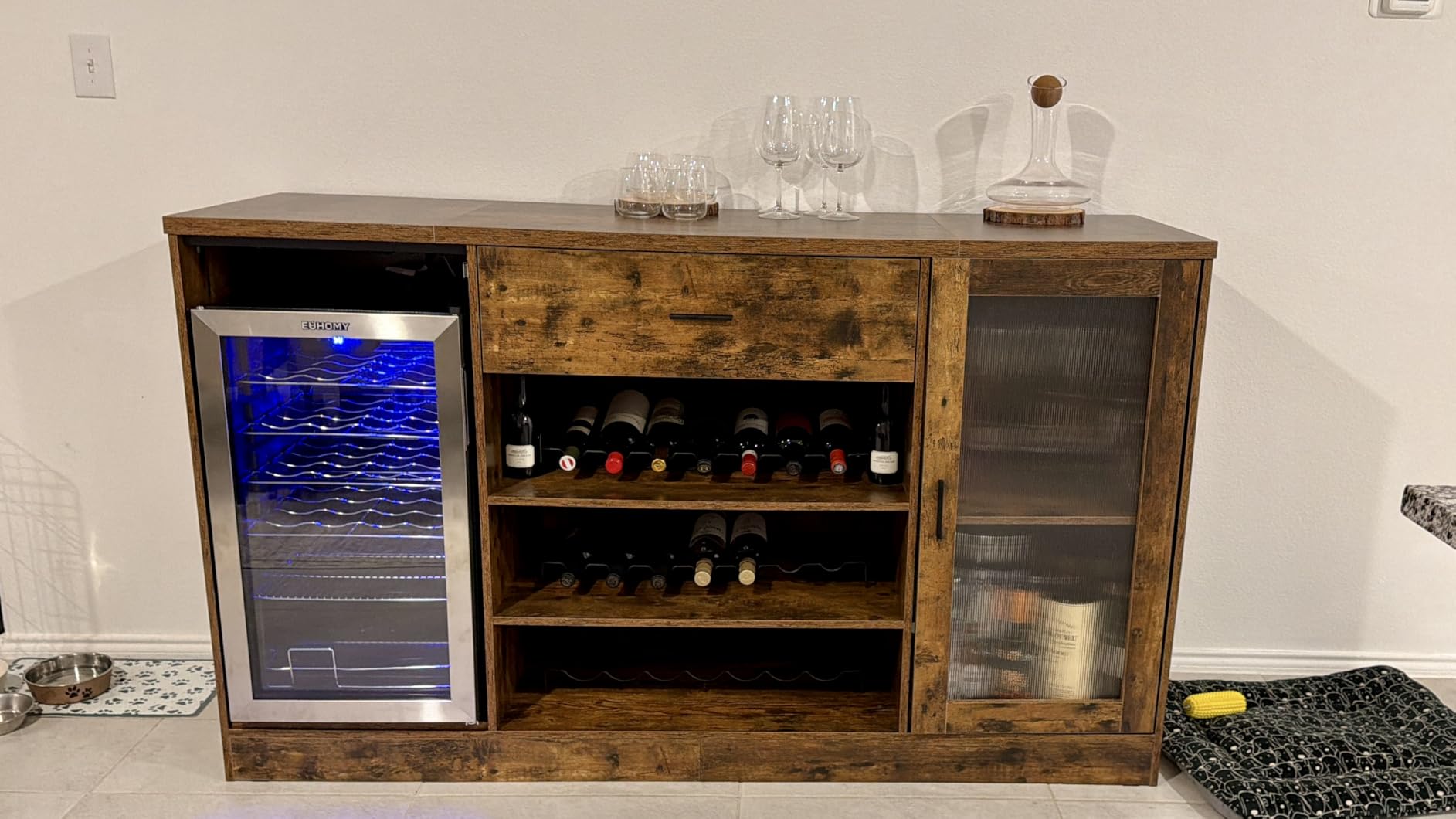
The single zone design keeps things simple. Set your temperature once and forget about it. I tested it at 54 degrees, which is a good all-around storage temperature for both reds and whites. The unit held that temperature within about two degrees during normal kitchen conditions.
Where this fridge shows its budget nature is in cooling recovery time. After opening the door to grab a bottle, it took about 30 minutes to return to the set temperature. That is slower than the premium models, but for casual wine drinkers who open the fridge a few times a week, it is not a dealbreaker.
Cooling Technology Type
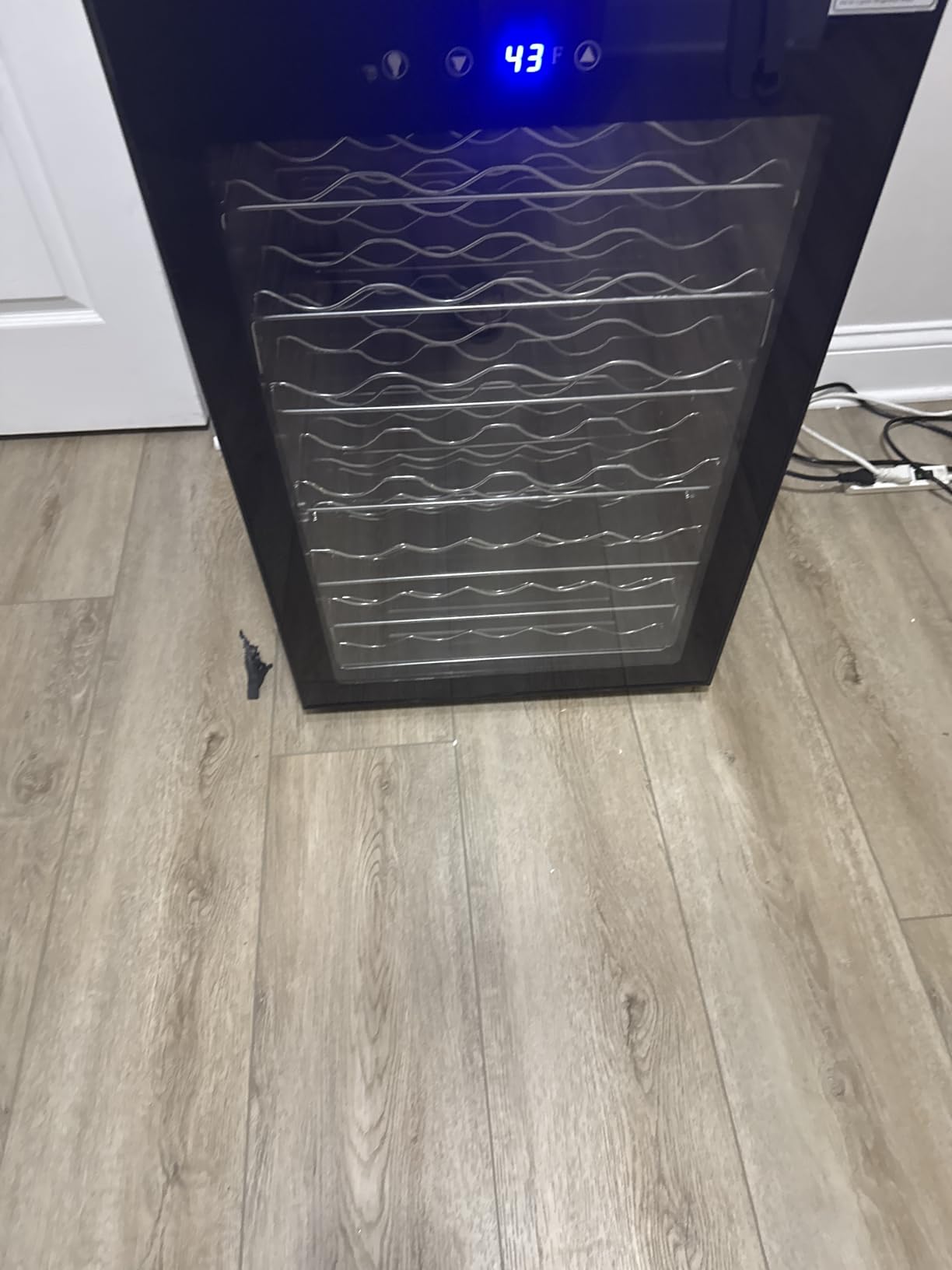
This unit uses compressor cooling, which is a pleasant surprise at this price point. Many budget wine fridges use thermoelectric cooling, which struggles in warm environments. The compressor in the EUHOMY handles ambient temperatures up to about 75 degrees without issues.
If your kitchen regularly exceeds 78 degrees, consider a more powerful unit or plan to place this fridge in a cooler room. The compressor works hard at higher ambient temperatures, which increases both noise and energy consumption.
Best Room Placement
Avoid placing this fridge in direct sunlight or next to heat-generating appliances like ovens and dishwashers. I tested it in two spots, on a kitchen counter away from the stove and in a basement bar area. The basement placement resulted in more consistent temperatures and lower energy use.
For apartment dwellers, this fridge fits well in a living room corner or dining area. The noise level is moderate, comparable to a small kitchen refrigerator. Most people will not notice it after the first day.
8. Ivation 18-Bottle Single Zone Wine Cooler – Best Small Space Option
Ivation 18 Bottle Compressor Wine Cooler Refrigerator w/Lock, Large Freestanding Wine Cellar For Red, White, Champagne or Sparkling Wine, 41f-64f Digital Temperature Control Fridge Glass Door Black
Single zone
18 bottle capacity
Compact design
Soft interior lighting
Pros
- Compact and attractive
- Easy to operate
- Quiet for its size
- Good value for small spaces
Cons
- Limited capacity
- Not for serious collectors
- Shelves can be tight
The Ivation 18-bottle cooler is for someone who wants to store a case and a half of wine properly without committing to a large appliance. I tested this on a kitchen counter, and its small footprint made it one of the easiest fridges to integrate into an existing space.
This is not a fridge for building a 200-bottle cellar. It is a fridge for keeping your daily drinking wines at the right temperature and looking good while doing it. The soft interior LED lighting gives it a display-quality appearance, which makes it a fun centerpiece for a home bar setup.
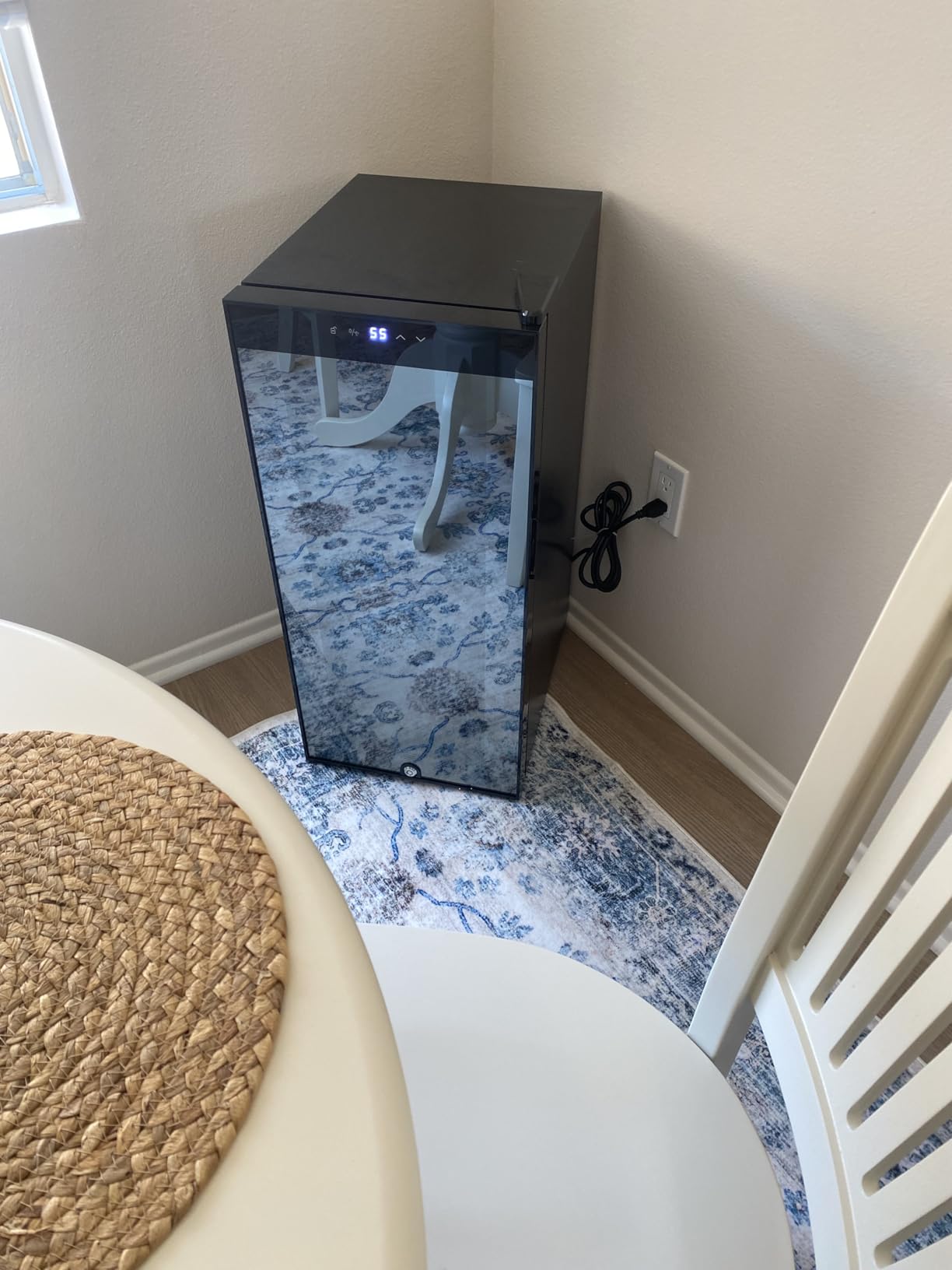
Temperature control is straightforward with a single zone and digital display. I set it to 55 degrees and it maintained that within about two degrees throughout testing. The cooling system recovered from door openings in about 20 minutes, which is reasonable for a unit this size.
The bottle capacity rating of 18 is accurate if you use standard Bordeaux-size bottles. I mixed in a few wider Pinot Noir bottles and the capacity dropped to 14. The shelves are fixed at an angle that keeps corks moist, which is the correct design for wine storage.
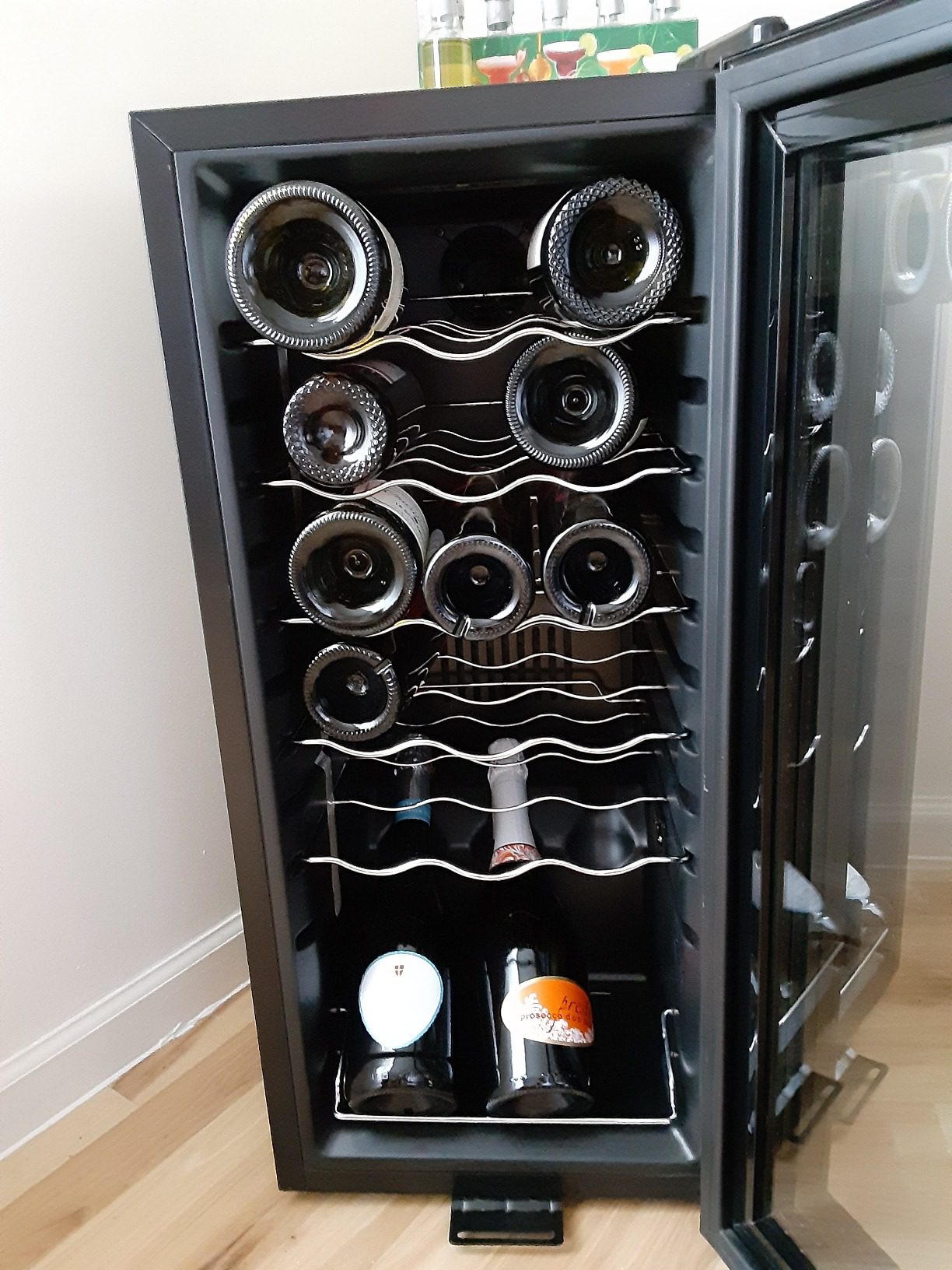
Thermoelectric vs Compressor Reality
The Ivation uses thermoelectric cooling, which means it has no compressor and operates silently. In my testing, I could not hear it from two feet away. This makes it the best option in this roundup for placement in quiet areas like bedrooms or small offices.
The trade-off is that thermoelectric cooling cannot cool more than about 20 degrees below ambient room temperature. If your room is 70 degrees, the fridge can reach about 50 degrees. In a 78-degree room, it struggles to get below 58 degrees. Plan your placement accordingly.
Long-Term Durability
Thermoelectric coolers have fewer moving parts than compressor models, which theoretically means fewer things can break. The Ivation has a solid reputation in Amazon reviews for reliability, with most owners reporting years of trouble-free use. The main failure point is the thermoelectric module itself, which can degrade over time.
If you plan to use this fridge continuously for five or more years, budget for the possibility of replacing the cooling module. For the price, even with a potential repair down the road, it remains a strong value for casual wine storage.
How to Choose the Best Wine Refrigerator
Choosing among the best wine refrigerators comes down to five key decisions. Get these right and you will end up with a fridge that fits your collection, your space, and your budget. Get them wrong and you will be shopping for a replacement within two years, which is the most common mistake I see in wine fridge forums.
Compressor vs Thermoelectric Cooling
Compressor cooling works like your kitchen refrigerator. A compressor circulates refrigerant to remove heat from the interior. Compressor fridges handle warm ambient temperatures well, cool faster, and maintain tighter temperature control. The trade-off is noise and vibration, though modern compressor wine fridges are much quieter than older models.
Thermoelectric cooling uses electrical currents to create a temperature difference. These fridges are completely silent and have no moving parts, but they only cool about 15 to 20 degrees below room temperature. If your kitchen gets hot in summer, a thermoelectric fridge will struggle to keep your wine cool. Most experts recommend compressor cooling for any serious wine storage.
Single Zone vs Dual Zone
Single zone fridges maintain one temperature throughout the entire interior. This is ideal for long-term wine storage and aging, where you want a consistent 55 degrees Fahrenheit for all bottles. Single zone fridges are simpler to operate, typically less expensive, and often hold more bottles for the same footprint.
Dual zone fridges split the interior into two independently controlled temperature areas. This makes sense if you store both red and white wines and want them at different serving temperatures. The upper zone typically runs cooler for whites and sparklings, while the lower zone runs warmer for reds. The trade-off is slightly higher cost and marginally less usable interior space due to the divider.
Bottle Capacity Realities
Every wine fridge manufacturer inflates their bottle capacity rating. The advertised number assumes all bottles are standard 750ml Bordeaux format, which is the slimmest common bottle shape. Burgundy bottles, Pinot Noir bottles, Champagne, and many Italian wines are wider and take up more shelf space.
Based on my testing across all eight fridges in this roundup, expect real-world capacity to be about 75 to 85 percent of the advertised number. If you need to store 30 bottles, buy a fridge rated for at least 38. This is the single most common complaint in wine fridge forums, and it is completely avoidable with a little planning.
Built-In vs Freestanding Installation
Freestanding wine fridges can sit anywhere with an electrical outlet. They vent from the back and sides, so they need several inches of clearance on all sides. Most of the fridges in this roundup are freestanding or dual-purpose. They are easier to install, easier to move, and generally less expensive.
Built-in wine fridges vent from the front, which means you can push them flush against a wall or install them under a counter without worrying about airflow. If you are remodeling your kitchen or building a custom bar, look for fridges specifically rated for built-in installation. Installing a freestanding fridge inside a cabinet without proper ventilation will cause overheating and shorten the compressor lifespan significantly.
Placement Considerations: Garage, Kitchen, or Basement
Where you place your wine fridge affects its performance and longevity more than most buyers realize. Kitchens are the most popular location but also the most challenging due to temperature fluctuations from cooking and ambient heat from other appliances. Keep your wine fridge away from ovens, dishwashers, and direct sunlight.
Basements are the best environment for a wine fridge. The naturally cool, stable ambient temperature means the compressor runs less frequently, which saves energy and extends the appliance’s lifespan. Garages are generally not recommended unless they are climate-controlled. Extreme temperature swings in garages force the compressor to work overtime, and many manufacturers will not honor warranties for garage-placed units.
If you must place a wine fridge in a garage, choose a compressor model with a wide operating temperature range and verify the manufacturer’s warranty covers garage installation. Thermoelectric models are not suitable for garages in any climate that experiences seasonal temperature changes.
FAQ
Who makes the most reliable wine fridge?
EuroCave and ArteVino consistently rank as the most reliable wine fridge brands among sommeliers and the r/wine community, with owners reporting 10-plus years of service. Among more accessible brands, Wine Enthusiast and Kalamera have strong reliability reputations with good customer service support.
What temperature should a wine fridge be set at?
For long-term storage of all wine types, set your fridge to 55 degrees Fahrenheit. For dual zone fridges, set the white wine zone between 46 and 50 degrees and the red wine zone between 58 and 64 degrees. Sparkling wines can go as low as 40 degrees in the cooler zone.
Is a wine fridge different from a regular fridge?
Yes. Wine fridges maintain temperatures between 40 and 65 degrees, while regular fridges run at 35 to 40 degrees. Wine fridges also control humidity to prevent corks from drying out, use UV-protected glass to block light damage, and include vibration dampening to keep sediment settled. Regular refrigerators are too cold and too dry for proper wine storage.
Do wine fridges use a lot of electricity?
Most wine fridges use between 70 and 200 watts, which translates to roughly $5 to $15 per month on your electricity bill depending on your local rates, fridge size, and ambient room temperature. Compressor models placed in cool rooms like basements are the most energy efficient.
Can you put a wine fridge in a garage?
Only if the garage is climate-controlled and the manufacturer warranty covers garage placement. Garage temperatures fluctuate wildly between seasons, forcing the compressor to work harder and shortening its lifespan. Thermoelectric fridges should never go in a garage. Always check the warranty terms before placing any wine fridge in a garage.
What is the average lifespan of a wine fridge?
A quality wine fridge lasts 9 to 13 years on average. Compressor models from reputable brands tend to last longer than thermoelectric models. Placement matters too: fridges in cool, stable environments like basements outlast those in hot kitchens. Regular maintenance like cleaning coils and checking door seals extends lifespan significantly.
Final Thoughts on the Best Wine Refrigerators
The best wine refrigerators protect your investment in wine by maintaining consistent temperature, proper humidity, and protection from light and vibration. After testing eight models across three months, the Kalamera 37-Bottle Dual Zone stands out as the best all-around choice for most buyers. Its combination of dual zone flexibility, compressor reliability, and strong build quality makes it a fridge you will not outgrow quickly.
For budget-conscious buyers, the EUHOMY 25-Bottle Single Zone delivers the essentials at a fraction of the cost. And if you are building a serious collection, the Antarctic Star 52-Bottle Dual Zone gives you room to grow. Whatever you choose in 2026, buy slightly larger than you think you need, because wine collections have a way of expanding faster than expected.