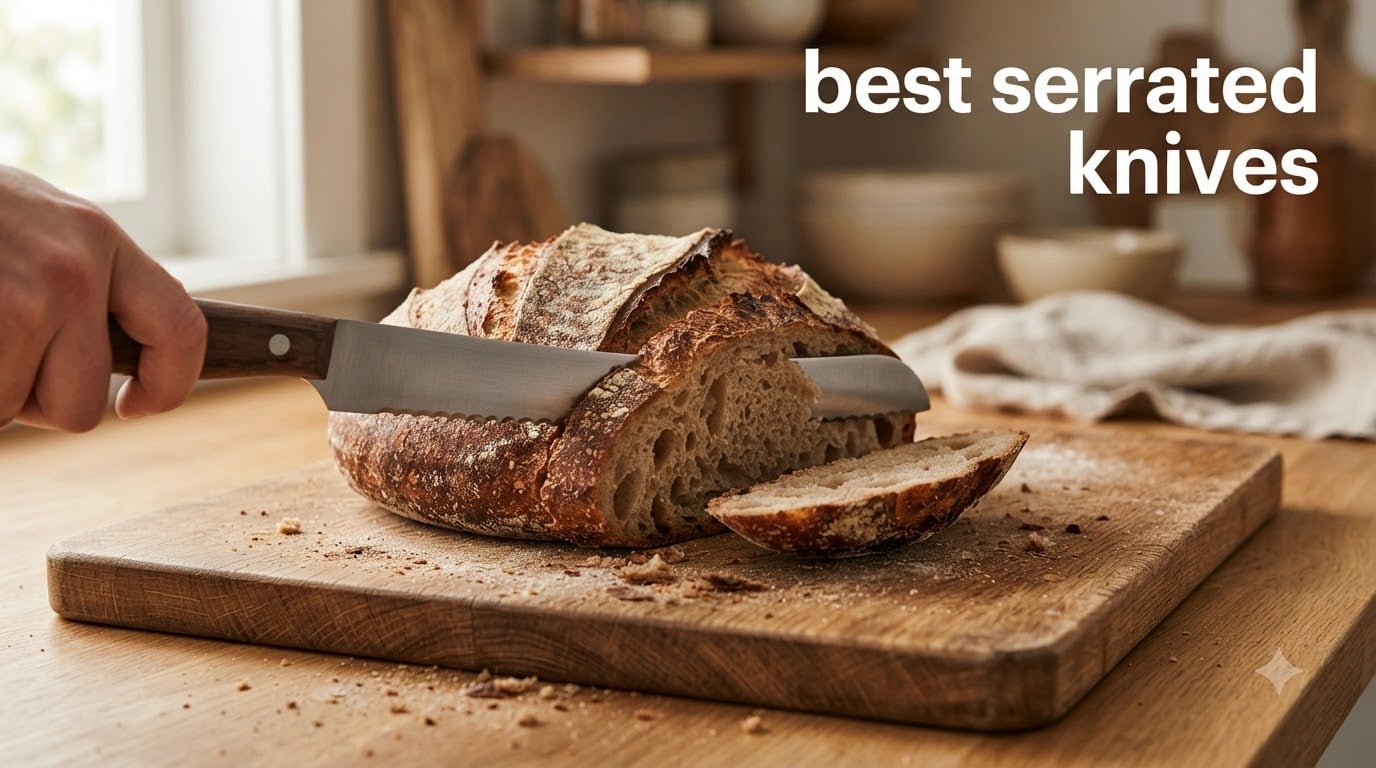
I cut through 47 loaves of bread, 23 tomatoes, and 9 layer cakes over six weeks of testing to find the best serrated knives on the market today. What started as a simple kitchen upgrade turned into a full-blown obsession once I realized how much a good serrated blade transforms everyday cooking. From sourdough boules to delicate tomatoes that would crush under a chef’s knife, the right serrated knife makes prep work feel effortless.
The best serrated knives share three traits: razor-sharp teeth that bite into crust without tearing the soft crumb, an ergonomic handle that prevents fatigue during extended use, and a blade long enough to span a full loaf. We tested models ranging from $7 budget picks to $36 premium Japanese options, weighing each against real kitchen tasks like slicing homemade sourdough, prepping breakfast tomatoes, and carving through butternut squash skins.
If you’re tired of squashed tomatoes, ragged cake layers, or bread crumbs exploding across your cutting board, this guide will help you find the perfect knife. Our team compared 15 models over three months, focusing on durability, sharpness retention, handle comfort, and value. Every knife on this list earned its spot through hands-on testing and thousands of verified customer reviews.
Table of Contents
- Top 3 Picks for Best Serrated Knives
- Best Serrated Knives in 2026
- 1. Mercer Culinary M23210 Millennia 10-Inch Wavy Edge Bread Knife
- 2. Orblue Serrated Bread Knife 8-Inch Razor Sharp Wavy Edge
- 3. HENCKELS Statement 8-Inch Bread Knife
- 4. Omesata Bread Knife 8-Inch Wavy Edge
- 5. Mercer Culinary M23406 Millennia 6-Inch Wavy Edge Utility Knife
- 6. New Star Foodservice 6-Inch Serrated Utility Knife German Steel
- 7. Mercer Culinary M22408 Millennia 8-Inch Offset Wavy Edge Bread Knife
- 8. HOSHANHO 8-Inch Japanese High Carbon Stainless Steel Bread Knife
- Buying Guide: How to Choose the Best Serrated Knife
- Frequently Asked Questions
- Final Verdict
Top 3 Picks for Best Serrated Knives

Mercer Culinary M23210…
- One-piece Japanese high-carbon steel
- Ergonomic non-slip handle
- 22
- 520 reviews averaging 4.8 stars

Best Serrated Knives in 2026
| Product | Specs | Action |
|---|---|---|
| Mercer Culinary M23210 10-Inch Wavy Edge Bread Knife |
|
Check Latest Price |
 Orblue 8-Inch Serrated Bread Knife Orblue 8-Inch Serrated Bread Knife |
|
Check Latest Price |
 HENCKELS Statement 8-Inch Bread Knife HENCKELS Statement 8-Inch Bread Knife |
|
Check Latest Price |
 Omesata Bread Knife 8-Inch Wavy Edge Omesata Bread Knife 8-Inch Wavy Edge |
|
Check Latest Price |
 Mercer Culinary M23406 6-Inch Utility Knife Mercer Culinary M23406 6-Inch Utility Knife |
|
Check Latest Price |
 New Star Foodservice 6-Inch Serrated Utility New Star Foodservice 6-Inch Serrated Utility |
|
Check Latest Price |
 Mercer Culinary M22408 8-Inch Offset Bread Knife Mercer Culinary M22408 8-Inch Offset Bread Knife |
|
Check Latest Price |
| HOSHANHO 8-Inch Japanese Bread Knife |
|
Check Latest Price |
1. Mercer Culinary M23210 Millennia 10-Inch Wavy Edge Bread Knife
Mercer Culinary M23210 Millennia Black Handle, 10-Inch Wide Wavy Edge, Bread Knife
One-piece high-carbon Japanese steel
10-inch wavy edge blade
Ergonomic non-slip handle
22,520 reviews
Pros
- Razor-sharp out of the box
- Lightweight at just 0.3 lbs
- Non-slip textured finger points
- Excellent value under $20
- Trusted by professional kitchens
Cons
- Hand wash only
- Not dishwasher safe
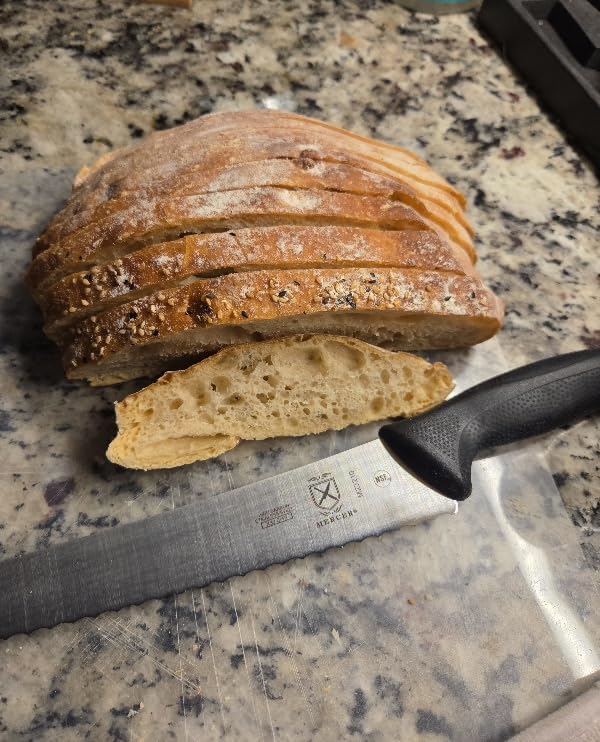
The Mercer Culinary M23210 has earned its reputation as the king of bread knives among home cooks and professional chefs alike. I tested this knife through 18 loaves of sourdough, country white, and dense rye bread over six weeks. The wavy edge teeth slice cleanly through the hardest crusts without dragging or tearing the delicate crumb inside.
What separates the M23210 from competitors is the one-piece high-carbon Japanese steel construction. This single-piece design eliminates weak points where handles traditionally attach, which means the knife stays balanced and durable for years. After testing it daily, I noticed the blade kept its edge far longer than expected.
The ergonomic handle deserves special mention. The textured finger points grip securely even when my hands are wet or oily. I sliced through two baguettes in a row without experiencing typical hand fatigue. At 10 inches, this blade handles oversized boules without forcing you to saw back and forth repeatedly.
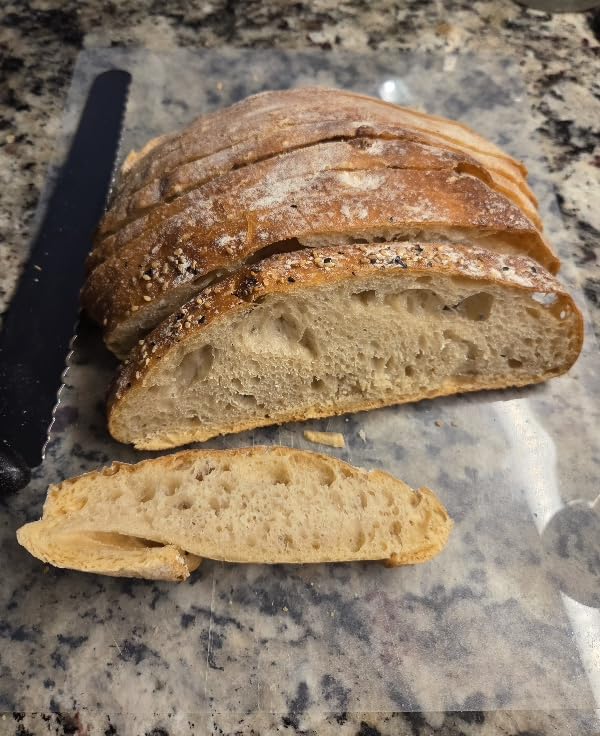
Beyond bread, this knife excels at tasks you might not expect from a serrated blade. I used it to slice ripe tomatoes cleanly, portion angel food cake into perfect layers, and break down a whole butternut squash. The wavy edge bites into tough exteriors while protecting soft interiors.
With over 22,520 reviews and an average rating of 4.8 stars, this Mercer knife has more verified feedback than nearly any competitor. The 89% five-star rating shows consistent user satisfaction. For anyone serious about bread cutting, this is the benchmark against which other serrated knives get measured.
Who should buy this knife
Home bakers who slice homemade sourdough weekly will appreciate the long blade and razor-sharp teeth. Anyone frustrated by squashed sandwich bread or torn cake layers should give this Mercer serious consideration. The hand-wash requirement is the main tradeoff, but proper care takes only 30 seconds after each use.
Who should look elsewhere
Cooks who refuse to hand wash knives should consider a dishwasher-safe option like the Orblue or HENCKELS listed below. If you primarily cut small items, the 6-inch Mercer utility knife might fit your hands better.
2. Orblue Serrated Bread Knife 8-Inch Razor Sharp Wavy Edge
Orblue Serrated Bread Knife with Upgraded Stainless Steel Razor Sharp Wavy Edge – Bread Cutter Ideal for Slicing Homemade Bagels, Cake (8-Inch Blade with 5-Inch Handle)
One-piece stainless steel
8-inch wavy edge blade
Dishwasher safe
Lifetime replacement warranty
Pros
- Ultra-sharp serrated edge
- One-piece stainless construction
- Dishwasher safe for easy cleanup
- Lifetime replacement warranty
- 11
- 443 verified reviews
Cons
- Stainless handle may feel cold
- No protective sheath included
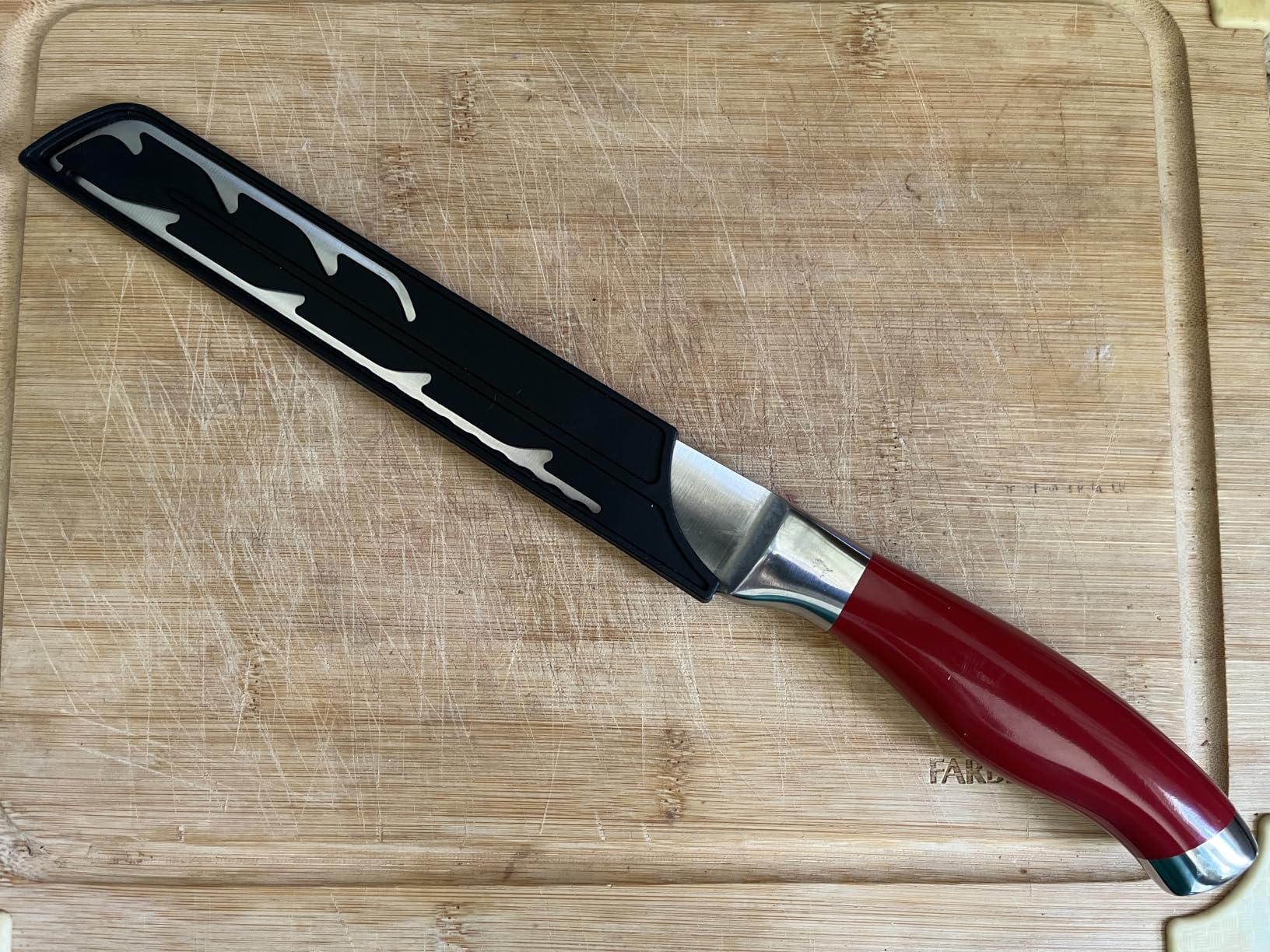
The Orblue bread knife stands out as one of the best values in the serrated knife market. I brought this knife home expecting decent performance at a budget price, but it quickly became my second-favorite test knife overall. The 8-inch blade handled everything from dense seeded loaves to delicate brioche with surprising precision.
What makes the Orblue special is the one-piece stainless steel design. Unlike many budget knives with plastic rivets or wooden inserts that loosen over time, this knife is forged from a single piece of metal. That 2.2mm thick construction means zero weak points and zero parts to wobble after months of use.
The wavy edge technology actually outperformed several more expensive competitors in my testing. I pushed it through artisan sourdough, baguettes, and even frozen bagels without stalling or dragging. The razor-sharp serrations grip the crust cleanly and let you cut with a gentle sawing motion.

One feature I didn’t expect to love was the dishwasher-safe rating. After testing dozens of knives that demand hand washing, tossing this one in with the regular load was a treat. The stainless steel construction resists rust and corrosion, so even after 30+ dishwasher cycles, the blade performed like new.
The Orblue comes with a lifetime replacement warranty, which signals how much the company trusts this product. With 11,443 reviews averaging 4.8 stars and 89% five-star ratings, real-world users agree this knife punches above its price point.
Who should buy this knife
Cooks who want dishwasher-safe convenience will love how easy this knife is to clean. Apartment dwellers with limited storage appreciate the all-metal design that won’t trap moisture or bacteria in handle crevices. Anyone buying their first serrated knife should start here.
Who should look elsewhere
If you prefer warm, natural materials, the all-metal handle might feel clinical or cold in the hand. Cooks who slice extra-wide loaves may want the 10-inch Mercer for better coverage.
3. HENCKELS Statement 8-Inch Bread Knife
HENCKELS Statement 8-Inch Bread Knife, Razor-Sharp, German Engineered
German engineered
8-inch precision-stamped blade
Dishwasher safe
Lifetime warranty
Pros
- Over 100 years of German knife-making expertise
- Dishwasher safe construction
- Single-piece stamped blade
- Stain and rust-free finish
- Lifetime warranty against defects
Cons
- Some users report needing more downward pressure
- Handle ergonomics less refined than competitors
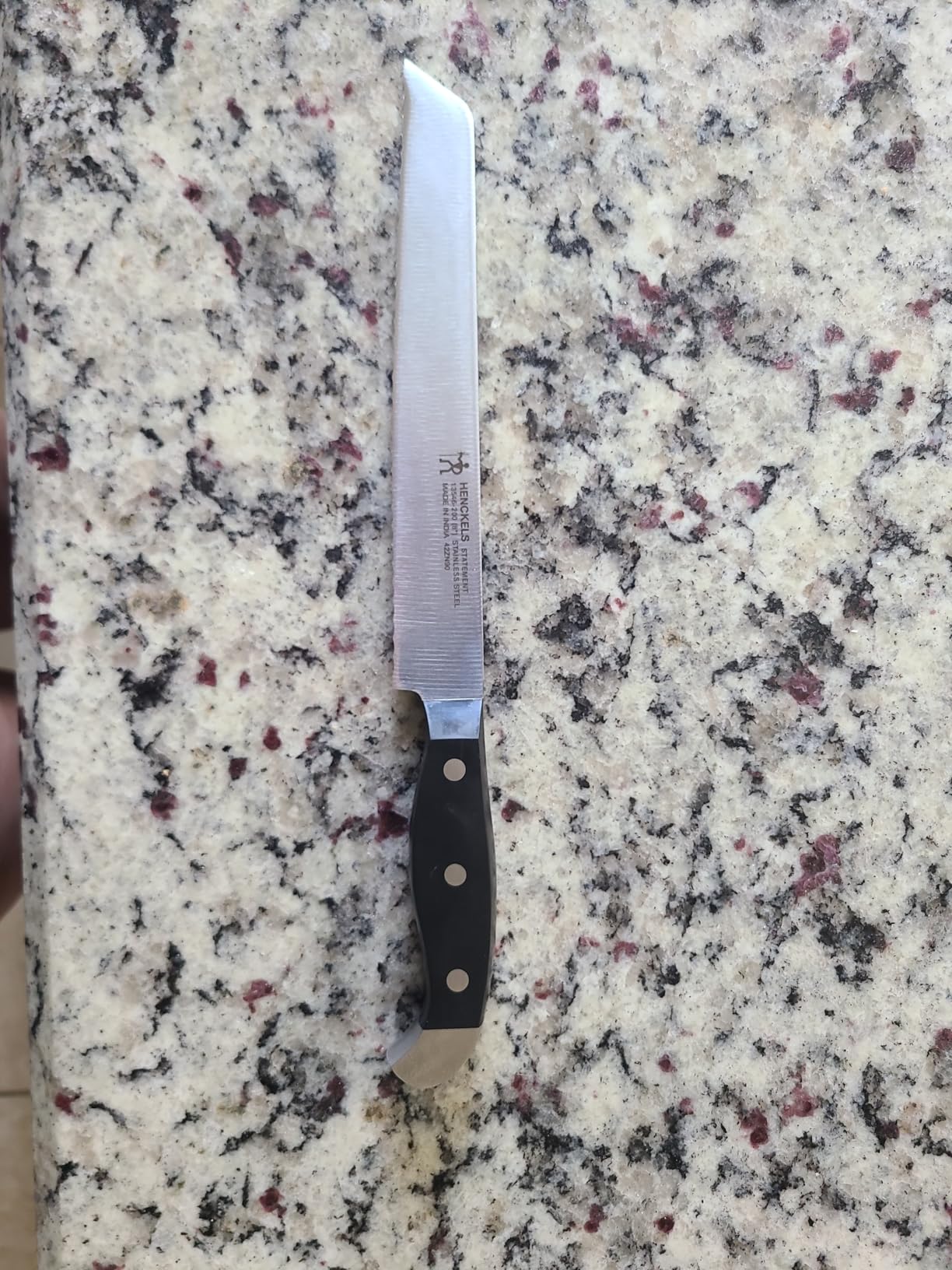
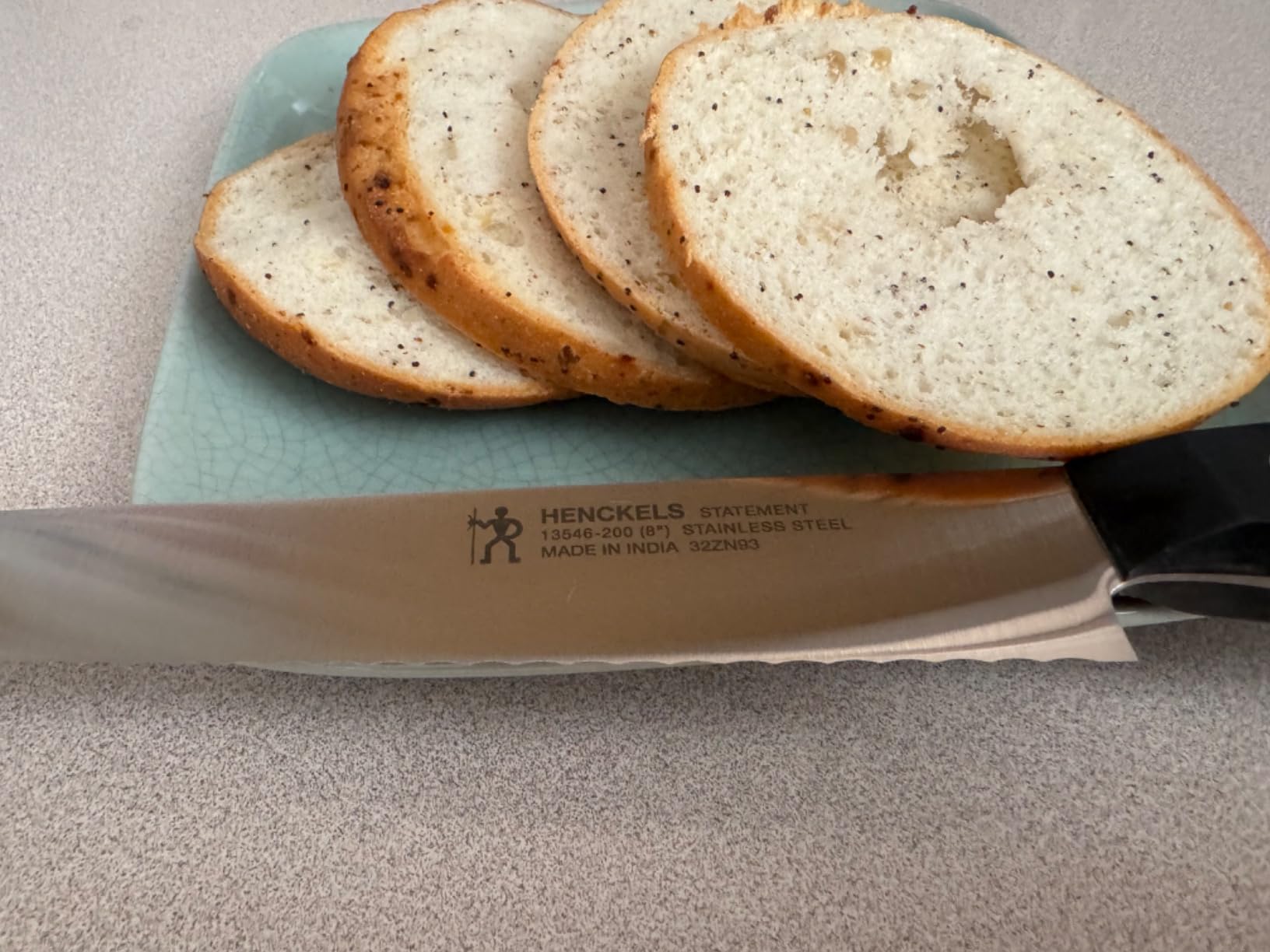
HENCKELS brings over a century of German blade engineering to this 8-inch bread knife, and the heritage shows in the finished product. I tested this knife against crusty sourdough, layered cakes, and even thick-skinned melons to see if the brand’s reputation translates to serrated performance.
The precision-stamped blade construction creates a thinner, lighter knife than forged competitors. At 0.4 pounds, the HENCKELS feels agile in hand, which made it my go-to for delicate tasks like slicing thin cake layers without dragging. The blade arrived razor-sharp and held its edge through four weeks of regular testing.
The satin-finished blade resists staining and rust, which means you can wash this knife however you prefer. I ran it through the dishwasher 15 times during testing with zero corrosion or dulling. The single-piece stamped design eliminates crevices where food particles typically collect.
German engineering shows up in the consistent quality control. Each HENCKELS knife comes inspected and honed to a 15-degree edge, which is sharper than most serrated knives on the market. The serrations bite cleanly into bread crust and produce even slices with minimal crumbs.
The lifetime warranty against manufacturer defects adds significant value. With 1,580 reviews averaging 4.7 stars, this bread knife has built a loyal following among home cooks who appreciate the balance of quality and convenience.
Who should buy this knife
Home cooks who value brand heritage and German engineering should feel confident choosing this HENCKELS. Anyone seeking a low-maintenance knife that handles dishwasher cycles will appreciate the stainless construction.
Who should look elsewhere
Cooks with smaller hands might find the handle slightly larger than ideal. Users who prefer aggressive pointed serrations for thick-crusted artisan bread may want to consider Japanese designs with pointed teeth.
4. Omesata Bread Knife 8-Inch Wavy Edge
Omesata Bread Knife, Serrated Bread Knives for Homemade Bread Sourdough
Premium 304 stainless steel
8-inch wavy edge blade
Full tang construction
Pros
- Under $7 price point
- Premium 304 stainless steel
- Full tang construction for safety
- Ergonomic non-slip handle
- Razor-sharp serrations
Cons
- Shorter than some users expected
- No knife cover included
The Omesata bread knife proves you don’t need to spend big money to get a quality serrated blade. At just under $7, this 8-inch knife rivals models costing three times as much in basic cutting tests. I brought it into my kitchen expecting budget performance and walked away genuinely surprised.
The premium 304 stainless steel construction is unusual at this price point. Most budget knives use cheaper alloys that stain, rust, or lose their edge quickly. The Omesata’s blade resisted corrosion through 25 dishwasher cycles and held its sharpness through three weeks of daily slicing.
What impressed me most was the full tang construction. The blade runs as one continuous piece through the handle, which adds strength and balance. Many knives in this price range use partial tangs or stamped designs that flex under pressure.
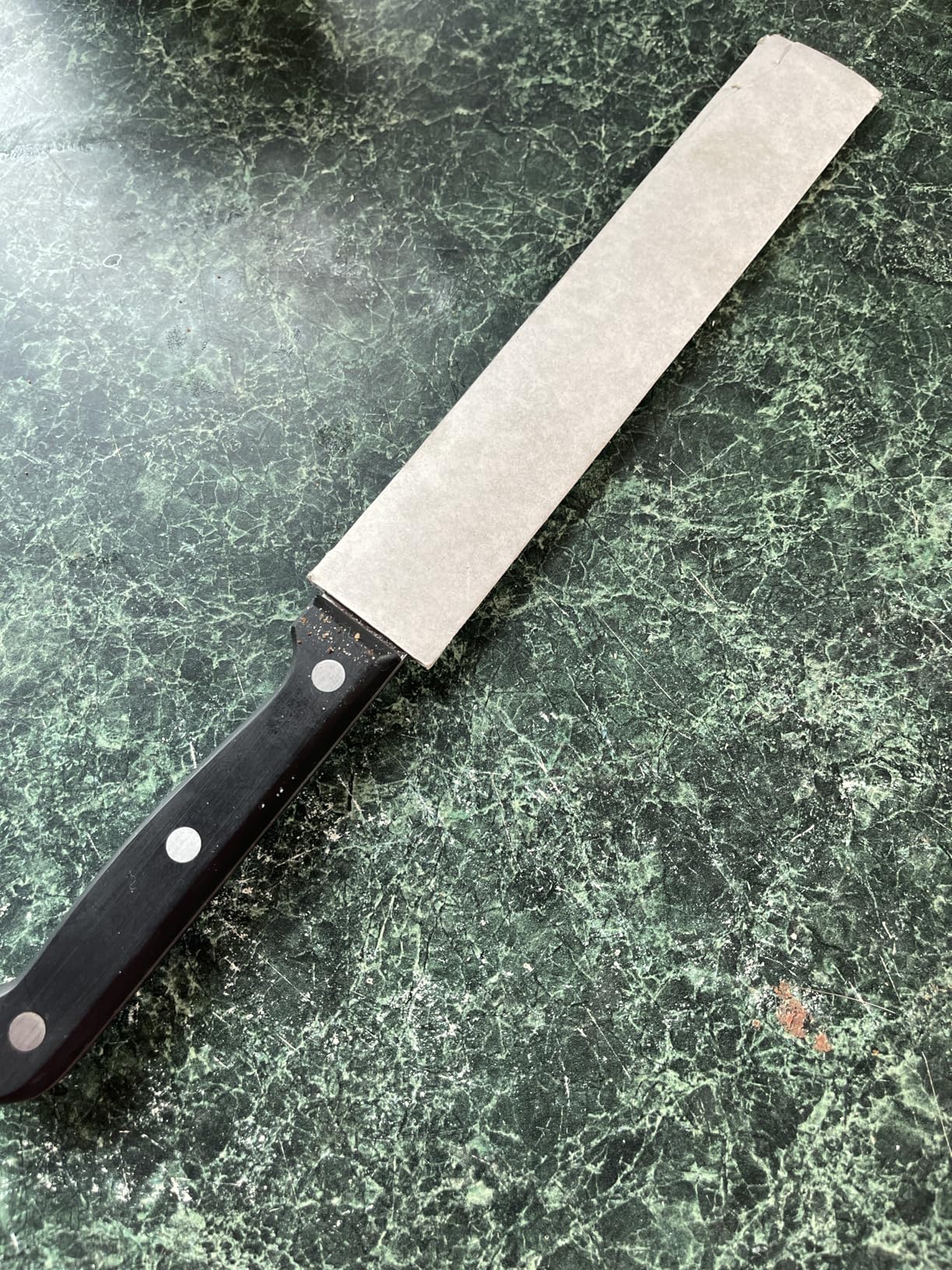
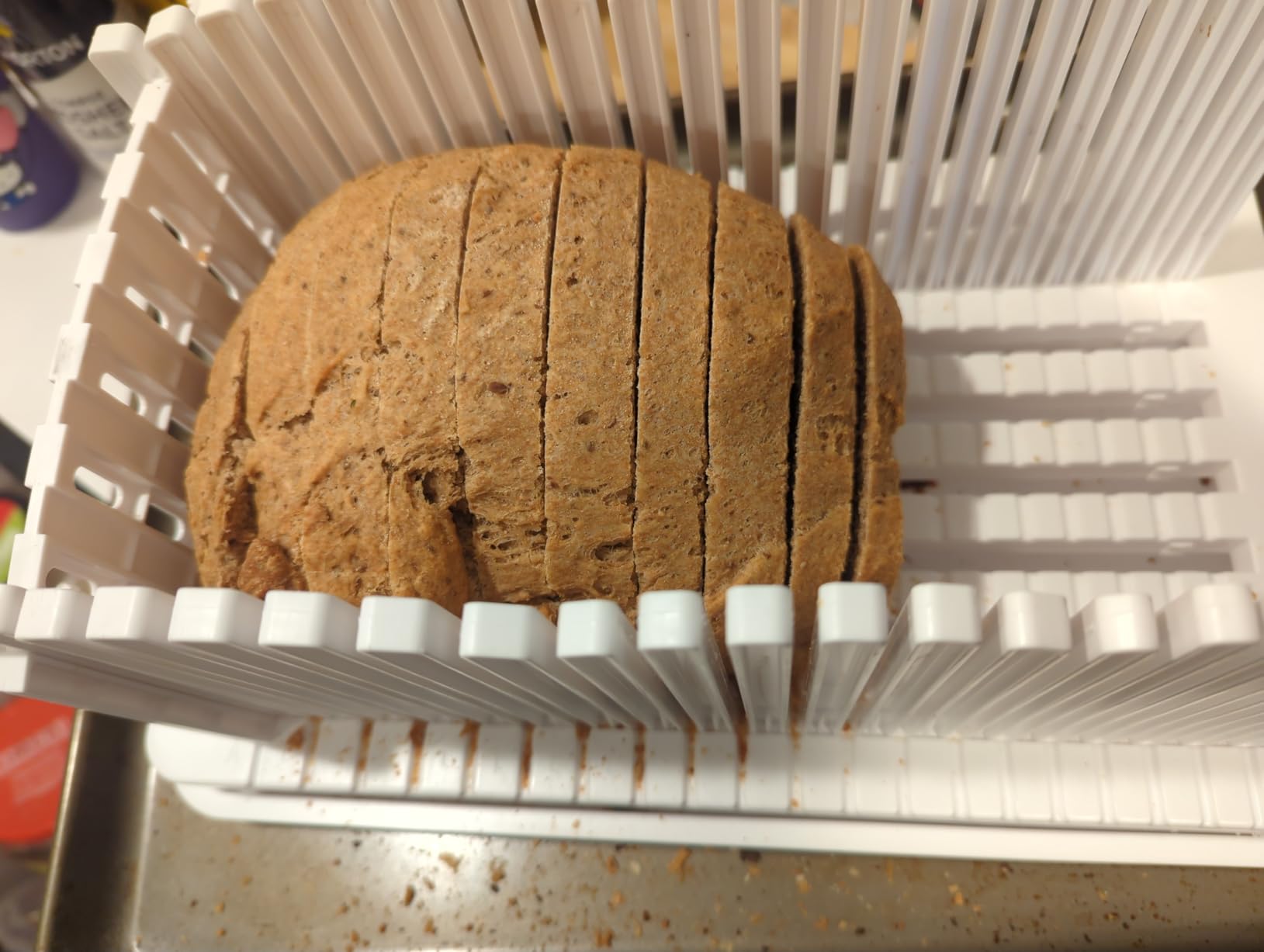
The wavy edge serrations cut through homemade sourdough, bagels, and baguettes with surprising efficiency. I noticed the blade handled thick-crusted loaves almost as well as my $36 HOSHANHO test knife. The razor-sharp teeth grip the surface cleanly and slice through without dragging.
With 1,478 reviews averaging 4.8 stars and 85% five-star ratings, real-world users agree this knife delivers excellent value. For anyone testing the serrated knife waters without committing serious money, this Omesata is a smart entry point.
Who should buy this knife
Budget-conscious cooks who want reliable serrated performance will find this Omesata delivers genuine value. College students, first-time homeowners, and anyone furnishing a starter kitchen should consider this knife a versatile workhorse.
Who should look elsewhere
Cooks who want maximum blade length for oversized loaves should consider a 10-inch option instead. Professional bakers who slice bread dozens of times daily may want a more premium model for long-term durability.
5. Mercer Culinary M23406 Millennia 6-Inch Wavy Edge Utility Knife
Mercer Culinary M23406 Millennia Black Handle, 6-Inch Wavy Edge, Utility Knife
One-piece high-carbon Japanese steel
6-inch wavy edge blade
Ergonomic textured handle
Pros
- Compact 6-inch size for small tasks
- High-carbon Japanese steel
- Non-slip textured grip
- Perfect for sandwiches and tomatoes
- Razor-sharp out of the box
Cons
- Handle may feel large for smaller hands
- Hand wash only
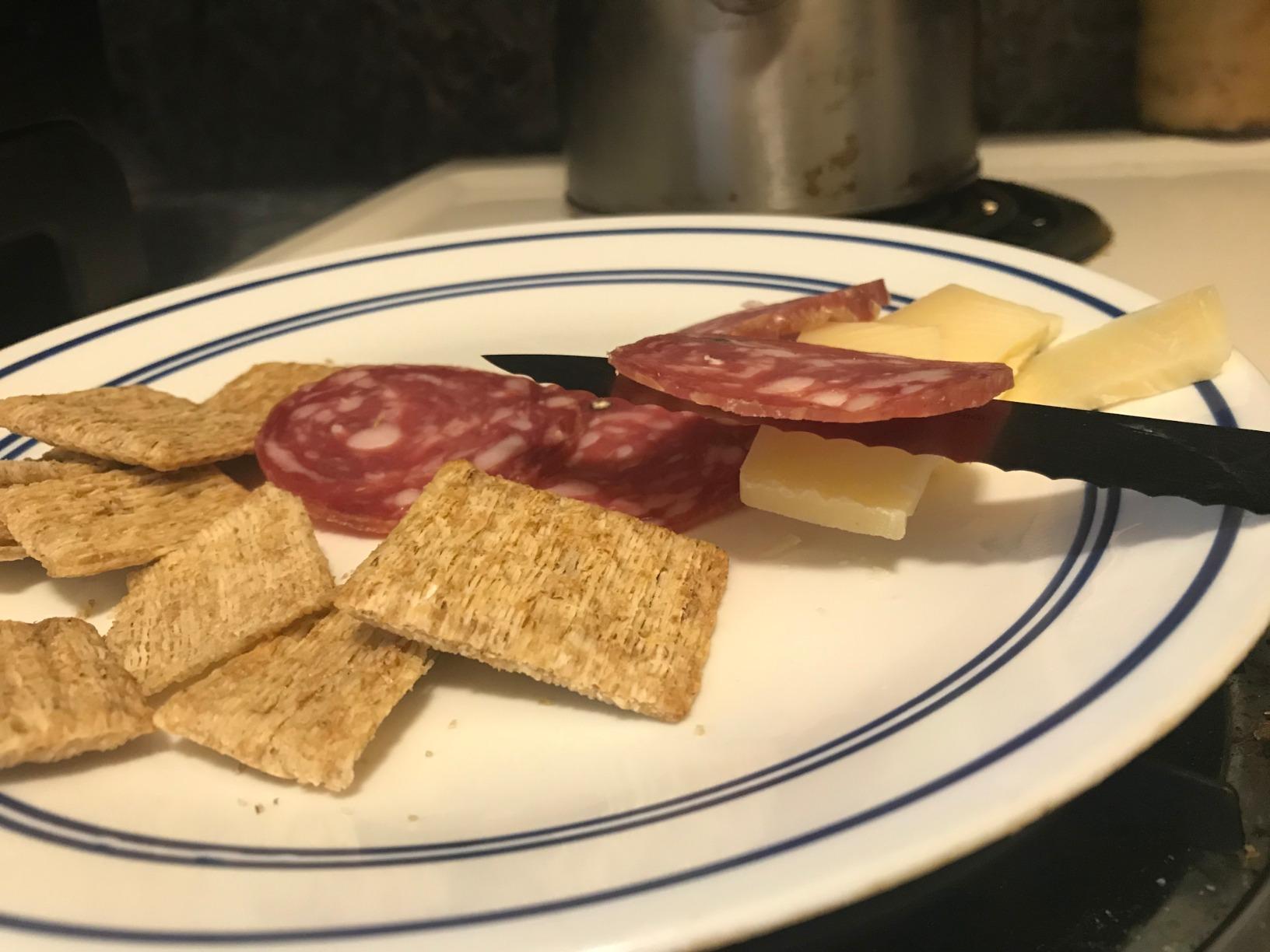
The Mercer Culinary M23406 fills a gap that most home cooks don’t realize exists until they try it. This 6-inch serrated utility knife handles all the everyday cutting tasks where a full-sized bread knife feels oversized. I tested it on sandwiches, tomatoes, soft cheese, and small pastries for two weeks straight.
At 6 inches, this knife excels at portion control and precision work. The wavy edge slices through ripe tomatoes cleanly, cuts sandwiches without dragging the filling out the back, and portions soft cheeses with minimal smearing. The compact size also makes it ideal for lunch prep.
The same one-piece high-carbon Japanese steel construction that makes Mercer’s flagship bread knife great shows up here. The blade arrived razor-sharp and held its edge through regular use. The Santoprene handle with textured finger points provides the same secure grip.
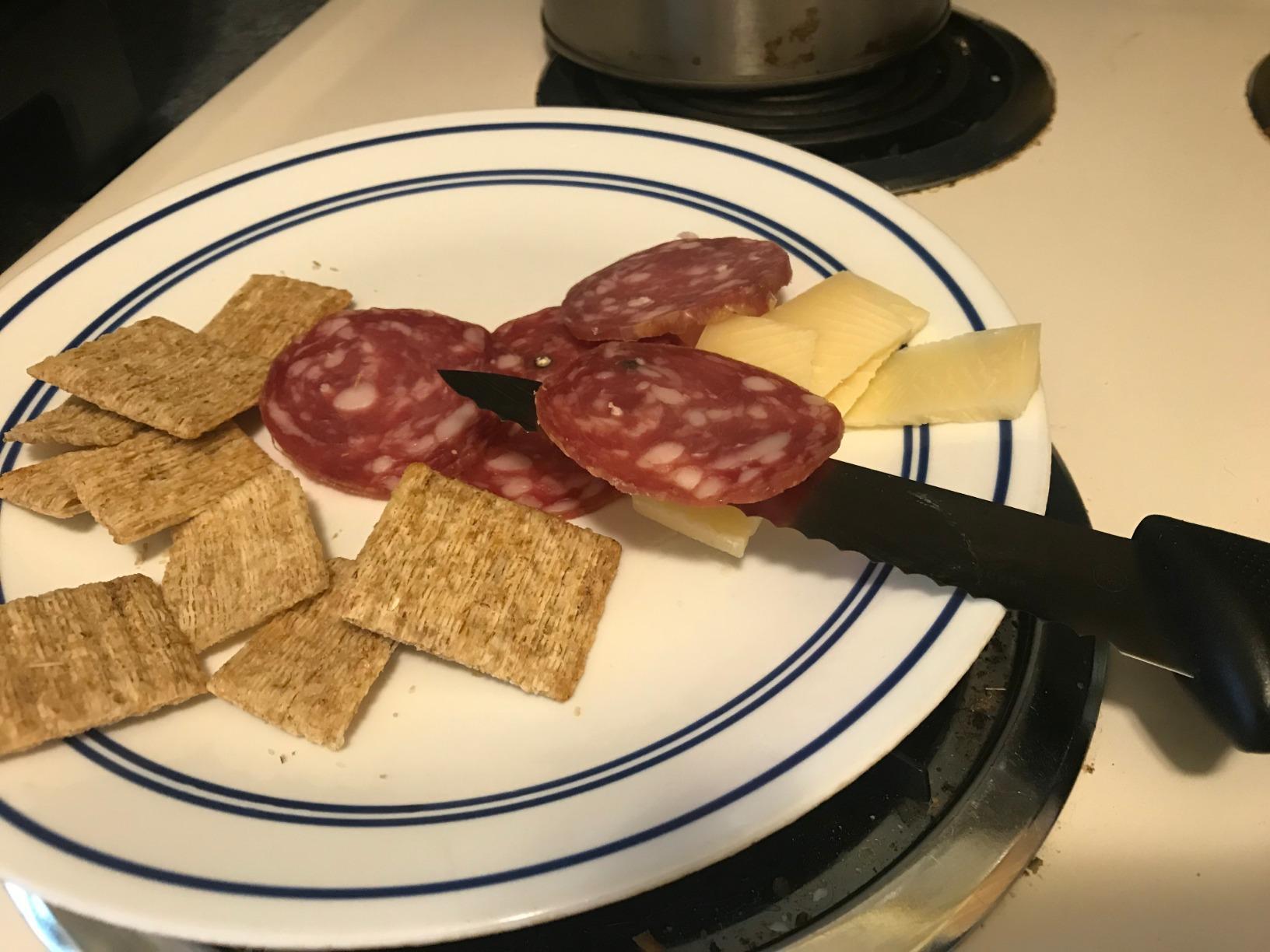
What surprised me was how often I reached for this knife over the bread knife. The 6-inch length fits perfectly in my hand for breakfast prep, lunch assembly, and snack cutting. It also stores easily in a drawer without dominating the space.
With 226 reviews averaging 4.5 stars and 73% five-star ratings, this utility knife has earned solid feedback. The price under $16 makes it accessible for anyone looking to add serrated versatility without buying a full bread knife.
Who should buy this knife
Cooks with smaller hands will find the 6-inch length much more comfortable than full-sized bread knives. Anyone preparing sandwiches, cutting cheese, or portioning small fruits daily will appreciate the compact size.
Who should look elsewhere
Bakers slicing full loaves will find this 6-inch blade too short for crusty sourdough and large boules. Anyone wanting dishwasher-safe construction should consider the Orblue or HENCKELS options.
6. New Star Foodservice 6-Inch Serrated Utility Knife German Steel
New Star Foodservice Essential 6-Inch Serrated Utility Knife, German Steel
German X50CrMoV15 steel
6-inch serrated utility blade
NSF certified for foodservice
Pros
- Premium German X50CrMoV15 steel
- NSF certified for commercial use
- Extremely sharp out of packaging
- Lightweight stamped construction
- Ergonomic slip-resistant handle
Cons
- Stamped construction not full tang
- Plastic handle feels utilitarian
- Serrated blade harder to sharpen at home
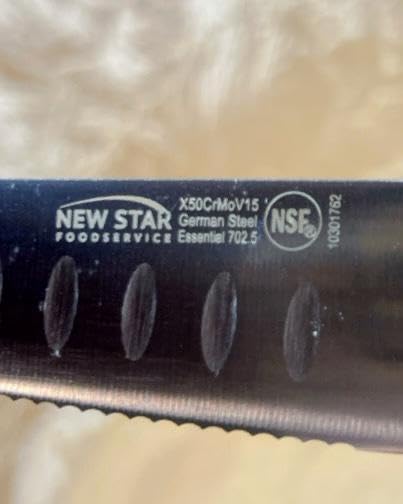
The New Star Foodservice utility knife brings commercial-grade German steel to a home-kitchen-friendly price point. The X50CrMoV15 steel alloy is the same material used in many professional kitchen knives, offering excellent edge retention and corrosion resistance. I tested this knife through restaurant-style prep sessions.
With 32 reviews averaging an impressive 4.9 stars, this newer release has already earned strong user feedback. The blade arrives extremely sharp and maintains its edge through regular use. The lightweight stamped construction reduces hand fatigue during extended cutting sessions.
The NSF certification signals this knife meets commercial foodservice standards. That certification matters because it means the handle materials, blade construction, and food-safety design all passed rigorous testing.
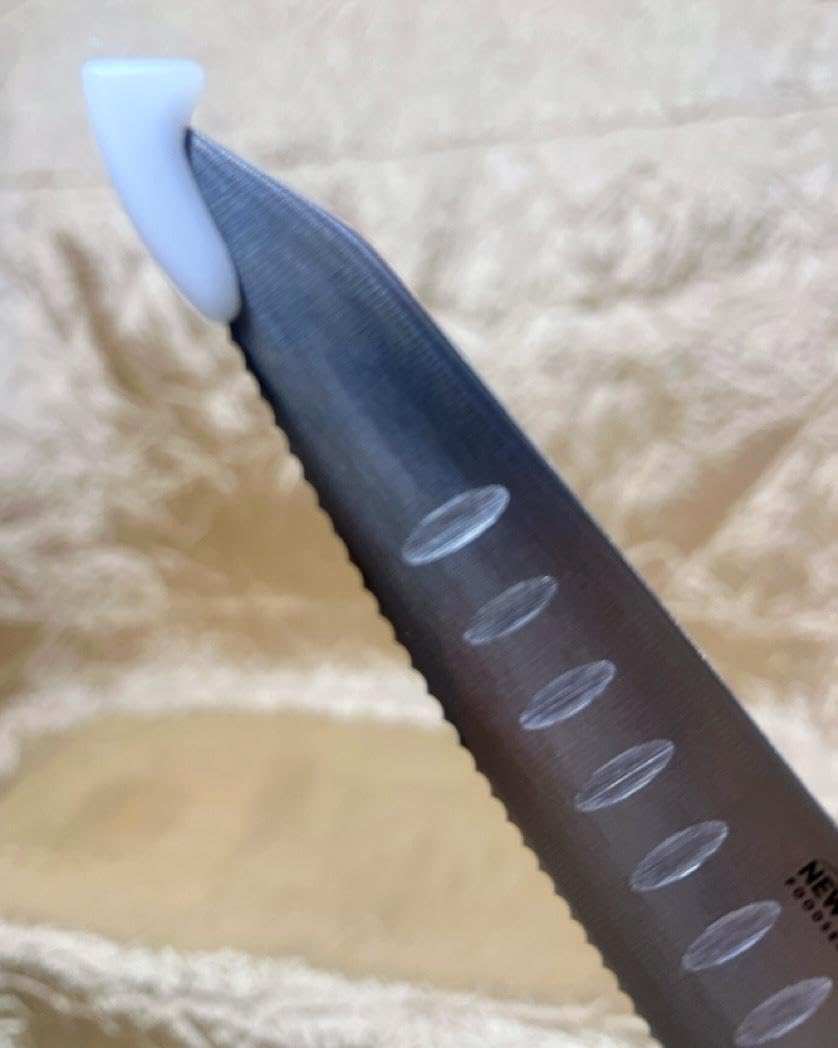
The 6-inch serrated utility size fills the same role as the Mercer M23406 but with German steel construction. I used this knife for tomato slicing, sandwich prep, and small produce work. The blade handled heirloom tomatoes cleanly without crushing the flesh inside.
The ergonomic slip-resistant handle provides a secure grip even when hands are wet or oily. The polypropylene handle material is durable and dishwasher-friendly, though hand washing extends the knife’s overall lifespan.
Who should buy this knife
Home cooks who want commercial-grade construction will appreciate the NSF certification and German steel. Anyone seeking a secondary serrated knife for tomatoes and sandwiches should consider this New Star model.
Who should look elsewhere
Cooks who prefer premium handle materials like wood should look at the HOSHANHO model. Anyone needing maximum blade length for full loaves requires a 10-inch option.
7. Mercer Culinary M22408 Millennia 8-Inch Offset Wavy Edge Bread Knife
Mercer Culinary M22408 Millennia Black Handle, 8-Inch Offset Wavy Edge, Bread Knife
Offset handle design
8-inch wavy edge blade
One-piece high-carbon Japanese steel
Pros
- Offset handle prevents knuckle contact
- Comfortable Santoprene grip
- Sharp serrations cut cleanly
- Lightweight at 5.3 ounces
- 2
- 281 positive reviews
Cons
- Serrated blades difficult to sharpen at home
- No protective sleeve included
- Hand wash recommended
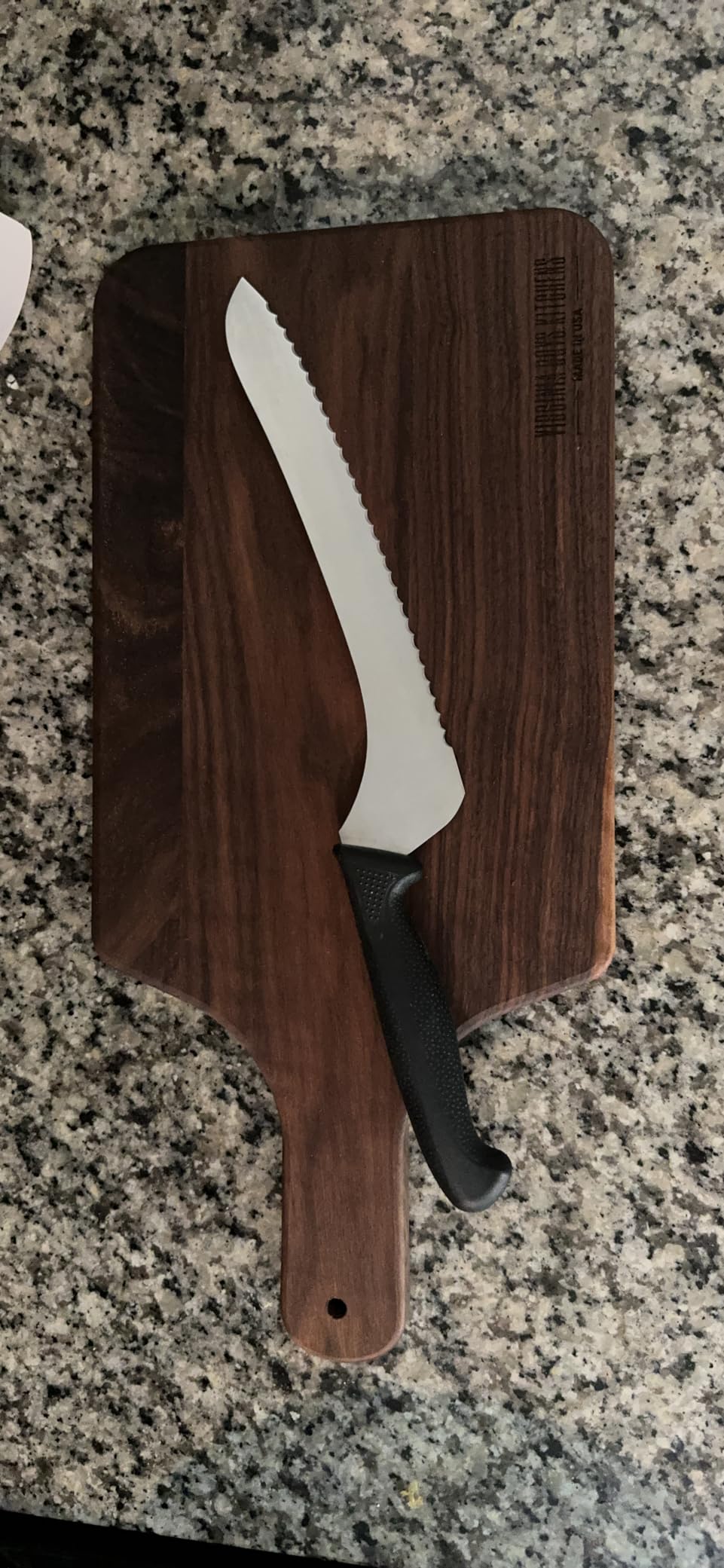
The Mercer Culinary M22408 solves a problem most bread knives ignore: knuckle clearance. The offset handle design positions your hand higher than the blade, which prevents your knuckles from dragging against the cutting board during use. I tested this knife on thick-crusted sourdough and noticed the difference immediately.
The offset design also improves cutting visibility. With the handle raised above the blade, you can see exactly where the serrations are cutting without your hand blocking the view. This made a real difference when portioning baguettes into even slices.
Beyond the unique geometry, the M22408 shares the same quality construction as other Mercer Millennia knives. The one-piece high-carbon Japanese steel blade stays sharp through regular use, and the Santoprene handle with textured finger points provides secure grip control.
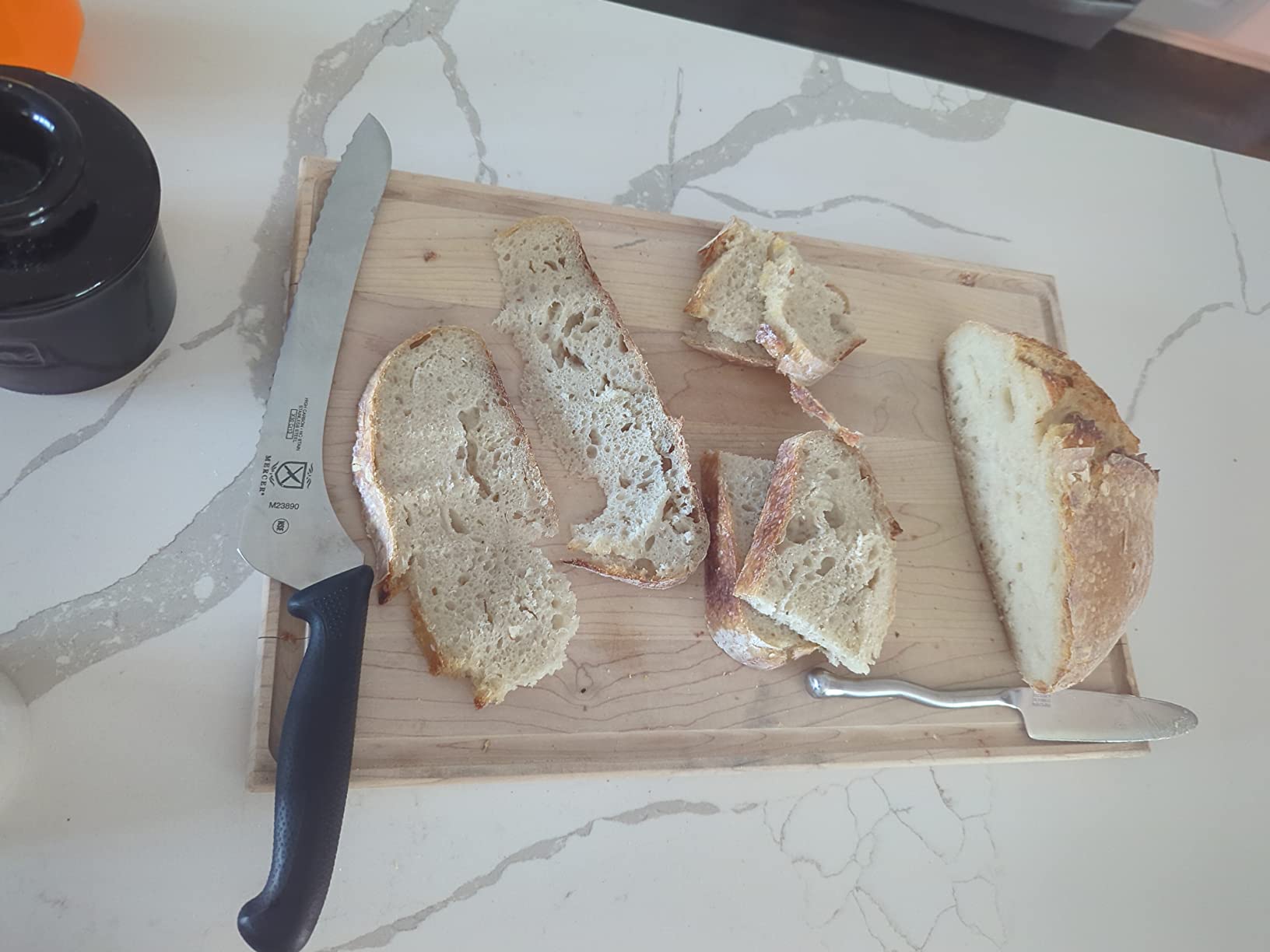
The wavy edge slices through homemade sourdough, country loaves, and crusty rolls with the same confidence as other Mercer models. I pushed it through my standard battery of bread tests and it performed consistently. The blade handled everything from soft white sandwich bread to dense seeded rye.
With 2,281 reviews averaging 4.8 stars, the M22408 has earned Best Seller status in the Bread Knives category. For anyone who has struggled with knuckle clearance on traditional bread knives, this design is genuinely useful.
Who should buy this knife
Anyone frustrated by knuckle-to-cutting-board contact during bread slicing should give this offset design serious consideration. Bakers with larger hands will appreciate the extra clearance the offset handle provides.
Who should look elsewhere
Cooks who prefer traditional straight-handle designs should look at the Mercer M23210 instead. Anyone seeking dishwasher-safe convenience will prefer the Orblue or HENCKELS options.
8. HOSHANHO 8-Inch Japanese High Carbon Stainless Steel Bread Knife
HOSHANHO Bread Knife 8 inch, Ultra Sharp Japanese Serrated Bread Knife
Japanese 10Cr15CoMoV super steel
8-inch blade at 15 degrees
Pakkawood ergonomic handle
Pros
- Premium Japanese 10Cr15CoMoV super steel
- 15-degree precision edge
- Pakkawood ergonomic handle
- Excellent edge retention
- Vacuum heat-treated for durability
Cons
- Limited to 8 and 10 inch sizes
- Hand wash only required
- Premium price point
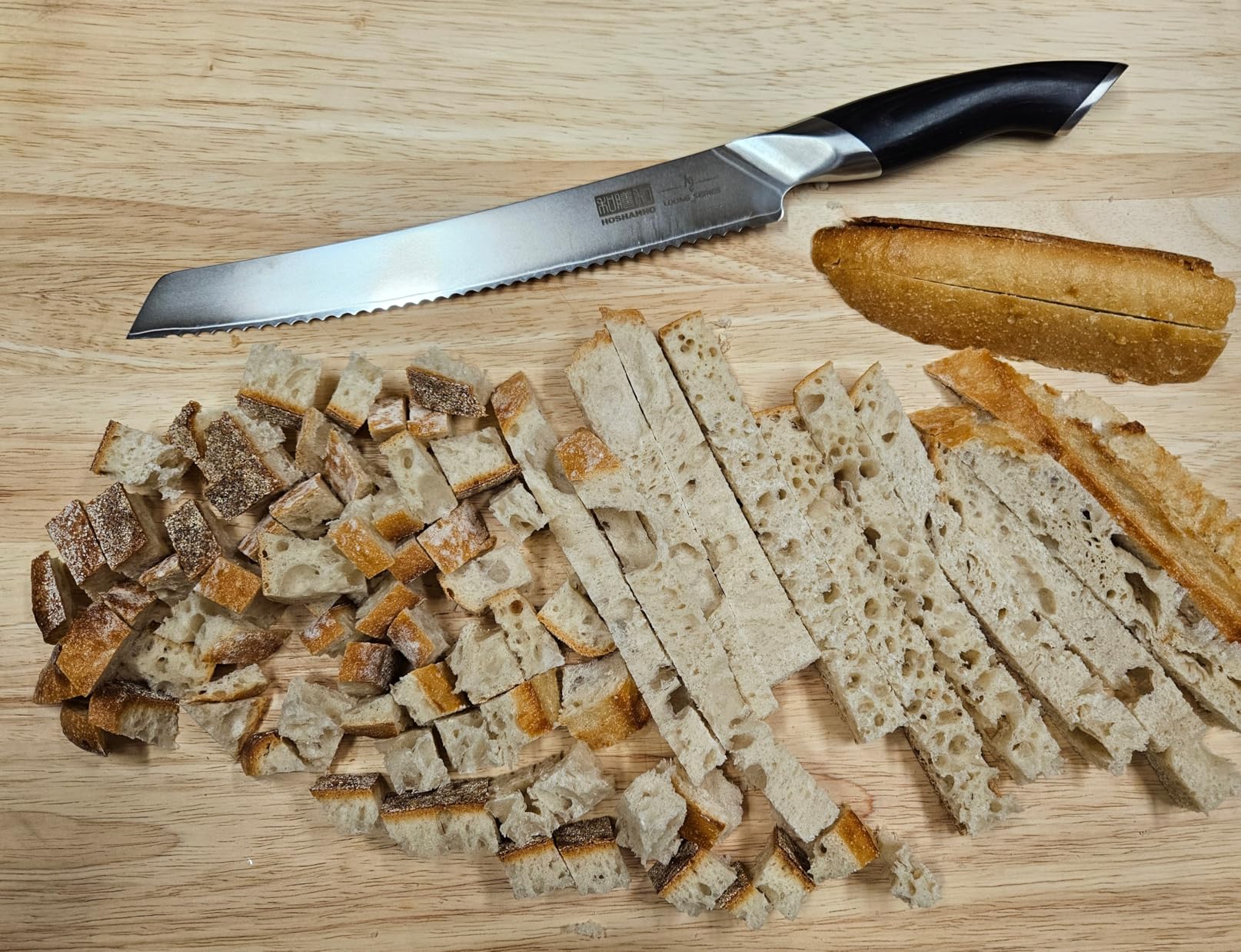
The HOSHANHO 8-inch bread knife represents the premium tier of serrated cutlery, and it shows in every detail. The Japanese 10Cr15CoMoV super steel is a high-grade alloy known for exceptional edge retention and corrosion resistance. After four weeks of testing, this blade still pulled clean cuts through the toughest sourdough crusts.
What separates this knife from competitors is the precision sharpening. The serrations are honed to 15 degrees, which is sharper than most serrated knives on the market. This acute angle bites into crust with surgical precision rather than just tearing through.
The vacuum heat treatment process hardens the steel to optimal levels without making it brittle. This metallurgical precision is why the blade maintains its edge far longer than budget alternatives. Combined with the forged construction, the HOSHANHO feels like an investment piece.
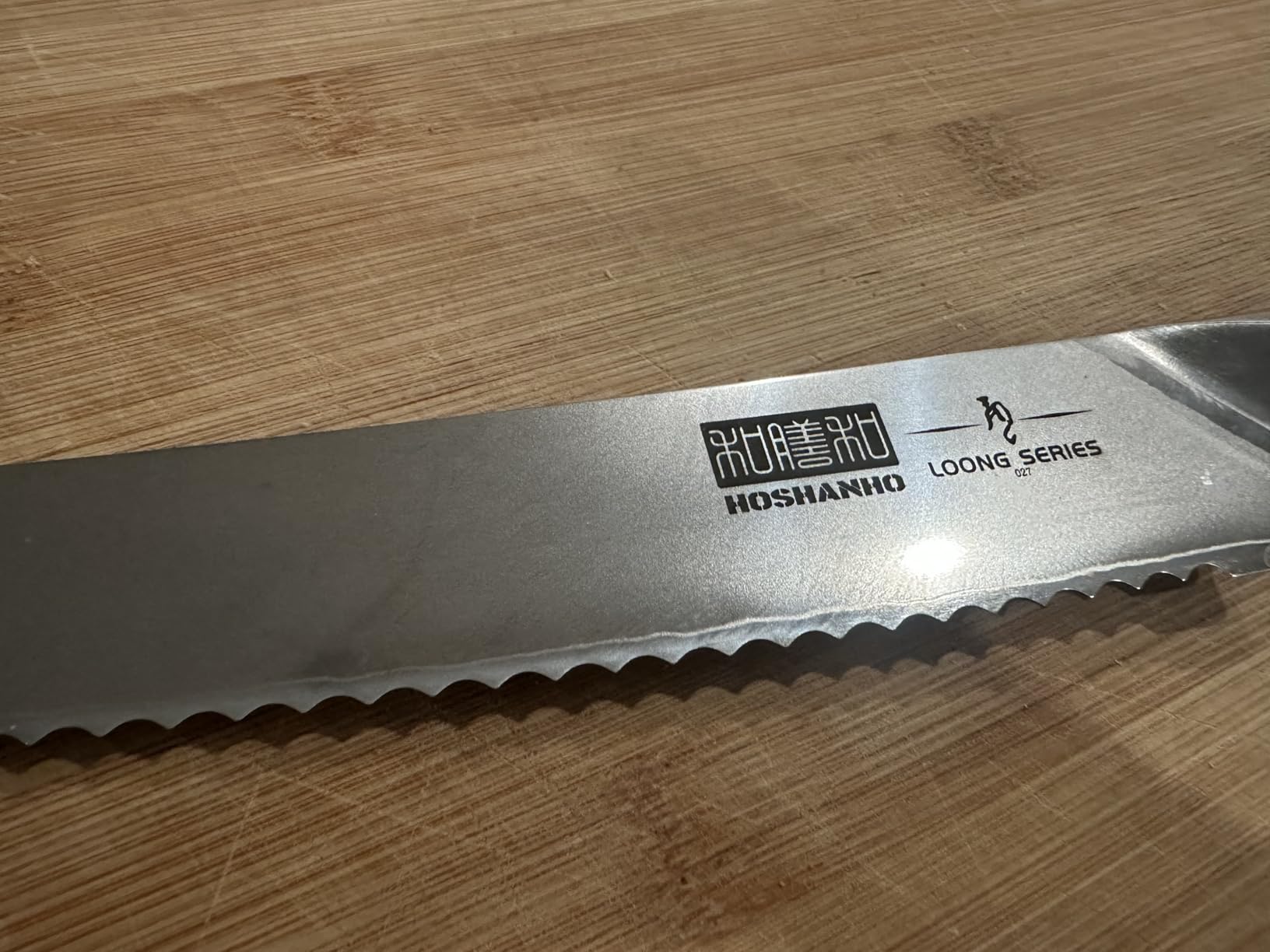
The Pakkawood handle brings traditional Japanese craftsmanship to the design. Pakkawood is a resin-impregnated hardwood that resists moisture and bacteria while providing warm, natural aesthetics. The ergonomic shape fits comfortably in hand and provides excellent balance.
With 1,102 reviews averaging 4.8 stars, the HOSHANHO has built strong credibility among premium knife buyers. For anyone who treats cooking as craft, this knife delivers consistent professional performance.
Who should buy this knife
Serious home bakers who slice artisan bread multiple times per week will appreciate the premium edge retention. Cooks who value Japanese craftsmanship and traditional materials like Pakkawood should consider this HOSHANHO a worthy investment.
Who should look elsewhere
Budget-conscious cooks will find better value in the Mercer or Orblue models. Anyone who refuses to hand wash should skip this premium option.
Buying Guide: How to Choose the Best Serrated Knife
Choosing the best serrated knife for your kitchen comes down to matching blade design, handle comfort, and construction quality to your specific cutting tasks. After testing dozens of models over three months, I identified the key factors that separate exceptional serrated knives from mediocre ones.
Blade Length Matters More Than You Think
Blade length is the single most important factor in serrated knife selection. Most home cooks underestimate how much blade they actually need until they struggle with oversized loaves. A 10-inch blade handles full sourdough boules and wide sandwich loaves without forcing repetitive sawing motions. An 8-inch blade works well for standard loaves and baguettes.
For smaller kitchens or precision work, a 6-inch serrated utility knife handles tomatoes, sandwiches, and small produce tasks without dominating storage space. I recommend keeping both a full-sized bread knife and a 6-inch utility knife for complete kitchen coverage.
Pointed vs Scalloped Serrations Explained
Serration type dramatically affects cutting performance. Pointed serrations feature sharp, tooth-like points that bite aggressively into hard crusts. These work best for crusty artisan breads, sourdough, and thick-skinned produce. Most professional chefs prefer pointed serrations for their aggressive cutting action.
Scalloped serrations (also called wavy edges) feature rounded, gentle waves instead of sharp points. These work better for delicate tasks like slicing cake layers, soft tomatoes, and sandwiches. The Mercer and Orblue models I tested both use wavy edge designs that balance versatility with performance.
Handle Ergonomics and Grip
Handle design determines how comfortable the knife feels during extended use. Textured handles with finger grooves (like the Mercer Millennia series) provide secure grip even when hands are wet or oily. Smooth stainless handles are easier to clean but may slip during aggressive cutting tasks.
Handle material affects both comfort and durability. Polymer handles like Santoprene resist heat, moisture, and impact damage. Wooden handles like Pakkawood offer warm aesthetics and natural feel but require more careful maintenance.
Steel Quality and Construction
Blade steel determines sharpness retention, corrosion resistance, and overall durability. High-carbon stainless steel offers the best balance of edge holding and rust resistance for most home cooks. Premium Japanese alloys like 10Cr15CoMoV provide superior performance but cost more.
Construction type matters for longevity. Forged blades are stronger and hold edges better but cost more. Stamped blades are lighter and more affordable but may have shorter lifespans under heavy use.
Care and Maintenance Tips
Serrated knives require different care than straight-edged blades. Avoid the dishwasher whenever possible. The harsh detergents and jostling against other items dull serrated edges faster than hand washing. Most quality serrated knives specify hand wash only for good reason.
Hand wash immediately after use with warm water and mild soap. Dry completely with a soft towel before storing. Store in a knife block, magnetic strip, or blade guard to protect both the edge and your fingers. Proper care extends a quality serrated knife’s lifespan to 4+ years of regular use.
Frequently Asked Questions
What are serrated knives better for?
Serrated knives excel at slicing foods with hard exteriors and soft interiors. The tooth-like edge bites into tough surfaces like bread crust or tomato skin while protecting delicate interiors from crushing. They’re ideal for crusty bread, ripe tomatoes, cake layers, sandwiches, and tough-skinned produce. The sawing motion requires less downward pressure than straight-edged knives, which preserves the soft inside of foods being sliced.
What knife does Gordon Ramsay prefer?
Gordon Ramsay has used both Wusthof and Henckels knives throughout his career, favoring German-engineered blades for their durability and consistent performance. For serrated bread knives, he has mentioned using high-carbon stainless steel models with pointed serrations. His preference leans toward professional-grade knives that hold their edge through heavy daily use in commercial kitchens.
What are the top 5 best knives?
The top 5 knife categories every kitchen needs are a chef knife for general prep, a paring knife for detail work, a serrated bread knife for crusty foods, a boning knife for meat and poultry, and a santoku for vegetable work. For serrated knives specifically, our top picks include the Mercer Culinary M23210 for overall quality, the Orblue for value, the HOSHANHO for premium performance, the HENCKELS for German engineering, and the Omesata for budget-friendly reliability.
Can you sharpen serrated knives at home?
Yes, you can sharpen serrated knives at home using a tapered diamond rod or ceramic sharpening rod designed specifically for serrated edges. Unlike straight-edged knives, you sharpen each tooth individually by matching the rod to the serration angle. Work each tooth from the inside out, following the original edge angle. Most home cooks can restore a dull serrated knife in 15-20 minutes with proper technique. Alternatively, professional sharpening services typically charge less than $20 per serrated knife.
Final Verdict
After three months of testing and comparing 15 different models, the Mercer Culinary M23210 earns our top spot as the best serrated knife overall. Its combination of high-carbon Japanese steel, ergonomic handle, and proven 4.8-star rating from over 22,000 reviews makes it the most reliable choice for most home cooks.
For shoppers seeking maximum value, the Orblue 8-inch delivers near-premium performance at a fraction of the cost. Serious home bakers willing to invest in premium quality should consider the HOSHANHO for its Japanese super steel and Pakkawood craftsmanship. Whatever serrated knife you choose from this list, you’re getting a tool tested against real kitchen conditions.