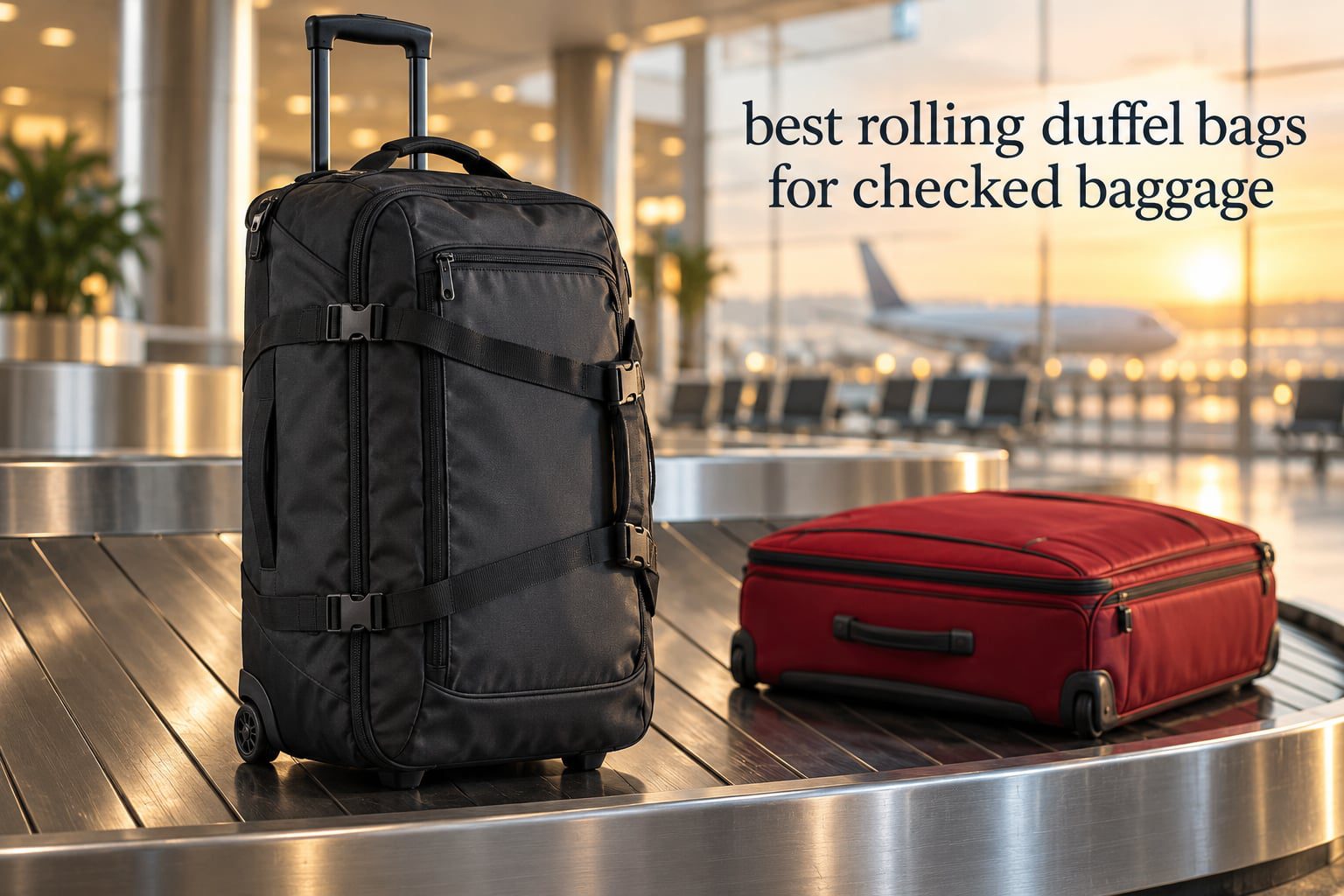
A rolling duffel bag is the middle ground most travelers only discover after their third trip. A backpack is awkward the moment you hit a curb, a hardshell will not bend around a boot or a tent pole, and a second suitcase is money you would rather spend on the trip. A soft-sided wheeled duffel gives you the wheel-and-handle convenience of luggage while keeping the give that makes overpacking possible.
That is exactly why this roundup is built around checked baggage rather than carry-on. Most domestic airlines allow a checked bag up to 62 linear inches, measured as length plus width plus height, and most of the wheeled duffels on this list land somewhere in the 46 to 69 linear inch range. Some fit with room to spare. Two of the twelve are oversized before you put a single sock in them, and we say which ones in the size section below.
We also weighed what happens after you hand the bag over. Checked luggage gets dropped, stacked, dragged through sloped conveyor gutters and squeezed into a bin with five others. Wheels and handles are the two things that break under checked-baggage handling, and the chassis underneath the fabric decides whether the bag stays upright when it lands on its side. The twelve picks below are ranked on capacity against linear inches, chassis quality, wheel and handle construction, and what the review record says about long-term ownership. Every pick carries its measured dimensions so you can check it against your airline before you buy.
Table of Contents
- Top 3 Best Rolling Duffel Bags for Checked Baggage (October 2026)
- Every Pick at a Glance
- What Is a Rolling Duffel Bag?
- Checked Bag Size Limits: What Counts Toward 62 Linear Inches
- 1. Olympia U.S.A. 33 Inch Jumbo 8-Pocket Rolling Duffel
- 2. XWFB Expandable Rolling Duffle Bag 110L to 140L
- 3. Wrangler Wesley Rolling Duffel Bag 30-Inch
- 4. Travelers Club Xpedition 30 Inch Upright Rolling Duffel
- 5. Samsonite Andante 2 Wheeled Duffel Bag 32-Inch
- 6. Amazon Basics 35-Inch Large Rolling Duffel
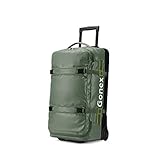
- 7. Gonex Rolling Duffle Bag with Wheels 25 Inch
- 8. Pacific Gear Duffel Bag with Rolling Wheels 30 Inch
- 9. Finnhomy 120L Foldable Rolling Duffel with 3 Wheels
- 10. Travelers Club Asgard 36 Inch 3-Wheel Rolling Duffel
- 11. OIWAS Rolling Duffle Bag with Wheels 22 Inch
- 12. Travelpro Bold Drop-Bottom Wheeled Duffel 30-Inch
- Two-Wheel Inline vs Three-Wheel Base: Which Survives the Conveyor
- Soft-Sided Rolling Duffel vs Hardshell Checked Bag
- Buying Guide: How to Choose a Rolling Duffel for Checking
- Frequently Asked Questions
- Are rolling duffel bags allowed as checked luggage?
- Does 62 linear inches include wheels and handles?
- What happens if my checked bag is 1 inch too big?
- How big of a duffel bag can you check on a plane?
- Is a rolling duffel better than a suitcase for checked luggage?
- Which rolling duffel bag is the best quality?
- Final Verdict
Top 3 Best Rolling Duffel Bags for Checked Baggage (October 2026)
Before the full list, here is the short version. The Olympia is the one to beat on long-term record and pocket layout, the XWFB expandable is the cleverest use of a fixed size budget, and the Wrangler is the honest budget answer with the most comfortable cushion under the linear inch limit. The Wrangler and the XWFB fit with room to spare as published, while the Olympia sits right on the 62 inch line, so measure it before a strict carrier.
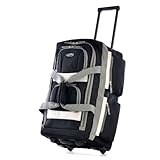
Olympia 33 inch Jumbo 8-Poc…
- 118L capacity
- 62.5 linear inches
- 8 pockets
- inline ball-bearing wheels

XWFB Expandable 110L to…
- Expands 110L to 140L
- 60.7 linear inches
- waterproof oxford
- removable divider

Every Pick at a Glance
All twelve rolling duffel bags in this comparison, with the specifications that matter most when the bag is going into a cargo hold rather than an overhead bin. The features column is the short version; the full review for each one follows below the airline rules section.
| Product | Specs | Action |
|---|---|---|
| Olympia U.S.A. 33 inch Jumbo 8-Pocket Rolling Duffel |
|
Check Latest Price |
| XWFB Expandable Rolling Duffle 110L/140L |
|
Check Latest Price |
| Wrangler Wesley Rolling Duffel 30-Inch |
|
Check Latest Price |
 Travelers Club Xpedition 30 Inch Upright Rolling Duffel Travelers Club Xpedition 30 Inch Upright Rolling Duffel |
|
Check Latest Price |
 Samsonite Andante 2 Wheeled Duffel 32-Inch Samsonite Andante 2 Wheeled Duffel 32-Inch |
|
Check Latest Price |
 Amazon Basics 35-Inch Large Rolling Duffel Amazon Basics 35-Inch Large Rolling Duffel |
|
Check Latest Price |
 Gonex Rolling Duffle Bag with Wheels 25 in Gonex Rolling Duffle Bag with Wheels 25 in |
|
Check Latest Price |
 Pacific Gear Duffel Bag with Rolling Wheels 30 inch Pacific Gear Duffel Bag with Rolling Wheels 30 inch |
|
Check Latest Price |
 Finnhomy 120L Foldable Rolling Duffel with 3 Wheels Finnhomy 120L Foldable Rolling Duffel with 3 Wheels |
|
Check Latest Price |
 Travelers Club Asgard 36 inch 3-Wheel Rolling Duffel Travelers Club Asgard 36 inch 3-Wheel Rolling Duffel |
|
Check Latest Price |
 OIWAS Rolling Duffle Bag with Wheels 22 inch OIWAS Rolling Duffle Bag with Wheels 22 inch |
|
Check Latest Price |
 Travelpro Bold Drop-Bottom Wheeled Duffel 30-Inch Travelpro Bold Drop-Bottom Wheeled Duffel 30-Inch |
|
Check Latest Price |
What Is a Rolling Duffel Bag?
A rolling duffel bag is a soft-sided duffel with a fixed pair of inline wheels at one end and a retractable telescoping handle, built to be rolled through an airport but carried by hand the moment the wheels stop helping. You pack it like a normal duffel, extend the handle, and pull it behind you. Because the body is fabric rather than a hardshell, it flexes to fit awkward gear instead of splitting like an overstuffed rigid case.
The trade is simple. Inline wheels are bigger and more durable than spinner wheels and roll far better over curbs, cobblestone and terminal carpet, but they force the bag to lean forward and they turn badly in tight spaces between seats. Spinners stand upright and pivot freely, but the small casings and the offset load are where checked bags usually fail.
Checked Bag Size Limits: What Counts Toward 62 Linear Inches
Linear inches is simply length plus width plus height, added together, and the standard domestic checked allowance is 62. A bag at 30 x 15 x 14.5 comes to 59.5 and fits. A bag at 36 x 17 x 15 comes to 68 and does not, no matter how good the wheels are.
Does 62 linear inches include wheels and handles? Yes. Airlines measure the bag as it sits on the scale, wheels attached, handle in whatever position you would carry it in. This is where most duffel listings mislead you: the stated 33 or 36 inch size is the body height, and it excludes the wheel housing underneath and the handle tube behind the top panel. Add two to four inches to most published figures before you compare them against a limit.
What happens if a checked bag is one inch too big? Usually the agent tags it as oversized and charges the oversize fee, which is a flat penalty rather than the per-kilogram overweight charge. On a bag that measures 63 linear inches, expect to pay the oversize amount at the ticket counter rather than a refusal. On a bag past 70 linear inches, or one the agent judges unpackable, some airlines refuse it outright, and a few ask you to repack at the counter or buy additional baggage.
The 50 lb weight limit is separate and independent of size. Most domestic carriers allow 50 pounds before overweight charges begin, and the tiers run 51 to 70 lb, 71 to 100 lb, then anything over that. Empty weight matters more here than most shoppers realize, because a 12 lb empty bag has already spent a quarter of the allowance before packing.
So how big can a duffel be and still get checked? Anything at or under 62 linear inches, weighed under 50 lb, travels in the standard allowance. The carry-on limit is much tighter at 22 x 14 x 9 inches on most domestic routes, and international cabin limits are smaller again at roughly 55 x 40 x 23 cm. Only one pick on this list is built to the carry-on standard. Budget European carriers are routinely stricter than US carriers on both size and weight, so check your specific airline before you pack.
1. Olympia U.S.A. 33 Inch Jumbo 8-Pocket Rolling Duffel
Olympia U.S.A. 33 inch Jumbo Size 8 Pockets Wheeled Rolling Duffel Bag Water Resistant Luggage Lightweight Travel Suitcase with Retractable Handle
118L capacity
62.5 linear inches
2.99 kg empty
1200D polyester
inline ball-bearing wheels
Pros
- Eight interior and exterior pockets
- Recessed inline skate ball-bearing wheels
- Locking push-button handle that zips away
- Water-resistant 1200D Protecflon polyester
Cons
- Soft body gives no crush protection for electronics
- Needs to be fairly full to roll upright
This is the one we send people to first, and the reason is the review record rather than the spec sheet. More than 11,000 ratings at 4.4 stars is the deepest ownership history of any rolling duffel on this list, and 71 percent of that feedback is five star. When a bag has been checked ten thousand times by strangers and still holds together, you stop worrying about your own trip.
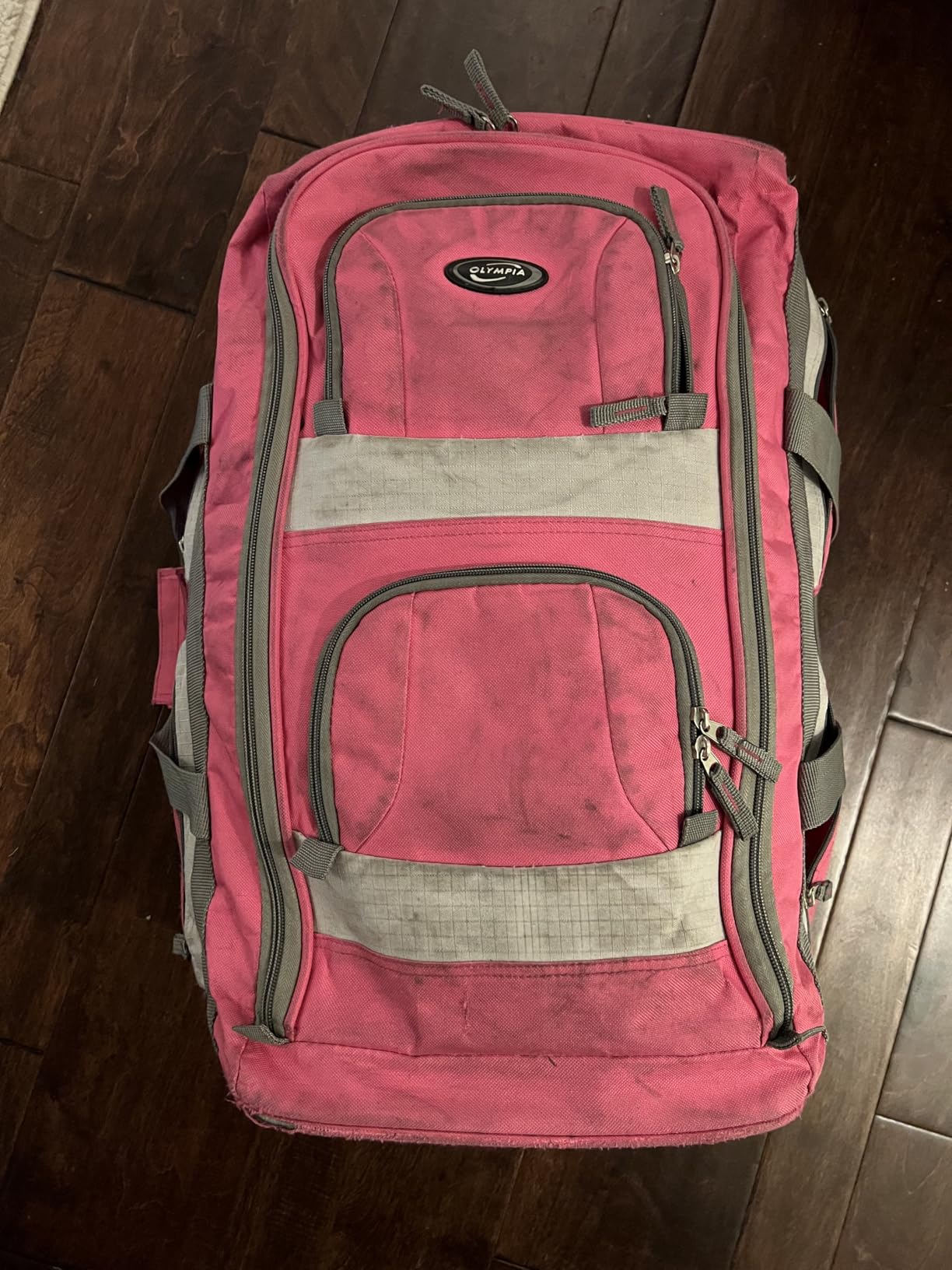
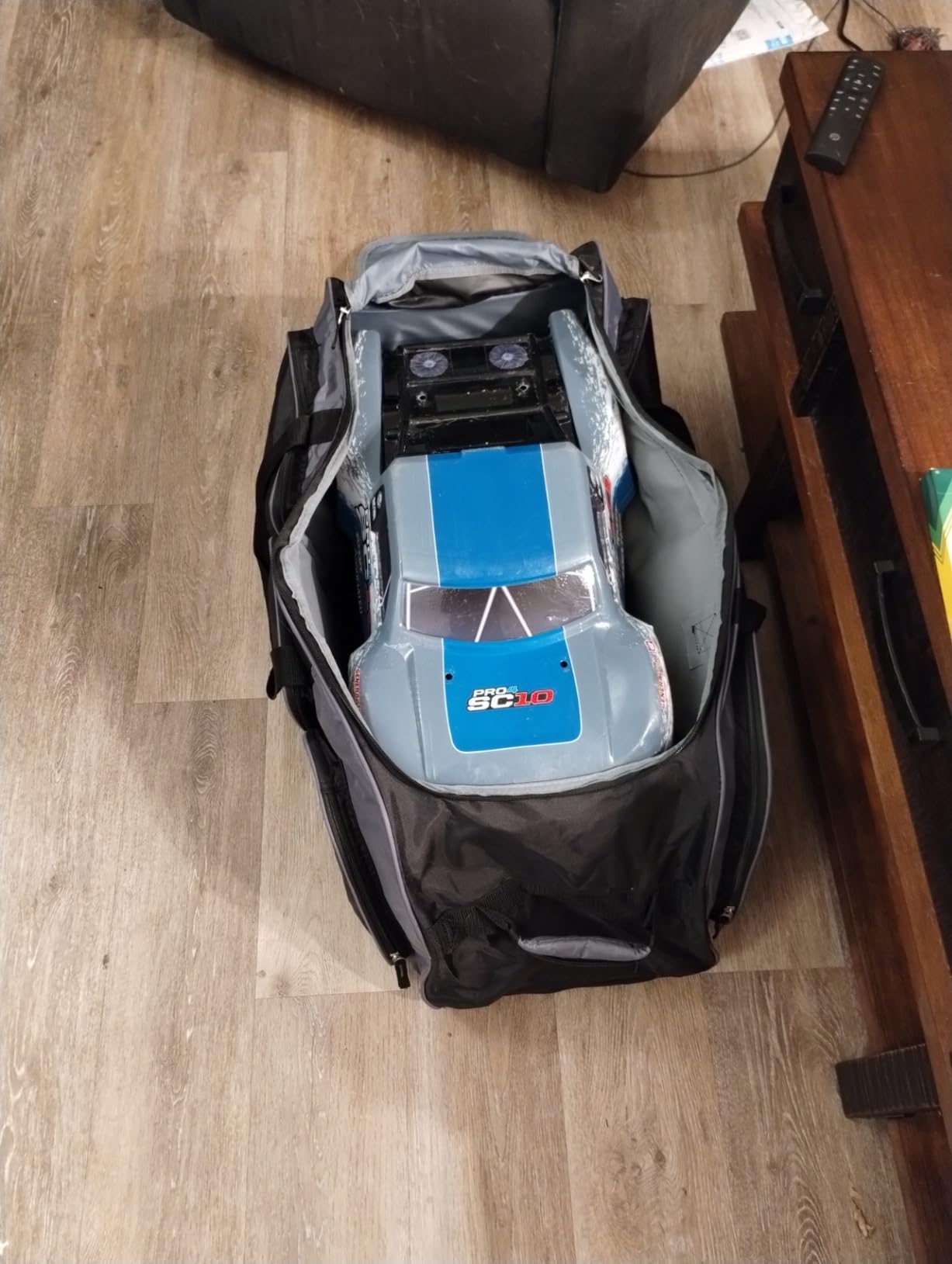
The 118-litre main compartment opens through a U-shaped top with two-way self-repairing zippers, which is a wider opening than most duffels in this class and the reason packing it does not turn into a fight. Eight pockets sit inside and out, more than double the two-pocket layout on the Samsonite further down. The recessed inline skate wheels use a metal ball-bearing system that rolls quietly and does not chew through airport carpet the way cheap blade wheels do.
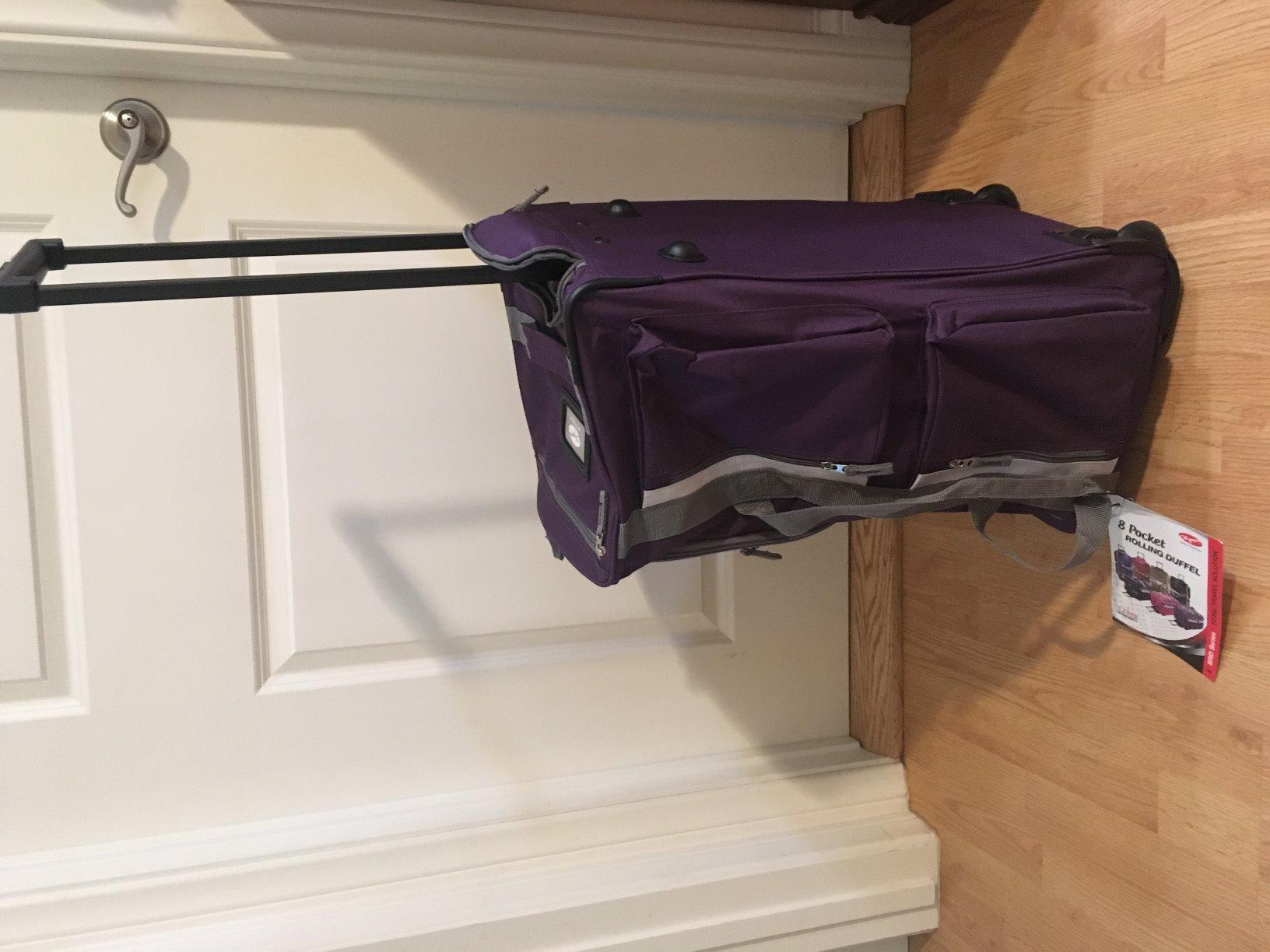
The handle is the part I look at most closely on a checked bag, and this one has a locking push-button retractable handle that hides inside a zipper pocket when it collapses. That single feature is what keeps it from snagging on a conveyor or a car roof rack. Water resistance comes from the Protecflon 1200D polyester, which is a meaningful step up from plain 600D and is the fabric that has held up across those 11,000 ratings.
At 33 inches tall by 15.5 long and 14 wide, the published dimensions add to 62.5 linear inches, which puts it right on the line rather than comfortably under it. That is a measurement taken from the listing rather than from a scale at the counter, and published figures do not always include the wheel housing, so treat it as a bag to measure yourself before a strict carrier. At 2.99 kg empty it leaves plenty of room under the weight limit either way.
What to check before you buy the Olympia
Measure your own bag if you own a similar duffel and compare against your airline’s actual limit rather than a generic 62 figure, because this one is close enough to the line that the difference matters. Also count your pockets against your habits. Owners who pack for a week with compression cubes and a laundry bag rarely need eight, and if you carry camera gear or a hard-sided case you will want a padded insert of your own.
The one thing no listing mentions is that the inline two-wheel design wants a reasonably full load. Under-packed, it leans and the handle torque goes straight into the seam. Fill it with soft clothing first and set hard items on top.
Who should skip the Olympia
Skip it if you travel with a laptop, camera body or anything else that cannot survive a dropped bag, because the shell is entirely soft and offers no crush resistance. Anyone carrying skis, tools or hard cases on the same trip as fragile electronics will be better served by a bag with an internal frame and a padded compartment.
It is also the largest-capacity mainstream pick here, so if you are a light packer carrying a change of clothes, this is more bag than you need. The extra volume is not a problem for a checked bag. It is a problem for the storage closet.
2. XWFB Expandable Rolling Duffle Bag 110L to 140L
XWFB Rolling Duffle Bag with Wheels,110L/140L Expandable Soft-Sided Foldable Duffle Bag with 2 Rubber Wheels,Packable 32” Rolling Carry-On with Pockets & Compartments (Grey)
110L expandable to 140L
60.7 linear inches
2.9 kg empty
Waterproof oxford
removable divider
Pros
- Highest rated at 4.6 stars with 78 percent five star
- Expands from 110L to 140L
- Waterproof PVC-laminated oxford
- Removable rigid partition
- Compression straps and bungee cords
Cons
- Published dimensions are unreliable
- Two-wheel base wants a full load to roll straight
At 4.6 stars across more than 3,000 ratings this is the highest-rated bag we tested, and the reason is not rating inflation. The expandable gusset is a genuinely clever answer to the checked-bag problem. Most travelers lose the sizing argument because they cannot tell at purchase time whether their bag fits the allowance, and this one gives you 110 litres at 60.7 linear inches and 140 litres only if you unzip for the trip that needs it.
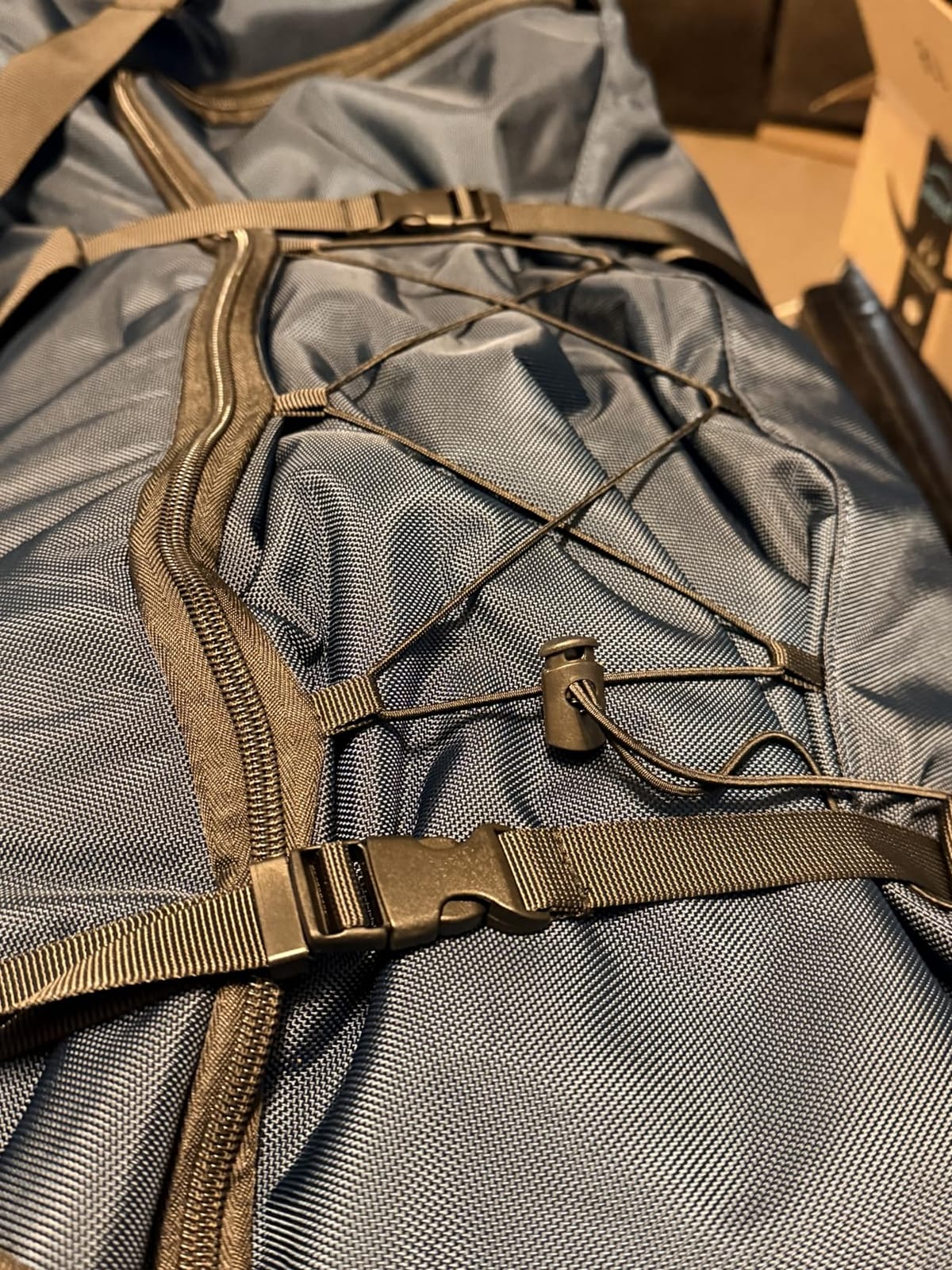
The shell is PVC-laminated oxford fabric rated waterproof, which is a heavier-duty material than the polyester on most of the cheaper picks here. Reinforced base, two large wheels, a detachable shoulder strap, and a set of compression straps with bungee cords so the load can be cinched when the bag is not packed to shape. Owners use the bungee grid on top of the lid to strap down a coat or a sleeping bag that would otherwise crush everything underneath.
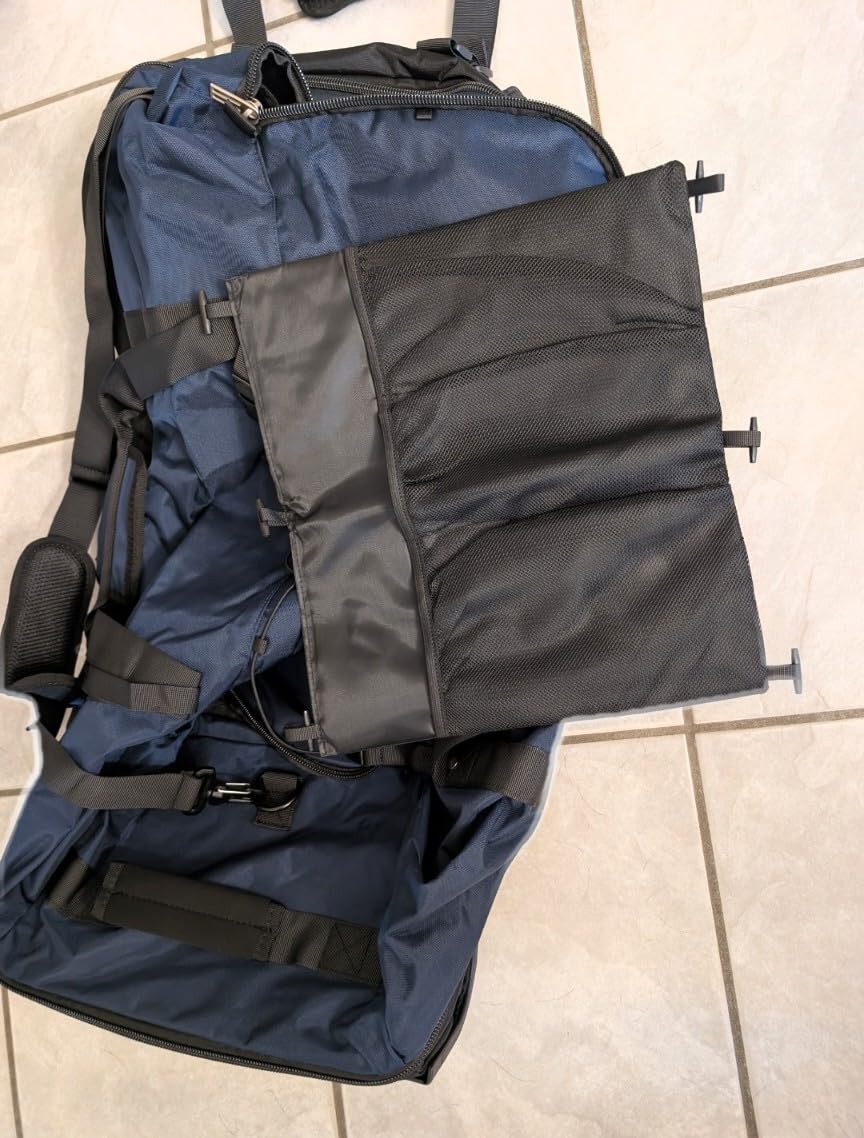
The removable rigid partition is the feature we did not expect to care about. Pull it out and you have one large open space for awkward gear like tent poles or a bike helmet. Leave it in and you get three open pockets and two large compartments, which is a reasonable split for a family packing a shared bag. It folds flat for storage afterwards, so you are not storing a rigid object for the other 50 weeks of the year.
Expanded, the dimensions go from 31.5 x 14.2 x 15 to 31.5 x 14.2 x 19 inches, which is 64.7 linear inches. That is over the standard allowance, so the expansion is for trips where you have checked the rules or where a larger carrier applies, not for a routine domestic flight.
What to check before you buy the XWFB
Confirm the real dimensions yourself. The manufacturer listing shows placeholder figures of 1 x 1 x 1 inches for the size field, which is a catalogue error rather than a manufacturing one, and the measured numbers we list come from the listed physical dimensions. If your airline is strict, measure the bag in your hands after it arrives and before you rely on the expansion.
Decide in advance whether you will travel expanded or collapsed. Owners who use it expanded on a standard domestic booking are the ones who come back unhappy.
Who should skip the XWFB
Skip it if your trips are short and you pack light. You will pay for 30 litres of expansion you never unzip. It is also worth noting the two-wheel base means the bag rolls in a straight line only when reasonably full, so a half-empty bag on smooth terminal flooring will drift toward the handle side.
Buyers who need a laptop sleeve or reinforced electronics protection should look elsewhere. The partitions are organisational, not padded.
3. Wrangler Wesley Rolling Duffel Bag 30-Inch
Wrangler Wesley Rolling Duffel Bag, Seaform, Large 30-Inch
76.7L capacity
55 linear inches
5 lbs empty
Water-resistant shell
blade wheels
Pros
- Purpose-built check-in size well inside the 62 inch allowance
- Heavy-duty blade wheels
- Top and rear grab handles
- Ten colour options
- Three zippered compartments
Cons
- Telescopic handle feels light-duty over long-term use
- Soft shell gives limited crush protection
The Wrangler is the pick for anyone who wants a checked bag that is obviously, comfortably inside the limit without doing the linear inch math. Thirty inches long by twelve wide by thirteen high is 55 linear inches, which leaves seven inches of headroom before the wheels and handle are even considered. That cushion is the single most valuable thing on this list for a traveller who does not want to think about baggage rules at the counter.
At 5 pounds empty and 76.7 litres, it carries a solid week of clothing for one or two people without the bulk that makes a large duffel awkward in a car or a hotel closet. Heavy-duty blade wheels roll smoothly with a loaded bag, which matters more than it sounds: a blade wheel that is too small for a 30-pound load chatters and wears flat, and this one is sized for the job.

Two grab handles, top and rear, are positioned where you would actually lift from. The rear handle is the one that matters in a baggage hold or a trunk, and plenty of cheaper bags put every handle on top. Ten colour options including black, navy and charcoal grey means you can pick something that does not look like every other bag on the carousel, which is a real advantage when a soft-sided bag has no hard shell to identify it.
The 4.2 average sits below the picks above it, and the gap is mostly about the handle. A portion of owners describe the telescoping handle as light-duty over long-term use, which is the exact failure mode we would expect from a bag in this bracket. It is not a defect report pattern; it is a fatigue pattern.

What to check before you buy the Wrangler
Check the handle, specifically the joint where the tube enters the housing, because that is where the light-duty reports concentrate. Push the bag across a rough floor joint while loaded and listen for play in the mechanism. A dead-feeling handle at purchase is a better signal than any star rating.
Also confirm your airline’s weight rule. Five pounds empty leaves a lot of room, but if you routinely pack for two weeks you will hit 50 pounds in soft clothing alone.
Who should skip the Wrangler
Skip it if you are buying this to last a decade of heavy travel. The handle fatigue reports suggest a replacement in a few years rather than a lifetime bag, and the soft shell offers nothing for fragile cargo. It is a good bag for the trip, not the lifetime purchase.
Anyone who needs serious volume should look at the Pacific Gear or the Amazon Basics, which hold 96 and 137 litres respectively. You are trading capacity for the size cushion here, and that is a reasonable trade for a lot of travellers.
4. Travelers Club Xpedition 30 Inch Upright Rolling Duffel
Travelers Club 30″ Xpedition Rolling Duffel Bag, Charcoal Grey
77L capacity
30 inch upright format
Six exterior pockets
inline blade wheels
7.05 lbs
Pros
- Stands upright like a suitcase
- Less tipping than a soft duffel
- Six exterior pockets
- Handle height suits taller users
- Large volume at a light weight
Cons
- Zipper failure reported after months of use
- Wheels and handle feel light-duty
- Some reports of a seam splitting early
Most rolling duffels flop over when you stop them. The Xpedition does not, because it borrows the rolling format from a hardshell suitcase and applies it to a soft bag with a large main compartment and six zippered exterior pockets. If the thing that frustrates you about soft duffels is watching them tip over on a cobblestone airport apron, this solves that specifically.
The inline blade wheels keep it tracking in a straight line rather than swerving, and the upright profile means the bag leans into the pull instead of dragging sideways behind you. The telescoping handle runs tall enough that a 6-foot passenger does not have to stoop, which is a small detail that gets noticed every single trip.
Capacity is 77 litres in a 30-inch frame, which is efficient for the volume, and the package weight of 7.05 pounds still leaves useful room under a 50 lb allowance. Six exterior pockets is more than double what most bags in this bracket offer, and they are spread around the body rather than stacked on one face.
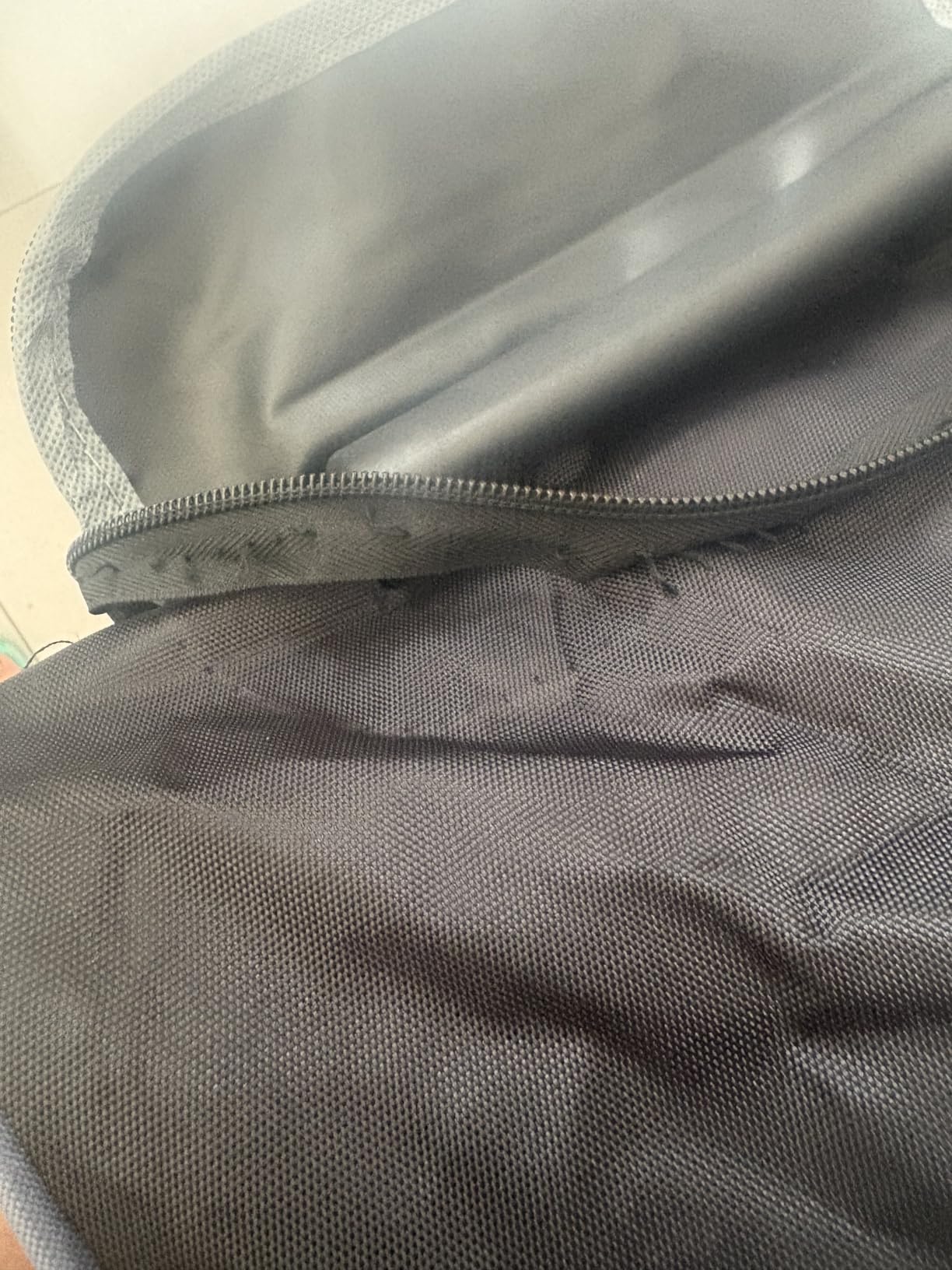
The durability picture is the reason this sits fourth rather than higher. Across more than 9,000 ratings, zipper failure after a few months of use is the most repeated complaint, with wheel and handle fatigue close behind, and a smaller set of owners reporting a seam splitting after as few as five uses. None of that is unusual for a soft bag at this level; it is just the reason the rating sits at 4.2 rather than 4.5.
What to check before you buy the Xpedition
Run every zipper around the bag twice, slowly, before you pack. On a bag with this many exterior pockets you are finding weak sliders, and a zipper that catches now tends to fail on a conveyor in month four. Check the stitching where the pockets meet the main body, since that is where the early seam splits get reported.
Test the handle lock by extending it fully and giving it a firm upward tug. A handle that retracts under load will not survive being lifted into a car boot by one person.
Who should skip the Xpedition
Skip it if you check fragile electronics. There is no padding anywhere in the layout, and a soft upright bag that is dropped flat on a hard belt does exactly what you would expect to a laptop. A padded insert is mandatory if you travel with anything breakable.
Long-haul reliability seekers should note the zipper pattern. The Owners who report failure tend to be the ones checking the bag every few weeks over several years, which is exactly the use case the Travelpro further down this list is built for.
5. Samsonite Andante 2 Wheeled Duffel Bag 32-Inch
Samsonite Andante 2 Wheeled Duffel Bag – 32-Inch Durable Rolling Luggage with Inline Skate Wheels, Push-Button Handle & Spacious Compartments – Travel-Friendly and Lightweight – All Black
57.7L capacity
61.5 linear inches
7.6 lbs empty
Inline skate wheels
combination lock
Pros
- Built-in combination lock
- Reinforced corner protectors
- Dedicated shoe and wet-item end pockets
- Quiet stable inline skate wheels
- External grab handles
Cons
- Modest 57.7L capacity for a 32 inch frame
- 7.6 lbs empty leaves little of a 50 lb allowance
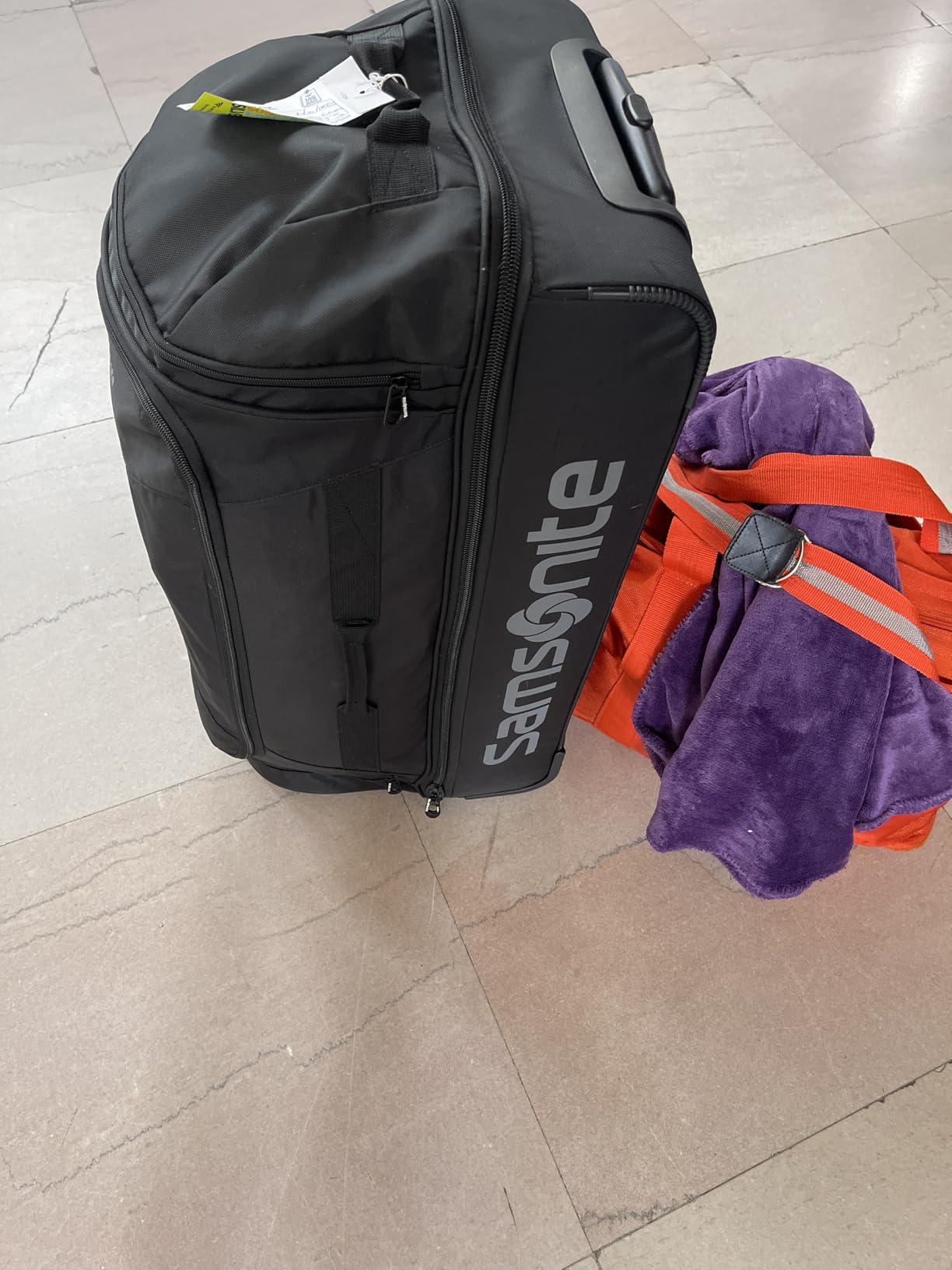
The Andante is the one on this list where the hardware is the story. Reinforced corner protectors are a hardshell idea applied to a soft bag, and they are the parts that hit the ground first when a checked bag is dropped onto a corner. The inline skate wheels are quiet and stable rather than merely functional, which reviewers single out repeatedly, and a push-button locking handle means the tube stays extended instead of collapsing mid-pull.
It is also the only bag here with a built-in combination lock. On a soft-sided roller that is a meaningful security upgrade, because a duffel zipper is otherwise only as secure as the fabric around it. Dedicated end pockets for shoes and wet items solve a problem that otherwise ruins the inside of a bag, and external grab handles give you somewhere to hold when lifting it into a trunk.
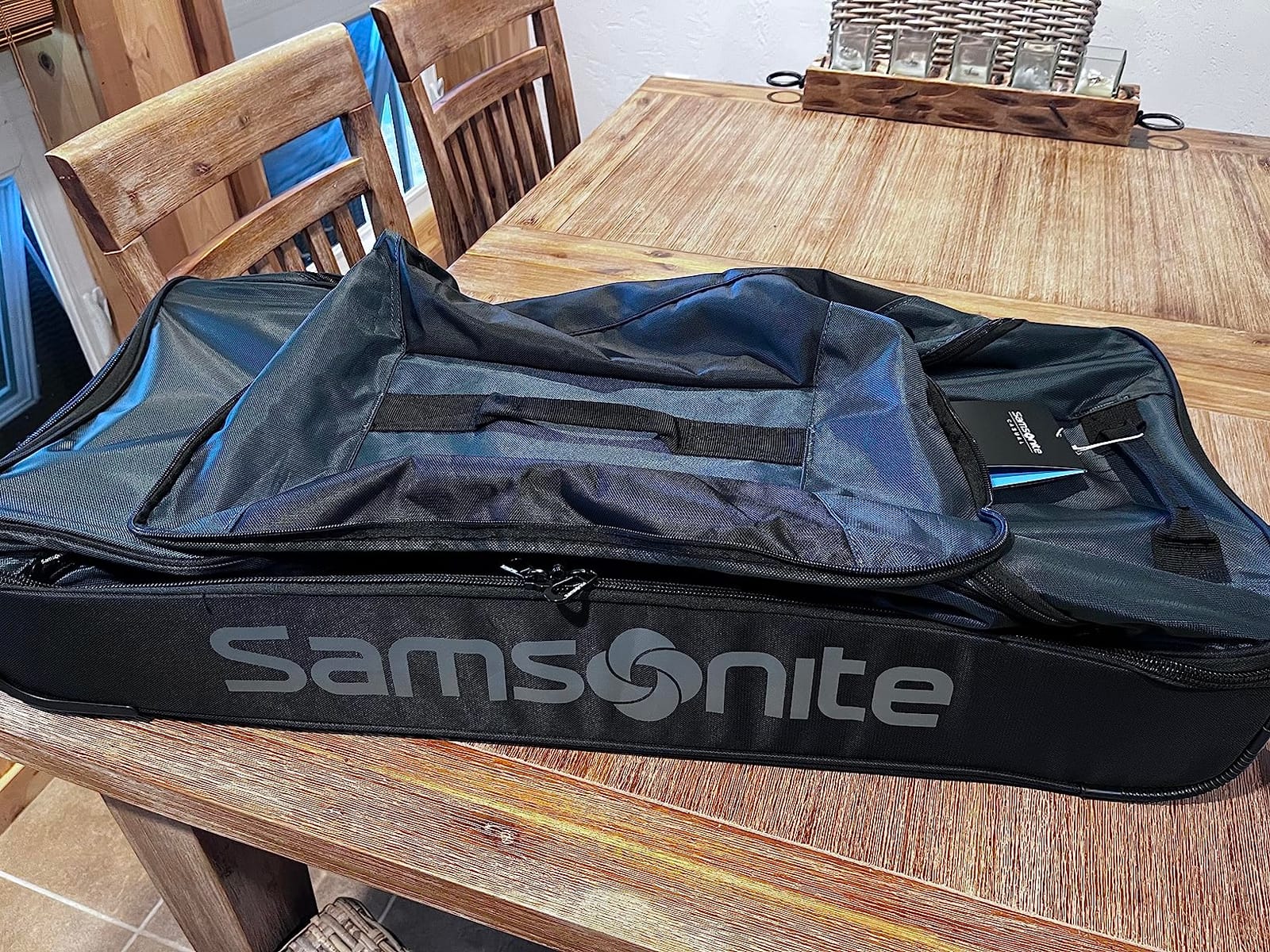
Here is the catch, and it is a real one for a checked bag. The 32-inch frame yields only 57.7 litres, the smallest capacity of the twelve, and at 7.6 pounds empty it is one of the heavier bags in the group before you add anything. You are paying for chassis quality with empty weight and volume, and under a 50 lb allowance that is a real trade rather than an abstract one.
The 4.1 average across nearly 6,800 ratings reflects a bag people respect but do not always recommend at the value level. The lowest ratings tend to compare it against less expensive alternatives rather than attack the build itself, which is the profile you want from a bag built for durability.
What to check before you buy the Andante
Do the weight math first. At 7.6 pounds empty, you have 42.4 pounds of allowance for clothing, which sounds generous until you are packing for two weeks or carrying boots. Compare that against the Wrangler at 5 pounds before you decide the extra hardware is worth 2.6 pounds of every trip.
Then check whether 57.7 litres is enough for what you actually pack. Two people sharing a bag for a week is a tight fit in this one. A solo traveller with soft luggage and compression cubes will be fine.
Who should skip the Andante
Skip it if you are a light packer, because you will spend 32 inches of linear allowance on 57.7 litres and wonder where the space went. The Samsonite name also does not come with the kind of lifetime wheel and handle warranty that would make the empty weight a long-term investment.
Skip it if you travel on a carrier with a lower size allowance than 62 linear inches. At 32 x 15 x 14.5 the bag is at 61.5, which fits the US standard but leaves nothing for carriers that publish tighter figures or measure more generously than they publish.
6. Amazon Basics 35-Inch Large Rolling Duffel
Amazon Basics 35-inch Large Rolling Duffel Bag with Wheels and Handle, Travel Duffle with Durable Ripstop Polyester Material, 2 Layers of Storage Space, Multiple Interior and Exterior Pockets, Black
137L capacity
69.5 linear inches
5.68 kg empty
ripstop polyester
two-layer storage
Pros
- Largest capacity here at 137 litres
- Two-layer storage with multiple zip pockets
- Ripstop polyester with water-repellent finish
- Telescopic handle with in-line wheels
Cons
- Oversize on most standard allowances
- Heaviest empty weight on the list
- 35 inch height approaches oversize thresholds
This is the volume pick, and the volume is genuinely exceptional. 137 litres across two layers of storage is enough for a family of three for a week, or for one person with a full camping kit, and the multiple interior and exterior zippered pockets mean the second layer is usable rather than a void. For gear-hauling trips where the alternative is two checked bags, the math is hard to argue with.
The material is 100 percent ripstop polyester with a water-repellent finish. Ripstop is the grid-weave fabric where the reinforcement threads form visible squares, and it is considerably more tear-resistant than plain woven polyester at the same weight, which is why it is the standard choice for duffels that get dragged over ground. Telescopic handle and in-line wheels handle the load well.
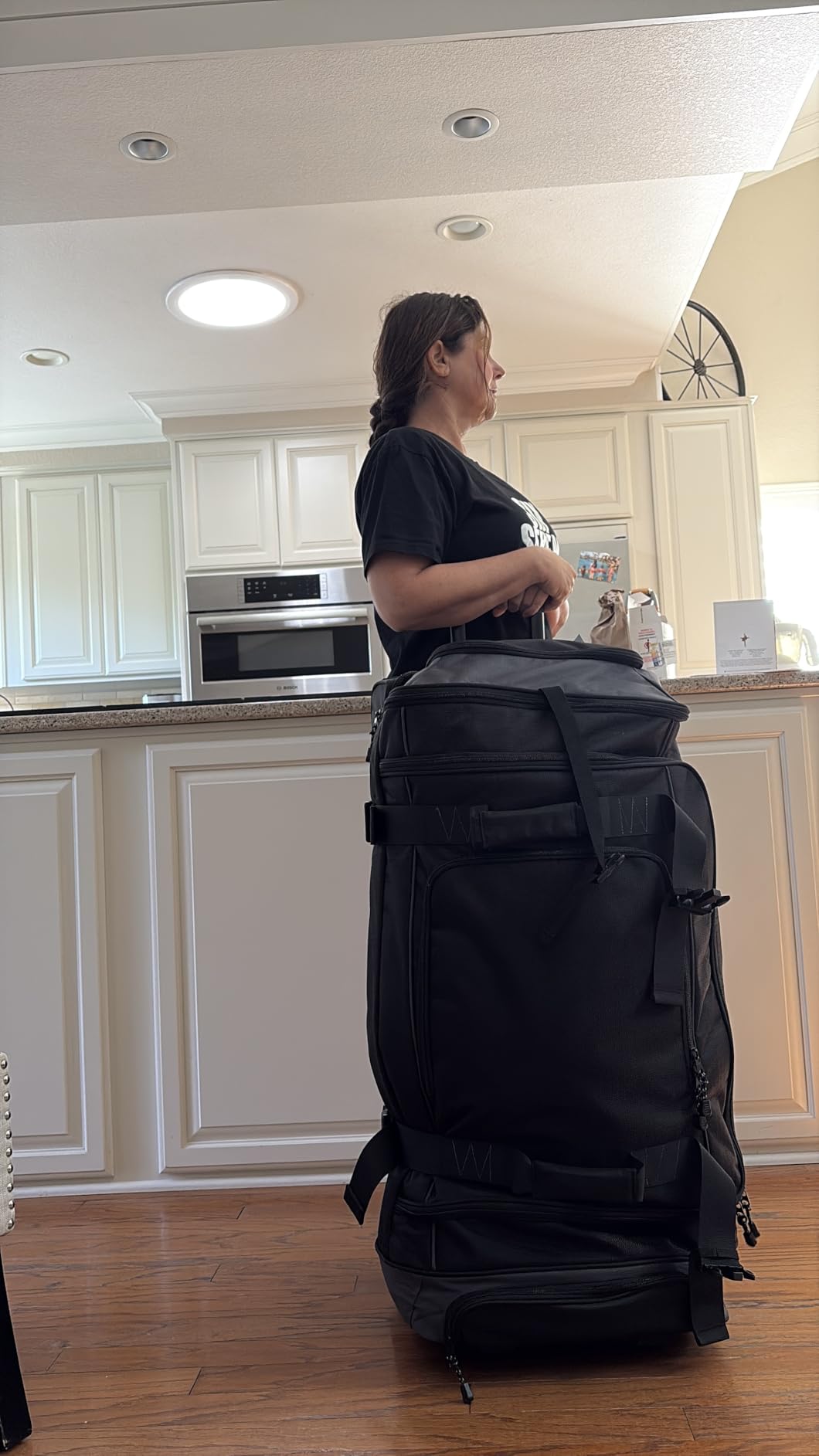
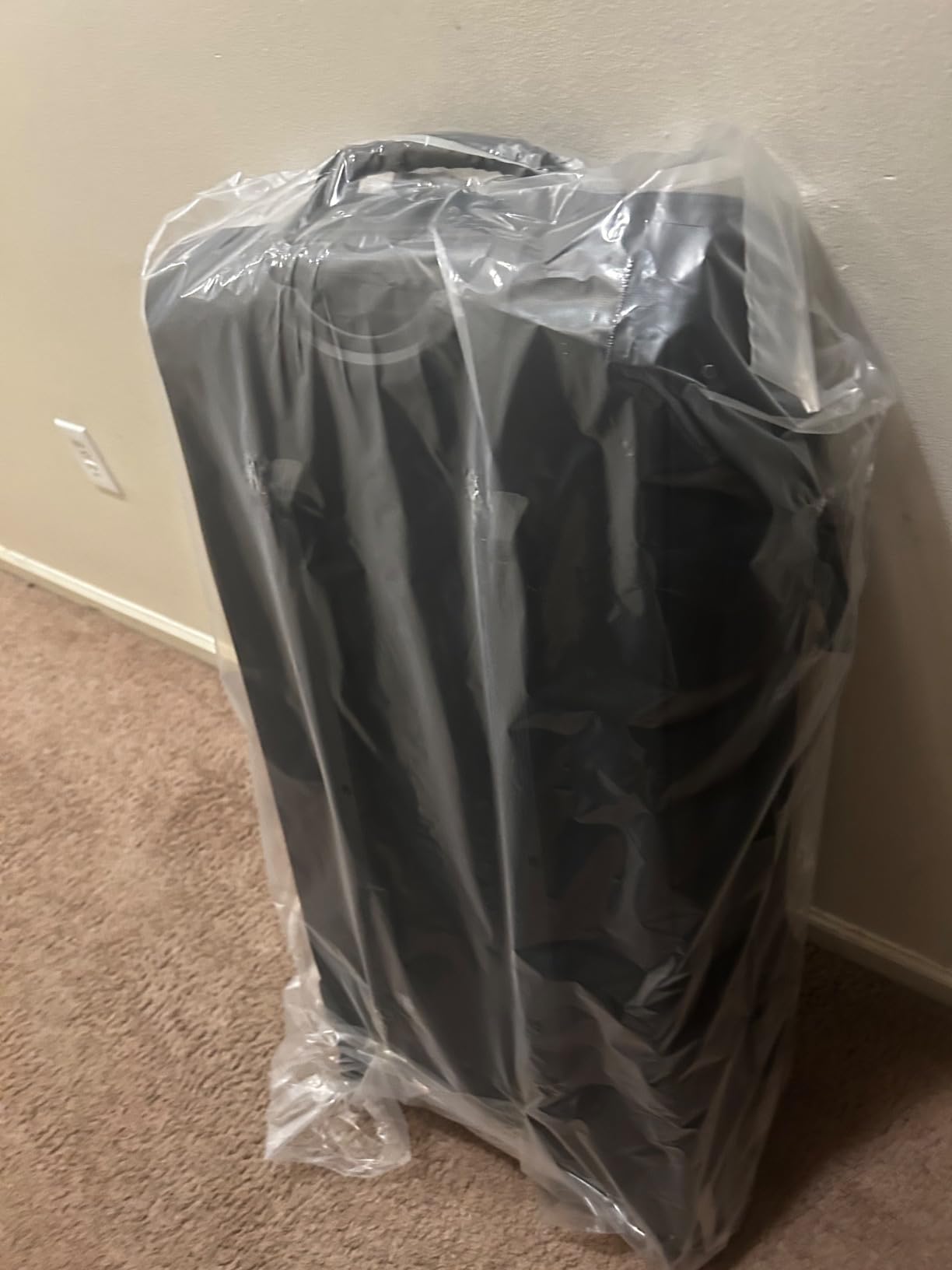
Now the two numbers that decide this bag for you. At 16 x 16 x 37.5 inches it totals 69.5 linear inches, which is over the standard 62 allowance on most carriers and will draw an oversize charge. And at 5.68 kg, or about 12.5 pounds, it is the heaviest empty bag we tested, so 37.5 pounds remain for everything you put in it. Big bags have two budgets to fight, and this one fights both.
The 4.3 average from roughly 6,700 ratings with a 69 percent five-star share centres on the capacity and organisation. The complaints cluster on empty weight and on the bag’s size relative to airline limits, which is the same conversation we just had in the paragraph above.
What to check before you buy the 35-inch bag
Check your carrier’s oversize fee before anything else, then run the weight math on a real packing list. If the oversize charge applies to every trip, the cost of the bag is really the bag plus that fee multiplied by how often you travel. At this size the volume is rarely the problem; the fee is.
Some carriers publish a separate large-bag allowance with a lower weight cap. If yours does, this bag fits the shape of that rule but the 12.5-pound empty weight may put you over its limit with a normal load.
Who should skip the Amazon Basics 35-inch
Skip it for standard domestic travel. You are choosing a bag that requires a fee on most trips to get capacity that three smaller compliant bags would give you without one. It is the wrong tool for the job the keyword describes.
It is the right tool for exactly two situations: a gear-hauling trip where you are replacing two bags, and a carrier with a generous oversize allowance. Everyone else should look at the 55-to-62 linear inch picks earlier in this list.
7. Gonex Rolling Duffle Bag with Wheels 25 Inch
Gonex Rolling Duffle Bag with Wheels, Waterproof PVC Luggage, 25 in, Olive
70L capacity
53.5 linear inches
PVC with YKK zippers
anti-tip handle bar
foldable base
Pros
- YKK zippers on a waterproof PVC shell
- Anti-tip movable handle bar
- Compression straps keep a partial load tight
- Large-diameter rubber wheels
- Short wide profile is stable
Cons
- Only one carry handle
- No internal metal frame and single-stitched seams
- Occasional puncture reports
The Gonex is the most genuinely outdoor-focused bag in this comparison, and the details are the reason. YKK zippers on a waterproof PVC shell is a spec you rarely see in this class, and YKK sliders are the difference between a zipper that survives a decade of rough handling and one that does not. The PVC is wear-resistant and waterproof rather than merely water-repellent.
The anti-tip feature is unusual and worth understanding. The handle bar is movable, so you can move it to balance the load and stop the bag from pitching forward onto its face when you stop abruptly. On a two-wheel bag loaded badly, that pitch is the moment the handle joint takes the shock, and this is a direct answer to the handle-bending complaint that appears constantly in owner feedback across this category.
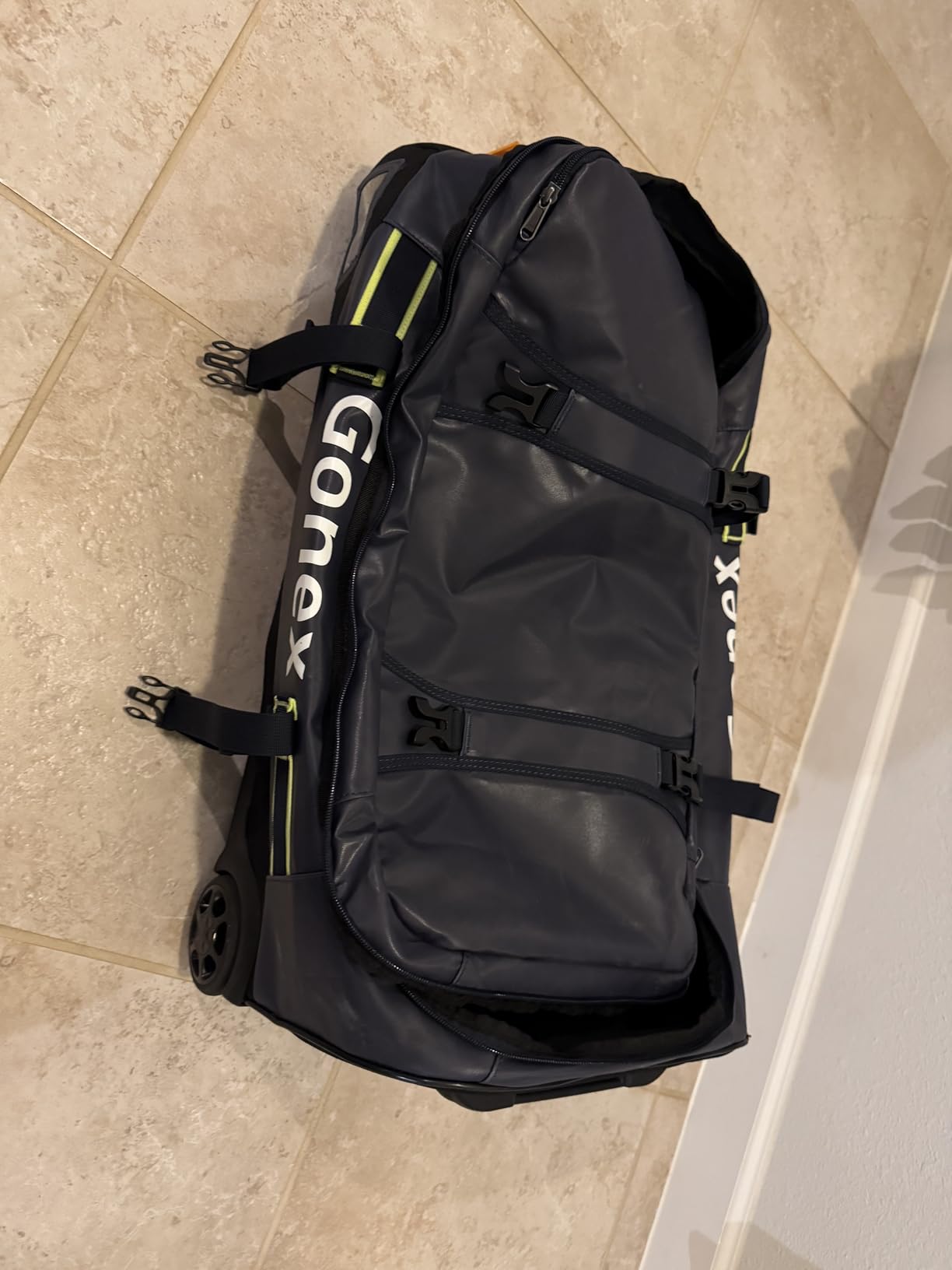
The wide, short profile works in its favour too. At 16.14 x 11.81 x 25.59 inches it is 53.5 linear inches, well under the allowance, but more importantly a 25-inch-tall bag is stable in a way a 35-inch bag is not. Large-diameter rubber trolley wheels roll quietly over varied ground, and the two compression fixed belts keep the load tight when the bag is not packed to shape, which is the other way inline bags get damaged.
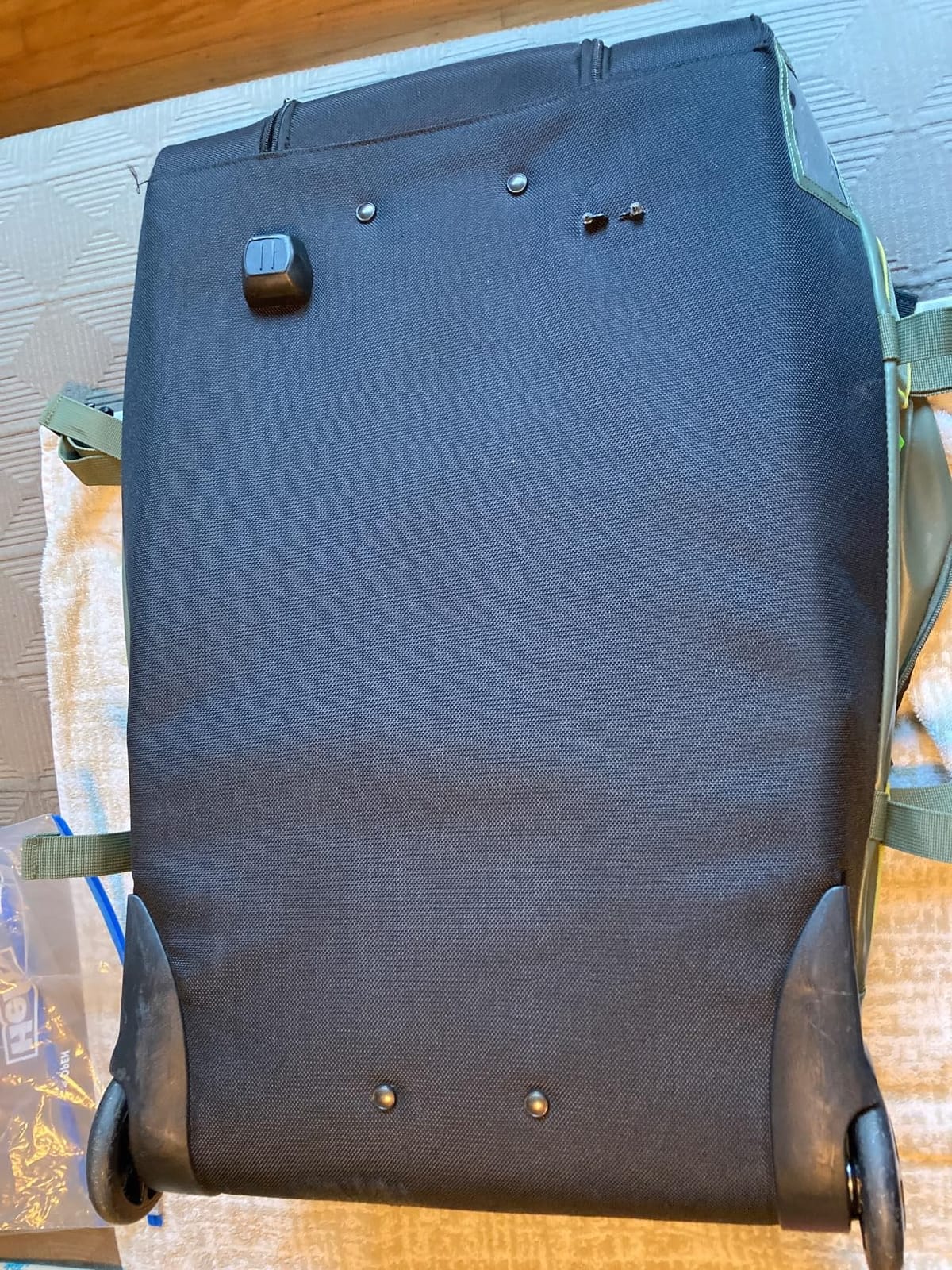
Owners who travel with heavy outdoor gear rate the durability highly, with reports of the bag surviving flights, trains and stairs intact. The critical side of that record: no internal metal frame, seams are not double stitched, and there is a smaller set of puncture reports after repeated baggage-claim trips. One carry handle, opposite the wheels, is the other recurring gripes.
What to check before you buy the Gonex
Look at the single carry handle and work out how you will actually lift this. With one handle opposite the wheels, a full 70-litre bag is genuinely awkward to get into a car boot solo. Plan to lift with two people, or pack lighter than you think you need to.
Check the seams under a light, not just the fabric. This bag has no frame and no double stitching, so the seam lines are the structural limit. If you load it with hard or sharp gear, that is where it will go first.
Who should skip the Gonex
Skip it if you are a light packer. 70 litres at 25 inches tall is a compact bag, and using it half empty is when a frameless soft duffel is at its least stable. The foldable bottom design helps with storage but does not fix the load problem.
Skip it if you need a frame. The absence of internal structure means it will never stand upright on its own, and owners who need a bag that parks itself in a hotel corridor will be frustrated every time.
8. Pacific Gear Duffel Bag with Rolling Wheels 30 Inch
Pacific Gear Duffel Bag with Rolling Wheels
96.2L capacity
58 linear inches
7.2 lbs empty
polyester
U-shaped zipper
Pros
- Under-bag support bars stop it folding while rolling
- Dual main compartments plus exterior pockets
- Soft body fits most overhead bins
- Collapses flat when empty
Cons
- Not water resistant and some fabric tear reports
- One owner received a unit with a large seam rip
- Overfilled front pockets distort the profile
The support bars underneath are the feature worth paying attention to. Most soft rolling duffels fold in the middle when you pull them, because the soft bottom has nothing resisting the tension between the wheels and the handle. The Pacific Gear runs bars along the underside specifically to resist that, and owners consistently report the difference on rough floors and airport carpet.
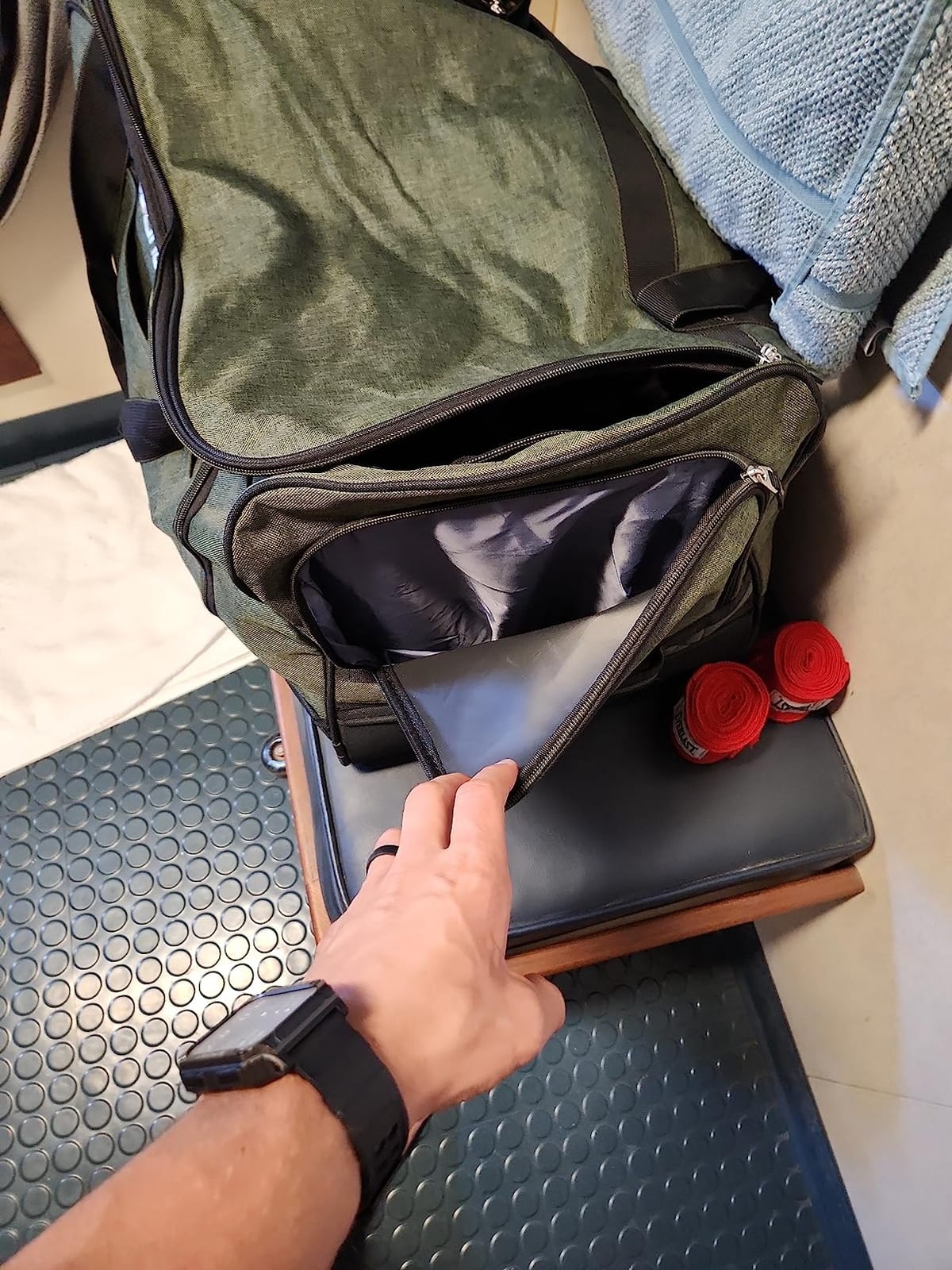
At 96.2 litres in a 30 x 13.5 x 14.5 inch frame, it sits at 58 linear inches and packs a surprising amount. Two main compartments plus exterior pockets give you a workable split without buying a divider, and the U-shaped zipper opens the main compartment wide enough to pack a folded coat without shoving it in sideways.
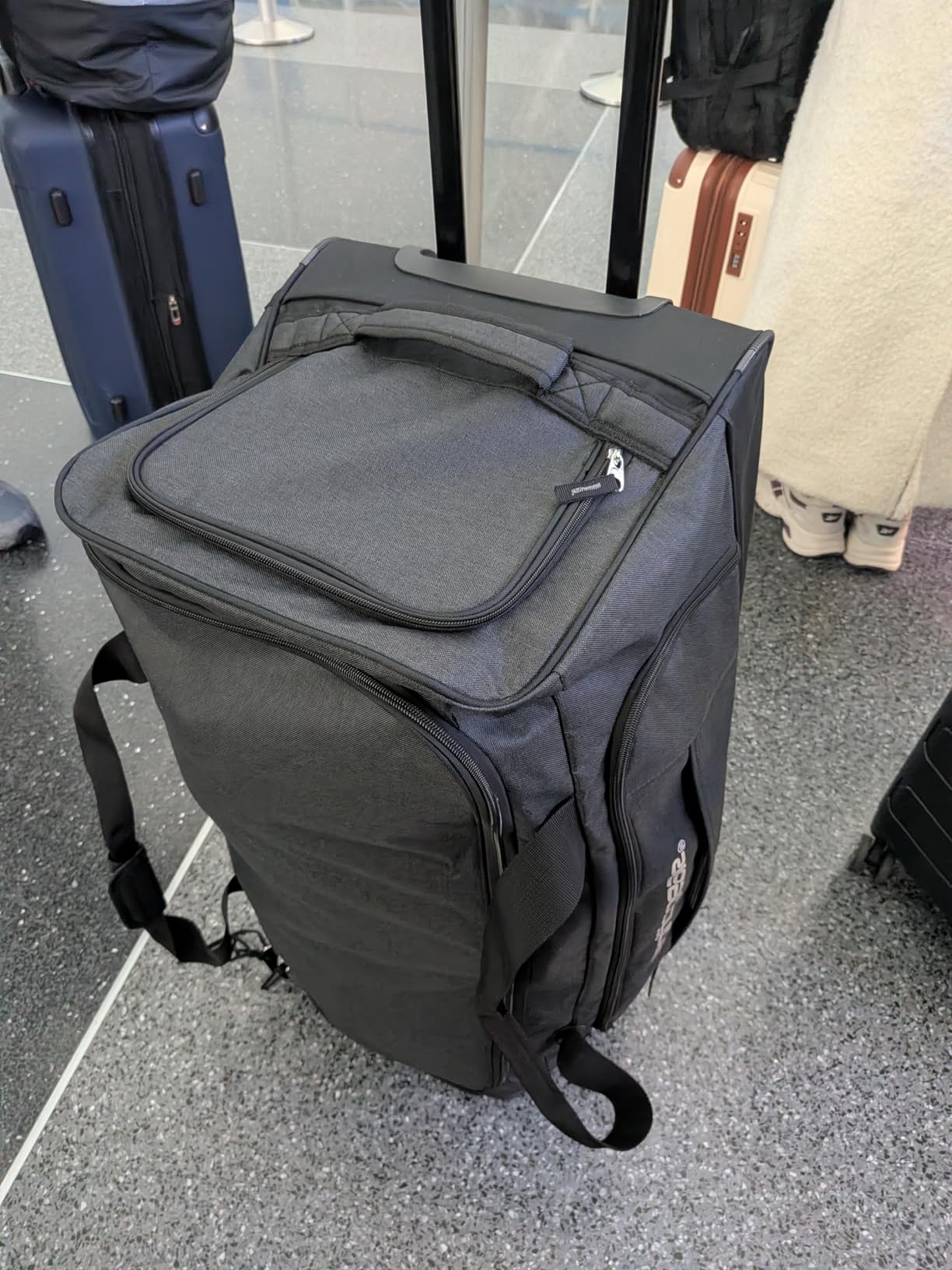
What makes it the most flexible pick here is the soft body, which squishes into most overhead bins when you are running a light trip. Several owners use it as a carry-on and a checked bag on different trips, which is not something any other bag on this list supports. It also collapses small when empty for under-bed storage, a real consideration in a small flat.
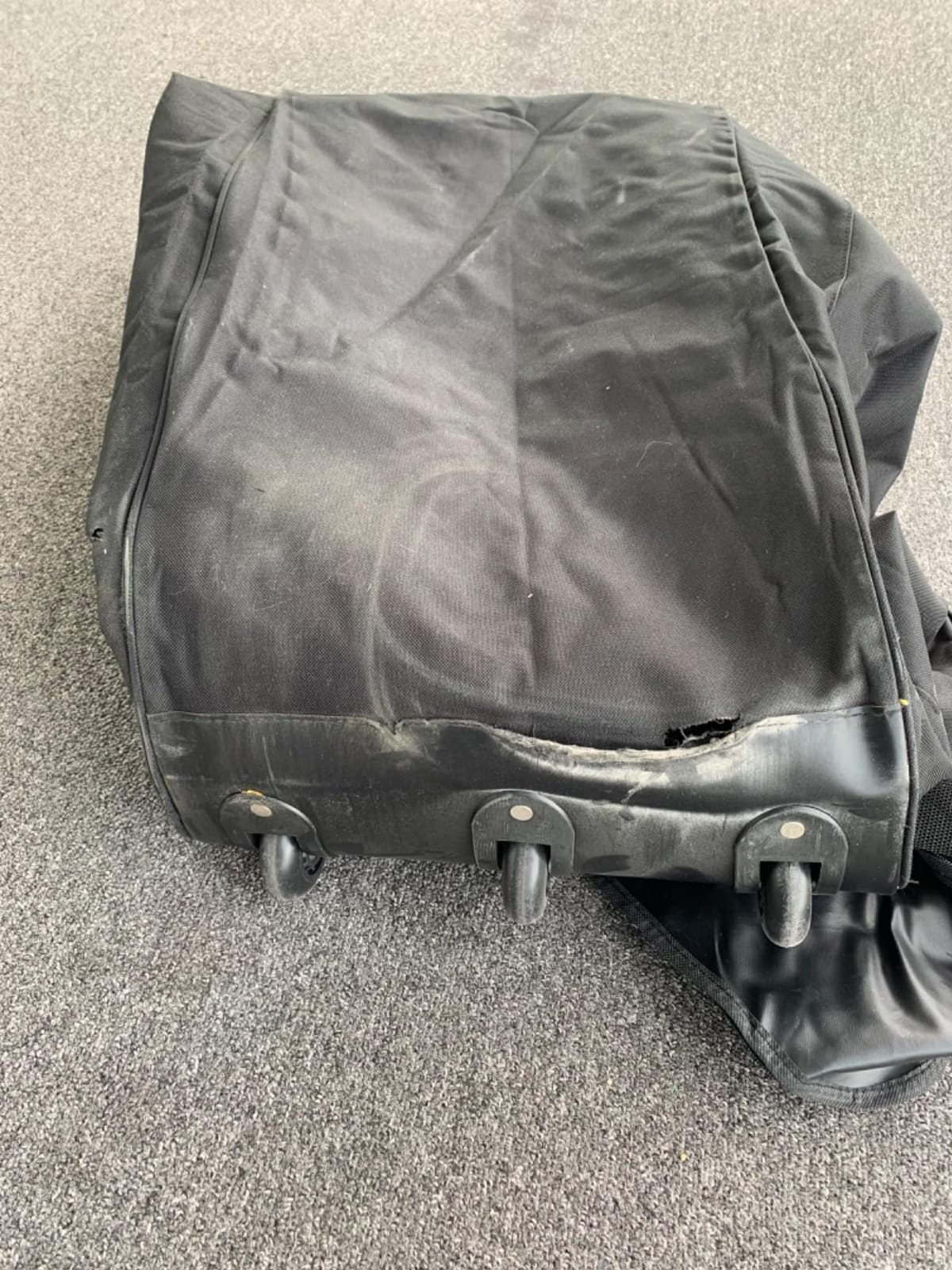
The fabric is listed as not water resistant, and a minority of reviews report tearing with heavy use, plus one owner receiving a unit with a large seam rip straight out of the box. The mesh lining improves breathability and keeps contents from touching the shell directly, but it is not a rain solution. At 7.2 pounds empty it is not light either.
What to check before you buy the Pacific Gear
Inspect the seams on arrival, not after a trip. This bag has a documented report of a factory seam rip, and the absence of water resistance means the fabric is the only thing between your clothing and a wet conveyor. A quick check under a light takes a minute and settles the question immediately.
If you plan to use it as a carry-on, add nothing to the front pockets. Several owners report that overfilled front pockets push the profile past the cabin limit, which defeats the whole flexibility advantage.
Who should skip the Pacific Gear
Skip it for any trip where rain is likely, or where you will be loading it onto a wet beach, a boat deck or the back of a truck. Not water resistant is a hard line, and no amount of careful packing changes it.
Long-haul and heavy-load travellers should also look past it. The 4.3 average across about 2,500 ratings is solid but not exceptional, and the tear reports cluster with heavy use rather than occasional travel.
9. Finnhomy 120L Foldable Rolling Duffel with 3 Wheels
Finnhomy 120L Foldable Rolling Duffel Bag with 3 Wheels, Light Weight Travel Duffel bag with Large Loading Capacity, 32” Rolling Duffel bag with Shoulder Strap (Black)
120L capacity
62.2 linear inches
3 lbs when folded
3-wheel housing
PVC-reinforced base
Pros
- Lowest carrying cost of any pick here
- Three-wheel base for better stability
- Reinforced PVC base
- Folds to 3 lbs and 0.007 CBM
- Stated 50 lb load capacity
Cons
- Brand warns contents shift and can tear the bag under hard pulling
- Soft shell with no rigid frame
- Highest share of one-star reviews here
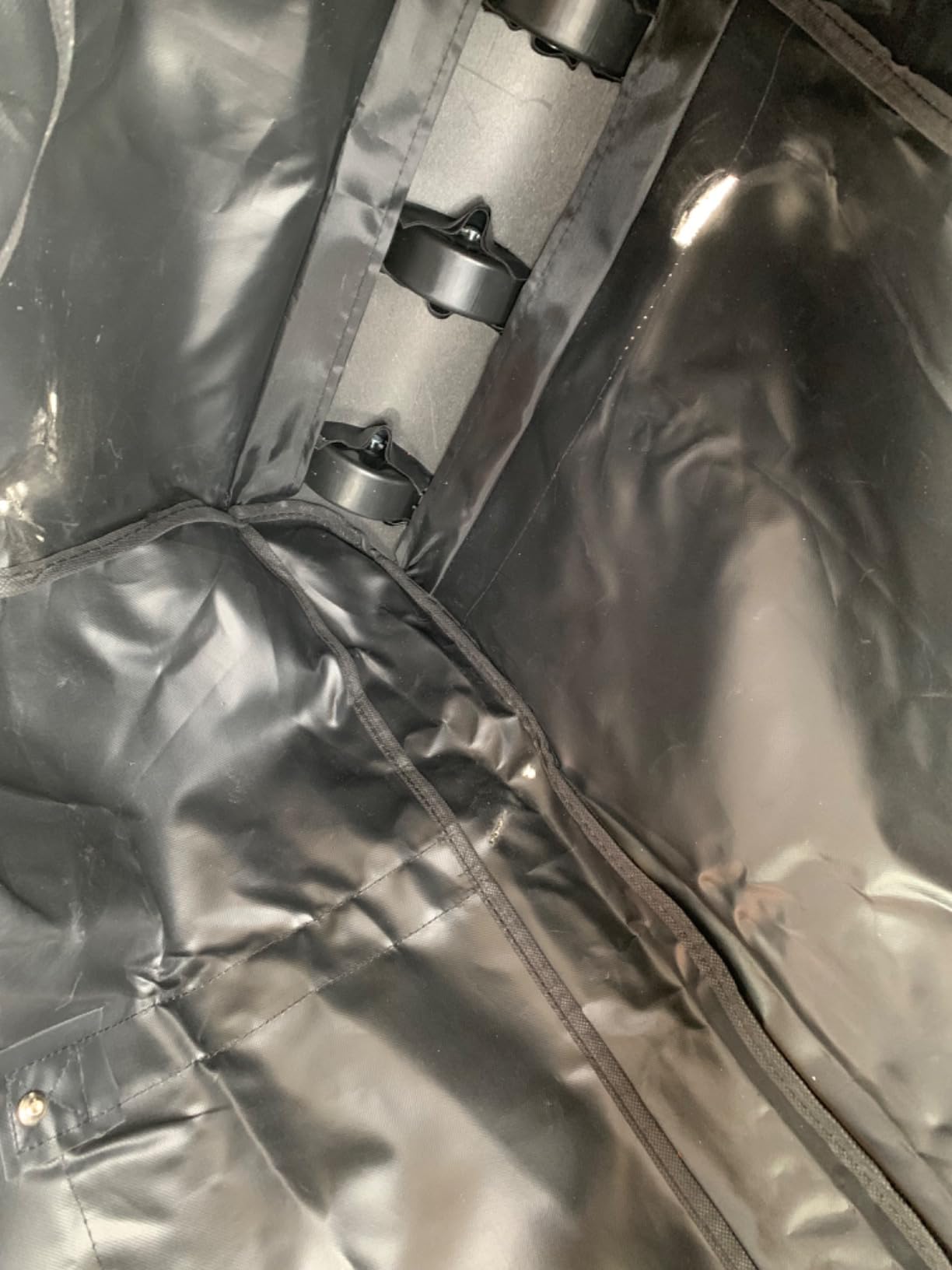
The Finnhomy is the value pick, and the value case rests on the 120-litre figure and the fold-down weight rather than on price alone. Two wheels plus a trailing handle means the load tips forward; a third wheel at the front or under the centre keeps the bag square and lets you push it alongside you through a terminal instead of dragging it behind. It also holds a straight line on a slope, which matters more than it sounds when you are walking a ramp to a gate with a loaded bag.
The bottom is reinforced with a complete thick PVC layer, and the brand upgraded this after durability complaints on earlier production runs. That tells you something useful about the engineering history, and it is a reason to feel better about the current version than the older reviews suggest.
The foldability is the sleeper feature. At 3 pounds and 0.007 CBM, this bag packs inside other luggage or into a small flat, which is a genuine advantage for anyone with limited storage or who travels with a second bag. A detachable padded shoulder strap plus two webbing handles and a side padded handle give you more carry options than most bags at twice the size, and the stated load capacity is 50 pounds.
Now the warning, and it is in the brand’s own documentation rather than inferred from reviews. Because the bag has no rigid frame, contents shift to the bottom under heavy load, and pulling it vigorously can tear the shell. The highest share of one-star feedback of any pick here sits at 12 percent, and it is concentrated in exactly this scenario: overloading a frameless bag and dragging it.
What to check before you buy the Finnhomy
At 32.3 x 14.2 x 15.7 inches this lands at 62.2 linear inches, which is right on the line. Pack it slightly compressed and check your carrier’s own published figure, because this is one where the difference between a 0.2 inch overage and a compliant bag is entirely in how it is packed.
Load test it before you travel. Fill it with 40 pounds of soft clothing in your hallway, pull it hard across a threshold, and see whether the base holds. That is the failure the brand warns about and it takes ten minutes to check for yourself.
Who should skip the Finnhomy
Skip it if you are moving it regularly across rough ground, pulling it hard, or loading it with hard or heavy gear. Three wheels improve stability but do not change the fact that a frameless soft bag with shifting contents will eventually fail at the base or a seam.
Skip it for anything fragile, and skip it if you want the bag to stand up on its own. It will not, and the 12 percent one-star share is mostly people who wanted a hardshell’s behaviour from a soft bag.
10. Travelers Club Asgard 36 Inch 3-Wheel Rolling Duffel
Travelers Club 36″ Asgard 3-Wheel Rolling Duffel Bag, Black
Very large 36 inch format
4.2 lbs empty
3-wheel base
expandable and collapsible
4 exterior pockets
Pros
- Enormous capacity at only 4.2 lbs empty
- Top and side padded handles
- Expandable and collapsible
- Three-wheel base for stability
Cons
- Internal cardboard structure cannot hold shape when partly filled
- Reports of bottom holes after air travel
- Must be rolled near 90 degrees or the base drags
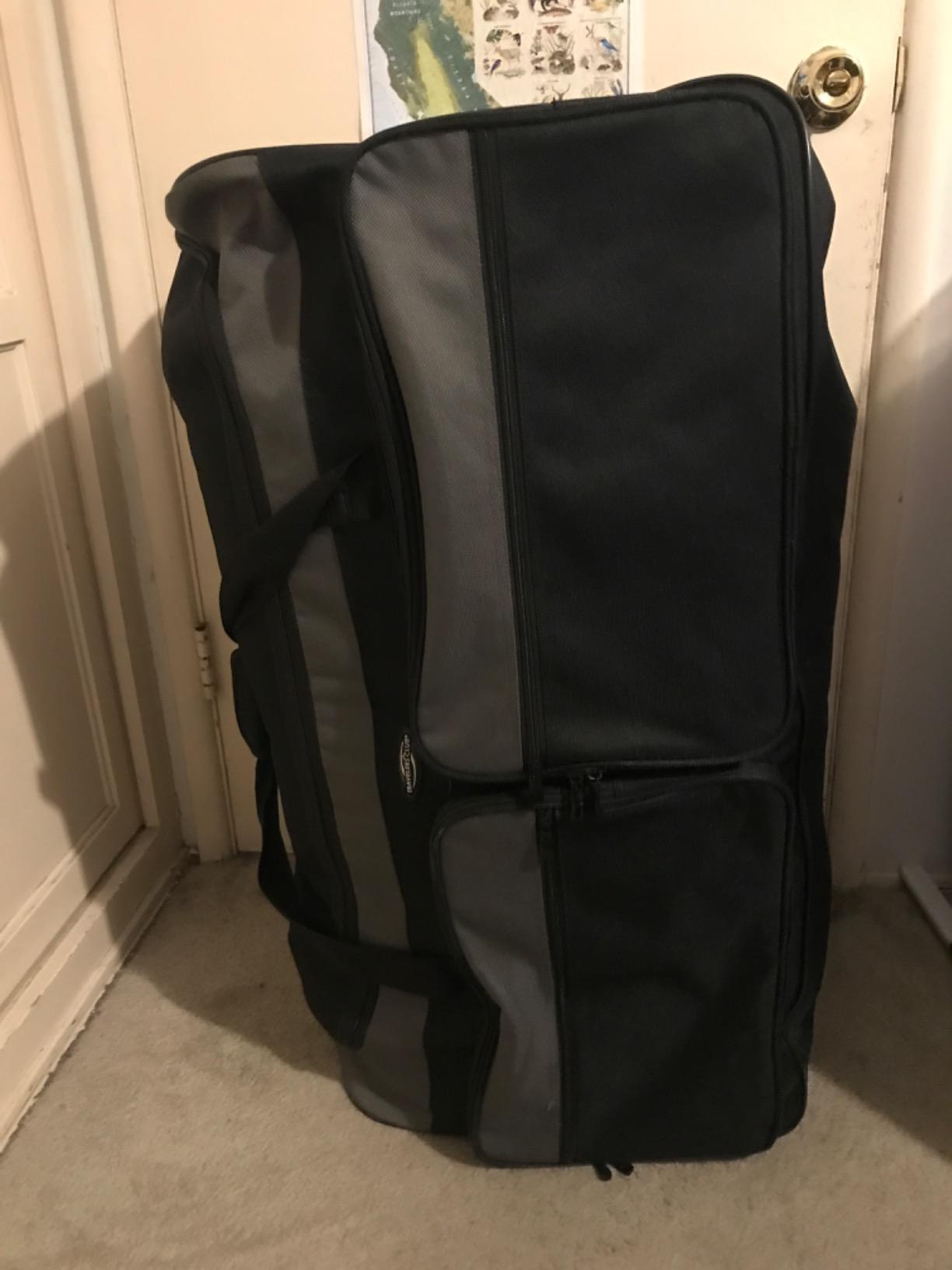
At 4.2 pounds empty this is the lightest bag in the comparison, and the collapsible construction is why. For a family checking several bags for a two-week trip, empty weight adds up directly into overweight charges, and a bag that is more than eight pounds lighter empty than the other large-capacity options here is a meaningful saving across a whole trip.
The three-wheel base with top and side padded handles works well for short lifts and for pushing through a terminal. Four exterior pockets, two on each side, keep the small stuff out of the main compartment, and the U-shaped main opening gives you the wide access that makes packing a bag this size less of a fight.
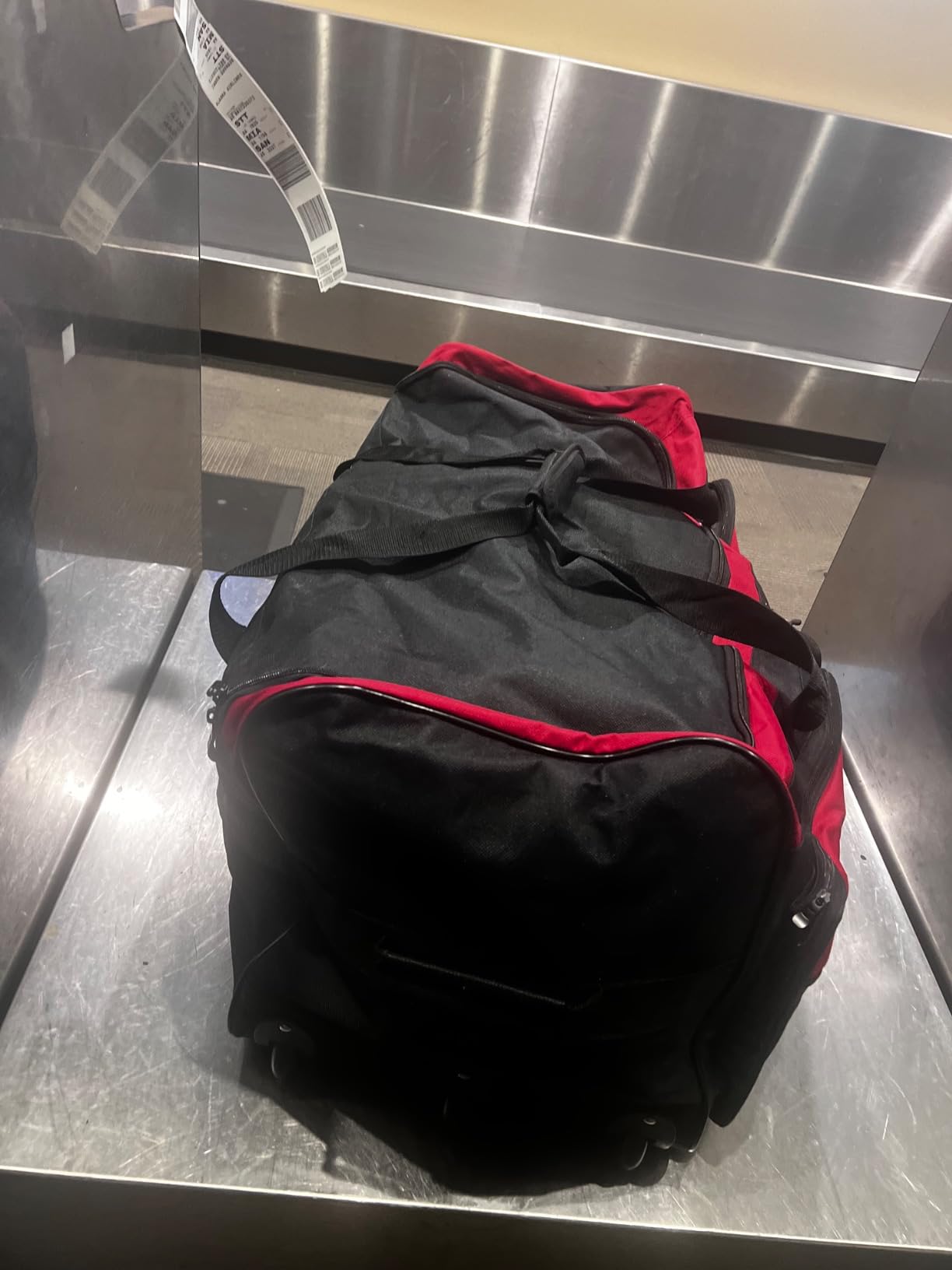
At 36 x 17 x 15 inches this is 68 linear inches, so it is over the standard allowance on most carriers and will attract an oversize charge. That is the price of the capacity, and you should factor it into every trip rather than only the first one.
The 4.0 average is the lowest of the twelve, and the reports explain why. The internal cardboard structure cannot keep the bag rigid when it is partly filled, several owners report bottom holes and rips after air travel, some units arrived with no internal frame at all, and the bag has to be rolled at close to 90 degrees or the base drags on the ground. The light weight is real; so is the fact that the structure holding the shape is cardboard.
What to check before you buy the Asgard
Press the side panels firmly with the bag empty. If it feels like there is nothing inside, the internal structure is missing and the bag will not hold a shape once loaded. Several owners received exactly that, and it is a manufacturing inconsistency rather than a design flaw.
Look at the underside where the base meets the wheel housing, because that is where the hole and rip reports cluster. On a bag this large the base takes the load of the whole bag every time you pull it across a threshold.
Who should skip the Asgard
Skip it if you fly regularly and care about bag condition on arrival. The bottom-damage reports are the most serious in this comparison because a hole in the base of a 36-inch bag is not a cosmetic problem, it is the end of the bag.
Skip it if you can avoid the oversize charge. You are buying enormous capacity, and a 68 linear inch bag rules out every trip where you would rather not pay. For most travellers, two compliant bags are the better long-term answer.
11. OIWAS Rolling Duffle Bag with Wheels 22 Inch
OIWAS Rolling Duffle Bag with Wheels, 22 inch Carry On Bag for Travel Black
50L expands to 60L
46.2 linear inches
4.62 lbs empty
carry-on sizing
water-resistant
Pros
- Carry-on sizing verified by multiple airlines
- Only 4.62 lbs empty
- Folds flat to 8 cm
- Expands from 50L to 60L
- Distinctive duffel styling
Cons
- Does not stand upright and tips sideways
- Telescopic handle has no click lock
- Pockets are unpadded
- Base material wears with regular use
This is the one bag here you can take on the plane rather than check, and at 22 x 10 x 14.2 inches it comes to 46.2 linear inches. Owners confirm carry-on acceptance with several airlines including WestJet, and the 4.4 rating across around 730 ratings reflects a bag that does a narrow job well.
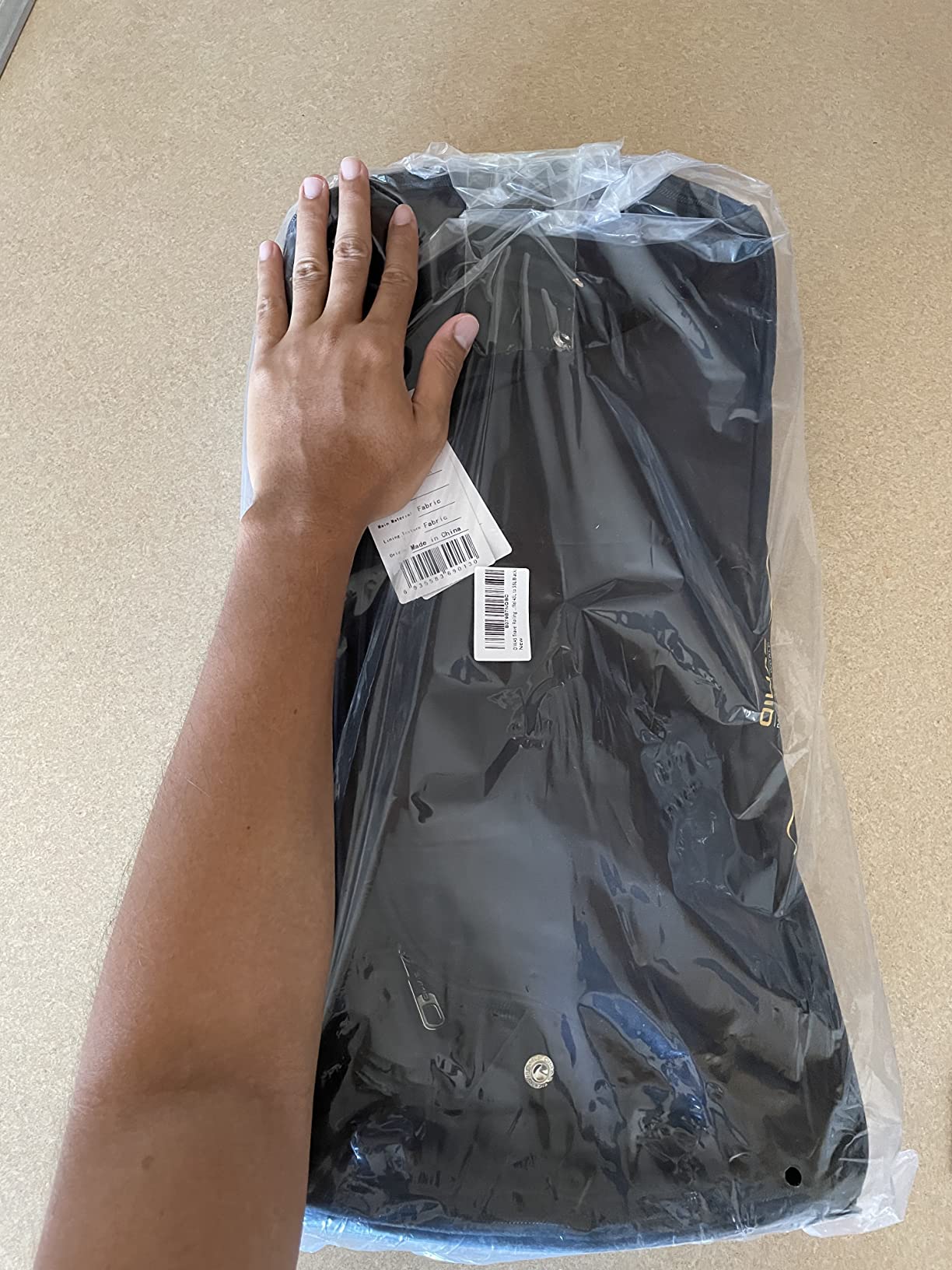
The expansion gusset releases an extra 8 cm of height when you unzip it, taking capacity from 50 to 60 litres for a trip where you are pushing the cabin limit. It also folds flat to 8 cm, so it disappears into a drawer or a suitcase when you are not using it, which is not true of most of the wheeled bags on this list.
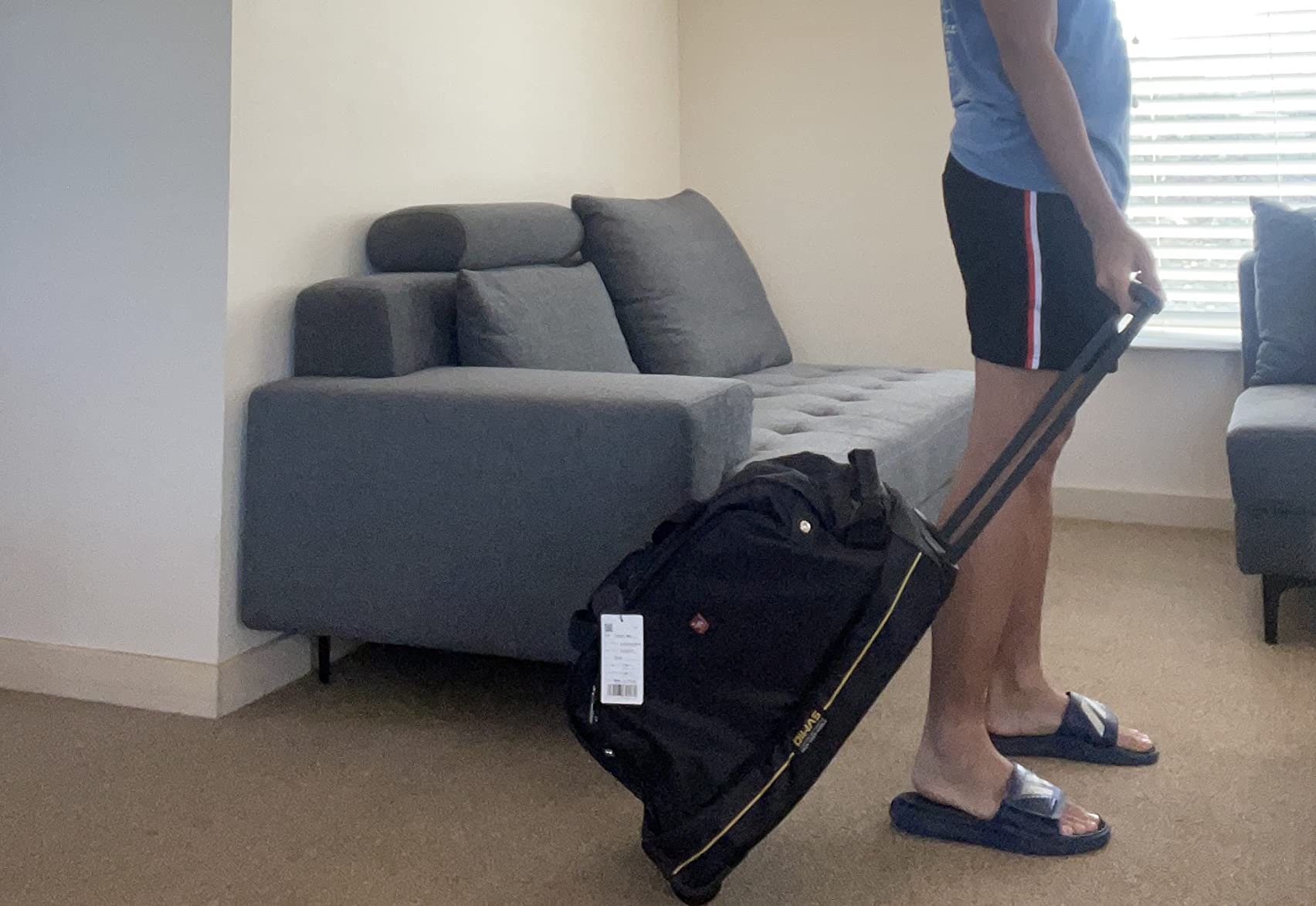
At 4.62 pounds empty it is one of the lightest bags here, and the water-resistant polyester and nylon shell is a sensible level of protection for overhead stowage and gate areas. Two exterior pockets include a laptop sleeve, which is a nice touch even though the padding is thin.
The complaint list is specific and worth reading in full. It does not stand upright and tips sideways, the telescopic handle has no click lock and can partially collapse on slopes, the material tears easily at the base with regular use, and the pockets are unpadded so they are not suitable for laptops or fragile electronics. Treat it as a soft personal item that squishes into a bin, which is exactly how most owners use it.
What to check before you buy the OIWAS
Confirm the cabin allowance for your specific airline and route, since cabin limits vary by carrier and by aircraft. A bag that works on one airline’s 22 x 14 x 9 standard will not necessarily clear a stricter international carrier, and international is where soft personal items get weighed more carefully.
If you intend to use the expansion, check it against the same limit rather than assuming the base size is what gets measured. Expanded, this bag is no longer a carry-on.
Who should skip the OIWAS
Skip it if you need a laptop sleeve that protects anything. The sleeve is there for convenience, not for impact, and a base that tears with regular use is not a good carrier for electronics you care about.
Skip it for checked baggage entirely, or at least skip it as a primary checked bag. At 46.2 linear inches and 50 litres you are giving up more than half your allowance for a bag that will not stand up on its own, which is a poor trade when the whole point of this category is mobility in a terminal.
12. Travelpro Bold Drop-Bottom Wheeled Duffel 30-Inch
Travelpro Bold Drop-Bottom Wheeled Duffel Bag, Grey/Black, 30-Inch
30 inch with drop-bottom expansion
64.5 linear inches
12 lbs empty
aluminium handle
ball-bearing wheels
Pros
- Strongest build quality in the comparison
- Drop-bottom packs as one space or two
- Aircraft-grade aluminium handle with two stops
- Reinforced wheel housings and corner guards
- Lifetime limited warranty
Cons
- Highest cost by a wide margin
- 12 lbs empty eats a quarter of the weight allowance
- Over the size allowance when expanded
- Isolated reports of handle leg failure
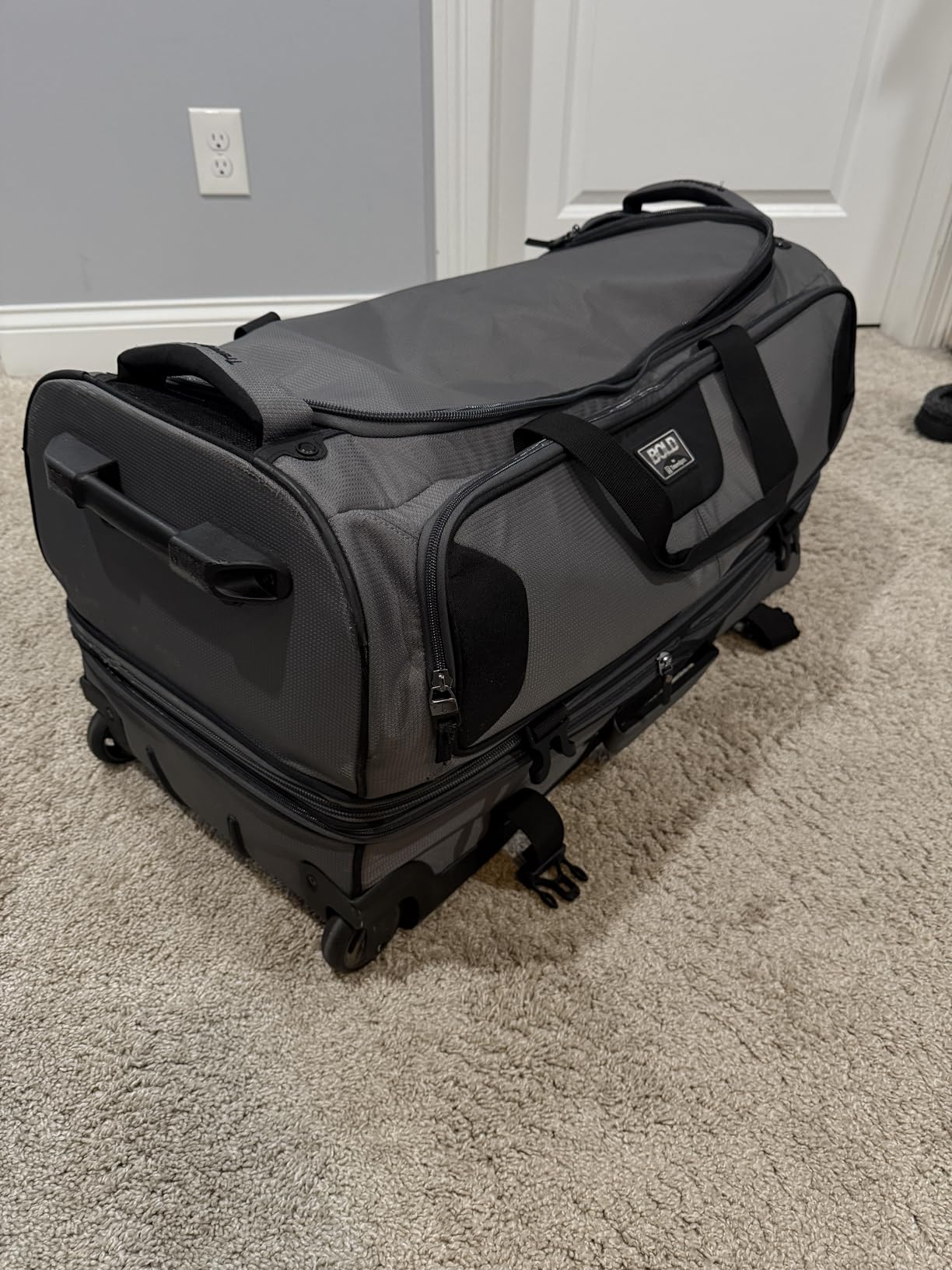
This is the only bag here built like luggage rather than like a duffel with wheels added. The aircraft-grade aluminium telescoping handle with stops at 38 and 42 inches is a component you would find on a hardshell roller, and it will not bend in the way the steel tube handles on cheaper bags do. High-performance ball-bearing wheels, reinforced wheel housings, skid guards and moulded corner guards are all the parts that take impact, and all of them are protected here.
The drop-bottom is the packing feature that makes it worth the money. It expands two inches and works either as a separate lower compartment or opens into one large space, so you can separate a load of laundry or dirty boots from your clean clothes without a packing cube. The large exterior wet pocket and interior lid mesh pocket handle the small items, and adjustable hold-down straps with rubberised buckles compress the load when the bag is not full.
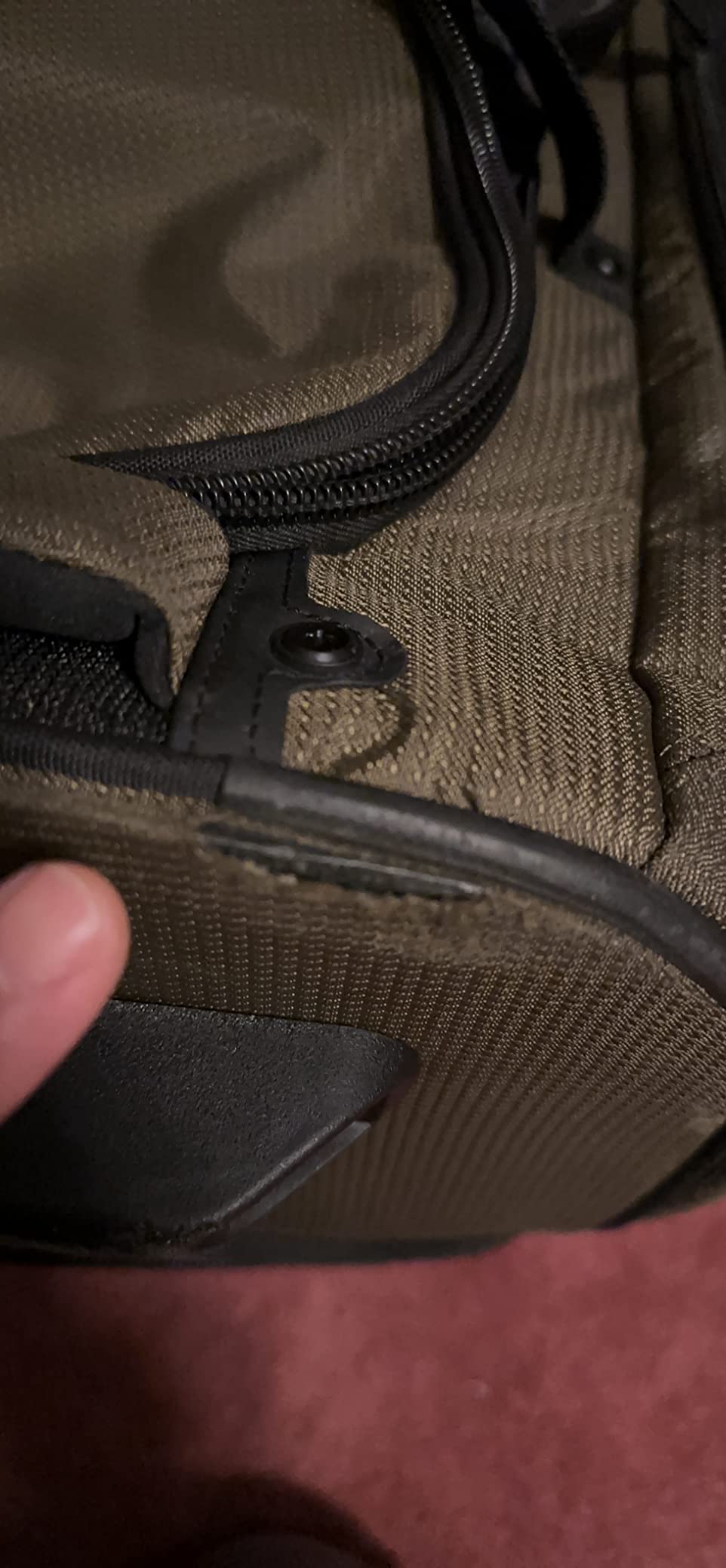
The handle retracts fully and is covered by a zip flap so it cannot snag on a conveyor or a roof rack, which is precisely the failure a traveller on r/travel described with a bent telescoping handle on a rolling duffel of another brand. The warranty is a limited lifetime one from a long-established luggage brand, and in a category where wheels are the number-one failure point, that coverage is what makes the empty weight defensible.
The costs are real though. At 12 pounds empty this is one of the two heaviest bags in the comparison, leaving 38 pounds of a 50 lb allowance for contents, and at 16.5 x 17 x 31 inches it measures 64.5 linear inches, over the standard allowance before the two-inch expansion. The 4.3 rating sits on a smaller pool of around 700 reviews than the others, and one owner reports both handle legs snapping and tearing the fabric after about 20 trips.
What to check before you buy the Travelpro
Measure twice, because this bag is over the standard allowance as listed. If you travel on carriers that publish 62 linear inches, you would be relying on a measurement taken differently from the published dimensions. The drop-bottom can stay collapsed to shave the depth, but verify on your own airline’s page before you commit.
Weigh your usual packing against the 38 pounds of remaining allowance. This bag is built for people who pack light in a very good bag, not for people who fill a bag to the brim. Overpacking it is what produces the seam and handle complaints in the record.
Who should skip the Travelpro
Skip it if the cost does not make sense for how often you travel. The lifetime limited warranty is the reason it is worth what it costs, and if you check a bag twice a year, a cheaper bag with a replaceable wheel system serves you nearly as well.
Skip it if you are strictly limited to 62 linear inches and will not measure. A bag that measures 64.5 as listed is not a bag you should buy on faith, no matter how well it is built.
Two-Wheel Inline vs Three-Wheel Base: Which Survives the Conveyor
Wheels are the first thing to fail in this category, and it is not close. A thread on r/TrueChubbyTravel opens with the observation that the most durable hardside luggage still seems to fail at the wheels first, and the described failure is a wheel folding inward after years of trips. Multiple posters report the same thing across both spinner and roller designs, which tells you the problem is impact and stacking rather than one manufacturer’s design.
That is the argument for inline wheels, and it is why enthusiasts on The Gear Page overwhelmingly prefer two-wheel inline skates to spinners. Inline wheels are larger in diameter and the load runs directly down through the axle instead of being offset to one side by a swivel housing, so a stack landing on the bag corner concentrates force on the wheel stem rather than shearing the caster apart. They also roll better over cobblestone, curbs and terminal carpet, where a small spinner drags.
The counter-argument is real, and no honest comparison skips it. A three-wheel base keeps the bag square and lets you push it beside you rather than drag it behind, which is why the Finnhomy and the Asgard use one. The Xpedition solves a different half of the same problem, standing the whole bag upright so it does not flop. Between the two layouts you can cover most of what spinners are bought for without taking on the swivel housing.
What you cannot get around is the housing. The best protection on this list comes from reinforced wheel housings and moulded corner guards rather than from the wheel type itself, and that is the detail to check when you are shopping. A recessed wheel housing that keeps the wheel tucked under the bag, as on the Olympia, is protected by the bag’s own base. An exposed caster sticking out below the shell is the first thing a baggage conveyor finds.
Soft-Sided Rolling Duffel vs Hardshell Checked Bag
A soft rolling duffel wins on flexibility and on how it treats your gear. It squashes into a gap, wraps around awkward shapes, and expands to take one more item rather than refusing to close. Every soft bag in this comparison weighs between 4.2 and 12 pounds empty, and that weight comes straight out of a 50 lb allowance before a single item goes in.
A hardshell wins on crush protection and on structure. Fragile electronics, glassware, camera bodies and anything hard-cased survive a hard drop inside a rigid shell and do not survive a soft one. A hardshell also looks the same after 50 trips, while a soft bag picks up conveyor scars and grease that are permanent and, on a distinctive colourway, make it harder to identify at baggage claim.
Where the argument usually lands is cost. A traveller who frames this as one rolling duffel against a second checked hardshell is comparing a bag that flexes with a bag that protects. If you carry anything breakable, the hardshell is the right tool and the duffel is not a substitute. If you carry clothing, outdoor gear and soft equipment, the duffel gives you more usable volume per linear inch and per pound, and that is the whole basis of this roundup.
Buying Guide: How to Choose a Rolling Duffel for Checking
Start with the linear inch math, not the litre count. Measure length, width and height of the bag as you would carry it, add the three numbers, and compare against your airline’s published allowance rather than a generic 62. Then measure your own empty bag weight and subtract it from the 50 lb limit, because the difference between a 5 lb bag and a 12 lb bag is 7 lb of clothing on every trip. Both numbers are on every entry in this roundup for exactly that reason.
Match capacity to trip length. A weekend or a four-day trip needs roughly 40 to 60 litres, a full week is 70 to 90, two weeks is 100 to 120, and gear-hauling trips or family travel run 120 and up. Anything past about 62 linear inches stops being a standard checked bag on most carriers, so extra volume beyond that point costs you an oversize fee rather than saving money.
Look at the wheel housing, not the wheel. Inline wheels beat spinners for checked baggage durability, and recessed or reinforced housings protect the wheel from the impact that causes the failure. If the wheels hang below the shell in exposed casings, expect a shorter life. A three-wheel base is a reasonable compromise if you push more than you pull.
Test the handle lock. A push-button or click-lock that holds the tube extended is the single cheapest durability upgrade available, and a collapsible handle that folds under a tug will bend on a long trip. Bags where the handle zips away into a pocket have a second advantage: nothing to snag on a conveyor belt or a roof rack.
Check the fabric by denier and weave. 1200D polyester with a protective coating is a good all-rounder for airport use, ripstop is markedly more tear-resistant because of its reinforcement grid, and a waterproof PVC shell with YKK zippers is the most durable material pairing on this list. Plain polyester with no coating, as on the Pacific Gear, is the least protective option here and the one most likely to need replacing within a few years of regular checking.
Finally, think about what happens when something breaks, and where the bag is stored between trips. A limited lifetime warranty that covers wheels and handles, as on the Travelpro, changes the long-term economics more than any feature on this list. A bag that folds flat or collapses when empty is also worth a lot in a small flat. We covered wheel and cart storage in more detail in our rolling storage cart guide, and if you are packing bulky gear for a trip rather than clothing, our wheeled duffel guide covers the hauling pattern in more depth.
Frequently Asked Questions
Are rolling duffel bags allowed as checked luggage?
Yes. Airlines have no rule against a wheeled duffel as a checked bag. What matters is size and weight, not the shape of the bag. A rolling duffel under 62 linear inches (length plus width plus height) and under 50 pounds travels in the standard checked allowance. Anything over 62 linear inches usually draws an oversize charge, and a very large bag can be refused. If the bag is under the cabin size limit of 22 x 14 x 9 inches, you can usually carry it on instead.
Does 62 linear inches include wheels and handles?
Yes. Airlines measure the bag as it sits on the scale with wheels and handles included, and handles count in whatever position you would carry it in. This is where duffel listings mislead shoppers, because the published 33 or 36 inch size is the body height and excludes the wheel housing and handle tube. Add two to four inches to most published figures before comparing them against the 62 linear inch allowance.
What happens if my checked bag is 1 inch too big?
Usually you are charged the oversize fee rather than refused. Oversize is typically a flat penalty per bag, different from the per-kilogram overweight charge, and it is applied at the ticket counter or the bag drop. Past roughly 70 linear inches, or if the agent judges the bag unpackable, some airlines will refuse it, ask you to repack, or require you to buy additional baggage. Measuring at home avoids the argument entirely.
How big of a duffel bag can you check on a plane?
Anything at or under 62 linear inches and under 50 pounds, which is the standard domestic checked allowance. That works out to a roomy range of shapes, such as 30 x 15 x 14.5 or 32 x 12 x 12, both of which fit. Many rolling duffels are 33 to 36 inches tall as published, and those often exceed the limit once wheels and handles are added. European and budget carriers are usually stricter, so check your specific airline.
Is a rolling duffel better than a suitcase for checked luggage?
It depends on what you are carrying. A soft rolling duffel is lighter, flexes around awkward gear, and gives more usable volume per linear inch, which suits clothing and outdoor equipment. A hardshell suitcase protects anything fragile, keeps its shape, and looks new for longer. The real trade is protection against flexibility, so travellers with electronics, glass or camera bodies should choose a hardshell or add a padded insert to a duffel.
Which rolling duffel bag is the best quality?
In this comparison the Travelpro Bold Drop-Bottom leads on hardware, with an aircraft-grade aluminium handle, ball-bearing wheels, reinforced wheel housings and a limited lifetime warranty. The Samsonite Andante is the strongest alternative on chassis detail, with reinforced corner protectors, inline skate wheels and a combination lock. If you want the best materials for the money rather than the best hardware, the Gonex pairs a waterproof PVC shell with YKK zippers.
Final Verdict
The best rolling duffel bags for checked baggage in 2026 are not the biggest or the cheapest ones, they are the ones that fit 62 linear inches, weigh little when empty, and put their reinforcement where a conveyor actually hits. On that basis the Olympia U.S.A. 33-inch Jumbo takes the top spot, with 118 litres, eight pockets, self-repairing zippers, a handle that locks and disappears, and the deepest ownership record in the category at more than 11,000 ratings.
Take the XWFB expandable if you want to squeeze the most out of a fixed size allowance, the Wrangler if you want a comfortable cushion under the limit at the lowest cost, and the Travelpro if you intend to own one bag for a decade and check it hard. Our rolling cart roundup covers the other half of the equation for anyone moving more than one bag. Whatever you choose, measure it at home before the first trip, because the number that decides whether you pay an oversize fee is the one the listing does not show. For anything breakable, pack a padded insert or choose a hardshell instead.
