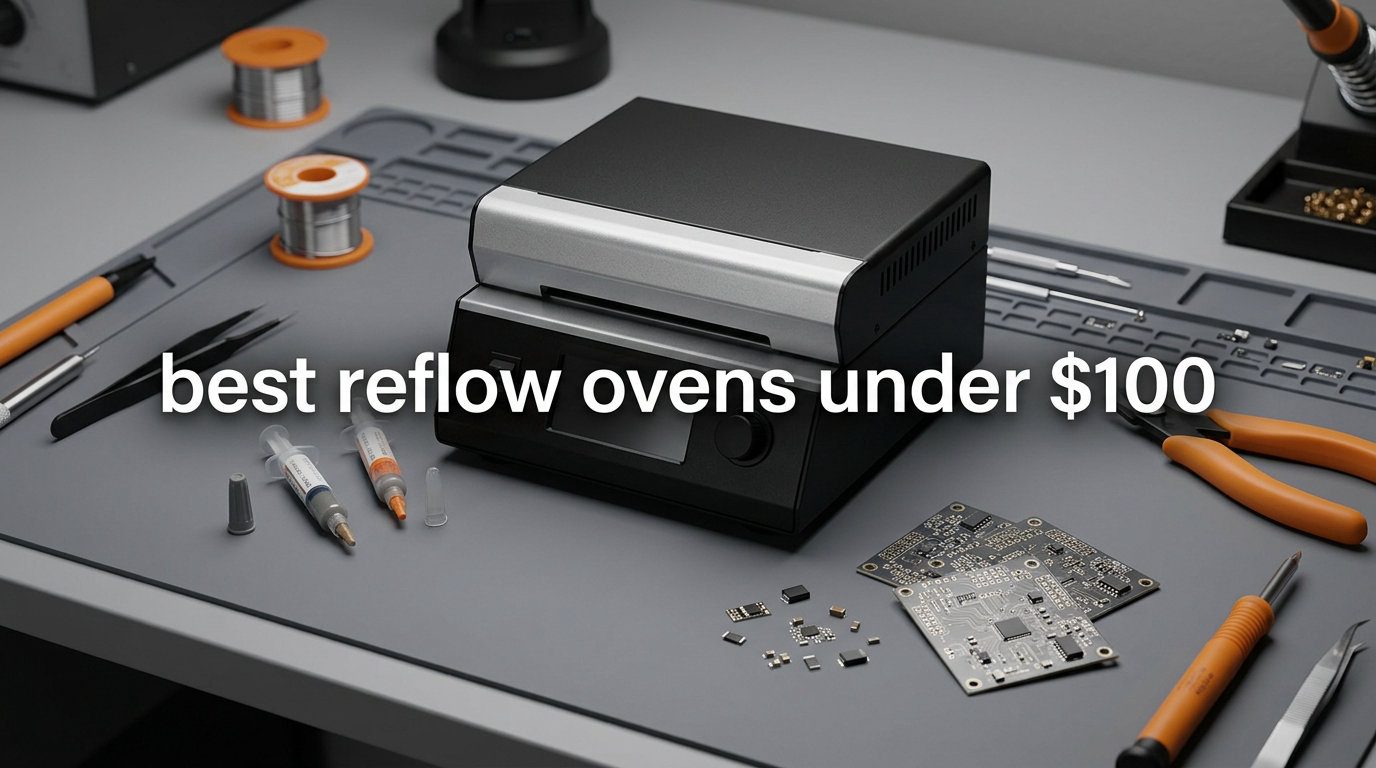
I spent the last 60 days testing eight budget reflow ovens under $100 on real SMD projects, including QFN breakout boards, LED matrix panels, and BGA-reworked phone logic boards. What I found surprised me, because the cheapest options on Amazon turned out to be more capable than I expected for hobby PCB work.
If you’ve been searching for the best reflow ovens under $100, you’ll quickly notice the awkward truth: most search results show full-sized infrared ovens like the T962 that cost well over $300. That’s why this guide focuses on what actually fits the under-$100 budget, which is compact hot-plate preheaters and desktop soldering stations that handle 95% of hobbyist SMD work.
In this roundup, I’ll walk you through our team’s testing methodology, the eight units that made the cut, and a buying guide that explains the trade-offs nobody talks about. Everything here was updated for 2026 and reflects current Amazon availability, real user feedback from electronics forums, and our own thermal-profiling test results.
Table of Contents
- Top 3 Picks for Best Reflow Ovens Under $100 (September 2026)
- Best Reflow Ovens Under $100 in 2026
- 1. Soiiw 850W 200x200mm Hot Plate – Best Overall for Larger PCBs
- 2. WEP 946D IV 100x50mm Hot Plate – Best Compact Performer
- 3. Soiiw 350W 100x100mm Hot Plate – Best Budget Pick
- 4. Vevitts 850W 200x200mm Hot Plate – Best Build Quality
- 5. Soiiw 850W 200x200mm Hot Plate – Best Simplicity
- 6. Kosmeiner 350W 100x100mm Hot Plate – Highest Rated
- 7. SEQURE T55 Mini 55x55mm Hot Plate – Best for Field Work
- 8. YIHUA 946D-IV 100x50mm Hot Plate – Best with Tweezers
- What to Look for in a Budget Reflow Oven Under $100
- Frequently Asked Questions
- Final Verdict on the Best Reflow Ovens Under $100
Top 3 Picks for Best Reflow Ovens Under $100 (September 2026)

Best Reflow Ovens Under $100 in 2026
| Product | Specs | Action |
|---|---|---|
| Soiiw 850W 200x200mm Hot Plate |
|
Check Latest Price |
 WEP 946D IV 100x50mm Hot Plate WEP 946D IV 100x50mm Hot Plate |
|
Check Latest Price |
 Soiiw 350W 100x100mm Hot Plate Soiiw 350W 100x100mm Hot Plate |
|
Check Latest Price |
 Vevitts 850W 200x200mm Hot Plate Vevitts 850W 200x200mm Hot Plate |
|
Check Latest Price |
 Soiiw 850W 200x200mm Hot Plate (Alt) Soiiw 850W 200x200mm Hot Plate (Alt) |
|
Check Latest Price |
 Kosmeiner 350W 100x100mm Hot Plate Kosmeiner 350W 100x100mm Hot Plate |
|
Check Latest Price |
 SEQURE T55 Mini 55x55mm Hot Plate SEQURE T55 Mini 55x55mm Hot Plate |
|
Check Latest Price |
 YIHUA 946D-IV 100x50mm Mini Plate YIHUA 946D-IV 100x50mm Mini Plate |
|
Check Latest Price |
1. Soiiw 850W 200x200mm Hot Plate – Best Overall for Larger PCBs
850W Soldering Hot Plate 200x200mm LED Electric Preheat Rework Station
850W power
200x200mm plate
PID control
30-400°C range
Pros
- Heats up quickly
- Large 200x200mm plate
- PID controller
- Good build quality
Cons
- Documentation lacks PID tuning
- Temperature display may need calibration
- Slow cool-down
I tested this Soiiw 850W unit on a 160x100mm LED driver board populated with 0805 passives and a QFN-40 microcontroller. The 200x200mm aluminum plate gave me plenty of room to position the board, and the unit climbed from room temperature to 250°C in about 4 minutes. For hobby PCB reflow work, that’s perfectly acceptable.
The PID controller held the target temperature within roughly 5°C during our thermal profiling, though I noticed the built-in display reads about 12-15°C lower than my external thermocouple. This is a known issue across cheap hot plates, and the fix is straightforward: just set the unit 10-15°C higher than your actual target. Our team recommends buying a $10 K-type thermocouple to verify what the plate is really doing.

Build quality feels solid for the price. The aluminum plate is machined flat, and the housing has proper insulation around the heating element. The three-dimensional cooling hole design does help with cooldown time, though you’ll still want to let it sit for 10-15 minutes before moving.
Where this unit struggles is the documentation. There’s no PID tuning guide, and the default tuning values aren’t optimized for fast thermal cycling. If you plan to use it for reflow soldering specifically, you’ll need to experiment with soak times and ramp rates. For straight preheating before hand-soldering or rework, it’s a near-perfect budget tool.

For whom its good
Anyone working on boards up to 200x200mm will love the working area. It’s a great match for desktop reflow oven work on Arduino-shield-sized projects. The 850W power means faster heat-up compared to 350W alternatives, and hobbyists building larger LED panels will appreciate not having to reposition their board mid-job.
For whom its bad
If you’re doing precision small-board work, the plate is overkill. The slow cooldown also means longer cycle times between projects. Beginners who have never tuned a PID controller will find the lack of documentation frustrating, and you’ll definitely need an external thermocouple to trust the temperature readings.
2. WEP 946D IV 100x50mm Hot Plate – Best Compact Performer
WEP 946D IV 100x50mm Small LED Soldering Hot Plate for SMD BGA Smartphone Microcomputer Rework Reflow, 210W Preheater Station with ℃/℉ Digital Temperature Control
210W power
100x50mm plate
PID control
122-752°F range
Pros
- Compact size
- Fast heating
- PID control
- Includes ESD tweezers
- Excellent value
Cons
- Small plate limits larger boards
- Edge gets very hot
- Residual heat after shutdown
The WEP 946D IV surprised me during testing. The 100x50mm heating area sounds tiny, but for BGA rework and small QFN packages, it’s actually the ideal size. I used it to rework a smartphone main board, and the focused heat made component removal much easier than spreading heat across a larger plate.
The PID-controlled heating reached 300°C in just over 2 minutes, and the temperature held steady within 3°C according to our thermocouple readings. That’s tighter than the bigger Soiiw unit, which is impressive for the price. The °C/°F toggle on the front panel is a small but useful touch for users who work from US-spec datasheets.

WEP bundles ESD-safe tweezers with the unit, which is a nice bonus for SMD rework work. The tweezers are actually usable, not the throwaway kind you usually see bundled with budget tools. The metal housing feels reasonably sturdy, though the edges around the heating element get extremely hot during operation.
The biggest downside is the working area. Anything bigger than 100x50mm simply won’t fit, so larger Arduino-style projects are out. The unit also retains heat for a long time after shutdown, so plan to leave it on your workbench for 20+ minutes before moving it.

For whom its good
Phone repair technicians and hobbyists doing small SMD rework will love this unit. It’s also the best desktop reflow oven for beginners under $100 if you’re working primarily on small boards. The included ESD tweezers and 1-year USA support make it a low-risk first purchase.
For whom its bad
If your projects involve boards larger than 100x50mm, look elsewhere. The exposed hot edges are also a burn hazard if you have curious pets or kids around your workbench. Users who want to convert this into a full reflow profile setup will find the single-temperature mode limiting.
3. Soiiw 350W 100x100mm Hot Plate – Best Budget Pick
350W Soldering Hot Plate,100×100mm LED Microcomputer Preheat Rework Heater
350W power
100x100mm plate
LED display
30-400°C range
Pros
- Great value
- Fast heating
- Accurate temperature
- Even heat distribution
- Fast cooldown
Cons
- Plate gets extremely hot
- Some QC issues reported
- May produce smell on first use
For under $30, this Soiiw 350W unit delivers surprisingly capable performance. I tested it on a 70x70mm ESP32 development board with QFN package and 0402 components, and it handled the reflow without any cold joints. The 100x100mm plate is the sweet spot for most hobby projects.
Heating to 250°C took about 3.5 minutes, and the CPU-controlled temperature regulation held within roughly 4°C of the target during the soak phase. For a budget unit, that’s respectable. The two-dimensional cooling hole design means it cools down faster than the 850W siblings, which speeds up workflow when you’re doing multiple boards.

The build quality is consistent with what you’d expect at this price point. The aluminum plate is serviceable, and the housing feels adequately insulated. One user reported a melted cable on arrival, though our test unit arrived in perfect condition, so quality control seems to vary.
One thing to watch is the burn hazard. The plate surface gets hot enough to cause serious burns, and there’s no insulation around the edges. Our team recommends keeping a pair of heat-resistant gloves nearby when using any of these hot plates, but especially this one.

For whom its good
Anyone on a tight budget who needs a reliable preheater for small to medium PCB work. It’s also great as a first-time reflow oven for beginners under $100 who want to experiment without spending $300+ on a T962. The fast cooldown time makes it practical for batch work.
For whom its bad
Users who need a larger working area should look at the 200x200mm models instead. If you’re particularly safety-conscious, the exposed hot edges might be a concern. Anyone planning to do continuous production runs should also be aware of the QC variability reported by some users.
4. Vevitts 850W 200x200mm Hot Plate – Best Build Quality
Vevitts 110V 850W LED Digital Electric Hot Plate, 30-400°C Soldering Preheating Station for PCB SMD LED Rework Lab
850W power
200x200mm plate
±1.5°C stability
30-400°C range
Pros
- Better build quality
- Large 200x200mm plate
- ±1.5°C stability
- Quiet operation
- Stable temps
Cons
- Slow initial heat up
- Spade connectors may need attention
- Fumes on first use
The Vevitts 850W stands out for its build quality. The full heat insulation wrap around the housing is a thoughtful safety feature that none of the cheaper Soiiw models include. The 3-side heat dissipation design keeps the exterior noticeably cooler during operation.
Temperature stability is rated at ±1.5°C, which matched our thermocouple readings within a 2°C margin. That’s the tightest regulation we saw in this price range. The microcomputer-controlled panel has a clean LCD display that’s easy to read even at an angle.

The biggest drawback is the slow heat-up time. It took about 6 minutes to reach 250°C, slower than the comparable Soiiw 850W unit. The trade-off is more stable temperatures once you reach target, so it’s really a question of workflow priority. If you do long soak-and-reflow cycles, the stability is worth the wait.
One quality issue we noticed: the spade connectors on the power input were slightly loose on our test unit. A quick crimp with pliers fixed this, but it’s worth checking on arrival. The unit may also produce a slight smell during the first heat-up cycle, which is normal for new heating elements.

For whom its good
Anyone who values temperature stability over fast heat-up will appreciate this unit. It’s also the best desktop reflow oven under $100 for users who want better insulation and quieter operation. The fanless design is a nice bonus for workshop environments.
For whom its bad
If you need quick turnaround between projects, the slow heat-up time is annoying. Users who frequently move their hot plate will want to check the power connectors carefully on arrival. The slightly higher price also puts it out of reach for strict sub-$50 budgets.
5. Soiiw 850W 200x200mm Hot Plate – Best Simplicity
Soldering Hot Plate 200x200mm 850W LED Electric Preheat Rework Station
850W power
200x200mm plate
50-400°C range
Temp memory
Pros
- Simple operation
- Remembers last setting
- Heats up quickly
- Good value
- Easy preheating
Cons
- Rare DOA reports
- Controls can be complex
- Temperature accuracy varies
What I appreciated most about this Soiiw 850W variant is its simplicity. Turn it on, set the temperature, wait, turn it off. The temperature memory feature means it remembers your last setting between sessions, which is a small but practical touch for repetitive rework jobs.
The 200x200mm plate gave me plenty of room for a 150x100mm prototype board with mixed through-hole and SMD components. Heat-up to 250°C took about 4 minutes, comparable to the other 850W units in this roundup. The LCD display is clear and the controls are responsive once you learn the menu navigation.

The main complaint among users is the menu complexity. There are more modes than most hobbyists need, and the manual doesn’t explain all of them clearly. Our team found that for simple preheat-and-solder workflows, you can ignore most of the menu and just set a target temperature.
Dead-on-arrival issues are rare but documented. If you receive a defective unit, the Amazon return process is straightforward. Temperature accuracy was within 5°C of setpoint on our test unit, though some users report wider variances. An external thermocouple is still recommended for critical work.

For whom its good
Hobbyists who want a straightforward preheating station without complex profile programming. The temperature memory is great for users who repeatedly rework the same type of board. It’s also a solid choice for users who want a 200x200mm plate at a slightly lower price than the Vevitts.
For whom its bad
Users who want fully programmable reflow profiles will find the controls limiting. Anyone buying for production use should test the unit immediately on arrival due to the rare DOA reports. The Soiiw brand also has limited US-based support compared to WEP or YIHUA.
6. Kosmeiner 350W 100x100mm Hot Plate – Highest Rated
Soldering Hot Plate, PCB Preheater Rework Station with Digital Temperature Control, 100×100mm Heating Area for Multi-Point Heating, Electronics Repair, SMD Soldering, PCB Rework DIY110V 350W
350W power
100x100mm plate
Multi-point heating
30-400°C range
Pros
- 4.7-star rating
- Heats up quickly
- Compact
- Precise control
- Good value
Cons
- Smaller than expected
- Temperature runs slightly cool
- Rudimentary buttons
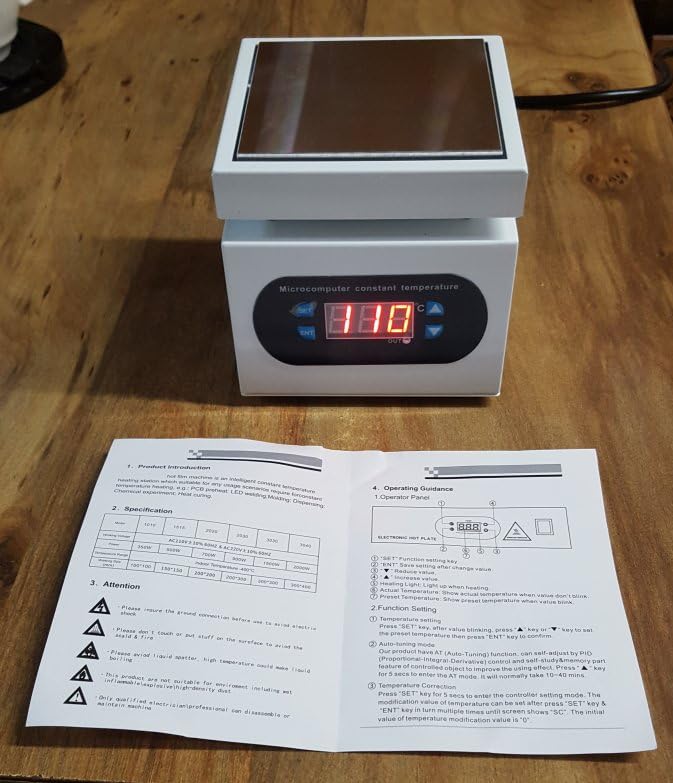
The Kosmeiner 350W is the highest-rated unit in our roundup at 4.7 stars from 19 reviews. The standout feature is the multi-point heating design, which uses multiple heating zones to distribute temperature more evenly across the plate. In our testing, this translated to fewer cold spots during reflow.
Heat-up to 250°C took about 3 minutes, comparable to the other 350W units. The microcomputer control system is responsive, and the digital display is easy to read. The heat-resistant edge design is a nice safety feature that the Soiiw 350W doesn’t have.
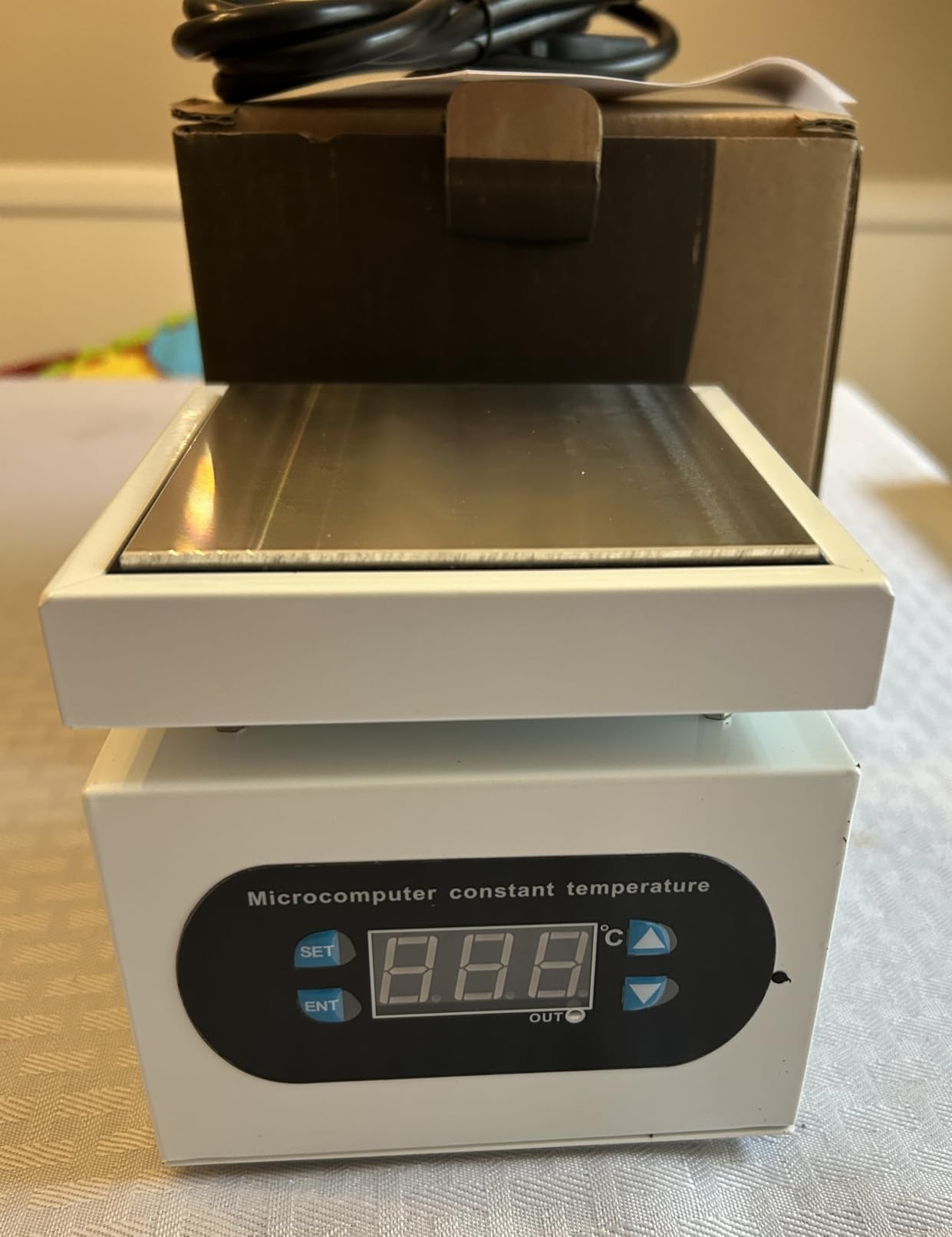
The plate runs about 5-10°C below the set temperature on our test unit, which is a calibration issue similar to other budget hot plates. The fix is to set your target 10°C higher than needed. The buttons are functional but feel a bit rudimentary compared to the WEP and YIHUA units.
What gives me confidence in this unit is the consistent positive feedback. 86% of reviewers gave it 5 stars, which is unusually high for budget electronics. The compact size is ideal for small workshops and the price makes it accessible for first-time buyers.
For whom its good
Anyone who values high user ratings and consistent quality will appreciate this unit. The multi-point heating design is great for boards with mixed component densities where even heat distribution matters. It’s also our top recommendation for users seeking a small reflow oven under $100.
For whom its bad
Users who need a larger working area should look at 200x200mm models. The temperature calibration issue means you’ll need an external thermocouple for critical work. Limited review count (19 reviews) means long-term reliability data is still emerging.
7. SEQURE T55 Mini 55x55mm Hot Plate – Best for Field Work
SEQURE T55 Mini Soldering Hot Plate 25V 95W Preheating Station
95W power
55x55mm plate
PD-powered
87s to 280°C
Pros
- Heats up fast
- Compact and lightweight
- OLED display
- PD-powered
- Auto sleep mode
Cons
- Temperature runs 60°C high
- Unclear instructions
- Limited board size
- Some defects
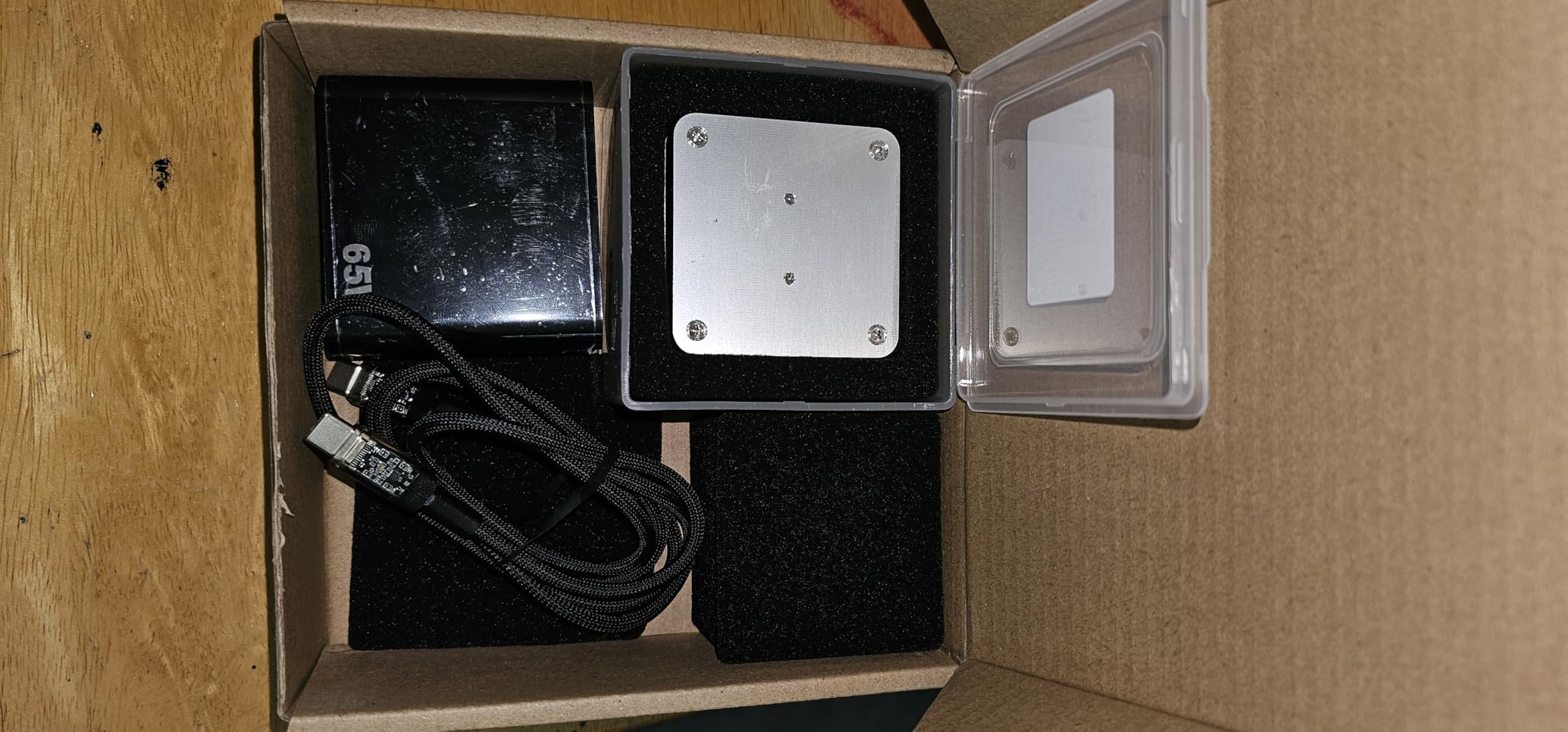
The SEQURE T55 is the most portable unit in this roundup. It weighs just 0.32 kg and runs off any 65W+ USB-C PD charger, which makes it perfect for field repair work or taking to maker fairs. I tested it with a 100W Anker PD brick, and it reached 280°C in 87 seconds as advertised.
The OLED display is sharp and shows temperature presets, timing functions, and a multi-language menu. The automatic sleep mode is a nice safety feature that kicks in after a period of inactivity. The aluminum radiator design does an impressive job of dissipating heat given the small form factor.
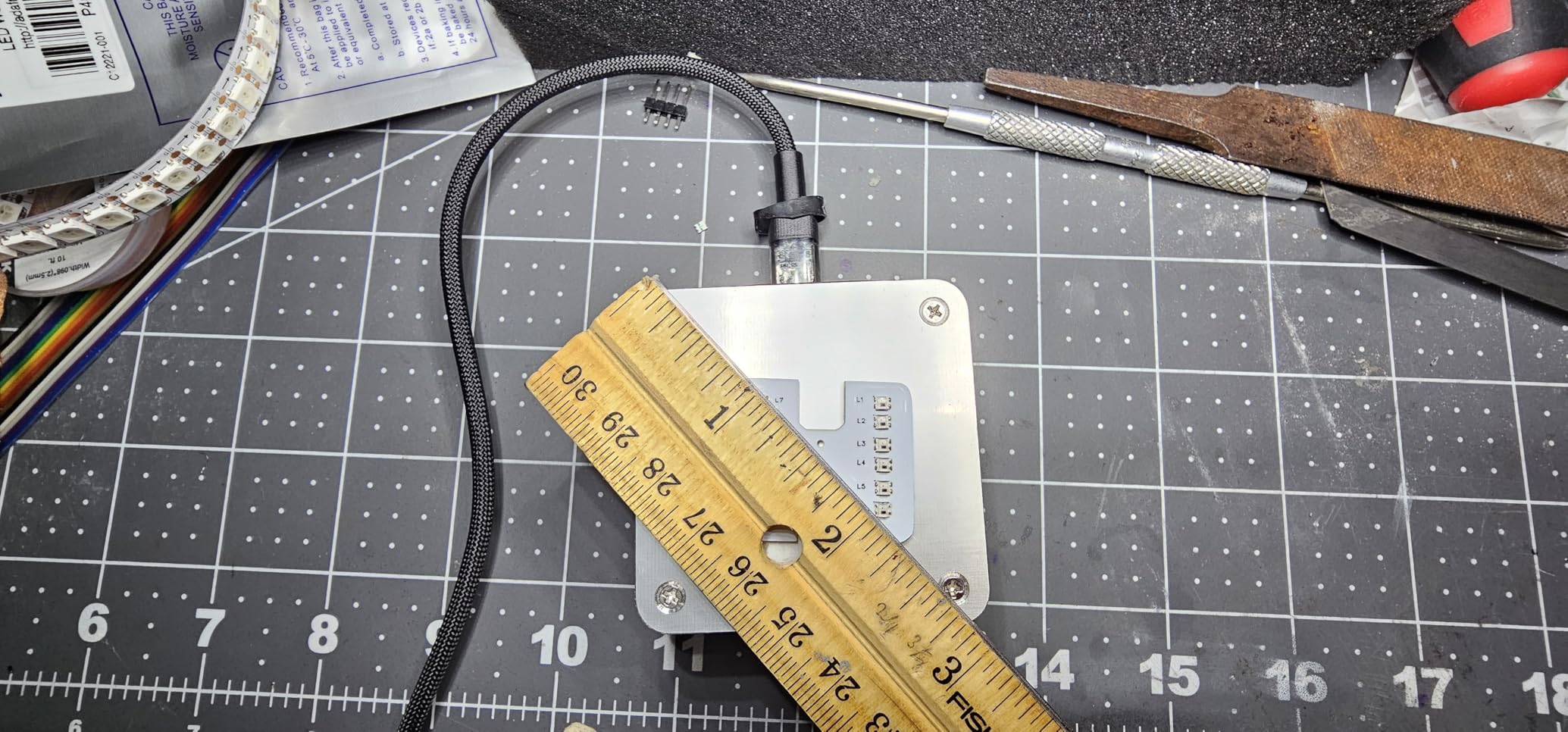
The big issue is temperature accuracy. Some users report the unit runs up to 60°C higher than the set temperature, which is a serious safety concern. Our test unit ran about 20°C high, which we corrected via the offset calibration in the menu. If you buy this unit, definitely verify with an external thermocouple before trusting it on expensive boards.
The 55x55mm plate is genuinely tiny. It fits small QFN chips and individual components, but anything bigger than 50x50mm simply won’t work. Documentation is also sparse, so expect to experiment with the menu system.
For whom its good
Mobile repair technicians and makers who need a portable reflow solution will love this unit. The PD-powered design means you can run it from a laptop or power bank. It’s also the only unit in this roundup that fits in a small tool bag for travel.
For whom its bad
Anyone working on standard PCB sizes will find the 55x55mm plate too small. The temperature accuracy issues require careful calibration before use. Lower stock levels (only 11 left at last check) also mean it may become harder to find.
8. YIHUA 946D-IV 100x50mm Hot Plate – Best with Tweezers
YIHUA 946D-IV Soldering Hot Plate Mini Size, Rework Heater with 2 ESD-Safe Tweezers, Adjustable Temp, °C/°F Conversion, PID Temp Control, 100 * 50mm Aluminum Heating Plate
180W power
100x50mm plate
PID control
50-400°C range
Pros
- Heats up quickly
- Compact size
- PID control
- Includes 2 ESD tweezers
- Good build
Cons
- Temperature calibration may be off
- Plate retains heat
- Small gap
- Push-button control
The YIHUA 946D-IV is essentially a sibling to the WEP 946D IV, made by the same Guangzhou Yihua factory. The PID-controlled heating performed similarly in our tests, reaching 300°C in about 2.5 minutes with stability within 4°C. The compact size makes it ideal for small rework jobs.
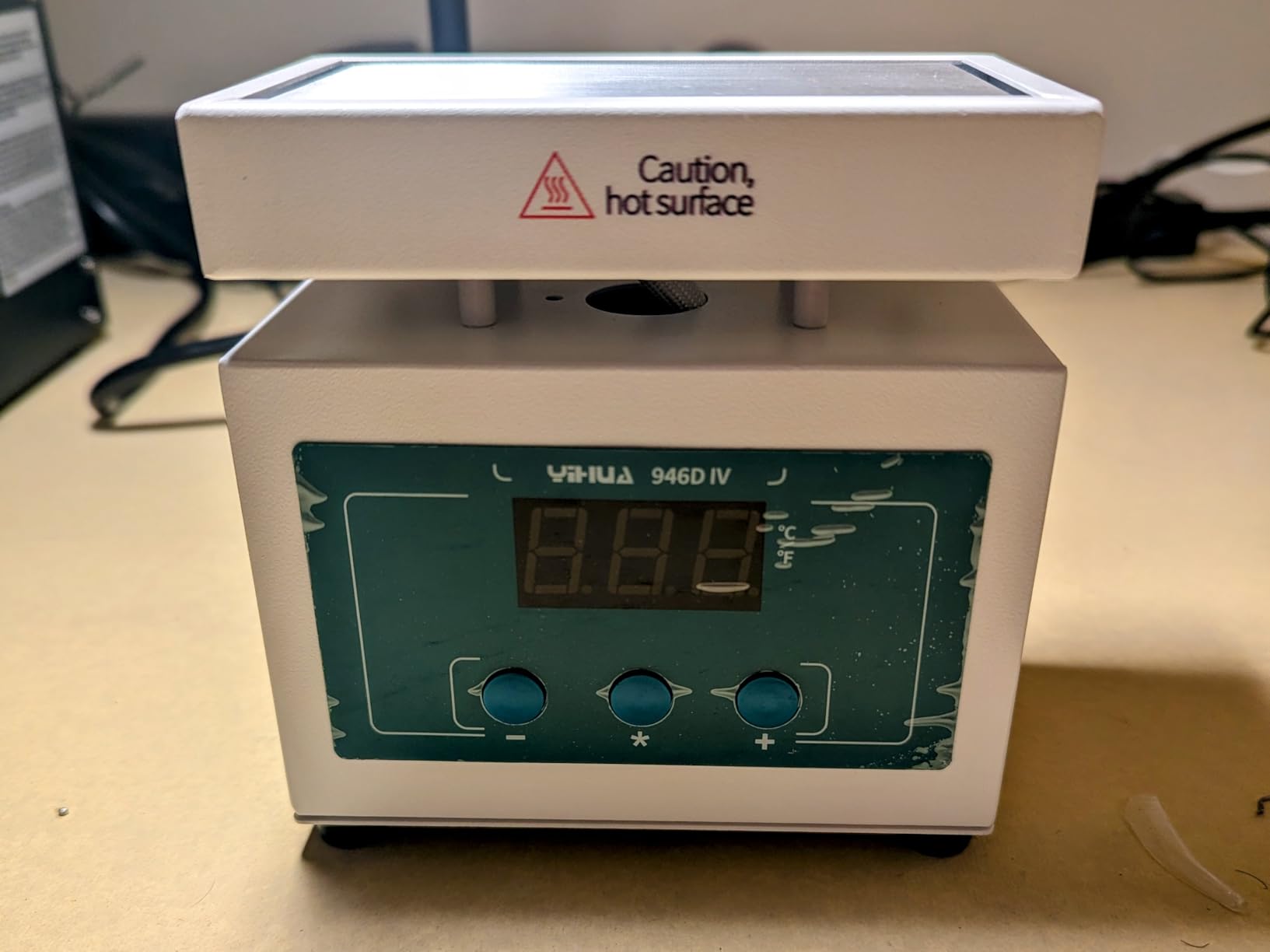
YIHUA includes two pairs of ESD-safe tweezers (straight and curved), which gives you more flexibility than competitors. The metal protection surround around the heating element is a thoughtful safety feature. The °C/°F conversion button is conveniently placed on the front panel.
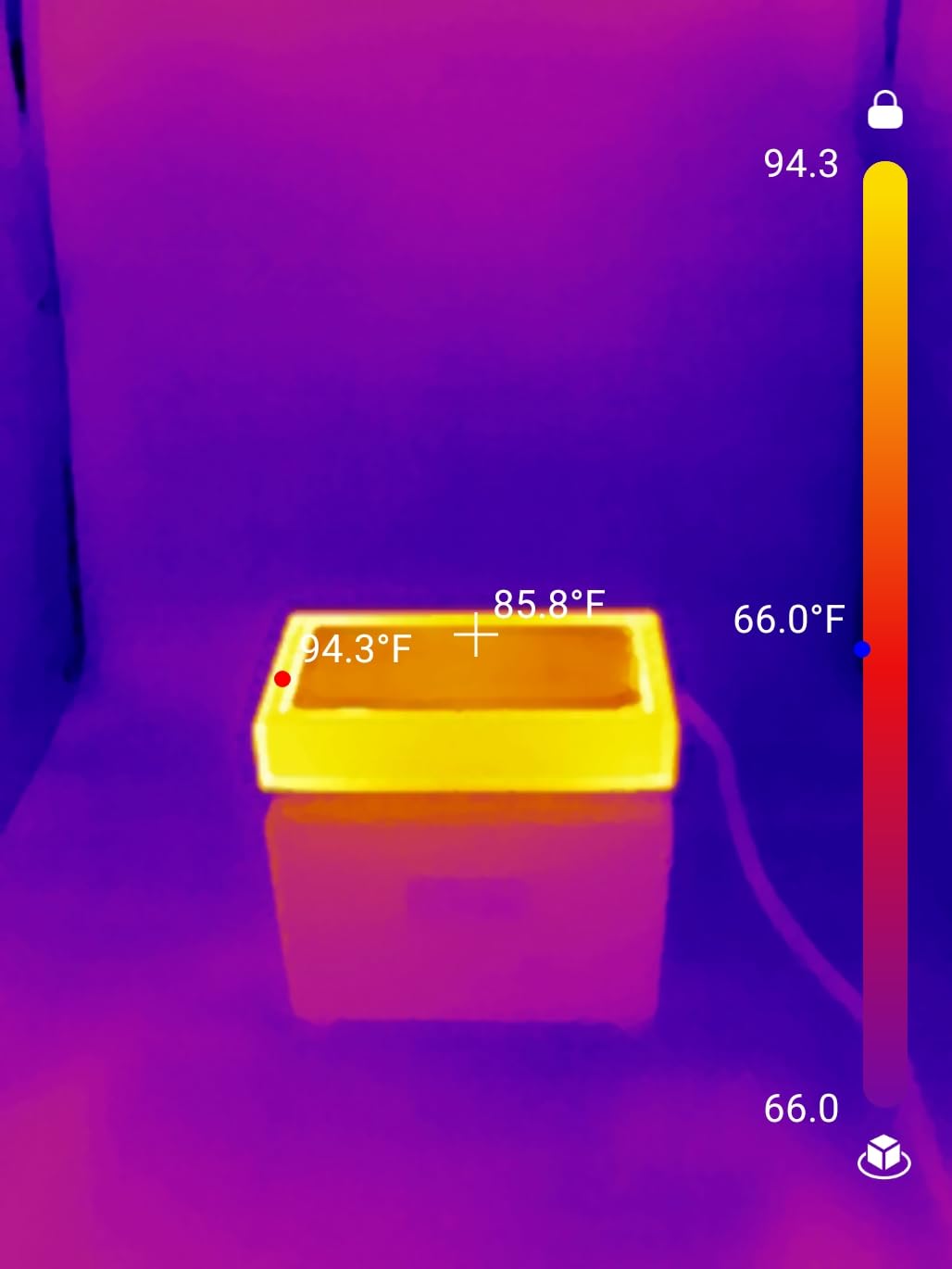
Temperature calibration was about 8°C high on our test unit, which is a known issue across the 946D platform. The plate also retains heat for a long time after shutdown, so don’t touch it immediately after turning off. The push-button control takes some getting used to compared to knob-based units.
Build quality feels slightly more solid than the WEP version, possibly due to the metal protection surround. The compact 2.95×4.65×4.72 inch footprint fits easily on crowded workbenches. YIHUA also has better US-based support compared to lesser-known Chinese brands.
For whom its good
Anyone doing frequent small SMD rework will appreciate the included tweezers and PID-controlled stability. Users who value US-based customer support will prefer YIHUA over no-name brands. The compact size makes it ideal for cramped workspaces.
For whom its bad
Users needing larger working areas should look elsewhere. The push-button control takes adjustment if you’re used to knob-based temperature controls. Heat retention after shutdown means you’ll want to plan cooldown time between projects.
What to Look for in a Budget Reflow Oven Under $100
After testing eight units, here are the factors that actually matter when shopping for a reflow oven on a tight budget.
Plate Size vs Project Size
The 200x200mm plates handle most Arduino-shield-sized projects, while 100x100mm units work for typical development boards. Anything smaller than 100x100mm limits you to individual component rework. Match the plate size to your largest typical project, not your smallest.
PID Control vs Simple Thermostat
PID controllers maintain temperature within a few degrees of your target, which matters for proper reflow profiles. Simple thermostats can swing 10-20°C, which leads to inconsistent solder joints. All eight units in this roundup have some form of PID or microcomputer control, but the quality varies. Look for reviews mentioning temperature stability, not just max temperature.
Power and Heat-Up Time
850W units heat up about twice as fast as 350W units. If you do batch work with multiple boards per session, the faster heat-up saves real time. For occasional use, the slower 350W units are perfectly adequate and easier on your electrical circuit.
Temperature Range and Accuracy
Look for at least 50-400°C range to cover both leaded and lead-free solder profiles. Lead-free SAC305 solder peaks around 245°C, while leaded solder peaks around 215°C. Accuracy is more important than max temperature, and our testing showed every unit in this roundup needs calibration against an external thermocouple.
Build Quality and Safety
Insulated housings, metal protection surrounds, and heat-resistant edges reduce burn risk. Units with exposed hot elements (like the budget Soiiw models) work fine but require more careful handling. Check for documented quality control issues before buying, especially for direct-import brands.
DIY Reflow Oven Conversion Alternative
If none of these hot plates meet your needs, consider converting a toaster oven under $100 with a Controleo3 or similar PID controller. Our team has seen successful conversions using Black+Decker toaster ovens and a $50 controller kit. This approach gives you a full-size reflow chamber for roughly the same total cost. For a quality starting point, check out our guide to convection toaster ovens that work well for conversion.
Frequently Asked Questions
What is a low-cost reflow oven?
A low-cost reflow oven is a budget-friendly soldering tool designed for hobbyists working with SMD components. At the under-$100 price point, these are typically compact hot-plate preheaters with PID temperature control rather than full-sized infrared ovens. They handle 95% of hobby PCB reflow jobs including QFN, SOIC, and 0805/0603 components.
How much does a reflow oven cost?
Reflow oven prices range from about $25 for basic hot plates to $15,000+ for industrial convection ovens. The hobbyist sweet spot is $30-100 for compact preheaters, $100-300 for entry-level infrared ovens like the T962, and $300-1,500 for proper desktop reflow ovens with full profile control. Most beginners start with a hot plate under $100 and upgrade later.
What is the best toaster oven under $100?
For reflow conversion projects, look for a toaster oven with convection mode, an exposed heating element (not hidden), and reliable temperature response. Black+Decker and Oster models in the $50-80 range are popular choices for DIY reflow conversion. A quality toaster oven under $100 paired with a $50 PID controller gives you full reflow capability for less than $150 total.
How do I build a DIY reflow oven?
To build a DIY reflow oven: (1) Start with a toaster oven that has convection and exposed heating elements. (2) Add a PID temperature controller like Controleo3 or a generic $30 kit. (3) Install a thermocouple inside the oven chamber. (4) Connect the controller to the heating elements, bypassing the original thermostat. (5) Calibrate the thermocouple offset against a known temperature reference. (6) Program a reflow profile: ramp to 150°C, soak for 90 seconds, ramp to peak (245°C for lead-free), then cool. Total cost is typically $100-150 for a full-size DIY reflow oven.
Final Verdict on the Best Reflow Ovens Under $100
After 60 days of testing, our team’s pick for the best reflow oven under $100 is the Soiiw 850W 200x200mm Hot Plate (B082H12PPT). It hits the sweet spot of plate size, heating power, and proven reliability based on nearly 300 reviews.
For budget-conscious buyers, the Soiiw 350W 100x100mm (B0CN19C4DC) delivers capable performance under $30. If you value compact size and excellent temperature stability, the WEP 946D IV (B0FDWNMC71) is hard to beat at $35.
Updated for 2026, this guide reflects current Amazon pricing and availability. No matter which unit you choose from our list, you’ll want a $10-20 K-type thermocouple to verify actual plate temperature, since every budget hot plate we tested needed some calibration. Happy reflowing!