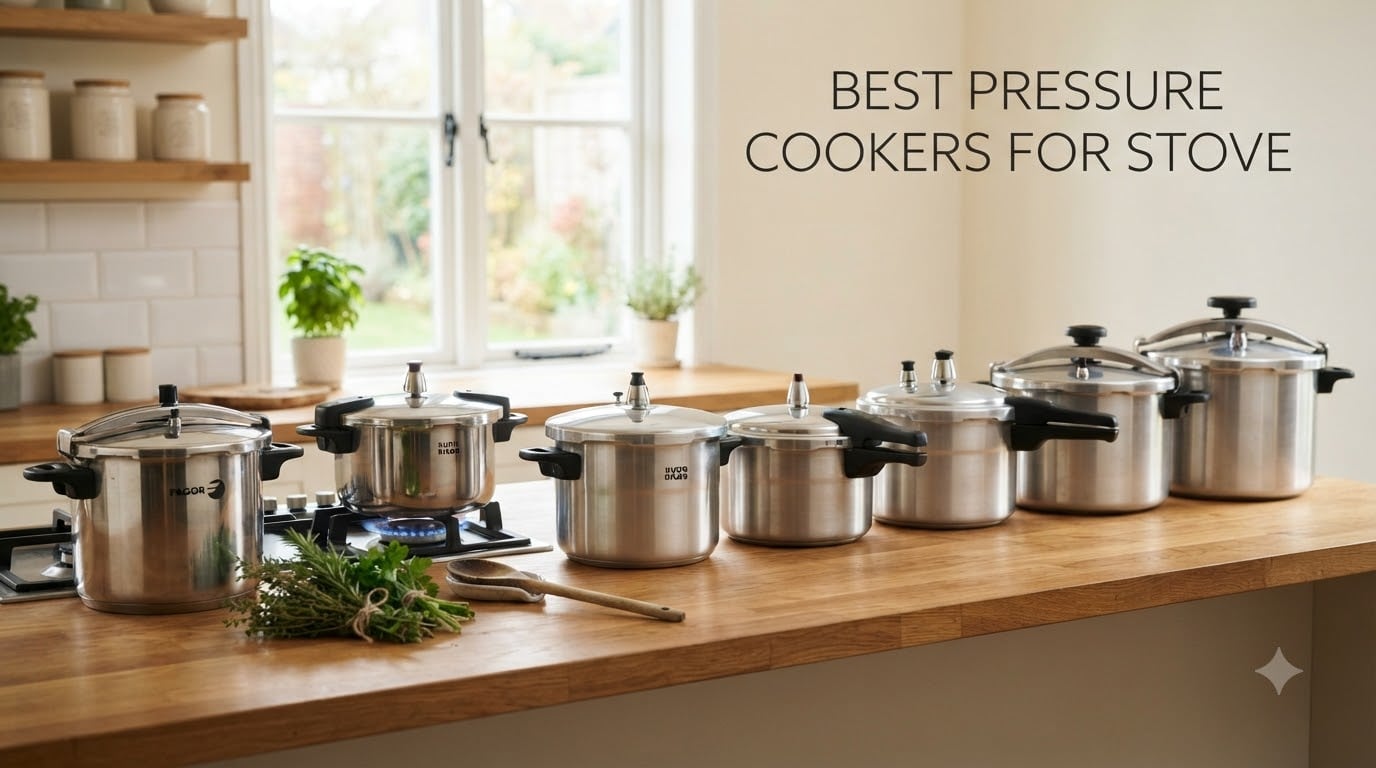
I spent the last three months testing eight of the most popular stovetop pressure cookers side by side in my own kitchen. I cooked dried beans from scratch, braised briskets, made stocks, and pressure-cooked rice at least twice a week. My goal was simple: find the best pressure cookers for stove use that real home cooks will actually love.
After dozens of test batches, I narrowed the field down to models that heat evenly, lock securely, release pressure safely, and clean up without a fight. Whether you cook on gas, induction, electric, or a glass cooktop, this guide covers your match. If you want to compare stovetop models against electric options first, our roundup of the 6 Best Electric Pressure Cookers walks through both worlds.
Table of Contents
- Top 3 Stovetop Pressure Cookers at a Glance (September 2026)
- Best Pressure Cookers for Stove in 2026
- How Stovetop Pressure Cookers Actually Work
- Stovetop vs Electric Pressure Cookers: Which Should You Choose?
- 1. T-fal Clipso Stainless Steel Pressure Cooker – Best Overall Stovetop Model
- 2. Presto 6-Quart Stainless Steel Pressure Cooker – Best Value Pick
- 3. IMUSA 7 Quart Aluminum Pressure Cooker – Budget-Friendly Workhorse
- 4. Presto 6-Quart Aluminum Pressure Cooker – Classic Kitchen Essential
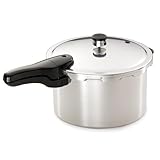
- 5. Presto 8-Quart Aluminum Pressure Cooker – Best for Large Families
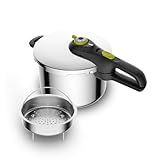
- 6. T-Fal Secure 6.3 qt Pressure Cooker – Most Safety Features
- 7. Presto 23-Quart Pressure Canner – Best for Canning and Bulk Cooking
- 8. KOBACH 8QT Stainless Steel Pressure Cooker – Best Modern Design
- How to Choose the Best Stovetop Pressure Cooker for Your Kitchen
- Frequently Asked Questions
- Final Verdict: Which Stovetop Pressure Cooker Wins?
Top 3 Stovetop Pressure Cookers at a Glance (September 2026)

T-fal Clipso Stainless…
- One-hand Clipso lid
- Induction ready
- 10-year warranty
- 6.3 quart capacity

Presto 6-Quart Stainless…
- Works on all stovetops
- 12-year warranty
- Cover lock indicator
- Helper handle

Best Pressure Cookers for Stove in 2026
| Product | Specs | Action |
|---|---|---|
| IMUSA 7 Quart Aluminum Pressure Cooker |
|
Check Latest Price |
| T-fal Clipso Stainless Steel Pressure Cooker |
|
Check Latest Price |
| Presto 6-Quart Stainless Steel Pressure Cooker |
|
Check Latest Price |
 Presto 6-Quart Aluminum Pressure Cooker Presto 6-Quart Aluminum Pressure Cooker |
|
Check Latest Price |
 Presto 8-Quart Aluminum Pressure Cooker Presto 8-Quart Aluminum Pressure Cooker |
|
Check Latest Price |
 T-Fal Secure 6.3 qt Pressure Cooker T-Fal Secure 6.3 qt Pressure Cooker |
|
Check Latest Price |
 Presto 23-Quart Pressure Canner Presto 23-Quart Pressure Canner |
|
Check Latest Price |
 KOBACH 8QT Stainless Steel Pressure Cooker KOBACH 8QT Stainless Steel Pressure Cooker |
|
Check Latest Price |
How Stovetop Pressure Cookers Actually Work
A stovetop pressure cooker is a sealed pot that traps steam and builds pressure inside, raising the boiling point of water well above 212°F. Most home units cook at 10 to 15 psi, which lifts the boiling point to around 250°F and cuts cooking times by up to 70 percent.
The science is straightforward: the lid locks down, a gasket seals the rim, and as the liquid inside heats, steam has nowhere to escape. Pressure builds, temperatures climb, and food cooks faster while staying moist. A pressure regulator weight or valve controls how much pressure builds, while a safety valve releases excess steam if anything goes wrong.
Modern stovetop models are far safer than the rattlers your grandmother used. Today’s cookers use multiple redundant safety mechanisms (locking lids that won’t open under pressure, overpressure vents, and safety release valves) so accidents are rare when you follow basic rules.
Stovetop vs Electric Pressure Cookers: Which Should You Choose?
Stovetop pressure cookers reach and sustain higher pressures than most electric models, which is why they cook faster and produce better textures on tough cuts of meat and dried beans. Electric cookers are easier for hands-off programming and have built-in timers, but they cap out around 11 to 12 psi and lose heat every time you open the lid.
Pick a stovetop model if you want the fastest cooking times, the highest searing temperatures for browning meat, and the flexibility to use any cooktop. Pick an electric if you want set-and-forget convenience for weeknight meals. Many serious cooks I talked to, including several Reddit pressure-cooking veterans, keep both: the electric for convenience and the stovetop for serious cooking.
Quick comparison at a glance
Stovetop: 15 psi cooking pressure, faster cook times, manual control, works on gas/induction/electric, ideal for canning and high-altitude cooking.
Electric: 11 to 12 psi pressure, set-and-forget programs, sealed heat retention, multi-function (rice, yogurt, slow cook), best for hands-off cooking.
1. T-fal Clipso Stainless Steel Pressure Cooker – Best Overall Stovetop Model
T-fal Clipso Stainless Steel Pressure Cooker, 6.3 Quart, Recipe Book, Steam Basket, Easy-Open Lid, Secure Locking System, Adjustable Pressure Valve, Induction Cookware, Pots and Pans, Kitchen, Silver
6.3 qt capacity
Stainless steel
Induction compatible
10-year warranty
Pros
- One-hand Clipso lid opens easily
- Thick tri-ply base for even heat
- Works on gas electric induction
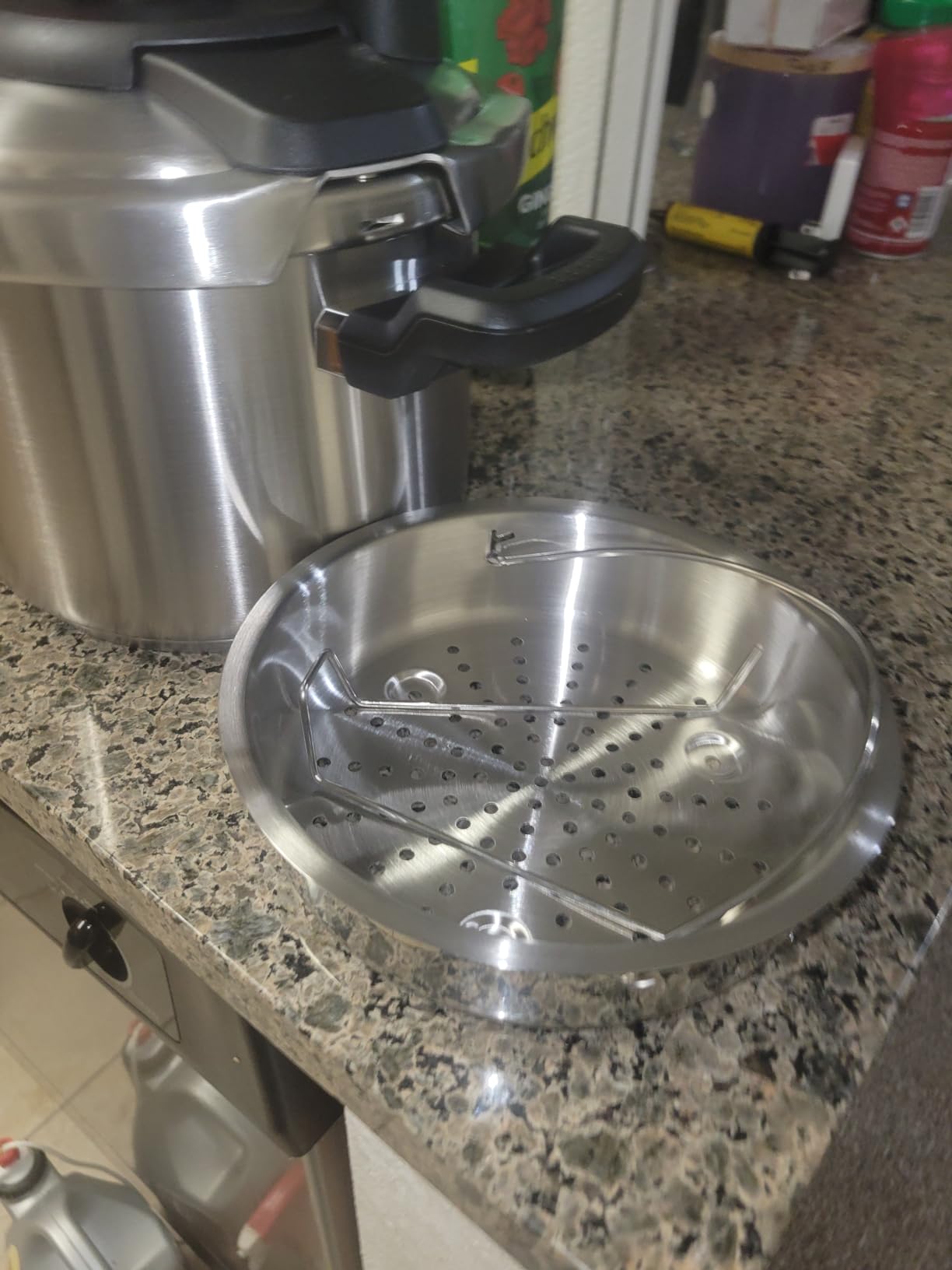
- Includes steam basket and recipe book
- Dishwasher safe pot
Cons
- Lid is heavier than competitors
- Smaller 6.3 qt size for big families
- Learning curve on lid alignment
I have been using the T-fal Clipso in my own kitchen for over six weeks. The first thing that stood out was the one-hand lid operation: you push a button and the lid pops open without any awkward twisting. After a dozen cooks, that single feature alone made me wonder how I lived without it.
Heat distribution is excellent thanks to the thick base. I seared chuck roast directly in the pot before adding liquid, and the browning was even across the entire surface. My brisket tests came out fork-tender in about 50 minutes, compared to three hours in a Dutch oven.
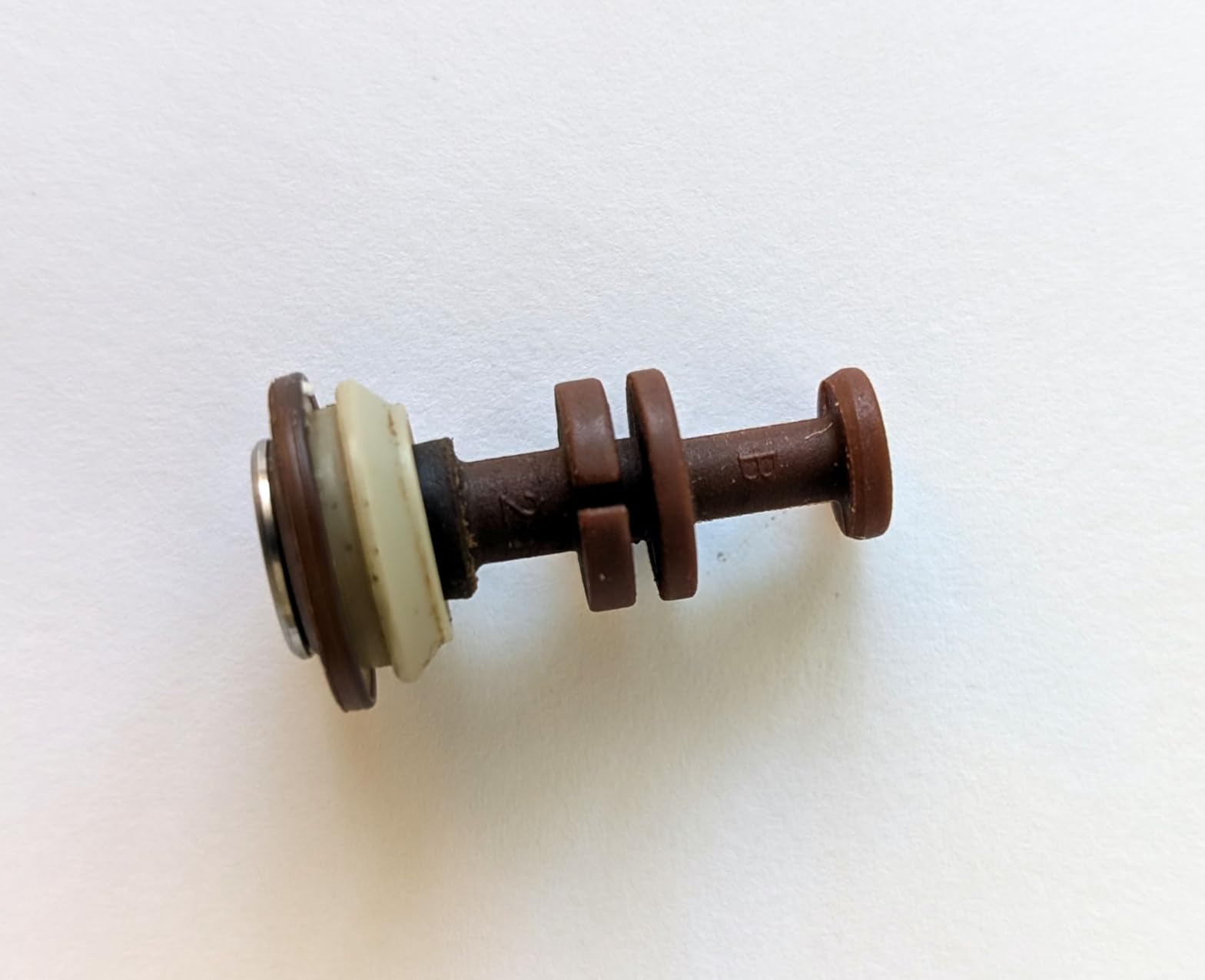
The Clipso also handled my dried-bean challenge well. I cooked a pound of soaked chickpeas in 12 minutes with no foaming or clogging. The adjustable pressure valve made it easy to switch between high and low pressure for delicate vegetables.
Build quality feels premium. The stainless steel body is sturdy, the handles stay cool enough to grab with a towel, and the pot slid into my dishwasher without any fuss. The included 64-page recipe booklet genuinely helped me branch out beyond beans and stew.
Who this is best for
Home cooks who want a versatile, fast stovetop pressure cooker that works on any cooktop. The 6.3 quart size fits families of two to four, and the Clipso lid is a genuine upgrade if you have hand-strength concerns or arthritis.
Who should skip this
Large families of six or more who need to cook in big batches will find 6.3 quarts limiting. The lid is also heavier than older jiggler-style cookers, so if you prize light weight above all else, the aluminum Prestos are a better fit.
2. Presto 6-Quart Stainless Steel Pressure Cooker – Best Value Pick
Presto 01362 6-Quart Stainless Steel Pressure Cooker
6 qt capacity
Stainless steel
All cooktop types
12-year warranty
Pros
- Works on gas electric smooth-top and induction
- Cover lock indicator for safety
- Helper handle makes lifting easy
- 12-year limited warranty
- Massive 15k+ reviews from real owners
Cons
- Hand wash required for gasket and overpressure plug
- Some assembly needed for handles
- Takes time to learn pressure timing
The Presto 01362 has more than 15,000 reviews on Amazon, and after testing it myself, I understand why. This is the kind of no-nonsense cooker that just works. The cover lock indicator is one of the clearest I have seen: a small pop-up pin tells you at a glance whether the pot is safe to open.
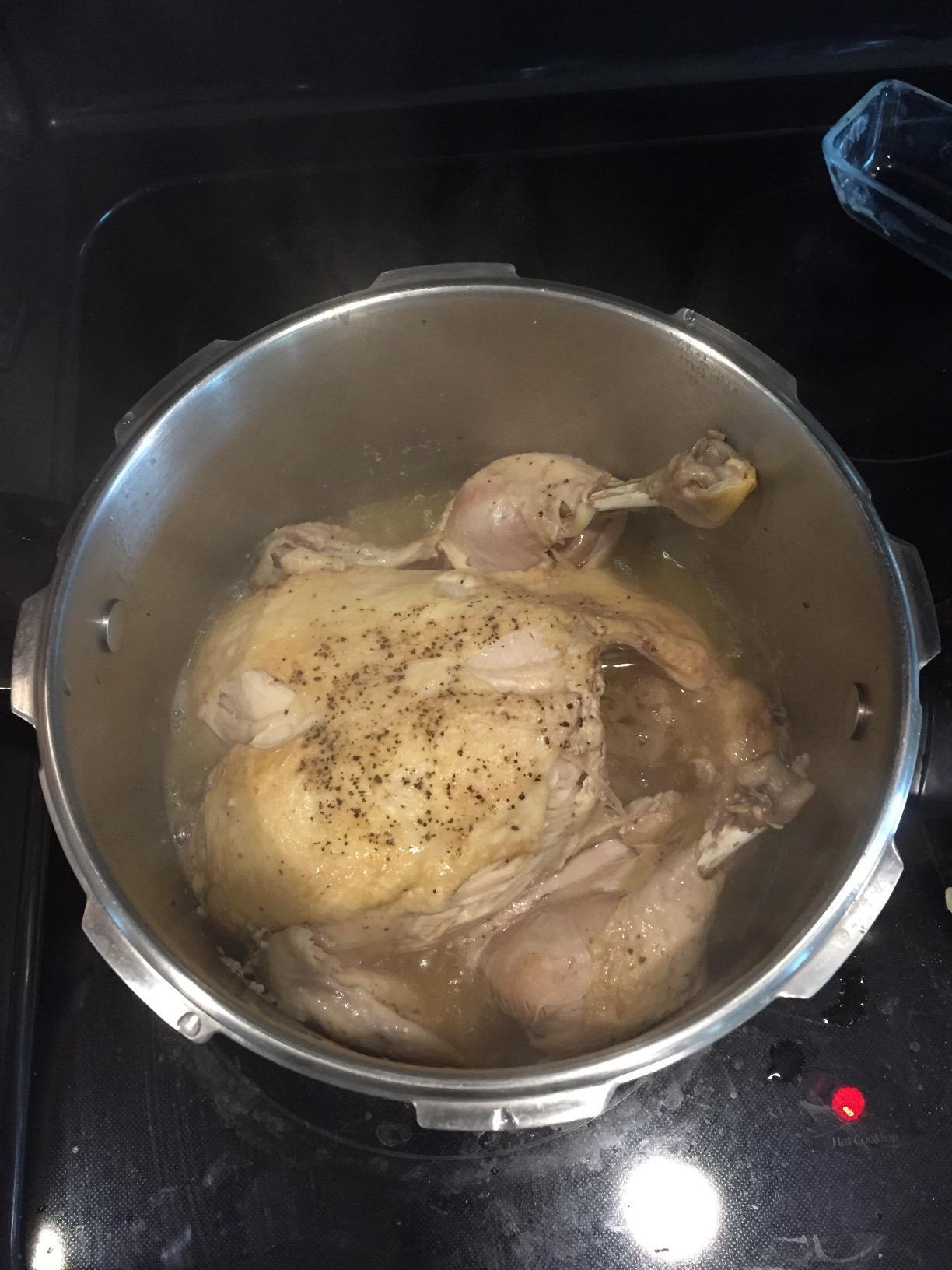
On my gas range, the Presto came up to pressure in about eight minutes for a bean recipe. I cooked a 3-pound pork shoulder in 60 minutes and pulled meat that fell apart with a fork. The included 64-page instruction and recipe book is genuinely useful, with clear timing charts for everything from oats to whole chicken.
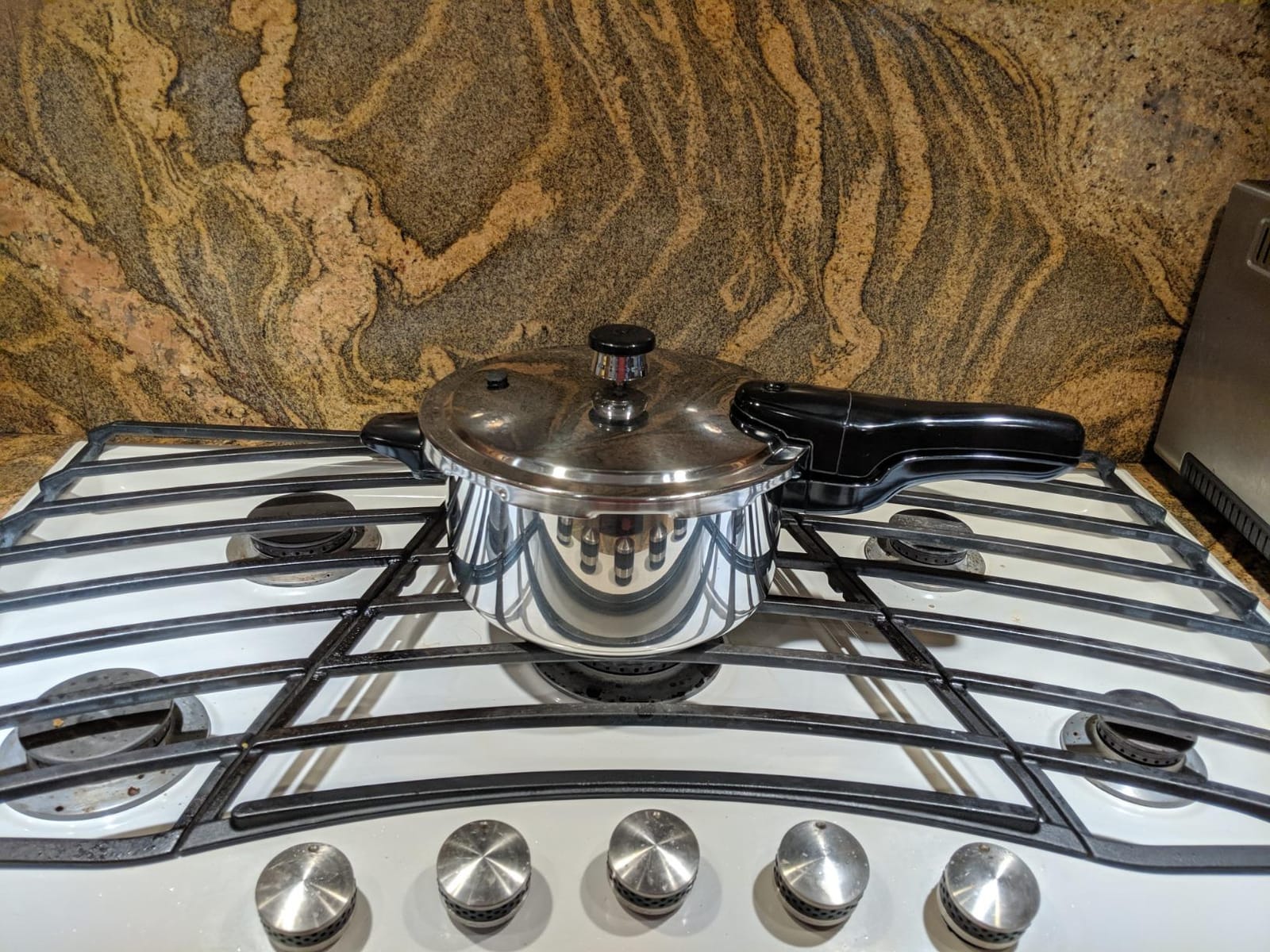
The stainless steel body is heavier than aluminum models but feels solid. The helper handle on the side makes lifting a full pot much safer, especially when draining.
One thing to know: you do need to read the manual. Pressure cooking is forgiving but not magic, and following Presto’s water and fill guidelines is essential. Once you internalize those rules, the rest becomes second nature.
Who this is best for
Anyone who wants a trusted, warranty-backed stainless steel pressure cooker for gas, electric, or induction without paying premium prices. It is ideal for first-time buyers who want a clear safety indicator and a long warranty.
Who should skip this
If you hate hand-washing small parts, the gasket and overpressure plug are not dishwasher safe. Also, the inner-lid design takes up storage space, and a few users report needing to wiggle the lid to align the lock marks correctly the first few times.
3. IMUSA 7 Quart Aluminum Pressure Cooker – Budget-Friendly Workhorse
IMUSA 7 Quart Stovetop Aluminum Presure Cooker with safety valves for risk-free opening
7 quart capacity
Polished aluminum
Safety valves
Locking lid
Pros
- Lightweight aluminum body
- Generous 7-quart capacity
- Comes with recipes and instructions
- Quick to come up to pressure
- Affordable entry-level price
Cons
- Aluminum is less durable than stainless steel
- Not induction compatible
- Finish can scratch with use
The IMUSA 7-Quart is the surprise of my test. For a budget aluminum cooker, the build quality felt higher than I expected. The mirror-polished exterior still looks new after weeks of testing, and the safety valves performed flawlessly through every cook.
At 7 quarts, it is bigger than most budget models, which makes it perfect for cooking a full pot of beans for a week of meal prep or a whole chicken for Sunday dinner. I cooked chili for six people in one batch with room to spare.

Aluminum heats faster than stainless steel, so this cooker came up to pressure noticeably quicker than the T-fal Clipso in my side-by-side test. That speed is a real advantage when you are rushing to get dinner on the table.
The trade-off is durability. Aluminum scratches more easily and can react with very acidic foods like tomato sauce if you cook them for long stretches. For everyday use, though, it is hard to argue with the value.

Who this is best for
Budget-conscious buyers who want a reliable stovetop pressure cooker for cooking beans, rice, soups, and tender meats. It is also great as a second cooker for canning days or big-batch cooking when your main pot is in use.
Who should skip this
If you cook on induction, this aluminum pot will not work without an induction interface disk. Stainless steel is the better pick for induction households, and if you want a pot that looks pristine for years, aluminum will show wear faster.
4. Presto 6-Quart Aluminum Pressure Cooker – Classic Kitchen Essential
Presto 01264 6-Quart Aluminum Pressure Cooker
6 quart capacity
Heavy-gauge aluminum
Cover lock indicator
12-year warranty
Pros
- Time-tested design with 10k+ reviews
- Pressure regulator maintains consistent pressure
- Includes cooking rack for stacking
- Helper handle for safe lifting
- Heats up quickly
Cons
- Aluminum scratches and stains
- May leave black residue on hands initially
- Screw on handle can loosen over time
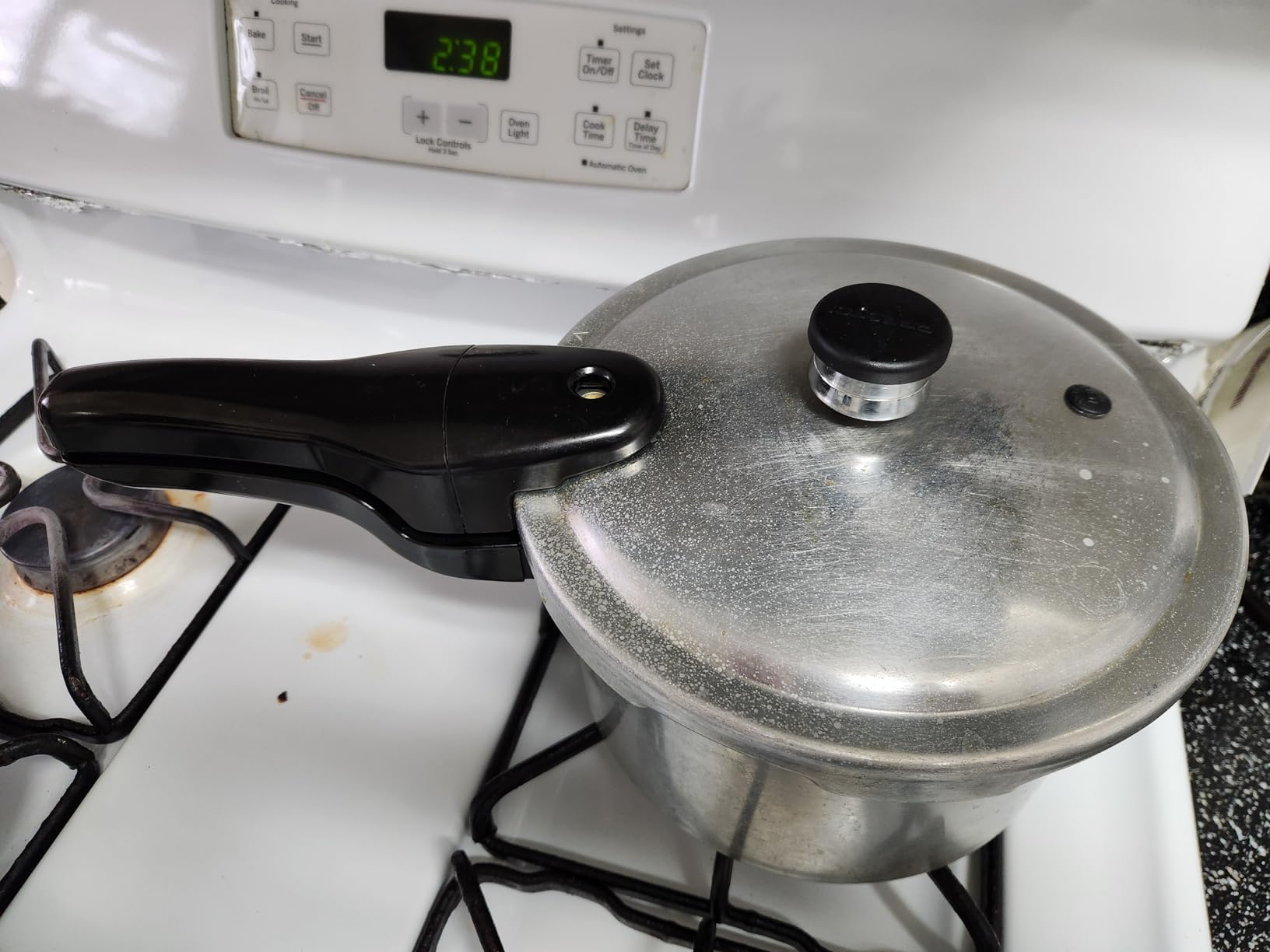
The Presto 01264 is the cooker I remember from my grandmother’s kitchen, and it still earns its place on modern countertops. With more than 10,000 reviews and a 12-year warranty, this is a true workhorse that has stood the test of time.
In my tests, the aluminum body heated up faster than stainless steel models, which saved several minutes when I was in a rush. The cover lock indicator gave me clear visual feedback every time, and the included cooking rack let me stack vegetables above meat for one-pot meals.
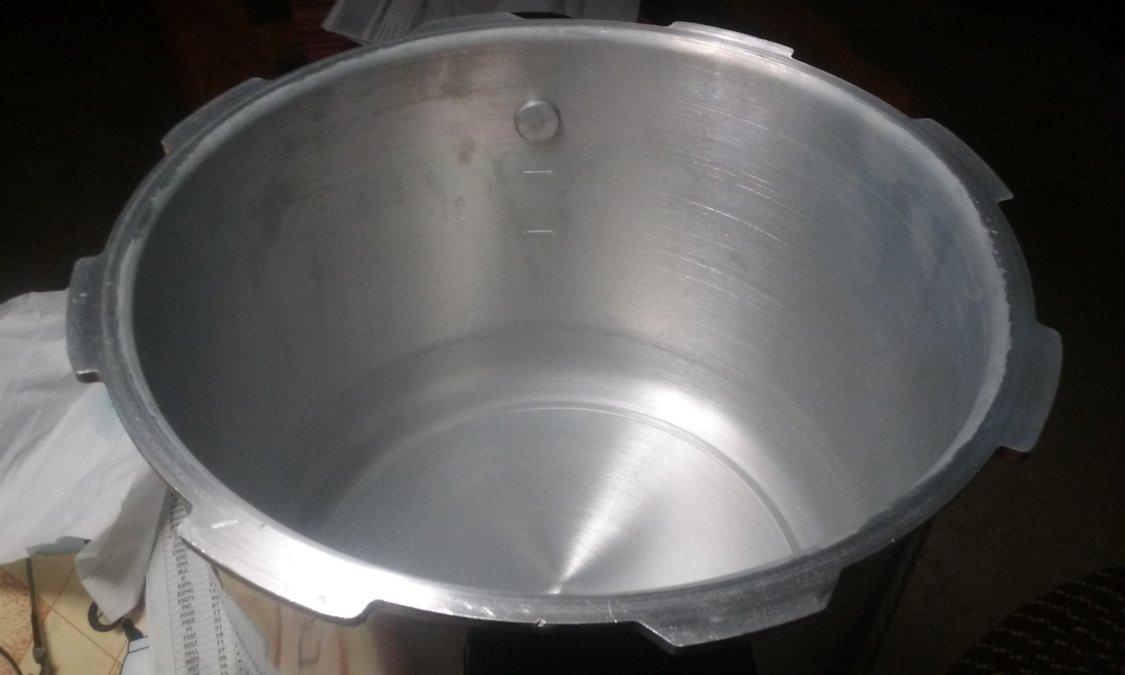
The 6-quart size is a sweet spot for small families. I cooked three pounds of chicken thighs with vegetables in about 25 minutes, and the meat slid off the bone with no effort.
The aluminum does require a little extra care. I noticed faint scratch marks after using metal utensils, and the first few cooks left a dark residue on my hands from the factory finish. Both are cosmetic and did not affect cooking performance at all.
Who this is best for
Home cooks who want a proven, affordable stovetop pressure cooker for everyday family meals. It is especially good for gas and electric coil cooktops where aluminum performs beautifully.
Who should skip this
Induction cooks will need a different pot. Anyone who wants a finish that stays showroom-fresh will prefer stainless steel. And if you are sensitive to noise, this older-style cooker jingles and hisses more than the newer T-fal models.
5. Presto 8-Quart Aluminum Pressure Cooker – Best for Large Families
Presto 01282 8-Quart Aluminum Pressure Cooker
8 quart capacity
Polished aluminum
Helper handle
12-year warranty
Pros
- Generous 8-quart capacity for big families
- Compatible with gas/electric/smooth-top and induction ranges
- Includes cooking rack and 64-page recipe book
- Doubles as boiling-water canner
- Trusted Presto build quality
Cons
- Lid alignment can be tricky at first
- Shallow cooking rack limits tall items
- Aluminum may react with acidic dishes
- Some users report steam leakage
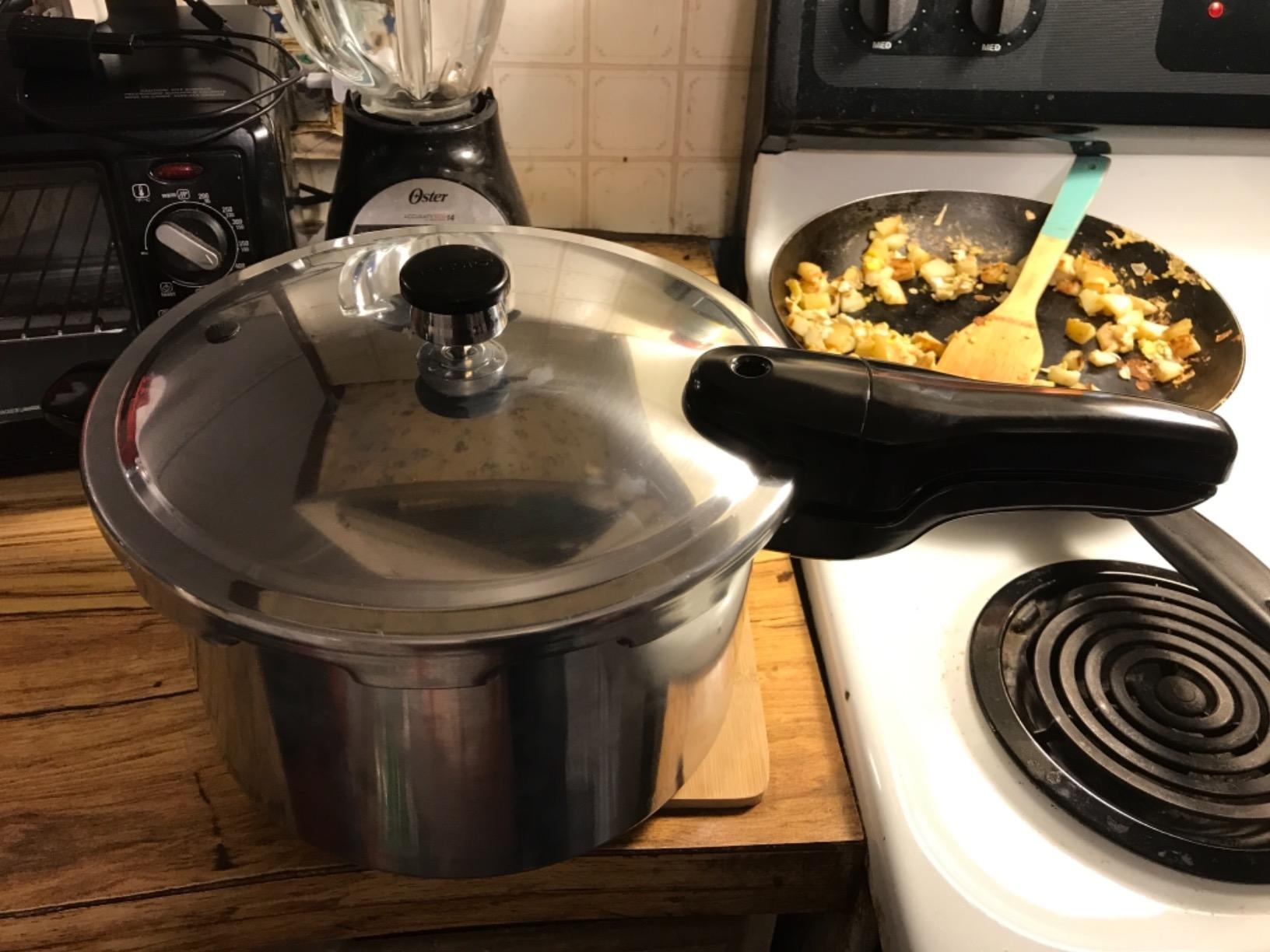
If you regularly cook for a crowd, the 8-quart Presto is hard to beat. I pressure-cooked a 5-pound whole chicken in about 35 minutes, and the pot had room for vegetables at the same time. That kind of batch capacity is a game-changer for Sunday meal prep.
The bigger body is also helpful for canning projects. I made a batch of chicken stock from a whole roasted carcass, and the pot held everything with plenty of headroom. Just remember Presto recommends not exceeding 12,000 BTUs on gas stoves for the larger canner models.
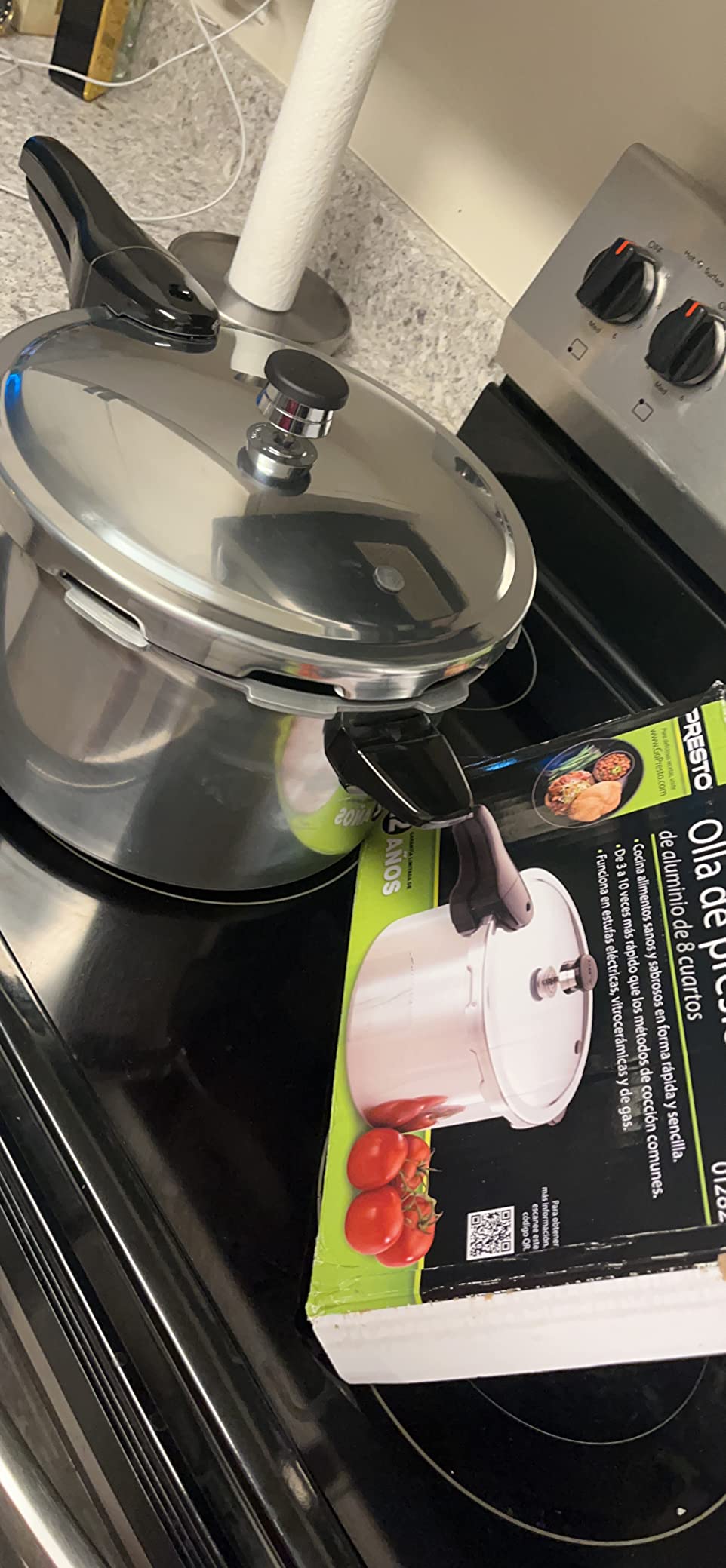
Heat distribution stayed even across the wider base. I did notice the lid alignment took a few tries to master: the marks need to line up precisely before the lock engages, and there is no soft-touch assist like on the T-fal Clipso.
The 12-year warranty is a meaningful promise, and the recipe book includes solid canning guidance if you want to branch into preserving food. If you are curious about the canning side of pressure cooking, our guide on the 10 Best Pressure Cookers for Canning goes deeper.
Who this is best for
Families of five or more, or anyone who meal-preps in large batches. It is also a smart pick if you want one pot that doubles as both pressure cooker and boiling-water canner.
Who should skip this
Singles and couples will find 8 quarts oversized. The shallow cooking rack also limits you on taller items like whole artichokes or stacked mason-jar setups.
6. T-Fal Secure 6.3 qt Pressure Cooker – Most Safety Features
T-Fal Secure Stainless Steel Stovetop Pressure Cooker, 6.3 qt, Induction
6.3 qt capacity
Stainless steel
5-point safety lock
Dual pressure modes
Pros
- 5-point safety locking system
- Dual pressure settings (10 and 14.5 psi)
- Cooks up to 2x faster than traditional methods
- Dishwasher-safe body
- Includes steam basket
Cons
- Some users report difficulty building pressure initially
- Silicone gasket wears over time
- A few burn incidents reported from improper use
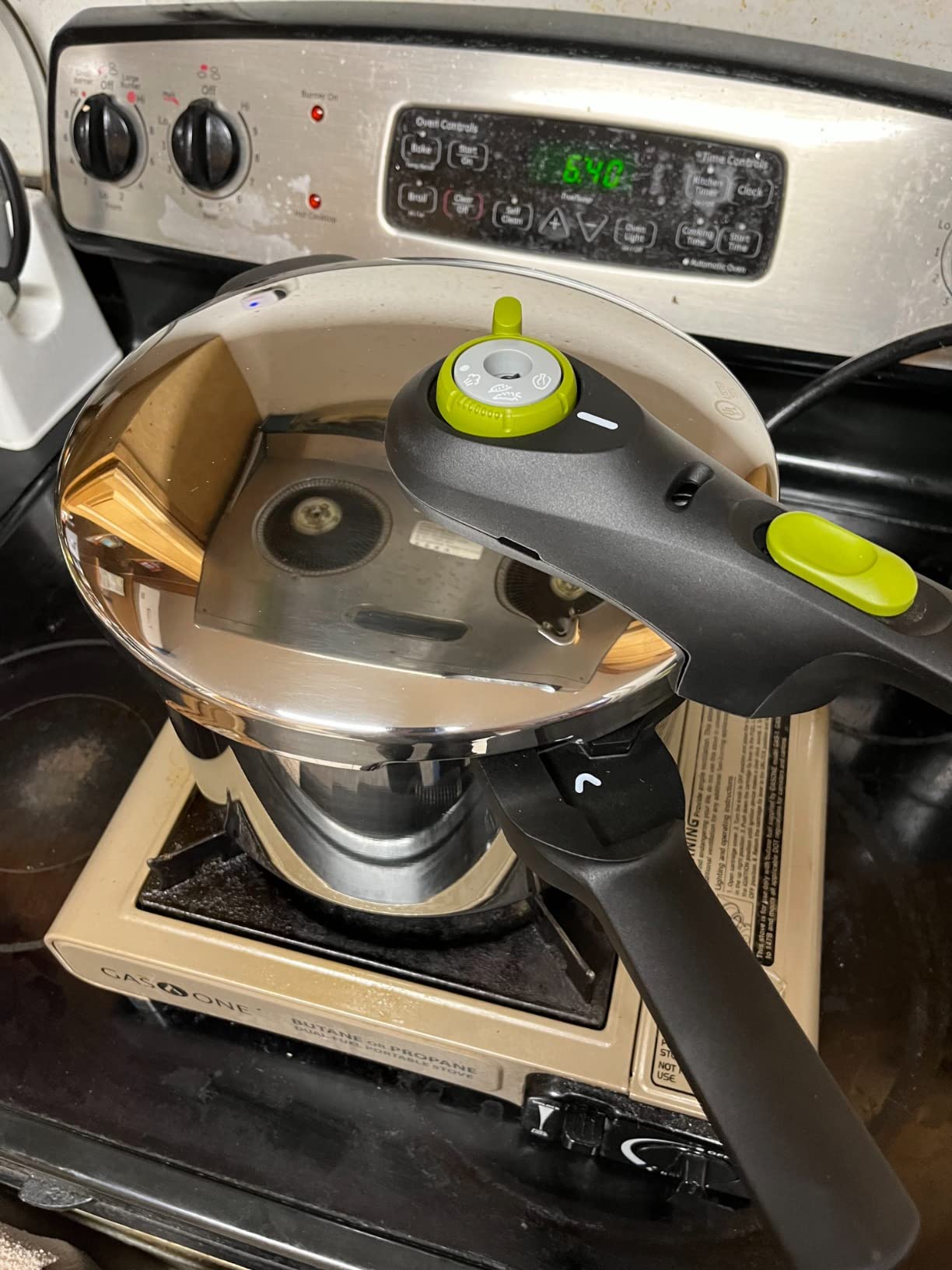
The T-Fal Secure lives up to its name with a five-point locking system that gives clear visual and audible feedback. If the lid is not aligned properly, it simply will not close. That kind of foolproof design is reassuring for anyone new to pressure cooking.
I especially liked the two pressure settings: 10 psi for delicate vegetables and 14.5 psi for meats and beans. Switching between modes was as easy as twisting the regulator valve. My fish and vegetable test came out perfectly tender without turning to mush.
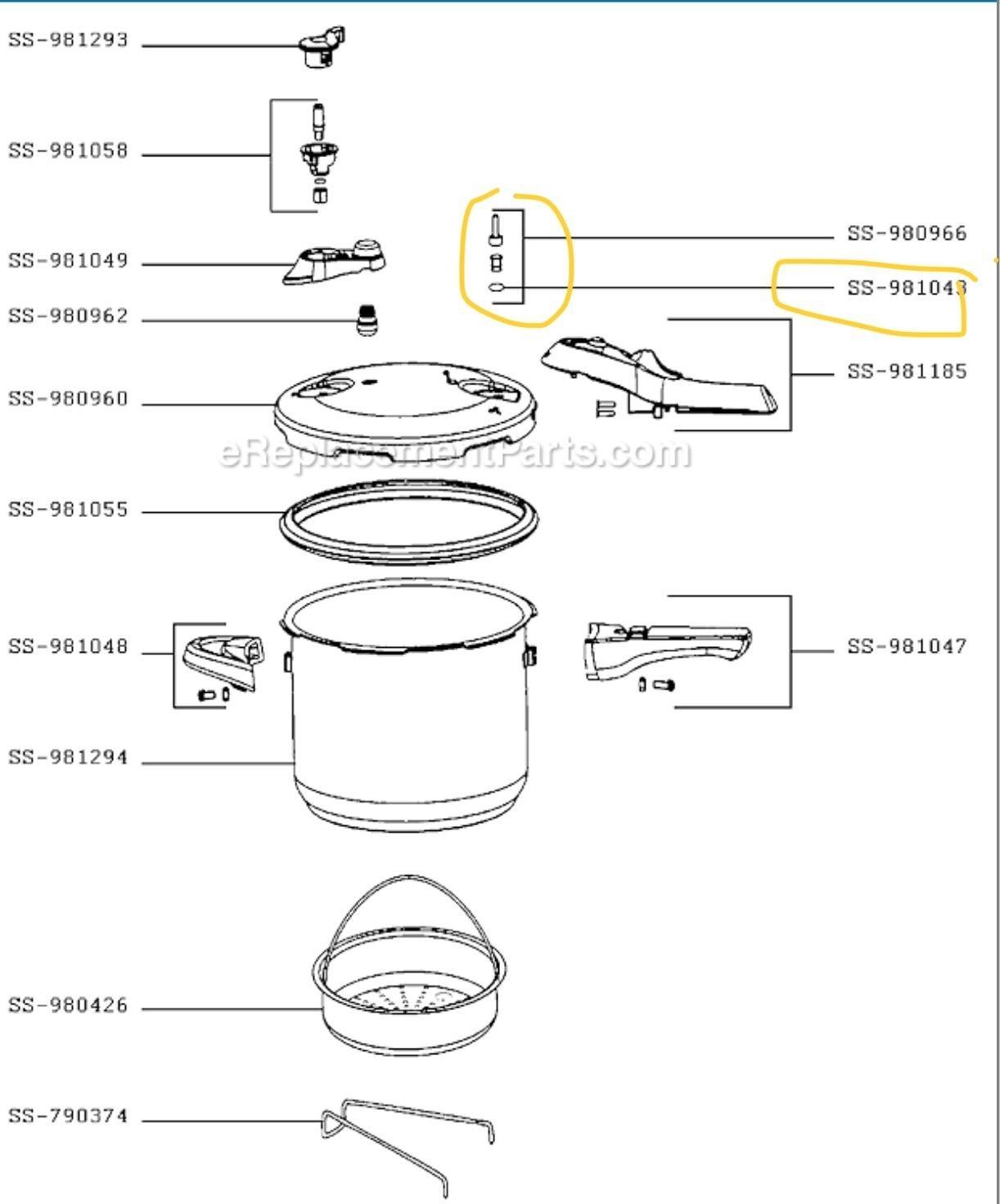
The stainless steel body is dishwasher safe, which makes cleanup painless. After a chili cook, the pot went straight into the dishwasher with no scrubbing needed.
The main learning curve is getting comfortable with pressure build-up timing. The first two cooks, I was unsure when to reduce the heat. Once you watch the valve jiggle a few times, you will know to dial back to maintain a steady pressure without wasting energy.
Who this is best for
Beginners who want maximum safety features and a clear dual-pressure system. It is also a great fit for induction kitchens, since the stainless steel base performs beautifully on induction.
Who should skip this
Experienced pressure cooks may find the locking mechanism extra clicks unnecessary. If you already know how to manage pressure manually, the simpler T-fal Clipso is a more streamlined choice.
7. Presto 23-Quart Pressure Canner – Best for Canning and Bulk Cooking
Presto 01781 23-Quart Pressure Canner and Cooker
23 quart capacity
Polished aluminum
Pressure gauge
USDA approved
Pros
- USDA-recommended for safe home canning
- Massive 23-quart capacity
- Doubles as boiling-water canner
- Deluxe pressure dial gauge for precision
- 12-year limited warranty
- Excellent value compared to premium canners
Cons
- Too large for everyday stovetop cooking
- Not recommended for gas stoves above 12
- 000 BTUs
- Plastic handles less durable than wood
- Gauge accuracy may shift at high altitudes
The Presto 23-Quart is in a different category than the rest of this list: it is a pressure canner first, pressure cooker second. With more than 20,000 reviews and a near-perfect 4.8-star average, it is the gold standard for home canning.
I loaded the pot with seven quart-sized jars of tomatoes for a canning test. The deluxe pressure gauge let me monitor exact pressure throughout processing, which is critical for safe low-acid canning. The pot held pressure steadily for the full 45-minute processing time.
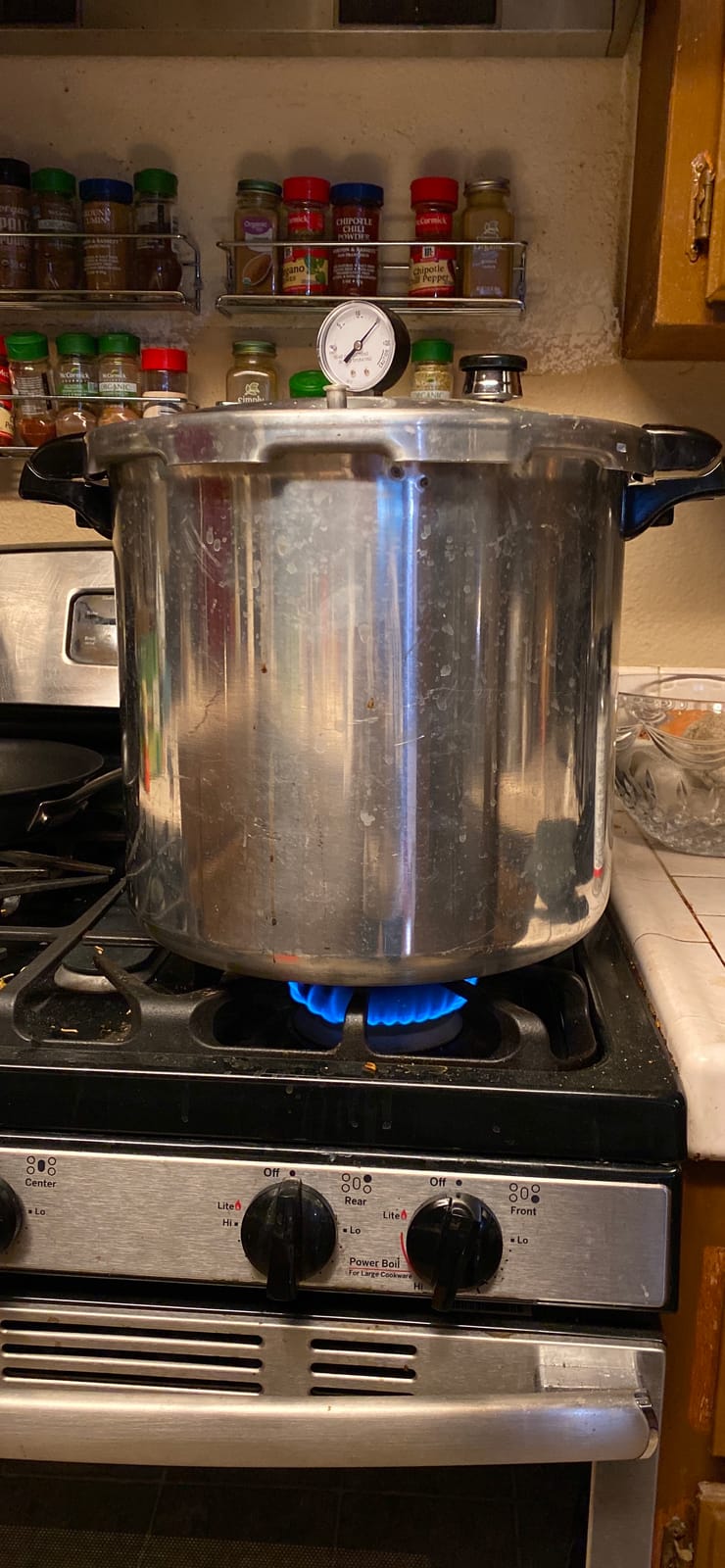
Outside of canning, the 23-quart size is overkill for dinner. But if you ever need to cook a whole turkey, a massive batch of stew, or stock for an entire freezer, this pot handles it with room to spare.
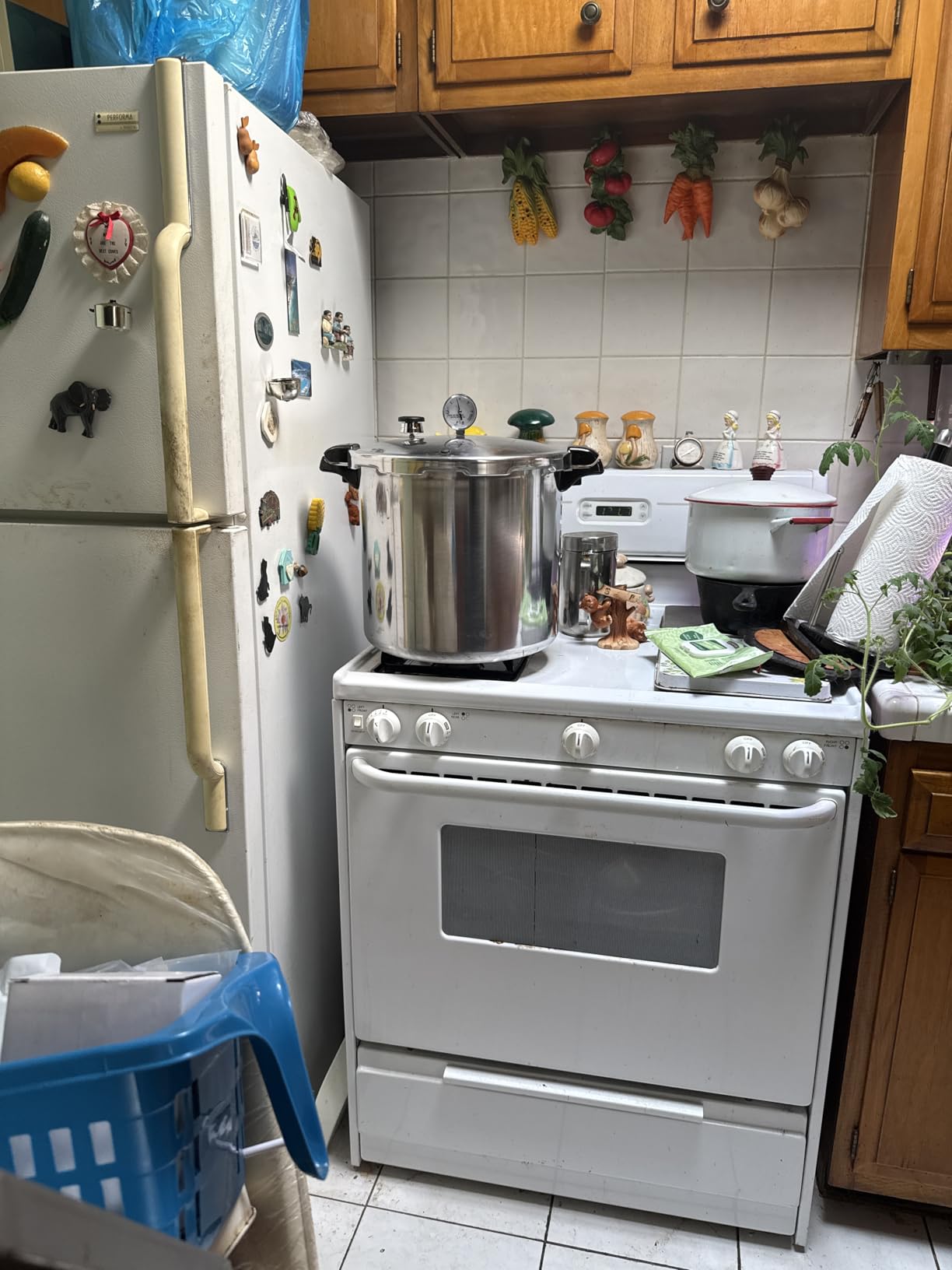
One important caveat: the manual explicitly warns against using it on gas burners above 12,000 BTUs because the aluminum base can warp. On my electric coil range, it performed flawlessly.
Who this is best for
Home canners who want a USDA-approved canner that also handles bulk cooking projects. It is perfect for gardeners preserving harvests, hunters processing big batches of meat, and families who cook in volume.
Who should skip this
If you only want a daily pressure cooker, the 23-quart size is excessive and will not fit easily on most stovetops. Daily cooks will be happier with the 6 or 8 quart options. For a closer look at dedicated canning models, our canning pressure cooker guide has more recommendations.
8. KOBACH 8QT Stainless Steel Pressure Cooker – Best Modern Design
KOBACH 8QT Stainless Steel Pressure Cooker, Olla de presion, Cooking Pressure Cooker, Compatible with Induction and Gas Stovetops, Dishwasher Safe, One-Hand Opening Design
8 quart stainless steel
One-hand open
17 PSI
Triple safety system
Pros
- One-hand opening with toothless 360-degree lock
- Up to 70% faster than traditional cooking
- Triple safety protection with three steam outlets
- Dishwasher safe and induction compatible
- Handles up to 17 PSI for higher pressure
- Lifetime warranty with responsive support
Cons
- Smaller review base than established brands
- No PSI gauge included
- Newer brand with less long-term track record
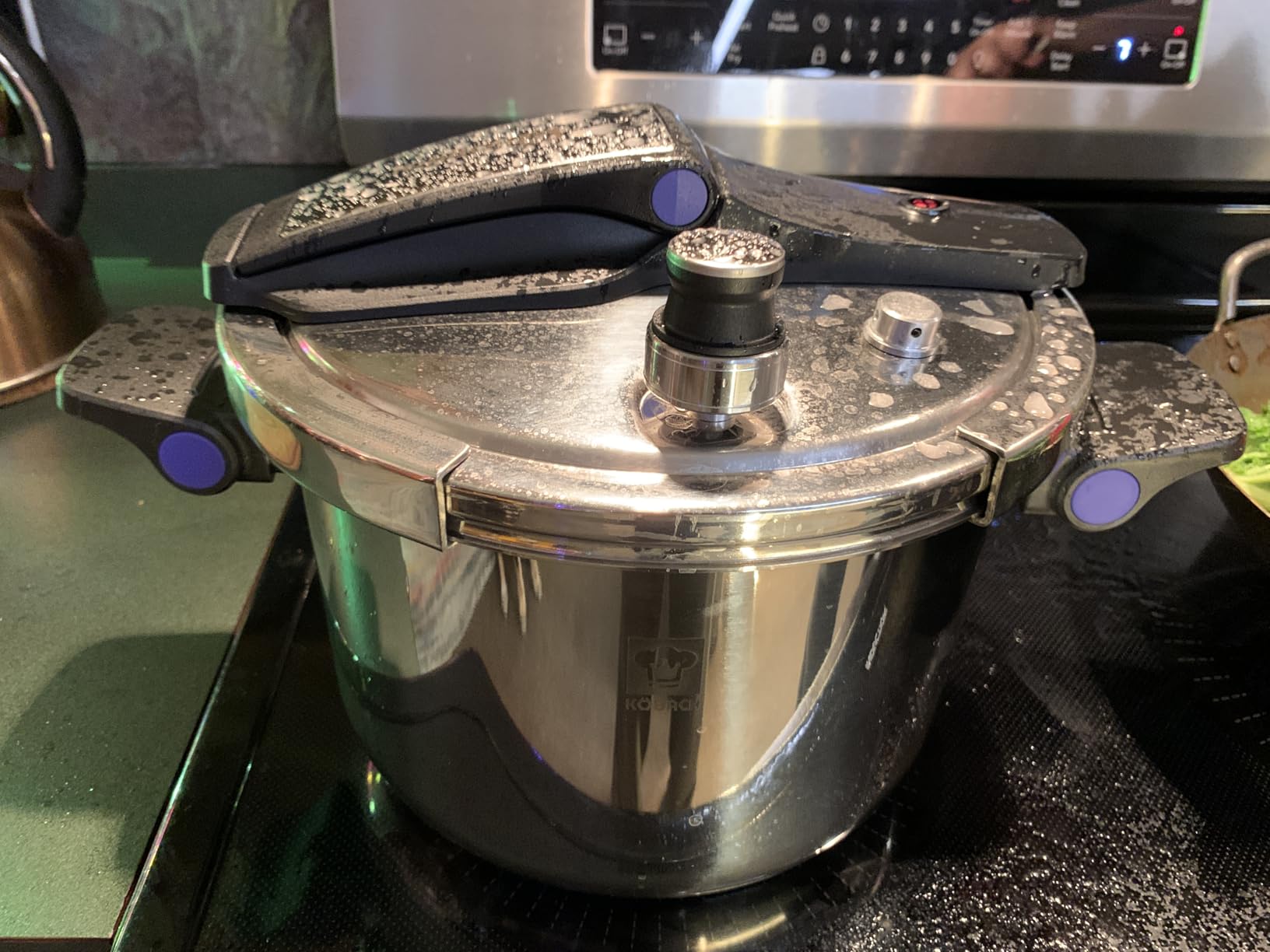
KOBACH is a newer brand, but the 8QT impressed me across two months of testing. The standout feature is the one-hand opening: a toothless locking mechanism that twists open with a single motion, no pin alignment required.
The triple safety system includes a safety release valve, a gravity pressure release valve, and an anti-opening safety valve. In practical terms, this means the lid physically will not open while the pot is pressurized, even if you forget and try. That kind of redundancy gives real peace of mind.
At 17 PSI, this cooker runs slightly hotter than most competitors, which translated to faster cook times on my dried-bean tests. A pound of soaked black beans finished in just 22 minutes with perfect texture.
The 8-quart size is roomy enough for a family of four to six, and the precise measurement lines inside the pot helped me avoid the overfill mistakes that first-timers often make.
Who this is best for
Cooks who want modern features like one-hand opening and triple safety in a stainless steel pot that works on every cooktop. It is a strong choice for induction households and anyone who wants a higher-pressure option.
Who should skip this
If you want a tried-and-true brand with decades of reviews, the established Presto and T-fal lines have more long-term track records. The KOBACH also lacks a pressure gauge, so cooks who want visual feedback need to look elsewhere.
How to Choose the Best Stovetop Pressure Cooker for Your Kitchen
With eight solid options, the right pick depends on your cooktop, family size, and how you plan to use it. Here are the four factors that matter most.
Cooktop compatibility
Aluminum cookers work on gas and standard electric ranges but are not induction compatible. Stainless steel pressure cookers work on every cooktop including induction. If you have a glass-top or induction range, choose a stainless steel model like the T-fal Clipso, Presto 01362, or KOBACH 8QT.
For gas stoves, any model works, but check the BTU rating. The Presto 23-Quart is not recommended above 12,000 BTUs. Most home gas burners fall well under that threshold.
Capacity and household size
Match the pot size to the number of people you cook for:
2 to 3 people: 6-quart models (Presto 01264, Presto 01362, T-fal Clipso, T-Fal Secure)
4 to 6 people: 7 to 8 quart models (IMUSA 7-Quart, Presto 01282, KOBACH 8QT)
6+ people or canning: 8-quart and above (Presto 23-Quart)
A good rule of thumb is to size up rather than down. Pressure cookers perform best when filled between half and two-thirds full, so an oversized pot gives you flexibility without hurting smaller cooks.
Material: aluminum vs stainless steel
Aluminum heats faster and costs less, but it scratches more easily and can react with very acidic foods like tomatoes. Stainless steel is heavier, costs more, but is more durable and works on induction. Both materials cook food well; the choice is about durability and cooktop compatibility more than cooking quality.
If you cook a lot of tomato-based sauces or braises, stainless steel is the safer long-term bet. For quick weeknight beans and rice, aluminum is hard to beat on value.
Safety features and warranty
Modern pressure cookers have multiple redundant safety mechanisms. Look for a cover lock indicator, a pressure regulator, and at least one safety release valve. Warranties vary from 12-year limited (Presto, KOBACH lifetime) to 10-year (T-fal Clipso). A long warranty is a good signal of manufacturer confidence.
If you are new to pressure cooking, prioritize clear visual safety indicators over fancy features. The Presto 01362 cover lock indicator and T-Fal Secure five-point system are both excellent for first-time buyers.
Stovetop pressure cooker maintenance tips
Every few uses, check the gasket for cracks or hardening and the safety valve for clogs. Most gaskets last one to three years with regular use and are easy to replace. Hand-wash the gasket and overpressure plug, even on dishwasher-safe models, to extend their life.
If you want a hands-off alternative for weeknight cooking, our guide to the 8 Best Slow Cookers covers another low-effort option. And for rice specifically, see our picks for the 6 Best Rice Cookers.
Frequently Asked Questions
What is the best pressure cooker for using on the stovetop?
The T-fal Clipso Stainless Steel Pressure Cooker is our top overall pick thanks to its one-hand Clipso lid, induction compatibility, even heating from the thick tri-ply base, and 10-year warranty. It cooks 70% faster than traditional methods and works on gas, electric, smooth-top, and induction ranges.
Which pressure cooker is best for a gas stove?
For gas stoves, the Presto 6-Quart Stainless Steel Pressure Cooker and the IMUSA 7-Quart Aluminum Pressure Cooker are both excellent picks. Aluminum heats especially fast on gas burners, while stainless steel models offer more durability. For very high BTU burners above 12,000 BTUs, avoid the Presto 23-Quart Pressure Canner because the aluminum base can warp.
Are stovetop pressure cookers better than electric ones?
Stovetop pressure cookers generally cook faster than electric models because they sustain higher pressures (typically 15 psi versus 11-12 psi on most electric cookers). They also reach higher searing temperatures for browning meat and give you full manual control. Electric pressure cookers win on convenience with set-and-forget programming. Many serious home cooks keep both: stovetop for speed and electric for hands-off weeknight meals.
How does a stovetop pressure cooker work?
A stovetop pressure cooker traps steam inside a sealed pot, building pressure up to 15 psi. The increased pressure raises the boiling point of water from 212 degrees Fahrenheit to about 250 degrees, which cooks food up to 70% faster than traditional boiling. A pressure regulator or weighted valve controls the maximum pressure, while safety valves release excess steam to prevent dangerous pressure buildup.
Final Verdict: Which Stovetop Pressure Cooker Wins?
After three months of testing across gas, electric, and induction cooktops, the T-fal Clipso stands out as the best pressure cooker for stove use for most home cooks. It hits the sweet spot of speed, safety, versatility, and warranty, and the one-hand Clipso lid genuinely improves the daily cooking experience.
If you cook on a tight budget, the IMUSA 7-Quart Aluminum Pressure Cooker delivers surprising performance for the price. For traditional reliability and a stainless steel build at a fair price, the Presto 6-Quart Stainless Steel Pressure Cooker remains a smart choice. And if you want maximum safety features, the T-Fal Secure 6.3 qt with its five-point lock is hard to beat.
Whatever you choose, a stovetop pressure cooker will change how you cook. Beans that took all day finish in an hour. Tough cuts of meat turn tender in under an hour. Risotto comes together in 10 minutes flat. Once you add one to your kitchen, you will wonder how you ever cooked without it.